Influence of Filling Rate and Support Beam Optimization on Surface Subsidence in Sustainable Ultra-High-Water Backfill Mining: A Case Study

 , ,
, ,
Abstract
1. Introduction
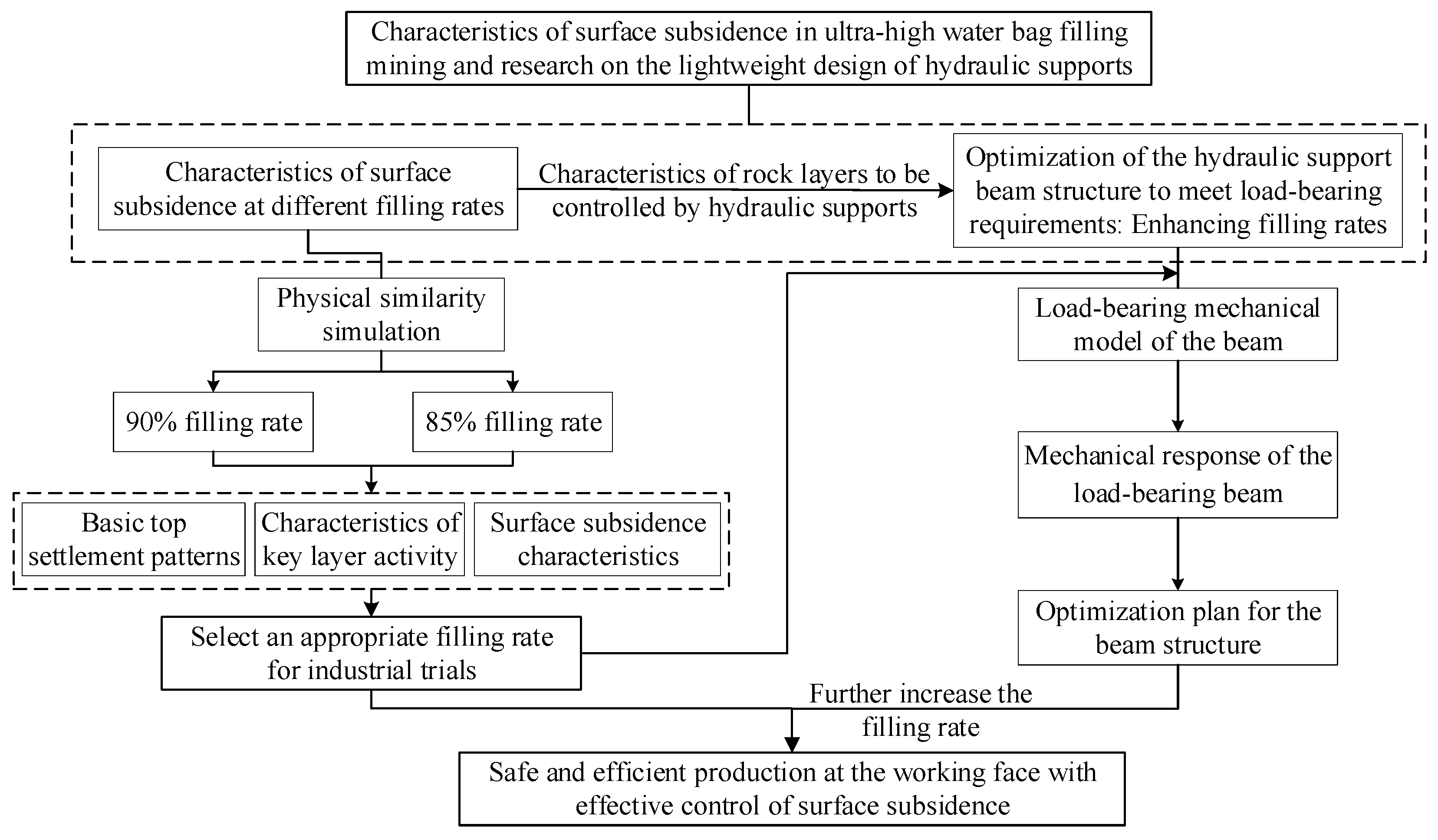
2. The Impact of Filling Rate on Surface Subsidence
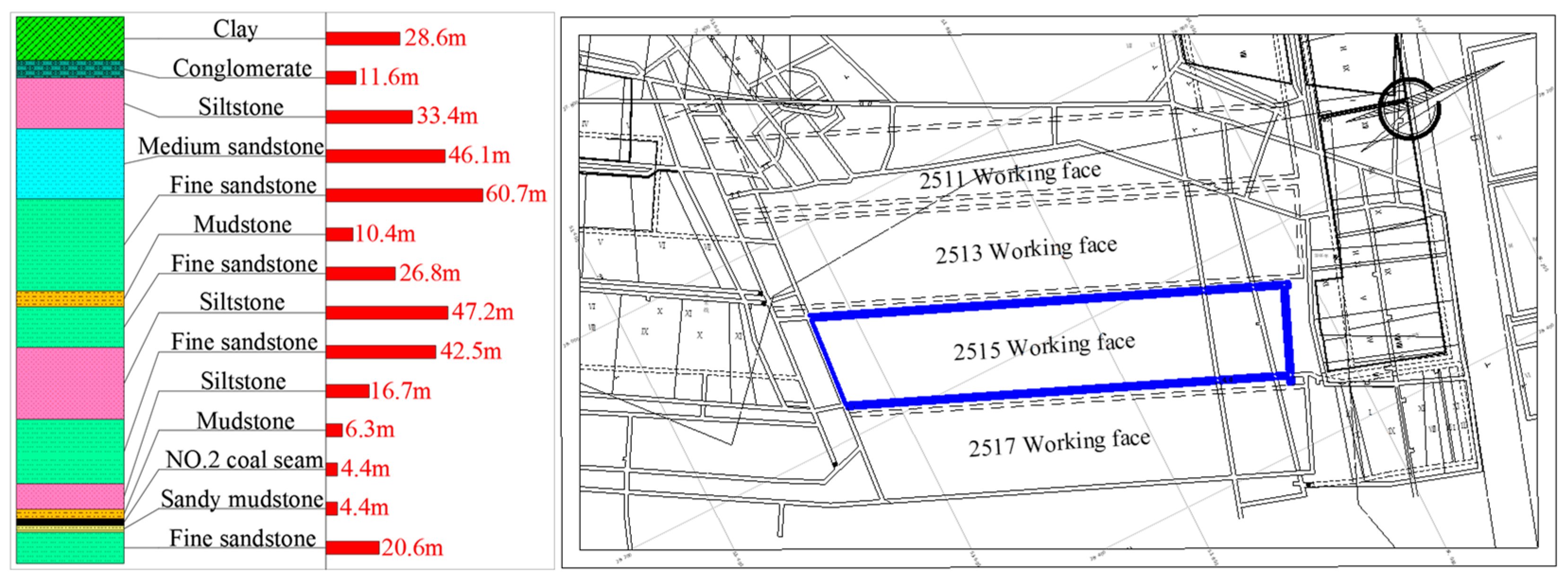
2.1. Geologic Conditions
2.2. Method and Experimental Procedure
2.2.1. Proportions of Similarity Simulation Materials
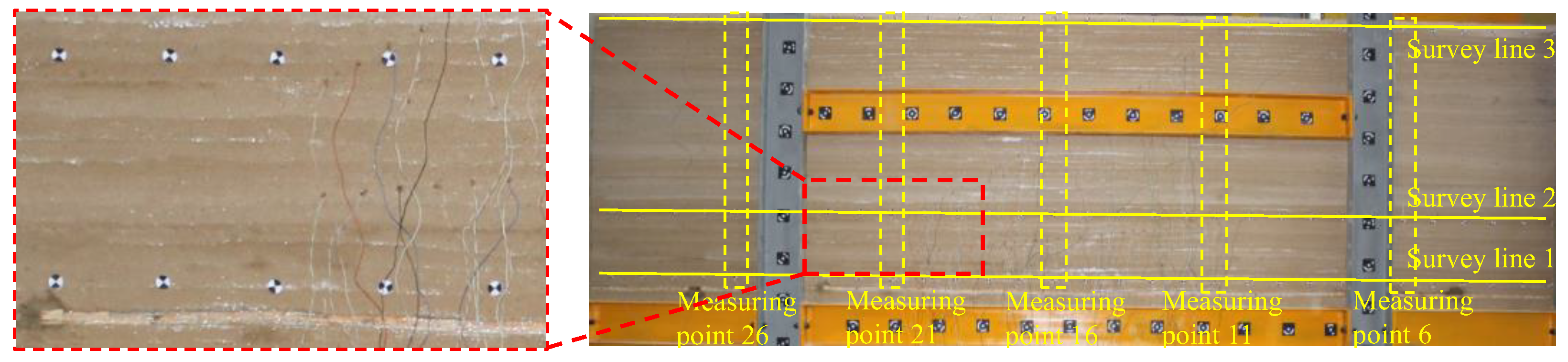
2.2.2. Experimental Procedures and Measurement Point Arrangement
2.3. Results and Analysis
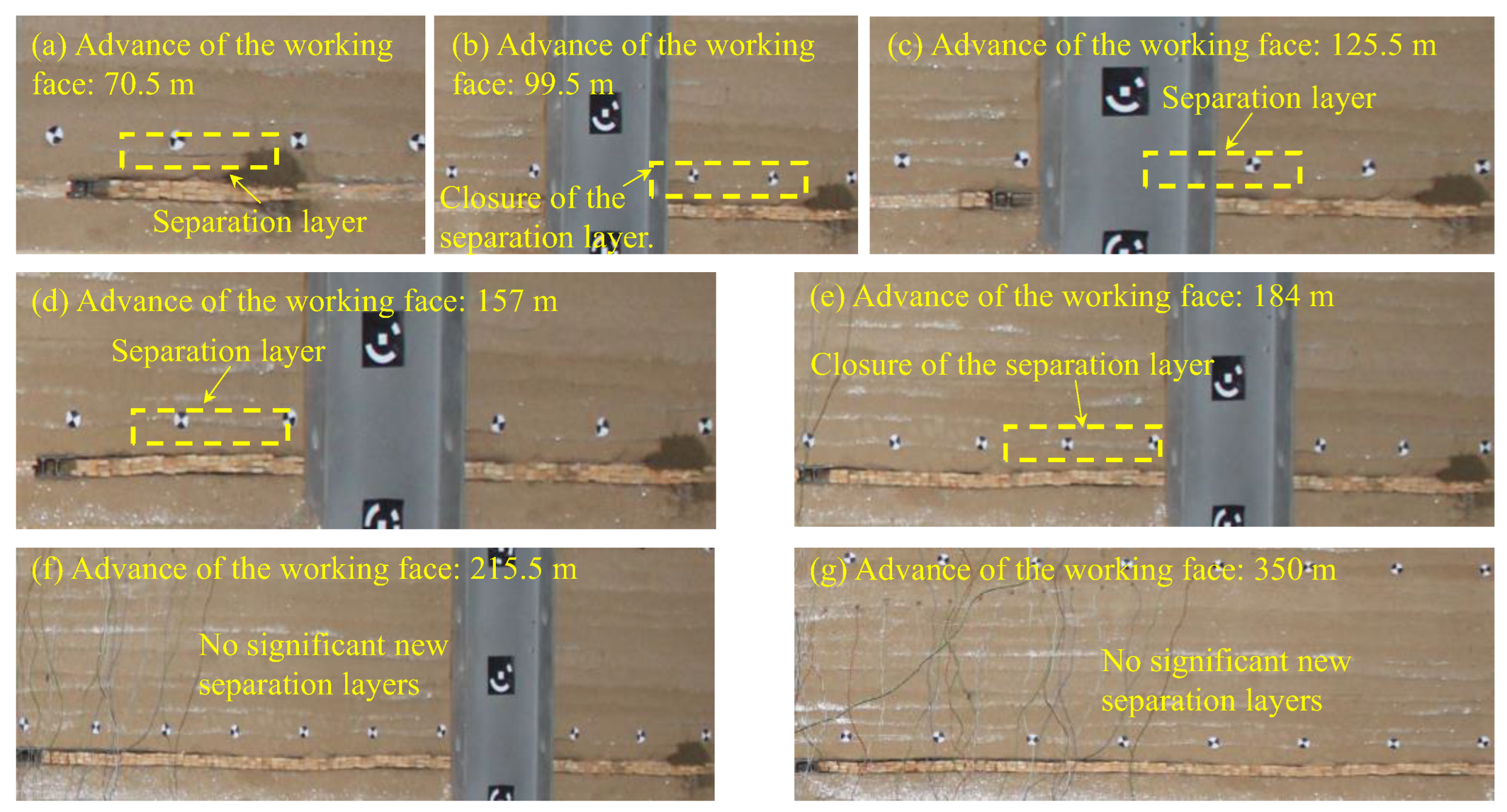
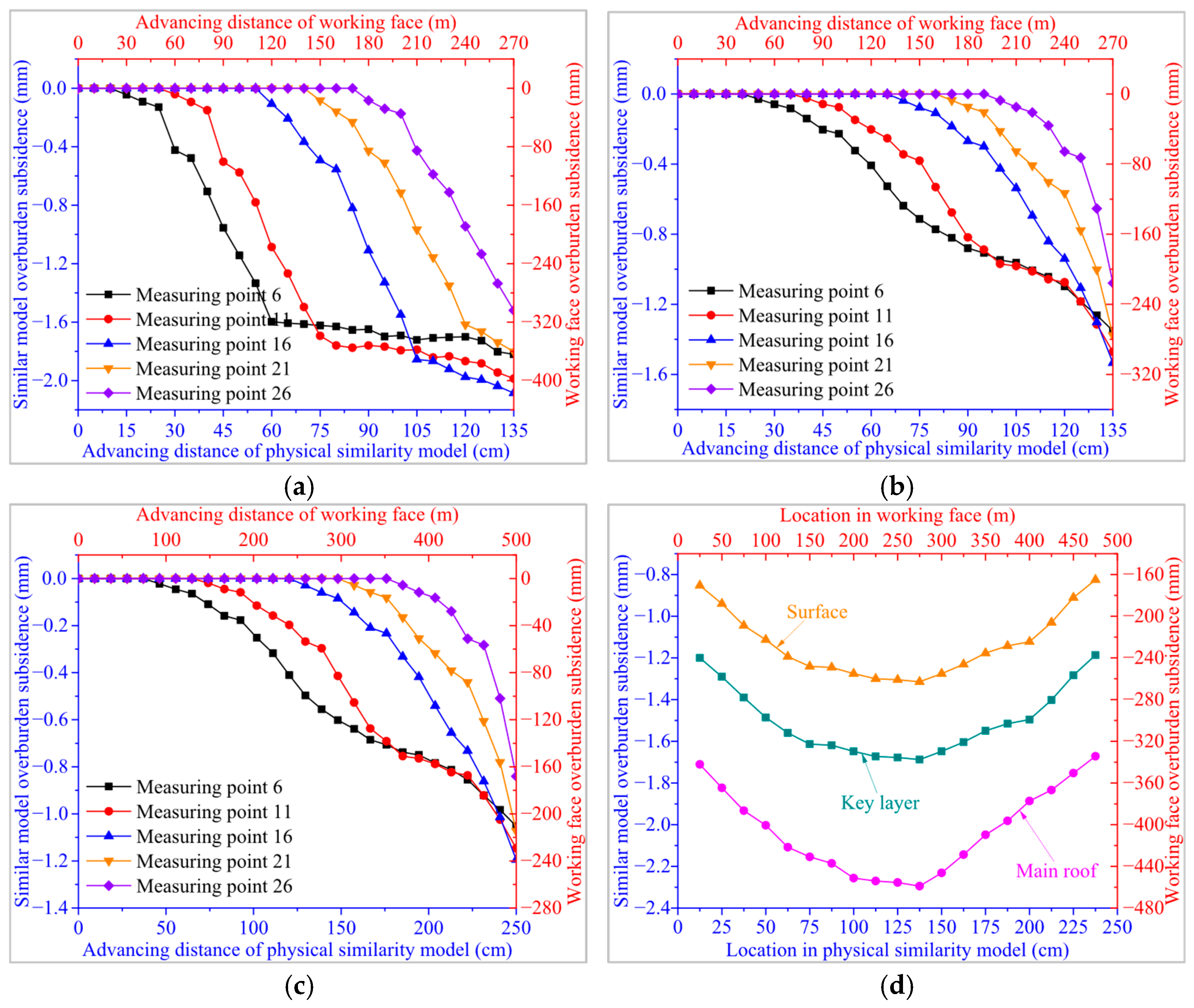
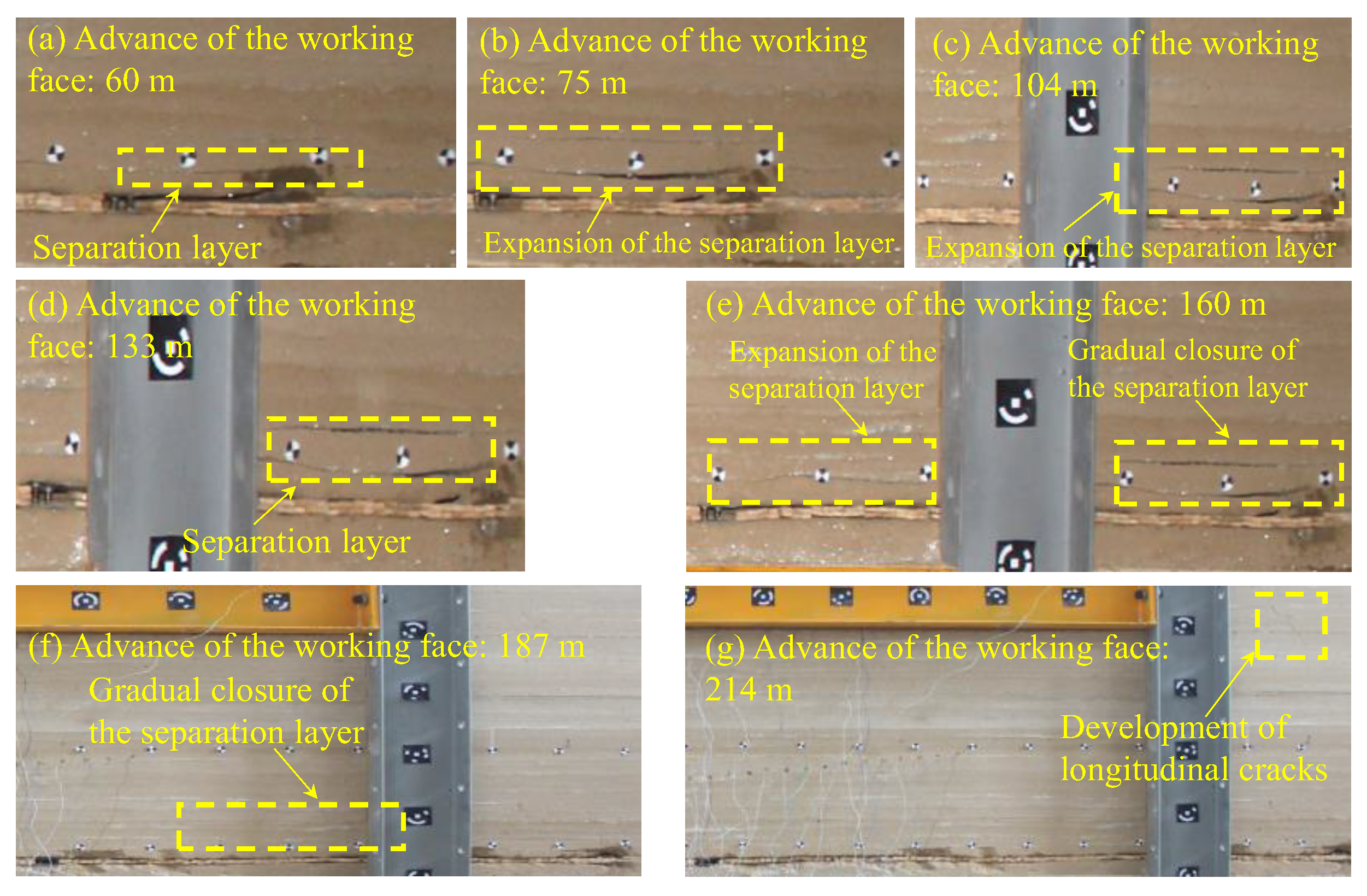
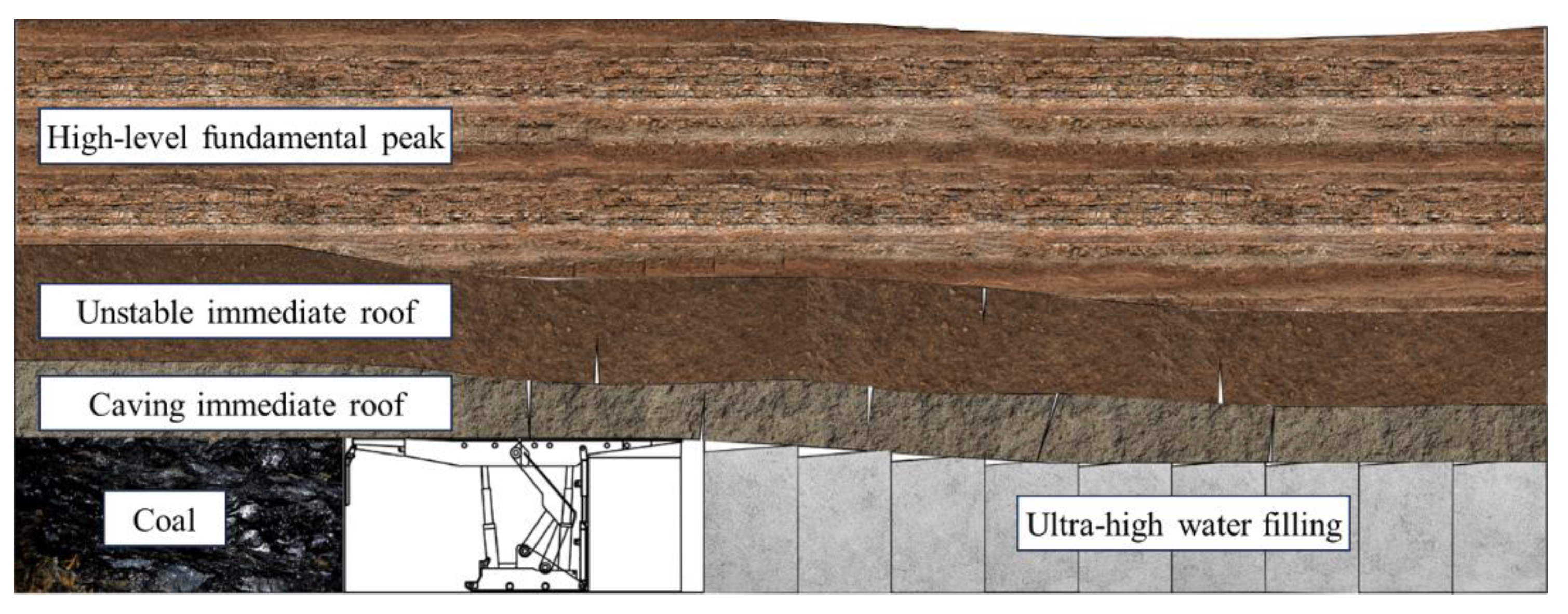
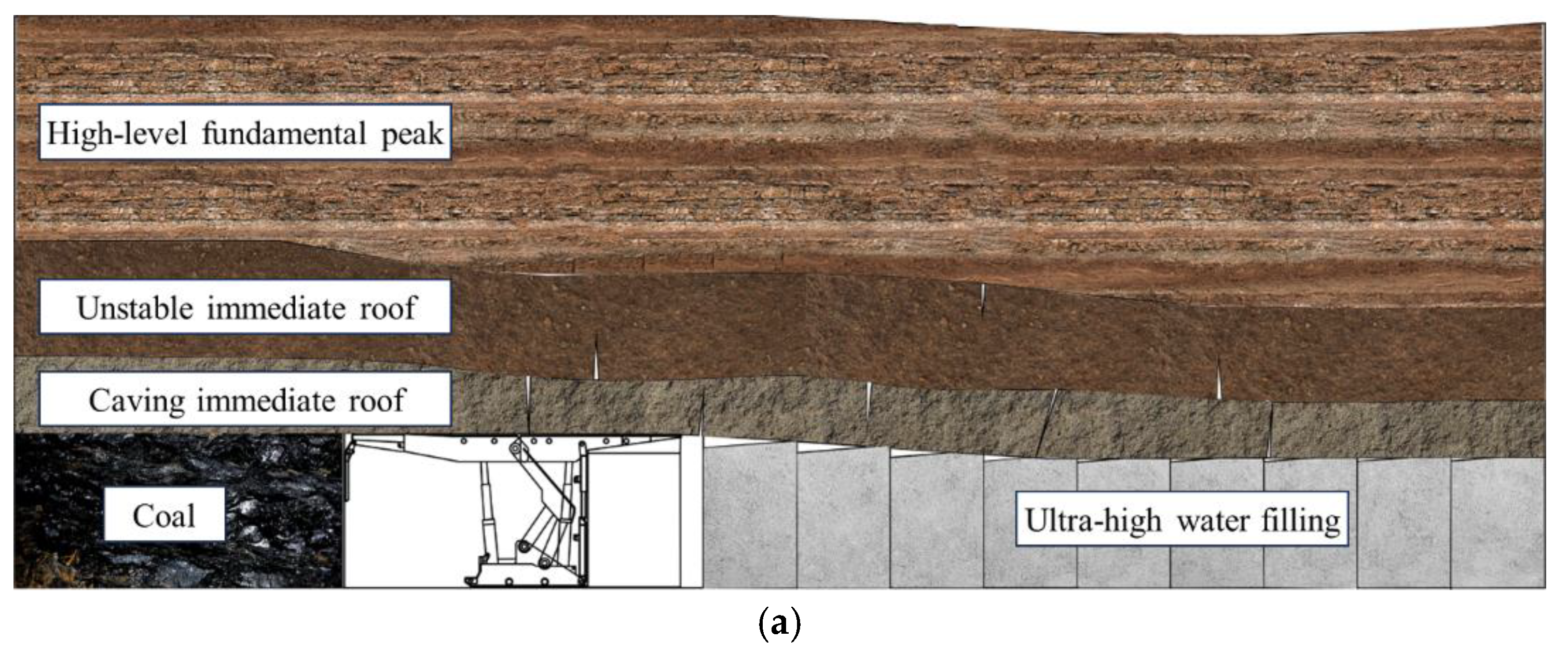
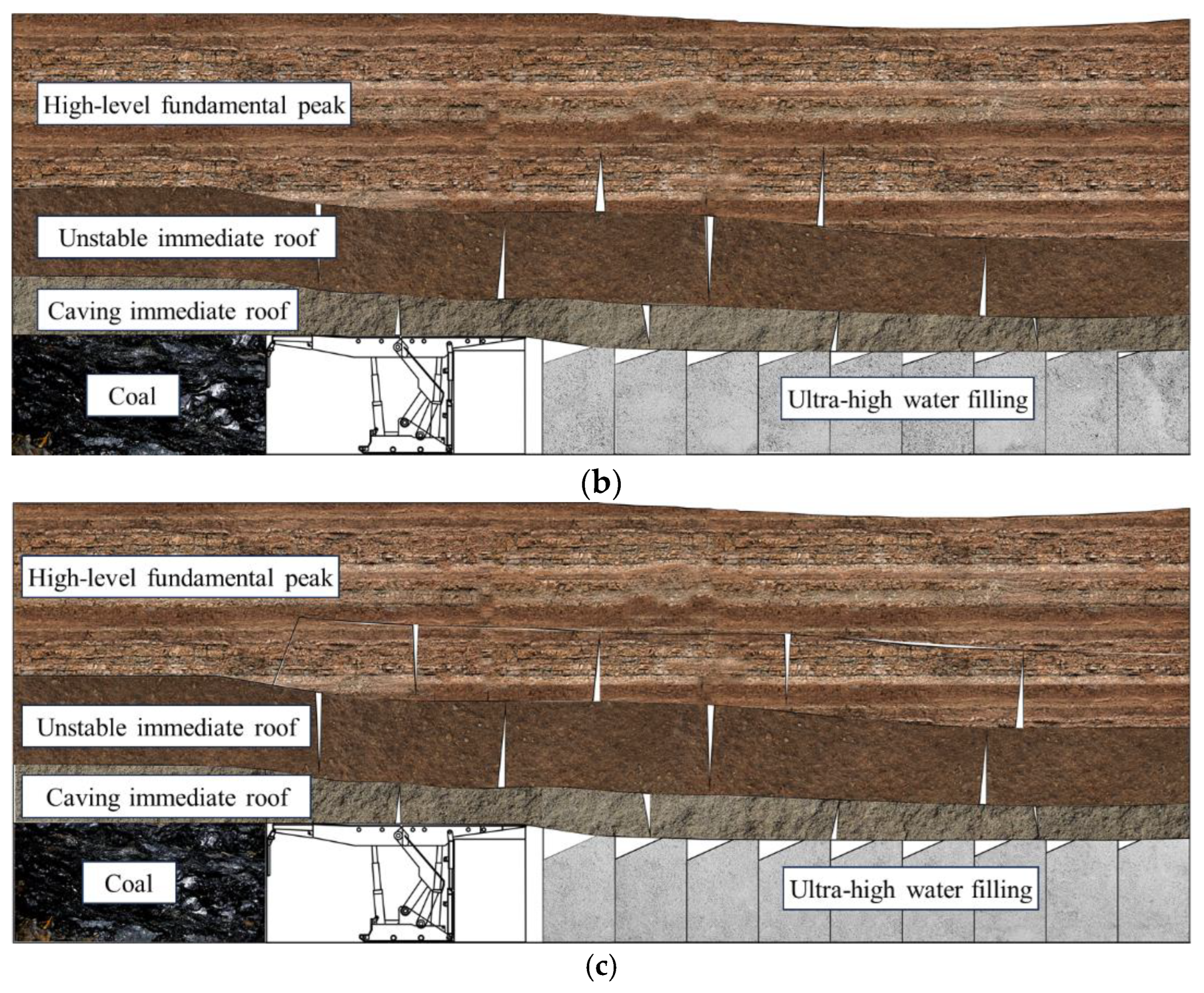
2.3.1. Physical Model with a Filling Rate of 90%
2.3.2. Physical Model with a Filling Rate of 85%
2.4. Field Practice
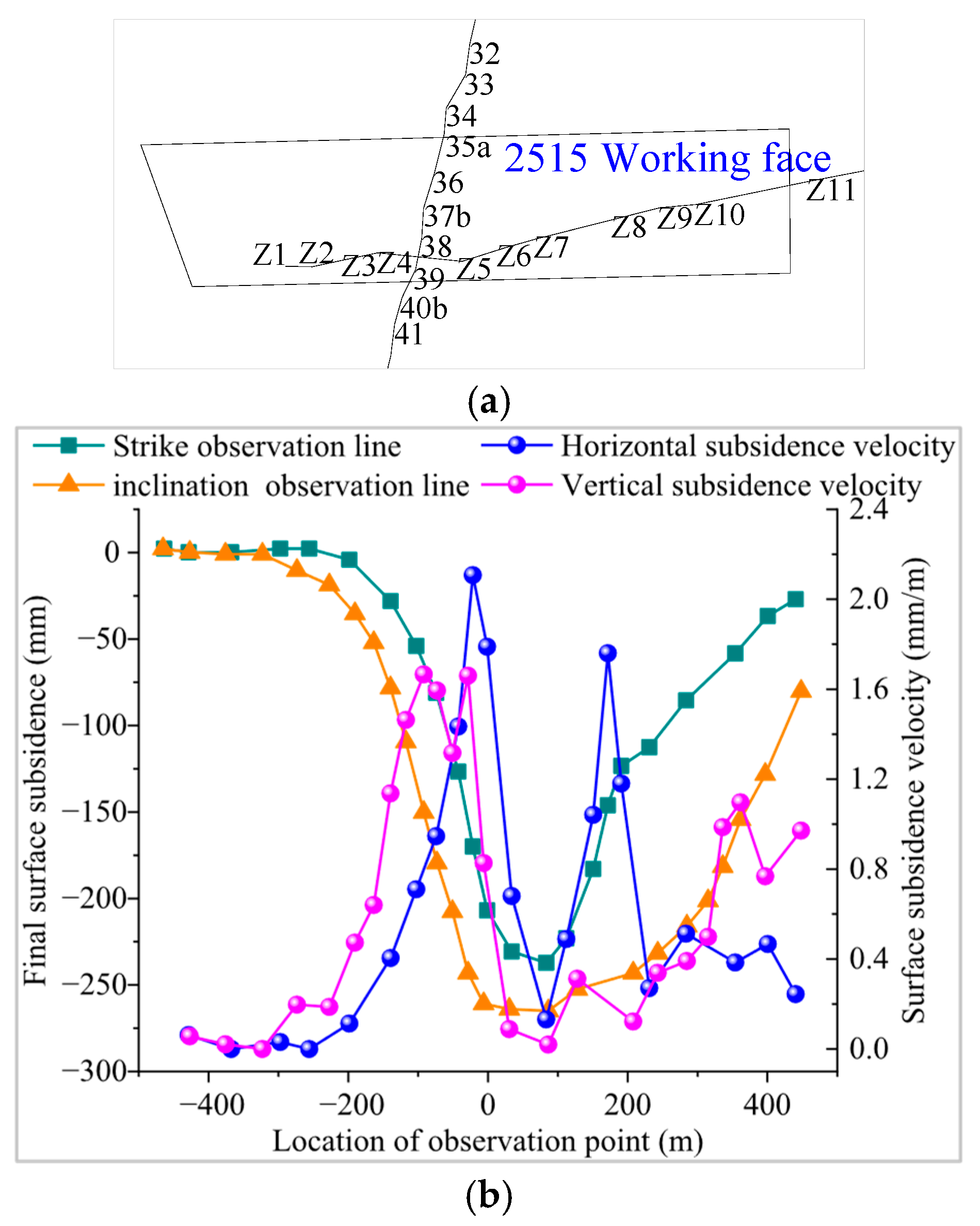
2.4.1. Field Practice in Hengjian Coalmine
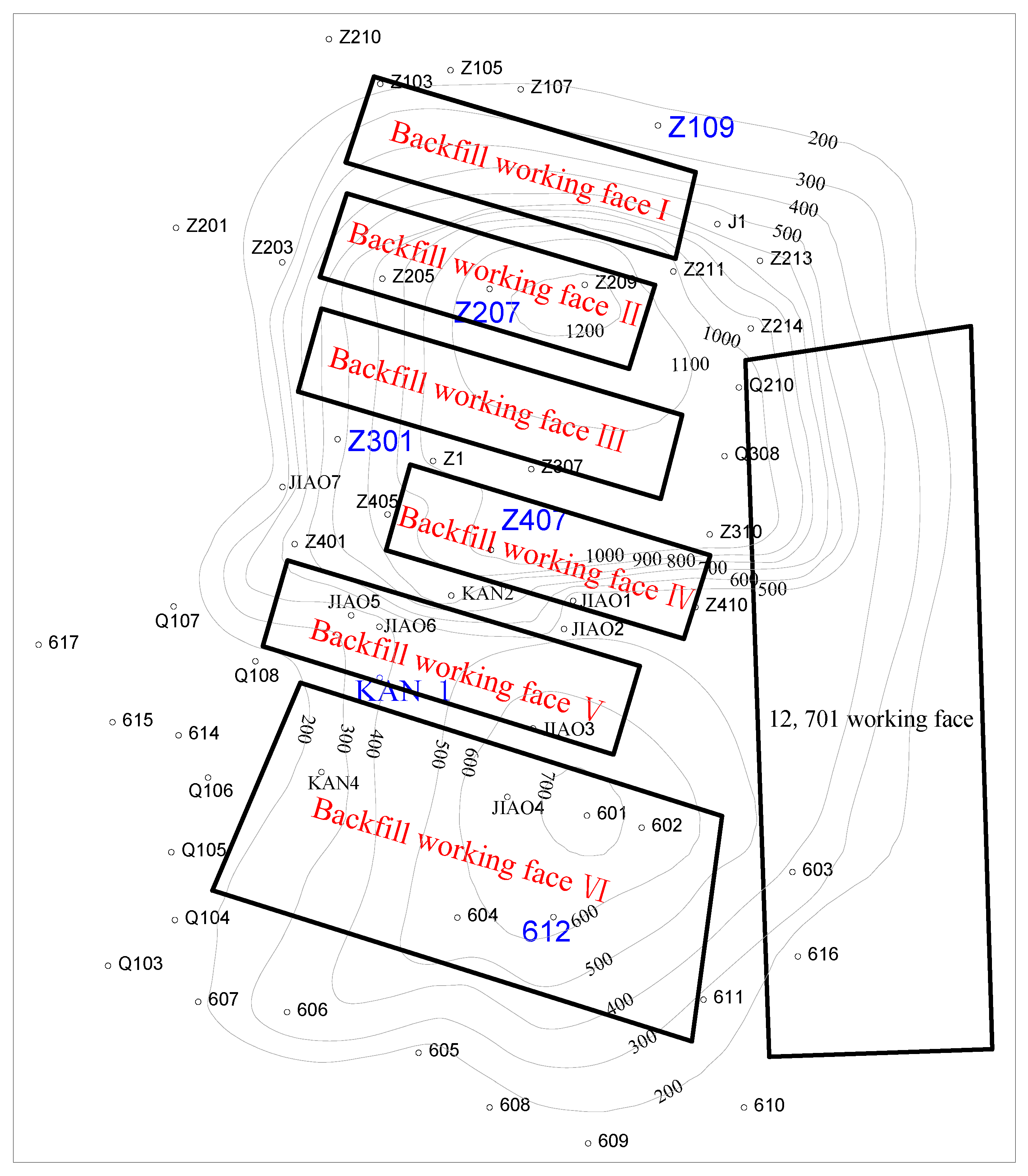
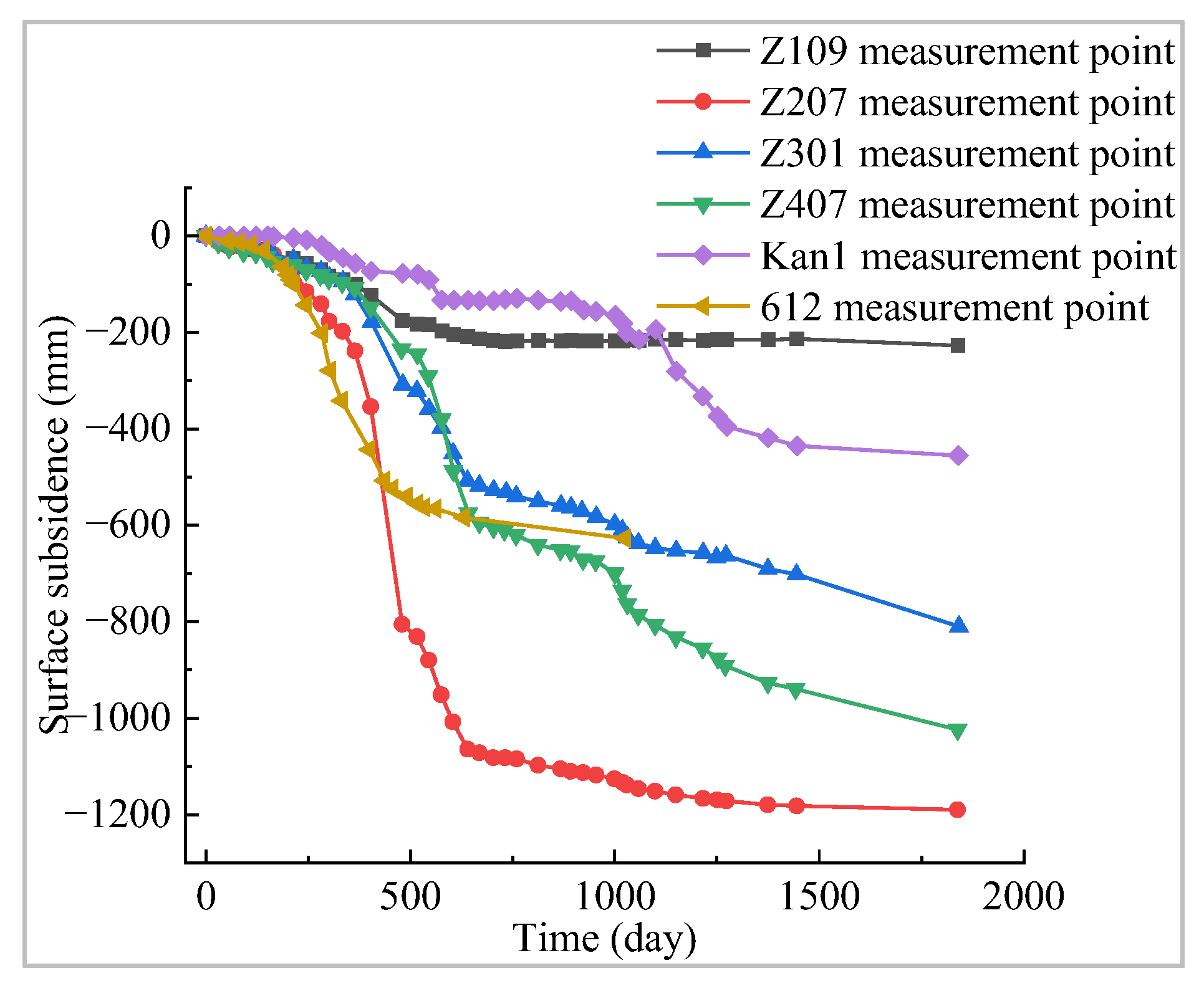
2.4.2. Field Practice in Taoyi Coal Mine
3. Bearing Characteristics of Hydraulic Supports at Different Filling Rates
3.1. Characteristics of the Overburden That Hydraulic Supports Need to Control
3.2. Load Distribution Characteristics of the Hydraulic Support Beam
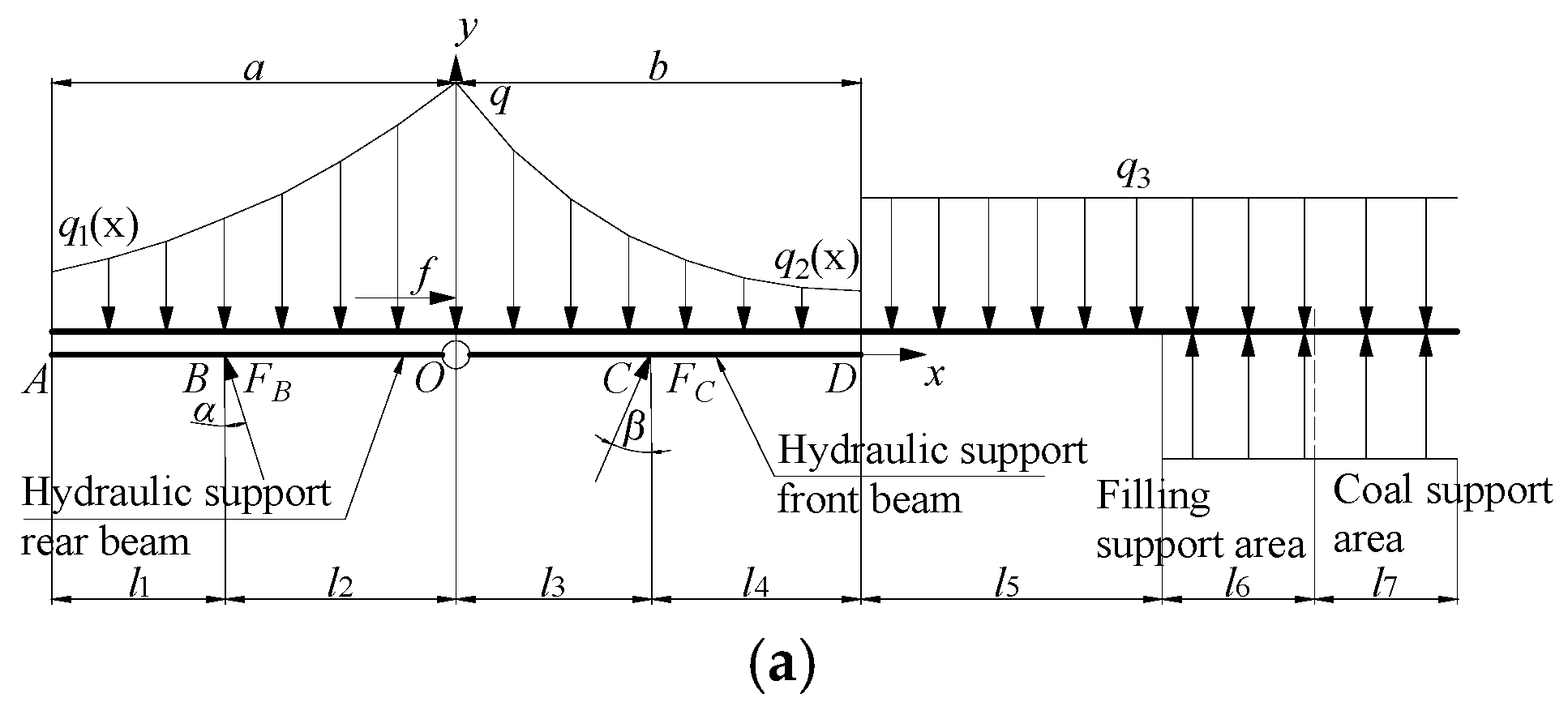
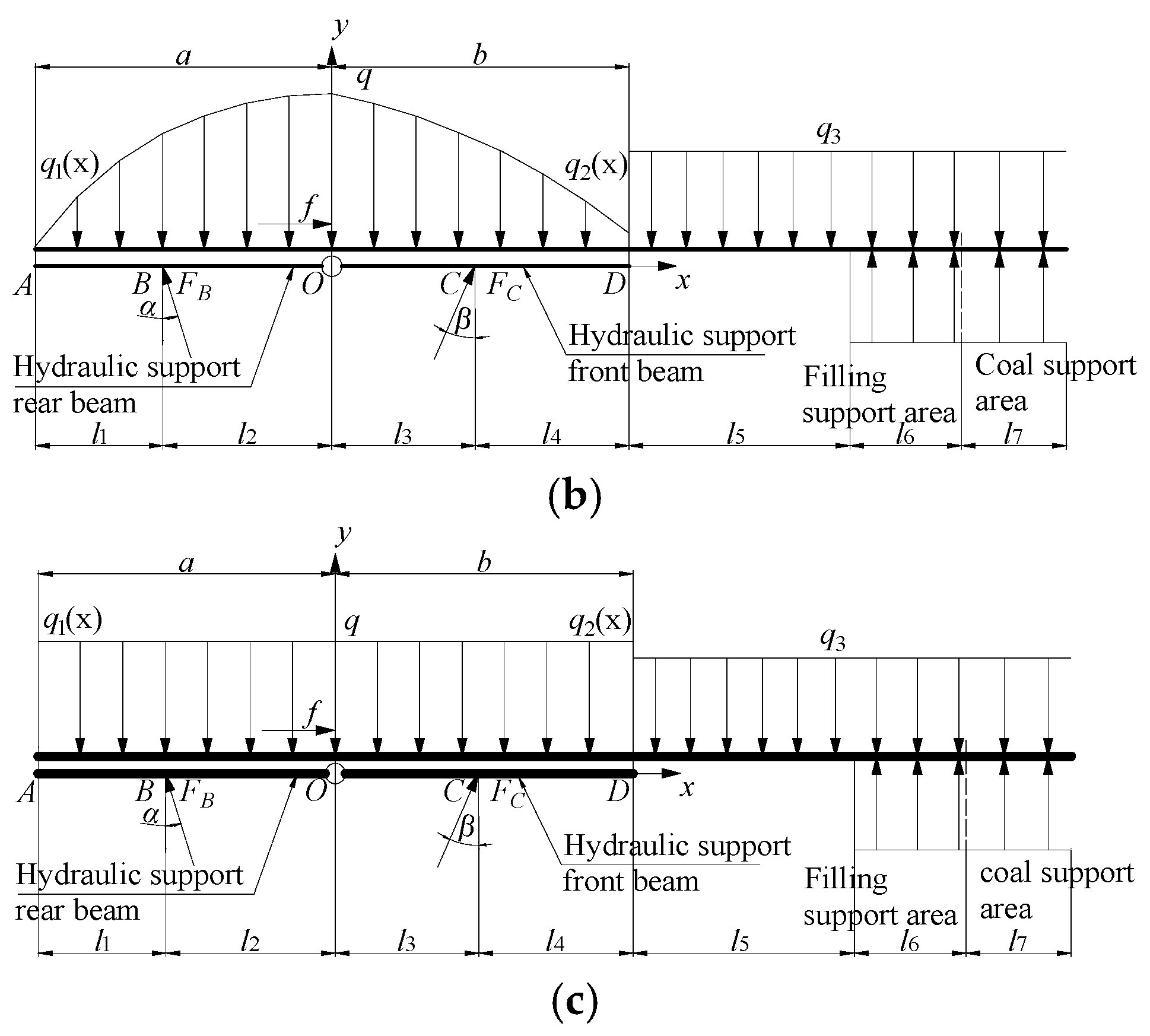
3.2.1. Mechanical Model and Basic Assumptions
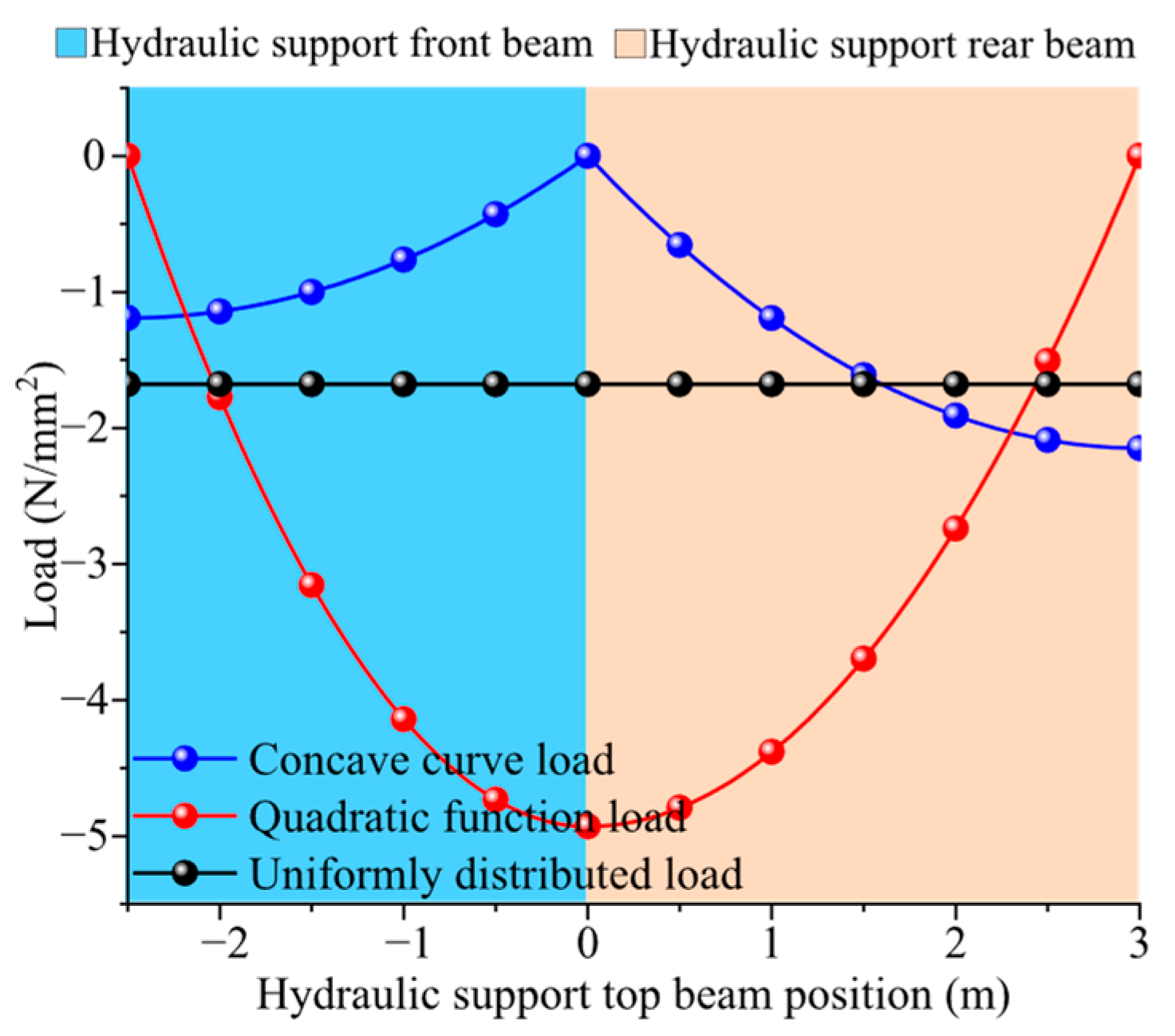
3.2.2. Load Distribution Characteristics of the Beam
- ①
- When the hydraulic support beam is subjected to concave curve-type load:
- ②
- When the front and rear beams of the hydraulic support are subjected to a quadratic load, that is:
- ③
- When the front and rear beams of the hydraulic support are subjected to uniformly distributed loads, specifically q1(x) = q2(x) = q5, the moment about point A can be expressed as:
4. Methods for Increasing Filling Rate Through Structural Optimization of the Hydraulic Support Beam
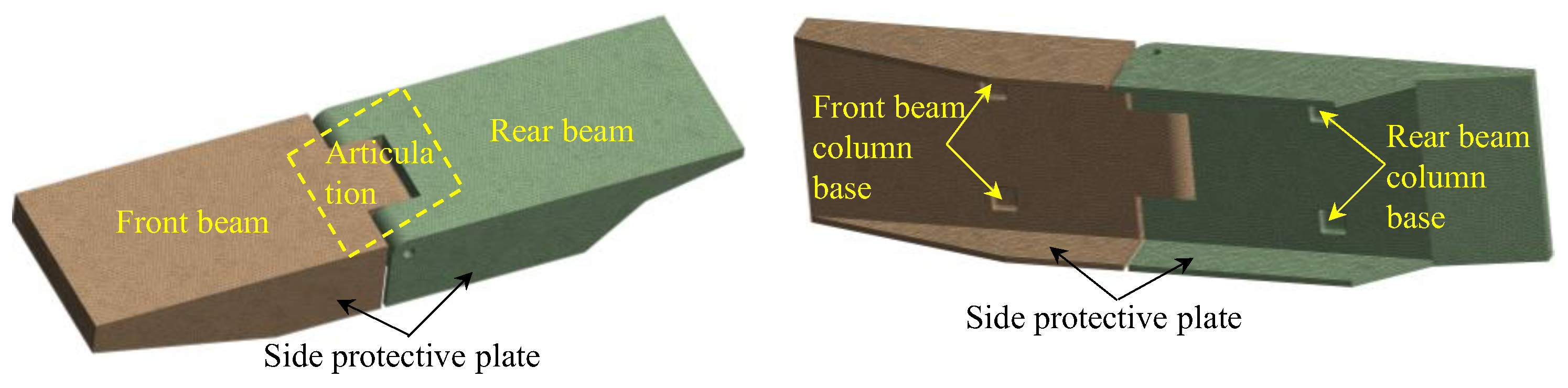
4.1. Establishment of the Numerical Model
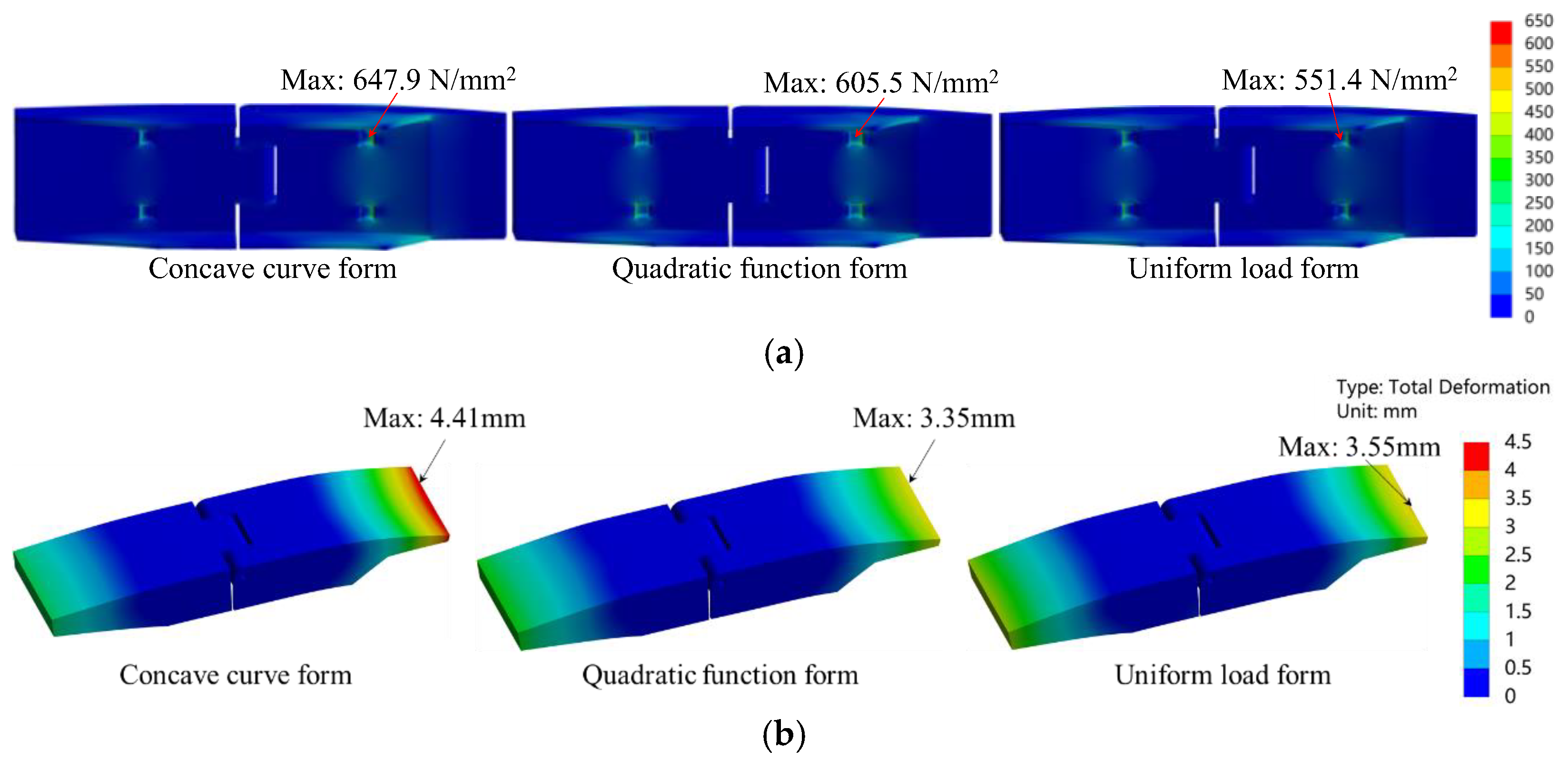
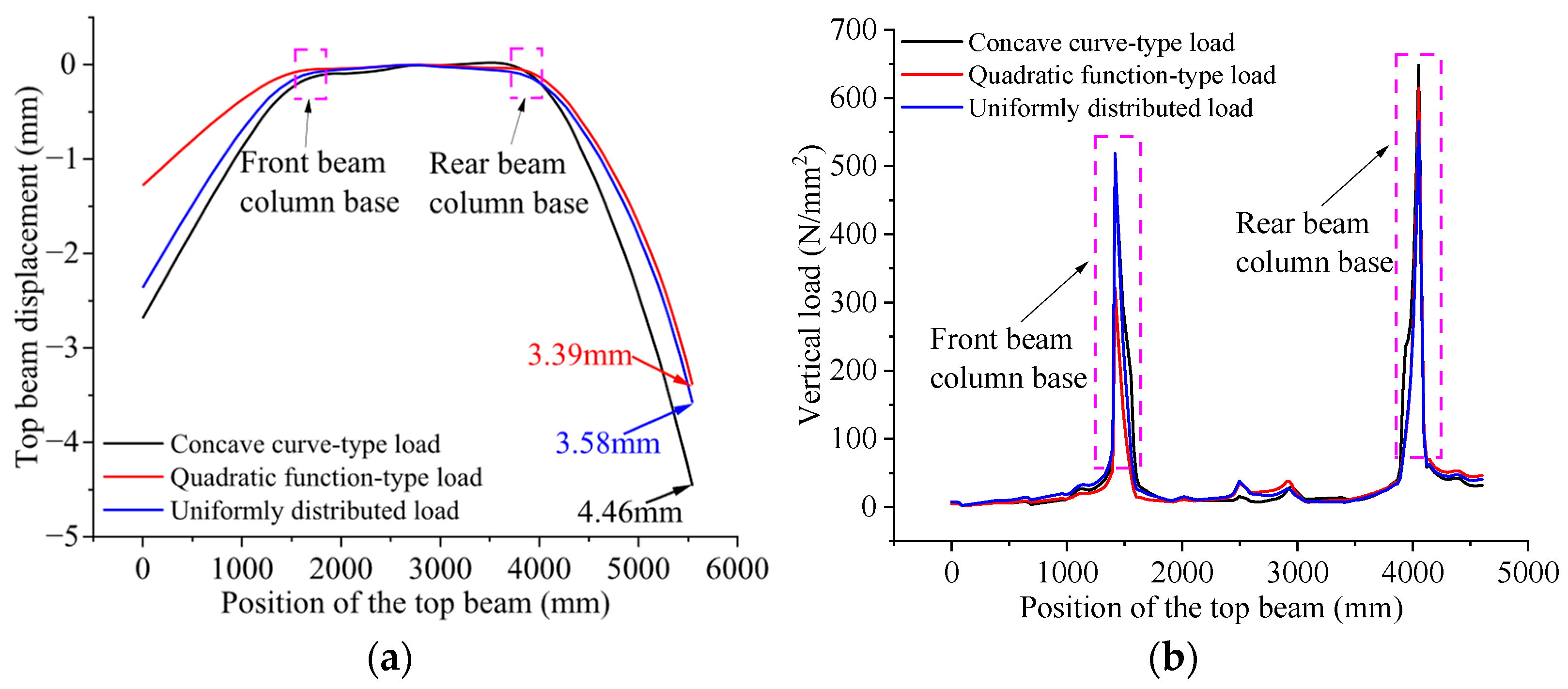
4.2. Mechanical Response of the Beam Under Three Working Conditions
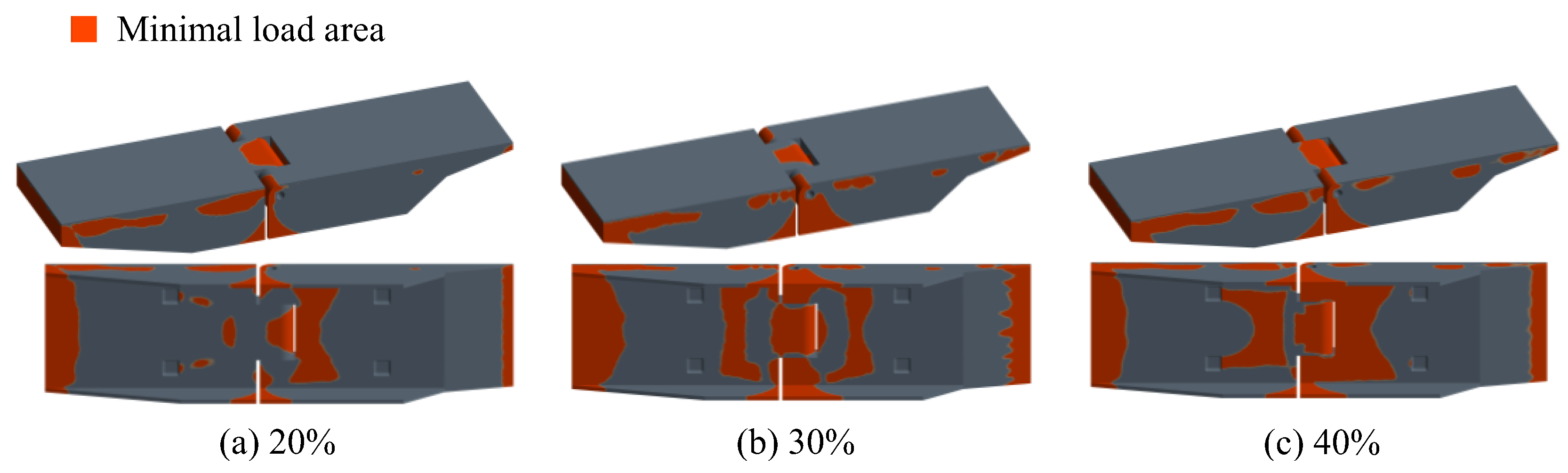
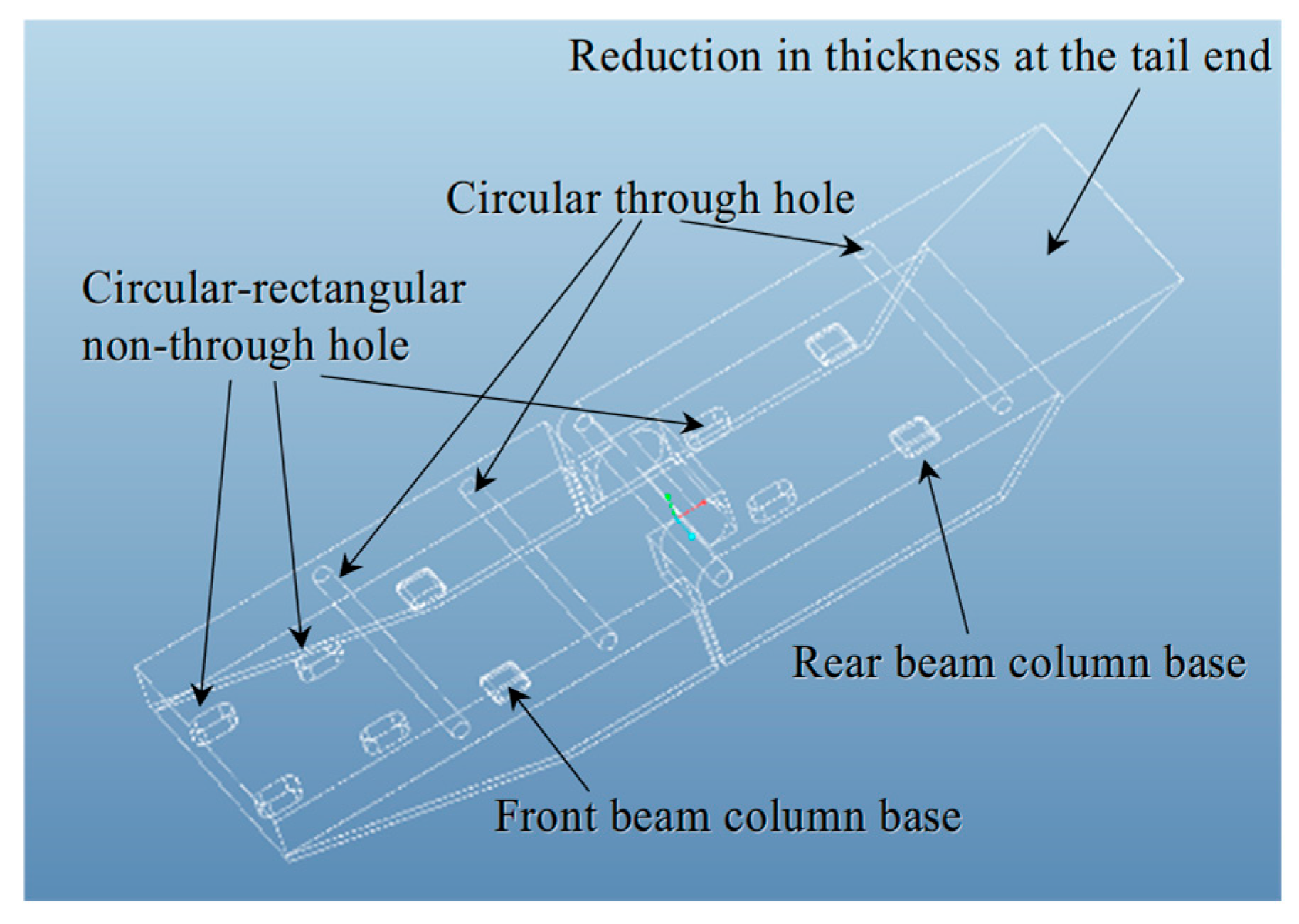
4.3. Structural Optimization of the Beam
4.4. Long-Term Reliability and Field Adaptability of the Optimized Beam
- (1)
- Fatigue and stress-concentration considerations
- ①
- Adopting rounded contours and adequate filet radii at opening edges and thickness transitions to reduce notch effects;
- ②
- Avoiding sharp corners and ensuring smooth surface finishing at cut boundaries;
- ③
- Refining weld design and quality control around high-stress regions (e.g., controlled weld toe geometry and post-weld treatment if necessary);
- ④
- Performing an additional fatigue-oriented numerical check using stress amplitude/mean stress criteria (e.g., Goodman- or Soderberg-type approaches) under representative cyclic load spectra.
- (2)
- Environmental durability and corrosion protection
- (3)
- Prototype validation and field monitoring roadmap
- ①
- Full-scale static bench testing, including loading up to the rated working resistance to verify elastic deformation, stiffness, and safety margin;
- ②
- Full-scale cyclic loading (fatigue) testing under representative stress ranges to examine crack initiation and stiffness degradation;
- ③
- Pilot field deployment with monitoring, where strain gauges (or equivalent sensing technologies) are placed near fatigue-critical regions (opening edges and column well), while support leg pressure and canopy displacement are recorded to establish the operational load spectrum;
- ④
- Non-destructive testing (NDT) such as ultrasonic or magnetic particle inspection at scheduled intervals to detect crack initiation around openings and welds.
5. Conclusions
- (1)
- At filling rates of 85% and 90%, the basic roof exhibits a two-stage subsidence, while the key strata and surface demonstrate a trend of coordinated deformation. Compared to the 85% filling rate, the subsidence amounts for the basic roof, key strata, and surface at a 90% filling rate decrease by 51%, 57%, and 63%, respectively. At a filling rate of 92% at the 2515 working face of Hengjian Coal Mine, the maximum ground-surface subsidence was 265 mm. In the No. 7 mining district of Taoyi Coal Mine, two subsidence troughs developed above the six backfill working faces, both of which were located above faces with relatively low filling rates. These two field practices consistently demonstrate that the filling rate plays a significant controlling role in ground-surface subsidence.
- (2)
- The study clarifies the characteristics of surrounding rock that hydraulic supports must manage under different equivalent mining heights. The equivalent mining height thresholds for unstable direct roof collapse and high basic roof failure are determined to be 0.44 m and 1.26 m, respectively. Based on this, a mechanical model and simulation model for the load distribution on the hydraulic support beam in the 2515 working face were established, revealing that the displacement of the beam under three load conditions is characterized by greater displacement at the ends compared to the middle hinge points.
- (3)
- The optimization of the beam structure was conducted using ANSYS Workbench simulation analysis, resulting in a 10 cm reduction in the thickness of the rear beam. This optimization can theoretically increase the filling rate in the 2515 working face by approximately 2%. Finite element analysis results indicate that the optimized hydraulic support beam continues to meet the required load-bearing standards.
- (4)
- In future work, the optimized beam design will be validated through staged prototype testing (static and cyclic loading) and pilot-scale field monitoring (strain/pressure/displacement measurements and periodic NDT inspection) to confirm long-term durability and operational safety under realistic load spectra.
- (5)
- The proposed method for optimizing the hydraulic support roof beam to improve the backfill ratio is applicable to mines with similar conditions. However, it should be clearly noted that when the geological conditions, mining height, or hydraulic support type changes, the method presented in this study should be re-applied to re-check and re-verify the design.
Author Contributions
Funding
Institutional Review Board Statement
Informed Consent Statement
Data Availability Statement
Acknowledgments
Conflicts of Interest
Abbreviations
| Cσ | strength similarity constant | CL | geometric similarity constant |
| Cρ | density similarity constant | p | actual values |
| m | model values | σ | material strength |
| L | dimension | ρ | material density |
| ME | the thickness of the high-level basic roof | γ | the unit weight of the rock |
| C | periodic pressure step distance | ΔhA | the maximum subsidence of the roof |
| Δhi | the subsidence of the roof that needs to be controlled | KT | the rock weight distribution coefficient |
| N | mining height | n | the safety factor |
| M | the mining height | W | the width of the hydraulic support |
| LK | the maximum control distance of the hydraulic support | a1, b1, c1, a2, b2, c2 | constants of the concave curves |
| ∑Fx | the stress sum in the x direction | ∑Fy | the stress sum in the y direction |
| μ | the coefficient of friction | ∑Mfront beam | the moment sum to the left of the hinge point |
| ∑Mrear beam | the moment sum to the right of the hinge point | ∑MA | the moment sum at point A |
| Mq1(x) | the moments exerted by q1(x) | Mq2(x) | the moments exerted by q2(x) |
References
- Xiong, Y.; Kong, D.Z.; Song, G.F. Research hotspots and development trends of green coal mining: Exploring the path to sustainable development of coal mines. Resour. Policy 2024, 92, 105039. [Google Scholar] [CrossRef]
- Wang, F.T.; Ma, Q.; Li, G.; Wu, C.; Guo, G. Overlying strata movement laws induced by longwall mining of deep buried coal seam with superhigh-water material backfilling technology. Adv. Civ. Eng. 2018, 2018, 4306239. [Google Scholar] [CrossRef]
- Cao, W.H.; Wang, X.F.; Li, P.; Zhang, D.; Sun, C.; Qin, D. Wide strip backfill mining for surface subsidence control and its application in critical mining conditions of a coal mine. Sustainability 2018, 10, 700. [Google Scholar] [CrossRef]
- Emad, M.Z.; Mitri, H.; Kelly, C. State-of-the-art review of backfill practices for sublevel stoping system. Int. J. Min. Reclam. Environ. 2013, 29, 544–556. [Google Scholar] [CrossRef]
- Huang, Z.M.; Zhang, L.; Ma, Z.G. Study on the mechanical relationship among the backfilling mining support, roof rock beam, and gangue filling body in comprehensive mechanized filling mining process. Adv. Civ. Eng. 2020, 2020, 8824735. [Google Scholar] [CrossRef]
- Huang, Y.L.; Zhang, J.X.; An, B.F.; Zhang, Q. Overlying strata movement law in fully mechanized coal mining and backfilling longwall face by similar physical simulation. J. Min. Sci. 2012, 47, 618–627. [Google Scholar] [CrossRef]
- Zhang, J.X.; Sun, Q.; Zhou, N.; Jiang, H.; Germain, D.; Abro, S. Research and application of roadway backfill coal mining technology in western coal mining area. Arab. J. Geosci. 2016, 9, 558. [Google Scholar] [CrossRef]
- Creber, K.J.; Kermani, M.F.; McGuinness, M.; Hassani, F. In situ investigation of mine backfill distribution system wear rates in Canadian mines. Int. J. Min. Reclam. Environ. 2017, 31, 426–438. [Google Scholar] [CrossRef]
- Zhou, N.; Zhang, J.X.; Ouyang, S.Y.; Deng, X.; Dong, C.; Du, E. Feasibility study and performance optimization of sand-based cemented paste backfill materials. J. Clean. Prod. 2020, 259, 120798. [Google Scholar] [CrossRef]
- Shaposhnik, Y.N.; Konurin, A.; Neverov, A.A.; Neverov, S.A.; Usol’tseva, O.M.; Shaposhnik, S.N. Validation of friction-anchored rock bolt supports for underground excavations in backfill. J. Min. Sci. 2021, 57, 775–786. [Google Scholar] [CrossRef]
- Sakhno, I.; Zuievska, N.; Xiao, L.; Zuievskyi, Y.; Sakhno, S.; Semchuk, R. Prediction of water inrush hazard in Fully Mechanized Coal Seams’ mining under aquifers by numerical simulation in ANSYS software. Appl. Sci. 2025, 15, 4302. [Google Scholar] [CrossRef]
- Liu, J.S.; Wang, Y.; Zuo, J.P.; Wu, Z.; Sun, Y.; Zheng, Z. Asymmetric analogous hyperbola model of overburden movement and its verification. Sci. Rep. 2024, 14, 15614. [Google Scholar] [CrossRef]
- Feng, G.M. Research on the Superhigh-Water Packing Material and Filling Mining Technology and Their Application. Ph.D. Thesis, China University of Mining and Technology, Xuzhou, China, 2009. [Google Scholar]
- Shimada, Y.; Young, J.F. Structural changes during thermal dehydration of ettringite. Adv. Cem. Res. 2001, 13, 77–81. [Google Scholar] [CrossRef]
- Wang, X.F.; Qin, D.D.; Zhang, D.S.; Sun, C.; Zhang, C.; Xu, M.; Li, B. Mechanical characteristics of superhigh-water content material concretion and its application in longwall backfilling. Energies 2017, 10, 1592. [Google Scholar] [CrossRef]
- Feng, G.M.; Sun, C.D.; Wang, C.Z.; Zhou, Z. Research on goaf filling methods with super high-water material. J. China Coal Soc. 2010, 35, 1963–1968. [Google Scholar] [CrossRef]
- Wang, F.T.; Ma, Q.; Zhang, C.; Feng, G. Overlying strata movement and stress evolution laws triggered by fault structures in backfilling longwall face with deep depth. Geomat. Nat. Hazards Risk 2020, 11, 949–966. [Google Scholar] [CrossRef]
- Zhang, M.; Zhang, J.F.; Jiao, Z.H. Design of rib pillars in deep longwall mines based on rockburst and water-seepage prevention. Energy Sci. Eng. 2021, 9, 256–266. [Google Scholar] [CrossRef]
- Bai, E.H.; Guo, W.B.; Tan, Y.; Huang, G.; Guo, M.; Ma, Z. Roadway backfill mining with super-high-water material to protect surface buildings: A case study. Appl. Sci. 2020, 10, 107. [Google Scholar] [CrossRef]
- Li, H.Z.; Guo, G.L.; Zhai, S.C. Mining scheme design for super-high water backfill strip mining under buildings: A Chinese case study. Environ. Earth Sci. 2016, 75, 1017. [Google Scholar] [CrossRef]
- Li, H.J.; Zhang, Y.C.; Xu, L.; Jia, X.; Gu, X. Examination of the treatment quality of filling mined-out voids using super-high-water material by the TEM technique. Environ. Earth Sci. 2017, 76, 115. [Google Scholar] [CrossRef]
- Guo, G.L.; Zhu, X.J.; Zha, J.F.; Wang, Q. Subsidence prediction method based on equivalent mining height theory for solid backfilling mining. Trans. Nonferrous Met. Soc. China 2014, 24, 3302–3308. [Google Scholar] [CrossRef]
- El, M.; Nawfal, A.; Michel, L.L. Effect of drainage and sequential filling on the behavior of backfill in mine stopes. Can. Geotech. J. 2014, 51, 1–15. [Google Scholar] [CrossRef]
- Bazaluk, O.; Petlovanyi, M.; Lozynskyi, V.; Zubko, S.; Sai, K.; Saik, P. Sustainable underground iron ore mining in ukraine with backfilling worked-out area. Sustainability 2021, 13, 834. [Google Scholar] [CrossRef]
- Abdulkadir, S.B.; Chen, Q.S.; Yilmaz, E.; Wang, D. Comparative and meta-analysis evaluation of non-destructive testing methods for strength assessment of cemented paste backfill: Implications for sustainable pavement and concrete materials. Materials 2025, 18, 2888. [Google Scholar] [CrossRef] [PubMed]
- Chang, Q.L.; Yao, X.G.; Leng, Q.; Cheng, H.; Wu, F.; Zhou, H.; Sun, Y. Strata movement of the thick loose layer under strip-filling mining method: A case study. Appl. Sci. 2021, 11, 11717. [Google Scholar] [CrossRef]
- Hao, J.; Shi, Y.K.; Qi, M.H.; Zhang, L. Effective filling rate in filling mining’s influence on overlying strata’s movement. Adv. Mater. Res. 2013, 734–737, 741–745. [Google Scholar] [CrossRef]
- Zhang, J.X.; Zhang, Q.; Sun, Q.; Gao, R.; Germain, D.; Abro, S. Surface subsidence control theory and application to backfill coal mining technology. Environ. Earth Sci. 2015, 74, 1439–1448. [Google Scholar] [CrossRef]
- Jia, K.J. Research on the Overlying Strata Movement Law of Super-High-Water Material Bag-Type Filling Mining and Its Control. Ph.D. Thesis, China University of Mining and Technology, Xuzhou, China, 2015. [Google Scholar]
- Adach-Pawelus, K.; Pawelus, D. Application of hydraulic backfill for rockburst prevention in the mining field with remnant in the polish underground copper mines. Energies 2021, 14, 3869. [Google Scholar] [CrossRef]
- Bilen, M.; Toroglu, I.; Yilmaz, E. Power plant ash as a backfill material for subsidence mitigation and mining district recovery: A review and case study in Zonguldak, Turkiye. Int. J. Min. Reclam. Environ. 2025, 1–19. [Google Scholar] [CrossRef]
- Zhang, X.; Zhang, J.W.; Zeng, Q.L.; Wang, C.L. Lightweight design for hydraulic support. Key Eng. Mater. 2011, 450, 79–82. [Google Scholar] [CrossRef]
- Wang, J.; Ning, J.G.; Tan, Y.L.; Hu, S.C.; Guo, W.Y. Deformation and failure laws of roadway surrounding rock and support optimization during shallow-buried multi-seam mining. Geomat. Nat. Hazards Risk 2020, 11, 191–211. [Google Scholar] [CrossRef]
- Yang, Z.K.; Sun, Z.Y.; Jiang, S.B.; Mao, Q.H.; Liu, P.; Xu, C.Z. Structural analysis on impact-mechanical properties of ultra-high hydraulic support. Int. J. Simul. Model. 2020, 19, 17–28. [Google Scholar] [CrossRef]
- Xue, K.M.; Huang, P.; Li, P.; Chen, L.; Liu, W. The structure statics analysis and optimal design of hydraulic support. Appl. Mech. Mater. 2012, 226–228, 1265–1268. [Google Scholar] [CrossRef]
- He, M.C. Physical modeling of an underground roadway excavation in geologically 45° inclined rock using infrared thermography. Eng. Geol. 2011, 121, 165–176. [Google Scholar] [CrossRef]
- Kang, H.P.; Li, J.Z.; Yang, J.H.; Gao, F. Investigation on the influence of abutment pressure on the stability of rock bolt reinforced roof strata through physical and numerical modeling. Rock Mech. Rock Eng. 2017, 50, 387–401. [Google Scholar] [CrossRef]
- Chen, H.M.; Yu, H.S.; Smith, M.J. Physical model tests and numerical simulation for assessing the stability of brick-lined tunnels. Tunn. Undergr. Space Technol. 2016, 53, 109–119. [Google Scholar] [CrossRef]
- Ghabraie, B.; Ren, G.; Smith, J.V. Characterising the multi-seam subsidence due to varying mining configuration, insights from physical modelling. Int. J. Rock Mech. Min. Sci. 2017, 93, 269–279. [Google Scholar] [CrossRef]
- Ghabraie, B.; Ren, G.; Smith, J.V.; Holden, L. Application of 3D laser scanner, optical transducers and digital image processing techniques in physical modelling of mining-related strata movement. Int. J. Rock Mech. Min. Sci. 2015, 80, 219–230. [Google Scholar] [CrossRef]
- Qin, D.D.; Wang, X.F.; Zhang, D.S.; Guan, W.; Zhang, L.; Xu, M. Occurrence characteristic and mining technology of ultra-thick coal seam in Xinjiang, China. Sustainability 2019, 11, 6470. [Google Scholar] [CrossRef]
- Wang, F.T.; Tu, S.H.; Zhang, C.; Zhang, Y.; Bai, Q. Evolution mechanism of water-flowing zones and control technology for longwall mining in shallow coal seams beneath gully topography. Environ. Earth Sci. 2016, 75, 1309. [Google Scholar] [CrossRef]
- Bai, Q.S.; Tu, S.H.; Wang, F.T. Characterizing the top coal cavability with hard stone band(s): Insights from laboratory physical modeling. Rock Mech. Rock Eng. 2019, 52, 1505–1521. [Google Scholar] [CrossRef]
- Ghabraie, B.; Ren, G.; Zhang, X.Y.; Smith, J. Physical modelling of subsidence from sequential extraction of partially overlapping longwall panels and study of substrata movement characteristics. Int. J. Coal Geol. 2015, 140, 71–83. [Google Scholar] [CrossRef]
- State Coal Industry Administration. Buildings, Water Bodies, Railways, and Main Roadway Unexploited Coal Pillars and Compressed Coal Mining Regulations; China Coal Industry Publishing House: Beijing, China, 2017.
- Sun, C.D.; Zhang, D.S.; Wang, X.F.; Zhou, Y.Z.; Li, Y.Y. Study and application of overlying strata control technology in bag-type backfill longwall mining with super high-water content material. J. China Coal Soc. 2015, 40, 1313–1319. [Google Scholar] [CrossRef]
- Zhang, Q.; Zhang, J.X.; Chen, Y.; Ntigurirwa, J.D.; Xia, K. Moving set-up room theory of weakening the mining pressure caused by the backfilling body in solid backfilling mining. Energy Sci. Eng. 2020, 8, 898–909. [Google Scholar] [CrossRef]
- Wang, Y. Analysis on strength of top beam of ZP4000 hydraulic support under different working conditions. Mech. Manag. Dev. 2021, 36, 104–106. [Google Scholar] [CrossRef]



| Rock Layer | Mass Proportion (%) Sand:Calcium Carbonate:Gypsum:Water | σp (MPa) | σm (MPa) |
|---|---|---|---|
| Quartzose Siltstone | 74:8:8:10 | 95 | 0.264 |
| Mudstone | 78:8:4:10 | 28 | 0.078 |
| Siltstone | 77:6:6:11 | 80 | 0.222 |
| Fine Sandstone | 72:9:9:10 | 90 | 0.250 |
| Muddy Siltstone | 78:6:6:10 | 60 | 0.167 |
| Medium Sandstone | 72:5:13:10 | 69 | 0.192 |
| Conglomerate | 80:5:5:10 | 6 | 0.017 |
| Clay | 81:3:6:10 | 2 | 0.006 |
| Working Face (ID) | Strike Length/m | Dip Length/m | Mining Height/m | Filling Rate |
|---|---|---|---|---|
| Backfill working face I | 50 | 220 | 4.0 | 89% |
| Backfill working face II | 50 | 200 | 4.0 | 71% |
| Backfill working face III | 50 | 248 | 4.0 | 91% |
| Backfill working face IV | 50 | 270 | 4.0 | 69% |
| Backfill working face V | 50 | 292 | 3.2 | 86% |
| Backfill working face VI | 120 | 330 | 2.3 | 56% |
| N | N ≤ 1 | 1 < N ≤ 2.5 | 2.5 < N ≤ 5 | N > 5 |
|---|---|---|---|---|
| KT | 2 | 2N | 38(N − 2.5) + 5 | ∞ |
| Material Type | Modulus of Elasticity E/GPa | Poisson’s Ratio | Density ρ/kg·m−3 | Yield Strength/N/mm2 |
|---|---|---|---|---|
| Q690 | 206 | 0.3 | 7850 | 690 |
| Concave Curve Load | Quadratic Function Load | Uniform Load | |||||||
|---|---|---|---|---|---|---|---|---|---|
| −10% | 0% | 10% | −10% | 0% | 10% | −10% | 0% | 10% | |
| Maximum stress/(N/mm2) | 544.4 | 647.9 | 665.4 | 545.0 | 605.5 | 666.1 | 506.8 | 551.4 | 599.2 |
| Stress error | −15.9% | 0 | 2.7% | −10.0% | 0 | 10.0% | −8.1% | 0 | 8.7% |
| Maximum deformation/mm | 3.97 | 4.41 | 4.85 | 3.02 | 3.35 | 3.69 | 2.91 | 3.55 | 3.66 |
| Deformation error | −10.0% | 0 | 10.0% | −9.9% | 0 | 10.1% | 18.0% | 0 | 3.1% |
Disclaimer/Publisher’s Note: The statements, opinions and data contained in all publications are solely those of the individual author(s) and contributor(s) and not of MDPI and/or the editor(s). MDPI and/or the editor(s) disclaim responsibility for any injury to people or property resulting from any ideas, methods, instructions or products referred to in the content. |
© 2026 by the authors. Licensee MDPI, Basel, Switzerland. This article is an open access article distributed under the terms and conditions of the Creative Commons Attribution (CC BY) license.
Share and Cite
Chen, X.; Wang, X.; Qian, C.; Qin, D.; Chang, Z.; Feng, Z.; Niu, Z. Influence of Filling Rate and Support Beam Optimization on Surface Subsidence in Sustainable Ultra-High-Water Backfill Mining: A Case Study. Sustainability 2026, 18, 854. https://doi.org/10.3390/su18020854
Chen X, Wang X, Qian C, Qin D, Chang Z, Feng Z, Niu Z. Influence of Filling Rate and Support Beam Optimization on Surface Subsidence in Sustainable Ultra-High-Water Backfill Mining: A Case Study. Sustainability. 2026; 18(2):854. https://doi.org/10.3390/su18020854
Chicago/Turabian StyleChen, Xuyang, Xufeng Wang, Chenlong Qian, Dongdong Qin, Zechao Chang, Zhiwei Feng, and Zhijun Niu. 2026. "Influence of Filling Rate and Support Beam Optimization on Surface Subsidence in Sustainable Ultra-High-Water Backfill Mining: A Case Study" Sustainability 18, no. 2: 854. https://doi.org/10.3390/su18020854
APA StyleChen, X., Wang, X., Qian, C., Qin, D., Chang, Z., Feng, Z., & Niu, Z. (2026). Influence of Filling Rate and Support Beam Optimization on Surface Subsidence in Sustainable Ultra-High-Water Backfill Mining: A Case Study. Sustainability, 18(2), 854. https://doi.org/10.3390/su18020854