


Abstract
This study evaluated powdered activated carbon (PAC) pre-coating as a pretreatment strategy to enhance dissolved organic matter (DOM) removal and control fouling during microfiltration of surface water. Two PAC types (one is coal-based and the other is wood-based), divided into three different particle size ranges (22–44, 44–63, 63–88 μm) using sieves and coating weights ranging from 0.6 to 1.2 and 2.4 mg/cm2, were systematically compared. Coating PAC improved the quality of water after filtration and stabilized filtration flux, with smaller PAC particle size ranges exhibiting higher DOM removal efficiencies, achieving maximum removals of approximately 30–35% for DOC and over 50% for UV260 at the highest coating weight, whereas uncoated membranes showed negligible DOM removal. The resulting PAC layer on the membrane increased filtration resistance. Fluorescence EEM and Mw distribution results showed that aromatic and high molecular weight DOM was preferentially adsorbed by PAC before reaching the membrane surface; therefore, their contribution to membrane fouling could be reduced. SEM observations showed differences in the images of deposits formed on the PAC layer. These results indicate that the PAC layer acted as a protective interception zone that reduced direct contact between DOM and the membrane surface, thereby contributing to improved flux stability. The coating effect varied with the weight, type and size range of PAC, highlighting the importance of PAC selection. The findings of this study could contribute to more efficient and sustainable urban water supply system operation and management through water quality improvement and process configuration.
1. Introduction
Membrane-based processes are increasingly adopted in drinking water treatment as utilities seek more reliable solutions for managing the growing variability of surface water quality. Conventional treatment systems relying on coagulation, flocculation, sedimentation and granular media filtration often encounter operational challenges when raw water exhibits elevated turbidity, rapid fluctuations in natural organic matter (NOM) or increased microbial loading. Under such conditions, conventional processes may struggle to consistently achieve target water quality, which has accelerated the incorporation of low-pressure membrane technologies into modern treatment trains [1,2]. Microfiltration (MF) and ultrafiltration (UF) provide an effective barrier to particles and microorganisms and can maintain stable effluent quality under dynamic surface water conditions. However, their broader implementation continues to be constrained by membrane fouling, which reduces permeability, increases operational pressure and shortens membrane lifespan. Among the various types of fouling, NOM is widely recognized as the dominant contributor in surface water treatment. In practice, membrane fouling is primarily governed by the dissolved fraction of NOM, referred to as dissolved organic matter (DOM), which can readily interact with membrane surfaces and is therefore the main focus of this study. DOM comprises a heterogeneous mixture of humic substances, polysaccharides, proteins and biopolymers whose molecular size distribution, hydrophobicity and charge govern their interactions with membrane surfaces. These physicochemical characteristics determine their propensity for pore blocking, adsorption and cake layer formation during filtration [3,4,5]. Even relatively low concentrations of certain DOM fractions can lead to significant and often persistent reductions in membrane performance, underscoring the need for effective pretreatment strategies.
Activated carbon adsorption has long been considered a promising approach for reducing dissolved organic matter loading prior to membrane filtration. Powdered activated carbon (PAC), in particular, has received considerable attention due to its high surface area and broad affinity for organic compounds. PAC is capable of adsorbing humic substances, biodegradable organics and a wide range of micropollutants, thereby lowering the concentration of potential foulants entering membrane modules [6,7]. PAC has been integrated into membrane systems through several configurations, including direct addition to the feed water and hybrid PAC and membrane processes [8,9,10,11]. More recent research has shown that pairing PAC with ceramic MF membranes can enhance treatment capacity and improve operational sustainability [12]. In addition, recent studies have demonstrated that PAC and membrane hybrid systems can improve organic matter removal and stabilize filtration under drinking water treatment conditions [12]. However, most of these studies primarily focus on overall filtration performance or treatment capacity, while the influence of PAC material properties on fouling development is rarely examined in detail [12]. Despite these advantages, direct PAC addition also has notable drawbacks. PAC particles accumulate on membrane surfaces together with suspended solids, forming a compact mixed cake layer that exhibits high hydraulic resistance. This accumulation can diminish the intended benefits of adsorption and accelerate flux decline, particularly when treating water containing elevated particulate matter or high molecular weight DOM.
Compared with conventional PAC dosing directly into the feed water, PAC pre-coating aims to localize adsorption and fouling at the membrane surface rather than within the bulk suspension. This configuration can enhance contact efficiency between PAC and dissolved organic matter while avoiding PAC dispersion throughout the treatment system. In contrast to coagulation and membrane processes, PAC pre-coating does not rely on chemical destabilization of particles but instead targets dissolved organic fractions through adsorption. However, the formation of a PAC layer inevitably introduces additional hydraulic resistance and raises practical questions related to layer compaction, renewal, and cleaning frequency. These considerations highlight an inherent trade-off between improved water quality and filtration stability versus increased resistance, which remains insufficiently addressed in existing studies. Pre-depositing or pre-coating PAC onto membrane surfaces has been shown to improve permeability stability compared with conventional PAC mixing in drinking water related membrane systems [13]. Systematic evaluation of PAC pre-coating in drinking water applications has remained limited, largely due to the experimental complexity associated with controlling coating parameters, the diversity of PAC material properties, and the difficulty of isolating coating effects from hydrodynamic and water quality variations. While these findings demonstrate the potential advantages of PAC pre-coating, existing studies are typically restricted to a single PAC type or a narrow range of operating conditions, and systematic evaluations of key PAC parameters such as particle size distribution and coating weight remain limited [13]. PAC particle size is expected to influence both adsorption kinetics and the physical structure of the pre-coated layer. Smaller particles provide higher external surface area and shorter diffusion paths, which can enhance adsorption of aromatic and high-molecular-weight DOM. At the same time, finer particles tend to form denser and more compressible coating layers, potentially increasing hydraulic resistance and susceptibility to compaction. In contrast, larger particles may form more porous layers with lower resistance but reduced adsorption efficiency. Understanding this size-dependent balance is therefore essential for optimizing PAC pre-coating performance. Another unresolved issue reported in PAC pre-coating studies is the trade-off between enhanced dissolved organic matter removal and increased hydraulic resistance. From a practical perspective, this trade-off implies that PAC pre-coating may improve filtration stability at the expense of higher initial resistance, and the handling, renewal, or removal of the PAC layer may introduce additional operational complexity in full-scale applications. Finer PAC particles and higher PAC loadings are generally associated with improved adsorption efficiency but may also form compact and compressible cake layers that increase filtration resistance [14,15,16]. Although improved flux stability has been reported in PAC-assisted membrane filtration for drinking water, resistance development is often discussed qualitatively without linking it to changes in DOM composition. Pre-coating may delay pore blockage, reduce the rate of fouling progression and stabilize flux during filtration. Recent investigations in gravity-driven membrane systems have shown that pre-deposited PAC can provide more stable permeability than PAC mixed directly with feed water, particularly under conditions of moderate DOM loading [13]. Despite these promising observations, systematic evaluations of PAC pre-coating remain limited. Existing studies have not fully clarified how the PAC layer evolves during filtration, how it interacts with DOM of varying characteristics or how these interactions influence the development of membrane fouling. Furthermore, practical considerations such as optimal coating weight, hydraulic loading and operational consistency require further understanding before PAC pre-coating can be advanced toward full scale implementation.
From an operational perspective, the applicability of PAC pre-coating depends on the stability of the coating layer under continuous operation, as well as strategies for layer renewal, relaxation, or removal during cleaning. Although such aspects are often discussed as future work, they should be motivated by a mechanistic understanding of how PAC layers interact with different DOM fractions. In this study, DOM characterization was conducted using DOC, UV260, fluorescence-EEM peak analysis, and high-performance size exclusion chromatography (HPSEC), which together capture bulk concentration, aromaticity, and molecular weight distribution. While these approaches do not resolve detailed hydrophobic–hydrophilic fractions or specific functional groups, they are sufficient to identify DOM components most relevant to membrane fouling and adsorption behavior.
This study investigates the performance of microfiltration membranes pre-coated with powdered activated carbon for the treatment of surface water. Specifically, two PAC types, three particle size fractions, and multiple coating weights were systematically evaluated to elucidate their combined effects on dissolved organic matter removal and filtration performance. By integrating multi-index DOM characterization (DOC, UV260, fluorescence-EEM, and molecular weight distribution) with filtration resistance analysis and membrane morphology observation, this study aims to clarify the resistance–removal trade-off associated with PAC pre-coating. The results provide mechanistic insights into how PAC layer properties govern adsorption behavior and fouling development, thereby supporting more rational selection of PAC pre-coating conditions for membrane pretreatment. From a sustainability standpoint, controlling the location and nature of fouling is as important as reducing overall resistance. Transferring fouling from the membrane surface to a manageable pretreatment layer may contribute to long-term operational stability, extended membrane lifespan, and reduced maintenance intensity.
2. Materials and Methods
This study employed a combination of controlled laboratory scale microfiltration experiments and detailed water quality analyses to evaluate the effects of powdered activated carbon pre-coating on membrane fouling behavior. The experimental design consisted of four integrated components: characterization of raw water, preparation and fractionation of PAC, membrane filtration under hydraulic conditions and quantification of dissolved organic matter removal. Each component was selected to isolate variables that are known to influence PAC and membrane interactions, such as PAC particle size range, carbon loading and DOM composition, thereby ensuring that the observed differences in membrane performance could be attributed to the experimental conditions. All measurements and operational procedures were conducted under strictly controlled conditions to enable reproducibility and allow direct comparison between treatments.
2.1. Raw Water
The Nagara River was selected as the raw water source because it represents a typical surface water body in Japan with naturally low turbidity. To minimize the influence of suspended solids and ensure that the experiments primarily examined the behavior of dissolved organic matter, all samples were passed through 0.2 µm cellulose acetate membranes prior to use. This pretreatment was applied to isolate the effects of dissolved and colloidal organic matter on PAC pre-coating performance under low-turbidity conditions and was not intended to fully represent particulate-rich surface waters encountered in full-scale operation. The water quality of raw water was shown in Table S1 of Supplementary Material. This pretreatment approach is consistent with previous studies examining the role of dissolved organic components in membrane fouling [3,4]. After filtration, the water was stored at 4 °C to preserve its chemical characteristics before the experimental procedures were conducted.
2.2. PAC
Two commercially available powdered activated carbons were selected to compare the effects of carbon type on membrane performance. PAC1 is a wood-based steam-activated carbon commonly applied in drinking water treatment plants in Japan, whereas PAC2 is a coal-based product. Their physicochemical properties and elemental compositions are summarized in Table 1. PAC characteristics, including pore structure and surface chemistry, are known to influence adsorption behavior and interactions with natural organic matter [6], which justifies the comparison between two PAC types.
Table 1.
Physicochemical properties of PAC.
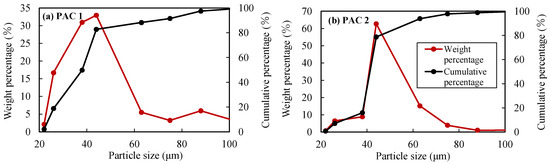
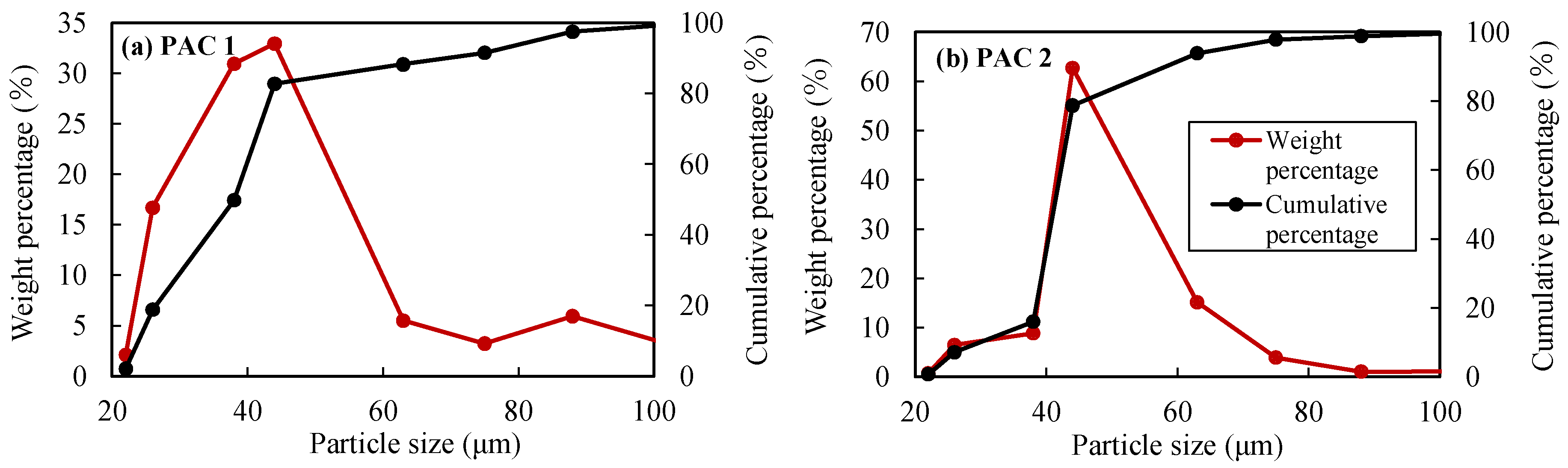
Both PAC were separated into three particle size fractions using stainless steel sieves to investigate the influence of particle size on coating structure and membrane performance. The size ranges of PAC were 22–44 µm, 44–63 µm and 63–88 µm, as shown in the distributions in Figure 1. The difference between the two distributions reflects the intrinsic characteristics of the PAC materials, as the wood-based PAC1 exhibits a broader and more gradually varying particle size distribution, whereas the coal-based PAC2 shows a more concentrated distribution with a dominant fraction, resulting in distinct weight and cumulative percentage profiles. Each PAC fraction was washed with Milli-Q water to remove fine particles that may lead to pore blocking or dense cake formation, procedures aligned with findings that fines can strongly influence PAC layer permeability [15].
Figure 1.
Particle size distributions of PAC1 (a) and PAC2 (b).
Washed PAC samples were subsequently dried in an oven (DX600, Yamato Co., Ltd., Tokyo, Japan).
The coating weight applied to the membrane surface was controlled by filtering predetermined amounts of PAC suspensions prepared in pure water. Target coating weights were 0, 0.6, 1.2 and 2.4 mg/cm2 PAC per membrane area. All pre-coated PAC conditions are shown in Table 2. PAC suspensions were stored at 4 °C prior to use to maintain stability and prevent microbial alteration of carbon surfaces.
Table 2.
Target PAC coating weights (mg/cm2) for different PAC types and particle size ranges on membrane.
2.3. Membrane Filtration Experiments
All membrane filtration experiments were carried out using hydrophilic polyvinylidene difluoride (PVDF) microfiltration membranes (Merck Millipore Ltd., Burlington, MA, USA) with a nominal pore size of 0.1 µm. The membranes had an overall diameter of 4.7 cm and an effective filtration diameter of 3.7 cm when secured within the filtration cell, corresponding to an effective filtration area of 10.7 cm2. Prior to each experiment, membranes were soaked in deionized water overnight to eliminate trapped air and ensure uniform wettability.
PAC pre-coating was performed by filtering a predetermined volume of PAC suspension through the membrane under the same dead-end filtration configuration used for subsequent experiments. PAC suspensions were prepared in deionized water at a concentration of 184 mg/L for each particle size fraction. The volume of suspension introduced into the membrane cell was adjusted according to the effective membrane area (10.7 cm2) to achieve target coating weights of 0.6, 1.2, and 2.4 mg/cm2. During the pre-coating process, no mechanical stirring or mixing was applied, allowing PAC particles to deposit naturally onto the membrane surface and form a uniform and stable PAC layer. After completion of the pre-coating step, filtration experiments were initiated immediately using the same membrane cell without disturbing the deposited PAC layer.
Experiments were conducted at 25 °C in a controlled laboratory environment using a dead-end filtration setup consisting of a 1000 mL feed reservoir (RP-1, Advantce Co., Tokyo, Japan), a 70 mL stainless steel membrane cell (UHP43K, Advantce Co., Tokyo, Japan), a filtrate collection vessel and an electronic balance. A constant pressure of 0.1 MPa was supplied using a nitrogen cylinder connected to the reservoir. A schematic illustration of the filtration setup is provided in Figure S2 of the Supplementary Material. Dead-end configurations of this type are widely adopted in studies evaluating PAC–membrane interactions and fouling behavior [8,13].
Batch filtration experiments followed the same configuration. For each run, 800 mL of feed water was filtered, and the time required to collect every 20 mL of filtrate was recorded. Filtrates were collected in 100 mL glass vials for subsequent analyses. A schematic representation of the PAC layer and SEM images of membrane with and without pre-coated PAC are provided in Figures S3 and S4 of Supplementary Material.
2.4. Analysis
Membrane fouling was quantitatively assessed using the Relative Resistance Index (RRI), which expresses the degree of resistance development relative to the intrinsic resistance of a clean membrane [17,18], the RRI was calculated as:
where is the total resistance during filtration, and is the clean membrane resistance. The clean membrane resistance was determined by pure water filtration using a new membrane prior to PAC pre-coating under the same operating pressure. During filtration experiments, the total resistance was calculated at each time point based on the measured permeate flux. Both and were calculated according to Darcy’s law, which describes laminar flow through a porous medium by using Equation (2):
where is the transmembrane pressure (0.1 MPa), is the water viscosity (8.9 × 10⁻⁴ Pa·s at 25 °C), and (m3·m−2·h−1) is the permeate flux which is computed based on Equation (3) [19]:
where (m3) is the volume of permeate collected during the time interval T (h), and (m2) is the effective filtration area of the membrane (10.7 cm2 in this study). All flux measurements were conducted at 25 °C to maintain constant water viscosity.
RRI = Rt/Rm,
Scanning Electron Microscope (SEM) instrument (SU3500, Hitachi Co., Tokyo, Japan) was used to observe the appearance and cut section of membrane. The adsorption performance of the membrane pre-coated by PAC is evaluated based on the following measurements. Dissolved organic carbon (DOC) was quantified using a total organic carbon analyzer (TOC-LCPH/CPN, Shimadzu Co., Kyoto, Japan). UV absorbance at 260 nm (UV260) was measured using a UV–Vis spectrophotometer (UV-2600, Shimadzu Co., Kyoto, Japan) to indicate the presence of aromatic organic compounds. Fluorescence excitation–emission matrix (EEM) (RF-5300, Shimadzu Co., Kyoto, Japan) spectroscopy provides multidimensional information and exhibits higher sensitivity for detecting low concentrations of organic matter. The peak-picking method, which is the most basic method for fluorescence component analysis, was used to identify DOM components based on characteristic Ex/Em pairs corresponding to fluorescence peak positions: tyrosine-like (Ex: 220–337 nm, Em: 305–320 nm), tryptophan-like (Ex: 215–237 nm or 237–275 nm, Em: 340–381 nm), fulvic acid-like (Ex: 230–260 nm, Em: 400–480 nm), and humic acid-like (Ex: 320–360 nm, Em: 420–460 nm) [20].
The molecular weight distribution of the DOM from the water after treatment was analyzed using a high-performance size-exclusion chromatography system (HPSEC) that consisted of a silica chromatographic column (GL-W520-X 10.7 × 450 mm, Hitachi Co., Tokyo, Japan) and a UV260 detector (Model LC-10AV, Shimadzu Co., Kyoto, Japan). The mobile phase containing 0.02 M Na2HPO4 and 0.02 M KH2PO4 was used as the eluent and was supplied to the column at the constant flow rate of 0.5 mL/min. Calibration was made with standard solution composed of polystyrene sulfonates (PSS) with three different molecular weights of 1430, 4950, and 6530 g/mol [21]. The combination of DOC, UV260, EEM and HPSEC provided a comprehensive evaluation of the changes in DOM characteristics, which is essential since different DOM fractions have distinct fouling potentials and adsorption behavior [22]. A schematic flowchart of the experimental design is provided in Figure S1 of Supplementary Material.
2.5. Statistical Analysis
For each filtration condition, water quality analyses were conducted in duplicate. Results are expressed as mean ± standard deviation (SD). Statistical differences between different PAC types were evaluated using Student’s t-test.
3. Results and Discussion
3.1. Effect Based on DOM Removal
- DOM concentration changes reflected by DOC and UV260
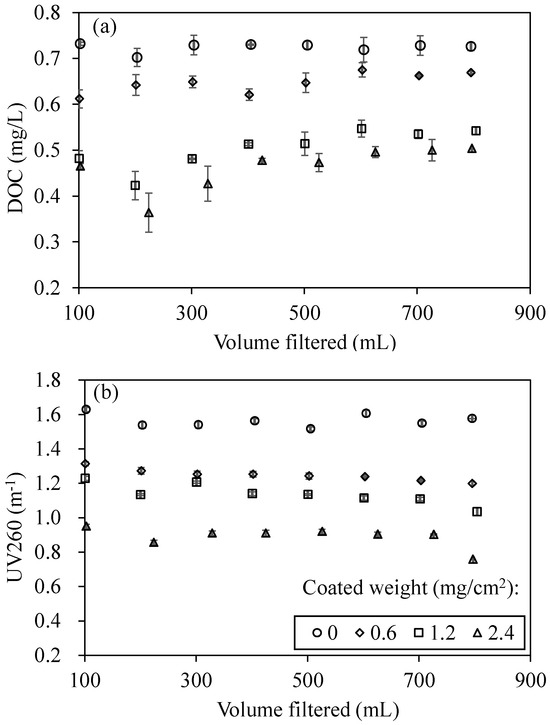
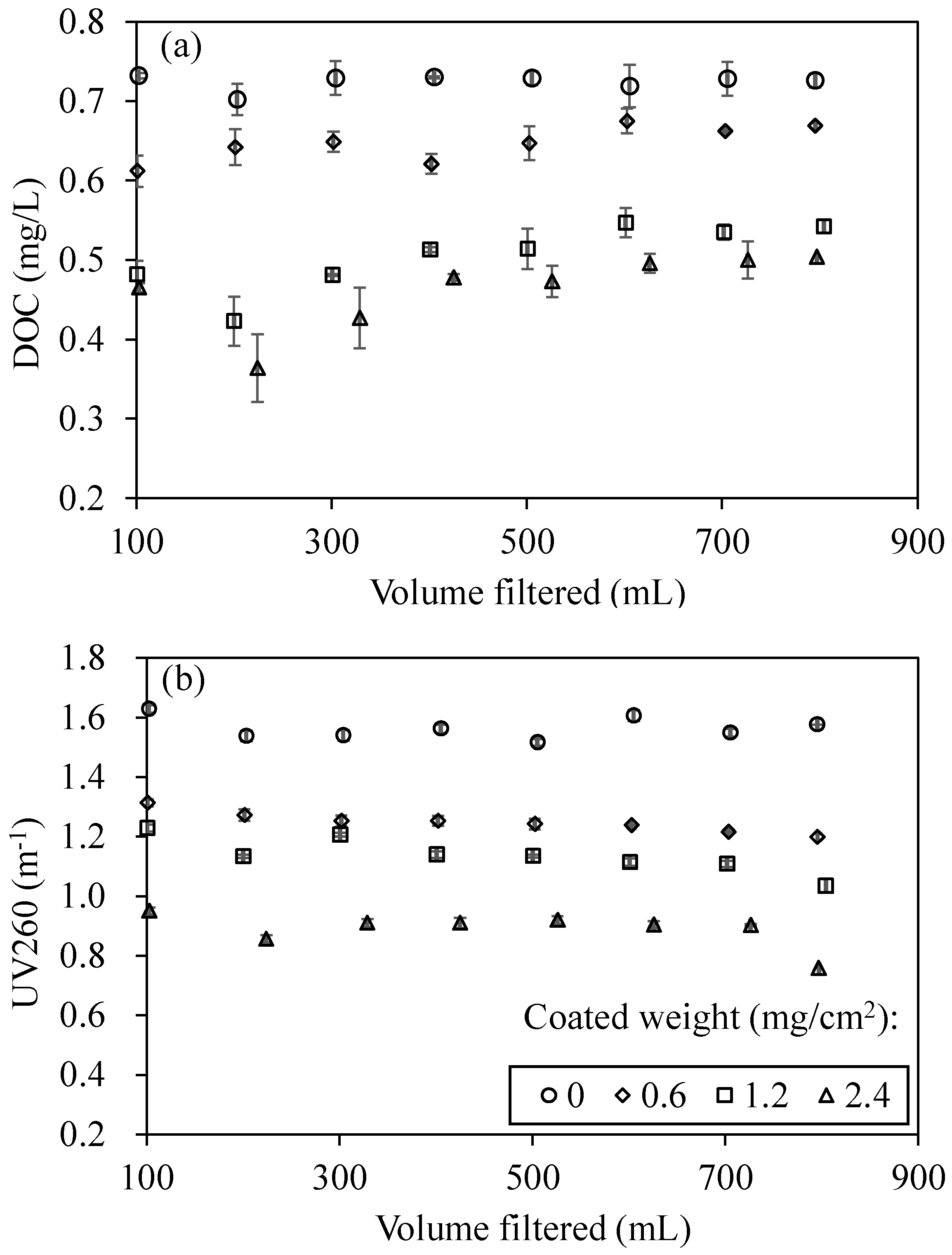
As shown in Figure 2, the raw water exhibited an initial DOC concentration of 0.744 mg/L and a UV260 value of 1.694 m−1, indicating the presence of aromatic and dissolved organic matter typical of surface water. At each PAC coating weight, DOC and UV260 values remained relatively stable with increasing filtered volume, suggesting that DOM removal performance was maintained throughout the filtration process. Differences among the curves primarily reflect the effect of PAC coating weight rather than progressive deterioration of adsorption performance. In the absence of PAC pre-coating, DOC and UV260 in the permeate remained nearly identical to those of the raw water during filtration, confirming that microfiltration alone is ineffective for removing dissolved organic substances, particularly low-molecular-weight or hydrophilic compounds that readily pass through membrane pores [4].
Figure 2.
Changes in DOM concentration reflected by (a) DOC and (b) UV260 during filtration using membrane with and without pre-coated PAC at different coating weights (0, 0.6, 1.2 and 2.4 mg/cm2) (the results for PAC1 with the size range of 22–44 μm) (Symbols represent mean values, and error bars indicate ± SD (n = 2)).
When PAC was pre-coated on the membrane surface, both DOC and UV260 in the filtrate decreased progressively with filtration volume. The extent of reduction increased with coating weight, and the most pronounced decreases were observed at 2.4 mg/cm2. Moreover, the smaller particle size range (22–44 μm) consistently achieved higher reductions than the 44–63 and 63–88 μm ranges, indicating more efficient contact adsorption when smaller PAC particles were used. These results show that PAC pre-coating not only reduces DOM concentrations entering the membrane but also sustains adsorption activity during filtration. The remaining PAC types and particle size ranges exhibited comparable trends in DOC and UV260 reduction, as shown in Figure S5 of the Supplementary Material. To further assess the robustness of the observed DOC and UV260 removal trends, duplicate measurements (n = 2) were conducted for the filtrate under the representative condition of a particle size range of 22–44 μm and a coating weight of 2.4 mg/cm2. Student’s t-test results indicated no statistically significant difference in DOC removal between PAC1 and PAC2 (p = 0.569), whereas UV260 removal showed a statistically significant difference (p = 0.00106). This suggests that UV-absorbing aromatic DOM fractions are more sensitive to PAC type than bulk DOC, highlighting the importance of compositional indicators in distinguishing PAC material effects.
- 2.
- DOM composition changes reflected by Fluorescence EEM
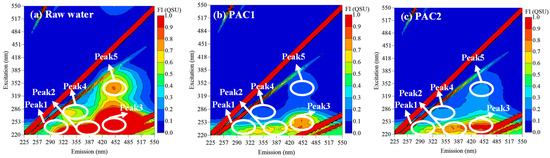
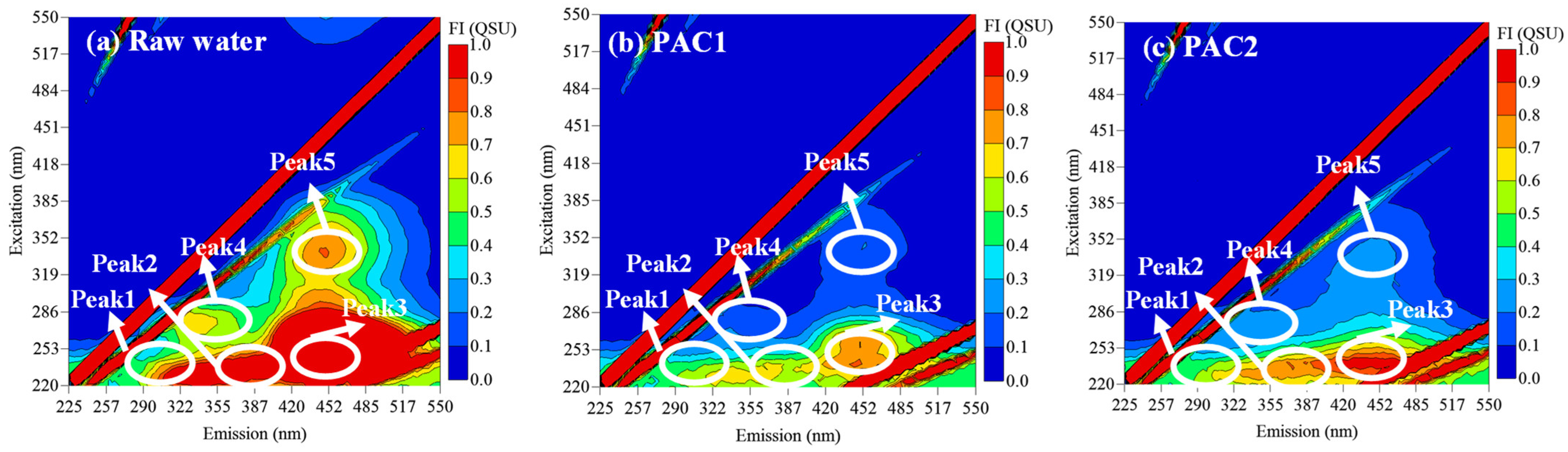
Figure 3 compares the EEM spectra of raw water with those obtained after PAC1 and PAC2 pre-coating at 22–44 µm and 2.4 mg/cm2. The raw water spectra were dominated by humic acid-like peaks (Ex/Em = 320–360/420–460 nm), with additional fulvic acid-like and protein-like fluorescence, indicating the presence of aromatic and high molecular weight organics known to promote membrane fouling in MF and UF systems. PAC pre-coating markedly reduced the intensities of all fluorescence peaks, with humic acid-like regions showing the greatest attenuation. Reductions in the fulvic acid-like and protein-like regions were also evident, although less pronounced. These patterns are consistent with the affinity of activated carbon for hydrophobic and aromatic DOM through π–π interactions and other nonpolar sorption mechanisms [6,14]. The slightly stronger reduction of humic acid-like peaks by PAC1 and the comparable attenuation of protein-like regions by PAC2 suggest that differences in pore structure and surface chemistry between the two carbons influence their adsorption selectivity.
Figure 3.
Fluorescence-EEM spectra of (a) raw water, (b) PAC1-treated water, and (c) PAC2-treated water for the PAC size range of 22–44 μm and coated weight of 2.4 mg/cm2 (FI: fluorescence intensity; Peak 1: tyrosine-like; Peak 2: tryptophan-like; Peak 3: fulvic acid-like; Peak 4: tryptophan-like; Peak 5: humic acid-like).
- 3.
- DOM composition changes reflected by molecular weight distribution
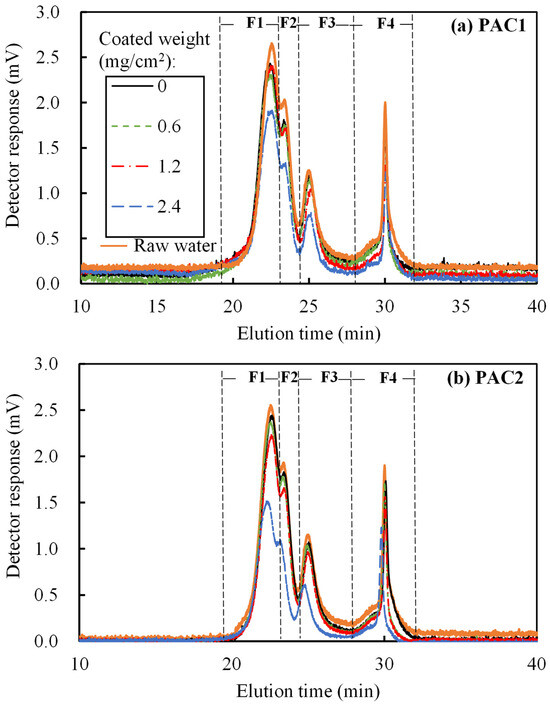
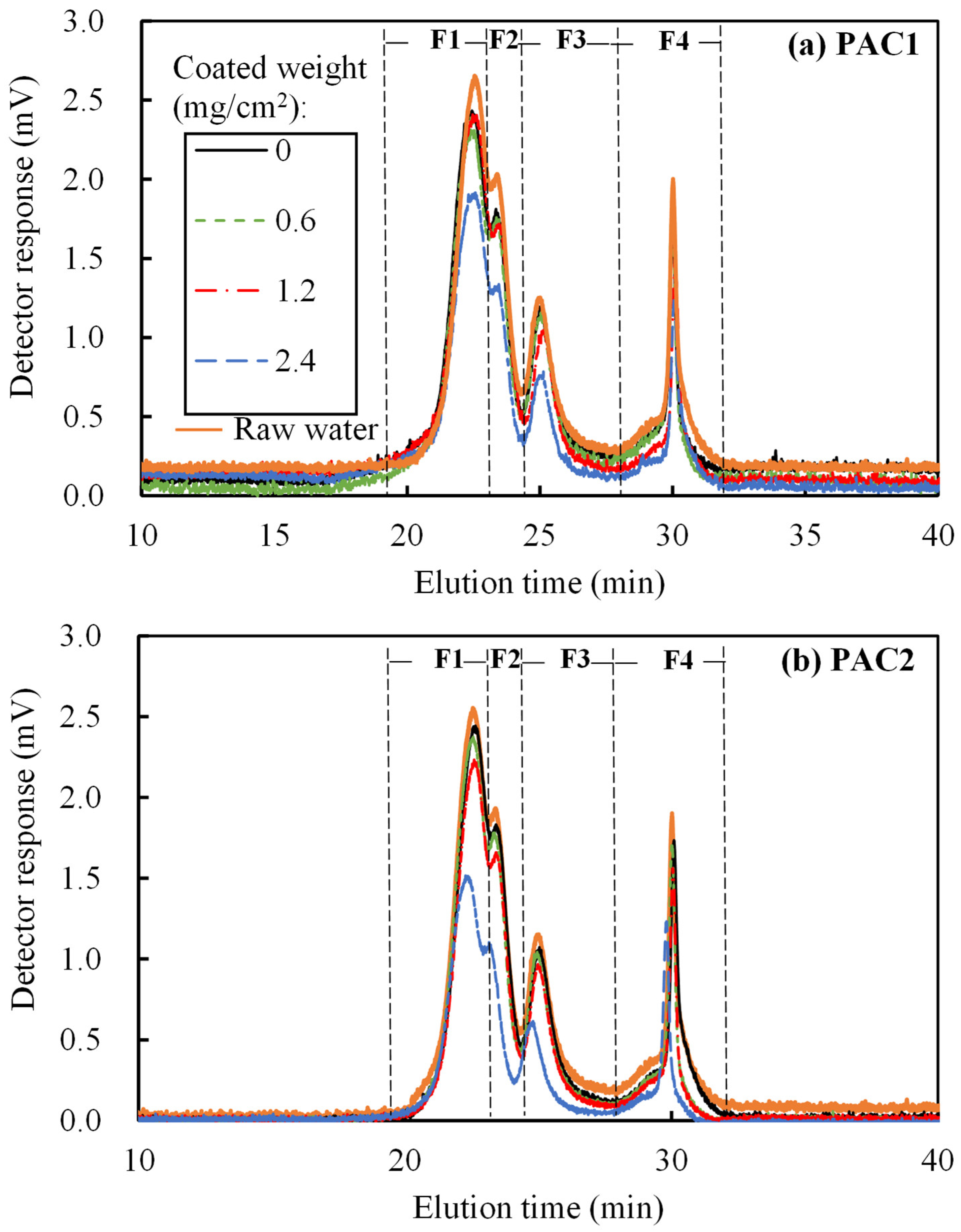
The HPSEC chromatograms in Figure 4 further support the compositional changes inferred from the EEM results. The raw water displayed strong peaks in the early eluting region, corresponding to high and medium molecular weight humic substances, as defined by the calibration curve described in Section 2. These fractions are widely reported as key contributors to membrane fouling due to their tendency to accumulate on or within membrane structures [3].
Figure 4.
HPSEC-based molecular weight distribution of DOM in raw water and water after treatment using membrane with and without pre-coated (a) PAC1 and (b) PAC2 (coating weight: 0, 0.6, 1.2 and 2.4 mg/cm2; F1–F4: four molecular weight fractions based on the peak number) (the results for PAC with the size range of 22–44 μm).
Following PAC pre-coating, the peak intensities in the high and medium molecular weight regions decreased substantially for both PAC1 and PAC2, and the extent of reduction increased with coating weight. In contrast, the later-eluting, low molecular weight fractions showed much smaller changes, indicating that smaller, more hydrophilic DOM species were less affected by PAC adsorption. This molecular-weight-selective removal is consistent with previous studies showing that activated carbon preferentially adsorbs larger and more aromatic DOM molecules, while low molecular weight hydrophilic components are less strongly retained [23]. Together with the EEM results, these findings demonstrate that PAC pre-coating selectively removes foulant prone, high molecular weight and aromatic DOM fractions rather than uniformly reducing all DOM components.
- 4.
- Removal efficiency comparison with different DOM indexes
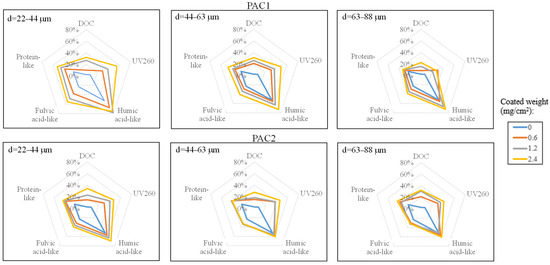
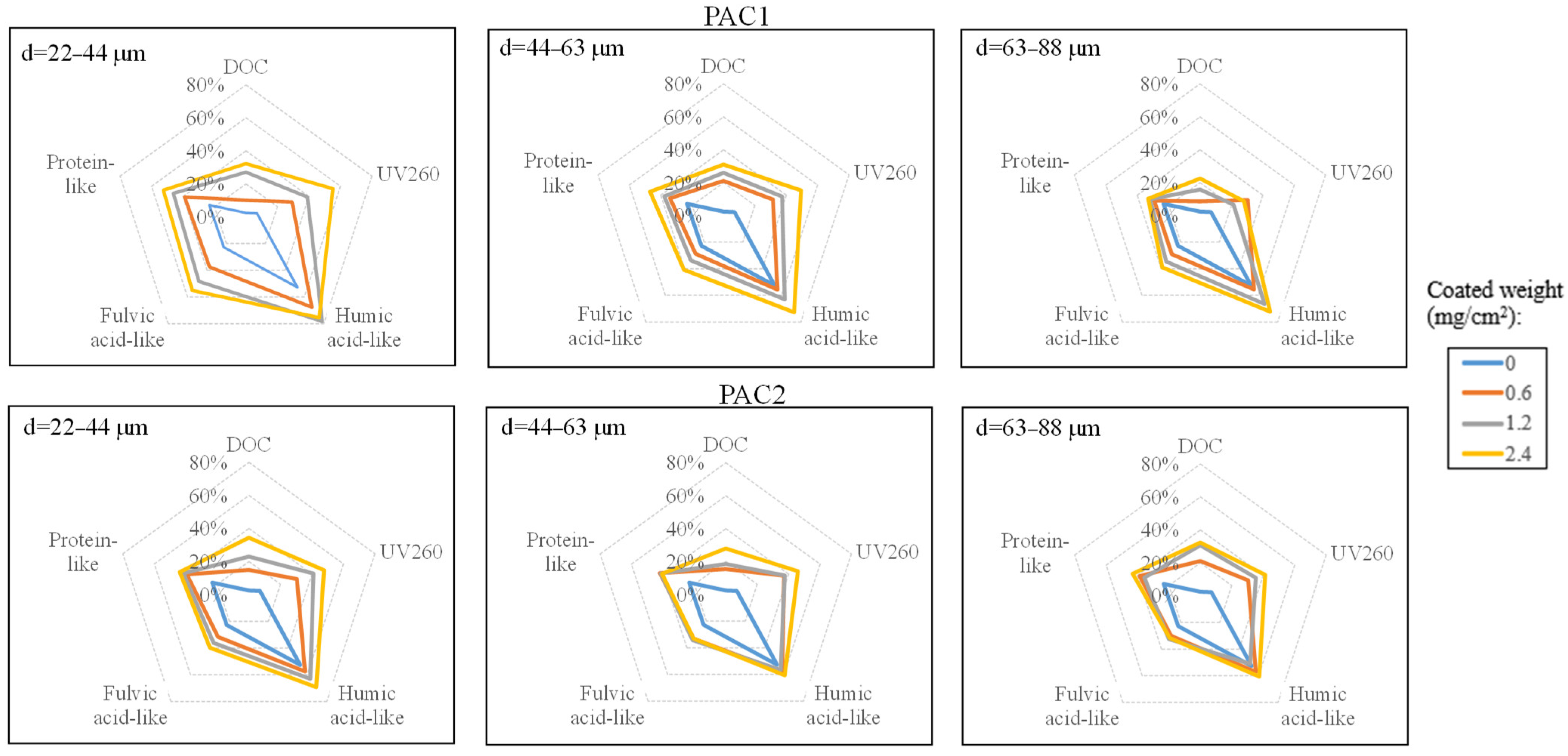
Based on the above changes in concentration and composition, the overall removal efficiencies of bulk and specific DOM fractions were quantified and are shown in Figure 5. For MF without PAC, DOC and UV260 removals were only 2% and 7%, and humic acid-like, fulvic acid-like and protein-like removals were 53%, 23% and 23%, respectively, providing the reference level for assessing the impact of PAC pre-coating. It should be noted that the apparent reductions in fluorescence intensity observed under MF-only conditions do not necessarily indicate true dissolved-phase DOM removal. Such changes may arise from fluorescence quenching, inner-filter effects, or weak adsorption of fluorescent components onto system surfaces, as DOC and UV260 removals remained negligible in the absence of PAC pre-coating. With PAC1 pre-coating at 22–44 μm, increasing the coating weight to 2.4 mg/cm2 raised the removals to 32% for DOC and 55% for UV260, and to 75%, 55% and 53% for humic acid-like, fulvic acid-like and protein-like components, respectively. PAC2 showed a similar trend, achieving 34% DOC removal and 69% humic acid-like removal under the same conditions. Differences between PAC1 and PAC2 also revealed the influence of carbon material properties. PAC2 exhibited slightly higher DOC removal, particularly for the smallest particle size range, whereas PAC1 showed superior removal of humic acid-like substances at intermediate coating weights. These findings likely reflect differences in pore size distribution and surface chemistry. Previous work has shown that mesoporous carbons favor the adsorption of high molecular weight aromatic DOM, while microporous structures preferentially adsorb small, low aromatic constituents [23]. The distinct removal profiles observed here agree with these mechanistic interpretations. The strong dependence of removal efficiency on coating weight reflects the increasing availability of adsorption sites in the PAC layer, while the higher removals observed for the smaller particle size range (22–44 μm) compared with 44–63 and 63–88 μm confirm the importance of external surface area and diffusion distance in governing DOM and PAC interactions. Importantly, the removal patterns agree with the compositional trends identified by EEM and HPSEC: fractions that showed greater attenuation in fluorescence intensity and larger reductions in high molecular weight peaks also exhibited higher calculated removal efficiencies. This consistency across three independent analytical approaches confirms that PAC pre-coating preferentially targets DOM fractions that are most relevant to membrane fouling. These DOM removal characteristics provide the mechanistic basis for the improved flux and reduced fouling resistance observed in the subsequent filtration performance analysis.
Figure 5.
Removal efficiencies of DOM based on DOC, UV260, and fluorescence-EEM components (humic acid-like, fulvic acid-like, and protein-like) using membrane with and without pre-coated PAC at different size ranges (22–44 μm, 44–63 μm, and 63–88 μm) and coating weights (0, 0.6, 1.2 and 2.4 mg/cm2).
3.2. Effect Based on Filtration Resistance
- Filtration resistance evaluated by filtration flux
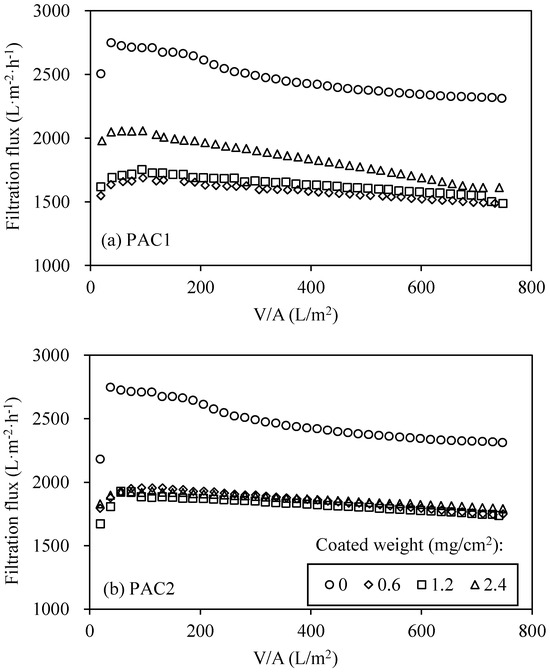
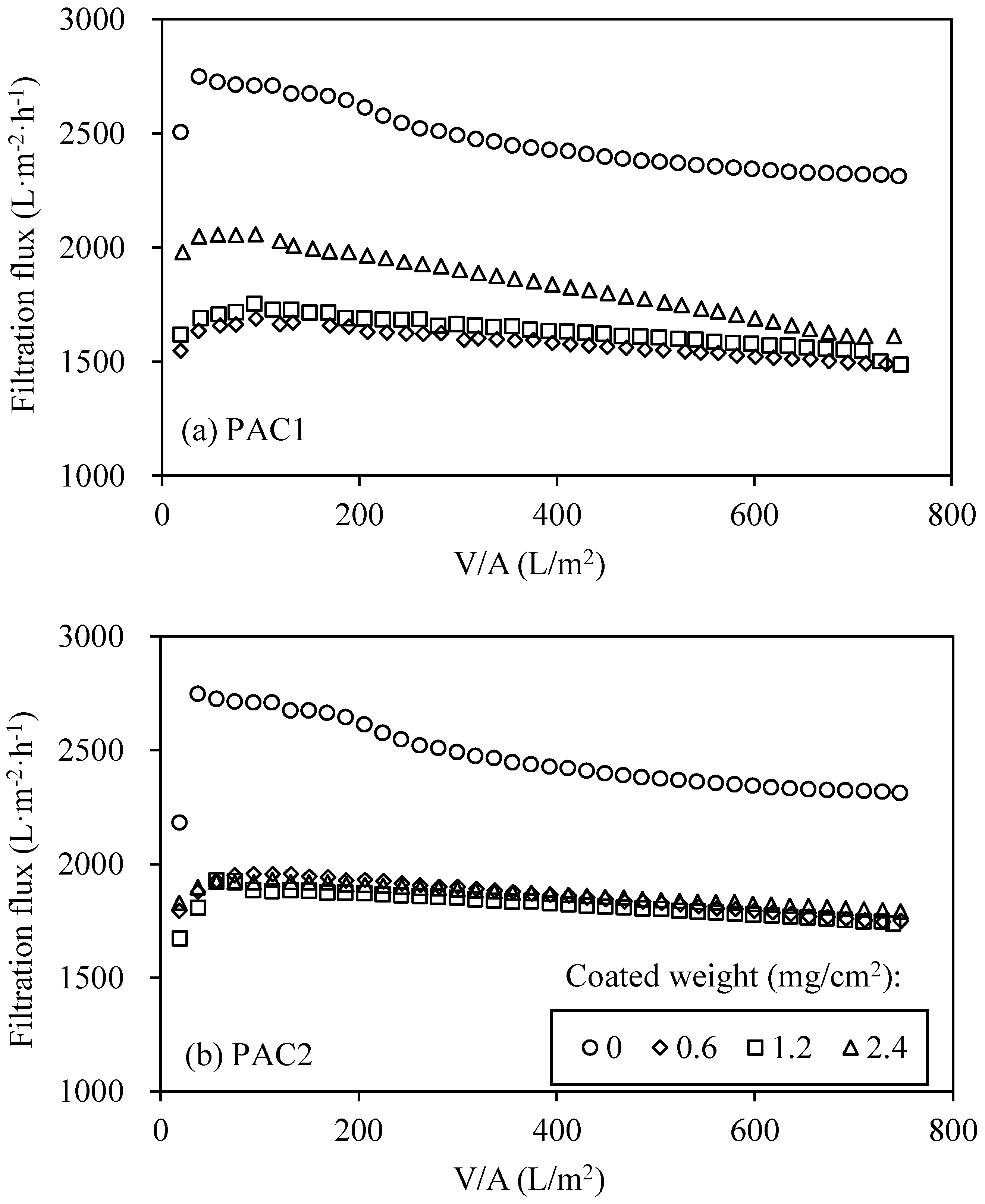
Filtration flux profiles by using MF membranes with and without PAC pre-coating is shown in Figure 6. The membrane without pre-coated PAC exhibited an initial flux exceeding 2600 L·m−2·h−1 that continuously declined, reflecting typical fouling behavior driven by aromatic and high MW DOM fractions. Similar flux decline patterns have been widely observed in MF/UF systems treating river water, where humic substances and biopolymers dominate fouling [8,24,25]. In contrast, all PAC-coated membranes displayed lower initial fluxes but substantially more stable permeability throughout filtration. For PAC1 (Figure 6a), flux values at 0.6, 1.2 and 2.4 mg/cm2 converged within 1500 to 1800 L·m−2·h−1 and exhibited only modest decline. The PAC layer intercepted and adsorbed high MW and aromatic DOM, as evidenced by reduced UV260 and attenuated humic acid-like fluorescence, thereby preventing these foulants from depositing directly onto the membrane surface. Similar stabilization trends were observed for PAC2 (Figure 6b), showing that the pre-coating mechanism was robust across different carbon types. The molecular weight distribution results further reinforce this mechanism. The attenuation of early eluting peaks under coated conditions demonstrates that higher molecular weight DOM was preferentially adsorbed within the PAC layer, preventing its direct deposition on the membrane. This observation is in agreement with reported behavior of PAC and membrane hybrid systems, where adsorptive removal of larger organic macromolecules delays the transition from reversible to irreversible fouling [10,26]. Most previous evaluations of PAC-assisted membrane filtration have emphasized overall performance indicators such as flux stability or organic matter removal, whereas systematic comparisons of PAC particle size, coating weight, and their mechanistic relationship with DOM fractionation and resistance development have been relatively limited.
Figure 6.
Filtration flux profiles of membrane with and without PAC pre-coating for (a) PAC1 and (b) PAC2 of different coating weight (0, 0.6, 1.2 and 2.4 mg/cm2) (the results for PAC of size range: 22–44 μm).
- 2.
- Evaluated by relative resistance index (RRI)
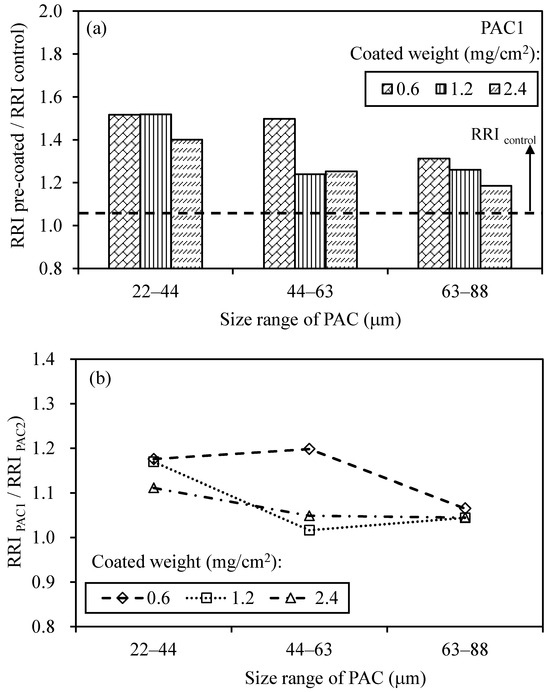
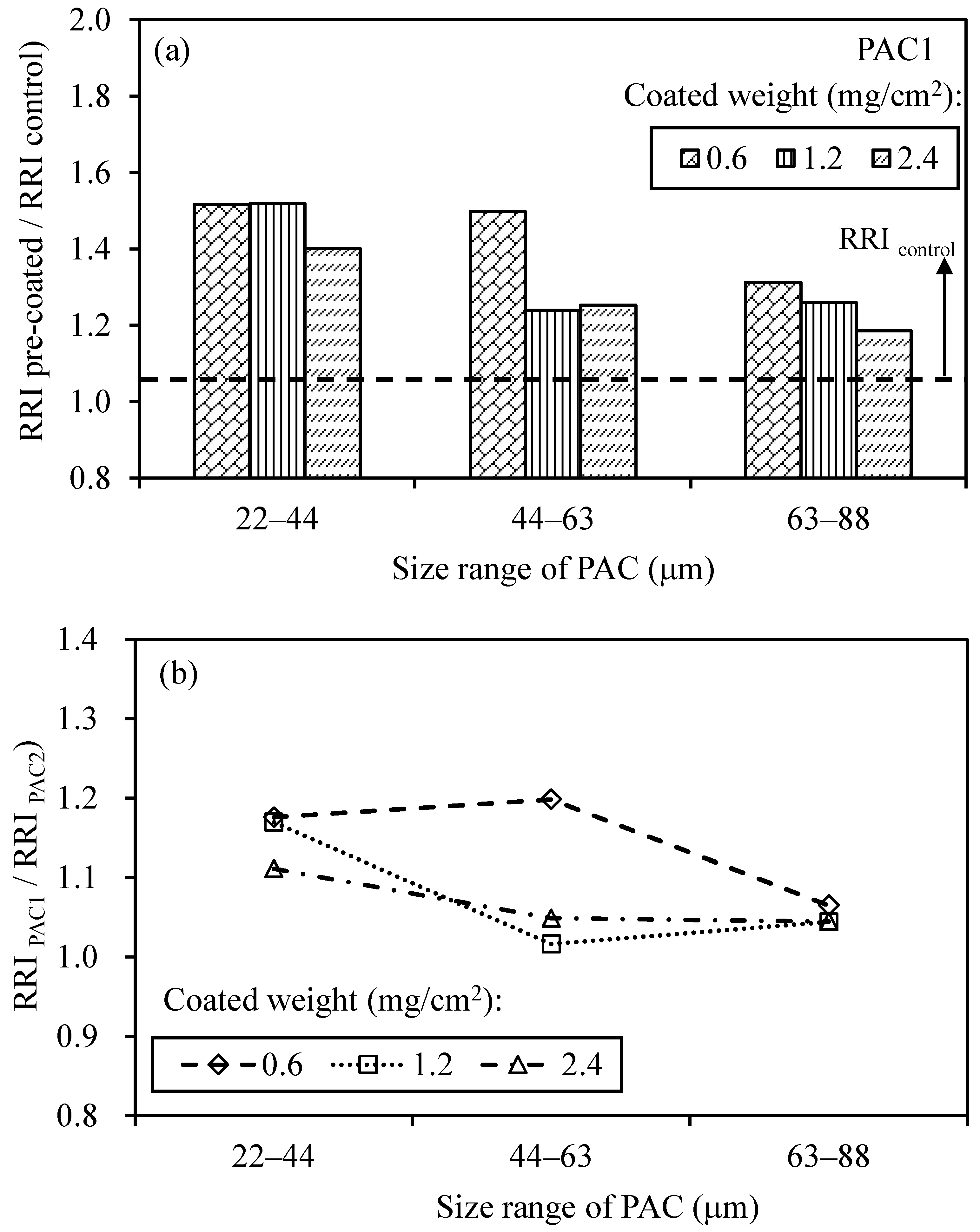
Figure 7 presents the change in overall hydraulic resistance during filtration after PAC pre-coating, expressed as the ratio between the resistance of the coated membrane and that of the uncoated membrane. In all cases, the ratio exceeded 1, confirming that the presence of a PAC layer introduced additional hydraulic resistance beyond that of the membrane alone.
Figure 7.
Changes in relative resistance under different coating condition (Particle size: 22–44, 44–63, and 63–88 μm; coating weight: 0.6, 1.2 and 2.4 mg/cm2): (a) coating effect for the result of PAC1; (b) coating effect differences of PAC1 and PAC2).
The variations observed across PAC particle size ranges and coating weights reflect differences in the compressibility and porosity of the resulting PAC layers. For PAC1 (Figure 7a), within the particle size range of 22–44 μm, the resistance ratios were consistently the highest regardless of coating weight (0.6, 1.2, or 2.4 mg/cm2). This indicates that fine PAC particles formed a relatively compact layer on the membrane surface. This observation aligns with the EEM and HPSEC analyses, which showed that PAC in this size range effectively retained high molecular weight, aromatic DOM. The accumulation of these foulant prone components within the PAC layer contributes to increased cake compactness and, consequently, higher hydraulic resistance. For the 44–63 μm fraction, the resistance ratio increased progressively with coating weight, suggesting gradual compaction as more PAC accumulated; however, the overall resistance remained lower than that of the finest fraction. For the coarsest particles (63–88 μm), the resistance ratios were the lowest among all particle size ranges, reflecting the more porous and less compressible structure of the coating formed by larger particles. Although adsorption still occurs, the resulting cake is more open and thus imposes lower hydraulic resistance. The comparison between PAC1 and PAC2 (Figure 7b) further illustrates material dependent differences. For the smallest particles (22–44 μm), PAC1 produced higher resistance ratios than PAC2, indicating a more compact layer structure. As particle size range increased, the differences between the two carbons diminished and, under some conditions, became negligible.
The above results indicate that the performance of PAC pre-coating is governed by a balance between enhanced adsorption and increased hydraulic resistance. Smaller PAC particles and higher coating weights promoted more effective interception of high molecular weight and aromatic DOM fractions, as evidenced by greater reductions in DOC, UV260, humic acid-like fluorescence, and early eluting HPSEC peaks. At the same time, these conditions led to the formation of denser and more compressible PAC layers, resulting in higher resistance ratios. In contrast, larger PAC particles and lower coating weights formed more permeable coating layers with lower resistance, but with reduced DOM removal efficiency. This trade-off highlights that optimal PAC pre-coating conditions should be determined by jointly considering DOM fractionation behavior and resistance development, rather than maximizing adsorption alone. By shifting foulant accumulation from the membrane surface to a controllable PAC layer, pre-coating modifies fouling pathways and provides a mechanistic basis for the improved flux stability observed under drinking water treatment conditions.
3.3. Surface and Cross-Sectional Morphology of Membranes
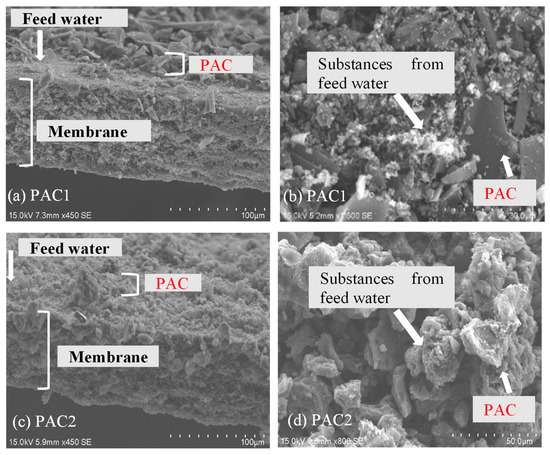
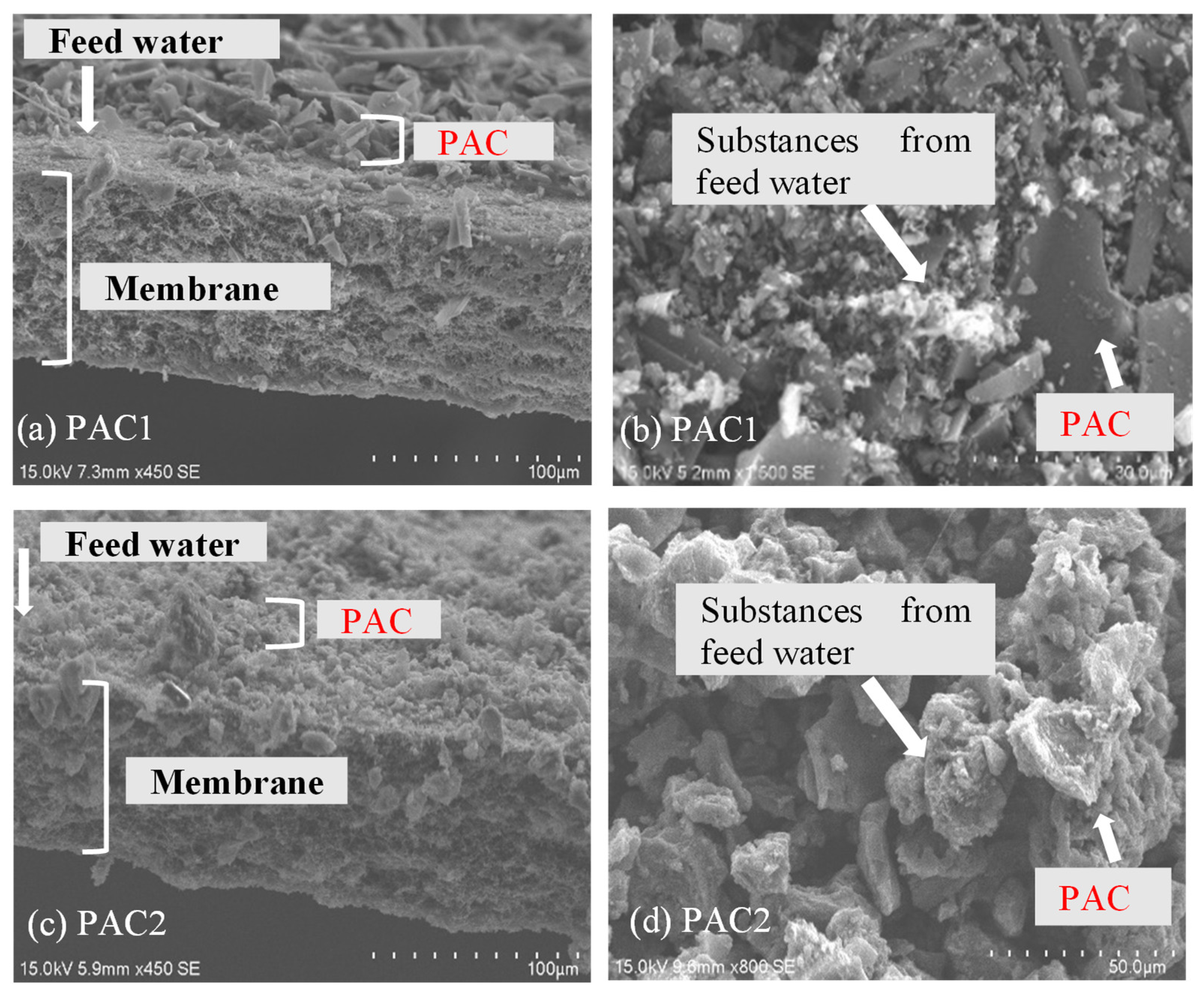
The SEM images in Figure 8 show the morphology of membrane pre-coated with PAC after filtration. For both PAC1 and PAC2, a distinct granular PAC layer was formed above the membrane surface, confirming that PAC was deposited as a separate layer rather than penetrating into the membrane structure. Surface images reveal that organic substances from the feed water accumulated primarily on the PAC particles, while the underlying membrane remained largely unobstructed. Compared with PAC2, the PAC1 layer appeared slightly denser, which is consistent with its higher RRI values at the smaller particle size range. SEM observations showed differences in the images of deposits formed on the PAC layer rather than forming deposits directly on the membrane surface. These results indicate that the PAC layer acted as a protective interception zone that limited direct foulant deposition on the membrane surface while improving the removal for DOM.
Figure 8.
SEM images of membrane pre-coated with PAC after filtration (the result for pre-coated PAC with the size range of 22–44 μm and coated weight of 2.4 mg/cm2). (a,b) show the cross-sectional and surface morphologies of membranes pre-coated with PAC1, and (c,d) with PAC2.
4. Conclusions
This study showed that PAC pre-coating enhanced dissolved organic matter removal and improved the stability of microfiltration performance during surface water treatment. Finer PAC particles, particularly those in the 22–44 μm range, achieved greater reductions in DOC, UV260 absorbance, and humic acid-like components, which corresponded to a slower decline in permeate flux. These results indicate that PAC pre-coating can stabilize filtration performance by intercepting foulant-prone DOM fractions before they reach the membrane surface. At the same time, the formation of a PAC layer inevitably increased the total hydraulic resistance compared with the uncoated membrane. The combined EEM, HPSEC, and SEM results showed that a substantial fraction of the retained DOM accumulated within the PAC layer rather than directly on the membrane surface, indicating that the additional resistance primarily originated from the PAC matrix. Both PAC1 and PAC2 exhibited this protective interception effect despite differences in coating layer structure. These findings highlight a clear resistance–removal trade-off associated with PAC pre-coating, in which improved flux stability does not necessarily correspond to lower overall filtration resistance. The findings of this study could enable more efficient and sustainable urban water supply system operation and management through water quality improvement and process configuration.
The applicability of these findings should be considered in the context of the experimental conditions employed. The use of low-turbidity surface water enabled a focused evaluation of dissolved organic matter interactions with PAC pre-coating layers, facilitating mechanistic interpretation of adsorption and fouling behavior. Moreover, the dead-end filtration configuration and relatively short experimental duration allowed systematic comparison of PAC type, particle size, and coating weight effects under controlled conditions. Future investigations extending these findings to continuous operation, repeated filtration cycles, and waters with higher particulate loadings would further clarify PAC layer stability, regeneration behavior, and fouling reversibility, thereby supporting the translation of PAC pre-coating toward practical and sustainable full-scale applications.
Supplementary Materials
The following supporting information can be downloaded at: https://www.mdpi.com/article/10.3390/su18020814/s1. Table S1. Water quality; Figure S1. Schematic flowchart illustrating the experimental design of this study, including raw water preparation, PAC fractionation, membrane pre-coating, dead-end microfiltration experiments, and subsequent analyses of filtration performance and dissolved organic matter characteristics; Figure S2. Setup for filtration process; Figure S3. Membrane precoated with PAC1; Figure S4. SEM images of membrane with and without pre-coated PAC1 (a,b) show the cross-sectional and surface morphologies of membranes without pre-coating, while (c,d) correspond to membranes pre-coated with PAC1 (the results for PAC1 with the size range of 22–44 μm); Figure S5. Changes in DOM concentration reflected by (a) DOC and (b) UV260 during filtration using membrane with and without pre-coated PAC at different coating weights (0.6, 1.2 and 2.4 mg/cm2) (the results for PAC2 with the size range of 22–44 μm) (Symbols represent mean values, and error bars indicate ± SD (n = 2)).
Author Contributions
Conceptualization: W.L., F.L. and Y.W.; methodology: W.L., F.L. and Y.W.; validation: W.L., F.L. and Y.W.; formal analysis: W.L.; investigation: W.L. and L.K.; data curation: W.L.; writing—original draft preparation: W.L.; writing—review and editing: W.L., F.L. and Y.W.; visualization: W.L., F.L. and Y.W.; supervision: F.L. and Y.W. All authors have read and agreed to the published version of the manuscript.
Funding
This research received no external funding.
Institutional Review Board Statement
Not applicable.
Informed Consent Statement
Not applicable.
Data Availability Statement
The original contributions presented in this study are included in the article/Supplementary Material. Further inquiries can be directed to the corresponding author.
Acknowledgments
The author (Initial) would like to take this opportunity to thank the “Interdisciplinary Frontier Next-Generation Researcher Program of the Tokai Higher Education and Research System”.
Conflicts of Interest
The authors declare that they have no known competing financial interests or personal relationships that could have appeared to influence the work reported in this paper.
Abbreviations
The following abbreviations are used in this manuscript:
| PAC | Powdered Activated Carbon |
| MF | Microfiltration |
| UF | Ultrafiltration |
| DOM | Dissolved Organic Matter |
| NOM | Natural Organic Matter |
| DOC | Dissolved Organic Carbon |
| UV260 | UV absorbance at 260 nm |
| EEM | Fluorescence Excitation-Emission Matrix |
| MW | Molecular Weight |
| HPSEC | High-Performance Size-Exclusion Chromatography System |
| SEM | Scanning Electron Microscope |
| RRI | Relative Resistance Index |
References
- Bodzek, M.; Konieczny, K.; Kwiecińska, A. Desalination and Water Treatment Application of membrane processes in drinking water treatment-state of art. Taylor Fr. 2012, 35, 37–41. [Google Scholar]
- Hoslett, J.; Massara, T.M.; Malamis, S.; Ahmad, D.; van den Boogaert, I.; Katsou, E.; Ahmad, B.; Ghazal, H.; Simons, S.; Wrobel, L.; et al. Surface water filtration using granular media and membranes: A review. Sci. Total Environ. 2018, 639, 1268–1282. [Google Scholar] [CrossRef] [Scilit] [PubMed]
- Costa, A.R.; de Pinho, M.N.; Elimelech, M. Mechanisms of colloidal natural organic matter fouling in ultrafiltration. J. Membr. Sci. 2006, 281, 716–725. [Google Scholar] [CrossRef] [Scilit]
- Fabris, R.; Lee, E.K.; Chow, C.W.K.; Chen, V.; Drikas, M. Pre-treatments to reduce fouling of low pressure micro-filtration (MF) membranes. J. Membr. Sci. 2007, 289, 231–240. [Google Scholar] [CrossRef] [Scilit]
- Lee, S.; Cho, J.; Elimelech, M. Combined influence of natural organic matter (NOM) and colloidal particles on nanofiltration membrane fouling. J. Membr. Sci. 2005, 262, 27–41. [Google Scholar] [CrossRef] [Scilit]
- Schreiber, B.; Brinkmann, T.; Schmalz, V.; Worch, E. Adsorption of dissolved organic matter onto activated carbon—The influence of temperature, absorption wavelength, and molecular size. Water Res. 2005, 39, 3449–3456. [Google Scholar] [CrossRef] [Scilit]
- Aschermann, G.; Neubert, L.; Zietzschmann, F.; Jekel, M. Impact of different DOM size fractions on the desorption of organic micropollutants from activated carbon. Water Res. 2019, 161, 161–170. [Google Scholar] [CrossRef] [Scilit]
- Kim, H.S.; Takizawa, S.; Ohgaki, S. Application of microfiltration systems coupled with powdered activated carbon to river water treatment. Desalination 2007, 202, 271–277. [Google Scholar] [CrossRef] [Scilit]
- Kweon, J.H.; Hur, H.W.; Seo, G.T.; Jang, T.R.; Park, J.H.; Choi, K.Y.; Kim, H.S. Evaluation of coagulation and PAC adsorption pretreatments on membrane filtration for a surface water in Korea: A pilot study. Desalination 2009, 249, 212–216. [Google Scholar] [CrossRef] [Scilit]
- Song, K.Y.; Park, P.K.; Kim, J.H.; Lee, C.H.; Lee, S. Coupling effect of 17β-estradiol and natural organic matter on the performance of a PAC adsorption/membrane filtration hybrid system. Desalination 2009, 237, 392–399. [Google Scholar] [CrossRef] [Scilit]
- Tomaszewska, M.; Mozia, S. Removal of organic matter from water by PAC/UF system. Water Res. 2002, 36, 4137–4143. [Google Scholar] [CrossRef] [Scilit]
- Campinas, M.; Viegas, R.M.C.; Silva, C.; Lucas, H.; Rosa, M.J. Operational performance and cost analysis of PAC/ceramic MF for drinking water production: Exploring treatment capacity as a new indicator for performance assessment and optimization. Sep. Purif. Technol. 2021, 255, 117443. [Google Scholar] [CrossRef] [Scilit]
- Lin, L.; Zhang, Y.; Fu, B.; Yan, W.; Fu, Q.; Li, S. Pre-depositing versus mixing powdered activated carbons for gravity-driven membrane systems during treated domestic wastewater filtration: Permeability stabilization and removal performance. Sep. Purif. Technol. 2022, 288, 120659. [Google Scholar] [CrossRef] [Scilit]
- Amaral, P.; Partlan, E.; Li, M.; Lapolli, F.; Mefford, O.T.; Karanfil, T.; Ladner, D.A. Superfine powdered activated carbon (S-PAC) coatings on microfiltration membranes: Effects of milling time on contaminant removal and flux. Water Res. 2016, 100, 429–438. [Google Scholar] [CrossRef] [Scilit]
- Cai, Z.; Wee, C.; Benjamin, M.M. Fouling mechanisms in low-pressure membrane filtration in the presence of an adsorbent cake layer. J. Membr. Sci. 2013, 433, 32–38. [Google Scholar] [CrossRef] [Scilit]
- Yiantsios, S.G.; Karabelas, A.J. An experimental study of humid acid and powdered activated carbon deposition on UF membranes and their removal by backwashing Presented at the Conference on Membranes in Drinking and Induslrial Water Production. Desalination 2001, 140, 195–209. [Google Scholar] [CrossRef] [Scilit]
- Hu, G.; Wang, Z. A review of mathematical models in the microfiltration membrane process. J. Water Process Eng. 2025, 78, 108624. [Google Scholar] [CrossRef] [Scilit]
- Raspati, G.S.; Leiknes, T.O. Applicability of blocking laws in non-Newtonian fluid membrane filtration. Desalination Water Treat. 2015, 54, 1771–1781. [Google Scholar] [CrossRef] [Scilit]
- Jiang, S.; Zhang, Y.; Zhao, F.; Yu, Z.; Zhou, X.; Chu, H. Impact of transmembrane pressure (TMP) on membrane fouling in microalgae harvesting with a uniform shearing vibration membrane system. Algal Res. 2018, 35, 613–623. [Google Scholar] [CrossRef] [Scilit]
- Rodríguez-Vidal, F.J.; García-Valverde, M.; Ortega-Azabache, B.; González-Martínez, Á.; Bellido-Fernández, A. Using excitation-emission matrix fluorescence to evaluate the performance of water treatment plants for dissolved organic matter removal. Spectrochim. Acta Part A Mol. Biomol. Spectrosc. 2021, 249, 119298. [Google Scholar] [CrossRef] [Scilit]
- Rosadi, M.Y.; Maysaroh, S.; Sagita, N.D.; Anggreini, S.; Desmiarti, R.; Deng, Z.; Li, F. Fluorescence-based indicators predict the performance of conventional drinking water treatment processes: Evaluation based on the changes in the compositions of dissolved organic matter. Chemosphere 2023, 337, 139410. [Google Scholar] [CrossRef] [Scilit] [PubMed]
- Park, S.; Nam, T.; You, J.; Kim, E.S.; Choi, I.; Park, J.; Cho, K.H. Evaluating membrane fouling potentials of dissolved organic matter in brackish water. Water Res. 2019, 149, 65–73. [Google Scholar] [CrossRef] [Scilit]
- Frota, A.M.A.; Pinheiro, T.L.; Ibraim, E.; Pak, T.; Capelo-Neto, J. Understanding the properties of activated carbon and biochar for the adsorption and removal of cyanotoxins: A systematic review. An. Acad. Bras. Cienc. 2023, 95, e20230061. [Google Scholar] [CrossRef] [Scilit]
- Yu, W.; Liu, T.; Crawshaw, J.; Liu, T.; Graham, N. Ultrafiltration and nanofiltration membrane fouling by natural organic matter: Mechanisms and mitigation by pre-ozonation and pH. Water Res. 2018, 139, 353–362. [Google Scholar] [CrossRef] [Scilit]
- Nguyen, H.V.-M.; Lim, H.; Hur, J.; Shin, H.-S. Hydrophobic neutral dissolved organic matter: First insights into compositional changes and formation of disinfection by-products induced by rainfall and degradation. J. Environ. Sci. 2025, 161, 307–319. [Google Scholar] [CrossRef] [Scilit] [PubMed]
- Monnot, M.; Laborie, S.; Cabassud, C. Granular activated carbon filtration plus ultrafiltration as a pretreatment to seawater desalination lines: Impact on water quality and UF fouling. Desalination 2016, 383, 1–11. [Google Scholar] [CrossRef] [Scilit]

Disclaimer/Publisher’s Note: The statements, opinions and data contained in all publications are solely those of the individual author(s) and contributor(s) and not of MDPI and/or the editor(s). MDPI and/or the editor(s) disclaim responsibility for any injury to people or property resulting from any ideas, methods, instructions or products referred to in the content. |
© 2026 by the authors. Licensee MDPI, Basel, Switzerland. This article is an open access article distributed under the terms and conditions of the Creative Commons Attribution (CC BY) license.