Sustainable Incorporation of Recycled Tire Steel and Textile Fibers as a Hybrid Mix in Concrete



Abstract
1. Introduction
2. Aims and Objectives
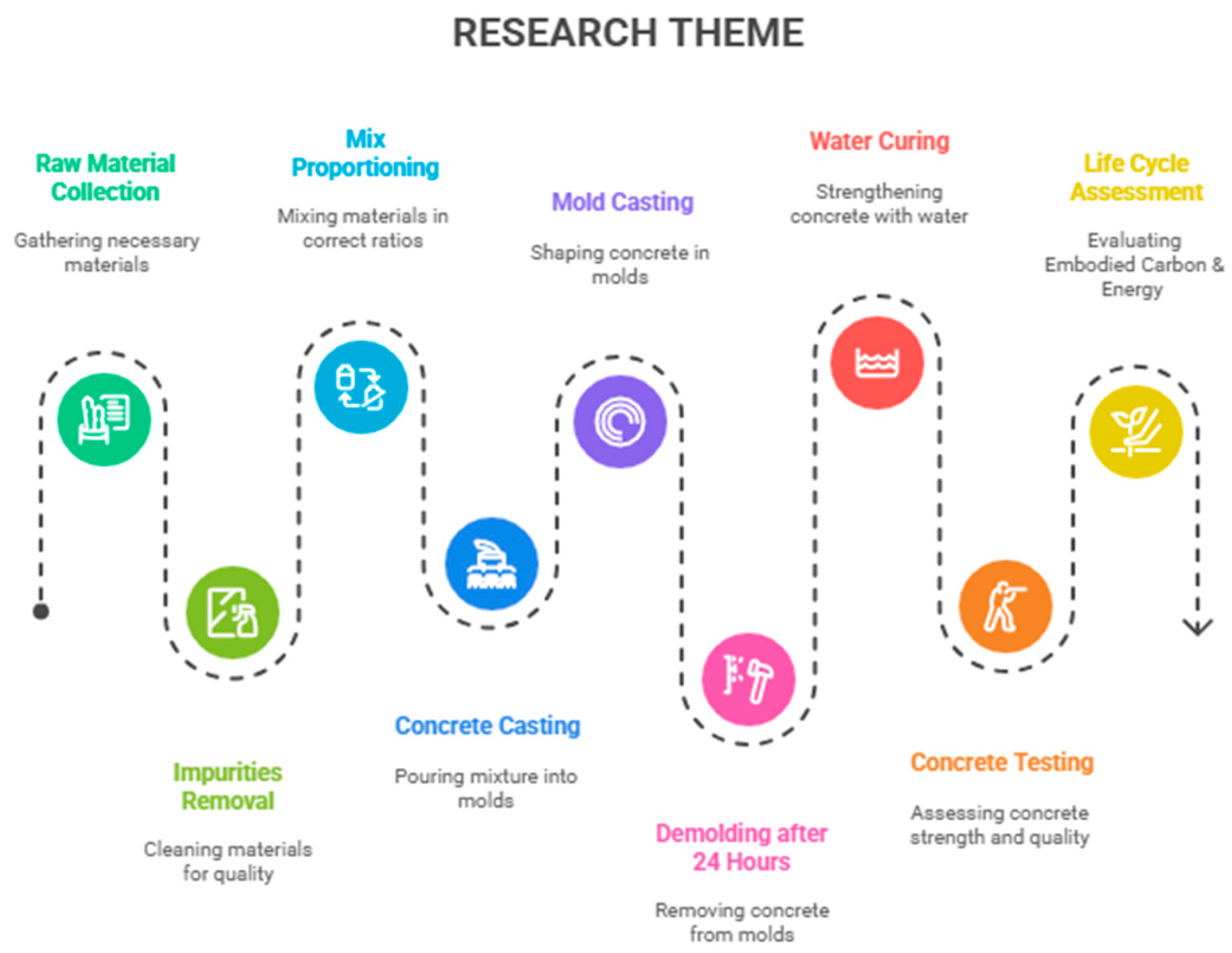
- To experimentally evaluate and compare the mechanical performance of concrete having hybrid mixes of RTSF and RTTF with control concrete mixes and mixes containing individual RTSF and RTTF.
- To determine the optimal hybrid fiber mix ratio with the highest mechanical performance enhancement while maintaining sustainability.
- To conduct a life cycle assessment to quantify the embodied CO2 and energy values for all concrete mixes to analyze the environmental impacts.
Research Significance
3. Literature Review
4. Materials and Methods
4.1. Materials
4.2. Mix Proportion
4.3. Casting and Molding
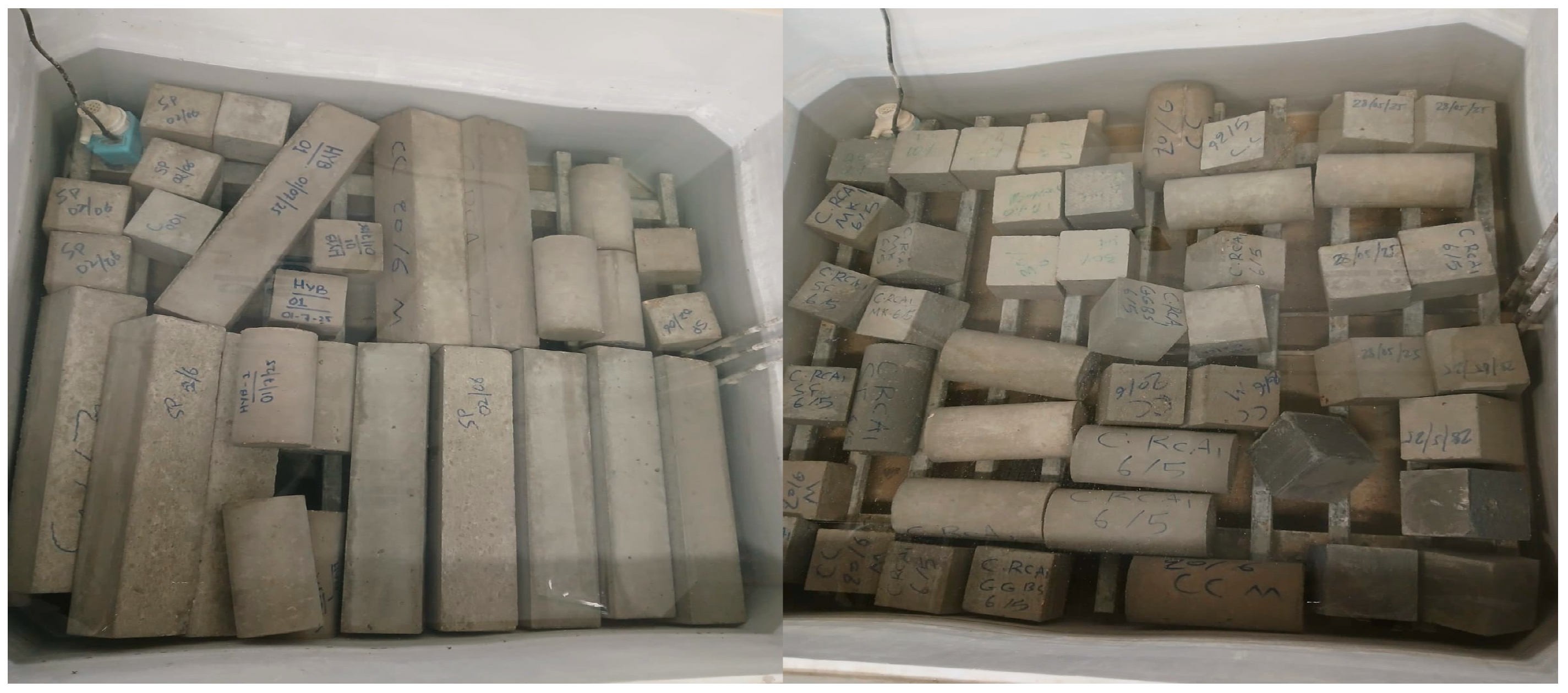
4.4. Tests Performed
4.5. Life Cycle Assessment
4.5.1. Functional Unit and System Boundary
4.5.2. Life Cycle Inventory
4.5.3. Life Cycle Impact Assessment (LCIA)
5. Results and Discussion
5.1. Workability
5.2. Density of Concrete
5.3. Compressive Strength of Concrete
5.4. Split Tensile Strength of Concrete
5.5. Flexural Strength of Concrete
5.6. Environmental Impact Assessment
6. Conclusions
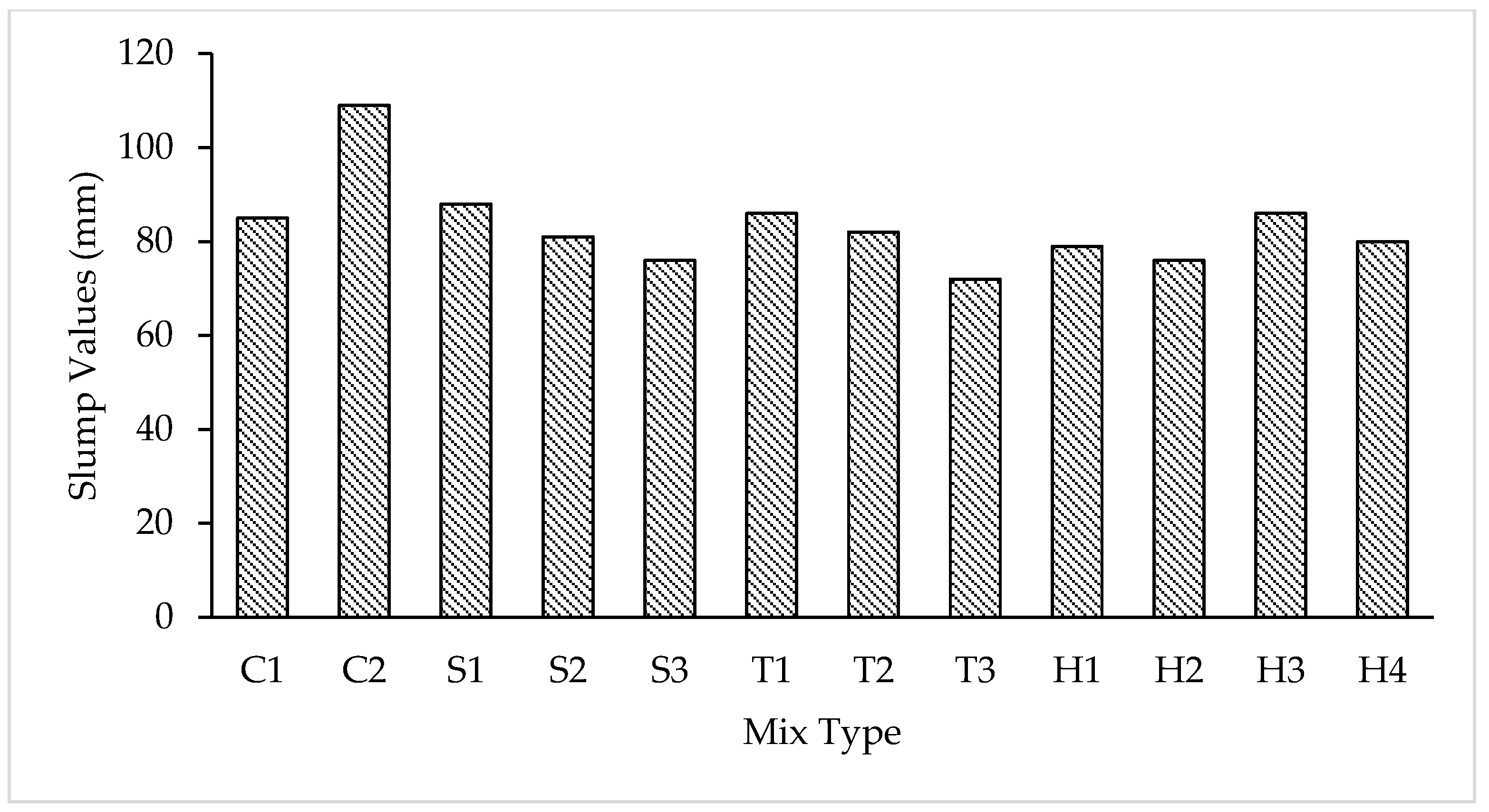
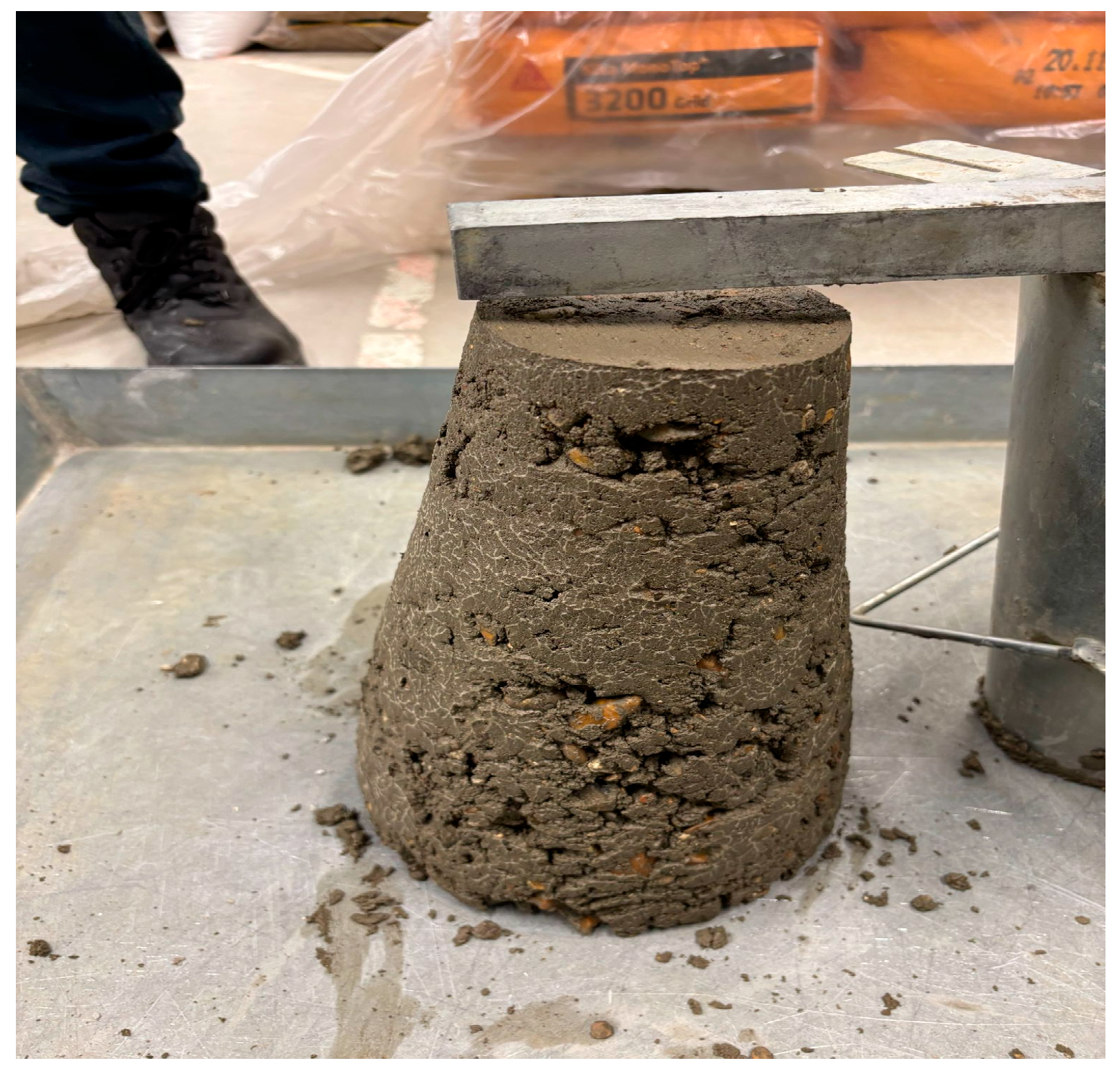
- The slump decreased with the increase in the fiber content individually and in hybrid form. RTTF had more effect on the reduction in the workability. Similarly, the hybrid fibers also decreased the workability. There was an overall 40% decrease in the slump value as compared to the control specimen. The workability decreased with an increased in the volume of fibers. For the hybrid mix, the maximum decrease in workability was observed in the H2 mix. However, with the use of a superplasticizer, the workability can be maintained within the designed slump limit of the concrete mix.
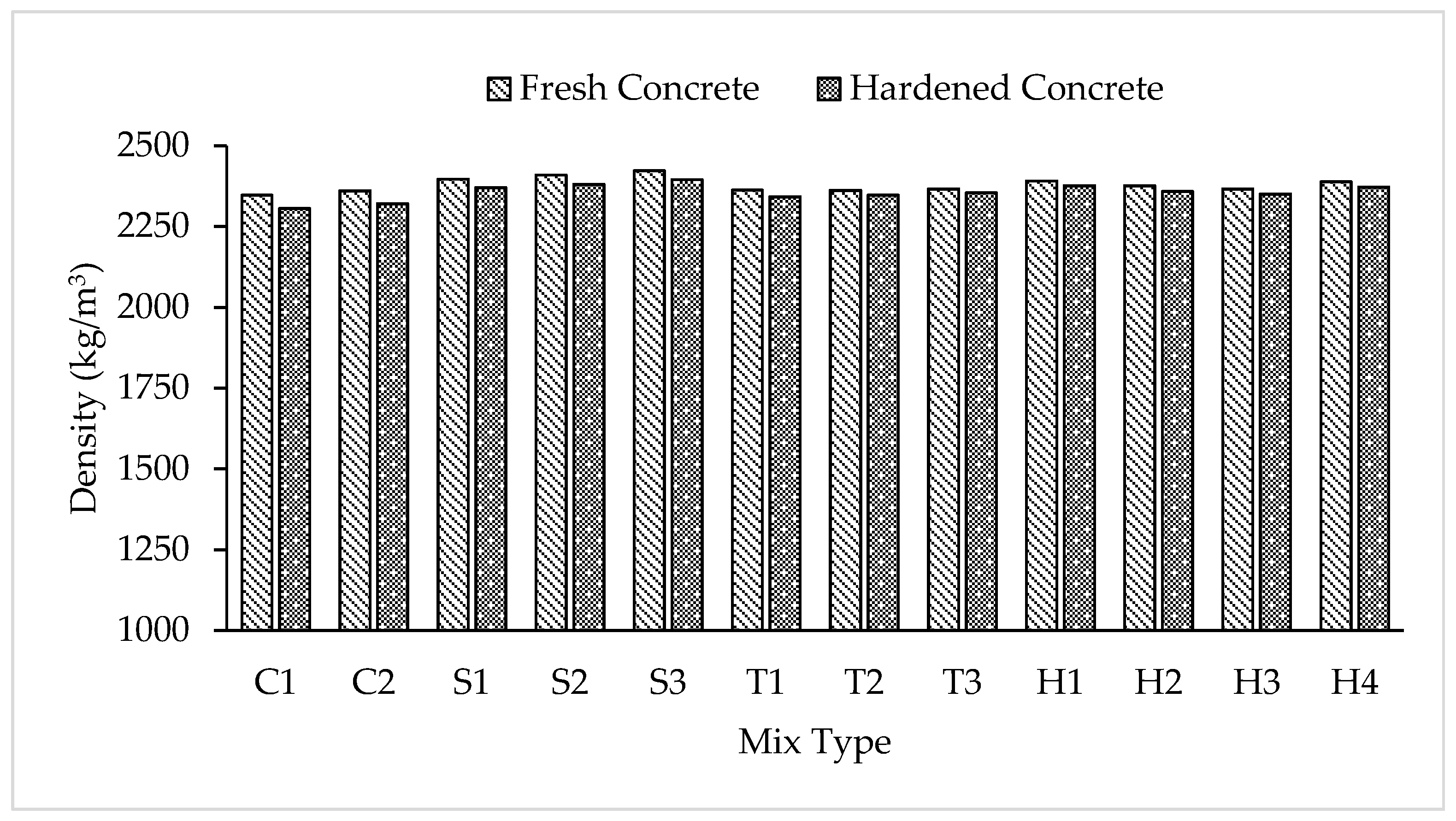
- The RTSF increased the fresh density due to their high unit weight, whereas the RTTF decreased the density due to their low bulk density. In hybrid mixes, these effects partially offset one another, resulting in a slight reduction of 0.6% from the fresh to hardened density—less than the 1.6% reduction observed in the control specimen.
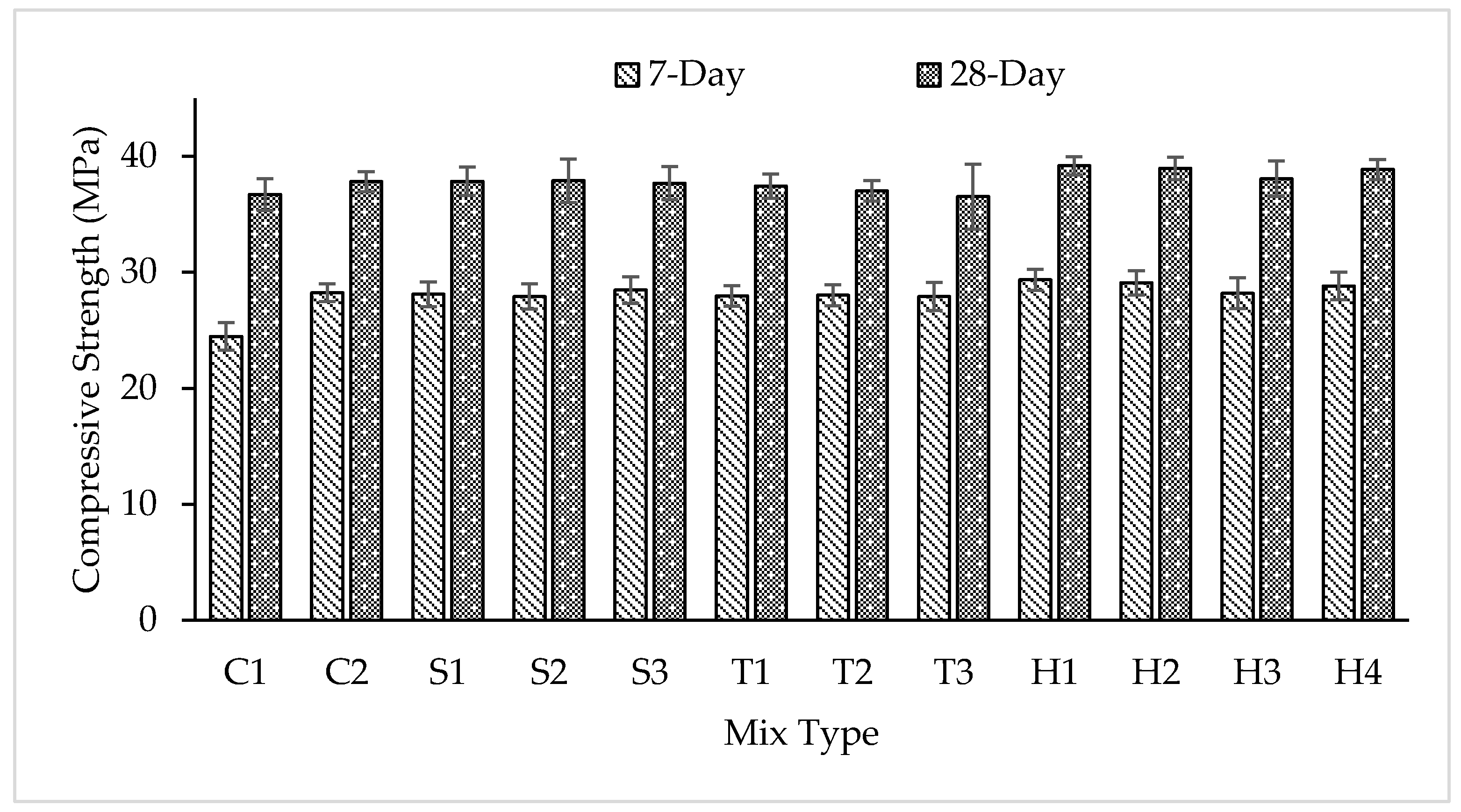
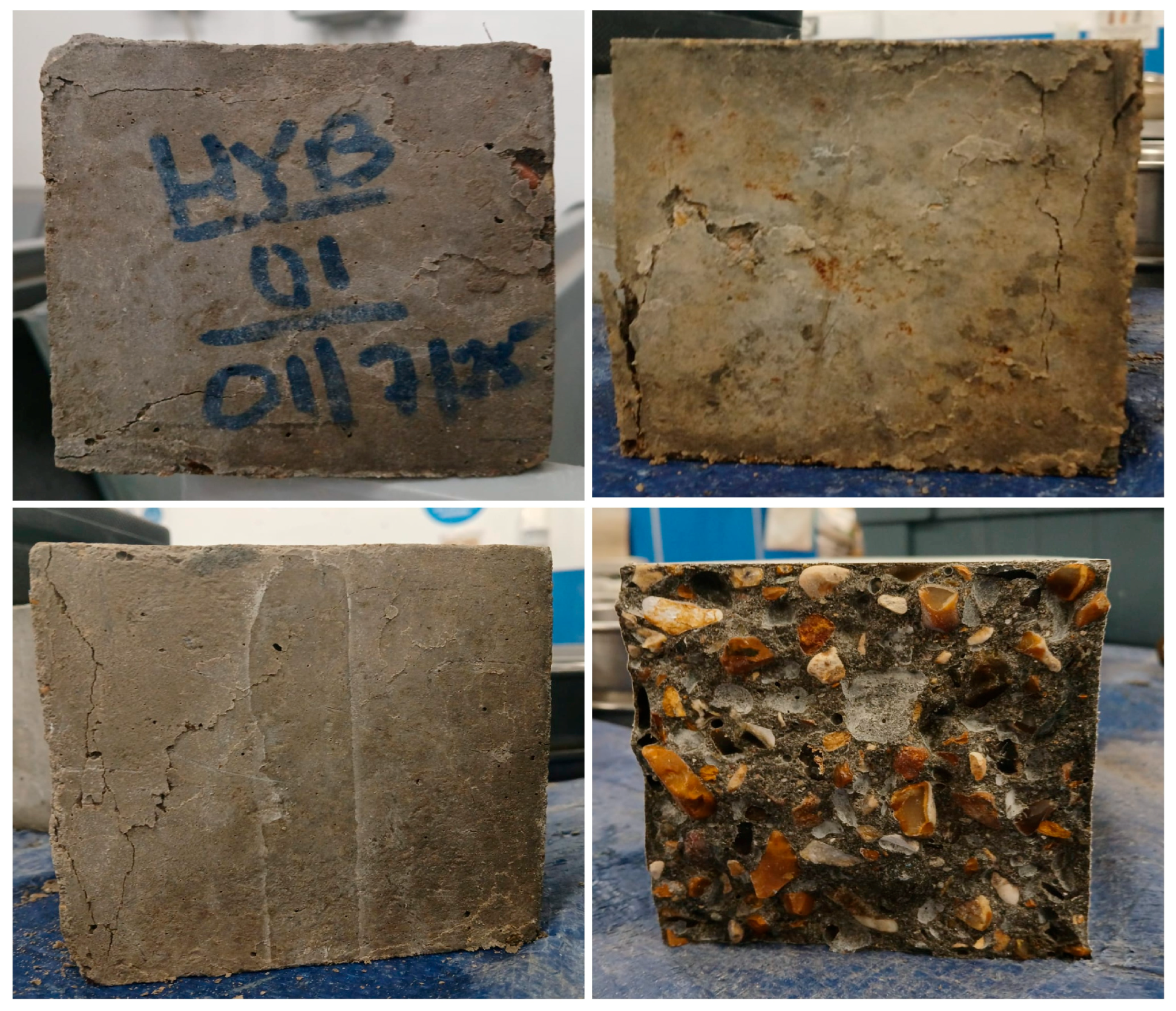
- The compressive strength of hybrid fibers is higher than the mixes with individual RTSF and RTTF. The hybrid fiber mix H1 with 1% RTSF and 0.5% RTTF by volume exhibited a maximum compressive strength of 39.19 MPa, which is 3.5% more than the control specimen and 3.3% and 4.6% more than the individual RTSF and RTTF, respectively. With the induction of hybrid fibers, the ductility and toughness of the concrete is increased.
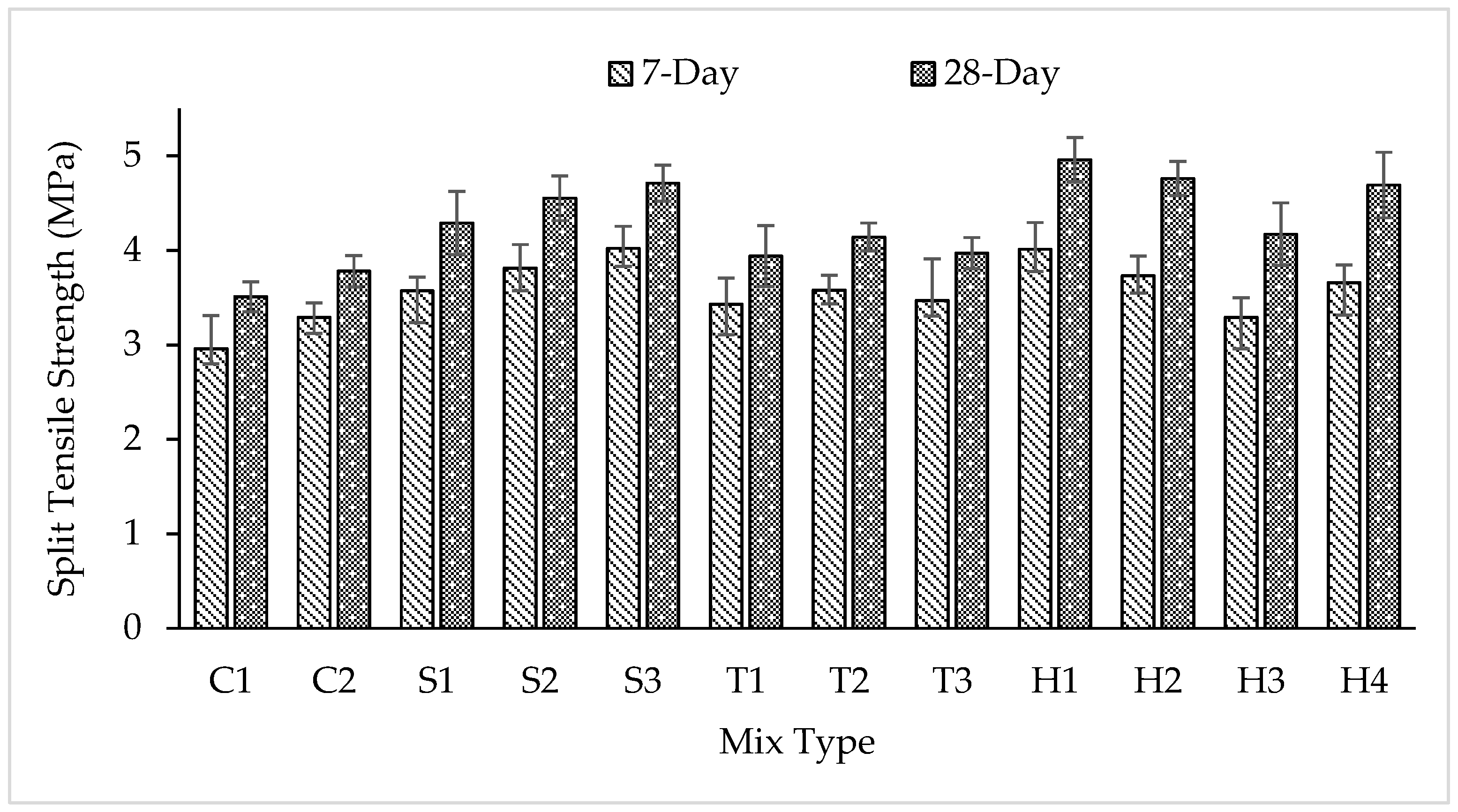
- The split tensile strength was increased by 10% to 31%, as compared to the controlled specimen. The maximum strength of 4.79 MPa was obtained for the hybrid mix H1 with 1% RTSF and 0.5% RTTF. The RTSF have more of an effect on the split tensile strength compared to the RTTF. The synergistic use of fibers with a moderate total volume and good rheology in the concrete mix also enhanced the toughness and fracture control over either fiber alone. RTTF delay the onset of splitting cracks, while RTSF control post-crack propagation and widening. Their combined action resulted in a higher peak split tensile strength and improved ductility compared to the single-fiber mixes.
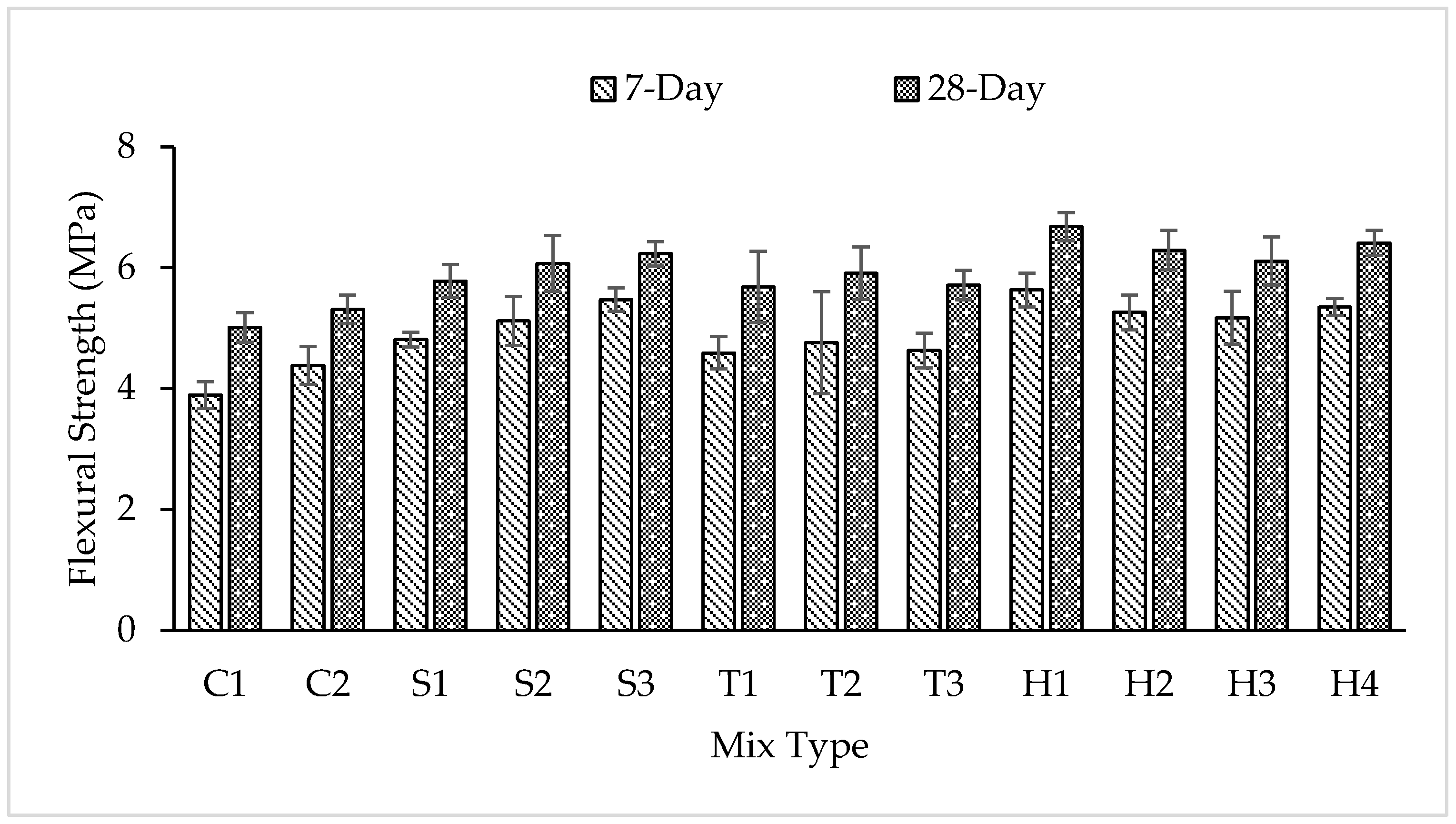
- The flexural strength of the hybrid mix was improved by 26%, 7%, and 17.6% compared to the control mix and RTSF and RTTF alone, respectively. The maximum strength of 6.68 MPa was observed in the H1 mix with 1% RTSF and 0.5% RTTF. The fiber matrix interlock prevents weak zones of cracking that can occur with the use of only one type of fiber. The hybrid use of RTSF and RTTF promoted ductile flexural behavior by combining early micro-crack control with strong macro-crack bridging. This synergy increased the toughness, energy absorption, and post-cracking strength, leading to a more gradual and safer failure mode compared to the brittle fracture in plain or single-fiber concrete.
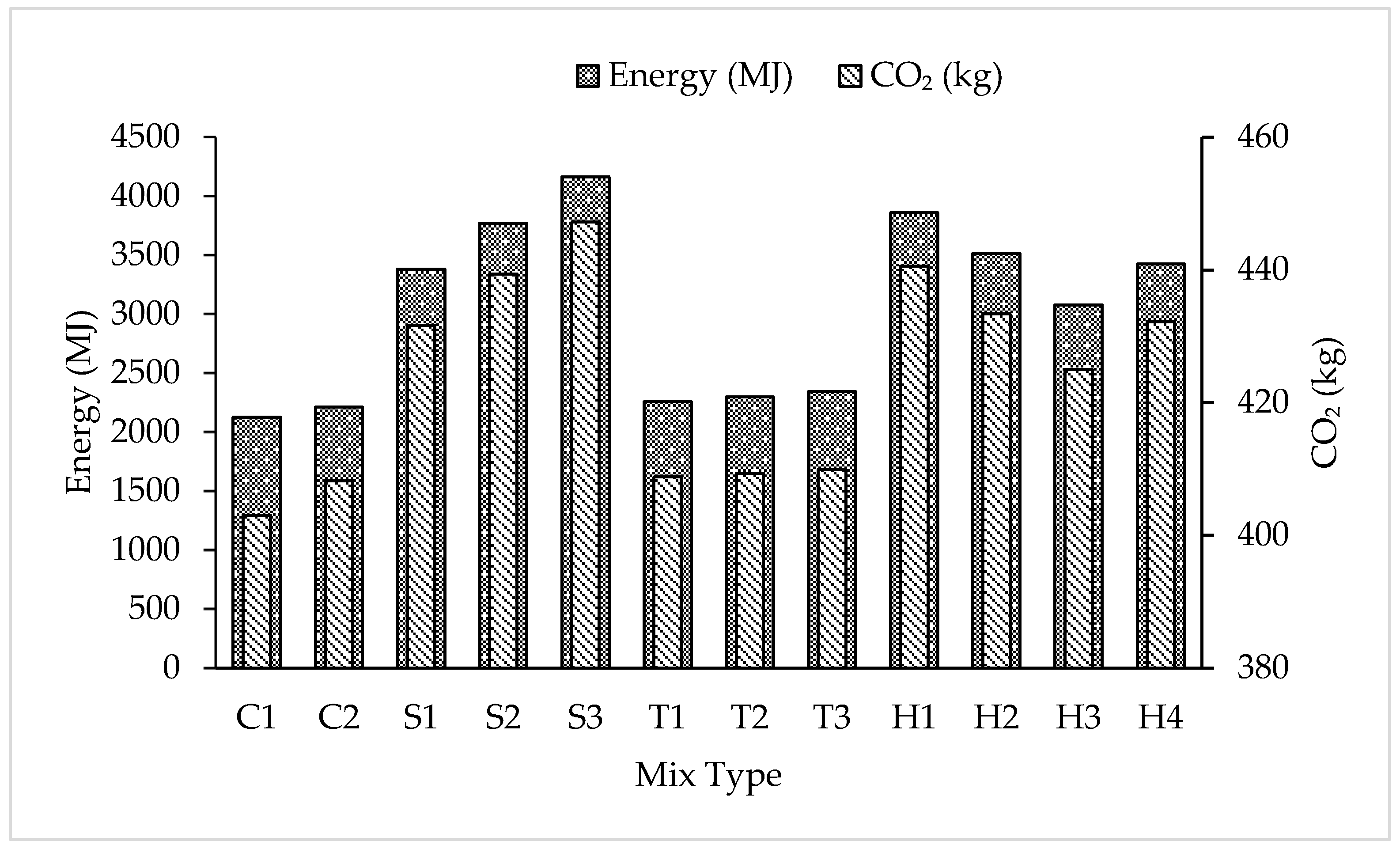
- The LCA calculations showed that the embodied energy and carbon increased with the increase in RTSF but remained close to control mix for the RTTF. The hybrid incorporation of RTSF and RTTF reduced the embodied carbon footprints and energy primarily through material replacement and performance improvement. There was an increase of 4–8% embodied carbon for hybrid mixes compared to the control mixes and individual RTTF, but it was 5% less than the individual use of RTSF. The hybrid use of recycled tire steel and textile fibers reduces the embodied energy and carbon of concrete by replacing virgin fiber materials with low-impact recycled alternatives. Their reuse diverts waste from landfills and enables improved mechanical performance, allowing material optimization and lower cement demand. This synergistic approach supports circular economic principles while enhancing the sustainability of concrete production.
7. Future Recommendations
Author Contributions
Funding
Institutional Review Board Statement
Informed Consent Statement
Data Availability Statement
Acknowledgments
Conflicts of Interest
References
- Ting, M.B.; Fakir, S.; Gulati, B.; Haysom, S.; Mytelka, L.L.; Msimang, V.; Mujakachi, L.K.; Muzenda, E.; Perrot, R.; Scholtz, L.; et al. Earth, Wind and Fire: Unpacking the Political, Economic and Security Implications of Discourse on the Green Economy; Mytelka, L.K., Msimang, V., Perrot, R., Eds.; MISTRA—Mapungubwe Institute for Strategic Reflection: Johannesburg, South Africa, 2015; p. 340. [Google Scholar]
- Valentini, F.; Pegoretti, A. End-of-life options of tyres. A review. Adv. Ind. Eng. Polym. Res. 2022, 5, 203–213. [Google Scholar] [CrossRef]
- Rogachuk, B.E.; Okolie, J.A. Waste tires based biorefinery for biofuels and value-added materials production. Chem. Eng. J. Adv. 2023, 14, 100476. [Google Scholar] [CrossRef]
- Grammelis, P.; Margaritis, N.; Dallas, P.; Rakopoulos, D.; Mavrias, G. A Review on Management of End of Life Tires (ELTs) and Alternative Uses of Textile Fibers. Energies 2021, 14, 571. [Google Scholar] [CrossRef]
- Nilimaa, J. Smart materials and technologies for sustainable concrete construction. Dev. Built Environ. 2023, 15, 100177. [Google Scholar] [CrossRef]
- Ahmad, I.; Ahmad, F.; Room, S.; Abdullah, Z.; Ihsan, M. Compressive Strength of Cement Mortar blended with Coconut Fibers and Human Hair. Adv. Sci. Technol. Eng. Syst. J. 2016, 1, 1–4. [Google Scholar] [CrossRef][Green Version]
- Halvax, K.; Lublóy, É. Investigation of steel fibers bond strength in mortar matrix. Pollack Period. 2013, 8, 101–110. [Google Scholar] [CrossRef]
- Salam, A.; Room, S.; Iqbal, S.; Mahmood, K.; Iqbal, Q. An experimental study of bond behavior of micro steel fibers added self-compacting concrete with steel reinforcement. Period. Polytech. Civ. Eng. 2020, 64, 1144–1152. [Google Scholar] [CrossRef]
- Golpasand, G.B.; Farzam, M.; Shishvan, S.S. Behavior of recycled steel fiber reinforced concrete under uniaxial cyclic compression and biaxial tests. Constr. Build. Mater. 2020, 263, 120664. [Google Scholar] [CrossRef]
- Fazli, A.; Rodrigue, D. Sustainable Reuse of Waste Tire Textile Fibers (WTTF) as Reinforcements. Polymers 2022, 14, 3933. [Google Scholar] [CrossRef]
- Serdar, M.; Baricevic, A.; Lakusic, S.; Bjegovic, D. Special purpose concrete products from waste tyre recyclates. Građevinar 2013, 65, 793–801. [Google Scholar] [CrossRef]
- Pawelska-Mazur, M.; Kaszynska, M. Mechanical Performance and Environmental Assessment of Sustainable Concrete Reinforced with Recycled End-of-Life Tyre Fibres. Materials 2021, 14, 256. [Google Scholar] [CrossRef]
- Isa, M.N.; Pilakoutas, K.; Guadagnini, M.; Angelakopoulos, H. Mechanical performance of affordable and eco-efficient ultra-high performance concrete (UHPC) containing recycled tyre steel fibres. Constr. Build. Mater. 2020, 255, 119272. [Google Scholar] [CrossRef]
- Biswas, W.K.; Zhang, X.; Matters, C.; Maboud, M. Techno-Eco-Efficiency Assessment of Using Recycled Steel Fibre in Concrete. Sustainability 2024, 16, 3717. [Google Scholar] [CrossRef]
- Qin, X.; Kaewunruen, S. Environment-friendly recycled steel fibre reinforced concrete. Constr. Build. Mater. 2022, 327, 126967. [Google Scholar] [CrossRef]
- Mastali, M.; Dalvand, A.; Sattarifard, A.R.; Illikainen, M. Development of eco-efficient and cost-effective reinforced self-consolidation concretes with hybrid industrial/recycled steel fibers. Constr. Build. Mater. 2018, 166, 214–226. [Google Scholar] [CrossRef]
- Hajimohammadi, A.; Ngo, T.; Mendis, P.; Nguyen, T.; Kashani, A.; van Deventer, J.S.J. Pore characteristics in one-part mix geopolymers foamed by H2O2: The impact of mix design. Mater. Des. 2017, 130, 381–391. [Google Scholar] [CrossRef]
- Zia, A.; Zhang, P.; Holly, I. Long-term performance of concrete reinforced with scrap tire steel fibers in hybrid and non-hybrid forms: Experimental behavior and practical applications. Constr. Build. Mater. 2023, 409, 134011. [Google Scholar] [CrossRef]
- Mmereki, D.; Machola, B.; Mokokwe, K. Status of waste tires and management practice in Botswana. J. Air Waste Manag. Assoc. 2019, 69, 1230–1246. [Google Scholar] [CrossRef]
- Shaaban, I.G.; Rizzuto, J.P.; El-Nemr, A.; Bohan, L.; Ahmed, H.; Tindyebwa, H. Mechanical Properties and Air Permeability of Concrete Containing Waste Tires Extracts. J. Mater. Civ. Eng. 2021, 33, 04020472. [Google Scholar] [CrossRef]
- Rocha, J.H.A.; Galarza, F.P.; Chileno, N.G.C.; Rosas, M.H.; Peñaranda, S.P.; Diaz, L.L.; Abasto, R.P. Compressive Strength Assessment of Soil–Cement Blocks Incorporated with Waste Tire Steel Fiber. Materials 2022, 15, 1777. [Google Scholar] [CrossRef]
- Ahmad, I.; Iqbal, M.; Abbas, A.; Badrashi, Y.I.; Jamal, A.; Ullah, S.; Yosri, A.M.; Hamad, M. Enhancement of Confinement in Scaled RC Columns using Steel Fibers Extracted from Scrap Tyres. Materials 2022, 15, 3219. [Google Scholar] [CrossRef] [PubMed]
- Xu, X.; Chen, Q.; Yu, B.; Liu, Q.; Zhang, R.; Liu, Y. Preparation of low-cost reactive powder concrete using waste steel fibres recycled from scrap tires. Road Mater. Pavement Des. 2023, 24, 1254–1272. [Google Scholar] [CrossRef]
- Simalti, A.; Singh, A.P. Comparative study on performance of manufactured steel fiber and shredded tire recycled steel fiber reinforced self-consolidating concrete. Constr. Build. Mater. 2021, 266, 121102. [Google Scholar] [CrossRef]
- Senesavath, S.; Salem, A.; Kashkash, S.; Zehra, B.; Orban, Z. The effect of recycled tyre steel fibers on the properties of concrete. Pollack Period. 2022, 17, 43–49. [Google Scholar] [CrossRef]
- Aksoylu, C.; Özkılıç, Y.O.; Hadzima-Nyarko, M.; Işık, E.; Arslan, M.H. Investigation on Improvement in Shear Performance of Reinforced-Concrete Beams Produced with Recycled Steel Wires from Waste Tires. Sustainability 2022, 14, 13360. [Google Scholar] [CrossRef]
- Vistos, L.; Galladini, D.; Xargay, H.; Caggiano, A.; Folino, P.; Martinelli, E. Hybrid Industrial/Recycled SFRC: Experimental Analysis and Design; di Prisco, M., Menegotto, M., Eds.; Springer International Publishing: Cham, Switzerland, 2018; pp. 98–112. [Google Scholar]
- Bjegovic, D.; Baricevic, A.; Lakusic, S.; Damjanovic, D.; Duvnjak, I. Positive interaction of industrial and recycled steel fibres in fibre reinforced concrete. J. Civ. Eng. Manag. 2013, 19, S50–S60. [Google Scholar] [CrossRef]
- Chen, M.; Zhong, H.; Chen, L.; Zhang, Y.; Zhang, M. Engineering properties and sustainability assessment of recycled fibre reinforced rubberised cementitious composite. J. Clean. Prod. 2021, 278, 123996. [Google Scholar] [CrossRef]
- Pająk, M. Concrete reinforced with various amounts of steel fibers reclaimed from end-of-life tires. MATEC Web Conf. 2019, 262, 6008. [Google Scholar] [CrossRef]
- Su, P.; Li, M.; Dai, Q.; Wang, J. Mechanical and durability performance of concrete with recycled tire steel fibers. Constr. Build. Mater. 2023, 394, 132287. [Google Scholar] [CrossRef]
- Zhang, Y.; Gao, L. Influence of Tire-Recycled Steel Fibers on Strength and Flexural Behavior of Reinforced Concrete. Adv. Mater. Sci. Eng. 2020, 2020, 6363105. [Google Scholar] [CrossRef]
- Landi, D.; Vitali, S.; Germani, M. Environmental Analysis of Different End of Life Scenarios of Tires Textile Fibers. Procedia CIRP 2016, 48, 508–513. [Google Scholar] [CrossRef]
- Khosh, B.; Atapour, H. Assessment of mechanical behavior of sprayed concrete reinforced with waste tire textile fibers. Sci. Rep. 2024, 14, 8873. [Google Scholar] [CrossRef] [PubMed]
- Malaiskiene, J.; Nagrockiene, D.; Skripkiunas, G. Possibilities to use textile cord waste from used tires for concrete. J. Environ. Eng. Landsc. Manag. 2015, 23, 183–191. [Google Scholar] [CrossRef]
- Chen, M.; Zhong, H.; Zhang, M. Flexural fatigue behaviour of recycled tyre polymer fibre reinforced concrete. Cem. Concr. Compos. 2020, 105, 103441. [Google Scholar] [CrossRef]
- Abbaspour, M.; Narani, S.S.; Aflaki, E.; Moghadas Nejad, F.; Mir Mohammad Hosseini, S.M. Strength and swelling properties of a waste tire textile fiber-reinforced expansive soil. Geosynth. Int. 2020, 27, 476–489. [Google Scholar] [CrossRef]
- Abbaspour, M.; Aflaki, E.; Moghadas Nejad, F. Reuse of waste tire textile fibers as soil reinforcement. J. Clean. Prod. 2019, 207, 1059–1071. [Google Scholar] [CrossRef]
- ASTM C150/C150M-22; Standard Specification for Portland Cement. ASTM: West Conshohocken, PA, USA, 2022. [CrossRef]
- ASTM C192/C192M; Standard Practice for Making and Curing Concrete Test Specimens in the Laboratory. ASTM: West Conshohocken, PA, USA, 2025. [CrossRef]
- ASTM C143/C143M; Standard Test Method for Slump of Hydraulic-Cement Concrete. ASTM: West Conshohocken, PA, USA, 2020. [CrossRef]
- ASTM C138/C138M; Standard Test Method for Density (Unit Weight), Yield, and Air Content (Gravimetric) of Concrete. ASTM: West Conshohocken, PA, USA, 2024. [CrossRef]
- BS EN 12390-3:2019; Testing Hardened Concrete. British Standards Institution: London, UK, 2019.
- ASTM C496/C496M; Standard Test Method for Splitting Tensile Strength of Cylindrical Concrete Specimens. ASTM: West Conshohocken, PA, USA, 2017. [CrossRef]
- ASTM C78/C78M; Standard Test Method for Flexural Strength of Concrete (Using Simple Beam with Third-Point Loading). ASTM: West Conshohocken, PA, USA, 2022. [CrossRef]
- Rabie, M.; Bahadori-Jahromi, A.; Shaaban, I.G. Optimisation of Glass and Carbon Fibre-Reinforced Concrete with External Enzymatic Self-Healing: An Experimental and Environmental Impact Study. Buildings 2025, 15, 3455. [Google Scholar] [CrossRef]
- Ben-Alon, L.; Loftness, V.; Harries, K.A.; DiPietro, G.; Hameen, E.C. Cradle to site Life Cycle Assessment (LCA) of natural vs conventional building materials: A case study on cob earthen material. Build. Environ. 2019, 160, 106150. [Google Scholar] [CrossRef]
- Jiménez, C.; Barra, M.; Josa, A.; Valls, S. LCA of recycled and conventional concretes designed using the Equivalent Mortar Volume and classic methods. Constr. Build. Mater. 2015, 84, 245–252. [Google Scholar] [CrossRef]
- ISO 14044:2006/Amd 2:2020; Environmental Management—Life Cycle Assessment—Requirements and Guidelines. ISO International Organization for Standardization: Geneva, Switzerland, 2020.
- Koffler, C.; Amor, B.; Carbajales-Dale, M.; Cascio, J.; Conroy, A.; Fava, J.A.; Gaudreault, C.; Gloria, T.; Hensler, C.; Horvath, A.; et al. On the reporting and review requirements of ISO 14044. Int. J. Life Cycle Assess. 2020, 25, 478–482. [Google Scholar] [CrossRef]
- Mohebbi, G.; Bahadori-Jahromi, A.; Ferri, M.; Mylona, A. The Role of Embodied Carbon Databases in the Accuracy of Life Cycle Assessment (LCA) Calculations for the Embodied Carbon of Buildings. Sustainability 2021, 13, 7988. [Google Scholar] [CrossRef]
- Blay-Armah, A.; Mohebbi, G.; Bahadori-Jahromi, A.; Fu, C.; Amoako-Attah, J.; Barthorpe, M. Evaluation of Embodied Carbon Emissions in UK Supermarket Constructions: A Study on Steel, Brick, and Timber Frameworks with Consideration of End-of-Life Processes. Sustainability 2023, 15, 14978. [Google Scholar] [CrossRef]
- Jones, C.; Hammond, G. Embodied Carbon—The ICE Database; Circular Ecology: Worcester, UK; University of Bath: Bath, UK, 2019. [Google Scholar]
- Dsilva, J.; Zarmukhambetova, S.; Locke, J. Assessment of building materials in the construction sector: A case study using life cycle assessment approach to achieve the circular economy. Heliyon 2023, 9, e20404. [Google Scholar] [CrossRef] [PubMed]
- Neocleous, K.; Angelakopoulos, H.; Pilakoutas, K.; Guadagnini, M. Fibre-reinforced roller-compacted concrete transport pavements. Proc. Inst. Civ. Engineers. Transp. 2011, 164, 97–109. [Google Scholar] [CrossRef]
- Liew, K.M.; Akbar, A. The recent progress of recycled steel fiber reinforced concrete. Constr. Build. Mater. 2020, 232, 117232. [Google Scholar] [CrossRef]
- Samarakoon, S.M.S.M.K.; Ruben, P.; Wie Pedersen, J.; Evangelista, L. Mechanical performance of concrete made of steel fibers from tire waste. Case Stud. Constr. Mater. 2019, 11, e00259. [Google Scholar] [CrossRef]
- Baričević, A.; Jelčić Rukavina, M.; Pezer, M.; Štirmer, N. Influence of recycled tire polymer fibers on concrete properties. Cem. Concr. Compos. 2018, 91, 29–41. [Google Scholar] [CrossRef]
- Chen, M.; Chen, W.; Zhong, H.; Chi, D.; Wang, Y.; Zhang, M. Experimental study on dynamic compressive behaviour of recycled tyre polymer fibre reinforced concrete. Cem. Concr. Compos. 2019, 98, 95–112. [Google Scholar] [CrossRef]
- Ouda, A.S. Development of high-performance heavy density concrete using different aggregates for gamma-ray shielding. Prog. Nucl. Energy 2015, 79, 48–55. [Google Scholar] [CrossRef]
- Iqbal, S.; Ali, I.; Room, S.; Khan, S.A.; Ali, A. Enhanced mechanical properties of fiber reinforced concrete using closed steel fibers. Mater. Struct. 2019, 52, 56. [Google Scholar] [CrossRef]
- Leone, M.; Centonze, G.; Colonna, D.; Micelli, F.; Aiello, M.A. Fiber-reinforced concrete with low content of recycled steel fiber: Shear behaviour. Constr. Build. Mater. 2018, 161, 141–155. [Google Scholar] [CrossRef]
- Huang, Y.; Kong, D.; Li, Y.; Zhou, S.; Shu, J.; Wu, B. Effect of different shapes of steel fibers and palygorskite-nanofibers on performance of ultra-high-performance concrete. Sci. Rep. 2024, 14, 8224. [Google Scholar] [CrossRef]
- Shah, S.H.A.; Ali, B.; Ahmed, G.H.; Tirmazi, S.M.T.; El Ouni, M.H.; Hussain, I. Effect of recycled steel fibers on the mechanical strength and impact toughness of precast paving blocks. Case Stud. Constr. Mater. 2022, 16, e01025. [Google Scholar] [CrossRef]
- Leone, M.; Centonze, G.; Colonna, D.; Micelli, F.; Aiello, M.A. Experimental Study on Bond Behavior in Fiber-Reinforced Concrete with Low Content of Recycled Steel Fiber. J. Mater. Civ. Eng. 2016, 28, 4016068. [Google Scholar] [CrossRef]
- Martinelli, E.; Caggiano, A.; Xargay, H. An experimental study on the post-cracking behaviour of Hybrid Industrial/Recycled Steel Fibre-Reinforced Concrete. Constr. Build. Mater. 2015, 94, 290–298. [Google Scholar] [CrossRef]
- Centonze, G.; Leone, M.; Aiello, M.A. Steel fibers from waste tires as reinforcement in concrete: A mechanical characterization. Constr. Build. Mater. 2012, 36, 46–57. [Google Scholar] [CrossRef]
- Han, J.; Zhao, M.; Chen, J.; Lan, X. Effects of steel fiber length and coarse aggregate maximum size on mechanical properties of steel fiber reinforced concrete. Constr. Build. Mater. 2019, 209, 577–591. [Google Scholar] [CrossRef]
- Michalik, A.; Chyliński, F.; Bobrowicz, J.; Pichór, W. Effectiveness of Concrete Reinforcement with Recycled Tyre Steel Fibres. Materials 2022, 15, 2444. [Google Scholar] [CrossRef]







| Oxide | CaO | SiO2 | Al2O3 | Fe2O3 | MgO | SO3 | Na2O | K2O | Others |
| Content | 66.30 | 21.11 | 4.91 | 2.71 | 1.31 | 2.40 | 0.16 | 0.6 | 0.5 |
| Property | Unit | Results |
|---|---|---|
| Density | kg/m3 | 7800 |
| Diameter | mm | 0.2–0.6 |
| Length | mm | 8–25 |
| Tensile Strength | MPa | >2400 |
| Aspect Ratio | n/a | 51 ± 5 |
| Elastic Modulus | GPa | 180 |
| Shape | n/a | Irregular |
| Color | n/a | Light Golden |
| Property | Unit | Results |
|---|---|---|
| Density | kg/m3 | 1180 |
| Length | mm | 5 ± 2 |
| Tensile Strength | MPa | >400 |
| Elastic Modulus | GPa | 3.5 |
| Chlorine Content | ppm | <33 |
| Color | n/a | Grey |
| Mix Design Details | ||||||||||
|---|---|---|---|---|---|---|---|---|---|---|
| Mix ID | Cement | Coarse Aggregate | Sand | Water | S.P | RTSF | RTTF | |||
| 20 mm | 10 mm | Volume | Amount | Volume | Amount | |||||
| kg/m3 | kg/m3 | kg/m3 | kg/m3 | kg/m3 | kg/m3 | % | kg/m3 | % | kg/m3 | |
| C1 | 431.9 | 422.81 | 631.84 | 670.74 | 203 | - | - | - | - | - |
| C2 | 431.9 | 422.81 | 631.84 | 670.74 | 203 | 2.16 | - | - | - | - |
| S1 | 431.9 | 422.81 | 631.84 | 670.74 | 203 | 2.16 | 0.75 | 58.5 | - | - |
| S2 | 431.9 | 422.81 | 631.84 | 670.74 | 203 | 2.16 | 1 | 78.0 | - | - |
| S3 | 431.9 | 422.81 | 631.84 | 670.74 | 203 | 2.16 | 1.25 | 97.5 | - | - |
| T1 | 431.9 | 422.81 | 631.84 | 670.74 | 203 | 2.16 | - | - | 0.25 | 2.9 |
| T2 | 431.9 | 422.81 | 631.84 | 670.74 | 203 | 2.16 | - | - | 0.5 | 5.8 |
| T3 | 431.9 | 422.81 | 631.84 | 670.74 | 203 | 2.16 | - | - | 0.75 | 8.7 |
| H1 | 431.9 | 422.81 | 631.84 | 670.74 | 203 | 2.16 | 1 | 78.0 | 0.5 | 5.8 |
| H2 | 431.9 | 422.81 | 631.84 | 670.74 | 203 | 2.16 | 0.75 | 58.5 | 0.75 | 8.7 |
| H3 | 431.9 | 422.81 | 631.84 | 670.74 | 203 | 2.16 | 0.5 | 39.0 | 0.5 | 5.8 |
| H4 | 431.9 | 422.81 | 631.84 | 670.74 | 203 | 3.24 | 0.75 | 58.5 | 0.25 | 2.9 |
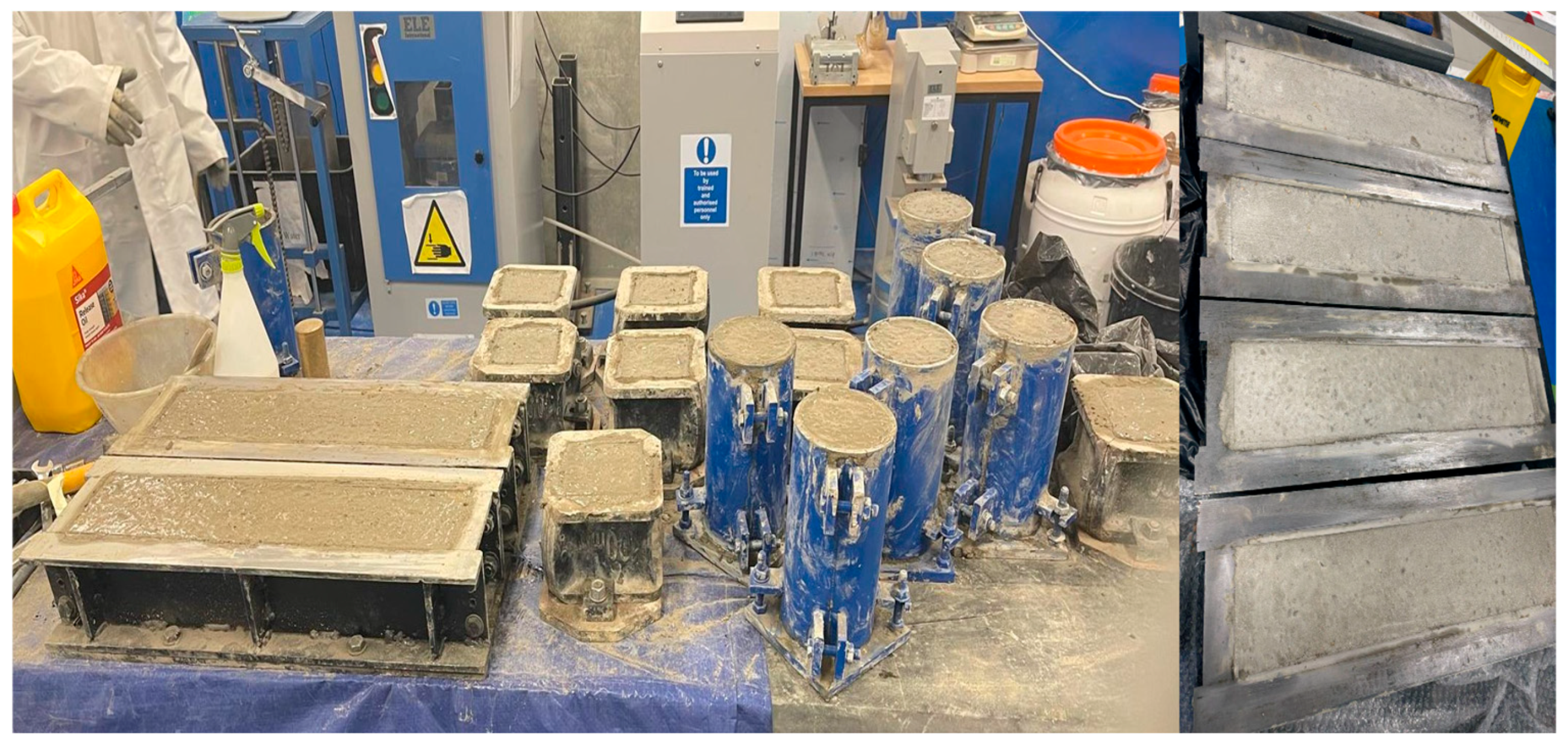
| Concrete State | Test Performed | Specimen | Test Standard | Reference |
|---|---|---|---|---|
| Fresh | Slump | Cone | C-143/C143M | [41] |
| Density | Cylinder | C-138/C138M | [42] | |
| Hardened | Density | Cylinder | C-138/C138M | [42] |
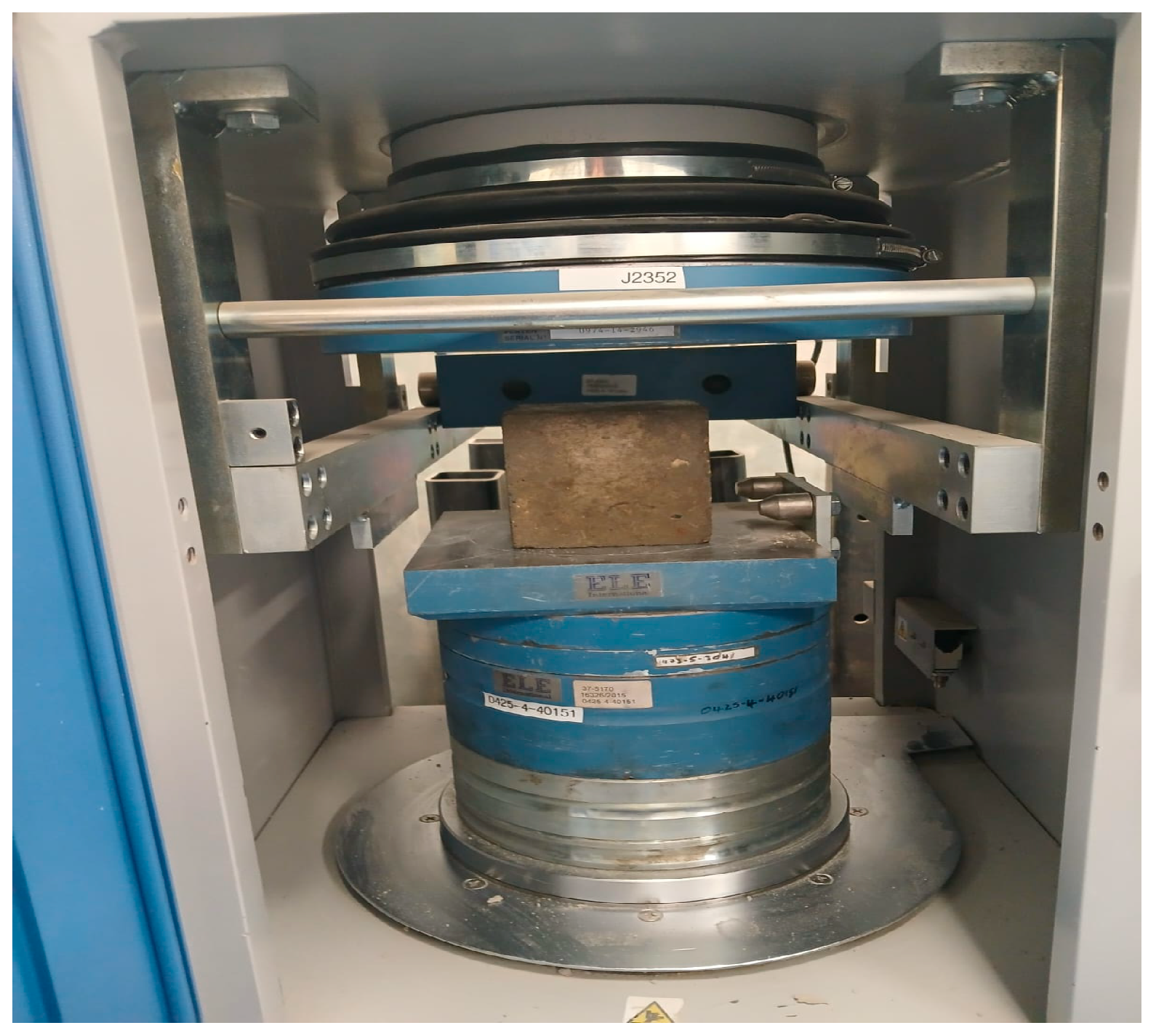
| Compressive Strength | Cube | BS EN 12390-3 | [43] | |
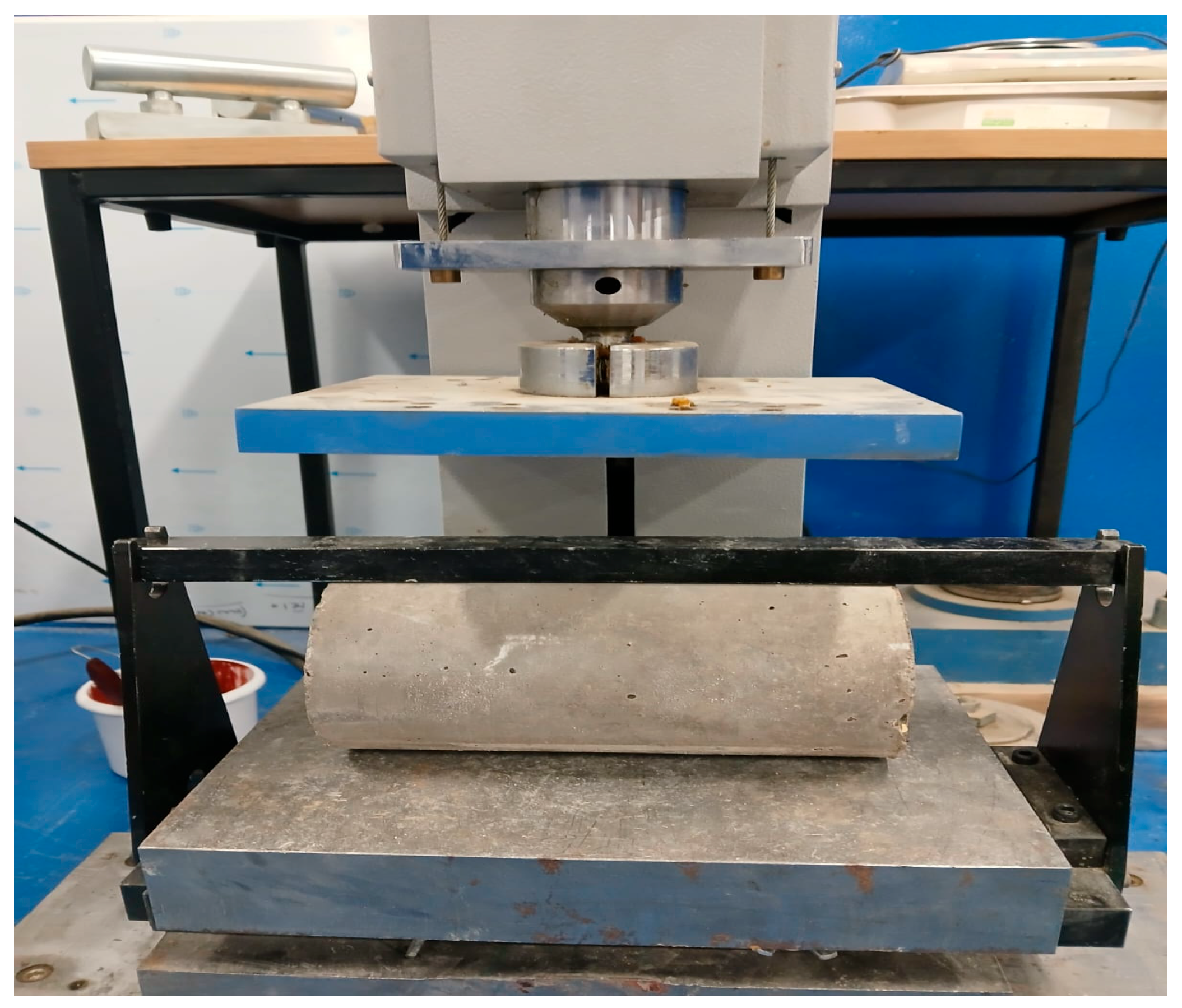
| Tensile Strength | Cylinder | C-496/C496M | [44] | |
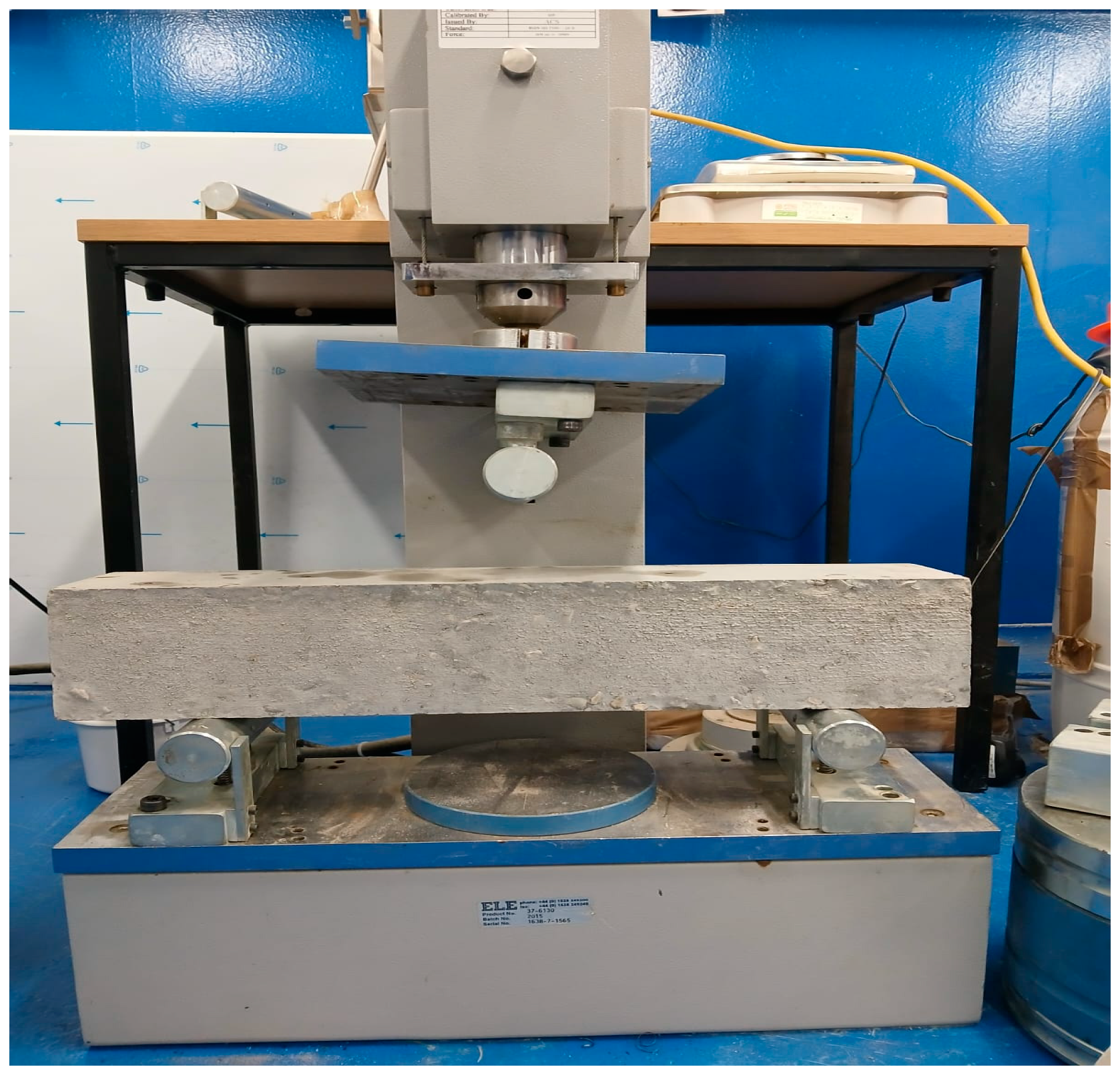
| Flexural Strength | Beam | C-78/C78M | [45] |
| Ingredient | Embodied Carbon Factor (kg CO2 e/kg) | Embodied Energy Factor (MJ/kg) |
|---|---|---|
| Portland Cement | 0.910 | 4.6 |
| Fine Aggregates | 0.005 | 0.08 |
| Coarse Aggregates 10 mm | 0.005 | 0.08 |
| Coarse Aggregates 20 mm | 0.005 | 0.08 |
| Water | 0.00034 | 0.0014 |
| Superplasticizer | 2.4 | 40 |
| RTSF | 0.4 | 20 |
| RTTF | 0.2 | 15 |
| Mix ID | Fresh Concrete | Hardened Concrete | |||||||
|---|---|---|---|---|---|---|---|---|---|
| Slump (mm) | Density (kg/m3) | Compressive Strength (MPa) | Split Tensile Strength (MPa) | Flexural Strength (MPa) | |||||
| Fresh | Hardened | 7-day | 28-day | 7-day | 28-day | 7-day | 28-day | ||
| C1 | 85 | 2347 | 2306 | 24.47 | 36.71 | 2.96 | 3.51 | 3.89 | 5.01 |
| C2 | 109 | 2361 | 2321 | 28.24 | 37.83 | 3.29 | 3.78 | 4.38 | 5.31 |
| S1 | 88 | 2396 | 2371 | 28.10 | 37.85 | 3.57 | 4.29 | 4.81 | 5.78 |
| S2 | 81 | 2409 | 2381 | 27.92 | 37.91 | 3.81 | 4.55 | 5.12 | 6.07 |
| S3 | 76 | 2423 | 2395 | 28.48 | 37.69 | 4.02 | 4.71 | 5.47 | 6.23 |
| T1 | 86 | 2363 | 2342 | 27.97 | 37.45 | 3.43 | 3.94 | 4.59 | 5.68 |
| T2 | 82 | 2362 | 2347 | 28.03 | 37.02 | 3.58 | 4.14 | 4.76 | 5.91 |
| T3 | 72 | 2367 | 2355 | 27.91 | 36.54 | 3.47 | 3.97 | 4.63 | 5.71 |
| H1 | 79 | 2391 | 2376 | 29.35 | 39.19 | 4.01 | 4.96 | 5.63 | 6.68 |
| H2 | 76 | 2376 | 2359 | 29.10 | 38.97 | 3.73 | 4.76 | 5.26 | 6.29 |
| H3 | 86 | 2367 | 2351 | 28.21 | 38.08 | 3.29 | 4.17 | 5.17 | 6.11 |
| H4 | 80 | 2389 | 2372 | 28.82 | 38.87 | 3.66 | 4.69 | 5.35 | 6.41 |
| Mix ID | 28-Day Compressive Strength | 28-Day Split Tensile Strength | 28-Day Flexural Strength | ||||||
|---|---|---|---|---|---|---|---|---|---|
| MPa | Variation with Respect to C1 (%) | Variation with Respect to C2 (%) | MPa | Variation with Respect to C1 (%) | Variation with Respect to C2 (%) | MPa | Variation with Respect to C1 (%) | Variation with Respect to C2 (%) | |
| C1 | 36.71 | 0 | - | 3.51 | 0 | - | 5.01 | 0 | - |
| C2 | 37.83 | - | 0 | 3.78 | - | 0 | 5.31 | - | 0 |
| S1 | 37.85 | 3.11 | 0.05 | 4.29 | 22.22 | 13.49 | 5.78 | 15.37 | 8.85 |
| S2 | 37.91 | 3.27 | 0.21 | 4.55 | 29.63 | 20.37 | 6.07 | 21.16 | 14.31 |
| S3 | 37.69 | 2.67 | −0.37 | 4.71 | 34.19 | 24.60 | 6.23 | 24.35 | 17.33 |
| T1 | 37.45 | 2.02 | −1.00 | 3.94 | 12.25 | 4.23 | 5.68 | 13.37 | 6.97 |
| T2 | 37.02 | 0.84 | −2.14 | 4.14 | 17.95 | 9.52 | 5.91 | 17.96 | 11.30 |
| T3 | 36.54 | −0.46 | −3.41 | 3.97 | 13.11 | 5.03 | 5.71 | 13.97 | 7.53 |
| H1 | 39.19 | 6.76 | 3.60 | 4.96 | 41.31 | 31.22 | 6.68 | 33.33 | 25.80 |
| H2 | 38.97 | 6.16 | 3.01 | 4.76 | 35.61 | 25.93 | 6.29 | 25.55 | 18.46 |
| H3 | 38.08 | 3.73 | 0.66 | 4.17 | 18.80 | 10.32 | 6.11 | 21.96 | 15.07 |
| H4 | 38.87 | 5.88 | 2.75 | 4.69 | 33.62 | 24.07 | 6.41 | 27.94 | 20.72 |
Disclaimer/Publisher’s Note: The statements, opinions and data contained in all publications are solely those of the individual author(s) and contributor(s) and not of MDPI and/or the editor(s). MDPI and/or the editor(s) disclaim responsibility for any injury to people or property resulting from any ideas, methods, instructions or products referred to in the content. |
© 2026 by the authors. Licensee MDPI, Basel, Switzerland. This article is an open access article distributed under the terms and conditions of the Creative Commons Attribution (CC BY) license.
Share and Cite
Tariq, Z.; Bahadori-Jahromi, A.; Room, S. Sustainable Incorporation of Recycled Tire Steel and Textile Fibers as a Hybrid Mix in Concrete. Sustainability 2026, 18, 786. https://doi.org/10.3390/su18020786
Tariq Z, Bahadori-Jahromi A, Room S. Sustainable Incorporation of Recycled Tire Steel and Textile Fibers as a Hybrid Mix in Concrete. Sustainability. 2026; 18(2):786. https://doi.org/10.3390/su18020786
Chicago/Turabian StyleTariq, Zeeshan, Ali Bahadori-Jahromi, and Shah Room. 2026. "Sustainable Incorporation of Recycled Tire Steel and Textile Fibers as a Hybrid Mix in Concrete" Sustainability 18, no. 2: 786. https://doi.org/10.3390/su18020786
APA StyleTariq, Z., Bahadori-Jahromi, A., & Room, S. (2026). Sustainable Incorporation of Recycled Tire Steel and Textile Fibers as a Hybrid Mix in Concrete. Sustainability, 18(2), 786. https://doi.org/10.3390/su18020786