


Abstract
With the rapid growth of the social economy and the increasing prevalence of e-commerce, urban distribution centers (UDCs) have become vital hubs for the efficient functioning of cities. The decision regarding the location of UDCs not only impacts the operational efficiency of logistics companies but also plays a crucial role in urban sustainable development planning. Traditional location models are limited in addressing these complexities, which is why this paper introduces an innovative multi-objective location decision-making model. This model accounts for both the construction and operational costs of enterprises, and it uniquely incorporates the industrial sustainable development potential (ISDP) as a core objective function. The goal is to balance enterprise costs with the needs of urban development in location decision-making. This research adopts an interdisciplinary approach, initially using ecological theories to quantify ISDP, then employing System Dynamics to simulate the future trajectories of key industry drivers, and finally applying genetic algorithms to find solutions. The results from the numerical example demonstrate that the model and algorithm are both effective and practical. This research presents a novel approach and method for UDC location decision-making based on the long-term sustainable development of cities for logistics enterprises and urban planners. It also contributes to the related research on urban sustainable development and logistics location.
1. Introduction
With the rapid growth of e-commerce and the significant transformation of residents’ consumption patterns, urban logistics distribution centers have become increasingly vital hubs for maintaining the efficient operation of modern cities. They not only provide consumers with convenient and efficient delivery services, significantly enhancing urban residents’ quality of life, but also facilitate the integration of logistics, information flow, and capital flow. This integration, in turn, effectively drives the development of related industries, such as warehousing, transportation, packaging, and information services. In this context, the scientific selection of distribution center locations has evolved beyond a simple operational decision for individual enterprises, becoming a strategic issue that influences urban spatial planning, transportation systems, industrial efficiency, and even long-term sustainable development. A well-placed distribution center can optimize and reduce total social logistics costs while providing continuous momentum for the transformation and upgrading of regional economies [1]. Conversely, poor location choices can result in resource misallocation, increased traffic congestion, and hinder the orderly expansion and renewal of cities [2]. Therefore, conducting in-depth research into the location decision-making of distribution centers holds significant theoretical and practical value for the sustainable development planning of cities.
The issue of location selection for logistics distribution centers has long been a topic of discussion within the academic community [3]. These studies primarily focus on the microeconomic perspective of enterprises, aiming to achieve objectives such as cost minimization [4,5,6], shortest delivery time [7,8], or maximum direct revenue [9,10] through the construction of optimization models. Given the complexity, often conflicting objectives and pervasive parameter uncertainties in practical settings, considerable research has been dedicated to enhancing decision-making frameworks [11,12,13]. More recently, studies have increasingly emphasized the evaluation of qualitative and social dimensions. External environmental factors [14,15] and social impacts [16,17] have also been recognized as integral components of the construction benefits and have started to be incorporated into analytical frameworks. While these studies successfully reframe the value of logistics facilities, translating these potential benefits into quantifiable objectives for location optimization remains a challenge. Therefore, it is essential to integrate location decision-making into the broader framework of the city’s sustainable development planning in a coherent manner.
To address the research gap identified above, this paper develops an innovative multi-objective location decision-making model. This model accounts for both traditional enterprise construction and operational costs while pioneering the incorporation of “industrial sustainable development potential” as a core objective function within the decision-making framework. This study adopts a cross-disciplinary research approach. First, drawing on ecological theory, the development potential of a location is analogized to the growth fitness of a population within a specific ecological environment. Based on this analogy, a set of quantitative formulas for assessing the industrial sustainable development potential of the location is developed. Second, using the System Dynamics method, the future evolution trajectories of key industrial driving factors are simulated and predicted. The complex multi-objective model is then solved using genetic algorithms, and its feasibility and effectiveness are validated through case analyses based on real data. The proposed model addresses real-world strategic planning needs, such as siting logistics hubs in new urban districts for municipal governments or selecting locations for regional distribution centers by large logistics enterprises. Additionally, the modeling framework can be extended to other infrastructure location problems where evaluating long-term spillover effects is critical, such as business incubators or innovation hubs.
The main contributions of this study are as follows: First, in terms of temporal dynamics, this study moves beyond the prevalent “phased, look-ahead” optimization of multi-period models. Instead of relying on externally predefined scenarios, we introduce a System Dynamics simulation to endogenously model the feedback-driven co-evolution between a candidate location’s development and its evolving resource and environmental context. This provides a dynamic, closed-loop perspective for assessing long-term industrial potential. Second, in terms of sustainability integration, the research translates the qualitative focus on long-term, strategic benefits—common in sustainable logistics literature—into a core, optimizable decision criterion. This work shifts the paradigm from facility-centric cost optimization to a dynamic, city-level value creation framework. Third, in terms of methodology, it builds a quantitative model for assessing industrial sustainable development potential by cross-collaborating with ecological theory on ecological niches and integrates the System Dynamics simulation to predict and depict the long-term impact of location selection more scientifically, enhancing the scientific rigor of decision-making.
The structure of this article is as follows: Section 2 reviews relevant research on the location selection of urban distribution centers and the application of ecological theories in management studies. Section 3 outlines the two optimization objectives of the model proposed in this study, along with the specific measurement methods, and discusses the dynamic feedback mechanism in industrial development and the corresponding discrete difference equations. Section 4 formulates the optimization model. Section 5 presents the design of a corresponding genetic algorithm. Section 6 presents numerical studies to verify the feasibility and effectiveness of the model and algorithm. Section 7 summarizes the research content, and Section 8 discusses the limitations and future research directions.
2. Literature Review
2.1. Urban Distribution Center Location Problem
As a key component of modern logistics systems, urban distribution is crucial for ensuring the timely supply of materials needed by urban residents and supporting the normal operation of industrial and commercial enterprises. Within the urban logistics system, the Urban Distribution Center (UDC) serves as the central hub, acting as a bridge between suppliers and final consumers. It is responsible for a range of functions, including receiving, storing, sorting, packaging, and dispatching goods. The location of the UDC is not only a critical factor in determining its performance but also has a profound impact on regional economic development [18,19]. From an academic research perspective, the UDC location selection problem is a special case of the facility location problem (FLP) [20,21]. This type of problem typically involves optimizing various factors, such as logistics costs, infrastructure, and customer satisfaction, to determine the optimal solution. Early studies on UDC siting primarily focused on natural resources, economic benefits, and transport efficiency [22,23,24]. Later studies have further refined these factors, considering aspects such as the natural environment, business environment, candidate infrastructure, surrounding conditions, and weather [25,26,27].
To address long-term planning, the facility location literature has incorporated a temporal dimension since the 1970s. Wesolowsky’s work [28] established the basic paradigm by discretizing the planning horizon into stages, allowing facility locations to be adjusted over time. Subsequent research has advanced this in two main directions: first, by refining multi-period decisions such as facility opening, closing, capacity expansion [29,30], and incremental network deployment to meet growing demand [31]; second, by modeling more complex dynamic scenarios, such as time-varying [32] or cumulative demand across periods [33]. These efforts collectively contribute to the shift from static to adaptive planning. Recent studies have also incorporated hybrid simulation–optimization approaches to address the complex challenges faced by urban logistics systems [34,35]. However, the temporal changes in existing dynamic models are primarily driven by externally predefined parameter shifts (e.g., demand forecast scenarios), and continuous time is discretized into separate decision stages. This approach is essentially a form of “phased, look-ahead optimization” that fails to capture the endogenous, continuous, and feedback-driven co-evolution between a facility and its environment.
Concurrent with the development of dynamic models, a profound paradigm shift has occurred within logistics and supply chain management research, moving beyond narrow economic calculations. Driven by increasing global concerns about environmental sustainability and social equity, a growing body of literature now places qualitative factors—such as environmental stewardship, governance models, and broader social benefits—at the core of analysis [36,37,38]. This shift manifests in several interconnected research streams. Early work focused on mitigating the direct environmental externalities of logistics, such as optimizing traffic flows to reduce congestion and emissions [39]. Subsequent research systematically examined how strategic interventions, like the deployment of micro-consolidation schemes and green vehicles, can reduce the carbon footprint of urban distribution systems [40,41]. More recently, the scope has expanded to encompass the social dimensions and systemic governance of logistics. Studies critically assess how logistics facilities affect urban livability, fairness, and community well-being [42,43], while others explore the role of innovative technologies [44] or novel institutional arrangements [45] in fostering collaborative and transparent logistics operations. The importance of stakeholder collaboration and detailed social considerations in planning is also emphasized [46,47,48]. Collectively, this body of work successfully reframes urban logistics facilities from mere cost centers to potential contributors to sustainable urban development. Complementing these conceptual and model-driven strands, a growing body of recent empirical studies have sought to quantitatively evaluate the sustainability outcomes of specific UDC implementations [49,50,51]. These empirical investigations offer critical, ground-truthed insights into the real-world functionality and societal benefits of UDCs, moving beyond theoretical potential to documented evidence.
Compared to existing works, our key innovation lies in the development of an integrated simulation–optimization framework that simultaneously addresses the limitations in the current literature. First, we introduce a System Dynamics model to endogenously simulate the feedback-driven co-evolution between a logistics facility and its urban environment. Second, we define and quantify the Industrial Sustainable Development Potential (ISDP) as a dynamic, optimizable objective function within the location model. This approach allows for the evaluation of UDC construction not only in terms of immediate operational efficiency or general environmental benefits but also in its capacity to synergize with the city’s broader development goals. The aim is to enable location decisions that maximize not only short-term cost-effectiveness but also the long-term, widespread industrial and economic sustainability benefits for the city region.
2.2. Ecological Niche Theory and Its Application in Management
The ecological niche theory was first proposed by the British biologist Grinnell [52]. He defined the ecological niche as “the ecological space occupied by an individual or a population” and the functional ecological niche as the space and conditions necessary for the survival of a species. Niche theory effectively explains the interaction between a subject and its environment, along with the influence of that interaction. It was first introduced into business research by Hannan and Freeman [53] to describe the formation and occupation of a specific resource space by a group of firms. Since then, an increasing number of management scholars have applied this theory to the field. Specifically, some scholars use niche theory to measure the existing capabilities, development potential, and competitiveness of enterprises within their environments [54,55,56,57]. Additionally, this theory is widely used to explain industrial development and the interaction between industries and their environments [58,59,60,61,62].
The ecological niche is a relatively abstract concept. In research, scholars typically use the quantitative description of certain attributes of the ecological niche to represent it. Dimmick [63] pointed out that the survival ability of a population in the face of competition can be determined through niche analysis, specifically niche suitability, width, overlap, and dominance. Niche width is one of the commonly used quantitative indicators, referring to the proportion of resources used by a species in a multidimensional resource space [64]. Niche overlap is another common indicator, measuring the diversity of resources used by biological species [65,66]. Niche suitability represents the degree of alignment between the actual ecological niche of an enterprise or industry and the optimal ecological niche [67]. In other words, this concept effectively describes the degree to which the current conditions of enterprises or industries support their ecological sustainable development.
This theory has been widely adopted in ecology and conservation biology and has been successfully applied to quantitatively describe issues such as species coexistence and ecosystem functions [68]. However, it has not yet been standardized for application in urban systems and supply chain management. We propose that by viewing industry development as the growth of a population, the ecological niche theory can effectively describe the advantages, disadvantages, and potential of industrial development around a specific UDC candidate location. Therefore, this study aims to leverage the internal logic and quantitative framework of niche theory and apply it to assess the industrial sustainable development potential of urban distribution centers. This approach allows for the evaluation of the relative suitability of different candidate sites in terms of resource endowment, competition and cooperation, and environmental carrying capacity.
3. Problem Statement and Model Formulation
3.1. Industrial Sustainable Development Potential
With the continuous expansion of urban areas and the rapid development of regional economies, the volume of logistics orders has surged, leading to increasingly complex and diverse logistics demands. In this context, relying on a single logistics node is insufficient to meet the requirements for efficient distribution. Therefore, planning and establishing multiple distribution centers within a city has become essential to support smooth logistics operations. These centers, located in different parts of the city, are not isolated entities. As key hubs for regional resource allocation, they work in coordination to form a comprehensive supply chain network. The site selection of these centers involves not only current construction costs and distribution efficiency but also long-term implications for industrial clustering and regional economic development [69]. As a typical capital-intensive project, the initial site selection of a distribution center requires substantial investment. Moreover, due to their immobility, these centers incur ongoing operational costs for 30 to 50 years. Given the spatial and temporal economic characteristics of such projects, site selection should not be based solely on traditional logistics efficiency. Instead, an analytical framework that considers factors such as industry interconnections, economic geography, and urban development must be developed.
Based on this, this research focuses on the comprehensive location selection problem for multiple distribution centers in cities and introduces the dimension of Industrial Sustainable Development Potential (ISDP) assessment. The aim is to overcome the limitations of traditional location selection research, which typically considers only the cost–benefit ratio of the enterprise itself while neglecting its spillover effects on regional economic and social development. This approach introduces a long-term industrial sustainable development perspective to the traditional UDC decision-making problem, enabling the site selection of UDCs to better balance short-term construction costs with long-term industrial development benefits. Specifically, in addition to assessing the construction and operational costs of potential UDC sites, this paper develops an analytical model grounded in ecological theory. This model incorporates the assessment of long-term industrial development potential by conceptualizing it as analogous to the adaptation success of a species in its habitat and provides a corresponding formula for its measurement.
As shown in Figure 1, an analogy is established, framing the long-term industrial sustainable development potential of a candidate location through the lens of a biological population’s adaptive capacity to its habitat. At three levels—individuals, populations, and ecosystems—we systematically assess the diversity of available resources, the intensity of competition, and the overall environmental carrying capacity of the region, ultimately obtaining the ISDP score for the site selection decision. In this way, the combined location selection of distribution centers can not only balance short-term construction and operational costs but also effectively address the long-term development needs of the urban economy, enabling the logistics network to better support urban industrial upgrading and high-quality economic development.
Figure 1.
Conceptual Framework of the Industrial Sustainable Development Potential (ISDP) Model, illustrating the multi-level interactions among individual resource endowment, population-level co-opetition, and ecosystem environmental constraints, which collectively determine the long-term sustainability of urban distribution center locations. The arrows represent the directional flow or influence of external factors into the system, as well as the interactions between different levels of the framework.
3.1.1. Individual Level: Abundance of Disposable Resources
To measure the ISDP of a candidate site, it is important to first consider the resource abundance that can be mobilized at the site. In biological terms, this corresponds to considering the ecological niche width of each candidate site. In biological research, niche width refers to the sum of the various resources utilized by a population within a community. When transposed to management, niche width can be used to measure the actual range or potential capacity of an entity to adapt to the environment and utilize resources. Compared to methods like weighted summation, which can only reflect the total amount of resources, the advantage of Simpson’s index lies in its ability to directly measure the diversity and evenness of resource composition. By calculating the sum of the squares of resource proportions, the index sensitively captures the degree of distribution concentration: if resources are concentrated in a single type, the sum of squares approaches 1, resulting in a lower final value, which accurately characterizes the vulnerability of a narrow niche prone to specific bottlenecks. Conversely, a balanced distribution of resources yields a higher resulting value, indicating a broader niche and stronger system resilience. Therefore, this paper quantifies the abundance of supply resources Bi when the distribution center is constructed at point i by applying Simpson’s diversity index formula from ecology. The measurement formula for Bi is as follows:
In this formula, the more types of resources available, the smaller the sum of squares and the larger the Bi, indicating a wider range of resources available at candidate site i, reflecting the advantage of niche width. Riq refers to the available amount score of the candidate site i on Type-q resources. Specifically, we first considered the land resources. Land serves as the physical carrier and spatial foundation for the existence of economic facilities. Adequate industrial land is a prerequisite for the development of distribution centers and related industries [70]. Next, we consider policy factors. Government policy support is a crucial “soft resource” in the modern business environment. Clear industrial policies, tax incentives, and other forms of support can significantly reduce the operating costs of enterprises, attract investment, and shape the long-term industrial ecosystem of the region [71]. Finally, we take labor resources into account. Industrial development cannot be achieved without the support of labor. The supply of labor determines production capacity, while the conditions of the labor market will affect innovation and the performance of enterprises. A stable and highly qualified labor pool is key to ensuring the long-term and efficient development of industries [72]. We use q1, q2, and q3 to refer to land resources, policy resources, and labor resources, respectively, and calculate the values of Ri1, Ri2, and Ri3, respectively, in the following way. To eliminate dimensional differences and facilitate the subsequent calculation of B values, we normalize the original data of each dimension. This range normalization ensures that Riq values are uniformly mapped to the interval [0, 1], removing unit differences and making site comparisons meaningful.
Li represents the area of industrial land available in the administrative region (district or county level) where the alternative location i of the distribution center is situated. Lmin and Lmax denote the smallest and largest available industrial land areas in the boroughs where all candidate sites are located. The available industrial land area for each candidate site can be obtained through the information disclosure websites of the relevant government departments.
Gi represents the policy support score for candidate site i. We obtained the number of policy documents related to the logistics industry in different regions by consulting government websites, then counted and scored them. Clear support policies (including specific subsidy amounts and tax relief amounts) are each worth 1 point, while slogan policies (those that only mention the direction of encouragement without quantitative measures) are worth 0.5 points. The total policy score for candidate site i is the sum of these individual scores.
LCi is the product of the number of working-age individuals (aged 18–60) in the administrative region of alternative location i and the skill certificate holding rate in this region. This indicator reflects both the quantity and quality of the labor force in the region, providing a comprehensive evaluation of the labor resources at the candidate site i. The data is available on the government statistics department’s information disclosure platform.
3.1.2. Interspecies: The Effects of Competition and Cooperation
In addition to considering the resource endowment of the candidate site itself, the ISDP should also account for the impact of similar facilities j in the surrounding area. This is because multiple distribution centers may be established by different entities in the region, which share similarities in terms of service scope, customer groups, or service functions, resulting in both competition and collaboration. Furthermore, the service scope and customer groups of distribution centers separated by a certain distance may overlap, leading to both competition and cooperation. The concept of overlap in ecology provides a useful measure of the intensity of co-competition between such facilities. Niche overlap refers to the similarity between different species in terms of resource utilization, such as food resources and space. In the logistics context, dimensions such as service customer categories, goods categories, and service radius can be considered analogous to resource utilization in ecology. To calculate the competition intensity (CI) at candidate site i, we integrate the MacArthur-Levins index into the Pianka formula. This integration corrects for asymmetric competition effects. Specifically, we use the Pianka formula measuring niche overlap and the MacArthur adjustment accounts for competition asymmetry. The combined formula yields CI as a dimensionless index. The specific formula is as follows:
In this formula, piq refers to the disposable proportion of candidate site i for the Type-q resource dimension (the raw data needs to be normalized to ), wq represents the dimensional weight of the Type-q resource. The first fraction in the formula is the Pianka index, which measures the similarity between two facilities in terms of resource utilization, with 0 indicating no overlap and 1 indicating complete overlap. The second term is the MacArthur correction, which accounts for asymmetry in competition. For example, large facilities may reduce the available space for smaller facilities through price wars, thereby affecting the intensity of competition between them. The asymmetric regulatory factor λ is used to control the strength of the effect of asymmetric competition; specifically, λ is the ratio of the decline in profit rate due to competition to the theoretical maximum decline. This factor is calibrated by analyzing anonymized internal operational data, which meticulously records the profit margins of different-sized facilities within the logistics enterprise network. The analysis also draws on a strategic consulting report within the group regarding market competition.
The distribution center may form beneficial synergies with surrounding facilities through customer sharing or information exchange. Their spatial proximity can also generate economies of scale and promote regional industrial development. Therefore, we can use the mutualism index from biology to describe this synergistic gain. In biological terms, mutualism refers to a close, mutually beneficial relationship between two different organisms. Through the Resource Cross-Feeding Efficiency model, the degree of metabolic reciprocity between symbiotic organisms can be quantified. Drawing from this concept, this paper constructs the following model to measure the mutualism index (MI) between candidate site i and the related facilities j around.
In this formula, the numerator represents the total cooperative gain received by the candidate site i from the surrounding facilities j regarding Type-q resources, while a standardized and normalized denominator ensures the comparability of the mutualism index (MI) values. Here, denotes the collaborative gain from facility j to candidate site i for resource q, calculated as the ratio of j’s independent operation efficiency to its efficiency after resource sharing. represents the operational efficiency of resource q at facility j relative to the industry benchmark. When MI > 1, it indicates that the synergy benefit exceeds the geometric mean of the independent operating costs, and the larger the value, the higher the synergy benefit. If MI < 1, it indicates low coordination efficiency or resource mismatch.
After calculating the competition intensity (CI) and synergistic benefit (MI), this paper uses the following formula to combine the two and calculate the total co-competition value (O) at the population level.
In this formula, we first perform a summation calculation for the CIij and MIij proposed in the previous text to obtain the total sum of the cooperative and competitive influences of all other related facilities j in the region on the candidate location i. We then normalize the CI and MI values to eliminate dimensional differences. μ is the cooperative reduction coefficient, calibrated by measuring the efficiency gains from resource sharing, using data obtained from the company’s internal operational audits. Oi is the co-competition index, which is a dimensionless quantity representing the competitive or cooperative interactions between the candidate site and other surrounding sites. When O > 0, it indicates that the competition intensity is greater than the synergy benefit, and the opposite is true when O < 0.
3.1.3. Ecosystem: Environmental Capacity
Just as organisms in nature cannot grow without limit, the driving effect of a distribution center on the development of surrounding industries is also constrained by environmental resources. Specifically, the industrial development potential of a candidate site is limited by factors such as the initial availability of land, energy, and population in the area. However, this initial limit can change with subsequent technological advancements. Technological progress can effectively improve resource utilization efficiency, allowing a fixed total amount of resources to have a greater impact. Additionally, as environmental concerns grow, carbon emissions will become an important factor limiting the industrial development potential of candidate sites. Technological progress and carbon emission limits are dynamic variables that evolve over time. In contrast, the initial environmental carrying capacity is static. Their evolution depends on economic development stages and policy conditions. Liebig’s law of the minimum in ecology states that in an ecosystem, the total carrying capacity is determined by the scarcest resources (such as land and energy). Multiplicative structures naturally express this constraint; if any factor approaches zero, the overall carrying capacity will collapse. Therefore, the following formula is proposed to calculate the dynamic environmental carrying capacity Ki(t).
This formulation is based on Liebig’s law of the minimum, representing the environmental capacity K as a product of three components: an initial baseline, a technological advancement factor, and an environmental regulation factor. First, K0,i represents the fundamental environmental capacity at candidate site i at the initial time, calculated from the current land, energy, and other resource constraints. Second, the technological advancement factor, , models the capacity-enhancing effect of technological progress. Here, the initial technological level I0,I is calibrated based on internal enterprise data. Ii(t) is the technological investment at time t, projected through a two-round, structured Delphi process involving three experts (two senior managers from logistics enterprises and one university researcher in regional economics) to ensure a consensus forecast. And γ is the elasticity of technological progress, representing the percentage change in logistics industry output for a 1% increase in R&D investment within the sector. It was estimated by performing a linear regression on the natural logarithms of annual sectoral R&D expenditure and value-added output, using data from the City Statistical Yearbook. Third, the environmental regulation factor, , models the capacity-constraining effect of environmental policy. In this term, E0,i is the critical threshold of regulation intensity, and Ei(t) is the actual regulation intensity at time t, with data obtained from the reports of the City Bureau of Ecology and Environment. The parameter β is the environmental regulation elasticity coefficient, capturing the sensitivity of industrial land use efficiency to changes in regulatory stringency. It was calculated by regressing the annual growth rate of industrial output per unit of land against a proxy for regulatory intensity (specifically, the annual number of environmental compliance inspections per manufacturing enterprise, obtained from the reports of City Bureau of Ecology and Environment). Thus, when the actual environmental regulation intensity Ei(t) crosses E0,i, Ki(t) will change dramatically, reflecting the “threshold response” of policy effect.
3.1.4. Summery
By integrating the above discussion on the impact of the industrial sustainable development potential of the candidate sites at the three levels—individual, population, and ecological environment—this paper proposes the following formula to calculate the ISDP of candidate site i.
The development potential at the population level for candidate site I is formulated as the product of three components: (1) the base resource endowment Bi; (2) a co-opetition factor that quantifies the competitive pressure from the related facilities in the region of site i, with mi being the total number of such facilities; and (3) an environmental constraint. For the co-opetition factor, we first normalize it by dividing by Omax to enable it to be combined with other values for calculation. Secondly, we introduce mi (the total number of the related facilities in the region of candidate i) into the denominator to eliminate scale deviation, converting the total synergy intensity of candidate site i into the average intensity of a unit facility Finally, through the operation of , a positive value (indicating that competitive intensity outweighs cooperative intensity at candidate site i) is characterized as a potential suppression factor (when the co-opetition factor < 1), while a negative value signifies a dominance of cooperative intensity and is characterized as a potential gain factor (when the co-opetition factor > 1)., thus making the mathematical model consistent with the economic practice. Then we normalize the environmental regulation term by dividing Ki by Kmax, thereby standardizing its values within the range of [0, 1]. Therefore, the ISDP index is a multiplicative composite of three dimensionless factors. The multiplicative formulation is theoretically supported by Liebig’s law of the minimum, which dictates that the overall potential is limited by the scarcest factor. Furthermore, compared to an additive model, the multiplicative structure is more effective at capturing potential synergistic effects among the factors. Consequently, the ISDP value represents a relative potential index for ranking, not an absolute measure. Its primary decision-making utility lies in enabling a cross-sectional comparison to prioritize candidate locations based on their long-term development potential.
3.1.5. An Illustrative Toy Example: Calculating ISDP for Candidate Sites
This section provides a simplified, toy example to illustrate the step-by-step calculation of the ISDP index, thereby enhancing the transparency and intuitiveness of the proposed model’s construction process. The primary objective of this example is to clarify how the various components Bi, Oi and Ki, as detailed in Section 3.1.1, Section 3.1.2 and Section 3.1.3, are quantified and synthesized into a single ISDP value, moving from theoretical formulas to a tangible numerical demonstration. To ensure clarity, the example operates under a set of deliberate simplifying assumptions: it considers only two candidate locations (A and B); it uses fundamental environmental capacity; it assumes the total number of related facilities in the region of candidate i is 1; the various parameters used for normalization are also assumed to be 1. The given data is presented in Table 1.
Table 1.
Input Data for the Illustrative Toy Example.
The specific calculation process is as follows:
Step 1: Use the Formula (1) to calculate Bi:
Step 2: Use the Formula (7) to calculate Oi:
Step 3: Determine Ki, assuming Ki = K0,i:
Step 4: Use the Formula (9) to synthesize the ISDP, assuming Omax = 1, Kmax = 1, mi = 1:
As shown in the above example, candidate A achieves a higher ISDP (0.387 vs. 0.255) despite candidate B’s advantages in resource diversity and environmental capacity. This result highlights the decisive role of the co-opetition environment quantified by Oi. The strong synergistic advantage (OA = −0.42) significantly amplifies candidate A’s potential, whereas the competitive pressure (OB = 0.44) severely constrains candidate B’s. This demonstrates the model’s ability to balance the effects across different dimensions.
3.2. Dynamic Feedback Mechanism
In fact, the above discussion assumes that all variables are in a fixed equilibrium state, making it a static prediction model based on the value of each variable at the current time point. However, in reality, the industrial development and resource environment system is an organic whole undergoing dynamic evolution. Therefore, this study introduces the two feedback mechanisms shown in Figure 2 to depict the long-term dynamics of the system.
Figure 2.
System Dynamics Mechanism Diagram for the ISDP Model, depicting the feedback loops between industrial development potential (e.g., resource abundance B and environmental capacity K), including positive feedback (self-reinforcing growth) and negative feedback (environmental constraints), to simulate long-term dynamic evolution. The ‘+’ and ‘−’ signs on the arrows denote the polarity of the causal links, indicating positive and negative influences, respectively.
First, there is a self-reinforcing loop between ISDP and B. The construction and operation of the distribution center can effectively promote the industrial development of the surrounding area, form large-scale industrial clusters, optimize the accessibility of the surrounding traffic, and thus improve the resource supply abundance B of the distribution center. Industrial growth drives demand, compelling distribution centers to upgrade technology. This improves resource efficiency, which in turn drives adaptive adjustments in B. Ultimately, a ‘growth-technology upgrade’ positive feedback loop is formed. If B is increased, the ISDP value is further increased, creating a positive feedback mechanism of development-technology-resource. Specifically, we can express this positive feedback mechanism with the following formula.
where η is the growth conversion rate, which represents the proportional factor that drives the increase in available resources per unit of ISDP growth rate. This parameter was set based on structured expert interviews, specifically a two-round Delphi process conducted with three researchers from the City Development and Reform Commission, reflecting the consensus on the efficiency with which industrial growth translates into improved local infrastructure and resource availability.
Second, in addition to the positive feedback mechanism, there is also a dynamic environmental constraint in this system. The development of industry will inevitably lead to increased carbon emissions and land resource occupation, which will impact the intensity of environmental constraints. From a practical perspective, the relationship between the strength of this restriction and the size of ISDP is not a simple linear one. Specifically, when ISDP is low, in order to encourage the development of the logistics system and capitalize on the development dividend period, environmental constraints are typically only gradually strengthened. However, when ISDP is high and development becomes more mature, environmental constraints will intensify, forcing the system to slow down. This tightening of constraints directly translates into the reduction in environmental carrying capacity Ki. To describe this dynamic constraint relationship, this paper builds the following equation based on the logistic growth model proposed by mathematical biologist Pierre-François Verhulst.
where θ is the adjusting elastic parameter, which measures the sensitivity of the environmental system to pressure response. Its value was obtained by fitting the model to the city’s composite environmental index against the growth of regional freight volume, utilizing anonymized industry data. The standardized transformation of logistics demand potential to environmental pressure can be achieved by adjusting the elasticity coefficient θ. Specifically, the ratio of the total value of industrial development and the current bearing capacity Ki(t) at time t is weighted by θ coefficient to generate a dimensionless pressure factor , which drives the bearing capacity to dynamically adjust according to the law of (1-pressure factor)θ, forming a dynamic feedback mechanism between industrial development and environmental constraints.
3.3. Effective Industrial Development Potential
However, the above calculations of the ISDP index focus on the inherent attributes of candidate locations, quantifying their intrinsic potential to drive regional industrial growth across three tiers: own resource endowment, co-competition influence, and ecological sustainability. This static assessment assumes that a facility’s influence is uniformly distributed across the region—an idealization that overlooks the spatial heterogeneity of economic spillover effects. In reality, the impact diminishes as distance increases due to logistical friction, knowledge diffusion barriers, and supply chain fragmentation. Critically, the actual industrial driving effect that a distribution center can generate depends not only on its endogenous potential, determined by its location, but also on its effective coverage of the downstream chain. If a location with a high ISDP fails to effectively establish connections with downstream participants (such as first-level distribution outlets or end customers), it may fail to fulfill its theoretical potential. To account for this, we propose the Effective ISDP (EISDP) framework, which introduces a distance attenuation function based on the previously proposed ISDP framework in Section 3.1 to quantify the actual radiation force of the distribution center. This shift enables the evaluation of how locational advantages translate into network-wide value amplification.
In this formula, dil represents the travel distance (in kilometers) from the distribution center i to the lower-level network point l within the region. And ε represents the distance attenuation coefficient, which is the attenuation rate of the industrial driving effect per unit distance. The value of the distance attenuation coefficient ε was determined by fitting a negative exponential curve to the relationship between the annual service volume of existing distribution outlets and their road distance to central hubs. This analysis used anonymized transaction data from our logistics partner and road network data from the Amap API. Referring to the standard model of technology spillover effects in economics, we choose the exponential function to describe the relationship between the industrial driving effect of distribution centers and the attenuation of distance.
3.4. Construction and Operation Costs
In the previous article, we discussed in depth how to measure the driving effect of distribution centers on the industrial development of surrounding areas and introduced dynamic feedback mechanisms to align them with long-term decision-making needs. Returning to the issue of distribution center location decisions, in addition to considering its benefits, the feasibility of the final location still depends on the accurate control of costs. Specifically, the location of the distribution center will affect the acquisition cost of land and the operating cost of distribution to the next level of the network during daily operations. To measure these costs, we propose the following formula.
In this formula, UPi is the unit price of land at point i, and Ai is the total floor area of the distribution center. UPi × Ai reflects the cost of land to build the distribution center at candidate i. The second fraction measures the total distribution cost from alternative point i to the lower branches, where dil represents the distribution distance from the alternative point i to the l downstream node (such as a retail store, customer base, etc.). F is the base freight required to transport the unit distance per unit weight. Considering the varying fuel consumption of vehicles under different road conditions, the road condition correction factor αil is introduced to describe the unit distribution cost from candidate i to the l-th downstream node more accurately. The specific value of αil is derived from the company’s fleet management system data, reflecting the average cost increase per kilometer on different road types. Vil is the weight of goods delivered from candidate i to the l-th downstream node.
4. Optimization Model for UDC Location Selection
4.1. Problem Descriptions and Assumptions
Building on the detailed definition and quantitative method explanation of the core decision variables—industrial sustainable development potential (ISDP) and cost (C)—provided in the previous section, this section aims to construct a multi-objective optimization model to solve the UDC location problem, considering ISDP. The core of this model lies in selecting the optimal subset from the candidate points under the condition of satisfying a series of practical constraints, while simultaneously maximizing the total effective industrial sustainable development potential of the entire network and minimizing the total cost. Therefore, this study proposes two main optimization objectives: (1) Maximize the effective industrial sustainable development benefits of the selected distribution centers; (2) Minimize the construction and operation costs of the distribution centers. The complete decision-making process is illustrated in Figure 3.
Figure 3.
Decision-making Process for Urban Distribution Center (UDC) Location Selection, outlining the steps to evaluate candidate sites, to run a System Dynamics simulation, and finally to feed the results into a Genetic Algorithm optimization, generating location schemes that balance sustainable development and economic feasibility.
The optimization model proposed in this paper is built upon the following two levels of assumptions.
Firstly, regarding the general premises of model formulation, we adhere to the common paradigm in location decision research and assume that: (1) The locations of UDCs can be selected from a set of candidate locations; (2) All relevant costs are known and can be quantified using given formulas or data; (3) Decision-makers can obtain reasonably accurate estimates for all input data required for modeling; (4) All input parameters are considered deterministic, meaning they are known and fixed within the planning horizon. This static assumption provides a stable computational basis for the optimization model, while the inherent characteristic of parameters evolving over time is separately addressed by the System Dynamics module described later.
Secondly, pertaining to the specific decision framework proposed in this study, we introduce the following core assumptions: (1) There exists a rational central decision-maker (e.g., a leading logistics enterprise or municipal planning authority) whose objective is to simultaneously maximize the potential of the selected UDCs to promote urban industrial development and minimize the total system cost; (2) The key variables determining location potential (resource abundance B and environmental capacity K) are not exogenously given but endogenously co-evolve with the development of the urban industry, involving dynamic feedback mechanisms.
4.2. Parameters and Variables
The parameters and variables are shown in Table 2.
Table 2.
Parameters and variables in the optimization model.
4.3. Model Formulation
The optimization model is formulated as follows:
In the optimization model, Formula (14) maximizes the effective regional industrial driving potential of the selected point combination. That is, by considering the location resource advantages, competitive and cooperative intensity, environmental carrying capacity of the alternative points and their actual radiation capacity to the lower-level points, a comprehensive assessment of the driving effect of the regional industrial network of the distribution center combination (xi = 1) is conducted. While pursuing long-term industrial value, the site selection plan must also meet the requirements of economic feasibility. We use Formula (15) to minimize the total cost, including one-time land costs and long-term operating costs. Formulas (16)–(19) represent the model constraints. Formula (16) ensures that the aggregate effective industrial development potential of all selected candidates meets or exceeds the minimum acceptable threshold emin. This is a dimensionless relative index, and its specific value is determined by the decision-makers based on the regional industrial development planning goals. It sets a bottom line for the long-term value of the project, preventing situations where the solution, although the least costly, has too weak a potential for development. Formula (17) indicates that the total cost does not exceed the enterprise’s preset budget upper limit cmax. This parameter represents the total investment budget of the enterprise, measured in yuan. Its value is determined based on the enterprise’s investment capacity and the financial assessment of the projects. This is the fundamental prerequisite for the project to be financially viable. Formula (18) indicates that each downstream node l must receive adequate spatial service coverage to ensure the service fairness and all-domain accessibility of the logistics network. Here, represents the joint coverage intensity of all selected centers i to downstream node l, and φl is the minimum service standard required by the downstream node l. φl is a dimensionless threshold value for the minimum service level, which is set by the decision-makers based on their business needs. This ensures the universal service capacity and fairness of the logistics network, and avoids the emergence of service blind spots. Formula (19) represents the upper limit of one-time land investment, meaning that the total land purchase cost shall not exceed the upper limit of the special budget otcmax. It is the special capital reserved by the enterprise for land acquisition. The unit is yuan, and the amount is determined based on the land market conditions and the enterprise’s cash flow planning. This constraint reflects the enterprise’s demand for cash flow control in large-scale land transactions. Formula (20) represents the decision variable constraint, with xi being a 0–1 variable. It defines the selected state of the alternative point i (xi = 1 when selected, otherwise 0).
5. Algorithm
The model proposed in this study is a typical multi-objective optimization problem with constraints. It not only requires consideration of the constraints but also necessitates balancing the interrelationships among different objectives, which may conflict. Such problems are classified as NP-hard problems. When the problem scale is large, using exact algorithms to solve it typically requires significant time. Therefore, when dealing with such complex NP-hard problems, meta-heuristic algorithms are commonly used. These algorithms often incorporate random components on top of local search methods to avoid getting trapped in local optima and to find the global optimal solution. Examples include the forbidden search algorithm, simulated annealing algorithm, genetic algorithm, and ant colony algorithm [73]. Compared with other heuristic algorithms, the genetic algorithm has a strong global search capability and can avoid getting stuck in local optima. For large-scale and high-dimensional optimization problems, the genetic algorithm is particularly effective in exploring the entire solution space [74,75]. Therefore, in this study, the genetic algorithm was selected to solve the location problem of urban distribution centers, considering both industrial development potential and construction and operation costs as described previously. The basic principles for the design of the genetic algorithm were referenced from the literature [76].
5.1. Processing Method of Constraints
To enable the algorithm to achieve a satisfactory solution in an effective time frame, the constraints (15)–(19) in the model are incorporated into the objective function using the penalty function method, as formulated below.
σ is a sufficiently large positive number, i.e., the penalty factor. When constraints (16)–(19) are all satisfied, the penalty function value is 0. The static penalty method is employed here for its simplicity and effectiveness, with the penalty factor adjusted through preliminary experimentation.
5.2. Processing Method of Objectives
First, convert Formula (14) to the minimum value problem shown in Formula (26):
Then, in line with common practice [77,78,79], the multi-objective problem is transformed into a single-objective problem using the linear weighting method. This approach is adopted because it yields a single, directly implementable solution that aligns with the practical needs of enterprises for clear and actionable decision support. Since these objectives are conflicting, the decision-maker can assign different weights to them according to specific strategic preferences. Moreover, considering the numerical differences between the objectives, we also performed dimensionality processing on the objective function. The transformation of the objective function is as follows:
minZ′1 and minZ2 are the minimum values obtained by the model when solving the single-objective problem. a and b are the weights of the two objective functions, with a + b = 1.
5.3. Major Steps of the Algorithm
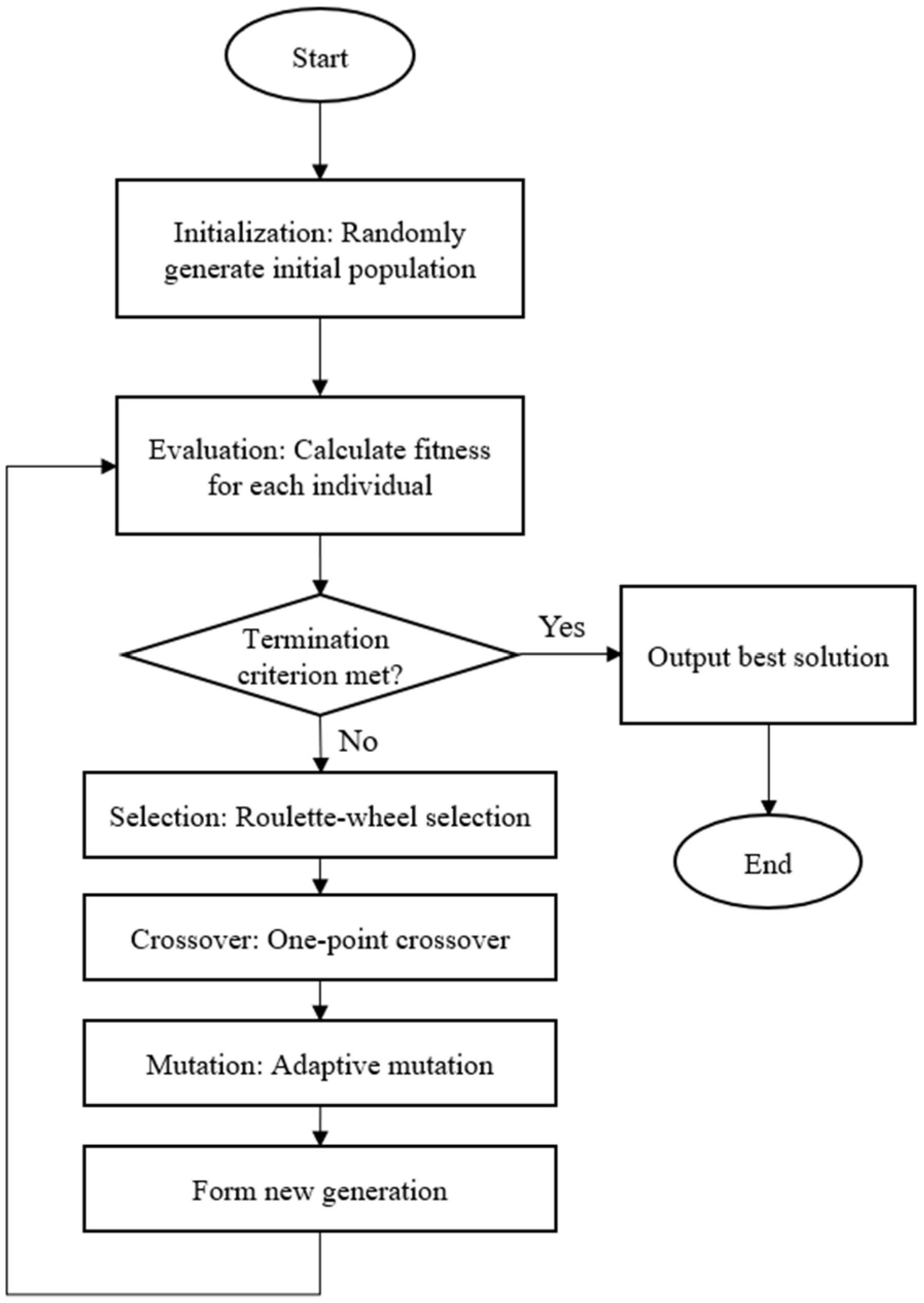
The workflow of the GA is delineated in Figure 4. The specific operations within each key step are elaborated as follows:
- Initialization: The algorithm begins by generating an initial population of candidate solutions. Each solution is represented by a binary chromosome, where each gene corresponds to a candidate location (a value of ‘1’ indicates the location is selected, and ‘0’ indicates it is not). The population size is set to N, and the initial chromosomes are generated randomly to ensure diversity.
- Evaluation: The fitness value of each individual in the population is calculated. The fitness function, as defined in Formula (27), integrates the two objective functions (EISDP and C) with constraint penalties. Individuals who violate the constraints are penalized, ensuring the search is directed towards feasible regions.
- Evolutionary Loop: The population evolves iteratively until a termination criterion is met. Each iteration (generation) consists of the following sub-steps:
- a.
- Selection: Individuals are selected for breeding based on their fitness. We employ the roulette-wheel selection method, where individuals with higher fitness have a proportionally greater chance of being selected. This promotes the propagation of superior genes.
- b.
- Crossover: Selected parent chromosomes undergo a one-point crossover operation with a probability of Pc. This operation exchanges genetic material beyond a randomly chosen point, creating new offspring solutions that combine the traits of both parents.
- c.
- Mutation: Each gene in the offspring chromosomes undergoes a bit-flip mutation with a small adaptive probability Pm. This introduces random changes, helps maintain population diversity, and prevents premature convergence to local optima.
- d.
- New Population Formation: The new offspring, along with a fraction of the best individuals from the previous generation (elitism), form the population for the next generation.
- Termination: The evolutionary loop terminates when the maximum number of generations is reached. Upon termination, the individual with the best fitness value across all generations is output as the optimal (or near-optimal) solution.
Figure 4.
Flowchart of the Genetic Algorithm for Solving the UDC Location Optimization Model, showing iterative steps such as population initialization, fitness evaluation, selection, crossover, mutation, and termination criteria, ensuring efficient search for best solutions.
6. Analysis of Algorithms
6.1. Numerical Experiments
This study is situated in Xi’an, a major city in western China with a population of over 10 million. As a key transportation hub in the region, Xi’an hosts a robust modern industrial system with significant clusters in high-tech manufacturing and advanced sectors, providing a realistic context for evaluating long-term industrial sustainable development potential. A leading Chinese logistics company already operates 30 grassroots distribution outlets directly serving users in Xi’an. With the expansion of the company’s scale and the growth in logistics demand, it now needs to establish several higher-level distribution centers in the city to coordinate and transfer logistics within the region, thereby meeting the demand for efficient logistics distribution. Based on a preliminary investigation of the city’s land and economic conditions, the company has selected a total of 10 candidate sites that meet the infrastructure requirements.
We collected relevant data from both public sources and internal corporate reports. The publicly available data included land prices, labor force distribution and relevant policy sourced from local statistical annual reports and government policy websites. Additionally, we incorporated internal corporate data, such as previous operation data and logistics demand, which were crucial for estimating key parameters. The data were then processed and organized based on the methods described in earlier sections of the paper. Specifically, we calculated the Bi values based on the land, policy, and labor data collected, using the method outlined in Section 3.1.1. The Oi values were derived from the company’s internal reports, according to the calculation method described in Section 3.1.2. For the Ki values, we utilized data from the City Bureau of Ecology and Environment, applying the method described in Section 3.1.3. In addition to these values, we considered mi, the number of related facilities near the candidate sites, which was obtained from the company’s operational data. UPi (land price) and Ai (area) were provided by the company, with units in yuan and square meters, respectively. The distance between candidate sites and downstream nodes (dil) was calculated based on actual transportation distances, measured in kilometers. The road condition coefficients were derived from the company’s fleet management system data. Transport demand was estimated by the company, with the unit being tons. The values of these parameters are shown in Table 3, Table 4, Table 5 and Table 6.
Table 3.
Decision parameters for candidate sites.
Table 4.
The distribution distance of candidate locations to subordinate nodes.
Table 5.
The road conditions coefficients of candidate locations to subordinate nodes.
Table 6.
The transportation demand of candidate locations to subordinate nodes.
6.2. System Dynamics Simulation
As mentioned earlier, traditional location models typically treat parameters such as resource endowment (B) and environmental constraint intensity (K) as static exogenous variables. However, in reality, the industrial development and resource environment system is an organic whole that undergoes dynamic evolution. The industrial development brought about by the construction of distribution centers can enhance their resource utilization efficiency, and the effective utilization of resources can further promote the overall industrial development in the region where the distribution center is located, forming a “growth-technology upgrade” positive feedback loop. On the other hand, industrial development inevitably leads to more carbon emissions, which in turn result in stricter environmental regulations, forming a negative feedback relationship. Given these feedback mechanisms, if the initial values of B and K are directly substituted into the final optimization model, the long-term evolution trends of the system will not be reflected. This would prevent the location decision from considering the long-term sustainable development prospects of the city. Therefore, this study introduces a system dynamics module, aimed at internally depict the collaborative evolution path of B, K and ISDP over the planning period (T = 15 years), and substitute the future values of B and K derived from the evolution into the optimization model, this ensures that the location decision fully reflects the long-term benefits of distribution center construction for the city’s sustainable development.
Specifically, we used the Python 3.10 programming language and the NumPy library to complete the discrete-time system dynamics model as outlined in Section 3.2. The schematic diagram of the algorithm flow is presented in Figure 5. The calculation process is as follows: First, the algorithm initializes all parameters, including the planning horizon T, the initial states B0 and K0, and system coefficients. It then enters the core iteration loop. Within this loop, it checks if the current time step (t) is less than the total period (T). If true, it proceeds to calculate the current ISDP and subsequently updates the state variables for the next time step. The time counter is incremented, and the process returns to the start of the loop. Once the loop terminates (when t is no longer less than T), the algorithm outputs the final values and the complete evolution sequences of B and K, concluding the simulation.
Figure 5.
System Dynamics Simulation Algorithm Flowchart.
Figure 6 illustrates the evolution trajectories of Bt, Kt, and ISDPt over a period of 15 years under the conditions of η = 0.5 and θ = 0.05. We observe that both the resource endowment (B) and ISDP show a significant upward trend, while environmental capacity (K) significantly decreases. This indicates that with the technological upgrading brought about by industrial development, the resource utilization efficiency of distribution centers has improved, and the actual resources they can draw upon have also increased. At the same time, industrial development has led to a more severe environmental burden, which in turn has resulted in stricter environmental regulations.
Figure 6.
Temporal Evolution of B, K and ISDP.
The B and K values for each candidate site after iteration are presented in Table 7. These values will be used as inputs for the subsequent genetic algorithm.
Table 7.
Iterated Values of Parameters B and K for Candidate Sites.
6.3. Results of the Algorithm
The urban distribution center location problem described in this study is a multi-objective optimization problem, which includes maximizing the industrial development potential and minimizing the construction and operation costs. Generally speaking, setting multi-objective weights for the location of distribution centers requires enterprises to start from their business planning. This involves balancing long-term and short-term goals, revenue and costs, and the demand preferences for different objectives determined by the development strategy, in order to make personalized trade-offs. In this study, we set the weight coefficients of these two goals to 0.5 each. The equal weight setting provides a neutral and easily understandable benchmark scenario, ensuring that the model does not artificially amplify the influence of any single objective during the verification stage. Additionally, we will test the impact of different weight allocations on the location results in the subsequent sensitivity analysis to verify the robustness of the model. All calculations were conducted on a Windows 64-bit laptop equipped with an Intel Core i5-10210U processor (with a base frequency of 1.60 GHz and 8 GB of memory) using MATLAB R2023a. Following previous studies [80] and after multiple iterations, the more appropriate algorithm parameters were determined as follows: population size of 50, crossover probability of 0.7, mutation probability of 0.01, and 200 iterations. Please refer to Table 8 for details.
Table 8.
Parameters of GA.
For the calculation involving 50 arithmetic operations, the average calculation time was 13.95 s, indicating very high calculation efficiency; when the convergence state was reached, the average value of the optimal fitness was 0.378682, the maximum value was 0.383193, and the minimum value was 0.362387. The deviations from the average value were 1.19% and 4.30%, respectively. The calculation results were relatively stable, and the algorithm had good robustness. In this example, the optimal location scheme selects the three candidate points 5, 7 and 9 simultaneously. Figure 7 shows the schematic diagram of the selected points, other candidate locations, and the downstream nodes. As shown in the figure, the optimal location scheme forms a wide “large triangle” layout in space. This layout ensures that the vast majority of downstream nodes can be efficiently covered by nearby candidate points. In other words, this scheme can not only improve the space coverage rate of the distribution center but also optimize the overall logistics efficiency and cost. Moreover, this combination achieves an effective balance between development potential and cost control. Specifically, locations 7 and 9 exhibit higher K and negative O, indicating favorable local environmental resilience and positive collaboration with existing facilities. Meanwhile, location 5 contributes with relatively lower land acquisition costs, helping maintain the overall budget within constraints. The EISDP value of the objective function is 11.1135, and the C value is 11,599,569.63. Figure 8 shows the convergence situation of the model’s adaptability. Figure 9 shows the convergence situation of the two objective functions.
Figure 7.
The schematic diagram of the candidate locations and the downstream nodes. In the diagram, the green squares represent downstream demand nodes. The orange and blue circles denote candidate locations for UDCs, specifically distinguishing the optimally selected sites (orange) from the other candidate sites (blue). The numbers serve as unique identifiers for each node in the case study analysis.
Figure 8.
Model adaptation convergence results.
Figure 9.
Convergence result of the objective functions.
6.4. Comparative Analysis
This section presents a comparative analysis to empirically validate the added value of integrating the Industrial Sustainable Development Potential (ISDP) into the location decision framework. To achieve this, the proposed multi-objective optimization model (simultaneously considering ISDP and cost) is compared against a conventional single-objective Cost-Only model, which serves as a standard benchmark in facility location literature. The Cost-Only model focuses exclusively on minimizing the total cost C, thereby isolating and highlighting the impact of introducing the long-term strategic dimension (ISDP). Both models are solved under identical conditions—using the same set of candidate locations, cost parameters, and operational constraints—to ensure a fair and meaningful comparison of their resulting optimal location schemes, total costs, and corresponding potential benefits. The specific optimization schemes, EISDP and C values under the two decision-making objectives, are shown in Table 9.
Table 9.
Comparative analysis results.
As shown in Table 9, when optimizing solely based on the lowest cost as the sole objective, the optimal location plan becomes {2, 5, 9}. Although this plan achieves the lowest total cost (1057.47 million yuan, approximately 8.8% lower than the dual-objective plan), its effective development potential has significantly decreased (EISDP = 9.97, a decrease of about 10.3%). The “Cost-Only” model follows the cost-avoidance logic, treating logistics facilities as a purely cost center, and its decisions are entirely driven by explicit costs such as land and construction. Therefore, it tends to choose the candidate point with the lowest absolute cost, while ignoring the disadvantages of this point in terms of resource endowment, competitive and cooperative pressure, and environmental carrying capacity. This indicates that the lowest-cost logistics network layout may be at the expense of significant long-term strategic value. The differences from the benchmark model prove that introducing the ISDP indicator helps shift the distribution center location selection from a single dimension of minimizing short-term costs to a multi-dimensional balance of long-term value creation and cost control.
6.5. Sensitive Analysis
6.5.1. Sensitivity Analysis of Weight Coefficients
To verify the robustness of the model under different decision preferences and to simulate the differentiated location behavior of enterprises at different development stages or with different strategic orientations, this paper conducted a sensitivity analysis on the weight configuration of the objective function. Specifically, this study selected three representative weight combinations for comparative experiments:
- (1)
- Long-term development type (a = 0.9, b = 0.1): Simulates a growth strategy focused on long-term industrial potential.
- (2)
- Balanced trade-off type (a = 0.5, b = 0.5): Simulates a stable development strategy that seeks balance.
- (3)
- Cost-sensitive type (a = 0.1, b = 0.9): Simulates a conservative strategy that strictly controls expenses.
Table 10 presents the optimal location schemes output by the model, along with the corresponding values of fitness, EISDP and C under the three weight configurations described above.
Table 10.
Decision weight sensitivity analysis results.
The analysis results indicate that different decision weights lead to different optimal location schemes. For instance, the long-term development strategy tends to select the scheme with a higher ISDP value, even though its cost is relatively high, while the cost-sensitive strategy prioritizes the location with the lowest cost, despite its potentially limited development potential. This sensitivity analysis not only verifies that the model’s response to changes in core parameters aligns with theoretical expectations but also demonstrates that decision-makers can obtain personalized location schemes that align with their development strategies and decision preferences by flexibly adjusting the target weights in the model.
6.5.2. Sensitivity Analysis of Key Model Parameters
To examine the robustness and internal mechanisms of the model, this study conducts a one-way sensitivity analysis on three key variables: the positive feedback coefficient (η), the negative feedback coefficient (θ), and the distance decay coefficient (ε). The parameters η and θ are core components of the proposed dynamic feedback mechanism, reflecting the strength of the positive feedback loop, where development enhances resource abundance, and the intensity of the negative feedback loop, where development induces environmental constraints, respectively. The distance decay coefficient ε, on the other hand, determines the spatial cost structure and network configuration of distribution center locations. Specifically, each parameter was varied by ±20% from its baseline value while keeping all other parameters constant, and the corresponding results were derived using the genetic algorithm. Detailed outcomes are presented in Table 11.
Table 11.
Key parameters sensitivity analysis results.
As shown in Table 11, the influence of different parameters on the system output shows significant differences. Specifically, if η increases or decreases by 20%, the EISDP value will increase or decrease by 11% to 12%, respectively. However, the optimal location scheme does not change under this perturbation. This is because a proportional increase or decrease in η will uniformly amplify or reduce the long-term accumulation rate of the resource endowment B of all candidate points, thereby causing the synchronous rise and fall of EISDP. Since it does not affect the spatial cost structure or change the relative advantage pattern of each candidate point, the optimal location scheme remains highly stable. The change in θ has a non-symmetric impact on the system. When θ increases by 20%, i.e., when environmental constraints tighten, EISDP significantly decreases by 13%, to 9.62. The optimal location scheme switches from {5, 7, 9} to {2, 5, 9}, and the total cost C synchronously decreases by 9%. Conversely, when θ decreases by 20% (relaxing the constraints), EISDP increases by 10%, to 12.22, while the location scheme remains unchanged. This is because θ, as a nonlinear adjustment index, exponentially intensifies the consumption of environmental carrying capacity K with an increase. It not only reduces the overall EISDP but also disrupts the relative advantage ranking among candidate points, forcing the model to abandon the original environmentally sensitive candidate points in favor of points with lower economic costs to enhance overall benefits. Its decrease, however, results in a unilateral increase in environmental carrying capacity, which is insufficient to alter the existing optimal ranking. Finally, ϵ is the most sensitive parameter in the model. An increase of 20% in ϵ strengthens the distance attenuation effect, reducing the effective coverage range of each candidate point. As a result, the optimal location scheme expands to {5, 7, 8, 9} to ensure effective coverage of the distribution center for downstream outlets. A 20% decrease in ϵ means that the effective coverage area of the candidate points increases, causing the network to evolve towards intensification, while significantly reducing costs and still maintaining a high potential for industrial development.
The conducted sensitivity analysis serves a dual purpose: it rigorously tests the model’s robustness and, in doing so, provides a formal assessment of the implications of parameter uncertainty. The results delineate a hierarchy of influence among the parameters. This hierarchy informs decision-makers about which parameters require more precise calibration (e.g., the highly sensitive distance decay coefficient ϵ) and which ones can be reasonably estimated (e.g., the feedback coefficients η and θ, given the robustness of the optimal scheme). Therefore, the analysis not only strengthens methodological credibility by addressing uncertainty but also transforms it into actionable insights for strategic resource allocation in data collection and policy focus.
6.6. Algorithm Validation and Scalability Analysis
6.6.1. Verification of Exact Solutions for Small-Scale Examples
Considering that the data scale of the examples collected and used in this paper is relatively limited, we used the business optimization software LINGO 18.0 on a Windows 64-bit laptop equipped with an Intel Core i5-10210U processor (with a base frequency of 1.60 GHz and 8 GB of memory) to precisely solve this example in order to verify the effectiveness and accuracy of the genetic algorithm in solving the UDC location problem. The comparison of the results with those obtained from the genetic algorithm is shown in Table 12.
Table 12.
Comparison between Genetic Algorithm and Exact Solution.
As shown in Table 10, the optimal solution obtained through LINGO calculation is consistent with the result from the GA. Overall, the results demonstrate that the GA can find the same global optimal solution as the exact solution method, verifying the effectiveness and accuracy of the algorithm.
6.6.2. Analysis of Scalability for Large-Scale Computational Examples
To demonstrate the computational scalability of the GA and justify its use for large-scale instances, we conducted a synthetic large-scale experiment with 50 candidate sites and 200 demand nodes. This experiment was designed to assess the GA’s performance on a problem significantly larger than the small toy instance previously discussed.
The dataset for the large-scale experiment was generated by extending the parameters used in the small-scale instance. Specifically, the data for the candidate sites and demand nodes were randomly generated within realistic ranges, derived from data collected in prior research or based on typical ranges observed in similar urban logistics scenarios. The candidate sites were randomly distributed across a geographic area, and the demand nodes were placed similarly, with random distances, transportation costs, and demand volumes assigned to each node based on the range of values observed in real-world examples. This approach ensures that the synthetic data reflects plausible, real-world conditions while allowing for the creation of a larger problem instance. The specific data files used for this experiment are provided in the attachment for reference.
The average calculation time was 32.17 s, indicating high computational efficiency. When the convergence state was reached, the average value of the optimal fitness was 0.474446, the maximum value was 0.490266, and the minimum value was 0.435229. The deviations from the average value were 3.32% and 8.27%, respectively. The calculation results were relatively stable, and the algorithm demonstrated good robustness. In this example, the optimal location scheme involves selecting the following candidate points: 3, 9, 16, 17, 27, 32, 43, and 48. Figure 10 shows the convergence of the model’s adaptability, and Figure 11 shows the convergence of the two objective functions.
Figure 10.
Model adaptation convergence results for large-scale computational examples.
Figure 11.
Convergence result of the objective functions for large-scale computational examples.
The results of this experiment demonstrated that the GA can efficiently handle problems of this scale, achieving a reasonable trade-off between computational time and solution quality. The algorithm performed well on the 50-site, 200-node instance, completing the optimization process in 1 min, which was significantly faster than the exact optimization methods, which would have been computationally infeasible for this scale.
This large-scale experiment indicates that for future problems involving the location of larger-scale distribution centers (such as making distribution center location decisions in urban clusters composed of several cities), our heuristic method based on the GA is not only convenient and practical but also indispensable.
7. Conclusions
In the modern urban development process, logistics distribution centers have evolved from simple storage and distribution hubs to strategic assets that drive economic vitality. Therefore, their location selection decisions must go beyond the traditional static cost–benefit paradigm and adopt a new framework that can assess their long-term strategic value. To fill this gap, this study successfully developed and validated an innovative multi-objective optimization model. This model considers both the long-term industrial sustainable development potential of the location and traditional construction and operation costs as decision-making goals, enabling the location selection process to effectively balance the economic objectives of the enterprise and the social goals of the city.
To quantify industrial sustainable development potential, we creatively drew on the fitness theory in ecology, developed an ISDP calculation method, and used the System Dynamics method to simulate the future trends of key variables. By applying the genetic algorithm to solve the model and conducting case analysis in a real-world context, we confirmed the feasibility and effectiveness of the model in generating a series of trade-off solutions and assisting decision-makers in making scientific location selections.
The conclusions drawn from this study provide important management insights for government planning departments and logistics enterprises. Firstly, for urban planners, this study offers a scientific decision-making support tool. Planners can utilize our model to prioritize the selection of “potential locations” that can activate regional industrial chains and form a positive economic ecosystem, transforming the passive adaptation of logistics facility layout into a strategic means of actively guiding urban industrial development. Secondly, logistics enterprises should consider site selection as a strategic investment, prioritizing regions with strong industrial agglomeration potential to open new growth opportunities and achieve win–win development with the regional economy. Finally, at the policy-making level, the government can base infrastructure development, such as transportation and communication, on the assessment results of this model, or introduce supporting industrial policies to maximize the investment benefits of infrastructure. However, a critical caveat must be emphasized regarding the interpretation of the ISDP. Decision-makers should be cautioned against interpreting the ISDP as an absolute forecast of future industrial output or a precise measure of economic impact. Its primary utility lies in its function as a relative index for comparative ranking. The core value of the ISDP is to enable a systematic comparison of the long-term sustainable development potential among different candidate locations, thereby identifying which sites are relatively more promising than others. Over-interpretation of the absolute ISDP values for exact prediction should be avoided. Specifically, this model is particularly suitable for comparative location analysis (ranking and screening of candidate locations for strategic planning), scenario analysis (evaluating how potential changes such as new infrastructure construction or policy adjustments might alter the relative attractiveness of different locations), and strategic dialog (providing quantitative evidence for discussions among stakeholders, such as logistics companies and municipal planners, to explore the trade-offs in long-term development).
Translating the above insights into actionable strategies requires consideration of the model’s practical implementation. Regarding data availability, the foundational parameters required by the model, such as land prices and physical distances, are typically accessible from public sources. For dynamic indicators that involve more complex derivation, such as competition–cooperation intensity O, environmental capacity K and the feedback coefficients η and θ, given that the ISDP is inherently a relative metric for comparison and ranking, precise quantification is not always imperative. When exact measurement is infeasible, structured qualitative methods can be employed to estimate numerical values that reliably reflect the relative ranking among candidate locations. This approach significantly lowers the data barrier, enabling the model to yield instructive analyses even under the typical constraints of incomplete information. In terms of computational efficiency, the genetic algorithm (GA) adopted in this study demonstrated commendable solution efficiency and stability in our tests. For large-scale urban networks, a two-stage computational strategy is recommended. First, a preliminary screening based on static resources and environmental endowments (i.e., fixed B and K values) can quickly narrow down the candidate set. Subsequently, the full System Dynamics simulation and optimization are executed only on this refined subset of high-potential locations. This strategy effectively manages the computational burden while preserving decision quality. Concerning application scenarios, the modular design of the model affords considerable flexibility. For preliminary feasibility studies, long-list development, or situations characterized by high uncertainty and severe data scarcity, employing a simplified, static ISDP evaluation model is recommended. This version is sufficient for directional judgment and sensitivity analysis in early planning stages. Conversely, the complete dynamic model delivers the greatest value when conducting in-depth comparisons of a few finalist locations or performing detailed simulations to inform long-term, adaptive development strategies.
In summary, this framework functions as a scalable decision-support toolkit. Its core contribution lies in providing a structured, quantitative logic to assist decision-makers in systematically balancing long-term strategic value against short-term costs, even amidst the varying constraints of real-world application.
8. Limitations and Future Research
Although this study presents a novel decision-support framework, it is important to acknowledge several limitations that highlight valuable avenues for future research. These limitations relate to the model’s inputs, methodological approach, and practical applicability.
First, regarding the model’s inputs and foundational data, the calculation of key variables depends on regional macro-industry data, the accuracy of which may be constrained by data availability and the quality of statistical methods used. Future studies could address this limitation by fostering deeper collaborations with governmental bodies to access more granular, high-frequency microdata, thereby improving the model’s accuracy and precision.
Second, regarding the methodological approach, the model’s future predictions are based on deterministic simulations, which may not fully account for the inherent uncertainties in long-term economic and policy evolution. Future research could significantly enhance the robustness of the findings by incorporating stochastic programming or scenario-based analyses to assess the stability of location schemes under different potential scenarios.
Third, regarding the model’s generalizability, the framework was developed and tested within a single-city, single-enterprise context. This specific setting limits its external validity when applied to multi-city logistics networks or competitive interactions among multiple firms. Further research could extend the framework to multi-city settings and incorporate the complexities of inter-firm competition to assess its broader applicability.
Fourth, a practical barrier to adoption lies in the model’s reliance on a considerable number of parameters, which may be difficult to estimate accurately in practice. Developing standardized calibration protocols or employing Bayesian methods to address parameter uncertainty are promising directions for overcoming this limitation.
Finally, there is a critical need for empirical validation. The core constructs of ISDP, while grounded in ecological concepts, require rigorous validation against observed long-term industrial outcomes. Future longitudinal case studies or econometric analyses are essential to establish statistical correlations with real economic performance, thereby strengthening the model’s empirical foundation.
Author Contributions
Conceptualization, J.Y. and C.G.; Methodology, C.G.; Software, C.G.; Validation, J.Y. and C.G.; Formal Analysis, C.G.; Investigation, C.G.; Resources, J.Y.; Data Curation, C.G.; Writing—Original Draft Preparation, C.G.; Writing—Review and Editing, J.Y.; Visualization, C.G.; Supervision, J.Y.; Project Administration, J.Y.; Funding Acquisition, J.Y. All authors have read and agreed to the published version of the manuscript.
Funding
This research was funded by the National Natural Science Foundation of China, grant number 71872174.
Institutional Review Board Statement
Not applicable.
Informed Consent Statement
Not applicable.
Data Availability Statement
Data are contained within the article.
Conflicts of Interest
The authors declare no conflicts of interest.
References
- Li, X.; Chen, F. Impact of Logistics Development on Economic Growth: An Empirical Research from Guangdong Province in China. Complexity 2021, 2021, 12. [Google Scholar] [CrossRef] [Scilit]
- Cardenas Barbosa, I.; Borbon-Galvez, Y.; Verlinden, T.; Voorde, E.V.; Vanelslander, T.; Dewulf, W. City Logistics, Urban Goods Distribution and Last Mile Delivery and Collection. Compet. Regul. Netw. Ind. 2017, 18, 3–4. [Google Scholar] [CrossRef] [Scilit]
- Owen, S.H.; Daskin, M.S. Strategic Facility Location: A Review. Eur. J. Oper. Res. 1998, 111, 423–447. [Google Scholar] [CrossRef] [Scilit]
- He, K. AP Clustering Algorithm for Analysis of the Impact of Cold Chain Distribution Center Location on Logistics Costs. J. Ind. Prod. Eng. 2023, 40, 661–676. [Google Scholar] [CrossRef] [Scilit]
- Wang, X.; Zhan, L.; Zhang, Y.; Fei, T.; Tseng, M.L. Environmental Cold Chain Distribution Center Location Model in the Semiconductor Supply Chain: A Hybrid Arithmetic Whale Optimization Algorithm. Comput. Ind. Eng. 2023, 187, 109773. [Google Scholar] [CrossRef] [Scilit]
- Dou, S.; Liu, G.; Yang, Y. A New Hybrid Algorithm for Cold Chain Logistics Distribution Center Location Problem. IEEE Access 2020, 8, 88769–88776. [Google Scholar] [CrossRef] [Scilit]
- Li, P.; Fan, X. The Application of the Improved Jellyfish Search Algorithm in a Site Selection Model of an Emergency Logistics Distribution Center Considering Time Satisfaction. Biomimetics 2023, 8, 349. [Google Scholar] [CrossRef] [Scilit]
- Tao, Z.; Li, X.; Huang, B. Distribution Center’s Decisions in E-Commerce with the Consideration of Delivery Time. In Proceedings of the 2014 Seventh International Joint Conference on Computational Sciences and Optimization, Beijing, China, 4–6 July 2014; IEEE: New York, NY, USA, 2014; pp. 181–184. [Google Scholar]
- Nguyen, D.; Klibi, W.; Ben Mohamed, I. Designing Profit-Maximizing Omnichannel Distribution Networks for High Responsiveness. Int. J. Prod. Econ. 2025, 286, 109636. [Google Scholar] [CrossRef] [Scilit]
- Jalili Marand, A.; Hoseinpour, P. Profit Maximization in Congested Hub Location Problems: Demand Models and Service Level Constraints. Transp. Res. Part E 2025, 195, 103995. [Google Scholar] [CrossRef] [Scilit]
- Almotairi, S.; Badr, E.; Elsisy, M.A.; Farahat, F.A.; El Sayed, M.A. Performance Analysis of Fully Intuitionistic Fuzzy Multi-Objective Multi-Item Solid Fractional Transportation Model. Fractal Fract. 2024, 8, 404. [Google Scholar] [CrossRef] [Scilit]
- El Sayed, M.A.; Farahat, F.A.; Elsisy, M.A.; Alsabaan, M.; Ibrahem, M.I.; Elwahsh, H. Two TOPSIS-Based Approaches for Multi-Choice Rough Bi-Level Multi-Objective Nonlinear Programming Problems. Mathematics 2025, 13, 1242. [Google Scholar] [CrossRef] [Scilit]
- El Sayed, M.A.; El-Shorbagy, M.A.; Farahat, F.A.; Fareed, A.F.; Elsisy, M.A. Stability of Parametric Intuitionistic Fuzzy Multi-Objective Fractional Transportation Problem. Fractal Fract. 2021, 5, 233. [Google Scholar] [CrossRef] [Scilit]
- Li, X.; Zhou, K. Multi-Objective Cold Chain Logistic Distribution Center Location Based on Carbon Emission. Environ. Sci. Pollut. Res. 2021, 28, 32396–32404. [Google Scholar] [CrossRef] [Scilit] [PubMed]
- Wang, H.; Ran, H.; Dang, X. Location Optimization of Fresh Agricultural Products Cold Chain Distribution Center under Carbon Emission Constraints. Sustainability 2022, 14, 6726. [Google Scholar] [CrossRef] [Scilit]
- Baker, D.; Briant, S.; Hajirasouli, A.; Yigitcanlar, T.; Paz, A.; Bhaskar, A.; Corry, P.; Whelan, K.; Donehue, P.; Parsons, H. Urban Freight Logistics and Land Use Planning Education: Trends and Gaps Through the Lens of Literature. Transp. Res. Interdiscip. Perspect. 2023, 17, 100731. [Google Scholar] [CrossRef] [Scilit]
- Maxner, T.; Dalla Chiara, G.; Goodchild, A. The State of Sustainable Urban Last-Mile Freight Planning in the United States. J. Am. Plan. Assoc. 2025, 91, 88–101. [Google Scholar] [CrossRef] [Scilit]
- Gafurov, I.; Panasyuk, M.V.; Pudovik, E.M. Interregional Logistic Center as the Growth Point of Regional Economics. Procedia Econ. Financ. 2014, 15, 1463–1470. [Google Scholar] [CrossRef] [Scilit]
- Cui, H.; Zhang, L.; Wang, Z.; Wang, Q. Research on the Correlation Effect Between the Development of Logistics Industry and Regional Economic Growth: Based on Panel Data of Three Metropolitan Areas of the Yangtze Economic Belt. Econ. Probl. 2021, 8, 78–85. [Google Scholar]
- Melo, M.T.; Nickel, S.; Saldanha-da-Gama, F. Facility Location and Supply Chain Management—A Review. Eur. J. Oper. Res. 2009, 196, 401–412. [Google Scholar] [CrossRef] [Scilit]
- Beresnev, V. Branch-and-Bound Algorithm for a Competitive Facility Location Problem. Comput. Oper. Res. 2013, 40, 2062–2070. [Google Scholar] [CrossRef] [Scilit]
- Wang, S.; Liu, P. The Evaluation Study on Location Selection of Logistics Center Based on Fuzzy AHP and TOPSIS. In Proceedings of the 2007 International Conference on Wireless Communications, Networking and Mobile Computing, Shanghai, China, 21–25 September 2007; IEEE: New York, NY, USA, 2007; pp. 3779–3782. [Google Scholar]
- Goseiri, K.; Lessan, J. Location Selection for Logistic Centers Using a Two-Step Fuzzy-AHP and ELECTRE Method. In Proceedings of the 9th Asia Pacific Industrial Engineering & Management Systems Conference, Bali, Indonesia, 3–5 December 2008; APIEMS: Chiang Mai, Thailand, 2008. [Google Scholar]
- Uyanik, C.; Tuzkaya, G.; Oguztimur, S. A Literature Survey on Logistics Centers’ Location Selection Problem. Sigma J. Eng. Nat. Sci. 2018, 36, 141–160. [Google Scholar]
- Yu, X.; Zhang, X.; Mu, L. A Fuzzy Decision Making Model to Select the Location of the Distribution Center in Logistics. In Proceedings of the 2009 IEEE International Conference on Automation and Logistics, Shenyang, China, 5–7 August 2009; IEEE: New York, NY, USA, 2009. [Google Scholar]
- Kayikci, Y. A Conceptual Model for Intermodal Freight Logistics Centre Location Decisions. Procedia Soc. Behav. Sci. 2010, 2, 6297–6311. [Google Scholar] [CrossRef] [Scilit]
- Li, Y.; Liu, X.; Chen, Y. Selection of Logistics Center Location Using Axiomatic Fuzzy Set and TOPSIS Methodology in Logistics Management. Expert Syst. Appl. 2011, 38, 7901–7908. [Google Scholar] [CrossRef] [Scilit]
- Wesolowsky, G.O. Dynamic Facility Location. Manag. Sci. 1973, 19, 1241–1248. [Google Scholar] [CrossRef] [Scilit]
- Canel, C.; Khumawala, B.M.; Law, J.; Loh, A. An Algorithm for the Capacitated, Multi-Commodity Multi-Period Facility Location Problem. Comput. Oper. Res. 2001, 28, 411–427. [Google Scholar] [CrossRef] [Scilit]
- Xie, W.; Ouyang, Y. Dynamic Planning of Facility Locations with Benefits from Multitype Facility Colocation. Comput.-Aided Civ. Infrastruct. Eng. 2013, 28, 666–678. [Google Scholar] [CrossRef] [Scilit]
- Albareda-Sambola, M.; Fernández, E.; Hinojosa, Y.; Puerto, J. The Multi-Period Incremental Service Facility Location Problem. Comput. Oper. Res. 2009, 36, 1356–1375. [Google Scholar] [CrossRef] [Scilit]
- Zhang, G.; Ma, R.; Kong, Y.; Lian, C.; Guo, H.; Zhai, S. A Multi-Period Capacitated Facility Location Problem with Maximum Travel Time and Backup Service for Locating and Sizing EMS Stations. Comput. Urban Sci. 2024, 4, 29. [Google Scholar] [CrossRef] [Scilit]
- Silva, W.A.; Carvalho, M.; Jena, S.D. Dynamic Facility Location Under Cumulative Customer Demand. Transp. Sci. 2025. [Google Scholar] [CrossRef] [Scilit]
- Rezeq, M.; Aouam, T.; Gailly, F. Hybrid Simulation-Optimization Approach for Planning Relief-Aid Distribution with a Real-World Case Study. J. Humanit. Logist. Supply Chain Manag. 2024, 14, 419–444. [Google Scholar] [CrossRef] [Scilit]
- Moreno, R.P.R.; Lopes, R.B.; Ramos, A.L.; Ferreira, J.V.; Correia, D.; Melo, I.E.S.d. An Agent-Based Simulation and Optimization Approach for Sustainable Urban Logistics: A Case Study in Lisbon. Appl. Syst. Innov. 2025, 8, 66. [Google Scholar] [CrossRef] [Scilit]
- Wang, Y.; Li, Y.; Lu, C. Evaluating the Effects of Logistics Center Location: An Analytical Framework for Sustainable Urban Logistics. Sustainability 2023, 15, 3091. [Google Scholar] [CrossRef] [Scilit]
- Guo, J.; Zhao, Q.; Xi, M. Sustainable Urban Logistics Distribution Network Planning with Carbon Tax. Sustainability 2022, 14, 13184. [Google Scholar] [CrossRef] [Scilit]
- Andruetto, C.; Stenemo, E.; Pernestal, A. Towards Sustainable Urban Logistics: Exploring the Implementation of City Hubs Through System Dynamics. Transp. Res. Interdiscip. Perspect. 2024, 27, 101204. [Google Scholar] [CrossRef] [Scilit]
- Conway, A.; Cheng, J.; Peters, D. Urban Micro-Consolidation and Last-Mile Goods Delivery by One Freight Tricycle. In Proceedings of the Transportation Research Board 91st Annual Meeting, Washington, DC, USA, 22–26 January 2012. [Google Scholar]
- Janjevic, M.; Ndiaye, A.B. Development and Application of a Transferability Framework for Micro-Consolidation Schemes in Urban Freight Transport. Procedia-Soc. Behav. Sci. 2014, 125, 284–296. [Google Scholar] [CrossRef] [Scilit]
- Kim, C.; Bhatt, N. Modernizing Urban Freight Deliveries with Microhubs; The Pembina Institute: Calgary, AB, Canada, 2019. [Google Scholar]
- Katsela, K.; Güneş, Ş.; Fried, T.; Goodchild, A.; Browne, M. Defining Urban Freight Microhubs: A Case Study Analysis. Sustainability 2022, 14, 532. [Google Scholar] [CrossRef] [Scilit]
- Haarstad, H.; Rosales, R.; Shrestha, S. Freight Logistics and the City. Urban Stud. 2024, 61, 3–19. [Google Scholar] [CrossRef] [Scilit]
- Hribernik, M.; Zero, K.; Kummer, S.; Herold, D.M. City Logistics: Towards a Blockchain Decision Framework for Collaborative Parcel Deliveries in Micro-Hubs. Transp. Res. Interdiscip. Perspect. 2020, 8, 100274. [Google Scholar] [CrossRef] [Scilit]
- Namagembe, S.; Nantumbwe, S. Adoption of Environmentally Friendly Urban Freight Logistics Practices: The Role of Communication and Governance. Urban. Sustain. Soc. 2025, 2, 84–117. [Google Scholar] [CrossRef] [Scilit]
- Assmann, T.; Müller, F.; Bobeth, S.; Baum, L. Planning of Cargo Bike Hubs: A Guide for Municipalities and Industry for the Planning of Transshipment Hubs for New Urban Logistics Concepts; Otto von Guericke Universität Magdeburg: Magdeburg, Germany, 2019. [Google Scholar]
- Schodl, R.; Eitler, S.; Ennser, B.; Schrampf, J.; Hartmann, G. Urban Logistics Micro Hubs: Standardisation Meets Uniqueness. In Proceedings of the REAL CORP 2019, Karlsruhe, Germany, 2–4 April 2019. [Google Scholar]
- Garola, G.; Seghezzi, A.; Siragusa, C.; Mangiaracina, R. Sustainability in Urban Logistics: A Literature Review. Symphonya Emerg. Issues Manag. 2022, 44–66. [Google Scholar] [CrossRef]
- Gillström, H.; Björklund, M. Assessing the Benefits of Urban Consolidation Centres: An Overview Based on a Systematic Literature Review. Transp. Rev. 2024, 44, 972–991. [Google Scholar] [CrossRef] [Scilit]
- Katsela, K.; Pålsson, H.; Ivernå, J. Environmental Impact and Costs of Externalities of Using Urban Consolidation Centres: A 24-Hour Observation Study with Modelling in Four Scenarios. Int. J. Logist. Res. Appl. 2022, 25, 1542–1563. [Google Scholar] [CrossRef] [Scilit]
- Dupas, R.; Taniguchi, E.; Deschamps, J.-C.; Qureshi, A.G. A Multi-commodity Network Flow Model for Sustainable Performance Evaluation in City Logistics: Application to the Distribution of Multi-tenant Buildings in Tokyo. Sustainability 2020, 12, 2180. [Google Scholar] [CrossRef] [Scilit]
- Fordyce, G. Some Variations in the Genus Vanessa (Pyrameis). Psyche A J. Entomol. 1918, 25, 6. [Google Scholar]
- Hannan, M.T.; Freeman, J. The Population Ecology of Organizations. Am. J. Sociol. 1977, 82, 929–964. [Google Scholar] [CrossRef] [Scilit]
- Wan, L. Study on the Ecological Niche of Enterprises and the Method for Measuring the Ecological Niche. China Soft Sci. 2004, 6, 73–78. [Google Scholar]
- Yan, A. Research on Construction of Evaluation Indexes and Model of Organization Niche. Sci. Technol. Prog. Policy 2007, 24, 156–160. [Google Scholar]
- Chen, Y.; Lei, H.; Hsu, W. A Study on the Sustainable Development Strategy of Firms: Niche and Social Network Theory. Sustainability 2019, 11, 2593. [Google Scholar] [CrossRef] [Scilit]
- He, Y.; Wu, J. Research on the Impact of Enterprise Niche on Inter-Organizational Technology Collaborative Innovation. Stud. Sci. Sci. 2020, 38, 1108–1120. [Google Scholar]
- Smith, A.; Voß, J.P.; Grin, J. Innovation Studies and Sustainability Transitions: The Allure of the Multi-Level Perspective and Its Challenges. Res. Policy 2010, 39, 435–448. [Google Scholar] [CrossRef] [Scilit]
- Bakker, S.; Lente, H.V.; Engels, R. Competition in a Technological Niche: The Cars of the Future. Technol. Anal. Strateg. Manag. 2012, 24, 421–434. [Google Scholar] [CrossRef] [Scilit]
- Song, Y.; Shao, L.; You, J. Electric Vehicle Enterprise Niche Evaluation Research in the Complementary Assets Perspective. Manag. Rev. 2015, 27, 108–119. [Google Scholar]
- Susur, E.; Martin-Carrillo, D.; Chiaroni, D.; Hidalgo, A. Unfolding Eco-Industrial Parks Through Niche Experimentation: Insights from Three Italian Cases. J. Clean. Prod. 2019, 239, 118069. [Google Scholar] [CrossRef] [Scilit]
- Jiang, L.; Liu, G.; Wang, J. A Research on the Regional Disparity and Spatial Correlation of the Equipment Manufacturing Industry: An Analysis Based on the Niche Theory. Sci. Res. Manag. 2020, 41, 132–141. [Google Scholar]
- Dimmick, J. Ecology, Economics and Gratification Utilities. In Media Economics: Theory and Practice; Alexander, A., Owers, J., Carveth, R., Eds.; Lawrence Erlbaum Associates: Hillsdale, NJ, USA, 1993; pp. 135–136. [Google Scholar]
- Li, J.; Xu, X.; Ngai, E.W.T. Does Certainty Tone Matter? Effects of Review Certainty, Reviewer Characteristics, and Organizational Niche Width on Review Usefulness. Inf. Manag. 2021, 58, 103549. [Google Scholar] [CrossRef] [Scilit]
- Zhao, Z.Y.; Xu, K.; Zuo, J.; Tang, C. Developing the International Construction Contracting Market: Enterprise Niche Approach. J. Manag. Eng. 2017, 33, 04016027. [Google Scholar] [CrossRef] [Scilit]
- Li, G.; Gu, B. Enterprise Ecological Niche Measurement and Competitive Effect Analysis Based on Digital Business Recognition. Technol. Anal. Strateg. Manag. 2023, 36, 3621–3636. [Google Scholar]
- Zhu, F.; Jia, Q.; Tan, B. Niche Suitability Measurement Model of Logistics Industry and Its Dynamic Coupling Evolution. Sci. Technol. Manag. Res. 2019, 39, 217–224. [Google Scholar]
- Morris, E.K.; Caruso, T.; Buscot, F.; Fischer, M.; Hancock, C.; Maier, T.S.; Meiners, T.; Müller, C.; Obermaier, E.; Prati, D.; et al. Choosing and using diversity indices: Insights for ecological applications from the German Biodiversity Exploratories. Ecol. Evol. 2014, 4, 3514–3524. [Google Scholar] [CrossRef] [Scilit] [PubMed]
- Porter, M.E. Location, competition, and economic development: Local clusters in a global economy. Econ. Dev. Q. 2000, 14, 15–34. [Google Scholar] [CrossRef] [Scilit]
- Yoo, C.; Xiao, H.; Zhong, Q.; Weng, Q. Unequal impacts of urban industrial land expansion on economic growth and carbon dioxide emissions. Commun. Earth Environ. 2024, 5, 203. [Google Scholar] [CrossRef] [Scilit]
- Juhász, R.; Lane, N.; Rodrik, D. The new economics of industrial policy. Annu. Rev. Econ. 2023, 15, 127–148. [Google Scholar]
- Liu, Z.Y. Human Capital and Upgrading of Industrial Structure: An Empirical Study Based on the Countries along the “Belt and Road”. Am. J. Ind. Bus. Manag. 2020, 10, 728–746. [Google Scholar] [CrossRef]
- Yang, Y.; Yao, J.M. Resource Integration Optimization of Elder Care Service Platforms Based on the Convenient Depth Description of Service Modes. Chin. J. Manag. 2020, 17, 725–733. [Google Scholar]
- Yao, J.; Shi, H.; Liu, C. Optimising the Configuration of Green Supply Chains Under Mass Personalisation. Int. J. Prod. Res. 2020, 58, 7420–7438. [Google Scholar] [CrossRef] [Scilit]
- Xu, L.; Yao, J. Supply Chain Scheduling Optimization in an Agricultural Socialized Service Platform Based on the Coordination Degree. Sustainability 2022, 14, 16290. [Google Scholar] [CrossRef] [Scilit]
- Wang, M.; Yao, J. Optimizing the Configuration of Personalized Service Supply Chain Under Resource Orchestration Mechanism. Electron. Commer. Res. 2025, 25, 3355–3396. [Google Scholar] [CrossRef] [Scilit]
- Konak, A.; Coit, D.W.; Smith, A.E. Multi-Objective Optimization Using Genetic Algorithms: A Tutorial. Reliab. Eng. Syst. Saf. 2006, 91, 992–1007. [Google Scholar] [CrossRef] [Scilit]
- Liu, M.; Li, X. Study on the optimization location of public service facilities based on Pareto multi-objective genetic algorithm. Trop. Geogr. 2010, 30, 723–730. [Google Scholar]
- Atta, S.; Sinha Mahapatra, P.R.; Mukhopadhyay, A. Multi-Objective Uncapacitated Facility Location Problem with Customers’ Preferences: Pareto-Based and Weighted Sum GA-Based Approaches. Soft Comput. 2019, 23, 12347–12362. [Google Scholar] [CrossRef] [Scilit]
- Hassanat, A.; Almohammadi, K.; Alkafaween, E.; Abunawas, E.; Hammouri, A.; Prasath, V.B.S. Choosing Mutation and Crossover Ratios for Genetic Algorithms—A Review with a New Dynamic Approach. Information 2019, 10, 390. [Google Scholar] [CrossRef] [Scilit]
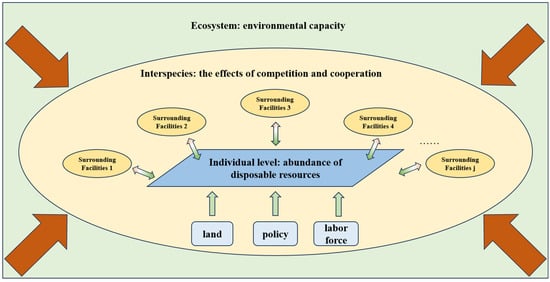
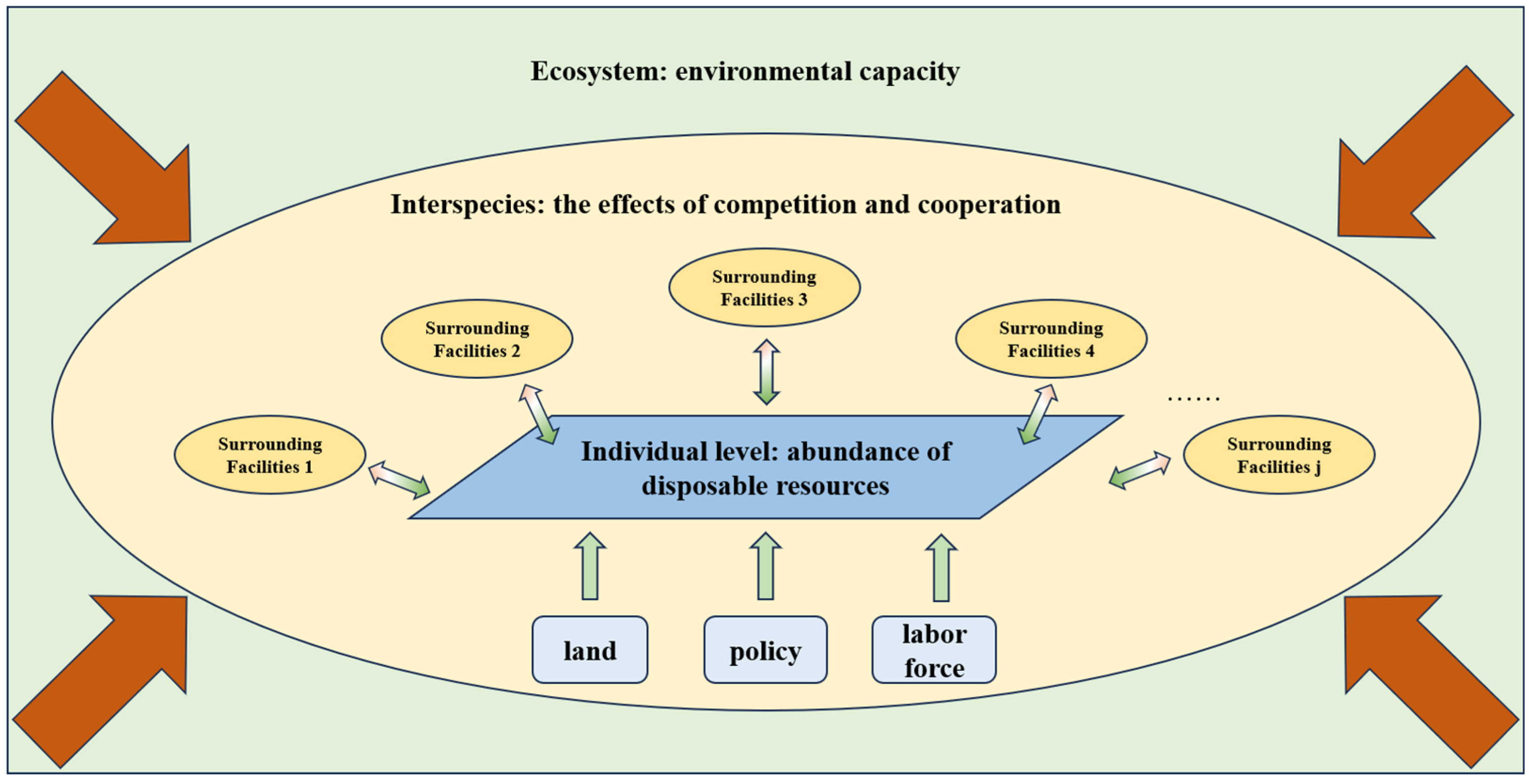
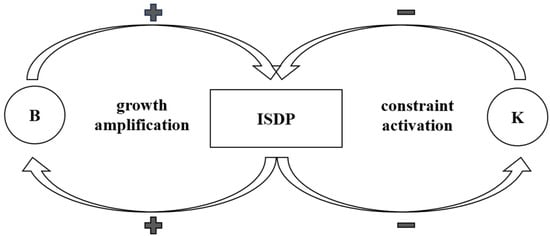
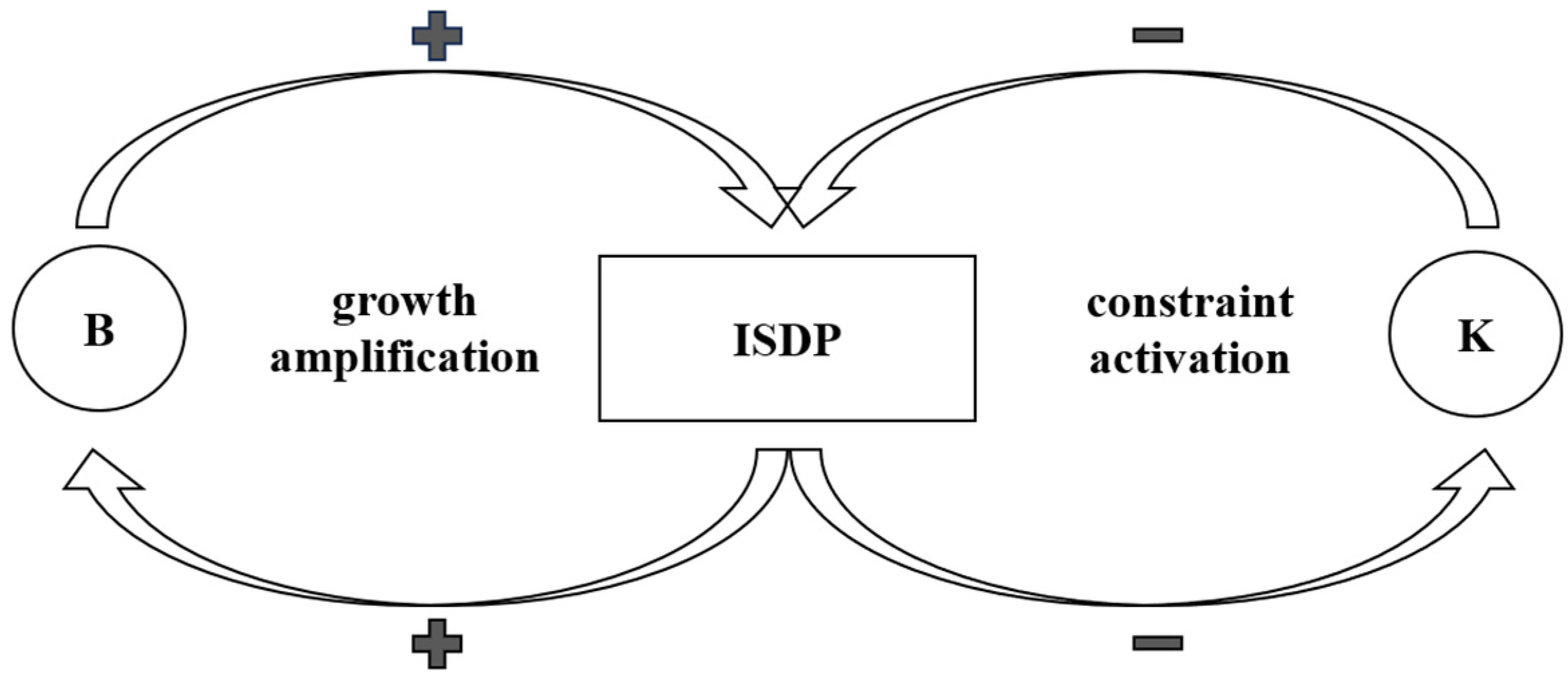
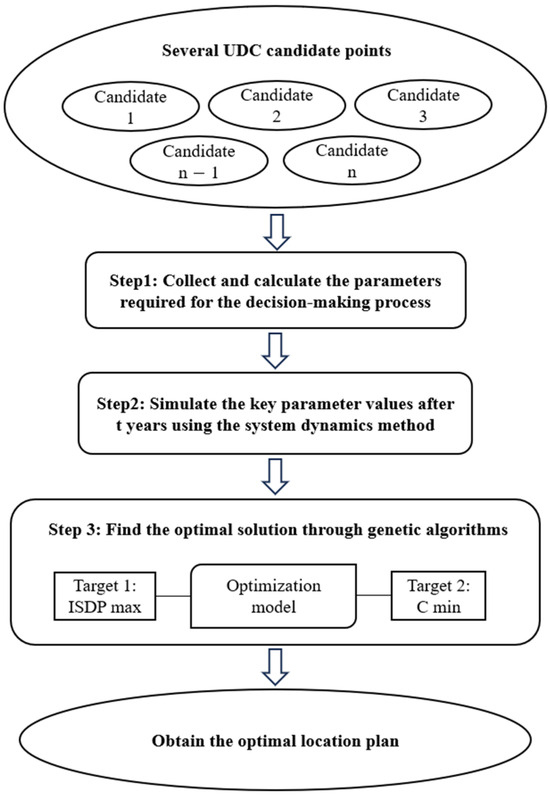
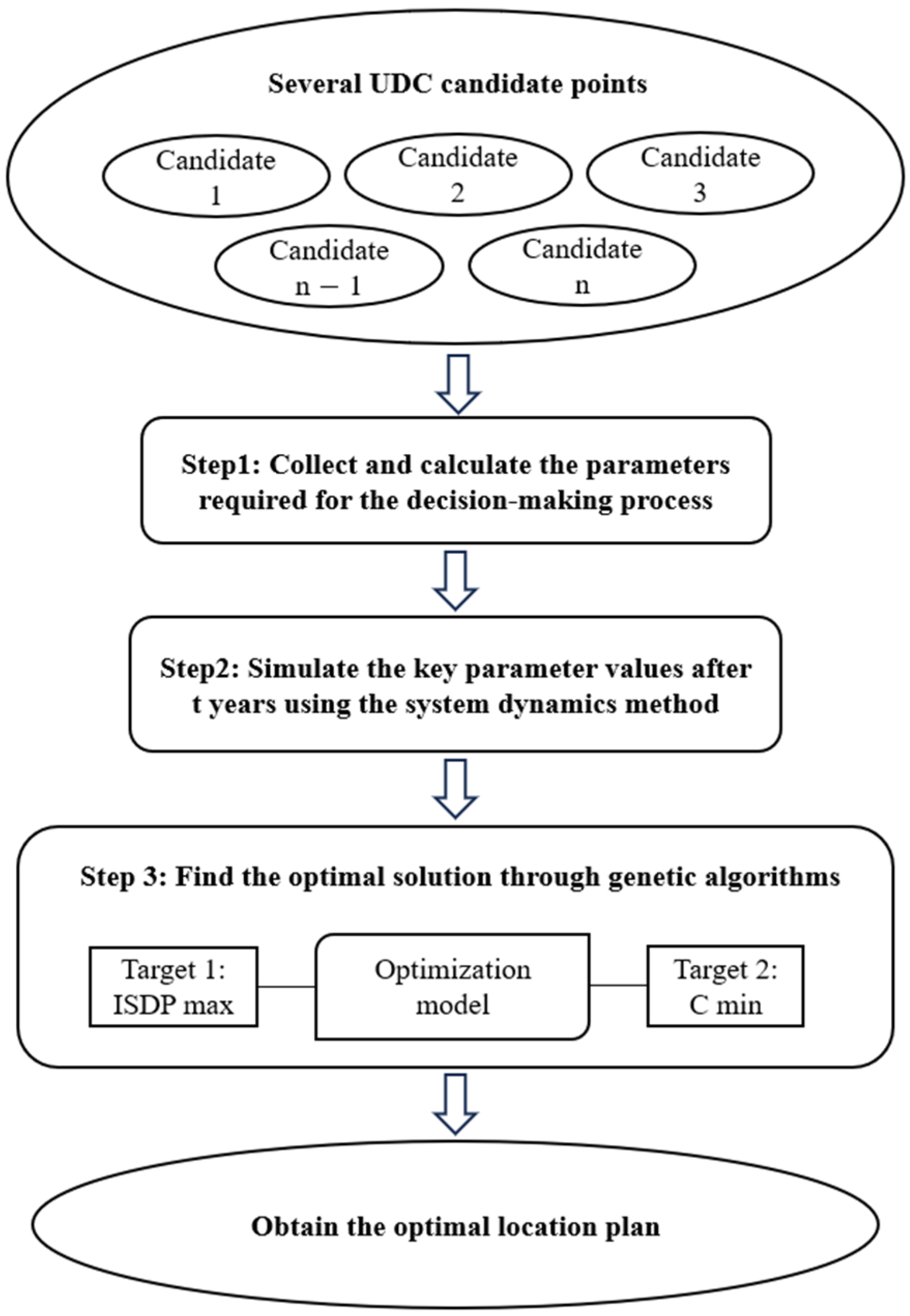
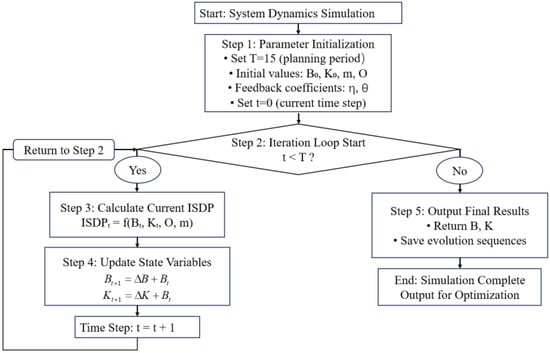
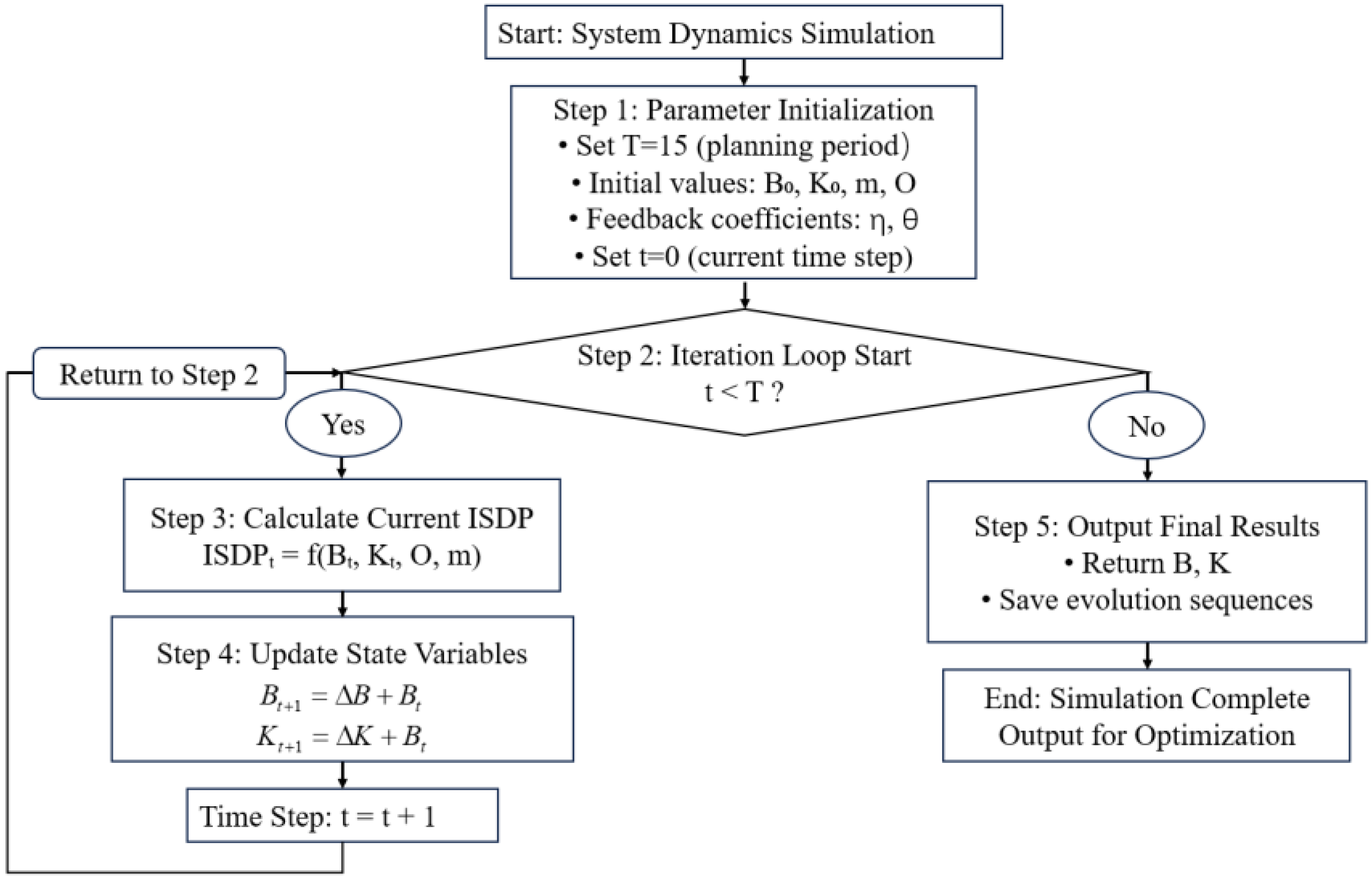
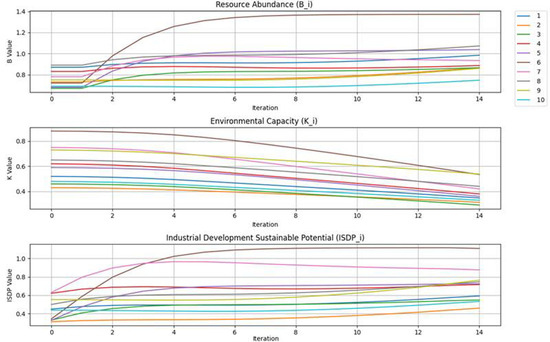
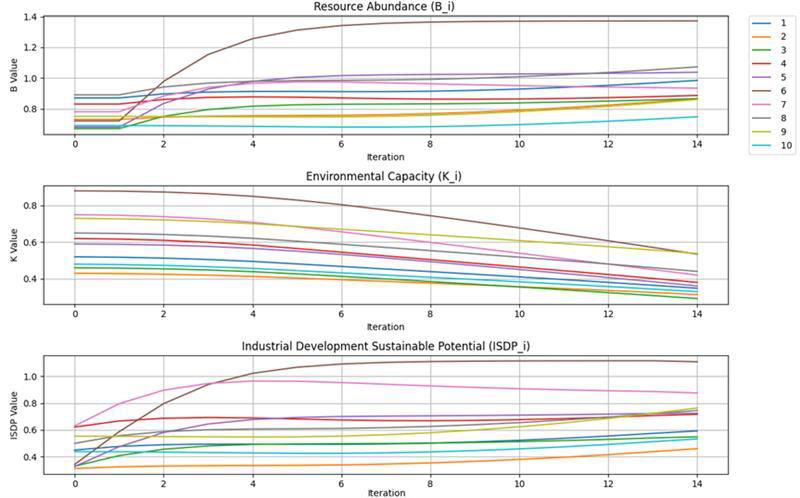
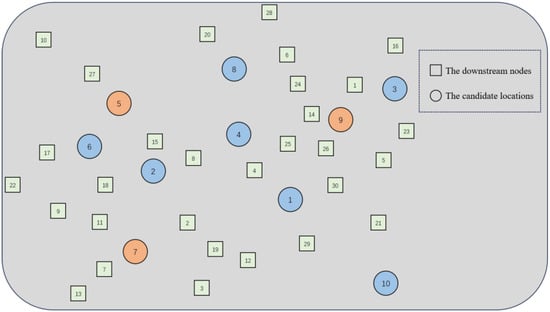
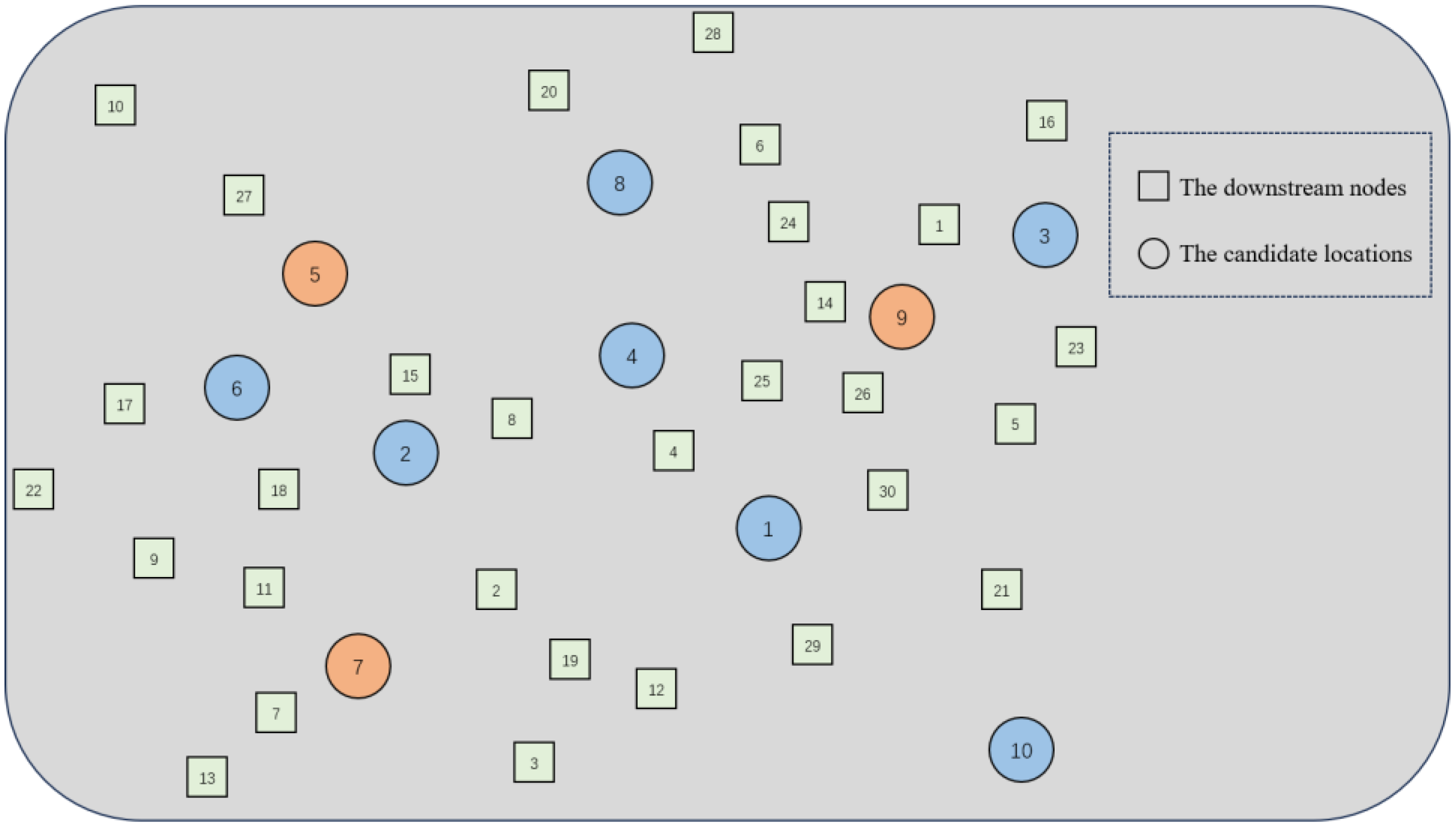
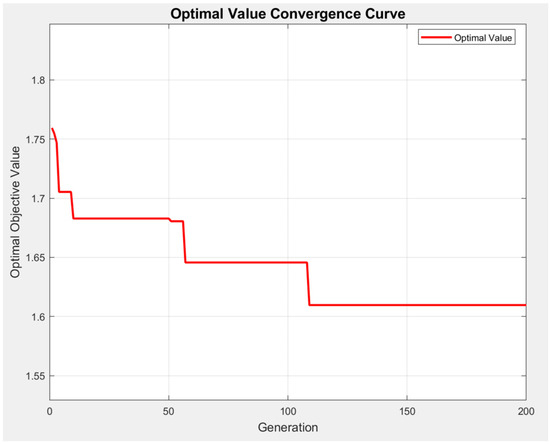
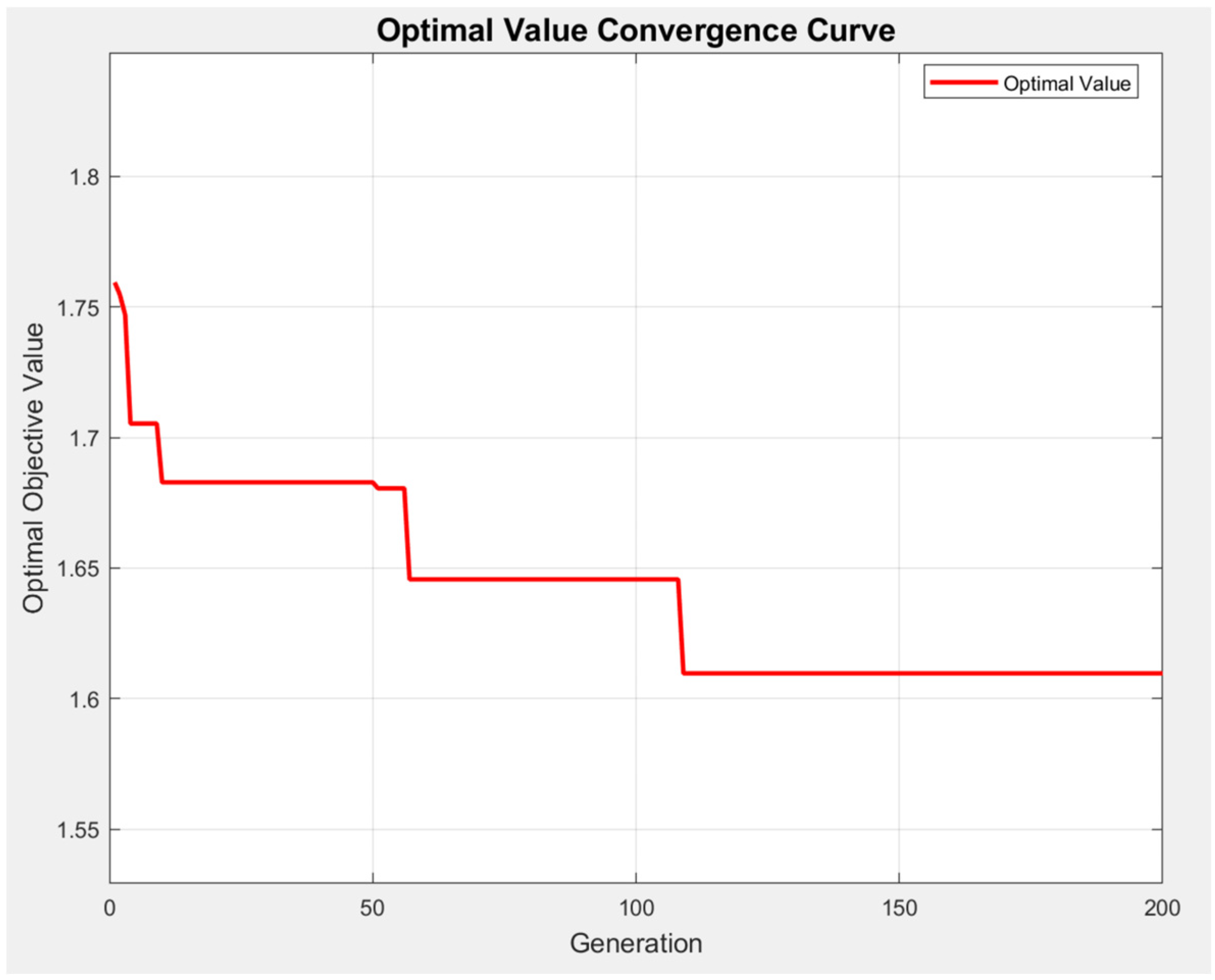
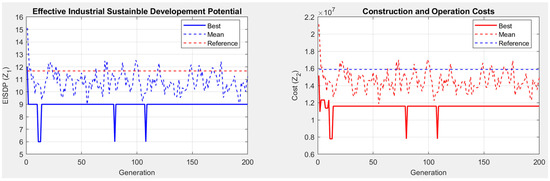
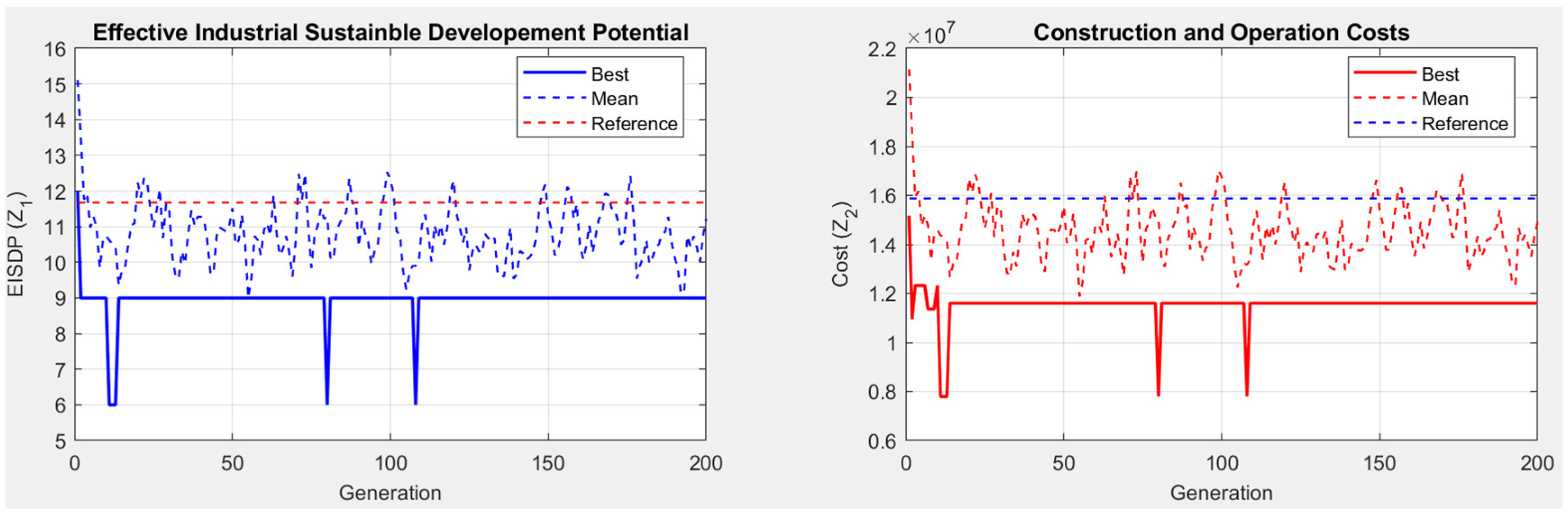
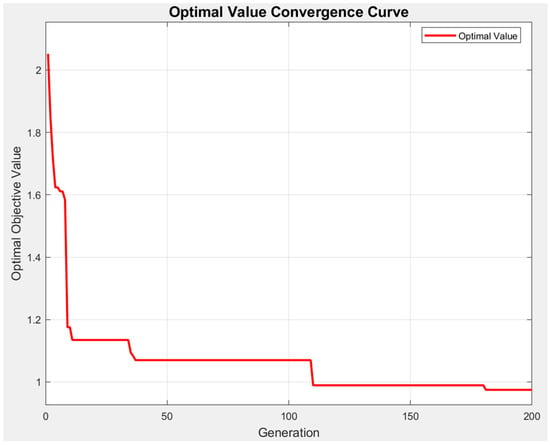
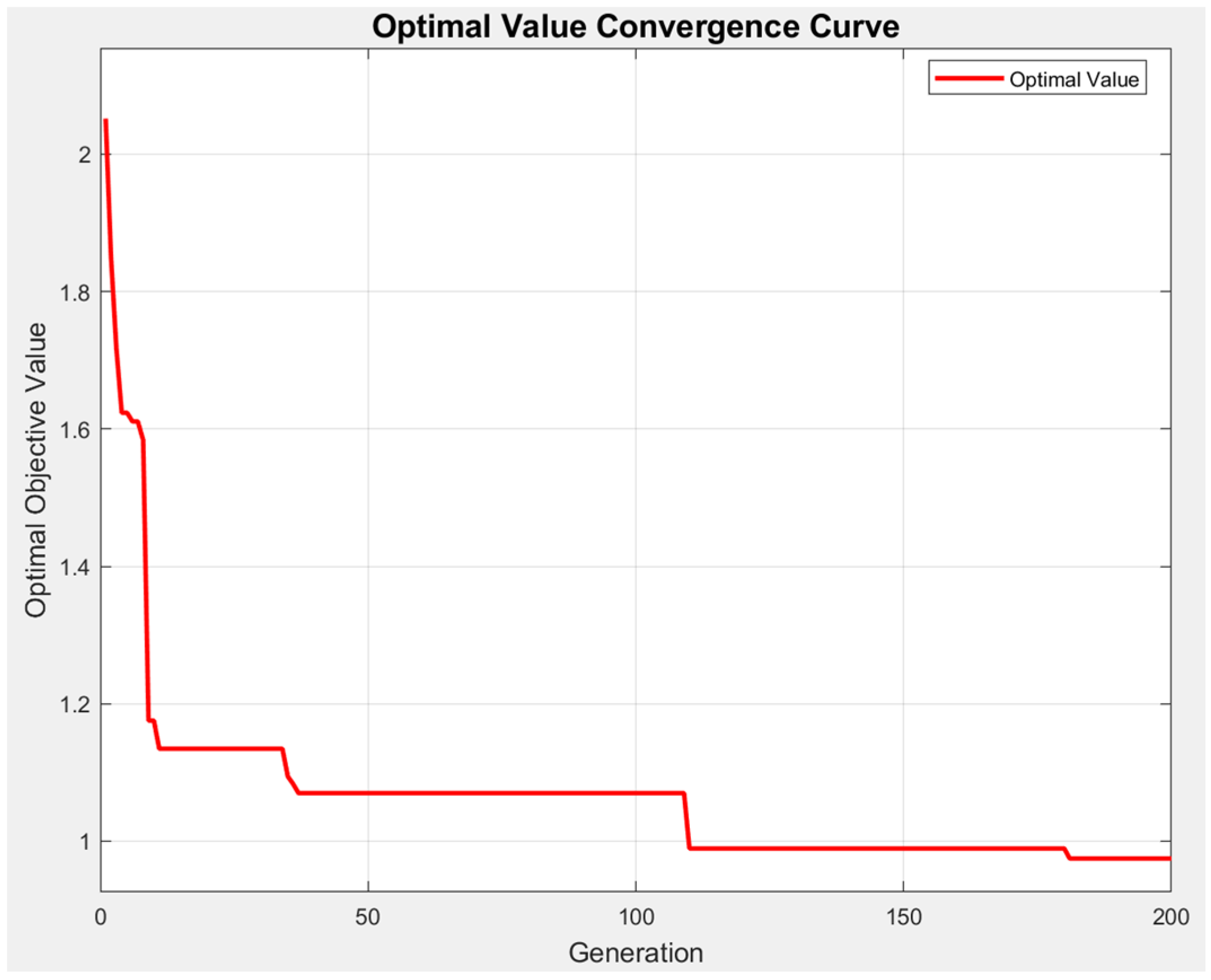
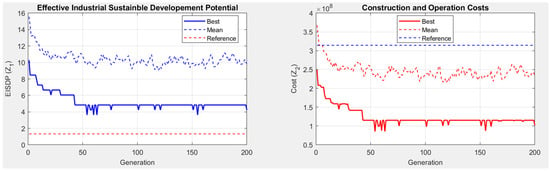
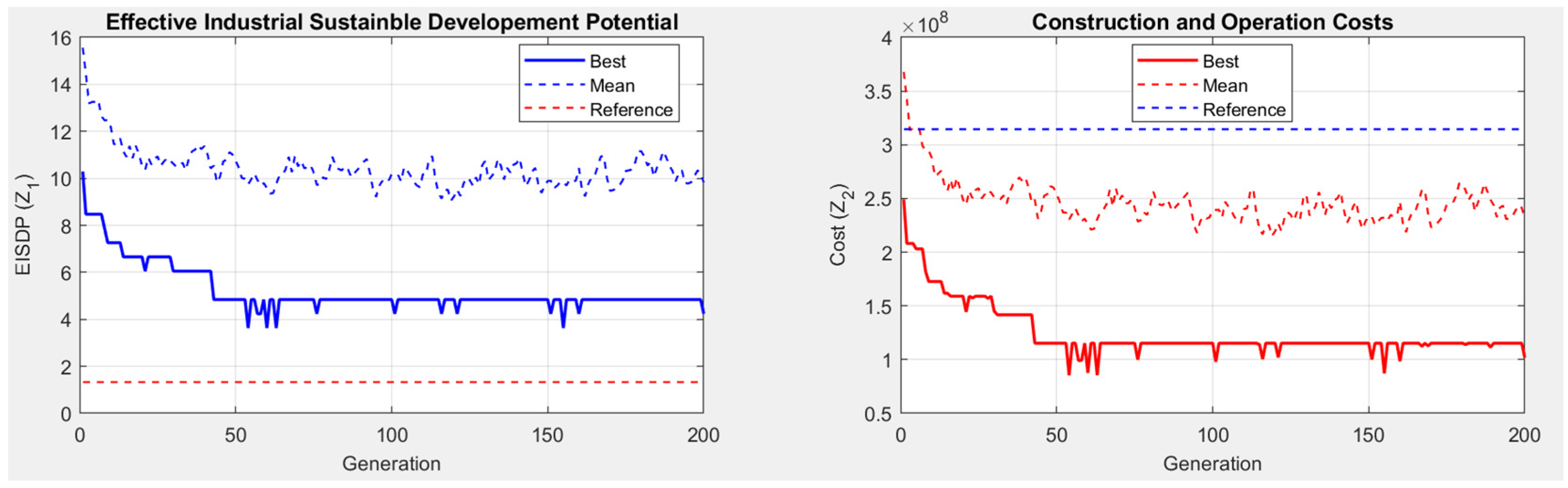

Disclaimer/Publisher’s Note: The statements, opinions and data contained in all publications are solely those of the individual author(s) and contributor(s) and not of MDPI and/or the editor(s). MDPI and/or the editor(s) disclaim responsibility for any injury to people or property resulting from any ideas, methods, instructions or products referred to in the content. |
© 2026 by the authors. Licensee MDPI, Basel, Switzerland. This article is an open access article distributed under the terms and conditions of the Creative Commons Attribution (CC BY) license.