Article

Simulation of Pedestrian Grouping and Avoidance Behavior Using an Enhanced Social Force Model


School of Transportation Engineering, East China JiaoTong University, Nanchang 330013, China
*
Author to whom correspondence should be addressed.
Sustainability 2026, 18(2), 746; https://doi.org/10.3390/su18020746 (registering DOI)
Submission received: 29 November 2025 / Revised: 5 January 2026 / Accepted: 6 January 2026 / Published: 12 January 2026
(This article belongs to the Collection Advances in Transportation Planning and Management)

Abstract

To address the limitations of conventional social force models in simulating high-density pedestrian crowds, this study proposes an enhanced model that incorporates visual perception constraints, group-type labeling, and collective avoidance mechanisms. Pedestrian trajectories were extracted from a bidirectional commercial street scenario using OpenCV, with YOLOv8 and DeepSORT employed for multiple object tracking. Analysis of pedestrian grouping patterns revealed that 52% of pedestrians walked in pairs, with distinct avoidance behaviors observed. The improved model integrates three key mechanisms: a restricted 120° forward visual field, group-type classification based on social relationships, and an exponentially formulated inter-group repulsive force. Simulation results in MATLAB R2023b demonstrate that the proposed model outperforms conventional approaches in multiple aspects: speed distribution (error < 8%); spatial density overlap (>85%); trajectory similarity (reduction of 32% in Dynamic Time Warping distance); and avoidance behavior accuracy (82% simulated vs. 85% measured). This model serves as a quantitative simulation tool and decision-making basis for the planning of pedestrian spaces, crowd organization management, and the optimization of emergency evacuation schemes in high-density pedestrian areas such as commercial streets and subway stations. Consequently, it contributes to enhancing pedestrian mobility efficiency and public safety, thereby supporting the development of a sustainable urban slow transportation system.

1. Introduction

As global urbanization intensifies, the management of pedestrian flow has become a critical challenge for urban transportation systems and a cornerstone of sustainable urban development. In high-density environments, the complex and unpredictable nature of pedestrian behavior often creates safety hazards. During large-scale events or emergencies, the nonlinear dynamics of crowds can lead to severe accidents. According to documented incidents, over 30 major stampedes occurred globally from 2000 to 2024, causing more than 15,000 casualties. In fact, pedestrian safety extends beyond crowded gathering venues and is equally critical in daily mixed-traffic environments. Based on empirical data from the Silesian Voivodeship in Poland, MACIOSZEK et al. [1] identified through a logit model key risk factors that significantly increase the probability of pedestrian death, including driver-related elements such as driving under the influence of alcohol by the driver, exceeding the speed limit; vehicle-related aspects like involvement of a heavy vehicle (truck, bus), the pedestrian being male, over 60 years old, under the influence of alcohol, and the incident occurring outside built-up areas, at night (from 10:00 p.m. to 6:00 a.m.), and in other than good weather conditions. These findings are consistent with multiple international studies, confirming that speeding, nighttime conditions, vehicle type, pedestrian age, and alcohol influence are common cross-regional contributing factors. The aforementioned research reveals the multi-factor interaction mechanisms underlying pedestrian accidents and highlights the heterogeneity of pedestrian behavior, the complexity of human-environment interactions, and the unpredictability of group dynamics. Consequently, constructing an accurate pedestrian simulation model requires the capability to capture the behavioral patterns corresponding to these key factors, particularly in high-density and complex interaction scenarios.
The Social Force Model (SFM) offers a valuable framework for microscopic pedestrian simulation but exhibits significant limitations in complex scenarios. First, it predominantly focuses on individual movement, lacking robust mechanisms for simulating group dynamics and companion behaviors. Second, its avoidance logic often produces unrealistic behaviors—such as trajectory crossing and irrational deceleration—during counter-flow or high-density interactions, diverging from real-world observations. Furthermore, while existing companion models capture static formations, they fail in dynamic situations, leading to abnormal following or avoidance failures. These shortcomings restrict the model’s accuracy and applicability in dense environments.
To address these gaps, this study proposes an enhanced SFM that integrates coupled modeling of avoidance behavior and companion mechanisms. The objective is to develop a simulation methodology that better reflects real pedestrian behavior, improving fidelity across complex scenarios. Unlike vehicular traffic, pedestrian movement exhibits stronger heterogeneity and flexibility, shaped by environmental layout, social dynamics, and cognitive factors. A precise understanding of pedestrian responses under high-density conditions is essential for designing human-centered, safe, and efficient walking environments.
The improved model provides a quantitative tool for pedestrian space design, crowd management, and evacuation planning in settings such as metro stations and commercial districts. By incorporating realistic collision avoidance and group behavior, the system aids in optimizing spatial layouts, guiding pedestrian flows, and enhancing evacuation efficiency. This work contributes to the resilience and sustainability of urban transport systems, supporting safer and more efficient non-motorized mobility.
In the following sections, we will delve into various aspects of this study. Section 2 of the paper will review the current state of relevant literature; Section 3 will conduct theoretical analysis based on survey data; Section 4 will construct a simulation model framework; Section 5 will present simulation experimental results and perform multidimensional evaluation; finally, Section 6 will summarize research findings and outline future research directions.

2. Literature Review

Research on pedestrian dynamics can be traced back to its initial stages in the 1930s. Compared to road traffic systems, pedestrian traffic demonstrates greater flexibility and diversity in movement patterns. This study will conduct a systematic literature review from three dimensions: pedestrian traffic flow theory, pedestrian simulation modeling, and pedestrian behavioral characteristics.

2.1. Research on Pedestrian Traffic Flow

As early as the 1950s, Henkin and Wright [2] identified a nonlinear relationship between pedestrian speed and density in subway environments through field surveys and controlled experiments, noting the existence of an upper limit to flow capacity. In 1971, the renowned Australian scholar Henderson [3] introduced a fluid dynamics analogy by modeling crowd movement as viscous flow. Through statistical analysis of pedestrian motion across varying density conditions, he further validated the functional relationship between walking speed and density, demonstrating that crowd velocity distributions approximately follow a normal distribution [4]. In the same year, Fruin [5] established the foundation of pedestrian traffic characteristics research, employing velocity, density, and flow rate to describe macroscopic pedestrian flow and deriving a fundamental speed–density relationship curve. Polus [6] analyzed video data from Haifa to propose a three-stage linear speed–density model, which later served as the basis for defining four levels of service for sidewalk design guidance. Fang et al. [7] developed a dynamics-based speed–density model incorporating both longitudinal and lateral interactions, revealing a logarithmic relationship where the influence of forward–backward interactions substantially exceeds that of lateral effects, with results showing strong agreement with field measurements. Daamen et al. [8] conducted a comprehensive statistical analysis of pedestrian free-speed distributions across varying traffic conditions based on empirical datasets. Their findings demonstrate that pedestrian free speeds maintain stable normal distribution characteristics under uncongested conditions, thereby establishing a reliable statistical foundation for pedestrian behavior simulation modeling. Huakai et al. [9] designed a controlled experiment focusing on bottleneck crowd structures, demonstrating that the first encountered bottleneck plays a decisive role in shaping subsequent crowd movement patterns. Yuan et al. [10] investigated pedestrian flow scenarios in airport terminals and established a mixed-integer linear programming model by analyzing critical performance indicators such as queue length, waiting time, and passenger arrival rate. The study revealed that the number of operational security lanes and their service duration constitute the primary factors affecting pedestrian queuing dynamics. Recent studies have further achieved significant progress in quantifying pedestrian flow parameters, identifying phase transitions, and predicting congestion by leveraging advanced technologies such as computer vision [11], data-driven multi-agent models [12], and graph neural networks [13]. Mai et al. [14] proposed a novel pedestrian flow prediction model based on crowd diffusion theory to alleviate congestion in public spaces, enabling real-time intervention in short-term crowding through sensor data integration.

2.2. Pedestrian Simulation Model Research

Research on pedestrian simulation models originated in the late 1950s, primarily in Western academic contexts. During the initial phase, constrained by limited technical capabilities, scholars mainly relied on field observations and photographic documentation to analyze pedestrian behavioral characteristics. Research outcomes were predominantly applied to evaluate facility service levels and establish foundational standards for pedestrian traffic planning. With the advancement of computer technology, simulation approaches were progressively introduced into the field. These methods enabled more intuitive and dynamic representations of pedestrian traffic characteristics, providing crucial theoretical foundations and technical support for the refined design of transportation facilities and operational optimization. Commonly adopted microscopic pedestrian simulation models include cellular automata, queuing network models, magnetic force models, and social force models.
  • Cellular Automata Model
Cellular Automata (CA) models represent a typical discrete modeling approach, where the simulation space is discretized into uniform grid cells. Pedestrians, as individual entities, move across these cells based on predefined transition rules. Wolfram [15] conducted systematic foundational research on cellular automata theory. Owing to their conceptual simplicity and computational efficiency, CA models have been widely applied in pedestrian simulation. Blue et al. [16] pioneered this application by developing the CA-Ped model for bidirectional flows, successfully demonstrating how micro-level rules can generate macro-level self-organization phenomena such as lane formation. Further refining the approach, Kazuya et al. [17] compared different five-cell neighborhood models, finding that the PCA5-40 variant more accurately reproduced the bimodal distribution observed in empirical fundamental diagrams, a phenomenon they showed to be robust even when accounting for delay effects.
2.
Magnetic Field Model
The magnetic force model, introduced by Okazaki et al. [18], analogizes pedestrian movement to magnetic interactions, where repulsion from other pedestrians and attraction to destinations govern motion. Although this analogy provides a conceptually interpretable framework and has been applied to evacuation scenarios, its parameters lack clear physical interpretation and must be calibrated using empirical data. Moreover, the model has limited ability to represent complex crowd interactions and often fails to reproduce macroscopic emergent patterns observed in real pedestrian flows.
3.
Social Force Model
The concept of the social force model was first introduced by Lewin [19] in 1951, who proposed that changes in pedestrian behavior are driven by “social forces”—pedestrians continuously adjust their velocity and direction under the combined influence of the external environment and internal objectives, ultimately achieving goal-directed movement. Building upon this theoretical foundation, Helbing et al. [20] established the classical social force model framework, which applies Newtonian mechanics to simulate pedestrian movement through self-driving, interpersonal, and boundary repulsive forces. This model successfully explains key self-organization phenomena and, due to its transparent mechanism, has become a mainstream approach in microscopic simulation. A recent extension by Siddharth et al. [21] (SFMPCB) further incorporated multidimensional pedestrian characteristics (e.g., age, gender) and introduced pedestrian equivalent factors to enhance the evaluation of sidewalk level-of-service.

2.3. Research on Pedestrian Avoidance and Grouping Behavior

A review of recent literature reveals significant advancements in modeling pedestrian avoidance and group behaviors. A common theme is the enhancement of simulation frameworks to incorporate more sophisticated interpersonal dynamics. Several studies have integrated conflict prediction [22], group-level forces [23], and geometric body rotation [24] into social force models to generate more cooperative and realistic avoidance maneuvers. Empirical investigations in specific environments, such as aircraft cabins [25] and school zones [26], have further quantified key avoidance parameters, including safety distances and the influence of traffic volume, while also identifying optimal computational models for predicting such behaviors.
Concurrently, research on group dynamics has highlighted its critical impact on crowd dynamics. Studies demonstrate that groups maintain cohesion through speed and spacing adjustments [27], which can influence overall traffic flow and efficiency. The size and composition of a group are key determinants of its effect; larger groups can amplify speed fluctuations and increase congestion probability [28], while cultural context shapes collective crossing behaviors [29]. To better capture these complexities, novel modeling approaches like the Group Universal Graph [30] and enhanced multi-grid models [31] have been developed, focusing on the heterogeneity within and between groups as they navigate constrained spaces.

2.4. Sensing Technologies for Pedestrian Data Collection

The advancement of pedestrian dynamics research is closely tied to developments in sensing technologies. Beyond manual observations, studies now leverage distributed sensor networks, including ordinary CCTV units, for large-scale data collection. For instance, frameworks for automated traffic violation detection using existing CCTV infrastructure highlight the potential for repurposing urban sensing systems for pedestrian analytics [32]. Similarly, research on optimal sensor placement in large-scale networks to uniquely identify path flows underscores the importance of strategic viewpoint planning for comprehensive trajectory reconstruction [33].

2.5. Summary

Existing research has made considerable progress in pedestrian flow theory, microscopic behavior simulation, and crowd dynamics. In microscopic simulation, the social force model is widely adopted for its clarity and explanatory power. Advances in computer vision and data-driven methods have further improved trajectory extraction and behavioral analysis, enriching the empirical basis for pedestrian modeling.
However, current models remain limited in real high-density, interactive scenarios. The traditional social force model often fails to accurately reproduce group coordination and avoidance behaviors. In complex settings such as bidirectional flows and dense crowds, it may also produce unrealistic phenomena like trajectory overlap and irrational deceleration, while overlooking group heterogeneity and social dynamics.
To address these gaps, this study introduces an enhanced Social Force Model incorporating visual perception constraints, group labels, and inter-group repulsion mechanisms. This model better represents pedestrian grouping and collective avoidance, improving simulation realism and predictive performance in dense environments. It thus provides a more reliable tool for pedestrian space design, crowd management, and evacuation planning.

3. Materials and Methods

3.1. Data Acquisition and Processing

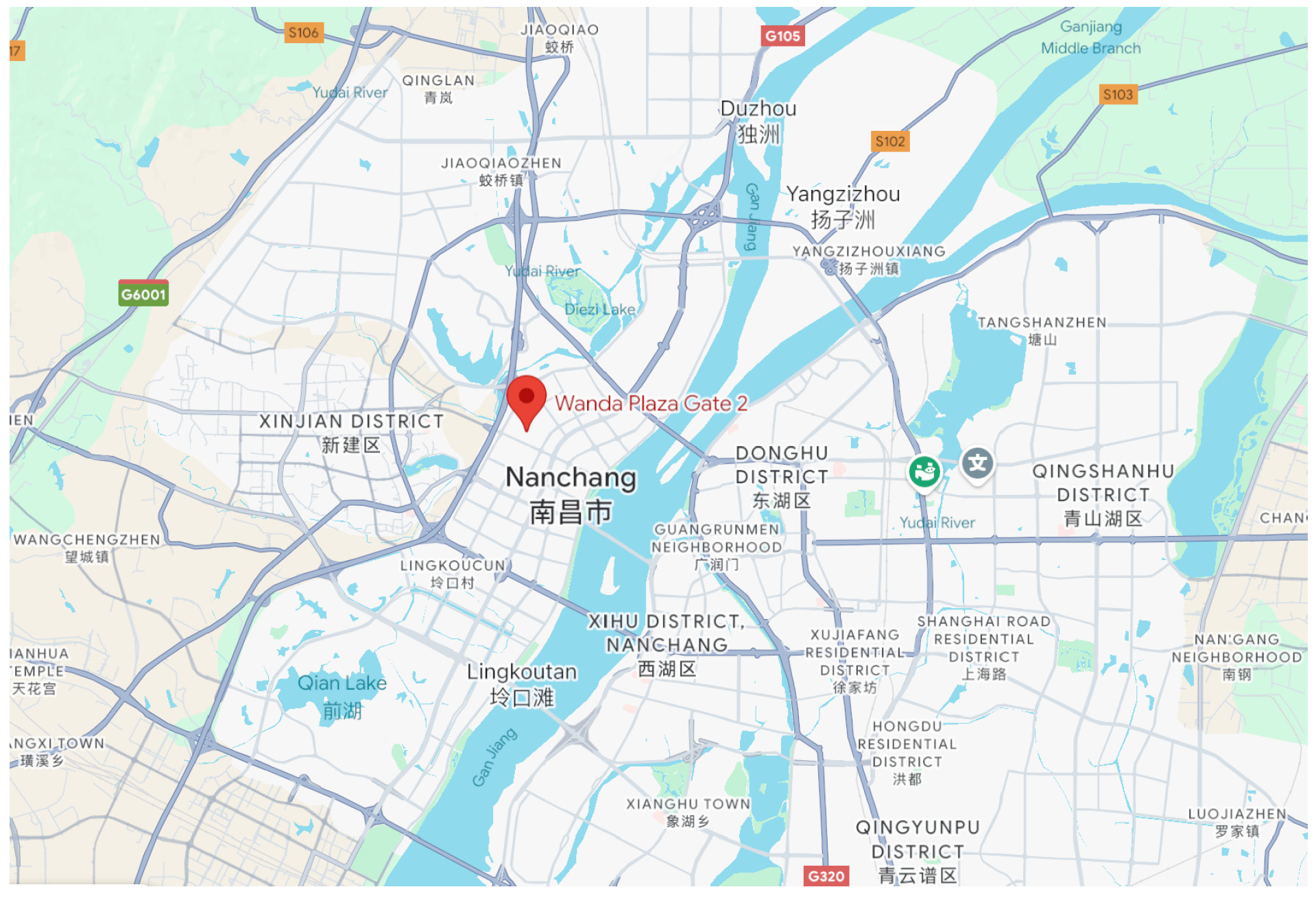
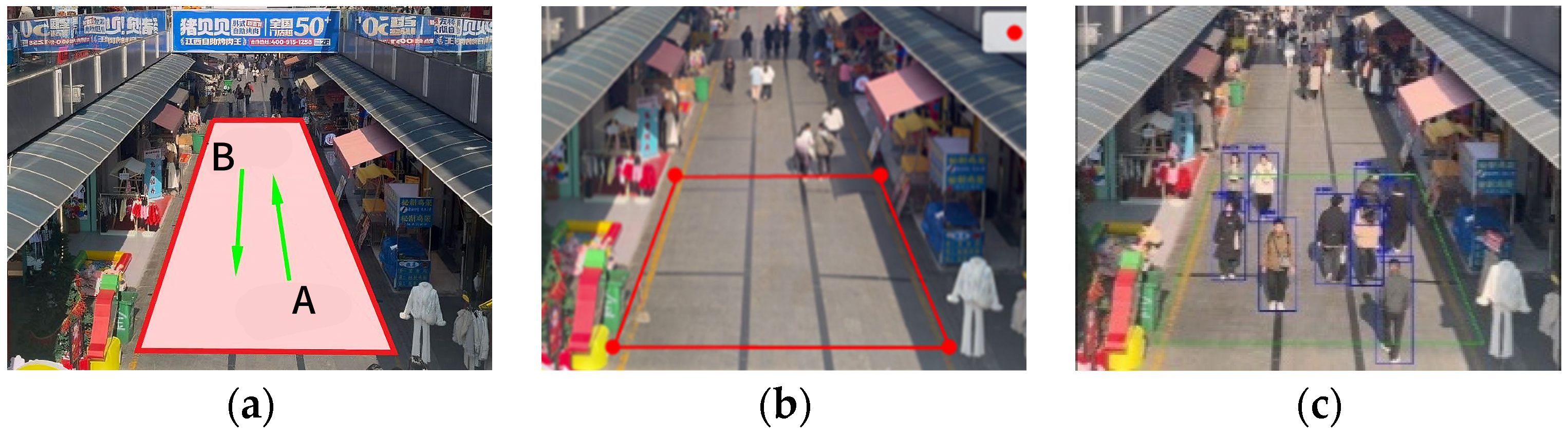
This study was conducted in a bidirectional straight passage (length: 30 m, width: 5.5 m) between Gates 3 and 4 of the commercial street at Wanda Plaza, Honggutan District, Nanchang City (as shown in Figure 1), which served as the observation area. Pedestrian flows were divided into two directions: A (Gate 3 → Gate 4) and B (Gate 4 → Gate 3), as shown in Figure 2. The study site was an outdoor ground-level walkway. A video camera was mounted on the second floor of an adjacent building, approximately 6 m above ground, to obtain a stable top-down view perpendicular to the walking plane. The camera (DJI Pocket 3, Shenzhen, China) was fixed on a tripod to minimize vibration and ensure clear recording of pedestrian movement. To address privacy concerns, the camera angle was set to capture movement patterns rather than identifiable facial features; no audio was recorded, and all data were anonymized during processing and storage.
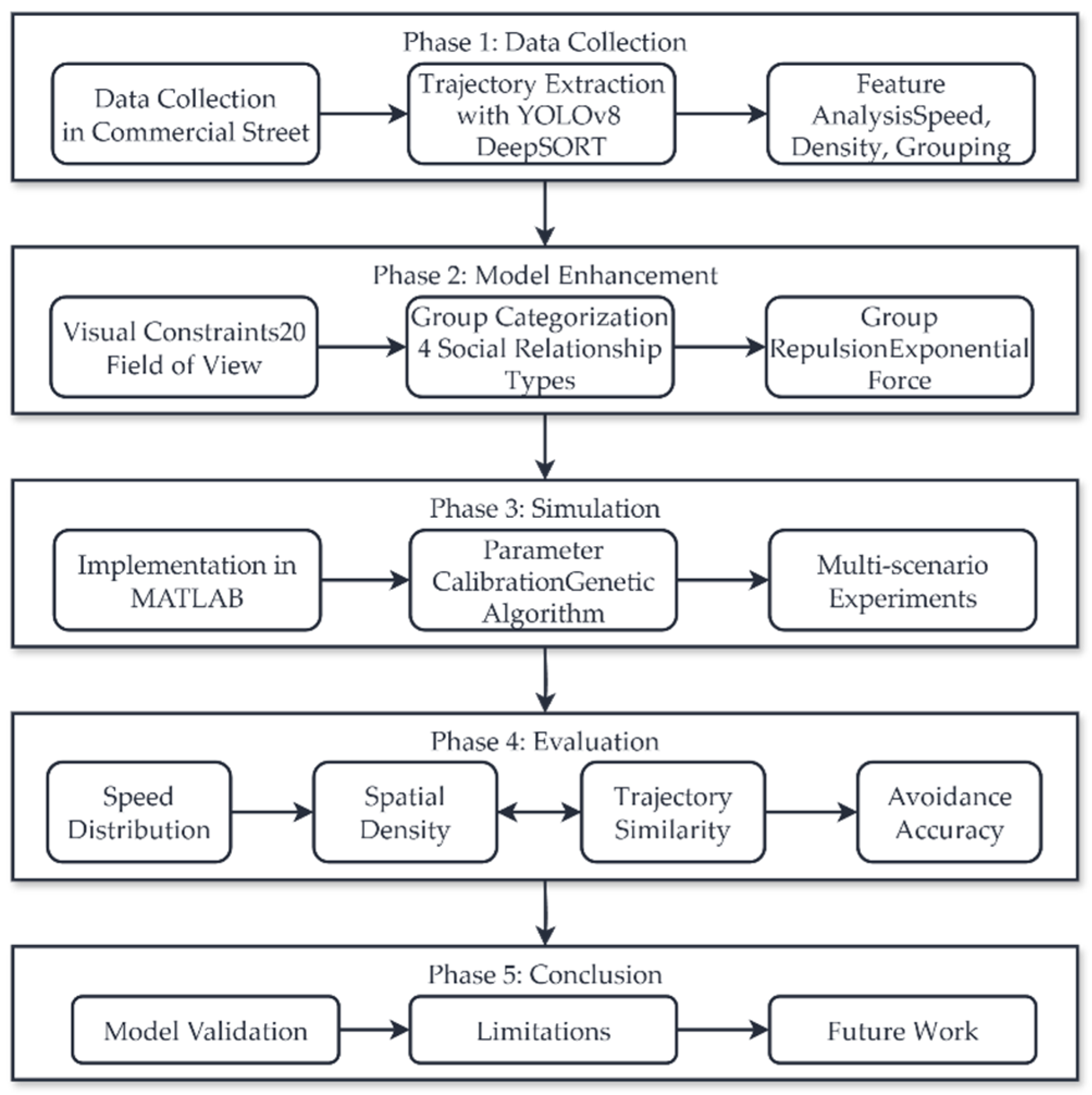
Video data were collected during multiple periods—including weekdays, weekends, and holidays—under consistently favorable weather conditions, resulting in a total of 5 h of recording to capture pedestrian movement patterns under varying flow conditions. Pedestrian detection and tracking were implemented using YOLOv8 combined with the DeepSORT algorithm. High-precision trajectory data were obtained through perspective transformation, achieving a spatial resolution of 0.01 m per pixel. A total of 2257 valid pedestrian trajectories were extracted. Groups were initially identified based on spatial proximity (interpersonal distance < 1 m) and movement synchrony and were then verified manually by two independent annotators to correct errors. The inter-annotator agreement, measured by Cohen’s Kappa, was 0.87, indicating high reliability. The final confirmed group dataset had a confusion rate of less than 5% between ‘pair’ and ‘non-pair’ classifications, as validated against a randomly sampled subset. The distribution research flowchart is shown in Figure 3.

3.2. Key Feature Analysis

Macroscopically, pedestrian movement is characterized by three fundamental variables: speed, density, and flow. Pedestrian speed is defined as the spatiotemporal average of instantaneous speeds of individuals passing through a designated observation section over a specified time interval. Pedestrian density characterizes the number of persons per unit space, while pedestrian flow represents the passage capacity per unit time. Following the U.S. Highway Capacity Manual (HCM) framework, pedestrian level of service (LOS) can be categorized into six grades from A to F [34], as shown in Table 1. In this study, the observed density ranges were 0.08–0.43 ped/m2 on weekdays, 0.61–1.14 ped/m2 on weekends, and 0.93–1.63 ped/m2 during holidays, corresponding to progressively declining levels of service from highest to lowest.
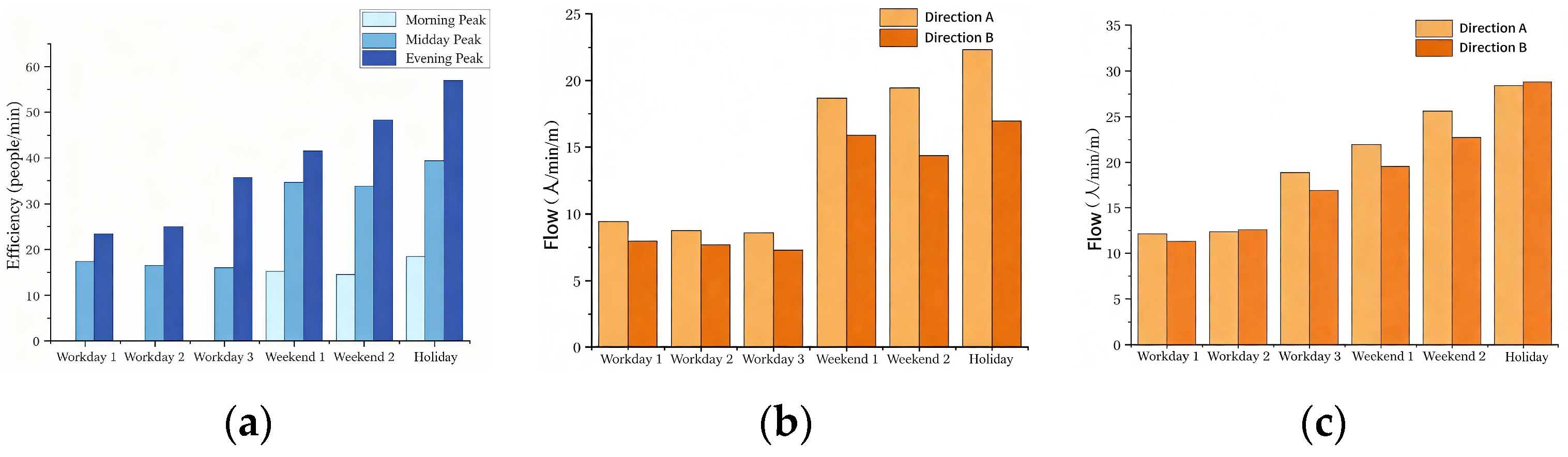
Figure 4 illustrates the total pedestrian flow volumes across different time periods on weekdays and non-working days, and the directional distribution between flows A and B. The results indicate that pedestrian volumes during evening peak hours significantly exceed those in other periods, with further increases observed during weekends and holidays. Additionally, the flow in direction A consistently predominates over that in direction B.
The fundamental relationship between key pedestrian flow parameters is described by:
q   =   v   ×   p
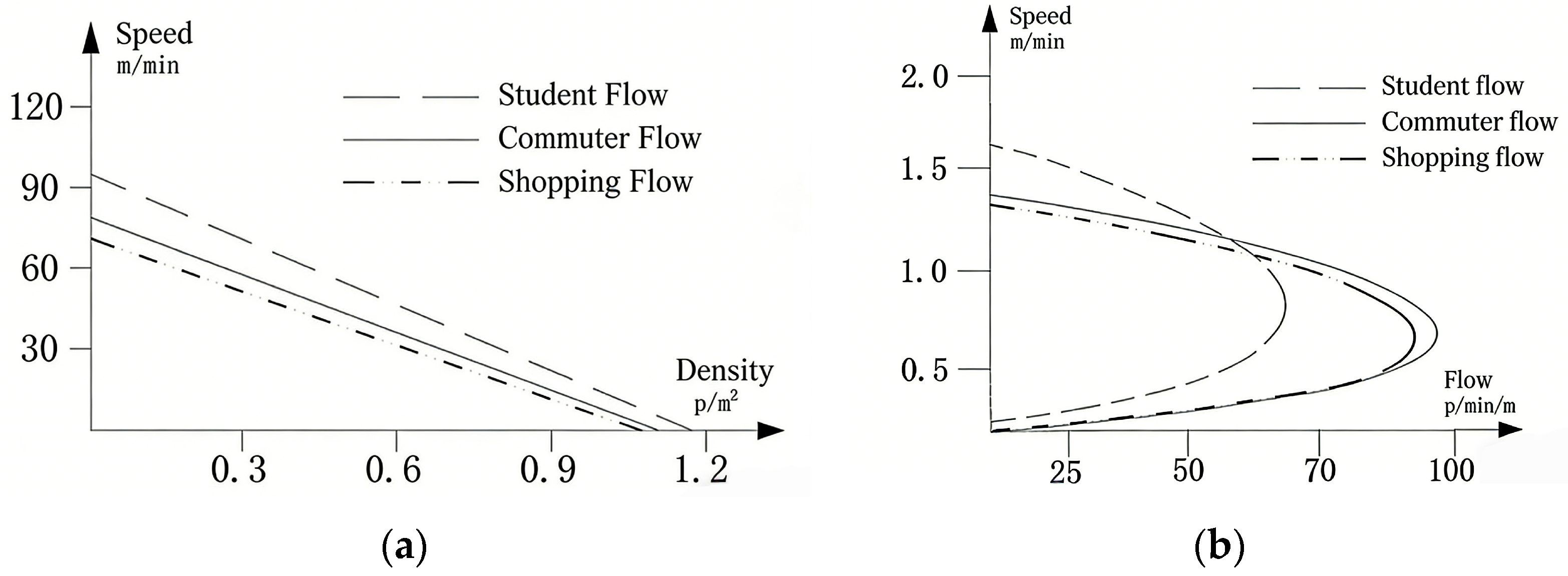
where q denotes pedestrian flow (ped/(m·s)), v represents average walking speed (m/s), and p indicates pedestrian density (ped/m2). Speed and density exhibit a negative correlation: as density increases, walking speed decreases. Consequently, flow initially increases with density, reaches a maximum value, and then declines, demonstrating a characteristic three-phase pattern. Figure 5 [34] illustrates the classical speed–density and speed–flow relationships. The empirical data collected in this study show substantial agreement with these established theoretical patterns.
Microscopically, individual pedestrian movement is characterized by fundamental indicators such as step length, step frequency, walking speed, trip purpose, and speed variation among individuals. These parameters collectively form the essential input variables for pedestrian traffic simulation models.
For Chinese adult pedestrians, the average step length is approximately 0.64 m. Males (0.67 m) have significantly longer strides than females (0.61 m). The average cadence is 1.96 steps/s, slightly higher for females (1.99 steps/s) than males (1.92 steps/s). The average walking speed of pedestrians in China is 1.24 m/s. All three parameters demonstrate significant age-related variations, with the elderly population showing substantially reduced values compared to younger adults, as detailed in Table 2 [35]. Under high-density conditions (>1.5 ped/m2), walking speed can decrease by up to 40% compared to free-flow situations [35], highlighting the substantial constraining effect of crowded environments on microscopic movement parameters.
To quantify pedestrian walking speed on commercial streets, trajectories were extracted during typical off-peak periods on non-working days. Outliers were removed through manual inspection, and pedestrians were categorized into age groups through expert review of video footage. The results indicate an average walking speed of 1.03 m/s, lower than values reported for transportation hubs, reflecting the leisure-oriented characteristics of commercial streets. Young adults accounted for the largest proportion of pedestrians and walked faster than older individuals at low density; however, this difference decreased as density increased. Table 3 summarizes the results for the 2257 valid samples.

4. Results

For the common behaviors of grouping and avoidance among pedestrians in high-density or complex environments, the Social Force Model (SFM) provides a microscopic modeling framework based on molecular dynamics. However, the traditional SFM exhibits simulation biases for such behaviors: the superimposed psychological repulsion and self-propulsion forces cause grouped pedestrians to exhibit unrealistic “deceleration trailing”; simultaneously, due to the lack of angle judgment for avoidance, oncoming pedestrians often collide head-on rather than adjusting their stance as in reality. To enhance model realism, this chapter introduces improvements across three dimensions—visual range perception, group bonding relationships, and group avoidance mechanisms—aiming to strengthen its behavioral representation capabilities.

4.1. Traditional Social Forces Model

The traditional social force model, based on Newtonian mechanics, describes pedestrian behavior in traffic environments. Within specific walking scenarios, a pedestrian’s motion state is influenced by three types of forces: self-propulsion force, interaction force with other pedestrians, and repulsive force with obstacles. Their walking behavior can be expressed by Equation (2).
F = m i d v i ( t ) d t = f i 0 + j ( j i ) f i j + w f i w + ξ i
where F is the resultant social forces acting on pedestrian i ; f i 0 is the self-driven force, capturing the pedestrian’s subjective motivation and intentional movement toward a destination; f i j is the interpersonal repulsive force between pedestrian i and neighboring pedestrian j , reflecting the tendency to maintain a safe interpersonal distance; f i w is the repulsive force exerted by boundaries or obstacles (e.g., walls, railings, or columns) on pedestrian i , modeling the pedestrian’s inclination to avoid physical obstructions; and ξ i is a stochastic force term, accounting for random fluctuations inherent in pedestrian motion.
Three principal limitations restrict the model’s efficacy in simulating complex companion and avoidance behaviors:
(1)
Perceptual Oversimplification: The model assumes omnidirectional, instantaneous perception within a 360° field of view, leading to unrealistic behaviors (e.g., avoiding agents outside the actual visual field).
(2)
Neglect of Group Dynamics: It models pedestrians as independent individuals, failing to replicate the cohesive motion (e.g., side-by-side walking, velocity adaptation) observed in over 70% of pedestrians who move in social groups.
(3)
Reactive Avoidance Mechanism: Avoidance is governed by simplistic, isotropic repulsion based solely on instantaneous proximity. This reactive “head-on” logic cannot simulate the proactive, predictive path adjustments made by real pedestrians who anticipate collisions from relative motion.
These shortcomings in perception, group interaction, and collision anticipation significantly limit the model’s applicability to complex interactive scenarios, underscoring the necessity for targeted enhancements.

4.2. Modified Traditional Social Forces Model

Visual perception serves as the primary sensory input for pedestrians to regulate their movement, necessitating the incorporation of visual perception into pedestrian modeling. Although humans possess an approximate 180° horizontal field of view, the effective binocular vision range is limited to about 120°. Consequently, this study defines 120° as the pedestrian’s effective field of view, meaning that pedestrians can only perceive other individuals within a 120° sector centered on their walking direction. The set of pedestrians within the field of view of pedestrian i is formally defined as Equation (3).
N i ( t ) = p i j x j ( t ) x i ( t ) d i ( t )
where N i t is the set of all pedestrians within the field of view of pedestrian i at time t; p i j is pedestrian within the field of view of pedestrian i at time t; d i ( t ) is the angular span of the field of view for pedestrian i .
Based on the visual field constraints of pedestrians, individuals in proximity to pedestrian i can be classified into three distinct categories: those within the visual field, those outside the visual field, and those located in the blind spot of pedestrian i . When a pedestrian encounters an obstruction along their intended path, they may opt to navigate through a gap between two adjacent individuals. The selection of gap position is influenced by the pedestrian’s perception of the velocities of others within their visual field. Assuming pedestrians can predict or perceive the positions and speeds of other individuals within their visual range, this set is denoted by P i ( t ) (Equation (4)).
P i ( t ) = x i j ( t ) , v i j ( t )
where x i j ( t )   a n d   v i j ( t ) are the position and velocity of pedestrian j as perceived by pedestrian i , respectively.
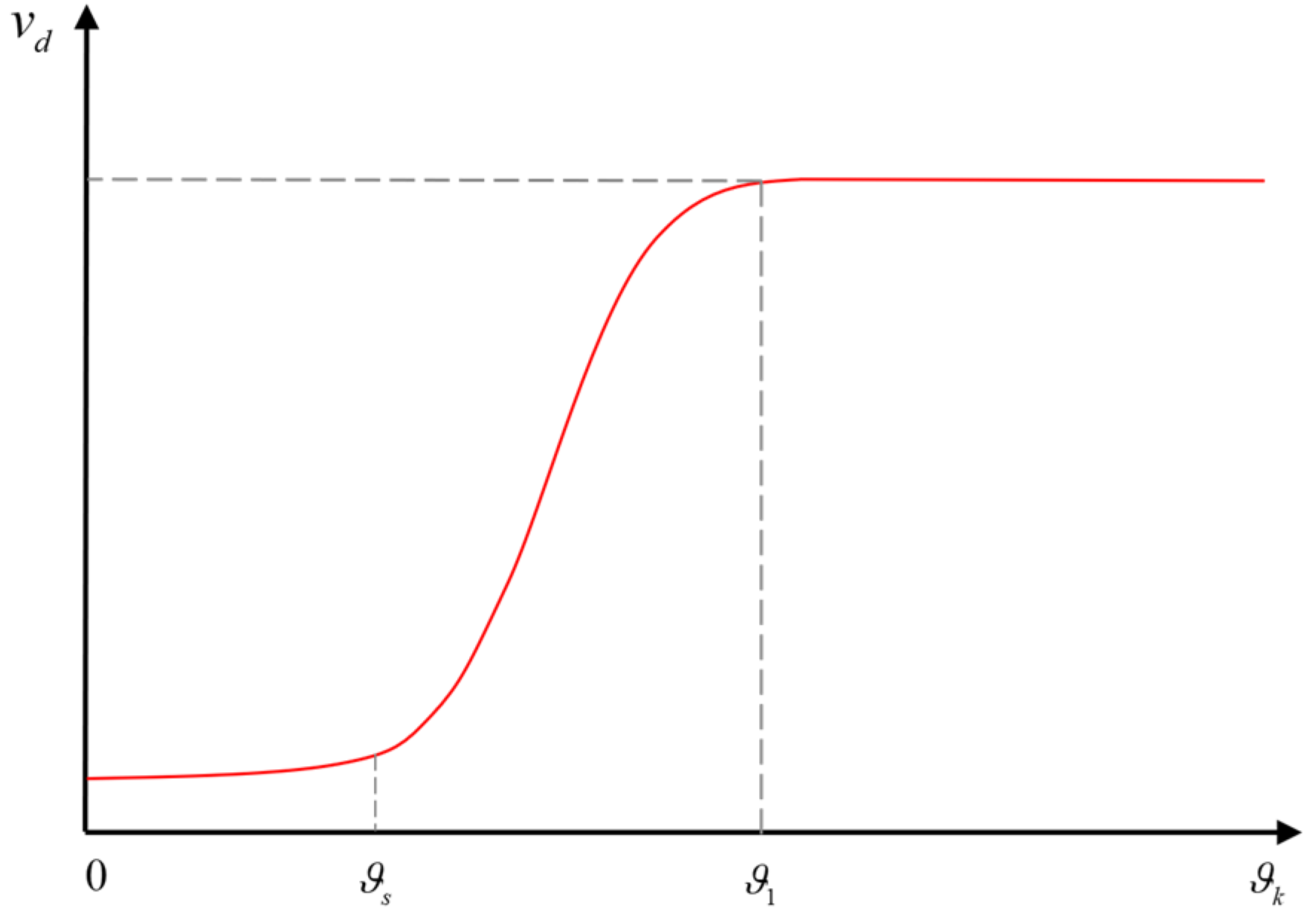
Previous studies have demonstrated that pedestrian flow characteristics and movement speeds are closely associated with bottleneck configurations. Under normal conditions, both flow rate and walking speed increase as bottleneck width expands. When the gap between two adjacent pedestrians is regarded as a microscopic bottleneck, the expected speed exhibits correlation with the gap size. Furthermore, walking speed is intrinsically related to local pedestrian density. Assuming an exponential relationship between desired speed and the angular separation of perceived gaps, pedestrians tend to proceed cautiously at reduced speeds when the gaps between other individuals within their visual field are narrow; conversely, they can traverse freely when the gaps are sufficiently wide. Consequently, an S-curve function effectively approximates the relationship between inter-pedestrian gaps within the visual field and the desired speed, capturing the influence of gap dimensions on movement decisions, as illustrated in Figure 6.
As shown in Figure 6, ϑ s and ϑ l denote critical threshold values: when the gap between two pedestrians is less than ϑ s , it indicates that the spacing is insufficient for pedestrian passage; when the gap exceeds ϑ l , pedestrians can walk freely at their desired speed v free i (Equations (5) and (6)).
v d i ( t ) = v f r e e i 1 + exp [ α ϑ k ( t ) / β ]
ϑ k ( t ) = d i P k 1 2 ( t ) + d i P k 2 ( t ) 2 d i P k 1 ( t ) d i P k ( t ) cos ( θ k ( t ) ) r p k 1 r p k
where v f r e e i denotes the expected speed of pedestrian i under free-flow conditions; v d i ( t ) represents the actual walking speed of pedestrian i at time t after being influenced by environmental constraints; ϑ k ( t ) indicates the separation distance between pedestrian i and pedestrian j within visual gap k at time t ; α , β model parameters controlling the sensitivity to gap perception and speed adaptation; d i P k 1 t ,   d i P k ( t ) denote the distances from pedestrian i to the pedestrians forming the boundaries of visual gap k at time t , where if only one adjacent pedestrian is present, these two distances are set equal.
Furthermore, a pedestrian’s walking speed is influenced by the relative positions and velocities of other individuals within their visual field. To ensure collision-free movement, pedestrians must continuously adjust their speeds based on the motions of surrounding individuals. If v max i ( τ ) denotes the maximum safe speed at which pedestrian i can avoid collisions at time τ , the following condition must be satisfied (Equation (7)):
[ x i ( t ) + v max i ( t ) τ ] [ x i j ( t ) + v i j ( t ) τ ] = r i + r j
In the mathematical formulation, [ x i t + v m a x i ] is the projected position of pedestrian i at time t   + τ , while [ x i j t + v i j ( t ) τ ] is the anticipated position of pedestrian j as predicted by pedestrian i . To prevent collisions, the Euclidean distance between the projected positions of pedestrians i and j must exceed the sum of their body radii. Therefore, accounting for the positions and velocities of other pedestrians within the visual field, the expected velocity of pedestrian i at time t should satisfy (Equation (8)):
v d i ( t ) = min { v d i ( t ) , v max i ( t ) }
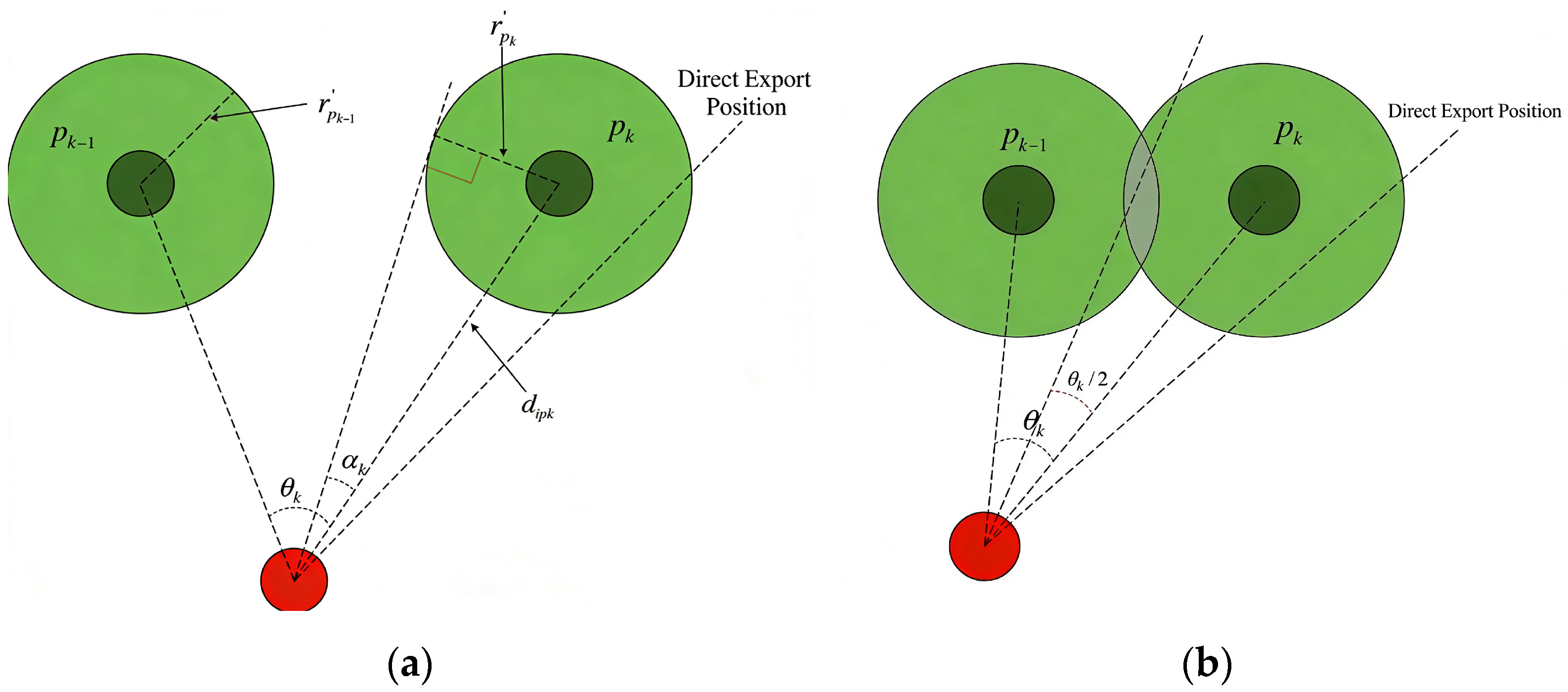
From the preceding analysis, it can be concluded that when pedestrian i encounters an obstruction along their intended path, they will modify their initial walking direction and select a gap formed between other pedestrians within their visual field, traversing it at speed v d i ( t ) . This decision process determines both the specific gap selected and the resulting walking direction. Based on the spatial requirements of pedestrian movement, specifically, the maintenance of a safe distance from surrounding unfamiliar pedestrians, the pedestrian’s physical radius is conceptually extended to form a personal safety zone Equation (9).
sin α k = r P k d i p k ( t )
where r P k denotes the expanded radius of pedestrian k within the visual field, accounting for the personal safety zone; d i p k t represents the Euclidean distance between pedestrian i and pedestrian k at time t .
Under crowded conditions where the safety zones of pedestrians p k 1 and p k overlap, pedestrian i will navigate along the centerline of the available gap θ k ( t ) , as illustrated in Figure 7b. Therefore, the specific angular direction θ k ( t ) chosen by pedestrian i relative to the position of pedestrian p k within the visual field is determined by Equation (10).
min 1 2 θ k ( t ) , α k ( t ) = φ k ( t )
If φ k ( t ) denotes the angular deviation between pedestrian i and adjacent pedestrian p k relative to the direct exit direction, then the required walking direction relative to the original path is determined by Equation (11).
φ k ( t ) + ϕ k ( t ) = η k ( t )
By identifying the specific gap that pedestrians will select—namely, the gap adjacent to pedestrian p k —and assuming that pedestrians choose the direction that maximizes the projected velocity toward the direct exit position (or, when multiple directions yield equal projections, select the one with minimal deviation from the original path), the target gap can be determined as shown in Equations (12) and (13).
max k Pr j i e x i t v d i ( θ k ( t ) ) , s . t . Pr j i e x i t v d i ( θ k ( t ) ) = v d i ( θ k ( t ) ) cos η k ( t ) , θ k ( t ) S i ( t )
e i ( t ) = ( cos η k ( t ) , sin η k ( t ) )
As described above, adjusting the pedestrian’s desired speed and movement direction can effectively substitute for psychological repulsive forces. Under extremely crowded conditions where physical contact becomes unavoidable, the interactions are represented through two physical components: a “body force” g ( r i j d i j ) n i j and a “sliding friction force” μ g ( r i j d i j ) Δ v i j t t i j , which also apply to pedestrian-obstacle interactions. Therefore, the modified social force model is formulated as shown in Equations (14)–(16).
F = m i d v i ( t ) d t = m i v d i ( t ) e i ( t ) v i ( t ) τ i + j ( j i ) f i j + w f i w + ξ i
f i j = k g ( r i j d i j ) n i j + μ g ( r i j d i j ) Δ v i j t t i j
f i w = k g ( r i d i w ) n i w + μ g ( r i d i w ) ( v i t i w ) t i w

Model Correction Analysis

This section verifies the modified model by comparing simulation results between the original and modified models. Pedestrians are represented by circles, where the radius denotes the pedestrian’s safety distance and the center indicates the pedestrian’s position. The straight-through passage environment measures 6 m in length and 6 m in width. The simulated pedestrian mass is set to 60 kg, with other parameters listed in Table 4.
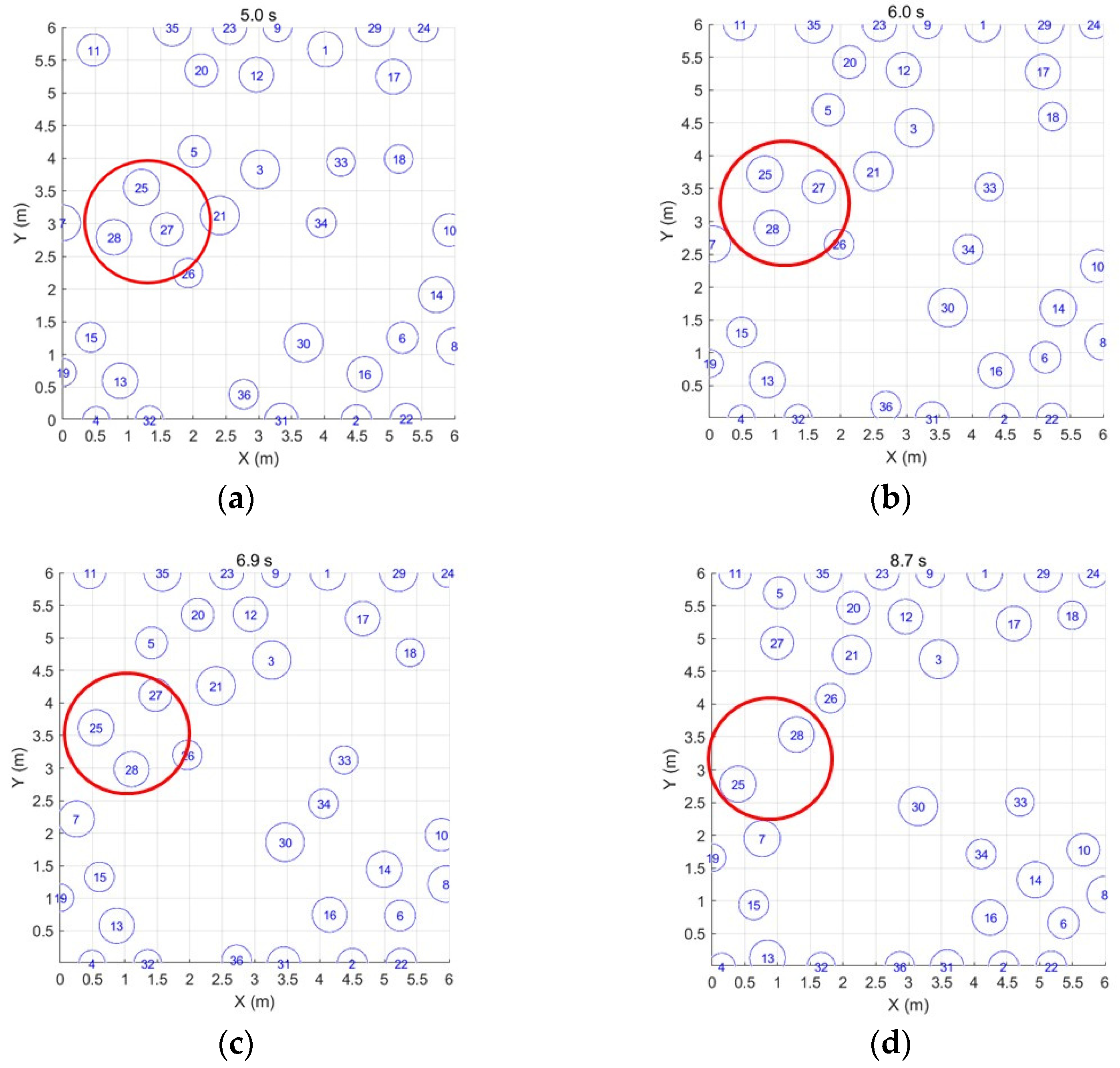
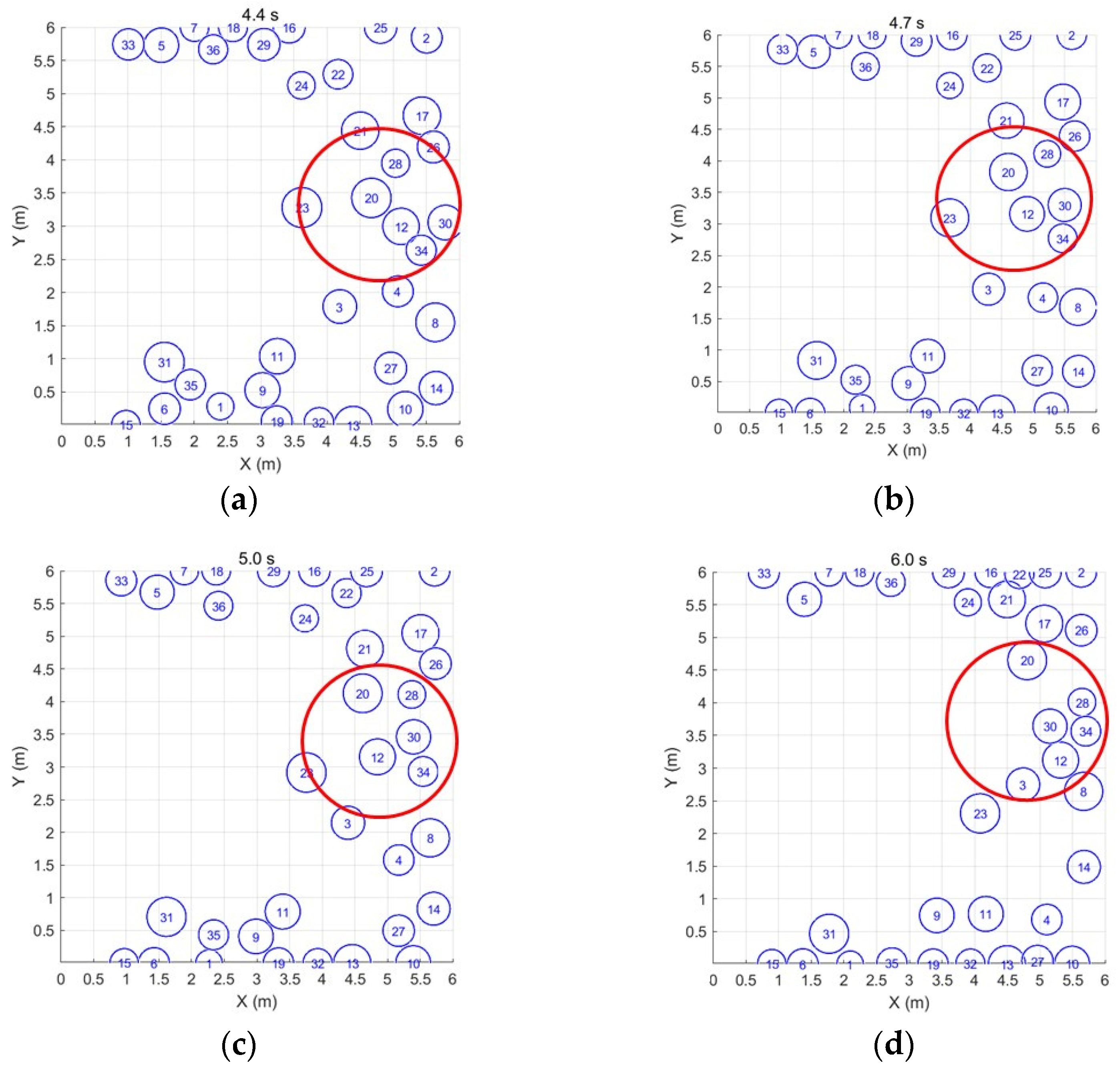
Simulations were conducted on the models before and after correction based on the aforementioned parameter settings. Partial simulation processes are shown in Figure 8 and Figure 9.
The simulation results of the traditional model showed that Pedestrians 25 and 28 were walking toward each other. Upon perceiving a potential collision, both demonstrated avoidance intent. However, Pedestrian 25 subsequently became stationary without any actual displacement; Pedestrian 28 did not execute a direct lateral avoidance but instead moved downward first, then reversed direction upward after creating distance from Pedestrian 25. This interaction failed to realistically simulate the efficient mutual avoidance strategies observed among pedestrians in real-world scenarios.
As illustrated in Figure 9, Pedestrian 30 encountered potential path conflicts with multiple oncoming pedestrians during their crossing. Within their field of vision, they identified several passable gaps and ultimately chose to proceed through the space between Pedestrians 28 and 20 based on the principle of selecting the gap with the closest distance and minimal deviation from the target direction. Simultaneously, Pedestrians 12, 20, and 28 detected Pedestrian 30s maneuver and proactively yielded, enabling Pedestrian 30 to successfully complete the crossing and continue toward their destination.
Compared to the outcomes of the traditional model, this avoidance sequence appears more rational and fluid. This demonstrates that the modified social force model more realistically simulates pedestrian interactions, significantly enhancing avoidance effectiveness and validating the refined model’s efficacy and feasibility.

4.3. Improved Pairing Behavior Model

Building upon traditional social force models, Moussaid et al. [36] analyzed group walking videos in real street scenes to introduce a peer-interaction force comprising field-of-view range force, mutual attraction, and repulsion effects. This enabled the construction of a group model capable of simulating changes in peer-group formations and their impact on crowd dynamics. However, this model assumes homogeneous behavior among all members, failing to capture real-world behavioral variations arising from differing social relationships (e.g., friends, partners, family). To address this, this study introduces the companion type label T_g and associates unique parameter sets with different group types (see Table 5 for details), thereby constructing an improved model that more accurately reflects real-world behavioral heterogeneity.
Based on the pedestrian group types T g     { T g f d ,   T g c l ,   T g f y ,     T g e d } , the modified social force model for pedestrian groups is formulated as shown in Equation (17).
f i g t = β 1 T g α i v i + q A β 2 T g U i + k q R β 3 ( T g ) W i k
where β 1 is the strength coefficient of the field-of-view force; β 2 is the strength coefficient of the mutual attractive force; β 3 is the strength coefficient of the repulsive force; v f r e e is the desired velocity of the pedestrian; d 0 is the comfort distance; α i is the rotation angle; q A is the exponential function; q R is the piecewise function; U i is the unit vector pointing from pedestrian i to the centroid C i ; and W i k is the unit vector pointing from pedestrian i to group member k .

4.4. Improvements to the Evasion Behavior Model

While Moussaid’s [36] model for pedestrian groups successfully captures group aggregation and spatial configuration via visual field, attractive, and repulsive forces, it overlooks inter-group avoidance. This paper incorporates the prototype repulsive force of individuals from SFM [20] to introduce an accompanying pedestrian avoidance force f g r into the improved companion behavior model. Based on the psychological repulsion concept in the social force model, we construct an exponential repulsion function of distance (Equations (18) and (19)). This force activates solely when a group blocks the path, is within the visual field, and poses a collision risk, thus more completely simulating group evasion dynamics against oncoming pedestrians (Equation (20)).
d v i d t = f i 0 + j f i j + w f i w +   f i g + f g r
f g r = A   ·   e x p r i z d i z B   ·   S   ·   e v
S = 0 1 d i j · cos α r i j 0 1 d i j · cos α r i j 1 d i j · cos α r i j > 0 ,     S 0,1
where f g r is the group repulsion force; A and B are constant parameters; S is the positive correlation between the degree of path obstruction and the psychological repulsion intensity; e v is the unit vector perpendicular to the walking direction of pedestrian i ; d i j is the distance between pedestrians i and j ; and α is the angle between the vector i c (from pedestrian i to the group center c ) and the vector e v .

Model Analysis

The improved model was compared with the previous model through simulation. The simulation environment was consistent with that used for the traditional social force model: a straight corridor measuring 6 m in length and 6 m in width. The mass of simulated pedestrians was set to 60 kg, and the values of constants A and B were set to 1500 and 1.2, respectively.
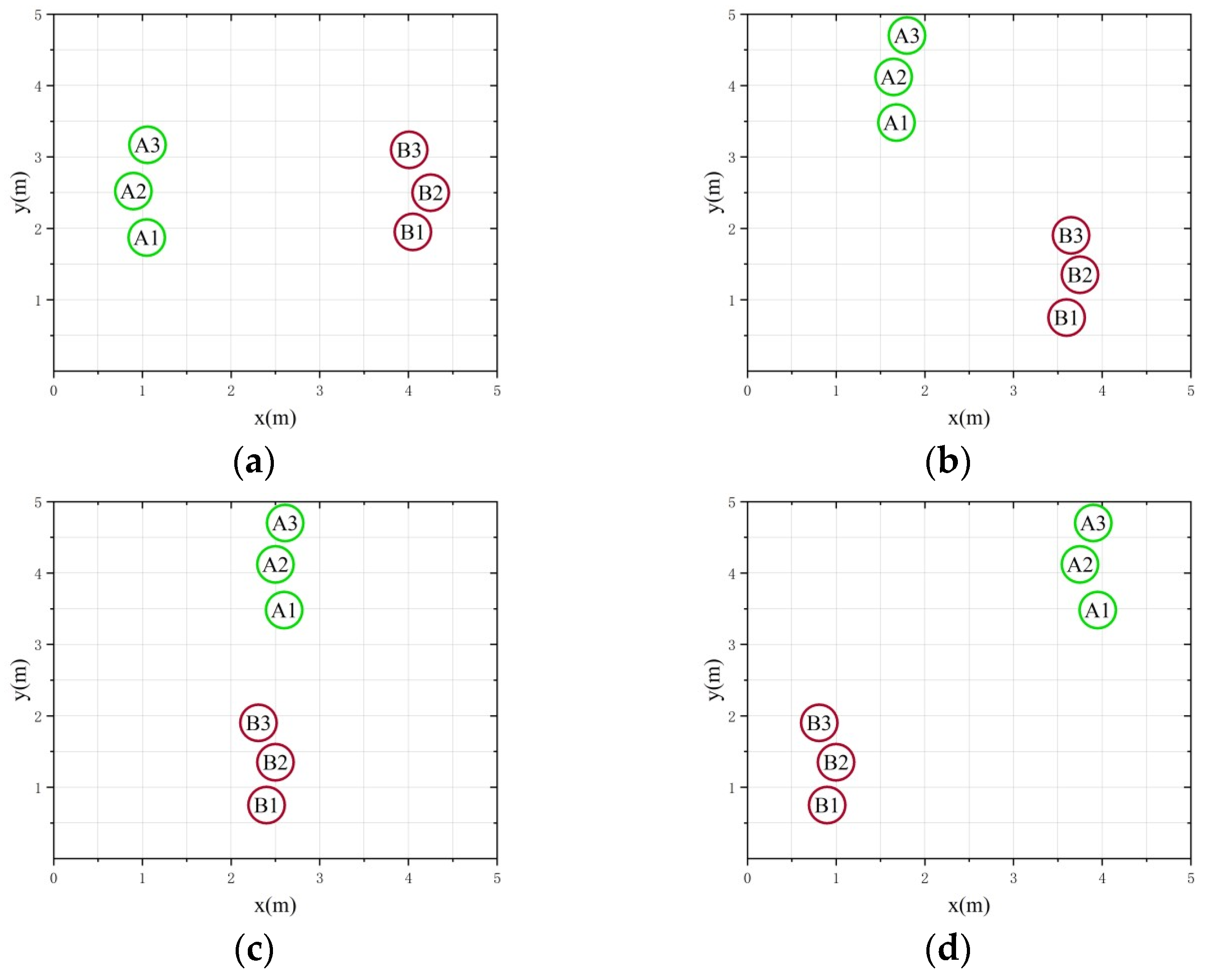
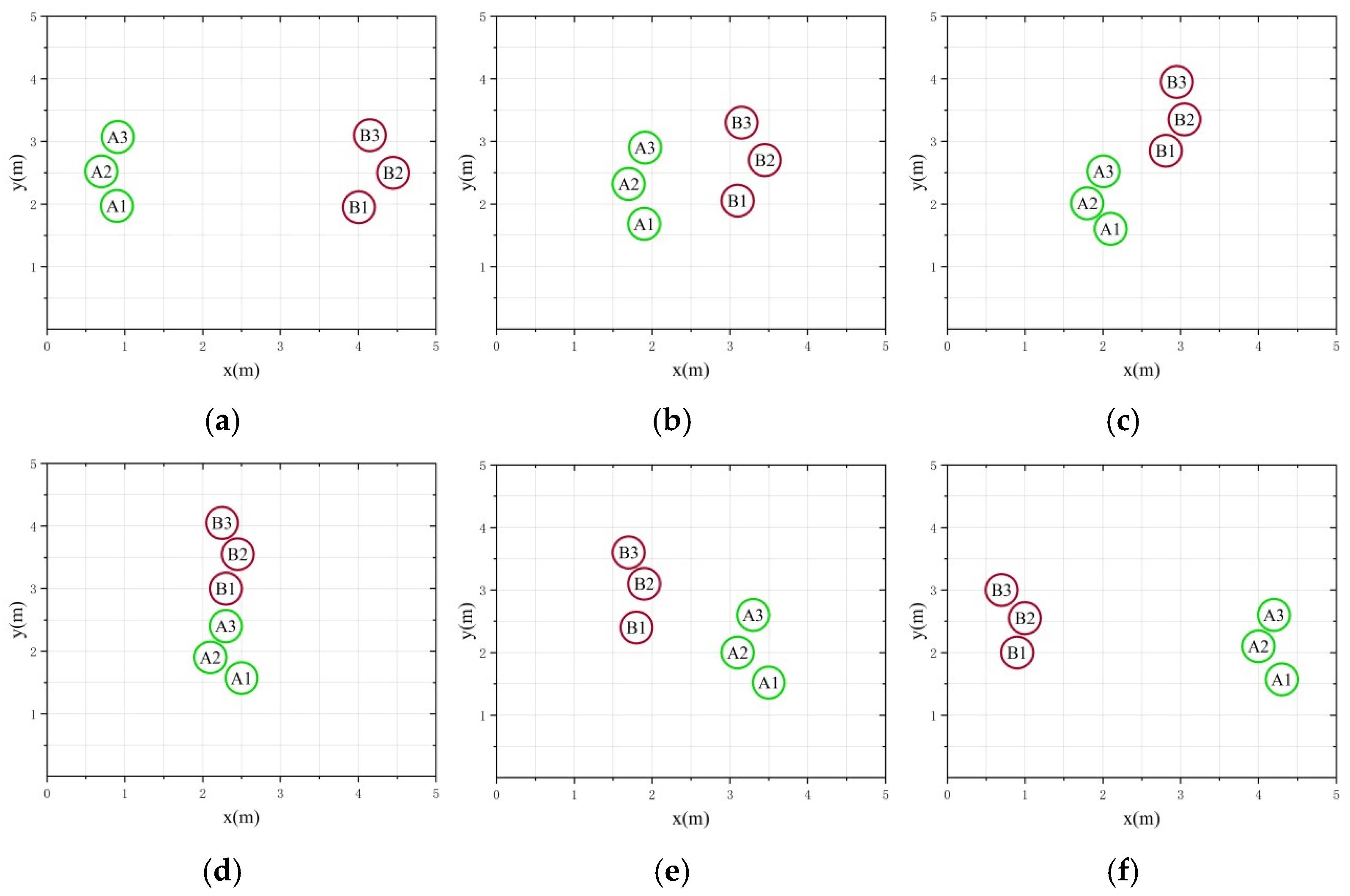
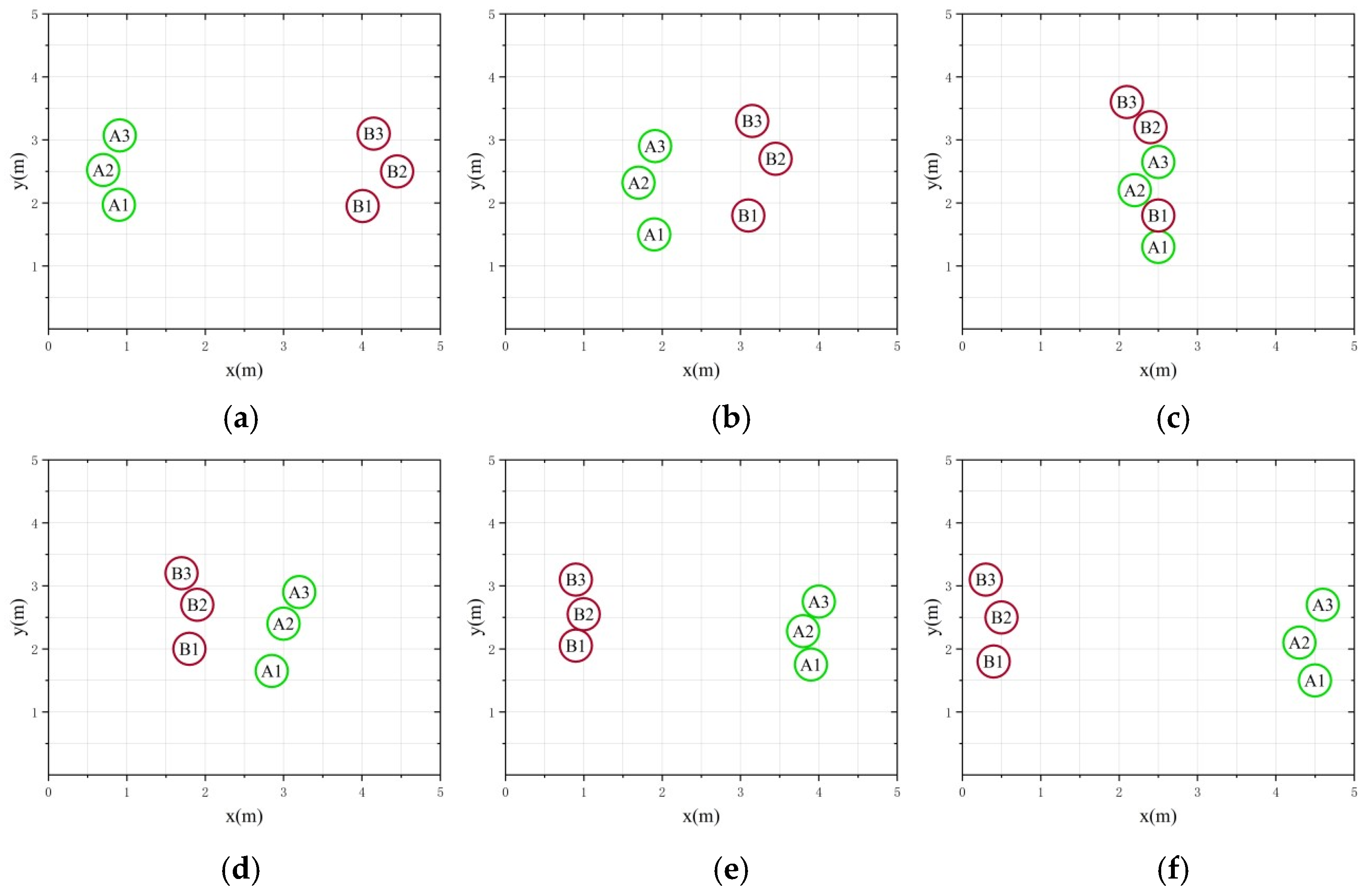
Based on the predefined model parameters, this study conducted a comparative simulation analysis of the pedestrian group avoidance model before and after the proposed improvements. The simulation involved two groups of three pedestrians each: Group A moving from left to right and Group B from right to left. The results are presented in Figure 10, Figure 11 and Figure 12.
The pre-improvement model (Figure 10) reveals that the two groups altered their paths prematurely upon entering each other’s visual range. The resulting inter-group avoidance distance was significantly larger than what is observed in reality, and both groups ultimately deviated from their original destinations. These observations indicate the model’s inadequacy in realistically simulating avoidance behaviors between pedestrian groups.
In contrast, the improved model successfully reproduces two common real-world avoidance patterns: the unified avoidance and the inter-weaving avoidance. In the unified avoidance scenario (Figure 11), upon judging that passing through the other group is unfeasible, both groups proactively reduce their intra-group spacing. They complete the avoidance maneuver with minimal path deviation, subsequently restoring a comfortable distance and continuing toward their initial targets. In the inter-weaving avoidance scenario (Figure 12), some group members exploit gaps within the opposing group to pass through, while the remaining members achieve coordinated avoidance by adjusting their spacing and modifying their paths. Ultimately, all members regroup and proceed in their original direction of travel.
The simulation results verify the effectiveness of the improved model in generating group avoidance behaviors that align with real-world logic.

5. Discussion

A comprehensive simulation system was implemented using the MATLAB platform. Both the simulated trajectory data and empirically collected pedestrian trajectories were systematically analyzed, generating a series of comparable quantitative metrics and visualization outputs. The following discussion and analysis are based on the specific experimental results obtained from this comparative evaluation.

5.1. Model Parameter Identification and Calibration

The model parameters primarily consist of two categories: pedestrian traffic characteristic parameters and improved social force model parameters. In the simulation, pedestrians are simplified as circular geometric entities, where the circle center represents their position and the radius reflects their forward spatial requirement. Varying radii among pedestrians are adopted to better approximate real-world movement states. Pedestrian attribute parameters encompass position coordinates, radius, mass, and desired speed, among others. The improved social force model parameters; meanwhile, include key mechanical coefficients such as the strength and range of psychological repulsive forces, the stiffness coefficient of physical repulsive forces, the sliding friction coefficient, and intra-group attraction forces.
Pedestrian attribute parameters are primarily set according to national standards such as Human Dimensions of Chinese Adults [37] and statistical measurements from existing literature, as they grounded in physiology and have broad applicability.
For calibrating the improved social force model parameters, a high-precision pedestrian trajectory dataset collected from commercial streets in this study was utilized, establishing an optimization-based parameter inversion framework. The core concept is to minimize the discrepancy between trajectories generated by the simulation and those observed in reality, as formulated in Equation (21). A Genetic Algorithm (GA) was employed to minimize the objective function L(θ), defined as the root mean square error between simulated and observed trajectories. The GA was run with a population size of 100, tournament selection (size = 3), simulated binary crossover (probability = 0.8), and polynomial mutation (probability = 0.1). Optimization stopped after 200 generations or if the best fitness improved by less than 1 × 10⁻⁵ over 50 consecutive generations. The 2257 trajectories were randomly split into 80% for calibration and 20% for held-out validation.
L θ = 1 N n = 1 N 1 T n t = 1 T n x s i m ( n ) ( t , θ ) x r e a l ( n ) ( t ) 2
where θ is the parameter vector to be optimized; N is the total number of trajectory samples used for calibration; T n is the total number of time steps in the n -th trajectory; x sim ( n ) ( t , θ ) and x real ( n ) ( t ) are the simulated position and the real observed position at time t for the n -th trajectory, respectively.

5.2. Analysis of Simulation Results

5.2.1. Comparison of Pedestrian Speed Distribution

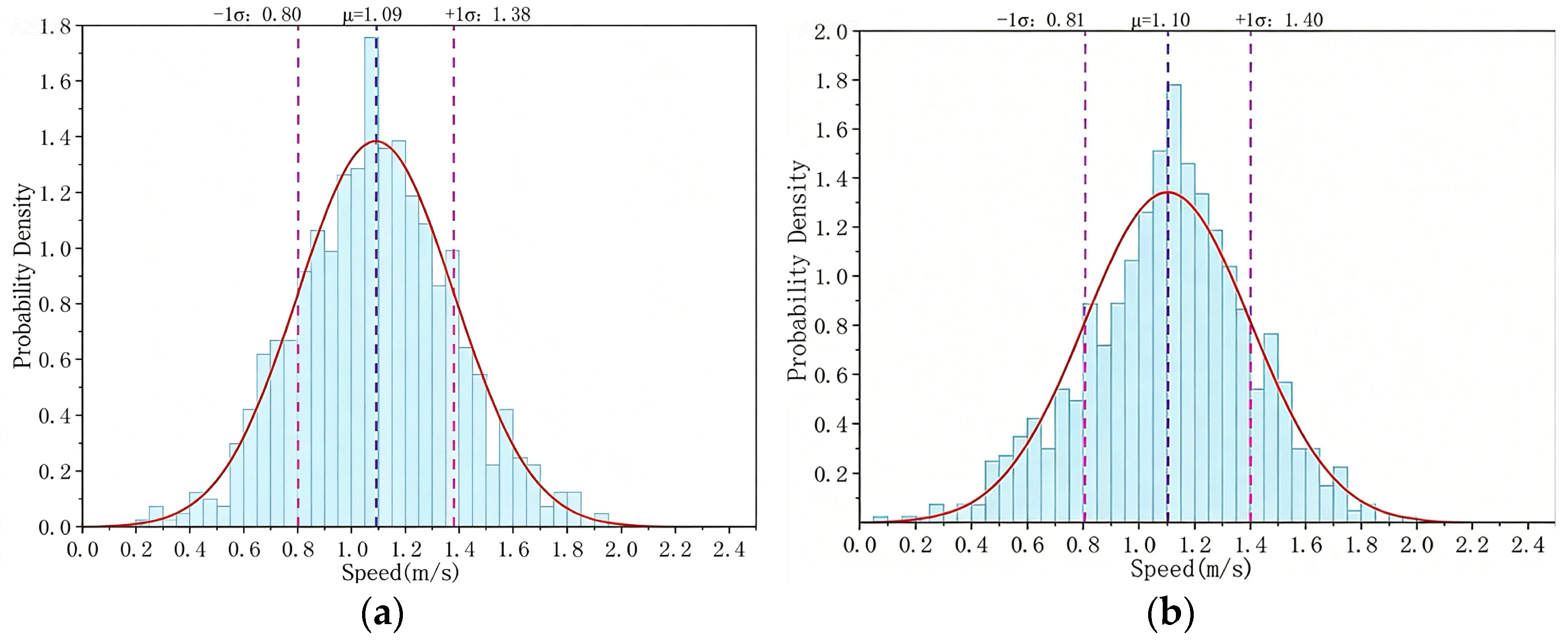
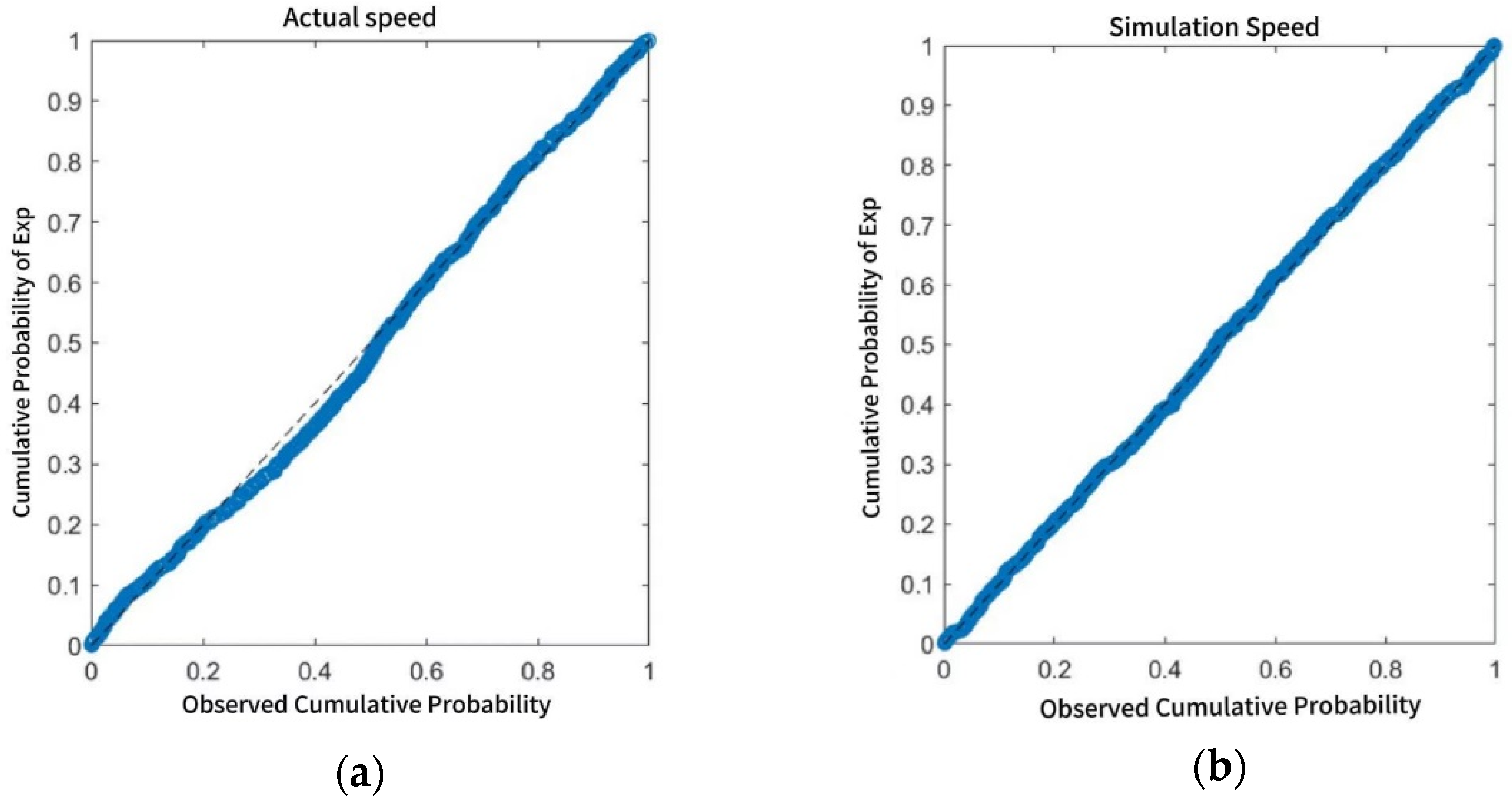
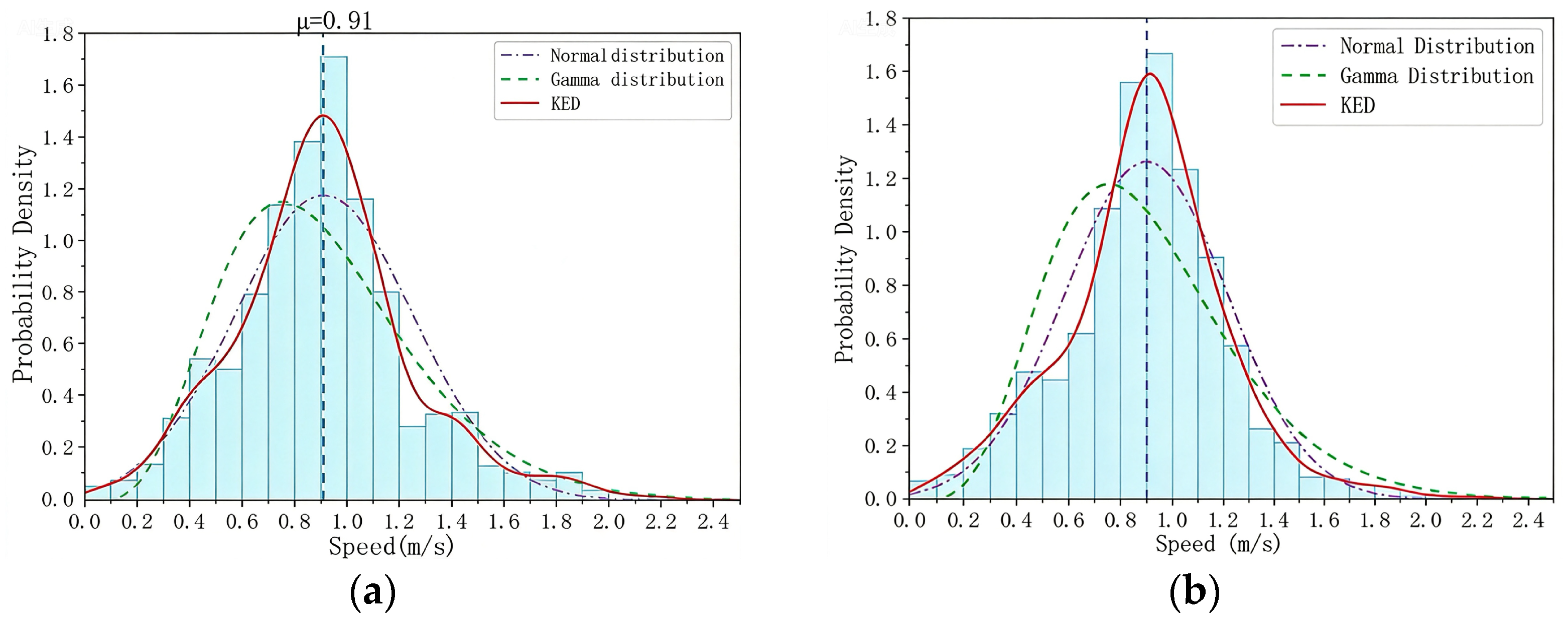
Based on the results presented in Figure 13, Figure 14 and Figure 15, the following conclusions can be drawn: under low-density conditions, the measured peak pedestrian speeds ranged from 1.05 to 1.10 m/s, while the simulated results exhibited a range of 1.10 to 1.15 m/s, with both distributions following a normal pattern. Under medium-to-high density conditions, both measured and simulated peak speeds fell within the 0.9 to 1.10 m/s interval, with a standard deviation difference in less than 0.05 m/s. These results demonstrate that the modified social force model effectively captures the characteristic decay of walking speed across increasing density levels.

5.2.2. Pedestrian Spatial Density Distribution Map

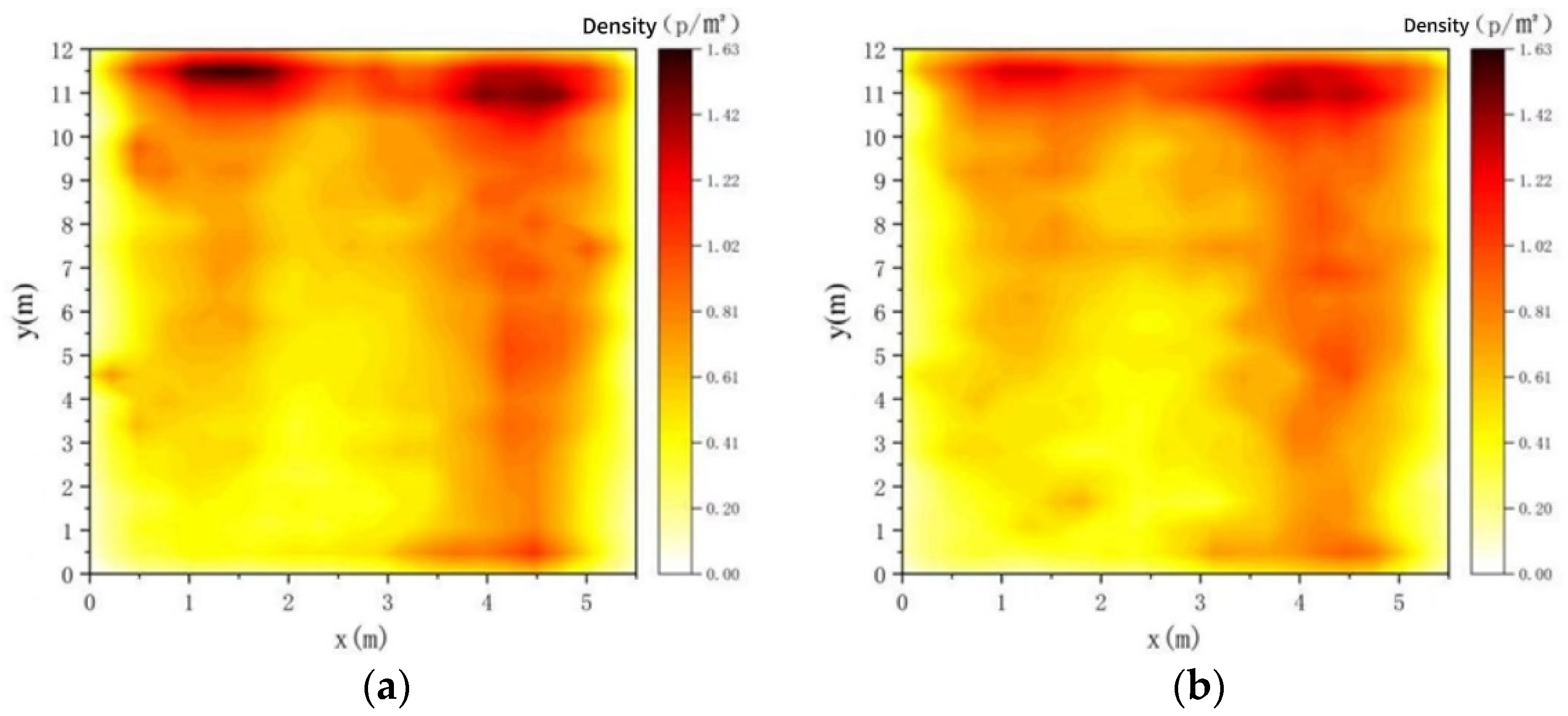
As shown in Figure 16, both empirical measurements and simulation results indicate elevated pedestrian density concentrations above the detection area, corresponding to the pedestrian convergence zone. Localized clustering is observed along the right edge, attributable to commercial attraction effects, whereas peripheral areas adjacent to boundary walls exhibit lower densities, consistent with the established behavioral tendency of pedestrians to avoid edge regions.

5.2.3. The Relationship Between Velocity and Density

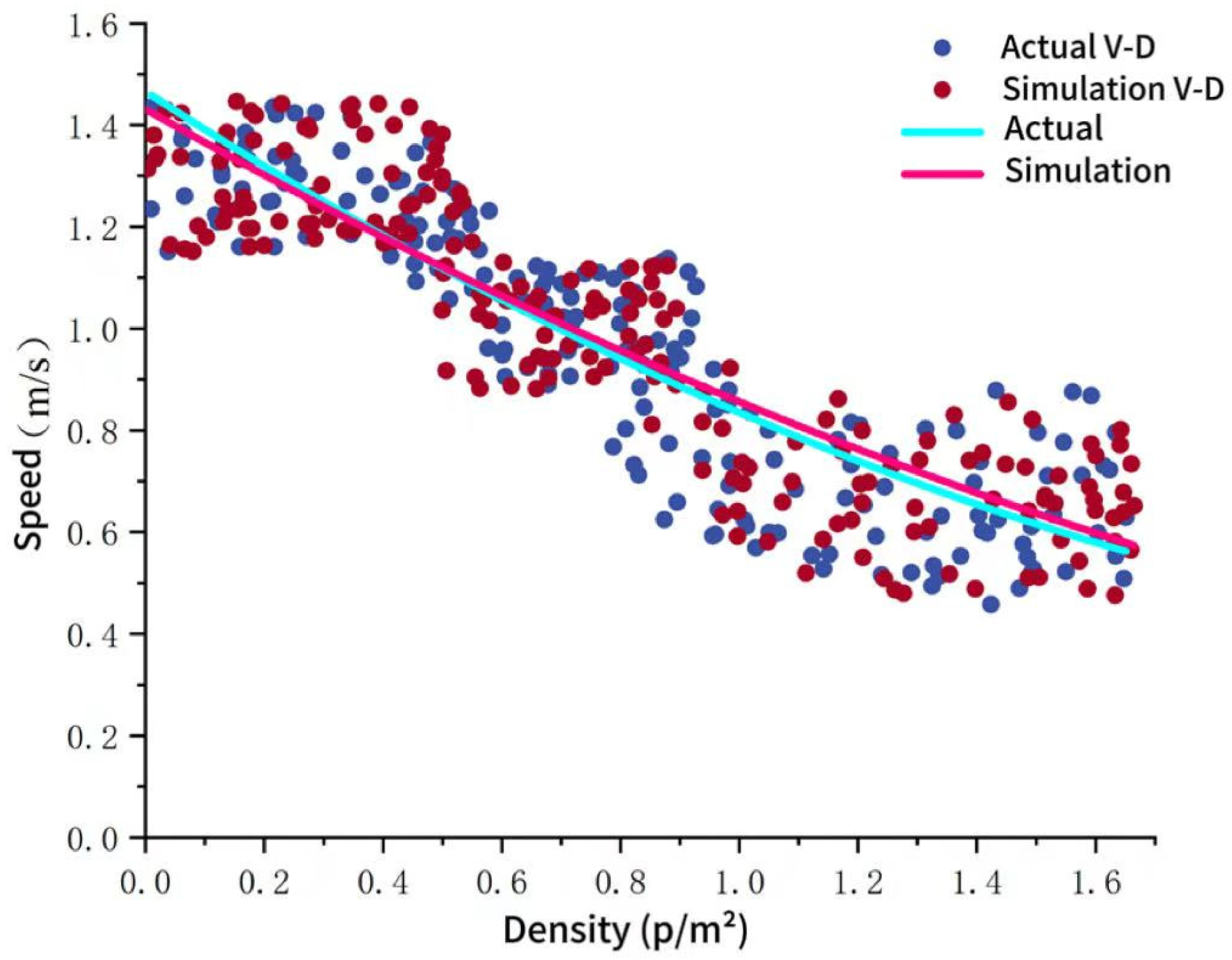
As shown in Figure 17, Both variables exhibit a significant negative correlation. Under low-density conditions (<0.55 ped/m2), pedestrian speeds remain between 1.16 and 1.47 m/s. The speed range decreases to 0.78–1.16 m/s under medium-density conditions (0.55–1.14 ped/m2), and further declines below 0.78 m/s under high-density scenarios (>1.14 ped/m2). The trend line fitted to these data achieves a coefficient of determination R2 > 0.85, indicating a strong statistical relationship.

5.2.4. Pairing Group Identification Comparison

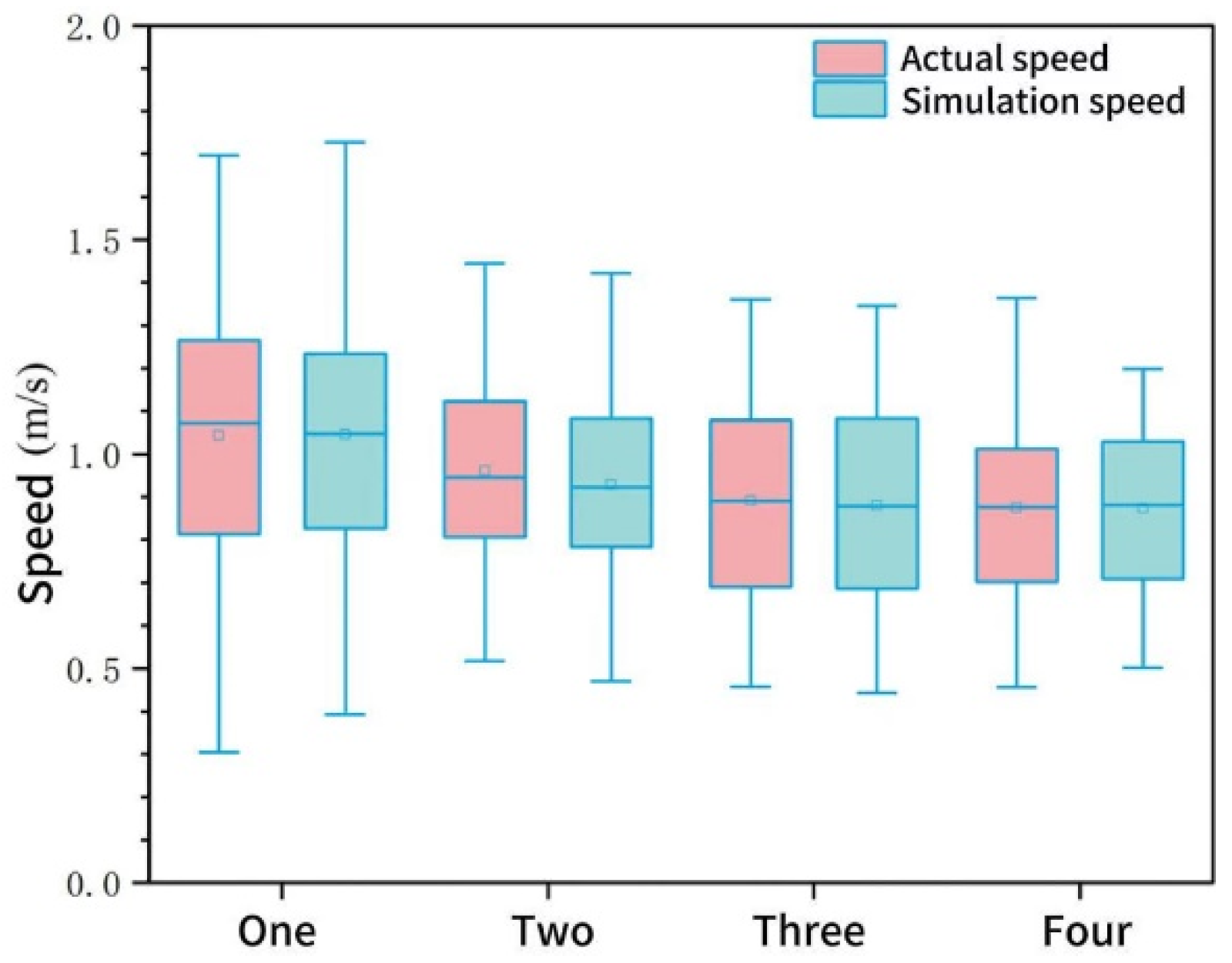
As shown in Figure 18, the average walking speed of individual pedestrians (1.12 m/s) exceeded that of pedestrian pairs (0.98 m/s) and trios (0.89 m/s), aligning closely with empirically observed speed patterns. Furthermore, friend groups maintained higher speeds (1.0–1.2 m/s) compared to family groups (0.7–1.0 m/s), reflecting distinctive movement characteristics associated with different social relationship types.

5.2.5. Comparison of Evasion Frequency

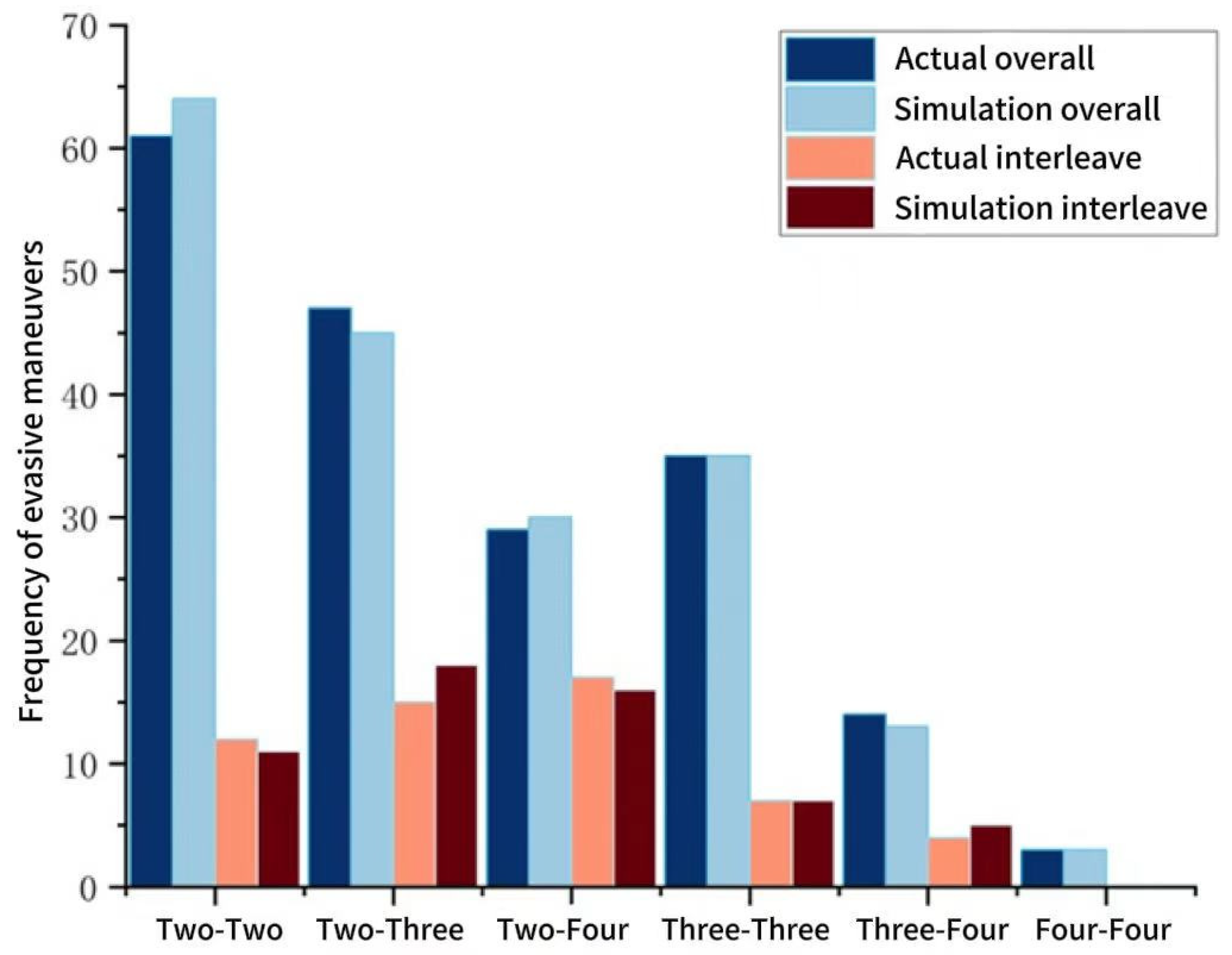
When pedestrian groups encounter one another in face-to-face configurations, they exhibit interactive avoidance behaviors, which can be categorized into two distinct patterns: unified avoidance, where the group moves as a cohesive unit without allowing external pedestrians to penetrate its internal formation, and interweaving avoidance, where group members separate temporarily, creating gaps that allow others to pass through. Video data analysis indicates a clear preference among pedestrians for adopting the unified avoidance strategy. The distribution of these avoidance types varies systematically with the composition of the encountering groups (e.g., pairs, trios).
A comparative analysis of the simulation results is presented in Figure 19. The comparison between field observations and simulation data reveals that, out of 244 recorded inter-group avoidance events, unified avoidance predominates. Specifically, avoidance maneuvers between two pairs occur with the highest frequency, followed by interactions between pairs and trios, then between two trios, with avoidance involving groups of four being the least frequent. The simulation results align well with the overall trend observed in reality. While minor discrepancies exist in the counted avoidance events for certain group combinations (e.g., pair-quartet, pair-trio), the model successfully replicates the fundamental distribution characteristics of actual avoidance behavior.
In summary, this experiment validates the effectiveness of the improved model through multi-metric comparison. Despite slight deviations in specific details, the simulation system accurately identifies and reflects the avoidance behaviors between pedestrian groups, demonstrating its applicability in real-world interactive scenarios.

5.3. Comparative Analysis

5.3.1. Group Behavior and Cultural Nuances

A key finding of our study is the high proportion of pedestrian pairs (52%) and their distinct avoidance behaviors. The ability of our model to simulate group cohesion and intra-group coordination is in line with the foundational work of Moussaïd et al. [36] However, by introducing group-type labels, we can simulate more nuanced behaviors. For example, the tighter cohesion and smaller comfort distance we parameterized for couples resonate with observational studies from Southern Europe (e.g., Italy, Spain), where close interpersonal distances in social dyads are common.
Conversely, a fascinating point of contrast emerges from the cross-cultural study by Acela et al. [29], which compared Bogotá and Lisbon. They found significant differences in group crossing behavior, with Portuguese pedestrians exhibiting higher confidence. While our study did not directly measure “confidence,” the walking speeds of our groups (e.g., friends: 1.0–1.2 m/s) fall between the reported ranges for these two cultures, suggesting that the behavior observed in our Chinese case study may represent an intermediate profile. This highlights the potential of our model framework to integrate culturally specific parameters for simulating pedestrian flows in different parts of the world.

5.3.2. Avoidance Strategies and Visual Perception

The improved avoidance logic in our model, driven by a restricted 120° field of view, effectively eliminated unrealistic head-on collisions and generated proactive path planning. This aligns with the experimental findings of Yamamoto et al. [24] in Japan, who meticulously documented body-rotation behavior for collision avoidance. While our model does not explicitly simulate complex body rotations, the principle of selecting passable gaps within the visual field achieves a functionally similar outcome at a trajectory level.
Furthermore, our categorization of inter-group avoidance into “unified” and “inter-weaving” patterns finds parallels in Western studies. However, the prevalence of these strategies likely varies across cultures. For instance, our data showed a strong preference for unified avoidance. A valuable direction for future research would be to compare the unified-to-interweaving avoidance ratio observed in our Chinese context with data from European or Middle Eastern countries, where social group structures and proxemics may differ.

6. Conclusions

This study developed an enhanced social force model that offers a robust computational framework for simulating pedestrian behavior in commercial street environments. The proposed methodologies and findings contribute to the field of crowd dynamics in transportation engineering, with key contributions summarized as follows.
  • A Data-Driven Analysis Framework: A comprehensive Python 3.9-based workflow integrating YOLOv8 and DeepSORT was developed to extract high-fidelity pedestrian trajectories. This pipeline enables comprehensive analysis of velocity distributions, spatial density maps, avoidance events, and group dynamics, thereby providing a robust empirical foundation for model calibration and validation.
  • Enhanced Behavioral Mechanism Modeling: The classical social force model was extended through the incorporation of a visual perception mechanism (constrained to a 120° field of view), group-type categorization (friends, couples, families, middle-aged/elderly), and collective avoidance forces. These enhancements enable the model to accurately replicate key behavioral patterns observed in commercial streets, including proactive gap selection based on visual assessment of others’ movements; spatial cohesion maintenance specific to group type; and the execution of either unified or inter-weaving avoidance strategies between groups.
  • Model Validation and Performance Evaluation: A comparative analysis between simulation outputs and field data from commercial streets demonstrates that the enhanced model achieves close alignment with empirical observations across multiple dimensions: speed distribution (mean deviation < 0.05 m/s), density spatial patterns, avoidance event frequency (121 simulated vs. 116 observed), and collective movement characteristics. These results confirm the reliability and practical applicability of the proposed model for simulating pedestrian dynamics in similar high-density commercial environments.

6.1. Research Limitations

Despite the promising results, this study possesses several limitations that stem from the current modeling simplifications and scope, which pave the way for future research:
  • Simplifications in Behavioral and Interaction Mechanisms: The model primarily focuses on physical avoidance forces and basic visual perception, while overlooking more complex socio-cultural and psychological factors that govern crowd movement. Specifically, it does not incorporate culturally specific passing preferences, emergent leader-follower phenomena, or the influence of “environmental attraction fields” (e.g., window-shopping behavior). Furthermore, the representation of group dynamics remains static; the model fails to simulate dynamic group behaviors such as spontaneous splitting, merging, or complex intra-group communication and coordination under stress, which are crucial for simulating realistic crowd behaviors in diverse scenarios.
  • Limitations in Parameter Calibration and Theoretical Foundation: Although the model demonstrates improved capability in representing avoidance and grouping behaviors, key parameters—including avoidance triggering thresholds, group cohesion intensities, and visual gap selection criteria—were primarily empirically tuned for the specific commercial street scenario. These parameters lack a rigorous theoretical foundation grounded in cognitive science or biomechanics, and their generalizability across different cultural backgrounds, infrastructure types (e.g., subway stations, bottlenecks), and density conditions has not been systematically validated. This limits the model’s robustness and out-of-the-box applicability to broader contexts.
  • Limited Real-Time Integration and Scalability: The model’s current implementation focuses on offline simulation and analysis. Its computational efficiency for large-scale crowds and its interoperability with real-time sensing technologies have not been optimized. This limitation hinders its immediate deployment for proactive crowd monitoring and early warning systems, where seamless closed-loop integration with urban surveillance infrastructure, real-time data assimilation, and predictive scenario forecasting are required.

6.2. Future Work

Building upon the findings and limitations of this study, future research will be directed along the following avenues to enhance the model’s fidelity, generalizability, and practical impact:
  • Incorporating Socio-Cultural and Contextual Factors: Beyond physical avoidance behaviors, future models should incorporate socio-cultural norms governing crowd movement, such as culturally specific passing preferences and emergent leader-follower phenomena under extreme crowding conditions. The integration of “environmental attraction fields” and scenario-specific constraints—such as shopping behaviors—would enable more authentic representation of directional flow preferences observed in commercial streets, significantly expanding the model’s applicability across diverse cultural contexts.
  • Parameter Calibration and Generalization Enhancement: To enhance generalizability, future research should prioritize the systematic calibration of key parameters (e.g., avoidance thresholds, cohesion intensities) using multi-scenario datasets spanning different densities and cultural contexts. Exploring machine learning methods for automated parameter optimization could also strengthen the model’s theoretical grounding and adaptability.
  • Intelligent Sensing and Real-time Feedback Integration: Future work should aim for closed-loop integration of the simulation model with real-time sensing infrastructure (e.g., urban surveillance networks). This would enable proactive applications, such as simulating the evolution of detected abnormal congestion and generating early warnings. This direction presents significant challenges, particularly in achieving the computational efficiency required for real-time operation while maintaining predictive accuracy, but it promises transformative applications in proactive crowd management.

Author Contributions

The individual contributions and responsibilities of the authors are listed as follows: Conceptualization, X.Z.; methodology, software, X.Z. and W.L.; validation, X.Z.; formal analysis, Z.M.; investigation, Y.X.; data curation, H.W.; writing—original draft preparation, W.L.; writing—review and editing, Z.M.; visualization, H.W.; supervision, W.L.; project administration, H.W.; funding acquisition, Y.X. All authors have read and agreed to the published version of the manuscript.

Funding

This research was funded by the National Natural Science Foundation of China (Grant No. 52362046 and 71961006), the National Natural Science Foundation of Jiangxi Province, China (No. 20232BAB204107) and the Science and Technology Research Project of Jiangxi Provincial Department of Education (GJJ210607).

Institutional Review Board Statement

Not applicable.

Informed Consent Statement

Not applicable.

Data Availability Statement

The survey data used to support the findings of this study are available from the corresponding author upon request.

Acknowledgments

The authors are very grateful for the comments from the editor and the anonymous reviewers.

Conflicts of Interest

The authors declare that there is no conflict of interest regarding the publication of this paper.

References

  1. Macioszek, E.; Granna, A.; Krawiec, S. Identification of factors increasing the risk of pedestrian death in road accidents involving a pedestrian with a motor vehicle. Arch. Transp. 2023, 65, 7–25. [Google Scholar] [CrossRef]
  2. Hankin, B.D.; Wright, R.A. Passenger Flow in Subways. J. Oper. Res. Soc. 1958, 9, 81–88. [Google Scholar] [CrossRef]
  3. Henderson, L.F. The Statistics of Crowd Fluids. Nature 1971, 229, 381–383. [Google Scholar] [CrossRef] [PubMed]
  4. Henderson, L.F.; Lyons, D.J. Sexual Differences in Human Crowd Motion. Nature 1972, 240, 353–355. [Google Scholar] [CrossRef]
  5. Fruin, J.J. Pedestrian Planning and Design; Metropolitan Association of Urban Designers and Environmental Planners: New York, NY, USA, 1971. [Google Scholar]
  6. Polus, A.; Schofer, J.L.; Ushpiz, A. Pedestrian Flow and Level of Service. J. Transp. Eng. 1983, 109, 46–56. [Google Scholar] [CrossRef]
  7. Fang, Z.; Lo, S.M.; Lu, J.A. On the relationship between crowd density and movement velocity. Fire Saf. J. 2003, 38, 271–283. [Google Scholar] [CrossRef]
  8. Daamen, W.; Hoogendoorn, S.P. Free Speed Distributions—Based on Empirical Data in Different Traffic Conditions; Springer: Berlin/Heidelberg, Germany, 2007; pp. 13–25. [Google Scholar]
  9. Sun, H.; Zhu, K.; Wang, G.; Hu, H.; Guo, P.; Wu, K.; Zhang, T. Experimental study on pedestrian evacuation characteristics through building bottleneck group structure. Dev. Built Environ. 2025, 23, 100734. [Google Scholar] [CrossRef]
  10. Yuan, X.; Tang, T.; Wang, T.; Bode, N. From pedestrian simulation to security screening checkpoint planning: Simulation-enhanced optimization method. Simul. Model. Pract. Theory 2025, 145, 103202. [Google Scholar] [CrossRef]
  11. Zhao, C.; Jiang, Y.; Wang, J. A Computer Vision-Based Pedestrian Flow Management System for Footbridges and Its Applications. Infrastructures 2025, 10, 247. [Google Scholar] [CrossRef]
  12. Zhou, D.; Gao, Y.; Li, H.; Liu, X.; Lin, Q. Group commonality graph: Multimodal pedestrian trajectory prediction via deep group features. Pattern Recognit. Lett. 2025, 192, 36–42. [Google Scholar] [CrossRef]
  13. Du, L.; Liu, H.; Li, W. Pedestrian flow prediction using a spatiotemporal multi-head attention graph convolutional network integrated with knowledge graph. Appl. Intell. 2025, 55, 896. [Google Scholar] [CrossRef]
  14. Mai, W.; Duives, D.; Hoogendoorn, S. A learning based pedestrian flow prediction approach with diffusion behavior. Transp. Res. Part C 2025, 179, 105243. [Google Scholar] [CrossRef]
  15. Wolfram, S. Theory and Applications of Cellular Automata; World Scientific Publishing: Singapore, 1986. [Google Scholar]
  16. Blue, V.J.; Adler, J.L. Cellular automata microsimulation for modeling bi-directional pedestrian walkways. Transp. Res. Part B Methodol. 2001, 35, 293–312. [Google Scholar] [CrossRef]
  17. Okamoto, K.; Takahashi, D.; Zanlungo, F.; Tsujimoto, S. Neighborhood-five cellular automaton model for pedestrian flow. Jpn. J. Ind. Appl. Math. 2025, 42, 2197–2212. [Google Scholar] [CrossRef]
  18. Okazaki, S.; Matsushita, S. A Study of Simulation Model for Pedestrian Movement with Evacuation and Queuing. In Proceedings of the International Conference on Engineering for Crowd Safety, London, UK, 17–18 March 1993; Volume 432. [Google Scholar]
  19. Lewin, K.; Reed, R. Field Theory in Social Science. Am. Cathol. Sociol. Rev. 1951, 12, 103. [Google Scholar] [CrossRef]
  20. Helbing, D.; Molnar, P. Social Force Model for Pedestrian Dynamics. Phys. Rev. E 1998, 51, 4282. [Google Scholar] [CrossRef]
  21. Siddharth, S.M.P.; Perumal, V. Development of the Social Force Model Considering Pedestrian Characteristics and Behavior. Transp. Res. Rec. 2024, 2678, 436–450. [Google Scholar] [CrossRef]
  22. Rinke, N.; Schiermeyer, C.; Pascucci, F.; Berkhahn, V.; Friedrich, B. A multi-layer social force approach to model interactions in shared spaces using collision prediction. Transp. Res. Procedia 2017, 25, 1249–1267. [Google Scholar] [CrossRef]
  23. Huang, L.; Gong, J.; Li, W.; Xu, T.; Shen, S.; Liang, J.; Feng, Q.; Zhang, D.; Sun, J. Social Force Model-Based Group Behavior Simulation in Virtual Geographic Environments. ISPRS Int. J. Geo-Inf. 2018, 7, 79. [Google Scholar] [CrossRef]
  24. Yamamoto, H.; Yanagisawa, D.; Feliciani, C.; Nishinari, K. Body-rotation behavior of pedestrians for collision avoidance in passing and cross flow. Transp. Res. Part B 2019, 122, 486–510. [Google Scholar] [CrossRef]
  25. Tao, Z.; Li, Y.; Huang, X.; Wang, Y.; Wang, G.; Yang, R. Behavior study on pedestrian avoidance characteristics in aircraft cabin aisle. J. Air Transp. Manag. 2025, 127, 102825. [Google Scholar] [CrossRef]
  26. Lu, G.; Liu, M. Research on Pedestrian Avoidance Behavior for School Section Based on Improved BP Neural Network and XGboost Algorithm. Appl. Sci. 2025, 15, 4724. [Google Scholar] [CrossRef]
  27. Chen, L.; Nie, P.H.; Jia, X.; Li, C.Y.; Tang, T.Q. Walking behavior of high school students during stair descent under normal conditions. J. Stat. Mech. Theory Exp. 2025, 2025, 093403. [Google Scholar] [CrossRef]
  28. Zeng, J.; Lei, S.; Qian, Y.; Wei, X. Multi-person Group Walking Behavior Simulation in Urban Pedestrian Street. IAENG Int. J. Appl. Math. 2025, 6, 55. [Google Scholar]
  29. Acela, L.M.B.; Sousa, E.; Faria, S.; Almeida, R.; Freitas, E.F. Pedestrian crossing behavior in social groups: Exploring cultural contexts through a comparative study. Case Stud. Transp. Policy 2025, 19, 101333. [Google Scholar] [CrossRef]
  30. Zhou, Z.X.; Liu, K.; Wu, P.Y.; Nakanishi, W.; Asakura, Y. A novel data-driven multi-agent pedestrian flow risk assessment framework for avoiding stampede incident. Accid. Anal. Prev. 2025, 222, 108207. [Google Scholar] [CrossRef]
  31. He, Y.; Shi, Q.; Fu, L.; Chen, Q.; Shen, C.; Zhang, Y.; Shi, Y.; Lo, J.T.Y. Application of the multi-grid modelling method to pedestrian social group dynamics through a bottleneck. Simul. Model. Pract. Theory 2025, 139, 103049. [Google Scholar] [CrossRef]
  32. Pati, T.; Khajenejad, M.; Daddala, S.P.; Yong, S.Z. L1-Robust Interval Observer Design for Uncertain Nonlinear Dynamical Systems. IEEE Control. Syst. Lett. 2022, 6, 3475–3480. [Google Scholar] [CrossRef]
  33. Almutairi, A.; Owais, M. Active Traffic Sensor Location Problem for the Uniqueness of Path Flow Identification in Large-Scale Networks. IEEE Access 2024, 12, 180385–180403. [Google Scholar] [CrossRef]
  34. Highway Capacity Manual—HCM 2000; Transportation Research Board. National Academies of Sciences, Engineering, and Medicine: Washington, DC, USA, 2000.
  35. Chen, R.; Dong, L. Observations and Preliminary Analysis of Characteristics of Pedestrian Traffic in Chinese Metropolis. J. Shanghai Univ. Nat. Sci. Ed. 2005, 1, 93–97. [Google Scholar] [CrossRef]
  36. Moussaid, M.; Helbing, D.; Theraulaz, G. How simple rules determine pedestrian behavior and crowd disasters. Proc. Natl. Acad. Sci. USA 2011, 108, 6884–6888. [Google Scholar] [CrossRef]
  37. GB/T 10000-2023; Human Dimensions of Chinese Adults. State Administration for Market Regulation and Standardization Administration of China: Beijing, China, 2023; 44p.
Figure 1. Wanda Plaza Location Map.
Sustainability 18 00746 g001
Figure 2. Trajectory Extraction Process: (a) Pedestrian walkway. (b) Pedestrian Detection Zone. (c) Pedestrian Detection and Tracking. (A and B represent the direction of pedestrian flow, with the red dots indicating the endpoints of the study area.)
Sustainability 18 00746 g002
Figure 3. Research Flowchart.
Sustainability 18 00746 g003
Figure 4. Spatiotemporal Distribution Characteristics of Pedestrian Flow in Commercial Street Passages. (a) Pedestrian Flow Time Series Variations. (b) Lunch rush hour. (c) Evening rush hour.
Sustainability 18 00746 g004
Figure 5. Relationship Diagram of Basic Pedestrian Flow Parameters [34]. (a) Pedestrian Speed-Density Relationship. (b) Pedestrian Speed-Flow Relationship.
Sustainability 18 00746 g005
Figure 6. Relationship between inter-row spacing and speed.
Sustainability 18 00746 g006
Figure 7. Pedestrian Space and Expected Direction. (a) Uncrowded environment. (b) Crowded environment.
Sustainability 18 00746 g007
Figure 8. Simulation of the traditional social force model. (a) Detect pedestrian. (b) Prepare to avoid. (c) Perform avoidance maneuver. (d) Avoidance failure. (The number is the pedestrian ID.)
Sustainability 18 00746 g008
Figure 9. Simulation results of the modified social force model. (a) Detect pedestrian. (b) Prepare to avoid. (c) Perform avoidance maneuver. (d) Avoidance Success. (The number is the pedestrian ID.)
Sustainability 18 00746 g009
Figure 10. Simulation results of the companionable pedestrian avoidance model before improvement. (a) Detection of an oncoming pedestrian; (b) Avoidance preparation; (c) Maneuver execution; (d) Suboptimal avoidance path.
Sustainability 18 00746 g010
Figure 11. Simulation process of the improved paired pedestrian avoidance model (holistic avoidance). (a) Group Detection; (b) Avoidance Preparation; (c) Unified Maneuver; (d) Spacing Reduction; (e) Successful Avoidance; (f) Goal Resumption.
Sustainability 18 00746 g011
Figure 12. Simulation process of the improved paired pedestrian avoidance model (interspersed avoidance) (a) Group Detection; (b) Avoidance Preparation; (c) Interweaving; (d) Group Cohesion; (e) Successful Avoidance; (f) Goal Resumption.
Sustainability 18 00746 g012
Figure 13. Comparison of Actual and Simulated Pedestrian Speed Distributions at Low Density. (a) Pedestrian Actual Speed Distribution Map. (b) Pedestrian Simulation Speed Distribution Chart.
Sustainability 18 00746 g013
Figure 14. Normalized P-P Plot of Actual Pedestrian Speed vs. Simulated Speed. (a) Pedestrian Actual Speed Normalized P-P Diagram. (b) Pedestrian Simulation Speed Normalized P-P Diagram.
Sustainability 18 00746 g014
Figure 15. Comparison of Actual and Simulated Speed Distributions for Pedestrians at Medium-to-High Densities. (a) Pedestrian Actual Speed Distribution Map. (b) Pedestrian Simulation Speed Distribution Chart.
Sustainability 18 00746 g015
Figure 16. Spatial Distribution Map of Actual Pedestrian Density vs. Simulated Density. (a) Measured Density Spatial Distribution Map. (b) Simulated Density Spatial Distribution Map.
Sustainability 18 00746 g016
Figure 17. Comparison of Actual Pedestrian Speed-Density Relationship vs. Simulated Speed-Density Relationship Fitting.
Sustainability 18 00746 g017
Figure 18. Pedestrian Speed Distribution by Group Size. (The numbers in the diagram indicate the number of people traveling together.)
Sustainability 18 00746 g018
Figure 19. Frequency Distribution of Different Avoidance Methods Among Pedestrians Walking in Groups. (The figures in the diagram represent evasive maneuvers between two individuals, between two and three individuals, between two and three individuals, between three and three individuals, between three and four individuals, and between four individuals.)
Sustainability 18 00746 g019
Table 1. Pedestrian Service Level Table [34].
Service LevelSpace (m2/ped)Density (ped/m2)Flow (ped/(min·m))
A>5.6≤0.18≤16
B3.7–5.60.18–0.2716–23
C2.2–3.70.27–0.4523–33
D1.4–2.20.45–0.7133–49
E0.75–1.40.71–1.3349–75
F≤0.75≥1.33indefinite
Table 2. Average Walking Speed of Pedestrians by Age and Gender [35].
GenderAge GroupStride (m)Cadence (Step/s)Pace Speed (m/s)
MaleYouth0.671.961.32
Middle0.661.911.25
Old0.601.831.10
FemaleYouth0.632.011.27
Middle0.611.991.20
Old0.561.911.08
Table 3. Walking Speed Statistics for Different Types of Pedestrians on Commercial Streets.
GroupHuman CategoryNAverage Speed (m/s)Average Stride Length (m)
OverallAll22571.030.651
By GenderMale9061.120.666
Female13510.930.634
By Age GroupChildren821.110.588
Youth19691.160.660
Old2060.830.548
Table 4. Parameters of the Modified Social Force Model.
ParametersSymbolParameter SizeUnit
Pedestrian weight m i 50~80kg
Pedestrian radius r i 0.2~0.3m
Expected Speed V i 0 ( t ) 1.0~1.4m/s
Initial velocity v 0 0.2~1.4m/s
Free speed V f r e e i 1.2m/s
Threshold ϑ i 1.6m
Threshold ϑ s 0.5m
Body Compression Coefficient k 24,000kg/s2
Coefficient of sliding friction μ 12,000kg/(m·s)
Relaxation time τ i 0.5s
Table 5. Reference Values for Parameters of Different Types of Companion Pedestrian Labels.
Travel Companion Type v f r e e (m/s) β 1 β 2 β 3 d 0 (m) α i (°)
Friend T g f d 1.0~1.212090600.775
Partner T g c l 0.9~1.1180210450.590
Family T g f y 0.7~1.01052401350.960
Elderly T g e d 0.6~0.9751801651.045
Disclaimer/Publisher’s Note: The statements, opinions and data contained in all publications are solely those of the individual author(s) and contributor(s) and not of MDPI and/or the editor(s). MDPI and/or the editor(s) disclaim responsibility for any injury to people or property resulting from any ideas, methods, instructions or products referred to in the content.