


Abstract
In modern construction, natural materials with a low carbon footprint and full recyclability are becoming increasingly important. A typical group here is products made from solid wood, including glued wood, plywood, and wood-based composites. With their many advantages, however, they all burden the environment with the costs of production processes, as well as the need to use harmful chemicals (adhesives and impregnants). Solid wood is devoid of these disadvantages; however, it is often treated as a rather archaic material. One of the arguments here is its low durability compared to, e.g., glued wood. The article discusses the durability of solid wood using the example of a group of wooden churches preserved in Poland, in Upper Silesia. Some of these buildings are over five hundred years old, making them a reliable source of information about the durability of the material from which they were built. A total of 85 churches, at least 200 years old, were analyzed, evaluating the technical state of the main load-bearing elements of their structures. In view of the number of facilities and the inability to conduct tests in most of them, the assessment was limited to a visual inspection of the technical condition, carried out by an experienced building expert. The assessment estimated the area of corrosion damage, probed its depth, and measured the depth of cracks. The relationship between their technical condition and the environmental conditions in which they were used was described and discussed. In this way, both the threats to the durability of solid wood and the ways to keep it in good condition for hundreds of years were identified, refuting the thesis that solid wood is a material with low durability. Its use in structural elements therefore supports efficient resource management and contributes to sustainable construction, especially in small and medium-sized buildings.
1. Introduction
The global natural resources have come under significant pressure in recent years, which requires careful and rational management of both the resources and the finished materials, especially in the construction industry, since it is one of the most material-consuming markets in the world. Global emissions of greenhouse gases, to which the construction industry contributes significantly, are another issue heavily affecting the natural environment. The emissions of carbon dioxide generated by the construction industry amounted to 23% of emissions from the global economy already in 2009 [1]. In 2018, construction and use of buildings were responsible for 36% of global final energy consumption, and their share in global carbon dioxide emissions had increased to 39% [2]. This data is concerning, but it should also be noted that the construction industry also has major potential for mitigating climate change. This results from both the reduction in operational energy consumption and the choice of construction materials, which have the least overall environmental impact. In this context, wood, particularly solid wood, is considered to be the perfect raw material for sustainable development and, as a result, is in very high demand.
In terms of sustainable development in the context of wood, we must first and foremost highlight its ability to absorb carbon dioxide from the atmosphere [3]; during the tree’s growth, carbon dioxide is processed and stored as carbon. According to [4], it has been estimated that 1 m3 of wood stores approximately 1 ton of CO2, depending on the type of wood. It is assumed that denser species, such as beech, can store up to 1200 kg of CO2/m3, while lighter coniferous species store approximately 900 kg/m3—Weymouth Pine 1000 kg/m3. Poplar, on the other hand, stores only 400 kg/m3. Studies [5,6] reported that 1 kg of dried wood contains around 0.5 kg of carbon, which translates into ca. 1.8 kg of absorbed carbon dioxide. Generally, a typical tree absorbs between 10 and 40 kg of CO2 per year, depending on its species, age, and growing conditions [7]. This ability to store carbon in the form of biomass has made forests a key carbon sink in the world today. Therefore, carbon sequestration by trees and forests is recognized as one of the most effective natural climate solutions, supporting global efforts to reduce carbon dioxide emissions. Using wood as a construction material turns the building into a kind of warehouse for long-term storage of carbon, which is released back to the atmosphere only after the timber component has been disposed of [3]. However, the process is very long, and releasing biogenic carbon is a natural part of the biosphere–atmosphere system.
In the case of other traditional building materials, such as concrete, the mere production of the materials is responsible for huge CO2 emissions into the atmosphere. It is estimated that without any mitigation measures, the concrete industry is likely to emit 3.8 gigatons of CO2 by 2050 [8].
Another important aspect of wood, which is important for sustainable development, is the low amount of energy required to develop a finished construction product [9], particularly in the case of solid wood. For this reason, the carbon footprint of wood is very low, since it requires very little processing compared to other popular construction materials [10]. Of course, the processing (cutting) of solid wood produces waste, but it is reused for wood-based materials.
It should also be emphasized that wood is a fully renewable material; with proper forest management, it is virtually inexhaustible. Furthermore, timber components in good technical condition can be recovered and recycled or processed into wood-based materials. Even leaving unnecessary structural components from solid wood does not harm the environment, because wood is completely biodegradable.
The environmental superiority of timber over other main construction materials (steel and concrete) [11] is confirmed by the assessments of the environmental impact of wooden buildings, performed with the use of a variety of methods and techniques, which provide a quantitative determination of the environmental impact of the entire life cycle of a building (life cycle assessment). New methodologies for environmental impact assessment are also being constantly developed, such as the Environmental Sustainability Index for Timber Structures (ESI-TS), to provide a classification framework for sustainable environmental development [12]. However, most studies focus on the analysis of individual structures of a certain type—detached houses [13], multi-storey residential buildings [14,15,16], educational facilities [17], multi-storey car parks [18], or domes [19], reducing their comparability and making it impossible to formulate conclusions on a global level. However, the analysis reported in [20] deserves a closer look. It is based on 18 buildings from four continents and compares the outcomes of using structural timber with the outcomes of using concrete and steel. It was shown that replacing concrete and steel with timber reduced carbon dioxide emissions at the construction stage by 69%. An interesting comparison, based on 45 different buildings, was shown in [21]; the authors reported a very low correlation between the amount of timber used in buildings and the environmental impact of wooden buildings, while the environmental impact of the necessary insulations, plastics, and composite materials was significant. This leads to the conclusion that to further reduce the environmental impact of wooden buildings, the use of insulation and finishing materials must be optimized. An interesting analysis of the environmental impact of wooden detached houses in various locations across Europe is provided in [22]. The study included not only the use of the building, which is responsible for 65–76% of the total carbon emissions throughout the building’s life cycle, but also the structure of electric power generation in various climates, which might significantly affect the building’s LCA depending on its location in a warm or cold climate.
Considering the above, it is clear that wooden buildings have major green potential, both in terms of their structural solutions and finish and in terms of long-term use.
One of the major advantages of wood is the diversity of its applications as a construction material, both in the context of structure [23] and insulation [24]. Depending on the species, wood has relatively high tensile and compressive strength, making it a very versatile material suitable for various structural components [25,26]. The wood strength value depends on the direction of the applied force relative to the wood fibers. The highest values are achieved when the force is applied parallel to the wood fibers, which produces 110–140 MPa of tensile strength and 40–60 MPa of compressive strength. Of course, those values refer to structural components that are completely free of any defects; the actual strength used in structural calculations is reduced according to the relevant material and design standards. In the case of lateral strength, the values are significantly reduced and correspond to 10–30% of longitudinal strength. Due to the relatively high axial resistance, wood is also characterized by a high static bend strength of 75–100 MPa. It should be noted, however, that when subjected to prolonged load, wood displays rheological properties in the form of creep and stress relaxation. Therefore, two types of wood strength are distinguished—ultimate and long-term strength, whereby the latter amounts to ca. 50–60% of the ultimate strength. In terms of physical properties, wood is an efficient thermal insulation material due to its relatively high specific heat and low thermal conductivity coefficient. The value of the coefficient, which depends on the moisture, temperature, and density of wood, ranges from ca. 0.14 to 0.41 W/mK and, similar to strength, is around 1.8 times higher along the fibers than it is across them. It should also be emphasized that the efficiency of wood as an insulation material translates into reduced demand for heating systems, fully aligning with the premises of a sustainable economy.
In the past, due to limited material processing and detailing, solid wood was used as the basic wood construction material, acquired by felling, drying, and external processing of wood logs. The structural component is made from a single piece of wood, without using adhesives, layers, or connections, making it possible to preserve the natural structure of wood. This type of wood use made it possible to keep carbon dioxide emissions low because of the low intensity of labor required to acquire a ready construction product. However, to answer the market demand, wood-based products have also been manufactured for years. Cross-laminated timber and glued laminated timber, also known as glulam, have revolutionized the use of wood in construction [27], providing durable products that can be manufactured in any shape and with a cross-section of any size; they also eliminate the issue of inherent defects of solid wood structure. Those products are widely used in medium and even tall buildings, which had previously been thought impossible with traditional solid wood. Unfortunately, for all of their advantages, the manufacturing of highly processed wood-based materials generates considerable amounts of carbon dioxide, making the energy balance of using those products less favorable than for solid wood. Furthermore, the need for adhesives or resins also significantly reduces the environmental friendliness of those materials. Solid wood materials are more environmentally efficient than glued laminated timber, as confirmed in [28], which conducted a comparative analysis of structural components made of both those materials in terms of strength requirements and environmental impact. The analysis showed that while both materials had similar bend strength, the glued laminated timber structural components had a greater impact on all environmental categories than solid wood components. Therefore, given the goal of reducing carbon dioxide emissions, returning to solid wood as a construction material appears justified.
In the practice of designing civil structures, the frequently raised concern with solid wood in typical use conditions, for instance, in residential buildings, is that it is not a very durable material. There are many reasons for this opinion. The first, and in fact the whole group of factors, are the original defects in the material, including hollows or areas of reduced density, which are highly hygroscopic and therefore susceptible to fungal contamination and invasion by wood-destroying insects. The second reason stems from design or workmanship defects, which create unfavorable conditions leading to rapid degradation of wood. The use of wood with excessive moisture content or wood that has been dried incorrectly leads to intensive cracking, which also creates a pathway for water penetration and the development of biological corrosion (fungi, insects). Internal defects, hidden in elements with a large cross-section and invisible at the time of assembly, are also important for reducing durability. All these defects are eliminated in the glued wood production process—hence the widespread belief in its high durability. Nevertheless, solid wood of sufficiently high quality (which requires expertise in the classification of sawn timber), free from initial defects, can be a very durable material.
To demonstrate that solid wood is a construction material suitable for long-term use, the example of wooden churches in Upper Silesia in Poland is provided, as those structures have been in use for hundreds of years. The region was chosen purposefully since it is located in a transitional temperate climate zone with four clearly defined seasons, significant differences in outside temperature, exposure to heavy rain or snow, and highly variable air humidity. This creates very unfavorable conditions for wood use, including considerable risk of biocorrosion. Upper Silesia was chosen due to the large number of wooden churches in the region (over 100) and a more aggressive environment due to the presence of numerous industrial facilities.
2. Durability of Wood—A Research Perspective
2.1. Durability Aspects
As a biological material, wood is particularly vulnerable to atmospheric and biological factors (both of animal and plant origin) that deteriorate its parameters. The key factors of wood degradation are moisture and extreme temperatures. The most significant environmental factor affecting the basic properties of wooden elements is humidity [29]. This term refers to wood moisture content, which results from exposure of wood to liquid water or water vapor [30]. The hygroscopic nature of wood can lead to changes in the dimensions of individual elements during use, resulting in internal stresses caused by forced swelling or shrinkage of the material. This can lead to cracks or loss of structural integrity [31]. Wood is a hygroscopic material that absorbs or desorbs moisture from the environment [32]. In variable climatic conditions, the mechanical properties of wooden structures will change over time, mainly due to time-dependent wood deformations such as creep. High temperatures cause the wood to dry too much and too quickly, resulting in shrinkage and cracking. On the other hand, temperatures below zero freeze the water inside the wood, thus compromising its structure and the formation of frost cracks. Crack formation, regardless of its cause, weakens wooden elements [33]. Therefore, prolonged exposure to a humid microclimate can have a negative impact on the performance properties, both in terms of load-bearing capacity and durability of the elements and the entire structure. In addition, cracks facilitate water penetration into the interior of the elements and colonization by fungi and insects.
Wood moisture content also has a huge impact on wood corrosion [34]. Under certain combinations of humidity and temperature, saprophytic fungi develop and decompose the main components of wood (cellulose and lignin), first creating hard rot and then soft rot, which drastically reduces the material’s parameters.
Insects—wood pests feed almost independently of external conditions, and their harmful effect consists of destroying the structure of wood—they feed on cellulose. The most damage is caused by larvae, as adults usually have a relatively short lifespan. A special case observed in elements in contact with the ground (e.g., foundation beams) is damage caused by ants, which do not feed on wood but destroy the structure of the material when building anthills.
Furthermore, UV radiation from sunlight degrades the wood surface and fosters the growth of plants, which affects its structure.
2.2. Selected Wood Aging Tests
The available literature contains many studies that analyze the changes in the strength and physical parameters of timber over time, involving accelerated aging tests in laboratory conditions (group 1) and tests based on exposing timber components to atmospheric conditions (group 2). The first group usually involves accelerated aging by boiling in water, wet aging, thermal aging, and aging in a wet–dry cycle. The latter test is the most frequently used method of wood analysis.
Detailed guidance for accelerated aging is provided by several standards, including the American ASTM D1037 [35] and European EN 321 [36], which refer to full wet-dry cycle tests, and Canadian CAN/CSA-O188 [37] and European EN 1087-1 [38], which present the boiling tests. Table 1 summarizes the information on accelerated aging tests required to be carried out in the cited standards. However, those standards apply first of all to wood-based products, including glued ones. Other aging tests include vacuum–pressure–soak–dry (VPSD) and boil–dry (BD) methods, but those are also used primarily for wood-based products. Study [39] summarizes the accelerated aging methods and tests in wet–dry cycles in laboratory conditions. The results of those tests obviously clearly indicate that long-term exposure to moisture changes not only accelerates the degradation of wood and wood-based products but also deteriorates the mechanical properties and long-term durability of materials. This, in turn, can affect the load-bearing capacity and stability of the entire structure.
Table 1.
Basic information on accelerated aging tests.
However, it should be noted that accelerated wood aging is unable to accurately simulate the process of aging of timber components in actual use. For this reason, numerous researchers have turned to studying timber components exposed to atmospheric conditions, which makes it possible to determine the timber’s durability more accurately. Brischke et al. [40] analyzed the impact of a 5 year exposure to atmospheric conditions on the durability of components made from solid wood in the roof of an industrial building in Hannover, Germany. Their study showed that in similar conditions, the material destruction intensity was higher in pine sapwood than in spruce, and the weakest zones were the cracks and the interfaces of structural components. An interesting aging test of five different wood species is reported in [41]. The components were subjected to 24 different test methods representing a wide array of conditions, including placement on the ground surface. After 3 years of exposure, it turned out that the moisture content and the decomposition rate were different for specific test materials. In most cases, the period of exposure of wood to increased moisture overlapped with its decomposition rate. At the same time, degradation was heavily influenced by the presence of fungi, especially if the timber component had been placed in the ground or near the ground surface. The impact of atmospheric conditions over 18 months of exposure was also reported in [42]. The study was conducted by monitoring the surface and global moisture content of various sets of timber components, including components with pre-degraded surfaces or with the surfaces shaved off. The differences in surface conditions were identified by analyzing the buildup of moisture caused by rainfall. Interestingly, the authors noted that even though the wood surface after the rain remained wet for a long time, it did not significantly affect the global moisture of the components. After 1 year of exposure, the difference between pre-weathered and shaved surfaces was negligible.
The changes resulting from natural aging of 11 different types of wood samples were reported in [43]. The analyzed aging periods were 9, 18, and 27 months; the samples were exposed to atmospheric conditions in a vertical position in the research field owned by the University of Ljubljana, Slovenia. The wood durability, according to EN 350 [44], was assessed on the basis of material resistance and the wood’s wetting capability. As a result of the surface degradation process, bioactive extracts were washed out, the surface morphology was altered, and the permeability of wood increased.
On the basis of tests of 27 samples (half of the samples were untreated, the other half were painted) prepared from the sapwood and heartwood of Norwegian spruce, exposed to atmospheric conditions in vertical position above the ground for 5.5 years, the recommended properties of wood for outdoor applications were specified [45]. The test used wood from trees growing on sites with both good and poor water access. Following the completion of the exposure period, it was noted that spruce heartwood had considerably fewer cracks and fungi causing surface discoloration than sapwood. This was explained by the fact that heartwood absorbs less water than sapwood and is thus less vulnerable to moisture-related motion inside the wood. A similar study was conducted in Stockholm using samples made from pine and spruce, which were exposed to atmospheric conditions for 33 months [46]. The analysis of the wood structure and the development of cracks was conducted on samples divided into the following three groups: non-waterproofed samples, samples waterproofed with chromated copper arsenate, and samples with surface waterproofed with linseed oil. It was concluded that the type of wood, the waterproofing, and the surface treatment with linseed oil had only a marginal impact on the development of cracks. No correlation between the sample density and the development of cracks was found. However, the study did yield a practical guideline—in order to avoid cracking of the wood used outdoors, components made from wood with growth rings perpendicular to the surface should be used. This is particularly important if the wood does not have a surface coating, such as paint, or if its surface is exposed to atmospheric conditions and wind.
A number of theoretical and numerical models have been developed for estimating the useful life of construction components made from solid wood. The development and validation of those models frequently utilize the results of external aging tests, which simulate real-life material degradation conditions. The assessment of the efficiency of a simple numerical model for moisture transport was reported in [47]. The model was tested on the basis of the field measurements of wood aging performed on wood planks exposed to artificial rain outdoors. The impact of rain was assessed by analyzing the differences between covered and exposed samples. Next, the model was applied to several climate conditions found in Sweden; as a result, the rainfall impact on the moisture content in the samples was simulated with sufficient accuracy to model the degradation. On the other hand, Briske et al. [48] determined the correlation between the climate factors and the degradation of the European red pine sapwood and the Douglas fir heartwood. The samples were subjected to irradiation for a period between 7 and 23 years in a number of European research facilities in different exposure conditions (a total of 27 test sets). Using the combined climate parameters of materials such as moisture content (MC) and temperature of wood, a function was developed that might serve as a basis for modeling the useful life of wood. Field trials and tests were also conducted in Norway, Germany, and Sweden by a team led by Meyer-Veltrup [49]. They developed an approach for modeling the useful life of wood above the ground, which included the combined impact of wetting capability and durability data. The developed model is quite accurate, and its advantage is that it can be integrated with the existing engineering design guidelines.
Summing up this review, the wood aging tests can be conducted in laboratory (accelerated) and natural (real-time) conditions. Despite the unquestionable usefulness of their results, both methods have major disadvantages. In the case of accelerated aging tests, the issue is the arbitrary choice of the number of cycles and the variability of wood degradation factors and, thus, the lack of strict correlation between the test conditions and the real-life conditions to which the structure will be exposed. In the case of the real-life aging tests, the disadvantage is the duration of the tests, which is limited to several years; in consequence, the extrapolation of outcomes is by definition arbitrary, leading to unreliable results (it is very difficult to describe the aging process using unambiguous functions).
The shortcomings of the methods and tests described above are based on the extrapolation of results obtained under strictly defined and controlled conditions and are subject to the errors of this extrapolation. In addition, they are used to assess the behavior of wood in designed and newly erected structures. Meanwhile, it is possible to assess the wood durability in a real-life setting—observing historic wooden structures which have existed and been in use for hundreds of years. The approach adopted here to assess the durability of wood is subject to error due to a lack of precise knowledge of the conditions of use. Nevertheless, given that these facilities have been in use for hundreds of years, it can be assumed that they adequately reflect the conditions during the assumed period of use. Their mere existence is proof that such structures can be used for a long time, greatly exceeding the standard life cycle of buildings which is usually estimated at 50 years. The concept of durability was discussed in the context of structural aspects, i.e., in relation to the strength and stiffness of structural timber. Unfortunately, it was not possible to collect samples for testing, so conclusions about the structural durability of solid wood as a building material were based on the technical condition of both individual elements and entire structures. The focus was on the structural integrity of the material, with aesthetic considerations treated as secondary. As mentioned in the introduction, the analysis includes a number of historic wooden churches located in Upper Silesia, Poland, in particular those aged at least 200 years.
3. Brief Characterization of Churches Included in the Study
3.1. Churches Under Analysis
As previously mentioned, the analysis includes 85 wooden churches located in the region of Upper Silesia in Poland. The wooden churches had been built over a long period of time; therefore, in order to assess durability, the analysis focused on those that have been preserved in original condition for at least 200 years. This criterion excluded churches with unknown dates of completion, as well as those that had undergone reconstruction or been relocated, since they did not meet the period of use condition.
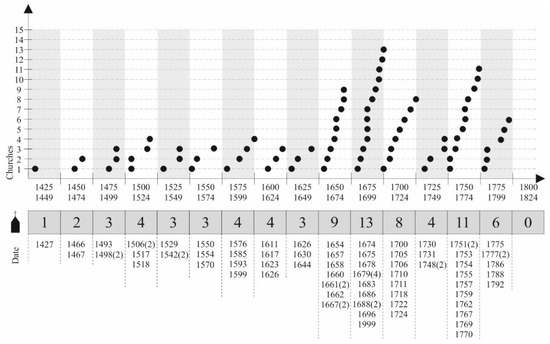
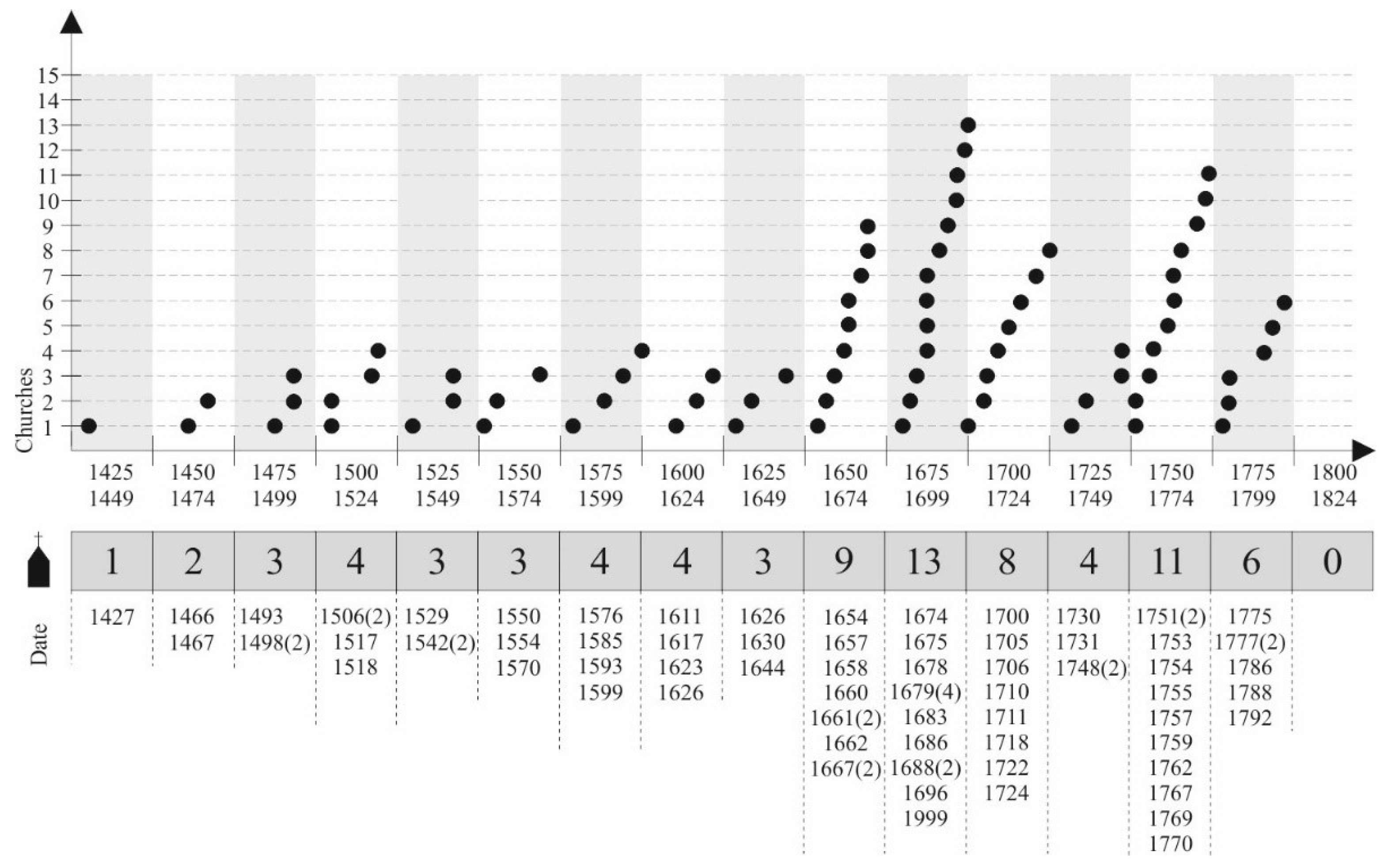
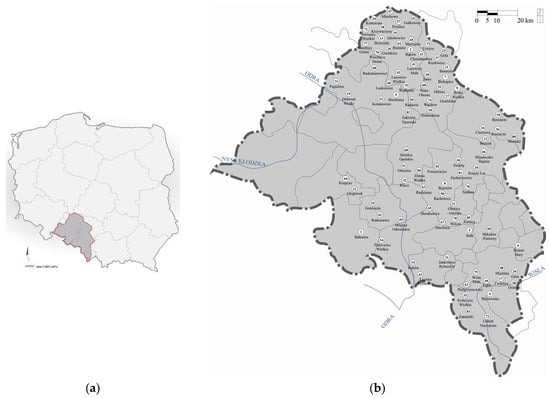
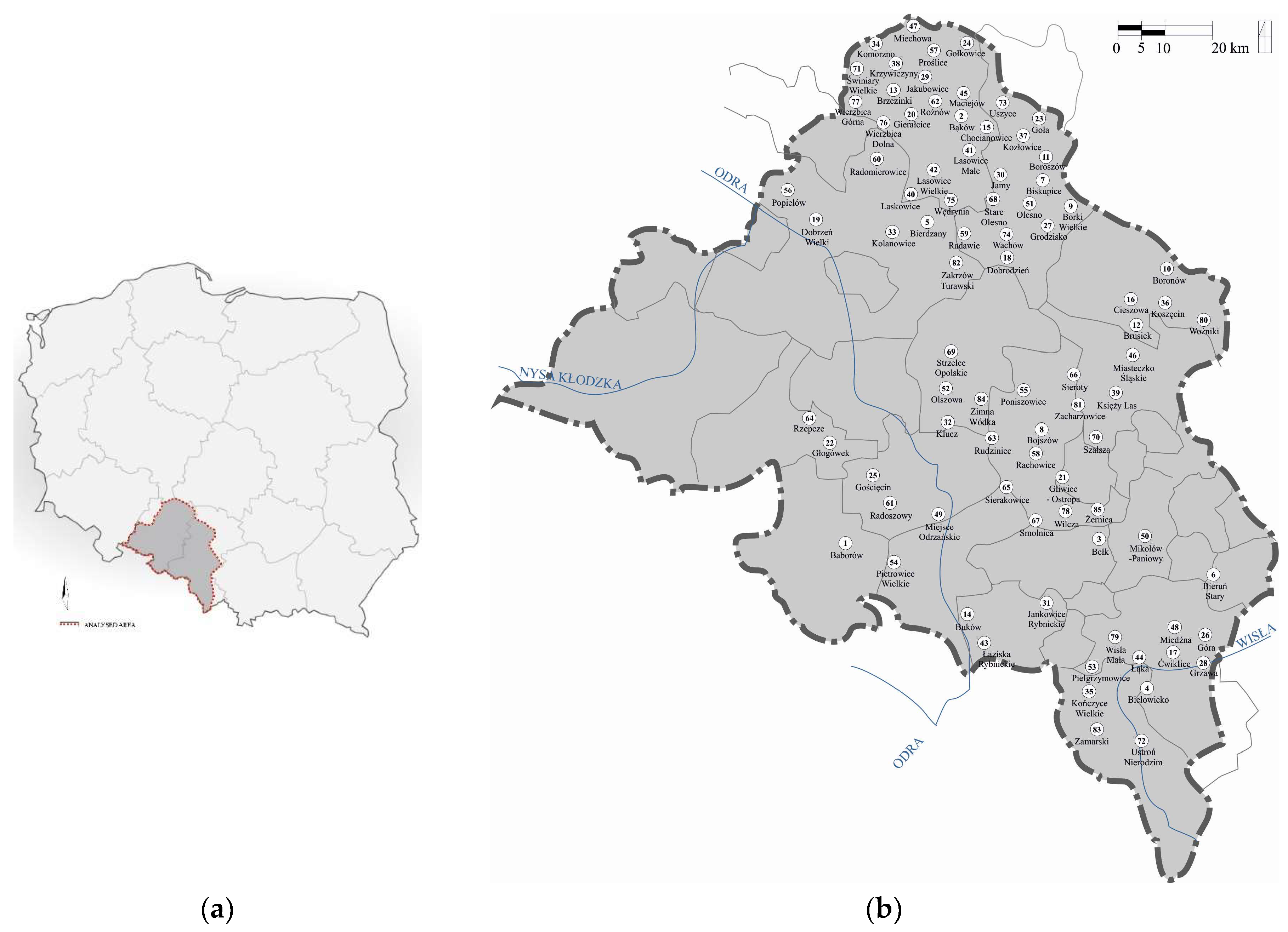
Table 2 lists all the churches analyzed, including the location of the church and the date of its construction. The dates of construction were determined on the basis of archival records, and some of them were confirmed by professional wood age testing. Sometimes the dating of a church is a matter of dispute, in which case the estimated age of construction, considered the most likely, is used—dates marked in red. Dates confirmed by dendrochronological studies are marked in blue. A detailed illustration of the age ranges in which the analyzed churches were built is shown in Figure 1. This diagram does not include churches (seven buildings) whose date of construction has not been clearly determined. Figure 2 shows the location of churches in Poland (Figure 2a), and their detailed distribution in Silesia is shown in Figure 2b.
Table 2.
List of analyzed churches.
Figure 1.
Detailed illustration of the age range. The number of churches is given in parentheses if more than one was built in a given year.
Figure 2.
Location of the analyzed churches: (a) in Poland; (b) in Upper Silesia.
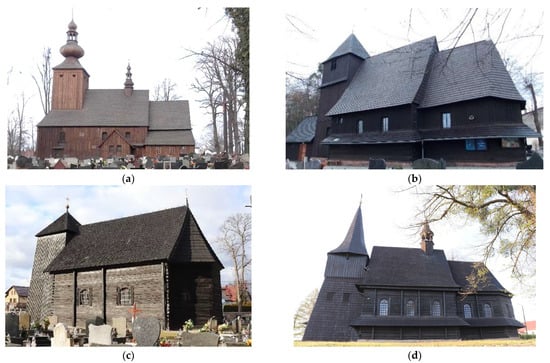
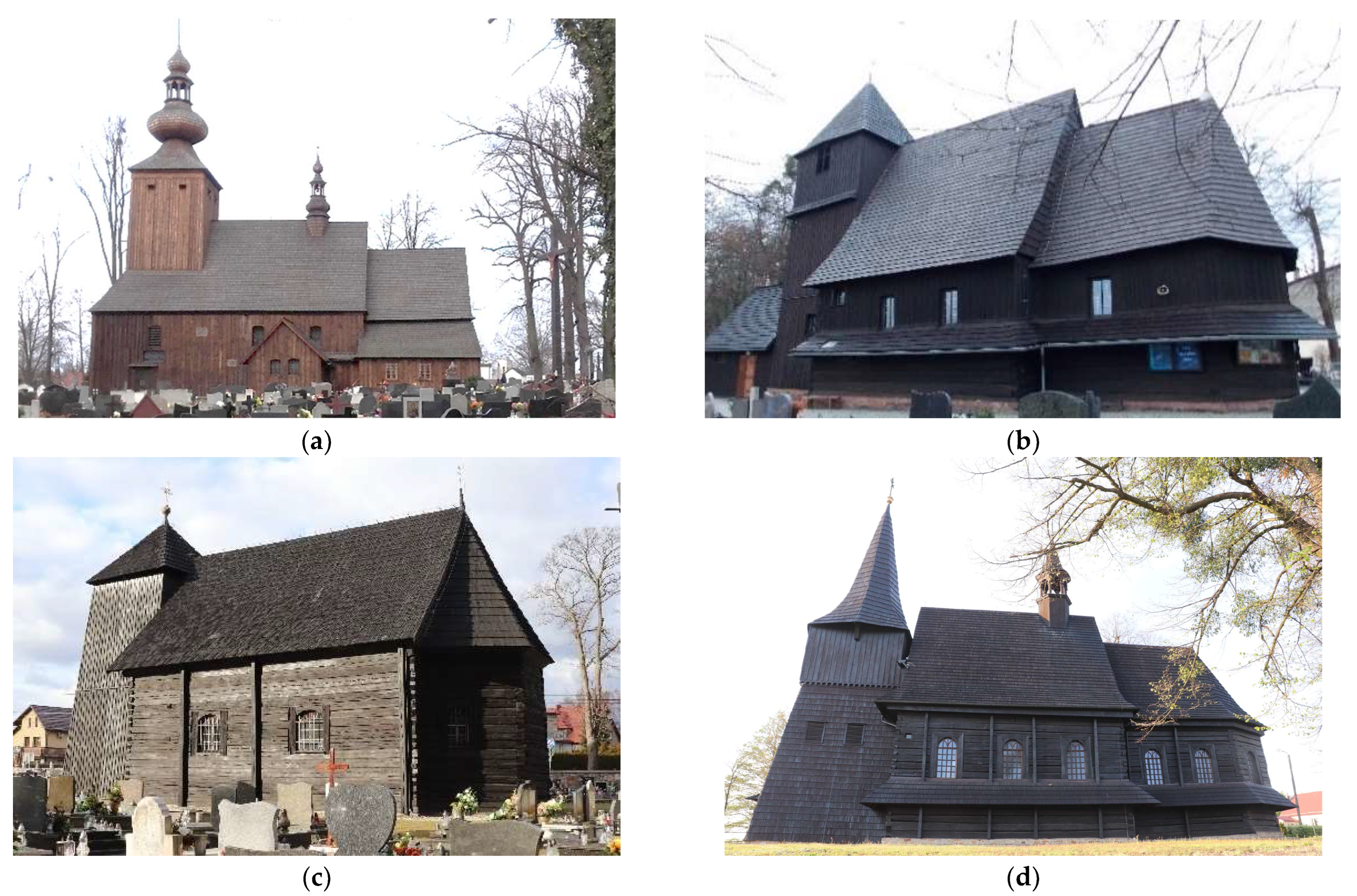
Figure 3 illustrates four selected churches that are part of the analyzed set.
Figure 3.
Selected churches from the analyzed group: (a) Ćwiklice; (b) Rudziniec; (c) Smolnica; (d) Żernica.
The first part of the analysis included the description of the structural components without significant damage and the conditions in which they had been used that contributed to their durability. This was followed by timber components in poor or very poor repair; also, in this case, the ambient conditions were analyzed in order to determine the causes of the damage. The analysis was summed up in the Conclusions section regarding the conditions that ensure high durability of structural components made from solid wood. To make the analysis more accessible, a brief description is provided of the structural components of a typical wooden church.
The assessments and observations were based on the data obtained in the course of writing the doctoral thesis [50] and the preparation of a number of expert studies. Those sources are not included in the references, since they were manuscripts written in Polish.
3.2. Structure of a Typical Silesian Wooden Church
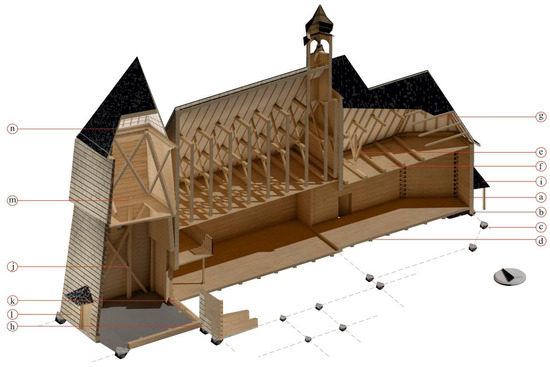
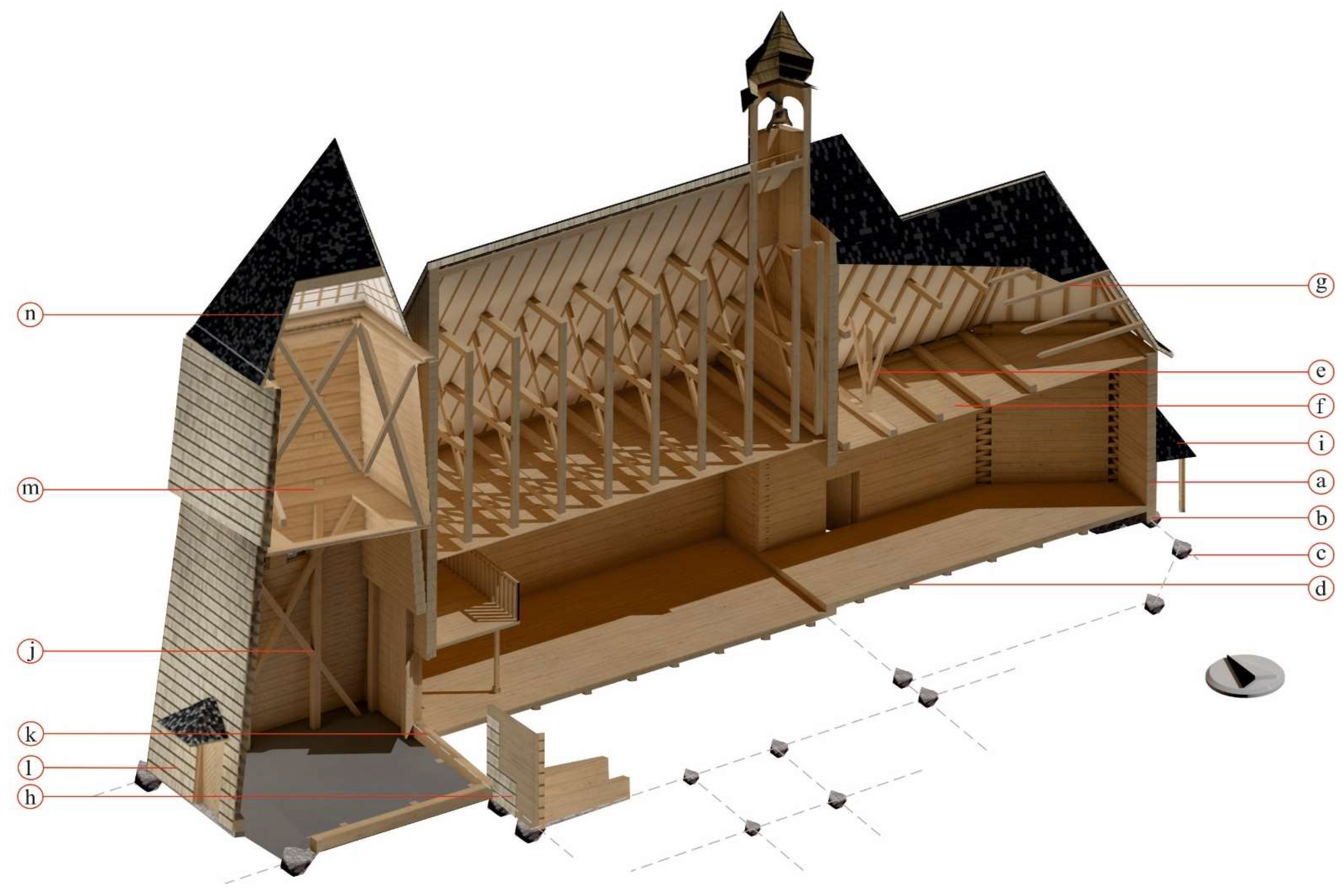
Figure 4 shows a typical structure of a Silesian church. Typically, a Silesian church has a log frame structure with a defined nave and presbytery and a side sacristy (also built with a log frame structure). The log frame (Figure 4, element a) is based on sill plates (Figure 4, element b), which are placed on stone corners (Figure 4, element c) and often also on intermediate bases (flat slices from an oak tree trunk). The floors above the ground were placed on timber beams (Figure 4, element d), allowing air to flow freely underneath.
Figure 4.
Structure of the typical Silesian church—elements of the main church: (a) log frame, (b) sill plate, (c) stone, (d) floor beam, (e) roof trusswork, (f) ceiling plank, (g) shingle, (h) boarding, (i) side roof; elements of the bell tower: (j) frame structure, (k) sill plate, (l) patch, (m) floor, (n) shingle.
Different types of roof trusswork (Figure 4, element e) based on the log framework are used in the Silesian churches (the oldest usually have a king post truss system), lined with ceiling planks (Figure 4, element f). The original roofs of the Silesian churches were made with wood shingles on battens (Figure 4, element g), but over time, they were replaced with other materials. The log framework walls were either left uncovered on the outside or clad with shingles or boarding (Figure 4, element h). On the inside, the walls were sometimes plastered. The lower sections of the walls were often protected with side roofs or overhangs (Figure 4, element i).
The majority of churches also had bell towers, usually built at the nave end wall. The bell towers were nearly always built as frame structures (Figure 4, element j) on perimeter sill plates (Figure 4, element k), with vertical walls clad with boarding, which was additionally sealed with patches (Figure 4, element l) on board joints. The upper sections of the bell towers were often extended beyond the dimensions of the lower sections, creating a jetty that housed the support frame for the church bells on a timber-frame floor (Figure 4, element m). The bell tower roofs were made in different shapes as skeletal timber structures with shingle cladding on battens (Figure 4, element n).
Most of the structural components were made from spruce, pine, or larch wood, with the exception of the sill plates, which were usually made with oak.
4. Analysis of the Technical Condition of Structural Components Made from Solid Wood
The conducted analysis included an expert assessment of the condition of specific timber structural components in churches aged between 200 and ca. 550 years (the oldest analyzed church has a nave built in 1427, as confirmed by dendrochronology).
During the analysis, the following durability criteria were taken into account:
- –
- preserving the original cross-section (without defects other than rafter cuts or mechanical damage);
- –
- the absence of cracking, dividing the component into two separate parts not work properly together;
- –
- the absence of clear signs of corrosion.
Signs of corrosion that eliminated elements due to unsatisfactory durability included decay, rotting, fungal decay, clear signs of wood-boring insects, and other defects compromising the wood structure.
A visual inspection was used to assess the condition of the structural elements. This is one of the simplest non-destructive testing methods used in civil engineering. The excessive number of objects and the lack of conservation approval for access to perform material tests (including tomographic or ultrasonic tests) made it impossible to perform comprehensive wood structure tests that would yield statistically reliable results. In order to maintain comparability and avoid overly subjective assessments, the authors, including a certified building expert, performed a visual assessment of the quantity (area) of visible signs of corrosion damage, measurements (probing) of their depth, and assessment and measurements of wood cracking. The performance of such an inspection by an experienced construction expert is of great substantive value, guaranteeing a high-quality assessment of the condition of the structure and an objective analysis of its potential for further use.
In order to eliminate as many errors as possible (e.g., those resulting from subjective perception and measurement of damage, errors that may be the result of quantitative limitations of the tests), the observations were always carried out by the same author (an experienced building expert) under repeatable external conditions, including lighting conditions—time of day, level of sunlight—at the same time of year. Measurements of crack depth or corrosion penetration were carried out by the same observer, using the same tools. Each time, at least 50% of elements of a given type were covered by the observations. The inspections of the churches analyzed were spread out over time and lasted a total of two years.
Moisture measurements were also carried out on selected elements, but considering that they were only taken during the summer, without rainfall and at high temperatures, it was decided that the results obtained were isolated cases and could not be treated as representative of the average conditions of use of the structure. Therefore, they were not included in the assessment of the condition of the structure.
The criteria for damage adopted during the assessment of the technical condition of elements built into the structure of churches, taking into account the durability of the structure, do not include the original defects of the wood (e.g., knags, spiral grain, resin pockets, and curvatures). In this case, the focus was on structural damage resulting from corrosion (including that caused by moisture, fungi, mold, and insects) and cracks that arose during the drying process of the wood after its assembly. Therefore, the following criteria were adopted:
- ▪
- Good and very good condition: cracks not exceeding 20% of the cross-sectional dimension; biological corrosion covering less than 10% of the visible surface of the element, with a depth of up to 10 mm.
- ▪
- Minor damage: between good condition and severely damaged structures.
- ▪
- Severely damaged structures: transverse cracks in elements up to 100 mm or exceeding half the cross-sectional dimension in thicker elements; biological corrosion covering more than 20% of the visible surface of the element or reaching a depth of more than 25 mm.
4.1. Highly Durable Structural Components
In the assessment of the condition of the timber components grouped according to their structural function, three distinct groups of structural elements were identified in which the components showed exceptional durability.
Each of the separate groups also includes elements in poorer technical condition, as discussed here, but observations indicate that these are in a significant minority. It is therefore assumed that in the analyzed group, the vast majority of elements are in very good or good technical condition.
4.1.1. Roof Trusswork Components
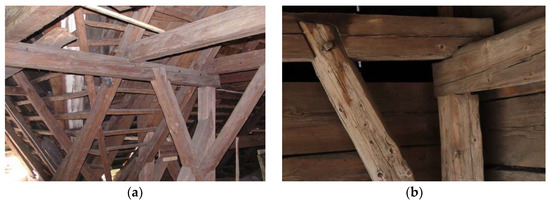
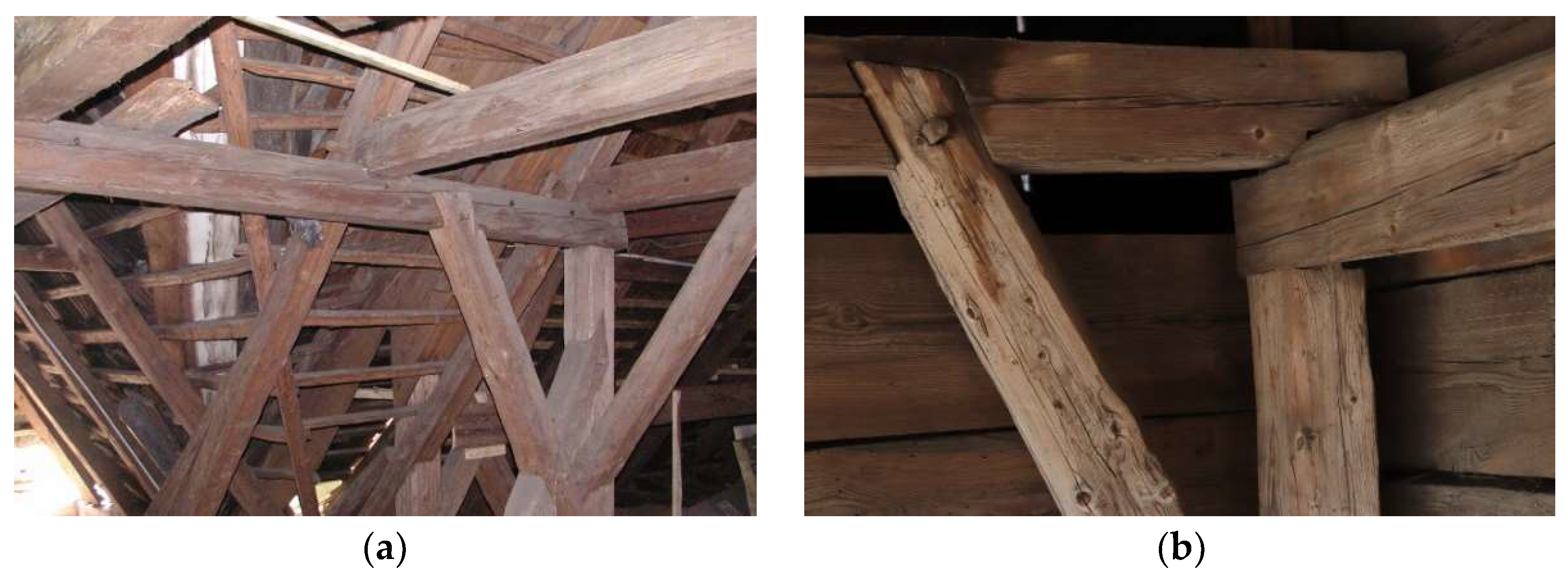
The first group included roof trusswork components, although with some exceptions and reservations. The components preserved in good or very good condition included the columns, hangers, struts, roof purlins, and horizontal beams; most of the rafters showed various degrees of damage at the joint with the battens. Obviously, the structural components listed above were preserved in good condition only in the churches with properly sealed roof planes, where the structural components were not continuously exposed to water from rainfall. Interestingly, in many cases, the wood showed traces of periodic exposure to water (due to short leaks in the roofing), which did not cause permanent damage to the material. This clearly confirms that if wood is exposed to water but then allowed to dry quickly, corrosive damage can usually be avoided.
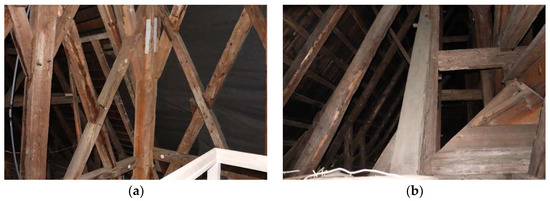
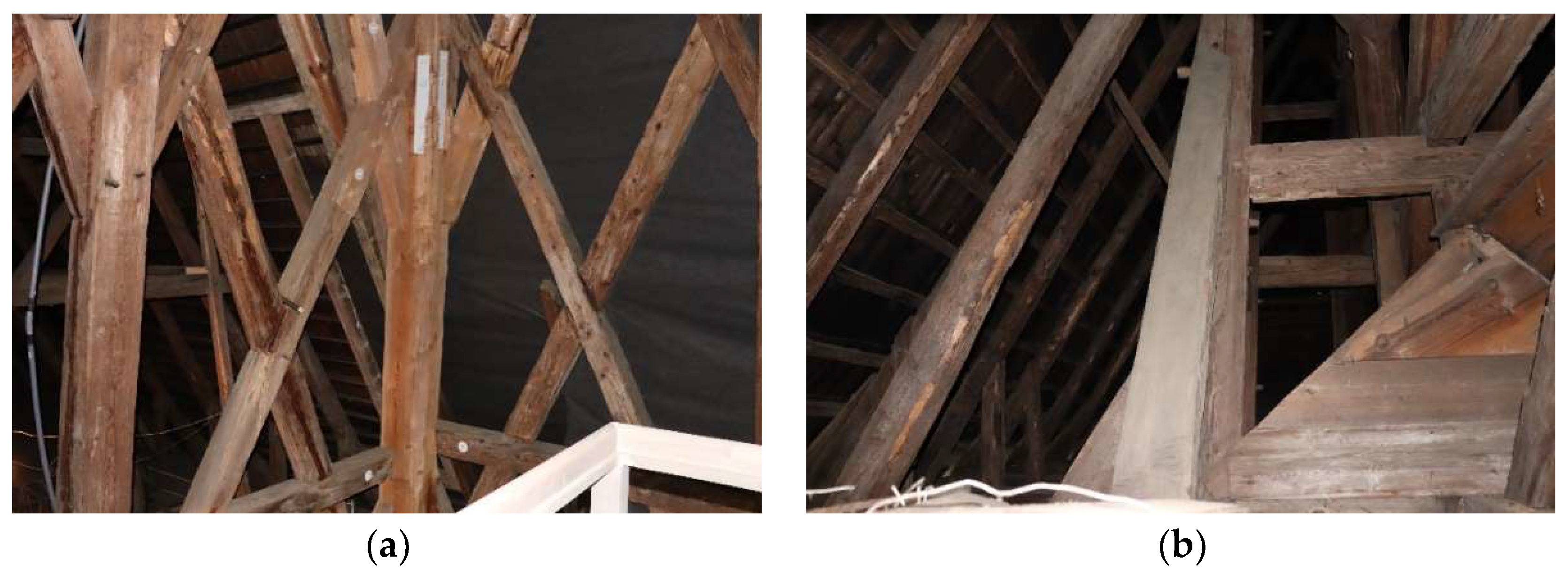
Figure 5a,b show the original roof truss elements in good and very good technical condition, while Figure 6a,b show minor damage to the truss beams, which does not, however, pose any threat to the safety of the structure.
Figure 5.
Good and very good condition of roof truss elements: (a) general view; (b) detailed view of connection.
Figure 6.
Minor damage to roof truss elements that does not threaten its safety: (a) posts of the king-post truss system; (b) general view with a fragment under the flèche.
The most typical damage around the roof trusswork included longitudinal cracking of structural components; however, in most cases, the cracks did not divide the cross-sections to the extent that could compromise their load-bearing capacity. Furthermore, this type of damage is easy to repair, e.g., by using spiral anchors, metal or FRP clamps, or screws.
In the case of roof trusswork, the key factor ensuring exceptional durability of structural components made from solid wood is favorable ambient conditions, including outstanding ventilation, which ensures low moisture content in the components. The factor that can be destructive is extreme temperature changes, which lead to the already-mentioned wood cracking. However, it should be noted that the issue of cracking and warping of long structural components only appears when the timber has not been properly seasoned and its moisture content was too high at the moment of installation.
4.1.2. Bell Towels Frames
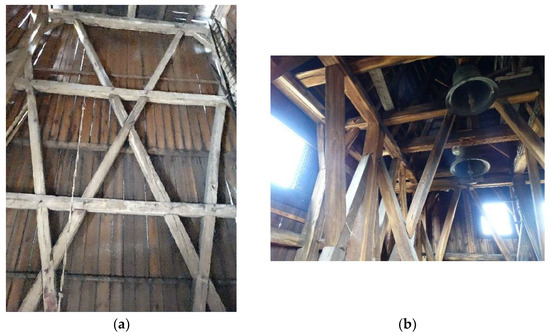
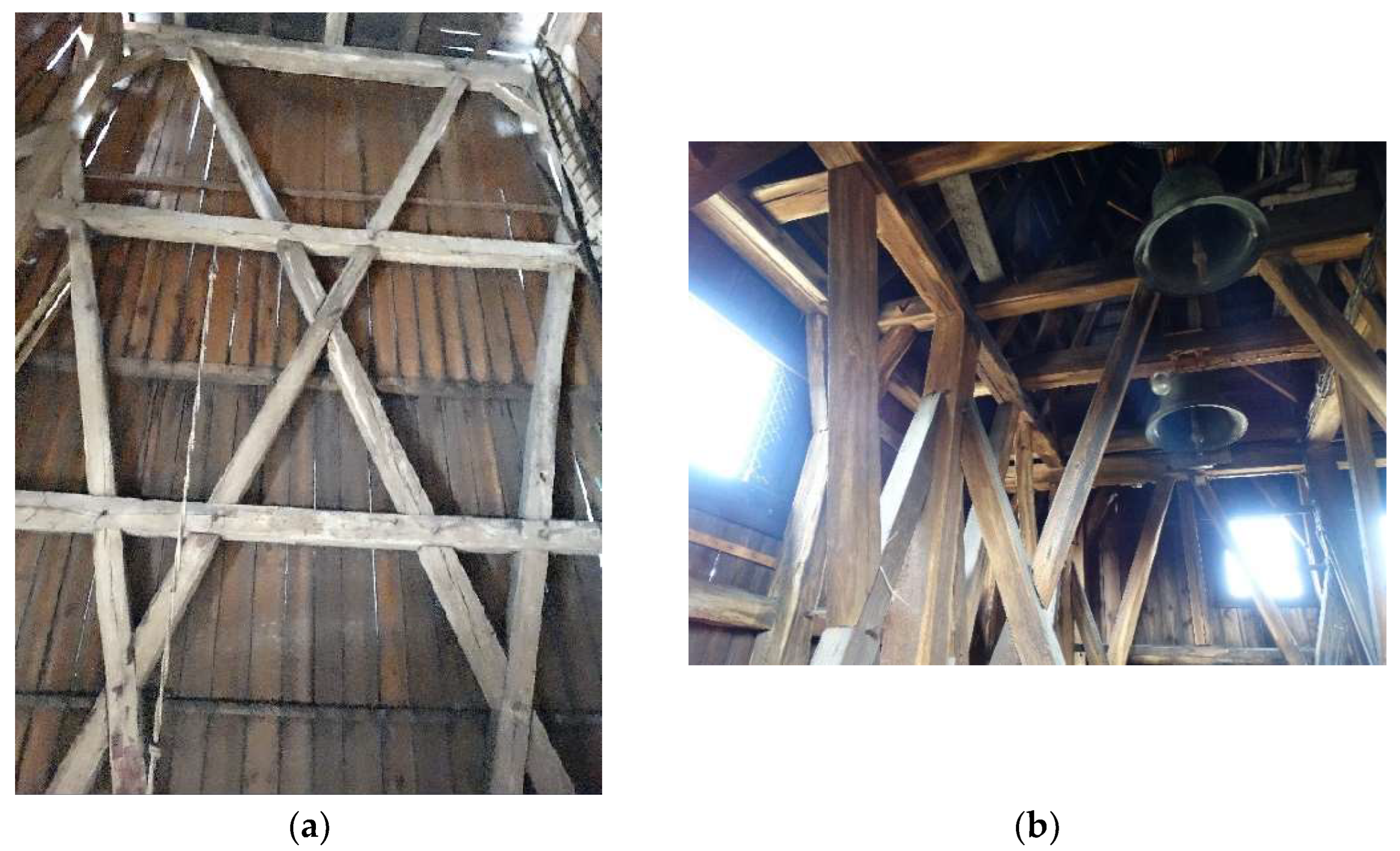
The second group of structural components characterized by outstanding durability includes the load-bearing components of the bell tower frames. The ambient conditions for those components are very similar to the roof trusswork components, with excellent ventilation (Figure 6b and Figure 7a). However, there are two exceptions where the bell tower components show significant corrosion. The first one is the lower sections of the columns anchored in the sill plate, which are often exposed to moisture. As a result, the sections of up to 1 m above the ground have signs of corrosion, including fungal decay. The second exception is the ends of the ceiling beams under the jetty, which extend beyond the envelope of the lower section of the bell tower. They are often exposed to rainwater, including the rainwater flowing down the walls of the jetty, which causes rapid corrosion of the wood.
Figure 7.
Good condition of bell tower components: (a) wall frame, (b) bell support structure elements.
4.1.3. Log Frame Structure
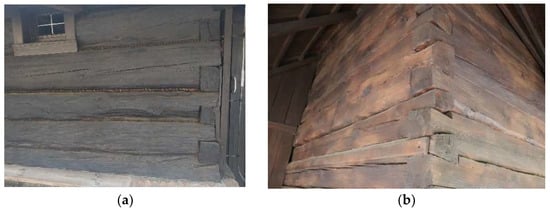
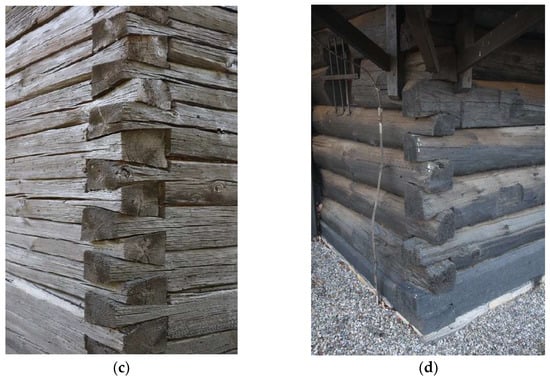
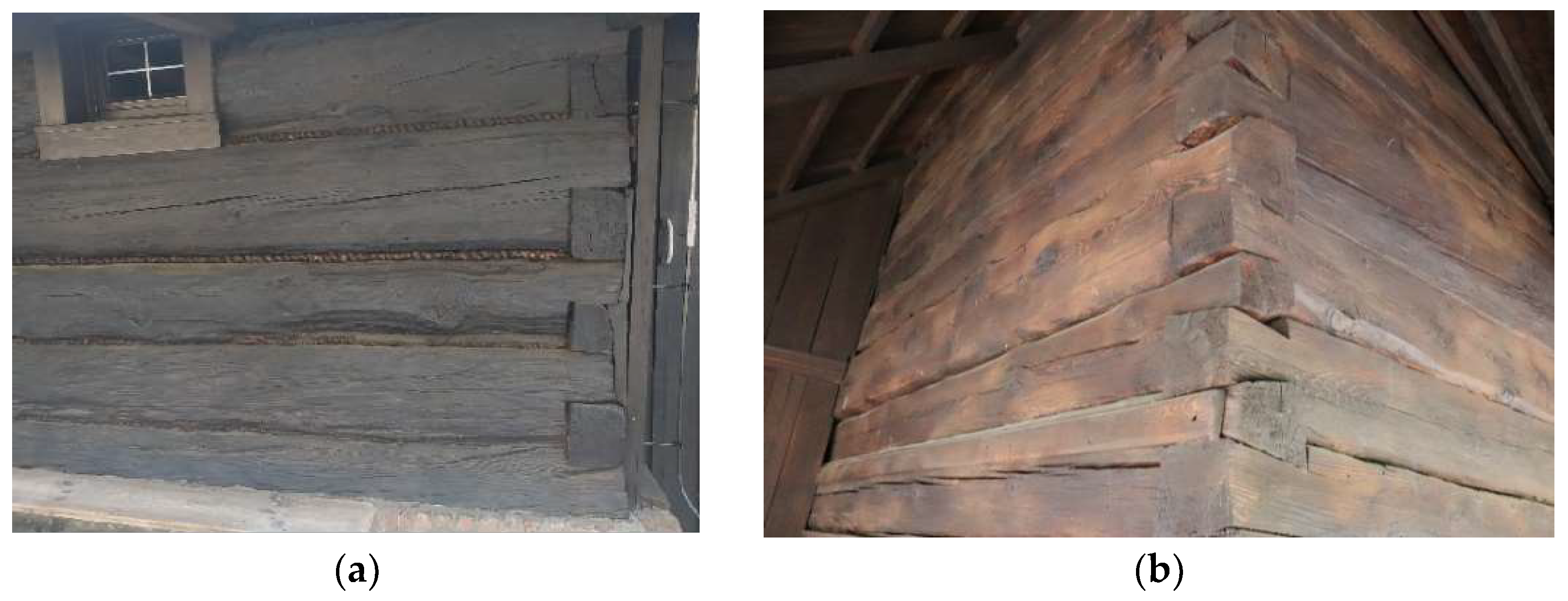
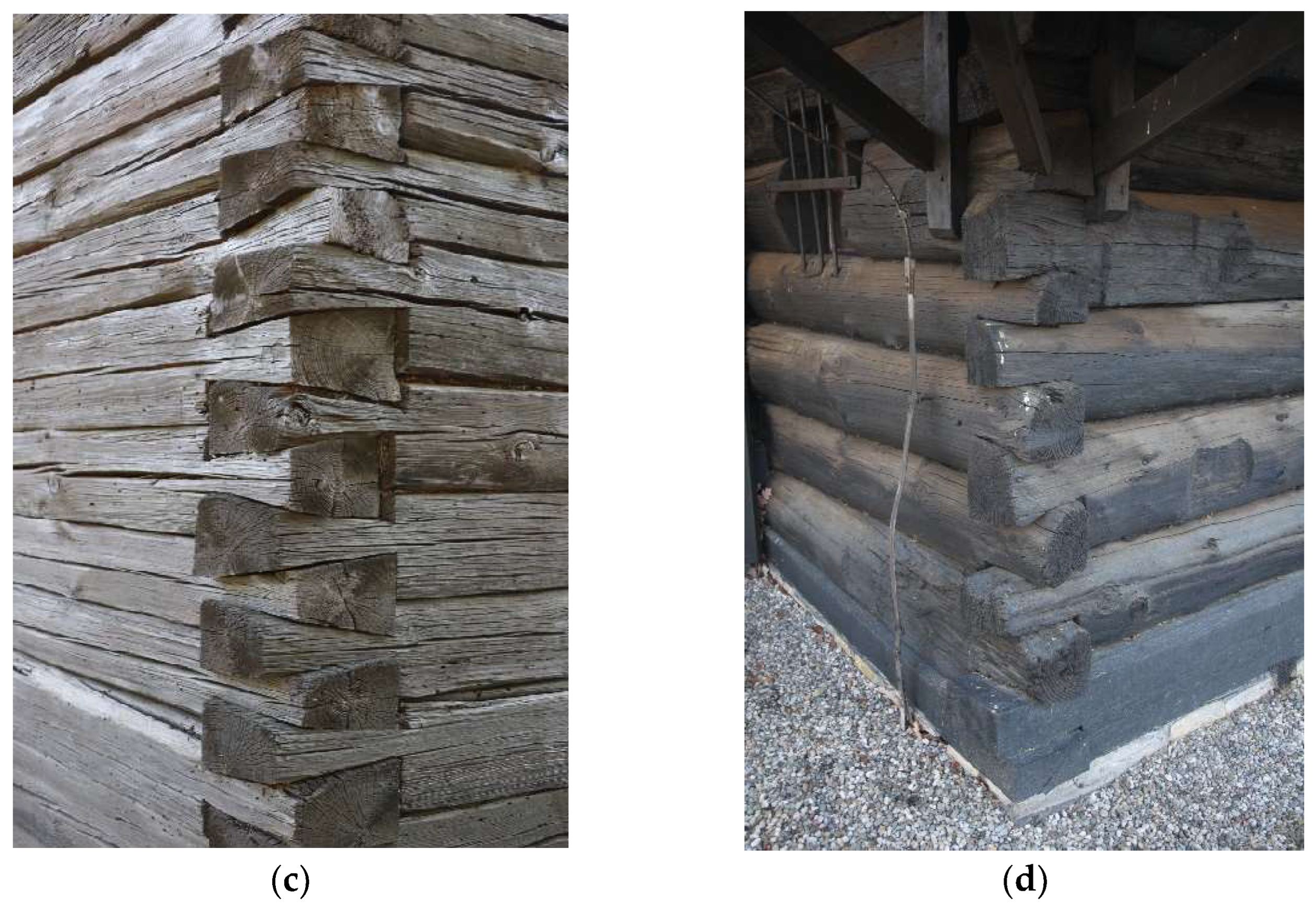
The third group of structural components in good condition includes the log frame structure beams; however, this case is somewhat complicated. In general, the beams from the third layer up (counting from the ground) are in good condition, while the lower beams are often damp and infested by fungi and mold. The condition of the beams on the outside is heavily dependent on the orientation of the building and on the presence of a protective layer. The beams in the best condition, with virtually no signs of weathering, are the ones on the eastern and southern sides, particularly if they are covered by boarding or shingles or are located beneath overhangs (Figure 8a,b). If no such protection is available, the beams are affected by surface corrosion, but it usually does not penetrate deeply. The situation on the northern and western sides is different (in Upper Silesia, the wind direction is usually west, causing the rain to lash), as the wood there dries much more slowly after rainfall. This leads to accelerated corrosion of the beams and to the infestation with fungi and mold, or even to the appearance of moss, particularly on the beams that are not covered. As in previous cases, it is clear here that the key aspect ensuring the durability of the beams is the ability to dry quickly, i.e., the availability of proper ventilation.
Figure 8.
Log structure beams in good condition: (a) wall view; (b) detail view of the connection; with minor damage: (c) wall view; (d) detail view of the connection.
On the inside, the condition of the beams is also dependent on the efficiency of ventilation. In the churches that have proper air circulation, the condition of wall beams on the inside is usually good, whereas if the ventilation is poor and the humidity too high, the wood surface is infested with destructive factors, most frequently mold.
4.1.4. Surface Covering Elements
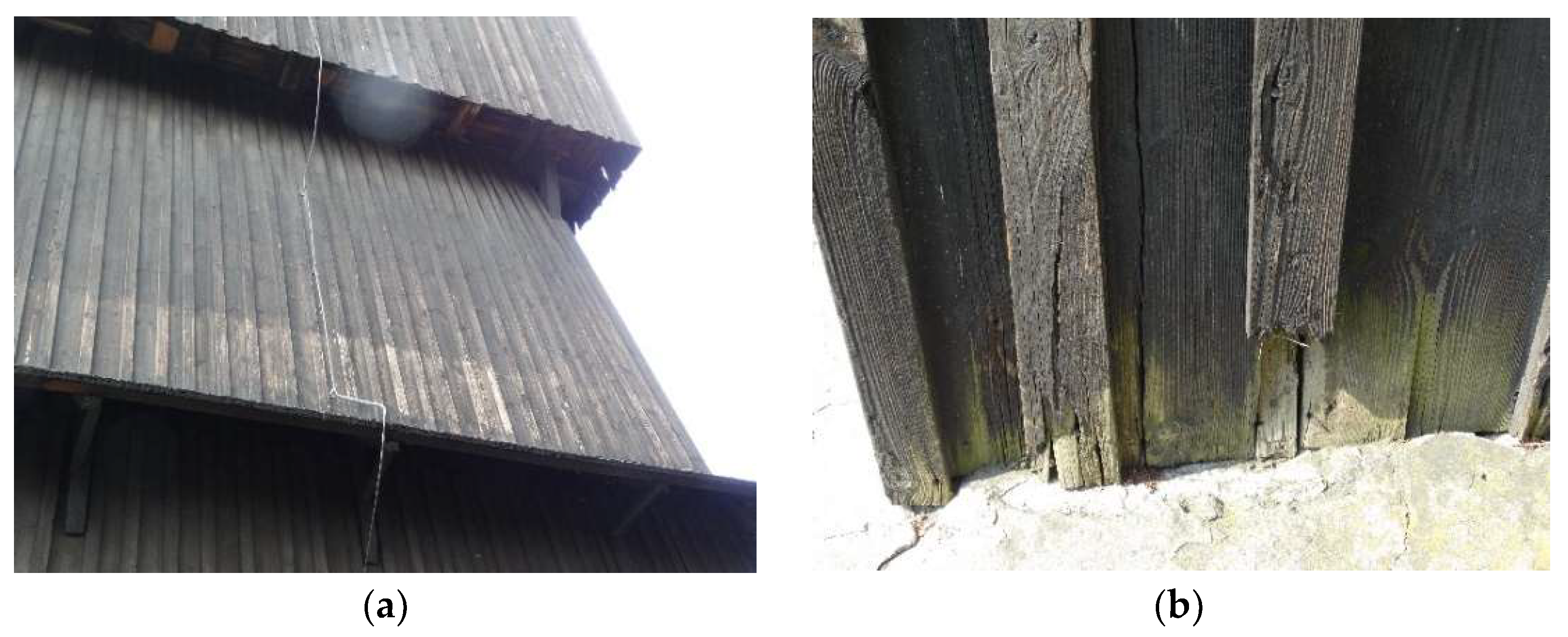
Other structural components include the surface covering—boarding on the walls and shingles on the roofs. The corrosion in those components, determining their durability, varies greatly and, as previously, depends on the ability to dry quickly. The walls and roof planes on the eastern and southern sides are usually quite durable (Figure 9a); however, they are usually replaced every few decades, up to a hundred years. The wall cladding on one of the bell towers was nearly 200 years old, as evidenced by carpenters’ marks, and its condition was good. On the western and northern sides, the condition of the covers is usually poorer, although there are examples of components aged over 100 years that remain in relatively good condition. Very often, damage to walls is observed directly above the ground, where the last wall line becomes wet and damaged (Figure 9b). The durability of the covering made by shingles is mainly determined by the method of manufacture and the wood species used. The durability of spruce shingles, which are split along the planes of natural cracks, exceeds 100 years, while cut shingles have a much shorter life, especially on northern roof planes where they are quickly overgrown with moss.
Figure 9.
Wall covering elements: (a) in good condition; (b) damage at ground level.
As for other timber structural components, there are instances of components in good condition, but they are rare. This will be expanded in the next section.
4.2. Structural Components in Poor Condition or Damaged Components
4.2.1. Sill Plates
The timber structural components that are most susceptible to damage are sill plates. Before we proceed further, the changes in the ambient conditions of sill plates over the years must be addressed. In original structures, the sill plates were supported at the ends (on stones) and sometimes also had intermediate support (on oak slices). This means that they were suspended above the ground and did not come into contact with it. Similarly, the ceiling beams based on sill plates or installed in pockets are also suspended (with support provided by stones or brick poles). As a result, the entire structure is properly ventilated. Even if a boulder or brick base was added under the sill plates, it always included vents. These types of sill plates, usually made from oak wood, were probably durable. Unfortunately, over their long life, the buildings were subjected to a number of unfavorable phenomena and actions. Firstly, the areas around the churches were also used as cemeteries; subsequent interments caused the ground to gradually rise. Over time, the sill plates became partially side-filled on the outside, which significantly affected their ambient conditions. Another problematic activity was making tight bases or patching up the vents in the existing bases. The lack of ventilation resulted in the quick destruction of the floor beams—virtually no original floor structure has survived to this day. As a result, the original floorings were dismantled and replaced either with stone/brick floors made directly on the ground or with wooden floors made with boards on sleepers based on the ground. In both cases, it was necessary to elevate the floor surface on the building plan, i.e., side-filling the sill plates also on the inside. Those actions led not only to blocking the air-flow around the sill plates but also to exposing them directly to moisture from the ground. As a result, the timber rotted quickly and was also affected by biological corrosion caused by fungi, molds, and insects. The compromised components were frequently taken over by ants, which made their nests inside them and further intensified the destruction of the material.
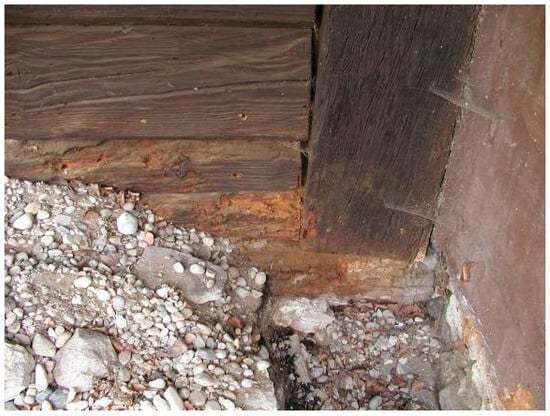
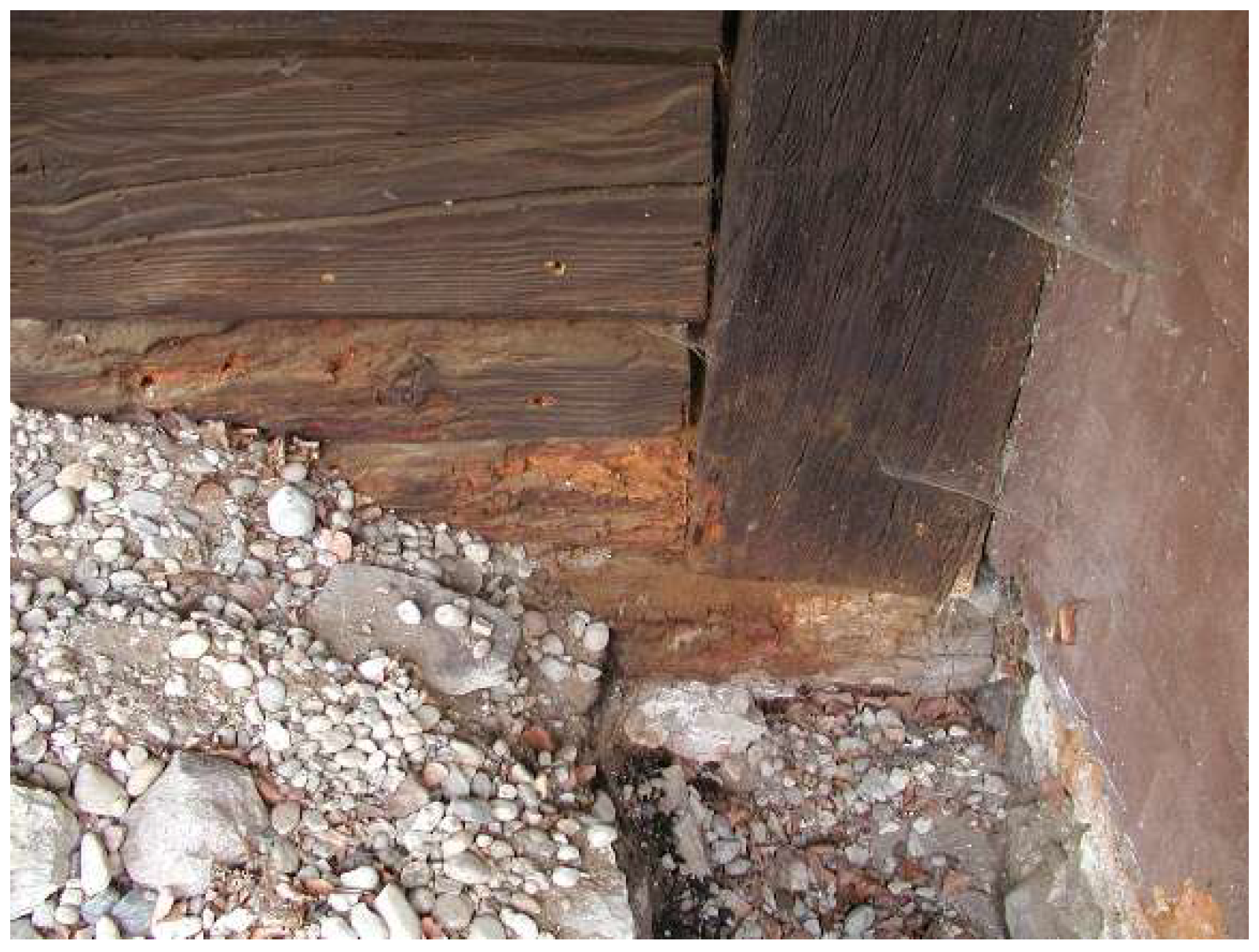
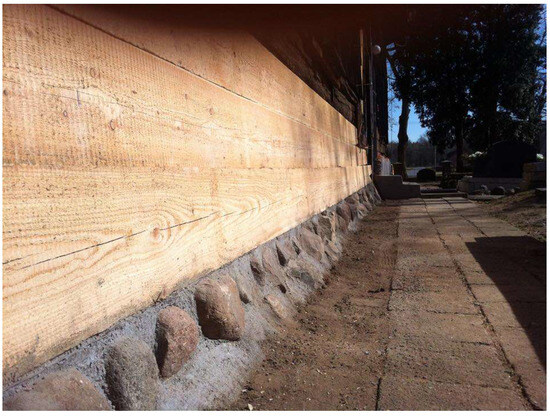
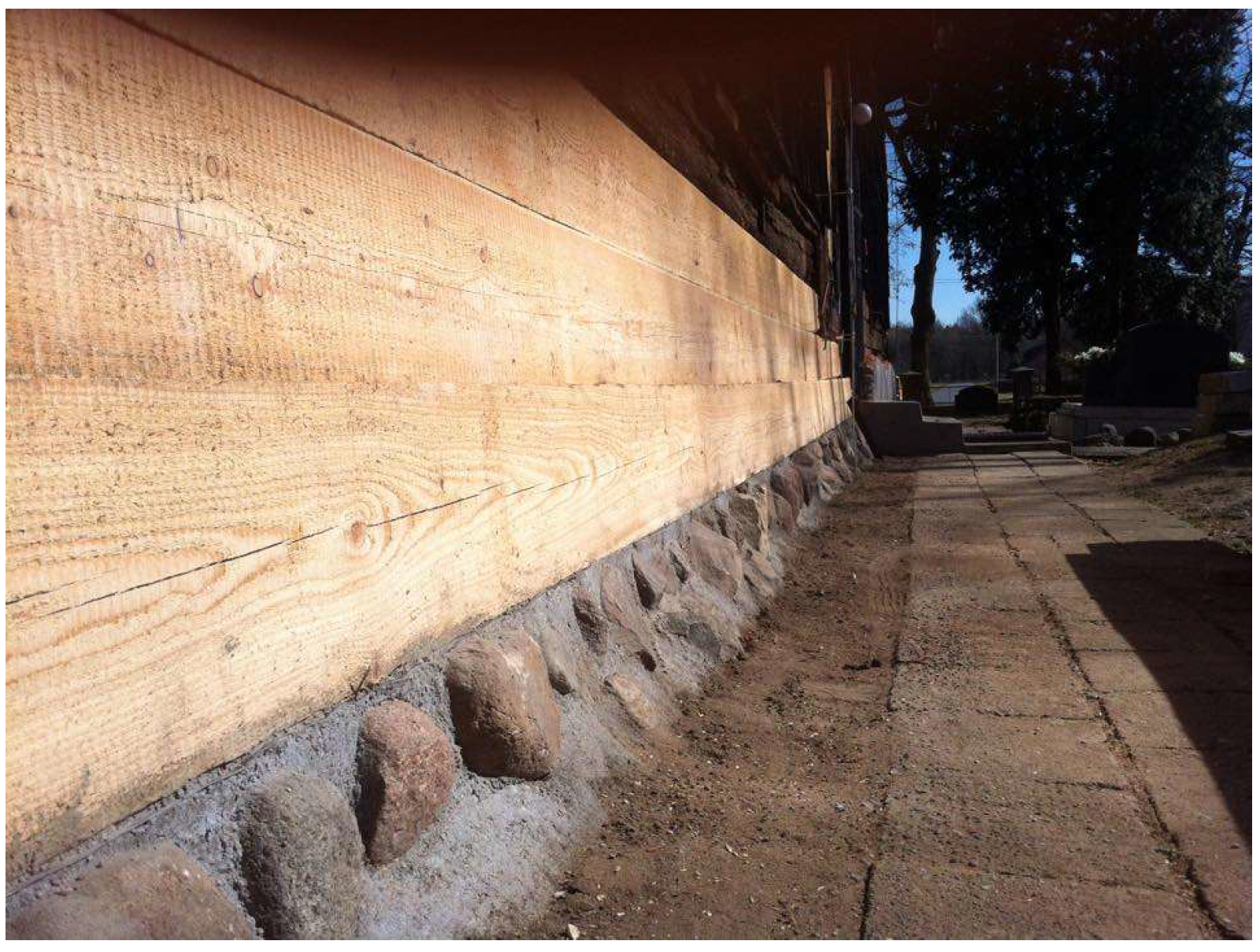
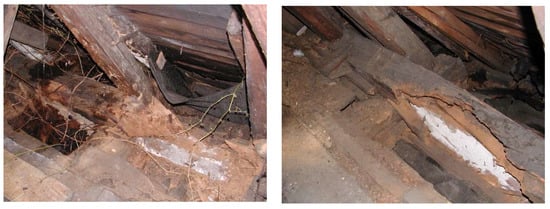
Summing up, leaving the sill plates in their original form would have ensured their relatively high durability. However, cutting off ventilation and exposing them to near-constant dampening resulted in the quick destruction of the timber (Figure 10), which requires its replacement with a new element (Figure 11).
Figure 10.
Severe damage to the sill plate and the last layer of log beams.
Figure 11.
Stone foundation, replaced sill plate and lower log beams.
4.2.2. Other Components
The wooden floors have already been mentioned—similar to sill plates, the changes in the ambient conditions resulted in rapid deterioration of durability. Furthermore, the floor beams had a smaller cross-section than the sill plates and were usually made from pine wood, which made them less resistant to wood damage factors.
In the case of the wall beams (in the log frame structure), the ones in poor condition are usually the two or three lowermost layers of beams located above the destroyed sill plates (Figure 10). Their condition is directly caused by moisture transport (pulling) from the damp sill plates.
The previous section provided obvious examples of corrosion affecting the structural components whenever they are exposed to permanent or long-term dampening. This applies to nearly all types of structural components because it is not related to their position in the structure but rather to unfavorable local ambient conditions. An example of this would be the upper beams of a log structure located under a leaky roof (Figure 12).
Figure 12.
Severe damage to poured log frame beams located in the upper parts.
4.3. Evaluation of the Technical Condition
The authors assessed the technical condition of specific groups of structural elements during their inspection of the churches. At the end of the work, everything was compiled and summarized, which allowed for the determination of the number of distinguished groups of structural elements belonging to the three accepted ranges of observed or unobserved damage to elements: good and very good, minor damage, and severely damaged structures—Table 3. A detailed description of the damage criteria adopted in each group is provided at the beginning of point 4. Only church structures were included here, without towers, as in most of the buildings, the towers were rebuilt or added later. It is important to note that only original elements were assessed. The analysis excluded individual elements that were suspected of having been replaced or repaired at least within the last 200 years. Elements that had undergone conservation treatment were also omitted.
Table 3.
Summary of the contribution of elements of a given structural group to the adopted scope of damage.
Therefore, a column with the number of elements subject to evaluation was added to the table. The percentage share of elements of a given structural group in the adopted range of damage is given in brackets.
A significant part of the sill plates that are most susceptible to damage have already been replaced, leaving only 47 items to be assessed. In the case of roof and wall cladding, only those elements were assessed whose age was estimated to be at least 30 years. Thus, all relatively new elements were eliminated from the evaluation.
The above tables clearly show the relationship between the condition of individual elements and the operating environment. This applies in particular to possible moisture accumulation and the ability to dry quickly and effectively.
The vast majority of roof trusses (92%) and upper sections of log frame beams (87%) remain in the best condition—in both cases, this is due to good ventilation.
In the case of other elements, 70% to 80% of elements remain in good condition—however, two facts should be noted here. In the case of under-roof log frame beams, the actual percentage of elements in good condition is only 39% of the original elements if their number is compared to the number of all churches assessed. Similarly, in the case of the lower part of log frame beams, the actual percentage of elements in good condition is 70% in relation to the number of all churches (Table 2 refers to original elements, while the replaced elements indicate the very poor technical condition of the original elements). In the case of roof and wall covering elements, on the other hand, we are considering elements that are younger than the buildings themselves, although they are still 30 years old or more.
Despite the above reservations, which reduce the actual percentage of elements remaining in good technical condition, the thesis that solid wood, used in favorable conditions, remains in good technical condition even for hundreds of years has been confirmed.
5. Discussion—The Impact of the Method of Use and the Ambient Conditions on Components Made from Solid Wood
As shown in the previous sections, the durability of structural components made from solid wood can reach hundreds of years, thus exceeding the usual life cycle of typical construction components, which is 50 years. Therefore, in terms of durability, solid wood can be considered a highly durable material; however, it is necessary to provide the right ambient conditions in which it will be used.
According to the examples discussed herein, the ambient conditions for timber components can be ranked from best, ensuring very high durability, to worst, in which the durability will be low.
The best ambient conditions include lack of contact of the timber with water or dampness and good ventilation. In the analyzed churches, such conditions are provided in the attics and apply to roof trusswork components. The necessary requirements in this case include the tightness of the roof covering and the proper ventilation of the attic, which are obvious for any normally operated building.
Other conditions include exposing the timber components to short dampening or even flooding, provided that they can dry quickly and efficiently, which again requires proper ventilation. Those conditions are met by structural components integrated into the interiors (columns, interior walls, upper floor slabs) that are properly protected against water (i.e., exposed to water only in exceptional situations and for a short period of time, such as momentary leaks in the roof covering or a water supply system failure) and dampness (i.e., short-term dampening that can be removed quickly by efficient ventilation). This subgroup can also include interior walls exposed to short-term vapor condensation that are able to dry quickly and efficiently.
Another group is the structural components directly exposed to rainwater. This includes exterior structural components (e.g., exterior columns, balcony beams, or the ends of roof purlins or rafters). However, if those elements are also able to dry quickly, their durability will be moderate and will be reduced to poor only if drying is not possible. In this context, the components located on the eastern and southern sides of the churches are in a much better position than those located on the northern and western sides. This group also includes finishing elements, e.g., exterior wall cladding, the condition of which also depends on their orientation.
The final group is timber components exposed to permanent dampening, including direct contact with the ground. These include structural components in poorly ventilated wet rooms, incorrectly insulated sill plates, sleepers of exterior terraces or floors based on the ground, and other components in similar ambient conditions. In this case, the durability of the timber components will be low, and they might be seriously damaged or even destroyed after only a few years of operation.
The issue of the durability of different species of wood should also be addressed here. According to the provisions of the standard [51], the following durability classes are obtained for the wood species used to build the churches in question:
- –
- Larch wood—moderately or slightly durable in relation to fungi (in contact with the ground), durable in relation to wood-boring beetles;
- –
- Spruce wood—slightly durable in relation to fungi, not durable in relation to wood-boring beetles;
- –
- Pine wood—moderately durable with regard to fungi, durable with regard to wood-destroying beetles;
- –
- Oak wood (foundations)—durable or moderately durable with regard to fungi, durable with regard to wood-destroying beetles.
However, the above classification is not confirmed by our own observations, where most elements were classified as very durable in reality. The author’s own observations during the preparation of expert studies indicate that in comparable ambient conditions, the most durable species was oak, followed by larch and spruce. The least durable wood species was pine. In the case of coniferous species, wood acquired from trees from which resin had not been extracted was more durable than from those subjected to resin extraction. Therefore, in most cases, spruce wood was in better condition than pine wood. This applies, of course, to elements used in optimal humidity conditions, while durability with regard to fungi is determined in conditions of contact with the ground. The reasons for the high durability of wood can also be found in the fact that churches were built from selected tree trunks, cut down in winter, and properly seasoned. Proper seasoning of wood is very important from a durability perspective—components seasoned naturally are more durable than those seasoned artificially, as they are more resistant to cracking.
Of course, it should be noted that there are numerous methods of surface and deep treatment of wood to protect it against dampness and biological corrosion. All timber components in the analyzed churches were not waterproofed and had no surface treatment. Given the currently available wood preservation methods, the durability of timber components can be significantly improved, which leads to the conclusion that if proper ambient conditions are provided, wood really can be a very durable material.
6. Summary
In the current economic and environmental setting, following the principles of sustainable development is a priority. Given the major role of the construction industry in the economy and the high energy consumption of the manufacturing processes of the basic construction materials (concrete and steel), materials with a lower carbon footprint are becoming increasingly popular. Wood is already being used extensively in construction, but this includes mainly wood-based products, the manufacture of which consumes significant energy and uses harmful chemical components (glues, resins). In this context, solid wood appears to be a nearly perfect construction material—its production requires only minimal energy, and it is also fully renewable. Furthermore, the waste generated during the cutting of logs into beams and planks is fully recycled into wood-based materials, including thermal insulation.
One of the arguments raised against using solid wood as a construction material is its durability, which some investors and designers consider to be too low. The available research methods, including accelerated aging or observation over a period of several years in natural conditions, are often considered inadequate in terms of the required durability, which is typically 50 years for civil structures.
The analysis of the condition of timber components used in real-life settings over a period between 200 and more than 550 years has shown that solid wood has sufficient durability even over such a long period of use, provided that appropriate ambient conditions are ensured. Proper ventilation, ensuring that the air-dry condition is maintained permanently, has been identified as a crucial factor for achieving high durability of solid wood. On the other hand, permanent dampness with insufficient ventilation, including at the interface with the ground, has been identified as a strong destructive factor. Interestingly, periodical dampening of timber, or even flooding it with water, does not significantly affect its durability, provided that it is able to dry quickly and efficiently.
In conclusion, the durability of properly used timber structural components exceeds 100 years, which more than meets the durability requirements applicable to typical residential or utility buildings.
Further research will focus on a detailed testing—using non-destructive and minimally destructive methods—of several selected churches of the greatest historical value.
Author Contributions
Conceptualization, J.H.; investigation, J.H., M.K., and M.T.; resources, M.T.; writing—original draft preparation, J.H., M.K.; writing—review and editing, M.K.; visualization, M.T. All authors have read and agreed to the published version of the manuscript.
Funding
This research received no external funding.
Institutional Review Board Statement
Not applicable.
Informed Consent Statement
Not applicable.
Data Availability Statement
The data presented in this study are available on request from the corresponding author due to the authors’ copyright.
Conflicts of Interest
The authors declare no conflicts of interest.
References
- Huang, L.; Krigsvoll, G.; Johansen, F.; Liu, Y.; Zhang, X. Carbon Emission of Global Construction Sector. Renew. Sustain. Energy Rev. 2018, 81, 1906–1916. [Google Scholar] [CrossRef] [Scilit]
- United Nations Environment Programme. The Emissions Gap Report 2017: A UN Environment Synthesis Report; The Emissions Gap Report; UN: New York, NY, USA, 2017; ISBN 978-92-1-047969-1. [Google Scholar]
- Ramage, M.H.; Burridge, H.; Busse-Wicher, M.; Fereday, G.; Reynolds, T.; Shah, D.U.; Wu, G.; Yu, L.; Fleming, P.; Densley-Tingley, D.; et al. The Wood from the Trees: The Use of Timber in Construction. Renew. Sustain. Energy Rev. 2017, 68, 333–359. [Google Scholar] [CrossRef] [Scilit]
- Hitch, J. Understanding the Carbon Footprint of Timber. Available online: https://www.mortlock.com.au/learning/learning-carbon-footprint-of-timber/ (accessed on 21 September 2025).
- UNIDO—United Nation Industrial Development Organization. Impact Assessment of Policy Options Related to the Guiding Framework of Standards and Technical Regulations on the Green Reconstruction of Ukraine; United Nation Industrial Development Organization: Vienna, Austria, 2024. [Google Scholar]
- Vallet, P. Impact de Différentes Stratégies Sylvicoles Sur La Fonction “‘puits de Carbone’” Des Peuplements Forestiers. In Modélisation et Simulation à l’échelle de La Parcelle; L’Ecole Nationale de Genie Rural des Eaux at des Forets: Paris, France, 2005. [Google Scholar]
- Morton, J. Wood as a Carbon Sink: The Environmental Promise of Timber Construction. Available online: https://www.sustainablestories.uk/articles/wood-as-a-carbon-sink-the-environmental-promise-of-timber-construction (accessed on 18 December 2025).
- McLoughlin, L. Global Concrete Sector Set to Emit 3.8 Gigatonnes of CO2 by 2050. Available online: https://www.aggbusiness.com/global-concrete-sector-set-emit-38-gigatonnes-co2-2050/ (accessed on 13 September 2024).
- Pacheco-Torgal, F. Introduction to the Environmental Impact of Construction and Building Materials. In Eco-Efficient Construction and Building Materials; Elsevier: Amsterdam, The Netherlands, 2014; pp. 1–10. ISBN 978-0-85709-767-5. [Google Scholar]
- Hill, C.A.S.; Zimmer, K. The Environmental Impacts of Wood Compared to Other Building Materials; NIBIO Report; Norwegian Institute of Bioeconomy Research: Oslo, Norway, 2018; Volume 4, p. 56. [Google Scholar]
- Hill, C.A.S.; Dibdiakova, J. The Environmental Impact of Wood Compared to Other Building Materials. Int. Wood Prod. J. 2016, 7, 215–219. [Google Scholar] [CrossRef] [Scilit]
- Cuadrado, J.; Zubizarreta, M.; Pelaz, B.; Marcos, I. Methodology to Assess the Environmental Sustainability of Timber Structures. Constr. Build. Mater. 2015, 86, 149–158. [Google Scholar] [CrossRef] [Scilit]
- Petrović, B.; Eriksson, O.; Zhang, X. Carbon Assessment of a Wooden Single-Family Building—A Novel Deep Green Design and Elaborating on Assessment Parameters. Build. Environ. 2023, 233, 110093. [Google Scholar] [CrossRef] [Scilit]
- Blanca-Giménez, V.; Nuñez Avila, J.D. Timber Buildings: A Sustainable Construction Alternative. In Proceedings of the 3rd Valencia International Biennial of Research in Architecture, VIBRArch, València, Spain, 9 November 2022; Editorial Universitat Politècnica de València: València, Spain, 2022. [Google Scholar]
- Joensuu, T.; Leino, R.; Heinonen, J.; Saari, A. Developing Buildings’ Life Cycle Assessment in Circular Economy-Comparing Methods for Assessing Carbon Footprint of Reusable Components. Sustain. Cities Soc. 2022, 77, 103499. [Google Scholar] [CrossRef] [Scilit]
- Liang, S.; Gu, H.; Bergman, R. Environmental Life-Cycle Assessment and Life-Cycle Cost Analysis of a High-Rise Mass Timber Building: A Case Study in Pacific Northwestern United States. Sustainability 2021, 13, 7831. [Google Scholar] [CrossRef] [Scilit]
- Mitterpach, J.; Vaňová, R.; Šedivka, P.; Štefko, J. A Comparison of the Environmental Performance between Construction Materials and Operational Energy of Nearly Zero-Energy Wood-Based Educational Building. Forests 2022, 13, 220. [Google Scholar] [CrossRef] [Scilit]
- Zeitz, A.; Griffin, C.T.; Dusicka, P. Comparing the Embodied Carbon and Energy of a Mass Timber Structure System to Typical Steel and Concrete Alternatives for Parking Garages. Energy Build. 2019, 199, 126–133. [Google Scholar] [CrossRef] [Scilit]
- Sebestyén, T.T. Evaluation of the Carbon Footprint of Wooden Glamping Structures by Life Cycle Assessment. Sustainability 2024, 16, 2906. [Google Scholar] [CrossRef] [Scilit]
- Himes, A.; Busby, G. Wood Buildings as a Climate Solution. Dev. Built Environ. 2020, 4, 100030. [Google Scholar] [CrossRef] [Scilit]
- Andersen, C.E.; Hoxha, E.; Nygaard Rasmussen, F.; Grau Sørensen, C.; Birgisdóttir, H. Evaluating the Environmental Performance of 45 Real-Life Wooden Buildings: A Comprehensive Analysis of Low-Impact Construction Practices. Build. Environ. 2024, 250, 111201. [Google Scholar] [CrossRef] [Scilit]
- Quintana-Gallardo, A.; Schau, E.M.; Niemelä, E.P.; Burnard, M.D. Comparing the Environmental Impacts of Wooden Buildings in Spain, Slovenia, and Germany. J. Clean. Prod. 2021, 329, 129587. [Google Scholar] [CrossRef] [Scilit]
- Blanchet, P.; Perez, C.; Cabral, M.R. Wood Building Construction: Trends and Opportunities in Structural and Envelope Systems. Curr. For. Rep. 2024, 10, 21–38. [Google Scholar] [CrossRef] [Scilit]
- Caniato, M.; Marzi, A.; Monteiro Da Silva, S.; Gasparella, A. A Review of the Thermal and Acoustic Properties of Materials for Timber Building Construction. J. Build. Eng. 2021, 43, 103066. [Google Scholar] [CrossRef] [Scilit]
- Arriaga, F.; Wang, X.; Íñiguez-González, G.; Llana, D.F.; Esteban, M.; Niemz, P. Mechanical Properties of Wood: A Review. Forests 2023, 14, 1202. [Google Scholar] [CrossRef] [Scilit]
- Gorbachewa, G.; Egas, A.; Gonçalves, R.; Jiang, J.; Niemz, P.; Németh, R.; Ross, R.J.; Sandberg, D.; Senalik, C.A. Physical and Mechanical Properties of Solid Wood. In Wood Material and Processing Data: The Most Relevant Data, Tables, and Figures; Niemz, P., Teischinger, A., Sandberg, D., Eds.; Springer Nature: Cham, Switzerland, 2025; pp. 19–100. ISBN 978-3-031-38329-8. [Google Scholar]
- Niemz, P.; Sonderegger, W.; Keplinger, T.; Jiang, J.; Lu, J. Physical Properties of Wood and Wood-Based Materials. In Springer Handbook of Wood Science and Technology; Niemz, P., Teischinger, A., Sandberg, D., Eds.; Springer International Publishing: Cham, Switzerland, 2023; pp. 281–353. ISBN 978-3-030-81315-4. [Google Scholar]
- Dias, A.M.A.; Dias, A.M.P.G.; Silvestre, J.D.; Brito, J.D. Comparison of the Environmental and Structural Performance of Solid and Glued Laminated Timber Products Based on EPDs. Structures 2020, 26, 128–138. [Google Scholar] [CrossRef] [Scilit]
- Glass, S.V.; Zelinka, S.L. Moisture Relations and Physical Properties of Wood. In Wood Handbook. Wood as an Engineering Material; U.S. Department of Agriculture, Forest Service, Forest Products Laboratory: Madison, WI, USA, 2021; pp. 4–22. [Google Scholar]
- Shirmohammadi, M.; Leggate, W.; Redman, A. Effects of Moisture Ingress and Egress on the Performance and Service Life of Mass Timber Products in Buildings: A Review. Constr. Build. Mater. 2021, 290, 123176. [Google Scholar] [CrossRef] [Scilit]
- Fu, Z.; Chen, J.; Zhang, Y.; Xie, F.; Lu, Y. Review on Wood Deformation and Cracking during Moisture Loss. Polymers 2023, 15, 3295. [Google Scholar] [CrossRef] [Scilit]
- Waksmundzki, M. Research on the Impact of Selected Atmospheric and Technological Factors on the Dimensional Stability of Wooden Casting Models. Ph.D. Thesis, AGH University of Science and Technology, Krakow, Poland, 2018. (In Polish) [Google Scholar]
- Kherais, M.; Csébfalvi, A.; Len, A.; Fülöp, A.; Pál-Schreiner, J. The Effect of Moisture Content on the Mechanical Properties of Wood Structure. Pollack 2024, 19, 41–46. [Google Scholar] [CrossRef] [Scilit]
- Wang, J.Y.; Stirling, R.; Morris, P.I.; Taylor, A.; Lloyd, J.; Kirker, G.; Lebow, S.; Mankowski, M.; Barnes, H.M.; Morrell, J.J. Durability of Mass Timber Structures: A Review of the Biological Risks. WFS 2018, 50, 110–127. [Google Scholar] [CrossRef] [Scilit]
- ASTM D1037-12; Standard Test Methods for Evaluating Properties of Wood-Base Fiber and Particle Panel Materials. ASTM International: West Conshohocken, PA, USA, 2020.
- EN 321; Wood-Based Panels—Determination of Moisture Resistance under Cyclic Test Conditions. European Standard: Brussels, Belgium, 2002.
- CSA 0188.0; Standard Test Methods for Mat-Formed Wood Particleboards and Waferboard. Canadian Standards Association: Toronto, ON, Canada, 1978.
- EN 1087-1; Particle Boards. Determination of Moisture Resistance. Boil Test; European Standard: Brussels, Belgium, 1995.
- Wang, J.; Cao, X.; Liu, H. A Review of the Long-Term Effects of Humidity on the Mechanical Properties of Wood and Wood-Based Products. Eur. J. Wood Prod. 2020, 79, 245–259. [Google Scholar] [CrossRef] [Scilit]
- Brischke, C.; Meyer-Veltrup, L. Moisture Content and Decay of Differently Sized Wooden Components during 5 Years of Outdoor Exposure. Eur. J. Wood Prod. 2015, 73, 719–728. [Google Scholar] [CrossRef] [Scilit]
- Meyer-Veltrup, L.; Brischke, C.; Källander, B. Testing the Durability of Timber above Ground: Evaluation of Different Test Methods. Eur. J. Wood Prod. 2017, 75, 291–304. [Google Scholar] [CrossRef] [Scilit]
- Niklewski, J.; Fredriksson, M.; Isaksson, T. Moisture Content Prediction of Rain-Exposed Wood: Test and Evaluation of a Simple Numerical Model for Durability Applications. Build. Environ. 2016, 97, 126–136. [Google Scholar] [CrossRef] [Scilit]
- Keržič, E.; Humar, M. Studies on the Material Resistance and Moisture Dynamics of Wood after Artificial and Natural Weathering. Wood Mater. Sci. Eng. 2022, 17, 551–557. [Google Scholar] [CrossRef] [Scilit]
- EN 330; Durability of Wood and Wood-Based Products– Use Classes: Definitions, Application to Solid Wood and Wood Based Products. European Standard: Brussels, Belgium, 2015.
- Sandberg, K. Degradation of Norway Spruce (Picea abies) Heartwood and Sapwood during 5.5 Years’ above-Ground Exposure. Wood Mater. Sci. Eng. 2008, 3, 83–93. [Google Scholar] [CrossRef] [Scilit]
- Sandberg, D. Crack Formation Due to Weathering of Radial and Tangential Sections of Pine and Spruce. Wood Mater. Sci. Eng. 2006, 1, 12–20. [Google Scholar] [CrossRef] [Scilit]
- Niklewski, J.; Van Niekerk, P.B.; Marais, B.N. The Effect of Weathering on the Surface Moisture Conditions of Norway Spruce under Outdoor Exposure. Wood Mater. Sci. Eng. 2023, 18, 1394–1404. [Google Scholar] [CrossRef] [Scilit]
- Brischke, C.; Rapp, A.O. Dose–Response Relationships between Wood Moisture Content, Wood Temperature and Fungal Decay Determined for 23 European Field Test Sites. Wood Sci. Technol. 2008, 42, 507–518. [Google Scholar] [CrossRef] [Scilit]
- Meyer-Veltrup, L.; Brischke, C.; Alfredsen, G.; Humar, M.; Flæte, P.-O.; Isaksson, T.; Brelid, P.L.; Westin, M.; Jermer, J. The Combined Effect of Wetting Ability and Durability on Outdoor Performance of Wood: Development and Verification of a New Prediction Approach. Wood Sci. Technol. 2017, 51, 615–637. [Google Scholar] [CrossRef] [Scilit]
- Tunkel, M. Model Features of the Sacred Wooden Architecture of Upper Silesia Based on the Analysis of Preserved Objects. Ph.D. Thesis, Silesian University of Technology, Gliwice, Poland, 2022. (In Polish) [Google Scholar]
- PN-EN 350; Durability of Wood and Wood-Based Materials: Testing and Classification of the Durability of Wood and Wood-Based Materials Against Biological Factors. Polish National Standards: Warsaw, Poland, 2016. (In Polish)

Disclaimer/Publisher’s Note: The statements, opinions and data contained in all publications are solely those of the individual author(s) and contributor(s) and not of MDPI and/or the editor(s). MDPI and/or the editor(s) disclaim responsibility for any injury to people or property resulting from any ideas, methods, instructions or products referred to in the content. |
© 2026 by the authors. Licensee MDPI, Basel, Switzerland. This article is an open access article distributed under the terms and conditions of the Creative Commons Attribution (CC BY) license.