Purple Ipe Leaf as a Sustainable Biosorbent for the Removal of Co(II) and Cd(II) Ions from Aqueous Samples

 , ,
, ,  , ,
, ,  , and
, and
Abstract
1. Introduction
2. Materials and Methods
2.1. Preparation of Purple Ipe Leaf
2.2. Chemicals and Reagents
2.3. Apparatus
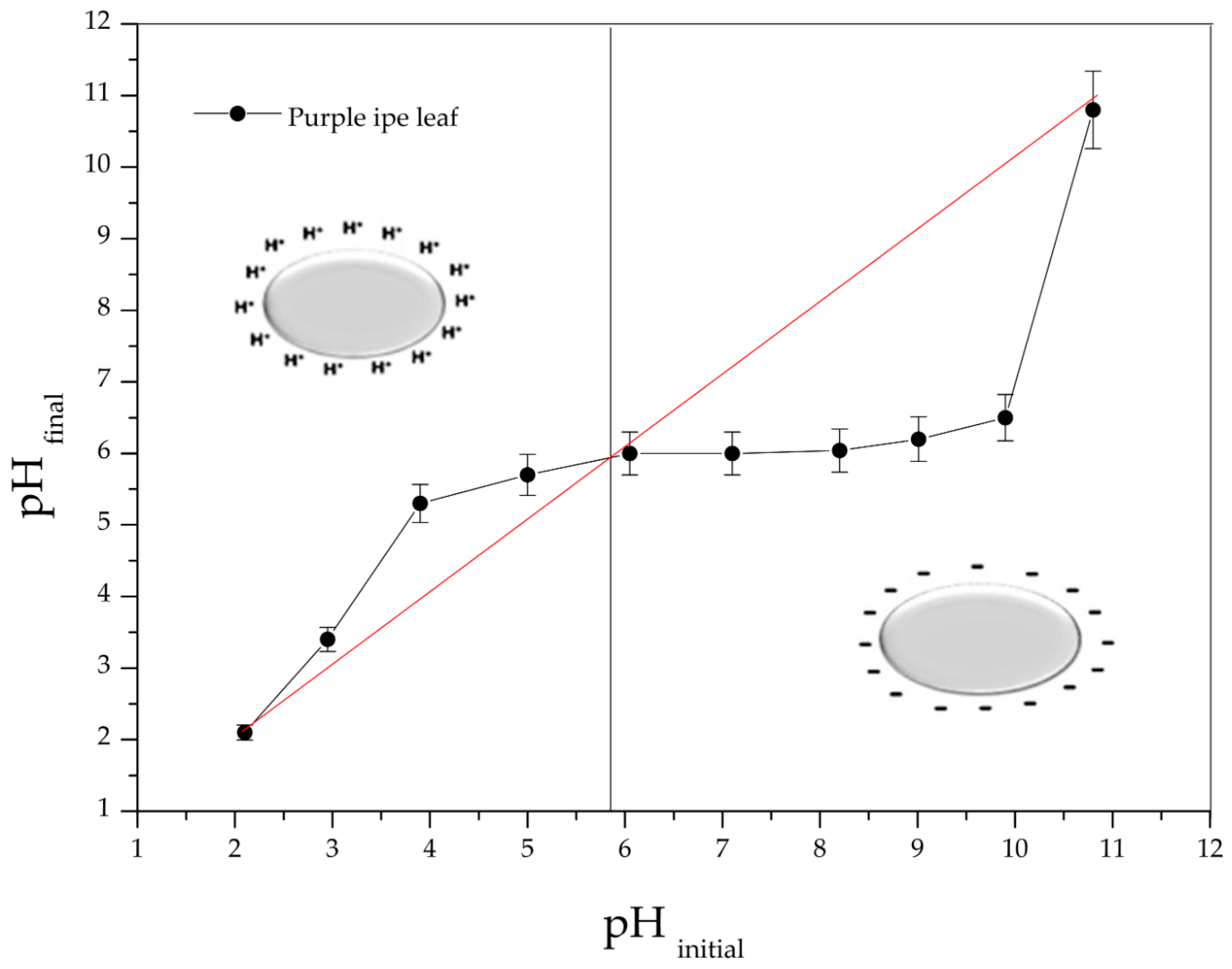
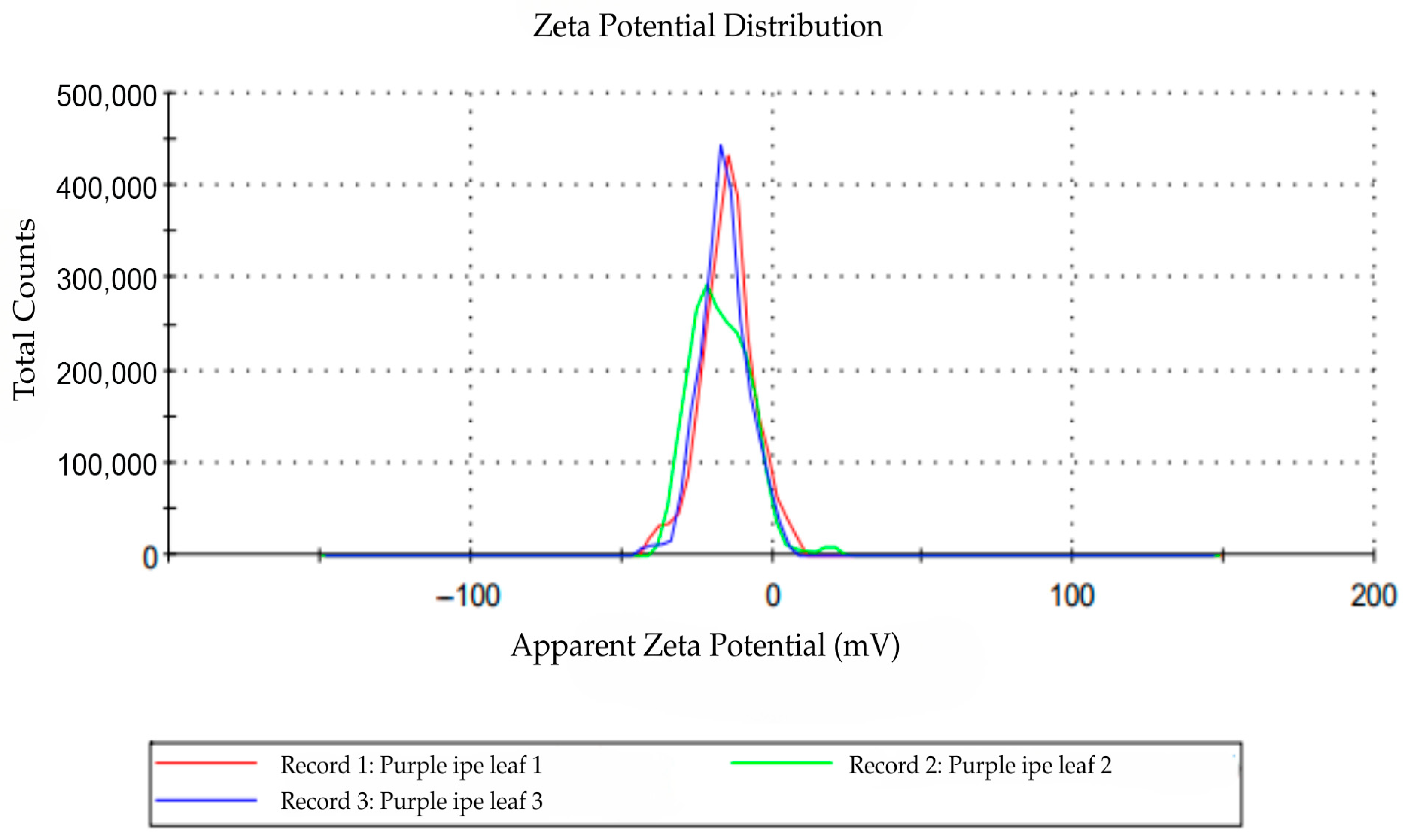
2.4. Determination of Point of Zero Charge (pHPZC) and Zeta Potential Distribution
2.5. Batch Adsorption Experiments
2.6. Continuous-Flow Column Adsorption
2.7. Adsorption Models
3. Results
3.1. Characterization
3.2. Batch Adsorption Experiments
4. Discussion
4.1. Material Characterization
4.2. Experimental Tests
4.3. Limitations and Suggestions for Future Research Tests
5. Conclusions
Supplementary Materials
Author Contributions
Funding
Data Availability Statement
Conflicts of Interest
Abbreviations
| AAS | Atomic Absorption Spectrometry |
| EDS | Energy Dispersive X Ray Spectroscopy |
| FAAS | Flame Atomic Absorption Spectrometer |
| FTIR | Fourier Transform Infrared Spectroscopy |
| MAS | Magic Angle Spinning |
| NMR | Nuclear Magnetic Resonance |
| P.A. | Pure Analyte |
| PFO | Pseudo first order |
| PSO | Pseudo second order |
| SD | Standard Deviation |
| SEM | Scanning Electron Microscopy |
References
- Gupta, V.K.; Ali, I. Environmental Water: Advances in Treatment, Remediation and Recycling; Elsevier: Amsterdam, The Netherlands, 2023. [Google Scholar]
- Saravanan, P.; Saravanan, V.; Rajeshkannan, R.; Arnica, G.; Rajasimman, M.; Baskar, G.; Pugazhendhi, A. Comprehensive review on toxic heavy metals in the aquatic system: Sources, identification, treatment strategies, and health risk assessment. Environ. Res. 2024, 258, 119440. [Google Scholar] [CrossRef] [PubMed]
- Atkins, P.W.; Jones, L.; Leroy, L. Chemical Principles: The Quest for Insight, 8th ed.; Macmillan Learning: New York, NY, USA, 2023; pp. 30–41, 162–172, 847–850. [Google Scholar]
- CETESB—Environmental Company of the State of São Paulo. Toxicological Information Sheet—Cobalt. Available online: https://cetesb.sp.gov.br/laboratorios/wp-content/uploads/sites/24/2022/02/Cobalto.pdf (accessed on 30 June 2025).
- CETESB—Environmental Company of the State of São Paulo. Toxicological Information Sheet—Cadmium. Available online: https://cetesb.sp.gov.br/laboratorios/wp-content/uploads/sites/24/2022/02/Cadmio.pdf (accessed on 30 June 2025).
- Wang, M.; Qu, R.; Sun, C.; Yin, P.; Chen, H. Dynamic adsorption behavior and mechanism of transition metal ions on silica gels functionalized with hydroxyl- or amino-terminated polyamines. Chem. Eng. J. 2013, 221, 264–274. [Google Scholar] [CrossRef]
- Badran, A.M.; Utra, U.; Yussof, N.S.; Bashir, M.J.K. Advancements in adsorption techniques for sustainable water purification: A focus on lead removal. Separations 2023, 10, 565. [Google Scholar] [CrossRef]
- Sharma, R.K.; Pandey, A.; Gulati, S.; Adholeya, A. An optimized procedure for preconcentration, determination and on-line recovery of palladium using highly selective diphenyldiketone-monothiosemicarbazone modified silica gel. J. Hazard. Mater. 2012, 209–210, 285–292. [Google Scholar] [CrossRef]
- Almeida-Naranjo, C.E.; Aguilar, A.D.; Valle, V.; Bastidas-Caldes, C.; Debut, A.; Sinchiguano, B. A circular bioeconomy approach to using post-bioadsorbent materials intended for the removal of domestic wastewater contaminants as potential reinforcements. Polymers 2024, 16, 1822. [Google Scholar] [CrossRef]
- Khatoon, H.; Rai, J. Agricultural waste materials as biosorbents for the removal of heavy metals and synthetic dyes: A review. Octa J. Environ. Res. 2016, 4, 208–229. [Google Scholar]
- Azevedo, F.A.; Chasin, A.A.M. (Eds.) Metals: Toxicity Management; Atheneu: São Paulo, Brazil, 2003; p. 554. [Google Scholar]
- Elgarahy, A.M.; Elwakeel, K.Z.; Mohammad, S.H.; Elshoubaky, G.A. A critical review of biosorption of dyes, heavy metals and metalloids from wastewater as an efficient and green process. Clean. Eng. Technol. 2021, 4, 100209. [Google Scholar] [CrossRef]
- Li, Z.; Yang, C. Regeneration and reusability of biosorbents: Current status and future perspectives. Sustain. Mater. Technol. 2024, 39, e00682. [Google Scholar]
- de Oliveira, F.A.; Borella, D.R.; Lopes, V.J.S.; Battirola, L.D.; Andrade, R.L.T.; Silva, A.C.d. Physiological Effects of Mercury on Handroanthus impetiginosus (Ipê Roxo) Plants. Agronomy 2025, 15, 736. [Google Scholar] [CrossRef]
- Nguyen, T.A.H.; Ngo, H.H.; Guo, W.S.; Zhang, J.; Liang, S.; Yue, Q.Y.; Li, Q.; Nguyen, T.V. Applicability of agricultural waste and by-products for adsorptive removal of heavy metals from wastewater. Bioresour. Technol. 2013, 148, 574–585. [Google Scholar] [CrossRef]
- Carmo, A.A.F.S.; Araújo, W.S.; Bernardi, A.C.C.; Saldanha, M.F.C. Plant Tissue Analysis Methods Used at Embrapa Solos, 6th ed.; Embrapa Solos: Rio de Janeiro, Brazil, 2000; pp. 21–34. [Google Scholar]
- Lagergren, S. Zur Theorie der sogenannten Adsorption gelöster Stoffe. K. Sven. Vetenskapsakademiens Handl. 1898, 24, 1–39. [Google Scholar]
- Ho, Y.S.; McKay, G. A comparison of chemisorption kinetic models applied to pollutant removal on various sorbents. Process Saf. Environ. Prot. 1998, 76, 332–340. [Google Scholar] [CrossRef]
- Langmuir, I. The adsorption of gases on plane surfaces of glass, mica and platinum. J. Am. Chem. Soc. 1918, 40, 1361–1403. [Google Scholar] [CrossRef]
- McKay, G. Use of Adsorbents for the Removal of Pollutants from Wastewaters; CRC Press: Boca Raton, FL, USA, 1996. [Google Scholar]
- Akaike, H. Information theory and an extension of the maximum likelihood principle. In Proceedings of the 2nd International Symposium on Information Theory, Tsahkadsor, Armenia, 2–8 September 1971; Petrov, B.N., Csaki, F., Eds.; Akadémiai Kiadó: Budapest, Hungary, 1973; pp. 267–281. [Google Scholar]
- Motulsky, H.; Christopoulos, A. Fitting Models to Biological Data Using Linear and Nonlinear Regression: A Practical Guide to Curve Fitting; Oxford University Press: New York, NY, USA, 2004. [Google Scholar]
- Gibbs, J.W. On the equilibrium of heterogeneous substances. Trans. Conn. Acad. Arts Sci. 1876, 3, 108–248. [Google Scholar] [CrossRef]
- Dubinin, M.M. The potential theory of adsorption of gases and vapors for adsorbents with energetically nonuniform surfaces. Chem. Rev. 1960, 60, 235–241. [Google Scholar] [CrossRef]
- Stuart, B.H. Infrared Spectroscopy: Fundamentals and Applications, 2nd ed.; Wiley: Hoboken, NJ, USA, 2023. [Google Scholar]
- Atalla, R.H.; VanderHart, D.L. Native cellulose: A composite of two distinct crystalline forms. Science 1984, 223, 283–285. [Google Scholar] [CrossRef] [PubMed]
- Wittry, D.B. Limitations of EDS for light element analysis. Microsc. Today 2020, 28, 30–35. [Google Scholar]
- Thompson, A.; Attwood, T.; Gullikson, E.M.; Howells, M.R.; Kortright, J.B.; Robinson, A.L.; Underwood, J.H. X-Ray Data Booklet, 3rd ed.; Lawrence Berkeley National Laboratory: Berkeley, CA, USA, 2009. [Google Scholar]
- Kosmulski, M. Surface Charging and Points of Zero Charge; CRC Press: Boca Raton, FL, USA, 2009. [Google Scholar]
- Chen, X. Modeling of experimental adsorption isotherm data. Information 2015, 6, 14–22. [Google Scholar] [CrossRef]
- Vigdorowitsch, M.; Pchelintsev, A.; Tsygankova, L.; Tanygina, E. Freundlich isotherm: An adsorption model complete framework. Appl. Sci. 2021, 11, 8078. [Google Scholar] [CrossRef]
- Al-Ghouti, M.A.; Da’ana, D.A. Guidelines for the use and interpretation of adsorption isotherm models: A review. J. Hazard. Mater. 2020, 393, 122383. [Google Scholar] [CrossRef]
- Popescu, C.M.; Popescu, M.C. FTIR spectroscopy for the analysis of cellulose and hemicellulose in lignocellulosic materials. Cellulose 2020, 27, 185–203. [Google Scholar]
- Ritchie, N.W.M.; Newbury, D.E. Challenges in performing EDS on low atomic number materials. Microsc. Today 2021, 29, 20–27. [Google Scholar]
- Guo, Q.; Chen, X.; Liu, H. Experimental research on shape and size distribution of biomass particles. Fuel 2012, 94, 551–555. [Google Scholar] [CrossRef]
- Barthlott, W. Epidermal and seed surface characters of plants: Systematic applicability and some evolutionary aspects. Nord. J. Bot. 1981, 1, 345–355. [Google Scholar] [CrossRef]
- Ezzeddine, Z.; Batonneau-Gener, I.; Ghssein, G.; Pouilloux, Y. Recent advances in heavy metal adsorption via organically modified mesoporous silica: A review. Water 2025, 17, 669. [Google Scholar] [CrossRef]
- Pasta, P.C. Analysis of the Adsorption of Organic and Inorganic Contaminants from Aqueous Samples on Different Biosorbents. Master’s Thesis, Institute of Biosciences, São Paulo State University, Botucatu, Brazil, 2019. [Google Scholar]
- Silva, A.C.P. Functionalization of Activated Carbon with Melamine Ligand for Adsorption of Metallic Species from Aqueous Media. Ph.D. Thesis, Institute of Biosciences, São Paulo State University “Júlio de Mesquita Filho”, São Paulo, Brazil, 2022. [Google Scholar]
- Jorgetto, A.O.; Silva, R.I.V.; Saeki, M.J.; Barbosa, R.C.; Martines, M.A.U.; Jorge, S.M.A.; Silva, A.C.P.; Schneider, J.F.; Castro, G.R. Cassava root husks powder as green adsorbent for the removal of Cu(II) from natural river water. Appl. Surf. Sci. 2014, 288, 356–362. [Google Scholar] [CrossRef]
- Hunter, R.J. Zeta Potential in Colloid Science, 1st ed.; Academic Press: London, UK, 1981; pp. 11–58, 219–304. [Google Scholar]
- Najahi, A.; Tarrés, Q.; Mutjé, P.; Delgado-Aguilar, M.; Putaux, J.-L.; Boufi, S. Lignin-containing cellulose nanofibrils from TEMPO-mediated oxidation of date palm waste: Preparation, characterization, and reinforcing potential. Nanomaterials 2023, 13, 126. [Google Scholar] [CrossRef]
- Hiemenz, P.C.; Rajagopalan, R. Principles of Colloid and Surface Chemistry, 3rd ed.; CRC Press: Boca Raton, FL, USA, 2016; pp. 297–354. [Google Scholar]
- Cacua, K.; Ordoñez Ramos, F.; Zapata Hernandez, C.; Herrera, B.; Pabón, E.; Buitrago-Sierra, R. Surfactant concentration and pH effects on the zeta potential values of alumina nanofluids to inspect stability. Colloids Surf. A Physicochem. Eng. Asp. 2019, 583, 123960. [Google Scholar] [CrossRef]
- Mudhoo, A.; Pittman, C.U., Jr. The Dubinin-Radushkevich models: Dissecting the ps/p to cs/ce replacement in solid-aqueous interfacial adsorption and tracking the validity of E = 8 kJ mol–1 for assigning sorption type. Chem. Eng. Res. Des. 2023, 198, 370–402. [Google Scholar] [CrossRef]
- Foo, K.Y.; Hameed, B.H. Insights into the modeling of adsorption isotherm systems. Chem. Eng. J. 2010, 156, 2–10. [Google Scholar] [CrossRef]
- Mahan, B.M.; Myers, R.J. University Chemistry, 4th ed.; Pearson Education: Upper Saddle River, NJ, USA, 2009; pp. 446–452. [Google Scholar]
- Pearson, R.G. Hard and soft acids and bases. J. Am. Chem. Educ. 1963, 85, 3533–3539. [Google Scholar] [CrossRef]
- Perin, P.J.G.; Silva, T.; Gregnanin, B.P.; Silva, A.C.P.; Faria, M.V.A.; Saeki, M.J.; Pedrosa, V.A.; Castro, G.R. Application of polyurethane foam as an adsorbent for Co(II) removal from aqueous samples. In Open Science Research XIII, 13th ed.; Scientific Digital Publisher: São Paulo, Brazil, 2023; Volume 13, pp. 308–323. [Google Scholar]
- Silva, T.; Gregnanin, B.P.; Pasta, P.C.; Silva, A.C.P.; Almeida, G.M.; Schneider, J.F.; Saeki, M.J.; Pedrosa, V.A.; Castro, G.R. Mulberry leaf (Morus nigra L.) as a biosorbent for adsorption of copper, zinc, and cobalt from aqueous samples. In Materials Science and Engineering: Research Principles and Fundamentals, 1st ed.; Andrade, P.L., Ribeiro, I.M., Eds.; Scientific Digital Publisher: São Paulo, Brazil, 2022; Volume 2, pp. 74–92. [Google Scholar]
- Vilvanathan, S.; Shanthakumar, S. Biosorption of Co(II) ions from aqueous solution using Chrysanthemum indicum: Kinetics, equilibrium and thermodynamics. Process Saf. Environ. Prot. 2015, 96, 98–110. [Google Scholar] [CrossRef]
- Díaz, A.; Marrero, J.; Cabrera, G.; Coto, O.; Gómez, J.M. Optimization of nickel and cobalt biosorption by native Serratia marcescens strains isolated from serpentine deposits using response surface methodology. Environ. Monit. Assess. 2022, 194, 167. [Google Scholar] [CrossRef] [PubMed]
- Bhatnagar, A.; Minocha, A.K.; Sillanpää, M. Adsorptive removal of cobalt from aqueous solution by utilizing lemon peel as biosorbent. Biochem. Eng. J. 2010, 48, 181–186. [Google Scholar] [CrossRef]
- Javed, M.A.; Bhatti, H.N.; Hanif, M.A.; Nadeem, R. Kinetic and equilibrium modeling of Pb(II) and Co(II) sorption onto rose waste biomass. Sep. Sci. Technol. 2007, 42, 3641–3656. [Google Scholar] [CrossRef]
- Salem, D.M.S.A.; Moawad, M.N.; El-Sayed, A.A.M. Comparative study for bioremediation of cobalt contaminated aqueous solutions by two types of marine macroalgae. Egypt. J. Aquat. Res. 2021, 47, 13–19. [Google Scholar] [CrossRef]
- Jorgetto, A.O.; Silva, A.C.P.; Wondracek, M.H.P.; Silva, R.I.V.; Velini, E.D.; Saeki, M.J.; Pedrosa, V.A.; Castro, G.R. Multilayer adsorption of Cu(II) and Cd(II) over Brazilian orchid tree (pata-de-vaca) and its adsorptive properties. Appl. Surf. Sci. 2015, 345, 81–89. [Google Scholar] [CrossRef]
- Jorgetto, A.O.; Silva, A.C.P.; Cavecci, B.; Barbosa, R.C.; Martines, M.A.U.; Castro, G.R. Cassava root husks as a sorbent material for the uptake and preconcentration of cadmium(II) from aqueous media. Orbital 2013, 5, 206–212. [Google Scholar]
- Ling, J.; Gao, Y.; Wang, R.; Lu, S.; Li, X.; Liu, S.; Liu, J. Adsorption of Pb2+ and Cd2+ from aqueous solutions by porous carbon foam derived from biomass phenolic resin. Int. J. Mol. Sci. 2025, 26, 7302. [Google Scholar] [CrossRef]
- Van, H.T.; Nguyen, L.H.; Nguyen, X.H.; Nguyen, T.H.; Nguyen, T.V.; Vigneswaran, S.; Tran, H.N. Characteristics and mechanisms of cadmium adsorption onto biogenic aragonite shells-derived biosorbent: Batch and column studies. J. Environ. Manag. 2019, 241, 535–548. [Google Scholar] [CrossRef]
- Silva, A.C.P.; Jorgetto, A.O.; Wondracek, M.H.P.; Saeki, M.J.; Pedrosa, V.A.; Colmenares, Y.N.; Castro, G.R. A global pollutant (PVC—Polyvinyl chloride) applied as a heavy metal ligand from aqueous samples: Green principles from synthesis to application. Environ. Technol. 2022, 43, 3742–3754. [Google Scholar] [CrossRef]
- Sarangi, N.V.; Rajkumar, R.; Kumar, N.S.; Arunkumar, P.; Alromaeh, A.I.; Alreshaidan, S.B.; Al-Fatesh, A.S. Seaweed biosorption: A green solution for heavy metal remediation in aquatic and soil environments. Desalination Water Treat. 2025, 321, 101036. [Google Scholar] [CrossRef]
- Luo, H.; Xie, S.; Dai, X.; Wang, Q.; Yang, Y. Biomass decomposition and heavy metal release from seaweed litter, Gracilaria lemaneiformis, and secondary pollution evaluation. J. Environ. Manag. 2022, 310, 114729. [Google Scholar] [CrossRef] [PubMed]
- Wang, J.; Chen, C. Biosorbents for heavy metal removal and their future. Biotechnol. Adv. 2009, 27, 195–226. [Google Scholar] [CrossRef] [PubMed]


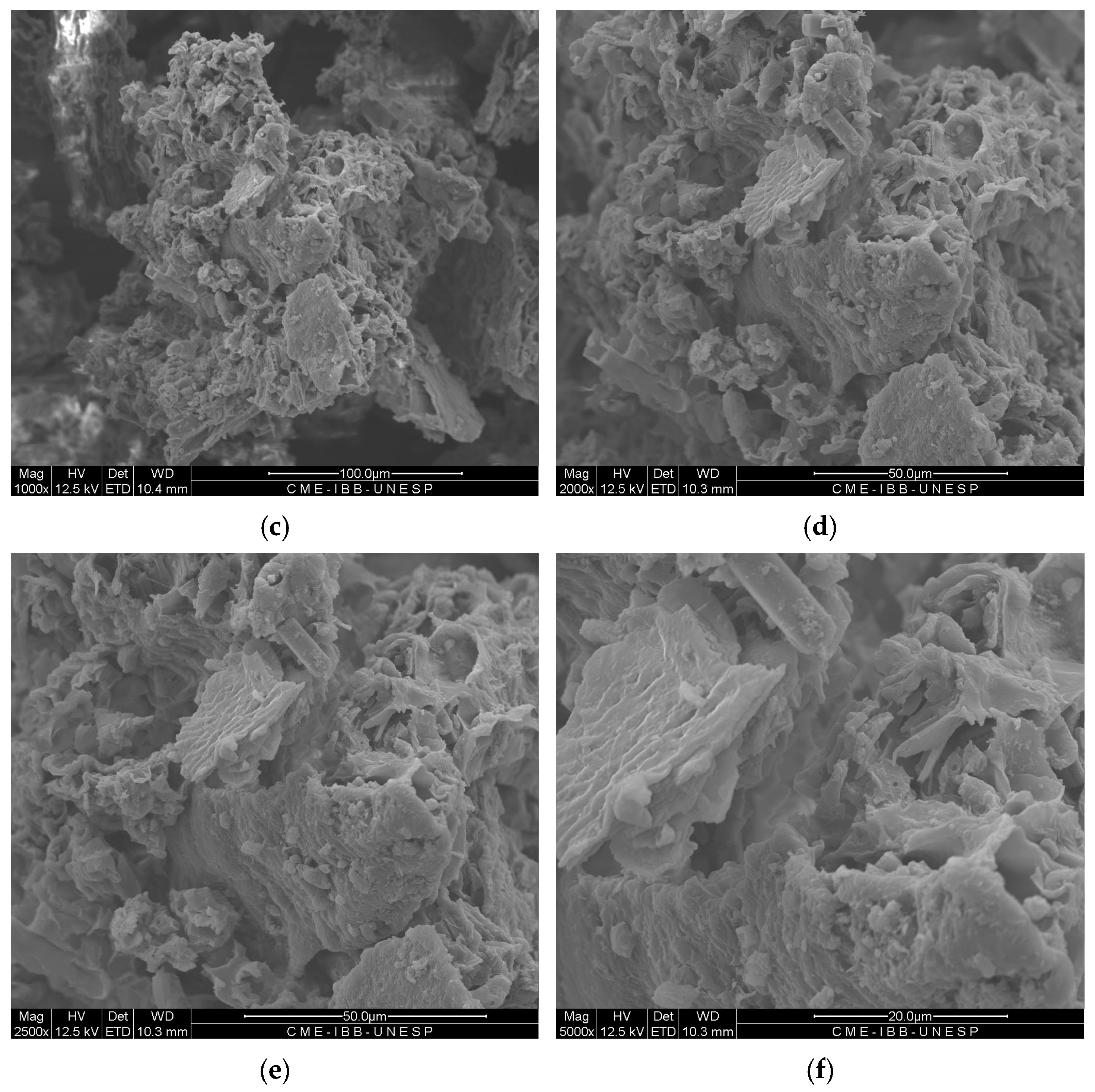



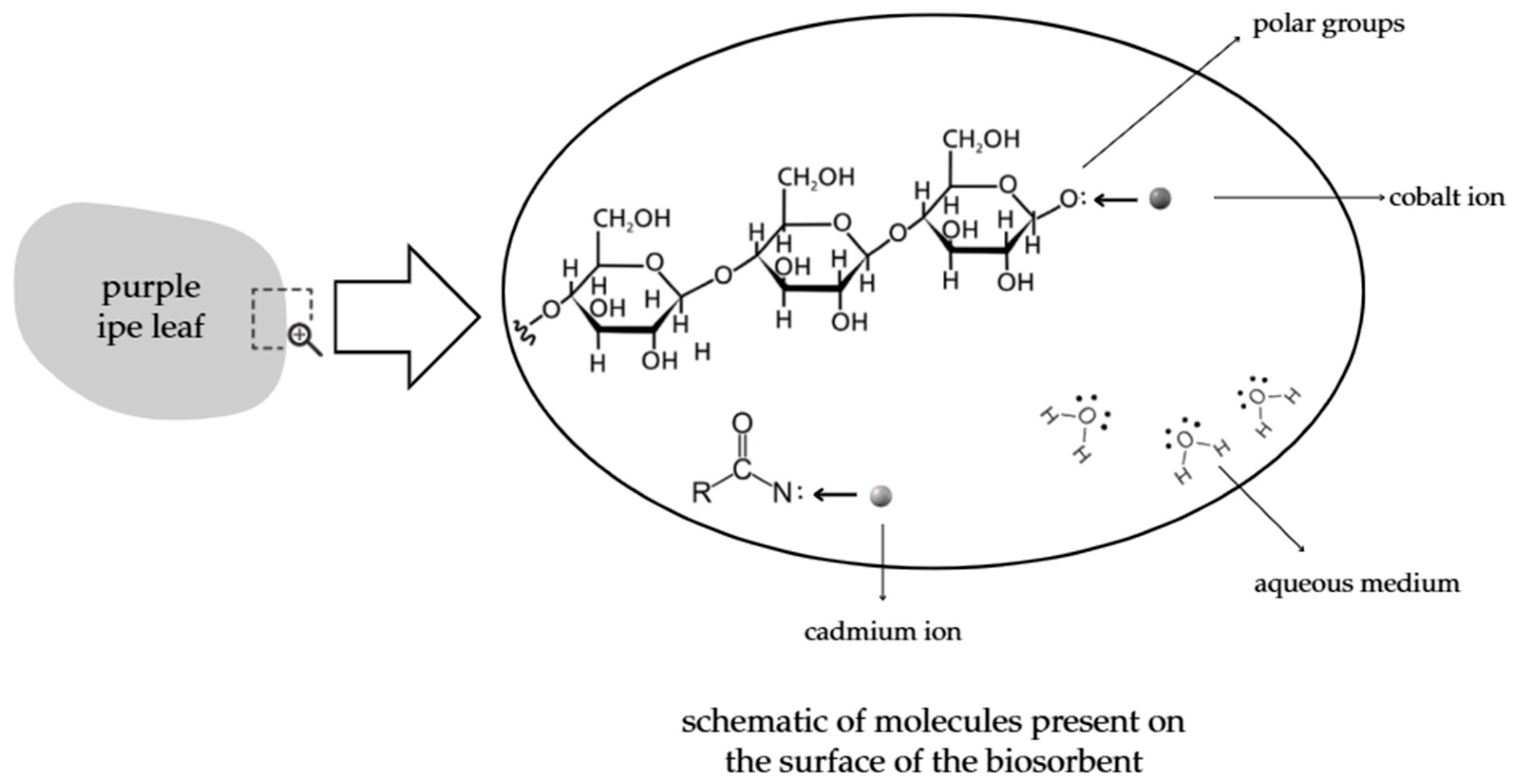

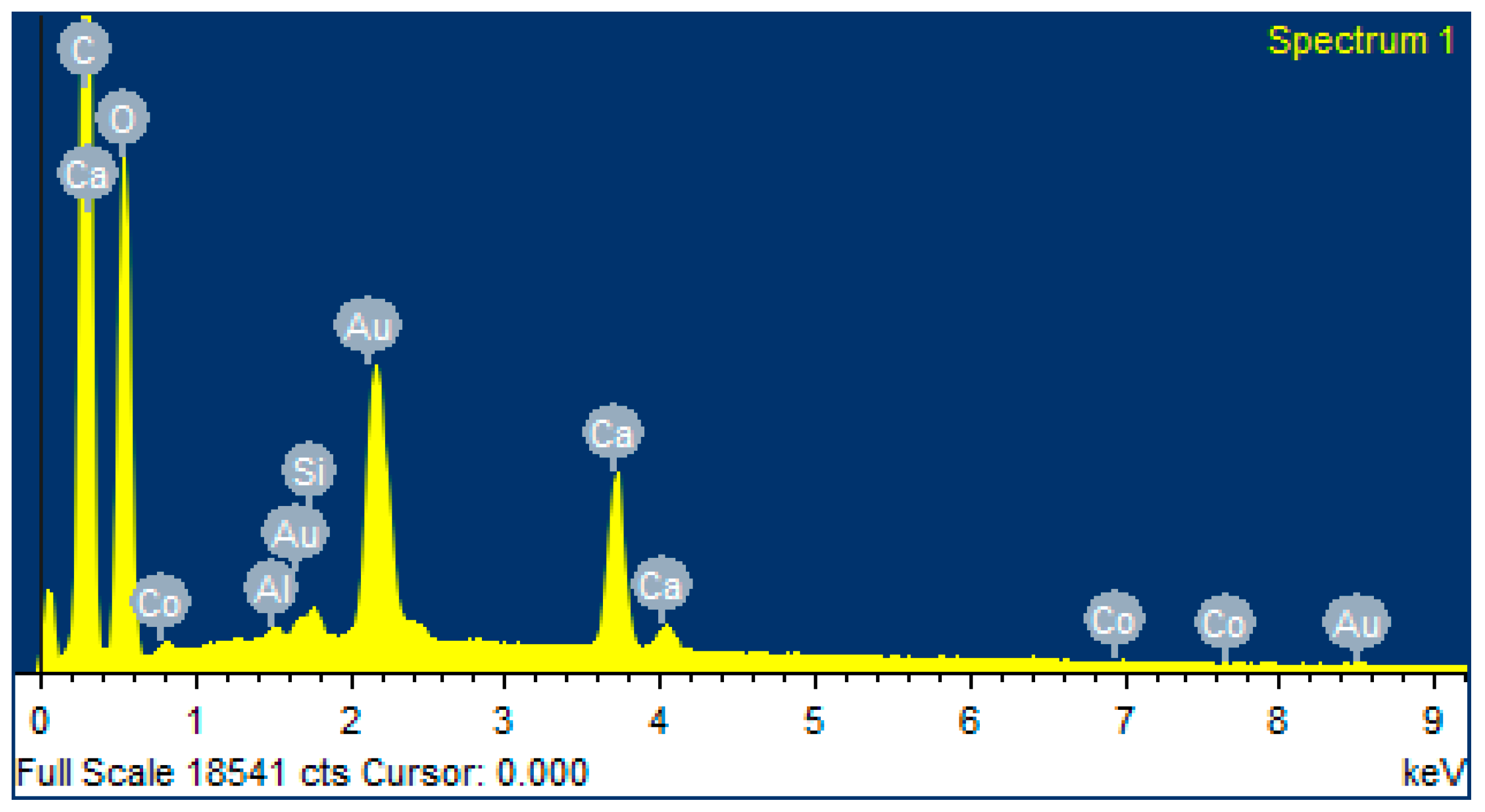
| Chemical Elements (K 1 s Layer) | Mass Concentration (%) |
|---|---|
| C | 54.58 |
| O | 33.40 |
| Al | 0.13 |
| Si | 0.21 |
| Ca | 2.87 |
| Co | 0.07 |
| Au | 8.75 |
| Nitrogen (g kg−1) | Sulfur (g kg−1) |
|---|---|
| 19 | 0.8 |
| Parameter | Value |
|---|---|
| Zeta potential (mV) | −14.7 ± 8.89 |
| Dominant peak | −14.7 (100% area) |
| Conductivity (mS/cm) | 0.0279 ± 0.0005 |
| Count rate | 183.3 |
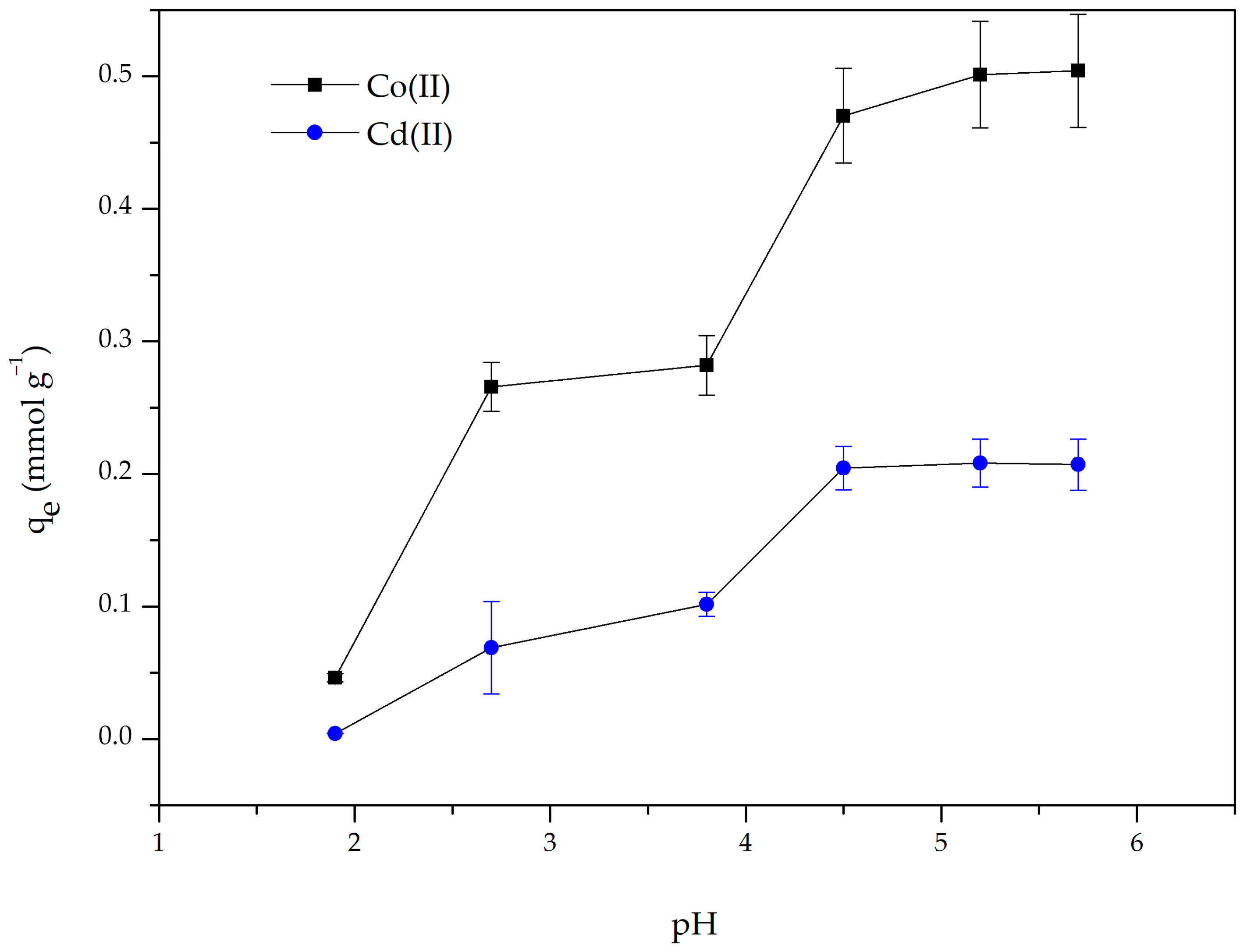
| pH | Co(II) | Cd(II) |
|---|---|---|
| (mmol g−1) | (mmol g−1) | |
| 1 | 0.04627 ± 0.00312 | 0.00404 ± 0.00024 |
| 2 | 0.26556 ± 0.01850 | 0.04587 ± 0.03480 |
| 3 | 0.28191 ± 0.02240 | 0.10158 ± 0.00894 |
| 4 | 0.47029 ± 0.03580 | 0.20445 ± 0.01630 |
| 5 | 0.50130 ± 0.04020 | 0.20808 ± 0.01810 |
| 6 | 0.50415 ± 0.04260 | 0.20706 ± 0.01940 |
| Metrics | Co(II) | Cd(II) |
|---|---|---|
| RMSE | 0.0416 | 0.01035 |
| AIC | −32.15 | −48.85 |
| BIC | −32.78 | −49.48 |
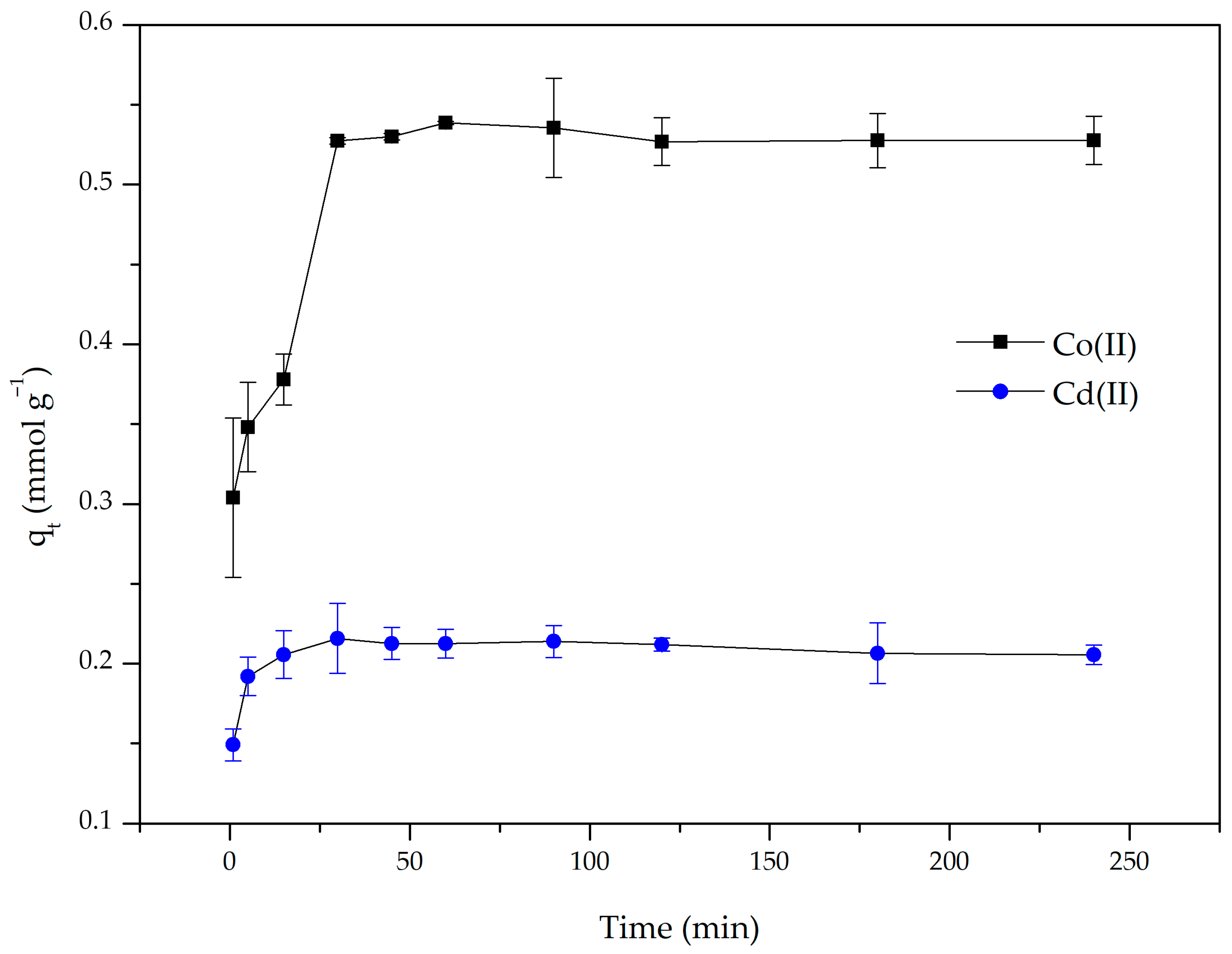
| Time (min) | Co(II) | Cd(II) |
|---|---|---|
| (mmol g−1) | (mmol g−1) | |
| 1 | 0.304 ± 0.111 | 0.149 ± 0.010 |
| 5 | 0.348 ± 0.028 | 0.192 ± 0.012 |
| 15 | 0.378 ± 0.016 | 0.206 ± 0.015 |
| 30 | 0.527 ± 0.002 | 0.216 ± 0.022 |
| 45 | 0.530 ± 0.002 | 0.213 ± 0.010 |
| 60 | 0.539 ± 0.001 | 0.213 ± 0.009 |
| 90 | 0.535 ± 0.031 | 0.214 ± 0.010 |
| 120 | 0.527 ± 0.015 | 0.212 ± 0.004 |
| 180 | 0.528 ± 0.017 | 0.207 ± 0.019 |
| 240 | 0.528 ± 0.015 | 0.206 ± 0.006 |
| Model | Specie | R2 | (mmol g−1) | 95% CI ) | k | 95% CI (k) | RMSE | AIC | BIC |
|---|---|---|---|---|---|---|---|---|---|
| Pseudo-First Order | Co(II) | 0.443 | 0.496 | 0.448–0.545 | 0.82 min−1 | 0.157–1.48 | 0.065 | −54.6 | −54.0 |
| Cd(II) | 0.886 | 0.209 | 0.198–0.219 | 1.25 min−1 | 0.843–1.651 | 0.006 | −101.1 | −100.5 | |
| Pseudo-Second Order | Co(II) | 0.695 | 0.520 | 0.479–0.561 | 1.65 g mmol−1 min−1 | 0.338–2.958 | 0.048 | −60.6 | −60.0 |
| Cd(II) | 0.961 | 0.212 | 0.204–0.220 | 11.02 g mmol−1 min−1 | 7.86–14.18 | 0.004 | −111.9 | −111.3 |
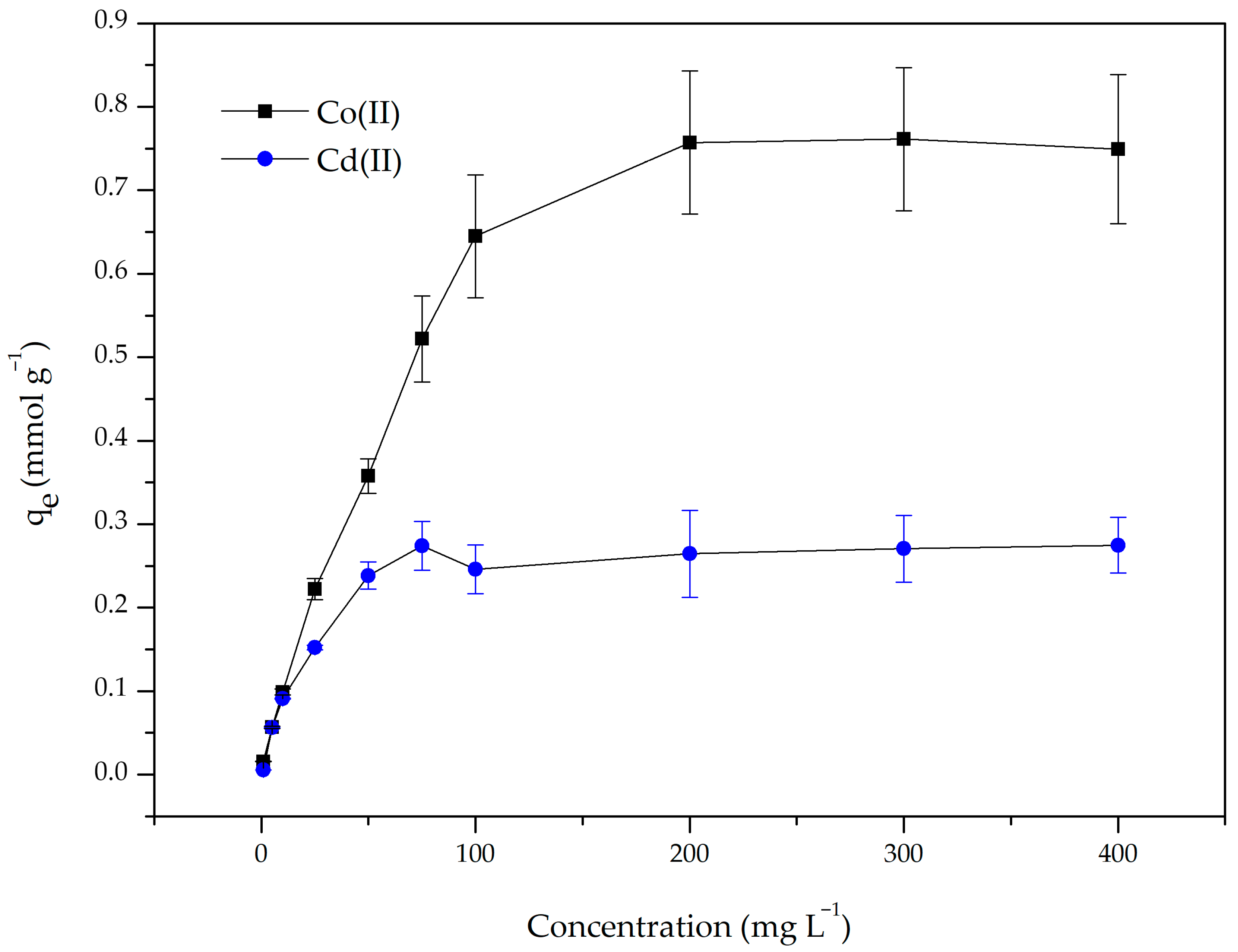
(mg L−1) | Co(II) | Cd(II) |
|---|---|---|
| (mmol g−1) | (mmol g−1) | |
| 1 | 0.016 ± 0.00023 | 0.00552 ± 0.00009 |
| 5 | 0.057 ± 0.00119 | 0.0565 ± 0.00054 |
| 10 | 0.099 ± 0.00347 | 0.091 ± 0.00066 |
| 25 | 0.223 ± 0.0128 | 0.152 ± 0.00302 |
| 50 | 0.360 ± 0.0207 | 0.238 ± 0.0162 |
| 75 | 0.526 ± 0.0516 | 0.274 ± 0.0292 |
| 100 | 0.649 ± 0.0737 | 0.225 ± 0.0292 |
| 200 | 0.756 ± 0.0859 | 0.264 ± 0.0520 |
| 300 | 0.763 ± 0.0856 | 0.261 ± 0.0400 |
| 400 | 0.711 ± 0.0892 | 0.275 ± 0.0334 |
| Model | q Theoretical (mmol g−1) | IC 95% (q) | R2 | K | IC 95% (K) | n | IC 95% (n) | RMSE | AIC | BIC |
|---|---|---|---|---|---|---|---|---|---|---|
| Langmuir | = 0.823 | 0.791–0.855 | 0.997 | = 3.20 L mmol−1 | 2.66–3.73 | — | — | 0.0170 | −77.40 | −76.8 |
| Freundlich | = 0.422 | — | 0.926 | = 0.511 mmol g−1(L mmol−1)1/n | 0.433–0.590 | 3.38 | 2.22–4.54 | 0.080 | −46.60 | −46.0 |
| Model | q Theoretical (mmol g−1) | IC 95% (q) | R2 | K | IC 95% (K) | n | IC 95% (n) | RMSE | AIC | BIC |
|---|---|---|---|---|---|---|---|---|---|---|
| Langmuir | = 0.270 | 0.256–0.284 | 0.980 | = 50.9 L mmol−1 | 32.9–68.9 | — | — | 0.0138 | −55.31 | −52.71 |
| Freundlich | = 0.276 | — | 0.910 | = 0.055 mmol g−1(L mmol−1)1/n | 0.04–0.07 | 5.31 | 3.6–7.0 | 0.0292 | −38.32 | −37.72 |
| Metal Ion | ΔG° | |
|---|---|---|
| (L mmol−1) | (kJ mol−1) | |
| Co(II) | 3.20 | −20.0 |
| Cd(II) | 50.9 | −27.0 |
| Metal Ion | β | ε | |
|---|---|---|---|
| (mmol g−1) | (mol2 kJ−2) | (kJ mol−1) | |
| Co(II) | 0.730 | 207.0 | 0.049 |
| Cd(II) | 0.254 | 22.25 | 0.150 |
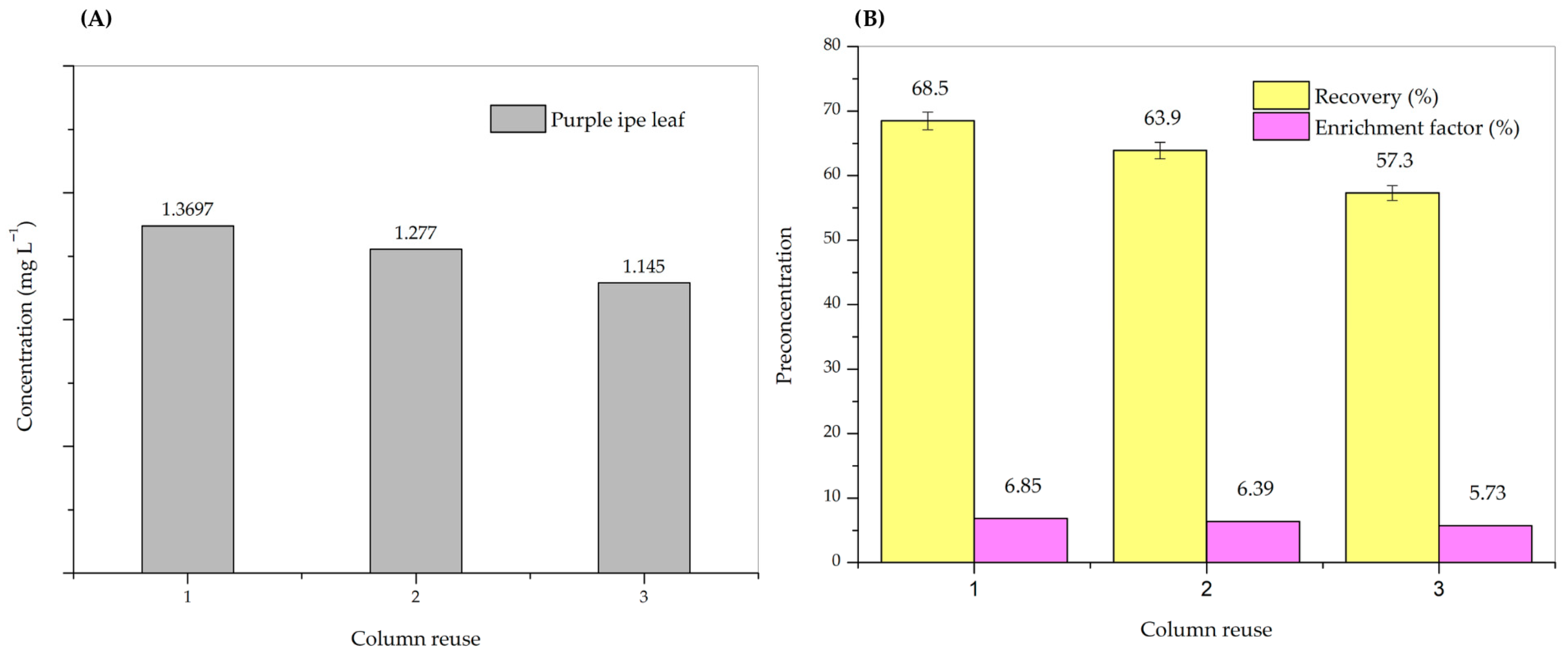
| Column | Eluate Volume (mL) | (mg L−1) | Enrichment Factor | Recovery (%) |
|---|---|---|---|---|
| 1 | 5 | 1.3697 | 6.85 | 68.5 |
| 2 | 5 | 1.2770 | 6.39 | 63.9 |
| 3 | 5 | 1.1450 | 5.73 | 57.3 |
| Adsorbent | Nitrogen (g kg−1) | Sulfur (g kg−1) | Reference |
|---|---|---|---|
| Brachyura shell | 19.0 | 0.9 | [38] |
| TABOA | 13.0 | 0.8 | [38] |
| Activated carbon functionalized with melamine | 24.8 | — | [39] |
| Cassava root husks powder | 10.2 | 6.0 | [40] |
| Purple ipe leaf | 19.0 | 0.8 | * |
| Adsorption Capacity (mmol g−1) | |||
|---|---|---|---|
| Adsorbent | Co(II) | Cd(II) | Reference |
| Polyurethane foam | 0.011 | – | [49] |
| Blackberry leaf | 0.195 | – | [50] |
| Indian Chrysanthemum Flower | 0.251 | – | [51] |
| Serratia marcescens | 0.337 | – | [52] |
| Lemon peel | 0.373 | – | [53] |
| Biomass from rose waste | 0.460 | – | [54] |
| Ulva fasciata | 0.678 | – | [55] |
| Orchid Tree | – | 0.113 | [56] |
| Cassava root husks powder | – | 0.140 | [57] |
| Modified carbon foam | – | 0.197 | [58] |
| Freshwater mussel shell | – | 0.230 | [59] |
| Activated Carbon with Melamine | – | 0.279 | [39] |
| PVC-AHTT | – | 0.320 | [60] |
| Brachyura carapace | – | 0.430 | [38] |
| Purple ipe leaf | 0.823 | 0.270 | * |
Disclaimer/Publisher’s Note: The statements, opinions and data contained in all publications are solely those of the individual author(s) and contributor(s) and not of MDPI and/or the editor(s). MDPI and/or the editor(s) disclaim responsibility for any injury to people or property resulting from any ideas, methods, instructions or products referred to in the content. |
© 2026 by the authors. Licensee MDPI, Basel, Switzerland. This article is an open access article distributed under the terms and conditions of the Creative Commons Attribution (CC BY) license.
Share and Cite
Gregnanin, B.P.; da Silva, T.; Molina, M.V.N.F.; da Silva, A.C.P.; Corrêa, D.R.N.; Saeki, M.J.; Schneider, J.F.; Pedrosa, V.d.A.; Utrera Martines, M.A.; de Castro, G.R. Purple Ipe Leaf as a Sustainable Biosorbent for the Removal of Co(II) and Cd(II) Ions from Aqueous Samples. Sustainability 2026, 18, 612. https://doi.org/10.3390/su18020612
Gregnanin BP, da Silva T, Molina MVNF, da Silva ACP, Corrêa DRN, Saeki MJ, Schneider JF, Pedrosa VdA, Utrera Martines MA, de Castro GR. Purple Ipe Leaf as a Sustainable Biosorbent for the Removal of Co(II) and Cd(II) Ions from Aqueous Samples. Sustainability. 2026; 18(2):612. https://doi.org/10.3390/su18020612
Chicago/Turabian StyleGregnanin, Bárbara Poso, Toncler da Silva, Marcos Vinícius Nunes Filipovitch Molina, Adrielli Cristina Peres da Silva, Diego Rafael Nespeque Corrêa, Margarida Juri Saeki, José Fábian Schneider, Valber de Albuquerque Pedrosa, Marco Antonio Utrera Martines, and Gustavo Rocha de Castro. 2026. "Purple Ipe Leaf as a Sustainable Biosorbent for the Removal of Co(II) and Cd(II) Ions from Aqueous Samples" Sustainability 18, no. 2: 612. https://doi.org/10.3390/su18020612
APA StyleGregnanin, B. P., da Silva, T., Molina, M. V. N. F., da Silva, A. C. P., Corrêa, D. R. N., Saeki, M. J., Schneider, J. F., Pedrosa, V. d. A., Utrera Martines, M. A., & de Castro, G. R. (2026). Purple Ipe Leaf as a Sustainable Biosorbent for the Removal of Co(II) and Cd(II) Ions from Aqueous Samples. Sustainability, 18(2), 612. https://doi.org/10.3390/su18020612