Article

Assessment of Mercury Levels in Amazonian Fishes of the Nanay River, Loreto, Peru: Implications for Human Consumption


by
Javier Del Águila Chávez
1,
Lizeth Roxana Grandez Mori
2,
Lady María Ruiz Angulo
2,
Alenguer Alva Arévalo
2,
Jessy Vásquez Chumbe
2 and
Rommel R. Rojas Zamora
3,*
1
Departamento de Hidrobiología, Facultad de Ciencias Biológicas, Universidad Nacional de la Amazonia Peruana (UNAP), Iquitos 16004, Peru
2
Facultad de Industrias Alimentarias, Universidad Nacional de la Amazonia Peruana (UNAP), Iquitos 16004, Peru
3
Departamento de Ecología y Fauna, Facultad de Ciencias Biológicas, Centro de Investigación de Recursos Naturales-CIRNA, Universidad Nacional de la Amazonia Peruana (UNAP), Iquitos 16004, Peru
*
Author to whom correspondence should be addressed.
Sustainability 2026, 18(2), 552; https://doi.org/10.3390/su18020552
Submission received: 13 August 2025 / Revised: 30 October 2025 / Accepted: 10 November 2025 / Published: 6 January 2026
(This article belongs to the Section Social Ecology and Sustainability)

Abstract

Mercury exposure associated with fish consumption remains a significant public-health concern in the Amazon Basin. Here, we quantified total mercury (T-Hg) in muscle of five fish species from the Alto Nanay River (Loreto, Peru) across wet and dry seasons to characterize contamination patterns and implications for human consumers. Across all species, T-Hg ranged from 0.16 to 3.79 mg kg−1. The highest mean burdens occurred in piscivores: Pseudoplatystoma punctifer (2.63 ± 1.03 mg kg−1, 1.60–3.66; n = 6) and Cichla monoculus (2.43 ± 0.26 mg kg−1, 2.17–2.69; n = 6), exceeding a widely used food-safety guideline (0.5 mg kg−1). Mean concentrations were higher in the wet season (1.68 ± 0.94 mg kg−1; n = 15) than in the dry season (1.31 ± 0.54 mg kg−1; n = 15), with a difference of 0.37 mg kg−1 (≈28% increase). Linear regression analyses indicated low–moderate size-dependence of T-Hg (standard length R2 = 0.19; total length R2 = 0.20; total weight R2 = 0.12; all p < 0.05). These findings show that two piscivorous species from the Alto Nanay frequently exceed recommended limits for safe human consumption and highlight the need for continuous monitoring and species- and size-specific fish-consumption advisories to protect Amazonian riverine communities.

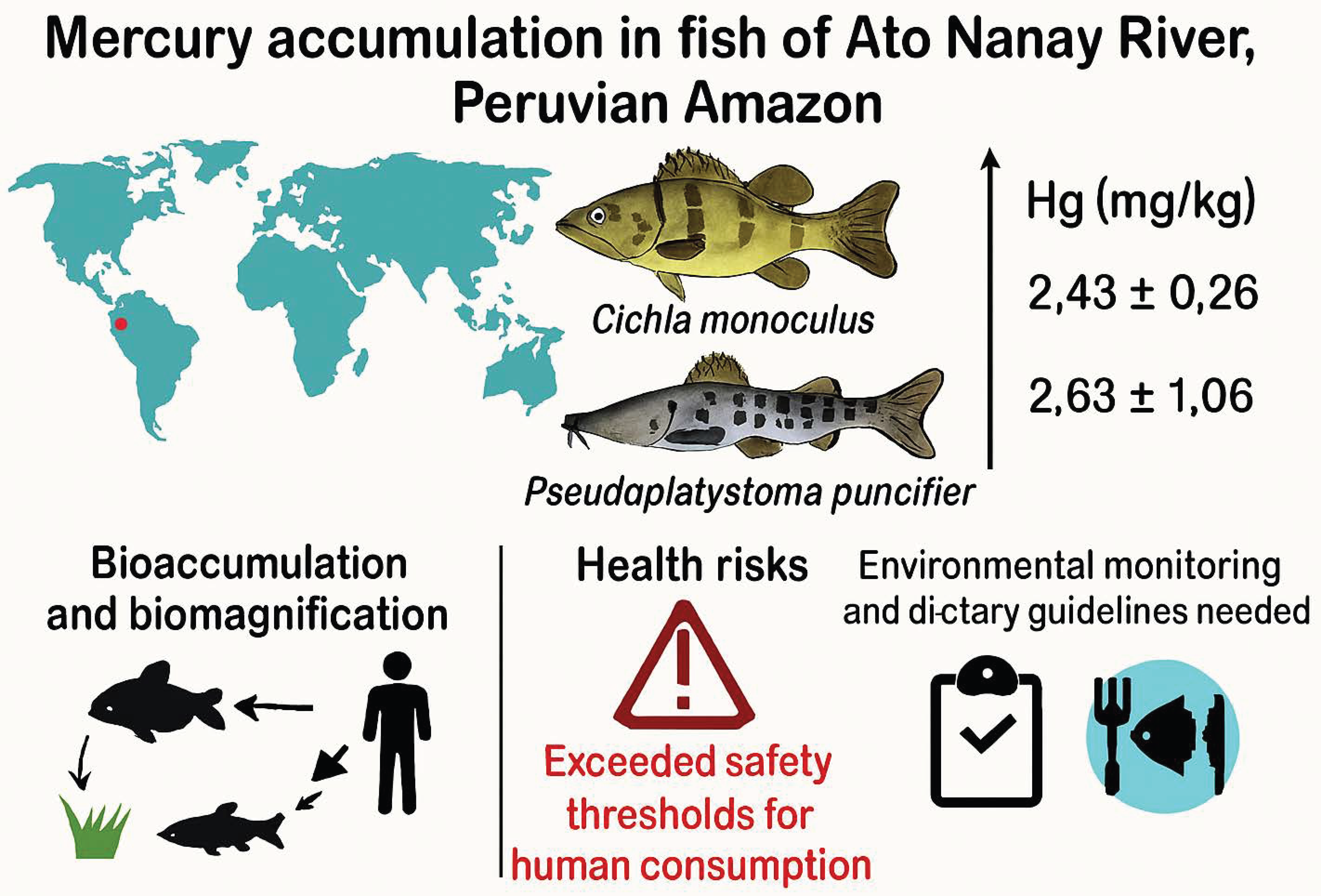
Graphical Abstract

1. Introduction

Mercury contamination is an escalating environmental and public-health challenge in Amazonian freshwater ecosystems, shaped by natural geochemical processes and intensifying human activities. In aquatic environments, mercury occurs as elemental (Hg0), inorganic (Hg2+), and organic species, which differ in transport, transformation, and toxicity [1]. Although geogenic inputs (e.g., rock weathering, leaching, and atmospheric deposition) sustain background levels [2], anthropogenic sources such as industrial effluents, agricultural runoff, domestic wastewater, and especially artisanal and small-scale gold mining have markedly increased mercury loads across the Amazon Basin in recent decades [3,4].
Once introduced, mercury is efficiently retained in sediments where anaerobic microorganisms, particularly sulfate- and iron-reducing bacteria, methylate inorganic Hg2+ to methylmercury (MeHg), the most toxic and bioavailable form [5]. The flood-pulse hydrology characteristic of Amazonian rivers, together with redox oscillations and organic-matter enrichment in blackwater tributaries, enhances methylation and sustains long-lived sedimentary reservoirs [6]. MeHg subsequently enters aquatic food webs via benthic and periphytic communities (e.g., periphyton, epilithon, episammon, epipelon), forming the trophic foundation for diverse fish assemblages [7]. Within fish tissues, MeHg binds strongly to muscle proteins, promoting bioaccumulation; concentrations thereby increase with trophic position and age, such that long-lived piscivores often exhibit the highest burdens [8].
These processes have substantial implications for Amazonian riverine populations, for whom fish can supply up to 90% of dietary protein intake [9]. In humans, MeHg is efficiently absorbed (>90%) and distributed to neural and muscular tissues; a biological half-life of ~70 days facilitates cumulative retention [10,11]. Chronic exposures exceeding 0.1 µg MeHg kg−1 day−1—the commonly cited reference dose—have been associated with neurodevelopmental impairment, hematological alterations, and cardiovascular dysfunction [12,13]. Risks are greatest for vulnerable groups such as children and pregnant women, underscoring the need for ecosystem-based risk assessments in fish-dependent communities.
The Alto Nanay River basin (department of Loreto, northeastern Peru) is a blackwater tributary of high ecological diversity and substantial socio-economic importance. Administratively, it lies within the Alto Nanay District (Maynas Province), which comprises ~80 rural settlements, including San Juan de Ungurahual and Diamante Azul, whose livelihoods rely heavily on subsistence and artisanal fisheries. The basin faces increasing pressures from illegal gold mining, particularly suction-dredge operations (“dragas”) that resuspend contaminated sediments and re-mobilize previously sequestered mercury. Reported sediment concentrations range from 1.63 to 3.03 ppm [14], and biomonitoring indicates that ~79% of residents exceed World Health Organization reference thresholds for total mercury exposure [15]. However, temporally resolved, species-specific assessments remain scarce, limiting the capacity to trace exposure pathways and design effective mitigation.
Accordingly, this study (i) quantifies total mercury (T-Hg) in dorsal muscle of five commercially important fish species from the Alto Nanay River, and (ii) evaluates potential human-health risks using estimated daily intake, Target Hazard Quotient and maximum allowable fish-consumption frequency. The findings establish a detailed baseline for the basin, identify species exceeding international safety limits, and provide evidence to inform community-based policies and sustainable fish-consumption advisories.

2. Materials and Methods

2.1. Sample Collection

Five commercial, commonly consumed species were sampled. A total of 30 specimens were collected, including four piscivorous species: Hoplias malabaricus (“fasaco”, n = 6), Pseudoplatystoma punctifer (“doncella”, n = 6), Pimelodus blochii (“bagre”, n = 6), and Cichla monoculus (“tucunaré”, n = 6), and one detritivorous species: Semaprochilodus insignis (“yaraqui”, n = 6). The fish were captured using traditional fishing gear employed by local fishers, including gillnets and hand lines, to minimize stress and avoid biases associated with selective methods. Specimens ages were indirectly estimated from standard length and total weight, following regional growth references for each species. Juveniles were excluded from the study. The standard length, total length, total weight, of the specimens were also measured (Supplementary Material Table S1).
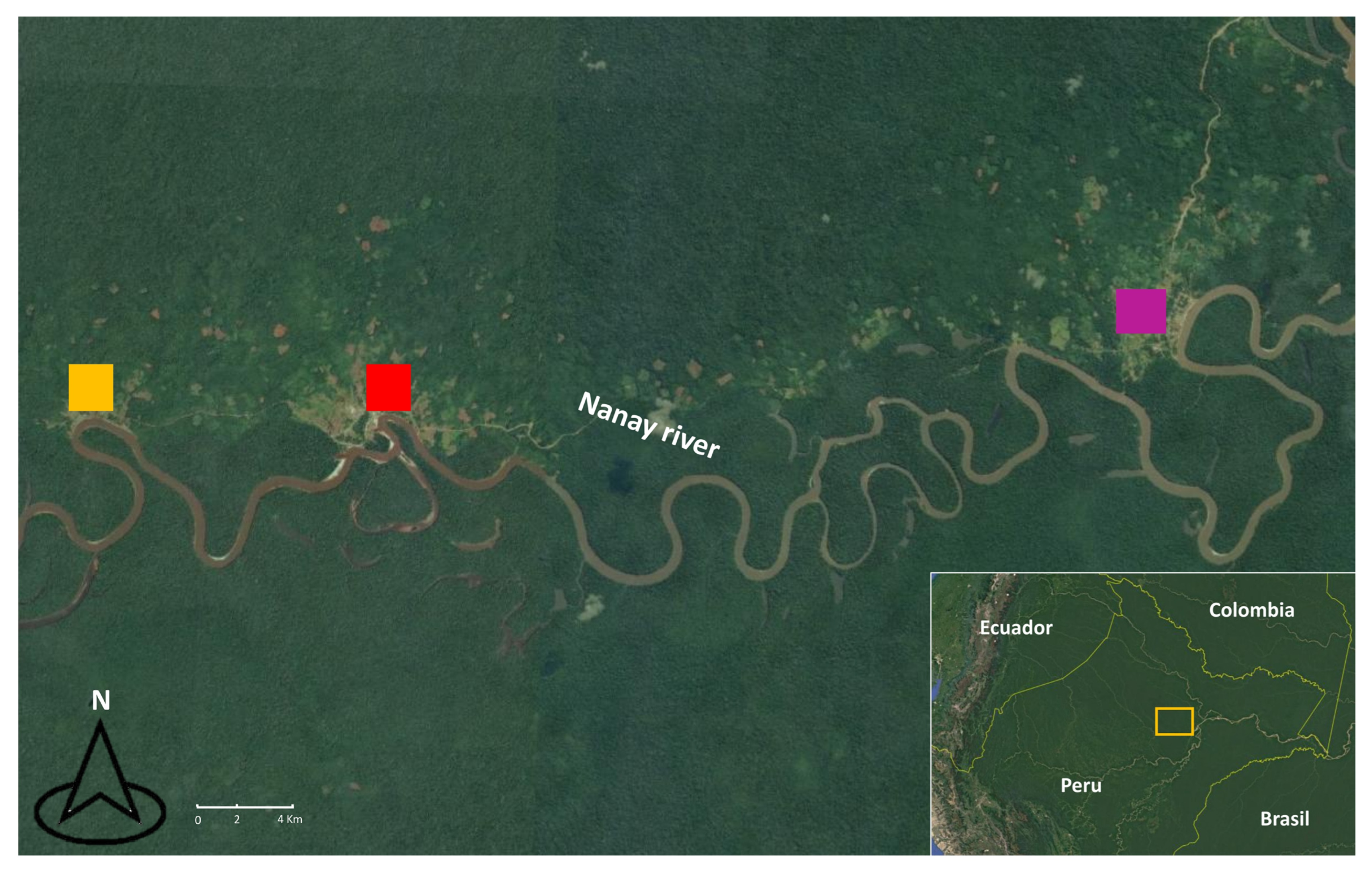
Sampling was conducted during the wet (n = 15 specimens) and dry (n = 15 specimens) seasons at three fishing sites at the Alto Nanay River basin in the Loreto department: San Juan de Ungurahual, Diamante Azul, and Santa María (Figure 1). The linear distances between sampling sites were as follows: San Juan de Ungurahual–Diamante Azul: 14.2 km; Diamante Azul–Santa María: 11.7 km; San Juan de Ungurahual–Santa María: 25.5 km. These distances encompass environmental and anthropogenic pressure gradients within the basin. The fish were euthanized in accordance with practices accepted by local communities and in compliance with ethical and cultural considerations. The specimens were then placed in insulated containers with dry ice and transported. Under temperature-controlled conditions (<4 °C), five grams of skinless, boneless dorsal muscle tissue were excised using sterile instruments to prevent cross-contamination. Samples were placed in analytical-grade polyethylene bags, individually labeled, and frozen at −20 °C until analysis.

2.2. Quantification and Limits of Mercury

Mercury quantification was carried out in the laboratory of the Universidad Nacional de la Amazonia Peruana (UNAP) in Iquitos following previously established protocols [16]. Wet samples were used for mercury quantification. Total mercury concentrations in all samples were determined following U.S. EPA Method 7473: Mercury in Solids and Solutions by Thermal Decomposition, Amalgamation, and Atomic Absorption Spectrophotometry [17]. Analyses were conducted using a Milestone DMA-80 direct mercury analyzer, which applies the aforementioned method to enable precise quantification without chemical digestion, thereby minimizing sample handling and potential contamination. Approximately 30–50 mg of homogenized tissue were weighed with a precision of ±0.001 mg and analyzed on both wet- and dry-weight bases to ensure comparability across standards. Samples were subjected to an oxygen stream (99.998%) under a programmed heating ramp—200 °C (60 s), 650 °C (150 s), and 850 °C (45 s)—to achieve complete combustion and release of mercury vapor. The vapor was oxidized catalytically, trapped in a gold amalgamator, and thermally desorbed for measurement at 253.7 nm via atomic absorption.
Calibration was performed using five NIST-traceable standards (0.5–100 ng Hg), yielding a linear response (R2 > 0.999). Analytical performance was evaluated using DORM-2 and DORM-4 certified reference materials (National Research Council Canada), with mean recoveries between 96% and 103% and relative standard deviations below 5% [18]. The method detection limit (MDL) and limit of quantification (LOQ) were 0.003 µg g−1 and 0.010 µg g−1, respectively, determined according to [19]. Each batch included blanks and duplicates, and sample results were corrected for background contamination by blank subtraction. The analytical accuracy of the system was estimated at ±0.7%, confirming compliance with international trace-metal quality assurance standards.

2.3. Risk Assessment of Mercury Exposure Through Fish Consumption

Human health risks associated with dietary exposure to mercury were assessed using three quantitative indicators: Estimated Daily Intake of mercury (EDIm), Target Hazard Quotient (THQ), and the Maximum Allowable Fish Consumption Rate per week (CRmw). These metrics were calculated following the procedures outlined by [13] in accordance with guidelines from the United States Environmental Protection Agency [20].
The estimated daily intake of Hg per meal size (EDIm) was calculated to estimate the amount of mercury ingested per meal, using the following equation:
EDIm = (MS × C)/BW
where MS represents the standard adult portion size of 230 g [21], C is the average methylmercury concentration in fish muscle (C = 0.90 × total Hg) [22], and BW is the assumed adult body weight of 70 kg [23]. It was assumed that total mercury intake equaled absorption and that cooking did not alter mercury concentrations in muscle tissue [24]. Given the geographic focus on Amazonian communities in Loreto, Peru, anthropometric data from national health and demographic surveys [25,26]; indicate that in this region, the average adult body weights range between 65 and 72 kg.
The Target Hazard Quotient (THQ) is a widely used metric to evaluate non-carcinogenic health risks associated with chronic exposure to contaminants through food consumption. It was calculated as:
THQ = EDIm/RfD
The United States Environmental Protection Agency [27] has established a reference dose (RfD) of 0.1 μg/kg/day for methylmercury (MeHg). When THQ values exceed 1, they indicate a potential for systemic adverse effects resulting from the ingestion of fish muscle tissue [21].
The permissible frequency of fish meal consumption, based on a defined portion size and time interval, was assessed to estimate potential health risks. Specifically, for non-carcinogenic outcomes, we calculated the maximum weekly intake rate (CRmw) using [20] methodology, representing the threshold below which chronic systemic effects are not expected to occur:
CRmw = 49/(C × MS)
Assuming a 70 kg adult body weight [28], the tolerable daily intake (TDI) of methylmercury is approximately 7 µg/day, equivalent to 49 µg/week [21]. C is the average methylmercury concentration in fish muscle (C = 0.90 × total Hg) [28] and MS represents the standard adult portion size of 230 g [21].

2.4. Data Analysis

The data were analyzed using descriptive statistical metrics of season (wet and dry), and species. We used a Wilcoxson test for statistical inference by season and adopted a p < 0.05 cut-off. Mercury concentrations and morphometric data were log10-transformed to meet normality assumptions. Linear regressions were fitted with log-transformed T-Hg as the dependent variable and each metric as a predictor, including season as a categorical factor to test for seasonal effects. Models fit was evaluated using coefficients of determination (R2). All analyses and plots were performed in R (v4.x) using the ggplot2 package [29]. All data processing and statistical analyses were conducted using the R programming language using the standard package [30].
The mercury concentrations were evaluated against international and national safety thresholds established by the Food and Agriculture Organization of the United Nations (0.5 mg/kg) [31], the European Commission regulation [32], the Peruvian Fisheries Health Agency [33], the Brazilian National Health Surveillance Agency [34], and Food Standards Australia New Zealand [35]. These benchmarks provide a comprehensive framework for assessing potential human health risks associated with fish consumption in Amazonian communities.

3. Results

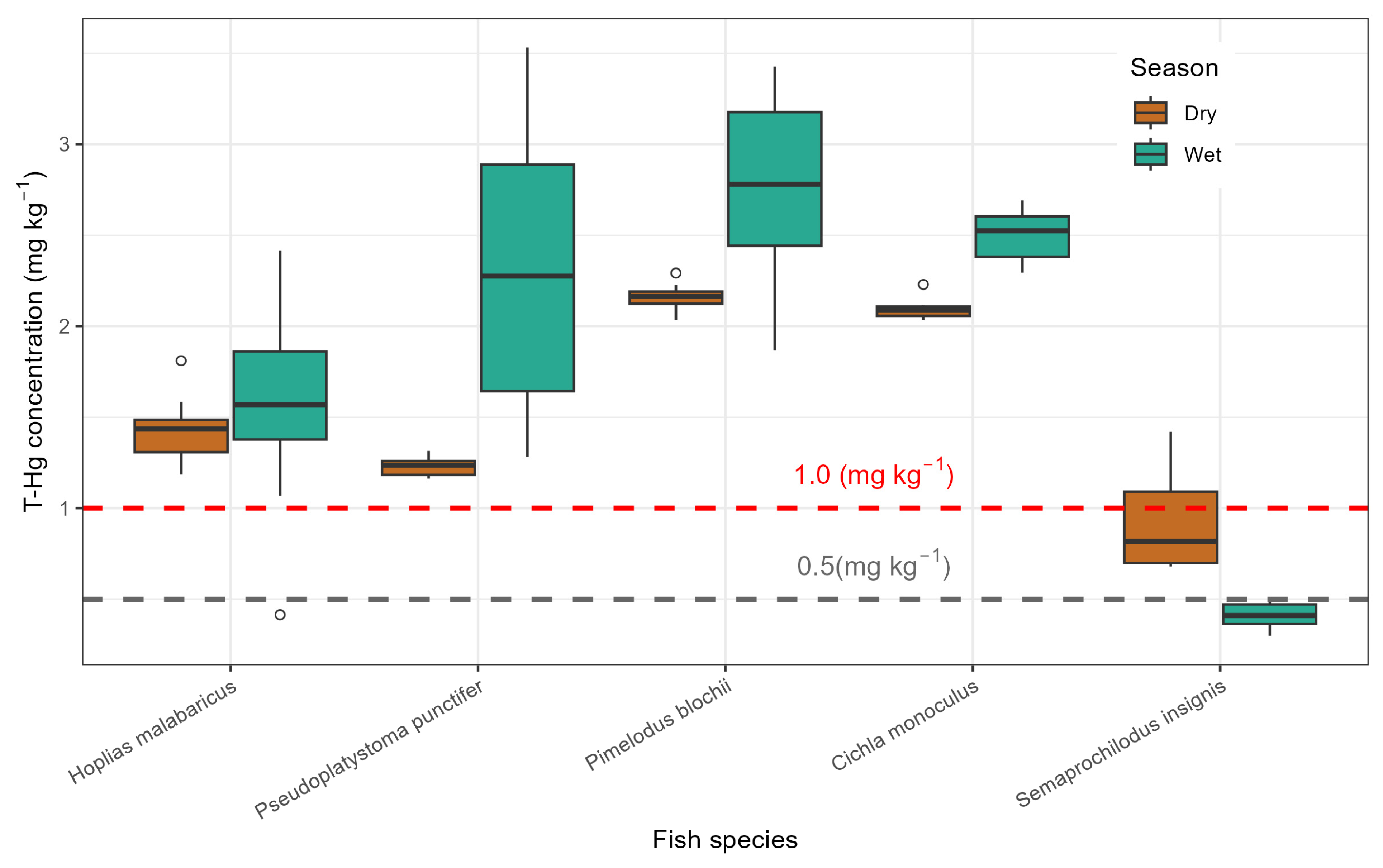
Total mercury concentrations in fish muscle ranged from 0.16 to 3.79 mg kg−1 across all sampled species. The highest mean values were detected in the piscivorous species Pseudoplatystoma punctifer (mean = 2.63 ± 1.03 mg kg−1; range = 1.60–3.66 mg kg−1; n = 6) and Cichla monoculus (mean = 2.43 ± 0.26 mg kg−1; range = 2.17–2.69 mg kg−1; n = 6), both exceeding the maximum permissible limit of 0.5 mg kg−1 established by the FAO, EU, and SANIPES (Table 1). Seasonal analysis showed slightly higher mercury concentrations during the wet season (mean = 1.68 ± 0.94 mg kg−1; n = 15) than in the dry season (mean = 1.31 ± 0.54 mg kg−1; n = 15). However, the Wilcoxon test revealed no statistically significant difference between the two periods (W = 84, p = 0.24), suggesting limited seasonal influence on mercury accumulation (Table 1).
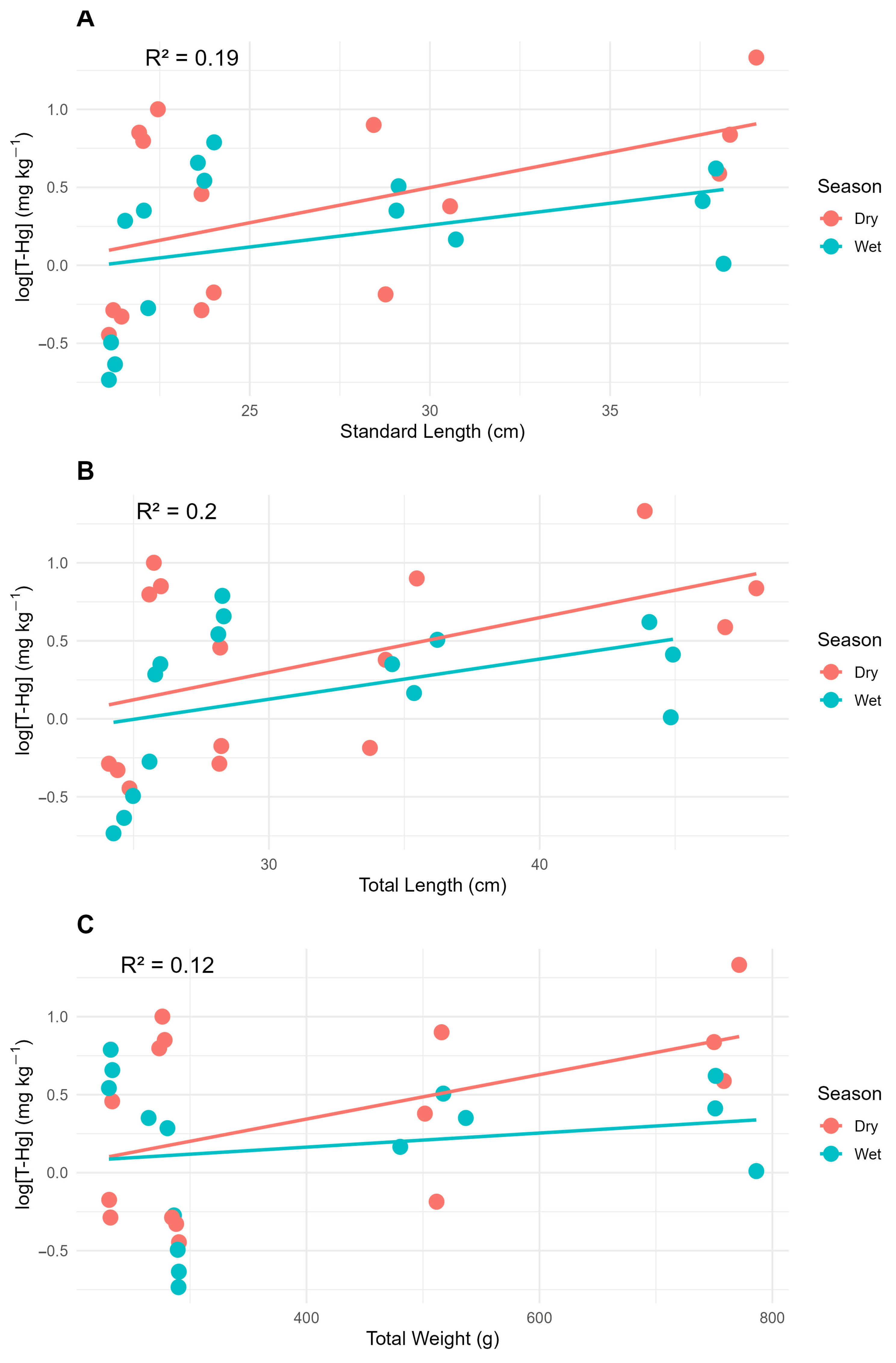
Log-transformed regression analyses revealed weak to moderate positive relationships between fish morphometric traits and total mercury concentrations (T-Hg). The coefficients of determination were relatively low (R2 = 0.19 for standard length, 0.20 for total length, and 0.12 for total weight), but consistent positive slopes indicate that larger individuals tend to accumulate higher mercury levels (Figure 2A–C).

3.1. Permissible Limits of Mercury

During the wet season, mercury concentrations were highest in species Cichla monoculus (0.57 ± 0.08 mg/kg) and Pseudoplatystoma punctifer (0.54 ± 0.25 mg/kg) and exceeded the maximum limits recommended by the Food and Agriculture Organization (FAO), the European Union, and SANIPES (0.5 mg/kg). In contrast, Hoplias malabaricus and Pimelodus blochii exhibited lower concentrations, with values of 0.32 ± 0.06 mg/kg and 0.28 ± 0.03 mg/kg, respectively. The species Semaprochilodus insignis showed the lowest concentration (0.17 ± 0.02 mg/kg) during this season (Figure 2).
In the dry season, mercury concentrations in piscivorous species were generally lower. C. monoculus yielded concentrations of 0.25 ± 0.09 mg/kg, followed by P. punctifer (0.33 ± 0.07 mg/kg), H. malabaricus (0.36 ± 0.05 mg/kg), P. blochii (0.39 ± 0.04 mg/kg) and S. insignis maintained low concentrations (0.14 ± 0.02 mg/kg) (Figure 3).

3.2. Risk Indices

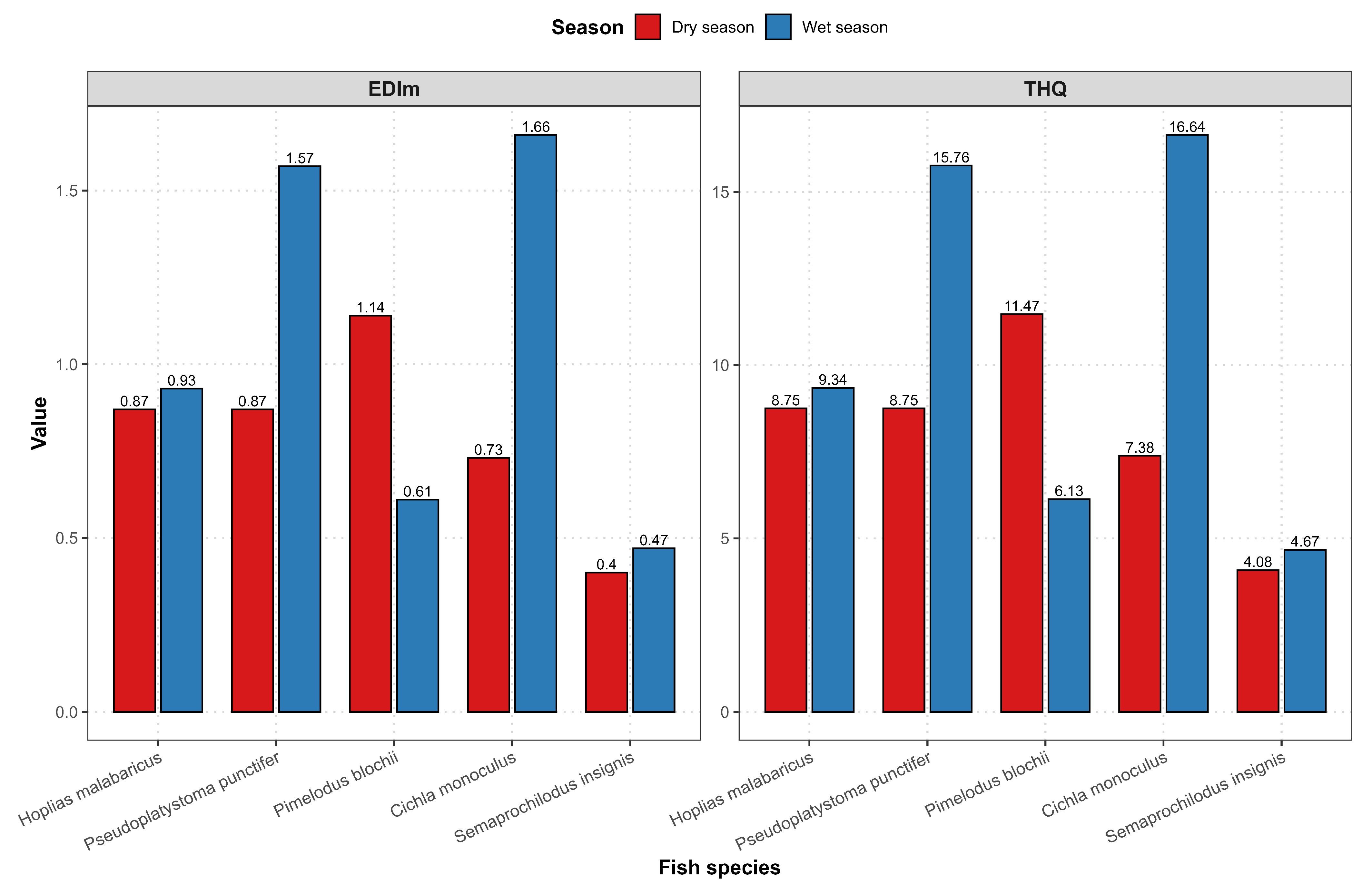
In wet season, the daily intake of mercury (EDIm) exhibited the highest methylmercury intake per kilogram of body weight in Cichla monoculus and Pseudoplatystoma punctifer, followed by Hoplias malabaricus and Pimelodus blochii. The detritivore Semaprochilodus insignis showed the lowest intake (0.47 μg/kg), reflecting minimal bioaccumulation of mercury in muscle tissue. The Target Hazard Quotient (THQ) indicated substantial health risks associated with the consumption of the piscivore species that demonstrated the highest MeHg concentrations. These include Ciclha monoculus (16.64) and P. punctifer (15.76), followed by Pimelodus blochii and Hoplias malabaricus (Figure 4). Based on consumption frequency per week (CRmw), we suggest that consumption of H. malabaricus, P. punctifer and C. monoculus is not advisable, as their mercury levels exceed established limits. Only S. insignis and Pimelodus blochii can be safely consumed (Table 2).

4. Discussion

Mercury concentrations in fish species from the Alto Nanay River exhibited interspecific variation. Piscivorous taxa such as Pseudoplatystoma punctifer (mean = 2.63 ± 1.03 mg kg−1) and Cichla monoculus (mean = 2.43 ± 0.26 mg kg−1) presented the highest burdens, consistently exceeding the safety thresholds set by the FAO, European Union, and SANIPES (0.5 mg kg−1). These concentrations align with findings from the Madre de Dios basin, Peru, where artisanal and small-scale gold mining (ASGM) activities enhance mercury mobilization and biomagnification through aquatic food webs [36]. Similar trends have been documented in the Tapajós River, Brazil, where piscivorous Cichla species exhibit comparable mercury burdens, illustrating the broad geographic scope of mining-related contamination across Amazonian systems [37]. In the Colombian Amazon, C. monoculus shows parallel accumulation levels, reinforcing the consistency of trophic bioaccumulation processes across the region [13,38].
Although mercury concentrations tended to be higher during the wet season, seasonal differences were statistically not significant. This observation supports previous work indicating that hydrological fluctuations modulate mercury methylation and transport but may not substantially affect tissue concentrations in established trophic networks [39]. Log-transformed regression analyses revealed weak to moderate positive relationships between fish morphometric traits and total mercury concentrations, although the coefficients of determination were relatively low (R2 = 0.19 for standard length, 0.20 for total length, and 0.12 for total weight), the consistent positive slopes indicate that larger individuals tend to accumulate higher mercury levels. This pattern aligns with the well-established principle of bioaccumulation, where mercury concentrations increase with body size and age due to longer exposure times and trophic magnification through dietary intake. Seasonal differences were also evident, with dry-season specimens exhibiting higher T-Hg concentrations across size classes compared to those collected during the wet season. Such seasonal variation likely reflects hydrological and biogeochemical influences on mercury dynamics, as lower water levels and enhanced sediment–water interactions during the dry period may facilitate methylmercury production and uptake by aquatic organisms. Overall, these results underscore the combined roles of individual growth and environmental conditions in modulating mercury bioaccumulation within freshwater fish populations [40].
Risk assessment outcomes reveal that piscivorous species, particularly C. monoculus and P. punctifer, pose substantial health risks to consumers, as indicated by Target Hazard Quotients (THQ) exceeding unity. These findings are consistent with previous assessments from Madre de Dios and the Brazilian Amazon, where habitual consumption of piscivorous fish has been associated with neurological and developmental effects in human populations [41,42]. Conversely, detritivorous taxa such as Semaprochilodus insignis consistently exhibited low mercury concentrations, supporting safer consumption guidance. This trophic differentiation is essential for designing culturally appropriate fish-consumption advisories and promoting sustainable fishery management in subsistence-based communities [43]. Comparable trophic gradients have been reported across the Brazilian Amazon, where carnivorous fish frequently exceed 0.5 µg g−1 (wet weight) and drive THQ > 1 at typical intake rates, reinforcing that frequent consumption of Hoplias malabaricus, P. punctifer, and C. monoculus should be discouraged [37].
We acknowledge study limitations, including constraints in sample size (n = 30 for seasonal analyses, six individuals per species), limited temporal coverage, and assumptions embedded in exposure modeling. The small sample set reflects the logistical challenges of obtaining specimens from mining-impacted habitats where fish populations are declining. These constraints inevitably reduce statistical power and limit generalization of results to broader spatial or temporal contexts. Additionally, mercury analyses focused solely on total mercury in muscle tissue, without speciation between methylated and inorganic forms, which restricts toxicokinetic interpretation. Recognizing these limitations is essential for contextualizing findings and guiding future investigations. Expanding temporal sampling, integrating sediment and water chemistry, and employing stable-isotope tracing could substantially improve understanding of mercury transfer dynamics in the basin.
Despite these limitations, the results establish an essential baseline for evaluating mercury bioaccumulation and associated risks in the Alto Nanay River system. The findings confirm that ASGM activities remain a dominant source of contamination in Peruvian Amazonian watersheds. The pronounced bioaccumulation in piscivorous species highlights the need for coordinated management between environmental and health authorities, including the enforcement of mercury-use restrictions, continuous environmental monitoring, and the dissemination of risk-communication strategies tailored to local dietary practices.

5. Conclusions

Mercury contamination in the Alto Nanay River reflects the cumulative effects of artisanal gold mining and trophic biomagnification in a vulnerable Amazonian ecosystem. Piscivorous species, particularly Pseudoplatystoma punctifer and Cichla monoculus, exhibited concentrations far exceeding international safety guidelines, posing a tangible risk to dependent human populations. In contrast, detritivorous species such as Semaprochilodus insignis showed minimal contamination and represent viable alternatives for safer dietary consumption. Although sample size and temporal coverage constrain broader inference, this study provides the first integrated dataset for mercury levels in Alto Nanay fish and demonstrates the urgent need for systematic monitoring programs. Future research should combine ecological, geochemical, and public health approaches to better characterize exposure pathways and inform evidence-based policy. Effective mercury mitigation in the Amazon will depend not only on technological solutions but also on sustained governance, community participation, and regional collaboration.

Supplementary Materials

The following supporting information can be downloaded at: https://www.mdpi.com/article/10.3390/su18020552/s1.

Author Contributions

Conceptualization, J.D.Á.C., L.R.G.M. and L.M.R.A.; methodology, L.R.G.M., L.M.R.A., A.A.A. and J.V.C.; software, R.R.R.Z.; validation, A.A.A. and J.V.C.; formal analysis, R.R.R.Z.; investigation, J.D.Á.C.; resources, J.D.Á.C.; data curation, R.R.R.Z.; writing—original draft preparation, J.D.Á.C. and R.R.R.Z.; writing—review and editing, J.D.Á.C. and R.R.R.Z.; visualization, J.D.Á.C.; supervision, R.R.R.Z.; project administration, L.R.G.M. and L.M.R.A.; funding acquisition, J.D.Á.C. All authors have read and agreed to the published version of the manuscript.

Funding

This study was funded by Vicerectorado de investigación, Universidad Nacional de la Amazonia Peruana-UNAP.

Institutional Review Board Statement

Ethical review and approval were waived for this study, because no experimental work was conducted with a regulated vertebrate species.

Informed Consent Statement

Informed consent statement was waived because the subjects of the experiment were fish.

Data Availability Statement

The raw data supporting the conclusions of this article will be made available by the authors on request.

Acknowledgments

The authors thank the Centro de Innovación Científica Amazónica—CINCIA, and Facultad de Ciencias Biológicas -FCB of Universidad Nacional de la Amazonía Peruana-UNAP.

Conflicts of Interest

The authors declare no competing interests.

References

  1. Beckers, F.; Rinklebe, J. Cycling of mercury in the environment: Sources, fate, and human health implications: A review. Crit. Rev. Environ. Sci. Technol. 2017, 47, 693–794. [Google Scholar] [CrossRef]
  2. Fornasaro, S.; Fulignati, P.; Gioncada, A.; Garces, D.; Mulas, M. Geogenic and Anthropogenic Origins of Mercury and Other Potentially Toxic Elements in the Ponce Enriquez Artisanal and Small-Scale Gold Mining District, Southern Ecuador. Minerals 2025, 15, 725. [Google Scholar] [CrossRef]
  3. Crespo-Lopez, M.E.; Arrifano, G.P.; Augusto-Oliveira, M.; Macchi, B.M.; Lima, R.R.; do Nascimento, J.L.M.; Souza, C.B.A. Mercury in the Amazon: The danger of a single story. Ecotoxicol. Environ. Saf. 2023, 256, 114895. [Google Scholar] [CrossRef] [PubMed]
  4. Gerson, J.R.; Szponar, N.; Zambrano, A.A.; Bergquist, B.; Broadbent, E.; Driscoll, C.T.; Erkenswick, G.; Evers, D.C.; Fernandez, L.E.; Hsu-Kim, H.; et al. Amazon forests capture high levels of atmospheric mercury pollution from artisanal gold mining. Nat. Commun. 2022, 13, 559. [Google Scholar] [CrossRef]
  5. Domingues, V.S.; Colmenero, C.; Vinograd, M.; Oliveira-da-Costa, M.; Balbueno, R. Mercury Dynamics and Bioaccumulation Risk Assessment in Three Gold Mining-Impacted Amazon River Basins. Toxics 2024, 12, 599. [Google Scholar] [CrossRef] [PubMed]
  6. Ullrich, S.M.; Tanton, T.W.; Abdrashitova, S.A. Mercury in the Aquatic Environment: A Review of Factors Affecting Methylation. Crit. Rev. Environ. Sci. Technol. 2001, 31, 241–293. [Google Scholar] [CrossRef]
  7. Ali, H.; Khan, E. Bioaccumulation of non-essential hazardous heavy metals and metalloids in freshwater fish. Risk to human health. Environ. Chem. Lett. 2018, 16, 903–917. [Google Scholar] [CrossRef]
  8. Paiva Tde, C.; Pestana, I.A.; Miranda, L.N.L.; de Carvalho, G.O.; Bastos, W.R.; Kasper, D. Mercury Scenario in Fish from the Amazon Basin: Exploring the Interplay of Social Groups and Environmental Diversity. Toxics 2025, 13, 580. [Google Scholar] [CrossRef]
  9. Crespo-Lopez, M.E.; Augusto-Oliveira, M.; Lopes-Araújo, A.; Santos-Sacramento, L.; Yuki Takeda, P.; Macchi Bde, M.; do Nascimento, J.L.M.; Maia, C.S.F.; Lima, R.R.; Arrifano, G.P. Mercury: What can we learn from the Amazon? Environ. Int. 2021, 146, 106223. [Google Scholar] [CrossRef]
  10. Dorea, J.; Barbosa, A.C.; Ferrari, I.; de Souza, J.R. Mercury in hair and in fish consumed by Riparian women of the Rio Negro, Amazon, Brazil. Int. J. Environ. Health Res. 2003, 13, 239–248. [Google Scholar] [CrossRef]
  11. Oliveira, R.C.; Dórea, J.G.; Bernardi, J.V.E.; Bastos, W.R.; Almeida, R.; Manzatto, A.G. Fish consumption by traditional subsistence villagers of the Rio Madeira (Amazon): Impact on hair mercury. Ann. Hum. Biol. 2010, 37, 629–642. [Google Scholar] [CrossRef]
  12. Khatoon-Abadi, A.; Sheikh Hoseini, A.R.; Khalili, B. Effect of mercury on the human health and environment: An overview. Int. J. Food Saf. Nutr. Public Health 2008, 1, 33–50. [Google Scholar] [CrossRef]
  13. Olivero-Verbel, J.; Carranza-Lopez, L.; Caballero-Gallardo, K.; Ripoll-Arboleda, A.; Muñoz-Sosa, D. Human exposure and risk assessment associated with mercury pollution in the Caqueta River, Colombian Amazon. Environ. Sci. Pollut. Res. 2016, 23, 20761–20771. [Google Scholar] [CrossRef]
  14. Sotero-Solís, V.; Alva-Astudillo, M. Contenido de metales pesados en agua y sedimento en el bajo Nanay. Cienc. Amaz. 2013, 3, 24–32. [Google Scholar] [CrossRef][Green Version]
  15. Vega, C.M.; Pisconte, J.N.; García, C.; Torres, M.I.; Salcedo, K.D.; Fernandez, L. Evaluación de la Exposicion a Mercurio en Peces y en Pobladores de Comunidades Ribereñas de la Cuenca de los ríos Nanay y Pintuyacu (Loreto, Perú). 2024. Available online: https://cincia.org/wp-content/uploads/Informe-Mercurio-en-comunidades-de-Loreto.docx.pdf (accessed on 26 October 2025).
  16. Miranda, L.J.; Castellanos, M.D.; Gómez, T.B.; Olivero, V.J.T.; Moreno, R.V.M.; Novoa, M.D. Protocolo para Recolección de Muestras de Peces para Análisis de Mercurio. Cartagena, Bogotá. 2018. Available online: https://old.parquesnacionales.gov.co/portal/wp-content/uploads/2019/07/PROTOCOLO-PECES.pdf (accessed on 26 October 2025).
  17. U.S. Environmental Protection Agency. Method 7473: Mercury in Solids and Solutions by Thermal Decomposition, Amalgamation, and Atomic Absorption Spectrophotometry. 2007. Available online: https://www.epa.gov/hw-sw846/sw-846-test-method-7473-mercury-solids-and-solutions-thermal-decomposition-amalgamation (accessed on 5 November 2025).
  18. Scott, W.; Christine, B.; Joseph, C.V.L.; Ralph, S.; Lu, Y. DORM-4: Fish Protein Certified Reference Material for TRACE Metals; National Research Council Canada: Ottawa, ON, Canada, 2012. [Google Scholar] [CrossRef]
  19. ISO 11885:2007; Water Quality—Determination of Selected Elements by Inductively Coupled Plasma Optical Emission Spectrometry (ICP-OES). International Organization for Standardization: Geneva, Switzerland, 2007. Available online: https://www.iso.org/obp/ui/en/#iso:std:iso:11885:ed-2:v1:en (accessed on 5 November 2025).
  20. USA-EPA. Guidance for Assessing Chemical Contamination Data for Use in Fish Advisories, Volume II. Risk Assessment and Fish Consumption Limits EPA/823-B94-004; United States Environment Protection Agency: Washington, DC, USA, 2000. [Google Scholar]
  21. Hosseini, S.M.; Mirghaffari, N.; Sufiani, N.M.; Hosseini, S.V.; Ghasemi, A.F. Risk assessment of the total mercury in Golden gray mullet (Liza aurata) from Caspian Sea. Int. J. Aquat. Biol. 2013, 1, 258–265. [Google Scholar]
  22. Marrugo-Negrete, J.; Olivero-Verbel, J.; Lans-Ceballos, E.; Benitez, L.N. Total mercury and methylmercury concentrations in fish from the Mojana region of Colombia. Environ. Geochem. Health 2008, 30, 21–30. [Google Scholar] [CrossRef] [PubMed]
  23. Copat, C.; Arena, G.; Fiore, M.; Ledda, C.; Fallico, R.; Sciacca, S.; Ferrante, M. Heavy metals concentrations in fish and shellfish from eastern Mediterranean Sea: Consumption advisories. Food Chem Toxicol. 2013, 53, 33–37. [Google Scholar] [CrossRef]
  24. Chien, L.C.; Hung, T.C.; Choang, K.Y.; Yeh, C.Y.; Meng, P.J.; Shieh, M.J.; Han, B.C. Daily intake of TBT, Cu, Zn, Cd and As for fishermen in Taiwan. Sci. Total Environ. 2002, 285, 177–185. [Google Scholar] [CrossRef]
  25. Instituto Nacional de Estadística e Informática (INEI). Perú: Características de la Población. Censos Nacionales 2017: XII de Población, VII de Vivienda. Lima: INEI. 2019. Available online: https://www.inei.gob.pe/media/MenuRecursivo/publicaciones_digitales/Est/Lib1539/cap01.pdf (accessed on 26 October 2025).
  26. Ministerio de Salud (MINSA). Encuesta Demográfica y de Salud Familiar—ENDES 2021. Nacional y Departamental. Lima: Instituto Nacional de Estadística e Informática. 2022. 393p. Available online: https://pesquisa.bvsalud.org/portal/resource/es/biblio-1427910 (accessed on 26 October 2025).
  27. United States Environmental Protection Agency (US-EPA). Risk Assessment Guidance for Superfund (RAGS), Volume I: Human Health Evaluation Manual (Part A); Report No.: EPA/540/1-89/002; US-EPA: Washington, DC, USA, 1989. Available online: https://www.epa.gov/risk/risk-assessment-guidance-superfund-rags-part (accessed on 26 October 2025).
  28. United States Environmental Protection Agency (US-EPA). Guidance Manual for the Integrated Exposure Uptake Biokinetic Model for Lead in Children; Report No.: EPA/540/R-93/081; US-EPA: Washington, DC, USA, 1994. Available online: https://nepis.epa.gov/Exe/ZyPDF.cgi/9100L3LN.PDF (accessed on 26 October 2025).
  29. Wickham, H. ggplot2: Elegant Graphics for Data Analysis; Springer: New York, NY, USA, 2016; ISBN 978-3-319-24277-4. [Google Scholar]
  30. R Core Team. R: A Language and Environment for Statistical Computing; R Foundation for Statistical Computing: Vienna, Austria, 2021; Available online: https://www.R-project.org/ (accessed on 3 November 2025).
  31. Food and Agriculture Organization (FAO). Compilation of Legal Limits for Hazardous Substances in Fish and Fishery Products; Food and Agriculture Organization: Rome, Italy, 1983; Volume 464, Available online: http://www.fao.org/docrep/014/q5114e/q5114e.pdf (accessed on 11 October 2025).
  32. European Commission. Commission Regulation (EU) 2022/617 of 12 April 2022 amending Regulation (EC) No 1881/2006 as regards maximum levels of mercury in fish and salt. Off. J. Eur. Union 2022, L 115, 60–63. Available online: https://eur-lex.europa.eu/eli/reg/2022/617/oj (accessed on 26 October 2025).
  33. SANIPES (Organismo Nacional de Sanidad Pesquera). Resolución de Presidencia Ejecutiva N° 059-2020-SANIPES-PE. 2020. Available online: https://www.sanipes.gob.pe/documentos_sanipes/otros/11.R.P.E.N°059-2020-SANIPES-PE.pdf (accessed on 3 November 2025).
  34. Agência Nacional de Vigilância Sanitária—ANVISA. Resolução RDC No 42, de 29 de Agosto de 2013: Regulamento Técnico Sobre Limites Máximos de Contaminantes Inorgânicos em Alimentos; Ministério da Agricultura e Pecuária: Brasília, Brazil, 2013. [Google Scholar]
  35. FSANZ. Food Standards Code Legislation|Food Standards Australia New Zealand, 2013. 2025. Available online: https://www.foodstandards.gov.au/food-standards-code/legislation#compilation (accessed on 15 October 2025).
  36. Kristensen, A.; Thomsen, J.; Mikkelsen, S. A review of mercury exposure among artisanal small-scale gold miners in developing countries. Int. Arch. Occup. Environ. Health 2013, 87, 579–590. [Google Scholar] [CrossRef] [PubMed]
  37. Basta, P.C.; de Vasconcellos, A.C.S.; Hallwass, G.; Yokota, D.; Pinto Dde Od’El, R.; de Aguiar, D.S.; de Souza, C.C.; Oliveira-da-Costa, M. Risk Assessment of Mercury-Contaminated Fish Consumption in the Brazilian Amazon: An Ecological Study. Toxics 2023, 11, 800. [Google Scholar] [CrossRef]
  38. Ferreira da Silva, S.; de Oliveira Lima, M. Mercury in fish marketed in the Amazon Triple Frontier and Health Risk Assessment. Chemosphere 2020, 248, 125989. [Google Scholar] [CrossRef] [PubMed]
  39. Silva, S.F.d.; Oliveira, D.C.; Pereira, J.P.G.; Castro, S.P.; Costa, B.N.S.; Lima, M.d.O. Seasonal variation of mercury in commercial fishes of the Amazon Triple Frontier, Western Amazon Basin. Ecol. Indic. 2019, 106, 105549. [Google Scholar] [CrossRef]
  40. Storelli, M.M.; Giacominelli-Stuffler, R.; Marcotrigiano, G. Relationship between Total Mercury Concentration and Fish Size in Two Pelagic Fish Species: Implications for Consumer Health. J. Food Prot. 2006, 69, 1402–1405. [Google Scholar] [CrossRef] [PubMed]
  41. Canham, R.; González-Prieto, A.M.; Elliott, J.E. Mercury Exposure and Toxicological Consequences in Fish and Fish-Eating Wildlife from Anthropogenic Activity in Latin America. Integr. Environ. Assess. Manag. 2021, 17, 13–26. [Google Scholar] [CrossRef]
  42. Huaypar Loayza, K.H. Exposición a Mercurio por Consumo de Pescados Contaminados, en la Población de Puerto Maldonado, Región de Madre de Dios; Universidad Nacional San Antonio Abad del Cuzco: Cusco, Peru, 2022; Available online: https://repositorio.unsaac.edu.pe/handle/20.500.12918/6839 (accessed on 27 October 2025).
  43. Martoredjo, I.; Calvão Santos, L.B.; Vilhena, J.C.E.; Rodrigues, A.B.L.; de Almeida, A.; Sousa Passos, C.J.; Florentino, A.C. Trends in Mercury Contamination Distribution among Human and Animal Populations in the Amazon Region. Toxics 2024, 12, 204. [Google Scholar] [CrossRef]
Figure 1. Map of geographic sampling locations. A. Yellow square: San Juan de Ungurahual; red square: Diamante Azul; purple square: Santa María. Orange area is the study location. Source: Google earth.
Sustainability 18 00552 g001
Figure 2. Log-transformed linear regression models showing the relationship between total mercury concentrations (T-Hg, mg kg−1) and biometric parameters—standard length (A), total length (B), and total weight (C)—in fish specimens sampled during dry and wet seasons. Each point represents an individual specimen (n = 30), color-coded by season. Regression lines and R2 values indicate the strength of association between morphometric traits and mercury bioaccumulation, highlighting seasonal and size-dependent patterns relevant to ecotoxicological risk assessment.
Sustainability 18 00552 g002
Figure 3. Total mercury concentrations (mg kg−1, dry weight) in muscle tissue of five Amazonian fish species during the wet and dry seasons in the Alto Nanay basin near Iquitos, city, Peru. Boxes represent the interquartile range (IQR), horizontal lines inside boxes indicate the median, and whiskers show data dispersion. Horizontal dashed lines denote reference thresholds of 0.5 mg kg−1 (grey) and 1.0 mg kg−1 (red) commonly used as guidance or safety limits for fish consumption. Green and orange colors represent wet and dry seasons, respectively.
Sustainability 18 00552 g003
Figure 4. Comparison of Estimated Daily Intake of mercury (EDIm) and Target Hazard Quotient (THQ) values for five fish species collected during the wet and dry seasons in the Alto Nanay basin, near Iquitos city, Peru. Bars represent the mean values for each species, grouped by season (blue = wet, red = dry). The results show clear seasonal variation in potential human health risk, with piscivorous species exhibiting higher THQ values overall.
Sustainability 18 00552 g004
Table 1. Descriptive statistical of total mercury concentration (T-Hg) in dry and wet seasons in 30 fish specimens from the Alto Nanay river basin, department of Loreto, Peru.
SpeciesSeasonnTotal Mercury (mg kg−1) in Muscle Samples (Mean ± Standard Deviation; Range)
Hoplias malabaricusWet61.58 ± 0.82 (0.76–2.40)
Dry61.42 ± 0.24 (1.18–1.66)
Pseudoplatystoma punctiferWet62.63 ± 1.03 (1.60–3.66)
Dry61.46 ± 0.43 (1.03–1.89)
Pimelodus blochiiWet61.06 ± 0.46 (0.60–1.52)
Dry61.95 ± 0.24 (1.71–2.19)
Cichla monoculusWet62.43 ± 0.26 (2.17–2.69)
Dry61.17 ± 0.36 (0.81–1.53)
Semaprochilodus insignisWet60.54 ± 0.07 (0.47–0.61)
Dry60.70 ± 0.06 (0.64–0.76)
Table 2. Risk-based intake limits. Estimated daily intake per fish meal (EDIm) (μg/kg, daily), target hazard quotient (THQ), and maximum allowable fish consumption rate in meals/week (CRmw) in adults.
Species (Wet Season)Trophic LevelEDImTHQCRmw
Hoplias malabaricusPiscivorous 0.939.340
Pseudoplatystoma punctifer1.5715.760
Pimelodus blochii0.616.131
Cichla monoculus1.6616.640
Semaprochilodus insignisDetritivore 0.474.671
Species (Dry season)
Hoplias malabaricusPiscivorous 0.878.750
Pseudoplatystoma punctifer0.878.750
Pimelodus blochii1.1411.470
Cichla monoculus0.737.380
Semaprochilodus insignisDetritivore 0.404.081
Disclaimer/Publisher’s Note: The statements, opinions and data contained in all publications are solely those of the individual author(s) and contributor(s) and not of MDPI and/or the editor(s). MDPI and/or the editor(s) disclaim responsibility for any injury to people or property resulting from any ideas, methods, instructions or products referred to in the content.