1. Introduction
Artificial Intelligence (AI) has rapidly transformed marketing by enabling data-driven and behavior-focused practices [
1,
2,
3,
4]. Traditionally, marketing relied on static segmentation and mass communication; however, AI has introduced dynamic, real-time personalization. This transformation has been driven by the increased availability of consumer data and technological advancements that allow firms to identify preferences and anticipate consumer behavior with a high degree of accuracy. Consequently, AI now plays a central role in how businesses interact with, attract, and retain customers in highly competitive digital marketplaces [
5,
6,
7].
The integration of artificial intelligence into marketing activities represents a fundamental shift from traditional, rule-based decision-making toward adaptive, data-driven interaction models. AI enables firms to process large-scale consumer data in real time, allowing marketing systems to learn, predict, and respond dynamically to individual preferences and behaviors. This transformation has altered the nature of marketing communication from mass-oriented messaging to personalized and interactive engagement, positioning AI as a core driver of competitive advantage in digital markets [
1,
2,
3,
6]. As a result, marketing effectiveness is increasingly determined by how intelligently AI systems align recommendations with consumers’ cognitive, emotional, and contextual states rather than by the volume of promotional exposure alone.
Personal engagement is one of the most prominent applications of AI in marketing. AI-powered personalization tailors advertisements, recommendations, and content to individual consumer profiles based on previous interactions, search history, and purchase behavior [
8]. This enables marketers to offer experiences that are not only relevant but also context-aware. Consumers benefit from more convenient decision-making processes and enhanced satisfaction, while firms achieve higher levels of engagement and conversion. Compared with rule-based personalization, AI-driven personalization continuously improves by learning from user behavior, making it more responsive and dynamic over time [
3,
9].
AI-driven personalization plays a decisive role in shaping consumer decision-making processes by influencing both rational evaluation and affective responses. Personalized recommendations reduce information overload, enhance perceived relevance, and guide consumers more efficiently through the purchasing journey [
6,
10]. Beyond cognitive convenience, AI personalization also activates emotional triggers that can increase impulse buying and perceived enjoyment, thereby amplifying purchase likelihood. When consumers perceive AI-generated content as accurate and helpful, their trust in the platform strengthens, reinforcing repeated use and purchase behavior [
10,
11]. However, such influence may also raise concerns related to autonomy and perceived manipulation, particularly when personalization becomes opaque or overly intrusive.
Despite the rapid adoption of AI personalization in marketing practice, scholarly understanding of its behavioral consequences remains fragmented. Existing studies have largely emphasized technological efficiency and firm-level performance while paying limited attention to consumers’ psychological responses, ethical concerns, and perceptions of data governance [
3,
12,
13]. Trust in AI systems and concerns regarding privacy and algorithmic transparency have emerged as critical factors shaping consumer acceptance and resistance; however, their combined influence on actual purchase decisions remains underexplored. This gap is particularly evident in empirical studies that integrate quantitative behavioral outcomes with qualitative emotional and ethical interpretations from the consumer perspective.
Although AI applications in marketing continue to expand, relatively few studies investigate the influence of personalization on actual purchasing behavior from the consumer’s viewpoint. Much of the existing literature focuses on the technical potential or business benefits of AI personalization while overlooking its behavioral, ethical, and emotional dimensions. This study seeks to address this gap by examining how consumers respond to AI personalization, the role of trust and privacy considerations, and how these factors jointly influence purchase behavior and long-term brand relationships.
In response to these gaps, this study adopts a mixed-methods approach to examine how AI personalization influences consumer purchase decisions by jointly considering exposure effects, trust formation, privacy concerns, and emotional responses. By integrating quantitative analysis with qualitative insights, the study moves beyond purely technical evaluations of AI systems and offers a consumer-centered understanding of AI-driven marketing effectiveness. The findings contribute to the literature by clarifying the psychological and ethical mechanisms underlying AI personalization and by providing actionable insights for marketers seeking to balance personalization benefits with transparency and consumer trust.
To strengthen the manuscript’s contribution to Sustainability, this study advances a consumer-centered responsible-personalization perspective by theorizing that AI personalization affects purchase decisions through a combined mechanism of perceived relevance, perceived control/transparency, and ethical data governance. This framing links AI-enabled marketing effectiveness to sustainability-aligned outcomes—namely, responsible innovation, consumer autonomy, and trust-preserving data practices—showing how marketers can pursue commercial performance while reducing socio-ethical risks associated with opaque personalization. Accordingly, the study contributes beyond empirical validation by integrating trust, privacy sensitivity, and affective responses into a cohesive explanation of when personalization becomes both effective and responsible in digital marketing contexts.
Accordingly, this study seeks to achieve the following objectives:
- (1)
to assess the impact of AI personalization on consumer purchase behavior;
- (2)
to examine consumer attitudes toward data usage, ethical concerns, and trust in AI systems;
- (3)
to analyze the role of demographic factors and trust in shaping responses to AI personalization;
- (4)
to investigate the influence of AI personalization on long-term brand relationships and customer loyalty.
2. Literature Review and Hypotheses Development
The use of AI in marketing has moved from supporting analytics to involving the consumer themselves. AI-based systems are now integrated at each customer touchpoint, whether it is a site, a mobile application, an email, or a customer service system. Such systems learn over time from each interaction and build dynamic experiences that continuously improve. This transition from reactive to proactive marketing is one aspect of a broader shift toward smart systems that not only process data but also sense consumer intent [
14].
Personalization mechanisms are founded on AI-driven algorithms that analyze behavioral data to provide customized offers and content. These algorithms examine user behavior, browsing patterns, and engagement through predictive models, resulting in intuitive and tailored user experiences. Applications include personalized product displays, dynamic pricing promotions, chatbot interactions, and customized email campaigns. Such personalization mechanisms enhance customer satisfaction and positively influence behavioral performance indicators such as longer website visits and higher conversion rates [
15,
16]. Accordingly, AI-based personalization is expected to positively influence consumer purchase decisions.
H1. AI-driven personalization has a positive effect on consumer purchase behavior.
H1 is empirically tested through multiple regression analysis, where “AI personalization” serves as the independent variable and “consumer purchase behavior” is the dependent variable. This regression model evaluates how AI personalization (e.g., through personalized recommendations and customer interactions) influences the likelihood of purchase decisions. Data collected from online consumers exposed to AI-generated recommendations is used to test this hypothesis.
AI personalization is prominently manifested through recommendation systems that suggest products, services, or content based on users’ preferences and behavioral history. Collaborative filtering and content-based filtering models are commonly used to generate these recommendations. By reducing search complexity and information overload, recommendation systems assist consumers in navigating large product assortments more efficiently while also introducing new products that enhance purchase diversity and brand awareness [
17,
18,
19,
20]. By improving relevance and decision convenience, AI-driven recommendations increase the likelihood of consumer engagement and purchasing responses.
H2. Exposure to AI-based recommendation systems positively influences consumer purchase decisions.
H2 is tested by exploring how exposure to AI-driven recommendation systems influences consumer purchase decisions. Multiple regression analysis is conducted to assess how increased exposure to these recommendations affects the likelihood of making purchase decisions. “Exposure to AI-driven recommendation systems” is the independent variable, while “consumer purchase behavior” is the dependent variable.
Beyond cognitive assistance, AI personalization increasingly incorporates sentiment analysis to interpret consumers’ emotional states through online reviews, social media interactions, and feedback mechanisms [
21,
22]. AI systems can adapt marketing messages by considering detected emotional tones, thereby creating interactions that appear more human-like and empathetic. Emotional engagement strengthens consumer trust and receptivity toward brand communications, reinforcing the customer–brand relationship and fostering loyalty [
23,
24,
25]. Emotional alignment between AI-generated content and consumer feelings enhances perceived authenticity and trustworthiness.
H3. Trust in AI-based personalization positively affects consumer purchase behavior.
H3 is tested by analyzing the moderating role of “trust in AI personalization” on consumer purchase behavior. Regression analysis is used to assess how consumer trust influences the strength of the relationship between AI personalization and purchase behavior. The independent variable is “trust in AI-based personalization,” and the dependent variable is “consumer purchase behavior.”
Despite the perceived benefits of AI personalization, consumers frequently express concerns regarding how their personal data are collected, processed, and utilized. Trust plays a decisive role in determining whether consumers accept or reject AI-driven interactions. When data usage lacks transparency or is perceived as exploitative, consumers develop resistance toward personalized marketing initiatives [
26,
27,
28,
29]. The tension between personalization benefits and privacy concerns—often described as the personalization–privacy paradox—represents a critical challenge for marketers. Recent evidence continues to show that privacy concerns can dampen the benefits of AI-enabled personalization unless trust-building and transparency mechanisms are in place [
30].
If not managed appropriately, privacy concerns can undermine the effectiveness of AI personalization and damage brand reputation.
H4. Privacy concerns negatively moderate the relationship between AI personalization and consumer purchase behavior.
While all hypotheses are theoretically grounded, hypotheses H1–H3 are empirically examined using regression analysis. This analysis tests the impact of AI-driven personalization on consumer behavior. Specifically, H1 is tested through multiple regression to examine how AI personalization influences consumer purchase decisions, based on data collected from online consumers exposed to AI-based recommendations. H2 assesses how exposure to AI-driven recommendation systems impacts the likelihood of purchase decisions. Finally, H3 explores the role of consumer trust in AI-based personalization as a moderator, using regression analysis to understand its influence on purchasing behavior. In contrast, ethical and governance-related relationships, particularly the impact of privacy concerns and transparency on consumer trust, are explored interpretively through qualitative analysis. This is done to capture the nuances of consumer emotions, ethical implications, and privacy concerns, which are not easily quantifiable but are crucial in understanding the broader implications of AI personalization.
These three hypotheses (H1–H3) are empirically examined using multiple regression analysis, with each hypothesis testing how specific aspects of AI personalization (e.g., exposure to recommendations, trust) impact consumer purchase behavior. The statistical tests for these hypotheses are conducted at a significance level of p < 0.05, and the models are validated based on diagnostic checks (e.g., VIF, Cronbach’s alpha) to ensure the robustness and reliability of the results.
The combination of both quantitative and qualitative methods ensures a comprehensive under-standing of the research question. Effective AI personalization has the potential to generate long-term customer loyalty by fostering meaningful and relevant experiences. Consumers tend to repeatedly engage with brands that demonstrate a deep understanding of their preferences and deliver personalized value [
15,
31]. However, ethical issues arise when personalization becomes overly intrusive or manipulative. Excessive predictive targeting or behavioral nudging may trigger perceptions of lost autonomy and provoke negative consumer reactions [
13,
32]. Therefore, responsible AI personalization requires balancing personalization intensity with ethical data usage to ensure that AI enhances, rather than overwhelms, the consumer experience.
3. Materials and Methods
3.1. Research Design
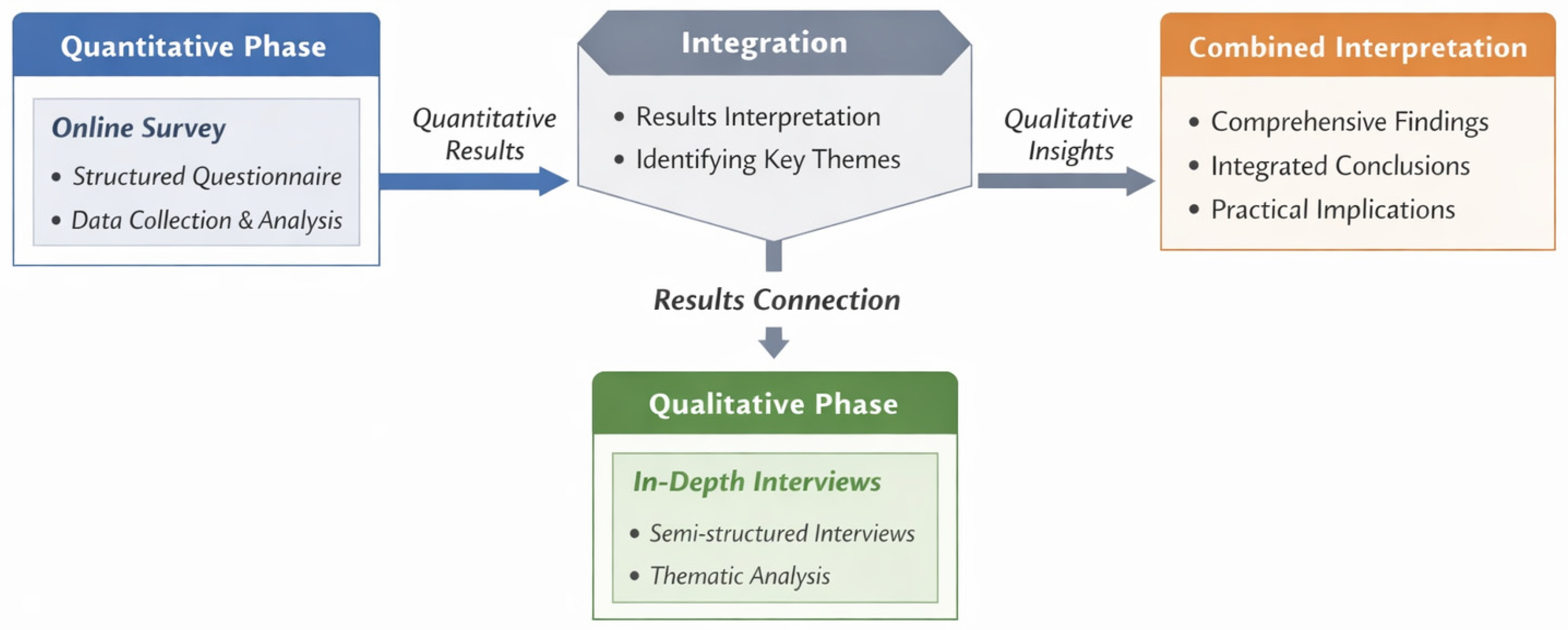
The study employed a mixed-methods research design to analyze the effect of AI-based personalization on consumers’ purchasing behavior. A mixed-methods strategy was selected because it capitalizes on the strength of both qualitative and quantitative methods by harnessing their strengths and offering an exhaustive description of the phenomenon under investigation. The quantitative part aimed to identify measurable patterns and relationships between AI personalization and consumer behavior, whereas the qualitative part aimed to acquire deeper insights into participants’ experiences, perceptions, and attitudes. The sequential design began with the completion of an online guided questionnaire and went on to conduct semi-structured interviews among a sample of respondents. This two-method approach allowed data triangulation, thereby improving the validity and reliability of the findings. The quantitative phase identified consumer trends, while qualitative phase complemented the results by discovering emotional and cognitive responses that could not be quantified using statistical methods. Accordingly, the study adopts an explanatory sequential mixed-methods design, in which quantitative findings are complemented and contextualized through qualitative inquiry to enhance interpretive depth and methodological rigor.
Figure 1 presents a flowchart illustrating the explanatory sequential mixed-methods design adopted in this study.
The target population consisted of adult consumers who had engaged with AI-personalized marketing systems in their online purchasing activities over the past 13 months. This engagement included exposure to personalized product recommendations, AI-driven advertisements, or dynamic website content. Stratified random sampling was employed to ensure diversity across key demographic characteristics, including age, gender, income, and education level, thereby enhancing the representativeness and generalizability of the findings across heterogeneous consumer segments. Participants were recruited through social media platforms and online consumer panels, and screening questions were used to confirm prior exposure to AI-based personalization technologies during online shopping.
3.2. Sampling and Participants
The final sample for the quantitative phase comprised 500 respondents, a size determined to be statistically adequate based on the application of Cochran’s formula for population surveys, ensuring sufficient statistical power for subsequent analyses. For the qualitative phase, a purposive subsample of 20 participants was selected from the survey respondents based on willingness to participate and demographic variation. This number was considered sufficient to achieve thematic saturation while maintaining diversity in participant characteristics. The study focused on consumers operating within digitally intensive online retail environments, where AI-driven personalization is widely implemented.
3.3. Quantitative Instrument
Quantitative phase data were gathered by an automated online questionnaire that was administered via a web survey software. The questionnaire was designed to measure respondents’ degree of exposure to AI-based personalization, level of trust in AI systems, privacy concerns, and purchasing behavior influenced by AI-generated content. Responses were captured using a five-point Likert-type scale (1 = Strongly Disagree, 5 = Strongly Agree).
Measurement items were adapted from well-established and widely cited scales in the literature to ensure content validity and conceptual consistency. Minor contextual modifications were applied to reflect the specific setting of AI-based personalization in digital marketing environments. All items were phrased to capture respondents’ perceptions, experiences, and behavioral reactions to AI-driven personalization systems.
Table 1 presents the measurement constructs, sample items, and sources used in the study.
There were five broad sections to the survey:
- (1)
demographics (education level, age, gender, income, and proportion of online shopping);
- (2)
exposure to AI personalization systems (e.g., frequency of receiving recommendations);
- (3)
purchase behavior affected by personalization;
- (4)
trust in AI-based recommendations;
- (5)
attitudes toward awareness of and concerns about data privacy.
3.4. Pilot Test & Reliability
Prior to the full-scale data collection, a pilot test was conducted to assess the clarity, relevance, and reliability of the questionnaire items. The pilot study involved 30 participants who met the same inclusion criteria as the main sample and had prior experience with AI-based personalized marketing during online shopping. Feedback from the pilot participants indicated that the questionnaire items were clear and understandable, and only minor wording adjustments were made to enhance clarity before final deployment.
Internal consistency reliability of the measurement constructs was assessed using Cronbach’s alpha. The results indicated satisfactory reliability levels for all constructs, with Cronbach’s alpha values exceeding the recommended threshold of 0.70 for all constructs. These results confirm that the measurement scales used in the study demonstrate adequate reliability and are suitable for subsequent statistical analysis.
3.5. Qualitative Data Collection
In addition to the survey, a purposive subsample of 20 participants was invited to take part in the qualitative phase. Semi-structured interviews were employed to obtain rich accounts of participants’ experiences with AI personalization. Interviews were conducted via video conferencing software and lasted 30–45 min per interview. Interviews were conducted using secure video-conferencing software (e.g., Zoom) to ensure privacy and data protection.
The interview guide was developed using open-ended questions on the following:
Attitudes towards accuracy and usefulness of AI recommendations.
Emotional and psychological reactions to content based on AI.
Knowledge of data collection practices and privacy issues.
Impact of AI personalization on impulsive purchasing and long-term brand loyalty.
All the interviews were audio-recorded with participants’ consent and then transcribed verbatim for thematic analysis. The qualitative component played a key role in contextualizing and explaining the results of the quantitative phase.
3.6. Data Analysis—Quantitative
Quantitative data were analyzed using the Statistical Package for the Social Sciences (SPSS) version 26. Descriptive statistics, including means, standard deviations, and frequency distributions, were computed to summarize participant characteristics and response patterns.
To examine associations among the study variables, Pearson’s correlation coefficients were calculated for AI personalization exposure, trust in AI, privacy concerns, and purchase decision. To assess the predictive effects of the independent variables—exposure to AI personalization, trust in AI, and privacy concerns—on the dependent variable (purchase decision), a multiple regression analysis was conducted.
The regression model was specified as follows:
The dependent variable, purchase decision, reflects consumers’ self-reported likelihood of purchasing and actual purchasing behavior following exposure to AI-generated recommendations. It was measured using validated Likert-scale items adapted from prior empirical studies. Missing data were minimal and were handled using listwise deletion after confirming the absence of systematic response bias.
Prior to model estimation, diagnostic tests were conducted to assess normality, multicollinearity, and overall model adequacy. Internal consistency reliability was evaluated using Cronbach’s alpha, with values ranging from 0.78 to 0.86 across all constructs, exceeding the recommended threshold of 0.70. Multicollinearity diagnostics indicated variance inflation factor (VIF) values ranging from 1.34 to 2.41, which are well below the conservative cutoff value of 5, confirming the absence of multicollinearity concerns despite moderate intercorrelations among key constructs. Pearson correlation coefficients ranged from −0.40 to 0.78, remaining within acceptable bounds for multiple regression analysis.
The assumptions underlying the regression analysis include linearity between the dependent and independent variables, the absence of multicollinearity, and homoscedasticity. These assumptions were verified using diagnostic plots and tests, ensuring the robustness of the model.
Overall, the regression model is considered statistically robust with all coefficients being significant at the p < 0.05 level, indicating that the model provides a reliable estimate of the relationship between AI personalization and consumer purchase behavior. The empirical findings are applicable to adult online consumers with recent exposure to AI-based personalization in digitally intensive retail environments, and any generalization beyond this scope should be approached with caution. All statistical tests were conducted at a significance level of p < 0.05.
3.7. Qualitative Analysis
The qualitative data were coded and analyzed using thematic analysis in order to identify recurring themes and patterns. Braun and Clarke [
26] six-stage thematic model was used for the process: familiarization with data, initial code production, searching themes, reviewing themes, naming and defining themes, and writing up.
The NVivo software (version 12) package was used to organize and navigate data while coding. The most significant themes garnered were:
Trust and distrust of AI recommendations.
Emotional responses towards AI personalization.
Data monitoring and transparency issues.
AI impact on impulse buying.
The part personalization plays in creating brand trust.
This analysis provided a fuller description of consumer emotional and ethical reactions to AI personalization than quantitative data would provide.
Mixed-method integration was conducted using a connecting strategy: (i) survey results were used to select interview participants and refine the interview prompts; (ii) qualitative themes were mapped to the quantitative constructs (exposure, trust, privacy concerns, and purchase decisions) to explain why certain statistical relationships were strong or weak; (iii) convergent, complementary, and discordant findings were explicitly discussed in
Section 5 to demonstrate the added value of the qualitative phase beyond triangulation.
These qualitative insights were used to interpret and enrich the quantitative findings by explaining underlying emotional and ethical dimensions.
3.8. Ethical Considerations
The research adhered to strict ethical research standards at all stages. Informed consent was also obtained from all participants, and they were informed about the purpose, procedure, and of their right to withdraw at any time. Confidentiality was also preserved by anonymizing all the data and limiting access to electronic files. The participants were aware of protocols for data handling and recording, especially by interview. The research also complied with relevant data-protection regulations, including GDPR guidelines where appropriate. The research was given ethical clearance by the respective affiliated academic body prior to the collection of data.
4. Results
4.1. Sample Profile and Demographics
Quantitative responses were obtained from 500 adult consumers who reported recent exposure to AI-based personalization in online shopping environments. The demographic profile indicates a diverse sample in terms of age, gender, education, income, and online shopping frequency, which supports the representativeness of the dataset across heterogeneous consumer segments.
Table 2 summarizes the demographic characteristics of the respondents.
4.2. Descriptive Statistics
The distribution of responses indicates that the dataset reflects a broad range of consumer behaviors and attitudes toward AI-based personalization, thereby supporting the robustness of the descriptive results and their relevance for subsequent analyses.
Descriptive statistics of the key behavioral variables are presented in
Table 3. Overall, the results indicate moderate to high levels of exposure to AI-based personalization, accompanied by favorable levels of trust in AI recommendations and purchase behavior influenced by personalized content. These patterns suggest that AI-driven recommendations are generally perceived as relevant and aligned with consumer interests, thereby enhancing engagement and supporting more effective shopping experiences.
4.3. Correlation Analysis
Pearson’s correlation analysis was conducted to examine the direction and strength of associations among the main study variables. As shown in
Table 4, AI personalization exposure and trust in AI are positively associated with purchase behavior, indicating that higher exposure to personalized content and greater trust in AI-based recommendations are linked to stronger purchasing responses. In contrast, privacy concerns exhibit a negative association with purchase behavior, suggesting that heightened concerns about data collection and usage reduce consumers’ responsiveness to AI-driven recommendations.
Overall, the correlation results highlight the dual role of AI personalization in shaping consumer behavior, whereby its effectiveness is enhanced by trust while being constrained by privacy-related concerns. This pattern underscores the importance of balancing personalization benefits with transparency and ethical data practices.
4.4. Multiple Regression Analysis
Multiple regression analysis was conducted to examine the predictive effects of AI personalization exposure, trust in AI, and privacy concerns on purchase decisions. As reported in
Table 5, the regression model was statistically significant and demonstrated substantial explanatory power, indicating that the selected predictors jointly account for a meaningful proportion of variance in purchase behavior.
The results show that trust in AI and exposure to AI-based personalization exert positive effects on purchase decisions, whereas privacy concerns have a negative effect. Among the predictors, trust in AI emerged as the strongest contributor, highlighting its central role in translating AI-driven personalization into actual purchasing behavior. In contrast, privacy concerns significantly weaken the effectiveness of personalization by reducing consumers’ willingness to act on AI-generated recommendations. Overall, these findings suggest that while AI personalization can enhance purchase decisions, its impact is contingent upon consumers’ trust and perceptions of ethical data use.
4.5. Qualitative Results
The twenty semi-structured interviews were thematically analyzed to contextualize and enrich the quantitative findings. The analysis revealed five dominant themes that explain how consumers perceive and respond to AI-driven personalization.
Firstly, participants expressed a dual perception of trust and skepticism toward AI-generated recommendations. While most respondents acknowledged the relevance and accuracy of personalized content, some remained cautious about the underlying motives of personalization and the extent of data collection involved.
Secondly, emotional responses emerged as a salient theme. Many participants described feelings of comfort, appreciation, and surprise when recommendations aligned closely with their interests. However, excessively precise personalization occasionally triggered discomfort, generating perceptions of surveillance or manipulation.
Thirdly, awareness of data collection practices varied considerably among participants. Some consumers demonstrated a clear understanding of how their online behavior was tracked, whereas others reported limited awareness. Across interviews, transparency and user control over data usage were consistently emphasized as prerequisites for accepting AI personalization.
Fourthly, several participants associated AI personalization with impulse buying behavior. Personalized recommendations, particularly those based on recent searches or browsing activity, were perceived as powerful stimuli that increased unplanned purchases.
Finally, participants indicated that positive personalization experiences contributed to repeated engagement and long-term brand loyalty. When personalization was perceived as helpful rather than intrusive, it enhanced satisfaction, strengthened trust, and encouraged continued interaction with the same brand or platform.
Overall, these qualitative insights complement the quantitative results by revealing the emotional and ethical mechanisms through which AI personalization influences consumer purchase behavior and brand relationships.
5. Discussion
The findings of this study demonstrate that exposure to AI-driven personalization significantly influences consumer purchase behavior, with trust in AI emerging as a critical enabling factor and privacy concerns acting as a major deterrent. The quantitative results confirm that repeated exposure to personalized recommendations enhances consumers’ responsiveness, particularly when AI-generated content is perceived as relevant and aligned with individual preferences. This outcome is consistent with prior studies emphasizing that perceived relevance and trust are central mechanisms through which AI-based personalization affects consumer decision-making and marketing effectiveness [
1,
3,
6,
16].
The regression analysis further reveals that trust in AI exerts a stronger influence on purchase decisions than mere exposure to personalization, underscoring that AI-driven marketing operates as a perception-based and relational experience rather than a purely technical process. This finding aligns with engagement-oriented perspectives, which argue that consumer responses to digital technologies are shaped by psychological evaluations of credibility, transparency, and reliability [
19,
23,
31]. In contrast, privacy concerns negatively affect purchase behavior, reinforcing earlier evidence on the personalization–privacy paradox, whereby enhanced personalization can simultaneously increase relevance and trigger resistance when data practices are perceived as intrusive or ethically ambiguous [
13,
26,
29].
The qualitative findings provide deeper insight into the emotional and psychological foundations underlying these quantitative patterns. Trust in AI was perceived not only as a rational assessment of accuracy, but also as an affective state grounded in familiarity, usefulness, and prior positive experiences. This observation is consistent with research highlighting the emotional dimension of customer engagement and its role in fostering trust and loyalty in digitally mediated environments [
18,
23,
24]. However, when personalization was perceived as excessively precise or invasive, participants reported discomfort and feelings of surveillance, reflecting concerns previously identified in studies on algorithmic transparency and perceived manipulation [
11,
13].
From a behavioral perspective, the results indicate that AI personalization facilitates consumer decision-making by reducing information overload and enhancing perceived relevance. Participants reported greater satisfaction and ease of choice when personalization supported their needs, which in turn strengthened trust and encouraged repeat engagement. These findings align with prior research suggesting that AI-enabled personalization can streamline the customer journey and enhance perceived value when implemented appropriately [
6,
15,
16]. Conversely, when personalization lacked transparency or failed to resonate with consumer expectations, it disrupted decision-making processes and led to hesitation or abandonment, echoing concerns raised in earlier studies on consumer autonomy in AI-driven environments [
10,
27].
Ethical considerations emerge as a central theme in interpreting the study’s findings. While most participants valued the convenience and efficiency of AI-driven recommendations, they also expressed concerns regarding data origin, transparency, and control. These concerns are consistent with prior research emphasizing that consumer acceptance of AI personalization depends heavily on responsible data governance and trust-building strategies [
13,
26,
29]. The emotional responses identified—ranging from excitement and appreciation to unease and resistance—highlight the ambivalence inherent in AI-mediated interactions and underscore the importance of ethical transparency and perceived control.
5.1. Sustainability and Responsible-AI Governance Implications
To deepen the ethical and sustainability connection, we explicitly align the findings with established responsible-AI governance perspectives, emphasizing transparency, accountability, and consent-based data practices as prerequisites for sustainable digital marketing. In particular, the results are consistent with risk-based approaches to AI governance such as the NIST AI Risk Management Framework (AI RMF 1.0) [
39] and emerging regulatory requirements for trustworthy AI and user rights (e.g., the EU Artificial Intelligence Act) [
40]. These frameworks support operationalizing sustainability in AI marketing by (a) documenting data provenance and consent, (b) providing meaningful explanations of personalization, (c) enabling user choice and opt-out mechanisms, and (d) monitoring privacy and manipulation risks over the customer lifecycle. Accordingly, the manuscript now treats ethical transparency and user control as sustainability-relevant design conditions that protect consumer well-being and support longer-term trust and loyalty.
Overall, this study contributes to the growing literature on AI-powered marketing by demonstrating that personalization effectiveness depends less on algorithmic sophistication alone and more on consumers’ cognitive and emotional responses. The findings support a shift from purely predictive, behavior-oriented AI systems toward relational and trust-centered designs that integrate transparency, ethical considerations, and user empowerment [
3,
19,
32]. Achieving a balance between personalization and privacy, automation and empathy, is therefore essential if AI-driven marketing strategies are to generate sustainable commercial value and long-term consumer trust [
14,
16,
22].
5.2. Limitations and Future Research
Despite the robustness of the mixed-methods approach, this study is subject to several limitations. First, the reliance on self-reported data may introduce social desirability and recall biases. Second, although the sample size was appropriate for statistical analysis, it may not fully represent all consumer segments, particularly those with lower levels of digital participation. Additionally, the qualitative findings, while insightful, cannot be generalized due to the purposive sampling strategy and relatively small interview sample. Finally, given the rapid and continuous evolution of AI technologies, consumer perceptions of personalization may change over time, highlighting the need for future longitudinal research to examine dynamic shifts in trust, ethical expectations, and purchasing behavior [
13,
19,
32].
6. Conclusions
This study demonstrates that AI-driven personalization plays a significant role in shaping consumer purchase behavior, with trust in AI technology and perceived relevance emerging as key enabling factors, while privacy concerns represent the strongest inhibiting force. By integrating quantitative and qualitative evidence, the findings reveal that consumers are more willing to accept and act upon personalized marketing when it aligns with their needs, fosters emotional connection, and is supported by ethical transparency and perceived control over personal data.
The results highlight that the effectiveness of AI personalization depends less on technical sophistication alone and more on consumers’ cognitive and emotional responses, particularly their sense of trust, autonomy, and fairness. From a managerial perspective, these findings suggest that marketers should prioritize transparent data governance mechanisms, such as user dashboards, consent management tools, and opt-out options, to reinforce trust and mitigate privacy-related resistance. Furthermore, adopting ethically grounded and emotionally intelligent AI systems can enhance customer satisfaction, long-term loyalty, and sustainable brand relationships.
At a broader level, these findings should be interpreted within the study context (adult online consumers with recent exposure to AI-based personalization in digitally intensive retail environments). Within this scope, the study underscores the need for a balanced approach to AI-driven marketing that reconciles personalization with transparency and automation with consumer empowerment as a pathway to sustainable digital marketing practice. As AI continues to transform marketing, future research should adopt longitudinal designs and cross-cultural comparisons to test boundary conditions and to further examine governance and ethical safeguards against manipulation and privacy harms.