Article

Data-Driven Prediction of Tensile Strength in Heat-Treated Steels Using Random Forests for Sustainable Materials Design


Department of Mechanical Engineering, College of Engineering, Shaqra University, Dawadmi 11911, Riyadh, Saudi Arabia
Sustainability 2026, 18(2), 1087; https://doi.org/10.3390/su18021087
Submission received: 23 December 2025 / Revised: 12 January 2026 / Accepted: 15 January 2026 / Published: 21 January 2026
(This article belongs to the Section Sustainable Materials)

Abstract

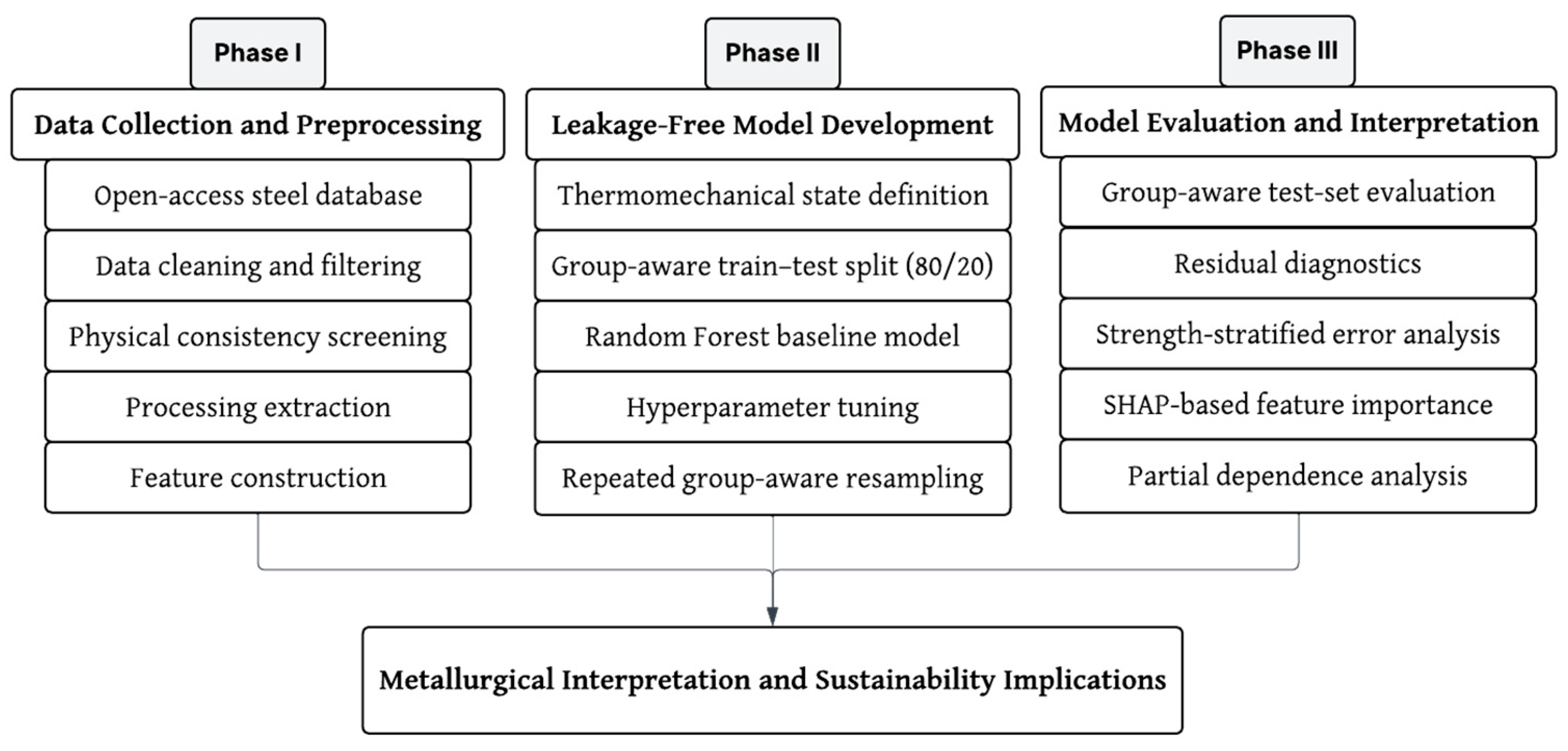
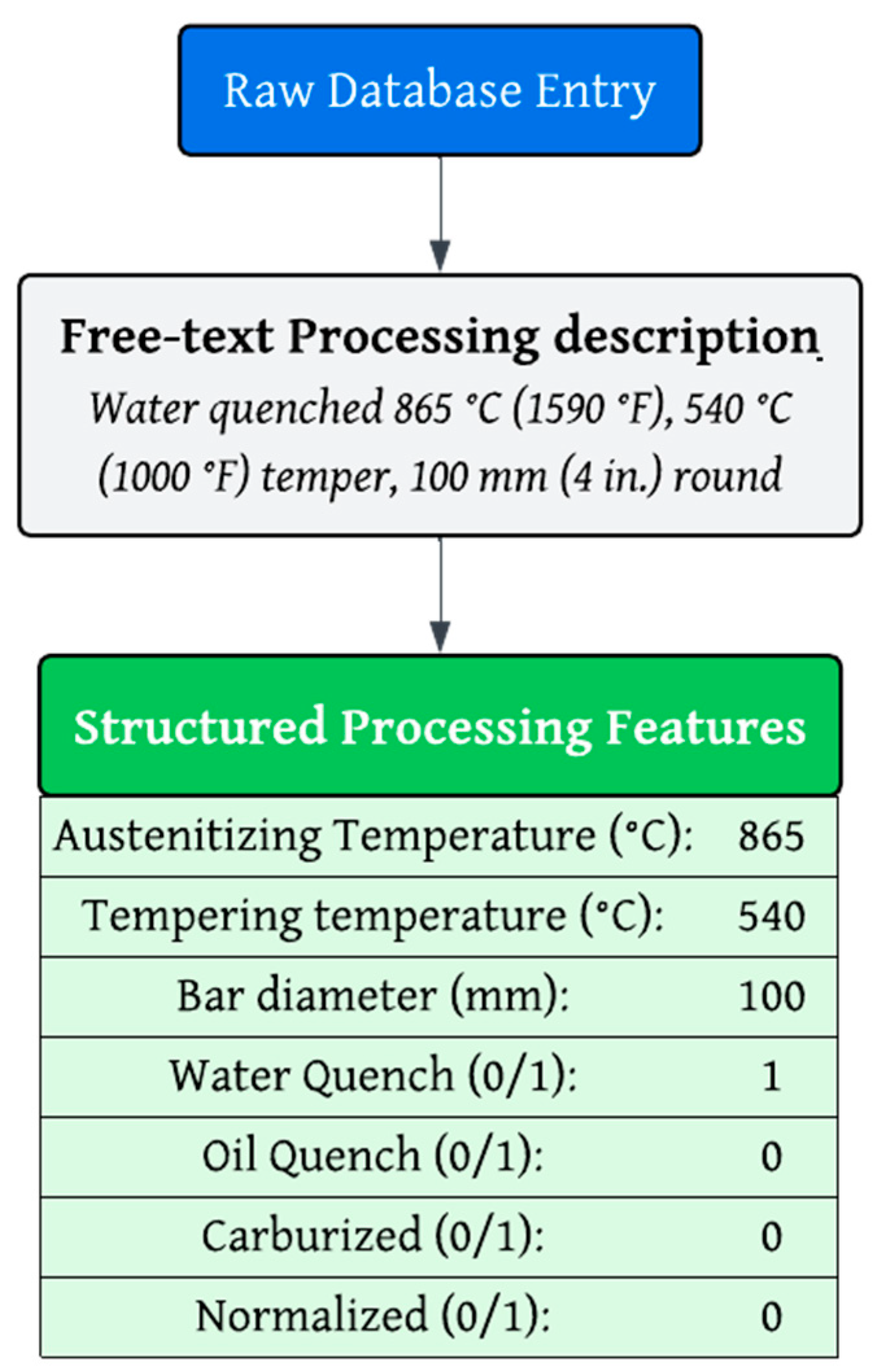
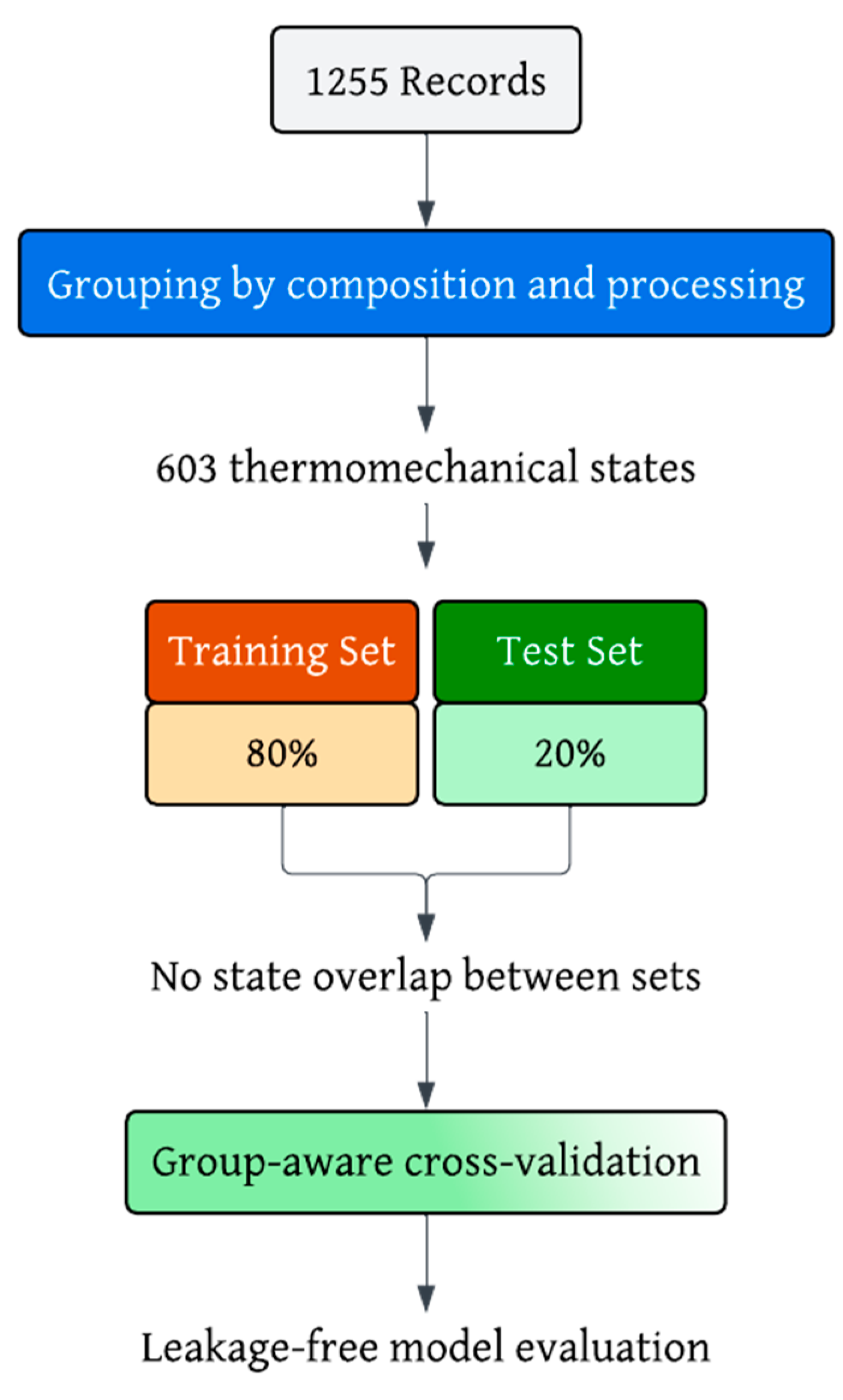
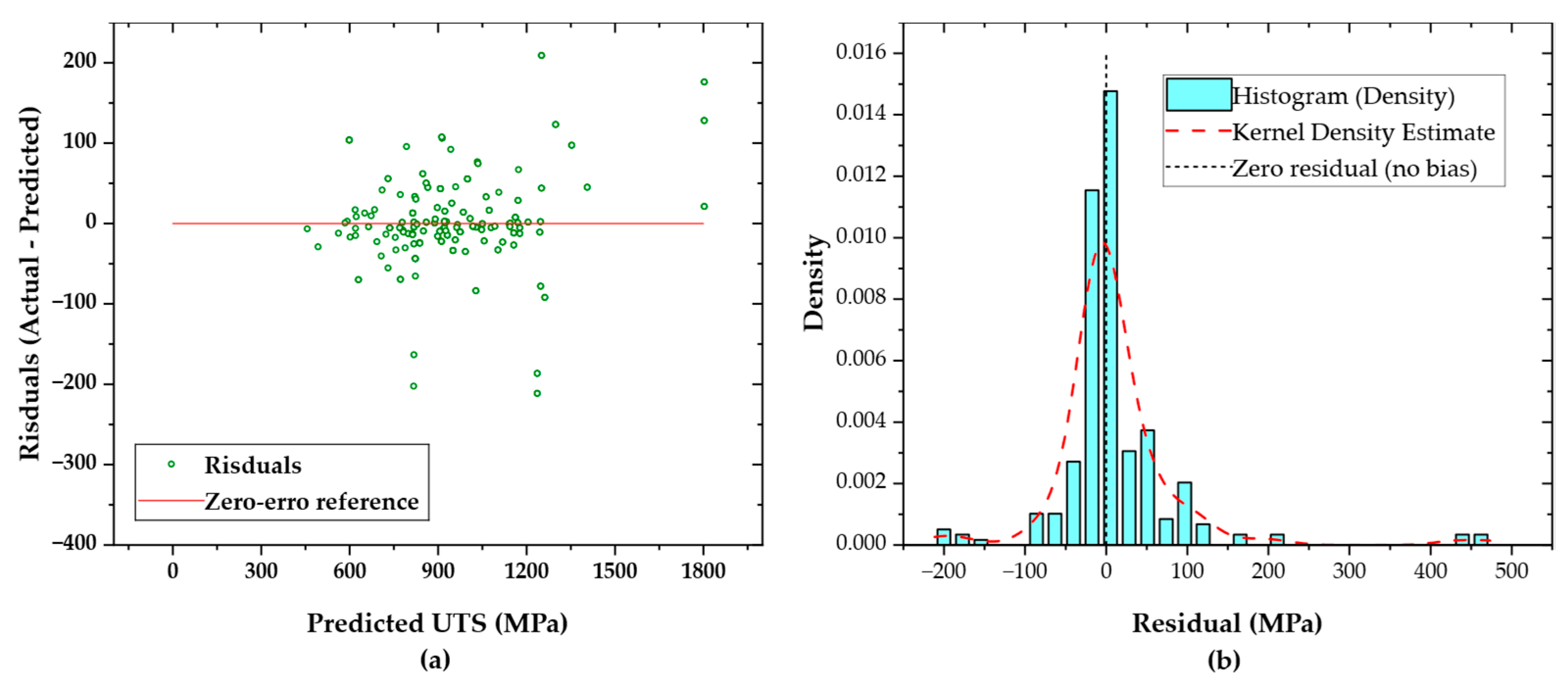
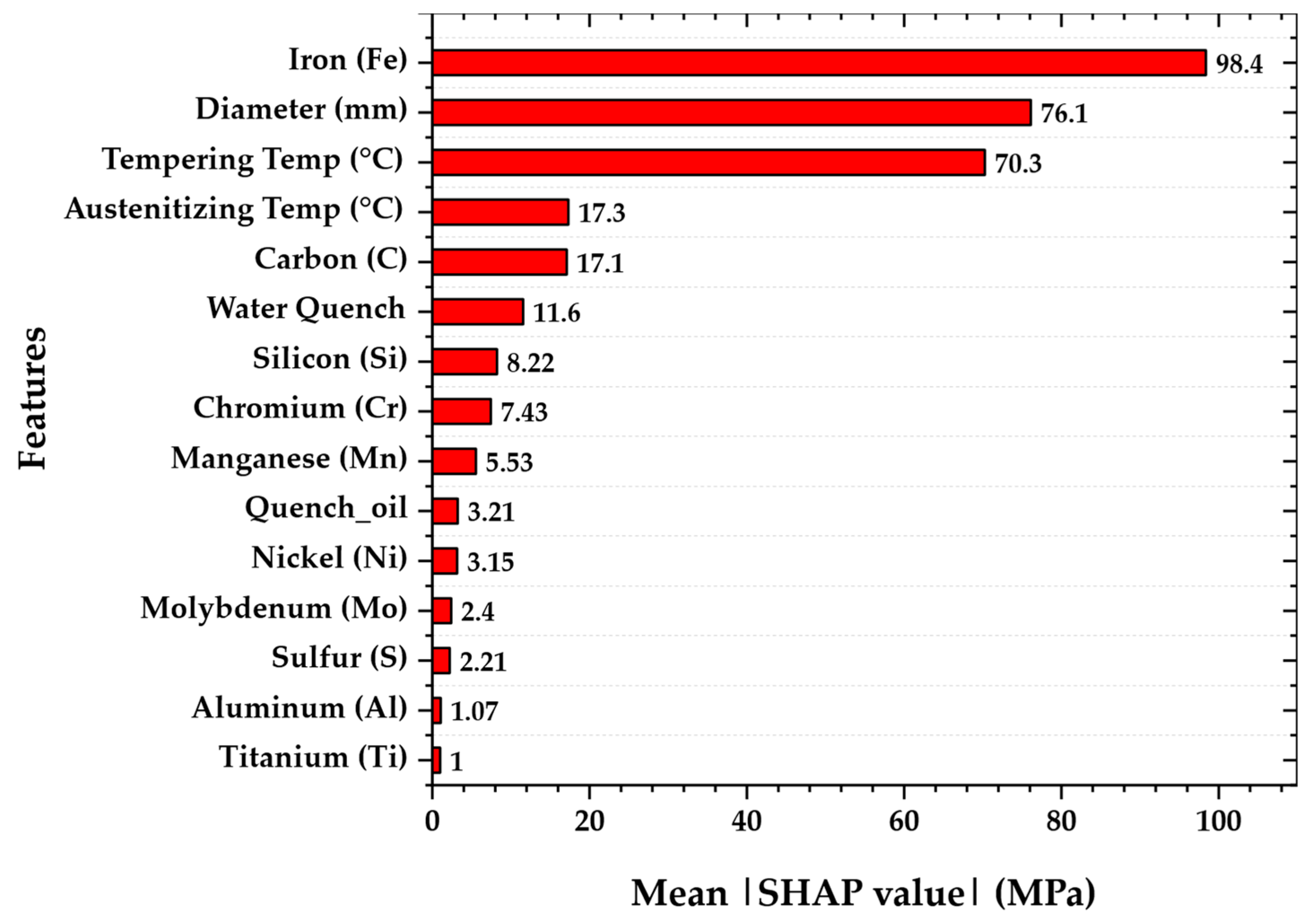
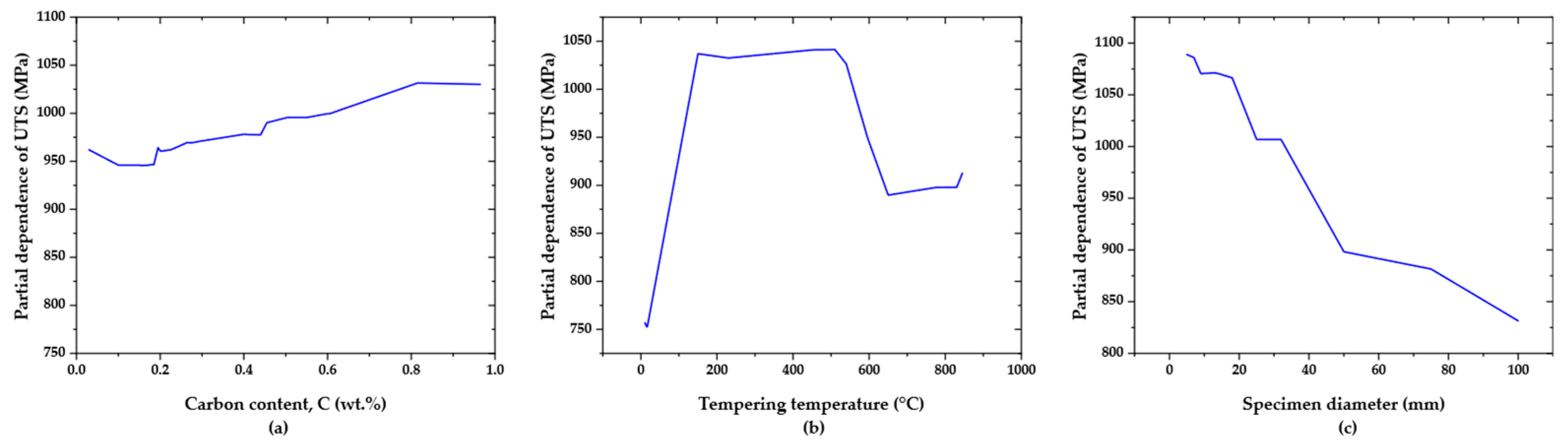
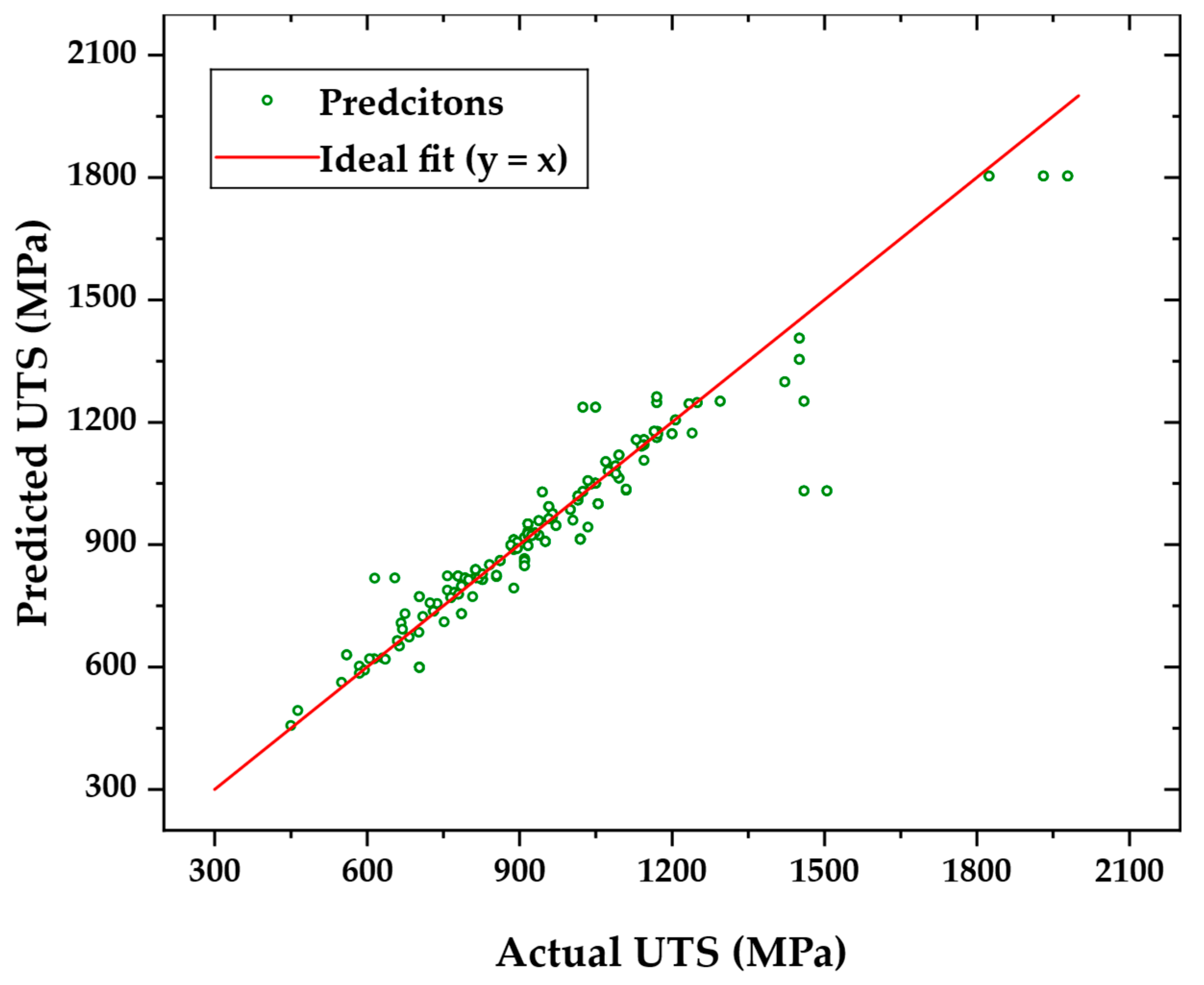
Accurate prediction of ultimate tensile strength (UTS) is central to the design and optimization of heat-treated steels but is traditionally achieved through costly and iterative experimental trials. This study presents a transparent, physics-aware machine learning (ML) framework for predicting UTS using an open-access steel database. A curated dataset of 1255 steel samples was constructed by combining 18 chemical composition variables with 7 processing descriptors extracted from free-text heat-treatment records and filtering them using physically justified consistency criteria. To avoid information leakage arising from repeated measurements, model development and evaluation were conducted under a group-aware validation framework based on thermomechanical states. A Random Forest (RF) regression model achieved robust, conservative test-set performance (R2 ≈ 0.90, MAE ≈ 40 MPa), with unbiased residuals and realistic generalization across diverse composition–processing conditions. Performance robustness was further examined using repeated group-aware resampling and strength-stratified error analysis, highlighting increased uncertainty in sparsely populated high-strength regimes. Model interpretability was assessed using SHAP-based feature importance and partial dependence analysis, revealing that UTS is primarily governed by the overall alloying level, carbon content, and processing parameters controlling transformation kinetics, particularly bar diameter and tempering temperature. The results demonstrate that reliable predictions and physically meaningful insights can be obtained from publicly available data using a conservative, reproducible machine-learning workflow.
Keywords: steel heat treatment; machine learning; random forest regression; tensile strength prediction; feature importance analysis; sustainable materials engineering; composition–processing–property relationships steel heat treatment; machine learning; random forest regression; tensile strength prediction; feature importance analysis; sustainable materials engineering; composition–processing–property relationships