1. Introduction
Digital transformation has emerged as a key driver of change in how organizations plan, innovate, and engage with sustainability [
1,
2,
3]. Technologies such as data analytics, cloud platforms, the Internet of Things (IoT), artificial intelligence (AI), automation and integrated information systems are no longer peripheral tools in many sectors, but are increasingly influencing how organizations organize work, make decisions, engage with stakeholders, and generate long-term value [
1,
2]. However, recent studies on sustainability suggest that digital transformation should not be seen as just the adoption of new technologies, but it can be better understood as a larger socio-technical process, in which leadership, organizational readiness, cultural change and sustainability-oriented governance all play an important role [
1,
4,
5]. For example, in a recent study, Kanakoglou and Kafetzopoulos argued that digital transformation, leadership, and organizational culture jointly support organizational sustainability, with digital transformation showing the strongest effect in their SEM-based study of Greek firms [
6]. The role of leadership is especially important because digital technologies do not create innovation automatically [
5,
7,
8,
9]. Successful organizations require leaders who communicate a long-term digital vision, encourage employees to adopt new technologies, align digital initiatives with strategic goals, support experimentation, and guide their employees during times of change [
5,
7,
8].
However, for DL to be effective, besides visionary leadership, it requires the right organizational conditions, which will transform these initiatives into operational realities [
1,
4,
10]. Thus, technological readiness (TR) assesses whether an organization has the necessary digital infrastructure, including modern integrated information systems, a capable workforce equipped with modern digital skills and ready to be trained to cope with the current technological changes, skilled technical support and the data-based decision-making capacity [
10,
11,
12]. These are essential elements, especially in developing economies, which despite having a young and ambitious population, are lagging in digital transformation mostly as a result of limited institutional capacity, lack of skilled workforce, and weak infrastructure [
13,
14].
Given its unique characteristics as a country, Libya provides a valuable context in which to study DL, innovation, and sustainability. First, the country has an economy heavily dependent on oil extraction and exports and faces substantial pressure for modernization and economic diversification. According to the World Bank [
15], the country’s economic prospects remain closely tied to oil, while diversification is constrained by structural obstacles that limit the development of the non-oil sector. In addition, data from the same institution indicate that the public sector accounts for approximately 86% of employment [
16]. Finally, Libya received a score of 13 out of 100 on Transparency International’s Corruption Perceptions Index, placing it among the countries with the highest levels of perceived public-sector corruption [
17]. These conditions provide the broader national and institutional context in which Libyan organizations operate and make Libya relevant for examining DL as part of a wider modernization challenge that may also affect other resource-dependent economies. Thus, the central question of this study is:
How does digital leadership (DL) influence the innovation process (IP) in Libyan organizations, and to what extent are technological readiness (TR) and organizational sustainability (OS) part of this relationship?
Recent research has begun to examine digitalization, leadership, readiness, sustainability, and innovation in Libya, but these streams remain theoretically and empirically fragmented. Embarak [
18], for example, reported a significant relationship between digital leadership and innovative work behavior in Libyan SMEs, with organizational learning acting as a mediator. In contrast, Shagroun et al. [
19] found that digital leadership had no significant direct effect on sustainable innovation performance in Libyan telecommunications firms and that neither knowledge sharing nor employee engagement mediated this relationship. Related studies have demonstrated the importance of technological or digital readiness for e-learning adoption [
20], while other research has connected technology adoption and digital transformation with sustainable development, organizational resilience, and SME performance [
21,
22]. Collectively, these studies establish the relevance of the individual constructs but do not provide a unified explanation of how digital leadership is translated into the innovation process. In particular, the available Libyan evidence remains inconclusive regarding the direct leadership–innovation relationship, and technological readiness and organizational sustainability have not been jointly examined as alternative organizational mechanisms underlying this relationship.
The present study addresses an unresolved theoretical and contextual gap by developing and testing a parallel mediation model in which TR and OS are examined as distinct but complementary pathways connecting DL with the IP. Although research on digital leadership and innovation has grown, limited evidence explains whether this relationship operates directly or through intermediate organizational capabilities, and TR and OS have rarely been examined simultaneously as parallel mediating mechanisms. This gap is particularly evident in Libya, where the combined roles of these capabilities remain underexplored despite the country’s institutional constraints, developing digital infrastructure, and dependence on natural resources. The study’s intended contribution therefore extends beyond providing evidence from a comparatively underexamined national context. First, it seeks to clarify the inconsistent findings concerning the direct influence of DL by examining whether leadership is associated with the IP through the organizational capabilities with which it is associated rather than through an independent direct relationship. Second, it integrates TR and OS within a single explanatory framework, whereas previous Libyan studies have generally examined digital readiness, sustainability, learning, engagement, or resilience separately or in relation to different organizational outcomes. Third, by testing both mediators simultaneously, the study evaluates whether DL may be associated with IP through parallel technological and sustainability-oriented capability-building mechanisms in a resource-dependent and institutionally constrained economy. The proposed model may also offer a theoretically relevant explanation for organizations operating in comparable environments characterized by infrastructure limitations, governance constraints, and pressures for both digital transformation and sustainable development.
2. Literature Review
2.1. Digital Leadership
Digital leadership (DL) can be broadly defined as the ability of leaders to guide their organizations through the process of digital transformation by combining long-term strategic vision, awareness of emerging and cost-effective technologies, and employee empowerment to keep the organization competitive and aligned with digital trends [
4,
7,
8,
23]. Thus, leaders are not only people who understand technologies, but they also create the right environment for the employees to use digital tools effectively and thrive in a changing environment [
7,
23,
24]. Research has already shown that effective DL is a major driver of organizational innovation, environmental, social and governance management (ESGM), and sustainability. According to a recent study by Niu et al. [
25], DL had a powerful effect on organizational innovation and ESGM among a number of Chinese and Korean companies. In addition, their analysis showed that ESGM together with organizational innovation had significant roles in organizational sustainability [
25]. Nevertheless, the available evidence is not directly transferable across all organizational and national contexts. Systematic reviews indicate that digital-leadership research remains conceptually and empirically fragmented, with studies differing in their definitions of DL, sectors and institutional settings, levels of analysis, organizational outcomes, and explanatory mechanisms [
26,
27]. Some studies also examine digital transformation or technology adoption more broadly rather than isolating the contribution of digital leadership. Consequently, positive findings concerning one outcome or setting do not necessarily establish the relationships proposed in the present model.
Digital leadership may strengthen technological readiness by communicating a clear digital vision, encouraging technology adoption, developing employees’ digital capabilities, and directing organizational resources towards digital infrastructure and technical capabilities. Albannai et al. argue that digital leaders contribute to digital transformation by developing digital dynamic capabilities related to sensing technological opportunities, seizing them through strategic and resource-allocation decisions, and transforming organizational structures and capabilities [
28]. This explanation is consistent with Dynamic Capabilities Theory, according to which organizations respond to environmental change by sensing opportunities, seizing them, and reconfiguring their resource base [
29]. However, existing research has devoted greater attention to digital transformation and digital dynamic capabilities than to technological readiness as the specific multidimensional capability examined in the present study [
26,
28]. This distinction is especially relevant in Libya, where the limited and mixed empirical evidence indicates that leadership initiatives may not automatically translate into innovation outcomes [
19]. The proposed relationship between DL and TR therefore requires separate empirical examination in the Libyan organizational context:
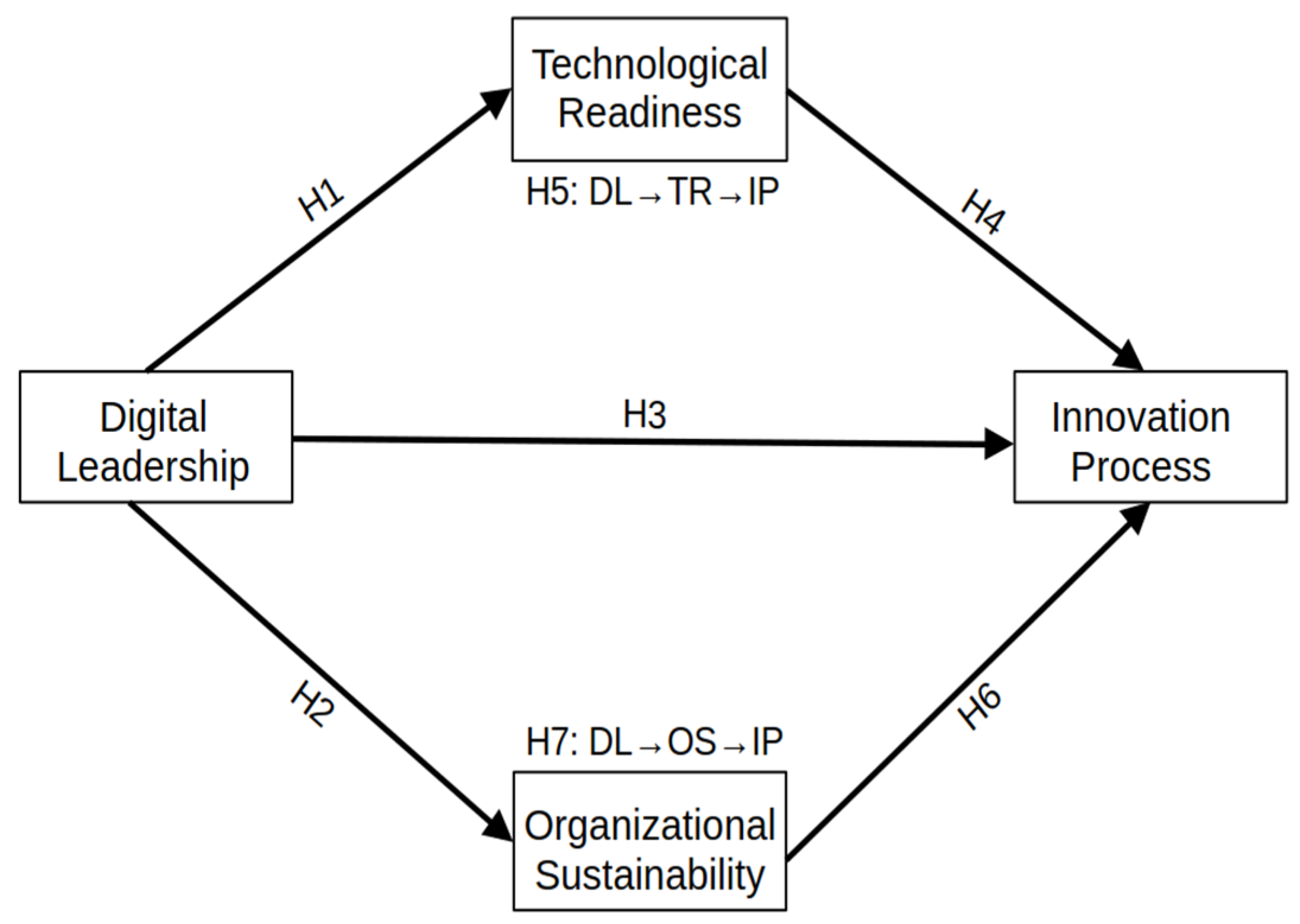
Hypothesis H1. Digital Leadership has a positive effect on Technological Readiness.
DL may also contribute to OS by integrating long-term economic, social, environmental, and governance considerations into organizational strategy. Through improved access to information, organizational coordination, and stakeholder engagement, digital leaders may encourage accountability, efficient resource use, and sustainability-oriented decision-making. Nevertheless, previous research frequently examines digital leadership together with digital transformation, organizational culture, technological capabilities, or ESGM, making it difficult to isolate the independent contribution of leadership to organizational sustainability [
25]. In addition, evidence obtained from technologically advanced economies may not apply directly to resource-dependent and institutionally constrained settings. Drawing on Legitimacy Theory and the Triple Bottom Line perspective [
30,
31], digital leaders may promote organizational sustainability by aligning organizational practices with stakeholder expectations and long-term economic, social, and environmental objectives. This relationship is particularly relevant in Libya because organizations face simultaneous pressures for modernization, diversification, and sustainable development. Therefore:
Hypothesis H2. Digital Leadership has a positive effect on Organizational Sustainability.
DL has also been associated with innovation-related outcomes because digitally oriented leaders can encourage experimentation, collaboration, knowledge exchange, and the strategic use of emerging technologies. However, the available Libyan evidence is not uniform. Embarak [
18] reported a significant positive relationship between digital leadership and innovative work behaviour in Libyan SMEs, with organizational learning acting as a mediator. In contrast, Shagroun et al. [
19] found no significant direct effect of digital leadership on sustainable innovation performance in Libyan telecommunications firms and found no mediating effects through knowledge sharing or employee engagement. These differences may reflect variations in the sectors, samples, innovation outcomes, and organizational mechanisms examined. They nevertheless indicate that DL cannot be assumed to influence every form of innovation directly. From a Dynamic Capabilities perspective, digital leaders may support the innovation process by identifying technological opportunities, coordinating organizational resources, encouraging experimentation, and helping employees respond to digital change [
32]. At the same time, leadership vision may be insufficient to generate innovation unless it is translated into appropriate organizational capabilities. The direct contribution of DL to the innovation process should therefore be tested rather than treated as an established relationship. Accordingly:
Hypothesis H3. Digital Leadership has a positive effect on the Innovation Process.
2.2. Technological Readiness
Technological readiness (TR) is defined as the ability of an organization to effectively use digital technologies [
1,
11]. It is an umbrella term that includes overall digital infrastructure, access to technology, employees’ skills and training, technical support, availability of integrated systems, and data-driven decision-making [
1,
11]. TR therefore represents an operational foundation through which digital strategies and leadership initiatives can be implemented. Previous research indicates that successful technology implementation depends not only on the availability of technology but also on complementary organizational conditions involving people, processes, and data [
33]. However, the literature employs several partially overlapping concepts, including technology adoption, technological readiness, organizational readiness, digital maturity, and digital transformation. Reviews of digital-maturity models reveal considerable variation in the dimensions used and indicate that existing models do not consistently incorporate technological, human, cultural, and transformational capabilities [
34]. Moreover, digital transformation represents a broader process involving changes in organizational structures, practices, and value-creation arrangements, rather than technological preparedness alone [
1]. These related constructs should therefore not be treated as interchangeable because they do not necessarily capture the same combination of technological, human, and organizational capabilities measured as TR in the present study. Technological readiness is important because a clear digital vision does not automatically lead to organizational change or innovation. Without adequate infrastructure, technical expertise, employee capabilities, and organizational support, even well-designed leadership initiatives may be difficult to translate into practice [
4,
35,
36]. TR may therefore bridge the gap between digital vision and implementation by providing the technological and human capabilities required to convert leadership decisions into innovation-related activities [
3,
35,
36]. Nevertheless, technological capacity should not be assumed to generate innovation independently. Technology may remain underused when it is not aligned with organizational objectives, supported by employees, or incorporated into decision-making and operational processes. This distinction may be especially important in Libya, where acquiring technological tools does not necessarily ensure that organizations possess the complementary skills, support systems, and institutional capacity needed to use them effectively. The contribution of TR to the innovation process consequently requires empirical testing. Accordingly:
Hypothesis H4. Technological Readiness has a positive effect on the Innovation Process.
TR may also explain how digital leadership contributes to the innovation process. Digital leaders can promote technological investment, encourage employee training, support the adoption of integrated systems, and strengthen data-driven decision-making. These activities may enhance an organization’s capacity to implement new ideas and improve its processes. From a Dynamic Capabilities perspective, DL may contribute to innovation by enabling organizations to identify technological opportunities and develop, integrate, and reconfigure the resources required to respond to environmental change [
29]. More specifically, digital leaders may facilitate the development of digital dynamic capabilities through technological sensing, strategic resource allocation, and the transformation of organizational structures and processes [
28]. However, evidence that leadership contributes to technological capability development and that technological capabilities support innovation does not, by itself, establish TR as a mediating mechanism. Existing studies have generally focused on digital transformation, digital dynamic capabilities, technology adoption, or digital maturity rather than testing whether TR—as the specific multidimensional capability examined in the present study—transmits the influence of DL to innovation. Consequently, the proposed DL–TR–innovation pathway remains insufficiently examined. Furthermore, the nonsignificant mediation effects reported by Shagroun et al. [
19] for knowledge sharing and employee engagement demonstrate that organizational mechanisms cannot be presumed merely because leadership and innovation are conceptually related. The present study therefore examines whether TR represents a distinct capability-based pathway through which DL is associated with the innovation process. Based on this reasoning:
Hypothesis H5. Technological Readiness mediates the relationship between Digital Leadership and the Innovation Process.
2.3. Organizational Sustainability
Organizational sustainability (OS) is about how well an organization can create long-term value while staying financially healthy, treating its employees responsibly and fairly, protecting the environment and making ethical decisions [
37,
38,
39]. In the current study, we used a number of important metrics to quantify OS, such as sustainable decision-making, the balance of economic, social, and environmental priorities, the efficient use of resources, employing ethical practices, stakeholder awareness, resilience, continuous learning, sustainable growth, innovation, and the integration of sustainability into everyday operations [
31,
40,
41]. This broad conceptualization recognizes that OS is not limited to environmental performance but also encompasses the social, economic, ethical, and organizational conditions needed to maintain long-term value creation. Organizational sustainability is especially important in Libya, because the heavy reliance of its economy on natural resources, particularly oil, makes it vulnerable to oil market instability. This puts pressure on organizations and institutions to improve and move towards diversification. Thus, for Libya, sustainability is not only an environmental issue, but it involves building resilient organizations, using resources more efficiently, investing in their employees and supporting long-term growth [
42,
43]. These national conditions provide the broader context for examining OS, although they should not be interpreted as measured characteristics shared uniformly by every organization included in the sample.
In the published literature, sustainability is often described through three perspectives: economic, social, and environmental [
44,
45]. Kanakoglou and Kafetzopoulos define OS as the ability of the organizations to connect economic performance with environmental care and social responsibility, which in turn requires the combination of technological, human, and cultural capabilities [
6]. In the Libyan context, this type of integration is of particular importance, because modernization is not only dependent on the adoption of the latest digital systems, but also on the improvement of accountability, ethical practices, institutional resilience and, in particular, governance [
42]. Previous research generally suggests that sustainability-oriented organizations may be better positioned to innovate because they emphasize long-term thinking, efficient resource allocation, stakeholder responsiveness, continuous learning, and responsible experimentation [
38,
40,
46,
47,
48]. However, the relationship between sustainability and innovation is potentially reciprocal. Sustainability-oriented strategies and practices may stimulate product, process, and organizational innovation, while such innovations may, in turn, improve sustainability outcomes through greater resource efficiency and the creation of economic, environmental, and social value [
49,
50]. Moreover, reviews indicate that previous studies have frequently emphasized particular environmental aspects or specific forms of sustainability-oriented innovation, with comparatively limited attention to the social dimension and to organizational sustainability as an integrated multidimensional capability [
49,
50]. From the perspectives of Legitimacy Theory and the Triple Bottom Line, organizations that align their activities with stakeholder expectations and long-term economic, social, and environmental objectives may establish strategic conditions that support responsible and durable innovation [
30,
31]. Nevertheless, the contextual differences among previous studies and the possibility of a reciprocal relationship mean that the contribution of OS to innovation should be tested rather than assumed. Accordingly:
Hypothesis H6. Organizational Sustainability has a positive effect on the Innovation Process.
Organizational sustainability may also represent an indirect statistical pathway linking digital leadership to the innovation process. Digital leaders can use technological capabilities and organizational information to improve transparency, coordinate resources, engage stakeholders, and incorporate sustainability considerations into strategic decision-making. These sustainability-oriented practices may subsequently create an organizational environment that supports responsible and durable innovation. OS is therefore expected to represent a distinct pathway through which DL is associated with the innovation process. Based on this reasoning:
Hypothesis H7. Organizational Sustainability mediates the relationship between Digital Leadership and Innovation Process.
Figure 1 summarizes the proposed conceptual model, integrating the hypothesized direct relationships among DL, TR, OS, and IP with the two parallel indirect pathways through TR and OS.
2.4. Theoretical Framework
This study integrates Dynamic Capabilities Theory, the Technology–Organisation–Environment (TOE) framework, Legitimacy Theory, and the Triple Bottom Line perspective to explain how DL may contribute to the IP through TR and OS. These perspectives are treated as complementary rather than interchangeable. Dynamic Capabilities Theory explains how leadership can facilitate the development and reconfiguration of organizational capabilities; the TOE framework explains how organizational leadership shapes the technological conditions required for technology adoption and use; and Legitimacy Theory and the Triple Bottom Line explain why leadership may promote sustainability-oriented practices and how such practices can support innovation.
Table 1 summarizes the specific role of each theoretical perspective in the proposed model.
2.4.1. The Dynamic Capabilities Theory
Dynamic Capabilities Theory explains how organizations respond to changing environments by integrating, building, and reconfiguring internal and external resources and capabilities [
51].
The theory distinguishes dynamic capabilities from ordinary operational resources by emphasizing the organizational capacity to identify changes, mobilize resources in response to them, and transform existing routines and processes. It therefore provides the overarching theoretical basis for explaining how DL may contribute to TR, OS, and IP. Within the proposed model, DL is conceptualized as a leadership capability that can help organizations recognize technological and environmental opportunities, allocate resources strategically, and support the transformation of organizational structures and processes [
16,
52]. This function may be particularly important in Libya, where organizations operate under conditions characterized by dependence on the oil sector, institutional constraints, governance challenges, and environmental uncertainty [
53].
Under such conditions, the ability to adapt and reconfigure organizational resources becomes important for organizational resilience and long-term competitiveness [
5,
52]. TR represents the organization’s preparedness to adopt and effectively use digital technologies. It includes the technological infrastructure, employee competencies, data capabilities, and integrated systems required to support organizational change [
36,
53]. From a dynamic capabilities perspective, digital leaders may strengthen TR by sensing technological opportunities, directing investment toward relevant technologies, developing employee competencies, and reconfiguring organizational processes around digital systems [
54,
55]. TR can subsequently support innovation by enabling organizations to acquire, integrate, and apply technological knowledge more effectively.
OS may also function as a dynamic organizational capability. Sustainability requires organizations to identify economic, social, and environmental challenges and incorporate them into strategic decision-making and organizational practices. Digital leaders may support this process by promoting long-term planning, stakeholder responsiveness, organizational transparency, and the integration of sustainability objectives into organizational routines [
5,
56]. These sustainability-oriented capabilities may facilitate the innovation process by encouraging the development of more efficient processes, responsible products, and adaptive organizational practices.
Dynamic Capabilities Theory therefore supports both direct and capability-mediated relationships in the proposed model. DL may contribute to innovation by establishing strategic direction and supporting organizational transformation, while TR and OS represent organizational capabilities through which leadership initiatives may be associated with innovative outcomes [
57,
58]. This reasoning provides an a priori theoretical basis for examining both the direct relationship between DL and IP and the indirect relationships transmitted through TR and OS, without presupposing whether mediation will be partial or complete.
2.4.2. The Technology–Organisation–Environment Framework
The TOE framework, originally developed by Tornatzky and Fleischer [
59], explains organizational technology adoption by distinguishing among the technological, organizational, and environmental contexts in which adoption decisions occur. The technological context concerns the availability, characteristics, and compatibility of relevant technologies. The organizational context includes organizational size, managerial structure, resources, competencies, and leadership support. The environmental context encompasses the industry, competition, regulation, infrastructure, and broader institutional conditions surrounding the organization.
The present study applies the TOE framework specifically to the relationship between DL and TR. DL is positioned within the organizational context because leaders influence technological priorities, investment decisions, employee development, organizational coordination, and support for digital transformation. TR represents the technological and organizational preparedness needed to adopt and use digital technologies effectively, including adequate infrastructure, digital competencies, integrated systems, and data-based decision-making capabilities [
11,
60].
According to the TOE framework, the existence or availability of technology alone is insufficient for effective adoption. Organizations must also possess supportive organizational conditions, including managerial commitment, appropriate resources, employee skills, and structures capable of accommodating technological change [
61]. Digital leaders may create these conditions by articulating a digital vision, prioritizing technological investment, supporting employee training, and coordinating the integration of digital systems across organizational functions [
24,
62]. This mechanism may be especially relevant in developing-country contexts, where infrastructure limitations and institutional constraints can increase the importance of internal leadership and organizational support [
14]. The TOE framework also supports the relationship between TR and IP. Organizations with appropriate technological infrastructure, knowledge, skills, and implementation capacity are better positioned to introduce new processes, improve decision-making, and develop or adopt innovative products and services [
48,
53]. Accordingly, the TOE framework identifies TR as a theoretically distinct mechanism through which the organizational influence of DL may be associated with innovative outcomes.
2.4.3. The Legitimacy Theory and Triple Bottom Line
Legitimacy Theory proposes that an organization’s continued acceptance depends on whether its actions are perceived as consistent with the values, norms, and expectations of the society in which it operates [
30,
31]. Organizational legitimacy is therefore not determined solely by financial performance. It also depends on organizational responsiveness to social expectations concerning accountability, transparency, environmental responsibility, employee welfare, and ethical conduct. The Triple Bottom Line complements Legitimacy Theory by conceptualizing sustainability as the simultaneous consideration of economic, environmental, and social performance [
30,
31]. In the present study, this perspective supports the treatment of OS as a multidimensional organizational capability rather than as a single environmental activity. OS encompasses the organization’s capacity to incorporate economic continuity, environmental responsibility, and social well-being into its strategies, decisions, and operating practices.
Legitimacy Theory provides the main theoretical basis for the proposed relationship between DL and OS. Digital leaders can promote transparency, accountability, stakeholder engagement, and the use of digital systems for monitoring and reporting organizational performance. They may also incorporate societal and environmental expectations into organizational strategies and decision-making [
31,
63]. These activities can help organizations align their practices with stakeholder expectations and strengthen their legitimacy. This alignment may be especially important in Libya and other oil-dependent economies, where organizations face growing expectations concerning institutional modernization, governance, transparency, and responsible resource use [
23,
63]. The Triple Bottom Line further explains how the relationship between DL and OS extends beyond short-term financial objectives. By integrating economic, environmental, and social considerations into organizational decision-making, digital leaders may encourage resource efficiency, responsible employment practices, stakeholder responsiveness, and long-term organizational resilience [
23,
58]. Thus, DL may strengthen OS by embedding sustainability principles within organizational routines and strategic priorities.
Legitimacy Theory and the Triple Bottom Line also provide a basis for expecting a relationship between OS and IP. Sustainability-oriented organizations face incentives to improve resource efficiency, strengthen social practices, increase transparency, and respond to stakeholder expectations. Addressing these objectives may require new products, processes, managerial systems, and organizational practices. Research on sustainability-oriented leadership supports the broader proposition that sustainability objectives can stimulate organizational change [
39], while evidence from Vietnamese manufacturing demonstrates close relationships among green digital leadership, organizational conditions, digital readiness, and sustainable innovation capability [
64]. Accordingly, OS is expected to enhance the organizational conditions that support innovation, although the direction and strength of this relationship remain matters for empirical examination.
Taken together, the three theoretical perspectives establish a coherent, a priori explanation of the proposed model. Dynamic Capabilities Theory provides the overarching explanation of organizational adaptation and capability reconfiguration; the TOE framework specifies the organizational and technological mechanism connecting DL, TR, and IP; and Legitimacy Theory together with the Triple Bottom Line explains the development of OS and its potential contribution to innovation. The framework consequently supports testing both the direct relationship between DL and IP and the indirect relationships operating through TR and OS.
3. Materials and Methods
3.1. Research Design
This study adopted a quantitative, cross-sectional survey design to examine the theoretically proposed relationships among DL, TR, OS and IP in Libyan organizations. Quantitative survey designs are commonly used to test hypotheses and estimate relationships among latent constructs using data collected from a defined sample [
65,
66]. Data were collected at a single point in time using a structured questionnaire distributed electronically through Google Forms. This approach was appropriate because it enabled standardized data collection from geographically dispersed organizations and allowed the study to reach both employees and managers at different levels of seniority [
54]. However, because the variables were measured simultaneously and reflect respondents’ perceptions, the design cannot establish temporal precedence or demonstrate causal relationships among the constructs. Accordingly, the estimated direct and indirect effects are interpreted as statistical associations consistent with the proposed theoretical model. No formal a priori power analysis was conducted before data collection. Nevertheless, the final sample comprised 423 respondents for a final measurement model containing 36 retained indicators, equivalent to approximately 12 observations per indicator. Although this exceeds commonly applied minimum sample-size and case-to-indicator guidelines for covariance-based SEM [
67], this ratio is reported only as a descriptive heuristic and is not interpreted as evidence of adequate statistical power. To characterize the inferential sensitivity of the realized sample, a retrospective Monte Carlo analysis was subsequently conducted using the specified latent-variable SEM, the fitted parameter structure, N = 423, and 1000 simulated replications. All simulated models converged. Detection probabilities exceeded 0.99 for the moderate structural paths and the two modeled indirect effects, whereas the small direct DL–IP association (standardized β ≈ 0.105) showed substantially lower sensitivity (power = 0.422). Thus, the realized sample showed high sensitivity to effects of the magnitude observed for the principal structural and indirect relationships, but considerably lower sensitivity to very small direct effects (
Supplementary Table S3). This retrospective analysis does not substitute for an a priori power analysis and is interpreted only as a sensitivity assessment of the realized sample.
3.2. Data Collection and Sample
The study employed non-probability purposive sampling supplemented by convenience-based recruitment. Potential participants were identified through LinkedIn based on publicly available profile information indicating Libya as their work location, and the questionnaire was sent to 650 participants. Consequently, the resulting sample should not be interpreted as statistically representative of all employees and managers working in Libya. The survey was made available in both English and Arabic, with respondents able to answer in whichever language they felt most comfortable. Data collection took place over three months (February–April 2026) to allow enough time for survey distribution, follow-up reminders and response collection. In total, 423 usable questionnaires were received from 650 direct LinkedIn invitations, corresponding to a recruitment yield of 65.1%. This percentage represents the proportion of usable submissions relative to the number of invitations sent; confirmation that every invitation was opened or read was not available. As a diagnostic of potential non-response bias, the earliest and latest quartiles of respondents (N = 106 per group) were compared across DL, TR, OS, and IP; no statistically significant differences were observed (all Holm-adjusted
p = 1.000), and the effect sizes were negligible (|Cohen’s d| = 0.018–0.102), providing no observable indication of systematic early–late response differences (
Supplementary Table S2). The respondents included employees, middle managers and senior managers, thus providing a range of views from different levels in the organization. The sectors examined were energy, telecommunications, banking and finance and other sectors such as education which were grouped in the “other” category. The questionnaire also included demographic and organizational information (gender, age, education level, work experience, position, sector, size of organization and perceived digital transformation level). Demographic characteristics of the respondents are summarized in
Appendix A,
Table A1. Participation was anonymous and voluntary, and respondents were informed about the study’s purpose, the academic use of the data, and their right to discontinue the questionnaire without consequence. Informed consent was indicated by voluntarily proceeding with and completing the questionnaire. No personally identifying information or names or identifiers of employing organizations were collected, and responses were reported only in aggregated form. The researchers did not share individual-level responses with employers or other third parties. The decision not to collect organizational identifiers was intended to preserve respondent anonymity and reduce concerns that individual assessments of leadership and organizational practices could be associated with identifiable workplaces. These measures were intended to protect participants from identification and minimize potential organizational or professional consequences associated with their responses.
3.3. Measurement Instrument
The questionnaire consisted of five sections. Section A collected demographic and organizational information. Sections B–E measured digital leadership, technological readiness, organizational sustainability, and the innovation process. The measurement instruments were selected based on a review of their original sources and their conceptual relevance to the constructs and organizational context examined in this study. The research team reviewed the selected items and made minor contextual wording adjustments where necessary to ensure consistent reference to respondents’ current organizations while preserving the substantive meaning of the original measures. Section A collected demographic and organizational information. Sections B–E measured digital leadership, technological readiness, organizational sustainability, and the innovation process. Digital leadership was measured using eight items adapted from AlNuaimi et al. [
68]. Technological readiness was measured using eight items adapted from Hasim et al. [
69], covering technological infrastructure, employee competence, training, technical support, systems integration, and data utilization. Organizational sustainability was initially measured using ten items adapted from Sezen-Gültekin and Argon [
70]. The innovation process was measured using ten items adapted from Chang et al. [
71], representing idea development, employee participation, product, service and process improvement, implementation, and organizational benchmarking. In this study, IP was operationalized as an overarching organizational process encompassing the generation, evaluation, and implementation of new ideas. Although the items refer to different innovation-related activities, the instrument was not designed to estimate product, service, process, and managerial innovation as separate dimensions. IP should therefore be interpreted as a broad innovation-process construct rather than as a measure of any single innovation type. All construct items were evaluated using a five-point Likert scale ranging from 1 (“strongly disagree”) to 5 (“strongly agree”) [
72]. The complete set of administered items and their correspondence with the original sources is presented in
Appendix A. Because questionnaire language was not retained as a respondent-level variable, reliability could not be estimated separately for the Arabic and English versions, and measurement invariance across language versions could not be tested. Accordingly, the reliability and CFA results reported below characterize the pooled sample and should not be interpreted as evidence that the measurement properties were equivalent across the two language versions.
3.4. Data Analysis
The analysis was conducted in several stages. First, the data were screened for missing values and response-quality concerns, and sectors were grouped into four categories. No values were missing because all questionnaire fields required a response. Exploratory factor analysis was conducted as a preliminary assessment of item structure, with detailed results reported in
Supplementary Table S1. Cronbach’s alpha and composite reliability scores were then calculated, followed by CFA to evaluate the measurement model. Convergent validity was assessed using standardized factor loadings, AVE, and composite reliability, while discriminant validity was examined using the Fornell–Larcker criterion and HTMT. SEM was subsequently used to test the direct and indirect relationships among DL, TR, OS, and IP. To test the mediation hypotheses, bootstrapping with 5000 resamples was applied [
73,
74]. This procedure was used to estimate the indirect effects and their confidence intervals, allowing us to determine whether TR and OS mediated the relationship between DL and IP. Bootstrapping was appropriate for this analysis because it does not assume a normal sampling distribution of indirect effects and is widely recommended for mediation testing in SEM-based research [
75]. All statistical analyses were performed in the R statistical environment (version 4.6.1) using appropriate packages for data analysis and structural equation modeling.
4. Results
4.1. Data Screening and Descriptive Statistics
As mentioned in the previous section, we gathered a complete survey with no missing data from a total of 423 respondents. Response quality was assessed across the construct items using three respondent-level criteria. Cases with an overall within-respondent standard deviation below 0.30 were flagged as possible straightlining; cases using no more than two unique response categories were flagged for low response variation; and cases in which a single response category accounted for at least 85% of all construct-item responses were flagged for high repetition. Application of these criteria did not identify any cases requiring exclusion.
Table 2 presents descriptive statistics for the main constructs, namely DL, TR, OS and IP.
Among the four constructs, DL had the highest mean score (M = 3.179, SD = 0.720), followed by OS (M = 3.125, SD = 0.690) and IP (M = 3.012, SD = 0.786), while TR had the lowest mean and was the only construct with an average score below 3 (M = 2.697, SD = 0.739). These values provide a descriptive summary of respondents’ ratings; no inferential comparisons among the construct means were conducted.
4.2. Reliability, Validity, and Measurement Model Assessment
Internal consistency was examined using Cronbach’s alpha and composite reliability coefficients. The results showed that all constructs exceeded the commonly accepted reliability threshold of 0.70 (
Table 3). Cronbach’s alpha ranged from 0.858 for TR to 0.901 for IP, while composite reliability coefficients showed similarly satisfactory levels. These results indicate that all four latent constructs had strong internal consistency.
Convergent validity was subsequently assessed using standardized CFA loadings, average variance extracted (AVE), and reliability indicators. The AVE values ranged from 0.419 to 0.477. Multicollinearity among the predictor constructs was examined for each structural equation using variance inflation factors (VIFs). All VIF values were below 1.5, indicating that the estimated structural relationships were not materially affected by multicollinearity (
Supplementary Table S1). These values concern the predictor sets in the structural model and were not used as evidence of convergent validity in the CFA.
Despite falling slightly below the conventional guideline of 0.50, the AVE results should not be interpreted in isolation. The satisfactory composite reliability together with the statistically significant standardized factor loadings and the theoretically supported CFA structure provide supporting evidence for convergent validity [
76,
77]. Nevertheless, because all AVE estimates remained below 0.50, convergent validity is interpreted as moderate rather than unequivocally established. As shown in
Table 3 and
Supplementary Data, all items loaded significantly on their intended constructs (
p < 0.001), with standardized loadings ranging from 0.599 to 0.767. Indicators with comparatively lower loadings were reviewed for their theoretical relevance and retained because they contributed to the content coverage of their respective constructs; no item was deleted automatically solely to increase AVE.
Model fit indices for the CFA are shown in
Table 4. The measurement model demonstrated excellent fit: CFI = 1.000, bounded TLI = 1.000, RMSEA = 0.000, 90% CI [0.000, 0.014], and SRMR = 0.035. These values meet commonly used SEM fit guidelines for good model fit according to which, CFI and TLI should be close to or slightly above 0.95, RMSEA values should fall below 0.06, and SRMR values should fall below 0.08 [
78,
79].
Although perfect or near-perfect fit indices should always be interpreted cautiously, the combination of strong reliability, significant loadings, and satisfactory residual-based fit supports the adequacy of the four-factor measurement structure we are presenting in the current study [
80]. Therefore, our model adequacy was interpreted not from fit indices alone, but together with factor loadings, reliability, discriminant validity, and theoretical consistency. Discriminant validity was examined using two commonly applied approaches: the Fornell–Larcker criterion and the heterotrait–monotrait ratio (HTMT), as has been recommended in the prior SEM research literature [
77,
81,
82]. The purpose of this step was to confirm that the constructs in the model were sufficiently different from one another; thus, we were not measuring the same underlying concept. In the Fornell–Larcker matrix presented in
Table 5, the square root of the AVE for each construct is shown on the diagonal.
These diagonal values were higher than the correlations between each individual construct and the others in the model, which provides support for discriminant validity. The HTMT provides a more sensitive test of whether constructs are empirically distinct, and HTMT values in
Table 6 were also well below the conservative threshold of 0.85, further indicating that the constructs were empirically distinct [
81,
83].
Taken together, the Fornell–Larcker and HTMT results indicate that the measurement model achieved acceptable discriminant validity and that each construct captured a distinct aspect of the study model.
4.3. Common Method Bias and Multivariate Assumptions
Since our study was based on a questionnaire where participants reported their own assessments, we also examined the possibility of common method bias, a common term which refers to the risk that relationships between variables may appear stronger because the data come from the same respondents and the same measurement method, rather than from true relationships among the constructs [
84,
85,
86,
87]. The four-factor CFA model was compared with a single-factor model (
Table 7).
As shown in
Table 7, the single-factor model fit the data poorly (CFI = 0.514; RMSEA = 0.103; SRMR = 0.121), whereas the theoretically specified four-factor model fit the data very well (CFI = 1.000; SRMR = 0.035). This comparison suggests that the covariance among the items is not adequately explained by a single general factor, thereby providing evidence that common method bias is unlikely to be the dominant explanation for the observed relationships. However, a poorly fitting single-factor model cannot conclusively rule out common method bias, and residual method-related effects may remain. Multivariate normality was also assessed using Mardia’s test [
57]. Multivariate skewness was not statistically significant (
p = 0.146), whereas multivariate kurtosis was significant (
p = 0.0046), indicating some departure from multivariate normality, primarily in terms of kurtosis. Accordingly, the CFA and SEM were estimated using robust maximum likelihood (MLR), which provides robust standard errors and a scaled test statistic. In addition, bootstrapping with 5000 resamples was used to estimate confidence intervals for the indirect effects because their sampling distributions may deviate from normality (
Supplementary Table S1) [
66,
88]. Bootstrapping was therefore used specifically for mediation inference and not as a substitute for robust estimation of the measurement and structural models.
4.4. Structural Model and Direct Effects
The SEM results are presented in
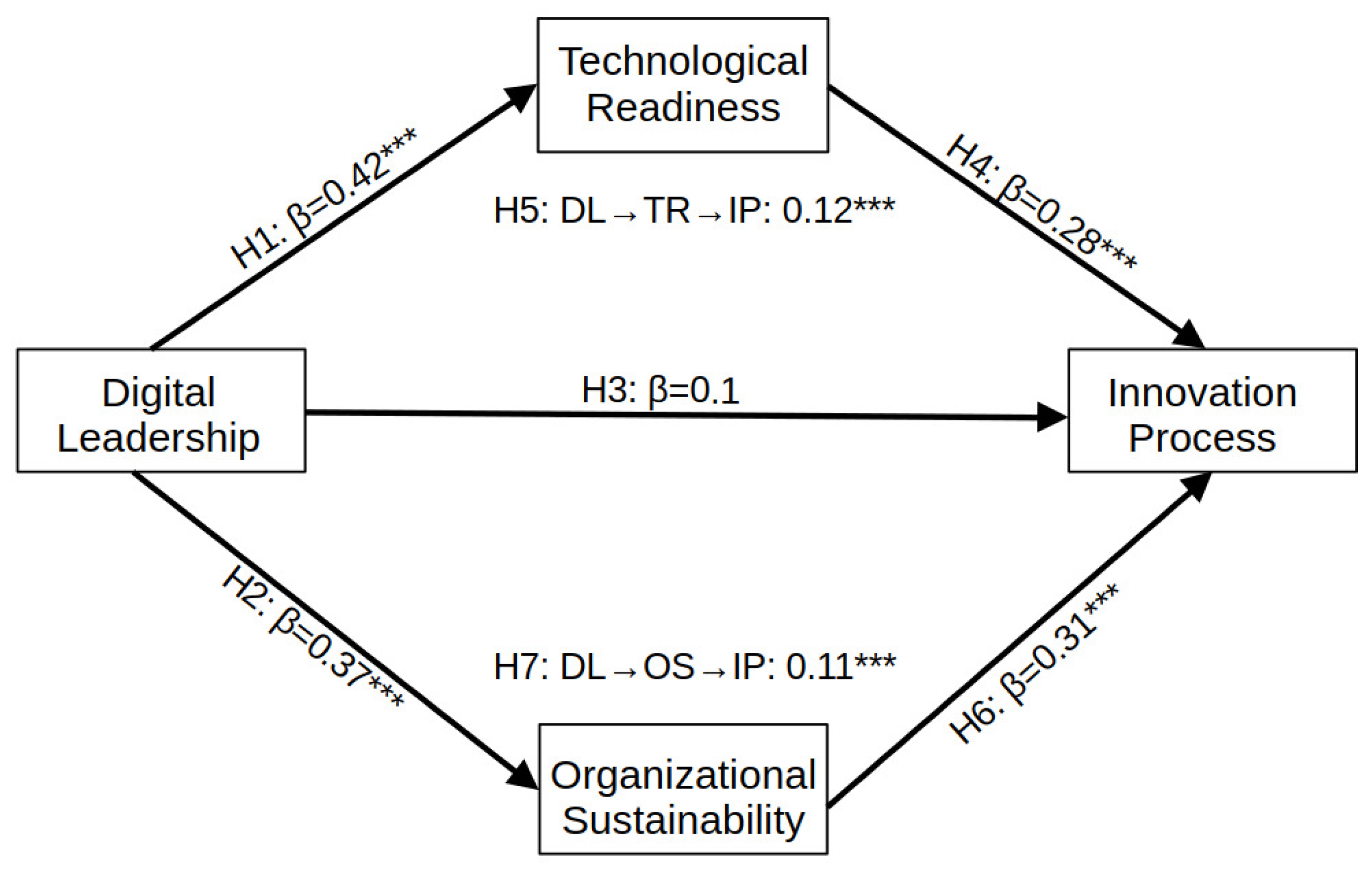
Table 8. Digital leadership had a positive and statistically significant effect on technological readiness (unstandardized estimate (b) = 0.427, SE = 0.060, z = 7.092,
p < 0.001), supporting H1.
Digital leadership also had a positive and significant effect on organizational sustainability (b = 0.336, SE = 0.060, z = 5.574, p < 0.001), thus supporting H2. However, although the direct effect of digital leadership on the innovation process was positive, it was not statistically significant at the 0.05 level (b = 0.111, SE = 0.066, z = 1.689, p = 0.091), failing to support H3. The model explained 17.5% of the variance in technological readiness, 13.5% of the variance in organizational sustainability, and 26.2% of the variance in the innovation process. On the other hand, both mediating constructs were significant predictors of the innovation process. TR had a positive effect on IP (estimate = 0.305, SE = 0.060, z = 5.082, p < 0.001), supporting H4. OS also had a positive effect on IP (b = 0.374, SE = 0.072, z = 5.211, p < 0.001), thus supporting H6. These results indicate that technological readiness and organizational sustainability were significant predictors of innovation process in Libyan organizations, whereas the direct effect of digital leadership was not statistically significant.
4.5. Mediation Effects
The mediation results are presented in
Table 9. DL had a positive and significant indirect effect on IP through TR (b = 0.130, percentile bootstrap 95% CI [0.076, 0.194],
p < 0.001). This supports H5 and indicates a significant indirect association between DL and IP through TR, helping organizations become more technologically prepared. Similar results were observed for OS. The indirect effect of DL on IP through OS was also positive and significant (b = 0.126, percentile bootstrap 95% CI [0.073, 0.193],
p < 0.001), thereby supporting H7. Moreover, DL had a significant total effect on IP (b = 0.367,
p < 0.001), as well as a significant total indirect effect (b = 0.256,
p < 0.001). Because the direct effect was not significant after including the mediators, whereas both indirect effects remained significant, the results indicate an indirect-only mediation pattern.
Figure 2 presents the estimated structural paths among DL, TR, OS, and IP, providing a graphical summary of the direct and indirect relationships examined in the parallel mediation model. The figure highlights the roles of TR and OS as parallel mediators of the relationship between DL and IP.
These results indicate that the direct association between DL and IP was not statistically supported after TR and OS were included in the model, whereas significant indirect associations were observed through both constructs. From the perspective of Dynamic Capabilities Theory, this pattern is consistent with the proposition that DL may be associated with innovation through organizational capabilities rather than solely through a direct relationship. In the present model, TR and OS represent capability-related constructs associated with the significant indirect relationships between DL and IP. These findings are therefore consistent with a capability-based interpretation of the relationship between digital leadership and innovation.
5. Discussion
This study’s findings suggest that DL is associated with the IP in the sampled Libyan organizations primarily through its relationships with TR and OS rather than through a statistically significant independent direct association. In the Libyan context, this relationship is particularly relevant because innovation is connected to the wider challenges of institutional modernization, economic diversification, and organizational resilience. From the perspective of Dynamic Capabilities Theory, the observed pattern is consistent with an indirect association between DL and IP through TR and OS within the specified model [
32]. The absence of a significant direct association, together with the significant indirect associations, suggests that technological readiness and sustainability-oriented organizational capabilities are important correlates of the relationship between digital leadership and innovation.
The absence of a significant direct relationship between DL and IP differs from previous studies reporting positive relationships between digital leadership and innovation-related outcomes. For example, Niu et al. [
25] reported that DL had a positive effect on ESGM and organizational innovation, which further contributed to organizational sustainability. Mollah et al. [
89] similarly found that DL influenced digital transformation, innovation, and organizational performance among IT organizations in Bangladesh, with digital innovation partly explaining the link between digital leadership and performance.
Several explanations may account for the different results obtained in the present study. DL initiatives may not be directly associated with innovation when organizations face limitations in digital infrastructure, employee capabilities, or implementation capacity. A separation may also exist between leadership-level digital strategies and the day-to-day operational activities through which innovation is implemented. In addition, differences among public and private organizations, organizational sizes, sectors, and respondents at different functional levels may influence the observed relationship between digital leadership and innovation. The broad measures of TR and OS may also capture much of the organizational capacity through which DL is associated with IP, leaving no statistically significant independent direct effect after these mediators are included. These explanations remain plausible interpretations and were not directly tested in the present study.
The present study adds to this literature by showing that this relationship is also relevant in Libya, where organizations operate within a resource-dependent economy facing institutional challenges. The results further support the Technology–Organisation–Environment (TOE) framework by suggesting that the direct association between DL and innovation was not statistically significant after TR and OS were included in the model. Rather, DL is associated with innovation through stronger organizational technological readiness, including digital infrastructure, employee capabilities, and data-driven decision-making, thereby creating the organizational conditions that may facilitate the successful adoption and utilization of digital technologies. However, because the sample was drawn from organizations that differ in sector, size, and other characteristics, the results should not be interpreted as showing that all Libyan organizations face identical conditions. Future studies could use multigroup analysis to examine whether the estimated relationships differ across sectors, organizational sizes, and public and private ownership, provided that sufficiently large and balanced subsamples are available.
These findings are especially relevant to the Libyan context. The country continues to be highly dependent on oil, with recent assessments by the World Bank suggesting that the growth of GDP continues to be strongly associated with the performance of the oil sector. Oil and gas accounted for around 60% of GDP, 94% of exports and 97% of government revenues in 2023, while the private sector remained undeveloped [
42]. Oil revenues might offer short-term fiscal support, but they do not necessarily create the capabilities needed for long-term economic diversification or innovation and might even hinder it [
90]. From this perspective, DL may represent one mechanism through which organizations could begin to move toward more knowledge-based, data-informed and sustainability-oriented practices [
9]. However, economic diversification was not measured in the present model and is therefore discussed as a potential contextual application rather than an outcome established by this paper.
This study’s outcomes may also have important implications for governance. Libya’s low score on the Corruption Perceptions Index (CPI) indicates a high perceived corruption risk, which remains a significant challenge to institutional modernization [
17]. Digital transformation may potentially help organizations improve traceability, reduce excessive manual discretion, strengthen data management, and support data-driven decision-making. However, technology alone is not sufficient to overcome weak governance or institutional constraints. The mediating role of organizational sustainability supports the perspectives of Legitimacy Theory and the Triple Bottom Line [
9,
40], suggesting that sustainability-oriented organizational capabilities may contribute to innovation. In this respect, the coordinated development of digital leadership, technological readiness, and organizational sustainability may support meaningful and lasting organizational change. Nevertheless, corruption, transparency, and governance outcomes were not directly measured in the present study; consequently, these issues are presented as contextual considerations and potential areas of application rather than empirically established outcomes.
The findings also have implications for the environmental dimension of sustainability, particularly in Libya’s resource-dependent economy. Digital leadership may support environmental objectives by strengthening technological readiness for data-based resource monitoring, process optimization, energy-efficiency improvements, and the adoption of cleaner organizational technologies. Organizational sustainability may further orient innovation toward reducing resource use, limiting environmental impacts, and supporting longer-term economic diversification and energy-transition objectives. These implications are especially relevant to energy-intensive and oil-related organizations, where digital capabilities can potentially improve operational efficiency and environmental monitoring. However, the present study assessed organizational sustainability as a broad economic, environmental, and social capability and did not directly measure emissions, energy use, the environmental footprint of oil production, or energy-transition outcomes. These specific environmental effects should therefore be examined directly in future sector-focused and longitudinal research.
Beyond these practical implications, the present study also offers several broader contributions. The analysis is based on a relatively large sample of 423 respondents drawn from medium and large organizations across multiple sectors in Libya, providing an empirical basis for examining the relationships among DL, TR, OS and IP [
91]. By combining CFA and SEM, the study was able to assess both the validity of the measurement model and the structural relationships among the proposed constructs [
67]. Moreover, the Libyan context provides an opportunity to examine digital transformation within a resource-dependent economy facing institutional and governance challenges. However, because the study was conducted in a single country using a non-probability sample, the findings should not be generalized directly to other developing economies. Comparative research across countries and institutional settings is needed to determine whether similar relationships occur in other resource-dependent or institutionally constrained economies.
6. Theoretical Contributions
This study contributes to the organizational management and sustainability literature in several ways. First, its main theoretical contribution is to clarify how DL is associated with the IP. The results indicate that the DL–IP relationship was not statistically significant as a direct association after TR and OS were included in the model, whereas significant indirect associations were observed through both constructs. More specifically, TR and OS represent parallel mediating pathways statistically linking DL with innovation. This finding refines the understanding of digital leadership by highlighting the relevance of technological preparedness and sustainability-oriented organizational practices to the observed DL–innovation relationship.
Our results are also consistent with a capability-based view of DL [
92]. The results indicate that the relationship between DL and the IP operates through the TR and sustainability-oriented organizational capabilities associated with DL. In this respect, DL should not be seen as a narrow technological function, but rather as a strategic capability associated with organizational adaptation, learning, innovation, and the development and reconfiguration of organizational capabilities [
93].
Moreover, our study advances the literature on sustainability by conceptualizing organizational sustainability both as an outcome associated with DL and as a mechanism supporting innovation. Sustainability in the Libyan context is more than environmental performance. It also includes resilience, ethical practices, awareness of stakeholders, efficiency of resources and ability to pursue long-term organizational development under uncertain conditions. The parallel mediating roles of TR and OS further suggest that technological and sustainability-oriented capabilities represent distinct but complementary mechanisms through which DL may be associated with innovation.
An additional contribution concerns the potential multiplier effect of digital leadership through organizational capability development. The findings suggest that the relevance of digital leadership may extend beyond individual leadership actions or isolated digital initiatives because the organizational capabilities associated with such leadership can be applied across multiple activities and functions. For example, practices that promote employee digital competence, integrated information systems, data-based decision-making, resource efficiency, continuous learning, and sustainability-oriented planning may strengthen the organizational conditions supporting multiple innovation activities rather than a single innovation outcome. In this sense, the multiplier effect should not be understood as a statistically estimated multiplicative effect, but as the potential for transferable leadership practices to become embedded in broader organizational capabilities that can support continuing transformation and innovation. The parallel roles of TR and OS are particularly important in this respect because they indicate that this capability-building process may operate through both technological and sustainability-oriented pathways.
The study also makes a contextual contribution by offering empirical evidence from Libya, a context that remains underrepresented in the research on DL, sustainability and innovation because most of the existing literature has been focused on countries with stronger institutions, more advanced digital infrastructure and more mature innovation ecosystems [
5,
27]. Libya offers a distinctive setting in which digital transformation takes place in an environment shaped by oil dependence, institutional weakness, and an immediate need for organizational modernization. Applying the model in this setting does not itself establish a new theoretical relationship, but it provides contextual evidence that the proposed capability-based mechanisms are relevant within the sampled Libyan organizations.
Lastly, the proposed framework may be relevant to other oil-dependent developing economies with similar structural challenges to Libya. These include pressure for modernization, weak institutional capacity, dominance of the public sector, risks of corruption and limited progress in non-oil diversification. However, the results of a single-country study cannot establish that organizational capabilities are the primary mechanisms through which DL is associated with innovation in all resource-dependent economies. Instead, the findings offer a possible capability-based explanation that requires comparative testing across countries and institutional settings. Methodologically, the study tests the measurement and structural models using CFA and SEM and evaluates the parallel indirect effects of TR and OS. This methodological approach supports the empirical assessment of the proposed relationships, whereas the theoretical contribution lies in identifying TR and OS as parallel capability-based mechanisms, and the contextual contribution lies in examining these relationships within Libya.
7. Managerial and Policy Implications
Our findings suggest that managers should not consider digital leadership as merely a technical role but as a strategic capability [
1,
8]. Its association with innovation appears to be linked with organizational conditions such as technological readiness and sustainability-oriented practices. This includes establishing a clear digital orientation, promoting experimentation, assisting employees through technological change and linking digital initiatives to broader organizational goals [
4,
35]. Because technological readiness mediated the relationship between DL and innovation, senior managers, IT departments, and human-resource units should coordinate investments in digital infrastructure with employee training, technical support, system integration, and improved use of data in decision-making [
1,
3,
35]. Organizations could implement this recommendation through digital-readiness assessments, targeted training programs, technology-support procedures, and periodic reviews of system integration. Relevant performance indicators could include employee participation in and completion of digital training, system adoption and utilization rates, the proportion of organizational processes supported by integrated digital systems, technical-support response times, and the number of innovation initiatives implemented.
From a managerial perspective, the potential transferability of these practices is also important. The findings do not imply that a single model of digital leadership can be transferred unchanged across organizations. Rather, transferable elements include practices such as communicating a clear digital direction, supporting experimentation, investing in employee digital capabilities, encouraging cross-functional coordination, using data in decision-making, and integrating sustainability considerations into organizational priorities. These practices can be adapted to different organizational sizes, sectors, and levels of digital maturity. Their broader value lies in their potential to strengthen capabilities that extend beyond a single digital project: improved technological readiness can support the adoption and implementation of subsequent technologies and innovations, while sustainability-oriented routines can influence resource allocation, stakeholder engagement, resilience, and long-term innovation priorities. Thus, capability development may allow the benefits associated with digital leadership to diffuse across organizational functions and contribute to wider organizational transformation.
The findings suggest that the association between DL and innovation may be limited when technological readiness is low. For policymakers, the findings suggest that Libya’s modernization agenda should not be limited to the national digital infrastructure. Relevant government ministries, public-sector authorities, educational institutions, and business-support agencies could also strengthen DL at the organizational level through management training, incentives for innovation and digital adoption, and sustainability-oriented governance programs [
40,
94,
95]. Progress could be monitored through indicators such as organizational participation in digital-leadership programs, adoption of integrated digital systems, investment in employee digital training, implementation of sustainability policies, and the number of supported innovation projects. Anti-corruption digital systems may also be considered within the broader Libyan policy context and recommendations of the relevant literature [
40,
94,
95]; however, corruption and transparency were not included in the empirical model, and this recommendation should therefore not be interpreted as a finding directly established by the present analysis.
These recommendations are particularly relevant in a country where growth still depends heavily on oil production and where the private sector is still relatively fragile. More generally, the findings suggest that DL may have potential to aid diversification in oil-dependent economies, although this possibility requires comparative testing beyond Libya. Using digital levers to improve transparency, efficiency, stakeholder engagement, monitoring of the environment and innovation capacity, organizations can make incremental contributions to a development model that is more resistant and less dependent on resources [
38]. Improvements in transparency may also represent a potential application of digital systems identified in the wider literature, but they were not directly examined in this study. Accordingly, these broader policy recommendations are derived from the Libyan context and the existing literature rather than from statistical relationships directly tested in the model.
8. Limitations and Future Research
This study has several limitations that should be considered when interpreting the findings. First, the cross-sectional design does not establish temporal precedence or causality among DL, TR, OS, and IP. Accordingly, the direct and indirect effects should be interpreted as patterns of association consistent with the proposed theoretical model rather than as confirmed causal mechanisms. Future longitudinal research could examine how these relationships develop over time [
96]. In addition, all constructs were measured through self-reports from the same respondents. Although the single-factor CFA comparison indicated that one general factor did not adequately explain the item covariance, shared-method variance cannot be ruled out [
85,
86]. Future studies could combine multiple respondents or data sources with objective indicators of digital investment, innovation, productivity, or sustainability performance.
Second, the online, non-probability sampling strategy limits representativeness and generalizability. Distribution through Google Forms may have underrepresented employees with limited internet access or digital literacy [
97,
98], while voluntary recruitment does not permit generalization to all Libyan employees or organizations. Future studies could use probability-based sampling where feasible and combine online surveys with alternative modes of data collection [
54].
Several measurement limitations should also be acknowledged. Although established instruments were selected and reviewed by the research team for conceptual and contextual relevance, the adapted questionnaire did not undergo a separate formal expert-panel content-validity assessment or pilot study. More importantly, because questionnaire language was not retained at the respondent level, reliability could not be examined separately for the Arabic and English versions and cross-language measurement invariance could not be tested. The measurement results therefore support the four-factor structure in the pooled sample but do not establish equivalence between language versions. This uncertainty also qualifies interpretation of the structural relationships and indirect effects. Future bilingual studies should document translation procedures, retain questionnaire language, and evaluate measurement invariance before pooling language groups.
Potential within-organization clustering represents a further limitation. Organization identifiers were not collected in order to protect anonymity and reduce concerns that respondents’ assessments could be associated with identifiable workplaces, an important consideration in the Libyan organizational context. Consequently, the independence of observations across organizations cannot be verified, and intraclass correlations, cluster-robust standard errors, or multilevel models cannot be estimated retrospectively. If responses were correlated within organizations, the precision of the reported standard errors and resulting statistical inference may be affected. Future studies could address this issue while preserving confidentiality through non-identifying organization-level codes. Some organization-level items, particularly competitor benchmarking within IP, may also have been more readily evaluated by respondents with strategic or market-related responsibilities, introducing possible information asymmetry. Future research could record such responsibilities more precisely and triangulate employee perceptions with managerial or objective organizational data.
Finally, the study’s Libyan setting provides evidence from an underrepresented context but limits broader generalization. Comparative research across other developing or resource-dependent economies could assess whether similar relationships are observed elsewhere. The present study also did not examine whether structural relationships differ by sector, organizational size, digital-transformation level, institutional pressure, or public versus private ownership. Future studies with sufficiently large and balanced subsamples could investigate such heterogeneity through multigroup analysis [
99] and examine additional contextual boundary conditions, including perceived corruption.
9. Conclusions
This study examined the relationship between DL and the IP in sampled Libyan organizations, with TR and OS as parallel mediators. Based on 423 survey responses, digital leadership had no significant direct association with the innovation process after the mediators were included, but it had significant indirect associations through both technological readiness and organizational sustainability. These findings suggest that digital leadership is associated with innovation primarily through the technological and sustainability-oriented organizational conditions that accompany it. In Libya’s resource-dependent and institutionally constrained context, digital transformation should therefore be understood as an organizational undertaking involving leadership, employee capabilities, infrastructure, responsible practices, and long-term strategic commitment. The originality of these findings lies particularly in identifying technological readiness and organizational sustainability as complementary capability-based pathways linking digital leadership with innovation rather than treating leadership as an isolated direct driver of innovation. By strengthening capabilities that can be applied across organizational functions and successive innovation initiatives, transferable digital leadership practices may generate a broader multiplier effect that supports organizational transformation beyond individual digital projects. Comparative and longitudinal research is required to determine whether the same relationships occur in other organizational and national settings.