Review

Bridging the Gap Between Smart Tourism Theory and Practice: Evidence from Historical Urban Case Studies

1
Department of Urban Design & Planning, Faculty of Engineering, Ain Shams University, Cairo 11517, Egypt
2
Architecture Engineering Department, University of Business and Technology, Jeddah 21448, Saudi Arabia
3
Smart and Future Cities Laboratory for Sustainable Urban Solutions, Faculty of Engineering, Ain Shams University, Cairo 11517, Egypt
4
Department of Architecture, Heritage, Restoration & Conservation, Faculty of Archaeology, Ain Shams University, Cairo 11566, Egypt
*
Author to whom correspondence should be addressed.
Sustainability 2026, 18(17), 9044; https://doi.org/10.3390/su18179044
Submission received: 24 June 2026 / Revised: 12 August 2026 / Accepted: 26 August 2026 / Published: 3 September 2026
(This article belongs to the Special Issue Virtual Tourism and Sustainable Futures)

Abstract

The rapid advancement of digital technologies has reshaped tourism practices worldwide, positioning smart tourism as a key approach for enhancing user experience. Previous studies have either focused on conceptual discussions of smart tourism principles or examined isolated technological applications; limited research has systematically linked theoretical experiential dimensions with the actual tools and systems implemented in heritage contexts. In response to this gap, a structured review of Scopus-indexed studies published between 2015 and the present was conducted to examine smart tourism applications in historical urban areas, identifying the evolution of the term smart tourism, recurring trends, technological interventions, and operational strategies applied in historical urban destinations. Using an inductive comparative qualitative approach, a selected sample of archival studies was analyzed, classifying studies into two distinct yet potentially complementary research families: a philosophical stream and a practical implementation stream. The selected studies are analyzed through a dual lens: (1) Theoretical dimensions and themes discussed in conceptual literature, and (2) Practical tools and techniques applied in empirical case studies. The core contribution of this research is the critical perspective of these efforts and the bridging of these two domains through the Integrated Smart Tourism Transformation Framework (ISTTF). The findings contribute to both theory and practice by offering a framework for policymakers, designers, and heritage managers seeking to implement smart tourism solutions that enhance user experience while preserving cultural integrity.

1. Introduction

In recent decades, the term “smart” has often been used interchangeably with “intelligent” or “digital” and has gained prominence to describe technology-driven societal and urban transformations enabled by big data, sensors, open data, and advanced connectivity [1,2,3]. In 1960, the concept of smart cities emerged progressively through three main phases: an initial technology-led stage focused on data collection and resource allocation; city-led strategic integration of smart technologies phase; and a third phase emphasizing citizen participation, co-creation, and social inclusion to respond to accelerating urban challenges such as infrastructure deficits, environmental pressures, congestion, and governance inefficiencies [4,5]. Contemporary definitions highlight smart cities as integrated systems that connect physical infrastructure, digital technologies, and human capital to foster sustainable, inclusive, and adaptive urban environments [6,7]. Smart cities integrate multiple interrelated components, including a Smart Economy that drives productivity and innovation; Smart Mobility that ensures accessible, efficient transportation; a Smart Environment focused on resource management and ecological sustainability; a Smart Society that emphasizes education, cultural facilities, and active civic participation; and Smart Governance that promotes transparency and effective public services. Together, these dimensions create vibrant urban ecosystems capable of adapting to contemporary and future rising challenges [5,7,8].
With the emergence of the technological revolution by the end of the 20th century, the sustainability discourse has expanded beyond its traditional environmental, economic, and social pillars to include culture as a fourth and vital dimension of sustainable development. As such, it is essential to embed smart technologies within cultural heritage tourism for future urban development. As pointed out in international frameworks, especially those advocated by UNESCO, culture is a driver and enabler of sustainable development, impacting how societies interact with their environment and manage resources [9,10]. This holistic understanding reframes urban development as a culturally embedded process, where technology must support local identity, heritage, and community values [11,12]. Accordingly, Smart tourism emerges as an evolution of tourism practice, leveraging intelligent systems to enhance user experience, improve heritage management, and support sustainable development objectives while safeguarding their cultural and social integrity, as traditional tourism models often struggle to respond to contemporary challenges such as demographic change, environmental stress, and experiential diversification. By aligning technological innovation with cultural values and urban intelligence, smart tourism is now recognized in the literature as a key extension of smart city frameworks, offering a forward-looking, experience-driven approach to revitalizing historical urban spaces [2,3,4,5,6,7,8,9,10,11].
Despite the growing body of literature on smart tourism, a significant gap remains between theoretical constructs and their practical implementation, particularly within historical urban contexts. Existing studies extensively discuss user experience dimensions and conceptual smart tourism frameworks, yet few systematically examine how these theoretical principles are translated into real-world applications through specific tools and initiatives. This lack of alignment results in fragmented implementations that often fail to fully realize the potential of smart tourism in enhancing user experience. Addressing this gap, this study adopts an inductive comparative qualitative approach, which analyzes a selected and matched sample of archival research papers through a structured coding framework, enabling recurring patterns, relationships, and research trajectories to emerge directly from the evidence. This comparative process led to the inductive identification of two complementary research families (philosophical and practical implementation). Building upon these findings, the study identified the principal gaps that emerged from the comparative analysis that continue to separate theoretical discourse from practical application, and accordingly provided a structured understanding of how smart tourism research has evolved and where future investigations should be directed. Moreover, this review contributed to developing an integrative conceptual framework that bridges conceptual smart tourism research with implementation-oriented studies within historical urban environments, offering a foundation for future empirical investigations while supporting a more coherent research agenda for smart tourism in cultural heritage contexts. To achieve these objectives, the review addresses the following research questions:
  • RQ1: How has smart tourism research evolved within the context of historical urban environments?
  • RQ2: What technological approaches and implementation themes have been adopted in historical urban smart tourism initiatives?
  • RQ3: What conceptual and implementation gaps appear within smart tourism theory and practice?
  • RQ4: How can these findings be synthesized into an integrative conceptual framework capable of guiding future smart tourism research in historical urban contexts?

2. Evolution of Smart Tourism

The “Smart tourism” concept has been significant over the past decades, starting from the initial technological information in tourism to a more complicated framework driven by interconnectivity and innovative technologies. Early technological applications in tourism, dating back to the late twentieth century, specifically in the period from the 1960s to the 1990s, focused primarily on operational efficiency through systems such as airline Computer Reservation Systems (CRS), Global Distribution Systems (GDSs), Hotel Property Management Systems (PMS), Travel agency systems, and last but not least, Destination Management Systems (DMSs) [13]. In 1987, some authors introduced a new term, “Destination Image,” which was defined as the “ Impressions of A Place” by Gartner & Hunt in 1987; however, it was introduced as “Perceptions of an Area” by Hunt in 1975 and Phelps in 1986. Earlier than that, it was analyzed as “Set of Beliefs” by Crompton in 1979 [14,15]. These early tools laid the groundwork for what later became known as E-tourism in 2005, emphasizing information access and service automation rather than experiential quality. This has been seen as a predecessor of Smart tourism; that enabled organizations to ease their consumer interactions [2,13,16]. In 2022, Otowicz et al. stated that the notion of smart tourism has its origins in the 2000s [2]. Going through the decade from 2005 to 2015, the Web 2.0 era emerged, where social media and review platforms, such as “TripAdvisor,” came into the picture, influencing reputation, branding, and business performance for tourism organizations, in addition to blogs and online travel communities [13]. Between 2010 and 2014, the focus was on IT services, defining this era as “The early period,” which has been characterized mainly by keywords such as “smart” and “tourism”, which are closely linked to information technologies [16,17]. From 2012 to 2015, new trends emerged, such as sustainability and strategic destination management. [18]. By 2015, as per Buhalis’ research in 2020, as well as Pam Leea, Florian J. Zach, and Namho Chung’s research in 2021, the term “Smart Tourism” has appeared as a core theme in the field of tourism, combining the previous themes under its umbrella, along with the integration of other themes such as Virtual experience and Airbnb [14,15,18,19].
From 2015 onwards, the emphasis has shifted to experience-oriented and user-centric approaches [4,17,20]. Between 2015 and 2017, the research emphasis centered on mobile technologies, digital platforms, and data-driven systems. Mobile technology played an important role in delivering personalized, real-time, and context-aware tourism information and services to users via smartphones, intelligent terminals, and applications [21]. Moreover, it enabled tourists to co-create their experiences through gamification [22], social support through networking sites [23] and smart tourism design systems [24] (such as digital omotenashi, or hospitality), as well as big data analytics and content analysis (travel blogs). Different case studies from destinations such as South Korea [25], Dubai [22], and scenic areas such as the case of Huashan (Mount Hua, China [26] demonstrated how integrating mobile and ICT technologies enhanced user engagement and destination management by studying the movement patterns and preferences to guide destination planning and design. Between 2018 and 2020, the concept of smart destination appeared, aiming to enhance tourist experiences through smart technologies and personalization [18]. During this time span, smart tourism research expanded to the application of incorporate immersive and interactive technologies, such as augmented reality (AR), virtual reality (VR), Internet of Things (IoT), and ambient intelligence to satisfy both tourists and residents providing personalized, interactive, and immersive experiences in various tourism contexts [27,28], taking into consideration the importance of community inclusion, with a growing focus on residents’ experiences, training, and digital awareness [29], focusing on integrating environmental sustainability and cultural heritage preservation, renewable energy and infrastructure development into smart tourism frameworks [30]. Furthermore, other studies have examined the effect of smart tourism on historical sites and buildings, as well as its expansion into event experiences, co-creation of intangible heritage, and eco-innovative approaches in museums, demonstrating a broader application of smart solutions to enhance cultural tourism and sustainability goals [31,32].
Noteworthy advances targeted diverse user needs, paying attention to different tourists’ demographics and generational differences, particularly the preferences of Millennials and Generation Z, reinforcing the role of gamified and environmentally conscious technologies [27,33] to support not only normal people but also those with visual impairments for a better experience [34]. Moreover, during this period, cities experimented with novel tools such as blockchain technology, signaling a move toward secure, transparent, and decentralized systems that can improve trust and management efficiency [35]. In addition to smart mobility solutions that integrate battery electric vehicles (BEVs) and pedal-assist electric bicycles) [36] and adaptive On-site trip planning support systems that dynamically update tourists with real-time information about tourism spots, improving convenience and personal control over the experience [37]. On the contrary, other authors explored the phenomenon of “digital free tourism” (DFT), focusing on why participants choose to limit or abstain from technology while traveling [38].
In 2020, the COVID-19 pandemic further accelerated the digital transition where Web 3.0 appeared in the picture where literature demonstrated a shift towards cutting-edge technologies including artificial intelligence (AI), cloud computing, block chain, met averse platforms, and advanced big data analytics [39,40] aiming to create more immersive, secure, and adaptive tourism ecosystems and direct effects of service quality on tourist satisfaction, delight, and sustainability as tested in Saudi Arabia, Riyadh [41], Tehran [42], Iran [43] and Liangzhu Museum, China [44]. Additionally, Social media platforms (Twitter, travel vlogs e-MOM), geo tagging technologies (Google maps, Google assistant), and mobile applications continued to advance real-time interaction and personalized service, underpinning efforts to strengthen place branding whether outdoor or indoor facilitating social interaction, which collectively strengthen positive destination image and trust while mitigating perceived risks [45,46,47,48]. These tools reinforce the overall smart destination ecosystem by providing inclusive and sustainable infrastructures [49,50,51] across multiple scales, such as cities like Jakarta [52], European Capitals of Smart Tourism [53], and local communities including villages [54]. Moreover, technology was integrated into more fields as sustainability digitalization and Genuine green practices which focuses on preserving natural resources, bio cultural conservation [55], education [56], and tourism governance and management which emphasizes the role of governance, stakeholder engagement, cultural assets, and urban innovation in creating resilient, sustainable tourism ecosystems [57,58,59,60]. Accessibility continued to gain great focus from two perspectives: how smart technologies (e.g., mobile apps, digital maps, real-time transit info) influence tourist transport choices and perceived experience at destinations [61], and how they relate to the physical accessibility for electric vehicle users [62]. Other research examined how digital accessibility of smart cities can promote inclusive tourism and reduce inequalities, as aligned with the United Nations’ Agenda 2030, particularly Sustainable Development Goal (SDG) 11 [63]. Simultaneously, emerging concepts such as Ambient Intelligence (AmI) tourism began to appear, integrating AI and Internet of Things (IoT) technologies to create adaptive and responsive tourism environments, representing a promising direction for future smart tourism research [13]. Collectively, this evolution positions smart tourism as a holistic, ecosystem-based approach capable of addressing the experiential, managerial, and sustainability challenges of historical urban tourism, demonstrating that smart tourism has matured from isolated digital tools into interconnected systems capable of shaping how historical urban spaces are experienced, managed, and sustained.

3. Smart Tourism Ecosystem Components

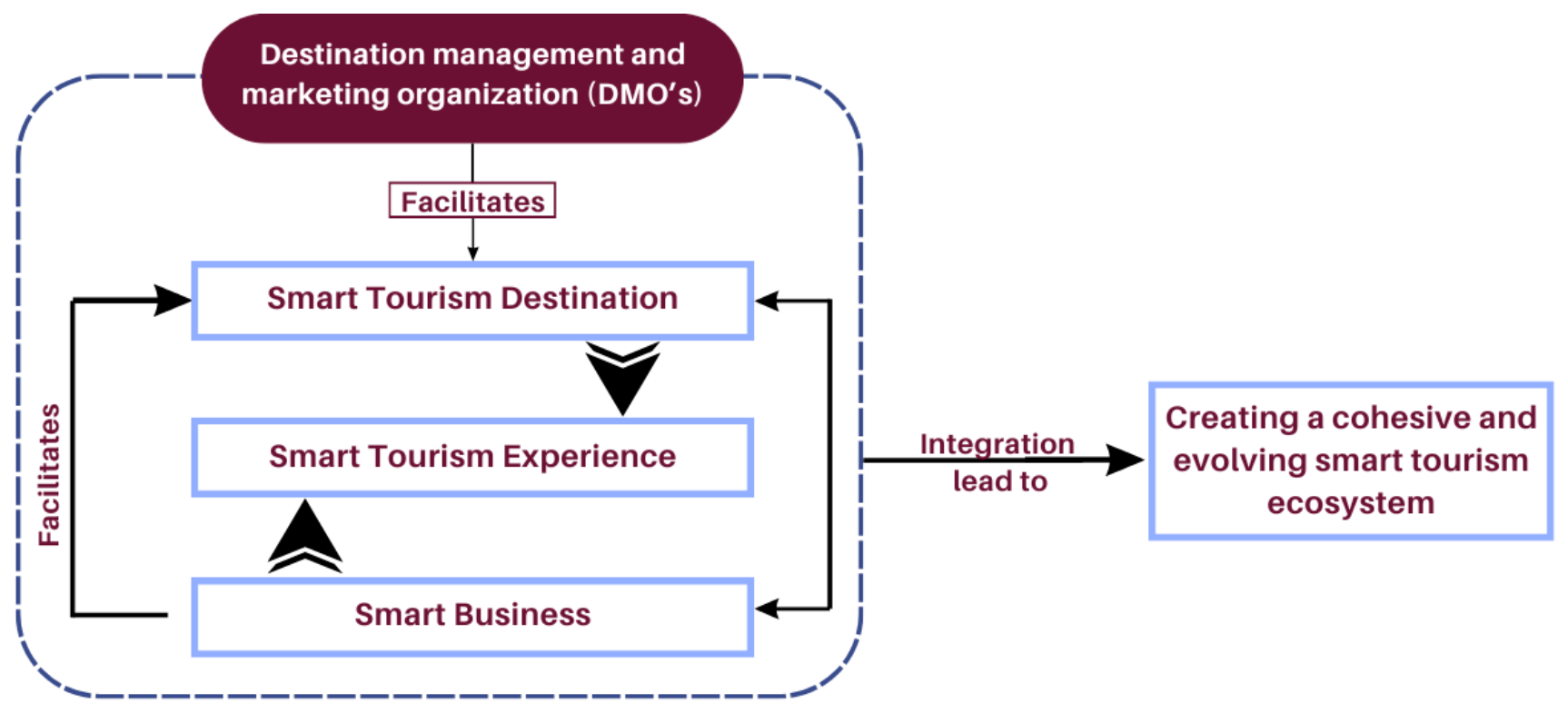
Building on the technological evolution outlined above, smart tourism is understood as an ecosystem rather than a collection of isolated tools, defined as a tourism system that benefits from technology in creating, managing, and delivering tourism services. The literature consistently identifies three core components of the smart tourism ecosystem: Smart Tourism Experience, Smart Tourism Destination, and Smart Business [64,65]. Most researchers agree that the main aim of the smart tourism ecosystem is to achieve an enriched, high-value, meaningful, and sustainable tourism experience. This is because tourism experiences, as the central component of the tourism industry, directly impact tourist satisfaction and revisit intention. This experience is shaped by personalization, interactivity, accessibility, and emotional engagement. The second main component of the Smart tourism ecosystem is a smart tourism destination; Buhalis and Amaranggana (2014) defined the term as “Requiring stakeholders to be dynamically interconnected through technological platforms” [8]. However, Gretzel, U., Zhong, L., Koo, C., Morrison, A., and Morrison in 2016 defined a smart destination as the factor that facilitates visitors’ engagement and integration with the environment, enhancing the quality of the tourist experience and improving the quality of life of not only the destination inhabitants and residents, but also the tourists [66]. On the other hand, a smart tourism destination is defined as “An innovative tourist destination, built on an infrastructure of state-of-the-art technology, guaranteeing the sustainable development of tourist areas [1,11]. The third component is the smart tourism business component, which emphasizes the role of public–private collaboration, innovation, and digital transformation in delivering services efficiently and sustainably. Since governments play a pivotal role in fostering openness and providing the technological infrastructure and data essential to innovative tourism offerings, collaboration between public and private entities is a noteworthy aspect of the smart tourism business. Governments, cultural institutions, and private operators contribute data, platforms, and regulatory frameworks that enable smart tourism initiatives to function cohesively [66]. Together, smart tourism experiences, destinations, and businesses form an interconnected ecosystem in which smart destinations provide the physical and technological infrastructure that supports immersive and personalized tourism experiences. Meanwhile, smart businesses facilitate the exchange of information, resources, and services among stakeholders, enabling the seamless delivery and continuous improvement of these experiences. Although interconnected, these three components do not operate independently; their successful integration requires effective governance and stakeholder coordination throughout the destination. In this context, Destination Management Organizations (DMOs) facilitate collaboration between public authorities, tourism businesses, heritage managers, technology providers, and local communities. DMOs function as institutional coordinators that translate smart tourism strategies into practical destination initiatives, strengthening the interaction among the three core dimensions and contributing to the development of a cohesive and adaptive smart tourism ecosystem. Moreover, DMOs do not only focus on traditional destination marketing to include strategic planning, stakeholder engagement, digital transformation, and data-driven decision-making, but it also play a vital role in aligning technological capabilities with destination objectives, encourage public–private partnerships, and ensure that smart tourism initiatives respond to local cultural, economic, and environmental contexts [8,9,10,11,12,13,14,15,16,17,18,19,20,21,22,23,24,25,26,27,28,29,30,31,32,33,34,35,36,37,38,39,40,41,42,43,44,45,46,47,48,49,50,51,52,53,54,55,56,57,58,59,60,61,62,63,64,65,66,67]. Smart Tourism Ecosystem illustrates the dynamic interaction among the Smart Tourism Destination, Smart Tourism Experience, and Smart Business dimensions. Destination governance, represented by Destination Management Organizations (DMOs), functions as an enabling mechanism that facilitates stakeholder coordination, strategic planning, and the integration of smart tourism initiatives across the ecosystem. The integration across these components enhances the quality of life for residents and tourists alike, and fosters innovation and collaboration within the tourism sector, as shown in Figure 1.

4. Understanding Cultural Heritage Tourism

In historical urban environments, the effectiveness of the smart tourism ecosystem depends on balancing technological innovation with cultural authenticity and conservation principles. UNESCO defines cultural heritage as “The legacy of physical artifacts and intangible attributes of a group or society that are inherited from past generations, maintained in the present and bestowed for the benefit of future generations” [68]. Additionally, in the 2030 Agenda SDGs, Goal No. 17 highlights the focus on tourism in global, national, and regional development and heritage tourism. Therefore, protecting cultural diversity and conserving unique local identities have become essential strategies to manage urban tourism effectively, as tourists are drawn not to cities that mimic their own lifestyles but to those that showcase distinctive histories and cultural originality rooted in their heritage [69]. The National Trust for Historic Preservation (NTHP) developed main principles for a successful cultural heritage program: starting with collaboration, which involves engaging diverse stakeholders, including communities and experts, to work in preserving heritage, followed by fitting between the community and tourism to ensure the alignment between tourism development and community identity and values. Moreover, making sites and programs alive by creating engaging, educational, and interactive experiences that bring heritage to life for visitors. Last but not least, preserving and protecting resources, prioritizing conservation and ensuring the ongoing protection of cultural and natural heritage for future generations [70]. In 1980, the term “cultural tourism” evolved to define how tourists are attracted to historical and cultural sites and how the physical interaction with the space and experiencing intangible aspects affect their visit. NTHP defines cultural heritage tourism as “Traveling to experience the places, artifacts, and activities that authentically represent the stories and people of the past and present.” [71].

5. Methodology

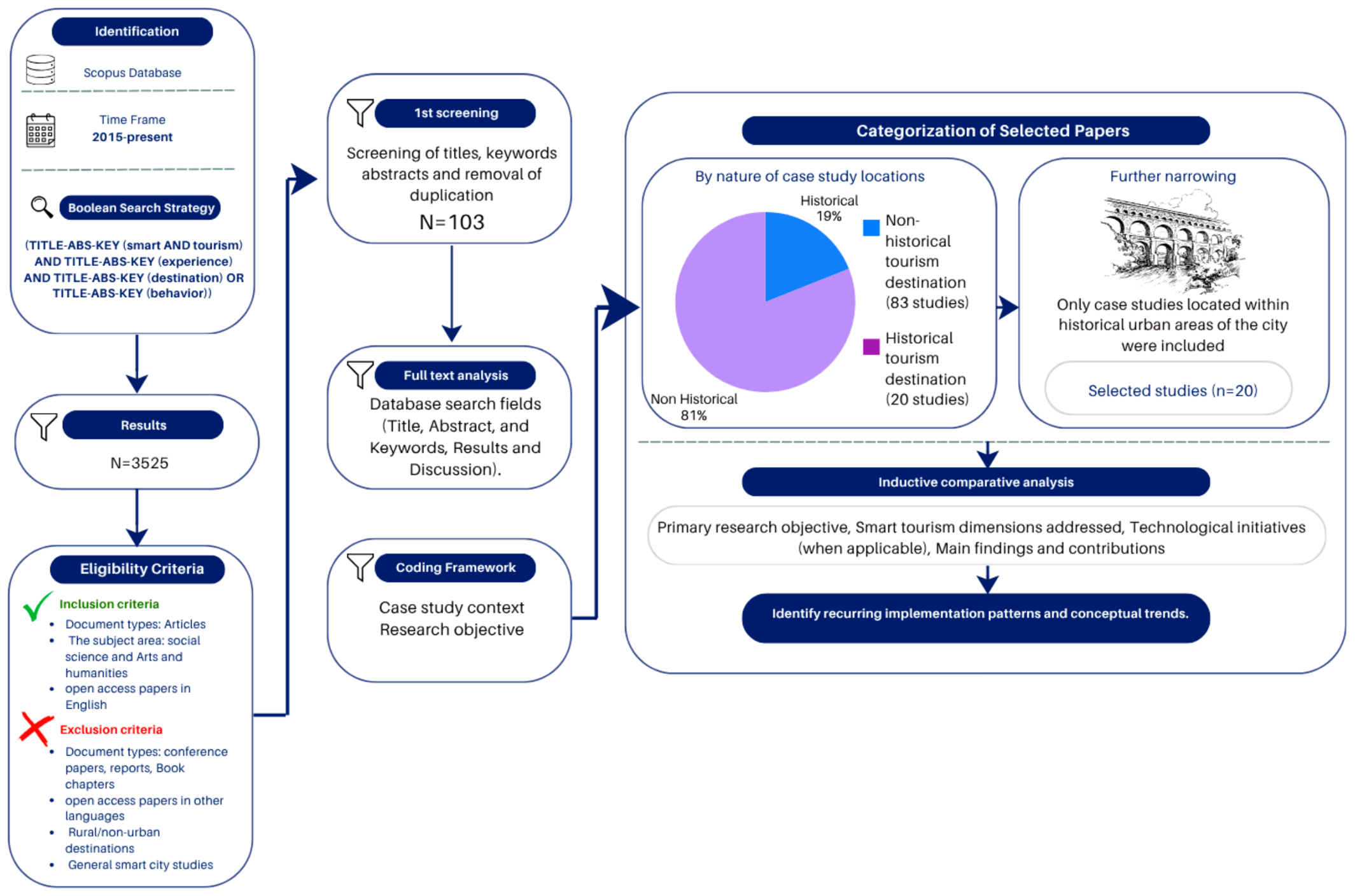
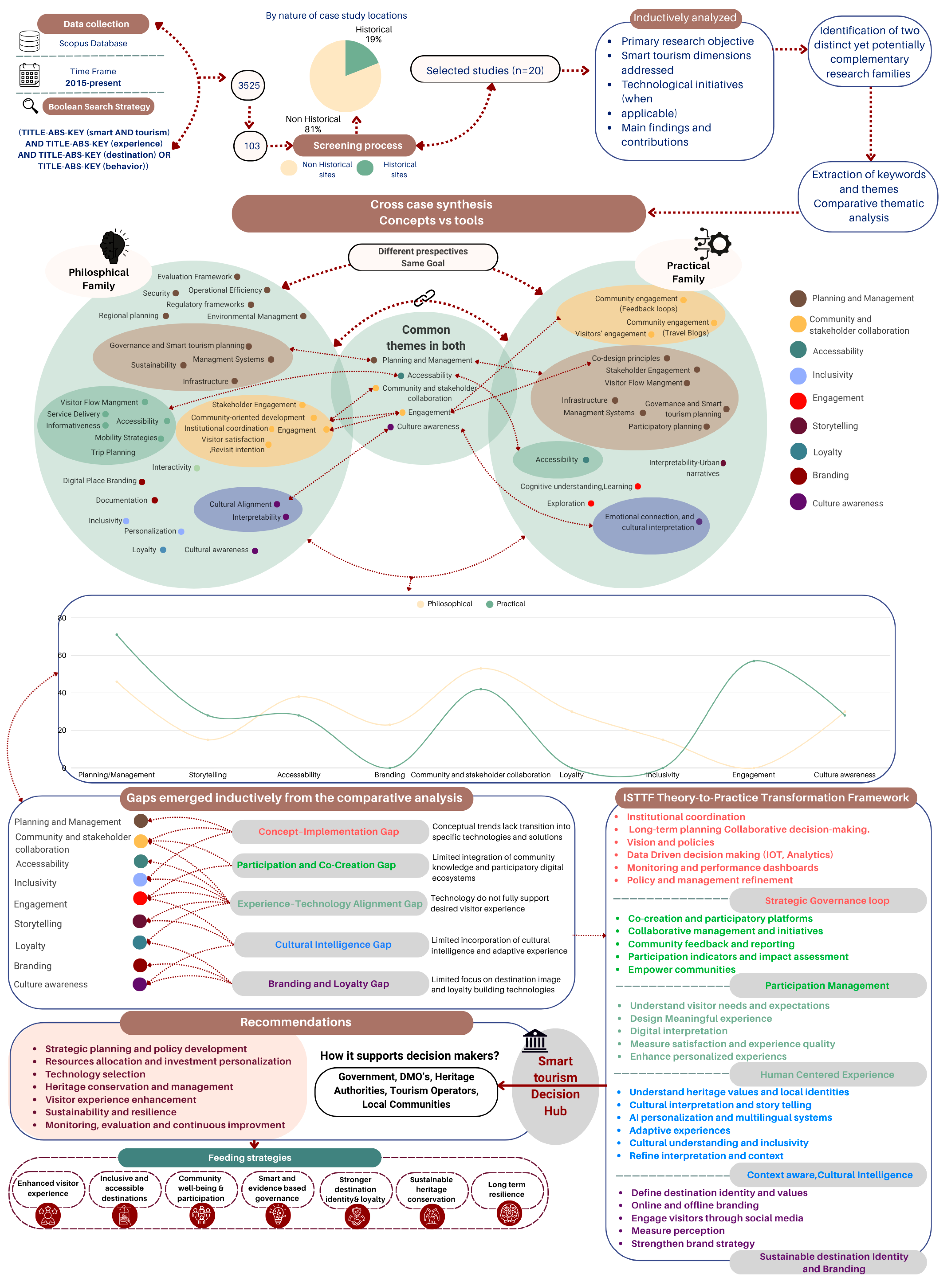
This research adopted a structured literature review methodology to identify, evaluate, and synthesize existing research addressing smart tourism in historical urban environments, as shown in Figure 2. The review process was guided by principles of transparency and rigor, involving sequential stages of literature identification, relevance assessment, and thematic selection, to ensure a comprehensive and well-organized foundation for the conceptual framework developed in this study. The search strategy was limited to the Scopus database, as it is recognized as one of the largest multidisciplinary databases of peer-reviewed publications relevant to smart tourism research, and no supplementary manual or snowball searches were conducted. The search was performed in April 2024, restricted to the Title, Abstract, and Keywords (TITLE-ABS-KEY) fields, including only papers published between 2015 and the present to ensure that the review captured recent developments in smart tourism. This timeframe corresponds with the rapid emergence of smart tourism destinations, digital heritage technologies, and experience-oriented tourism research [15,16,19,20], using the following Boolean search strategy:
(
 
TITLE-ABS-KEY (smart AND tourism)
 
AND TITLE-ABS-KEY (experience)
 
AND TITLE-ABS-KEY (destination)
 
OR TITLE-ABS-KEY (behavior)
)
AND PUBYEAR > 2014
AND PUBYEAR < 2025
AND (
 
LIMIT-TO (SUBJAREA, “SOCI”)
 
OR LIMIT-TO (SUBJAREA, “ARTS”)
)
AND LIMIT-TO (DOCTYPE, “ar”)
AND LIMIT-TO (LANGUAGE, “English”)
AND LIMIT-TO (OA, “all”).
Initial research retrieved approximately 3252 publications focused on smart tourism applications globally. The first screening process followed specific manual inclusion and exclusion criteria to ensure the relevance and quality of the reviewed studies. Inclusion criteria focused on peer-reviewed papers addressing smart technologies or smart tourism applications with a clear relation to visitor or user experience enhancement in the social sciences and arts and humanities fields. The document type was limited to open-access, English-language articles, ensuring full accessibility of the methodological and empirical information required for the analysis and maintaining consistency in thematic coding and interpretation. These criteria are acknowledged as limitations and may have excluded relevant studies published in other languages or indexed elsewhere. Conference papers, editorials, book chapters, or reports were excluded, as well as studies discussing general smart cities without tourism implications or sufficient methodological or conceptual information.
After applying inclusion and exclusion criteria, screening titles, keywords, and abstracts, and removing duplicates, the number of papers was reduced to 103, which were retained for full-text analysis. Rather than proceeding directly to a final sample, all eligible studies were examined using the structured coding framework, including their research context and objectives, following the database search fields (Title, Abstract, Keywords, Results and Discussion). This framework generated a standardized evidence base for cross-case comparison, as seen in Table 1.
Based on the relevance and comparability of the extracted information, approximately 19% of the identified case studies were situated in historical or heritage contexts, while the remaining 81% were not. This reduced the dataset from 103 publications to 20 case studies, which formed the analytical foundation of the review, comprising case studies explicitly related to historical or heritage urban settings. In the coding and classification process, the 20 case studies underwent an inductive comparative analysis aimed at extracting information from individual studies and establishing a transparent and reproducible basis for classifying the literature according to its dominant research orientation. Although limited to only 20 case studies, the objective of the study was not statistical generalization but inductive comparative qualitative analysis. The selected studies were purposefully matched to represent smart tourism initiatives implemented in historical urban environments. During this stage, each paper was independently examined through five evaluation criteria, selected because they describe purpose, focus, and contribution while minimizing subjective interpretation during the classification process, as shown in Table 2. During the coding process, no substantially new analytical patterns emerged beyond the final set of studies, suggesting that the sample was sufficient to support the development of the proposed framework.
The coding process was conducted using a structured coding framework applied consistently across all eligible studies. Although formal inter-coder reliability testing was not performed, the use of predefined coding criteria and systematic comparative analysis reduced subjective interpretation and ensured consistency throughout the classification process. The process enabled cross-case comparison across all 20 case studies to identify recurring implementation patterns and conceptual trends.
During the writing of this manuscript, Generative Artificial Intelligence (GenAI) tools such as Quill Bot AI Writing Assistant, Claude Sonnet 5, and GPT-5.6 Luna. were used for language refinement to improve the readability and clarity of the written text and to organize the presentation of tables and figures. No GenAI tools were used in generating research objectives, conducting the literature search, selecting studies, extracting data, analyzing data, developing research frameworks, or interpreting findings. All methodological decisions, data analysis, results, interpretations, and conclusions were made independently by the authors. Furthermore, GenAI tools were used to generate initial ideas for visualization and layout schemes for the graphical presentation of the study, including conceptual diagrams and infographics. The AI-generated visuals were just inspirational sources during the design process. The final figures, diagrams, and infographics were independently designed, refined, and produced by the authors using conventional visualization and graphic design software. All AI-assisted content has been extensively reviewed, verified, and edited by the authors.

6. Results

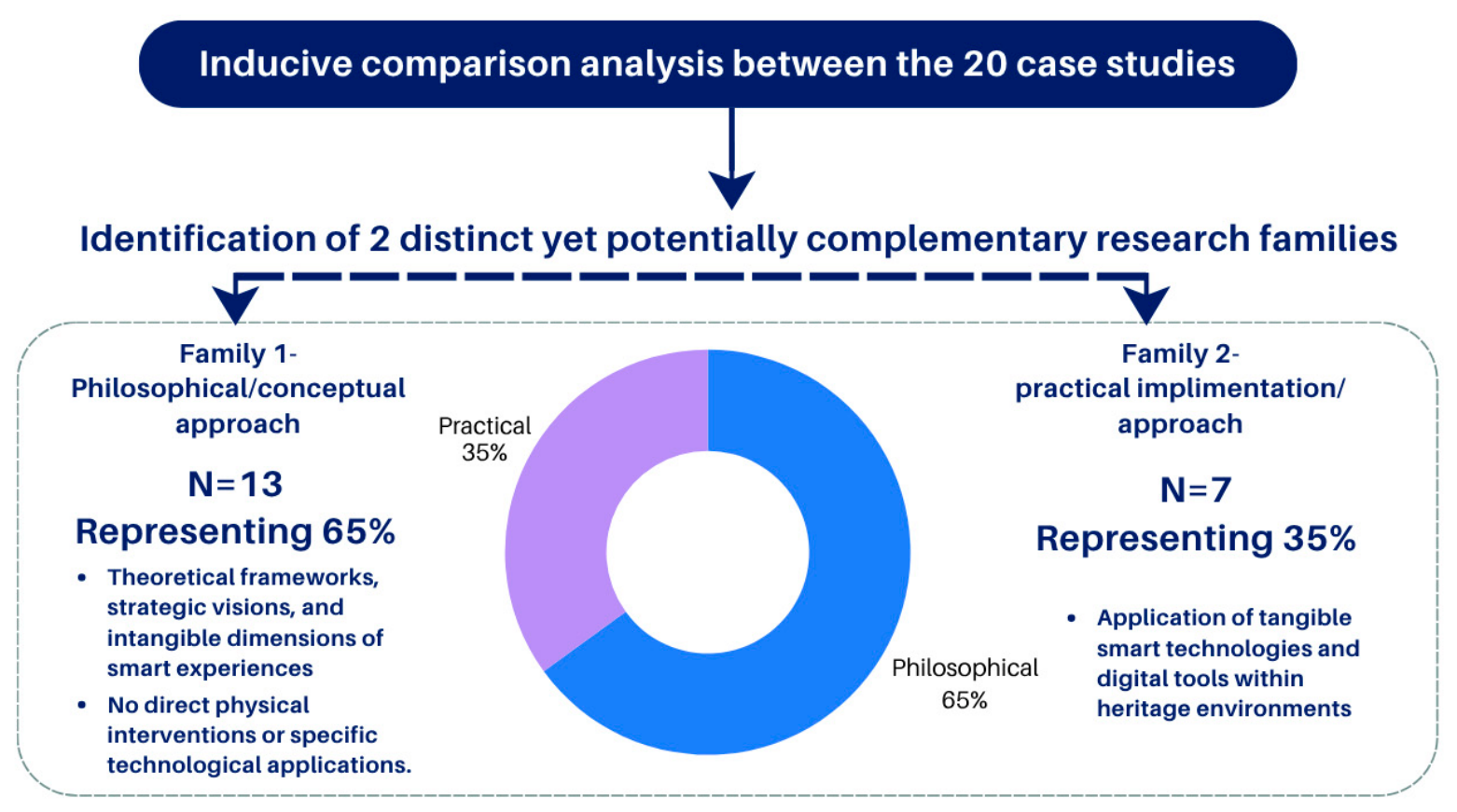
This analytical process led to the identification of two distinct yet potentially complementary research families, as shown in Figure 3, which reflected distinct research orientations rather than predetermined classifications, representing one of the main contributions of the comparative analysis. The first family consisted of studies adopting a philosophical or conceptual approach, discussing theoretical frameworks, strategic visions, and different dimensions of smart experiences without proposing direct physical interventions or specific technological applications. This family included 13 papers representing 65% of the selected papers. The second family focused on practical implementation through the application of smart technologies and digital tools within heritage environments, including 7 papers representing 35% of the reviewed papers. This matched sample formed the basis for the subsequent inductive comparative analysis, from which the two research families, the gap between theory and practice, and the proposed Integrated Smart Tourism Transformation Framework (ISTTF) emerged.
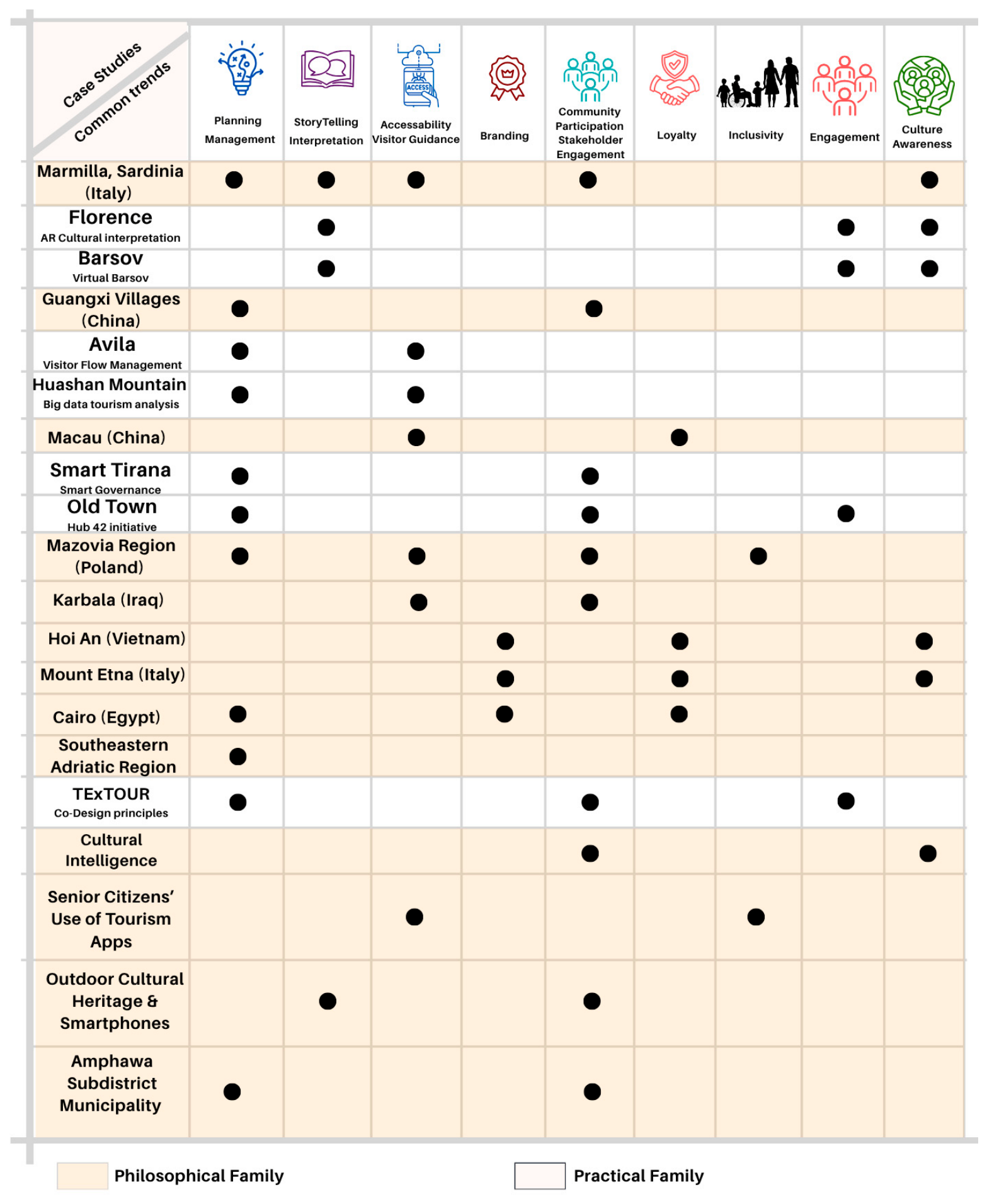
The first direction, referred to as the Conceptual and Philosophical Research Family, approaches smart heritage tourism from a philosophical and strategic perspective. Rather than introducing direct physical interventions or measurable technological systems, this group emphasizes frameworks, policies, experiential values, governance models, and human-centered perspectives, focusing on defining smartness within historical environments, understanding user experience dimensions, and exploring how digital transformation can conceptually enhance cultural engagement, accessibility, interpretation, and place identity. This family includes thirteen case studies represented by Marmilla (Italy), Guangxi Villages (China), Macau (China), Mazovia Region (Poland), Karbala (Iraq), Historic Cairo (Egypt), Amphawa (Thailand), the Cultural Intelligence framework, the Southeastern Adriatic Region, Hoi An (Vietnam), Senior Citizens’ Use of Tourism Apps, Outdoor Cultural Heritage and Smartphones, and Mount Etna (Italy) as shown in Table 3.
Unlike the philosophical studies, the second family of studies adopts a practical and implementation-oriented approach, focusing on the direct application of smart technologies within historical urban areas and heritage destinations by applying tangible digital tools, intelligent systems, and interactive technologies designed to improve visitor interaction, accessibility, navigation, interpretation, and overall user experience. A broad spectrum of technological interventions was revealed from the reviewed papers, ranging from simple digital storytelling tools to advanced data-driven systems. Technologies such as augmented reality (AR), virtual reality (VR), Internet of Things (IoT), big data analytics and mobile applications, cloud-based platforms, participatory ICT systems, and data-driven management tools are central to this transformation as they facilitate immersive and interactive cultural engagement, enabling tourists to connect more deeply with sites throughout their visit lifecycle. Moreover, through the use of these technologies, the reviewed initiatives addressed a wide range of experiential and operational trends, including engagement, storytelling, accessibility, visitor flow management, co-creation, governance, and sustainability. This family includes Florence (Italy), Brașov (Romania), Ávila (Spain), Huashan Mountain (China), Smart Tirana (Albania), Smart Old Town (Europe), and the TExTOUR Initiative, as shown in Table 4.

6.1. Themes Emerging from the Conceptual and Philosophical Research Family

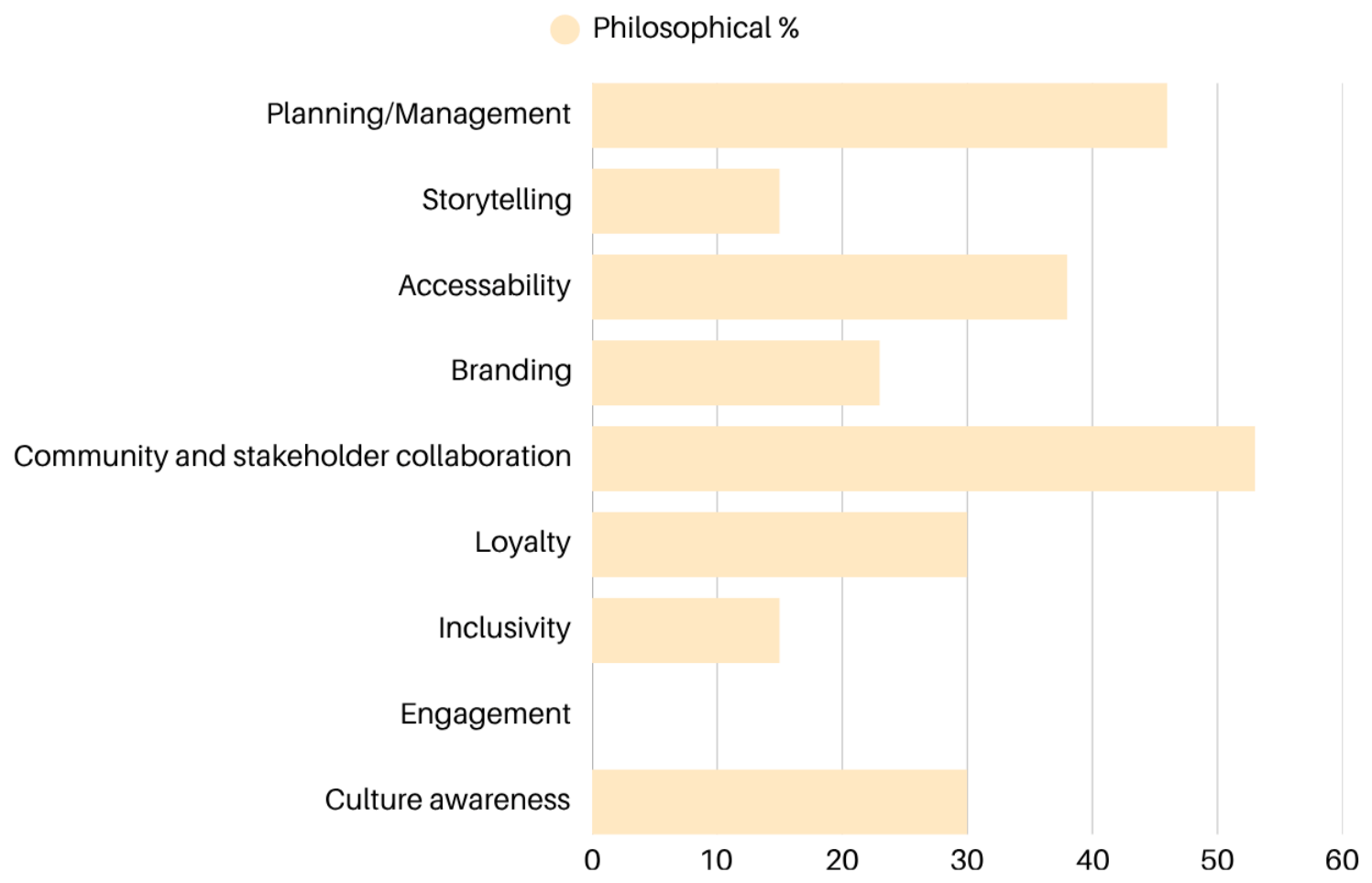
Analysis of the conceptual studies revealed a strong emphasis on user-centered and heritage-sensitive tourism development. Accessibility (38%) and inclusivity (15%) emerged as among the most recurring themes, particularly in studies addressing elderly visitors, people with disabilities, and information accessibility within heritage environments. Moreover, a second cluster of studies focused on governance, planning (46%) and community participation (53%) where community Participation and Co-Creation appeared as the most frequently addressed themes across the reviewed studies highlighting the role of residents and local stakeholders in shaping tourism experiences and ensuring long-term destination resilience rather than viewing technology as an isolated solution, these studies conceptualized smart tourism as an integrated ecosystem requiring stakeholder collaboration, policy support, destination management strategies, and long-term sustainability planning. Cases such as Karbala, Amphawa, Historic Cairo, and the Southeastern Adriatic Region demonstrated how governance frameworks, monitoring systems, and participatory planning approaches contribute to resilient heritage tourism development. Additionally, several studies highlighted emerging experiential dimensions including branding (23%) and destination loyalty (30%). The Mount Etna and Hoi An cases demonstrated that visitors increasingly participate in shaping destination image through digital narratives and social interaction. Simultaneously, engagement and interpretation (15%) appeared as central experiential dimensions, emphasizing the importance of storytelling and immersive interpretation in strengthening visitors’ emotional connection with place Similarly, Cultural Intelligence (30%) and Interpretation focusing on adapting digital experiences to visitors’ cultural backgrounds, expectations, and interpretive needs reflects a growing recognition that successful smart tourism experiences depend not only on technological functionality but also on meaningful cultural communication and contextual understanding. These themes indicate a gradual shift from technology-centered approaches toward more personalized, emotionally engaging, and culturally responsive tourism experiences. The predominance of themes related to governance, accessibility, and stakeholder collaboration suggests that these studies seek to explain why smart tourism should be developed and which principles should guide its implementation. In contrast, comparatively limited attention is devoted to operational technologies and implementation mechanisms, highlighting the conceptual orientation of this research stream as presented in Figure 4.

6.2. Themes Emerging from the Practical Implementation Research Family

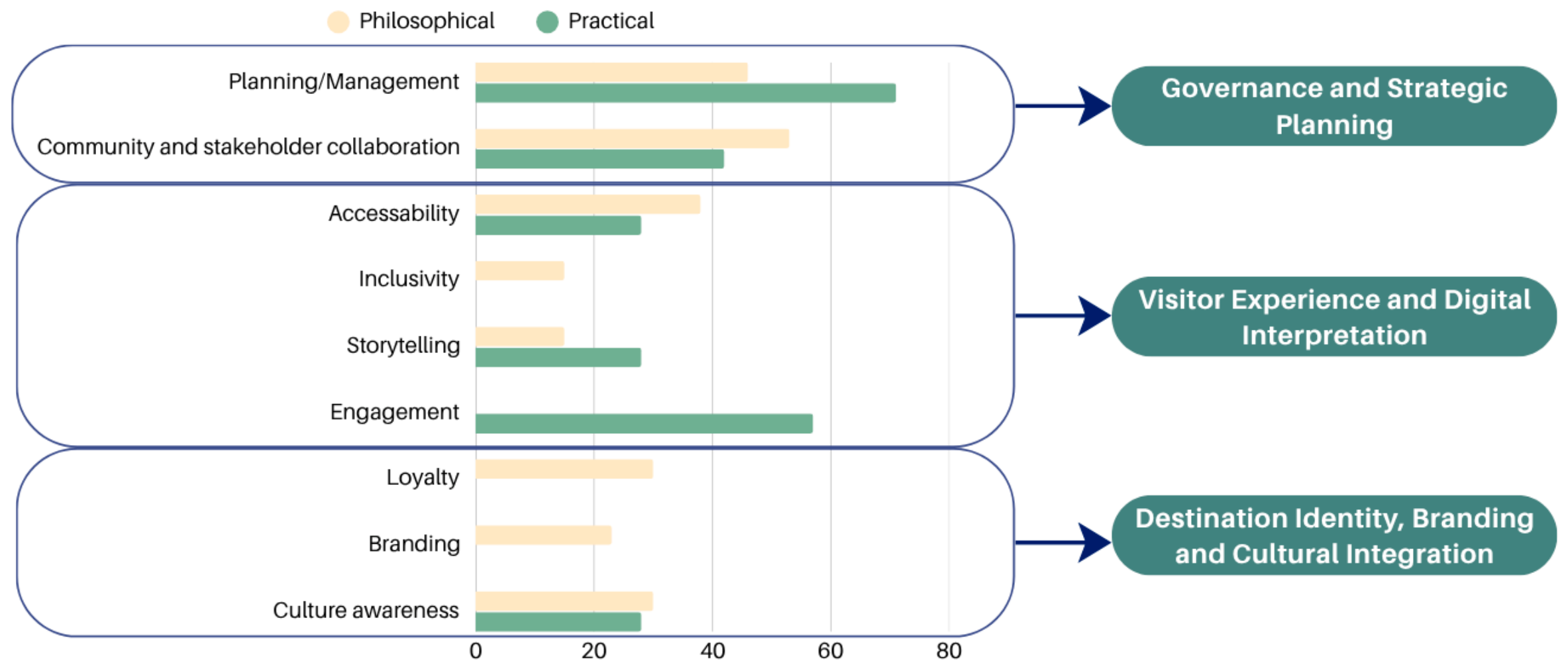
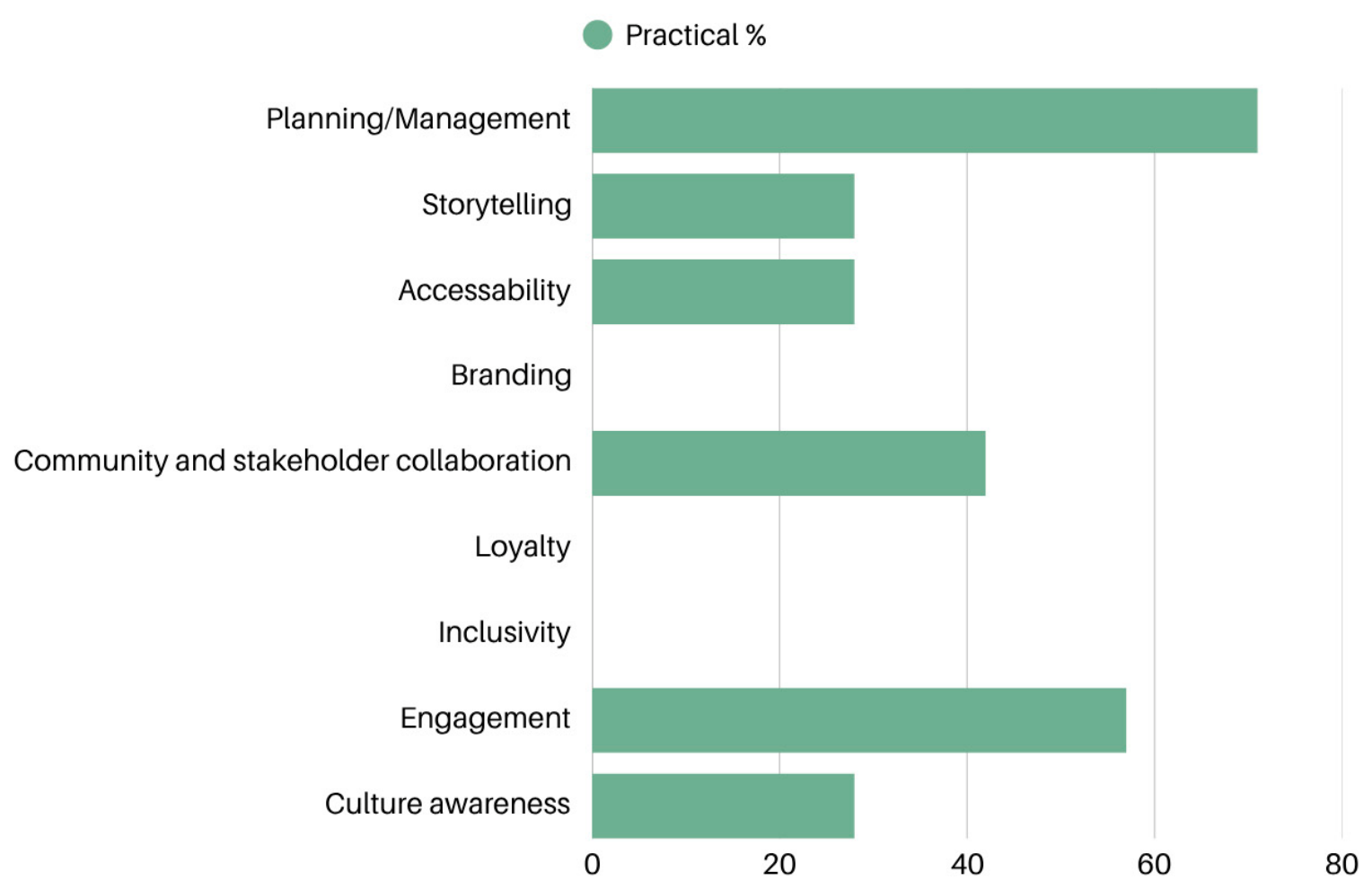
Unlike the conceptual studies, the practical implementation studies focused on translating experiential objectives into technological applications, including mobile applications, augmented and virtual reality, Internet of Things technologies, digital interpretation platforms, artificial intelligence, and data analytics. Management and planning-oriented interventions emerged as the most dominant theme, appearing in approximately 71% of the implementation studies, particularly through data collection systems, visitor monitoring platforms, and decision-support technologies, followed by community and stakeholder collaboration (43%). Case studies such as Smart Old Town, Smart Tirana and TExTOUR initiative demonstrated the role of local communities and participatory approach in reinforcing emotional attachment, authenticity, and place identity and the role of active collaboration between public authorities, tourism operators, cultural institutions, technology providers, and visitors and accordingly transforming tourists from passive consumers into active co-producers of experience contributing to destination narratives and cultural interpretation through co-creation platforms and social media. Digital storytelling (28%) and engagement technologies (57%) emerged as one of the most prominent themes, particularly in Florence and Brașov, which relied on immersive technologies to reconstruct past environments, adding layers of interactive interpretation to physical sites through digital narratives, augmented reality, and interactive content platforms. Another prominent trend involved accessibility and visitor guidance (28%) through mobile technologies, smart navigation systems, and location-based services. Studies conducted in Ávila and Huashan Mountain highlighted the growing role of invisible back-end systems in shaping user experience, emphasizing the importance of sensors, big data analytics, artificial intelligence, social media, and visitor flow monitoring systems in optimizing tourism management and supporting decision-making processes. These systems contribute indirectly to user experience by reducing congestion, improving navigation, and aligning services with visitor expectations. On the other hand, dimensions related to Destination Identity, Branding, and Cultural Integration received comparatively limited attention within the implementation literature. Cultural awareness appeared in approximately 29% of the reviewed studies, whereas branding and visitor loyalty were largely absent from the implementation cases. Although several studies recognized the importance of community participation and co-creation in strengthening place identity, relatively few translated these concepts into comprehensive branding strategies or culturally adaptive smart tourism systems. Consequently, implementation studies remain primarily focused on technological deployment and destination-specific applications, with comparatively less emphasis on the long-term strategic dimensions of destination competitiveness, cultural identity, and visitor relationship management, as shown in Figure 5.
Despite their common goal of achieving sustainable, visitor-centered smart tourism in historical urban environments through the integration of heritage conservation, governance, and digital innovation, these two families differ in their methodological orientation. The philosophical family aims to address “what dimensions should be enhanced and why they are important”, while the practical family explores “how these dimensions can be operationalized through technological interventions”. The comparative analysis reveals that the main obstacle to the translation of the conceptual smart tourism principles into practical implementation is not the lack of technology, but the limited integration between technological deployment and governance, participatory planning, and heritage management processes. Indeed, stakeholder collaboration, strategic planning, and cultural sensitivity were the common themes of conceptual studies, and operational technologies such as AR/VR, mobile applications, IoT systems, and visitor analytics were common themes of implementation studies. This imbalance indicates that technological interventions have been applied, more often than not, as isolated solutions rather than integrated into heritage tourism governance structures. This imbalance of themes further confirms the gap between conceptual development and practical implementation, forming the basis for the five research gaps identified and discussed in the following section.

7. Discussion

The reviewed case studies demonstrated that smart tourism research in historical urban areas has evolved through two complementary research perspectives that pursue the same overarching objectives while differing in how smart tourism principles are conceptualized and translated into practical implementation as shown in Figure 6 where the philosophical family focused on defining the experiential, managerial, and socio-cultural dimensions that should guide smart tourism development, including accessibility, engagement, cultural interpretation, and governance, sustainability, and community participation. On the other hand, the practical research family concentrates on the deployment of technological solutions such as mobile applications, digital storytelling platforms, GIS systems, IoT infrastructure, and data-driven management tools. Although both research perspectives contribute toward the common objective of advancing smart tourism in historical urban environments, they differ in their emphasis on conceptual development and technological implementation. Consequently, the interaction between theory and practice remains limited.
The authors grouped the identified themes in the previous section into three overarching analytical dimensions (Figure 7) according to their conceptual focus to enable a clearer comparison of thematic priorities and to provide a coherent analytical structure for examining the similarities and differences between the philosophical and practical research families. (1) Governance and Strategic Planning, including planning/management and community and stakeholder collaboration; (2) Visitor Experience and Digital Interpretation, comprising storytelling, accessibility, engagement, and inclusivity; and (3) Destination Identity, Branding and Cultural Integration, incorporating branding, loyalty, and cultural awareness. A descriptive frequency analysis was conducted collectively across the two families to examine the prevalence of the principal smart tourism themes, thereby supporting the interpretation of the proposed conceptual framework.

7.1. Critical Interpretation of the Identified Research Gaps

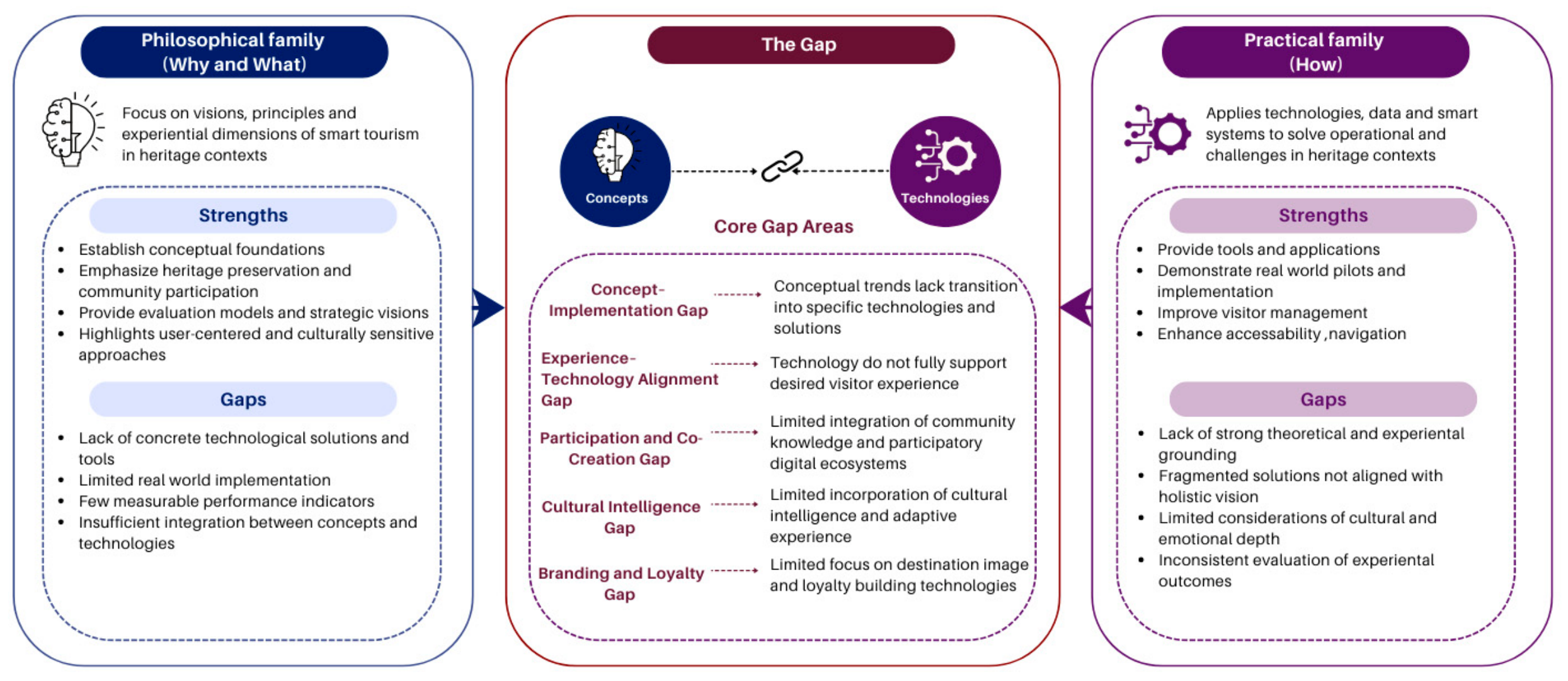
This frequency analysis does not only indicate the popularity of particular themes, but it also demonstrates the obvious imbalance within the existing body of knowledge resulting in persistent conceptual and practical challenges that continue to limit the effective implementation of smart tourism in heritage contexts as shown in Table 5, where the reviewed literature places considerable emphasis on governance, planning, and technological deployment, whereas relatively less attention is devoted to evaluating visitor experience, strengthening cultural interpretation, promoting inclusivity, and developing long-term destination relationships.
Through the comparison of a carefully selected and matched sample of archival research papers, recurring patterns of convergence, divergence, and fragmentation were identified across the two emergent research families, these gaps emerged inductively from the comparative analysis of the coded studies and therefore represent one of the principal contributions of this research and are considered as the basis for developing the proposed integrated framework, (Figure 8). Each gap was subsequently interpreted by comparing the inductive findings of this review with the evidence reported in the reviewed case studies. From the comparative analysis, governance appeared to be one of the strongest common dimensions across both research families; however, it is conceptualized differently. Within the philosophical family, governance is primarily discussed as a strategic process emphasizing institutional collaboration, policy integration, and destination competitiveness, as demonstrated by Garau’s Marmilla study [72] and Pai et al.’s work in Macau [75]. In contrast, implementation-oriented studies, including Smart Tirana [86], Huashan [27], and Ávila, focus mainly on operational technologies such as mobile applications, IoT services, and digital infrastructure. These observations are consistent with previous studies that recognize governance as fundamental to smart tourism development; however, unlike earlier research, which typically discusses either strategic governance or technological implementation independently, the present inductive comparative analysis demonstrates that the persistent separation between these perspectives represents a structural characteristic of the literature rather than isolated case-specific limitations. This explains the persistence of the Concept–Implementation Gap, where conceptual advances continue to outpace their translation into integrated heritage management practices. This explains why implementation-oriented studies continue to focus primarily on isolated technological applications rather than integrated heritage management systems. Closely related to this issue, a similar pattern emerges regarding visitor experience and technological implementation, in which implemented technologies do not always support the experiential objectives that they are intended to achieve. The Florence [84], Brașov [33], and Macau [75] case studies highlight the growing role of digital innovation in heritage tourism, demonstrating the successful deployment of digital interpretation platforms, augmented reality, and accessibility-oriented technologies, supporting previous research. Nevertheless, the comparative analysis reveals that these technologies are predominantly evaluated according to their technical functionality, while comparatively limited attention is devoted to measuring their influence on emotional engagement, interpretation quality, and meaningful visitor experiences. Consequently, the present study extends previous findings by demonstrating that technological innovation has progressed more rapidly than experience-oriented evaluation, giving rise to the Experience–Technology Alignment Gap. From a participatory perspective, although community participation is widely acknowledged conceptually, collaborative governance has yet to be systematically translated into operational smart tourism practices, leading to the Participation and Co-Creation Gap. Previous studies, including Smart Old Town [87] and the TExTOUR initiative [88], consistently emphasize that stakeholder collaboration is essential for sustainable smart tourism and heritage management. Although the findings of this review support these conclusions, they further reveal that participatory approaches remain confined to a relatively small number of initiatives, such as participatory ICT platforms and co-creation projects, as most smart tourism systems continue to be technology-centered rather than collaboratively designed with residents, local communities, and heritage stakeholders. Accordingly, Participation and Co-Creation have not yet become a consistent characteristic of implementation-oriented research.
At the experiential level, the comparatively lower occurrence of cultural awareness, storytelling, and inclusivity further demonstrates that technological innovation is not always accompanied by adequate consideration of local cultural identity and heritage values; thus, the research pointed to an important gap, although being one of the least developed areas within practical implementation: the Cultural Intelligence Gap. Studies such as Hoi An [81] and Marmilla [72] argue that digital technologies should strengthen authentic cultural narratives and respond to local heritage values. The present findings reinforce this perspective but further demonstrate that cultural intelligence remains one of the least represented dimensions within implementation-oriented research. Although numerous initiatives successfully improve accessibility and information delivery, comparatively few investigate how technologies can deliver personalized, context-sensitive, and culturally meaningful experiences adapted to the historical, social, and cultural characteristics of individual destinations. This suggests that technological innovation frequently advances independently of culturally responsive heritage interpretation.
Finally, the comparative analysis identifies a significant Branding and Loyalty Gap. Destination branding, emotional attachment, and visitor loyalty are extensively discussed within conceptual studies as essential components of destination competitiveness and long-term sustainability. The Macau [74] and Mount Etna [32] case studies illustrate the potential of digital branding initiatives to strengthen destination image and visitor engagement. However, unlike these isolated examples, the present comparative analysis demonstrates that branding and loyalty remain peripheral within the broader implementation literature, where technologies continue to focus primarily on information provision and operational efficiency. This finding extends previous research by highlighting the limited integration of branding strategies into comprehensive smart tourism systems capable of fostering long-term relationships between visitors and heritage destinations. Collectively, these findings demonstrate the parallel evolution of two complementary research streams that have developed largely independently, rather than reflecting isolated research deficiencies. While previous studies have identified individual challenges related to governance, technology, participation, or cultural heritage, the present inductive comparative analysis explains how these challenges are structurally interconnected. The five research gaps therefore constitute an evidence-based theoretical interpretation of the current state of smart tourism research within historical urban environments and provide the conceptual basis for the proposed Integrated Smart Tourism Transformation Framework (ISTTF).

7.2. Integrated Smart Tourism Transformation Framework (ISTTF)

The comparative synthesis analysis demonstrates that the current body of smart tourism research is characterized by two distinct yet potentially complementary research families of knowledge evolving in parallel resulting in limited integration between theoretical understanding and practical implementation, which appeared in the statistical comparison presented in this study, where the philosophical family from one hand focus on the conceptual foundations of smart torism through governance models, strategic planning, sustainability principles, and visitor-centered perspectives and on the other hand the practical family focus on the deployment of digital technologies and operational applications that enhance destination management and visitor experiences. Beyond technological implementation, the comparative analysis demonstrates that smart tourism transformation within historical urban environments is fundamentally a governance and sustainability challenge. While digital technologies constitute important implementation mechanisms, their effectiveness depends upon institutional coordination, participatory governance, cultural authenticity, and socially inclusive planning. The findings therefore reinforce recent perspectives that position smart tourism not merely as a technological transformation, but as an integrated approach balancing visitor experience, heritage conservation, community participation, and long-term destination resilience.
In response to these findings, this study proposes the Integrated Smart Tourism Transformation Framework (ISTTF), as shown in Figure 9, which is intended to function as a decision-support and evaluation tool rather than a prescriptive implementation model. It provides a structured process through which decision-makers can identify the current maturity of smart tourism initiatives, recognize concept–implementation gaps, and prioritize interventions according to the specific needs of historical urban destinations. In doing so, it supports governance coordination, cultural authenticity, social inclusion, and sustainable heritage management. The framework was founded upon the five interrelated research gaps identified in Figure 7, which should not be viewed as isolated deficiencies but as interconnected consequences of the thematic imbalance observed between the philosophical and practical research families. Collectively, they illustrate that successful smart tourism development requires a more integrated perspective in which governance, technology, visitor experience, stakeholder participation, and destination identity are considered simultaneously rather than independently. In order to guide future smart tourism development, this framework proposes five complementary, interconnecting loops. The first loop addresses the concept–implementation gap, which emphasizes strategic governance, recognizing that technological innovation should be supported by institutional coordination, long-term planning, and collaborative decision-making. The second loop addresses the experience–technology gap by advocating a human-centered visitor experience, in which digital technologies enhance accessibility, interpretation, engagement, and experiential value rather than functioning as isolated technological interventions. The third loop responds to the participation and co-creation gap by promoting shared destination management, encouraging cooperation among governments, heritage authorities, local communities, tourism operators, and technology providers throughout the planning and implementation process. This loop sheds light on integrating community co-creation mechanisms, participatory ICT platforms, and stakeholder collaboration systems into planning and operational processes to strengthen social sustainability, local ownership, and adaptive management capabilities, and preserve intangible cultural values. The fourth loop focuses on context-aware cultural intelligence, highlighting the need to adapt smart tourism initiatives to the historical, cultural, and social characteristics of individual destinations. This can be achieved by incorporating culturally responsive design principles, participatory interpretation approaches, and localized storytelling strategies into digital tourism platforms. Moreover, the framework recognizes sustainable destination identity as a core objective, integrating branding, visitor loyalty, and cultural authenticity into long-term destination development strategies, ensuring that smart tourism technologies should not merely facilitate information delivery but should also support cultural understanding, heritage authenticity, emotional engagement, destination image formation, and long-term visitor loyalty. By integrating these principles within a single conceptual model, the framework establishes a stronger relationship between theoretical understanding and practical application.
Unlike previous review studies focusing mainly on organizing existing smart tourism themes, the novelty of the proposed framework lies in being derived from an inductive comparative analysis of matched archival case studies rather than from predefined ecosystem components, where it proposes the mechanism through which fragmented research streams can be integrated into a coherent development pathway explaining how the identified research gaps can be systematically addressed through the interaction of governance, technological innovation, stakeholder collaboration, cultural intelligence, and visitor experience positioning visitor experience as the core element that guides all subsequent planning and implementation decisions explaining that technological innovation is valuable only when it contributes to meaningful, accessible, engaging, and culturally authentic heritage experiences. Based on this, the framework contributes at two levels. From a theoretical perspective, it advances existing smart tourism scholarship by providing an explanatory model that synthesizes fragmented conceptual and implementation-oriented research into an integrated understanding of smart tourism development within historical urban environments. From a practical perspective, the proposed framework provides a structural base for evaluating smart tourism initiatives according to their contextual suitability, governance requirements, visitor experience objectives, and cultural implications, thereby supporting the strategic decision-making processes of the principal stakeholders involved in historical urban tourism destinations. The review demonstrates that existing smart tourism initiatives frequently prioritize technological deployment and infrastructure development, while experiential quality, cultural adaptation, inclusivity, and long-term destination relationships receive comparatively less attention. The framework, therefore, points to the need for balanced investments. Decision-makers can assess whether proposed investments balance human, financial, technical, and environmental resources against operational and experiential priorities. The framework can be useful for DMOs to evaluate how smart tourism initiatives may contribute to destination competitiveness, attractiveness, visitor satisfaction, and heritage preservation simultaneously by integrating governance, visitor experience, stakeholder participation, cultural intelligence, and branding considerations under one conceptual model. Different stakeholders are able to use the framework throughout the entire planning and management process. It can be used by local governments and heritage authorities to evaluate if their current smart tourism initiatives sufficiently address governance, cultural intelligence, community participation, and visitor experience before the allocation of resources to new projects. Destination Management Organizations (DMOs) may employ the framework to identify underrepresented experiential dimensions such as branding, cultural interpretation, or stakeholder engagement when designing destination strategies and monitoring visitor satisfaction. The framework can be used by tourism planners and technology providers to select technological interventions based on well-defined heritage management objectives, rather than technological capability alone, to improve the fit between digital innovation and cultural heritage conservation. This holistic perspective encourages more balanced investment across technological, cultural, social, and managerial dimensions while reducing the risk of fragmented implementation.
The interaction among the framework components should not be interpreted as linear. Strategic governance establishes the institutional conditions required for implementing smart technologies, while stakeholder participation ensures that these technologies respond to community and visitor needs. Human-centered experience and cultural intelligence guide the design of context-sensitive digital interventions that preserve authenticity and inclusivity. These processes collectively strengthen destination identity, whose evaluation provides feedback for refining governance and future implementation. Accordingly, the framework represents an iterative transformation process rather than a sequence of independent components.
Despite these contributions, several limitations should be acknowledged. The proposed relationships between themes and technological interventions were derived from a structured review limited to peer-reviewed journal articles published in English, indexed in the Scopus database between 2015 and 2024, within the Social Sciences and Arts and Humanities subject areas, and available as Open Access publications. These criteria were selected to ensure the inclusion of high-quality, accessible studies directly relevant to smart tourism research in historical urban contexts while maintaining consistency throughout the comparative analysis. However, they may have excluded relevant studies indexed in other databases, non-English publications, gray literature, industry reports, and emerging professional practices, which could have provided additional perspectives on smart tourism implementation. Although a structured coding framework and predefined coding criteria were consistently applied across all eligible studies to enhance transparency and reduce subjective interpretation, the coding process did not include a formal inter-coder reliability assessment. Consequently, some degree of interpretative judgment is inherent in the thematic synthesis, and alternative classifications or interpretations may be possible. Moreover, the methodological approach adopted is primarily qualitative; however, thematic frequency analyses were incorporated to enhance the transparency of the findings. Future studies could complement this work through more extensive quantitative approaches, such as bibliometric mapping, network analysis, or meta-analysis, to further validate and extend the proposed framework. In addition, the framework was developed from a relatively small number of case studies that satisfied the predefined inclusion criteria, focusing predominantly on historical urban areas and outdoor heritage environments. Therefore, its direct applicability to museums, interior heritage sites, archeological exhibitions, and fully virtual tourism experiences requires further investigation. While these strict criteria enhanced the relevance and comparability of the selected studies, they also limited the breadth of evidence available for analysis. Consequently, the proposed Integrated Smart Tourism Transformation Framework (ISTTF) should be regarded as an inductively derived conceptual and decision-support model intended to guide future planning and research rather than prescribe context-specific implementation strategies. Its operational application should be further tested and validated across diverse historical urban settings.
The results therefore suggest addressing these limitations by incorporating multiple bibliographic databases, including non-English publications, expanding the range of empirical case studies across different cultural and geographical contexts and across other tourism settings, including rural heritage destinations. Furthermore, future investigations may explore emerging technologies such as artificial intelligence, digital twins, metaverse environments, predictive analytics, and adaptive personalization systems within heritage tourism settings. Finally, integrating stakeholder perspectives—including residents, policymakers, tourists, and heritage managers—through participatory and empirical studies would provide deeper insights into how smart tourism ecosystems can support sustainable, inclusive, and culturally sensitive urban heritage development.

8. Conclusions

The study adopted an inductive comparative approach in which a carefully selected and coded sample of archival studies was analyzed using common analytical dimensions, resulting in the identification of two distinct yet potentially complementary research families. Through the structured review of papers published between 2015 and the present and analysis of the matched sample, the review revealed that although smart tourism research has expanded considerably, its development has remained fragmented across conceptual, technological, governance, and experiential research streams. The research identified a consistent set of experiential themes including accessibility and inclusivity, engagement and interpretation, governance, planning and community participation, cultural intelligence, branding, and destination loyalty. While the philosophical studies focused on defining experiential and governance dimensions, the practical implementation cases translated these concepts into operational tools such as AR/VR systems, IoT infrastructures, digital communication platforms, mobile applications, and big data analytics, focusing on specific themes such as accessibility and visitor guidance, management-oriented interventions, and digital storytelling. Unlike previous review studies that primarily summarize technological applications or classify smart tourism initiatives, this study contributes by systematically identifying the underlying patterns responsible for this fragmentation. Through an inductive comparative approach supported by descriptive frequency analysis, five recurring research gaps were identified: the concept–implementation gap, the experience–technology alignment gap, the participation and co-creation gap, the cultural intelligence gap, and the branding and loyalty gap. These gaps collectively explain why smart tourism implementation in historical urban environments often remains disconnected from broader governance objectives, visitor experience goals, and heritage preservation priorities. Rather than functioning as a descriptive classification of existing literature, this research developed the Integrated Smart Tourism Transformation Framework (ISTTF), providing an explanatory model that links evidence generated through the inductive analysis with the mechanisms required to translate theoretical knowledge into context-sensitive implementation and accordingly extending existing smart tourism scholarship beyond technology-centered approaches toward a more holistic understanding of smart heritage destinations. Additionally, the framework offers recommendations that local governments, heritage authorities, destination management organizations, tourism planners, and technology providers can use to evaluate smart tourism initiatives based on contextual suitability, governance capacity, visitor experience objectives, and cultural compatibility.

Author Contributions

Conceptualization, M.S. and M.F.; methodology, S.E., K.B., M.S. and M.F.; validation, K.B., M.S. and M.F.; formal analysis, M.F.; investigation, M.S. and M.F.; resources, M.F.; data curation, M.F.; writing—original draft preparation, K.B. and M.F.; writing—review and editing, S.E., K.B., M.S. and M.F.; visualization, M.F.; supervision, S.E., K.B. and M.S.; project administration, S.E. All authors have read and agreed to the published version of the manuscript.

Funding

This research received no external funding.

Institutional Review Board Statement

Not applicable.

Informed Consent Statement

Not applicable.

Data Availability Statement

Original data generated for this article are available from the corresponding author upon reasonable request. These data include the study selection database, coding framework, thematic classifications, gap analysis matrices, and synthesized findings used to examine the relationship between philosophical and practical smart tourism research and to develop the proposed experience-driven framework and recommendations.

Acknowledgments

During the preparation of this manuscript/study, the authors used [Quill Bot AI Writing Assistant, Claude Sonnet 5, and GPT-5.6 Luna.] for [paraphrasing, language refinement and generating initial ideas for visualization and layout schemes for the graphical presentation of the study. These visuals were just inspirational sources during the design process. The final figures, diagrams and infographics were independently designed, refined and produced by the authors]. The authors have reviewed and edited the output and take full responsibility for the content of this publication.

Conflicts of Interest

The authors declare no conflicts of interest.

References

  1. Gretzel, U.; Sigala, M.; Xiang, Z.; Koo, C. Smart tourism: Foundations and developments. Electron. Mark. 2015, 25, 179–188. [Google Scholar] [CrossRef] [Scilit]
  2. Otowicz, M.H.; Macedo, M.; Biz, A.A. Dimensions of Smart Tourism and Its Levels: An Integrative Literature Review. J. Smart Tour. 2022, 2, 5–19. [Google Scholar] [CrossRef] [Scilit]
  3. Soini, K.; Birkeland, I. Exploring the scientific discourse on cultural sustainability. Geoforum 2014, 51, 213–223. [Google Scholar] [CrossRef] [Scilit]
  4. Morsy, J.; Elsayeh, Y. Tourism Smart Cities-Turning Point Towards Sustainable Development in Egypt: Concepts, Characteristics and Applications. Pharos Int. J. Tour. Hosp. 2022, 1, 21–30. [Google Scholar] [CrossRef] [Scilit]
  5. Sharma, A.; Kumar, D.V.; Sharma, D.R. Emergence of Smart City: Challenges and Opportunities. Adv. Comput. Sci. Technol. 2024, 17, 1–11. [Google Scholar]
  6. Wee, H.; Anas, M.S.; Thomas, A. Exploring Smart City Characteristics for “Tourism-For-All” Initiatives in Urban Development: A Systematic Literature Review. Geoj. Tour. Geosites 2023, 50, 1466–1482. [Google Scholar] [CrossRef] [Scilit]
  7. Albino, V.; Berardi, U.; Dangelico, R.M. Smart cities: Definitions, dimensions, performance, and initiatives. J. Urban Technol. 2015, 22, 3–21. [Google Scholar] [CrossRef] [Scilit]
  8. Buhalis, D.; Amaranggana, A. Smart tourism destinations enhancing tourism experience through personalisation of Services. In Proceedings of the Information and Communication Technologies in Tourism 2015; Tussyadiah, I., Inversini, A., Eds.; Springer International Publishing: Cham, Switzerland, 2015; pp. 377–389. [Google Scholar] [CrossRef] [Scilit]
  9. Alsaleh, A. The impact of technological advancement on culture and society. Sci. Rep. 2024, 14, 32140. [Google Scholar] [CrossRef] [Scilit] [PubMed]
  10. Kokkala, V. Digital Technologies for Cultural Heritage: An Exploratory Study of EU-Funded Research Projects. Master’s Thesis, University of Borås, Borås, Sweden, 2024. [Google Scholar]
  11. Khalil, N.; Hashim, A. Can Smart Technologies Enhance Heritage Tourism? The Case of El Montazah Gardens-Alexandria-Egypt. J. Tour. Hotel. Herit. 2022, 5, 98–112. [Google Scholar] [CrossRef] [Scilit]
  12. Matrouk, R. Exploring the Role of Urban Design Development in Enhancing and Promoting Tourism of Historical Sites: The Case Study of Amman Citadel. Athens J. Tour. 2024, 11, 125–146. [Google Scholar] [CrossRef] [Scilit]
  13. Stylos, N. Technological evolution and tourist decision-making: A perspective article. Tour. Rev. 2020, 75, 273–278. [Google Scholar] [CrossRef] [Scilit]
  14. Puh, B. Destination Image and Tourism Satisfaction: The Case of a Mediterranean Destination. Mediterr. J. Soc. Sci. 2014, 5, 538–544. [Google Scholar] [CrossRef] [Scilit]
  15. Echtner, C.M.; Ritchie, J.R.B. The Meaning and Measurement of Destination Image. J. Tour. Stud. 2003, 14, 37–48. [Google Scholar]
  16. Gretzel, U. From smart destinations to smart tourism regions. Investig. Reg. J. Reg. Res. 2018, 42, 171–184. [Google Scholar]
  17. Kontogianni, A.; Alepis, E. Smart tourism: State of the art and literature review for the last six years. Array 2020, 6, 100020. [Google Scholar] [CrossRef] [Scilit]
  18. Borges-Tiago, T.; Veríssimo, J.; Tiago, F. Smart tourism: A scientometric review (2008–2020). Eur. J. Tour. Res. 2021, 30, 3006. [Google Scholar] [CrossRef] [Scilit]
  19. Tung, D.T.; Ngoc, N.T.B.; Nga, D.T. Investigating the Evolution of Smart Tourism Technology and Tourism Destination Image: A Bibliometric Analysis. Hue Univ. J. Sci. Econ. Dev. 2024, 133, 25–42. [Google Scholar] [CrossRef] [Scilit]
  20. Lee, P.; Zach, F.J.; Chung, N. Progress in Smart Tourism 2010–2017: A Systematic Literature Review. J. Smart Tour. 2021, 1, 19–30. [Google Scholar] [CrossRef] [Scilit]
  21. Kim, D.; Kim, S. The Role of Mobile Technology in Tourism: Patents, Articles, News, and Mobile Tour App Reviews. Sustainability 2017, 9, 2082. [Google Scholar] [CrossRef] [Scilit]
  22. Khan, M.S.; Woo, M.; Nam, K.; Chathoth, P.K. Smart City and Smart Tourism: A Case of Dubai. Sustainability 2017, 9, 2279. [Google Scholar] [CrossRef] [Scilit]
  23. Chung, N.; Tyan, I.; Chung, H.C. Social Support and Commitment within Social Networking Site in Tourism Experience. Sustainability 2012, 9, 2102. [Google Scholar] [CrossRef] [Scilit]
  24. Lim, C.; Mostafa, N.; Park, J. Digital Omotenashi: Toward a Smart Tourism Design Systems. Sustainability 2017, 9, 2175. [Google Scholar] [CrossRef] [Scilit]
  25. Yoo, C.; Kwon, S.; Na, H.; Chang, B. Factors Affecting the Adoption of Gamified Smart Tourism Applications: An Integrative Approach. Sustainability 2017, 9, 2162. [Google Scholar] [CrossRef] [Scilit]
  26. Shao, J.; Chang, X.; Morrison, A.M. How Can Big Data Support Smart Scenic Area Management? An Analysis of Travel Blogs on Huashan. Sustainability 2017, 9, 2291. [Google Scholar] [CrossRef] [Scilit]
  27. Iványi, T.; Bíró-Szigeti, S. Smart City: Studying Smartphone Application Functions with City Marketing Goals Based on Consumer Behavior of Generation, Z. in Hungary. Period. Polytech. Soc. Manag. Sci. 2019, 27, 48–58. [Google Scholar] [CrossRef] [Scilit]
  28. González-Reverté, F.; Díaz-Luque, P.; Gomis-López, J.M.; Morales-Pérez, S. Tourists’ Risk Perception and the Use of Mobile Devices in Beach Tourism Destinations. Sustainability 2018, 10, 413. [Google Scholar] [CrossRef] [Scilit]
  29. Santos-Júnior, A.; Almeida-García, F.; Morgado, P.; Mendes-Filho, L. Residents’ Quality of Life in Smart Tourism Destinations: A Theoretical Approach. Sustainability 2020, 12, 8445. [Google Scholar] [CrossRef] [Scilit]
  30. Tverijonaite, E.; Sæþórsdóttir, A.D.; Ólafsdóttir, R.; Hall, C.M. Renewable Energy in Wilderness Landscapes: Visitors’ Perspectives. Sustainability 2019, 11, 5812. [Google Scholar] [CrossRef] [Scilit]
  31. Graziano, T.; Albanese, V.E. Online Place Branding for Natural Heritage: Institutional Strategies and Users’ Perceptions of Mount Etna (Italy). Heritage 2020, 3, 1539–1558. [Google Scholar] [CrossRef] [Scilit]
  32. Briciu, A.; Briciu, V.-A.; Kavoura, A. Evaluating How ‘Smart’ Brașov, Romania Can Be Virtually via a Mobile Application for Cultural Tourism. Sustainability 2020, 12, 5324. [Google Scholar] [CrossRef] [Scilit]
  33. Skinner, H.; Sarpong, D.; White, G.R.T. Meeting the needs of the Millennials and Generation Z: Gamification in tourism through geocaching. J. Tour. Futur. 2018, 4, 93–104. [Google Scholar] [CrossRef] [Scilit]
  34. Huang, L.; Lau, N. Enhancing the Smart Tourism Experience for People with Visual Impairments by Gamified Application Approach through Needs Analysis in Hong Kong. Sustainability 2020, 12, 6213. [Google Scholar] [CrossRef] [Scilit]
  35. Tyan, I.; Yagüe, M.I.; Guevara-Plaza, A. Blockchain Technology for Smart Tourism Destinations. Sustainability 2020, 12, 9715. [Google Scholar] [CrossRef] [Scilit]
  36. Günther, M.; Jacobsen, B.; Rehme, M.; Götze, U.; Krems, J.F. Understanding user attitudes and economic aspects in a corporate multimodal mobility system: Results from a field study in Germany. Eur. Transp. Res. Rev. 2020, 12, 64. [Google Scholar] [CrossRef] [Scilit]
  37. Hidaka, M.; Kanaya, Y.; Kawanaka, S.; Matsuda, Y.; Nakamura, Y.; Suwa, H.; Fujimoto, M.; Arakawa, Y.; Yasumoto, K. On-site Trip Planning Support System Based on Dynamic Information on Tourism Spots. Smart Cities 2020, 3, 212–231. [Google Scholar] [CrossRef] [Scilit]
  38. Egger, I.; Lei, S.I.; Wassler, P. Digital free tourism—An exploratory study of tourist motivations. Tour. Manag. 2020, 79, 104098. [Google Scholar] [CrossRef] [Scilit]
  39. Lee, U.-K. Tourism Using Virtual Reality: Media Richness and Information System Successes. Sustainability 2022, 14, 3975. [Google Scholar] [CrossRef] [Scilit]
  40. Suanpang, P.; Niamsorn, C.; Pothipassa, P.; Chunhapataragul, T.; Netwong, T.; Jermsittiparsert, K. Extensible Metaverse Implication for a Smart Tourism City. Sustainability 2022, 14, 14027. [Google Scholar] [CrossRef] [Scilit]
  41. Alsiehemy, A. Events-Based Service Quality and Tourism Sustainability: The Mediating and Moderating Role of Value-Based Tourist Behavior. Sustainability 2023, 15, 15303. [Google Scholar] [CrossRef] [Scilit]
  42. Torabi, Z.-A.; Shalbafian, A.A.; Allam, Z.; Ghaderi, Z.; Murgante, B.; Khavarian-Garmsir, A.R. Enhancing Memorable Experiences, Tourist Satisfaction, and Revisit Intention through Smart Tourism Technologies. Sustainability 2022, 14, 2721. [Google Scholar] [CrossRef] [Scilit]
  43. Torabi, Z.-A.; Pourtaheri, M.; Hall, C.M.; Sharifi, A.; Javidi, F. Smart Tourism Technologies, Revisit Intention, and Word-of-Mouth in Emerging and Smart Rural Destinations. Sustainability 2023, 15, 10911. [Google Scholar] [CrossRef] [Scilit]
  44. Zhang, Y.; Sotiriadis, M.; Shen, S. Investigating the Impact of Smart Tourism Technologies on Tourists’ Experiences. Sustainability 2022, 14, 3048. [Google Scholar] [CrossRef] [Scilit]
  45. Prados-Castillo, J.F.; Torrecilla-García, J.A.; Andraz, G.; Martínez, J.M.G. Blockchain in Peer-to-Peer Platforms: Enhancing Sustainability and Customer Experience in Tourism. Sustainability 2023, 15, 15968. [Google Scholar] [CrossRef] [Scilit]
  46. Vavpotič, D.; Knavs, K.; Cvelbar, L.K. Using a market basket analysis in tourism studies. Tour. Econ. 2020, 27, 1801–1819. [Google Scholar] [CrossRef] [Scilit]
  47. Hwang, J.; Eves, A.; Stienmetz, J.L. The Impact of Social Media Use on Consumers’ Restaurant Consumption Experiences: A Qualitative Study. Sustainability 2021, 13, 6581. [Google Scholar] [CrossRef] [Scilit]
  48. Bhuiyan, M.B.; Islam, A.; Haque, Z.; Biswas, C. Moderating Effect Of Technology Readiness On Adoption Of Geotagging Technology Among Social Networking Sites (Snss) Users For Smart Tourism. Geoj. Tour. Geosites 2020, 34, 47–55. [Google Scholar] [CrossRef] [Scilit]
  49. Yulia, Y.A.; Untoro, W.; Suryandari, R.T.; Wahyudi, L. How Critical is Tourism Engagement in Determining Traveller Loyalty? Rev. Gestão Soc. Ambient. 2024, 18, e06876. [Google Scholar] [CrossRef] [Scilit]
  50. Ionescu, A.-M.; Sârbu, F.A. Exploring the Impact of Smart Technologies on the Tourism Industry. Sustainability 2024, 16, 3318. [Google Scholar] [CrossRef] [Scilit]
  51. Gao, J.; Xu, D.; Pan, Y. Configurational Paths to Arouse Tourists’ Positive Experiences in Smart Tourism Destinations: A fsQCA Approach. Sage Open 2024, 14, 21582440241248226. [Google Scholar] [CrossRef] [Scilit]
  52. Akbar, P.N.G.; Auliya, A.; Pranita, D.; Oktadiana, H. The readiness assessment of Jakarta as a smart tourism city. Cogent Soc. Sci. 2024, 10, 2364386. [Google Scholar] [CrossRef] [Scilit]
  53. Ordóñez-Martínez, D.; Seguí-Pons, J.M.; Ruiz-Pérez, M. Conceptual Framework and Prospective Analysis of EU Tourism Data Spaces. Sustainability 2023, 16, 371. [Google Scholar] [CrossRef] [Scilit]
  54. Vîlcea, C.; Licurici, M.; Popescu, L. The Role of Websites in Promoting Wine Tourism: An Evaluation of Romanian Wineries. Sustainability 2024, 16, 6336. [Google Scholar] [CrossRef] [Scilit]
  55. Branstrator, J.R.; Cavaliere, C.T.; Day, J.; Bricker, K.S. Civic Reporting Indicators and Biocultural Conservation: Opportunities and Challenges for Sustainable Tourism. Sustainability 2023, 15, 1823. [Google Scholar] [CrossRef] [Scilit]
  56. Chireac, S.-M.; Peris, V.G. The Role of Learning Resulting from Students’ Experiences in Shaping Their Identity and Perception of the Significance of Smart Tourism Destination. Rev. Cercet. Si Interv. Soc. 2024, 84, 54–68. [Google Scholar] [CrossRef] [Scilit]
  57. Hysa, B.; Zdonek, I.; Karasek, A. Social Media in Sustainable Tourism Recovery. Sustainability 2022, 14, 760. [Google Scholar] [CrossRef] [Scilit]
  58. Johnson, A.-G.; Rickly, J.M.; McCabe, S. Smartmentality in Ljubljana. Ann. Tour. Res. 2021, 86, 103094. [Google Scholar] [CrossRef] [Scilit]
  59. Ivars-Baidal, J.A.; Celdrán-Bernabeu, M.A.; Femenia-Serra, F.; Perles-Ribes, J.F.; Vera-Rebollo, J.F. Smart city and smart destination planning: Examining instruments and perceived impacts in Spain. Cities 2023, 137, 104266. [Google Scholar] [CrossRef] [Scilit]
  60. Muniz, E.C.L.; Dandolini, G.A.; Biz, A.A.; Ribeiro, A.C. Customer Knowledge Management in social media: Application of the SMARTUR Framework for the proposition of smart solutions. Investig. Tur. 2022, 24, 292–317. [Google Scholar] [CrossRef] [Scilit]
  61. Kovačić, N.; Car, T.; Stifanich, L.P. Transport Behaviour, Perceived Experience And Smart Technology Usage Of Tourist Destination Visitors. Ekon. Misao I Praksa 2022, 31, 439–472. [Google Scholar] [CrossRef] [Scilit]
  62. Suanpang, P.; Jamjuntr, P.; Kaewyong, P.; Niamsorn, C.; Jermsittiparsert, K. An Intelligent Recommendation for Intelligently Accessible Charging Stations: Electronic Vehicle Charging to Support a Sustainable Smart Tourism City. Sustainability 2022, 15, 455. [Google Scholar] [CrossRef] [Scilit]
  63. Fernández-Díaz, E.; Jambrino-Maldonado, C.; Iglesias-Sánchez, P.P.; Heras-Pedrosa, C.d.L. Digital accessibility of smart cities—Tourism for all and reducing inequalities: Tourism Agenda 2030. Tour. Rev. 2022, 78, 361–380. [Google Scholar] [CrossRef] [Scilit]
  64. Gretzel, U.; Werthner, H.; Koo, C.; Lamsfus, C. Conceptual foundations for understanding smart tourism ecosystems. Comput. Hum. Behav. 2015, 50, 558–563. [Google Scholar] [CrossRef] [Scilit]
  65. Serra, P.V.; Seabra, C.; Caldeira, A. Smart Tourism Ecosystem perspective on the Tourism Experience: A conceptual approach. EAI Endorsed Trans. Smart Cities 2022, 6, e3. [Google Scholar] [CrossRef] [Scilit]
  66. Shafiee, S.; Ghatari, A.R.; Hasanzadeh, A.; Jahanyan, S. Smart tourism destinations: A systematic review. Tour. Rev. 2021, 76, 505–528. [Google Scholar] [CrossRef] [Scilit]
  67. Femenia-Serra, F.; Neuhofer, B.; Ivars-Baidal, J.A. Towards a conceptualisation of smart tourists and their role within the smart destination scenario. Serv. Ind. J. 2018, 39, 109–133. [Google Scholar] [CrossRef] [Scilit]
  68. Nilson, T.; Thorell, K. Cultural Heritage Preservation: The Past, the Present and the Future; Upplaga 1. in Forskning i Halmstad; Halmstad University Press: Halmstad, Sweden, 2018. [Google Scholar]
  69. Songur, F. The Significance of Urban History for Urban Tourism Research And Practices: The Case of Bursa. In Proceedings of the International Tourism and Hospitality Management Conference; Faculty of Science, University of Sarajevo: Sarajevo, Bosnia and Herzegovina, 2015; pp. 93–106. [Google Scholar] [CrossRef] [Scilit]
  70. Zeitlin, J.M.; Burr, S.W. A Heritage Tourism Overview; Utah Recreation & Tourism Matters, No. IORT/021; Institute for Outdoor Recreation and Tourism, Utah State University: Logan, UT, USA, 2011. [Google Scholar]
  71. South Dakota State Historical Society. Benefits of Cultural Heritage Tourism; South Dakota State Historical Society: Pierre, SD, USA, 2016. Available online: https://history.sd.gov/preservation/docs/CHTBenefits.pdf (accessed on 1 March 2026).
  72. Garau, C. Perspectives on Cultural and Sustainable Rural Tourism in a Smart Region: The Case Study of Marmilla in Sardinia (Italy). Sustainability 2015, 7, 6412–6434. [Google Scholar] [CrossRef] [Scilit]
  73. Li, W.Z.; Zhong, H. Development of a smart tourism integration model to preserve the cultural heritage of ancient villages in Northern Guangxi. Herit. Sci. 2022, 10, 91. [Google Scholar] [CrossRef] [Scilit]
  74. Pai, C.-K.; Liu, Y.; Kang, S.; Dai, A. The Role of Perceived Smart Tourism Technology Experience for Tourist Satisfaction, Happiness and Revisit Intention. Sustainability 2020, 12, 6592. [Google Scholar] [CrossRef] [Scilit]
  75. Pawlikowska-Piechotka, A.; Gołębieska, K.; Łukasik, N.; Tryzno, A.O.; Sawicka, K. Rural Sanctuaries as ‘Smart Destinations’-Sustainability Concerns (Mazovia Region, Poland). Eur. Countrys. 2016, 8, 304–321. [Google Scholar] [CrossRef] [Scilit]
  76. Allawi, A.H. Towards Smart Trends for Tourism Development and its Role in the Place Sustainability-Karbala Region, a Case Study. Int. J. Sustain. Dev. Plan. 2022, 17, 931–939. [Google Scholar] [CrossRef] [Scilit]
  77. Selim, M.A.; Abdel-Fattah, N.A.; Hegazi, Y.S. A Composite Index to Measure Smartness and Competitiveness of Heritage Tourism Destination and Historic Building. Sustainability 2021, 13, 13135. [Google Scholar] [CrossRef] [Scilit]
  78. Khamwachirapithak, P.; Khongouan, W. Smart city development in a tourist city with valuable sites of cultural and natural environment: Case study of Amphawa Subdistrict Municipality, Samut Songkhram Province. Kasetsart J. Soc. Sci. 2024, 45, 257–268. [Google Scholar] [CrossRef] [Scilit]
  79. Coves-Martínez, Á.L.; Sabiote-Ortiz, C.M.; Frías-Jamilena, D.M. Cultural intelligence as an antecedent of satisfaction with the travel app and with the tourism experience. Comput. Hum. Behav. 2022, 127, 107049. [Google Scholar] [CrossRef] [Scilit]
  80. Ndou, V.; Hysa, E.; Maruccia, Y. A Methodological Framework for Developing a Smart-Tourism Destination in the Southeastern Adriatic–Ionian Area. Sustainability 2023, 15, 2057. [Google Scholar] [CrossRef] [Scilit]
  81. Le, T.D.; Le, T.A.; Vo, H.T.; Ho, V.T.; Pham, S.X. Antecedents of Tourists’ Loyalty: The Role And Influence of Tourism Products, Destination Image in Hoian World Cultural Heritage Site. Geoj. Tour. Geosites 2023, 47, 573–583. [Google Scholar] [CrossRef] [Scilit]
  82. Ramos-Soler, I.; Martínez-Sala, A.-M.; Campillo-Alhama, C. ICT and the Sustainability of World Heritage Sites. Analysis of Senior Citizens’ Use of Tourism Apps. Sustainability 2019, 11, 3203. [Google Scholar] [CrossRef] [Scilit]
  83. Slavec, A.; Sajinčič, N.; Starman, V. Use of Smartphone Cameras and Other Applications While Traveling to Sustain Outdoor Cultural Heritage. Sustainability 2021, 13, 7312. [Google Scholar] [CrossRef] [Scilit]
  84. Nevola, F.; Coles, T.; Mosconi, C. Hidden Florence revealed? Critical insights from the operation of an augmented reality app in a World Heritage City. J. Herit. Tour. 2022, 17, 371–390. [Google Scholar] [CrossRef] [Scilit]
  85. Zubiaga, M.; Izkara, J.L.; Gandini, A.; Alonso, I.; Saralegui, U. Towards Smarter Management of Overtourism in Historic Centres Through Visitor-Flow Monitoring. Sustainability 2019, 11, 7254. [Google Scholar] [CrossRef] [Scilit]
  86. Lerario, A.; Varasano, A.; Di Turi, S.; Maiellaro, N. Smart Tirana. Sustainability 2017, 9, 2338. [Google Scholar] [CrossRef] [Scilit]
  87. Snis, U.L.; Olsson, A.K.; Bernhard, I. Becoming a smart old town—How to manage stakeholder collaboration and cultural heritage. J. Cult. Herit. Manag. Sustain. Dev. 2021, 11, 627–641. [Google Scholar] [CrossRef] [Scilit]
  88. Pasandideh, S.; Raiyani, K.; Lerones, P.M.; Ahmed, S.; Pereira, P.; Barrientos, F.J.; Martins, J. Co-Designing in Cultural Tourism: TExTOUR ICT Services and Performance Monitoring System. Heritage 2024, 7, 6151–6172. [Google Scholar] [CrossRef] [Scilit]
Figure 1. Integration between Smart tourism ecosystem components, by authors 2026.
Sustainability 18 09044 g001
Figure 2. Methodology, Source: Authors 2026.
Sustainability 18 09044 g002
Figure 3. The identification of two complementary research families. Authors, 2026.
Sustainability 18 09044 g003
Figure 4. Frequency analysis for themes concluded from philosophical family, by Authors 2026.
Sustainability 18 09044 g004
Figure 5. Frequency analysis for themes concluded from practical family, by Authors 2026.
Sustainability 18 09044 g005
Figure 6. Cross-case matrix of recurring smart tourism themes across the 20 selected case studies, grouped by research family (Philosophical, orange; Practical, white). A filled dot (●) indicates that the theme was identified in the corresponding case study; blank cells indicate its absence. Source: Authors, 2026.
Sustainability 18 09044 g006
Figure 7. Frequency of the common smart tourism trends identified across the twenty reviewed historical urban case studies. Source: Authors 2026.
Sustainability 18 09044 g007
Figure 8. Core Gap Areas, Source: Authors 2026.
Sustainability 18 09044 g008
Figure 9. Proposed ISTTF, Source: Authors 2026.
Sustainability 18 09044 g009
Table 1. Coding framework adopted in this study, by Authors, 2026.
Coding CriterionPurpose of ExtractionRole in the Comparative
Analysis
Case study contextIdentify tourism context investigated.Ensured all studies satisfied the inclusion criteria of historical urban environments while enabling contextual comparison.
Research objectiveRecord the principal aim addressed by each study.Support comparison of the research focuses across studies and reveal recurring research
priorities.
Table 2. The sequential coding and analytical procedure adopted in this study, by Authors, 2026.
Coding CriterionPurpose of ExtractionRole in the
Comparative Analysis
Primary research objectiveRecord the principal aim
addressed by each study.
Supports comparison of the research focus across studies.
Smart tourism
dimensions addressed
Extract the principal topics discussed (e.g., governance, visitor experience, accessibility, digital interpretation, sustainability, participation).Enabled inductive identification of recurring themes and thematic relationships across the literature.
Technological
initiatives (when
applicable)
Record the digital
technologies, tools, or platforms employed within each study.
Supported
comparison of
implementation approaches and technological maturity across case studies.
Main findings and
contributions
Extracted the principal
conclusions reported by each study.
Facilitated the identification of recurring research patterns.
Table 3. Philosophical family, Source: Authors 2026.
Case Study/
Location
Initiative/ProjectMain Smart Tourism Trends AddressedOutcome
Marmilla, Sardinia (Italy) [72]Digital heritage mapping and narratives guiding visitors across dispersed heritage sites
  • Accessibility
  • Cultural awareness
  • Regional Planning
  • Engagement
  • Interpretability
  • Conceptual framework for sustainable regional smart tourism
Guangxi Villages (China) [73]Smart rural heritage model
  • Community-oriented development mechanism
  • Increased visibility of rural heritage and user immersion.
  • Increasing the appreciation of peripheral heritage areas.
  • Community participation is the key to sustainability.
  • Multi-layered smart tourism development model (Role of feedback loops from visitors, residents and managers)
Macau (China) [74]Smart tourism experience evaluation
  • User satisfaction based on smart tech attributes (informativeness, accessibility, interactivity, personalization, and security).
  • User experience evaluation model/behavioral assessment framework
Mazovia Region (Poland) [75]Smart religious tourism accessibility.
Technology-supported tourism access for elderly and disabled visitors
  • Pre-visit online resources
  • In situ intelligent information systems
  • Inclusivity and accessibility for elderly people
  • Accessibility enhancement strategy
Karbala (Iraq) [76]Smart tourism planning framework
  • Visitor flow management
  • Accessibility
  • Stakeholder engagement
  • Services delivery through GIS
  • Smart mobility, data platforms
  • Real-time data collection
  • Strategic smart tourism planning framework
Cairo (Egypt) [77]Assessment of smart tourism competitiveness through structured indicators
  • Accessibility
  • Sustainability
  • Management
  • Innovation
  • Operational efficiency
  • Smart tourism indicators and benchmarking framework, measurable evaluation systems
Amphawa Subdistrict Municipality [78]Integration of smart city principles within heritage tourism planning
  • Governance, urban management
  • Sustainability
  • Infrastructure efficiency
  • Community development
  • Strategic planning framework for smart heritage cities to achieve long-term resilience
Cultural Intelligence
[79]
Relationship between cultural intelligence and digitally mediated tourism experiences
  • Cultural alignment
  • Engagement
  • Personalization, inclusivity
  • Conceptual interpretive framework
Southeastern Adriatic Region [80]Role of smart data infrastructures in supporting adaptive scenic area management
  • Governance
  • Customer experience
  • Planning
  • Diagnostic and evaluative smart tourism framework through 3 scales:
  • Macro-environmental analysis, which evaluates destination readiness, government capacity, and destination branding.
  • Micro-environmental analysis focuses on tourism stakeholders, examining their technological adoption, collaboration capacity, and use of digital tools.
  • Customer experience analysis completes the framework by analyzing tourists’ perceptions and satisfaction
Hoi An (Vietnam) [81]Linking digital experience with visitor satisfaction
  • Loyalty
  • Engagement,
  • Heritage interpretation,
  • Satisfaction through digital platforms, branding tools.
  • Visitor loyalty and satisfaction model
Senior Citizens’ Use of Tourism Apps [82]ICT applications supporting elderly visitors in heritage tourism
  • Accessibility
  • Inclusivity
  • Usability
  • Visitors support
  • User-centered accessibility evaluation for senior users.
  • Through tourism applications, digital guidance systems, and mobile interfaces.
Outdoor Cultural Heritage & Smartphones [83]Smartphone applications and digital sharing in heritage experiences
  • Engagement
  • Storytelling
  • Participatory interpretation
  • Digital interaction
  • Conceptual model for the experiential role of smartphone applications, mobile photography, and digital sharing platforms in documenting, interpreting, and disseminating cultural heritage experiences
Mount Etna (Italy) [32]Digital place branding
  • Branding
  • Emotional engagement
  • Cultural awareness
  • Co-creation
  • Branding and participatory communication framework
Table 4. Practical family, Source: Authors 2026.
Case Study/
Location
Initiative/
Project
Technology Applied/
Intervention
Experiential Trends Addressed
Florence (Italy) [84]AR cultural interpretation
  • Overlaying historical reconstructions and interpretive content onto existing streetscapes
  • Increased cognitive engagement and emotional connection.
  • Guide visitors toward hidden sites and narratives
  • Promoting more balanced spatial exploration through immersive tech
Brașov (Romania) [33]“Virtual Brașov”
  • AR, VR, mobile apps, Smart cameras
  • Reconstruction of historic layers via mobile-based immersive applications.
  • Enhanced visitors’ cognitive understanding, emotional connection, and cultural interpretation of the city
  • Prioritizing learning, immersion, and emotional connection
  • Addressing diverse user groups through interpretive storytelling.
Ávila (Spain) [85]Visitor flow management system
  • AI, Sensors, IoT, cloud platforms.
  • Real-time monitoring of visitor density and movement
  • Reduced congestion
  • Improved comfort and navigation
  • Reducing overcrowding and wait times.
  • Invisible tech enhances planning, management, and navigation.
Huashan Mountain (China) [27]Data-Driven Intelligence
  • Big data (travel blogs)
  • Improved planning and reduced bottlenecks
  • Highlighting the importance of aligning tourism technologies with urban life
Smart Tirana (Albania) [86]Co-Creation and participation
  • Mobile apps
  • Smart infrastructure,
  • Real-time data systems
  • Governance, collaboration, and community engagement
Smart Old Town (Europe) [87]Hub42 initiative
  • ICT platforms,
  • Participatory systems,
  • Social media,
  • Co-Creation platforms, Co-Production of experience
  • Increased engagement,
  • Place attachment
  • Government collaboration with community engagement (participatory smart tourism)
TExTOUR Initiative [88]Co-Creation and participation
  • Co-Creation platforms
  • ICT services for cultural tourism
  • Active collaboration between public authorities, tourism operators, cultural institutions, technology providers, and visitors.
Table 5. Identifying gap areas in the literature,. Source: Authors, 2026.
ThemePhilosophical FamilyPractical FamilyLinkage
Accessibility and InclusivityStrong emphasis on
inclusive experiences
Mobile apps, navigation systems, smart guidanceDirectly
implemented
Engagement &
Interpretation
Storytelling and cultural experienceAR, VR, digital storytelling, interactive mediaPartially
implemented
Governance &
Management
Planning frameworks and evaluation modelsMonitoring systems, smart management platforms, big data, visitor monitoring, decision-support toolsPartially
implemented
Community Participation and stakeholder engagementCo-creation Participatory ICT platforms, Hub42 initiative, TExTOUREmerging implementation
Cultural IntelligenceConceptual focus on
cultural adaptation
Limited implementationResearch Gap
Branding and LoyaltyStrong theoretical
discussion
Limited implementationResearch Gap
Disclaimer/Publisher’s Note: The statements, opinions and data contained in all publications are solely those of the individual author(s) and contributor(s) and not of MDPI and/or the editor(s). MDPI and/or the editor(s) disclaim responsibility for any injury to people or property resulting from any ideas, methods, instructions or products referred to in the content.