1. Introduction
Corporate sustainability reporting has evolved into one of the principal means through which organisations communicate their environmental, social, and governance (ESG) performance to investors, regulators, consumers, and other stakeholders. As ESG disclosures assume a more prominent role in corporate decision-making and investment evaluation, expectations regarding transparency, accountability, and reporting credibility have grown considerably. In this context, the integrity of sustainability information has become an essential element of contemporary corporate governance, reflecting the increasing reliance placed on ESG disclosures to assess organisational performance and long-term value creation [
1].
Alongside these developments, artificial intelligence is reshaping the way sustainability reports are prepared and communicated. Organisations increasingly employ AI-assisted technologies to collect, process, analyse, and present ESG information, enabling reporting practices to become more efficient, data driven, and scalable. These capabilities can improve both the quality and efficiency of sustainability reporting. Their growing use, however, also raises questions about the transparency, reliability, and accountability of AI-assisted disclosures [
2].
The growing role of AI therefore makes the governance of sustainability reporting increasingly important, particularly where transparency, trustworthiness, and accountability are concerned. Although AI-supported systems can improve reporting efficiency, they may also facilitate selective disclosure, exaggerated sustainability claims, limited visibility into data processing, and increasingly sophisticated forms of greenwashing. As AI-generated content becomes more deeply embedded within corporate reporting practices, stakeholders may find it increasingly difficult to determine whether reported sustainability achievements accurately reflect organisational performance.
These developments have also given rise to new forms of greenwashing associated with AI-assisted sustainability reporting. Unlike conventional greenwashing, AI-assisted reporting systems can produce highly persuasive sustainability narratives that emphasise favourable ESG performance while obscuring weaknesses, limitations, or unresolved sustainability challenges. As a result, the credibility of sustainability disclosures increasingly depends not only on the quality of the underlying ESG information but also on the governance arrangements that shape how such information is generated, processed, verified, and communicated [
3].
The motivation for this study stems from the growing convergence between AI-assisted sustainability reporting and the continuing evolution of international reporting standards. In particular, the International Sustainability Standards Board (ISSB) has strengthened expectations for transparent, comparable, and decision-useful ESG disclosures through IFRS S1 General Requirements for Disclosure of Sustainability-related Financial Information and IFRS S2 Climate-related Disclosures [
4,
5]. At the same time, the expanding use of AI in sustainability reporting has introduced governance challenges that these reporting standards do not yet address explicitly. This evolving regulatory landscape underscores the need for governance arrangements capable of preserving reporting integrity while supporting the responsible use of AI-assisted systems.
Although research on artificial intelligence, ESG reporting, and greenwashing has expanded considerably in recent years, these topics have largely developed along separate lines of inquiry. Existing scholarship has examined AI governance, sustainability disclosure practices, and greenwashing from distinct perspectives, with relatively little attention given to how AI-assisted reporting reshapes reporting integrity, accountability, and greenwashing risks within ESG disclosure systems. This leaves an important governance gap: existing approaches do not yet adequately connect AI use in sustainability reporting with the transparency, accountability, and greenwashing risks that accompany it.
Closing this gap requires a governance perspective that goes beyond disclosure obligations alone. The Governance, Risk, and Compliance (GRC) framework offers such a perspective by integrating organisational oversight, risk management, and regulatory compliance into corporate decision-making. Applied to AI-assisted sustainability reporting, these principles encourage a more coherent governance approach that strengthens reporting integrity while reducing the likelihood of governance failures associated with AI-enabled ESG disclosures [
6,
7].
This study examines the governance challenges associated with the growing use of AI in sustainability reporting and considers their implications for greenwashing risks, reporting integrity, and organisational accountability. Using comparative regulatory analysis alongside doctrinal legal research, it develops an integrated governance framework intended to strengthen transparency, accountability, and stakeholder trust in AI-assisted ESG reporting.
The principal contribution of this study lies in the development of an integrated governance framework for trustworthy AI-assisted sustainability reporting. Instead of approaching AI governance, ESG disclosure, and greenwashing as separate regulatory concerns, the proposed framework brings these dimensions together within a coherent governance structure that combines transparency obligations, human oversight, AI auditing, sustainability verification, and clearly defined accountability. Viewed collectively, these governance elements provide a practical foundation for strengthening reporting integrity and reducing greenwashing risks in AI-assisted ESG reporting.
2. Methodology
This study examines the legal and governance challenges of AI-assisted sustainability reporting through an integrated analysis of regulatory frameworks, governance standards, and legal principles. Since the objective of this research is to interpret and evaluate normative frameworks rather than measure organisational behaviour, a doctrinal legal approach provides the most appropriate foundation for the analysis undertaken in this study [
8].
To address the research objectives, doctrinal legal analysis was complemented by qualitative analytical inquiry, comparative regulatory assessment, and a structured narrative review of academic and regulatory sources. Bringing these complementary approaches together enabled the study to examine legal instruments governing artificial intelligence and sustainability reporting, compare emerging regulatory responses across major jurisdictions, and identify governance principles that recur throughout contemporary legal and policy debates.
No attempt is made to establish statistical relationships or test behavioural hypotheses. Instead, the analysis concentrates on the legal and governance dimensions of AI-assisted ESG reporting by examining areas of regulatory convergence and fragmentation before synthesising these findings into the governance framework proposed in this study. The sections that follow describe the research materials, analytical stages, and methodological considerations that informed its development.
2.1. Research Design
Legal questions concerning AI-assisted sustainability reporting arise at the intersection of technological innovation, corporate governance, and sustainability regulation. Examining these issues requires more than describing existing legal provisions; it calls for a research design capable of interpreting regulatory developments, comparing governance approaches, and assessing their implications for accountability within AI-assisted ESG reporting.
The research therefore adopts a doctrinal legal approach supported by qualitative analytical inquiry, comparative regulatory analysis, and a structured narrative review of academic and regulatory sources [
8,
9]. Combining these complementary methods allows the study to examine how legal and governance frameworks respond to emerging challenges associated with AI-assisted sustainability reporting while identifying areas where existing regulatory responses remain incomplete or fragmented.
Because the principal objective is to interpret legal norms, compare regulatory approaches, and develop a normative governance model [
10], the research does not employ empirical methods such as surveys, interviews, or organisational content analysis. Such methods are primarily intended to investigate organisational practices, implementation processes, or stakeholder perceptions, whereas the present study concentrates on the interpretation and evaluation of legal and governance frameworks governing AI-assisted sustainability reporting.
Rather than generating empirical evidence on organisational behaviour or stakeholder practices, the methodological design seeks to clarify the normative foundations of current legal and governance approaches. Through comparative examination of regulatory principles across jurisdictions, the analysis develops an integrated governance framework intended to strengthen transparency, accountability, and regulatory oversight within AI-assisted sustainability reporting.
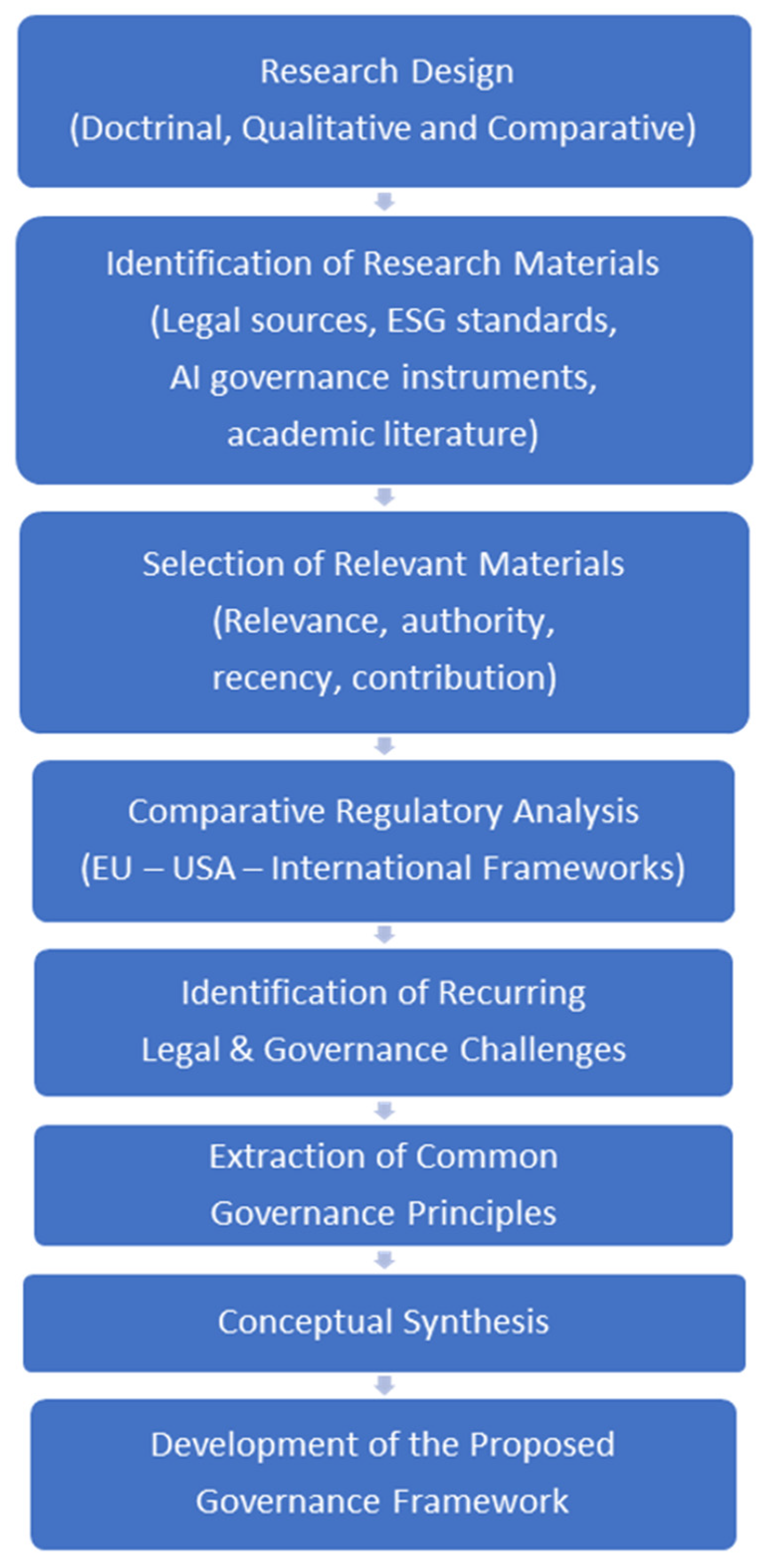
The research proceeded through a structured sequence of analytical stages, beginning with the identification of relevant legal and academic materials before moving to comparative regulatory analysis, the extraction of recurring governance principles, and conceptual synthesis. Together, these stages informed the development of the governance framework proposed in this study.
Figure 1 summarises the overall methodological workflow.
2.2. Research Materials and Data Sources
A diverse range of legal, regulatory, and scholarly materials was examined to reflect the multidimensional nature of AI-assisted sustainability reporting. Rather than relying on a single category of evidence, the analysis integrates legislation, regulatory initiatives, sustainability reporting standards, governance frameworks, academic literature, and institutional policy documents that collectively shape contemporary approaches to AI governance and ESG disclosure.
The legal corpus includes legislative instruments, regulatory guidance, and internationally recognised sustainability reporting standards establishing obligations relating to corporate transparency, accountability, algorithmic governance, and ESG disclosure. For the comparative legal analysis, the regulatory corpus was organised around the three comparative contexts examined in the study: the European Union, the United States, and international governance initiatives. The principal materials included the EU Artificial Intelligence Act, the Corporate Sustainability Reporting Directive (CSRD) and European Sustainability Reporting Standards (ESRS); relevant U.S. securities regulation and anti-fraud disclosure mechanisms; and international sustainability disclosure standards, including IFRS S1 and IFRS S2. These materials were selected because of their direct relevance to the study’s core regulatory concerns—AI governance, corporate sustainability disclosure, transparency, accountability, and the reliability of ESG claims—and their role in illustrating the different regulatory approaches compared in the analysis. These sources are complemented by peer-reviewed studies examining AI governance, corporate greenwashing, explainable artificial intelligence, ESG reporting, corporate accountability, and the broader regulatory challenges associated with digital sustainability reporting.
Considering these materials together provides a broader perspective on the relationship between legal regulation and governance practice than would be possible through a single regulatory lens. This integrated evidentiary base also supports the comparative analysis presented in the following sections and underpins the identification of the governance principles incorporated into the proposed framework [
9].
2.3. Literature Search and Selection Strategy
The body of literature considered in this study was assembled through structured searches of Scopus and Google Scholar [
11,
12], two databases selected for their extensive coverage of peer-reviewed legal, governance, and interdisciplinary scholarship. Search queries combined terms reflecting the central themes of the study, including artificial intelligence, AI-assisted sustainability reporting, ESG disclosure, corporate greenwashing, algorithmic accountability, explainable AI, and corporate sustainability reporting. The search process combined these terms around three intersecting areas central to the research question: the use and governance of AI in sustainability reporting, the relationship between AI-assisted disclosure and greenwashing risks, and the accountability implications of AI-supported ESG reporting. Where appropriate, Boolean operators were used to refine the search strategy and improve the relevance of the retrieved materials.
Priority was given to publications appearing between 2019 and 2026, reflecting the period during which scholarly interest and regulatory activity surrounding AI governance and sustainability reporting expanded most rapidly. Earlier studies were retained selectively where they provided essential theoretical foundations for corporate governance, accountability, or doctrinal legal analysis.
The retrieved sources were then evaluated according to their relevance to the research objectives, scholarly quality, legal significance, and contribution to understanding the governance challenges associated with AI-assisted sustainability reporting [
11]. Selection therefore focused on sources that directly informed at least one of the study’s principal analytical dimensions: AI governance, sustainability disclosure, greenwashing, corporate accountability, or the regulation and verification of ESG reporting. Materials falling outside these analytical dimensions were not carried forward into the substantive analysis. Alongside peer-reviewed publications, the review incorporated legislation, regulatory guidance, internationally recognised sustainability reporting standards, and AI governance frameworks to ensure that the proposed framework rested on both contemporary scholarship and authoritative regulatory sources.
2.4. Comparative Regulatory Analysis
A comparative regulatory perspective was adopted to examine how different legal systems respond to the governance challenges created by AI-assisted sustainability reporting [
9,
13]. Rather than providing a comprehensive comparison of national legal systems, the analysis focuses on regulatory frameworks that have exerted a significant influence on contemporary debates surrounding artificial intelligence, corporate governance, and sustainability disclosure.
Particular emphasis is placed on developments within the European Union, the United States, and internationally recognised governance initiatives. These regulatory environments were selected because each reflects a distinct, yet influential, approach to governing artificial intelligence and sustainability reporting. The European Union has pursued a comprehensive legislative model, whereas the United States has relied more extensively on sector-specific regulation, enforcement practices, and market-oriented governance. International sustainability reporting standards and AI governance principles provide an additional normative perspective that extends beyond the boundaries of individual jurisdictions.
Examining these regulatory approaches side by side makes it possible to identify areas of convergence, regulatory divergence, and remaining governance gaps. The purpose is not to determine which jurisdiction offers the superior regulatory model, but rather to distil the legal and governance principles capable of informing a coherent framework for AI-assisted ESG reporting within an evolving international regulatory landscape [
9,
13].
2.5. Development of the Proposed Governance Framework
The governance framework developed in this study was not derived from a single regulatory source or from an isolated conceptual proposition. Instead, it emerged through a gradual process of doctrinal interpretation, comparative regulatory analysis, and critical engagement with contemporary academic and policy literature [
10]. Each stage of the analysis contributed to refining the framework, allowing the final structure to evolve from the collective evidence examined rather than from the authors’ independent interpretation.
The process began with the identification of the principal legal and governance issues surrounding AI-assisted sustainability reporting. Particular attention was given to recurring concerns relating to transparency, accountability, explainability, verification, regulatory oversight, and corporate responsibility. These themes were then examined across legal instruments, sustainability reporting standards, AI governance initiatives, and academic scholarship to determine where different regulatory approaches converged, diverged, or left unresolved governance challenges.
Attention then shifted to the regulatory responses adopted across the selected jurisdictions and international governance initiatives. Rather than assessing each legal system in isolation, the comparison focused on identifying governance principles that consistently emerged despite differences in legislative structure and regulatory philosophy. Particular consideration was also given to areas where fragmented regulation created uncertainty or accountability gaps in AI-assisted sustainability reporting.
The insights generated through this comparative analysis were subsequently brought together through conceptual synthesis [
9], resulting in an integrated governance framework capable of addressing the principal legal and governance challenges identified throughout the study. Accordingly, the framework derives from the combined doctrinal, comparative, and conceptual analysis of the materials reviewed, rather than from an independently formulated normative model. This sequence also makes clear how the identified regulatory gaps and recurring governance principles informed the final structure of the framework.
2.6. Methodological Scope and Delimitations
The scope of this study is limited to the legal and governance dimensions of AI-assisted sustainability reporting. It does not examine the technical performance of individual AI systems or measure organisational practices and stakeholder perceptions. The comparative analysis is used to identify regulatory gaps and recurring governance principles relevant to the development of the proposed framework, rather than to provide an exhaustive assessment of national legal systems. The limitations associated with this methodological scope are addressed separately in
Section 8.
3. AI-Driven Sustainability Reporting and Emerging Risks
3.1. AI and ESG Reporting
The regulatory landscape governing sustainability reporting has changed significantly in recent years, bringing greater emphasis to the transparency, comparability, and reliability of ESG disclosures. International initiatives, most notably the International Sustainability Standards Board (ISSB) standards IFRS S1 and IFRS S2, together with regional frameworks such as the European Sustainability Reporting Standards (ESRS), have expanded both the scope and complexity of corporate reporting obligations. As these requirements become increasingly data-intensive, organisations are relying more extensively on AI-assisted systems to collect, organise, process, and communicate sustainability-related information. Artificial intelligence is therefore becoming embedded within ESG reporting itself, shaping the way sustainability information is generated, analysed, and ultimately disclosed [
14].
Meeting these expanding reporting obligations requires organisations to manage large volumes of sustainability information originating from business units, subsidiaries, and supply-chain networks. Conventional reporting practices often struggle to process this volume of information efficiently, particularly as disclosure requirements continue to grow. AI-assisted technologies help address this challenge by organising, interpreting, and processing ESG-related data more effectively, enabling organisations to produce sustainability disclosures that are more timely, consistent, and comprehensive [
15].
Beyond organising sustainability information, artificial intelligence is changing how that information is interpreted. Contemporary ESG reporting requires organisations to move beyond data collection by identifying meaningful patterns, evaluating performance indicators, and generating insights that support informed decision-making. Strengthening these analytical capabilities enables AI-assisted systems to promote greater consistency across reporting processes while supporting a more comprehensive assessment of corporate sustainability performance [
16].
AI also plays a growing role in preparing and presenting sustainability disclosures, influencing how ESG information is structured, communicated, and interpreted by different stakeholder groups. These capabilities can improve the clarity and comparability of sustainability reports by creating greater consistency across reporting sections. At the same time, expanding reliance on AI highlights the importance of governance arrangements that ensure technological efficiency remains accompanied by transparency, meaningful human oversight, and organisational accountability [
17].
The growing adoption of AI-assisted reporting systems also reflects broader changes in corporate governance and regulatory expectations. Investors, regulators, and other stakeholders increasingly expect sustainability disclosures to provide information that is transparent, reliable, and capable of supporting informed decision-making. In response, organisations are adopting AI-assisted reporting not only to improve operational efficiency but also to strengthen reporting quality and meet rising expectations surrounding ESG transparency and accountability [
18].
Even so, the value of AI-assisted sustainability reporting cannot be assessed solely by reference to improvements in efficiency. The credibility of ESG disclosures ultimately depends on the quality of the underlying data, the transparency of reporting processes, and the effectiveness of the governance arrangements that oversee the use of AI. AI-assisted reporting therefore needs to be judged not only by gains in efficiency, but by whether it preserves the integrity and reliability of sustainability disclosures [
19].
3.2. Opportunities and Benefits
The increasing use of artificial intelligence in sustainability reporting reflects more than technological advancement; it also mirrors the growing complexity of contemporary ESG disclosure requirements. As organisations respond to expanding regulatory obligations and rising expectations for transparent, consistent, and decision-useful sustainability information, conventional reporting practices are becoming progressively more demanding to maintain. In this environment, AI creates opportunities to improve both the efficiency of reporting processes and the quality of ESG disclosures. Whether these benefits improve sustainability reporting in practice depends on the governance arrangements surrounding the use of AI [
20].
One of the clearest advantages of AI lies in its capacity to streamline the preparation of sustainability reports. Producing ESG disclosures often requires organisations to consolidate information generated across multiple business units and supply-chain partners, making the reporting process both time-consuming and resource-intensive. By automating routine analytical and administrative tasks, AI allows reporting teams to devote greater attention to evaluating the quality, consistency, and reliability of disclosed information instead of repetitive data-processing activities [
15].
Its contribution extends beyond improving reporting efficiency. AI can also enhance the analytical value of sustainability disclosures by identifying patterns and relationships within large and diverse ESG datasets that may remain difficult to detect through conventional reporting methods. These capabilities enable organisations to monitor performance more effectively, recognise emerging trends, and generate insights that support more informed governance and strategic decision-making [
21].
AI-assisted reporting can further improve the quality of sustainability disclosures by promoting greater consistency in the way ESG information is organised and communicated. More coherent reporting structures enhance comparability across reporting periods while supporting clearer communication with investors, regulators, and other stakeholders. These benefits become increasingly significant as sustainability reporting frameworks continue to evolve and disclosure expectations grow more demanding [
22].
The influence of AI is not confined to the preparation of sustainability reports. Better organised and more accessible ESG information can strengthen internal governance by helping managers identify sustainability priorities, allocate resources more effectively, and integrate ESG considerations into strategic decision-making. AI therefore supports not only reporting activities but also the broader governance processes that shape organisational sustainability performance [
23].
The benefits of AI-assisted sustainability reporting therefore depend on how these technologies are governed and implemented. Legal safeguards and effective oversight remain necessary to ensure that gains in efficiency and analytical capability do not come at the expense of credible ESG disclosure [
24].
3.3. Risks of AI-Generated Greenwashing
The growing use of AI-assisted systems in sustainability reporting introduces governance challenges alongside the operational benefits discussed earlier. The principal concern is that, without adequate transparency, oversight, and verification, AI-supported reporting may enable more sophisticated forms of greenwashing. As organisations place greater reliance on AI during the preparation and presentation of ESG disclosures, questions inevitably arise about the credibility of sustainability claims and the reliability of the information presented to stakeholders [
25].
Not all forms of AI-assisted greenwashing arise in the same way, making it important to distinguish between deliberate misconduct and technical failure. Intentional greenwashing involves the conscious use of AI to exaggerate sustainability performance, conceal material ESG information, or construct misleading sustainability narratives. By contrast, inaccurate disclosures may occur without any intention to mislead, resulting instead from hallucinations, poor data quality, biased training datasets, or automated processing errors. This distinction carries important legal and governance implications because responsibility may differ depending on whether misleading disclosures originate from organisational decisions or from technical shortcomings within AI-assisted reporting systems.
Although the underlying causes may differ, the practical consequences are often remarkably similar. Exaggerated sustainability claims can distort stakeholder perceptions, create an inflated impression of corporate ESG performance, and gradually erode confidence in the credibility of sustainability reporting [
26].
Selective disclosure represents a further governance concern. AI-assisted reporting tools may emphasise favourable ESG information while giving less prominence to negative indicators or unresolved sustainability challenges. The resulting imbalance can produce sustainability narratives that appear comprehensive but fail to present a complete picture of organisational performance, thereby reducing both transparency and the informational value of ESG disclosures [
27].
Another challenge arises from data opacity. When stakeholders are unable to understand how ESG information has been generated, processed, or interpreted, assessing the credibility and verifiability of sustainability disclosures becomes considerably more difficult. Limited visibility into data sources and AI-supported decision processes may therefore weaken confidence in reported sustainability performance [
28].
Whether misleading sustainability disclosures result from deliberate organisational conduct or technical shortcomings, they are likely to become more difficult to detect as reporting processes become increasingly automated. AI-assisted systems are capable of producing reports that appear coherent, comprehensive, and professionally structured even when the underlying sustainability performance does not fully support the conclusions presented. Distinguishing between accurate disclosure and AI-assisted greenwashing may therefore become progressively more challenging where governance safeguards, verification procedures, and meaningful human oversight remain insufficient [
29].
Taken together, these risks illustrate that the central challenge of AI-assisted sustainability reporting lies not in the use of artificial intelligence itself, but in ensuring that its application remains transparent, verifiable, and subject to effective governance. Without appropriate safeguards, selective disclosure, exaggerated sustainability claims, data opacity, and AI-assisted greenwashing have the potential to undermine the credibility of ESG reporting and weaken stakeholder confidence [
30].
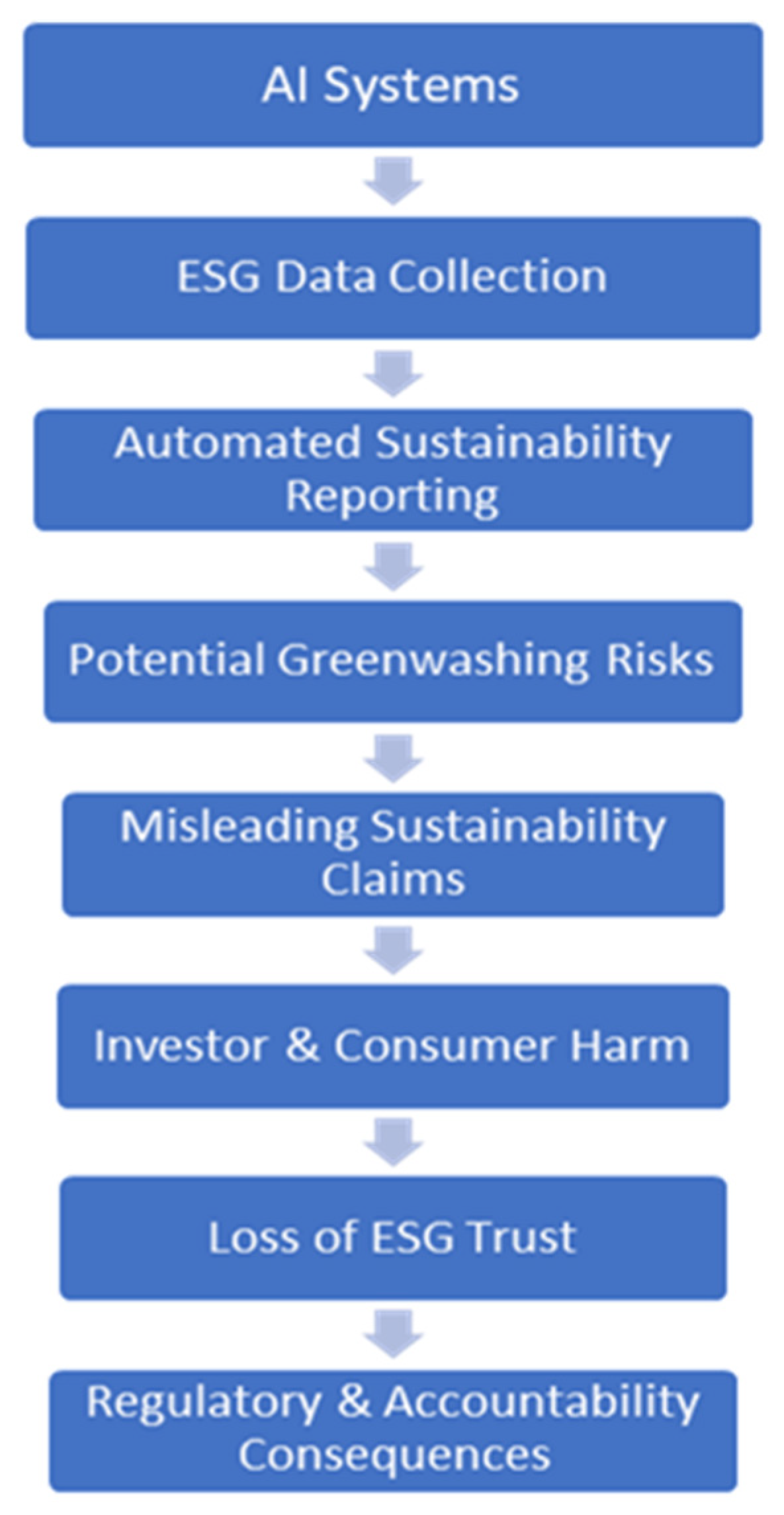
These governance risks should not be viewed in isolation. Instead, they interact throughout the sustainability reporting process, reinforcing one another and increasing the likelihood of misleading ESG disclosures.
Figure 2 provides a conceptual synthesis of these relationships based on the comparative regulatory analysis and the literature examined in this study. Rather than depicting empirical findings, the figure illustrates the principal governance risks identified through the doctrinal and analytical approach adopted in the research.
Figure 2 illustrates how governance risks associated with AI-assisted sustainability reporting may develop through a sequence of interconnected stages rather than as isolated events. The model emphasises that the principal concern is not the adoption of AI itself, but the cumulative interaction between automated reporting practices, selective disclosure, limited transparency, and weak governance. Together, these factors increase the likelihood of misleading sustainability claims, stakeholder harm, declining confidence in ESG disclosures, and ultimately greater regulatory accountability.
4. Governance and Accountability Challenges in AI-Driven Sustainability Reporting
4.1. Corporate Responsibility
The governance challenges associated with AI-assisted sustainability reporting extend beyond legal compliance and corporate responsibility. Understanding why organisations adopt AI-supported reporting practices, how sustainability disclosures shape stakeholder decisions, and why effective governance remains necessary despite increasing automation also requires a broader theoretical perspective. From this perspective, governance theories provide a useful foundation for interpreting the relationship between organisational behaviour, regulatory expectations, and the credibility of ESG disclosures [
31,
32].
Agency, institutional, and signaling theories each offer a different perspective on accountability within AI-assisted sustainability reporting. Agency theory highlights the importance of reliable ESG disclosures in reducing information asymmetries between management and stakeholders. Institutional theory explains how regulatory developments and professional expectations encourage organisations to adopt AI-assisted reporting practices, while signaling theory emphasises the role of credible sustainability disclosures in demonstrating organisational commitment to responsible business conduct. Considered together, these theoretical perspectives complement the Governance, Risk, and Compliance (GRC) framework by reinforcing the importance of governance, risk management, and regulatory compliance in supporting trustworthy sustainability reporting [
32].
As organisations place greater reliance on AI-assisted systems to process growing volumes of ESG information, effective oversight becomes increasingly important in preserving the credibility of sustainability reporting. Technological capability alone cannot ensure that sustainability disclosures present a balanced and reliable account of corporate performance. The integrity of ESG reporting therefore depends on effective oversight of the disclosure process, with organisational accountability remaining firmly under human responsibility [
31,
32].
4.2. Civil Liability and Accountability Allocation
The increasing use of AI-assisted systems in sustainability reporting raises fundamental questions about how accountability should be allocated among the actors involved in generating, processing, and verifying ESG information. The issue is not whether responsibility exists, but how it can be distributed in a manner that preserves the integrity, transparency, and credibility of sustainability disclosures. Given the complexity of contemporary reporting ecosystems, concentrating accountability in a single actor is unlikely to provide an effective governance response [
33].
At the centre of this accountability structure is the reporting entity itself. Sustainability reports constitute official corporate disclosures on which investors, regulators, consumers, and other stakeholders increasingly rely when assessing organisational sustainability performance. For that reason, organisations retain primary responsibility for ensuring that reported ESG information accurately reflects underlying practices, performance outcomes, and sustainability commitments [
34].
Responsibility, however, is not confined to reporting entities alone. AI developers also influence the reliability of sustainability disclosures through the design of reporting systems, data-processing models, and automated reporting functions. Although they do not determine the final content of sustainability reports, their design choices shape the technological environment within which disclosure decisions are made. Their contribution therefore centres on system transparency, technical reliability, and the integrity of reporting processes [
35].
Data providers represent another essential component of the accountability structure because reliable ESG disclosure depends on the information entering AI-assisted reporting systems. Inaccurate, incomplete, or misleading data may compromise the credibility of sustainability disclosures regardless of how sophisticated the reporting technology may be. Maintaining reporting integrity therefore requires clear responsibility for data quality throughout the disclosure process [
36].
Independent auditors provide an additional layer of assurance within AI-assisted sustainability reporting. Their role extends beyond verifying disclosed information to identifying unsupported sustainability claims, inconsistencies, and reporting practices that may increase the risk of greenwashing. By providing independent assurance, auditors strengthen stakeholder confidence and reinforce the credibility of sustainability reporting [
37].
Taken together, these responsibilities form a shared accountability structure rather than a single-point obligation. While organisations remain primarily responsible for published sustainability information, AI developers, data providers, and independent auditors perform complementary functions that enhance transparency, reduce greenwashing risks, and support the overall integrity of ESG reporting. Accountability is therefore distributed across the reporting ecosystem rather than concentrated in a single participant [
38].
This distribution of responsibilities also reflects the underlying logic of the Governance, Risk, and Compliance (GRC) approach, which allocates accountability according to the distinct functions performed throughout the reporting process. Reporting entities remain accountable for published ESG disclosures, management is responsible for reviewing sustainability information and approving AI-assisted reporting outputs, AI developers contribute to system reliability through model design and validation, data providers are responsible for preserving data integrity, and independent auditors provide external assurance. Trustworthy AI-assisted sustainability reporting therefore depends on coordinated human oversight, clearly defined responsibilities, and effective governance rather than on technological capability alone [
33].
4.3. Transparency and Explainability
Transparency is essential to the credibility of AI-assisted sustainability reporting. As organisations increasingly rely on AI-supported systems in ESG disclosure processes, stakeholders must be able to understand the basis of reported sustainability claims. Where reporting processes lack transparency, confidence in disclosed information may decline, increasing concerns regarding the reliability of sustainability disclosures and the risk of greenwashing [
30].
Explainability represents a key component of transparency in AI-assisted sustainability reporting. As sustainability reporting frameworks increasingly require reliable and verifiable ESG disclosures, explainable AI helps organisations demonstrate how significant sustainability information has been generated and supports stakeholders’ ability to assess the credibility of reported claims. This does not require disclosure of technical system details; rather, it requires sufficient clarity to allow reported information to be interpreted, assessed, and challenged when necessary. Such transparency strengthens accountability and enhances the credibility of ESG reporting [
32].
Transparency also depends on traceability. Sustainability claims should be linked to identifiable data sources and reporting procedures so that disclosed information can be verified and evaluated. The ability to trace reported outcomes to underlying ESG information improves disclosure quality and supports more reliable sustainability reporting practices [
18].
Auditability provides an additional safeguard for reporting integrity. Sustainability disclosures should be capable of independent review and verification in order to identify unsupported claims, reporting inconsistencies, and practices that may contribute to greenwashing. Effective auditability mechanisms therefore play an important role in maintaining stakeholder confidence in reported sustainability information [
37].
Together, explainability, traceability, and auditability provide complementary safeguards that strengthen the credibility of AI-assisted sustainability reporting. Integrating these governance principles into ESG disclosure processes helps improve transparency while reducing the risk of misleading sustainability claims [
38,
39].
4.4. Investor and Consumer Protection
Reliable sustainability reporting is fundamental to protecting both investors and consumers. ESG disclosures increasingly shape investment decisions, consumer behaviour, and broader assessments of corporate sustainability performance. When those disclosures become misleading, the consequences extend well beyond the reporting entity itself, affecting market confidence, capital allocation, and public trust in sustainability reporting [
25].
Investors depend on accurate ESG information when evaluating corporate performance and sustainability-related risks. Exaggerated or incomplete disclosures may therefore distort investment decisions by presenting an inaccurate picture of organisational performance [
40]. Consumers face comparable challenges when environmental or social claims fail to reflect actual business practices, weakening confidence in corporate sustainability commitments and reducing trust in sustainability-related communications [
41].
The implications extend beyond individual stakeholders. Greenwashing can also undermine fair competition by allowing organisations that overstate sustainability achievements to gain advantages over businesses making genuine investments in responsible practices. Such distortions weaken market confidence while reducing incentives for authentic ESG performance [
37].
Investor and consumer protection requires sustainability disclosures that are reliable, transparent, and capable of verification. When these conditions are met, ESG information can provide a sounder basis for decision-making and for assessing corporate sustainability claims [
30,
38].
5. Comparative Regulatory Responses
5.1. European Union
The European Union has developed one of the most comprehensive regulatory approaches to strengthening the credibility of sustainability reporting. Recent initiatives, including the Corporate Sustainability Reporting Directive (CSRD) and the European Sustainability Reporting Standards (ESRS), are intended to improve the consistency, comparability, and verifiability of ESG disclosures [
42]. These developments are reinforced by the Green Claims framework and the AI Act, both of which reflect a broader commitment to transparency, accountability, and the prevention of misleading sustainability information [
43,
44]. Together, these measures show that the EU approach extends beyond disclosure obligations to address the governance conditions needed to reduce greenwashing risks and maintain confidence in sustainability reporting.
The European Union therefore offers a useful example of how regulatory measures can address governance challenges in AI-assisted sustainability reporting while limiting opportunities for greenwashing [
42,
43,
44].
5.2. United States
In contrast, the United States approaches sustainability reporting primarily through the principles of investor protection, disclosure integrity, and anti-fraud regulation. Within this regulatory environment, sustainability-related information is increasingly recognised as material to investment decision-making and market confidence [
36]. Although the U.S. model is less prescriptive than its European counterpart, it places similar importance on ensuring that ESG disclosures remain accurate, reliable, and capable of supporting informed market decisions without creating misleading impressions of corporate sustainability performance [
45].
Rather than relying on comprehensive sustainability reporting legislation, the U.S. approach depends more heavily on existing securities regulation and anti-fraud enforcement. These contrasting models illustrate different, yet complementary, regulatory pathways for strengthening the credibility of ESG disclosures while protecting investors.
5.3. International ESG Governance Trends
Despite differences in legal systems and regulatory structures, international ESG governance is showing increasing convergence around a number of shared principles. Contemporary reporting standards and governance initiatives consistently emphasise transparency, accountability, consistency, and stakeholder trust as essential elements of credible sustainability reporting [
46]. At the same time, growing concern over greenwashing and inconsistent ESG information has strengthened calls for more robust verification mechanisms and greater comparability across jurisdictions. These developments point towards a broader shift from disclosure-focused regulation to governance approaches that place greater emphasis on reporting integrity and stakeholder confidence.
Differences in legislative design and enforcement remain, but international developments increasingly converge on governance principles aimed at making AI-assisted sustainability reporting more transparent, reliable, and accountable [
47].
6. Proposed Governance Framework for Trustworthy AI-Driven Sustainability Reporting
AI-assisted sustainability reporting relies on different categories of artificial intelligence across the reporting cycle, with each performing a distinct function. During data collection, machine learning techniques are primarily used to gather, classify, and organise ESG information from multiple internal and external sources. At the analysis stage, predictive AI supports pattern recognition, anomaly detection, risk identification, and sustainability performance assessment. During report preparation, generative AI assists in drafting sustainability disclosures based on structured ESG information, whereas the final review and approval stage should remain subject to meaningful human oversight and organisational governance. Recognising these distinct AI applications highlights that governance responsibilities vary throughout the reporting process and should therefore reflect the specific function performed by AI at each stage [
48,
49].
Table 1 classifies the principal AI applications across the main stages of the sustainability reporting process and outlines the governance priorities associated with each stage.
The stage-based classification presented in
Table 1 provides the conceptual starting point for the governance model developed in this study. Because AI performs different functions across the reporting cycle, governance requirements should be aligned with the specific risks, responsibilities, and decision-making roles associated with each stage.
The sections that follow translate this stage-based classification into a set of governance principles designed to address the distinct challenges arising throughout the sustainability reporting process. Rather than applying identical safeguards at every stage, the proposed approach aligns governance measures with the particular functions performed by AI across the reporting cycle.
6.1. Transparency Obligations
Transparency is central to trustworthy AI-assisted sustainability reporting because stakeholders need sufficient information to understand how ESG disclosures are produced and governed. In this context, transparency extends beyond the disclosure of sustainability outcomes to the processes, data sources, and oversight arrangements supporting them [
42].
Organisations should first disclose whether AI-assisted systems have been used during the collection, analysis, or preparation of sustainability information. This enables stakeholders to understand the extent to which AI has influenced ESG disclosures and to assess reporting practices on a more informed basis.
Transparency should also encompass the principal data sources supporting AI-assisted sustainability reporting. Clearly identifying the origin of ESG information improves traceability and enables stakeholders to evaluate the reliability of reported sustainability outcomes [
50].
The same level of transparency should extend to governance arrangements. Sustainability reports should identify the individuals, committees, or governance bodies responsible for reviewing significant ESG disclosures before publication. Clearly assigning these responsibilities reinforces accountability while ensuring that sustainability reporting remains subject to meaningful human oversight [
32].
Material limitations that may affect the interpretation of AI-assisted sustainability information should also be disclosed. Providing this context allows stakeholders to interpret reported ESG performance more accurately and reduces the likelihood of misleading conclusions.
Within this model, transparency functions as a governance mechanism rather than a disclosure obligation alone. Greater visibility into reporting processes, data sources, and oversight arrangements strengthens the credibility and reliability of AI-assisted sustainability reporting while supporting more informed stakeholder evaluation [
18].
6.2. Human Oversight Requirements
Meaningful human oversight is necessary where AI supports the preparation of sustainability disclosures. AI may improve data processing and reporting efficiency, but decisions concerning the interpretation, review, and approval of ESG information remain organisational responsibilities. AI-assisted reporting should therefore operate under continuous human supervision rather than as a fully autonomous process [
51].
Before publication, significant ESG disclosures should be reviewed by designated individuals, sustainability committees, or other responsible governance bodies. Such review helps ensure that sustainability claims remain aligned with corporate sustainability objectives, reporting commitments, and stakeholder expectations [
52].
Effective oversight extends beyond procedural approval. It also requires a substantive assessment of sustainability disclosures, with reviewers evaluating the consistency and reliability of reported information before publication. This broader review process reinforces accountability while strengthening confidence in ESG reporting [
53].
Final approval of sustainability reports should remain with an identifiable organisational body rather than being delegated to AI-assisted systems. Clearly assigning approval authority strengthens accountability, reinforces confidence in reported sustainability information, and ensures that responsibility remains embedded within organisational decision-making structures [
54].
Human oversight does not restrict the use of AI; it keeps responsibility for material reporting decisions within the organisation. Effective supervision can therefore reduce the risk of inaccurate or misleading ESG disclosures while preserving the credibility of sustainability reporting [
40,
55].
6.3. AI Auditing Mechanisms
AI auditing provides a further safeguard for AI-assisted sustainability reporting. Transparency and human oversight alone do not establish whether reported information remains consistent with underlying ESG data and reporting requirements. The proposed framework therefore incorporates auditing throughout the reporting process rather than limiting it to a final review [
54].
Organisations should establish internal auditing procedures that periodically assess both AI-assisted reporting systems and the disclosures they produce. These reviews should examine whether reported sustainability information remains consistent with the underlying ESG data, organisational sustainability objectives, and recognised reporting standards. Regular auditing encourages continuous evaluation throughout the reporting process rather than relying solely on a final review before publication [
53].
Auditing efforts should also be guided by risk. Because sustainability disclosures differ in their significance and potential stakeholder impact, review activities should concentrate on areas where inaccurate reporting is most likely to affect the reliability of ESG disclosures or influence stakeholder decision-making. Applying a risk-based approach enables organisations to allocate auditing resources more effectively while improving the overall reliability of sustainability reporting [
56].
Effective AI auditing also depends on thorough documentation and continuous monitoring. Organisations should maintain clear records of data sources, reporting methodologies, system outputs, review procedures, and any corrective actions taken during the reporting process. Maintaining this documentation improves traceability and makes it easier to evaluate reporting quality before sustainability disclosures are released [
57].
Where appropriate, independent auditing should complement internal review procedures. External assurance provides an objective assessment of AI-assisted sustainability disclosures and strengthens confidence in reported ESG information. Its value becomes particularly evident when sustainability disclosures involve matters of significant strategic, financial, or reputational importance [
58].
Within this approach, AI auditing is viewed as an ongoing governance process rather than a purely technical exercise. Periodic review, risk-based assessment, systematic documentation, and independent assurance work together to improve the quality, reliability, and overall dependability of AI-assisted sustainability reporting.
6.4. Sustainability Verification Procedures
Sustainability verification addresses the evidentiary basis of AI-assisted ESG disclosures. While auditing focuses on reporting processes and internal control mechanisms, verification is concerned with the accuracy, reliability, and consistency of the underlying ESG information. Credible sustainability claims therefore require evidence capable of supporting the reported outcomes.
Verification should begin with the sources of sustainability information. Organisations need procedures that ensure ESG disclosures are supported by identifiable and reliable evidence. Information incorporated into sustainability reports should therefore remain traceable to documented operational records, environmental measurements, internal performance indicators, or other verifiable sources [
59].
Reliable verification also requires systematic data validation before ESG information is incorporated into sustainability reports. Validation procedures should assess the completeness, consistency, and reliability of the information supporting reported outcomes, recognising that high-quality sustainability reporting depends not only on the availability of data but also on its dependability [
60].
Cross-checking provides an additional layer of assurance within the verification process. Whenever appropriate, sustainability information should be compared against multiple internal and external sources to reduce the likelihood that inaccurate, incomplete, or selectively presented information will influence reported ESG disclosures. Applying this practice strengthens reporting integrity while improving the reliability of sustainability information used for decision-making [
61].
Independent verification offers a further safeguard by providing an external assessment of reported ESG information. Such review helps identify unsupported or inconsistent sustainability claims while reinforcing the robustness of verification procedures, particularly where disclosures carry significant regulatory or market implications [
62].
Within this approach, sustainability verification is treated as a continuous governance process rather than a final compliance exercise. Ensuring that reported ESG information remains accurate, traceable, and independently verifiable allows verification to complement both auditing and human oversight throughout the reporting process.
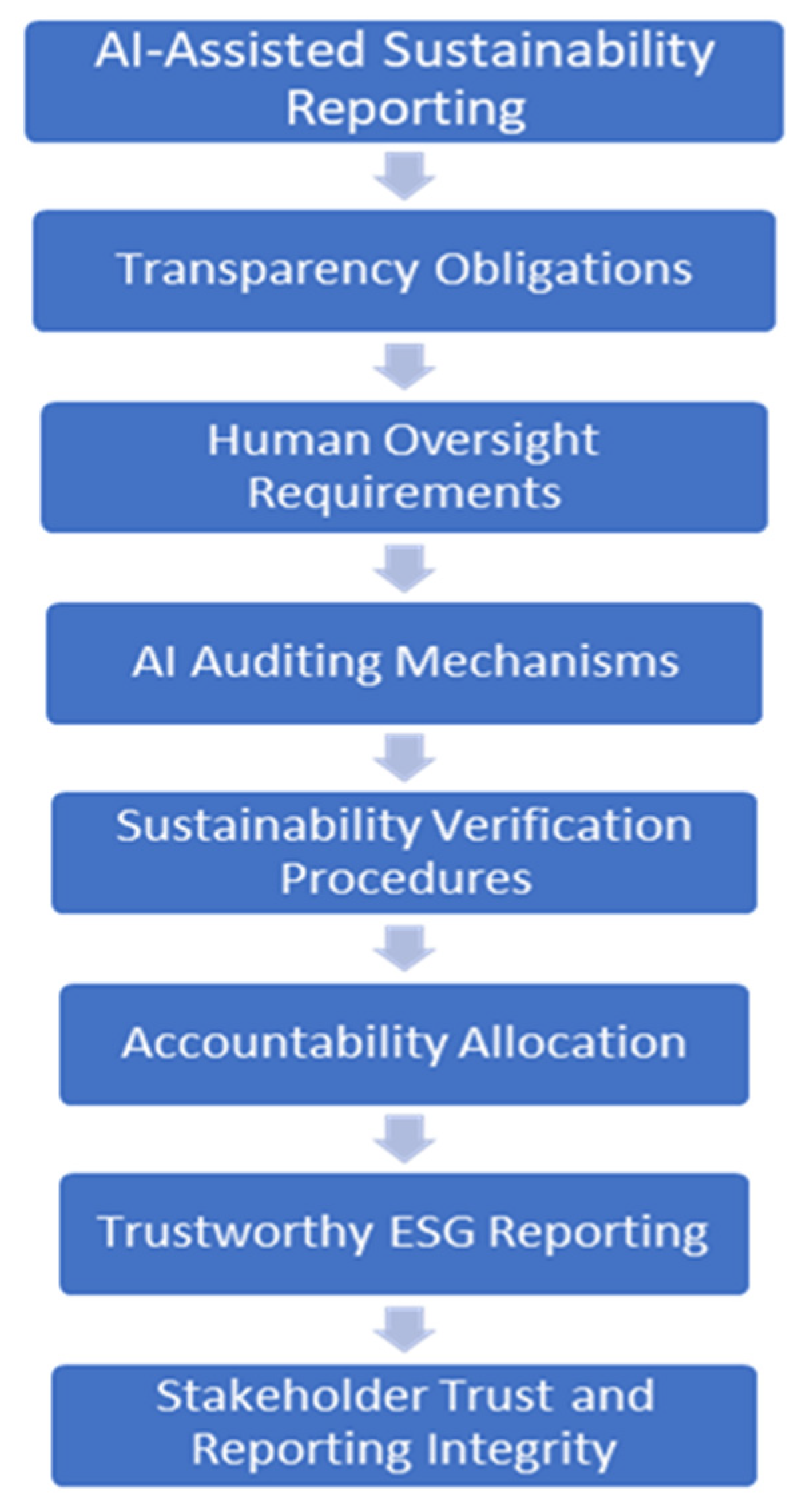
The governance mechanisms discussed throughout this section are brought together in the integrated model presented in
Figure 3. The figure illustrates how transparency, human oversight, AI auditing, sustainability verification, and accountability interact as complementary elements supporting trustworthy AI-assisted sustainability reporting.
Figure 3 demonstrates that trustworthy AI-assisted sustainability reporting depends on the interaction of complementary governance mechanisms rather than on any single safeguard operating in isolation. Transparency, human oversight, AI auditing, sustainability verification, and accountability function as mutually reinforcing elements, with accountability emerging from their combined operation rather than from one mechanism alone.
6.5. Allocation of Responsibilities Among Key Actors
AI-assisted sustainability reporting involves several actors with different roles in generating, processing, verifying, and disclosing ESG information. Accountability must therefore be allocated clearly across the reporting process so that responsibility for published sustainability information can be identified when reporting failures occur [
63].
Within this allocation model, the reporting entity retains primary accountability for the content and credibility of sustainability disclosures. Although AI-assisted systems support data analysis and report preparation, responsibility for published ESG information remains with the organisation issuing the report. This requires effective coordination between sustainability teams, data management functions, and technology governance structures, ensuring that organisational oversight remains central throughout the reporting process [
48,
49].
AI developers assume a different, but equally important, responsibility within the reporting ecosystem. Their contribution centres on the technical reliability, functionality, and performance of the systems supporting sustainability reporting activities. This includes providing appropriate documentation on system functionality, known limitations, and intended use, together with sufficient transparency regarding the way AI-assisted systems process sustainability information and generate reporting outputs. These practices improve traceability, facilitate oversight, and strengthen confidence in AI-assisted sustainability disclosures [
64].
Accountability should also apply to those responsible for selecting, approving, or modifying the metrics, variables, and training criteria used in AI-assisted sustainability reporting. These decisions determine how ESG performance is assessed and can directly influence the resulting disclosures. For this reason, they should be documented, reviewed by the relevant sustainability, legal, data-governance, and technical functions, and assigned to identifiable decision-makers. Treating them as purely technical decisions risks creating accountability gaps, particularly where biased or incomplete metrics lead to misleading sustainability reporting [
65].
Data providers represent another key element of the accountability structure because the quality of sustainability reporting is closely linked to the accuracy, completeness, and integrity of the underlying ESG information. As organisations increasingly rely on data originating from multiple internal and external sources, weaknesses in that information may compromise reporting credibility regardless of how robust the reporting systems are. Ensuring that ESG information remains reliable, verifiable, and suitable for disclosure therefore becomes a central responsibility of data providers [
65].
Independent auditors and assurance providers contribute an additional layer of accountability by offering objective verification of reported ESG information and the governance processes supporting it. Their role is not to generate sustainability information, but to assess its reliability and the effectiveness of the controls surrounding its preparation. Through independent assurance, they strengthen oversight mechanisms, reinforce stakeholder confidence, and enhance the credibility of sustainability reporting [
62].
Within this approach, accountability is attributed to the individuals and organisations responsible for designing, deploying, overseeing, and using AI-assisted systems rather than to the technology itself. Trustworthy sustainability reporting therefore depends on coordinated responsibilities shared among reporting entities, AI developers, data providers, and independent auditors, each contributing a distinct governance function.
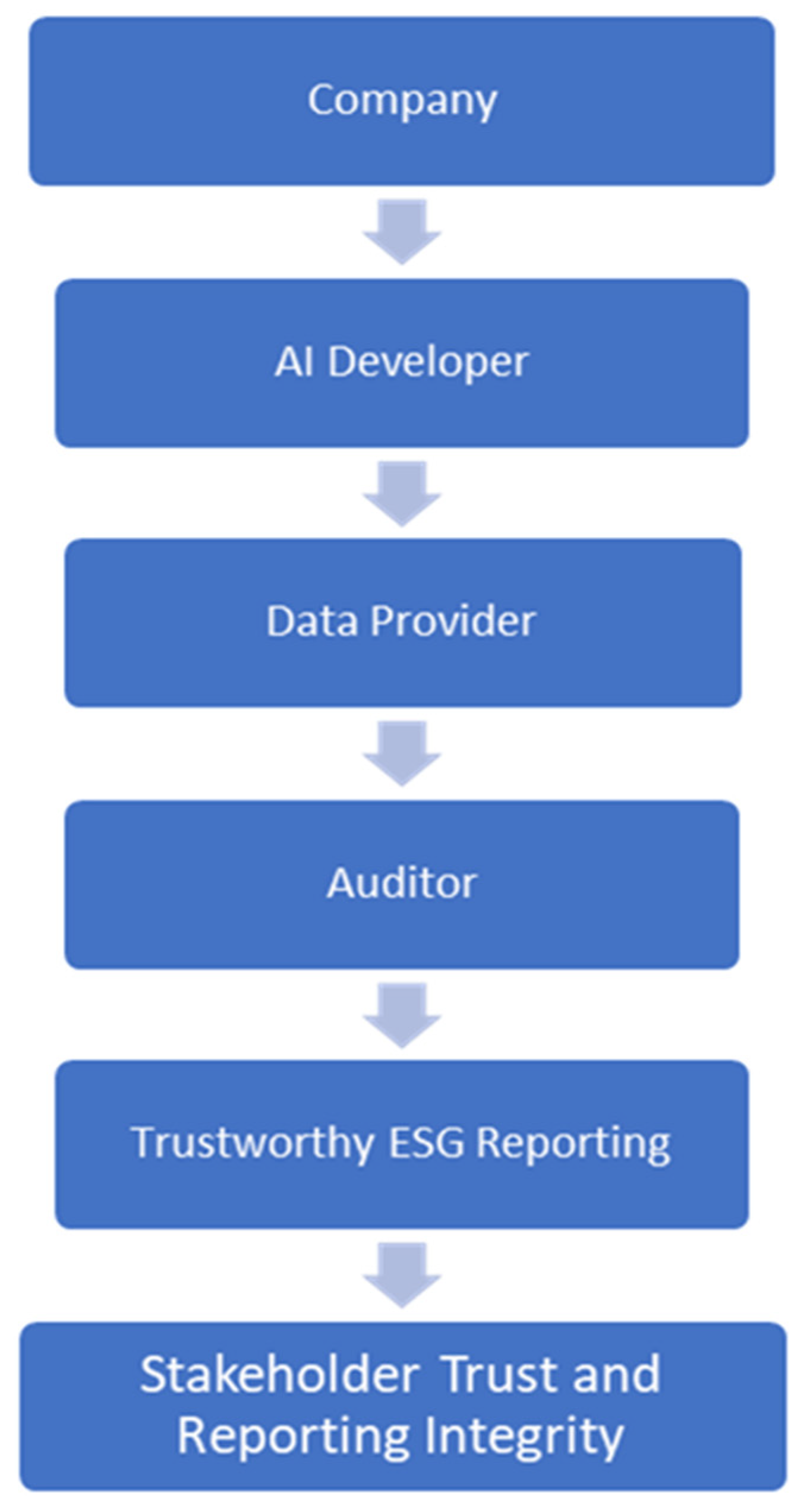
Figure 4 brings these responsibilities together by illustrating how the principal stakeholders contribute to trustworthy AI-assisted sustainability reporting through complementary accountability roles.
Figure 4 illustrates that accountability emerges from the interaction of complementary stakeholder responsibilities rather than from the actions of any single participant. Organisational oversight, technical reliability, data quality, and independent verification operate together to strengthen the credibility of ESG reporting.
To further operationalise this allocation model,
Table 2 summarises the primary governance responsibilities assigned to each stakeholder involved in AI-assisted sustainability reporting.
Table 2 illustrates how accountability is distributed across the principal stakeholders involved in AI-assisted sustainability reporting. By clarifying the responsibilities assigned to each participant, the matrix supports coordinated oversight and reinforces the credibility of ESG disclosures.
To clarify the operational distribution of responsibilities across the reporting process, the proposed framework incorporates a Responsibility Assignment Matrix (RACI), an established governance tool that distinguishes organisational roles as Responsible, Accountable, Consulted, and Informed [
66].
Table 3 complements the liability allocation matrix by distinguishing operational responsibility, final accountability, consultation, and information-sharing throughout the reporting process. The RACI structure complements, rather than replaces, the liability allocation model by clarifying how the principal actors should coordinate their roles before AI-assisted sustainability disclosures are approved and published. Legal responsibility nevertheless remains with the reporting entity, which retains ultimate accountability for the accuracy, credibility, and integrity of the published sustainability disclosures.
To illustrate how the proposed governance framework operates in practice, consider an energy company that uses machine learning to collect environmental data, predictive AI to identify emissions trends, and generative AI to prepare draft sustainability disclosures. Before the report is released, the sustainability team reviews the data and AI-generated outputs, while designated decision-makers approve the key metrics and assumptions. Independent auditors then verify that the disclosures are supported by reliable evidence and remain consistent with the underlying data. Although technology providers and data contributors play supporting roles throughout the reporting process, the reporting entity retains ultimate responsibility for the accuracy and credibility of the published sustainability report.
7. Discussion
Governance arrangements are as important as technological capability in determining the trustworthiness of ESG reporting. Research on AI governance consistently highlights the importance of transparent organisational structures, meaningful human oversight, and clearly defined accountability, while studies of sustainability reporting similarly emphasise disclosure quality and stakeholder confidence [
33,
34]. Situated within this evolving body of literature, the present study brings these strands together by developing an integrated governance framework specifically designed for AI-assisted sustainability reporting.
Existing research has advanced understanding of AI governance and ESG reporting from several complementary perspectives. Previous studies have examined transparency in AI governance, corporate governance as a driver of reporting quality, and organisational oversight of AI systems [
32,
33]. Likewise, the ESG literature has highlighted the importance of accountability, stakeholder confidence, and reporting quality [
32,
38]. What remains less developed, however, is an explanation of how these governance dimensions operate collectively within AI-assisted sustainability reporting. The framework proposed in this study addresses this gap by integrating these complementary elements into a single governance model.
The comparative analysis also reveals that, despite increasing convergence around transparency, accountability, and reporting integrity, existing regulatory responses remain fragmented when addressing AI-assisted sustainability reporting. The European Union has adopted a broader regulatory approach that combines sustainability reporting requirements with AI governance and measures designed to reduce greenwashing. By comparison, the United States continues to rely primarily on securities regulation, investor protection, and disclosure obligations. International initiatives similarly promote transparency and comparability, yet they stop short of offering an integrated governance model specifically tailored to AI-assisted sustainability reporting. This comparison suggests that current regulatory developments address many governance challenges, but rarely as part of a coordinated governance structure. The proposed framework responds to this fragmentation by integrating these governance mechanisms into a single model for trustworthy AI-assisted ESG reporting across different regulatory settings [
41,
42,
43,
44,
45,
67].
The proposed framework shows how complementary governance mechanisms can operate together rather than as isolated safeguards in AI-assisted sustainability reporting. Transparency improves the visibility of reporting processes, human oversight reinforces organisational accountability, AI auditing strengthens the reliability of reporting systems, sustainability verification improves the credibility of ESG information, and liability allocation clarifies the responsibilities of participating actors. Considered together, these mechanisms create a governance structure that is more effective than treating each element independently. This integrated perspective is also consistent with the principles of Governance, Risk, and Compliance (GRC), which emphasise coordinated organisational controls rather than isolated compliance measures [
33,
34,
37].
The proposed framework also has practical implications for a range of stakeholders. Regulators may use it to complement disclosure requirements with governance mechanisms that strengthen transparency, accountability, and oversight throughout AI-assisted sustainability reporting. Standard setters can draw upon its structure when developing reporting guidance that incorporates governance safeguards alongside disclosure obligations. For organisations, the framework offers a basis for strengthening internal governance arrangements, improving reporting reliability, and reducing greenwashing risks. Auditors and assurance providers may likewise use these principles to incorporate governance-oriented evaluation criteria into assurance activities, thereby reinforcing the credibility of AI-assisted ESG disclosures [
34,
40,
42,
62].
These findings indicate that regulatory compliance alone is insufficient to address the governance challenges created by AI-assisted sustainability reporting. Trustworthy ESG disclosure also requires coordinated transparency, human oversight, auditing, verification, and accountability throughout the reporting process.
8. Limitations
The proposed governance framework remains conceptual and has not yet been tested through case studies, stakeholder interviews, expert consultation, or other empirical methods. Although it is grounded in doctrinal legal analysis, comparative regulatory assessment, and the synthesis of existing literature, its practical effectiveness requires further evaluation in real-world AI-assisted sustainability reporting environments [
68,
69].
A second limitation concerns the evidentiary base of the study. The analysis relies primarily on legal instruments, regulatory frameworks, academic literature, and international governance initiatives rather than on primary empirical evidence. These sources provide an appropriate basis for the legal and conceptual analysis undertaken here, but they cannot fully capture the practical challenges that organisations may encounter when implementing AI-assisted sustainability reporting. Empirical research involving organisations, regulators, auditors, and other stakeholders could therefore help assess the practical applicability of the proposed framework [
68,
70].
A further limitation arises from the pace at which AI regulation and sustainability reporting continue to evolve. Legislative frameworks, reporting standards, and governance practices are still developing across jurisdictions. Subsequent regulatory changes may therefore require parts of the proposed framework to be revisited or refined [
69].
Finally, the comparative analysis focuses on the European Union, the United States, and major international governance initiatives. These provide useful reference points for examining current regulatory approaches, but they do not represent the full range of legal and institutional responses to AI-assisted sustainability reporting. Future comparative research covering additional jurisdictions would provide a broader basis for evaluating and refining the proposed framework.
9. Future Research
Empirical validation of the proposed governance model across different organisational and regulatory settings is a priority for future research. Case studies of AI-assisted sustainability reporting could test how effectively its governance mechanisms strengthen reporting integrity and reduce greenwashing risks.
Qualitative research could examine how governance responsibilities are allocated and implemented in practice. Interviews with regulators, corporate sustainability managers, auditors, and AI developers could reveal how AI-assisted sustainability reporting operates within organisations, while Delphi studies could assess the relative importance and applicability of individual governance components across different reporting environments.
Another promising direction involves examining the implementation of the proposed governance model within specific industries, including financial services, manufacturing, and energy, where AI-assisted ESG reporting is becoming increasingly common. Sector-specific analyses would provide a clearer understanding of how governance requirements vary according to organisational characteristics, reporting obligations, and sustainability-related risks.
Expanding the comparative perspective beyond the European Union, the United States, and international governance initiatives would also enrich future research. Examining additional jurisdictions could provide a broader understanding of how different legal and institutional environments shape AI-assisted sustainability reporting while contributing to the continued refinement of the proposed governance framework.
Future research should also examine the relationship between emerging AI governance requirements and evolving sustainability reporting standards. This would help determine whether integrated governance approaches remain effective as the two regulatory fields develop and increasingly intersect.
10. Conclusions
Artificial intelligence is reshaping sustainability reporting by influencing the way organisations collect, analyse, and communicate ESG information. While AI-assisted reporting offers clear gains in efficiency and analytical capability, it also introduces governance challenges relating to transparency, accountability, verification, and stakeholder trust. The findings place governance, rather than technological sophistication, at the centre of credible AI-assisted sustainability reporting.
The comparative analysis further shows that recent regulatory initiatives have strengthened sustainability reporting in several important respects. Nevertheless, AI governance, ESG disclosure, and greenwashing continue to be addressed through separate regulatory instruments. As a consequence, existing approaches remain fragmented and provide only limited guidance on how these elements should operate together within AI-assisted sustainability reporting.
To address this fragmentation, the study proposes an integrated governance framework combining transparency, human oversight, AI auditing, sustainability verification, and accountability allocation. Bringing these mechanisms together demonstrates that reporting integrity is strengthened not by any single safeguard, but by the way these complementary elements operate collectively to reduce greenwashing risks and reinforce the credibility of AI-assisted ESG disclosures.
The proposed framework also offers practical guidance for regulators, standard setters, organisations, and assurance providers seeking to strengthen AI-assisted sustainability reporting. By encouraging clearer accountability, more effective oversight, and stronger verification practices, it provides a practical basis for improving the reliability of ESG disclosures and reinforcing stakeholder confidence.
As AI technologies develop, governance arrangements will need to adapt to the changing conditions of sustainability reporting. Preserving transparency, meaningful human oversight, effective verification, and clearly defined responsibilities will be essential if AI is to support the integrity of ESG reporting over time.