Development of Sustainable Gypsum Composites Incorporating Silica Fume Waste and Fiber Reinforcement for Construction Applications

Abstract
1. Introduction

| Reference | Base Material | Waste Addition (%) | w/g Ratio | Key Findings |
|---|---|---|---|---|
| [20] | Cement | Fly ash (10–15%) | 0.2/0.4 | - Viable method to achieve stability/solidification of metals - The material could be used as a repair mortar in roads and pavements. |
| [13] | Cement | Ashes (25%) | - | - Increased porosity, which reduces mechanical performance, while thermal and acoustic insulation improves. |
| [21] | Cement | Coal ash (3–5%) | - | - It is possible to use coal ash and gypsum residues as agents with mechanical resistance. - This new utility model emerges as a sustainable alternative. |
| [22] | Cement | Silica fume (10%) | 0.5 | Increasing the dose of silica fume up to 10% caused the improvement of positive force. |
| [17] | Gypsum | Silica fume (2.5–10%) | 0.5 | - With SF the compressive strength increases by 23.5% and reduces setting time by 68%. |
| [18] | Gypsum | Blast furnace slag, silica fume and fly ash (10–25%) | 0.2 | - Compression resistance is maintained, mechanical resistance improves. |
| [19] | Gypsum | Sand, Silica gel and fume (0.2–10%) | 0.1 | - Apparent density decreased and fluidity, setting time, apparent porosity and, to a lesser extent, compressive strength increased. |
| [23] | Cement | Ladle Furnace Slag (66%) | - | - Despite its high porosity, it had good dimensional stability when exposed to humid environments. |
| [24] | Gypsum | Bagasse ash (10%) | 0.65/0.75 | - Improved performance of the panels and boards. - Better fire resistance is obtained with cement and gypsum panels with bagasse fibers. |
| [25] | Gypsum | Wooden biomass ash (25%) | 0.8 | Wooden biomass ash can be incorporated up to 25% in gypsum composites complying with the standards. |
2. Materials and Methods
2.1. Materials
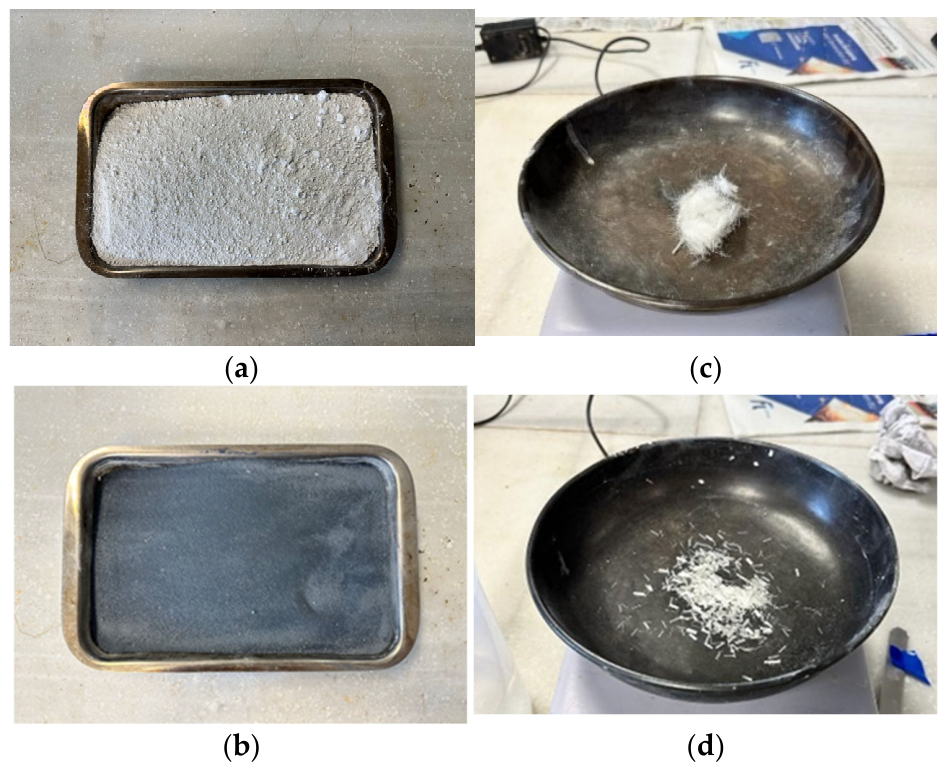
- The gypsum plaster was supplied by Placo Saint-Gobain (Madrid, Spain). According to the manufacturer, the material presents a purity higher than 90% and is classified as a normal-setting gypsum binder in accordance with EN 13279-1.
- Silica fume (SF) was used as a recycled mineral addition obtained as a by-product during the production of silicon metal and ferrosilicon alloys in electric arc furnaces. It consists predominantly of amorphous silicon dioxide (SiO2) with ultrafine spherical particles, typically smaller than 1μm, a specific surface area of approximately 15–30 m2/g, and a density of about 2.20 g/cm3. Owing to its high fineness and pozzolanic activity, silica fume has been extensively investigated as a supplementary material capable of improving the microstructure and mechanical performance of cementitious and gypsum-based composites.
- Two types of fiber reinforcement were evaluated: polypropylene fibers (PP) and alkali-resistant glass fibers (GF) supplied by Sika (Madrid, Spain). Polypropylene fibers, with a density of approximately 0.91 g/cm3, were selected because of their high chemical stability, low density, and excellent crack-bridging capacity. These fibers are widely used to improve toughness, reduce crack propagation, and enhance the post-cracking behaviour of gypsum-based composites. In addition, alkali-resistant glass fibers were incorporated due to their high tensile strength, high elastic modulus, and excellent compatibility with gypsum-based matrices. Their incorporation contributes to improved crack control, flexural strength, and the overall mechanical performance of brittle composites.
- Potable water supplied by Canal de Isabel II (Madrid, Spain) was used for the preparation of all mixtures.
2.2. Experimental Program
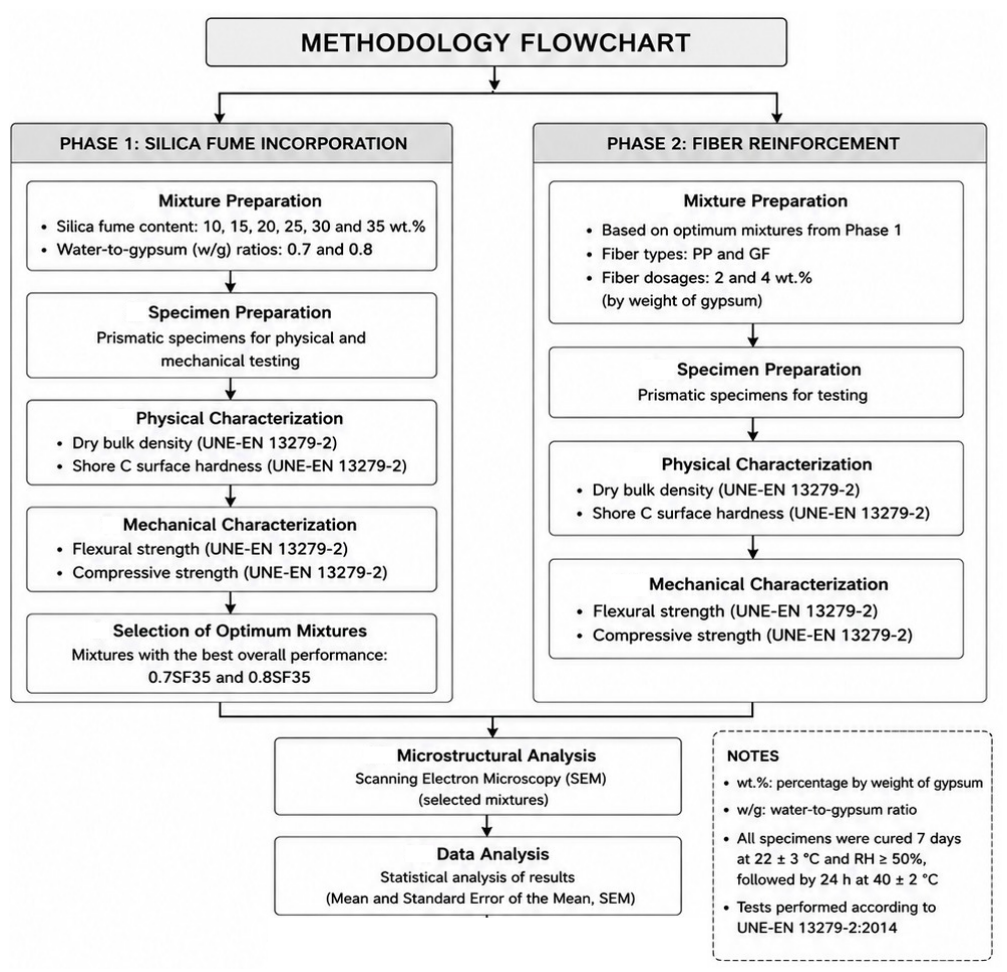
2.2.1. Phase 1: Silica Fume Addition
2.2.2. Phase 2: Fiber Reinforcement
2.3. Test Methods and Data Analysis
2.3.1. Dry Bulk Density
- is the dry bulk density (kg/m3).
- m is the dry mass of the specimen (kg).
- V is the specimen volume (m3).
2.3.2. Surface Hardness
2.3.3. Flexural Strength
- Rf is the flexural strength (MPa).
- F is the maximum applied load (n).
- L is the span between supports (mm).
- b is the specimen width (mm).
- h is the specimen height (mm).
2.3.4. Compressive Strength
- Rc is the compressive strength (MPa).
- F is the maximum applied load (n).
- A is the loaded area (mm2).
2.3.5. Statistical Analysis
- SEM is the standard error of the mean.
- SD is the standard deviation of the experimental measurements.
- n is the number of tested specimens (n = 3).
2.4. Microstructural Analysis
3. Results and Discussion
3.1. Results for Phase 1: Effect of Silica Fume Incorporation
3.1.1. Bulk Density Results
3.1.2. Surface Hardness Results
3.1.3. Flexural Strength Results
3.1.4. Compressive Strength Results
3.2. Results for Phase 2: Effect of Fiber Reinforcement
3.3. Microstructural Analysis Results
4. Conclusions
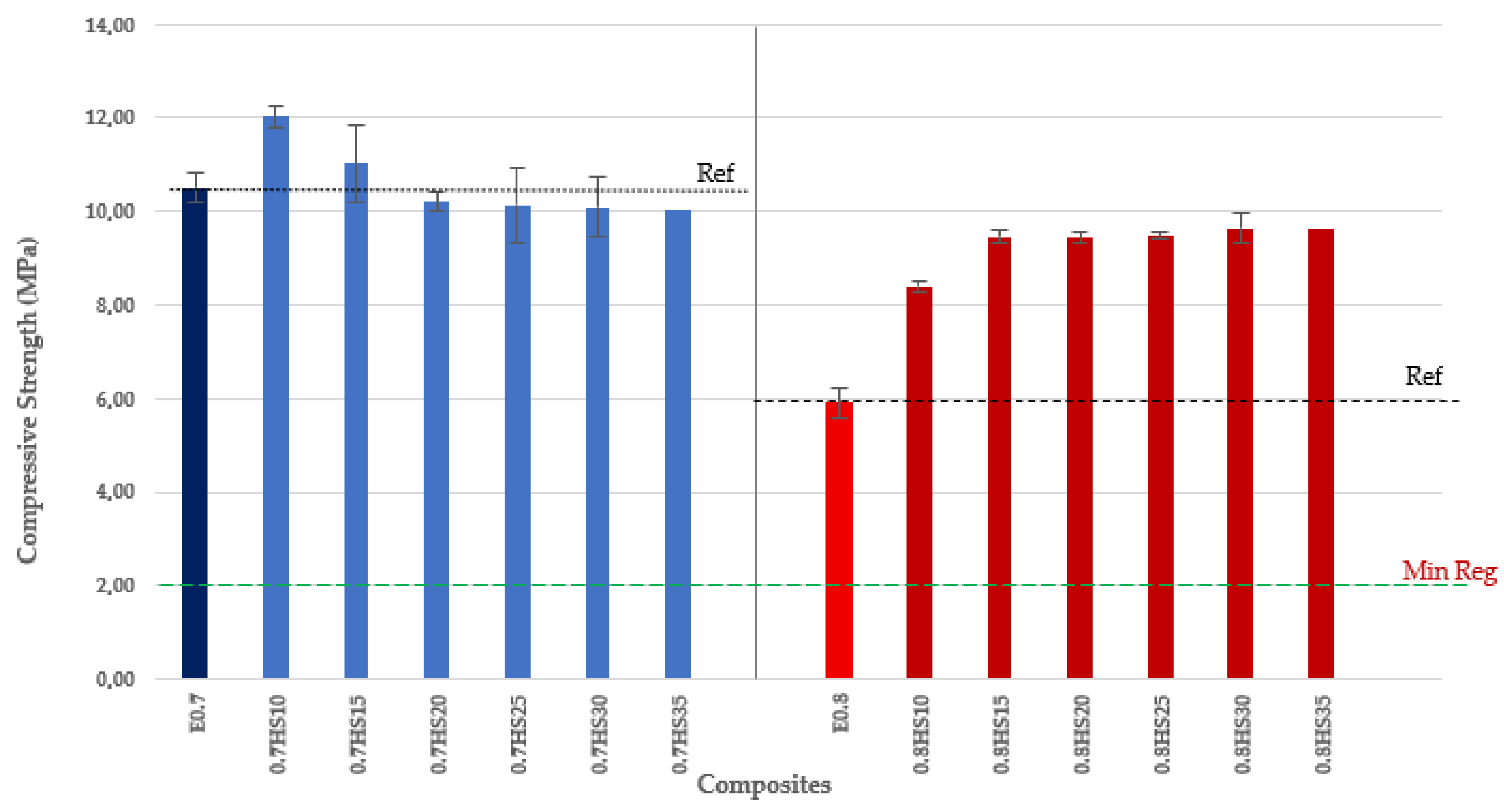
- Silica fume was successfully incorporated into gypsum composites at addition levels of up to 35% by weight of gypsum while maintaining adequate workability and complying with the minimum mechanical requirements established by UNE-EN 13279.
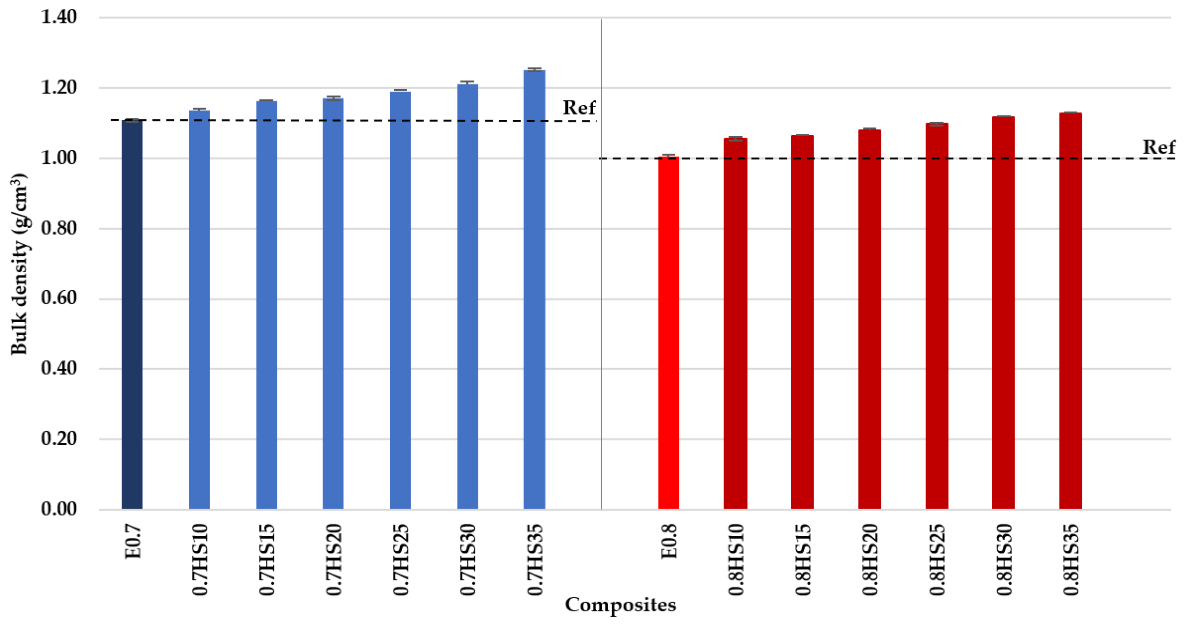
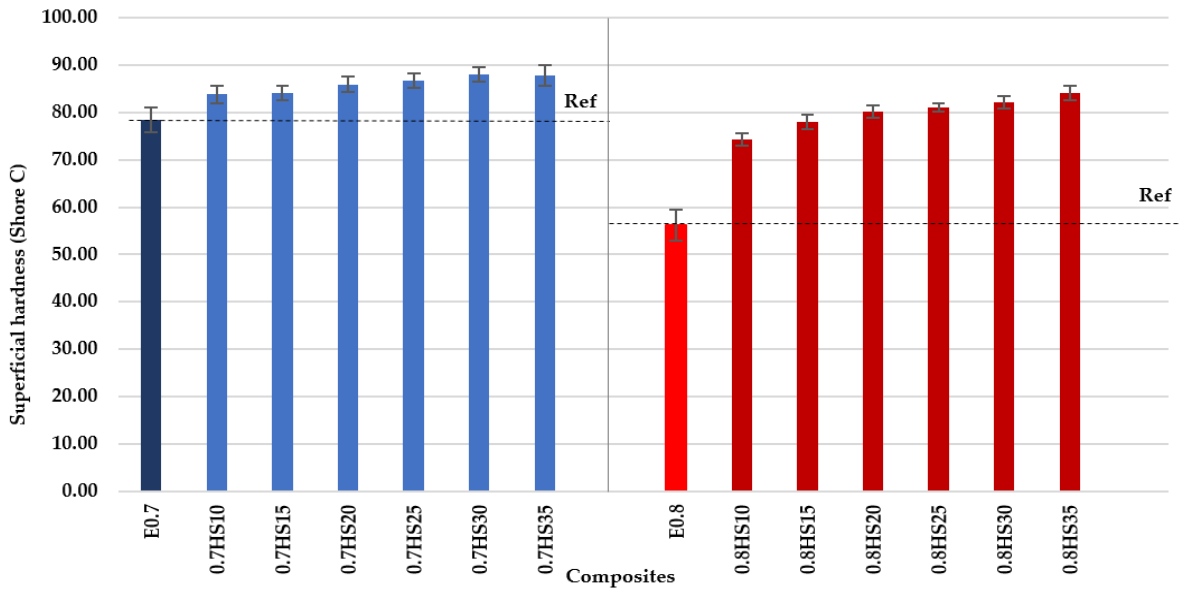
- The incorporation of silica fume produced a densification of the gypsum matrix, resulting in increased bulk density and surface hardness. The highest density values were obtained for the mixtures containing 35% silica fume, reaching increases of up to 9.64% compared with the corresponding reference specimens.
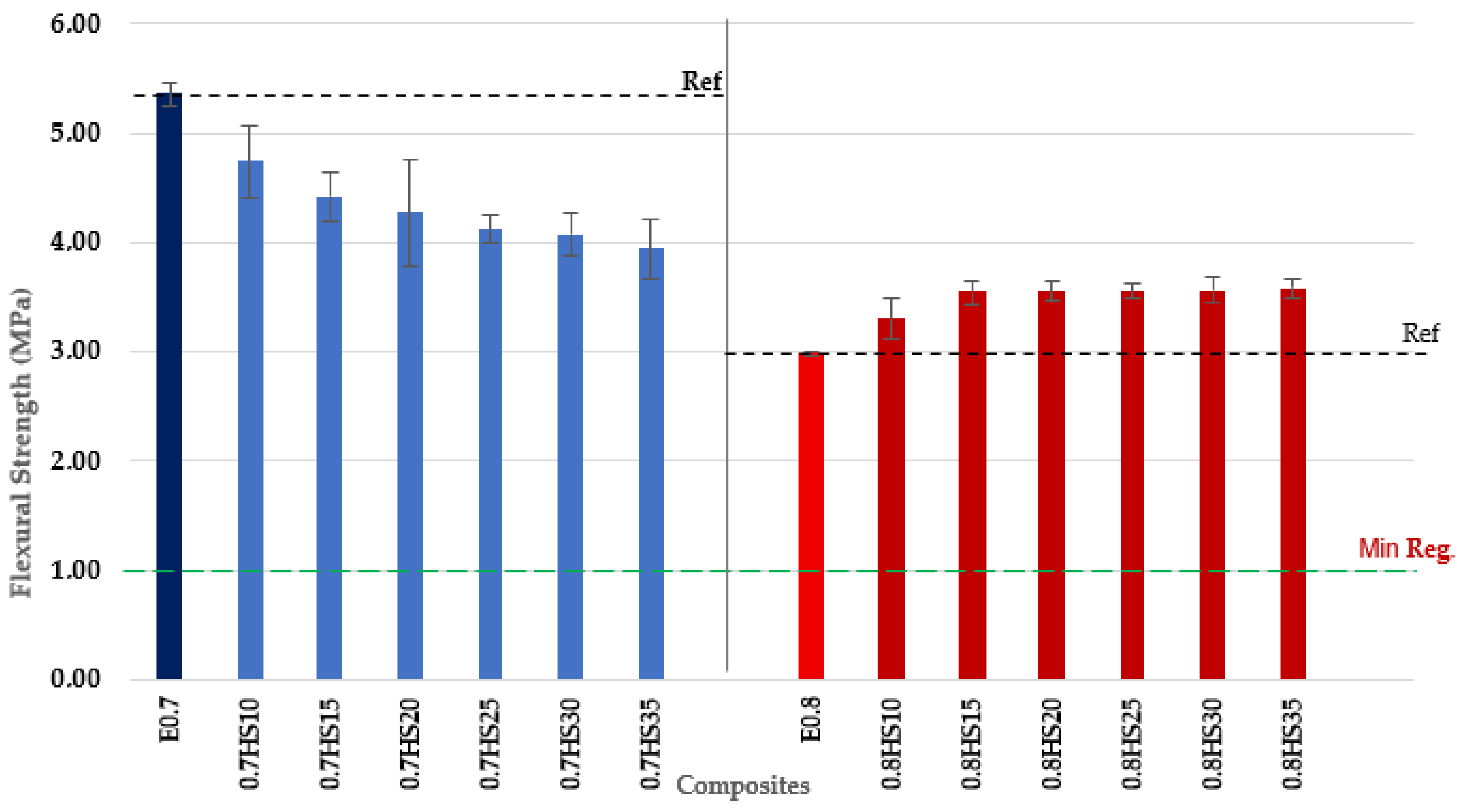
- The influence of silica fume on mechanical performance depended on the water-to-gypsum ratio. While all mixtures satisfied the regulatory requirements, the most favourable overall behaviour was observed for the formulations incorporating the highest silica fume contents, particularly at a w/g ratio of 0.8.
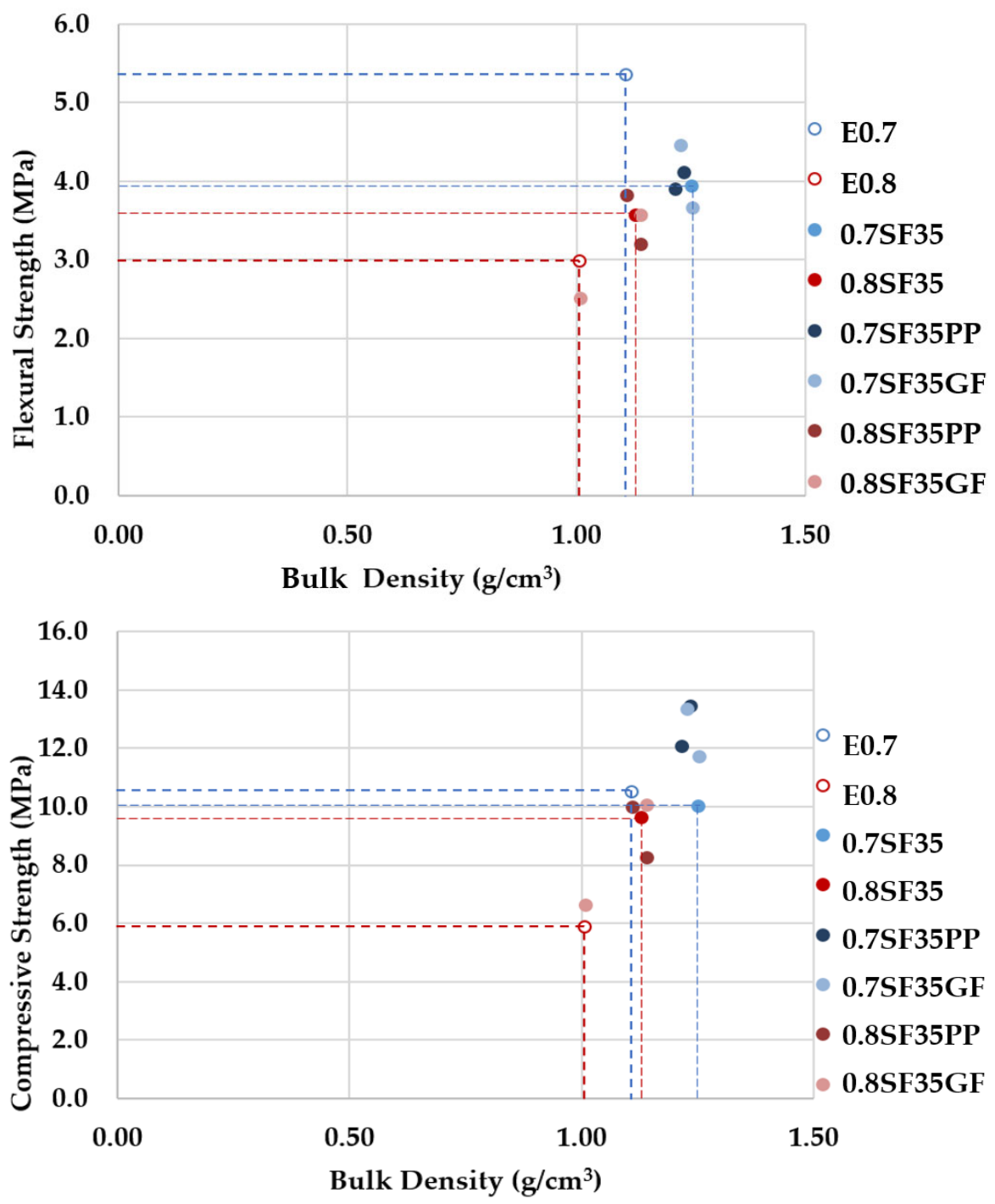
- Based on the results obtained during the first phase, the mixtures containing 35% silica fume were selected for fiber reinforcement. The incorporation of polypropylene and glass fibers further increased the density of the composites, producing values of up to 1.23 g/cm3.
- Fiber reinforcement improved the overall mechanical behaviour of the developed composites. Glass fibers showed the most favourable response under flexural loading, whereas polypropylene fibers contributed positively to compressive performance. The best-performing formulations achieved compressive strength increases of up to 27.14% compared with the corresponding silica-fume composites.
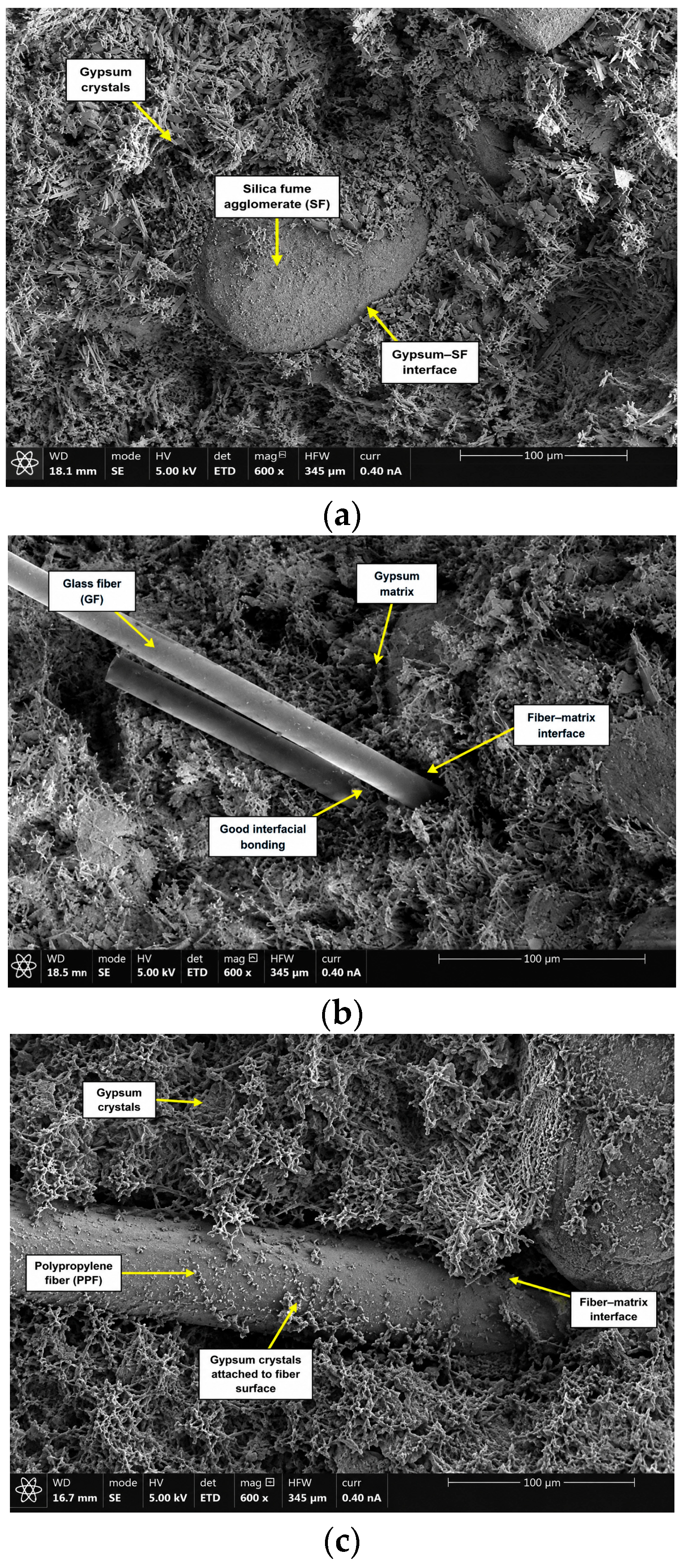
- SEM observations confirmed the densifying effect of silica fume and revealed satisfactory adhesion between the gypsum matrix and both types of fibers. These microstructural observations support the mechanical improvements recorded during the experimental campaign.
Author Contributions
Funding
Institutional Review Board Statement
Informed Consent Statement
Data Availability Statement
Conflicts of Interest
References
- European Commission. Level(s): Taking Action on the Total Impact of the Construction Sector; Publications Office of the European Union: Luxembourg, 2021. [Google Scholar]
- United Nations Environment Programme (UNEP). Global Status Report for Buildings and Construction 2023: Towards a Zero-Emission, Efficient and Resilient Buildings and Construction Sector; United Nations Environment Programme (UNEP) and Global Alliance for Buildings and Construction (GlobalABC): Nairobi, Kenya, 2023. [Google Scholar]
- European Union. The European Parliament and the Council of the European Union; State Agency Official Gazette: Madrid, Spain, 2008. [Google Scholar]
- EC. On Resource Efficiency Opportunities in the Building Sector 445 Final; Publications Office of the European Union: Luxembourg, 2014. [Google Scholar]
- Fundacion CONAMA (Ed.) Economía Circular en el Sector de la Construcción; Fundacion CONAMA: Madrid, Spain, 2018. [Google Scholar]
- Benachio, G.L.F.; Freitas, M.D.C.D.; Tavares, S.F. Circular economy in the construction industry: A systematic literature review. J. Clean. Prod. 2020, 260, 121046. [Google Scholar] [CrossRef]
- Del Rio-Merino, M.; Vidales-Barriguete, A.; Pina-Ramirez, C.; Vitiello, V.; Santa Cruz-Astorqui, J.; Castelluccio, R. A review of the research about gypsum mortars with waste aggregates. J. Build. Eng. 2022, 45, 103338. [Google Scholar] [CrossRef]
- Shen, L.Y.; Lu, W.S.; Yao, H.; Wu, D.H. A computer-based scoring method for measuring the environmental performance of construction activities. Autom. Constr. 2005, 14, 297–309. [Google Scholar] [CrossRef]
- Li, X.; Zhu, Y.; Zhang, Z. An LCA-based environmental impact assessment model for construction processes. Build. Environ. 2010, 45, 766–775. [Google Scholar] [CrossRef]
- Kaur, M.; Arora, S. Environment impact assessment and environment management studies for an upcoming multiplex—A Case Study. IOSR J. Mech. Civ. Eng. (IOSRJMCE) 2012, 1, 22–30. [Google Scholar] [CrossRef]
- Asif, M.; Muneer, T.; Kelley, R. Life cycle assessment: A case study of a dwelling home in Scotland. Build. Environ. 2007, 42, 1391–1394. [Google Scholar] [CrossRef]
- Tam, C.M.; Tam, V.W.Y.; Tsui, W.S. Green construction assessment for environmental management in the construction industry of Hong Kong. Int. J. Proj. Manag. 2004, 22, 563–571. [Google Scholar] [CrossRef]
- Rodríguez-Álvaro, R.; González-Fonteboa, B.; Seara-Paz, S.; Rey-Bouzón, E.J. Masonry mortars, precast concrete and masonry units using coal bottom ash as a partial replacement for conventional aggregates. Constr. Build. Mater. 2021, 283, 122737. [Google Scholar] [CrossRef]
- González Madariaga, F.J. Mezclas de residuos de poliestireno expandido (EPS) conglomerados con yeso o escayola para su uso en la construcción. Inf. Constr. 2008, 60, 35–43. [Google Scholar] [CrossRef]
- Sharma, N.; Sharma, P.; Parashas, A. Incorporation of Silica Fume and Corn Cob Ash Waste into Cement and Concrete. Mater. Proc. 2022, 62, 4151–4155. [Google Scholar] [CrossRef]
- CEDEX. Humo de Sílice; Centro de Estudios y Experimentación de Obras Públicas: Madrid, Spain, 2015. [Google Scholar]
- Al-Ridha, S.D.; Abbood, A.A.; Hussein, H.H. Improvement of gypsum properties using SF additive. Int. J. Sci. Res. 2015, 6, 504–509. [Google Scholar]
- Guerra-Cossío, M.A.; González-López, J.R.; Magallanes-Rivera, R.X.; Zaldívar-Cadena, A.A.; Figueroa-Torres, M.Z. Anhydrite, blast-furnace slag and silica fume composites: Properties and reaction products. Adv. Cem. Res. 2019, 31, 362–369. [Google Scholar] [CrossRef]
- Khalil, A.A.; Tawfik, A.; Hegazy, A.A.; El-Shahat, M.F. Effect of different forms of silica on the physical and mechanical properties of gypsum plaster composites. Mater. Constr. 2013, 63, 529–537. [Google Scholar] [CrossRef]
- López Zaldívar, O. Desarrollo de Conglomerados con la Incorporación de Cenizas Volantes Procedentes de la Incineración de Residuos Sólidos Urbanos. Ph.D. Thesis, Universidad Politécnica de Madrid, Madrid, Spain, 2015. [Google Scholar]
- Siddique, R. Performance characteristics of high-volume Class F fly ash concrete. Cem. Concr. Res. 2004, 34, 487–493. [Google Scholar] [CrossRef]
- Raja, M.A.; Judes Sujatha, S.; Yadav, A.; Sophia, M. Design of an eco-friendly composite gypsum binder using different mineral admixtures. Mater. Today Proc. 2022, 62, 5519–5525. [Google Scholar] [CrossRef]
- Henríquez, P.A.; Aponte, D.; Ibáñez-Insa, J.; Bizinotto, M.B. Ladle furnace slag as a partial replacement of Portland cement. Constr. Build. Mater. 2021, 289, 123106. [Google Scholar] [CrossRef]
- Srikanth, G.; Fernando, A.; Selvaranjan, K.; Gamage, J.C.P.H.; Ekanayake, L. Development of a plastering mortar using waste bagasse and rice husk ashes with sound mechanical and thermal properties. Case Stud. Constr. Mater. 2022, 16, e00956. [Google Scholar] [CrossRef]
- Pedreño-Rojas, M.A.; Porras-Amores, C.; Villoria-Sáez, P.; Morales-Conde, M.J.; Flores-Colen, I. Characterization and performance of building composites made from gypsum and woody-biomass ash waste: A product development and application study. Constr. Build. Mater. 2024, 419, 135435. [Google Scholar] [CrossRef]
- García Santos, A. Comportamiento Mecánico de Yesos Reforzados con Polímeros Sintéticos. Ph.D. Thesis, Universidad Politécnica de Madrid, Madrid, Spain, 1988. [Google Scholar]
- García-Santos, A. Lightened plaster reinforced with polypropylene fibres and expanded polystyrene beads. Mater. Constr. 2009, 59, 105–124. [Google Scholar]
- Gonçalves, R.M.; Martinho, A.; Oliveira, J.P. Evaluating the potential use of recycled glass fibers for the development of gypsum-based composites. Constr. Build. Mater. 2022, 321, 126320. [Google Scholar] [CrossRef]
- Lucolano, F.; Boccarusso, L.; Langella, A.; Caputo, D.; Caputo, F. Hemp as an eco-friendly substitute for glass fibres for plaster reinforcement. Compos. Part B Eng. 2019, 175, 107073. [Google Scholar] [CrossRef]
- Tasán, D. Incorporation of Polypropylene Fibers into Gypsum Compounds for Construction Applications. Ph.D. Thesis, Universidad Politécnica de Madrid, Madrid, Spain, 2023. [Google Scholar]
- UNE-EN 13279-2:2014; Building Plaster and Plaster-Based Construction Conglomerates—Part 2: Test Methods. AENOR: Madrid, Spain, 2014.
- UNE-EN 13279-1:2009; Building Plasters and Plaster-Based Conglomerates for Construction—Part 1: Definitions and Specifications. AENOR: Madrid, Spain, 2009.




| Author | Base Material | Fiber Type (%) | w/g | Key Findings |
|---|---|---|---|---|
| [26] | Gypsum | Polypropylene (2–5–10%) | 0.7 | - Increase in mechanical strength values under flexural stresses. |
| [27] | Gypsum | Polypropylene (2%) | 0.7 | - Allows reducing density compared to plain gypsum and laminated gypsum boards. |
| [28] | Gypsum | Glass fiber (6%) | 1.7 | - The addition of recycled fibers in the gypsum matrix modified material behavior, avoiding purely brittle failure and increasing flexural strength. |
| [29] | Gypsum | Glass fiber (1–2%) | 0.7 | - Gypsum samples reinforced with 1 and 2% glass fiber were successfully produced. |
| [30] | Gypsum | Polypropylene fibers | 0.7/0.8 | - Significant improvements in mechanical behavior and fracture energy were found with the addition of polypropylene fibers in gypsum composites. |
| Designation | Gypsum [g] | Silica Fume [g] | Water/Gypsum Ratio (w/g) | Water [g] |
|---|---|---|---|---|
| E0.7 | 1000 | - | 0.7 | 700 |
| 0.7SF10 | 1000 | 100 | 0.7 | 700 |
| 0.7SF15 | 1000 | 150 | 0.7 | 700 |
| 0.7SF20 | 1000 | 200 | 0.7 | 700 |
| 0.7SF25 | 1000 | 250 | 0.7 | 700 |
| 0.7SF30 | 1000 | 300 | 0.7 | 700 |
| 0.7SF35 | 1000 | 350 | 0.7 | 700 |
| E0.8 | 1000 | - | 0.8 | 800 |
| 0.8SF10 | 1000 | 100 | 0.8 | 800 |
| 0.8SF15 | 1000 | 150 | 0.8 | 800 |
| 0.8SF20 | 1000 | 200 | 0.8 | 800 |
| 0.8SF25 | 1000 | 250 | 0.8 | 800 |
| 0.8SF30 | 1000 | 300 | 0.8 | 800 |
| 0.8SF35 | 1000 | 350 | 0.8 | 800 |
| Designation | Gypsum [g] | Silica Fume [g] | Water/Gypsum Ratio (w/g) | Water [g] | Fibers [g] |
|---|---|---|---|---|---|
| 0.7SF35PP2 | 1000 | 350 | 0.7 | 700 | 20 |
| 0.7SF35PP4 | 1000 | 350 | 0.7 | 700 | 40 |
| 0.7SF35GF2 | 1000 | 350 | 0.7 | 700 | 20 |
| 0.7SF35GF4 | 1000 | 350 | 0.7 | 700 | 40 |
| 0.8SF35PP2 | 1000 | 350 | 0.8 | 800 | 20 |
| 0.8SF35PP4 | 1000 | 350 | 0.8 | 800 | 40 |
| 0.8SF35GF2 | 1000 | 350 | 0.8 | 800 | 20 |
| 0.8SF35GF4 | 1000 | 350 | 0.8 | 800 | 40 |
Disclaimer/Publisher’s Note: The statements, opinions and data contained in all publications are solely those of the individual author(s) and contributor(s) and not of MDPI and/or the editor(s). MDPI and/or the editor(s) disclaim responsibility for any injury to people or property resulting from any ideas, methods, instructions or products referred to in the content. |
© 2026 by the authors. Licensee MDPI, Basel, Switzerland. This article is an open access article distributed under the terms and conditions of the Creative Commons Attribution (CC BY) license.
Share and Cite
Chillán Simbaña, K.R.; Villoria-Sáez, P.; Pedreño-Rojas, M.A. Development of Sustainable Gypsum Composites Incorporating Silica Fume Waste and Fiber Reinforcement for Construction Applications. Sustainability 2026, 18, 7931. https://doi.org/10.3390/su18157931
Chillán Simbaña KR, Villoria-Sáez P, Pedreño-Rojas MA. Development of Sustainable Gypsum Composites Incorporating Silica Fume Waste and Fiber Reinforcement for Construction Applications. Sustainability. 2026; 18(15):7931. https://doi.org/10.3390/su18157931
Chicago/Turabian StyleChillán Simbaña, Kevin René, Paola Villoria-Sáez, and Manuel Alejandro Pedreño-Rojas. 2026. "Development of Sustainable Gypsum Composites Incorporating Silica Fume Waste and Fiber Reinforcement for Construction Applications" Sustainability 18, no. 15: 7931. https://doi.org/10.3390/su18157931
APA StyleChillán Simbaña, K. R., Villoria-Sáez, P., & Pedreño-Rojas, M. A. (2026). Development of Sustainable Gypsum Composites Incorporating Silica Fume Waste and Fiber Reinforcement for Construction Applications. Sustainability, 18(15), 7931. https://doi.org/10.3390/su18157931