Article

Quality Management as an Enabler of Enterprise AI Adoption: Boundary Conditions and Performance Implications

1
AVIC China Aero-Polytechnology Establishment, Key Laboratory of Quality Infrastructure Efficacy Research, State Administration for Market Regulation, Beijing 100028, China
2
School of Management, China University of Mining and Technology-Beijing, Beijing 100083, China
*
Author to whom correspondence should be addressed.
Sustainability 2026, 18(15), 7766; https://doi.org/10.3390/su18157766
Submission received: 21 April 2026 / Revised: 16 June 2026 / Accepted: 26 June 2026 / Published: 31 July 2026

Abstract

While enterprise artificial intelligence (AI) adoption is crucial for high-quality economic development, many companies have yet to adopt AI in practice. Enterprise quality management (QM), serving as an internalized foundation of standardized processes and data governance, may critically enable AI adoption, yet this relationship remains underexplored. Utilizing panel data from Chinese A-share listed companies (2007–2023), we employ a fixed-effects regression model, supplemented by a series of methods to address endogeneity, including the instrumental variables approach, difference-in-differences, and event studies. Results indicate that QM significantly promotes enterprise AI adoption, which further enhances enterprise performance. This positive effect of QM on AI adoption is amplified by high innovation sustainability and chief executive officers (CEOs) with IT backgrounds, and is particularly pronounced in large, non-state-owned firms within highly competitive industries and the eastern regions of China. Theoretically, this study extends the literature on the antecedents of AI adoption by identifying enterprise QM as a crucial, yet overlooked, internal driver. Practically, aligning AI integration with established quality frameworks, cultivating leadership with IT expertise, and fostering a supportive environment provide a viable pathway to overcome AI adoption barriers.

1. Introduction

Artificial intelligence (AI), as a transformative general-purpose technology, is fundamentally restructuring global economic systems and corporate operational paradigms. Beyond its initial role as a tool for efficiency gains, AI has evolved into a pivotal strategic resource for catalyzing innovation [1] and building competitive advantage [2]. Consequently, firms globally have increasingly prioritized AI adoption as a top-tier strategic imperative [3].
However, despite considerable potential and strong market enthusiasm for AI adoption, many firms have yet to achieve meaningful adoption in practice [4]. The key reason underlying this implementation gap may lie in the mismatch between enterprises’ existing internal management systems and the operational demands of AI adoption. Effective AI integration cannot be achieved through technological investment alone [5]. It fundamentally relies on a structurally cohesive and highly regularized operational environment. QM inherently embeds this systemic attribute into the organization. By institutionalizing standardized workflows and systemic governance [6], QM creates the highly structured and predictable environment that AI algorithms require to function reliably. Nevertheless, how QM influences AI adoption, and the specific conditions for this relationship, remain unclear. This knowledge gap leaves firms without clear guidance when pursuing AI strategies, making it difficult to effectively identify and address deficiencies in AI implementation. Therefore, how to overcome organizational barriers to AI adoption from a QM perspective warrants in-depth investigation.
Extant research has extensively examined the antecedents of AI adoption [7], most studies have focused on technological attributes (e.g., technological evolution [8] and AI-specific factors [9]), environmental factors (e.g., market conditions [10] and macroeconomic environment [11]), and internal factors (e.g., individual elements [12] and structure [13]). However, the role of QM, as an important internal factor, has received limited attention. This theoretical gap constrains our understanding of the organizational foundational conditions underlying AI adoption. Meanwhile, within the field of QM, existing studies have explored the effects of QM on efficiency [14,15], financial performance [16], and innovation [17], yet how QM specifically shapes AI adoption remains largely overlooked. AI adoption relies on procedural synchronization and informational consistency; however, organizational prerequisites are frequently overlooked by mainstream technology adoption models. QM emerges as the critical capability base that fulfills these underlying conditions. By grounding complex AI implementations in an institutionalized and stable operational framework, QM provides the structural foundation necessary for AI adoption. Consequently, a deep dive into the influence of QM on AI adoption holds significant theoretical value for unraveling how organizations effectively assimilate frontier technologies.
To address these research gaps, this study proposes research hypotheses concerning how QM influences enterprise AI adoption and, in turn, enterprise performance, as well as the contextual conditions under which this influence occurs. Using panel data from Chinese A-share listed companies from 2007 to 2023, we employ fixed-effects regression models to test the hypotheses and validate the findings with instrumental variables, difference-in-differences, event studies, and other robustness checks. This research aims to identify key QM factors that affect AI adoption, and to provide theoretical guidance for policymakers and managers implementing AI strategies to improve competitiveness.
The remainder of this study is structured as follows. Section 2 presents the theoretical background and hypotheses. Section 3 describes the materials and methodology. Section 4 reports the empirical results. Section 5 is the discussion.

2. Theoretical Background and Hypothesis Development

2.1. Enterprise Quality Management

Enterprise quality management (QM) is defined as an integrated system for maintaining and enhancing quality while reducing costs and improving operational efficiency [18]. As a dynamic strategic capability [19], QM is crucial to sustaining enterprise performance [20]. As early as the 1980s, William Edwards Deming emphasized that rigorous QM practices are essential for optimizing production processes and output quality [21]. ISO 9001 is one of the most widely adopted quality management system standards worldwide. At the institutional level, most countries treat ISO 9001 certification as a basic requirement for participation in government procurement, international bidding and supply chain partnerships.
Beyond serving as a high-level strategic capability, QM operates as a comprehensive organizational practice system that cultivates foundational capabilities essential for AI adoption. Specifically, QM establishes systematic data collection [22] and continuous monitoring routines, standardizes core business processes [23] to reduce operational variability, and fosters cross-functional coordination through structured problem-solving mechanisms. These organizational attributes align closely with the prerequisites for successful AI implementation, which rely on high-quality data inputs [24], stable process environments [6], and coordinated efforts across departments [25].
Representative studies on the impacts of enterprise QM are summarized in Table 1. Existing research primarily investigates its effects on operational outcomes, financial performance, and innovation. Regarding operational outcomes, studies generally indicate that enterprise QM enhances process efficiency [14] and total factor productivity [26]. In terms of financial performance, research suggests that enterprise QM positively impacts it [27]. Research further explores the relationship between QM and enterprise innovation. The majority of extant literature highlights the benefits of QM on both technological innovation [17] and non-technological innovation [28], while some scholars also note that QM may hinder green innovation [29].

2.2. Enterprise AI Adoption

AI adoption refers to the process through which enterprises integrate AI technology into their core business processes and decision-making frameworks, supported by continuous resource investment and structural adaptation [30]. In the contemporary economy, AI is becoming a primary driver of economic and social progress. By fostering data-driven business models, AI has become a cornerstone of enterprise value propositions and sustainable competitive advantage [31].
As summarized in Table 1, prior research has identified three primary categories of drivers for AI adoption: technological attributes, environmental factors, and internal organizational elements. Regarding technological factors, studies have largely focused on the evolution of computing and AI-specific attributes such as transparency, ethical concerns, and cost-effectiveness [32,33,34]. In terms of environmental factors, existing literature extensively explores market conditions like consumer trust and infrastructure readiness, alongside macroeconomic influences, including regulatory environments and cross-cultural differences [11,35,36,37]. Finally, concerning internal organizational elements, researchers primarily emphasize individual psychological states, management support, and organizational readiness [12,38,39,40,41].

2.3. Quality Management as an Underexplored Antecedent of AI Adoption

Although extant literature provides a solid foundation for understanding both the consequences of QM and the antecedents of AI adoption (as summarized in Table 1), a critical synthesis of these two research streams remains lacking in academia, i.e., the role of QM as a stable, institutionalized organizational management foundation for enterprise AI adoption has yet to be systematically explored.
Regarding the operational demands of enterprise AI adoption, implementing AI involves high training costs, black-box algorithms, and complex cross-departmental coordination [42,43]. It fundamentally necessitates a highly structured environment characterized by systematic data collection, continuous monitoring routines, and standardized core business processes [6,24]. Because QM inherently embeds these rigorous structural preconditions (such as the PDCA cycle for continuous model optimization) into an organization [44], it offers a unique, systemic lens for understanding the organizational prerequisites for successful AI adoption.
Table 1. Research on enterprise QM and AI adoption and the marginal contributions of this paper.
ThemeCategoriesKey FindingsMarginal Contributions
Consequence of QMOperational Outcomes•Enhances the operational efficiency in enterprises [14].
•Increases the efficiency of asset use [45,46].
•Contributes toward total factor productivity [26].
Extends QM consequences: Shifts the focus from conventional efficiency and routine innovation to revealing QM’s foundational role in enabling disruptive, data-intensive technology (AI) adoption.
Financial
Performance
•Brings benefits to businesses [47].
•Enhances export performance [27].
•Improves competitive advantage [20].
Innovation•Green Innovation: Hinders green innovation [48] and results in increasing bureaucracy [29].
•General innovation: technological [17] and non-technological innovation [28].
Antecedents of Enterprise AI AdoptionInternal
Factors
•Individual elements: the adoption of technology on the individual level [49], cognitive bias [50], and psychological factors including AI anxiety [12].
•Management or leadership support [38,39].
•Organizational structure [51]: business strategy [31], organizational competency, complexity and readiness [40,41].
Deepens internal antecedents: Identifies systemic QM as a crucial organizational prerequisite for AI adoption, moving beyond discrete structural, environmental, or technological determinants.
Environmental Factors•Market condition: consumer trust in AI [35,52], industrial factors [53], the level of market concentration [54] and AI infrastructure readiness and AI workforce readiness [10].
•Macroeconomic environment: government governance models, including the degree of corruption [36,37], AI regulatory environment readiness [55], and cross-cultural differences [11].
Technological Factors•Technological evolution: Rises from advances in computing, big data, and machine learning [56], technological innovation systems, including rapid technological development, synchronization of information systems, and industrialization [8].
•AI-specific factors: personification level [57], transparency, explainability, and clarity [32,33], growing concerns around ethical and sustainable practices related to AI [9] and cost effectiveness of AI implementation [34].
In terms of institutional and industrial contexts, there are increasing international standards and industry consensus on integrating QM and AI. ISO/IEC 42001:2023 and the U.S. National Institute of Standards and Technology (NIST) 2026 AI Risk Management Framework both indicate that a firm’s existing quality management system can provide an effective foundation for AI risk management [58,59]. Leading AI-adopting sectors including manufacturing, healthcare and finance have increasingly recognized QM’s enabling role in AI adoption and view QM elements as critical prerequisites for AI deployment [60,61].
Despite QM’s potential to provide an organizational management foundation for enterprise AI adoption and the industry demand to strengthen the link between QM and AI, the literature has not yet systematically examined this issue. On the one hand, existing QM research predominantly focuses on traditional industrial contexts (e.g., emphasizing operational efficiency and productivity [14,26]). Its contemporary value in facilitating data-intensive, disruptive technologies, such as AI adoption, remains underexplored. On the other hand, when examining internal organizational capabilities, research on the antecedents of enterprise AI adoption has primarily focused on constructs such as organizational readiness [40,41] and management support [38,39]. While these insights are significant, investigating QM can offer unique theoretical value for understanding the antecedents of AI adoption. Unlike stage-specific collective psychological states (such as change commitment in organizational readiness [62]) or specific leadership behaviors [63], QM belongs to the category of institutionalized organizational practices. It represents a cross-process operational architecture that encompasses all activities from input to output; it is a deeply embedded routine in everyday organizational operations, exhibiting continuity and relative stability [64,65]. Furthermore, unlike traditional organizational capabilities that often suffer from operational inconsistency and measurement ambiguity, QM practices can be objectively operationalized and measured via unified international standards such as ISO 9001. This provides clear guidance for enterprises on exactly what kind of management foundation to build to facilitate AI implementation. Therefore, there is an urgent need to examine how QM helps enterprises adapt to the new AI technological paradigm, filling the critical gap between established QM research and frontier AI transformation [66].

2.4. Theoretical Foundation and Research Hypotheses

2.4.1. Quality Management and AI Adoption

Drawing on the resource-based view (RBV), this study proposes that enterprise QM positively influences AI adoption by coordinating organizational processes and resource allocation. This view emphasizes that a firm’s unique and hard-to-imitate organizational resources are the source of its competitive advantage [67]. In the context of this study, enterprise QM represents a critical organizational resource internalized through long-term practice. It provides the necessary organizational foundation and resource base to navigate the complexities and risks inherent in AI adoption, thereby facilitating the integration of advanced technologies.
AI adoption is typically characterized by high capital intensity, significant uncertainty, and extended implementation cycles. A mature QM system enables enterprises to mitigate these challenges through standardized data assets, enhanced process transparency, and robust cross-functional collaboration.
First, QM provides the standardized data infrastructure essential for AI adoption. As AI is fundamentally data-driven, the established routines for data collection, monitoring, and rigorous analysis within a QM framework directly enhance a firm’s capacity to leverage high-quality data [68]. Second, QM increases process transparency, thereby offering a clearer pathway for AI implementation. Firms with mature QM systems possess a more precise understanding of their organizational processes and data foundations. This clarity effectively reduces managerial uncertainty regarding AI adoption initiatives [69]. Furthermore, QM fosters the cross-departmental collaboration required for successful AI adoption. The success of AI adoption depends on the deep integration of business and technological departments. The mature problem-solving practices established by enterprise QM construct communication and collaboration channels between departments [70]. This effectively alleviates common integration barriers during AI adoption. The aforementioned three attributes are not superficial management outcomes achievable via short-term firm adjustments, but institutionalized organizational practices gradually developed through long-term system construction, sustained resource investment and continuous operational iteration. They shape the core value of quality management together. This deeply embedded systematic capability in firm-level internal operations features a long development cycle with low replicability. It thereby acts as a unique and hard-to-imitate managerial resource that supports enterprise AI adoption.
Thus, we propose the following hypothesis:
H1. 
QM has a positive effect on enterprise AI adoption.

2.4.2. AI Adoption and Enterprise Performance

According to the RBV, a firm’s unique resources and capabilities are critical to achieving sustainable competitive advantage [71]. As a transformative technological resource, AI enables firms to navigate complex market environments by leveraging sophisticated data processing and algorithmic modeling [72]. This study proposes that AI adoption enhances enterprise performance.
First, at the internal operational level, AI adoption facilitates optimal resource allocation and dynamic coordination. By processing vast amounts of operational data in real time, AI systems can identify systemic inefficiencies and recalibrate critical functions, such as production schedules, inventory levels, and supply chain configurations [73]. This capacity for dynamic reconfiguration allows firms to mitigate operational waste, enhance efficiency, and ultimately boost enterprise performance by fostering institutionalized, data-driven decision-making [74].
Second, at the market-oriented level, AI adoption enhances enterprise performance by strengthening market responsiveness and competitive positioning. Through predictive analysis, AI allows enterprises to more accurately anticipate customer needs and personalize offerings in line with shifting market conditions [75]. This enhanced responsiveness can translate into tangible performance gains, such as cost reductions through precise demand forecasting and revenue growth through the capture of innovation opportunities [76]. Furthermore, while AI investments may increase costs in the short term, they serve as a strategic commitment that can enhance future competitive positioning [77]. Recent empirical evidence suggests that as AI adoption matures, its contribution to operational efficiency and profitability becomes increasingly pronounced over time [7]. Thus, we propose the following hypothesis:
H2. 
Enterprise AI adoption has a positive effect on enterprise performance.
Building on H1 and H2, we propose that AI adoption mediates the relationship between QM and enterprise performance. As a foundational resource, QM establishes synchronized operational routines and reliable information flows [69]. These conditions create an internal environment that facilitates AI adoption [25]. Subsequently, AI leverages data to optimize processes, improving operational efficiency and market responsiveness [7], ultimately enhancing enterprise performance. Accordingly, we propose the following hypothesis:
H3. 
AI adoption mediates the positive relationship between QM and enterprise performance.

2.4.3. The Moderating Role of Enterprise Innovation Sustainability and the CEO’s IT Background

While quality management provides the necessary resource foundation for AI adoption, the effective channeling of these foundational resources toward the exploration and application of AI is influenced by the organization’s strategic direction (willingness) and its accumulation of technical capabilities (ability). Building on these two perspectives, this study proposes that enterprise innovation sustainability and the CEO’s IT background moderate the relationship between QM and AI adoption.
Enterprise innovation sustainability enhances the influence of enterprise QM on AI adoption. Enterprise innovation sustainability refers to a firm’s long-term, stable tendency to institutionalize innovation as a core strategy [78]. Quality management systems have primary design objectives of incremental improvement, risk control, and operational stability. Without clear strategic guidance toward innovation, firms tend to use the standardized processes and data assets accumulated through QM primarily for traditional purposes such as quality control and efficiency gains. Innovation sustainability changes this default resource allocation pattern by fostering and sustaining an organizational climate that values exploration and tolerates risk. In such a climate, organizations at all levels are more likely to redirect the standardized capabilities and data resources built through QM from traditional quality control applications toward high-risk, high-reward areas such as AI that drive breakthrough innovation [38].
Furthermore, enterprise innovation sustainability provides indispensable institutional support [79], amplifying the positive impact of QM on AI adoption. When innovation is a sustained commitment, support for AI adoption becomes embedded within both the formal and informal systems of the organization [80]. For instance, it translates into long-term research and development (R&D) budget commitments, performance evaluation systems that encourage experimentation, explicit risk tolerance from top management for the risks associated with AI projects, and the legitimization of AI technology internally as a strategic innovation tool [81]. This deep institutional support is particularly critical for QM-enabled AI adoption, as it breaks down the process rigidity and risk aversion that often characterize quality-focused organizations. It can reduce the internal resistance and uncertainty inherent in AI adoption, thereby strengthening the pathway through which the foundational resources provided by QM are converted into actual AI adoption behaviors. Conversely, in the absence of innovation sustainability, the resource foundation established by QM may remain confined to supporting incremental improvements due to a lack of strategic direction and institutional guarantees, thus failing to effectively drive the substantive adoption of disruptive technologies like AI. Therefore, we propose the following hypothesis:
H4. 
Enterprise innovation sustainability positively moderates the effect of QM on enterprise AI adoption.
A CEO’s IT background positively moderates the effect of QM on enterprise AI adoption. As the central architect of corporate strategy, a CEO’s personal background profoundly shapes an organization’s technological direction. While any CEO may support digital transformation in general, CEOs with IT backgrounds possess unique cognitive frameworks that enable them to recognize the specific synergies between QM systems and AI implementation that non-technical CEOs often miss. These frameworks derive from technological expertise, problem-solving patterns, and social networks accumulated through education or professional experience [82]. Non-IT CEOs typically view QM systems solely as operational tools for ensuring product quality and process efficiency, failing to see their potential as a foundational platform for AI. In contrast, CEOs with technical expertise understand that the data discipline, process standardization, and cross-functional coordination embedded in QM systems are precisely the prerequisites for successful AI deployment. For instance, they understand the criticality of high-quality data for training machine learning models and see how process standardization provides a stable environment for AI system integration. This cognitive advantage enhances the role of QM in driving AI adoption.
Moreover, CEOs with IT backgrounds are more likely to view QM resources as strategic assets for digital transformation [83], thereby prioritizing resource allocation for AI [84]. During the advocacy phase, they can leverage their technological credibility and knowledge to articulate how the organization’s existing QM infrastructure can be utilized to reduce AI implementation risks and costs to the board and other executives [85]. Finally, in the execution phase, their background allows them to provide specific technological guidance and problem-solving support, helping teams navigate the challenges of converting QM resources into AI solutions. For instance, they offer insights into the integration of AI models with legacy systems and facilitate cross-departmental collaboration to overcome technological hurdles [74]. In summary, a CEO’s IT background ensures that QM resources are deployed more precisely and efficiently for AI adoption. Therefore, we propose:
H5. 
CEO’s IT background positively moderates the effect of QM on enterprise AI adoption.
In summary, Figure 1 illustrates the research model of this study.

3. Materials and Methods

3.1. Sample Description

This study uses panel data from Chinese A-share listed firms as the research sample, covering the period from 2007 to 2023. Two considerations underlie the sample period selection: the introduction of deep learning algorithms in 2006 marked the paradigm shift in AI capabilities, during which AI-related applications began to enter a developmental phase; and 2007 represents a critical juncture when Chinese accounting standards converged with international standards. The data are drawn from multiple institutional databases. First, AI adoption indicators are extracted from the textual information in the Management Discussion and Analysis (MD&A) sections of listed firms’ annual reports. Second, firm-level basic information and financial data are obtained from the China Stock Market and Accounting Research (CSMAR) databases, which provide datasets widely used in empirical research on Chinese listed firms [86].
To ensure sample representativeness and data quality, the following procedures are applied: (1) firms in the financial industry are excluded; (2) firms designated as ST or PT in a given year are excluded; (3) observations with missing values for key variables are removed; and (4) to mitigate the influence of extreme values, all continuous variables are winsorized at the 1 and 99% levels. The final sample consists of 29,506 observations.

3.2. Measurement

3.2.1. Dependent Variables

Enterprise AI adoption is measured using textual analysis of the MD&A section of annual reports, a widely recognized indicator of corporate strategic focus. Specifically, we take the natural logarithm of one plus the count of AI-related keywords appearing in the MD&A text (AI_mda). The keyword list (covering four dimensions: foundational technologies, application scenarios, R&D layout, and strategic planning), natural language processing (NLP) procedures, and measure validation tests are detailed in Appendix A.1, Appendix A.2 and Appendix A.3 in Appendix A.
Enterprise performance is measured by Tobin’s Q (TobinQ), defined as the ratio of the market value of equity plus the book value of liabilities to the book value of total assets. This ratio captures the market valuation of the firm relative to its asset base, reflecting investor expectations of future growth and profitability.

3.2.2. Independent Variable

Drawing on prior research [46,87], this study measures QM (ISO9001) based on whether a firm has obtained ISO 9001 certification (International Organization for Standardization 9001). This measurement approach is well established in the quality management literature as (i) it is a globally recognized and strictly audited QM standard, ensuring high validity and objectivity [88]; (ii) certification status is publicly available and reliably recorded; and (iii) it reflects the overall functioning of a firm’s QM system rather than isolated quality activities. The ISO 9001 standard is built on eight QM principles: customer focus, leadership, involvement of people, process approach, system approach to management, continual improvement, factual approach to decision making, and mutually beneficial supplier relationships [89]. These principles collectively cover key dimensions of QM, including process control, continuous improvement, and systematic management [90].
We use the CSMAR Environmental Research Database for listed companies to identify whether a firm was certified between 2007 and 2023. Certified firms are assigned a value of 1, and non-certified firms are assigned 0. In subsequent robustness analyses, we use ISO 14001 as an alternative proxy for QM to ensure the consistency of our findings.

3.2.3. Control Variables

Drawing on prior studies on the antecedents of enterprises’ innovation of digital and intelligent technologies [91], we include the following control variables: firm age (Age), measured as the natural logarithm of the number of years since establishment; firm size (Size), measured as the natural logarithm of total assets; leverage (Lev), measured as the ratio of total liabilities to total assets at year-end; growth (Growth), measured as the change in operating revenue at year-end relative to the previous year’s operating revenue; board size (Board), measured as the natural logarithm of one plus the number of board members; board independence (Indep), measured as the proportion of independent directors on the board; ownership concentration (Top1), measured as the shareholding ratio of the largest shareholder; controlling shareholders’ fund occupation (Occupy), measured as the ratio of net “other receivables” to total assets; cash flow ratio (Cashflow), measured as the ratio of net cash flow from operating activities to total assets; loss status (Loss), set to 1 if net profit is negative in the current year and 0 otherwise; management expense ratio (Mfee), calculated as the ratio of administrative expenses to operating revenue; inventory ratio (INV), measured as the ratio of net inventories to total assets; top management team pay (TMTPay), measured as the natural logarithm of the total compensation of the three highest-paid executives; and top management team size (TMTSize), measured as the natural logarithm of one plus the total number of executives employed at year-end.

3.3. Regression Model

To empirically estimate the influence of QM on AI adoption and the influence of AI adoption on enterprise performance (H1), we use the following model:
A I _ m d a i , t = α 0 + α 1 I S O 9001 i , t + α k ∑ C o n t r o l i , t + λ t + ν j + ε i , t
T o b i n Q i , t = β 0 + β 1 A I _ m d a i , t + β k ∑ C o n t r o l i , t + λ t + ν j + ε i , t
where subscripts i and t denote firm and year, respectively. AI_mda is the dependent variable, capturing the extent of a firm’s AI adoption. ISO9001 is the independent variable, measuring the degree of QM. Controls are a vector of control variables, λ t represents year fixed effects to control for macro-economic shocks, ν j represents industry fixed effects to account for time-invariant unobserved industry heterogeneity, such as technological characteristics and competitive structures, and ε is the error term. Firm fixed effects are omitted due to the minimal within-firm variation in ISO 9001 certification, which would render the key coefficient estimate unreliable. To address potential heteroskedasticity and serial correlation, we cluster standard errors at the firm level.

4. Results

4.1. Descriptive Statistics and Correlation Analysis

Descriptive statistics for the main variables are reported in Table 2. The mean value of AI adoption (AI_mda) is 0.802 with a standard deviation of 1.155, indicating substantial variation across firms in their AI adoption. The QM variable (ISO9001) has a mean of 0.333 and a standard deviation of 0.471, which is broadly consistent with prior research. Descriptive statistics for the other variables are also generally in line with existing studies.
Table 2 provides the results of Pearson’s correlation for the study variables. AI_mda levels and ISO9001 levels have a significant and positive correlation. Furthermore, the findings indicate that no explanatory variables exhibit correlation coefficients exceeding 0.50. The absence of multicollinearity among the explanatory variables is indicated by the fact that the highest variance inflation factor (VIF) value was 2.23, and the tolerance (1/VIF) value was 0.45, which indicates the absence of severe multicollinearity issues.

4.2. Main Effects

Table 3 presents the benchmark regression results on the effect of QM on enterprise AI adoption, as well as the effect of enterprise AI adoption on enterprise performance, testing Hypotheses H1 and H2. Column (1) reports the baseline results with control variables, while Column (2) further incorporates year and industry fixed effects.
After controlling for firm characteristics and fixed effects, the coefficient on ISO9001 in Column (2) is 0.050 (p < 0.05), indicating that ISO 9001-certified firms exhibit a 5.0% higher logged count of AI-related keywords (i.e., greater AI adoption intensity) relative to non-certified firms, supporting H1. Columns (3)–(4) test the effect of AI adoption on enterprise performance. The results in Column (4) show that the coefficient of AI adoption is 0.052 (p < 0.01), meaning that a one-unit increase in the logged AI-related keyword count is associated with an increase of 0.052 units in Tobin’s Q, supporting H2. To ensure robustness, we also adopt industry × year fixed effects and firm–year two-way clustering, and the results remain consistent.
We further conduct a formal bootstrap mediation analysis (5000 replications). The mediation effect of QM on enterprise performance via AI adoption is 0.003, with a 95% bootstrap confidence interval of [0.001, 0.004], excluding zero, indicating a significant indirect effect, supporting H3. These results indicate a potential transmission mechanism where QM facilitates AI adoption, which subsequently enhances enterprise performance. This aligns with theoretical expectations that QM creates favorable organizational conditions for AI adoption by establishing standardized processes and a data-driven decision-making framework. In turn, AI adoption enhances operational efficiency and innovation capabilities, which ultimately translates into improved market performance.

4.3. Endogeneity and Robustness Checks

To ensure robust causal identification and address potential endogeneity regarding the impact of quality management on AI adoption, we implement a comprehensive set of empirical strategies. We first apply propensity score matching (PSM) to mitigate potential sample selection bias and employ an instrumental variable (IV) approach to tackle unobserved confounding. Next, we verify the parallel trends assumption, establishing the essential prerequisite for our subsequent difference-in-differences (DID) and event study estimations. To rule out the influence of random shocks, we then conduct a placebo test. Finally, we validate the overall stability of our findings through additional robustness checks, including alternative variable specifications and lagged models.

4.3.1. Propensity Score Matching

To address potential self-selection bias, this study conducts propensity score matching (PSM). Based on whether a firm obtained ISO 9001 certification, the sample is divided into a treatment group and a control group. Using all control variables as matching covariates, we apply a 1:1 nearest-neighbor matching protocol. Post-matching diagnostics confirm that the standardized mean differences for all covariates are below the 5% threshold, with t-tests failing to reject the null hypothesis of balance. Regression results using the matched sample (Table 4, Column 1) remain consistent with the baseline, reinforcing the robustness of the positive influence of QM on AI adoption.

4.3.2. Instrumental Variables Approach

To further address potential endogeneity concerns, such as omitted variable bias or reverse causality, we employ a two-stage least squares (2SLS) estimation. We construct two instrumental variables based on a firm’s export activities. The first (IV1) is the natural logarithm of a firm’s annual export volume plus one. The second instrument (IV2) is the industry-adjusted export volume, calculated by subtracting the annual industry-average export volume from the firm’s raw export data. This adjustment mitigates potential estimation bias stemming from industry-specific export intensities, ensuring that the instrument captures firm-specific strategic responses to quality demands.
These instrumental variables capture the firm’s exposure to international market standards, which necessitate rigorous and consistent product quality. Such external pressure serves as an exogenous driver for adopting formal QM systems like ISO 9001 (relevance condition). For the exclusion restriction, export requirements primarily mandate operational standards and quality consistency. While international competition may create general efficiency and quality incentives, AI adoption is not a generic upgrade that can be implemented directly—it requires standardized processes and systematic data governance that ISO 9001 certification uniquely establishes. Thus, export activity affects AI adoption only through the quality management channel. Direct empirical tests show that neither instrument has a statistically significant direct effect on AI adoption after controlling for ISO9001 certification.
Columns (2)–(5) of Table 4 report the 2SLS regression results. The first-stage regression shows that both IV1 and IV2 are significantly correlated with the endogenous variable (ISO9001). In addition, the Kleibergen-Paap RK LM test rejects the null hypothesis of under-identification, and the Cragg-Donald Wald F-statistic exceeds 10, alleviating weak instrument concerns. The second-stage results indicate that the coefficient of ISO9001 on AI_mda remains significantly positive, confirming that our baseline findings are robust after accounting for endogeneity.

4.3.3. Parallel Trends Test

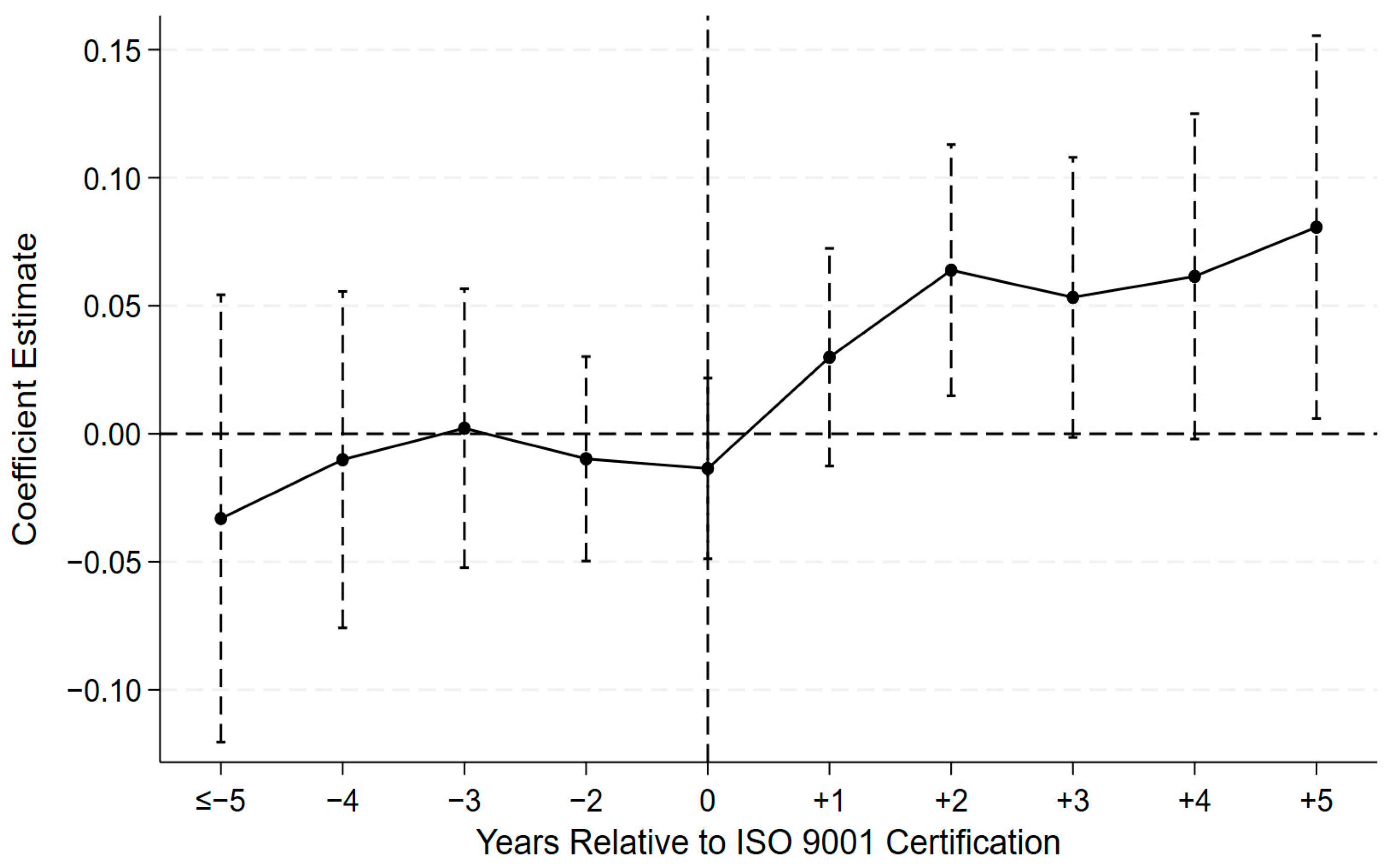
Before estimating the difference-in-differences (DID) model, we first verify the parallel trends assumption. This requires the treatment and control groups to exhibit similar trends in AI adoption prior to ISO 9001 certification. Given the staggered certification timing during the 2007–2023 sample period, we plot the treatment periods using the approach developed by Sun and Abraham [92] specifically to test this pre-trend assumption.
We define the initial certification year as the event year (period 0). The observation window spans five periods before and five periods after certification to visualize the pre-treatment trajectory and the subsequent shift.
Figure 2 presents the parallel trends test results. Prior to the certification shock, the estimated coefficients are statistically indistinguishable from zero. This confirms the absence of significant pre-existing differences in AI adoption (AI_mda) trends between the two groups, firmly satisfying the assumption. Following certification (from period 0 onwards), the coefficients turn significantly positive, visually corroborating the expected treatment effect before formal estimations.

4.3.4. Difference-in-Differences (DID) and Event Study

We employ a staggered multi-period DID model, treating ISO 9001 certification as a quasi-natural experiment. The treatment dummy equals 1 from the year a firm obtains certification, and 0 otherwise. Table 5 reports the baseline results. The contemporaneous average treatment effect is positive but statistically insignificant, likely because time heterogeneity masks the overall average effect. However, the one-year lagged specification yields a significantly positive effect, providing overall support for our hypothesis.
To unpack this time heterogeneity, we estimate an event study model. As shown in Table 6, from the second post-certification year onwards, the coefficient turns significantly positive and persists. These dynamics confirm that quality management systems facilitate AI adoption, albeit with a time lag.

4.3.5. Placebo Test

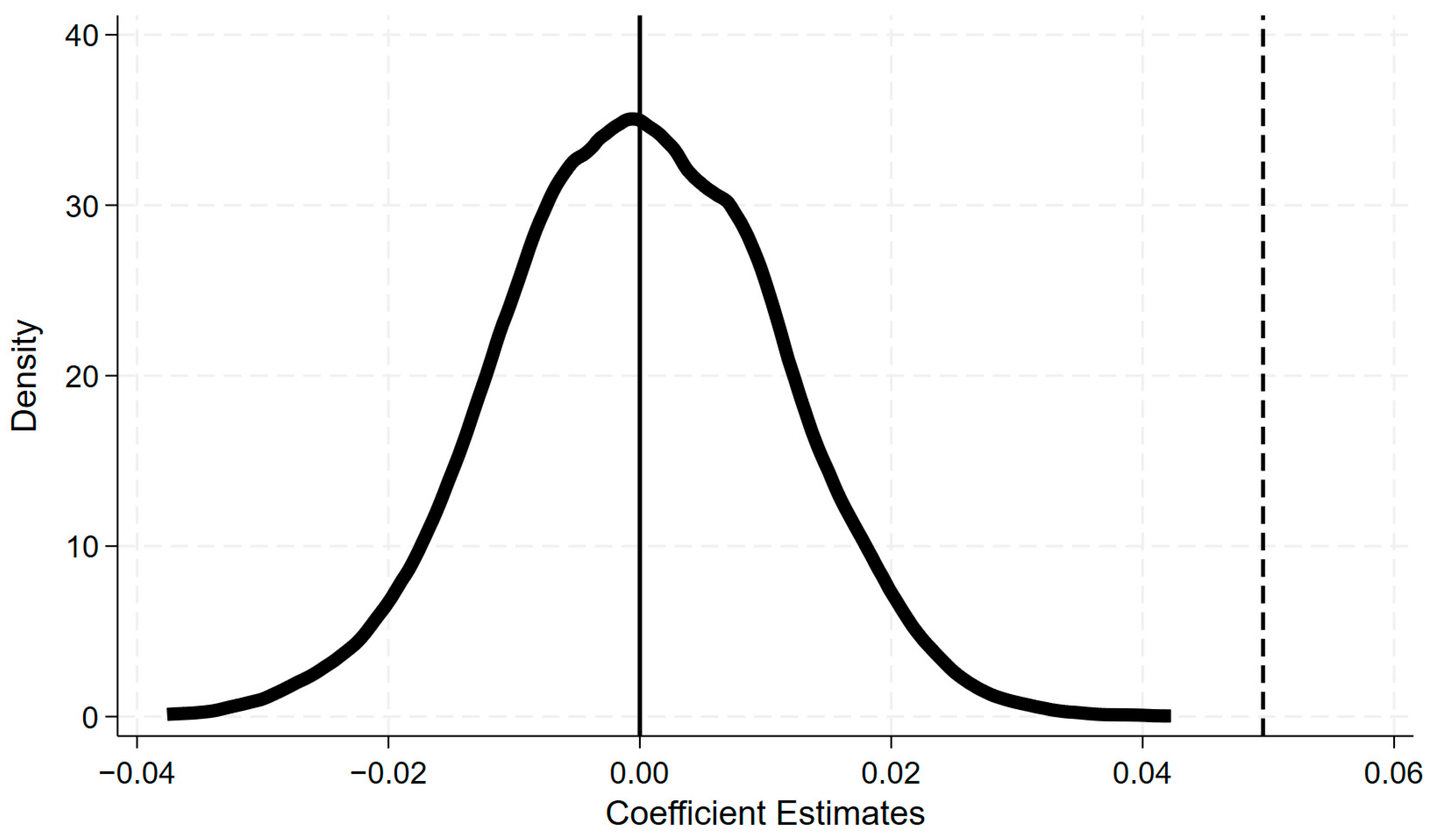
To rule out the influence of unobservable confounding factors and random shocks on our findings, we conduct a placebo test. We randomly assign both the ISO 9001 certification status and its timing across firms to disrupt the actual treatment assignments. We repeat this permutation 5000 times, re-estimate the model, and plot the kernel density of the placebo coefficients.
As Figure 3 illustrates, the distribution of the placebo coefficients is approximately normal and tightly centered at zero. This confirms that the randomly generated treatments yield no systematic effects. In sharp contrast, our actual estimated coefficient lies far above the maximum placebo estimate. The permutation test yields a p-value of less than 0.001. These results robustly demonstrate that our main findings are not driven by omitted variables, unobserved managerial traits, or random market fluctuations.
Furthermore, an additional permutation test on our instrumental variables (IV) confirms their exogeneity. By randomizing the instruments 5000 times in a reduced-form framework, the simulated coefficients strictly center at zero, while our actual estimates fall in the extreme right tail (p < 0.01). This firmly reinforces the validity of our IV design.

4.3.6. Other Robustness Checks

To further validate the reliability of our baseline findings, we conducted a series of sensitivity analyses using alternative variable specifications and lagged models.
First, we employed alternative proxies for our core constructs. We substituted ISO 9001 with ISO 14001 certification (ISO14001) to examine whether the broader systematic management capabilities of a firm, beyond strictly quality management, exert a similar facilitating effect on AI adoption. As shown in Column (1) of Table 7, the coefficient remains significantly positive. Additionally, we replaced the MD&A-based AI measure with a broader proxy, AI_report, constructed from the keyword frequency within the entire annual report rather than just the MD&A section. The results in Column (3) confirm that the positive association is not sensitive to the specific textual source used for measurement.
Second, we addressed potential endogeneity and temporal persistence. We re-estimated the models using one-period lagged dependent variables (AI_mda_lag1 and AI_report_lag1) to mitigate concerns regarding contemporaneous reverse causality. The results, reported in Columns (2) and (4), demonstrate that current QM practices continue to significantly predict future AI adoption behaviors.
Finally, we performed joint substitution tests by simultaneously replacing both the independent and dependent variables. As presented in Columns (5) and (6), the core conclusions remain consistent across these diverse specifications, reinforcing the robustness of our empirical findings.

4.4. Moderating Effects

This study further examines the boundary conditions under which QM influences AI adoption, focusing on two dimensions: strategic orientation (innovation sustainability) and managerial cognitive capacity (CEO’s IT background).
First, following prior research [93], we conceptualize enterprise innovation sustainability as the firm’s enduring commitment to technological exploration. We operationalize this construct using the log-transformed annual frequency of digital-innovation-related keywords within the MD&A section. A higher and more consistent keyword frequency signals a forward-looking strategic posture, which fosters an organizational climate conducive to repurposing QM-based standardized assets for disruptive AI applications.
Second, following Zhang, Chen, and Xu [84], we operationalize the CEO’s IT background as a binary variable assigned a value of 1 if the CEO has prior professional experience or a formal degree in IT-related fields, and 0 otherwise. A CEO with an IT background is better positioned to recognize the value of quality management for AI adoption.
Table 8 reports the regression results for the moderating effects. In Column (1), the coefficient for the interaction term between innovation sustainability and QM (ISO9001 × Sustainability) is significantly positive (β = 0.075, p < 0.01). This indicates that a sustained innovation orientation amplifies the positive impact of QM on AI adoption, supporting H4. Similarly, in Column (2), the interaction between the CEO’s IT background and QM (ISO9001 × CeoIT) is also significantly positive (β = 0.236, p < 0.01), suggesting that technical expertise at the leadership level enhances the firm’s capacity to leverage QM systems for technological upgrading, supporting H5.

4.5. Heterogeneity Analysis

To further explore the contextual conditions under which QM exerts its influence, we examine the heterogeneity of this effect across firm-level, industry-level, and region-level contexts.

4.5.1. Firm-Level Heterogeneity Analysis

We investigate whether the impact of QM on AI adoption varies according to firm characteristics, specifically firm size and ownership type.
First, drawing on RBV, resource value realization depends on complementary resources [94]. Translating QM into AI adoption requires substantial financial, technical, and coordination support. Large firms, possessing richer endowments and absorptive capacity [27,28,29,95], can better leverage QM’s standardized foundations for high-risk AI investments. Conversely, small firms’ resource constraints hinder this transition. Therefore, QM’s positive effect on AI adoption is likely more pronounced in large firms.
We categorize firms into “Large” and “Small” groups based on the industry median of total assets. The regression results in Columns (1) and (2) of Table 9 show that the significant positive effect of QM on AI adoption is primarily observed among large firms. A plausible explanation is that large firms typically possess more complex operational structures and greater resource endowments. Implementing AI often requires cross-departmental coordination, long-term capital investment, and specialized talent—resources that large firms can systematically provide and allocate through their established QM systems. Consequently, the enhanced process standardization and resource integration fostered by QM can be more effectively translated into an organizational advantage for promoting AI adoption in large firms.
Second, integrating RBV and institutional theory [96], ownership types dictate distinct resource allocation logics [30,96,97,98]. Non-state-owned enterprises (non-SOEs), driven by profit and market competition [32,99], have stronger incentives to convert QM efficiency into AI capabilities, using QM’s foundations to mitigate adoption risks. Conversely, state-owned enterprises (SOEs) face multiple social objectives and decision rigidity [99], weakening their efficiency in transforming QM resources into AI innovation. Hence, QM’s positive effect is likely more salient in non-SOEs.
We divide the sample into SOEs and non-SOEs based on ownership type. The results in Columns (3) and (4) of Table 9 indicate that the promoting effect of QM is more pronounced in non-SOEs and statistically insignificant in SOEs. This difference can be attributed to the fact that non-SOEs usually face more intense market competition, which reinforces their market orientation and operational flexibility. In such contexts, the improved operational discipline and efficiency awareness resulting from QM systems can align more directly and rapidly with the firms’ market-driven pursuit of innovation and competitive advantage, thereby more effectively driving the adoption of new technologies such as AI. In contrast, SOEs may be influenced by multiple objectives (e.g., social goals), relatively rigid decision-making processes, or weaker profit incentives, which could weaken the mechanism through which the outcomes of QM are transformed into motivation and efficiency for investing in frontier technologies.

4.5.2. Industry-Level Heterogeneity Analysis

Based on the RBV and the competitive pressure theory [100], competition intensity shapes resource allocation and innovation motivation [101]. In highly competitive industries, survival pressures compel firms to leverage QM’s standardized foundations to rapidly implement AI to gain first-mover advantages [100]. In low-competition or regulated sectors, QM is primarily used for compliance, leaving its technological innovation potential largely untapped. Thus, QM’s effect on AI adoption is likely stronger in highly competitive industries.
We conduct a heterogeneity analysis based on industry competitive conditions. First, industries are classified as regulated or competitive according to their industry codes. As reported in Columns (1) and (2) of Table 10, the promoting effect of QM on AI adoption is stronger in competitive industries. Furthermore, we employ the Herfindahl–Hirschman Index (HHI) to measure industry concentration [102]. Industries are split into high- and low-competition groups based on the median HHI. The regression results in Columns (3) and (4) of Table 10 similarly indicate that the positive relationship is more pronounced in highly competitive industries.
These findings can be interpreted through the lens of competitive pressure. In more competitive environments, firms face stronger incentives to enhance efficiency and seek innovative advantages. QM systems provide a structured foundation for process improvement and data-driven decision-making, which in turn enables firms to identify and implement AI solutions more effectively when under competitive pressure. By contrast, in regulated or less competitive industries, the urgency to transform operational discipline into technological adoption may be weaker, thereby attenuating the link between QM and AI adoption.

4.5.3. Region-Level Heterogeneity Analysis

Finally, combining RBV and institutional theory [103], resource value realization depends heavily on external endowments. The eastern, central, and western regions of China exhibit significant differences in digital infrastructure, AI talent, and capital markets [104]. Because translating QM systems into AI capabilities requires robust external support, varying degrees of regional resource constraints [105] can fundamentally alter how effectively firms utilize QM foundations for high-risk AI investments. Therefore, the effect of QM on AI adoption is likely to vary significantly across the eastern, central, and western regions.
We examine potential regional variations by classifying the sample into eastern, central, and western regions based on firm registration. The results in Table 11 show a positive and significant effect of QM in the eastern region (Column 1). In contrast, the coefficient in the central region (Column 2) is positive but statistically insignificant, while the effect in the western region (Column 3) is significantly negative.
This divergence can be attributed to regional disparities in resource allocation capabilities. In resource-constrained western regions, the rigid compliance costs of maintaining QM systems may force firms into sub-optimal capital allocation, potentially crowding out high-risk AI investments. To verify this potential crowding-out mechanism, we evaluate resource allocation efficiency (Resource_efficiency) using the absolute investment deviation [106]. Table 12 shows that the interaction between ISO 9001 and investment deviation is significantly negative (p < 0.01), indicating that lower allocation efficiency directly attenuates the positive impact of QM. Furthermore, Levene’s test (W0 = 20.93, p < 0.001) and Bonferroni test confirm that Western firms exhibit systematically lower allocation efficiency (as shown in Table 13). Together, these results empirically support our speculation that QM compliance costs crowd out AI adoption in less efficient, resource-constrained regions.

5. Discussion

5.1. Findings

Utilizing a fixed-effects panel regression analysis of Chinese A-share listed firms from 2007 to 2023, this study systematically investigates the impact of QM on enterprise AI adoption and its subsequent performance implications. The main findings are summarized as follows.
First, QM has a significant positive effect on AI adoption. Our baseline results demonstrate that firms with mature QM systems are significantly more likely to adopt AI into their core operations. By employing IV analysis, parallel trends test, DID, event study, placebo test, PSM, and other robustness checks, we confirm that this relationship is causally robust. This finding underscores that the standardized processes and data-governance routines inherent in QM are not merely operational tools but strategic assets that lower the organizational barriers to adopting disruptive technologies.
Second, this study identifies a clear pathway from QM to enterprise performance through the mediating mechanism of AI adoption. While prior literature has predominantly linked QM to incremental operational efficiency [107], our findings extend this scope by revealing that QM’s contemporary value lies in its ability to facilitate intelligent transformation. Specifically, AI adoption acts as a critical bridge that converts the latent organizational discipline of QM into active competitive advantages, such as enhanced market responsiveness and superior financial performance (Tobin’s Q).
Third, the effectiveness of QM in driving AI adoption is contingent upon strategic intent and managerial capacity. Our moderation analysis reveals that the QM-AI relationship is not uniform across all organizations but is significantly amplified by innovation sustainability and the CEO’s IT background. Firms with a persistent innovation orientation are better equipped to repurpose QM-based resources for exploratory AI projects. Similarly, CEOs with technical expertise possess the requisite capacity to identify the strategic value of QM systems, and thus possess the confidence and motivation to drive AI adoption by leveraging the firm’s QM infrastructure.
Finally, our heterogeneity analysis delineates the contextual boundaries of these effects. The role of QM in promoting AI adoption is more pronounced in large-scale enterprises and non-state-owned enterprises (non-SOEs), reflecting the advantages of resource endowment and market-driven incentive mechanisms, respectively. Furthermore, the positive impact of QM is significantly stronger in competitive industries compared to regulated sectors. This suggests that heightened market pressure compels firms to fully exploit their QM foundations as a strategic response to competitive duress, reinforcing the role of the external environment in stimulating organizational innovation. Regarding the regional dimension, the impact of QM on AI adoption is particularly positive and significant in the eastern region, indicating that superior infrastructure, robust talent pools, and mature market institutions enable firms to leverage QM-based standardization for AI adoption.

5.2. Theoretical Implications

This study offers several theoretical contributions to the literature on AI adoption and QM. First, we extend the research on the antecedents of AI adoption by introducing a crucial but overlooked internal driver—enterprise QM. While extant literature has identified various technological and environmental determinants [8,31], the exploration of internal organizational capabilities has primarily centered on transient psychological states (e.g., organizational readiness [40,108]), specific leadership behaviors (e.g., management support [109]), and organizational structure [51]. Compared to these established constructs [110], which are often susceptible to situational dependence and managerial preferences, QM has constructed a unique foundation for AI adoption with stability, systematicity, and sustainability. [64,104] through protracted system development, continuous improvement of processes [111] and operational architecture [58,112]. By conceptualizing this enduring capability as a critical antecedent, our study addresses the research gaps identified by Dwivedi [113] and Khanfar et al. [114], who highlighted that AI adoption discourse is often preoccupied with technological and contextual determinants at the expense of internal management capabilities. Furthermore, by grounding this capability in objectively measurable international standards (such as ISO 9001), our approach thus overcomes the operational inconsistencies typically associated with measuring psychological or behavioral constructs. Aligning with the view of Weber et al. [115], this work reveals that heterogeneity in AI adoption stems from ingrained organizational processes for data handling, workflow transparency, and cross-functional coordination. Consequently, this paper moves beyond external determinants to explain how internal resource configurations systematically enable or constrain strategic actions, thereby enhancing the explanatory depth and practical relevance of existing AI adoption theories.
Second, this study extends the resource-based view (RBV) by identifying enterprise QM as a valuable, organization-specific strategic resource that enables AI adoption. Prior RBV research on technology adoption has focused primarily on resources, such as technological assets, intellectual property, and brand equity [116], while paying insufficient attention to foundational management capabilities. This study contributes to RBV in three aspects. Primarily, it expands the conceptualization of strategic resources. This study defines and verifies QM as a core strategic organizational resource that provides foundational support for the adoption of frontier AI technologies. Additionally, it broadens the application context of RBV from operational and financial performance [117] to quality management and AI adoption, revealing the value of foundational management resources in disruptive technological transformation. Lastly, it enriches research on the boundary conditions of resource value realization by showing that a firm’s innovation climate and managerial characteristics influence whether the firm can translate the resource advantages of QM into the adoption of frontier technologies, thereby deepening our understanding of the conditions under which resource value is realized.
Third, the study meaningfully broadens the scope of consequences associated with QM. While prior research has extensively documented its impact on operational outcomes [14], financial performance [27], and innovation [17,28], its role in facilitating the adoption of disruptive, data-intensive technologies like AI has been overlooked. Recent research on Quality 4.0 has largely focused on how Industry 4.0 technologies enhance TQM by improving operational efficiency and product quality. However, the reverse relationship, how QM enables digital technology adoption, remains underexplored. Our work fills this void by establishing QM as an antecedent to disruptive, data-intensive AI adoption. By doing so, this work connects the literature on operational excellence with that on digital transformation and strategic renewal [118]. We theorize that QM is not merely a tool for control and efficiency but a dynamic capability [119] that prepares the organizational ground for embracing next-generation technologies. This expands the boundary of QM theory from narrow operational performance to the broader realm of digital transformation outcomes.
Fourth, by identifying and testing the moderating roles of organizational willingness (enterprise innovation sustainability) and ability (CEO IT background), this research provides a nuanced, contingent understanding of when and for which types of firms QM can translate into AI adoption, thereby contributing to upper echelons theory. Our findings reveal that the mobilization of QM-based resources depends on top management dispositions, including a strategic context that legitimizes exploration and managerial cognitive frames that recognize technological value. Specifically, this study finds that CEOs with IT backgrounds strengthen the positive relationship between QM and AI adoption by more effectively recognizing and leveraging the foundational conditions provided by QM systems. This finding indicates that the important role of top managers lies not only in formulating strategies and allocating resources but also in activating the value of a firm’s existing foundational resources, thereby extending the mechanism of top management influence. Meanwhile, the positive moderation of the CEO’s IT background aligns with the argument that leader-specific competencies shape strategic focus and innovation outcomes [120,121]. This corroborates the view that top management beliefs are critical in moderating the transition from resources to digital initiatives [122], thereby broadening upper echelons theory from general digital innovation to the specific context of QM-enabled AI adoption. In summary, this integration of the resource-based view with perspectives on strategic orientation and upper echelons theory offers a more complete framework for understanding the complex interplay between stable organizational systems, strategic intent, and leadership in the face of technological disruption.

5.3. Practical Implications

In the context of ongoing technological transformation, fully leveraging the organizational advantages of QM to promote AI adoption is imperative for sustainable enterprise development. The empirical evidence from this study provides actionable strategic insights for both policymakers and corporate practitioners navigating the AI-driven industrial transformation.

5.3.1. Institutional Support and Policy Design

Our results demonstrate that AI adoption is not solely a process of technological procurement but rather a strategic initiative deeply embedded in a firm’s organizational and managerial infrastructure. Accordingly, policy interventions should extend beyond traditional technology subsidies to prioritize the development of firms’ managerial and organizational capabilities.
Policymakers can establish an integrated policy framework that links incentives for quality management certification with grants for AI adoption. Specifically, AI implementation subsidies should be prioritized for firms with proven standardized data governance capacity (e.g., via formal quality management system certification). This targeted allocation mechanism ensures that public resources are directed to firms with sufficient organizational readiness to convert technological inputs into sustained productivity gains.
Furthermore, consistent with our finding of an attenuated association between QM and AI adoption among small and medium-sized enterprises (SMEs), targeted institutional support is required to mitigate the technical and financial barriers faced by resource-constrained SMEs. For example, policymakers can promote the adoption of mainstream enterprise resource planning systems with embedded AI modules [123], which reduces the upfront costs and technical thresholds of AI deployment for smaller firms [45,124].
In addition, policymakers can develop national standards and guidelines that organically integrate QM and AI. For example, the upcoming 2026 ISO 9001 revision incorporates digital and AI tools, and the European Union Regulation 2024/1689 Article 17 requires a lifecycle QM system for high-risk AI with SME flexibility [125]. Such international experiences provide actionable references.

5.3.2. Strategic Orchestration of Quality and AI Resources

For firm executives, a core implication is that QM provides a critical strategic foundation for effective AI adoption, and that formal QM systems function as a robust, standardized data governance platform. For example, the Siemens Electronics Manufacturing Plant exemplifies how the deep integration of AI within lean QM systems, paired with the use of historical quality data to train AI models, allows firms to systematically convert QM-derived resources into competitive advantages via enhanced AI adoption [126].
By adopting this quality-centric AI deployment model, firms can systematically leverage historical quality management records to train predictive algorithms and defect-detection models, thereby converting underutilized operational data into strategic assets. Given our finding that AI adoption mediates the positive relationship between QM and enterprise performance, firm managers should align AI investments with established QM capabilities. Specifically, this requires ensuring that high-quality data resources accumulated through formal QM systems provide the high-fidelity data inputs needed to support generative AI deployment and foster sustained innovation [127]. In terms of process, firms can use the PDCA cycle of ISO 9001 to drive continuous optimization of AI models. For example, Leberruyer et al. developed an AI-driven zero-defect manufacturing framework for the Swedish vehicle industry based on the ISO 9001 PDCA cycle, verifying the supporting role of QM systems in continuous AI optimization [61]. To achieve practical implementation, enterprises can incorporate the effectiveness of AI adoption into quality management performance evaluation.

5.3.3. Governance Structures and Managerial Cognition

Our finding that sustained innovation orientation and the CEO’s IT background exert significant positive moderating effects on the QM-AI adoption relationship highlights the critical need to align senior managerial cognition with the technological requirements of effective AI deployment.
Building on our finding that QM facilitates AI adoption most strongly in firms with a persistent innovation orientation, corporate boards should institutionalize digital transformation priorities via sustained, long-term R&D budgeting, as opposed to ad hoc, short-term investment [128]. This approach ensures that resources accumulated through QM systems are systematically allocated to exploratory AI applications.
Furthermore, to strengthen the absorptive capacity of top management teams, boards of firms whose TMT lacks substantial technical or IT-related expertise should implement targeted structural adjustments. These include appointing a dedicated Chief Technology Advisor or mandating digital literacy training for senior executives [84]. Moreover, firms can establish AI governance committees composed of quality heads, business executives, and technical experts, and develop AI performance indicators aligned with quality objectives [129]. These governance mechanisms can mitigate cognitive limitations at the senior leadership level, ensuring that strategic decision-making fully accounts for the synergies between quality management standardization and AI-enabled intelligent automation.

5.4. Limitations and Future Studies

This study has several limitations that point to directions for future research. First, although textual analysis of annual report MD&A sections is a widely adopted and replicable approach to measure AI adoption, and we have validated it with alternative proxies in robustness checks, this measure primarily captures strategic disclosure rather than the full intensity and actual implementation depth of AI investment. Future research could develop more comprehensive measurements by combining textual analysis with patent data, R&D expenditures, or publicly disclosed AI project information.
Second, our sample is limited to Chinese listed firms, which provides a focused institutional context but restricts cross-country generalizability. Although the findings are robust within this setting, future work could conduct cross-national comparisons to examine whether the QM–AI relationship holds across different institutional and industrial environments.
Third, we rely on archival ISO 9001 certification data, which offer objective and consistent measurement, but capture only formal certification status rather than the substantive depth and operational rigor of quality management practices. Future studies could incorporate more granular indicators, such as certification duration or internal quality performance metrics, to better capture QM heterogeneity.
Finally, although we have established the causal relationship between QM and AI adoption through endogeneity analysis and robustness tests, future studies could further strengthen the analysis of mechanisms or incorporate case studies to clarify the specific processes through which QM supports AI adoption. This research mainly focuses on internal organizational moderating factors; future investigations could examine the moderating roles of macro-level institutional factors (such as data security regulations) or industry-specific environments (such as industrial policies).

Author Contributions

Conceptualization, C.N. and L.C.; methodology, C.N. and L.C.; software, X.W.; validation, X.W. and Y.Y.; formal analysis, X.W.; investigation, X.W. and Y.Y.; resources, L.C. and Z.Z.; data curation, X.W.; writing—original draft preparation, X.W.; writing—review and editing, L.C.; visualization, X.W.; supervision, L.C.; project administration, C.N.; funding acquisition, C.N. and Z.Z. All authors have read and agreed to the published version of the manuscript.

Funding

This research was funded by the Research Project of Key Laboratory of Quality Infrastructure Efficacy Research, State Administration for Market Regulation (grant number 2025KTR0001YSS), Beijing Municipal Social Science Foundation (grant number 25BJ03193), the China Postdoctoral Science Foundation (grant number 2025M780674), the Fundamental Research Funds for the Central Universities (grant number 202505011), and the Innovation Training Program for College Students of China University of Mining and Technology (Beijing) (grant number 202505011).

Institutional Review Board Statement

Not applicable.

Informed Consent Statement

Not applicable.

Data Availability Statement

The dataset is available upon request from the authors.

Acknowledgments

The authors would like to thank all of those who supported us in this work.

Conflicts of Interest

Author Chao Ni was employed by the company AVIC China Aero-Polytechnology Establishment, Beijing, China. The remaining authors declare that the research was conducted in the absence of any commercial or financial relationships that could be construed as a potential conflict of interest.

Abbreviations

The following abbreviations are used in this manuscript:
AIArtificial Intelligence
QMQuality Management
ISO9001International Organization for Standardization 9001
SOEsState-owned Enterprises
non-SOEsnon-State-owned Enterprises
CTAChief Technology Advisor
DIDDifference-in-Differences
NLPNatural Language Processing
2SLSTwo-Stage Least Squares
CSMARChina Stock Market and Accounting Research Database
CNRDSChina Research Data Service Platform
MD&AManagement Discussion and Analysis
CEOChief Executive Officer
RBVResource-Based View
R&DResearch and Development
HHIHerfindahl-Hirschman Index
SMEsSmall and Medium-sized Enterprises
IVInstrumental Variable

Appendix A

Appendix A.1

Based on existing studies [130,131,132,133,134,135,136], this study uses the frequency of AI-related keywords in MD&A texts to measure corporate AI adoption. Table A1 fully discloses the AI keyword dictionary with 72 keywords. The dictionary covers four dimensions: basic AI technologies, application scenarios, R&D activities, and strategic planning. It comprehensively and accurately reflects the substantive AI adoption.
Table A1. AI_mda keyword list.
Key Words Key Words Key Words
1Artificial Intelligence25Edge Computing49Biometrics
2AI Product26Cloud Computing50Speech Recognition
3AI Chip27Deep Neural Network51Intelligent Regulation
4Machine Translation28Deep Learning52Robo-Advisor
5Machine Learning29Feature Recognition53Intelligent Speech
6Computer Vision30Intelligent Insurance54Voiceprint Recognition
7Image Recognition31Intelligent Retail55Face Recognition
8Knowledge Graph32Robotic Process Automation56Natural Language Processing
9Virtual Reality33Question Answering System57Intelligent Search
10Smart Home34Distributed Computing58Intelligent Government
11Intelligent Elderly Care35Intelligent Sensor59Support Vector Machine
12Knowledge Representation36Augmented Intelligence60Autonomous Driving
13Pattern Recognition37Big Data Operations61Wearable Product
14Internet of Things38Neural Network62Intelligent Computing
15Human–Machine Dialogue39Speech Synthesis63Recurrent Neural Network
16Human–Computer Interaction40Human–Machine Collaboration64Smart Finance
17Data Mining41Intelligent Agriculture65Big Data Risk Control
18Smart Banking42Smart Speaker66Intelligent Agent
19Intelligent Customer Service43Convolutional Neural Network67Augmented Reality
20Intelligent Transportation44Big Data Processing68Driverless Vehicle
21Reinforcement Learning45Big Data Analytics69Big Data Management
22Long Short-Term Memory46Big Data Platform70Intelligent Environmental Protection
23Big Data Marketing47Voice Interaction71Intelligent Education
24Feature Extraction48Business Intelligence72Intelligent Healthcare
Note: The data presented in this table were obtained from the China Stock Market and Accounting Research (CSMAR) databases.

Appendix A.2

This study follows the standard process for text analysis for natural language processing (NLP) procedures [130], with the specific steps shown in Table A2.
Table A2. AI_mda NLP Procedures.
ProcessContent
MD&A Text Extraction•Used regular expressions to extract MD&A sections from annual reports of listed firms.
•Identified the start of the MD&A section with “Board Report” and “Discussion and Analysis of Operating Results”, and the end with “Major Events”.
•Removed table of contents entries and redundant headings to create a clean corpus for analysis.
Chinese Word
Segmentation
•Used the Python 3.11 jieba library to perform basic word segmentation.
•Added a machine learning-generated AI term dictionary as a custom lexicon to correct splitting errors for terms such as “machine learning”.
•Filtered out low-frequency and invalid words to complete standard segmentation.
AI keyword matching and frequency counting•Using the 56-term AI dictionary as the matching standard, we counted keyword frequencies in the segmented text.
•For terms with hierarchical relations, counted each term separately to avoid double-counting.
•Converted unstructured text into quantifiable frequency data.
•Added 1 to the raw keyword frequencies and took the natural logarithm to construct the AI_mda indicator, transforming textual data into a quantitative variable.
AI indicator construction•Added 1 to the raw keyword frequencies and took the natural logarithm to construct the AI_mda indicator, transforming textual data into a quantitative variable.
NLP processing
validation
•Validated the results through correlation tests, manual checks by research assistants, and re-estimation after excluding specific stock boards.

Appendix A.3

Prior literature operationalizes AI adoption in three primary ways. The first is the text-based word-frequency method, which counts AI-related keywords in annual reports and MD&A disclosures [130]. The second is the patent-based method, which measures AI adoption using AI-related invention patent applications or grants [137]. The third is the investment-based method [138], which uses AI-related intangible assets, R&D expenditures, or digital capital expenditures. We select the text-based word-frequency method because it is more timely than patent-based measures, better captures firms’ strategic orientation, and is more readily available for large-sample panel analysis.
Table A3 presents the validity test of the AI_mda index. This article conducted a Pearson correlation test on AI_mda and AI invention patent applications (the annual number of patents applied for by listed companies plus 1 and then taking the natural logarithm), as well as AI-related intangible asset investments (the annual AI-related investment amount of listed companies plus 1 and then taking the natural logarithm). The Pearson correlation coefficient between AI_mda and AI invention patent applications (AI_patent) is 0.432 (p < 0.01), and the correlation with AI-related intangible asset investments (AI_investment) is 0.253 (p < 0.01). These findings confirm that the measure effectively captures firms’ substantive AI adoption.
Table A3. Validity of the AI_mda Measure.
VariablesAI_mdaAI_patentAI_investment
AI_mda1
AI_patent0.432 ***1
AI_investment0.253 ***0.280 ***1
Note: *** reports the significance level at 1%. The data related to AI invention patent applications comes from the China Research Data Service Platform (CNRDS) database, while the data related to AI-related intangible assets comes from the CSMAR database.

References

  1. Ma, J.H.; Shang, Y.J.; Liang, Z.H. Digital transformation, artificial intelligence and enterprise innovation performance. Financ. Res. Lett. 2025, 78, 107190. [Google Scholar] [CrossRef] [Scilit]
  2. Tan, C.N.L.; Liu, D.; Dou, J.P.; Chung, H.F.L. AI capabilities and sustainable competitiveness in logistics: A mediated moderation model of resilience, government support and intervention. J. Enterp. Inf. Manag. 2025. Epub ahead of printing. [Google Scholar] [CrossRef] [Scilit]
  3. Laamanen, T.; Weiser, A.K.; von Krogh, G.; Ocasio, W. Artificial intelligence in adaptive strategy creation and implementation: Toward enhanced attentional control in strategy processes. Long. Range Plan. 2025, 58, 107190. [Google Scholar] [CrossRef] [Scilit]
  4. Sarkar, A. From AI Hype to Workflow Reality: A Strategic Framework for Integrating Generative AI Across Organizational Functions. Organ. Dyn. 2026, 55, 101202. [Google Scholar] [CrossRef] [Scilit]
  5. Westenberger, J.; Schuler, K.; Schlegel, D. Failure of AI projects: Understanding the critical factors. Procedia Comput. Sci. 2022, 196, 69–76. [Google Scholar] [CrossRef] [Scilit]
  6. Overgaard, S.M.; Graham, M.G.; Brereton, T.; Pencina, M.J.; Halamka, J.D.; Vidal, D.E.; Economou-Zavlanos, N.J. Implementing quality management systems to close the AI translation gap and facilitate safe, ethical, and effective health AI solutions. npj Digit. Med. 2023, 196, 69–76. [Google Scholar]
  7. Chen, C.T.; Chen, S.C.; Khan, A.; Lim, M.K.; Tseng, M.L. Antecedents of big data analytics and artificial intelligence adoption on operational performance: The ChatGPT platform. Ind. Manag. Data Syst. 2024, 124, 2388–2413. [Google Scholar] [CrossRef] [Scilit]
  8. Bahoo, S.; Cucculelli, M.; Qamar, D. Artificial intelligence and corporate innovation: A review and research agenda. Technol. Forecast. Soc. Change 2023, 188, 122264. [Google Scholar] [CrossRef] [Scilit]
  9. Kittipanya-ngam, P.; Tan, K.H.; Cavite, H.J. Future-ready AI: A framework for ethical and sustainable adoption. Technol. Soc. 2025, 83, 102993. [Google Scholar] [CrossRef] [Scilit]
  10. Siljeur, J.; Quiel, J.; Kanbach, D.K.; Kraus, S. Ready. Set. AI: A systematic literature review exploring AI antecedents in international marketing. Int. Mark. Rev. 2025, 43, 493–511. [Google Scholar] [CrossRef] [Scilit]
  11. Yam, K.C.; Tan, T.; Jackson, J.C.; Shariff, A.; Gray, K. Cultural Differences in People’s Reactions and Applications of Robots, Algorithms, and Artificial Intelligence. Manag. Organ. Rev. 2023, 19, 859–875. [Google Scholar] [CrossRef] [Scilit]
  12. Yu, T.; Dai, J.; Chen, X.; Wang, C. To use or not to use? Generative AI adoption in Chinese business schools. Int. J. Manag. Educ. 2026, 24, 101323. [Google Scholar] [CrossRef] [Scilit]
  13. Meijer, A.; Lorenz, L.; Wessels, M. Algorithmization of Bureaucratic Organizations: Using a Practice Lens to Study How Context Shapes Predictive Policing Systems. Public Adm. Rev. 2021, 81, 837–846. [Google Scholar] [CrossRef] [Scilit]
  14. Wei, J.Z.; Wang, X. Impact of quality management system on operational efficiency in agro-processing SMEs. Total Qual. Manag. Bus. Excell. 2025, 36, 1000–1038. [Google Scholar] [CrossRef] [Scilit]
  15. De Cerio, J.M.D. Quality management practices and operational performance: Empirical evidence for Spanish industry. Int. J. Prod. Res. 2003, 41, 2763–2786. [Google Scholar] [CrossRef] [Scilit]
  16. Augustyn, M.M.; Elshaer, I.A.; Akamavi, R.K. Competing models of quality management and financial performance improvement. Serv. Ind. J. 2019, 41, 803–831. [Google Scholar] [CrossRef] [Scilit]
  17. Kim, D.-Y.; Kumar, V.; Kumar, U. Relationship between quality management practices and innovation. J. Oper. Manag. 2012, 30, 295–315. [Google Scholar] [CrossRef] [Scilit]
  18. Feigenbaum, A.V. Total Quality Control/A.V. Feigenbaum, 3rd ed.; McGraw-Hill: New York, NY, USA, 1983. [Google Scholar]
  19. Nair, A. Meta-analysis of the relationship between quality management practices and firm performance—Implications for quality management theory development. J. Oper. Manag. 2006, 24, 948–975. [Google Scholar]
  20. Othman, B. The Influence of Total Quality Management on Competitive Advantage towards Bank Organizations: Evidence from Erbil/Iraq. Int. J. Psychosoc. Rehabil. 2020, 24, 3427–3439. [Google Scholar] [CrossRef] [Scilit]
  21. Anderson, J.C.; Rungtusanatham, M.; Schroeder, R.G. A Theory of Quality Management Underlying the Deming Management Method. Acad. Manag. Rev. 1994, 19, 472–509. [Google Scholar] [CrossRef] [Scilit]
  22. Sava, A.; Adjallah, K.; Zichil, V. ISO 9001 International Standard, a Tool to Enhance Data Quality in Durable Socio-Technical Systems. Appl. Mech. Mater. 2015, 809–810, 1528–1534. [Google Scholar] [CrossRef] [Scilit]
  23. de Carvalho, R.; de Medeiros, D.D. A methodology for assessing the main difficulties faced by SMEs in implementing ISO 9001:2015 requirements. Total Qual. Manag. Bus. Excell. 2022, 33, 1674–1690. [Google Scholar]
  24. Zhang, H.-J.; Chen, C.-C.; Ran, P.; Yang, K.; Liu, Q.-C.; Sun, Z.-Y.; Chen, J.; Chen, J.-K. A multi-dimensional hierarchical evaluation system for data quality in trustworthy AI. J. Big Data 2024, 11, 136. [Google Scholar] [CrossRef] [Scilit]
  25. Kim, K.; Ahn, H.; Jo, H. Key Success Factors for Organizational AI Project Success. J. Comput. Inf. Syst. 2025, 1–18, Epub ahead of printing. [Google Scholar] [CrossRef] [Scilit]
  26. Brkic, V.S.; Dondur, N.; Komatina, M.; Curovic, D.; Klarin, M. The relationship between effectiveness of quality management and total factor productivity. Afr. J. Bus. Manag. 2011, 5, 9200–9213. [Google Scholar]
  27. Urbański, M.; Haque, A.U.; Lang, J.W.; Kozlovski, E. The impact of total quality management and business networks on company export performance in emerging vs. developed economies: Evidence from furniture enterprises in Pakistan and the UK. Eur. J. Int. Manag. 2025, 25, 257–284. [Google Scholar] [CrossRef] [Scilit]
  28. El Manzani, Y.; El Idrissi, M.; Chouchane, R.; Sony, M.; Antony, J. A meta-analysis of the relationship between quality management and innovation in small and medium-sized enterprises. Prod. Plan. Control 2025, 36, 905–924. [Google Scholar] [CrossRef] [Scilit]
  29. Castillo-Rojas, S.M.; Casadesus, M.; Karapetrovic, M.; Coromina, L.; Heras-Saizarbitoria, I.; Martin-Rubio, I. Is Implementing Multiple Management System Standards a Hindrance to Innovation? Total Qual. Manag. Bus. Excell. 2012, 23, 1074–1088. [Google Scholar] [CrossRef] [Scilit]
  30. Duan, Y.; Edwards, J.S.; Dwivedi, Y.K. Artificial intelligence for decision making in the era of Big Data—Evolution, challenges and research agenda. Int. J. Inf. Manag. 2019, 48, 63–71. [Google Scholar] [CrossRef] [Scilit]
  31. Borges, A.F.S.; Laurindo, F.J.B.; Spínola, M.M.; Gonçalves, R.F.; Mattos, C.A. The strategic use of artificial intelligence in the digital era: Systematic literature review and future research directions. Int. J. Inf. Manag. 2021, 57, 102225. [Google Scholar] [CrossRef] [Scilit]
  32. Felzmann, H.; Fosch-Villaronga, E.; Lutz, C.; Tamò-Larrieux, A. Towards Transparency by Design for Artificial Intelligence. Sci. Eng. Ethics 2020, 26, 3333–3361. [Google Scholar] [CrossRef] [Scilit] [PubMed]
  33. Radanliev, P. AI Ethics: Integrating Transparency, Fairness, and Privacy in AI Development. Appl. Artif. Intell. 2025, 39, 2463722. [Google Scholar] [CrossRef] [Scilit]
  34. Sharma, N.; Payal, R.; Paul, J. Hello! How Can I Help You? Role of Technology Appetite on AI Adoption in the Post-Pandemic Era. R&D Manag. 2025, 55, 1560–1581. [Google Scholar] [CrossRef] [Scilit]
  35. Frank, D.-A.; Jacobsen, L.F.; Søndergaard, H.A.; Otterbring, T. In companies we trust: Consumer adoption of artificial intelligence services and the role of trust in companies and AI autonomy. Inf. Technol. People 2023, 36, 155–173. [Google Scholar] [CrossRef]
  36. Castelo, N. Perceived corruption reduces algorithm aversion. J. Consum. Psychol. 2024, 34, 326–333. [Google Scholar] [CrossRef] [Scilit]
  37. Höddinghaus, M.; Sondern, D.; Hertel, G. The automation of leadership functions: Would people trust decision algorithms? Comput. Hum. Behav. 2021, 116, 106635. [Google Scholar] [CrossRef] [Scilit]
  38. Jöhnk, J.; Weißert, M.; Wyrtki, K. Ready or Not, AI Comes—An Interview Study of Organizational AI Readiness Factors. Bus. Inf. Syst. Eng. 2021, 63, 5–20. [Google Scholar]
  39. Patnaik, P.; Bakkar, M. Exploring determinants influencing artificial intelligence adoption, reference to diffusion of innovation theory. Technol. Soc. 2024, 79, 102750. [Google Scholar] [CrossRef] [Scilit]
  40. Prikshat, V.; Malik, A.; Budhwar, P. AI-augmented HRM: Antecedents, assimilation and multilevel consequences. Hum. Resour. Manag. Rev. 2023, 33, 100860. [Google Scholar] [CrossRef] [Scilit]
  41. Erdmann, A.; Toro-Dupouy, L. The influence of the institutional environment on AI adoption in universities: Identifying value drivers and necessary conditions. Eur. J. Innov. Manag. 2025, 28, 4365–4398. [Google Scholar] [CrossRef] [Scilit]
  42. Uren, V.; Edwards, J.S. Technology readiness and the organizational journey towards AI adoption: An empirical study. Int. J. Inf. Manag. 2023, 68, 102588. [Google Scholar] [CrossRef] [Scilit]
  43. Taeihagh, A. Governance of Generative AI. Policy Soc. 2025, 44, 1–22. [Google Scholar] [CrossRef] [Scilit]
  44. Rangel-Sánchez, M.-Á.; Urbina-González, J.-D.-J.; Carrera-Escobedo, J.-L.; Guirette-Barbosa, O.-A.; Murillo-Rodríguez, V.-A.; Celaya-Padilla, J.-M.; Durán-Muñoz, H.-A.; Cruz-Domínguez, O. Enhancing Scrap Reduction in Electric Motor Manufacturing for the Automotive Industry: A Case Study Using the PDCA (Plan–Do–Check–Act) Approach. Appl. Sci. 2024, 14, 2999. [Google Scholar] [CrossRef] [Scilit]
  45. Kakouris, A.; Sfakianaki, E. Motives for implementing ISO 9000—Does enterprise size matter? Int. J. Product. Perform. Manag. 2019, 68, 447–463. [Google Scholar] [CrossRef] [Scilit]
  46. Zimon, G.; Habib, A.M.; Haluza, D. Does the quality management system affect working capital management efficiency? Evidence from Polish firms. Cogent Bus. Manag. 2024, 11, 2292787. [Google Scholar]
  47. Mohamed, H.; Pérez, A.; Abbassi, H. The joint effect of quality management and corporate social responsibility on financial performance. Total Qual. Manag. Bus. Excell. 2025, 36, 1101–1129. [Google Scholar] [CrossRef] [Scilit]
  48. Steiber, A.; Alänge, S. Do TQM principles need to change? Learning from a comparison to Google Inc. Total Qual. Manag. Bus. Excell. 2013, 24, 48–61. [Google Scholar] [CrossRef] [Scilit]
  49. Roppelt, J.S.; Kanbach, D.K.; Kraus, S. Artificial intelligence in healthcare institutions: A systematic literature review on influencing factors. Technol. Soc. 2024, 76, 102443. [Google Scholar] [CrossRef] [Scilit]
  50. Schmidt, P.; Biessmann, F.; Teubner, T. Transparency and trust in artificial intelligence systems. J. Decis. Syst. 2020, 29, 260–278. [Google Scholar] [CrossRef] [Scilit]
  51. Yu, X.Y.; Xu, S.; Ashton, M. Antecedents and outcomes of artificial intelligence adoption and application in the workplace: The socio-technical system theory perspective. Inf. Technol. People 2023, 36, 454–474. [Google Scholar]
  52. Korzynski, P.; Silva, S.C.E.; Górska, A.M.; Mazurek, G. Trust in AI and Top Management Support in Generative-AI Adoption. J. Comput. Inf. Syst. 2024, 1–15, Epub ahead of printing. [Google Scholar] [CrossRef] [Scilit]
  53. Schwaeke, J.; Gerlich, C.; Nguyen, H.L.; Kanbach, D.K.; Gast, J. Artificial intelligence (AI) for good? Enabling organizational change towards sustainability. Rev. Manag. Sci. 2025, 19, 3013–3038. [Google Scholar] [CrossRef] [Scilit]
  54. Korinek, A.; Vipra, J. Concentrating intelligence: Scaling and market structure in artificial intelligence. Econ. Policy 2024, 40, 225–256. [Google Scholar] [CrossRef] [Scilit]
  55. Enholm, I.M.; Papagiannidis, E.; Mikalef, P.; Krogstie, J. Artificial Intelligence and Business Value: A Literature Review. Inf. Syst. Front. 2021, 24, 1709–1734. [Google Scholar] [CrossRef] [Scilit]
  56. Huang, M.-H.; Rust, R.T. A strategic framework for artificial intelligence in marketing. J. Acad. Mark. Sci. 2020, 49, 30–50. [Google Scholar] [CrossRef] [Scilit]
  57. Pelau, C.; Dabija, D.-C.; Ene, I. What makes an AI device human-like? The role of interaction quality, empathy and perceived psychological anthropomorphic characteristics in the acceptance of artificial intelligence in the service industry. Comput. Hum. Behav. 2021, 122, 106855. [Google Scholar] [CrossRef] [Scilit]
  58. NIST. AI Risk Management Framework. Available online: https://www.nist.gov/itl/ai-risk-management-framework (accessed on 3 June 2026).
  59. ISO/IEC 42001:2023; Information Technology—Artificial Intelligence—Management System. International Organization for Standardization: Geneva, Switzerland, 2023. Available online: https://www.iso.org/standard/42001 (accessed on 3 June 2026).
  60. Gueorguiev, T. An approach to integrate Artificial Intelligence in ISO 9001-based quality management systems. Meas. Sens. 2025, 38, 101787. [Google Scholar] [CrossRef] [Scilit]
  61. Leberruyer, N.; Ahlskog, M.; Bruch, J. Addressing challenges when adopting AI-driven Zero Defect Manufacturing: Insights from industry. Procedia CIRP 2024, 130, 112–119. [Google Scholar] [CrossRef] [Scilit]
  62. Weiner, B.J. A theory of organizational readiness for change. Implement. Sci. 2009, 4, 67. [Google Scholar] [CrossRef] [Scilit] [PubMed]
  63. Douglas, T.J.; Judge, W.Q., Jr. Total quality management implementation and competitive advantage: The role of structural control and exploration. Acad. Manag. J. 2001, 44, 158–169. [Google Scholar] [CrossRef] [Scilit]
  64. De Mast, J.; Lameijer, B.A.; Linderman, K.; Van de Ven, A. Exploring the process of management system implementation: A case of Six Sigma. Int. J. Oper. Prod. Manag. 2022, 42, 1–24. [Google Scholar] [CrossRef] [Scilit]
  65. Sousa, R.; Voss, C.A. Quality management re-visited: A reflective review and agenda for future research. J. Oper. Manag. 2002, 20, 91–109. [Google Scholar] [CrossRef] [Scilit]
  66. Lokuge, S.; Sedera, D.; Grover, V.; Sarker, S. Orchestrating digital technologies with incumbent enterprise systems for attaining innovation. Inf. Manag. 2025, 62, 104066. [Google Scholar] [CrossRef] [Scilit]
  67. Barney, J.B. Firm Resources and Sustained Competitive Advantage. J. Manag. 1991, 17, 120–199. [Google Scholar] [CrossRef] [Scilit]
  68. Mikalef, P.; Gupta, M. Artificial Intelligence Capability: Conceptualization, measurement calibration, and empirical study on its impact on organizational creativity and firm performance. Inf. Manag. 2021, 58, 103434. [Google Scholar] [CrossRef] [Scilit]
  69. Elibal, K.; Özceylan, E. An Industry 4.0 Maturity Model Proposal Based on Total Quality Management Principles: An Application to an Automotive Parts Manufacturer. IEEE Trans. Eng. Manag. 2024, 71, 10815–10832. [Google Scholar] [CrossRef] [Scilit]
  70. Liu, J.; Zhuang, D.; Shen, W. The impact of quality management practices on manufacturing performance: An empirical study based on system theory. Soft Comput. 2023, 27, 4077–4092. [Google Scholar]
  71. Wernerfelt, B. A resource-based view of the firm. Strateg. Manag. J. 1984, 5, 171–180. [Google Scholar] [CrossRef] [Scilit]
  72. Sullivan, Y.; Fosso Wamba, S. Artificial intelligence and adaptive response to market changes: A strategy to enhance firm performance and innovation. J. Bus. Res. 2024, 174, 114500. [Google Scholar] [CrossRef] [Scilit]
  73. Shi, Y.; Wu, T.; Qin, C.; Liu, B. The value-creating potential of AI: A multi-dimensional analysis of effects and mechanisms. Int. Rev. Financ. Anal. 2025, 108, 104694. [Google Scholar] [CrossRef] [Scilit]
  74. Ayoub, H.S.; Sopuru, J.C. Reconfiguring Strategic Capabilities in the Digital Era: How AI-Enabled Dynamic Capability, Data-Driven Culture, and Organizational Learning Shape Firm Performance. Sustainability 2026, 18, 1157. [Google Scholar] [CrossRef] [Scilit]
  75. Zong, Z.; Guan, Y. AI-Driven Intelligent Data Analytics and Predictive Analysis in Industry 4.0: Transforming Knowledge, Innovation, and Efficiency. J. Knowl. Econ. 2025, 16, 864–903. [Google Scholar] [CrossRef] [Scilit]
  76. Qu, F.; Tang, Q.; Li, C.M.; Liu, J. Exploring the impact of digital transformation on productivity: The role of artificial intelligence technology, green technology, and energy technology. Technol. Econ. Dev. Econ. 2025, 31, 1499–1530. [Google Scholar] [CrossRef] [Scilit]
  77. Mohamad, T.A.; Bastone, A.; Bernhard, F.; Schiavone, F. How artificial intelligence impacts the competitive position of healthcare organizations. J. Organ. Change Manag. 2023, 36, 49–70. [Google Scholar] [CrossRef] [Scilit]
  78. Ocasio, W. Towards an Attention-Based View of the Firm. Strateg. Manag. J. 1997, 18, 187–206. [Google Scholar] [CrossRef] [Scilit]
  79. Bansal, P.; Clelland, I. Talking Trash: Legitimacy, Impression Management, and Unsystematic Risk in the Context of the Natural Environment. Acad. Manag. J. 2004, 47, 93–103. [Google Scholar] [CrossRef] [Scilit]
  80. Le Bas, C.; Poussing, N. Are Complex Innovators More Persistent than Single Innovators? An Empirical Analysis of Innovation Persistence Drivers. SSRN Electron. J. 2013, 18, 1450008. [Google Scholar]
  81. Deschryvere, M. R&D, firm growth and the role of innovation persistence: An analysis of Finnish SMEs and large firms. Small Bus. Econ. 2014, 43, 767–785. [Google Scholar] [CrossRef] [Scilit]
  82. Marquis, C.; Tilcsik, A. Imprinting: Toward a Multilevel Theory. Acad. Manag. Ann. 2013, 7, 195–245. [Google Scholar] [CrossRef]
  83. Schulz, C.; Bendig, D.; Kriebel, J.; Haubner, K.; Fainshmidt, S. CEO Human Capital and Digital Product Innovation: A Dynamic Managerial Capabilities Perspective. Inf. Syst. Res. 2025, 37, 863–885. [Google Scholar] [CrossRef] [Scilit]
  84. Zhang, X.; Chen, J.; Xu, L. CEO’s IT Background, Attention Configuration and Digital Innovation. Int. J. Technol. Policy Manag. 2025, 25, 1–25. [Google Scholar] [CrossRef] [Scilit]
  85. Esch, S.; Kruse, S.; Brettel, M. Steering Towards AI: Examining the Influence of Diverse CEO Experiences on AI Orientation. 2024. Available online: https://aisel.aisnet.org/icis2024/aiinbus/aiinbus/28/ (accessed on 16 April 2026).
  86. Duanmu, J.L.; Bu, M.; Pittman, R. Does market competition dampen environmental performance? Evidence from China. Strateg. Manag. J. 2018, 39, 3006–3030. [Google Scholar] [CrossRef] [Scilit]
  87. Li, D.Y.; Zhao, Y.N.; Zhang, L.; Chen, X.H.; Cao, C.C. Impact of quality management on green innovation. J. Clean. Prod. 2018, 170, 462–470. [Google Scholar] [CrossRef] [Scilit]
  88. Helmold, M. Audits and Quality Management Systems (QMS). In Virtual and Innovative Quality Management Across the Value Chain: Industry Insights, Case Studies and Best Practices; Helmold, M., Ed.; Springer International Publishing: Cham, Switzerland, 2023; pp. 75–86. [Google Scholar]
  89. ISO 9000:2005; Quality Management Systems e Fundamentals and Vocabulary. 4th ed. ISO: Geneva, Switzerland, 2005.
  90. Psomas, E.; Antony, J. The effectiveness of the ISO 9001 quality management system and its influential critical factors in Greek manufacturing companies. Int. J. Prod. Res. 2015, 53, 2089–2099. [Google Scholar] [CrossRef] [Scilit]
  91. Zheng, B.; Lin, Y.-Y.; Fong, V.H.I.; Huo, X. Exploring the influence of CEO overconfidence on innovation in artificial intelligence technology: A machine learning approach. Eur. J. Innov. Manag. 2024, 28, 3314–3343. [Google Scholar]
  92. Sun, L.; Abraham, S. Estimating dynamic treatment effects in event studies with heterogeneous treatment effects. J. Econom. 2021, 225, 175–199. [Google Scholar] [CrossRef] [Scilit]
  93. Cefis, E.; Ciccarelli, M. Profit differentials and innovation. Econ. Innov. New Technol. 2005, 14, 43–61. [Google Scholar] [CrossRef] [Scilit]
  94. Sirmon, D.G.; Hitt, M.A.; Ireland, R.D. Managing Firm Resources in Dynamic Environments to Create Value: Looking inside the Black Box. Acad. Manag. Rev. 2007, 32, 273–292. [Google Scholar] [CrossRef] [Scilit]
  95. Ben Khalifa, A. Determinants of information and communication technologies adoption by Tunisian firms. J. Innov. Econ. 2016, 20, 151. [Google Scholar] [CrossRef] [Scilit]
  96. DiMaggio, P.J.; Powell, W.W. The Iron Cage Revisited: Institutional Isomorphism and Collective Rationality in Organizational Fields. Am. Sociol. Rev. 1983, 48, 147–160. [Google Scholar] [CrossRef] [Scilit]
  97. Tan, J. Impact of Ownership Type on Environment–Strategy Linkage and Performance: Evidence from a Transitional Economy. J. Manag. Stud. 2002, 39, 333–354. [Google Scholar] [CrossRef] [Scilit]
  98. Shrestha, Y.R.; Ben-Menahem, S.M.; von Krogh, G. Organizational Decision-Making Structures in the Age of Artificial Intelligence. Calif. Manag. Rev. 2019, 61, 66–83. [Google Scholar] [CrossRef] [Scilit]
  99. Liu, Y.; Dou, H.; Liu, Y. The influence of institutional pressure on the target trade-off of state-owned enterprises: Evidence from China. Int. Rev. Econ. Financ. 2025, 101, 104225. [Google Scholar] [CrossRef] [Scilit]
  100. Porter, M.E. Industry Structure and Competitive Strategy: Keys to Profitability. Financ. Anal. J. 1980, 36, 30–41. [Google Scholar] [CrossRef] [Scilit]
  101. Wang, Y.; Zhou, N.; Gao, J.; Jiang, P.; Yan, X.; Zhang, M.; Chen, L. Tax incentive policies, market competition, and corporate innovation. Financ. Res. Lett. 2025, 85, 107896. [Google Scholar] [CrossRef] [Scilit]
  102. Rhoades, S.A. The Herfindahl-Hirschman index. Fed. Reserve Bull. 1993, 79, 188–189. [Google Scholar]
  103. Oliver, C. Sustainable competitive advantage: Combining institutional and resource-based views. Strateg. Manag. J. 1997, 18, 697–713. [Google Scholar] [CrossRef] [Scilit]
  104. Ding, C.; Liu, C.; Zheng, C.; Li, F. Digital Economy, Technological Innovation and High-Quality Economic Development: Based on Spatial Effect and Mediation Effect. Sustainability 2022, 14, 216. [Google Scholar] [CrossRef] [Scilit]
  105. Xu, X.; Liu, Q. Green credit policy and the innovation dilemma: Evidence from China. Financ. Res. Lett. 2025, 83, 107654. [Google Scholar] [CrossRef] [Scilit]
  106. Richardson, S. Over-investment of free cash flow. Rev. Account. Stud. 2006, 11, 159–189. [Google Scholar] [CrossRef] [Scilit]
  107. Zakki, M. Total quality management: A study of processing the quality of 99 brand coffee product. J. Islam. Econ. Perspect. 2021, 3, 32–44. [Google Scholar] [CrossRef] [Scilit]
  108. Korsten, G.; Ozkan, B.; Aysolmaz, B.; Mul, D.; Turetken, O. How do organizational capabilities mature? maturity level characteristics for organizational capabilities. Softw. Syst. Model. 2025. Epub ahead of printing. [Google Scholar] [CrossRef] [Scilit]
  109. Rana, N.P.; Alomar, J.A.; Kumar, K.; Epie, R.; Ovais, M. The Role of Technical and Top Management Support in the Continuance of Intention to Use Business Analytics. J. Glob. Inf. Manag. 2025, 33, 1–23. [Google Scholar] [CrossRef] [Scilit]
  110. Klos, T.; Zarcone, A.; Rentrop, C.; Riedinger, C.; Prinz, N.; Huber, M. Entangled by Design: A structured Overview of Management Challenges concerning AI Adoption in Organizations. In Proceedings of the 20th Conference on Computer Science and Intelligence Systems (FedCSIS); IEEE: New York, NY, USA, 2025; pp. 705–713. [Google Scholar]
  111. Lameijer, B.A.; De Mast, J.; Does, R.J.M.M. Lean Six Sigma Deployment and Maturity Models: A Critical Review. Qual. Manag. J. 2017, 24, 6–20. [Google Scholar] [CrossRef] [Scilit]
  112. Dean, J.W.; Bowen, D.E. Management Theory and Total Quality: Improving Research and Practice through Theory Development. Acad. Manag. Rev. 1994, 19, 392–418. [Google Scholar] [CrossRef] [Scilit]
  113. Dwivedi, Y.K.; Hughes, L.; Ismagilova, E.; Aarts, G.; Coombs, C.; Crick, T.; Duan, Y.; Dwivedi, R.; Edwards, J.; Eirug, A.; et al. Artificial Intelligence (AI): Multidisciplinary perspectives on emerging challenges, opportunities, and agenda for research, practice and policy. Int. J. Inf. Manag. 2021, 57, 101994. [Google Scholar] [CrossRef] [Scilit]
  114. Khanfar, A.A.; Kiani Mavi, R.; Iranmanesh, M.; Gengatharen, D. Factors influencing the adoption of artificial intelligence systems: A systematic literature review. Manag. Decis. 2025, 63, 3727–3755. [Google Scholar] [CrossRef] [Scilit]
  115. Weber, M.; Engert, M.; Schaffer, N.; Weking, J.; Krcmar, H. Organizational Capabilities for AI Implementation—Coping with Inscrutability and Data Dependency in AI. Inf. Syst. Front. 2023, 25, 1549–1569. [Google Scholar]
  116. Kraaijenbrink, J.; Spender, J.C.; Groen, A.J. The Resource-Based View: A Review and Assessment of Its Critiques. J. Manag. 2010, 36, 349–372. [Google Scholar]
  117. Chahal, H.; Gupta, M.; Bhan, N.; Cheng, T.C.E. Operations management research grounded in the resource-based view: A meta-analysis. Int. J. Prod. Econ. 2020, 230, 107805. [Google Scholar] [CrossRef] [Scilit]
  118. Bērziša, S.; Bravos, G.; Gonzalez, T.C.; Czubayko, U.; España, S.; Grabis, J.; Henkel, M.; Jokste, L.; Kampars, J.; Koç, H.; et al. Capability Driven Development: An Approach to Designing Digital Enterprises. Bus. Inf. Syst. Eng. 2015, 57, 15–25. [Google Scholar] [CrossRef] [Scilit]
  119. Alsawafi, A.; Lemke, F.; Yang, Y. The impacts of internal quality management relations on the triple bottom line: A dynamic capability perspective. Int. J. Prod. Econ. 2021, 232, 107927. [Google Scholar] [CrossRef] [Scilit]
  120. Bendig, D.; Wagner, R.; Piening, E.P.; Foege, J.N. Attention to Digital Innovation: Exploring the Impact of a Chief Information Officer in the Top Management Team1. Manag. Inf. Syst. Q. 2023, 47, 1487–1516. [Google Scholar] [CrossRef] [Scilit]
  121. Chen, J.; Zhou, W.K.; Frankwick, G.L. Firm AI Adoption Intensity and Marketing Performance. J. Comput. Inf. Syst. 2025, 65, 172–189. [Google Scholar]
  122. Fang, C.; Li, H.; Wang, Y. Unleashing the potential: The impact of AI on corporate entrepreneurship with top management involvement. Int. J. Organ. Anal. 2024, 33, 2469–2494. [Google Scholar] [CrossRef] [Scilit]
  123. Heric, S.; Bobek, S.; Zabukovšek, S.S. Artificial Intelligence in ERP Quality Management Modules: A Comparative Analysis of SAP and Infor. Naše Gospod. Econ. 2025, 71, 15–28. [Google Scholar] [CrossRef] [Scilit]
  124. Kakouri, M.A.; Sfakianaki, E.; Gaki, E. Does ISO 9001 certification benefit micro-SMEs? Empirical evidence from the industry. Int. J. Product. Qual. Manag. 2024, 43, 1–25. [Google Scholar] [CrossRef] [Scilit]
  125. Official Journal of the European Union. Regulation (EU) 2024/1689 of the European Parliament and of the Council. Available online: https://eur-lex.europa.eu/eli/reg/2024/1689/oj (accessed on 2 June 2026).
  126. van Giffen, B.; Beitinger, G.; Ludwig, H.; Schiano, B.; Schmidt, K.; vom Brocke, J. The Culture Clash of AI Adoption in Lean Quality Management. Resolving the Tensions at Siemens Electronics Works Amberg. Inf. Syst. J. 2025, 36, 315–339. [Google Scholar] [CrossRef] [Scilit]
  127. Nguyen, T.; Nguyen, H.-T.; Nguyen-Hoang, T.-A. Data quality management in big data: Strategies, tools, and educational implications. J. Parallel Distrib. Comput. 2025, 200, 105067. [Google Scholar] [CrossRef] [Scilit]
  128. Huangfu, J.; Li, R.; Xu, J.; Pan, Y. Fostering Continuous Innovation in Creative Education: A Multi-Path Configurational Analysis of Continuous Collaboration with AIGC in Chinese ACG Educational Contexts. Sustainability 2025, 17, 144. [Google Scholar] [CrossRef] [Scilit]
  129. Tekic, Z.; Füller, J. Managing innovation in the era of AI. Technol. Soc. 2023, 73, 102254. [Google Scholar] [CrossRef] [Scilit]
  130. Zhang, C.; Yang, J. Artificial intelligence and corporate ESG performance. Int. Rev. Econ. Financ. 2024, 96, 103713. [Google Scholar] [CrossRef] [Scilit]
  131. Mishra, S.; Ewing, M.T.; Cooper, H.B. Artificial intelligence focus and firm performance. J. Acad. Mark. Sci. 2022, 50, 1176–1197. [Google Scholar] [CrossRef] [Scilit]
  132. Yang, Y.; An, R.; Song, J. Impact of enterprise artificial intelligence on social responsibility: Evidence from text analysis. Financ. Res. Lett. 2025, 75, 106868. [Google Scholar] [CrossRef] [Scilit]
  133. Wang, J.; Wang, A.; Luo, K.; Nie, Y. Can artificial intelligence improve enterprise environmental performance: Evidence from China. J. Environ. Manag. 2024, 370, 123079. [Google Scholar] [CrossRef] [Scilit]
  134. Yang, T.; Zhou, N. Artificial intelligence and the quality of corporate accounting information disclosure. Financ. Res. Lett. 2025, 85, 108136. [Google Scholar] [CrossRef] [Scilit]
  135. Zhong, Y.L.; Xu, F.; Zhang, L.P. Influence of artificial intelligence applications on total factor productivity of enterprises-evidence from textual analysis of annual reports of Chinese-listed companies. Appl. Econ. 2024, 56, 5205–5223. [Google Scholar]
  136. Tian, X.Y.; Shi, D.D. Facilitating or Inhibiting: A Study on the Impact of Artificial Intelligence on Corporate Greenwashing. Sustainability 2025, 17, 2154. [Google Scholar] [CrossRef] [Scilit]
  137. Parteka, A.; Kordalska, A. Artificial intelligence and productivity: Global evidence from AI patent and bibliometric data. Technovation 2023, 125, 102764. [Google Scholar] [CrossRef] [Scilit]
  138. Yang, K.Y.; Kuang, J.S. How artificial intelligence applications enhance enterprise green total factor productivity? A perspective on human-machine matching and labor skill structure. Econ. Anal. Policy 2025, 87, 926–947. [Google Scholar] [CrossRef] [Scilit]
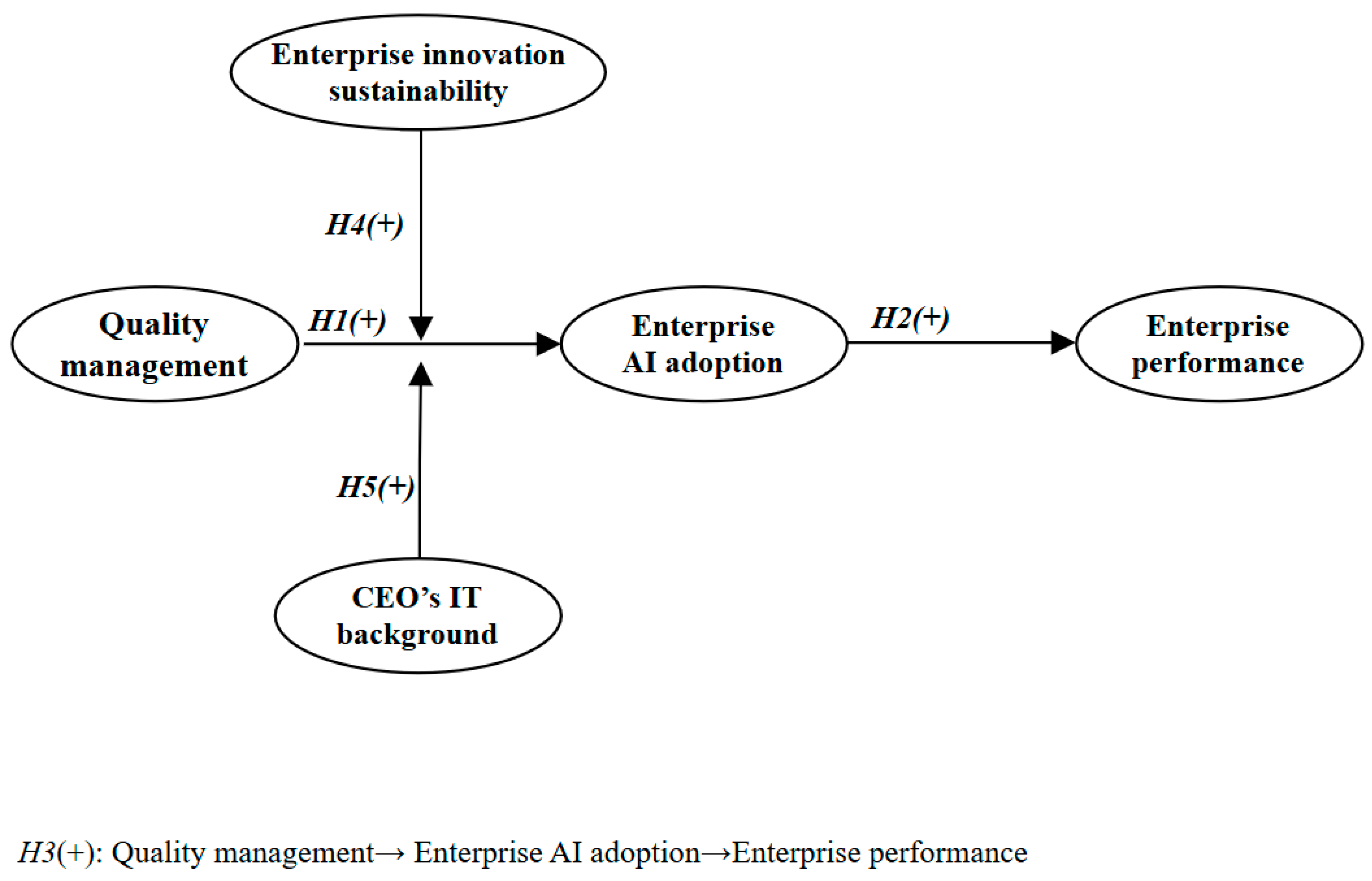
Figure 1. The research conceptual framework.
Sustainability 18 07766 g001
Figure 2. Parallel trend test chart.
Sustainability 18 07766 g002
Figure 3. Placebo Test Chart for ISO9001. Note: The solid black line is the kernel density curve of coefficients from permutation-based placebo regressions. The solid vertical line at 0 is the zero-effect reference line, while the dashed vertical line indicates the true regression coefficient of the ISO 9001 certification treatment.
Sustainability 18 07766 g003
Table 2. Descriptive statistics and correlation analysis.
VariableMeanSD1.2.3.4.5.6.7.8.9.10.11.12.13.14.15.16.17.
1. AI_mda0.8021.1551
2. ISO90010.3330.4710.067 ***1
3. TobinQ1.9961.1480.093 ***−0.013 **1
4. Age2.8660.3520.104 ***0.059 ***−0.032 ***1
5. Size22.0891.240−0.009−0.033 ***−0.273 ***0.229 ***1
6. Lev0.3890.196−0.077 ***−0.039 ***−0.246 ***0.155 ***0.517 ***1
7. Growth0.1520.307−0.021 ***−0.015 **0.109 ***−0.114 ***0.028 ***0.028 ***1
8. Board2.1130.195−0.126 ***−0.022 ***−0.080 ***00.245 ***0.152 ***0.013 **1
9. Indep0.3760.0530.066 ***−0.0040.018 ***0.024 ***0.015 ***−0.011 *−0.015 ***−0.553 ***1
10. Top10.3380.144−0.160 ***−0.023 ***−0.084 ***−0.101 ***0.136 ***0.018 ***0.002−0.0060.059 ***1
11. Occupy0.0110.0160.023 ***−0.074 ***−0.033 ***0.012 **0.088 ***0.252 ***−0.037 ***0.023 ***0.015 **−0.064 ***1
12. Cashflow0.0490.066−0.073 ***0.012 **0.153 ***0.058 ***0.101 ***−0.147 ***0.042 ***0.037 ***0.0010.108 ***−0.150 ***1
13. Loss0.1060.3080.069 ***−0.006−0.022 ***0.080 ***−0.020 ***0.187 ***−0.220 ***−0.043 ***0.027 ***−0.106 ***0.113 ***−0.221 ***1
14. Mfee0.0830.0580.101 ***−0.068 ***0.244 ***−0.168 ***−0.350 ***−0.276 ***−0.113 ***−0.072 ***0.015 ***−0.124 ***0.050 ***−0.136 ***0.194 ***1
15. INV0.1310.092−0.094 ***0.01−0.010 *−0.0040.012 **0.244 ***0.038 ***0.010 *−0.011 *0.013 **0.081 ***−0.176 ***−0.012 **−0.150 ***1
16. TMTPay15.3900.7240.218 ***0.070 ***−0.024 ***0.246 ***0.502 ***0.109 ***0.037 ***0.139 ***−0.026 ***−0.061 ***−0.035 ***0.177 ***−0.068 ***−0.131 ***−0.067 ***1
17. TMTSize1.9790.3040.025 ***0.018 ***−0.056 ***0.0040.262 ***0.129 ***0.035 ***0.230 ***−0.075 ***−0.022 ***0.030 ***−0.018 ***−0.034 ***−0.012 **0.016 ***0.400 ***1
Note: Pearson correlations. N = 29,506; * p < 0.1, ** p < 0.05, *** p < 0.01.
Table 3. Benchmark regression results.
Variable(1)
AI_mda
(2)
AI_mda
(3)
TobinQ
(4)
TobinQ
(5)
AI_mda_lag1
(6)
AI_mda_lag1
(7)
TobinQ_lag1
(8)
TobinQ_lag1
ISO90010.110 *** (0.013)0.050 ** (0.020) 0.102 *** (0.015)0.043 ** (0.022)
AI_mda 0.062 *** (0.006)0.052 *** (0.011) 0.061 *** (0.006)0.044 *** (0.012)
Age0.179 *** (0.019)−0.115 *** (0.039)0.135 *** (0.019)0.130 *** (0.036)0.197 *** (0.022)−0.107 ** (0.043)0.146 *** (0.022)0.107 ** (0.042)
Size−0.041 *** (0.008)0.010 (0.014)−0.206 *** (0.007)−0.215 *** (0.017)−0.034 *** (0.008)0.017 (0.015)−0.110 *** (0.008)−0.129 *** (0.019)
Lev−0.381 *** (0.043)−0.214 *** (0.069)−0.513 *** (0.041)−0.490 *** (0.095)−0.421 *** (0.048)−0.259 *** (0.076)−0.925 *** (0.048)−0.803 *** (0.110)
Growth0.020 (0.021)−0.026 (0.020)0.514 *** (0.021)0.473 *** (0.026)−0.081 *** (0.024)−0.082 *** (0.023)0.629 *** (0.024)0.490 *** (0.033)
Board−0.723 *** (0.041)−0.322 *** (0.070)0.024 (0.040)0.033 (0.079)−0.720 *** (0.046)−0.348 *** (0.076)0.004 (0.046)0.009 (0.088)
Indep0.103 (0.145)0.206 (0.231)0.401 *** (0.140)0.404 * (0.240)0.208 (0.158)0.242 (0.241)0.305 * (0.159)0.345 (0.268)
Top1−0.837 *** (0.046)−0.367 *** (0.078)−0.238 *** (0.044)−0.159 * (0.085)−0.844 *** (0.051)−0.390 *** (0.084)−0.369 *** (0.051)−0.276 *** (0.095)
Occupy2.588 *** (0.421)2.828 *** (0.544)1.737 *** (0.406)2.227 *** (0.649)3.043 *** (0.474)3.259 *** (0.618)0.059 (0.477)0.758 (0.671)
Cashflow−1.895 *** (0.104)−0.572 *** (0.125)3.460 *** (0.101)3.146 *** (0.190)−1.765 *** (0.117)−0.595 *** (0.137)2.185 *** (0.119)2.374 *** (0.211)
Loss0.143 *** (0.022)0.043 * (0.025)0.064 *** (0.022)0.087 *** (0.025)0.203 *** (0.024)0.090 *** (0.027)−0.054 ** (0.025)−0.030 (0.026)
Mfee1.227 *** (0.124)0.402 * (0.233)3.938 *** (0.120)3.069 *** (0.277)1.028 *** (0.140)0.323 (0.255)3.467 *** (0.141)2.616 *** (0.323)
INV−0.855 *** (0.073)−0.226 * (0.123)1.041 *** (0.071)1.032 *** (0.144)−0.784 *** (0.082)−0.206 (0.132)0.938 *** (0.082)0.908 *** (0.161)
TMTPay0.455 *** (0.011)0.166 *** (0.019)0.113 *** (0.011)0.138 *** (0.023)0.419 *** (0.013)0.160 *** (0.020)0.118 *** (0.013)0.124 *** (0.026)
TMTSize−0.168 *** (0.023)0.034 (0.040)−0.065 *** (0.023)−0.074 * (0.040)−0.158 *** (0.026)0.024 (0.042)−0.104 *** (0.026)−0.075 (0.046)
_cons−3.541 *** (0.188)−0.940 *** (0.335)3.835 *** (0.183)3.732 *** (0.422)−3.300 *** (0.211)−0.968 *** (0.358)2.130 *** (0.214)2.482 *** (0.479)
Year YesYesYesYesYesYesYes
Industry YesYesYesYesYesYesYes
Cluster by FirmYesYesYesYesYesYesYesYes
Adjusted R20.1310.3940.1800.2610.1250.3890.1490.236
N29,50629,50629,50629,50623,22323,22223,22323,222
Note: ***, **, * report the significance level at 1%, 5%, and 10%, respectively.
Table 4. PSM and 2SLS instrumental variable regression.
(1)
PSM
(2)
First-Stage
IV1
(3)
Second-Stage
IV1
(4)
First-Stage
IV2
(5)
Second-Stage
IV2
VariablesAI_mdaISO9001AI_mdaISO9001
ISO90010.052 ** (0.023) 1.977 ** (0.865) 1.965 ** (0.839)
IV1 0.011 *** (0.003)
IV2 0.011 *** (0.003)
ControlsYesYesYesYesYes
YearYesYesYesYesYes
IndustryYesYesYesYesYes
Cluster by FirmYesYesYesYesYes
N13,99521,07421,07421,07421,074
K-P LM 11.01 *** 11.63 ***
C-D Wald F 35.99 37.86
Adjusted R20.402
Note: ***, ** report the significance level at 1% and 5% respectively.
Table 5. Baseline DID regression results.
Variables(1)
AI_mda
(2)
AI_mda
ISO9001_post0.0236 (0.0223)
ISO9001_post.l1 0.0585 *** (0.0171)
ControlsYesYes
YearYesYes
FirmYesYes
Cluster by FirmYesYes
N29,10829,108
Adjusted R20.7620.762
Note: *** reports the significance level at 1%.
Table 6. Event study: Dynamic effects of ISO 9001 certification on AI adoption.
VariablesAI_mdaControlsYearFirmCluster by FirmNAdjusted R2
≤−5 Years−0.033 (0.045)YesYesYesYes29,1080.762
−4 Years−0.010 (0.034)YesYesYesYes29,1080.762
−3 Years0.002 (0.028)YesYesYesYes29,1080.762
−2 Years−0.010 (0.020)YesYesYesYes29,1080.762
Year 0−0.014 (0.018)YesYesYesYes29,1080.762
+1 Year0.030 (0.022)YesYesYesYes29,1080.762
+2 Years0.064 ** (0.025)YesYesYesYes29,1080.762
+3 Years0.053 * (0.028)YesYesYesYes29,1080.762
+4 Years0.061 * (0.032)YesYesYesYes29,1080.762
≥+5 Years0.081 ** (0.038)YesYesYesYes29,1080.762
Note: **, * report the significance level at 5%, and 10% respectively.
Table 7. Result of robustness check.
Variables(1)
AI_mda
(2)
AI_mda_lag1
(3)
AI_report
(4)
AI_rep_lag1
(5)
AI_report
(6)
AI_rep_lag1
ISO9001 0.041 * (0.023)0.031 (0.025)
ISO140010.095 *** (0.022)0.084 *** (0.023) 0.096 *** (0.024)0.083 *** (0.026)
ControlsYesYesYesYesYesYes
YearYesYesYesYesYesYes
IndustryYesYesYesYesYesYes
Cluster by FirmYesYesYesYesYesYes
N29,50623,22229,50623,22229,50623,222
Adjusted R20.3950.3900.4100.4080.4110.409
Note: ***, * report the significance level at 1% and 10% respectively.
Table 8. The moderating effect results.
Variables(1)
AI_mda
(2)
AI_mda
ISO9001−0.004 (0.018)−0.050 * (0.027)
Sustainability0.496 *** (0.020)
ISO9001 × Sustainability0.075 *** (0.021)
CeoIT 0.552 *** (0.044)
ISO9001 × CeoIT 0.236 *** (0.053)
ControlsYesYes
YearYesYes
IndustryYesYes
Cluster by FirmYesYes
N27,03617,983
Adjusted R20.4610.468
Note: ***, * report the significance level at 1% and 10% respectively.
Table 9. Firm-level heterogeneity analysis.
(1)
Large Firms
(2)
Small Firms
(3)
SOEs
(4)
Non-SOEs
VariablesAI_mdaAI_mdaAI_mdaAI_mda
ISO90010.075 *** (0.027)0.023 (0.028)0.009 (0.034)0.064 ** (0.025)
ControlsYesYesYesYes
IndustryYesYesYesYes
Cluster by FirmYesYesYesYes
N14,74514,760887820,627
Adjusted R20.4140.3770.4080.382
Note: ***, ** report the significance level at 1% and 5% respectively.
Table 10. Industry heterogeneity analysis.
(1)
Regulated
Industries
(2)
Competitive
Industries
(3)
Low-Competition Industries
(4)
High-Competition Industries
VariablesAI_mdaAI_mdaAI_mdaAI_mda
ISO9001−0.039 (0.032)0.052 ** (0.022)0.032 (0.026)0.050 ** (0.025)
ControlsYesYesYesYes
IndustryYesYesYesYes
Cluster by FirmYesYesYesYes
N396025,54614,61814,663
Adjusted R20.3620.4150.4090.417
Note: ** reports the significance level at 5%.
Table 11. Regional heterogeneity analysis.
(1)
Eastern Region
(2)
Central Region
(3)
Western Region
VariablesAI_mdaAI_mdaAI_mda
ISO90010.057 ** (0.025)0.048 (0.042)−0.074 * (0.044)
ControlsYesYesYes
IndustryYesYesYes
Cluster by FirmYesYesYes
N21,71043893067
Adjusted R20.3860.4120.435
Note: **, * report the significance level at 5% and 10% respectively.
Table 12. Results of moderating effect test for regional heterogeneity.
VariablesAI_mda
ISO90010.106 *** (0.032)
Resource_efficiency−0.003 (0.125)
ISO9001 × Resource_efficiency−0.487 *** (0.180)
ControlsYes
YearYes
IndustryYes
Cluster by FirmYes
N24,233
Adjusted R20.402
Note: *** reports the significance level at 10%.
Table 13. Results of regional differences in resource allocation efficiency.
RegionDifferenceSDTp
W & E0.016 ***0.0028.010.000
W & C0.013 ***0.0025.230.000
C & E0.0030.0021.910.169
Note: *** reports the significance level at 1%.
Disclaimer/Publisher’s Note: The statements, opinions and data contained in all publications are solely those of the individual author(s) and contributor(s) and not of MDPI and/or the editor(s). MDPI and/or the editor(s) disclaim responsibility for any injury to people or property resulting from any ideas, methods, instructions or products referred to in the content.