2.1. Theoretical Framework
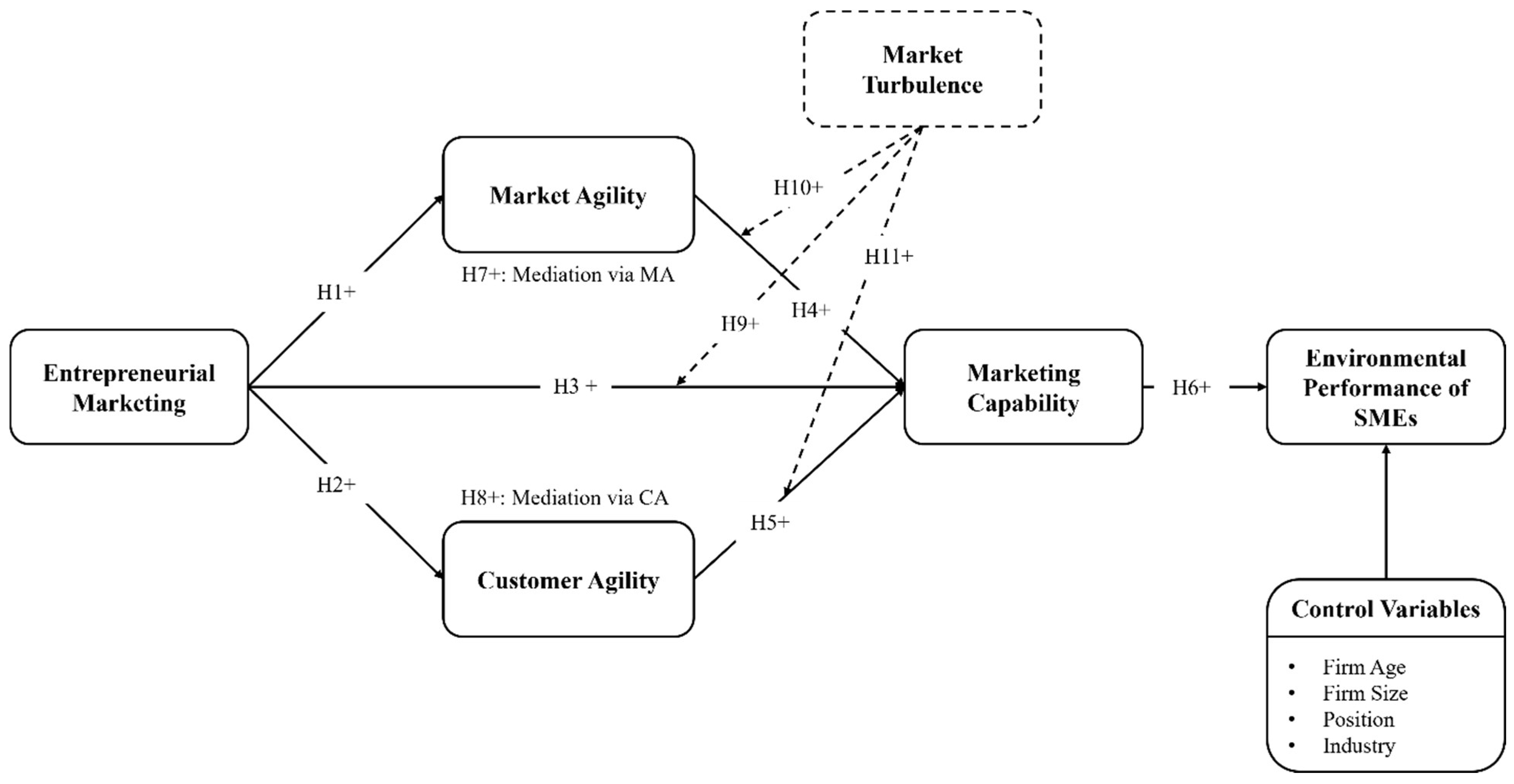
The conceptual model advanced in this study is grounded in the integration of five theoretical perspectives, each addressing a distinct and non-redundant segment of the causal chain from entrepreneurial marketing to environmental performance of SMEs. Together, they form a unified explanatory architecture rather than a set of parallel justifications. No single theory within this framework can account for the full explanatory chain; removing any one perspective would leave a specific causal mechanism unaddressed.
Entrepreneurial marketing theory, originating with Morris et al. [
9] and substantially extended by Alqahtani and Uslay [
10,
21], defines EM as an organizational orientation characterized by opportunity recognition, customer intensity, proactiveness, value creation, resource leveraging, and calculated risk management. This theory explains why EM serves as the strategic starting point of the model: SMEs operating under resource constraints require marketing approaches that are adaptive, opportunity-driven, and customer-responsive rather than reliant on large marketing budgets or established market positions. Critically, Alqahtani et al. [
15] demonstrated that EM outperforms other strategic orientations specifically under high market turbulence and competitive pressure, a finding that motivates the moderation logic incorporated in the present framework.
Dynamic capabilities theory (DCT), established by Teece et al. [
19] and refined by Eisenhardt and Martin [
22], explains the intermediate mechanisms through which EM is associated with capability development. DCT posits that competitive advantage derives not from static resource possession but from the organizational capacity to sense opportunities, seize them, and reconfigure internal resources in response to environmental change. Critically, DCT distinguishes between dynamic capabilities with higher-order mechanisms that modify and reconfigure the resource base and ordinary capabilities with stable, process-oriented competencies that execute operational functions [
19,
22]. In this model, market agility and customer agility represent dynamic capabilities, while marketing capability represents the ordinary capability that the dynamic layer builds over time. Market agility and customer agility therefore represent precisely these sensing and seizing mechanisms, functioning as the dynamic capability layer through which entrepreneurial marketing behaviors generate the organizational responsiveness needed to develop marketing capability over time [
23]. A growing body of empirical research confirms that agility constructs serve as dynamic capability mediators between strategic orientations and performance outcomes in SME contexts [
24,
25,
26,
27,
28].
The resource-based view (RBV), grounded in Barney (1991) and extended to the marketing domain by Vorhies and Morgan [
8] and Morgan [
29], explains the role of marketing capability as a strategically valuable and difficult-to-imitate organizational resource. Marketing capability encompasses the complex bundle of skills, knowledge, and organizational processes involved in pricing, product development, channel management, communication, sales management, market information systems, planning, and strategy implementation [
30]. RBV addresses a distinct causal question from DCT: whereas DCT explains how dynamic agility mechanisms build marketing capability, RBV explains why marketing capability, once developed, functions as a durable source of competitive advantage and a proximate driver of performance outcomes [
31]. RBV explains why agility mechanisms, once associated with EM, crystallize into marketing capability as a durable organizational asset, and why this capability functions as a proximate driver of firm performance outcomes.
The natural resource-based view (NRBV), introduced by Hart [
7], provides the critical theoretical bridge between marketing capability and environmental performance of SMEs. NRBV extends RBV to incorporate the natural environment as a domain of competitive advantage, arguing that firms develop capabilities oriented toward pollution prevention, product stewardship, and sustainable development that generate superior performance precisely because they address the ecological constraints that are increasingly binding on all organizations [
32]. In the present model, NRBV explains why marketing capability, understood as a complex organizational competency encompassing product development, communication, and strategic planning, enables SMEs to embed environmental considerations into their marketing activities and thereby achieve measurable environmental performance outcomes. It is important to note that NRBV does not require the capability itself to be inherently green in its design; rather, it argues that firms can deploy existing organizational capabilities within an environmentally conscious strategic context to achieve environmental competitive advantage [
7]. The UAE’s national sustainability mandates provide precisely this context, creating institutional pressure that orients SME marketing capability toward environmental performance outcomes. This argument receives empirical support from Schmidt et al. [
4], who demonstrated that marketing-related organizational orientations are associated with circular economy practices in SMEs through an NRBV mechanism, and from Hanaysha and Al-Shaikh [
3], who confirmed that marketing capability directly predicts business sustainability in UAE SMEs. Leonidou et al. [
33] further demonstrated that marketing capabilities, even when measured as general competencies, are empirically associated with environmental performance outcomes when deployed within sustainability-oriented strategic contexts, providing direct empirical grounding for the generic-capability-to-environmental-outcome pathway proposed in H6.
Contingency theory, drawing on Donaldson [
34] and the foundational marketing work of Jaworski and Kohli [
5], provides the boundary condition logic of the framework. Contingency theory argues that the effectiveness of organizational behaviors and capabilities is not uniform but depends on the characteristics of the external environment. In the present model, market turbulence moderates the pathways from EM and from the two agility mechanisms to marketing capability, strengthening these relationships when customer preferences are volatile and market conditions unpredictable. This is consistent with the empirical evidence from Wilden and Gudergan [
6], Abuseta et al. [
28], and Uzkurt et al. [
35], all of which confirm that environmental conditions shape the strength of capability-building mechanisms. The integration of these five perspectives produces a theoretically coherent framework in which each theory addresses a distinct causal question without redundancy, and together they explain the full pathway from entrepreneurial marketing behaviors to environmental performance outcomes.
Table 1 summarises the distinct explanatory role of each theoretical perspective within the proposed model.
Taken together, these five perspectives form a coherent and sequential explanatory chain rather than a collection of independent justifications. Entrepreneurial marketing theory establishes the strategic orientation that initiates the model. DCT explains how that orientation generates dynamic agility mechanisms, specifically market agility and customer agility, that sense and respond to environmental change. RBV explains how those dynamic mechanisms crystallize into marketing capability as a durable and strategically valuable organizational asset. NRBV then explains why that marketing capability, when deployed within an institutionally sustainability-pressured context such as the UAE, is associated with environmental performance outcomes. Contingency theory finally explains why the strength of these associations varies with the degree of market turbulence. Each theory therefore addresses the output of the preceding one, producing a chain in which no link is explained by more than one theory and no theory explains more than one link. This architecture is consistent with recent calls in the SME capability literature for multi-theory [
26,
36] frameworks that reflect the layered complexity of orientation-capability-performance relationships.
2.2. Entrepreneurial Marketing and Market Agility
Market agility refers to an organization’s capacity to rapidly detect and respond to changes in the competitive environment, including the emergence of new competitors, disruptive technologies, and evolving business threats and opportunities [
37]. Within the DCT framework, market agility operationalizes the sensing and seizing components of dynamic capability, reflecting the speed and precision with which firms translate environmental intelligence into adaptive action [
19].
Entrepreneurial marketing is theorized as a direct antecedent of market agility because the proactiveness, opportunity focus, and calculated risk management dimensions of EM cultivate the organizational behaviors and routines that underpin rapid market sensing and response [
38]. SMEs practicing EM continuously scan for untapped opportunities and respond swiftly when conditions change, thereby exercising and reinforcing the agile capabilities needed to maintain competitive positioning. This association is also theoretically consistent with the finding that EM performs best when markets are turbulent and moving quickly [
15], precisely the conditions under which market agility is most valuable.
Empirical evidence supports this reasoning. Sahu and Panda [
26] demonstrated that EM is positively associated with organizational agility in Indian manufacturing SMEs, with agility partially mediating the EM-performance relationship. Smirnova and Golovacheva [
24] confirmed that market sensing, a closely related construct, develops through entrepreneurially oriented organizational behaviors and is associated with adaptive marketing implementation. Khan et al. [
37] further demonstrated that marketing agility serves as a dynamic moderating mechanism within entrepreneurial marketing capability frameworks, underscoring its role as an outcome of entrepreneurial organizational behavior.
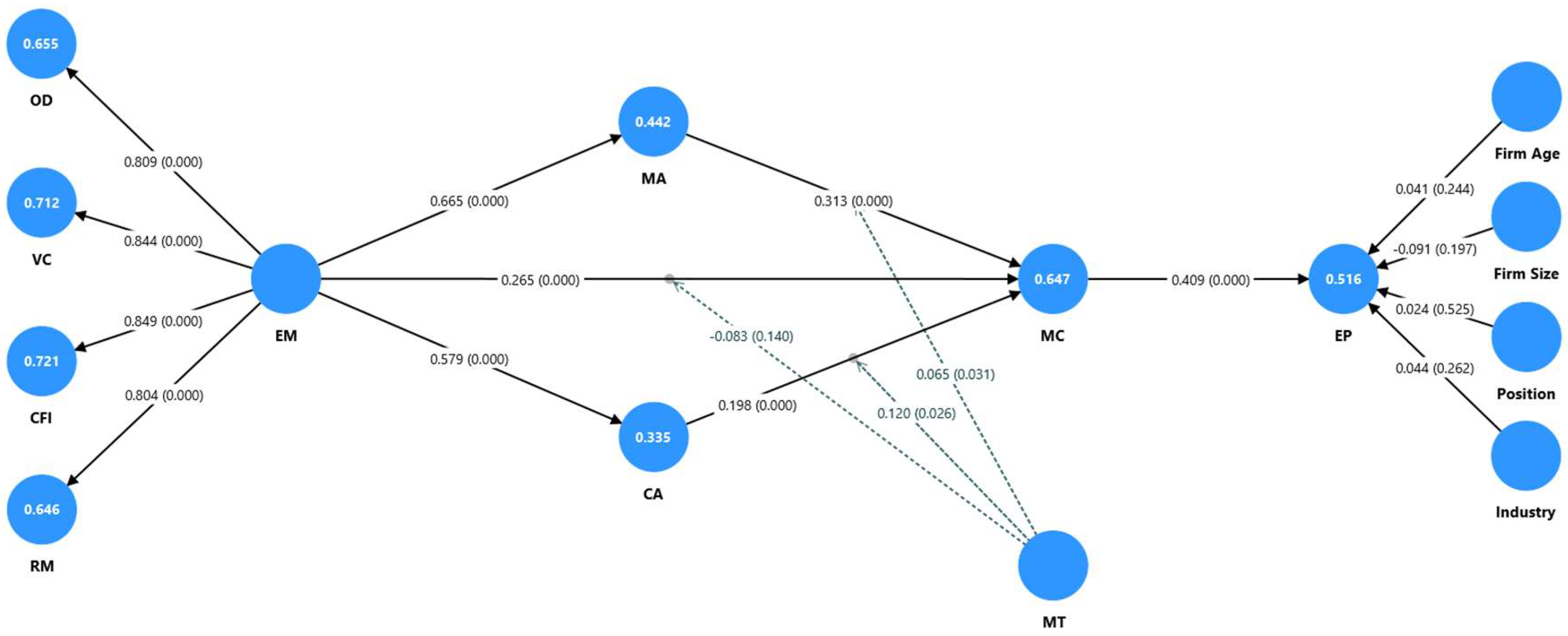
H1. Entrepreneurial marketing is positively associated with market agility.
2.3. Entrepreneurial Marketing and Customer Agility
Customer agility refers to the organizational capacity to rapidly sense and respond to changes in customer behavior, needs, and preferences [
39]. It captures the speed with which a firm implements customer-related activities, detects fundamental shifts in purchasing behavior, identifies emerging customer needs, and adjusts its offerings accordingly. Customer agility reflects the outside-in responsiveness routines that allow firms to maintain alignment with evolving customer expectations [
25].
The customer intensity and value creation dimensions of EM establish the direct theoretical connection to customer agility. SMEs practicing EM invest deeply in understanding their customers, communicate with them to identify innovation opportunities, and continuously create new customer value [
9,
40]. These behavioral patterns generate rich customer knowledge and cultivate the monitoring and response habits that constitute customer agility. A firm that consistently engages in intensive customer learning and acts swiftly on that learning is, by definition, developing and exercising customer agility as an organizational capability.
Wamba [
39] demonstrated that customer agility mediates the relationship between technological capability assimilation and firm performance, confirming its status as a dynamic capability outcome of strategic organizational investment in customer knowledge processes. Agag et al. [
25] found that customer-related agility mechanisms are associated with both customer satisfaction and long-term profitability, with these associations strongest when customer engagement is most intensive. In the EM context, studies confirming that EM is positively associated with customer-oriented performance outcomes [
38,
41,
42] implicitly support the pathway from EM through customer responsiveness to capability development.
H2. Entrepreneurial marketing is positively associated with customer agility.
2.4. Entrepreneurial Marketing and Marketing Capability
Marketing capability encompasses the organizational competencies and processes involved in planning, executing, and monitoring marketing strategies across pricing, product development, distribution, communication, sales management, market information systems, and strategic planning [
8,
30]. From an RBV perspective, marketing capability is a strategically valuable organizational resource that enables firms to convert their market knowledge and orientation into superior performance outcomes [
29].
Beyond its role in generating agility mechanisms, EM is directly associated with the development of marketing capability through the value creation and resource leveraging dimensions that characterize entrepreneurial marketing behavior. SMEs practicing EM actively experiment with creative low-cost marketing approaches, leverage existing resources in novel ways, and build communication processes grounded in customer insight [
40]. Each of these behaviors contributes progressively to the accumulation of marketing knowledge, skills, and organizational routines that constitute marketing capability. This direct pathway reflects the RBV logic that strategic orientations, when consistently practiced, become embedded in organizational processes as durable capabilities.
Zahara et al. [
38] demonstrated that EM is positively associated with digital marketing capabilities in Indonesian SMEs, with capabilities mediating the EM-performance relationship. Susanto et al. [
43] confirmed that marketing capabilities mediate the relationship between entrepreneurial orientation and SME performance, supporting the broader orientation-to-capability logic that applies equally to EM. Haverila et al. [
20] provided further confirmation that entrepreneurially oriented marketing behaviors are associated with marketing capability development, which subsequently improves organizational performance. Elgarhy and Abou-Shouk [
44] showed that marketing capability, alongside entrepreneurial orientation, is associated with sustainable competitive advantage and market performance in service contexts. Fard and Amiri [
45] further confirmed that entrepreneurial marketing is positively associated with SME performance in niche market contexts, adding cross-industry support to this orientation-to-capability logic.
H3. Entrepreneurial marketing is positively associated with marketing capability.
2.6. Customer Agility and Marketing Capability
Customer agility is associated with the strengthening of marketing capability by ensuring that an organization’s marketing competencies are continuously informed by current and actionable customer knowledge. A firm that rapidly senses shifts in customer preferences, implements customer-related activities with speed and precision, and identifies emerging needs before competitors possesses a richer and more timely information base from which to develop and refine its marketing strategies [
28,
39]. This dynamic process enriches all dimensions of marketing capability, from product development decisions grounded in actual customer needs to communication strategies that reflect evolving customer expectations.
The outside-in perspective in marketing research, which emphasizes the primacy of customer insight in capability development [
30,
46], provides strong theoretical grounding for this relationship. Customer agile firms, by virtue of their responsiveness routines, continuously associate customer intelligence with improved marketing practice, elevating the sophistication and effectiveness of their marketing capability across all functional domains. Cruz Rincon et al. [
36] confirmed that marketing capability develops through sequential mediation pathways in which customer-sensing orientations serve as antecedents, directly supporting the customer agility-to-capability logic. Wamba [
39] found that customer agility functions as a complementary dynamic capability mechanism with direct performance implications, confirming its active role in organizational value creation.
H5. Customer agility is positively associated with marketing capability.
2.7. Marketing Capability and Environmental Performance of SMEs
The environmental performance of SMEs, as operationalised in this study, refers to the environmental sustainability dimensions of organizational outcomes, encompassing the minimization of resource consumption, greenhouse gas and other atmospheric emissions, water releases, residual materials, and overall environmental impact, alongside the protection of biodiversity [
47]. This operationalisation deliberately focuses on the ecological dimension of sustainability, consistent with the NRBV framework [
7] and reflecting the environmental accountability demands increasingly placed on SMEs in emerging market economies such as the UAE. The social and economic dimensions of sustainability, while acknowledged as complementary, fall outside the scope of the present study.
The NRBV provides the primary theoretical bridge between marketing capability and environmental performance of SMEs. Hart [
7] argued that firms develop competitive advantage through capabilities oriented toward environmental sustainability, and that the organizational capacity to manage environmental concerns through existing processes constitutes a source of competitive advantage that is increasingly difficult to replicate. When marketing capability encompasses the planning, communication, product development, and information management competencies identified by Ali et al. [
30], it equips firms with the organizational infrastructure to embed environmental considerations into their marketing strategies, communicate sustainability commitments to multiple stakeholder groups, develop environmentally responsible product portfolios, and monitor their environmental footprints systematically. Importantly, this pathway does not require marketing capability to be inherently environmental in its design; rather, as Hart [
7] and Leonidou et al. [
33] argue, general organizational capabilities become conduits for environmental performance when deployed within institutional contexts that create sustainability imperatives, precisely the condition that characterises UAE SMEs operating under national green economy mandates.
Schmidt et al. [
4] provided foundational empirical evidence that marketing orientation is associated with circular economy practices in German SMEs through an NRBV mechanism, establishing the connection between marketing-related organizational orientations and environmental performance outcomes. Hanaysha and Al-Shaikh [
3] confirmed in the UAE context that marketing capability directly and significantly predicts business sustainability, providing the most contextually aligned empirical support for this hypothesis. Kankam-Kwarteng et al. [
48] further confirmed that entrepreneurial marketing activities are associated with sustainable performance outcomes in African SMEs, extending the empirical base across emerging market contexts. In the UAE, where both regulatory pressure and national sustainability commitments create strong environmental performance incentives for SMEs, the capability-to-environmental performance pathway is particularly well-motivated.
H6. Marketing capability is positively associated with the environmental performance of SMEs.
2.9. Moderating Role of Market Turbulence
Market turbulence refers to the rate and unpredictability of change in customer preferences, the composition of a firm’s customer base, and the stability of existing demand patterns [
5]. Under high turbulence, customer needs shift rapidly, new customer segments emerge with unfamiliar requirements, and the product–market relationships that firms rely on for sustained performance become less predictable over time [
28]. These conditions simultaneously create pressure on SMEs to develop and upgrade their organizational capabilities and increase the value of entrepreneurial and agile behaviors as inputs to that capability development process [
31,
35].
Contingency theory argues that the relationship between organizational behaviors and their outcomes varies according to the environmental context in which those behaviors occur [
34]. Applied to the present model, this logic predicts that market turbulence is associated with stronger pathways from EM to marketing capability and from the two agility mechanisms to marketing capability. Under high turbulence, the proactive and opportunity-driven behaviors of EM generate more distinctive organizational learning than in stable environments, because the variety and novelty of market signals encountered is greater. This enhanced learning is more substantively associated with marketing capability development, producing a stronger EM-to-capability association at high turbulence levels than at low ones.
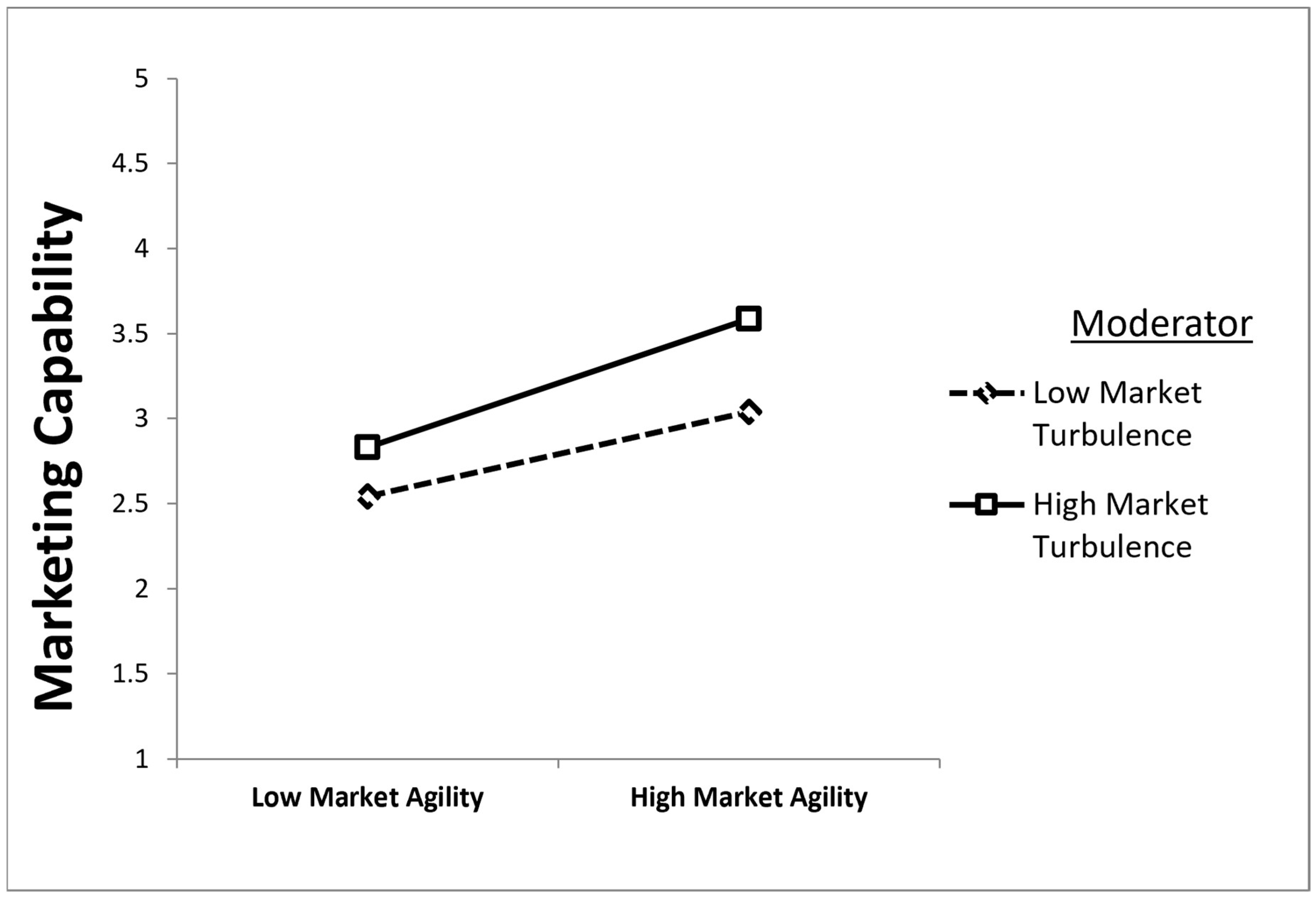
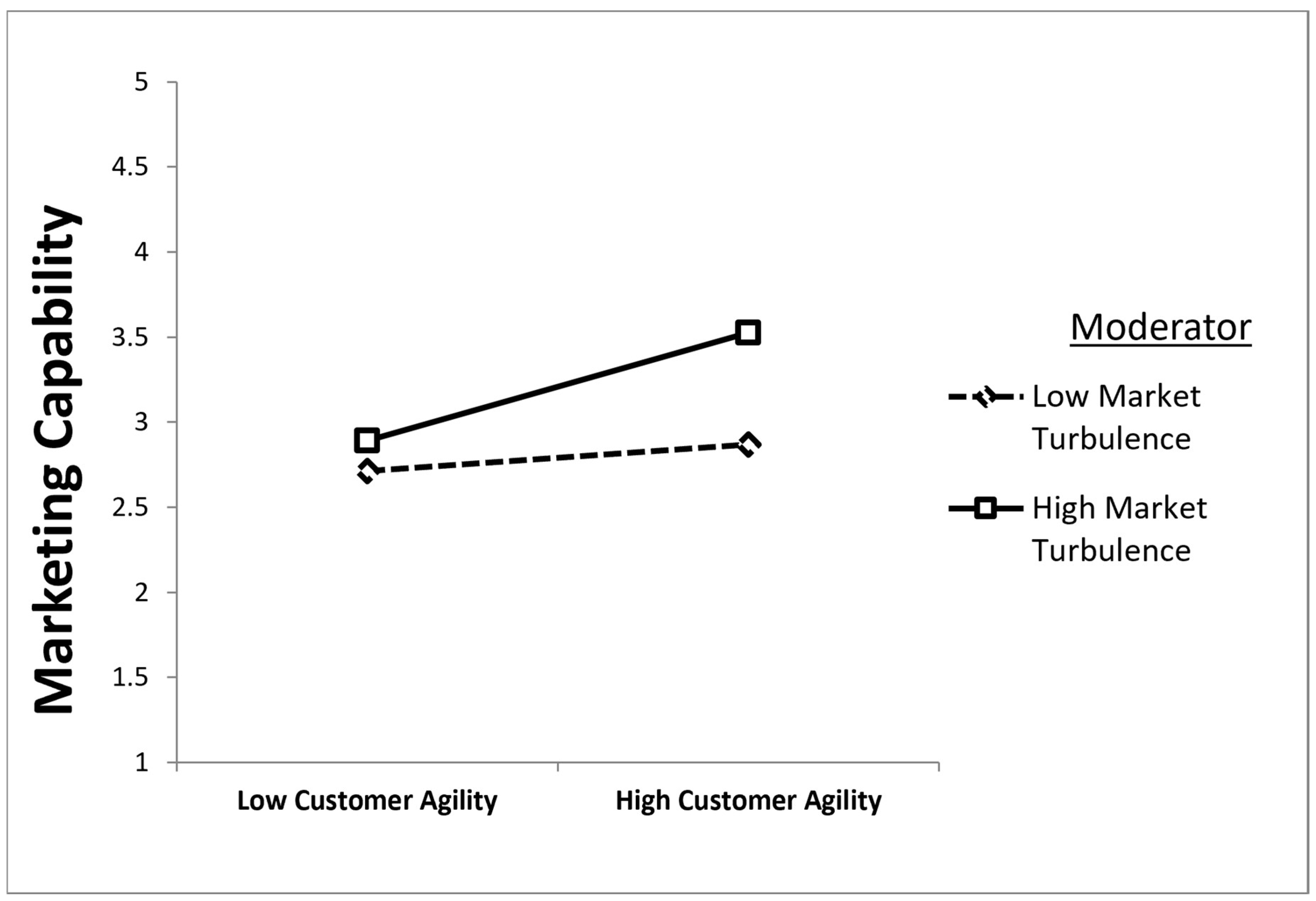
The moderation of the agility-to-capability pathways follows complementary logic. When market turbulence is high, the intelligence that market-agile firms generate is more differentiated and more rapidly changing, making it a more potent input to capability refinement. Similarly, customer agility becomes a particularly consequential antecedent of marketing capability in turbulent markets because the rate of customer change is highest and the premium on real-time customer knowledge is greatest. Xi and Zhang [
49] confirmed empirically that the association between knowledge creation and dynamic capabilities is significantly stronger in highly turbulent markets, directly supporting this boundary condition logic. Abuseta et al. [
28] further demonstrated that market turbulence strengthens the association between organizational capabilities and innovation outcomes in Turkish SMEs. Sulaiman et al. [
14] and Hilal and Tantawy [
16] both confirmed that market turbulence positively moderates the EM-performance association in Gulf and North African emerging market contexts respectively, reinforcing the applicability of this moderation logic to the UAE.
H9. Market turbulence positively moderates the association between entrepreneurial marketing and marketing capability, such that this association is stronger under conditions of high market turbulence.
H10. Market turbulence positively moderates the association between market agility and marketing capability, such that this association is stronger under conditions of high market turbulence.
H11. Market turbulence positively moderates the association between customer agility and marketing capability, such that this association is stronger under conditions of high market turbulence.