Compound Drought Identification and Driving Force Analysis in the Chushandian Irrigation Area Based on a Copula Function

Abstract
1. Introduction
2. Materials and Methods
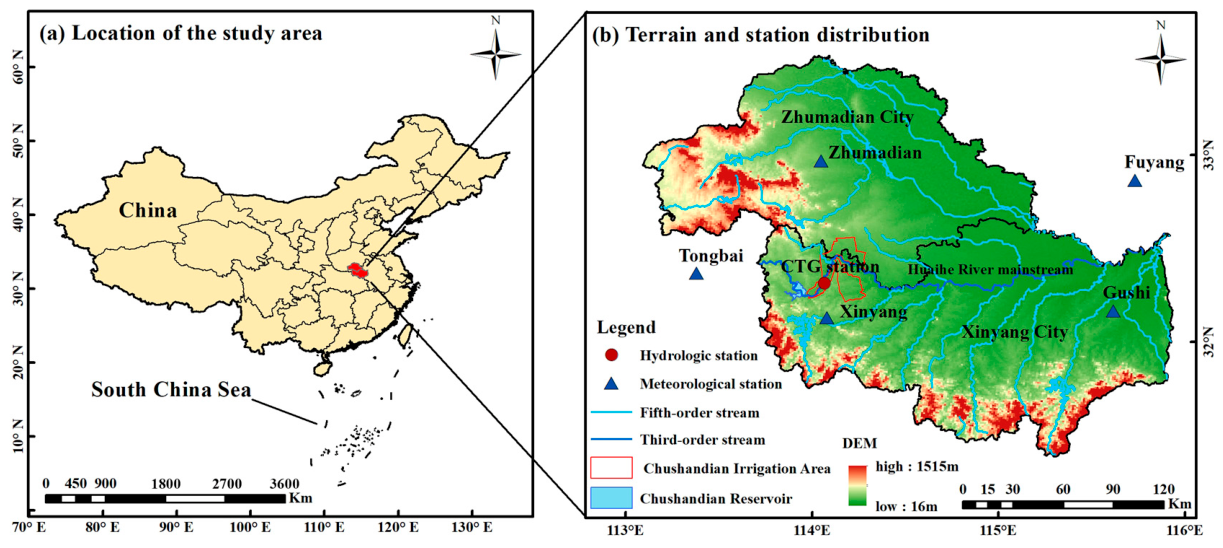
2.1. Study Area
2.2. Data Sources and Processing
2.2.1. Hydrometeorological Data and Quality Control
2.2.2. Large-Scale Climate Indices
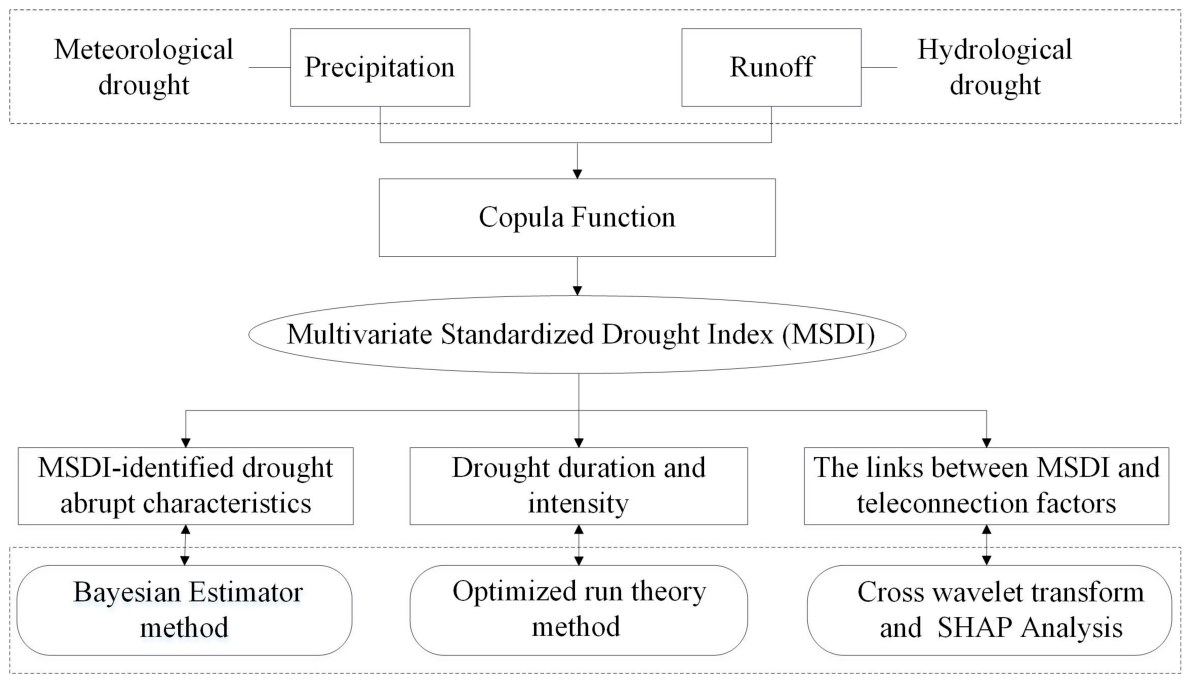
2.3. Construction of the Multivariate Standardized Drought Index (MSDI) Using a Copula Function
2.4. Detection of Abrupt Changes in MSDI Using BEAST
2.5. Identification of Compound Drought Events Using Optimized Run Theory
- (1)
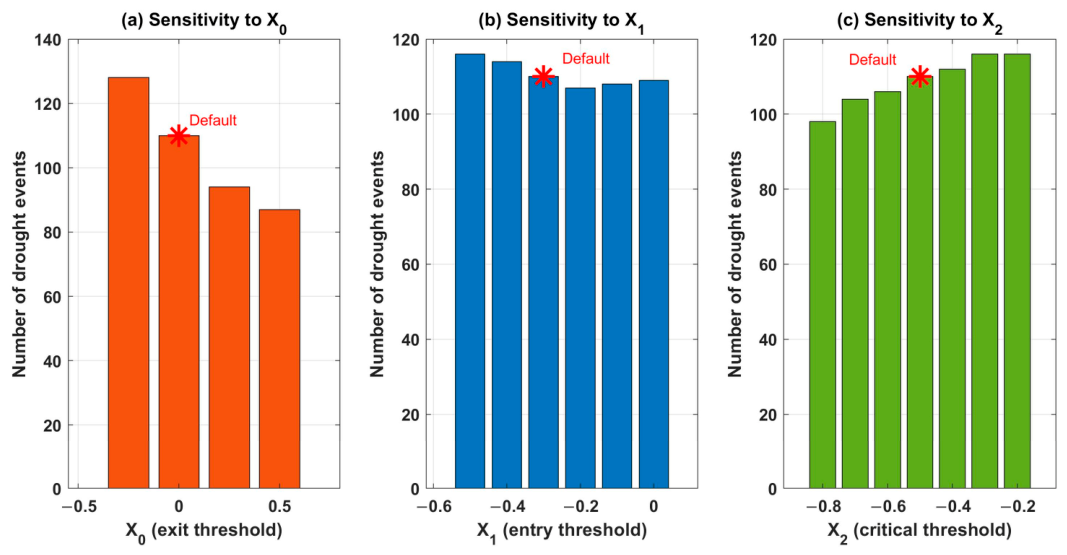
- A month is preliminarily considered drought when MSDI < X1.
- (2)
- A one month drought event is discarded if MSDI > X2.
- (3)
- Two drought events separated by a single non-drought month are merged if the MSDI of that month is < X0; the merged event’s duration is the sum of the two events plus 1, and intensity is the sum of intensities.
2.6. Driving Force Analysis of Compound Drought
2.6.1. Cross-Wavelet Transform for Driving Force Analysis
2.6.2. SHAP Analysis for Contribution Quantification
2.7. Software and Programming Languages
3. Results
3.1. Construction of the MSDI
3.1.1. Marginal Distributions and Copula Selection
3.1.2. Applicability of the MSDI
3.2. Abrupt Change Detection of MSDI Using BEAST
3.3. Joint Distribution and Return Period of Drought Duration and Intensity
3.3.1. Sensitivity Analysis of Run Theory Thresholds
3.3.2. Identification and Statistical Characteristics of Drought Events
3.4. Driving Forces of Compound Drought
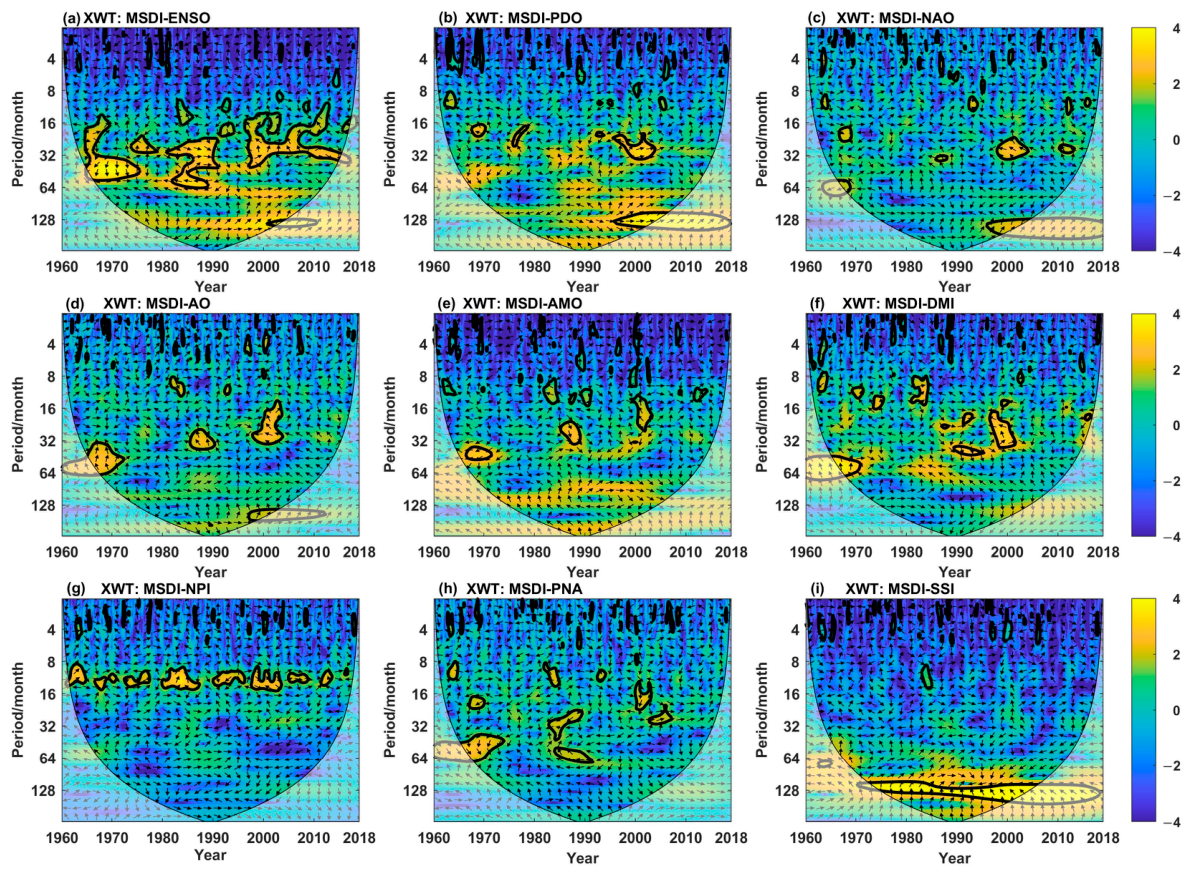
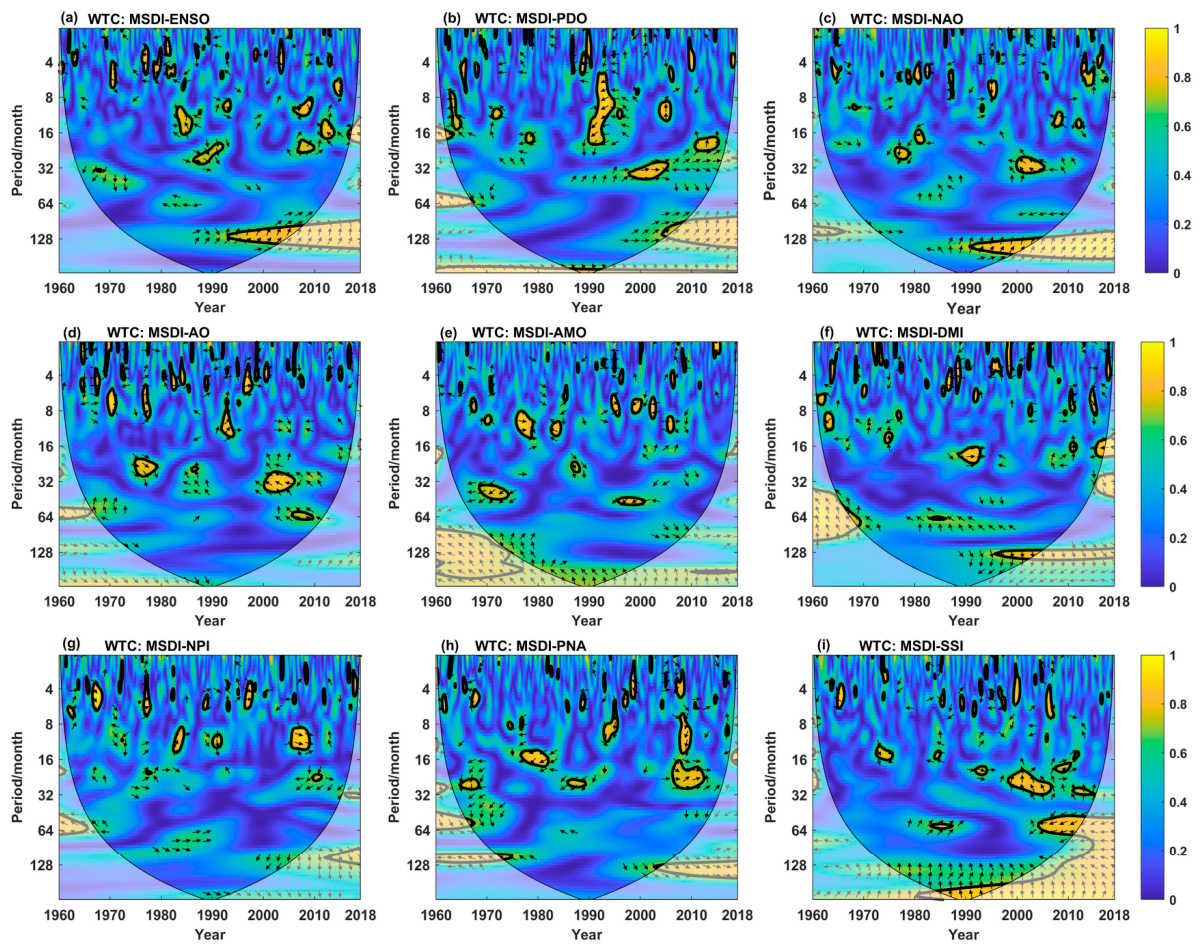
3.4.1. Cross-Wavelet Analysis
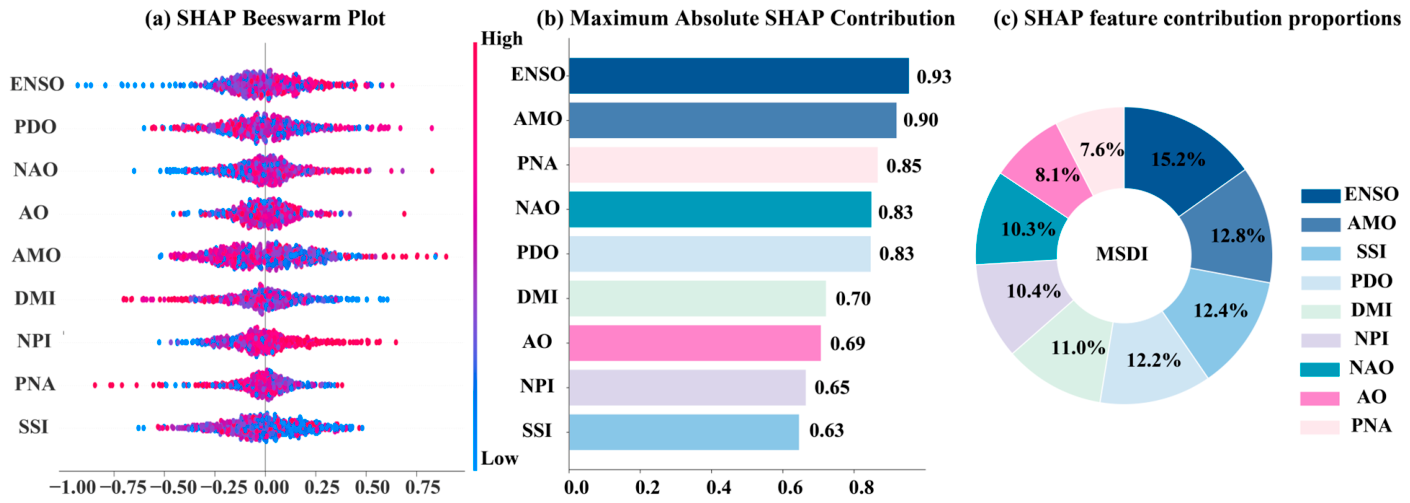
3.4.2. SHAP Contribution Analysis
4. Discussion
4.1. Advantages
4.1.1. Comparisons with Previous Studies in Other Regions Worldwide
4.1.2. Advantages of the Proposed Methodology over Conventional Approaches
4.1.3. Implications for Sustainable Water Management
4.2. Limitations
5. Conclusions
- (1)
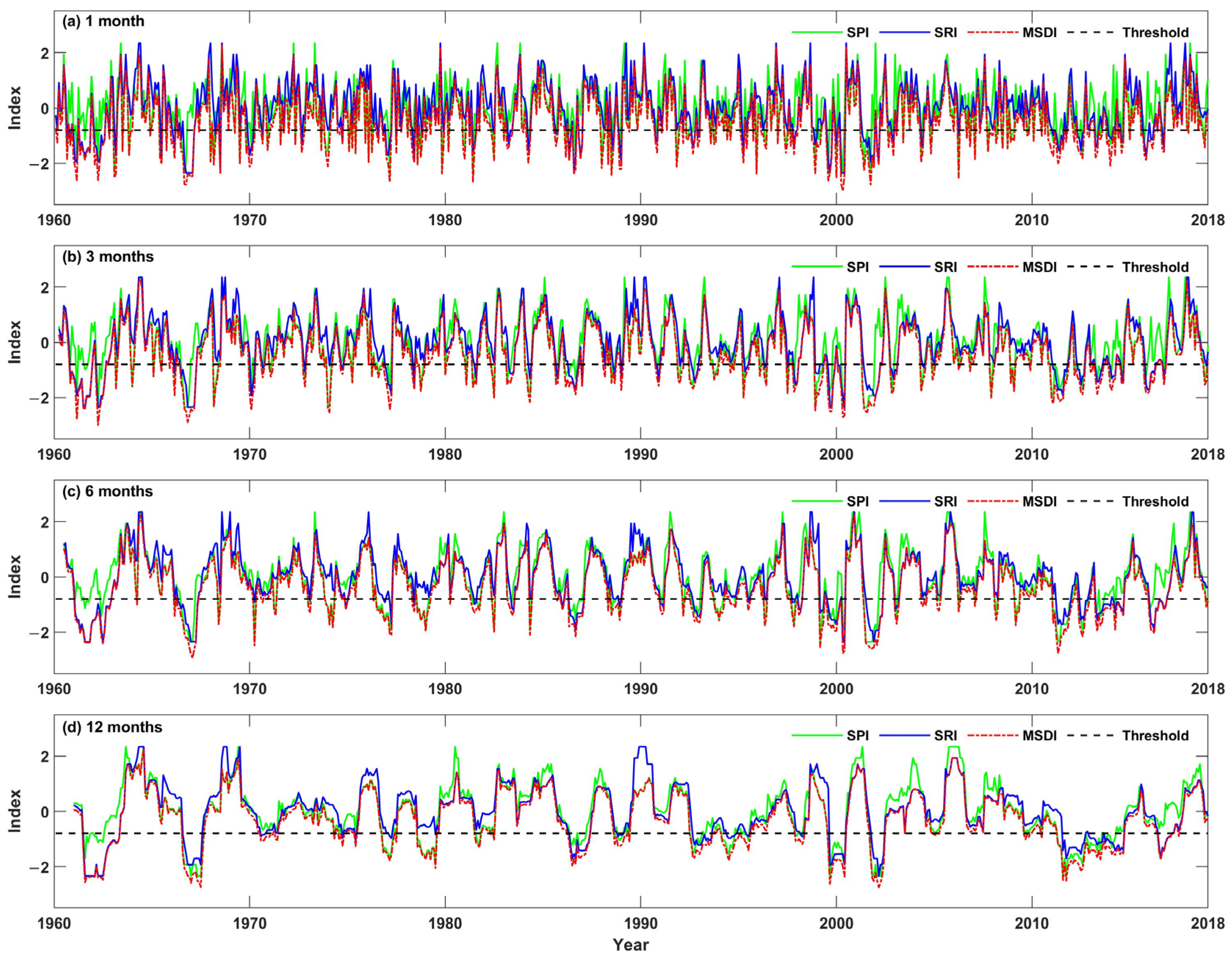
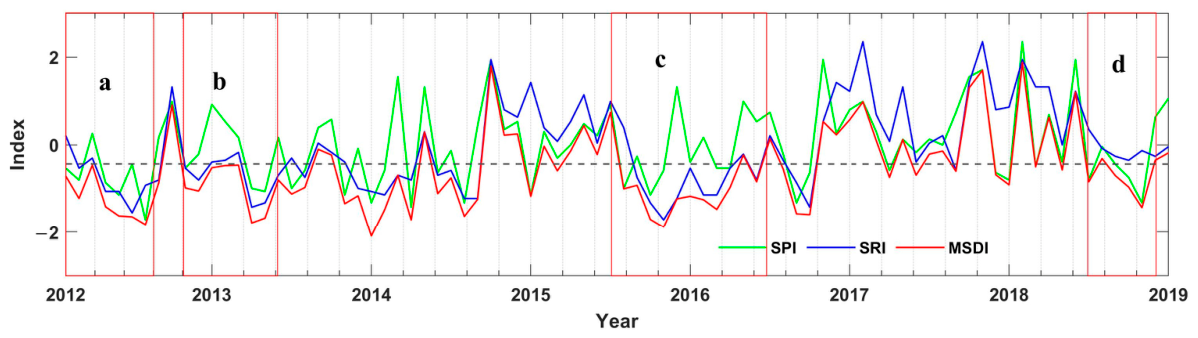
- A multivariate standardized drought index (MSDI) was developed based on the Copula function, integrating precipitation and runoff. MSDI correlates strongly with SPI and SRI (r > 0.75, p < 0.01) and effectively captures the onset, duration, and termination of drought events.
- (2)
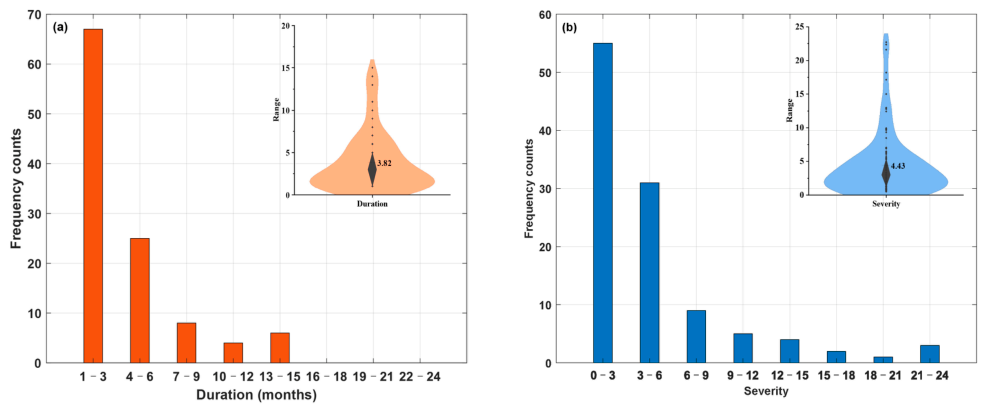
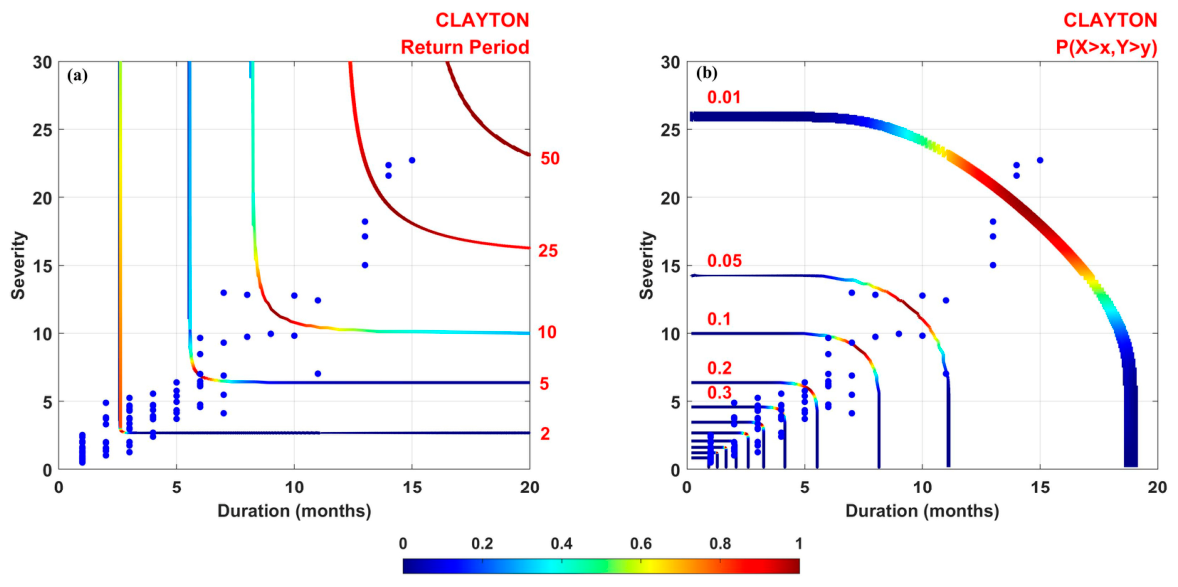
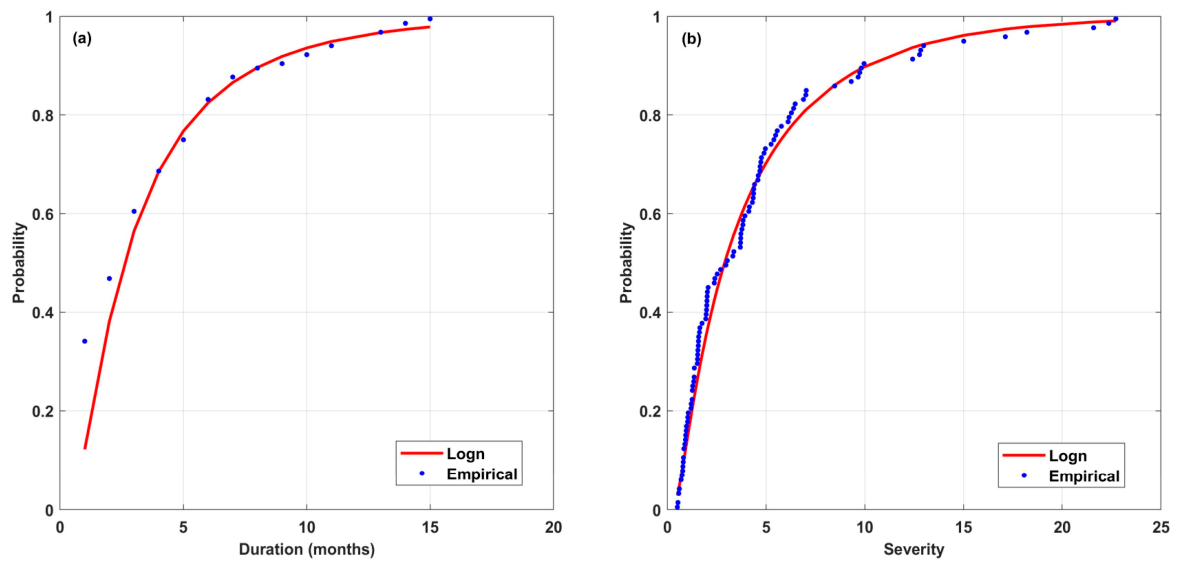
- From 1960 to 2018, 110 compound drought events were identified in the CSDIA, characterized predominantly by short duration (mean 3.82 months) and low intensity (mean 4.43). The most severe event (August 1960–October 1961) has a return period of approximately 40 years.
- (3)
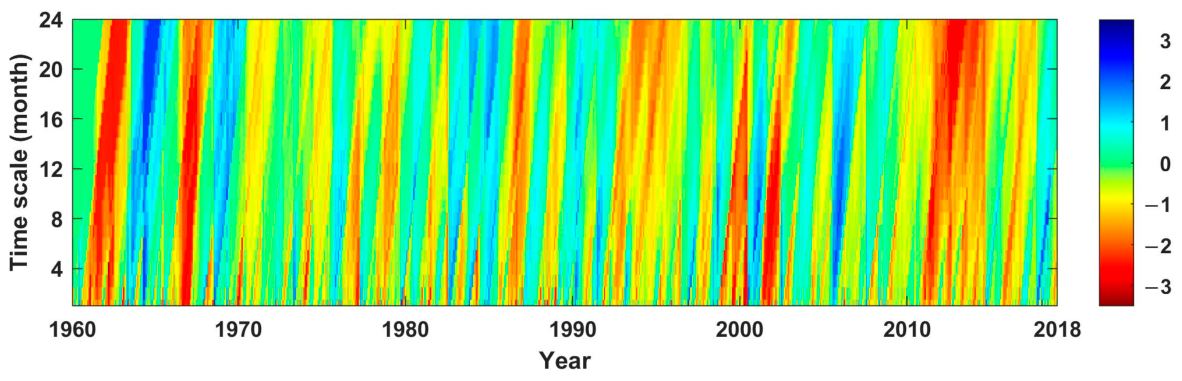
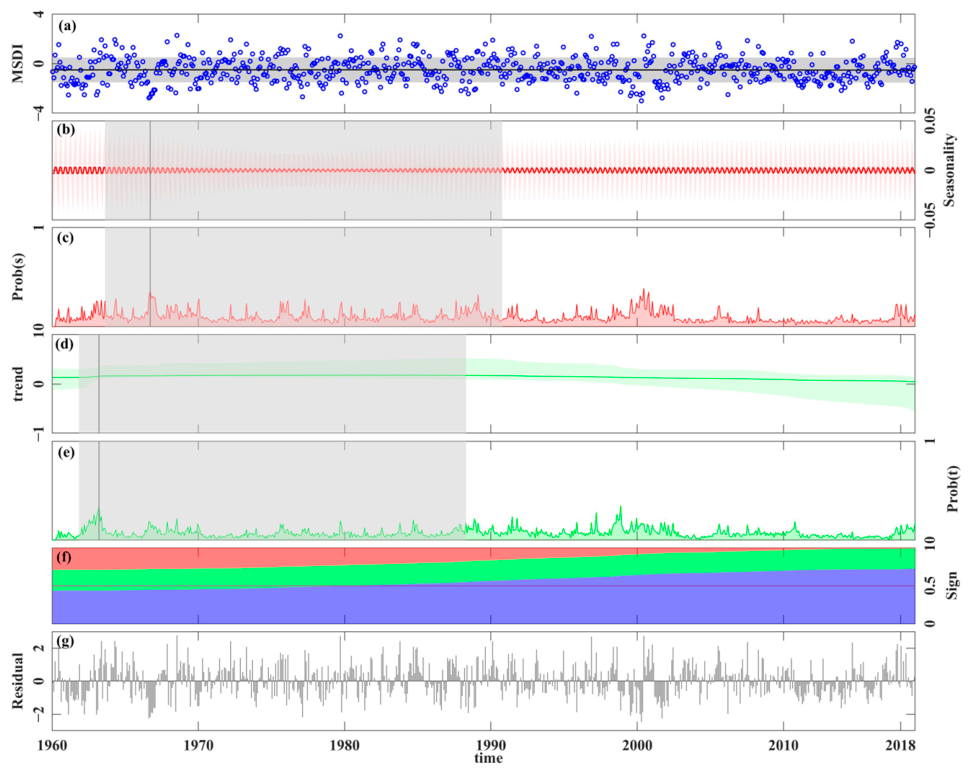
- BEAST change-point detection revealed a slight drought alleviation trend before 1990 and a mild intensification after 1990. The seasonal component peaks in winter–spring, with a change point in September 1966 (probability 56.7%).
- (4)
- Cross-wavelet and SHAP analyses consistently identified ENSO as the dominant driver of compound drought in the area, followed by SSI and PDO. These results provide a scientific basis for drought monitoring and water resource management.
Author Contributions
Funding
Institutional Review Board Statement
Informed Consent Statement
Data Availability Statement
Conflicts of Interest
References
- Zhao, R.; Wang, H.; Hu, S.; Zhan, C.; Guo, J. Joint probability of drought encounter among three major grain production zones of China under nonstationary climate. J. Hydrol. 2021, 603, 126995. [Google Scholar] [CrossRef]
- Bevacqua, E.; Zappa, G.; Lehner, F.; Zscheischler, J. Precipitation trends determine future occurrences of compound hot-dry events. Nat. Clim. Change 2022, 12, 350–355. [Google Scholar] [CrossRef]
- Masson-Delmotte, V.; Zhai, P.; Pirani, A.; Connors, S.L.; Péan, C.; Berger, S.; Caud, N.; Chen, Y.; Goldfarb, L.; Gomis, M.I.; et al. Climate change 2021: The physical science basis. In Contribution of Working Group I to the Sixth Assessment Report of the Intergovernmental Panel on Climate Change; Cambridge University Press: Cambridge, UK, 2021; Volume 2, p. 2391. [Google Scholar]
- Liu, M.; Shen, Y.; Qi, Y.; Wang, Y.; Geng, X. Changes in precipitation and drought extremes over the past half century in China. Atmosphere 2019, 10, 203. [Google Scholar] [CrossRef]
- Asadnabizadeh, M. Critical findings of the sixth assessment report (AR6) of working Group I of the intergovernmental panel on climate change (IPCC) for global climate change policymaking a summary for policymakers (SPM) analysis. Int. J. Clim. Change Strateg. Manag. 2023, 15, 652–670. [Google Scholar]
- Yue, Y.; Liu, H.; Mu, X.; Qin, M.; Wang, T.; Wang, Q.; Yan, Y. Spatial and temporal characteristics of drought and its correlation with climate indices in Northeast China. PLoS ONE 2021, 16, e0259774. [Google Scholar] [CrossRef] [PubMed]
- Hao, Z.; Singh, V.P. Drought characterization from a multivariate perspective: A review. J. Hydrol. 2015, 527, 668–678. [Google Scholar] [CrossRef]
- McKee, T.B.; Doesken, N.J.; Kleist, J. The relationship of drought frequency and duration to time scales. In Proceedings of the 8th Conference on Applied Climatology, Anaheim, CA, USA, 17–22 January 1993; Volume 17, pp. 179–183. [Google Scholar]
- Shukla, S.; Wood, A.W. Use of a standardized runoff index for characterizing hydrologic drought. Geophys. Res. Lett. 2008, 35, L02405. [Google Scholar] [CrossRef]
- Palmer, W.C. Meteorological Drought; US Department of Commerce, Weather Bureau: Silver Spring, MD, USA, 1965. [Google Scholar]
- Rajsekhar, D.; Singh, V.P.; Mishra, A.K. Integrated drought causality, hazard, and vulnerability assessment for future socioeconomic scenarios: An information theory perspective. J. Geophys. Res. Atmos. 2015, 120, 6346–6378. [Google Scholar] [CrossRef]
- Hao, Z.; AghaKouchak, A.; Nakhjiri, N.; Farahmand, A. Global integrated drought monitoring and prediction system. Sci. Data 2014, 1, 140001. [Google Scholar] [CrossRef] [PubMed]
- Wang, J.; Wang, W.; Cheng, H.; Wang, H.; Zhu, Y. Propagation from meteorological to hydrological drought and its influencing factors in the Huaihe River Basin. Water 2021, 13, 1985. [Google Scholar] [CrossRef]
- Sklar, M. Fonctions de répartition à n dimensions et leurs marges. Ann. l’ISUP 1959, 8, 229–231. [Google Scholar]
- Shiau, J.T.; Modarres, R. Copula-based drought severity-duration-frequency analysis in Iran. Meteorol. Appl. A J. Forecast. Pract. Appl. Train. Tech. Model. 2009, 16, 481–489. [Google Scholar] [CrossRef]
- Li, Z.; Shao, Q.; Tian, Q.; Zhang, L. Copula-based drought severity-area-frequency curve and its uncertainty, a case study of Heihe River basin, China. Hydrol. Res. 2020, 51, 867–881. [Google Scholar] [CrossRef]
- Kao, S.C.; Govindaraju, R.S. A copula-based joint deficit index for droughts. J. Hydrol. 2010, 380, 121–134. [Google Scholar] [CrossRef]
- Hao, Z.; AghaKouchak, A. Multivariate standardized drought index: A parametric multi-index model. Adv. Water Resour. 2013, 57, 12–18. [Google Scholar] [CrossRef]
- Zhao, Q.; Zhang, X.; Li, C.; Xu, Y.; Fei, J. Compound ecological drought assessment of China using a Copula-based drought index. Ecol. Indic. 2024, 164, 112141. [Google Scholar] [CrossRef]
- Yu, X.; Zeng, X.; Brocca, L.; Gui, D.; Wang, D.; Wu, J. A copula-based composite drought index for enhanced drought monitoring and analysis. J. Geophys. Res. Atmos. 2025, 130, E2024JD041867. [Google Scholar] [CrossRef]
- Terzi, T.B.; Önöz, B. Advanced drought analysis using a novel copula-based multivariate index: A case study of the Ceyhan River Basin. Sustain. Water Resour. Manag. 2025, 11, 11. [Google Scholar] [CrossRef]
- Wang, F.; Wang, Z.; Yang, H.; Di, D.; Zhao, Y.; Liang, Q. A new copula-based standardized precipitation evapotranspiration streamflow index for drought monitoring. J. Hydrol. 2020, 585, 124793. [Google Scholar] [CrossRef]
- Das, S.; Das, J.; Umamahesh, N.V. Copula-based drought risk analysis on rainfed agriculture under stationary and non-stationary settings. Hydrol. Sci. J. 2022, 67, 1683–1701. [Google Scholar] [CrossRef]
- Qi, J.; Ma, D.; Chen, Z.; Tian, Q.; Tian, Y.; He, Z.; Ma, Q.; Ma, Y.; Guo, L. Runoff evolution characteristics and predictive analysis of Chushandian reservoir. Water 2025, 17, 2015. [Google Scholar] [CrossRef]
- Guo, X.; Cao, L.; Fang, Y.; Xu, J.; Li, C.; Ji, H. Integrating the AE-AM model and the SMI-P framework for water environmental security assessment: A case study of the Chushandian Reservoir basin. Ecol. Indic. 2025, 179, 114275. [Google Scholar] [CrossRef]
- Gan, R.; Li, D.; Chen, C.; Yang, F.; Ma, X. Impacts of climate change on extreme precipitation in the upstream of Chushandian Reservoir, China. Hydrol. Res. 2022, 53, 504–518. [Google Scholar] [CrossRef]
- Fang, Y.; Cao, L.; Guo, X.; Liang, T.; Wang, J.; Wang, N.; Chao, Y. Spatio-temporal heterogeneity of the ecological environment and its response to land use change in the Chushandian Reservoir Basin. Sustainability 2024, 16, 1385. [Google Scholar] [CrossRef]
- Ogunrinde, A.T.; Adigun, P.; Xian, X.; Yu, H.; Koji, D.; Adebiyi, A.; Sabo, A.A. Multi-scale drought variability over West Africa and the associated large-scale circulation patterns. Geomat. Nat. Hazards Risk 2024, 15, 2409199. [Google Scholar] [CrossRef]
- Liu, W.; Zhu, S.; Huang, Y.; Wan, Y.; Wu, B.; Liu, L. Spatiotemporal variations of drought and their teleconnections with large-scale climate indices over the Poyang Lake Basin, China. Sustainability 2020, 12, 3526. [Google Scholar] [CrossRef]
- Xiao, L.; Chen, X.; Zhang, R.; Zhang, Z. Spatiotemporal evolution of droughts and their teleconnections with large-scale climate indices over Guizhou province in southwest China. Water 2019, 11, 2104. [Google Scholar] [CrossRef]
- Varol, T.; Atesoglu, A.; Ozel, H.B.; Cetin, M. Copula-based multivariate standardized drought index (MSDI) and length, severity, and frequency of hydrological drought in the Upper Sakarya Basin, Turkey. Nat. Hazards 2023, 116, 3669–3683. [Google Scholar] [CrossRef]
- Zavareh, M.M.; Mahjouri, N.; Rahimzadegan, M.; Rahimpour, M. A drought index based on groundwater quantity and quality: Application of multivariate copula analysis. J. Clean. Prod. 2023, 417, 137959. [Google Scholar] [CrossRef]
- Li, C.; Singh, V.P.; Mishra, A.K. A bivariate mixed distribution with a heavy-tailed component and its application to single-site daily rainfall simulation. Water Resour. Res. 2013, 49, 767–789. [Google Scholar] [CrossRef]
- Wen, Y.; Yang, A.; Kong, X.; Su, Y. A Bayesian-model-averaging copula method for bivariate hydrologic correlation analysis. Front. Environ. Sci. 2022, 9, 744462. [Google Scholar] [CrossRef]
- Naderi, K.; Moghaddasi, M.; Shokri, A. Drought occurrence probability analysis using multivariate standardized drought index and copula function under climate change. Water Resour. Manag. 2022, 36, 2865–2888. [Google Scholar] [CrossRef]
- Jamali, S.; Jönsson, P.; Eklundh, L.; Ardö, J.; Seaquist, J. Detecting changes in vegetation trends using time series segmentation. Remote Sens. Environ. 2015, 156, 182–195. [Google Scholar] [CrossRef]
- Dan’azumi, S.; Mamudu, L.; Aldrees, A. Climate change detection and attribution: Bayesian estimation of abrupt change, seasonality and trend model, and Mann-Kendall trend test approaches. J. Water Clim. Change 2025, 16, 1895–1911. [Google Scholar] [CrossRef]
- Abubakar, M.L.; Tanko, A.S.; Richifa, K.I.; Ahmed, M.S.; Abdussalam, A.F.; Mohammed, S. Analysis of trends and abrupt changes in streamflow via innovative polygon trend analysis and BEAST changepoint detection. World Water Policy 2025, 11, 820–835. [Google Scholar] [CrossRef]
- Palagiri, H.; Pal, M. Agricultural drought risk assessment in Southern Plateau and Hills using multi threshold run theory. Results Eng. 2024, 22, 102022. [Google Scholar] [CrossRef]
- Ma, Q.; Li, Y.; Liu, F.; Feng, H.; Biswas, A.; Zhang, Q. SPEI and multi-threshold run theory based drought analysis using multi-source products in China. J. Hydrol. 2023, 616, 128737. [Google Scholar] [CrossRef]
- Wang, J.; Li, J. Multi-threshold structural equation model. J. Bus. Amp Econ. Stat. 2023, 41, 377–387. [Google Scholar]
- Grinsted, A.; Moore, J.C.; Jevrejeva, S. Application of the cross wavelet transform and wavelet coherence to geophysical time series. Nonlinear Process. Geophys. 2004, 11, 561–566. [Google Scholar] [CrossRef]
- Souza, E.M.; Félix, V.B. Wavelet cross-correlation in bivariate time-series analysis. TEMA 2018, 19, 391–403. [Google Scholar] [CrossRef]
- Štrumbelj, E.; Kononenko, I. Explaining prediction models and individual predictions with feature contributions. Knowl. Inf. Syst. 2014, 41, 647–665. [Google Scholar]
- Slack, D.; Hilgard, S.; Jia, E.; Singh, S.; Lakkaraju, H. Fooling lime and shap: Adversarial attacks on post hoc explanation methods. In Proceedings of the AAAI/ACM Conference on AI, Ethics, and Society, New York City, New York, USA, 7–8 February 2020; pp. 180–186. [Google Scholar]
- Mukhawana, M.B.; Kanyerere, T.; Kahler, D.; Masilela, N.S.; Lalumbe, L.; Umunezero, A.A. Hydrological drought assessment using the standardized groundwater index and the standardized precipitation index in the Berg River Catchment, South Africa. J. Hydrol. Reg. Stud. 2024, 53, 101779. [Google Scholar] [CrossRef]
- Svoboda, M.; Hayes, M.; Wood, D. Standardized Precipitation Index: User Guide; World Meteorological Organization: Geneva, Switzerland, 2012. [Google Scholar]
- Yuqian, H.U.; Lei, H.U.; Peng, S.U.N.; Qingzhi, W.E.N.; Anlan, F.E.N.G.; Wei, L.I.U. Spatio-temporal evolution of drought events in Huaihe River Basin: A non-stationary standardized precipitation evapotranspiration index study. J. Beijing Norm. Univ. 2022, 58, 116–124. [Google Scholar]
- Yao, H.; Li, Q.; Zhao, L.; Wu, X.; Shen, X.; Duan, C.; Li, C. Evolution characteristics of compound drought and heat events during the warm season in the Huaihe River Basin and their relationship with climate and vegetation. Acta Ecol. Sin. 2024, 44, 5596–5608. [Google Scholar] [CrossRef]
- Huang, L.; Du, H.; Dang, Y.; He, H.S.; Wang, L.; Na, R.; Li, N.; Wu, Z. Observed and projected changes in wet and dry spells for the major river basins in East Asia. Int. J. Climatol. 2023, 43, 5369–5386. [Google Scholar] [CrossRef]
- Muthuvel, D.K.; Qin, X.S. Probabilistic analysis of future drought propagation, persistence, and spatial concurrence in monsoon-dominant Asian regions under climate change. Hydrol. Earth Syst. Sci. 2025, 29, 3203–3225. [Google Scholar] [CrossRef]
- Yang, P.; Zhang, S.; Xia, J.; Zhan, C.; Cai, W. Analysis of drought and flood alternation and its driving factors in the Yangtze River Basin under climate change. Atmos. Res. 2022, 270, 106087. [Google Scholar] [CrossRef]
- Raut, A.; Ganguli, P. Onset seasonality controls compound streamflow drought risk at a global scale. npj Nat. Hazards 2026. [Google Scholar] [CrossRef]
- Bhatia, U.; Poonia, H.; Tantary, D.M.; Mishra, V.; Kumar, R. Regional responses to oceanic variability constrain global drought synchrony. Commun. Earth Environ. 2026, 7, 86. [Google Scholar] [CrossRef]
- Lieber, R.; Brown, J.; King, A.; Freund, M. Historical and future asymmetry of ENSO teleconnections with extremes. J. Clim. 2024, 37, 5909–5924. [Google Scholar] [CrossRef]
- Li, X.; Fang, G.; Wen, X.; Xu, M.; Zhang, Y. Characteristics analysis of drought at multiple spatiotemporal scale and assessment of CMIP6 performance over the Huaihe River Basin. J. Hydrol. Reg. Stud. 2022, 41, 101103. [Google Scholar] [CrossRef]
- Kanthavel, P.; Saxena, C.K.; Singh, R.K. Integrated drought index based on vine copula modelling. Int. J. Clim. 2022, 42, 9510–9529. [Google Scholar] [CrossRef]
- Terzi, T.B.; Üçüncü, O. A novel statistical framework for constructing multivariate standardized drought indices. Theor. Appl. Climatol. 2025, 156, 539. [Google Scholar] [CrossRef]
- Terzi, T.B.; Önöz, B. Drought analysis based on nonparametric multivariate standardized drought index in the Seyhan River Basin. Nat. Hazards 2025, 121, 11051–11078. [Google Scholar] [CrossRef]
- Zhang, G.; Zhang, S.; Wang, H.; Gan, T.Y.; Su, X.; Wu, H.; Shi, L.; Xu, P.; Fu, X. Evaluating vegetation vulnerability under compound dry and hot conditions using vine copula across global lands. J. Hydrol. 2024, 631, 130775. [Google Scholar] [CrossRef]
- Di Nunno, F.; Granata, F. Analysis of trends and abrupt changes in groundwater and meteorological droughts in the United Kingdom. J. Hydrol. 2024, 637, 131430. [Google Scholar] [CrossRef]
- Di Nunno, F.; de Marinis, G.; Granata, F. Analysis of SPI index trend variations in the United Kingdom-A cluster-based and bayesian ensemble algorithms approach. J. Hydrol. Reg. Stud. 2024, 52, 101717. [Google Scholar] [CrossRef]
- Fang, G.; Li, X.; Xu, M.; Wen, X.; Huang, X. Spatiotemporal variability of drought and its multi-scale linkages with climate indices in the huaihe river basin, central china and east China. Atmosphere 2021, 12, 1446. [Google Scholar] [CrossRef]






| Drought Classification | MSDI Value |
|---|---|
| Extreme | MSDI ≤ −2.0 |
| Severe | −2.0 < MSDI ≤ −1.5 |
| Moderate | −1.5 < MSDI ≤ −1.0 |
| Abnormally | −1.0 < MSDI ≤ −0.5 |
| No drought | MSDI > −0.5 |
| Variable | Optimal Distribution | Distributed Parameter (Shape, Scale, Location) | A-D Statistic | K-S Statistic | K-S p-Value |
|---|---|---|---|---|---|
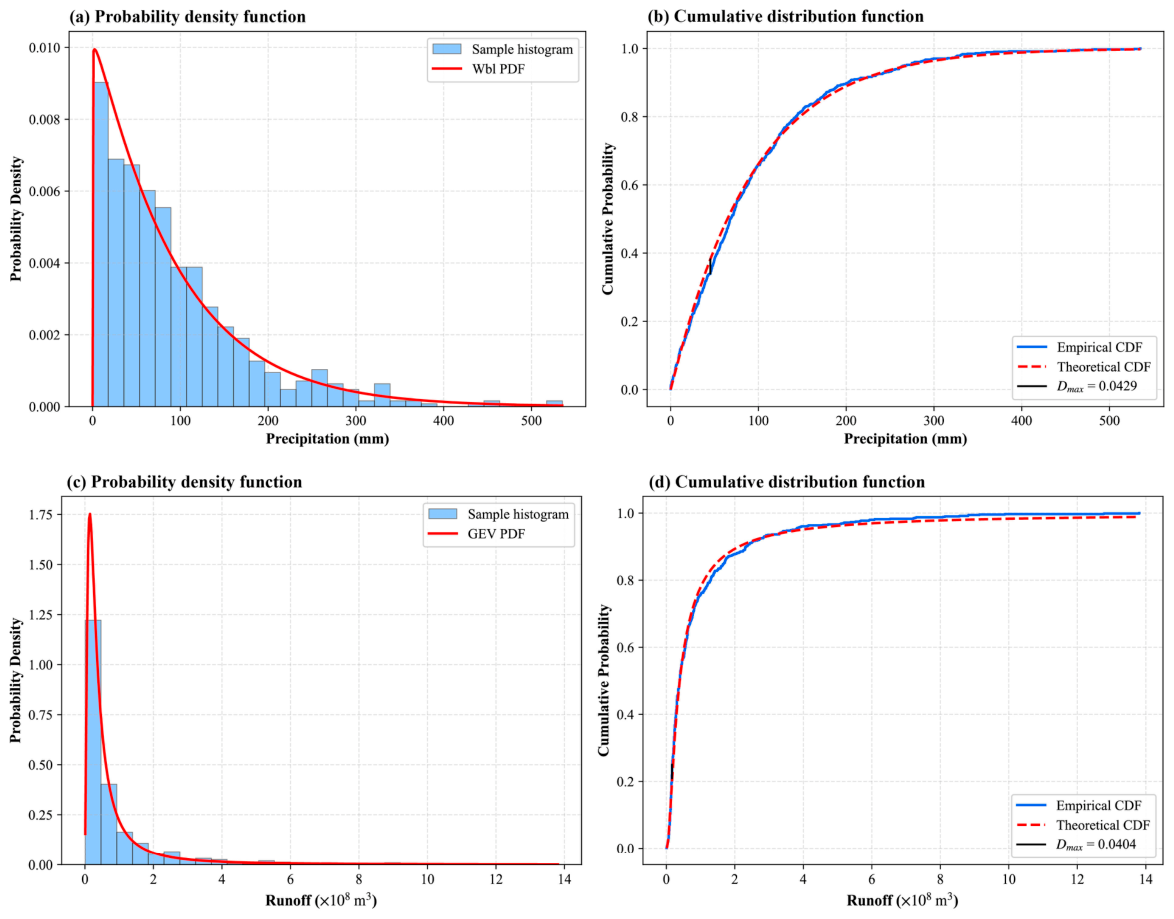
| Precipitation | Wbl | , , | 1.385 | 0.043 | 0.144 |
| P-III | , , | 2.838 | 0.055 | 0.027 | |
| GEV | , , | 2.771 | 0.042 | 0.167 | |
| Log-L | , , | 3.734 | 0.047 | 0.087 | |
| Logn | , , | 23.797 | 0.129 | 0.000 | |
| GP | , , | 193.98 | 0.403 | 0.000 | |
| Runoff | GEV | , , | 1.420 | 0.040 | 0.192 |
| Log-L | , , | 2.930 | 0.047 | 0.084 | |
| Logn | , , | 3.283 | 0.058 | 0.015 | |
| GP | , , | 6.894 | 0.086 | 0.000 | |
| Wbl | , , | 15.977 | 0.101 | 0.000 | |
| P-III | , , | 18.680 | 0.091 | 0.000 |
| Copula | NSE | RMSE | Log-Likelihood | AIC | BIC | θ |
|---|---|---|---|---|---|---|
| Gaussian | 0.9935 | 0.6447 | 220.48 | −438.09 | −433.53 | 0.680 |
| T | 0.9834 | 0.9915 | 246.34 | −488.67 | −479.55 | 4.425 |
| Clayton | 0.9848 | 0.9869 | 97.69 | −193.38 | −188.81 | 0.881 |
| Frank | 0.9937 | 0.6368 | 233.72 | −465.44 | −460.88 | 5.991 |
| Gumbel | 0.9957 | 0.5271 | 291.08 | −580.16 | −575.60 | 2.103 |
| Drought Events | Indicator | Drought Onset | Drought Termination | Duration (Months) |
|---|---|---|---|---|
| Event a (2012) | MSDI | January 2012 | August 2012 | 8 |
| SPI | April 2012 | July 2012 | 4 | |
| SRI | February 2012 | August 2012 | 7 | |
| Event b (2012–2013) | MSDI | October 2012 | July 2013 | 10 |
| SPI | March 2013 | April 2013 | 2 | |
| SRI | October 2012 | July 2013 | 10 | |
| Event c (2015–2016) | MSDI | July 2015 | June 2016 | 12 |
| SPI | July 2015 | October 2015 | 4 | |
| SRI | August 2015 | May 2016 | 10 | |
| Event d (2018) | MSDI | June 2018 | November 2018 | 6 |
| SPI | June 2018 | October 2018 | 5 | |
| SRI | September 2018 | September 2018 | 1 |
| Parameter | Range Tested | Default | Event Count Range | Longest Event Duration |
|---|---|---|---|---|
| X0 | −0.25 to 0.50 | 0 | 86–131 | 15–27 months |
| X1 | −0.50 to 0.00 | −0.3 | 106–115 | 15–18 months |
| X2 | −0.80 to −0.20 | −0.5 | 99–115 | 15 months (all values) |
| Copula | NSE | RMSE | Log-Likelihood | AIC | BIC | θ |
|---|---|---|---|---|---|---|
| Gaussian | 0.9434 | 0.7056 | 88.223 | −174.45 | −171.75 | 0.9117 |
| T | 0.9316 | 0.7654 | 89.055 | −174.11 | −168.71 | 1.1268 |
| Clayton | 0.9437 | 0.7037 | 101.270 | −200.53 | −197.83 | 2.6631 |
| Frank | 0.9426 | 0.7109 | 87.151 | −172.30 | −169.60 | 12.1022 |
| Gumbel | 0.9433 | 0.7068 | 49.977 | −97.95 | −95.25 | 3.5721 |
Disclaimer/Publisher’s Note: The statements, opinions and data contained in all publications are solely those of the individual author(s) and contributor(s) and not of MDPI and/or the editor(s). MDPI and/or the editor(s) disclaim responsibility for any injury to people or property resulting from any ideas, methods, instructions or products referred to in the content. |
© 2026 by the authors. Licensee MDPI, Basel, Switzerland. This article is an open access article distributed under the terms and conditions of the Creative Commons Attribution (CC BY) license.
Share and Cite
Tian, J.; Xu, Z.; Tian, Y.; Tian, Q. Compound Drought Identification and Driving Force Analysis in the Chushandian Irrigation Area Based on a Copula Function. Sustainability 2026, 18, 7598. https://doi.org/10.3390/su18157598
Tian J, Xu Z, Tian Y, Tian Q. Compound Drought Identification and Driving Force Analysis in the Chushandian Irrigation Area Based on a Copula Function. Sustainability. 2026; 18(15):7598. https://doi.org/10.3390/su18157598
Chicago/Turabian StyleTian, Junyue, Zheng Xu, Yu Tian, and Qingqing Tian. 2026. "Compound Drought Identification and Driving Force Analysis in the Chushandian Irrigation Area Based on a Copula Function" Sustainability 18, no. 15: 7598. https://doi.org/10.3390/su18157598
APA StyleTian, J., Xu, Z., Tian, Y., & Tian, Q. (2026). Compound Drought Identification and Driving Force Analysis in the Chushandian Irrigation Area Based on a Copula Function. Sustainability, 18(15), 7598. https://doi.org/10.3390/su18157598