Article

Leaching of Nutrients from Sediments into the Water Following the Application of Organic Amendments: Laboratory-Scale Experiment


1
Institute of Landscape Engineering, Slovak University of Agriculture in Nitra, 94976 Nitra, Slovakia
2
Slovak Water Management Enterprise, 84104 Bratislava, Slovakia
*
Author to whom correspondence should be addressed.
Sustainability 2026, 18(15), 7541; https://doi.org/10.3390/su18157541
Submission received: 19 June 2026 / Revised: 17 July 2026 / Accepted: 22 July 2026 / Published: 24 July 2026

Abstract

Sediment internal nutrient loading is a major cause of surface water eutrophication. Adding organic amendments to dredged sediments can improve reuse potential but risks enhancing nutrient leaching. This column study investigated the effect of adding compost (25% v/v), freshwater algae suspension (2.5% v/v), or their combination (22.5% compost + 2.5% algae) to reservoir bottom sediments on the leaching of orthophosphate (PO43−) and nitrate nitrogen (NO3-N) under three simulated weekly rainfall events. Unamended sediment served as the control. Compost-amended sediment showed the highest PO43− concentrations in the leachates, but these levels stabilized over time, whereas NO3-N concentrations decreased rapidly. Algae alone reduced both PO43− and NO3-N leaching compared to the control. The combination of compost and algae enhanced the retention of several elements, though it did not fully mitigate phosphorus leaching. Furthermore, this combination effectively decreased overall leachate volume; it was a direct result of the progressive hydration of the organic material, which increased the mixture’s water-holding capacity and thereby reduced percolation. Chemically, compost promoted nitrogen transformation processes (e.g., immobilization or denitrification), while algae likely facilitated nutrient uptake. We conclude that organic amendments play a dual role: compost increases phosphorus availability but stabilizes its release, whereas algae reduce the leaching of both nutrients. The choice of amendment should therefore align with specific water quality targets. Longer-term and field-scale studies are needed to confirm these trends.

1. Introduction

Global population growth, climate change, socio-economic development, and environmental degradation are placing increasing demands on natural resources and food production systems. As a result, natural resources are being depleted faster than they can regenerate, which highlights the urgent need for alternative approaches to resource management. In particular, recycling nutrients within agricultural systems has become an important strategy. At the same time, excessive or mismanaged nutrient use is negatively affecting water quality. Moreover, limited global phosphate reserves further emphasize the need for efficient nutrient recycling in agriculture [1].
A key pathway influencing nutrient cycling is soil disturbance caused by erosion processes. During these processes, fine particles are eroded and transported into aquatic systems, where they may act either as temporary nutrient sinks or as secondary sources of nitrogen and phosphorus [2]. Consequently, bottom sediments in water bodies accumulate a wide range of substances, often acting as internal nutrient sources. The remobilization of nutrients from sediments, often referred to as internal loading, is widely acknowledged as a significant global issue affecting water quality in both natural and artificial aquatic systems [3,4,5].
The behavior of sediments acting as either sources or sinks of nutrients depends on their physicochemical properties. For instance, sediments are generally considered a source of available phosphorus (P) when the ratio of total iron (Fe) to total P is below 15 [6]. Additionally, the forms of P bound to calcium (Ca) and Fe, along with sediment texture and organic matter content, strongly influence P retention and release [7]. In agricultural or land restoration applications, sediments can bring several benefits, such as improved water-holding capacity, increased cation-exchange capacity, enhanced sorption properties, higher organic matter content, and increased crop yields [8].
Although sediment removal from eutrophic water bodies can contribute to ecosystem restoration and nutrient recycling, the development of sustainable reuse strategies remains a major challenge [9]. Bottom sediments represent a potentially valuable resource for land reclamation and soil improvement; however, their environmental application requires careful consideration of associated risks. Sediments may contain accumulated heavy metals and organic contaminants, emphasizing the need for comprehensive chemical characterization prior to reuse [10,11]. In addition, while sediment application can enhance nutrient availability, it may also promote nitrogen (N) and P losses through leaching or runoff if not properly managed [12]. Negative effects on plant nutrition have also been reported, including reduced phosphorus uptake by plants [13]. Furthermore, insufficiently treated sediments may contribute to soil contamination by heavy metals and organic pollutants [8]. Therefore, long-term monitoring and appropriate management practices are essential to ensure the safe and sustainable reuse of sediments.
One promising approach for improving sediment quality and usability is the addition of organic materials. Composting is a widely used biological process used to stabilize organic waste through controlled aerobic decomposition, resulting in a nutrient-rich product known as compost [14]. Compost is characterized by a high content of stable organic N [15] and stabilized organic matter, making it valuable for long-term enhancement of soil organic matter [16]. It is commonly applied to improve soil physical and chemical properties and to increase the availability of key nutrients such as N, P, and carbon (C). However, the leaching of soluble nutrients from compost remains a concern, particularly in water-saturated environments such as riparian zones, floodplains, and stormwater systems [17].
Despite these concerns, compost application often provides long-term benefits. Its residual effect ensures gradual nutrient release, making nitrates available in subsequent growing seasons [18]. Studies have shown that compost not only improves crop yield but also enhances soil fertility and reduces water demand [19]. The composting process promotes microbial transformation of labile organic compounds into more stable, humus-like substances that are less susceptible to rapid mineralization and leaching [20]. Consequently, nitrogen in compost remains predominantly in organic form [21], which is less mobile than inorganic forms and therefore reduces the risk of groundwater contamination [16].
Compared to inorganic fertilizers, compost provides a slower release of nutrients, reducing the likelihood of large nutrient losses during individual rainfall events. This characteristic makes compost particularly valuable in agricultural systems. Nevertheless, its soluble nutrient fraction still needs to be considered, especially in environments prone to saturation, where nutrient mobilization and transport during rainfall events may occur [17].
In addition to compost, freshwater algae have gained attention as an alternative source of organic amendments and biofertilizers. These organisms contribute to nutrient cycling, enhance soil fertility, and support plant growth through natural biochemical processes [22,23]. They play a role in fixing atmospheric N, releasing essential nutrients, and producing bioactive compounds that stimulate plant development [24,25]. Moreover, algal biomass improves soil structure by increasing organic matter content, water retention capacity, and microbial activity [26,27]. The use of algae also reduces dependence on synthetic fertilizers and mitigates environmental impacts such as nutrient runoff [28]. Despite these advantages, further research is needed to optimize their practical application and economic feasibility [23].
Bottom sediments from reservoirs typically contain relatively low amounts of organic matter, although their other properties often reflect those of surrounding soils from which they originate. The addition of biological materials, such as compost or algal biomass, may enhance their suitability for applications in land reclamation and restoration of disturbed areas. Previous studies have demonstrated that dredged sediments can be successfully utilized in the reclamation of degraded industrial sites and brownfields through the construction of functional Technosols and vegetation-supporting substrates [29,30]. Organic amendments are increasingly recognized as effective tools for restoring degraded soils through improvements in soil structure, nutrient availability, and microbial community development [31]. Freshwater microalgae have attracted growing attention as biological amendments for degraded soils and reclaimed substrates [32]. Since microalgal biomass has been shown to enhance nutrient cycling, microbial activity, and soil biological functioning, the incorporation of freshwater algae into bottom sediments may further increase the reclamation potential of such substrates and support ecosystem restoration [32,33]. However, the effects of combining sediments with organic materials on nutrient leaching—particularly P and mineral N—are still not well understood and require further investigation [9].
Therefore, the aim of this study was to evaluate the effect of adding compost, freshwater algae, or their combination with reservoir sediments on the leaching of P (as orthophosphates) and mineral N (as nitrates) into the water under simulated short rainfall events. An additional aim was to evaluate the changes in parameter concentrations in the mixtures after the simulated rainfall events.

2. Materials and Methods

2.1. Material Characteristics

The bottom sediments (particle density 2650 kg m−3, sandy loam: 10% clay, 15% silt and 75% sand) of the small water reservoir in Blatné, Slovakia, were used in the experiment. The reservoir was selected as representative of small water reservoirs with multipurpose use surrounded by agricultural land, particularly arable fields. The potential risk of sediment contamination is low because of the absence of industry in the watershed, and municipalities are connected to wastewater treatment plants. To ensure sediment homogeneity and minimize spatial variability in our baseline parameters, a single large composite sample was collected from one specific location from 0–20 cm layer, four months after the reservoir had been drained for fish harvest. The samples were then transported to the laboratory and air-dried at room temperature in open containers to a water content level of approximately 3% by mass and thoroughly homogenized prior to the preparation of the mixtures.
The suspension of monoculture freshwater algae Scenedesmus obliquus (Turpin) was used as an organic amendment. The suspension was prepared using a 1:10 ratio of wastewater to algae culture as proposed by Lenartowicz and Jurík [34]. Wastewater from dairy production (termed process water, which does not include municipal wastewater) was added to the algae culture 3 days prior to the collection of the algal suspension for use. Algae cultivation was conducted at an approximate temperature of 21 °C under 12/12 h light/dark cycle. The algae suspension was prepared to a concentration of approximately 0.82 g fresh biomass weight per 100 mL. The suspension had the following parameters: pH 8.33, total dissolved solids (TDS) 577 ppm and electric conductivity (EC) 828 µS cm−1, orthophosphates (PO43−) 4.44 mg L−1, total P (in the form PO43−-P) 1.44 mg L−1, total N 27.15 mg L−1 and nitrate nitrogen (NO3-N) 4.31 mg L−1. The suspension was distributed over the sediment surface and thoroughly mixed.
The compost (bulk density approximately 510.2 kg m−3) was composed of 60% wood chips from forest thinning (oak, maple, hornbeam), 30% freshly cut grass, and 10% goat manure with bedding. The compost pile was turned on three occasions, with the temperature never exceeding 65 °C. The sample was taken 31 weeks after the composting operation began. The applied compost was fully mature and stabilized, exhibiting a dark brown color, a fine texture with no recognizable original feedstock, and an earthy odor. High-quality biological compost was produced using the Soil Food Web methodology from input materials sourced from forest and meadow ecosystems that had not been chemically treated. Based on the information from the producer, the compost as input material contained high fungal biomass (up to 1070 μg g−1), a high ratio of fungi to bacteria (up to 1.915), and a complete representation of trophic levels, including protozoa and nematodes.
To simulate the rainfall events, demineralized water (pH 6.20, TDS 43.5 ppm, EC 59 µS cm−1) was used to prevent external contamination of the mixtures by nutrients from the simulated rainfall.

2.2. Experiment Setup

The methodological approach involved four principal components: (1) characterization of bottom sediments and compost by laboratory analysis in accordance with Slovak legislation, which defines limit concentrations for both organic fertilizers and bottom sediments intended for application to soil [35,36,37]; (2) fertilization treatment with algae; (3) application of compost; and (4) controlled environmental conditions maintained throughout the assays.
Within this framework, the pot setup constituted the central experimental system through which water movement, nutrient transport and leachate generation could be observed and quantified. In all cases, amendments were applied in a standardized pot setup under the same controlled growth conditions, so the differences in nutrient losses could be interpreted primarily in relation to the amendment properties alone. The liquid form of algae-based suspension was subjected to homogenization prior to dosing to enhance consistency among replicates. The solid amendment (compost) was measured and mixed to achieve the most uniform distribution possible across the sediment surface.
The experiment was conducted in laboratory conditions in commercial plastic pots with a bottom diameter of 19 cm and a height of 24 cm. Constant climate conditions were established, with air temperature ranging from 20 to 22 °C, air humidity levels maintained at 48–50%, and a light regime of 12/12 h light/dark. The base of the pot was covered with a filtration protection layer (0.8 mm thick PP unwoven geotextile) and subsequently filled with 4 L of three different mixtures (Z2–Z4). Each mixture (Table 1) had three replicates. In all cases, the mixtures were evaluated against the control (Z1). A compost content of approximately 25% (by volume) was chosen based on several studies [38,39,40,41] that recommend this proportion for pot experiments. The algae volume of 2.5% was set as 10% of the compost volume, reflecting the expected nutrient content of the algal biomass. Mixtures Z2–Z4 were designed as potential alternatives to traditional growing substrates for use in the reclamation of disturbed areas. For this reason, we include the legislative limits for the application of sediments, compost and growing substrates to arable land in Table A1 [36,37].
Prior to the pot filling process, the sediment was manually disaggregated by hand to break large clumps while preserving their natural structure to the greatest extent possible. Due to the specific volumes required, sediment, compost and algae for each treatment were manually homogenized in separate containers (a total volume of 7 L per mixture) to ensure a uniform distribution of the amendments. The initial physical condition of the sediments was given particular attention, as preliminary observations indicated that excessive water content and high aggregate compaction could substantially influence infiltration behavior and nutrient leaching dynamics. The sediments and compost were subjected to partial air-drying, followed by homogenization. This procedure aimed to standardize the initial state of the material prior to use. Each pot was placed on an individual plastic tray to enable the independent collection of the percolated leachates from each replicate. The trays were dimensioned to prevent overflow during watering events and to enable accurate sampling of the drained water.
The mixtures were watered with demineralized water on a weekly basis over a period of 21 days (total of 3 events). Although no crops were planted in this experimental setup, initial moisture standardization was necessary. The initial watering event (M0) consisted of 1000 mL of water, distributed in two pulses of 500 mL each. This approach ensured uniform water content throughout the entire height of the mixture in all samples. Subsequently, the volume of watering (M1, M2 and M3) was set to 500 mL, which corresponds to a rainfall of 13 mm over a surface area of 361 cm2. The watering protocol was designed to promote controlled infiltration through the sediment profile while minimizing surface runoff and ensuring comparability among treatments. Each watering event was applied as a single continuous application to simulate short-term intensive rainfall, which resulted in the formation of ponding on the sediment surface. After each watering event, the leachates were carefully collected, typically within a three-hour window following the watering application. The collected volumes were measured, immediately filtered and analyzed.

2.3. Leachates Analysis

The collected leachates were then analyzed without delay. Initially, the volume of leachates was measured and recorded. Then, the samples were filtered if deemed necessary. Finally, the parameters pH, TDS, EC, salinity, NO3-N and PO34− were analyzed using a spectrophotometer DR6000 (Hach Company, Loveland, CO, USA) and a multitester Pocket Pro2+ Multi (Hach Company, Loveland, CO, USA). Commercial reagent sets from Hach Company, Loveland, CO, USA were used to determine the concentration of each parameter.

2.4. Physico-Chemical Analysis of Substrate Mixture Quality

Prior to mixing these materials, each constituent was subjected to rigorous testing. Before and after the experiment, the sediment, compost and each mixture were subjected to rigorous testing in an accredited laboratory. The algal suspension was subjected to rigorous testing in the laboratories of the Slovak University of Agriculture in Nitra, Slovakia. The following parameters were determined using conventional methodologies: pHKCl; dry matter content (%); EC (mS cm−1); contents of N, P2O5, K2O, MgO, and CaO in dry matter (%); and contents of heavy metals As, Cd, Cr, Ni, Pb, Hg, Cu, Zn, and Se in dry matter (mg kg−1) in the sediment, compost, and in the mixtures (Table 2). The concentrations of Cd, Hg and Se were below the limit of detection for all samples in both analyses; therefore, they were not considered further in the present article. Control sediment, compost and all used mixtures met the legislation limits for their application to arable soil; therefore, we could continue the experiment (Table 2 and Table A1).

2.5. Statistical Analysis

Statistical analyses were performed using STATGRAPHICS Centurion (version XV.I). Two sets of one-way analyses of variance (ANOVA) were conducted. First, to compare the four treatments (Z1–Z4) at each watering event separately, one-way ANOVA was applied to each response variable (leachate volume, pH, EC, TDS, PO43−, and NO3-N) for M1, M2, and M3 independently. When a significant treatment effect was found (α = 0.05), Fisher’s least significant difference (LSD) post hoc test was used to identify homogeneous subsets. Significant differences among treatments within a given time point are indicated by lowercase letters (a, b, c) in the corresponding figures. Second, to evaluate temporal changes within each treatment across the three watering events, one-way ANOVA was performed separately for each treatment (Z1, Z2, Z3, Z4) on each response variable. When a significant time effect was detected, Fisher’s LSD post hoc test was applied. Significant differences among time points (M1, M2, M3) within a single treatment are indicated by uppercase letters (A, B, C) in the figures. For all analyses, statistical significance was set at p < 0.05. Prior to conducting the ANOVA, the assumptions of normality and homogeneity of variances were evaluated. Given the small sample size per treatment (n = 3), normality was assumed based on the robust nature of ANOVA to deviations from normal distributions, while homogeneity of variances was assessed to ensure the validity of the statistical model. Variability among replicates is expressed as the standard deviation in all graphical representations.

3. Results

3.1. Nutrients Leaching from the Mixtures to Water

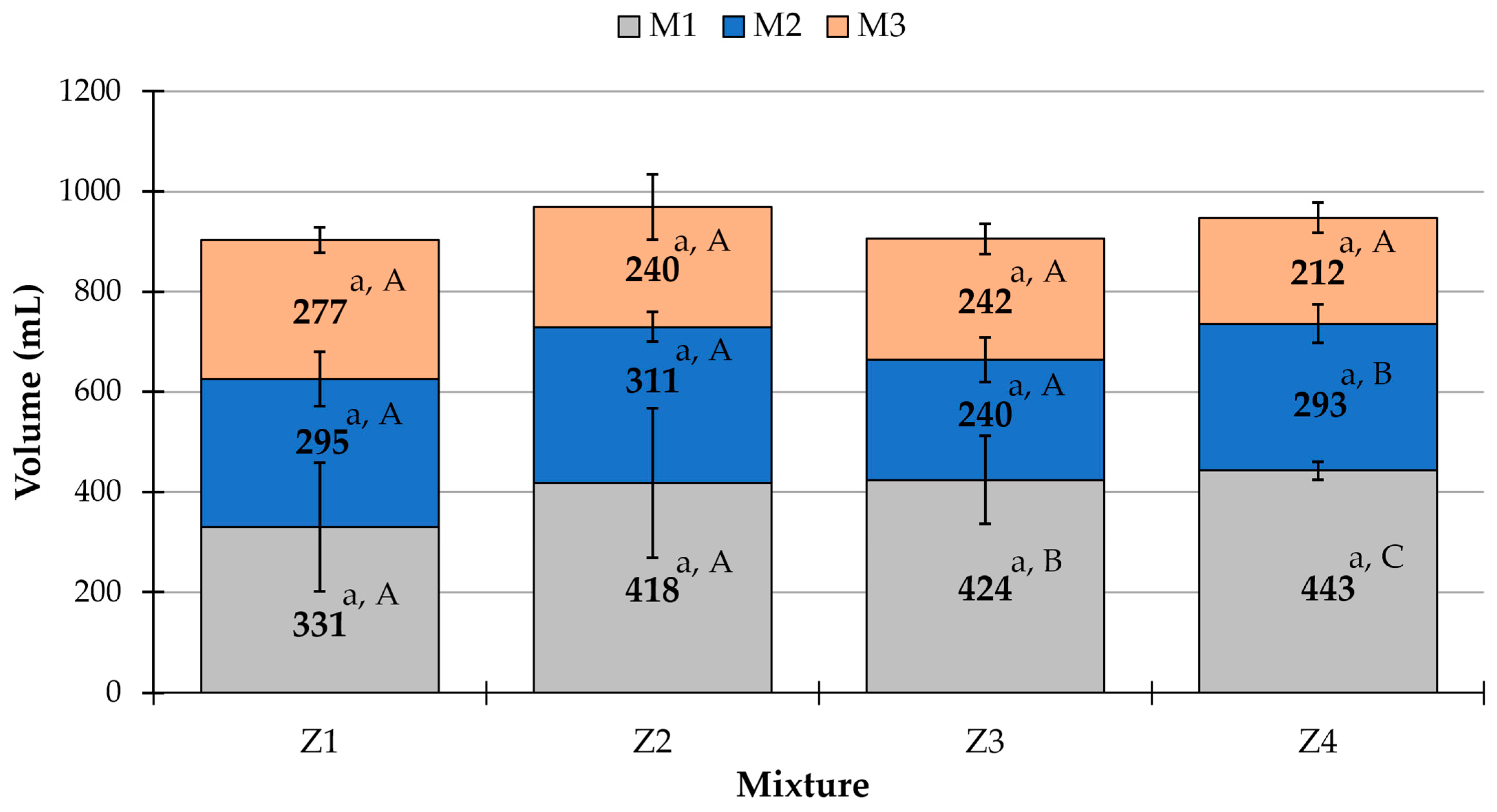
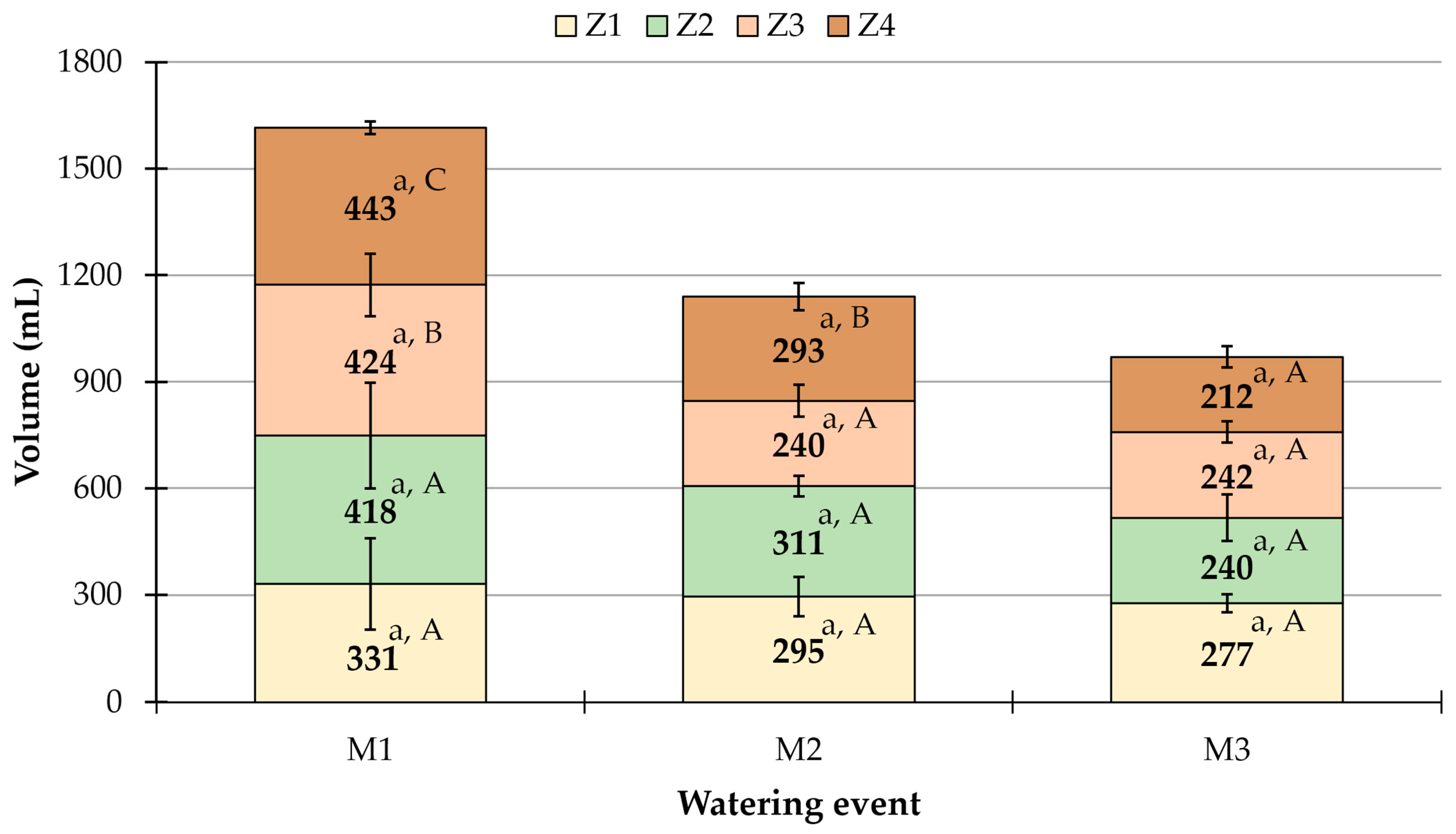
The volume of leachates decreased with each individual watering event (Figure 1). While approximately 81% of applied water leached after the initial watering, only approximately 49% leached after the last watering (Figure A1). The smallest decrease was in the control sample, where the average decrease was 11% between the first and last watering; the largest decrease (approximately 46%) was in the sample with all three components (Z4). Statistical analysis of leachate volume showed no significant differences among treatments at any watering event (M1: p = 0.6105; M2: p = 0.2729; M3: p = 0.3516). Over time, volume in Z3 decreased significantly from M1 to M2 and M3 (p = 0.0138). In Z4, it differed significantly across all three time points (p = 0.0002): M1 > M2 > M3. Z1 and Z2 showed no significant temporal changes (p > 0.05). The impact of algae suspension incorporation is descriptive; initially, mixtures with algae exhibited slightly higher water leaching at the commencement of the experiment. However, at the conclusion of the experiment, these mixtures demonstrated on average an approximately 6% reduction in water leaching capacity compared to mixtures without algae. These descriptive trends were not statistically confirmed due to high variability.
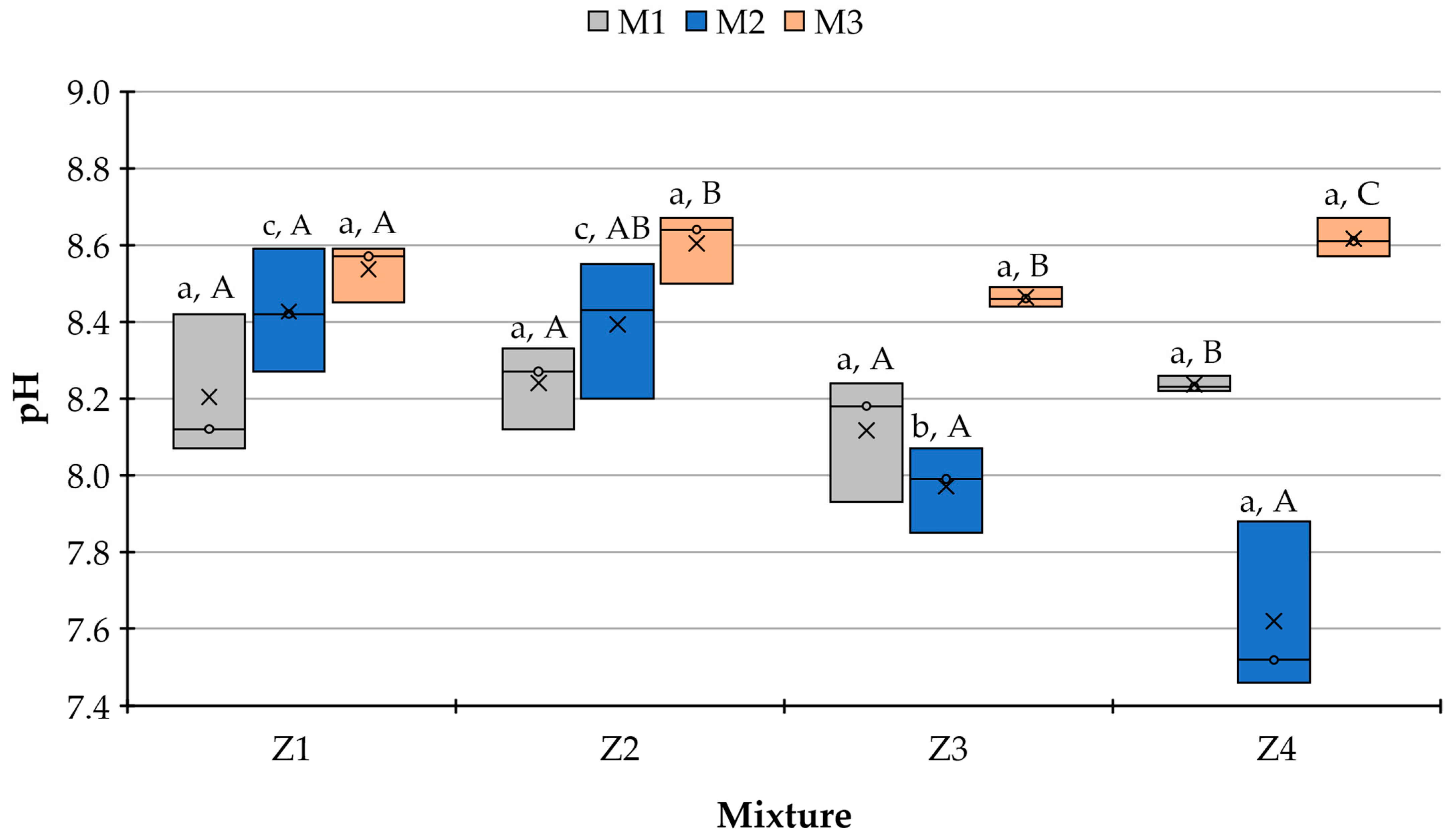
The mean pH of the leaching solution exhibited a slight increase during the experiment. Initially, the mean pH levels ranged from 8.11 to 8.24, while the final pH values of the leachates were between 8.53 and 8.62 (Figure 2). The pH values of the mixtures Z1 and Z2 exhibited a marginal increase during the duration of the experiment. However, a discrepancy of 0.2 pH is considered negligible.
Statistical analysis of pH revealed no significant differences among treatments at M1 and M3 (p = 0.6755 and 0.0706, respectively). However, significant differences were observed at M2 (p = 0.0013), when pH at Z1 and Z2 was significantly higher than Z3 and Z4. Temporal changes in Z1 were not significant (p = 0.0835). In Z2, pH increased significantly from M1 to M3 (p = 0.0395); in Z3 (p = 0.0051), pH decreased from M1 and M2 to M3. In the case of Z4, pH increased significantly in the following order: M2 < M1 < M3 (p = 0.0003).
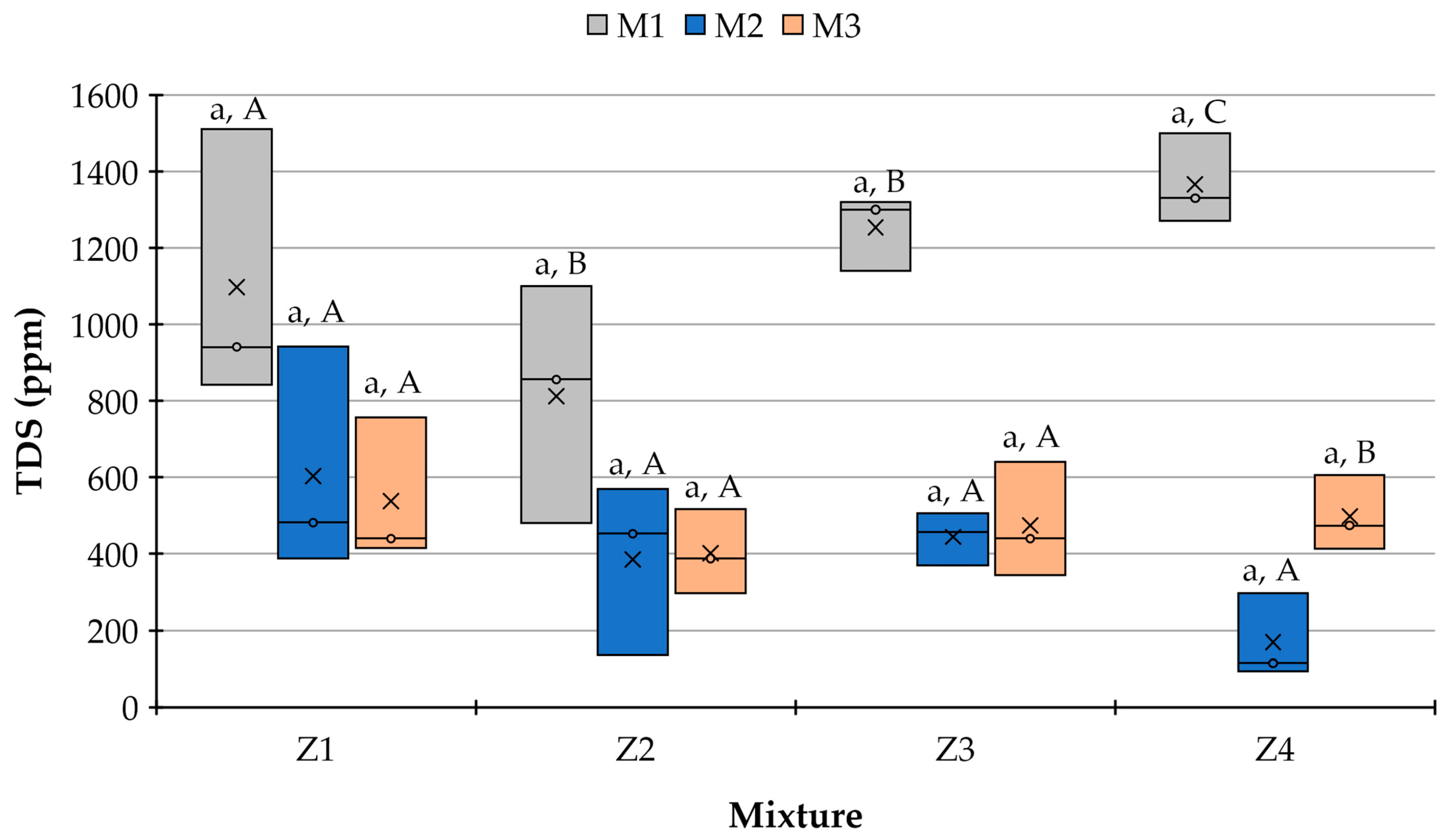
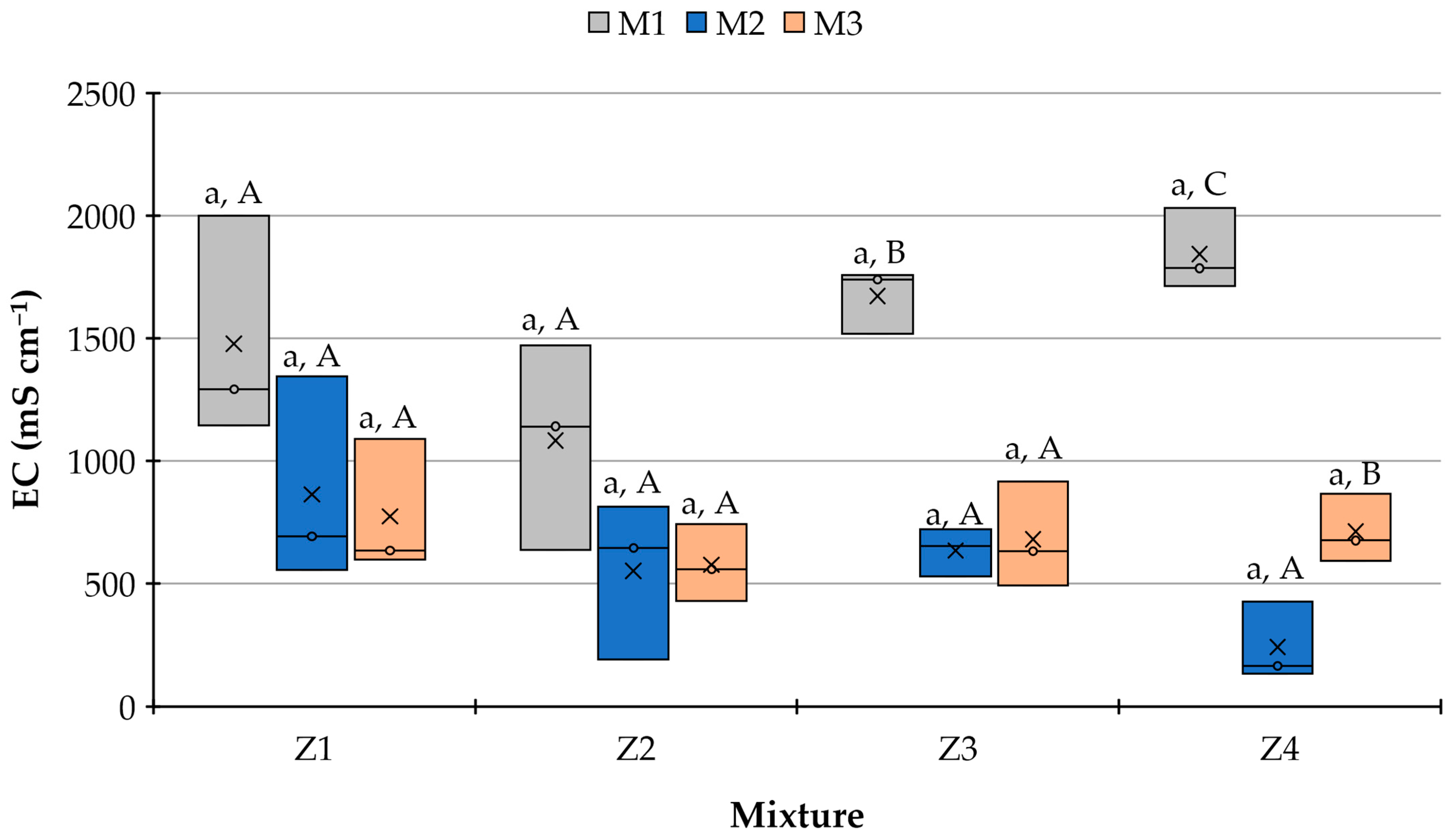
The leaching of elements from the profile is evident from the changes in the amount of total dissolved solids (Figure 3) and electrical conductivity (Figure 4). Despite a temporary data fluctuation due to preferential flow during the second watering event, a general decreasing trend in these parameters is evident over time. While the mean TDS values after the initial watering event exceeded 1100 ppm, the final TDS was approximately 475 ppm. The lowest TDS values were measured for the sediment and algae mixture (Z2), while the highest values varied between Z4 (sediment, compost and algae mixture) and the control (Z1).
Statistical analysis of TDS and EC revealed no significant differences among treatments at any measurement event (M1: TDS p = 0.1117, EC p = 0.0963; M2: TDS p = 0.134, EC p = 0.1333; M3: TDS p = 0.700, EC p = 0.6998). Z1 and Z2 showed no significant temporal changes (p > 0.05). In Z3, TDS and EC decreased significantly from M1 to M2 and M3 (TDS p = 0.0002; EC p = 0.0003). In Z4, TDS and EC showed significant differences across all three time points (p < 0.0001 for both properties); the values decreased in the order M1 > M3 > M2.
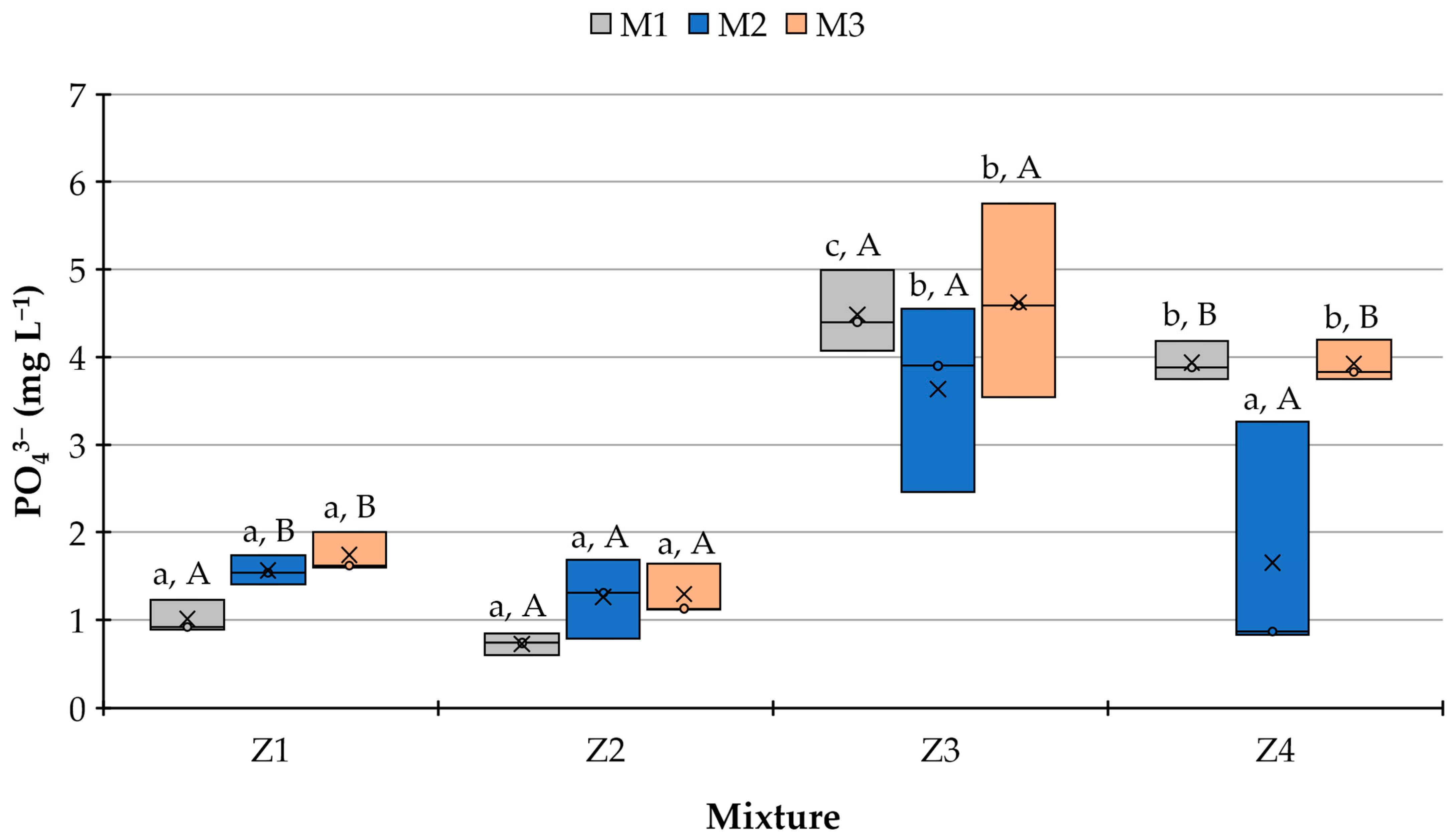
Orthophosphates leaching increased over time in both the control (Z1) and the sediment with added algae (Z2). Conversely, the mixtures with compost (Z3 and Z4) exhibited a more stable trend (Figure 5). However, orthophosphate concentrations in Z3 and Z4 were higher than in the mixtures without compost. The highest orthophosphate concentration in the leachates was observed for Z3, while the lowest was observed for Z2. The findings suggest that the incorporation of algae reduces the leaching of orthophosphates. Nevertheless, the reliability of the initial PO43− concentration data is reduced by the abovementioned preferential flow observed in some replicates.
Statistical analysis of orthophosphates showed significant treatment differences at M1 (p < 0.001) and M2 (p = 0.0449), but not at M3 (p = 0.0706). The content in Z3 was significantly lower than in the other treatments, both in M1 and M2. Over the experiment, significant changes were observed in Z1 and Z4 treatments (p = 0.0091 and 0.0225, respectively). While in Z1, the content of orthophosphates was significantly lower at M1, in the case of Z4, the lowest value was observed at M2.
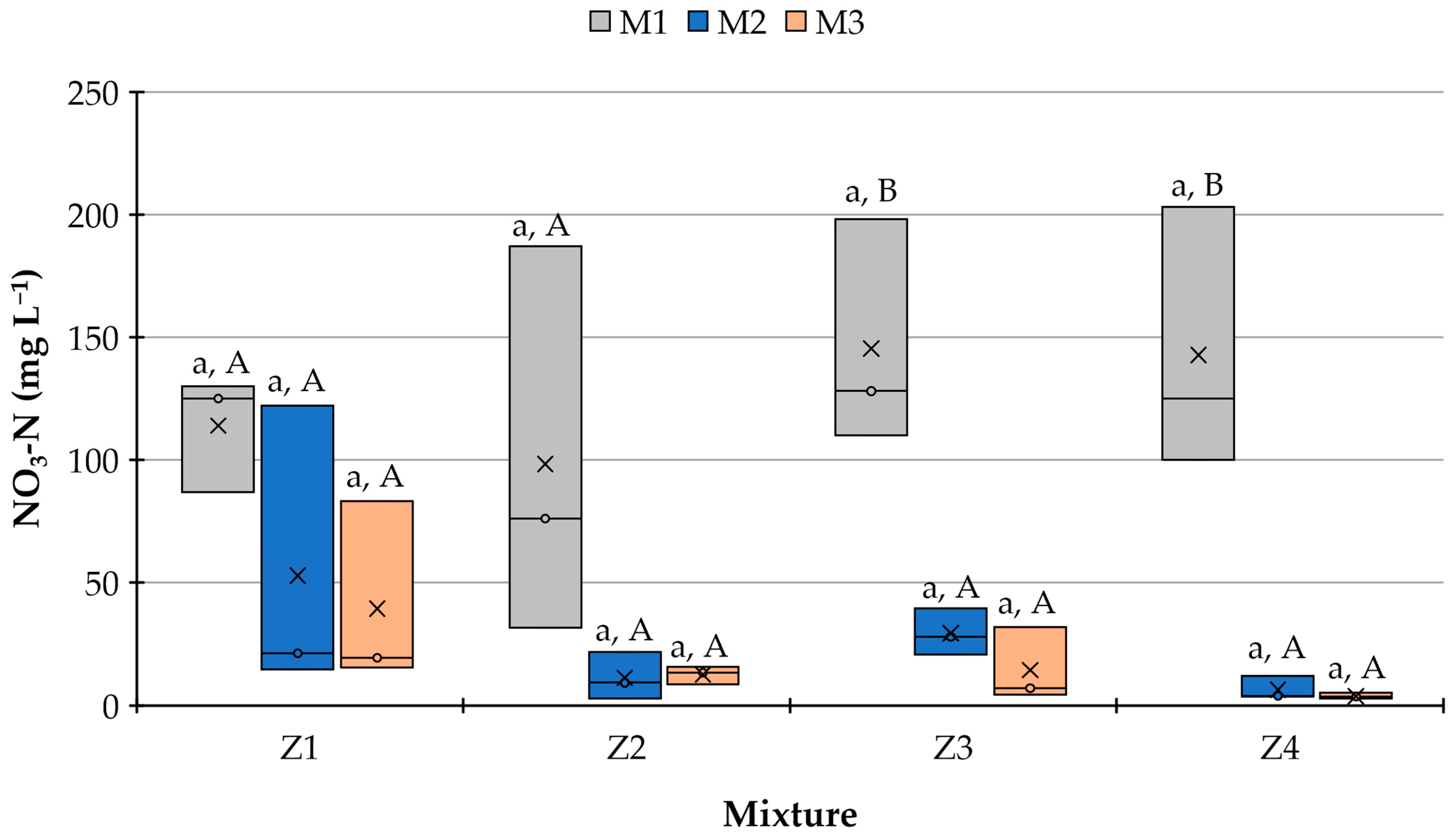
As orthophosphate concentration in the leachates increased, nitrate nitrogen concentrations decreased rapidly (Figure 6). Similarly to PO43−, mixtures containing algae exhibited a reduced capacity to leach NO3-N. The significant reduction in NO3-N was observed in the leachates from mixtures with compost (Z3 and Z4) (p = 0.0027 and 0.0024, respectively). We hypothesize that compost components promote N transformation into different forms, leading to leachate NO3-N concentrations that declined to as low as 3% (Z4) to 10% (Z3) of their initial values by the third watering event. As demonstrated in Figure 6, final NO3-N concentrations were approximately 13% (Z2) and 35% (Z1) of initial levels. The final concentrations of NO3-N in the mixtures with added algae were lower than those in the mixtures without it.
It is important to note a physical anomaly that occurred during the second watering event (M2), where preferential flow around the pot walls was observed in one Z2 replicate and two Z4 replicates. In these specific pots, the demineralized water largely bypassed the sediment matrix, resulting in artificially diluted leachates. Because these compromised replicates are included in the formal ANOVA models (Figure 2, Figure 3, Figure 4, Figure 5 and Figure 6), they artificially skewed the aggregate means for Z2 and Z4 during M2. To account for this, a sensitivity analysis was conducted by excluding these three replicates. Excluding these outliers revealed that the true pH of the intact Z4 column at M2 was 7.88, which aligns closely with Z3 (7.97), confirming that compost-amended mixtures consistently exhibit lower pH than non-compost mixtures. Most notably, while the original statistical model showed no significant difference in PO43− leaching between Z4 and the control at M2, the sensitivity analysis revealed that the unaffected Z4 replicate actually yielded a PO43− concentration of 3.26 mg L−1. This demonstrates that initial P leaching in the combined mixture (Z4) closely mirrors the high P release seen in the compost-only mixture (Z3; 3.64 mg L−1). Similarly, removing these diluted replicates confirmed that the true descriptive means for TDS, EC, and NO3-N in the intact columns were higher than the aggregate averages suggest. Consequently, this physical anomaly also artificially influenced the temporal statistical trends (uppercase letters); for example, the apparent significant dip in Z4 orthophosphate, TDS, and EC concentrations precisely at M2 is an artifact of the diluted replicates, whereas the intact column exhibited a much more stable leaching trend over time. While the low resulting sample size (e.g., n = 1 for Z4 at M2) precludes formal post hoc verification for this adjusted dataset, this sensitivity analysis confirms that the sharp drop in parameter concentrations for Z4 at M2 was a mechanical artifact of preferential flow rather than a true biochemical difference.

3.2. Changes in Mixture Compositions After the Experiment

The parameter that demonstrated the highest degree of stability was pH. The alterations observed during the experiment were within ±0.1 for all mixtures (Table 3). Most of the other parameters exhibited a variation of ±15%. The most significant decrease was observed in electrical conductivity, ranging from 45% to 50%, across all mixture types. In mixtures with added algae (Z2 and Z4), a smaller decrease in EC was observed compared to mixtures without algae. The addition of algae (Z2) altered several parameters compared to the control (Z1), including CaO, Mg, K2O, P2O5, As, Cr, Cu, Ni, Pb and Zn. The other parameters changed by only approximately 2%, which was within the 95% confidence level of measured values. By the end of the experiment, concentrations of K2O (22%), Cu (14%), Ni (13%), and MgO (12%) were slightly higher in Z2 than in Z1. In contrast, these changes were minimal in Z1. In mixtures with compost addition to the sediments (Z3), post-experiment concentrations of TN, MgO, K2O, As, Cr, Cu, Ni and Pb were slightly higher than in the control (Z1) and slightly higher than in the mixture of compost and algae (Z4). The final concentrations of Cr and Cu were similar in both compost-amended mixtures (Z3 and Z4). The lowest final concentration of TN was observed in Z4. The addition of algae to the sediments (Z2) produced the same effect as the mixture with compost (Z4).

4. Discussion

The results of the experiment confirm that the addition of organic material significantly influences nutrient leaching processes from sediments into the aquatic environment, and the nature of the applied material plays a decisive role. The observed decrease in leachate volume during the experiment indicates changes in the hydraulic properties of the system, likely due to the increased water retention capacity of organic matter. This effect was more pronounced in mixtures amended with organic material (Z2, Z3 and Z4) compared to the control (Z1), with the largest effect observed in the combined treatment (Z4). We hypothesize that the processive hydration and swelling of organic material during the experiment increases its water holding capacity, thereby decreasing the flow through the sediment column. This is consistent with findings that physical properties of organic materials, such as water retention capacity, can affect soil water flow and consequently the transport of dissolved substances [42].
The evolution of EC and TDS suggests intensive leaching of ions from biological material to the water, particularly in the initial phase of the experiment, whereas the subsequent decline in concentrations indicates depletion of readily mobile nutrient forms (Figure 5 and Figure 6). This trend agrees with the literature in [2], who reported that only a small fraction of total N and P is transferred into the dissolved phase (less than 0.02–0.96% of total N and 0.28–0.63% of total P), with the majority remaining bound within sediments. This is supported by the comparison of results of total N concentration in the mixtures before and after the experiment, where the mean concentration changes are negligible (Table 3).
Regarding individual nutrients in the leachates, a significant difference was observed in the behavior of N and P. The increasing concentration of orthophosphates in the leachates, especially in the control (Z1) and sediment–algae (Z2) mixtures, indicates gradual mobilization of sediment-bound P. In contrast, the presence of compost resulted in higher P concentrations but with a stabilizing trend over time. This phenomenon can be explained by the fact that organic matter promotes mineralization and release of P while simultaneously forming associations that partially regulate its mobility [43,44,45]. Redox conditions also play an essential role, as reduced oxygen availability promotes the release of P bound to Fe and Mn oxides [44,46], which were not measured in this study. Changes in P concentrations within the mixtures themself were not pronounced, whereas P2O5 concentrations after the experiment were slightly higher in mixtures without algae amendments (Z1 and Z3) (Table 3).
An important finding is the reduced leaching of both orthophosphates and nitrates in mixtures amended with algae. This effect suggests a potential ability of algae to take up nutrients or convert them into less mobile forms. At the same time, nitrate concentrations decreased, particularly in compost-amended mixtures, indicating enhanced N transformation processes. Compost may stimulate microbial activity and processes such as immobilization or denitrification, thereby reducing nitrate concentrations in leachates. These findings are consistent with studies demonstrating that compost application does not necessarily increase NO3-N leaching but may instead promote its transformation into other forms [16]. Furthermore, the quality and stability of compost are key factors controlling N losses through leaching [47]. Although our results indicate that compost promotes N transformation processes, direct quantification of microbial activity and plant response mechanisms was beyond the scope of this short-term laboratory study and remains an important area for future investigations.
Our findings are well supported by recent studies. In a nine-month lysimeter experiment, [9] found that applying nutrient-rich lake sediment to agricultural soil doubled the yield and P uptake of ryegrass, while leaching levels of N and P remained comparable to the control treatment. This parallels our observation that sediment itself can be a valuable nutrient source without causing excessive immediate leaching. Unlike our column study, however, [9] also demonstrated that a biochar layer between the sediment and soil reduced N and P leaching by 50%, a promising strategy we did not explore. Regarding compost, [16] reported in a three-year field study that replacing mineral N with compost did not increase nitrate leaching because crops did not take up all the supplied N, but the excess was not leached. Their long-term finding of stabilized nitrate leaching is consistent with the lower nitrate concentrations we observed in compost-amended columns. In the context of algal amendments, a column experiment by [48] showed that microalgae biomass applied to soil acted as a slow-release fertilizer that was largely resistant to leaching, with nutrient losses nearly identical to those in unfertilized controls. That study, using a 3 g kg−1 application rate, strongly corroborates our own results for the algae treatment (Z2) and indicates that carefully dosed algae can be a safe organic fertilizer in terms of water quality. Collectively, these studies reaffirm that the type, rate, and placement of organic amendments are decisive for achieving both agronomic benefits and environmental safety.
The results further highlight the significant influence of organic matter on biogeochemical processes in sediments. The decomposition of organic material enhances microbial activity and nutrient mineralization, leading to increased release of nutrients into the water column [43]. Although dissolved oxygen was not continuously measured in this study, the transient ponding during watering events suggests that oxygen concentrations may temporarily decrease within the column. This can potentially promote brief anaerobic conditions that facilitate the mobilization of ammonium nitrogen and phosphates [44,49]. This mechanism represents a substantial risk for water quality, particularly with respect to eutrophication.
Changes in the chemical composition of the mixtures after the experiment confirm that individual amendments affect not only nutrient leaching but also the accumulation of elements within the sediment (Table 3). Slightly higher concentrations of certain elements (e.g., K2O) in algae-amended mixtures indicate their retention within the system, whereas compost supported the accumulation of a broader range of elements, including nitrogen. This observation corresponds with findings that compost application can increase soil organic carbon content and its retention [20], indirectly influencing nutrient binding processes. Furthermore, the incorporation of these organic amendments significantly alters soil organic carbon dynamics, which in turn regulates the microbial community responses responsible for long-term nutrient cycling [50]. However, most of the observed changes in chemical composition were within the confidence level and well below the thresholds defined by the legislation. Therefore, all tested mixtures can be considered suitable for land reclamation projects and as alternatives to growing substrates on the degraded soils, e.g., in brownfield areas. Transitioning from traditional, non-renewable growing media (such as peat-based substrates) to waste-derived sediment and compost mixtures aligns strongly with circular economy principles. The beneficial reuse of these secondary materials not only diverts waste from landfills but also creates sustainable, value-added agricultural products, simultaneously addressing waste management and the conservation of natural resources [51,52].
The type of organic material appears to be a key factor controlling the direction and intensity of nutrient leaching processes. Different types of organic amendments may either reduce nitrogen mobility or enhance the mobility of phosphorus and cations, depending on sediment texture and material properties [53]. This aspect is particularly important from an environmental perspective, as inappropriate selection of organic materials may increase the risk of nutrient contamination of water bodies [46]. While our short-term results demonstrate the agronomic potential of these mixtures, the long-term environmental safety of sediment reuse must be rigorously evaluated. Sediments may contain accumulated heavy metals and organic contaminants, the mobility of which can vary depending on environmental conditions [10,54]. Repeated applications of amended sediments necessitate continuous monitoring to prevent the gradual accumulation of heavy metals and potential organic contaminants in the soil profile [31,55]. Furthermore, mitigating chronic nutrient leaching requires strict adherence to regional regulatory frameworks and guidelines for sediment reuse to ensure that agricultural benefits do not compromise groundwater quality. Current literature also emphasizes the scarcity of long-term field data evaluating contaminant fate and ecosystem responses [31,54,56]. Therefore, long-term monitoring of sediment-amended sites is recommended to ensure environmental safety and sustainable management [31,56]. Despite the demonstrated agronomic and environmental potential of these mixtures, large-scale commercial scalability faces several practical challenges. Economic feasibility is heavily dependent on transportation and handling costs, as wet sediments are heavy and costly to move over long distances [57,58]. Consequently, on-site or localized dewatering and processing facilities are essential to improve the cost-effectiveness of sediment reuse. Furthermore, widespread farmer adoption requires clear demonstrations of cost-effectiveness compared to conventional fertilizers, alongside standardized substrate quality to guarantee predictable and safe crop yields. The regulatory landscape presents a significant hurdle: while the EU Sewage Sludge Directive [59] establishes limit values for heavy metals in waste-derived soil amendments, a recent assessment found that 19% of agricultural land in the EU and United Kingdom would show elevated ecological risk after long-term application, highlighting the need for careful monitoring and site-specific risk assessment [60]. Moreover, research on harbor sediments has confirmed that while technical feasibility for reuse exists, the lack of harmonized national regulations and consolidated supply chains often restricts real-world application [58]. Without a clear economic incentive and a stable regulatory pathway, the transition from laboratory-scale or pilot studies to commercially viable applications will remain limited.
Overall, the experiment demonstrates the dual role of organic matter in sediments: on the one hand, it increases nutrient availability for plants and microbes, while on the other hand, it can promote nutrient leaching into the aquatic environment. This effect is strongly influenced by the type of organic amendment, redox conditions, and the physical properties of the system. From an environmental standpoint, careful consideration of the composition and application of organic materials is therefore essential to minimize the risk of eutrophication and water quality degradation.

5. Conclusions

We conclude that the addition of organic matter to sediments is a significant factor influencing the mobilization and leaching of nutrients. This effect is mediated by a combination of biological, chemical, and physical processes in the sediment–water system. The results confirmed that both the quantity and form of leached nutrients depend strongly on the type of organic amendment applied.
Compost promoted nutrient transformation and accumulation within the sediment, while not necessarily increasing nitrate leaching. Algae addition reduced the leaching of both phosphorus and nitrogen, likely due to nutrient uptake or transformation into less mobile forms. The combination of compost and algae showed additive effects on water retention and element retention.
Limitations of this study include the short experimental duration (21 days), the use of a single sediment source, the absence of a crop model to evaluate plant uptake, the use of demineralized water for simulated rainfall, the lack of data regarding algal growth and die-off dynamics within the sediment, and the absence of direct measurements of redox potential. Preferential flow observed in some replicates introduced variability, particularly during the second watering event. Furthermore, the lower organic matter content in the algae-only mixture (Z2) compared to the control suggests a dilution effect from the liquid suspension, which should be verified in future studies.
Future research should examine longer-term leaching dynamics, include plant uptake studies, and investigate the microbial mechanisms underlying nitrogen transformation in compost-amended sediments. Field-scale validation is also needed.
Overall, the study highlights that organic matter addition can act both as a source and a regulator of nutrient release. The balance between these processes depends on the properties of the applied material, as well as on environmental and physicochemical conditions within the sediment. These findings are particularly relevant for the assessment of internal nutrient loading and the management of eutrophication risks in aquatic ecosystems.

Author Contributions

Conceptualization, T.K. and A.B.; methodology, T.K. and A.B.; validation, Ľ.J., A.V. and E.A.; formal analysis, B.M.; investigation, M.L.; resources, T.K., A.B. and B.M.; data curation, E.A.; writing—original draft preparation, A.B. and T.K.; writing—review and editing, Ľ.J., E.A., A.V., M.L. and B.M.; visualization, T.K.; supervision, Ľ.J.; project administration, T.K.; funding acquisition, T.K. All authors have read and agreed to the published version of the manuscript.

Funding

This research was funded by the EU NextGenerationEU through the Recovery and Resilience Plan for Slovakia under the project No. 09I01-03-V04-00075/2025/VA.

Institutional Review Board Statement

Not applicable.

Informed Consent Statement

Not applicable.

Data Availability Statement

The original contributions presented in this study are included in the article. Further inquiries can be directed to the corresponding author.

Conflicts of Interest

Andrej Válek is from the Slovak Water Management Enterprise. The authors declare that the research was conducted in the absence of any commercial or financial relationships that could be construed as a potential conflict of interest. The funders had no role in the design of the study; in the collection, analyses, or interpretation of data; in the writing of the manuscript; or in the decision to publish the results.

Abbreviations

The following abbreviations are used in this manuscript:
TDSTotal dissolved solids
ECElectrical conductivity
NNitrogen
PPhosphorus
VVolume
SDStandard deviation
DMDry matter
EU European Union
EECEuropean Economic Community

Appendix A

Table A1. Limits of parameters defined in Slovak legislation.
ParameterLimits Compost 1Limits Growing Substrate 1Limits Sediments 2
EC (mS cm−1)N/AMax. 0.6N/A
DM (%)40–6045N/A
pH (KCl)6.5–8.56.5–8.5N/A
TN (% DM)10.3–1.2N/A
CaO (% DM)1.2N/AN/A
MgO (% DM)0.5N/AN/A
K2O (% DM)0.50.3N/A
P2O5 (% DM)0.50.1N/A
As (mg kg−1 DM)max. 10max. 10max. 20
Cr (mg kg−1 DM)max. 100max. 100max. 1000
Cu (mg kg−1 DM)max. 200max. 100max. 1000
Ni (mg kg−1 DM)max. 50max. 50max. 300
Pb (mg kg−1 DM)max. 100max. 100max. 750
Zn (mg kg−1 DM)max. 400max. 200max. 2500
Note: EC—electric conductivity determined at 25 °C; DM—dry matter content determined at 105 °C; TN—total nitrogen; 1 minimal values (if not specified) for the compost application on the soil based on [36]; 2 maximal values for the bottom sediments application on the soil based on [37]; N/A—not applicable.
Figure A1. Cumulative volume of leachates per watering event (M1, M2, M3) showing the contribution of each mixture. The evaluated treatments include: Z1 (control, 100% sediment), Z2 (sediment + 2.5% algae), Z3 (sediment + 25% compost), and Z4 (sediment + 22.5% compost + 2.5% algae). Stacked bar plots display the mean values, with error bars representing the standard deviation of replicates (n = 3). Different lowercase letters (a) indicate statistically significant differences between different treatments (Z1–Z4) within the same watering event. Different uppercase letters (A, B, C) indicate statistically significant differences over time (M1 vs. M2 vs. M3) within the same specific treatment mixture (one-way ANOVA followed by Fisher’s LSD post hoc test, p < 0.05).
Sustainability 18 07541 g0a1

References

  1. Karunanithi, R.; Szogi, A.A.; Bolan, N.; Naidu, R.; Loganathan, P.; Hunt, P.G.; Vanotti, M.B.; Saint, C.P.; Ok, Y.S.; Krishnamoorthy, S. Chapter Three—Phosphorus recovery and reuse from waste streams. Adv. Agron. 2015, 131, 173–250. [Google Scholar] [CrossRef]
  2. Junakova, N.; Balintova, M. Nutrient Leaching from Reservoir Bottom Sediments. Chem. Eng. Trans. 2013, 35, 1141–1146. [Google Scholar] [CrossRef]
  3. Orihel, D.M.; Blauch, H.M.; Casson, N.J.; North, R.L.; Parsons, C.T.; Seckar, D.C.M.; Venkiteswaran, J.J. Internal phosphorus loading in Canadian fresh waters: A critical review and data analysis. Can. J. Fish. Aquat. Sci. 2017, 74, 2005–2029. [Google Scholar] [CrossRef]
  4. Wu, X.; Ma, T.; Du, Y.; Jiang, Q.; Shen, S.; Liu, W. Phosphorus cycling in freshwater lake sediments: Influence of seasonal water level fluctuations. Sci. Total Environ. 2021, 792, 148383. [Google Scholar] [CrossRef] [PubMed]
  5. Lv, Y.; Zhang, M.; Yin, H. Phosphorus release from the sediment of a drinking water reservoir under the influence of seasonal hypoxia. Sci. Total Environ. 2024, 917, 170490. [Google Scholar] [CrossRef] [PubMed]
  6. Jensen, H.S.; Kristensen, P.; Jeppesen, E.; Skytthe, A. Iron: Phosphorus ratio in surface sediment as an indicator of phosphate release from aerobic sediments in shallow lakes. Hydrobiologia 1992, 235, 731–743. [Google Scholar] [CrossRef]
  7. Hernádi, H.; Makó, A.; Lovász, Z.; Szoboszlay, S.; Harkai, P.; Háhn, J.; Kocsis, M.; Schöphen, E.; Tóth, Z.; Bidló, A.; et al. Investigation of Sediment Characteristics and Nutrient Content in Relation to Pilot Dredging at Kis-Balaton Water Protection System (Hungary). Hydrology 2025, 12, 112. [Google Scholar] [CrossRef]
  8. Canet, R.; Chaves, C.; Pomares, F.; Albiach, R. Agricultural use of sediments from the Albufera Lake (eastern Spain). Agric. Ecosyst. Environ. 2003, 95, 29–36. [Google Scholar] [CrossRef]
  9. Kiani, M.; Raave, H.; Simojoki, A.; Tammeorg, O.; Tammeorg, P. Recycling Lake sediment to agriculture: Effects on plant growth, nutrient availability, and leaching. Sci. Total Environ. 2021, 753, 141984. [Google Scholar] [CrossRef] [PubMed]
  10. Kalyani, K.; Babu, G.L.S. Review on Management of Heavy Metal Contaminated Sediment: Remediation Strategies and Reuse Potential. J. Indian Inst. Sci. 2024, 104, 893–917. [Google Scholar] [CrossRef]
  11. Fratini, C.; Anselmi, S.; Renzi, M. Dredge Sediment as an Opportunity: A Comprehensive and Updated Review of Beneficial Uses in Marine, River, and Lagoon Eco-Systems. Environments 2025, 12, 200. [Google Scholar] [CrossRef]
  12. Fereres, E.; García Vila, M.; Gonzalez-Gomez, A.; Salman, M.; Pek, E.; Simongini, C.; Youssef Bizri, Y.; El-Korek, N. A Review of Potential and Limitations of Dredged Sediment Application in Agriculture; FAO: Beirut, Lebanon, 2022. [Google Scholar] [CrossRef]
  13. Laakso, J.; Uusitalo, R.; Leppänen, J.; Yli-Halla, M. Sediment from Agricultural Constructed Wetland Immobilizes Soil Phosphorus. J. Environ. Qual. 2017, 46, 356–363. [Google Scholar] [CrossRef] [PubMed]
  14. Martínez-Blanco, J.; Lazcano, C.; Christensen, T.H.; Muñoz, P.; Rieradevall, J.; Møller, J.; Antón, A.; Boldrin, A. Compost benefits for agriculture evaluated by life cycle assessment: A review. Agron. Sustain. Dev. 2013, 33, 721–732. [Google Scholar] [CrossRef]
  15. Horrocks, A.; Curtin, D.; Tregurtha, C.; Meenken, E. Municipal Compost as a Nutrient Source for Organic Crop Production in New Zealand. Agronomy 2016, 6, 35. [Google Scholar] [CrossRef]
  16. Maucieri, C.; Barco, A.; Borin, M. Compost as a Substitute for Mineral N Fertilization? Effects on Crops, Soil and N Leaching. Agronomy 2019, 9, 193. [Google Scholar] [CrossRef]
  17. Hurley, S.; Shrestha, P.; Cording, A. Nutrient Leaching from Compost: Implications for Bioretention and Other Green Stormwater Infrastructure. J. Sustain. Water Built Environ. 2017, 3, 04017006. [Google Scholar] [CrossRef]
  18. Sánchez-Moreno, S.; Nicola, N.L.; Ferris, H.; Zalom, F.G. Effects of agricultural management on nematode-mite assemblages: Soil food web indices as predictors of mite community composition. Appl. Soil Ecol. 2009, 41, 107–117. [Google Scholar] [CrossRef]
  19. Natsheh, B.; Mousa, S. Effect of Organic and Inorganic Fertilizers Application on Soil and Cucumber (Cucumis sativa L.) Plant Productivity. Int. J. Agric. For. 2014, 4, 166–170. [Google Scholar] [CrossRef]
  20. Adeli, A.; Read, J.; Feng, G.; McGrew, R.; Jenkins, J. Organic Amendments and Nutrient Leaching in Soil Columns. Agron. J. 2017, 109, 1294–1302. [Google Scholar] [CrossRef]
  21. Passoni, M.; Borin, M. Effects of Different Composts on Soil Nitrogen Balance and Dynamics in a Biennial Crop Succession. Compost. Sci. Util. 2009, 17, 108–116. [Google Scholar] [CrossRef]
  22. Chiaiese, P.; Corrado, G.; Colla, G.; Kyriacou, M.C.; Rouphael, Y. Renewable sources of plant biostimulation: Microalgae as a sustainable means to improve crop performance. Front. Plant Sci. 2018, 9, 1782. [Google Scholar] [CrossRef] [PubMed]
  23. Renuka, N.; Prasanna, R.; Sood, A.; Ahluwalia, A.S.; Bansal, R.; Babu, S.; Singh, R.; Shivay, Y.S.; Nain, L. Exploring the efficacy of wastewater-grown microalgal biomass as a biofertilizer for wheat. Environ. Sci. Pollut. Res. Int. 2016, 23, 6608–6620. [Google Scholar] [CrossRef] [PubMed]
  24. Abdel-Raouf, N.; Al-Homaidan, A.A.; Ibraheem, I.B.M. Agricultural importance of algae. Afr. J. Biotechnol. 2012, 11, 11648–11658. [Google Scholar] [CrossRef]
  25. Khan, W.; Rayirath, U.P.; Subramanian, S.; Jithesh, M.N.; Rayorath, P.; Hodges, D.M.; Critchley, A.T.; Craigie, J.S.; Norrie, J.; Prithiviraj, B. Seaweed extracts as biostimulants of plant growth and development. J. Plant Growth Regul. 2009, 28, 386–399. [Google Scholar] [CrossRef]
  26. Mulbry, W.; Kondrad, S.; Pizarro, C.; Kebede-Westhead, E. Treatment of dairy manure effluent using freshwater algae: Algal productivity and recovery of manure nutrients using pilot-scale algal turf scrubbers. Bioresour. Technol. 2005, 99, 8137–8142. [Google Scholar] [CrossRef] [PubMed]
  27. García-González, J.; Sommerfeld, M. Biofertilizer and biostimulant properties of the microalga Acutodesmus dimorphus. J. Appl. Phycol. 2016, 28, 1051–1061. [Google Scholar] [CrossRef] [PubMed]
  28. Singh, J.S.; Pandey, V.C.; Singh, D.P. Efficient soil microorganisms: A new dimension for sustainable agriculture and environmental development. Agric. Ecosyst. Environ. 2011, 140, 339–353. [Google Scholar] [CrossRef]
  29. Rodrigues, J.; Gérard, A.; Séré, G.; Morel, J.-L.; Guimont, S.; Simonnot, M.-O.; Pons, M.-N. Life cycle impacts of soil construction, an innovative approach to reclaim brownfields and produce nonedible biomass. J. Clean. Prod. 2019, 211, 36–43. [Google Scholar] [CrossRef]
  30. Lord, R. Beneficial Use of Sediments: Phytostabilisation, Technosol & Brownfield Biofuels; Case study; Central Dredging Association: Delft, The Netherlands, 2020. [Google Scholar]
  31. Farooqi, Z.U.R.; Qadir, A.A.; Alserae, H.; Raza, A.; Mohy-Ud-Din, W. Organic amendment–mediated reclamation and build-up of soil microbial diversity in salt-affected soils: Fostering soil biota for shaping rhizosphere to enhance soil health and crop productivity. Environ. Sci. Pollut. Res. 2023, 30, 109889–109920. [Google Scholar] [CrossRef] [PubMed]
  32. Kabato, W.S.; Hailegnaw, N.; Chaffamo, T.E.; Samuel, A.; De Silva, A.G.S.D.; Molnár, Z. Microalgae-Based Strategies for Soil Health and Crop Productivity: Mechanisms, Challenges, and Pathways to Climate-Resilient Agriculture. Agronomy 2025, 15, 2669. [Google Scholar] [CrossRef]
  33. Cheng, J.Z.; Berkowitz, J.F.; White, J.R. Trajectory of coastal wetland soil physical and microbial properties 6+ years after thin layer placement sediment amendment. Front. Ecol. Evol. 2025, 13, 1605785. [Google Scholar] [CrossRef]
  34. Lenartowicz, M.; Jurík, L. Optimizing biomass growth and nutrient removal by Scenedesmus obliquus in dairy wastewater at different wastewater-to-algae ratios. In Študentská Vedecká Konferencia FZKI 2025; Horak, J., Ed.; Slovenská Poľnohospodárska Univerzita v Nitre: Nitra, Slovakia, 2025. [Google Scholar]
  35. Act 136/2000 Coll. on Fertilizers. Available online: https://www.zakonypreludi.sk/zz/2000-136 (accessed on 21 March 2026). (In Slovak)
  36. Ministerstvo Spravodlivosti Slovenskej Republiky. Vyhláška Ministerstva Pôdohospodárstva Slovenskej Republiky č. 577/2005 Z. z.; ktorou sa ustanovujú typy hnojív, zloženie, balenie a označovanie hnojív, analytické metódy skúšania hnojív, rizikové prvky, ich limitné hodnoty pre jednotlivé skupiny hnojív, prípustné odchýlky a limitné hodnoty pre hospodárske hnojivá; Ministerstvo Spravodlivosti Slovenskej Republiky: Bratislava, Slovakia, 2025.
  37. Act No. 188/2003 Coll. on the Application of Sewage Sludge and Bottom Sediments to Soil and on Amending Act No. 223/2001 Coll. on Waste and on Amending and Supplementing Certain Acts, as Amended. Available online: https://www.slov-lex.sk/ezbierky/pravne-predpisy/SK/ZZ/2003/188/20250601 (accessed on 21 March 2026). (In Slovak)
  38. Kumar, G.V.P.; Raheman, H. Identification of optimum combination of proportion of vermicompost in the soil-based potting mix and pot volume for the production of paper pot seedlings of vegetables. J. Plant Nutr. 2012, 35, 1277–1289. [Google Scholar] [CrossRef]
  39. Ceglie, F.G.; Bustamante, M.A.; Ben Amara, M.; Tittarelli, F. The Challenge of Peat Substitution in Organic Seedling Production: Optimization of Growing Media Formulation. PLoS ONE 2015, 10, e0128600. [Google Scholar] [CrossRef] [PubMed]
  40. Hashemimajd, K.; Kalbasi, M.; Golchin, A.; Shariatmadari, H. Comparison of Vermicompost and Composts as Potting Media for Growth of Tomatoes. J. Plant Nutr. 2004, 27, 1107–1123. [Google Scholar] [CrossRef]
  41. Mahadeen, A. Efficacy of Compost and Vermicompost on Growth, Yield and Nutrients Content of Common Beans Crop (Phaseolus vulgaris L.). J. Ecol. Eng. 2024, 25, 215–226. [Google Scholar] [CrossRef] [PubMed]
  42. Siedt, M.; Schäffer, A.; Smith, K.E.C.; Nabel, M.; Roß-Nickoll, M.; van Dongen, J.T. Comparing straw, compost, and biochar regarding their suitability as agricultural soil amendments to affect soil structure, nutrient leaching, microbial communities, and the fate of pesticides. Sci. Total Environ. 2021, 751, 141607. [Google Scholar] [CrossRef] [PubMed]
  43. Li, W.; Xu, S.; Chen, X.; Han, D.; Mu, B. Influencing Factors and Nutrient Release from Sediments in the Water Level Fluctuation Zone of Biliuhe Reservoir, a Drinking Water Reservoir. Water 2023, 15, 3659. [Google Scholar] [CrossRef]
  44. Liu, B.; Zhang, X.; Tong, Y.; Ao, W.; Wang, Z.; Zhu, S.; Wang, Y. Quantification of Nutrient Fluxes from Sediments of Lake Hulun, China: Implications for Plateau Lake Management. Sustainability 2023, 15, 8680. [Google Scholar] [CrossRef]
  45. Haasler, S.; Kragh, T.; Magid, J.; Gunnarsen, K.C.; Müller-Stöver, D.; Klamt, A.M.; Krogstrup, K.; Sorensen, H.; Nielsen, U.G.; Reitzel, K. Recycling of phosphorus from dredged lake sediment: Importance of iron-bound phosphates for plant growth. Sustain. Environ. 2024, 10, 2362503. [Google Scholar] [CrossRef]
  46. Kiani, M.; Zrim, J.; Simojoki, A.; Tammeorg, O.; Penttinen, P.; Markkanen, T.; Tammeorg, P. Recycling eutrophic lake sediments into grass production: A four-year field experiment on agronomical and environmental implications. Sci. Total Environ. 2023, 870, 161881. [Google Scholar] [CrossRef] [PubMed]
  47. Galsim, F.; Golabi, M.H.; Kim, Y.S.; Iyekar, C. Comparative effects of composted organic waste and inorganic fertilizer on nitrate leachate from the farm soils of northern Guam. Int. Soil Water Conserv. Res. 2021, 9, 87–102. [Google Scholar] [CrossRef]
  48. Weigand, H.; Velten, H.; Düring, R.A.; Chifflard, P.; Rohnke, M.; Weintraut, T.; Heusch, S.; Theilen, U. Soil fertilization with microalgae biomass from municipal wastewater treatment causes no additional leaching of dissolved macronutrients and trace elements in a column experiment. J. Environ. Qual. 2024, 53, 1222–1234. [Google Scholar] [CrossRef] [PubMed]
  49. Defeo, S.; Beutel, M.W.; Rodal-Morales, N.; Singer, M. Sediment release of nutrients and metals from two contrasting eutrophic California reservoirs under oxic, hypoxic and anoxic conditions. Front. Water 2024, 6, 1474057. [Google Scholar] [CrossRef]
  50. Cui, J.; Yang, B.; Zhang, M.; Song, D.; Xu, X.; Ai, C.; Liang, G.; Zhou, W. Investigating the effects of organic amendments on soil microbial composition and its linkage to soil organic carbon: A global meta-analysis. Sci. Total Environ. 2023, 894, 164899. [Google Scholar] [CrossRef] [PubMed]
  51. Vannucchi, F.; Macci, C.; Doni, S.; Longo, V.; Ugolini, F.; Masciandaro, G.; Peruzzi, E. Posidonia-based compost and dredged sediment in growing media improve tolerance and nutrient uptake in ornamental plants. Sustainability 2022, 14, 14419. [Google Scholar] [CrossRef]
  52. Aurdal, S.M. The persistent challenge of alternatives to peat in container-based horticulture: A historical review of the field of growing media. Front. Hortic. 2025, 4, 1657037. [Google Scholar] [CrossRef]
  53. Nguyen, B.T.; Phan, B.T.; Nguyen, T.X.; Nguyen, V.N.; Van Tran, T.; Bach, Q.V. Contrastive nutrient leaching from two differently textured paddy soils as influenced by biochar addition. J. Soils Sediments 2020, 20, 297–307. [Google Scholar] [CrossRef]
  54. Shu, X.; He, J.; Zhou, Z.; Xia, L.; Hu, Y.; Zhang, Y.; Zhang, Y.; Luo, Y.; Chu, H.; Liu, W.; et al. Organic amendments enhance soil microbial diversity, microbial functionality and crop yields: A meta-analysis. Sci. Total Environ. 2022, 829, 154627. [Google Scholar] [CrossRef] [PubMed]
  55. Szara, M.; Baran, A.; Klimkowicz-Pawlas, A.; Tarnawski, M. Ecotoxicological and chemical properties of the Rożnów reservoir bottom sediment amended with various waste materials. J. Environ. Manag. 2020, 273, 111176. [Google Scholar] [CrossRef] [PubMed]
  56. Hassan, M.; Strezov, V. Combined effect of biochar, manure and compost on canola growth, yield parameters and soil chemical properties. Sci. Rep. 2025, 15, 43338. [Google Scholar] [CrossRef] [PubMed]
  57. Pearce, S.; Stark, K. Petaluma River Watershed Sediment Beneficial Reuse Strategy. Contribution #1243; San Francisco Estuary Institute-Aquatic Science Center: Richmond, CA, USA, 2024; Available online: https://www.sfei.org/sites/default/files/biblio/2025-09/Sediment%20Solutions%20Petaluma%20Reuse.pdf?__cf_chl_tk=PBzbpMbCgK1Iy_cD6dMTN0N6XM20DFP2FRjKHFNJmTE-1764534900-1.0.1.1-8piOdv1fw0Bt.NRCKegpbjXwwDj41W8gL9xqjNw1tlE#12#7 (accessed on 12 July 2026).
  58. Bortali, M.; Rabouli, M.; Yessari, M.; Hajjaji, A. characterizing harbor dredged sediment for sustainable reuse as construction material. Sustainability 2023, 15, 1834. [Google Scholar] [CrossRef]
  59. Council of the European Union. Council Directive 86/278/EEC of 12 June 1986 on the protection of the environment, and in particular of the soil, when sewage sludge is used in agriculture. In Official Journal of the European Union Legislation Series; Council of the European Union: Brussels, Belgium, 1986. [Google Scholar]
  60. Yunta, F.; Schillaci, C.; Panagos, P.; Van Eynde, E.; Wojda, P.; Jones, A. Ecological risk assessment of heavy metals from application of sewage sludge on agricultural soils in Europe. Eur. J. Soil Sci. 2024, 75, e13562. [Google Scholar] [CrossRef]
Figure 1. Leachate volume per mixture collected after each simulated watering event (M1, M2, M3). The evaluated treatments include: Z1 (control, 100% sediment), Z2 (sediment + 2.5% algae), Z3 (sediment + 25% compost), and Z4 (sediment + 22.5% compost + 2.5% algae). Stacked bar plots display the mean values, with error bars representing the standard deviation of replicates (n = 3). Different lowercase letters (a) indicate statistically significant differences between different treatments (Z1–Z4) within the same watering event. Different uppercase letters (A, B, C) indicate statistically significant differences over time (M1 vs. M2 vs. M3) within the same specific treatment mixture (one-way ANOVA followed by Fisher’s LSD post hoc test, p < 0.05).
Sustainability 18 07541 g001
Figure 2. pH of leachates collected after each simulated watering event (M1, M2, M3). The evaluated treatments include: Z1 (control, 100% sediment), Z2 (sediment + 2.5% algae), Z3 (sediment + 25% compost), and Z4 (sediment + 22.5% compost + 2.5% algae). Box plots display the minimum, maximum, mean (x) and inner data points (◦) of the replicates (n = 3). Different lowercase letters (a, b, c) indicate statistically significant differences between different treatments (Z1–Z4) within the same watering event. Different uppercase letters (A, B, C) indicate statistically significant differences over time (M1 vs. M2 vs. M3) within the same specific treatment mixture (one-way ANOVA followed by Fisher’s LSD post hoc test, p < 0.05).
Sustainability 18 07541 g002
Figure 3. TDS of leachates collected after each simulated watering event (M1, M2, M3). The evaluated treatments include: Z1 (control, 100% sediment), Z2 (sediment + 2.5% algae), Z3 (sediment + 25% compost), and Z4 (sediment + 22.5% compost + 2.5% algae). Box plots display the minimum, maximum, mean (x) and inner data points (◦) of the replicates (n = 3). Different lowercase letters (a) indicate statistically significant differences between different treatments (Z1–Z4) within the same watering event. Different uppercase letters (A, B, C) indicate statistically significant differences over time (M1 vs. M2 vs. M3) within the same specific treatment mixture (one-way ANOVA followed by Fisher’s LSD post hoc test, p < 0.05).
Sustainability 18 07541 g003
Figure 4. Electrical conductivity of leachates collected after each simulated watering event (M1, M2, M3). The evaluated treatments include: Z1 (control, 100% sediment), Z2 (sediment + 2.5% algae), Z3 (sediment + 25% compost), and Z4 (sediment + 22.5% compost + 2.5% algae). Box plots display the minimum, maximum, mean (x) and inner data points (◦) of the replicates (n = 3). Different lowercase letters (a) indicate statistically significant differences between different treatments (Z1–Z4) within the same watering event. Different uppercase letters (A, B, C) indicate statistically significant differences over time (M1 vs. M2 vs. M3) within the same specific treatment mixture (one-way ANOVA followed by Fisher’s LSD post hoc test, p < 0.05).
Sustainability 18 07541 g004
Figure 5. Orthophosphate concentration of leachates collected after each simulated watering event (M1, M2, M3). The evaluated treatments include: Z1 (control, 100% sediment), Z2 (sediment + 2.5% algae), Z3 (sediment + 25% compost), and Z4 (sediment + 22.5% compost + 2.5% algae). Box plots display the minimum, maximum, mean (x) and inner data points (◦) of the replicates (n = 3). Different lowercase letters (a, b, c) indicate statistically significant differences between different treatments (Z1–Z4) within the same watering event. Different uppercase letters (A, B) indicate statistically significant differences over time (M1 vs. M2 vs. M3) within the same specific treatment mixture (one-way ANOVA followed by Fisher’s LSD post hoc test, p < 0.05).
Sustainability 18 07541 g005
Figure 6. Nitrate nitrogen concentration of leachates collected after each simulated watering event (M1, M2, M3). The evaluated treatments include: Z1 (control, 100% sediment), Z2 (sediment + 2.5% algae), Z3 (sediment + 25% compost), and Z4 (sediment + 22.5% compost + 2.5% algae). Box plots display the minimum, maximum, mean (x) and inner data points (◦) of the replicates (n = 3). Different lowercase letters (a) indicate statistically significant differences between different treatments (Z1–Z4) within the same watering event. Different uppercase letters (A, B) indicate statistically significant differences over time (M1 vs. M2 vs. M3) within the same specific treatment mixture (one-way ANOVA followed by Fisher’s LSD post hoc test, p < 0.05).
Sustainability 18 07541 g006
Table 1. Percentage volumetric composition of the mixtures and organic matter (%).
MixtureMixture CompositionOrganic Matter *
Z1100% sediment (control)2.62
Z297.5% sediment + 2.5% algae2.19
Z375% sediment + 25% compost4.82
Z475% sediment + 22.5% compost + 2.5% algae4.15
Note: * organic matter was determined by burning at 550 °C.
Table 2. Average input values of parameters of each material and mixture before the experiment.
ParameterCompostZ1Z2Z3Z4Confidence Interval
EC (mS cm−1)0.5020.1540.1480.2060.199±20.5%
DM (%)33.291.390.384.687.6±5%
pH (KCl)8.48.08.07.98.0±1.9%
TN (% DM)2.04000.06980.06840.14400.1583±20.0%
CaO (% DM)4.2904.1903.7874.5174.087±20.0%
MgO (% DM)1.2900.9100.8220.9930.92±20.0%
K2O (% DM)1.2100.2570.2140.3090.288±20.0%
P2O5 (% DM)2.0800.2270.1860.3620.281±20.0%
As (mg kg−1 DM)2.434.413.724.504.47±20.0%
Cr (mg kg−1 DM)7.2213.2011.3014.1012.70±20.0%
Cu (mg kg−1 DM)33.49.98.511.810.4±20.0%
Ni (mg kg−1 DM)5.112.39.912.111.0±20.0%
Pb (mg kg−1 DM)10.48.77.89.18.4±20.0%
Zn (mg kg−1 DM)204.031.432.240.836.9±20.0%
Note: EC—electric conductivity determined at 25 °C; DM—dry matter content determined at 105 °C; TN—total nitrogen.
Table 3. Average output values of parameter and percentage of initial concentrations for each mixture after the experiment.
ParameterZ1Z2Z3Z4Confidence Interval
EC (mS cm−1)0.078 (51%)0.073 (49%)0.103 (50%)0.089 (45%)±22.4%
DM (%)81.8 (90%)82.2 (91%)73.6 (87%)74.8 (85%)±5.0%
pH (KCl)7.83 (98%)7.90 (99%)7.80 (99%)7.87 (98%)±2.0%
TN (% DM)0.0660 (95%)0.0671 (98%)0.1490 (103%)0.1360 (86%)±20.9%
CaO (% DM)3.857 (92%)3.807 (101%)4.217 (93%)3.703 (91%)±20.0%
MgO (% DM)0.923 (101%)0.922 (112%)1.070 (108%)0.963 (105%)±20.0%
K2O (% DM)0.265 (103%)0.261 (122%)0.353 (114%)0.323 (112%)±20.0%
P2O5 (% DM)0.200 (88%)0.184 (99%)0.314 (87%)0.274 (98%)±20.0%
As (mg kg−1 DM)3.59 (81%)3.54 (95%)5.41 (120%)4.41 (99%)±20.0%
Cr (mg kg−1 DM)13.0 (98%)12.3 (109%)15.4 (109%)13.9 (109%)±20.0%
Cu (mg kg−1 DM)9.8 (99%)9.7 (114%)12.7 (108%)11.2 (108%)±20.0%
Ni (mg kg−1 DM)11.9 (97%)11.2 (113%)14.1 (117%)12.7 (115%)±20.0%
Pb (mg kg−1 DM)8.7 (100%)8.3 (106%)10.0 (110%)8.9 (106%)±20.0%
Zn (mg kg−1 DM)32.3 (103%)30.5 (95%)41.6 (102%)38.3 (104%)±20.0%
Note: EC—electric conductivity determined at 25 °C; DM—dry matter content determined at 105 °C; TN—total nitrogen.
Disclaimer/Publisher’s Note: The statements, opinions and data contained in all publications are solely those of the individual author(s) and contributor(s) and not of MDPI and/or the editor(s). MDPI and/or the editor(s) disclaim responsibility for any injury to people or property resulting from any ideas, methods, instructions or products referred to in the content.