1. Introduction
Consumption is a basic driver of economic growth and a key part of the new development paradigm centered on the dual circulation of domestic and international markets. It also plays a critical role in addressing employment challenges and driving industrial upgrading [
1]. At the same time, achieving sustainable development in residents’ consumption can help establish a dynamic balance across social, economic, and environmental dimensions while meeting people’s growing aspirations for a better life. The Party Central Committee has consistently emphasized the importance of consumption, the 20th National Congress called for strengthening consumption as a fundamental engine of economic development, and the Central Economic Work Conference in late 2023 further called for unlocking consumption potential and actively pursuing consumer market expansion. But Chinese residents have recently exhibited relatively low willingness to consume, with insufficient momentum for consumption upgrading and underutilized domestic demand potential. Therefore how to effectively stimulate residents’ consumption, consolidate the foundation of domestic demand, and steer it toward a sustainable consumption pathway has become a pressing issue on the path to high-quality economic development. Given this, e-commerce’s rapid growth has become an important force in activating consumption potential.
Traditional consumption models are typically characterized by high resource intensity and low operational efficiency. As a key link between production and consumption, e-commerce offers distinctive advantages in expanding consumption channels, lowering transaction costs, and enabling more precise supply–demand matching. E-commerce operates on both the supply and demand sides. It helps remove structural constraints on domestic demand and encourages a consumption pattern that is more efficient and more sustainable. To allow e-commerce to realize its full potential in stimulating consumption, China began piloting the National E-Commerce Demonstration City program in 2009, rolling out participating cities in successive batches. The program sought to strengthen regional e-commerce ecosystems, promote sustainable and healthy consumption patterns, and create digitally enabled integrated scenarios, using policy incentives and resource mobilization as its primary instruments. The results across demonstration cities have been considerable. Livestream commerce and on-demand retail have expanded rapidly, and rural and township logistics networks have been progressively refined. These developments helped improve circulation efficiency and cut resource waste. Residents in demonstration cities also enjoyed greater convenience and accessibility in their daily consumption, and inclusive consumption scenarios were further expanded. These effects are also driving consumption toward a greener, low-carbon, and more sustainable path. According to the National Bureau of Statistics, online retail sales in China grew by 8.6 percent in 2025 compared with the previous year, while physical goods sold online represented 26.1 percent of total consumer goods retail sales. Demonstration cities have been at the forefront of this trend, playing a leading role.
Policy efforts have stepped up further. In 2024, the Ministry of Commerce’s General Office issued the Notice on Implementing the Digital Consumption Enhancement Action, urging localities to leverage e-commerce industry clusters and develop new digital service consumption models. In 2025, the NDRC and eight other central ministries jointly issued the Guiding Opinions on Vigorously Developing Digital Consumption and Co-Creating a Better Life in the Digital Era. The document aims to boost digital consumption, accelerate the integration of online and offline retail, and unlock the potential of household spending. These measures have provided a solid institutional basis for the continued development of National E-Commerce Demonstration Cities. By mitigating information asymmetry and improving supply–demand matching, e-commerce offers a market-based way to steer consumption toward greater sustainability.
Three strands of literature are particularly relevant to this study. The first focuses on the effects of the National E-Commerce Demonstration City Policy, where studies have identified positive impacts across multiple dimensions. Regarding the economic effects, Tang Yuehuan et al. (2020) found that the policy helped raise rural incomes and narrow the urban–rural gap [
2]. Gao Changchun and Zou Yao (2021) showed that it facilitated industrial upgrading through technological innovation and factor reallocation [
3]. Xie Wendong (2023) and Li Zhen et al. (2023) showed, from urban and firm-level perspectives, respectively, that the policy effectively increased employment and alleviated structural imbalances [
4,
5]. Furthermore, Liu Yubin et al. (2024) and Chen Kaixuan and Zhang Shushan (2024) uncovered its micro-level effects in accelerating enterprise digital transformation and deepening the integration of digital and real economies [
6,
7]. On the sustainability front, related studies have confirmed that the policy significantly improved urban green total factor productivity [
8]; reduced both the volume and intensity of carbon emissions [
9]; and, at the firm level, incentivized green technological innovation [
10].
The second area focuses on the determinants of residents’ consumption. Researchers have identified several factors that shape consumer behavior. Income level [
11] and precautionary saving motives [
12] stand out as basic determinants. At the same time, economic uncertainty tends to strengthen consumption habit persistence and weaken people’s willingness to spend [
13]. As the digital economy has deepened, scholarly attention has increasingly turned to the mechanisms through which digital forces enable and expand household consumption. Regarding digital finance, Li et al. (2020) and Chen et al. (2024) both found that digital payment and online credit have clear positive effects on consumer spending [
14,
15]. Du Yufei (2025) further argued that digital inclusive finance not only improves financial literacy but also strengthens an individual’s ability to cope with economic risks, thereby fostering more stable and sustained consumption behavior [
16]. More broadly, at the level of digital technology and the digital economy, Li Yusong and Hu Xueping (2025) and Zhang Yi (2025) drew on the perspectives of technological enablement and digital economic development, respectively, and demonstrated the positive contributions of both to advancing Chinese-style consumption modernization [
17,
18]. Infrastructure development also helps activate consumption. The opening of high-speed rail [
19] and the expansion of shared bicycle services [
20] have each been found to broaden consumption scenarios and unlock latent consumer potential by improving the external conditions shaping daily mobility and access. The “debut economy”—an emerging concept that refers to how first-release products and experiences drive consumer demand—also empowers consumption upgrading [
21] and unlocks consumption potential [
22].
The third area examines the relationship between e-commerce and residents’ consumption. Researchers have paid considerable attention to how e-commerce affects consumer behavior in the digital economy. Regarding the promoting side, the existing literature broadly found that e-commerce platforms can effectively convert latent demand into realized consumption [
23]. Moreover, by raising household incomes, improving the consumption environment, and enriching the supply of goods [
24,
25], they encourage residents to move toward more advanced consumption patterns [
26]. Han Shenchao et al. (2025) extended this line of research by treating the establishment of cross-border e-commerce comprehensive pilot zones as an exogenous shock and constructed a multi-period difference-in-differences model [
27], providing policy-level evidence of a significant promotional effect on household service consumption. Regarding non-linear dynamics, Fang Fuqian and Xing Wei (2015) found a U-shaped relationship between e-commerce scale and consumption expenditure [
28], while Sun Tianhao and Wang Yan (2022) noted that Chinese consumer demand has shifted from subsistence-oriented to development-oriented consumption [
29]. They also observed that the digital economy helps reshape production modes while generating new forms of consumer demand. Scholars disagree about the urban–rural consumption gap. Wang Qi et al. (2021), using the pilot program for e-commerce in rural comprehensive demonstration counties as a quasi-natural experiment, found that emerging e-commerce formats help dismantle information barriers and narrow the urban–rural consumption divide [
30]. Gao Jiacheng and Liu Yue (2022), however, found that, while e-commerce development raises overall rural consumption levels, it may widen the gap between urban and rural areas in the quality of development-oriented consumption due to disparities in digital skills and infrastructure access [
31].
The existing literature has accumulated insights into the policy effects of the National E-Commerce Demonstration City program, the determinants of residents’ consumption, and the relationship between e-commerce and consumption. These studies provide a solid theoretical foundation and used a range of analytical approaches. This paper makes three main marginal contributions: First, this paper takes the National E-Commerce Demonstration City program as a quasi-natural experiment and applies a multi-period DID model to identify the causal effects of the policy. In contrast to many macro-level studies that focus on the average consumption effects of the digital economy and e-commerce, our approach better identifies the net policy effect and provides more reliable causal evidence linking e-commerce pilot policies to residents’ consumption. Second, for mechanism analysis, this paper suggests three channels through which the demonstration city policy could influence residents’ consumption: entrepreneurial vitality, smart logistics, and digital infrastructure. This suggests that the policy works by energizing market participants, boosting logistics efficiency, and upgrading digital infrastructure to stimulate consumption. Together, these mechanisms provide valuable empirical and theoretical support for understanding e-commerce policy effects on consumption. Third, this paper extends the literature on digital economy policy evaluation by discussing residents‘ consumption from a macro-sustainability perspective.
2. Policy Background and Research Hypotheses
2.1. Policy Background
E-commerce arguably constitutes the concentrated expression of the digital economy within the circulation sphere. It has profoundly transformed the way goods and services are produced, distributed, and consumed, and has become one of the primary means of unlocking residents’ consumption potential and stimulating domestic demand. To accelerate the digital commercial transformation of cities and strengthen regional e-commerce ecosystems, the Chinese government launched a nationwide initiative to build National E-Commerce Demonstration Cities beginning in 2009.
That year, the National Development and Reform Commission and the Ministry of Commerce approved Shenzhen as the country’s first National E-Commerce Demonstration City. This marked the beginning of a policy-driven effort to promote standardized and sustainable development in the e-commerce industry. Shenzhen has concentrated on the long-term development of the e-commerce ecosystem and on the sustainable innovation of consumption formats. By building e-commerce platforms, improving the business environment, and fostering new consumption patterns, the city has generated a range of practical experiences that can be replicated elsewhere. These experiences have in turn provided important references for the subsequent batches of demonstration cities. In 2011, 21 cities, including Shanghai, Beijing, and Qingdao, were approved as demonstration cities, marking a significant shift in the program’s geographical coverage, from a single pilot location to a coordinated multi-city network. Subsequently, the National Development and Reform Commission and the Ministry of Commerce announced the third and fourth batches of demonstration cities in 2014 and 2017, respectively, bringing the total number of nationally approved demonstration cities to 69. Together, they formed a tiered and coordinated development pattern that spanned the eastern, central, and western regions of China.
Issued jointly by the NDRC and four other central ministries, the Guiding Opinions on National E-Commerce Demonstration Cities articulate the policy’s primary goals. According to the document, the policy is expected to help optimize industrial structure, overcome the limits posed by geography and natural resources, promote a green economy, improve people’s livelihoods, and improve the efficiency of government governance. The construction of demonstration cities has relied primarily on improving the e-commerce ecosystem, fostering industrial agglomeration, expanding consumption applications, and optimizing the supporting system for low-carbon circulation. Policy guidance, infrastructure development, market cultivation, and factor support have all worked together to reinforce these efforts. The central government provides overall planning and stronger policy guidance while also working to improve the business environment. Local authorities have introduced supporting measures of their own, such as industrial support, platform development, logistics upgrades, and talent recruitment and training. Coordinated implementation of these measures serves to cut institutional transaction costs, boost market dynamism, and limit the resource wastage inherent in traditional distribution systems. These measures can also improve resource allocation and help build a consumption system that is more efficient, low-carbon, and sustainable. Central and local governments have directed demonstration incentives, project funding, and performance-based subsidies toward priority areas, including logistics model innovation, rural e-commerce, and public service platform construction. Since implementation, demonstration cities have helped e-commerce industrial chains agglomerate and extend. They have also refined urban–rural logistics networks and normalized integrated online–offline consumption. New business forms, such as livestreaming e-commerce and instant retail, have continued to emerge. Residents now enjoy noticeably better access to consumption opportunities and more sustainable options. These exploratory efforts have produced an experience that is both valuable and replicable, providing guidance for other regions aiming to coordinate e-commerce expansion with consumption growth.
2.2. Research Hypotheses
2.2.1. The Direct Effects of National E-Commerce Demonstration City Construction on Household Consumption
The construction of National E-Commerce Demonstration Cities has an effect on residents’ shopping patterns and consumption habits while also potentially raising their consumption levels. First, the construction of demonstration cities may help bring about new consumption formats. It may also expand the scale of resident consumption and promote progress toward more sustainable consumption. Demonstration cities often function as important hubs for the digital economy and innovation-driven industries. New formats such as livestream commerce, on-demand retail, and community group buying have created a consumption mode that extends across time and space, allowing consumption activities to break free from traditional commercial districts and spread into neighborhoods, nighttime street economies, and digital spaces [
32]. Demonstration city policies are expected to encourage the large-scale development of e-commerce platforms and promote innovative marketing approaches, such as big data-driven precision marketing and livestream sales. As a result, these policies might expand the range of products and services available to consumers. This, in turn, would stimulate purchase intentions and consumption frequency, which may lead to a larger overall scale of consumption. Second, the construction of demonstration cities, by connecting different stages of commodity distribution, can improve residents’ consumption experience and consumption conditions to some extent, and facilitate the sustainable operation of the consumption chain. Meanwhile, by enhancing consumer search efficiency, e-commerce platforms may reduce the search costs arising from information asymmetry between producers and consumers, and increase consumption opportunities to improve transaction efficiency [
33]. Demonstration city policies aim to deepen pilot work in areas such as “triple-network convergence” and “informatization–industrialization integration.” By continuously attracting brands and emerging enterprises with strong digital transformation credentials, they foster the agglomeration of high-technology industries and advance internet technology and scientific innovation. These efforts could potentially contribute to improving the overall environment for commodity circulation within the e-commerce economy. Such digital and intelligent logistics models help reduce resource losses and allocate resources more efficiently. In doing so, they could also facilitate the coordinated development of consumption and sustainability. Song Yuru (2026) similarly observed that new e-commerce formats rely on streamers’ real-time product demonstrations and interactive engagement [
34]. This helps consumers quickly obtain comprehensive product information, significantly improving the efficiency of their consumption decisions and prompting deeper changes in residents’ consumption behavior and habits. On the basis of the foregoing analysis, this paper puts forward the following hypothesis:
H1. The construction of National E-Commerce Demonstration Cities could promote the improvement of household consumption levels.
2.2.2. Transmission Mechanisms Through Which National E-Commerce Demonstration City Construction Affects Household Consumption
The construction of National E-Commerce Demonstration Cities may influence residents’ consumption through a number of intermediate channels.
The Guiding Opinions on the Establishment of National E-Commerce Demonstration Cities, jointly issued by the Ministry of Commerce and other departments, outlines the principles and objectives for the construction. It emphasizes encouraging innovation and strengthening regulation while also aiming to create a favorable environment for e-commerce development and promote innovative applications of e-commerce in key regions and specialized sectors. This policy orientation may improve the supporting system of e-commerce and stimulate the vitality of market entities. Meanwhile, it may offer enabling conditions for e-commerce ventures, facilitate the linkage between entrepreneurial activity and consumption growth, and lay a solid groundwork for the sustainable improvement of consumption patterns. On the one hand, demonstration policies encourage entrepreneurship by lowering entry barriers and relaxing financing constraints, which in turn helps expand consumption. The development of the digital economy could also reduce the costs of information search and transaction verification, and it lowers barriers to market participation [
35], which allows a wider range of prospective entrepreneurs to enter the market at a lower cost. E-commerce platforms can also help low-risk small- and medium-sized enterprises obtain bank financing, even when such firms would otherwise face credit rationing. They achieve this by collecting credit information, raising default costs, and co-establishing risk pools with banks and government agencies, which in turn activates latent entrepreneurial intent [
36]. The sustained expansion of the entrepreneurial base enriches consumer goods supply in both variety and quantity. It may also generate more diverse consumption scenarios and experiences, which could jointly expand residents’ consumption from both the supply and demand sides, and simultaneously help establish market conditions conducive to the large-scale supply of green products and sustainable lifestyles. On the other hand, demonstration policies further reinforce entrepreneurial vitality by fostering talent and venture capital, thereby helping convert entrepreneurial activity into stronger consumption outcomes. Prior research also indicates that e-commerce policy timing stimulates urban entrepreneurial vitality [
37], specifically by attracting talent, channeling venture capital, and spurring technological innovation [
38]. Sustained entrepreneurial activity continuously generates new products, services, and consumption models, which enrich residents’ consumption choices and guide the upgrading of consumer demand. This could promote residents’ consumption growth and realize mutual empowerment between consumption growth and sustainable social economy development. Building on the preceding discussion, this paper proposes the following research hypothesis:
H2. National E-Commerce Demonstration City construction may promote residents’ consumption growth by stimulating urban entrepreneurial vitality.
The logistics industry lays the foundational conditions for expanding consumer markets by compressing spatial and temporal distances and reducing transaction costs. The degree of logistics infrastructure development is positively correlated with the scale of consumption [
39]. Meanwhile, modern logistics systems also provide an essential foundation for sustainable household consumption. They help optimize resource allocation efficiency and facilitate the transformation of consumer markets toward higher quality and greater sustainability. Smart logistics integrates information technology with logistics operations, thereby enhancing its capacity to spur consumer demand. By combining the Internet of Things, artificial intelligence, and big data technologies, smart logistics lowers costs while improving operational efficiency [
40], reduces resource losses, and expands the supply side coverage of consumer markets. The implementation of the National E-Commerce Demonstration City Policy provides institutional support for these developments. Demonstration city policies use policy guidance and resource concentration to strengthen the logistics infrastructure that supports e-commerce. By extending distribution networks to cover more areas, these policies could broaden the availability of consumer goods. This may reduce the demand suppression caused by inadequate logistics coverage and thus raise residents’ actual consumption levels. As smart logistics quality improves, logistics efficiency is expected to rise. This reduces the time and loss costs in commodity circulation and advances a greener, more sustainable transformation of consumption. In turn, lower end-consumer prices may boost residents’ willingness to consume. The integration of logistics and digital technologies also generates new consumption scenarios, such as online shopping and on-demand retail, and could encourage the upgrading of consumption patterns [
41]. Based on the foregoing analysis, this paper proposes the following hypothesis:
H3. National E-Commerce Demonstration City construction may promote residents’ consumption growth by raising the level of smart logistics.
As a critical foundation of the digital economy and a central pillar of e-commerce demonstration city initiatives, digital infrastructure plays a vital role in shaping household consumption. Its advancement affects consumption scale, quality, and the overall sustainability of consumer behavior. Policies for demonstration cities speed up the deployment of new digital infrastructure, thereby potentially lowering the information costs and transaction impediments encountered by residents. This, in turn, expands consumption at scale. The rise of digital platform technologies has progressively transformed transaction models, moving them from conventional in-person dealings toward a hybrid online–offline mode. Digital exchange now extends along the entire circulation chain, reaching suppliers, e-commerce operators, logistics providers, and online payment systems alike. With the digital transformation of infrastructure and tools, big data technologies may give rise to a range of innovations—including novel business models, new employment opportunities, emerging consumption contexts, and fresh market entrants. These developments generate fresh sources of supply and demand, which could in turn contribute to a higher level dynamic equilibrium between the two [
42]. Under the demonstration city program, there has been a notable increase in investment directed toward new digital infrastructure, particularly 5G networks, the industrial internet, and artificial intelligence. This helps build an efficient and coordinated network that links commercial, logistics, information, and capital flows. Consequently, resident consumption becomes more convenient, while a greater share of latent demand is translated into realized purchases. Unlike traditional consumption patterns, improvements in digital infrastructure might help facilitate the allocation of social resources in a more efficient manner. They also steer consumption toward a more efficient and sustainable path. Moreover, these demonstration policies leverage the scale and network effects of digital infrastructure to generate novel consumption scenarios. This may further unlock residents’ consumption potential. New digital infrastructure affects consumption patterns by optimizing consumption environments and guiding consumer behavior. As big data and AI become more pervasive in consumption, consumers can make faster, more informed choices. At the same time, advances in digital payment technology reduce transaction costs, which could in turn enhance the shopping experience and raise consumer satisfaction [
43]. As digital infrastructure in demonstration cities advances and e-commerce platforms expand their service capabilities, new consumption formats such as livestream commerce and community e-commerce have emerged. Consumption scenarios have become considerably richer, and the breadth and depth of household consumption have expanded accordingly. This helps consumption move toward a more sustainable path in the long run. Building on the preceding discussion, this paper proposes the following research hypothesis:
H4. National E-Commerce Demonstration City construction could promote residents’ consumption growth by improving digital infrastructure.
6. Research Conclusions and Policy Implications
6.1. Research Conclusions
This paper employs a multi-period difference-in-differences model, based on panel data from Chinese prefecture-level cities (2009–2023), to evaluate the consumption impact of the National E-Commerce Demonstration City Policy, treating its implementation as a quasi-natural experiment. This paper also examines its transmission mechanisms and heterogeneous characteristics. The main findings are as follows:
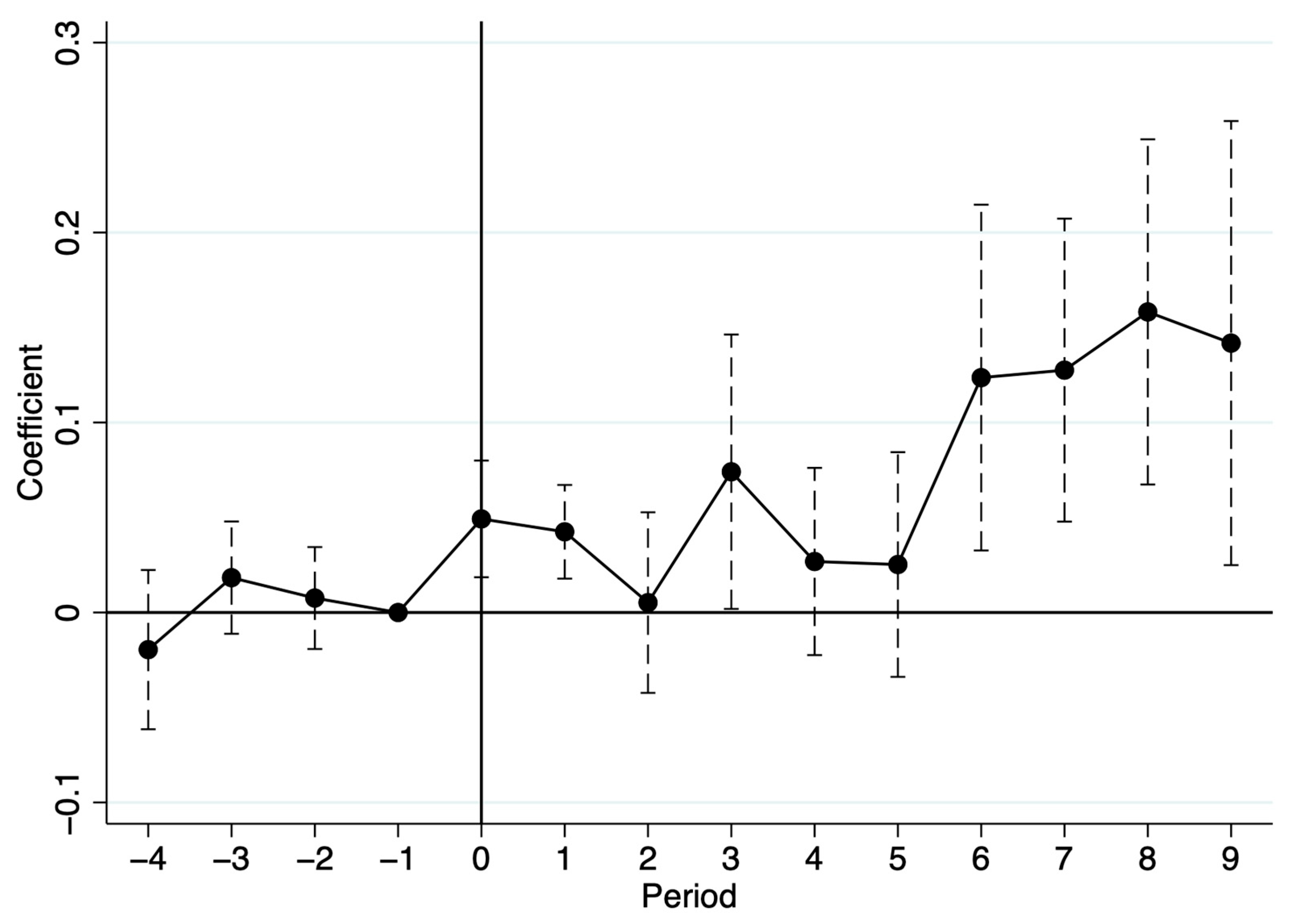
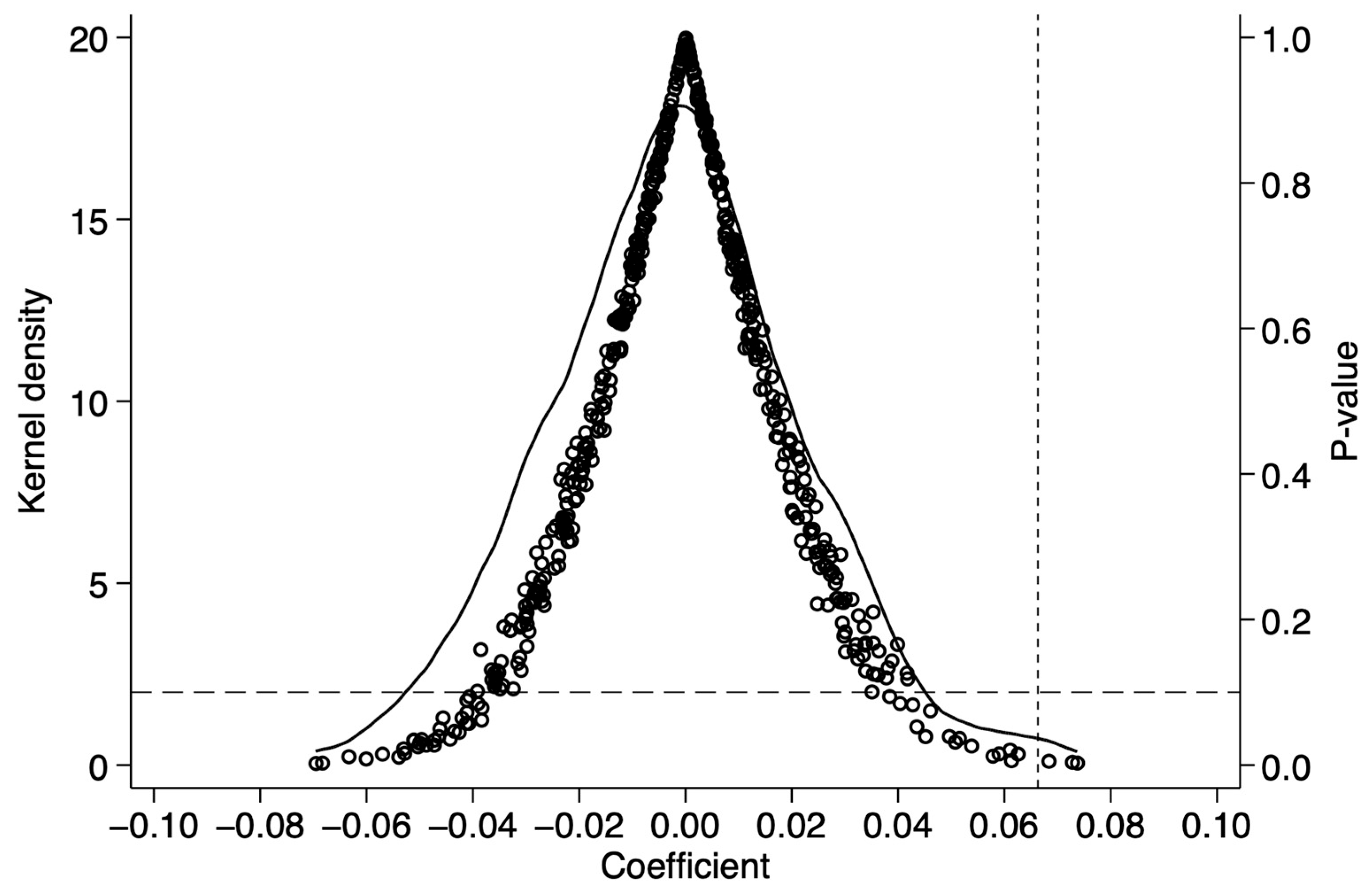
First, the policy promotes residents’ consumption. After designation, residents’ consumption levels rose noticeably in demonstration cities compared with the control group. In addition to expanding household consumption, this policy may indirectly steer consumption toward more sustainable online options. These findings hold across a range of robustness checks, confirming their reliability.
Second, the policy influences household consumption through three principal channels: stimulating urban entrepreneurial vitality, upgrading smart logistics capabilities, and improving digital infrastructure. Demonstration city policies lower entry barriers and concentrate platform resources. This stimulates local entrepreneurship and enriches the supply of sustainable goods, which in turn drives household consumption. Smart logistics models reduce distribution costs, shorten delivery times, and cut waste. This eases the constraint that inefficient logistics imposes on consumer spending, thereby boosting consumption and supporting sustainability. Accelerating development of regional digital infrastructure gives residents more channels for online consumption. It also provides technological support for new consumption formats and, in multiple ways, helps drive household consumption growth.
Third, the policy effects exhibit pronounced differentiation. By city size, the policy’s consumption-boosting effect is strongest in large cities, moderate in mega-cities, and relatively weak in super-mega-cities, where market saturation is high. In terms of geographic location, the policy effect is somewhat stronger in central and western cities than in eastern cities, primarily because the policy has greater incremental room to operate in regions where e-commerce development is comparatively lagging. Regarding industrial heritage, the policy effect is statistically significant in non-old industrial base cities, while the effect in old industrial base cities, though consistent in direction, does not pass significance tests. In terms of urbanization level, the policy effect is markedly stronger in high-urbanization cities than in low-urbanization cities, corroborating the positive role that urbanization plays in facilitating the transmission of e-commerce policies.
6.2. Policy Implications
First, the construction of National E-Commerce Demonstration Cities should continue to be deepened. This paper suggests that the National E-commerce Demonstration City Policy promotes residents’ consumption growth and facilitates high-quality consumption expansion. This will help expand and upgrade residents’ consumption and steer it toward more sustainable patterns. The National E-Commerce Demonstration City Policy has demonstrated a clear capacity to increase consumption. Building on this progress, the government could update the selection criteria and refine the supporting policy framework in due course. It should also strengthen the demonstration role of these cities and sustain the policy’s positive impact on residents’ consumption.
Second, demonstration cities should be arranged according to local conditions, with special attention to unlocking consumption potential in the central–western regions and in large cities. The findings of this study show that the e-commerce demonstration policy has a stronger effect on consumption in central–western cities and large cities, which implies that these areas still have considerable room for further policy-driven e-commerce gains. To this end, targeted policy support can be strengthened for e-commerce demonstration cities in central and western regions, including more robust fiscal and tax incentives and greater support for the introduction of platform resources. Large cities should be recognized as the key drivers of e-commerce consumption growth. They can use the demonstration city platform to foster premium consumption formats and integrate online and offline commerce. This will help continuously stimulate residents’ demand for higher-quality and more diverse goods while also advancing both consumption upgrading and sustainable transformation in a coordinated way.
Third, it should strengthen complementary support for old industrial base cities to help remove the structural bottlenecks that hinder the transmission of e-commerce policies. Our findings suggest that the policy’s ability to stimulate residents’ consumption in old industrial base cities is somewhat weakened by constraints related to industrial structure, residents’ income, and the digital consumption ecosystem. The government should further increase support for old industrial base cities in expanding express logistics networks and broadband infrastructure while simultaneously arranging the layout of sustainable circulation facilities. These measures will help lower the threshold for e-commerce consumption, improve the conditions for policy transmission, and enable the policy to translate more effectively into residents’ consumption growth.
Fourth, the digital infrastructure gap in low-urbanization areas should be narrowed more quickly to unlock the e-commerce consumption potential of rural residents. The heterogeneity analysis in this paper indicates that the consumption-stimulating effect of the policy has not been fully realized in low-urbanization cities due to constraints in infrastructure and digital capacity. To address this, the coverage of 5G networks and smart logistics systems should be extended to low-urbanization areas more rapidly, clearing the “last-mile” bottleneck in rural e-commerce consumption. E-commerce platforms should be encouraged to leverage the brand recognition of demonstration cities as they expand into rural markets. This would help build a two-way circulation system that enables agricultural products to move upward and industrial goods to flow downward while also supporting the development of local sustainable business formats. At the same time, digital consumption skills training for rural residents should be strengthened to improve their ability and willingness to engage in online shopping. It is also important to promote low-carbon, economical, and circular consumption concepts to build sustainable consumption habits among rural residents. These efforts can help translate latent demand into tangible policy gains, narrow the urban–rural consumption gap, and promote more balanced regional consumption development.
6.3. Research Limitations and Future Research Prospects
This study still has several limitations that warrant further investigation in future research.
First, there are certain limitations regarding the measurement of the core dependent variable. Given the lack of standardized, officially released long-term green consumption indicators at the prefecture city level across China, this paper adopts the total retail sales of consumer goods as a proxy for resident consumption. This indicator cannot accurately measure the policy’s impact on sustainable consumption, and, therefore, this study discusses its potential implications for sustainable consumption only from a macro-perspective. Future research may adopt more direct and disaggregated indicators of sustainable consumption to better identify the policy’s impact on residents’ sustainable consumption behavior.
Second, although this study employs a multi-period DID model and conducts a series of robustness tests, it cannot completely eliminate the possibility of omitted variable bias or other sources of endogeneity. Future studies may employ instrumental variable or synthetic control methods to address these concerns and obtain a cleaner estimate of the net policy effect.
Third, due to limited data availability, the digital infrastructure indicator system that this paper constructs may be incomplete and subject to measurement error. Future studies may incorporate more disaggregated micro-data and richer digital infrastructure indicators to improve measurement accuracy.
Fourth, the findings of this study are derived from the institutional context of China’s National E-Commerce Demonstration City Policy. Although the underlying mechanisms may provide useful insights for other emerging economies, the external validity of the conclusions should be interpreted with caution. Future comparative studies across countries or regions could further examine whether similar policy effects exist under different institutional settings.