1. Introduction
Ports are currently facing increasing pressure to respond simultaneously to environmental regulation, digital transformation, geopolitical instability, and growing demands for more sustainable logistics systems. In recent years, this context has progressively altered the role traditionally attributed to ports. Beyond their operational role in cargo handling and maritime connectivity, ports are now expected to coordinate broader processes spanning sustainability, innovation, governance, and stakeholder engagement. As a result, port authorities are increasingly required to act not only as infrastructure managers, but also as facilitators of collaboration and long-term strategic transformation within complex socio-technical ecosystems.
The literature on port innovation has expanded considerably over the last decade. One important stream has examined digitalisation, automation, and smart port technologies as drivers of operational efficiency, interoperability, and data-driven decision-making [
1,
2]. A related body of work has explored digital transformation in ports as part of broader changes in logistics systems and maritime supply chains [
3]. At the same time, environmental concerns have become more prominent in port management research, particularly in studies on decarbonisation, the energy transition, and green port strategies [
4,
5,
6]. However, these debates often remain fragmented. Technological innovation and sustainability are frequently discussed as separate domains, which limits understanding of how these processes interact in practice within port governance structures [
7,
8,
9].
In this context, the concept of Open Innovation (OI), introduced by Chesbrough [
10], provides an important theoretical basis for understanding collaborative approaches to innovation. OI challenges traditional closed models of innovation by emphasising the role of external knowledge flows, inter-organisational collaboration, and stakeholder interaction. Subsequent work has extended this perspective by showing that innovation increasingly emerges through networks of interdependent actors rather than through isolated organisations [
11]. This ecosystem-oriented view is particularly relevant for ports, where public authorities, private operators, research institutions, logistics firms, technology providers, and regulatory actors interact around shared infrastructure and operational interdependencies [
12,
13]. Nevertheless, while OI highlights openness and collaboration, sustainability objectives are not necessarily central within the original framework.
Open and Sustainable Innovation (OSI) extends this perspective by explicitly integrating environmental and societal concerns into innovation processes. In this sense, innovation is understood not only as a mechanism to improve competitiveness or efficiency, but also as a means of supporting sustainable transitions and generating long-term social and ecological value [
14,
15]. This distinction is particularly relevant in port ecosystems, where environmental externalities, regulatory pressures, and territorial impacts are especially significant. Advancing sustainable innovation in such environments, therefore, requires more than adopting green technologies. It also depends on governance capacity, coordination among heterogeneous actors, institutional alignment, and the ability to promote organisational learning and collaboration.
In this study, port governance is understood as a multi-actor and multi-level system through which ports are managed, regulated, and coordinated to support operational efficiency, competitiveness, sustainability, and stakeholder integration [
16]. Existing studies on port governance have explored different governance models and organisational arrangements, including landlord models, public–private partnerships, and ecosystem coordination approaches [
3,
9,
17]. However, there is still limited empirical understanding of how governance structures concretely support—or constrain—the implementation of OSI within public port authorities. Similarly, organisational and cultural dimensions such as trust, knowledge sharing, internal engagement, and openness to collaboration are often acknowledged in the literature but remain insufficiently explored as practical conditions shaping sustainable innovation processes [
6,
14].
This study addresses these gaps by examining how OSI is operationalised within the Port of Sines ecosystem. As Portugal’s largest deep-sea port and an important Atlantic gateway integrated into European logistics and energy corridors, the Port of Sines provides a particularly relevant context for analysing the interaction between sustainability agendas, digital transformation, and collaborative governance dynamics. The research adopts a qualitative case study approach, grounded in an interpretivist perspective, to explore how these processes are experienced and articulated in practice.
More specifically, the study pursues three objectives. First, it identifies the main environmental, organisational, cultural and technological factors that enable OSI within the Port of Sines ecosystem. Second, it examines the barriers constraining the institutionalisation of OSI, particularly those related to governance coordination, stakeholder engagement, organisational learning, cultural readiness and data-sharing practices. Third, it analyses how a public port authority can act as an ecosystem orchestrator in transforming sustainability-oriented innovation from project-based initiatives into longer-term organisational and inter-organisational capabilities.
The article contributes to the literature in three main ways. First, it advances the discussion on OSI by examining it as a systemic and relational process within an infrastructure-intensive port ecosystem. Second, it provides empirical evidence from an in-depth qualitative single-case study of the Port of Sines, a European public port authority, drawing on institutional documents, nine semi-structured interviews, observational material, and qualitative coding analysis. Third, it offers practice-oriented insights for port authorities and policymakers seeking to strengthen governance coordination, stakeholder engagement, and long-term sustainable innovation capabilities in comparable port ecosystems.
The remainder of the article is organised as follows.
Section 2 reviews the relevant literature and presents the conceptual framework guiding the study.
Section 3 describes methodological procedures and research design.
Section 4 introduces the context of the Port of Sines case study.
Section 5 presents the empirical findings according to the analytical dimensions adopted in the research.
Section 6 discusses the findings in relation to the literature and research objectives. Finally,
Section 7 presents the conclusions, implications, limitations, and directions for future research.
2. Literature Review and Conceptual Framework
This section develops the theoretical basis for analysing Open and Sustainable Innovation in port ecosystems. It first reviews Open Innovation and innovation ecosystem perspectives, then examines sustainability transitions in ports and maritime logistics. It subsequently explains how OSI extends these debates by integrating openness, sustainability, governance, and organisational learning. The section concludes by presenting the analytical framework that structures the empirical analysis of the Port of Sines case.
2.1. Open Innovation and Innovation Ecosystems in Port Contexts
The concept of Open Innovation (OI), initially introduced by Chesbrough [
10], represented an important shift from traditional closed models of innovation, where organisations relied predominantly on internal resources and knowledge development processes. Instead, OI emphasises the value of external knowledge flows across organisational boundaries. Chesbrough and Bogers later clarified this perspective by defining OI as a distributed innovation process based on purposively managed knowledge flows across organisational boundaries [
18]. Subsequent research has expanded the concept beyond firm-centred applications, highlighting its relevance to contexts in which innovation depends on cooperation among multiple organisations and institutional actors [
12].
This broader understanding contributed to the development of the innovation ecosystem perspective. Adner’s work is particularly relevant because it emphasises that innovation outcomes depend not only on the focal organisation, but also on the alignment of interdependent actors within a wider ecosystem [
11]. Later conceptual reviews further consolidated this view by framing innovation ecosystems as relational structures involving heterogeneous actors, shared value creation, and coordinated knowledge exchange [
19]. Within these ecosystems, innovation does not emerge solely from the capabilities of a single organisation, but from the interactions established among firms, public institutions, research organisations, regulators, and other stakeholders. In this sense, coordination mechanisms, governance arrangements, and knowledge-sharing practices become central elements influencing ecosystem performance and innovation capacity.
Ports represent a particularly relevant environment for examining these dynamics. As complex infrastructures integrated into global logistics and transport networks, ports depend on continuous coordination among a wide range of actors, including port authorities, terminal operators, logistics companies, shipping lines, technology providers, and public agencies. In this complex environment, evaluating whether technological and procedural modifications in terminal operations yield effective results remains a core concern for industry stakeholders [
20]. Port governance literature increasingly recognises that port authorities perform functions that go beyond operational and infrastructural management, assuming a more active role in facilitating collaboration, supporting innovation initiatives, and coordinating ecosystem relationships [
3]. This role is also visible in studies of port community systems, where port authorities frequently act as institutional coordinators of digital and organisational integration [
21].
At the same time, empirical studies suggest that the implementation of OI practices in port environments remains uneven. Collaborative initiatives such as public–private partnerships, digital integration platforms, and joint innovation projects have become more frequent, particularly in ports pursuing digitalisation and sustainability agendas [
1]. However, evidence from seaport innovation studies shows that organisational fragmentation, governance complexity, and institutional rigidity often limit the continuity and consolidation of these initiatives [
20]. In several cases, collaborative innovation processes remain strongly dependent on temporary projects, external funding, or specific institutional arrangements rather than embedded organisational capabilities.
These challenges are particularly relevant in public port governance contexts, where innovation processes must coexist with regulatory responsibilities, operational continuity, and multiple stakeholder interests. As a result, understanding innovation in port ecosystems requires analytical approaches that simultaneously integrate technological, organisational, institutional, and relational dimensions.
2.2. Sustainability Transitions in Ports and Maritime Logistics
In parallel with the evolution of OI, ports are increasingly central to sustainability transitions in maritime logistics. As major contributors to greenhouse gas emissions and environmental externalities, ports face mounting pressure to support decarbonisation, energy transition, and sustainable mobility objectives. These pressures are reinforced by supranational policy frameworks, particularly within the European Union, which frame ports as strategic enablers of climate-neutral transport systems.
The literature on port sustainability highlights that environmental performance is no longer confined to compliance with regulatory standards but is increasingly intertwined with governance quality, social legitimacy, and long-term resilience [
22,
23]. In this expanded understanding, sustainability is not an auxiliary objective, but a structural driver of strategic transformation.
Nevertheless, empirical evidence suggests that sustainability initiatives in ports frequently remain fragmented and compliance-oriented. While sustainability reporting, environmental certifications, and pilot projects are increasingly common, their integration into innovation strategies and organisational routines is often limited [
1,
20]. This disconnect between strategic ambition and operational practice underscores the need for approaches that explicitly link sustainability objectives with innovation processes and ecosystem dynamics.
2.3. From Open Innovation to Open and Sustainable Innovation in Port Ecosystems
In response to the growing environmental and social challenges associated with economic development, the discussion of innovation has increasingly moved beyond competitiveness and technological performance alone. Within this context, the concept of OSI emerged as an extension of OI, more explicitly incorporating sustainability concerns into innovation processes and collaborative practices.
OSI emphasises that innovation should not be understood exclusively as a mechanism for improving efficiency or generating economic value. Instead, it also involves creating environmental and social value through more collaborative, responsible, and long-term approaches to innovation [
24,
25]. According to [
15], this perspective requires organisations to reconsider not only how innovation is developed but also how governance structures, stakeholder relationships, and organisational priorities are configured to support sustainability-oriented objectives.
This discussion is particularly relevant in port ecosystems. Ports operate in environments characterised by high infrastructural complexity, strong regulatory pressure, environmental externalities, and the continuous interaction of multiple public and private actors. As a result, sustainability challenges in ports are closely connected to governance capacity, institutional coordination, technological adaptation, and stakeholder engagement.
Within this context, OSI implies more than the adoption of green technologies or isolated digital solutions. It requires collaborative processes that integrate sustainability objectives into organisational practices and ecosystem relationships [
8,
26]. Existing studies on ports and innovation have increasingly explored themes such as smart ports, digital platforms, automation, and energy transition initiatives [
27,
28]. However, much of the empirical literature remains strongly centred on technological implementation, often giving less attention to the organisational and cultural conditions that influence the long-term consolidation of sustainable innovation practices [
8,
19].
It is important to distinguish OSI from adjacent concepts commonly used in port studies. The smart port perspective primarily focuses on digitalisation, automation, interoperability, and data-driven operational optimisation. The green port perspective focuses mainly on environmental performance, emissions reduction, energy transition, and regulatory compliance. Innovation ecosystem approaches emphasise multi-actor collaboration, value co-creation, and interdependence among heterogeneous actors [
29]. OSI differs from these perspectives by integrating them into a broader sustainability-oriented innovation logic. It combines openness, environmental and social value creation, governance coordination, organisational learning, and stakeholder engagement. In this sense, OSI is not treated in this study as a synonym for digital innovation or environmental management, but as a systemic process through which collaborative innovation becomes aligned with long-term sustainability objectives and embedded in port governance practices.
Table 1 summarises this conceptual positioning by contrasting OSI with smart port, green port, and innovation ecosystem perspectives.
The comparison presented in
Table 1 clarifies the integrative role of OSI in this study. While smart port, green port, and innovation ecosystem perspectives each address relevant aspects of port transformation, OSI provides a more comprehensive analytical lens for examining how digitalisation, sustainability, collaboration, and governance become mutually embedded in public port authority practices. This positioning is particularly important for the present study, as the Port of Sines case involves not only technological modernisation and environmental alignment, but also questions of stakeholder coordination, organisational learning, and long-term institutionalisation.
Research examining how OSI is operationalised inside public port authorities also remains relatively limited. This gap becomes particularly important because port authorities frequently occupy an intermediary position between public policy objectives, operational requirements, and ecosystem coordination responsibilities. In practice, this means that sustainable innovation depends not only on technological investment but also on the ability to align governance arrangements, institutional priorities, and collaborative dynamics across heterogeneous actors.
Recent European experiences illustrate these differences in governance and innovation approaches. Comparative studies involving ports such as Rotterdam and Valencia demonstrate how ecosystem coordination capacity and intermediary structures influence collaborative innovation processes [
7,
9]. In Rotterdam, innovation initiatives are strongly supported through digital infrastructure, innovation hubs, and collaborative experimentation mechanisms coordinated by the port authority and associated institutions. Valencia presents a somewhat different trajectory, where institutional learning, knowledge-sharing practices, and human capital development have played an important role in gradually strengthening innovation capacity and ecosystem integration [
9,
26].
Similarly, the Port of Barcelona has advanced initiatives in open data policies, participatory governance approaches, and digital coordination platforms aligned with sustainability and decarbonisation agendas [
27,
28]. These examples suggest that OSI develops differently according to governance structures, institutional maturity, and ecosystem coordination mechanisms.
Taken together, the literature indicates that sustainable innovation in port ecosystems does not emerge automatically from technological modernisation alone. Rather, it depends on the interaction between governance arrangements, organisational capabilities, stakeholder engagement, and institutional conditions that support collaboration, learning, and long-term sustainability-oriented transformation.
The preceding subsections indicate that sustainable port innovation cannot be explained through a single theoretical lens. Digital infrastructure, environmental regulation, stakeholder collaboration, governance capacity, and organisational learning interact in ways that require an integrative analytical structure. The following framework was therefore developed to organise these interdependencies and guide the empirical analysis.
2.4. Conceptual Framework and Analytical Dimensions
To explore how OSI is operationalised within the Port of Sines ecosystem, this study adopts a conceptual framework that combines contributions from the literature on open innovation, innovation ecosystems, and sustainability-oriented innovation. Rather than analysing innovation exclusively from a technological perspective, the framework assumes that sustainable innovation processes emerge through the interaction of multiple organisational, institutional, cultural, and environmental factors.
Based on the literature review and the exploratory understanding developed throughout the research process, four analytical dimensions were identified as particularly relevant to examining OSI in port ecosystems: Environmental, Organisational, Cultural, and Technological.
The Environmental dimension encompasses external conditions that influence sustainability-oriented innovation, such as environmental regulation, public policy frameworks, decarbonisation agendas, and ecosystem-level sustainability pressures [
22,
23]. In the context of ports, these factors are especially relevant because environmental transition initiatives are strongly influenced by European policies, regulatory requirements, and funding mechanisms linked to green and digital transformation programmes.
The Organisational dimension focuses on governance structures, management systems, coordination mechanisms, and institutional capabilities that support—or constrain—innovation processes inside port authorities and related organisations [
1,
9,
28]. This dimension also encompasses aspects of organisational learning, internal communication, participation dynamics, and the capacity to integrate sustainability and innovation into operational routines.
The Cultural dimension addresses values, attitudes, trusting relationships, openness to collaboration, and readiness for change within the ecosystem [
8,
14]. Since OSI depends heavily on interaction among heterogeneous actors, cultural factors play an important role in shaping collaborative behaviour, knowledge-sharing practices, and acceptance of innovation-oriented initiatives.
Although the organisational and cultural dimensions are closely related, they are analytically distinct in this study. The organisational dimension refers to formal and semi-formal arrangements through which innovation is coordinated, resourced, managed, and institutionalised. It therefore includes governance structures, decision-making processes, cross-functional coordination, management systems, learning routines, and mechanisms for integrating innovation into operational practices [
15,
19]. By contrast, the cultural dimension refers to the shared values, attitudes, behavioural dispositions, and relational conditions that influence how actors respond to innovation. It includes trust, openness to collaboration, risk tolerance, willingness to share knowledge, and readiness for change [
19,
29]. This distinction is important because formal governance mechanisms may exist without a corresponding culture of experimentation and trust, whereas collaborative attitudes may remain ineffective without organisational routines and institutional structures.
The Technological dimension refers to digital infrastructure, interoperability systems, data-sharing capabilities, and technological readiness [
2,
7,
30]. In port ecosystems, technology serves not only as an operational tool but also as an enabling infrastructure that supports coordination, real-time information exchange, and collaborative innovation.
Throughout the analysis, it became evident that these four dimensions are strongly interconnected. For this reason, the framework also considers cross-cutting factors that influence all dimensions simultaneously, particularly governance coordination, stakeholder engagement, regulatory alignment, and data integration processes. These transversal elements help explain how different dimensions interact and why the institutionalisation of OSI may progress unevenly across the ecosystem [
15,
29,
31,
32].
In this study, Human Capital is understood as the combination of technical expertise, managerial competencies, collaborative skills, absorptive capacity, and sustainability-oriented attitudes that enable ecosystem actors to participate in innovation processes and adapt to organisational and technological change [
19,
24,
25,
26]. Beyond formal qualifications, Human Capital also includes learning capacity, openness to experimentation, and the ability to integrate new digital practices into everyday organisational routines.
Analytically, Human Capital was coded in MAXQDA through categories associated with training and skills development, role specialisation, knowledge-sharing practices, learning through collaborative projects, and the integration of digital tools into operational activities. During the coding process, these aspects emerged as important elements influencing the continuity and consolidation of OSI practices across the ecosystem.
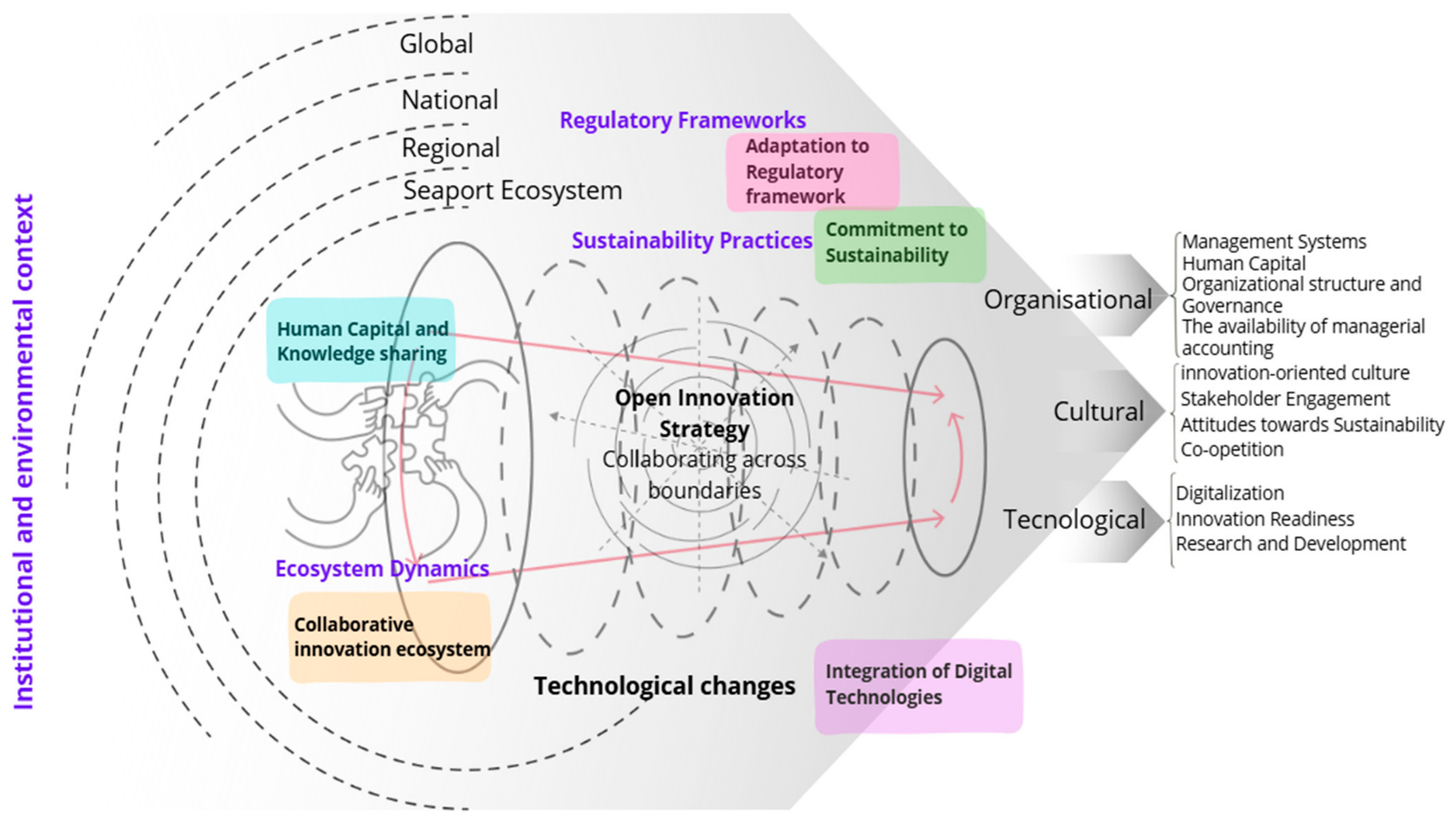
Figure 1 synthesises the conceptual framework adopted in the study and illustrates the relationships between the four analytical dimensions and the cross-cutting enabling factors.
The framework also guided the empirical analysis. The four dimensions provided the initial deductive structure for qualitative coding in MAXQDA. At the same time, the iterative analysis of interviews, institutional documents, and observational material enabled the identification of additional themes and interdependencies emerging from the case evidence. The framework, therefore, functioned not only as a theoretical reference but also as an analytical device connecting the literature review, methodological design, coding process, and interpretation of findings.
2.5. Synthesis of Research Gaps and Analytical Positioning
The literature reviewed above indicates that research on ports, innovation, and sustainability has advanced substantially, but several gaps remain. First, studies of smart ports and green ports have generated important insights into digitalisation and environmental performance, but these streams often remain analytically distinct. This limits understanding of how digital transformation, sustainability objectives, and governance arrangements interact in practice. Second, Open Innovation and innovation ecosystem studies emphasise collaboration and knowledge exchange, but they do not always explain how openness aligns with sustainability-oriented objectives within public port authorities. Third, existing port governance literature recognises the evolving role of port authorities as coordinators or ecosystem orchestrators, but empirical evidence remains limited regarding how these authorities institutionalise collaborative and sustainable innovation. Fourth, organisational and cultural factors such as trust, learning, risk tolerance, and internal engagement are frequently acknowledged but rarely examined as concrete mechanisms that shape the long-term consolidation of OSI.
This study addresses these gaps by examining the Port of Sines as an instrumental qualitative case of OSI in a public port authority context. The analysis integrates environmental, organisational, cultural, and technological dimensions to investigate not only which innovation initiatives are present, but also how they are enabled, constrained, and embedded within governance practices. By doing so, the study moves beyond a technology-centred view of port innovation and contributes to a more systemic understanding of OSI as a relational and institutional process. The conceptual framework, therefore, serves two functions: it synthesises the theoretical strands reviewed in this section and provides the analytical structure for the empirical coding and interpretation developed in the following sections.
3. Materials and Methods
3.1. Research Design and Epistemological Positioning
This study adopts a qualitative research design grounded in an interpretivist epistemological perspective, which assumes that social reality is socially constructed and best understood through the meanings attributed by actors within their institutional and organisational contexts [
33,
34]. This approach is particularly suitable for analysing complex socio-technical systems, such as port ecosystems, in which innovation processes are shaped by governance arrangements, stakeholder interactions, and contextual constraints.
The research is informed by established qualitative case study traditions [
34,
35], enabling an in-depth exploration of OSI as an embedded and evolving phenomenon rather than a set of isolated practices. By privileging interpretation over measurement, the study captures the relational, cultural, and institutional dimensions that condition innovation dynamics in port environments.
3.2. Case Study Strategy and Case Selection
A single-case study strategy was employed, focusing on the Port of Sines as an analytically instrumental case. The Port of Sines was selected due to its exceptional strategic relevance within the Portuguese and European port systems, its role as a major energy and transhipment hub, and its explicit commitment to sustainability, digital transformation, and collaborative innovation.
The selection of the Port of Sines as a single instrumental case follows [
35] logic of critical case design. As Portugal’s largest deep-sea port and a strategic Atlantic gateway integrated into European energy and logistics corridors, Sines represents a particularly relevant and information-rich setting for examining the governance conditions of OSI. Rather than aiming at statistical comparison across multiple cases, the study seeks analytical generalisation by identifying structural mechanisms that may be transferable to comparable port ecosystems.
3.3. Data Collection
Data collection followed a multi-source strategy to ensure triangulation and enhance the credibility of findings. Three primary categories of empirical material were used:
3.3.1. Institutional Documents
A corpus of institutional documents was analysed to complement the interview data and provide evidence of the formal narratives, strategic priorities, and governance arrangements associated with innovation and sustainability in the Port of Sines ecosystem. The documents included strategic plans, governance statutes, sustainability-related reports, investment programmes, project documentation (notably related to the NEXUS Agenda), and public communication materials issued by the port authority and relevant governmental bodies. These sources were selected according to three criteria: direct relevance to sustainability, digitalisation, innovation, or port governance; connection with the Port of Sines or the wider Portuguese port ecosystem; and usefulness for triangulating claims emerging from interviews and observational material.
Documentary evidence was not treated as neutral background information, but as part of the empirical corpus. The documents were coded using the same broad analytical dimensions applied to the interviews—environmental, organisational, cultural, and technological—allowing formal institutional discourse to be compared with stakeholder perceptions. This procedure enabled the identification of convergences and discrepancies between strategic narratives and operational accounts. For example, documents were particularly useful for tracing policy alignment, strategic commitments, and formal innovation initiatives, while interviews helped clarify how these priorities were interpreted, implemented, or constrained in practice.
3.3.2. Semi-Structured Interviews
Semi-structured interviews were conducted with key stakeholders, including port authority executives, operational managers, innovation experts, policymakers, and representatives from related port ecosystems. The interview protocol was designed to capture perceptions of innovation drivers, barriers, governance arrangements, and sustainability priorities. This format allowed respondents to elaborate on lived experiences while ensuring comparability across interviews.
A total of nine semi-structured interviews were conducted between March and December 2024. The interviewees were purposively selected based on their strategic roles in innovation, sustainability, digital systems, and ecosystem coordination. To preserve confidentiality, interviewees and organisations are anonymised and reported through codes (
Table 2).
Three interviews were conducted with senior representatives from the port authority (public sector), covering roles related to innovation/digital systems and sustainability. To capture dynamics beyond the port authority, three interviews were conducted with partner organisations involved in innovation and technology projects connected to the port ecosystem. In addition, three external experts were interviewed to provide comparative and systemic perspectives, including a representative from a major international port, a specialist linked to Port Community System environments, and an academic expert in maritime/intermodal economics.
Interviews lasted between 60 and 120 min and were recorded and transcribed verbatim. An interview protocol structured around the four analytical dimensions of the OSI framework (environmental, organisational, cultural, and technological) guided data collection while allowing flexibility for emergent themes.
Although the number of interviews was limited, the sample was considered appropriate for the study’s exploratory and interpretivist logic. The participants were selected through purposive sampling, based on their positional authority, direct involvement in innovation, sustainability, digital transformation, or ecosystem coordination, and their capacity to provide information-rich accounts of the phenomenon under investigation. The aim was therefore not numerical representativeness, but analytical depth and relevance [
33,
34,
35]. The interview corpus brought together three complementary perspectives: internal port authority actors, innovation and technology partners connected to the port ecosystem, and external experts able to provide comparative and systemic insights.
Thematic saturation was assessed during the coding process rather than defined solely by the number of interviews. After the final interviews had been coded, no substantially new first-order themes emerged within the four analytical dimensions of the framework—environmental, organisational, cultural, and technological. Additional data mainly reinforced already identified patterns, particularly those related to regulatory alignment, project-based innovation, governance fragmentation, data-sharing constraints, and the partial institutionalisation of organisational learning. For this reason, the sample was considered sufficient for the study’s analytical purpose, while its limitations are explicitly acknowledged in the final section.
The interview material was triangulated with institutional documents and observational material to reduce reliance on individual accounts and strengthen the credibility of the findings. This triangulation was particularly important because several interviewees occupied senior or managerial positions, which may have introduced a strategic or institutional perspective into the data. To mitigate this limitation, interview evidence was compared with documentary sources, public communication materials, and observational records from sectoral events.
3.3.3. Conferences and Observational Material
Additional empirical data were collected through participation in sectoral conferences and professional events, most notably the NEXUS International Conference. Observational materials, notes, and recorded interventions from these events were labelled according to event name, date, source type, and thematic relevance before being imported into MAXQDA. Analysed separately from interview transcripts, these records were treated as complementary qualitative data. This material was used primarily for triangulation and contextual interpretation, offering real-time insights into discourse framing, stakeholder positioning, and emerging innovation narratives within the port and maritime logistics community.
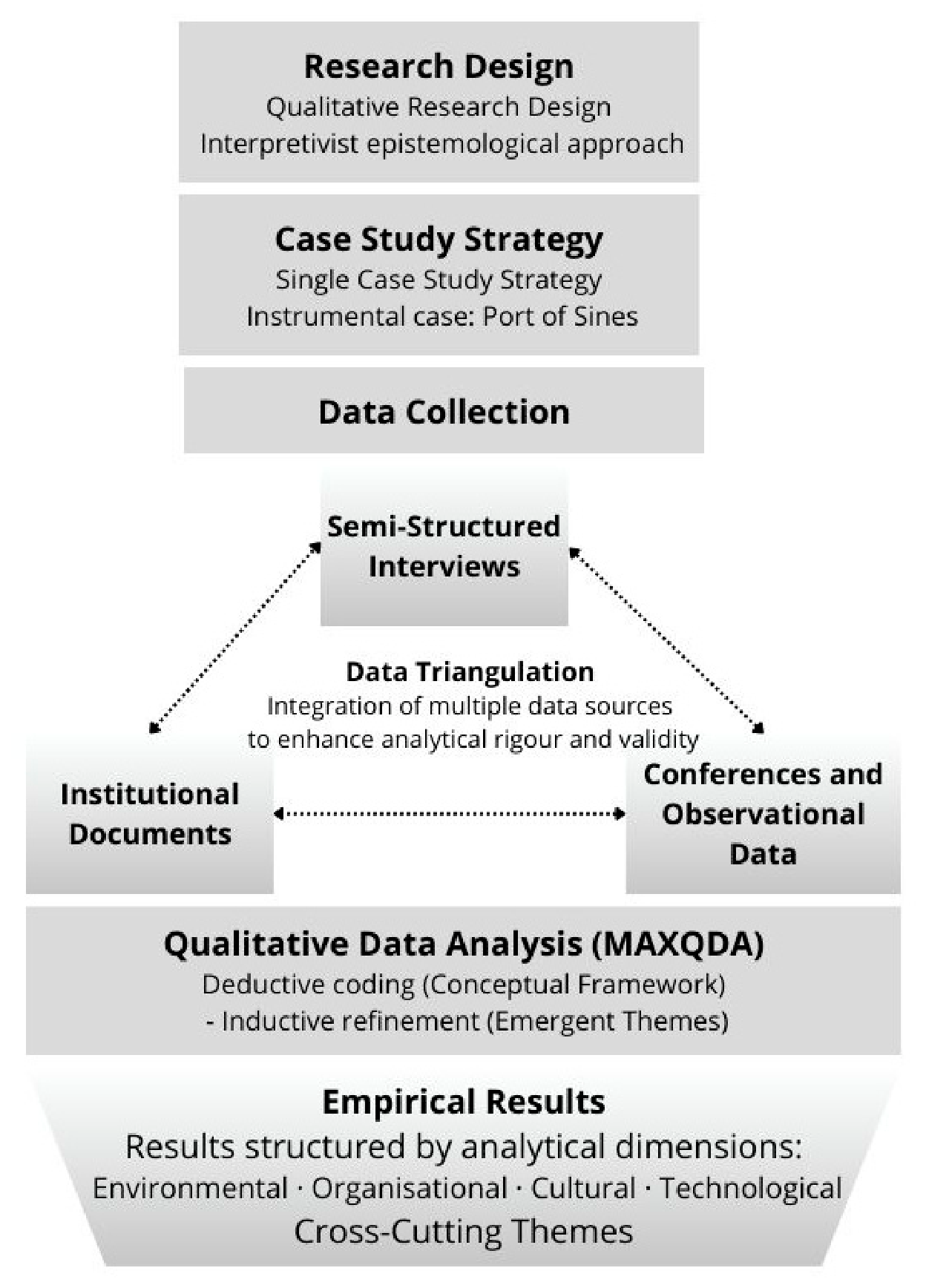
To clarify the study’s overall methodological flow,
Figure 2 presents the research design and the role of data triangulation in structuring the qualitative analysis.
The figure illustrates the qualitative research design adopted in this study, based on a single instrumental case study of the Port of Sines. Multiple sources of empirical evidence, including institutional documents, semi-structured interviews, and observational material, were integrated through a triangulation strategy to enhance analytical rigour. Qualitative data analysis was conducted using MAXQDA, combining deductive coding informed by the conceptual framework with inductive refinement to yield empirically grounded findings structured around analytical dimensions.
3.4. Data Analysis Procedures
Qualitative data analysis was conducted using MAXQDA Analytics Pro (v.24.8.0), following a systematic and iterative coding process. The analysis combined deductive and inductive procedures. In the first stage, an initial codebook was developed deductively from the conceptual framework presented in
Section 2.4. This preliminary structure was organised around four main analytical dimensions: Environmental, Organisational, Cultural, and Technological factors. These dimensions provided an initial analytical lens for coding interviews, institutional documents, and observational material.
In the second stage, the coding structure was refined inductively as empirical material was analysed in greater depth. New subcodes were added when interview statements or documentary evidence revealed themes not fully captured by the initial framework. This process led to the inclusion of a fifth category, Cross-Cutting Themes, used to capture transversal issues such as governance coordination, stakeholder engagement, trust, project dependency, data-sharing constraints, and innovation barriers. The final coding structure, therefore, reflected both the theoretical framework and the case’s empirical specifics.
The coding process followed four main steps. First, all transcripts and documents were read in full to support familiarisation with the corpus. Second, initial coding was performed using the four deductive dimensions. Third, emergent themes were incorporated through inductive refinement and grouped into subcodes. Fourth, coded segments were reviewed through constant comparison across data sources to identify recurring patterns, contradictions, and relationships among themes. MAXQDA was used to organise the corpus, assign and retrieve coded segments, generate code frequency matrices, and support visual analysis through co-occurrence tables and thematic clustering.
Given the interpretivist orientation of the study, coding reliability was approached through analytical transparency rather than statistical intercoder agreement. The primary coding was conducted by the lead researcher, who maintained an audit trail of coding decisions, code definitions, analytical memos, and iterative refinements. The emerging coding structure and interpretation of key themes were subsequently discussed among the authors to enhance consistency and reduce individual interpretive bias. Formal intercoder reliability coefficients were not calculated, as the aim of the analysis was not to measure coding reproducibility under positivist assumptions, but to develop a transparent, theoretically informed, and empirically grounded interpretation of OSI dynamics in the case under study.
Triangulation was used throughout the analytical process. Interview evidence was compared with institutional documents and observational material to assess convergence, complementarity, or tension between formal strategic discourse and stakeholder accounts. This procedure strengthened the chain of evidence linking empirical material to the findings and allowed the analysis to move beyond isolated perceptions towards a more robust interpretation of the institutionalisation of OSI within the Port of Sines ecosystem.
3.5. Research Rigour, Validity and Triangulation
To ensure methodological rigour, the study followed established qualitative research criteria, including credibility, transferability, dependability, and confirmability. These criteria were considered more appropriate than quantitative notions of validity and reliability, given the interpretivist and case-based nature of the research.
Credibility was strengthened through triangulation across multiple sources of evidence, including semi-structured interviews, institutional documents, and observational material. This allowed the analysis to compare strategic narratives with stakeholder perceptions and event-based observations. Attention was given to identifying both convergences and discrepancies between formal institutional discourse and the lived experience of actors involved in innovation and sustainability initiatives. The use of interview codes also supports transparency by enabling claims in
Section 5 to be linked to anonymised empirical sources.
Transferability was addressed through a thick contextual description of the Port of Sines, including its strategic position, governance model, sustainability orientation, and participation in the NEXUS Agenda. The aim was not statistical generalisation across all ports, but analytical generalisation through the identification of mechanisms relevant to comparable infrastructure-intensive port ecosystems. These mechanisms include regulatory alignment, project-based innovation, governance coordination, stakeholder trust, data-sharing governance, and the institutionalisation of organisational learning.
Dependability was supported through systematic documentation of the research process. This included the use of a structured interview protocol, a deductive-inductive coding procedure, codebook refinement, analytical memos, and MAXQDA-supported traceability between empirical material and thematic interpretation. The coding process was iterative, allowing analytical categories to be refined as the empirical material was examined.
Confirmability was reinforced by grounding interpretations in triangulated evidence rather than relying on a single data source or isolated interview statements. The study also recognises the potential limitations arising from the predominance of senior and managerial interviewees. These participants were selected because of their strategic knowledge and positional authority, but their perspectives may emphasise institutional and managerial interpretations of OSI. To mitigate this limitation, interview data were compared with documents, observational material, and external expert perspectives.
Ethical considerations were observed throughout the research process. Participation was voluntary, informed consent was obtained from all interviewees, and all data were anonymised before analysis. Interviewees and organisations are reported through codes to preserve confidentiality. Data were stored securely and handled in accordance with applicable data protection principles, including the General Data Protection Regulation. No personally identifiable information is disclosed in the manuscript.
4. Case Study Context: The Port of Sines
4.1. Strategic Positioning Within the Portuguese and European Port System
The Port of Sines occupies a distinctive strategic position within the Portuguese and Iberian port systems, operating simultaneously as a national energy gateway, a major container transhipment hub, and an Atlantic interface for global maritime corridors. Located on the Atlantic coast of the Iberian Peninsula, Sines benefits from deep-water access, extensive terminal capacity, and direct access to intercontinental shipping routes, positioning it as Portugal’s largest port by total cargo throughput.
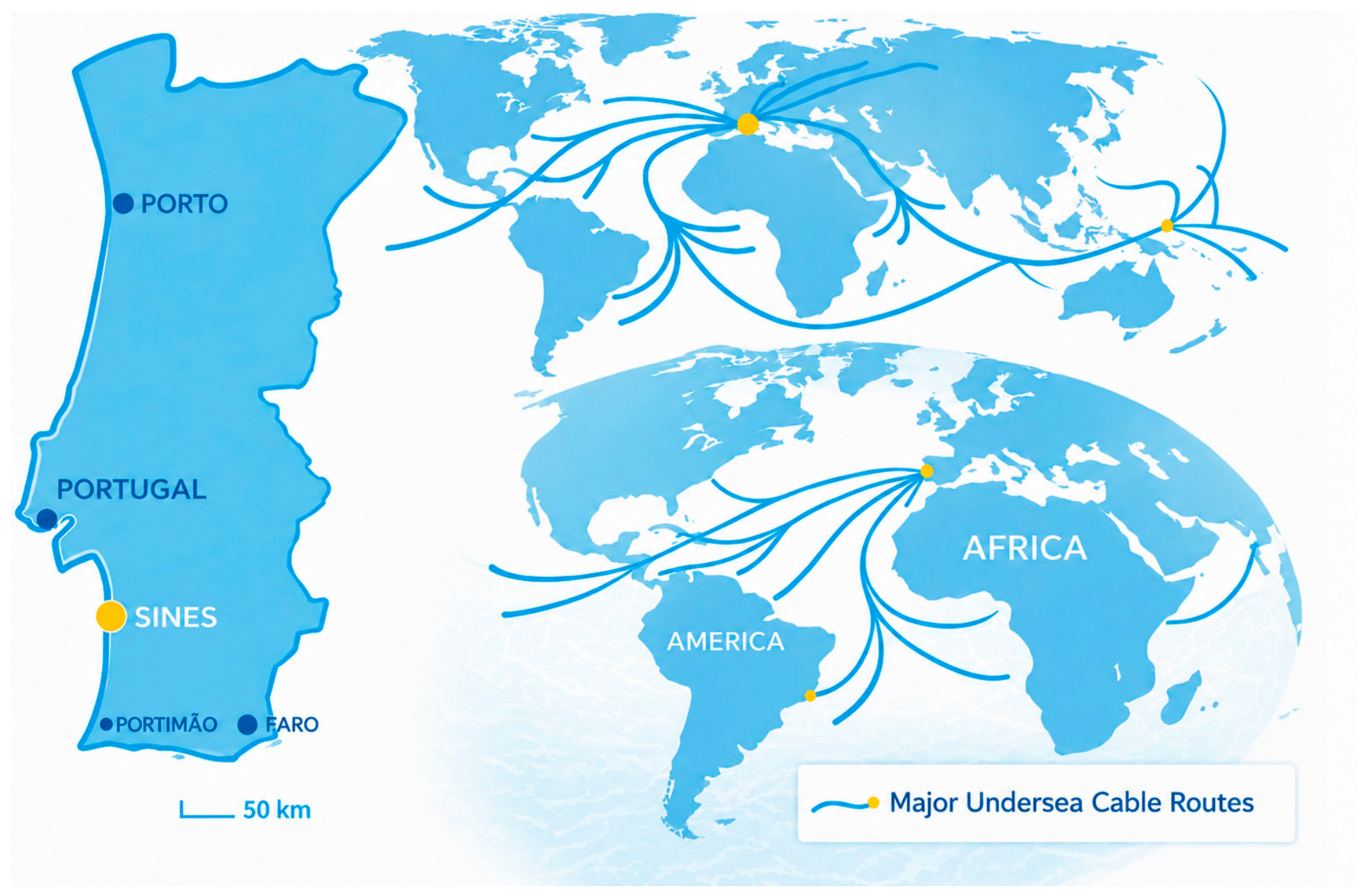
Figure 3 presents the geographical location of the Port of Sines and its position within the main Atlantic shipping routes and hinterland connections.
Beyond its infrastructural characteristics, Sines has progressively repositioned itself as a strategic node within European logistics and energy transition networks. Its integration into trans-European transport corridors, combined with strong rail connectivity to inland markets, underpins a logistics model oriented towards modal shift, efficiency gains, and emission reduction. This positioning makes Sines particularly relevant to examining the intersection of sustainability objectives and innovation-driven port governance.
4.2. Governance Model and Institutional Framework
The Port of Sines is managed by APS, Administração dos Portos de Sines e do Algarve, S.A., a publicly owned port authority operating under a specific legal regime that combines operational autonomy with state supervision. This governance configuration grants APS significant discretion in strategic planning, infrastructure development, concession management, and stakeholder coordination, while aligning port operations with national transport, energy, and environmental policies.
The governance structure comprises a Board of Directors, supervisory bodies, and advisory mechanisms that collectively support decision-making across operational and strategic domains. Importantly, the port authority’s mandate extends beyond infrastructure management to include coordinating and regulating port-related activities, positioning APS as an institutional orchestrator within the broader port ecosystem.
This governance model is particularly relevant to OSI, as it enables the port authority to serve as an intermediary among public policy objectives, private operators, technology providers, and research institutions, thereby facilitating collaborative innovation while maintaining regulatory coherence.
4.3. Strategic Vision and Sustainability Orientation
The strategic vision of the Port of Sines is articulated around a long-term ambition to function as a competitive, integrated, and sustainable logistics platform. Strategic planning documents emphasise three interrelated priorities: enhancing physical and digital connectivity, reinforcing coordination within a multi-port system, and embedding sustainability principles across port operations.
Sustainability is framed not merely as environmental compliance, but as a systemic driver of competitiveness, legitimacy, and long-term resilience. The port’s strategic discourse explicitly aligns with European policy frameworks, including the European Green Deal, Fit for 55, and national recovery and resilience programmes, positioning decarbonisation, the energy transition, and digitalisation as mutually reinforcing objectives.
This orientation has been translated into commitments related to modal shift, clean energy integration, emission reduction, and differentiated sustainability-based performance metrics. However, as later sections demonstrate, the operationalisation of these ambitions remains uneven and contingent upon organisational, cultural, and technological factors.
4.4. Innovation and Digital Transition: The NEXUS Agenda
Innovation and digital transformation at the Port of Sines are most visibly embodied in the NEXUS Agenda, a large-scale collaborative initiative developed under European recovery funding and national innovation programmes. The NEXUS Agenda is led by APS and brings together a consortium of public and private actors, including port authorities, logistics operators, technology firms, universities, research institutions, and other actors across the port logistics value chain. Its strategic objective is to accelerate the digital and environmental transition in port logistics by combining technological development, stakeholder collaboration, and sustainability-oriented transformation. This makes NEXUS a particularly relevant empirical expression of Open and Sustainable Innovation in the Port of Sines ecosystem.
The initiative is structured around a federated innovation model comprising three interconnected layers: an open digital collaboration platform, a portfolio of interoperable digital applications and services, and an integrated set of physical and digital assets supporting smart and sustainable operations. This architecture aims to enhance real-time coordination across maritime, rail, and road modes, improve data-driven decision-making, reduce greenhouse gas emissions, and generate new value-added services for the port and its hinterland. In this sense, NEXUS does not operate merely as a technological modernisation programme, but as an ecosystem-based innovation platform through which multiple actors co-develop solutions for digitalisation, cybersecurity, energy transition, logistics optimisation, and sustainable corridor development.
A central component of this transition is the articulation between NEXUS and existing digital infrastructures, particularly the Janela Única Logística—Single Logistics Window. The Single Logistics Window already functions as a digital coordination mechanism connecting public and private actors in the logistics chain, supporting simplification, harmonisation, dematerialisation of procedures, intermodality, and more sustainable use of transport infrastructure. The NEXUS Agenda builds on this foundation by developing an Open Data Collaboration Platform for the Sines logistics corridor, designed to support data sharing, digital connectivity, and future applications in artificial intelligence, smart port operations, and global digital corridors. Conference material on NEXUS describes this platform as one of the agenda’s central products, alongside initiatives in digitalisation, cybersecurity, and energy.
The environmental strand of NEXUS is closely connected to green and digital corridor initiatives, alternative fuels, and the positioning of Sines within Atlantic and European energy transition networks. The Port of Sines is presented as a strategic location for green logistics, hydrogen, renewable fuels, liquefied gas infrastructure, and intermodal connectivity. These initiatives are relevant to OSI because they demonstrate how sustainability goals are operationalised through the interplay among infrastructure investment, digital coordination, port governance, and international partnerships. The thesis material also indicates that NEXUS foregrounds green corridors and alternative fuels such as green ammonia, e-methanol and hydrogen, while linking Sines to strategic partnerships with ports such as Rotterdam, Duisburg and Tangier Med.
From an OSI perspective, the significance of NEXUS lies not only in its technological output but in its governance logic. The agenda brings together actors from academia, industry, logistics, technology, and the public sector, thereby creating a practical setting for collaborative experimentation, knowledge exchange, and ecosystem-level coordination. It therefore illustrates how a public port authority can act as an institutional orchestrator by mobilising stakeholders around shared digital and sustainability challenges. At the same time, the project-based nature of NEXUS also raises an important analytical issue developed in later sections: whether the knowledge, routines, platforms, and collaborative arrangements generated by the agenda will become embedded in the long-term governance and organisational practices of the Port of Sines ecosystem.
5. Results
This section presents the empirical findings of the study. The analysis is organised according to the four analytical dimensions introduced in the conceptual framework: environmental, organisational, cultural, and technological. These dimensions are used to examine how Open and Sustainable Innovation is enabled, constrained, and institutionalised within the Port of Sines ecosystem. The section begins by reassessing the conceptual framework, considering the empirical evidence, and then presents the findings for each dimension and identifies cross-cutting themes that explain the uneven consolidation of OSI across the ecosystem.
5.1. Empirical Reassessment of the Conceptual Framework
The empirical analysis confirms the relevance of the four-dimensional framework—Environmental, Organisational, Cultural, and Technological—while revealing strong interdependencies across dimensions. Coding was conducted in MAXQDA, combined deductive categorisation aligned with the framework, with inductive refinement, yielding a fifth analytical layer of cross-cutting themes that capture governance tensions, relational dynamics, and structural barriers.
Rather than operating as isolated domains, the four dimensions interact to condition the institutionalisation of OSI. The findings indicate that OSI in the Port of Sines is systemically articulated but unevenly consolidated, with external regulatory alignment and digital initiatives more developed than organisational learning and cultural embedment.
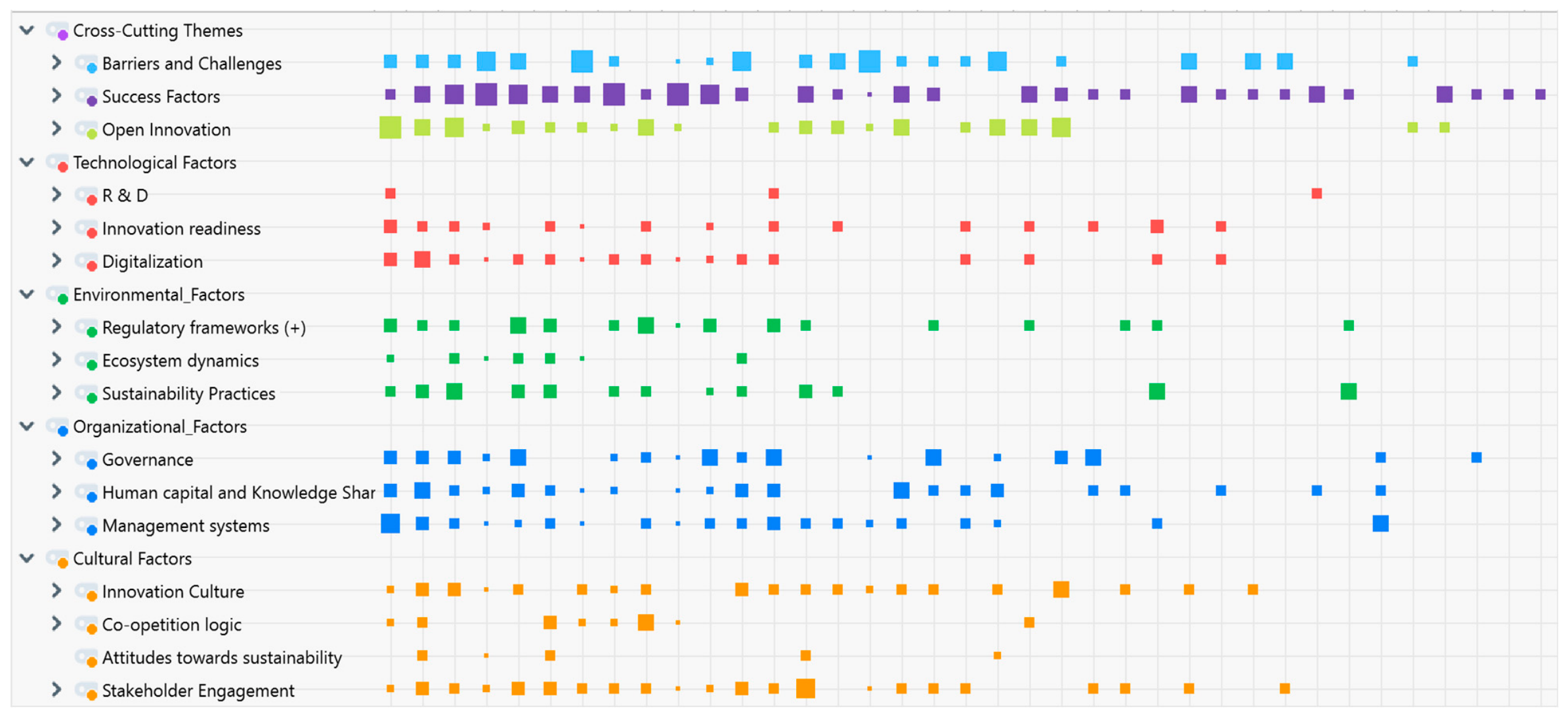
The coding structure and distribution of coded segments are summarised in
Figure 4. The figure provides a transparent overview of how empirical material was categorised across the four analytical dimensions and the cross-cutting cluster, illustrating both the multidimensional nature of OSI and the uneven intensity of themes across sources. Notably, the distribution pattern suggests that regulatory and technology-oriented narratives are more strongly articulated than organisational learning and cultural institutionalisation, reinforcing the interpretation of OSI as largely project-based and externally oriented in the Port of Sines.
The results presented in the following subsections are organised according to the four analytical dimensions, followed by an examination of cross-cutting patterns emerging across the empirical material.
To strengthen empirical traceability, the following subsections include illustrative quotations from interviews and observational material. These excerpts were selected because they represent recurring patterns identified during coding and clarify how actors interpreted the drivers, barriers, and institutional conditions associated with Open and Sustainable Innovation. The quotations are not intended to replace the thematic analysis, but to provide direct empirical support for the interpretation developed across the four analytical dimensions.
5.2. Environmental Dimension: Regulatory Alignment as Driver and Constraint
The environmental dimension emerged as one of the most visible drivers of OSI within the Port of Sines ecosystem, particularly due to the strong influence of European sustainability policies and funding frameworks. Across both institutional documents and interview data, references to the European Green Deal, Fit for 55, and national recovery and resilience programmes appeared consistently associated with strategic priorities related to digitalisation, decarbonisation, and operational modernisation.
The findings suggest that environmental regulation plays a dual role within the ecosystem. On the one hand, regulatory alignment creates favourable conditions for innovation by providing strategic direction, legitimacy, and access to funding opportunities. Several interviewees recognised that many recent sustainability and digital transition initiatives would likely not have progressed at the same pace without European policy incentives and associated financing mechanisms. In this sense, external policy frameworks function as important catalysts for innovation-oriented action within the port authority and its surrounding ecosystem.
This dual role was visible in the observational material collected during the NEXUS International Conference. One port authority representative framed Sines as a national and European flagship within the Global Gateway agenda, emphasising its relevance across “transport, energy, digital, and people-to-people” priority areas and linking green corridors to decarbonisation, digital infrastructure, and alternative fuels. The same intervention also underlined that such corridors require “stable political environments”, “sound regulatory frameworks”, and “effective cross-border coordination mechanisms”, illustrating how sustainability-oriented innovation depends simultaneously on policy alignment, regulatory capacity, and multi-stakeholder coordination.
On the other hand, the data indicate that regulatory pressure imposes important operational constraints. Some participants cited administrative complexity, fragmented procedures, and difficulties coordinating compliance requirements across multiple actors and projects. Rather than being perceived exclusively as enabling mechanisms, sustainability regulations were sometimes described as generating additional layers of institutional complexity, particularly in projects involving multiple stakeholders, public entities, and technological partners.
Environmental sustainability is strongly present in the strategic discourse of the Port of Sines, especially regarding energy transition, emissions reduction, and digital monitoring systems. However, empirical evidence suggests that the operational integration of sustainability practices remains uneven across the ecosystem. In many cases, sustainability initiatives are concentrated around highly visible projects linked to technological modernisation and external funding programmes. Other dimensions, such as circular economy practices, long-term resilience planning, and more stable university–industry collaboration mechanisms, appear less consolidated in day-to-day organisational practices.
Interview evidence also confirms that sustainability is perceived not only as a compliance requirement, but as a driver of innovation and reputation. One senior port authority respondent identified public policy initiatives and technological change as key drivers of innovation, while also linking innovation to the need to “carry out operations with a lower environmental footprint” and generate “positive notoriety” for the port. This supports the interpretation that environmental pressure operates both as an external requirement and as a strategic opportunity.
International collaboration also emerged as an important aspect of the environmental dimension. Participation in European projects and transnational innovation networks contributes not only to access to funding but also to knowledge exchange and institutional visibility. Nevertheless, the findings suggest that these collaborative dynamics remain closely associated with specific programmes and initiatives rather than fully embedded organisational capabilities. Learning generated through international cooperation does not always appear to be systematically incorporated into long-term governance or internal organisational routines.
Overall, the environmental dimension indicates that sustainability pressures are a key trigger for OSI in the Port of Sines. At the same time, the findings show that regulatory alignment alone is insufficient to ensure the institutionalisation of sustainable innovation practices. In this sense, the environmental dimension shows that regulatory and policy alignment create a favourable context for OSI, but long-term consolidation depends on the capacity to convert externally induced sustainability initiatives into internal governance routines, operational capabilities, and learning mechanisms.
5.3. Organisational Dimension: Governance Capacity and Institutional Embedment
The organisational dimension revealed some of the most significant tensions identified throughout the empirical analysis. Although sustainability and innovation are clearly present in the strategic orientation of the Port of Sines, the findings suggest that the organisational structures supporting these objectives are still evolving and not yet fully consolidated across operational practices.
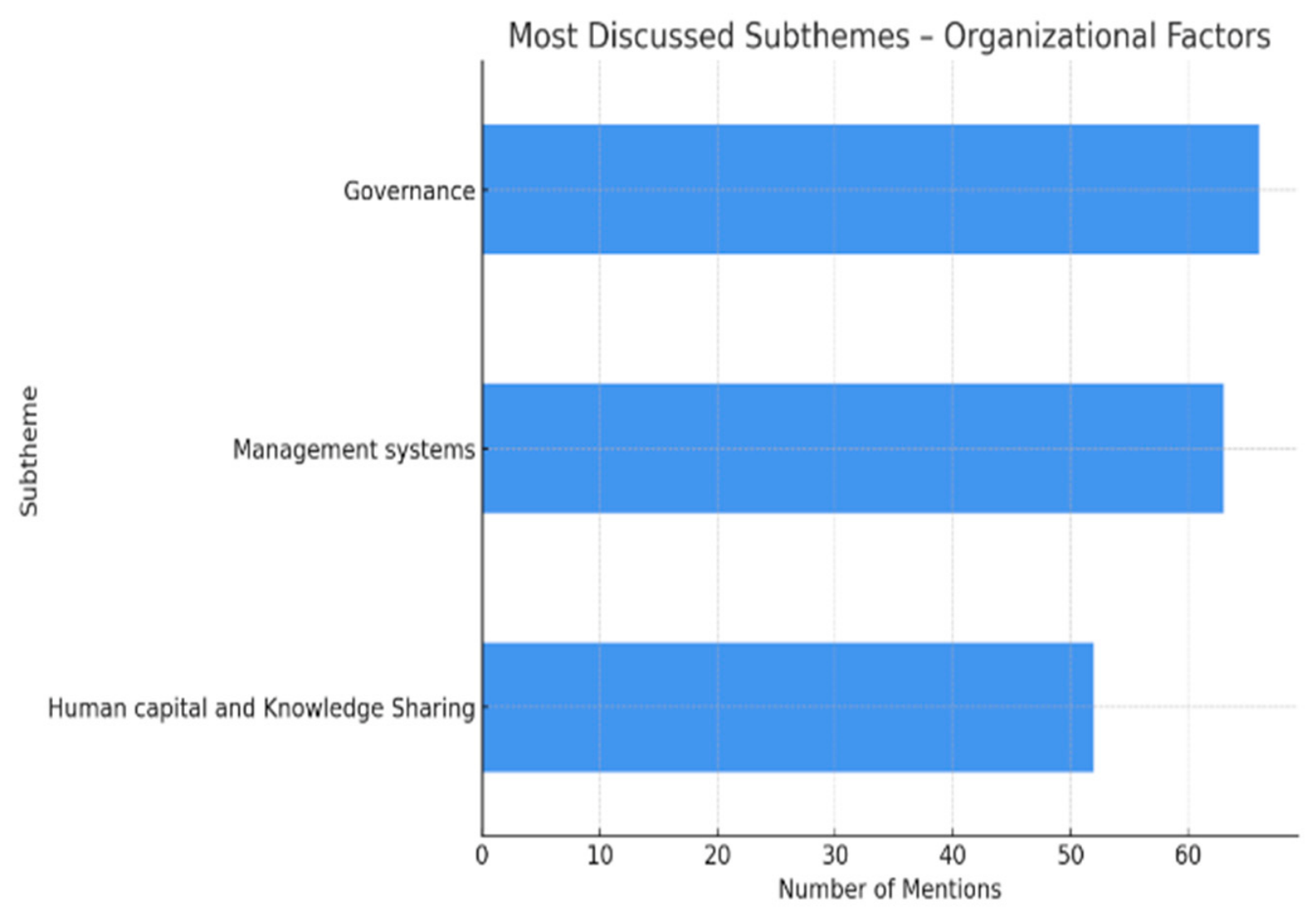
Governance emerged as a central theme in both institutional documents and interviews. The port authority is widely perceived as playing an important coordinating role within the ecosystem, particularly in connecting public policies, infrastructure planning, technological initiatives, and external partnerships. Strategic planning documents frequently emphasise alignment, accountability, and integrated management approaches. However, interviewees often described organisational coordination as more complex in practice than it appears in formal structures.
Several respondents reported difficulties with cross-departmental articulation, especially in projects involving sustainability, digital systems, and external stakeholders simultaneously. In some cases, coordination processes depend heavily on informal communication and individual initiative rather than on stable institutional routines. This does not necessarily indicate the absence of governance mechanisms; rather, it suggests that many collaborative and innovation-oriented practices remain strongly person-dependent.
The organisational tension between strategic commitment and operational embedment is also visible in the interview forms. One senior APS respondent classified the port as adopting an open innovation model with broad involvement of external partners, but also identified resistance to change, costs, and the need to maintain the NEXUS programme’s sustainability as relevant implementation challenges. Another APS respondent similarly recognised open innovation as important for competitiveness and sustainable development, while identifying information-sharing difficulties, bureaucratic processes, integration with existing systems, and implementation costs as barriers. These responses suggest that openness is institutionally recognised, but its implementation remains conditioned by organisational routines, resource constraints, and procedural complexity.
Figure 5 summarises the most recurrent organisational subthemes identified during coding. The figure should therefore be read together with the qualitative evidence: governance and coordination were not absent, but they were frequently described as unevenly institutionalised and dependent on specific projects, leaders, or collaborative arrangements.
The data also indicate that governance structures within the Port of Sines are primarily oriented toward operational continuity, regulatory compliance, and infrastructure management. Innovation activities, although increasingly prioritised, are often incorporated into existing structures rather than supported through dedicated governance arrangements specifically designed for OSI processes. As a result, innovation initiatives frequently assume a project-based configuration, particularly when associated with externally funded programmes.
This pattern becomes especially visible in relation to organisational learning. Interviewees consistently recognised the importance of knowledge sharing, technical expertise, and collaborative learning for advancing sustainability and innovation goals. Nevertheless, the findings suggest that learning processes remain only partially institutionalised. Much of the knowledge generated through partnerships, pilot projects, and ecosystem interactions appears to circulate informally, without systematic mechanisms for internal dissemination, retention, or integration into long-term organisational practices.
The importance of early stakeholder involvement was reinforced by external expert testimony. In one interview, an international port representative argued that “the best way is to include them from the beginning”, explaining that late involvement may force projects to return to earlier stages when stakeholders introduce needs that had not been considered. This observation supports the finding that OSI requires not only formal participation but also structured, continuous engagement throughout the innovation process.
Human capital was similarly identified as an important enabling factor. Respondents highlighted the relevance of specialised technical competencies, digital skills, and experiential knowledge accumulated through participation in collaborative projects. At the same time, some interviewees acknowledged that organisational adaptation to new technological and sustainability demands remains uneven across units and professional profiles. This reflects the broader challenge of aligning traditional operational structures with emerging innovation-oriented practices.
Communication and participation mechanisms also presented important variations across the ecosystem. Although collaboration and stakeholder engagement are formally recognised in institutional discourse, their implementation appears inconsistent. In several situations, participation was described as more strongly associated with specific initiatives or leadership dynamics than with stable governance routines embedded across the organisation.
Overall, the organisational findings suggest that the Port of Sines has developed important governance and coordination capabilities to support sustainability and innovation agendas. However, the institutionalisation of OSI still appears incomplete. Strategic commitment exists, but the consolidation of innovation as an embedded organisational capability remains constrained by fragmented coordination practices, limited formalisation of learning processes, and strong dependence on project-based dynamics.
5.4. Cultural Dimension: Readiness, Trust and the Limits of Institutionalisation
The cultural dimension revealed dynamics that are less visible in formal governance structures but highly influential in how OSI is experienced and operationalised within the Port of Sines ecosystem. Across interviews and institutional narratives, concepts such as collaboration, openness, innovation culture, and stakeholder engagement were consistently recognised as important for supporting sustainability and digital transformation processes. However, the findings suggest that these values are not yet equally embedded across organisational practices and relationships.
Innovation culture is generally associated with modernisation, adaptability, and openness to change. Institutional documents frequently frame digital transition and sustainability as requiring cultural transformation alongside technological investment. Interviewees also acknowledged that innovation is increasingly a visible part of the port ecosystem’s strategic orientation. Even so, the empirical evidence indicates that this cultural transition remains uneven and, in some areas, still strongly dependent on individual initiative and leadership profiles.
Several participants described the organisational environment as progressively more open to collaboration than in previous years, particularly due to participation in European projects and cross-sector partnerships. At the same time, they recognised the persistence of more traditional operational logics associated with public-sector structures and highly regulated environments. In practice, this creates a coexistence between innovation-oriented discourse and more cautious organisational behaviours.
Expert interviews suggest that cultural change should be understood as gradual and relational. One expert argued that open innovation should not be pursued “for the sake of it”, but to solve concrete sustainability problems more effectively than organisations could do alone. The same interview emphasised that implementation should start with small, low-risk engagements because actors need time to build trust, reduce fear, and experience the value of openness. This supports the interpretation that cultural readiness is not a precondition that either exists or does not exist; rather, it is cultivated through repeated, low-risk and problem-oriented collaborative practices.
Stakeholder engagement emerged as another important aspect of the cultural dimension. The findings suggest that collaboration within the ecosystem has intensified, especially in projects involving digitalisation, sustainability, and technological experimentation. Informal interaction spaces, project consortia, and professional networks appear to facilitate communication and mutual understanding among actors. However, these collaborative dynamics are not always supported by stable institutional mechanisms that sustain long-term engagement beyond specific initiatives.
Trust also plays a central role in shaping collaborative practices. Although ecosystem actors generally recognise the strategic importance of cooperation, data sharing and joint decision-making processes still appear to be constrained by concerns about confidentiality, operational sensitivity, and competitive positioning. Some interviewees referred to collaboration as necessary but selective, particularly when projects involve commercially sensitive information or coordination among actors with different institutional interests.
The centrality of trust was also evident in discussions on data sharing and port community systems. An external specialist stressed that data ownership remains with the actors who provide the data, and that open innovation based on port data requires stakeholders to authorise the controlled use of the data by innovators or start-ups. Similarly, the Portbase material identifies neutrality, cost-based operation, and the principle that “your data is your property” as core mechanisms for building trust in port data-sharing environments. These findings indicate that trust is not merely a cultural attitude, but an institutional condition that must be supported by rules, governance principles, and credible intermediary structures.
The findings further suggest that risk perception influences the pace and depth of cultural transformation within the ecosystem. Due to the operational criticality of port activities and the strong regulatory accountability associated with public infrastructure management, innovation processes tend to favour gradual adaptation rather than disruptive experimentation. In this context, sustainability-oriented innovation is often approached through incremental improvements that minimise operational uncertainty.
Another relevant aspect concerns organisational learning and openness to experimentation. While interviewees acknowledged that collaborative projects generate important opportunities for knowledge exchange, the consolidation of learning routines remains limited. Cultural openness to innovation exists, but it has not yet been fully translated into systematic practices that encourage experimentation, reflection, and continuous organisational learning across the ecosystem.
Overall, the cultural dimension shows that openness, collaboration, and sustainability are increasingly accepted as strategic values, but that their institutionalisation depends on trust-building mechanisms, psychological safety for experimentation, and repeated collaborative practices that can move innovation beyond isolated project contexts.
5.5. Technological Dimension: Digital Enablement Without Full Transformation
Technological factors emerged as one of the strongest enabling dimensions of OSI within the Port of Sines ecosystem, particularly through ongoing digitalisation initiatives, investments in smart infrastructure, and efforts to improve data integration across operational processes. Both institutional documents and interviewees consistently associate digital transformation with competitiveness, operational efficiency, and sustainability objectives.
The findings indicate that digital systems are increasingly viewed as necessary not only for operational optimisation, but also for improving coordination among ecosystem actors. Platforms that support interoperability, real-time information exchange, and monitoring capabilities were frequently mentioned as important mechanisms for facilitating communication and supporting more integrated logistics operations. In this context, technology is perceived as a key support structure for collaboration and ecosystem coordination.
The NEXUS conference material provides concrete support for this interpretation. In the presentation of the Port of Sines, the Single Logistics Window was described as a tool that connects public and private actors in the logistics chain, enabling the simplification, harmonisation, and dematerialisation of procedures, and greater intermodality. The same material described the NEXUS Agenda as comprising 28 products across digitalisation, cybersecurity, and energy, with the Open Data Collaboration Platform identified as a central product for the Sines logistics corridor. These elements reinforce the finding that digital infrastructure functions as a key enabler of OSI, particularly by supporting coordination, visibility, and data-driven logistics.
At the same time, the empirical evidence suggests that technological development across the ecosystem remains uneven. While some projects associated with the NEXUS Agenda demonstrate advanced levels of digital integration and experimentation, these experiences do not yet appear equally consolidated across all organisational units or stakeholder groups. Differences in technical capacity, digital readiness, and resource availability continue to influence the pace at which new systems and practices are adopted.
Interviewees also highlighted that technological integration depends on organisational and relational conditions that go beyond infrastructure investment alone. In several cases, data-sharing practices remain constrained by concerns related to interoperability standards, information ownership, confidentiality, and operational sensitivity. Although digital systems create opportunities for collaboration, they do not automatically eliminate institutional barriers or generate trust among actors participating in the ecosystem.
However, the data also show that digitalisation does not automatically resolve collaboration problems. A Port Community System expert noted that “data sharing is a means; creating value together is the end”, while also emphasising that trust is built through neutrality, simplicity, efficiency, and respect for data ownership. Another conference discussion on port digitalisation stressed that the problem is often not the absence of data, but the unwillingness or inability of actors to share it in a trusted environment. These observations support the argument that digital platforms enable OSI only when accompanied by governance arrangements and relational trust.
Another aspect emerging from the analysis concerns the relationship between digitalisation and sustainability objectives. Many technological initiatives are directly associated with emissions monitoring, operational efficiency, energy management, and environmental reporting requirements. However, the findings suggest that technology is still predominantly approached as a tool for optimisation and regulatory alignment rather than as a driver of broader organisational transformation.
The data further indicates that technological innovation often advances more rapidly than organisational adaptation processes. While infrastructure and digital platforms continue to evolve, organisational routines, governance mechanisms, and learning practices do not always keep pace. This creates situations in which technological capabilities are available, but their integration into collaborative and sustainability-oriented practices remains partial.
The technological dimension, therefore, demonstrates that digital platforms, interoperability tools, and data-sharing infrastructures are necessary but insufficient conditions for OSI; their transformative potential depends on governance models, trust arrangements, and organisational capacity to use data collaboratively.
5.6. Cross-Cutting Themes: Structural Tensions in the Institutionalisation of OSI
The cross-cutting analysis reveals that the implementation of OSI at the Port of Sines is shaped less by a lack of strategic intent than by structural misalignments across governance, organisational routines, cultural readiness, and technological capacity.
Across the empirical material, the most recurrent tension concerns the transition from project-based innovation to institutionalised innovation capability. The NEXUS Agenda provides a powerful collaborative platform and has mobilised public and private actors around digital and green transition objectives. Nevertheless, several sources indicate that the consolidation of these outcomes depends on what happens after project implementation: whether knowledge, routines, data-sharing practices, and stakeholder coordination mechanisms remain embedded in the port authority and wider ecosystem.
The first recurrent theme concerns the gap between regulatory ambition and organisational consolidation. Environmental pressures and European policy frameworks provide a strong external impetus for sustainability-oriented innovation. However, the translation of these pressures into stable internal capabilities remains uneven. Regulatory alignment functions as a catalyst, yet it does not automatically generate institutional learning or cross-functional integration.
A second theme relates to the tension between project-based innovation and long-term capability-building. Many OSI initiatives are embedded in externally funded programmes or flagship technological projects. While these initiatives demonstrate high levels of experimentation and collaboration, their outcomes are not consistently embedded into enduring governance structures or organisational memory. Innovation thus appears episodic rather than structurally institutionalised.
Trust and coordination emerge as critical but fragile enablers. Although ecosystem actors recognise the importance of collaboration, trust-building mechanisms remain largely relational and informal. Data-sharing practices and cooperative arrangements depend on contextual alignment rather than on formalised governance routines, limiting scalability across the ecosystem.
This cross-cutting issue was especially evident in the context of data governance. Evidence from Portbase indicates that digital platforms can support sustainability by reducing delays, increasing transparency, facilitating efficient cargo handling, and enabling insights into emissions reduction. However, these effects depend on community adoption and trusted data-sharing arrangements, rather than on platform availability alone. In the Port of Sines case, this reinforces the interpretation that OSI is not simply a matter of developing digital tools, but of embedding those tools within governance routines and shared value-creation mechanisms.
Finally, a pattern of cautious innovation culture permeates the findings. Operational criticality, regulatory accountability, and competitive sensitivity foster incremental rather than transformative approaches. Risk tolerance appears limited, not due to a lack of awareness but as a rational response to institutional constraints inherent in public port governance.
Taken together, these cross-cutting themes suggest that OSI in the Port of Sines is strategically endorsed and partially operationalised, but not yet fully institutionalised as an integrated governance capability. The evidence points to a port ecosystem in transition: environmentally aligned, technologically enabled, and increasingly open to collaboration, but still constrained by fragmented routines, uneven trust mechanisms, limited organisational learning, and dependence on externally funded project cycles. This pattern provides the empirical basis for the discussion that follows, particularly regarding the need to transform OSI from a portfolio of initiatives into a durable organisational and ecosystem capability.
To synthesise the empirical findings,
Table 3 summarises the main enablers and barriers identified across the four analytical dimensions and the cross-cutting themes. The table does not present the dimensions as isolated categories. Rather, it shows how environmental, organisational, cultural, and technological factors interact in shaping the institutionalisation of OSI within the Port of Sines ecosystem.
The synthesis reinforces a central empirical pattern: OSI in the Port of Sines is not constrained by the absence of innovation initiatives, but by the difficulty of embedding them within stable governance arrangements, organisational routines, and ecosystem-wide learning processes. This finding is particularly important because it shifts the analytical focus from whether innovation exists to how it becomes institutionalised, sustained, and transferred beyond specific projects.
6. Discussion
The findings of this study indicate that OSI in port ecosystems should be understood not merely as the presence of digitalisation projects, sustainability initiatives, or collaborative partnerships, but as a process of institutionalisation. In the Port of Sines case, OSI is strategically visible through policy alignment, digital transformation, stakeholder collaboration, and participation in the NEXUS Agenda. However, the empirical evidence also shows that these initiatives are not yet fully embedded in stable organisational routines, learning mechanisms, and governance practices. This distinction is central to the study’s contribution: the main challenge is not whether innovation and sustainability are present, but whether they are transformed into durable organisational and ecosystem capabilities.
6.1. OSI as an Institutionalisation Process in Public Port Authorities
The results confirm that digitalisation and sustainability are increasingly interdependent in port ecosystems. This is consistent with research on smart ports, green ports, and innovation ecosystems, which emphasises the role of digital infrastructure, environmental regulation, and stakeholder collaboration in contemporary port transformation [
1,
2,
4,
9,
22]. However, the Port of Sines case also shows that these dimensions do not automatically converge. Environmental agendas may generate strategic pressure; technological projects may create new infrastructures; and collaborative initiatives may mobilise multiple actors. Yet OSI only becomes institutionally meaningful when these elements are connected through governance coordination, organisational learning, and sustained stakeholder engagement.
This finding extends the existing OSI literature by demonstrating that openness and sustainability are insufficient when treated as strategic aspirations or project-level principles. In a public port authority context, OSI requires mechanisms that embed collaborative innovation into the routines of planning, decision-making, data governance, monitoring, and inter-organisational coordination. The case therefore reinforces the argument that sustainable innovation is not only a technological or environmental process, but also an organisational and institutional transformation process [
14,
15,
24,
25].
The empirical findings also clarify the relationship between the four analytical dimensions of the framework. The environmental dimension functions primarily as an external driver, shaped by European sustainability agendas, decarbonisation objectives, and funding mechanisms. The technological dimension operates as an enabling infrastructure, particularly through digital platforms, interoperability tools, and data-sharing mechanisms. The organisational dimension determines whether these drivers and infrastructures are translated into stable governance arrangements. Finally, the cultural dimension influences whether actors are willing to collaborate, share knowledge, trust digital systems, and engage in experimentation. The framework is therefore supported by the evidence, but the findings suggest that its most important contribution lies in explaining the interdependence among dimensions rather than treating them as separate categories.
6.2. Public Port Authorities as Ecosystem Orchestrators
The Port of Sines case contributes to the port governance literature by showing how public port authorities can act as ecosystem orchestrators amid sustainability transition. APS occupies an intermediary position between public policy, infrastructure planning, private operators, technology providers, universities, logistics actors, and European funding frameworks. This position enables the port authority to mobilise resources, coordinate strategic initiatives, and create conditions for collaborative innovation. In this sense, APS is not merely an infrastructure manager, but a governance actor capable of shaping the direction and pace of ecosystem transformation.
This finding is aligned with the broader literature on port authorities and port development companies, which increasingly recognises their role in coordination, facilitation, and strategic ecosystem development [
3,
16,
21]. However, the Port of Sines case adds an important qualification: orchestration is not only a question of formal mandate or strategic ambition. It also depends on the authority’s capacity to create stable coordination mechanisms, maintain stakeholder trust, integrate learning across projects, and convert temporary initiatives into permanent capabilities.
The empirical evidence suggests that APS has developed important orchestration capacity through its leadership in NEXUS and its role in aligning port innovation with digital and green transition priorities. The NEXUS Agenda demonstrates the port authority’s ability to mobilise a broad consortium of public and private actors around shared innovation objectives. Nevertheless, the findings also indicate that orchestration remains uneven. Some coordination processes appear strongly linked to specific projects, individual leadership, or externally funded programmes. This creates a risk that innovation remains episodic rather than becoming embedded in the authority’s long-term governance architecture.
This insight is theoretically relevant because it distinguishes between ecosystem participation and ecosystem orchestration. Participation in an innovation ecosystem does not automatically generate institutional capacity. Orchestration requires the deliberate design of governance arrangements that enable continuity, shared learning, accountability, and collective value creation. In this sense, the Port of Sines case suggests that public port authorities must move from acting as project coordinators towards acting as institutional stewards of OSI.
6.3. From Project-Based Innovation to Durable OSI Capabilities
A central finding of the study concerns the tension between project-based innovation and durable capability-building. The NEXUS Agenda is a major enabler of OSI in the Port of Sines ecosystem. It provides funding, visibility, technological experimentation, and a collaborative platform involving port authorities, logistics operators, technology firms, universities, and research institutions. It also supports the development of digital applications, an open data collaboration platform, and solutions linked to digitalisation, cybersecurity, energy transition, and logistics corridor optimisation.
However, the case also reveals the risk of projectification. Externally funded projects can accelerate innovation, but they do not automatically ensure long-term institutionalisation. Their contribution depends on whether the knowledge, routines, platforms, partnerships, and governance practices developed during the project remain active after the funding cycle ends. This is particularly important for OSI, because sustainable innovation requires continuity across time, not only experimentation within project boundaries.
The findings, therefore, suggest that NEXUS should be interpreted as both an accelerator and a test of institutional capacity. As an accelerator, it enables the Port of Sines to advance digital and sustainable solutions more rapidly than would likely be possible through internal resources alone. As a test of institutional capacity, it raises the question of whether APS and the wider ecosystem can absorb, retain, and scale the knowledge generated through the project. The long-term value of NEXUS will therefore depend less on the number of products or pilots developed and more on the extent to which these outputs become embedded in governance routines, data-sharing protocols, organisational learning mechanisms, and stakeholder coordination practices.
This finding contributes to the OSI theory by highlighting the importance of the transition from project outputs to institutional capabilities. In infrastructure-intensive ecosystems, collaborative innovation is often organised through programmes, consortia, and temporary funding instruments. These arrangements are useful for experimentation, but they may also fragment responsibility and weaken organisational memory if not accompanied by explicit mechanisms for learning and institutional embedment. For public port authorities, the managerial challenge is therefore to design processes that capture project learning, integrate it into internal routines, and sustain collaboration after formal project completion [
32].
6.4. Comparative Positioning: Sines, Rotterdam, Valencia and Barcelona
The comparison with Rotterdam, Valencia and Barcelona helps clarify which aspects of the Sines case are distinctive and which may be transferable to other port ecosystems. These ports represent different pathways for integrating innovation, sustainability, and ecosystem coordination.
Rotterdam represents a more mature innovation ecosystem, supported by strong intermediary structures, digital infrastructure, innovation hubs, and experimentation platforms such as PortXL and SmartPort [
7,
9,
16]. Its experience suggests that OSI benefits from specialised organisations that mediate between the port authority, firms, start-ups, universities, and public policy actors. Compared with Rotterdam, Sines is still developing such intermediary capacity. NEXUS partially fulfils this role, but its project-based nature means that its institutional permanence remains uncertain.
Valencia illustrates the role of human capital, training, and institutional learning in strengthening port innovation ecosystems. Through Fundación Valenciaport, innovation is supported not only by technological projects, but also by education, applied research, professional development, and knowledge transfer [
9,
23,
26]. This comparison is especially relevant to Sines because the findings identify organisational learning and internal engagement as areas requiring further consolidation. The Valencia case suggests that OSI can be strengthened when learning infrastructures become permanent features of the ecosystem rather than secondary outcomes of individual projects.
Barcelona provides a useful contrast regarding digital openness, urban innovation, and participatory governance. Its initiatives in open data, digital platforms, digital twin technologies, and port-city innovation demonstrate how technological innovation can be embedded within broader urban and sustainability agendas [
27,
28]. Compared with Barcelona, Sines has a strong digitalisation agenda through JUL and NEXUS, but the findings suggest that data-sharing practices and trust mechanisms remain central challenges. This indicates that digital platforms alone are insufficient unless supported by governance rules, stakeholder confidence, and clear value propositions for ecosystem actors.
The comparative analysis is summarised in
Table 4.
This comparison shows that Sines has several conditions associated with OSI: strategic location, public authority leadership, digital infrastructure, European alignment, and a major collaborative innovation agenda. Its distinctive feature is the concentration of digital and green transition efforts around NEXUS, the flagship programme. However, compared with Rotterdam, Valencia and Barcelona, the Sines case also reveals a less mature institutional architecture for sustaining innovation beyond project cycles. The transferable lesson is therefore not that other ports should replicate Sines directly, but that public port authorities seeking OSI must combine project-based experimentation with permanent governance, learning, and stakeholder engagement mechanisms.
6.5. Practical and Policy Implications
The findings have practical implications for port authorities, policymakers, and actors in the innovation ecosystem. First, port authorities should treat OSI as a governance capability rather than as a portfolio of isolated projects. This requires dedicated mechanisms for cross-functional coordination, structured stakeholder engagement, and systematic learning from collaborative initiatives. In the Port of Sines case, this would mean ensuring that the knowledge generated through NEXUS is captured, disseminated, and integrated into regular planning and operational routines.
Second, data governance should be recognised as a central component of OSI. Digital platforms and open data initiatives can support sustainability by improving visibility, reducing inefficiencies, enabling better coordination, and supporting emissions monitoring. However, actors will only share data if they trust the governance model. Clear rules on data ownership, access, confidentiality, cybersecurity, and value creation are therefore essential. Evidence from Port Community System environments, such as Portbase, suggests that neutrality, transparency, cost-based operation, and respect for data ownership can strengthen trust and community adoption [
21].
Third, policymakers and funding bodies should complement technology-oriented investment with instruments that support organisational capability-building. European and national funding programmes are important for accelerating digital and environmental transition, but they should also require or encourage mechanisms for post-project institutionalisation. These may include learning repositories, capability-building plans, stakeholder governance boards, long-term data-sharing protocols, and performance indicators linked to sustainability and innovation outcomes.
Fourth, port authorities should invest in human capital and an innovation culture. The findings indicate that technological capability can progress faster than organisational readiness. Training, internal engagement, experimentation spaces, and cross-departmental collaboration are therefore necessary to ensure that digital and sustainability initiatives are adopted and used effectively. Without such cultural and organisational foundations, OSI risks remain dependent on a limited number of champions, projects, or external partners [
23,
25].
Overall, the Port of Sines case demonstrates that the transition towards OSI is neither linear nor purely technological. It is a systemic process shaped by environmental pressure, governance capacity, cultural readiness, digital infrastructure, and stakeholder trust. The study, therefore, contributes to the literature by showing that sustainable innovation in public port ecosystems depends on the institutional capacity to convert openness and sustainability from strategic principles into durable governance and learning capabilities.
7. Conclusions and Implications
This study examined how OSI is enabled, constrained, and institutionalised within the Port of Sines ecosystem. Drawing on a qualitative single-case study of a European public port authority, the research integrated institutional documents, semi-structured interviews, observational material, and qualitative coding supported by MAXQDA. The analysis was structured around four interdependent dimensions: environmental, organisational, cultural, and technological.
The findings show that OSI in the Port of Sines is strongly enabled by European sustainability agendas, digitalisation initiatives, collaborative innovation projects, and the strategic role of the port authority in coordinating ecosystem actors. The NEXUS Agenda is particularly relevant in this regard, as it provides a platform for mobilising public and private stakeholders around digital and green transition objectives. However, the study also demonstrates that OSI remains only partially institutionalised. Organisational fragmentation, limited formalisation of learning mechanisms, uneven cultural readiness, data-sharing concerns, and dependence on externally funded projects continue to constrain the consolidation of OSI as a long-term governance capability.
The main theoretical contribution of the study is to conceptualise OSI in public port ecosystems as an institutionalisation process rather than as a set of isolated digital, environmental, or collaborative initiatives. The evidence suggests that sustainable innovation does not emerge automatically from technological investment, regulatory alignment, or participation in innovation projects. Instead, it depends on the interaction between governance coordination, stakeholder trust, organisational learning, data-sharing arrangements, and cultural readiness for collaboration. In this sense, the study extends OSI and innovation ecosystem literature by showing that ecosystem participation alone does not guarantee innovation capacity. Such capacity must be actively built, governed, and embedded into organisational and inter-organisational routines. The study also contributes to port governance research by highlighting the evolving role of public port authorities as ecosystem orchestrators. In the Port of Sines case, APS occupies a strategic intermediary position between public policy, infrastructure development, private operators, technology providers, research institutions, and sustainability objectives. However, the findings show that orchestration requires more than strategic coordination of projects. It also requires mechanisms for continuity, learning, trust-building, and post-project institutionalisation. This insight is particularly relevant for ports that depend on European or national funding programmes to accelerate digital and environmental transition.
From a practical perspective, the findings suggest that port authorities seeking to strengthen OSI should move beyond project-based innovation and establish permanent governance mechanisms to sustain innovation. These may include dedicated innovation coordination functions, cross-departmental governance forums, structured stakeholder engagement processes, data-sharing protocols, and mechanisms to capture and disseminate learning from collaborative projects. In the Port of Sines case, this is especially relevant to ensure that the outputs of the NEXUS Agenda are not limited to project deliverables, but become embedded in organisational routines, ecosystem relationships, and long-term strategic capabilities.
For policymakers and funding bodies, the study indicates that digital and environmental investment programmes should be complemented by instruments that support organisational capability-building. Funding schemes can accelerate experimentation, but they should also encourage post-project continuity, knowledge retention, governance adaptation, and measurable sustainability outcomes. This is important because ports may comply with sustainability and digitalisation agendas without necessarily developing the internal capabilities required to sustain OSI over time.
The findings offer transferable insights for other port ecosystems, but they should not be interpreted as a prescriptive model. The Port of Sines is an information-rich and strategically relevant case, particularly given its role in Portuguese and European logistics, the energy transition, and digital corridor initiatives. However, ports differ in size, governance model, institutional maturity, stakeholder configuration, and technological readiness. Therefore, the transferability of this study lies in the mechanisms identified—such as governance coordination, stakeholder trust, organisational learning, data-sharing governance, and project-to-routine institutionalisation—rather than in direct replication of the Sines experience.
This study has several limitations. First, as a qualitative single-case study, the findings support analytical rather than statistical generalisation. Second, the empirical material is based on nine semi-structured interviews, complemented by institutional documents and observational material. Although the interviewees were selected for their positional authority and knowledge of innovation, sustainability, digitalisation, and port governance, the sample remains limited and may privilege managerial and institutional perspectives. Third, the study does not fully incorporate the perspectives of operational workers, terminal users, logistics customers, local communities, or civil society actors, whose inclusion could provide a broader understanding of OSI impacts. Fourth, access to confidential strategic and operational information was limited, and public institutional documents may reflect reputational narratives. These limitations were mitigated through triangulation, but they delimit the scope of the conclusions. Future research could expand this discussion through comparative multi-case designs involving ports with different governance models, sizes, and levels of digital and environmental maturity. Longitudinal studies would also be valuable for examining how OSI evolves over time, particularly after the completion of major funded programmes such as NEXUS. In addition, mixed-methods research could integrate qualitative insights with quantitative indicators of emissions reduction, digital maturity, cargo flows, operational efficiency, stakeholder collaboration, and innovation performance. Such approaches would help assess not only whether OSI initiatives are implemented, but whether they generate measurable organisational, environmental, and ecosystem-level outcomes.
Overall, the Port of Sines case demonstrates that advancing OSI in public port ecosystems requires more than regulatory compliance, digital infrastructure, or participation in collaborative projects. It requires the institutional capacity to transform openness and sustainability into durable governance routines, organisational learning processes, trusted data-sharing arrangements, and long-term ecosystem capabilities. This is the central lesson of the case and the principal contribution of the study.




 ,
,