Article

Soil Microbiota-Mediated Effects on Soybean (Glycine max (L.) Merr.) Growth and Yield: The Role of Bradyrhizobium japonicum and Trichoderma in Sustainable Agricultural Systems


by
Katarzyna Panasiewicz
1,*,
Alicja Niewiadomska
2,
Agnieszka Wolna-Maruwka
2,
Karolina Ratajczak
1,
Agnieszka Faligowska
1,
Katarzyna Głuchowska
2 and
Grażyna Szymańska
1
1
Department of Agronomy, Poznań University of Life Sciences, 11, Dojazd Str., 60-632 Poznań, Poland
2
Department of Soil Science and Microbiology, Poznań University of Life Sciences, Szydłowska 50, 60-656 Poznań, Poland
*
Author to whom correspondence should be addressed.
Sustainability 2026, 18(14), 7073; https://doi.org/10.3390/su18147073
Submission received: 23 May 2026 / Revised: 6 July 2026 / Accepted: 8 July 2026 / Published: 10 July 2026
(This article belongs to the Special Issue Soil Microbiota and Ecology in Sustainable Agroecosystems)

Abstract

Soybean (Glycine max (L.) Merr.) is a key legume with high agronomic and nutritional value, widely cultivated for its high-protein seeds and its capability to improve soil fertility through biological nitrogen fixation. Recently, co-inoculation strategies combining Rhizobia bacteria with growth-enhancing fungi from the genus Trichoderma have gained increasing attention as a way to enhance soybean productivity and resilience under variable environmental conditions. The present study, conducted in 2023–2024, examined how seed inoculation treatments (Bradyrhizobium japonicum and Trichoderma viride) affect soybean productivity, seed quality, and soil biochemical changes expressed as the activity levels of selected soil enzymes—dehydrogenases (DHA), catalase (CAT), acid phosphatase (ACP), and alkaline phosphatase (ALP)—as well as the biological fertility index (BIF). The findings indicated that co-inoculation positively influenced plant productivity and produced the highest seed yields among all treatments tested, exceeding the control by 25.6%. Furthermore, inoculated seeds were characterized by improved seed quality, expressed by higher germination capacity (80%) and greater average seedling length (4.74 cm). The bacterial strains used to inoculate soybean seeds increased soil biochemical activity and improved fertility, particularly under unfavorable rainfall distribution during the growing season. Co-inoculation can be recommended as an effective and environmentally friendly element of soybean cultivation technology, supporting yield stability in variable weather conditions. Further research is recommended in longer multi-year series and under various habitat conditions.

1. Introduction

Projections indicate that by 2050, the world population will reach 9.7 billion, which will naturally lead to increased food demand [1]. In response to this challenge, food experts suggest two fundamental strategies for reducing the food gap: a consumption-oriented approach and a production-oriented approach [2,3]. The first is based on the premise that existing food production levels are sufficient to meet global demand, provided that food losses and waste are significantly reduced, and ultimately eliminated [4,5]. The second strategy assumes a marked expansion in agricultural crop and livestock production [6].
However, the increase in crop production stems not only from the need to meet nutritional needs, but also from the growing demand for plant-derived raw materials used outside agriculture, such as bio-oils, bioethanol, industrial starch, and energy crops [7,8]. These goals can be achieved by increasing yields and/or expanding the area under cultivation. The first approach, dominant over the last 85 years, is based on intensifying agricultural production by maximizing the yield potential of varieties and using mineral fertilizers, plant protection products, and fuels [9]. This strategy, although effective in the short term, leads to intensive exploitation of soil resources, resulting in nutrient depletion, reduced fertility, and disruption of the soil’s biological balance of the soil [10,11]. The second solution involves increasing the cultivated area; however, this requires significant investment in improving soil properties to make land suitable for agricultural use, or in developing alternative production systems, such as artificially grown crops, including vertical farming [12]. It should be emphasized that in many countries, opportunities to expand arable land are becoming increasingly limited [13]. Global agricultural producers have driven dynamic growth in crop area, but have now stabilized it, indicating they have reached the limits of further expansion [14]. Given the observed slowdown in yield growth for key crops such as rice, wheat, corn, and soybeans, which remains below the required annual level of 2.4%, it is becoming clear that current strategies will be insufficient [15]. Therefore, there is a need to develop and implement innovative, sustainable agricultural technologies that ensure food security while simultaneously preserving environmental resources. In this context, legume crops are playing an increasingly important role in sustainable cropping systems due to their agronomic and environmental benefits. Among them, soybean (Glicyne max L.) is one of the world’s most important legume crops because of its high seed protein and oil content, making it a major source of food, animal feed, and industrial raw materials [12]. Furthermore, as a legume capable of establishing symbiosis with nitrogen-fixing bacteria, soybean contributes to biological nitrogen fixation, thereby reducing the demand for mineral nitrogen fertilizers, improving soil fertility, and enhancing the sustainability of crop production systems [13]. Owing to these agronomic, economic, and environmental benefits, soybean has become a key component of modern crop rotations and important crop for sustainable agriculture [13,14]. More broadly, legumes, both annual and perennial, exert a comprehensive and multifaceted positive impact on the environment by improving the physical, chemical, and biological soil conditions. The greatest benefit of legumes is their potential to form symbiotic relationships with bacteria of the Rhizobium and Bradyrhizobium, which fix atmospheric nitrogen. From an environmental protection perspective, this symbiosis provides an alternative to the use of nitrogen fertilizers, thereby helping to avoid environmental pollution associated with both their production and application [16,17].
One promising technology that reduces pressure on the soil environment and plays a crucial role in ensuring food security is the inoculation of legumes with symbiotic and plant growth-promoting microorganisms (PGPM) [13,17]. This approach aims to reduce the use of mineral fertilizers and plant protection products while maintaining high production efficiency. In soybean (Glycine max L.), a key legume crop, a common agronomic practice is the inoculation of seeds with nitrogen-fixing bacteria of the genus Bradyrhizobium. However, the use of other groups of PGPMs in soybean production remains underdeveloped and is still at an early stage of implementation. Co-inoculation of soybean with Bradyrhizobium spp. strains and the arbuscular mycorrhizal fungus Glomus mosseae has been shown to increase plant biomass, particularly under conditions of nitrogen and phosphorus deficiency in the soil [18]. It should be noted, however, that the commercial production of arbuscular mycorrhizal fungi intended for use in extensive cropping systems is still under development.
Literature analysis also indicates that strains of the genus Bacillus have been used in co-inoculation with Bradyrhizobium japonicum, resulting in more intense nodulation compared to plants inoculated with B. japonicum alone [19,20]. Furthermore, co-inoculation of Bradyrhizobium spp. with Azospirillum brasilense [21] or Streptomyces griseoflavus [22] has been shown to increase the number of nodules, biomass production, and soybean yield.
At the same time, it should be emphasized that the available literature reports co-inoculation of soybean with the bacterium Bradyrhizobium japonicum and biocontrol fungi, including members of the genus Trichoderma. Numerous studies focus on soybean inoculation with species such as Trichoderma harzianum [23] and Trichoderma asperelloides [24], while a clear research gap exists regarding Trichoderma viride. The indicated microorganisms belong to PGPM has the advantage of being easy to cultivate under laboratory conditions, and several methods have been proposed for its industrial production [25,26]. Species of the genus Trichoderma are widely used as biological control agents due to their numerous benefits for plant growth and their well-documented role in controlling plant diseases [27,28]. Among them, T. viride is recognized as one of the most efficient biocontrol agents for controlling root diseases in crops such as peanuts, mung beans, onions, and soybeans [28,29,30]. In addition to its biocontrol properties, T. viride produces a range of metabolites that stimulate plant growth [31]. However, previous studies have not clearly determined whether T. viride is compatible with Bradyrhizobium spp., the primary symbionts of soybeans. Using co-inoculation of soybean seeds, we hypothesized that the coexistence of Bradyrhizobium japonicum and Trichoderma viride in the soybean rhizosphere would influence seed yield, yield components, plant biometric traits, and soil biochemical activity. There is also a lack of literature reports on the influence of these microorganisms on the sowing quality of seeds, which represents a crucial determinant of crop production, especially for soybeans harvested at a late stage. The study aimed to evaluate the effects of soybean seed inoculation with single strains of Bradyrhizobium japonicum and Trichoderma viride, as well as their combined application, on: (i) yield and yield components, (ii) biometric traits, (iii) seed quality, and (iv) soil biochemical activity.

2. Materials and Methods

2.1. Experimental Design

The field experiments were conducted in 2023–2024 on soybeans of the ‘Viscount’ variety. Experiments were performed at the Gorzyń Experimental and Educational Station, Poznań University of Life Sciences (N—52.56692, E—015.90933, 69 m AMSL) in the Wielkopolska region, Poland. The field experiments were established on soils classified as typical Luvisols, developed from light loamy sands overlying a shallow layer of light loam, according to the Polish Soil Classification [32], and as Haplic Luvisols according to FAO-WRB [33]. The total nitrogen (N) content in the soil was 530 mg kg−1, while the concentrations of plant-available phosphorus (P) and potassium (K) were 14.1 and 11.7 mg kg−1, respectively. The soil was acidic, with a pH of 5.9 (measured in 1 M KCl), and had an organic matter content of 1.4%. The study used a randomized complete block design with four replications, and 16 plots (plot size 10 m × 2.0 m). The research factor was seed inoculation: 1. control—seeds without inoculation; 2. Bradyrhizobium japonicum; 3. Trichoderma viride, biocontrol agent (BCA); 4. Bradyrhizobium japonicum and Trichoderma viride. To inoculate soybean seeds with nitrogen-fixing bacteria, we used the commercially available Nitragina preparation, containing a Bradyrhizobium japonicum strain compatible with the test plant. Nitragina is an inoculum that uses peat as a carrier substrate for bacteria in the family Rhizobiaceae. Soybean seed dressing was performed using the wet method, dissolving 300 g of the preparation in 0.6 L of water; this prepared inoculum volume corresponds to the dose intended for 1 ha. The Trichoderma viride fungus was propagated in the Department of Soil Science and Microbiology on Potato Dextrose Agar (PDA) in Petri dishes. The cultures were then submerged in 5 mL of physiological saline (0.9% NaCl), and an inoculum suspension with a conidial concentration of 107 mL−1 was prepared using a sterile scalpel. The suspension prepared in this way was applied to soybean seeds immediately before sowing, in the amount of 20 mL of inoculum per 1 kg of seeds.
The preceding crop in both experimental years was spring barley. The soil for soybean cultivation was prepared in autumn. The first tillage operation consisted of disc harrowing, followed approximately one month later by pre-winter ploughing. A presowing fertilizer with phosphorus and potassium was applied at 100 kg P2O5 ha−1 (equivalent to 43.6 kg P ha−1) and 100 kg K2O (equivalent to 83 kg K ha−1), respectively. Soybean sowing took place on 4 May 2023 and on 6 May 2024. Seeds were sown at a depth of 3 cm with a row spacing of 12.5 cm, sowing density—90 seeds per 1 m2. For weed control, immediately after sowing, S-metolachlor (Dual Gold 960 EC) was applied at a dose of 1.0 L ha−1. A subsequent herbicide treatment was performed using fluazifop-P-butyl (Fusilade Forte 150 EC) to control monocotyledonous weeds. The crop was managed in accordance with the principles of proper agronomic practice for this species.

2.2. Metabolic Activity of Trichoderma viride

Trichoderma viride, a member of the PGPF (Plant Growth-Promoting Fungi) used to inoculate soybean seeds, was obtained from the collection maintained by the Department of Soil Science and Microbiology at the Poznań University of Life Sciences. The Trichoderma sp. strain was isolated from cereal crops using a modified RBA (Rose Bengal Agar—Sigma) medium [34] and then propagated on PDA (Potato Dextrose Agar—Millipore). The Trichoderma sp. isolate was molecularly identified based on sequence analysis of two phylogenetic markers (the ITS1-ITS2 rRNA region [35] and the translation elongation factor 1-alpha (tef1) [36]. The indicated Trichoderma sp. strain was used in the study due to its high biochemical activity and strong phytosanitary properties. The isolate’s ability to synthesize indole-3-acetic acid was determined using the spectrophotometric method described by Kumar et al. (2016) [37], while its ability to solubilize phosphate was determined using the Phosphate Solubilization Index (PSI) as described by Promwee et al. (2014) [38]. The strain’s enzymatic activity, including the production of alkaline phosphatase (EC 3.1.3.1), acid phosphatase (EC 3.1.3.2), protease (EC 3.4), and urease (EC 3.5.1.5), was assessed using the spectrophotometric method according to Czerwińska-Kayzer et al. (2023) [39], while the ability to produce cellulase was determined according to the methodology of Kasan et al. (2008) [40]. Additionally, the phytosanitary assessment of the Trichoderma viride strain used in the study demonstrated its high antagonistic potential against pathogenic fungi of the genera Fusarium, Botrytis, Alternaria, Sclerotinia, and Rhizoctonia, according to the methodology of Mańka (1974) [41]. Of these pathogens, the latter three are considered significant pathogens of the soybean root system [13].

2.3. Laboratory Analyses

2.3.1. Biochemical Activity of the Soil

Soil samples intended for biochemical analyses were collected from each plot at two sampling dates, corresponding to distinct soybean developmental stages: Term I—emergence (BBCH 16–17), Term II—flowering (BBCH 61–65). Samples were collected using Egner’s rod from a 0–20 cm layer. For each experimental variant, a composite sample of approximately 1 kg was prepared from four plots and thoroughly mixed. Immediately after collection, samples for microbiological analysis were cooled to 2–5 °C. They were then placed in a portable refrigerator and transported to the laboratory of the Poznań University of Life Sciences. The activity of four enzymes—oxidoreductases (dehydrogenase, catalase) and hydrolases (acid and alkaline phosphatases)—was determined through biochemical analyses. Using a Novaspec spectrophotometer (Biochrom Ltd., Cambridge, UK), dehydrogenase (DHA) activity was measured in a reaction that reduces 2,3,5-triphenyltetrazolium chloride (TTC) to triphenylformazan (TPF) at a wavelength of 485 nm and expressed as µmol TPF g−1 DM soil 24 h−1.
Catalase (CAT) activity was determined by titration with 0.02 M KMnO4, based on the amount of oxygen released during the enzymatic decomposition of hydrogen peroxide, and expressed as µmol H2O2 g−1 DM soil min−1. The activities of acid phosphatase (ACP) and alkaline phosphatase (ALP) were determined spectrophotometrically at a wavelength of 410, using a Novaspec spectrophotometer (Biochrom Ltd., Cambridge, UK). These enzymes were determined using 4-nitrophenyl phosphate disodium salt 6-hydrate (PNPNa) and expressed as µmol PNP g−1 DM soil h−1. All analyses were performed in triplicate using the methods for the above-mentioned enzymes proposed by Öhlinger (1996) [42], Johnson and Temple [43], and Alef and Nannipieri [44], respectively. All samples were incubated in a Memmert Ine 550 incubator (Memmert GmbH + Co. KG. Schwabach, Germany) at 37 °C for 1 h (ACP, ALP) or 24 h (DHA).
The index of biological soil fertility (BIF) was calculated based on DHA (dehydrogenase activity) and CAT (catalase activity) using the formula (DHA + k·CAT)/2, where k denotes a proportionality coefficient equal to 0.01 [45].

2.3.2. Data Collection

Harvesting was carried out at full seed maturity, which in both years occurred in the third decade of September, using a Wintersteiger combine harvester (Wintersteiger AG, Ried im Innkreis, Austria) with a working width of 1.5 m. In each year, 10 plants were randomly sampled to determine yield components and morphological traits: number of pods per plant (NP), number of seeds per plant (NS), number of seeds per pod (NSP), and 1000-seed weight (TSW). Additionally, plant height (PH) and height of the first pod (FPH) were measured. Seed yield from the plots was converted to a per-hectare basis and calculated at 15% seed moisture content.
For chemical analysis, after harvesting, the collected seeds were crushed and sieved through a 0.5 mm sieve. Assessment included determinations of dry matter (DM), crude protein (CP), and crude fat (CF) content, performed in accordance with standard AOAC procedures [46]. The Kjeldahl method was used to determine the nitrogen content of the seeds and was expressed as total protein content (N × 6.25). Crude fat (CF) was determined with the Soxhlet method.
Moreover, the harvested seeds were stored under controlled conditions at 6 °C and 60–65% relative humidity of. Seed quality and vigor were evaluated in accordance with the recommendations of the International Seed Testing Association (2022) [47]. The following assessments were performed: first count (germination energy) after 5 days, final count (germination capacity) after 8 days, and vigor tests including the conductivity test (CT), seedling growth test (SGT), seedling growth rate test (ST), and vigor index (V), calculated as the product of mean seedling length (cm) and mean germination capacity (%).

2.4. Statistical Analysis

The statistical analysis used three-way ANOVA with interaction (Statistica 13.3 software package—StatSoft Inc., Kraków, Poland) to study the impact of three factors, year of the experiment, the term (development phase of soybean—BBCH scale), and the experimental variant on the soil microbial activity.
A three-way ANOVA model with interaction was used (Equation (1)):
yijkl = μ + αi + βj + γk + (βγ)jk + (αγ)ik + (αβγ)ijk + eijkl
where: yijkl—the estimated value of variables, µ—overall average, αi—the effect of year at level i (i = 1, 2), β—the effect of term at level j (=1, 2), γk—the effect of experimental variant at level j (=1, 2, 3, 4), with the relevant interactions of these factors and error eijkl.
In cases where the null hypotheses of no significant effects of factors or their interactions were rejected, multiple comparisons were performed using Tukey’s method. Two-way ANOVA with interaction was used to study the impact of the year of the experiment and the experimental variant on the yield, biometric parameters, seed quality, and seed vigor. A two-way ANOVA model with interaction was used (Equation (2)):
yij = μ + αi + βj + (αβ)ij + eij
where: yij—the estimated value of variables, µ—overall average, αi—the effect of year at level i (i = 1, 2), βj—the effect of experimental variant at level j (=1, 2, 3, 4), (αβ)ij—interaction effect of years and variant, and eij—random error.
When the null hypotheses indicating no effects of the studied factors or their interactions were rejected, Tukey’s test was applied for multiple comparisons. Principal component analysis (PCA) and Pearson correlation were used to quantify the strength of relationships between microbial activity and yield and biometric parameters, and to illustrate the factors. A heat map was proposed as a graphical presentation to summarize the data. To compare and group data of different orders, the data were transformed with the normalization transformation (0–1). Ward’s agglomerative hierarchical clustering and Euclidean distance were used to generate a dendrogram.

3. Results

3.1. Selected Agronomic Traits

Weather conditions for soybean growth varied across the study years, as reflected in the Sielianinov hydrothermal coefficient values (Figure 1). The coefficient (K) for each month of the growing season was calculated using the following equation: K = (Mo × 10)/(Dt × days), where Mo represents the total monthly precipitation, Dt is the mean daily air temperature for a given month, and days denotes the number of days in that month.
Total precipitation during the soybean growing season in 2023 was 303 mm, and in 2024 it was 273.5 mm. Similar conditions in both years, as indicated by Sielianinov’s K, were recorded in April and September. In 2023, the Sielianinov index was variable, with wet months and periods of severe drought. May was particularly unfavorable, when the index value dropped to approximately 0.4. At the same time, April and August were favorable, with very humid conditions. 2024 was characterized by a much more even pattern of hydrothermal conditions. In no month did the index fall below 1.0, indicating no periods of drought. From May to August, humid or very humid conditions prevailed, with the highest values recorded in June and July.
Results of the two-way ANOVA showed a significant effect of treatment variants on seed yield (p ≤ 0.01) (Table 1).
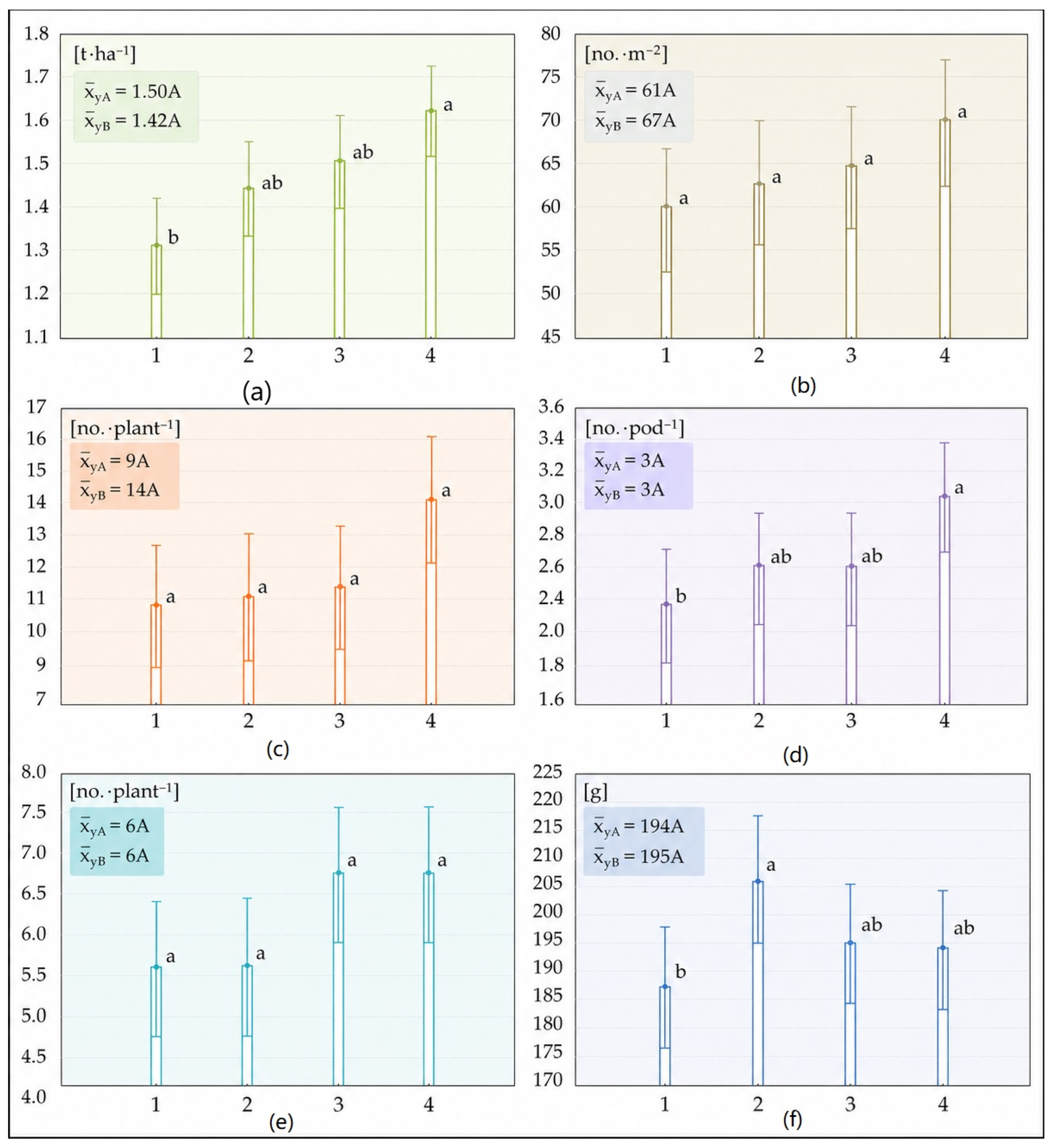
The number of seeds per plant depended significantly on year conditions, whereas the experimental variants significantly influenced the NS/P and SW. No significant Year × Variant interactions were observed for any trait, indicating stable responses across years. The average seed yield of the soybean ‘Viscount’ was similar in both years, ranging from 1.50 t ha−1 in 2023 to 1.42 t ha−1 in 2024. Seed inoculation significantly increased seed yield. All inoculation treatments resulted in higher yields compared with the non-inoculated control. The co-inoculation of seeds with Bradyrhizobium japonicum and Trichoderma resulted in the highest yield level. However, no significant differences were found among the inoculated treatments. Likewise, no significant differences were observed between the control treatment and the treatments inoculated separately with B. japonicum or Trichoderma (Figure 2a).
The effect of seed inoculation was consistent across years, as its efficacy was not influenced by weather conditions, which was further supported by the observed values of yield components. Neither the year nor the experimental treatment had a significant effect on plant density or NP/P (Figure 2b,e). In the case of the NS/P, significant differences were observed only between the study years, with no effect of the experimental variant (Figure 2c). In contrast, the applied treatments significantly affected the number of seeds per pod and the thousand-seed weight (Figure 2d,f). The NS/P was observed in the co-inoculated treatment, whereas the highest SW was recorded following the application of B. japonicum alone. However, no significant differences were found among the inoculated treatments. Analysis of variance showed that, among the examined plant physiological characteristics during the growing season, seed inoculation had a significant effect only on the leaf area index (LAI) (Table 2).
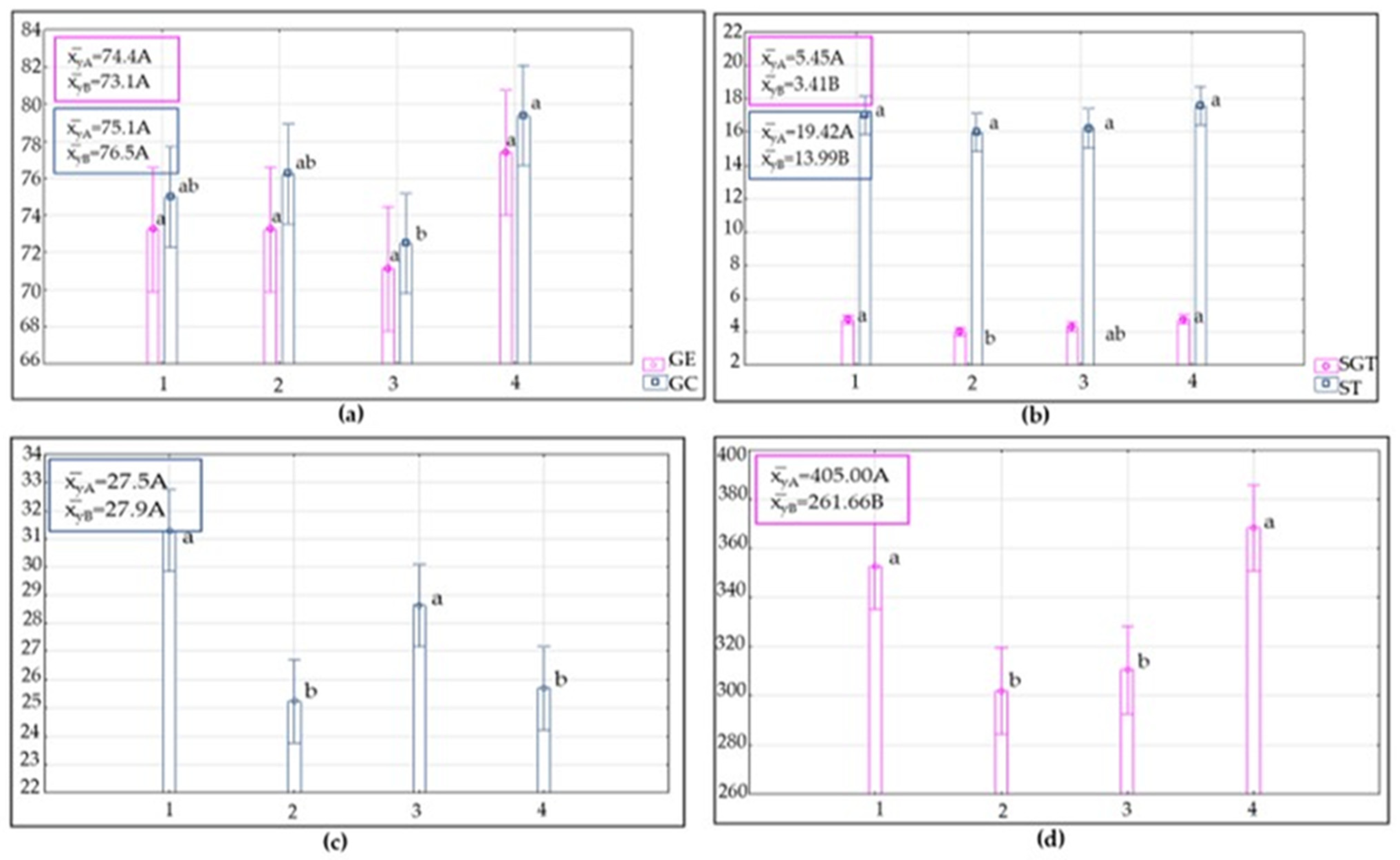
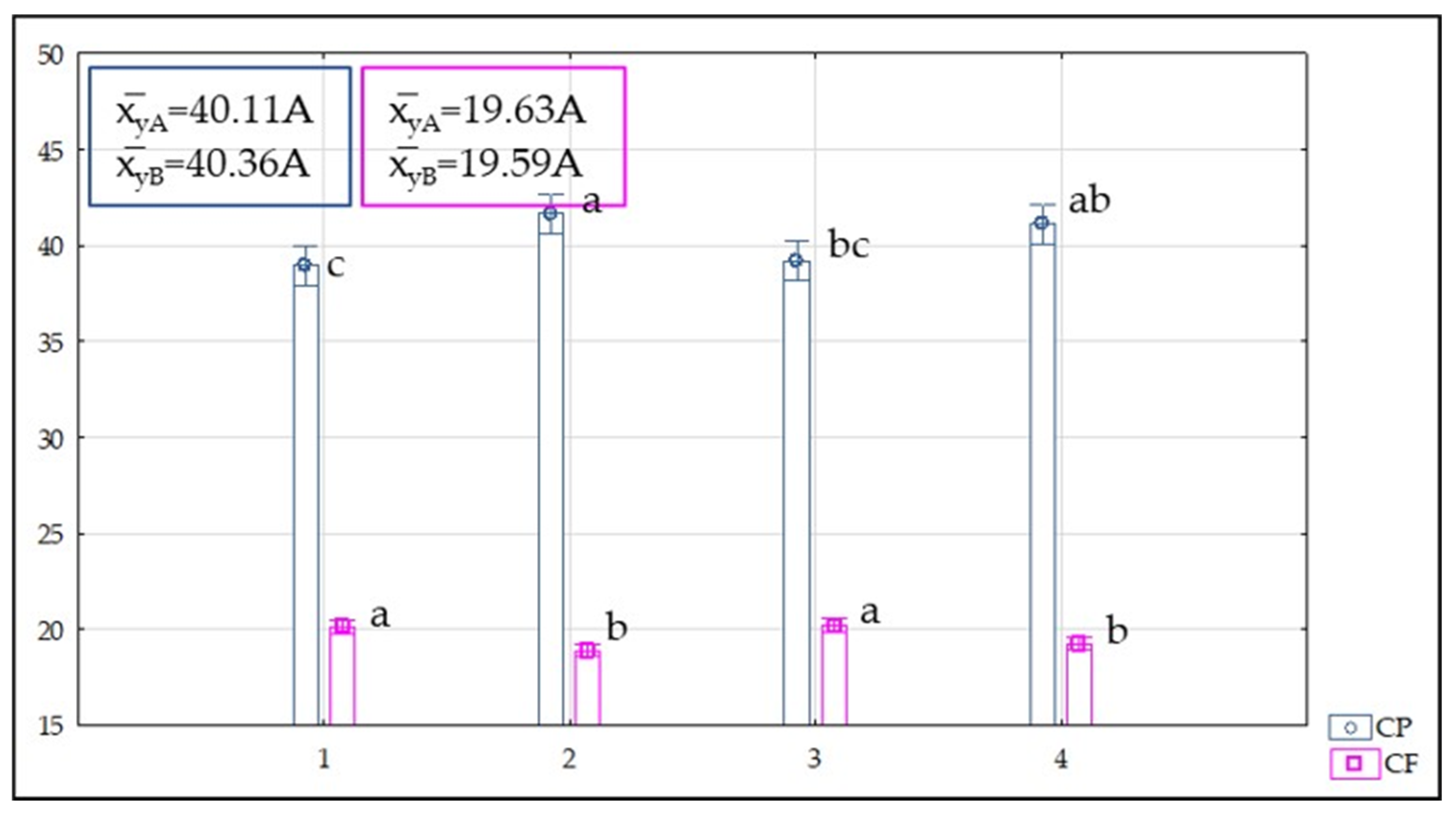
Weather conditions during the study period significantly affected plant height, first pod height, and seed weight per hectoliter. The evaluation of the seed quality of soybean seeds obtained under field conditions showed no significant effect of the tested factors on germination energy; however, significant effects were observed for germination capacity and seed vigor, as determined by the conductivity test (CT), seedling growth test (SGT), and vigor index (V). Seed inoculation improved seed quality and seed vigor compared with the control treatment. The highest germination capacity and seedling growth test values were recorded after inoculation with B. japonicum and Trichoderma (Figure 3a,b). Similar results were obtained in the conductivity test, where the lowest seed quality was observed in the control treatment, while the highest seed quality was recorded in treatments in which seeds were inoculated with B. japonicum alone or jointly with B. japonicum and Trichoderma before sowing (Figure 3c).
The study demonstrated that seed inoculation significantly modified the protein and fat contents (Figure 4). Compared with the control treatment, protein content increased in all inoculated treatments, with the highest values observed in the treatment with B. japonicum inoculation and in the co-inoculation treatment involving B. japonicum and Trichoderma spp.
In contrast, the response observed for crude fat content was somewhat opposite. No statistically significant differences were observed between the control treatment and the treatment inoculated with Trichoderma alone, whereas a decrease in fat content was noted in the treatments with B. japonicum and in the combined B. japonicum and Trichoderma treatment.

3.2. Biochemical Activity in the Soil

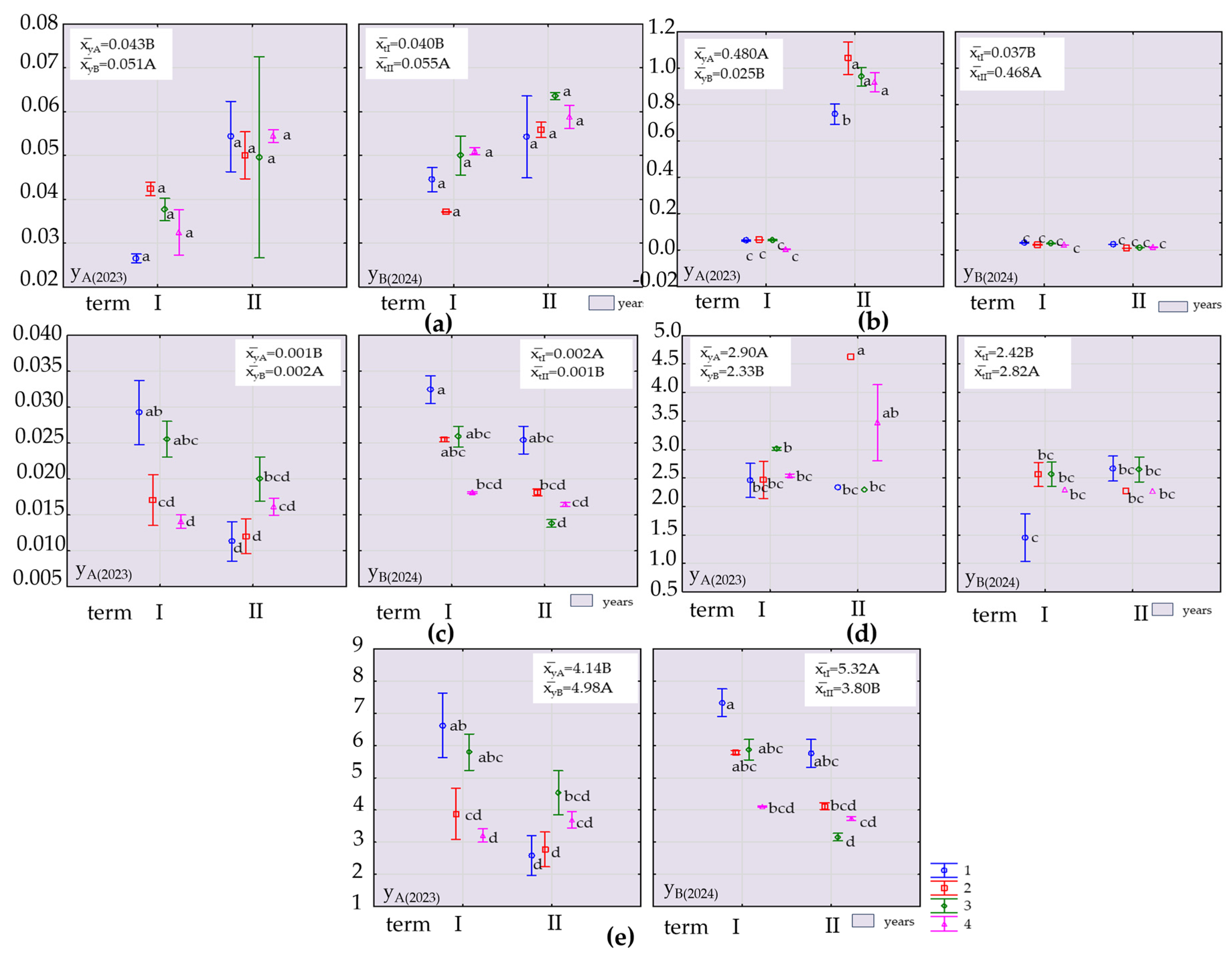
The study demonstrated the impact of soybean seed inoculation methods on soil enzymatic activity and the biological index of soil fertility (BIF). A three-factor analysis of variance revealed a significant effect (p < 0.05, p ≤ 0.01) of inoculation and co-inoculation, as well as sampling time and study year, on the activity of the evaluated soil enzymes and the BIF under soybean cultivation (Table 3). In the case of acid phosphatase, however, no statistically significant differences were found depending on the vaccination method used.
Due to the variability of weather conditions in each year of the field experiments, which influenced the effects of the studied factors, including the use of a single inoculation of soybean seeds with a compatible strain of nodule bacteria and a fungus of the Trichoderma genus, and co-inoculation, the soil biochemical activity results for each year are presented separately.
Figure 5a presents the results for acid phosphatase (PAC) activity. It was shown that the seed inoculation method used did not statistically significantly affect the activity of this enzyme. However, in each year of the study, at the plant emergence stage (term I), higher PAC activity was observed after the application of Trichoderma viride alone and in the fourth variant with co-inoculation compared to the control treatment. At the second analysis date (flowering stage) of the first year of the study, a decrease in this enzyme’s activity was observed across all soybean seed inoculation variants compared to the control treatment. However, during the second year of the study, on the same date, a reverse PAC response was observed in response to the soybean seed inoculation methods used.
The results regarding alkaline phosphatase (PAL) activity (Figure 5b) indicate that the soybean seed inoculation statistically significantly increased the activity of this enzyme compared to the control variant only during the flowering stage (term II) during the first year of the study. The highest significant stimulatory effect was observed with inoculation of a single Bradyrhizobium japonicum strain relative to the control. High activity was also observed for variants 3 and 4, where inoculation with Trichoderma viride and co-inoculation with Trichoderma viride and Bradyrhizobium japonicum were used, respectively. No such correlations were observed for the remaining analysis dates. Figure 5c presents the results of the analysis of dehydrogenase activity in the soil under soybean cultivation. The obtained data indicate a significant inhibitory effect of the applied inoculation—both single (Bradyrhizobium japonicum and Trichoderma viride) and their simultaneous application, co-inoculation—on the activity level of this enzyme, compared with the control variant. During the emergence period, a decrease in the catalytic activity of dehydrogenases was observed in all experimental variants after inoculation compared to the control, as confirmed across all analyzed terms. Different results were obtained in 2023 during the soybean flowering phase, when the dehydrogenase activity level differed from that observed at other terms. During this period, the highest enzyme activity was observed in the variants in which soybean seeds were inoculated solely with the Trichoderma viride strain and in variant 4, with co-inoculation.
Analysis of catalase activity (Figure 5d) demonstrated that the applied seed inoculation methods significantly stimulated this enzyme’s activity compared with the control treatment in both years of the study during the soybean emergence period. The highest catalase activity at this time point was observed in the variant using only Trichoderma viride, which was 8.7% higher than in the control object. A similar trend was observed during the plants’ flowering phase in the second year of the study. However, in the first year (2023), at the same time, the highest catalase activity was observed in the variant in which seeds were inoculated with a compatible strain of nodule bacteria; this value was 31% higher than the control treatment.
The index of biological soil fertility (BIF), determined based on dehydrogenase and catalase activities (Figure 5e), was significantly higher than in the control treatment when different soybean seed inoculation methods were applied, but only during the flowering stage in the first year of the study. At this time point, the highest BIF value was observed following the application of Trichoderma alone, reaching a level 80% higher than the control. In contrast, on the remaining sampling dates, the opposite trend was observed, with BIF values in the inoculated treatments lower than those recorded in the control.
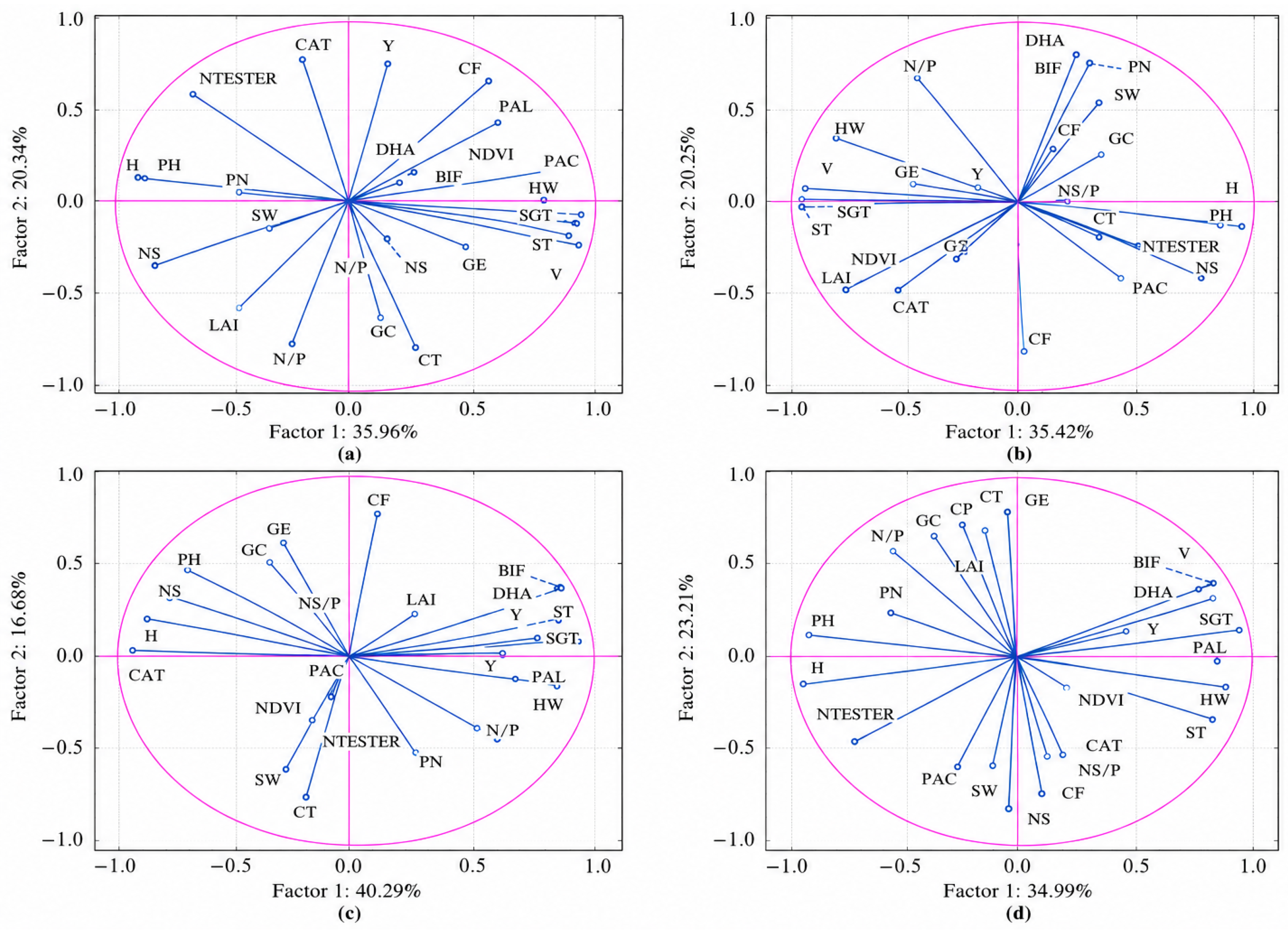
The dependencies among the analysed yield, yield components, biometrical parameters, non-destructive determination methods, seed quality, seed vigor, organic components in the seed, and biochemical activity in particular variants of the experiment were presented using principal component analysis (PCA) (Figure 6).
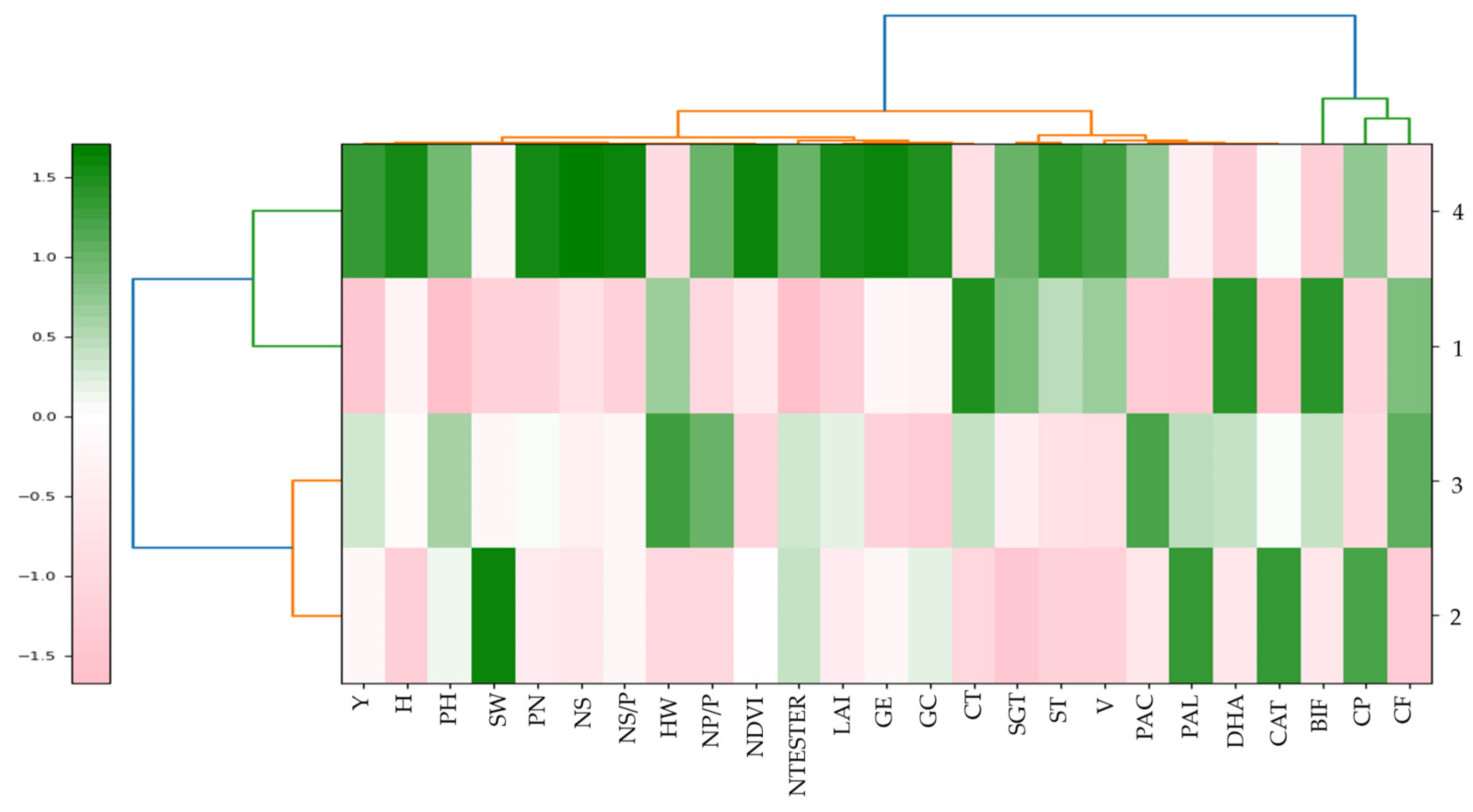
The first principal component explained 36%, 35%, 40% and 35% of the variability, whereas the second explained 20%, 20%, 16%, and 23% of the variability appropriately in variants of the experiment, i.e., 55%, 55%, 56% and 58% of the total variability. The principal component analysis (PCA) revealed relationships, not only among the biometrical parameters, seed quality, and biochemical activity in the tested variants, but also between yield and yield components of plants. In the control variant, CAT activity correlated positively with yield and SPAD. The acid phosphatase and PAL activity were also highly correlated with crude fat in the seed. Seed value and vigor parameters were positively correlated with hectoliter weight. In the Nitragina variant, DHA and BIF were highly correlated with plant numbers. A positive relationship was observed between seed quality and seed vigor index with the number of pods per plant, hectoliter weight, and NDVI index. In both of the above variants, no clear correlations were observed between yield and the tested parameters. In turn, it was clearly observed in both variants: Trichoderma and Nitragina + Trichoderma that yield was positively correlated with the seed quality parameters and BIF, whereas a negative correlation was observed between PAC and CAT. Moreover, a positive relationship was found between seed quality parameters, seed vigor, and hectoliter weight with biochemical activity parameters: PAL, DHA, and BIF index. The influence of co-inoculation of Bradyrhizobium spp. and Trichoderma spp. on soil biochemical activity in soybean cultivation, and the seed quality of seeds in correlation with the yield and yield components, was visualised using a heat map (Figure 7).
The comparison of the characteristics of all treatments showed that the second (Nitragina) and third (Trichoderma) variants were the most similar to each other. There were also similarities between the first and fourth variants. In comparison with the other experimental variants, the fourth variant, where co-inoculation of Bradyrhizobium spp. and Trichoderma spp. was characterised higher values of PAC activity and other parameters under analysis, including yield and yield components.

4. Discussion

4.1. Agronomic Traits

Soybeans belong to crops that strongly respond to variable environmental conditions, especially temperature and water availability during the growing season [13,49,50]. The results of the present study confirmed that differing meteorological conditions across years significantly affected the analysed agronomic traits and seed vigor. However, weather conditions had no significant effect on seed yield or seed quality parameters. Although weather condition significantly affected some yield components, these changes did not translate into differences in the final seed yield, likely due to compensatory interactions among the individual yield components. In contrast, seed inoculation had a positive effect on seed yield and contributed to yield stability. Compared with the control treatment, in which seeds were not inoculated, higher yields were obtained for all inoculation treatments, with the greatest effects recorded after the combined application of Bradyrhizobium japonicum and the fungus Trichoderma. A positive effect of co-inoculation with B. japonicum was also reported in earlier studies involving Trichoderma harzianum [51], A. chroococcum [52], as well as Bacillus subtilis, Bacillus aryabhattai, Streptomyces sp., and Streptomyces spinosa [53]. Nevertheless, these authors emphasized the need to evaluate numerous microbial strains to optimize the tripartite bacteria–fungus–plant relationship and thereby improve soybean productivity. According to Iutyńska et al. [54], co-inoculation of soybean seeds with B. japonicum and Bacillus sp. affects the rhizosphere microbiota yield-related traits, thereby increasing soybean yield and higher protein content in seeds. In contrast, Panasiewicz et al. [55], while investigating the effects of different inoculants and nitrogen fertilization in soybean cultivation of the Anushka cultivar, did not observe any effect on protein content. However, the opposite response was reported in studies conducted on the ‘Aldana’ [51]. The applied inoculation treatments significantly affected the leaf area index (LAI), suggesting a beneficial effect of inoculation on the development of the aboveground parts of soybean plants. Similarly, the SPAD index and LAI were significantly improved by seed inoculation with the symbiotic bacterium B. japonicum combined with foliar fertilization with molybdenum, compared with the individual application of either inoculation or fertilization alone [56].
Microbiota inoculation not only supports the maintenance of high productivity but may also contribute to higher crop yields, improved nutrient use efficiency, and enhanced crop resilience, underscoring the potential of this approach as a practical and environmentally sustainable strategy for advancing sustainable agriculture [57]. A rarely considered aspect is the effect of inoculation on the quality of the obtained seed material, although it constitutes one of the most important agronomic factors [58,59]. Previous research demonstrated that co-inoculation of soybean seeds with B. japonicum and Bacillus megaterium significantly enhanced germination capacity, cold test performance, shoot and root length, and the seedling vigor index compared with inoculation with Bradyrhizobium alone or the non-inoculated control [60]. In the present study, seed inoculation significantly affected both germination capacity and seed vigor, as assessed by the conductivity test, seedling rate test, and vigor index. The highest values for these parameters were observed in the treatment in which B. japonicum and Trichoderma were applied together as seed inoculants. However, the effects of individual bacterial and fungal inoculants differed. Inoculation with Trichoderma alone reduced germination capacity compared with the control treatment. Likewise, seed vigor was lower following inoculation with either Trichoderma alone or B. japonicum alone. The conductivity test further indicated that the highest seed quality was achieved in the co-inoculated treatment, while seeds inoculated solely with B. japonicum also exhibited high quality. Milijaković et al. [61] demonstrated that the combined use of PGPR consortia (B. japonicum, B. megaterium, Bacillus subtilis, Azotobacter chroococcum) together with a nutrient complex (S, Mg, Mn, Fe, Zn, Cu, B, and Mo) in soybean seed treatments positively influenced seed germination and early seedling growth under laboratory conditions.

4.2. Biochemical Activity in the Soil

Soil biological activity is an integral part of this structure and arises from the transformations of compounds and energy within it. Its most visible indicator is enzymatic activity, which is determined by numerous factors, including soil type, vegetation, soil profile depth, pH and temperature, atmospheric conditions, organic matter content, and the technologies used [62,63]. Soil enzymes are the first to respond to changes occurring in the soil environment. Acid and alkaline phosphatases are among the enzymes used to assess soil quality, and their activity reflects phosphorus availability in the soil. Increased secretion of these enzymes is observed when phosphorus availability is low. It has been reported that fungi have a greater ability to solubilize phosphates than bacteria. It is known that inoculation of seeds or soil with PSM (Phosphorus Solubilisation Microorganisms) improves the solubilisation of bound soil phosphorus and applied phosphates, resulting in higher yields [64]. However, it should be emphasized that acid phosphatase (PAC) is an enzyme secreted not only by soil microbial communities but also by plants themselves, which can lead to a significant increase in its pool in the pedon and is often negatively correlated with microbial abundance [65]. In our own studies, conducted on soil collected from soybeans, higher PAC activity was observed during the flowering period. This relationship is well established in the literature, indicating a high phosphorus demand for plants during this period of development. Additionally, our own studies showed higher acid phosphatase activity in 2024, in variants using different soybean seed inoculations, compared to the control. This can be attributed to the effects of the inoculants used. Wang et al. [66] indicate that both nodule bacteria and fungi of the Trichoderma spp. genus are distinguished by their ability to produce, among other things, PAC under various cultivation conditions. These organisms can actively regulate pH, thereby increasing acid phosphatase activity and, consequently, improving nutrient mobilization [67].
The alkaline phosphatase (PAL) behaved similarly to PAC, with high levels noted during the flowering period in 2023, in our study. These differences were greater than those of the control treatment for the inoculation methods used. Research by Paul and Rakshit [68] demonstrated that T. viride increases in soil phosphatase activity, including alkaline phosphatase, and, that the T. viride strain reduces in the recommended phosphorus dose in soybean cultivation by up to 20%. Similar results were also obtained in the study by Galeano et al. [69], which demonstrated the potential of T. viride strains in improving the health and fertility of Cerrado soils in Brazil, particularly in terms of increasing phosphorus availability.
Among the many enzymes present in soil, dehydrogenase and catalase, both oxidoreductases, are important indicators of soil quality. They are a measure of the overall microbiological activity of the soil because they are active only within living organisms and are not released outside the cell [70]. They play an important role in the oxidation of organic matter [65]. The activity of this group of enzymes is related not only to the organic matter content in the soil but also to its physicochemical properties, such as moisture, temperature, and pH [71].
It has been shown that changes in soil oxygenation, including rainfall during the plant growing season, significantly modify the activity level of soil dehydrogenases. In our studies, in years with reduced rainfall compared to the multiannual period, including 2023, higher activity levels of this enzyme were observed during the flowering period in the treatments after application of fungi from the genus Trichoderma and after co-inoculation (Bradyrhizobium japonicum + Trichoderma viride) of soybean seeds, which can be attributed to the synergistic effects of the indicated microorganisms used in the experiment. The literature on the subject demonstrates that fungi from the Trichoderma spp. genus, recognized as opportunistic plant symbionts that colonize plant roots, exhibit the ability to retain water [72], supporting the plant itself and the soil ecosystem. Mishra et al. [73] indicate that the increase in plant tolerance to drought stress under the action of fungi of the genus Trichoderma spp. occurs through improvements in the morphological, physiological, and biochemical characteristics of plants, which is important for the functioning of the soil microbiome. Similar effects to those of Trichoderma spp. are attributed to nodule bacteria of the genus Bradyrhizobium, which belong to the PGPR (Plant Growth Promoting Rhizobacteria) group [74]. In response to environmental stress, these bacteria produce many substances (plant hormones, exopolysaccharides, enzymes, and other secondary metabolites) that improve the morphology of plant roots and shoots, the antioxidant defense system, and the availability of water and nutrients, indirectly affecting the activity of the soil microbiome, i.e., the level of dehydrogenases and catalase. The multifaceted actions of the inoculants used, including stimulating plant growth, limiting pathogen development, inducing defense mechanisms, and increasing soil enzymatic activity, contribute to improve soil biological fertility (BIF—Biological Index of Fertility). In 2023, similarly to the studied oxidoreductases, during the flowering period and under water-stressed conditions, BIF values were higher in the soybean inoculation treatments than in the control treatment.

5. Conclusions

The study demonstrated that co-inoculation of soybean seeds of the ‘Viscount’ with Bradyrhizobium japonicum and Trichoderma viride strains had the most beneficial effect on plant productivity, resulting in the highest seed yields. Seed inoculation can stabilize yields regardless of weather conditions. Weather conditions mainly affected the number of seeds per plant, whereas the NS/P and SW were more dependent on the applied inoculation treatment. Inoculation also significantly affected biometric traits, particularly the leaf area index (LAI). Moreover, inoculation improved seed quality by increasing germination capacity and average soybean seedling length. These findings indicate that the combined application of B. japonicum and T. viride may be an effective strategy for improving soybean productivity and seed quality. Just as some of the studied soybean agronomic parameters responded to seed inoculation treatments, including co-inoculation, soil enzyme activity, and soil fertility index also showed significant variability, reflecting the effects of the applied microorganisms depending on prevailing weather conditions. The stimulatory effect of inoculation/co-inoculation was observed mainly during periods of poor rainfall distribution during the plant’s growing season. These results indicate that the combined use of B. japonicum and T. viride may be an effective strategy for improving soybean productivity and seed quality, especially under changing climatic conditions, where prevailing drought periods often reduce yields and degrade soil physicochemical properties.

Author Contributions

Conceptualization, K.P. and A.N.; methodology, K.P., A.N., A.W.-M., K.G. and A.F.; software, K.R. and G.S.; validation, K.P., A.F., K.G., G.S. and A.W.-M.; formal analysis, K.P. and A.N.; investigation, K.P., A.F., K.G., K.R. and G.S.; resources, K.P. and A.F.; data curation, K.P. and K.R.; writing—original draft preparation, K.P. and A.N.; writing—review and editing, K.P. and A.N.; visualization, K.R., G.S. and A.F.; supervision, K.P., A.N. and A.W.-M.; project administration, K.P. All authors have read and agreed to the published version of the manuscript.

Funding

The research was financed by the Polish Minister of Science and Higher Education as part of the Strategy of the Poznan University of Life Sciences for 2024–2026 in the field of improving scientific research and development work in priority research areas.

Institutional Review Board Statement

Not applicable.

Informed Consent Statement

Not applicable.

Data Availability Statement

The data presented in this study are available in the manuscript.

Conflicts of Interest

The authors declare no conflicts of interest.

References

  1. Le Mouël, C.; Forslund, A. How can we feed the world in 2050? A review of the responses from global scenario studies. Eur. Rev. Agric. Econ. 2017, 44, 541–591. [Google Scholar] [CrossRef]
  2. Keating, B.A.; Herrero, M.; Carberry, P.S.; Gardner, J.; Cole, N.B. Food wedges: Framing the global food demand and supply challenge towards 2050. Glob. Food Secur. 2014, 3, 125–132. [Google Scholar] [CrossRef]
  3. Röös, E.; Bajželj, B.; Smith, P.; Patel, M.; Little, D.; Garnett, T. Greedey or needy? Land use and climate impacts of food in 2050 under different livestock futures. Glob. Environ. Change 2017, 47, 1–12. [Google Scholar] [CrossRef]
  4. Berners-Lee, M.; Kennelly, C.; Watson, R.; Hewitt, C.N. Current global food production is sufficient to meet human nutritional needs in 2050 provided there is radical societal adaptation. Elem. Sci. Anthr. 2018, 5, 52. [Google Scholar]
  5. Alexander, P.; Brown, C.; Ameth, A.; Finnigan, J. Human appropriation for land and food: The role of diet. Glob. Environ. Change 2016, 41, 88–98. [Google Scholar] [CrossRef]
  6. Kummu, M.; Fader, M.; Gerten, D.; Guillaume, J.H.A.; Jalava, M.; Jägermeyr, J.; Pfister, S.; Porkka, M.; Siebert, S.; Varis, O. Bringing it all together: Linking measures to secure nations’ food supply. Curr. Opin. Environ. Sustain. 2017, 29, 98–117. [Google Scholar] [CrossRef]
  7. Singh, S.; Singh, S. Plant-based biofuels: An overview. In Green Approach to Alternative Fuel for a Sustainable Future; Elsevier: Amsterdam, The Netherlands, 2023; Chapter 31; pp. 433–442. [Google Scholar]
  8. Calvo-Flores, F.G.; Martin-Martinez, F.J. Biorefineries: Achievements and challenges for a bio-based economy. Front. Chem. 2022, 10, 973417. [Google Scholar] [CrossRef] [PubMed]
  9. Grzebisz, W.; Niewiadomska, A.; Przygocka-Cyna, K. Nitrogen Hotspots on the Farm—A Practice-Oriented Approach. Agronomy 2022, 12, 1305. [Google Scholar] [CrossRef]
  10. Gomiero, T. Soil degradation, land scarcity and food security: Reviewing a complex challenge. Sustainability 2016, 8, 281. [Google Scholar] [CrossRef]
  11. Kopittke, P.M.; Menzies, N.W.; Wang, P.; McKenza, B.A.; Lombi, E. Soil and the intensification of agriculture for global food security. Environ. Int. 2019, 132, 105078. [Google Scholar] [CrossRef] [PubMed]
  12. Taiz, L. Agriculture, plant physiology, and human population growth: Past, present, and future. Theor. Exp. Plant Physiol. 2013, 25, 167–181. [Google Scholar] [CrossRef]
  13. Iturralde, E.T.; Stocco, M.C.; Faura, A.; Mónaco, C.I.; Cordo, C.; Pérez-Giménez, J.; Lodeiro, A.R. Coinoculation of soybean plants with Bradyrhizobium japonicum and Trichoderma harzianum: Coexistence of both microbes and relief of nitrate inhibition of nodulation. Biotechnol. Rep. 2020, 26, e00461. [Google Scholar] [CrossRef]
  14. Calzada, J.; Russo, C. En el Cultivo de soja, hay que Cuidar a los Productores del NOA y el NEA. Informativo Semanal BCR 1666. 2014, pp. 5–6. Available online: https://www.bcr.com.ar/es/mercados/investigacion-y-desarrollo/informativo-semanal/noticias-informativo-semanal/en-el-cultivo (accessed on 6 February 2020).
  15. Ray, D.K.; Mueller, N.D.; West, P.C.; Foley, J.A. Yield trends are insufficient to double global crop production by 2050. PLoS ONE 2013, 8, e66428. [Google Scholar] [CrossRef] [PubMed]
  16. Niewiadomska, A.; Sulewska, H.; Wolna-Maruwka, A.; Ratajczak, K.; Głuchowska, K.; Waraczewska, Z.; Budka, A. An assessment of the influence of Co-inoculation with endophytic bacteria and rhizobia, and the influence of PRP SOL and PRP EBV fertilisers on the microbial parameters of soil and nitrogenase activity in yellow lupine (Lupinus luteus L.) cultivation. Pol. J. Environ. Stud. 2018, 27, 2687–2702. [Google Scholar] [CrossRef]
  17. Waraczewska, Z.; Niewiadomska, A.; Wolna-Maruwka, A.; Sulewska, H.; Budka, A.; Pilarska, A. The effect of in vitro coinoculation on the physiological parameters of white lupine plants (Lupinus albus L.). Appl. Sci. 2022, 12, 12382. [Google Scholar] [CrossRef]
  18. Wang, X.; Pan, Q.; Chen, F.; Yan, X.; Liao, H. Effects of co-inoculation with arbuscular mycorrhizal fungi and rhizobia on soybean growth as related to root architecture and availability of N and P. Mycorrhiza 2011, 21, 173–181. [Google Scholar] [CrossRef] [PubMed]
  19. Atieno, M.; Herrmann, L.; Okalebo, R.; Lesueur, D. Efficiency of different formulations of Bradyrhizobium japonicum and effect of co-inoculation of Bacillus subtilis with two different strains of Bradyrhizobium japonicum. World J. Microbiol. Biotechnol. 2012, 28, 2541–2550. [Google Scholar] [CrossRef] [PubMed]
  20. Masciarelli, O.; Llanes, A.; Luna, V. A new PGPR co-inoculated with Bradyrhizobium japonicum enhances soybean nodulation. Microbiol. Res. 2014, 169, 609–615. [Google Scholar] [CrossRef] [PubMed]
  21. Hungria, M.; Nogueira, M.A.; Silva-Araujo, R. Soybean seed co-inoculation with Bradyrhizobium spp. and Azospirillum brasilense: A new biotechnological tool to improve yield and sustainability. Am. J. Plant Sci. 2015, 6, 811–817. [Google Scholar] [CrossRef]
  22. Htwe, A.Z.; Moh, S.M.; Moe, K.; Yamakawa, T. Effects of co-inoculation of Bradyrhizobium japonicum SAY3-7 and Streptomyces griseoflavus P4 on plant growth, nodulation, nitrogen fixation, nutrient uptake, and yield of soybean in a field condition. Soil Sci. Plant Nutr. 2018, 64, 222–229. [Google Scholar] [CrossRef]
  23. Kajić, S.; Živković, L.; Lazarević, B.; Borovec, P.; Novak, A.; Mutaliyeva, B.; Turebayeva, T.; Madybekova, G.; Vinceković, M. Effects of co-inoculation with Bradyrhizobium and Trichoderma harzianum on soybean nitrogen nutrition and multispectral traits. Environ. Technol. Innov. 2025, 39, 104274. [Google Scholar] [CrossRef]
  24. Martin, T.N.; Vey, R.T.; Stecca, J.D.L.; Brum, L.N.; Cipriani, L.P.; Brasil, E.S. Applications of Trichoderma asperelloides in soybean production: A perspective based on bibliometric and experimental data. Braz. J. Biol. 2026, 86, e301828. [Google Scholar] [CrossRef] [PubMed]
  25. Lopez-Ramirez, N.; Volke-Sepulveda, T.; Gaime-Perraud, I.; Saucedo-Castañeda, G.; Favela-Torres, E. Effect of stirring on growth and cellulolytic enzymes production by Trichoderma harzianum in a novel bench-scale solid-state fermentation bioreactor. Bioresour. Technol. 2018, 265, 291–298. [Google Scholar] [CrossRef] [PubMed]
  26. Rayhane, H.; Josiane, M.; Gregoria, M.; Yiannis, K.; Nathalie, D.; Ahmed, M.; Sevastianos, R. From flasks to single-use bioreactor: Scale-up of solid state fermentation process for metabolites and conidia production by Trichoderma asperellum. J. Environ. Manag. 2019, 252, 109496. [Google Scholar] [CrossRef] [PubMed]
  27. Sharma, P.; Kumar, V.P.; Ramesh, R.; Saravanan, K.; Deep, S.; Sharma, M.; Mahesh, S.; Dinesh, S. Biocontrol genes from Trichoderma species: A review. Afr. J. Biotechnol. 2011, 10, 19898–19907. [Google Scholar] [CrossRef]
  28. Shahid, S.; Khan, M. Evaluation of biocontrol agents for the management of root-rot of mung bean caused by Macrophomina phaseolina. Indian Phytopathol. 2018, 72, 89–98. [Google Scholar] [CrossRef]
  29. Bayoumi, Y.; Taha, N.; Shalaby, T.; Alshaal, T.; El-Ramady, H. Sulfur promotes biocontrol of purple blotch disease via Trichoderma spp. and enhances the growth, yield, and quality of onion. Appl. Soil Ecol. 2019, 134, 15–24. [Google Scholar] [CrossRef]
  30. Gao, P.; Qi, K.; Han, Y.; Ma, L.; Zhang, B.; Zhang, Y.; Qi, J. Effect of Trichoderma viride on rhizosphere microbial communities and biocontrol of soybean root rot. Front. Microbiol. 2023, 14, 1204688. [Google Scholar] [CrossRef] [PubMed]
  31. Contreras-Cornejo, H.A.; Macías-Rodríguez, L.; Del-Val, E.K.; Larsen, J. Ecological functions of Trichoderma spp. and their secondary metabolites in the rhizosphere: Interactions with plants. FEMS Microbiol. Ecol. 2016, 92, fiw036. [Google Scholar] [CrossRef] [PubMed]
  32. Kabała, C.; Charzyński, P.; Chodorowski, J.; Drewnik, M.; Glina, B.; Greinert, A.; Hulisz, P.; Jankowski, M.; Jonczak, J.; Łabaz, B.; et al. Polish Soil Classification, 6th edition—Principles, classification scheme and correlations. Soil Sci. Annu. 2019, 70, 71–97. [Google Scholar] [CrossRef]
  33. IUSS Working Group WRB. World Reference Base for Soil Resources 2014, Update 2015. International Soil Classification 403 System for Naming Soils and Creating Legends for Soil Maps; World Soil Resources Reports 106; FAO: Rome, Italy, 2014; p. 182. [Google Scholar]
  34. Wolna-Maruwka, A.; Dach, J.; Rafaela, C.; Czekała, W.; Niewiadomska, A.; Janczak, D.; Budka, A. An effective method of utilizing vegetable waste in the form of carriers for Trichoderma strains with phytosanitary properties. Sci. Total Environ. 2019, 671, 795–804. [Google Scholar] [CrossRef] [PubMed]
  35. White, T.J.; Bruns, T.; Lee, S.J.W.T.; Taylor, J. Amplification and direct sequencing of fungal ribosomal RNA genes for phylogenetics. In PCR Protocols: A Guide to Methods and Applications; Academic Press, Inc.: Cambridge, MA, USA, 1990; pp. 315–322. [Google Scholar]
  36. Carbone, I.; Kohn, L.M. A method for designing primer sets for speciation studies in filamentous ascomycetes. Mycologia 1999, 91, 553–556. [Google Scholar] [CrossRef]
  37. Kumar, N.V.; Rajam, K.S.; Rani, M.E. Plant growth promotion efficacy of indole acetic acid (IAA) produced by a mangrove associated fungi-Trichoderma viride VKF3. Int. J. Curr. Microbiol. Appl. Sci. 2017, 6, 2692–2701. [Google Scholar] [CrossRef]
  38. Promwee, A.; Issarakraisila, M.; Intana, W.; Chamswarng, C.; Yenjit, P. Phosphate solubilization and growth promotion of rubber tree (Hevea brasiliensis Muell. Arg.) by Trichoderma strains. J. Agric. Sci. 2014, 6, 8. [Google Scholar] [CrossRef]
  39. Czerwińska-Kayzer, D.; Kleiber, T.; Wolna-Maruwka, A.; Frankowski, P.; Staniszewski, R.; Kayzer, D. Sustainable use of organic matter obtained from the bottom of a post-mining pit reservoir—A case study on the creation of Raduszyn lake in Poland. Energies 2023, 16, 2223. [Google Scholar] [CrossRef]
  40. Kasana, R.C.; Salwan, R.; Dhar, H.; Dutt, S.; Gulati, A.A. Rapid and easy method for the detection of microbial cellulases on agar plates using gram’s iodine. Curr. Microbiol. 2008, 57, 503–507. [Google Scholar] [CrossRef] [PubMed]
  41. Mańka, K. Fungal communities as criterion for estimating the effect of the environment of plant disease in Poland. Zesz. Probl. Postępów Nauk Rol. 1974, 160, 9–23. (In Polish) [Google Scholar]
  42. Öhlinger, R. Dehydrogenase activity with the substrate TTC. In Methods in Soil Biology; Schinner, F., Öhlinger, R., Kandeler, E., Margesin, R., Eds.; Springer: Berlin/Heidelberg, Germany, 1996; pp. 241–243. [Google Scholar]
  43. Johnson, J.I.; Temple, K.L. Some variables affecting the measurements of catalase activity in soil. Soil Sci. Soc. Am. Proc. 1964, 28, 207–216. [Google Scholar] [CrossRef]
  44. Alef, K.; Nannipieri, P.; Trazar-Cepeda, C. Phosphatase activity. In Methods in Applied Soil Microbiology and Biochemistry; Alef, K., Nannipieri, P., Eds.; Academic Press, Harcourt Brace and Company, Publishers: London, UK, 1998; pp. 335–344. [Google Scholar]
  45. Stefanic, F.; Ellade, G.; Chirnageanu, J. Researches concerning a biological index of soil fertility. In Proceeding of the 5th Symposium of Soil Biology; Nemes, M.P., Kiss, S., Papacostea, P., Stefanic, C., Rusan, M., Eds.; Romanian National Society of Soil Science: Bucharest, Romania, 1984; pp. 35–45. [Google Scholar]
  46. AOAC. Official Methods of Analysis of AOAC International, 18th ed.; Horwitz, W., Latimer, G.W., Jr., Eds.; AOAC International: Gaithersburg, MD, USA, 2011; Volume 406, p. 26. [Google Scholar]
  47. International Seed Testing Association. International Rules for Seed Testing; ISTA: Bassersdorf, Switzerland, 2025. [Google Scholar]
  48. Molga, M. Meteorologia Rolnicza; Państwowe Wydawnictwo Rolnicze i Leśne: Warszawa, Poland, 1986; p. 492. (In Polish) [Google Scholar]
  49. Żarski, J.; Kuśmierek-Tomaszewska, R.; Dudek, S.; Krokowski, M.; Kledzik, R. Identifying climatic risk to soybean cultivation in the transitional type of moderate climate in Central Poland. J. Cent. Eur. Agric. 2019, 20, 143–156. [Google Scholar] [CrossRef]
  50. Staniak, M.; Szpunar-Krok, E.; Kocira, A. Responses of Soybean to Selected Abiotic Stresses—Photoperiod, Temperature and Water. Agriculture 2023, 13, 146. [Google Scholar] [CrossRef]
  51. Panasiewicz, K.; Faligowska, A.; Szymańska, G.; Ratajczak, K.; Sulewska, H. Optimizing the Amount of Nitrogen and Seed Inoculation to Improve the Quality and Yield of Soybean Grown in the Southeastern Baltic Region. Agriculture 2023, 13, 798. [Google Scholar] [CrossRef]
  52. Kozieł, M.; Gebala, B.; Martyniuk, S. Response of soybean to seed inoculation with Bradyrhizobium japonicum and with mixed inoculants of B. japonicum and Azotobacter chroococcum. Pol. J. Microbiol. 2013, 62, 457–460. [Google Scholar] [CrossRef] [PubMed]
  53. de Andrade da Silva, M.S.R.; de Carvalho, L.A.L.; Santos, C.H.B.; Frezarin, E.T.; da Silva, C.G.N.; Pinheiro, D.G.; Zonta, E.; Babalola, O.O.; Rigobelo, E.C. Effect of co-inoculation with plant growth-promoting bacteria on the microbiome of soybean roots. Front. Sustain. Food Syst. 2025, 9, 1505001. [Google Scholar] [CrossRef]
  54. Iutynska, H.; Goloborodko, S.; Tytova, L.; Dubynska, O. Effectiveness of endophytic-rhizobial seed inoculation of soybean (Glycine max (L.) Merr.) cultivated in irrigated soil. J. Cent. Eur. Agric. 2022, 23, 40–53. [Google Scholar] [CrossRef]
  55. Panasiewicz, K.; Faligowska, A.; Szymańska, G.; Ratajczak, K.; Kłosowicz, M.; Wolna-Maruwka, A. Sustainable Methods of Soybean Cultivation in Poland. Sustainability 2024, 16, 5762. [Google Scholar] [CrossRef]
  56. Jarecki, W. Soybean Response to Seed Inoculation or Coating with Bradyrhizobium japonicum and Foliar Fertilization with Molybdenum. Plants 2023, 12, 2431. [Google Scholar] [CrossRef] [PubMed]
  57. Ibrahim, Z.A.; Abbas, M.T.; Soliman, W.S.; Ahmed, O.K.; Abbas, A.M. Combining Indigenous Endophytes with Reduced NPK Fertilization Enhances Yield and Phytochemical Quality of Roselle (Hibiscus sabdariffa L.) in Arid Conditions. Sustainability 2026, 18, 2621. [Google Scholar] [CrossRef]
  58. Mrđa, J.; Crnobarac, J.; Dušanić, N.; Jocić, S.; Miklič, V. Germination energy as a parameter of seed quality in different sunflower genotypes. Genetika 2011, 43, 427–436. [Google Scholar] [CrossRef]
  59. Walsh, O.S.; Liang, X.; Thornton, M.; Rogers, C.W. Uniform plant stand is key to crop yield and quality. In University of Idaho Cooperative Extension Bulletin; BUL: Moscow, ID, USA, 2019; p. 951. [Google Scholar]
  60. Miljaković, D.; Marinković, J.; Tamindžić, G.; Đorđević, V.; Tintor, B.; Milošević, D.; Ignjatov, M.; Nikolić, Z. Bio-Priming of Soybean with Bradyrhizobium japonicum and Bacillus megaterium: Strategy to Improve Seed Germination and the Initial Seedling Growth. Plants 2022, 11, 1927. [Google Scholar] [CrossRef] [PubMed]
  61. Marinković, J.; Miljaković, D.; Cervenski, J.; Vasiljević, M.; Dordević, V.; Tamindžić, G.; Miladinović, J. Synergistic Effect of PGPR and Nutrient Complex on Soybean Seed Germination and Initial Seedling Growth. Agriculture 2025, 15, 2022. [Google Scholar] [CrossRef]
  62. Lee, S.H.; Kim, M.S.; Kim, J.G.; Kim, S.O. Use of soil enzymes as indicators for contaminated soil monitoring and sustainable management. Sustainability 2020, 12, 8209. [Google Scholar] [CrossRef]
  63. Srinivasarao, C.; Lal, R.; Kundu, S.; Babu, M.P.; Venkateswarlu, B.; Singh, A.K. Soil carbon sequestration in rainfed production systems in the semiarid tropics of India. Sci. Total Environ. 2014, 487, 587–603. [Google Scholar] [CrossRef] [PubMed]
  64. Kapri, A.; Tewari, L. Phosphate solubilization potential and phosphatase activity of rhizospheric Trichoderma spp. Braz. J. Microbiol. 2010, 41, 787–795. [Google Scholar] [CrossRef]
  65. Niewiadomska, A.; Płaza, A.; Wolna-Maruwka, A.; Budka, A.; Głuchowska, K.; Rudziński, R.; Kaczmarek, T. Consortia of plant growth-promoting rhizobacteria and selected catch crops for increasing microbial activity in soil under spring barley grown as an organic farming system. Appl. Sci. 2023, 13, 5120. [Google Scholar] [CrossRef]
  66. Wang, Q.; Xiu, J.; Liu, B.; Shen, L.; Wang, H.; Fang, C.; Shan, S. Enhanced fermentation and deconstruction of natural wheat straw by Trichoderma asperellum T-1 and its positive transcriptional response. Bioresour. Technol. 2024, 406, 130971. [Google Scholar] [CrossRef] [PubMed]
  67. Steffen, G.P.K.; Steffen, R.B.; Boeni, M.; Maldaner, J.; Vieira, F.C.B. Intelligent bioagents: How Trichoderma spp. and Azospirillum brasilense modulate medium pH and its enzymatic activity. World J. Microbiol. Biotechnol. 2026, 42, 67. [Google Scholar] [CrossRef] [PubMed]
  68. Paul, S.; Rakshit, A. Effect of seed bio-priming with Trichoderma viride strain BHU-2953 for enhancing soil phosphorus sol-ubilization and uptake in soybean (Glycine max). J. Soil Sci. Plant Nutr. 2021, 21, 1041–1052. [Google Scholar] [CrossRef]
  69. Galeano, R.M.S.; de Oliveira Simas, A.L.; Ribeiro, J.V.S.; de Alencar Guimarães, N.C.; Viana, T.F.C.; Masui, D.C.; Zanoelo, F.F. Phosphorus-solubilizing Trichoderma strains: Mechanisms to promote soybean growth and support sustainable agroecosystems. Plant Soil 2025, 512, 1327–1347. [Google Scholar] [CrossRef]
  70. Kaur, J.; Kaur, G. Dehydrogenase Activity as a Biological Indicator of Soil Health. Chem. Sci. Rev. Lett. 2021, 10, 326–329. [Google Scholar]
  71. Hanajík, P.; Gáfriková, J.; Zvarík, M. Dehydrogenase Activity in Topsoil at Windthrow Plots in Tatra National Park. Cent. Eur. For. J. 2017, 63, 91–96. [Google Scholar] [CrossRef]
  72. Boorboori, M.R.; Zhang, H. The Mechanisms of Trichoderma Species to Reduce Drought and Salinity Stress in Plants. Phyton 2023, 92, 2261–2281. [Google Scholar] [CrossRef]
  73. Mishra, D.; Rajput, R.S.; Zaidi, N.W.; Singh, H. Sheath blight and drought stress management in rice (Oryza sativa) through Trichoderma spp. Indian Phytopathol. 2020, 73, 71–77. [Google Scholar]
  74. Marinković, J.; Miljaković, D.; Dordević, V.; Vasiljević, M.; Tamindžić, G.; Miladinović, J.; Vasiljević, S. Perspectives of Bradyrhizobium and Bacillus inoculation for improvement of soybean tolerance to water deficit. Agronomy 2024, 14, 2692. [Google Scholar] [CrossRef]
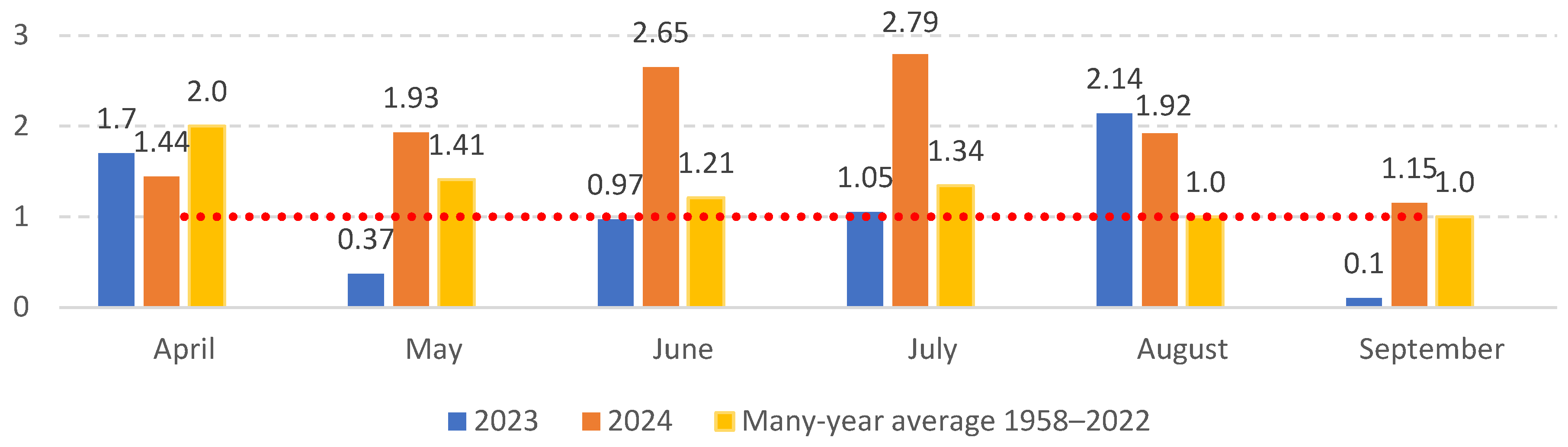
Figure 1. Sielianinov hydrothermal coefficient (K) recorded in 2023–2024 at the Agro-meteorological Station in Gorzyń. Weather conditions were classified according to the following ranges of the hydrothermal coefficient: 0.00–0.50—periods of drought; 0.51–1.00—semi-drought (insufficient moisture for most plants); 1.01–2.00—relatively moist conditions (sufficient moisture for most plants); >2.01—high moisture conditions (excessive moisture for most plants); the red dotted line denotes level 1 [48].
Sustainability 18 07073 g001
Figure 2. Yield and yield components in variants of the experiment. (a)—seed yield (t∙ha−1), (b)—plant number (no. m−2), (c)—number of seeds per plant (no. plant−1), (d)—number of seeds per plant pod (no. pod−1), (e)—number of pods per plant (no. plant−1), (f)—weight of 1000 seeds (g); 1—control variant, 2—Bradyrhizobium japonicum; 3—Trichoderma viride; 4—Bradyrhizobium japonicum and Trichoderma viride—confidence intervals (1 − α = 0.95); a, b—homogenous groups, YA—2023 year, YB—2024 year.
Sustainability 18 07073 g002
Figure 3. Seed quality and seed vigor in variants of the experiment. (a)—germination energy (GE) (%) and germination capacity (GC) (%), (b)—seedling growth test (SGT) (cm) and seedling growth rate test (ST) (mg), (c)—conductivity test (µS cm g−1), (d)—vigor index (non-nominated units); 1—control variant, 2—Bradyrhizobium japonicum; 3—Trichoderma viride; 4—Bradyrhizobium japonicum and Trichoderma viride—confidence intervals (1 − α = 0.95); a, b—homogenous groups, YA—2023 year, YB—2024 year.
Sustainability 18 07073 g003
Figure 4. Organic components in seeds in variants of the experiment. Crude protein (CP) and Crude fat (CF) (g kg−1 DM); 1—control variant, 2—Nitragina, 3—Trichoderma spp., 4—Nitragina + Trichoderma spp.—confidence intervals (1 − α = 0.95); a, b, c—homogenous groups, YA—2023 year, YB—2024 year.
Sustainability 18 07073 g004
Figure 5. Biochemical activity in particular variants of the experiment. (a)—acid phosphatase (PAC), (b)—alkaline phosphatase (PAL), (c)—dehydrogenase activity (DHA), (d)—catalase activity (CAT), (e)—biological fertility index (BIF); 1—control variant, 2—Nitragina, 3—Trichoderma spp., 4—Nitragina + Trichoderma spp.—confidence intervals (1 − α = 0.95); a, b, c, d—homogenous groups, YA—2023 year, YB—2024 year; I(tI)—1st Term Emergence (BBCH 16–17), II(tII)—2nd Term Flowering (BBCH 61–65).
Sustainability 18 07073 g005
Figure 6. Dependences among the analyzed yield, yield components, biometrical parameters, non-destructive determination methods, seed quality, seed vigor, organic components in seed and biochemical activity in particular variants of the experiment (a)—control variant, (b)—Nitragina, (c)—Trichoderma spp., (d)—Nitragina + Trichoderma spp., Y—seed yield, PN—plant number, NS—number of seeds per plant, NS/P—number of seeds per plant pod, NP/P—number of pods per plant, SW—weight of 1000 seeds, H—plant height, PH—height of the first pod, HW—hectoliter weight, GE—germination energy, GC—germination capacity, CT—conductivity test, SGT—seedling growth test, ST—seedling growth rate test, V—vigor index, PAC—acid phosphatase, PAL—alkaline phosphatase, DHA—dehydrogenase activity, CAT—catalase activity, BIF—biological fertility index; CP—crude protein; CF—crude fat.
Sustainability 18 07073 g006
Figure 7. Dependences among the analyzed yield, yield components, biometrical parameters, non-destructive determination methods, seed quality, seed vigor and biochemical activity in particular variants of the experiment: 1—control variant, 2—Nitragina, 3—Trichoderma spp., 4—Nitragina + Trichoderma spp., Y—seed yield, PN—plant number, NS—number of seeds per plant, NS/P—number of seeds per plant pod, NP/P—number of pods per plant, SW—weight of 1000 seeds, H—plant height, PH—height of the first pod, HW—hectoliter weight, GE—germination energy, GC—germination capacity, CT—conductivity test, SGT—seedling growth test, ST—seedling growth rate test, V—vigor index, PAC—acid phosphatase, PAL—alkaline phosphatase, DHA—dehydrogenase activity, CAT—catalase activity, BIF—biological fertility index; CP—crude protein; CF—crude fat.
Sustainability 18 07073 g007
Table 1. F-test statistics and significance levels of two-way ANOVA for yield and yield components.
ParameterYearVariantYxV
Seed yield (Y)2.4 ns6.5 **0.35 ns 1
Plant number (PN)2.6 ns1.4 ns1.3 ns
Number of seeds per plant (NS)21.8 **2.7 ns2.0 ns
Number of seeds per plant pod (NS/P)0.0 ns3.2 *0.0 ns
Number of pods per plant (NP/P)1.4 ns2.9 ns2.0 ns
Weight of 1000 seeds (SW)0.1 ns3.5 *0.0 ns
* p < 0.05, ** p < 0.01; 1 ns—not significant.
Table 2. The test F-statistics and the significance level of two-way analysis for variants of the biometrical parameters, non-destructive determination methods, seed quality and seed vigor.
ParameterYearVariantYxV
Biometrical parameters
Plant Height (H)719.1 **1.3 ns 11.3 ns
Height of the First Pod (PH)64.1 **1.2 ns1.5 ns
Hectoliter Weight (HW)106.3 **4.0 *0.0 ns
Non-destructive determination methods
NDVI0.9 ns2.4 ns0.5 ns
NTESTER15.8 **1.6 ns3.3 *
LAI0.6 ns4.4 *0.6 ns
Seed quality and seed vigor
Germination Energy (GE)0.7 ns2.6 ns0.4 ns
Germination Capacity (GC)1.2 ns4.8 *0.4 ns
Conductivity Test (CT)0.4 ns16.1 **0.7 ns
Seedling Growth Test (SGT)270.9 **8.5 **8.1 **
Seedling Growth Rate Test (ST)93.7 **1.7 ns7.4 **
Vigor Index (V)288.2 **14.5 **13.3 **
Organic components in seeds
Crude protein (CP)0.25 ns7.45 **0.90 ns
Crude fat (CF)0.82 ns16.20 **0.79 ns
* p < 0.05, ** p < 0.01; 1 ns—not significant.
Table 3. The test F-statistics and the significance level of the three-way analysis for variants of the enzymatic activity.
ParameterYearTermVariantYxTxV
Acid phosphatase (PAC)5.9 *18.1 **0.5 ns 10.9 ns
Alkaline phosphatase (PAL)798.0 **715.5 **3.4 *4.3 *
Dehydrogenase activity (DHA)12.6 **40.5 **11.8 **3.3 *
Catalase activity (CAT)20.1 **10.4 **6.0 **11.8 **
Biological fertility index (BIF)12.3 **40.3 **11.8 **3.3 *
* p < 0.05, ** p < 0.01; 1 ns—not significant.
Disclaimer/Publisher’s Note: The statements, opinions and data contained in all publications are solely those of the individual author(s) and contributor(s) and not of MDPI and/or the editor(s). MDPI and/or the editor(s) disclaim responsibility for any injury to people or property resulting from any ideas, methods, instructions or products referred to in the content.