Article

Ecological Risk Assessment of Innovative Soil Substitute Cover in Post-Mining Land Reclamation: A Case Study of the Janina Mine Spoil Heap


by
Angelika Więckol-Ryk
1,* and
Magdalena Cempa
2
1
Department of Extraction Technologies, Rockburst and Risk Assessment, Central Mining Institute—National Research Institute, Plac Gwarków 1, 40-166 Katowice, Poland
2
Department of Environmental Analysis and Circular Economy Technologies, Central Mining Institute—National Research Institute, Plac Gwarków 1, 40-166 Katowice, Poland
*
Author to whom correspondence should be addressed.
Sustainability 2026, 18(14), 7072; https://doi.org/10.3390/su18147072
Submission received: 13 May 2026 / Revised: 2 July 2026 / Accepted: 7 July 2026 / Published: 10 July 2026

Abstract

Artificial soils derived from coal combustion by-products and industrial waste have been successfully used for mine spoil reclamation; however, their ecological risk and toxic element migration in the soil–plant system have not been assessed. The objective of this study was to evaluate the ecological risks in soil substitute covers after five years of their exposition, using the ecological risk factor (ERi), potential ecological risk index (PERI) and geoaccumulation index. The modified BCR-sequential extraction method was applied to determine the chemical partitioning of the most toxic heavy metals (Cd, Cr, Cu, Ni, Pb, Zn). Additionally, the bioconcentration and translocation factors were used to assess the uptake of toxic elements by Phragmites australis. Findings from PERI indicate a moderate risk (239 and 258), mainly associated with moderate and considerable ERi for Cd and Hg, respectively. The other toxic metals are associated with a low risk (ERi < 40). Sequential extraction results showed the lowest concentrations of heavy metals in F1 fraction (0–30%) and increased in subsequent fractions: F2 (1–43%), F3 (10–62%) and F4 (10–89%). The calculated BCF values were below 1, indicating that the concentration of toxic metals in plants was lower than that in the soil substitute. The only exception was observed for Mn and Sn (BCF > 1). The results suggest that the tested soil substitutes are suitable for the reclamation of post-mining areas and may support sustainable biomass production. However, due to industrial atmospheric deposition and ecological risk associated with selected trace elements, continued monitoring of toxic metals is recommended.

1. Introduction

The potentially toxic metals and metalloids (PTMs) are a group of environmental pollutants that significantly impact living organisms due to their ability to bioaccumulate in the food chain.
The most commonly found PTMs in contaminated sites are arsenic (As), cadmium (Cd), chromium (Cr), copper (Cu), mercury (Hg), nickel (Ni), lead (Pb) and zinc (Zn) [1]. Some metals (Co, Cu, Fe, Mn, Mo, Ni, and Zn) are recognised as essential micronutrients at low concentrations. Other elements, such as As, Cd, Cr, Pb, and Hg, are toxic to living organisms even at low doses [2,3].
The main cause of metal pollution in soils is anthropogenic activity, such as industrial processes, disposal of waste, and urban development [4,5]. Moreover, heavy metals accumulate in soil from the agricultural sector through the application of mineral and organic fertilisers, pesticides or wastewater [6]. The spread of heavy metals is often attributed to the improper storage of industrial waste, particularly in areas lacking adequate isolation and protective measures. The excessive application of PTMs to soils results in their bioaccumulation in plants and subsequent leaching into groundwater.
In Poland, the permissible limits for PTMs (As, Ba, Cr, Co, Cu, Hg, Mo, Ni, Pb, and Zn) in terms of soil contamination are regulated by the Minister of Environment [7]. In this legislation, the concentrations of toxic elements in soil depend on the type of land-use, which can be divided into four main groups as follows: (I) residential, recreational and public facility areas; (II) agricultural lands; (III) green areas, forest, wooded and shrub lands; and (IV) industrial, mining and transport lands. The extent of soil contamination with PTMs at industrial sites varies depending on the type of industry. This may result from dust emissions, raw material spills, waste storage, or even from the properties of the final products [8]. The mining industry generates a large amount of rock waste, which contains metals, e.g., Cu, Ni, Pb and Zn, chemically bonded with sulfur, such as pyrite (FeS2) and sulfidic minerals [9]. The long-term exposure of mining waste to air, rainwater, and microbial activity may generate acid mine drainage (AMD), which results in serious environmental issues. Strongly acidic AMD, characterised by a pH below 4 [10], leads not only to acidification of the soil surface and groundwater but also to the release of heavy metals, which are primarily bound in sulfidic minerals. Some metals (Fe, Mn, Cu and Zn) are essential for plant growth; however, in acidic solutions, they reach high concentrations and become toxic to plant vegetation and water ecosystems [11].
The literature review describes the chemical and biological methods used to prevent or minimise AMD generation [12]. One solution is to use a solid layer of sediment or organic materials that covers the spoil and limits oxygen ingress. Another is blending waste rock with phosphate minerals such as apatite [Ca10(PO4)6(OH,F,Cl)2], which reduces pyrite (FeS2) oxidation by forming ferric phosphate. The favoured technique for neutralising AMD is the use of alkaline substances such as limestone, hydrated lime, soda ash, caustic soda, ammonia, calcium peroxide, kiln dust, and fly ash [9]. The promising effect of neutralising AMD with fly ash and its blends with solid residues was investigated by Gitari et al. [13].
Our previous study reported an effective method for land rehabilitation of the testing ground located in a Polish mine spoil heap in Libiąż, which uses mining waste and coal combustion by-products (CCBs) as components of the soil substitute cover [14]. This paper incorporates the results of the RECOVERY project [15], which was conducted from 2019 to 2023, and laboratory analysis of soil cover samples after five years of land reclamation. During this period, two methods of post-mining land reclamation were tested: (i) the use of only a soil substitute cover and (ii) the use of a soil substitute cover combined with a protective layer against the impact of AMD. One of the plants cultivated on the testing ground between 2020 and 2025 was common reed (Phragmites australis), which is known for its ability to accumulate heavy metals in its aboveground tissues and is used in phytoremediation of constructed wetlands, wastewater and contaminated soils [16,17,18]. This species was selected as a test plant to evaluate the ecological safety of the soil substitutes and the potential transfer of trace elements within the soil–plant system.
Many studies have confirmed that the application of strongly alkaline CCBs, such as fly ash, bottom ash, boiler slag and flue gas desulfurisation material, can mitigate AMD [19,20] and support the biological reclamation of post-mining areas [21,22,23]. Nevertheless, the application of CCBs in soils may also increase the risk of environmental pollution due to the presence of high TM concentrations [20,24].
For that reason, the crucial step in evaluating the safe use of artificial soils based on CCBs is an ecological risk assessment. A few methods, such as the ecological risk factor, potential ecological risk index, and geoaccumulation index, have been used to assess the pollution of toxic elements (Cd, Cr, Cu, Ni, Pb, and Zn) in soil reclamation cover. Additionally, the modified BCR sequential extraction method [25] enables the determination of the mobility and distribution of trace elements in soil, which is used to reveal their bioavailable forms and potential environmental risks.
In this work, the concentrations of heavy metals were also determined in the tissues of Phragmites australis cultivated on two different reclamation profiles of the testing ground. Our study examined the ability of common reed to accumulate heavy metals from soil cover created from CCBs and mining waste, and the potential for cultivating this species as a useful biomass material. In this context, the research promotes sustainable strategies for the rehabilitation and environmental management of post-mining areas through the beneficial reuse of industrial waste.

2. Materials and Methods

2.1. Study Area

The research area was located in the Upper Silesian Coal Basin near the city of Libiąż. The testing ground of 4000 m2 is a part of the coal waste heap Janina Mine (50°08′46.38″ N 19°30′51.11″ E) property of Południowy Koncern Węglowy. The Janina waste heap covers a surface area of 33.51 ha and has a storage capacity of approximately 13 million Mg [26]. The biological rehabilitation of the study area was implemented in November 2020, using a soil substitute cover at a depth of 0.4 m. This surface was divided into two sections: first (Profile A), with an additional layer of soil substitute and rock waste at a ratio of 1:1, and second (Profile B), with a special protective layer of 0.4 m against the influence of AMD (Figure 1). The soil substitute cover consists of mining waste (aggregate from clay shales and sealing material) delivered from the Sobieski Coal Mine (Jaworzno, Poland) and CCBs (energetic slag, sealing material and decarbonisation lime) from the Łaziska Power Plant (Łaziska Górne, Poland). Furthermore, the last component of the soil substitute was spent mushroom compost from a mushroom farm (Kryry, Poland). The protective layer against AMD consists of crushed dolomite stone (31.5–63 mm), a geotextile (200 g/m2), sealing material and dolomite aggregate (<31.5 mm). After five years of reclamation, no fertilisation, watering or intervention to increase the soil cover quality was performed.

2.2. Samples Collection and Analysis

2.2.1. Soil Covers Samples

Soil substitute samples were collected from a depth of 0–20 cm soil cover after long-term recultivation of the testing ground and plantation of Phragmites australis. The samples were taken in June 2025 from two parts of the testing ground with or without the protective layer against AMD (Profiles A and B) (Figure 1). A total of 10 individual cores were randomly collected from each part of the testing ground and then mixed to obtain a homogeneous sample. Before physicochemical analysis, the soil samples were air dried at room temperature and then crushed and sieved to remove stones and roots and to obtain 2 mm particles. The soil samples were stored in sealed polythene containers.
The laboratory analyses were performed in the accredited laboratories of the Central Mining Institute–National Research Institute. The moisture and dry matter contents were determined by drying the samples at 105 ± 1 °C to a constant weight. The pH of the soil samples was analysed in a 1:5 (w/v) water extract using a pH metre with a combination electrode (IJ44AT, Elmetron, Zabrze, Poland). The concentrations of trace elements (As, Ba, Cd, Co, Cu, Cr, Ni, Mn, Mo, Pb and Zn) were determined via ICP-OES (inductively coupled plasma optical emission spectroscopy) analysis after prior mineralisation of the soil samples in aqua regia (HNO3 + HCl 3:1) using Perkin Elmer Optima 5300 (Perkin Elmer Inc., Waltham, MA, USA). The content of Hg was determined via CV-AAS analysis (cold vapour atomic absorption spectrometry) with the amalgamation technique using mercury analyser MA-2000 (Nippon Instruments Corporation, Tokyo, Japan).
All analytical procedures were carried out in accordance with the laboratory quality management systems. Instrument calibration, quality control, and analytical verification were performed using the laboratory’s accredited protocols.
Measurement uncertainty for the ICP-OES method ranged from 10% to 35% for solid samples and from 10 to 25% for liquid samples, depending on the metal concentration. For Hg determination by CV-AAS, the measurement uncertainty was 30% across the entire analytical range. Uncertainty was expressed as expanded uncertainty (k = 2), corresponding to a confidence level of 95%.

2.2.2. Plant Samples

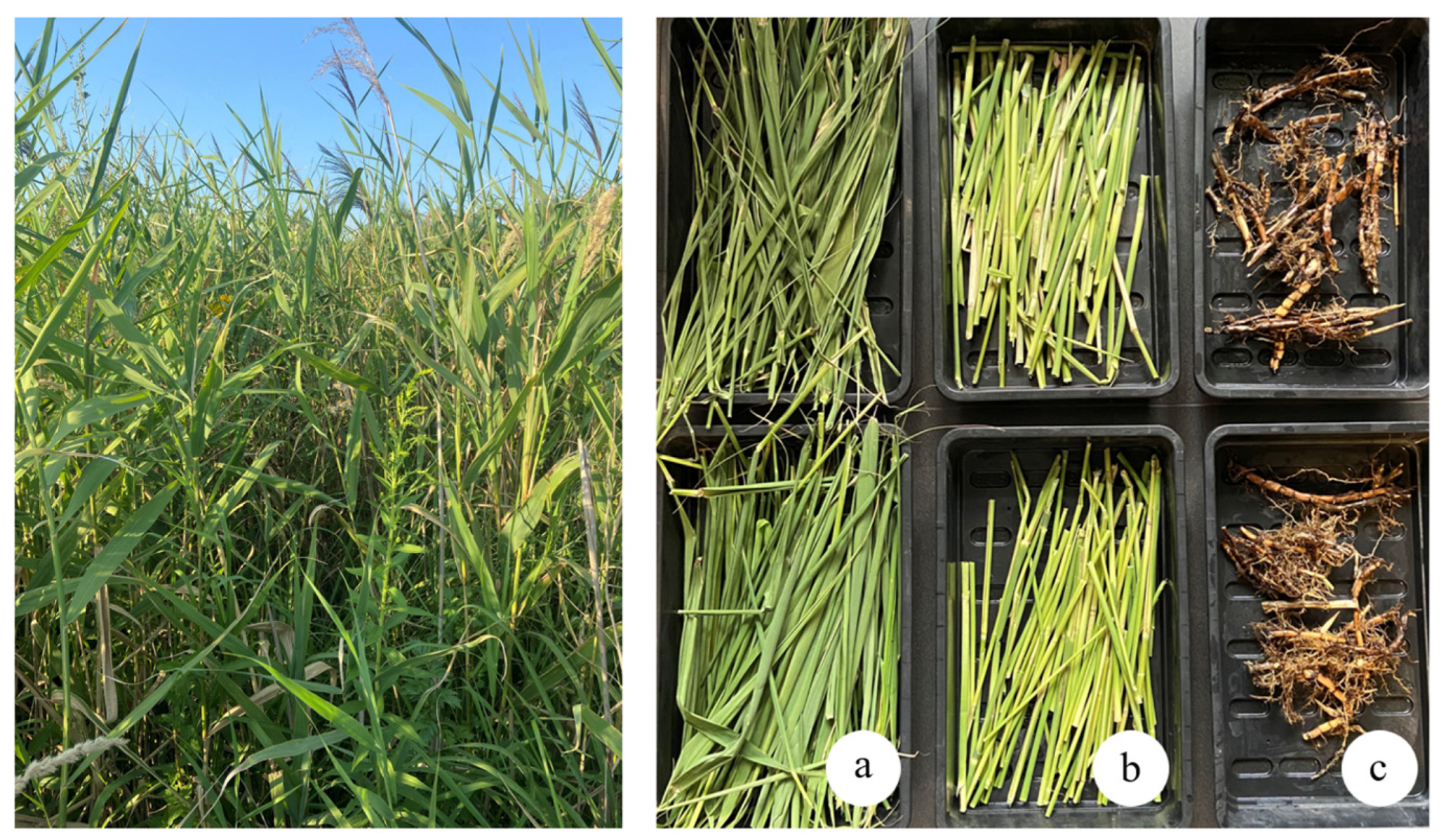
Phragmites australis was harvested from an area of 1320 m2 in the testing ground, located in a mining spoil heap in Libiąż, in June 2025. Plants were collected from two profiles, A and B, with 10 sampling plots measuring 0.25 m × 0.25 m. Then, the biomass weight and stalk density of the collected samples were measured, and the samples were transported in plastic bags to the laboratory. The average biomass weights for profiles A and B reached values of 4.83 and 3.87 kg/m2, respectively. The estimated Phragmites australis density was 342 plants/m2 for profile A and 272 plants/m2 [27]. Before laboratory analysis, the plant samples were divided into three primary tissues (roots, stalks and leaves) (Figure 2). Then, plant samples were carefully washed with distilled water to remove residual soil and dust particles prior to analysis and dried in air to avoid volatilisation. Each tissue sample was subsequently ground in a laboratory mill, mixed to obtain homogeneous samples and stored in plastic containers for chemical analysis. Before analysis, the samples (plant tissues) were homogenised in a mill. One gram of each sample was then digested in nitric acid (10 mL) in the Ethos-up microwave digestion system. After digestion, the samples were brought to 25 mL (in a volumetric flask) and transferred to high-density polyethylene (HDPE). The concentrations of As, Ba, Cd, Co, Cr, Cu, Mn, Mo, Ni, Pb, Sb, Sn and Zn were determined via the ICP-OES method, whereas Hg was determined via the CV-AAS technique.

2.3. Ecological Risk Assessment

2.3.1. Ecological Risk Factors

The ecological risk factor (ERi) of the soil substitute was calculated according to Equation (1) [28]:
E R i = T r i × C i C b i
where Tri is the toxic response factor, reflecting the toxicity and sensitivity of the heavy metals in the ecosystem and response values (mg/kg) as follows: As: 10, Ba: 1, Cd: 30, Co: 5, Cr: 2, Cu: 5, Hg: 40, Ni: 5, Pb: 5 and Zn: 1 [28,29,30,31], Ci is the measured metal concentration in the sample; Cib is the background concentration of the toxic elements in the Upper Silesia soils (n = 1564) as follows: As: 4.99, Ba: 54, Cd: 1.3, Cr: 5, Co: 3, Cu: 7, Hg: 0.08, Ni: 5, Pb: 44 and Zn:104 [32].

2.3.2. Potential Ecological Risk Index

To evaluate the ecological risk of metals and metalloids (As, Ba, Cd, Co, Cr, Cu, Hg, Ni, Pb and Zn) pollution in soil substitute covers, the potential ecological risk index (PERI) was used. The PERI was calculated according to [28] as the sum of the individual ecological risk factors (ERi) via Equation (2):
P E R I = i = 1 n E R i
where ERi is the ecological risk factor, which is calculated according to Equation (1).

2.3.3. Geoaccumulation Index

To assess the level of heavy metal pollution in the soil substitute, the geoaccumulation index (Igeo) was used. The Igeo was calculated according to Equation (3) [33]:
I g e o = l o g 2 C i 1.5 C b
where Ci is the concentration of the heavy metal in the soil sample (mg/kg); Cb is the concentration of the toxic elements in the geochemical background (mg/kg); and factor 1.5 is a constant value used to account for natural fluctuations in the background concentration.
The interpretations of the ERi, PERI and Igeo values are shown in Table 1.

2.4. Modified BCR-Sequential Extraction Method

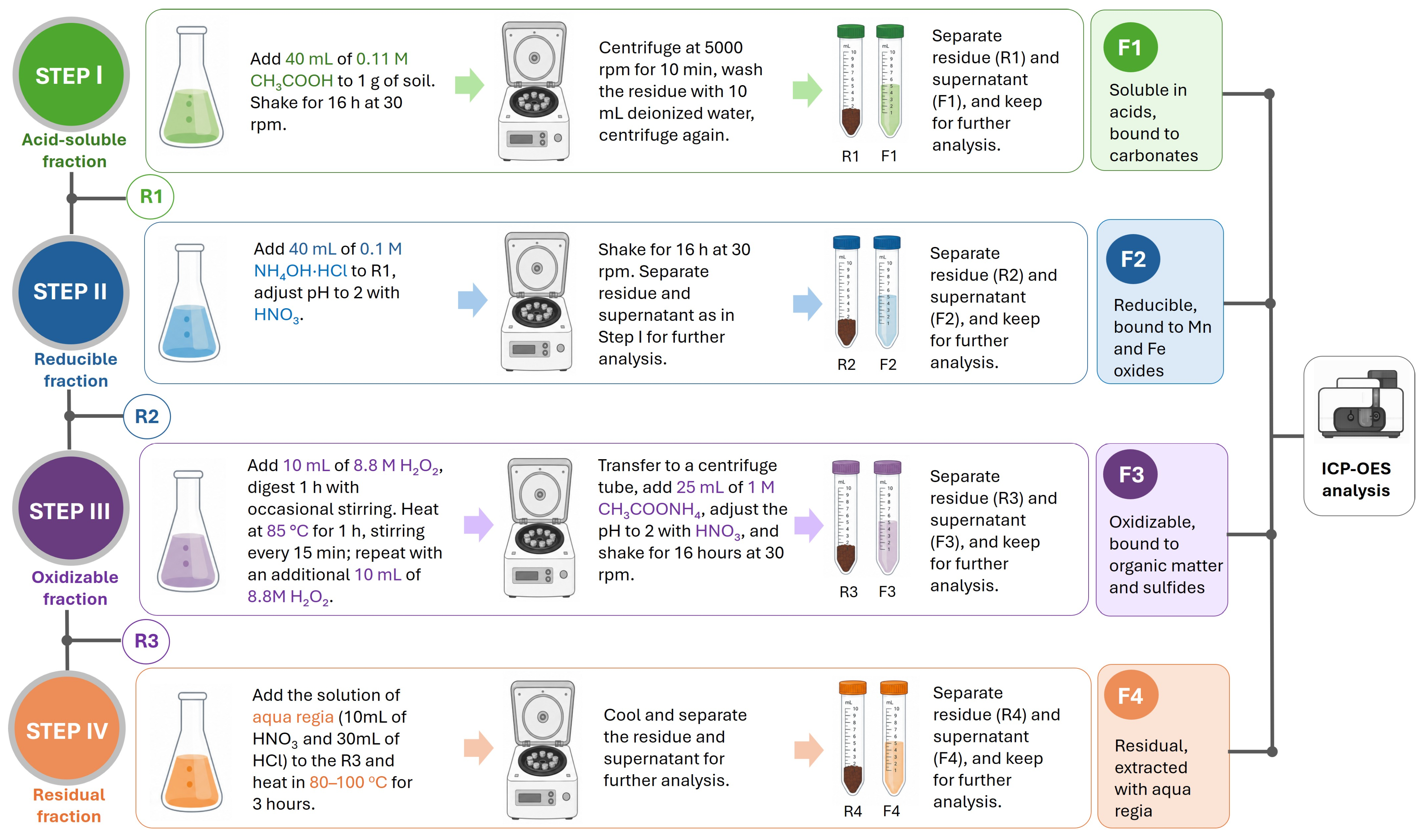
The modified BCR sequential extraction procedure was applied to partition the most harmful heavy metals (Cd, Cr, Cu, Ni, Pb, and Zn) into the three operationally defined fractions: (i) F1: exchangeable and bound to carbonates, (ii) F2: bound to iron and manganese oxides, and (iii) F3: organic matter and sulfides. This method is based on a three-step extraction [25], determined by the binding forms of trace elements in the soil, i.e., acetic acid (F1), hydroxyamine hydrochloride (F2), and hydrogen peroxide/ammonium acetate (F3).
All reagents used in the BCR procedure were of analytical grade. Acetic acid (CH3COOH) and hydrochloric acid (HCl) were purchased from Chemland (Stargard, Poland), while hydroxylamine hydrochloride (NH4OH∙HCl), hydrogen peroxide (H2O2), ammonium acetate (CH3COONH4) and nitric acid (HNO3) were delivered by Chempur (Piekary Śląskie, Poland).
Before analysis, a sample of soil was dried at 40 °C, ground in a laboratory mortar and passed through a 0.1 mm sieve. The individual steps of BCR sequential extraction are detailed in Figure 3.
To assess the risk and mobility of labile fractions of heavy metals (Cd, Cr, Cu, Ni, Pb, and Zn) in soil samples, the modified risk assessment code (mRAC) and the individual contamination factor (ICF) were calculated according to Equations (4) and (5) [34]:
m R A C = F 1 + F 2 F 1 + F 2 + F 3 + F 4 × 100 %
I C F = F 1 + F 2 + F 3 F 4
where F1, F2, F3, and F4 correspond to the summarised metal concentrations determined in the soluble, reducible, oxidizable and residual fractions, respectively, according to Steps I-IV (Figure 3). The interpretation of the mRAC and ICF values is shown in Table 2.
The verification of the BCR-sequential extraction results of the soil substitutes was calculated according to Equation (6):
R = F 1 + F 2 + F 3 + F 4 T C × 100 %
where R is the percentage recovery rate of heavy metals, TC is the total concentration of heavy metals measured in the solid sample by ICP-OES, and F1, F2, F3, and F4 are the concentrations of heavy metals determined in four fractions via sequential extraction.

2.5. Bioconcentration and Translocation Factors

To determine the accumulation ability of Phragmites australis for toxic elements from soil substitute covers (Profiles A and B) and assess its potential for phytoremediation, two factors were used.
The bioconcentration factor (BCF) was calculated according to Equation (7) as the ratio of the heavy metal concentration in the plant ( C p i , mg/kg) to its total content in the soil substitute ( C s i , mg/kg):
B C F = C p i C s i
When BCF > 1, the plant is considered an efficient accumulator; it takes up metals from the soil at a higher concentration than in the substrate. When BCF < 1, the plant has a low accumulation capacity.
The translocation factor (TF) indicates the plant’s capacity to remove absorbed elements from roots to aboveground tissues (leaves and stalks) and was calculated according to Equation (8):
T F = C a i C u i
where C a i is the heavy metal concentration in the aboveground tissues (mg/kg), and C u i is its concentration in roots (mg/kg). When TF > 1, the plant efficiently translocates metals to shoots/leaves, making it a good material for phytoextraction (harvesting shoots removes metals from the site). When TF < 1, most metals remain in roots, which is desirable for phytostabilisation.

3. Results and Discussion

3.1. Concentrations of Heavy Metals in Soil Substitutes

Heavy metals and metalloids concentrations in the soil substitute before being spread on the testing ground in 2020 and collected in June 2025, five years after Phragmites australis planting, are shown in Table 3.
Agricultural soils are often contaminated by elements such as Cd, Pb, Cr, As, Hg, Ni, Cu, and Zn, which can have toxic effects on plants when present at elevated concentrations. Among these forms of Cd, Pb, As, Hg, and Cr are recognised as highly toxic and damaging to plant health even at relatively low concentrations [2]. The contents of PTMs in the soil samples collected in 2025, both from profiles A and B, were comparable and varied in the order of Zn > Pb > Cu > Cr > Ni > Co > As > Cd > Hg. The concentrations of Cd, Cr, Cu, Ni, Pb and Zn in 2025 were higher than those in the sample analysed in 2020. The cadmium content in 2020 was 1 mg/kg and increased to 2.1 and 2.3 mg/kg in 2025. Additionally, two times greater values were observed for Cr (from 24 to 41 mg/kg) and Pb (from 61 to 123 and 129 mg/kg). Nevertheless, none of the toxic elements detected in 2025 exceeded the concentrations, indicating an acceptable range in soils classified as groups II and III [7]. This means that the concentrations of toxic elements in the soil substitute cover did not exceed the threshold limits established for agricultural, green areas, forest, wooded and shrub lands. Both soil cover samples indicate a neutral to slightly alkaline pH (7.4–7.6). According to the literature [35], this pH range may reduce the bioavailability of some micronutrients, including Fe, Mn, Cu, and Zn.
The relatively high concentrations of heavy metals in the soil cover observed after a five-year field exposure term on the testing ground were caused by anthropogenic pollution from the surrounding area. Other research has shown that the waste rock from the Janina mine spoil heap is poor in heavy metals [36] and contains from 0.025 to 0.085 mg/kg of toxic Cd [37]. The data from the Polish Geological Institute-National Research Institute [38] indicate that the median Cd concentration in topsoil samples (0–0.3 m depth) in Libiąż, collected from industrial (n = 51) and anthropogenically transformed areas (n = 137), was 2 mg/kg. These observations suggest that heavy metals can be emitted into the atmosphere by many sources, such as transport, industry, or agriculture, and transported over long distances by dust [39]. For these reasons, the trace elements detected in the soil cover may originate from long-term atmospheric deposition associated with both historical and current industrial emissions in the Upper Silesia region, as well as with wind transport of dust from the spoil heap surface.
Our previous observations also revealed that the calculated plant density of common reeds in profiles A and B was 342 and 272 plants/m2, respectively [27]. This phenomenon may have influenced the difference in heavy metal concentrations observed between the two parts of the testing ground. Although the differences in trace element concentrations between profiles A and B were not pronounced, profile A exhibited lower concentrations of most analysed elements. A higher density of Phragmites australis in profile A may have increased the phytostabilisation potential of soil cover, thereby reducing the mobility and accumulation of trace elements in the soil.

3.2. Results of the Ecological Risk Assessment

The calculated values of the ecological risk factors and potential ecological risk indices for the PTMs contained in the initial soil substitute and soil covers (Profiles A and B) collected from the testing ground in 2025 are presented in Table 4.
The results revealed that the highest ERi values were associated with moderate risk for Cd (48.5 and 53.1) and moderate (65) and considerable (80) risk for Hg, in soil cover after five years of exposure for profiles A and B, respectively. However, in the first year of the experiment, each element indicates low risk. Cadmium and mercury are extremely harmful to the environment; therefore, their toxic response factors are 30 and 40, respectively [28,29]. Our results are consistent with previous studies, which identify Cd as one of the most environmentally hazardous heavy metals in soil and sediments. The study by Kumar et al. [40] indicated the highest PERI values for soils analysed in Poland, with Cd identified as a major contributing factor. Pan et al. [41] showed an extremely high ecological risk of Cd in the contaminated mining area in China. Similarly, Saleem et al. [42] found that Cd was the main pollutant in agricultural soils in North Dakota, USA, and posed a considerable ecological risk (ERi > 100). According to their observations, higher PTM content was correlated with agricultural activities and atmospheric deposition. Cadmium is frequently the dominant contaminant in sewage sludge applied to soils as an organic fertiliser, due to its soil-forming and fertilising properties. According to Kowalik et al. [43], the ER index for sewage sludge supplied from sewage treatment plants in Poland has reached 800. Latosińska et al. [3] reported that Cd was the main element in the heavy metals group, contributing to a very high PERI value in three types of municipal sewage sludge, with ER values for Cd exceeding 600. Similarly, Tytła [44] reported that the ER for Cd in sewage sludge samples ranged between 435 and 1385. These findings indicate that the cadmium-related ecological risk associated with our soil cover is markedly lower than that associated with sewage sludge commonly deposited on agricultural land. For other heavy metals (Cr, Ni, and Zn), the ecological risk factor indicates low risk ERi ranges of 9.4 to 38.6 and 8.6 to 37.9 for profiles A and B, respectively. The calculated value of the PERI for the initial soil sample in 2020 was low (118) and achieved a moderate ecological risk, with values of 257 for A and 277 for B profiles.
For the ecological risk assessment of contaminated soils, the determination of appropriate geochemical background values is crucial. Table 4 lists ERi and PERI values reflecting soils from the highly urbanised and industrialised Upper Silesia region [45]. If national geochemical background values for grazing land in Poland (Cd: 0.23, Cr: 7.3, Cu: 5.38, Ni: 5.1, Pb: 13.4, and Zn: 24.8 mg/kg) [46] were used instead of the Upper Silesian background, higher PERI values would be obtained. Nevertheless, to assess the ecological risk of soil substitutes intended for the land reclamation of post-mining areas located in the Upper Silesian region, the use of regional geochemical background values is more appropriate and representative of the local environmental conditions.
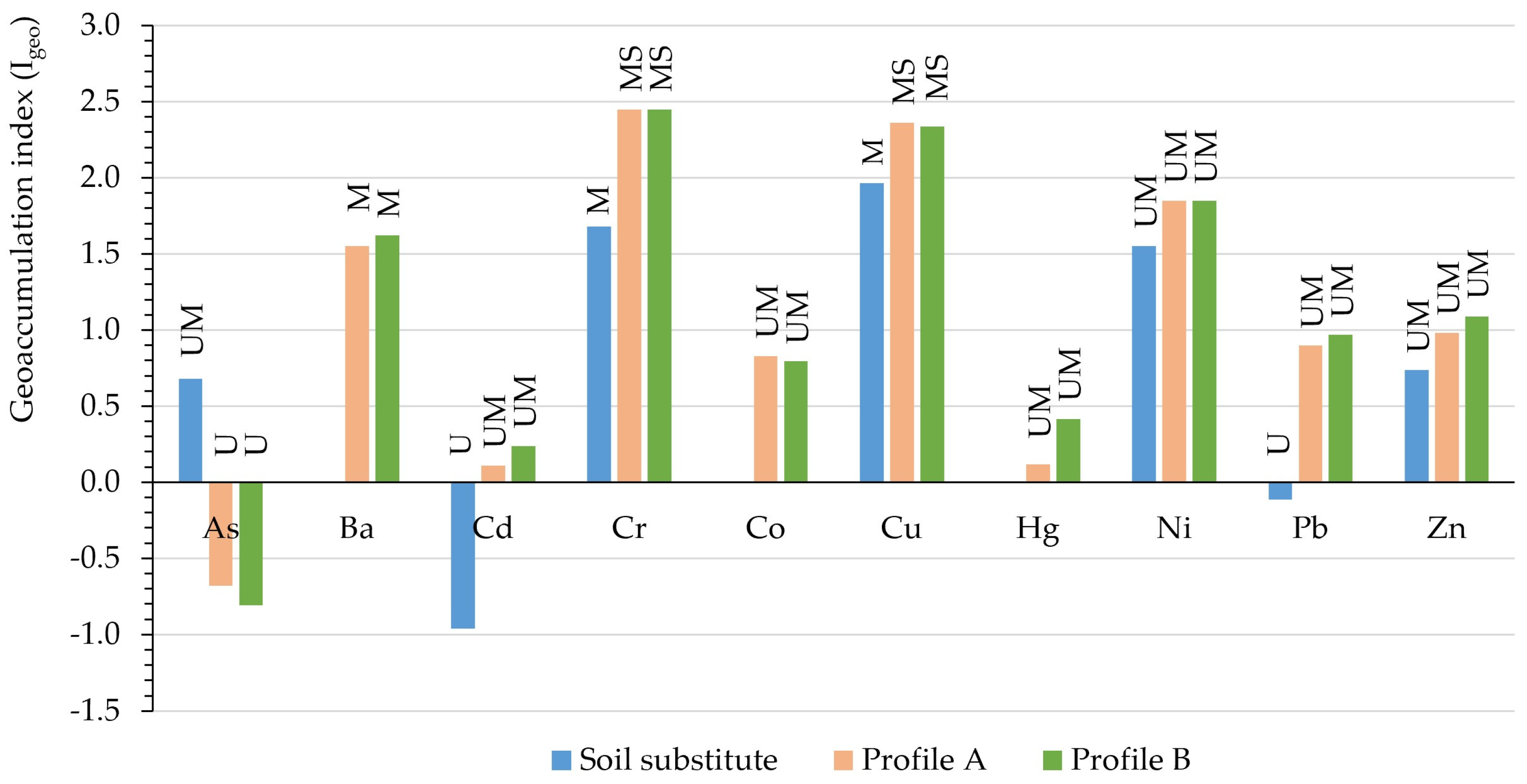
The geoaccumulation index is a useful tool for the comprehensive assessment of soil quality and contamination. The Igeo values calculated for the PTMs (As, Ba, Cd, Co, Cr, Cu, Hg, Ni, Pb and Zn) with reference to the geochemical background in the Upper Silesia region are presented in Figure 4.
The highest Igeo values were recorded for Cr (1.68–2.45) and Cu (1.97–2.36), indicating moderate pollution for samples collected in 2020 (Class 2) and moderate to strong pollution for soil covers collected in 2025 (Class 3). Nickel reached unpolluted to moderately polluted contamination levels (1.55–1.85) for all the tested samples. The analysis revealed that in most cases, the values for Cd and Pb were at the unpolluted to moderately polluted level (Igeo < 1), whereas Zn reached values ranging from class 1 to 2 (0.74–1.09).
The Igeo values for Hg (0.12–0.42) and Co (0.79–0.83) for soil covers indicated Class 1, whereas the contamination levels for Ba (1.55–1.62) remained moderate.
Our results suggest that using soil cover for plant growth is ecologically safe, and the calculated Igeo values are lower than those reported by other researchers for soil samples. A study conducted in the Upper Silesian Region of Poland classified 265 of 271 topsoil samples from moderately to heavily contaminated areas (2 < Igeo < 3) [47]. Tomczyk et al. [48] reported that the highest contamination of Polish soils (3 < Igeo < 4) with Cd, Pb and Zn was associated with industrial activities, including those in the Upper Silesian District. Among the various pollution indicators, Igeo is considered particularly useful and comprehensive. Additionally, the Igeo formula incorporates a 1.5 correction factor, which helps mitigate the risk of misinterpreting naturally elevated levels as anthropogenic contamination from human activity [49]. Many authors widely use this index to assess soil contamination levels resulting from urbanisation and industrialisation [50,51,52] and to monitor soil pollution over time [48]. It may also be used to assess the level of soil contamination after the application of organic materials, including sewage sludge or animal manure [53,54], as well as plant protection products such as pesticides [6].

3.3. Result of BCR Sequential Extraction

The concentrations of heavy metals (Cd, Cr, Cu, Ni, Pb, Zn) determined by the sequential extraction method from soil cover samples collected from the testing ground in 2025 are shown in Table 5. Other elements, such as As, Ba, Co and Hg, were not included due to their distinct chemical speciation and the limitations of the standard BCR procedure.
The results obtained from the sample taken from profile B were slightly greater than those from profile A, generally in all the tested fractions. The lowest distribution of metals was observed in fraction F1 (0–24% in A profile and 0–30% in B profile). The metal proportions in reducible and oxidizable fractions increased to 1–34% and 2–43% for F2 and to 10–62% and 9–48% for F3 in A and B profiles, respectively. Residual fraction (F4) predominated in the metal distribution, corresponding to 16–88% for the A profile and 10–89% for the B profile.
Our results are in good agreement with those reported by Xiao et al. [55], that the most available fractions of heavy metals had been transformed from the residual fraction. As shown in Table 5, the highest total concentrations among the analysed heavy metals were recorded for Zn (344.32 and 356.57 mg/kg) and Pb (116.14 and 121.07 mg/kg) in the A and B profiles, respectively. The total concentrations of Cr, Cu and Ni ranged from 26.71 to 48.14 mg/kg for the A profile and from 28.11 to 53.06 mg/kg for the B profile. The concentrations of Cd in all the fractions were comparable and did not exceed 1.0 mg/kg. The results showed that Cr was predominantly associated with the residual fraction, contributing 88 and 89% of its total content, which suggests its low mobility and limited bioavailability. Similar trends were reported by Fernandez-Martinez et al. [56] in samples collected from spoil heaps in northern Spain, where the residual fraction of Cr represented 70–90% of the total concentration. The highest concentrations of Cr, Ni, and Pb in the residual fraction from agricultural soils in Turkey were also reported by Bakircioglu et al. [57]. These results are in good agreement with our findings, which showed that Ni was mostly present in the F4 fraction, accounting for 60 and 61% of the total concentration. Our study revealed that the highest content of Cu was associated with the oxidizable fraction, i.e., 62% and 48% for A and B profiles, respectively, whereas similar proportions of Pb were in F2 (34–40%) and F3 (37–41%).
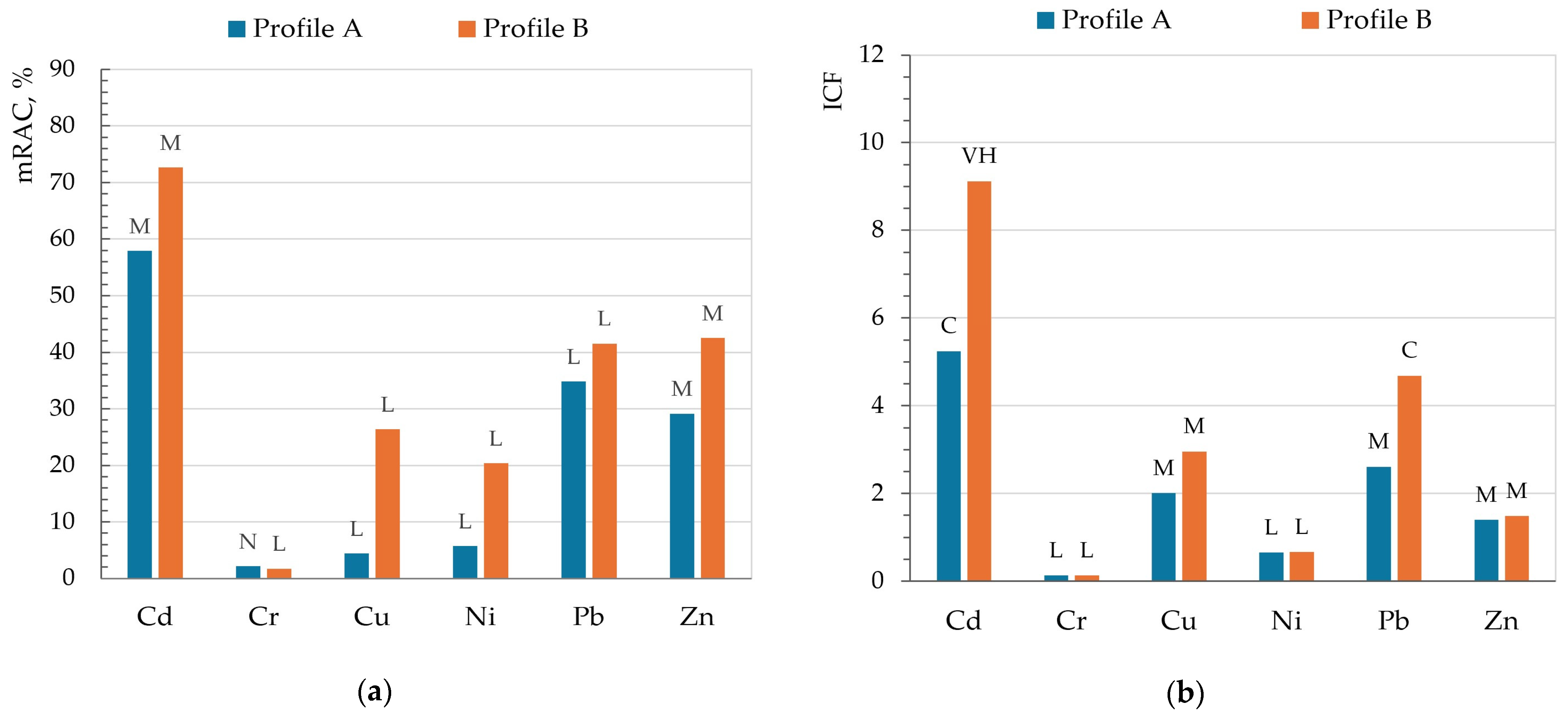
The total concentrations derived from BCR sequential extraction were approximately equal to the total heavy metal content determined by digesting the original samples with aqua regia via the ICP-OES method. In most cases, the obtained recovery values ranged from 89% to 117% for the A profile and from 93% to 129% for the B profile. The exception was Cu, for which the recoveries were calculated to be 62% and 74% for A and B profiles, respectively. The recovery value more or less than 100% may result from analytical uncertainties during ICP-OES analysis, as well as the operational limitations of the BCR sequential extraction procedure. Similar recovery values differing from 100% have also been reported by other authors applying the BCR sequential extraction procedure. A study of sediments and different amendments, including calcium compounds, zeolite or kaolin, carried out by Liu et al. [58] reported recoveries of Cr, Co, Cu, Ni, Pb and Zn between 94% and 109%. The recovery values for sediment calculated by Delgado et al. [59] were 47% for Cd, 90% for Cr, 91% for Cu, 89% for Ni, 88% for Pb and 86% for Zn. In contrast, the heavy metal concentrations in individual fractions of sewage sludge indicated a relatively high recovery of Cu (111–121%) but a relatively low recovery of Cr (58–73%) [34]. This confirms that the BCR method used for detecting the speciation of Cd, Cr, Cu, Ni, Pb and Zn in soil substitute covers was acceptable. Figure 5 shows mRAC and ICF values in the tested soil covers.
The values of mRAC clearly indicate differential mobility in soil substitute covers among the studied trace elements. The risk of metal release from F1 and F2 fractions decreased in the following order: Cd > Zn > Ni > Cu > Pb > Cr. Both Cd and Zn indicate moderate mobility and potential for release into the environment, especially in the B profile, where mRAC values are slightly higher. The results revealed that Cr, Cu, Ni and Pb displayed low or negligible mobility, indicating limited ecological risk. The ICF value for Cd in the B profile was 9.1, indicating a high risk of its release into the environment. On the other hand, the ICF for the soil sample collected from A profile (5.24) signifies considerable risk. The calculated value for Pb represents medium and considerable risk for profiles A (2.61) and B (4.69), respectively. In the case of Zn, the samples indicate a moderate risk of its mobilisation and bioavailability. Moreover, the ICF values below 1 determined for Cr and Ni suggest a low ecological risk, reflecting their strong association with the stable residual fraction and limited potential for release. The interpretation of metal mobility in our research is consistent with observations reported by Pueyo et al. [60]. According to their findings, Cd and Zn often occur in more labile forms, which increases their potential mobility and ecological risk. In contrast, Cr and Ni are usually associated with more stable residual phases, posing a lower environmental threat.

3.4. Accumulation of Heavy Metals in Phragmites australis

The trace element concentrations in various organs of Phragmites australis are shown in Table 6.
The findings show that the concentrations of trace elements in plants collected from A and B Profiles differ among the tissue parts, ranging from 1.1 to 23 mg/kg and 1.0 to 25 mg/kg for leaves, 2 to 94 mg/kg and 1.6 to 63 mg/kg for stalks, and 2.3 to 70 mg/kg and 1.9 to 75 mg/kg for roots, respectively. The accumulation of metals in plant roots, rather than their translocation to aboveground tissues, is determined by the density of plants and species, and their concentration in the soil [61].
The total PTM contents in the plant samples collected from the two parts of the testing ground were comparable and decreased in the order of Zn > Pb > Mn > Cu > Sn > Ba > Cr > Ni > Sb > Mo for profile A and Zn > Pb > Mn > Ba > Cu > Sn > Cr > Ni > Sb > Mo for profile B. The stalks and roots of common reed were characterised by the highest concentrations of heavy metals, particularly Pb, Zn and Ni. The concentrations of Pb (10 and 18 mg/kg) and Zn (23 and 25 mg/kg) in leaves were a few times lower than those in stalks and roots (from 63 to 94 mg/kg for Zn and from 18 to 21 mg/kg for Pb). However, the high concentrations of Zn, Pb and Mn correspond with those in the soil cover (Table 3). Additionally, the results revealed that the accumulation of As, Co and Hg in plant tissues was below the detection limits, while Cd (2.2 mg/kg) and Sb (1.0–4.1 mg/kg) were detected in some tissues. According to Kabata-Pendias and Pendias [62], the relatively high concentrations of heavy metals in plant roots, especially Pb, Zn, Ni and Mn, indicate the presence of a barrier mechanism that limits the movement of toxic elements to aboveground tissues, thus reducing their phytotoxic effects. Bonanno and Lo Giudice [17] confirmed that a common reed’s trend decreases in the order of Mn > Zn > Pb > Cu, and belowground organs (roots and rhizomes) have a greater capacity than shoots do. An extensive review conducted by Milke et al. [18] revealed that Phragmites australis is the most effective species used for phytoremediation. Scientific studies confirmed that the concentrations of toxic metals in common reed roots originating from natural wetlands were as follows (mg/kg): Cd: 1.13–5.64, Cr: 5.32–11.1, Cu: 18.8–299, Ni: 4.78–41.2, Pb: 8.45–117, and Zn: 76–135. According to Vymazal et al. [16], PTMs concentrations in the aboveground tissues of Phragmites australis in Polish constructive wetlands for wastewater treatment were as follows (mg/kg): Cd: 0.04–0.9, Cr: 19.9–32.7, Cu: 0.4–3.9, Pb: 0.32–3.1, and Zn: 43–65. Studies carried out by Bonanno et al. [63] revealed that the concentrations of toxic elements (mg/kg) in common reeds from two Mediterranean seagrasses ranged from 0.57 to 1.36 for Cd, 0.73–4.12 for Cr, 4.75–18.2 for Cu, 0.79–4.78 for Ni, 0.35–7.78 for Pb and 25.3–144 for Zn. Compared with the literature data, our findings revealed similar or lower accumulation of toxic metals in plant biomass, which may suggest a relatively lower degree of soil contamination or specific environmental conditions such as pH. Moreover, differences in the efficiency of metal uptake and translocation by Phragmites australis may also influence the observed results. The ability of common reed to accumulate heavy metals and micronutrients from soil cover was evaluated via two factors, BCF and TF (Figure 6).
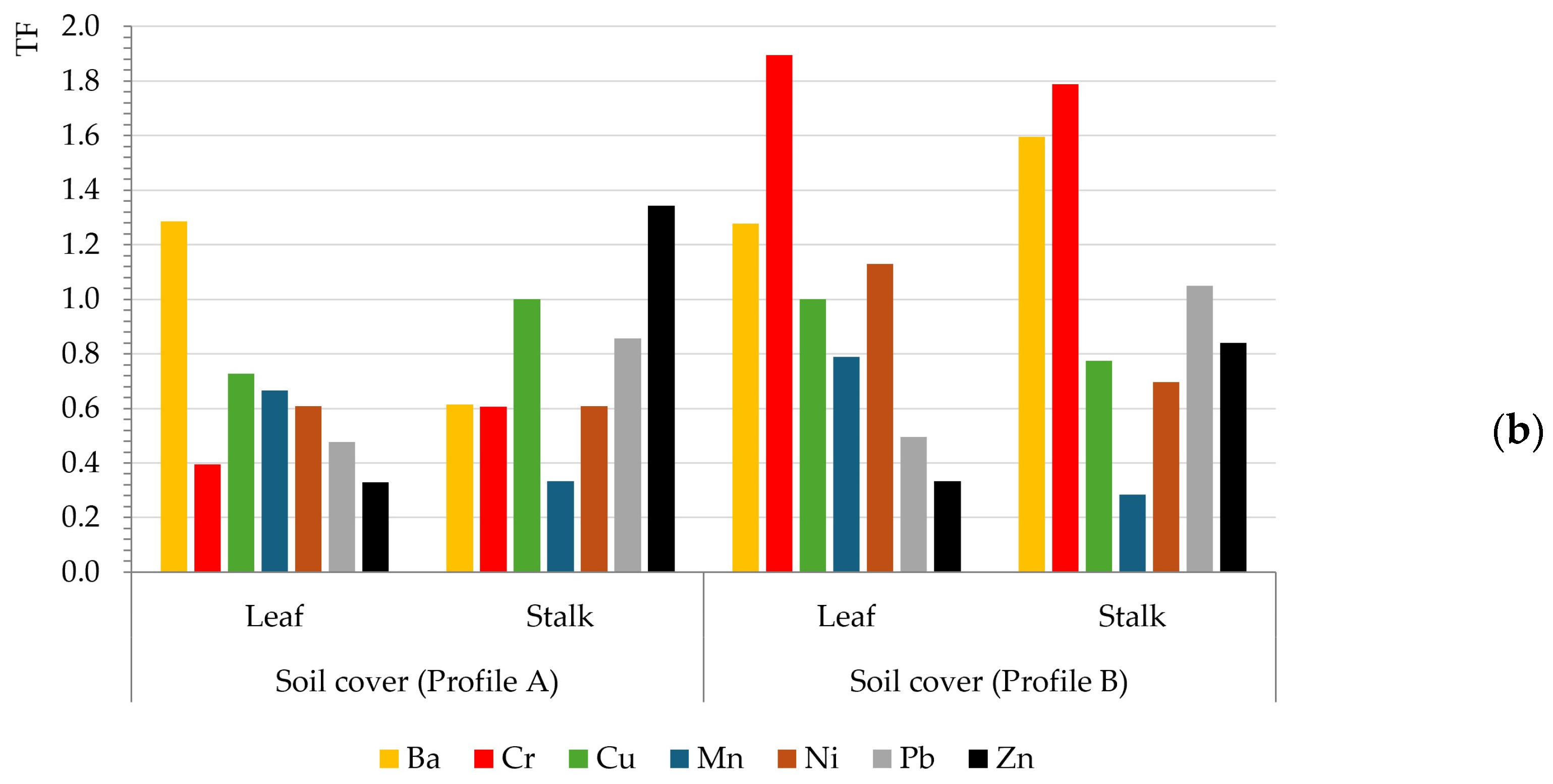
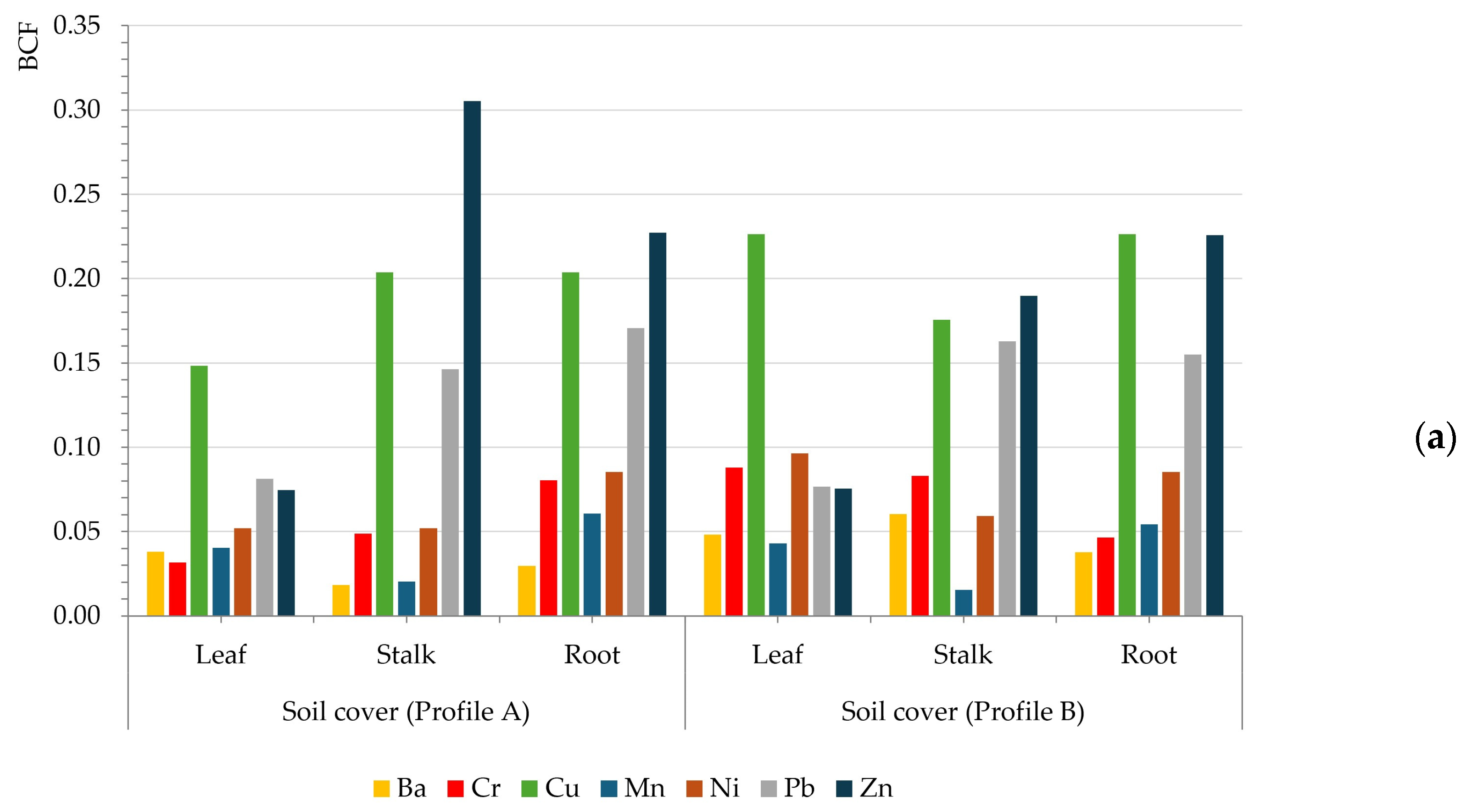
Figure 6a shows that the BCF value was below 1, reaching from 0.03 to 0.96 in leaves, from 0.02 to 0.31 in stalks and from 0.03 to 0.23 in roots. Additionally, BCF values exceeding 1 were calculated for two elements, Mo in leaves (1.83 and 1.43) and Sn in leaves (2.14 and 3.80), stalks (6.36 and 7.33) and roots (6.21 and 5.40), for A and B profiles, respectively. This indicates a strong accumulation of Mo and Sn by Phragmites australis. According to some researchers, BCF values above 1 were also reported for Cd, Cr, Pb, Ni, and Zn in seedlings of Phragmites australis [61,64,65]. However, our results are not directly comparable with those in these studies due to the much lower concentrations of heavy metals in the analysed soil covers. The calculated values of the translocation factor (Figure 6b) indicate a greater phytoextraction potential (TF > 1) for the B profile because of greater soil contamination. Strong Cr translocation was observed for both the leaves (1.89) and stalks (1.79). In contrast, the TF for Cr in the A profile demonstrated a phytostabilisation tendency (TF < 1). Analysis of other toxic metals (Cu, Ni, Pb and Zn) revealed higher TF values for the stalks (0.61–1.34 and 0.70–1.36) than for the leaves (0.33–0.73 and 0.33–1.13) for A and B profiles, respectively. Our results support those of previous studies, which indicated that the concentrations of metals are frequently greater in the belowground parts than in the stems, leaves, and flowers of Phragmites australis. Chitimus et al. [66] reported that common reed collected from three industrial contaminated sites had TF < 1 for four heavy metals, with the order of Cu > Zn > Pb > As. Similar findings (TF < 1) for Cu > Pb > As > Zn > Mn were reported by Montes-Rocha et al. [67]. Low TF levels for six toxic elements (Cu, Cd, Cr, Ni, Pb and Zn) were detected in an uncontaminated lake (0.05–0.51) and an anthropogenic roadside ditch (0.02–0.68) in northern Poland by Nawrot et al. [64]. Although the calculated values of translocation factor in this study indicate limited transport of most trace elements from roots to aboveground tissues (TF < 1), Phragmites australis can play an important role in phytoremediation of post-mining areas through phytostabilisation. The extensive root and rhizome system of common reed, in which the largest densities occur at a depth of 0.5 mm [18], may effectively immobilise PTMs through reducing their mobility, bioavailability, and potential transfer to surrounding ecosystems.
The findings demonstrate that soil substitutes can promote vegetation establishment and biomass production while maintaining acceptable ecological conditions. However, the presence of certain trace elements emphasises the importance of long-term monitoring to ensure that the environmental benefits of waste reuse outweigh the potential risks associated with contamination.
The use of industrial by-products and organic waste to produce soil substitutes supports the principles of the circular economy by diverting waste streams from landfill and returning them to productive use. In addition to reducing the demand for natural soil resources, this approach contributes to the rehabilitation of degraded post-mining land and the restoration of ecosystem functions.
The successful establishment of Phragmites australis on reclaimed mine spoil heaps is beneficial not only in terms of biomass production and phytostabilisation. Additionally, it may provide some regulatory, provisioning and cultural ecosystem services [68,69], including climate regulation, carbon sequestration, preventing soil erosion, heavy metal phytoremediation, supply of goods, and others, which improve environmental processes and support human well-being.

4. Conclusions

The results of our study provide important insight into the long-term environmental behaviour of heavy metals and metalloids in soil substitutes used for the biological recultivation of strongly acidic mining waste heaps in Poland. The study demonstrates an increase in toxic elements over time, associated with historical and current industrial emissions in Upper Silesia, and wind transport of dust from the spoil heap surface. However, the levels of heavy metals were within acceptable limits in areas established for agricultural, garden and forest land use.
A key finding of this study is that samples collected from the soil cover indicated a moderate potential ecological risk index related to the geochemical background in the Upper Silesia region. The highest soil contamination risk was associated with Cd and Hg, and the calculated ERi values for the remaining trace elements indicated low ecological risk and increased in the following order: Cu > Ni > Cr > Pb > Co > As > Ba > Zn. The highest Igeo values were recorded for Cr and Cu, indicating a moderately to strongly polluted class and suggesting that continued monitoring is required.
The distribution of metals using the modified BCR method revealed that most elements are predominantly associated with the residual fraction (F4), whereas the lowest percentage of heavy metals was bound to the exchangeable and acid-soluble fraction (F1), confirming their low mobility and limited environmental availability. This suggests that, under current conditions, the risk of metal mobility in soil cover is low, even after long-term exposure to pollution sources. Although the soil substitutes appear to limit metal mobility under the present site conditions, the concentration of Cd, Hg, Cr, Cu, and Zn requires continued monitoring.
The analysis of the soil–plant system provided valuable information on the degree of heavy metal accumulation in Phragmites australis tissues. The results confirm that the use of artificial soil not only effectively recultivates degraded areas but also promotes the production of ecologically safe plant biomass for manufacturing, agricultural and energy purposes. The highest values of trace elements in Phragmites australis tissues were determined for Zn, Pb and Mn, which corresponded to the highest accumulation of these elements in the soil cover. The calculated values of BCF and TF indicate that the plants have a low accumulation capacity for heavy metals from reclaimed soil and retain more metals in their roots.
The study demonstrates that the use of soil substitutes in land reclamation of post-mining areas can be an effective strategy not only for restoring degraded areas but also for limiting the bioavailability of heavy metals. These findings support the continued application of such approaches in anthropogenic sites. Future research should focus on the use of soil substitutes for cultivation and contamination assessment of other plant species, including agricultural and melliferous plants. Such an approach would provide valuable information on the potential transfer of heavy metals and metalloids from reclaimed sites into the food chain. This would be especially important in the context of ecosystem services as well as human and animal health.

Author Contributions

Conceptualization, A.W.-R.; methodology, A.W.-R. and M.C.; validation, A.W.-R. and M.C.; formal analysis, A.W.-R. and M.C.; investigation, A.W.-R. and M.C.; resources, A.W.-R. and M.C.; data curation, A.W.-R.; writing—original draft preparation, A.W.-R.; writing—review and editing, A.W.-R. and M.C.; visualisation, A.W.-R.; supervision, A.W.-R.; project administration, A.W.-R.; funding acquisition, A.W.-R. All authors have read and agreed to the published version of the manuscript.

Funding

This research was funded by the POLISH MINISTRY OF SCIENCE AND HIGHER EDUCATION, Statutory Activity of the Central Mining Institute–National Research Institute, Task no. 111340125.

Institutional Review Board Statement

Not applicable.

Informed Consent Statement

Not applicable.

Data Availability Statement

The original contributions presented in this study are included in the article. Further inquiries can be directed to the corresponding author.

Acknowledgments

During the preparation of this manuscript, the authors used an AI tool (GrammarlyPro) to refine the writing style, punctuation, and grammatical errors. Moreover, selected graphical elements presented in Figure 3 were created with the assistance of ChatGPT 5.5 (OpenAI). The authors have reviewed and edited the output and take full responsibility for the content of this publication.

Conflicts of Interest

The authors declare no conflicts of interest. The funders had no role in the design of the study; in the collection, analyses, or interpretation of data; in the writing of the manuscript; or in the decision to publish the results.

Abbreviations

The following abbreviations are used in this manuscript:
EREcological risk factor
TrToxic response factor
PERIPotential ecological risk index
IgeoGeoaccumulation index
mRACModified risk assessment code
ICFIndividual contamination factor
BCFThe bioconcentration factor
TFTranslocation factor

References

  1. Wuana, R.A.; Okieimen, F.E. Heavy Metals in Contaminated Soils: A Review of Sources, Chemistry, Risks and Best Available Strategies for Remediation. Int. Sch. Res. Not. 2011, 2011, 402647. [Google Scholar] [CrossRef]
  2. Rashid, A.; Schutte, B.J.; Ulery, A.; Deyholos, M.K.; Sanogo, S.; Lehnhoff, E.A.; Beck, L. Heavy Metal Contamination in Agricultural Soil: Environmental Pollutants Affecting Crop Health. Agronomy 2023, 13, 1521. [Google Scholar] [CrossRef]
  3. Latosińska, J.; Kowalik, R.; Gawdzik, J. Risk Assessment of Soil Contamination with Heavy Metals from Municipal Sewage Sludge. Appl. Sci. 2021, 11, 548. [Google Scholar] [CrossRef]
  4. Gworek, B.; Baczewska-Dąbrowska, A.H.; Kalinowski, R.; Górska, E.B.; Rekosz-Burlaga, H.; Olejniczak, I.; Chmielewski, J.; Dmuchowski, W. Ecological Risk Assessment Based on the TRIAD Approach in an Area Contaminated by the Metallurgical and Mining Industries. J. Elem. 2024, 29, 99–121. [Google Scholar] [CrossRef]
  5. Ahmad, O.A. The effect of anthropogenic activities on soil quality (Shafa Badran watercourse) in the Al Zarqa River Basin. J. Ecol. Eng. 2025, 26, 108–118. [Google Scholar] [CrossRef] [PubMed]
  6. Ahmad, W.; Alharthy, R.D.; Zubair, M.; Ahmed, M.; Hameed, A.; Rafique, S. Toxic and Heavy Metals Contamination Assessment in Soil and Water to Evaluate Human Health Risk. Sci. Rep. 2021, 11, 17006. [Google Scholar] [CrossRef] [PubMed]
  7. Regulation of the Minister of Environment on the Manner of Conducting Assessment of Pollution of the Ground Surface; Journal of Laws of the Republic of Poland; Warsaw, Poland 2016. Available online: https://isap.sejm.gov.pl/isap.nsf/DocDetails.xsp?id=WDU20160001395 (accessed on 4 May 2026).
  8. Alloway, B.J. Heavy Metals in Soils. In Trace Metals and Metalloids in Soils and Their Bioavailability, 3rd ed.; Springler: Dordrecht, The Netherlands, 2013. [Google Scholar] [CrossRef]
  9. Akcil, A.; Koldas, S. Acid Mine Drainage (AMD): Causes, Treatment and Case Studies. J. Clean. Prod. 2006, 14, 1139–1145. [Google Scholar] [CrossRef]
  10. Manaviparast, H.R.; Miranda, T.; Pereira, E.; Cristelo, N. Applied Sciences A Comprehensive Review on Mine Tailings as a Raw Material in the Alkali Activation Process. Appl. Sci. 2024, 14, 5127. [Google Scholar] [CrossRef]
  11. Sheoran, V.; Sheoran, A.S.; Poonia, P. Soil Reclamation of Abandoned Mine Land by Revegetation: A Review. Int. J. Soil Sediment Water 2010, 3, 1–25. Available online: https://hdl.handle.net/20.500.14394/30708 (accessed on 4 May 2026).
  12. Johnson, D.B.; Hallberg, K.B. Acid Mine Drainage Remediation Options: A Review. Sci. Total Environ. 2005, 338, 3–14. [Google Scholar] [CrossRef] [PubMed]
  13. Gitari, W.M.; Petrik, L.F.; Etchebers, O.; Key, D.L.; Iwuoha, E.; Okujeni, C. Passive Neutralisation of Acid Mine Drainage by Fly Ash and Its Derivatives: A Column Leaching Study. Fuel 2008, 87, 1637–1650. [Google Scholar] [CrossRef]
  14. Więckol-Ryk, A.; Pierzchała, Ł.; Bauerek, A.; Krzemień, A. Minimising Coal Mining’s Impact on Biodiversity: Artificial Soils for Post-Mining Land Reclamation. Sustainability 2023, 15, 9707. [Google Scholar] [CrossRef]
  15. Krzemień, A.; Riesgo Fernández, P.; Von Döhren, P. Best Practice Guidelines: An Innovative Framework for Land Rehabilitation and Ecological Restoration of Coal Mining-Affected Areas During or After Mine Operations. Recovery RFCS Research Project No 847205,2023. Available online: https://recoveryproject.uniovi.es/wp-content/uploads/2023/06/D6.1-Best-Practice-Guidelines.pdf (accessed on 29 April 2026).
  16. Vymazal, J.; Březinová, T. Accumulation of Heavy Metals in Aboveground Biomass of Phragmites australis in Horizontal Flow Constructed Wetlands for Wastewater Treatment: A Review. Chem. Eng. J. 2016, 290, 232–242. [Google Scholar] [CrossRef]
  17. Bonanno, G.; Lo Giudice, R. Heavy Metal Bioaccumulation by the Organs of Phragmites australis (Common Reed) and Their Potential Use as Contamination Indicators. Ecol. Indic. 2010, 10, 639–645. [Google Scholar] [CrossRef]
  18. Milke, J.; Gałczyńska, M.; Wróbel, J. The Importance of Biological and Ecological Properties of Phragmites australis (Cav.) Trin. Ex Steud., in Phytoremediation of Aquatic Ecosystems–The Review. Water 2020, 12, 1770. [Google Scholar] [CrossRef]
  19. Abbott, D.E.; Essington, M.E.; Mullen, M.D.; Ammons, J.T. Fly Ash and Lime-Stabilized Biosolid Mixtures in Mine Spoil Reclamation: Simulated Weathering. J. Environ. Qual. 2001, 30, 608–616. [Google Scholar] [CrossRef] [PubMed]
  20. Park, J.Y. The Evolution of Waste into a Resource: Examining Innovation in Technologies Reusing Coal Combustion by-Products Using Patent Data. Res. Policy 2014, 43, 1816–1826. [Google Scholar] [CrossRef]
  21. Bosch-Serra, A.D.; Cruz, J.; Poch, R.M. Soil Quality in Rehabilitated Coal Mining Areas. Appl. Sci. 2023, 13, 9592. [Google Scholar] [CrossRef]
  22. Poonia, P.; Choudhary, R.P.; Parihar, S. A Review on Impact of Coal Mining on Soil Properties and Reclamation by Organic Amendments. Ecol. Environ. Conserv. 2020, 26, 188–196. [Google Scholar]
  23. Ram, L.C.; Masto, R.E. An Appraisal of the Potential Use of Fly Ash for Reclaiming Coal Mine Spoil. J. Environ. Manag. 2010, 91, 603–617. [Google Scholar] [CrossRef] [PubMed]
  24. Skousen, J.; Yang, J.E.; Lee, J.S.; Ziemkiewicz, P. Review of Fly Ash as a Soil Amendment. Geosystem Eng. 2013, 16, 249–256. [Google Scholar] [CrossRef]
  25. Rauret, G.; López-Sánchez, J.F.; Lück, D.; Yli-Halla, M.; Muntau, H.; Quevauviller, P. The Certification of the Extractable Contents (Mass Fractions) of Cd, Cr, Cu, Ni, Pb and Zn in Freshwater Sediment Following a Sequential Extraction Procedure BCR-701. Report EUR 19775 2001. Available online: https://ec.europa.eu/jrc/en/publication/eur-scientific-and-technical-research-reports/additional-certification-pb-mass-fraction-bcr-320r-channel-sediment (accessed on 28 April 2026).
  26. Różański, Z.; Wrona, P.; Pach, G.; Niewiadomski, A.P.; Markowska, M.; Wrana, A.; Frączek, R.; Balcarczyk, L.; Quintana, G.V.; Paz Ruiz, D. de Influence of Water Erosion on Fire Hazards in a Coal Waste Dump—A Case Study. Sci. Total Environ. 2022, 834, 155350. [Google Scholar] [CrossRef] [PubMed]
  27. Więckol-Ryk, A.; Pierzchała, Ł.; Bauerek, A. Sustainable Reclamation of Post-Mining Areas in Poland: The Long-Term Effects of Soil Substitute Covers and Phragmites australis Plantations. Sustainability 2025, 17, 11294. [Google Scholar] [CrossRef]
  28. Hakanson, L. An Ecological Risk Index for Aquatic Pollution Control. A Sedimentological Approach. Water Res. 1980, 14, 975–1001. [Google Scholar] [CrossRef]
  29. Gong, C.; Wen, L.; Lu, H.; Wang, S.; Liu, J.; Tan, C. Ecological, Environmental Risks and Sources of Arsenic and Other Elements in Soils of Tuotuo River Region, Qinghai Tibet Plateau. Environ. Geochem. Health 2024, 46, 460. [Google Scholar] [CrossRef] [PubMed]
  30. Rehman, A.; Zhong, S.; Du, D.; Zheng, X.; Ijaz, S.; Haider, M.I.S.; Hussain, M. Unveiling Sources, Contamination, and Eco-Human Health Implications of Potentially Toxic Metals from Urban Road Dust. Sci. Rep. 2025, 15, 10673. [Google Scholar] [CrossRef] [PubMed]
  31. Oliviera, J.R.; Fernandez, M.B.G.; Leal, O.A.; Brisolara, B.L.; Ribeiro, A.S.; Gomes, C.G.; Pinto, L.F.S.; Job, M.T.P.; Stumpf, L. Environmental, ecological and human health risk assessment for Ba, Cr, Zn and V in minesoil after 20 years of restoration in southern. Braz. Front. Soil Sci. 2016, 6, 1754030. [Google Scholar] [CrossRef]
  32. Lis, J.; Piaseczna, A. Geochemical Atlas of Upper Silesia, 1:200,000; Polish Geological Institute: Warsaw, Poland, 1995. [Google Scholar]
  33. Muller, G. Index of Geoaccumulation in Sediments of the Rhine River. GeoJournal 1969, 2, 108–118. [Google Scholar]
  34. Tytła, M. Assessment of Heavy Metal Pollution and Potential Ecological Risk in Sewage Sludge from Municipal Wastewater Treatment Plant Located in the Most Industrialized Region in Poland—Case Study. Int. J. Environ. Res. Public Health 2019, 16, 2430. [Google Scholar] [CrossRef] [PubMed]
  35. Roques, S.; Kendall, S.; Smith, K.A.; Newell Price, P.; Berry, P. Review of the Non-NPKS Nutrient Requirements of UK Cereals and OilseedRape; Home Grown Cereals Authority: Kenilworth, UK, 2013. [Google Scholar]
  36. Fabiańska, M.J.; Ciesielczuk, J.; Szczerba, M.; Misz-Kennan, M.; Więcław, D.; Szram, E.; Nádudvari, Á.; Ciesielska, Z. Weathering alterations of coal wastes geochemistry, petrography, and mineralogy, a case study from the Janina and Marcel Coal Mines, Upper Silesian Coal Basin (Poland). Int. J. Coal Geol. 2024, 281, 104407. [Google Scholar] [CrossRef]
  37. Klojzy-Karczmarczyk, B.; Mazurek, J.; Staszczak, J. Analysis of the quality of waste from coal mining in relation to the requirements for inert mining waste. Miner. Resour. Manag. 2016, 95, 227–242. [Google Scholar]
  38. Statistical Parameters of Chemical Elements and Acidity of Topsoils (0.0–0.3 m) at Libiąż. Polish Geological Institute-National Research Institute, Warsaw. Available online: https://mapgeochem.pgi.gov.pl/wp-content/uploads/2021/06/libiaz_tab_2-1.pdf (accessed on 30 May 2026).
  39. Matei, E.; Râpă, M.; Mates, I.M.; Popescu, A.-F.; Bădiceanu, A.; Ioan Balint, A.; Covaliu-Mierlă, C.I. Heavy Metals in Particulate Matter—Trends and Impacts on Environment. Molecules 2025, 30, 1455. [Google Scholar] [CrossRef] [PubMed]
  40. Kumar, V.; Pandita, S.; Setia, R. A Meta-Analysis of Potential Ecological Risk Evaluation of Heavy Metals in Sediments and Soils. Gondwana Res. 2022, 103, 487–501. [Google Scholar] [CrossRef]
  41. Pan, Y.; Chen, M.; Wang, X.; Chen, Y.; Dong, K. Ecological Risk Assessment and Source Analysis of Heavy Metals in the Soils of a Lead-Zinc Mining Watershed Area. Water 2023, 15, 113. [Google Scholar] [CrossRef]
  42. Saleem, M.; Pierce, D.; Wang, Y.; Sens, D.A.; Somji, S.; Garrett, S.H. Heavy Metal(oid)s Contamination and Potential Ecological Risk Assessment in Agricultural Soils. J. Xenobiotics 2024, 14, 634–650. [Google Scholar] [CrossRef] [PubMed]
  43. Kowalik, R.; Gawdzik, J.; Gawdzik, B. Risk Analysis of Accumulation of Heavy Metals from Sewage Sludge in Soil from the Sewage Treatment Plant in Starachowice. Struct. Environ. 2019, 11, 287–295. [Google Scholar] [CrossRef]
  44. Tytła, M. Identification of the Chemical Forms of Heavy Metals in Municipal Sewage Sludge as a Critical Element of Ecological Risk Assessment in Terms of Its Agricultural or Natural Use. Int. J. Environ. Res. Public Health 2020, 17, 4640. [Google Scholar] [CrossRef] [PubMed]
  45. Leśniok, M.; Małarzewski, Ł.; Niedźwiedź, T. Classification of Circulation Types for Southern Poland with an Application to Air Pollution Concentration in Upper Silesia. Phys. Chem. Earth 2010, 35, 516–522. [Google Scholar] [CrossRef]
  46. Pasieczna, A.; Markowski, W. Geochemical Mapping of Agricultural Soils and Grazing Land in Poland—National Report 2014. Warsaw. Available online: https://mapgeochem.pgi.gov.pl/wp-content/uploads/2021/06/gemas_tab_1-1.pdf (accessed on 30 May 2026).
  47. Nadłonek, W.; Pasieczna, A.; Skreczko, S. Potentially Harmful Elements Content in Soil and Stream Sediments in Southwestern Districts of Katowice (Southern Poland)—Geochemical Record of Historical Industrial Plants’ Activity. Environ. Nat. Resour. 2023, 34, 154–173. [Google Scholar] [CrossRef]
  48. Tomczyk, P.; Wdowczyk, A.; Wiatkowska, B.; Szymańska-Pulikowska, A. Assessment of Heavy Metal Contamination of Agricultural Soils in Poland Using Contamination Indicators. Ecol. Indic. 2023, 156, 111161. [Google Scholar] [CrossRef]
  49. Kowalska, B.J.; Mazurek, R.; Gąsiorek, M.; Zalewski, T. Pollution Indices as Useful Tools for the Comprehensive Evaluation of the Degree of Soil Contamination—A Review. Environ. Geochem. Health 2018, 40, 2395–2420. [Google Scholar] [CrossRef] [PubMed]
  50. Chen, L.; Wang, G.; Wu, S.; Xia, Z.; Cui, Z.; Wang, C.; Zhou, S. Heavy Metals in Agricultural Soils of the Lihe RiveWatershed, East China: Spatial Distribution, Ecological Risk, and Pollution Source. Int. J. Environ. Res. Public Health 2019, 16, 2094. [Google Scholar] [CrossRef] [PubMed]
  51. Golia, E.E.; Papadimou, S.G.; Cavalaris, C.; Tsiropoulos, N.G. Level of Contamination Assessment of Potentially Toxic Elements in the Urban Soils of Volos City (Central Greece). Sustainability 2021, 13, 2029. [Google Scholar] [CrossRef]
  52. Swain, C.K. Environmental Pollution Indices: A Review on Concentration of Heavy Metals in Air, Water, and Soil near Industrialization and Urbanisation. Discov. Environ. 2024, 2, 5. [Google Scholar] [CrossRef]
  53. Duan, B.; Zhang, W.; Zheng, H.; Wu, C.; Zhang, Q.; Bu, Y. Disposal Situation of Sewage Sludge from Municipal Wastewater Treatment Plants (WWTPs) and Assessment of the Ecological Risk of Heavy Metals for Its Land Use in Shanxi, China. Int. J. Environ. Res. Public Health 2017, 14, 823. [Google Scholar] [CrossRef] [PubMed]
  54. Tytła, M.; Widziewicz-Rzońca, K. Ecological and Human Health Risk Assessment of Heavy Metals in Sewage Sludge Produced in Silesian Voivodeship, Poland: A Case Study. Environ. Monit. Assess. 2023, 195, 1373. [Google Scholar] [CrossRef] [PubMed]
  55. Xiao, Z.; Yuan, X.; Li, H.; Jiang, L.; Leng, L.; Chen, X.; Zeng, G.; Li, F.; Cao, L. Chemical speciation, mobility and phyto-accessibility of heavy metals in fly ash and slag from combustion of pelletized municipal sewage sludge. Sci. Total Environ. 2025, 536, 774–783. [Google Scholar] [CrossRef] [PubMed]
  56. Fernández-Martínez, R.; Corrochana, N.; Álvarez-Quintana, J.; Ordóñez, A.; Álvarez, R.; Rucandio, I. Assessment of the Ecological Risk and Mobility of Arsenic and Heavy Metals in Soils and Mine Tailings from the Carmina Mine Site (Asturias, NW Spain). Environ. Geochem. Health 2024, 46, 90. [Google Scholar] [CrossRef] [PubMed]
  57. Bakircioglu, D.; Bakircioglu Kurtulus, Y.; Ibar, H. Investigation of Trace Elements in Agricultural Soils by BCR Sequential Extraction Method and Its Transfer to Wheat Plants. Environ. Monit. Assess. 2011, 175, 303–314. [Google Scholar] [CrossRef] [PubMed]
  58. Liu, Y.; Tang, Y.; Zhong, G.; Zeng, H. A Comparison Study on Heavy Metal/Metalloid Stabilization in Maozhou River Sediment by Five Types of Amendments. J. Soils Sediments 2019, 19, 3922–3933. [Google Scholar] [CrossRef]
  59. Delgado, J.; Barba-Bioso, C.; Miguel, J.; Boski, T. Speciation and Ecological Risk of Toxic Elements in Estuarine Sediments Affected by Multiple Anthropogenic Contributions (Guadiana Saltmarshes, SW Iberian Peninsula): I. SurFi Cial Sediments. Sci. Total Environ. 2011, 409, 3666–3679. [Google Scholar] [CrossRef] [PubMed]
  60. Pueyo, M.; Rauret, G.; Lück, D.; Yli-Halla, M.; Muntau, H.; Quevauviller, P.; López-Sánchez, J.F. Certification of the Extractable Contents of Cd, Cr, Cu, Ni, Pb and Zn in a Freshwater Sediment Following a Collaboratively Tested and Optimised Three-Step Sequential Extraction Procedure. J. Environ. Monit. 2001, 3, 243–250. [Google Scholar] [CrossRef] [PubMed]
  61. Samadi, M.T.; Leili, M.; Asgari, G.; Chavoshi, S. The Potential of Phragmites australis to Bioaccumulation and Translocate Heavy Metals from Landfill Leachate. J. Water Process Eng. 2024, 64, 105657. [Google Scholar] [CrossRef]
  62. Kabata-Pendias, A.; Pendias, H. Trace Elements in Soils and Plants, 4th ed.; CRC Press: Boca Raton, FL, USA, 2010. [Google Scholar]
  63. Bonanno, G.; Borg, J.A.; Di, V. Science of the Total Environment Levels of Heavy Metals in Wetland and Marine Vascular Plants and Their Biomonitoring Potential: A Comparative Assessment. Sci. Total Environ. 2017, 576, 796–806. [Google Scholar] [CrossRef] [PubMed]
  64. Nawrot, N. Heavy Metal Accumulation and Distribution in Phragmites australis Seedlings Tissues Originating from Natural and Urban Catchment. Environ. Sci. Pollut. Res. 2021, 28, 14299–14309. [Google Scholar] [CrossRef] [PubMed]
  65. Wdowczyk, A.; Szymańska-Pulikowska, A. Effect of Substrates on the Potential of Phragmites australis to Accumulate and Translocate Selected Contaminants from Landfill Leachate. Water Resour. Ind. 2023, 29, 100203. [Google Scholar] [CrossRef]
  66. Chitimus, D.; Nedeff, V.; Mosnegutu, E.; Barsan, N.; Irimia, O.; Nedeff, F. Studies on the Accumulation, Translocation, and Enrichment Capacity of Soils and the Plant Species Phragmites australis (Common Reed) with Heavy Metals. Sustainability 2023, 15, 8729. [Google Scholar] [CrossRef]
  67. Montes-Rocha, J.A.; Diaz-Torres, R.D.C.; Alonso-Castro, A.J.; Ilizaliturri-Hernández, C.A.; Carrizales-Yáñez, L.; Carranza-Álvarez, C. Determination and Removal of Potentially Toxic Elements by Phragmites australis (Cav.) Trin. Ex Steud. (Poaceae) in the Valles River, San Luis Potos í (Central Mexico). Plants 2025, 14, 33. [Google Scholar] [CrossRef] [PubMed]
  68. Kiviat, E. Ecosystem Services of Phragmites in North America with Emphasis on Habitat Functions. AoB Plants 2013, 5, plt008. [Google Scholar] [CrossRef]
  69. Cižková, H.; Kučera, T.; Poulin, B.; Květ, J. Ecological Basis of Ecosystem Services and Management of Wetlands Dominated by Common Reed (Phragmites australis): European Perspective. Diversity 2023, 15, 629. [Google Scholar] [CrossRef]
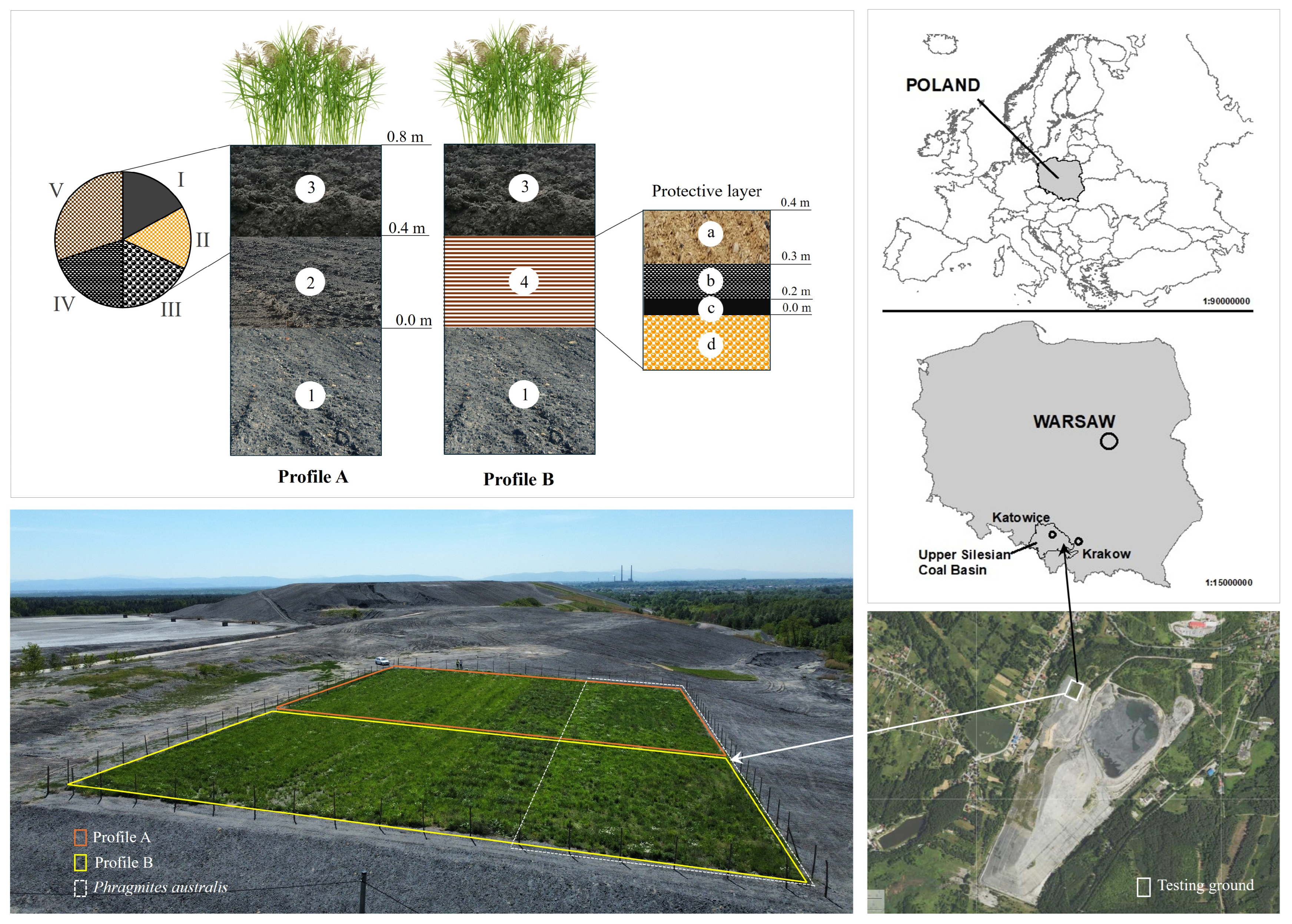
Figure 1. Study area and two reclamation profiles A and B on the testing ground: 1—Rock waste, 2—Rock waste with a soil substitute at a ratio of 1:1 (w/w), 3—Soil substitute cover: I—Energetic slag, II—Decarbonisation lime, III—Aggregate (0–2 mm), IV—Sealing material, V—Spent mushroom compost, 4—Protective Layer: a—Crushed dolomite stone, b—Sealing material, c—Geotextile, d—Dolomite aggregate.
Sustainability 18 07072 g001
Figure 2. Phragmites australis plantation on the testing ground for mining spoil heap and tissue samples: a—leaves, b—stalks, c—roots.
Sustainability 18 07072 g002
Figure 3. Preparation of the modified BCR sequential extraction method in four steps.
Sustainability 18 07072 g003
Figure 4. Geoaccumulation index values for soil samples: U—unpolluted (Class 0); UM—unpolluted to moderately polluted (Class 1); M—moderately polluted (Class 2); MS—moderately to strongly polluted (Class 3).
Sustainability 18 07072 g004
Figure 5. Indicators of toxic metal mobility and ecological risk in soil substitutes: (a) modified risk assessment code (mRAC): N—no risk, L—low risk, M—medium risk; (b) individual contamination factor (ICF): L—low, M—moderate, C—considerable, VH—very high.
Sustainability 18 07072 g005
Figure 6. Heavy metal accumulation in Phragmites australis tissues in soil substitute covers (a) bioconcentration factor (BCF) and (b) translocation factor (TF).
Sustainability 18 07072 g006aSustainability 18 07072 g006b
Table 1. Ecological risk assessment classification used in this study [28,33].
Index/FactorValueCriteria for Risk Assessment
Ecological risk factor (ERi)ERi < 40Low risk (L)
40 ≤ ERi < 80Moderate risk (M)
80 ≤ ERi < 160Considerable risk (C)
160 ≤ ERi < 320High risk (H)
ERi ≥ 320Very high risk (VH)
Potential ecological risk index (PERI)PERI < 150Low ecological risk (L)
150 ≤ PERI < 300Moderate ecological risk (M)
300 ≤ PERI < 600Considerable ecological risk (C)
PERI ≥ 600Very high ecological risk (VH
Geo accumulation index (Igeo)Igeo < 0Unpolluted (U)
0 < Igeo ≤ 1Unpolluted to moderately polluted (UM)
1 < Igeo ≤ 2Moderate polluted (M)
2 < Igeo ≤ 3Moderately to strongly polluted (MS)
3 < Igeo ≤ 4
4 < Igeo ≤ 5
Strongly polluted (S)
Strongly to extremely polluted (SE)
Igeo > 5Extremely polluted (E)
Table 2. Risk assessment and factor classification according to the BCR method used in this study [34].
Index/FactorValueCriteria for Risk Assessment
Modified risk assessment code
(mRAC)
mRAC ≤ 1%No risk (N)
1% ≤ mRAC < 10%Low risk (L)
10% ≤ mRAC < 30%Medium risk (M)
30% ≤ mRAC < 50%High risk (H)
mRAC ≥ 50%Very high risk (VH)
Individual contamination factor
(ICF)
ICF < 1Low contamination (L)
1 ≤ ICF < 3Moderate contamination (M)
3 ≤ ICF < 6Considerable contamination (C)
ICF ≥ 6Very high contamination (VH)
Table 3. Heavy metal concentrations (mg/kg) in soil substitute samples before and five years after Phragmites australis planting, and the threshold limits of toxic metals in soils.
Trace
Elements
20202025Permissible Values Adopted for Group of Soils
Profile AProfile BIIIIIIIV
As6.0 ± 2.14.6 ± 1.64.2 ± 1.52510–5050100
Ban.d.237 ± 47249 ± 49400200–60010001500
Cd1.0 ± 0.42.1 ± 0.72.3 ± 0.822–51015
Con.d.8.0 ± 2.87.8 ± 2.75020–50100200
Cr24 ± 541 ± 841 ± 8200150–5005001000
Cu41 ± 854 ± 1153 ± 11200100300600
Hgn.d.0.13 ± 0.040.16 ± 0.0552–51030
Mn379 ± 76347 ± 69350 ± 70n.a.n.a.n.a.n.a.
Mon.d.0.6 ± 0.20.7 ± 0.25010–50100250
Ni22 ± 427 ± 527 ± 5150100–300300500
Pb61 ± 12123 ± 25129 ± 26200100–500500600
Sbn.d.2.0 ± 0.72.3 ± 0.8n.a.n.a.n.a.n.a.
Snn.d.1.4 ± 0.41.5 ± 0.52010–40100350
Zn260 ± 52308 ± 62332 ± 66500300–100010002000
pH8.1 ± 0.27.6 ± 0.27.4 ± 0.2
n.d.—not determined; n.a.—not applicable; I—municipal and recreational lands, II—agricultural and garden areas, III—forest and green areas, IV—industrial lands and mining grounds.
Table 4. Ecological risk factor and potential ecological risk index for PTMs in soil substitute and soil cover samples.
Trace
Elements
Soil SubstituteSoil Cover
Profile AProfile B
ERiPERIERiPERIERiPERI
As12.0 (L)105 (L)9.2 (L)239 (M)8.4 (L)258 (M)
Ban.d.4.4 (L)4.6 (L)
Cd23.1 (L)48.5 (M)53.1 (M)
Cr9.6 (L)16.4 (L)16.4 (L)
Con.d.13.3 (L)13.0 (L)
Cu29.3 (L)38.6 (L)37.9 (L)
Hgn.d.65.0 (M)80.0 (C)
Ni22.0 (L)27.0 (L)27.0 (L)
Pb6.9 (L)14.0 (L)14.7 (L)
Zn2.5 (L)3.0 (L)3.2 (L)
(L)—low risk, (M)—moderate risk, n.d.—not detected.
Table 5. Heavy metal distribution in the soil cover samples according to the BCR-sequential extraction method.
Soil CoverFractionHeavy Metal Concentrations (mg/kg) of Dry Matter
CdCrCuNiPbZn
Profile AF10.44 ± 0.110.08 ± 0.020.40 ± 0.101.16 ± 0.291.28 ± 0.3243.60 ± 4.36
F20.64 ± 0.130.96 ± 0.241.08 ± 0.270.37 ± 0.0939.2 ± 7.8456.80 ± 5.68
F30.49 ± 0.104.70 ± 1.1821.00 ± 4.209.00 ± 2.2543.5 ± 8.7101.50 ± 10.05
F40.30 ± 0.0742.40 ± 10.6011.18 ± 2.7916.18 ± 4.0432.16 ± 8.04143.42 ± 35.85
Total1.86 ± 0.2148.14 ± 10.733.66 ± 5.0526.71 ± 4.63116.14 ± 14.2344.32 ± 37.9
R, %89117629994112
Profile BF10.64 ± 0.160.08 ± 0.210.36 ± 0.091.32 ± 0.331.48 ± 0.3768.80 ± 6.88
F20.92 ± 0.20.84 ± 0.2010.0 ± 2.004.40 ± 1.1048.80 ± 4.8882.80 ± 8.28
F30.38 ± 0.14.70 ± 1.1819.0 ± 3.80-5.50 ± 1.3849.50 ± 9.9061.50 ± 6.15
F40.21 ± 0.147.44 ± 11.869.93 ± 2.4816.89 ± 4.2221.29 ± 5.32143.47 ± 35.87
Total2.15 ± 0.2953.06 ± 11.939.29 ± 4.9628.11 ± 4.59121.07 ± 12.3356.57 ± 38.0
R, %931297410494107
F1—exchangeable and acid-soluble fraction, F2—reducible fraction, F3—oxidizable fraction, F4—residual fraction.
Table 6. Concentrations of metals mg/kg (±uncertainty) in Phragmites australis tissues in soil substitute covers.
Trace
Elements
Soil Cover (Profile A)Soil Cover (Profile B)
LeafStalkRootLeafStalkRoot
Asn.d.n.d.n.d.n.d.n.d.n.d.
Ba9.0 ± 3.24.3 ± 1.57.0 ± 2.512 ± 215 ± 39.4 ± 3.3
Cdn.d.n.d.n.d.2.2 ± 0.8n.d.n.d.
Con.d.n.d.n.d.n.d.n.d.n.d.
Cr1.3 ± 0.52.0 ± 0.73.3 ± 1.23.6 ± 1.33.4 ± 1.21.9 ± 0.7
Cu8.0 ± 2.811 ± 211 ± 212 ± 29.3 ± 3.312 ± 2
Hgn.d.n.d.n.d.n.d.n.d.n.d.
Mn14 ± 37.0 ± 2.521 ± 415 ± 35.4 ± 1.919 ± 4
Mo1.1 ± 0.4n.d.n.d.1 ± 0.4n.d.n.d.
Ni1.4 ± 0.51.4 ± 0.52.3 ± 0.82.3 ± 0.81.6 ± 0.62.6 ± 0.9
Pb10 ± 218 ± 421 ± 49.9 ± 3.521 ± 420 ± 4
Sbn.d.n.d.4.1 ± 1.4n.d.2.8 ± 1.01.0 ± 0.4
Sn3.0 ± 1.18.9 ± 3.18.7 ± 3.05.7 ± 2.011 ± 48.1 ± 2.8
Zn23 ± 594 ± 1970 ± 1425 ± 563 ± 1375 ± 15
n.d.—not detected.
Disclaimer/Publisher’s Note: The statements, opinions and data contained in all publications are solely those of the individual author(s) and contributor(s) and not of MDPI and/or the editor(s). MDPI and/or the editor(s) disclaim responsibility for any injury to people or property resulting from any ideas, methods, instructions or products referred to in the content.