1. Introduction
Contaminant control and indoor air quality (IAQ) management are critical components of sustainable building operation, particularly as global efforts intensify toward net-zero and resource-efficient systems. Heating, ventilation, and air conditioning (HVAC) systems play a central role in maintaining indoor environmental quality while simultaneously contributing significantly to building energy consumption and associated environmental impacts. Buildings account for a substantial portion of global energy demand and greenhouse gas (GHG) emissions, with HVAC systems representing one of the largest operational energy uses within the built environment [
1]. Within these systems, air filtration technologies are essential for removing particulate matter, allergens, and airborne contaminants while protecting mechanical equipment and improving occupant health. However, despite the critical role of HVAC filtration systems, their environmental implications across the full product life cycle remain insufficiently characterized.
Conventional HVAC filtration systems typically rely on disposable fiberglass, pleated paper, or polymeric filters that require replacement every one to three months [
2]. These systems generate recurring environmental burdens associated with raw material extraction, manufacturing, transportation, and landfill disposal. In response to increasing environmental concerns and growing interest in circular economy strategies, reusable HVAC filtration systems have emerged as a potential alternative by extending product lifespan, reducing material throughput, and supporting end-of-life material recovery. However, reusable filtration systems additionally introduce environmental impacts associated with washing operations, water consumption, operational maintenance, and energy use. Consequently, the overall environmental performance of reusable and disposable HVAC filtration systems cannot be assumed without a comprehensive life cycle perspective.
Previous research related to air filtration technologies has largely focused on operational performance and Life Cycle Costing (LCC), particularly in relation to energy consumption, maintenance requirements, pressure drop optimization, and total cost of ownership [
3]. While these approaches provide valuable insights into system efficiency and operational economics, they do not capture the complete environmental profile associated with material production, manufacturing, transportation, reuse cycles, and end-of-life treatment. Despite the growing body of literature associated with HVAC sustainability and air-conditioning systems, relatively limited research has specifically evaluated reusable HVAC filtration technologies using cradle-to-grave life cycle assessment (LCA) frameworks. Existing studies have applied LCA to a variety of filtration and pollution control systems, including automobile air filters [
4], air scrubbers for ammonia abatement [
5], and biochar filtration systems for wastewater treatment [
6]. Previous HVAC-related LCA studies have additionally examined environmental impacts associated with ventilation systems, chilled ceiling systems, heating systems, and air-conditioning technologies [
1,
7,
8,
9]. These studies collectively demonstrate the importance of considering full life cycle environmental impacts rather than focusing solely on operational energy performance.
Recent studies have additionally demonstrated growing technical interest in reusable and washable air filtration technologies. Kim et al. [
10] developed a reusable nanofibrous air filter with water droplet cleaning capability that maintained PM2.5 removal efficiency above 99.8% following repeated cleaning cycles. Lim et al. [
11] similarly reported a water-washable reusable air filter utilizing electrospun nanofiber structures designed to improve washing durability and repeated-use performance. Other recent research has explored multifunctional reusable filtration systems incorporating antibacterial and antiviral heating capabilities for enhanced contaminant control applications [
12]. While these studies demonstrate increasing innovation in reusable filtration materials and operational performance, they primarily focus on filtration efficiency, durability, and material functionality rather than comparative cradle-to-grave environmental assessment.
More broadly, recent advances in air filtration technology have demonstrated that novel material designs can simultaneously improve filtration efficiency, reduce pressure drop, and enhance long-term operational performance. For example, recent studies have developed advanced fibrous filtration materials with improved particulate capture efficiency and optimized airflow characteristics through innovative material architectures and fabrication techniques [
13,
14]. These studies further demonstrate the rapid technological advancement of air filtration systems; however, their primary emphasis remains on material development and filtration performance rather than evaluating the environmental implications of these technologies across their complete life cycles.
Sustainable building design increasingly requires environmental decision-making that extends beyond operational energy performance to encompass the full life cycle impacts of building products and infrastructure. Within this context, circular economy principles emphasize reducing material consumption, extending product service life, promoting reuse, and maximizing material recovery at end-of-life. HVAC air filtration systems represent an important opportunity to implement these principles because they require regular maintenance and replacement throughout the operational life of a building. LCA provides a systematic framework for quantifying the environmental trade-offs associated with alternative filtration strategies by evaluating impacts across raw material extraction, manufacturing, transportation, use, refurbishment, and end-of-life management. Consequently, integrating LCA with circular economy concepts provides an evidence-based approach for assessing whether reusable HVAC filtration systems can contribute to more sustainable building operation and support broader net-zero infrastructure objectives.
Recent advances in HVAC life cycle assessment have also emphasized the importance of improving foreground inventory quality and component-level environmental modelling for building products. Göswein et al. [
15] demonstrated that simplified inventories may substantially overestimate the embodied environmental impacts of HVAC systems, highlighting the importance of developing detailed life cycle inventories using manufacturer-specific data, Environmental Product Declarations (EPDs), and component-level inventories. Nevertheless, comparable cradle-to-grave LCAs of commercial reusable HVAC filtration systems remain unavailable.
To better position the present study within the existing literature,
Table 1 summarizes representative studies related to HVAC life cycle assessment and reusable filtration technologies, highlighting their primary focus, key contributions, identified limitations, and the research gap addressed by the present study. While previous research has demonstrated the environmental importance of HVAC system operation and the technical feasibility of reusable filtration materials, no identified study has conducted a cradle-to-grave comparative life cycle assessment of commercial reusable and disposable HVAC air filters using primary manufacturing inventory data under equivalent filtration service conditions.
As summarized in
Table 1, previous studies have established the importance of life cycle thinking for HVAC technologies and demonstrated promising advances in reusable filtration materials. However, no identified study has conducted a cradle-to-grave comparative life cycle assessment of commercial reusable and disposable HVAC air filters using primary manufacturing inventory data under equivalent filtration service conditions. This represents an important research gap given the increasing adoption of reusable filtration technologies within sustainable building operation.
Accordingly, the objective of this study is to conduct a cradle-to-grave LCA comparing reusable and disposable HVAC air filtration systems under equivalent filtration service conditions. Using primary manufacturing data obtained from Delta M, Ontario, Canada, the study quantifies the environmental trade-offs associated with repeated filter reuse and end-of-life material recovery. The theoretical contribution of this research is the advancement of LCA knowledge for commercial HVAC filtration systems by providing one of the first cradle-to-grave comparative LCAs of reusable and disposable HVAC air filters using primary manufacturing data under equivalent service conditions. The study also demonstrates how repeated reuse and material recovery influence long-term environmental performance within a circular economy framework. The practical contribution of this research is the provision of evidence-based guidance for manufacturers, facility managers, and building owners considering reusable HVAC filtration technologies. The findings identify environmental hotspots, quantify the benefits of repeated reuse, and support decision-making aimed at improving sustainable building operation and reducing life cycle environmental impacts.
2. Materials and Methods
2.1. Goal and Scope Definition
This study applies a cradle-to-grave LCA framework to evaluate the environmental performance of a reusable HVAC air filtration system manufactured by Delta M Inc. (Milton, ON, Canada). The assessment was conducted in accordance with ISO 14040 and ISO 14044 standards for life cycle assessment methodology [
16,
17]. The study additionally aligns with ISO 21930:2017 core rules for EPD for building products and the UL Solutions Product Category Rule (PCR) for building-related products and services under ULE 10010 Part A [
18,
19].
The primary objective of this study is to quantify the environmental impacts associated with reusable HVAC air filtration systems and compare their performance against conventional disposable HVAC filters under equivalent operational service conditions. The assessment evaluates environmental impacts associated with raw material extraction, manufacturing, transportation, operational maintenance, repeated washing and reuse cycles, and end-of-life management. In addition to establishing a baseline environmental profile for the reusable filtration system, the study investigates the influence of reuse cycles and maintenance operations on overall environmental performance.
2.2. Functional Unit
The functional unit provides a common basis for comparing reusable and disposable HVAC filtration systems under equivalent operational performance conditions. Unlike EPDs, which commonly utilize declared units based on a single product, the present study applies a performance-based functional unit to support direct comparison between reusable and disposable filtration technologies. The functional unit for this study was defined as: “Provision of equivalent HVAC air filtration service over eight operational filtration cycles.”
The selection of eight operational filtration cycles was based on manufacturer guidance provided by Delta M regarding the expected service life of the reusable HVAC filtration system under normal commercial operating conditions. According to the manufacturer, the filter is designed to undergo an initial filtration cycle followed by approximately seven refurbishment and reuse cycles prior to replacement, assuming appropriate inspection, cleaning, and routine maintenance procedures are followed. Although the actual service life may vary depending on operating conditions, contaminant loading, maintenance practices, and physical handling, eight equivalent operational cycles were considered representative of the intended design life for the product evaluated in this study. This assumption establishes a consistent functional basis for comparing reusable and disposable filtration systems under equivalent filtration service conditions. Because the assumed service life directly influences the comparative environmental performance of reusable systems, the influence of reuse frequency is further evaluated in
Section 3 through comparisons of the initial single-cycle scenario, the defined eight-cycle functional unit, and alternative end-of-life management scenarios.
Under this functional unit, one reusable Delta M HVAC filter was modeled over its expected design service life, consisting of one initial operational cycle followed by seven refurbishment and reuse cycles before end-of-life management. The corresponding disposable filtration scenario consisted of eight conventional disposable HVAC filters providing equivalent filtration performance over the same cumulative operational service period. Accordingly, the reference flow for the reusable filtration system consisted of one reusable HVAC filter, associated washing and refurbishment operations, reverse logistics transportation activities, and final end-of-life disposal or recovery following completion of the eighth operational cycle.
The reference flow for the disposable filtration system consisted of eight individual disposable HVAC filters undergoing repeated manufacturing, transportation, installation, replacement, and landfill disposal throughout the equivalent operational service period. The reusable filter evaluated in this study consisted of a rigid Polyvinyl Chloride (PVC) outer frame, galvanized steel mesh backing, pleated polyester filter media, and associated packaging materials. The product was designed to meet minimum efficiency reporting value (MERV) 11 filtration performance requirements while supporting repeated washing and reuse operations.
The present study assumes that the reusable HVAC filtration system maintains equivalent MERV 11 filtration performance throughout the defined eight operational filtration cycles, consistent with manufacturer guidance regarding the intended service life of the product. However, the present study did not experimentally evaluate changes in filtration efficiency or pressure drop following repeated washing and refurbishment. Consequently, equivalent filtration performance was assumed throughout the comparative assessment to provide a consistent functional basis for evaluating environmental impacts. Future research should experimentally investigate the influence of repeated washing on filtration efficiency, pressure drop, and service life to further validate the environmental performance of reusable HVAC filtration systems under long-term operating conditions.
2.3. System Boundary
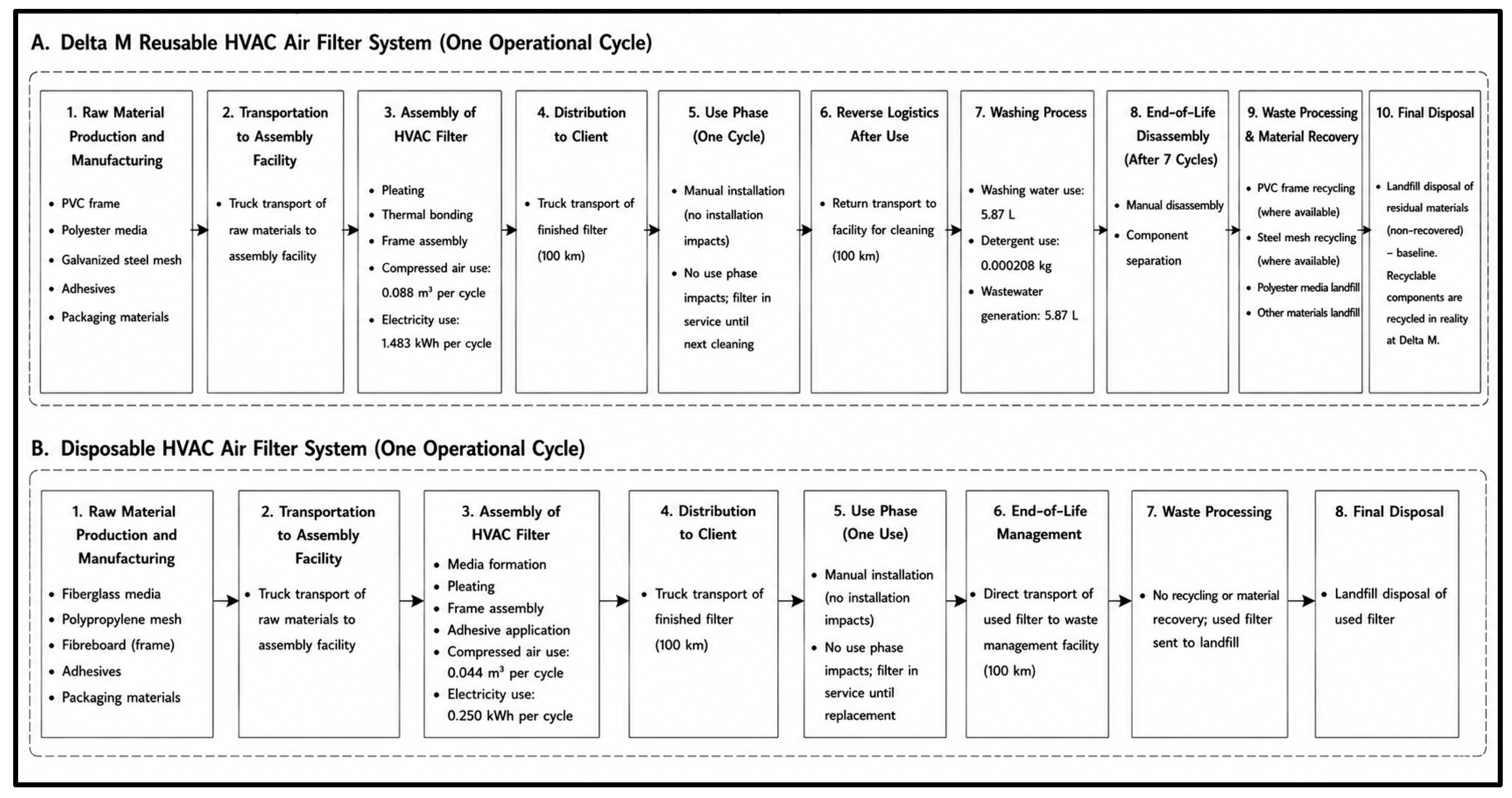
The system boundary follows a cradle-to-grave approach and includes all major life cycle stages associated with the reusable and disposable filtration systems. The system boundary for the comparative LCA is illustrated in
Figure 1. The assessment includes both reusable and disposable HVAC filtration pathways and captures all major foreground and background processes associated with material production, manufacturing, transportation, operational maintenance, and end-of-life management.
For the reusable filtration system, included stages consist of raw material extraction and processing, filter assembly, packaging, transportation to the client, periodic washing and maintenance operations, reuse cycles, reverse logistics associated with refurbishment, and final end-of-life disposal. Washing operations included water consumption, biodegradable detergent use, transportation associated with return logistics, and packaging replacement requirements.
For the disposable filtration system, the assessment included raw material extraction, manufacturing, transportation, installation, repeated replacement cycles, and landfill disposal after each operational use period. Disposable filters were modeled using representative fiberglass and polymeric HVAC filtration materials based on commercially available MERV-rated filtration products.
Excluded processes from the assessment include facility infrastructure, administrative activities, capital equipment manufacturing, and human labor. Additionally, operational electricity associated with HVAC fan energy resulting from filter pressure drop was excluded from the present system boundary. The objective of this study was to compare the life cycle environmental impacts associated with reusable and disposable HVAC filtration products rather than the operational performance of complete HVAC systems.
Furthermore, representative pressure drop data for the reusable filtration system following repeated washing and refurbishment were not available. Inclusion of fan energy would therefore require additional assumptions regarding airflow rates, fan efficiencies, operating schedules, building characteristics, and pressure drop evolution throughout the service life. To maintain methodological consistency, both filtration systems were assumed to provide equivalent MERV 11 filtration performance under comparable operating conditions. Future research should integrate experimentally measured pressure drop data with operational energy modeling to evaluate the combined environmental impacts of filtration performance and HVAC energy consumption. These exclusions are consistent with ISO 14040/44 cut-off criteria and are not expected to significantly influence overall results.
2.4. Life Cycle Inventory Analysis
Primary life cycle inventory (LCI) data for the reusable HVAC filtration system were collected directly from Delta M manufacturing operations in Ontario, Canada. Inventory data included material composition, manufacturing and assembly operations, transportation distances, packaging materials, washing and refurbishment activities, and end-of-life management assumptions. Secondary background datasets representing upstream material production, electricity generation, transportation, and waste management processes were obtained from the Ecoinvent 3.9.1 database and modeled using SimaPro v9.5 software.
2.4.1. Reusable HVAC Filtration System
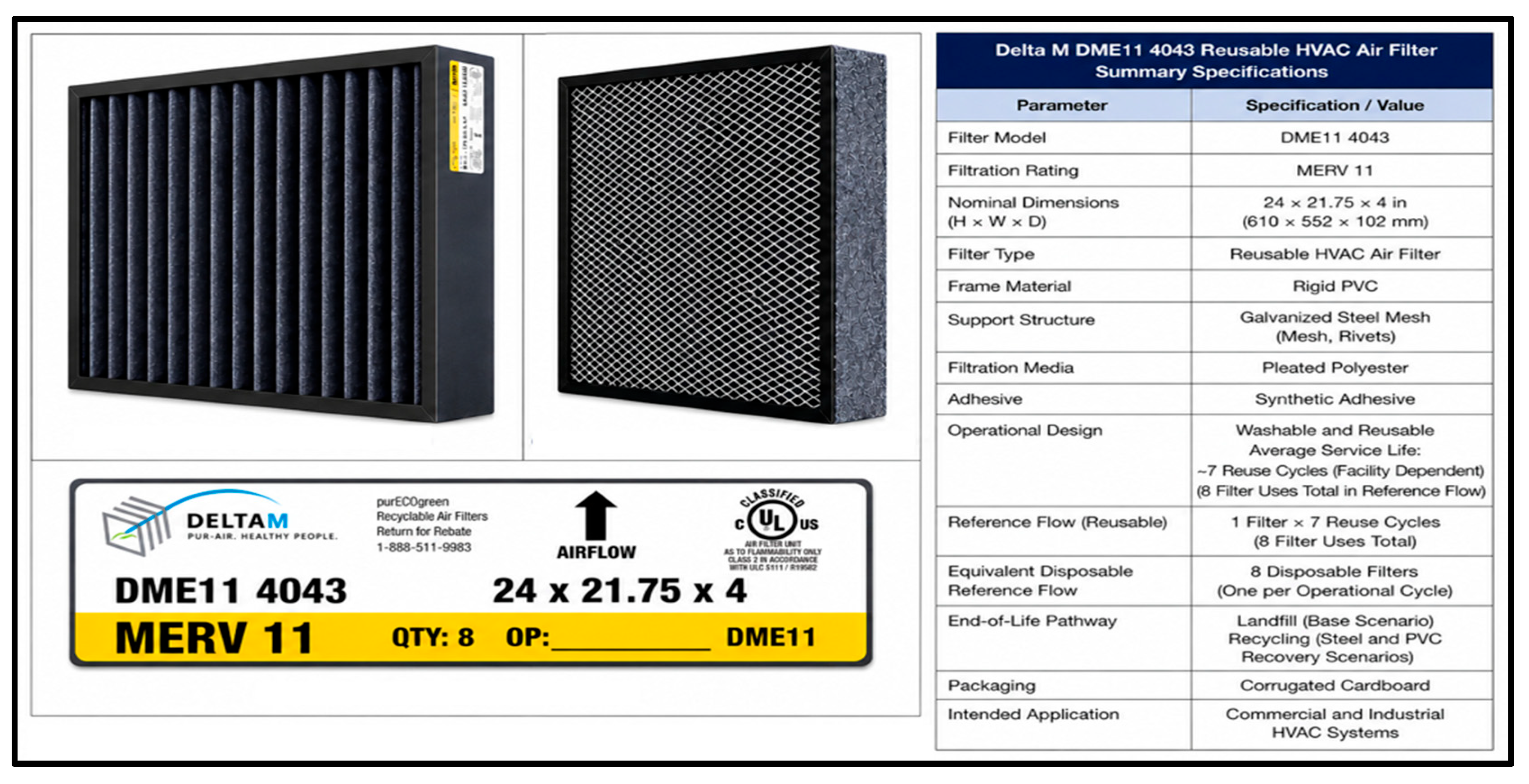
The reusable HVAC filtration system evaluated in this study was based on the Delta M DME11 4043 (Delta M Inc., Milton, ON, Canada) reusable HVAC air filter designed for commercial and industrial HVAC applications. The reusable filter consisted primarily of a rigid PVC outer frame, galvanized steel mesh support structure, pleated polyester filtration media, adhesive compounds, rivets, labels, and corrugated cardboard packaging materials. The filtration system was designed to provide MERV 11 filtration performance while supporting repeated washing and refurbishment cycles throughout its operational lifespan. Representative views of the reusable Delta M filtration system evaluated throughout the present study are shown in
Figure 2.
Foreground manufacturing inventory data for the reusable HVAC filtration system were collected directly from Delta M manufacturing operations in Ontario, Canada. Primary data collection included material quantities, transportation distances, electricity consumption, assembly activities, packaging requirements, washing operations, and reverse logistics associated with refurbishment activities.
Raw material production processes included PVC resin production and extrusion, polyester filtration media production, galvanized steel mesh fabrication, adhesive production, tape production, label manufacturing, and corrugated cardboard packaging manufacturing. Secondary background datasets representing upstream material production were obtained from the Ecoinvent 3.9.1 database and modeled using SimaPro v9.5.
Table 2 summarizes the primary raw material manufacturing inventory inputs associated with the reusable HVAC filtration system.
Raw material transportation for the reusable HVAC filtration system included representative supplier transportation activities associated with procurement of PVC framing materials, polyester filtration media, galvanized steel mesh, adhesive compounds, packaging materials, and ancillary assembly components. Material suppliers were located throughout Ontario and North America, and transportation activities were modeled using the Ecoinvent 3.9.1 dataset Transport, freight, light commercial vehicle {RoW}|processing|Alloc Def, S within SimaPro v9.5.
Specific supplier identities and exact transportation routes are not disclosed due to proprietary manufacturing considerations. However, all transportation distances and material quantities were derived directly from primary operational data provided by Delta M and reflect representative regional HVAC filtration supply chain conditions. Transportation inventories included delivery of raw materials and packaging components to the Delta M manufacturing facility in Ontario, Canada. The cumulative transportation demand associated with raw material delivery to the manufacturing facility was approximately 0.169 tonne-kilometers (tkm) per reusable filter. All transportation activities were modeled consistently using equivalent freight vehicle assumptions, fuel consumption profiles, emission factors, and load characteristics available within the selected Ecoinvent transportation datasets.
Manufacturing and assembly operations at the Delta M facility included PVC heat-forming and extrusion activities, polyester filtration media pleating, pneumatic riveting and tabbing operations, adhesive application, assembly activities, packaging preparation, and compressed air utilization associated with assembly equipment.
Primary operational data collected from Delta M included electricity consumption associated with pleating equipment, pneumatic systems, heat-forming operations, adhesive heating activities, and compressed air utilization. Manufacturing electricity was modeled using the Ontario electricity grid available within Ecoinvent 3.9.1.
Table 3 summarizes representative manufacturing and assembly inventory assumptions for the reusable HVAC filtration system.
A representative transportation distance of 100 km was assumed between the Delta M manufacturing facility and commercial clients located within the Greater Toronto Area (GTA). Transportation to clients was modeled using light commercial freight vehicle datasets available within Ecoinvent 3.9.1. Installation activities were assumed to require negligible operational energy inputs and therefore no installation electricity consumption was included within the system boundary. Minor packaging tape disposal associated with installation activities was included within the inventory assessment.
Operational maintenance activities associated with the reusable filtration system were incorporated into the assessment throughout the operational lifespan represented by the study functional unit. Washing operations included municipal water consumption, biodegradable detergent use, wastewater generation during cleaning cycles, tape replacement requirements, and reverse logistics transportation associated with refurbishment activities.
These maintenance processes were modeled repeatedly throughout the operational lifespan represented by the study functional unit in order to achieve equivalent air filtration service performance relative to the disposable filtration scenario.
Table 4 summarizes representative washing and refurbishment inventory assumptions for the reusable filtration system.
The cleaning inventory included municipal water consumption, biodegradable detergent use, municipal wastewater generation, reverse logistics transportation, and packaging replacement activities associated with each refurbishment cycle. Wastewater generated during cleaning was modeled using representative municipal wastewater treatment datasets available within Ecoinvent 3.9.1. The cleaning process implemented by Delta M does not involve specialized industrial wastewater treatment or hazardous waste management operations. Consequently, advanced wastewater treatment processes were not modeled separately. Although detergent production and wastewater treatment contribute to the environmental profile of the cleaning stage, preliminary contribution analysis indicated that these processes represented only a minor proportion of the total life cycle impacts relative to raw material production and manufacturing.
The baseline end-of-life scenario for the reusable filtration system conservatively assumed that the filter was utilized for eight operational reuse cycles prior to final disposal through landfill management processes. End-of-life modeling included transportation to waste management facilities, manual deconstruction assumptions, landfill disposal of residual materials, and associated waste management activities.
Although incineration with energy recovery represents an alternative end-of-life pathway for polymer-based materials in some jurisdictions, it was not evaluated in the present study. The selected end-of-life scenarios were intended to represent the current operational practices implemented by Delta M, including baseline landfill disposal and material recovery of recyclable components. Future research should evaluate additional regional waste management scenarios, including incineration with energy recovery, to further assess the influence of alternative end-of-life strategies on reusable HVAC filtration systems.
However, additional sensitivity and circularity analyses were also investigated to evaluate alternative end-of-life management strategies associated with material recovery and recycling activities currently implemented by Delta M operations. These scenarios considered the recovery and recycling potential of PVC framing materials, galvanized steel mesh components, and other reusable materials in order to assess potential improvements in circularity, waste diversion, and overall environmental sustainability performance associated with the reusable HVAC filtration system.
2.4.2. Disposable HVAC Filtration System
The disposable HVAC filtration system evaluated in this study represented a conventional single-use pleated air filter utilized in residential and commercial HVAC applications. The disposable filtration system consisted primarily of fiberglass filtration media, cardboard support framing, polymeric support mesh materials, adhesive compounds, packaging materials, and transportation activities associated with conventional HVAC filtration products. The disposable filter system was modeled to provide equivalent MERV-rated filtration performance relative to the reusable Delta M filtration system throughout the defined functional unit.
The replacement interval assumed for the disposable HVAC filtration system was based on typical manufacturer recommendations for commercial MERV-rated HVAC filters, which generally recommend replacement every one to three months depending on operating conditions, contaminant loading, and maintenance requirements. Rather than assigning a fixed calendar-based replacement interval, the present study defined the disposable reference flow to provide the same cumulative filtration service as the reusable system over the functional unit. Consequently, eight disposable filters were modeled to provide filtration performance equivalent to one reusable filter undergoing seven refurbishment and reuse cycles, thereby ensuring a consistent functional basis for environmental comparison.
Due to the absence of publicly available proprietary manufacturing inventories for commercial disposable HVAC filtration products, representative material compositions and manufacturing assumptions were developed using commercially available product specifications, literature sources, and equivalent filtration performance assumptions relative to the reusable Delta M filtration system.
Raw material production processes included fiberglass filtration media manufacturing, cardboard frame production, polymeric support mesh production, adhesive manufacturing, packaging material production, and packaging tape manufacturing. Secondary background datasets representing upstream material production were obtained from the Ecoinvent 3.9.1 database and modeled using SimaPro v9.5.
Table 5 summarizes representative raw material inventory assumptions associated with the disposable HVAC filtration system.
Transportation assumptions for the disposable filtration system utilized representative freight transportation datasets consistent with Ontario and North American HVAC supply chain conditions. Transportation activities included delivery of fiberglass media, cardboard framing materials, polymeric support materials, adhesive compounds, and packaging materials to the disposable filter assembly facility.
Specific supplier identities and transportation routes were not available due to the absence of proprietary manufacturing inventory data; therefore, representative transportation assumptions were developed using equivalent regional freight transportation conditions relative to the reusable Delta M filtration system. Transportation modeling utilized the Ecoinvent 3.9.1 dataset Transport, freight, light commercial vehicle {RoW}|processing|Alloc Def, S within SimaPro v9.5.
A representative transportation distance of approximately 100 km was assumed for major raw material inputs. Based on the modeled disposable filter material and packaging mass, the cumulative transportation demand associated with delivery of raw materials to the disposable filter assembly facility was approximately 0.091 tkm per disposable filter.
Disposable HVAC filter manufacturing operations were assumed to include fiberglass media preparation, cardboard frame cutting and forming, polymeric support mesh integration, adhesive bonding operations, packaging activities, and assembly processes associated with conventional commercial HVAC filtration products.
Due to the absence of publicly available proprietary manufacturing inventories for disposable HVAC filtration systems, representative assembly assumptions were developed using equivalent manufacturing operations and commercially available filtration product specifications. Manufacturing electricity and assembly requirements for disposable filters were conservatively assumed to be lower than the reusable filtration system due to the absence of rigid PVC forming operations, steel reinforcement fabrication, pneumatic riveting activities, and refurbishment-oriented design requirements.
Manufacturing electricity was modeled using the Ontario electricity grid available within Ecoinvent 3.9.1. Minor compressed air utilization and assembly electricity requirements were included to represent representative cutting, forming, bonding, and packaging activities associated with disposable HVAC filtration manufacturing.
Table 6 summarizes representative manufacturing and assembly assumptions associated with the disposable HVAC filtration system.
A representative transportation distance of 100 km was assumed between the disposable filter manufacturing facility and commercial clients located within the GTA. Transportation to clients was modeled using equivalent light commercial freight vehicle datasets available within Ecoinvent 3.9.1.
Transportation impacts associated with disposable filter distribution were lower on a per-filter basis relative to the reusable HVAC filtration system due to the lower final packaged filter mass. However, transportation activities were repeated throughout the operational lifespan represented by the study functional unit due to the repeated replacement requirements associated with disposable filtration systems. Packaging tape disposal, corrugated cardboard packaging disposal, and minor solid waste generated during each disposable filter replacement were included within the inventory assessment. Installation activities were assumed to require negligible operational energy inputs for both reusable and disposable filtration systems and were therefore excluded consistently from the comparative system boundary.
The disposable HVAC filtration system was assumed to be discarded and replaced following each operational service interval represented within the defined functional unit. End-of-life management assumptions included transportation to landfill disposal facilities and direct landfill disposal following each replacement cycle.
A representative transportation distance of 100 km was additionally assumed between commercial clients and landfill disposal facilities, consistent with the reusable filter baseline disposal scenario. Unlike the reusable filtration system, no refurbishment, washing, reverse logistics, reuse operations, or material recovery activities were assumed for the baseline disposable filtration scenario. Consequently, repeated material extraction, manufacturing activities, packaging requirements, transportation demands, and landfill disposal processes were modeled throughout the operational lifespan required to achieve equivalent filtration service performance relative to the reusable filtration system.
2.4.3. Summary of Filtration System LCI Data
The reusable and disposable HVAC filtration systems were modeled to provide equivalent filtration performance while accounting for differences in material composition, manufacturing processes, transportation, maintenance requirements, and end-of-life management. Although the reusable system requires higher initial material inputs, it avoids the recurring production and disposal burdens associated with disposable filters over the study period. Representative life cycle inventory assumptions for both filtration systems are presented in
Table 7.
2.5. Data Sources, Assumptions, and Data Quality Assessment
To improve methodological transparency and evaluate the quality and representativeness of the life cycle inventory, the primary and secondary data sources were assessed in accordance with the data quality principles outlined in ISO 14040 and ISO 14044, including temporal, geographical, technological, and completeness considerations. Primary foreground inventory data were collected directly from Delta M manufacturing operations during 2025 and represent current production practices for the reusable HVAC filtration system. Secondary background processes were obtained from the Ecoinvent 3.9.1 database, representing the most recent datasets available within the modeling platform at the time of the study. These datasets are widely used for comparative LCA studies and were considered appropriate for evaluating the environmental performance of HVAC filtration systems.
Primary inventory data represent manufacturing activities at the Delta M production facility in Ontario, Canada. Canadian datasets (e.g., CA-QC) were applied whenever available within Ecoinvent. Where Canadian-specific datasets were unavailable, Rest-of-World (RoW) datasets were selected as representative proxies for upstream material production and transportation processes. These selections were considered appropriate for the North American supply chain while acknowledging minor regional uncertainty.
Primary manufacturing and operational data were collected over a continuous 12-month period to capture representative production activities and seasonal variations in electricity and water consumption. Although production rates and operational conditions may vary between years due to changes in manufacturing demand or process improvements, the collected dataset was considered representative of normal commercial operating conditions during the study period. The objective of the present study was to evaluate the environmental performance of the current commercial production system rather than long-term operational trends. Future studies could incorporate multi-year operational datasets to further evaluate the influence of interannual production variability on life cycle environmental performance.
Background datasets were selected to represent manufacturing technologies consistent with those used for polymer extrusion, galvanized steel production, polyester manufacturing, freight transportation, electricity generation, and waste management. Primary manufacturing inventories were obtained directly from Delta M and therefore were considered representative of the commercial production processes evaluated in this study. Remaining uncertainties associated with proxy datasets and service-life assumptions are acknowledged and discussed within the study. The life cycle inventory includes all major foreground and background processes within the defined system boundary, and no material data gaps were identified that were expected to significantly influence the comparative assessment.
Due to limited publicly available proprietary manufacturing data for conventional disposable HVAC filters, the disposable filtration system was modeled using representative commercial filtration material assumptions and equivalent filtration performance characteristics relative to the reusable system. Consistent transportation assumptions, operational conditions, and end-of-life modeling approaches were applied throughout the comparative assessment framework to support methodological consistency and comparability. Capital equipment, facility infrastructure, administrative activities, and human labor were excluded from the assessment in accordance with ISO 14040/44 cut-off criteria due to their expected minor contribution to overall environmental impacts.
Operational electricity consumption associated with HVAC fan operation resulting from filter pressure drop was excluded from the system boundary for both the reusable and disposable filtration systems. The objective of the present study was to compare the life cycle environmental impacts associated with the manufacture, transportation, maintenance, reuse, and end-of-life management of reusable and disposable HVAC filtration products under equivalent filtration service conditions. Operational fan energy depends on numerous application-specific factors, including building size, airflow requirements, fan characteristics, system configuration, operating schedules, filter loading, maintenance frequency, and pressure drop throughout the service life. These parameters vary substantially among commercial HVAC installations and were outside the scope of the present product-level comparative assessment. Consequently, identical operational conditions were assumed for both filtration systems, and fan energy consumption was excluded consistently from the comparative system boundary. Future work should integrate dynamic pressure-drop measurements and operational energy modeling to evaluate the influence of filter loading and airflow resistance on whole-building environmental performance. Overall, the combination of primary manufacturing data and established background inventory datasets provides a robust and representative basis for the comparative life cycle assessment undertaken in this study.
2.6. Life Cycle Impact Assessment
Life Cycle Impact Assessment (LCIA) was conducted to quantify the potential environmental impacts associated with the life cycle inventory flows of the reusable and disposable HVAC filtration systems. All impact assessment modeling was performed using SimaPro v9.5 software with Ecoinvent 3.9.1 background datasets. The Tool for the Reduction and Assessment of Chemical and Other Environmental Impacts (TRACI) 2.1 methodology, developed by the United States Environmental Protection Agency (U.S. EPA), was selected as the primary LCIA framework for this study due to its widespread application in North American life cycle assessment studies and its suitability for evaluating building-related environmental systems [
20].
TRACI 2.1 provides midpoint-level characterization factors for a range of environmental impact categories associated with climate change, human health, ecosystem quality, and resource depletion. All major midpoint impact categories available within the TRACI 2.1 framework were evaluated throughout the comparative assessment. These impact categories were selected to provide a comprehensive assessment of the environmental trade-offs associated with reusable and disposable HVAC filtration technologies across all life cycle stages. However, global warming potential (GWP) was selected as the primary discussion indicator due to its relevance to net-zero infrastructure and climate mitigation objectives within sustainable building systems.
Characterization results were calculated at the midpoint level without normalization, grouping, or weighting, consistent with ISO 14044 recommendations for comparative environmental assessment. All assumptions, datasets, and modeling parameters were transparently documented to support reproducibility and methodological consistency throughout the study. Contribution analyses and sensitivity assessments were additionally performed to identify dominant environmental hotspots and evaluate the influence of reuse cycles, transportation assumptions, and end-of-life management strategies on overall environmental performance.
2.7. Sensitivity and Circularity Analyses
To evaluate the robustness of the comparative LCA results, sensitivity analyses were performed on several key modeling assumptions expected to influence the environmental performance of the reusable HVAC filtration system. The analyses focused on variables associated with reuse frequency, end-of-life management, and material recovery. Each sensitivity scenario was evaluated independently while maintaining all remaining inventory parameters consistent with the baseline model to isolate the influence of the modified variable.
The baseline assessment compared one reusable HVAC filter providing eight equivalent filtration service cycles with eight disposable filters. To illustrate the influence of repeated reuse on environmental performance, the environmental impacts associated with the initial manufacturing cycle and the cumulative eight-cycle functional unit were compared. A second scenario evaluated the influence of material recovery by comparing landfill-only disposal with recycling of recoverable PVC and galvanized steel components at end-of-life. The contribution of material recovery to reducing overall life cycle impacts was subsequently quantified.
Circularity was evaluated by examining the influence of repeated product reuse and end-of-life material recovery on overall environmental performance. The analysis considered the reduction in raw material demand achieved through repeated reuse together with the environmental credits associated with recycling recoverable materials. Results were compared with the conventional disposable filtration system operating under equivalent filtration service conditions. The outcomes of the sensitivity and circularity analyses are presented and discussed in
Section 3 to illustrate the influence of reuse and material recovery on the overall environmental performance of the reusable HVAC filtration system.
3. Results and Discussion
The life cycle assessment results for the reusable and disposable filtration systems are presented in terms of key environmental impact categories, including GWP, acidification, eutrophication, smog formation, and human health-related indicators. Results are presented for both intermediate reuse-cycle scenarios and the defined functional unit in order to evaluate the influence of reuse frequency on overall environmental performance, enabling a consistent comparison between filtration systems under equivalent service conditions.
3.1. Initial Single-Cycle Environmental Comparison
The initial comparative assessment evaluated environmental impacts associated with a single operational filtration cycle for both reusable and disposable HVAC filtration systems. Under this scenario, both systems were modeled for one equivalent filtration service period followed by direct landfill disposal without additional reuse or refurbishment activities. This initial comparison was conducted to evaluate the environmental burden associated with reusable filter manufacturing prior to the implementation of repeated reuse cycles and refurbishment operations, and the results are shown in
Figure 3.
Table S1 in the Supplementary Materials presents the characterized LCIA results supporting the initial single-cycle comparison.
The initial single-cycle comparison demonstrated that the reusable HVAC filtration system exhibited higher environmental impacts across most evaluated impact categories relative to the disposable HVAC filtration system. This outcome was primarily attributed to the increased material requirements and manufacturing complexity associated with the reusable filter design, including the rigid PVC frame, galvanized steel mesh support structure, reusable polyester filtration media, and additional assembly operations required to support long-term durability and repeated refurbishment activities.
The higher environmental impacts observed during the initial single-use comparison are consistent with the broader LCA literature evaluating durable products. Products designed for repeated reuse generally require greater material inputs and more robust structural components during manufacturing, resulting in higher initial environmental burdens than comparable single-use alternatives. Similar observations have been reported for reusable filtration materials developed by Kim et al. [
10] and Lim et al. [
11], where enhanced durability and repeated washing capability required additional material complexity. Although these studies did not conduct life cycle assessments, the present findings demonstrate that the initial manufacturing burden represents an expected trade-off associated with designing products for long-term reuse rather than single-use disposal.
The largest relative differences between the reusable and disposable filtration systems were observed for GWP, eutrophication, ecotoxicity, fossil fuel depletion, and respiratory effects. For example, the reusable filtration system generated approximately 4.50 kg CO2 eq during the initial filtration cycle compared to approximately 2.53 kg CO2 eq for the disposable filtration system. Similarly, fossil fuel depletion impacts associated with the reusable filtration system were approximately 8.38 MJ surplus compared to 4.52 MJ surplus for the disposable system.
Contribution analysis indicated that upstream raw material extraction and manufacturing processes dominated the environmental profile of the reusable filtration system during the initial operational cycle. PVC production, polyester media manufacturing, galvanized steel processing, and associated assembly operations collectively represented the largest contributors to environmental burdens across most midpoint impact categories.
Despite the higher initial environmental impacts associated with the reusable HVAC filtration system, the disposable filtration system requires repeated replacement throughout equivalent operational service periods. Consequently, repeated manufacturing, packaging, transportation, and landfill disposal activities become increasingly significant over longer operational lifespans. Therefore, while the reusable filtration system exhibited higher impacts during the initial single-cycle comparison, subsequent reuse and refurbishment operations were expected to substantially reduce overall life cycle environmental burdens relative to conventional disposable filtration systems.
To further evaluate the influence of reuse frequency on environmental performance, additional reuse-cycle scenarios were modeled to investigate the environmental transition point between reusable and disposable HVAC filtration systems under equivalent filtration service conditions.
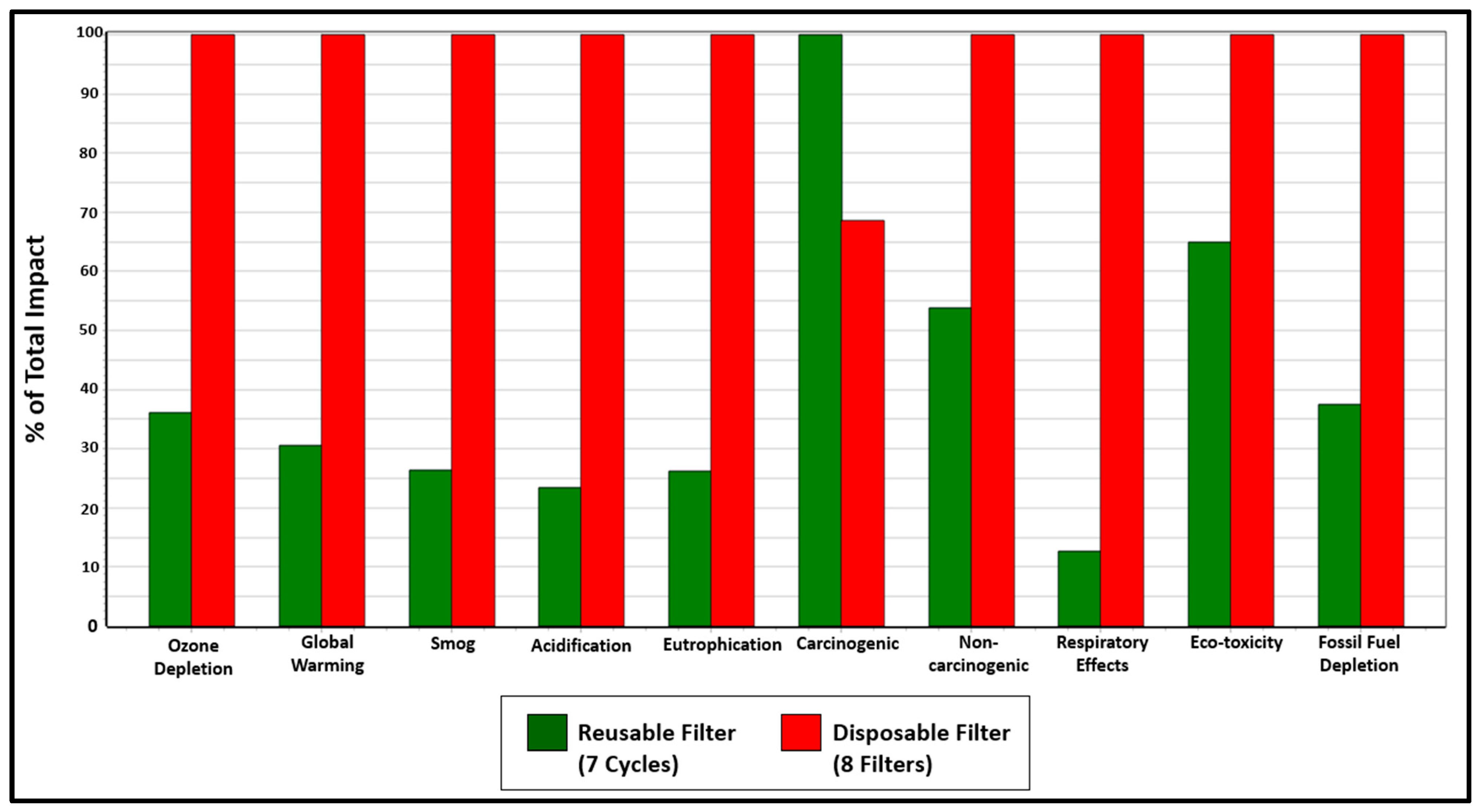
3.2. Functional Unit Comparison (8-Filter Scenario)
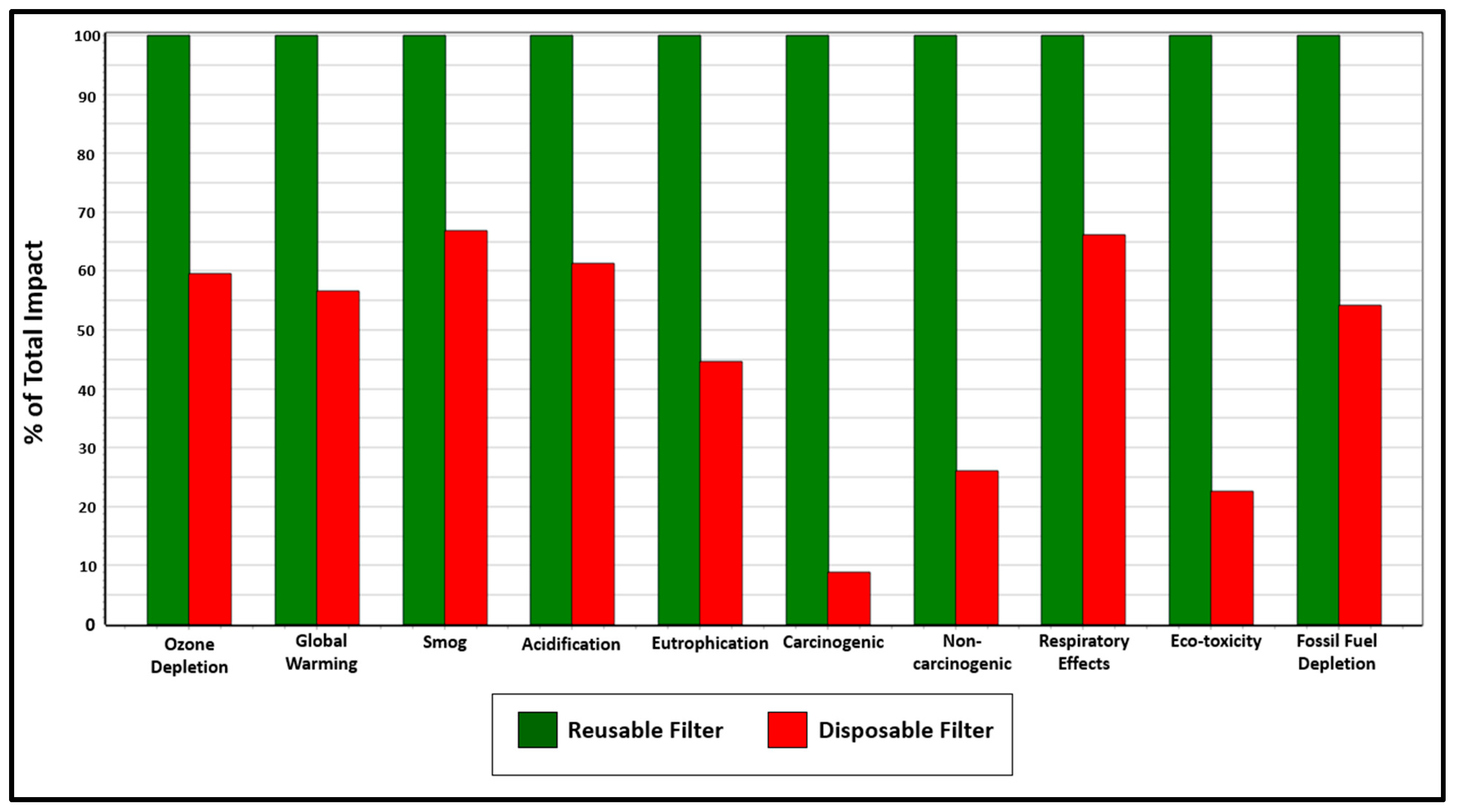
At the defined functional unit of eight equivalent operational filtration cycles, the reusable HVAC filtration system demonstrated substantially lower environmental impacts across most of the evaluated impact categories relative to the disposable HVAC filtration system (
Figure 4). The characterized LCIA results supporting the results in
Figure 4 are presented in
Table S2 in the Supplementary Materials. The reusable system reduced GWP by approximately 69%, decreasing from 20.27 kg CO
2 eq for the disposable filtration system to approximately 6.20 kg CO
2 eq for the reusable system.
Similarly, the reusable HVAC filtration system demonstrated substantial reductions in smog formation, acidification, eutrophication, respiratory effects, and fossil fuel depletion relative to repeated disposable filter replacement scenarios. These reductions were primarily attributed to the avoidance of repeated raw material extraction, manufacturing operations, packaging production, transportation activities, and landfill disposal associated with disposable HVAC filter replacement.
Although the reusable HVAC filtration system demonstrated substantially lower impacts across most midpoint categories at the defined functional unit, several impact categories associated with carcinogenic effects, non-carcinogenic effects, and ecotoxicity remained comparatively elevated relative to the disposable filtration system. These impacts were primarily associated with the increased structural material requirements of the reusable filtration system, particularly PVC production, galvanized steel processing, polyester filtration media manufacturing, and associated upstream industrial processes.
The improved environmental performance observed following repeated reuse is consistent with broader circular economy principles, which emphasize extending product service life to distribute manufacturing impacts over multiple functional uses. Previous HVAC LCA studies have similarly demonstrated that extending operational service life can substantially reduce life cycle environmental impacts. For example, Gheewala and Nielsen [
7] and Heikkilä [
8] reported that long-term operational performance strongly influences the overall environmental profile of HVAC technologies. Likewise, Liu et al. [
9] concluded that life cycle environmental impacts should be evaluated across complete operational lifetimes rather than individual manufacturing stages. More recently, Wang et al. [
21] demonstrated that evaluating complete life cycle performance including production, transportation, operation, and end-of-life stages is essential when comparing alternative HVAC technologies, and that operational lifetime strongly influences overall environmental performance. The present study extends these findings by demonstrating that repeated reuse can similarly offset the higher manufacturing impacts associated with durable commercial HVAC filtration products.
However, the baseline reusable filtration scenario modeled within the present study conservatively assumed final landfill disposal following completion of the operational reuse lifespan. In practice, Delta M currently implements material recovery and recycling activities for major reusable filter components, including PVC framing materials and galvanized steel support structures. Consequently, additional circularity and end-of-life recovery scenarios were evaluated to investigate the influence of recycling and material recovery strategies on overall environmental performance.
Environmental Break-Even Analysis
To further evaluate the influence of reuse frequency on environmental performance, an environmental break-even analysis was conducted by comparing the cumulative GWP of the reusable HVAC filtration system with repeated replacement of disposable HVAC filters over successive operational filtration cycles. Because the reusable filtration system requires greater material inputs during initial manufacturing, higher environmental impacts were observed during the first operational cycle. However, these impacts were progressively distributed across additional filtration service cycles through repeated refurbishment and reuse, whereas the disposable filtration system required complete replacement following each operational cycle.
Table 8 summarizes the cumulative GWP associated with the reusable and disposable filtration systems over the evaluated service life. The reusable filtration system exhibited higher GWP during the initial filtration cycle; however, environmental break-even occurred after approximately two operational filtration cycles. Beyond this point, the cumulative environmental impacts of the reusable system remained consistently lower than those of the disposable alternative as additional manufacturing, transportation, packaging, and disposal requirements associated with disposable filter replacement were avoided.
Although the reusable HVAC filtration system demonstrated substantially lower environmental impacts following repeated reuse, the baseline scenario conservatively assumed landfill disposal after completion of the eighth operational filtration cycle. In practice, Delta M currently implements material recovery and recycling activities for major reusable filter components, including PVC framing materials and galvanized steel support structures. Consequently, additional circularity and end-of-life recovery scenarios were evaluated to investigate the influence of recycling and material recovery strategies on overall environmental performance.
3.3. End-of-Life Recovery and Circularity Analysis
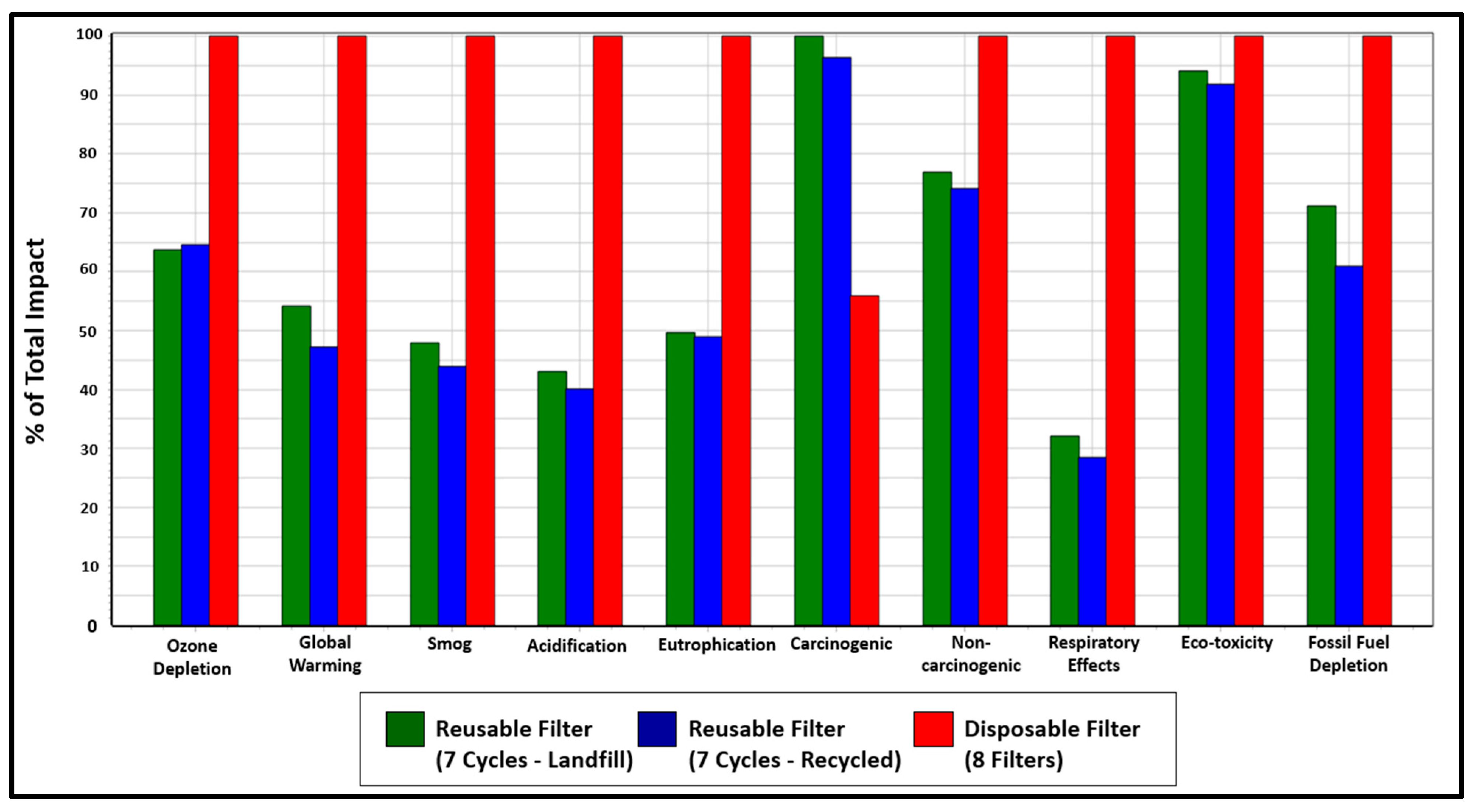
To evaluate the influence of end-of-life management on reusable HVAC filtration performance, an alternative material recovery scenario was compared against the baseline landfill disposal scenario. The baseline scenario conservatively assumed landfill disposal of the reusable filter following completion of the eight-cycle functional unit. The recovery scenario incorporated recycling of major reusable filter components, including PVC framing materials and galvanized steel support structures, consistent with circularity practices currently implemented by Delta M. The normalized LCIA results for the end-of-life scenario comparison are presented in
Figure 5, while the corresponding characterized results are provided in
Table S3 of the Supplementary Materials.
As shown in
Figure 5, material recovery further reduced environmental impacts associated with the reusable HVAC filtration system across several impact categories. GWP decreased from approximately 10.98 kg CO
2 eq under the landfill baseline to 9.59 kg CO
2 eq under the recycling scenario, representing an additional reduction of approximately 13% relative to the reusable landfill scenario. Fossil fuel depletion also decreased from 25.77 MJ surplus to 22.01 MJ surplus, demonstrating the importance of recovering polymer-based and metal components at end-of-life.
The observed reductions associated with material recovery further support previous research emphasizing the importance of circular economy strategies for reducing environmental burdens. While previous reusable air filtration studies have primarily focused on filtration efficiency and durability [
10,
11,
12], the present study demonstrates that combining repeated reuse with end-of-life material recovery provides additional environmental benefits beyond operational performance alone. These findings highlight the importance of integrating product durability with recycling strategies when designing sustainable HVAC filtration systems.
Compared with the disposable filtration scenario, both reusable end-of-life scenarios demonstrated lower impacts across most evaluated categories. The recycling scenario demonstrated lower GWP, smog formation, acidification, eutrophication, non-carcinogenic impacts, respiratory effects, ecotoxicity, and fossil fuel depletion relative to the disposable system. However, carcinogenic impacts remained higher for the reusable scenarios relative to the disposable system, indicating that upstream material production and manufacturing of durable reusable components remained important contributors even when end-of-life recovery was included.
These results demonstrate that reuse frequency is the primary driver of environmental improvement, while end-of-life recovery provides additional benefits by reducing landfill disposal and improving material circularity. Therefore, combining extended reuse with targeted recovery of PVC, steel, and other durable components represents an important strategy for improving the sustainability performance of reusable HVAC filtration systems.
3.4. Contribution Analysis and Environmental Hotspots
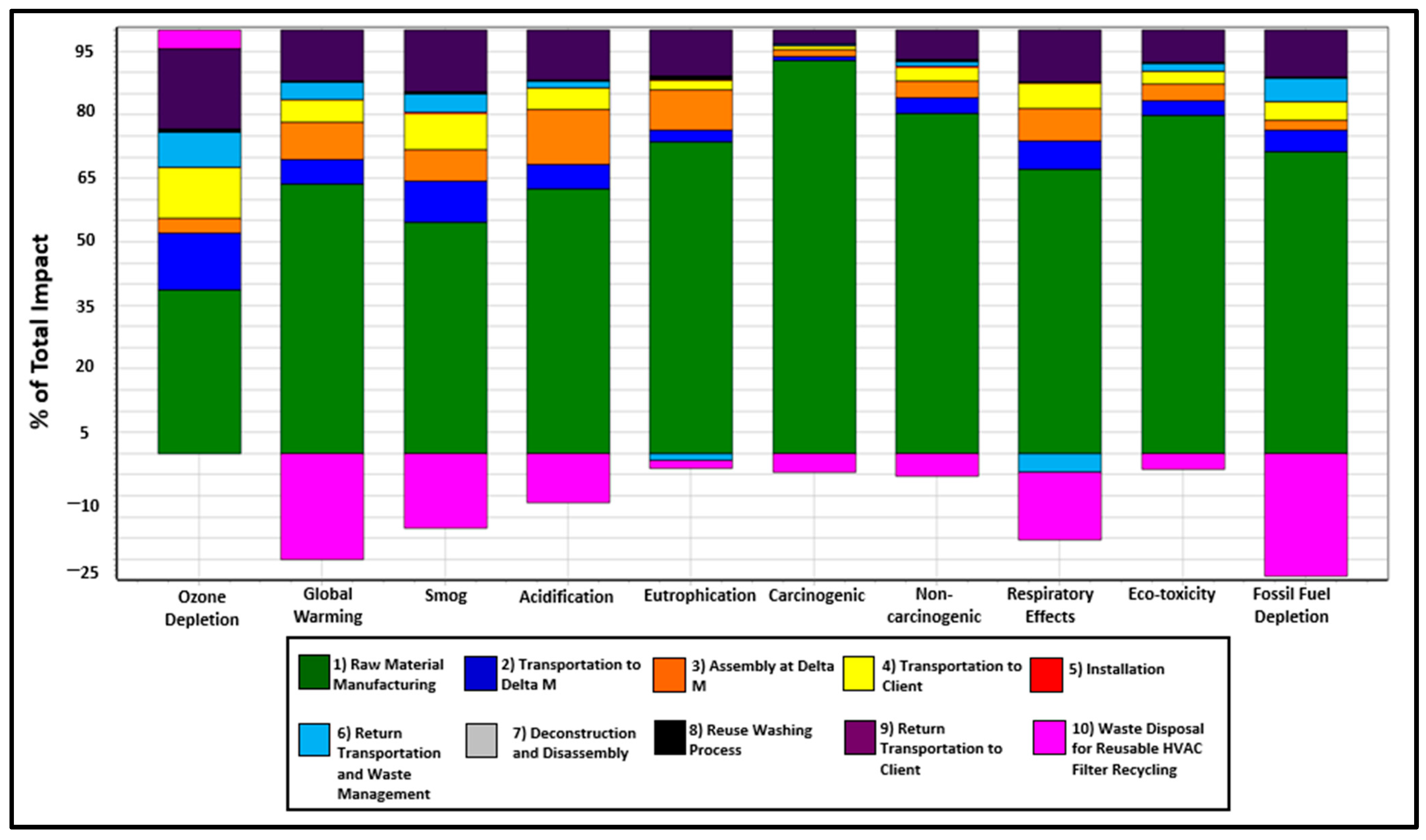
Contribution analysis was conducted to identify the dominant life cycle stages contributing to the environmental performance of the reusable HVAC filtration recycling scenario throughout the defined functional unit.
Figure 6 presents the characterized contribution analysis results across the evaluated TRACI 2.1 impact categories, while the corresponding numerical values are provided in
Table S4 of the Supplementary Materials.
Across nearly all evaluated impact categories, raw material manufacturing represented the dominant contributor to overall environmental burdens associated with the reusable HVAC filtration system. Raw material production accounted for approximately 85% of total carcinogenic impacts, 85% of non-carcinogenic impacts, 83% of ecotoxicity impacts, and approximately 75% GWP. These impacts were primarily associated with energy-intensive polymer production, polyester filtration media manufacturing, and galvanized steel processing required for the reusable filtration system structure and support components.
Assembly operations and transportation activities additionally contributed to overall environmental impacts, particularly within the global warming, smog formation, acidification, and fossil fuel depletion categories. Transportation associated with reverse logistics and reusable refurbishment cycles also contributed to several impact categories; however, these impacts remained substantially lower than the avoided manufacturing and disposal burdens associated with repeated disposable HVAC filter replacement scenarios.
End-of-life recycling and material recovery provided important environmental credits that partially offset upstream manufacturing impacts across multiple categories. Recycling-related credits reduced GWP, fossil fuel depletion, respiratory effects, smog formation, and acidification impacts relative to the landfill disposal baseline scenario. The largest reductions were observed within the fossil fuel depletion and global warming categories, demonstrating the importance of combining repeated reuse with end-of-life material recovery strategies to improve overall environmental performance.
Although the reusable filtration system demonstrated substantial reductions across most environmental impact categories relative to disposable filtration systems, carcinogenic impacts remained comparatively elevated due to the durable structural material requirements associated with reusable filter construction. These findings highlight the importance of future material optimization strategies, including increased recycled material content, lower-impact polymers, and improved steel recovery pathways for further reducing human health-related environmental burdens.
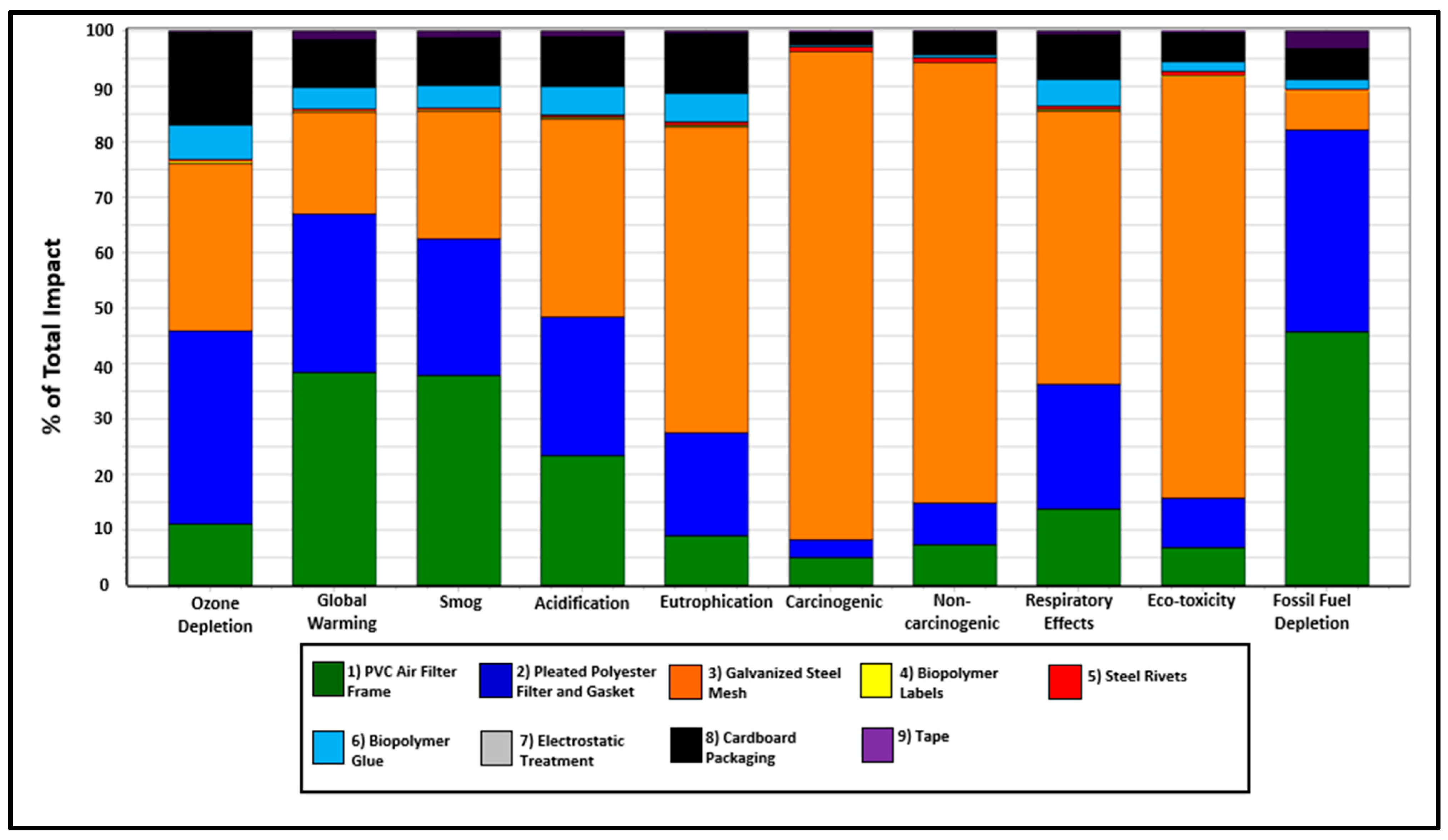
Contribution analysis was additionally conducted to evaluate the influence of individual material components associated with raw material manufacturing within the reusable HVAC filtration system.
Figure 7 presents the characterized contribution analysis results for the major reusable filter material components across the evaluated TRACI 2.1 impact categories. The corresponding numerical values are provided in
Table S5 of the Supplementary Materials.
The results demonstrated that PVC frame manufacturing, polyester filtration media production, and galvanized steel mesh manufacturing represented the dominant material contributors across nearly all evaluated impact categories. PVC frame manufacturing contributed approximately 1.34 kg CO2 eq and 4.17 MJ surplus to GWP and fossil fuel depletion, respectively, primarily due to energy-intensive polymer production processes. Polyester filtration media and gasket manufacturing additionally contributed substantially to GWP (1.01 kg CO2 eq) and fossil fuel depletion (3.32 MJ surplus), reflecting the environmental burdens associated with synthetic polymer production and processing.
Galvanized steel mesh manufacturing represented the dominant contributor to carcinogenic impacts, accounting for approximately 1.53 × 10⁻⁶ Comparative Toxic Unit for Humans (CTUh), while additionally contributing substantially to eutrophication, respiratory effects, ecotoxicity, and acidification impacts. These elevated impacts were primarily associated with upstream steel production and associated metal processing operations. Ecotoxicity impacts were also strongly influenced by galvanized steel manufacturing, which contributed approximately 73.26 Comparative Toxic Unit for Ecosystems (CTUe) of the total 96.20 CTUe impact associated with raw material manufacturing.
Although carcinogenic and non-carcinogenic impacts remained comparatively elevated for the reusable filtration system, these impacts were primarily associated with upstream raw material production rather than the operational use or refurbishment stages of the product. Galvanized steel manufacturing contributed substantially to toxicity-related impacts because of emissions associated with ore extraction, steel refining, alloy production, and galvanization processes represented within the background life cycle inventory. Similarly, PVC frame production contributed to carcinogenic and non-carcinogenic impacts due to the energy-intensive production of polymer resins and associated petrochemical and chlorine-based manufacturing processes. These findings indicate that the toxicity-related impacts observed for the reusable filtration system are largely driven by upstream industrial supply chains rather than the repeated reuse strategy itself.
Several opportunities exist to further reduce these environmental burdens in future reusable HVAC filtration systems. Increasing recycled steel and recycled PVC content would reduce demand for primary material production while lowering associated toxicity-related emissions. Additional improvements may also be achieved through lightweight structural redesign, substitution with lower-impact polymer materials where technically feasible, cleaner electricity during upstream manufacturing, and continued optimization of material recovery and recycling pathways at end-of-life. Collectively, these strategies represent practical opportunities to further improve the environmental performance of reusable HVAC filtration systems while maintaining the benefits associated with repeated product reuse.
The identification of PVC production, polyester media manufacturing, and galvanized steel processing as dominant environmental hotspots is consistent with previous building-related LCA studies, which frequently identify raw material production as the largest contributor to life cycle environmental impacts. Similar trends have been reported for HVAC systems and other building products, where upstream material manufacturing often exceeds downstream operational processes in several midpoint impact categories [
7,
8,
9]. Consequently, future improvements in reusable HVAC filtration systems should prioritize material substitution, increased recycled content, and lower-impact manufacturing processes in addition to extending product service life.
Secondary contributions were associated with cardboard manufacturing, adhesive compounds, transportation-related packaging materials, and ancillary assembly materials including tape, labels, and rivets. However, these components contributed comparatively minor environmental burdens relative to the primary structural filter materials.
Overall, the results demonstrate that future reductions in environmental impacts associated with reusable HVAC filtration systems may be achieved through increased recycled material content, lightweight structural redesign, alternative lower-impact polymer materials, and optimized steel recovery and manufacturing pathways.
3.5. Practical Implications and Implementation Considerations
The results of this study demonstrate that reusable HVAC filtration systems can provide meaningful long-term environmental benefits; however, successful implementation depends on operational and organizational factors extending beyond environmental performance alone. Realizing the environmental advantages identified in this study requires that reusable filters complete multiple refurbishment cycles throughout their intended service life. Consequently, appropriate inspection, cleaning, maintenance, and handling procedures are essential to achieve the expected environmental performance.
Implementation of reusable filtration systems also requires the establishment of effective reverse logistics and refurbishment processes. Unlike disposable filtration systems, reusable filters must be collected, transported, cleaned, inspected, and returned to service following each operational cycle. These additional activities introduce logistical and operational requirements that may influence implementation depending on facility location, transportation distances, labour availability, and maintenance scheduling. Organizations with centralized maintenance programs or regional refurbishment facilities may therefore achieve greater environmental and operational benefits than facilities requiring long-distance transportation or decentralized servicing.
Market adoption of reusable HVAC filtration technologies may also depend on factors beyond environmental performance, including purchase cost, maintenance requirements, organizational familiarity, and user acceptance. Although reusable filters generally involve higher initial manufacturing impacts and greater upfront material requirements, these impacts are progressively distributed across repeated operational cycles. The environmental break-even analysis presented in this study demonstrates that continued reuse is necessary for realizing environmental advantages over disposable filtration systems. Consequently, successful implementation depends not only on product durability but also on maintaining consistent refurbishment practices throughout the intended service life to achieve the environmental benefits identified in the present study.
Finally, the results suggest several opportunities for future improvement. Reducing the environmental impacts associated with PVC production, polyester filtration media, and galvanized steel manufacturing through increased recycled material content, lower-impact materials, and improved recovery pathways could further enhance the sustainability of reusable HVAC filtration systems. Future research should additionally evaluate the economic implications of reverse logistics and refurbishment operations through LCC, together with user acceptance, maintenance practices, and operational performance under a broader range of commercial building applications.
The reusable HVAC filtration system evaluated in this study represents a specific commercial product manufactured by Delta M; therefore, the reported environmental performance should not be interpreted as representative of all reusable HVAC filtration systems. Differences in material composition, product design, manufacturing processes, refurbishment requirements, and expected service life may influence the environmental performance of reusable filtration products from other manufacturers. Consequently, the findings should be interpreted within the context of the product and assumptions evaluated in this study. Future research comparing multiple commercially available reusable HVAC filtration systems would further improve the generalizability of the environmental conclusions and provide broader guidance for sustainable HVAC filtration technologies.
Based on the findings of this study, several practical recommendations can be proposed for organizations considering implementation of reusable HVAC filtration systems. First, reusable filters should undergo routine inspection following each cleaning cycle to verify structural integrity, filter media condition, and continued filtration performance before being returned to service. Second, consistent cleaning and refurbishment procedures should be established to maximize service life and ensure that the environmental benefits associated with repeated reuse are achieved. Third, reusable filters should be retired from service when physical damage, loss of structural integrity, or unacceptable reductions in filtration performance are observed, rather than continuing refurbishment beyond their intended operational life. Finally, end-of-life recycling of recoverable PVC and galvanized steel components should be prioritized wherever appropriate recycling infrastructure is available to maximize circularity and further reduce life cycle environmental impacts. Although specific cleaning frequencies and inspection criteria depend on individual operating conditions and manufacturer recommendations, the results demonstrate that maintaining the intended reuse lifespan is essential for realizing the environmental advantages identified in this study.
4. Conclusions
This study presented a cradle-to-grave LCA comparing reusable and disposable HVAC air filtration systems under equivalent operational service conditions. The assessment demonstrated that although the reusable HVAC filtration system exhibited higher initial environmental impacts due to increased structural material requirements and manufacturing complexity, repeated reuse substantially reduced overall environmental burdens relative to disposable filter replacement scenarios.
At the defined functional unit of eight operational filtration cycles, the reusable HVAC filtration system reduced GWP by approximately 69% relative to the disposable filtration system, while additionally reducing impacts associated with smog formation, acidification, eutrophication, respiratory effects, ecotoxicity, and fossil fuel depletion. Environmental break-even analysis further demonstrated that the reusable filtration system began to outperform the disposable alternative after approximately two operational filtration cycles, highlighting the importance of repeated reuse in distributing initial manufacturing impacts over an extended service life. These reductions were primarily attributed to the avoidance of repeated raw material extraction, manufacturing, transportation, packaging, and landfill disposal activities associated with disposable HVAC filter replacement.
End-of-life material recovery and recycling further improved the environmental performance of the reusable filtration system, particularly for global warming potential and fossil fuel depletion. Contribution analysis identified PVC production, polyester filtration media manufacturing, and galvanized steel processing as the dominant environmental hotspots associated with the reusable filtration system.
From a theoretical perspective, this study advances the application of LCA to commercial HVAC filtration systems by providing one of the first cradle-to-grave comparative assessments of reusable and disposable HVAC air filters using primary manufacturing inventory data. The study further demonstrates how product durability, repeated reuse, and end-of-life material recovery collectively influence long-term environmental performance within a circular economy framework. In addition, the incorporation of functional unit-based comparisons, environmental break-even analysis, and contribution analysis provides a structured approach for evaluating reusable building products over equivalent service lives, which may be applied to future assessments of circular building technologies.
From a practical perspective, the findings provide evidence-based guidance for HVAC manufacturers, facility managers, and building owners considering the adoption of reusable filtration systems. The results identify the environmental conditions under which reusable filters outperform disposable alternatives, quantify the benefits of repeated reuse and material recovery, and highlight key environmental hotspots for future product improvement. Collectively, these findings support decision-making aimed at reducing life cycle environmental impacts while promoting circular economy principles and more sustainable building operation. Future research should additionally evaluate long-term filtration efficiency, experimentally measured pressure drop evolution and associated HVAC fan energy consumption, reverse logistics optimization, LCC, and user acceptance under a broader range of commercial HVAC operating conditions.
Furthermore, although sensitivity analyses were performed to evaluate key modeling assumptions, a formal quantitative uncertainty analysis was not conducted because statistical uncertainty distributions were unavailable for several proprietary foreground datasets and representative inventory assumptions. Future research should incorporate probabilistic uncertainty methods, such as Monte Carlo simulation, as additional operational data become available to quantify confidence intervals associated with the reported environmental impacts.
Overall, the results demonstrate that the reusable HVAC filtration system evaluated in this study can substantially reduce long-term environmental burdens relative to conventional disposable HVAC filtration technologies when evaluated under equivalent operational service conditions, assuming the reusable filter achieves the modeled seven refurbishment and reuse cycles and within the context of the Ontario electricity grid, transportation assumptions, and waste management scenarios considered in this assessment. Collectively, these findings demonstrate that combining durable product design, repeated reuse, and end-of-life material recovery can substantially improve the environmental sustainability of commercial HVAC filtration systems while supporting circular economy and net-zero building objectives.