Systematic Review

A Systematic Review of Soil Amendments Using Biochar and Enhanced Rock Weathering (ERW) for Soil Carbon Sequestration


1
School of Environmental Sciences, University of Guelph, 50 Stone Road East, Guelph, ON N1G 2W1, Canada
2
CarbFarm, Inc., London, ON N6A 0C2, Canada
3
Ivey Business School, Western University, London, ON N6G 0N1, Canada
*
Author to whom correspondence should be addressed.
Sustainability 2026, 18(14), 7011; https://doi.org/10.3390/su18147011
Submission received: 7 May 2026 / Revised: 24 June 2026 / Accepted: 7 July 2026 / Published: 9 July 2026

Abstract

This review provides a comparative critical synthesis of biochar and enhanced rock weathering (ERW), identifies key trends and gaps in soil carbon research, and outlines pathways for improving carbon sequestration and monitoring in soil systems. From a global perspective, materials and agricultural studies were read to examine the properties of these amendments and their effects in cropland and forest soils. The main research question guiding this literature review was as follows: What are common trends in published biochar and ERW studies? Major themes were derived from the stated question and structure the Discussion. The Web of Science provided access to relevant literature for both biochar and ERW, and a total of 38 articles (biochar: 17; ERW: 21) were read and covered in this paper. The findings conveyed the growing number of Chinese studies on these amendments to resolve climate-related soil quality affecting crop yields and potential for carbon sequestration, namely carbon dioxide removal or CDR—which sequesters CO2 that is already in the atmosphere. Studies commonly used application rates of <5% for biochar and 5 or 50 t/ha for ERW, with (wood) biochar commonly processed at temperatures of 500–550 °C. Finer powders were known to be more effective due to their increased surface area, although there were emissions trade-offs to consider for climate change mitigation. There were options for using glacial rock flour (GRF) as an alternative. For ERW, the type of minerals matters, with basaltic amendments being most investigated and minerals like zeolite, for example, having quick responses and potential to filter out heavy metals. Depth of analysis was an issue in the studies, especially affecting ERW work—which needs to adopt greater depths (>60 cm) and both soil organic carbon (SOC) and soil inorganic carbon (SIC) or total carbon need address, particularly for ERW since studies only provided selective coverage. Biochar studies tended to focus more on crop yields and were not as concerned as ERW studies in CDR. Many studies agreed that these are promising products that need to be economically compared before being applied at a large scale. More field studies are needed to test biochar, while limitations imposed by soil pH (acidification affecting dissolution and nutrient availability) and climate need consideration for ERW—especially since it works best in warm, humid climates. The application rate and duration are important variables to also consider for ERW, and both SOC and SIC dynamics are subsystem components requiring consideration. Ultimately, studies call for field trials executed in the long term at greater depth and in different climates and representing different soil types.

1. Introduction

The focus of this review paper is on two soil amendments that are currently being investigated for carbon sequestration in climate change mitigation as part of carbon dioxide removal (CDR) in the sequestration of atmospheric carbon. Specifically, the paper explores both biochar and enhanced rock weathering (ERW) for agricultural and forest soils. The review focuses on the ability of soils to sequestration carbon through two main forms, as soil organic carbon (SOC) and soil inorganic carbon (SIC). These forms represent carbon from plant residues, microbes, and minerals.
The rationale for conducting a systematic review on both biochar and ERW is that they represent two complementary but often separately studied soil-based CDR strategies. While both aim to enhance carbon sequestration in soils, they operate through different mechanisms—biochar primarily influencing SOC, and ERW contributing to both SOC and SIC. Existing research tends to examine these approaches independently, leading to fragmented understanding and limited comparability of their effectiveness, risks, and environmental controls. A systematic review allows for the synthesis of diverse findings across studies, helping to identify consistent trends, key variables (such as application rate, duration, soil depth, and climate), and interactions between SOC and SIC that are often overlooked. It also addresses gaps related to variability in methodologies, lack of long-term field data, and insufficient integration into carbon accounting and monitoring frameworks. By comparing both amendments within a unified framework, the review can provide a more comprehensive assessment of their potential, limitations, and suitability across different environmental contexts, ultimately informing more effective and evidence-based climate mitigation strategies.
Although the recent study by [1] focuses on airborne droplet transport in subway environments, it is relevant to biochar and ERW in CDR because it highlights how particle behavior, transport processes, and environmental conditions control material fate and effectiveness in real systems. Like droplets in air, both biochar particles and finely ground rock used in ERW are subject to dispersion, deposition, and interaction with surrounding media, which influence their distribution in soils, exposure to reactive conditions, and long-term stability. Their study’s emphasis on variables such as flow dynamics, density, and environmental conditions parallels how factors like soil moisture, texture, climate, and application rate govern the movement, reaction rates, and carbon sequestration potential of these amendments. Additionally, its use of numerical modeling to predict transport and outcomes illustrates the importance of process-based modeling approaches, which are also needed to better understand and scale biochar and ERW performance in field settings. Overall, the findings reinforce that physical transport processes and environmental context are critical to determining the efficiency and risks of CDR strategies, making them directly relevant to improving the application and predictability of soil-based amendments.
The recent review on red mud [2] is relevant to both biochar and ERW and illustrates how a systematic approach can synthesize complex and variable research to identify consistent patterns, key controlling factors, and remaining uncertainties. It highlights the importance of variables such as material composition, processing conditions, and application rates in determining performance—paralleling similar dependencies in biochar and ERW studies. It also emphasizes challenges like variability in source materials, lack of standardization, and limited long-term, real-world data, which closely align with the research gaps identified in soil carbon sequestration research. By integrating findings across scales—as from microstructural mechanisms to large-scale application and durability—their review demonstrates how systematic synthesis can resolve fragmented knowledge and support the development of more reliable, scalable, and standardized approaches, reinforcing the value of conducting a comprehensive review of both biochar and ERW.
Moreover, even though studies that consider both SOC and SIC in soil profiles are becoming more commonplace in the literature, typically one is emphasized over the other (usually SOC). However, while SOC tends to be reduced with depth, SIC can increase with depth, particularly in calcareous areas where there is a limestone bedrock. The volume of soil used to measure their concentration is normally within 30 cm within the plow layer. For this reason, interactions between the two main carbon components in the soil are often neglected, since at least 60 cm is required (depending on climate zone) to integrate SIC in the system. Carbon accounting approaches are systematic and incorporate both subsystems and are preferred frameworks for researching soil carbon—especially where carbon reporting and monitoring, reporting, and verification (MRV) protocols are concerned [3].
This introduction is presented in two parts dedicated to providing overviews of each of these amendments. The research question guiding this systematic review appears at the end of this section.

1.1. Biochar

A review [4] addressed the negative impacts of biochar on soil quality, crop yield, and associated financial risk. The authors referred to uncertainties and reported reduced crop yield (relative to controls) for rice, wheat, maize, lettuce, and tomatoes. When compared to unamended soils, gaseous emissions from biochar-amended soils measured for CO2, CH4, and N2O were noted in their review. Their collated data indicates that besides a systematic roadmap for the manufacturing classification of biochars, cost–benefit analysis needs to precede field-scale application.
Biochar studies have recommended that future research focus on biochar aging and costs/benefits of its use [5]. The study used a dividing line between 400 and 500 °C for different feedstock biochars. This point represents the complete pyrolysis of cellulose and hemicellulose and is when the physical structure of biochar is substantially altered (see their Figure 1, p. 7). High-temperature pyrolysis biochar has a larger specific surface area (SSA), better pore structure and carbon stability, easier carbon sequestration, and better physical adsorption compared to low-temperature pyrolysis biochar. They concluded that our current knowledge base of biochar has been attained through pot experiments (basin studies) and mathematical simulations rather than (long-term) in situ field studies.
Biochar aging and weathering (affecting trace metal immobilization in soils) was examined in a study by [6]. Even though biochar affected trace metal immobilization, its influence varies according to soil type, trace metal type, application rate, biochar type (e.g., feedstock, pyrolysis temperature, designed biochar, etc.), as well as ambient conditions. According to them [6], the labile fraction of biochar is more easily degraded due to microbial activity. However, the recalcitrant (aromatic) carbon remains in soil for longer periods of time and weather due to mechanical forces (physical weathering), which they attributed to root growth and microbial activity. The stable complexes formed by biochar with clay minerals and trace metals as it ages have a long lifespan in soils (e.g., 100s–1000s years) [6]. Moreover, trace metal mobility in soil profiles should increase (both vertically and horizontally) with the generation of dissolved black carbon in weathered biochar; therefore, it is anticipated that weathered biochar performs better in trace metal immobilization compared to fresh biochar. The authors suggested that further research is needed for different soil types and climatic regions.
Evidently, these publications tend to agree that more field studies (rather than benchtop work or pot studies) are needed for biochar, especially where biochar aging is concerned. These studies need to examine long-term change, rather than assessing immediate or short-term effects of applications. Studies should represent different climates and soil types. Identifying the risks of using biochar as a soil amendment has been suggested, before any large-scale field application is recommended.

1.2. ERW

A global meta-analysis [7] synthesized results from field experiments showing that crushed rock amendment increased SOC, mineral-associated organic carbon (MAOC), and particulate organic carbon (POC) on average 3.8%, 6.1%, and 7.5%, respectively—although there was no significant effect on dissolved organic carbon (DOC) and SIC. They attributed SOC accrual to elevated soil exchangeable Ca as well as increased microbial biomass and improved soil structure, with all responses regulated by local climate. Simulations showed ERW impacts on SOC to be positively affected at low latitudes (warm, humid climate) between 40° N and 30° S, but there were negative impacts at high latitudes (cold, dry climate). Their study stipulated that SOC effects depend on application rate (dose) and duration. For example, application rates of 50–500 g/m2 (0.5–5 t/ha) can maximize SOC sequestration over a 5-year period; and Ca-rich silicate rocks can promote (long-term) CO2 sequestration.
Soil acidification poses a threat to carbon sequestration in soils because of the potential to lose SIC stock. Since this stock represents about half of carbon reserves worldwide [8], and it is more stable than SOC, it is an important consideration. These authors [8] suggested alkalinity regeneration, with rock/mineral powder providing basic cations of Ca and Mg to counteract acidification associated with nitrogen fertilization. Since carbonate-free soils tend to be less fertile, productive, and prone to erosion, amending soils with carbonates can promote soil health and climate change mitigation. Weathering could be enhanced on rock/mineral powder using microorganisms to augment dissolution rates. Additionally, they suggested applying biochar (including bone biochar) to reduce SIC losses. Biochar can overcome the lower dissolution rate of rock residues, that only slowly weather and release Ca2+ and Mg2+. These authors advocated for using microbial inoculation by Bacillus, Pseudomonas, and Aspergillus species to enhance the dissolution of rock powder.
The potential for trace element accumulation attributable to contaminated feedstocks poses high health risks to both human health and ecosystems [9]. These authors suggested that ERW projects prioritize feedstocks with low harmful metal content (e.g., chromium, nickel but also metals with potential to accumulate to risky levels, e.g., zinc, copper), for example, using basalt rather than ultramafic rocks (e.g., dunite, olivine). Additionally, regulatory policy needs to define thresholds of trace metal accumulation rates and maximum concentrations—like the ones that currently exist for soils in Brazil, Canada, China, Germany, and Russia—for the long-term protection of agriculture and ecosystems. The authors [9] also recommended that ERW projects avoid high-clay soils that have poor drainage and arid soils with their high carbonate formation. Furthermore, regional-scale dust transport can be avoided by applying mineral dust wet (rather than trenching or tilling them to incorporate them into soils). Sites need to be selected to induce the lowest possible impact on freshwater ecosystems (e.g., waterway pH), as by targeting low pH and high-carbon export watersheds.
It has been advocated [10] that urban farming strategies accompany ERW for negative emissions in cities. In their Figure 1 (p. 13576), for instance, these authors indicated the use of green roofs and façades as well as shade trees and ground vegetation as part of urban farming, with ERW in addition to conservation agriculture and other efforts.
Even though authors have recognized the potential for carbon sequestration based on ERW, there are limitations imposed by soil pH (acidification) as well as climate—with the strategy working well in warm, humid climates. Both the application rate and duration should be considered by studies. Both SOC and SIC need consideration, as does soil pH—with acidification affecting dissolution and nutrient availability. Clayey soils with poor drainage and carbonate-rich arid soils should be avoided since moisture is needed to flush out heavy metal contaminants possible from both strategies.

1.3. Research Question and Objective

The overview of the literature in the previous subsections has indicated that aspects of these soil amendments requiring attention should include application rate and study/experiment duration as well as depth and texture. This represents a research gap that requires attention. For biochar, studies have called for consideration of the feedstock and pyrolysis temperature used. For ERW, the type of silicate-rich rock powder and CDR are important variables to consider. The novelty (and contribution) of this study is that it fulfills these recommendations by gathering information from published papers, representing a diversity of approaches and locations (climates). The main research question guiding this literature review was as follows: What are common trends in published biochar and ERW studies? Major themes were derived from the stated question and structure the Discussion. The selection of variables examined were led by literature presented in this introduction and will be detailed in the next section.
Overall, the literature highlights several key research gaps in the use of biochar and ERW for soil carbon sequestration. A major limitation is the lack of integrated studies examining both SOC and SIC, particularly at greater soil depths, leading to incomplete carbon accounting. There is also a strong need for long-term, field-based experiments, as much current knowledge is derived from short-term laboratory or pot studies. Uncertainty persists regarding the impacts of biochar on crop yield, greenhouse gas emissions, and economic viability, alongside insufficient understanding of how biochar properties (e.g., feedstock type, pyrolysis temperature) and aging processes influence outcomes across different soils and climates. For ERW, gaps include limited insight into its effects on both SOC and SIC, the influence of application rate and duration, and the role of environmental constraints such as climate, soil texture, and pH. Additionally, environmental and health risks from trace metal accumulation, the potential for microbial enhancement of weathering, and the combined use of biochar and ERW remain underexplored. Overall, more standardized, long-term, and regionally diverse research is needed to improve effectiveness, safety, and carbon monitoring frameworks.
The objective of the review was to investigate the use of soil amendments such as biochar and powders for ERW. Other reviews (e.g., [11]) have addressed biochar performance as depending on feedstock and pyrolysis temperature and discussed its physicochemical properties (e.g., ash content, pH, cation exchange capacity or CEC, SSA) as key determinants of soil outcomes. Their review likewise synthesizes biochar characteristics (driven by feedstock and pyrolysis conditions) translating into soil ecosystem services and nutrient dynamics relevant to enhanced crop yield. Their review provides an integrative, mechanism-oriented framework that fits the scope of this study. This review provides broad (mostly new) literature coverage and offers critical synthesis, emphasizing similarities and differences between findings, and identifies future research needs.

2. Materials and Methods

The literature search was executed in Web of Science (WoS) from Clarivate (website: https://www.webofscience.com/wos/woscc/smart-search), accessed on 30 January 2026, from the University of Guelph Library. This is a recognized database that contains journals and other information on multidisciplinary scientific research. It generated enough usable peer-reviewed publications for consideration in this review. The search involved All Databases but was later constrained to the WoS Core Collection. The search string used was “soil amendment*” AND biochar AND “enhanced rock weathering” OR ERW, which found 1239 results in 14 collections.

2.1. Inclusion/Exclusion Criteria

All study designs/methodologies were considered in the search without limitation, for example randomized controlled trials, cohort studies, and other systematic reviews, editorials/opinion, conference abstracts, and case studies. English language publications only were included, without any temporal constraint placed on the search. All literature, including non-peer-reviewed articles and grey literature included in the WoS were included. A specific geographic region was not indicated, so that a world-wide search ensued. The criteria were deliberately kept as broad as possible to avoid selection bias beyond the database. The search was not constrained by eligibility criteria such as study design, soils, land use, outcome variables, minimum duration, and depth reporting. However, the search was limited by amendment types according to the search string (biochar, ERW).

2.2. Screening Procedure

After clear inclusion and exclusion criteria were establish in the protocol, documents were downloaded to Zotero and screened for any duplicates. Titles and abstracts were scanned first by the first author, removing any records that clearly did not meet the criteria. Where there was insufficient information to exclude, records were marked for full-text review and later determination. Any articles for which the first author could not access the PDF were removed. Since only one reviewer was involved in the selection process at this stage, a single yes meant inclusion in the next stage.
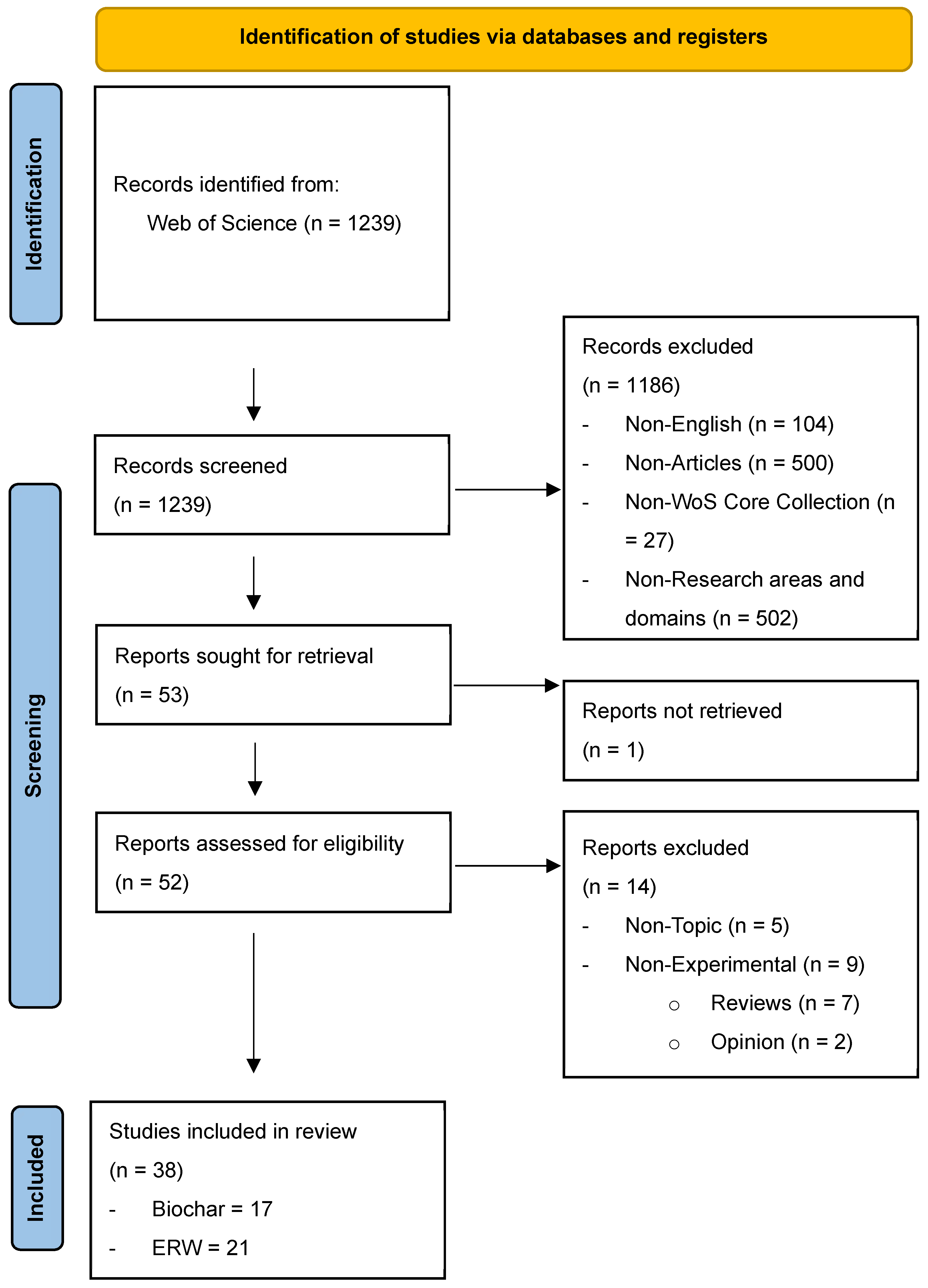
Full-text screening of potentially relevant articles constituted the first stage of the full-text screening process involving the first two authors. Once full-text articles (PDFs) were downloaded, they were read and reevaluated according to the inclusion/exclusion criteria. Reasons for exclusion were noted for all articles processed during this stage. Conflicts were to be resolved by the third author (and subsequent authors, if needed); however, there was complete agreement between the two reviewers at this stage, so there were no conflicts to resolve. A PRISMA flow chart was created to document the number of studies at each stage (identified, screened, excluded, included), which ensures the process is transparent and reproducible.

2.3. Narrowing Procedure

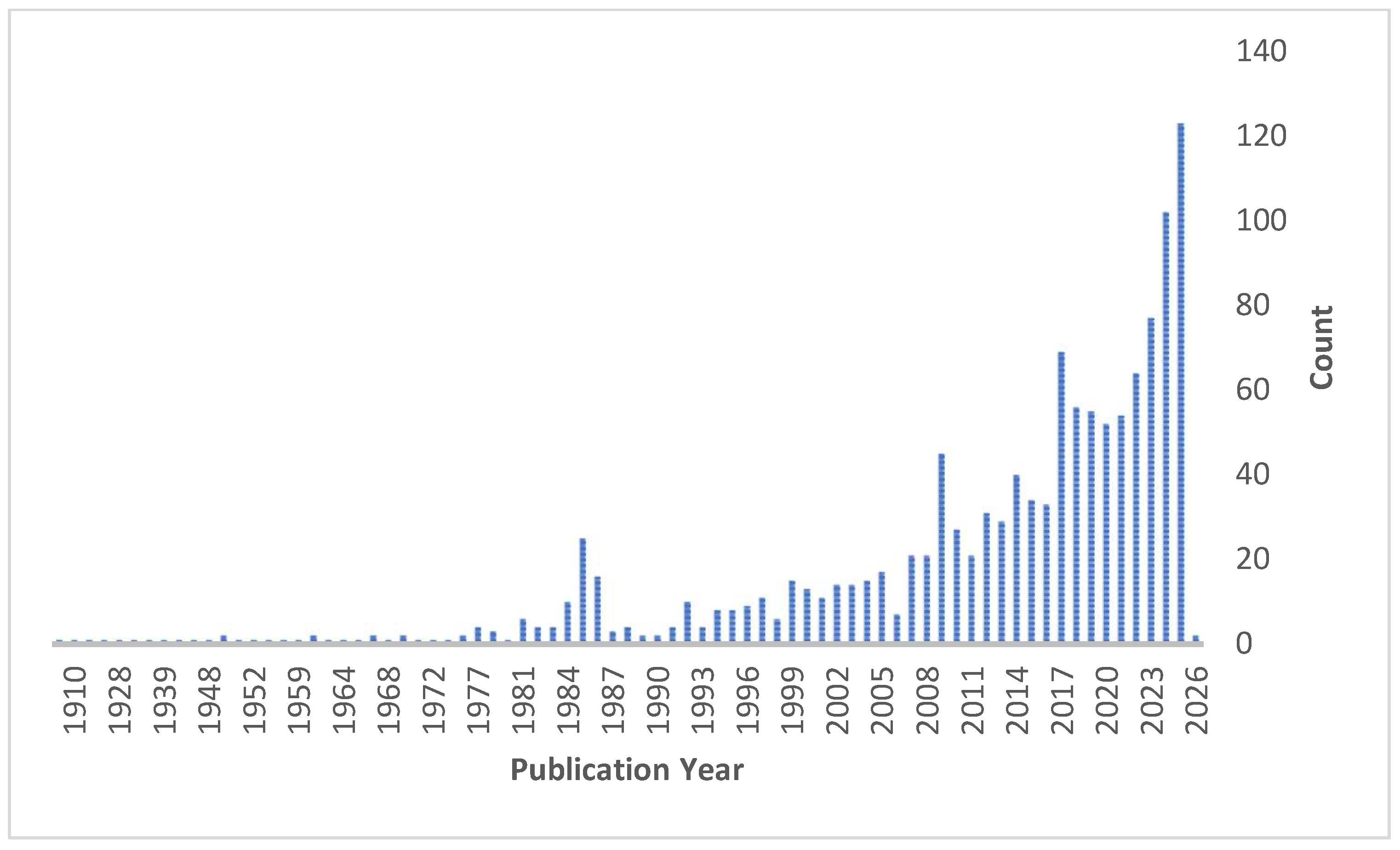
The initial search was subsequently narrowed based on eligibility criteria. For example, languages originally included English, unspecified, Korean, Russian, and Danish, but only English items were selected for this review—resulting in 1135 items. The results were not temporally constrained. Indeed, an examination of the (unconstrained) years when items were published showed that these soil amendments have been gaining prominence, especially since 2023, although spurts of publication activity in this area were evident in 1985, 2009, and 2017 before peaks in 2023, 2024, and 2025 (Figure 1).
Document type selection was for Articles (n = 635), and within the WoS Core Collection (n = 608). Research areas and domains were narrowed at this point during the WoS initial search narrowing, along with major concepts:
  • Research area: agriculture (n = 123);
  • Research domain: physical sciences (n = 86);
  • Major concepts (n = 84): soil science (38), environmental sciences (17), climatology (15), and agriculture (14).
This narrowing produced 53 results, and the PDFs were downloaded for further examination—one item could not be located, resulting in 52 articles being downloaded. One of the articles had a correction, and a quality assessment was merited. Ultimately, five articles were not directly relevant to the research topic (amendments, specifically biochar, ERW) and were excluded, and nonexperimental studies were also excluded (e.g., reviews, opinions), leading to a final total of 17 for biochar and 21 for ERW (n = 38). This process is outlined in Figure 2. This PRISMA flow chart was downloaded from the website (https://www.prisma-statement.org/prisma-2020-flow-diagram, accessed on 2 February 2026) and modified.
The review followed PRISMA standards and was registered as a Generalized Systematic Review Registration in the Open Science Framework (OSF Registries associated project) on 13 May 2026 under a CC0 1.0 Universal license (website: https://osf.io/u5vjx/overview, live on 8 July 2026). This record included agreement of adding a study characteristics table that contained some quality assessment. The PRISMA 2020 checklist is included as Supplementary Materials.

2.4. Choice of Extracted Variables

While both amendments included variables representing the location, study type, duration, application rate, depth, and soil type/texture, the selection of (more strategy-specific) variables was tailored to each amendment. This allowed the article to focus on amendment-specific trends in the literature. For example, biochar studies tended to include information about biochar feedstock and pyrolysis temperature [11], whereas ERW included details about rock powder and CDR—which commonly appear in the literature and could be recorded for most studies. However, biochar was not typically linked to CDR research, so this variable was excluded from the data collection for biochar.

2.5. Study Characteristics

Table 1 summarizes characteristics of all 38 studies screened for this systematic review. The table includes details about year of publication, journal and publisher, amendment type addressed, study type, sample size, and a quality assessment by considering the risk of bias. The included studies were derived from reputable sources (major publishers, recognized societies). Most were experimental designs rather than modeling. Importantly, sample size included replications—although not always explicitly stated. Including replicates reduces the risk of bias, but the sample size (in some cases estimated from the degrees of freedom or df) was not always transparently reported. Since a small sample size reduces the power of tests, making it easier to detect a true effect and reducing the change of Type II error (false negative), this is a critical consideration for such studies. Generally, having <30 samples can impose a high risk, 30–100 medium risk, and >100 low risk of error.
Separate data tables are provided to consolidate the findings and identify any commonalities (trends). This next section summarizes the findings on a study-by-study basis for biochar and ERW, providing elaboration for feedstock type and pyrolysis temperatures, application rate (dosage) and nutrient uptake, and aggregate stability and soil quality.

3. Results

3.1. Trends in Biochar Studies

A summary table of the biochar publications is provided in Table 2. Four of the 21 studies (<20%) were reviews [5,6,51,52] and were excluded from the table (n = 17), although incorporated into this paper’s Introduction. Additional studies from the results that addressed using biochar to control soil erosion are presented in the Discussion. Evidently, based on Table 2, most of these studies were executed in China (e.g., Northeast, Loess Plateau). Biochar was most often derived from trees (wood), pyrolyzed most frequently at 500–550 °C. Application rates varied, typically within 3–4%. Silty loams were most represented among represented textures, among varied soil types. Soil depth was usually 0–15 or 0–20 cm, so within the plow layer.

3.1.1. Feedstock Type and Pyrolysis Temperatures

Biochar amendments can significantly alter the physical, hydrological, and mechanical properties of soils. Biochar properties can vary according to feedstock type due to elemental and mineralogical composition. Different types include wood-based, crop waste, other grasses, and manures/biosolids [51]. Biochar from the latter and other grasses tend to have the highest ash content—potentially due to the presence of minerals (e.g., calcite, quartz). These biochars have higher pH and CEC compared to wood-based and crop waste biochars, with pH positively correlated with ash content. Ionic content is relatively high in K content in crop waste biochar compared to wood-based biochar, while manure/biosolids biochar has the highest Na, Ca, and Mg content. Wood-based biochar has the highest SSA. Pyrolysis temperatures also vary in different biochars. Hemicellulose and cellulose decompose rapidly between 220 and 315 °C and 280–400 °C ([51], p. 3), respectively. Lignin is more resistant to decomposition, and its complete degradation requires temperatures as high as 900 °C. Nonpyrolyzed inorganic minerals result in increased ash content in biochars, leading to elevated pH. As pyrolysis temperature increases, aliphatic functional groups (strongly associated with hydrophobicity) are volatilized and lost, resulting in decreased hydrophobicity. Both the type of feedstock and pyrolysis temperature influence the physicochemical properties of biochar.
Acidic clayey soils with pH > 4.80 were subject in another study [19] that focused on the liming potential of biochar produced from biooil production (from corn stover, switchgrass, and Ponderosa pine wood residue) using microwave pyrolysis. These products resulted from biomass feedstocks including corn stover (Zea mays L.) and switchgrass (Panicum virgatum L.). Their study revealed significant effects on soil pH, electrical conductivity (EC), and CEC, with the latter most affected by amendment type. Biochar had high pH, CaCO3 content, and base cation concentrations. Total nitrogen and carbon were significantly higher in switchgrass than corn stover biochar (see their Table 1, p. 396). Conversely, soil pH values were higher with corn stover than switchgrass biochar. Corn stover biochar also resulted in relatively higher EC and CEC than switchgrass biochar. Overall, corn stover biochar had better liming potential compared to switchgrass biochar.
Authors [38] examined eight biochars that differed in feedstocks and production techniques. Their study showed that total P varied from 0.6–4.0 mg P/g in phytomass-derived biochars, and 47 mg P/g from those derived from sewage sludge. Slightly acidic hydrochars were NaOH-extractable and Fe-associated, while alkaline pyrochars were HCl-extractable and Ca-associated. Dissolved organic matter (DOM) released from biochar was pH-affected, with a low pH potentially enhancing P fertilizer-use efficiency.

3.1.2. Application Rate (Dosage) and Nutrient Uptake

A novel biochar mineral complex (BMC) derived from distillation waste of lemongrass (Cymbopogon flexuosus) and farmyard manure showed improved physicochemical soil properties and nutrient availability compared to pristine biochar [16]. Applications on weathered acidic soil improved herbage and sennoside yields of the medicinal plant senna (Cassia angustifolia Vahl.). The BMC improved soil quality through enhanced nitrogen and carbon contents (e.g., SOC = 4.15 g/kg) as well as microbial activity (microbial biomass carbon or MBC = 153.1 mg/kg), which led to a greater nutrient uptake in senna plants. The authors [16] advocated for the development of MBC based on blended low-grade rock phosphate and waste mica minerals with biochar to phase out the use of chemical fertilizers in medicinal plant cultivation as a starter fertilizer.
An incubation experiment [26] was performed to quantify the priming effects of wood biochar carbon (biochar-C) collected from Eucalyptus salinga on labile organic carbon (LOM-C) mineralization in a smectitic clayey soil. This involved two wood biochars applied to soil at a rate of 2.0%. Evidently, 0.4–1.1% of the applied biochar was mineralized, and its mineralization significantly increased with increasing labile organic matter (LOM) application rate—especially in the early incubation period. In time, biochar application stabilizes LOM.
Another incubation experiment [34] compared the stability of high ash and low carbon biochar produced from tomato green waste and low ash and high carbon biochar produced from blue mallee (Eucalyptus polybractea) biomass. At application rates of 2 and 4%, on acidic Australian soils, resulted in 1.4–3.7% mineralization for the tomato biochar, which was greater than for the blue mallee (0.28–0.77%). Positive priming was evident for the 2% blue mallee biochar, which had a greater cumulative mineralization of native SOC; also, based on its mean residence time, blue mallee biochar had greater potential for long-term carbon storage (200–1506 years, p. 224)—although tomato biochar has a high liming potential. Increasing biochar application rates led to greater mineralization of native SOC such that the quantity of labile carbon in the 4% application rate was twice that of the 2% amended soil.
Yet another incubation experiment [41] tested for the effects of weather events, such as freezing, freeze–thaw, and warming climates, on a black soil with 4.14% SOM content located in Northeast China. Freezing increased SOM mineralization up to 4.9% for biochar, while warming more strongly humified and stabilized SOM. Interactions between biochar and artificial humic substances were mediated mostly by biological activity (growth and activity of bacteria, e.g., Actinobacteriota and Chloroflexi) and microbial changes in community structure. It is important to consider biochar production, since a lower temperature biochar has a labile structure and is a decomposable carbon that supports soil microorganisms.
Biochar derived from vegetable residues (fruit tree pruning residues) reduces CO2 emissions and provides long-term soil carbon sequestration when incorporated into agricultural soils [44]. Accordingly, biochar increases nutrient stocks in soils, especially in the rooting layer, which enhances crop yield. Their study focused on soil moisture and biochar’s physical and hydraulic properties, based on a clay loam agricultural soil located near Bologna (Italy). As a preliminary plot experiment, the work examined biochar application rates of 10 and 30 kg/ha and the impact on soil moisture. The biochar rate was directly correlated to EC but indirectly correlated with the bulk density. The dark coloration of biochar augmented surface temperatures relative to controls—although no difference was detected at 7.5 cm depth. Other soil characteristics, such as soil pH, moisture, and water retention, were not significantly influenced by applying biochar in their study. However, as evident in their Table 4 (p. 8), there was indication that as application rates increased from 0 to 30 to 60 t/ha that there were increased pH and EC values; and that the bulk density was reduced (see Table 5, p. 8). The different biochar application rates likewise affected water content (see their Figure 5, p. 9). These authors [44] suggest testing specific soil types that would benefit from biochar applications.
A maize field trial in northeastern China [14] used maize straw-derived biochar incorporated into soil at four different dosages. The authors chose a biochar that formed at a lower temperature (350–500 °C) because of its higher nutrients compared to biochar produced at higher temperatures. They found MBC (representing the total amount of all soil microorganisms), SOC, and MBC/SOC (qMB) to be significantly linearly positively correlated with the biochar dosage after 3 years during the growth period. Fungi and bacteria were particularly affected, with phospholipid fatty acids (PLFAs) and their ratios increasing with biochar amendment. The authors interpreted the overall results as stimulated microbial activity (especially for fungal communities) from increased biochar amendment dosage and retained necromass (dead microbial biomass residues) along with their associated structural stability. The amendment application rate of 5% was seen as a threshold (p. 326); when biochar with high C/N was incorporated into the soil, the supply of carbon and nutrients increased and was sufficient at this dosage.

3.1.3. Aggregate Stability and Soil Quality

Authors [25] have linked biochar amendments to stabilizing soil aggregates as well as improving soil quality. They focused on soil internal forces (SIFs) in a 2-year Chinese field experiment, with biochar derived from pyrolyzed apple branches and applied at different rates of 0, 2.5, 5.5, and 7.0% (w/w) to a silt loam soil, finding that SSA, SOC, CEC, and surface charge density (σ0) increased with biochar application rates up to 7.0% while soil pH was somewhat reduced. Soil surface electrostatic properties involving CEC, SSA, and σ0 increased by 53.4%, 37.1%, and 12.0%, respectively, as the application rate increased from 0 to 7.0%. Additionally, SOC increased from 1.71 to 37.04 g/kg with increased biochar application rates; and the increased application rate augmented soil aggregate stability. The mass weight diameter (MWD) significantly increased (from 0.466 to 1.277 mm) with the increasing biochar application rate (from 0 to 7.0%; p < 0.05). Adding biochar reduced the net SIF pressure and stabilized soil aggregates. Even though both electrostatic repulsion and van der Waals attraction forces increased, net attractive forces offset repulsive forces to improve soil aggregate stability.
Sandy-clay soil was analyzed by authors [15] to evaluate the impact of biochar acquired from poplar (Populus spp. L.) wood chips on aggregate stability. Using a high-energy moisture characteristic (HEMC) technique, these authors found improved aggregate stability measured through drainable pores as well as the stability ratio. Their study showed improvement based on the progressive addition of this soil amendment. Interaggregate porosity dominated by swelling processes occurring with higher amounts (>0.33) of biochar, whereas lower quantities (0–0.33) were implicated in association with molecular water diffusion. Saturated water content (θs) increased from 0.423 to 3.039 kg/kg, denoting enhanced pore spaces available for water retention in biochar amended vineyard soil.

3.2. Trends in ERW Studies

A summary table for the ERW portion of this review appears in Table 3. Some review papers were excluded (e.g., [7,8,9], as were some opinion pieces (e.g., [10,53])—although these appear in the Introduction and some of the studies are included in the Discussion to address the use of ERW in counteracting soil acidification. Nevertheless, these likewise constituted <20% of studies. As evident in Table 3, most of these were short-term studies. Basalt and wollastonite were the most frequently tested ERW amendments (rock powder) at rates of 5 and 50 t/ha. Most analyzed shallow soil depths, with the chronosequence examined to 100 cm depth [37] being the deepest soil examined among these studies. Most studies did not differentiate between SOC and SIC, and rates (per year) were normally provided. A variety of soils were tested, although not always reported according to international standards.

3.2.1. Climate and Weathering Rates

Although ERW has been found to be promising, it is laden with uncertainty because of its dependence on in situ weathering rates [20] at different sites and climates. These authors used a one-time application rate of ~16 kg/m2 (~160 t/ha) of forsterite, which is a mineral found in soils. Their modeling showed that weathering was complete within 5 years and had an equivalent carbon removal rate of ~2.3 kg CO2/m2 per year [20]. However, this rate is highly variable and affected by site-specific conditions; for example, the weathering rate can be enhanced in well-drained soils and where plant-microbe processes are stimulated. Furthermore, the surface areas of soils (affected by texture as well as rock grinding fineness) can significantly influence the weathering rate. The energy penalty of reducing grain size can be justified when CO2 supply is nonlimiting. More specifically, its efficiency is enhanced by maintaining high CO2 availability, as through good connectivity with atmospheric CO2 and/or by having sufficient biogenic CO2 supply. This means that soil texture, composition, and reaction networks are important considerations for siting. Additionally, applications should be placed close to the dominant CO2 source (e.g., at optimal depth) and where optimal grain size can be applied.
Other authors [23] pointed to climatic variability and field data limitations that constrain the influence of using ERW and lead to uncertainties for use in temperate regions. Their work focused on Chinese farmland, as an application in a humid region. Field monitoring showed improved crop yield in this region of 13.5% [23]. Additionally, ERW also led to notable improvements in soil pH and nutrient availability. In their work, they found that field precipitation and soil pH variables contributed most to ERW-mediated yield and changes in carbon sequestration (see their Figure 3, p. 9). Furthermore, management and N inputs should also be considered as contributing factors. Their modeled work indicated a carbon sequestration rate of 0.28–0.40 Gt/y (see their Figure 4, p. 10) [23], and the authors intimidated that it presents an opportunity to expand and accelerate nationally determined contributions (NDCs) for China. They recommended its use for acidic and mineral nutrient-deficient soils, since ERW can be a lime and chemical fertilizer alternative. If waste silicate materials are deployed, there is also the added potential of helping industrial decarbonization. Carbon sequestration by ERW in semiarid, semihumid, and humid regions of China was 1.2, 1.6, and 2.8 t CO2/ha per year, respectively (see their Table 2, p. 8). Secondary emissions of 0.16 Gt/y were reported by them, and processing (e.g., grinding) made the greatest contribution of 74.7% (see their Table 3, p. 10). Importantly, this indicates that finer particle size, with faster sequestration, requires clean energy policies in place.

3.2.2. Rock Powder (Particle Size) and Application Rate

Volcanic ash has been used as a soil amendment to promote soil fertility for growing sorghum and mung bean crops as well as for CO2 removal from saline soils located in northeastern China [33]. Accordingly, calcite accumulation in these amended soils over the course of just 6 months led to a notable increase in mung bean height of ~41% when 10% of volcanic ash was added. At application rates of 15 and 20%, sorghum plant height increased 52% and there was a 65% increase in soil MBC relative to the control [33], suggesting that applying volcanic ash promotes plant growth while enhancing microbial growth and metabolism. Both above- and below-ground biomass dry weights increased for sorghum grown with applied volcanic ash. At an application rate of 20%, sorghum achieved a carbon sequestration rate of 0.14 kg CO2/m2 per month [33]. This net accumulation evident at 20 cm depth represents the highest accumulation of CaCO3 (4.08 g/kg over 6 months) in their study.
The impact on soil P was examined in a 2-year wollastonite field experiment in a tropical rubber plantation located in southwestern China [18]. Their findings indicate that ERW significantly augmented soil microbial carbon-use efficiency (CUE) and total P concentrations in soils. Mobilization and mineralization of P increased its availability through plant rhizosheath carboxylates and phosphatase. Therefore, ERW increases carbon sequestration potential and P availability in these tropical forests while influencing below-ground plant resource use. Adding wollastonite to agricultural soils can save on fertilizer costs, while removing considerable amounts of CO2.
A UK study [27] on clay loam agricultural soil applied 10 kg/m2 (100 t/ha) of coarse-grained crushed basalt. Accordingly, yield increased (21%) for C4 cereal sorghum without accumulating toxic trace elements in seeds. Increased Si concentrations (26%) had the potential of added crop resistance to abiotic and biotic stress [27]. Modeling results by these authors indicated CO2 sequestration rates of 2–4 t CO2/ha in 1–5 years of single basaltic rock dust application, which constituted a four-fold increase in carbon capture compared to the control. However, the authors demanded further research for the lower rate of basaltic rock dust application at optimal cost effectiveness.
A Chinese study [24] was based on monitoring trials in central China between 2019 and 2021. Mixed rock powder was applied in field trials at a rate of 10 kg/m2 (100 t/ha). Their findings indicate ERW to improve regional crop yield by 7% and biomass by 11%. Net carbon sequestration during this 3-year trial amounted to 4.31 t CO2/ha, representing increased carbon capture by 1.6–2.4×. As in the previous study, soil pH was most important in controlling yield (18%) and nutrient effectiveness. Additionally, water balance (rainfall/evapotranspiration) was the main driver of SIC sequestration (20%), with low-water being 3.8× more effective than regions with a high-water balance. They also discovered fertilizer inputs to be correlated with ERW and N inputs to increase SIC in the arid region. Their study is especially relevant for regions with poor soil quality, where there are soil acidification and mineral nutrient shortages.
Finely grained glacial rock flour (GRF) can be naturally sourced from lacustrine and marine deposits in glaciated locations like Greenland, where it has been produced from the glacial erosion of bedrock [22]. The authors tested this material, which would preclude the need for grinding, in a sandy organic agricultural field in Denmark, where the powder was applied at rates of 10–50 t GRF/ha. After 1 year, they found that this source of silicate minerals improved crop yield; for example, for each additional ton of GRF applied, there were dry yield increases for maize of 59 kg/ha (+24%) and potato tuber yield increased by 90 kg/ha (+19%) [22]. These authors espoused that such yield increases could justify any associated costs of applying silicate minerals for CO2 sequestration. A caveat of their work was that combined treatments that included K did not indicate additional benefits of GRF—when K was sufficiently supplied—but the highest yield in the year of treatment application was obtained (in 2019 and 2020) with 50 t GRF/ha [22]. The authors considered the implications, that GRF provides balanced nutrients to support crop growth, such that a total maize uptake of P and Mg was augmented with GRF application and total potato Ca uptake also increased in the first year of GRF application. This could be attributed to Si fertilization effects, that can improve plant nutrient uptake and nutrient-use efficiency. According to them [22], possible long-term effects in nutrient-poor soils could have the same effect as other fertilizers (including mineral amendments, e.g., basalt, wollastonite), which could be particularly beneficial for tropical soils that tend to have a lower soil fertility than temperate soils.
A rate of 50 t/ha—which the authors [28] thought to be a high amendment rate—of wollastonite skarn, a fast-weathering silicate mineral, was deployed in topsoil and subsoil along with effluent water over the course of 5 months both indoors and outdoors. Their findings show more modification evident in shallow than deeper layers of soil; for example, there were increases of 6.53 and 2.85 t CO2/ha in pedogenic carbonate (PC) in the top 0–60 cm of the soil profile, respectively, where there was periodic or rainfed moisture. Silicate amendment increased pH and EC to a depth of 30 cm, and more Ca2+ and Mg2+ was released in effluent. The carbon drawdown ratio (carbonate/bicarbonate) was ~15:1 [28], indicating PC formation to be a significant weathering indicator in the short term for such a fast-weathering mineral in pH-neutral soils with moderate irrigation.

3.3. Crop Yield

Table 2 and Table 3 indicate (*) where authors measured crop yield affected in their studies. It is noteworthy that only one (6%) of the biochar studies [16] actually reported yield. In their study, novel BMC improved soil quality through increased nutrient and carbon contents. When applied to deeply weathered acidic soil, BMC significantly improved herbage and yield of the medicinal plant senna (Cassia angustifolia Vahl.) compared to pristine biochar, farmyard manure, vermicompost, and chemical fertilizers (see Table 2, p. 6 for details).
Six of the 21 ERW studies (29%) measured crop yield; for instance, both papers by Guo et al. [23] had ERW mediating yield and significantly improving crop yield in a humid region by 13.5%—along with improvements in soil pH and nutrient availability. They observed that precipitation and soil pH most contributed to ERW-mediated yield. In the other paper [24], using ERW significantly improved crop yield by 7% relative to the control, which occurred in the first 2 years (see their Figure 2, p. 7).
It should be noted here that these studies constituted only 6 and 29%, respectively for biochar and ERW, of the studies reporting yield. For this reason, there is insufficient data to draw meaningful conclusions with such a limited evidence base. Authors [22] have espoused that increased yield (as through the application of GRF) could offset some of the costs of using silicate minerals for CO2 sequestration, where materials are naturally ground by glaciers. These authors reported that for each additional ton of GRF applied on maize, its (dry) yield increased by 59 kg/ha and this was 90 kg/ha for potato tuber crop yield. Therefore, different crops will respond uniquely, and testing (e.g., at plot-field scale) should be executed in advance of large-scale adaptation at the farm level. For example, another study [43] measured yields for rice straw and grain to increase at harvest (October 2022) to be 12% increased relative to the control (their Figure 2a,b) when wollastonite powder was used in the treatment. In forest soils, wood volume increased over time since biochar amendment, ranging between 0.9 and 46.8 t/ha ([43], p. 6).
Other studies [27] have reported increased yield (of sorghum) in just 120 days measured as seed dry mass per plant, with a significant increase of 21% due to basalt treatment compared to control plants. At the 95% significance level, there were no significant changes reported in shoot or root biomass ([27], Figure 1a, p. 3665), and yield improvements did not significantly increase seed concentrations of potentially toxic trace elements like Cu, Ni, Cr, As, Cd, and Pb from basalt ([27], Figure 1b, p. 3665). Increased yield in sorghum occurred without the addition of P and K fertilizer.

4. Discussion

These amendments have recently received attention in the published literature, and in many cases, authors have noted that further research is needed before scaling up. However, there have been studies showing the co-benefits of biochar for counteracting soil erosion and for ERW to counteract soil acidification. These aspects will be considered in this section.

4.1. Controlling Soil Erosion Using Biochar

Uses for biochar have included compacted applications to counter erosion. For example, a reduced erosion rate was measured as there was a gradual increment in water content for biochar-amended soil involving plant- and animal-based biochars [29]. The authors attributed this mainly to a change of particle orientation (from flocculated to dispersed). Adding biochar had a minimal effect on erosion of compacted silty sand [29].
As a carbon-rich product, biochar can be deployed for erosion control because of its ability to improve soil quality—since it directly affects soil structure, water-holding capacity, and nutrient retention—and stability [52]. Accordingly, its ability to be an effective erosion mitigation strategy is based on enhancing soil structure, water retention, and vegetation cover. Feedstock type, pyrolysis temperature, and application rate were considered to influence erosion control efficacy. In addition to biochar characteristics, soil type is an important consideration. There is also a need for site-specific assessments, since climatic variability influences its effectiveness—and, to this end, long-term field studies are needed.
Another study [32] evaluated biochar’s influence (with different application rates and particle sizes) on soil erosion for a silt loam in the Loess Plateau, China. Compared to the control, adding pyrolyzed apple branch biochar to loess delayed runoff by 19.47%. Biochar reduced the total runoff volume by 12.21% and inhibited soil loss with application rates of 1 and 3%. The 1% biochar application rate more greatly reduced runoff and soil loss (Table 2, p. 1406), especially for the <0.25 mm biochar particle size—affecting both >2 mm water-stable soil aggregates and Ksat values.
A 4-year experiment [39] was conducted in Northeast China on a field runoff plot with 3° sloping terrain in the black soil region. They found that biochar application rate, year, and interaction of these variables had significant effects on soil structure, annual runoff, annual soil erosion, and moisture characteristics. Specific effects included improved soil hydraulic conductivity (for water content > 0.28 cm3/cm3), inhibited horizontal water diffusion, and soil structure improvement that enhanced soil water-holding capacity. The best biochar application for their study was 50 t/ha for 2 consecutive years. Therefore, the duration of application matters as well as the application rate.
Another field experiment in China [46] comparing weathered coal and biochar (from pyrolyzed apple branches), applied to loamy clay soil at rates up to 3%, examined soil internal forces after 4 years. They found that both weathered coal and biochar applications increased attractive pressure (van der Waals force) and reduced soil positive net pressure. These amendments reduced both the soil aggregate weathering strength and splash erosion rate. Application rates had key effects; for example, soils amended with weathered coal had lower splash erosion rates than those with biochar, especially at the higher application rate (3%).
A European study [49] investigated the long-term effect of biochar (where there were century-old charcoal-enriched kiln sites) on interrill erosion in cropland soils of different textures (silt loam, loam, and sandy loam) in Belgium. Two successive rainfall simulations (24 hours apart) revealed reduced final runoff and soil loss rates when biochar (charcoal-carbon) content increased to >5 g/kg. Reductions were attributed to delayed crust development, since weakly crusted surfaces had protruding aggregates (clods) and generated less runoff and sediment than smoother, more severely crusted surfaces (p. 10). Greater surface roughness locally increased infiltration, reducing the final runoff rate. These authors [49] suggest executing simulations over different soil types and moisture content at sampling.
In a rainfall simulation experiment, authors [50] tested the effects of application rate (2, 5, and 8%) on runoff, soil loss, and interrill erodibility. Loess-derived soil was amended by commercial biochar made from oak and hickory hardwoods. They found that, compared to the control, biochar-amended soil had reduced total runoff (by 2.4–10.8%) but significantly increased total soil loss (by 20.8–50.8%) and interrill erodibility (20.4–29.2%). All variables increased following the incubation period. The authors attributed this to effects on infiltration (p. 2282). Their findings indicate that adding biochar to soil could increase the risk of erosion on sloping croplands. Biochar can wedge into soil aggregates, causing disaggregation through reduced tensile strength, leading to aggregate fragility—especially for soil with a high clay content (e.g., clay loam). Consequently, particle dislodgement results in soil loss. Both application rates and incubation period significantly affected the MDW of soil aggregates (see their Table 3, p. 2278), and they asked researchers to consider the long-term incubation period since it impacts soil erosion and called for them to perform long-term field experiments.
Another experiment [13] used apple tree branch-derived biochar at different application rates and particle sizes for 3 months on degraded or degrading sloping farmlands located in the hilly gully region of the central Loess Plateau, with a flume experiment that manipulated flow rates and slope gradients. Their findings show impacts of biochar application on soil detachment capacity (Dc) and rill erodibility (Kr), with the most reductions (of 65 and 174%, respectively) evident for the 4% biochar application rate compared to bare soil. They also discovered larger biochar particles (2–1 mm) to more effectively reduce Dc (64%) and Kr (61%) than smaller sizes—which they linked to surface roughness affecting lateral movement of dislodged soil particles in rill flow. Higher biochar application rates and larger particle sizes enhanced soil erosion resistance in these silt loam soils. Their soil erosion results were influenced by experimental conditions and the duration of biochar application. The study shows the potential of widespread biochar use to improve degraded and erosion-prone sloping land. However, as noted by them [13], different biochar types should be considered and tested on different soil types—especially since experimental conditions like soil texture and management influence effects of biochar application.

4.2. Counteracting Soil Acidification Using ERW

As a promising strategy for CO2 removal that promotes SIC sequestration [30], ERW based on basalt weathering in a 6-month incubation experiment using coarse- and fine-sized, olivine-depleted material was applied to a cropland topsoil with incorporated straw. They found increased soil pH through H+ neutralization during olivine dissolution, which released soluble Mg2+ and enhanced bicarbonate alkalinity. Dissolved inorganic carbon (DIC) accumulation in soil solution and effluent of ~0.4% promoted SIC accrual through carbonate precipitation of ~4% [30]. On the other hand, they unraveled that the alkalinity induced significant SOC loss of ~17% that resulted in a net carbon loss of ~13%.
Authors [36] have cautioned that soil microbes may explain why experimental and field results may not align with theoretical models. They experimented with three basalt variations and one granite as well as KCl treatments applied to a soil cultivated with Brachiaria studied over the span of 1, 4, and 8 months. Changes were modulated by rock type, since petrochemistry and mineralogy were main drivers of soil bacterial structure observed at 8 months. Si, Ca, and Fe from mafic minerals were related to bacterial changes occurring at this point in the experiment; and they noted that zeolites (found in volcanic rocks and ash) were very reactive minerals. Modeling challenges for rock powder dissolution in soils can be linked to concurrent changes in the soil medium with rock dissolution; also, the duration of experiments is an important variable to consider in rock powder management.
A field study executed in California (USA) [40] used field trials in three irrigated cropland fields, where crushed metabasalt rock additions were made. After 2 years of treatment in irrigated semiarid croplands, MAOM stocks were lower at 0–10 cm depth than unamended control plots. The accrual rate of MAOM-C and MAOM-N at this depth was lower than in plots with crushed rock and in unamended controls. The authors called for more field trials including baseline data before treatment as well as over multiple years and across various soil depths.

Agroforestry Systems

Forest ecosystems are another location where SOC and tree growth represent opportunities for carbon storage [47]. In their study, these authors applied 0, 5, and 10 t/ha of wollastonite powder to a larch plantation in Northeast China. Their results convey reduced soil CO2 fluxes by 16.5% and 15.4% in the first year using application rates of 5 and 10 t/ha, respectively; subsequently, in the second year, soil CO2 fluxes increased by 4.1 and 5.1%, respectively, compared to the control—which they ascribed to root respiration and accelerated SOC decomposition. Tree biomass increased, with vegetation growth adding to ecosystem carbon sequestration. These authors found significant effects on SOC at 0–10 cm depth in mineral soil (see their Figure 7, p. 8), with Ca and DOC being significant in terms of their relative importance of soil properties affecting SOC.
Wollastonite was investigated at an application rate of 5 t/ha to rice paddy plots in Northeast China [45]. They found that the powder increased soil pH as well as available Si content, and Si uptake by rice. There were also increases in grain number (+15%) and rich yield (+12%). Additionally, after 5 months into rice growth, there was increased surface SIC content by 1.2 t CO2/ha in plots treated by wollastonite. Wollastonite powder treatment promoted rice yield, and CO2 sequestration in the surface soil tripled compared to the control. Yield increases were attributed to the liming effect, increased MBC in July due to nutrient mineralization, and improved soil nutrient availability (especially Si); and there was also reduced uptake of heavy metals (As, Cd) into rice straw and grains, possibly due to the immobilization of these trace elements by increased soil pH. Since nearly 80% of carbon is present in soils, and soil is the largest carbon reservoir in terrestrial ecosystems [45], it is deserving of further research (e.g., field trials to investigate contamination by other heavy metals like Ni and Cr) in the context of climate change mitigation. For paddy fields, in particular, faster weathering rates occur because these are highly irrigated systems compared to dry farmland soils. However, the authors suggest consideration of cost of mining, crushing, grinding, and transportation of silicate rock dust like wollastonite, which can reduce its net CO2 sequestration potential. Their calculated net profit was estimated to be 300 USD/ha [47].
A study on acidified forest soils [42] with varying levels of initial pH performed accelerated weathering tests on five commercial silicate rock dusts, including two basalts, phonolite, foidite, and trachy-andesite. Their 2-year outdoor experiment on four acid soils amended with application rates of 12 and 340 t/ha showed pH to correspond well with model predictions, with half-lives for rock dust dissolution of <1 month to >100 years affected by initial soil pH, pH buffer capacity, rust dust mineralogy, and SSA.
A further study [43] examined forest soil acidification in a reassessment following up on a 1987 Austrian experiment that was resampled in 2021. The study comprised three 3 ha twin plots of Norway spruce-dominated stands (of Picea abies L.), and soil amendments of a mixture of basalt and diabase rock dust were complemented with bentonite and (P, S) lime at application rates of 4.7 t/ha. Even though soil pH did not have a sustained significant increase, there was the potential for long-term acid-neutralizing capacity of these soils. Their study found foliar and tree ring concentrations of P, Ca, and Mg to increase in plots amended with rock dust. Tree radial growth peaked 20 years after applications and growth improved especially for trees aged <150 years. Rock dust amendments particularly affected spruce trees with limited N deficiency. Additionally, rock dust amendments increased herb layer plant species richness, with 13 more species than the control. These findings led the authors [43] to conclude that adding rock dust to acidic forest soils can increase vitality and growth if N deficiency or tree age do not limit growth.

4.3. CDR for Climate Change Mitigation

Enhanced silicate rock weathering has potential because of excess industrial silicate materials available like basalt mine overburden, concrete, and iron and steel slag [17], which can reduce the need for mining expansion. Even though China, USA, and India ranked among the highest for CDR, countries like Indonesia and Brazil have a relatively high CDR potential due to their extensive agricultural land and warm, wet climate—leading to high-silicate rock weathering efficiency. These authors [17] estimated that ERW has a similar potential for CDR as other strategies like SOC sequestration (0.5–5 Gt CO2/yr) and afforestation/reforestation (0.5–3.6 Gt CO2/yr). SIC and SOC sequestration strategies both use agricultural land and both can be simultaneously deployed, but SIC sequestration has the potential to secure long-term carbon storage security while abating soil N2O emissions. Although, there are uncertainties in soil weathering rates and land-ocean transfer of weathered products to consider. The authors encourage long-term field ERW trials to assess weathering and CDR efficiency during the growing season.
Other authors [21] have found ERW to be a promising CDR technology—not only for carbon sequestration, but also for raising soil pH and releasing nutrients to improve soil fertility. However, there have been concerns raised about this technique, including heavy metal pollution and its potential to damage soil structure. Their study involved a field trial to assess the impact of ERW on soil properties in the context of a temperate agriculture. This involved three vineyard fields in Switzerland, where soils were amended with basaltic rock powder at an application rate or dose of 20 t/ha (or 2 kg/m2). Different temporal periods were tested, but most soil properties were not significantly altered within a 1 month or 1 year of application. Although, there were changes observed in significantly increased (an average increase of 71%) earthworm abundance, 50% more soil respiration, and a 23% increase in extractable sodium concentration measured 1 month following application. The latter two observations raise issues concerning CO2 losses from SOM mineralization (through increased soil respiration)—that could limit ERW efficiency—and sodification, which can be potentially damaging to soil fertility.
Since SOC is the largest carbon pool in terrestrial ecosystems [48], ERW has the potential for significant impacts. Their 2-year field experiment was in tropical rubber plantations located in southeast China, where they applied wollastonite powder at rates of 0, 0.25, and 0.5 kg/m2 (0, 2.5, and 5 t/ha) to evaluate effects on SOC and SIC at 0–10-cm depth. Their study had positive effects on SOC accrual in MAOM (+22%) and macroaggregate fractions (suggesting enhanced SOC stability), but not on POM. They attributed increased MAOM to the enhanced release of Ca, Si, and Fe from wollastonite weathering (as well as clay content, which increased from 59 to 64% in their study) and somewhat also by stimulated root growth and microbial-derived carbon inputs. It is noteworthy that in acidic soils, inorganic CDR was less (<20%) due to the low soil pH (~4.94), which prevented carbonate formation. Therefore, their results denoted the potential of ERW to promote SOC stocks and organic CDR more than inorganic CDR in such (acidic) soils. Their work calls for more field trials investigating deeper soil layers and longer trials (lasting decades).
An experiment from Costa Rica in the humid tropics [37] carried out on (island volcanic arc) basaltic andesite used an application rate of 50 t/ha to sequester 2.4–4.5 t CO2/ha per year, whereas a basalt standard (BHVO-1: oceanic island basaltic, e.g., Hawaiian, with more rapidly weathering silicate phases like pyroxene, mafic glass, olivine) with mafic composition and finer particle size (that also enhances weathering) resulted in a rate of 11.9 t/ha per year. These findings illustrate the importance of mineralogy and chemistry of the silicate powder—for example, felsic quartz-rich rocks are not anticipated to be as effective compared to Ca-Mg-rich mafic rocks. Particle diameter is evidently another important variable, with a 3–5-fold difference in potential CDR recorded—since silt-dominated powders weather more rapidly than sand-dominated powders. Additionally, a soil chronosequence dating back to the Holocene comprised 0.6 mm of powdered andesitic sediments had a rate of 1.7 t CO2/ha per year measured on kaolinitic soils at 35 °C [37]. Their lab benchtop experiment determined a CDR rate of 3.5 t/ha per year, which resulted in a net of 3.2 t/ha per year when carbon costs (e.g., emissions from processing, delivery) were considered—with most emissions coming from the transportation sector. Therefore, they ascertained that tropical environments like Costa Rica have the potential for an annual CDR of ~2–4 million tons, representing 23–46% of annual CO2 emissions [37].
A wollastonite experiment by [31] was conducted in a subtropical Chinese fir plantation with or without understory removal (UR) over a 2-year period. Soil pH was notably increased by 12.5% by applying wollastonite, which represented pH averages of 4.40 to 4.95 [31]. Wollastonite application additionally increased available Si and exchangeable Ca and Mg, while reducing exchangeable Al. Root activity benefited from higher nutrient availability and lower Al toxicity. The effects of wollastonite application were regulated by UR, which weakened the effect at understory-free stands. It should be noted that applying wollastonite increases soil CO2 efflux, affecting its CDR potential in silviculture—although, the authors noted that a lack of understory vegetation may decrease the sensitivity of soil CO2 efflux to the application of wollastonite.

4.4. Limitations and Implications

Evidently, the literature does not consider biochar in terms of CDR, and only ERW studies consider this. In this regard, there are trade-offs to consider for both amendments. More specifically, the grinding affecting particle size and the SSA of powders would result in more emissions for finer powders that have more immediate effects. As for biochar, its production releases emissions and higher pyrolysis temperatures (which result in more concentrated carbon and a greater carbon stabilization efficiency) would release more emissions.
Authors [53] have called for the recognition of the difference between SOC and SIC, and that they should be separately managed—especially in carbon credit schemes. This would enable farmers to claim credits for increasing SOC as well as claim credits for ERW affecting SIC, since these result from separate activities. Other authors [35] noted a robust MRV framework is restricting the large-scale implementation of ERW, which needs to be accurate, precise, and cost effective to successfully quantify CO2 removal. Their experiment added basalt rock feedstock at a rate of 50 t/ha to sorghum bicolor. They calculated rock weathering averaged initially as a CDR value of 1.44 t CO2eq/ha after 235 days [35].
Finally, in reviewing such literature, certain points have tended to repeat. For example, there is a need for deeper sampling in both biochar and ERW studies. Authors tend to sample within the amendment application and not beyond that in the soil column. However, vertical movements from the surface layer can be expected with integration over time, even if only in the plow layer (measured within 30 cm of the surface). For ERW, it is anticipated that SIC at depth (especially for calcareous regions) is naturally repeating the process when powders are introduced as amendments at the surface. Therefore, measurements should be taken for the soil profile to a 60–100 cm depth, depending on the depth to bedrock. Moreover, studies need to track changes occurring cross-temporally, and more long-term studies are needed. Studies tracking changes within days or 2 years are concerned with immediate to short-term effects, and longer-term effects require examining over the course of >2 years (e.g., 3 years was considered to be a long-term application by [13]), when there are changes anticipated for stability and MAOM storage.

4.5. Key Contributions and Recommendations

This review presents an integrated synthesis of the biochar and ERW literature. It combines 38 studies on two soil amendments, providing a comparative analysis of biochar and ERW, which is rarely done in a single framework. The paper identifies common trends in amendment performance, clarifying typical application rates, feedstocks and pyrolysis temperatures for biochar and mineral types and particle sizes for ERW. It highlights how soil type, climate, and duration influence outcomes. Importantly, this review links soil amendments to carbon sequestration pathways, presenting CDR data for ERW studies. It distinguishes between SOC and SIC, showing how biochar mainly enhances SOC while ERW contributes to SIC as well as SOC and CDR—which is an important conceptual contribution. It should be noted that while most studies have indicated benefits for SOC from biochar and for SIC from ERW, there is evidence that ERW also affects SIC (e.g., [48]). Furthermore, major research gaps are identified, such as a tendency for current studies to focus on short-term experiments (<2 years), sample only shallow soil layers (≤30 cm), and often ignore SOC-SIC interactions.
Therefore, the review calls for the following (research recommendations): (1) more long-term field trials; (2) deeper sampling; and (3) improved carbon accounting frameworks. An evaluation of the trade-offs and limitations is provided here, highlighting carbon accounting trade-offs like emissions from biochar production and energy costs of grinding for ERW; and the review identifies some risks, such as heavy metal contamination and soil acidification/alkalinity effects. It points to practical approaches that render policy implications, emphasizing the need for MRV systems, separation of SOC and SIC in carbon credit schemes, and positions both amendments as tools for CDR and soil health and productivity. A systems-based approach has been advocated here, recommending that soils be studied as integrated systems that are influenced by climate, soil depth, and management as well as soil type and texture. Therefore, the review moves beyond single-variable analysis toward holistic soil carbon research.
Carbon capture and sequestration (CCS) and CDR both aim to reduce atmospheric CO2, but they differ fundamentally in their purpose and point of intervention. CCS focuses on capturing CO2 at the source of emission, such as power plants or industrial facilities, and storing it underground to prevent it from entering the atmosphere, thereby reducing ongoing emissions. In contrast, CDR involves removing CO2 that is already present in the atmosphere and storing it in long-term reservoirs, such as soils, biomass, oceans, or geological formations. While CCS is primarily a mitigation strategy that addresses current emissions, CDR is a negative emissions approach that actively seeks to lower atmospheric CO2 concentrations. Together, they are complementary: CCS limits future emissions, whereas CDR helps reverse past emissions and is essential for achieving net-zero or net-negative climate targets. Studies should clearly differentiate between the two climate change mitigation areas and specify to which they are contributing. For example, this review has contributed to CDR, particularly where ERW is concerned.

4.6. Future Research

Importantly, regarding biochar costs/benefits of its use, there is a need for a systematic approach to conduct cost/benefit analysis before large-scale field applications. Similarly, the real impact of ERW will depend on scaling it sustainably and demonstrating its effectiveness at the large scale. It is noteworthy that a major challenge in ERW studies remains distinguishing CO2 captures by rock weathering from nature carbon cycling processes in the soil–plant–atmosphere system. Methods of CO2 evaluation can combine indices to evaluate CO2 (e.g., elemental analysis, bulk density measurements, geochemical modeling, and isotopic validate to reliably quantify sequestration). Establishing a baseline, for example, to measure SIC change [24], is one approach to comparatively measure carbon change. Otherwise, comparisons can be made with unamended soils or by including controls in experimental designs. Another approach would be to measure MAOC, since mineral-associated organic carbon would change with ERW application (e.g., tracked by [17]).
Future research agendas should prioritize the following:
(1)
Long-term trials are needed to overcome temporally constrained experiments that are often within 2 years in duration.
(2)
Deeper profiles are needed to overcome sampling within the plow layer (within 30 cm of the surface). Further research is needed to test more deeply in soils, particularly for ERW effects on carbon. Soils need to be approached from a systems perspective, with multiple interacting components of influence affected by climate, soil texture, and sampling depth.
(3)
SOC and SIC need to be reported separately (e.g., in MRV protocols) since they are depth-based subsystems in the soil profile. Moreover, total carbon (SOC, SIC) needs to be considered in studies rather than just reporting one or the other.
(4)
Life cycle/net accounting needs to account for processing inputs, such as pyrolysis temperature for biochar and grinding fineness (powder particle size) for ERW. Both amendments work especially well when finely ground, although there are trade-offs to be noted for carbon accounting in the release of CO2 during rock grinding. Therefore, an optimal level of grinding needs to be determined for carbon reporting purposes. Alternatives include the use of GRF, which has been tested in Denmark with materials sourced from Greenland. Distance to accessing these resources (e.g., transportation) also greatly figures into the decision-making process around use for climate change mitigation.
(5)
Salinity (biochar) and trace metal (ERW) risk thresholds are required for these amendments. Powders that reduce this should be selected over polluting/toxic amendments. Even though heavy metal transport can be controlled through the liming effect in ERW, biochar can mobilize metals through acidification.
(6)
Further investigations into microbial community composition and active microbial biomass in relation to both biochar and ERW are needed. Only a couple of biochar studies in this review, for example [14,41], examined microbial community composition; and a further couple of studies ([31] for volcanic ash, [45] for wollastonite) measured MBC in ERW applications.
This study has considered these variables for both amendment types in the context of soil pH, nutrient availability, and carbon sequestration in both croplands and forests.
Overall, advancing the use of biochar and ERW will require a systems-based approach that integrates soil processes, climate interactions, and management practices. With improved experimental design, standardized reporting, and consideration of trade-offs, these soil amendment strategies have strong potential to support sustainable land management and contribute meaningfully to global climate mitigation efforts.

5. Conclusions

By adding nutrients and affecting pH, both amendments respectively influence nutrient availability, affecting crop yield and carbon sequestration (CDR) in soils. Due to more weathering in tropical than temperate or cold environments, these amendments are especially beneficial for warm, humid climates. There are also co-benefits for using both amendments for soil health and fertility, including improved soil structure through roots and earthworm activity.
This review demonstrates that both biochar and ERW are promising soil amendment strategies for improving soil quality and enhancing carbon sequestration in agricultural and forest systems. Through their effects on soil pH, nutrient availability, and biological activity, these amendments contribute to improved soil fertility, crop productivity (yield), and ecosystem resilience while supporting climate change mitigation efforts. Biochar primarily enhances SOC, whereas ERW offers opportunities for both organic and inorganic carbon sequestration, highlighting the complementary roles of these approaches.

Supplementary Materials

The following supporting information can be downloaded at https://www.mdpi.com/article/10.3390/su18147011/s1; The PRISMA 2020 checklist is available as Supplementary Material.

Author Contributions

Conceptualization, M.T. and M.Z.; methodology, M.T.; software, M.T.; validation, M.T. and M.Z.; formal analysis, M.T. and M.Z.; investigation, M.T.; resources, M.Z.; data curation, M.T.; writing—original draft preparation, M.T.; writing—review and editing, M.T., M.Z., C.M., E.A., E.K. and M.M.U.R.; visualization, M.T.; supervision, M.T.; project administration, M.Z.; funding acquisition, M.Z. All authors have read and agreed to the published version of the manuscript.

Funding

This research received no external funding.

Institutional Review Board Statement

Not applicable.

Informed Consent Statement

Not applicable.

Data Availability Statement

The corresponding author (M.T.) can be contacted to access the available data.

Conflicts of Interest

All authors (M.T., M.Z., C.M., E.A., E.K. and M.M.U.R.) were employed by CarbFarm, Inc. They declare that the research was conducted in the absence of any commercial or financial relationships that could be construed as a potential conflict of interest.

Abbreviations

The following abbreviations are used in this manuscript:
BMCbiochar mineral complex
CCScarbon capture and sequestration
CDRcarbon dioxide removal
CECcation exchange capacity
CUEcarbon-use efficiency
DOCdissolved organic carbon
DOMdissolved organic matter
ECelectrical conductivity
ERWenhanced rock weathering
GRFglacial rock flour
HEMChigh-energy moisture characteristic
LOMlabile organic matter
MAOCmineral-associated organic carbon
MAOMmineral-associated organic matter
MBCmicrobial biomass carbon
MRVmonitoring, reporting, and verification
MWDmass weight diameter
NDCnationally determined contribution
PCpedogenic carbonate
PLFAphospholipid fatty acid
POCparticulate organic carbon
POMparticulate organic matter
SICsoil inorganic carbon
SIFsoil internal force
SOCsoil organic carbon
SOMsoil organic matter
SSAspecific surface area
URunderstory removal
WoSWeb of Science

References

  1. Huang, Z.; Liu, Y.; Ma, H.; Luo, X.; Li, Z. Numerical Investigation of Exhaled Droplet Transmission and Infection Probability Prediction in a Subway Compartment under Ventilation and Passenger Effects with an Improved Wells-Riley Equation. Int. J. Heat Mass Transf. 2026, 265, 128809. [Google Scholar] [CrossRef]
  2. Li, Z. Resource Utilization of Red Mud in Low-Carbon Binders: A Review of Reaction Mechanisms, Performance, and Microstructure. Buildings 2026, 16, 2140. [Google Scholar] [CrossRef]
  3. Thornbush, M.; Govind, A. Monitoring, Reporting, and Verification (MRV) Protocols Used in Carbon Trading Applied to Dryland Nations in the Global South for Climate Change Mitigation. Sustainability 2025, 17, 11001. [Google Scholar] [CrossRef]
  4. Mukherjee, A.; Lal, R. The Biochar Dilemma. Soil Res. 2014, 52, 217–230. [Google Scholar] [CrossRef]
  5. Qi, S.; Degen, A.; Wang, W.; Huang, M.; Li, D.; Luo, B.; Xu, J.; Dang, Z.; Guo, R.; Shang, Z. Systemic Review for the Use of Biochar to Mitigate Soil Degradation. GCB Bioenergy 2024, 16, e13147. [Google Scholar] [CrossRef]
  6. Zhong, Y.; Igalavithana, A.D.; Zhang, M.; Li, X.; Rinklebe, J.; Hou, D.; Tack, F.M.G.; Alessi, D.S.; Tsang, D.C.W.; Ok, Y.S. Effects of Aging and Weathering on Immobilization of Trace Metals/Metalloids in Soils Amended with Biochar. Environ. Sci. Process. Impacts 2020, 22, 1790–1808. [Google Scholar] [CrossRef] [PubMed]
  7. Xu, T.; Li, H.; Vicca, S.; Goll, D.S.; Beerling, D.J.; Chen, Q.; Bi, B.; Yang, Z.; Wang, X.; Yuan, Z. Enhanced Rock Weathering Promotes Soil Organic Carbon Accumulation: A Global Meta-analysis Based on Experimental Evidence. Glob. Change Biol. 2025, 31, e70483. [Google Scholar] [CrossRef] [PubMed]
  8. Azeem, M.; Raza, S.; Li, G.; Smith, P.; Zhu, Y.-G. Soil Inorganic Carbon Sequestration through Alkalinity Regeneration Using Biologically Induced Weathering of Rock Powder and Biochar. Soil Ecol. Lett. 2022, 4, 293–306. [Google Scholar] [CrossRef]
  9. Levy, C.R.; Almaraz, M.; Beerling, D.J.; Raymond, P.; Reinhard, C.T.; Suhrhoff, T.J.; Taylor, L. Enhanced Rock Weathering for Carbon Removal–Monitoring and Mitigating Potential Environmental Impacts on Agricultural Land. Environ. Sci. Technol. 2024, 58, 17215–17226. [Google Scholar] [CrossRef] [PubMed]
  10. Haque, F.; Santos, R.M.; Chiang, Y.W. Urban Farming with Enhanced Rock Weathering as a Prospective Climate Stabilization Wedge. Environ. Sci. Technol. 2021, 55, 13575–13578. [Google Scholar] [CrossRef] [PubMed]
  11. Anyebe, O.; Sadiq, F.K.; Manono, B.O.; Matsika, T.A. Biochar Characteristics and Application: Effects on Soil Ecosystem Services and Nutrient Dynamics for Enhanced Crop Yields. Nitrogen 2025, 6, 31. [Google Scholar] [CrossRef]
  12. Page, M.J.; McKenzie, J.E.; Bossuyt, P.M.; Boutron, I.; Hoffmann, T.C.; Mulrow, C.D.; Shamseer, L.; Tetzlaff, J.M.; Akl, E.A.; Brennan, S.E.; et al. The PRISMA 2020 Statement: An Updated Guideline for Reporting Systematic Reviews. BMJ 2021, 372, n71. [Google Scholar] [CrossRef] [PubMed]
  13. Zhao, J.; Yuan, Y.; Yan, C.; Zhang, F.; Luo, J.; Yang, J.; Chen, J.; Li, Y. Evaluating and Modeling Rill Detachment and Resistance in Different Rates and Particle Sizes of Biochar Application on the Loess Plateau of China. J. Hydrol. 2025, 660, 133441. [Google Scholar] [CrossRef]
  14. Zhang, Y.; Xie, H.; Wang, F.; Sun, C.; Zhang, X. Effects of Biochar Incorporation on Soil Viable and Necromass Carbon in the Luvisol Soil. Soil Use Manag. 2022, 38, 318–330. [Google Scholar] [CrossRef]
  15. Baiamonte, G.; De Pasquale, C.; Marsala, V.; Cimò, G.; Alonzo, G.; Crescimanno, G.; Conte, P. Structure Alteration of a Sandy-Clay Soil by Biochar Amendments. J. Soils Sediments 2015, 15, 816–824. [Google Scholar] [CrossRef]
  16. Basak, B.B.; Saha, A.; Sarkar, B.; Kumar, B.P.; Gajbhiye, N.A.; Banerjee, A. Repurposing Distillation Waste Biomass and Low-Value Mineral Resources through Biochar-Mineral-Complex for Sustainable Production of High-Value Medicinal Plants and Soil Quality Improvement. Sci. Total Environ. 2021, 760, 143319. [Google Scholar] [CrossRef] [PubMed]
  17. Beerling, D.J.; Kantzas, E.P.; Lomas, M.R.; Wade, P.; Eufrasio, R.M.; Renforth, P.; Sarkar, B.; Andrews, M.G.; James, R.H.; Pearce, C.R.; et al. Potential for Large-Scale CO2 Removal via Enhanced Rock Weathering with Croplands. Nature 2020, 583, 242–248. [Google Scholar] [CrossRef] [PubMed]
  18. Bi, B.; Li, G.; Goll, D.S.; Lin, L.; Chen, H.; Xu, T.; Chen, Q.; Li, C.; Wang, X.; Hao, Z.; et al. Enhanced Rock Weathering Increased Soil Phosphorus Availability and Altered Root Phosphorus-acquisition Strategies. Glob. Change Biol. 2024, 30, e17310. [Google Scholar] [CrossRef] [PubMed]
  19. Chintala, R.; Mollinedo, J.; Schumacher, T.E.; Malo, D.D.; Julson, J.L. Effect of Biochar on Chemical Properties of Acidic Soil. Arch. Agron. Soil Sci. 2014, 60, 393–404. [Google Scholar] [CrossRef]
  20. Deng, H.; Sonnenthal, E.; Arora, B.; Breunig, H.; Brodie, E.; Kleber, M.; Spycher, N.; Nico, P. The Environmental Controls on Efficiency of Enhanced Rock Weathering in Soils. Sci. Rep. 2023, 13, 9765. [Google Scholar] [CrossRef] [PubMed]
  21. Dupla, X.; Claustre, R.; Bonvin, E.; Graf, I.; Le Bayon, R.-C.; Grand, S. Let the Dust Settle: Impact of Enhanced Rock Weathering on Soil Biological, Physical, and Geochemical Fertility. Sci. Total Environ. 2024, 954, 176297. [Google Scholar] [CrossRef] [PubMed]
  22. Gunnarsen, K.C.; Jensen, L.S.; Rosing, M.T.; Dietzen, C. Greenlandic Glacial Rock Flour Improves Crop Yield in Organic Agricultural Production. Nutr. Cycl. Agroecosyst. 2023, 126, 51–66. [Google Scholar] [CrossRef]
  23. Guo, F.; Sun, H.; Yang, J.; Zhang, L.; Mu, Y.; Wang, Y.; Wu, F. Improving Food Security and Farmland Carbon Sequestration in China through Enhanced Rock Weathering: Field Evidence and Potential Assessment in Different Humid Regions. Sci. Total Environ. 2023, 903, 166118. [Google Scholar] [CrossRef] [PubMed]
  24. Guo, F.; Wang, Y.; Zhu, H.; Zhang, C.; Sun, H.; Fang, Z.; Yang, J.; Zhang, L.; Mu, Y.; Man, Y.B.; et al. Crop Productivity and Soil Inorganic Carbon Change Mediated by Enhanced Rock Weathering in Farmland: A Comparative Field Analysis of Multi-Agroclimatic Regions in Central China. Agric. Syst. 2023, 210, 103691. [Google Scholar] [CrossRef]
  25. Hu, F.; Xu, C.; Ma, R.; Tu, K.; Yang, J.; Zhao, S.; Yang, M.; Zhang, F. Biochar Application Driven Change in Soil Internal Forces Improves Aggregate Stability: Based on a Two-Year Field Study. Geoderma 2021, 403, 115276. [Google Scholar] [CrossRef]
  26. Keith, A.; Singh, B.; Singh, B.P. Interactive Priming of Biochar and Labile Organic Matter Mineralization in a Smectite-Rich Soil. Environ. Sci. Technol. 2011, 45, 9611–9618. [Google Scholar] [CrossRef] [PubMed]
  27. Kelland, M.E.; Wade, P.W.; Lewis, A.L.; Taylor, L.L.; Sarkar, B.; Andrews, M.G.; Lomas, M.R.; Cotton, T.E.A.; Kemp, S.J.; James, R.H.; et al. Increased Yield and CO2 Sequestration Potential with the C4 Cereal Sorghum bicolor Cultivated in Basaltic Rock Dust-amended Agricultural Soil. Glob. Change Biol. 2020, 26, 3658–3676. [Google Scholar] [CrossRef] [PubMed]
  28. Khalidy, R.; Chiang, Y.W.; Santos, R.M. Fate and Migration of Enhanced Rock Weathering Products through Soil Horizons; Implications of Irrigation and Percolation Regimes. Catena 2023, 233, 107524. [Google Scholar] [CrossRef]
  29. Kumar, H.; Ganesan, S.P.; Bordoloi, S.; Sreedeep, S.; Lin, P.; Mei, G.; Garg, A.; Sarmah, A.K. Erodibility Assessment of Compacted Biochar Amended Soil for Geo-Environmental Applications. Sci. Total Environ. 2019, 672, 698–707. [Google Scholar] [CrossRef] [PubMed]
  30. Lei, K.; Bucka, F.B.; Teixeira, P.P.C.; Buegger, F.; Just, C.; Kögel-Knabner, I. Balancing Organic and Inorganic Carbon Dynamics in Enhanced Rock Weathering: Implications for Carbon Sequestration. Glob. Change Biol. 2025, 31, e70186. [Google Scholar] [CrossRef] [PubMed]
  31. Li, R.; Zhang, Y.; Bai, Y.; Zhang, X.; Zhang, F.; Han, X.; Sun, H.; Zhang, W.; Yang, Q.; Wang, S. The Effect of Enhanced Rock Weathering on Soil Respiration Was Modulated by Understory Removal in a Subtropical Fir Plantation. Agric. For. Meteorol. 2025, 375, 110876. [Google Scholar] [CrossRef]
  32. Li, Y.; Zhang, F.; Yang, M.; Zhang, J.; Xie, Y. Impacts of Biochar Application Rates and Particle Sizes on Runoff and Soil Loss in Small Cultivated Loess Plots under Simulated Rainfall. Sci. Total Environ. 2019, 649, 1403–1413. [Google Scholar] [CrossRef] [PubMed]
  33. Liang, B.; Wei, J.; Wu, S.; Hao, H. Synergistic Advantages of Volcanic Ash Weathering in Saline Soils: CO2 Sequestration and Enhancement of Plant Growth. Sci. Total Environ. 2024, 925, 171825. [Google Scholar] [CrossRef] [PubMed]
  34. Murray, J.; Keith, A.; Singh, B. The Stability of Low- and High-Ash Biochars in Acidic Soils of Contrasting Mineralogy. Soil Biol. Biochem. 2015, 89, 217–225. [Google Scholar] [CrossRef]
  35. Reershemius, T.; Kelland, M.E.; Jordan, J.S.; Davis, I.R.; D’Ascanio, R.; Kalderon-Asael, B.; Asael, D.; Suhrhoff, T.J.; Epihov, D.Z.; Beerling, D.J.; et al. Initial Validation of a Soil-Based Mass-Balance Approach for Empirical Monitoring of Enhanced Rock Weathering Rates. Environ. Sci. Technol. 2023, 57, 19497–19507. [Google Scholar] [CrossRef] [PubMed]
  36. Reis, B.R.; Vasconcelos, A.L.S.; Silva, A.M.M.; Andreote, F.D.; Azevedo, A.C. Changes in Soil Bacterial Community Structure in a Short-Term Trial with Different Silicate Rock Powders. Chem. Biol. Technol. Agric. 2024, 11, 61. [Google Scholar] [CrossRef]
  37. Ryan, P.C.; Santis, A.; Vanderkloot, E.; Bhatti, M.; Caddle, S.; Ellis, M.; Grimes, A.; Silverman, S.; Soderstrom, E.; Stone, C.; et al. The Potential for Carbon Dioxide Removal by Enhanced Rock Weathering in the Tropics: An Evaluation of Costa Rica. Sci. Total Environ. 2024, 927, 172053. [Google Scholar] [CrossRef] [PubMed]
  38. Schneider, F.; Haderlein, S.B. Potential Effects of Biochar on the Availability of Phosphorus—Mechanistic Insights. Geoderma 2016, 277, 83–90. [Google Scholar] [CrossRef]
  39. Shi, G.; Wu, Y.; Li, T.; Fu, Q.; Wei, Y. Mid- and Long-Term Effects of Biochar on Soil Improvement and Soil Erosion Control of Sloping Farmland in a Black Soil Region, China. J. Environ. Manag. 2022, 320, 115902. [Google Scholar] [CrossRef] [PubMed]
  40. Sokol, N.W.; Sohng, J.; Moreland, K.; Slessarev, E.; Goertzen, H.; Schmidt, R.; Samaddar, S.; Holzer, I.; Almaraz, M.; Geoghegan, E.; et al. Reduced Accrual of Mineral-Associated Organic Matter after Two Years of Enhanced Rock Weathering in Cropland Soils, Though No Net Losses of Soil Organic Carbon. Biogeochemistry 2024, 167, 989–1005. [Google Scholar] [CrossRef]
  41. Tang, C.; Liu, B.; Cheng, K.; Antonietti, M.; Yang, F. Moderating Carbon Dynamics in Black Soil by Combined Application of Biochar and an Artificial Humic Substance. Land Degrad. Dev. 2023, 34, 1352–1362. [Google Scholar] [CrossRef]
  42. Van Der Bauwhede, R.; Muys, B.; Vancampenhout, K.; Smolders, E. Accelerated Weathering of Silicate Rock Dusts Predicts the Slow-Release Liming in Soils Depending on Rock Mineralogy, Soil Acidity, and Test Methodology. Geoderma 2024, 441, 116734. [Google Scholar] [CrossRef]
  43. Van Der Bauwhede, R.; Troonbeeckx, J.; Serbest, I.; Moens, C.; Desie, E.; Katzensteiner, K.; Vancampenhout, K.; Smolders, E.; Muys, B. Restoration Rocks: The Long-Term Impact of Rock Dust Application on Soil, Tree Foliar Nutrition, Tree Radial Growth, and Understory Biodiversity in Norway Spruce Forest Stands. For. Ecol. Manag. 2024, 568, 122109. [Google Scholar] [CrossRef]
  44. Ventura, F.; Salvatorelli, F.; Piana, S.; Pieri, L.; Pisa, P.R. The Effects of Biochar on the Physical Properties of Bare Soil. Earth Environ. Sci. Trans. R. Soc. Edinb. 2012, 103, 5–11. [Google Scholar] [CrossRef]
  45. Wang, F.; Zhu, F.; Liu, D.; Qu, Y.; Liu, D.; Xie, J.; Wang, A.; Kang, R.; Quan, Z.; Li, Y.; et al. Wollastonite Powder Application Increases Rice Yield and CO2 Sequestration in a Paddy Field in Northeast China. Plant Soil 2024, 502, 589–603. [Google Scholar] [CrossRef]
  46. Wang, K.; Zhang, X.; Zheng, J.; Zhang, W.; Yang, Z.; Zhang, Q.; Cai, J.; Wang, X. Amended Soils with Weathered Coal Exhibited Greater Resistance to Aggregate Breakdown than Those with Biochar: From the Viewpoint of Soil Internal Forces. Soil Tillage Res. 2024, 244, 106244. [Google Scholar] [CrossRef]
  47. Wu, Z.; Su, C.; Gao, M.; Kang, R.; Goll, D.S.; Yao, M.; Tai, Z.; Wang, A.; Wang, Q.-W.; Fang, Y. Carbon Sequestration Induced by Enhanced Silicate Rock Weathering in a Temperate Larch Plantation in Northeastern China. For. Ecol. Manag. 2025, 597, 123135. [Google Scholar] [CrossRef]
  48. Xu, T.; Yuan, Z.; Vicca, S.; Goll, D.S.; Li, G.; Lin, L.; Chen, H.; Bi, B.; Chen, Q.; Li, C.; et al. Enhanced Silicate Weathering Accelerates Forest Carbon Sequestration by Stimulating the Soil Mineral Carbon Pump. Glob. Change Biol. 2024, 30, e17464. [Google Scholar] [CrossRef] [PubMed]
  49. Zanutel, M.; Lefebvre, A.; Garré, S.; Bielders, C.L. Does Century-Old Biochar Affect Soil Interrill Erodibility on Cropland Soils? A Study on Pre-Industrial Kiln Sites. Soil Tillage Res. 2024, 240, 106091. [Google Scholar] [CrossRef]
  50. Zhang, F.; Huang, C.; Yang, M.; Zhang, J.; Shi, W. Rainfall Simulation Experiments Indicate That Biochar Addition Enhances Erosion of Loess-derived Soils. Land Degrad. Dev. 2019, 30, 2272–2286. [Google Scholar] [CrossRef]
  51. Lu, Y.; Gu, K.; Shen, Z.; Tang, C.-S.; Shi, B.; Zhou, Q. Biochar Implications for the Engineering Properties of Soils: A Review. Sci. Total Environ. 2023, 888, 164185. [Google Scholar] [CrossRef] [PubMed]
  52. Sharma, P. Biochar Application for Sustainable Soil Erosion Control: A Review of Current Research and Future Perspectives. Front. Environ. Sci. 2024, 12, 1373287. [Google Scholar] [CrossRef]
  53. Manning, D.A.C.; De Azevedo, A.C.; Zani, C.F.; Barneze, A.S. Soil Carbon Management and Enhanced Rock Weathering: The Separate Fates of Organic and Inorganic Carbon. Eur. J. Soil Sci. 2024, 75, e13534. [Google Scholar] [CrossRef]
Figure 1. Publication years among search items.
Sustainability 18 07011 g001
Figure 2. PRISMA flow chart (modified from [12]). This work is licensed under CC BY 4.0. To view a copy of this license, visit https://creativecommons.org/licenses/by/4.0/ (accessed on 2 February 2026).
Sustainability 18 07011 g002
Table 1. Characteristics of the included studies (n = 38).
StudyYearJournalPublisherAmendmentStudy TypeSample Size (n)Risk of Error
[13]2025Journal of HydrologyElsevierBiocharExperiment, modeling4–8High
[14]2022Soil Use and ManagementWileyBiocharExperiment12 microplots (4 treatments, 3 replicates)High
[15]2015Journal of Soils and SedimentsSpringer-VerlagBiocharExperiment--
[16]2021Science of the Total EnvironmentElsevierBiocharExperiment--
[17]2020NatureNature Portfolio/Springer NatureERWModeling--
[18]2024Global Change BiologyWiley-BlackwellERWExperiment9High
[19]2014Archives of Agronomy and Soil ScienceTaylor & FrancisBiocharExperiment(3 replicates)-
[20]2023Scientific ReportsSpringer NatureERWModeling36 (grid cells)High
[21]2024Science of the Total EnvironmentElsevierERWExperiment27 plots (9 repetitions); 7 soil coresHigh
[22]2023Nutrient Cycling in AgroecosystemsSpringer NatureERWExperiment--
[23]2023Science of the Total EnvironmentElsevierERWMonitoring, modeling12 sitesMedium
[24]2023Agricultural SystemsElsevierERWMonitoring138Low
[25]2021GeodermaElsevierBiocharExperiment--
[26]2011Environmental Science & TechnologyAmerican Chemical SocietyBiocharExperiment3High
[27]2020Global Change BiologyWiley-BlackwellERWExperiment--
[28]2023CatenaElsevierERWExperiment--
[29]2019Science of the Total EnvironmentElsevierBiocharExperiment81 testsMedium
[30]2025Global Change BiologyWiley-BlackwellERWExperiment5High
[31]2025Agricultural and Forest MeteorologyElsevierERWExperiment3–24High
[32]2019Science of the Total EnvironmentElsevierBiocharExperiment--
[33]2024Science of the Total EnvironmentElsevierERWExperiment3High
[34]2015Soil Biology and BiochemistryElsevierBiocharExperiment4High
[35]2023Environmental Science & TechnologyAmerican Chemical SocietyERWExperiment--
[36]2024Chemical and Biological Technologies in AgricultureSpringer Science and Business Media/SpringerOpenERWExperiment84Medium
[37]2024Science of the Total EnvironmentElsevierERWExperiment4High
[38]2016GeodermaElsevierBiocharExperiment20High
[39]2022Journal of Environmental ManagementElsevierBiocharExperiment--
[40]2024BiogeochemistrySpringer NatureERWExperiment13 replicates-
[41]2023Land Degradation & DevelopmentWileyBiocharExperiment4High
[42]2024GeodermaElsevierERWExperiment90–96Medium
[43]2024Forest Ecology and ManagementElsevierERWExperiment108Low
[44]2012Earth and Environmental Science Transactions of the Royal Society of EdinburghCambridge University PressBiocharExperiment36Medium
[45]2024Plant and SoilSpringer NatureERWExperiment4High
[46]2024Soil and Tillage ResearchElsevierBiocharExperiment--
[47]2025Forest Ecology and ManagementElsevierERWExperiment4 replicates-
[48]2024Global Change BiologyWiley-BlackwellERWExperiment4 soil coresHigh
[49]2024Soil and Tillage ResearchElsevierBiocharExperiment3 kiln sitesHigh
[50]2019Land Degradation & DevelopmentWileyBiocharExperiment2–7 (4 replicates)
Table 2. Biochar and soil properties for published studies (n = 17) in this review.
LocationStudy TypeDurationBiochar FeedstockPyrolysis Temperature (°C)Application Rate (%)Soil Type/
Texture
Soil Depth (cm)StudyLocation
Central Loess Plateau, ChinaField experiment3 yApple tree branches5001, 2.5, 4Silt loam5 (0–20 cm mixing)[13]Central Loess Plateau, China
Northeastern ChinaField experiments~3 yMaize straw350–500(0, 22.5, 67.5, 112.5 t/ha)Luvisol, silty loam0–20[14]Northeastern China
Sicilian vineyardLab testing45 minPoplar wood chips12000 (sole soil), 9.1, 23, 33 and 100 (sole biochar)Sandy clay vertisol5[15]Sicilian vineyard
IndiaPot culture study *120 dLemongrass350-Sandy loam alfisol0–15[16]India
South Dakota, USAIncubation experiment165 dCorn stover, switchgrass650(0–156 t/ha)Entisol0–15[19]South Dakota, USA
Apple-producing region, ChinaField experiment2 yApple branches5500.0, 2.5, 5.5, 7.0Calcic cambisol0–10[25]Apple-producing region, China
AustraliaIncubation experiment120 dWood450–5500, 1, 2, 4Vertisol0–10[26]Australia
Hilly slope, IndiaLab testing-Poultry litter, water hyacinth, saw dust, peanut shell350–4900, 5, 10Silty sand-[29]Hilly slope, India
Loess Plateau, ChinaExperimental box simulation60 minApple branches5501, 3, 5, 7Silt loam25[32]Loess Plateau, China
AustraliaIncubation experiment120 dTomato green waste, blue mallee5502, 4Ferralsol, solonetz0–15[34]Australia
GermanyLab testing18 dPruning residue/biomass, sewage sludge, woodchips, lignite (brown coal), grass700 (max)---[38]Germany
Northeast ChinaField experiment4 yCorn straw450(25, 50, 75, 100 t/ha)Black soil region0–20[39]Northeast China
Northeast ChinaIncubation experiment180 d--2Black soil (mollisol)0–15[41]Northeast China
Cadriano, BolognaPlot experiments100 dFruit tree pruning residues(Traditional oven)(10, 30 kg/ha; 30, 60 t/ha)Clay loam5, 10, 20[44]Cadriano, Bologna
ChinaField experiment4 yApple branches5000, 1, 2, 3Anthrosol20[46]China
Kiln sites, Wallonia, BelgiumField experiments29 yForest wood--Luvisol, silt loam-[49]Kiln sites, Wallonia, Belgium
Indiana, USAIncubation experiments140 dOak and hickory hardwoods-2, 5, 8Miami soil, loam10[50]Indiana, USA
* Measured (crop) yield.
Table 3. Summary of published ERW studies (n = 21) in this review.
LocationStudy TypeDurationRock PowderApplication Rate (t/ha)Depth (cm)CDR
(t CO2/ha)
Soil Type/
Texture
Study
Global modelModeling simulation2050Basalt40 (per y)0–150.5, 1.0, 1.5, 2.0 Gt CO2/yVarious[17]
Rubber plantation, southwestern ChinaField experiment2 y (2021)Wollastonite0, 2.5, 510Application rate: 1 t/ha = 0.2 Gt CO2/y; 5 t/ha = 0.8 Gt CO2/yAcidic Oxisol[18]
ModelModeling simulation5 yForsterite1601, 15, 50 (application depth)23Silt loam, sandy loam[20]
Vineyards, SwitzerlandField trial1 mon, 1 yBasaltic200–10-Cambisols[21]
Southern Jutland, DenmarkAgricultural field experiment *3 y (2019–2021)Glacial rock flour (GRF)10, 508-Loamy sand soils, Arenosols[22]
ChinaFarmland field monitoring experiment *5 y (2019–2021)Basalt gravel50, 25 (per 5 y); 100 t rock per 5 y0–20Modeled: 0.28–0.40 Gt/yVarious[23]
Loess Plateau, ChinaField experiment *3 y (2019)Peridotite, serpentine, diabase, plauenite, andesite, basalts1000–20SIC: 4.31, SOC: 4.43; net: 7.12Loessial soil, cinnamon soil, brown soil, yellow-brown soil[24]
Leicestershire, UKAgricultural field experiment *120 dCoarse-grained crushed basalt10012.5, 25, 37.5, 502–4 (1–5 y after application)Clay loam[27]
Southwestern Ontario, CanadaAgricultural field experiment5 monWollastonite skarn500–30, 30–60Lab: 6.53; 15:1 carbonate:biocarbonateSilt loam[28]
Bavarian Forest, Southeast GermanyField experiments6 mon (incubation)Basalts5010(Table 1, p. 9)Cambisol[30]
Fir plantation, Southern ChinaField experiment2 y (2021)Wollastonite50–10; 50 (trench)-Oxisol[31]
Northeast ChinaPotting experiments2023Volcanic ash (VA)78.9–315.8 (5, 10, 15, 20%)2014.28 (per mon)—sorghumSandy loam[33]
In situLab experiments235 dBasalt50121.44-[35]
São Paulo, BrazilPot experiment1, 4, 8 monOne phonolite, three basalt variations, one granite210–20-Ferralsol (tropical soil)[36]
Costa RicaBenchtop experiment14 dBasaltic andesites50~1.2 (Figure 2, p. 6); 100 cm for chronosequence3.5 (per y); 1.7 (per y) for chronosequenceKaolinitic soils, mainly Ultisols[37]
California, USAField trials2 y (2019–2021)Crushed meta-basalt400–10−6.5 (compared to control)Loamy[40]
Forest soil experimentsField experiments2 yTwo basalts, phonolite, foidite, trachy-andesite12, 3400–20; 20–40-Loamy sands, one sandy loam (Podsols); silt loam (Luvisol)[42]
Forest soils, AustriaField experiment *2021 (revisited from 1987)Basalt, diabase4.670–50.018–0.99 (per y) Gleysol/Podzol[43]
Northeast ChinaField experiment *2022Wollastonite50–20, 20–401.2Silt loam[45]
Larch forest, Northeast ChinaField study2022–2023Wollastonite0, 5, 100–105 t/ha: 0.48, 10 t/a: 0.81Dark earth brown[47]
Tropical rubber plantations, southeast ChinaField experiment2 y (2021)Crushed wollastonite0, 2.5, 50–10Organic: 2.5 t/ha: +2.09, 5 t/ha: +18.35; inorganic: 2.5 t/ha: +0.48, 5 t/ha: +2.39Acidic Oxisol[48]
* Measured (crop) yield.
Disclaimer/Publisher’s Note: The statements, opinions and data contained in all publications are solely those of the individual author(s) and contributor(s) and not of MDPI and/or the editor(s). MDPI and/or the editor(s) disclaim responsibility for any injury to people or property resulting from any ideas, methods, instructions or products referred to in the content.