1. Introduction
Today, the world faces a variety of complex challenges, one of which concerns natural resources. These challenges include the overexploitation of natural resources, environmental degradation, and the emergence of socioeconomic disparities in areas where resources are extracted. One strategy to address these issues is to establish a sustainable economic system [
1]. In aquatic areas such as Watersheds (DAS), a strategic step that can be taken to establish a sustainable economic system is to integrate the concepts of the Blue Economy and the Circular Economy; in this way, the efficiency of natural resource utilization in the watershed can be improved while simultaneously maintaining the sustainability of the local ecosystem [
2]. Conceptually, the Blue Economy focuses on how water-based natural resources can be utilized and optimized in a sustainable manner [
3], while the concept of the Circular Economy focuses on how to establish a production and consumption system that minimizes waste generation through three key principles: reduce, reuse, and recycle [
4].
The Citarum River Basin (DAS) is an area facing complex environmental challenges. This is due to the fact that the region hosts numerous industrial, domestic, and agricultural activities that not only rely on the Citarum River but also impact the environmental quality of the basin. The Citarum River Basin is one of the most important river systems in Indonesia, serving as a critical source of water for domestic consumption, agriculture, fisheries, industry, and hydroelectric power generation. However, rapid industrialization, population growth, urban expansion, and inadequate waste management practices have led to severe environmental degradation throughout the watershed [
5]. Over the past several decades, the river has experienced significant pollution from industrial effluents, domestic wastewater, agricultural runoff, and solid waste accumulation, resulting in deteriorating water quality and ecosystem health. Recognizing the strategic importance of the Citarum River, the Indonesian government has implemented a series of restoration initiatives aimed at improving environmental quality and supporting sustainable development in the watershed. One of the most prominent initiatives is the Citarum Harum Program, which integrates environmental rehabilitation, pollution control, waste management, ecosystem restoration, and community empowerment [
6]. The program emphasizes not only environmental recovery but also the active participation of local communities in adopting sustainable practices and supporting long-term ecological resilience. Despite substantial investments in environmental restoration and infrastructure development, the long-term success of these initiatives ultimately depends on the capacity of local communities to implement sustainable economic practices [
7]. Consequently, community-based training programs focusing on Blue Economy and Circular Economy principles have become increasingly important as instruments for enhancing environmental awareness, promoting sustainable livelihoods, and facilitating behavioral change. Understanding the factors that determine the effectiveness of such training programs is therefore essential for maximizing the impact of sustainability interventions in the Citarum River Basin.
These challenges mean that implementing sustainable economic practices in the Citarum River Basin cannot rely solely on policies issued by the local government. Implementation in the Citarum region must also be accompanied by changes in the behavior of communities living and conducting economic activities in this area [
8]. To bring about behavioral transformation, training and education programs can serve as a means to this end. These programs can help the community develop awareness of the importance of preserving the environment and encourage the adoption of sustainable economic practices [
9]. Thus, the effectiveness of training is not merely about how effectively knowledge is transferred, but also about how behavioral and cultural changes can be realized within the community [
10].
Based on the existing literature, the effectiveness of training programs is multidimensional, encompassing improvements in knowledge, skills, and behavior in the workplace or daily life [
11]. Based on the existing literature in human resource management, several factors can influence the effectiveness of a training program. Broadly speaking, the factors influencing the effectiveness of training programs include individual participants, teaching quality, and organizational and environmental factors [
12,
13]. To investigate how these factors interact and the extent of one factor’s influence on another, Structural Equation Modeling (SEM) is a useful tool. SEM can be used by researchers to model qualitative research factors as theoretical constructs, thereby enabling the estimation of their influence magnitudes. Another advantage of SEM is its ability to accommodate both direct and indirect relationships via mediating variables, thereby providing a more comprehensive understanding of the mechanisms underlying training effectiveness [
14,
15]. However, SEM has limitations: it assumes linear relationships among latent variables and focuses primarily on parameter significance to validate established theoretical constructs rather than on the model’s predictive power [
16].
In social contexts, interactions among actors within a social system are often non-linear, so linearity does not fully reflect the actual relationships between latent variables [
17]. These interactions may involve threshold effects or conditional interactions [
18]. As a result, the linearity assumption can lead to model misspecification when the true relationship is non-linear, thereby reducing predictive accuracy and generalizability [
19]. A model suitable for inferring causal relationships is not necessarily suitable for making predictions, and vice versa.
On the other hand, advancements in Machine Learning (ML) methods offer excellent predictive capabilities, particularly for handling non-linear relationships between variables. ML can estimate predictive functions that are far more optimal than those of conventional statistical methods when a sufficiently large amount of empirical data is available; this process is achieved by minimizing the risk associated with expectations [
20]. ML algorithms such as Random Forests and Artificial Neural Networks offer high flexibility; in addition to requiring no underlying assumptions, these methods can model non-linear interactions [
21]. In systems with high complexity and large data dimensions, the ML approach has proven superior in improving prediction accuracy. However, the advantage in prediction accuracy of ML methods is accompanied by a significant drawback: the method’s limitations in interpreting the phenomena under study. Most ML algorithms are black-box in nature, making it difficult to interpret them or to conceptualize and theoretically explain the relationships between variables [
22]. This is a crucial shortcoming, particularly in social research, where understanding how phenomena occur and the causal relationships between factors are of paramount importance—or may even be the primary focus of the study.
The differences in characteristics between SEM and ML reflect a dilemma between theory-based and data-driven or empirical approaches. SEM has advantages for interpreting causal relationships, but is limited in nonlinear cases. Conversely, ML excels in the flexibility of its assumptions and the accuracy of its predictions but falls short in providing meaningful interpretations of phenomena. To date, most research still positions these two approaches as competing rather than complementary [
23]. This issue is also known as the bias-variance trade-off. This phenomenon occurs when parametric models, such as SEM, tend to yield relatively low variance but high bias, particularly when the actual relationships among variables do not align with the model’s assumptions. Conversely, non-parametric models, such as ML, offer high flexibility because they do not require assumptions, thereby reducing potential bias, but carry the risk of producing high variance [
24].
Several recent studies have attempted to integrate Structural Equation Modeling (SEM) and Machine Learning (ML) to leverage the complementary strengths of explanatory and predictive modeling. Hybrid SEM–ML frameworks have been applied in various domains, including consumer behavior analysis [
25], healthcare prediction [
26], educational assessment [
27], and organizational performance evaluation [
28]. In these studies, SEM is typically used to validate latent constructs and estimate causal relationships, while ML algorithms are employed to improve predictive performance by capturing nonlinear interactions among variables. Despite these advances, existing SEM–ML studies remain concentrated in marketing, management, healthcare, and behavioral research contexts. Limited attention has been devoted to environmental sustainability and community capacity-building programs, particularly those related to Circular Economy and Blue Economy implementation [
29]. Furthermore, few studies have examined how theoretically validated latent constructs can be transformed into machine-learning features for predicting the effectiveness of community-based sustainability interventions [
30]. Building upon these previous studies, this research extends the application of theory-guided SEM–ML frameworks to the evaluation of sustainability-oriented community capacity-building programs in the Citarum River Basin.
Although these studies demonstrate that integrating SEM and machine learning can improve predictive performance while preserving theoretical interpretability, their primary emphasis has been on validating the effectiveness of the hybrid methodology within their respective application domains. Most previous studies have focused on commercial, organizational, healthcare, and educational settings, where prediction accuracy is the principal objective. Comparatively fewer studies have investigated the applicability of hybrid SEM–ML frameworks in sustainability-oriented community interventions, where understanding the theoretical mechanisms underlying behavioral change is equally important as predictive performance. Moreover, existing studies generally employ domain-specific latent constructs, indicating that the effectiveness and generalizability of hybrid SEM–ML approaches remain highly dependent on the characteristics of the investigated phenomenon. Consequently, further empirical evidence from different sustainability contexts is required to evaluate the robustness and applicability of theory-guided SEM–ML frameworks.
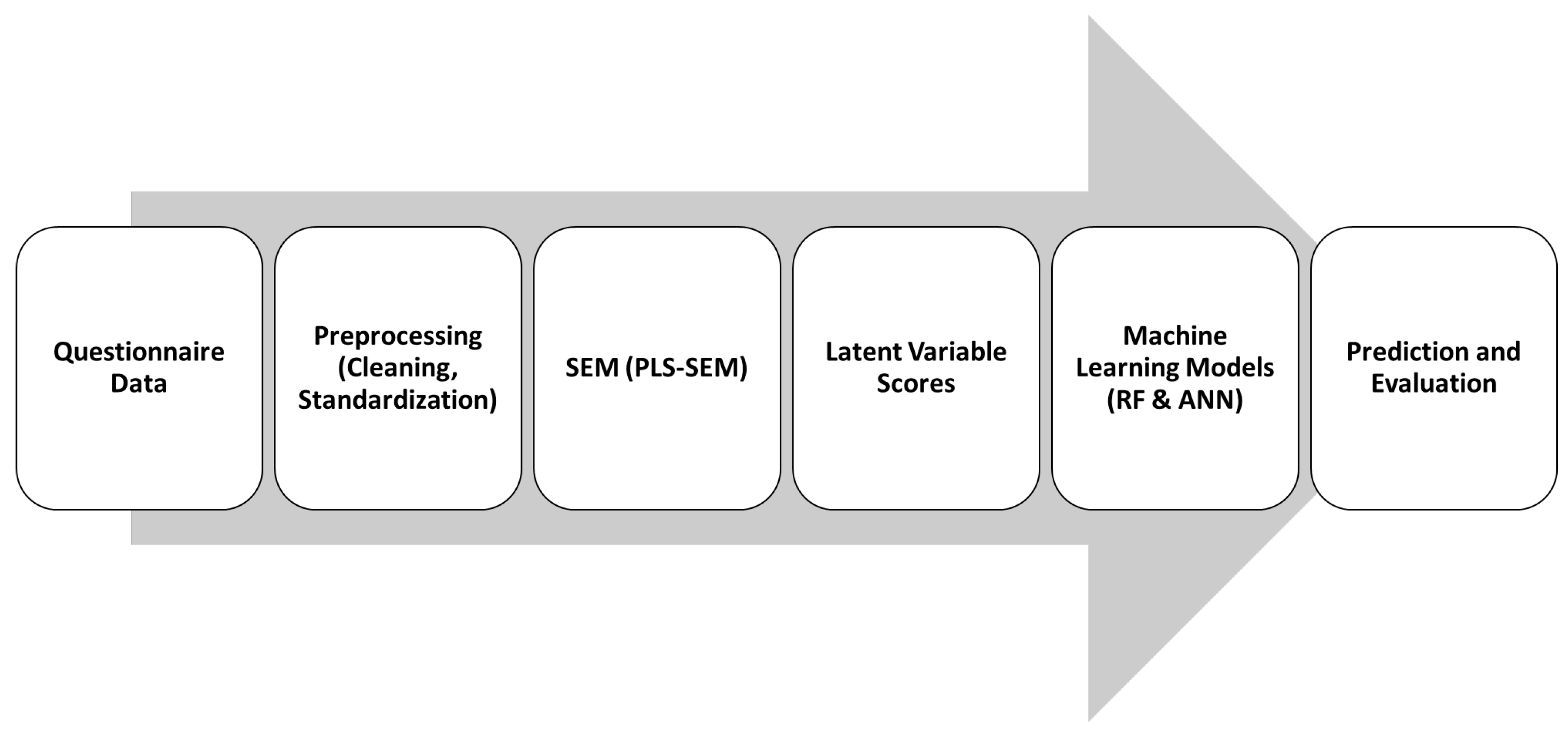
Based on these issues, this study developed an approach that integrates SEM and ML into a comprehensive framework that considers both the theoretical validity and predictive power of the model. In this study, the SEM method was used to validate the established theoretical constructs and generate a score for each latent variable. These scores are then used as input in the ML model to make predictions. The ML model is used because it can capture non-linear and other complex relationships. Thus, this method improves prediction accuracy. This approach can be viewed as a form of latent embedding, in which the theoretically validated latent constructs are projected into a structured, low-dimensional feature space. This transformation serves as a theory-based regularization mechanism, helping reduce data noise and improve model stability. Machine learning methods are then used to estimate the non-linear functions that describe the relationships between latent variables. Accordingly, this study seeks to investigate the factors that influence the effectiveness of community-based Blue Economy and Circular Economy training programs implemented in the Citarum River Basin. In particular, the study examines the extent to which participant commitment mediates the relationships between participant characteristics, training instruction, organizational and environmental factors, and training performance. Furthermore, the study explores whether a hybrid Structural Equation Modeling–Machine Learning (SEM–ML) framework can provide superior predictive performance compared with conventional explanatory modeling approaches. Based on these research questions, the study aims to identify the key determinants of training effectiveness and evaluate the usefulness of a theory-guided SEM–ML framework for predicting training performance in sustainability-oriented community capacity-building programs. While the constructs examined in this study are well established in the training effectiveness literature, their application within Blue Economy and Circular Economy capacity-building programs remains limited. Unlike conventional organizational training, sustainability-oriented training initiatives aim not only to improve individual knowledge and skills but also to foster community engagement, environmental awareness, and the adoption of sustainable practices. Therefore, investigating these determinants within the context of the Citarum River Basin provides insights into how established training effectiveness factors operate in sustainability-oriented community development programs.
This study contributes to the literature in three important ways. First, it extends training effectiveness research into the context of community-based sustainability interventions, specifically Blue Economy and Circular Economy capacity-building programs implemented within the Citarum River Basin. Second, the study contributes methodologically by integrating Structural Equation Modeling (SEM) and Machine Learning (ML) into a unified analytical framework. Unlike conventional predictive modeling approaches, the proposed framework utilizes theoretically validated latent variables as machine learning inputs, thereby combining explanatory and predictive perspectives. Third, the findings provide practical guidance for policymakers, local governments, and training providers seeking to strengthen sustainability-oriented community empowerment programs through improved training design, participant engagement, and institutional support mechanisms.
3. Methods
This study integrates SEM and ML into a single, comprehensive modeling framework. Methodologically, the integration of these two approaches was undertaken to ensure consistency and theoretical validity at the latent construct level, while simultaneously enhancing the overall model’s flexibility and predictive accuracy.
3.1. Study Area and Data Collection
This study was conducted in the Citarum River Basin, West Java, Indonesia, which spans several administrative areas, including Bandung Regency, West Bandung Regency, Sumedang Regency, Bandung City, Cimahi City, Purwakarta Regency, Karawang Regency, and Bekasi Regency, and has become a national priority area for environmental restoration and sustainable development initiatives. The study focused on participants involved in community empowerment programs related to the implementation of Blue Economy and Circular Economy principles within the watershed area. Data collection was conducted between August 2025 and March 2026 following the completion of a series of community-based training programs. The target population consisted of community members who participated in sustainability-related training activities organized as part of environmental improvement and economic empowerment initiatives in the Citarum River Basin.
A structured questionnaire was used as the primary data collection instrument. The questionnaire was developed based on established measurement scales from previous studies on training effectiveness and organizational learning and was adapted to the context of sustainability-oriented community training. All indicators were measured using a five-point Likert scale ranging from 1 (strongly disagree) to 5 (strongly agree). A purposive sampling approach was employed to ensure that respondents possessed direct experience with the training programs being evaluated. A total of 150 valid responses were collected and subsequently used in the SEM v32.0 and Machine Learning analyses. The sample size satisfies the minimum requirements for PLS-SEM v4.1.1.8 analysis and provides sufficient observations for the predictive modeling stage. Prior to data collection, the questionnaire underwent content validation through expert review and pilot testing to ensure clarity, relevance, and contextual suitability. Responses were then screened for completeness and consistency before being included in the final dataset used for analysis.
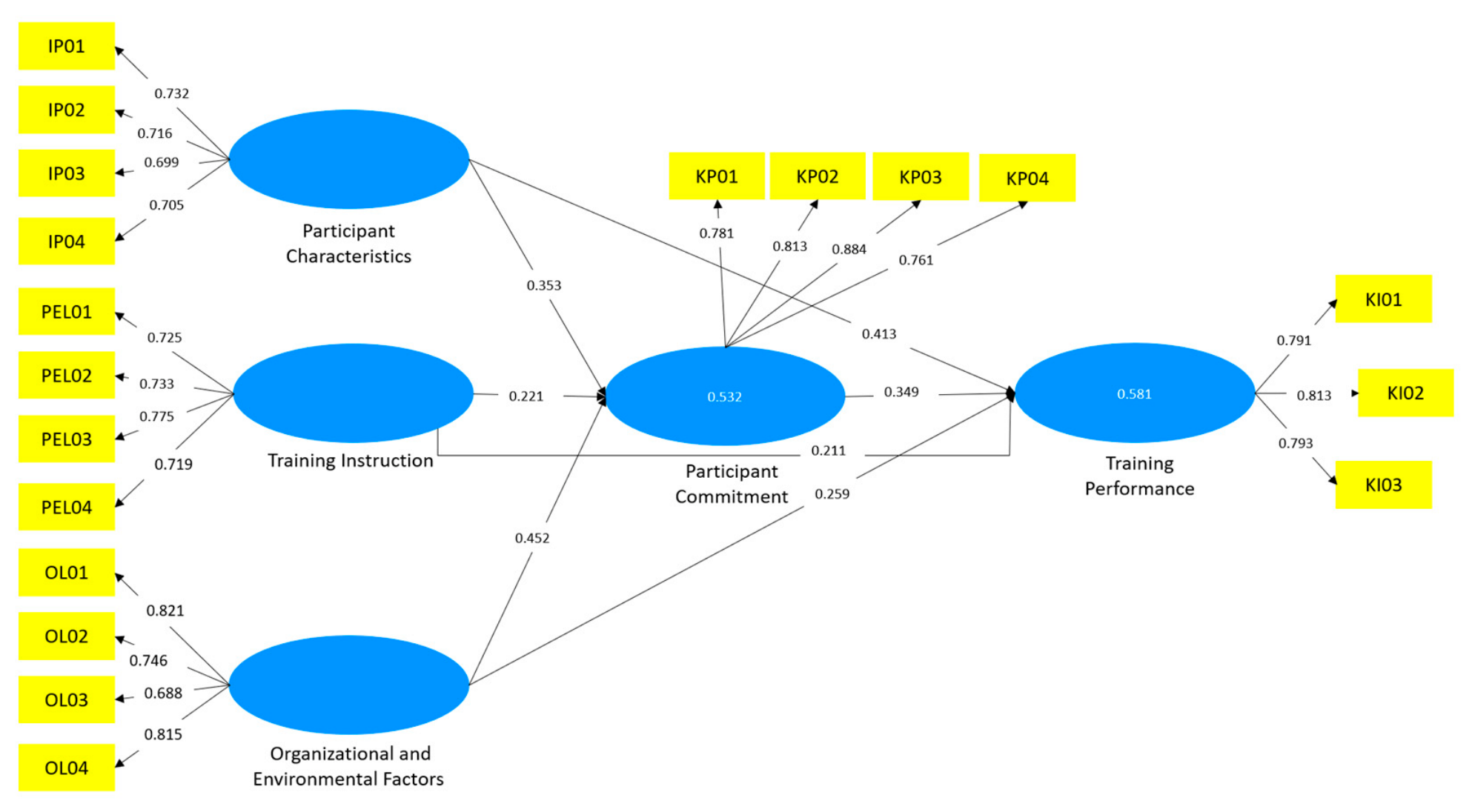
Table 1 summarizes the principal components of the Blue Economy and Circular Economy training program evaluated in this study. The training combined conceptual knowledge regarding sustainable resource management with community-based learning activities and institutional support mechanisms. These components are reflected in the research model through five latent constructs: Participant Characteristics, Training Instruction, Organizational and Environmental Factors, Participant Commitment, and Training Performance. While the training content focused on Blue Economy and Circular Economy principles, the present study specifically investigates the factors that influence the effectiveness of the training and its capacity-building outcomes. Accordingly, Training Performance represents the extent to which participants perceive improvements in their understanding, competencies, and readiness to support sustainability-oriented practices, whereas Participant Commitment reflects their willingness to engage with and apply the knowledge acquired during the training process.
3.2. Data
The dataset used in this study consisted of 150 valid responses collected from participants involved in Blue Economy and Circular Economy training programs implemented in the Citarum River Basin. Each respondent represented a community member who had completed the capacity-building program and subsequently evaluated the training experience through a structured questionnaire. The questionnaire measured five latent constructs: Participant Characteristics, Training Instruction, Organizational and Environmental Factors, Participant Commitment, and Training Performance. A total of 19 indicators were used to represent these constructs, and all indicators were measured using a five-point Likert scale ranging from 1 (strongly disagree) to 5 (strongly agree).
As summarized in
Table 2, the questionnaire consisted of five latent constructs measured using 19 reflective indicators. Participant Characteristics (IP), Training Instruction (PEL), Organizational and Environmental Factors (OL), and Participant Commitment (KP) were each measured using four indicators, while Training Performance (KI) was measured using three indicators. All construct measurements were collected using a five-point Likert scale ranging from 1 (strongly disagree) to 5 (strongly agree). Prior to analysis, the collected data were screened for completeness and consistency. Responses with missing values or incomplete information were excluded from the analysis. The resulting dataset was subsequently used for both the PLS-SEM and machine learning stages. In the PLS-SEM stage, the observed indicators were used to estimate and validate the latent constructs. The validated latent variable scores were then extracted and utilized as input features for the machine learning models to improve predictive performance. For mathematical formulation, let the validated dataset consist of
observations, where each observation corresponds to one training participant. Each participant is represented by a vector of observed indicator values,
where
is the total number of indicators representing three exogenous latent constructs (individual, instructional, organizational) and one endogenous latent construct (training performance). The data used are on a Likert scale and were therefore treated as continuous numerical variables in the PLS-SEM-based estimation. Prior to analysis, data completeness checks, outlier detection, and variable standardization were performed to ensure the stability of the estimates.
3.3. Theoretical Rationale of the SEM–ML Integration
The integration of SEM and Machine Learning in this study is motivated by the complementary strengths of explanatory and predictive modeling approaches. SEM is particularly effective for validating theoretical relationships among latent constructs and ensuring construct reliability and validity. However, SEM is not primarily designed for maximizing predictive accuracy. Conversely, machine learning algorithms excel at prediction but often operate as data-driven models with limited theoretical interpretability. By using latent variable scores generated from SEM as machine learning inputs, the proposed framework combines the strengths of both approaches. SEM serves as a theory-guided feature extraction mechanism, transforming multiple observed indicators into theoretically meaningful latent representations. These latent representations are subsequently utilized by Random Forest and Artificial Neural Network models to improve predictive performance while preserving conceptual interpretability. Therefore, the SEM–ML framework should not be viewed merely as a sequential analytical procedure but as an integrated approach that bridges explanatory modeling and predictive analytics.
In the context of sustainability-oriented training programs, this integrated framework enables researchers to identify theoretically validated determinants of training effectiveness while simultaneously assessing their predictive relevance. Consequently, the proposed approach provides a more comprehensive evaluation of post-training capacity-building outcomes than would be achieved through explanatory or predictive methods alone.
3.4. SEM Model Specifications
SEM model consists of two main components: the measurement model and the structural model. In the measurement model, for each exogenous latent construct
, its reflective indicators are expressed as Equation (8),
where
is the factor loading vector,
is the measurement error, and
. Then, for the endogenous latent construct η, the measurement model is expressed as Equation (9),
The assumption of reflectivity implies that the covariance among indicators is explained by the variance of the underlying latent construct. For the structural model, the relationships among latent variables are formulated as a linear regression model at the latent level, as presented in Equation (10),
where
is the path coefficient,
is the structural error term with
, and is assumed to be uncorrelated with the exogenous constructs. This model allows for the estimation of the direct effects of each construct on training performance.
3.5. Estimation Procedure
The estimation was performed using the Partial Least Squares (PLS) approach, which optimizes the explained variance of the endogenous variables. Iteratively, the PLS algorithm constructs latent scores as linear combinations of the indicators presented in Equation (11),
where
is the estimated weight obtained through the alternating least squares procedure. The measurement model was then evaluated using several criteria, including convergent validity, composite reliability, and discriminant validity. The structural model evaluation included path coefficient estimates, bootstrap-based significance tests, and the coefficient of determination
or the endogenous construct [
53,
54].
3.6. SEM Model Evaluation
The SEM evaluation in this study was conducted in stages. There are two aspects of SEM model evaluation: first, measurement model evaluation; and second, structural model evaluation. These two aspects were evaluated to ensure that the latent variables used in this study are statistically valid and reliable. Additionally, the evaluation was conducted to ensure that the constructs developed can represent causal relationships consistent with the established theoretical framework.
Table 3 shows the SEM model testing criteria used in this study.
Table 3 presents the evaluation criteria adopted in this study for assessing the quality of the PLS-SEM model. Because several alternative evaluation criteria have been proposed in the PLS-SEM literature, this study selected the most widely recommended and commonly applied measures for evaluating reflective measurement models and structural relationships [A]. Convergent validity was assessed using factor loadings and Average Variance Extracted (AVE) to ensure that the indicators adequately represented their respective latent constructs. Discriminant validity was evaluated using both cross-loadings and the Heterotrait–Monotrait Ratio (HTMT), with HTMT included because it has been widely recommended as a more sensitive criterion for detecting discriminant validity issues than traditional approaches [B]. Reliability was assessed using Cronbach’s Alpha and Composite Reliability to examine the internal consistency of the measurement model. For the structural model, explanatory power was evaluated using the coefficient of determination (R
2), while predictive relevance was assessed using the Stone–Geisser Q
2 statistic. Finally, the significance of the structural relationships was examined using bootstrapping, whereas mediation effects were evaluated using indirect effects and the Variance Accounted For (VAF) criterion.
3.7. Machine Learning Model
After obtaining latent-construct scores using the SEM approach, the next step is to apply ML algorithms to model the nonlinear relationships between the latent constructs and the dependent variables. The use of ML in this study aims to improve the model’s predictive power. In this study, two ML algorithms were used: Random Forest (RF) and Artificial Neural Network (ANN).
3.7.1. Random Forest
Random Forest is a decision-tree-based ensemble learning method that works by building a large number of decision trees and combining the predictions from each tree to produce a final prediction [
54]. Mathematically, the Random Forest model can be expressed as Equation (12),
where
is the number of decision trees in the forest,
is the prediction from the t-th tree, and
is the latent construct score vector. Each tree is constructed using a subset of data selected at random via bootstrap sampling, as well as a subset of features selected at random at each node. This approach is known as bagging (bootstrap aggregating), which aims to reduce model variance and improve prediction stability [
54,
55,
56].
3.7.2. Artificial Neural Network (ANN)
ANN is a machine learning algorithm inspired by biological neural networks. This algorithm consists of an input layer, hidden layers, and an output layer [
57]. ANNs have the ability to model complex nonlinear relationships through a combination of nonlinear transformations and activation functions. Mathematically, an ANN model with a single hidden layer can be expressed as Equation (13),
let
be the input,
be the weight matrices,
be the biases, and
e the nonlinear activation function. Commonly used activation functions include ReLU (Rectified Linear Unit) and sigmoid, which allow the model to capture nonlinear relationships in the data. Model parameters are estimated via the backpropagation algorithm by minimizing the loss function using optimization methods such as gradient descent.
3.8. Integration with Machine Learning
Once the SEM model has been validated and the latent scores have been obtained, those scores are then used as input for the machine learning algorithm. Mathematically, this process is presented in Equation (14),
where
are the latent scores for each latent variable in the SEM model. The predictive model in this study is presented in Equation (15),
where
is a nonlinear function estimated from the function class
The estimated function is obtained by minimizing the empirical risk presented in Equation (16),
In this study, the class of functions F is represented by random forests and artificial neural networks, which are capable of capturing nonlinear interactions among latent constructs. This integration can be viewed as a two-stage transformation composition as presented in Equation (17),
The first transformation is theory-driven, while the second is data-driven. Although the dataset consists of 150 observations, the machine learning models were developed using SEM-derived latent variable scores rather than the full set of questionnaire indicators. This approach substantially reduced data dimensionality, resulting in only four theoretically validated input features. Accordingly, the machine learning component was intended to complement the explanatory SEM analysis by exploring predictive capability rather than developing a large-scale predictive system.
3.9. Model Training and Evaluation
Once the machine learning model and its integration with SEM have been determined, the next steps are hyperparameter tuning, model training, and finally, model performance evaluation. These three steps are designed to ensure that the resulting model does not overfit—a condition in which the model is accurate only during training and performs poorly when applied to previously unseen data. Model training in this study was conducted using k-fold cross-validation. In this approach, the dataset is divided into 10 mutually exclusive subsets; in each iteration, one subset serves as the test set, while the remaining 9 serve as the training set. This process is repeated 10 times so that each data subset serves as test data exactly once. During the training process, the model is estimated by minimizing the function presented in Equation (18),
where
is the loss function,
is the regularization function,
is the regularization parameter that controls the model’s complexity, and
is the latent construct score vector.
In this study, hyperparameter tuning was performed using a grid search approach. This approach systematically tests various hyperparameter combinations and selects the best configuration based on the evaluation criteria. For the Random Forest algorithm, the configured parameters include the number of trees, the maximum tree depth, and the number of nodes considered at each split. For the ANN, the parameters include the number of neurons per layer, the number of hidden layers, the learning rate, and the activation function.
Finally, to evaluate the model’s performance, several prediction accuracy metrics were used. The metrics used include Mean Squared Error (MSE), Root Mean Squared Error (RMSE), and the coefficient of determination (
). MSE is used to measure the average squared error between the actual values and the predicted values, which is mathematically expressed in Equation (19),
RMSE is the square root of MSE, which expresses the error in the same units as the dependent variable,
Meanwhile, the coefficient of determination R
2 is used to measure the proportion of variance in the dependent variable that can be explained by the model, as expressed in Equation (21),
5. Discussion
Based on the research findings, integrating two modeling frameworks, namely SEM and ML, can yield more detailed, comprehensive insights into the effectiveness of training programs. Through this approach, it was found that the relationship between variables in the theoretical framework of the training program, specifically training on the implementation of the Blue Economy and Circular Economy in the Citarum River Basin, is not entirely linear but involves a complex relationship [
57,
58,
59].
The SEM analysis revealed that, among the factors determining the effectiveness of the training program, organizational and environmental factors were the most influential. The significance of these organizational and environmental factors is reflected in their direct and indirect effects on the training program’s effectiveness. This finding is consistent with the literature, which has previously emphasized the importance of environmental support in facilitating the transfer of knowledge from training into community practice [
12,
13]. A conducive and supportive environment can accelerate the application of skills and knowledge gained from training. Thus, this indicates that the role of the government and local community groups is crucial in creating an ecosystem that supports the practice of the Blue Economy and Circular Economy in the Citarum River Basin.
Another finding from the machine learning analysis indicates that the interactions among the factors determining training effectiveness are not entirely linear. This is evidenced by a significant improvement in prediction accuracy when the SEM model is integrated with ML. This suggests a complex interaction pattern among the factors determining training effectiveness, such as threshold effects and non-linear interactions, that can be captured only when the SEM model is integrated with an ML model. For example, improvements in instructional quality during training may only significantly affect performance up to a certain level, or when they are supported by high trainee motivation.
From a methodological perspective, this study’s results indicate that combining SEM and Machine Learning can address the shortcomings of each approach when used independently. The SEM approach has a strong conceptual framework, grounded in the formation and validation of latent constructs, whose causal relationships are then tested. Meanwhile, Machine Learning methods can enhance a model’s predictive capability through nonlinear approximations. Therefore, by using latent construct scores as input to the ML model, this study demonstrates that the features generated by the model are not only more structured and theoretically valid but also capable of improving the predictive model’s accuracy. This approach can also be viewed as theory-guided feature engineering, in which the feature creation process is guided by a sound conceptual theory. This is one of the advantages of this method compared to conventional ML methods, which often overlook theoretical aspects in the modeling process. Thus, this study contributes to addressing the shortcomings of both explanatory modeling and predictive modeling.
The findings also provide practical insights for organizations involved in sustainability-oriented capacity-building programs. The significant effects of Participant Characteristics, Training Instruction, and Organizational and Environmental Factors suggest that improving training effectiveness requires a comprehensive approach that extends beyond curriculum design alone. Training providers should consider participant readiness, learning needs, and prior experience when designing training activities. Furthermore, instructional strategies should emphasize interactive learning, practical exercises, and context-specific examples that facilitate the application of Blue Economy and Circular Economy principles. The results also highlight the importance of post-training support mechanisms, including mentoring, community engagement, and institutional assistance, which can strengthen participant commitment and increase the likelihood that acquired knowledge will be translated into practice. For local governments and development agencies, these findings suggest that investments in sustainability-oriented training programs should be accompanied by supportive environmental and organizational conditions to maximize post-training capacity-building outcomes.
The findings should be interpreted within the scope of training effectiveness and community capacity-building rather than as direct evidence of environmental improvement. While Participant Characteristics, Training Instruction, Organizational and Environmental Factors, and Participant Commitment were found to significantly influence Training Performance, the present study does not directly assess environmental indicators such as water quality, waste reduction, ecosystem restoration, or other watershed management outcomes. Nevertheless, effective training programs represent an important prerequisite for sustainability-oriented behavioral change. By enhancing participant knowledge, skills, engagement, and commitment, Blue Economy and Circular Economy training initiatives may strengthen the capacity of local communities to support future environmental management efforts. Therefore, the contribution of this study lies in identifying the factors that improve training effectiveness and post-training capacity-building potential, which may subsequently facilitate the implementation of sustainability-oriented practices within the Citarum River Basin.




 ,
,