Article

Integrating Kansei Engineering into Sustainable Landscape Design: An Empirical Study on Ornamental Pools


by
Elif Karaca
1,* and
Halim Perçin
2
1
Food and Agriculture Vocational School, Department of Park and Garden Plants, Çankırı Karatekin University, Çankırı 18100, Türkiye
2
Department of Landscape Architecture, Ankara University, Ankara 06590, Türkiye
*
Author to whom correspondence should be addressed.
Sustainability 2026, 18(14), 6954; https://doi.org/10.3390/su18146954 (registering DOI)
Submission received: 14 May 2026 / Revised: 17 June 2026 / Accepted: 23 June 2026 / Published: 8 July 2026
(This article belongs to the Section Health, Well-Being and Sustainability)

Abstract

Emotional design is increasingly recognised within landscape architecture, particularly in the context of sustainable and user-centred environments; however, systematic and data-driven approaches that translate users’ emotional responses into concrete design parameters remain limited. To address this gap, the aim of this study is to systematically integrate users’ emotional expectations into landscape design by applying Kansei Engineering, using ornamental pools as a case study. A semantic differential survey was conducted with 91 participants, including landscape design students and experts. The experimental stimuli were developed based on a Taguchi L8 orthogonal array, enabling the systematic evaluation of five design factors (depth, interior surface colour, surface planting, form, and motion) across eight configurations. The collected data were analysed using the Taguchi method and Analysis of Variance (ANOVA) to identify optimal design combinations and quantify the relative influence of each factor. The results reveal that surface planting is the dominant factor influencing perceptions such as captivating and legible, while motion plays a key role in shaping mental restoration. The optimal configuration, characterised by shallow depth, light colour, vegetation, natural form, and dynamic water, evoked strong positive responses including captivating, aesthetically pleasing, and satisfying. This study proposes a data-driven framework for linking emotional perception with landscape design variables, contributing to the development of more socially and psychologically sustainable, user-centred, and emotionally responsive landscape environments.

1. Introduction

Architectural design is not merely concerned with meeting functional requirements; it also constitutes a phenomenon with a psychological dimension. Rasmussen [1] that architecture profoundly influences people’s mood and behaviour, defining architectural design as an experience capable of evoking a wide range of emotions. Accordingly, contemporary design approaches increasingly recognise the importance of integrating emotional experience into the built environment [2,3].
Recent developments in architectural theory have expanded the scope of sustainability beyond environmental considerations to include the social and psychological dimensions of human well-being [4,5]. This broader perspective highlights that sustainable design should enhance quality of life, promote healthier environments, and support users’ emotional and cognitive experiences [6,7]. Within this framework, the quality of human–environment interaction—particularly in terms of emotional experience—emerges as a critical factor in achieving long-term user satisfaction and well-being [8].
From this perspective, users’ emotional experience has become a central concern in architectural design. Previous studies have shown that spatial configurations and design elements can evoke distinct emotional responses, which in turn influence perception, behaviour, and overall user satisfaction [9,10,11]. For example, Bogaert [12] demonstrates that hospital environments influence the emotional experiences of both patients and healthcare professionals, while Li [13] highlights the role of spatial narratives in shaping emotional engagement in religious architecture. Similarly, Banaei et al. [14] and Kim and Kim [15] provide evidence linking spatial configurations with emotional and neurophysiological responses.
Despite these advances, emotional considerations in design processes are often shaped by designers’ intuition and experiential knowledge [3]. Although such approaches offer valuable insights, they may introduce subjectivity and limit the systematic integration of user needs into design decision-making [3,16,17,18].
While this challenge is widely discussed in architectural research, it becomes even more pronounced in the field of landscape architecture, where user experience is inherently multisensory, dynamic, and context-dependent. Landscape environments involve complex interactions among spatial configurations, natural elements, and human perception, making the systematic evaluation of emotional responses particularly difficult [19,20]. Recent studies in landscape architecture emphasise the importance of user emotional well-being in shaping the quality of outdoor spaces [21,22,23,24,25]. In particular, research on restorative environments highlights the fundamental role of emotional responses in the success of landscape design [26,27,28].
Restorative experiences in landscape environments can be better understood through established theoretical frameworks in environmental psychology. In particular, Attention Restoration Theory (ART) proposes that environments supporting fascination, being away, extent, and compatibility contribute to cognitive recovery from mental fatigue [19]. Similarly, Stress Recovery Theory (SRT) suggests that natural environments can promote rapid reductions in physiological and psychological stress [20].
Within this framework, landscape elements—such as water features, vegetation, and natural forms—are recognised as key components of restorative environments, as they support both cognitive restoration and emotional regulation. These theoretical approaches provide a foundation for examining how specific landscape design elements influence users’ restorative emotions, which is a central focus of the present study.
Despite this growing body of literature, systematic methods that translate emotional responses into concrete landscape design parameters remain limited [21,22]. Therefore, there is a clear need for structured, user-centred approaches that bridge the gap between subjective emotional experience and objective design decision-making in landscape architecture [23].
To address these challenges, various user-centred design methods have been developed to systematically incorporate user needs into the design process, including Quality Function Deployment (QFD), Conjoint Analysis and Kansei Engineering [23,24]. While QFD focuses on translating customer needs into technical requirements, it is primarily oriented toward functional performance rather than emotional experience [25]. Similarly, Conjoint Analysis is effective in identifying user preferences across design attributes [26], yet it remains limited in capturing the underlying emotional meanings associated with these preferences.
In contrast, Kansei Engineering provides a structured framework for capturing, quantifying, and translating users’ emotional responses into concrete design parameters. This capability makes it particularly suitable for landscape architecture, where user experience is inherently multisensory, affective, and context-dependent. Accordingly, this study employs the Kansei Engineering approach to integrate users’ emotional expectations into the landscape design process in a systematic manner. By adopting a structured and data-driven methodology, it aims to link subjective user perceptions with objective design parameters. In doing so, the study contributes to the development of more sustainable, restorative, and emotionally responsive landscape environments. Ultimately, incorporating emotional considerations into landscape design has the potential to enhance well-being, increase user satisfaction, and support the long-term usability of outdoor spaces.

1.1. Kansei Engineering

The term “Kansei” originates from Japanese and encompasses emotions, senses, perception, feelings, sensitivity, intuition and aesthetics [27]. It also refers to the way individuals emotionally respond to different design-related stimuli [28,29]. In this context, Kansei Engineering can be defined as a methodology that integrates emotional responses with engineering principles [30]. It focuses on analysing human emotions and incorporating them into the product design process [30].
To define product features, this approach relies on expressions derived from users’ emotional perceptions, rather than solely on expert judgement. In this way, users’ emotional experiences are systematically translated into design elements [31,32]. Although Kansei Engineering has been widely applied in industrial design, its integration into architectural practice remains relatively limited [33]. This limitation is particularly significant for landscape architecture, where user experience is highly dynamic, multi-sensory, and context-dependent.
Unlike product design, landscape environments involve complex interactions between natural elements, spatial configurations, and human perception. Therefore, the adoption of Kansei Engineering in landscape architecture offers a structured approach for capturing and quantifying these complex emotional responses.
Karaca et al. [23] analysed students’ emotional responses by combining Kansei Engineering with EEG and virtual reality technologies to identify landscape design elements that support attention restoration in school environments; based on their findings, they proposed design recommendations for restorative landscape features. Similarly, Li and Dai [33] demonstrated, through a Kansei Engineering-based study on mobile galleries in community art museums, the method’s potential to guide the sustainable transformation of exhibition formats by addressing users’ emotional needs through an integrated qualitative and quantitative approach.
Zhang et al. [34] established a relationship between users’ psychological preferences and architectural styles using Kansei engineering. Tsuchiya [35] analysed people’s emotional responses to a street layout in the Chofu district of Shimonoseki, Japan—a city known for its historical urban fabric—by employing Kansei Engineering in combination with Self-Organising Maps. Furthermore, Matsubara et al. [36] applied Kansei Engineering to evaluate the concept of “restorative” Kansei in residential garden design, identifying landscape elements that effectively evoke restorative experiences in modern Japanese gardens.
Nagasawa [37] categorised Kansei measurement methods into two main groups: physiological and psychological. Physiological measurements focus on individuals’ bodily responses to external stimuli and are typically assessed using techniques such as electromyography (EMG), which measures muscle activity; electroencephalography (EEG), which records neural activity; heart rate monitoring; and systematic observation of behavioural patterns, facial expressions, and bodily movements [38]. In contrast, psychological measurements capture Kansei through verbal expressions and are commonly assessed using semantic differential scales [30].
Physiological measurement methods generally require sophisticated infrastructure and high-cost equipment. Techniques such as EMG and EEG may also be limited in accessibility due to the need for specialised equipment and technical expertise [39]. Moreover, these methods can pose challenges in studies involving large participant groups due to their complexity and cost. By contrast, psychological measurement methods enable participants to directly express their experiences and emotional responses through verbal evaluation. As such, they provide a more flexible and less technically demanding approach to data collection.
Therefore, this study adopts psychological measurement methods within Kansei Engineering, as they offer a practical and scalable means of capturing user experience in the landscape design process.

1.2. Research Framework

Emotional design in architecture is often shaped by the designer’s intuition and experiential knowledge [3]. Similarly, in landscape design process, users’ emotional expectations are frequently interpreted through designers’ subjective judgement rather than being directly analysed. This leads to decision-making processes that are inherently subjective, which may result in design outcomes that do not adequately reflect users’ emotional needs. In this context, the lack of a user-centred and emotion-focused design approach emerges as a significant deficiency in landscape design.
To address this limitation, this study aims to integrate Kansei Engineering into the landscape design process in order to systematically analyse users’ emotional responses and translate them into concrete design features, using ornamental pools as a case study. Accordingly, the objectives of the study are (1) to analyse users’ emotional responses to different ornamental pool designs using Kansei Engineering, (2) to identify the most influential design factors affecting these responses, and (3) to determine optimal design configurations through statistical analysis.
Through this approach, users’ emotional expectations can be directly incorporated into the design process, enabling the development of more responsive and user-centred landscape designs.
The significance of this study lies not only in its methodological contribution to integrating users’ emotional expectations into the design process, but also in its ability to enable the objective and systematic evaluation of emotional feedback, moving beyond traditional intuition-based approaches. In this respect, the study provides both a theoretical and practical contribution to the literature and to design practice by proposing a user-centred framework for landscape design.
Accordingly, the study hypothesises that users’ emotional expectations can be systematically analysed through Kansei Engineering and directly integrated into the landscape design process. Based on this premise, the study addresses the following research question: how can users’ emotional responses be systematically analysed and translated into concrete landscape design features through Kansei Engineering?
Furthermore, the research objectives are operationalised through the quantitative analysis of users’ emotional responses using semantic differential scales and statistical methods such as the Taguchi method (Minitab, Version 21.0, LLC, State College, PA, USA) and ANOVA (IBM SPSS Statistics, Version 23.0, IBM Corp., Armonk, NY, USA).
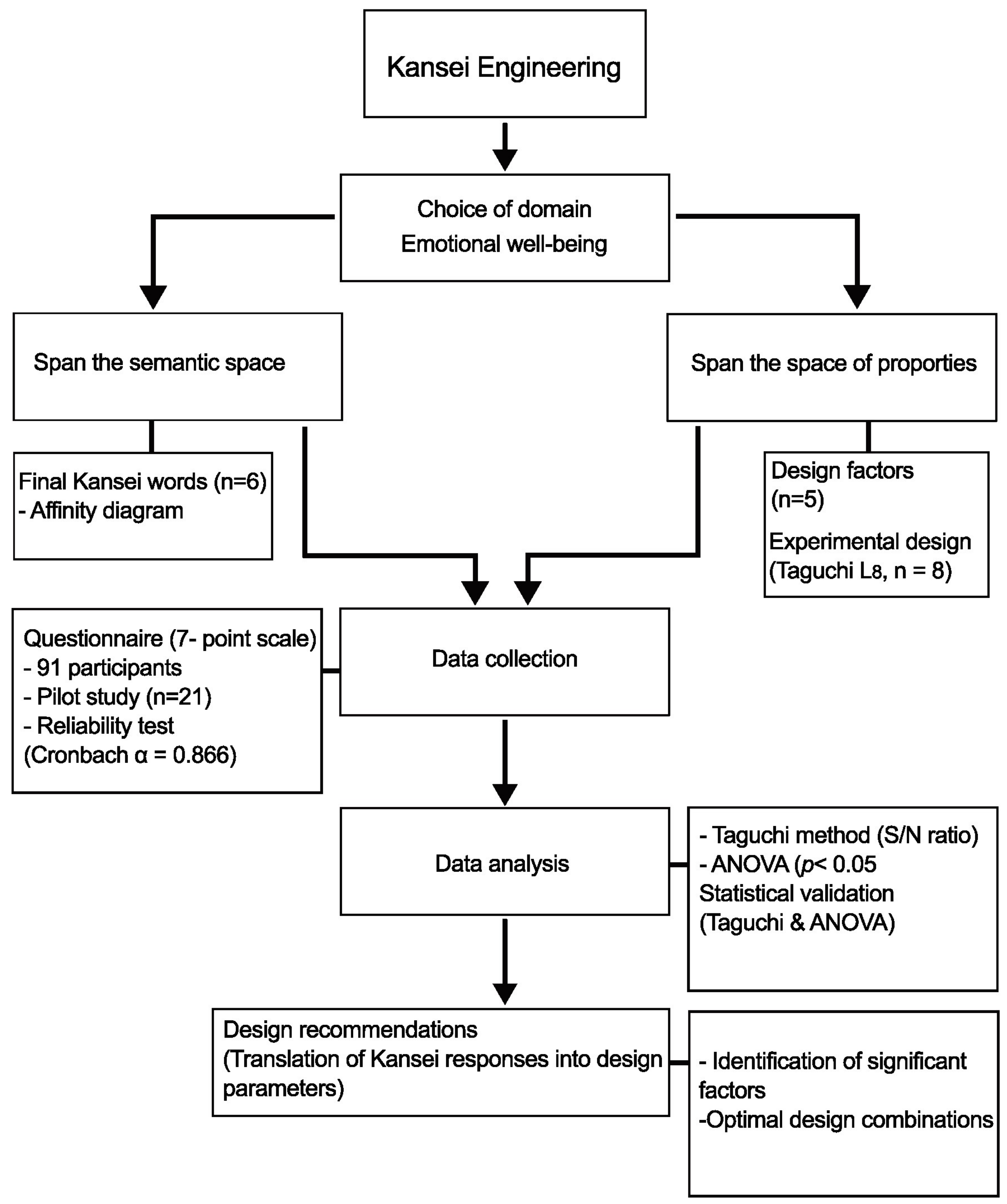
The study began with a comprehensive overview of emotional design in architecture and Kansei Engineering, forming the conceptual foundation of the research. Following this, the research was implemented as a structured and sequential process in which each stage built upon the outcomes of the previous one. The procedural steps of Kansei Engineering were then applied in accordance with established methodologies in the literature [30,40,41]. These stages comprise five key phases: domain selection, spanning the semantic space, spanning the space of properties, data collection, and data analysis.
The Kansei words derived from the semantic space stage were used to construct the questionnaire, while the identified design properties formed the experimental variables. The data collected from the questionnaire were subsequently analysed to establish relationships between emotional responses and design parameters.
To ensure methodological robustness, validation procedures were incorporated at different stages of the process, including expert evaluation, pilot testing, and statistical validation techniques.
Based on the findings, a set of design recommendations was proposed. The final section presented a detailed discussion of the study’s limitations and provided directions for future research.

2. Materials and Methods

In this study, “water features” were selected as the primary research material due to their fundamental role in architectural and landscape design and their potential to influence human perception in diverse ways. Numerous studies highlight that water—whether in the form of oceans, large lakes, rivers, or ornamental pools, and whether dynamic or still—constitutes a highly valuable element in landscape design [19,20,42,43,44,45].
Recent experimental research has demonstrated that exposure to water can have positive effects on mental health [46,47,48]. For instance, Luo et al. [49] found that exposure to water landscapes facilitates more effective recovery from mental fatigue. Similarly, Liu, et al. [50] showed that water-related auditory cues—such as the sound of flowing or still water—play an indirect yet significant role in enhancing visitors’ comfort and perceived restorativeness in landscape environments.
Given the broad scope of the water feature, this study focuses on ornamental pools—which inherently carry aesthetic and psychological value in landscape design—as the primary research material, in order to narrow the scope around a specific theme.

2.1. Participants

In Kansei Engineering studies, including participants with similar characteristics and levels of experience is important for ensuring data consistency. In many existing studies, researchers draw on academic environments, and university students are frequently preferred as participants [40,41,51,52].
In this study, the participant group consisted of third- and fourth-year students studying landscape design in order to strengthen the representativeness of the target user group. In addition, 20 faculty members specialised in landscape design were included to incorporate expert perspectives into the analysis.
Participants were selected using a convenience sampling approach, which is commonly employed in Kansei Engineering research due to its practicality and relevance to the study domain. Inclusion criteria required participants to have prior knowledge or an educational background in landscape design, ensuring that they could meaningfully evaluate the presented stimuli.
Kansei Engineering research exhibits notable variation in sample sizes. According to the review by Marco-Almagro and Tort-Martorell [40], approximately 30% of studies involve 24 or fewer participants, while only 10% include 80 or more. Overall, the literature suggests that data are typically collected from groups of around 40 participants on average.
The sample in this study consisted of 91 individuals: 20 experts and 71 students, of whom 37 were in their third year and 34 in their fourth year.
Ethical considerations were carefully addressed throughout the study. Participation was entirely voluntary, and all participants were informed about the purpose and procedures of the research prior to their involvement. Informed consent was obtained from all participants, and no personally identifiable information was collected. Participants were assured of the confidentiality and anonymity of their responses. The study did not involve any form of intervention or experimental manipulation and was conducted in accordance with the Declaration of Helsinki.

2.2. Kansei Engineering Process

2.2.1. Choice of Domain

The product domain refers to the basic emotions intended to be evoked in the user during the design process; in other words, it defines the overall design objective [41]. In this study, “emotional well-being” was defined as the basic emotion to be evoked by ornamental pools and was therefore identified as the main design objective.

2.2.2. Span the Semantic Space

This phase focuses on extracting Kansei words related to “emotional well-being,” which help to reveal the emotional connection between users and ornamental pools. In this regard, various sources from daily life—such as housing magazines, advertising brochures, and websites—were reviewed, and a preliminary list of 400 Kansei words was compiled. Subsequently, words with similar meanings, comparative adjectives, and non-gradable adjectives were removed, reducing the total number of Kansei words to 83. Finally, using the affinity diagram technique, the number of Kansei words was further reduced from 83 to 6.
The Affinity Diagram is a widely used analytical tool for organising complex, uncertain, and qualitative information across various fields, including industrial design, user research, product development, and service design [53]. In the Affinity Diagram process, a target or expert group is asked to group related Kansei words and identify a representative term for each cluster [40].
In the affinity diagram process, the first step involved forming a five-member team consisting of design experts and users. This team grouped 83 Kansei words associated with ornamental pools and emotional well-being based on their expertise and domain-specific knowledge. To address potential subjectivity and ensure the reliability of the reduction process, the grouping procedure was conducted using an iterative, consensus-based approach within the affinity diagram framework. Disagreements regarding the classification of specific words were discussed over multiple rounds until unanimous agreement was reached among all participants.
Although the process involves expert judgement, the use of this structured and collaborative method helped to minimise individual bias and ensured that the final six Kansei word pairs (Table 1) consistently represent the core emotional dimensions of the domain.
Although formal inter-rater reliability measures (e.g., Cohen’s kappa) were not calculated, the iterative consensus-based approach ensured a high level of agreement among participants. This structured process is widely used in qualitative Kansei Engineering studies and contributes to enhancing the reliability of the reduction procedure.

2.2.3. Span the Space of Properties

The third stage involved a literature-based review aimed at identifying and outlining the general characteristics of ornamental pools.
The literature review process was conducted in a structured manner to extract design-related variables relevant to ornamental pools. Specifically, academic studies were systematically reviewed to compile an initial set of design attributes.
The findings of this literature review revealed several key design-related characteristics of water features. For instance, Burmil et al. [54] and Seçkin [55] emphasised that the volume, form, and sound of water are key design elements influencing how people interact with water in outdoor environments. Similarly, Burmil et al. [54], Dreiseitl and Grau [56] and Burton Litton et al. [57] stated that water can appear in either static or dynamic forms within the landscape. Additionally, Burton Litton et al. [57] and Nasar and Li [58] emphasised that water, when designed in different colours, can contribute a variety of visual and sensory effects to a space.
These data were then filtered and refined, and subsequently integrated into the methodological framework through affinity diagram techniques and expert consultation as part of the design factor identification stage. The expert consultation involved a group of five individuals, including landscape design academics and senior-level students with domain-specific knowledge. These experts were selected based on their familiarity with landscape design principles and their ability to evaluate the perceptual and emotional impact of design features on users.
This process resulted in the identification of the design factors and their corresponding levels for the ornamental pools, as presented in Table 2. During this process, the experts prioritised the features they considered to have a greater impact on users. Furthermore, given the practical constraints of experimental design and the need to maintain a manageable number of stimuli, the study was limited to five key design factors.
Experimental Design and Stimuli
In this study, the total number of combinations for ornamental pools was 32, based on a full factorial design with five parameters at two levels each (25 = 32). However, considering the time and accuracy constraints associated with conducting a survey involving 32 samples, a design matrix was created using the Taguchi experimental design method to generate the minimum possible number of combinations. Taguchi design is a fractional factorial approach that uses orthogonal arrays to reduce the number of experimental runs, enabling the identification of optimal factor levels without testing every possible combination [59,60].
This study included five factors, each with two levels: depth (shallow—deep), inner surface colour (dark—light), surface planting (bare—vegetated), form (natural—geometric), and motion (still—dynamic). Based on this structure, the L8 orthogonal array was generated using Minitab (Minitab, Version 21.0, LLC, State College, PA, USA), and the experimental design sets were constructed, as shown in Table 3.
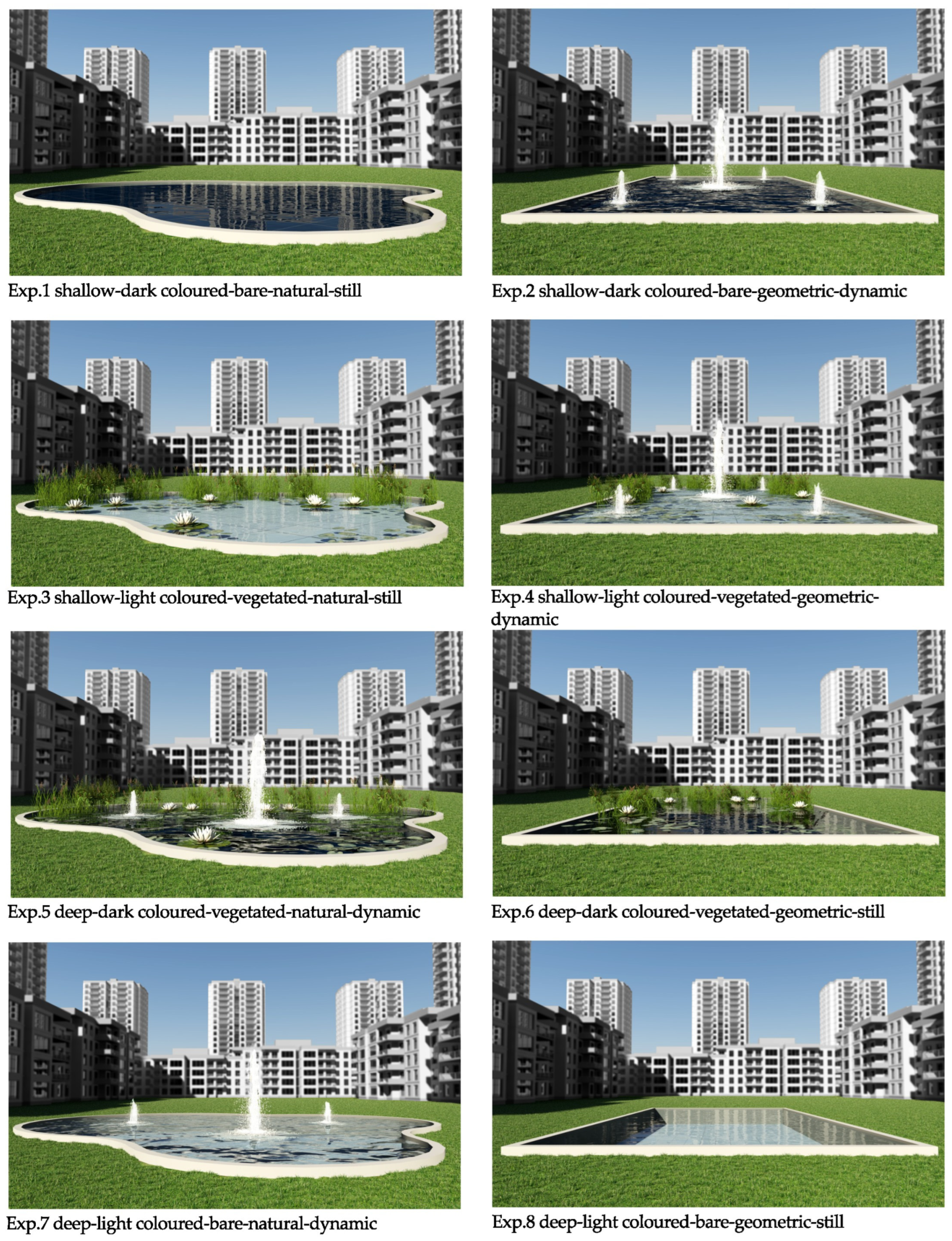
The stimulus set prepared for the questionnaire consisted of conceptual design images of eight ornamental pools, determined using the Taguchi experimental design method. Matsubara and Nagamachi [61] state that when producing different combinations is not feasible due to time and financial constraints, product images can be effectively used to measure visual perception. In line with this, eight ornamental pools were simulated using 3D modelling and image editing software, and their conceptual design images were used as stimuli in the survey (Figure 1).
It should be noted that the stimuli used in this study consist of conceptual design representations rather than real-world landscape settings. Therefore, the images were not associated with a specific urban location or city. This approach was intentionally adopted to isolate the effects of individual design factors and to eliminate contextual variables that could influence users’ perceptual evaluations.
Accordingly, the study focuses on the relationship between specific design elements and emotional responses rather than site-specific characteristics. Consequently, variables such as urban context, exact location, orientation, and scale were not defined within a real-world setting, as the aim of the study is to develop a generalisable design evaluation framework.

2.2.4. Questionnaire (Data Collection)

To evaluate eight ornamental pools using six Kansei word pairs, a semantic differential scale was employed to construct the questionnaire.
The semantic differential scale, originally developed by Osgood et al. [62], is a measurement tool used to assess people’s attitudes, opinions, or perceptions towards a subject, concept, or object. Operationally, participants respond using rating scales defined by pairs of opposing adjectives, allowing perceptual tendencies to be systematically revealed [63,64].
The questionnaire items were derived from six Kansei word pairs identified during the semantic space construction phase. These word pairs were selected through a structured reduction process starting from an initial pool of 400 words, which was refined using affinity diagram techniques and expert consensus to ensure relevance and clarity. The selected Kansei word pairs represent the core emotional dimensions associated with ornamental pools and emotional well-being, as identified through the structured semantic space construction process, thereby enabling a focused and meaningful evaluation of users’ perceptual responses.
To ensure the validity and reliability of the data, multiple validation steps were incorporated throughout the research process, including expert evaluation during the semantic structuring phase, a pilot survey with reliability testing (Cronbach’s alpha), and statistical validation through the Taguchi method and ANOVA analysis.
In this study, a questionnaire was designed using a 7-point semantic differential scale. To test its reliability, a pilot survey was conducted with 20 participants who shared similar characteristics with the target audience. At this initial stage, one ornamental pool image was randomly selected from the eight available options and shown to all participants. Cronbach’s alpha was subsequently calculated to assess the internal consistency of the scale (α = 0.866). Since the pilot results indicated a high level of reliability, the data collection phase proceeded without any modifications to the questionnaire.
To ensure accurate responses and eliminate potential ambiguity, participants were briefed on the study’s objectives and given clear definitions of each Kansei word prior to the survey. Subsequently, the 91 participants were divided into three groups. The survey was administered to each group separately at different time intervals and the presentation order of the ornamental pools was varied among groups to minimise potential order bias.

2.2.5. Statistics (Data Analysis)

The Taguchi method and ANOVA were employed for statistical analysis, with all calculations performed in Minitab and a significance threshold of 0.05 applied.
Taguchi Method
The Taguchi Method is a robust experimental design technique that seeks to reduce variability in products or processes by identifying the optimal combination of controllable (signal) factors and their levels, while accounting for the influence of uncontrollable (noise) factors, thereby enhancing overall system performance [65].
To assess deviations from desired performance levels, the Taguchi Method employs the signal-to-noise (S/N) ratio as a key indicator of quality stability [66]. It categorises problems into three types based on the target characteristic and defines a different S/N ratio for each [67]. In all three cases, the objective is to maximise the S/N ratio.
Lower is better: Aim to achieve the lowest possible value.
Larger is better: Aim to achieve the highest possible value.
Nominal is best: Aim to match the nominal value closely.
The Taguchi Method employs the S/N ratio to assess the stability and quality of the collected data [40,68].
In this study, the Taguchi method was applied to identify the optimal design combination for each Kansei word.
ANOVA
ANOVA is a statistical method used to examine the influence of independent variables on a dependent variable. In this study, ANOVA was employed to determine the significant design factors and to quantify their effects on each Kansei term, using S/N ratios obtained through the Taguchi method.
Figure 2 illustrates the overall research process and the relationships among its stages.
The process followed a structured and sequential flow in which each stage builds upon the output of the previous phase, ensuring a continuous and logically connected research process. Validation procedures were incorporated at multiple stages of the research. Specifically, expert-based evaluation was conducted during the semantic structuring phase, a pilot study and reliability analysis (Cronbach’s alpha) were applied during data collection, and statistical validation was achieved through Taguchi and ANOVA analyses. Through this process, users’ emotional responses were systematically translated into design parameters and design recommendations.

3. Results and Discussions

3.1. Taguchi Analysis (S/N Ratio) for Each Kansei Word

A design matrix was initially developed using the Taguchi experimental design method to identify the optimal design combination for each Kansei word. The mean values obtained from the questionnaire responses were subsequently calculated and converted into S/N ratios.
To enhance the effect of Kansei words on emotional well-being, the ‘larger is better’ criterion was applied in calculating the S/N ratios for the following descriptors: calming, mentally restorative, legible, captivating, aesthetically pleasing, and satisfying. This criterion was selected because higher Kansei scores reflect stronger positive emotional responses.
The S/N ratio analysis for the “calming” Kansei word indicates that not all design factors contribute equally to this perception (Table 4). In particular, form and surface planting emerge as relatively more influential factors, whereas depth appears to have a limited impact. The optimal configuration, derived from these patterns, consists of a shallow, light-coloured, bare, natural-form pool with dynamic water (Table 5). Figure 3 illustrates an example of an ornamental pool that meets these criteria.
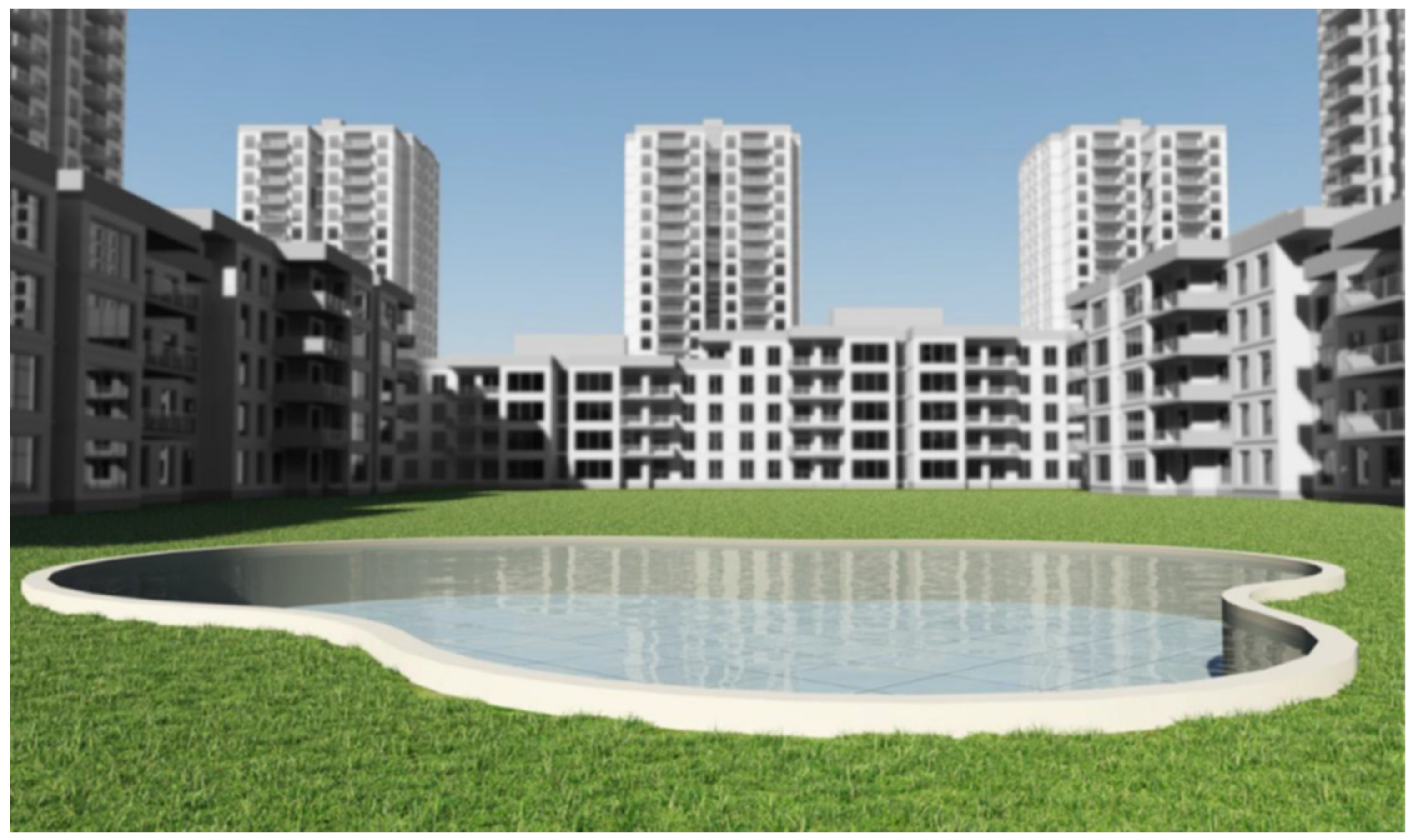
The S/N ratio analysis for the “mentally restorative” Kansei word reveals a distinct pattern in which motion emerges as the dominant factor, while depth shows a negligible effect (Table 6). This indicates that dynamic characteristics play a more critical role than dimensional attributes in shaping restorative perceptions. Consistent with this pattern, the optimal configuration consists of a deep, light-coloured, bare, natural-form pool with still water (Table 7). Figure 4 presents an example of this configuration.
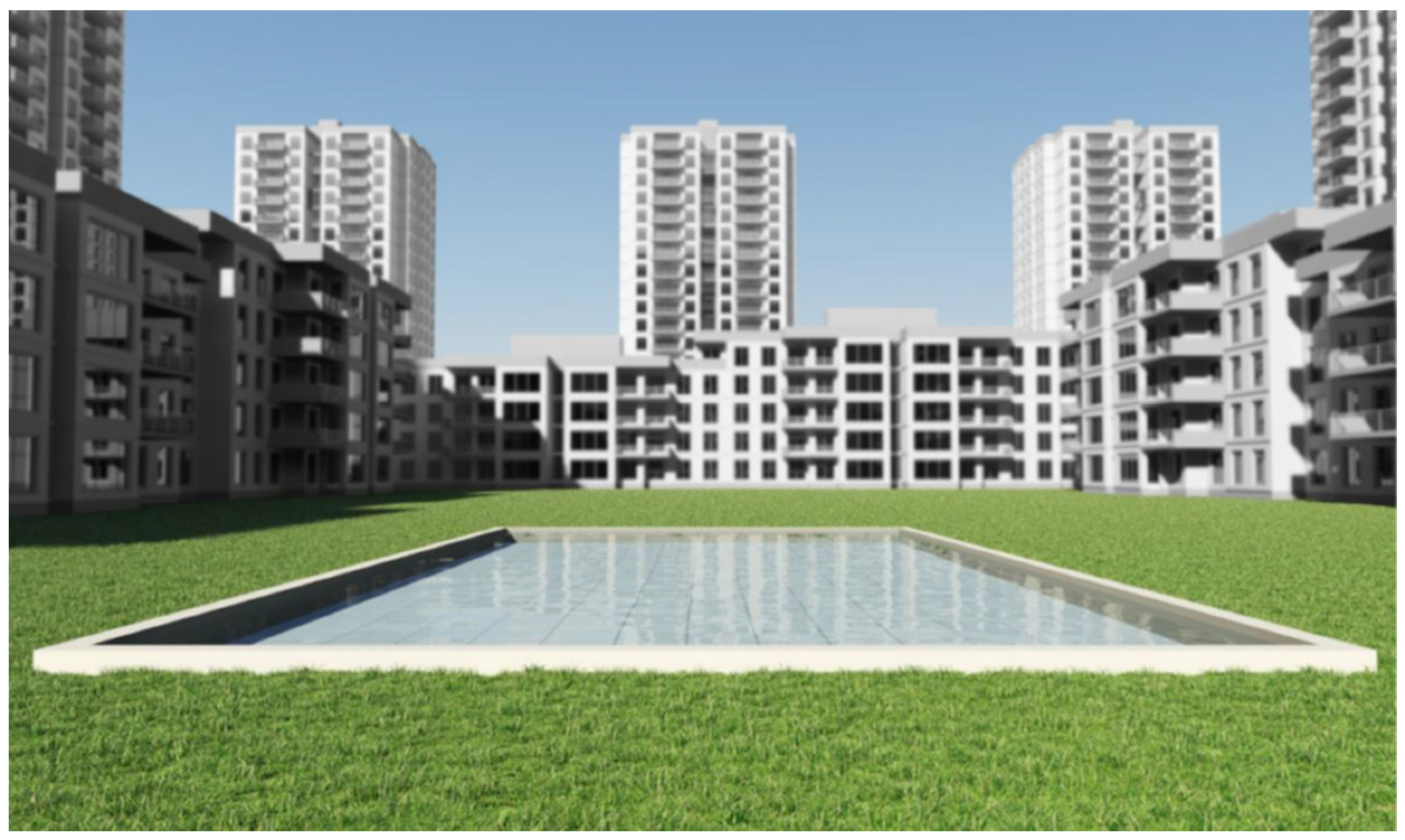
The S/N ratio analysis for the “legible” Kansei word reveals a clear pattern in which surface planting emerges as the dominant factor, while depth and motion have relatively limited influence (Table 8). This suggests that legibility is primarily shaped by surface conditions rather than spatial or dynamic variations. Consistent with this pattern, the optimal configuration consists of a shallow, light-coloured, bare, geometric pool with still water (Table 9). Figure 5 presents an example of this configuration.
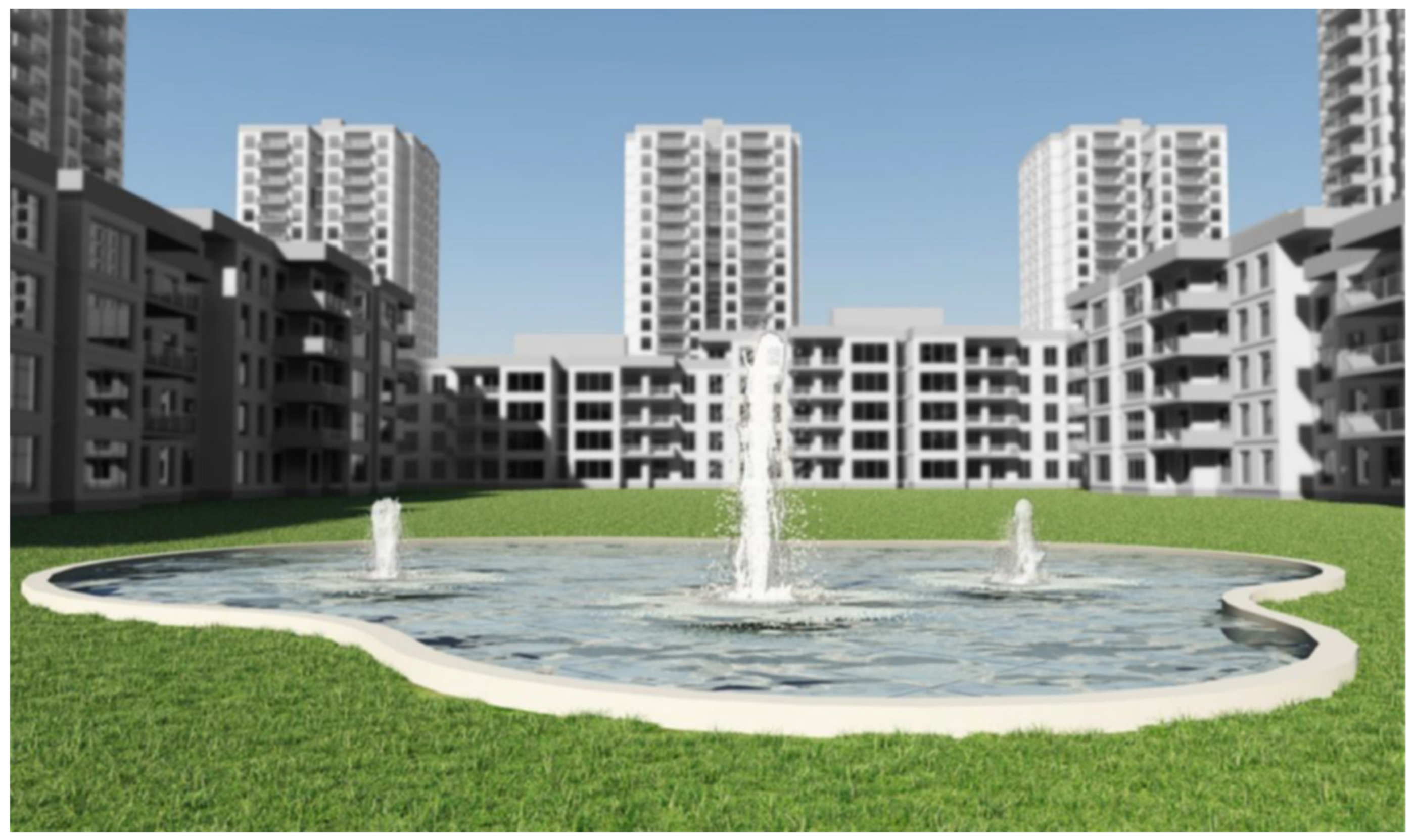
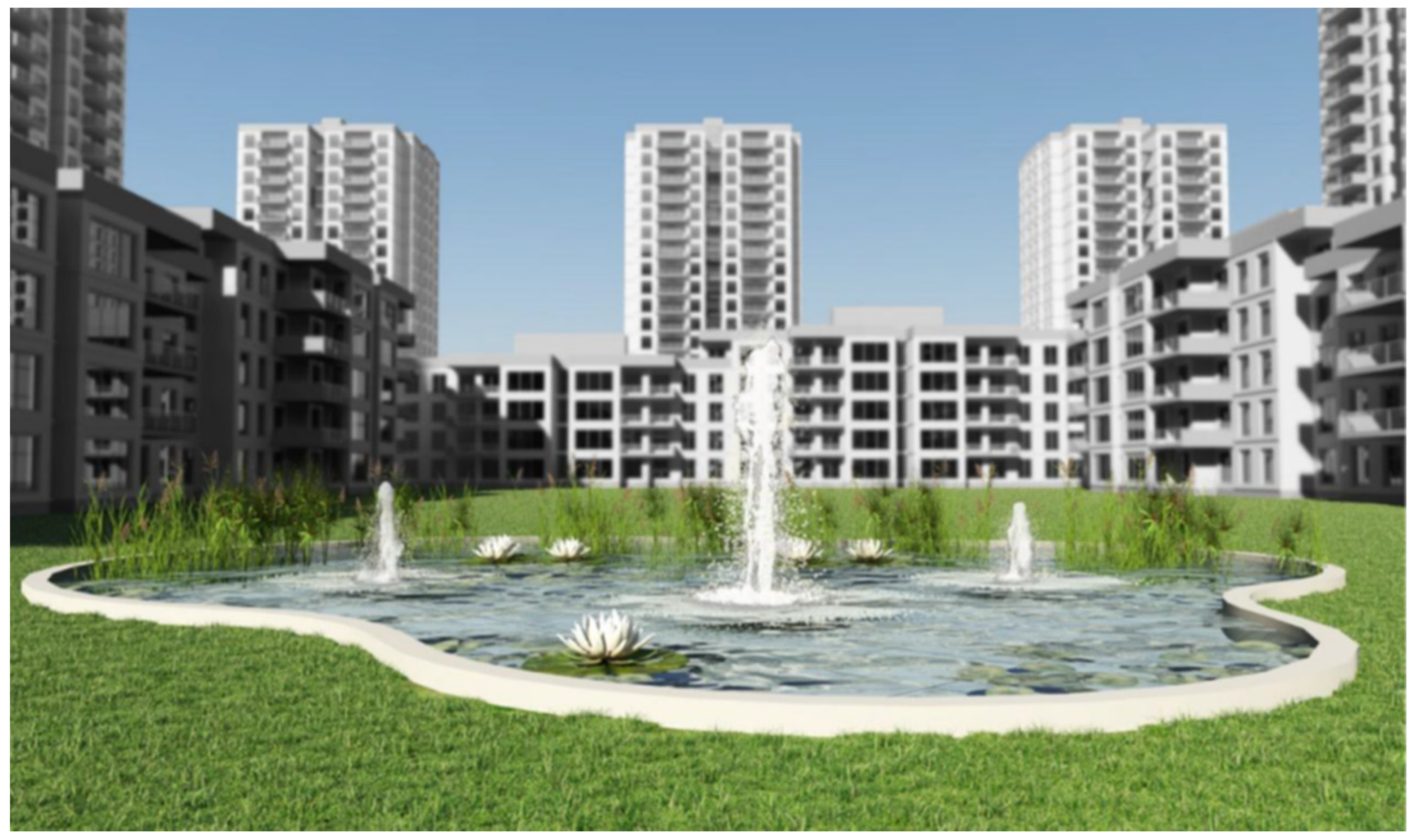
The S/N ratio analysis for the Kansei words “captivating”, “aesthetically pleasing”, and “satisfying” reveals a clear convergence, with all three descriptors pointing to an identical optimal design configuration (Table 10). This pattern suggests that these Kansei words represent overlapping dimensions of positive emotional responses rather than distinct perceptual constructs. Consistent with this convergence, the shared optimal configuration consists of a shallow, light-coloured, vegetated, natural-form pool with dynamic water (Table 11). Figure 6 presents an example of this configuration.
The optimal design combination was identical for the Kansei words “captivating”, “aesthetically pleasing”, and “satisfying”. This finding indicates a notable convergence that warrants further interpretation. This result should be interpreted within the specific methodological context of the study, including the selected Kansei descriptors and the controlled experimental conditions. The observed convergence may also be influenced by the limited differentiation of emotional descriptors under these conditions.
Norman [69] states that emotional design generally aims to evoke positive emotions or a sense of satisfaction in users. In this context, ‘captivating’, ‘aesthetically pleasing’, and ‘satisfying’ are Kansei words that reflect high-level, complementary positive emotional responses, measuring the overall positive impact and likability of a design. The convergence of these semantically related Kansei descriptors towards a similar optimal configuration may therefore be expected within the scope of the present study.
Another important basis for this result is the use of the ‘larger is better’ formula in calculating S/N ratios within the Taguchi Method. Furthermore, the application of this formula may have contributed to this outcome by favouring design configurations that maximise positive evaluations across similar Kansei descriptors.

3.2. ANOVA Analysis for Each Kansei Word

Based on the S/N ratios, ANOVA was conducted to identify the most influential design factors and to measure their percentage impact on each Kansei word, using a significance level of α = 0.05. Percentage contribution values were used to determine the relative importance of each design factor. The analysis was performed using Minitab software, which generates p-values to support hypothesis testing within the ANOVA framework.
The ANOVA results for the “captivating” Kansei word reveal a clear pattern in which surface planting emerges as the only statistically significant factor, while all other variables show limited influence (Table 12). This indicates that the presence of surface vegetation plays a dominant role in shaping captivating perceptions, whereas variations in depth, colour, form, and motion do not significantly contribute under the examined conditions.
A similar pattern is observed for the “legible” Kansei word, in which surface planting again emerges as the dominant factor, with a substantially higher contribution than the other variables (Table 13). This suggests that legibility is primarily influenced by surface conditions, whereas the other design factors have relatively minor effects.
In contrast, the ANOVA results for the “mentally restorative” Kansei word indicate a more complex structure, with multiple factors exhibiting statistically significant effects (Table 14). Among these, motion stands out as the most influential variable, suggesting that dynamic characteristics play a critical role in shaping restorative perceptions.
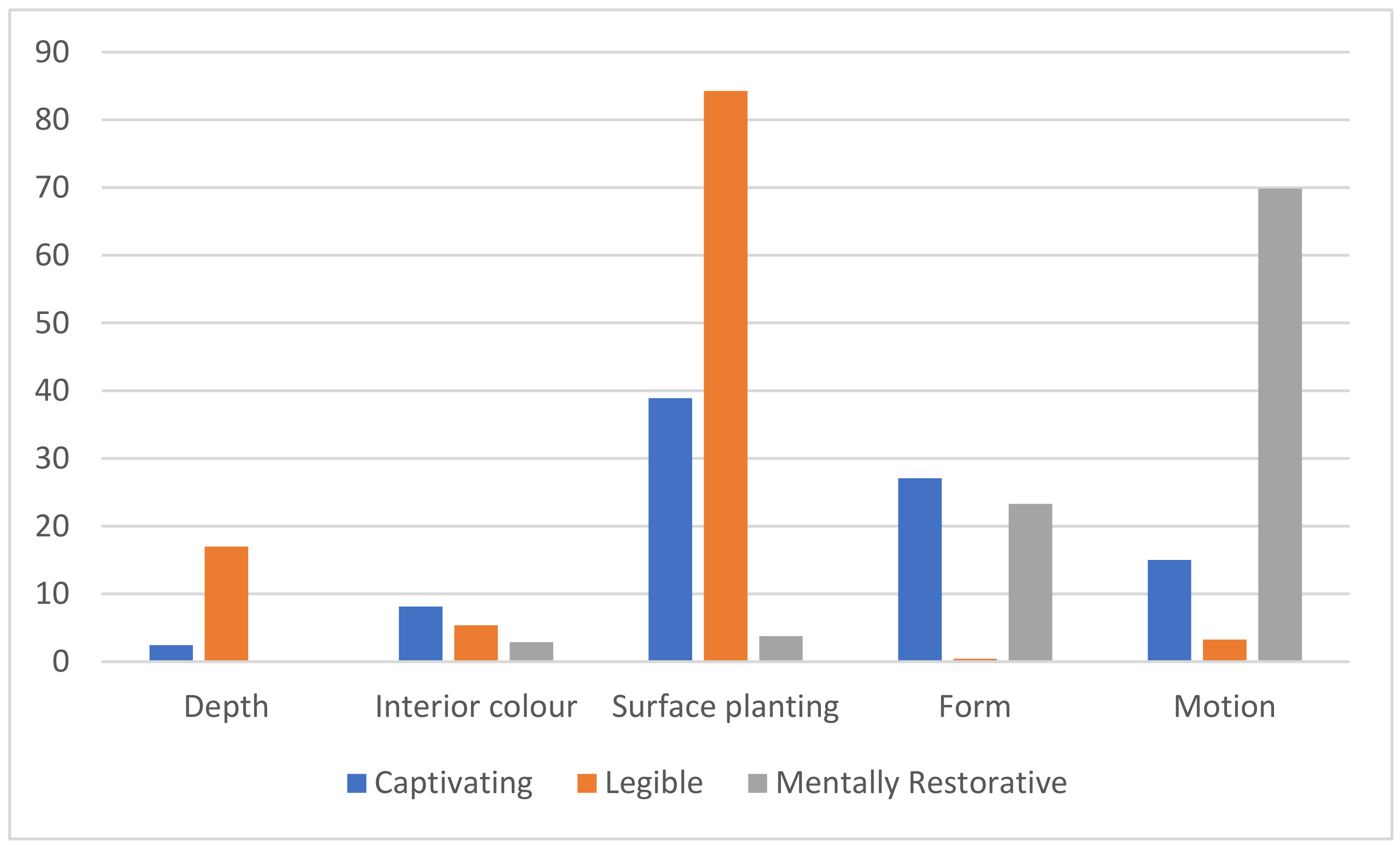
To enhance the interpretability of the ANOVA results, the percentage contributions of the design factors to the evaluated Kansei responses is illustrated in Figure 7.
For the Kansei words “aesthetically pleasing”, “calming”, and “satisfying”, no statistically significant effects were identified. These findings should not be interpreted as evidence of the irrelevance of the examined factors; rather, they indicate that the effects of these variables could not be detected under the current experimental conditions. This suggests that these emotional responses may depend on more holistic and context-sensitive perceptions of the environment rather than on isolated design factors alone.
A primary methodological limitation in this regard is the reliance on static visual stimuli, which excludes essential multisensory inputs such as the sound of water. In landscape architecture, the ‘calming’ effect is often significantly influenced by acoustic properties [50,70,71]; thus, the absence of auditory cues may have diminished participants’ sensitivity to variations in physical design factors. Likewise, “aesthetically pleasing” and “satisfying” may reflect more comprehensive evaluations that involve contextual harmony, environmental atmosphere, and experiential qualities beyond the visual design variables included in the experiment.
Furthermore, the ‘designer-centric’ composition of the sample—consisting of experts and design students—may have contributed to a high degree of perceptual homogeneity, leading to consistent aesthetic evaluations across different configurations. Another potential explanation relates to the experimental framework itself. Although the Taguchi method enabled an efficient reduction in the total number of design combinations, this reduced structure may have limited the detection of more subtle or interaction-based effects among variables. Consequently, these non-significant results highlight that while the selected variables are foundational, capturing broader emotional responses may require a multi-sensory experimental approach and a more diverse participant base in future studies.
To enhance the interpretability of the statistical outcomes, a summary of dominant factors and their relative percentage contributions is provided (Table 15). All ANOVA tests were conducted at a 95% confidence level, ensuring that the identified significant factors exhibit low levels of uncertainty. For instance, the high contribution rates of motion (69.86%) and surface planting (84.26%), coupled with their low p-values (p < 0.05), demonstrate robust statistical reliability in predicting user emotional responses. While the ANOVA tables (Table 12, Table 13 and Table 14) provide technical detail, this integrated summary aims to offer practitioners a clearer guidance for prioritising design interventions based on their relative impact.
Based on the ANOVA and Taguchi results (Table 15), changes in the S/N ratios and percentage contribution values of the key significant factors lead to substantial changes in the design of ornamental pools, thereby altering individuals’ perceptions of the pool and, consequently, their sense of emotional well-being.
Taken together, the ANOVA results reinforce a broader pattern in which surface planting consistently emerges as a key determinant across multiple Kansei words, whereas depth repeatedly shows a negligible influence. This finding indicates that surface-related characteristics have a more substantial impact on user perceptions than spatial attributes in ornamental pool design.
Focusing on the “captivating” Kansei word, both Taguchi and ANOVA results consistently highlight the importance of surface planting as a key determinant. While the optimal design configuration suggests a shallow, light-coloured, vegetated, natural, and dynamic pool, the ANOVA findings indicate that surface planting is the only statistically significant factor influencing this perception. This suggests that vegetation may play an important role in shaping captivating landscape experiences.
Supporting this finding, Gibson [72], Sun et al. [73], Xiao and Seong [74] emphasise that aquatic plants serve as visual instruments for creating waterscapes with ecological aesthetics. Similarly, Sun et al. [73] state that aquatic plants contribute both ecological and aesthetic value to water features in landscape design, thereby generating visual and environmental impact. In the same vein, Ren et al. [75] state that water elements enriched with aquatic plants enhance the landscape and create unique visual experiences. In this context, vegetated water surfaces enhance the perception of a captivating atmosphere by evoking both visual dynamism and a sense of naturalness.
The second finding obtained through the Taguchi Method indicates that the optimum design combination for an ornamental pool to be perceived as “legible” comprises the following attributes: shallow, light coloured, bare, geometric, and still. However, the ANOVA results reveal that only the surface planting factor has a statistically significant effect and do not indicate which specific attribute this factor should possess. At this point, the Taguchi analyses suggest that a “bare” surface may enhance the perception of legibility.
The reflective properties of bare and still pool surfaces capture and mirror the surrounding environment, thereby creating distinct perceptual experiences. Supporting these findings, Yang and Yuan [76] note that when such a pool is strategically positioned, it reflects the sky, clouds, surrounding buildings, and vegetation, visually integrating with its environment. This reflective integration, in turn, may enhance users’ perception of the space as more legible and harmonious. Similarly, Hunter and Askarinejad [77] emphasise that landscapes reflected on still and bare water surfaces contribute to the overall symmetry of the scene.
Another result obtained through the Taguchi Method indicates that an ornamental pool is most effective in evoking the feeling of “mentally restorative” when designed with the following attributes: deep, light coloured, bare, natural, and still. The ANOVA analysis reveals that, except for the “depth” factor, all other variables (surface planting, inner surface colour, form, and motion) have a statistically significant effect. Among these, the “motion” factor stands out as a key contributor to the perception of the pool as mentally restorative. The Taguchi results further support this by showing that a “still” surface also enhances this perception. Likewise, Zhang and Hu [78] state that water features with still surfaces help to soothe human emotions and evoke feelings of tranquillity, clarity and calmness. Li et al. [79] and McDougall et al. [80] similarly emphasise that the stillness of lakes provides a calming and reassuring environment that benefits both physical and mental health. These findings align with the results of the present study, demonstrating that a still water surface may have a positive effect on mental relaxation.
These findings can be further interpreted within the framework of Attention Restoration Theory [19], which suggests that environments supporting “soft fascination” and reduced cognitive effort contribute to recovery from cognitive fatigue. In this study, the preference for still, natural, and visually coherent water features may reflect conditions that facilitate such restorative processes by minimising cognitive load and promoting effortless attention. Moreover, from the perspective of Stress Recovery Theory [20], the restorative effects associated with still water and natural forms indicate a reduction in stress-related responses.
More specifically, the “mentally restorative” Kansei response identified in this study can be interpreted as a reflection of both cognitive recovery processes described in ART and stress reduction mechanisms proposed in SRT. Likewise, the strong influence of motion and surface planting observed in the ANOVA results highlights the role of dynamic and natural elements in facilitating restorative experiences, providing empirical support for specific components of these theoretical frameworks.
However, these interpretations should be considered with caution, as the use of static visual stimuli and the absence of multisensory inputs—particularly auditory cues—may limit the extent to which these findings reflect real-world landscape experiences.
Based on these findings, it can be suggested that the Kansei Engineering approach allows users’ emotional responses to be translated into tangible design elements within the landscape design process. These results support the study’s hypothesis that users’ emotional expectations can be systematically analysed through Kansei Engineering and directly integrated into the landscape design process.
As emphasised by Yu and Wang [81], incorporating emotions into landscape design is important for enabling emotional experiences for users. Similarly, Kišoňová [82], designs developed in this manner can significantly contribute to emotional well-being by fostering satisfaction and a sense of identification with the landscape. This is because landscape is not merely a visual component; rather, it plays a central role in shaping emotional responses, lived experiences, and the way individuals interact with their surroundings.

4. Conclusions

This study aims to demonstrate that the Kansei Engineering approach, which transforms emotions into tangible design elements, can be used to integrate users’ emotional expectations into the landscape design process. Within this scope, ornamental pools, one of the key elements of landscape architecture, were selected as the subject of investigation. The Kansei Engineering method was applied through a questionnaire developed using the Semantic Differential Scale, and the resulting data were analysed using the Taguchi Method and ANOVA.
In line with this aim, the study addressed the question of how users’ emotional responses can be systematically analysed and translated into concrete landscape design features. The findings demonstrate that users’ emotional perceptions can be identified, structured through Kansei word pairs, quantitatively evaluated, and subsequently transformed into specific design parameters. This confirms that emotional expectations can be systematically integrated into the landscape design process using a data-driven approach.
According to the analysis results, the ornamental pool design that evokes the feeling of “captivating” includes the following attributes: shallow, light coloured, planted, natural, and dynamic. Furthermore, the findings indicate that a “vegetated” pool surface further enhances this perception. The design associated with the feeling of “legible” is characterised by shallow, light coloured, bare, geometric, and still. In particular, the “bare” surface was found to significantly reinforce this emotional response. The ornamental pool design that most effectively evokes the feeling of being “mentally restorative” is characterised by deep, light coloured, bare, natural and still. All factors except for “depth” were shown to have a statistically significant impact on the formation of this feeling. In contrast, no statistically significant results were obtained for the Kansei words “aesthetically pleasing”, “calming”, and “satisfying”.
The question of how users’ emotional needs can be more effectively transformed into tangible design elements remains a current and unresolved research problem in the field of landscape architecture, and the number of empirical studies addressing this issue is still limited. Therefore, this study is significant in demonstrating that the Kansei Engineering approach can offer a data-driven contribution to the landscape design process. Furthermore, the model presented in this article is noteworthy in that it proposes a meaningful paradigm shift in landscape design by prioritising users’ emotional needs.
From a sustainability perspective, the findings of this study contribute to the development of user-centred and socially sustainable landscape design approaches. By systematically integrating users’ emotional responses into design decision-making processes, the proposed framework enhances not only user satisfaction and well-being but also the long-term usability and resilience of outdoor environments. In this respect, the study supports the broader goals of sustainable development by promoting design solutions that are responsive to human needs and capable of improving the overall quality of life.
The findings of this study are based on data collected from participants in Turkey and should therefore be interpreted within this specific cultural and geographical context. While the results provide valuable insights into users’ emotional responses to ornamental pool design, they are not intended to be universally generalised. Rather, the primary contribution of this study lies in the methodological framework it proposes, which can be adapted to different cultural and geographical contexts by incorporating locally relevant user perceptions and Kansei descriptors.
Furthermore, although the sample includes participants with domain-specific knowledge, regional and cultural differences within Turkey may influence user perceptions. Therefore, further research involving diverse participant groups across different regions is recommended to enhance the generalisability of the findings.
In summary, the Kansei engineering approach is recommended as a strategic tool that provides a scientific and systematic basis for the design process, enabling landscape architects to develop designs that address user experience at both functional and emotional levels while contributing to more sustainable and resilient landscape environments.

5. Limitations and Future Research

This study acknowledges several limitations that should be addressed in future research. Its scope is limited to ornamental pools, based on the assumption that when landscape elements and their constituent factors are considered within a broad and diverse context, conventional analytical methods may not sufficiently explain the relationship between product attributes and Kansei. In this regard, future studies are recommended to classify landscape design elements into thematic or functional groups (e.g., water features, vegetation, seating areas) and to develop dedicated Kansei evaluation modules for each group.
This study primarily aims to assess whether the Kansei Engineering method can be integrated into the landscape design process However, one of its main limitations is the composition of the participant sample, which consisted exclusively of students and experts. This may limit the generalisability of the findings, as individuals with design-related knowledge are likely to demonstrate greater sensitivity and awareness of spatial characteristics compared to the general public. Although this sample structure ensured informed and consistent evaluations, it may not fully represent the perceptions and preferences of end users. Consequently, the findings reflect a ‘designer-centric’ emotional perspective rather than a broad public perception, potentially emphasising aesthetic-technical qualities instead of spontaneous user reactions. Since the direct involvement of end users is essential in Kansei Engineering to accurately reflect user needs, future studies are recommended to include more diverse participant groups and to define the target population based on end users. Such an approach would enhance the external validity of the findings and contribute to the development of more inclusive and user-centred landscape design processes.
The L8 Taguchi orthogonal array was selected to balance experimental efficiency with the reliability of participant responses. While a full factorial design (25 = 32) would allow for the investigation of interaction effects between factors, it was deemed impractical for a perceptual survey involving 91 participants, as it could lead to participant fatigue and compromise data accuracy. Therefore, this study prioritised identifying the most influential main effects of design factors on Kansei perceptions. Future research, focusing on a narrower set of significant variables, may employ higher-resolution designs to specifically explore complex interaction effects.
While the use of static 3D visual stimuli enabled a controlled and systematic evaluation of design factors, this approach inherently limits the ecological validity of the findings, as it does not fully represent the dynamic, multisensory, and context-dependent nature of real-world landscape experiences. Furthermore, this study primarily focuses on the methodological integration of Kansei Engineering into landscape design to derive theoretically optimal configurations. However, the absence of an empirical validation phase for these proposed configurations constrains the level of confidence that can be attributed to the findings. Therefore, the results should be interpreted with caution, as they reflect exploratory rather than fully validated outcomes. Future research should incorporate validation stages through immersive technologies such as virtual reality (VR), augmented reality (AR), or in situ field experiments with implemented design prototypes, in order to enhance both ecological validity and the robustness of the proposed design recommendations.
Another limitation of this study is that the findings are primarily based on Kansei Engineering-based quantitative analysis, without the inclusion of in-depth qualitative methods such as expert interviews. While the study incorporates qualitative elements during the semantic structuring phase, in-depth qualitative methods were not included in order to maintain methodological consistency and focus within the scope of the study. Future studies may benefit from incorporating such methods, including expert interviews, to further enrich and validate the interpretation of users’ emotional responses in different cultural contexts.
Additionally, grouping the target audience in future research according to factors such as age, personality characteristics, and cultural background may provide a more nuanced understanding of how different user profiles interpret landscape design. Such an approach can enhance the effectiveness and user orientation of design decisions.

Author Contributions

E.K.: conceptualization, investigation, methodology, software, visualization, validation, formal analysis, writing—original draft preparation; writing—review and editing. H.P.: supervision, writing—review and editing. All authors have read and agreed to the published version of the manuscript.

Funding

This research received no external funding.

Institutional Review Board Statement

This study is waived for ethical review as it is based on data collected prior to 2020 as part of a doctoral research study involving a voluntary questionnaire, with no personally identifiable information and no experimental intervention, by Institution Committee.

Informed Consent Statement

Informed consent was obtained from all subjects involved in the study.

Data Availability Statement

The original contributions presented in this study are included in the article. Further inquiries can be directed to the corresponding author.

Acknowledgments

This study is derived from the doctoral dissertation titled “Landscape Design Based on Users’ Emotional Expectations”, completed at the Department of Landscape Architecture, Ankara University. We appreciate the valuable input of all participants in this study.

Conflicts of Interest

The authors declare no conflicts of interest.

References

  1. Rasmussen, S.E. Experiencing Architecture, 2nd ed.; MIT Press: Cambridge, MA, USA, 1964. [Google Scholar]
  2. Liu, Y.; Li, X.; Fang, L.; Zhang, J.; Whang, M. The Development of the Two-Dimensional Model of Emotion Based on Both Architectural Emotion Words and Design Elements in China. Buildings 2024, 14, 4000. [Google Scholar] [CrossRef]
  3. Higuera-Trujillo, J.L.; Llinares, C.; Macagno, E. The Cognitive-Emotional Design and Study of Architectural Space: A Scoping Review of Neuroarchitecture and Its Precursor Approaches. Sensors 2021, 21, 2193. [Google Scholar] [CrossRef] [PubMed]
  4. Guo, H. Integrated Analysis of Emotional Factors in the Planning and Design of Architecture. Appl. Mech. Mater. 2014, 651–653, 1177–1181. [Google Scholar] [CrossRef]
  5. Chang, S.-W.; Jun, H. Hybrid Deep-Learning Model to Recognise Emotional Responses of Users Towards Architectural Design Alternatives. J. Asian Archit. Build. Eng. 2019, 18, 381–391. [Google Scholar] [CrossRef]
  6. Jordan, P.W. Designing Pleasurable Products: An Introduction to the New Human Factors; CRC Press: Boca Raton, FL, USA, 2000. [Google Scholar]
  7. Green, W.S.; Jordan, P.W. Pleasure with Products: Beyond Usability; CRC Press: Boca Raton, FL, USA, 2002. [Google Scholar]
  8. Triberti, S.; Chirico, A.; La Rocca, G.; Riva, G. Developing emotional design: Emotions as cognitive processes and their role in the design of interactive technologies. Front. Psychol. 2017, 8, 1773. [Google Scholar] [CrossRef] [PubMed]
  9. Xu, Y.; Wu, S. Indoor Color and Space Humanized Design Based on Emotional Needs. Front. Psychol. 2022, 13, 926301. [Google Scholar] [CrossRef] [PubMed]
  10. Cho, M.E.; Kim, M.J. Measurement of User Emotion and Experience in Interaction with Space. J. Asian Archit. Build. Eng. 2017, 16, 106–199. [Google Scholar] [CrossRef]
  11. Cross, N. Designerly ways of knowing. Des. Stud. 1982, 3, 221–227. [Google Scholar] [CrossRef]
  12. Bogaert, B. Moving Toward Person-Centered Care: Valuing Emotions in Hospital Design and Architecture. Herd Health Environ. Res. Des. J. 2021, 15, 355–364. [Google Scholar] [CrossRef]
  13. Li, R.-H. Architectural Narratives of Aesthetic Form: Exploring the Perception and Psychological Design in Church Architecture. J. Res. Sci. Eng. 2024, 6, 31–34. [Google Scholar] [CrossRef]
  14. Banaei, M.; Hatami, J.; Yazdanfar, A.; Gramann, K. Walking Through Architectural Spaces: The Impact of Interior Forms on Human Brain Dynamics. Front. Hum. Neurosci. 2017, 11, 477. [Google Scholar] [CrossRef] [PubMed]
  15. Kim, J.; Kim, N. Quantifying Emotions in Architectural Environments Using Biometrics. Appl. Sci. 2022, 12, 9998. [Google Scholar] [CrossRef]
  16. Lu, S.C.; Liu, A. Subjectivity and objectivity in design decisions. CIRP Ann. 2011, 60, 161–164. [Google Scholar] [CrossRef]
  17. Sternberg, E.M.; Wilson, M.A. Neuroscience and architecture: Seeking common ground. Cell 2006, 127, 239–242. [Google Scholar] [CrossRef] [PubMed]
  18. Lingyu, Z.; Yongkui, L. A Preliminary Analysis of the Waterscape in Face of the Shortage of Water. Procedia Eng. 2011, 21, 693–699. [Google Scholar] [CrossRef]
  19. Kaplan, R.; Kaplan, S. The Experience of Nature: A Psychological Perspective; Cambridge University Press: New York, NY, USA, 1989. [Google Scholar]
  20. Ulrich, R.S. Aesthetic and affective response to natural environment. In Behavior and the Natural Environment; Springer: Berlin/Heidelberg, Germany, 1983; pp. 85–125. [Google Scholar]
  21. Karaca, E. Landscape Design Based on Users’ Emotional Expectations. Ph.D. Thesis, Ankara University, Ankara, Turkey, 2015. [Google Scholar]
  22. Xylakis, E.; Liapis, A.; Yannakakis, G.N. Architectural Form and Affect: A Spatiotemporal Study of Arousal. In 2021 9th International Conference on Affective Computing and Intelligent Interaction (ACII); IEEE: Piscataway, NJ, USA, 2021; pp. 1–8. [Google Scholar]
  23. Karaca, E.; Çakar, T.; Karaca, M.; Hüseyin Miraç Gül, H. Designing restorative landscapes for students: A Kansei engineering approach enhanced by VR and EEG technologies. Ain Shams Eng. J. 2024, 15, 102901. [Google Scholar] [CrossRef]
  24. Lokman, A. Design & emotion: The Kansei engineering the definition of Kansei. Malays. J. Comput. 2010, 1, 1–14. [Google Scholar]
  25. Hartono, M.; Chuan, T.K.; Peacock, J. Applying Kansei Engineering, the Kano Model and QFD to Services. Int. J. Serv. Econ. Manag. 2013, 5, 256. [Google Scholar] [CrossRef]
  26. Chen, M.C.; Chang, K.-C.; Hsu, C.-L.; Xiao, J. Applying a Kansei Engineering-Based Logistics Service Design Approach to Developing International Express Services. Int. J. Phys. Distrib. Logist. Manag. 2015, 45, 618–646. [Google Scholar] [CrossRef]
  27. Lee, S. (Ed.) Pleasure with Products: Design based on Kansei. In Pleasure with Products: Beyond Usability; Taylor & Francis: London, UK, 2000. [Google Scholar]
  28. Shiizuka, H.; Watada, J. Special Issue on Kansei Engineering. Proc. Inst. Mech. Eng. Part I J. Syst. Control Eng. 2006, 220, i–ii. [Google Scholar] [CrossRef]
  29. Yang, M.; Jia, L. Study on Kansei Engineering and Its Application to Product Design. In 2009 Second International Symposium on Computational Intelligence and Design; IEEE: Piscataway, NJ, USA, 2009; pp. 525–528. [Google Scholar]
  30. Nagamachi, M.; Lokman, A.M. Innovations of Kansei Engineering; CRC Press: Boca Raton, FL, USA, 2011. [Google Scholar]
  31. Castilla, N.; Llinares, C.; Bisegna, F.; Blanca-Giménez, V. Affective evaluation of the luminous environment in university classrooms. J. Environ. Psychol. 2018, 58, 52–62. [Google Scholar] [CrossRef]
  32. Yang, M.; Lin, L.; Chen, Z.; Wu, L.; Guo, Z. Research on the construction method of kansei image prediction model based on cognition of EEG and ET. Int. J. Interact. Des. Manuf. (IJIDeM) 2020, 14, 565–585. [Google Scholar] [CrossRef]
  33. Li, M.; Dai, Y.-M. Optimization Strategies for the Modular Resource Construction of Art Gallery’s Exhibition Halls Based on Kansei Engineering. IEEE Access 2024, 12, 27870–27886. [Google Scholar] [CrossRef]
  34. Zhang, Y.; Liu, Y.; Yu, H. Explore the Design Style of Oriented Facility Based on User Evaluation. In 2015 8th International Conference on Human System Interaction (HSI); IEEE: Piscataway, NJ, USA, 2015. [Google Scholar]
  35. Tsuchiya, T. Kansei Engineering Study for Streetscape Zoning using Self Organizing Maps. Int. J. Affect. Eng. 2013, 12, 365–373. [Google Scholar] [CrossRef]
  36. Matsubara, T.; Ishihara, S.; Nagamachi, M.; Matsubara, Y. Kansei Analysis of the Japanese Residential Garden and Development of a Low-Cost Virtual Reality Kansei Engineering System for Gardens. Adv. Hum.-Comput. Interact. 2011, 2011, 295074. [Google Scholar] [CrossRef]
  37. Nagasawa, S. (Ed.) Present state of Kansei engineering in Japan. In 2004 IEEE International Conference on Systems, Man and Cybernetics (IEEE Cat No04CH37583), 10–13 October 2004; IEEE: Piscataway, NJ, USA, 2004. [Google Scholar]
  38. Lévy, P.; Lee, S.; Yamanaka, T. On Kansei and Kansei Design: A Description of a Japanese Design Approach. In Proceedings of the International Association of Societies of Design Research Conference 2007—IASDR07 ([on CD]), Hong Kong, 12–15 November 2007. [Google Scholar]
  39. Son, Y.J.; Chun, C. Research on Electroencephalogram to Measure Thermal Pleasure in Thermal Alliesthesia in Temperature Step-Change Environment. Indoor Air 2018, 28, 916–923. [Google Scholar] [CrossRef] [PubMed]
  40. Marco-Almagro, L.; Tort-Martorell, X. Statistical Methods in Kansei Engineering: A Case of Statistical Engineering. Qual. Reliab. Eng. Int. 2012, 28, 563–573. [Google Scholar] [CrossRef]
  41. Schütte, S.T.W.; Eklund, J.; Axelsson, J.R.C.; Nagamachi, M. Concepts, methods and tools in Kansei Engineering. Theor. Issues Ergon. Sci. 2004, 5, 214–231. [Google Scholar] [CrossRef]
  42. Carr, S. Public Space; Cambridge University Press: Cambridge, UK, 1992. [Google Scholar]
  43. Faggi, A.; Breuste, J.; Madanes, N.; Gropper, C.; Perelman, P. Water as an appreciated feature in the landscape: A comparison of residents’ and visitors’ preferences in Buenos Aires. J. Clean. Prod. 2013, 60, 182–187. [Google Scholar] [CrossRef]
  44. Kaltenborn, B.P.; Bjerke, T. Associations between environmental value orientations and landscape preferences. Landsc. Urban Plan. 2002, 59, 1–11. [Google Scholar] [CrossRef]
  45. Takemura, S.; Kinioshita, T.; Yamamoto, T. Study on a Construction of Velocity Perception Model and Kansei Feedback Control System in Active Behavior. Proc. Int. Conf. Artif. Life Robot. 2023, 28, 183–186. [Google Scholar] [CrossRef]
  46. Garrett, J.K.; Clitherow, T.J.; White, M.P.; Wheeler, B.W.; Fleming, L.E. Coastal proximity and mental health among urban adults in England: The moderating effect of household income. Health Place 2019, 59, 102200. [Google Scholar] [CrossRef] [PubMed]
  47. Wheeler, B.W.; White, M.; Stahl-Timmins, W.; Depledge, M.H. Does living by the coast improve health and wellbeing? Health Place 2012, 18, 1198–1201. [Google Scholar] [CrossRef] [PubMed]
  48. White, M.P.; Alcock, I.; Wheeler, B.W.; Depledge, M.H. Coastal proximity, health and well-being: Results from a longitudinal panel survey. Health Place 2013, 23, 97–103. [Google Scholar] [CrossRef] [PubMed]
  49. Luo, L.; Yu, P.; Jiang, B. Differentiating mental health promotion effects of various bluespaces: An electroencephalography study. J. Environ. Psychol. 2023, 88, 102010. [Google Scholar] [CrossRef]
  50. Liu, W.; Li, H.; Huang, D.; He, F.; Liu, W.; Sun, Q. Application of random forest algorithm in the study of microscopic features and visitor experience evaluation in gardens. Environ. Res. Commun. 2024, 6, 115019. [Google Scholar] [CrossRef]
  51. Barnes, C.J.; Childs, T.H.C.; Henson, B.; Southee, C.H. Surface finish and touch—A case study in a new human factors tribology. Wear 2004, 257, 740–750. [Google Scholar] [CrossRef]
  52. Barone, S.; Lombardo, A.; Tarantino, P. A weighted logistic regression for conjoint analysis and Kansei engineering. Qual. Reliab. Eng. Int. 2007, 23, 689–706. [Google Scholar] [CrossRef]
  53. Schütte, S.; Eklund, J. Design of rocker switches for work-vehicles—An application of Kansei Engineering. Appl. Ergon. 2005, 36, 557–567. [Google Scholar] [CrossRef] [PubMed]
  54. Burmil, S.; Daniel, T.C.; Hetherington, J.D. Human values and perceptions of water in arid landscapes. Landsc. Urban Plan. 1999, 44, 99–109. [Google Scholar] [CrossRef]
  55. Seçkin, Y.Ç. Understanding the relationship between human needs and the use of water in landscape design. A|Z ITU J. Fac. Archit. 2010, 7, 1–17. [Google Scholar]
  56. Dreiseitl, H.; Grau, D. New Waterscapes: Planning, Building and Designing with Water; Birkhäuser: Basel, Switzerland, 2012. [Google Scholar]
  57. Burton Litton, R.; Tetlow, R.J. Water and Landscape: An Aesthetic Overview of the Role of Water in the Landscape; Principal Investigators [and Others of The] Dept. of Landscape Architecture; University of California: Berkeley, CA, USA; Water Information Center, Incorporated: Port Washington, NY, USA, 1974. [Google Scholar]
  58. Nasar, J.L.; Li, M. Landscape mirror: The attractiveness of reflecting water. Landsc. Urban Plan. 2004, 66, 233–238. [Google Scholar] [CrossRef]
  59. Xiong, B.; Li, F.; Zhang, X.Z.; Zhou, J.; Hu, H.; Liu, C. Recovery of Aluminum Alloy A380 from Machining Chips. Appl. Mech. Mater. 2016, 835, 155–160. [Google Scholar] [CrossRef]
  60. Dixit, A.K.; Awasthi, R. EDM Process Parameters Optimization for Al-TiO2 Nano Composite. Int. J. Mater. Form. Mach. Process. 2015, 2, 17–30. [Google Scholar]
  61. Matsubara, Y.; Nagamachi, M. Hybrid kansei engineering system and design support. Int. J. Ind. Ergon. 1997, 19, 81–92. [Google Scholar] [CrossRef]
  62. Osgood, C.E.; Suci, G.J.; Tannenbaum, P.H. The Measurement of Meaning; University of Illinois Press: Champaign, IL, USA, 1957. [Google Scholar]
  63. Hysa, X. The Research as a Decision-Making Process a Viable System’s Perspective; POLIS University Press: Tirana, Albania, 2023; pp. 30–35. [Google Scholar]
  64. Parolini, J.; Patterson, K.; Winston, B.E. Distinguishing Between Transformational and Servant Leadership. Leadersh. Organ. Dev. J. 2009, 30, 274–291. [Google Scholar] [CrossRef]
  65. Mezarcıöz, S.; Oğulata, R.T. Süprem kumaşlarda patlama mukavemeti değerinin Taguchi ortogonal dizayna göre optimizasyonu. Tekst. Konfeksiyon 2010, 20, 320–328. [Google Scholar]
  66. Miladinović, S.; Gajević, S.; Savić, S.; Miletić, I.; Stojanović, B.; Vencl, A. Tribological Behaviour of Hypereutectic Al-Si Composites: A Multi-Response Optimisation Approach with ANN and Taguchi Grey Method. Lubricants 2024, 12, 61. [Google Scholar] [CrossRef]
  67. Şirvancı, M. Kalite için Deney Tasarımı “Taguçi Yaklaşımı”; Literatür: Istanbul, Turkey, 1997. [Google Scholar]
  68. Chen, C.-C.; Chuang, M.-C. Integrating the Kano model into a robust design approach to enhance customer satisfaction with product design. Int. J. Prod. Econ. 2008, 114, 667–681. [Google Scholar] [CrossRef]
  69. Norman, D. Emotional Design: Why We Love (or Hate) Everyday Things; Basic Books: New York, NY, USA, 2007. [Google Scholar]
  70. Parmar, V.; Jana, A. A review of tools and techniques for audio-visual assessment of urbanscape. Discov. Cities 2024, 1, 29. [Google Scholar] [CrossRef]
  71. Nasar, J.L. The Evaluative Image of Places. In Person-Environment Psychology; Psychology Press: East Sussex, UK, 2000; pp. 117–168. [Google Scholar]
  72. Gibson, J.J. (Ed.) The Ecological Approach to Visual Perception; Psychology Press: East Sussex, UK, 1979. [Google Scholar]
  73. Sun, M.; Tian, X.; Zou, Y.; Jiang, M. Ecological aesthetic assessment of a rebuilt wetland restored from farmland and management implications for National Wetland Parks. PLoS ONE 2019, 14, e0223661. [Google Scholar] [CrossRef] [PubMed]
  74. Xiao, C.; Seong, D. Research on the Application of Biomimetic Design in Art and Design. Biomimetics 2025, 10, 541. [Google Scholar] [CrossRef] [PubMed]
  75. Ren, Q.; Weng, Y.; Hu, Z. A study of space creation for healing landscape design in the post-epidemic era. Front. Psychol. 2025, 16, 1618451. [Google Scholar] [CrossRef] [PubMed]
  76. Yang, J.; Yuan, C. Application of Cognitive System Model and Gestalt Psychology in Residential Healthy Environment Design. Comput. Intell. Neurosci. 2022, 2022, 5661221. [Google Scholar] [CrossRef]
  77. Hunter, M.R.; Askarinejad, A. Designer’s approach for scene selection in tests of preference and restoration along a continuum of natural to manmade environments. Front. Psychol. 2015, 6, 1228. [Google Scholar] [PubMed]
  78. Zhang, Y.; Hu, J. Rehabilitation Landscape Design in The Community Environment--Take Xintiandi-Blue Diamond Community as An Example. IOP Conf. Ser. Earth Environ. Sci. 2021, 760, 012051. [Google Scholar]
  79. Li, Y.; Zhang, J.; Jiang, B.; Li, H.; Zhao, B. Do All Types of Restorative Environments in the Urban Park Provide the Same Level of Benefits for Young Adults? A Field Experiment in Nanjing, China. Forests 2023, 14, 1400. [Google Scholar] [CrossRef]
  80. McDougall, C.W.; Foley, R.; Hanley, N.; Quilliam, R.S.; Oliver, D.M. Freshwater Wild Swimming, Health and Well-Being: Understanding the Importance of Place and Risk. Sustainability 2022, 14, 6364. [Google Scholar] [CrossRef]
  81. Yu, Z.; Wang, W. Research on Evaluation Index System of Urban Landscape Design Driven by Information Integration Technology. Appl. Math. Nonlinear Sci. 2024, 9, 1–18. [Google Scholar] [CrossRef]
  82. Kišoňová, R. A Few Remarks Towards Environmental Aesthetics. Aesthetics of Landscapes and Its Impact on Human Emotions. Stud. Ecol. Bioethicae 2022, 20, 5–13. [Google Scholar] [CrossRef]
Figure 1. Experimental stimuli used in the study, generated based on the Taguchi L8 orthogonal array.
Sustainability 18 06954 g001
Figure 2. Overall research process of the study.
Sustainability 18 06954 g002
Figure 3. Example of an ornamental pool representing the optimal design combination for “calming”.
Sustainability 18 06954 g003
Figure 4. Example of an ornamental pool representing the optimal design combination for “mentally restorative”.
Sustainability 18 06954 g004
Figure 5. Example of an ornamental pool representing the optimal design combination for “legible”.
Sustainability 18 06954 g005
Figure 6. Example of an ornamental pool representing the optimal design combination for “captivating, aesthetically pleasing and satisfying”.
Sustainability 18 06954 g006
Figure 7. Percentage contributions of design factors to the selected Kansei responses based on ANOVA results.
Sustainability 18 06954 g007
Table 1. Selected Kansei word pairs.
NoKansei Word
01Stress inducing—Calming
02Mentally fatiguing—Mentally restorative
03Confusing—Legible
04Boring—Captivating
05Aesthetically displeasing—Aesthetically pleasing
06Unsatisfying—Satisfying
Table 2. Design factors and corresponding levels of the ornamental pools included in the study.
FactorsLevels
Depthshallow—deep
Interior surface colourdark coloured—light coloured
Surface plantingbare—vegetated
Formnatural—geometric
Motionstill—dynamic
Table 3. Taguchi experimental design.
Experiment NumberFactor/Level
DepthInterior Surface ColourSurface PlantingFormMotion
1shallowdark colouredbarenaturalstill
2shallowdark colouredbaregeometricdynamic
3shallowlight colouredvegetatednaturalstill
4shallowlight colouredvegetatedgeometricdynamic
5deepdark colouredvegetatednaturaldynamic
6deepdark colouredvegetatedgeometricstill
7deeplight colouredbarenaturaldynamic
8deeplight colouredbaregeometricstill
Table 4. Optimal design factors for the Kansei word “calming”, identified using the S/N ratio.
LevelsFactors
Depth
(A)
Interior Surface Colour (B)Surface Planting (C)Form
(D)
Motion (E)
112.84 *12.6812.96 *12.99 *12.69
212.7412.90 *12.6212.5912.89 *
Delta0.100.220.340.410.20
Rank53214
* The marks denote the average S/N ratio responses. Level definitions for each design factor are as follows:—Depth: Level 1 = Shallow, Level 2 = Deep—Interior Surface Colour: Level 1 = Dark, Level 2 = Light—Surface Planting: Level 1 = Bare, Level 2 = Vegetated—Form: Level 1 = Natural, Level 2 = Geometric—Motion: Level 1 = Still, Level 2 = Dynamic.
Table 5. The optimal design combination for the Kansei word “calming”, based on the S/N ratio.
Kansei WordFactors and Levels
Depth
(A)
Interior Surface Colour (B)Surface Planting (C)Form
(D)
Motion (E)
Calmingshallowlight colouredbarenaturaldynamic
Table 6. Optimal design factors for the Kansei word “mentally restorative”, identified using the S/N ratio.
LevelsFactors
Depth
(A)
Interior Surface Colour (B)Surface Planting (C)Form
(D)
Motion (E)
112.8912.7713.07 *13.30 *13.59 *
212.93 *13.05 *12.7512.5212.23
Delta0.040.280.320.781.35
Rank54321
* The marks denote the average S/N ratio responses. Level definitions for each design factor are as follows:—Depth: Level 1 = Shallow, Level 2 = Deep—Interior Surface Colour: Level 1 = Dark, Level 2 = Light—Surface Planting: Level 1 = Bare, Level 2 = Vegetated—Form: Level 1 = Natural, Level 2 = Geometric—Motion: Level 1 = Still, Level 2 = Dynamic.
Table 7. The optimal design combination for the Kansei word “mentally restorative”, based on the S/N ratio.
Kansei WordFactors and Levels
Depth
(A)
Interior Surface Colour (B)Surface
Planting (C)
Form
(D)
Motion (E)
Mentally restorativedeeplight colouredbarenaturalstill
Table 8. Optimal design factors for the Kansei word “legible”, identified using the S/N ratio.
LevelsFactors
Depth
(A)
Interior Surface Colour (B)Surface Planting (C)Form
(D)
Motion (E)
114.49 *13.9015.68 *14.0814.62 *
214.0914.69 *12.9114.51 *13.96
Delta0.400.792.770.430.66
Rank52143
* The marks denote the average S/N ratio responses. Level definitions for each design factor are as follows:—Depth: Level 1 = Shallow, Level 2 = Deep—Interior Surface Colour: Level 1 = Dark, Level 2 = Light—Surface Planting: Level 1 = Bare, Level 2 = Vegetated—Form: Level 1 = Natural, Level 2 = Geometric—Motion: Level 1 = Still, Level 2 = Dynamic.
Table 9. The optimal design combination for the Kansei word “legible”, based on the S/N ratio.
Kansei WordFactors and Levels
Depth
(A)
Interior Surface Colour (B)Surface Planting (C)Form
(D)
Motion (E)
Legibleshallowlight colouredbaregeometricstill
Table 10. Optimal design factors for the Kansei words “captivating”, “aesthetically pleasing”, and “satisfying”, identified using S/N ratios.
Kansei WordLevelsFactors
Depth
(A)
Interior Surface Colour (B)Surface
Planting
(C)
Form
(D)
Motion (E)
Captivating112.77 *12.0311.5813.23 *11.9
Aesthetically pleasing113.24 *12.4312.3713.46 *12.49
Satisfying113.06 *12.6812.6813.36 *12.97
Captivating212.1812.92 *13.37 *11.7213.05 *
Aesthetically pleasing212.4713.28 *13.35 *12.2513.23 *
Satisfying212.8913.27 *13.27 *12.5912.98 *
CaptivatingDelta0.590.891.781.511.15
Aesthetically pleasingDelta0.770.860.981.20.74
SatisfyingDelta0.180.580.60.770.02
CaptivatingRank54123
Aesthetically pleasingRank43215
SatisfyingRank43215
* The marks denote the average S/N ratio responses. Level definitions for each design factor are as follows:—Depth: Level 1 = Shallow, Level 2 = Deep—Interior Surface Colour: Level 1 = Dark, Level 2 = Light—Surface Planting: Level 1 = Bare, Level 2 = Vegetated—Form: Level 1 = Natural, Level 2 = Geometric—Motion: Level 1 = Still, Level 2 = Dynamic.
Table 11. The optimal design combination for the Kansei words “captivating, aesthetically pleasing, satisfying”, based on the S/N ratio.
Kansei WordsFactors and Levels
Depth
(A)
Interior Surface Colour (B)Surface Planting (C)Form
(D)
Motion
(E)
Captivatingshallowlight colouredvegetatednaturaldynamic
Aesthetically pleasing
Satisfying
Table 12. ANOVA results for “captivating”.
SourceDFAdj SSF-Valuep-Value% Contribution
depth10.70712.160.2802.44
interior surface colour11.58934.850.1588.13
surface planting16.365319.430.048 *38.89
form14.532113.840.06527.08
motion12.65818.120.10415.01
Error20.6550 8.44
Total716.5069
* p < 0.05.
Table 13. ANOVA results for “legible”.
SourceDFAdj SSF-Valuep-Value% Contribution
depth10.32241.100.40417.00
interior surface colour11.25054.280.1745.36
surface planting115.345852.530.019 *84.26
form10.36491.250.3800.41
motion10.87513.000.2263.26
Error20.5842 6.54
Total718.7430
* p < 0.05.
Table 14. ANOVA results for “mentally restorative”.
SourceDFAdj SSF-Valuep-Value% Contribution
depth10.003231.520.3430.02
interior surface colour10.1539372.380.014 *2.89
surface planting10.1993793.750.010 *3.76
form11.22461575.840.002 *23.30
motion13.667541724.580.001 *69.86
Error20.00425 0.16
Total7
* p < 0.05.
Table 15. The optimal design combinations and dominant factors for each Kansei word.
Kansei WordOptimal Design
Combination
Dominant FactorSecondary
Factor (s)
%
Contribution
Captivatingshallow, light coloured, vegetated, natural, dynamicsurface plantingnonesurface planting (38.89%)
Legibleshallow, light coloured, bare, geometric, stillsurface plantingnonesurface planting (84.26%)
Mentally
restorative
deep, light coloured, bare, natural, stillmotionsurface planting, interior surface colour, formsurface planting (3.76%), interior surface colour (2.89%), form (23.30%), motion (69.86%)
Disclaimer/Publisher’s Note: The statements, opinions and data contained in all publications are solely those of the individual author(s) and contributor(s) and not of MDPI and/or the editor(s). MDPI and/or the editor(s) disclaim responsibility for any injury to people or property resulting from any ideas, methods, instructions or products referred to in the content.