The Carbon Sink in the Mesoproterozoic Ocean and Its Implications for Marine Carbon Storage Pathways


Abstract
1. Introduction

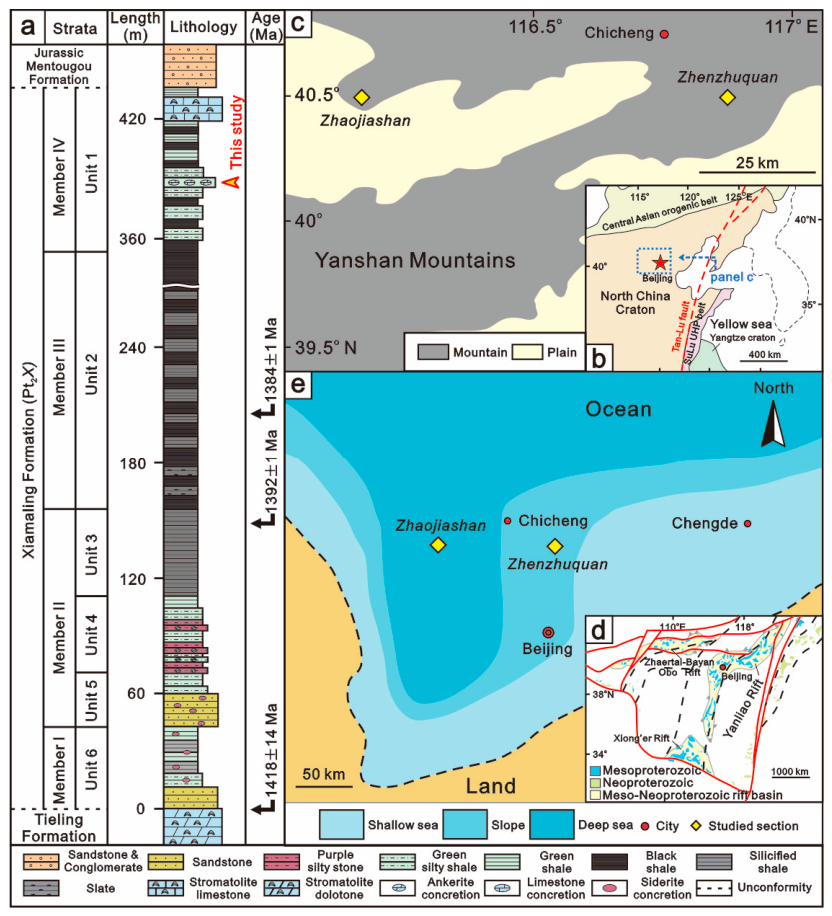
2. Geological Background

3. Methodology
4. Result
5. Discussion
5.1. Source of Carbon
5.2. Origin of Calcite Concretion
5.3. Estimated CO2 Sink of Carbonate Concretions
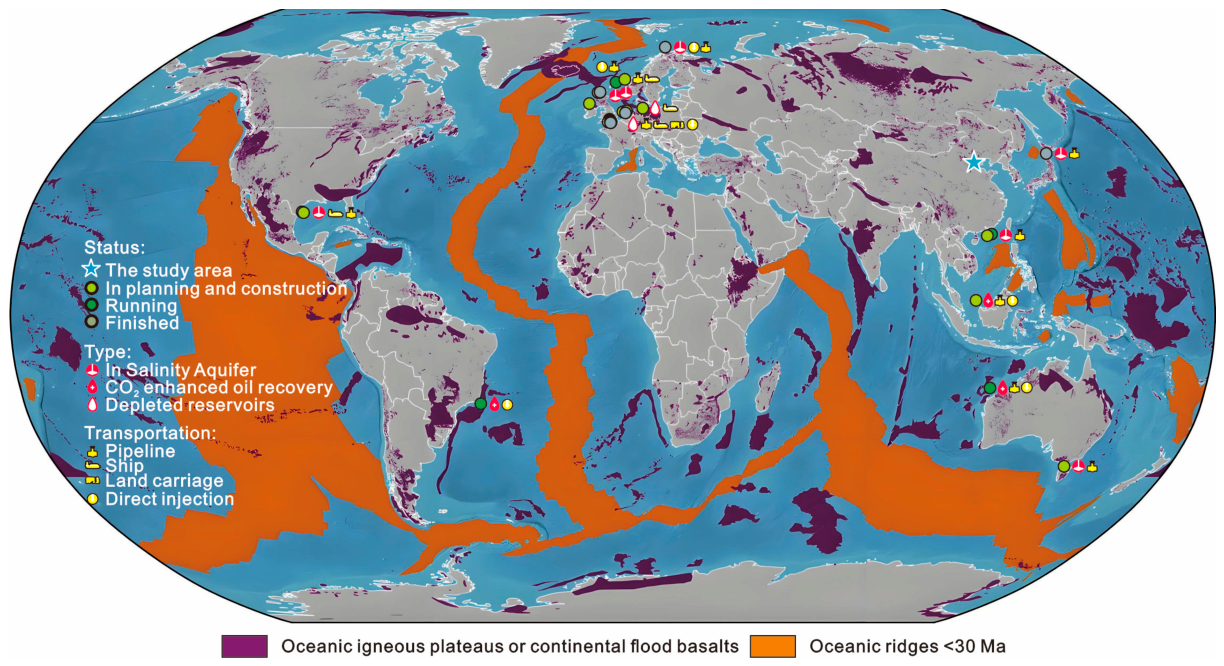
5.4. Implications for Marine CO2 Storage
6. Conclusions
- (i)
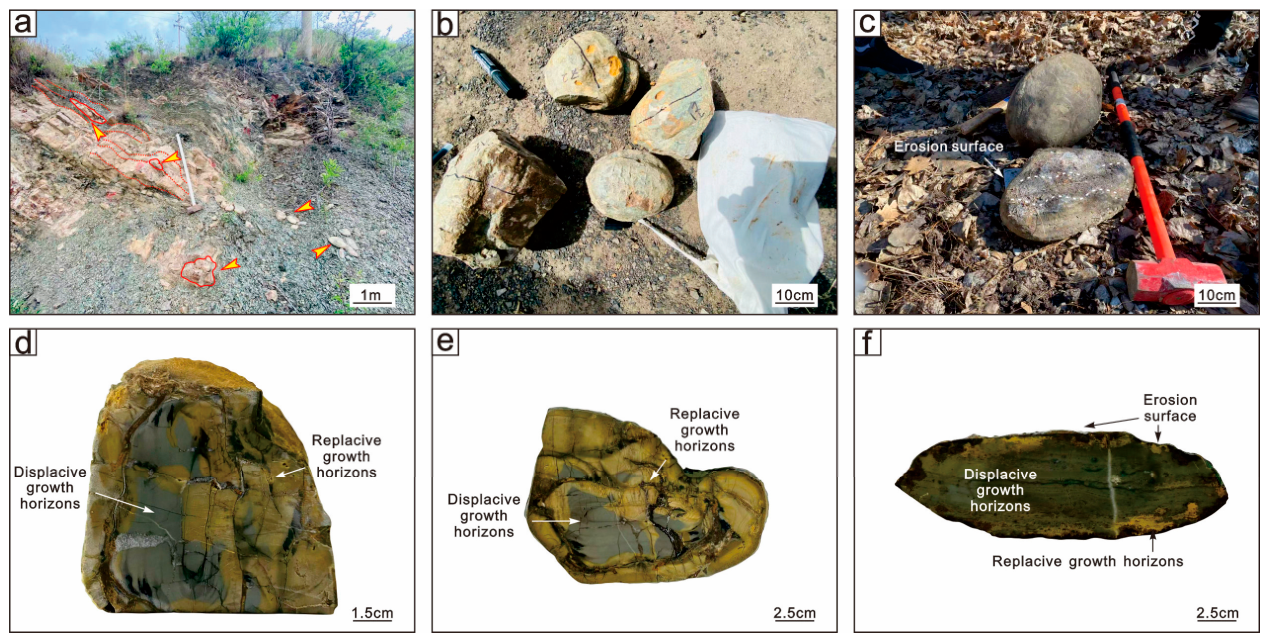
- The calcite-concretion-bearing interval in the middle part of Unit 1 of the Mesoproterozoic Xiamaling Formation records synsedimentary to early diagenetic concretion formation, as indicated by local truncation of host-rock laminae and the presence of erosional surfaces.
- (ii)
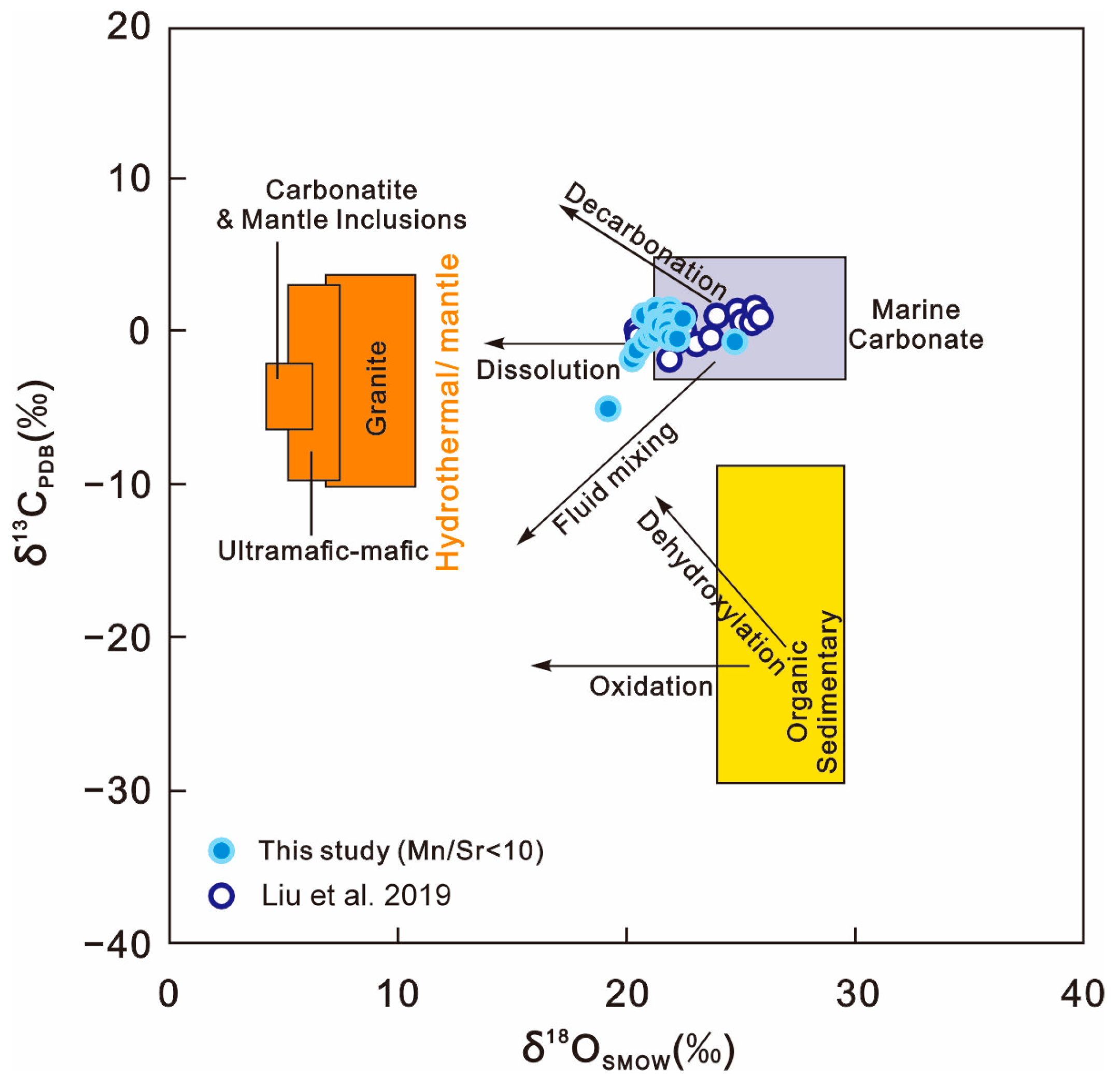
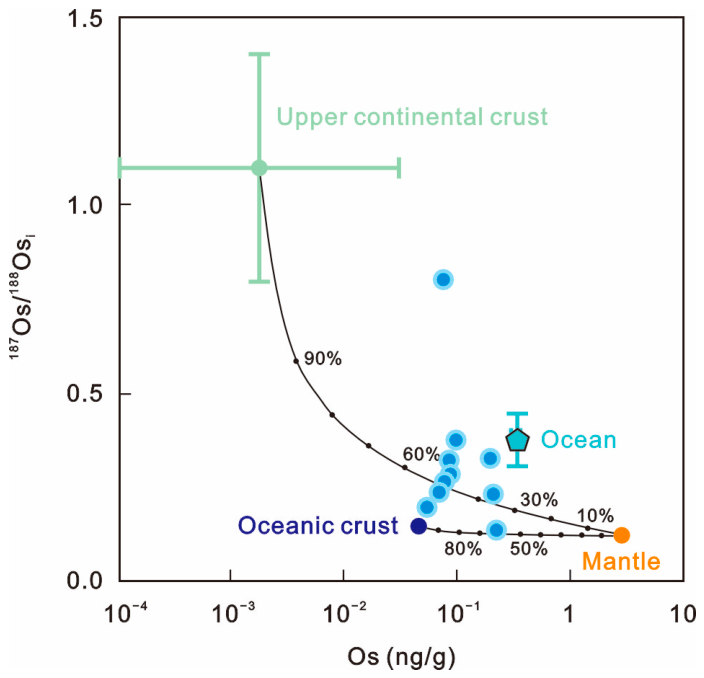
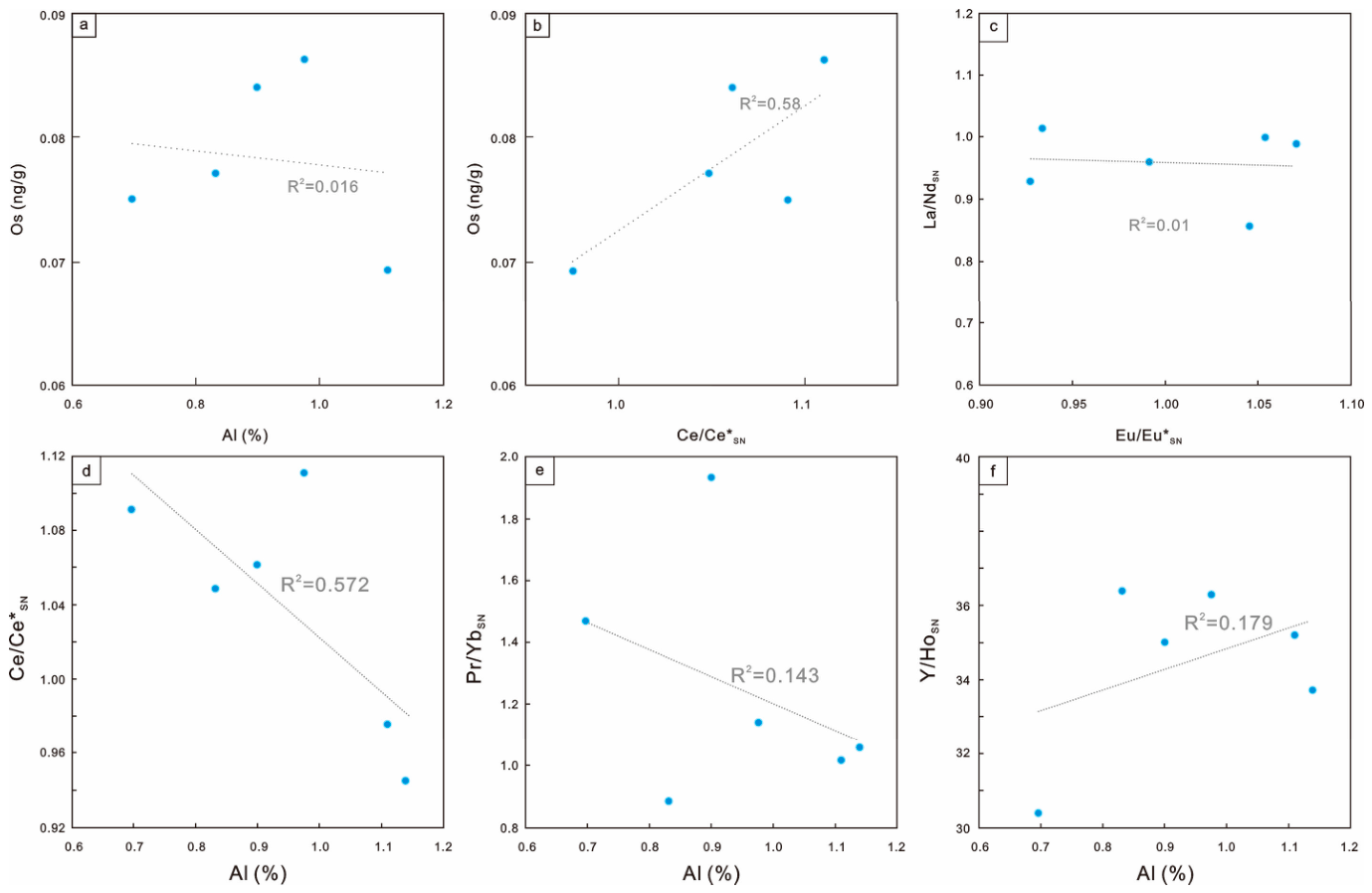
- Geochemical evidence, including a mean δ13C value of 0.21‰, indicates that marine dissolved inorganic carbon was the principal carbon source, while the low initial 187Os/188Os ratios point to a mantle-derived contribution to the concretions.
- (iii)
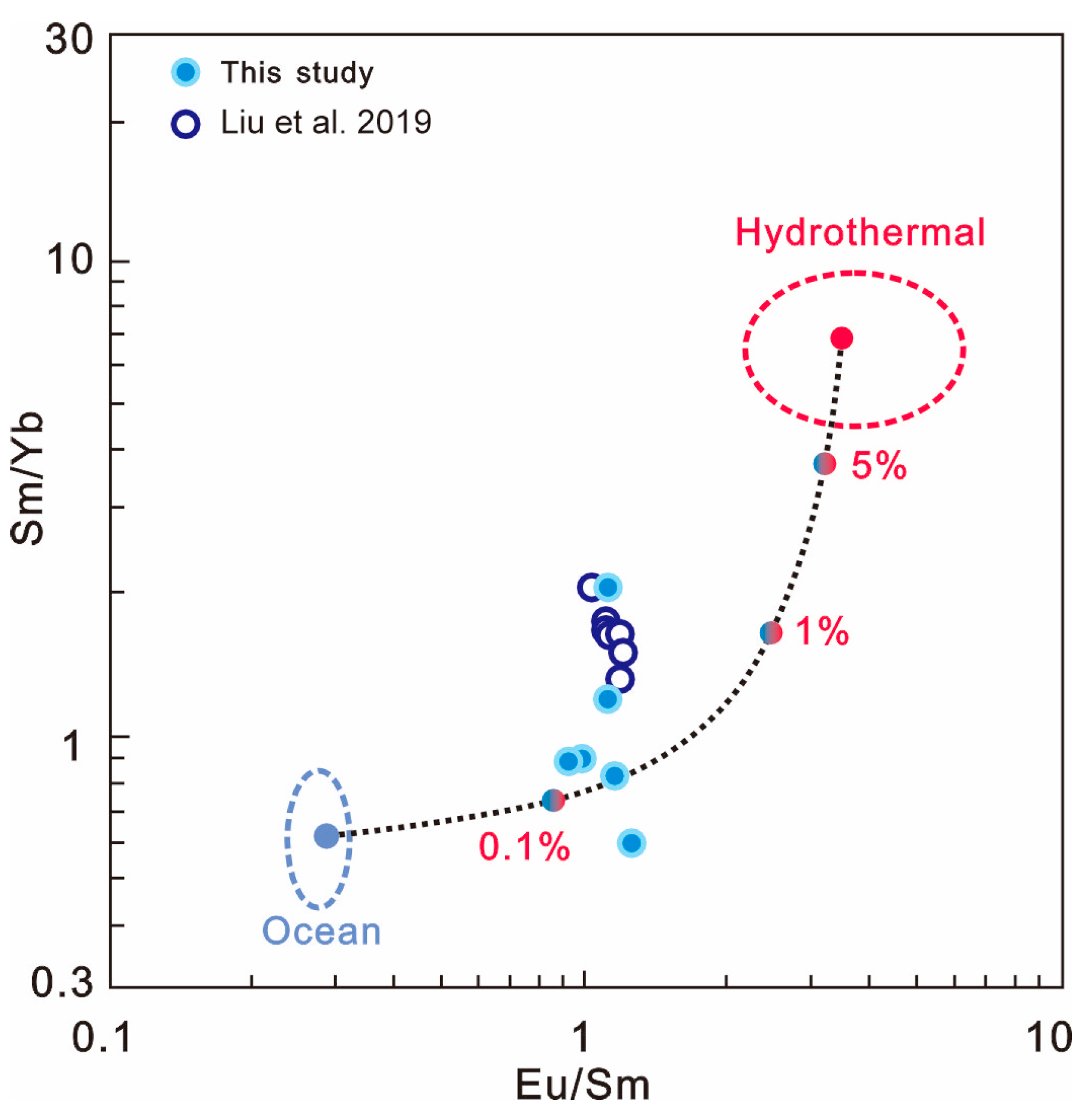
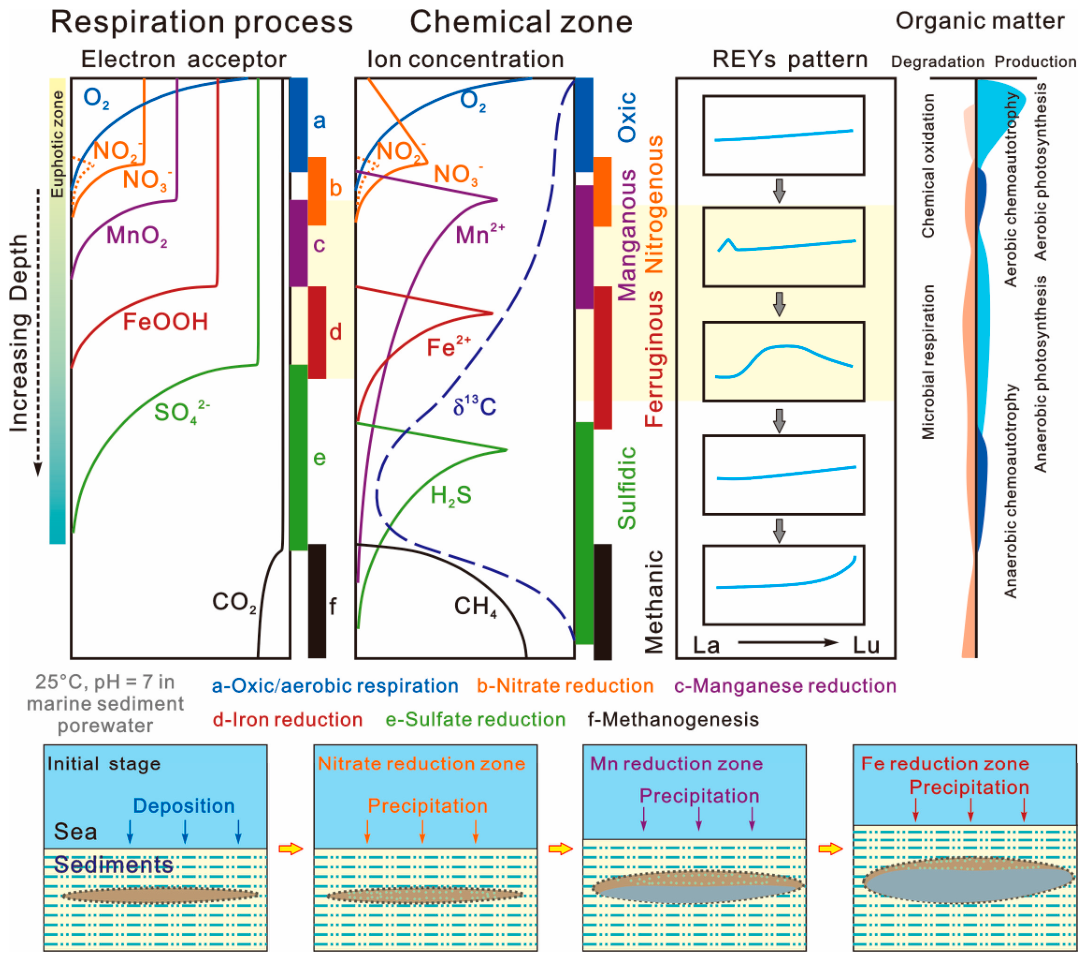
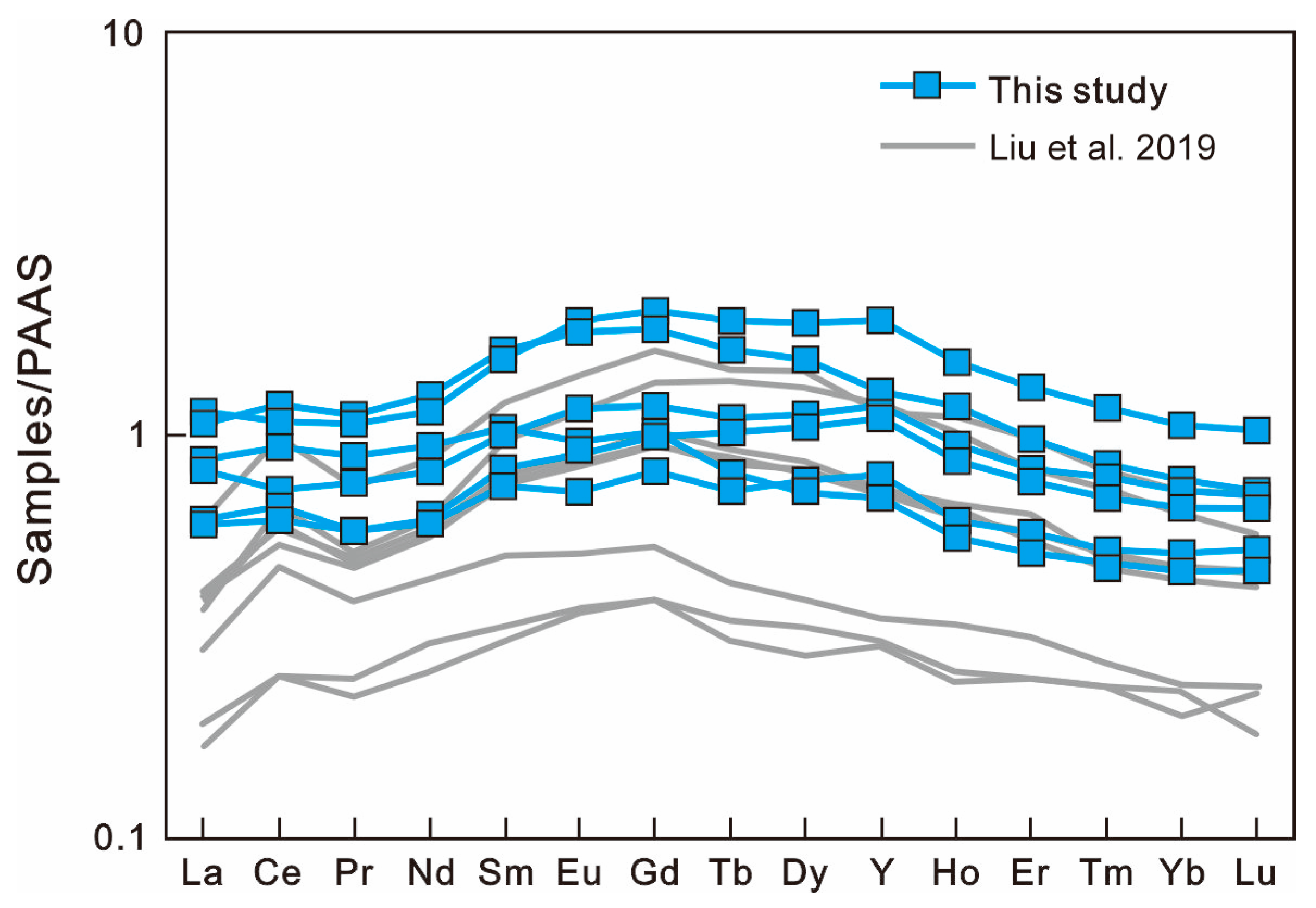
- MREYs-enriched patterns and slight positive Ce anomalies further suggest that concretion growth was associated with Fe-Mn reduction, with an estimated total sequestration of up to 70.24 Gt C.
- (iv)
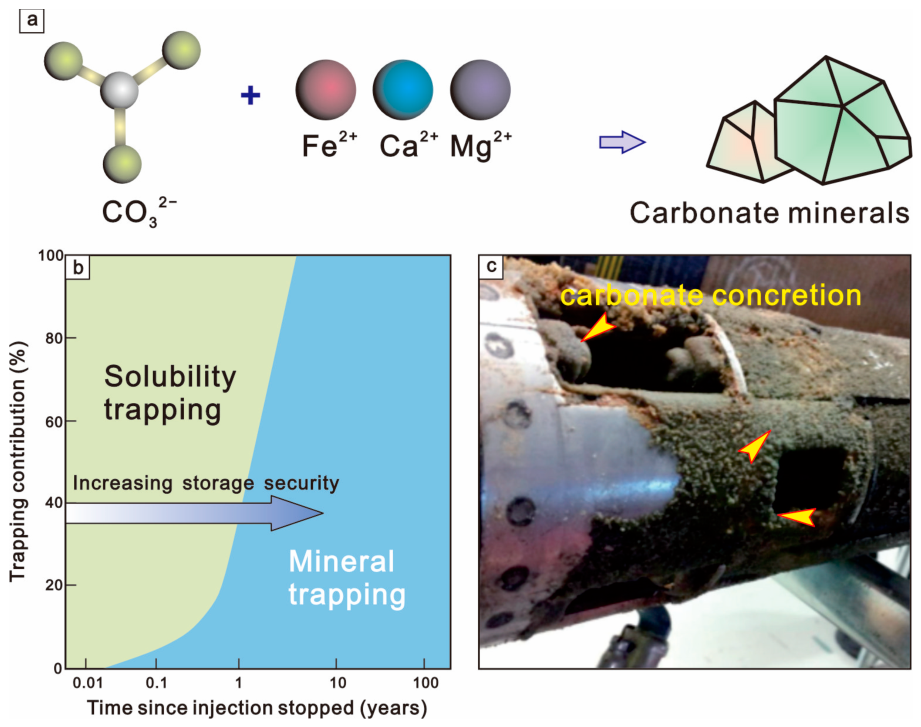
- Microbially mediated carbonate precipitation may provide an efficient pathway for carbon immobilization and a complementary strategy for subseafloor CO2 storage if biocatalysts and/or brine could accelerate seawater CO2 mineral trapping to industrially relevant rates.
Supplementary Materials
Author Contributions
Funding
Institutional Review Board Statement
Informed Consent Statement
Data Availability Statement
Acknowledgments
Conflicts of Interest
References
- Friedlingstein, P.; Jones, M.W.; O’sullivan, M.; Andrew, R.; Hauck, J.; Peters, G.; Peters, W.; Pongratz, J.; Sitch, S.; Le Quéré, C.; et al. Global carbon budget 2019. Earth Syst. Sci. Data 2019, 11, 1783–1838. [Google Scholar] [CrossRef]
- Aminnaji, M.; Qureshi, M.F.; Dashti, H.; Hase, A.; Mosalanejad, A.; Jahanbakhsh, A.; Babaei, M.; Amiri, A.; Maroto-Valer, M. CO2 Gas hydrate for carbon capture and storage applications–Part 1. Energy 2024, 300, 131579. [Google Scholar] [CrossRef]
- Keeling, C.; Whorf, T.; Wahlen, M.; Van der Plichtt, J. Interannual extremes in the rate of rise of atmospheric carbon dioxide since 1980. Nature 1995, 375, 666–670. [Google Scholar] [CrossRef]
- Raupach, M.; Marland, G.; Ciais, P.; Le Quéré, C.; Canadell, J.; Klepper, G.; Field, C. Global and regional drivers of accelerating CO2 emissions. Proc. Natl. Acad. Sci. USA 2007, 104, 10288–10293. [Google Scholar] [CrossRef] [PubMed]
- Warren, R. The role of interactions in a world implementing adaptation and mitigation solutions to climate change. Philos. Trans. A Math. Phys. Eng. Sci. 2011, 369, 217–241. [Google Scholar] [CrossRef] [PubMed]
- Falkowski, P.; Scholes, R.; Boyle, E.; Canadell, J.; Canfield, D.; Elser, J.; Gruber, N.; Hibbard, K.; Högberg, P.; Linder, S.; et al. The global carbon cycle: A test of our knowledge of earth as a system. Science 2000, 290, 291–296. [Google Scholar] [CrossRef] [PubMed]
- Blunden, J.; Arndt, D. State of the climate in 2018. Bull. Am. Meteorol. Soc. 2019, 100, Si-S306. [Google Scholar] [CrossRef]
- Doney, S.; Fabry, V.; Feely, R.; Kleypas, J. Ocean acidification: The other CO2 problem. Annu. Rev. Mar. Sci. 2009, 1, 169–192. [Google Scholar] [CrossRef] [PubMed]
- Gattuso, J.; Hansson, L. (Eds.) Ocean Acidification; Oxford University Press: Oxford, UK, 2011. [Google Scholar]
- Sikdar, S.; Princiotta, F. (Eds.) Advances in Carbon Management Technologies; CRC Press: Boca Raton, FL, USA, 2020. [Google Scholar]
- Hare, B.; Schaeffer, M.; Rocha, M. Science Aspects of the 2 C and 1.5 C Global Goals in the Cancun Agreements. LDC Paper Series. 2011. Available online: https://www.ldc-climate.org/wp-content/uploads/2018/02/LDC-paper-series-22.pdf (accessed on 1 November 2011).
- Liddle, B.; Sadorsky, P. How much does increasing non-fossil fuels in electricity generation reduce carbon dioxide emissions? Appl. Energy 2017, 197, 212–221. [Google Scholar] [CrossRef]
- Jones, B. Global CCS Institute–Global Status of CCS Update to 3rd Clean Energy Ministerial. 2012. Available online: https://hgeo.energy.gov/archives/cslf/sites/default/files/documents/perth2012/Jones-AdvancingCCUSRoundtable-PG-Perth1012.pdf (accessed on 25 October 2012).
- Golomb, D.; Zemba, S.; Dacey, J.; Michaels, A. The fate of CO2 sequestered in the deep ocean. Energ. Convers. Manag. 1992, 33, 675–683. [Google Scholar] [CrossRef]
- North, W.; Blackwell, V.; Morgan, J. Studies of CO2 hydrate formation and dissolution. Environ. Sci. Technol. 1998, 32, 676–681. [Google Scholar] [CrossRef]
- Brewer, P.; Peltzer, E.; Orr, F., Jr. Direct experiments on the ocean disposal of fossil fuel CO2. In SPE Annual Technical Conference and Exhibition? SPE: Hong Kong, China, 2001; p. SPE-71454-MS. [Google Scholar] [CrossRef]
- Qi, D. Development of ocean carbon sinks and deployment of seabed geological storage of carbon dioxide. Shanghai Securities News, 29 March 2023; (In Chinese). [CrossRef]
- Sun, X.; Shang, A.; Wu, P.; Liu, T.; Li, Y. A review of CO2 marine geological sequestration. Processes 2023, 11, 2206. [Google Scholar] [CrossRef]
- Qi, S.; Zheng, B.; Wang, Z.; Zhao, H.; Cui, Z.; Huang, T.; Guo, S.; Fu, L.; Dong, P. Geological evaluation for the carbon dioxide geological utilization and storage (CGUS) site: A review. Sci. China Earth Sci. 2023, 66, 1917–1936. [Google Scholar] [CrossRef]
- Zhou, S.; Li, Q.; Zhu, J.; Zhou, Y.; Zhao, C.; He, Y. Consideration on CO2 marine storage and exploration of new paths. Nat. Gas Ind. 2024, 44, 1–10, (In Chinese with English abstract). [Google Scholar] [CrossRef]
- Kelemen, P.; Benson, S.; Pilorgé, H.; Psarras, P.; Wilcox, J. An overview of the status and challenges of CO2 storage in minerals and geological formations. Front. Clim. 2019, 1, 9. [Google Scholar] [CrossRef]
- Berner, R.; Lasaga, A.; Garrels, R. Carbonate-silicate geochemical cycle and its effect on atmospheric carbon dioxide over the past 100 million years. Am. J. Sci. 1983, 283, 641–683. [Google Scholar] [CrossRef]
- Zhang, R.; Winterfeld, P.; Yin, X.; Xiong, Y.; Wu, Y. Sequentially coupled THMC model for CO2 geological sequestration into a 2D heterogeneous saline aquifer. J. Nat. Gas Sci. Eng. 2015, 27, 579–615. [Google Scholar] [CrossRef]
- Sellés-Martínez, J. Concretion morphology, classification and genesis. Earth-Sci. Rev. 1996, 41, 177–210. [Google Scholar] [CrossRef]
- Raiswell, R.; Fisher, Q. Mudrock-hosted carbonate concretions: A review of growth mechanisms and their influence on chemical and isotopic composition. J. Geol. Soc. 2000, 157, 239–251. [Google Scholar] [CrossRef]
- Gaines, R.; Vorhies, J. Growth mechanisms and geochemistry of carbonate concretions from the Cambrian Wheeler Formation (Utah, USA). Sedimentology 2016, 63, 662–698. [Google Scholar] [CrossRef]
- Curtis, C.; Coleman, M.; Love, L. Pore water evolution during sediment burial from isotopic and mineral chemistry of calcite, dolomite and siderite concretions. Geochim. Cosmochim. Acta 1986, 50, 2321–2334. [Google Scholar] [CrossRef]
- Loyd, S.; Berelson, W.; Lyons, T.; Hammond, D.; Tripati, A.; Eiler, J.; Corsetti, F. Formation mechanisms of carbonate concretions of the Monterey Formation: Analyses of clumped isotopes, iron, sulfur and carbon. Mineral. Mag. 2012, 76, 2036. Available online: http://www.goldschmidt2012.org/ (accessed on 1 November 2012).
- Roberts, A.; Weaver, R. Multiple mechanisms of remagnetization involving sedimentary greigite (Fe3S4). Earth Planet. Sci. Lett. 2005, 231, 263–277. [Google Scholar] [CrossRef]
- Canfield, D.; Thamdrup, B. Towards a consistent classification scheme for geochemical environments, or, why we wish the term ‘suboxic’would go away. Geobiology 2009, 7, 385–392. [Google Scholar] [CrossRef] [PubMed]
- Dong, J.; Zhang, S.; Jiang, G.; Li, H.; Gao, R. Greigite from carbonate concretions of the Ediacaran Doushantuo Formation in South China and its environmental implications. Precambrian Res. 2013, 225, 77–85. [Google Scholar] [CrossRef]
- Turchyn, A.; Bradbury, H.; Walker, K.; Sun, X. Controls on the precipitation of carbonate minerals within marine sediments. Front. Earth Sci. 2021, 9, 618311. [Google Scholar] [CrossRef]
- Li, Y.; Fu, C.; Ren, P.; Song, Z.; Ni, L.; Wang, T.; Yu, C.; Chen, J.; Guo, L.; Hartley, I.; et al. Mineral association and microbial processing jointly prolong carbon turnover in coastal wetlands. Glob. Change Biol. 2026, 32, e70763. [Google Scholar] [CrossRef] [PubMed]
- Snæbjörnsdóttir, S.; Sigfússon, B.; Marieni, C.; Goldberg, D.; Gislason, S.; Oelkers, E. Carbon dioxide storage through mineral carbonation. Nat. Rev. Earth Environ. 2020, 1, 90–102. [Google Scholar] [CrossRef]
- Zhao, G.; Sun, M.; Wilde, S.; Li, S. A Paleo-Mesoproterozoic supercontinent: Assembly, growth and breakup. Earth-Sci. Rev. 2004, 67, 91–123. [Google Scholar] [CrossRef]
- Zhao, G.; Sun, M.; Wilde, S.; Li, S. Late Archean to Paleoproterozoic evolution of the North China Craton: Key issues revisited. Precambrian Res. 2005, 136, 177–202. [Google Scholar] [CrossRef]
- Gao, L.; Ding, X.; Pang, W.; Zhang, C. New geologic time scale of Meso-and Neoproterozoic of China and geochronologic constraint by SHRIMP zircon U-Pb dating. J. Stratigr. 2011, 35, 1–7, (In Chinese with English abstract). [Google Scholar] [CrossRef]
- Kuang, H.; Peng, N.; Liu, Y.; Wang, Y.; Cui, M.; Chen, X.; Qiao, D.; Qi, K. Is there a great unconformity between Xiamaling and Longshan formations in the North China Craton? Sci. China Earth Sci. 2023, 66, 959–984. [Google Scholar] [CrossRef]
- Zhang, S.; Zhao, Y.; Li, X.; Ernst, R.; Yang, Z. The 1.33-1.30 Ga Yanliao large igneous province in the North China Craton: Implications for reconstruction of the Nuna (Columbia) supercontinent, and specifically with the North Australian Craton. Earth Planet. Sci. Lett. 2017, 465, 112–125. [Google Scholar] [CrossRef]
- Zhang, S.; Ernst, R.; Yang, Z.Y.; Zhou, Z.; Pei, J.; Zhao, Y. Spatial distribution of 1.4-1.3 Ga LIPs and carbonatite-related REE deposits: Evidence for large-scale continental rifting in the Columbia (Nuna) supercontinent. Earth Planet. Sci. Lett. 2022, 597, 117815. [Google Scholar] [CrossRef]
- Zhang, S.; Zhao, Y.; Yang, Z.; He, Z.; Wu, H. The 1.35 Ga diabase sills from the northern North China Craton: Implications for breakup of the Columbia (Nuna) supercontinent. Earth Planet. Sci. Lett. 2009, 288, 588–600. [Google Scholar] [CrossRef]
- Zhang, S.; Li, Z.; Evans, D.; Wu, H.; Li, H.; Dong, J. Pre-Rodinia supercontinent Nuna shaping up: A global synthesis with new paleomagnetic results from North China. Earth Planet. Sci. Lett. 2012, 353, 145–155. [Google Scholar] [CrossRef]
- Xu, L.; Lechte, M.; Shi, X.; Zheng, W.; Zhou, L.; Huang, K.; Zhou, X.; Tang, D. Large igneous province emplacement triggered an oxygenation event at ~1.4 Ga: Evidence from mercury and paleo-productivity proxies. Geophys. Res. Lett. 2024, 51, e2023GL106654. [Google Scholar] [CrossRef]
- Yang, X.; Chu, Z.; Zhang, S.; Tang, D.; Peng, P.; Zhao, T.; Xu, J. Mafic magmatism triggered the Mesoproterozoic oxygenation event: Re-Os-PGE evidence from the Xiamaling Formation in North China and Velkerri Formation in North Australia. Earth Planet. Sci. Lett. 2025, 667, 119512. [Google Scholar] [CrossRef]
- Wang, X.; Zhang, S.; Wang, H.; Bjerrum, C.; Hammarlund, E.; Haxen, E.; Su, J.; Wang, Y.; Canfield, D. Oxygen, climate and the chemical evolution of a 1400 million year old tropical marine setting. Am. J. Sci. 2017, 317, 861–900. [Google Scholar] [CrossRef]
- Tang, D.; Shi, X.; Jiang, G.; Zhou, X.; Shi, Q. Ferruginous seawater facilitates the transformation of glauconite to chamosite: An example from the Mesoproterozoic Xiamaling Formation of North China. Am. Mineral. 2017, 102, 2317–2332. [Google Scholar] [CrossRef]
- Tang, D.; Shi, X.; Jiang, G.; Wu, T.; Ma, J.; Zhou, X. Stratiform siderites from the Mesoproterozoic Xiamaling Formation in North China: Genesis and environmental implications. Gondwana Res. 2018, 58, 1–15. [Google Scholar] [CrossRef]
- Zhang, S.; Wang, X.; Hammarlund, E.; Wang, H.; Costa, M.; Bjerrum, C.; Connelly, J.; Zhang, B.; Bian, L.; Canfield, D. Orbital forcing of climate 1.4 billion years ago. Proc. Natl. Acad. Sci. USA 2015, 112, E1406–E1413. [Google Scholar] [CrossRef] [PubMed]
- Zhang, S.; Wang, X.; Wang, H.; Bjerrum, C.; Hammarlund, E.; Costa, M.; Connelly, J.; Zhang, B.; Su, J.; Canfield, D. Sufficient oxygen for animal respiration 1400 million years ago. Proc. Natl. Acad. Sci. USA 2016, 113, 1731–1736. [Google Scholar] [CrossRef] [PubMed]
- Evans, D.; Mitchell, R. Assembly and breakup of the core of Paleoproterozoic-Mesoproterozoic supercontinent Nuna. Geology 2011, 39, 443–446. [Google Scholar] [CrossRef]
- Wang, H.; Chu, X.; Liu, B.; Hou, H.; Ma, L. Atlas of the Palaeo-Geography of China 1985; Cartographic Publishing House: Beijing, China, 1985; p. 143, (In Chinese with English abstract). [Google Scholar]
- Zhang, S.; Wang, X.; Wang, H.; Bjerrum, C.; Hammarlund, E.; Haxen, E.; Wen, H.; Ye, Y.; Canfield, D. Paleoenvironmental proxies and what the Xiamaling formation tells us about the mid-Proterozoic ocean. Geobiology 2019, 17, 225–246. [Google Scholar] [CrossRef] [PubMed]
- Lyu, D.; Deng, Y.; Wang, H.J.; Zhang, F.; Ren, R.; Gao, Z.; Zhou, C.; Luo, Z.; Wang, X.; Bi, L.; et al. Using cyclostratigraphic evidence to define the unconformity caused by the Mesoproterozoic Qinyu Uplift in the North China Craton. J. Asian Earth Sci. 2021, 206, 104608. [Google Scholar] [CrossRef]
- Liu, A.; Tang, D.; Shi, X.; Zhou, L.; Zhou, X.; Shang, M.; Li, Y.; Song, H. Growth mechanisms and environmental implications of carbonate concretions from the ~1.4 Ga Xiamaling Formation, North China. J. Palaeogeogr. 2019, 8, 20. [Google Scholar] [CrossRef]
- Li, P.; Hao, F.; He, S.; Chai, H.; Jiao, Y.; Gao, Y.; Zou, H. Oxygen isotope composition of Mesoproterozoic (~1360 Ma) seawater constrained by clumped isotopes of North China limestones. Sci. Adv. 2025, 11, eadu6693. [Google Scholar] [CrossRef] [PubMed]
- Wei, C.; Zhai, M.; Wang, B. Four phases of Orosirian metamorphism in the north North China Craton (NNCC): Insights into the regional tectonic framework and evolution. Earth-Sci. Rev. 2023, 241, 104449. [Google Scholar] [CrossRef]
- Wang, T. Meso-Neoproterozoic Geology and Petroleum Resources in China; Springer: Berlin/Heidelberg, Germany, 2022. [Google Scholar] [CrossRef]
- Einsele, G. Basin evolution and sediments. In Sedimentary Basins: Evolution, Facies, and Sediment Budget; Springer: Berlin/Heidelberg, Germany, 2000; pp. 543–643. [Google Scholar] [CrossRef]
- Fang, Y.; Fang, L.; Deng, S.; Lu, Y.; Wang, B.; Zhao, X.; Wang, Y.; Zhang, H.; Zhang, X.; Sha, J. Carbon isotope stratigraphy across the Triassic-Jurassic boundary in the high-latitude terrestrial Junggar Basin, NW China. Palaeogeogr. Palaeoclimatol. Palaeoecol. 2021, 577, 110559. [Google Scholar] [CrossRef]
- Suzuki, K.; Miyata, Y.; Kanazawa, N. Precise Re isotope ratio measurements by negative thermal ionization mass spectrometry (NTI-MS) using total evaporation technique. Int. J. Mass Spectrom. 2004, 235, 97–101. [Google Scholar] [CrossRef]
- Seredin, V.; Dai, S. Coal deposits as potential alternative sources for lanthanides and yttrium. Int. J. Coal Geol. 2012, 94, 67–93. [Google Scholar] [CrossRef]
- Mclennan, S. Rare earth elements in sedimentary rocks: Influence of provenance and sedimentary processes. In Geochemistry and Mineralogy of Rare Earth Elements; De Gruyter: Berlin, Germany, 1989; pp. 169–200. [Google Scholar] [CrossRef]
- Shields, G.; Veizer, J. Precambrian marine carbonate isotope database: Version 1.1. Geochem. Geophys. Geosystems. 2002, 3, 1–12. [Google Scholar] [CrossRef]
- Guo, H.; Du, Y.; Kah, L.; Huang, J.; Hu, C.; Huang, H.; Yu, W. Isotopic composition of organic and inorganic carbon from the Mesoproterozoic Jixian Group, North China: Implications for biological and oceanic evolution. Precambrian Res. 2013, 224, 169–183. [Google Scholar] [CrossRef]
- Whiticar, M. Carbon and hydrogen isotope systematics of bacterial formation and oxidation of methane. Chem. Geol. 1999, 161, 291–314. [Google Scholar] [CrossRef]
- Heimann, A.; Johnson, C.; Beard, B.; Valley, J.; Roden, E.; Spicuzza, M.; Beukes, N. Fe, C, and O isotope compositions of banded iron formation carbonates demonstrate a major role for dissimilatory iron reduction in ~2.5 Ga marine environments. Earth Planet. Sci. Lett. 2010, 294, 8–18. [Google Scholar] [CrossRef]
- Shen, M.; Dai, S.; French, D.; Graham, I.; Spiro, B.; Wang, N.; Tian, X. Geochemical and mineralogical evidence for the formation of siderite in Late Permian coal-bearing strata from western Guizhou, SW China. Chem. Geol. 2023, 637, 121675. [Google Scholar] [CrossRef]
- Banner, J.; Hanson, G. Calculation of simultaneous isotopic and trace element variations during water-rock interaction with applications to carbonate diagenesis. Geochim. Cosmochim. Acta 1990, 54, 3123–3137. [Google Scholar] [CrossRef]
- Marshall, J. Climatic and oceanographic isotopic signals from the carbonate rock record and their preservation. Geol. Mag. 1992, 129, 143–160. [Google Scholar] [CrossRef]
- Kaufman, A.; Jacobsen, S.; Knoll, A. The Vendian record of Sr and C isotopic variations in seawater: Implications for tectonics and paleoclimate. Earth Planet. Sci. Lett. 1993, 120, 409–430. [Google Scholar] [CrossRef]
- Azmy, K.; Stouge, S.; Christiansen, J.; Harper, D.; Knight, I.; Boyce, D. Carbon-isotope stratigraphy of the Lower Ordovician succession in Northeast Greenland: Implications for correlations with St. George Group in western Newfoundland (Canada) and beyond. Sediment. Geol. 2010, 225, 67–81. [Google Scholar] [CrossRef]
- Jaffrés, J.; Shields, G.; Wallmann, K. The oxygen isotope evolution of seawater: A critical review of a long-standing controversy and an improved geological water cycle model for the past 3.4 billion years. Earth-Sci. Rev. 2007, 83, 83–122. [Google Scholar] [CrossRef]
- Bragagni, A.; Mastroianni, F.; Münker, C.; Conticelli, S.; Avanzinelli, R. A carbon-rich lithospheric mantle as a source for the large CO2 emissions of Etna volcano (Italy). Geology 2022, 50, 486–490. [Google Scholar] [CrossRef]
- Li, C.; Zhang, G.; Guo, Q.; Kusumoto, S.; Wang, Y. Deep carbon cycling in geothermal areas: A review. Acta Petrol. Sin. 2024, 40, 2255–2266, (In Chinese with English abstract). [Google Scholar] [CrossRef]
- Tang, H.; Chen, Y.; Wu, G.; Yang, T. Rare earth element geochemistry of carbonates of Dashiqiao Formation, Liaohe Group, eastern Liaoning province: Implications for Lomagundi Event. Acta Petrol. Sin. 2009, 25, 3075–3093, (In Chinese with English abstract). [Google Scholar]
- Meisel, T.; Walker, R.; Irving, A.; Lorand, J. Osmium isotopic compositions of mantle xenoliths: A global perspective. Geochim. Cosmochim. Acta 2001, 65, 1311–1323. [Google Scholar] [CrossRef]
- Goto, K.; Sekine, Y.; Suzuki, K.; Tajika, E.; Senda, R.; Nozaki, T.; Tada, R.; Goto, K.; Yamamoto, S.; Maruoka, T.; et al. Redox conditions in the atmosphere and shallow-marine environments during the first Huronian deglaciation: Insights from Os isotopes and redox-sensitive elements. Earth Planet. Sci. Lett. 2013, 376, 145–154. [Google Scholar] [CrossRef]
- Gao, S.; Rudnick, R.; Carlson, R.; McDonough, W.; Liu, Y. Re-Os evidence for replacement of ancient mantle lithosphere beneath the North China craton. Earth Planet. Sci. Lett. 2002, 198, 307–322. [Google Scholar] [CrossRef]
- Zhang, C.; Li, Z.; Tian, W.; Wei, C. Ascertaining the origin of magmas for the 1.32 Ga Yanliao mafic sills: An elemental and Os-Nd isotope perspective. Precambrian Res. 2025, 420, 107733. [Google Scholar] [CrossRef]
- Rooney, A.; Hnatyshin, D.; Toma, J.; Saintilan, N.; Millikin, A.; Selby, D.; Creaser, R. Application of the 187Re-187Os geochronometer to crustal materials: Systematics, methodology, data reporting, and interpretation. Geol. Soc. Am. Bull. 2024, 136, 4091–4129. [Google Scholar] [CrossRef]
- Langmuir, C.; Vocke, R., Jr.; Hanson, G.; Hart, S. A general mixing equation with applications to Icelandic basalts. Earth Planet. Sci. Lett. 1978, 37, 380–392. [Google Scholar] [CrossRef]
- Elderfield, H.; Greaves, M. The rare earth elements in seawater. Nature 1982, 296, 214–219. [Google Scholar] [CrossRef]
- Sholkovitz, E. The aquatic chemistry of rare earth elements in rivers and estuaries. Aquat. Geochem. 1995, 1, 1–34. [Google Scholar] [CrossRef]
- Bau, M.; Dulski, P. Distribution of yttrium and rare-earth elements in the Penge and Kuruman iron-formations, Transvaal Supergroup, South Africa. Precambrian Res. 1996, 79, 37–55. [Google Scholar] [CrossRef]
- Zhang, S.; Wang, H.; Wang, X.; Ye, Y. Mesoproterozoic marine biological carbon pump: Source, degradation, and enrichment of organic matter. Chin. Sci. Bull. 2022, 67, 1624–1643, (In Chinese with English abstract). [Google Scholar] [CrossRef]
- Planavsky, N.; Bekker, A.; Rouxel, O.; Kamber, B.; Hofmann, A.; Knudsen, A.; Lyons, T. Rare earth element and yttrium compositions of Archean and Paleoproterozoic Fe formations revisited: New perspectives on the significance and mechanisms of deposition. Geochim. Cosmochim. Acta 2010, 74, 6387–6405. [Google Scholar] [CrossRef]
- Zhu, W.; Tian, W.; Zhang, Y.; Li, Z.; Gong, M.; Fu, B.; Wang, Z.; Wei, C. Geological characteristics and genesis of the Late Carboniferous extremely thick slate in the Shuangjianzishan Ag-Pb-Zn district, southern Great Xing’an Range, NE China: Constraints on metallogenesis and tectonic setting. Front. Earth Sci. 2023, 11, 1145656. [Google Scholar] [CrossRef]
- Wang, H.; Ye, Y.; Deng, Y.; Wang, X.; Hammarlund, E.; Fan, H.; Canfield, D.; Zhang, S. Isotope evidence for he coupled iron and carbon cycles 1.4 billion years ago. Geochem. Persp. Let. 2022, 21, 1–6. [Google Scholar] [CrossRef]
- de Baar, H.; German, C.; Elderfield, H.; Van Gaans, P. Rare earth element distributions in anoxic waters of the Cariaco Trench. Geochim. Cosmochim. Acta 1988, 52, 1203–1219. [Google Scholar] [CrossRef]
- German, C.; Holliday, B.; Elderfield, H. Redox cycling of rare earth elements in the suboxic zone of the Black Sea. Geochim. Cosmochim. Acta 1991, 55, 3553–3558. [Google Scholar] [CrossRef]
- De Carlo, E.; Green, W. Rare earth elements in the water column of Lake Vanda, McMurdo Dry Valleys, Antarctica. Geochim. Cosmochim. Acta 2002, 66, 1323–1333. [Google Scholar] [CrossRef]
- Canfield, D.; Zhang, S.; Wang, H.; Wang, X.; Zhao, W.; Su, J.; Bjerrum, C.; Haxen, E.; Hammarlund, E. A Mesoproterozoic iron formation. Proc. Natl. Acad. Sci. USA 2018, 115, E3895–E3904. [Google Scholar] [CrossRef] [PubMed]
- Deer, W.; Howie, R.; Zussman, J. An Introduction to the Rock-Forming Minerals; Mineralogical Society of Great Britain and Ireland: Middlesex, UK, 2013. [Google Scholar]
- Zhang, C.; Tian, W.; He, Y.; Gong, M.; Li, S. The carbon release triggered by 1.32 Ga sill emplacement and its potential environmental implications. Front. Earth Sci. 2024, 12, 1368342. [Google Scholar] [CrossRef]
- Friedlingstein, P.; O’sullivan, M.; Jones, M.; Andrew, R.; Hauck, J.; Landschützer, P.; Le Quéré, C.; Li, H.; Luijkx, I.; Olsen, A.; et al. Global carbon budget 2024. Earth Syst. Sci. Data 2025, 17, 965–1039. [Google Scholar] [CrossRef]
- Berner, R.; Caldeira, K. The need for mass balance and feedback in the geochemical carbon cycle. Geology 1997, 25, 955–956. [Google Scholar] [CrossRef]
- Berner, R. The long-term carbon cycle, fossil fuels and atmospheric composition. Nature 2003, 426, 323–326. [Google Scholar] [CrossRef] [PubMed]
- Martin, J. Carbonate minerals in the global carbon cycle. Chem. Geol. 2017, 449, 58–72. [Google Scholar] [CrossRef]
- Rau, G. CO2 mitigation via capture and chemical conversion in seawater. Environ. Sci. Technol. 2011, 45, 1088–1092. [Google Scholar] [CrossRef] [PubMed]
- Bradbury, H.; Turchyn, A. Reevaluating the carbon sink due to sedimentary carbonate formation in modern marine sediments. Earth Planet. Sci. Lett. 2019, 519, 40–49. [Google Scholar] [CrossRef]
- Thamdrup, B.; Fossing, H.; Jørgensen, B. Manganese, iron and sulfur cycling in a coastal marine sediment, Aarhus bay, Denmark. Geochim. Cosmochim. Acta 1994, 58, 5115–5129. [Google Scholar] [CrossRef]
- Haley, B.; Klinkhammer, G.; McManus, J. Rare earth elements in pore waters of marine sediments. Geochim. Cosmochim. Acta 2004, 68, 1265–1279. [Google Scholar] [CrossRef]
- Meyer, R.; Risgaard-Petersen, N.; Allen, D. Correlation between anammox activity and microscale distribution of nitrite in a subtropical mangrove sediment. Appl. Environ. Microbiol. 2005, 71, 6142–6149. [Google Scholar] [CrossRef] [PubMed]
- Canfield, D. Factors influencing organic carbon preservation in marine sediments. Chem. Geol. 1994, 114, 315–329. [Google Scholar] [CrossRef] [PubMed]
- Kasten, S.; Jørgensen, B. Sulfate reduction in marine sediments. In Marine Geochemistry; Springer: Berlin/Heidelberg, Germany, 2000; pp. 263–281. [Google Scholar] [CrossRef]
- Sivan, O.; Schrag, D.; Murray, R. Rates of methanogenesis and methanotrophy in deep-sea sediments. Geobiology 2007, 5, 141–151. [Google Scholar] [CrossRef]
- He, Y.; Tian, W.; Xian, B.; Liu, P.; Wei, M.; Wei, Q.; Deng, X.; Liu, J.; Gu, J. In situ CO2 mineralization storage in buried volcanoes: Review and perspectives. Coal Geol. Explor. 2026, 54, 264–284, (In Chinese with English abstract). [Google Scholar] [CrossRef]
- Dean, M.; Blackford, J.; Connelly, D.; Hines, R. Insights and guidance for offshore CO2 storage monitoring based on the QICS, ETI MMV, and STEMM-CCS projects. Int. J. Greenh. Gas Control 2020, 100, 103120. [Google Scholar] [CrossRef]
- Snæbjörnsdóttir, S.; Oelkers, E.; Mesfin, K.; Aradóttir, E.; Dideriksen, K.; Gunnarsson, I.; Gunnlaugsson, E.; Matter, J.; Stute, M.; Gislason, S. The chemistry and saturation states of subsurface fluids during the in situ mineralisation of CO2 and H2S at the CarbFix site in SW-Iceland. Int. J. Greenh. Gas Con. 2017, 58, 87–102. [Google Scholar] [CrossRef]
- Zhao, J.; Lu, W.; Zhang, F.; Lu, C.; Du, J.; Zhu, R.; Sun, L. Evaluation of CO2 solubility-trapping and mineral-trapping in microbial-mediated CO2-brine-sandstone interaction. Mar. Pollut. Bull. 2014, 85, 78–85. [Google Scholar] [CrossRef] [PubMed]
- Fentaw, J.; Emadi, H.; Hussain, A.; Fernandez, D.; Thiyagarajan, S. Geochemistry in Geological CO2 Sequestration: A Comprehensive Review. Energies 2024, 17, 5000. [Google Scholar] [CrossRef]
- Zheng, T.; Qian, C. Influencing factors and formation mechanism of CaCO3 precipitation induced by microbial carbonic anhydrase. Process Biochem. 2020, 91, 271–281. [Google Scholar] [CrossRef]
- Liu, B.; Mahmood, B.; Mohammadian, E.; Manshad, A.; Rosli, N.; Ostadhassan, M. Measurement of solubility of CO2 in NaCl, CaCl2, MgCl2 and MgCl2 + CaCl2 brines at temperatures from 298 to 373 K and pressures up to 20 MPa using the potentiometric titration method. Energies 2021, 14, 7222. [Google Scholar] [CrossRef]
- Khodaverdian, M.; Sorop, T.; Van den Hoek, P.; Sathyamoorthy, S.; Okoh, E. Injectivity and Fracturing in Unconsolidated Sand Reservoirs: Waterflooding Case Study; American Rock Mechanics Association: Abuja, Nigeria, 2010. [Google Scholar]
- Torsæter, M.; Cerasi, P. Geological and geomechanical factors impacting loss of near-well permeability during CO2 injection. Int. J. Greenh. Gas Control 2018, 76, 193–199. [Google Scholar] [CrossRef]






Disclaimer/Publisher’s Note: The statements, opinions and data contained in all publications are solely those of the individual author(s) and contributor(s) and not of MDPI and/or the editor(s). MDPI and/or the editor(s) disclaim responsibility for any injury to people or property resulting from any ideas, methods, instructions or products referred to in the content. |
© 2026 by the authors. Licensee MDPI, Basel, Switzerland. This article is an open access article distributed under the terms and conditions of the Creative Commons Attribution (CC BY) license.
Share and Cite
Zhang, C.; Tian, W.; He, Y. The Carbon Sink in the Mesoproterozoic Ocean and Its Implications for Marine Carbon Storage Pathways. Sustainability 2026, 18, 6851. https://doi.org/10.3390/su18136851
Zhang C, Tian W, He Y. The Carbon Sink in the Mesoproterozoic Ocean and Its Implications for Marine Carbon Storage Pathways. Sustainability. 2026; 18(13):6851. https://doi.org/10.3390/su18136851
Chicago/Turabian StyleZhang, Chaokun, Wei Tian, and Yanxin He. 2026. "The Carbon Sink in the Mesoproterozoic Ocean and Its Implications for Marine Carbon Storage Pathways" Sustainability 18, no. 13: 6851. https://doi.org/10.3390/su18136851
APA StyleZhang, C., Tian, W., & He, Y. (2026). The Carbon Sink in the Mesoproterozoic Ocean and Its Implications for Marine Carbon Storage Pathways. Sustainability, 18(13), 6851. https://doi.org/10.3390/su18136851