Article

From Invaders to Resources: Evaluating Freshwater Invasive Species as Sustainable Sources for Aquaculture Feed


by
Giorgia Zicarelli
1,
Sara Glorio Patrucco
1,
Barbara Caldaroni
2,
Christian Caimi
3,
Rebecca Gentile
2,
Alessandra Maganza
1,2,
Sara Bellezza Oddon
3,
Annalisa Cotugno
1,
Giuseppe Esposito
1,
Ilaria Biasato
3,
Stefania Bergagna
1,
Daniela Marchis
1,
Marzia Pezzolato
1,
Caterina Faggio
4,5,
Elena Bozzetta
1,
Marino Prearo
1,
Antonia Concetta Elia
2,
Laura Gasco
3 and
Paolo Pastorino
1,*
1
Istituto Zooprofilattico Sperimentale del Piemonte, Liguria e Valle d’Aosta, 10154 Turin, Italy
2
Department of Chemistry, Biology, and Biotechnology, University of Perugia, 06123 Perugia, Italy
3
Department of Agricultural, Forest and Food Sciences, University of Turin, 10095 Grugliasco, Italy
4
Department of Chemical, Biological, Pharmaceutical and Environmental Sciences, University of Messina, 98122 Messina, Italy
5
Department of Eco-Sustainable Marine Biotechnology, Stazione Zoologica Anton Dohrn, 80121 Naples, Italy
*
Author to whom correspondence should be addressed.
Sustainability 2026, 18(13), 6808; https://doi.org/10.3390/su18136808
Submission received: 1 June 2026 / Revised: 23 June 2026 / Accepted: 25 June 2026 / Published: 4 July 2026

Abstract

The increasing spread of invasive alien species (IAS) represents one of the major causes of biodiversity loss, making containment practices necessary. In this regard, the circular economy framework proposes to reuse the biomass from IAS in growing sectors such as aquaculture, in which more sustainable practices are required. This study evaluated the possibility of using biomass derived from two widespread freshwater IAS, Procambarus clarkii and Silurus glanis, as dietary ingredients for Oncorhynchus mykiss. Experimental diets were formulated by incorporating 20% of IAS-derived muscle powder into a commercial feed, and their effects were assessed through a 35-day feeding trial. Chemical analyses confirmed the nutritional suitability of the formulated diets and the absence of antibiotic residues. No mortality or significant differences in growth performance were observed among treatments. Blood biochemical parameters showed limited variations, remaining within physiological ranges, while oxidative stress biomarkers indicated only minor, diet-specific responses without evidence of oxidative damage. An increase in Hsp70 expression suggested adaptive physiological responses rather than pathological stress. Histological analyses of liver and gut tissues revealed no structural alterations across experimental groups. Overall, the results demonstrate that the inclusion of IAS-derived biomass at 20% is well tolerated by O. mykiss and does not impair fish health. These findings support the potential of invasive species valorization as a sustainable strategy for aquaculture feed production, contributing to both resource efficiency and ecosystem management.

1. Introduction

During the Anthropocene, increasing human pressure on both terrestrial and aquatic ecosystems, together with ongoing global environmental change, has led to one of the most critical environmental challenges: biodiversity loss [1]. Multiple drivers contribute to this decline, including resource overexploitation, environmental pollution, land-use change, rising water temperatures, and, notably, biological invasions [2]. Among ecosystems, freshwater environments are particularly vulnerable due to their geographical isolation and intense human pressures [3], resulting in extinction rates that exceed those observed in other habitats [4]. Invasive alien species (IAS) can profoundly alter native community structure through interactions such as predation, competition, and facilitation, ultimately disrupting ecosystem functioning [5].
In response, the Kunming–Montreal Global Biodiversity Framework has set ambitious targets to minimize, reduce, and mitigate the impacts of IAS on biodiversity and ecosystem services, with particular emphasis on their eradication in ecologically sensitive areas [6]. Italy is among the countries most affected by biological invasions, hosting over 3000 alien species, of which approximately 1000 are considered invasive, with estimated economic losses exceeding €705 million between 1990 and 2020 [7]. Consequently, European Regulation (EU) No. 1143/2014 and the Italian Legislative Decree 230/2017 establish the framework for IAS management at European and national levels [8,9].
Among the most impactful freshwater IAS are the red swamp crayfish, Procambarus clarkii, and the European catfish, Silurus glanis. Procambarus clarkii is highly adaptable to polluted environments, exhibits high reproductive capacity, and has spread widely across Italy since its first record in 1989. It is included among the 100 worst invasive species globally by the International Union for Conservation of Nature (IUCN) [10]. Additionally, it acts as a vector for pathogens such as Aphanomyces astaci, the causative agent of crayfish plague [11]. Similarly, S. glanis, the largest freshwater fish in Europe, is an opportunistic apex predator introduced across several European countries [12,13]. Its ecological impacts include predation on native and migratory species, alterations in nutrient dynamics, and potential pathogen transmission [14,15].
Given their widespread distribution, effective eradication of these species is often impractical. The typical eradication practices, such as lobster pots, baited traps, longlines, and electrofishing, are inconsistent in containing the numbers of individuals off IAS, highlighting the need for alternative management strategies. Furthermore, the use of IAS as a food resource has recently gained increasing attention as a complementary management strategy, potentially contributing to population control while promoting a circular-economy approach and reducing biomass waste. Several studies have highlighted the ecological and socio-economic benefits associated with the commercialization and consumption of selected IAS, provided that food safety standards are met [16]. However, the possibility of using these species for human consumption is strictly regulated by European Regulations (EC) No. 852/2004 and 853/2004 [17,18], which require compliance with specific contaminant thresholds. In this context, the circular economy offers a promising approach by promoting the valorization of invasive biomass, thereby reducing ecological impacts while generating economic value [19]. One sector where such an approach can be applied is aquaculture.
Aquaculture is a rapidly expanding industry and a major source of animal protein for human consumption [20]. According to the Food and Agriculture Organization (FAO) [21], approximately 51% of global fish production now originates from aquaculture, with freshwater systems contributing over 70 million tons annually. However, increasing demand for aquaculture products places additional pressure on wild fish stocks, particularly those used to produce fishmeal and fish oil. Currently, around 11% of total aquatic production is diverted to non-food uses, primarily for feed production [21]. This trend contributes to overexploitation, rising costs, and reduced sustainability of marine resources [22].
To address these challenges, alternative protein sources have been explored. Plant-based ingredients offer economic advantages but may result in suboptimal performance in carnivorous species due to imbalanced nutrient profiles [23]. Insects represent another promising option, with high protein content and favorable nutritional properties, and several species have been approved for aquaculture feed in the European Union [24,25]. Within the framework of a circular economy, the use of invasive species as feed ingredients has also emerged as a viable strategy. Indeed, following the European Regulation 1143/2014 [8], the IAS present on the territories must be eradicated in total and removed from the environment when captured in fishing nets or fishing traps if the eradication campaign is not possible, making these species bioavailable for other porpoise in high quantities, depending on the size of the species. Initial applications focused on invasive algae, such as Asparagopsis armata and Sargassum muticum, which are edible for humans. However, nowadays these species are not particularly attractive on the European markets compared to other macroalgae species, making it necessary to find alternative disposal and utilization options, particularly in those months in which several algae blooms represent a risk for the environment. More recently, the involvement of invasive macroalgae species in aquaculture feeding was extended to vertebrate species [26,27,28,29].
Overall, the use of IAS as alternative protein sources offers a dual benefit: contributing to the control of biological invasions while supporting the development of more sustainable aquaculture systems. Within this framework, the present study aimed to evaluate the feasibility of using two widespread freshwater invasive alien species, P. clarkii and S. glanis, as alternative protein sources in aquaculture feed. Specifically, a 35-day feeding trial was performed to assess the effects of a 20% dietary inclusion of invasive species-derived meals on rainbow trout (Oncorhynchus mykiss).
Given the current lack of studies investigating the physiological consequences of incorporating IAS-derived ingredients into aquafeeds, the present study did not aim to evaluate growth performance, production efficiency, or economic benefits. Rather, its primary objective was to determine whether the inclusion of biomass derived from invasive alien species is feasible from a fish health and welfare perspective, with particular emphasis on oxidative stress and physiological responses in rainbow trout. To achieve this goal, a multidisciplinary approach was adopted to: (i) characterize the nutritional composition and safety of the formulated diets, including the assessment of antibiotic residues; (ii) evaluate fish physiological status through blood biochemical parameters; and (iii) investigate stress-related and cellular responses by analyzing oxidative stress biomarkers, heat shock protein (Hsp70) expression, and the histological integrity of liver and gut tissues.
Overall, the study sought to provide a first assessment of the biological suitability and safety of IAS-derived feed ingredients, determining whether their use may represent a viable and sustainable strategy within a circular economy framework.

2. Materials and Methods

2.1. Experimental Design

2.1.1. Sampling of Invasive Species and Diet Preparation

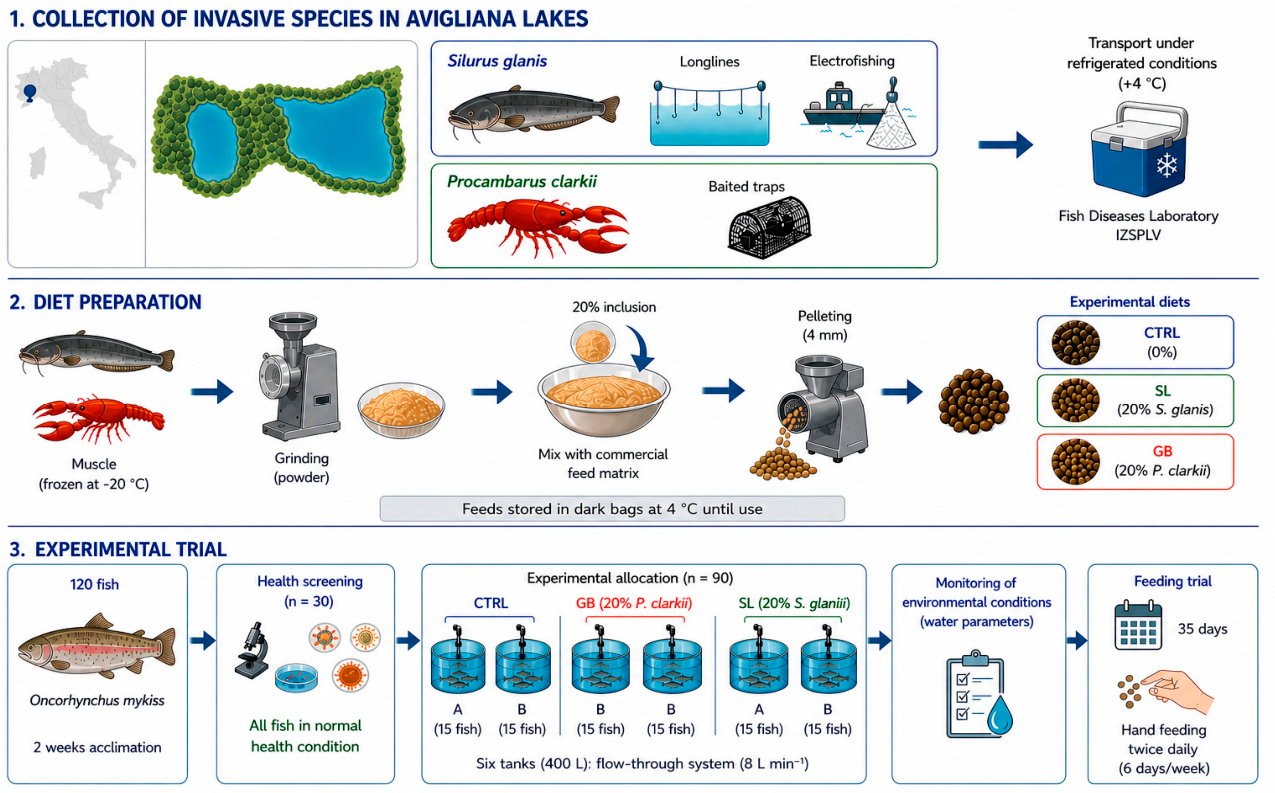
Procambarus clarkii and Silurus glanis were collected in the Avigliana Lakes (Piedmont Region, northwest Italy), a protected glacial lake system composed of a more natural Small Lake and a more human-impacted Great Lake. Silurus glanis individuals (mean weight: 3.12 kg; mean length: 71 cm) were captured from both lakes using longlines and electrofishing, while individuals of P. clarkii (mean weight: 23.37 g; mean length: 9 cm) were collected only from the Great Lake using baited traps. All specimens were transported under refrigerated conditions (+4 °C) to the Fish Diseases Laboratory of the Istituto Zooprofilattico Sperimentale del Piemonte, Liguria e Valle d’Aosta (IZSPLV).
Muscles from both invasive species (approximately 3 kg each derived from 3 S. glanis and around 80 P. clarkii) were dried at 70 °C for 16 h (BMaster, Tauro Essiccatori, Camisano Vicentino (VI), Italy) until the residual moisture content reached 3%. After drying, the yield of the powder was 530 g for P. clarkii and around 1.2 kg for S. glanis, respectively. The diet preparation and the experimentation were conducted at the experimental facility of the Department of Agricultural, Forest and Food Sciences (DISAFA, Tetto Frati, Carmagnola, Italy) of the University of Turin. Dried muscle samples were finely ground using an electric grinder (Retsch GM 200, Haan, Germany). The resulting powder was incorporated at 20% into a commercial feed matrix (Alterna Eel, Skretting; ingredients: fish meal, fish oil, wheat red dog, wheat gluten, poultry blood meal, soybean protein concentrate, swine hemoglobin, and whey powder; proximate composition: protein 48%, lipid 11%, ash 8%, fiber 1%). This inclusion level was selected based on previous studies demonstrating that a 20% substitution with alternative protein sources does not adversely affect farmed fish [30,31].
The mixture was processed into pellets using an electric meat mincer (Rheininghaus Labour 2000, Turin, Italy) equipped with a 4.0 mm die, then dried at 40 °C for 48 h. A control diet consisting solely of the commercial feed was prepared following the same procedure. Three experimental diets were obtained: CTL (control), SL (20% S. glanis), and GB (20% P. clarkii). All feeds were stored in dark bags at 4 °C until use.

2.1.2. Experimental Trial

For the experimental trial, 120 specimens of O. mykiss (mean weight: 180 ± 0.5 g) were obtained from an aquaculture facility in Piedmont (northwestern Italy) and acclimated for two weeks at the DISAFA experimental facility. Thirty individuals were randomly selected and subjected to anatomopathological, parasitological, bacteriological, and virological examinations, following standard methodologies [32]. All examined fish were within normal health conditions, with no significant pathological findings detected.
The remaining fish (n = 90) were randomly distributed into six square fiberglass tanks of 400 L capacity, with 15 individuals per tank (two replicate tanks per diet). Each tank was supplied by artesian well water (constant temperature of 14 ± 1 °C) in an open system (flow-through), with each tank having a water inflow of 8 L min−1.
Tanks were labeled A and B to indicate the two replicates: Control A (CTL-A; total biomass: 2.79 kg), Control B (CTL-B; 2.92 kg), P. clarkii A (GB-A; 2.96 kg), P. clarkii B (GB-B; 2.92 kg), S. glanis A (SL-A; 2.94 kg), and S. glanis B (SL-B; 2.78 kg).
Environmental parameters, including temperature (T), pH, dissolved oxygen (DO), oxygen saturation (O%), and salinity (PSU), were monitored twice weekly (T: 14.29 ± 0.22 °C; pH: 7.83 ± 0.09; DO: 10.62 ± 0.31 mg/L; O%: 103.72 ± 3.11%; PSU: 0.24 ± 0.00‰). The fish were exposed to natural photoperiod.
The trial lasted for 35 days, and the trout were fed by hand twice daily (6 days a week). The 35-day feeding trial was selected based on previous studies on O. mykiss, which show this timeframe allows the identification of early physiological responses to dietary modifications without the influence of long-term adaptation [33]. The daily amount of feed given was set at 1% of the total weight of O. mykiss in each tank and remained constant throughout the experiment.
At the end of the experimentation, all 90 trout were euthanized in accordance with the current legislation by an overdose (170 mg/kg) of tricaine methanesulfonate (Sigma-Aldrich, Milan, Italy) before sampling. Biometric parameters (weight and length) were recorded for each specimen, followed by necropsy [32].
A schematic overview of the experimental design is provided in Figure 1.

2.2. Ethical Statement

The study was conducted in accordance with the 3Rs principles of replacement, reduction, and refinement and was designed following the European Union Council guidelines (2010/63/EU) [34]. For the present study, ethical approval was given by the Bioethics Committee of the University of Turin (Protocol number: 0302669 of 25 November 2025, ClassRef: III/11).

2.3. Antibiotic Detection in Aquatic Organism Meals

Samples (50 g) of P. clarkii powder, S. glanis powder, control fishmeal powder, and the corresponding experimental diets (CTL, SL, GB) were ground using a cutting mill (Retsch GM 200, Haan, Germany). Subsamples (4.0 ± 0.1 g) were then transferred into 50 mL polypropylene centrifuge tubes for antibiotic analysis. Table 1 summarizes the analytes investigated.
The labeled internal standard mixtures, MIX S.I. A (amoxicillin-d4, 10 ng/µL in water/acetonitrile 75:25, v/v) and MIX S.I. B (roxithromycin, metacycline, sulphanilamide, enrofloxacin-d5, and florfenicol-d3, each at 10 ng/µL in methanol) were added to all samples. The analytical procedure was performed in accordance with Regulation (EU) 2017/625 (Annex III) for official controls in food and feed [35], in combination with Regulation (EU) 2021/808, which defines the requirements for analytical methods for detecting residues of pharmacologically active substances in food-producing animals [36,37]. The methodology applied corresponds to the accredited procedure MI 10CH214 rev. 2/0 (2024), currently in use at the IZSPLV.
For extraction, 250 µL of 0.1 M aqueous EDTA and 15 mL of extraction mixture (McIlvaine buffer/methanol/acetonitrile, 20:40:40, v/v/v) were added to each tube. Samples were subjected to inversion agitation for 10 min, followed by sonication for 10 min, and then centrifuged at 3900 rpm for 10 min at 4 °C. The supernatant was transferred to a clean polypropylene tube, while the pellet was re-extracted with 5 mL of methanol and 5 mL of acetonitrile. The extraction procedure was repeated, and the resulting supernatant was combined with the first extract and centrifuged again at 3900 rpm for 15 min at 4 °C.
An aliquot of 1 mL of the combined extract was evaporated to dryness under a nitrogen stream in a thermostatic bath at 45 ± 5 °C. The residue was reconstituted in 500 µL of recovery solution (5 mM aqueous ammonium formate/acetonitrile, 95:5, v/v), filtered through a 0.2 µm membrane, and transferred into vials. Samples were then centrifuged at 13,000 rpm for 15 min at 4 °C, and the final supernatant was collected for analysis.
A blank sample was prepared using the recovery solution spiked with the analyte mixture and internal standards at concentrations of 0.080 ng/µL for penicillins and 0.160 ng/µL for the remaining analytes.
Analyses were performed by liquid chromatography coupled with tandem mass spectrometry (LC–MS/MS), a technique that combines liquid chromatography and high-sensitivity mass spectrometry, which is widely recognized for its high sensitivity and selectivity in detecting veterinary drug residues [38]. The system consisted of an AB Sciex Exion LC chromatograph (AB Sciex, Milan, Italy) coupled to an AB Sciex 5500 QTrap mass spectrometer (AB Sciex, Milan, Italy).

2.4. Chemical Analysis of the Diets

Chemical analyses to assess the proximate composition were carried out on P. clarkii powder, S. glanis powder, control fishmeal powder, and the diets derived from them (CTL, SL, GB), which were ground through a cutting-mill (Retsch, GM 200, Haan, Germany). Samples were analyzed in accordance with AOAC methods, and the following parameters were evaluated: dry matter (DM), crude protein (with nitrogen to protein conversion factor of 5.62 for P. clarkii and 6.25 for S. glanis) [39], and ashes. Ether extract (EE) was evaluated in accordance with the AOAC method [40], and the gross energy was calculated using an adiabatic calorimeter bomb (C7000; IKA, Staufen, Germany). All the AOAC methodologies used were described by Bellezza Oddon et al. [41].

2.5. Blood Chemistry

Blood samples were obtained from the caudal vessels using a 2.5 mL syringe. Blood were transferred to Vacuette tubes containing serum clot activator (Grenier Bio-One GmbH, Kremsmünster, Austria). The samples were transported in refrigerated conditions (4 °C) to the Fish Disease laboratory of IZSPLV (Turin, Italy), where they were centrifuged at 2000 rpm for 3 min at 4 °C. The serum obtained was visually checked for hemolysis and used for biochemical profile analysis. The biochemical parameters chosen for the analysis were: total proteins (PRTOT) and albumin (ALB); alanine aminotransferase (GPT), aspartate aminotransferase (GOT), and alkaline phosphatase (ALP); cholesterol (COLEST) and triglycerides (TRIGL); urea, creatinine (CREA), and chloride; magnesium, phosphorus, calcium, and iron. All serum blood samples were processed using an automated system photometer (I-Lab Aries Chemical Analyser, Instrumentation Laboratory S.p.A., Milan, Italy). The reagents and the quality serum sample controls used are listed in Pastorino et al. [33]. Calibration was conducted with ReferrIL G (Instrumentation Laboratory S.p.A., Milan, Italy).

2.6. Biomarkers of Oxidative Stress

The activities of catalase (CAT), glutathione reductase (GR), glutathione peroxidase (GPx), lactate dehydrogenase (LDH), and glutathione S-transferase (GST) were measured in liver and kidney tissues of O. mykiss following the protocols described by Elia et al. [30]. Tissue samples were rinsed in physiological saline solution and homogenized in potassium phosphate (KP) buffer (10 mM, pH 7.5) supplemented with 2.5% NaCl, 0.1 mg/mL bacitracin, and 0.008 TIU/mL aprotinin. The homogenates were centrifuged at 30,000× g for 45 min to obtain the cytosolic fraction. Cytosolic protein content was determined according to Lowry et al. [42], using bovine serum albumin as the standard, with absorbance measured at 750 nm.
Catalase activity was assessed at 240 nm by monitoring the decomposition of H2O2 in NaP buffer (100 mM, pH 7.0) containing 24 mM H2O2. GPx activity was determined using a coupled assay based on NADPH oxidation, initiated by the addition of H2O2 and monitored spectrophotometrically. The reaction mixture consisted of NaP buffer (100 mM, pH 7.5), EDTA (1 mM), reduced glutathione (GSH, 2 mM), NADPH (0.12 mM), glutathione reductase (1 U), NaN3 (1 mM), and the sample. Non-enzymatic oxidation was measured in the absence of GPx and subtracted from total activity. One unit of GPx activity was defined as the amount of enzyme oxidizing 1 µmol of NADPH per minute.
GR activity was evaluated by monitoring the decrease in absorbance at 340 nm due to NADPH oxidation in the presence of GSSG (1 mM) in NaP buffer (100 mM, pH 7.0). LDH activity was measured at 340 nm in imidazole buffer (50 mM, pH 7.2) containing pyruvate (1 mM) and NADH (0.15 mM). GST activity was determined by measuring the conjugation of GSH (2 mM) with CDNB (1 mM) in NaP buffer (100 mM, pH 7.5) at 340 nm. One unit of GST activity was defined as the amount of enzyme catalyzing the conjugation of 1 µmol of substrate per minute. All assays were performed in triplicate at 25 °C using a thermostatic spectrophotometer (Cary 50, Varian, CA, USA).

2.7. Heat Shock Protein 70

The evaluation of the heat shock protein 70 (Hsp70) in muscle samples from O. mykiss was conducted by homogenizing samples in physiological solutions. A competitive ELISA for Hsp70 analysis kit was used in accordance with the supplier’s protocols. The ELISA Fish Hsp70 kit was purchased from Gentaur S.r.l. (Bergamo, Italy).

2.8. Histological Analysis

Tissue samples (gut and liver) were collected from each specimen immediately after necropsy and fixed in 10% neutral buffered formalin for 24–48 h. Samples were then dehydrated through a graded ethanol series, cleared in xylene, and embedded in paraffin wax. Serial sections (4 ± 2 µm thick) were obtained using a rotary microtome and mounted on glass slides. Sections were stained with hematoxylin and eosin (H&E) following standard histological protocols. Histological evaluation was performed using a light microscope (Nikon Eclipse 80i, Nikon Instruments Inc., Amsterdam, The Netherlands) at different magnifications. Digital images were acquired using Zeiss Zen Blue software (2.3 Edition) and processed exclusively for brightness and contrast adjustments. The assessment focused on detecting potential diet-related alterations, including inflammatory infiltration, epithelial integrity, villi morphology (in gut samples), and hepatocellular architecture, such as cytoplasmic vacuolization, necrosis, or structural disorganization (in liver samples).

2.9. Statistical Analysis

Data were analyzed using descriptive statistics in R software (version 4.2.2) through the RStudio interface (version 2022.07.2+576). Normality and homogeneity of variance were assessed using the Shapiro–Wilk and Levene’s tests, respectively. Biometrical features and oxidative stress biomarkers were analyzed by one-way analysis of variance (ANOVA), followed by Tukey’s post hoc test. Blood biochemical parameters and Hsp70 expression, which did not meet the assumptions of normality, were analyzed using the Kruskal–Wallis test, followed by Bonferroni-adjusted multiple comparisons. Statistical significance was set at p < 0.05.

3. Results

3.1. Chemical Analysis of Experimental Ingredients and Pellets

The results of the chemical composition and gross energy of the experimental ingredients and formulated pellets are reported in Table 2.

3.2. Biometrical Features of O. mykiss and Necropsy

Mean values for each tank were calculated and summarized in Table 3. No mortality was recorded, and no significant differences in length or weight were observed among the experimental groups. (One-way ANOVA; p > 0.05 for all groups).
Specimens from the experimental groups did not exhibit any relevant macroscopic clinical signs or lesions compared to the control groups.

3.3. Chemical Analyses

All antibiotic residues in the tested samples were below the instrument detection limits (<0.25 mg/kg for penicillins and <0.5 mg/kg for the other antibiotics analyzed).

3.4. Blood Chemistry

Serum biochemical parameters (Table 4) showed significant differences among dietary groups (p < 0.05). Urea levels were higher in the GB groups compared to the SL groups, while the CTL groups showed intermediate values. In contrast, aspartate aminotransferase (GOT) and alanine aminotransferase activities (GPT) did not differ significantly among treatments (p > 0.05). Creatinine (CREA) levels were significantly lower in the SL groups compared to both CTL and GB groups (p < 0.05). Similarly, triglycerides (TRIGL) were significantly reduced in fish fed the SL diet (p < 0.05), whereas cholesterol (COLEST) levels did not differ among groups (p > 0.05). Total protein (PRTOT) was lower in the SL groups compared to the GB groups, with CTL groups showing intermediate values. Albumin (ALB) and alkaline phosphatase (ALP) did not show significant differences among treatments (p > 0.05). Among macro-elements, calcium (Ca), phosphorus (P), and chloride (Cl) were significantly lower in the SL groups compared to CTL and GB groups (p < 0.05), whereas iron (Fe) remained unchanged. Magnesium (Mg) showed a progressive decrease from CTL to SL groups, reaching the lowest values in the latter (p < 0.05).

3.5. Oxidative Stress Biomarkers

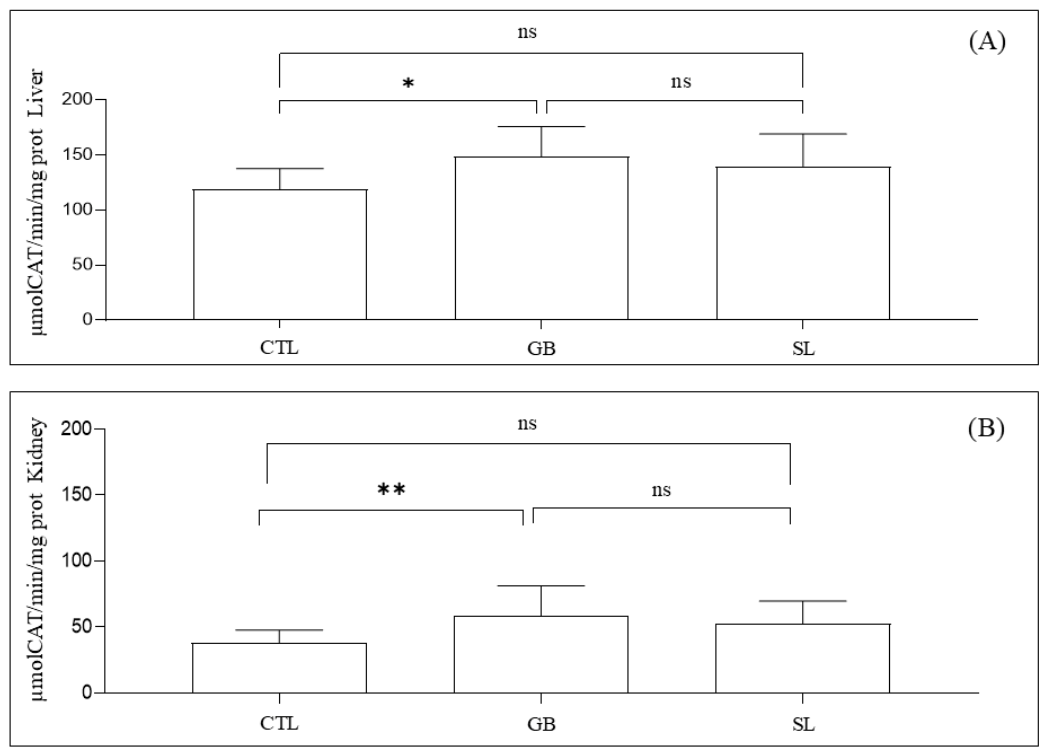
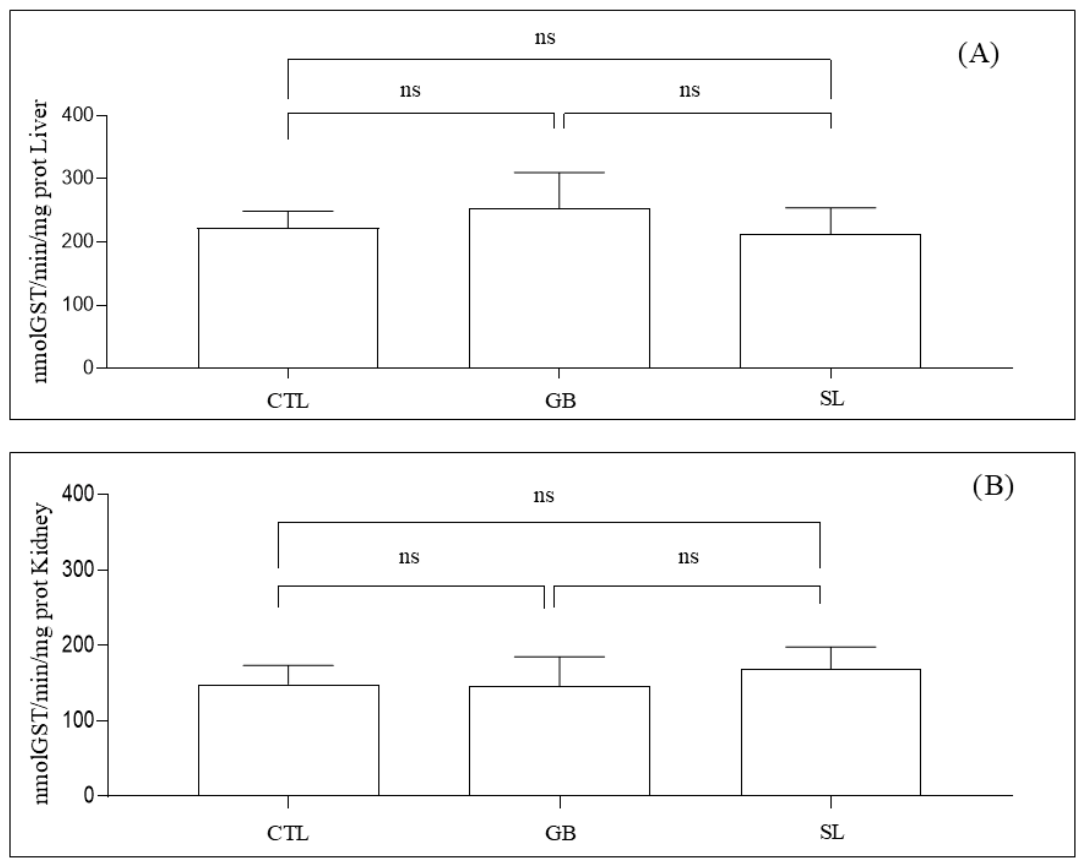
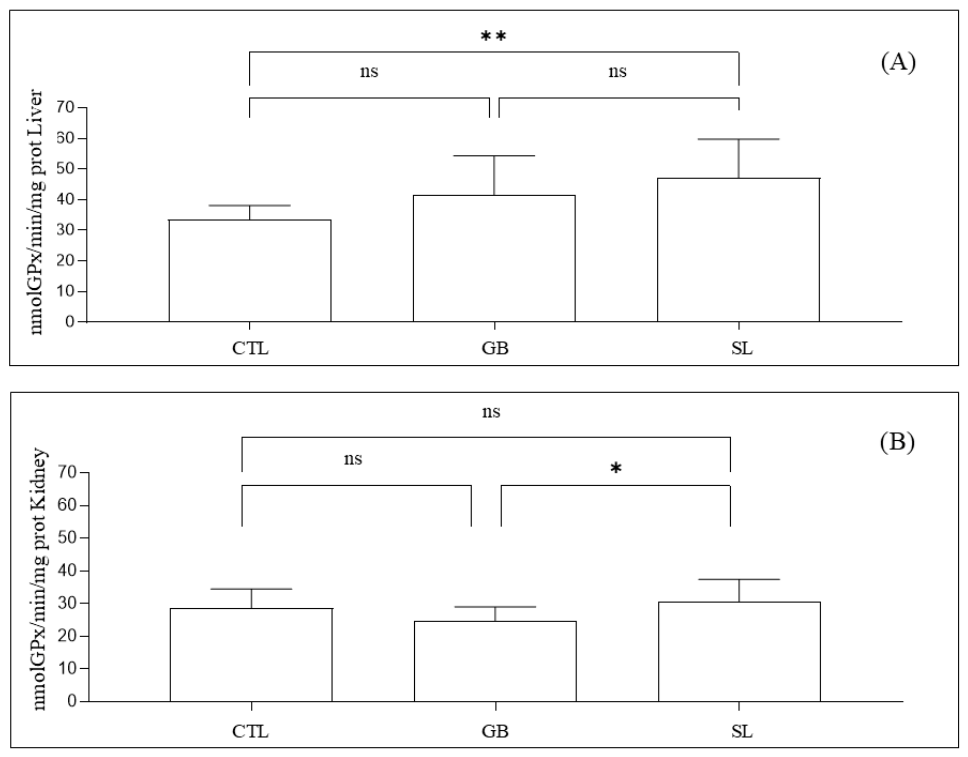
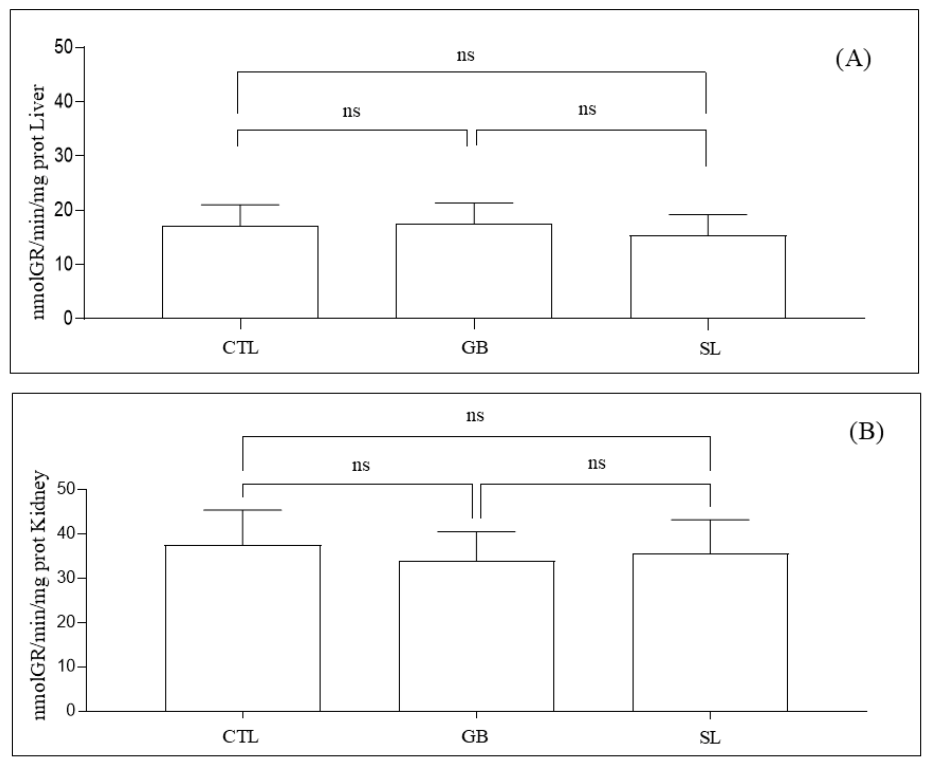
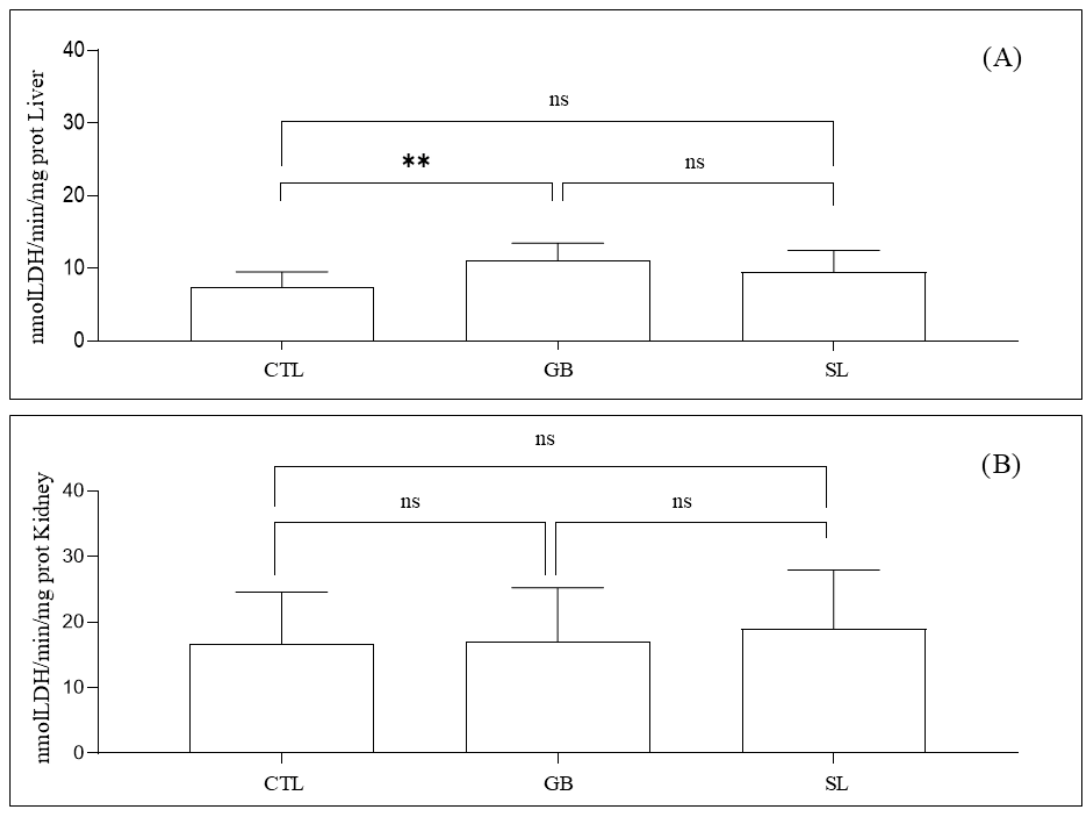
CAT activity was significantly higher in specimens fed the GB diet compared to CTL, both in the liver (p < 0.05) and kidney (p < 0.01). In contrast, CAT activity in the SL group did not differ significantly from either CTL or GB. In liver samples, GPx activity did not differ between GB and CTL (p > 0.05). However, SL showed a significant increase compared to CTL (p < 0.01). In the kidney, GPx activity did not differ between experimental groups and CTL, although SL exhibited higher values than GB (p < 0.05). GR activity did not show significant differences among groups in either organ, indicating a stable response regardless of diet. Similarly, GST activity remained comparable across all treatments in both the liver and the kidney. LDH activity was significantly higher in the liver of GB compared to CTL (p < 0.01), whereas no significant differences were observed in SL or in kidney tissues across all groups. Detailed results for each biomarker are reported in Figure 2, Figure 3, Figure 4, Figure 5 and Figure 6.

3.6. Heat Shock Protein 70

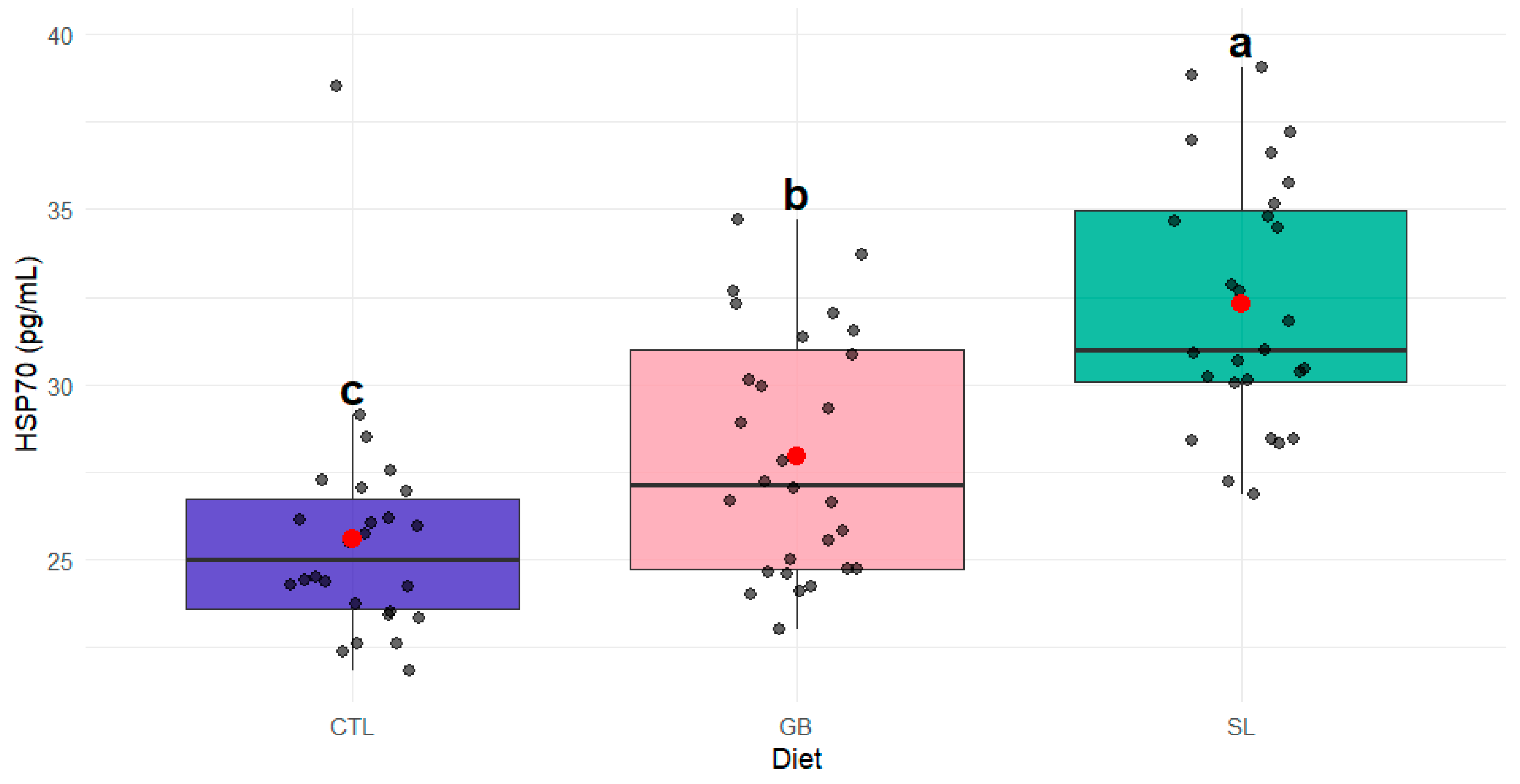
Hsp70 expression in muscle samples of O. mykiss was quantified at the end of the 35-day feeding trial using a specific ELISA kit for fish. Significant differences were observed between the experimental groups, with the SL group displaying the greatest increase in Hsp70 expression. Compared to the control group (25.61 ± 3.66 pg/mL), both experimental groups showed significantly higher Hsp70 levels (p < 0.05). Specifically, specimens fed the P. clarkii diet (GB) exhibited a mean value of 27.97 ± 1.17 pg/mL, while those fed the S. glanis diet (SL) showed the highest expression (32.30 ± 1.94 pg/mL). The results are summarized in the boxplot shown in Figure 7.

3.7. Histological Analysis

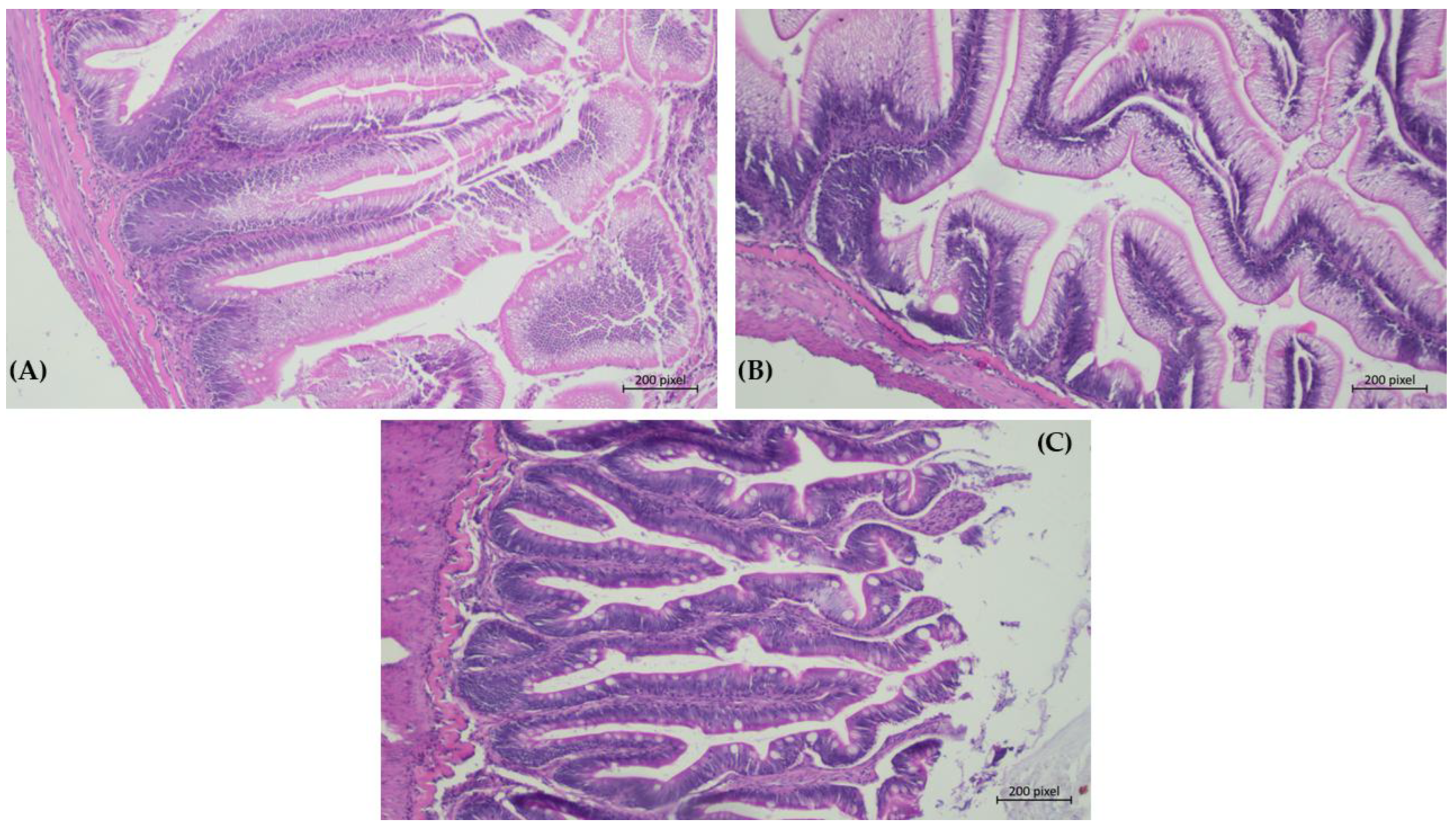
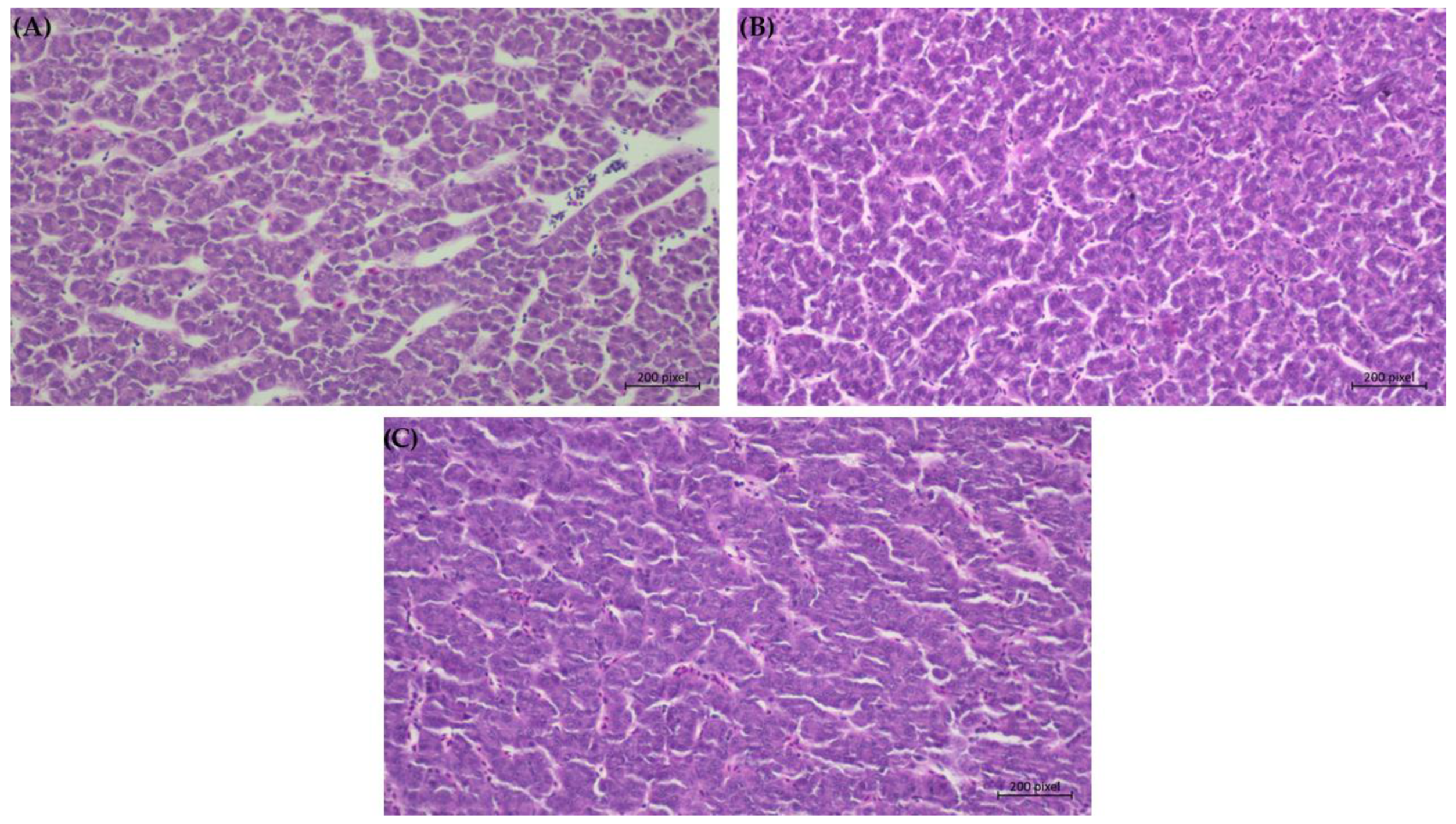
No histopathological lesions were observed in the liver of fish from any experimental group. Hepatic tissue maintained a normal architecture, with well-organized hepatocytes, regular sinusoidal structures, and no evidence of necrosis, inflammatory infiltration, or abnormal cytoplasmic vacuolization (Figure 8).
Similarly, gut tissues did not show any evident microscopic alterations. The intestinal wall preserved its normal structural organization, with intact mucosal and submucosal layers. No signs of epithelial damage, inflammatory processes, or alterations in villi morphology were detected across the different dietary treatments (Figure 9).

4. Discussion

It has been demonstrated that one of the main drivers of biodiversity loss is biological invasions, which can alter native species communities and disrupt ecosystem functioning [43]. In this context, to prevent species decline, many countries, such as Italy, have implemented management plans that include information on containment techniques such as eradication [7]. Nevertheless, reusing biological biomass derived from IAS eradication within a circular economy can simultaneously help control invasions and restore biological balance [19]. One sector where these biomasses could be utilized is aquaculture, a continually expanding industry that requires alternative protein sources to replace fishmeal from pelagic fish species currently used to feed farmed fish [44].
In this regard, the present study assessed the potential use of two invasive species, P. clarkii and S. glanis, as alternative protein sources in the diet of rainbow trout (O. mykiss), one of the most widely farmed freshwater fish globally. The study considered a feeding time of 35 days and the inclusion of the two diets at 20% in a commercial fish meal. However, the results obtained represent the first data about the topic, making further analysis about increasing the concentration of inclusion and prolonged feeding time necessary. Moreover, further analysis would include a new sampling area and consider different experimental species.
For an accurate assessment of the quality of these two invasive species as protein sources, it is crucial to examine the presence of antibiotics in the diets obtained from the muscles of P. clarkii and S. glanis. Antibiotic residues are recognized as significant pollutants in aquatic environments worldwide, mainly introduced through hospitals, urban waste, household disposal, and livestock manure [45]. They can bioaccumulate in organisms’ tissues and contribute to the development of antibiotic resistance [46]. In the present study, all analyzed matrices adhered to safety standards for antibiotic residues in feed. Specifically, the cc Beta values of the applied method are in line with the requirements of Regulation (EU) No. 1229/2024 on carry-over in feed and feed materials intended for aquaculture. This compliance confirms that there are no issues concerning drug residues and ensures the safety of raw materials and experimental diets [47]. Nevertheless, antibiotics represent only one class of contaminants that may be bioaccumulated by this species. Indeed, additional analyses conducted on samples collected from the same sampling sites described by Glorio Patrucco et al. [48] detected rare earth elements, trace elements, polycyclic aromatic hydrocarbons, other organic contaminants, and microplastics. Overall, contaminant burdens were low, with polycyclic aromatic hydrocarbons, non-dioxin-like polychlorinated biphenyls, and pesticides generally occurring at concentrations below the LOQs, while most regulated trace elements remained below the maximum levels established by European legislation for food and feed safety. Therefore, future investigations would benefit from the development and application of a multi-index safety assessment framework integrating different contaminant classes and biological responses, thereby providing a more comprehensive evaluation of environmental quality and potential risks to aquatic organisms and human consumers.
Biochemical serum parameters obtained from blood analyses have been proven to be important biomarkers for assessing the health status of the species, as they offer a comprehensive overview of their physiological condition [49]. In our study, the hematological variations observed in the experimental groups fed with P. clarkii and S. glanis meals were physiologically controlled, falling within the ranges previously observed in O. mykiss farmed under stable conditions [50,51]. The limited number of studies analyzing biochemical parameters in O. mykiss fed with different animal protein sources makes direct comparisons challenging. Nevertheless, the lack of significant differences in the GOT and GPT parameters, commonly used as hepatic-cellular biomarkers, indicates an absence of stress and functional alterations in the liver of the O. mykiss involved in the trial [52]. Similar results were observed in O. mykiss whose diet was modified with 15% and 30% inclusion of Lupinus albus as the main protein source, supporting previous data that a 20% inclusion to reduce the reliance on commercial fishmeal is safe for these animals [53]. Likewise, the results and variations in ALP values align with data from healthy growing trout [51]. Urea and CREA are commonly used biomarkers to assess kidney function in fish and their response to environmental stressors such as dietary changes [54]. In this work, the changes observed in both experimental groups, even if significant for specimens fed with S. glanis, did not indicate any kidney impairment, as evidenced by the absence of clinical signs at the renal level post-necropsy. Furthermore, the overall health status of the specimens was reflected in the results for TRIGL and COLEST, key energy substrates involved in growth, lipid transport, and membrane synthesis [55]. The decrease in TRIGL in specimens fed with S. glanis suggests an improved efficiency in lipid utilization. Similar findings have been reported in Cyprinus carpio fed with Hermetia illucens oil [56] and in O. mykiss fed with L. albus [48]. The unchanged COLEST levels further indicate that lipid balance was generally maintained [33]. PRTOT are the predominant components in blood, involved in various functions such as providing energy and participating in metabolic processes [57]. A slight reduction in this parameter was observed, mainly in specimens fed S. glanis. Still, the values remained within physiological limits and were consistent with data from fish fed a commercial diet [33]. ALB in serum is involved in the maintenance of osmotic blood pressure, is a reserve of amino acids, and acts as a carrier for many substances [58]. In the present study, its level did not show any variation between experimental groups and CTL groups, highlighting the absence of functional alterations. Similar results were also observed by Jeong et al. [59] when the diet of O. mykiss was integrated with different percentages of Tenebrio molitor meal as alternative protein sources, confirming that the evaluation of albumin levels in blood serum is a valuable biomarker for the health status of farmed fish. Finally, mineral and electrolyte markers have been shown to play a key role in interpreting the effects of diet: the reduction in Mg, P, Ca, and Cl observed in the diet of fish fed with S. glanis meal suggested a different mineral bioavailability or a different gut absorption. However, the value observed did not reach indicative levels of a clinical imbalance [52].
Oxidative stress results from an imbalance between the production of reactive oxygen species (ROS) and the ability of antioxidant systems to neutralize them. An increase in ROS can disrupt cell functions and cause damage to biological molecules, affecting the whole organism [60]. Typically, enzymatic biomarkers such as CAT, GPX, GR, GST, and LDH are used to evaluate it [61]. Generally, the biomarkers assessed in both organs (liver and kidney) of the experimental groups showed, in most cases, no significant differences compared to the CTL groups, suggesting that including 20% P. clarkii and S. glanis powder did not induce oxidative stress. These findings align with those previously reported by Elia et al. [30] in O. mykiss fed a diet containing 20% H. illucens larvae meal, by Negm et al. [62], who replaced common protein sources in Oreochromis niloticus with 20% Sargassum aquifolium, and by Deng et al. [63] and Bu et al. [64], who tested inclusion of 20% cotton seed and rubber seed in O. niloticus and Pseudobagrus ussuriensis diets, respectively. The comparison of these results indicates that O. mykiss well tolerates diets with moderate inclusion of alternative protein sources. Regarding the liver, where key metabolic and antioxidant processes occur [65], the findings showed a significant increase in CAT and LDH activities in fish fed P. clarkii pellets. These results are comparable to those observed in O. mykiss fed T. molitor larvae meal [66]. The rise in CAT activity may be due to the need to regulate hydrogen peroxide levels [67]; meanwhile, the increase in LDH activity, in the absence of other changes in oxidative biomarkers, seems to indicate a remodeling of hepatic energy metabolism rather than cytotoxic damage [68]. In groups fed S. glanis meal, the only notable change was an increase in GPX, likely a compensatory adaptation to enhance the neutralization of lipid peroxides and H2O2 generated during lipid and protein metabolism, with no evidence of oxidative damage or weakened antioxidant defense [69]. Regarding kidney results, which are vital organs for osmotic and electrolytic balance, the changes were minor and mainly limited to certain biomarkers [70]. The increase in CAT activity observed in the groups fed with P. clarkii highlights an adaptive response aimed at containing the ROS production associated with filtration and active transport at the tubular level [33]. A similar increase was also observed in Clarias gariepinus fed with two different microalgae, where significant alterations in CAT activity did not affect the growth performance or the health status of the animals [71]. Similarly, the results obtained for the CAT activity in the present study, along with the absence of alterations in other antioxidant enzyme activity in the kidney, suggest that the observed response is not associated with a persistent or pathological oxidative stress status. Overall, the response recorded for the oxidative stress biomarkers highlights how both organs investigated responded to the experimental diets in a physiological and targeted manner, with slight changes in the enzymatic biomarker values not followed by oxidative damage signs.
To better understand the onset of a possible stress in the investigated fish, the Hsp70 results are an optimum biomarker. Indeed, treatment with heat shock or exposure to various pollutants (pesticides, heavy metals, etc.) can induce the overproduction of these proteins [72]. The Hsp70s are the most studied and conserved among the Hsp due to their roles as molecular chaperones in the repair or degradation of denatured proteins and in the folding of nascent polypeptide chains [73,74]. However, despite the increasing number of studies on the potential use of alternative protein sources in farmed fish, only a few analyses have focused on Hsp70s and their modulation as a response to stress [75]. In this regard, the present work showed an overproduction of Hsp70 with diet, with the maximum expression observed in animals fed S. glanis meal. The increase in Hsp70 expression is a sign of increasing stress in the animals; nonetheless, this does not necessarily mean that the animal has suffered any physiological damage. Indeed, similar alterations were also observed in zebrafish fed with H. illucens for 60 days and in Salmo salar, Atlantic salmon, fed with different vegetable protein sources [75,76,77]. In both cases, the increased expression of Hsp70 was linked to physiological adaptations to the new diet composition, reflecting an active cellular stress-defense mechanism [78]. Furthermore, the Hsp70 evaluation in the present study was conducted on muscle tissue, which, due to its functional characteristics, serves as a long-term energy source and has a slow protein turnover [79], making, at the same time, a slower reduction of Hsp70 expression after a stress, compared to the level in other organs such as the liver [80]. For that reason, the use of the muscle for this kind of preliminary analyses could be more indicated compared to other organs. Considering this, the variations observed in Hsp70 expressions were part of the specimens’ normal metabolic adaptation to the new diet, suggesting further possible analyses of other organs, such as the liver.
Oxidative stress biomarkers and Hsp70 are valuable indicators for assessing the health status of the investigated animals and their physiological response to a novel diet. The limited differences observed among experimental groups suggest that O. mykiss can effectively adapt to the new feed formulation. In particular, the crustacean species used in the diet is a natural prey item for wild rainbow trout, which may facilitate a more rapid and efficient adaptation to its inclusion in feed formulations [81]. Nevertheless, a more comprehensive evaluation of fish health could be achieved by increasing the frequency of biomarker assessments throughout the experimental period and extending the duration of the feeding trial. Such approaches would provide a more detailed understanding of the physiological responses of farmed trout and support further optimization of feed formulations.
Regarding histopathological analyses, the liver and gut are proven to be highly sensitive to the nutritional status of fish. Indeed, hepatocytes are involved in carbohydrate digestibility, and the gut represents the first site of food digestion, becoming an optimal biomarker for health status evaluation [82]. The results obtained in the present work about histology appear to be within the range of physiological variation associated with adaptation to a new diet and did not result in adverse effects on the specimens studied. Indeed, no substantial lesions, infiltration, inflammatory process, or other alterations were observed in both tissues studied in both experimental groups compared to the control.
Based on the results of the present study, the use of IAS as alternative protein sources for aquaculture feeds appears to be a promising strategy to reduce reliance on conventional fishmeal while simultaneously contributing to biodiversity conservation through population control. Moreover, several feed manufacturers have already begun incorporating alternative ingredients, such as insect meal and food-processing by-products, into aquaculture diets, demonstrating increasing acceptance of novel and sustainable feed resources. Although dedicated infrastructure for the large-scale harvesting and processing of invasive alien species is still limited, various conservation initiatives, including the LIFE Predator project, are actively engaged in the control and removal of these species, thereby generating a potentially continuous supply of biomass and reducing the costs associated with raw material procurement [83]. Consequently, targeted investments in collection, processing, and feed production technologies could facilitate the development of a sustainable circular-economy framework based on the valorization of invasive alien species.

5. Conclusions

In conclusion, biological invasions and the increasing demand for aquaculture products were two of the main causes of biodiversity loss. To restore natural biodiversity levels, the circular economy aims to promote the reuse of biological biomass in rising industries, and one of these biomasses can be represented by invasive species. The present study investigated the possibility of a sustainable reuse of biological biomass derived from the eradication of two common freshwater invasive IAS, P. clarkii and S. glanis, by applying a circular economy strategy in the aquaculture industry and converting their muscle into alternative protein sources for farmed fish. The findings showed that a 20% inclusion of P. clarkii and S. glanis in the diet of O. mykiss induced only slight variations in blood biochemical parameters and stress response (oxidative stress biomarkers and Hsp70). Histological analyses did not reveal any detectable morphological alterations in the examined tissues, suggesting that the observed responses fall within physiological fluctuations associated with adaptive mechanisms to a novel diet.
Overall, these results support the hypothesis that the use of non-native species as alternative protein sources for aquafeeds can be considered a sustainable strategy. Furthermore, pilot-scale trials with 20% inclusion levels are recommended for commercial rainbow trout farming to gradually verify large-scale applicability. Nevertheless, the experimental period was limited to 35 days, and further investigations are required to assess potential long-term effects. In particular, future studies should explore higher inclusion levels and evaluate growth performance and physiological responses over longer trial durations to fully validate the safety and efficacy of this approach in aquaculture systems.

Author Contributions

Conceptualization, G.Z., S.G.P., M.P. (Marino Prearo), L.G. and P.P.; methodology, G.Z., S.G.P., B.C., C.C., R.G., A.M., S.B.O., G.E., I.B., S.B., D.M., M.P. (Mariza Pezzolato), M.P. (Marino Prearo), C.F., E.B., A.C.E., L.G. and P.P.; investigation, G.Z., S.G.P., B.C., C.C., R.G., A.M., S.B.O., A.C., G.E., I.B., S.B., D.M., M.P. (Marzia Pezzolato), C.F., E.B., M.P. (Marino Prearo), A.C.E., L.G. and P.P.; data curation, G.Z. and B.C.; writing—original draft preparation, G.Z. and P.P.; writing—review and editing, S.G.P., B.C., C.C., R.G., A.M., S.B.O., G.E., I.B., S.B., D.M., M.P. (Marzia Pezzolato), C.F., E.B., M.P. (Marino Prearo), A.C.E., L.G. and P.P.; supervision, M.P. (Marino Prearo), A.C.E., L.G. and P.P.; project administration, P.P.; funding acquisition, P.P. All authors have read and agreed to the published version of the manuscript.

Funding

This research was funded by Italian Ministry of Health, project: “L’economia circolare per contrastare la perdita di biodiversità: uso sostenibile delle specie alloctone invasive in ambiente acquatico—CIRCOLACQUA” grant number IZS PLV 09/22 RC, CUP: J19I22001180001.

Institutional Review Board Statement

Sampling of S. glanis and P. clarkii in Avigliana Lakes was conducted under official authorizations. The capture of S. glanis for scientific purposes was authorized by the “Decreto del Consigliere Delegato n. DCR 279 del 6 October 2023”, concerning scientific fishing activities, and by “Determinazione Dirigenziale n. DD 3125 del 27 May 2025”, issued by the Department of Environment and Sustainable Development (Rural and Mountain Development Directorate—Flora and Fauna Protection), which authorized designated personnel of the Ente di Gestione delle Aree Protette delle Alpi Cozie to carry out derogation fishing for S. glanis. The capture of P. clarkii was authorized through official communication (Prot. no. 0001893 of 22 May 2025), issued in response to request Prot. no. 1815 of 19 May 2025, granting permission for the deployment of traps for scientific sampling purposes. The experimental trial with O. mykiss was approved by the Bio-ethics Committee of the University of Turin (Protocol number: 0302669 of 25 November 2025, ClassRef: III/11).

Informed Consent Statement

Not applicable.

Data Availability Statement

Dataset available on request from the authors.

Acknowledgments

The authors thank the LIFE Predator project and the park rangers of the Ente di Gestione delle Aree Protette delle Alpi Cozie for their essential support in the capture of Silurus glanis specimens. During the preparation of this manuscript, the authors used ChatGPT (version GPT-5.3) to assist in the creation of Figure 1.

Conflicts of Interest

The authors declare no conflicts of interest.

Abbreviations

The following abbreviations are used in this manuscript:
HSP70Heat shock protein 70
IASInvasive alien species
IUCNInternational Union for Conservation of Nature
FAOFood and Agriculture Organization
DISAFADepartment of Agricultural, Forest and Food Sciences
VHSViral Hemorrhagic Septicemia
IHNInfectious Haematopoietic Necrosis
CTLControl group
GBProcambarus clarkii group
SLSilurus glanis group
EDTAEthylene-diaminetetraacetic acid
AOACAssociation of Official Analytical Chemists
DMDry matter
EEEther extract
PRTOTTotal proteins
ALBAlbumin
GPTAlanine aminotransferase
GOTAspartate aminotransferase
ALPAlkaline phosphatase
COLESTCholesterol
TRIGLTriglycerides
CREACreatinine
CATCatalase
GRGlutathione reductase
GPxGlutathione peroxidase
LDHLactate dehydrogenase
GSTGlutathione–S-Transferase
HE Hematoxylin and Eosin staining

References

  1. Damines, F.L.; Backstorm, A.; Gordon, A. Governing for “no net loss” of biodiversity over the long term: Challenges and pathways forward. One Earth 2021, 4, 60–74. [Google Scholar] [CrossRef]
  2. Cuthbert, R.N.; Pattison, Z.; Taylor, N.G.; Verbrugge, L.; Diagne, C.; Ahmed, D.A.; Leroy, B.; Angulo, E.; Briski, E.; Capinha, C.; et al. Global economic costs of aquatic invasive alien species. Sci. Total Environ. 2021, 775, 145238. [Google Scholar] [CrossRef] [PubMed]
  3. Geist, J. Integrative freshwater ecology and biodiversity conservation. Ecol. Indic. 2011, 11, 1507–1516. [Google Scholar] [CrossRef]
  4. Dudgeon, D. Multiple threats imperil freshwater biodiversity in the Anthropocene. Curr. Biol. 2019, 29, 960–967. [Google Scholar] [CrossRef] [PubMed]
  5. Jackson, M.C.; Wasserman, R.J.; Grey, J.; Ricciardi, A.; Dick, J.T.; Alexander, M.E. Novel and disrupted trophic links following invasion in freshwater ecosystems. Adv. Ecol. Res. 2017, 57, 55–97. [Google Scholar] [CrossRef]
  6. Katsanevakis, S.; Olenin, S.; Puntila-Dodd, R.; Rilov, G.; Stæhr, P.A.; Teixeira, H.; Tsirintanis, K.; Birchenough, S.N.; Jakobsen, H.H.; Knudsen, S.W.; et al. Marine invasive alien species in Europe: 9 years after the IAS Regulation. Front. Mar. Sci. 2023, 10, 1271755. [Google Scholar] [CrossRef]
  7. Haubrock, P.; Cuthbert, R.; Tricarico, E.; Diagne, C.; Courchamp, F.; Gozlan, R. The recorded economic costs of alien invasive species in Italy. NeoBiota 2021, 67, 247–266. [Google Scholar] [CrossRef]
  8. European Commission. Regulation (EU, Euratom) No 1143/2014 of the European Parliament and of the Council of 22 October 2014 Amending Regulation (EU, Euratom) No 966/2012 as Regards the Financing of European Political Parties. Available online: https://eur-lex.europa.eu/eli/reg/2014/1142/oj/eng (accessed on 16 March 2026).
  9. Decreto Legislativo 230/2017. Adeguamento Della Normativa Nazionale Alle Disposizioni del Regolamento (UE) N. 1143/2014 del Parlamento Europeo e del Consiglio del 22 Ottobre 2014, Recante Disposizioni Volte a Prevenire e Gestire L’introduzione e la Diffusione Delle Specie Esotiche Invasive. Available online: https://www.normattiva.it/atto/caricaDettaglioAtto?atto.dataPubblicazioneGazzetta=2018-01-30&atto.codiceRedazionale=18G00012&atto.articolo.numero=0&atto.articolo.sottoArticolo=1&atto.articolo.sottoArticolo1=0&qId=bfab724c-39e5-4867-ac47-2af103894317&tabID=0.4412263978746098&title=lbl.dettaglioAtto (accessed on 20 February 2026).
  10. Oficialdegui, F.J.; Clavero, M.; Sánchez, M.I.; Green, A.J.; Boyero, L.; Michot, T.C.; Klose, K.; Kawai, T.; Lejeusne, C. Unravelling the global invasion routes of a worldwide invader, the red swamp crayfish (Procambarus clarkii). Freshw. Biol. 2019, 64, 1382–1400. [Google Scholar] [CrossRef]
  11. Dörr, A.J.; Rodolfi, M.; Scalici, M.; Elia, A.C.; Garzoli, L.; Picco, A.M. Phoma glomerata, a potential new threat to Italian inland waters. J. Nat. Conserv. 2011, 19, 370–373. [Google Scholar] [CrossRef]
  12. Cucherousset, J.; Horky, P.; Slavík, O.; Ovidio, M.; Arlinghaus, R.; Boulêtreau, S.; Britton, R.; García-Berthou, E.; Santoul, F. Ecology, behaviour and management of the European catfish. Rev. Fish Biol. Fish. 2018, 28, 177–190. [Google Scholar] [CrossRef]
  13. Froese, R.; Pauly, D. (Eds.) FishBase; World Wide Web Electronic Publication: Cambridge, MA, USA, 2023; Available online: https://www.fishbase.org (accessed on 16 March 2026).
  14. Bouletreau, S.; Santoul, F. The end of the mythical giant catfish. Ecosphere 2016, 7, e01606. [Google Scholar] [CrossRef]
  15. Vejřík, L.; Vejříková, I.; Blabolil, P.; Eloranta, A.P.; Kočvara, L.; Peterka, J.; Sajdlová, Z.; Chung, S.H.T.; Šmejkal, M.; Kiljunen, M.; et al. European catfish (Silurus glanis) as a freshwater apex predator drives ecosystem via its diet adaptability. Sci. Rep. 2017, 7, 15970. [Google Scholar] [CrossRef] [PubMed]
  16. Dobrzycka-Krahel, A.; Skóra, M.E.; Malek, M. Human Consumption of Non-Native Species in a Circular Economy: Determination of Persistent Organic Pollutants in the Invasive Signal Crayfish from a Baltic Coastal River and Its Assessment for Consumption. Sustainability 2024, 16, 3532. [Google Scholar] [CrossRef]
  17. European Commission Regulation NO. 852/2004 of the European Parliament and of the Council of 29 April 2004 on the Hygiene of Foodstuffs. Available online: http://data.europa.eu/eli/reg/2004/852/oj (accessed on 20 February 2026).
  18. European Commission Regulation NO. 853/2004 of the European Parliament and of the Council of 29 April 2004 Laying Down Specific Hygiene Rules for Food of Animal Origin. Available online: http://data.europa.eu/eli/reg/2004/853/oj (accessed on 21 March 2026).
  19. Forsuland, T.; Gorst, A.; Briggs, C.; Azevedo, D.; Smale, R. Tackling root causes. Halting biodiversity loss through the circular economy. Sitra Stud. 2022, 205, 1–108. Available online: https://circulareconomy.europa.eu/platform/sites/default/files/sitra-tackling-root-causes.pdf (accessed on 1 April 2026).
  20. Ahmad, A.; Abdullah, S.R.; Hasan, H.A.; Othman, A.R.; Ismail, N.I. Aquaculture industry: Supply and demand, best practices, effluent and its current issues and treatment technology. J. Environ. Manag. 2021, 287, 112271. [Google Scholar] [CrossRef] [PubMed]
  21. Food and Agriculture Organization. The State of World Fisheries and Aquaculture; Blue Transformation in Action; Food and Agriculture Organization of the United Nations: Rome, Italy, 2024. [Google Scholar] [CrossRef]
  22. Beal, C.M.; Gerber, L.N.; Thongrod, S.; Phromkunthong, W.; Kiron, V.; Granados, J.; Archibald, I.; Greene, C.H.; Huntley, M.E. Marine microalgae commercial production improves sustainability of global fisheries and aquaculture. Sci. Rep. 2018, 8, 15064. [Google Scholar] [CrossRef] [PubMed]
  23. Colombo, S.M. Physiological considerations in shifting carnivorous fishes to plant-based diets. Fish. Physiol. 2020, 38, 53–82. [Google Scholar] [CrossRef]
  24. Barroso, F.G.; de Haro, C.; Sánchez-Muros, M.J.; Venegas, E.; Martínez-Sánchez, A.; Pérez-Bañón, C. The potential of various insect species for use as food for fish. Aquaculture 2014, 422, 193–201. [Google Scholar] [CrossRef]
  25. European Commission. Commission Regulation (EU) 2021/1372 of 17 August 2021 Amending Annex IV to Regulation (EC) No 999/2001 of the European Parliament and of the Council as Regards the Prohibition to Feed Non-Ruminant Farmed Animals, Other than Fur Animals, with Protein Derived from Animals; European Commission: Brussels, Belgium, 2021; Available online: https://eur-lex.europa.eu/eli/reg/2021/1372/oj/eng (accessed on 23 March 2026).
  26. Pereira, A.G.; Fraga-Corral, M.; Garcia-Oliveira, P.; Lourenço-Lopes, C.; Carpena, M.; Prieto, M.A.; Simal-Gandara, J. The use of invasive algae species as a source of secondary metabolites and biological activities: Spain as case-study. Mar. Drugs 2021, 19, 178. [Google Scholar] [CrossRef] [PubMed]
  27. De Fonseka, R.; Radampola, K. Feasibility of Using Sailfin Catfish Meal as an Alternative to Commercial Fishmeal in the Diets of Juvenile Guppy (Poecilia reticulata). J. Fish. 2022, 10, 101203. [Google Scholar] [CrossRef]
  28. Gomez-Zavaglia, A.; Prieto Lage, M.A.; Jimenez-Lopez, C.; Mejuto, J.C.; Simal-Gandara, J. The Potential of Seaweeds as a Source of Functional Ingredients of Prebiotic and Antioxidant Value. Antioxidants 2019, 8, 406. [Google Scholar] [CrossRef] [PubMed]
  29. Sookying, S.; Srisuttha, P.; Rodprasert, V.; Chaodon, C.; Phinrub, W.; Sutthi, N.; Panase, P. Utilizing invasive Pterygoplichthys pardalis as a sustainable fish meal substitute and Euphorbia hirta extract supplement: Effects on growth performance, organosomatic indices, hematological profiles, and serum biochemistry in Chinese Bullfrogs (Hoplobatrachus chinensis). Life 2025, 15, 115. [Google Scholar] [CrossRef] [PubMed]
  30. Elia, A.C.; Capucchio, M.T.; Caldaroni, B.; Magara, G.; Dörr, A.J.M.; Biasato, I.; Biasibetti, E.; Righetti, M.; Pastorino, P.; Prearo, M.; et al. Influence of Hermetia illucens meal dietary inclusion on the histological traits, gut mucin composition and the oxidative stress biomarkers in rainbow trout (Oncorhynchus mykiss). Aquaculture 2018, 496, 50–57. [Google Scholar] [CrossRef]
  31. Pulido-Rodriguez, L.F.; Cardinaletti, G.; Secci, G.; Randazzo, B.; Bruni, L.; Cerri, R.; Olivotto, I.; Tibaldi, E.; Parisi, G. Appetite regulation, growth performances and fish quality are modulated by alternative dietary protein ingredients in gilthead sea bream (Sparus aurata) culture. Animals 2021, 11, 1919. [Google Scholar] [CrossRef] [PubMed]
  32. Noga, E.J. Fish Disease: Diagnosis and Treatment, 2nd ed.; John Wiley & Sons: Ames, IA, USA, 2010; p. 528. [Google Scholar]
  33. Pastorino, P.; Bergagna, S.; Vercelli, C.; Pagliasso, G.; Dellepiane, L.; Renzi, M.; Barbero, R.; Re, G.; Elia, A.C.; Dondo, A.; et al. Changes in serum blood parameters in farmed rainbow trout (Oncorhynchus mykiss) fed with diets supplemented with waste derived from supercritical fluid extraction of sweet basil (Ocimum basilicum). Fishes 2022, 7, 89. [Google Scholar] [CrossRef]
  34. European Commission. Directive 2010/63/EU of the European Parliament and of the Council of 22 September 2010 on the protection of animals used for scientific purposes Text with EEA relevance. Off. J. Eur. Union 2010, 276, 33–79. Available online: http://data.europa.eu/eli/dir/2010/63/oj (accessed on 21 March 2026).
  35. European Commission. Regulation (EU) 2017/625 on official controls and other official activities performed to ensure the application of food and feed law, rules on animal health and welfare, plant health and plant protection products. Off. J. Eur. Union 2017, 95, 1–142. Available online: http://data.europa.eu/eli/reg/2017/625/oj (accessed on 21 March 2026).
  36. European Commission. Commission Implementing Regulation (EU) 2021/808 of 22 March 2021 on the performance of analytical methods for residues of pharmacologically active substances used in food-producing animals and on the interpretation of results as well as on the methods to be used for sampling and repealing Decisions 2002/657/EC and 98/179/EC. Off. J. Eur. Union 2021, 180, 84–109. Available online: http://data.europa.eu/eli/reg_impl/2021/808/oj (accessed on 21 March 2026).
  37. Butovskaya, E.; Carrillo Heredero, A.M.; Segato, G.; Faggionato, E.; Borgia, M.; Marchis, D.; Menotta, S.; Bertini, S. Quantitative determination of tetracyclines in medicated feed for food-producing animals by HPLC–DAD. Food Addit. Contam. Part A 2024, 41, 601–609. [Google Scholar] [CrossRef] [PubMed]
  38. Desmarchelier, A.; Anizan, S.; Minh Tien, M.; Savoy, M.C.; Bion, C. Determination of five tetracyclines and their epi-mers by LC–MS/MS based on a liquid–liquid extractionwith low temperature partitioning. Food Addit. Contam. Part A 2018, 35, 686–694. [Google Scholar] [CrossRef] [PubMed]
  39. Hayes, M. Measuring protein content in food: An overview of methods. Foods 2020, 9, 1340. [Google Scholar] [CrossRef] [PubMed]
  40. AOAC International. Official Methods of Analysis of AOAC International, 17th ed.; 2nd revision; Association of Official Analytical Chemists: Gaithersburg, MD, USA, 2003. [Google Scholar]
  41. Bellezza Oddon, S.; Biasato, I.; Gai, F.; Renna, M.; Lussiana, C.; Caimi, C.; Belghit, I.; Radhakrishnan, G.; Moyano Lopez, F.J.; Aznar, M.J.; et al. Nutritional evaluation of partially defatted Hermetia illucens meal in rainbow trout (Oncorhynchus mykiss) diets under commercial-like conditions. Ital. J. Anim. Sci. 2025, 24, 2272–2284. [Google Scholar] [CrossRef]
  42. Lowry, O.H.; Rosebrough, N.J.; Farr, A.L.; Randall, R.I. Protein measurement with Folin phenol reagent. J. Biol. Chem. 1951, 193, 265–275. [Google Scholar] [CrossRef]
  43. Tsirintanis, K.; Azzurro, E.; Crocetta, F.; Dimiza, M.; Froglia, C.; Gerovasileiou, V.; Langeneck, J.; Mancinelli, G.; Rosso, A.; Stern, N.; et al. Bioinvasion impacts on biodiversity, ecosystem services, and human health in the Mediterranean Sea. Aquat. Invasions 2022, 17, 308–352. Available online: https://amu.hal.science/hal-03993319v1 (accessed on 29 March 2026). [CrossRef]
  44. Mejri, S.; Tremblay, R.; Vandenberg, G.; Audet, C. Novel feed from invasive species is beneficial to Walleye aquaculture. N. Am. J. Aquac. 2019, 81, 3–12. [Google Scholar] [CrossRef]
  45. Zhou, X.; Wang, J.; Lu, C.; Liao, Q.; Gudda, F.O.; Ling, W. Antibiotics in animal manure and manure-based fertilizers: Occurrence and ecological risk assessment. Chemosphere 2020, 255, 127006. [Google Scholar] [CrossRef] [PubMed]
  46. Akhter, S.; Bhat, M.A.; Ahmed, S.; Siddiqui, W.A. Antibiotic residue contamination in the aquatic environment, sources and associated potential health risks. Environ. Geochem. Health 2024, 46, 387. [Google Scholar] [CrossRef] [PubMed]
  47. European Commission. Commission Delegated Regulation (EU) 2024/1229 of 20 February 2024 supplementing Regulation (EU) 2019/4 of the European Parliament and of the Council by establishing specific maximum levels of cross-contamination of antimicrobial active substances in non-target feed and methods of analysis for these substances in feed. Off. J. Eur. Union 2024, 1–7. Available online: http://data.europa.eu/eli/reg_del/2024/1229/oj (accessed on 15 May 2026).
  48. Glorio Patrucco, S.; Giugliano, R.; Griglione, A.; Zicarelli, G.; Mossotto, C.; Costa, L.; Esposito, G.; Gabetti, A.; Anselmi, S.; Bentivoglio, T.; et al. From Ecological Threats to Monitoring Tools: Multi-Contaminant Profiles in Silurus glanis and Procambarus clarkii for Pollution Tracking and Preliminary Food/Feed Safety Assessment. J. Xenobiotics 2026, 16, 109. [Google Scholar] [CrossRef] [PubMed]
  49. Esmaeili, N. Blood Performance: A New Formula for Fish Growth and Health. Biology 2021, 10, 1236. [Google Scholar] [CrossRef] [PubMed]
  50. Dezzutto, D.; Barbero, R.; Foglini, C.; Scanzio, T.; Prearo, M.; Vitale, N. Evaluation of the normal range of the main blood chemistry parameters in rainbow trout (Oncorhynchus mykiss). Ittiopatologia 2016, 13, 89–96. [Google Scholar]
  51. Pastorino, P.; Bergagna, S.; Dezzutto, D.; Barbero, R.; Righetti, M.; Pagliasso, G.; Gasco, L.; Gennario, M.S.; Pizzul, E.; Dondo, A.; et al. Long-term assessment of baseline blood biochemistry parameters in rainbow trout (Oncorhynchus mykiss) maintained under controlled conditions. Animals 2020, 10, 1466. [Google Scholar] [CrossRef] [PubMed]
  52. Bojarski, B.; Witeska, M.; Kondera, E. Blood biochemical biomarkers in fish toxicology—A review. Animals 2025, 15, 965. [Google Scholar] [CrossRef] [PubMed]
  53. Acar, Ü.; Kesbiç, O.S.; Yılmaz, S.; Karabayır, A. Growth performance, haematological and serum biochemical profiles in rainbow trout (Oncorhynchus mykiss) fed diets with varying levels of lupin (Lupinus albus) meal. Aquac. Res. 2018, 49, 2579–2586. [Google Scholar] [CrossRef]
  54. Azadikhah, D.; Varcheh, M.; Yalsuyi, A.M.; Forouhar Vajargah, M.; Mansouri Chorehi, M.; Faggio, C. Hematological and histopathological changes of juvenile grass carp (Ctenopharyngodon idella) exposed to lethal and sublethal concentrations of roundup (glyphosate 41% SL). Aquac. Res. 2023, 2023, 4351307. [Google Scholar] [CrossRef]
  55. Fazio, F.; Lanteri, G.; Saoca, C.; Iaria, C.; Piccione, G.; Orefice, T.; Calabrese, E.; Vazzana, I. Individual variability of blood parameters in striped bass Morone saxatilis: Possible differences related to weight and length. Aquac. Int. 2020, 28, 1665–1673. [Google Scholar] [CrossRef]
  56. Li, S.; Ji, H.; Zhang, B.; Tian, J.; Zhou, J.; Yu, H. Influence of black soldier fly (Hermetia illucens) larvae oil on growth performance, body composition, tissue fatty acid composition and lipid deposition in juvenile Jian carp (Cyprinus carpio var. Jian). Aquaculture 2016, 465, 43–52. [Google Scholar] [CrossRef]
  57. Lapirova, T.B.; Flerova, E.A. Comparative analyses of some immunophysiological parameters of the pike Esox lucius (L.) and pike-perch Stizostedion lucioperca (L.) blood. Vestn. Astrakhan State Tech. Univ. Ser. Fish. Ind. 2013, 1, 140–146. Available online: https://naukaru12.ru/en/nauka/article/32704/view (accessed on 26 March 2026).
  58. Chernyavskikh, S.D.; Borodaeva, Z.A.; Borisovskiy, I.P.; Ostapenko, S.I.; Galtseva, O.A. Blood protein spectrum in representatives of the fish superclass. Eurasian J. Biosci. 2019, 13, 979–981. Available online: https://www.proquest.com/openview/127c3a0531f1fee555c0826fdc48c648/1?pq-origsite=gscholar&cbl=2042720 (accessed on 26 March 2026).
  59. Jeong, S.M.; Khosravi, S.; Mauliasari, I.R.; Lee, S.M. Dietary inclusion of mealworm (Tenebrio molitor) meal as an alternative protein source in practical diets for rainbow trout (Oncorhynchus mykiss) fry. Fish. Aquat. Sci. 2020, 23, 12. [Google Scholar] [CrossRef]
  60. Birben, E.; Sahiner, U.M.; Sackesen, C.; Erzurum, S.; Kalayci, O. Oxidative stress and antioxidant defense. World Allergy Organ. J. 2012, 5, 9–19. [Google Scholar] [CrossRef] [PubMed]
  61. Grădinariu, L.; Crețu, M.; Vizireanu, C.; Dediu, L. Oxidative stress biomarkers in fish exposed to environmental concentrations of pharmaceutical pollutants: A review. Biology 2025, 14, 472. [Google Scholar] [CrossRef] [PubMed]
  62. Negm, S.S.; Ismael, N.E.; Ahmed, A.I.; Asely, A.M.E.; Naiel, M.A. The efficiency of dietary Sargassum aquifolium on the performance, innate immune responses, antioxidant activity, and intestinal microbiota of Nile Tilapia (Oreochromis niloticus) raised at high stocking density. J. Appl. Phycol. 2021, 33, 4067–4082. [Google Scholar] [CrossRef]
  63. Deng, J.; Mai, K.; Chen, L.; Mi, H.; Zhang, L. Effects of replacing soybean meal with rubber seed meal on growth, antioxidant capacity, non-specific immune response, and resistance to Aeromonas hydrophila in tilapia (Oreochromis niloticus× O. aureus). Fish Shellfish Immunol. 2015, 44, 436–444. [Google Scholar] [CrossRef] [PubMed]
  64. Bu, X.; Chen, A.; Lian, X.; Chen, F.; Zhang, Y.; Muhammad, I.; Ge, X.; Yang, Y. An evaluation of replacing fish meal with cottonseed meal in the diet of juvenile Ussuri catfish Pseudobagrus ussuriensis: Growth, antioxidant capacity, nonspecific immunity and resistance to Aeromonas hydrophila. Aquaculture 2017, 479, 829–837. [Google Scholar] [CrossRef]
  65. Di Giulio, R.T.; Meyer, J.N. Reactive oxygen species and oxidative stress. In The Toxicology of Fishes, 1st ed.; Di Giulio, R.T., Hinton, D.E., Eds.; Taylor & Francis Group: Boca Raton, FL, USA, 2008; p. 10. [Google Scholar]
  66. Henry, M.A.; Gai, F.; Enes, P.; Peréz-Jiménez, A.; Gasco, L. Effect of partial dietary replacement of fishmeal by yellow mealworm (Tenebrio molitor) larvae meal on the innate immune response and intestinal antioxidant enzymes of rainbow trout (Oncorhynchus mykiss). Fish Shellfish Immunol. 2018, 83, 308–313. [Google Scholar] [CrossRef] [PubMed]
  67. Livingstone, D.R. Contaminant-stimulated reactive oxygen species production and oxidative damage in aquatic organisms. Mar. Pollut. Bull. 2001, 42, 656–666. [Google Scholar] [CrossRef] [PubMed]
  68. Khan, A.A.; Allemailem, K.S.; Alhumaydhi, F.A.; Gowder, S.J.; Rahmani, A.H. The biochemical and clinical perspectives of lactate dehydrogenase: An enzyme of active metabolism. Endocr. Metab. Immune Disord. Drug Targets 2020, 20, 855–868. [Google Scholar] [CrossRef] [PubMed]
  69. Van der Oost, R.; Beyer, J.; Vermeulen, N.P. Fish bioaccumulation and biomarkers in environmental risk assessment: A review. Environ. Toxicol. Pharmacol. 2023, 13, 57–149. [Google Scholar] [CrossRef] [PubMed]
  70. Takvam, M.; Wood, C.M.; Kryvi, H.; Nilsen, T.O. Ion transporters and osmoregulation in the kidney of teleost fishes as a function of salinity. Front. Physiol. 2021, 12, 664588. [Google Scholar] [CrossRef] [PubMed]
  71. Raji, A.A.; Alaba, P.A.; Yusuf, H.; Bakar, N.H.A.; Taufek, N.M.; Muin, H.; Alias, Z.; Milow, P.; Razak, S.A. Fishmeal replacement with Spirulina platensis and Chlorella vulgaris in African catfish (Clarias gariepinus) diet: Effect on antioxidant enzyme activities and haematological parameters. Res. Vet. Sci. 2018, 119, 67–75. [Google Scholar] [CrossRef] [PubMed]
  72. Alak, G.; Ciltas, A.; Erdogan, O. Hsp-70 gene expression analyses in the different ages of rainbow trout. Kafkas Univ. Vet. Fak. Derg. 2010, 16, S183–S187. [Google Scholar] [CrossRef]
  73. Kregel, K.C. Invited review: Heat shock proteins: Modifying factors in physiological stress responses and acquired thermotolerance. J. Appl. Physiol. 2002, 92, 2177–2186. [Google Scholar] [CrossRef] [PubMed]
  74. Pockley, A.G.; Muthana, M.; Calderwood, S.K. The dual immunoregulatory roles of stress proteins. Trends Biochem. Sci. 2008, 33, 71–79. [Google Scholar] [CrossRef] [PubMed]
  75. Aragão, C.; Gonçalves, A.T.; Costas, B.; Azeredo, R.; Xavier, M.J.; Engrola, S. Alternative proteins for fish diets: Implications beyond growth. Animals 2022, 12, 1211. [Google Scholar] [CrossRef] [PubMed]
  76. Gajardo, K.; Jaramillo-Torres, A.; Kortner, T.M.; Merrifield, D.L.; Tinsley, J.; Bakke, A.M.; Krogdahl, Å. Alternative protein sources in the diet modulate microbiota and functionality in the distal intestine of Atlantic salmon (Salmo salar). Appl. Environ. Microbiol. 2017, 83, e02615-16. [Google Scholar] [CrossRef] [PubMed]
  77. Lanes, C.F.; Pedron, F.A.; Bergamin, G.T.; Bitencourt, A.L.; Dorneles, B.E.; Villanova, J.C.; Dias, K.C.; Riolo, K.; Oliva, S.; Savastano, D.; et al. Black soldier fly (Hermetia illucens) larvae and prepupae defatted meals in diets for zebrafish (Danio rerio). Animals 2021, 11, 720. [Google Scholar] [CrossRef] [PubMed]
  78. Zhai, S.W.; Lu, X.; Yang, S.; Binkowski, F.P.; Deng, D.F. Optimal Feeding Rates for Growth Performance, Nutrient Retention, and Heat Shock Protein 70 Expression in Fingerling Yellow Perch (Perca flavescens). Animals 2025, 15, 1465. [Google Scholar] [CrossRef] [PubMed]
  79. Peragón, J.; Barroso, J.B.; Garcia-Salguero, L.; de la Higuera, M.; Lupiáñez, J. Dietary protein effects on growth and fractional protein synthesis and degradation rates in liver and white muscle of rainbow trout (Oncorhynchus mykiss). Aquaculture 1994, 124, 35–46. [Google Scholar] [CrossRef]
  80. Mohan, J.A.; Smith, S.D.; Connelly, T.L.; Attwood, E.T.; McClelland, J.W.; Herzka, S.Z.; Walther, B.D. Tissue-specific isotope turnover and discrimination factors are affected by diet quality and lipid content in an omnivorous consumer. J. Exp. Mar. Biol. Ecol. 2016, 479, 35–45. [Google Scholar] [CrossRef]
  81. Kamalam, B.S.; Rajesh, M.; Kaushik, S. Nutrition and feeding of rainbow trout (Oncorhynchus mykiss). In Fish Nutrition and Its Relevance to Human Health, 1st ed.; Ninawe, A.S., Dhanze, J.R., Dhanze, R., Indulkar, S.T., Eds.; Taylor & Francis Group: London, UK; CRC Press: Boca Raton, FL, USA, 2020; pp. 299–332. [Google Scholar]
  82. Li, S.; Ji, H.; Zhang, B.; Zhou, J.; Yu, H. Defatted black soldier fly (Hermetia illucens) larvae meal in diets for juvenile Jian carp (Cyprinus carpio var. Jian): Growth performance, antioxidant enzyme activities, digestive enzyme activities, intestine and hepatopancreas histological structure. Aquaculture 2017, 477, 62–70. [Google Scholar] [CrossRef]
  83. De Santis, V.; Brignone, S.; Čech, M.; Eckert, E.M.; Fontaneto, D.; Magalhães, M.F.; Martelo, J.; Ribeiro, F.; Vejřík, L.; Volta, P. LIFE PREDATOR: Prevent, detect, combat the spread of Silurus glanis in south European lakes to protect biodiversity. NeoBiota 2024, 93, 225–244. [Google Scholar] [CrossRef]
Figure 1. Schematic overview of the experimental design.
Sustainability 18 06808 g001
Figure 2. Catalase activity (CAT) in the liver (A) and the kidney (B) of Oncorhynchus mykiss after 35 days of feeding with diets containing P. clarkii (GB) and S. glanis (SL). Data were analyzed applying a One-Way ANOVA followed by a Tukey post hoc test. Significant results were considered when p < 0.05 (* p < 0.05; ** p < 0.01); ns = not significant (p > 0.05). CTL = control group.
Sustainability 18 06808 g002
Figure 3. Glutathione peroxidase (GPx) activity in liver (A) and kidney (B) of Oncorhynchus mykiss after 35 days of feeding with diets containing P. clarkii (GB) and S. glanis (SL). Data were analyzed applying a One-Way ANOVA followed by a Tukey post hoc test. Significant results were considered when p < 0.05 (* p < 0.05; ** p < 0.01); ns = not significant (p > 0.05). CTL = control group.
Sustainability 18 06808 g003
Figure 4. Glutathione reductase (GR) in the liver (A) and the kidney (B) of Oncorhynchus mykiss after 35 days of feeding with diets containing P. clarkii (GB) and S. glanis (SL). Data were analyzed applying a One-Way ANOVA followed by a Tukey post hoc test. Significant results were considered when p < 0.05; ns = not significant (p > 0.05). CTL = control group.
Sustainability 18 06808 g004
Figure 5. Glutathione S- transferase (GST) in the liver (A) and the kidney (B) of Oncorhynchus mykiss after 35 days of feeding with diets containing P. clarkii (GB) and S. glanis (SL). Data were analyzed applying a One-Way ANOVA followed by a Tukey post hoc test. Significant results were considered when p < 0.05; ns = not significant (p > 0.05). CTL = control group.
Sustainability 18 06808 g005
Figure 6. Lactate dehydrogenase (LDH) in the liver (A) and the kidney (B) of Oncorhynchus mykiss after 35 days of feeding with diets containing P. clarkii (GB) and S. glanis (SL). Data were analyzed applying a One-Way ANOVA followed by a Tukey post hoc test. Significant results were considered when p < 0.05 (** p < 0.01); ns = not significant (p > 0.05). CTL = control group.
Sustainability 18 06808 g006
Figure 7. Boxplot about the expression of Heat Shock Protein 70 in muscles of Oncorhynchus mykiss after 35 days of feeding with diets containing P. clarkii (GB) and S. glanis (SL). Data were processed using the Kruskal–Wallis test, followed by a Bonferroni multiple comparison test used as post hoc. The red circle represents the mean value. Data were considered statistically significant for p < 0.05; CTL = control group. Different letters denote statistically significant differences.
Sustainability 18 06808 g007
Figure 8. Histological section (H&E) of liver of Oncorhynchus mykiss after 35 days of the experimental trial. (A) refers to control specimens, (B) refers to O. mykiss specimens fed with P. clarkii meal, and (C) refers to O. mykiss specimens fed with S. glanis.
Sustainability 18 06808 g008
Figure 9. Histological section (H&E) of gut from Oncorhynchus mykiss after 35 days of the experimental trial. (A) refers to control specimens, (B) refers to O. mykiss specimens fed with P. clarkii meal, and (C) refers to O. mykiss specimens fed with S. glanis.
Sustainability 18 06808 g009
Table 1. Analytes investigated in Procambarus clarkii powder, Silurus glanis powder, control fishmeal powder, and the corresponding experimental diets (control diet-CTL, Silurus glanis-based diet-SL, and Procambarus clarkii-based diet-GB).
Antibiotic ClassAnalytes
PenicillinAmpicillin, amoxicillin, penicillin V
QuinolonesNalidixic acid, oxolinic acid, ciprofloxacin, danofloxacin, difloxacin, enoxacin, enrofloxacin, flumequine, levofloxacin, marbofloxacin, norfloxacin, sarafloxacin
LincosamidesLincomycin
MacrolidesErythromycin A, josamycin, kitasamycin (leucomycin), spiramycin, tilmicosin, tylosin
TetracyclinesOxytetracycline, chlortetracycline, tetracycline, doxycycline
FenicolsThiamphenicol, florfenicol
SulphamidesSulfamonomethoxine, sulfamethoxazole, sulfachinoxaline, sulfadimethoxine, sulfadiazine, sulfatiazole, sulfapyridine, sulfamerazine, sulfametazine, sulfamethoxypyridazine
Table 2. Proximate composition (% DM, unless otherwise stated), gross energy (MJ/kg DM) of experimental ingredients and formulated pellets. CTL = control; DM = dry matter.
CTL FishmealP. clarkii PowderS. glanis PowderCTL PelletP. clarkii PelletS. glanis Pellet
%DM90.3692.8393.2492.8192.9293.08
Ash %tot8.767.234.419.018.578.29
Mean ashes %dm9.697.794.739.719.228.91
Mean crude protein %tot48.4277.1281.5650.5057.3956.14
Mean crude protein %DM53.5783.0787.4854.4161.7760.31
Mean ether extract %tot8.381.986.957.806.637.71
Mean ether extract %DM9.272.147.458.407.148.28
Mean gross energy19.5720.5422.4420.0620.2720.44
Mean gross energy (MJ/kg DM)21.6522.1224.0721.6221.8221.96
Table 3. Biometrical features (total length and weight) of O. mykiss specimens after 35 days of trial. Data are presented as the mean ± standard deviation (n = 15 for each treatment). CTL: control; GB: 20% P. clarkii; SL: 20% S. glanis. A and B represent the two replicates. Different letters denote statistically significant differences.
Experimental GroupTotal Length (cm)Weight (g)
CTL-A25.24 ± 1.19 a210.67 ± 25.2 a
CTL-B24.50 ± 1.98 a218.13 ± 44.53 a
GB-A25.90 ± 1.45 a234.80 ± 44.48 a
GB-B25.83 ± 1.63 a224.93 ± 45.64 a
SL-A25.63 ± 1.33 a225.00 ± 31.68 a
SL-B25.83 ± 0.72 a218.87 ± 21.9 a
Table 4. Blood chemistry parameters of Oncorhynchus mykiss after 35 days of the experimental trial. Results (n = 30 fish per treatment) were expressed as the mean ± standard deviation. CTL: control; GB: 20% P. clarkii; SL: 20% S. glanis. Data were processed using the Kruskal–Wallis test followed by a Bonferroni multiple comparison test as post hoc, p < 0.05. Different lowercase letters in the same line highlight statistically significant differences. GOT = aminotransferase aspartate; GPT = alanine aminotransferase; CREA = creatinine; TRIGL = triglycerides; COLEST = cholesterol; PRTOT = total protein; ALB = albumin; ALP = alkaline phosphatase. High SD values reflect natural individual variation among fish. Different letters denote statistically significant differences.
ParametersCTLGBSL
Urea (mg/dL)9.97 ± 1.09 ab10.60 ± 1.33 a9.73 ± 1.28 b
GOT (U/L)341.77 ± 123.31 a352.10 ± 97.84 a369.27 ± 128.35 a
GPT (U/L)16.80 ± 11.61 a14.00 ± 5.44 a13.03 ± 5.95 a
CREA (mg/dL)0.42 ± 0.078 a0.40 ± 0.070 a0.35 ± 0.053 b
TRIGL (mg/dL)181.50 ± 54.41 a190.13 ± 61.43 a148.03 ± 44.32 b
COLEST (mg/dL)242.60 ± 45.58 a254.30 ± 49.61 a224.20 ± 47.10 a
PRTOT (g/dL)3.49 ± 0.47 ab3.50 ± 0.59 a3.15 ± 0.52 b
ALB (g/dL)1.91 ± 0.24 a2.08 ± 0.68 a1.93 ± 0.29 a
ALP (U/L)276.10 ± 119.44 a290.87 ± 96.68 a309.83 ± 129.69 a
Ca (mg/dL)12.42 ± 0.81 a12.45 ± 1.10 ab11.81 ± 0.90 b
P (mg/dL)17.76 ± 2.61 a17.28 ± 1.76 a15.10 ± 1.47 b
Cl (mEq/L)150.07 ± 5.97 a150.20 ± 7.40 a145.27 ± 6.20 b
Fe (µg/dL)117.97 ± 27.46 a127.23 ± 29.75 a124.20 ± 38.77 a
Mg (mg/dL)5.30 ± 0.80 a4.58 ± 0.87 b3.25 ± 0.31 c
Disclaimer/Publisher’s Note: The statements, opinions and data contained in all publications are solely those of the individual author(s) and contributor(s) and not of MDPI and/or the editor(s). MDPI and/or the editor(s) disclaim responsibility for any injury to people or property resulting from any ideas, methods, instructions or products referred to in the content.