Travel for Better Living: The Tourism-Active Aging Multidimensional Model (TAMM): A Systematic Review

 ,
, 
 and
and 
Abstract
1. Introduction
2. Materials and Methods
2.1. Search Strategy
2.2. Inclusion and Exclusion Criteria
2.3. Screening and Data Extraction Procedure
2.4. Methodological Quality Assessment and Level of Evidence
2.5. Theoretical Synthesis and Conceptual Model Development (TAMM)
3. Results
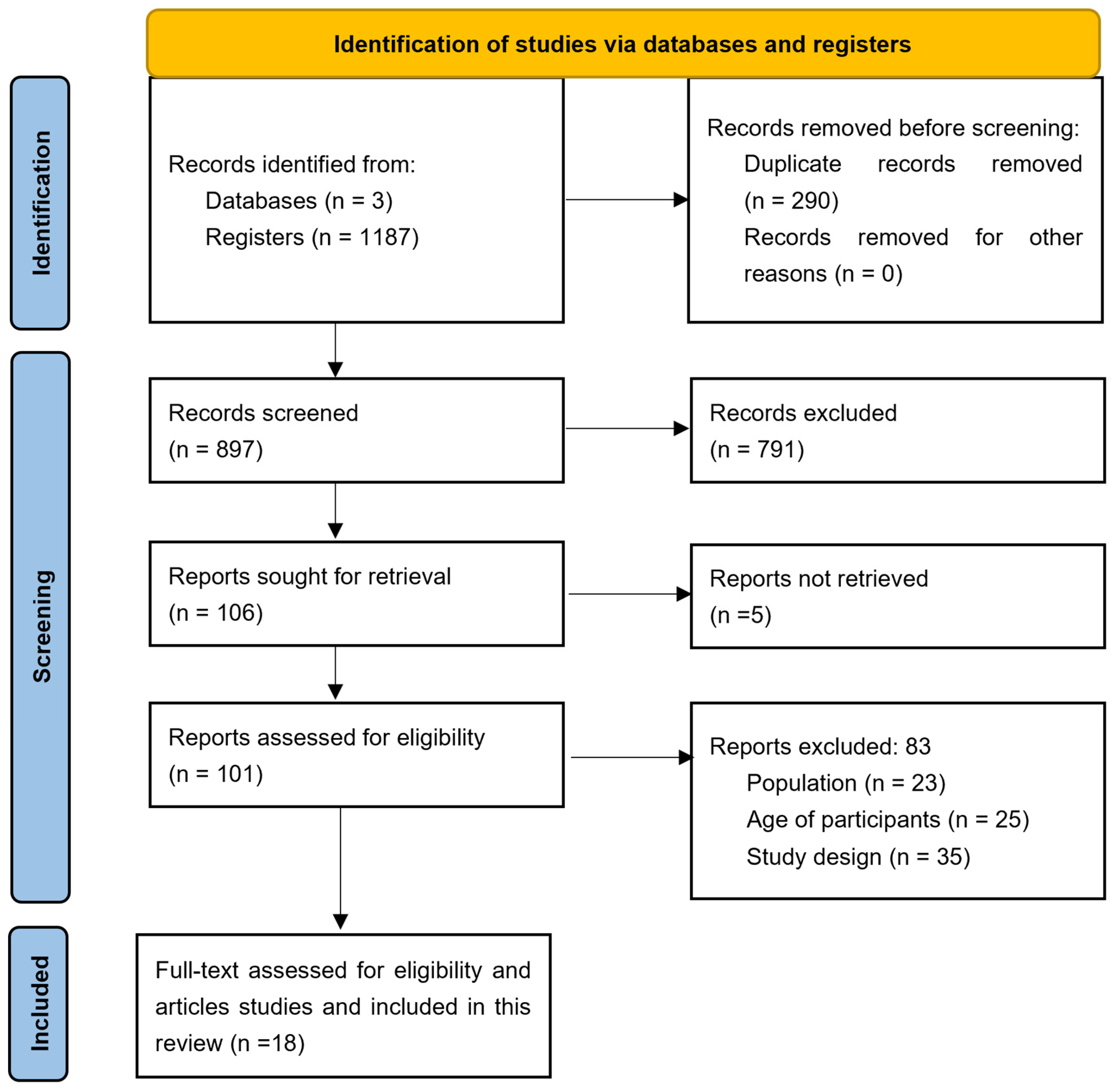
3.1. Overall Results of the Study Selection Process and Characteristics of the Included Studies
3.2. Main Findings
3.2.1. Physical Health and Functional Capacity
3.2.2. Psychological Well-Being and Quality of Life
3.2.3. Social Participation and Active Aging
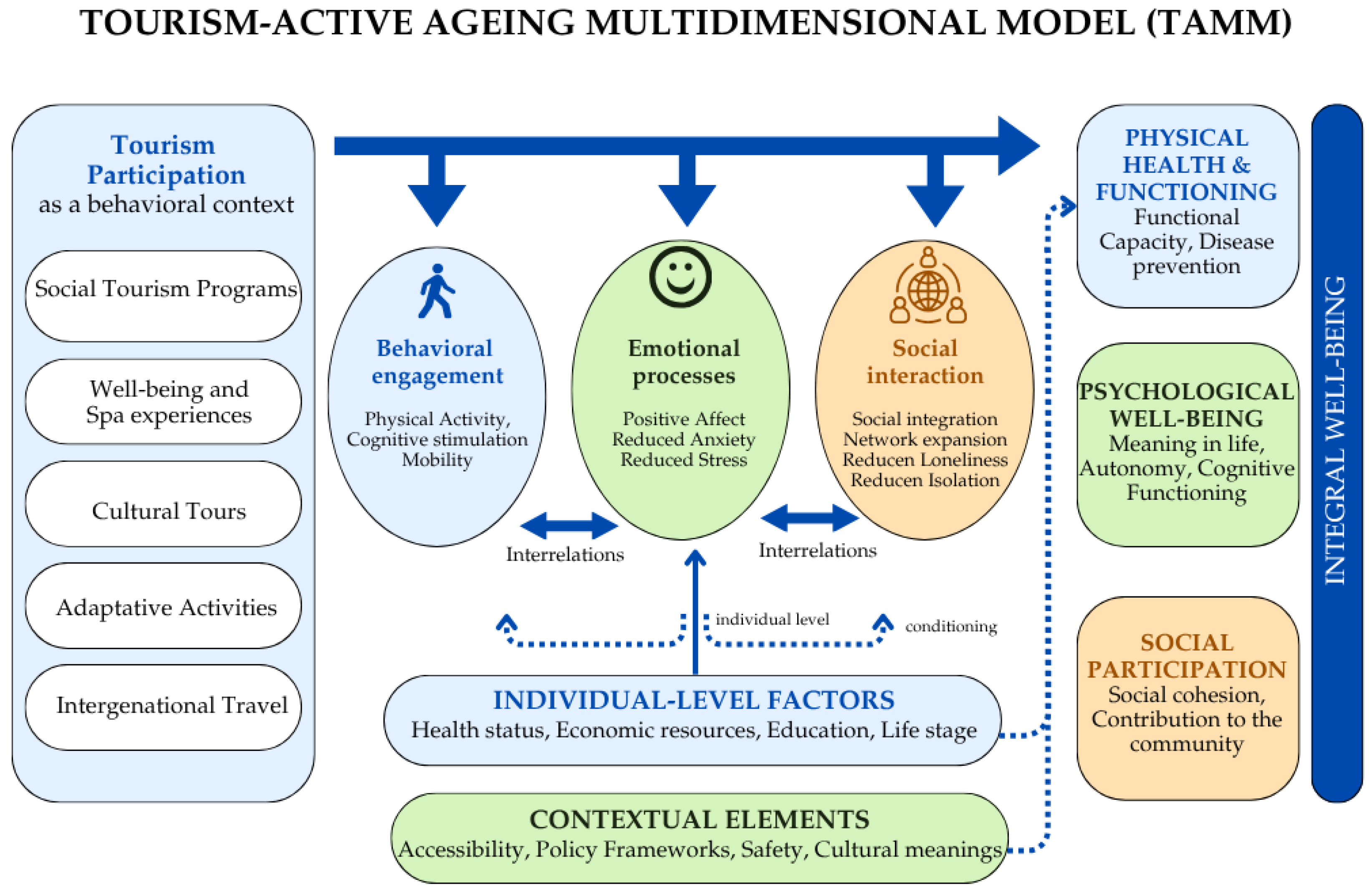
3.3. Formalization of the Tourism-Active Aging Multidimensional Model (TAMM)
4. Discussion
4.1. Tourism as a Driver of Active Aging
4.2. Health and Psychological Benefits of Tourism Participation
4.3. Tourism, Social Participation, and the Growing Importance of Senior Tourism in Aging Societies
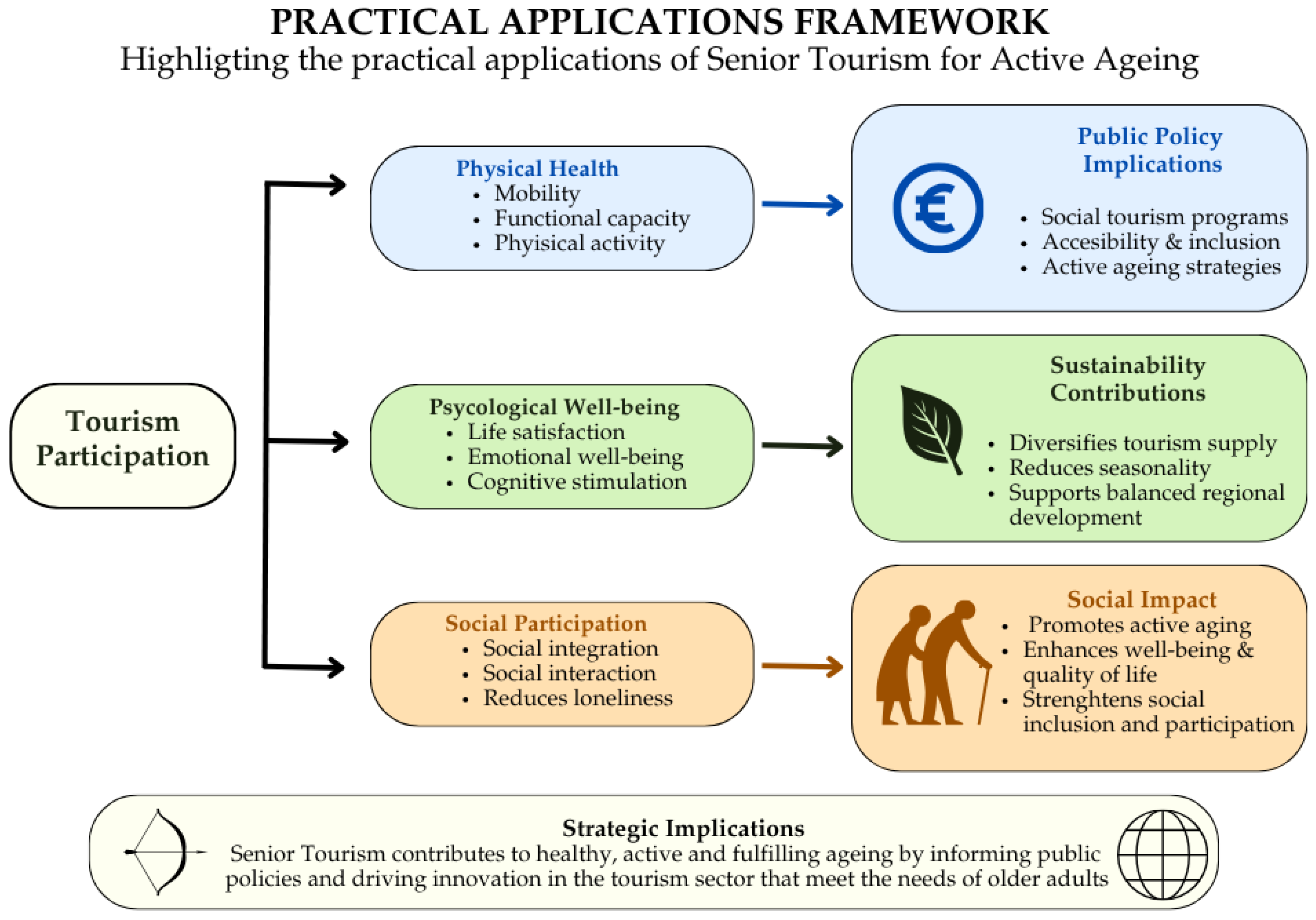
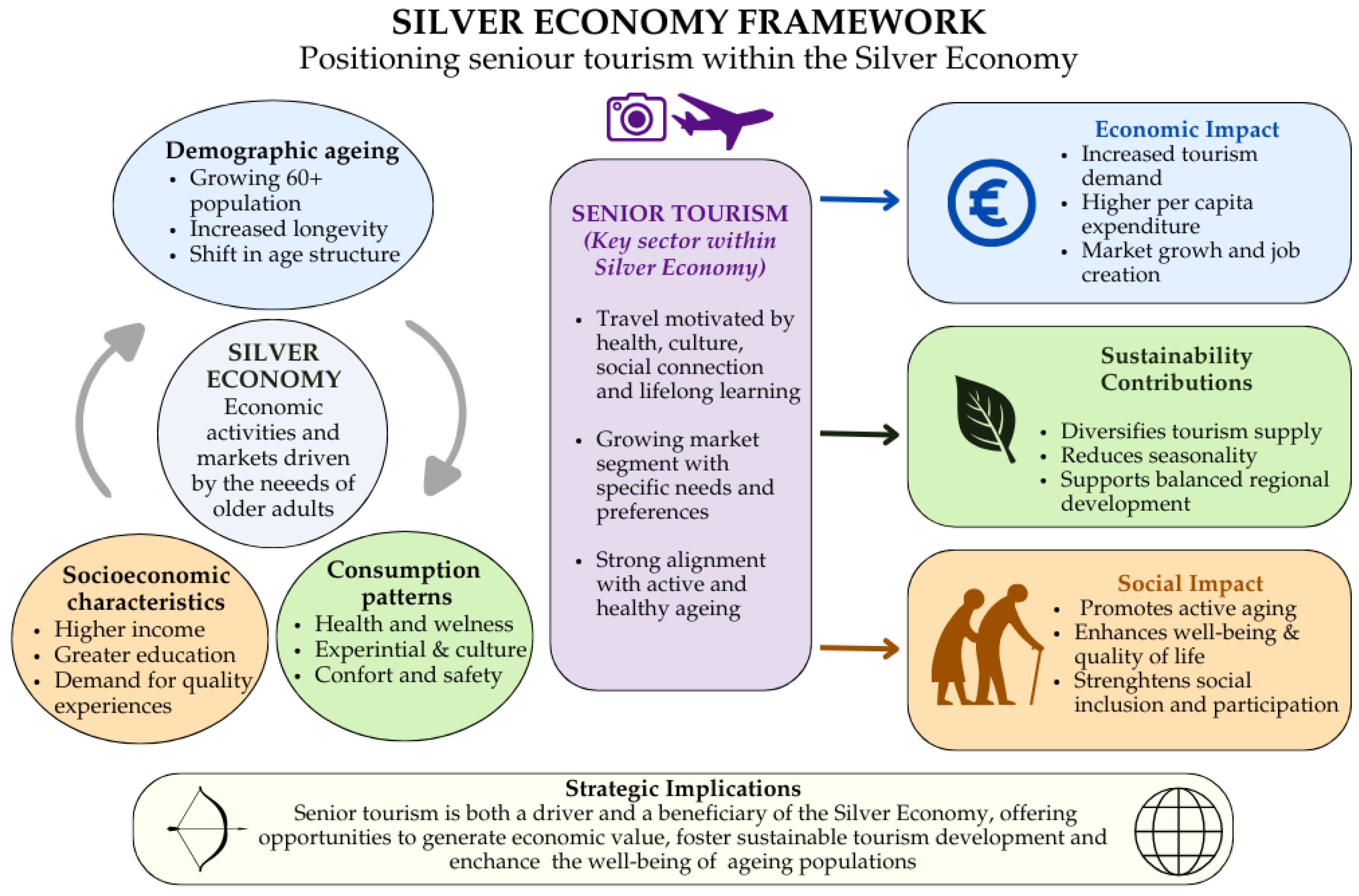
4.4. Senior Tourism: Practical Implications and Opportunities Within the Silver Economy
4.5. Limitations, Strengths, and Future Directions
5. Conclusions
Supplementary Materials
Author Contributions
Funding
Institutional Review Board Statement
Informed Consent Statement
Data Availability Statement
Acknowledgments
Conflicts of Interest
References
- United Nations Department of Economic and Social Affairs. Leaving No One Behind in an Ageing World: World Social Report 2023; United Nations: New York, NY, USA, 2023. [Google Scholar] [CrossRef]
- Rudnicka, E.; Napierała, P.; Podfigurna, A.; Męczekalski, B.; Smolarczyk, R.; Grymowicz, M. The World Health Organization (WHO) Approach to Healthy Ageing. Maturitas 2020, 139, 6–11. [Google Scholar] [CrossRef] [PubMed]
- Duru, P.; Öztürk, Ş. Trends in Research on the Concept of Active Ageing: A Bibliometric Analysis. Turk. J. Public Health 2024, 22, 243–254. [Google Scholar] [CrossRef]
- World Health Organization. Active Ageing: A Policy Framework; World Health Organization: Geneva, Switzerland, 2002; Available online: https://iris.who.int/handle/10665/67215 (accessed on 23 February 2026).
- Rowe, J.W.; Kahn, R.L. Human Aging: Usual and Successful. Science 1987, 237, 143–149. [Google Scholar] [CrossRef] [PubMed]
- Susanti, I.; Latuperissa, G.R.; Soulissa, F.F.; Fauziah, A.; Sukartini, T.; Indarwati, R.; Aris, A. The Factors Associated with Successful Aging in Elderly: A Systematic Review. J. Ners 2020, 15, 230–237. [Google Scholar] [CrossRef]
- Hu, F.; Wen, J.; Phau, I.; Ying, T.; Aston, J.; Wang, W. The Role of Tourism in Healthy Aging: An Interdisciplinary Literature Review and Conceptual Model. J. Hosp. Tour. Manag. 2023, 56, 356–366. [Google Scholar] [CrossRef]
- Beard, J.R.; Officer, A.; de Carvalho, I.A.; Sadana, R.; Pot, A.M.; Michel, J.-P.; Lloyd-Sherlock, P.; Epping-Jordan, J.E.; Peeters, G.M.E.E.; Mahanani, W.R.; et al. The World Report on Ageing and Health: A Policy Framework for Healthy Ageing. Lancet 2016, 387, 2145–2154. [Google Scholar] [CrossRef] [PubMed]
- Steptoe, A.; Deaton, A.; Stone, A.A. Subjective Wellbeing, Health, and Ageing. Lancet 2015, 385, 640–648. [Google Scholar] [CrossRef] [PubMed]
- Diener, E. Subjective Well-Being. Psychol. Bull. 1984, 95, 542–575. [Google Scholar] [CrossRef]
- Fusi, G.; Palmiero, M.; Lavolpe, S.; Colautti, L.; Crepaldi, M.; Antonietti, A.; Di Domenico, A.; Colombo, B.; Di Crosta, A.; La Malva, P.; et al. Aging and Psychological Well-Being: The Possible Role of Inhibition Skills. Healthcare 2022, 10, 1477. [Google Scholar] [CrossRef] [PubMed]
- Vada, S.; Prentice, C.; Scott, N.; Hsiao, A. Positive Psychology and Tourist Well-Being: A Systematic Literature Review. Tour. Manag. Perspect. 2020, 33, 100631. [Google Scholar] [CrossRef]
- Boyes, M. Outdoor Adventure and Successful Ageing. Ageing Soc. 2013, 33, 644–665. [Google Scholar] [CrossRef]
- Balderas-Cejudo, A.; Patterson, I. Tourism as a Means of Happiness and Subjective Well-Being for Older Travelers. Anduli Rev. Andal. Cienc. Soc. 2023, 23, 19–33. [Google Scholar] [CrossRef]
- Angelsen, A.; Nakrem, S.; Zotcheva, E.; Strand, B.H.; Strand, L.B. Health-Promoting Behaviors in Older Adulthood and Intrinsic Capacity 10 Years Later: The HUNT Study. BMC Public Health 2024, 24, 284. [Google Scholar] [CrossRef] [PubMed]
- Sun, F.; Norman, I.J.; While, A.E. Physical Activity in Older People: A Systematic Review. BMC Public Health 2013, 13, 449. [Google Scholar] [CrossRef] [PubMed]
- Narushima, M.; Liu, J.; Diestelkamp, N. Lifelong Learning in Active Ageing Discourse: Its Conserving Effect on Wellbeing, Health and Vulnerability. Ageing Soc. 2018, 38, 651–675. [Google Scholar] [CrossRef] [PubMed]
- Bakhshandeh Bavarsad, M.; Stephens, C. Social Network Type Contributes to Purpose in Life among Older People, Mediated by Social Support. Eur. J. Ageing 2024, 21, 5. [Google Scholar] [CrossRef] [PubMed]
- Lee, T.J. The Role of Tourism in Healthy Aging: Interdisciplinary Perspectives on Well-Being, Accessibility and Their Policy Implications. Asia Pac. J. Mark. Logist. 2026, 38, 126–147. [Google Scholar] [CrossRef]
- Maia, R.; Duque, E.; Durán Vázquez, J.F. Reinventing Aging through Quality Tourism. Sustainability 2025, 17, 9659. [Google Scholar] [CrossRef]
- Godovykh, M.; Tasci, A.D.A. Customer Experience in Tourism: A Review of Definitions, Components and Measurements. Tour. Manag. Perspect. 2020, 35, 100694. [Google Scholar] [CrossRef]
- Filep, S.; Deery, M. Towards a Picture of Tourists’ Happiness. Tour. Anal. 2010, 15, 399–410. [Google Scholar] [CrossRef]
- Uysal, M.; Sirgy, M.J.; Woo, E.; Kim, H. Quality of Life (QOL) and Well-Being Research in Tourism. Tour. Manag. 2016, 53, 244–261. [Google Scholar] [CrossRef]
- Kim, H.; Woo, E.; Uysal, M. Tourism Experience and Quality of Life among Elderly Tourists. Tour. Manag. 2015, 46, 465–476. [Google Scholar] [CrossRef]
- Wang, Q.; Hung, K.; Liu, C. Tourist Experience and Well-Being of Chinese Elderly Tourists through Intergenerational Interaction with Their Adult Children. J. Hosp. Tour. Manag. 2023, 57, 18–28. [Google Scholar] [CrossRef]
- Otoo, F.E.; Kim, S. Analysis of Studies on the Travel Motivations of Senior Tourists from 1980 to 2017: Progress and Future Directions. Curr. Issues Tour. 2018, 23, 393–417. [Google Scholar] [CrossRef]
- Buckley, R. Nature Tourism and Mental Health: Parks, Happiness, and Causation. J. Sustain. Tour. 2020, 28, 1409–1424. [Google Scholar] [CrossRef]
- Fan, Y.; Goh, E.; Isa, S.M.; Yang, S. 30 Years of Healthy Ageing Research in Tourism and Hospitality: Research Trends and Implications for Future Research. Serv. Ind. J. 2024, 1–38. [Google Scholar] [CrossRef]
- Martínez-Redecillas, E.; Moral-García, J.E.; Casado-Montilla, J.; Solas-Martínez, J.L. Impact of Active Tourism on Physical Activity in Children and Adolescents: A Systematic Review (2015–2025). World 2026, 7, 31. [Google Scholar] [CrossRef]
- Rowe, J.W.; Kahn, R.L. Successful Aging. Gerontologist 1997, 37, 433–440. [Google Scholar] [CrossRef] [PubMed]
- Fredrickson, B.L. The Role of Positive Emotions in Positive Psychology: The Broaden-and-Build Theory of Positive Emotions. Am. Psychol. 2001, 56, 218–226. [Google Scholar] [CrossRef] [PubMed]
- Ryan, R.M.; Deci, E.L. Self-Determination Theory: Basic Psychological Needs in Motivation, Development, and Wellness; The Guilford Press: New York, NY, USA, 2017. [Google Scholar] [CrossRef]
- Chen, C.-C.; Petrick, J.F. Health and Wellness Benefits of Travel Experiences: A Literature Review. J. Travel Res. 2013, 52, 709–719. [Google Scholar] [CrossRef]
- Chang, L.; Moyle, B.D.; Dupre, K.; Filep, S.; Vada, S. Progress in Research on Seniors’ Well-Being in Tourism: A Systematic Review. Tour. Manag. Perspect. 2022, 44, 101040. [Google Scholar] [CrossRef]
- Güçlü Nergiz, H.; Toker, F. Healthy Aging in the Tourism Industry: A Systematic Literature Review. SAGE Open 2025, 15, 21582440251379664. [Google Scholar] [CrossRef]
- Page, M.J.; McKenzie, J.E.; Bossuyt, P.M.; Boutron, I.; Hoffmann, T.C.; Mulrow, C.D.; Shamseer, L.; Tetzlaff, J.M.; Akl, E.A.; Brennan, S.E.; et al. The PRISMA 2020 Statement: An Updated Guideline for Reporting Systematic Reviews. BMJ 2021, 372, n71. [Google Scholar] [CrossRef] [PubMed]
- Lan, H.; Yu, X.; Wang, Z.; Wang, P.; Sun, Y.; Wang, Z.; Su, R.; Wang, L.; Zhao, J.; Hu, Y.; et al. How about the Evidence Assessment Tools Used in Education and Management Systematic Reviews? Front. Med. 2023, 10, 1160289. [Google Scholar] [CrossRef] [PubMed]
- Rusillo-Magdaleno, A.; Moral-García, J.E.; Brandão-Loureiro, V.; Martínez-López, E.J. Influence and Relationship of Physical Activity before, during and after the School Day on Bullying and Cyberbullying in Young People: A Systematic Review. Educ. Sci. 2024, 14, 1094. [Google Scholar] [CrossRef]
- Ruiz-Ariza, A.; Grao-Cruces, A.; Marques de Loureiro, N.E.; Martínez-López, E.J. Influence of Physical Fitness on Cognitive and Academic Performance in Adolescents: A Systematic Review from 2005–2015. Int. Rev. Sport Exerc. Psychol. 2017, 10, 108–133. [Google Scholar] [CrossRef]
- Suárez-Manzano, S.; Ruiz-Ariza, A.; de Loureiro, N.E.M.; Martínez-López, E.J. Effects of Physical Activity on Cognition, Behavior, and Motor Skills in Youth with Autism Spectrum Disorder: A Systematic Review of Intervention Studies. Behav. Sci. 2024, 14, 330. [Google Scholar] [CrossRef] [PubMed]
- Azimi, A.; Moradi, E.; Yousefi, B.; Hassani, Z. Bridging Theory and Practice in Healthy Aging: The Role of Wellness Tourism in Shaping Psychosocial Outcomes. Acta Psychol. 2025, 257, 105062. [Google Scholar] [CrossRef] [PubMed]
- Chen, S.X.; Kuok, H.H. Tourism Experiences and Healthy Aging: Extending the Successful Aging Model. Asia Pac. J. Mark. Logist. 2026, 38, 29–46. [Google Scholar] [CrossRef]
- Chen, Y.; Huang, J.; Yao, Y. Travel Sharing Capitalization: How Travel Sharing Benefits Senior Tourists? J. Vacat. Mark. 2025. [Google Scholar] [CrossRef]
- Du, M.; Tao, L.; Liu, M.; Liu, J. Tourism Experiences and the Lower Risk of Mortality in the Chinese Elderly: A National Cohort Study. BMC Public Health 2021, 21, 996. [Google Scholar] [CrossRef] [PubMed]
- Garcés Ferrer, J.; Ferri Sanz, M.; Durá Ferrandis, E.; McCabe, S.; Sánchez García, J. Social Tourism and Healthy Ageing. Int. J. Tour. Res. 2016, 18, 297–307. [Google Scholar] [CrossRef]
- Hakman, A.; Andrieieva, O.; Balatska, L.; Filak, F.; Filak, Y.; Tivelik, M.; Bezverkhnia, H.; Tsybulska, V.; Koshura, A.; Savchuk, S.; et al. The Health Impact of Tourism on the Psychophysical State of Elderly Individuals. J. Sport Health Res. 2024, 16, 31–42. [Google Scholar] [CrossRef]
- Kan, T.; Ku, E.C.S.; Sun, W.C.W.; Lai, T.C.; Hsu, P.Y.; Hsu, S. Wellness Tourism Enhances Elderly Life Satisfaction. J. Qual. Assur. Hosp. Tour. 2023, 24, 402–428. [Google Scholar] [CrossRef]
- Łapko, A.; Hącia, E.; Łapko, P. Determinants of Seniors’ Participation in Tourism: Psychological and Organisational Perspective in the Context of Sustainable Tourism. Sustainability 2026, 18, 259. [Google Scholar] [CrossRef]
- Lin, H.-H.; Chang, K.-H.; Tseng, C.-H.; Lee, Y.-S.; Hung, C.-H. Can the Development of Religious and Cultural Tourism Build a Sustainable and Friendly Life and Leisure Environment for the Elderly and Promote Physical and Mental Health? Int. J. Environ. Res. Public Health 2021, 18, 11989. [Google Scholar] [CrossRef] [PubMed]
- Mélon, M.; Agrigoroaei, S.; Diekmann, A.; Luminet, O. The Holiday-Related Predictors of Wellbeing in Seniors. J. Policy Res. Tour. Leis. Events 2018, 10, 221–240. [Google Scholar] [CrossRef]
- Mendes, J.; Medeiros, T.; Silva, O.; Tomás, L.; Silva, L.; Ferreira, J.A. PERMA Model of Well-Being Applied to Portuguese Senior Tourists: A Confirmatory Factor Analysis. Sustainability 2022, 14, 7538. [Google Scholar] [CrossRef]
- Pan, Y.; Fu, X.; Wang, Y. How Does Travel Link to Life Satisfaction for Senior Tourists? J. Hosp. Tour. Manag. 2020, 45, 234–244. [Google Scholar] [CrossRef]
- Patterson, I.; Balderas-Cejudo, A.; Pegg, S. Tourism Preferences of Seniors and Their Impact on Healthy Ageing. Anatolia 2021, 32, 553–564. [Google Scholar] [CrossRef]
- Qiao, G.; Ding, L.; Xiang, K.; Prideaux, B.; Xu, J. Understanding the Value of Tourism to Seniors’ Health and Positive Aging. Int. J. Environ. Res. Public Health 2022, 19, 1476. [Google Scholar] [CrossRef] [PubMed]
- Ruiz-Moreno, C.; Picón-Berjoyo, A.; Rodríguez-Serrano, M.Á.; Domínguez-CC, M. The Impact of Tourism on Senior Well-Being: A Study of IMSERSO Programmes. J. Tour. Sustain. Well-Being 2024, 12, 167–187. [Google Scholar] [CrossRef]
- Vega-Vázquez, M.; Rodríguez-Serrano, M.Á.; Castellanos-Verdugo, M.; Oviedo-García, M.Á. The Impact of Tourism on Active and Healthy Ageing: Health-Related Quality of Life. J. Policy Res. Tour. Leis. Events 2021, 13, 349–373. [Google Scholar] [CrossRef]
- Zhang, L.; Zhang, J. Impacts of Leisure and Tourism on the Elderly’s Quality of Life in Intimacy: A Comparative Study in Japan. Sustainability 2018, 10, 4861. [Google Scholar] [CrossRef]
- Thomas, J.; Harden, A. Methods for the Thematic Synthesis of Qualitative Research in Systematic Reviews. BMC Med. Res. Methodol. 2008, 8, 45. [Google Scholar] [CrossRef] [PubMed]
- Booth, A.; Papaioannou, D.; Sutton, A. Systematic Approaches to a Successful Literature Review; Sage Publications: London, UK, 2012. [Google Scholar]
- Nutbeam, D. Evaluating Health Promotion—Progress, Problems and Solutions. Health Promot. Int. 1998, 13, 27–44. [Google Scholar] [CrossRef]
- Burzynska, A.Z.; Malinin, L.H. Enriched Environments for Healthy Aging: Qualities of Seniors Housing Designs Promoting Brain and Cognitive Health. Sr. Hous. Care J. 2017, 25, 15–29. [Google Scholar]
- Balietti, M.; Conti, F. Environmental Enrichment and the Aging Brain: Is It Time for Standardization? Neurosci. Biobehav. Rev. 2022, 139, 104728. [Google Scholar] [CrossRef] [PubMed]
- Patterson, I.; Balderas-Cejudo, A. Older Travellers as a Critical Sector of the Tourism Industry, Now and in the Future: Overcoming Myths and Stereotypes. Eur. J. Tour. Hosp. Recreat. 2025, 15, 81–90. [Google Scholar] [CrossRef]
- Álvarez-García, J.; Durán-Sánchez, A.; del Río-Rama, M.d.l.C.; García-Vélez, D.F. Active Ageing: Mapping of Scientific Coverage. Int. J. Environ. Res. Public Health 2018, 15, 2727. [Google Scholar] [CrossRef] [PubMed]
- Morgan, N.; Pritchard, A.; Sedgley, D. Social Tourism and Well-Being in Later Life. Ann. Tour. Res. 2015, 52, 1–15. [Google Scholar] [CrossRef]
- An, J.; Payne, L.L.; Lee, M.; Janke, M.C. Understanding Boredom and Leisure in Later Life: A Systematic Review. Innov. Aging 2023, 7, igad109. [Google Scholar] [CrossRef] [PubMed]
- Lewis, C.; D’Alessandro, S. Understanding Why: Push-Factors That Drive Rural Tourism amongst Senior Travellers. Tour. Manag. Perspect. 2019, 32, 100574. [Google Scholar] [CrossRef]
- Bahrevar, V.; Zanjari, N.; Hosseini, S.; Fattahi Ardakani, M.; Kazemi, S. The Role of Tourism in Enhancing Domains of Health for Seniors: A Scoping Review. Med. J. Islam. Repub. Iran. 2025, 39, 40. [Google Scholar] [CrossRef] [PubMed]
- Stankov, U.; Gretzel, U.; Vujičić, M.D.; Pavluković, V.; Jovanović, T.; Solarević, M.; Cimbaljević, M. The Pandemic of Loneliness: Designing Smart Tourism for Combating Loneliness. Inf. Technol. Tour. 2022, 24, 439–455. [Google Scholar] [CrossRef]
- Alén, E.; Nicolau, J.L.; Losada, N.; Domínguez, T. Determinant Factors of Senior Tourists’ Length of Stay. Ann. Tour. Res. 2014, 49, 19–32. [Google Scholar] [CrossRef]
- Rico, P.; Cabrer-Borrás, B.; Morillas-Jurado, F. Seasonality in Tourism: Do Senior Programs Mitigate It? Mathematics 2021, 9, 2003. [Google Scholar] [CrossRef]
- Sedgley, D.; Haven-Tang, C.; Espeso-Molinero, P. Social Tourism & Older People: The IMSERSO Initiative. J. Policy Res. Tour. Leis. Events 2018, 10, 286–304. [Google Scholar] [CrossRef]
- Hartman, S. Adaptive Tourism Areas in Times of Change. Ann. Tour. Res. 2020, 83, 102987. [Google Scholar] [CrossRef] [PubMed]
- Minnaert, L.; Maitland, R.; Miller, G. What Is Social Tourism? Curr. Issues Tour. 2011, 14, 403–415. [Google Scholar] [CrossRef]
- Konstantopoulou, C.; Varelas, S.; Liargovas, P. Well-Being and Tourism: A Systematic Literature Review. Economies 2024, 12, 281. [Google Scholar] [CrossRef]
- Buzulukova, E.; Lobova, E. Stimulating the Growth of “Silver” Tourism through the Development of Relationships and the Creation of Targeted Communications with Travellers. Popul. Econ. 2023, 7, 103–123. [Google Scholar] [CrossRef]
- Klimczuk, A. The Silver Economy as a Constructive Response in Public Policy on Aging. In Strategic Approach to Aging Population: Experiences and Challenges; Bojanić, I.B., Erceg, A., Eds.; J.J. Strossmayer University of Osijek: Osijek, Croatia, 2021; pp. 19–35. [Google Scholar] [CrossRef]
- Stončikaitė, I. Baby-Boomers Hitting the Road: The Paradoxes of Senior Leisure Tourism. J. Tour. Cult. Change 2022, 20, 335–347. [Google Scholar] [CrossRef]
- Lipp, B.; Peine, A. Ageing as a Driver of Progressive Politics? What the European Silver Economy Teaches Us about the Co-Constitution of Ageing and Innovation. Ageing Soc. 2024, 44, 1481–1493. [Google Scholar] [CrossRef]
- Pak, T.-Y. Old-Age Income Security and Tourism Demand: A Quasi-Experimental Study. J. Travel Res. 2020, 59, 1298–1315. [Google Scholar] [CrossRef]
- Eusébio, C.; Carneiro, M.; Kastenholz, E.; Alvelos, H. The Impact of Social Tourism for Seniors on the Economic Development of Tourism Destinations. Eur. J. Tour. Res. 2016, 12, 5–24. [Google Scholar] [CrossRef]
- Tzouganatou, S.G. The Ageing Population of the European Union: Challenges and Prospects. HAPSc Policy Briefs Ser. 2022, 3, 206–214. [Google Scholar] [CrossRef]




| Database | Search Strategy | Records Identified |
|---|---|---|
| Web of Science | TS = ((“tourism” OR tourist* OR “senior tourism” OR “social tourism”) AND (“older adults” OR elderly OR senior* OR aged) AND (“active aging” OR active ageing” OR “healthy aging” OR “healthy ageing” OR “quality of life” OR wellbeing OR “life satisfaction”)) | 580 |
| SCOPUS | TITLE-ABS-KEY ((“tourism” OR tourist* OR “senior tourism”) AND (“older adults” OR elderly OR senior*) AND (“active aging” OR “active ageing” OR “well-being” OR “wellbeing” OR “quality of life”)) | 321 |
| PubMed | ((“tourism”[MeSH Terms] OR “tourism”[Title/Abstract]) AND (“aged”[MeSH Terms] OR “older adults”[Title/Abstract] OR “elderly”[Title/Abstract]) AND (“active aging”[Title/Abstract] OR “active ageing”[Title/Abstract] OR “quality of life”[MeSH Terms] OR “personal satisfaction”[MeSH Terms])) | 286 |
| Total | 1187 |
| Authors (Year) | C1 | C2 | C3 | C4 | C5 | C6 | Total Score | Quality Level |
|---|---|---|---|---|---|---|---|---|
| Azimi et al., 2025 [41] | 1 | 2 | 2 | 2 | 2 | 2 | 11 | HQ |
| Chen & Kuok, 2026 [42] | 2 | 2 | 1 | 1 | 1 | 1 | 8 | MQ |
| Chen et al., 2025 [43] | 2 | 2 | 2 | 2 | 1 | 1 | 10 | HQ |
| Du et al., 2021 [44] | 2 | 2 | 1 | 1 | 1 | 2 | 9 | HQ |
| Garcés Ferrer et al., 2016 [45] | 2 | 2 | 2 | 2 | 2 | 2 | 12 | HQ |
| Hakman et al., 2024 [46] | 2 | 2 | 2 | 2 | 2 | 2 | 12 | HQ |
| Kan et al., 2023 [47] | 2 | 2 | 2 | 2 | 2 | 2 | 12 | HQ |
| Kim et al., 2015 [24] | 2 | 2 | 2 | 2 | 2 | 2 | 12 | HQ |
| Łapko et al., 2026 [48] | 2 | 2 | 2 | 2 | 1 | 1 | 10 | HQ |
| Lin et al., 2021 [49] | 2 | 2 | 2 | 2 | 2 | 2 | 12 | HQ |
| Mélon et al., 2018 [50] | 2 | 2 | 2 | 1 | 2 | 2 | 11 | HQ |
| Mendes et al., 2022 [51] | 2 | 2 | 2 | 2 | 2 | 2 | 12 | HQ |
| Pan et al., 2020 [52] | 2 | 2 | 2 | 2 | 2 | 2 | 12 | HQ |
| Patterson et al., 2021 [53] | 2 | 2 | 2 | 1 | 1 | 1 | 9 | HQ |
| Qiao et al., 2022 [54] | 2 | 2 | 2 | 2 | 2 | 2 | 12 | HQ |
| Ruiz-Moreno et al., 2024 [55] | 2 | 2 | 2 | 2 | 2 | 2 | 12 | HQ |
| Vega-Vázquez et al., 2021 [56] | 2 | 2 | 2 | 2 | 2 | 2 | 12 | HQ |
| Zhang & Zhang, 2018 [57] | 2 | 2 | 1 | 1 | 1 | 2 | 9 | HQ |
| Title, Authors, Year | Study Design Objective Analysis | Sample Age Location | Type/Characteristics of Tourism | Active Aging Well-being/Instrument | Key Results |
|---|---|---|---|---|---|
| Bridging theory and practice in healthy aging: the role of wellness tourism in shaping psychosocial outcomes. / Azimi et al., 2025 [41] | Quantitative cross-sectional study using survey design. / Examine how wellness tourism experiences influence well-being in older adults. / PLS-SEM and fsQCA analysis. | n = 362 participants. / ≥55 years (majority 61–65). Older adults who had visited wellness resorts in the last 12 months. / Iran. | Wellness tourism in wellness resorts. Tourism focused on relaxation, health improvement, and restorative environments. | Life satisfaction, perceived restorative environment, and tourists’ well-being. / Validated scales for restorative environments and life satisfaction and for wellness tourism experience and well-being. | Wellness tourism experience significantly predicted tourists’ well-being (men: p < 0.001; women: β = 0.652, p < 0.001). Wellness tourism also significantly predicted life satisfaction (men: β = 0.499, p < 0.001; women: β = 0.397, p < 0.001). Perceived restorative environment significantly predicted life satisfaction (in men (β = 0.401, p < 0.001) and women (β = 0.465, p < 0.001)). Life satisfaction significantly predicted well-being only in women (β = 0.198, p = 0.018) but not in men (p = 0.297). Overall model explained 65.3% of variance in well-being (R2 = 0.653). |
| Tourism experiences and healthy aging: extending the successful aging model. / Chen & Kuok, 2026 [42] | Qualitative study. / Explore how tourism experiences contribute to healthy aging among seniors, extending the successful aging model within the tourism context. / Analysis with NVivo 12. | n = 19 older adults. / ≥60 years (mean age 69.2). / Participants recruited from three nursing homes in Macau, China. | Nature-based tourism (hiking, cycling, scuba diving), agritourism/farm stays, visiting friends and relatives, volunteer tourism, and cultural tourism. | Healthy aging dimensions: physical health, mental health, positive spirituality. / Data collected via semi-structured interviews (30–60 min). | Physical health: promoted exercise, improved cardiovascular health, muscle strength and balance. Mental health: social interaction, reduced loneliness, enhanced curiosity and cognitive stimulation. Positive spirituality: experiences such as pilgrimages, temple stays and volunteer tourism fostered meaning, inner peace and spiritual reflection. Tourism experiences were therefore linked to improvements in physical functioning, emotional well-being and spiritual growth among older adults. |
| Travel sharing capitalization: How travel sharing benefits senior tourists? / Chen et al., 2025 [43] | Qualitative study. / Examine how travel sharing generates benefits for senior tourists. / Grounded theory coding using MaxQDA qualitative analysis. https://www.maxqda.com | n = 49 seniors. / 55–75. / Macau (China). | Senior tourism experiences followed by travel sharing (online platforms: WeChat, Meipian, Douyin, and face-to-face sharing). | Active aging outcomes: emotion, cognition, social relationships (guanxi), skills/knowledge, life attitudes, tourism engagement. / Semi-structured interviews. | Travel sharing produced several direct benefits for seniors: improved emotional well-being, enhanced self-efficacy and identity, strengthened social relationships, and development of communication, digital and travel knowledge skills. It also generated indirect effects, such as increased motivation to continue traveling, stronger identification with a travel lifestyle, and more positive attitudes toward aging and daily life. Overall, travel sharing acts as a mechanism that promotes active aging through psychological, social and behavioral improvements in later life. |
| Tourism experiences and the lower risk of mortality in the Chinese elderly: a national cohort study. / Du et al., 2021 [44] | Prospective cohort study. / Examine the association between tourism experiences and all-cause mortality in older adults. / IBM SPSS Statistics 26.0 (IBM Corp., Armonk, NY, USA) and Stata 16.0 (StataCorp LLC., College Station, TX, USA) | n = 9520 adults. / ≥65 years old from the Chinese Longitudinal Healthy Longevity Survey. Follow-up 2011–2018. / China. | General tourism travel outside the home city /county within the past two years. Classified as ≥1 tourism experience vs. none. | Outcome: mortality/longevity (healthy aging indicator). / CLHLS questionnaire, MMSE for cognitive function, ADL scale, health and lifestyle questionnaires. | During 35,994 person-years of follow-up, 4635 deaths occurred. Mortality rate was 13.70 per 100 person-years in non-travelers vs. 5.24 in travelers. Tourism participation was associated with a significantly lower mortality risk: crude HR = 0.38 (95% CI: 0.33–0.44). After adjusting for demographics and confounders, the association remained significant (aHR = 0.73; 95% CI: 0.62–0.85; p < 0.001), indicating 27% lower mortality risk among older adults with at least one tourism experience. |
| Social Tourism and Healthy Ageing. / Garcés Ferrer et al., 2016 [45] | Cross-sectional quantitative study. / Examine the relationship between tourism participation and health among older adults. / Analysis using IBM SPSS Statistics 19 (IBM Corp., Armonk, NY, USA) and EQS 6.1 (Multivariate Software, Inc., Encino, CA, USA) | n = 189 adults. / 65–85 (149 tourists; 40 non-tourists). /Valencia (Spain). | Social tourism participation (holiday travel vs. non-participation). | Self-perceived physical and mental health, life satisfaction, social integration. / SF-12 Health Survey, Lawton & Brody IADL index, Satisfaction with Life Scale, Berkman–Syme social integration index. | Tourists showed better physical health (p = 0.02) and mental health (p = 0.03) than non-tourists. They also had greater independence in instrumental activities of daily living (p < 0.05). Tourism positively influenced life satisfaction (β = 0.70, R2 = 0.496), self-perceived health (β = 0.78, R2 = 0.603), and functional capacity (β = 0.46, R2 = 0.216). |
| The health impact of tourism on the psychophysical state of elderly individuals. / Hakman et al., 2024 [46] | Quasi-experimental intervention study (6-month program). / Examine the effect of health tourism activities on the psychophysical state of older adults. / Analysis using STATISTICA 8.0 (StatSoft, Inc., Tulsa, OK, USA) Wilcoxon test and Pearson correlations. | n = 221 adults (152 women, 69 men). / 60–65 years old. / Ukraine. | Health/recreational tourism program combined with physical activity sessions and outdoor recreational activities. | Quality of life (QoL), life satisfaction, physical capacity, psychosocial adaptation, cognitive functioning. / SF-36, Life Satisfaction Index A (LSIA), PWC150 test, Bourdon correction test. | QoL increased across SF-36 dimensions (e.g., physical activity +13.3 ± 1.4 points in women and +14.4 ± 1.8 in men; general health +11.4 ± 2.1 and +13.1 ± 0.7). Social activity increased (+10.9 in women). Life satisfaction levels improved, with more participants reporting moderate/high satisfaction after the program. Psychosocial adaptation indicators improved, including self-perception (women 68.8 ± 0.7; men 78.8 ± 4.1) and emotional comfort (w = 63.3 ± 1.7; m = 69.2 ± 1.2) (p = 0.05). Cognitive functioning also improved, (90% of participants within the normal cognitive range after the intervention). Tourism combined with PA improved psychophysical, cognitive and social well-being in older adults. |
| Wellness Tourism Enhances Elderly Life Satisfaction. / Kan et al., 2023 [47] | Cross-sectional study. / Analyze how wellness tourism experiences influence travel satisfaction and life satisfaction among elderly tourists. / Analysis with PLS-SEM using IBM SPSS Statistics; IBM Corp., Armonk, NY, USA) and SmartPLS. SmartPLS GmbH, Monheim am Rhein, Germany; https://www.smartpls.com) | n = 242 elderly tourists. / ≥65 years. / Taiwan. | Wellness tourism in resorts/spa hotels including health services, relaxation, cultural sharing and leisure activities. | Life satisfaction, travel satisfaction, perceived enjoyment, altruistic value, product advantage, culture sharing. / Questionnaire survey. | Wellness tourism significantly influenced travel satisfaction (β = 0.048, p < 0.01) and life satisfaction (β = 0.064, p < 0.05) among older adults. Perceived enjoyment strongly predicted travel satisfaction (β = 0.056, p < 0.001), and travel satisfaction strongly predicted life satisfaction (β = 0.062, p < 0.001). Overall, wellness tourism experiences enhance subjective well-being and life satisfaction. |
| Tourism experience and quality of life among elderly tourists. / Kim et al., 2015 [24] | Quantitative survey study. / Examine the relationships between travel involvement, perceived value, trip satisfaction, leisure life satisfaction and quality of life among elderly tourists. / Analysis with SEM using IBM SPSS Statistics 20 and IBM SPSS Amos 20 (IBM Corp., Armonk, NY, USA) | n = 208 elderly. / ≥65 years (mean ≈ 71). / Jeju Island (South Korea). | General leisure, vacation tourism. Recent vacation trips and leisure travel experiences. | Involvement, perceived value, satisfaction with trip experience, leisure life satisfaction, quality of life, revisit intention. / Questionnaire (Likert scales); SEM analysis (SPSS, AMOS). | Involvement, perceived value (t = 3.88, p < 0.001) and satisfaction with trip experience (p < 0.05). Perceived value and satisfaction (p < 0.001). Satisfaction with trip, experience leisure, life satisfaction (p < 0.001) and quality of life (p < 0.001). Leisure, life satisfaction, predicted quality of life (p < 0.001); revisit intention (p < 0.05); and quality of life, revisit intention (p < 0.05). Tourism experience positively contributes to well-being and quality of life in older adults. |
| Determinants of Seniors’ Participation in Tourism: Psychological and Organisational Perspective in the Context of Sustainable Tourism. / Łapko et al., 2026 [48] | Cross-sectional survey. / Analyze tourism participation of seniors and barriers affecting it, and examine the relationship between tourism and psychological well-being/mood. / Survey data were analyzed using descriptive statistics. | n = 209 seniors / ≥65 years. / City of Szczecin, Poland. | Mainly domestic and international leisure tourism (one-day trips and trips with overnight stay). | Tourism participation, well-being, barriers, motivations. / Instrument: 17-item questionnaire, Likert scales, data collected with PAPI and CAWI surveys. | A total of 76% considered tourist trips important. Most participants agreed that “trips make me happy” (77%), and 66% strongly agreed. Mean agreement: Trips make me happy, M = 4.17; I enjoy reminiscing about my trips, M = 4.18. Main barriers: poor health (45%), lack of money (21%), lack of will (21%). Tourism participation declined with age and domestic trips were more frequent than international ones. |
| Can the Development of Religious and Cultural Tourism Build a Sustainable and Friendly Life and Leisure Environment for the Elderly and Promote Physical and Mental Health? / Lin et al., 2021 [49] | Mixed-method study. / Examine whether religious and cultural tourism development can build a friendly leisure environment and improve physical and mental health among older adults. / Quantitative analysis with IBM SPSS Statistics 22.0 (IBM Corp., Armonk, NY, USA) (t-test, Pearson correlation) plus semi-structured interviews. | n = 700 older adults respondents (residents and tourists). / Not reported concretely. / Xingang Township, Taiwan. | Religious and cultural tourism centered on temple activities and local cultural tourism resources. | Leisure satisfaction, physical and mental health, revisit intention. / Questionnaire (Likert scale) and semi-structured interviews; statistical analysis with SPSS. | Religious and cultural tourism participation was associated with improvements in physical and mental health indicators, including increased life satisfaction and reduced symptoms such as headaches, stress, back pain, anxiety and irritability. Significant differences were found across several items (p < 0.01). Correlation analysis showed that physical and mental health positively predicted revisit intention (r = 0.670, p < 0.01), whereas leisure satisfaction showed a negative association with revisit intention (r = −0.175, p < 0.01). |
| The holiday-related predictors of wellbeing in seniors. / Mélon et al., 2018 [50] | Cross-sectional quantitative survey. / Compare senior tourists vs. non-tourists on socio-demographics, health, physical activity and social relations and holiday predictors of well-being. / IBM SPSS Statistics 23/23.3 (IBM Corp., Armonk, NY, USA) with independent t-tests, χ2 tests, ANCOVA, and hierarchical multiple regression analyses. | n = 4130 seniors. / mean age 68.2 ± 5.8, range 60–85. / Belgium. | Holiday tourism (vacations ≥ 4 nights) including travel for leisure during the previous 12 months. | Well-being = composite of life satisfaction (SWLS) + happiness (HM). Perceived health benefits of holidays, physical activity, social relations. / Online questionnaire, analysis with SPSS 23.3. | Senior tourists reported higher well-being than non-tourists after controlling for covariates (F (1, 4015) = 123.94, p < 0.001, ηp2 = 0.03). Holiday factors explained +4% additional variance in well-being (ΔR2 = 0.04, p < 0.001). Significant predictors of higher well-being: holiday frequency (β = 0.13, p < 0.001), social activities during holidays (β = 0.06, p < 0.001), cognitive activities (β = 0.04, p < 0.01) and perceived health benefits (β = 0.12, p < 0.001). Holiday duration and physical/relaxing activities were not significant predictors. |
| PERMA Model of Well-Being Applied to Portuguese Senior Tourists: A Confirmatory Factor Analysis. / Mendes et al., 2022 [51] | Quantitative cross-sectional study. / Test the PERMA model of well-being in senior tourists visiting São Miguel Island (Azores). / Analysis with IBM SPSS Statistics 28 and IBM SPSS Amos | n = 434 Portuguese tourists. / Mean age 63.78 ± 6.98. / Azores (Portugal). | Leisure tourism/island tourism. Senior tourists visiting São Miguel Island, traveling mainly with family or friends. | Psychological well-being (PERMA: Positive emotion, Engagement, Relationships, Meaning, Accomplishment) and life satisfaction (SWLS). / PERMA-Profiler (15 items) + Satisfaction With Life Scale. | Most participants reported scores above the midpoint in all PERMA dimensions and life satisfaction, indicating high well-being levels during tourism experiences. The refined CFA model showed acceptable fit (χ2 (73) = 264.96, p < 0.001; CFI = 0.94, TLI = 0.91, RMSEA = 0.078). Significant correlations were found between PERMA dimensions and life satisfaction, supporting the idea that tourism experiences contribute to psychological well-being in senior tourists. |
| How does travel link to life satisfaction for senior tourists? / Pan et al., 2020 [52] | Quantitative cross-sectional survey. / Examine relationships between travel motivations (TMs), travel constraints (TCs), travel satisfaction (TS) and quality of life. / IBM SPSS Amos and IBM SPSS Statistics (versions not reported in the original study; IBM Corp., Armonk, NY, USA) | n = 509 elderly tourists. / ≥60. Majority 60–70 years. / Shanghai (China). | Leisure tourism /travel participation among seniors. Includes analysis of travel frequency (≤4 vs. ≥5 trips/year) and travel duration (≤3 days vs. ≥4 days). | Quality of life: Leisure Life Satisfaction (LLS) and Overall Life Satisfaction (OLS). Other variables: travel motivations, constraints, satisfaction. / Likert survey scales. | Travel satisfaction positively predicted LLS (β = 0.230, p < 0.001) and OLS (β = 0.491, p < 0.001). Travel motivations positively predicted TS (β = 0.682, p < 0.001), LLS (β = 0.429, p < 0.001) and OLS (β = 0.450, p < 0.001). Travel constraints negatively affected OLS (β = −0.103, p < 0.05). Moderation analysis showed that greater travel frequency and longer duration increased the positive effect of tourism on quality of life. |
| Tourism preferences of seniors and their impact on healthy ageing. / Patterson et al., 2021 [53] | Qualitative study. / Explore travel preferences of seniors and the relationship between leisure travel and healthy aging. / Analyzed using thematic coding. | n = 20 seniors. / 55–80 years old (mean ≈ 69). / Oxfordshire (UK). | Leisure tourism /holiday travel, including domestic and international trips. | Healthy aging, lifestyle, well-being perceptions, travel motivations. / Semi-structured interviews (50–90 min). | Many participants perceived travel as contributing to psychological well-being, relaxation and maintaining an active lifestyle, although some noted that overall lifestyle habits (e.g., social engagement, healthy routines) were also important for healthy aging. Travel was commonly associated with improved mood, mental refreshment and social connection. |
| Understanding the Value of Tourism to Seniors’ Health and Positive Aging. / Qiao et al., 2022 [54] | Mixed-methods study. / Examine the relationship between tourism value, active aging, health, and mortality risk in seniors. / Quantitative phase used survival analysis (Kaplan–Meier curves and Cox proportional hazards models); qualitative phase used in-depth interviews with narrative analysis. | Study I: national cohort of Chinese seniors ≥ 65 years using Chinese Longitudinal Healthy Longevity Survey data (2008–2018). Three cohorts analyzed (n ≈ 3393; 7826; 4814 depending on period). Study II: n = 8. / China. | Leisure travel participation measured as whether participants travelled within the previous two years and number of trips. Tourism considered as a lifestyle activity contributing to active aging. | Active aging, tourism value, mortality risk, physical and mental health. / Kaplan–Meier survival curves, Cox proportional hazard models (Stata 16) and narrative coding of interviews. | Tourism participation was associated with lower mortality risk. Seniors who travelled had ≈ 36% lower risk of death (HR ≈ 0.634). A higher number of trips further reduced mortality risk (≈13.6%). Qualitative findings suggested tourism promotes psychological well-being, social interaction, positive emotions, and active aging processes, supporting better physical and mental health. |
| The Impact of Tourism on Senior Well-being: A Study of IMSERSO Programmes. / Ruiz-Moreno et al., 2024 [55] | Quantitative cross-sectional study. / Analyze whether participation in IMSERSO social tourism programs improves subjective well-being in older adults, and whether age, gender, frequency and duration of trips influence well-being. / Mann–Whitney and Levene tests using IBM SPSS Statistics (IBM Corp., Armonk, NY, USA) | n = 358 older adults who travelled with IMSERSO in the previous 6 months. / Age ≥ 65 years. Seville (Spain). | Social tourism program (IMSERSO). Organized subsidized travel for seniors to national destinations. | Subjective well-being/health-related well-being. SF-12v2 health. /Questionnaire and EQ-5D-5L quality-of-life scale. | Participants showed significantly higher health-related well-being than the reference population. In SF-12v2 dimensions, many differences were significant (p < 0.001), including physical function, vitality, mental health, bodily pain and general health. For example, physical function, mean = 51.4 vs. norm 43.6 (p < 0.001) and mental health, mean = 55.2 vs. 49.1 (p < 0.001). Results indicate tourism participation is associated with better physical and mental well-being. Trip frequency positively influenced well-being, whereas trip duration showed no significant effect. |
| The impact of tourism on active and healthy ageing: health-related quality of life. / Vega-Vázquez et al., 2021 [56] | Quantitative cross-sectional field study. / Analyze the relationship between tourism participation and health-related quality of life (HRQoL) in older adults. / Analysis with IBM SPSS Statistics 24 (IBM Corp., Armonk, NY, USA), descriptive statistics, one-sample t-test, Z-test, Mann–Whitney U, Levene’s test. | n = 363 older adults. / ≥65 years old. / Seville (Spain). | Holiday tourism among seniors who had taken a trip in the previous 6 months. Leisure travel with social, physical and cognitive components. | HRQoL/well-being. / SF-12v2 (physical and mental health components) and EQ-5D-5L (mobility, self-care, daily activities, pain/discomfort, anxiety/depression). | Tourism participants showed higher HRQoL than the reference population. SF-12v2 scores were significantly higher in most dimensions (e.g., physical function difference = 7.9; p < 0.001, general health difference = 9.3; p < 0.001, vitality difference = 8.6; p < 0.001). EQ-5D-5L results showed higher proportions without mobility problems (84.3% vs. 49.5%, p < 0.001) and self-care limitations (87.3% vs. 70.4%, p < 0.001). Overall, older adults who travelled reported better physical, mental and functional health indicators. |
| Impacts of Leisure and Tourism on the Elderly’s Quality of Life in Intimacy: A Comparative Study in Japan. / Zhang & Zhang, 2018 [57] | Quantitative study (online survey + structural equation modeling—SEM). / Examine how leisure and tourism behaviors affect QOL in leisure life and intimacy domains, comparing depopulated vs. populated areas. / Analysis with SEM using IBM SPSS Amos 22 (IBM Corp., Armonk, NY, USA) with bootstrap estimation. | n = 763 older adults. / ≥65 years. / Japan. | Leisure and tourism activities (domestic /overseas travel). Characteristics: travel frequency, travel companions, and travel expenditure. | Quality of life/well-being. Domains: leisure life and intimacy (family and neighborhood relationships). / Life satisfaction (5-point Likert) and happiness (10-point scale). | Leisure behavior significantly improved QOL in leisure life (β = 0.423, depopulated; β = 0.3360, populated) and indirectly improved QOL in intimacy. In populated areas, tourism behavior also positively affected QOL in leisure life (β = 0.155) and intimacy (β = 0.135). QOL in leisure life strongly predicted QOL in intimacy (β = 0.893, populated; β = 0.446, depopulated). Tourism effects were weaker than leisure activities, especially in rural areas. |
Disclaimer/Publisher’s Note: The statements, opinions and data contained in all publications are solely those of the individual author(s) and contributor(s) and not of MDPI and/or the editor(s). MDPI and/or the editor(s) disclaim responsibility for any injury to people or property resulting from any ideas, methods, instructions or products referred to in the content. |
© 2026 by the authors. Licensee MDPI, Basel, Switzerland. This article is an open access article distributed under the terms and conditions of the Creative Commons Attribution (CC BY) license.
Share and Cite
Martínez-Redecillas, E.; Loureiro, V.; Loureiro, N.; Pulido-Fernández, J.I. Travel for Better Living: The Tourism-Active Aging Multidimensional Model (TAMM): A Systematic Review. Sustainability 2026, 18, 6774. https://doi.org/10.3390/su18136774
Martínez-Redecillas E, Loureiro V, Loureiro N, Pulido-Fernández JI. Travel for Better Living: The Tourism-Active Aging Multidimensional Model (TAMM): A Systematic Review. Sustainability. 2026; 18(13):6774. https://doi.org/10.3390/su18136774
Chicago/Turabian StyleMartínez-Redecillas, Emilio, Vânia Loureiro, Nuno Loureiro, and Juan Ignacio Pulido-Fernández. 2026. "Travel for Better Living: The Tourism-Active Aging Multidimensional Model (TAMM): A Systematic Review" Sustainability 18, no. 13: 6774. https://doi.org/10.3390/su18136774
APA StyleMartínez-Redecillas, E., Loureiro, V., Loureiro, N., & Pulido-Fernández, J. I. (2026). Travel for Better Living: The Tourism-Active Aging Multidimensional Model (TAMM): A Systematic Review. Sustainability, 18(13), 6774. https://doi.org/10.3390/su18136774