Article

Ecotoxicological Evaluation of Waste from the Mining and Power-Generating Industries, Including the Phytotoxkit—An Alternative Approach to Sustainable Waste Management

by
Alpheus D. Moalosi
1,†,
Bridget F. Shaddock
2,† and
Amina Nel
3,*,†
1
Golder House, WSP Group Africa (Pty) Ltd., Maxwell Office Park, Magwa Crescent Building 1, Midrand 1685, South Africa
2
Earth & Environment Laboratory, WSP Group Africa (Pty) Ltd., 25 Main Avenue, Cnr Die Ou Pad & Main Avenue, Florida, Roodepoort 1709, South Africa
3
Department of Zoology, University of Johannesburg, Auckland Park, Johannesburg 2006, South Africa
*
Author to whom correspondence should be addressed.
These authors contributed equally to this work.
Sustainability 2026, 18(13), 6770; https://doi.org/10.3390/su18136770
Submission received: 4 May 2026 / Revised: 17 June 2026 / Accepted: 1 July 2026 / Published: 3 July 2026

Abstract

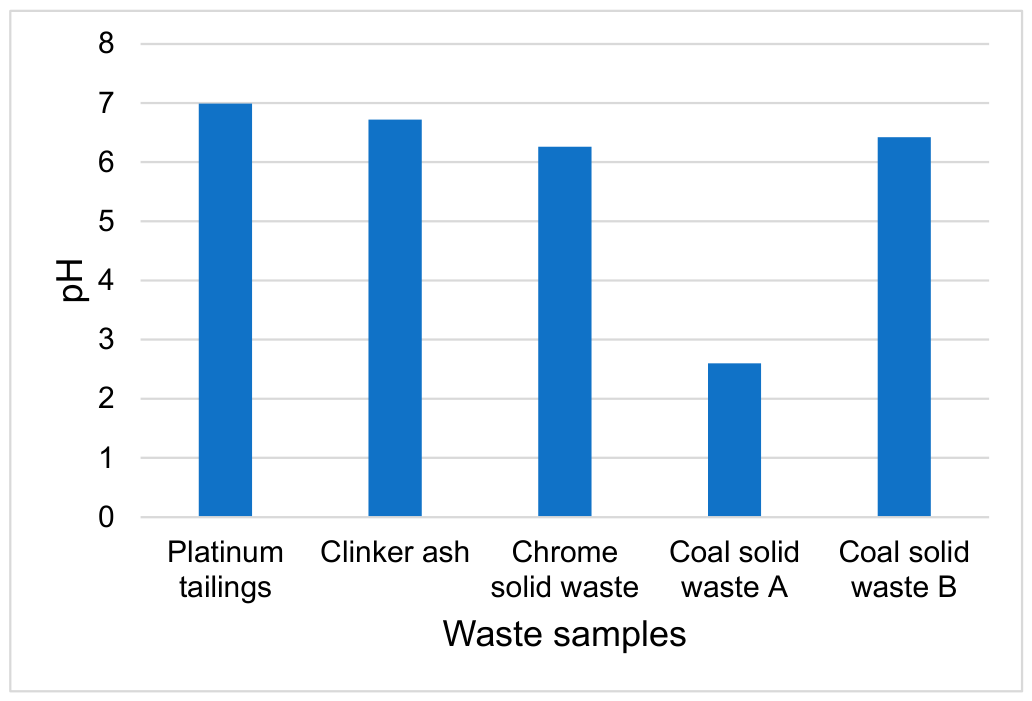
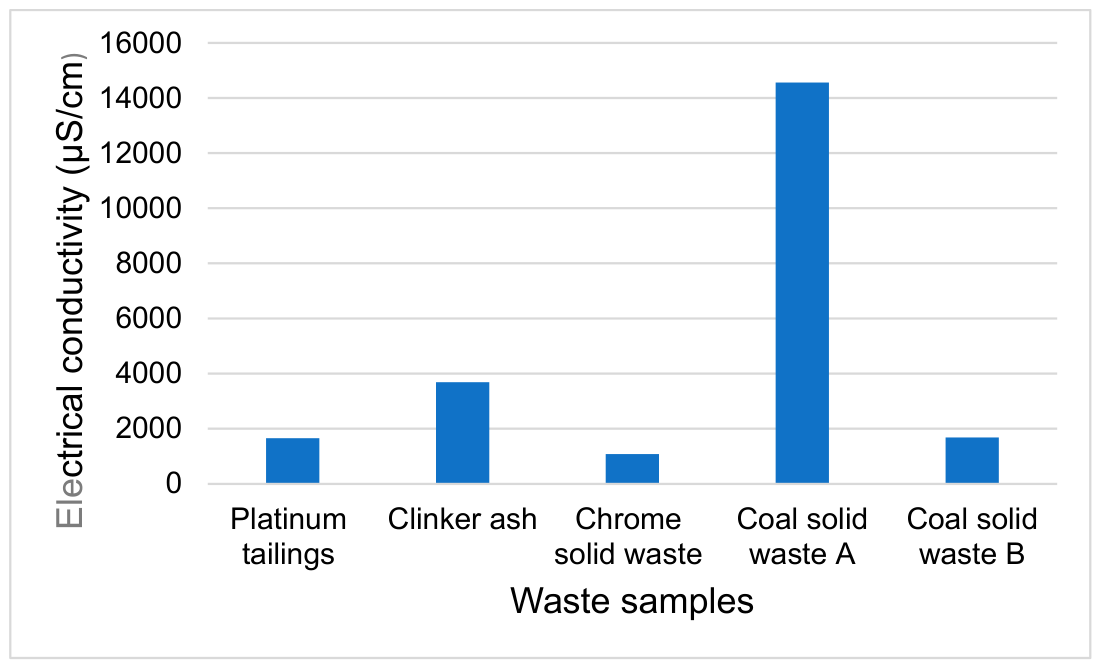
Environmental risk assessment of landfill solid waste should include higher plants as indicators of toxicity to support sustainable waste management. This study evaluated solid waste from mining and power-generating industries using SANS 10234, a multidisciplinary approach that combined physicochemical analysis of waste samples and the Phytotoxkit bioassay to assess plant-based toxicity. Leachate extractions from samples identified as wastes of concern were evaluated using standard toxicity tests. Based on the Phytotoxkit results, Coal solid waste A, Clinker ash, and Chrome solid waste were identified as wastes of concern, whilst the whole effluent toxicity test results of the leachate indicated that these three samples pose a low risk to aquatic ecosystems. The phytotoxicity was attributed to the waste’s physicochemical parameters. Coal solid waste A expressed a low pH of 2.60 and a high electrical conductivity of 14,557 µS/cm, while Clinker ash presented a pH of 6.72 and an electrical conductivity value of 3685 µS/cm. These values were outside the optimal range for many plants to thrive. The presence of toxic elements in some samples may have contributed to the observed phytotoxicity. These results highlight that solid waste can present varying risks to both terrestrial and aquatic systems, reinforcing the importance of including higher plants in landfill risk assessments for sustainable waste management.

1. Introduction

The 21st century has witnessed a global surge in industrialisation and human population growth, which has contributed to a corresponding increase in waste generation [1,2,3,4]. As a result, waste management has become a major challenge for many countries worldwide [5]. Ineffective waste management can degrade the environment and, consequently, have detrimental effects on ecosystems, biota and humans. Thus, effective waste management is paramount to mitigate these environmental health risks.
Research indicates that Europe and other developed countries have made significant progress in implementing a waste management hierarchy. This framework was initially incorporated into European policy through the 1975 Framework Directive [6]. In many developed countries, industrial waste management relies on reuse, recycling, and recovery measures that are emphasised in the waste management hierarchy [7,8,9]. In contrast, developing countries often lag in adopting sustainable waste management practices. Rapid industrialisation and population growth in these countries place pressure on waste management infrastructure, thereby contributing to poor waste handling and undermining sustainability [10].
In many developing countries, including South Africa, landfilling remains the primary method of waste disposal [8,11,12,13]. Although the waste management hierarchy is embedded in South African policy, progress towards its goals of pollution prevention and waste reduction has been limited. In recent years, 90% of the waste generated in South Africa has been disposed of in landfills [14].
Waste disposal in South Africa is regulated according to its classification. According to current legislation, waste types need to be tested and analysed to determine their chemical composition and concentrations, and ultimately the appropriate management measures [15]. Recent regulatory updates have shifted from a contamination-based classification system to a broader assessment that includes potential environmental risks [16]. The Waste Classification Management System (WCMS) mandates that chemical analyses be supplemented with toxicity bioassays following the South African National Standards 10234 (SANS 10234) to accurately evaluate a waste’s hazard potential [16,17]. Common aquatic toxicity indicators specified in SANS 10234 include algae (Selenastrum capricornutum), daphnia (Daphnia pulex), and guppies (Poecilia reticulata) [17,18,19,20].
Industrial waste dumps and landfills can release dust and leachates containing metals and other contaminants that pollute surrounding soils, resulting in metal accumulation and, in some cases, soil acidification [21,22,23]. Although this is commonly associated with illegal landfills, similar contamination has also been reported for legal landfills [24,25]. Such contamination can adversely affect vegetation, reducing soil productivity and impairing the soil’s ability to support biological communities [26]. It is therefore imperative to include higher plants as indicators of toxicity in waste risk assessment to detect and better understand potential ecological impacts and to inform appropriate management strategies. Despite its ecological relevance, this approach is not currently incorporated into waste evaluation protocols in many countries, including South Africa [17].
Integrating higher plants into the WCMS bioassay framework could provide valuable insight into the toxicological effects of individual contaminants and contaminant mixtures on environmental receptors near authorised landfills [27], thereby supporting more effective management strategies. This study evaluated the potential toxicity of coal solid waste, chrome solid waste, and platinum tailings from the mining industry, as well as clinker ash from the power-generating industry. A multidisciplinary approach was used, combining whole effluent toxicity tests, physicochemical analyses (including pH, electrical conductivity (EC) and particle size distribution (PSD)), measurements of total and leachable element concentrations, in conjunction with the Phytotoxkit bioassay. The results of this study may help identify waste samples of concern and support informed waste management decisions, thus contributing to more sustainable landfill management practices.

2. Materials and Methods

2.1. Waste Samples and Classification

The solid wastes evaluated in this study were subsampled from composites of each waste type collected by WSP Africa (Pty) Ltd. (Midrand, South Africa) for analysis. The waste types included samples representing a Chrome solid waste, two different coal solid waste samples (Coal solid waste A and Coal solid waste B), Platinum tailings, and Clinker ash. The chrome solid waste and the two different coal solid waste samples were received as large particles. These samples were outsourced to an ISO 17025-accredited laboratory for crushing to reduce particle sizes to less than 2000 µm to meet the Phytotoxkit testing requirements [28,29]. Reducing particle size also enables assessment of the samples most likely to pose environmental risks: waste typically poses a greater environmental risk when dispersed as dust to surrounding areas, and has increased surface area for leaching through oxidation and weathering.
Waste classification forms an integral part of waste management in South Africa. The waste evaluated in this study was classified according to the National Norms and Standards for the Assessment of Waste for Landfill Disposal [30]. Classification was based on the total and leachable concentration of elements in each sample. These element concentrations were compared to the corresponding Total Concentration Threshold (TCT) and Leachable Concentration Threshold (LCT) limits prescribed in the Norms and Standards. The specific type of waste suitable for landfill disposal was determined in terms of Section 7 of these Norms and Standards [30].

2.2. Physicochemical Analyses

Before testing, each sample was thoroughly mixed to homogenise the particles and ensure a representative subsample was used for testing and the physicochemical analyses. The subsamples were analysed for pH, EC, PSD, and total and leachable element concentrations. The pH and EC measurements were conducted to determine the inherent acidity and salinity of each sample by equilibrating the sample in deionised water for approximately 24 h at a solid-to-water ratio of 1:2 [31]. Measurements were recorded directly from the slurry using a Hanna Combo pH & EC meter [31]. All analyses were conducted at an ISO 17025-accredited laboratory.
The PSD of the samples was determined using an Endecott EFL2000/1 shaker (Endecotts, Limited, London, UK) with mesh sizes of 4000 μm, 2000 μm, 500 μm, 212 μm, and 53 μm stacked on top of each other, followed by a collector pan for particles < 53 μm [32]. The samples were outsourced to an ISO 17025-accredited laboratory for metal analysis. Inductively coupled plasma mass spectrometry (ICP-MS) was used for metal analysis, while whole inductively coupled plasma optical emission spectroscopy (ICP-OES) was conducted specifically for the analysis of calcium, potassium, magnesium, sodium, aluminium, iron, manganese, and silicon in each waste sample. All necessary quality assurance and quality control requirements were met in accordance with ISO 17025 compliance.

2.3. Toxicity Bioassay

The potential toxicity of the solid waste samples towards higher plant species was evaluated using the Phytotoxkit. The Standard operating procedures (SOPs) issued by MicroBioTests Inc. (Kleimoer, Belgium) were followed to prepare the samples and conduct the exposures [28]. The seeds of three selected higher plants, Lepidium sativum (garden cress), Sorghum saccharatum (sorghum), and Sinapis alba (mustard), were exposed to the waste samples and compared to the controls in the reference soil (provided with the kit) after 72 h of incubation in darkness at 25 °C ± 2 °C. For each waste sample and the control soil, each plant species was exposed in duplicate plates consisting of 10 seeds per replicate. After the incubation period, the images of the test plates were captured and analysed using ImageJ® software version 1.5 to measure the root lengths of the germinated seeds. These measurements were analysed for potential stimulation or inhibition using a laboratory-validated result sheet in Microsoft Office Excel®. The endpoints evaluated were seed germination (presence or absence) and root growth. For the test to be considered valid, the mean germination and the minimum mean root length for each plant species in the controls had to be ≥70% and ≥30 mm, respectively [28].

2.4. Whole Effluent Toxicity Testing

Samples identified as high risk by the Phytotoxkit bioassay were additionally assessed using whole-effluent toxicity tests. These tests were conducted only on samples that showed high toxicity in the plants as a tier-2 approach. Leachate testing was performed in duplicate on homogenised subsamples, following the SANS 10234 approach for assessing substances hazardous to the aquatic environment. One litre of standard synthetic hard water (SSHW) was used to extract leachate from 100 mg of each sample of concern, which was then transferred into a one-litre Schott bottle [17]. After mixing the contents for 24 h using a Stuart rotator drive (STR4), the leachates were filtered through a 0.45 µm filter, and a series of dilutions (100%, 50%, 25%, 12.5%, and 6.25%) was prepared for the definitive test [17]. Acute toxicity tests according to SANS 10234 [17] were conducted to evaluate the potential acute toxicity of the leachates and classify the samples using three trophic levels: S. capricornutum, D. pulex, and P. reticulata. If the samples exhibited sufficient toxicity to allow statistical determination of the EC/LC50, the most sensitive bioassay was used to classify the samples according to the SANS 10234 [17] guidelines.

2.5. Algal Inhibition Test

The Algaltoxkit F was used to perform the algal inhibition test with S. capricornutum. The test was conducted in accordance with OECD Guideline 201 [33]. A 72-h exposure was performed in an incubator with two replicates per sample concentration and a control, using 10 cm path-length long cell cuvettes. The temperature was set at 23 °C ± 2 °C, and the illumination was >8000 lux. The optical densities were measured and recorded before and after the test.

2.6. Invertebrate Acute Toxicity Test

An acute toxicity test with D. pulex was conducted according to the US EPA SOP [34]. The exposure was performed in four replicates per sample concentration and a control, using 50 mL polystyrene cups. Twenty D. pulex (less than 24 h old) were exposed per sample concentration, and for the control (i.e., five organisms were transferred to each container). The organisms were exposed to the samples for 48 h in an environmentally controlled room maintained at 21 °C ± 2 °C. The organisms were not fed during the exposure [34], and mortalities were recorded at 24 h and at the end of the exposure period (48 h).

2.7. Fish Acute Toxicity Test

The fish acute toxicity test with P. reticulata was performed according to the OPPTS 850.1075, 1996 guidelines [35]. The exposure was conducted in two replicates in 250 mL polystyrene cups. Ten P. reticulata (between 7 and 21 days old) were used per test concentration and for the control. The organisms were exposed to the samples for 96 h in an environmentally controlled room maintained at 23 °C ± 2 °C. No feeding was conducted during the exposure period. The pH, EC, dissolved oxygen (DO), and temperature of the samples and controls were recorded at the beginning and end of the test. Mortalities were recorded after the exposure period.

2.8. Data Analysis

The Phytotoxkit results were statistically analysed using IBM SPSS Statistics 24 software. Data normality was assessed using the Shapiro–Wilk test, and homogeneity of variance was assessed using Levene’s test. After verifying assumptions, a two-way ANOVA was performed with species and waste samples as fixed factors to compare root growth inhibition/stimulation among the three plant species across the five waste samples. Tukey’s Honestly Significant Difference (HSD) post hoc test was used for pairwise comparisons. Statistical significance was defined as α = 0.05.

3. Results and Discussion

Supplementing chemical analysis with toxicity bioassays, as per SANS 10234, enhances the hazard classification and risk assessment of waste before disposal. However, the indicator organisms used in this standard are only aquatic and are based on a presumed leachate being generated, while higher plants are not included [17]. Thus, the current approach to evaluating waste in the country may underestimate its potential environmental risk, particularly to terrestrial plants.
The Phytotoxkit is a rapid and inexpensive bioassay used internationally to evaluate the potential toxicity of sediment and solid waste from various industries [28]. This approach could be implemented in South Africa to broaden the scope of waste evaluation beyond the commonly used aquatic-based bioassays.
Including the Phytotoxkit in the battery of bioassays used by the SANS 10234 assessment technique may help demonstrate the bioavailability of contaminants to biota and provide comprehensive evidence of potential environmental toxicity [36,37,38]. In this context, the Phytotoxkit was used to evaluate the waste samples in this study.

3.1. Phytotoxkit Bioassay

In this study, Coal solid waste A, Clinker ash, and Chrome solid waste were identified as potential samples of concern based on the Phytotoxkit results. Coal solid waste A posed the greatest risk: no seed germination for both the Sinapsis alba and Sorghum saccharatum, while Lepidium sativum only expressed 65% seed germination with 92.60% root growth inhibition (Table 1).
For the remaining waste samples, seed germination ranged from 70% to 100%. Root growth inhibition ranged from 28.85% to 52.73% when exposed to the Clinker ash and Chrome solid waste, respectively (Table 1). When plants were exposed to Platinum tailings and Coal solid waste B, seed germination ranged from 75% to 100% for all species. Root growth inhibition for L. sativum and S. saccharatum ranged from 5.63% to 53.28%, whilst S. alba showed stimulation of 16.06% and 32.90%, respectively (Table 1). Although Platinum tailings were not classified as a sample of concern, the 53.28% growth inhibition observed in S. saccharatum exceeds the ≥30% natural variation threshold, suggesting potential chronic effects if exposed to this sample over time. The differences in root growth between the species reflect varying sensitivities exhibited by monocotyledonous (S. saccharatum) and dicotyledonous (S. alba and L. sativum) plants.
The Tukey post hoc test showed significant differences in sensitivity among the three indicator plants for several waste samples. Lepidium sativum and S. alba differed significantly in root growth inhibition/stimulation when exposed to Coal solid waste A (p < 0.001), and Clinker ash (p = 0.015). Sorghum saccharatum and S. alba differed significantly when exposed to Chrome solid waste (p = 0.044), Coal solid waste B (p = 0.002), and Platinum tailings (p < 0.001). Root growth inhibition/stimulation of L. sativum and S. saccharatum differed significantly for all samples. Chrome solid waste expressed a p-value of 0.007, whilst the remaining samples expressed a p-value less than 0.001.
Differences in requirements for specific elements between dicotyledonous plants (S. alba and L. sativum) and monocotyledonous plants (S. saccharatum), together with varying element concentrations across the waste samples, may explain the difference in sensitivity observed in the statistical analysis in this study [39].
The phytotoxicity of the three samples of concern was attributed to low pH, which can increase the solubility of leachable elements, thereby increasing EC, particularly in Coal solid waste A. High EC and the waste’s chemical composition likely contributed to osmotic stress, further exacerbating phytotoxic effects.

3.2. Physicochemical Analysis

In conjunction with the assessed chemical parameters, PSD can influence contaminant leachability by increasing the surface area of the waste [40]. Fine particles have a larger surface area and therefore a higher probability of sorbing and desorbing contaminants at higher concentrations [40,41].
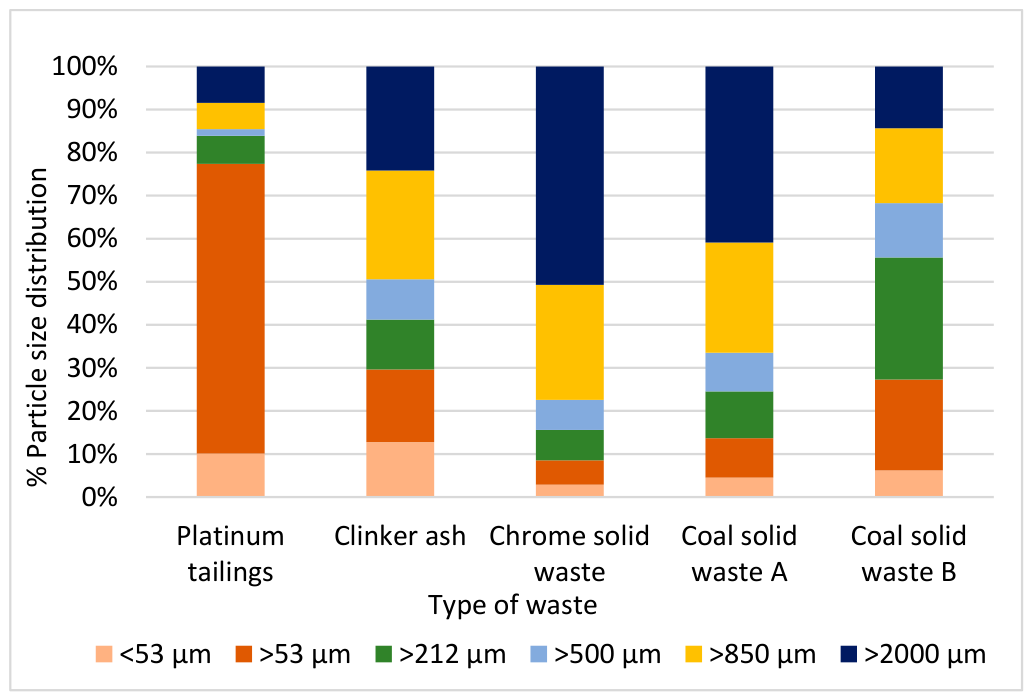
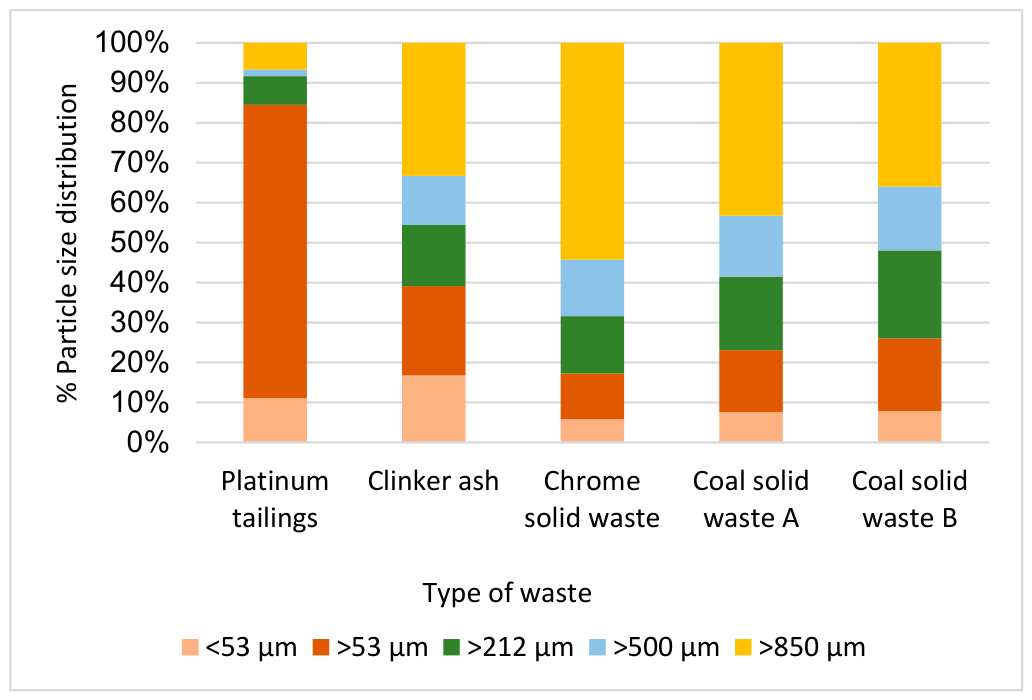
Particle size distribution was measured on both the original and crushed samples, with particles larger than 2 000 µm excluded in accordance with the Phytotoxkit protocol and to focus on fractions with higher environmental risk [28]. Finer-grained particles (smaller than 212 µm) comprised >50% of the Platinum tailings during both analyses, at 69.20% and 84.50%, respectively (Figure 1 and Figure 2). The Phytotoxkit, however, did not indicate a potential risk for this sample. In the remaining samples, the proportion of finer-grained particles was low, ranging from 8.30% to 39.10% in both analyses. Given the low proportion of fine particles in these samples, the desorption capacity was likely limited, and PSD was therefore considered to have minimal contribution to the sample’s potential toxicity.

3.3. Chemical Analysis

Many plants thrive at pH 5.5–7.5, whereas EC greater than 2000 µS/cm can cause osmotic stress [35,42]. Coal solid waste A exhibited a low pH of 2.60 (Figure 3), well below the acceptable pH range for plant growth, and likely contributed to the failed germination for some species. Additionally, this low pH can increase the solubility of leachable elements, resulting in a very high EC of 14,557 µS/cm (Figure 4) and would further impact potential root growth. Metals such as copper and lead become more soluble at pH levels below 5 and precipitate between pH 5 and 7. This increases dissolved ion concentrations and EC [43,44]. Similarly, in this study, most analysed metals and their leachable fractions were higher in Coal solid waste A (pH of 2.60) than in the other samples with pH values above 5. Thus, the pH and EC of this sample were outside the range tolerated by many plants and aquatic organisms [42].
Clinker ash had a pH of 6.72 (within the acceptable range for plant growth) and an EC of 3685 µS/cm. This high EC suggests that osmotic stress and soluble constituents may have contributed to the observed toxicity results (Figure 4). The elevated EC appears to reflect the sample’s soluble element content rather than the effect of pH (Table 4).
The remaining samples had pH values ranging from 6.26 to 6.99, and EC values between 1082 µS/cm and 1680 µS/cm (Figure 3 and Figure 4). These ranges are generally tolerated by many plants and were excluded as potential drivers of toxicity for these samples [42].
In addition to the inhibitory effects of high EC observed in Coal solid waste A and Clinker ash, and the low pH noted in Coal solid waste A, the phytotoxicity may also reflect the presence of nonessential toxic elements such as lead and arsenic (Table 2) that are detrimental to plants even in low concentrations [44,45]. Vanadium in Clinker ash and iron in Coal solid waste exceeded the plant’s acceptable concentrations (Table 2) and may have contributed to additional toxicological stress.
Micronutrients such as nickel, copper, molybdenum, manganese, and zinc were absent or below the concentration required by many plants in the three samples of concern (Table 2) and may have stunted plant growth [46,47]. Coal solid waste B and Platinum tailings contained low concentrations of some elements but showed lower toxicity than the three samples of concern (Table 4).
This likely reflects the absence of toxic, leachable elements such as arsenic and lead in the other samples (Table 4). Because waste materials are not expected to supply a balanced nutrient profile, low concentrations of certain micronutrients were not considered a strong indicator of toxicity. Interpretation thereof focused primarily on PSD, pH, EC, and the presence of toxic and nonessential elements such as arsenic and lead.

3.4. Waste Classification

All samples, including the three samples of concern, were classified as Type 3 waste (LCT0 < LC ≤ LCT1 and TC ≤ TCT1) according to the National Norms and Standards for the Assessment of Waste for Landfill Disposal [30].
Table 3 and Table 4 below present the chemical analysis results of the specified elements used in the classification of waste [30].
Classification of the samples as Type 3 waste suggests that the waste evaluated may pose environmental toxicity. Although waste is usually managed in controlled disposal facilities, the literature shows that poor site management can disperse dust into adjacent areas and allow rainfall infiltration through the waste layer, generating leachate that can percolate through soil and contaminate the groundwater [22,48,49]. The leachate may also migrate into nearby surface-water systems, transferring contaminants from terrestrial to aquatic environments [22,48,49,50]. Both terrestrial and aquatic pathways serve as receptors of potential pollution and degradation, and both should be considered in risk assessments.
The risk of waste to aquatic biota is commonly assessed using SANS 10234 [17]. However, because SANS 10234 relies on aquatic species as indicators, it does not assess the risk to terrestrial ecosystems posed by dust translocation. This limitation was evident from the outcomes of the Phytotoxkit and WET results. Under the SANS 10234 criteria, WET tests classified the three bioassays as acute toxicity category > 3, indicating that the three waste samples of concern may not be detrimental to aquatic biota through leachate generation [17]. However, the Phytotoxkit confirmed potential risk to terrestrial plants. Overall, these findings demonstrate that the country’s commonly applied bioassay framework (SANS 10234) provides limited evidence for assessing the full spectrum of waste-related environmental risks, particularly terrestrial impacts.
Therefore, a multidisciplinary approach that includes the Phytotoxkit alongside the SANS 10234 assessment method for waste classification can add value to waste management in South Africa. The proposed risk assessment framework can provide valuable information to support more informed recommendations on pollution control measures suitable to specific waste samples, as contemplated in the waste regulations, and on management strategies for dust suppression using vegetation [15].
Most of the threshold limits used for waste classification in South Africa were derived from the drinking water standards for human health [30]. Table 2 shows that some Landfill Threshold Limits (LCT2 and LCT3) exceed the safe concentration ranges for several elements. Because higher plants are not included as indicators of toxicity in South African risk assessments, terrestrial plants may be vulnerable. This concern is further compounded by the large number of unlicensed waste disposal facilities in South Africa that may not comply with guidelines and regulations [14]. Therefore, waste management authorities should consider revising current threshold limits to protect plants, consistent with the Phytotoxkit results and the concerns highlighted above.
Mitigation measures for the three samples of concern, as well as the additional two samples analysed in this study, will vary due to differences in their chemical compositions. If these waste samples are destined for a landfill, an effective basal barrier system is essential. In accordance with the Department of Water and Sanitation requirements, coal-derived solid waste (Coal solid waste A and Coal solid B in this study) must be capped with a geotextile lining to limit infiltration and oxygen exposure and thereby reduce the risk of acid mine drainage.
For the remaining samples, adding a topsoil layer to the waste, combined with appropriate amelioration and the establishment of tolerant vegetation to limit dust dispersion and soil erosion, is a viable management option. The Phytotoxkit can be used to determine whether adding topsoil is necessary, since the results may indicate that the waste alone can support plant growth. Legally compliant landfills should be equipped with engineered leachate collection systems that provide temporary storage and enable treatment for either reuse or safe discharge to the environment. In recent years, advanced remediation methods, and particularly photocatalytic processes, have been developed that effectively degrade pharmaceutical contaminants such as ciprofloxacin and reduce hexavalent chromium (Cr(VI)) to less toxic forms (e.g., Cr(III)) [51,52]. These remediation techniques, therefore, have the potential to treat leachate from the samples and reduce associated environmental risks. However, additional studies on waste degradation rates and stoichiometry are required to determine the optimal pollution mitigation measures for these waste samples [15].

4. Conclusions

The current ecotoxicological risk assessment approach for waste in South Africa is limited by its exclusive focus on the aquatic environment and neglects terrestrial components. To improve identification of samples of concern and to develop effective, targeted waste management measures, risk assessment and waste classification should incorporate both aquatic and terrestrial ecosystems. It is therefore recommended that national waste risk assessment and classification protocols should include plants where dust dispersal is an important exposure pathway. Assessing the effects of waste on higher plants would also indicate whether vegetation cover is a suitable dust-suppression measure for waste dumps, as an alternative to the conventional water spraying.
The Phytotoxkit represents a viable assessment tool that can be integrated into the proposed risk assessment framework. When evaluating waste for landfill disposal, assessment should extend beyond chemical analyses to consider potential impacts on various environmental components. Physical characteristics of the waste, such as pH and EC, can influence plant viability by altering nutrient solubility and uptake, and therefore should be included in assessments.
In this study, some element concentrations exceeded levels considered safe for plants; therefore, relevant waste management authorities should consider revising the current threshold limits to ensure plant protection. This recommendation is particularly important considering the documented poor management of landfills in South Africa.
Further research is important to clarify interactions amongst waste parameters and their effects on plants. Such information will also support evidence-based revision of concentration threshold limits.
The findings of this study and further research may contribute to improving waste management practices in South Africa and support the fulfilment of Section 24 of the Constitution of South Africa (https://www.gov.za/documents/constitution/chapter-2-bill-rights, 1 February 2022), which stipulates that “everyone has the right to an environment that is not harmful to their health or well-being and to have an environment protected for the present and future generations through reasonable legislative measures”.

Author Contributions

Methodology, B.F.S. and A.N.; Validation, B.F.S. and A.N.; Formal analysis, A.D.M.; Investigation, A.D.M.; Resources, B.F.S. and A.N.; Writing—original draft, A.D.M.; Writing—review & editing, B.F.S. and A.N.; Visualization, A.D.M., B.F.S. and A.N.; Supervision, B.F.S. and A.N.; Project administration, A.N. All authors have read and agreed to the published version of the manuscript.

Funding

The work was supported by the National Research Foundation (Grant Ref No. MND200416513883) and WSP Group Africa (Pty) Ltd.

Institutional Review Board Statement

The animal study protocol was approved by the Faculty of Science Ethics Committee of the University of Johannesburg (Ethics approval number: 2021-04-01/Moalosi_Nel, 12 April 2021).

Informed Consent Statement

Not applicable.

Data Availability Statement

The data presented in this study are available on request from the corresponding author due to privacy concerns.

Acknowledgments

The authors acknowledge the Department of Zoology (University of Johannesburg), National Research Foundation, and WSP Group Africa (Pty) Ltd. for funding and support throughout the study. The authors further acknowledge WSP Africa (Pty) Ltd. for collecting the bulk waste.

Conflicts of Interest

Authors Alpheus Diale Moalosi and Bridget Florence Shaddock were employed by the WSP Group Africa (Pty) Ltd. The remaining authors declare that the research was conducted in the absence of any commercial or financial relationships that could be construed as a potential conflict of interest. The authors declare that this study received funding from WSP Group Africa (Pty) Ltd. The funder had no role in the design of the study; in the collection, analyses, or interpretation of data; in the writing of the manuscript, and in the decision to publish the results.

References

  1. Zamani, B. Towards Understanding Sustainable Textile Waste Management: Environmental Impacts and Social Indicators; Chalmers Tekniska Hogskola: Gothenburg Sweden, 2014; pp. 1–15. [Google Scholar]
  2. Palma, P.; Calderón, R.; Godoy, M.; Rubio, M.A. Comparative study of two analytical methods to the determination of boron in leachate samples from sanitary landfills and groundwater for routine analysis and feasible on-site environmental monitoring. Int. J. Environ. Anal. Chem. 2016, 96, 627–635. [Google Scholar] [CrossRef]
  3. Islam, R.; Nazifa, T.H.; Yuniarto, A.; Uddin, A.S.; Salmiati, S.; Shahid, S. An empirical study of construction and demolition waste generation and implication of recycling. Waste Manag. 2019, 95, 10–21. [Google Scholar] [CrossRef] [PubMed]
  4. Rajput, R.; Nigam, N.A. An overview of E-waste, its management practices, and legislations in present Indian context. J. Appl. Nat. Sci. 2021, 13, 34–41. [Google Scholar] [CrossRef]
  5. Miller, B. The New Zealand and German legal waste systems-status quo and current movements. N. Z. J. Environ. Law 2018, 22, 169. Available online: http://www.nzlii.org/nz/journals/NZJlEnvLaw/2018/8.html (accessed on 1 February 2022).
  6. Oelofse, S.H.H.; Godfrey, L. Defining waste in South Africa: Moving beyond the age of ‘waste’: Science policy. South Afr. J. Sci. 2008, 104, 242–246. Available online: https://hdl.handle.net/10520/EJC96828 (accessed on 1 February 2022).
  7. Lottermoser, B.G. Recycling, reuse and rehabilitation of mine wastes. Elements 2011, 7, 405–410. [Google Scholar] [CrossRef]
  8. Haywood, L.K.; De Wet, B.; de Lange, W.; Oelofse, S. Legislative challenges hindering mine waste being reused and repurposed in South Africa. Extr. Ind. Soc. 2019, 6, 1079–1085. [Google Scholar] [CrossRef]
  9. Wahlström, M.; Bergmans, J.; Teittinen, T.; Bachér, J.; Smeets, A.; Paduart, A. Construction and Demolition Waste: Challenges and opportunities in a circular economy. In Waste and Materials in a Green Economy; European Environment Agency: Copenhagen, Denmark, 2020; pp. 1–5. Available online: https://www.eionet.europa.eu/etcs/etc-wmge/products/etc-reports/construction-and-demolition-waste-challenges-and-opportunities-in-a-circular-economy (accessed on 1 February 2022).
  10. Dlamini, S.; Simatele, M.D.; Serge Kubanza, N. Municipal solid waste management in South Africa: From waste to energy recovery through waste-to-energy technologies in Johannesburg. Local Environ. 2019, 24, 249–257. [Google Scholar] [CrossRef]
  11. Manga, V.E.; Forton, O.T.; Mofor, L.A.; Woodard, R. Health care waste management in Cameroon: A case study from the Southwestern Region. Resour. Conserv. Recycl. 2011, 57, 108–116. [Google Scholar] [CrossRef]
  12. Abdelhamid, M.S. Assessment of different construction and demolition waste management approaches. Hous. Build. Natl. Res. Cent. J. 2014, 10, 317–326. [Google Scholar] [CrossRef]
  13. Freitas, L.C.; Barbosa, J.R.; da Costa, A.L.C.; Bezerra, F.W.F.; Pinto, R.H.H.; de Carvalho, R.N., Jr. From waste to sustainable industry: How can agro-industrial wastes help in the development of new products? Resour. Conserv. Recycl. 2021, 169, 1–10. [Google Scholar] [CrossRef]
  14. Godfrey, L.; Oelofse, S. Historical review of waste management and recycling in South Africa. Resources 2017, 6, 57. [Google Scholar] [CrossRef]
  15. DEA (Department of Environmental Affairs). Regulations Regarding the Planning and Management of Residue Stockpiles and Residue Deposits Amendment Regulations, 2018; Government Gazette No. 41920; Department of Environmental Affairs: Pretoria, South Africa, 2018; pp. 5–7. [Google Scholar]
  16. DEA (Department of Environmental Affairs). Waste Classification and Management Regulations; Government Gazette No. 36784; Department of Environmental Affairs: Pretoria, South Africa, 2013. [Google Scholar]
  17. SANS 10234-A; Globally Harmonised System of Classification and Labelling of Chemicals. SANS (South African National Standards): Pretoria, South Africa, 2008; p. 124.
  18. Ward, M.L.; Bitton, G.; Townsend, T.; Booth, M. Determining toxicity of leachates from Florida municipal solid waste landfills using a battery-of-tests approach. Environ. Toxicol. Int. J. 2002, 17, 258–266. [Google Scholar] [CrossRef] [PubMed]
  19. Carabalí-Rivera, Y.S.; Barba-Ho, L.E.; Torres-Lozada, P. Determination of leachate toxicity through acute toxicity using Daphnia pulex and anaerobic toxicity assays. Ing. E Investig. 2017, 37, 16–24. [Google Scholar] [CrossRef]
  20. Adetoro, F.A.; Ikuabe, B.O.; Lawal, R.A. Toxicological Response of Poecilia reticulata, Hyla species and Culex species to Leachates from Olusosun Landfill, Lagos State, Nigeria. J. Appl. Sci. Environ. Manag. 2018, 22, 817–823. [Google Scholar] [CrossRef]
  21. Podolský, F.; Ettler, V.; Šebek, O.; Ježek, J.; Mihaljevič, M.; Kříbek, B.; Sracek, O.; Vaněk, A.; Penížek, V.; Majer, V.; et al. Mercury in soil profiles from metal mining and smelting areas in Namibia and Zambia: Distribution and potential sources. J. Soils Sediments 2015, 15, 648–658. [Google Scholar] [CrossRef]
  22. Zhong, H.; Tian, Y.; Yang, Q.; Brusseau, M.L.; Yang, L.; Zeng, G. Degradation of landfill leachate compounds by persulfate for groundwater remediation. Chem. Eng. J. 2017, 307, 399–407. [Google Scholar] [CrossRef] [PubMed]
  23. Nyika, J.; Dinka, M.; Onyari, E. Effects of landfill leachate on groundwater and its suitability for use. Mater. Today Proc. 2022, 57, 958–963. [Google Scholar] [CrossRef]
  24. Beinabaj, S.M.; Heydariyan, H.; Aleii, H.M.; Hosseinzadeh, A. Concentration of heavy metals in leachate, soil, and plants in Tehran’s landfill: Investigation of the effect of landfill age on the intensity of pollution. Heliyon 2023, 9, e13017. [Google Scholar] [CrossRef] [PubMed]
  25. Belle, G.N.; Oberholster, P.J.; Moodley, R. Integrated assessment of surface water and soil contamination by potentially toxic elements from gold mine tailings using a combined risk index: A case study of Matjhabeng Local Municipality, South Africa. J. Environ. Sci. Health Part A 2026, 61, 14–22. [Google Scholar] [CrossRef] [PubMed]
  26. Shutcha, M.N.; Faucon, M.P.; Kissi, C.K.; Colinet, G.; Mahy, G.; Luhembwe, M.N.; Meerts, P. Three years of phytostabilisation experiments of bare acidic soil extremely contaminated by copper smelting using plant biodiversity of metal-rich soils in tropical Africa (Katanga, DR Congo). Ecol. Eng. 2015, 82, 81–90. [Google Scholar] [CrossRef]
  27. Oleszczuk, P. The toxicity of composts from sewage sludge evaluated by the direct contact tests phytotoxkit and Ostracodtoxkit. Waste Manag. 2008, 28, 1645–1653. [Google Scholar] [CrossRef] [PubMed]
  28. MicroBioTest Inc. Phytotoxkit: Seed germination and early growth microbiotest with higher plants. Stand. Oper. Proced. 2004, 34. Available online: https://www.microbiotests.com/wp-content/uploads/2019/04/Microbiotests-Phytotoxkit-solid-samples-test-procedure-slide-show-phytotoxicity-test.pdf (accessed on 1 February 2022).
  29. ISO/IEC 17025:2017; General Requirements for the Competence of Testing and Calibration Laboratories. International Organization for Standardization: Geneva, Switzerland, 2017.
  30. AMIRA International. ARD Test Handbook: Prediction & Kinetic Control of Acid Mine Drainage, AMIRA P387A; Ian Wark Research Institute and Environmental Geochemistry International Ltd.: Melbourne, Australia, 2002. [Google Scholar]
  31. Cyrus, D.P.; Wepener, V.; Mackay, C.F.; Vos, P.M.; Viljoen, A.; Weerts, S.P. Effects of inter-basin water transfer on the hydrochemistry, benthic invertebrates, and ichthyofauna of the Mhlathuze estuary and Lake Nseze. Water Res. Comm. Rep. 2000, 3–15. Available online: https://www.wrc.org.za/wp-content/uploads/mdocs/TT120-00.pdf (accessed on 1 February 2022).
  32. RSA (Republic of South Africa). National Norms and Standards for the Assessment of Waste for Landfill Disposal; Government Gazette No. 32000, Notice No. 635; Government Gazette: Pretoria, South Africa, 2013. [Google Scholar]
  33. OECD (Organization for economic cooperation and development). Guideline for the testing of chemicals. In Freshwater Alga and Cyanobacterial Growth Inhibition Test; Test No. 201; OECD Publications: Paris, France, 2011; p. 25. [Google Scholar]
  34. US EPA (United States Environmental Protection Agency). Methods for measuring the acute toxicity of effluents and receiving waters to freshwater and marine organisms. In EPA/600/4-90/027F, 5th ed.; Office of Research and Development: Washington, DC, USA, 2002; p. 20460. [Google Scholar]
  35. US EPA (United States Environmental Protection Agency). Ecological effects test guidelines. In Fish Acute Toxicity Test, Freshwater and Marine; OPPTS 850.1075, Certificate of analysis number EPA-712-C-96-118; US EPA: Washington, DC, USA, 1996. [Google Scholar]
  36. Adamcová, D.; Vaverková, M.D.; Břoušková, E. The toxicity of two types of sewage sludge from wastewater treatment plants for plants. J. Ecol. Eng. 2016, 17, 5. [Google Scholar] [CrossRef] [PubMed]
  37. Baran, A.; Antonkiewicz, J. Phytotoxicity and extractability of heavy metals from industrial wastes. Environ. Prot. Eng. 2017, 43, 143–155. [Google Scholar] [CrossRef]
  38. Krasavtseva, E.A.; Maksimova, V.V. Application of the phytotesting method to assess the environmental impact of the waste of Lovozersky GOK LLC. IOP Conf. Ser. Earth Environ. Sci. 2020, 548, 62–63. [Google Scholar] [CrossRef]
  39. Corrales, I.; Poschenrieder, C.; Barceló, J. Boron-induced amelioration of aluminium toxicity in a monocot and a dicot species. J. Plant Physiol. 2008, 165, 504–513. [Google Scholar] [CrossRef] [PubMed]
  40. Lin, J.G.; Chen, S.Y.; Su, C.R. Assessment of sediment toxicity by metal speciation in different particle-size fractions of river sediment. Water Sci. Technol. 2003, 47, 233–241. [Google Scholar] [CrossRef]
  41. Singh, P.; Nel, A.; Durand, J.F. The use of bioassays to assess the toxicity of sediment in an acid mine drainage impacted river in Gauteng (South Africa). Water SA 2017, 43, 673–683. [Google Scholar] [CrossRef][Green Version]
  42. Mylavarapu, R.; Bergeron, J.; Wilkinson, N.; Hanlon, E.A. Soil pH and electrical conductivity: A county extension soil laboratory manual. EDIS 2020, 2020, 1–8. [Google Scholar] [CrossRef]
  43. Pasciucco, E.; Pasciucco, F.; Castagnoli, A.; Iannelli, R.; Pecorini, I. Removal of heavy metals from dredging marine sediments via electrokinetic hexagonal system: A pilot study in Italy. Heliyon 2024, 10, e27616. [Google Scholar] [CrossRef] [PubMed]
  44. Satish, A.B.; Amita, A.D.; Tushar, S.K. Arsenic Toxicity in Plants: A Significant Environmental Problem. J. Appl. Chem. 2013, 2, 1177–1191. Available online: http://www.joac.info/ (accessed on 1 February 2022).
  45. Nas, F.S.; Ali, M. The effect of lead on plants in terms of growing and biochemical parameters: A review. MOJ Ecol. Environ. Sci. 2018, 3, 265–268. [Google Scholar] [CrossRef]
  46. Mahler, R.L. Nutrients plants require for growth. Univ. Ida. Coll. Agric. Life Sci. CIS 2004, 1124, 1–4. Available online: https://www.extension.uidaho.edu/publishing/pdf/cis/cis1124.pdf (accessed on 1 February 2022).
  47. Lohry, R. Micronutrients: Functions, sources, and application methods. In Proceedings of the Indiana CCA Conference Proceedings, Indianapolis, IN, USA, 18–19 December 2007; Volume 15. [Google Scholar]
  48. Adibee, N.; Osanloo, M.; Rahmanpour, M. Adverse effects of coal mine waste dumps on the environment and their management. Environ. Earth Sci. 2013, 70, 1581–1592. [Google Scholar] [CrossRef]
  49. Melnyk, A.; Kuklińska, K.; Wolska, L.; Namieśnik, J. Chemical pollution and toxicity of water samples from stream receiving leachate from controlled municipal solid waste (MSW) landfill. Environ. Res. 2014, 135, 253–261. [Google Scholar] [CrossRef] [PubMed]
  50. Aboyeji, O.S.; Eigbokhan, S.F. Evaluations of groundwater contamination by leachates around Olusosun open dumpsite in Lagos metropolis, southwest Nigeria. J. Environ. Manag. 2016, 183, 333–341. [Google Scholar] [CrossRef] [PubMed]
  51. Akintayo, D.C.; Yusuf, T.L.; Mabuba, N. Construction of hierarchical S-scheme MgIn2S4/CeO2 heterojunction for boosted photocatalytic oxidation of tetracycline and reduction of Cr (VI). Colloids Surf. A Physicochem. Eng. Asp. 2025, 721, 137215. [Google Scholar] [CrossRef]
  52. Wen, X.J.; Zhan, Q.; Wu, D.; Xu, J.; Qian, B.; Xu, Q.; Su, T.; Liu, Z.; Fei, Z.; Guo, H. Construction of an S-scheme Bi12O17Cl2/CeO2 heterojunction for efficient photocatalytic degradation of ciprofloxacin and hydrogen evolution. J. Taiwan Inst. Chem. Eng. 2026, 188, 106769. [Google Scholar] [CrossRef]
Figure 1. Percentage particle size distribution of the original waste samples.
Sustainability 18 06770 g001
Figure 2. Percentage particle size distribution of the prepared samples.
Sustainability 18 06770 g002
Figure 3. The pH of the five different solid waste samples.
Sustainability 18 06770 g003
Figure 4. The electrical conductivity (EC) of the five different solid waste samples.
Sustainability 18 06770 g004
Table 1. The percentage germination and inhibition/stimulation for Lepidium sativum, Sorghum saccharatum, and Sinapis alba, expressed by the Phytotoxkit after 72 h of exposure to five industrial solid waste samples.
Type of WasteEndpoints
Germination (%)%Inhibition (−) Stimulation (+)
Lepidium SativumSinapis AlbaSorghum SaccharatumLepidium SativumSinapis AlbaSorghum Saccharatum
Chrome solid waste1009570−42.17−28.85−52.73
Coal solid waste A6500−92.60−100−100
Coal solid waste B1009075−5.63+32.90−23.68
Platinum tailings1009095−15.11+16.06−52.28
Clinker ash1009575−41.75−36.08−46.64
Table 2. Adequate concentrations of elements in plants and the leachable concentrations in the waste samples of concern. LCT0, LCT1, LCT2, and LCT3 represent leachable concentration threshold limits used as guidelines for the classification of waste (LCT0—low concentration limit, LCT1—moderate concentration limit, LCT2—high concentration limit, LCT3—highest concentration limit [30,46,47].
ElementLCT0 Limit (mg/L)LCT1 Limit (mg/L)LCT2 Limit (mg/L)LCT3 Limit (mg/L)Adequate Concentrations in Plants (mg/L)Leachable Concentrations in the Samples (mg/L)
Chrome Solid WasteCoal Solid Waste AClinker Ash
Nickel0.073.57280.05–5 0.2810.004
Molybdenum0.073.57280.10–100.0010.0020.514
Cobalt0.525502000.05–10 0.0256
Copper2.01002008002–50 0.047
Zinc5.0250500200010–2500.0261.57
Manganese0.5255020010–6000.0113.740.035
Boron0.525502000.2–8000.0010.0131.32
Iron 20–6000.0321 4690.008
Vanadium0.2102080<20.0010.1582.36
Arsenic0.010.514 0.0790.130
Lead0.010.514 0.0030.030
Below detection limit (<0.010 for all elements except Mn (<0.025)) No developed LCT limit, Non-essential.
Table 3. Total element concentrations in each waste sample (mg/kg). TCT0, TCT1, and TCT2 represent the total concentration threshold limits used as guidelines for classifying waste (TCT0—low concentration limit, TCT1—moderate concentration limit, TCT2—high concentration limit). The grey-highlighted cells indicate the threshold limits that were exceeded for each waste sample [30].
Total Concentration Threshold Limits (mg/kg)Type of Waste
ElementTCT0TCT1TCT2Chrome Solid WasteCoal Solid Waste ACoal Solid Waste BPlatinum
Tailings
Clinker Ash
Arsenic5.850020000.4496.331.85116
Boron15015,00060,0001729432163
Barium62.5625025,000678139274397
Cadmium7.52601040
Cobalt50500020,000846.5155031
Chromium46,000800,000N/A87,0633946849252
Copper1619,50078,0005.247.081313547
Mercury0.93160640 0.3
Manganese100025,000100,000106725381535299
Molybdenum4010004000 1.79 4.28
Nickel9110,60042,400 9.411556893
Lead20190076000.2658.036.724.678.67
Antimony1075300
Selenium1050200 3.351.34
Vanadium150268010,720270224481280
Zinc240160,000640,00083 405.91
Below detection limit (<0.010 for all elements except Mn (<0.025)). Grey represents low concentration limits (TCT0), yellow the moderate concentration limit (TCT1) and red the high concentration limit (TCT2).
Table 4. Leachable element concentrations in each waste sample (mg/L). LCT0, LCT1, LCT2, and LCT3 represent leachable concentration threshold limits used as guidelines for classifying waste (LCT0—low concentration limit, LCT1—moderate concentration limit, LCT2—high concentration limit, LCT3—highest concentration limit) [30]. The grey-highlighted cells indicate the threshold limits that were exceeded for each waste sample.
Leachable Concentration Threshold Limits (mg/L)Type of Waste
ElementLCT0LCT1LCT2LCT3Chrome Solid WasteCoal Solid Waste ACoal Solid Waste BPlatinum
Tailings
Clinker Ash
Arsenic0.010.514 0.079 0.0020.130
Boron0.525502000.0010.0130.0580.0021.32
Barium0.735702800.0010.0240.1890.0330.031
Cadmium0.0030.150.31.2 0.003
Cobalt0.52550200 0.02560.0010.001
Chromium0.1510400.0030.118 0.003
Copper2.0100200800 0.047 0.003
Mercury0.0060.30.62.4
Manganese0.525502000.0113.740.0940.0290.035
Molybdenum0.073.57280.0010.0020.0020.0220.514
Nickel0.073.5728 0.281 0.0200.004
Lead0.010.5140.0030.030
Antimony0.021.028
Selenium0.010.514 0.0050.0210.0020.038
Vanadium0.21020800.0010.158 2.36
Zin5.025050020000.0261.570.0350.016
Below detection limit (<0.010 for all elements except Mn (<0.025)). Grey for the low concentration limit (LCT0), yellow moderate concentration limit (LCT1), blue High concentration limit (LCT2) and red the highest concentration limit.
Disclaimer/Publisher’s Note: The statements, opinions and data contained in all publications are solely those of the individual author(s) and contributor(s) and not of MDPI and/or the editor(s). MDPI and/or the editor(s) disclaim responsibility for any injury to people or property resulting from any ideas, methods, instructions or products referred to in the content.