2.1. Theoretical Framework
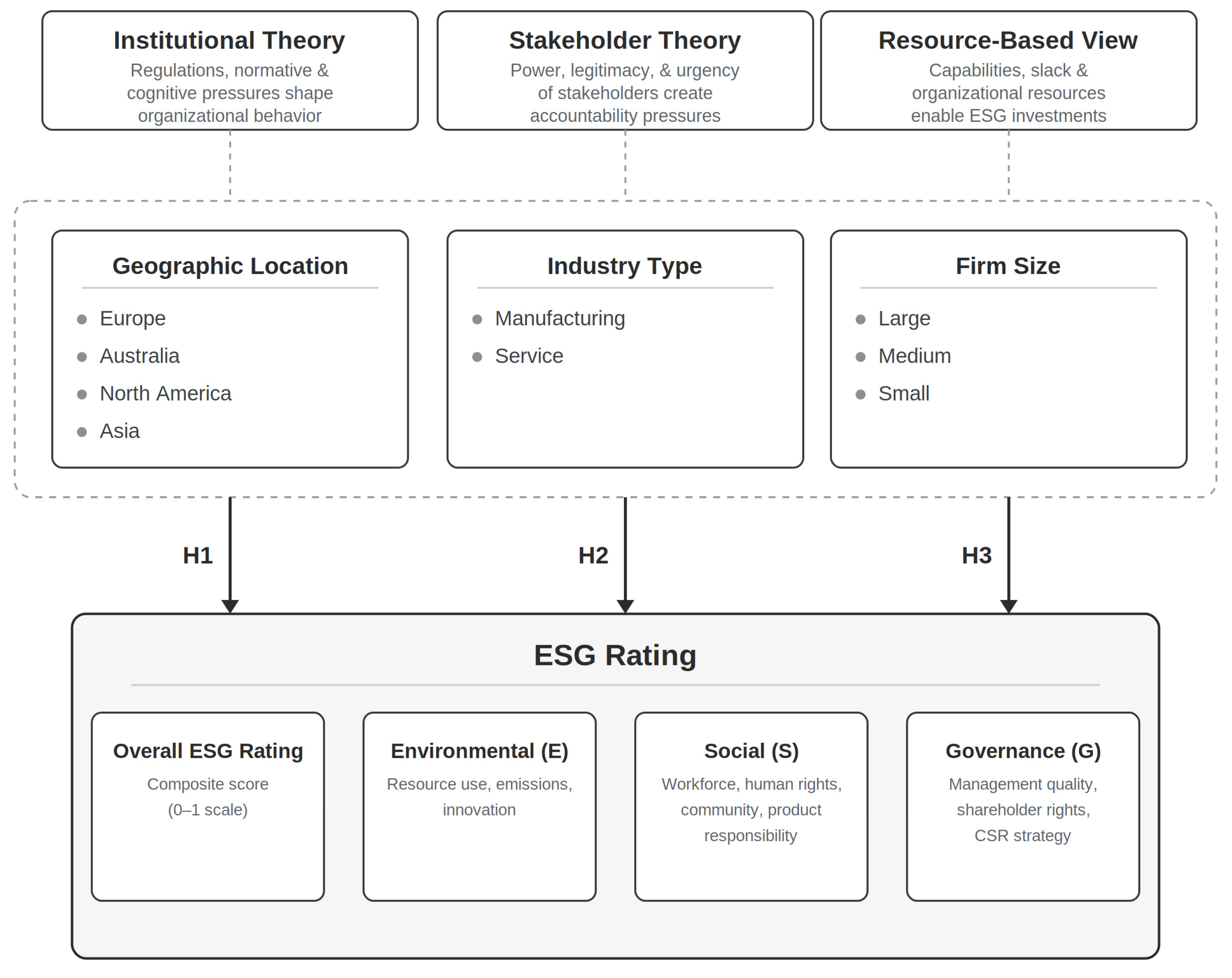
This study integrates three complementary theoretical perspectives, namely institutional theory, stakeholder theory, and resource-based view, to develop a comprehensive framework for understanding variations in ESG ratings across firms.
Institutional Theory: DiMaggio and Powell [
10] argue that organizations become similar through isomorphic processes: coercive (regulatory pressures), mimetic (imitation), and normative (professionalization). Scott [
11] identifies three institutional pillars, namely regulative, normative, and cultural-cognitive, that shape organizational behavior. European markets exemplify strong regulative pressures through comprehensive ESG requirements [
6]. Matten and Moon [
12] show that European systems emphasize implicit CSR embedded in institutions, whereas American systems emphasize explicit, voluntary CSR approaches. Whitley [
13] demonstrates that national business systems fundamentally shape corporate environmental approaches through distinctive institutional configurations. Firms operating in stronger institutional environments face greater pressure to adopt ESG practices to maintain legitimacy [
14]. Campbell [
15] further argues that institutional conditions, including regulation, industry self-regulation, and stakeholder monitoring, determine whether corporations behave in socially responsible ways.
Stakeholder Theory: Freeman [
3] and Mitchell, Agle, and Wood [
4] argue that firm success depends on effectively managing diverse stakeholder relationships. Stakeholders vary in power, legitimacy, and urgency [
4], creating different pressures across contexts. European stakeholders possess greater power and organizational capacity [
16], with strong labor unions, active civil-society organizations, and engaged institutional investors. Manufacturing firms face concentrated environmental scrutiny from local communities, regulators, and environmental groups [
17], while service firms face different social and governance pressures from customers, employees, and investors [
9]. Larger firms face greater scrutiny due to their visibility [
18] and depend on multiple stakeholder groups for legitimacy and continued operations [
19]. Donaldson and Preston [
20] emphasize that stakeholder management is not merely instrumental but reflects normative commitments to treating stakeholders as ends in themselves.
The Resource-Based View: Barney [
21] and Hart [
22] argue that sustained competitive advantages arise from valuable, rare, and inimitable resources. Hart’s (1995) [
22] paper conceptualized pollution prevention, product stewardship, and sustainable development as firm-level capabilities that form the basis of environmental strategies. ESG practices require substantial financial resources, specialized capabilities, and organizational infrastructure [
23]. Large firms possess slack resources that enable ESG investments without compromising core operations [
24,
25]. Waddock and Graves [
8] demonstrate that financial performance enables ESG investments, creating a virtuous cycle. Larger firms employ specialized sustainability personnel [
26,
27], achieve economies of scale in ESG programs [
28], and develop dynamic capabilities for sustainability [
29,
30]. Aragón-Correa and Sharma [
31] argue that proactive environmental strategy depends on organizational capabilities that vary systematically with firm characteristics.
All three theories indicate descriptive associations between geographic locations, industry types, firm size, and ESG ratings. The underlying mechanisms are not directly measured in this study and are presented as plausible interpretations of the observed patterns.
2.2. Regulatory and Institutional Context
The post-2017 regulatory environment differs substantially from the period covered by earlier ESG ratings studies. The European Union has implemented a multi-layered ESG disclosure architecture consisting of the SFDR (2019) [
32], the EU Taxonomy Regulation (2020) [
33], and the CSRD (2022) [
34], the last of which substantially expanded the scope of mandatory non-financial reporting and introduced the European Sustainability Reporting Standards (ESRS). At the global level, the International Sustainability Standards Board issued IFRS S1 (general sustainability disclosure) and IFRS S2 (climate-related disclosure) in 2023 [
35], providing a global baseline that several jurisdictions have incorporated into national disclosure regimes. In the United States, the SEC adopted final climate-related disclosure rules in March 2024 [
36], though their implementation has been subject to litigation and partial suspension. Recent empirical research has documented the effects of these instruments on firm-level disclosure and capital allocation [
37,
38,
39]. The analytical window adopted in this study (2015–2025) spans both the pre- and post-regulatory-wave periods, allowing the analysis to reflect both legacy practices and the contemporary regulatory environment.
2.3. Geographic Variations
Europe has established the world’s most comprehensive ESG frameworks [
40]. The EU’s Non-Financial Reporting Directive (2014) requires large companies to disclose environmental, social, and governance information, while the Corporate Sustainability Reporting Directive (2021) substantially expands the scope of these requirements and the associated reporting standards [
41,
42]. The EU Emissions Trading System creates direct financial incentives for carbon reduction [
43]. Beyond regulation, European stakeholders demonstrate stronger sustainability preferences rooted in cultural values that emphasize collective responsibility [
44]. The European Social Model emphasizes stakeholder capitalism, with co-determination systems giving employees board representation and influence over corporate strategy [
45,
46]. Hall and Soskice’s [
47] varieties-of-capitalism framework distinguishes coordinated market economies (prevalent in continental Europe) that institutionally support stakeholder orientation from liberal market economies (UK, US), which emphasize shareholder primacy. Empirical evidence consistently confirms European ESG leadership across multiple rating systems and time periods [
6,
48,
49].
North American systems emphasize shareholder primacy and market-based governance [
16], with ESG practice evolving primarily through voluntary initiatives and investor pressure rather than regulatory mandates [
50]. The Business Roundtable’s 2019 statement on stakeholder capitalism suggests evolving norms, but legal frameworks still prioritize shareholder interests [
51]. Recent SEC climate disclosure rules suggest convergence toward European approaches [
52], though political polarization creates inconsistent pressures across states and administrations [
53]. Institutional investors increasingly engage on ESG issues, but their influence varies according to ownership concentration and investment horizon [
54,
55].
Asian markets show substantial institutional diversity [
56], with development priorities sometimes conflicting with sustainability goals [
57]. Japan demonstrates mature ESG practice reflecting its coordinated market economy traditions [
58,
59], while China reflects state-directed sustainability priorities with enforcement challenges [
60,
61]. Emerging Asian economies face fundamental tensions between rapid development and sustainability [
62]. Holtbrügge and Dögl [
63] note that multinational corporations may transfer ESG practices to Asian operations, but local institutional contexts moderate adoption. Rootes [
64] and Vandenbergh [
65] highlight weaker civil-society pressure in many Asian contexts than in Europe.
Australia combines British institutional traditions with a resource-dependent economy, creating distinctive tensions between economic interests centered on mining and fossil fuels and growing environmental concerns [
66]. Strong environmental activism coexists with powerful extractive-industry lobbying, producing inconsistent policy signals.
Institutional theory predicts that geographic location shapes ESG through regulatory, normative, and cognitive pressures [
10,
11]. European mandatory disclosure, environmental standards, stakeholder governance, and civil-society pressure generate higher ESG ratings [
6,
40]. North American voluntary approaches suggest intermediate performance [
16]. Asian development priorities and institutional diversity create variable pressures [
56]. Prior research confirms European leadership [
6,
48]. As such, we formulate H1 related to geographic location.
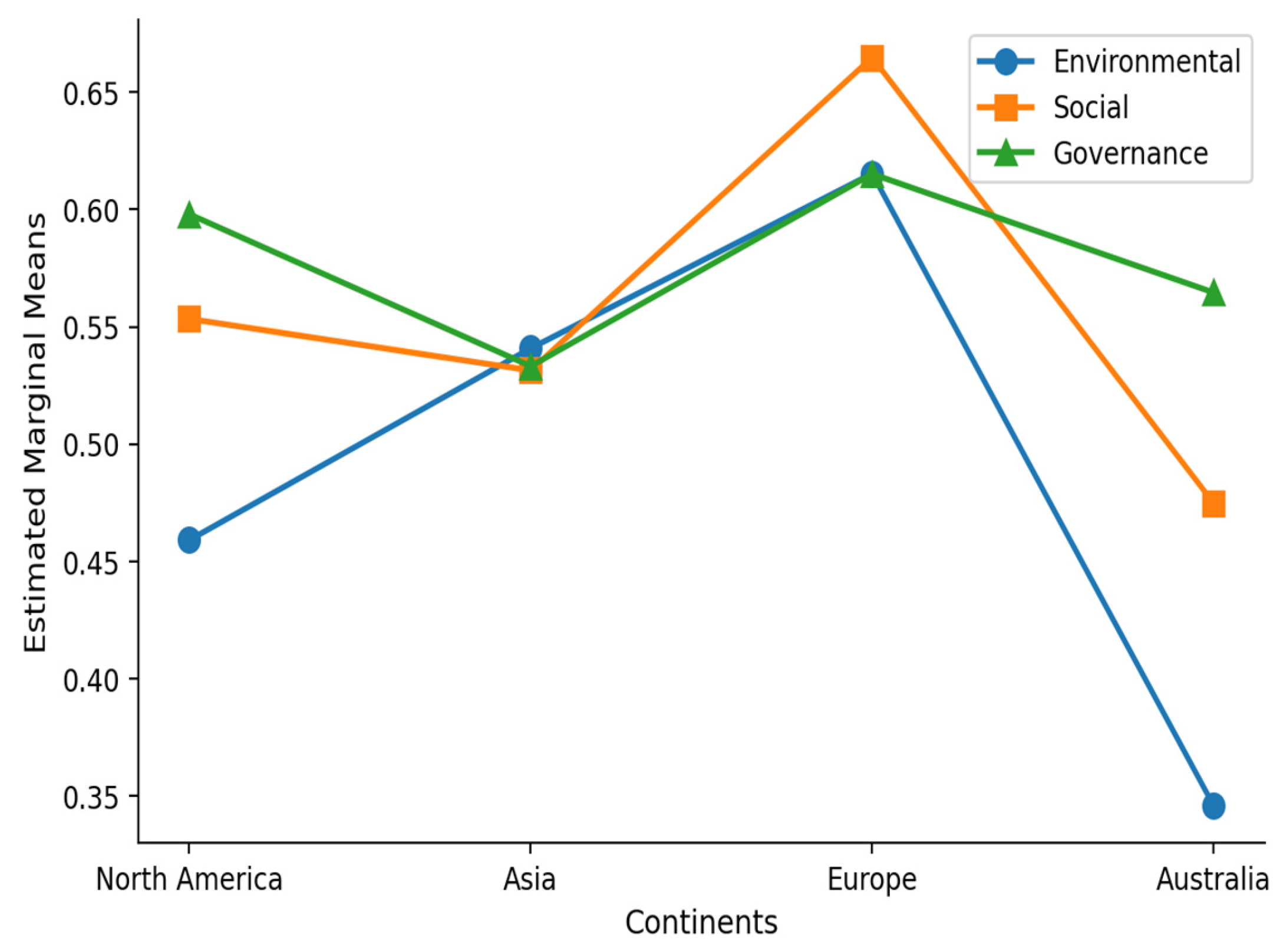
H1. Significant differences in firms’ ESG ratings exist across the continents of firms’ countries of incorporation, with firms incorporated in European countries receiving higher ESG ratings than firms incorporated in other continents.
2.4. Industry Considerations
Traditional perspectives suggest that manufacturing faces greater environmental impacts requiring substantial mitigation investments [
17,
67,
68], while services face different social and governance challenges, including labor practices, data privacy, and executive compensation [
69,
70]. Manufacturing industries with visible environmental footprints, such as chemicals, mining, and heavy industry, face concentrated stakeholder pressure and regulatory scrutiny [
71,
72]. Service industries, particularly financial services, face governance pressures from sophisticated institutional investors and regulators concerned with systemic risk [
73].
However, several factors may reduce overall industry differences in ESG performance. First, some rating methodologies adjust scores for sector-specific materiality, enabling meaningful cross-sector comparisons while accounting for different ESG priorities [
37,
74]. Second, the professionalization of sustainability has diffused common ESG management practices across sectors as consulting firms, reporting frameworks, and professional networks create industry-agnostic best practices [
75,
76,
77]. Third, supply-chain integration increasingly blurs traditional sector boundaries, as service firms face pressure regarding their suppliers’ environmental practices while manufacturing firms emphasize service components [
78]. Fourth, institutional investors apply uniform ESG criteria across portfolio companies regardless of sector, creating convergent pressures [
5,
73,
79].
Overall, empirical evidence on industry effects is mixed. Some studies find significant sectoral variations [
9,
80], while others report smaller or inconsistent effects [
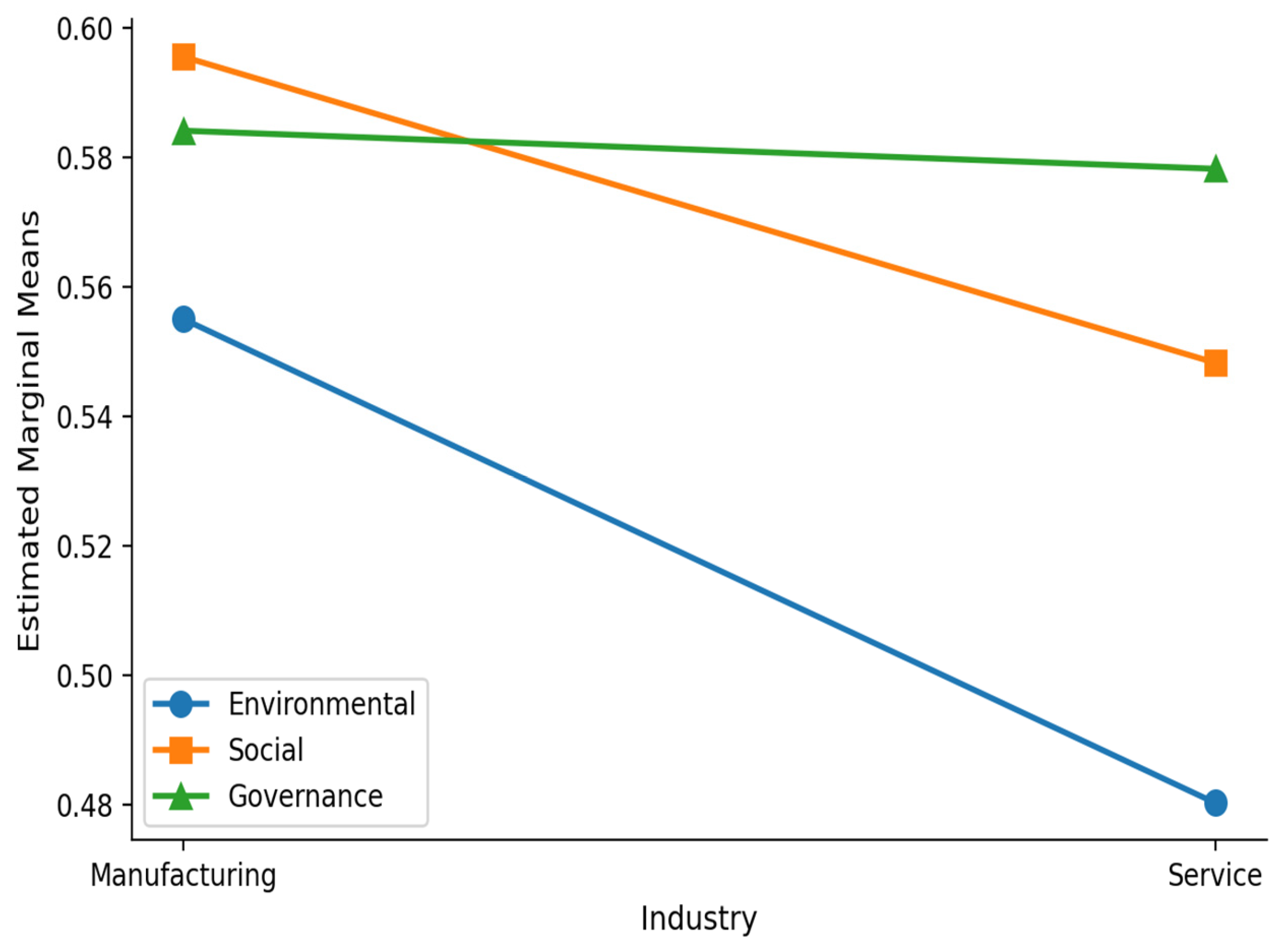
7]. Yet, pillar-specific arguments motivate three subsidiary hypotheses. The environmental and social pillars capture impacts that vary systematically by industry type: manufacturing operations involve direct material throughput, energy use, and large operational workforces, which create larger and more salient environmental footprints and worker-safety concerns than the activities of most service firms. Governance, in contrast, is shaped primarily by listing regimes, ownership structures, and board composition, which are largely independent of industry classification. We therefore expect industry differences to emerge in the environmental and social pillars but not in the governance pillar:
H2a (Environmental). Manufacturing firms receive higher environmental pillar ratings than service firms.
H2b (Social). Manufacturing firms receive higher social pillar ratings than service firms.
H2c (Governance). Manufacturing and service firms do not differ significantly in governance pillar ratings.
2.5. Firm Size
Resource-based theory predicts that larger firms possess greater resources for ESG investments. Waddock and Graves [
8] demonstrate that financial performance, correlated with size, enables ESG investments, suggesting a virtuous cycle in which resources enable sustainability, which enhances performance. Large firms possess organizational slack, i.e., uncommitted resources available for discretionary initiatives [
24,
25]. They employ dedicated sustainability personnel with specialized expertise [
26,
27], achieve economies of scale in ESG programs by spreading fixed costs across larger revenue bases [
28,
81], and develop sophisticated management systems for tracking and improving ESG performance [
82]. In contrast, Jenkins [
83] and Battisti and Perry [
84] document that small firms face distinct resource constraints that limit ESG investments despite potentially genuine sustainability commitments. Udayasankar [
85] argues that size effects may be curvilinear, with both very large and very small firms showing strong CSR, although most evidence supports monotonic positive relationships.
Stakeholder salience theory predicts that larger firms face greater scrutiny and accountability pressures. Mitchell et al. [
4] argue that stakeholder salience depends on power, legitimacy, and urgency, attributes that increase with firm visibility. Larger firms attract more media attention, analyst coverage, and activist campaigns [
18,
71]. Reputational concerns motivate substantial ESG investments to protect brand value and market position [
1,
86,
87]. Institutional investors concentrate holdings in large-cap stocks, subjecting these firms to more intensive ESG engagement [
54]. Proxy advisors evaluate larger firms more systematically, creating additional governance pressures [
88].
Institutional theory emphasizes that larger organizations face greater legitimacy demands from diverse constituents. Deephouse [
89] and Deephouse and Carter [
90] show that organizational legitimacy requires conforming to institutional expectations, which intensify with visibility. Large firms must maintain social licenses to operate across multiple jurisdictions with varying stakeholder expectations [
72,
91]. Bansal and Clelland [
92] demonstrate that environmental legitimacy reduces firm risk, with the strongest effects observed for highly visible firms. Hannan and Freeman [
93] argue that large organizations face both structural inertia and greater institutional pressures.
Extensive empirical research documents positive size-ESG relationships across diverse contexts, time periods, and measurement approaches [
8,
69,
94,
95,
96,
97,
98]. Drempetic et al. [
49] specifically examine how firm size is associated with Refinitiv (Thomson Reuters ASSET4) ESG scores, finding significant positive effects. Dang et al. [
99] recommend employee count as a measure of firm size for socially oriented research, given its direct relevance to workforce-related ESG dimensions. In line with these arguments, we formulate H3:
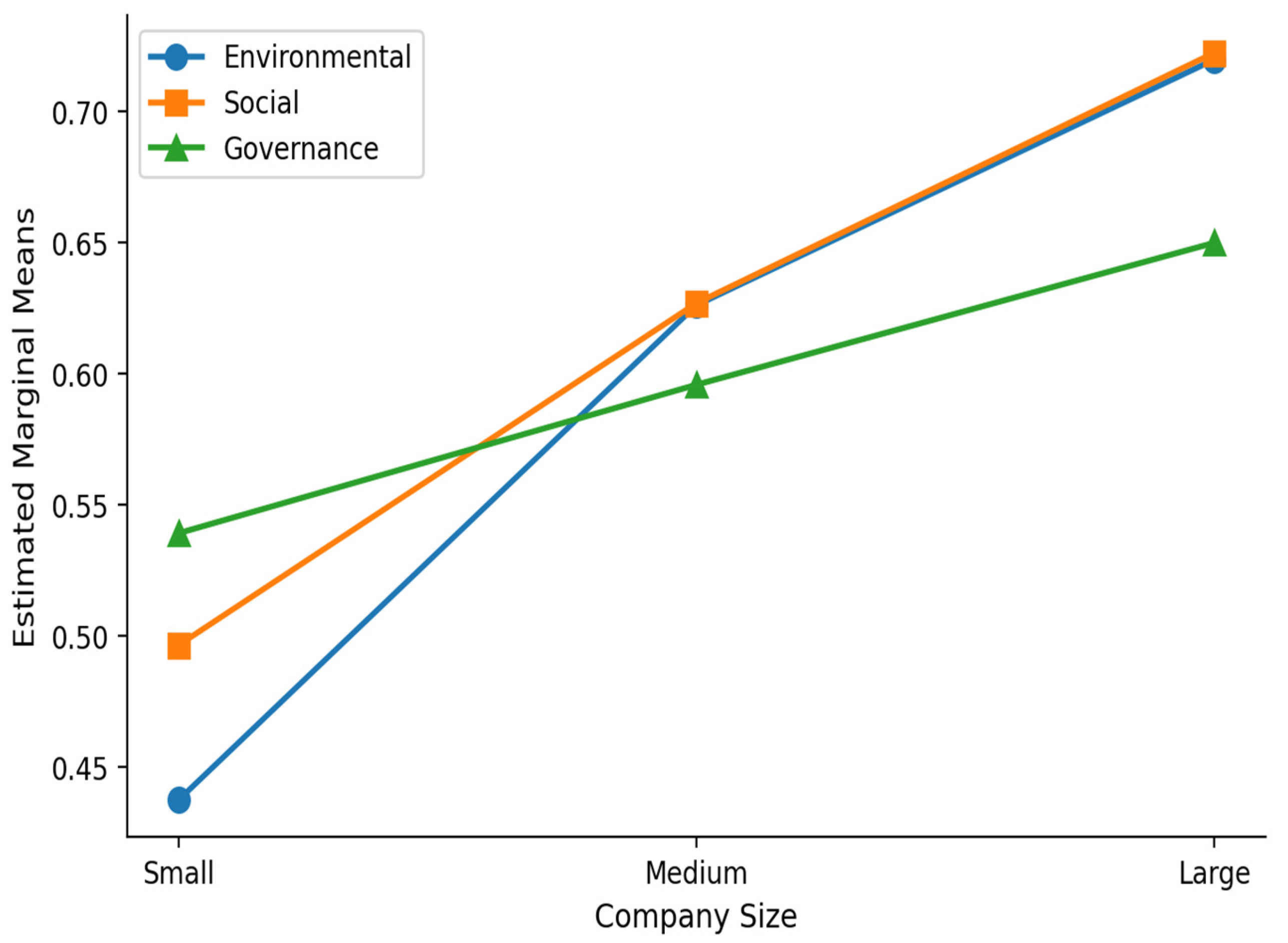
H3. Significant differences exist in firms’ ESG ratings among firms of different sizes, with larger firms receiving higher ESG ratings than smaller firms.
Table 1 summarizes the three theoretical perspectives that motivate our hypotheses, mapping each theory to its focal variable, predicted pattern, and underlying mechanism.