


Abstract
The increasing complexity of multi-hazard disasters poses significant challenges to sustainable disaster risk governance. However, prevention and control measures are often scattered across heterogeneous and unstructured sources, limiting their systematic reuse and application. To address this issue, this study proposes a structured framework and data-driven analysis approach for organizing prevention and control measures in multi-hazard scenarios. By integrating multi-source information, a four-dimensional framework consisting of human, technical, engineering, and managerial measures was developed, together with a two-dimensional representation model incorporating disaster scenarios. Large language models (LLMs) were employed to automatically extract prevention and control measures from disaster-related documents and construct a multi-hazard prevention dataset. A case study of typhoon–hazardous chemical leakage scenarios yielded 1089 measurement records. Results show that managerial measures had the highest coverage (87.1%), while technical measures mainly focused on critical risk nodes such as leakage monitoring and automatic interlock control. Prevention and preparedness measures accounted for 67.4% of all records, reflecting a proactive risk-governance orientation. Strong associations were observed among the four categories of measures (Jaccard coefficient: 0.624–0.879). The proposed framework supports the structured representation, knowledge organization, and data-driven analysis of prevention and control measures, providing a foundation for sustainable disaster risk governance and resilient emergency management.
1. Introduction
In recent years, under the combined influences of global climate change and rapid urbanization, natural disasters and technological accidents have exhibited increasingly frequent, complex, and compound characteristics [1]. Natural hazards such as typhoons, heavy rainfall, earthquakes, and landslides are increasingly coupled with technological accidents, including chemical leaks and gas explosions, leading to typical Natural Hazard Triggered Technological Accidents (Natech). These cascading disaster processes further prolong disaster chains and amplify overall risks [2]. Compared with single-hazard scenarios, compound disasters exhibit greater complexity in terms of evolution mechanisms, impact scope, and mitigation requirements, thereby posing higher demands on the systematic organization and coordinated application of prevention and control measures [3].
To address disaster accident risks, extensive prevention and control measures and emergency response experiences have been accumulated across related fields. However, such information is mostly scattered across heterogeneous sources, including emergency response plans, industrial standards, accident reports, and expert documents, resulting in fragmented knowledge representation and limited interoperability [4]. In practical applications, this fragmentation makes it difficult to rapidly retrieve and effectively match prevention and control measures for specific disaster scenarios, thereby limiting the efficiency of emergency decision-making. Therefore, how to extract and construct a unified representation framework for prevention and control measures from multi-source heterogeneous information, and further transform “textual information” into “structured knowledge,” has become a critical issue in current compound disaster research.
At present, several representative disaster and accident databases, such as EM-DAT, eMARS, and eNatech, have been established and are widely used for disaster statistics, accident records, and risk information management [5,6,7]. Related databases in China have also played important roles in disaster information integration and disaster management [8]. However, most existing studies still focus primarily on the paradigm of “disaster events–loss assessment,” while mitigation measures are typically recorded as unstructured text or auxiliary attributes. As a result, unified classification systems and structured representation mechanisms remain insufficient, making it difficult to support rapid retrieval, cross-scenario matching, and systematic analysis of prevention and control measures [9].
In addition to disaster databases, text mining and complex network-based approaches have been increasingly applied to disaster risk assessment and process safety analysis. For example, Qiu et al. employed text mining techniques to extract risk factors and their co-occurrence relationships from accident investigation reports and constructed a complex network to identify critical risk drivers and risk propagation patterns [10]. Similar studies have further integrated text mining with Bayesian networks and complex network models to support dynamic risk assessment and hazard interaction analysis in complex industrial systems [11,12]. Although these approaches have achieved promising results in risk identification and accident analysis, they mainly focus on disaster events, accident causation, and hazard interactions. The structured representation and automatic organization of prevention and control measures remain relatively underexplored, particularly in compound disaster scenarios involving heterogeneous information sources and complex semantic relationships. This limitation highlights the need for more advanced semantic extraction techniques to support prevention and control knowledge organization.
Meanwhile, recent advances in machine learning and large language models have promoted their applications in disaster text processing, demonstrating strong capabilities in information extraction and semantic understanding [13,14,15,16]. Nevertheless, existing studies mainly focus on disaster element identification and text classification, while few frameworks integrate structured modeling of mitigation measures with domain-specific knowledge systems [17]. Consequently, effective transformation from unstructured disaster texts into computable knowledge remains limited, restricting the practical application of related methods in multi-hazard scenario analysis and decision support.
In disaster research, several existing theories provide important foundations for the classification of prevention and control measures. For example, the “hazard-formative factors–hazard-inducing environment–hazard-affected bodies” theory reveals prevention and control pathways from the perspective of disaster system composition [18,19]. The “risk source–hazard-bearing body–disaster reduction capability” theory emphasizes risk regulation through capability enhancement [20], while the public safety triangle theory highlights the role of management processes in disaster response [21,22]. In addition, the internationally recognized five-stage emergency management framework, including prevention, mitigation, preparedness, emergency response, and recovery, characterizes the full lifecycle of disaster management from a temporal perspective [23]. Although these frameworks provide conceptual support for mitigation system construction, they lack a unified and operational structured representation for compound disaster scenarios and multi-source data integration.
To address the above issues, this study focuses on compound disaster accidents and proposes a structured modeling and data-driven analysis framework for prevention and control measures. First, multi-source information, including structured databases and academic literature, was integrated to establish a unified data representation foundation and achieve standardized extraction and organization of key prevention and control elements. Based on this foundation, a four-dimensional prevention and control measure system, consisting of human, technical, engineering, and managerial measures, was constructed. A disaster scenario dimension was further introduced to form a two-dimensional structural model of “prevention and control type–disaster scenario,” enabling systematic classification and hierarchical representation of prevention and control measures. Furthermore, a prevention and control measure database architecture was developed by incorporating disaster chain processes, thereby establishing association modeling between disaster evolution processes and prevention and control measures. At the data acquisition level, large language models were introduced to automatically process multi-source disaster texts, enabling structured extraction of prevention and control measures and the construction of a multi-hazard prevention and control measure dataset.
The main contributions of this study are summarized as follows:
- (1)
- A structured modeling method for prevention and control measures in compound disaster scenarios is proposed, addressing the problem of inconsistent representation of prevention and control measures in multi-source heterogeneous information.
- (2)
- A four-dimensional framework consisting of human, technical, engineering, and managerial measures is constructed, and a two-dimensional structural model of “prevention and control type–disaster type” is proposed to achieve systematic organization and multi-level representation of prevention and control measures.
- (3)
- Large language models are integrated to perform automatic extraction of prevention and control measures, and a multi-hazard prevention and control measure dataset is constructed, providing a scalable technical pathway for structured representation and data-driven analysis of prevention and control knowledge.
2. Materials and Methods
2.1. Overall Framework
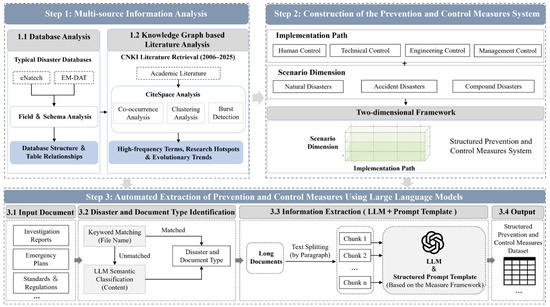
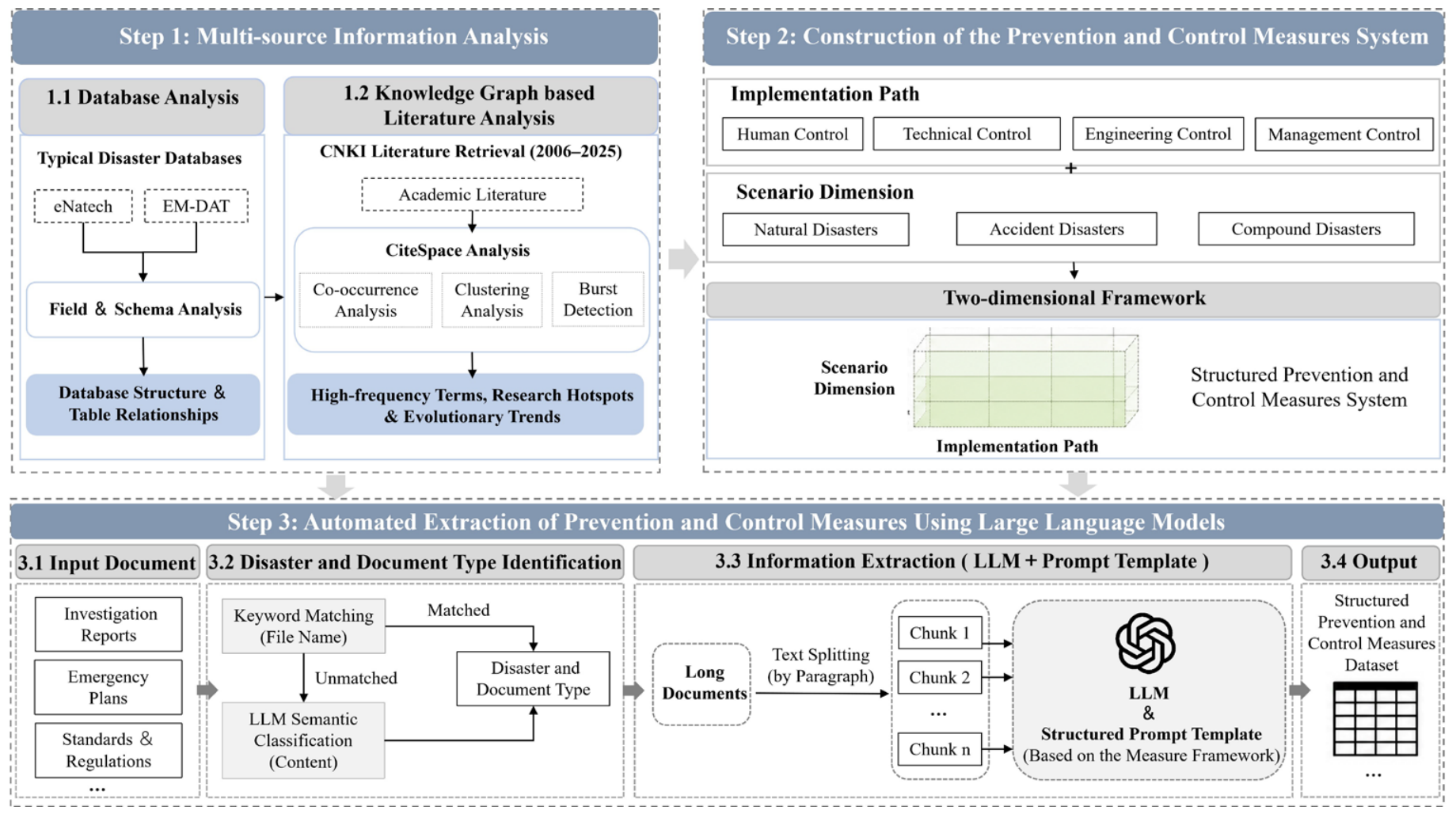
The overall framework of this study is shown in Figure 1. The proposed framework aims to achieve structured modeling and data-driven analysis of prevention and control measures under multi-hazard scenarios. The workflow consists of three main stages: multi-source information analysis, framework construction, and automatic extraction.
Figure 1.
Overall research framework.
2.2. Construction of the Prevention and Control Measure Framework Based on Multi-Source Information
A single data source is insufficient for constructing a comprehensive field system because different data sources vary significantly in information structure and representation [24]. Therefore, structured databases and academic literature were integrated to construct a unified framework for prevention and control measures.
2.2.1. Analysis of Typical Disaster Databases
Structured databases provide standardized field systems and classification criteria for framework construction. In this study, eNatech and EM-DAT were selected as representative disaster databases. Their field composition and organizational structures were analyzed to extract common characteristics of disaster event descriptions, including basic information, process information, and consequence information. Relationships among database tables were further examined to identify mapping patterns between disaster events, impacts, and secondary disasters, providing a reference for database architecture design.
2.2.2. Literature Keyword Analysis Based on Knowledge Graphs
A knowledge graph-based keyword analysis method was adopted to identify research hotspots and core concepts in disaster prevention and control research [25]. The China National Knowledge Infrastructure (CNKI) database was used as the literature source. Since the combined topic “disaster accident prevention and control measures” has limited retrieval coverage, “disaster prevention and control” and “accident prevention and control” were separately used as core search terms. The search scope was restricted to the discipline of “Safety Science and Disaster Prevention,” covering publications from 2006 to 2025.
Keyword co-occurrence analysis, clustering analysis, and burst-term detection were conducted using CiteSpace 6.4.2 to identify high-frequency terms, research hotspots, and their evolutionary characteristics.
2.2.3. Construction of the Prevention and Control Measure Framework
Based on structured database fields and semantic clustering results from literature keywords, the core attributes of prevention and control measures were summarized. The measures were classified into four categories: human measures, technical measures, engineering measures, and managerial measures.
A disaster scenario dimension was further introduced to improve the applicability of the framework to multi-hazard conditions. Considering disaster chain evolution characteristics and existing disaster classification systems, disaster scenarios were categorized into natural disasters, accident disasters, and compound disasters. This classification was used to characterize different prevention and control requirements under both single-hazard and multi-hazard processes.
Based on the above classification framework and scenario categories, a two-dimensional structural model was constructed, with prevention and control type as one dimension and disaster scenario as the other. Each measure was represented as a “type–scenario” combination unit.
2.3. Automatic Extraction Based on Large Language Models
Based on the proposed framework, large language models (LLMs) were introduced to automatically extract prevention and control measures from disaster-related texts. Disaster investigation reports, emergency response plans, and regulatory documents were used as data sources. Using the semantic understanding capability of LLMs, implicit prevention and control information embedded in the texts was identified and mapped into the predefined classification framework. The extraction process can be formulated as a mapping from unstructured documents to structured fields:
where D denotes the input document, F represents the structured field set, and M denotes the LLM-based extraction process.
To address the heterogeneous representation of disaster information under multi-hazard scenarios, a disaster category identification mechanism combining rule matching and semantic recognition was constructed. File-name keywords were first used for rapid classification. When rule-based matching failed, LLMs were further employed to determine the most appropriate disaster category based on the semantic understanding of the document content.
Representative disaster scenarios considered in this study included rainstorm-induced roadbed collapse, geological hazard-induced pipeline leakage, flood-induced bridge collapse, urban flooding-induced subway inundation, and typhoon-triggered hazardous chemical accidents.
A document type identification process was further introduced to distinguish between accident cases, emergency response plans, standards and specifications, and laws and regulations. Similar to disaster category identification, this process combined keyword rules with semantic recognition using LLMs to automatically determine document attributes and provide contextual constraints for subsequent information extraction.
To address the excessive length of disaster reports, a paragraph-based chunking strategy was adopted during information extraction. Original texts were divided into multiple sub-blocks and separately processed by LLMs to reduce information loss caused by context length limitations. A structured prompt template was designed to guide the extraction process according to predefined fields.
To improve the reproducibility of the extraction process, GLM-4.6 was employed as the core large language model for information extraction. The model was configured with a low-temperature setting (temperature = 0.2) to reduce response randomness and improve extraction consistency. The prompt template was developed through multiple rounds of iterative refinement during preliminary experiments. Early prompt versions only specified extraction tasks and target fields, which occasionally resulted in missing values, inconsistent classifications, and hallucinated outputs. Therefore, additional constraints were gradually incorporated into the final prompt design.
Specifically, the model was assigned the role of a risk prevention and safety management expert and required to extract information according to the predefined prevention and control measure framework. To ensure structured outputs, all extraction results were returned in JSON format and mapped to predefined fields. Furthermore, the prompt explicitly instructed the model to extract only information directly supported by the source document and prohibited unsupported inferences. Missing information was uniformly labeled as “N/A”, “No Relevant Information”, or “Not Mentioned” according to the extraction context to improve consistency across different documents. A representative prompt example and the complete prompt template are provided in Appendix A to facilitate reproducibility and future comparative studies.
To further investigate the distribution patterns and collaborative characteristics of prevention and control measures, statistical and association analyses were conducted on the extracted results. First, the occurrence frequencies of the four categories of prevention and control measures were calculated to examine their distribution characteristics in disaster-related texts. Subsequently, a co-occurrence matrix of prevention and control measures was constructed using documents as the unit of analysis. If two categories of measures appeared simultaneously within the same document, they were considered to have an association relationship.
To quantify the strength of associations between different categories of prevention and control measures, the Jaccard similarity coefficient was employed [26,27]:
where (A) and (B) denote the document sets corresponding to two categories of prevention and control measures, respectively; ∣A ∩ B∣ represents the number of documents containing both categories of measures, and ∣A ∪ B∣ represents the number of documents containing at least one of the two categories. A higher Jaccard coefficient indicates a stronger co-occurrence relationship and a greater degree of collaboration between the corresponding prevention and control measures.
However, the Jaccard coefficient only reflects co-occurrence similarity and does not evaluate whether the observed associations are statistically significant. Therefore, additional statistical analyses were conducted based on document-level presence–absence matrices. Fisher’s exact test was applied to evaluate the statistical significance of associations between measure categories [28]. Compared with conventional chi-square tests, Fisher’s exact test provides exact probability estimates for binary contingency tables and is suitable for evaluating associations between dichotomous variables. Associations were considered statistically significant when (p < 0.05).
To further quantify the strength of associations, the Phi coefficient was calculated as [29]:
where a, b, c, and d denote the frequencies in the corresponding 2 × 2 contingency table. The Phi coefficient ranges from −1 to 1, with values closer to ±1 indicating stronger associations. According to Cohen’s guidelines, |φ| ≥ 0.10, |φ| ≥ 0.30, and |φ| ≥ 0.50 indicate weak, moderate, and strong associations, respectively.
3. Results
3.1. Analysis of Key Fields Driven by Multi-Source Information
3.1.1. Structural Characteristics of Typical Disaster Databases
The eNatech database adopts an event-chain-driven structure and follows a logical framework of “natural hazard trigger–technological accident process–consequence impact”. The database records different stages of disaster evolution in a structured manner. It integrates information on environmental conditions, infrastructure systems, and emergency response processes. This process-oriented modeling approach provides support for the construction of the prevention and control measure field system in this study.
The EM-DAT database is a typical outcome-oriented disaster database that takes disaster events as the core unit and focuses on disaster loss and impact assessment. Disaster events, impact records, and secondary hazards are linked through structured relationships, enabling cross-regional disaster statistics and comparative analysis. Its event-linkage structure provides a reference for multi-source information mapping and field relationship design in this study.
3.1.2. Keyword Analysis of Literature Based on Knowledge Graphs
Analysis of the “Disaster Prevention and Control” Topic
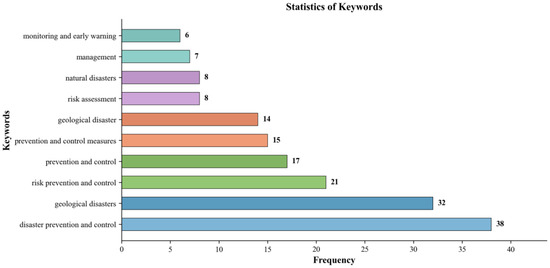
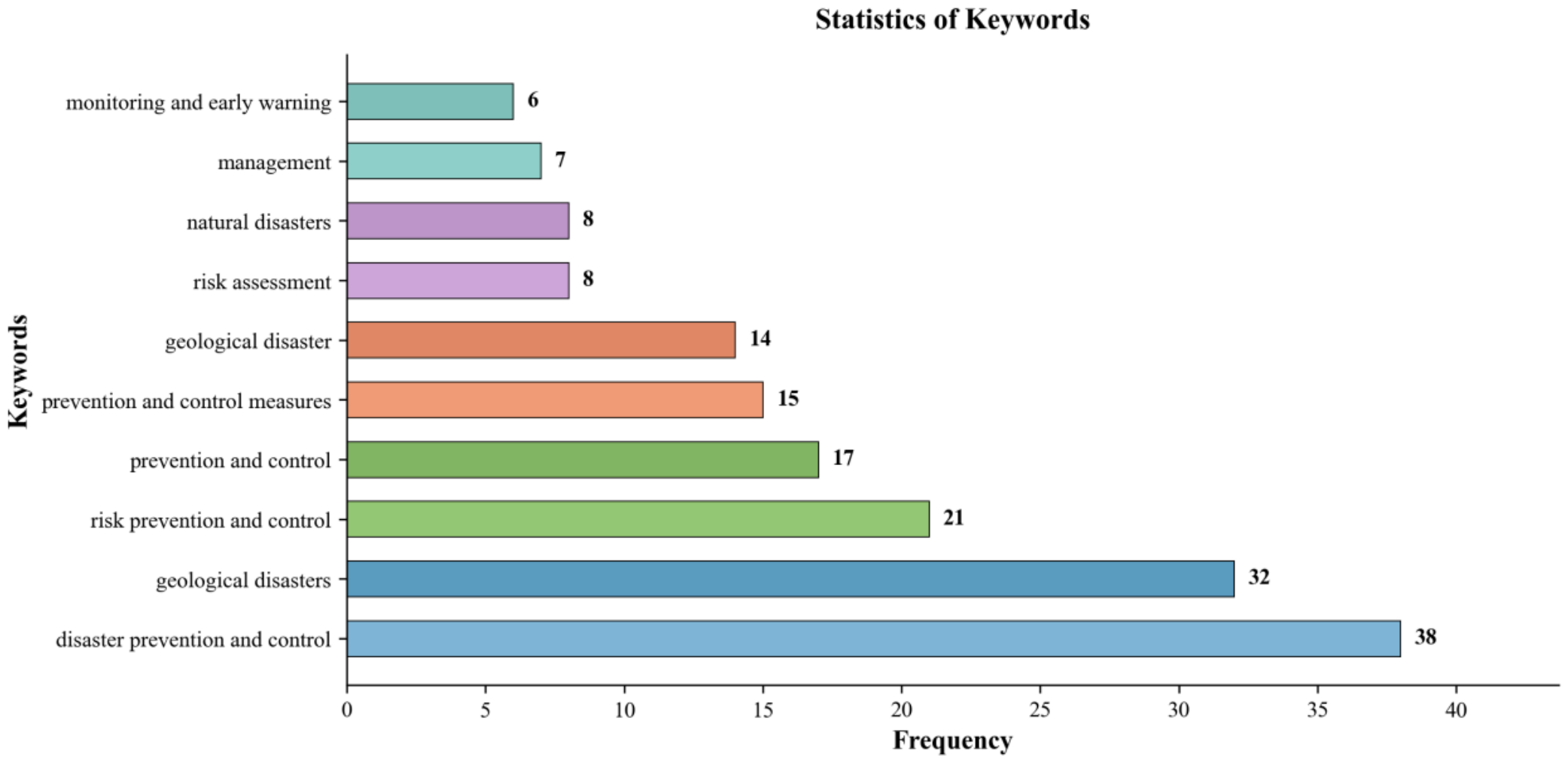
A total of 374 publications were retrieved using “disaster prevention and control” as the search topic. The keyword frequency analysis (Figure 2) shows that research hotspots are mainly concentrated on disaster prevention and control, geological disasters, and risk prevention and control, indicating that existing studies primarily focus on geological disaster governance, risk assessment, prevention and mitigation measures, and early warning systems. Overall, the research field has gradually evolved from traditional disaster prevention studies toward integrated risk governance, dynamic monitoring, and coordinated prevention and control strategies.
Figure 2.
Keyword frequency distribution of “disaster prevention and control”.
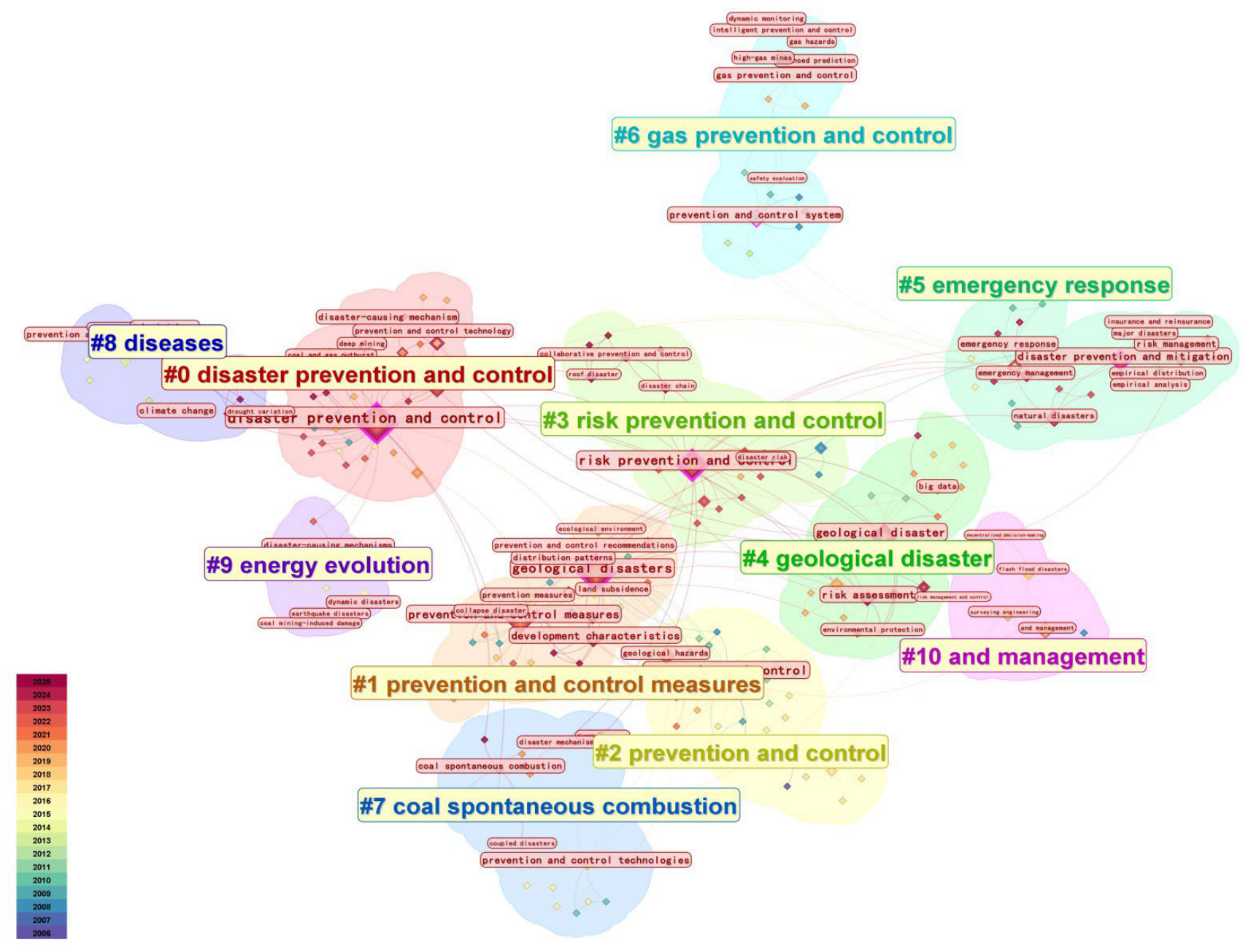
To further reveal the structural characteristics of this research domain, a Log-Likelihood Ratio (LLR)-based clustering analysis was conducted on keywords related to “disaster prevention and control.” The results are shown in Figure 3. The analysis indicates that the literature mainly focuses on disaster prevention and control, risk prevention and control, geological disasters, emergency response, and gas prevention and control. In addition, clusters related to prevention and control measures, coal spontaneous combustion, and management also demonstrate relatively strong research attention.
Figure 3.
Keyword clustering map of “disaster prevention and control”. Different colored regions represent different keyword clusters automatically generated by CiteSpace. The colored nodes indicate keywords in different time slices according to the year legend, and the links between nodes indicate co-occurrence relationships among keywords.
To further identify emerging research frontiers and their temporal evolution, keyword burst detection analysis was conducted using CiteSpace, and the results are shown in Table 1. The burst keywords indicate a clear evolution of research themes in disaster prevention and control. Early studies primarily focused on the establishment of prevention and control systems and related measures, as reflected by keywords such as prevention and control and prevention and control system. Subsequently, research attention expanded to prevention technologies and management approaches, with prevention measures, prevention and control technologies, and management emerging as important topics. Since 2018, increasing attention has been paid to specific disaster scenarios and technological applications, including geological hazards and big data. More recently, natural disasters, risk prevention and control, and geological disasters have become prominent burst keywords. In particular, the emergence of risk prevention and control reflects a shift from traditional disaster management toward integrated risk governance. Overall, the evolution of burst keywords suggests that disaster prevention and control research has gradually developed from system construction and technical prevention toward risk-oriented management and multi-hazard disaster governance.
Table 1.
Keywords with the Strongest Citation Bursts for “disaster prevention and control”.
By summarizing representative high-LLR keywords within each cluster (Table 2), the studies can be broadly categorized into several core thematic areas, including prevention and control, disaster, emergency management, and monitoring and early warning, which provide important support for constructing key fields in the proposed database system.
Table 2.
Summary of clustered keywords for “disaster prevention and control”.
Analysis of the “Accident Prevention and Control” Topic
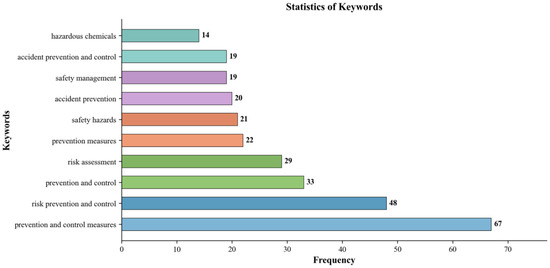
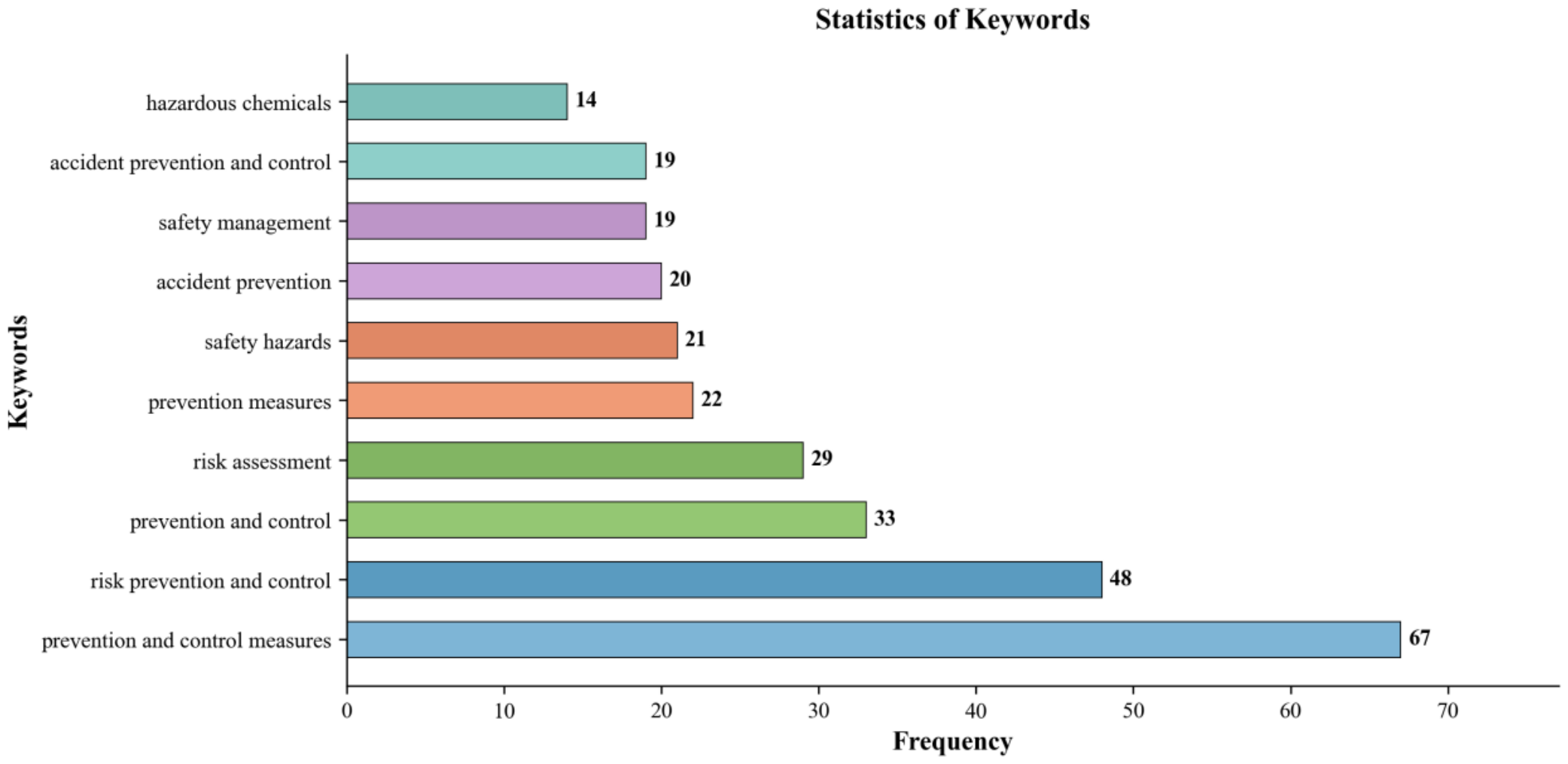
A total of 638 publications were retrieved using “accident prevention and control” as the search topic. The keyword frequency analysis (Figure 4) indicates that high-frequency terms are mainly related to prevention and control measures, risk prevention and control, risk assessment, and safety management. These findings suggest that existing studies primarily emphasize accident risk governance, hazard identification, and prevention strategies, with particular attention to hazardous chemical accidents and industrial safety scenarios. In general, the research orientation in this field is centered on accident prevention, risk assessment, and the implementation of prevention and control measures.
Figure 4.
Keyword frequency distribution of “accident prevention and control”.
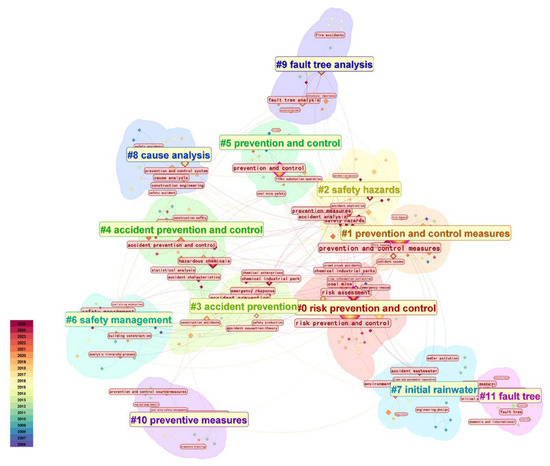
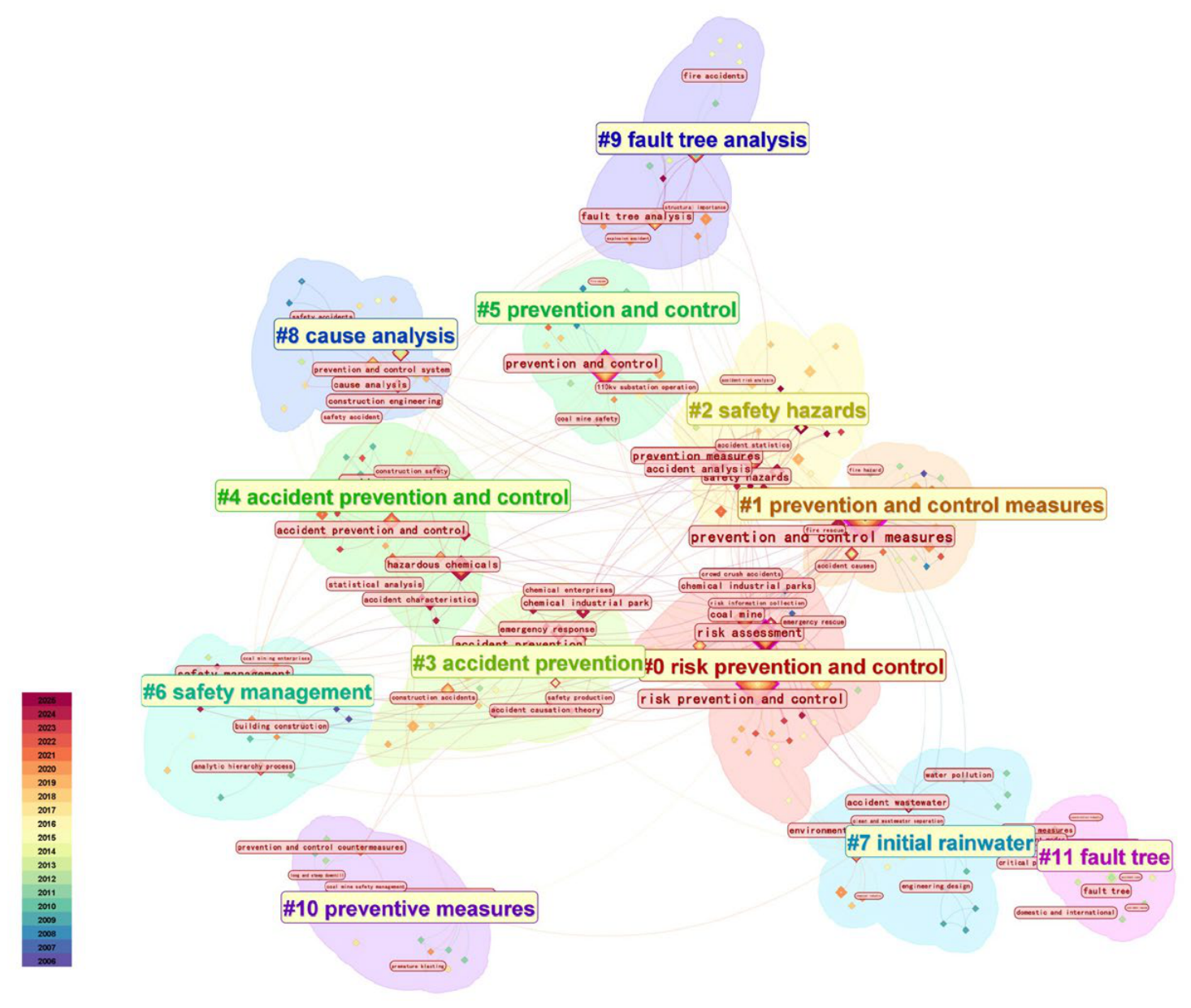
To further investigate the structural characteristics of research in the field of accident prevention and control, a Log-Likelihood Ratio (LLR)-based clustering analysis was conducted on the retrieved keywords. The results are shown in Figure 5. Overall, the related studies mainly concentrate on risk prevention and control, accident prevention and control, prevention and control measures, safety hazards, and accident causation analysis. Meanwhile, clusters associated with fault tree analysis, safety management, preventive measures, and initial rainwater treatment also reflect important research directions in this field.
Figure 5.
Keyword clustering map of “accident prevention and control”. Different colored regions represent different keyword clusters automatically generated by CiteSpace. The colored nodes indicate keywords in different time slices according to the year legend, and the links between nodes indicate co-occurrence relationships among keywords.
To further identify emerging research frontiers, keyword burst detection analysis was conducted using CiteSpace, as shown in Table 3. The results reveal a clear evolution of research themes in accident prevention and control. Early studies mainly focused on engineering safety and accident analysis, as reflected by burst keywords such as building construction and fault tree. Subsequently, research attention shifted toward risk-oriented management, with risk identification, risk assessment, risk prevention and control becoming dominant topics. In recent years, emerging keywords including accident characteristics, prevention and control measures, and emergency response have attracted increasing attention. Notably, emergency response remains active through 2025, indicating its continued importance as a research frontier. Overall, the evolution of burst keywords suggests a transition from traditional accident causation analysis toward proactive risk governance, systematic prevention strategies, and emergency management, reflecting the increasing emphasis on comprehensive and resilience-oriented accident prevention and control.
Table 3.
Keywords with the Strongest Citation Bursts for “accident prevention and control”.
By summarizing keywords with relatively high LLR values after clustering (Table 4), the studies can be grouped into several major thematic domains, including prevention and control, accidents, and emergency response. These findings provide important support for the construction of key fields in the proposed database framework.
Table 4.
Summary of clustered keywords for “accident prevention and control”.
3.2. Prevention and Control Measure Framework for Typical Disaster Accidents
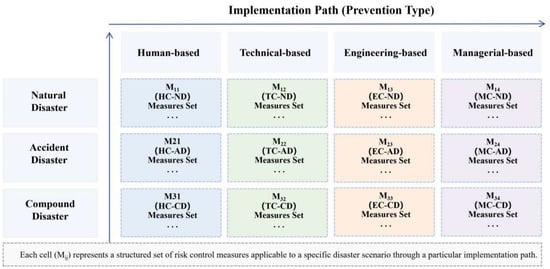
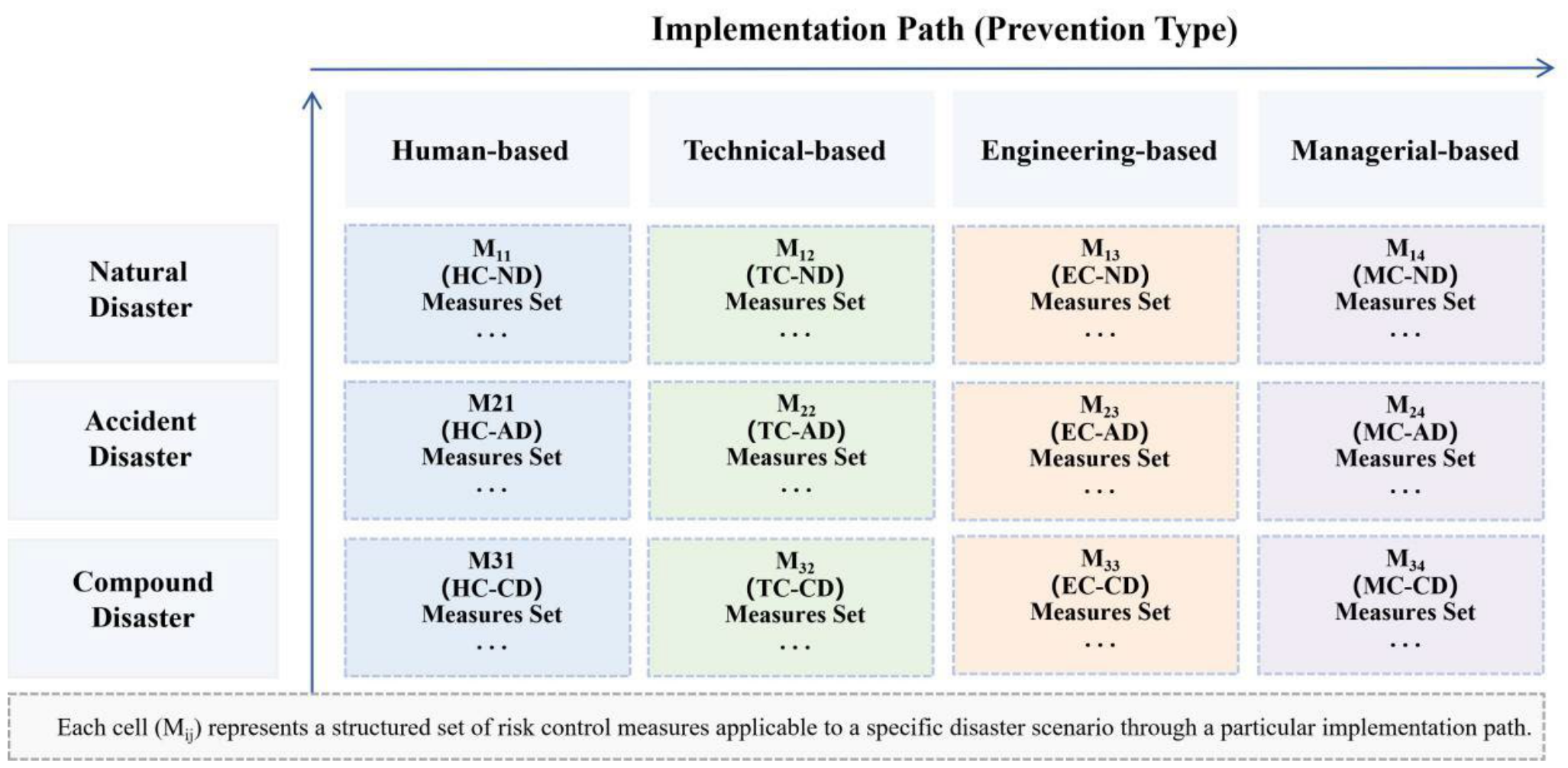
Based on the above methodology, a prevention and control measure framework centered on human, technical, engineering, and managerial measures was established. By further introducing a disaster scenario dimension, a two-dimensional structural model of “prevention and control type–disaster type” was constructed, as shown in Figure 6.
Figure 6.
Two-dimensional Framework of Disaster Prevention and Control Measures.
The proposed framework classifies mitigation measures into four fundamental categories according to their implementation pathways. Human measures focus on personnel capability and emergency response behavior. Technical measures emphasize monitoring, early warning, and technical support approaches. Engineering measures mainly involve infrastructure systems and physical protection facilities, while managerial measures cover institutional regulations and organizational coordination mechanisms. Together, these four categories characterize key pathways of disaster mitigation from different perspectives and form an integrated classification framework.
On this basis, a disaster scenario dimension was further incorporated to extend the representation capability of the framework. According to disaster process characteristics, application scenarios were categorized into natural disasters, accidental disasters, and compound disasters. These scenario categories were then cross-combined with the four mitigation types to form a two-dimensional structural model. The proposed framework simultaneously reflects both the categorical attributes and application scenarios of mitigation measures, enabling unified representation of multi-dimensional disaster prevention and control information.
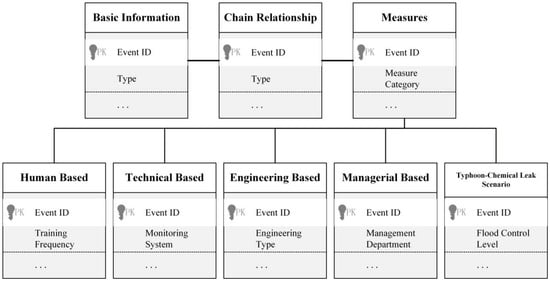
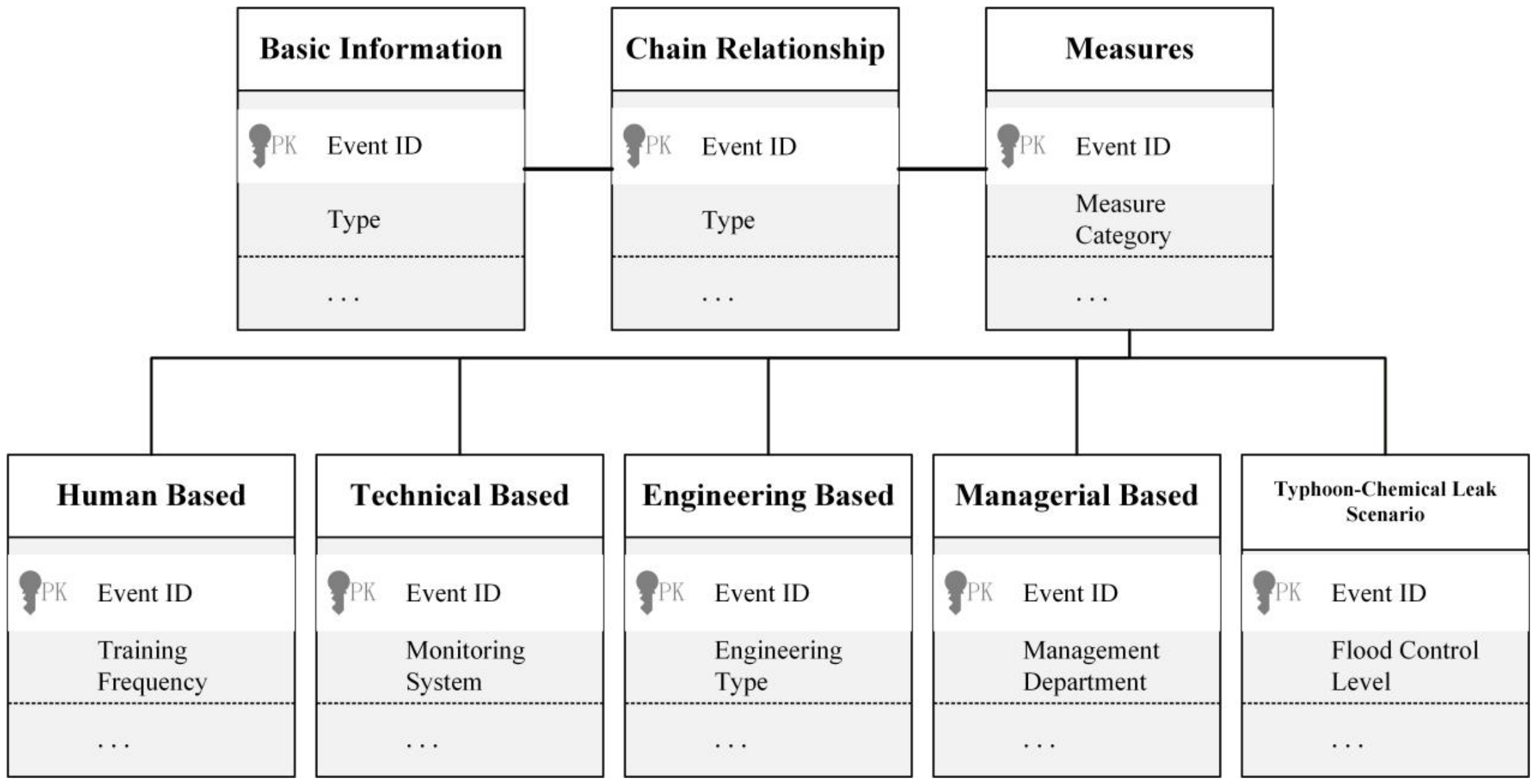
Building upon the proposed framework, a database architecture for typical disaster accident prevention and control measures was further developed, as shown in Figure 7. The framework takes disaster events as the core entity and integrates disaster evolution processes with mitigation requirements. The overall data structure is divided into three categories: basic information, disaster-chain relationships, and mitigation measures. Cross-module associations are established through unified event identifiers, forming a structured representation framework covering the full lifecycle of disaster accidents.
Figure 7.
Database architecture of prevention and control measures.
Within this architecture, the mitigation measure module adopts a hierarchical structure consisting of a master table and multiple subtype tables. The master table stores general information on mitigation measures and is linked to disaster events through event identifiers. The subtype tables are categorized into human measures, technical measures, engineering measures, managerial measures, and scenario-specific measures, and are used to describe the detailed contents and key attributes of different mitigation types.
The first four subtype tables correspond to general mitigation measures applicable across multiple scenarios, whereas the scenario-specific subtype table is designed to characterize critical parameters under particular compound disaster scenarios, such as wind resistance levels and flood protection standards. All subtype tables are associated with the master table through unified foreign keys, forming a hierarchical data organization structure that enables integrated management and relational representation of multi-type mitigation measures.
3.3. Analysis of Automatic Extraction for Multi-Hazard Prevention and Control Measures
To evaluate the applicability of the proposed two-dimensional prevention and control measure framework, which integrates prevention-control types and disaster scenarios, an automatic extraction experiment was conducted using a large language model (LLM) on multi-source disaster-related documents. A structured dataset containing 1751 prevention and control measure records was constructed. The data sources included accident investigation reports, emergency response plans, standards, and regulatory documents, covering representative scenarios such as rainstorm-induced roadbed collapse, geological hazard-triggered pipeline leakage, flood-induced bridge collapse, urban waterlogging-induced metro flooding, and typhoon-induced hazardous chemical leakage.
Taking the typhoon–hazardous chemical leakage scenario as an example, a total of 321 regulations, 368 technical standards, 381 accident investigation reports, and 19 emergency plans were analyzed, yielding 1089 valid prevention and control measure records. According to the proposed framework, all extracted measures were mapped to 41 tertiary indicators and further categorized into four major groups: Human Measures, Technical Measures, Engineering Measures, and Managerial Measures. The complete indicator system is provided in Appendix B. The hierarchical structure presented in this appendix is intended as a classification framework for organizing prevention and control measures and supporting database construction and information extraction. The categories and subcategories were derived from the bibliometric analysis, the review of existing disaster-related databases and disaster management theories, and iterative refinement based on the extracted prevention and control measures.
To quantitatively evaluate the reliability of the proposed LLM-based extraction framework, a stratified manual annotation experiment was conducted for the typhoon-hazardous chemical leakage case. From the 1089 extracted records, approximately 30% were sampled while preserving the distribution of document types. The validation subset contained 327 records, including 114 accident cases, 111 standards/specifications, 96 laws/regulations, and 6 emergency plans. For each sampled record, the original source document was manually checked according to the predefined prevention and control measure framework, and the LLM-generated extraction results were compared with the manually annotated reference. Precision, Recall, and F1-score were calculated to assess extraction reliability. The proposed framework achieved a Precision of 0.946, Recall of 0.974, and F1-score of 0.959, indicating that it can reliably extract prevention and control measures from disaster-related documents.
3.3.1. Distribution Characteristics of Prevention and Control Measures
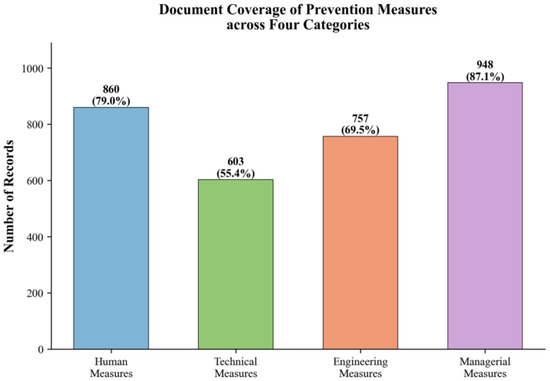
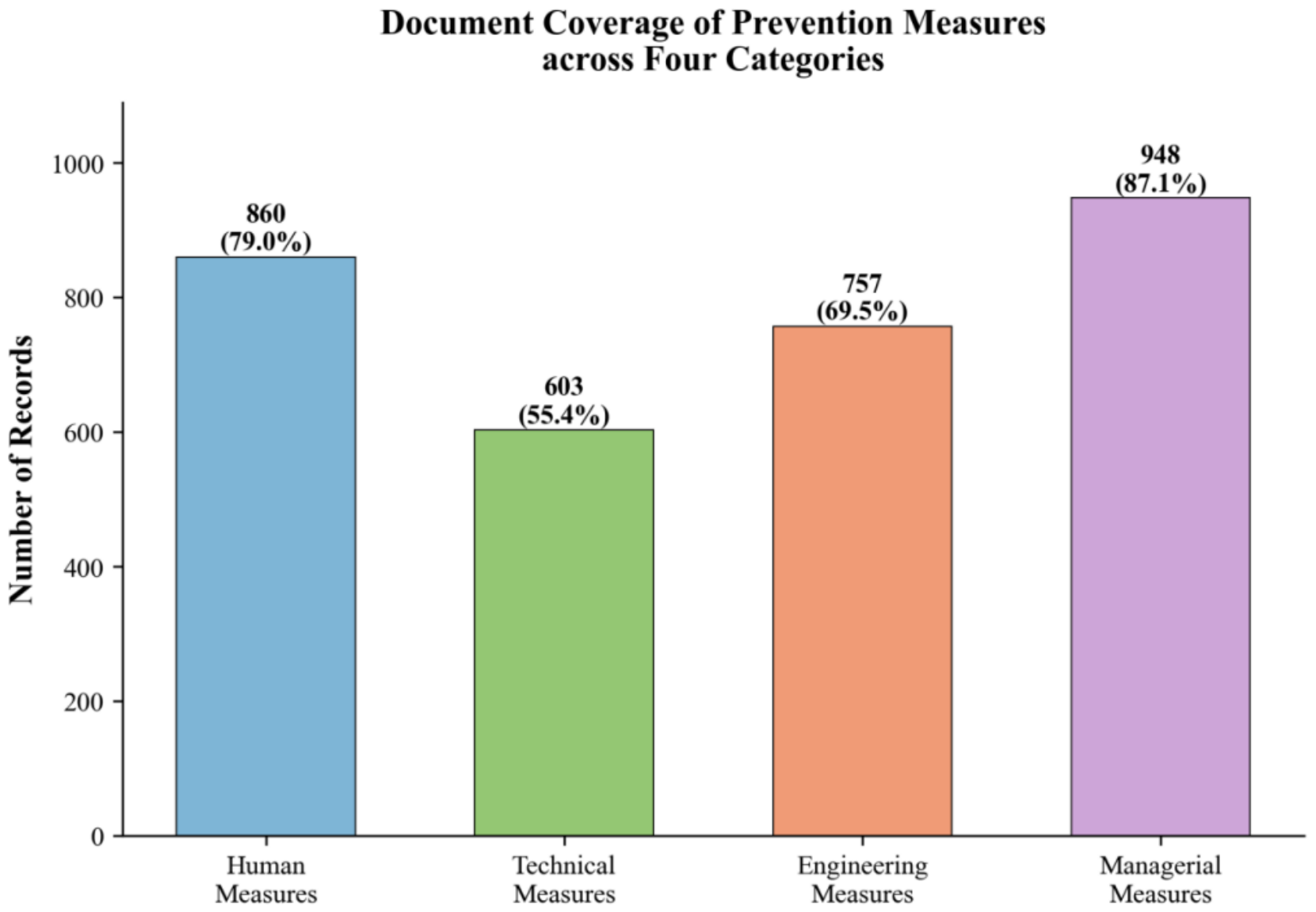
As shown in Figure 8, substantial differences were observed in the coverage of the four categories of prevention and control measures. Managerial measures exhibited the highest coverage, appearing in 948 documents (87.1%), followed by Human Measures (79.0%) and Engineering Measures (69.5%). Technical Measures showed the lowest coverage, appearing in 55.4% of the documents. These results indicate that the current typhoon–hazardous chemical leakage prevention framework is primarily centered on managerial interventions, such as risk management, emergency planning, and regulatory improvement. Such measures provide institutional support and organizational coordination throughout the entire disaster management cycle, including prevention, preparedness, response, and recovery. In contrast, technical measures are mainly concentrated in specialized domains such as monitoring, early warning, and automated control, resulting in relatively limited application coverage.
Figure 8.
Document Coverage of Prevention Measures across Four Categories.
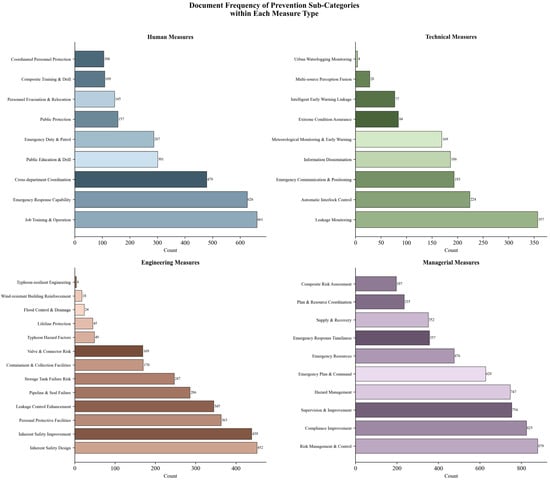
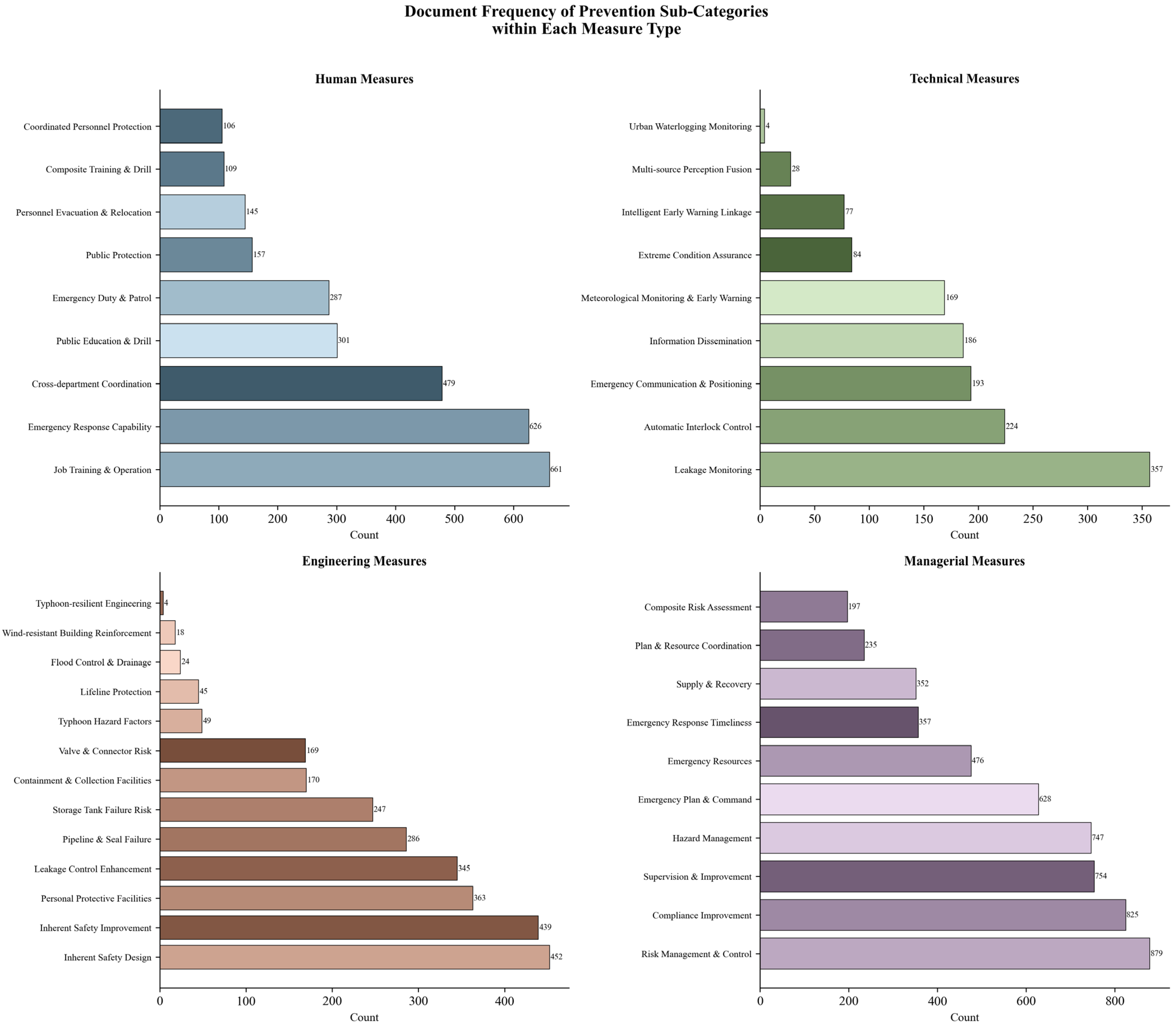
As illustrated in Figure 9, the 41 tertiary indicators exhibited distinct distribution patterns. Among managerial measures, Risk Management, Compliance Improvement, and Supervision and Improvement were the most frequently occurring indicators, highlighting the importance of continuous risk governance and institutional enhancement. Within the engineering category, Intrinsic Safety Design, Intrinsic Safety Enhancement, and Personal Protective Facilities showed high frequencies, indicating that the protection of hazardous chemical storage, transportation, and operational facilities remains a major focus of risk prevention. For human measures, Job Training and Operational Practices and Emergency Response Capability were dominant, whereas Leakage Monitoring and Automatic Interlock Control were the most prominent technical measures, emphasizing the importance of real-time monitoring and rapid control of critical risk nodes in the accident chain. Overall, the most frequently occurring indicators were concentrated in the domains of risk governance and intrinsic safety enhancement, suggesting that the current prevention and control system follows a dual-core strategy that combines institutional management with engineering protection to mitigate typhoon-induced hazardous chemical risks.
Figure 9.
Document Frequency of Prevention Sub-Categories within Each Measure Type.
3.3.2. Distribution Characteristics Across Disaster Chain Stages
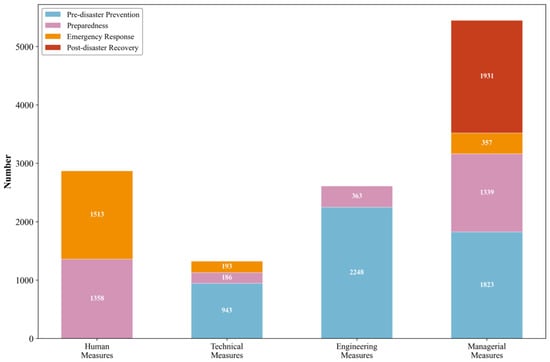
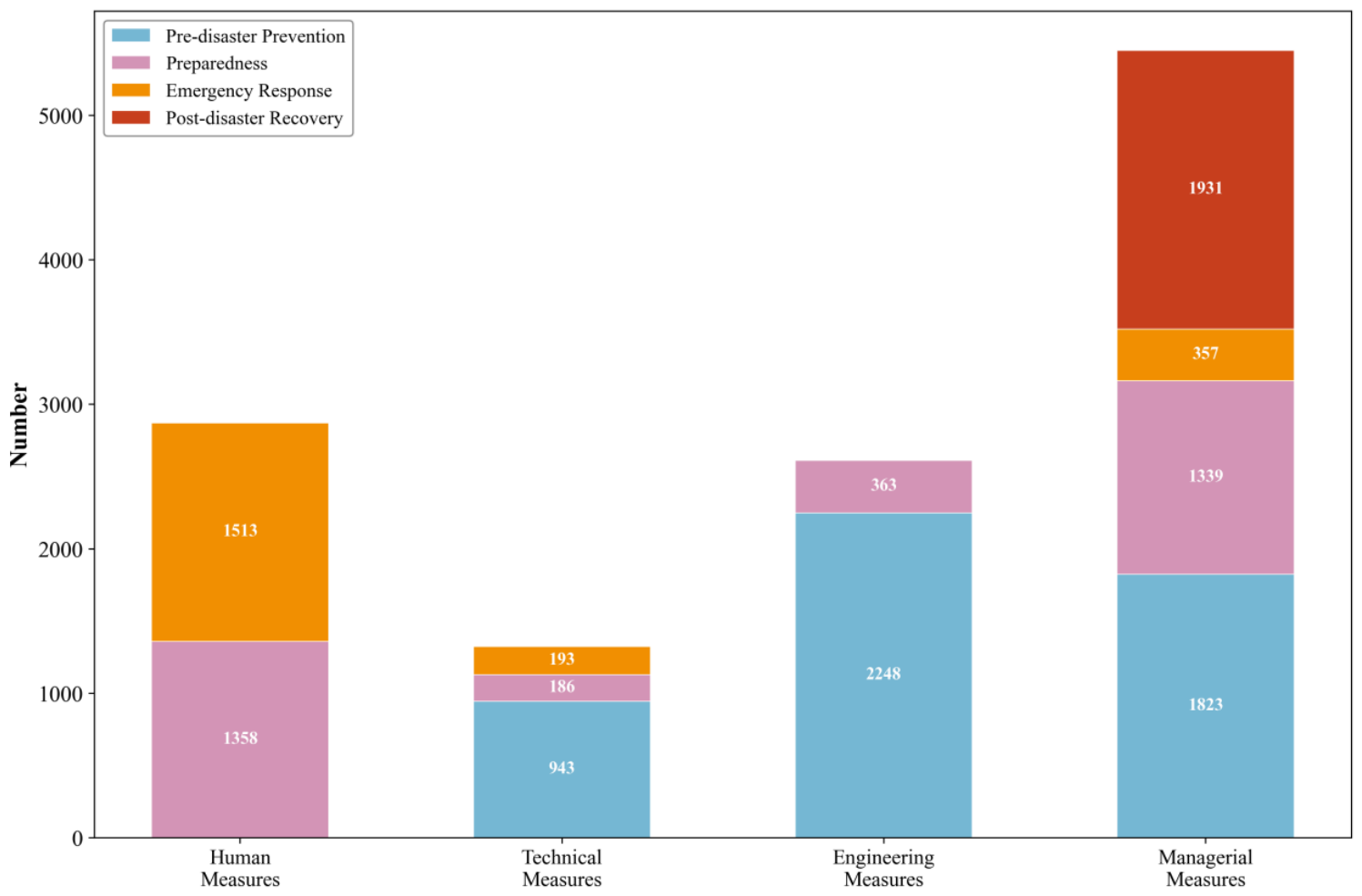
The distribution of prevention and control measures across different disaster chain stages is presented in Figure 10. The results reveal a clear stage-dependent pattern.
Figure 10.
Distribution of Prevention and Control Measures across Disaster Chain Phases.
Pre-disaster prevention measures accounted for the largest proportion (40.9%, 5014 records), with engineering measures contributing the most (2248 records), followed by managerial measures (1823 records) and technical measures (943 records). This finding indicates that the current prevention framework places a strong emphasis on risk reduction and intrinsic safety enhancement before disaster occurrence, with engineering protection and proactive risk control serving as key components of disaster prevention.
Preparedness measures represented 26.5% of all records (3246 records) and were mainly composed of human measures (1358 records) and managerial measures (1339 records). This reflects the critical role of training exercises, emergency duty systems, resource allocation, and contingency planning in disaster preparedness. Response-stage measures accounted for 16.8% of the total records (2063 records). Human measures dominated this stage (1513 records), substantially exceeding other categories, indicating that on-site emergency operations, rescue activities, and cross-departmental coordination remain the primary response mechanisms during disaster events.
Notably, all post-disaster recovery measures (15.8%, 1931 records) belonged to the managerial category. These measures mainly involved resource restoration, regulatory optimization, accountability implementation, and compliance improvement. This finding suggests that post-disaster recovery relies heavily on institutional coordination, governance mechanisms, and continuous improvement processes rather than solely on engineering or technical interventions.
Overall, pre-disaster prevention and preparedness measures together accounted for 67.4% of all records, substantially exceeding response and recovery measures. This distribution reflects a pronounced shift toward proactive risk governance, emphasizing risk identification, engineering protection, and preparedness activities before disaster occurrence.
3.3.3. Synergistic Relationships Among Prevention and Control Measures
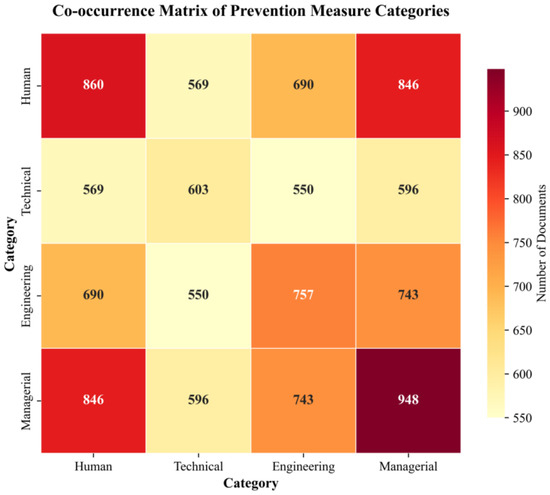
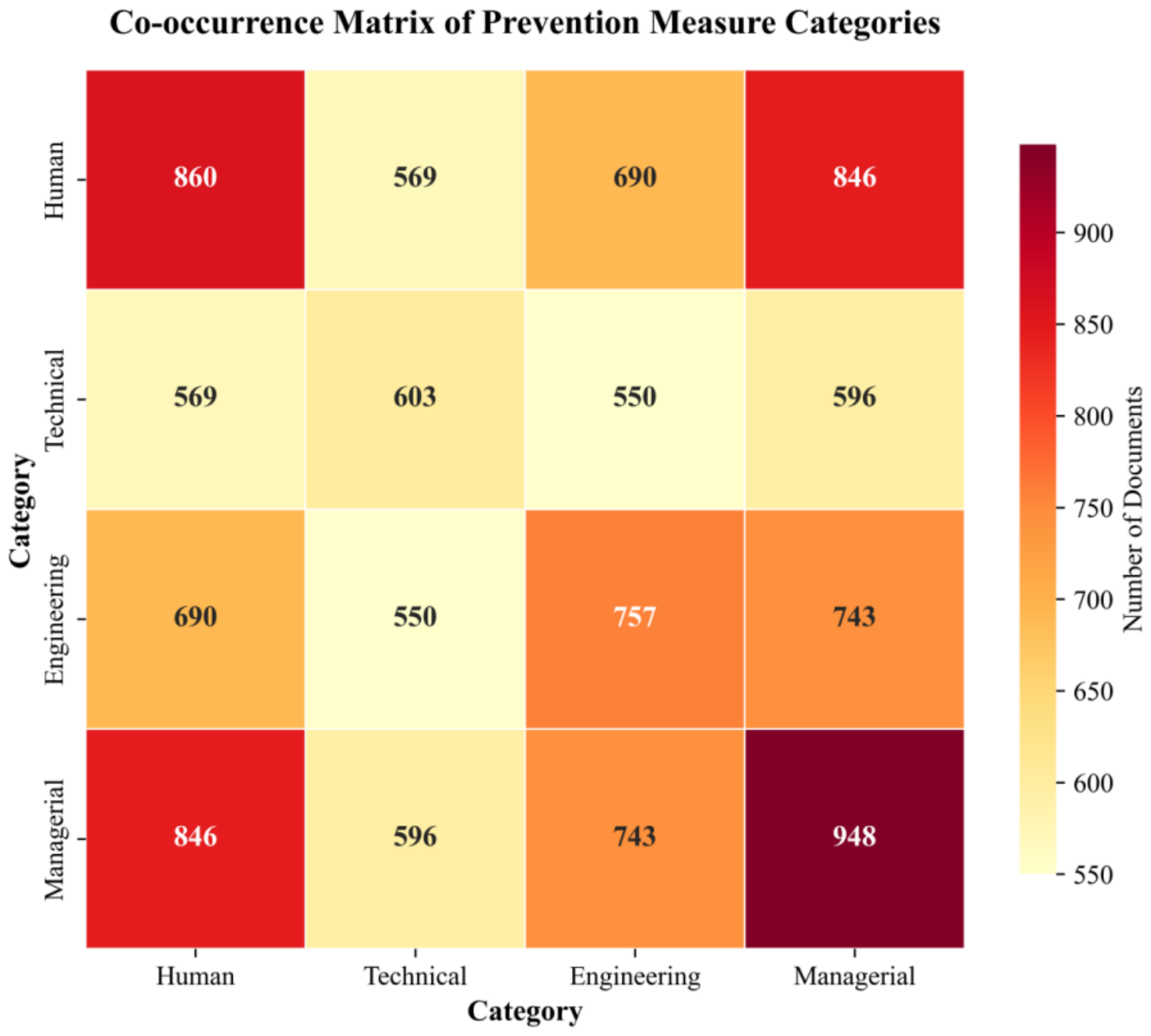
The co-occurrence relationships and statistical associations among the four categories of prevention and control measures are presented in Figure 11 and Table 5. Jaccard coefficients ranged from 0.624 to 0.879, indicating substantial co-occurrence among all categories. To further evaluate whether these relationships were statistically significant, Fisher’s exact tests and Phi coefficients were calculated for each category pair.
Figure 11.
Heatmap of Co-occurrence Frequencies among Four Categories of Prevention and Control Measures.
Table 5.
Co-occurrence Similarity and Statistical Association between Prevention and Control Measure Categories.
The results showed that all pairwise associations were statistically significant (p < 0.001), indicating that the observed co-occurrence patterns were unlikely to occur by chance. Phi coefficients ranged from 0.391 to 0.653, suggesting moderate to strong positive associations among the four categories of prevention and control measures.
The strongest association was observed between Human Measures and Managerial Measures (Jaccard = 0.879, Φ = 0.653, p < 0.001; co-occurrence frequency = 846), suggesting that personnel training, emergency drills, and collaborative response activities are frequently implemented together with risk management, emergency planning, and resource coordination measures. This result highlights the important role of organizational management in supporting human-centered prevention and response activities.
A similarly strong association was identified between Technical Measures and Engineering Measures (Jaccard = 0.679, Φ = 0.525, p < 0.001), indicating the close integration of monitoring technologies, early warning systems, automated control technologies, and engineering protection infrastructures. Engineering Measures and Managerial Measures also exhibited a relatively strong association (Jaccard = 0.772, Φ = 0.499, p < 0.001), suggesting that engineering protection strategies are typically supported by corresponding management systems and regulatory mechanisms.
Although the association between Technical Measures and Managerial Measures was comparatively weaker (Jaccard = 0.624, Φ = 0.391, p < 0.001), it remained statistically significant and moderately strong. This finding suggests that monitoring, early warning, and automated control technologies have been widely incorporated into prevention and control systems, while further integration with managerial processes remains a potential area for improvement.
4. Discussion
In recent years, compound disasters and disaster chain processes have gradually become important topics in disaster risk research. Related studies have evolved from traditional analyses of disaster mechanisms and risk assessment toward multi-source information fusion, knowledge graph construction, and large language model (LLM)-driven disaster knowledge organization and intelligent analysis [30]. Zhou et al. combined large language models with knowledge graphs to construct an earthquake emergency knowledge graph, enabling structured representation and relational reasoning of multi-source heterogeneous disaster information [31]. Ronco et al. employed LLMs and retrieval-augmented generation (RAG) techniques to automatically construct a disaster event knowledge graph from global news texts, achieving a structured representation of disaster events, impacts, and response processes [32]. In addition, recent studies have begun to explore the use of LLMs for constructing knowledge graphs of compound urban crisis scenarios to support multi-hazard association analysis and risk reasoning [33].
Compared with existing studies, the main contribution of this work lies in constructing a structured representation framework centered on mitigation measures rather than focusing solely on disaster events or loss outcomes. Furthermore, large language models were incorporated to automatically extract mitigation measures, thereby validating the applicability of the proposed framework in real disaster-related texts. Compared with conventional rule-based or keyword-matching methods, LLMs demonstrate stronger capabilities in complex semantic understanding, multi-field relational extraction, and implicit information identification. They can automatically identify different types of mitigation measures from disaster investigation reports, emergency response plans, and regulatory documents, while simultaneously enabling the structured organization of the extracted information. These findings indicate that LLMs have considerable potential for disaster knowledge extraction and the construction of risk governance knowledge bases.
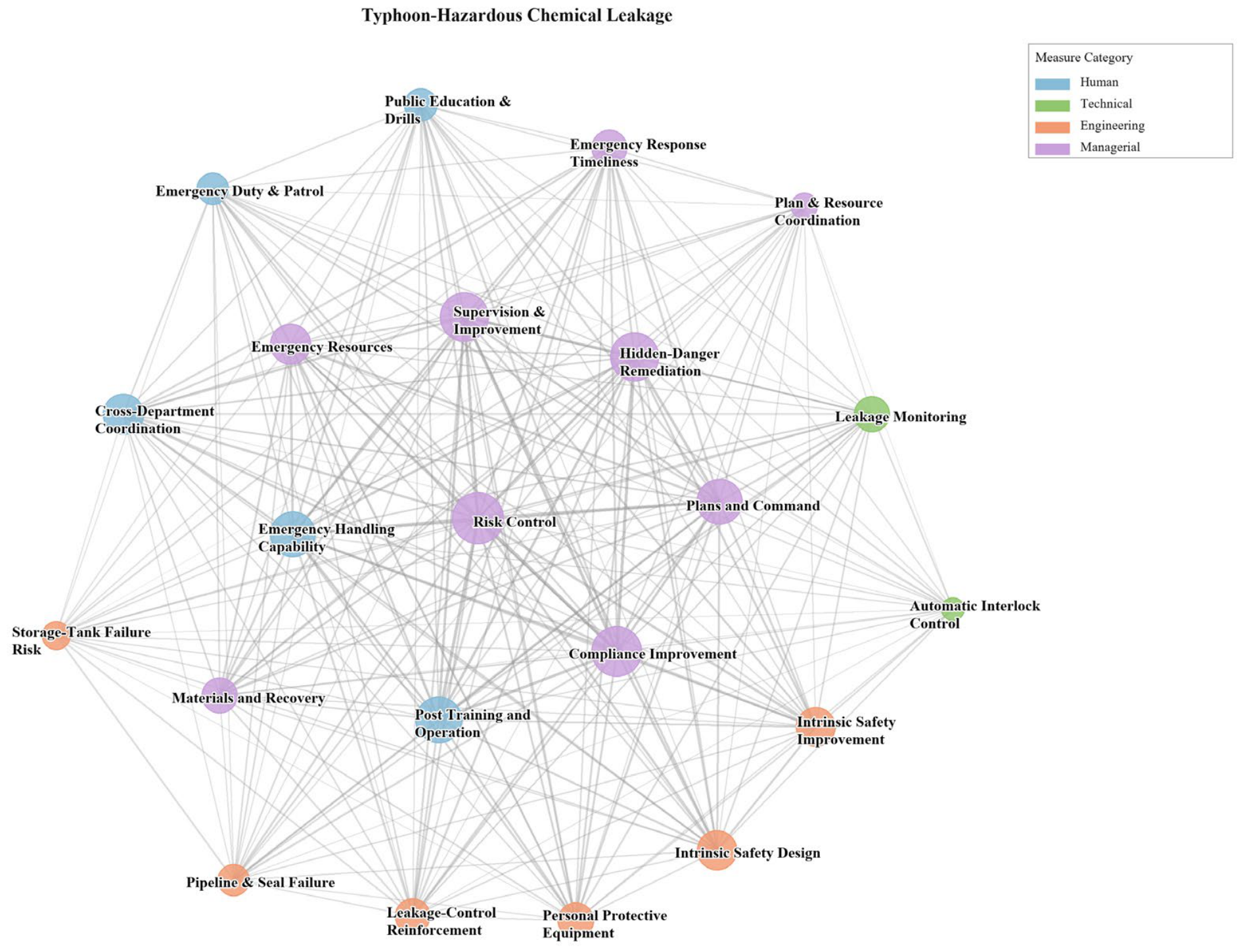
To further verify the transferability and generalizability of the proposed framework, the same extraction workflow was additionally applied to five representative compound disaster scenarios, including rainstorm–roadbed collapse, geological disaster–pipeline leakage, flood–bridge collapse, urban flooding–subway inundation, and typhoon–hazardous chemical leakage. Using the same predefined prevention and control framework, prompt template, and extraction strategy, prevention and control measures were successfully extracted and consistently organized into structured knowledge networks for all five scenarios (Appendix C, Figure A1, Figure A2, Figure A3, Figure A4 and Figure A5). Despite the differences in disaster mechanisms and prevention priorities among these compound disaster scenarios, the proposed framework effectively supported structured knowledge extraction and organization without requiring scenario-specific modifications. These results demonstrate that the proposed method is not limited to the typhoon–hazardous chemical leakage case presented in the main text, but can be readily transferred to diverse compound disaster scenarios, indicating its robustness, scalability, and generalizability.
Nevertheless, several limitations should be noted. First, the proposed mitigation framework still relies heavily on rule-based summarization and manual categorization, which may lead to category overlap and ambiguous boundaries in complex scenarios. Second, although LLMs enable structured extraction of mitigation measures, the extraction results may still be affected by hallucination issues, textual heterogeneity, and limitations in long-context processing, potentially resulting in missing information or classification bias under complex conditions [34,35]. In addition, the present study is primarily based on Chinese disaster-related texts, and its applicability to cross-regional and larger-scale data environments requires further validation.
5. Conclusions
To address the lack of structured representation and cross-scenario reuse of mitigation measures in compound disaster scenarios, this study developed a four-dimensional mitigation measure framework integrating human, technical, engineering, and managerial measures. By incorporating disaster-chain mechanisms and large language model-based information extraction, a multi-hazard mitigation measure dataset was constructed and analyzed. The results demonstrate that the proposed framework enables standardized representation of mitigation measures from heterogeneous disaster-related documents and supports comparative analysis across disaster types. These findings provide methodological support for the systematic organization and reuse of compound disaster prevention and control knowledge.
In addition to validating the proposed framework, the constructed dataset revealed several practical issues in current disaster prevention and control systems. Statistical analysis showed that prevention and preparedness measures accounted for the majority of all extracted records, whereas response and recovery measures were comparatively underrepresented. This imbalance suggests that existing disaster management documents place greater emphasis on pre-disaster risk reduction than on post-disaster recovery and adaptive management. Furthermore, the strong association observed between human and managerial measures indicates that current prevention systems remain highly dependent on organizational coordination, training, and institutional arrangements. Although engineering and technical measures showed strong mutual associations, their integration with human and managerial measures was comparatively weaker, highlighting opportunities to strengthen the coordination of multi-dimensional prevention and control strategies in compound disaster scenarios.
From an application perspective, the proposed framework can support several practical emergency management scenarios. During emergency planning, the structured mitigation measure database can assist practitioners in rapidly identifying relevant prevention and control measures for specific disaster chains and compound hazard scenarios. During emergency response, the database can serve as a knowledge support resource for measure retrieval and decision recommendation. In post-disaster assessment and knowledge management, the framework can facilitate the accumulation, updating, and reuse of mitigation knowledge across different disaster events. Nevertheless, a gap remains between the current research prototype and operational emergency management systems. Additional efforts are required to improve interoperability with existing emergency command platforms, decision-support systems, and real-time disaster monitoring infrastructures.
Future work may further integrate knowledge graphs, causal reasoning, and multimodal large language models to enhance semantic association representation and dynamic inference capabilities among mitigation measures. In addition, temporal sequence information and disaster chain propagation mechanisms could be incorporated to achieve dynamic coupling analysis between mitigation measures and disaster evolution processes. Future studies may also integrate real-time monitoring data and practical emergency management scenarios to promote the development of mitigation frameworks toward more intelligent, dynamic, and operational applications, thereby supporting compound disaster risk governance and intelligent emergency decision-making.
Author Contributions
W.C.: Writing—review and editing, Writing—original draft, Conceptualization, Methodology, Software, Formal analysis. D.O.: Writing—review and editing, Supervision, Resources, Project administration. Y.Z.: Writing—review and editing, Investigation, Validation. J.Z.: Writing—review and editing, Data curation. X.L.: Writing—review and editing, Visualization. All authors have read and agreed to the published version of the manuscript.
Funding
This work was supported by the National Key R&D Program of China (NO. 2024YFC3016800) and the Department of Science and Technology of Ningxia Hui Autonomous Region under Grant [NO. 2024BEG01005].
Institutional Review Board Statement
Not applicable.
Informed Consent Statement
Not applicable.
Data Availability Statement
Data will be made available on request.
Conflicts of Interest
The authors declare no conflicts of interest.
Appendix A. Representative Prompt Template for Prevention and Control Measure Extraction
Appendix A.1. System Prompt
Role:
You are an expert in risk prevention and safety management with expertise in extracting structured information from disaster-related documents according to predefined domain-specific requirements. Your task is to extract prevention and control measures strictly based on the source document without generating unsupported information.
Appendix A.2. User Prompt
Please extract the prevention and control measure information from the following disaster-related document.
The extracted information must be explicitly supported by the source document and should not contain inferred or fabricated content. Please classify and extract the information according to the predefined prevention and control measure framework.
Document Content
{Document Text}
Please return the extracted information in the following JSON format:
{
“Field_1”: “…”,
“Field_2”: “…”,
“Field_3”: “…”,
“…”: “…”
}
The predefined fields correspond to the prevention and control measure framework presented in this study and are dynamically generated according to different compound disaster scenarios.
Appendix A.3. Extraction Rules
Only extract information that is explicitly stated in the original document.
Do not infer, generate, or fabricate information that is not supported by the source text.
If a predefined field does not contain relevant information, return “N/A” or “No Relevant Information”.
Ensure that all predefined fields are included in the returned JSON object.
For the prevention and control measure fields, extract the specific measures described in the document. If no corresponding measure is mentioned, return “Not Mentioned”.
Appendix A.4. Model Configuration
| Item | Configuration |
| Large language model | GLM-4.6 |
| Response format | JSON Object |
| Temperature | 0.2 |
| Document segmentation | Paragraph-based chunking |
| Maximum chunk length | Approximately 60,000 characters per chunk |
| Result aggregation | Results from multiple document chunks were merged and standardized to generate the final structured record. |
Appendix B. Prevention and Control Measure System for Typhoon—Hazardous Chemical Leakage Compound Disasters
| Primary Dimension | Hazard Type | Secondary Indicator | Tertiary Indicator |
| Human Measures | Typhoon | A1. Public Education and Drills | A11. Annual coverage rate of community/school typhoon emergency drills |
| A12. Public pass rate of typhoon risk awareness assessment | |||
| A13. Household coverage rate of emergency preparedness publicity | |||
| A2. Evacuation and Sheltering | A21. Completeness of population registry in high-risk areas | ||
| A22. Implementation rate of one-to-one evacuation responsibility assignment | |||
| A23. Compliance rate of shelter area and emergency supplies per capita | |||
| A3. Emergency Duty and Inspection | A31. Implementation rate of 24 h duty system at grassroots level | ||
| A32. Completeness rate of pre-disaster hazard inspection records | |||
| Hazardous Chemical Accident | A4. Occupational Training and Operation | A41. Certification rate of hazardous operation personnel | |
| A42. Compliance rate of permit-to-work procedures for high-risk operations | |||
| A43. Coverage rate of safety briefing for contractors | |||
| A5. Emergency Response Capability | A51. Proficiency rate in using personal protective equipment (Level A/B suits and SCBA) | ||
| A52. Annual frequency of hazardous chemical leakage drills | |||
| A53. Proficiency of emergency shutdown operation among control room operators | |||
| A6. Public Protection in Surrounding Areas | A61. Establishment rate of coordination mechanisms with sensitive facilities (schools, hospitals, etc.) | ||
| A62. Public awareness rate of hazardous chemical identification and emergency avoidance | |||
| Typhoon + Hazardous Chemical Accident | A7. Integrated Training and Drills | A71. Annual frequency of typhoon-induced leakage emergency drills | |
| A72. Proportion of personnel familiar with typhoon-specific hazardous chemical emergency procedures | |||
| A73. Implementation rate of enhanced emergency duty following typhoon warnings | |||
| A8. Personnel Collaborative Protection | A81. Evacuation rate of non-essential personnel before typhoon landfall | ||
| A82. Qualification rate of dual-protection PPE for wind/rain and chemical hazards | |||
| A83. Public awareness rate of dual emergency plans (evacuation and toxic gas protection) | |||
| A9. Cross-Sector Coordination | A91. Establishment rate of enterprise-government coordination mechanisms (meteorological, emergency management, environmental protection, fire services) | ||
| A92. Timeliness rate of suspension orders for hazardous chemical transportation during typhoon periods | |||
| Technical Measures | Typhoon | B1. Meteorological Monitoring and Early Warning | B11. Accuracy of 72-h typhoon track forecasts |
| B12. Adequacy of automatic weather station coverage | |||
| B13. Average lead time of warning issuance (hours) | |||
| B2. Information Dissemination System | B21. Multi-channel warning coverage | ||
| B22. Accessibility rate of last-mile warning delivery in rural and mountainous areas | |||
| B3. Urban Flood Monitoring | B31. Real-time monitoring coverage of waterlogging sites using cameras and water-level sensors | ||
| B32. Coverage rate of remote control systems for drainage pumping stations | |||
| Hazardous Chemical Accident | B4. Leakage Monitoring | B41. Coverage ratio of toxic/flammable gas detectors in critical areas | |
| B42. Compliance of alarm threshold settings with GB 50493 | |||
| B43. Deployment rate of AI-based video leakage detection systems | |||
| B5. Automatic Interlock Control | B51. Response time of Emergency Shutdown (ESD) systems (seconds) | ||
| B52. Automatic activation rate of sprinkler and absorption systems | |||
| B53. Compliance rate of Safety Instrumented System (SIS) SIL requirements | |||
| B6. Emergency Communication and Positioning | B61. Emergency communication blind spots ≤ 5% | ||
| B62. Personnel positioning accuracy (m) | |||
| B63. Data synchronization delay with government platforms ≤ 30 s | |||
| Typhoon + Hazardous Chemical Accident | B7. Multi-source Sensing Integration | B71. Establishment rate of integrated typhoon–gas monitoring platforms | |
| B72. Coverage rate of online monitoring for tank/pipeline displacement and stress | |||
| B73. Availability rate of explosion-proof video surveillance systems (IP66+) | |||
| B8. Intelligent Warning Linkage | B81. Pass rate of automatic ESD triggering tests under typhoon red alerts | ||
| B82. Combined meteorological and leakage warning push time ≤ 1 min | |||
| B83. Frequency of UAV inspections before and after typhoons | |||
| B9. Extreme Condition Assurance | B91. Availability rate of satellite/Mesh emergency communication systems | ||
| B92. Proportion of critical control rooms equipped with UPS power supply ≥ 72 h | |||
| Engineering Measures | Typhoon | C1. Flood Control and Drainage Infrastructure | C11. Compliance rate of seawalls/river embankments |
| C12. Compliance rate of drainage network design return periods | |||
| C13. Remediation status of flood-prone locations | |||
| C2. Wind-resistant Building Reinforcement | C21. Reinforcement or demolition rate of unsafe buildings | ||
| C22. Wind protection measures for billboards and tower cranes | |||
| C3. Lifeline Infrastructure Protection | C31. Wind-resistant upgrading of power and communication facilities | ||
| C32. Emergency restoration time of major roads (hours) | |||
| C4. Typhoon Hazard Factors | C41. Impacts of typhoon weather conditions | ||
| C42. Wind load effects | |||
| C43. Hydraulic loads (storm surge/heavy rainfall) | |||
| C44. Risks of ground settlement and liquefaction | |||
| Hazardous Chemical Accident | C5. Inherently Safer Design | C51. Proportion of low-risk material substitution | |
| C52. Compliance rate of material-media compatibility reviews | |||
| C6. Containment and Collection Facilities | C61. Bund capacity ≥ 110% of the largest storage tank | ||
| C62. Compliance rate of anti-seepage and anti-corrosion protection | |||
| C63. Effective capacity and valve integrity of accident wastewater retention systems | |||
| C7. Personal Protective Facilities | C71. Availability of emergency eyewash/showers within 15 m | ||
| C72. Adequacy of SCBA allocation for work teams | |||
| C73. Upgrade rate of blast-resistant and positive-pressure control rooms | |||
| C8. Storage Tank Failure Risks | C81. Damage to tank-top accessories | ||
| C82. Structural deformation of storage tanks | |||
| C83. Tank inclination and displacement | |||
| C84. Internal overpressure in storage tanks | |||
| C85. Damage to tank connections and fittings | |||
| C86. Failure of tank bottom structures | |||
| C87. Severe tank aging | |||
| C88. Manufacturing defects of tanks | |||
| C9. Pipeline and Seal Failure Risks | C91. Pipeline welding defects | ||
| C92. Pipeline corrosion | |||
| C93. Poor sealing performance | |||
| C94. Non-compliant gasket materials | |||
| C95. Seal design defects | |||
| C96. Seal failure | |||
| Typhoon + Hazardous Chemical Accident | C10. Typhoon-resilient Engineering | C101. Compliance of tank anchoring systems with wind resistance requirements | |
| C102. Bund height accounting for combined storm surge and rainfall water levels | |||
| C103. Floodproof and power-resilient upgrading rate of pumping stations | |||
| C11. Enhanced Leakage Control | C111. Application rate of dual-valve and swivel-loading systems in typhoon-prone areas | ||
| C112. Retrofitting rate of wind-resistant pipeline supports and flexible connections | |||
| C113. Coverage rate of anti-backflow and overflow protection in accident wastewater systems | |||
| C12. Inherent Safety Enhancement | C121. Reduction rate of outdoor storage of highly toxic or volatile chemicals | ||
| C122. Acceptance rate of integrated explosion-proof, corrosion-resistant, and wind-resistant designs | |||
| C13. Valve and Connection Risks | C131. Valve design defects | ||
| C132. Inadequate flange tightening | |||
| C133. Failure to close valves in a timely manner | |||
| C134. Valve leakage due to poor sealing | |||
| Managerial Measures | Typhoon | D1. Emergency Planning and Command | D11. Update rate of emergency plans within 3 years |
| D12. Annual frequency of multi-agency drills | |||
| D2. Hazard Management | D21. Dynamic update rate of risk and hazard inventories | ||
| D22. Closure rate of major hazard rectification | |||
| D3. Resources and Recovery | D31. Adequacy of emergency material reserves | ||
| D32. Temporary recovery status within 72 h after disaster | |||
| Hazardous Chemical Accident | D4. Risk Management | D41. Implementation rate of accountability systems for major hazard installations | |
| D42. HAZOP/LOPA assessment cycle ≤ 3 years | |||
| D43. Closure rate of hazard investigation findings | |||
| D5. Emergency Resources | D51. Effectiveness of integration between enterprise leakage plans and government emergency systems | ||
| D52. Adequacy rate of emergency materials such as absorbent pads and oil booms | |||
| D53. Agreements with professional emergency rescue organizations | |||
| D6. Compliance and Improvement | D61. Safety standardization certification level | ||
| D62. Root Cause Analysis (RCA) of leakage incidents | |||
| Typhoon + Hazardous Chemical Accident | D7. Compound Risk Assessment | D71. Quantitative Risk Assessment (QRA) for typhoon-induced leakage scenarios | |
| D72. Typhoon vulnerability inventory | |||
| D73. Implementation rate of inventory reduction mechanisms during typhoon periods | |||
| D8. Integrated Planning and Resource Coordination | D81. Completeness of integrated typhoon-hazardous chemical emergency plans | ||
| D82. Pre-positioning rate of emergency resources before typhoon events | |||
| D83. Availability of professional rescue forces during typhoon periods | |||
| D9. Regulation and Continuous Improvement | D91. Coverage rate of key supervision lists for typhoon-hazardous chemical scenarios | ||
| D92. No secondary accidents during typhoon periods in the past three years | |||
| D93. Application of digital twin-based coupled scenario simulations | |||
| D10. Emergency Response Timeliness | D101. Timeliness of personnel evacuation | ||
| D102. Timeliness of water-mist dilution measures | |||
| D103. Timeliness of leakage sealing operations | |||
| D104. Timeliness of bund deployment |
Appendix C. Knowledge Networks of Prevention and Control Measures for Different Compound Disaster Scenarios
Figure A1.
Prevention and Control Measure Knowledge Network for the Rainstorm–Roadbed Collapse Scenario.
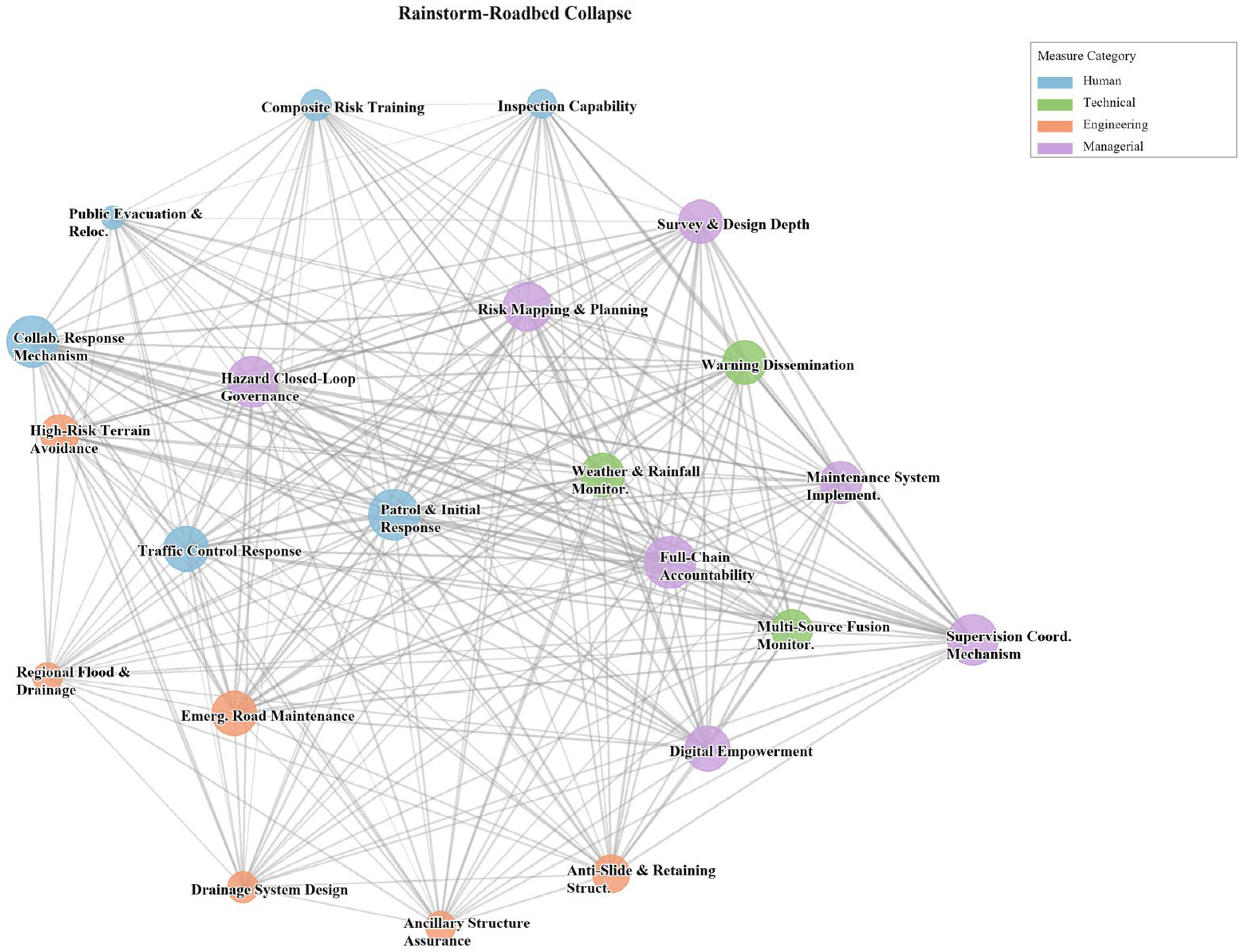
Figure A2.
Prevention and Control Measure Knowledge Network for the Geological Disaster–Pipeline Leakage Scenario.
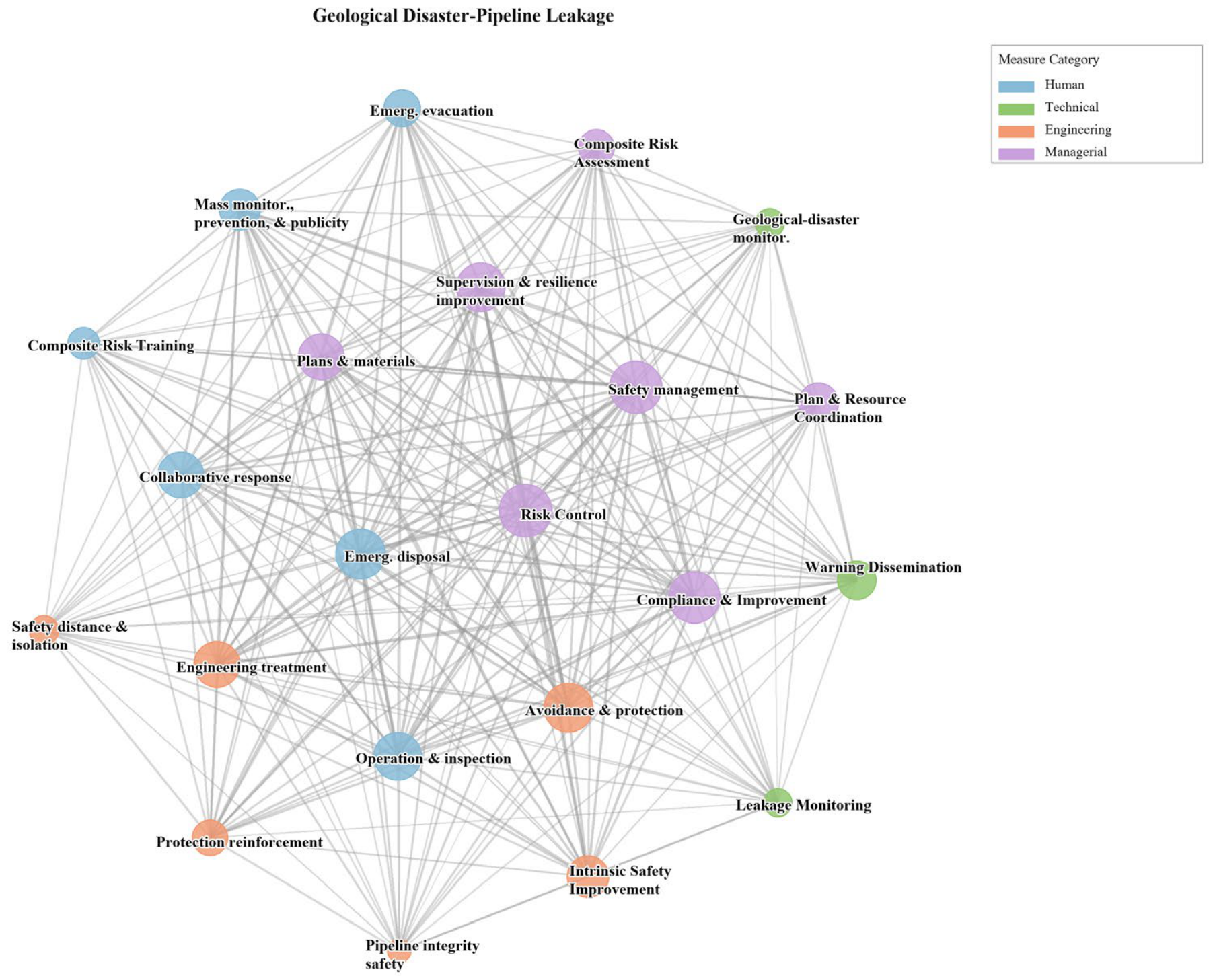
Figure A3.
Prevention and Control Measure Knowledge Network for the Flood–Bridge Collapse Scenario.
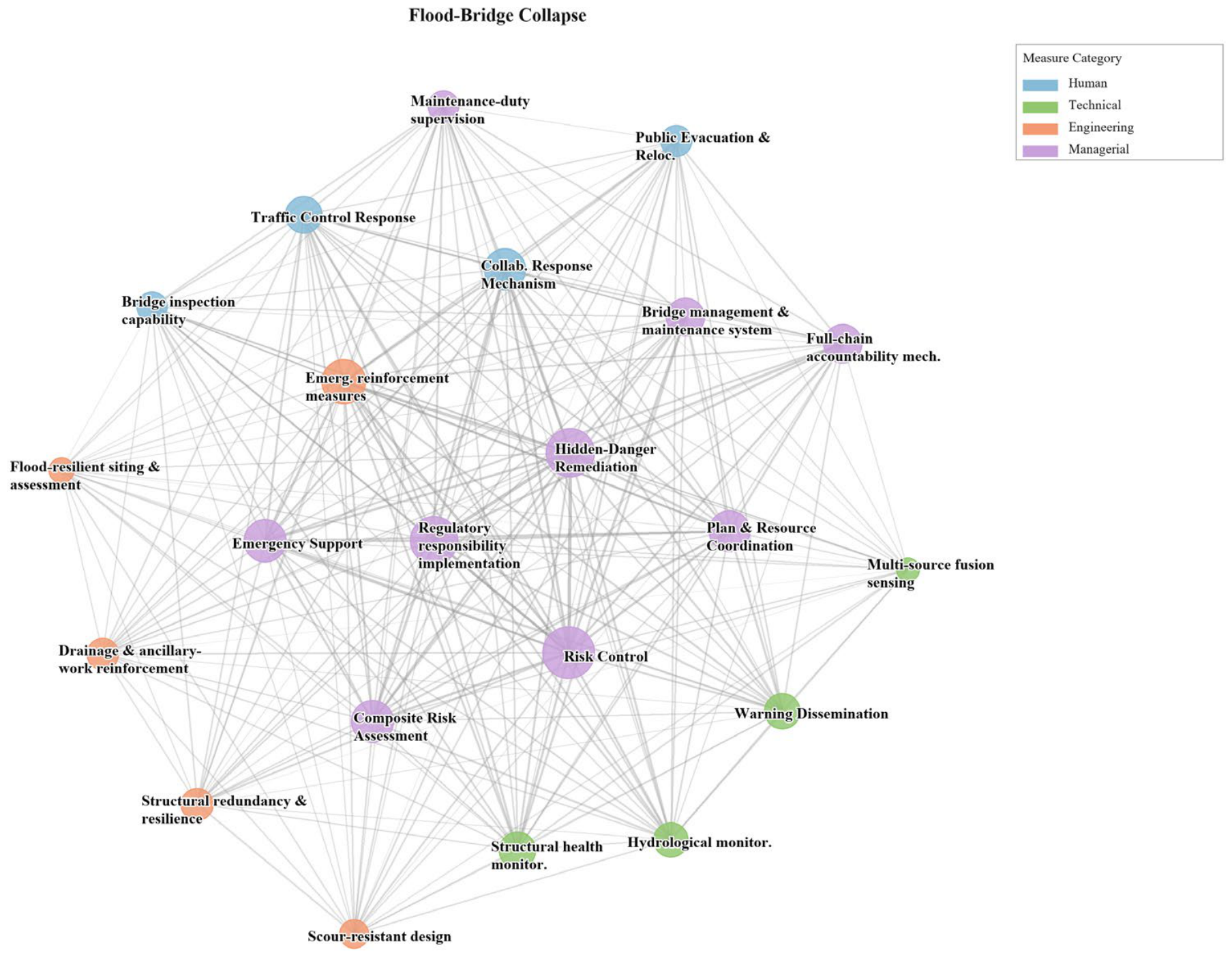
Figure A4.
Prevention and Control Measure Knowledge Network for the Urban Flooding–Subway Inundation Scenario.
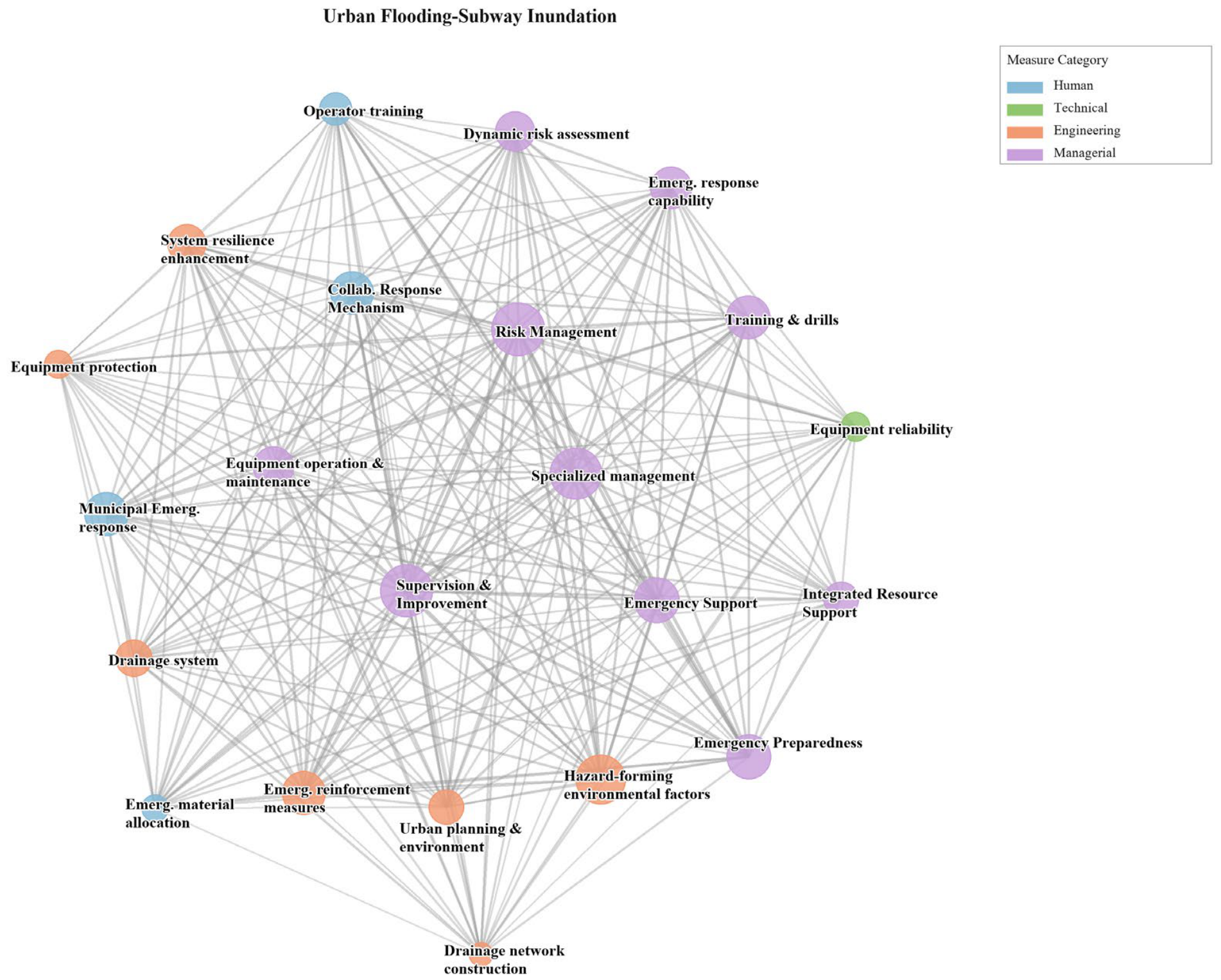
Figure A5.
Prevention and Control Measure Knowledge Network for the Typhoon–Hazardous Chemical Leakage Scenario.
References
- Mao, Y.; Luo, X.; Tzioutzios, D.; Suarez Paba, M.C.; Guo, H.; Liang, R.; Di, B.; Liao, W. A systematic literature review of risk management research on hydrometeorological hazards-related Natech events. J. Loss Prev. Process Ind. 2024, 92, 105478. [Google Scholar] [CrossRef] [Scilit]
- Sikorova, K.; Blazkova, K. Natech accidents and their impact on environment caused by dangerous substance release from the SEVESO establishment. J. Loss Prev. Process Ind. 2025, 96, 105593. [Google Scholar] [CrossRef] [Scilit]
- Pescaroli, G.; Alexander, D. Understanding compound, interconnected, interacting, and cascading risks: A holistic framework. Risk Anal. 2018, 38, 2245–2257. [Google Scholar] [CrossRef] [Scilit] [PubMed]
- Yao, L.; Ren, F.; Du, K.; Du, Q. From knowledge graph construction to retrieval-augmented generation: A framework for comprehensive earthquake emergency support. Geo-Spat. Inf. Sci. 2026, 29, 509–529. [Google Scholar] [CrossRef] [Scilit]
- Delforge, D.; Wathelet, V.; Below, R.; Sofia, C.L.; Tonnelier, M.; van Loenhout, J.A.F.; Speybroeck, N. EM-DAT: The Emergency Events Database. Int. J. Disaster Risk Reduct. 2025, 124, 105509. [Google Scholar] [CrossRef] [Scilit]
- European Commission. eMARS: Major Accident Reporting System. European Commission Joint Research Centre. 2024. Available online: https://emars.jrc.ec.europa.eu/ (accessed on 8 May 2026).
- Necci, A.; Krausmann, E. Introduction to eNATECH: A User Guide; Publications Office of the European Union: Luxembourg, 2022. [Google Scholar] [CrossRef]
- Liu, N.; Xiong, A.; Zhang, Q.; Liu, Y.; Zhan, Y.; Liu, Y. Development of basic dataset of severe convective weather for artificial intelligence training. J. Appl. Meteor Sci. 2021, 32, 530–541. [Google Scholar] [CrossRef]
- Brignone, M.; Santamato, F.; Ravina, M.; Busini, V.; Panepinto, D. NaTech database and methodologies for its risk assessment: A review. Nat. Hazards 2025, 121, 19565–19590. [Google Scholar] [CrossRef] [Scilit]
- Qiu, Z.; Liu, Q.; Li, X.; Zhang, J.; Zhang, Y. Construction and analysis of a coal mine accident causation network based on text mining. Process Saf. Environ. Prot. 2021, 153, 320–328. [Google Scholar] [CrossRef] [Scilit]
- Lu, C.; Li, S.; Xu, N.; Zhang, Y.; Qin, Y. Hybrid-driven risk assessment methodology for coal and gas outburst: Integration of complex network, disaster mechanism, and multi-level fusion modeling. Process Saf. Environ. Prot. 2025, 199, 107226. [Google Scholar] [CrossRef] [Scilit]
- Lu, C.; Li, S.; Xu, N.; Qin, Y. A knowledge-data-structure hybrid-driven multi-characteristic fusion weighting model: Application of coal and gas outburst risk assessment. Expert Syst. Appl. 2026, 299, 130201. [Google Scholar] [CrossRef] [Scilit]
- Tiwana, M.S.; Braytee, A.; Karimi, F.; Bandara, M.; Jan, T.; Prasad, M. DisasterSense: Event classification in social media using RAKE-based pattern mining and dictionary-driven named entity recognition. Mach. Learn. Appl. 2026, 24, 100882. [Google Scholar] [CrossRef] [Scilit]
- Linardos, V.; Drakaki, M.; Tzionas, P. Utilizing LLMs and ML Algorithms in Disaster-Related Social Media Content. GeoHazards 2025, 6, 33. [Google Scholar] [CrossRef] [Scilit]
- Xu, F.; Ma, J.; Li, N.; Cheng, J.C.P. Large language model applications in disaster management: An interdisciplinary review. Int. J. Disaster Risk Reduct. 2025, 127, 105642. [Google Scholar] [CrossRef] [Scilit]
- Lei, Z.; Dong, Y.; Li, W.; Ding, R.; Wang, Q.R.; Li, J. Harnessing Large Language Models for Disaster Management: A Survey. In Findings of the Association for Computational Linguistics: ACL 2025; Association for Computational Linguistics: Stroudsburg, PA, USA, 2025. [Google Scholar] [CrossRef] [Scilit]
- Ji, S.; Pan, S.; Cambria, E.; Marttinen, P.; Yu, P.S. A survey on knowledge graphs: Representation, acquisition, and applications. IEEE Trans. Neural Netw. Learn. Syst. 2022, 33, 494–514. [Google Scholar] [CrossRef] [Scilit] [PubMed]
- Shi, P.; Wang, M.; Hu, X.; Ye, T. Integrated risk governance consilience mode of social-ecological systems. Acta Geogr. Sin. 2014, 69, 863–876. [Google Scholar] [CrossRef]
- Shi, P. Theory and practice on disaster system research in a fourth time. J. Nat. Disasters 2005, 14, 1–7. [Google Scholar] [CrossRef]
- Tian, Y.; Ma, J.; Yue, Q.-R.; Xu, Z.; Lu, X.-Z.; Zhang, M.-L.; Gu, D.-L.; Lu, M.-T. Analysis of the 2024 Noto Peninsula, Japan earthquake based on the “Risk Source-Risk Exposure-Mitigation Force” urban safety theory. Eng. Mech. 2025, 42, 230–239. [Google Scholar] [CrossRef]
- Fan, W.; Liu, Y.; Weng, W. Triangular framework and “4+1” methodology for public security science and technology. Sci. Technol. Rev. 2009, 27, 3. [Google Scholar] [CrossRef]
- Huang, H.; Fan, W. Constructing “safety resilient city”: Concept, theory and implementation path. J. Beijing Adm. Coll. 2024, 1–9. [Google Scholar] [CrossRef]
- UNDRR. Sendai Framework for Disaster Risk Reduction 2015–2030; United Nations Office for Disaster Risk Reduction: Geneva, Switzerland, 2015. [Google Scholar]
- Putrama, I.M.; Martinek, P. Heterogeneous data integration: Challenges and opportunities. Data Brief. 2024, 56, 110853. [Google Scholar] [CrossRef] [Scilit] [PubMed]
- Chen, C. CiteSpace II: Detecting and visualizing emerging trends and transient patterns in scientific literature. J. Am. Soc. Inf. Sci. Technol. 2006, 57, 359–377. [Google Scholar] [CrossRef] [Scilit]
- Jaccard, P. Étude comparative de la distribution florale dans une portion des Alpes et des Jura. Bull. Société Vaudoise Des. Sci. Nat. 1901, 37, 547–579. [Google Scholar]
- Real, R.; Vargas, J.M. The probabilistic basis of Jaccard’s index of similarity. Syst. Biol. 1996, 45, 380–385. [Google Scholar] [CrossRef]
- Fisher, R.A. On the interpretation of χ2 from contingency tables, and the calculation of P. J. R. Stat. Soc. 1922, 85, 87–94. [Google Scholar] [CrossRef] [Scilit]
- Cohen, J. Statistical Power Analysis for the Behavioral Sciences, 2nd ed.; Lawrence Erlbaum Associates: Mahwah, NJ, USA, 1988. [Google Scholar]
- Aljedani, N.; Alotaibi, R.; Cherif, A. AI–Social Media Integration for Crisis Management: A Systematic Review of Data and Learning Aspects. Appl. Sci. 2025, 15, 12283. [Google Scholar] [CrossRef] [Scilit]
- Zhou, W.; Huang, M.; Liu, S.; You, Q.; Meng, F. Research on the construction and application of earthquake emergency information knowledge graph based on large language models. IEEE Access 2025, 13, 127742–127757. [Google Scholar] [CrossRef] [Scilit]
- Ronco, M.; Bandelli, L.; Bertolini, L.; Consoli, S.; Delforge, D.; Spadaro, A.; Corbane, C. Disaster storylines and knowledge graphs from global news with large language models and retrieval-augmented generation. Sci. Data 2026, 13, 689. [Google Scholar] [CrossRef] [Scilit] [PubMed]
- Hao, H.; Chen, X.; Chen, Y.; Li, N. Uncovering compound urban crises with large language model-assisted knowledge graph construction. Int. J. Disaster Risk Reduct. 2025, 127, 105669. [Google Scholar] [CrossRef] [Scilit]
- Ji, Z.; Lee, N.; Frieske, R.; Yu, T.; Su, D.; Xu, Y.; Ishii, E.; Bang, Y.; Madotto, A.; Fung, P. Survey of hallucination in natural language generation. ACM Comput. Surv. 2023, 55, 248. [Google Scholar] [CrossRef] [Scilit]
- Liu, N.F.; Lin, K.; Hewitt, J.; Paranjape, A.; Bevilacqua, M.; Petroni, F.; Liang, P. Lost in the middle: How language models use long contexts. Trans. Assoc. Comput. Linguist. 2024, 12, 157–173. [Google Scholar] [CrossRef] [Scilit]



























Disclaimer/Publisher’s Note: The statements, opinions and data contained in all publications are solely those of the individual author(s) and contributor(s) and not of MDPI and/or the editor(s). MDPI and/or the editor(s) disclaim responsibility for any injury to people or property resulting from any ideas, methods, instructions or products referred to in the content. |
© 2026 by the authors. Licensee MDPI, Basel, Switzerland. This article is an open access article distributed under the terms and conditions of the Creative Commons Attribution (CC BY) license.