


Abstract
This study examines how corporate resilience is developed through inclusive and sustainable cocoa partnerships within integrated value chain governance in Sulawesi, Indonesia. Using an interpretive qualitative multiple-case study design, the research compares PT Mars Symbioscience Indonesia in Luwu Timur and PT Papandayan Cocoa Industries (Barry Callebaut) in Polewali Mandar. Data were collected from January to May 2025 through semi-structured interviews with 21 actors representing corporate, intermediary, farmer, financial, and local government stakeholders, and were triangulated with company documents, policy texts, and the relevant literature. The data were analyzed thematically using NVivo, supported by process tracing and cross-case comparison. The findings show that both firms combine certification, traceability, procurement arrangements, monitoring, and knowledge transfer, but organize these instruments through different partnership architectures. Mars follows a vertically integrated capability-building model involving 4250 farmers and 17 trained collectors, whereas Barry Callebaut relies on an intermediary- and standards-centered model through PT Bumi Surya Selaras, involving 3125 farmers in 126 farmer groups. These findings suggest that inclusive and sustainable cocoa partnerships function not only as supply-chain coordination mechanisms but also as institutional arrangements for governing smallholder-based production resources and long-term supply sustainability. Across cases, these partnerships were reported and interpreted as supporting supply stability, cocoa bean quality improvement, and risk mitigation. This suggests that corporate resilience in smallholder-based cocoa value chains is co-produced through the integration of governance mechanisms, farmer capacity building, intermediary coordination, and sustainable resource management.
1. Introduction
The global cocoa sector has become an important arena for debates on sustainability governance, supply chain resilience, and inclusive agribusiness development. Cocoa production supports millions of smallholder farmers and remains a key internationally traded agricultural commodity. Nevertheless, the sector faces mounting challenges, including climate change, declining farm productivity, price volatility, and increasing regulatory pressure related to sustainability and deforestation-free supply chains, particularly following the introduction of the European Union Deforestation Regulation, which places cocoa and cocoa-derived products under stricter due diligence and traceability requirements [1]. These pressures threaten not only farmers’ livelihoods but also the supply stability of companies that depend on cocoa as a raw material. As a result, multinational cocoa companies increasingly develop partnership strategies with smallholder farmers to strengthen long-term supply resilience [2,3,4].
Smallholder farmers dominate cocoa production but remain among the most vulnerable actors in the value chain. Limited access to capital, cultivation technologies, market information, and institutional support contributes to unstable productivity and income. Therefore, cocoa sustainability can no longer be understood only as compliance with standards. It must also be examined through value chain governance: how companies coordinate production, distribute benefits, manage risks, and build more inclusive relationships with upstream actors. Through contracts, certification, traceability systems, knowledge transfer, and institutional networks, companies seek to influence farm-level practices while securing quality and continuity of supply. Previous studies show that value chain governance, certification, farmer organizations, and upgrading processes strongly shape both economic and social outcomes for smallholder farmers [5,6,7].
Recent regulatory developments have further increased the importance of traceability and documentation in cocoa sourcing. Under emerging deforestation-free supply-chain requirements, cocoa companies are increasingly expected to demonstrate the legality, origin, and sustainability status of the raw materials they procure. This makes traceability not only a technical tool for supply-chain monitoring, but also a governance mechanism linking farm-level practices, documentation systems, certification, and market access [1,8].
In this study, inclusive and sustainable cocoa partnerships are understood as collaborative governance arrangements that connect cocoa companies, smallholder farmers, farmer groups or cooperatives, intermediaries, financial institutions, local governments, and supporting organizations in order to strengthen farmer participation, production capacity, value distribution, traceability, sustainability compliance, and long-term supply security. This definition emphasizes that inclusion refers not only to farmers’ participation in market channels, but also to their access to knowledge, inputs, organizational support, and more stable relationships with downstream actors. Sustainability, in turn, refers to the ability of partnerships to support production resource management, quality assurance, traceability, and long-term supply-base protection.
In recent years, inclusive partnerships have become a prominent governance approach in the cocoa sector. These partnerships connect companies, smallholder farmers, farmer groups or cooperatives, governments, financial institutions, and supporting organizations to improve productivity, sustainability, traceability, and value distribution. Unlike transactional sourcing arrangements, inclusive partnerships position farmers not only as suppliers but also as upstream partners whose capacities must be strengthened to meet quality, sustainability, and traceability requirements. This perspective is consistent with the literature on inclusive value chains and inclusive development, which emphasizes that partnership effectiveness depends on incentives, capacities, and power relations among stakeholders [9,10,11].
Indonesia provides an important context for examining these issues. As one of the major cocoa-producing countries, Indonesia still relies heavily on smallholder production, while facing aging trees, pest and disease pressure, limited technology adoption, weak access to finance, and uneven institutional support. Sulawesi is particularly strategic because it is a major cocoa-producing region and a site of various public–private partnership initiatives aimed at revitalizing Indonesian cocoa competitiveness. Previous studies have highlighted the challenges of multi-stakeholder cocoa partnership governance and the importance of more inclusive value chain models for Indonesian smallholders [12,13].
At the practical level, cocoa companies have developed different partnership models. Some emphasize cultivation training, technical assistance, seed development, and long-term mentoring, while others focus on certification, traceability, farmer-group organization, and marketing coordination. These differences indicate that corporate resilience is not produced by a single instrument. Rather, it may emerge through productivity improvement, stronger intermediary coordination, compliance with standards, or a combination of these mechanisms within a coherent governance architecture. Recent studies show that the effectiveness of corporate sustainability schemes in Indonesia depends on certification implementation, intermediary capacity, and the quality of farm-level intervention design [3,8,14,15,16,17].
Although the literature on cocoa sustainability, certification, and smallholder inclusion continues to grow, it still provides limited explanation of how companies build corporate resilience through inclusive partnerships embedded in value chain governance. Many studies focus on certification impacts, farm-level sustainability outcomes, or farmer performance, while fewer studies connect governance instruments, partnership design, and corporate resilience within a single analytical framework. Research on climate-smart cocoa, farmer adaptation information, and sustainability in the cocoa–chocolate chain also shows that sustainability is closely linked to power relations, information access, and trade-offs between business and socio-environmental objectives [18,19,20]. However, these issues remain underexplored in the context of Sulawesi, Indonesia.
Based on this gap, this study asks: how is corporate resilience built through inclusive and sustainable cocoa partnerships within an integrated value chain governance framework in Sulawesi, Indonesia? This question is examined through a comparative analysis of two cases: PT Mars Symbioscience Indonesia and PT Papandayan Cocoa Industries (Barry Callebaut). The study analyzes how each company combines governance instruments, partnership structures, and collaborative practices to support supply stability, quality improvement, and risk mitigation.
Specifically, this study is guided by the following research questions:
- What governance instruments and partnership architectures characterize the inclusive and sustainable cocoa partnership models implemented by PT Mars Symbioscience Indonesia and PT Papandayan Cocoa Industries in Sulawesi?
- How do these partnership models strengthen farmer capacity, intermediary coordination, and sustainable resource governance in smallholder-based cocoa value chains?
- Through what mechanisms do inclusive and sustainable cocoa partnerships contribute to supply stability, cocoa bean quality improvement, risk mitigation, and corporate resilience outcomes?
By placing value chain governance as the main analytical lens, this study contributes to the literature in three ways. First, it links the cocoa governance and inclusive partnership literature with the concept of corporate resilience. Second, it explains how different partnership architectures create different pathways of learning, coordination, compliance, and resource governance. Third, it provides empirical evidence from Sulawesi, a major cocoa-producing region that remains less represented in global cocoa governance debates. Thus, corporate resilience is conceptualized not as an internal firm capability alone, but as a relational outcome co-produced through governance mechanisms, inclusive partnership practices, intermediary coordination, and smallholder engagement.
1.1. Literature Review
1.1.1. Global Value Chain Governance in the Cocoa Industry
The literature on global value chain (GVC) governance emphasizes coordination mechanisms, transaction codification, supplier capabilities, and power asymmetries as key factors shaping governance structures. Value chains are therefore not merely product flows, but relational arrangements that determine who sets standards, bears risks, and captures added value [21]. This perspective is highly relevant to cocoa because production depends largely on smallholder farmers, while quality specifications, certification, traceability, and market access are largely shaped by downstream companies, exporters, and international standard-setting bodies.
Studies on cocoa supply chains show that sustainability governance varies across different positions in the chain. Keller et al. [5] indicate that contracts, audits, and knowledge exchange are used at the raw-material production stage to encourage compliance with social and environmental standards, whereas certification becomes more dominant downstream as a tool for demonstrating compliance and protecting market access. However, stronger formal governance does not automatically lead to fairer relationships for farmers. Maguire-Rajpaul et al. [22] show that climate-smart cocoa schemes may reproduce older forms of hegemony when environmental agendas are defined mainly by corporate and state interests. Similarly, Carodenuto et al. [23] demonstrate that contract formalization can provide structured benefits but may also limit farmers’ freedom to choose buyers and reinforce upstream power imbalances. Thus, cocoa value chain governance needs to be analyzed not only through instruments such as contracts, audits, and certification, but also through power relations, institutional mediation, and distributive consequences.
1.1.2. Inclusive Partnerships and the Inclusion of Smallholder Farmers in the Cocoa Value Chain
Inclusive partnerships in agribusiness are commonly understood as institutional arrangements that integrate smallholder farmers into modern markets through access to inputs, knowledge, market channels, and potentially fairer value distribution. However, inclusion cannot be assessed merely by the presence of farmers in partnership schemes. Ros-Tonen et al. [24] emphasize that inclusivity is multidimensional, covering economic, social, relational, and environmental dimensions. From this view, a cocoa partnership can be considered meaningfully inclusive only if it expands market access while also strengthening farmers’ voice, reducing vulnerability, and preventing new forms of exclusion based on scale, capital, or technical standards.
Critical studies of inclusive business further caution against assuming automatic “win-win” outcomes. German et al. [25] show that market liberalization, buyer concentration, increasingly stringent standards, and the withdrawal of state support may restrict the space for genuine inclusion. Schoneveld [26] similarly argues that inclusive agribusiness models may still generate uneven benefit capture and socio-ecological trade-offs when scaled up. In cocoa partnerships, this critique is particularly important because inclusion often occurs under unequal bargaining power.
This critical perspective is particularly relevant for cocoa partnerships because inclusion may occur under conditions of unequal bargaining power. Recent work on smallholder cocoa supply chains shows that formalization through contracts and standards can provide more structured market relations, but may also limit farmers’ flexibility and reinforce buyer-driven governance when farmers have limited influence over pricing, certification requirements, or procurement conditions [23]. Therefore, the analysis of inclusive cocoa partnerships should consider not only access to markets and training, but also the distribution of power, costs, risks, and decision-making authority.
In the Indonesian cocoa context, Bemelmans and Maertens [14] show that the effectiveness of company-driven certification schemes in South Sulawesi depends on the combination of control mechanisms, market-based incentives, and capacity-building interventions. This suggests that productive inclusion does not arise from certification labels alone, but from the concrete implementation architecture through which companies, intermediaries, and farmers coordinate training, compliance, incentives, and resource access.
1.1.3. Corporate Resilience in the Cocoa Value Chain
Corporate resilience in supply chains refers to a firm’s ability to anticipate, absorb, respond to, and adapt to disruptions while maintaining core supply-chain functions. Shishodia et al. [27] conceptualize supply chain resilience through vulnerability, capabilities, strategies, and performance metrics. This perspective is relevant to cocoa because the sector faces climate change, price volatility, sustainability regulations, quality risks, and supply uncertainty. These pressures cannot be addressed through internal operational efficiency alone, particularly when firms depend on fragmented smallholder-based supply systems.
In the cocoa value chain, corporate resilience is shaped by the interaction between governance mechanisms, sustainability standards, and investment in upstream supplier capacity. Marschner et al. [28] show that sustainability strategies in the cocoa–chocolate value chain vary according to firms’ chain position, stakeholder pressures, and dependence on suppliers. Therefore, corporate resilience in cocoa should not be viewed only as an internal firm attribute, but as a relational outcome shaped by how companies govern value chains, design inclusive partnerships, coordinate intermediaries, and strengthen farmers’ capacity to maintain supply continuity and raw material quality.
1.1.4. Research Gap and Study Position
The above literature reveals three main gaps. First, studies on cocoa value chain governance have examined contracts, certification, audits, and sustainability standards, but have less frequently linked these governance instruments to corporate resilience. Second, the literature on inclusive partnerships has widely discussed farmer inclusion, but has not sufficiently explained how specific partnership architectures shape supply stability, quality management, risk mitigation, and long-term supply-base security from the perspective of firms. Third, much empirical research on cocoa governance has focused on West Africa, while evidence from Southeast Asia, particularly Sulawesi, remains limited. This gap is increasingly important under current traceability and deforestation-free sourcing requirements, where companies must coordinate not only product flows but also documentation, farmer compliance, sustainability verification, and long-term supply-base protection [1,8,15].
This study addresses these gaps by positioning inclusive and sustainable cocoa partnerships as a mediating mechanism between value chain governance and corporate resilience. Rather than examining partnerships only as farmer-support programs, the study analyzes how different partnership models organize learning, control, coordination, and resource access in smallholder-based cocoa value chains. In doing so, the study contributes to the literature by explaining corporate resilience as a relational and co-produced outcome shaped by governance design, intermediary coordination, farmer engagement, and sustainable resource management.
1.2. Conceptual Framework
The conceptual framework of this study posits that corporate resilience in the cocoa value chain is not an isolated organizational attribute. Instead, it emerges through coordination, collective learning, and relational governance among companies, farmers, farmer groups, intermediaries, financial institutions, and local governments. Global pressures such as climate change, market volatility, sustainability regulations, and zero-deforestation policies require cocoa firms to adopt more structured governance mechanisms. However, in smallholder-dependent commodity chains, these mechanisms can function effectively only when they are connected to farmers’ capacities, resources, and participation.
In this study, value chain governance is positioned as the structuring mechanism, inclusive cocoa partnerships as the mediating mechanism, and corporate resilience as the organizational outcome. Corporate resilience is understood as the ability of cocoa firms to support supply stability, strengthen raw material quality management, mitigate production and compliance risks, and maintain long-term access to smallholder-based supply sources. The conceptual contribution of this study is therefore to show how corporate resilience is co-produced through the orchestration of governance mechanisms and inclusive partnership practices within smallholder-based cocoa value chains in Sulawesi, Indonesia (Figure 1).
Figure 1.
Conceptual framework of the study.
2. Methods
2.1. Study Design
This study adopted an interpretive qualitative multiple-case study design to examine how PT Mars Symbioscience Indonesia and PT Papandayan Cocoa Industries (Barry Callebaut) develop corporate resilience through inclusive cocoa partnership models in Sulawesi, Indonesia. A qualitative case study design was appropriate because the research sought to understand a contemporary phenomenon in depth, within its real-life setting, and when the boundaries between the phenomenon and its context are not clearly separable [29,30,31]. In this study, corporate resilience, farmer inclusion, and value-chain governance are socially embedded processes that cannot be adequately captured through decontextualized survey-based designs alone.
The research also followed the principle of methodological coherence by aligning the research question, the interpretive orientation of the study, the data collection strategy, and the analytic procedures [32,33]. Because the study asks how resilience is developed through partnership practices rather than how much impact is generated, a qualitative design provides the most suitable basis for identifying organizational processes, governance routines, and actor interactions across the cocoa value chain. The multiple-case format was used to strengthen analytic generalization through comparison across two theoretically relevant corporate cases that operate in the same regional context but deploy different partnership architectures. This enabled the study to identify both common causal patterns and case-specific mechanisms.
2.2. Case Selection and Unit of Analysis
The cases were selected purposively on the basis of theoretical relevance rather than statistical representativeness. Purposive case selection is recommended in qualitative case research when the objective is to maximize analytical insight and explanatory depth [29,31]. PT Mars Symbioscience Indonesia and PT Papandayan Cocoa Industries were chosen for four reasons. First, both are globally connected cocoa corporations with strong exposure to sustainability governance and international sourcing requirements. Second, both have implemented structured partnership programs with smallholder cocoa farmers. Third, both operate in Sulawesi, which allows the research to hold constant major agroecological and regional institutional conditions. Fourth, the two companies represent contrasting organizational approaches to partnership design, thus making them suitable for a cross-case comparison.
The primary unit of analysis is the corporate-farmer partnership model. In this study, the partnership model is understood as the constellation of governance mechanisms, institutional arrangements, and relational practices through which corporations organize farmer inclusion, quality management, sustainability compliance, and sourcing stability. The analysis is structured around three dimensions: (1) value chain governance mechanisms, including contracts, certification, traceability, and monitoring; (2) inclusive partnership practices, including training, farmer organization, and access to inputs, knowledge, and market channels; and (3) corporate resilience outcomes, including supply stability, quality consistency, risk mitigation, and compliance capacity. This structuring is consistent with recent guidance on rigorous case design and transparent triangulation in case-based inquiry [30,34].
2.3. Study Area and Data Collection
This study was conducted in Sulawesi, Indonesia, from January to May 2025. Sulawesi is one of the country’s major cocoa-producing regions, where production is predominantly managed by smallholder farmers (Figure 2). Specifically, the research was carried out in Luwu Timur Regency, South Sulawesi Province, which serves as a partnership center for PT Mars Symbioscience Indonesia, and in Polewali Mandar Regency, West Sulawesi Province, which is a partnership center for PT Papandayan Cocoa Industries (Barry Callebaut).
Figure 2.
Map of research locations. Source: Created by the authors based on public-domain geographic data from Natural Earth.
Informants were selected from corporate sustainability coordinators or supervisors, local intermediary company representatives, collectors, smallholder cocoa farmers, financial institution representatives, and local government officials. These actor groups were included because they occupied different institutional positions within the partnership system and therefore provided complementary evidence about how partnership mechanisms operated in practice. Interviews were conducted in Indonesian and local contexts where appropriate, lasted approximately 30–60 min, and were subsequently transcribed and translated into English for analysis. Collecting multiple perspectives was important for reducing single-actor bias and strengthening interpretive depth in qualitative case analysis [34,35].
Participants were recruited purposively to capture the perspectives of actors occupying different institutional positions within the cocoa partnership system. The selection was not intended to achieve statistical representativeness, but to ensure analytical coverage of actors directly involved in partnership design, implementation, coordination, financing, and farm-level participation. The final sample of 21 participants was considered adequate because it covered the main actor categories in both cases, including farmers, collectors, corporate or intermediary staff, local government representatives, and financial institution representatives. Data adequacy and theoretical saturation were assessed during data collection and analysis. Saturation was considered to have been reached when additional interviews no longer generated substantially new themes related to governance mechanisms, farmer inclusion, intermediary roles, traceability practices, and resilience-related outcomes.
Secondary data were used to complement and triangulate the interview evidence. These materials included corporate sustainability reports, internal or publicly available program documents, policy and regulatory texts, project reports, and the peer-reviewed academic literature on cocoa governance, supply-chain resilience, and inclusive agri-business. Interview-based claims were corroborated by comparing participants’ accounts with documentary evidence regarding program objectives, implementation timelines, policy requirements, institutional roles, and reported outcomes. This cross-checking helped verify factual claims, situate interview narratives within their broader governance and policy context, and identify areas of convergence or discrepancy across data sources. The use of multiple evidence streams is consistent with case study methodology because it supports contextual interpretation and improves the credibility of inferences drawn from interview data [30,31].
2.4. Data Analysis
All interview transcripts and documentary materials were analyzed using NVivo 12 plus for Windows to manage the dataset systematically and maintain an explicit audit trail. NVivo is particularly useful when a study draws on multiple qualitative sources and aims to trace iterative coding decisions transparently [36]. In this study, NVivo was not treated as a substitute for interpretation, but as a tool to support rigorous data organization, retrieval, memo writing, and linkage across cases. Initial codes were informed by the conceptual framework, while additional codes were developed from recurring patterns in the interview data. The NVivo coding outputs, including coded excerpts, node summaries, and coding reports, contain confidential and potentially identifiable information related to participants, organizations, and program activities. For this reason, the coding outputs cannot be made publicly available, even in anonymized form, because anonymization may not sufficiently prevent deductive disclosure in this case-study context. No computational code, scripts, or custom software were developed for the analysis.
The interview guide was developed from the conceptual framework and organized around partnership design, governance mechanisms, farmer participation, resource access, intermediary roles, traceability and certification practices, implementation challenges, and perceived resilience-related outcomes. Initial coding was guided by these conceptual categories, while inductive codes were added when recurring patterns emerged from the interview data. Codes were then grouped into higher-order themes through focused coding and cross-case comparison.
The analysis proceeded in three stages. First, an initial coding phase was conducted to identify meaning units related to governance mechanisms, training and knowledge transfer, certification and traceability, farmer participation, supply-chain risks, and resilience outcomes. Second, focused coding was used to connect related codes into higher-order categories such as capability building, market integration, compliance coordination, and sourcing stability. Third, themes were refined across and within cases to construct an explanatory account of how inclusive partnership models contribute to corporate resilience. This analytic logic follows recent methodological guidance emphasizing transparent and systematic theme development in qualitative research [37,38].
Because the study is explanatory, the coding strategy is combined with process tracing. Process tracing was operationalized by reconstructing plausible sequences linking governance instruments to partnership practices and resilience-related outcomes. For each case, the analysis examined whether evidence supported a sequence from governance mechanisms, such as certification, traceability, procurement arrangements, monitoring, and knowledge transfer, to inclusive partnership practices, such as farmer training, intermediary coordination, farmer-group organization, and market access, and then to perceived resilience-related outcomes, including supply stability, quality improvement, and risk mitigation. These sequences were assessed through convergence between interview accounts, documentary evidence, and cross-case comparison. Recent methodological work shows that process tracing is particularly useful when researchers seek to explain causal processes in complex interventions rather than estimate average treatment effects [39].
2.5. Trustworthiness and Ethical Considerations
To strengthen trustworthiness, the study applied triangulation, pattern matching, memo-based reflexive interpretation, and a transparent case study protocol. Triangulation was implemented at both the data-source and analytic levels by comparing interview accounts with documentary evidence and by examining convergent as well as divergent perspectives among actor groups [34,35]. Pattern matching was used to compare empirical observations with the study’s conceptual expectation that inclusive governance mechanisms mediate the relationship between farmer engagement and resilience outcomes.
The study also followed current recommendations for coherent and transparent qualitative reporting by explicitly linking the interpretive stance of the research to the chosen methods and by documenting how themes are developed from the dataset [33,38]. An explicit audit trail was maintained through systematic data organization, memo writing, coding records, and cross-case comparison in NVivo. These procedures helped strengthen the credibility, dependability, and confirmability of the qualitative analysis.
The study was conducted in accordance with ethical principles for qualitative research involving adult participants. This study received formal ethical approval from the ethics committee under approval number 189/II.3.AU/A/2026. All participants were informed about the purpose of the study and provided consent before the interviews. Participation was voluntary, and participants could decline to answer questions or withdraw from the interview. Participant identities were anonymized using coded identifiers, and role descriptors were aggregated where necessary to reduce the risk of deductive disclosure. All data were used strictly for academic purposes.
2.6. Cross-Case Comparison
After within-case analysis was completed, a cross-case comparison was undertaken. Cross-case comparison is appropriate in multiple-case research because it allows the researcher to assess whether similar outcomes emerge through different organizational arrangements and to identify context-specific variations in implementation [29,30]. The comparison focuses on governance configuration, farmer engagement model, traceability intensity, inclusion strategy, and resilience outcomes (Table 1).
Table 1.
Analytical dimensions for cross-case comparison.
The comparison is designed to reveal whether the Mars model, which places stronger emphasis on direct capability building and agronomic learning, differs systematically from the Barry Callebaut model, which relies more heavily on cooperative mediation, certification, and sourcing coordination. The purpose is not to rank the firms normatively, but to identify the mechanisms through which different partnership configurations shape resilience. This comparative logic supports theory refinement by linking micro-level partnership practices to meso-level value-chain governance and organizational outcomes.
3. Results
3.1. Participant Characteristics and Themes
The study included a total of 21 participants, ranging in age from 26–56 years, with an average age of 42.5 years (SD = 8.1). Among the participants, three identified as female and eighteen as male. Their occupations represented a diverse range of actors in the cocoa value chain, including ten farmers, four collectors, two representatives from local government, two representatives from a financial institution, and three corporate or intermediary staff members. Regarding educational attainment, six participants had completed basic education, eight had completed secondary education, and seven had attained tertiary education. Geographically, ten participants were from Luwu Timur, while eleven were from Polewali Mandar. Table 2 summarizes the characteristics of all participants.
Table 2.
Participant characteristics.
The findings are organized into four interrelated themes. First, the partnership models describe how each company structures relationships among firms, farmers, intermediaries, government actors, and financial institutions. Second, the value chain governance mechanisms explain how certification, traceability, procurement arrangements, monitoring, and knowledge transfer organize upstream coordination. Third, inclusive partnership practices show how farmers gain access to training, inputs, extension services, and market channels, while also revealing limits related to bargaining power and financial inclusion. Fourth, corporate resilience outcomes are presented as perceived and interpreted contributions to supply stability, cocoa bean quality, and risk mitigation, supported by interview evidence, documentary materials, and cross-case comparison.
3.2. The Partnership Models
Research findings indicate that both companies are developing inclusive cocoa partnerships, but through different governance logics. PT Mars Symbioscience Indonesia has established a more vertically integrated partnership focused on capacity building, while PT Papandayan Cocoa Industries (Barry Callebaut) has developed a partnership that is more mediated by local actors, certification, and marketing coordination. These differences are significant because they demonstrate that inclusive partnerships in the cocoa value chain do not exist as a single model, but rather as a spectrum of approaches that balance technical learning, quality control, compliance, and supply organization.
3.2.1. Partnership Model of PT Mars Symbioscience Indonesia
In Luwu Timur Regency, South Sulawesi, PT Mars Symbioscience Indonesia has developed an inclusive partnership model that connects cocoa farmers, local collectors, government agencies, and financial institutions within a relatively integrated value chain architecture (Figure 3). At the core of this model is the Mars Symbioscience processing plant in Makassar, which receives fermented cocoa beans from an upstream processing unit, namely Mars Wotu. Mars Wotu serves as a regional hub for purchasing wet cocoa beans from farmers and as the initial fermentation site before the raw materials are sent to the main factory. One participant stated:
“In general, our partnership model is quite integrated. The farmers serve as the main producers, and their harvest is collected through a network of collectors that we have developed. After that, the wet purchasing and initial fermentation are carried out at Mars Wotu, before being sent to the processing facility in Makassar. So, our relationship doesn’t end with the purchase, but also extends to providing guidance at the farm level.” (SH07)
Figure 3.
PT Mars Symbioscience partnership model in Luwu Timur Regency, South Sulawesi Province.
To strengthen the capacity of smallholder farmers, the company provides technical support that includes farm certification programs, nursery development through the Cocoa Doctor initiative, as well as training on sustainable cocoa cultivation, harvesting, and post-harvest handling. One stakeholder said:
“The most noticeable aspect was the technical training. We were taught how to prune, fertilize, control pests and diseases, as well as how to harvest and handle post-harvest processes. In addition, there was also support with seedlings and farm development, so we were not only given instructions but were also supported throughout the production process.” (SH04)
Similar accounts from collectors and farmers indicated that the Mars model combines procurement with technical assistance, making the relationship more developmental than purely transactional.
Local governments support regulatory facilitation and coordination, while financial institutions provide financing schemes that enable investment in inputs, production tools, and logistics.
“Local governments usually assist with facilitation and coordination. Meanwhile, financial institutions play a role in providing funding support for specific inputs, tools, or production needs.” (SH07)
The main strength of the Mars model lies in its vertical integration. This integration creates alignment of objectives among the stakeholders, increases operational efficiency, and strengthens long-term commitment. Up until the time of the study, the program involved 4250 cocoa farmers and was supported by 17 trained collectors.
“We manage this program through structured coordination between the company, farmers, and collectors. A total of 17 trained collectors serve as the main liaison between the company and 4250 cocoa farmers, primarily in collecting harvests, delivering technical information, monitoring cocoa bean quality, and ensuring that the cocoa supply remains stable and meets the company’s standards.” (SH07)
This scale of participation indicates a high level of farmer community involvement as well as the company’s organizational capacity to maintain intensive upstream relationships. Substantively, this model was reported and interpreted as supporting three main outcomes: greater stability of raw material supply, stronger traceability from farm to factory, and the promotion of more sustainable cultivation practices.
3.2.2. Partnership Model of PT Papandayan Cocoa Industries (Barry Callebaut)
In Polewali Mandar Regency, West Sulawesi, PT Papandayan Cocoa Industries has developed an inclusive partnership model through PT Bumi Surya Selaras (BSS), a local intermediary company that serves as an operational intermediary in cocoa bean procurement. In this model, farmers, collectors, financial institutions, and local governments are connected through a single collection and processing chain focused on supply efficiency, meeting standards, and ensuring volume continuity (Figure 4). PT Bumi Surya Selaras purchases dried cocoa beans from farmers, either directly or through collectors, and then supplies processed-ready beans to PT Papandayan Cocoa Industries. This arrangement was described by participants as follows:
“Our model operates through PT Bumi Surya Selaras or BSS as the operational intermediary. So, farmers sell dried cocoa beans, either directly or through collectors, then BSS handles the collection and distribution to PT Papandayan Cocoa Industries. This way, the supply chain becomes more structured in terms of volume, quality, and administration.” (SH15)
Figure 4.
PT Papandayan Cocoa Industries (Barry Callebaut) partnership model in Polewali Mandar Regency, West Sulawesi Province.
To improve productivity and maintain long-term partnerships, the company together with PT Bumi Surya Selaras provides technical support in the form of farm certification programs, seedling development and seed distribution, Good Agricultural Practices training, as well as harvest and post-harvest training. One stakeholder explained:
“What stands out the most is that farmers now have a clearer route to market and a better understanding of buyers’ standards. In addition, they also receive training support in Good Agricultural Practices, seedling development, harvesting, and post-harvest handling.” (SH13)
The Polewali Mandar Department of Agriculture and Food Security supports policy facilitation and public outreach, while Bank Rakyat Indonesia provides financial services to farmers and collectors.
“We are more focused on policy facilitation and outreach. For example, we help disseminate program information, bridge communication with farmer groups, and support a conducive policy environment.” (SH11)
Another participant added:
“In this context, our role becomes more visible because the flow of financial support is connected to intermediary networks that are actively coordinating production and procurement.” (SH17)
Compared to the Mars model, the Barry Callebaut model demonstrates more tangible financial integration because the flow of funds moves from financial institutions through intermediaries to farmers and collectors, ensuring the continuity of the production cycle.
This partnership involves 3125 farmers organized into 126 farmer groups. The farmer groups function as institutional hubs for harvest coordination, collection of produce, dissemination of technical information, and communication of the company’s quality requirements.
“We manage this partnership by strengthening the role of farmer groups as the main coordinating platform. A total of 3125 cocoa farmers are organized in 126 farmer groups, enabling the process of assistance, dissemination of technical information, collection of harvests, and monitoring of cocoa quality to be carried out in a more structured manner.” (SH15)
The presence of farmer groups and collectors demonstrates that the quality of inclusion in this model is highly dependent on the quality of intermediary organizations. Overall, the Barry Callebaut model adds value at the farm level through technical and institutional support, while also ensuring supply availability and quality control for downstream industries.
3.2.3. Comparison Synthesis of Partnership Models
When compared, the Mars model stands out more as a capacity-building and direct relationship-based model, while the Barry Callebaut model is more prominent as an intermediary-based, certification, and market integration model. This difference is not merely a technical variation, but reflects two distinct paths toward corporate resilience. At Mars, resilience is built primarily through improving farmers’ technical capabilities and stabilizing volume based on productivity. At Barry Callebaut, resilience is more often built through compliance with standards, group coordination, and regularity within procurement networks. These findings are in line with Keller et al. [5] and Marschner et al. [28], who assert that sustainability strategies in the cocoa sector are greatly influenced by a company’s position in the value chain as well as the choice of governance instruments used to coordinate upstream suppliers. Table 3 summarizes the comparative analytical findings across the two cases, showing how different governance mechanisms and farmer inclusion pathways shape resilience-related outcomes through distinct but complementary partnership models.
Table 3.
Comparative analytical matrix of governance mechanisms, inclusion pathways, evidence sources, and resilience-related outcomes.
3.3. Value Chain Governance Mechanisms
3.3.1. Governance Instruments
The analysis identifies four main governance instruments present in both partnership models, namely certification systems, traceability and monitoring systems, procurement arrangements based on contractual relationships, and knowledge transfer and training programs. These four instruments do not operate independently, but rather complement each other in linking corporate sustainability goals, changes in farmer behavior, and supply assurance for the processing industry.
In the Mars model, knowledge serves as the dominant instrument of coordination. Training, outreach, and technical assistance are the main means of transforming cultivation practices at the farm level. The stakeholders said:
“The most prominent, of course, are training and technical assistance. Farmers are supported in sustainable cocoa cultivation, harvesting, and post-harvest handling. For us, if farmers’ technical skills improve, productivity increases, quality gets better, and ultimately the supply for the company also becomes more stable.” (SH07)“What stands out the most is that access to knowledge and guidance has become clearer. They don’t just sell the cocoa beans, but also understand what the companies are looking for. When farm practices improve, productivity and quality usually increase as well.” (SH01)
By contrast, in the Barry Callebaut model, standards and traceability serve as the main entry points for governance. Participants described this as follows:
“Yes, it is quite appropriate. In our model, standards, documentation, and traceability do serve as strong entry points. Training still exists, but it is usually closely linked to the need to maintain supplier status in accordance with standards.” (SH15)
Changes in farmers’ practices are more strongly driven by compliance with certification procedures, documentation, and quality rules. In other words, technical learning is present but is closely tied to the need to maintain market access and status as a traceable supplier.
“The main characteristic lies in coordination through intermediaries. This system relies on farmer groups, collectors, and BSS to maintain the flow of cocoa beans, information, quality, and documentation. So the strength of this model is in organization and compliance.” (SH13)
These findings show that standards-based governance can be effective when supported by an intermediary capable of translating company regulations into work routines at the farmer level.
3.3.2. Intermediary Role
The effectiveness of governance in both companies is greatly influenced by intermediaries. In the Mars model, collectors and field officers primarily serve as knowledge facilitators. They connect farmers with the company, accelerate the flow of technical information, and facilitate the implementation of agronomic recommendations in the field. Several participants described this role as follows:
“Collectors are not just cocoa bean aggregators. In reality, they also serve as intermediaries between farmers and companies. They help accelerate the flow of information, facilitate the volume aggregation, and in some situations, ensure that technical recommendations from the field can be implemented. So their role is broader than just transactions.” (SH07)“That’s right. On paper, it may seem like collectors only collect cocoa beans, but in reality, we also help facilitate communication. If there are trainings or technical instructions, we help pass them on to the farmers. If there are issues from the farmers, we are often the first to hear about them. Our position is therefore intermediary, linking the company and farmers.” (SH01)
In the Barry Callebaut model, intermediaries have a more complex role, acting as supply aggregators, quality information managers, as well as compliance supervisors. PT Bumi Surya Selaras, farmer groups, and collectors serve as key nodes that ensure volume, quality, and documentation proceed according to the company’s expectations. One participant remarked:
“Intermediaries perform a rather broad range of functions. They help aggregate volume, monitor quality, manage information related to traceability, and ensure that the required documents are available. So their role is not neutral; they are an important part of corporate governance at the upstream level.” (SH15)
Another participant added:
“This means we are in the middle, but not just as passive intermediaries. We have to ensure that communication between the company and the farmers remains uninterrupted. If there are new requirements regarding quality, documentation, or traceability, we are the first to help explain them to the farmer groups and collectors. On the other hand, if there are issues in the field, we are also the ones who relay them to the company.” (SH12)
The results of this study confirm that the quality of partnership implementation is largely determined by the operational capacity of the intermediary, and not merely by the company’s program design on paper.
3.4. Inclusive Partnership Practices
3.4.1. Strengthening Farmers’ Capacity
Both companies invest in strengthening farmers’ capacity, but their orientations differ. Mars places greater emphasis on intensive and practical technical training, such as pruning, pest and disease control, soil fertility management, and harvesting and post-harvest practices. Two stakeholders explained:
“The most significant impact was definitely the technical training. We learned a lot about pruning, farm sanitation, fertilization, pest and disease control, and even better methods for harvesting and post-harvest handling. In addition, there was also guidance for the farm and support with seedlings, so we weren’t just given theory, but also directed on how to apply it in the field.” (SH06)“Technical training is certainly the most helpful, because that’s where we learn better practices. In addition, support for nursery development and farm management is also important. In my opinion, it’s the combination of knowledge and guidance that makes the changes on the ground more tangible.” (SH10)
This approach positions capacity-building as the foundation for increasing productivity and supply stability.
In contrast, Barry Callebaut sees training mainly as a prerequisite for meeting certification, quality, and traceability standards. Thus, capacity building here is more strongly directed toward ensuring that farmers are compatible with the demands of the global market. This is supported by the following participant statement:
“What stands out the most are the Good Agricultural Practices training, guidance on harvest and post-harvest processes, and explanations about quality and traceability of the cocoa beans. We also receive support through farmer groups and seedling assistance. This program helps farmers better understand the practices required to enter a more organized marketing channel.” (SH20)
The difference in these approaches results in different adoption patterns. In the Mars system, farmers tend to demonstrate higher adoption of technical knowledge. In the Barry Callebaut system, farmers tend to show stronger market integration and compliance with traceability requirements. These findings are consistent with Krumbiegel and Tillie [7] who show that participation in cooperatives and certification schemes can enhance the sustainability of cultivation practices, although the effect depends on the accompanying institutional combinations.
3.4.2. Access to Resources
In both models, inclusive partnerships expand farmers’ access to agricultural inputs, technical information, extension services, and clearer marketing channels. At Mars, support for nurseries and technical training strengthens production capacity. One participant explained that:
“For farmers, the benefits lie in knowledge, guidance, seedling development (nurseries), and more structured market access.” (SH08)
At Barry Callebaut, support for farmer groups, GAP, and financing flows through intermediaries enhance coordination of production and marketing. As conveyed by one participant:
“The support includes farm certification, seed development and distribution, Good Agricultural Practices training, as well as harvest and post-harvest training. It also includes financing flows by BSS to strengthen coordination in production and marketing.” (SH15)
Nevertheless, the research findings still show that financial inclusion is not yet fully robust in either case. Access to financial services is available, but it has not yet become an instrument as strong as training, certification, and supply organization. A financial institution representative acknowledged that:
“Our role as a financial institution does not involve participating too deeply in partnerships; generally, farmers or collectors interact with us independently.” (SH17)
The findings are important because, as explained by Kissi and Herzig [40], economic upgrading within the cocoa value chain does not automatically lead to social upgrading. Farmers still face structural barriers related to control over resources, access to productive support, and bargaining power in market relations. Therefore, inclusive partnerships can broaden access, but do not always directly eliminate deeper structural limitations.
3.4.3. Inclusion and Participation of Farmers
Another difference can be seen in the degree of direct involvement of farmers in their relationship with the company. At Mars, the company’s interaction with farmers tends to be more intensive and direct, enabling faster learning opportunities, feedback, and technical changes. One of Mars’s partner farmers reinforced this statement, saying:
“In my opinion, our relationship is quite close. Indeed, there are collectors and facilitators in the field who help, but the company maintains a relatively strong field presence. If there are changes in direction or technical issues that need improvement, we usually receive the information quickly and there is follow-up.” (SH08)
At Barry Callebaut, the relationship with farmers is more often mediated by farmer groups, collectors, and PT Bumi Surya Selaras. This model is potentially more scalable because the company does not have to be intensively present at every point, but the quality of inclusion highly depends on the strength of the intermediary institutions. One of the partner farmers emphasized that:
“Here, most transactions go through intermediaries. We usually communicate through farmer groups, collectors, and the BSS. Even though we don’t always deal directly with the company, we still feel that the system works because information, regulations, and quality guidelines are routinely conveyed through those channels.” (SH20)
These results indicate that inclusion is determined not only by the existence of partnership programs, but also by the relational architecture that is built. The direct model enables faster technical changes, while the intermediary organization-based model allows for broader scale coordination. Both have advantages and limitations in distributing benefits, responsibilities, and coordination costs.
3.5. Corporate Resilience Outcomes
3.5.1. Supply Stability
Both partnership models were reported by participants as contributing to cocoa supply stability, although through different channels. In the Mars case, supply stability was interpreted as being supported by farm productivity improvement, long-term relationships, and close coordination among producers, collectors, Mars Wotu, and processing facilities. The main stakeholder of the company stated that:
“The three most significant impacts are, first, a more stable supply. Second, stronger traceability. Third, the adoption of sustainable cultivation practices among farmers has become more widespread. From the company’s perspective, this is very important as it concerns the long-term security of raw material supply.” (SH07)
Other stakeholders added:
“The company receives a more organized supply, better quality control, and a clearer procurement path. Because the relationship with farmers and collectors is quite intensive, tracing the origin of raw materials is also easier to do. From an operational perspective, this greatly helps maintain supply stability.” (SH03)
In the Barry Callebaut case, supply stability was interpreted as being supported by a structured procurement network, farmer-group aggregation, standards compliance, and traceability routines. Two participants explained in detail as follows:
“The company is better able to maintain the availability of volume, the quality of raw materials, and compliance with standards. Because there is a more organized route through the BSS, farmer groups, and collectors, the procurement process is more orderly. From the company’s perspective, this is important for maintaining supply continuity and reducing risks in the supply chain.” (SH16)“The benefits are more secure supply, better quality control, and improved compliance with market standards. In addition, this model helps integrate farmers into more structured market channels. So there is added value not only for the company, but also for the organization of farmers at the local level.” (SH15)
These findings are in line with Marschner et al. [28] and Schuster and Mossig [16] who emphasize that the sustainability of the cocoa supply chain depends on companies’ ability to combine economic coordination, multi-stakeholder governance, and the strengthening of upstream practices.
3.5.2. Risk Mitigation
Participants reported that the partnership models helped reduce several perceived risks faced by the companies. Production risk was interpreted as being reduced through cultivation training, seedling provision, and mentoring. Compliance risk was perceived to be lowered through certification, documentation, and verification practices. Supply disruption risk was reported to be mitigated through long-term relationships and a more organized supplier base. This is consistent with the following stakeholder statement:
“For us, inclusive partnerships are not just social programs. They are part of the company’s operational strategy. With stronger farmers, better maintained relationships, and a more organized supply chain, the risks of supply disruptions, quality issues, and standard non-compliance can be minimized. So, the company’s resilience is built from upstream investments.” (SH07)
This statement was also supported by another stakeholder, who said:
“We observe that company resilience is built when supply is more stable, compliance risks decrease, and the quality of raw materials is more consistent. All of this cannot be maintained solely from the downstream side. Therefore, companies need to strengthen upstream governance through farmers, farmer groups, collectors, and intermediaries like BSS.” (SH15)
These findings are relevant to the study by Kongor et al. [2], which emphasizes that the cocoa sector in the 2020s is facing simultaneous pressures from climate change, plant diseases, declining soil fertility, and increasingly stringent regulations. Therefore, corporate supply chain resilience requires integrated technical and institutional interventions.
3.5.3. Quality Improvement
Improvements in cultivation and post-harvest practices were reported by participants as supporting better maintenance of cocoa bean quality and more consistent supply. However, because this study did not use longitudinal quality records or rejection-rate data, the finding is interpreted as a perceived and triangulated contribution rather than a quantified quality effect. This phenomenon aligns with the following participant’s statement:
“What stands out the most is that the quality of the yields is better maintained. Production is certainly important, but we are now more aware that outcomes need to be consistent and meet standards. With a more orderly way of working, the risk of subpar yields is also reduced.” (SH09)
At Barry Callebaut, quality is shaped through standards, grading, and control at the aggregation point. Thus, quality is not only an agronomic outcome, but also a governance outcome, as it arises from a combination of knowledge transfer, market incentives, quality regulations, and coordination among actors. One of the partner farmers admitted (SH21) that:
“In my opinion, things have changed for the better. Now we are more thorough in maintaining quality because we understand that good yields do not come by themselves. There are standards that must be followed from farm management to harvest collection. Because of the guidance, farmers now better understand what needs to be improved.”
3.6. Plausible Process Mechanism and Cross-Case Synthesis
Using process tracing, this study identified a plausible process sequence observed across the two cases. This sequence illustrates how inclusive and sustainable partnerships may function as a mediating mechanism connecting governance design with perceived corporate resilience outcomes (Figure 5).
Figure 5.
Plausible process sequence linking inclusive and sustainable cocoa partnerships to perceived corporate resilience outcomes.
At Mars, the causal pathway relies more heavily on capacity-building, direct relationships, and vertical integration. At Barry Callebaut, the pathway relies more on compliance-building, intermediary organizations, and regularity in the procurement network. Although different, both show that corporate resilience is not built solely through downstream control, but rather through investment in organizing relationships with smallholder farmers at the upstream level. These findings align with Steinke et al. [8], who demonstrate that sustainable traceability systems in the context of smallholder farmers are only effective if accompanied by cross-actor collaboration as well as recognition of the costs and capacities at the farmer level.
In summary, this research asserts that an effective inclusive cocoa partnership model in Sulawesi not only expands farmer participation but also integrates training, certification, traceability, financial support, and market coordination into a single, coherent governance architecture. Consequently, corporate resilience emerges as a result of the interaction between governance design, the quality of intermediaries, and the level of farmer engagement in learning processes and compliance.
4. Discussion
4.1. Two Governance Pathways to Corporate Resilience
This study shows that corporate resilience in smallholder-based cocoa value chains can be supported through different but complementary governance pathways. The Mars model illustrates a capability-building pathway, while the Barry Callebaut model illustrates a compliance- and coordination-based pathway. Rather than representing two unrelated models, these cases show that inclusive and sustainable cocoa partnerships operate along a spectrum of governance arrangements that combine learning, control, and market coordination in different proportions.
This interpretation is consistent with Marschner et al. [28], who argue that sustainability strategies in the cocoa-chocolate value chain are shaped by firms’ positions in the chain, exposure to stakeholder pressure, and perceived supply risks. Firms with stronger needs for quality consistency and long-term supply security may invest more directly in upstream capability development, whereas firms managing broader procurement networks may rely more heavily on certification, traceability, and intermediary coordination. The findings also support Deans et al. [17], who show that advanced value-chain collaboration becomes more meaningful when companies move beyond transactional sourcing toward production organization and technical support. Thus, the two Sulawesi cases suggest that corporate resilience is not generated by one standard partnership model, but by the ability of firms to align governance instruments with supply-chain risks, farmer capacities, and coordination needs.
4.2. Value Chain Governance as the Orchestration of Learning, Control, and Coordination
A central contribution of this study is to show that cocoa value chain governance does not operate through a single dominant instrument. Certification, traceability, procurement arrangements, monitoring, and knowledge transfer are effective only when they are combined coherently. In this sense, governance should be understood as the orchestration of learning, control, and coordination rather than as the separate application of individual sustainability instruments.
These results reinforce Keller et al. [5], who emphasize that upstream cocoa governance relies on the interaction of contracts, audits, and knowledge sharing. They also extend the findings of Bemelmans and Maertens [14], who show that corporate certification schemes are more effective when control, market incentives, and capacity-building are jointly implemented. The implication is that certification alone is insufficient if farmers do not receive the assistance needed to translate standards into farm-level practice. Conversely, technical training may remain fragile if it is not connected to market incentives, quality documentation, and reliable procurement channels. Effective inclusive governance therefore requires the orchestration of learning, control, and coordination.
4.3. Intermediaries and the Depth of Farmer Inclusion
The findings demonstrate that intermediaries are central to the implementation of inclusive cocoa partnerships. Their role goes beyond logistical aggregation because they help translate corporate requirements into farmer-level routines. In both cases, intermediaries mediate the relationship between company standards and local production practices, although the intensity and form of intermediation differ across partnership models.
This supports Depoorter et al. [15], who find that buyer-driven certification in the Indonesian cocoa sector depends strongly on the structure and capacity of intermediary actors. It also aligns with Cole and Aitken [11], who emphasize the role of intermediaries in information transfer, capability development, and risk management in sustainable supply chains. In both Sulawesi cases, the quality of intermediation affects whether partnership designs become operationally meaningful or remain formal program commitments. Trust, administrative capacity, technical competence, and the ability to balance company requirements with local conditions are therefore crucial for transforming partnership architecture into actual governance performance.
However, expanded access does not automatically imply deeper inclusion. Both models improve farmers’ access to training, inputs, extension services, and more structured market channels, but access to finance and bargaining power remain relatively limited. This finding resonates with Kissi and Herzig [40], who argue that economic upgrading in cocoa value chains does not necessarily lead to social upgrading. It also reflects broader critiques of inclusive agribusiness, which warn that partnerships may include farmers in markets while leaving structural constraints related to buyer power, resource control, and agenda-setting largely unchanged [9,22,41]. Thus, the depth of inclusion should be assessed not only by the number of farmers covered, but also by the quality of participation, the distribution of benefits and risks, and the space farmers have to influence partnership practices.
The increasing importance of certification, traceability, and deforestation-free sourcing can further intensify the role of intermediaries. While intermediaries help translate corporate requirements into operational routines at the farmer level, they may also become gatekeepers of information, documentation, and market access. This means that traceability-based inclusion can become selective if less-capable farmers are unable to comply with documentation, quality, or certification requirements [8,15,23].
These findings also indicate that inclusion remains partial and conditional. Although partnerships broaden farmers’ access to training, inputs, extension services, and more structured market channels, they do not necessarily transform the distribution of power within the value chain. In both cases, firms and intermediaries continue to define quality standards, procurement requirements, certification procedures, and market access conditions. This may reproduce buyer-driven governance when farmers participate in partnership schemes without having sufficient influence over pricing, standards, or the allocation of compliance costs. Certification and traceability requirements may also create trade-offs by increasing documentation burdens, excluding less-capable farmers, or increasing dependence on intermediaries who control access to information and procurement channels. Therefore, the inclusiveness of cocoa partnerships should be understood as conditional rather than complete, depending on farmers’ bargaining power, financial access, organizational strength, and ability to influence partnership practices.
4.4. Corporate Resilience as a Relational Outcome Under Global Supply Pressures
At the company level, the findings suggest that corporate resilience in smallholder-based cocoa value chains should not be understood solely as an internal organizational capability. Rather, it can be interpreted as a relational outcome shaped by upstream coordination with farmers, collectors, farmer groups, financial institutions, and local governments. In this study, supply stability, cocoa bean quality management, and risk mitigation were reported by participants and interpreted through documentary triangulation and cross-case comparison as being associated with the ability of companies to sustain these upstream relationships and align corporate requirements with farmer-level practices.
This relational understanding is important because the cocoa sector faces increasingly complex pressures. Parra-Paitan et al. [3] identify large gaps in voluntary sustainability commitments covering global cocoa trade, while Kongor et al. [2] highlight the combined pressures of climate change, plant disease, declining soil fertility, and market volatility in the 2020s. In Indonesia, Dröge et al. [42] show that low productivity and price volatility have encouraged some cocoa farms in Sulawesi to shift toward alternative commodities such as oil palm and corn. Against this background, inclusive and sustainable partnerships can be interpreted as corporate strategies for protecting the long-term supply base by strengthening farmer capacity, improving coordination, and creating clearer market pathways.
The findings also clarify that traceability supports resilience only when it is embedded in organizational capacity and farmer support. This supports Steinke et al. [8], who warn that digital tracing systems in smallholder contexts may become exclusionary if implementation costs and farmer capacities are ignored. Traceability can therefore strengthen resilience when it is connected to intermediary organizations, procurement routines, technical assistance, and feasible documentation practices. Without these conditions, it risks becoming an additional compliance burden rather than a resilience-enhancing tool.
From the perspective of sustainable resource governance, inclusive cocoa partnerships function as institutional mechanisms for organizing smallholder-based production resources. They connect farmer capacity building, quality management, traceability, and long-term supply-base protection within a broader governance architecture. This suggests that sustainable resource governance in cocoa depends not only on market transactions, but also on the ability of partnerships to coordinate knowledge, documentation, procurement, and farmer participation [5,43]. Nevertheless, the effectiveness of these arrangements remains constrained when financial inclusion, farmer bargaining power, and the distribution of partnership benefits remain limited.
Table 4 synthesizes the main analytical insights from Section 4.1, Section 4.2, Section 4.3 and Section 4.4 by linking each research question to the empirical results and theoretical conclusions. It shows that the two partnership models represent different but complementary governance pathways: Mars emphasizes capability building and direct coordination, whereas Barry Callebaut emphasizes certification, traceability, and intermediary-based coordination. Across the cases, corporate resilience is interpreted as a relational and co-produced outcome shaped by governance design, farmer engagement, intermediary capacity, and sustainable resource governance.
Table 4.
Synthesis of research questions, empirical results, and theoretical conclusions.
4.5. Theoretical and Conceptual Implications
Theoretically, this study contributes to the value chain governance and corporate resilience literature by conceptualizing resilience as a co-produced outcome rather than as an internal firm capability. Governance is not only a downstream control mechanism imposed on upstream actors; it is also a means of building capabilities, coordinating relationships, and creating legitimacy across the value chain. Inclusive partnerships serve as the mediating mechanism through which governance instruments are translated into farmer practices, supply reliability, and corporate resilience outcomes.
The study further suggests that the most promising governance architecture for cocoa is neither purely capability-building nor purely compliance-building, but hybrid. Certification and traceability remain important for market access, regulatory preparedness, and reputational risk management. Yet, without farmer training, high-quality intermediaries, and practical implementation support, compliance may remain superficial. Conversely, technical training becomes more resilient when it is linked to quality incentives, documentation systems, finance, and organized procurement. For companies, this means that resilience strategies should integrate farmer capacity development, traceability, procurement coordination, and intermediary strengthening. For policymakers and development agencies, the findings point to the need for stronger support to farmer organizations, financial inclusion, and locally embedded extension systems that reduce the burden of compliance on smallholders.
4.6. Limitations and Future Research
This study has several limitations. First, it focuses on two corporate cases in Sulawesi and therefore does not aim for statistical generalization. Second, the analysis is based primarily on qualitative interviews and documentary triangulation, which provide rich process-based insights but do not measure long-term changes in income, productivity, or environmental performance. Third, although the study includes multiple actor groups, the perspectives of non-participating farmers and independent traders remain limited. Future research could combine qualitative process tracing with longitudinal production, income, quality, and traceability data to assess how different partnership architectures affect both corporate resilience and farmer upgrading over time. Future research could also examine gender participation more specifically, particularly how women and men participate differently in training, farmer groups, certification, traceability routines, access to finance, and partnership decision-making. Comparative studies across other cocoa-producing regions would also help clarify whether the hybrid governance model identified in Sulawesi applies more broadly across smallholder-based agricultural value chains.
5. Conclusions
5.1. Empirical Conclusions
This study shows that corporate resilience in the Sulawesi cocoa sector is supported through inclusive and sustainable partnerships that connect companies with smallholder farmers at the upstream level. As shown in the empirical comparison of the Mars and Barry Callebaut partnership models in the Results section, both PT Mars Symbioscience Indonesia and PT Papandayan Cocoa Industries use partnership models to support supply continuity, strengthen cocoa bean quality management, and reduce perceived operational risks, although they do so through different governance pathways.
The Mars case demonstrates a capacity-building pathway to resilience. As discussed in the subsection on the Mars partnership model, PT Mars Symbioscience Indonesia places greater emphasis on vertical integration, direct relationships with farmers, intensive training, technical assistance, and production support. These mechanisms support resilience mainly by strengthening farmer capacity, improving production practices, and stabilizing supply volumes. In contrast, the Barry Callebaut case demonstrates an intermediary-based pathway. As shown in the subsection on the Barry Callebaut partnership model, PT Papandayan Cocoa Industries places greater emphasis on certification, traceability, farmer-group coordination, intermediary roles, and structured procurement networks. In this model, resilience is supported through standards compliance, traceability routines, and market coordination.
Taken together, the cross-case findings indicate that both models were reported and interpreted as supporting similar resilience-related outcomes, particularly supply stability, risk mitigation, and cocoa bean quality improvement. These relationships are synthesized in Figure 5, which shows how governance mechanisms are translated into partnership practices, farmer capacity building, productivity and/or compliance improvements, supply stability, and corporate resilience. The findings also show that intermediaries play a crucial role in translating corporate governance designs into farmer-level practices. In addition, inclusive partnerships broaden farmers’ access to training, inputs, extension services, and markets, although limitations remain in relation to access to finance and farmers’ bargaining position.
5.2. Scientific Implications
Scientifically, this study contributes to the literature on value chain governance, inclusive agribusiness, sustainable resource governance, and corporate resilience by conceptualizing corporate resilience as a relational and co-produced outcome rather than merely an internal firm capability. The findings indicate that resilience in smallholder-based cocoa value chains is shaped by the interaction between governance design, intermediary capacity, farmer engagement, and sustainable resource management.
The study also extends the value chain governance literature by showing that different partnership architectures can generate different resilience pathways. The Mars case illustrates a capability-building pathway based on training, technical assistance, and direct coordination, whereas the Barry Callebaut case illustrates a compliance- and coordination-based pathway mediated through certification, traceability, farmer groups, and intermediaries. This suggests that corporate resilience in the cocoa sector is not produced by a single governance instrument, but by the orchestration of learning, control, coordination, and resource governance.
5.3. Practical and Policy Implications
Practically, the findings suggest that cocoa companies should not treat inclusive partnerships merely as corporate social responsibility programs or procurement arrangements. Instead, partnerships should be designed as integrated governance systems that combine farmer capacity building, certification, traceability, financial support, intermediary strengthening, and structured market coordination. Such an integrated approach can help companies maintain long-term supply relationships while also supporting farmers’ capacity to meet quality and sustainability requirements.
For policymakers and development agencies, the findings highlight the importance of strengthening farmer organizations, locally embedded extension systems, financial inclusion, and transparent intermediary governance. Policy support is needed to ensure that certification, traceability, and sustainability requirements do not create excessive burdens for smallholder farmers or exclude less-capable producers from formal value chains. Therefore, the most promising model for strengthening cocoa value chains in Sulawesi is a hybrid governance model that combines capacity-building, certification, traceability, financial access, and market coordination within a coherent and inclusive partnership architecture.
Supplementary Materials
The following supporting information can be downloaded at: https://www.mdpi.com/article/10.3390/su18136710/s1, Table S1: Interview guide; Table S2. Coding framework/codebook.
Author Contributions
Conceptualization, M.M.S., R.D. and A.D.; methodology, M.M.S.; software, M.M.S.; validation, R.D. and A.D.; formal analysis, R.D. and A.D.; investigation, M.M.S.; resources, M.M.S.; data curation, M.M.S.; writing—original draft preparation, M.M.S.; writing—review and editing, M.M.S., R.D. and A.D.; visualization, M.M.S.; supervision, R.D. and A.D.; project administration, M.M.S. All authors have read and agreed to the published version of the manuscript.
Funding
This research was funded by the Center for Higher Education Funding and Assessment (PPAPT) and the Indonesia Endowment Fund for Education (LPDP) through the Indonesian Educational Scholarship (BPI), Grant No. 202209090773.
Institutional Review Board Statement
Ethical review and approval were waived for this study by the Institutional Committee as per the institutional guidelines of the Agribusiness Study Program, Muhammadiyah Polewali Mandar Institute of Technology and Business.
Informed Consent Statement
Informed consent was obtained from all participants involved in the study.
Data Availability Statement
The full interview transcripts are not publicly available due to confidentiality, ethical considerations, and the need to protect the anonymity of participants and organizations involved in the study. Non-sensitive research materials, including the interview guide and coding framework/codebook are provided as Supplementary Materials. The qualitative data were managed and coded using NVivo 12. Anonymized coding summaries may be made available from the corresponding author upon reasonable request, subject to confidentiality restrictions. No computational code was developed for this qualitative study.
Acknowledgments
We would like to express our gratitude and appreciation to Hasanuddin University and Muhammadiyah Polewali Mandar Institute of Technology and Business.
Conflicts of Interest
The authors declare no conflicts of interest.
References
- European Parliament Council of the European Union. Regulation (EU) 2023/1115 of the European Parliament and of the Council of 31 May 2023 on the Making Available on the Union Market and the Export from the Union of Certain Commodities and Products Associated with Deforestation and Forest Degradation and R. Off. J. Eur. Uniom 2023, 2023, 206–247. [Google Scholar]
- Kongor, J.E.; Owusu, M.; Oduro-Yeboah, C. Cocoa Production in the 2020s: Challenges and Solutions. CABI Agric. Biosci. 2024, 5, 102. [Google Scholar] [CrossRef] [Scilit]
- Parra-Paitan, C.; zu Ermgassen, E.K.H.J.; Meyfroidt, P.; Verburg, P.H. Large Gaps in Voluntary Sustainability Commitments Covering the Global Cocoa Trade. Glob. Environ. Change 2023, 81, 102696. [Google Scholar] [CrossRef] [Scilit]
- Wätzold, M.Y.L.; Abdulai, I.; Cooke, A.; Krumbiegel, K.; Ocampo-Ariza, C.; Wenzel, A.; Wollni, M. Do Voluntary Sustainability Standards Improve Socioeconomic and Ecological Outcomes? Evidence from Ghana’s Cocoa Sector. Ecol. Econ. 2025, 229, 108474. [Google Scholar] [CrossRef] [Scilit]
- Keller, J.; Jung, M.; Lasch, R. Sustainability Governance: Insights from a Cocoa Supply Chain. Sustainability 2022, 14, 10763. [Google Scholar] [CrossRef] [Scilit]
- Kissi, E.A.; Herzig, C. Labour Relations and Working Conditions of Workers on Smallholder Cocoa Farms in Ghana. Agric. Hum. Values 2024, 41, 109–120. [Google Scholar] [CrossRef] [Scilit]
- Krumbiegel, K.; Tillie, P. Sustainable Practices in Cocoa Production. The Role of Certification Schemes and Farmer Cooperatives. Ecol. Econ. 2024, 222, 108211. [Google Scholar] [CrossRef] [Scilit]
- Steinke, J.; Ivanova, Y.; Jones, S.K.; Minh, T.; Sánchez, A.; Sánchez-Choy, J.; Mockshell, J. Digital Sustainability Tracing in Smallholder Context: Ex-Ante Insights from the Peruvian Cocoa Supply Chain. World Dev. Sustain. 2024, 5, 100185. [Google Scholar] [CrossRef] [Scilit]
- Ollivier de Leth, D.; Ros-Tonen, M.A.F. Creating Shared Value Through an Inclusive Development Lens: A Case Study of a CSV Strategy in Ghana’s Cocoa Sector. J. Bus. Ethics 2022, 178, 339–354. [Google Scholar] [CrossRef] [Scilit]
- van Paassen, A.; Osei-Amponsah, C.; Klerkx, L.; van Mierlo, B.; Essegbey, G.O. Partnerships Blending Institutional Logics for Inclusive Global and Regional Food Value Chains in Ghana; with What Smallholder Effect? Eur. J. Dev. Res. 2022, 34, 2179–2203. [Google Scholar] [CrossRef] [Scilit]
- Cole, R.; Aitken, J. The Role of Intermediaries in Establishing a Sustainable Supply Chain. J. Purch. Supply Manag. 2020, 26, 100533. [Google Scholar] [CrossRef] [Scilit]
- Wijaya, A.; Glasbergen, P.; Leroy, P.; Darmastuti, A. Governance Challenges of Cocoa Partnership Projects in Indonesia: Seeking Synergy in Multi-Stakeholder Arrangements for Sustainable Agriculture. Environ. Dev. Sustain. 2018, 20, 129–153. [Google Scholar] [CrossRef] [Scilit]
- de Boer, D.; Limpens, G.; Rifin, A.; Kusnadi, N. Inclusive Productive Value Chains, an Overview of Indonesia’s Cocoa Industry. J. Agribus. Dev. Emerg. Econ. 2019, 9, 439–456. [Google Scholar] [CrossRef] [Scilit]
- Bemelmans, J.; Maertens, M. Implementation and Effectiveness of Corporate-Driven Smallholder Cocoa Certification Schemes in Indonesia. Agric. Food Econ. 2025, 13, 30. [Google Scholar] [CrossRef] [Scilit]
- Depoorter, C.; Bemelmans, J.; Marx, A. The Role of Intermediaries in the Implementation of Sustainability Standards. A Case Study of Buyer-Driven Rainforest Alliance Certification in the Indonesian Cocoa Sector. World Dev. 2025, 195, 107128. [Google Scholar] [CrossRef] [Scilit]
- Schuster, D.; Mossig, I. Multistakeholder Initiatives and Sustainability? A Governance Analysis Using the German Initiative on Sustainable Cocoa (GISCO) as a Case Study. Environ. Manag. 2025, 75, 490–504. [Google Scholar] [CrossRef] [Scilit] [PubMed]
- Deans, H.; Ros-Tonen, M.A.F.; Derkyi, M. Advanced Value Chain Collaboration in Ghana’s Cocoa Sector: An Entry Point for Integrated Landscape Approaches? Environ. Manag. 2018, 62, 143–156. [Google Scholar] [CrossRef] [Scilit] [PubMed]
- Maguire-Rajpaul, V.A.; Khatun, K.; Hirons, M.A. Agricultural Information’s Impact on the Adaptive Capacity of Ghana’s Smallholder Cocoa Farmers. Front. Sustain. Food Syst. 2020, 4, 28. [Google Scholar] [CrossRef] [Scilit]
- Nasser, F.; Maguire-Rajpaul, V.A.; Dumenu, W.K.; Wong, G.Y. Climate-Smart Cocoa in Ghana: How Ecological Modernisation Discourse Risks Side-Lining Cocoa Smallholders. Front. Sustain. Food Syst. 2020, 4, 73. [Google Scholar] [CrossRef] [Scilit]
- García-Herrero, L.; De Menna, F.; Vittuari, M. Sustainability Concerns and Practices in the Chocolate Life Cycle: Integrating Consumers’ Perceptions and Experts’ Knowledge. Sustain. Prod. Consum. 2019, 20, 117–127. [Google Scholar] [CrossRef] [Scilit]
- Gereffi, G.; Humphrey, J.; Sturgeon, T. The Governance of Global Value Chains. Rev. Int. Polit. Econ. 2005, 12, 78–104. [Google Scholar] [CrossRef] [Scilit]
- Maguire-Rajpaul, V.A.; Sandbrook, C.; McDermott, C.; Hirons, M.A. Climate-Smart Cocoa Governance Risks Entrenching Old Hegemonies in Côte d’Ivoire and Ghana: A Multiple Environmentality Analysis. Geoforum 2022, 130, 78–91. [Google Scholar] [CrossRef] [Scilit]
- Carodenuto, S.; Cutler, C.; Dieng, S.; Adams, M.A.; Thompson, W. Formalization through Contracts: Implications for Power in Smallholder Cocoa Supply Chains. Geoforum 2025, 164, 104323. [Google Scholar] [CrossRef] [Scilit]
- Ros-Tonen, M.A.; Bitzer, V.; Laven, A.; Ollivier de Leth, D.; Van Leynseele, Y.; Vos, A. Conceptualizing Inclusiveness of Smallholder Value Chain Integration. Curr. Opin. Environ. Sustain. 2019, 41, 10–17. [Google Scholar] [CrossRef] [Scilit]
- German, L.A.; Bonanno, A.M.; Foster, L.C.; Cotula, L. “Inclusive Business” in Agriculture: Evidence from the Evolution of Agricultural Value Chains. World Dev. 2020, 134, 105018. [Google Scholar] [CrossRef] [Scilit]
- Schoneveld, G.C. Transforming Food Systems through Inclusive Agribusiness. World Dev. 2022, 158, 105970. [Google Scholar] [CrossRef] [Scilit]
- Shishodia, A.; Sharma, R.; Rajesh, R.; Munim, Z.H. Supply Chain Resilience: A Review, Conceptual Framework and Future Research. Int. J. Logist. Manag. 2021, 34, 879–908. [Google Scholar] [CrossRef] [Scilit]
- Marschner, S.; Orsi, L.; Olper, A.; Stranieri, S. Sustainability Strategies in the Cocoa-Chocolate Value Chain: An Analysis Using Stakeholder Theory, Global Value Chain Theory, and Resource Dependence Theory. Agribusiness 2025, 42, 694–716. [Google Scholar] [CrossRef] [Scilit]
- Rashid, Y.; Rashid, A.; Warraich, M.A.; Sabir, S.S.; Waseem, A. Case Study Method: A Step-by-Step Guide for Business Researchers. Int. J. Qual. Methods 2019, 18, 1609406919862424. [Google Scholar] [CrossRef] [Scilit]
- Sibbald, S.L.; Paciocco, S.; Fournie, M.; Van Asseldonk, R.; Scurr, T. Continuing to Enhance the Quality of Case Study Methodology in Health Services Research. Healthc. Manag. Forum 2021, 34, 291–296. [Google Scholar] [CrossRef] [Scilit] [PubMed]
- Mtisi, S. The Qualitative Case Study Research Strategy as Applied on a Rural Enterprise Development Doctoral Research Project. Int. J. Qual. Methods 2022, 21, 16094069221145849. [Google Scholar] [CrossRef] [Scilit]
- Tomaszewski, L.E.; Zarestky, J.; Gonzalez, E. Planning Qualitative Research: Design and Decision Making for New Researchers. Int. J. Qual. Methods 2020, 19, 1609406920967174. [Google Scholar] [CrossRef] [Scilit]
- Braun, V.; Clarke, V. Reporting Guidelines for Qualitative Research: A Values-Based Approach. Qual. Res. Psychol. 2025, 22, 399–438. [Google Scholar] [CrossRef] [Scilit]
- Schlunegger, M.C.; Zumstein-Shaha, M.; Palm, R. Methodologic and Data-Analysis Triangulation in Case Studies: A Scoping Review. West. J. Nurs. Res. 2024, 46, 611–622. [Google Scholar] [CrossRef] [Scilit] [PubMed]
- Vogl, S.; Schmidt, E.M.; Zartler, U. Triangulating Perspectives: Ontology and Epistemology in the Analysis of Qualitative Multiple Perspective Interviews. Int. J. Soc. Res. Methodol. 2019, 22, 611–624. [Google Scholar] [CrossRef] [Scilit]
- Dalkin, S.; Forster, N.; Hodgson, P.; Lhussier, M.; Carr, S.M. Using Computer Assisted Qualitative Data Analysis Software (CAQDAS.; NVivo) to Assist in the Complex Process of Realist Theory Generation, Refinement and Testing. Int. J. Soc. Res. Methodol. 2021, 24, 123–134. [Google Scholar] [CrossRef] [Scilit]
- Naeem, M.; Ozuem, W.; Howell, K.; Ranfagni, S. A Step-by-Step Process of Thematic Analysis to Develop a Conceptual Model in Qualitative Research. Int. J. Qual. Methods 2023, 22, 16094069231205789. [Google Scholar] [CrossRef] [Scilit]
- Braun, V.; Clarke, V. Supporting Best Practice in Reflexive Thematic Analysis Reporting in Palliative Medicine: A Review of Published Research and Introduction to the Reflexive Thematic Analysis Reporting Guidelines (RTARG). Palliat. Med. 2024, 38, 608–616. [Google Scholar] [CrossRef] [Scilit] [PubMed]
- Montano, L.J.; Elsenbroich, C.; Font, X.; Ribeiro, M.A. Impact Evaluation with Process Tracing: Explaining Causal Processes in an EU-Interreg Sustainable Tourism Intervention. J. Sustain. Tour. 2025, 33, 1752–1774. [Google Scholar] [CrossRef] [Scilit]
- Kissi, E.A.; Herzig, C. The Implications of Governance Factors for Economic and Social Upgrading in Ghana’s Cocoa Value Chain. Agric. Food Econ. 2024, 12, 1. [Google Scholar] [CrossRef] [Scilit]
- van Huellen, S.; Abubakar, F.M. Potential for Upgrading in Financialised Agri-Food Chains: The Case of Ghanaian Cocoa. Eur. J. Dev. Res. 2021, 33, 227–252. [Google Scholar] [CrossRef] [Scilit] [PubMed]
- Dröge, S.; Bemelmans, J.; Depoorter, C.; Jusrin, M.J.M.; Marx, A.; Verbist, B.; Prasetyo, L.B.; Maertens, M.; Muys, B. From Chocolate to Palm Oil: The Future of Indonesia’s Cocoa Plantations. Ambio 2025, 54, 151–161. [Google Scholar] [CrossRef] [Scilit] [PubMed]
- Ingram, V.; van Rijn, F.; Waarts, Y.; Gilhuis, H. The Impacts of Cocoa Sustainability Initiatives in West Africa. Sustainability 2018, 10, 4249. [Google Scholar] [CrossRef] [Scilit]
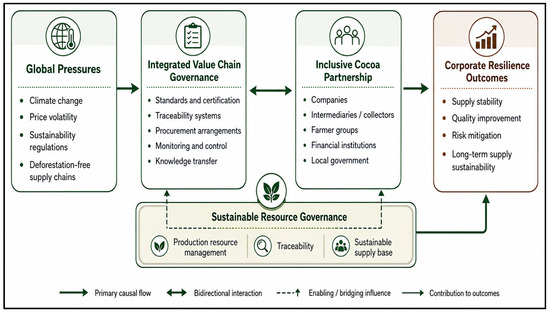
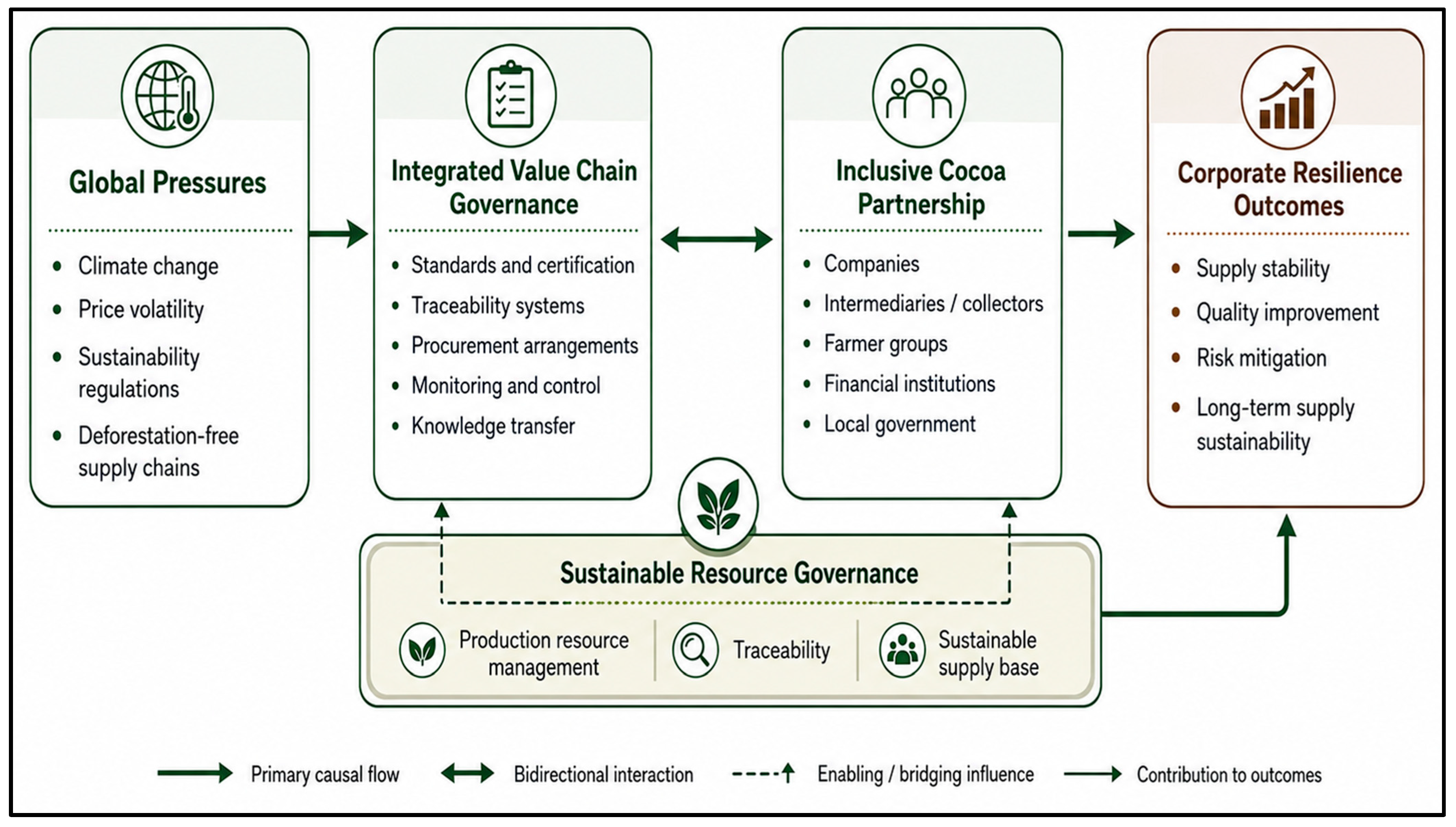
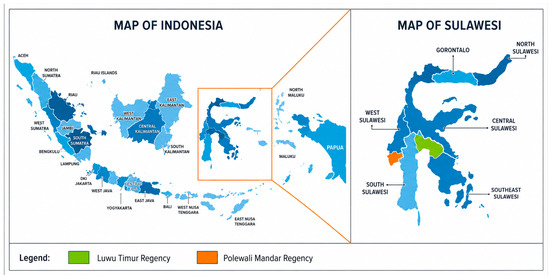
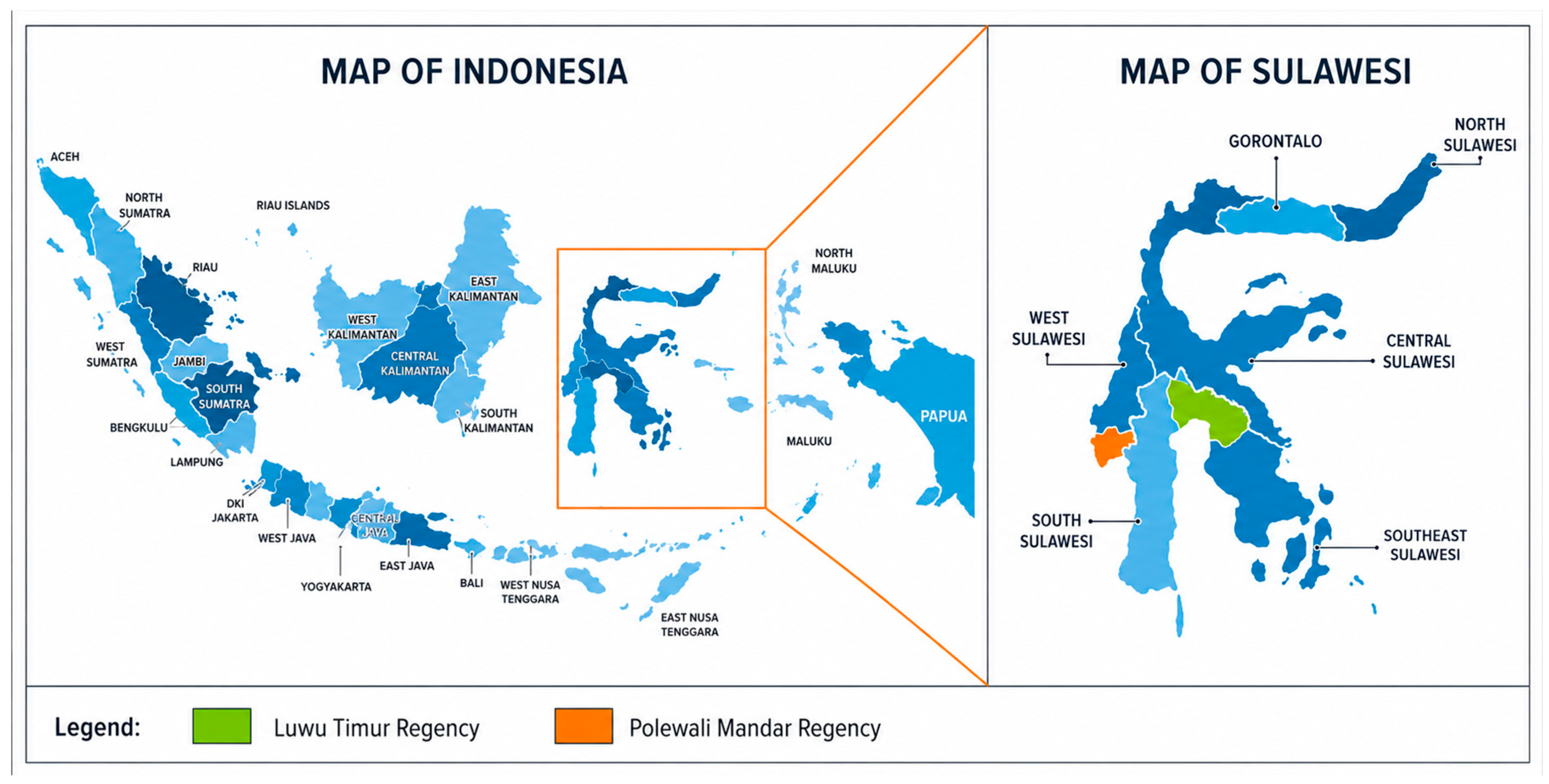
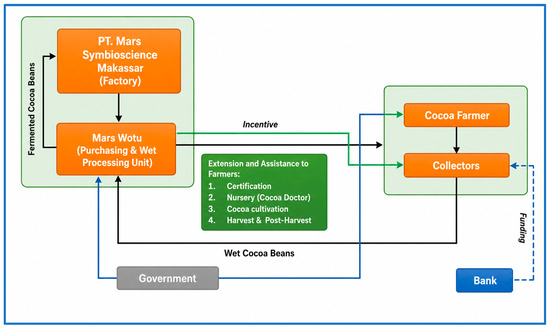
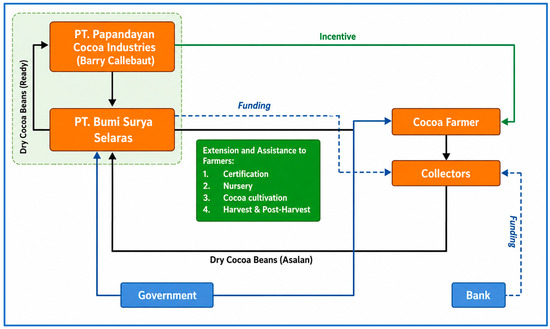
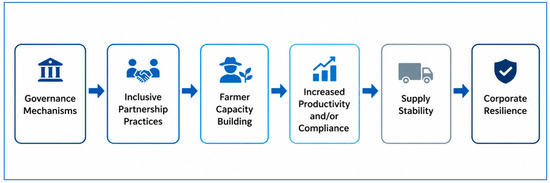
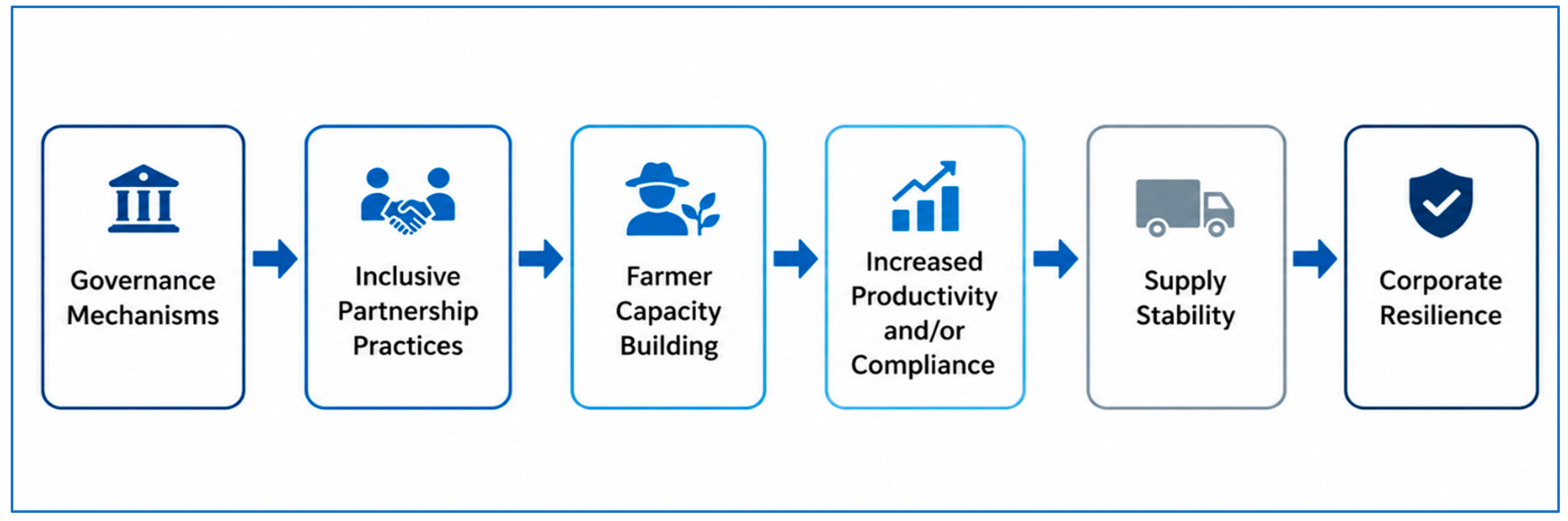

Disclaimer/Publisher’s Note: The statements, opinions and data contained in all publications are solely those of the individual author(s) and contributor(s) and not of MDPI and/or the editor(s). MDPI and/or the editor(s) disclaim responsibility for any injury to people or property resulting from any ideas, methods, instructions or products referred to in the content. |
© 2026 by the authors. Licensee MDPI, Basel, Switzerland. This article is an open access article distributed under the terms and conditions of the Creative Commons Attribution (CC BY) license.