


Abstract
Agricultural and food-processing residues, as well as fruit by-products, represent widely available but still underutilised resources. Although numerous laboratory-scale studies have demonstrated their ability to remove heavy metals from contaminated water, their practical implementation remains limited by incomplete understanding of long-term stability, regeneration efficiency, and end-of-life environmental safety. This review critically evaluates the current state of biosorbent research, with particular emphasis on the full life cycle of these materials, including adsorption performance, regeneration strategies, repeated-use potential, and post-exhaustion management. While focusing primarily on agricultural residues, the review also integrates key findings from alternative materials such as algae, microbial biomass, and industrial sludge to provide a comprehensive evaluation. Particular attention is given to the distinction between desorption and regeneration, metal recovery from desorption streams, and the associated environmental burden of secondary waste generation. In addition to commonly proposed valorisation routes, such as incorporation into construction materials, thermal conversion, and reuse in energy or catalytic applications, the review highlights that most end-of-life pathways remain partial solutions rather than true closed-loop systems. In many cases, only a small fraction of spent biosorbents can be effectively incorporated into secondary products, while remaining residues still require further treatment or disposal. The lack of standardised criteria for defining biosorbent exhaustion and performance thresholds further limits comparability across studies and hinders scale-up. Overall, current evidence suggests that biosorbent-based wastewater treatment should be considered a promising but still partially circular system, where full material closure has not yet been achieved. Addressing these gaps is essential for advancing toward more robust and environmentally sustainable implementation and for improving the circularity of biosorbent-based wastewater treatment systems.
1. Introduction
Heavy metal pollution of freshwater ecosystems remains one of the major global challenges in the management of industrial wastewater. Technological and industrial development has led to increased contamination by heavy metals from anthropogenic sources, particularly agriculture (through the use of artificial fertilisers and pesticides) and industrial activities. Once released into the environment, heavy metals persist due to their non-biodegradable nature, high bioaccumulation potential, and long-term toxicity. Even at low concentrations, prolonged exposure to heavy metals can cause neurological disorders, cardiovascular and kidney damage, carcinogenic effects, and other serious health problems. Therefore, the removal of heavy metals from wastewater is of great environmental and public health importance [1,2].
Conventional methods for the treatment of heavy metal-contaminated water, including chemical precipitation, coagulation and flocculation, ion exchange, and membrane filtration, are often highly efficient, but are limited by high operating costs and the generation of secondary waste streams [3,4,5]. Among the various treatment technologies, adsorption has attracted considerable attention due to its simplicity, high efficiency, and ease of operation. The most commonly used conventional sorbents are ion-exchange resins and inorganic materials such as zeolites, quartz sand, silica gel, and clays. Activated carbon, one of the most widely used adsorbents in fibrous, powdered, or granular form, exhibits the highest removal efficiency and rapid adsorption in its powdered form due to the large specific surface area of fine particles. However, its major disadvantages are its high cost and the energy-intensive and expensive regeneration process. Consequently, considerable research interest has been directed toward the development and application of low-cost and readily available biosorbents, particularly those derived from waste materials, with the aim of promoting waste valorisation and sustainable resource management.
Interest in finding alternative adsorption materials has existed for more than seven decades, and the first documented study on their potential for metal ion removal were published as early as 1951 [6]. Since then, adsorption on biosorbents has developed into a separate research area, driven by the increasing availability of agricultural residues and by-products of the food industry. Due to the continuous increase in global food production and the need for more sustainable solid waste management, the valorisation of these waste materials is attracting increasing attention. However, despite extensive research into the adsorption mechanisms, mass transfer steps and maximum capacity of biosorbents, their industrial application remains limited. The main reason for this is the gap between process requirements under laboratory conditions and those encountered in real operational environments. Industrial systems require not only high adsorption capacity but also mechanical stability of the material, well-characterised properties and performance under variable wastewater composition, as well as the ability to be regenerated and reused multiple times without significant loss of efficiency [7,8,9]. Accordingly, regeneration is key to economic and environmental profitability in the treatment of industrial wastewater because it enables the reuse of biosorbents while reducing the quantity of heavy metal-polluted material that is classified as hazardous and poses risk of secondary contamination. However, repeated adsorption–desorption cycles can reduce the efficiency of biosorbents and cause structural degradation with loss of surface functional groups. For example, Simić et al. (2021), showed that corn silk can effectively remove Pb(II), Cu(II), and Zn(II) from multi metal solutions and can be regenerated with high desorption efficiency, allowing its reuse in multiple adsorption cycles [10]. But, in addition to the challenges posed by the biosorbent regeneration, recent studies highlight the need to improve their mechanical and chemical stability and operational robustness. Marković et al. (2014) investigated enhancing the mechanical stability and reusability of biomass for industrial water treatment by embedding it into ceramic and eco-composite materials to prevent particle breakdown [11]. In addition to the development of structurally stable biosorbents for use on an industrial scale, it is also necessary to develop solutions for spent biosorbents instead of treating them exclusively as hazardous waste. In the paper of Halysh et al. (2020a), the possibility of incorporating spent lignocellulosic biosorbents obtained from walnut shells into cement composites was investigated [12]. This research found that such biosorbents can be added to cement in small proportions without significantly compromising mechanical properties, while simultaneously immobilising the adsorbed heavy metals within a stable matrix. This approach provides both, a practical and environmentally friendly way of disposing heavy metal-bearing waste as well as its reintegration into industrial production cycles. Similar conclusions were reached by Tejada Tovar et al. (2022), who successfully encapsulated palm oil biomass loaded with Pb(II) and Ni(II) in cement-based bricks, achieving effective levels of immobilisation and leaching well below regulatory limits [13]. A study of Zein et al. (2020) further supports the feasibility of incorporating heavy metal-loaded biosorbents into cementitious materials as a safe and durable end-of-life pathway [14]. In addition to solidification/stabilisation, other possible disposal methods for heavy metal-loaded biosorbents have been investigated with the aim of selecting environmentally optimal disposal. Kozyatnyk et al. (2020) showed that regeneration or incineration of carbonaceous sorbents (activated carbon, biochar, and hydrochar) significantly reduces environmental impact compared with disposal, while enabling resource recovery [15]. This highlights that sustainability should be evaluated not only through adsorption performance but also through the post-use environmental impact of biosorbents. Additional insights are provided by Baskar et al. (2022) [16], who reviewed a wide range of recovery and regeneration techniques, including thermal treatment, chemical desorption, magnetic separation and advanced oxidation processes. They also demonstrated the reuse of regenerated sorbents as composite materials, catalysts and soil amendments, thus contributing to circular economy principles. These studies point to the importance of looking at the wider context of the use of biosorbents in the treatment of water contaminated with heavy metals, in addition to the adsorption efficiency itself. Therefore, in order to achieve long-term sustainability, a holistic approach to the biosorbents usage in water treatment is necessary, through the simultaneous consideration of adsorption and desorption efficiency, material regeneration, successful reuse and proper end-of-life management. It is also important to distinguish between heavy metal desorption and biosorbent regeneration, which are often treated as equivalent in the literature. Although closely related, these processes are not synonymous and should be clearly distinguished. Building on these insights, this review synthesises current knowledge on biosorbents for heavy metal removal, biosorbent modification, and adsorption capacities. The core contribution of this work is twofold: first, to clarify a major confusion in the literature by deeply evaluating the distinction between desorption and biosorbent regeneration, and second, to address the methodological gap between batch and continuous-flow systems by establishing clear operational thresholds and performance criteria. The primary focus of our review is on agricultural and food-processing residues, as well as fruit by-products. However, because the biosorption literature often includes a wide range of biomasses, we also discuss studies involving algae, microbial cells, sewage sludge, biopolymer composites, and other related materials where relevant to provide a broader context. While we briefly touch upon the recovery of metals from desorption streams, we provide a detailed evaluation of post-exhaustion disposal and valorisation methods, highlighting that most of these pathways currently remain only partial solutions where full material reuse has not yet been achieved. Finally, to offer a more comprehensive overview, we examine patents in the field of biosorption and discuss the performance of these materials when treating real industrial wastewater within hybrid systems, aiming to provide a realistic outlook on how they can improve the circularity of treatment processes.
2. Biosorption of Heavy Metals
Biosorption refers to the use of materials of biological origin, such as microorganisms, algae, agricultural residues, and food industry by-products, as adsorbents for the removal of various pollutants from wastewater. Their application as alternatives to conventional adsorbents makes water treatment more environmentally and economically sustainable while simultaneously adding value to locally available waste materials. In this way, biosorption promotes circular economy principles by transforming biomass into a valuable remediation tool, which can contribute to waste reduction, lower disposal costs, and a decrease in CO2 emissions. Owing to these advantages, the number of publications on “green adsorbents” for the treatment of wastewater contaminated with heavy metals increased significantly in recent years [17,18]. The effectiveness of many biosorbents is related to their lignocellulosic structure, composed mostly of cellulose, hemicellulose, and lignin, as well as to the presence of various surface functional groups (hydroxyl, carboxyl, carbonyl, amino, and ether groups). These features enable effective interactions with heavy metal ions through several mechanisms, including chemisorption, physisorption, complexation, precipitation, ion exchange, electrostatic interactions, and redox reactions [19]. Among the parameters influencing biosorption, pH is considered the most critical, as it affects both the chemical speciation of metal ions in solution and the surface charge of the biosorbent [3,17,18,20]. Table 1 provides an overview of various biosorbents and their adsorption capacities, highlighting their potential for the treatment of heavy metal-contaminated water and explaining the growing scientific interest in these materials.
Table 1.
Adsorption capacities of biosorbents for heavy metal removal.
Table 1 provides a detailed overview of various agricultural wastes, food residues, and food industry by-products investigated for heavy metal removal in batch-scale laboratory studies. To ensure a reliable and comprehensive comparison, the table summarises key operational parameters including initial metal concentration (C0), pH, temperature (T), and contact time together with both experimental (qexp) and model-derived maximum adsorption capacities (qmod), even for papers where certain parameters were not fully reported. Several common operational trends can be identified from the studies summarised in Table 1. For instance, higher initial metal concentrations are generally associated with higher reported adsorption capacities, although this trend depends strongly on the biosorbent type and experimental conditions. Most biosorbents work best in slightly acidic to neutral water (typically pH 4–7), although values outside this range (pH ≈ 1–8) are also reported depending on the metal ion and biosorbent type. In many cases, high metal removal efficiency is achieved quite rapidly, usually reaching equilibrium within 1 to 3 h (60–180 min), while in some systems significantly shorter (5–30 min) or longer contact times (up to 24 h) are also observed. Furthermore, almost all experiments were performed at room temperature (20–30 °C) with only a few testing higher temperatures. This is practically justified, as operation at ambient temperature is more representative of real wastewater treatment conditions and avoids additional energy costs. When looking beyond these basic operational conditions, a common tendency in the literature is that many studies emphasise maximum adsorption capacities derived from isotherm models (qmod), such as the Langmuir model, while experimentally determined capacities (qexp) are not always reported or directly comparable across studies. Because raw biomaterials are complex and heterogeneous, model-derived values do not always fully reflect adsorption capacities observed experimentally. A notable example is provided by coconut husk [95], for which the reported experimental capacities reach exceptionally high values of 443.00 mg/g for Cu(II) and 362.20 mg/g for Pb(II) at initial concentrations in the range of 100–500 mg/L. These values substantially exceed the corresponding Langmuir-derived capacities reported by the same authors, an uncommon trend among the studies summarised in Table 1. For comparison, flax fibre tows [94] show lower adsorption capacities of 9.92 mg/g for Cu(II) and 10.74 mg/g for Pb(II) under the specific experimental conditions used in that study, highlighting the strong dependence of adsorption capacity on both material type and experimental parameters.
Despite the numerous practical advantages that make biosorbents attractive alternatives to conventional adsorbents, they also exhibit certain limitations. Compared with conventional adsorbents, biosorbents may exhibit lower adsorption capacities and slower adsorption kinetics, depending on their chemical and structural characteristics. Additional challenges include mechanical instability, mass loss and reduced capacity during successive cycles, and difficulties associated with handling fine biomass particles in continuous-flow systems [7]. Also, inadequate regeneration of biosorbents may lead to the leaching of previously adsorbed toxic metals into the treated solution, posing an environmental risk and limiting the long-term applicability of biosorbent materials [3]. Beyond the operational parameters presented in Table 1, several physicochemical factors significantly influence the efficiency of biosorption. These include the specific surface area and porosity, the availability of surface functional groups, the molecular size, and polarity. A larger specific surface area and higher porosity generally enhance adsorption capacity by providing a greater number of accessible active sites, whereas the type and availability of functional groups determine the strength and selectivity of interactions with metal ions. Smaller molecules diffuse more readily into the adsorbent structure, while polar molecules tend to interact more efficiently with polar adsorbents. Additionally, while smaller particles increase the specific surface area and can improve adsorption efficiency, they may also hinder the process by increasing diffusion resistance within the pores [97]. The combined influence of these parameters is summarised in Table 2.
Table 2.
Factors affecting adsorption capacity.
Among all the mentioned parameters, pH plays a particularly important role because it determines the speciation of metal ions, the surface charge of the biosorbent, and the ionisation state of its functional groups. The optimal pH for metal removal is often related to the point of zero charge (pHPZC), which represents the pH at which the surface of the material carries no net electrical charge. This parameter can be determined by acid–base titration, zeta potential measurements, or the pH drift method [98,99]. When the pH of the aqueous medium is lower than pHPZC, protonation of surface functional groups results in a positively charged biosorbent surface that repels cationic metal ions, thereby reducing adsorption efficiency. Conversely, at pH values above pHPZC, deprotonation produces a negatively charged surface that favours the attraction of metal cations. However, excessively high pH values may cause metal precipitation in the form of hydroxides, which defines the upper pH limit for adsorption experiments [3].
2.1. Biosorbents Modification
In order to enhance biosorbent effectiveness by increasing porosity and improving the accessibility of functional groups within the lignocellulose matrix, numerous studies have focused on various physical and chemical modification procedures [100,101]. Physical modifications, such as grinding, ultrasound treatment, or heat treatment, enhance reactivity primarily by increasing the surface area and disrupting the crystalline structure of the biomass. In contrast, chemical modifications including acid or alkaline treatments, carbonization, magnetization, esterification, etherification, and surfactant modification are often more effective because they directly alter the surface chemistry and porosity of the material. By removing impurities and exposing or generating new functional groups, chemical treatments provide a more targeted approach for maximising the availability of active adsorption sites [101,102,103,104]. Acid modification using dilute or concentrated mineral acids (hydrochloric acid (HCl), nitric acid (HNO3), phosphoric acid (H3PO4), and sulphuric acid (H2SO4)) has been shown to increase hydrophilicity and promote partial hydrolysis of cellulose in lignocellulosic materials. For example, Rai et al. (2023) reported that modification of pomegranate peel with H2SO4 increased the specific surface area and opened the cellulose ring structure, thereby activating hydroxyl groups and achieving a Cr(VI) adsorption capacity of 82.99 mg g−1 at pH 2 [105]. Similarly, Salleh et al. (2023) reported that HCl-modified orange peel exhibited improved removal of Ni(II) and Cr(VI), attributed to the removal of pectin and hemicellulose and the consequent exposure of carboxyl (–COOH) and hydroxyl (–OH) groups responsible for metal binding [106]. Alkaline modification with sodium or potassium hydroxides (NaOH and KOH) or carbonate salts leads to the removal of amorphous components, increased porosity, and the formation of additional hydroxyl (–OH) groups on the biosorbent surface [107]. For instance, treatment of apricot kernels with NaOH resulted in a significantly roughened surface and a fivefold increase in Cu(II) adsorption capacity [108]. Similar improvements have been reported for walnut shells and lemon peel, which exhibited significantly higher removal capacities for Ni(II) and Pb(II) after alkaline treatment [109,110]. These examples demonstrate how targeted modification strategies such as acid treatment to remove inorganic impurities, alkaline treatment to generate new reactive sites, or physical pre-treatment to increase surface area can tailor the lignocellulosic biosorbents properties for a specific pollutant. This is particularly important for enhancing lignocellulosic material selectivity during the transition from laboratory studies to real industrial wastewater systems, where competing ions and organic species often reduce the efficiency of unmodified biosorbents.
2.2. Biosorption in Real Wastewater Systems
The use of biosorbents has been widely investigated; however, most studies rely on laboratory-scale single-metal model solutions, whereas their industrial application in complex multi-metal systems containing competing cations, anions, organic matter, and suspended solids remains limited [7]. These components can significantly affect sorption performance and complicate the interpretation of adsorption behaviour. Although laboratory studies provide valuable information on biosorption mechanisms, kinetics, and equilibrium behaviour, the actual applicability of biosorbents must ultimately be evaluated in real wastewater systems. To address this, the performance steps of standalone pretreatments, standalone biosorbents, and integrated hybrid configurations in real wastewater systems are compared in Table 3.
Table 3.
Performance analysis of standalone pre-treatments vs. integrated hybrid biosorption systems under real wastewater conditions.
As shown in Table 3, when we move from simple pre-treatment to the complete hybrid setup, competing ions and particulate matter are removed first to prevent lowering the material’s standalone capacity. This is why combining adsorption with other treatment steps becomes necessary. For this reason, increasing attention has been directed toward studies conducted under realistic conditions, as well as toward the development of approaches that extend the material life cycle, where exhausted biosorbents are regenerated, reused, or further valorised in accordance with circular economy principles. As emphasised by Crini and Lichtfouse (2019), the complexity of real effluents often limits the efficiency of standalone adsorption processes, making hybrid treatment systems that combine physicochemical pre-treatment with adsorption more suitable for practical implementation [114]. A representative example of transitioning from synthetic system to real-world validation is provided by Chaouki et al. (2021), who demonstrated that coupling coagulation/flocculation with adsorption onto palm bark powder significantly improves pollutant removal from real landfill leachate [111]. This combined treatment effectively reduced turbidity, suspended solids, and a portion of the dissolved metal fraction, thereby enhancing the performance of the subsequent adsorption step. A similar hybrid approach was reported by Jaradat et al. (2021) [112], where a combined coagulation–flocculation, filtration, and adsorption system achieved up to 80% total suspended solids removal and 49–80% metal (Fe, Zn, Pb, Cu, Ni, Cr) reduction in real landfill leachate. The use of calcined eggshell waste as a biosorbent significantly improved metal removal efficiency, achieving up to 93% removal in the sand–calcined eggshell column configuration. This demonstrates that while a standalone biosorbent is less effective in real wastewater systems (as shown in Table 3), its integration into hybrid systems successfully enables high removal efficiencies. These results highlight the potential of combining conventional treatment methods with waste-derived biosorbents to enhance performance while reducing treatment costs.
The application of biosorption technologies for the treatment of real industrial effluents has also been investigated within several large research initiatives. One example is the BIOMETAL DEMO project, funded under the EU Seventh Framework Programme, which aimed to develop biological technologies for the remediation of metal-bearing wastewaters. Within this project, laboratory studies and pilot-scale investigations demonstrated the feasibility of using various biosorbents, including brown algae (Fucus vesiculosus), sugar beet pulp, and biopolymer-based materials, for the removal of metals such as Zn, Cu, Ni, and Pb from acid mine drainage and electroplating wastewaters. Desorption experiments confirmed that the biosorbents could be regenerated and that concentrated metal fractions could be obtained after adsorption–desorption cycles. The results were further validated in pilot-scale systems combining biosorption materials with biological treatment processes such as sulphate-reducing bacteria, enabling efficient removal of dissolved metals and sulphates from industrial wastewaters [113]. These findings provide a clear scalable validation of how real multi-metal systems can be managed effectively outside of synthetic laboratory setups. The above examples clearly indicate that biosorption is no longer limited to laboratory-scale studies using synthetic single-metal solutions, but is increasingly applied in real wastewater treatment as part of multi-stage hybrid systems. In this role, biosorbents enable effective removal of dissolved metals in the final treatment stage, demonstrating their practical applicability, particularly when coupled with efficient regeneration strategies that enhance the circularity of water treatment systems. One of the key signs of technological advancement in biosorbent utilisation is the growing number of patents related to hybrid water treatment systems, reactor configurations, and regeneration strategies.
2.3. Patents in Biosorption
In addition to numerous scientific papers on biomass efficiency in heavy metal removal, a significant number of patents in the field of biosorption indicates a growing interest in the commercial application of these materials in wastewater treatment. Patent activity in the field of biosorption reflects ongoing efforts to translate laboratory-scale findings into practical and scalable water treatment technologies. According to Michalak et al. (2013), patented solutions primarily focus on improving the mechanical stability of biosorbents and enhancing adsorption capacity through chemical modification, as well as on the development of continuous-flow systems suitable for treating large volumes of water [7]. Several of these patented approaches are summarised in Table 4.
Table 4.
Different patented approaches to biosorption.
A significant number of patents involves chemical modification (using acids and alkalis) of agricultural residues such as rice husks, coconut shells, orange peels, and sawdust to increase porosity, adsorption capacity, and mechanical stability, thereby improving material durability during repeated adsorption–desorption cycles. Another important category of patents focuses on the design of biosorption reactors, including packed bed columns, fluidized bed systems, and multi-stage biosorption units designed to minimise pressure drop, improve hydraulic stability, and ensure uniform flow distribution. Such reactors overcome common operational challenges such as clogging and bed channelling, which disrupts contact between the material and the contaminant in the water being treated. The third group of patents focuses on material regeneration and metal recovery systems. These solutions include acid or alkali regeneration cycles and electrochemical metal recovery, which focuses on the reuse of biosorbents and the reduction in secondary waste generation [115,116,117,118,119,120,121,122,123]. By integrating material regeneration and metal recovery into water treatment processes, these patented systems advance resource efficiency and help minimise secondary waste streams in industrial applications.
Although these patents demonstrate long-standing interest in the commercialization of biosorption technologies, evidence of their widespread industrial implementation remains limited. Most patented systems were developed and tested at laboratory or pilot scale, while information on long-term industrial operation is rarely available in the literature. Several factors may explain this gap between patent activity and practical application, including variability in biosorbent properties, limited mechanical stability during repeated use, challenges associated with regeneration and management of spent biosorbents, competition from well-established commercial adsorbents such as activated carbon and ion-exchange resins, and the lack of standardised operational protocols. In addition, economic performance, regulatory acceptance, and the availability of reliable biomass feedstock remain important considerations that are often insufficiently addressed during early technology development. These challenges suggest that patent activity alone should not be interpreted as evidence of technology maturity, but rather as an indication of continued efforts to overcome barriers to industrial implementation. A similar conclusion was reached by de Freitas et al. (2019) [124], who reviewed commercial biosorbents and patent activity in the field of metal biosorption. Despite the large number of patented technologies, the authors found limited evidence of successful large-scale commercialization, highlighting challenges related to biosorbent standardisation, regeneration, process economics, and competition with established technologies such as activated carbon and ion-exchange resins. Furthermore, many biosorption studies are performed under idealised laboratory conditions using synthetic solutions, which may not adequately reflect the complexity of real industrial wastewaters. These findings further confirm that patent activity alone does not necessarily translate into industrial implementation and that significant barriers still exist between laboratory development and commercial application.
The long-term application of biosorbents depends largely on the feasibility of regeneration and reuse, which can reduce the need for direct disposal of spent biosorbents as hazardous waste. Sustainable management of spent biosorbents therefore remains one of the key challenges limiting their broader industrial application. Modern approaches emphasise the need to close the sorption cycle, in which regeneration, metal recovery, and valorisation of spent materials are considered integral components of the treatment process. It is therefore essential to examine available desorption and regeneration methods, including their efficiency, limitations, and applicability in real wastewater treatment systems, as a step toward optimising biosorption processes. In the literature, however, the distinction between desorption and regeneration is not always consistently defined, as some authors use the term regeneration to describe desorption, thereby treating the processes as equivalent [16,125,126]. In the following sections, particular attention is given to this distinction, with studies grouped into those focusing solely on metal desorption and those that also consider subsequent material regeneration to maintain biosorbent performance over multiple cycles [8,9].
3. Desorption of Heavy Metals and Regeneration of Exhausted Biosorbents
Desorption and regeneration are closely related but conceptually distinct processes, often involving similar physical or chemical mechanisms. In simple terms, desorption is what we do to the metal, while regeneration is what we achieve for the material. Thus, desorption is the immediate act of unbinding heavy metals, whereas regeneration represents the broader goal of restoring the biosorbent to its original functional state. Recognising this distinction is key to determining whether a biosorbent is truly sustainable for long-term industrial use. Desorption refers specifically to the release of adsorbed contaminants from the biosorbent surface and, on its own, is generally insufficient to ensure the long-term performance of the material. Regeneration, unlike desorption, is a more comprehensive approach that includes not only the restoration of active binding sites but also the preservation of the material’s physical structure in order to maintain its mechanical strength. From a quantitative perspective, desorption efficiency expresses the fraction of adsorbed metal released from the exhausted biosorbent during the desorption step, whereas regeneration efficiency reflects the extent to which the biosorbent retains its adsorption capacity in subsequent adsorption cycles [7,127,128].
In many studies, regeneration is treated as operationally equivalent to desorption; however, true regeneration may involve additional steps such as pH adjustment to re-establish optimal adsorption conditions, recovery of functional groups on the biosorbent surface, or structural stabilisation of the biosorbent. These steps are essential for maintaining efficiency over multiple cycles, which is critical for economic viability and waste reduction [16].
Without effective regeneration, biosorbents quickly become exhausted with metal ions, lose their adsorption capacity, and must be disposed of as hazardous waste, which significantly increases treatment costs. Renu and Sithole (2024) highlighted that regeneration, metal recovery, and safe disposal represent the three main challenges in wastewater treatment and are key factors in determining the economic viability of the process [127]. Similarly, Lata et al. (2015) identified insufficient attention to regeneration protocols as a major barrier preventing the transition of biosorption from laboratory research to full-scale industrial application [129]. Kulkarni and Kaware (2014) further emphasised that regeneration not only reduces the need for fresh adsorbents but also minimises the environmental burden associated with the disposal of metal-loaded materials [130]. These findings demonstrate that regeneration is not only an operational step, but a critical component of both environmental and economic sustainability in biosorption systems, helping to enhance resource efficiency and lower the overall footprint of wastewater treatment processes. Systems relying solely on desorption often exhibit a decline in adsorption capacity after several cycles, primarily due to structural degradation of the biosorbent and the loss of functional groups [131].
For recovering heavy metals, various desorption methods have been investigated, with varying degrees of success [16,131,132]. Chemical desorption employs different agents for metal recovery, whereas physical and thermal methods rely on energy input to disrupt the bonds between heavy metals and the biosorbent, offering alternative pathways that avoid aggressive chemicals [8,131]. In thermal desorption, exhausted biosorbents are exposed to high temperatures, which breaks down the physical and chemical interactions between contaminants and the biosorbent. However, this method is often energy-intensive and can easily damage the organic biomass structure [8,16,127,131]. Microwave-induced desorption provides more uniform heating from the surface to the interior, which can better preserve material properties compared to conventional heating. Nevertheless, its industrial application remains limited due to high costs, feasibility constraints, and energy demands, and further research is required to improve its economic viability. Additional methods have also been explored. Ultrasound-assisted desorption enhances metal removal through acoustic cavitation, improving mass transfer and surface cleaning [16]. Although alternative desorption and regeneration methods such as ultrasound and microwave-assisted processes have been investigated, their application in biosorption systems remains limited [16,128]. These methods primarily enhance mass transfer or induce thermal effects but are generally insufficient to disrupt strong metal-biosorbent interactions without the aid of chemical agents. Recent reviews highlight hybrid physical–chemical approaches, such as microwave assisted oxidation or combined chemical–ultrasonic treatments, as promising strategies that improve regeneration efficiency while reducing structural degradation [133,134]. Biological and biochemical desorption and regeneration methods, which employ microorganisms or enzymes to alter metal speciation or degrade organic complexes, represent environmentally friendly alternatives. However, these approaches remain largely experimental and are not yet widely applied to lignocellulosic biosorbents due to their slower kinetics and limited scalability [16,135]. Each method has specific advantages and limitations, and the selection of the most suitable approach depends on the type of pollutant, the nature of the biosorbent, and practical considerations such as cost, energy demand, and scalability. Overall, selecting the appropriate metal desorption method requires a holistic approach that should be tailored to the dominant metal binding mechanism. This will achieve the highest efficiency in terms of both metal recovery and adsorption capacity of the biosorbent over multiple adsorption−desorption cycles.
Among available methods, chemical desorption remains the most practical, effective and the most widely applied due to its simplicity, low cost, and high recovery efficiency, relying on acids, bases, salts, or chelating agents to desorb metal ions [2,8,9,129,131,132,136,137,138]. In this context, solvent desorption plays a key role in regeneration of exhausted biosorbents, as it disrupts contaminant-surface interactions and enables reuse in subsequent adsorption cycles [16]. Nevertheless, the limitations of each desorption agents, especially in the context of the sensitivity of lignocellulosic biomass, is crucial for developing sustainable biosorbent management strategies and optimising their life cycle. Therefore, the following sections provide a detailed discussion of desorption and regeneration processes, highlighting both their complementary roles and their key differences [7,16].
3.1. Desorption of Heavy Metals Using Different Desorbing Agents
The desorption of heavy metals can be interpreted as the reverse of the primary biosorption mechanisms, including ion exchange, electrostatic interactions, complexation, precipitation, and redox reactions [136]. In general, desorption involves the disruption of physicochemical interactions between the biosorbent and the bound metal ions. The efficiency of this process strongly depends on the nature of metal-biosorbent interactions as well as on the method applied [137]. Typically, acidic desorbing agents are used for the removal of cationic contaminants, while alkaline agents are more suitable for anionic species and dyes. However, some studies report deviations from this general trend. The dominant mechanism is ion exchange, with pH being the critical factor governing electrostatic interactions between the biosorbent surface and the adsorbed species. Although many biosorbents achieve high desorption efficiencies (often exceeding 80–90%) over multiple cycles, a gradual decline in performance is commonly observed [2,8,131,139,140], which will be discussed in more detail in the following text.
In systems where ion exchange and electrostatic interactions dominate, desorption is typically achieved by protonation (H+) of surface functional groups using acidic desorbing agents (e.g., mineral acids HCl, HNO3, H2SO4) or salt solutions (e.g., NaCl or CaCl2), where displacement of bound heavy metal ions with competing cations such as Na+ or Ca2+ occurs. Heavy metals bound through complexation or chemisorption exhibit stronger interactions with functional groups on biosorbent surface (e.g., –COOH, –NH2, –OH), and their removal often requires the use of chelating agents such as ethylene diamine tetra acetic acid (EDTA) [8,133,139,141,142,143]. Also, these agents are used when selective desorption is required in multi-component systems [127]. Alkaline agents, especially NaOH, are most commonly successfully used for the desorption of anionic contaminants, such as Cr(VI) anionic species (HCrO4−, CrO42−, Cr2O72−) with efficiencies > 96%, where hydroxide ions (OH−) compete with anionic species for active adsorption sites on the biosorbent surface, thus facilitating their release [144]. The selection of a desorbing agent is therefore closely linked to the dominant metal−biosorbent binding mechanism. A simplified scheme illustrating the relationship between adsorption mechanisms and the corresponding desorption strategies is presented in Figure 1.
Figure 1.
Selection of desorbing agents according to the dominant metal–biosorbent binding mechanism.
In the case of redox-active heavy metals such as chromium, desorption behaviour can be significantly influenced by changes in oxidation state, since along with adsorption, the metal reduction and precipitation on the biomass surface occurs, making it more difficult to desorb than most divalent metal cations. In the case of Cr(VI) removal on wicker and a wheat straw biochars according to study Tytłak et al. (2015) [145], even the application of concentrated HCl or HNO3 did not cause complete desorption of Cr(VI) from the biochar surface. Namely, Cr(VI) adsorption is irreversible due to partial surface deposition of Cr(OH)3. It was found that both Cr(VI) and Cr(III) are present on the surface of biochars where they are adsorbed on oxygen containing functional groups. Consequently, incomplete desorption of Cr species led to a decrease in the adsorption potential of biochar samples in repeated cycles, which limits their long-term application. The similar observation was reported by Gómez-Aguilar et al. (2022), where incomplete desorption of both Cr species (45.8% Cr(VI) and 66.8% Cr(III)) by applying 0.1 M H2SO4 from the coffee crop derived biosorbent was achieved [146]. According to Miretzky and Cirelli (2010) [147], Cr(VI) removal by lignocellulosic materials primarily involves an adsorption-coupled reduction mechanism. Acidic conditions promote the binding of anions (HCrO4−) to the surface, followed by reduction to less toxic Cr(III) via electron-donating functional groups. The resulting Cr(III) is either released into solution or remains bound to the biosorbent surface through complexation. Consequently, desorption efficiency depends on the type of the desorbing agent, where acidic ones protonate functional sites to release Cr(III), while alkaline agents facilitate the release of Cr(VI) through ion exchange or displacement. While coffee pulp and other lignocellulose materials investigated by Hu et al. (2022) [148], can achieve high adsorption efficiencies of Cr(VI), the desorption is frequently limited by the adsorption-coupled reduction mechanism. While Cr(VI) is typically adsorbed via electrostatic attraction under acidic conditions, it is simultaneously reduced to Cr(III) by electron-donor functional groups (carboxyl, hydroxyl, and phenolic compounds) thus forming stronger, more stable bonds with the material, making it difficult to desorb. Collectively, these findings demonstrate that no universal desorbing agent exists for all biosorbent−metal systems. Desorption efficiency is governed by the nature of the metal−biosorbent interaction, the chemistry of the desorbing agent, and the stability of the adsorbed species. Representative studies investigating heavy-metal desorption and biosorbent reusability through consecutive adsorption–desorption cycles are summarised in Table 5.
Table 5.
Desorption and reusability performance of biosorbents for heavy metal removal.
The studies summarised in Table 5 demonstrate that desorption efficiency is strongly influenced by both the type of metal and the desorbing agent applied. The reviewed studies also show that high desorption efficiency does not necessarily translate into long-term biosorbent reusability. Several authors reported gradual declines in adsorption performance of lignocellulosic biosorbents, indicating deterioration of active binding sites, structural changes within the biosorbent matrix, or incomplete metal release. Overall, mineral acids, particularly HCl, HNO3 and H2SO4, were the most frequently used and generally the most effective desorbing agents for cationic heavy metals, often achieving desorption efficiencies above 80–90%. However, their high effectiveness may be accompanied by partial degradation of the biosorbent structure and loss of adsorption capacity during repeated adsorption–desorption cycles, particularly in lignocellulosic materials [165,166]. In contrast, chelating agents such as EDTA often provide slightly lower desorption efficiencies but may better preserve the performance of lignocellulosic biosorbents by reducing structural damage, though they may destabilise calcium-crosslinked alginate bio-sorbents by removing structural calcium from the matrix. Interestingly, the most effective desorbing agent was not always the most favourable option from a practical perspective. For example, although EDTA resulted in superior preservation of adsorption performance during repeated cycles, Sutherland and Venkobachar (2020) concluded that HCl represented the more practical choice due to its lower cost, simpler eluate management, and generation of a spent lignocellulosic biosorbent that is easier to manage at the end of its service life [151]. These findings highlight that the selection of a desorbing agent should be based not only on desorption efficiency but also on biosorbent stability, reusability, economic considerations, and downstream waste management. It is also worth noting that many studies describe successive adsorption–desorption cycles as regeneration, although they primarily evaluate metal removal and subsequent reuse, without incorporating additional treatments specifically aimed at restoring active binding sites or improving structural stability. Consequently, desorption efficiency alone cannot be considered a sufficient indicator of biosorbent reusability. The following section therefore focuses on regeneration strategies aimed at restoring adsorption performance and extending biosorbent lifetime.
3.2. Regeneration and Reusability of Exhausted Biosorbents
As mentioned earlier, regeneration relies on the desorption step but extends beyond simple metal removal. Unlike desorption, which primarily focuses on the release of adsorbed metals, regeneration is ultimately evaluated through the ability of the biosorbent to retain its adsorption performance during repeated use. Therefore, regeneration includes not only contaminant removal but also the restoration of surface functionality, structural stability, and adsorption capacity that may be partially lost during desorption. These findings raise an important question regarding the number of adsorption–desorption cycles required to consider a biosorbent effectively reusable. Some studies suggest that even successful reuse after the first cycle may indicate economic feasibility [9,157]. Nevertheless, the scientific literature does not define a universal threshold number of cycles. Many laboratory studies on biosorbents report maintained adsorption capacity over 3 to 5 cycles, when materials are often described as reusable or stable. Considering that biosorbents are derived from waste biomass, they may be regarded as economically viable even after only 1–2 cycles, as the cost of disposal and replacement is lower than that of chemicals required for desorption or regeneration. However, for industrial-scale applications and extended operational lifetimes, it is generally desirable to maintain adsorption capacity over at least 10 or more cycles. In contrast, for more expensive synthetic adsorbents (e.g., carbon nanotubes, modified resins, etc.), economic feasibility typically requires tens or even hundreds of regeneration cycles. In addition to effective desorption, the chemical composition and structural stability of biosorbents are of key importance for their repeated use, since desorbing agents can cause structural degradation. This is particularly evident in lignocellulosic biosorbents which are highly sensitive to aggressive agents. In general, acid treatment can cause hydrolysis of hemicellulose and partial dissolution of cellulose fibres, while alkaline treatment leads to lignin removal [167]. This results in material decomposition and the removal of functional groups essential for binding heavy metals, ultimately leading to a gradual loss of adsorption capacity [168]. Chelating agents such as EDTA can destabilise the structure of microbial biosorbents, such as yeast biomass, by removing naturally occurring mineral ions (Ca2+, Mg2+, K+) that contribute to cell wall integrity and mechanical stability. By losing this structural strength, the biosorbent loses the ability to effectively bind targeted heavy metals, often resulting in lower adsorption efficiency during subsequent cycles [169]. Therefore, the reusability of exhausted biosorbents across successive adsorption–desorption cycles is a key factor for evaluating their practical applicability and long-term sustainability. For example, acidic treatment with HCl promotes desorption via proton exchange, releasing bound heavy metal ions and leaving the biosorbent surface in a protonated form (e.g., –COOH instead of –COO−), which is not optimal for subsequent adsorption. Partial structural changes may also occur. Therefore, subsequent treatment with salts such as CaCl2 or NaCl restores the ionic form of functional groups, improving the reusability of the biosorbent in further adsorption cycles while maintaining high adsorption capacity. The studies presented in Table 5 mainly evaluated the reuse of biosorbents through successive adsorption−desorption cycles, where desorption and regeneration were often treated as synonymous processes. However, successful regeneration was considered to involve not only metal desorption but also an additional treatment step specifically designed to restore active binding sites, recover functional groups, or stabilise the biosorbent structure. These regeneration−oriented approaches are summarised in Table 6 which clearly demonstrate that regeneration extends beyond simple metal desorption. While desorption removes the adsorbed metals from the biosorbent surface, regeneration includes additional step designed to restore active binding sites, recover surface properties, and maintain structural stability. In most cases, this was achieved through post-desorption treatment with salts such as CaCl2 or NaCl, which reactivated the biosorbent and enabled its repeated use with minimal loss of adsorption capacity. Several studies reported stable adsorption performance over 5–10 consecutive cycles when regeneration was incorporated, whereas desorption alone often resulted in gradual capacity loss. Overall, the reviewed studies indicate that efficient metal desorption alone does not necessarily guarantee sustained adsorption performance, whereas appropriately designed regeneration procedures can significantly improve biosorbent stability and long-term reusability. A particularly illustrative example was reported by Kaushal et al. (2023) [170], where NaOH showed poor performance as a desorbing agent for Zn(II), yet proved highly effective as a regeneration agent following HCl desorption. By neutralising residual H+ ions and restoring negatively charged functional groups, NaOH increased the availability of active adsorption sites and improved biosorbent reusability. This finding clearly demonstrates that the requirements for efficient desorption and successful regeneration are not necessarily the same.
Table 6.
Regeneration-oriented approaches for restoring biosorbent performance after heavy-metal desorption.
These observations highlight that successful regeneration requires a balance between efficient metal desorption, restoration of active binding sites, and preservation of biosorbent structure. The selection of an appropriate regeneration strategy should therefore consider not only pollutant removal efficiency but also biosorbent stability, process economics, and downstream waste management. Effective regeneration can substantially extend biosorbent lifetime, reduce raw material consumption, and improve the sustainability of heavy-metal removal processes [168]. Figure 2 summarises the biosorbent reuse pathway following biosorption, including metal desorption, metal recovery, biosorbent regeneration, and re-adsorption. However, industrial implementation remains limited by high operational costs, insufficient long-term performance data, and the lack of standardised regeneration protocols.
Figure 2.
Schematic representation of biosorbent reuse and metal recovery through sequential desorption, regeneration, and re-adsorption cycles.
3.3. Factors Affecting Desorption and Biosorbent Reusability
Desorption is governed by several interrelated physicochemical factors, including pH and concentration of desorbing agent, contact time, temperature, and the composition of the biosorbent. The main factors influencing desorption and biosorbent reusability are summarised in Figure 3.
Figure 3.
Key factors governing desorption performance and biosorbent reusability.
Among the factors affecting desorption performance, pH is generally considered one of the most important, as it determines the protonation state of surface functional groups and consequently the strength of metal–biosorbent interactions. Low pH values promote proton exchange and facilitate the release of metal cations, whereas higher pH values may suppress desorption or induce metal precipitation, thereby reducing metal recovery [127]. The type and concentration of the desorbing agent must also be carefully optimised because they directly affect both desorption efficiency and biosorbent stability. Although stronger acids or bases can more effectively disrupt metal–ligand interactions, excessively high concentrations may damage the lignocellulosic biosorbent matrix and reduce its reusability [176]. For example, Kaushal et al. (2023) [170], reported that 0.1 M HCl provided optimal Zn(II) desorption, whereas higher concentrations accelerated the loss of functional groups and reduced adsorption performance during subsequent cycles. Similarly, Jeyakumar et al. (2013) [177], found that activated carbons derived from Ulva fasciata retained 71% and 77% of their initial adsorption capacities for Cu(II) and Pb(II), respectively, after five adsorption–desorption cycles. The authors identified 0.25 M HCl as the most effective desorbing agent, while desorption with water was negligible, confirming the predominance of strong chemical interactions between metals and the adsorbent surface. Nevertheless, no universal desorbing agent exists because desorption performance depends strongly on the chemical composition of the biosorbent and the nature of metal binding [129]. Touihri et al. (2021) demonstrated that 0.1 M HNO3 outperformed HCl and EDTA, achieving 55% desorption of Cr(VI) from lignocellulosic pine leaves and 79% desorption of Cu(II) from pine cones, while water and NaOH were largely ineffective [154]. Likewise, modified exhausted grain loaded with Pb(II) exhibited the highest desorption efficiency (86%) when treated with 0.1 M HCl, while maintaining satisfactory structural stability [178].
Contact time affects both the rate and completeness of desorption. In many biosorbent systems, desorption equilibrium is reached within approximately 30 min, which is advantageous from an economic perspective. For example, Kaushal et al. (2023) [170], reported rapid Zn(II) desorption from mango tree leaves, with equilibrium achieved within 30 min and most metal release occurring during the first 10 min. Similarly, Kuczajowska-Zadrożna et al. (2016) [161], found that saponin achieved Zn(II) and Cu(II) desorption efficiencies comparable to HNO3 after 120 min, although HNO3 acted considerably faster (10 versus 30 min). The effectiveness of saponin was also strongly pH-dependent, decreasing significantly above pH 5. These findings indicate that desorption kinetics are governed not only by the desorbing agent but also by sorbent porosity and metal-binding strength.
Temperature primarily influences desorption kinetics by increasing molecular mobility and diffusion rates. However, elevated temperatures may destabilise lignocellulosic biosorbents, particularly those rich in hemicellulose, resulting in swelling, hydrolysis, or structural collapse. Kuyucak et al. (1989) [179], reported that CaCl2 in acidic medium achieved more than 96% Co(II) desorption from the algal biomass of Ascophyllum nodosum, while temperature had no significant effect on desorption efficiency up to 60 °C. Similarly, Alsawy et al. (2022) [131], noted that most chemical desorption procedures for biochar are performed at 20–35 °C, minimising operational costs while maintaining satisfactory performance.
The chemical composition and structural characteristics of the biomass also play an important role. Lignin-rich materials generally show greater resistance to acidic or alkaline eluents due to their aromatic, cross-linked structure, whereas hemicellulose-rich materials are more likely to undergo hydrolysis and degradation during repeated desorption cycles. In addition, the presence of competing ions, natural organic matter or colloids in real wastewater can further reduce desorption efficiency by blocking active sites or forming stable complexes with the target metals [180]. According to Gkika et al. (2025) [133], waste-derived biosorbents with high hemicellulose content, poorly structured plant residues, and materials with low mechanical stability are difficult to regenerate, as they tend to undergo significant mass loss, fibre degradation, and loss of functional groups after only one or two cycles. The authors emphasise that such materials are unsuitable for systems requiring multiple cycles, but can still be valorised through alternative pathways such as pyrolysis to biochar, composting, or metal recovery from ash. However, the regeneration potential of lignocellulosic biosorbents strongly depends on biomass composition and the desorption conditions applied. Several studies have demonstrated that agricultural by-products, particularly fruit pit- and nutshell-derived biosorbents, can maintain satisfactory adsorption performance over multiple cycles when appropriate desorbing agents are used [181,182,183,184,185]. Activated carbon derived from date pits showed excellent Pb(II) desorption performance with 0.1 M HCl enabling reuse over four cycles with less than 10% efficiency loss [181]. Similarly, ZnO modified date pits maintained stable adsorption capacities for Cu(II), Ni(II) and Zn(II) across four cycles using 50 mM H2SO4 [182]. Mercerized mesoporous date pit activated carbon obtained from waste date pit also demonstrated good reusability due to high desorption efficiencies (78% for Cd, 82% for Cu, 96% for Pb and 70% for Zn) with 0.1 M HCl [183]. Nagy et al. (2024) demonstrated that cotton stalks and date palm stone residues can be reused for Cd(II), Pb(II) and Zn(II) removal over two to four cycles, although desorption efficiency decreased under acidic conditions using 0.2 M HCl [184]. Contrary, Aziz et al. (2009) [185], reported excellent reusability of a sodium-succinylated olive stone–based biosorbent for Cd(II) removal over five cycles, with a negligible loss of adsorption capacity (<2%). The use of 1 M NaCl as the desorbing agent proved effective, as it is cost-efficient and non-destructive compared to mineral acids, while Na+ ions promote Cd(II) release through ion exchange without damaging the succinylated surface functional groups. In contrast, several recent studies reported excellent adsorption performance of nutshell-derived biosorbents, olive pomace, and walnut shell, but did not evaluate desorption, regeneration, or long-term reusability, highlighting a persistent gap in life-cycle assessment and practical applicability [186,187].
3.4. Limitations and Challenges in Regeneration of Biosorbents
Despite its importance, the regeneration of biosorbents faces several limitations. Mass loss is commonly observed during acidic treatment, often due to the erosion of the lignocellulosic biosorbent surface [145,152,174]. Alkaline treatment (e.g., NaOH) can significantly modify lignocellulosic biosorbents by removing hemicellulose and lignin and increasing surface porosity [188]. However, harsh regeneration conditions, including high chemical concentrations, elevated temperatures, and extreme pH values, may induce structural alterations in lignocellulosic materials, such as fibre swelling, surface erosion, and the loss of functional groups, ultimately reducing the adsorption capacity of the biosorbent [189,190].
Another major concern is the generation of eluates after desorption, which require appropriate handling prior to disposal or reuse due to their high heavy metal content and the frequent use of aggressive desorbing agents. Such eluates represent secondary hazardous waste and may exhibit ecotoxicity equal to or even greater than that of the original wastewater [144]. The presence of strong chelating agents such as EDTA is particularly problematic, as the resulting eluates are difficult to treat and are typically disposed of as hazardous waste. Similar considerations were reported by Sutherland et al. (2020) [151], for exhausted biosorbents. Although EDTA resulted in higher desorption efficiency for lignocellulosic peat moss, HCl was identified as the safer option for subsequent disposal of the spent biosorbent. This research gap is further emphasised by Liu et al. (2024) [191], who note that the disposal of eluates remains largely overlooked in current studies, which primarily focus on the disposal of spent biosorbents, indicating that eluate behaviour should also be considered within the framework of sustainable technologies. Furthermore, the presence of competing ions and organic substances in real wastewater can significantly reduce regeneration efficiency, reflecting the same competitive effects observed during sorption, where multicomponent interactions limit access to active functional groups [140]. Mechanical instability also limits the application of many biosorbents especially in continuous packed-bed systems [7,192].
Once regeneration is no longer effective, biosorbents enter the end-of-life phase and can be redirected toward valorisation pathways or metal recovery. Renu and Sithole (2024) [127], emphasised that sustainable adsorption systems must integrate regeneration, recovery, and final handling in order to improve resource efficiency and move beyond simple linear disposal model. Although regeneration extends the operational lifespan of biosorbents and reduces treatment costs, the number of feasible regeneration cycles remains limited [193]. Progressive structural degradation, loss of functional groups and the resulting decline in adsorption capacity often make further regeneration technically or economically unfeasible. Consequently, spent biosorbents become solid waste that may pose environmental risks, particularly due to the presence of heavy metals or other toxic pollutants. In contrast to the traditional linear model, in which spent adsorbents are treated solely as hazardous waste requiring costly and strictly regulated disposal, the transition toward a circular economy promotes their transformation into valuable secondary resources. To mitigate these risks, increasing attention is being directed toward the conversion of spent biosorbents into functional secondary materials rather than their disposal as hazardous waste. In addition to these perspectives, the validation of spent biosorbents together with successful examples reported for various biosorbent types is discussed in the following section.
4. Utilisation and Valorisation of Heavy Metal-Loaded Spent Biosorbents
The valorisation of heavy metal-loaded spent biosorbents has emerged as a key component of sustainable wastewater treatment strategies, aiming to enhance resource efficiency. By converting waste into secondary resources, overall costs, demand for natural resources, reliance on landfills, and emissions of hazardous substances can be reduced. However, there are certain disadvantages associated with their use. Secondary materials often exhibit greater variability in chemical composition compared to primary resources, which can complicate their industrial application. In addition, the lack of uniform quality standards further limits their utilisation. Nevertheless, the development of functional secondary materials is necessary and crucial for establishing an efficient waste management system based on recycling and reuse [194]. Although valorisation of spent biosorbents is frequently discussed within a circular economy framework, the currently available end-of-life options generally represent partial recovery or stabilisation routes rather than fully closed-loop systems. Therefore, their sustainability should be evaluated not only in terms of resource recovery potential, but also with respect to the proportion of material that can be managed, the generation of secondary waste streams, energy requirements, and regulatory feasibility. As highlighted by Renu and Sithole (2024) [127], the management of metal-loaded adsorbents should follow a hierarchical approach that prioritises regeneration and metal recovery, while disposal should be considered as the least preferred option. They briefly outline several potential applications of spent adsorbents, including their use as antimicrobial agents, catalysts, cement additives, fertilisers and carbon sequestration agents. However, these applications are discussed at a general level and are not specifically focused on biosorbents or on detailed valorisation pathways.
At the industrial level, biosorption processes are mainly integrated into circular schemes focused on metal recovery and biosorbent regeneration. However, the management of spent biosorbents at the end of their operational life remains insufficiently developed and is largely limited to immobilisation strategies (e.g., vitrification) or conventional disposal routes. Although numerous laboratory studies have demonstrated the feasibility of incorporating metal-loaded biosorbents into construction materials, large-scale implementation remains limited. In this context, a range of valorisation and disposal strategies has been explored at the laboratory scale.
Recent studies demonstrate that spent biosorbents loaded with heavy metals can be managed through stabilisation/solidification, safe disposal strategies, or increasingly through valorisation into functional materials, which helps enhance resource efficiency while minimising secondary pollution risks. Halysh et al. (2020a) and Kozyatnyk et al. (2020) highlighted the potential of lignocellulosic residues and agro industrial by-products to serve not only as efficient biosorbents but also as precursors for carbonaceous materials, biopolymers, and composite structures after their adsorption capacity is exhausted [12,15]. Halysh et al. (2020a) [12], studied the possibility of disposing of agro-industrial waste as additives in construction materials, more precisely in cement. They used unmodified and modified (cellulose and lignocellulosic types) walnut shells. It was found that lignocellulosic biosorbent, similar to unmodified walnut shells, can only be applied in very limited amounts (up to 1%) without compromising physicochemical and mechanical properties of cement. Cellulosic biosorbent, on the other hand, negatively affected all properties of cement. Another study by Halysh et al. (2020b) [195], showed that walnut shells modified with H3PO4 can be added as an additive to cement in an amount of 1–3% to maintain its properties. Based on the obtained results, the disposal of biosorbents loaded with heavy metals through their incorporation into building materials appears questionable, due to both their negative effects on material properties and the limited amounts that can be incorporated even when acceptable performance is achieved. These findings suggest that incorporation into cement-based materials should primarily be viewed as a stabilisation strategy rather than a true circular-economy solution, since only a small fraction of spent biosorbent can typically be incorporated without compromising material performance.
Tejada-Tovar et al. (2022) [13], investigated the encapsulation of exhausted lignocellulosic palm oil fruit shells loaded with Pb(II) and Ni(II) in cement bricks using a stabilisation/solidification method. They found that higher addition of biomass (10%) to the cement matrix reduced the compressive strength below acceptable limits. However, leaching tests showed that heavy metals were successfully immobilised into the cement matrix, making this method promising for the disposal of spent biosorbents. The paper by Zein et al. (2022) [14], investigated the stabilisation of sago bark (Metroxylon sagu palm) biosorbent loaded with various heavy metals (Pb, Cd, Cu, Ni, Zn, Mn, Fe, Co, Ag, Sr, As, Hg, and Cr) in cement-based materials (mortar). They found that the addition of 1% of spent biosorbent can be safely incorporated into mortar without compromising its properties, while leaching tests in synthetic rainwater, groundwater, and seawater confirmed the successful immobilisation of all tested metals except chromium. This research demonstrates an environmentally sound method for the disposal of spent biosorbents loaded with heavy metals, consistent with the zero-waste concept, although higher incorporation levels should be further examined. Due to biosorbents organic nature, such materials can only be incorporated in relatively low proportions, as higher loadings would compromise the mechanical properties of the cement matrix. In contrast, inorganic waste materials such as sewage sludge ash, can often be incorporated as supplementary cementitious material at higher percentages (even 10%) without adversely affecting material performance. This limitation raises questions about the applicability of stabilisation/solidification as a disposal strategy for lignocellulosic biosorbents, since only limited amounts can be incorporated without compromising the properties of cementitious or ceramic materials. From a material-flow perspective, this approach manages only a limited proportion of the generated biosorbent waste, which may limit its practical contribution to large-scale circular resource management.
Bulgariu et al. (2020) [196], investigated the potential use of marine algae biomass biosorbents as soil amendments. Industrial effluents containing essential microelements (heavy metals such as Cu, Co, Fe, Mn, Ni, and Zn) can be treated with marine algae biosorbents, which can subsequently be applied to soils depleted of these elements. In such soils, metals may be gradually desorbed through irrigation, precipitation, or biomass decomposition by soil microorganisms. This process can improve soil quality by releasing essential metal ions and adding organic matter from the biomass, confirming their potential as alternative fertilisers. Almeida-Naranjo et al. (2025) [197], proposed the possibility of reusing zinc-loaded rice husks in anaerobic digestion for biogas production as a sustainable waste-to-energy approach. They showed that rice husks can be effectively used both for treating Zn-contaminated water and as a substrate for the subsequent production of biogas through anaerobic digestion. Zinc, as an essential element, plays an important role in anaerobic digestion. It facilitates the breakdown of large molecules into smaller ones, thereby improving microbial fermentation and biogas production. However, increased zinc concentrations led to a decrease in biogas yield. The highest biogas yield was obtained from anaerobic digestion of rice husks that had not previously adsorbed zinc, whereas the presence of adsorbed zinc inhibited the digestion process. Methane production decreased significantly when zinc saturation on rice husks exceeded 54 mg/L. Therefore, when valorising spent biosorbents for biogas production, it is important to determine not only the biogas yield but also the zinc inhibition threshold.
Moreno-Virgen et al. (2025) [198], used agricultural wastes (nutshells, pistachio shells, and agave fibres) as low-cost biosorbents for the removal of Pb(II) and Ni(II) from water under different water hardness conditions, followed by their safe immobilisation as admixtures in cement paste samples at heavy metal-loaded biomass-to-cement ratios ranging from 0.1 to 0.2. The nutshell-containing cement paste samples exhibited the best mechanical properties, which can be attributed to their higher lignin content. This suggests that the structural characteristics of lignocellulosic biosorbents play a crucial role in determining the performance of cement-based materials in which they are immobilised. Overall, the results suggest that this approach to the valorisation and final disposal of heavy metal-loaded biosorbents is promising and potentially feasible for improved waste management. However, the absence of leaching tests limits the assessment of long-term environmental safety and fails to meet regulatory standards, both of which are critical factors for its practical implementation. A similar study was conducted by Simón et al. (2023) [199]. Agricultural biomass samples (sawdust, sunflower and corn residues) were used as biosorbents in removal Cd(II), Ni(II) and Zn(II) from synthetic aqueous solutions, achieving adsorption efficiencies > 50% (Cd > Zn > Ni). Heavy metals were subsequently immobilised in clay ceramics as brick precursors by the addition of 20% by volume of heavy metal-loaded biomass relative to the clay volume. The high metal retention efficiency (>88.5%) within the ceramic matrix, together with heavy metal concentrations below the detection limits in leachates after performed leaching tests, confirmed the effective incorporation of spent biosorbents.
Chen et al. (2022) [200], repurposed spent biochar loaded with heavy metals (Cu, Fe, and Ni) into a high-value functional material, specifically, a highly efficient (≈100%) electrocatalyst for the oxygen evolution reaction, a rate-limiting step in green hydrogen production via water electrolysis. This approach provides a cost-effective alternative to noble-metal-based catalysts while preventing secondary environmental pollution. In the study by Sieber et al. (2024) [201], the exhausted biosorbent was treated not as a final waste material but as a temporary carrier for metal recovery. After initial optimisation using single-metal systems, biosorption experiments with the exhausted microbial biomass of brewer’s yeast were performed in synthetic polymetallic solutions, achieving approximately 50% removal of Al(III), 40% of Cu(II), and 70% of Zn(II) under different pH conditions. Subsequently, recovery experiments were conducted using real polymetallic waste (printed-circuit board leachate), where Cu and Zn were selectively desorbed using biogenic sulphuric acid, enabling recovery of over 50% of Cu and more than 90% of Zn under optimal conditions. The regenerated biomass was successfully reused over five consecutive cycles, demonstrating both effective metal recovery and good reusability of the biosorbent. This approach enables the production of concentrated metal solutions suitable for further industrial use, while the biosorbent is recirculated until its adsorption capacity declines. However, once the biosorbent loses its adsorption capacity, it still requires appropriate end-of-life management.
The most concrete example of end-of-life management for spent microbial biosorbents loaded with heavy metals is provided by Ramrakhiani et al. (2017) [202]. In their study, dried activated sludge from the tannery industry was used as a biosorbent for the removal of Cd(II), Co(II), Ni(II) and Zn(II) from both single- and multi-component systems, achieving very high removal efficiencies (>98%). The process was further evaluated using actual effluent from the battery manufacturing industry containing these metals in addition to Pb, Cu and Fe, where similarly high removal efficiencies (>96%) were obtained. At the end of the process, the spent (multimetal-loaded) biosorbent was immobilised via vitrification in a phosphate glass matrix at concentrations ranging from 2 to 40 wt%. The resulting glass remained stable with up to 30 wt% of incorporated spent biosorbent, and leaching tests confirmed its stability, as no release of heavy metals was detected. Obtained findings indicate that this approach represents an environmentally safe end-of-life management option, while also enabling the incorporation of substantially higher amounts of spent biosorbent compared to those typically reported for cement-based materials. Compared with cement-based stabilisation, vitrification appears capable of incorporating substantially higher quantities of spent biosorbent. However, the process requires elevated temperatures and associated energy inputs, which should be considered when evaluating its overall sustainability.
Recent experimental studies have also investigated the thermochemical conversion of metal-loaded spent biosorbents into functional materials for catalytic or electrochemical applications [203]. Nevertheless, distinction should be made between biosorbents actually used in remediation processes and those intentionally prepared for material synthesis [204].
This waste-to-functional-material concept was investigated by Wang et al. 2017 [203]. The reuse of Ni-loaded biochar, derived from dairy manure and sewage sludge, by converting it into supercapacitor materials was investigated. After adsorption of Ni(II) from solution, the metal-loaded biochar was subjected to microwave treatment, which enhanced its electrochemical performance by forming NiO and NiOOH, resulting in more than a twofold increase in capacitance. The resulting supercapacitor showed high stability, demonstrating a promising approach for valorising exhausted carbon-based biosorbents. This approach demonstrates that, instead of becoming waste requiring disposal, spent biochar can be valorised as an energy storage material, contributing to environmental sustainability. Despite their high added value, such applications remain largely at the laboratory scale and are unlikely to manage the large quantities of spent biosorbents generated in industrial-scale treatment systems.
In contrast to the previously described approach based on spent biosorbents obtained from remediation processes, some studies focus on the intentional design of biomass-derived materials for advanced applications. For example, Liu et al. (2020) [204], prepared Fe–N co-doped porous carbon from soybean straw via controlled pyrolysis, where metal and heteroatom doping was introduced during synthesis. The resulting material exhibited excellent electrocatalytic performance for the oxygen reduction reaction, highlighting that such systems are designed from the start rather than derived from spent biosorbents.
Spent biosorbents can undergo thermochemical conversion processes such as pyro lysis or incineration, enabling partial energy recovery while simultaneously reducing waste volume and concentrating heavy metals in the residual ash or char [205,206].
While these processes reduce waste volume and may facilitate metal recovery or immobilisation, they do not eliminate the need for further management because ash or char residues remain. Consequently, thermochemical treatment should be considered as a waste transformation route rather than complete material recovery.
The study by Liu et al. (2011) [205], investigated an integrated biosorption-pyrolysis approach for Pb(II) recovery, in which biomass (Typha angustifolia) was first used as a biosorbent to remove Pb(II) from aqueous solution and subsequently thermochemically treated after saturation. The Pb-loaded biosorbent was subjected to fast pyrolysis, enabling highly efficient metal recovery (≈99%) while simultaneously producing valuable by-products such as bio-oil, with a maximum yield of 45.7% at T ≈ 500 °C. Fast pyrolysis concentrated Pb in the char (5.39–7.53 wt%), with only trace amounts in the bio-oil, allowing both resource recovery and safe fuel use. Moreover, Pb recovery by fast pyrolysis was higher than that achieved by chemical leaching (≈95%) using EDTA and HCl, and was only slightly affected by temperature. This approach demonstrates that spent biosorbents can be effectively converted through pyrolysis, offering an efficient alternative to conventional regeneration methods. Unlike Liu et al. (2011), which focused on Pb recovery and resource valorisation, Wang et al. (2020) aimed at immobilisation of Pb in the char, emphasising safe disposal and minimization of environmental risks [205,206]. They investigated a biosorption-pyrolysis approach for Pb removal and stabilisation, in which aquatic plant Hydrocotyle biomass (leaves and stems) pre-treated with H3PO4 was first used to adsorb Pb(II) from aqueous solution. After saturation, the Pb-loaded biosorbent was pyrolysed, leading to effective immobilisation of Pb in the char (>95%) at 350 °C, and low leachability (<3%), demonstrating a safe end-of-life pathway for spent biosorbent [206]. These studies support the argument emphasised by Steiger (2026) that adsorption can be truly sustainable only if the management of spent biosorbents is considered from the early design stage, including regeneration, reuse, and pathways for safe material disposal or energy valorisation and final immobilisation [207].
A new, although still largely experimental, valorisation route for spent biosorbents is their forensic application, where the captured heavy metals are not desorbed but the metal-loaded biosorbents are used directly. After washing and drying, biosorbents loaded with metals such as Cu(II), Ni(II), Pb(II), and Zn(II) can be applied as forensic powders for the detection of blood fingerprints. The adsorbed metals impart fluorescent and optically active properties to the material and enable selective binding to haemoglobin and protein components, allowing clear visualisation of blood prints under UV light [208]. Figure 4 summarises the currently proposed end-of-life pathways for heavy metal-loaded spent biosorbents and their key limitations.
Figure 4.
End-of-life pathways for heavy metal-loaded spent biosorbents and their key limitations.
Taken together, the reviewed literature indicates that no single end-of-life pathway can completely close the material loop for spent biosorbents. Deciding which route to prefer depends heavily on whether the goal is total metal recovery, safe immobilisation, or shifting toward alternative functional uses. For example, if the priority is recovering valuable metals and capturing bio-oil, fast pyrolysis is highly effective. Conversely, if the focus is purely on safe disposal, acid-assisted stabilisation followed by lower-temperature pyrolysis or vitrification offers excellent immobilisation. Highly specialised paths, like converting the waste into fluorescent forensic powders, provide brilliant high-value reuse but operate on too small a scale to solve the broader waste problem. Therefore, current valorisation and disposal strategies remain only partial solutions. This is especially true for cement, mortar, and ceramic products, which face strict practical limits. Even though some laboratory tests successfully incorporate larger volumes, adding organic spent biomass to construction mixes at levels higher than 5% to 10% by weight fundamentally degrades the mechanical strength and long-term durability of the final building materials. Furthermore, environmental weathering poses a constant risk of secondary metal leaching over time. Consequently, circularity in biosorbent-based wastewater treatment is currently a partial achievement rather than a closed loop. Future research must look beyond laboratory successes to focus on full material balances, energy requirements, and regulatory compliance to manage the entire spent biosorbent stream effectively.
5. Challenges in Standardising Spent Biosorbent Valorisation
Review papers (Gkika 2025; Gupta 2015; Simón 2022) consistently identify secondary environmental pollution as a key challenge associated with adsorption processes, particularly once adsorbents become exhausted with heavy metals [133,138,199]. Despite broad recognition of this issue, there is still no unified, internationally accepted protocol for managing spent biosorbents. Instead, solutions are developed on a case-by-case basis, depending on the adsorbent type, the target metal, local infrastructure and regulatory frameworks. As a result, studies propose a wide range of strategies such as cement-based solidification, ceramic immobilisation, geopolymer incorporation, thermal treatment, or regeneration, but without clearly defined criteria for selecting the most appropriate option or for comparing their performance. This challenge is further intensified by the lack of standardised methods for defining when adsorbents reach the end of their usable life. Experimental conditions vary widely, including the type and the concentration of desorbing agent, and the number of successive adsorption–desorption cycles, which limits comparability and prevents general conclusions. The issue is further complicated by the lack of a clear distinction between desorption and regeneration, as these terms are used inconsistently across the literature. Moreover, very few studies define a clear endpoint for biosorbent reusability, i.e., the stage at which further regeneration and reuse are no longer technically or economically justified and the adsorbent should be withdrawn from service and safely managed. This gap introduces subjectivity into decision-making and increases the risk of improper handling of metal-loaded waste.
An additional challenge is the absence of an international standard specifically addressed to spent biosorbents. In practice, general regulations for metal-containing waste are applied, such as the Basel Convention, national hazardous waste legislation, and the EU classification framework WM3 (Waste Classification: Guidance on the Classification and Assessment of Waste) [209]. Although WM3 is not a standalone legal instrument but rather a technical guidance document based on EU waste legislation, it is widely used as one of the most detailed classification tools in Europe. However, under WM3, spent metal-loaded biosorbents are classified in the same way as other metal-containing wastes, despite their specific properties such as high porosity, organic composition, and potential biodegradability, which may influence metal mobility and immobilisation behaviour. This lack of differentiation highlights the need for the development of guidelines tailored specifically to biosorbents.
A fundamental source of inconsistency in the biosorption literature is the lack of a clear distinction between the terms saturated, exhausted, and spent biosorbent, which are often used interchangeably. In this review, to maintain conceptual clarity, a saturated biosorbent refers strictly to a material that has reached its maximum thermodynamic equilibrium capacity. An exhausted biosorbent denotes an operational state within a single cycle where the material is completely loaded and can no longer remove any additional adsorbate from the solution. Finally, the term spent biosorbent is exclusively applied to describe a material that has reached the absolute end of its useful service life after multiple cycles, either because regeneration is no longer technically or economically feasible or because its capacity has permanently declined below an acceptable threshold.
A further unresolved issue in biosorption studies is whether biosorbents should be operated until full saturation or only until an acceptable decline in treatment efficiency is reached. In fixed-bed systems, operation is typically terminated at the breakthrough point, defined as the appearance of the adsorbate in the effluent above a predefined regulatory limit or concentration threshold. Acceptable effluent quality is commonly defined using different C/C0 thresholds, which vary considerably across studies (typically ranging from 0.01 to 0.10). From a practical and environmental engineering perspective, we propose that breakthrough should be defined either at the first analytical detection of a pollutant in the effluent or when the effluent concentration reaches the maximum permissible value established by the relevant regulations. Otherwise, contaminant breakthrough has already occurred, potentially compromising treatment objectives and regulatory compliance. This lack of standardisation complicates comparisons between materials and limits the transferability of laboratory results to real systems. Adsorption capacities obtained from batch and fixed-bed column studies should not be interpreted as directly comparable performance indicators. Batch experiments primarily characterise thermodynamic sorption capacity under controlled, static conditions, making them useful only for preliminary material screening and selection. In contrast, column systems evaluate dynamic performance under continuous flow conditions where mass-transfer limitations and hydraulic residence time dominate [210,211,212]. Crucially, while the pollutant concentration continuously declines over time in a batch system as equilibrium is approached, the inlet concentration at the top of a column remains constantly at its maximum throughout the process. To account for these fundamental hydrodynamic differences and directly improve data comparability, we propose that future studies report the Column-to-batch capacity ratio, mathematically defined as:
where qbreakthrough is the dynamic capacity achieved at the column breakthrough point, and qmod represents the maximum theoretical adsorption capacity obtained from batch isotherm models (e.g., the Langmuir equation). Using qmod ensures a fair baseline, as it reflects the ultimate potential of the material when exposed to the maximum initial concentration, matching the continuous exposure at the column inlet. Ultimately, reporting this dimensionless indicator provides a standardised, direct measure of how much of a biosorbent’s total capacity is practically accessible under real-world dynamic operating conditions.
The sustainability of end-of-life management options for spent biosorbents depends not only on metal removal or recovery efficiency but also on energy requirements, secondary waste generation, environmental impacts, and economic feasibility. Previous studies have highlighted the importance of incorporating environmental and techno-economic considerations when evaluating biosorbent management strategies [15,205]. The main management strategies found in the literature are compared in Table 7.
Table 7.
Comparison of environmental impacts and resource management for different spent biosorbent pathways.
The classifications presented in Table 7 are qualitative and are intended only to illustrate general trends reported in the literature. Actual environmental and economic performance depends on biosorbent type, metal loading, process conditions, and local waste-management infrastructure. As shown in Table 7, no management strategy is without limitations. Approaches that favour resource recovery often generate secondary waste streams, whereas options that provide effective stabilisation may require substantial energy inputs. Consequently, the selection of an end-of-life pathway should consider not only technical performance but also environmental and economic implications.
Clear guidelines for the handling of heavy metal-loaded spent biosorbents are needed to ensure consistent, safe, and comparable practices. Future research should address key limitations related to the regeneration and end-of-life management of spent biosorbents. In regeneration studies, simply reporting adsorption capacity over multiple cycles is no longer sufficient. Instead, researchers must explicitly define and adhere to the acceptable operational threshold below which the material is officially classified as spent and ready for replacement. Consequently, future studies should no longer operate columns until full saturation. Instead, they must target strict breakthrough points that guarantee compliance with environmental standards.
In addition, a systematic evaluation of regeneration should include the consumption and cost of desorbing agents, recovery of the biosorbent structure, the number of feasible reuse cycles, and associated energy requirements. After regeneration, a clear framework is also needed for waste classification, including metal content analysis, standardised leaching tests, and hazard classification according to WM3 and relevant national regulations. Depending on the results, an appropriate immobilisation strategy such as cementation, ceramic stabilisation, geopolymer incorporation, or thermal treatment should be selected based on the biosorbent type, metal species, and intended final application. Moreover, leaching performance after immobilisation should be systematically assessed to determine whether the treated material meets regulatory limits for safe disposal or potential secondary use, such as incorporation into construction composites. If these criteria are not met, the material must be classified and managed as hazardous waste in accordance with applicable legislation. To improve comparability and reduce the risk of secondary contamination, future studies should incorporate standardised regeneration cycle numbers, unified leaching protocols for end-of-life biosorbents, consistent waste classification procedures (e.g., WM3), and transparent criteria for transitioning from regeneration to immobilisation strategies. Such a structured approach would enable more consistent, safe, and sustainable management of spent biosorbents, while reducing regulatory uncertainty and enhancing their resource efficiency potential.
6. Metal Recovery from Desorption Eluates: State of the Art and Remaining Challenges
In most biosorption studies, the process typically ends with acid desorption, generating metal-rich eluates that may serve as secondary streams for further treatment. However, the subsequent recovery of metals from these eluates remains a critical yet often overlooked step in biosorption-based systems. As a result, a significant gap still exists between laboratory-scale adsorption studies and practical resource recovery applications.
However, the composition and treatability of desorption eluates strongly depend on the desorbing agent used. Mineral acids (HCl, HNO3, and H2SO4) generally produce eluates containing metals in dissolved ionic form, whereas complexing agents such as EDTA form stable metal complexes that may complicate subsequent recovery processes. Consequently, the selection of desorbing agent should be evaluated not only on the basis of desorption efficiency and biosorbent reusability but also according to the compatibility of the resulting eluate with downstream metal recovery and waste management strategies.
Several technologies have been proposed for the treatment of desorption eluates. The most commonly applied approach is chemical precipitation, typically in the form of hydroxides, sulphides, or carbonates, which enables relatively simple metal separation but generates secondary sludge requiring further treatment or disposal. Alternative approaches include electrochemical recovery, solvent extraction, ion exchange, and membrane separation [114]. Although these technologies can improve selectivity and recovery efficiency, their application is often limited by process complexity or operational costs. The suitability of these technologies depends not only on the target metal but also on the chemical composition of the eluate. A general comparison of the most commonly proposed recovery technologies is presented in Table 8.
Table 8.
General suitability of metal recovery technologies for treatment of biosorption desorption eluates generated using different desorbing agents.
As shown in Table 8, recovery technologies are generally more compatible with acid eluates because metals remain predominantly in dissolved ionic form. In contrast, stable metal complexes formed with chelating agents such as EDTA often reduce recovery efficiency and require additional treatment prior to metal separation. This highlights the importance of considering desorption and metal recovery as interconnected stages of the same process rather than as independent operations.
Only a limited number of studies extend biosorption research beyond desorption and investigate actual metal recovery from the obtained eluates. One example is the hybrid process combining biohydrometallurgy and electrochemical treatment proposed by Sinha et al. (2018), where Cu(II) was firstly removed from e-waste, then desorbed from fungal biomass and subsequently recovered from the eluate by electrowinning, achieving a recovery efficiency of approximately 93% and a final purity of about 95 [213]. Another example is the study by Pang et al. (2022) [214], where Zn(II) was adsorbed onto palm shell activated carbon and subsequently desorbed using HCl, achieving a high desorption efficiency of 91.5%. The resulting Zn(II)-rich solution was then subjected to chemical precipitation, yielding a zinc conversion rate of 98%. After calcination (400 °C for 3 h), the obtained ZnO exhibited high specific surface area, purity, and crystallinity. These results demonstrate that desorption eluates may represent potential secondary resources for metal recovery, but their successful valorisation depends on the feasibility of subsequent recovery and treatment steps.
Beyond individual laboratory studies, integrated biosorption–recovery concepts have also been explored in European research initiatives. An early example is the EU FP4 project “The removal of toxic metals from water and their selective recovery by biosorption, elution and electrolysis” [215]. The project investigated the use of microbial biomasses, including bacteria, fungi, and yeasts, as biosorbents for the selective removal of toxic metals from aqueous solutions. Following biosorption, adsorbed metals were selectively desorbed and subsequently recovered by controlled-potential electrolysis, enabling the production of relatively pure metallic fractions. This integrated approach demonstrated the potential of combining biosorption, selective elution, and electrochemical recovery into a closed-loop treatment strategy that simultaneously removes metals from contaminated waters and recovers them as reusable resources. Within this project, Butter et al. (1998) [216], investigated an integrated laboratory-scale system for the removal and recovery of Cd(II) from dilute aqueous solutions. The authors successfully combined biosorption using Streptomyces bacterial biomass with electrolysis, achieving efficient wastewater treatment alongside direct metal recovery. Overall, these findings highlight a clear gap between biosorption studies focused on adsorption–desorption performance and those addressing full metal recovery, indicating that systematic evaluation of eluate valorisation is still needed to move biosorption towards more complete and practically applicable treatment systems.
In a fully circular implementation, desorption eluates should not be considered the endpoint of the biosorption process but rather an intermediate stream within an integrated resource recovery framework. Such a framework should include: (a) eluate characterisation and hazard classification based on metal concentration, chemical composition, and toxicity potential; (b) selection of an appropriate treatment or recovery pathway according to metal speciation and eluate chemistry; (c) metal recovery or detoxification of the liquid phase using suitable physicochemical or electrochemical methods; and (d) management of residual streams in accordance with applicable waste regulations, including options for reuse, further treatment, or safe disposal. Integrating adsorption, desorption, regeneration, eluate treatment, metal recovery, and waste classification into a unified management framework would reduce secondary pollution risks, improve resource recovery, and enhance the overall sustainability of biosorption-based wastewater treatment.
7. Conclusions
Biosorption has gained significant attention as a sustainable strategy for the removal of heavy metals from contaminated waters, largely due to the abundance, low cost, and favourable surface chemistry of biomass-based materials. However, the findings of this review indicate that the long-term viability of biosorption depends on more than adsorption capacity alone. Regeneration efficiency, mechanical stability, and environmentally sound end-of-life management are equally critical factors that determine whether biosorbents can move beyond laboratory studies toward practical water treatment applications. In this context, it is also important to distinguish between desorption and regeneration, which are often treated as interchangeable terms in the literature despite representing different but complementary processes. Despite extensive research on adsorption mechanisms and equilibrium behaviour, biosorption is still only rarely evaluated using real wastewaters, where competing ions, organic matter, and fluctuating physicochemical conditions often reduce performance compared to synthetic systems. While the growing number of patents reflects increasing interest in the commercialization of biosorption technologies, their large-scale industrial implementation remains limited. This gap highlights the persistent challenges associated with biosorbent standardisation, regeneration efficiency, process economics, and competition with established technologies such as activated carbon and ion-exchange resins. Recent studies indicate that exhausted biosorbents can be valorised through cement and ceramic immobilisation, thermal conversion, energy recovery, or transformation into catalytic and electrochemical materials, enabling both metal stabilisation and value creation. However, turning these materials into building products is highly limited in practice. Organic biomass can only be added to cement, mortar, or clay ceramics in very small amounts (typically less than 5% to 10% by weight). Otherwise, the final products exhibit poor mechanical stability and a long-term risk of metal leaching. Furthermore, thermochemical methods like pyrolysis do not fully solve the disposal challenge because they still leave behind secondary ash or char residues, while demanding high energy inputs. Nevertheless, several challenges remain, including the lack of standardised regeneration and leaching protocols, insufficient understanding of long-term metal–biomass interactions, and the scarcity of comprehensive life-cycle and techno-economic assessments. Future pilot-scale studies should evaluate not only metal removal efficiency but also biosorbent lifetime, regeneration performance over multiple cycles, metal recovery from desorption eluates, leaching behaviour of spent biosorbents, energy consumption, and overall process economics. Particular attention should be given to defining operational decision points, such as acceptable breakthrough criteria, minimum regeneration performance, and thresholds at which biosorbent replacement becomes more feasible than further regeneration. Defining such criteria would improve comparability between studies and provide a more reliable basis for assessing biosorbent performance and operational lifetime.
Overall, the available evidence suggests that biosorption remains a promising but still insufficiently validated technology for sustainable heavy-metal removal. Its successful implementation will depend not only on adsorption efficiency but also on effective regeneration, realistic pilot-scale validation, appropriate management of spent biosorbents and desorption eluates, and greater consideration of environmental and economic performance. Addressing these challenges is essential for moving biosorption from laboratory research toward practical and industrially relevant applications and for improving the overall sustainability of biosorbent-based treatment systems.
Author Contributions
I.N. conceptualised the study and methodology. S.M. and I.N. performed the literature search and data curation. S.M. wrote the original draft. S.M. and I.N. reviewed, edited, and finalised the manuscript. All authors have read and agreed to the published version of the manuscript.
Funding
This research received no external funding.
Institutional Review Board Statement
Not applicable.
Informed Consent Statement
Not applicable.
Data Availability Statement
No new data were created or analyzed in this study.
Conflicts of Interest
Author Sunčica Mileta is employed by Ivanal d.o.o., Gorička 19, 22000 Sibenik, Croatia. The research was conducted as part of her doctoral studies at Faculty of Chemistry and Technology, University of Split, Croatia, at her own expense. The employer had no role in the study design, data collection and analysis, decision to publish, or preparation of the manuscript. The remaining authors declare that the research was conducted in the absence of any commercial or financial relationships that could be construed as a potential conflict of interest.
Abbreviations
The following abbreviations are used in this manuscript:
| AMD | Acid mine drainage |
| CES | Calcined eggshell |
| co | Initial heavy metal concentration |
| COD | Chemical oxygen demand |
| FAU | Faujasite-type zeolite |
| FP4 | Fourth framework programme |
| PBP | Palm bark powder |
| PM | Particulate matter |
| pH | pH value |
| pHPZC | pH of Point of zero charge |
| qbreakthrough | Capacity achieved at the column breakthrough point |
| qexp | Experimentally obtained adsorption capacity in batch mode |
| qmod | Maximum theoretical adsorption capacity obtained from batch isotherm models |
| SRB | Sulphate-reducing bacteria |
| T | Temperature |
| TSS | Total suspended solids |
| WM3 | Waste classification: Guidance on the classification and assessment of waste |
Nomenclature
| Al(III) | Aluminium(III) ion |
| Ag | Silver |
| As | Arsenic |
| Ca2+ | Calcium ion |
| CaCl2 | Calcium chloride |
| Cd(II) | Cadmium(II) ion |
| Cd | Cadmium |
| CH3COOH | Acetic acid |
| Co | Cobalt |
| Co(II) | Cobalt(II) ion |
| –COO− | Carboxylate anion |
| –COOH | Carboxyl group |
| CO2 | Carbon dioxide |
| Cr | Chromium |
| Cr(III) | Chromium(III) ion |
| Cr(VI) | Chromium(VI) ion |
| Cr(OH)3 | Chromium(III) hydroxide |
| CrO42− | Chromate ion |
| Cr2O72− | Dichromate ion |
| Cu | Copper |
| Cu(II) | Copper(II) ion |
| EDTA | Ethylenediaminetetraacetic acid |
| EDTA-2Na | Disodium EDTA |
| Fe | Iron |
| HCl | Hydrochloric acid |
| HCrO4− | Hydrogen chromate ion |
| HNO3 | Nitric acid |
| H2O dist. | Distilled water |
| H3PO4 | Phosphoric acid |
| H2SO4 | Sulphuric acid |
| Hg | Mercury |
| Hg(II) | Mercury(II) ion |
| K+ | Potassium ion |
| KOH | Potassium hydroxide |
| Na+ | Sodium ion |
| NaCl | Sodium chloride |
| NaOH | Sodium hydroxide |
| –NH2 | Amino group |
| Ni | Nickel |
| Ni(II) | Nickel(II) ion |
| NiO | Nickel(II) oxide |
| NiOOH | Nickel oxyhydroxide |
| Mg2+ | Magnesium ion |
| Mn | Manganese |
| Mn(II) | Manganese(II) ion |
| Hg | Mercury |
| Hg(II) | Mercury (II) ion |
| OH− | Hydroxide ion |
| –OH | Hydroxyl group |
| Pb | Lead |
| Pb(II) | Lead(II) ion |
| Sr | Strontium |
| Zn(II) | Zinc |
| Zn(II) | Zinc(II) ion |
| ZnO | Zinc oxide |
References
- Nordberg, G.F.; Fowler, B.A.; Nordberg, M.; Friberg, L. (Eds.) Handbook of Toxicology of Metals; Academic Press: Cambridge, MA, USA, 2014. [Google Scholar]
- Staszak, K.; Regel Rosocka, M. Removing Heavy Metals: Cutting Edge Strategies and Advancements in Biosorption Technology. Materials 2024, 17, 1155. [Google Scholar] [CrossRef] [Scilit]
- Xie, S. Biosorption of Heavy Metal Ions from Contaminated Wastewater: An Eco-Friendly Approach. Green Chem. Lett. Rev. 2024, 17, 2357213. [Google Scholar] [CrossRef] [Scilit]
- Sen, T.K. Agricultural Solid Wastes Based Adsorbent Materials in the Remediation of Heavy Metal Ions from Water and Wastewater by Adsorption: A Review. Molecules 2023, 28, 5575. [Google Scholar] [CrossRef] [Scilit]
- Shrestha, R.; Ban, S.; Devkota, S.; Sharma, S.; Joshi, R.; Tiwari, A.P.; Kim, H.Y.; Joshi, M.K. Technological Trends in Heavy Metals Removal from Industrial Wastewater: A Review. J. Environ. Chem. Eng. 2021, 9, 105688. [Google Scholar] [CrossRef] [Scilit]
- Ullrich, A.H.; Smith, M.W. The biosorption process of sewage and waste treatment. Sew. Ind. Wastes 1951, 23, 1248–1253. [Google Scholar]
- Michalak, I.; Chojnacka, A.; Witek-Krowiak, A. State of the Art for the Biosorption Process—A Review. Appl. Biochem. Biotechnol. 2013, 170, 1389–1416. [Google Scholar] [CrossRef] [Scilit]
- Parida, S.; Sukla, L.B.; Samal, D.P.K. Biosorption of Heavy Metals from Wastewater via Agro Waste Derived Biosorbents Emphasizing Mechanisms, Kinetics, Isotherm Models and Modification Strategies. Discov. Appl. Sci. 2026, 8, 316. [Google Scholar] [CrossRef] [Scilit]
- Bayuo, J.; Rwiza, M.J.; Choi, J.W.; Mtei, K.M.; Hosseini Bandegharaei, A.; Sillanpää, M. Adsorption and Desorption Processes of Toxic Heavy Metals, Regeneration and Reusability of Spent Adsorbents: Economic and Environmental Sustainability Approach. Adv. Colloid Interface Sci. 2024, 329, 103196. [Google Scholar] [CrossRef] [Scilit]
- Simić, M.; Petrović, M.; Šoštarić, T.; Mihajlović, M.; Koprivica, M.; Dimitrijević, J.; Milojković, J. Corn Silk as Biosorbent for Pb, Zn, and Cu removal: Batch and Fixed- bed Column Study. Int. Res. J. Pure Appl. Chem. 2021, 11, 1–11. [Google Scholar] [CrossRef] [Scilit]
- Markovic, D.Z.; Zarubica, A.R.; Nikolic, G.S. Novi eko-kompoziti za imobilizaciju biosorbenta—Tehnološki procesi testiranja [New eco-composites for immobilizing biosorbents–technological processes and testing]. Savrem. Tehnol. 2014, 3, 116–134. [Google Scholar]
- Halysh, V.; Trus, I.; Nikolaichuk, A.; Skiba, M.; Radovenchyk, I.; Deykun, I.; Vorobyova, V.; Vasylenko, V.; Sirenko, L. Spent Biosorbents as Additives in Cement Production. J. Ecol. Eng. 2020, 21, 131–138. [Google Scholar] [CrossRef] [Scilit]
- Tejada-Tovar, C.; Villabona-Ortíz, A.; González-Delgado, A. Cement-Based Solidification/Stabilization as a Pathway for Encapsulating Palm Oil Residual Biomass Post Heavy Metal Adsorption. Materials 2022, 15, 5226. [Google Scholar] [CrossRef] [Scilit]
- Zein, R.; Fauzia, S.; Bielan, Z.; Aziz, H.; Dahlan, D.; Konieczka, P.; Cieślik, B.M. Analytical Chemistry in Technical Approaches: Immobilization of Biosorbent Waste Containing Heavy Metals in Cemented Materials. Monatsh. Chem. 2022, 153, 789–800. [Google Scholar] [CrossRef] [Scilit]
- Kozyatnyk, I.; Yacout, D.M.M.; Van Caneghem, J.; Jansson, S. Comparative environmental assessment of end-of-life carbonaceous water treatment adsorbents. Bioresour. Technol. 2020, 302, 122866. [Google Scholar] [CrossRef] [Scilit]
- Baskar, A.V.; Bolan, N.; Hoang, S.A.; Sooriyakumar, P.; Kumar, M.; Singh, L.; Jasemizad, T.; Padhye, P.L.; Singh, G.; Vinu, A.; et al. Recovery regeneration and sustainable management of spent adsorbents from wastewater treatment streams: A review. Sci. Total Environ. 2022, 822, 153555. [Google Scholar] [CrossRef] [Scilit]
- Molebatsi, M.; Nkoane, B.; Keroletswe, N.; Chigome, S.; Kabomo, M.T. The Use of Biosorbents in Water Treatment. Environments 2025, 12, 302. [Google Scholar] [CrossRef] [Scilit]
- Karnwal, A. Unveiling the Promise of Biosorption for Heavy Metal Removal from Water Sources. Desalin. Water Treat. 2024, 319, 100523. [Google Scholar] [CrossRef] [Scilit]
- Dai, Y.; Sun, Q.; Wang, W.; Lu, L.; Liu, M.; Li, J.; Yang, S.; Sun, Y.; Zhang, K.; Xu, J.; et al. Utilizations of agricultural waste as adsorbent for the removal of contaminants: A review. Chemosphere 2018, 211, 235–253. [Google Scholar] [CrossRef] [Scilit]
- Shamim, S. Biosorption of Heavy Metals. In Biosorption; Derco, J., Vrana, B., Eds.; IntechOpen: London, UK, 2018. [Google Scholar] [CrossRef] [Scilit]
- Nurain, A.; Sarker, P.; Rahaman, M.S.; Rahman, M.M.; Uddin, M.K. Utilization of Banana (Musa sapientum) Peel for Removal of Pb2+ from Aqueous Solution. J. Multidiscip. Appl. Nat. Sci. 2021, 1, 117–128. [Google Scholar] [CrossRef] [Scilit]
- Chen, Y.; Wang, H.; Zhao, W.; Huang, S. Four different kinds of peels as adsorbents for the removal of Cd (II) from aqueous solution: Kinetics, isotherm, and mechanism. J. Taiwan Inst. Chem. Eng. 2018, 88, 146–151. [Google Scholar] [CrossRef] [Scilit]
- Mahmood-ul-Hassan, M.; Suthor, V.; Rafique, E.; Yasin, M. Removal of Cd, Cr, and Pb from aqueous solution by unmodified and modified agricultural wastes. Environ. Monit. Assess. 2015, 187, 19. [Google Scholar] [CrossRef] [Scilit]
- Memon, J.R.; Memon, S.Q.; Bhanger, M.I.; Memon, G.Z.; El Turki, A.; Allen, G.C. Characterization of banana peel by scanning electron microscopy and FT IR spectroscopy and its use for cadmium removal. Colloids Surf. B Biointerfaces 2008, 66, 260–265. [Google Scholar] [CrossRef] [Scilit]
- Memon, J.R.; Memon, S.Q.; Bhanger, M.I.; El Turki, A.; Hallam, K.R.; Allen, G.C. Banana peel: A green and economical sorbent for the selective removal of Cr(VI) from industrial wastewater. Colloids Surf. B Biointerfaces 2009, 70, 232–237. [Google Scholar] [CrossRef] [Scilit]
- Ramazanoğlu, D.; Mohammed, Z.A.; Maher, K. Extraction of some heavy metal ions from aquatic solution by banana peel based biosorbents. Environ. Res. Technol. 2022, 5, 50–55. [Google Scholar] [CrossRef] [Scilit]
- Bahadir, T.; Şimşek, İ.; Tulun, Ş.; Çelebi, H. Use of different food wastes as green biosorbent: Isotherm, kinetic, and thermodynamic studies of Pb2+. Environ. Sci. Pollut. Res. 2023, 30, 103324–103338. [Google Scholar] [CrossRef] [Scilit]
- Anwar, J.; Shafique, U.; Salman, M.; Dar, A.; Anwar, S. Removal of Pb(II) and Cd(II) from water by adsorption on peels of banana. Bioresour. Technol. 2010, 101, 1752–1755. [Google Scholar] [CrossRef] [Scilit]
- Lopičić, Z.R.; Milojković, J.V.; Šoštarić, T.D.; Petrović, M.S.; Mihajlović, M.L.; Lačnjevac, Č.; Stojanović, M.D. Influence of pH value on Cu(II) biosorption by lignocellulose peach shell waste material. Hem. Ind. 2013, 67, 1007–1015. [Google Scholar] [CrossRef] [Scilit]
- Saikaew, W.; Kaewsarn, P.; Saikaew, W. Pomelo peel: Agricultural waste for biosorption of cadmium ions from aqueous solutions. Int. J. Chem. Mol. Eng. 2009, 3, 393–397. [Google Scholar]
- Aydın, H.; Bulut, Y.; Yerlikaya, Ç. Removal of copper (II) from aqueous solution by adsorption onto low-cost adsorbents. J. Environ. Manag. 2008, 87, 37–45. [Google Scholar] [CrossRef] [Scilit]
- Olasehinde, E.F.; Adegunloye, A.V.; Adebayo, M.A.; Oshodi, A.A. Cadmium(II) adsorption from aqueous solutions using onion skins. Water Conserv. Sci. Eng. 2019, 4, 175–185. [Google Scholar] [CrossRef] [Scilit]
- Tejada Tovar, C.; Gonzalez Delgado, A.D.; Villabona Ortiz, A. Characterization of residual biomasses and its application for the removal of lead ions from aqueous solution. Appl. Sci. 2019, 9, 4486. [Google Scholar] [CrossRef] [Scilit]
- Guechi, E.K.; Hamdaoui, Q. Evaluation of potato peel as a novel adsorbent for the removal of Cu(II) from aqueous solutions. Desalin. Water Treat. 2015, 57, 10677–10688. [Google Scholar] [CrossRef] [Scilit]
- Mutongo, F.; Kuipa, O.; Kuipa, P.K. Removal of Cr(VI) from aqueous solutions using powder of potato peelings as a low cost biosorbent. Bioinorg. Chem. Appl. 2014, 2014, 973153. [Google Scholar] [CrossRef] [Scilit]
- Ibrahim, R.I. Optimization process for removing of copper ions from groundwater of Iraq using watermelon shell as natural adsorbent. IOP Conf. Ser. Mater. Sci. Eng. 2020, 737, 012195. [Google Scholar] [CrossRef] [Scilit]
- Liu, C.; Ngo, H.H.; Guo, W. Watermelon rind: Agro-waste or superior biosorbent? Appl. Biochem. Biotechnol. 2012, 167, 1699–1715. [Google Scholar] [CrossRef] [Scilit]
- Wattanakornsiri, A.; Rattanawan, P.; Sanmueng, T.; Satchawan, S.; Jamnongkan, T.; Phuengphai, P. Local fruit peel biosorbents for lead(II) and cadmium(II) ion removal from waste aqueous solution: A kinetic and equilibrium study. S. Afr. J. Chem. Eng. 2022, 42, 306–317. [Google Scholar] [CrossRef] [Scilit]
- Iqbal, M.; Saeed, A.; Kalim, I. Characterization of adsorptive capacity and investigation of mechanism of Cu2+, Ni2+ and Zn2+ adsorption on mango peel waste from constituted metal solution and genuine electroplating effluent. Sep. Sci. Technol. 2009, 44, 2840–2861. [Google Scholar] [CrossRef] [Scilit]
- Iqbal, M.; Saeed, A.; Zafar, S.I. FTIR Spectrophotometry, Kinetics and Adsorption Isotherms Modeling, Ion Exchange, and EDX Analysis for Understanding the Mechanism of Cd2+ and Pb2+ Removal by Mango Peel Waste. J. Hazard. Mater. 2009, 164, 161–171. [Google Scholar] [CrossRef] [Scilit]
- Mohmad Tahiruddin, N.S.; Abdul Aziz, R.; Ali, R.; Taib, N.I. Potential of using jackfruit peel (Artocarpus heterophyllus) as green solution for removal of copper(II) and zinc(II) from aqueous solution: Adsorption kinetics, isotherm and thermodynamic studies. J. Environ. Chem. Eng. 2023, 11, 109953. [Google Scholar] [CrossRef] [Scilit]
- Saha, R.; Mukherjee, K.; Saha, I.; Ghosh, A.; Ghosh, S.K.; Saha, B. Removal of hexavalent chromium from water by adsorption on mosambi (Citrus limetta) peel. Res. Chem. Intermed. 2013, 39, 2245–2257. [Google Scholar] [CrossRef] [Scilit]
- Ben Ali, S.; Joaouli, I.; Souissi Najar, S.; Ouederni, A. Characterization and adsorption capacity of raw pomegranate peel biosorbent for copper removal. J. Clean. Prod. 2017, 142, 3809–3821. [Google Scholar] [CrossRef] [Scilit]
- Bhatnagar, A.; Minocha, A.K. Biosorption optimization of nickel removal from water using Punica granatum peel waste. Colloids Surf. B Biointerfaces 2010, 76, 544–548. [Google Scholar] [CrossRef] [Scilit]
- Guiza, S. Biosorption of heavy metal from aqueous solution using cellulosic waste orange peel. Ecol. Eng. 2017, 99, 134–140. [Google Scholar] [CrossRef] [Scilit]
- Yirga, A.; Yadav, P.O.; Dey, T. Waste orange peel adsorbent for heavy metal removal from water. Pollution 2022, 8, 553–556. [Google Scholar] [CrossRef]
- Surovka, D.; Pertile, E. Sorption of iron, manganese, and copper from aqueous solution using orange peel: Optimization, isothermic, kinetic and thermodynamic studies. Pol. J. Environ. Stud. 2017, 26, 795–800. [Google Scholar] [CrossRef] [Scilit]
- Bakalar, T.; Pavolova, H. Application of organic waste for adsorption of Zn(II) and Cd(II) ions. Environ. Prot. Eng. 2019, 45, 35–54. [Google Scholar] [CrossRef] [Scilit]
- Low, K.S.; Lee, C.K.; Liew, S.C. Sorption of cadmium and lead from aqueous solutions by spent grain. Process Biochem. 2000, 36, 59–64. [Google Scholar] [CrossRef] [Scilit]
- Pap, S.; Šolević Knudsen, T.; Radonić, J.; Maletić, S.; Igić, S.M.; Turk Sekulić, M. Utilization of fruit processing industry waste as green activated carbon for the treatment of heavy metals and chlorophenols contaminated water. J. Clean. Prod. 2017, 162, 958–972. [Google Scholar] [CrossRef] [Scilit]
- Amar, M.B.; Walha, K.; Salvado, V. Evaluation of olive stones for Cd(II), Cu(II), Pb(II) and Cr(VI) biosorption from aqueous solution: Equilibrium and kinetics. Int. J. Environ. Res. 2020, 14, 193–204. [Google Scholar] [CrossRef] [Scilit]
- Fiol, N.; Villaescusa, I.; Martínez, M.; Miralles, N.; Poch, J.; Serarols, J. Sorption of Pb(II), Ni(II), Cu(II) and Cd(II) from aqueous solution by olive stone waste. Sep. Purif. Technol. 2006, 50, 132–140. [Google Scholar] [CrossRef] [Scilit]
- Pehlivan, E.; Altun, T.; Cetin, S.; Iqbal Bhanger, M. Lead sorption by waste biomass of hazelnut and almond shell. J. Hazard. Mater. 2009, 167, 1203–1208. [Google Scholar] [CrossRef] [Scilit]
- Kayranli, B.; Gok, O.; Yilmaz, T.; Gok, G.; Celebi, H.; Seckin, I.Y.; Mesutoglu, O.C. Low-cost organic adsorbent usage for removing Ni2+ and Pb2+ from aqueous solution and adsorption mechanisms. Int. J. Environ. Sci. Technol. 2021, 19, 3547–3564. [Google Scholar] [CrossRef] [Scilit]
- Pehlivan, E.; Altun, T. Biosorption of chromium (VI) ion from aqueous solutions using walnut, hazelnut and almond shell. J. Hazard. Mater. 2008, 155, 373–384. [Google Scholar] [CrossRef] [Scilit]
- Wang, Z.; Yin, P.; Qu, R.; Chen, H.; Wang, C.; Ren, S. Adsorption kinetics, thermodynamics and isotherm of Hg(II) from aqueous solutions using buckwheat hulls from Jiaodong of China. Food Chem. 2013, 136, 1508–1514. [Google Scholar] [CrossRef] [Scilit]
- Kumar, P.S.; Ramalingam, S.; SathyaSelvabala, V.; Kirupha, S.D.; Murugesan, A.; Sivanesan, S. Removal of cadmium (II) from aqueous solution by agricultural waste cashew nut shell. Korean J. Chem. Eng. 2012, 29, 756–768. [Google Scholar] [CrossRef] [Scilit]
- Kumar, S.M.; Ramalingam, S.; Dinesh Kirupha, S.; Murugesan, A.; Vidhyadevi, T.; Sivanesan, S. Adsorption behaviour of nickel (II) onto cashew nut shell: Equilibrium, thermodynamics, kinetics, mechanism and process design. Chem. Eng. J. 2011, 167, 122–131. [Google Scholar] [CrossRef] [Scilit]
- Beidokhti, M.Z.; Naeeni, S.T.O.; AbdiGhahroudi, M.S. Biosorption of nickel(II) from aqueous solutions onto pistachio hull waste as a low cost biosorbent. Civ. Eng. J. 2019, 5, 447–457. [Google Scholar] [CrossRef] [Scilit]
- Witek-Krowiak, A.; Szafran, R.G.; Modelski, S. Biosorption of heavy metals from aqueous solutions onto peanut shell as a low-cost biosorbent. Desalination 2011, 265, 126–134. [Google Scholar] [CrossRef] [Scilit]
- Abdelfattah, I.; Ismail, A.A.; Al Sayed, F.; Almedolab, A.; Aboelghait, K.M. Biosorption of heavy metal ions in real industrial wastewater using peanut husk as efficient and cost effective adsorbent. Environ. Nanotechnol. Monit. Manag. 2016, 6, 176–183. [Google Scholar] [CrossRef] [Scilit]
- Sreenivas, K.M.; Inarkar, M.B.; Gokhale, S.V.; Lele, S.S. Re-utilization of ash gourd (Benincasa hispida) peel waste for chromium (VI) biosorption: Equilibrium and column studies. J. Environ. Chem. Eng. 2014, 2, 455–462. [Google Scholar] [CrossRef] [Scilit]
- Celebi, H.; Hok, O. Evaluation of lead adsorption kinetics and isotherms from aqueous solution using natural walnut shell. Int. J. Environ. Res. 2017, 11, 83–90. [Google Scholar] [CrossRef] [Scilit]
- Sobhanardakani, S.; Parvizimosaed, H.; Olyaie, E. Heavy metals removal from wastewaters using organic solid waste—Rice husk. Environ. Sci. Pollut. Res. 2013, 20, 5265–5271. [Google Scholar] [CrossRef] [Scilit]
- Kumar, U.; Bandyopadhyay, M. Sorption of cadmium from aqueous solution using pretreated rice husk. Bioresour. Technol. 2006, 97, 104–109. [Google Scholar] [CrossRef] [Scilit]
- Krishnani, K.; Meng, X.; Christodoulatos, C.; Boddu, V.M. Biosorption mechanism of nine different heavy metals onto biomatrix from rice husk. J. Hazard. Mater. 2008, 153, 1222–1234. [Google Scholar] [CrossRef] [Scilit]
- Lawal, O.S.; Ayanda, O.S.; Rabiu, O.O.; Adebowale, K.O. Application of black walnut (Juglans nigra) husk for the removal of lead(II) ion from aqueous solution. Water Sci. Technol. 2015, 75, 2454–2464. [Google Scholar] [CrossRef] [Scilit]
- Gonzales Cholico, D.; Ortiz Lara, N.; Fernández Macedo, A.M.; Chavez Salas, J. Adsorption behaviour of Pb(II), Cd(II), and Zn(II) onto agave bagasse: Characterization and mechanism. ACS Omega 2020, 5, 3302–3314. [Google Scholar] [CrossRef] [Scilit]
- Velazquez Jimenez, L.H.; Pavlick, A.; Rangel Mendez, J.R. Chemical characterization of raw and treated agave bagasse and its potential as adsorbent of metal cations from water. Ind. Crops Prod. 2013, 43, 200–206. [Google Scholar] [CrossRef] [Scilit]
- Aloma, I.; Martín Lara, M.A.; Rodríguez, I.L.; Blázquez, G.; Calero, M. Removal of nickel(II) ions from aqueous solutions by biosorption on sugarcane bagasse. J. Taiwan Inst. Chem. Eng. 2012, 43, 275–281. [Google Scholar] [CrossRef] [Scilit]
- Negi, R.; Satpathy, G.; Tyagi, Y.K.; Gupta, R.K. Biosorption of heavy metals by utilizing onion and garlic wastes. Int. J. Environ. Pollut. 2012, 49, 179–196. [Google Scholar] [CrossRef] [Scilit]
- Hossain, M.A.; Ngo, H.H.; Guo, W.S.; Nguyen, T.V.; Vigneswaran, S. Performance of cabbage and cauliflower wastes for heavy metal removals. Desalin. Water Treat. 2013, 52, 844–860. [Google Scholar] [CrossRef] [Scilit]
- Farinella, N.V.; Matos, G.D.; Lehmann, E.L.; Arruda, M.A.Z. Grape bagasse as an alternative natural adsorbent of cadmium and lead for effluent treatment. J. Hazard. Mater. 2008, 154, 1007–10012. [Google Scholar] [CrossRef] [Scilit]
- Haydar, S.; Farooq, M.U.; Gull, S. Use of grape vine bark as an effective biosorbent for the removal of heavy metals (copper and lead) from aqueous solutions. Desalin. Water Treat. 2020, 181, 307–314. [Google Scholar] [CrossRef] [Scilit]
- Wu, C.H.; Kuo, C.Y.; Guan, S.S. Adsorption of heavy metals from aqueous solutions by waste coffee residues: Kinetics, equilibrium, and thermodynamics. Desalin. Water Treat. 2015, 57, 5056–5064. [Google Scholar] [CrossRef] [Scilit]
- Wu, C.H.; Kuo, C.Y.; Guan, S.S. Adsorption kinetics of lead and zinc ions by coffee residues. Pol. J. Environ. Stud. 2015, 24, 761–767. [Google Scholar] [CrossRef] [Scilit]
- Nasernajad, B.; Esslam Zadeh, T.; Bonakdar Pour, B.; Bygi, M.E.; Zamani, A. Comparison for biosorption modeling of heavy metals Cr(III), Cu(II), Zn(II) adsorption from wastewater by carrot residues. Process Biochem. 2005, 40, 1319–1322. [Google Scholar] [CrossRef] [Scilit]
- Bhatti, H.N.; Nasir, A.W.; Hanif, M.A. Efficacy of Daucus carota L. waste biomass for the removal of chromium from aqueous solutions. Desalination 2010, 253, 78–87. [Google Scholar] [CrossRef] [Scilit]
- Mondal, N.K.; Samanta, A.; Chakraborty, S.; Shaikh, W.A. Enhanced chromium (VI) removal using banana peel dust: Isotherms, kinetics and thermodynamics study. Sustain. Water Resour. Manag. 2018, 4, 489–497. [Google Scholar] [CrossRef] [Scilit]
- Mondal, N.K.; Basu, S.; Sen, K.; Debnath, P. Potentiality of mosambi (Citrus limetta) peel dust toward removal of Cr(VI) from aqueous solution: An optimization study. Appl. Water Sci. 2019, 9, 116. [Google Scholar] [CrossRef] [Scilit]
- Putra, W.P.; Kamari, A.; Yusoff, S.N.M.; Ishak, C.F.; Mohamed, A.; Hashim, N.; Isa, I.M. Biosorption of Cu(II), Pb(II) and Zn(II) ions from aqueous solutions using selected waste materials: Adsorption and characterisation studies. J. Encapsul. Adsorpt. Sci. 2014, 4, 25. [Google Scholar] [CrossRef]
- Bulut, Y.; Baysal, Z. Removal of Pb(II) from wastewater using wheat bran. J. Environ. Manag. 2006, 78, 107–113. [Google Scholar] [CrossRef] [Scilit]
- Dupont, L.; Bouanda, J.; Dumonceau, J.; Aplincourt, M. Biosorption of Cu(II) and Zn(II) onto a lignocellulosic substrate extracted from wheat bran. Environ. Chem. Lett. 2005, 2, 165–168. [Google Scholar] [CrossRef] [Scilit]
- Nouri, L.; Ghodbane, I.; Hamdaoui, O.; Chiha, M. Batch sorption dynamics and equilibrium for the removal of cadmium ions from aqueous phase using wheat bran. J. Hazard. Mater. 2007, 149, 115–125. [Google Scholar] [CrossRef] [Scilit]
- Boeykens, S.P.; Redondo, N.; Obeso, R.A.; Caracciolo, N.; Vázquez, C. Chromium and lead adsorption by avocado seed biomass studied through total reflection X-ray fluorescence analysis. Appl. Radiat. Isot. 2019, 153, 108809. [Google Scholar] [CrossRef] [Scilit]
- Ahmad, T.; Danish, M.A. A review of avocado waste-derived adsorbents: Characterizations, adsorption characteristics, and surface mechanism. Chemosphere 2022, 296, 134036. [Google Scholar] [CrossRef] [Scilit]
- Gómez Aguilar, D.L.; Rodríguez Miranda, J.P.; Esteban Muñoz, J.A.; Betancur, P.J.F. Coffee Pulp: A Sustainable Alternative Removal of Cr (VI) in Wastewaters. Processes 2019, 7, 403. [Google Scholar] [CrossRef] [Scilit]
- Boruah, P.; Sarma, A.; Bhattacharyya, K.G. Removal of Ni(II) ions from aqueous solution by using low-cost biosorbent prepared from jackfruit (Artocarpus heterophyllus) leaf powder. Indian J. Chem. Technol. 2015, 22, 322–327. [Google Scholar]
- Gutha, Y.; Munagapati, V.S.; Naushad, M.; Abburi, K. Removal of Ni(II) from aqueous solution by Lycopersicum esculentum (tomato) leaf powder as a low-cost biosorbent. Desalin. Water Treat. 2015, 54, 200–208. [Google Scholar] [CrossRef] [Scilit]
- Husein, D.Z. Adsorption and removal of mercury ions from aqueous solution using raw and chemically modified Egyptian mandarin peel. Desalin. Water Treat. 2013, 51, 6761–6769. [Google Scholar] [CrossRef] [Scilit]
- Coskun, Y.I. Biosorption of copper by a natural byproduct material: Pressed black cumin cakes. Anal. Lett. 2019, 52, 1247–1265. [Google Scholar] [CrossRef] [Scilit]
- Pehlivan, E.; Altun, T.; Parlayici, S. Modified Barley Straw as a Potential Biosorbent for Removal of Copper Ions from Aqueous Solution. Food Chem. 2012, 135, 2229–2234. [Google Scholar] [CrossRef] [Scilit]
- Natarajan, R. Biosorption of mercury onto protonated pistachio hull wastes—Effect of variables and kinetic experiments. Int. J. Chem. Eng. Appl. 2014, 5, 415–419. [Google Scholar] [CrossRef] [Scilit]
- Abbar, B.; Alem, A.; Marcotte, S.; Pantet, A.; Ahfir, N.-D.; Bizet, L.; Duriatti, D. Experimental Investigation on Removal of Heavy Metals (Cu2+, Pb2+, and Zn2+) from Aqueous Solution by Flax Fibres. Process Saf. Environ. Prot. 2017, 109, 639–647. [Google Scholar] [CrossRef] [Scilit]
- Malik, R.; Dahiya, S.; Iata, S. An experimental and quantum chemical study of removal of utmostly quantified heavy metals in wastewater using coconut husk: A novel approach to mechanism. Int. J. Biol. Macromol. 2017, 98, 139–149. [Google Scholar] [CrossRef] [Scilit]
- Afroz, S.; Sen, T.K.; Ang, H.M. Adsorption removal of zinc(II) from aqueous phase by raw and base-modified Eucalyptus sheathiana bark: Kinetics, mechanism and equilibrium study. Process Saf. Environ. Prot. 2016, 102, 336–352. [Google Scholar] [CrossRef] [Scilit]
- Satyam, S.; Patra, S. Innovations and challenges in adsorption-based wastewater remediation: A comprehensive review. Heliyon 2024, 10, e29573. [Google Scholar] [CrossRef] [Scilit]
- Duan, C.; Ma, T.; Wang, J.; Zhou, Y. Removal of heavy metals from aqueous solution using carbon-based adsorbents: A review. J. Water Process Eng. 2020, 37, 101339. [Google Scholar] [CrossRef] [Scilit]
- El Haddad, M.; Mamouni, R.; Saffaj, N.; Lazar, S. Removal of a cationic dye (Basic Red 12) from aqueous solution by adsorption onto animal bone meal. J. Assoc. Arab Univ. Basic Appl. Sci. 2012, 12, 48–54. [Google Scholar] [CrossRef] [Scilit]
- Liu, G.; Dai, Z.; Liu, X.; Xu, J. Modification of agricultural wastes to improve sorption capacities for pollutant removal from water—A review. Carbon Res. 2022, 1, 24. [Google Scholar] [CrossRef] [Scilit]
- Melo, D.Q.; Sousa Neto, V.O.; Barros, F.C.F.; Raulino, G.S.C.; Vidal, C.B.; do Nascimento, R.F. Chemical Modifications of Lignocellulosic Materials and Their Application for Removal of Cations and Anions from Aqueous Solutions. J. Appl. Polym. Sci. 2016, 133, 43286. [Google Scholar] [CrossRef] [Scilit]
- Boakye, P.; Darkwah, L.; Adams Sokama-Neuyam, Y.; Appiah-Effah, E.; Oduro-Kwarteng, S.; Asamoah Osei, B.; Asilevi, P.J.; Woo, S.H. Waste biomass and biomaterials adsorbents for wastewater treatment. Green Energy Environ. Technol. 2022, 1–25. [Google Scholar] [CrossRef] [Scilit]
- Adewuyi, A. Chemically modified biosorbents and their role in the removal of emerging pharmaceutical waste in the water system. Water 2020, 12, 1551. [Google Scholar] [CrossRef] [Scilit]
- Hernández-Beltrán, J.U.; Hernández-De Lira, I.O.; Cruz-Santos, M.M.; Saucedo-Luevanos, A.; Hernández-Terán, F.; Balagurusamy, N. Insight into pretreatment methods of lignocellulosic biomass to increase biogas yield: Current state, challenges, and opportunities. Appl. Sci. 2019, 9, 3721. [Google Scholar] [CrossRef] [Scilit]
- Rai, R.; Aryal, R.L.; Paudyal, H.; Ghimire, K.N.; Raj, M.; Pokhrel, B.R.; Poudel, B.R. Acid-treated pomegranate peel: An efficient biosorbent for the excision of hexavalent chromium from wastewater. Heliyon 2023, 9, e15698. [Google Scholar] [CrossRef] [Scilit]
- Salleh, N.F.M.; Syamsurizal, M.; Ghafar, N.A.; Shukri, N.M.; Hapani, M. Orange peel wastes as low-cost adsorbent for removal of nickel and chromium in aqueous solution. Malays. J. Catal. 2023, 7, 20–25. [Google Scholar] [CrossRef] [Scilit]
- Kovacova, Z.; Demcak, Š.; Balintova, M.; Pla, C.; Zinovscaia, I. Influence of wooden sawdust treatments on Cu(II) and Zn(II) removal from water. Materials 2020, 13, 3575. [Google Scholar] [CrossRef] [Scilit]
- Šoštarić, T.; Petrović, M.S.; Petrović, J.T.; Milojković, J.V.; Kragović, M.M.; Lačnjevac, Č.M.; Stojanović, M.D. Effect of chemical treatment on adsorption characteristics on apricot stone biosorbent. Zašt. Mater. 2015, 56, 321–328. [Google Scholar] [CrossRef] [Scilit]
- Kumar, P.S.; Ramalingam, S.; Abhinaya, R.V.; Kirupha, S.D.; Murugesan, A.; Sivanesan, S. Adsorption of metal ions onto the chemically modified agricultural waste. Clean Soil Air Water 2012, 40, 188–197. [Google Scholar] [CrossRef] [Scilit]
- Šabanović, E.; Memić, M.; Sulejmanović, J.; Selavić, A. Simultaneous adsorption of heavy metals from water by novel lemon-peel-based biomaterial. Pol. J. Chem. Technol. 2020, 22, 46–53. [Google Scholar] [CrossRef] [Scilit]
- Chaouki, Z.; Hadri, M.; Nawadli, M.; Benzina, M.; Zaitan, H. Treatment of a landfill leachate from Casablanca city by a coagulation-flocculation and adsorption process using a palm bark powder (PBP). Sci. Afr. 2021, 12, e00721. [Google Scholar] [CrossRef] [Scilit]
- Jaradat, A.Q.; Telfah, D.B.; Ismail, R. Heavy metals removal from landfill leachate by coagulation/flocculation process combined with continuous adsorption using eggshell waste materials. Water Sci. Technol. 2021, 84, 2923–2934. [Google Scholar] [CrossRef] [Scilit]
- Ballester, A.; Castro, L.; Costa, M.C.; Carlier, J.; Garcia-Roig, M.; Perez-Galende, P.; Alvarez, A.; Bertagnolli, C.; Guibal, E. Design of Remediation Pilot Plants for the Treatment of Industrial Metal-Bearing Effluents (BIOMETAL DEMO Project): Lab Tests. Hydrometallurgy 2017, 168, 103–115. [Google Scholar] [CrossRef] [Scilit]
- Crini, G.; Lichtfouse, E. Advantages and disadvantages of techniques used for wastewater treatment. Environ. Chem. Lett. 2019, 17, 145–155. [Google Scholar] [CrossRef] [Scilit]
- Serbus, C.; Rezne, J.; Pribil, S.; Marvan, P.; Krejcirik, L.; Stoy, A. Sorbent and Method of Manufacturing Same. U.S. Patent 3,725,291, 3 April 1973. [Google Scholar]
- Gibbs, D.F.; Greenhalgh, M.E.; Watson, J.H.P.; Yeo, R.G.; Ellwood, D.C. Process for the Separation of Metals from Aqueous Media. U.S. Patent 4,701,261, 20 October 1987. [Google Scholar]
- Drobot, W. Microbiological Recovery of Metals. U.S. Patent 4,293,333, 6 October 1981. [Google Scholar]
- Brierley, J.A.; Brierley, C.L.; Decker, R.F.; Goyak, G.M. Metal Recovery. U.S. Patent 4,898,827, 6 February 1990. [Google Scholar]
- Yannai, S.; Meshulam, G. Process for the Removal of Species Containing Metallic Ions from Effluents. U.S. Patent 5,538,645, 23 July 1996. [Google Scholar]
- Shirato, W.; Kamei, Y. Method for Adsorbing and Separating Heavy Metal Elements by Using a Tannin Adsorbent and Method of Regenerating the Adsorbent. U.S. Patent 5,460,791, 24 October 1995. [Google Scholar]
- Pohl, P. Method for Production of Adsorption Material. U.S. Patent 5,648,313, 15 July 1997. [Google Scholar]
- Pieschel, F.; Lange, E.; Camacho, J.; Fieseler, C.; Ikier, H. Biosorbents and Process for Producing the Same. U.S. Patent 6,579,977, 17 June 2003. [Google Scholar]
- Simões Campos Tavares, T.M.J.; Pontes Correia Neves, I.M. Biosorption System Produced from Biofilms Supported in Faujasite (FAU) Zeolite, Process Obtaining It and Its Usage for Removal of Hexavalent Chromium (Cr(VI)). U.S. Patent Application 0,169,238, 17 July 2008. [Google Scholar]
- De Freitas, G.R.; da Silva, M.G.C.; Vieira, M.G.A. Biosorption technology for removal of toxic metals: A review of commercial biosorbents and patents. Environ. Sci. Pollut. Res. 2019, 26, 19097–19118. [Google Scholar] [CrossRef] [Scilit]
- El Messaoudi, N.; El Khomri, M.; El Mouden, A.; Bouich, A.; Jada, A.; Lacherai, A.; Américo-Pinheiro, J.H.P. Regeneration and Reusability of Non Conventional Low Cost Adsorbents to Remove Dyes from Wastewaters in Multiple Consecutive Adsorption–Desorption Cycles: A Review. Biomass Convers. Biorefin. 2024, 14, 11739–11756. [Google Scholar] [CrossRef] [Scilit]
- Somashekara, D.; Mulky, L. Sequestration of Contaminants from Wastewater: A Review of Adsorption Processes. ChemBioEng Rev. 2023, 10, 491–509. [Google Scholar] [CrossRef] [Scilit]
- Sithole, T. A review on regeneration of adsorbent and recovery of metals: Adsorbent disposal and regeneration mechanism. S. Afr. J. Chem. Eng. 2024, 50, 39–50. [Google Scholar] [CrossRef] [Scilit]
- Dutta, T.; Kim, T.; Vellingiri, K.; Tsang, D.C.W.; Shon, H.K.; Kim, K.-H.; Kumar, S. Recycling and Regeneration of Carbonaceous and Porous Materials through Thermal or Solvent Treatment. Chem. Eng. J. 2019, 364, 514–529. [Google Scholar] [CrossRef] [Scilit]
- Lata, S.; Samadder, S.R. Regeneration of adsorbents and recovery of heavy metals: A review. Int. J. Environ. Sci. Technol. 2015, 12, 1461–1478. [Google Scholar] [CrossRef] [Scilit]
- Kulkarni, S.; Kaware, J. Regeneration and recovery in adsorption—A review. Int. J. Innov. Sci. Eng. Technol. 2014, 1, 61–64. [Google Scholar]
- Alsawy, T.; Rashad, E.; El Qelish, M.; Mohammed, R.H. A Comprehensive Review on the Chemical Regeneration of Biochar Adsorbent for Sustainable Wastewater Treatment. npj Clean Water 2022, 5, 29. [Google Scholar] [CrossRef] [Scilit]
- Gkika, D.A.; Toubanaki, D.K.; Thysiadou, A.A.; Kyzas, G.Z.; Tolkou, A.K. Toward Circular and Sustainable Urban Wastewater Treatment: Integrating Adsorption and Advanced Oxidation Processes. Urban Sci. 2026, 10, 25. [Google Scholar] [CrossRef] [Scilit]
- Gkika, D.A.; Kyzas, G.Z. Reusability of Spent Adsorbents for a Circular Materials Economy in the Sustainable Chemical Industry. RSC Sustain. 2025, 4, 1023–1048. [Google Scholar] [CrossRef] [Scilit]
- Jevremović, A.; Ranković, M.; Janošević Ležajić, A.; Uskoković-Marković, S.; Nedić Vasiljević, B.; Gavrilović, N.; Bajuk-Bogdanović, D.; Milojević-Rakić, M. Regeneration or Repurposing of Spent Pollutant Adsorbents in Energy-Related Applications: A Sustainable Choice? Sustain. Chem. 2025, 6, 28. [Google Scholar] [CrossRef] [Scilit]
- Qu, J.; Wang, S.; Jin, L.; Liu, Y.; Yin, R.; Jiang, Z.; Tao, Y.; Huang, J.; Zhang, Y. Magnetic Porous Biochar with High Specific Surface Area Derived from Microwave-Assisted Hydrothermal and Pyrolysis Treatments of Water Hyacinth for Cr(VI) and Tetracycline Adsorption from Water. Bioresour. Technol. 2021, 340, 125692. [Google Scholar] [CrossRef] [Scilit]
- Elgarahy, A.M.; Elwakeel, K.Z.; Mohammad, S.H.; Elshoubaky, G.A. A Critical Review of Biosorption of Dyes, Heavy Metals and Metalloids from Wastewater as an Efficient and Green Process. Clean. Eng. Technol. 2021, 4, 100209. [Google Scholar] [CrossRef] [Scilit]
- Sutherland, C.; Chittoo, B.S.; Samlal, A. The Status of Scientific Development on the Application of Biosorption of Heavy Metals at Laboratory and Pilot-Scale: A Review. Desalin. Water Treat. 2023, 299, 13–49. [Google Scholar] [CrossRef] [Scilit]
- Gupta, V.K.; Nayak, A.; Agarwal, S. Bioadsorbents for Remediation of Heavy Metals: Current Status and Their Future Prospects. Environ. Eng. Res. 2015, 20, 1–18. [Google Scholar] [CrossRef] [Scilit]
- Tseng, C.-H.; Lee, T.-H.; Chen, Y.-C. Evaluation of Hexavalent Chromium Concentration in Water and Its Health Risk with a System Dynamics Model. Sci. Total Environ. 2019, 669, 103–111. [Google Scholar] [CrossRef] [Scilit]
- Bhran, A.A.; Tadepalli, S.; Murthy, K.S.R.; AlGhamdi, A.A. Biosorption and Regeneration Studies for Cu(II) and Cd(II) Removal from Industrial Effluents Using Orange Peel and Composite Adsorbents. Processes 2025, 13, 1972. [Google Scholar] [CrossRef] [Scilit]
- Lasheen, M.R.; El Sherif, I.; Tawfik, M.E.; El-Wakeel, S. Preparation and Adsorption Properties of Nano Magnetite Chitosan Films for Heavy Metal Ions from Aqueous Solution. Mater. Res. Bull. 2016, 80, 20–27. [Google Scholar] [CrossRef] [Scilit]
- Ali Redha, A. Removal of Heavy Metals from Aqueous Media by Biosorption. Arab J. Basic Appl. Sci. 2020, 27, 183–193. [Google Scholar] [CrossRef] [Scilit]
- Zubir, A.; Normaya, E.; Danial, W.H.; Goh, P.S.; Piah, M.; Show, P.L.; Ahmad, M.N. State of the Art Modification, Mechanistic Insight and Breakthrough Curve Analysis of Chitosan Scaffolds for Sustainable Heavy Metal Adsorbent. Int. J. Environ. Sci. Technol. 2026, 23, 195. [Google Scholar] [CrossRef] [Scilit]
- Gkika, D.A.; Tolkou, A.K.; Katsoyiannis, I.A.; Kyzas, G.Z. The adsorption–desorption–regeneration pathway to a circular economy: The role of waste-derived adsorbents on chromium removal. Sep. Purif. Technol. 2024, 345, 124127. [Google Scholar] [CrossRef] [Scilit]
- Tytłak, A.; Oleszczuk, P.; Dobrowolski, R. Sorption and desorption of Cr(VI) ions from water by biochars in different environmental conditions. Environ. Sci. Pollut. Res. 2015, 22, 5985–5994. [Google Scholar] [CrossRef] [Scilit]
- Gómez-Aguilar, D.L.; Esteban-Muñoz, J.A.; Rodríguez-Miranda, J.P.; Baracaldo-Guzmán, D.; Salcedo-Parra, O.J. Desorption of Coffee Pulp Used as an Adsorbent Material for Cr(III and VI) Ions in Synthetic Wastewater: A Preliminary Study. Molecules 2022, 27, 2170. [Google Scholar] [CrossRef] [Scilit]
- Miretzky, P.; Fernandez Cirelli, A. Cr(VI) and Cr(III) removal from aqueous solution by raw and modified lignocellulosic materials: A review. J. Hazard. Mater. 2010, 180, 1–19. [Google Scholar] [CrossRef] [Scilit]
- Hu, Y.; Zhi, M.; Chen, S.; Lu, W.; Lai, Y.; Wang, X. Efficient removal of Cr(VI) by spent coffee grounds: Molecular adsorption and reduction mechanism. Korean J. Chem. Eng. 2022, 39, 1872–1879. [Google Scholar] [CrossRef] [Scilit]
- Bayuo, J.; Abukari, M.A.; Pelig-Ba, K.B. Desorption of Chromium (VI) and Lead (II) Ions and Regeneration of the Exhausted Adsorbent. Appl. Water Sci. 2020, 10, 171. [Google Scholar] [CrossRef] [Scilit]
- Lim, L.B.L.; Priyantha, N.; Lu, Y.; Mohamad Zaidi, N.A.H. Adsorption of Heavy Metal Lead Using Citrus grandis (Pomelo) Leaves as Low Cost Adsorbent. Desalin. Water Treat. 2019, 166, 44–52. [Google Scholar] [CrossRef] [Scilit]
- Sutherland, C.; Venkobachar, C. Regeneration of a Chemically Improved Peat Moss for the Removal and Recovery of Cu(II) and Pb(II) from Aqueous Solution. Desalin. Water Treat. 2020, 178, 172–181. [Google Scholar] [CrossRef] [Scilit]
- Kajeiou, M.; Alem, A.; Mezghich, S.; Ahfir, N.D.; Mignot, M.; Pantet, A. Desorption of zinc, copper and lead ions from loaded flax fibres. Environ. Technol. 2023, 44, 1808–1821. [Google Scholar] [CrossRef] [Scilit]
- Khormaei, M.; Nasernejad, B.; Edrisi, M.; Eslamzadeh, T. Copper Biosorption from Aqueous Solutions by Sour Orange Residue. J. Hazard. Mater. 2007, 149, 269–274. [Google Scholar] [CrossRef] [Scilit]
- Touihri, M.; Gouveia, S.; Guesmi, F.; Hannachi, C.; Hamrouni, B.; Cameselle, C. Low-cost biosorbents from pines wastes for heavy metals removal from wastewater: Adsorption/desorption studies. Desalin. Water Treat. 2021, 228, 430–442. [Google Scholar] [CrossRef] [Scilit]
- Stirk, W.A.; van Staden, J. Desorption of cadmium and the reuse of brown seaweed derived products as biosorbents. Bot. Mar. 2002, 45, 9–16. [Google Scholar] [CrossRef] [Scilit]
- Hammaini, A.; González, F.; Ballester, A.; Blázquez, M.L.; Muñoz, J.A. Biosorption of heavy metals by activated sludge and their desorption characteristics. J. Environ. Manag. 2007, 84, 419–426. [Google Scholar] [CrossRef] [Scilit]
- Ahmad, R.; Kumar, R.; Haseeb, S. Adsorption of Cu2+ from aqueous solution onto iron oxide coated eggshell powder: Evaluation of equilibrium, isotherms, kinetics, and regeneration capacity. Arab. J. Chem. 2012, 5, 353–359. [Google Scholar] [CrossRef] [Scilit]
- Mousa, N.E.; Simonescu, C.M.; Patescu, R.-E.; Lavric, V. Regeneration of calcium alginate and chitosan coated calcium alginate sorbents to be reused for lead(II) removal from aqueous solutions. Rev. Chim. 2017, 68, 1992–1996. [Google Scholar] [CrossRef] [Scilit]
- Hu, C.; Zheng, Z.; Huang, M.; Yang, F.; Wu, X.; Zhang, A. Adsorption characterization of Cu(II) and Cd(II) by a magnetite–chitosan composite: Kinetic, thermodynamic and equilibrium studies. Polymers 2023, 15, 2710. [Google Scholar] [CrossRef] [Scilit]
- Pandey, A.; Bera, D.; Shukla, A.; Ray, L. Studies on Cr(VI), Pb(II) and Cu(II) adsorption–desorption using calcium alginate as biopolymer. Chem. Spec. Bioavailab. 2007, 19, 17–24. [Google Scholar] [CrossRef] [Scilit]
- Kuczajowska Zadrożna, M.; Filipkowska, U. Kinetics of Desorption of Heavy Metals and Their Mixtures from Immobilized Activated Sludge. Desalin. Water Treat. 2016, 57, 9396–9408. [Google Scholar] [CrossRef] [Scilit]
- Bansal, M.; Singh, D.; Garg, V.K.; Rose, P. Use of agricultural waste for the removal of nickel ions from aqueous solutions: Equilibrium and kinetics studies. Int. J. Civ. Environ. Struct. Constr. Archit. Eng. 2009, 3, 174–182. [Google Scholar]
- Singh, V.; Mishra, V. Sustainable Reduction of Cr(VI) and Its Elemental Mapping on Chitosan-Coated Citrus limetta Peels Biomass in Synthetic Wastewater. Sep. Sci. Technol. 2021, 57, 1609–1626. [Google Scholar] [CrossRef] [Scilit]
- Saeed, A.; Akhtar, M.W.; Iqbal, M. Removal and recovery of heavy metals from aqueous solution using papaya wood as a new biosorbent. Sep. Purif. Technol. 2005, 45, 25–31. [Google Scholar] [CrossRef] [Scilit]
- Usino, D.O.; Sar, T.; Yltervo, P.; Richards, T. Effect of Acid Pretreatment on the Primary Products of Biomass Fast Pyrolysis. Energies 2023, 16, 2377. [Google Scholar] [CrossRef] [Scilit]
- Sopapan, P.; Akharawutchayanon, T.; Yubonmhat, K.; Issarapanacheewin, S.; Awikunprasert, P. Feasibility study on the management of electric arc furnace dust contaminated with 137Cs from the steelmaking industry. Results Eng. 2025, 27, 106958. [Google Scholar] [CrossRef] [Scilit]
- Wang, Y.; Zhang, Y.; Cui, Q.; Feng, Y.; Xuan, J. Composition of Lignocellulose Hydrolysate in Different Biorefinery Strategies: Nutrients and Inhibitors. Molecules 2023, 28, 2275. [Google Scholar] [CrossRef] [Scilit]
- Bagotia, N. Regeneration strategies for exhausted adsorbents used in water treatment—A critical review. J. Water Process Eng. 2025, 69, 106560. [Google Scholar] [CrossRef] [Scilit]
- Kordialik-Bogacka, E. Cadmium and Lead Recovery from Yeast Biomass. Cent. Eur. J. Chem. 2011, 9, 320–325. [Google Scholar] [CrossRef] [Scilit]
- Kaushal, A. Regeneration study of adsorbents loaded with zinc metal ions from contaminated water. Int. J. Hydrol. 2023, 7, 189–192. [Google Scholar] [CrossRef] [Scilit]
- Abdolali, A.; Ngo, H.H.; Guo, W.; Zhou, J.L.; Du, B.; Wei, Q.; Wang, X.C.; Nguyen, P.D. Characterization of a multi-metal binding biosorbent: Chemical modification and desorption studies. Bioresour. Technol. 2015, 193, 477–487. [Google Scholar] [CrossRef] [Scilit]
- Abdolali, A.; Ngo, H.H.; Guo, W.S.; Lee, D.J.; Tung, K.L.; Wang, X.C. Development and evaluation of a new multi metal binding biosorbent. Bioresour. Technol. 2014, 160, 98–106. [Google Scholar] [CrossRef] [Scilit]
- Mata, Y.N.; Blázquez, M.L.; Ballester, A.; González, F.; Muñoz, J.A. Studies on sorption, desorption, regeneration and reuse of sugar-beet pectin gels for heavy metal removal. J. Hazard. Mater. 2010, 178, 243–248. [Google Scholar] [CrossRef] [Scilit]
- Jalali, R.; Ghafourian, H.; Asef, Y.; Davarpanah, S.J.; Sepehr, S. Removal and recovery of lead using nonliving biomass of marine algae. J. Hazard. Mater. 2002, 92, 253–262. [Google Scholar] [CrossRef] [Scilit]
- Wang, H.; Wang, Y.; Li, C.; Jia, L. Fabrication of eco-friendly calcium crosslinked alginate electrospun nanofibres for rapid and efficient removal of Cu(II). Int. J. Biol. Macromol. 2022, 219, 1250–1260. [Google Scholar] [CrossRef] [Scilit]
- Fouda Mbanga, B.G.; Onutb, O.P.; Tywabi Ngeva, Z. Advantages of the reuse of spent adsorbents and potential applications in environmental remediation: A review. Green Anal. Chem. 2024, 3, 100156. [Google Scholar] [CrossRef] [Scilit]
- Suresh Jeyakumar, R.P.; Chandrasekaran, V. Desorption and Reutilization Studies of Copper and Lead Ions by Activated Carbons Prepared from Ulva fasciata sp. Int. J. Sci. Res. 2013, 2, 1–4. [Google Scholar] [CrossRef]
- Li, Q.; Chai, L.; Zhao, J.; Yang, Z.; Wang, Q. Lead desorption from modified spent grain. Trans. Nonferrous Met. Soc. China 2009, 19, 1371–1376. [Google Scholar] [CrossRef] [Scilit]
- Kuyucak, N.; Volesky, B. Desorption of Cobalt-Laden Algal Biosorbent. Biotechnol. Bioeng. 1989, 33, 815–822. [Google Scholar] [CrossRef] [Scilit]
- Deng, Y.; Ok, Y.S.; Mohan, D.; Pittman, C.U., Jr.; Dou, X. Carbamazepine Removal from Water by Carbon Dot Modified Magnetic Carbon Nanotubes. Environ. Res. 2019, 169, 434–444. [Google Scholar] [CrossRef] [Scilit]
- Krishnamoorthy, R.; Govindan, B.; Banat, F.; Sagadevan, V.; Purushothaman, M.; Show, P.L. Date pits activated carbon for divalent lead ions removal. J. Biosci. Bioeng. 2019, 128, 88–97. [Google Scholar] [CrossRef] [Scilit]
- Hummadi, K.K.; Zhu, L.; He, S. Bio-adsorption of heavy metals from aqueous solution using the ZnO-modified date pits. Sci. Rep. 2023, 13, 22779. [Google Scholar] [CrossRef] [Scilit]
- Aldawsari, A.; Khan, M.A.; Hameed, B.H.; Alqadami, A.A.; Siddiqui, M.R.; Alothman, Z.A.; Badjah Hadj Ahmed, A.Y. Mercerized mesoporous date pit activated carbon—A novel adsorbent to sequester potentially toxic divalent heavy metals from water. PLoS ONE 2017, 12, e0184493. [Google Scholar] [CrossRef] [Scilit]
- Nagy, H.; Fawzy, M.; Hafez, E.; Mahmoud, A.E.D. Potentials of mono and multi metal ion removal from water with cotton stalks and date palm stone residuals. Environ. Sci. Pollut. Res. 2024, 31, 39849–39865. [Google Scholar] [CrossRef] [Scilit]
- Aziz, A.; Elandaloussi, E.H.; Belhalfaoui, B.; Ouali, M.S. Efficiency of succinylated olive stone biosorbent on the removal of cadmium ions from aqueous solutions. Colloids Surf. B Biointerfaces 2009, 73, 192–198. [Google Scholar] [CrossRef] [Scilit]
- Figueira, P.; Vale, C.; Pereira, E. Factors influencing sorption of trace elements in contaminated waters onto ground nut shells. J. Environ. Manag. 2022, 308, 114618. [Google Scholar] [CrossRef] [Scilit]
- Sepúlveda, P.; Pavez, O.; Tume, P.; Sepúlveda, B. Biosorption of copper ions with olive pomace and walnut shell. Environ. Geochem. Health 2023, 45, 5713–5726. [Google Scholar] [CrossRef] [Scilit]
- Solanki, A.; Ahamad, Z.; Gupta, V. Upcycling waste biomass: Alkali-modified watermelon rind as a lignocellulosic bioadsorbent for copper ion removal. Ind. Crops Prod. 2025, 224, 120340. [Google Scholar] [CrossRef] [Scilit]
- Mustikaningrum, M.; Cahyon, R.B.; Yuliasnyah, A.T. Effect of NaOH Concentration in Alkaline Treatment Process for Producing Nano Crystal Cellulose Based Biosorbent for Methylene Blue. IOP Conf. Ser. Mater. Sci. Eng. 2021, 1053, 012005. [Google Scholar] [CrossRef] [Scilit]
- Gomes, C.L.; Gonçalves, E.; Galeano Suarez, C.A.; Rodrigues, D.S. Effect of reaction time and sodium hydroxide concentration on delignification and enzymatic hydrolysis of brewer’s spent grain from two Brazilian brewers. Cellul. Chem. Technol. 2021, 55, 101–112. [Google Scholar] [CrossRef] [Scilit]
- Liu, Y.; Biswas, B.; Hassan, M.; Naidu, R. Green Adsorbents for Environmental Remediation: Synthesis Methods, Ecotoxicity, and Reusability Prospects. Processes 2024, 12, 1195. [Google Scholar] [CrossRef] [Scilit]
- Hohenberger, L.F.; Salbego, A.G.; Cardoso, F.A.R.; Gomez Armas, L.E. Wool-based biosorbents as separation media: Process performance, fixed-bed operation, and regeneration. Sep. Purif. Technol. 2026, 393, 137129. [Google Scholar] [CrossRef] [Scilit]
- Patel, H. Review on solvent desorption study from exhausted adsorbent. J. Saudi Chem. Soc. 2021, 25, 101302. [Google Scholar] [CrossRef] [Scilit]
- Runko Luttenberger, L. Waste Management Challenges in Transition to Circular Economy—Case of Croatia. J. Clean. Prod. 2020, 256, 120495. [Google Scholar] [CrossRef] [Scilit]
- Halysh, V.; Trus, I.; Gomelya, M.; Trembus, I.; Pasalskiy, B.; Chykun, N.; Trokhymenko, G.; Remeshesvska, I. Utilization of Modified Biosorbents Based on Walnut Shells in the Processes of Wastewater Treatment from Heavy Metal Ions. J. Ecol. Eng. 2020, 21, 128–133. [Google Scholar] [CrossRef] [Scilit]
- Bulgariu, L.; Bulgariu, D. New Alternative Fertilizers Based on Algae Biomass Loaded with Metal Ions. In Encyclopedia of Marine Biotechnology; Kim, S.-K., Ed.; Wiley: Hoboken, NJ, USA, 2020; Chapter 17. [Google Scholar] [CrossRef] [Scilit]
- Almeida-Naranjo, C.E.; Aldás, M.B.; Santana-Romo, F.; Lopez-Villada, J.; Mendieta, M.; Cusioli, L.F. From waste to energy: Rice husk’s role in zinc removal from synthetic solutions and its vaporization in biogas production. Biomass Bioenergy 2026, 207, 108700. [Google Scholar] [CrossRef] [Scilit]
- Moreno-Virgen, M.R.; Rodríguez-García, K.A.; Bonilla-Petriciolet, A.; Reynel-Ávila, H.E.; Villalobos-Delgado, F.J.; Mendoza-Castillo, D.I.; González-Vázquez, O.F.; Ortiz-Lozano, J.A. A circular economy-based valorization of agricultural residues to remove heavy metals from water: Adsorption and final disposal strategy. Adsorpt. Sci. Technol. 2025, 43, 02636174241298784. [Google Scholar] [CrossRef] [Scilit]
- Simón, D.; Palet, C.; Costas, A.; Cristóbal, A. Agro-Industrial Waste as Potential Heavy Metal Adsorbents and Subsequent Safe Disposal of Spent Adsorbents. Sustainability 2023, 15, 3298. [Google Scholar] [CrossRef] [Scilit]
- Chen, Z.; Zheng, R.; Wei, W.; Wei, W.; Zou, W.; Li, J.; Ni, B.-J.; Chen, H. Recycling Spent Water Treatment Adsorbents for Efficient Electrocatalytic Water Oxidation Reaction. Resour. Conserv. Recycl. 2022, 178, 106037. [Google Scholar] [CrossRef] [Scilit]
- Sieber, A.; Jelic, L.R.; Kremser, K.; Guebitz, G.M. Spent Brewer’s Yeast as a Selective Biosorbent for Metal Recovery from Polymetallic Waste Streams. Front. Bioeng. Biotechnol. 2024, 12, 1345112. [Google Scholar] [CrossRef] [Scilit]
- Ramrakhiani, L.; Halder, A.; Majumder, A.; Mandal, A.K.; Majumdar, S.; Ghosh, S. Industrial Waste Derived Biosorbent for Toxic Metal Remediation: Mechanism Studies and Spent Biosorbent Management. Chem. Eng. J. 2017, 308, 1048–1064. [Google Scholar] [CrossRef] [Scilit]
- Wang, Y.; Zhang, Y.; Pei, L.; Ying, D.; Xu, X.; Zhao, L.; Jia, J.; Cao, X. Converting Ni-Loaded Biochars into Supercapacitors: Implication on the Reuse of Exhausted Carbonaceous Sorbents. Sci. Rep. 2017, 7, 41219. [Google Scholar] [CrossRef] [Scilit]
- Liu, Y.; Su, M.; Li, D.; Li, S.; Li, X.; Zhao, J.; Liu, F. Soybean Straw Biomass-Derived Fe–N Co-Doped Porous Carbon as an Efficient Electrocatalyst for Oxygen Reduction in Both Alkaline and Acidic Media. RSC Adv. 2020, 10, 2151–2160. [Google Scholar] [CrossRef] [Scilit]
- Liu, W.-J.; Zeng, F.-X.; Jiang, H.; Zhang, X.-S.; Yu, H.-Q. Techno-Economic Evaluation of the Integrated Biosorption–Pyrolysis Technology for Lead (Pb) Recovery from Aqueous Solution. Bioresour. Technol. 2011, 102, 437–440. [Google Scholar] [CrossRef] [Scilit]
- Wang, Y.; Lü, J.; Feng, D.; Guo, S.; Li, J. A Biosorption–Pyrolysis Process for Removal of Pb from Aqueous Solution and Subsequent Immobilization of Pb in the Char. Water 2020, 12, 2381. [Google Scholar] [CrossRef] [Scilit]
- Steiger, B.G.K.; Venegas-García, D.J.; Wilson, L.D. Valorization of oat hulls and spent coffee grounds into pyridinium-modified granular adsorbents for water purification. Sustain. Sci. Technol. 2025, 3, 014001. [Google Scholar] [CrossRef] [Scilit]
- Nthwane, Y.B.; Fouda-Mbanga, B.G.; Thwala, M.; Pillay, K. A Comprehensive Review of Heavy Metals (Pb2+, Cd2+, Ni2+) Removal from Wastewater Using Low-Cost Adsorbents and Possible Revalorisation of Spent Adsorbents in Blood Fingerprint Application. Environ. Technol. 2025, 46, 414–430. [Google Scholar] [CrossRef] [Scilit]
- UK Environment Agency. Waste Classification: Guidance on the Classification and Assessment of Waste (WM3), 1st ed.; Updated 2018; Environment Agency: Bristol, UK, 2015.
- Pathirana, C.; Ziyath, A.M.; Edgawatte, P.; Bandara, N.G.J.; Jinadasa, K.E.K.S.N.; Bandala, E.R.; Wijesiri, B.; Goonetilleke, A. Biosorption of Heavy Metals: Transferability between Batch and Column Studies. Chemosphere 2022, 294, 133659. [Google Scholar] [CrossRef] [Scilit]
- Thirunavukkarasu, A.; Nithya, R.; Sivashankar, R. Continuous Fixed-Bed Biosorption Process: A Review. Chem. Eng. J. Adv. 2021, 6, 100104. [Google Scholar] [CrossRef] [Scilit]
- Patel, H. Fixed-Bed Column Adsorption Study: A Comprehensive Review. Appl. Water Sci. 2019, 9, 45. [Google Scholar] [CrossRef] [Scilit]
- Sinha, R.; Chauhan, G.; Singh, A.; Kumar, A.; Acharya, S. A Novel Eco-Friendly Hybrid Approach for Recovery and Reuse of Copper from Electronic Waste. J. Environ. Chem. Eng. 2018, 6, 1053–1061. [Google Scholar] [CrossRef] [Scilit]
- Pang, C.Y.; Issabayeva, G.; Pang, Y.L.; Wong, M.C. Recovery of Zinc from Wastewater for Zinc Oxide Synthesis via Adsorption–Desorption–Chemical Precipitation Pathway. J. Water Process Eng. 2022, 49, 103149. [Google Scholar] [CrossRef] [Scilit]
- European Commission. The Removal of Toxic Metals from Water and Their Selective Recovery by Biosorption, Elution and Electrolysis (FP4 Project), 1996–1999; European Commission Research Project Report; European Commission: Brussels, Belgium, 1999. [Google Scholar]
- Butter, T.J.; Evison, L.M.; Hancock, I.C.; Holland, F.S.; Matis, K.A.; Philipson, A.; Sheikh, A.I.; Zouboulis, A.I. The Removal and Recovery of Cadmium from Dilute Aqueous Solutions by Biosorption and Electrolysis at Laboratory Scale. Water Res. 1998, 32, 400–406. [Google Scholar] [CrossRef] [Scilit]
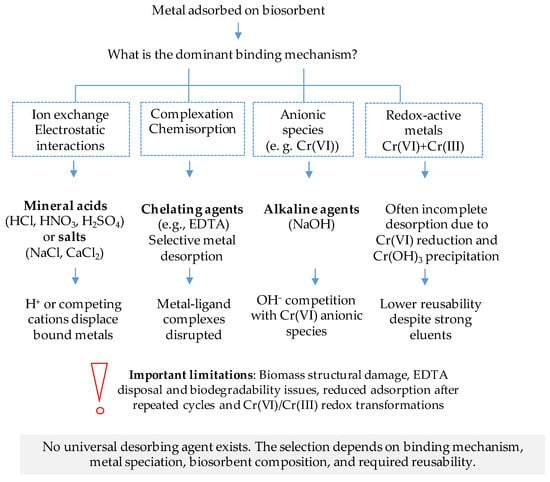
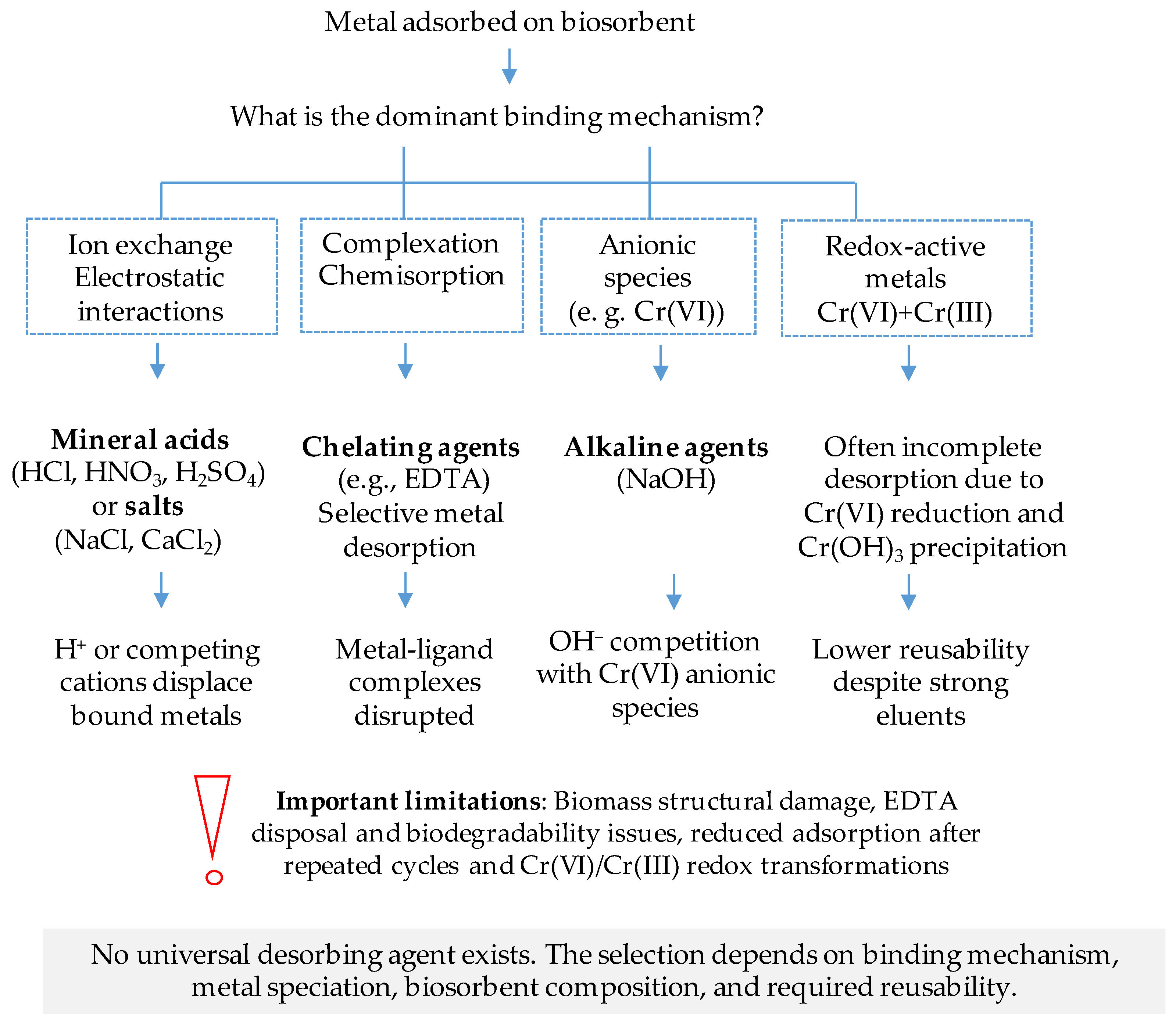
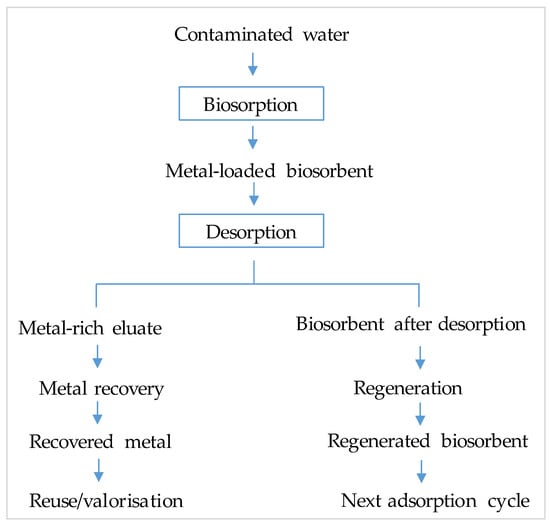
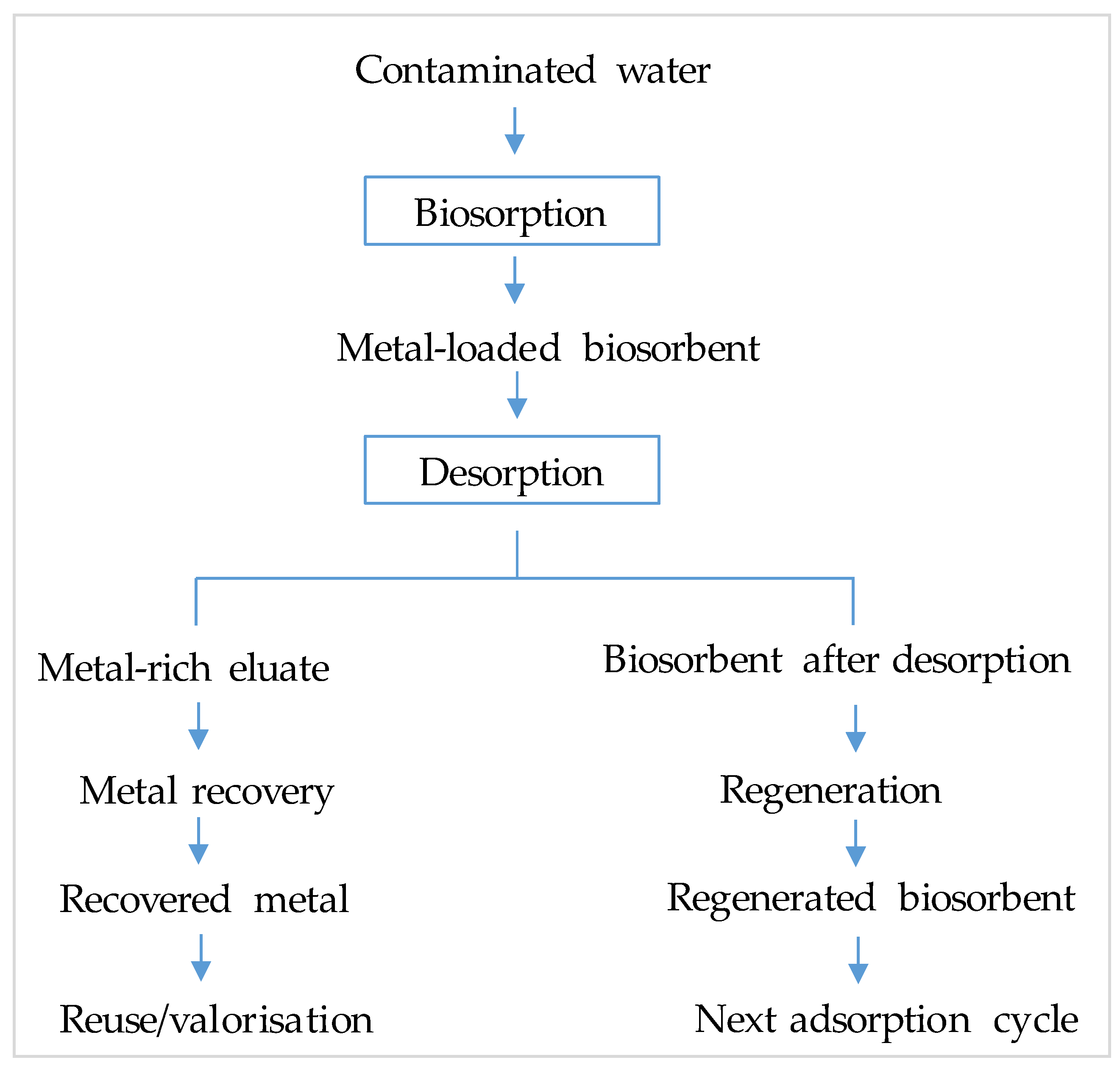
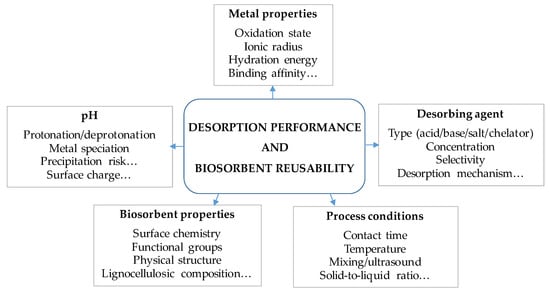
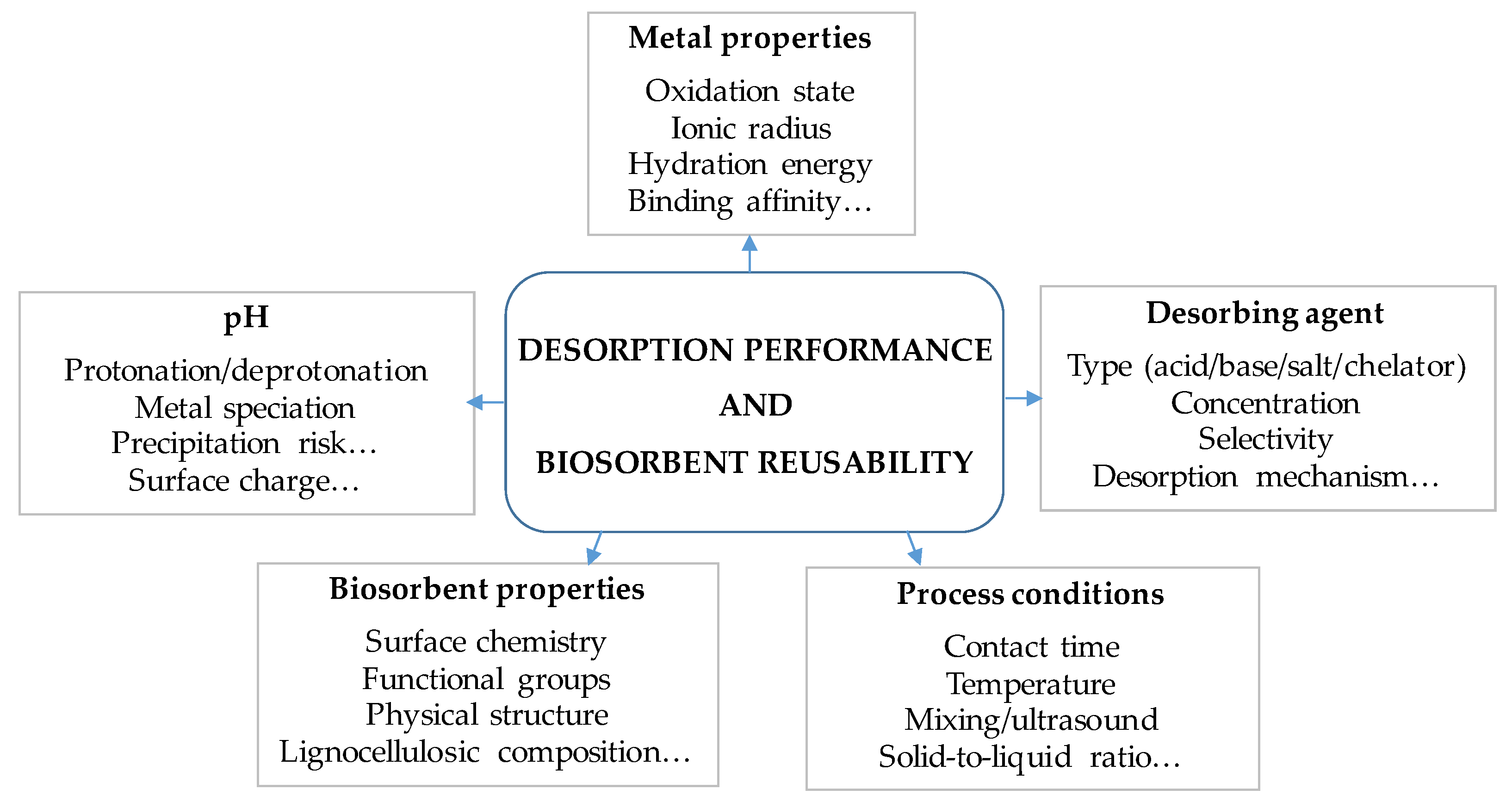
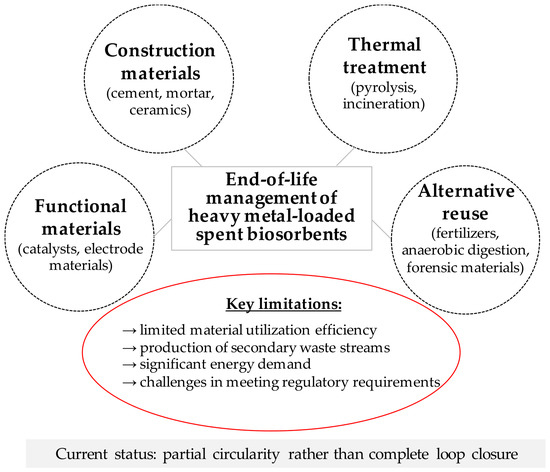
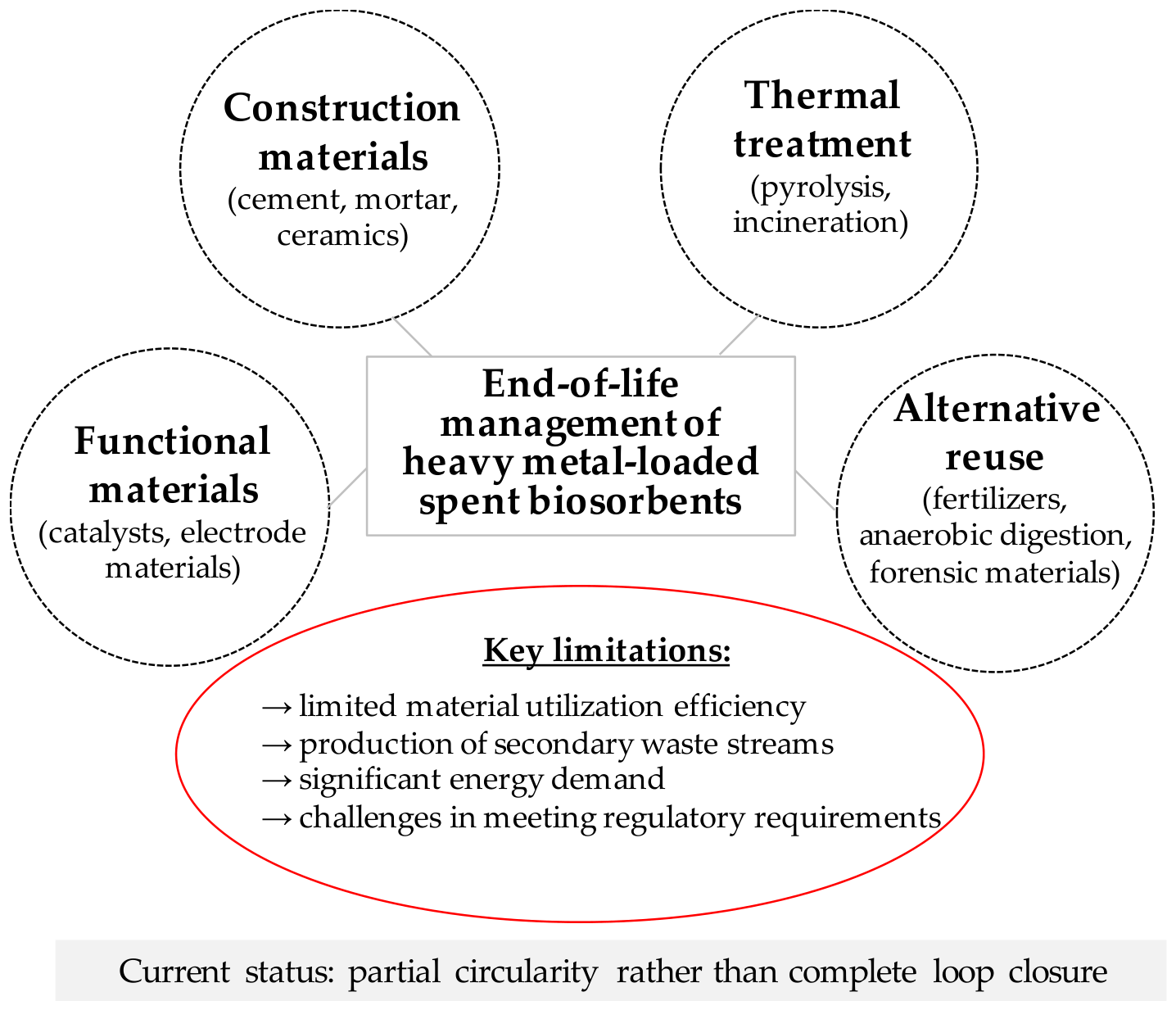

Disclaimer/Publisher’s Note: The statements, opinions and data contained in all publications are solely those of the individual author(s) and contributor(s) and not of MDPI and/or the editor(s). MDPI and/or the editor(s) disclaim responsibility for any injury to people or property resulting from any ideas, methods, instructions or products referred to in the content. |
© 2026 by the authors. Licensee MDPI, Basel, Switzerland. This article is an open access article distributed under the terms and conditions of the Creative Commons Attribution (CC BY) license.