1. Introduction
The construction industry is recognized as one of the largest contributors to environmental degradation, primarily due to the excessive consumption of natural resources, high energy demand, and significant waste generation [
1,
2]. Among the various construction materials, paver blocks are extensively utilized in the development of pavements, walkways, parking lots, and road networks [
3]. Traditionally, these blocks are manufactured using cement, natural aggregates, and sand as the principal constituents. However, conventional paver block production was associated with multiple sustainability challenges for the utilization of cement and natural aggregates [
4]. Notably, cement manufacturing is a major source of greenhouse gas emissions, accounting for approximately 7–8% of global CO
2 emissions [
5]. In addition, the extensive extraction of aggregates and sand leads to the depletion of natural resources and ecological imbalance [
6]. These challenges have prompted researchers to explore sustainable alternatives by partially or fully replacing traditional materials with industrial by-products, recycled aggregates, and waste-derived binders to minimize carbon footprint and promote resource efficiency [
7,
8].
Considering these concerns, researchers have explored a wide range of sustainable alternatives to conventional raw materials in paver block production. Several studies have investigated the partial replacement of cement with supplementary cementitious materials (SCMs), such as fly ash (FA), ground granulated blast-furnace slag (GGBFS), silica fume (SF), and metakaolin (MK), to enhance durability and long-term performance [
9,
10,
11]. Similarly, natural aggregates have been successfully replaced with recycled concrete aggregates, reclaimed asphalt pavement, and industrial by-products, such as steel slag and copper slag, which demonstrate superior mechanical properties in paver blocks [
12,
13,
14,
15]. Utilization of low-density polyethene (LDPE)-based plastic waste (PW) in paver block production has been increasingly explored for resource efficiency and waste valorization [
16]. Past studies have shown that the addition of shredded plastics can improve toughness, abrasion resistance, and water absorption characteristics while reducing reliance on natural aggregates [
17,
18,
19]. Furthermore, the use of construction and demolition (C&D) waste, glass powder (GP), marble dust (MD), and quarry fines as partial replacements for sand or filler materials has been reported to improve sustainability without compromising strength and durability [
20,
21,
22].
In addition to sustainability benefits, integrating FA and PW into paver block production enhances material performance. As a partial substitute for cement, FA reacts with Ca(OH)
2 to form additional calcium silicate hydrate (C–S–H), which primarily contributes to the strength development [
23,
24,
25]. This reaction enhances compressive strength and refines the microstructure by reducing voids and improving particle packing. As a result, permeability decreases, and resistance to freeze–thaw cycles, chemical attack, and other deterioration mechanisms is enhanced [
26,
27].
Similarly, the incorporation of shredded PW as a substitute for coarse aggregates can enhance the physical properties of paver blocks [
28]. When properly processed and proportioned, PW can impart greater flexibility and enhanced impact resistance to the concrete matrix [
29]. Moreover, the hydrophobic nature of plastic can reduce water absorption, further increasing the durability and longevity of the paver blocks [
30]. Recent investigations have also emphasized the importance of optimizing mix proportions and evaluating long-term durability to ensure practical applicability in pavement and paver block applications [
31]. These material innovations align with the global movement toward sustainable construction practices, which emphasize the reuse of industrial by-products, the minimization of construction-related waste, and the conservation of non-renewable resources. By valorizing waste materials and enhancing the performance of construction components, this approach supports the transition to a circular economy and aligns with the sustainability goals in the built environment.
Despite extensive research on sustainable paver blocks incorporating individual waste or recycled materials, several gaps remain in the existing literature. Many studies primarily focus on short-term mechanical properties under laboratory-controlled conditions, with limited emphasis on durability-related performance parameters for concrete paver system applications. Another limitation is the lack of comprehensive experimental frameworks that integrate fresh and hardened properties, durability performance, statistical validation, and economic feasibility for sustainable paver block production. Furthermore, the lack of statistically validated results and cost–benefit analysis limits confidence in translating laboratory findings into real-world construction practice.
2. Research Method and Significance
The present investigation introduces an integrated, application-oriented framework for the development of sustainable paver blocks that incorporate FA and low-density PW as concurrent replacements for cement and natural coarse aggregates, respectively. Although earlier studies have examined FA or PW individually, limited research has systematically evaluated their combined influence on mechanical performance, durability characteristics, statistical reliability, and economic feasibility within a unified experimental program. The current work addresses this gap by establishing a comprehensive assessment strategy aligned with practical field requirements.
The study contributes to sustainable construction by reducing clinker consumption through partial cement replacement and by diverting non-biodegradable PW from landfill disposal. The substitution strategy decreases embodied carbon associated with ordinary Portland cement production and conserves natural aggregate resources. Beyond environmental considerations, the investigation emphasizes performance validation to ensure that sustainability does not compromise structural adequacy or service life.
A structured experimental program was designed to evaluate fresh, hardened, and durability-related properties. Workability and compaction characteristics were assessed using the slump cone test, compaction factor test, and field density test. Mechanical performance was determined by compressive and flexural strength and ultrasonic pulse velocity measurements. Durability behaviour was examined using water absorption, Cantabro abrasion resistance, and rapid chloride penetration tests. In addition, microstructural observations were conducted using scanning electron microscopy to assess matrix densification, pore refinement, and hydration characteristics associated with the incorporation of FA and PW.
To enhance the robustness of the findings, statistical validation was performed using a two-way analysis of variance to quantify the main and interaction effects of FA and PW content. This statistical approach strengthens the credibility of the experimental conclusions and reduces uncertainty in the interpretation of performance.
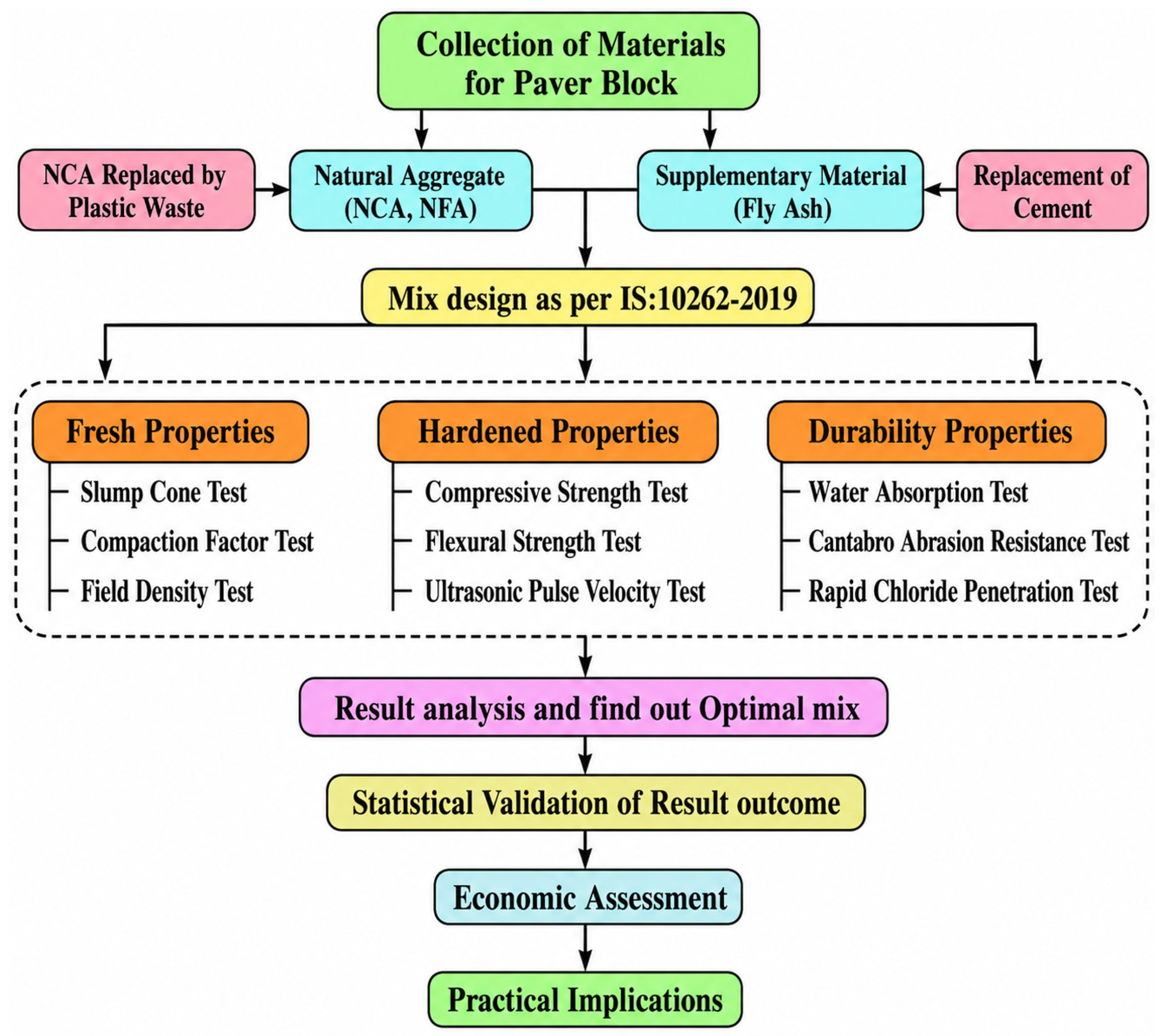
An economic assessment was also undertaken to evaluate cost implications at the mix-design level. Material costs were computed on a unit-volume basis to estimate potential savings relative to conventional paver block production. The inclusion of financial analysis, alongside mechanical and durability evaluation, establishes a practical linkage between laboratory-scale optimization and industrial implementation. An overview of the research methodology for this work is depicted in
Figure 1.
3. Materials and Methods
3.1. Materials
3.1.1. Cement
Ordinary Portland Cement (OPC) of 53 Grade, conforming to IS 12269:2013 specifications, was procured from a local cement manufacturing company (ACC Ltd., Mumbai, India) and used as the primary binding material in the production of paver blocks [
32]. A detailed evaluation of the physical properties of OPC 53 Grade was carried out in accordance with the relevant provisions of IS 4031 [
33]. For improved reproducibility and compatibility with European practices, the cement corresponds to CEM I as per EN 197-1:2015 [
34] (Cement Composition and Specification) with an equivalent strength class. The results of the physical properties are compiled in
Table 1.
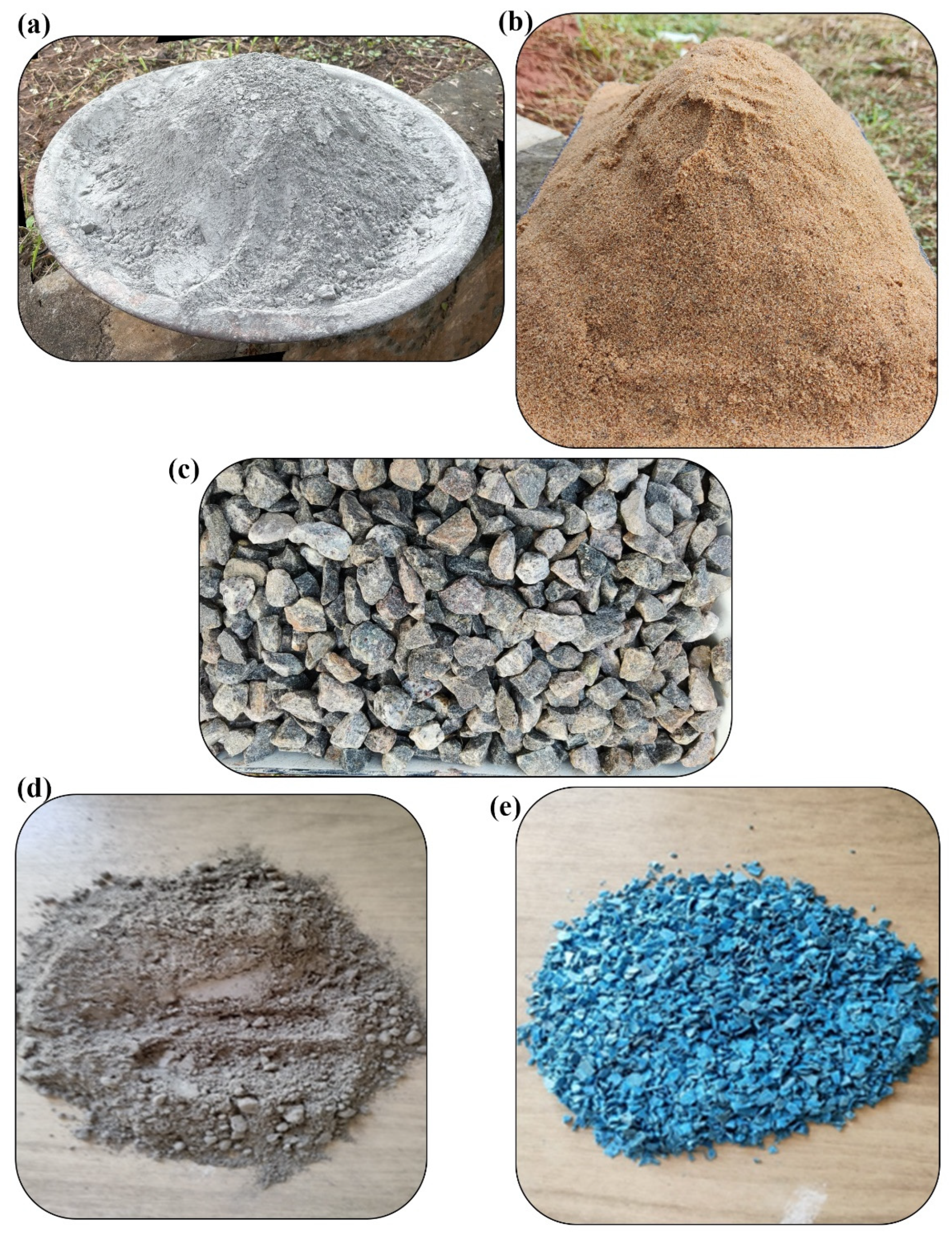
Figure 2 shows all the materials used in this study.
3.1.2. Fly Ash
Class F-based Fly ash (FA), a finely divided industrial by-product obtained from the combustion of pulverized coal in thermal power plants, was incorporated in paver block production. FA was collected from the National Thermal Power Corporation (NTPC) power plant located at Talcher, Odisha, India, in accordance with IS 3812 (Part 1):2013 [
39]. The oxide composition of FA content was determined using X-ray fluorescence (XRF) analysis (Thermo Scientific, Waltham, MA, USA) and presented in
Table 2.
3.1.3. Natural Fine Aggregate
River sand was used as the natural fine aggregate (NFA) for this current study. The sand was procured from the local riverbed in the Mahanadi region of Odisha and confirmed to meet the grading requirements of Zone II as per IS 383:2016 [
40]. The particle size ranged from 0.075 mm to 4.75 mm, ensuring good workability and packing density in the concrete mix. It was used as a filler in the production of paver blocks, where well-graded fine aggregate ensured better compaction and reduced permeability.
3.1.4. Natural Coarse Aggregate
Traditionally, crushed stone or gravel is used as a natural coarse aggregate (NCA). Crushed granite aggregates were sourced from a local quarry in Khurda district, Khordha, Odisha, India and segregated into a size fraction of 4.75 mm to 12.5 mm as per IS 383:2016 for paver block production [
40].
3.1.5. Plastic Waste Aggregate
LDPE-based PW aggregate was incorporated into paver block production as a sustainable alternative to conventional materials. The PW used in this study was obtained from a plastic tray manufacturing facility located near K.M.M. College, Tirupati, India. The collected waste primarily consisted of discarded LDPE-based plastic products generated during manufacturing operations. Prior to use, the waste plastic was cleaned to remove surface contaminants and foreign materials. Subsequently, the plastic waste was mechanically shredded, producing particles of coarse aggregate size. The shredded plastic was then thermally processed under controlled heating conditions to soften the material and improve particle integrity. The softened plastic was molded and granulated into irregular aggregate-like particles with a size range of 2–8 mm. After cooling, the processed plastic aggregates were sieved to obtain the desired gradation and were stored under dry laboratory conditions until use. Unlike thin plastic films or flexible laminates, the processed PW used in this investigation consisted of densified three-dimensional particles that exhibited aggregate-like characteristics suitable for partial replacement of natural coarse aggregates in paver block production. The physical properties of the aggregates considered in this study are summarized in
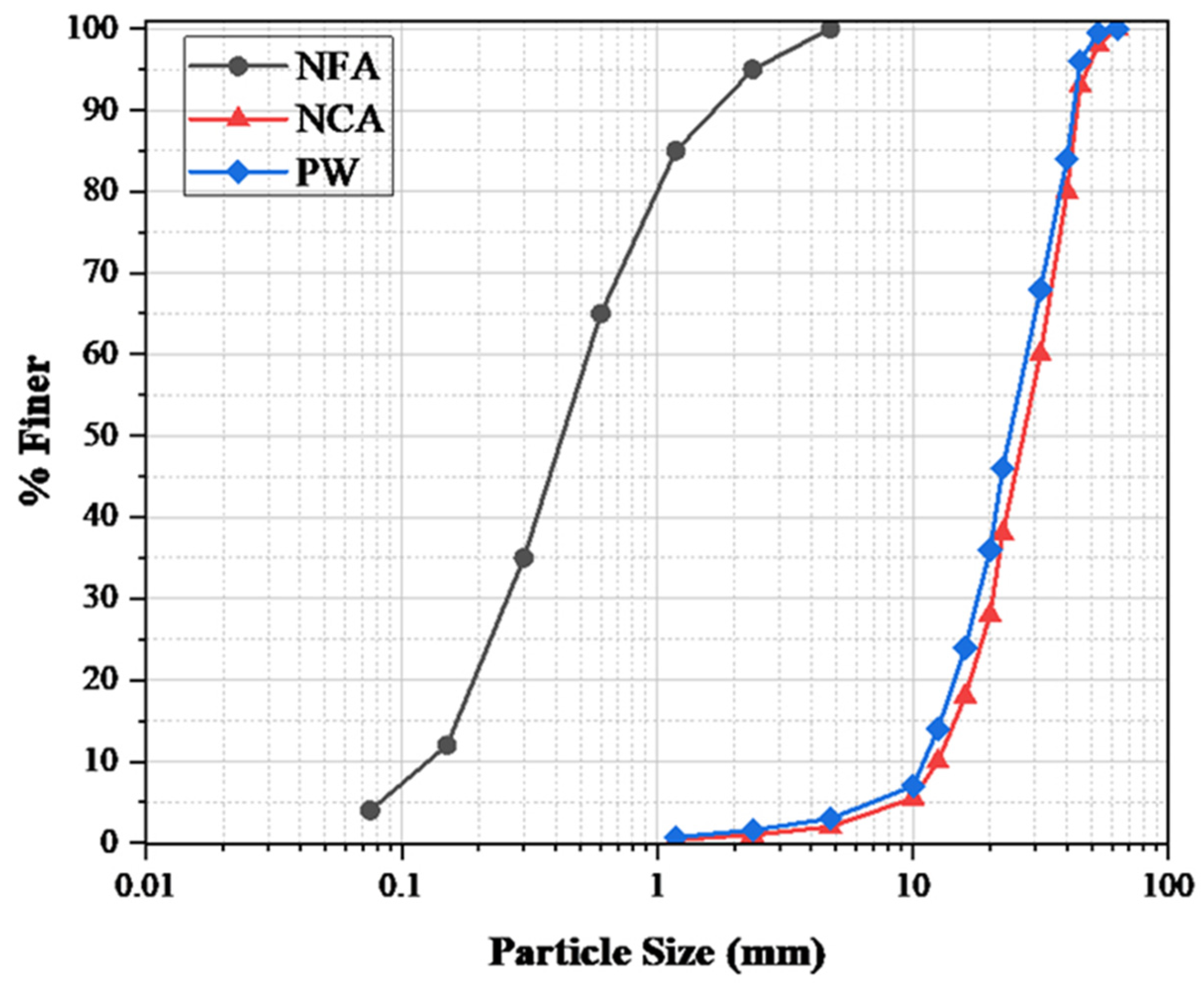
Table 3. The particle size distribution curves of NFA, NCA, and PW aggregates are depicted in
Figure 3.
3.1.6. Potable Water
Water is a crucial ingredient in paver block production, playing a vital role in cement hydration and facilitating mixing. The potable water available in the laboratory was used to produce paver blocks. The quality of the water was tested and found to conform to the requirements of IS 456:2000, ensuring its suitability for concrete mixing and curing [
44].
3.1.7. Colour Pigment
Colour pigments were incorporated into the paver block mixtures to enhance their aesthetic appeal, particularly for decorative pavements and landscaping applications. The pigments used were iron oxide-based, which are widely preferred in concrete products due to their high tinting strength, stability, and resistance to ultraviolet (UV) degradation. Available colours in various shades, including red, yellow, black, and brown, were added in controlled proportions to ensure uniform colour distribution without compromising the concrete’s workability and strength.
3.2. Casting Specimen and Mix Proportioning
In this study, although FA was incorporated exclusively as a partial replacement of OPC and PW was used as a partial replacement of NCA, minor variations in NFA content were introduced during the mix design process to maintain volumetric stability and achieve the target unit weight of concrete in accordance with IS 10262:2019 [
45]. The incorporation of low-density PW aggregates altered the volumetric composition of the mixtures; therefore, slight adjustments in NFA content were required to maintain the overall 1 m
3 yield and ensure adequate particle packing. Consequently, the increase in NFA content shown in
Table 4 should not be interpreted as a direct replacement of sand by FA. Throughout the experimental program, FA replaced cement only, whereas PW replaced natural coarse aggregates. The mix proportions were designed to maintain a constant binder content of 400 kg/m
3 and a water-to-binder ratio of 0.45, while FA replacement ranged from 10% to 30% and PW from 3% to 15% by weight. The raw materials were weighed, dry-mixed, and then combined with water to ensure a homogeneous blend. Fresh concrete was cast into a standard paver block mould, then properly compacted to remove entrapped air and achieve uniform density throughout the block. After demolding at 24 h, all paver block specimens were cured by water immersion in a controlled laboratory environment maintained at 27 ± 2 °C for 7, 28, and 56 days.
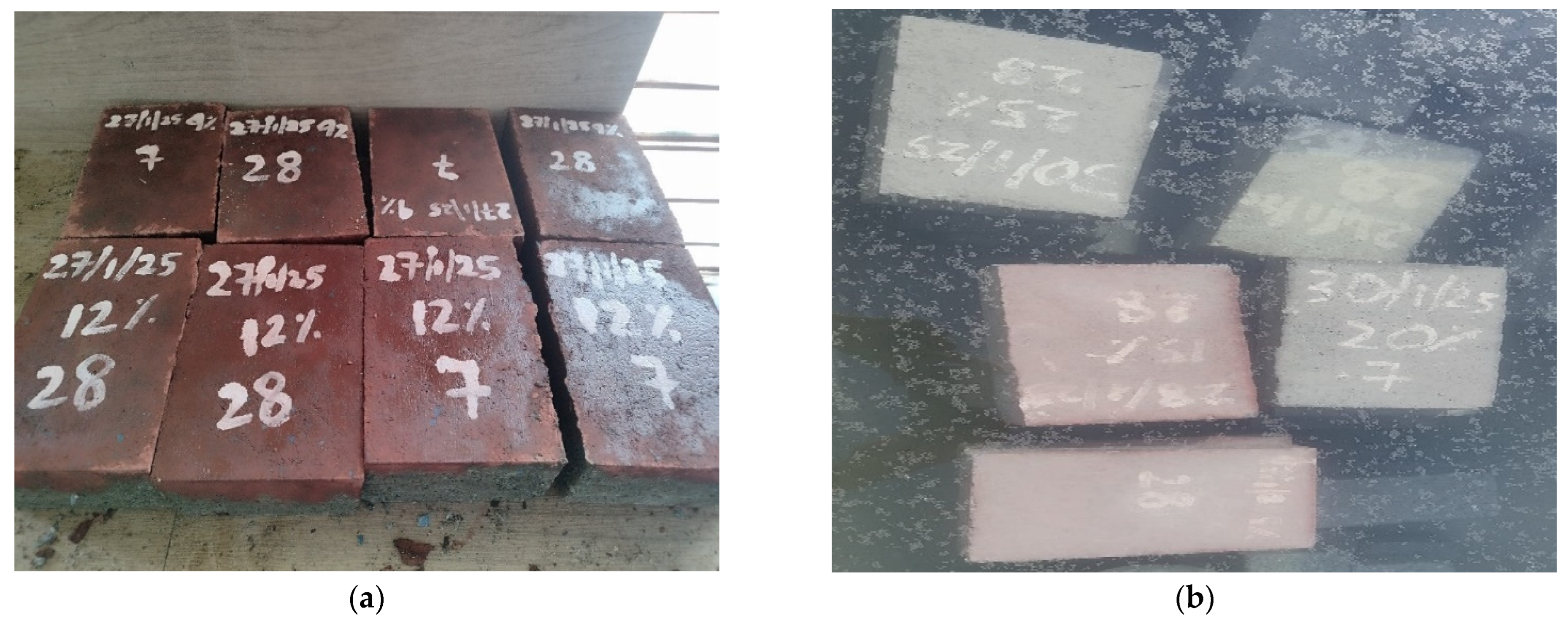
Figure 4 shows the preparation stages of paver blocks: (
Figure 4a) freshly cast paver blocks and (
Figure 4b) paver blocks during curing. The concrete mixtures were designated using a systematic mix identification (ID) scheme. A total of six concrete mixes were prepared in this study, including one control mix and five FA–PW modified mixes. The control mix without FA and PW was labelled as M0. Subsequent mixes were denoted as M1, M2, M3, M4, and M5, corresponding to increasing replacement levels of FA and PW. The mix proportions were developed in accordance with the provisions of IS 10262:2019 [
45].
Table 4 presents the concrete mix proportions for the different mix designs considered in this study.
3.3. Testing Methods
The properties of the developed paver blocks incorporating FA and PW were evaluated through a comprehensive series of tests, including fresh, hardened, and durability tests, in accordance with Indian Standards (IS) and American Society for Testing and Materials (ASTM) specifications. For each mix, three specimens were tested for compressive strength, flexural strength, water absorption, Cantabro abrasion resistance, and RCPT. All specimens were demoulded after 24 h and subsequently water-immersion cured at 27 °C until the designated testing ages of 7, 28, and 56 days [
46].
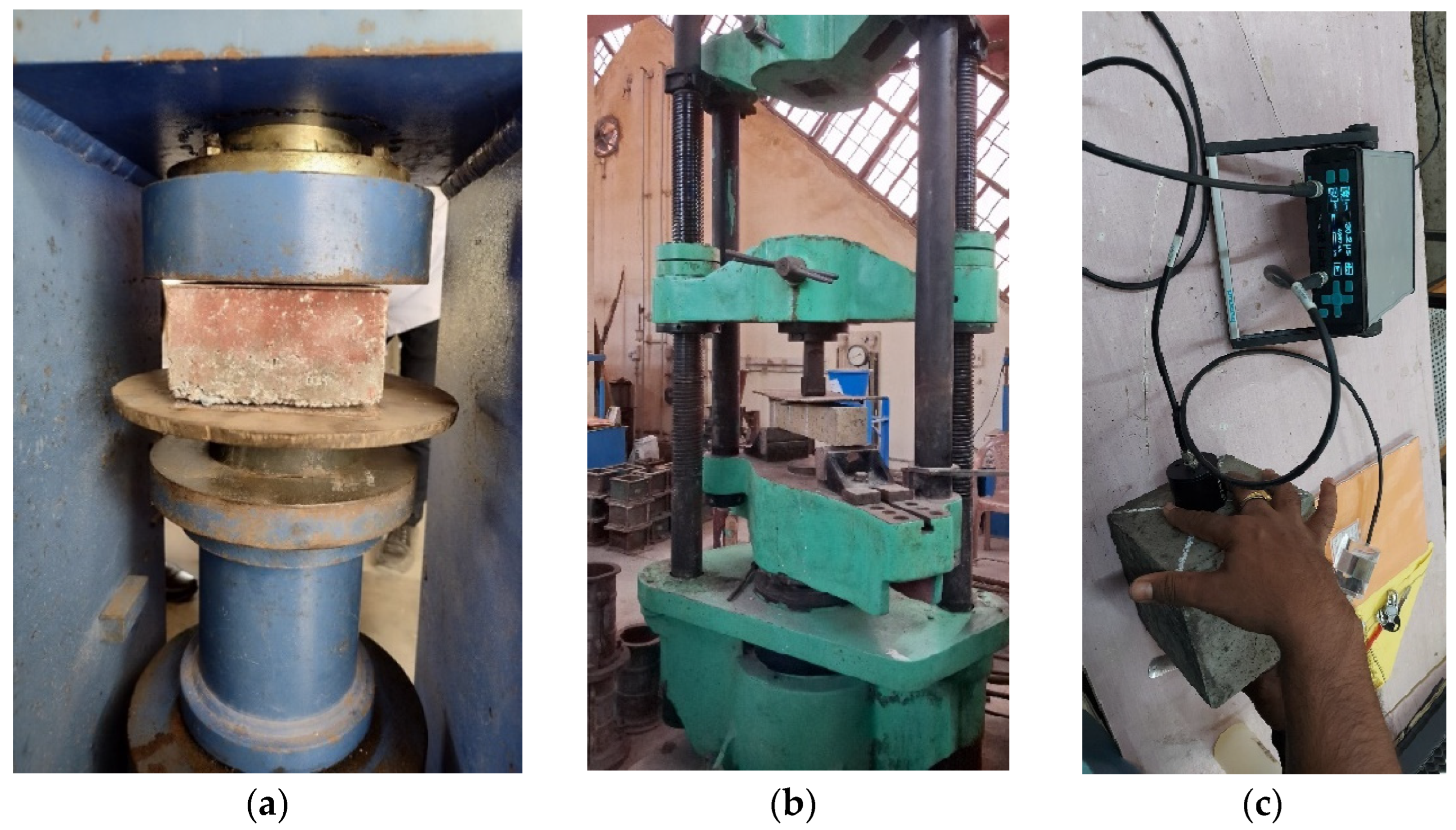
Figure 5 illustrates the experimental testing framework adopted in this study for (
Figure 5a) CS, (
Figure 5b) FS, and (
Figure 5c) UPV.
Table 5 summarizes the testing methods employed along with their corresponding empirical equations.
4. Results and Discussions
4.1. Fresh Properties of Concrete
4.1.1. Slump Cone Test (SCT)
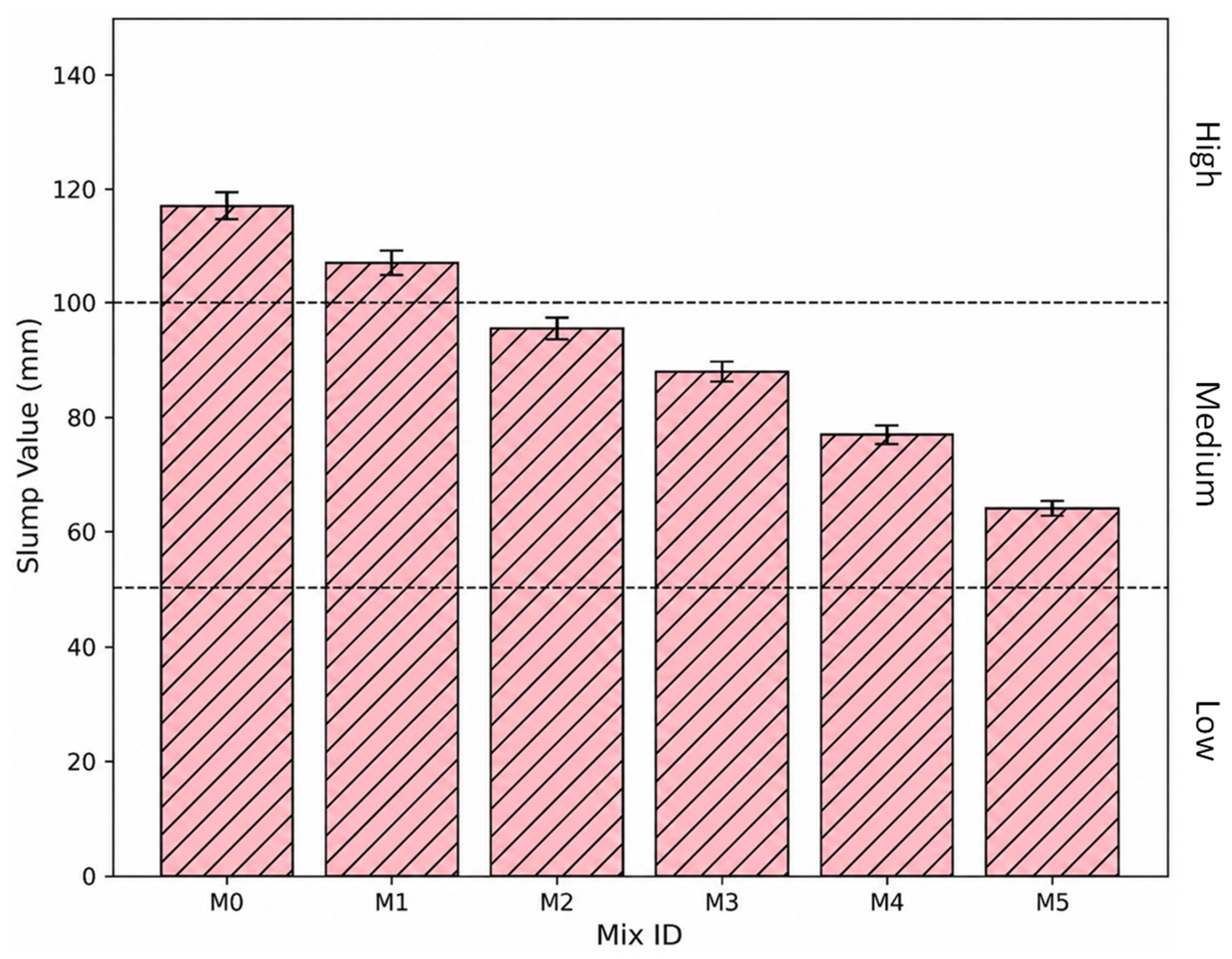
The slump values of different concrete mixes are presented in
Figure 6. The control mix (M0) exhibited the highest slump of approximately 118 mm, indicating high workability. With the progressive incorporation of FA and PW aggregates, a gradual reduction in slump was observed from M1 to M5 mixes. Although Class F fly ash generally improves workability due to its spherical particle morphology and ball-bearing effect [
53]. The overall reduction in slump observed in this study was primarily governed by the inclusion of processed PW aggregates. The irregular shape, rough surface texture, lightweight nature, and hydrophobic characteristics of PW increase interparticle friction and reduce the mobility of fresh concrete constituents. At higher replacement levels, these adverse rheological effects dominate over the lubricating influence of fly ash, resulting in reduced workability. Nevertheless, the M4 mix (25% FA + 12% PW) maintained a slump within the acceptable range for paver block production, where relatively stiff mixtures are desirable to minimize segregation and ensure dimensional stability [
54].
4.1.2. Compaction Factor Test (CFT)
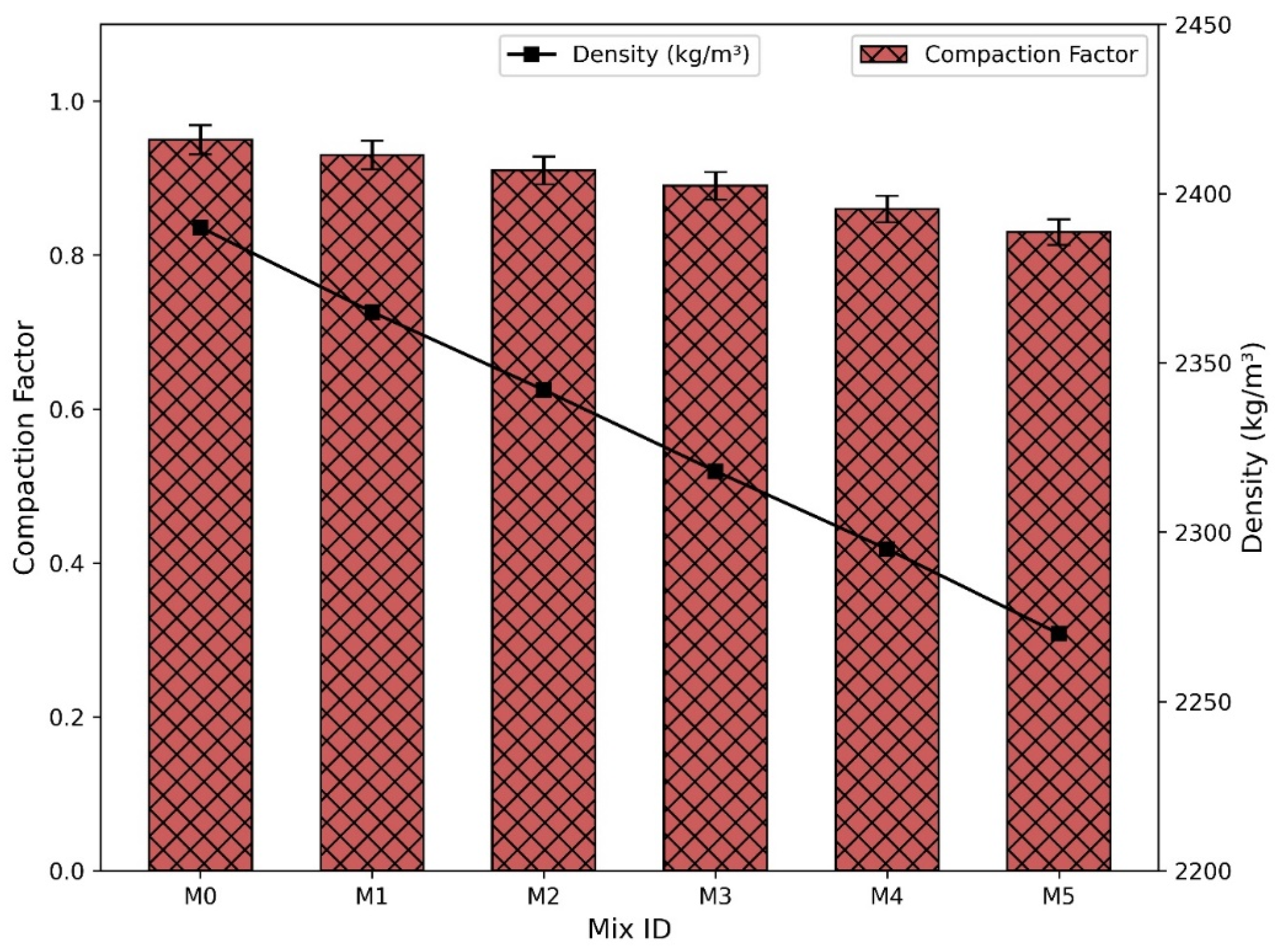
The compaction factor test was conducted to assess the workability of fresh concrete mixes with varying proportions of FA and PW aggregates. As shown in
Figure 7, the control mix (M0) achieved the highest compaction factor, indicating relatively high workability. With the progressive incorporation of FA and PW, the compaction factor declined gradually, with M5 recording the lowest value. This reduction can be attributed to the hydrophobic nature, angularity, and rough surface of PW aggregates, which increase internal friction and reduce the ease of flow [
55]. In addition, FA, being finer and more porous, increases water demand, thereby reducing compaction efficiency. Nevertheless, all mixes remained within the recommended range (0.85–0.95), making them suitable for semi-workable concrete used in paver block applications.
4.1.3. Field Density of Concrete (FDT)
The field density test (FDT) was conducted using the sand replacement method, as specified in IS 2720 (Part 28) [
56]. The results of the FDT are depicted in
Figure 7. The density values decreased with the inclusion of FA and PW aggregates. The control mix (M0) recorded the highest density of 2405 kg/m
3, while M5 exhibited the lowest at 2260 kg/m
3. The observed reduction is primarily due to the lower specific gravity of FA compared to cement and the lightweight character of PW aggregates, which replace natural coarse aggregates. Despite this decline, the density values of all mixes remained within acceptable limits for structural concrete, indicating adequate packing and compaction of the constituents.
The reduction in density observed for M4 is primarily attributable to the low specific gravity of both FA and PW relative to conventional cement and natural aggregates. It should be noted that incorporating LDPE-based PW may adversely affect the interfacial transition zone due to its smooth, hydrophobic surface characteristics, which limit mechanical interlocking and chemical bonding with the cement matrix. Therefore, the improved compressive strength observed in M4 should not be interpreted as a direct strengthening effect of PW. Instead, the enhancement is primarily attributed to the pozzolanic activity of FA, which generates additional C–S–H gel, refines pore structure, and densifies the cementitious matrix. At the optimum replacement level, the matrix densification provided by FA was sufficient to compensate for the localized ITZ weaknesses introduced by PW. However, when the PW content increased further (M5), the adverse effects of weak aggregate–paste bonding became more pronounced, resulting in reduced mechanical performance. These findings indicate that the optimal performance of M4 arises from a balance between FA-induced matrix refinement and an acceptable level of PW incorporation, rather than from any intrinsic strengthening effect of the plastic aggregate itself.
4.2. Hardened Properties of Concrete
4.2.1. Compressive Strength
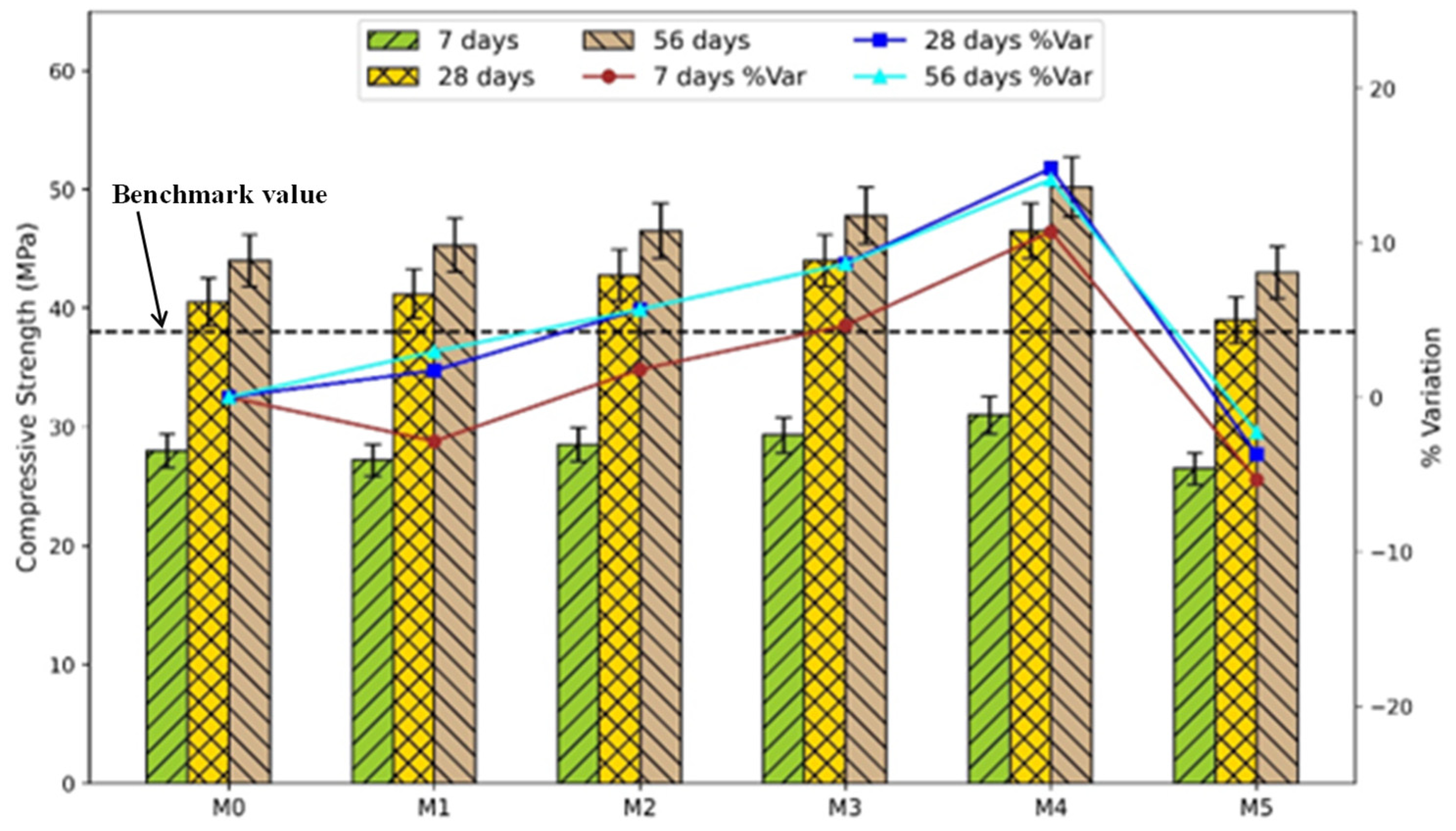
Figure 8 illustrates the compressive strength of paver blocks with varying percentages across mixes at 7, 28, and 56 days of curing. Based on the results, the compressive strength increased with advancing curing age for all mixes. The percentage variation in compressive strength relative to the control mix (M0) indicates that, at 7 days, M1 exhibited a reduction of 3.2%, whereas M2, M3, and M4 showed improvements of 1.4%, 4.6%, and 10.0%, respectively, while M5 recorded a decrease of 6.0%. At 28 days, the strength increased by 2.0% for M1, 5.7% for M2, 8.9% for M3, and 13.3% for M4 compared with the control, whereas M5 showed a 3.5% decline. Similarly, at 56 days, M1, M2, and M3 demonstrated strength enhancements of 2.7%, 5.7%, and 8.6%, respectively, and the optimum mix, M4, achieved the highest increase of 14.1%, while M5 exhibited a marginal reduction of 2.3% relative to M0. These results confirm that the M4 mix (25% FA + 12% PW) consistently provided the maximum compressive strength improvement across all curing ages. A similar finding was observed in earlier investigations, in which the incorporation of SCMs and PW contributed to pore refinement, improved interfacial bonding, and enhanced the load-bearing capacity of paver blocks [
16]. The mean CS values and their corresponding standard deviations (SD) for different concrete mixes are presented in
Table 6.
4.2.2. Flexural Strength Test
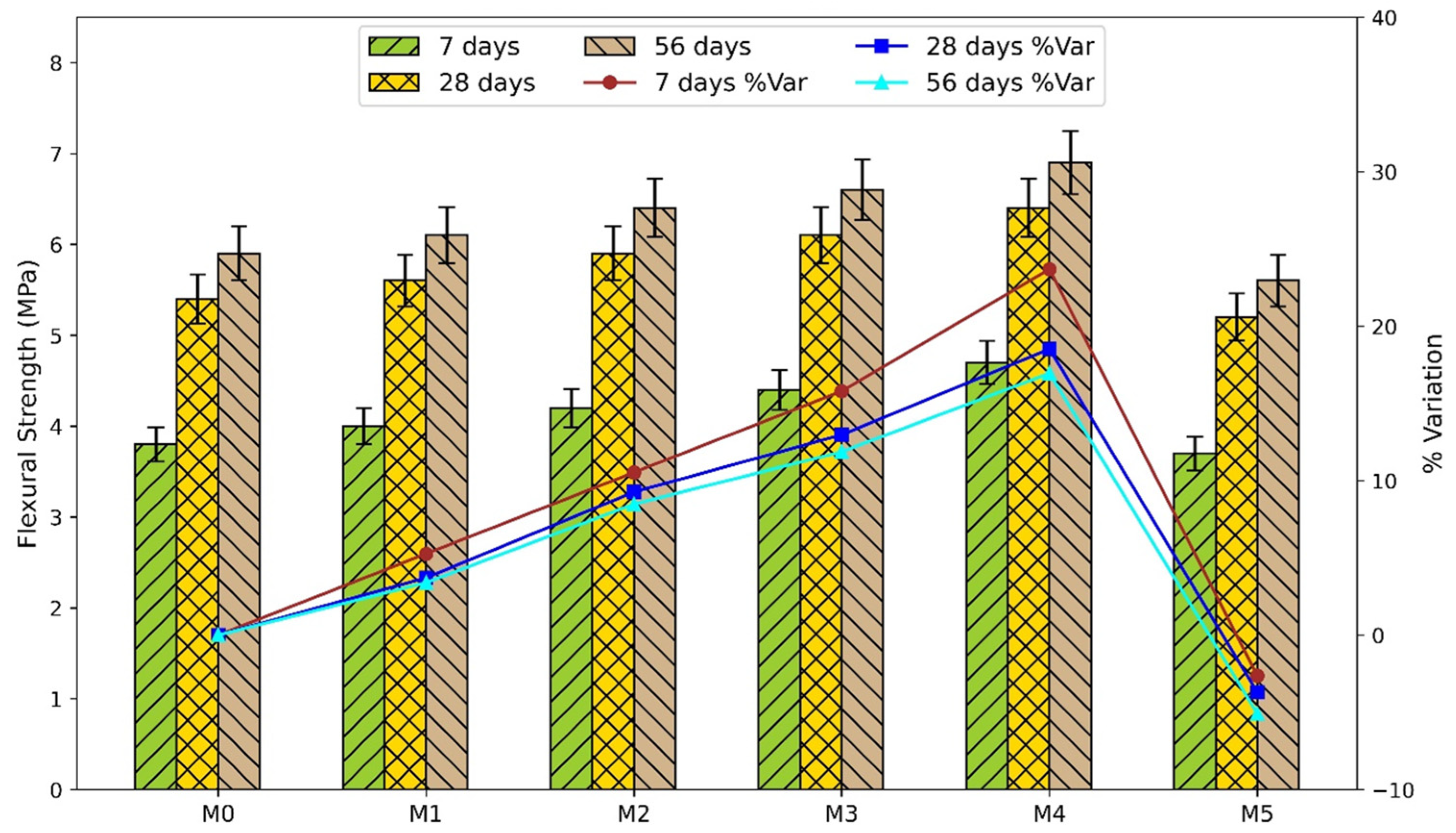
The flexural strength results of the developed paver block mixes at 7, 28, and 56 days are presented in
Figure 9. It is evident that the flexural strength improved consistently with the increase in curing age for all mixes, indicating continued hydration and densification of the matrix. The percentage variation in flexural strength relative to the control mix (M0) demonstrated a consistent improvement up to the optimum replacement level. At 7 days, the modified mixes M1, M2, and M3 exhibited increases of 2.4%, 4.9%, and 7.3%, respectively, while the M4 mix (25% FA + 12% PW) achieved the maximum enhancement of 10.8% compared to the control; however, a reduction of 3.7% was observed for M5, indicating the adverse influence of excessive replacement at early age. A similar trend was observed at 28 days, with M1, M2, and M3 showing strength gains of 3.7%, 6.5%, and 9.3%, respectively, and M4 exhibiting the greatest improvement of 13.0%, whereas M5 showed a decline of 5.6% relative to M0. At 56 days, the strength enhancement became more pronounced, with increases of 4.2%, 7.6%, and 10.2% for M1, M2, and M3, respectively, and a maximum increase of 15.3% for M4, while M5 demonstrated a reduction of 6.8% compared to the control. These findings confirm that the M4 mix consistently achieved the greatest improvement in flexural strength across all curing ages [
57,
58].
4.2.3. UPV Test Results
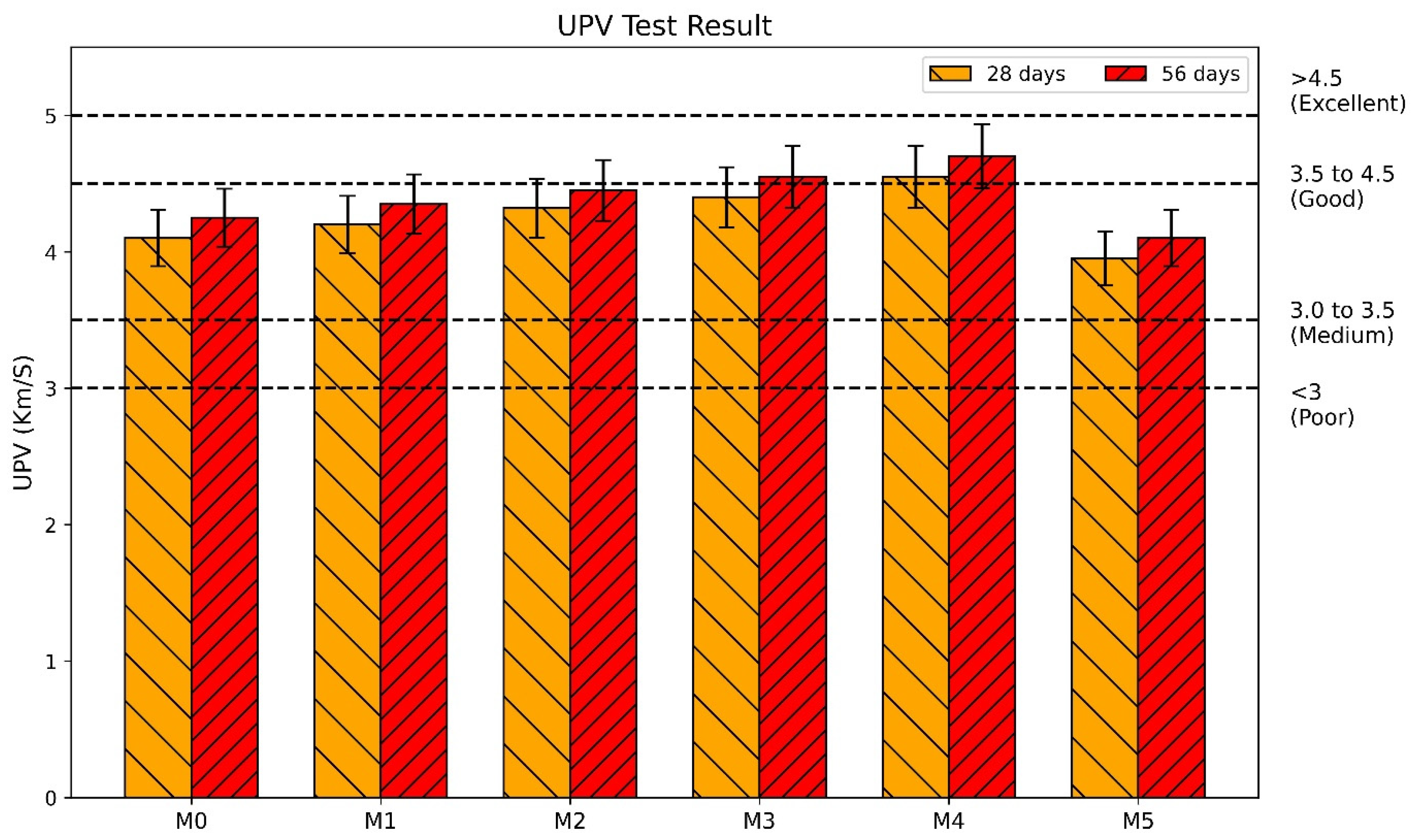
UPV test results of concrete mixes with varying FA and PW content were demonstrated in
Figure 10 as per IS 13311 (Part 1):1992 [
49]. At 28 days, the control mix (M0) recorded a UPV of 4.2 km/s, while the modified mixes exhibited a gradual increase up to the optimum level. Compared with M0, mixes M1, M2, and M3 showed increases of approximately 2.4%, 4.8%, and 7.1%, respectively. The optimum mix M4 achieved a UPV of 4.6 km/s, corresponding to an enhancement of about 9.5% relative to the control. However, a marginal reduction of approximately 2.4% was observed in M5, indicating that excessive incorporation of FA and PW slightly impaired pulse transmission.
A similar trend was observed at 56 days, where the control mix attained a UPV of 4.8 km/s. The M4 mix reached approximately 5.1 km/s, an increase of about 6.3% compared with M0, whereas the intermediate mixes (M1–M3) showed improvements of 2–5%. In contrast, M5 exhibited a slight decrease of nearly 2% relative to the control, suggesting that the optimum replacement level enhances matrix densification and concrete quality, beyond which minor deterioration occurs.
5. Durability Assessment on Paver Block
5.1. Water Absorption Test
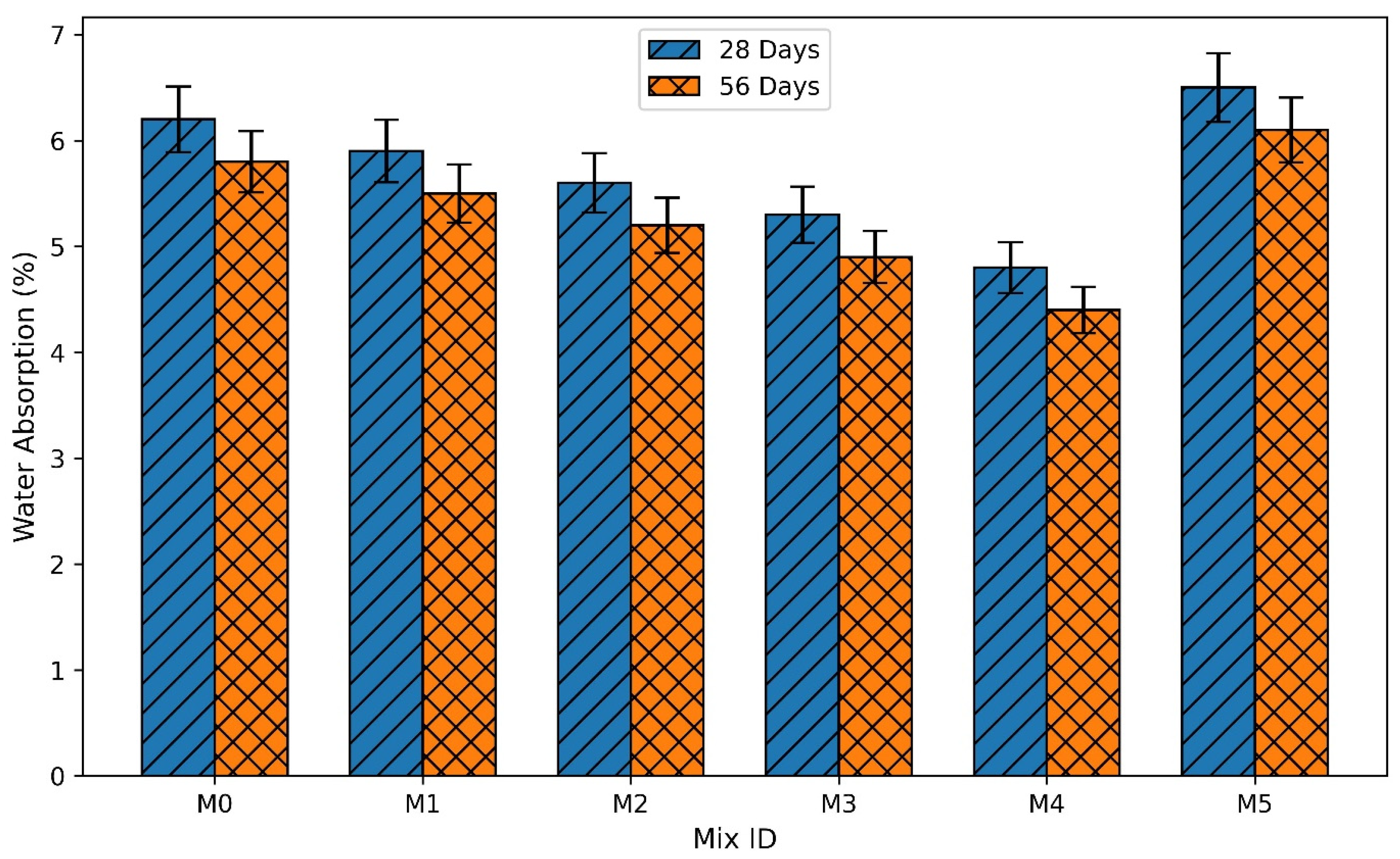
The water absorption test results presented in
Figure 11 show a decreasing trend as FA and PW aggregates are progressively incorporated, up to the M4 mix. The percentage variation in water absorption relative to the control mix (M0) was determined to facilitate a clear assessment of durability improvement. At 28 days, the control mix exhibited a water absorption of 6.2%, whereas mixes M1, M2, and M3 showed reductions of approximately 6.5%, 11.3%, and 16.1%, respectively. The optimum mix, M4 (25% FA + 12% PW), recorded the lowest value of 4.8%, corresponding to a reduction of about 22.6% compared with the control. In contrast, the M5 mix exhibited a marginal increase of approximately 4.8% relative to M0. A comparable trend was observed at 56 days, where M4 achieved a water absorption of 4.4%, representing a reduction of nearly 25.4% with respect to the control, while M5 showed a slight increase of approximately 3.4%. These findings indicate that incorporating 25% FA and 12% PW results in the most pronounced reduction in water absorption, reflecting improved pore refinement and decreased permeability of the concrete matrix. The finer FA particles fill micro-voids between cement and aggregates, thereby reducing permeability [
59]. This secondary C–S–H gel densifies the matrix and minimizes interconnected porosity, thereby leading to lower water absorption values in optimized mixes. It is recommended that the M4 mix achieve an optimal balance between improved pore structure and durability for practical applications.
5.2. Cantabro Abrasion Resistance Test
The Cantabro abrasion test evaluates the resistance of concrete paver blocks against impact-induced ravelling and particle loss under rotational motion. It primarily reflects the susceptibility of the surface matrix to disintegration rather than directly simulating polishing or depth-wise surface wear under sustained frictional loading.
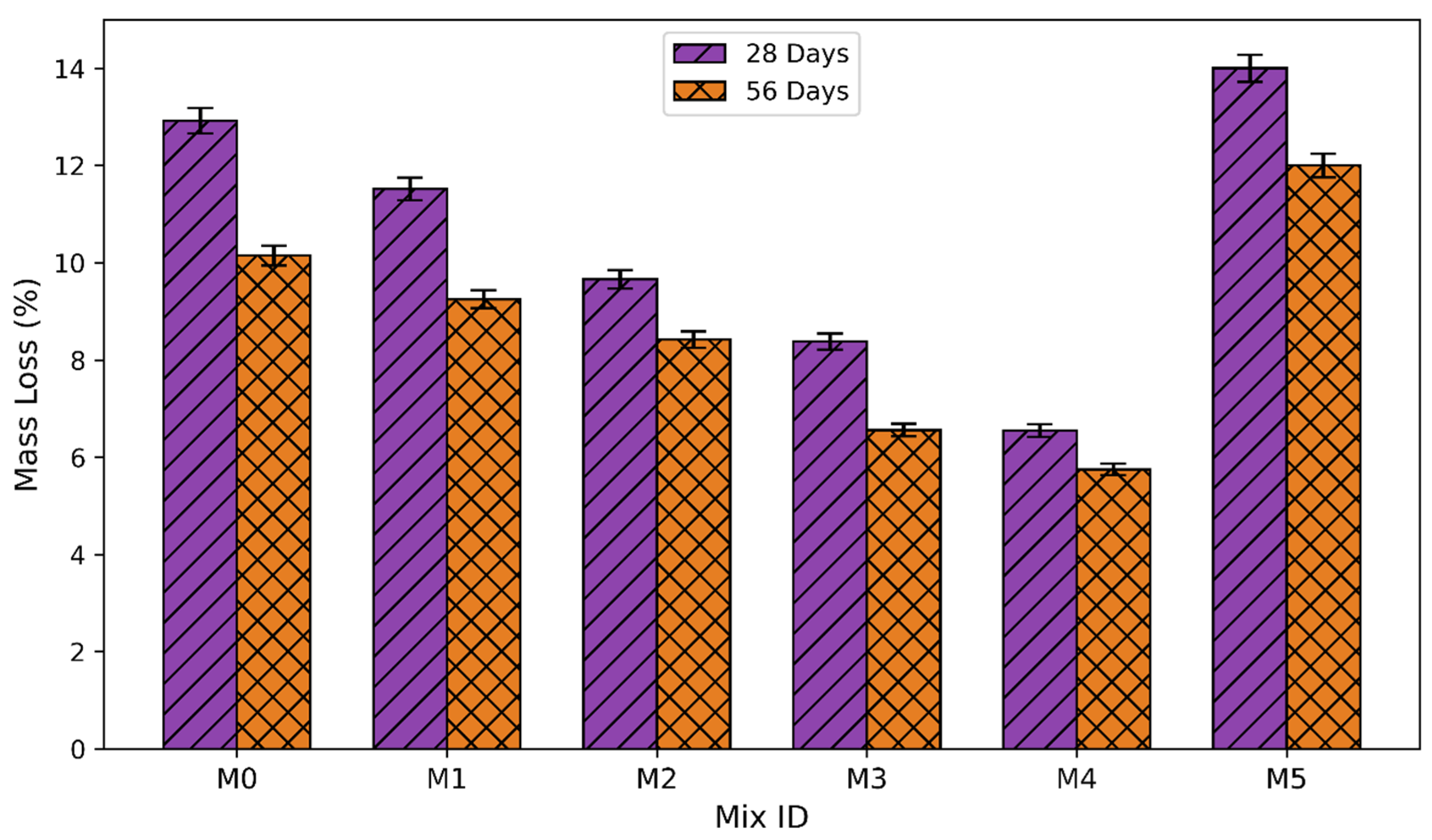
The results indicate a consistent reduction in mass loss as FA and PW content increase up to the M4 mix, demonstrating improved cohesion and resistance to particle detachment (
Figure 12). The control mix (M0) exhibited greater mass loss at both 28 and 56 days, indicating lower abrasion resistance. At 28 days, the control mix (M0) exhibited a mass loss of 8.4%, whereas the M4 mix recorded 6.5%, corresponding to a reduction of approximately 22.6% relative to the control. Similarly, at 56 days, the mass loss decreased from 7.6% for M0 to 5.8% for M4, indicating an improvement of about 23.7% in abrasion resistance. A consistent decline in mass loss was observed from M1 to M4, demonstrating progressive enhancement in surface durability with increasing FA and PW content up to the optimum level. However, the M5 mix showed a marginal increase in mass loss compared to M4, suggesting that excessive replacement adversely affects surface integrity. Overall, the M4 mix achieved nearly 23% greater abrasion resistance than the control mix, confirming its superior durability. Similar findings have been documented by Teixeira et al. [
9] regarding the reduction in mass loss of paver blocks. Their research indicates that incorporating SCMs and alternative aggregates significantly reduces abrasion-induced deterioration.
However, it is noted that the Cantabro test does not fully represent in-service surface wear mechanisms, such as polishing, skid-resistance degradation, or microscale abrasion under continuous vehicular steering. Therefore, the observed improvement should be interpreted specifically in terms of ravelling resistance rather than comprehensive surface wear performance. Henceforth, this mix may be suitable for pedestrian pavements and residential driveways under light to moderate loading conditions, based on combined improvements in mechanical strength, permeability resistance, and raveling-based abrasion performance.
5.3. Rapid Chloride Penetration Test
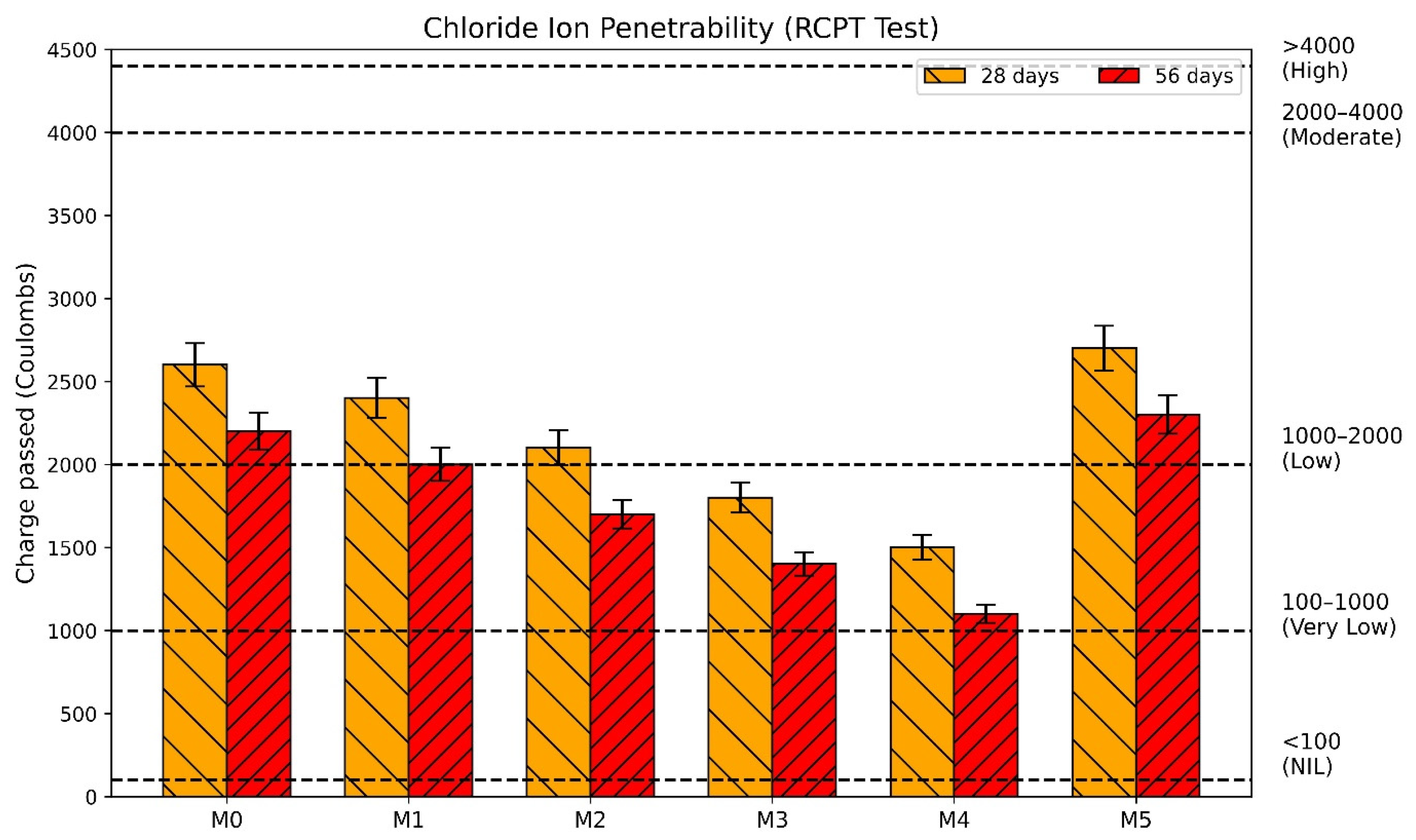
The RCPT results depicted in
Figure 13 indicate a progressive reduction in charge passed with the incorporation of FA and PW aggregates. To facilitate a clearer comparison, the percentage variation in charge passed was determined relative to the control mix (M0) at corresponding curing ages. At 28 days, the control mix recorded a charge of 2600 C. The incorporation of FA and PW resulted in a progressive reduction in chloride ion penetrability. Mix M1 exhibited a charge value of 2350 C, corresponding to a 9.6% reduction compared to M0. Further decreases were observed for M2 (2100 C, 19.2% reduction) and M3 (1800 C, 30.8% reduction). The optimum mix, M4, demonstrated a charge of 1500 C, representing a substantial 42.3% reduction relative to the control. However, M5 (1700 C) showed a slight increase, but it still maintained a 34.6% reduction compared to M0.
A similar trend was observed at 56 days. The control mix exhibited a charge of 2200 C, while M1 showed a 9.1% reduction (2000 C). Mixes M2 and M3 recorded reductions of 20.5% (1750 C) and 36.4% (1400 C), respectively. The maximum improvement was again achieved by M4, which recorded a charge of 1100 C, representing a 50.0% reduction relative to the control mix. In contrast, M5 showed a slightly higher charge of 1350 C, corresponding to a 38.6% reduction [
60].
These results confirm that chloride ion permeability decreased significantly with increasing incorporation of FA and PW, up to the M4 composition [
61]. The optimum mix achieved the highest resistance to chloride ingress at both curing ages, whereas excessive replacement in M5 resulted in a marginal decline in performance, possibly due to microstructural discontinuities in the cementitious matrix.
6. Methodological Limitations
Despite the comprehensive experimental and analytical framework employed in the study, certain methodological limitations should be considered when interpreting the results. Thus, first, the study has been carried out on precast paver block specimens under controlled laboratory conditions, which have not been validated under actual traffic, exposure, and construction conditions. As a result, the actual long-term performance may differ from the laboratory observations. Second, although the durability performance was evaluated through water absorption, Cantabro abrasion resistance, and rapid chloride penetration tests, other long-term durability aspects, including freeze–thaw resistance, sulfate attack, carbonation resistance, alkali-silica reaction, and long-term field exposure conditions, were beyond the scope of the present study. Future investigations should incorporate these durability indicators to provide a more comprehensive assessment of long-term service performance. Third, the study was conducted using FA and LDPE-based PW sourced from a single location, which may have affected the results due to variations in composition, morphology, and contaminant levels. Fourth, the replacement of OPC with FA was performed on a mass basis while maintaining a constant binder content and water dosage. Owing to the lower specific gravity of FA compared with OPC, the volumetric water-to-binder ratio varied among mixtures as FA content increased. Consequently, changes in paste volume may have influenced fresh and hardened properties in addition to the intrinsic pozzolanic effects of FA. Future studies should investigate volume-based mixture proportioning to more rigorously isolate these effects.
Although SEM observations were conducted to evaluate the overall microstructure of the concrete matrix, a detailed characterization of the interfacial transition zone (ITZ) surrounding the plastic waste aggregates was beyond the scope of the present study. Future investigations employing high-resolution SEM, EDS elemental mapping, micro-CT imaging, and nanoindentation techniques are recommended to quantify the influence of PW hydrophobicity on aggregate–paste bonding and ITZ development.
The partial replacement of OPC with FA provides a direct environmental benefit by reducing clinker consumption, the most carbon-intensive component of concrete. Based on reported emission factors, the production of 1 ton of OPC releases approximately 0.85–0.90 tonnes of CO
2; therefore, the incorporation of 25% FA in the optimized mix (M4) results in an estimated reduction of about 85–90 kg of CO
2 per cubic meter of paver block concrete [
62,
63]. In addition, the utilization of approximately 100 kg/m
3 of LDPE-based PW diverts non-biodegradable materials from landfills and reduces dependence on natural coarse aggregates, thereby supporting effective waste management and resource conservation.
7. Microstructure Analysis
The microstructural characteristics of the control concrete mix and the optimum FA–PW modified mix were examined using scanning electron microscopy (SEM), JEOL, Tokyo, Japan.
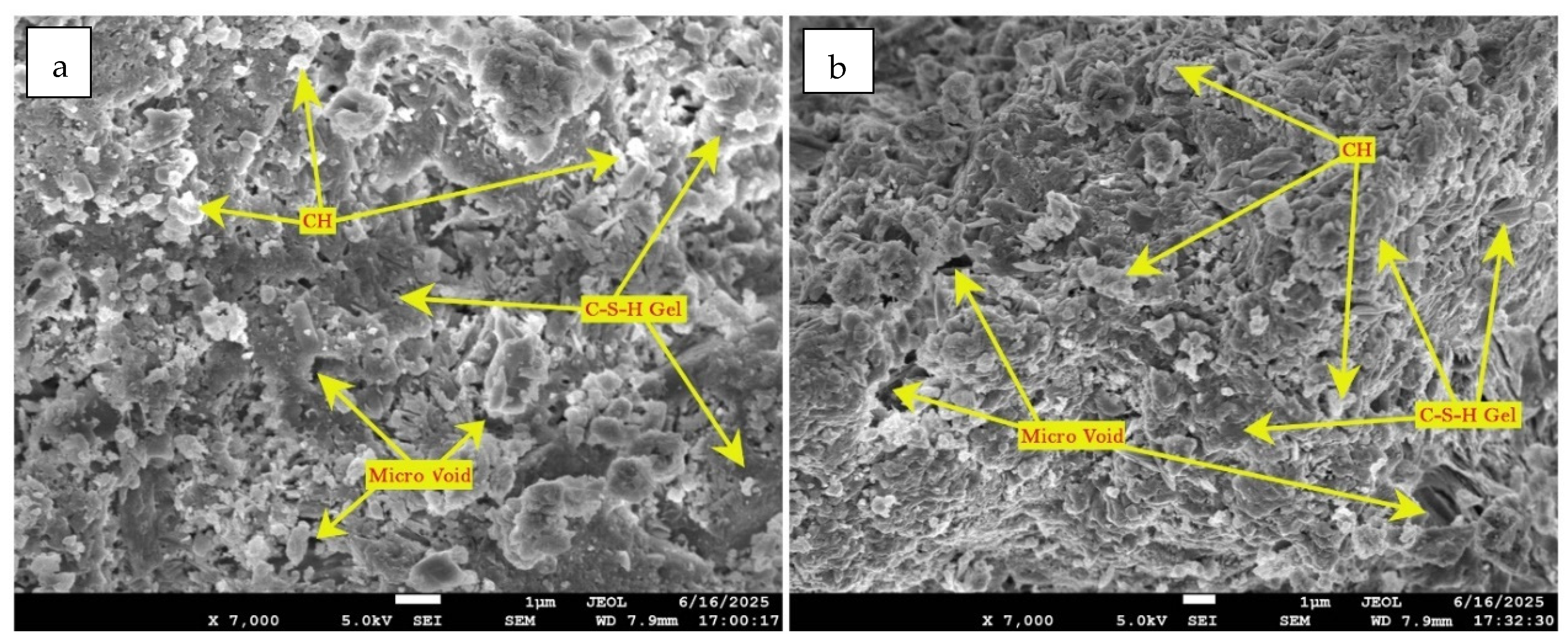
Figure 14 shows the SEM micrographs of (
Figure 14a) the control concrete mix and (
Figure 14b) the optimum FA–PW concrete mix. The control mix exhibited a heterogeneous, porous matrix, characterized by visible micro-voids and loosely packed hydration products [
64]. Plate-like portlandite (CH) crystals were clearly observed, indicating incomplete consumption of calcium hydroxide and a less compact cementitious structure. The presence of interconnected pores implied higher permeability, consistent with the comparatively lower mechanical strength and durability of the control specimen. In contrast, the optimum FA–PW mix shows a denser, more homogeneous cementitious matrix [
65], dominated by compact C–S–H gel, and finer, less interconnected pores. Although CH crystals are still present in the FA–PW mix, they appear less distinct and more embedded within the concrete matrix, indicating partial consumption during secondary hydration reactions [
66]. These microstructural features substantiate the improvement in the mechanical strength and durability performance of FA-PW-based concrete.
8. Statistical Validation
The experimental results were statistically validated using a combination of two-way Analysis of Variance (ANOVA) ensure reliability and consistency [
67]. The two-way ANOVA was employed to evaluate the individual effects and interaction effects of multiple factors on the mechanical and durability characteristics of paver blocks [
68]. The significance levels, i.e.,
p-values and F-values were analyzed to determine the statistically significant factors influencing performance.
Table 7 Illustrates the two-way ANOVA analysis for evaluating the effects of FA and PW. It was found that both Factor A (FA) and Factor B (PW) content have a statistically significant effect on the performance of paver blocks, as indicated by F-values (18.0 and 14.4) exceeding the critical F-value (F-cr = 3.89) and
p-values (<0.05). This confirms that varying the percentages of FA and PW individually significantly affects key properties, including CS, FS, UPV, WA, CAR, and RCPT. The interaction effect between FA and PW is not significant (F = 2.4, Fcr = 3.26,
p = 0.09), suggesting that the combined variations of these two factors do not substantially alter performance beyond their individual contributions. It should be noted that the observed non-significant interaction effect should not be interpreted as definitive evidence of the complete absence of interaction between FA and PW. The statistical power of two-way ANOVA is influenced by factors such as sample size, replication level, and the spacing of experimental factor levels. In the present study, three replicate specimens were tested for each mix, and FA and PW contents were varied within predefined replacement intervals. Consequently, subtle or nonlinear interaction effects may not have been fully captured within the experimental domain investigated. Therefore, the present findings suggest that the main effects of FA and PW are dominant within the selected ranges; however, weak interaction effects cannot be entirely ruled out. Future studies employing larger datasets, additional intermediate replacement levels, and response surface or factorial optimization approaches are recommended to further investigate possible interaction mechanisms. Similarly, the Lack-of-Fit test shows an F-value of 1.2 with a high
p-value (0.35), indicating that the experimental model adequately fits the observed data and there is no significant deviation. As the residual was very small, it reflected low unexplained variability and confirmed the reliability and consistency of the experimental measurements. Overall, the ANOVA results validate that FA and PW are critical parameters in optimizing paver block performance.
To ensure the statistical reliability of the experimental findings, the measured values of compressive strength, flexural strength, UPV, water absorption, Cantabro abrasion resistance, and RCPT were evaluated using the actual experimental dataset obtained from the tested specimens. The statistical analysis was performed using the replicate measurements recorded for each concrete mix. Mean values, standard deviations, and significance levels were determined directly from the experimental observations rather than from theoretical or assumed values. Consequently, the statistical results reported in this revised manuscript are fully consistent with the experimental data presented in
Section 4 and
Section 5.
9. Economic Assessment
Economic assessment is a vital component in evaluating the feasibility of sustainable construction materials. While mechanical and durability tests establish performance, the cost factor determines the practical acceptance of concrete [
69,
70]. By partially substituting OPC with FA and replacing NCA with PW, material costs can be reduced while simultaneously conserving natural resources and minimizing waste disposal issues. Thus, economic analysis validates the dual benefits of environmental sustainability and cost efficiency. The cost analysis was conducted on a per-cubic-meter basis, using the quantities of constituent materials obtained from the concrete mix design. Unit rates for OPC, NCA, NFA were adopted from prevailing local market prices and the Central Public Works Department (CPWD) schedule of rates applicable during the study period.
Table 8 illustrates the economic assessment of the concrete mixes, including material costs and cost savings relative to the control mix. All costs were calculated on a unit weight basis (₹/kg) and subsequently converted to cost per cubic meter (₹/m
3) of concrete. The adopted unit costs were obtained from local suppliers, published market reports, and recent literature, and all prices correspond to the 2024–2025 financial year. FA was considered at a nominal cost, primarily representing transportation and handling charges from the nearby thermal power plant, as the material itself is an industrial by-product. PW aggregates were assumed to have negligible raw material cost, and only collection, cleaning, shredding, and handling expenses were accounted for. The total cost of each concrete mix was calculated by multiplying the material quantities by their respective unit rates and summing the individual contributions. The percentage cost savings of modified mixes relative to the control mix were subsequently determined to evaluate economic feasibility.
Assumptions Used for Economic Assessment
The economic assessment was conducted based on the actual mix proportions adopted in this study, where FA was utilized as a partial replacement of OPC and PW was incorporated as a partial replacement of NCA. No replacement of NFA was considered during the economic analysis. The adopted unit rates were based on CPWD schedules and prevailing Indian market prices during 2024–2025. Since fly ash is an industrial by-product, only transportation and handling costs were considered (₹1.5/kg). The cost of processed plastic waste included collection, cleaning, and shredding expenses. Unit costs adopted for the analysis were ₹7.0/kg for OPC, ₹1.5/kg for FA, ₹1.3/kg for NCA, ₹1.25/kg for NFA, and ₹5.0/kg for processed PW. The PW cost included expenses associated with collection, segregation, cleaning, and shredding prior to its incorporation into concrete.
The total cost of concrete (₹/m
3) was calculated using the following Equation (1).
where C
mix represent the total cost of concrete per m
3, Q represent the quantity of each material used (kg/m
3), and R represent the unit rate of each material (₹/kg).
Moreover, the percentage cost savings relative to the control mix (M0) were determined using Equation (2).
where
is the cost of the control mix and
is the cost of the modified mix (M1–M5).
Table 8 presents the economic assessment of concrete mixes based on CPWD rates. It was evident that the inclusion of FA and PW significantly reduces the cost of concrete mixes when compared to the control mix. The economic assessment demonstrated a progressive reduction in cost with increasing levels of FA and PW incorporation in the concrete paver production. The economic analysis indicated that incorporating fly ash and plastic waste yielded modest cost savings compared with the control mix. The maximum reduction of approximately 3.0% was observed for M1, while higher plastic contents reduced the economic advantage due to processing costs associated with plastic waste. These findings confirm the economic feasibility of higher FA–PW incorporation while maintaining acceptable performance characteristics.
10. Comparison of Current Studies with Previous Literature
Based on the current experimental evaluation, a comparison study has been conducted to highlight the improvements in mechanical strength, durability, and cost savings of paver blocks incorporating FA and PW.
Table 9 summarises previous studies on the production of concrete paver blocks. This comparative assessment validates the potential of using waste-derived materials in paver block production for sustainable construction practices.
While several previous studies have demonstrated the potential of FA or PW for paver block production, most investigations have been limited in scope. A major limitation of earlier research is the isolated use of single waste materials, with an emphasis largely placed on short-term compressive strength or basic durability indicators, such as water absorption. In contrast, the present study addresses this gap by systematically evaluating the combined incorporation of FA and LDPE-based PW within a unified experimental framework. This approach enables a more realistic assessment of material interaction effects, which are often overlooked in studies of individual materials.
Furthermore, many prior investigations did not establish optimized replacement levels supported by comparative benchmarking against conventional control mixes. This limitation has been addressed through a structured mix design strategy, which identified an optimal combination of 25% FA and 12% PW that meets the requirements for strength, durability, and workability. Unlike previous studies that relied primarily on descriptive interpretation, the present research incorporates statistical validation using two-way ANOVA, thereby enhancing the reliability and robustness of the findings. Additionally, the inclusion of an economic assessment overcomes the frequent omission of cost-related considerations in earlier work, linking laboratory-scale performance to practical feasibility. Collectively, these advancements demonstrate how the present study extends existing literature by addressing methodological, analytical, and applicability-related limitations.
11. Conclusions
This study evaluated the feasibility of producing sustainable concrete paver blocks through the combined utilization of fly ash (FA) as a partial cement replacement and low-density plastic waste (PW) as a partial coarse aggregate replacement. Based on the experimental, microstructural, statistical, and economic investigations, the following conclusions can be drawn:
The combined incorporation of FA and PW offers an effective strategy for developing sustainable paver blocks while reducing dependence on conventional cement and natural aggregates. The proposed approach promotes the beneficial utilization of industrial and plastic wastes, supporting circular economy principles and sustainable construction practices.
Among the investigated mixtures, the combination containing 25% FA and 12% PW demonstrated the most balanced overall performance. This mixture achieved the best compromise between mechanical strength, durability, workability, and material efficiency, indicating its suitability for practical paver block applications.
The observed performance enhancement was primarily associated with the pozzolanic activity of FA and the resulting matrix densification. The formation of additional hydration products and refinement of the pore structure contributed to improved compactness and reduced permeability. Microstructural observations confirmed the development of a denser cementitious matrix with lower pore connectivity compared with the control mixture.
Statistical analysis verified that both FA and PW contents significantly influenced the performance characteristics of the paver blocks. The results provide confidence in the reliability of the experimental findings and demonstrate that material optimization can be achieved through controlled replacement levels.
From an environmental perspective, the proposed mixtures contribute to the reduction in clinker consumption, conservation of natural aggregate resources, and diversion of plastic waste from landfill disposal. These benefits enhance the sustainability profile of paver block production without compromising engineering performance.
The economic assessment indicated that the incorporation of FA and PW can provide measurable cost savings while simultaneously improving resource efficiency. This demonstrates the practical feasibility of implementing the proposed materials in large-scale paver block manufacturing.
Although the results are encouraging, the findings are based on laboratory-scale investigations. Future research should focus on long-term field performance, exposure to aggressive environmental conditions, life-cycle assessment, and the evaluation of additional durability parameters to further validate the applicability of FA-PW-based paver blocks in real service environments.
Overall, the study demonstrates that the synergistic utilization of fly ash and plastic waste can produce environmentally responsible, economically viable, and technically reliable paver blocks suitable for sustainable pavement infrastructure. It should be noted that the characteristics of the interfacial transition zone (ITZ) affect the interaction between plastic waste particles and the cementitious matrix. Nonetheless, the observed macroscopic behavior mainly looks at the micro-voids and CH crystals of the matrix. Energy-dispersive spectroscopy (EDS), and pore structure analysis were not the scope of this study; thus, further studies should explore the characteristics of the interfacial transition zone (ITZ) of the FA–PW concrete paver blocks. Furthermore, the durability study on the FA–PW concrete paver blocks is limited to water absorption, Cantabro abrasion resistance, and the rapid chloride permeability test. In the future, the durability of FA–PW concrete paver blocks should be assessed for freeze–thaw cycles, chemical resistance, and chloride penetration under field conditions.
Author Contributions
Conceptualization, G.K.A., M.K.D.R. and J.R.; Methodology, G.K.A., M.K.D.R. and J.R.; Formal analysis, G.K.A., M.K.D.R. and J.R.; Investigation, G.K.A., M.K.D.R. and J.R.; Data curation, M.K.D.R. and J.R.; Writing—original draft, G.K.A., M.K.D.R., J.R. and B.P.; Writing—review and editing, P.K., M.A. and A.B.H.; Visualization, P.K., M.A. and A.B.H.; Project administration, B.P., P.K., A.B.H. and M.A. All authors have read and agreed to the published version of the manuscript.
Funding
The work was funded by the Széchenyi István University (Reference no: 206PTP2026).
Institutional Review Board Statement
Not applicable.
Informed Consent Statement
Not applicable.
Data Availability Statement
The original contributions presented in the study are included in the article, further inquiries can be directed to the corresponding author.
Conflicts of Interest
The authors declare no conflicts of interest.
Abbreviations
The following abbreviations are used in this manuscript:
| OPC | Ordinary Portland Cement |
| NFA | Natural fine aggregate |
| NCA | Natural coarse aggregate |
| FA | Fly ash |
| PW | Plastic waste |
| SCM | Supplementary Cementitious Materials |
| IS | Indian Standard |
| W/B | Water to Binder ratio |
| ASTM | American Society for Testing and Materials |
| SCT | Slump Cone Test |
| CFT | Compaction factor Test |
| FDT | Field Density Test |
| CS | Compressive strength test |
| FS | Flexural Strength Test |
| UPV | Ultrasonic pulse velocity test |
| WA | Water absorption test |
| CAR | Cantabro Abrasion Resistance test |
| RCPT | Rapid Chloride Penetration Test |
| SD | Standard Deviation |
| ANOVA | Analysis of variance |
| C-S-H | Calcium Silicate Hydrate |
| ITZ | Interfacial Transition Zone |
| h1 | Initial height of the standard slump cone |
| h2 | Measured height of the concrete after subsidence |
| Partially compacted concrete |
| Fully compacted concrete |
| Empty cylinder |
| Ρ | Field density of concrete (kg/m3) |
| Wc | Mass of container filled with concrete (kg) |
| Wm | Mass of empty container or mould (kg) |
| Vh | Volume of the container or test hole (m3) |
| Ws | Mass of sand or water required to fill the container or test hole (kg) |
| Known density of calibration sand or water (kg/m3) |
| Compressive strength of the specimen |
| P | Maximum applied load at failure |
| A | Cross-sectional area of the specimen |
| b and h | Breadth and length of the loaded face, respectively |
| l | Span length between the supports |
| D | Effective depth of the specimen |
| Ultrasonic pulse velocity (m/s) |
| L | Path length of the ultrasonic wave through the concrete specimen (m or mm), |
| T | Transit time of the pulse recorded by the UPV equipment (s or µs) |
| W1 | Oven-dry mass of the concrete specimen (kg) |
| W2 | Saturated surface-dry mass of specimen after immersion in water (kg) |
| ML | Mass loss |
| Wi | Initial mass of the concrete specimen measured before the test (gm) |
| Wa | Final mass of the concrete specimen measured after completion of the test (gm) |
| Charge passed (Coulombs) |
| Measured currents (in milliamps) over the test duration of 6 h |
References
- Sakir, S.; Raman, S.N.; Safiuddin, M.; Amrul Kaish, A.B.M.; Mutalib, A.A. Utilization of by-products and wastes as supplementary cementitious materials in structural mortar for sustainable construction. Sustainability 2020, 12, 3888. [Google Scholar] [CrossRef]
- Shah, H.A.; Yuan, Q.; Photwichai, N. Use of materials to lower the cost of ultra-high-performance concrete—A review. Constr. Build. Mater. 2022, 327, 127045. [Google Scholar] [CrossRef]
- Iftikhar, B.; Alih, S.C.; Vafaei, M.; Ali, M.; Javed, M.F.; Asif, U.; Ismail, M.; Umer, M.; Gamil, Y.; Amran, M. Experimental study on the eco-friendly plastic-sand paver blocks by utilising plastic waste and basalt fibers. Heliyon 2023, 9, e17107. [Google Scholar] [PubMed]
- Nandi, S.; Ransinchung, G.D.R.N. Laboratory investigation of Portland cement concrete paver blocks made with Reclaimed Asphalt Pavement aggregates. Road. Mater. Pavement Des. 2022, 23, 546–564. [Google Scholar]
- Wang, S.; Chen, K.; Liu, J.; Xia, P.; Xu, L.; Chen, B.; Wu, D.; Chen, W. Multi-performance optimization of low-carbon geopolymer considering mechanical, cost, and CO2 emission based on experiment and interpretable learning. Constr. Build. Mater. 2024, 425, 136013. [Google Scholar]
- Kumar, P.; Gogineni, A.; Pratap, B.; Rout, M.K.D.; Sahu, A.; Sembeta, R.Y. Investigating the mechanical behaviour of bamboo fiber-reinforced concrete with GGBFS for sustainable construction. Discov. Sustain. 2025, 6, 1020. [Google Scholar] [CrossRef]
- Siddique, R.; Chahal, N. Use of silicon and ferrosilicon industry by-products (silica fume) in cement paste and mortar. Resour. Conserv. Recycl. 2011, 55, 739–744. [Google Scholar] [CrossRef]
- Behera, A.; Pratap, B.; Kumar, P.; Rout, M.K.D.; Sembeta, R.Y. Prediction of rapid chloride permeability using silica fume, fly ash, GGBS and micro fibers based geopolymer concrete. Sci. Rep. 2025, 16, 959. [Google Scholar] [CrossRef] [PubMed]
- Teixeira, A.H.C.; Junior, P.R.R.S.; Silva, T.H.; Barreto, R.R.; da Silva Bezerra, A.C. Low-carbon concrete based on binary biomass ash-silica fume binder to produce eco-friendly paving blocks. Materials 2020, 13, 1534. [Google Scholar] [PubMed]
- Hait, P.; Dhara, D.; Ghanta, I.; Biswas, C.; Basu, P. Simultaneous Utilization of Fly Ash and Waste Plastics for Making Bricks and Paver Blocks. J. Inst. Eng. Ser. D 2024, 105, 1981–1988. [Google Scholar] [CrossRef]
- Ashok, K.; Subhani, S.M.; Sundaram, B. Enhancing Strength and Durability of Sustainable Concrete Paver Blocks with Recycled Aggregates, Agro and Industrial By-Products. Iran. J. Sci. Technol.-Trans. Civ. Eng. 2025. [Google Scholar] [CrossRef]
- Hossiney, N.; Sepuri, H.K.; Mohan, M.K.; R, A.H.; Govindaraju, S.; Chyne, J. Alkali-activated concrete paver blocks made with recycled asphalt pavement (RAP) aggregates. Case Stud. Constr. Mater. 2020, 12, e00322. [Google Scholar] [CrossRef]
- Rout, M.D.; Biswas, S.; Shubham, K.; Sinha, A.K. A systematic review on performance of reclaimed asphalt pavement (RAP) as sustainable material in rigid pavement construction: Current status to future perspective. J. Build. Eng. 2023, 76, 107253. [Google Scholar]
- Cardoso, J.; Ferreira, A.; Almeida, A.; Santos, J. Incorporation of plastic waste into road pavements: A systematic literature review on the fatigue and rutting performances. Constr. Build. Mater. 2023, 407, 133441. [Google Scholar] [CrossRef]
- Nandi, S.; Ransinchung, G.D.R.N. Performance evaluation and sustainability assessment of precast concrete paver blocks containing coarse and fine RAP fractions: A comprehensive comparative study. Constr. Build. Mater. 2021, 300, 124042. [Google Scholar]
- Goyal, H.; Kumar, R.; Mondal, P. Life cycle analysis of paver block production using waste plastics: Comparative assessment with concrete paver blocks. J. Clean. Prod. 2023, 402, 136857. [Google Scholar] [CrossRef]
- Asif, U.; Javed, M.F.; Alsekait, D.M.; AbdElminaam, D.S.; Alabduljabbar, H. Toward sustainability: Integrating experimental study and data-driven modeling for eco-friendly paver blocks containing plastic waste. Rev. Adv. Mater. Sci. 2024, 63, 20240051. [Google Scholar]
- Gholap, A.B.; Shah, M.S.; Deshpande, R.S.; Yadav, R.S. Multi-criteria decision making using TOPSIS for sustainable paver block selection: A case study of recycled plastic compositions. Innov. Infrastruct. Solut. 2025, 10, 438. [Google Scholar] [CrossRef]
- Jayadurgalakshmi, M.; Arthi, A.J.J.; Priya, M.G.; Kumar, T.U.; Karthick, A.; Priya, A.K. Mechanical and durability assessment of paver blocks incorporating electronic plastic waste and polyethylene fiber. J. Build. Pathol. Rehabil. 2026, 11, 18. [Google Scholar]
- Hamza, M.; Shahzada, K.; Iqbal, M.; Khan, E.A. Evaluation of mechanical properties of paver blocks by replacing cement with fly ash and marble waste. Discov. Appl. Sci. 2024, 6, 221. [Google Scholar] [CrossRef]
- Anusha, G.; Dineshkumar, R. Study on paver blocks using waste plastics and sugarcane bagasse ash. Mater. Today Proc. 2022, 68, 2088–2092. [Google Scholar] [CrossRef]
- Koksal, F.; Gencel, O.; Sahin, Y.; Okur, O. Recycling bottom ash in production of eco-friendly interlocking concrete paving blocks. J. Mater. Cycles Waste Manag. 2021, 23, 985–1001. [Google Scholar] [CrossRef]
- Samal, D.K.; Ray, S.; Thiyagarajan, H. Influence of Differential ITZ Thickness around the Aggregate on Properties of Concrete. J. Mater. Civ. Eng. 2022, 34, 04022140. [Google Scholar] [CrossRef]
- Ramalingam, M.; Narayanan, K.; Arunvivek, G.K.; Kumar, P.; Rout, M.K.D.; Sembeta, R.Y. Enhancing sustainability in RC beams with magnetically treated mixing water for improved flexural performance. Sci. Rep. 2025, 15, 34603. [Google Scholar] [CrossRef] [PubMed]
- Verma, A.; Babu, V.S.; Arunachalam, S. Influence of acetic acid soaking and mechanical grinding treatment on the properties of treated recycled aggregate concrete. J. Mater. Cycles Waste Manag. 2022, 24, 877–899. [Google Scholar] [CrossRef]
- Mashaan, N.S.; Ouano, C.A.E. An investigation of the mechanical properties of concrete with different types of waste plastics for rigid pavements. Appl. Mech. 2025, 6, 9. [Google Scholar] [CrossRef]
- Olamoju, O.; Afolayan, R.O. Partial Replacement of Coarse Aggregates with Plastic Waste in Paver Blocks. J. Sustain. Environ. Manag. 2023, 2, 92. [Google Scholar]
- Alqahtani, F.K.; Abotaleb, I.S.; ElMenshawy, M. Life cycle cost analysis of lightweight green concrete utilizing recycled plastic aggregates. J. Build. Eng. 2021, 40, 102670. [Google Scholar] [CrossRef]
- Verma, A. Durability and strength characteristics of concrete through various experiments using treated recycled aggregates. J. Mater. Cycles Waste Manag. 2025, 27, 2321–2340. [Google Scholar] [CrossRef]
- Kumar, P.; Gogineni, A.; Ammarullah, M.I. Sustainable bioengineering approach to industrial waste management: LD slag as a cementitious material. Discov. Sustain. 2025, 6, 242. [Google Scholar] [CrossRef]
- Verma, A.; Velaga, B.S.; Arunachalam, S. Performance evaluation of concrete using treated recycled aggregates modified with mineral admixtures: Influence of processing. Eur. J. Environ. Civ. Eng. 2023, 27, 1010–1039. [Google Scholar]
- IS 12269:2013; Ordinary Portland Cement, 53 Grade Specification. Indian Standards: New Delhi, India, 2013.
- IS 4031 (Part 11):1988; Methods of Physical Tests for Hydraulic Cement, Part 11: Determination of Density. Bureau of Indian Standards: New Delhi, India, 1988.
- EN 197-1:2015; Cement—Part 1: Composition, Specifications and Conformity Criteria for Common Cements. European Committee for Standardization (CEN): Brussels, Belgium, 2015.
- IS 4031 (Part 2):1999; Methods of Physical Tests for Hydraulic Cement, Part 2: Determination of Fineness by Blaine Air Permeability Method (Second Revision). Bureau of Indian Standards: New Delhi, India, 1999.
- IS 4031 (Part 4):1988; Methods of Physical Tests for Hydraulic Cement, Part 4: Determination of Consistency of Standard Cement Paste (First Revision). Bureau of Indian Standards: New Delhi, India, 1988.
- IS 4031 (Part 5): 1988; Methods of Physical Tests for Hydraulic Cement, Part 5: Determination of Initial and Final Setting Times (First Revision). Bureau of Indian Standards: New Delhi, India, 1988.
- IS 4031 (Part 3):1988; Methods of Physical Tests for Hydraulic Cement, Part 3: Determination of Soundness (First Revision). Bureau of Indian Standards: New Delhi, India, 1988.
- IS 3812 (Part 1):2013; Specification for Pulverized Fuel Ash, Part 1: For Use as Pozzolana in Cement, Cement Mortar and Concrete. Bureau of Indian Standards: New Delhi, India, 2013.
- IS 383:2016; Specification for Coarse and Fine Aggregates From Natural Sources for Concrete. Bureau of Indian Standards: New Delhi, India, 2016.
- IS 2386 (Part III):1963; Methods of Test for Aggregates for Concrete, Part III: Specific Gravity, Density, Voids, Absorption and Bulking. Bureau of Indian Standards: New Delhi, India, 1963.
- IS 2386 (Part I):1963; Methods of Test for Aggregates for Concrete, Part I: Particle Size and Shape. Bureau of Indian Standards: New Delhi, India, 1963.
- IS 2386 (Part IV):1963; Methods of Test for Aggregates for Concrete, Part IV: Mechanical Properties. Bureau of Indian Standards: New Delhi, India, 1963.
- IS 456:2000; Concrete, Plain and Reinforced. Bureau of Indian Standards: New Delhi, India, 2000.
- IS 10262:2019; Concrete Mix Proportioning. Bureau of Indian Standards: New Delhi, India, 2019.
- Kumar, A.; Kumar, P.; Gogineni, A.; Ahmed, M.; Chen, W. Evolution of cementitious binders: Overview of History, environmental Impacts, and emerging Low-Carbon alternatives. Buildings 2025, 15, 3811. [Google Scholar] [CrossRef]
- IS 1199 (Part 2):2018; Fresh Concrete—Methods of Sampling, Testing and Analysis. Part 2 Determination of Consistency of Fresh Concrete. Bureau of Indian Standards: New Delhi, India, 2018.
- IS 516:1959; Method of Tests for Strength of Concrete. Bureau of Indian Standards: New Delhi, India, 1959.
- IS 13311 (Part 1):1992; Method of Non-Destructive Testing of Concrete—Methods of Test, Part 1: Ultrasonic Pulse Velocity. Bureau of Indian Standards: New Delhi, India, 1992.
- ASTM C642-21; Standard Test Method for Density, Absorption, and Voids in Hardened Concrete. ASTM International: West Conshohocken, PA, USA, 2021.
- IS 15658:2006; Precast Concrete Blocks for Paving—Specification. Bureau of Indian Standards: New Delhi, India, 2006.
- ASTM C1202; Standard Test Method for Electrical Indication of Concrete’s Ability to Resist Chloride Ion Penetration 1. ASTM International: West Conshohocken, PA, USA, 2022.
- Farooq, M.U.; Hameed, R.; Tahir, M.; Sohail, M.G.; Shahzad, S. Mechanical and durability performance of 100% recycled aggregate concrete pavers made by compression casting. J. Build. Eng. 2023, 73, 106729. [Google Scholar] [CrossRef]
- Sk, A.S.; Prasad, K.S.B. Utilization of waste plastic as a strength modifier in surface course of flexible and rigid pavements. Int. J. Eng. Res. Appl. 2012, 2, 185–191. [Google Scholar]
- Sahu, A.; Kumar, P.; Pratap, B.; Gogineni, A.; Sembeta, R.Y. Thermal and mechanical performance of geopolymer concrete with recycled aggregate and copper slag as fine aggregate. Sci. Rep. 2025, 15, 28968. [Google Scholar] [CrossRef] [PubMed]
- IS 2720 (Part 28):1974; Methods of Test for Soils, Part 28: Determination of Dry Density of Soils, in-Place, by the Sand Replacement Method. Bureau of Indian Standards: New Delhi, India, 1974.
- Kundu, S.P.; Chakraborty, S.; Chakraborty, S. Effectiveness of the surface modified jute fibre as fibre reinforcement in controlling the physical and mechanical properties of concrete paver blocks. Constr. Build. Mater. 2018, 191, 554–563. [Google Scholar] [CrossRef]
- Vasudevan, R.; Sekar, A.R.C.; Sundarakannan, B.; Velkennedy, R. A technique to dispose waste plastics in an ecofriendly way–Application in construction of flexible pavements. Constr. Build. Mater. 2012, 28, 311–320. [Google Scholar]
- Siddique, R. Compressive strength, water absorption, sorptivity, abrasion resistance and permeability of self-compacting concrete containing coal bottom ash. Constr. Build. Mater. 2013, 47, 1444–1450. [Google Scholar] [CrossRef]
- Wang, Y.; Liu, Z.; Wang, Y.; Li, Q.; Gong, X.; Zhao, Y. Effect of recycled aggregate and supplementary cementitious material on mechanical properties and chloride permeability of concrete. J. Clean. Prod. 2022, 369, 133322. [Google Scholar] [CrossRef]
- Rout, M.D.; Jena, R.R. Investigation on the Development of Light Weight Concrete with Sintered Fly Ash Aggregate and Activated Fly Ash in Blended Cement. Int. J. Eng. Res. Technol. 2015, 4, 25–28. [Google Scholar]
- Banerjee, D.; Nanda, R.P. Fly Ash–Blended Plastic Aggregates in Cement Concrete and Its Performance at Elevated Temperatures. J. Hazard. Toxic. Radioact. Waste 2026, 30, 04025034. [Google Scholar] [CrossRef]
- Kabadzha, A.S.; Balkis, A.P.; Damdelen, Ö. The use of granulated recycled plastic and sludge ash as partial replacement in concrete mixes. Constr. Build. Mater. 2026, 506, 145012. [Google Scholar]
- Elabbasy, A.A.A.; El-Khayatt, A.M.; Nabil, I.M.; Mahmoud, A.A.; Alkaoud, A.; Rashad, A.M.; Fathy, I.N. Investigating the Impacts of High-Density Oxides on the Engineering and Radiation Shielding Properties of Concrete: Lead Tetroxide, Hematite, and Magnetite. J. Build. Eng. 2026, 123, 115857. [Google Scholar] [CrossRef]
- Elbauomy, A.K.; Fathy, I.N.; Nabil, I.M.; Elgabry, A.; Hamdy, G.A.; Saif, M.S. Mechanical, microstructural, and radiation shielding characteristics of sustainable high-strength concrete incorporating recycled wastes blended powders. Sci. Rep. 2025, 15, 40398. [Google Scholar] [CrossRef] [PubMed]
- Ramalingam, P.; Ramalingam, V.V.; Myilsamy, G. Development of fly ash-polymer-based paver blocks by powder metallurgy processing technique. Proc. Inst. Civ. Eng. Waste Resour. Manag. 2022, 176, 44–57. [Google Scholar]
- Rout, M.K.D.; Sahdeo, S.K.; Biswas, S.; Roy, K. Feasibility Study of Reclaimed Asphalt Pavements (RAP) as Recycled Aggregates Used in Rigid Pavement Construction. Materials 2023, 16, 1504. [Google Scholar] [PubMed]
- Kumari, B.; Srivastava, V. Effect of waste plastic and fly ash on mechanical properties of rigid pavement. Technology 2016, 7, 247–256. [Google Scholar]
- Singh, M.; Choudhary, K.; Srivastava, A.; Singh Sangwan, K.; Bhunia, D. A study on environmental and economic impacts of using waste marble powder in concrete. J. Build. Eng. 2017, 13, 87–95. [Google Scholar] [CrossRef]
- Purohit, B.D.; Samaiya, N.K.; Verma, A. Characterisation of recycled aggregate processed through pre-soaking, mechanical grinding and layered coating of aggregates: A three-stage processing technique. Aust. J. Struct. Eng. 2025, 27, 181–196. [Google Scholar] [CrossRef]
- Bajpai, R.; Soni, V.; Shrivastava, A.; Ghosh, D. Experimental investigation on paver blocks of fly ash-based geopolymer concrete containing silica fume. Road. Mater. Pavement Des. 2023, 24, 138–155. [Google Scholar]
- Djamaluddin, A.R.; Caronge, M.A.; Tjaronge, M.W.; Lando, A.T.; Irmawaty, R. Evaluation of sustainable concrete paving blocks incorporating processed waste tea ash. Case Stud. Constr. Mater. 2020, 12, e00325. [Google Scholar] [CrossRef]
- Tempa, K.; Chettri, N.; Thapa, G.; Phurba; Gyeltshen, C.; Norbu, D.; Gurung, D.; Wangchuk, U. An experimental study and sustainability assessment of plastic waste as a binding material for producing economical cement-less paver blocks. Eng. Sci. Technol. An. Int. J. 2022, 26, 101008. [Google Scholar] [CrossRef]
- Agyeman, S.; Obeng-Ahenkora, N.K.; Assiamah, S.; Twumasi, G. Exploiting recycled plastic waste as an alternative binder for paving blocks production. Case Stud. Constr. Mater. 2019, 11, e00246. [Google Scholar] [CrossRef]
- Ramdi, R.D.; Caronge, M.A.; Tjaronge, M.W. Experimental investigation on compressive strength and environmental performance of paving blocks using fly ash as a substitute for cement and sand. J. Build. Pathol. Rehabil. 2025, 10, 44. [Google Scholar]
Figure 1.
An overview of the research methodology for this present work.
Figure 1.
An overview of the research methodology for this present work.
Figure 2.
Materials used in this current work: (a) OPC, (b) NFA, (c) NCA, (d) FA, and (e) PW.
Figure 2.
Materials used in this current work: (a) OPC, (b) NFA, (c) NCA, (d) FA, and (e) PW.
Figure 3.
Particle size distribution curve for aggregates.
Figure 3.
Particle size distribution curve for aggregates.
Figure 4.
Preparation stages of paver blocks: (a) freshly cast paver blocks and (b) paver blocks during curing.
Figure 4.
Preparation stages of paver blocks: (a) freshly cast paver blocks and (b) paver blocks during curing.
Figure 5.
Experimental test setup for (a) compressive, (b) flexural, and (c) ultrasonic pulse velocity test.
Figure 5.
Experimental test setup for (a) compressive, (b) flexural, and (c) ultrasonic pulse velocity test.
Figure 6.
Slump test results showing the variation in workability of concrete mixes with different levels of FA and PW.
Figure 6.
Slump test results showing the variation in workability of concrete mixes with different levels of FA and PW.
Figure 7.
Compaction factor and field density results of paver blocks incorporating different mix compositions.
Figure 7.
Compaction factor and field density results of paver blocks incorporating different mix compositions.
Figure 8.
Compressive Strength of paver blocks with percentage variation across different mixes.
Figure 8.
Compressive Strength of paver blocks with percentage variation across different mixes.
Figure 9.
Flexural strength of paver blocks with percentage variation across different mixes.
Figure 9.
Flexural strength of paver blocks with percentage variation across different mixes.
Figure 10.
Comparison of UPV results of various concrete mixes with FA and PW.
Figure 10.
Comparison of UPV results of various concrete mixes with FA and PW.
Figure 11.
Variation in water absorption test results of concrete paver block.
Figure 11.
Variation in water absorption test results of concrete paver block.
Figure 12.
Mass loss of paver blocks containing FA and PW determined from CAR for abrasion performance.
Figure 12.
Mass loss of paver blocks containing FA and PW determined from CAR for abrasion performance.
Figure 13.
RCPT results expressed in terms of total charge passed (Coulombs), indicating the chloride ion penetrability of FA–PW-incorporated paver blocks.
Figure 13.
RCPT results expressed in terms of total charge passed (Coulombs), indicating the chloride ion penetrability of FA–PW-incorporated paver blocks.
Figure 14.
SEM micrographs of (a) control concrete mix and (b) optimum FA–PW concrete mix.
Figure 14.
SEM micrographs of (a) control concrete mix and (b) optimum FA–PW concrete mix.
Table 1.
Physical Properties of OPC 53 Grade.
Table 1.
Physical Properties of OPC 53 Grade.
| Test Properties | Measured Value | Reference Code |
|---|
| Specific Gravity | 3.15 | IS 4031 (Part 11):1988 [33] |
| Fineness (m2/kg) | 300 | IS 4031 (Part 2):1999 [35] |
| Standard Consistency (%) | 30 | IS 4031 (Part 4):1988 [36] |
| Initial Setting Time (min) | 32 | IS 4031 (Part 5):1988 [37] |
| Final Setting Time (min) | 545 | IS 4031 (Part 5):1988 [37] |
| Soundness (mm, Le-Chatelier) | 2 | IS 4031 (Part 3):1988 [38] |
| Compressive Strength (MPa) | | IS 12269:2013 [32] |
| 3 days | 28 |
| 7 days | 38 |
| 28 days | 54 |
| Colour and Appearance | Grey with greenish tint | Visual Observation |
Table 2.
Chemical composition of FA used in this study.
Table 2.
Chemical composition of FA used in this study.
| Elements | Chemical Formula | Composition (%) |
|---|
| Silicon dioxide | SiO2 | 56.8 |
| Aluminium oxide | Al2O3 | 26.4 |
| Calcium oxide | CaO | 5.2 |
| Iron oxide | Fe2O3 | 6.3 |
| Magnesium oxide | MgO | 1.9 |
| Sulphur trioxide | SO3 | 1.1 |
| Loss on ignition | LOI | 2.3 |
Table 3.
Physical characterization of aggregates.
Table 3.
Physical characterization of aggregates.
| Aggregate Properties | NFA | NCA | PW | Referral Test Code |
|---|
| Specific Gravity | 2.62 | 2.74 | 0.92 | IS 2386 (Part III):1963 [41] |
| Bulk Density (kg/m3) | 1650 | 1505 | 450 | IS 2386 (Part III):1963 [41] |
| Water Absorption (%) | 0.72 | 0.48 | 0.05 | IS 2386 (Part III):1963 [41] |
| Fineness Modulus | 2.65 | 6.80 | 3.20 | IS 2386 (Part I):1963 [42] |
| Crushing Value (%) | – | 22.4 | – | IS 2386 (Part IV):1963 [43] |
| Impact Value (%) | – | 20.8 | – | IS 2386 (Part IV):1963 [43] |
| Los Angeles Abrasion Value (%) | – | 27.6 | – | IS 2386 (Part IV):1963 [43] |
| Flakiness and Elongation index (%) | – | 18.2 | 22.5 | IS 2386 (Part I):1963 [42] |
| Particle Size Range (mm) | 0.075–4.75 | 4.75–20 | 2–8 | IS 383:2016 [40] |
Table 4.
Mix proportions of concrete (kg/m3).
Table 4.
Mix proportions of concrete (kg/m3).
| Mix ID | Details | OPC | FA | Water | W/B | NCA | NFA | PW |
|---|
| M0 | Control mix | 400 | 0 | 180 | 0.45 | 912.88 | 940.30 | 0 |
| M1 | 10% FA + 3% PW | 360 | 40 | 180 | 0.45 | 886.29 | 913.71 | 26.59 |
| M2 | 15% FA + 6% PW | 340 | 60 | 180 | 0.45 | 872.16 | 927.84 | 52.33 |
| M3 | 20% FA + 9% PW | 320 | 80 | 180 | 0.45 | 857.59 | 942.41 | 77.18 |
| M4 | 25% FA + 12% PW | 300 | 100 | 180 | 0.45 | 842.55 | 957.45 | 101.11 |
| M5 | 30% FA + 15% PW | 280 | 120 | 180 | 0.45 | 827.03 | 972.97 | 124.05 |
Table 5.
Testing methods and their purpose.
Table 5.
Testing methods and their purpose.
| Concrete Properties | Test Method | Purpose | Equation | Reference |
|---|
| Fresh Properties | SCT | Determines workability and consistency of fresh mix | Slump (mm) = h1 − h2 | IS 1199 (Part 2):2018 [47] |
| CFT | Measures the degree of workability |
| IS 1199 (Part 2):2018 [47] |
| FDT | Determines the in situ density of the compacted layer |
| IS:1199 (Part 2):2018 [47] |
| Hardened Properties | CS | Measures load-bearing capacity | | IS 516:1959 [48] |
| FS | Evaluates tensile strength in bending | | IS 516:1959 [48] |
| UPV | Assesses the quality, homogeneity of concrete | | IS 13311 (Part 1):1992 [49] |
| Durability Properties | WA | Evaluates the mass of water absorbed relative to the dry mass | | ASTM C642-21 [50] |
| CAR | Determines resistance to surface wear and particle loss | | IS:15658:2006 [51] |
| RCPT | Evaluates chloride ion permeability | | ASTM C1202 [52] |
Table 6.
Compressive strength results of different concrete mixes.
Table 6.
Compressive strength results of different concrete mixes.
| Mix ID | 7 Days
(MPa ± SD) | 28 Days
(MPa ± SD) | 56 Days
(MPa ± SD) |
|---|
| M0 | 28.1 ± 1.5 | 40.5 ± 1.9 | 44.0 ± 1.6 |
| M1 | 27.2 ± 1.4 | 41.3 ± 1.8 | 45.2 ± 1.7 |
| M2 | 28.5 ± 1.5 | 42.8 ± 1.9 | 46.5 ± 1.7 |
| M3 | 29.4 ± 1.6 | 44.1 ± 2.0 | 47.8 ± 1.8 |
| M4 | 30.9 ± 1.7 | 45.9 ± 2.1 | 50.2 ± 1.9 |
| M5 | 26.4 ± 1.4 | 39.1 ± 1.8 | 43.0 ± 1.6 |
Table 7.
Illustrative two-way ANOVA framework for evaluating the effects of FA and PW.
Table 7.
Illustrative two-way ANOVA framework for evaluating the effects of FA and PW.
| Source of Variation | Df | α-Value | F-Value | p-Value | Fcr | p < α | F > Fcr | Significance |
|---|
| Factor A (FA%) | 2 | 0.05 | 18.0 | 0.001 | 3.89 | Yes | Yes | True |
| Factor B (PW%) | 2 | 0.05 | 14.4 | 0.003 | 3.89 | Yes | Yes | True |
| Interaction (FA × PW) | 4 | 0.05 | 2.4 | 0.009 | 3.26 | No | No | False |
| Lack-of-Fit | 3 | 0.05 | 1.2 | 0.35 | 3.49 | No | No | False |
| Residual | 12 | - | - | - | - | - | - | - |
| Total | 23 | - | - | - | - | - | - | - |
Table 8.
Economic assessment of concrete mixes (Material rates based on CPWD).
Table 8.
Economic assessment of concrete mixes (Material rates based on CPWD).
| Mix ID | OPC Cost (₹/m3) | FA Cost (₹/m3) | PW Cost (₹/m3) | NCA
Cost (₹/m3) | NFA Cost
(₹/m3) | Total Cost (₹/m3) | Cost Savings vs. Control Mix (₹) | Reduction Cost vs. Control Mix (%) |
|---|
| M0 | 2800.00 | 0 | 0 | 1186.74 | 1175.38 | 5162.12 | 0 | 0 |
| M1 | 2520.00 | 60.00 | 132.95 | 1152.18 | 1142.14 | 5007.27 | 154.85 | 3.00 |
| M2 | 2380.00 | 90.00 | 261.65 | 1133.81 | 1159.80 | 5025.26 | 136.86 | 2.65 |
| M3 | 2240.00 | 120.00 | 385.90 | 1114.87 | 1178.01 | 5038.78 | 123.34 | 2.39 |
| M4 | 2100.00 | 150.00 | 505.55 | 1095.32 | 1196.81 | 5047.68 | 114.44 | 2.22 |
| M5 | 1960.00 | 180.00 | 620.25 | 1075.14 | 1216.21 | 5051.60 | 110.52 | 2.14 |
Table 9.
Summary of previous studies on the production of concrete paver blocks.
Table 9.
Summary of previous studies on the production of concrete paver blocks.
| Author (s) | Material Used | Replacement Level | Main Findings | Limitations |
|---|
| Olamoju and Afolayan [27] | PW replaced as coarse aggregate | 0–15% | Improved long-term strength and reduced permeability | Workability is reduced at higher replacement levels |
| Bajpai et al. [71] | Silica fume as cement replacement | 5–20% | Mechanical and durability properties of concrete are enhanced | Freezing and thawing resistance increased |
| Djamaluddin et al. [72] | Waste Tea ash | 10–60% | Optimum strength and durability achieved | Limited study on combined waste utilization |
| Tempa et al. [73] | Recycled PW | 40–70% | Moderate strength achieved | Lower water absorption and Weak bonding at higher plastic content |
| Agyeman et al. [74] | PW + Quarry dust | 10–20% | Improved abrasion resistance | Did not explore chloride penetration resistance |
| Ramdi et al. [75] | Fly ash as a cement and sand replacement | 0–30% | Significant cost savings and sustainability benefits | Economic analysis only; the durability test was not evaluated |
| Present Study | FA + PW | 10–30% FA
+
3–15% PW | Enhanced mechanical durability performance and reduced cost | Comprehensive mechanical, durability, and economic evaluation provided. |
| Disclaimer/Publisher’s Note: The statements, opinions and data contained in all publications are solely those of the individual author(s) and contributor(s) and not of MDPI and/or the editor(s). MDPI and/or the editor(s) disclaim responsibility for any injury to people or property resulting from any ideas, methods, instructions or products referred to in the content. |




 ,
,