Article

Effect of Pozzolanic Glass Processing Waste on the Resistance of Sustainable Concrete to Alkali–Silica Reaction


Faculty of Civil Engineering, Vilnius Gediminas Technical University, Sauletekio al. 11, LT-10223 Vilnius, Lithuania
*
Author to whom correspondence should be addressed.
Sustainability 2026, 18(13), 6598; https://doi.org/10.3390/su18136598
Submission received: 31 May 2026 / Revised: 22 June 2026 / Accepted: 26 June 2026 / Published: 30 June 2026

Abstract

The growing global consumption of concrete is driving up the demand for cement, which has a negative environmental impact due to intensive CO2 emissions. This impact can be reduced by replacing cement with reactive mineral industrial waste, simultaneously addressing the issue of waste accumulation in landfills. However, to ensure the effective use of such materials, it is essential to comprehensively investigate their influence on concrete durability. This study analyzes glass processing waste (GPW) generated during glass grinding. The waste is removed using water, resulting in the formation of glass processing waste. In the experiment, CEM I 42.5 R cement, GPW, sand, crushed dolomite stone, concrete sludge (CS), chemical admixtures, and water were used. In the tests, cement was replaced with glass processing waste in amounts ranging from 5% to 30%, analyzing a total of seven different compositions. The properties of the sustainable concrete mixture were evaluated, and the mechanical–physical properties of the hardened concrete were determined. Resistance to alkali–silica reaction was tested according to the RILEM AAR-4 methodology, while the environmental impact of glass processing waste was assessed using Life Cycle Assessment (LCA). The results showed that glass processing waste increases the concrete’s resistance to alkali corrosion: as the amount of waste increased, a smaller change in the linear dimensions of the specimens was recorded, and the lowest mass loss was found in the composition where 20% of the cement was replaced by glass processing waste. The environmental impact assessment confirmed a direct correlation—as the amount of glass waste increases, CO2 emissions decrease proportionally. To produce sustainable concrete, it is recommended to use up to 20% glass processing waste: this allows for the maximum reduction in environmental impact while maintaining mechanical properties and high resistance to alkali–silica reaction.

1. Introduction

Glass is a widely utilized building material. Due to its extensive consumption, substantial volumes of glass waste are generated, prompting an active search for effective recycling and reuse alternatives. Although glass can theoretically be recycled indefinitely with minimal degradation in quality, only about 21% of the approximately 150 million tonnes of glass waste generated globally in 2022 was recycled; the remainder was deposited in landfills, thereby exerting a negative environmental impact [1,2].
Conventionally, glass waste is reintroduced into the manufacturing of new glass products. However, this process demands stringent waste sorting, high purity levels, and time-consuming processing—factors that elevate treatment costs and limit broader industrial application [1,3,4]. Simpler methods of glass waste utilization typically include using crushed glass as a granular material or incorporating glass particles into the production of insulating glass fiber and fiber-reinforced polymer rebar [5,6]. Furthermore, glass waste is extensively utilized by integrating it into cementitious composites or geopolymers [7,8].
Depending on their state and particle size distribution, glass wastes can be utilized as fine or coarse aggregates; furthermore, when finely ground, they can exhibit pozzolanic activity and serve as supplementary cementitious materials (SCMs) [9,10,11]. Given that global concrete production is continuously expanding—with projections estimating it will reach 20 billion cubic meters by 2050 [12]—the potential for incorporating processed glass waste into concrete manufacturing is substantial, offering a significant contribution to sustainability goals. Utilizing glass waste to substitute a portion of cement in concrete production could further advance these sustainability objectives, as cement manufacturing currently accounts for approximately 8% of global carbon dioxide emissions [13]. Extensive research confirms and validates the feasibility of integrating glass waste into concrete production, with a primary focus on its impact on mechanical properties, durability, and alkali–silica reactions (ASR) [14,15].
During the early stages of hydration, fine glass waste initially modifies and densifies the internal microstructure due to its geometric shape, which increases density and alters the pore structure depending on the replacement level of cement. As curing progresses, the glass particles consume additional calcium hydroxide owing to their pozzolanic properties, leading to the formation of secondary gels. The pozzolanic activity depends primarily on the fineness of the glass particles. Researchers [16] have established that finer glass particles exhibit higher pozzolanic activity. All of these properties are strongly dependent on the particle size of the glass, the binders used, the mix design, and the curing methods [17,18,19]. The mechanical stability of the structure relies on the interfacial transition zone (ITZ) and the compatibility of the glass waste with the cement paste. Due to the smooth surface of glass particles, mechanical bonding forces within the microstructure may decrease compared to natural aggregates, particularly when higher binder contents are utilized; however, optimizing the particle size distribution and enhancing the internal microstructure can compensate for these lower structural bonding forces [20,21].
The particle size of glass waste strongly determines its pozzolanic activity, as well as its susceptibility to alkali–silica reactions (ASR). The established critical particle sizes and their thresholds often vary depending on the alkali content, binder type, chemical composition, and testing methodologies, which highlights a strict dependence on the specific materials used and the chosen experimental methods [22,23].
Utilizing processed glass waste and curing specimens at elevated temperatures, or conducting tests under high-temperature conditions, has been shown to introduce challenges. These challenges arise from mismatched thermal expansion properties, the generation of additional pressure within the internal pore structure, and the thermal softening of glass phases, which can ultimately dictate the mechanical performance, crack resistance, and durability of the composites [24,25,26].
Workability properties, such as pumpability, placement, and compaction quality, directly influence the final mechanical performance of the concrete [27,28]. In fresh concrete mixtures characterized by lower cement content, fine glass waste particles improve fluidity, depending on the particle size and dosage [29,30,31]. However, over longer periods, workability can be adversely affected due to the initiation of pozzolanic reactions and the increasing consumption of free water [32,33]. Waste ground glass can reduce the density of the concrete mixture when used as a cement replacement due to its lower specific gravity [34]; conversely, if ultra-fine ground glass is employed, a higher density is achieved owing to the filler effect and the resulting denser matrix [35].
When utilizing fine glass waste in concrete, the compressive strength is one of the most critical indicators reflecting structural changes. Evaluating micro-sized glass waste particles reveals that they primarily act by densifying the microstructure, whereas finer glass particles can stimulate hydration reactions, thereby increasing compressive strength [36,37]. Over extended curing periods, an increase in compressive strength is observed, which can be attributed to subsequent pozzolanic reactions driven by the consumption of calcium hydroxide and the formation of secondary gels [38,39,40]. However, incorporating higher dosages of glass waste leads to a reduction in compressive strength due to the dilution effect, regardless of the glass particle fineness [41].
Coarser glass waste particles can reduce alkali resistance, as they can react with alkalis, subsequently degrading the internal microstructure and accelerating crack propagation [42]; conversely, finer glass particles can enhance the internal microstructure of the composites and increase resistance to alkali–silica reactions [11]. Some researchers have identified that the threshold at which alkali expansion begins to be mitigated ranges between 0.6 and 1.18 mm [43], but resistance to alkali–silica reactions increases significantly when the glass particle size is below 75 microns at a dosage of approximately 20% [22]. The critical particle size governing alkali resistance can vary depending on alkali concentrations, waste substitution levels, and specimen mix designs [44].
Seven distinct concrete mixtures were designed and investigated to evaluate the impact of replacing a portion of the sand with concrete sludge (CS) and partially replacing cement with ultra-fine glass processing waste (GPW) exhibiting high pozzolanic activity. The study aimed to determine the optimal concentration of glass waste and identify critical threshold limits influencing the concrete’s mechanical properties and durability parameters. This research explores the specific synergy of combining both industrial by-products into a ternary binder system alongside crystallizing admixture. Our key discovery is finding the exact optimal threshold (the 20% sweet spot) where these materials work together to actively suppress destructive ASR macro-expansion while preventing the typical strength loss caused by cement dilution. The quantities of CS and crystallizing admixture used in this study were selected based on previous research, which identified these specific amounts as yielding the best performance. The standardized methodologies applied throughout the experiments ensure a reliable interpretation of the results and establish a foundation for their broader practical application.

2. Materials and Methods

2.1. Raw Materials

Cement (CEM I 42.5 R) conforming to LST EN 197-1 [45] was used in this study. Fine aggregate consisted of sand with a fraction of 0/4 mm, while crushed dolomitic stone served as the coarse aggregate, both meeting the requirements of LST EN 12620 [46]. Concrete sludge (CS) was recovered from residual concrete recycling units following coarse aggregate separation. Because CS is not pozzolanically active, it cannot be used as a cement replacement; however, dried CS can be utilized as an inert filler material, and wet CS can replace a portion of the mixing water. Glass processing waste (GPW) was obtained from glass manufacturing facilities and collected using specialized equipment that treats process water with flocculants to separate solid particles. The GPW was subsequently air-dried to a constant mass. The chemical composition of the glass processing waste is listed in Table 1 and the GPW has a relatively high LOI—6.67%.
The physical properties of the materials used are presented in Table 2. The Chapelle method was used to determine the pozzolanic activity of glass processing waste according to the NF P18-513 standard [47].
The particle size distribution of the raw materials was investigated, with the respective profiles for cement, dry concrete sludge, and glass processing waste illustrated in Figure 1. The particle size of the CEM I 42.5 R cement ranged from 0.1 to 70 µm. Analysis revealed that the dry concrete sludge had an average particle size of 15.85 µm, with characteristic d10, d50, and d90 values of 3.35 µm, 10.18 µm, and 12.88 µm, respectively. In comparison, the glass processing waste exhibited a significantly finer distribution, with an average particle size of 3.98 µm, and d10, d50, and d90 values of 0.98 µm, 3.08 µm, and 8.44 µm, respectively.

2.2. Paste Design and Sample Preparation

The concrete mixtures were prepared according to the proportions specified in Table 3, using a waste-free composition as the control reference. In the experimental batches, concrete sludge replaced 10% of the clean mixing water. The dry matter and water content within this wet sludge were factored into the total aggregate and mixing water calculations, allowing dry concrete sludge to substitute for 5% of the sand. Additionally, a crystalline admixture was introduced at a dosage of 1% by weight of cement. These concrete sludge and crystalline admixture contents remained constant across all formulations. To evaluate the effect of the glass sludge, cement was systematically replaced in increments of 5%, up to a maximum of 30%. Across all mixtures, the water-to-binder ratio, superplasticizer dosage (0.7%), and air-entraining admixture content (0.1%) were kept strictly uniform. For all tests, 3 to 6 samples were formed and the results of which were averaged.
Upon achieving a homogeneous mixture, the fresh concrete was cast into 150 mm plastic cube moulds and compacted on a vibrating table for 20 s. The specimens were initially cured inside the moulds for 12 h in a humid atmosphere at 20 ± 2 °C. Following demoulding, the samples were fully submerged in water at the same temperature (20 ± 2 °C) for a 28-day curing period, after which the designated material testing was performed.

2.3. Test Methods

The specific surface area and particle size distribution were determined via the dry method using a Cilas 1090 LD analyzer (Cilas, Orléans, France) (measurement range: 0.01–500 µm), with air serving as the carrier medium. Ultrasonic dispersion was applied until a 12% obscuration level was achieved, followed by a 60 s measurement cycle. Data acquisition and instrument control were managed using the Fraunhofer optical model. X-ray diffraction (XRD) patterns were recorded on a Bruker AXS D8 ADVANCE diffractometer (Bruker AXS, Karlsruhe, Germany) operating with CuKα radiation and a Ni filter. The XRD scanning parameters included a step size of 0.02°, a counting time of 0.5 s per step, an anode voltage of 40 kV, and a current of 40 mA, maintaining a measurement accuracy of 2θ = 0.01°. Chemical compositions were evaluated through X-ray fluorescence (XRF) spectroscopy using a Bruker S8 Tiger WD spectrometer (Bruker AXS, Karlsruhe, Germany) equipped with a Rh target X-ray tube (up to 60 kV and 130 mA). These XRF measurements were conducted in a helium atmosphere using the SPECTRA Plus QUANT EXPRESS software package (version 3.0, Bruker AXS, Karlsruhe, Germany). Finally, the material microstructures were examined using a JEOL JSM-7600F scanning electron microscope (SEM) (JEOL, Tokyo, Japan).
The alkali–silica reaction testing was conducted in accordance with the RILEM AAR-4 standard methodology. Concrete prisms with dimensions of 75 × 75 × 250 mm were prepared using the test aggregates and other mixture components. The specimens were stored for at least 20 weeks in a hot (60 °C) and humid environment, which accelerates the alkali reaction. Measurements were performed regularly to determine the expansion of the concrete.
Other properties of concrete were determined according to the following standards: LST EN 12390-7:2019 for the density of hardened concrete [49], LST EN 12390-3:2019 for compressive strength [50] and LST EN 12390-5 for flexural strength [51]. For evaluating concrete-related CO2 emissions life cycle assessment was applied to analyze product manufacturing stage.

3. Results

3.1. Parameters of Glass Processing Waste

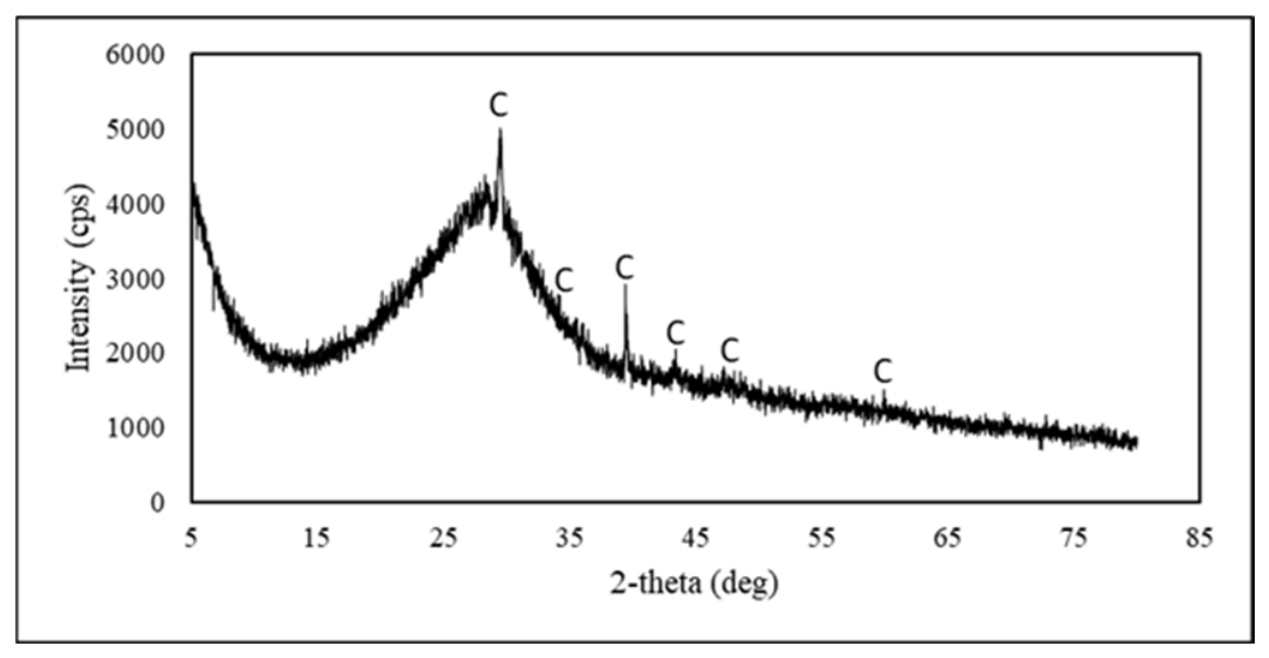
The mineralogical structure of the waste glass sludge was characterized using X-ray diffraction (XRD) analysis, with the resulting pattern illustrated in Figure 2. The obtained diffractogram reveals only distinct peaks corresponding to calcite. These findings suggest that the waste is predominantly composed of amorphous or poorly crystalline phases that remain undetected via XRD. Consequently, the results closely reflect the typical composition of conventional glass, which primarily consists of amorphous silicon dioxide (approximately 70%) along with minor fractions of sodium and calcium oxides [52].
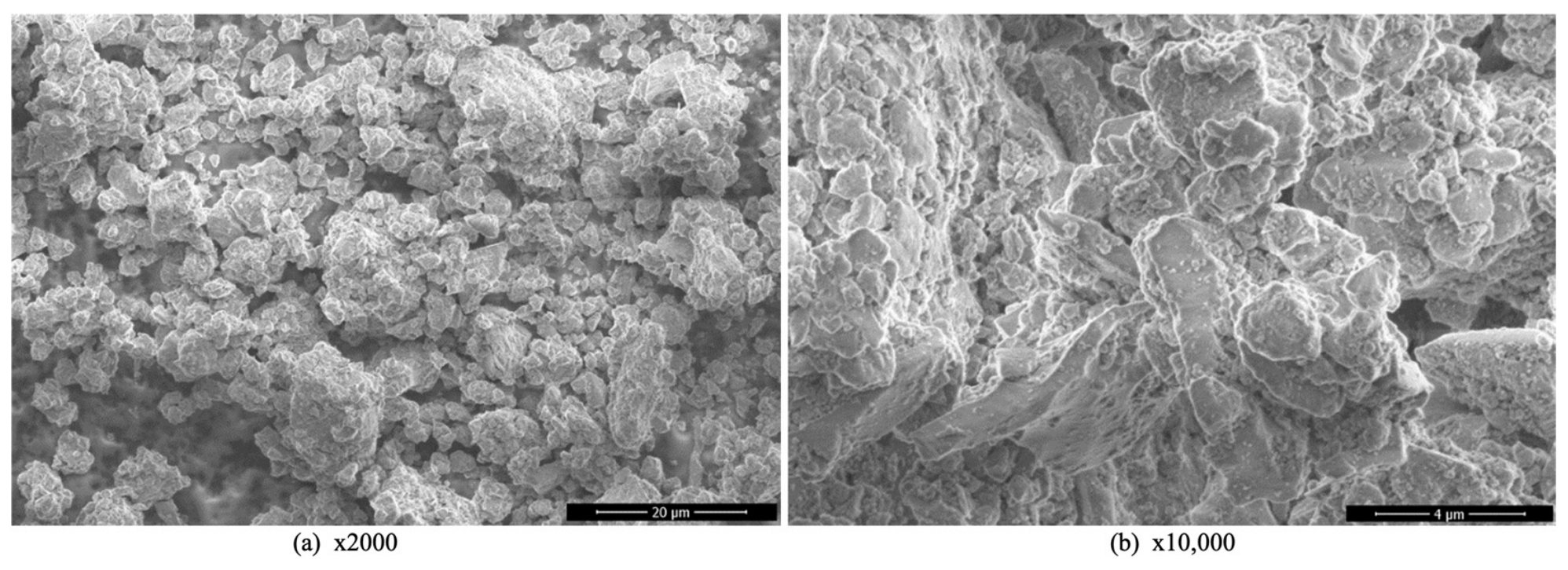
Microstructural investigation of the glass sludge was further performed via scanning electron microscopy (SEM), as illustrated in Figure 3. The captured micrographs reveal that the material consists of irregularly shaped particles of varying sizes. Among these, the smaller, more spherical crystals correspond to calcite minerals, thereby validating the phase composition previously determined through X-ray diffraction analysis.

3.2. Properties of Concrete

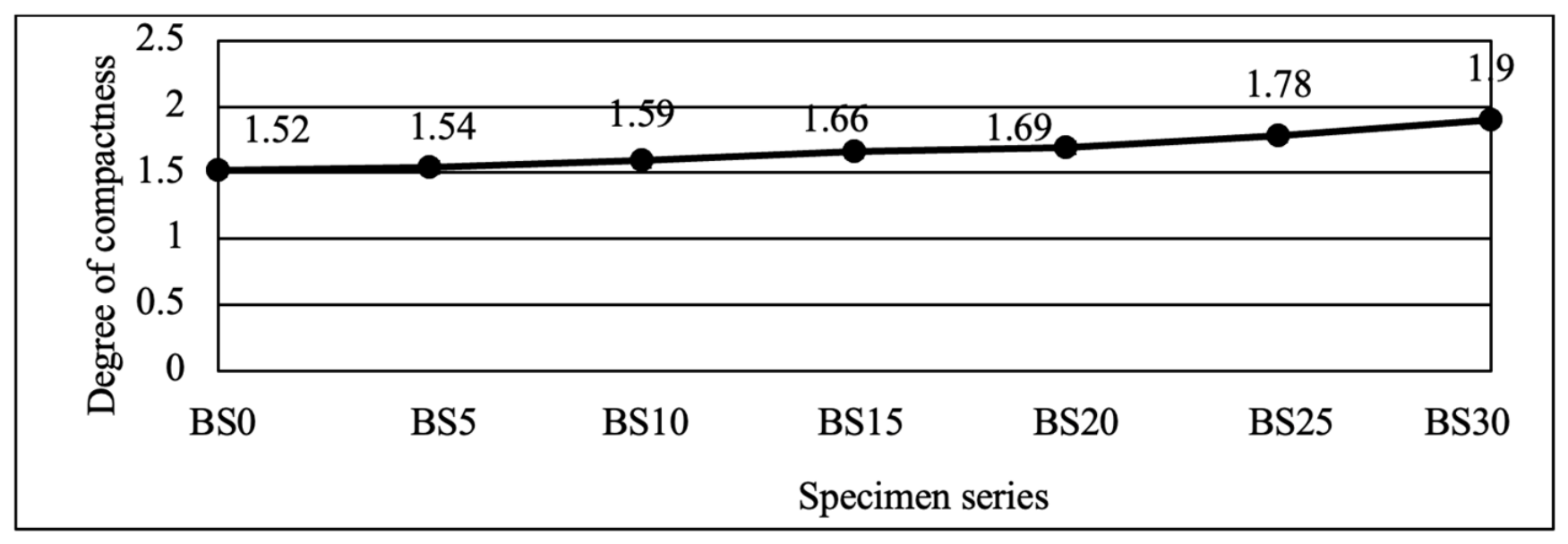
The consistency indicator for the concrete mixture is the degree of compactness. The test results are presented in Figure 4. The results show that glass processing waste slightly increases the degree of compactness. This degree increases in proportion to the amount of waste in the mixture. Compared to the control sample, the degree of compactness of the sample containing 30% glass processing waste was 25% higher. This may be due to the extremely fine glass particles, which absorb more water than conventional materials.
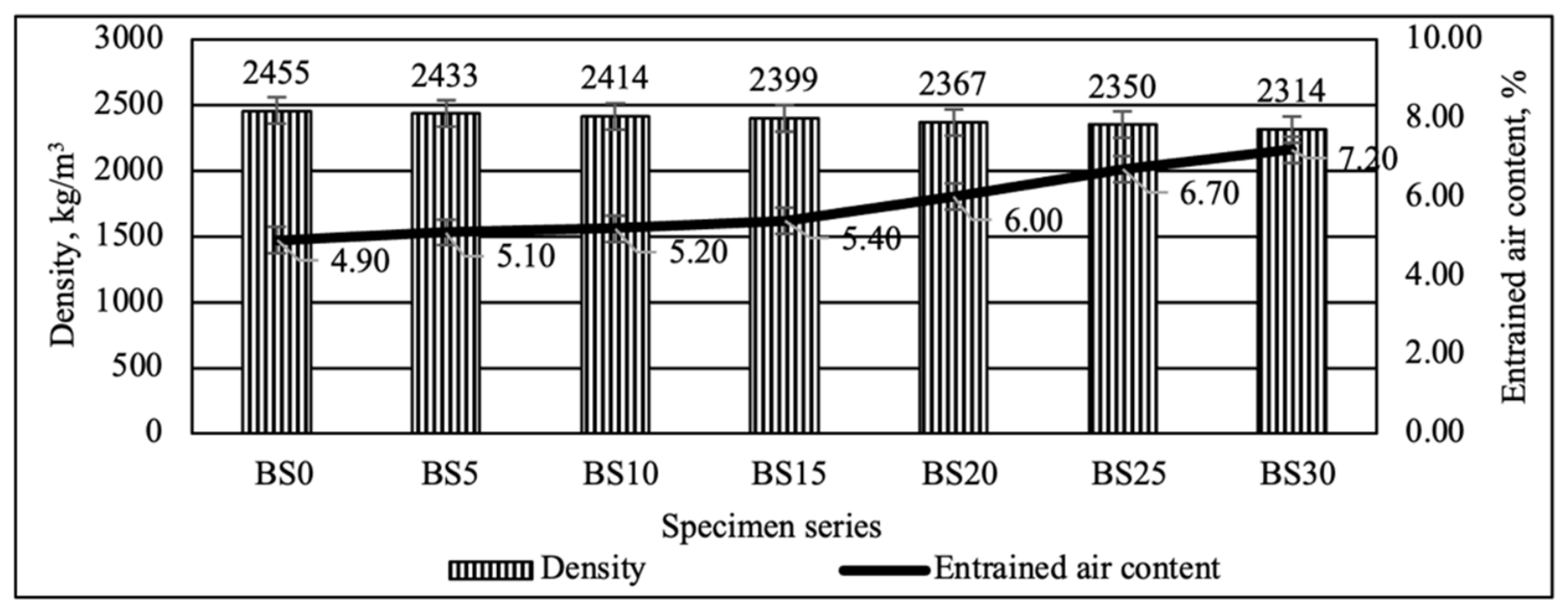
To evaluate how glass sludge affects air entrainment, we measured the air content of the fresh concrete mixtures (Figure 4). The data shows that adding up to 15% glass sludge caused a minor increase in entrained air. Specifically, replacing 15% of the cement with glass sludge raised the air content by 10.2% compared to the control mix. Beyond this threshold, the air content climbed much more sharply. At 30% glass sludge replacement, the entrained air surged by nearly 47% relative to the control. This spike occurs because air bubbles adhere to the surfaces of the glass particles, preventing them from escaping the mix [53]. This trapping mechanism may be further intensified by a layer of calcite particles on the glass surfaces.
We also measured the density of the hardened concrete samples, which is plotted alongside the air content in Figure 5. Unsurprisingly, density and entrained air share an inverse relationship. Because glass sludge is less dense than cement, replacing cement naturally lowers the concrete’s overall density. This drop was minimal at first, decreasing by 56 kg/m3 at the 15% replacement level. However, at 30% glass sludge, the density fell more significantly, dropping by 141 kg/m3.
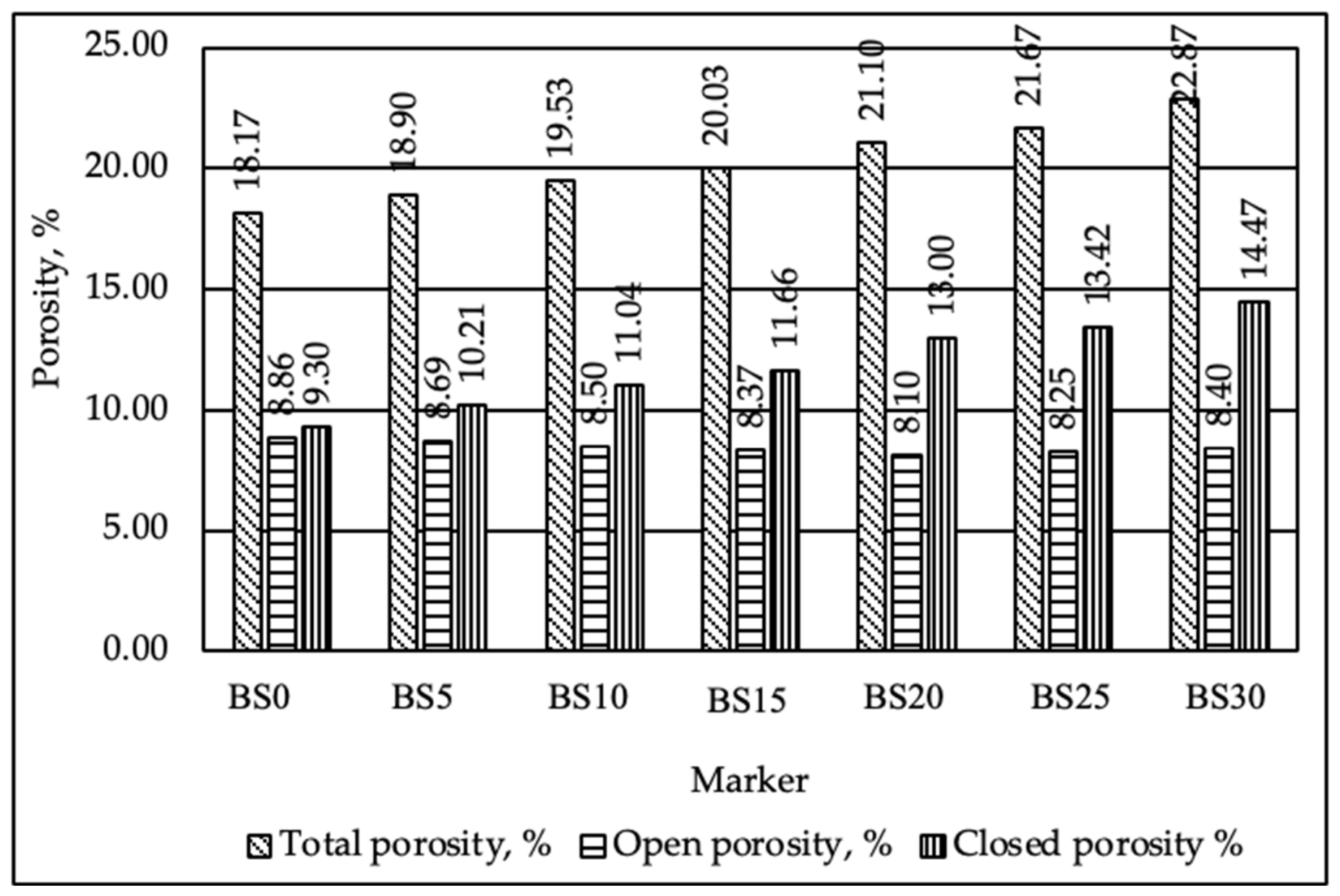
To verify entrained air content results, the porosity parameters of the hardened concrete specimens were evaluated, with the results illustrated in Figure 6. As the glass processing waste content increases, both the total and closed porosity rise. Conversely, the open porosity steadily decreases up to a 20% cement replacement level, beyond which it begins to climb. Specifically, incorporating 20% glass processing waste into the mixture increased the closed porosity by approximately 55% and the total porosity by nearly 26%, while reducing the open porosity by 8.5% compared to the control samples. The overall increase in total and open porosity at higher replacement levels can be attributed to greater air entrainment. However, the reduction in open pores within the 20% replacement threshold demonstrates that the crystallizing additive effectively seals open pores and converts them into closed voids, despite the overall increase in total porosity.
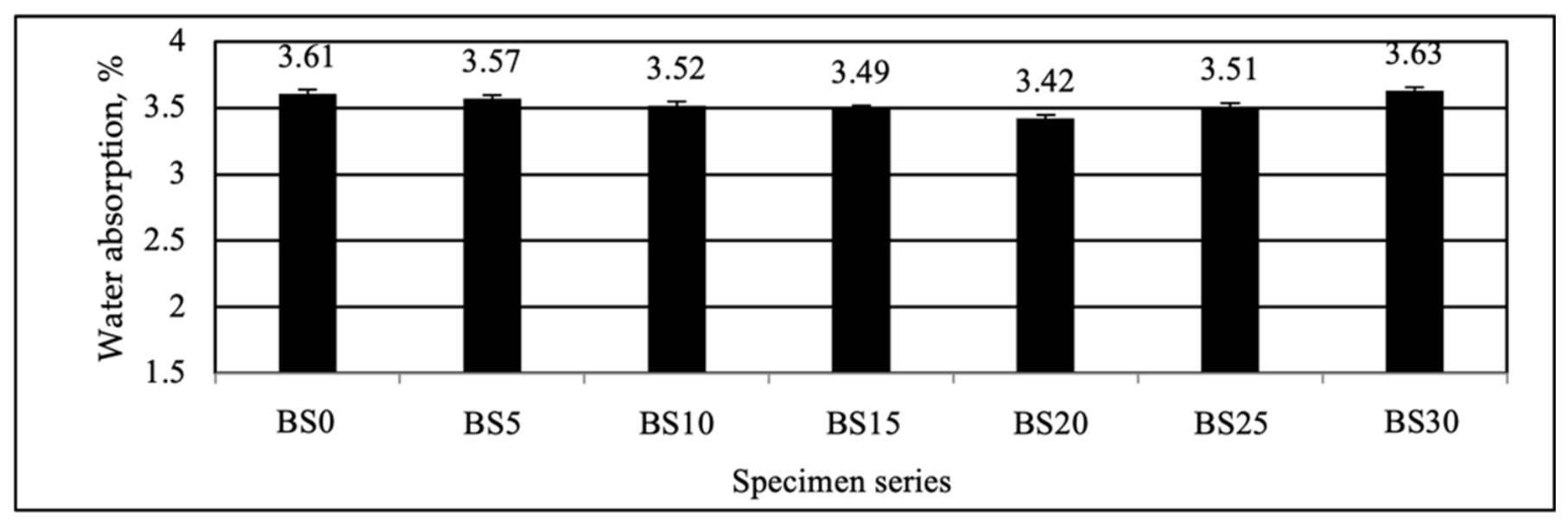
Because water absorption directly impacts concrete durability, we evaluated absorption levels across the samples, with results presented in Figure 7. The values ranged between 2.42% and 2.63%. Notably, water absorption followed a clear trend: it steadily decreased as glass sludge replacement reached 20% but began to rise with higher replacement levels. The 20% mixture achieved the lowest overall absorption, marking a 7.3% reduction compared to the control sample.
This initial improvement is likely driven by two overlapping mechanisms. First, waste glass exhibits high pozzolanic activity; during hydration, it generates new crystalline compounds that physically fill internal voids. Second, a synergistic reaction occurs between the crystallizing additive and the surface carbonates on the glass particles. This interaction accelerates the formation of hydration products that heal open pores, converting them into closed pores.
However, when glass sludge replacement exceeds 20%, water absorption gradually climbs back up. In fact, the 30% glass sludge sample showed slightly higher absorption than the control. This reversal happens because the sharp increase in entrained air at higher replacement levels alters the pore structure, preventing the crystallizing additive from effectively sealing the voids. Similar trends regarding glass content and pore structure have been documented by other researchers [54].
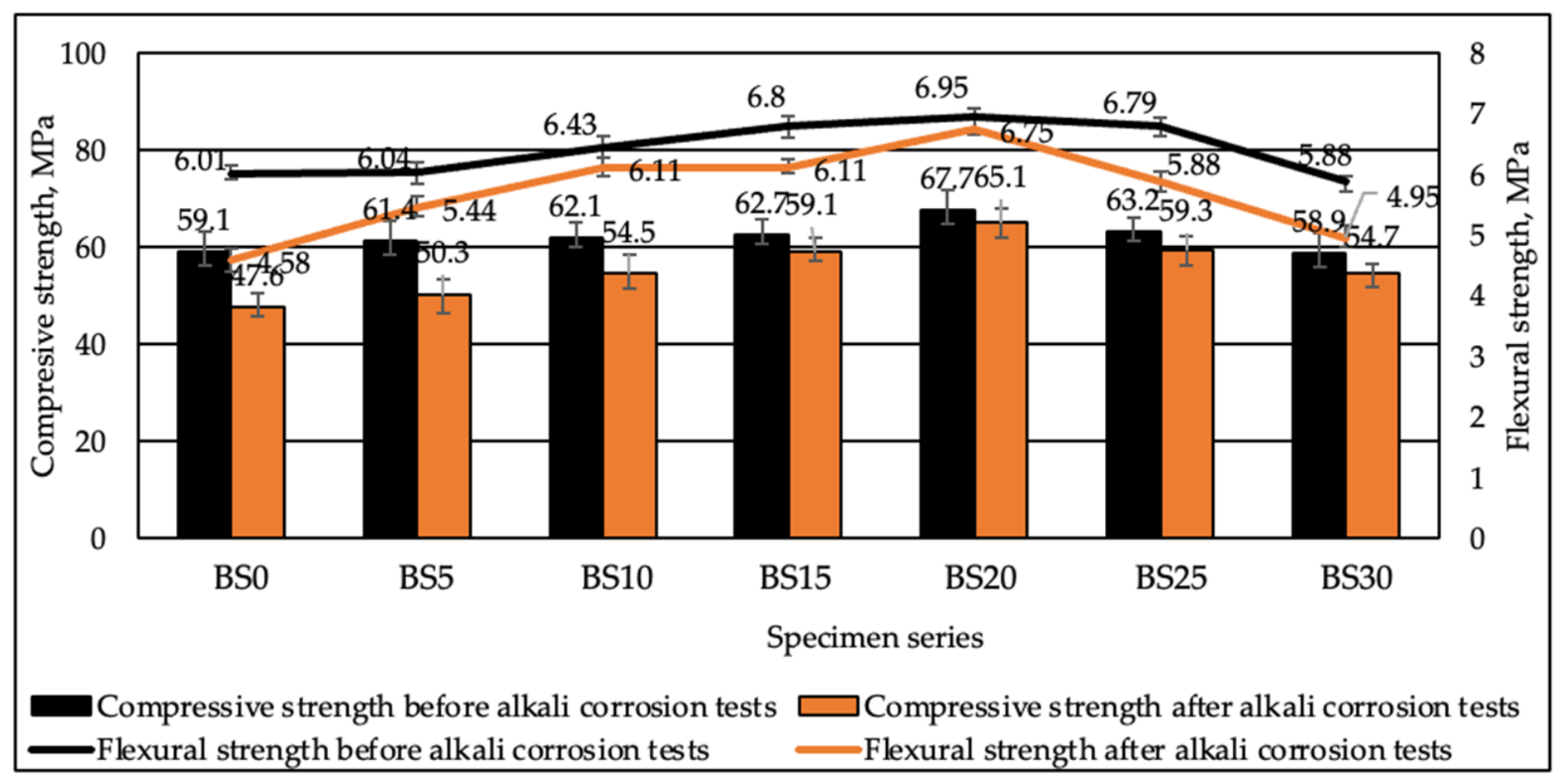
To assess how the alkali–silica reaction (ASR) impacts mechanical properties, we measured compressive and flexural strengths before and after testing, as shown in Figure 8. The concrete prisms were evaluated after a standard 28-day cure (pre-exposure) and again after 140 days of alkali treatment. Compressive strength declined across all mixtures. The control mix suffered the most severe damage, with its strength dropping by nearly 19.5% compared to its baseline. In contrast, the 20% glass sludge replacement mix proved highly resilient; it retained a compressive strength of 65.1 MPa after the corrosion test, marking a nominal decrease of just 4%—the smallest decline among all groups.
The flexural strength data mirrored these compressive trends, with every specimen showing a post-exposure reduction. Again, the control specimens experienced the sharpest drop at 23%, while the 30% glass waste mix saw a 15% decrease. The 20% glass replacement group once again demonstrated superior durability, achieving the highest final flexural strength at 6.75 MPa—a drop of only about 3%.
These protective effects stem from the pozzolanic activity and micro-filler effect of the amorphous glass sludge. This material densifies the concrete matrix, refines the pore network, and consumes alkalis, which limits alkali mobility and suppresses the formation of expansive, destructive ASR gel. However, when the replacement level exceeds the optimal threshold toward 30% and above, the dilution of the cement matrix begins to compromise these benefits [55].
To evaluate how glass waste influences the development of the alkali–silica reaction (ASR), we conducted expansion tests following the standard RILEM methodology. Table 4 outlines the percentage changes in specimen length recorded at 5, 10, 15, and 20 weeks.
Overall, a clear trend emerged: increasing the glass waste content from 0% to 30% steadily suppressed expansion, with higher waste levels yielding significantly lower dimensional changes.
Initial measurements at 5 weeks showed minimal expansion across all groups, with the control at 0.012% and the 30% glass waste specimen at 0.020%. By week 10, however, the mitigating effects of the glass waste became obvious. The 30% waste mixture expanded by just 0.022%, whereas the control sample climbed to 0.041%. This divergence confirms that the glass waste limits the formation of expansive ASR gel and related compounds, thereby boosting the concrete’s alkali resistance.
At the 15-week mark, the control specimen breached the critical 0.05% expansion threshold, peaking at 0.054%. The 5% glass waste sample followed closely at 0.049%, while the 30% glass waste sample remained highly stable at just 0.023%.
By the final 20-week measurement, both the control and the 5% glass waste specimens had exceeded the 0.05% threshold, reaching 0.061% and 0.054%, respectively. In contrast, all other mixtures remained well within safe limits. Ultimately, the 30% glass waste specimens demonstrated the highest resistance to ASR damage, capping their total expansion at a mere 0.026%.
Our data shows a clear link between macro-expansion and strength loss. The control mix breached the RILEM limit (0.061%), causing severe cracking that dropped compressive strength by 19.5% and flexural strength by 23%. The 20% mix kept expansion safe and retaining nearly all its strength, with just a 4% compressive (65.1 MPa) and 3% flexural (6.75 MPa) loss. Interestingly, while the 30% mix cut expansion to a minimum (0.026%), its flexural strength dropped more (15%) than the 20% mix. This confirms that at 30%, the drop is not from ASR cracking, but simply from matrix dilution due to the lower cement content.
By the final 20-week measurement, the control and 5% glass waste specimens had both breached the critical threshold, reaching expansions of 0.061% and 0.054%, respectively. In contrast, all other mixtures remained well below this limit. Increasing the glass waste content consistently suppressed dimensional changes, with the 30% replacement group demonstrating the highest stability, capping its total expansion at just 0.026%.
According to standard criteria, concrete with an expansion below 0.05% is classified as highly resistant to alkali–aggregate reactions [56]. These findings confirm that higher glass waste content effectively mitigates expansion and reduces the long-term risk of alkali damage. This behavior aligns with established literature, which shows that incorporating finely ground glass particles helps suppress alkali corrosion.
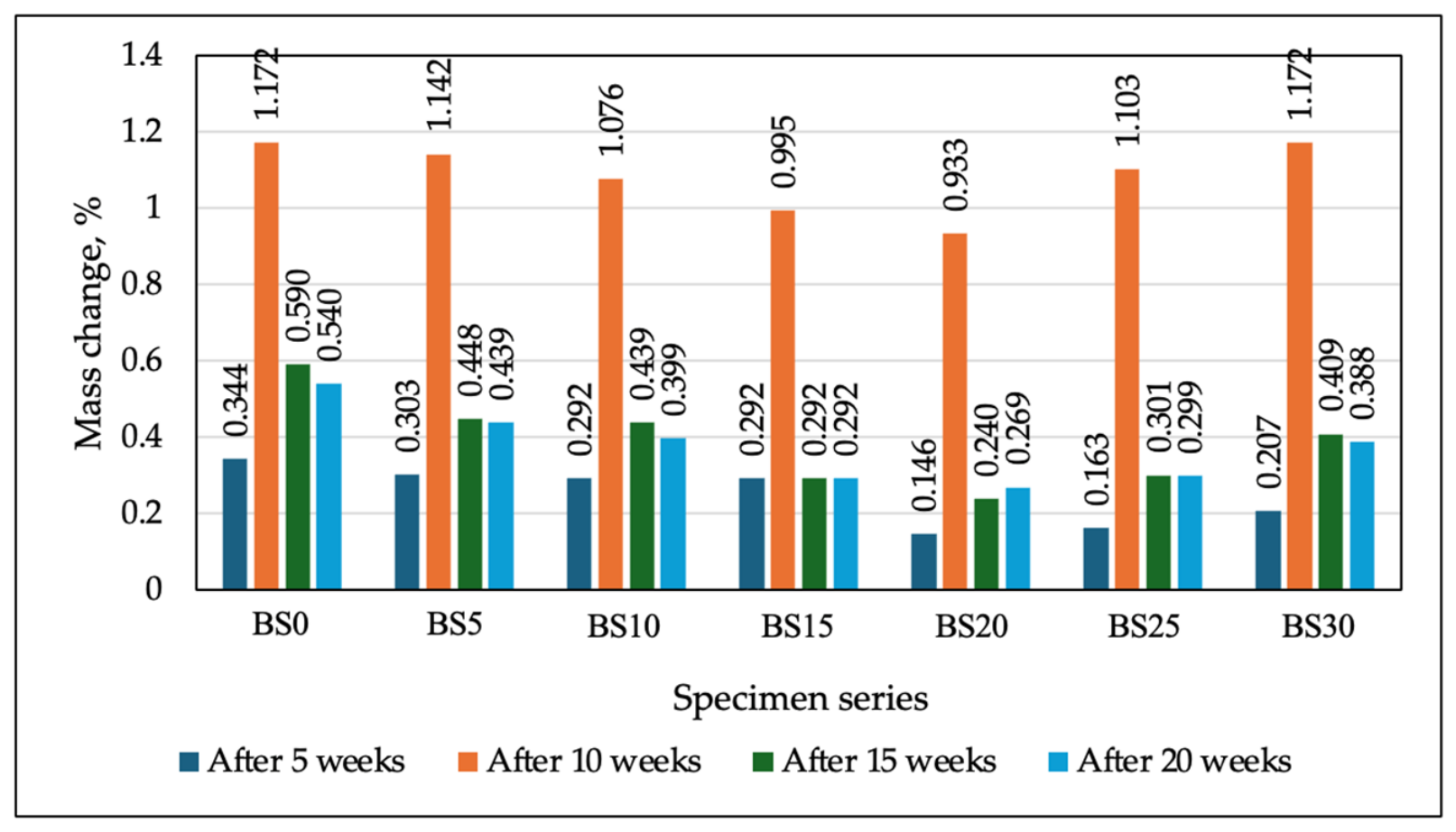
In addition to dimensional stability, we monitored sample weight fluctuations throughout the 20-week exposure period. Figure 9 illustrates these mass changes at the 5, 10, 15, and 20-week marks across the different glass waste replacement levels.
At the 5-week mark, all specimens experienced an initial increase in mass. Interestingly, this mass gain steadily decreased in mixtures containing up to 20% glass waste but began to climb again at higher replacement levels. The control specimens showed the highest mass increase at 0.344%, while the 20% waste samples exhibited the lowest at 0.146%.
This exact trend persisted through week 10, even though all specimens experienced a substantial overall surge in mass during this interval. At this stage, both the control and the 30% waste specimens peaked at an identical maximum mass gain of 1.172%, whereas the 20% waste sample maintained the lowest value at 0.933%.
By weeks 15 and 20, however, the mass changes significantly dropped and stabilized, though the established trend remained intact: mass gain decreased up to the 20% replacement threshold and rose thereafter. At the conclusion of the 20-week test, the minimum mass change was retained by the 20% waste specimens (0.269%), while the control samples recorded the maximum gain (0.540%). These fluctuations in mass mirror findings reported in similar literature [57].
The pronounced mass accumulation observed during the first 10 weeks is primarily driven by the specimens absorbing the testing solution. The subsequent stabilization after week 10—characterized by the absence of continuous weight gain—is a strong indicator of enhanced alkali resistance. If an active, destructive alkali–silica reaction were taking place, the continuous formation of ASR gel would cause the specimen mass to climb indefinitely.

3.3. Environmental Impact Assessment of Concrete

The Global Warming Potential (GWP) indicators for the raw materials were established as follows: cement (CEM I 42.5 R) at 0.899 kg CO2eq/kg, sand fine aggregate at 0.00197 kg CO2eq/kg, crushed dolomitic stone coarse aggregate at 0.00286 kg CO2eq/kg, superplasticizer at 0.514 kg CO2eq/kg, air-entraining admixture at 0.439 kg CO2eq/kg, and the crystalline admixture at 2.67 kg CO2eq/kg. The GWP of the concrete sludge was assumed to be zero because it is a waste material generated directly on-site that requires no hauling. Additionally, the electricity consumed by the sludge recovery equipment was excluded from the system boundaries. For the glass waste, the analysis accounted solely for its transportation from Alytus to Vilnius—92 km. Using an emission factor of 0.000129 kg CO2/(kg·km), the net GWP for the glass waste amounted to 0.012 kg CO2eq/kg.
To maintain a focused scope, the transportation impacts of all other raw materials were excluded, as delivery distances, hauling volumes, vehicle types, and logistics emissions vary too widely. Furthermore, plant-specific emissions from the concrete manufacturing process itself were omitted, given that they depend heavily on individual facility operational practices, localized waste rates, energy mixes, and specific machinery.
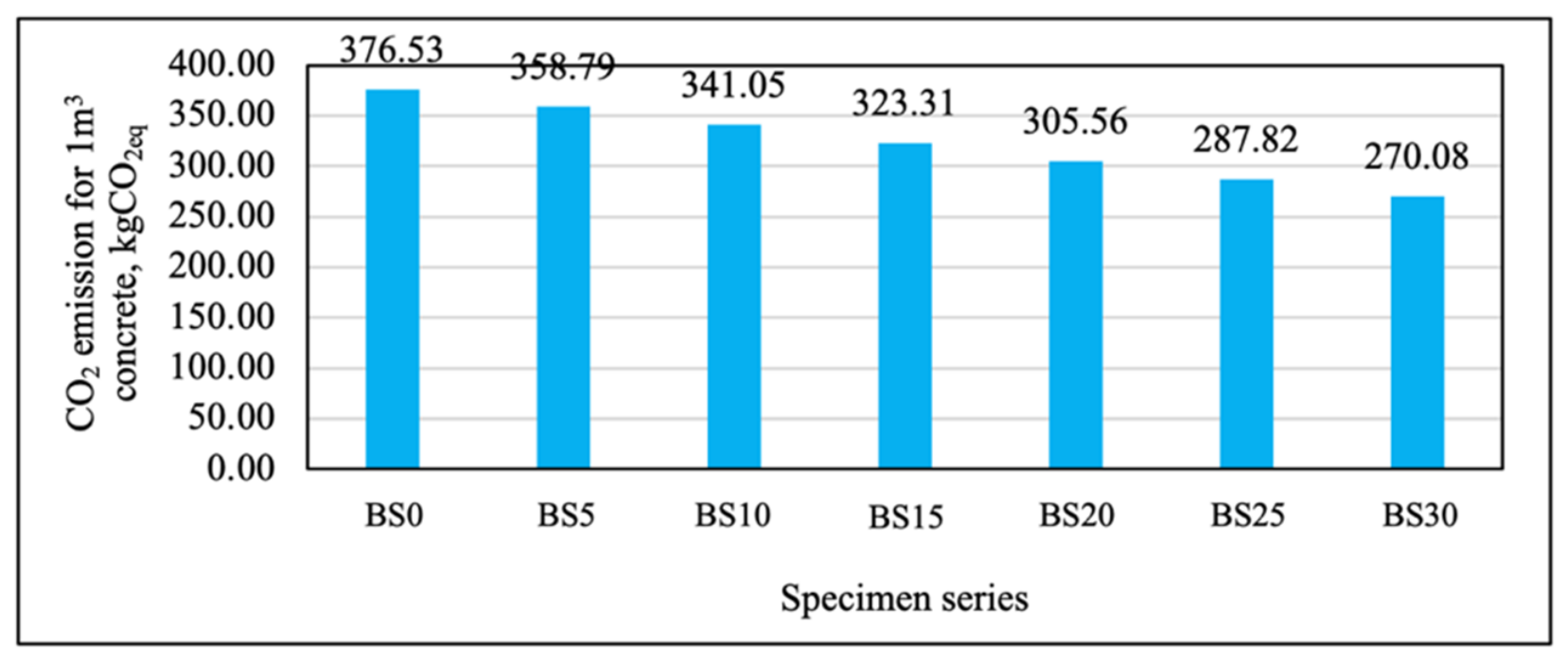
The cumulative carbon emissions for each material were aggregated to determine the total footprint per cubic meter of concrete, with the final values presented in Figure 10. Replacing cement with glass processing waste yielded a pronounced reduction in carbon emissions. This downward trend directly correlates with the replacement level: a higher glass content results in lower emissions per cubic meter. For instance, substituting 20% of the cement lowered CO2 emissions by nearly 19%, while the 30% glass waste mix achieved a 28% reduction. This significant drop occurs because the formulation minimizes the volume of cement, which is the most carbon-intensive component in the mix. Ultimately, these results confirm that waste-derived supplementary cementitious materials provide an exceptionally effective pathway for decarbonizing concrete production.

4. Discussion

The GPW exhibits high pozzolanic activity (index of ~900 mg/g) and a mean particle size of approximately 4 μm, which is roughly three times finer than the reference cement particles. These favorable microstructural properties justify the utilization of GPW as a supplementary cementitious material (SCM).
When assessing concrete durability, a critical imperative is evaluating how the incorporation of GPW influences resistance to alkali–silica reaction (ASR). The experimental results demonstrated that substituting up to 20% of cement with GPW yielded the lowest length elongation after 20 weeks of exposure. This mitigation effect is directly linked to the high fineness of the glass particles (mean size of 3.98 µm), which enables them to act as a highly reactive pozzolanic addition rather than an ASR promoter. These fine amorphous particles rapidly consume calcium hydroxide (portlandite) and lower the alkali concentration within the pore solution, thereby suppressing the formation of the expansive alkali–silica gel. This mechanism is further substantiated by the mass change data, where the 20% GPW mix showed the minimum mass variation. The reduced mass gain confirms that gel precipitation was significantly restricted, preventing structural expansion and subsequent solution uptake.
The mechanical performance retention after the alkali exposure aligns with the physical expansion trends, which is crucial for structural concrete reliability. The lowest degradation of both compressive and flexural strengths was observed in the 20% GPW specimens. In contrast, the control specimens (without GPW) suffered severe internal microcracking induced by the expansive ASR gel, which disrupted the concrete matrix and caused a sharp drop in mechanical properties. In the 20% experimental mix, however, the pozzolanic reaction triggered the formation of secondary calcium silicate hydrate (C-S-H) gels. This process filled the capillary pores and densified the internal microstructure. Nevertheless, at a 30% replacement level, a slight decline in performance was observed. This can be attributed to the cement dilution effect, where the excessive reduction in clinker content significantly lowers the total volume of primary hydration products, establishing a critical threshold for optimal cement replacement.
From an environmental standpoint, since cement possesses the highest Global Warming Potential (GWP) among all concrete constituents, replacing it with GPW represents the most effective strategy for mitigating the carbon footprint of concrete. Given the minimal GWP value of the GPW, a 20% cement replacement facilitates a substantial clinker factor reduction, dramatically lowering the overall CO2 footprint of concrete production and promoting circular economy practices within the construction industry.
Although the 30% replacement level yields the lowest ASR expansion (0.026%), a comprehensive evaluation of mechanical, durability, and environmental performance identifies the 20% addition of GPW as the optimal threshold. Mechanically, the 20% addition of GPW demonstrates resilience, retaining 65.1 MPa of compressive strength (a mere 4% drop) and 6.75 MPa of flexural strength (only a 3% drop). In contrast, a 30% replacement of cement triggers a cement dilution effect, causing a 15% decline in flexural strength that compromises structural integrity. From a durability standpoint, the 20% GWP keeps ASR expansion safely within standard limits, meaning the marginal expansion reduction at 30% offers no practical engineering advantage over the associated loss in strength. Ultimately, the incremental carbon footprint reduction achieved at 30% replacement does not justify compromising the concrete’s structural reliability.

Author Contributions

Conceptualization, N.D., P.E., I.P. and L.K.; Methodology, N.D. and I.P.; Validation, N.D., I.P. and L.K.; Formal analysis, N.D. and I.P.; Investigation, P.E.; Resources, P.E.; Data curation, P.E. and L.K.; Writing—original draft, P.E.; Writing—review & editing, N.D., P.E., I.P. and L.K.; Visualization, N.D.; Supervision, N.D. All authors have read and agreed to the published version of the manuscript.

Funding

This research received no external funding.

Institutional Review Board Statement

Not applicable.

Informed Consent Statement

Not applicable.

Data Availability Statement

Data are contained within the article.

Conflicts of Interest

The authors declare no conflict of interest.

Abbreviations

The following abbreviations are used in this manuscript:
ASRAlkali–silica reaction
CSConcrete sludge
GPWGlass processing waste
GWPGlobal warming potential
LCALife cycle assessment
SCMSupplementary cementitious material

References

  1. Kaliyavaradhan, S.K.; Prem, P.R.; Ambily, P.; Mo, K.H. Effective utilization of e- waste plastics and glasses in construction products—A review and future research directions. Resour. Conserv. Recycl. 2022, 176, 105936. [Google Scholar] [CrossRef] [Scilit]
  2. Gerace, K.S.; Mauro, J.C. Characterization of soda–lime silicate glass bottles to support recycling efforts. Int. J. Ceram. Eng. Sci. 2024, 6, e10217. [Google Scholar] [CrossRef] [Scilit]
  3. Meskers, C.; Worrell, E.; Reuter, M.A. Handbook of Recycling: State-of-the-Art for Practitioners, Analysts, and Scientists; Elsevier: Amsterdam, The Netherlands, 2023. [Google Scholar]
  4. Qin, B.; Yao, Z.; Deng, K.; Ruan, J.; Xu, Z. Analysis of contaminants and their formation mechanism in the desiccation-dissociation process of organic impurity of waste glass. J. Hazard. Mater. 2021, 416, 125881. [Google Scholar] [CrossRef] [Scilit] [PubMed]
  5. Buddhacosa, N.; Thevakumar, T.; Kandare, E.; Setunge, S.; Robert, D. Impact of manufacturing variables on the mechanical performance of recycled glass-enhanced composites. Clean. Mater. 2025, 15, 100297. [Google Scholar] [CrossRef] [Scilit]
  6. Abellan-Garcia, J. Tensile behavior of recycled-glass-UHPC under direct tensile loading. Case Stud. Constr. Mater. 2022, 17, e01308. [Google Scholar] [CrossRef] [Scilit]
  7. Zhang, S.; Yan, Z.; Xu, G.; Liu, X.; Zhu, H.; Jiang, X. A comparative study on spalling behaviors of alkali-activated ultra-high performance concrete (AAUHPC) and cement-based UHPC. J. Clean. Prod. 2026, 554, 148084. [Google Scholar] [CrossRef] [Scilit]
  8. Jiang, Y.; Ling, T.C.; Mo, K.H.; Shi, C. A critical review of waste glass powder–Multiple roles of utilization in cement-based materials and construction products. J. Environ. Manag. 2019, 242, 440–449. [Google Scholar] [CrossRef] [Scilit] [PubMed]
  9. Zhao, H.; Hu, Y.; Li, Y.; Wang, K.; Dehn, F.; Li, W. Triaxial compressive performance of recycled aggregate/glass sand concrete: Experimental study and mechanism analysis. J. Clean. Prod. 2024, 442, 141006. [Google Scholar] [CrossRef] [Scilit]
  10. Soliman, N.; Tagnit-Hamou, A. Development of ultra-high-performance concrete using glass powder–Towards ecofriendly concrete. Constr. Build. Mater. 2016, 125, 600–612. [Google Scholar] [CrossRef] [Scilit]
  11. Tamanna, N.; Tuladhar, R.; Sivakugan, N. Performance of recycled waste glass sand as partial replacement of sand in concrete. Constr. Build. Mater. 2020, 239, 117804. [Google Scholar] [CrossRef] [Scilit]
  12. Bhutange, S.P.; Latkar, M.; Muhammad, S. A review on the potential challenges in the application of biocementation in cement-based materials, possible solutions and way forward. Mater. Today Commun. 2024, 38, 107986. [Google Scholar] [CrossRef] [Scilit]
  13. Premathilaka, K.; Liyanapathirana, D.; Leo, C.; Hu, P. Application of recycled waste glass to replace traditional quarried aggregates: A comprehensive review. J. Build. Eng. 2024, 86, 108846. [Google Scholar] [CrossRef] [Scilit]
  14. Ahmed, K.S.; Rana, L.R.; Al-Moneim, A.; Ahmad, S.I. Effect of waste glass on the flexural response of reinforced concrete beams containing recycled brick aggregate. Clean. Mater. 2025, 18, 100348. [Google Scholar] [CrossRef] [Scilit]
  15. Paul, S.C.; Savija, B.; Babafemi, A.J. A comprehensive review on mechanical and durability properties of cement-based materials containing waste recycled glass. J. Clean. Prod. 2018, 198, 891–906. [Google Scholar] [CrossRef] [Scilit]
  16. Borges, A.L.; Soares, S.M.; Freitas, T.O.G.; Junior, A.O.; Ferreira, E.B.; Ferreira, F.G.S. Evaluation of the Pozzolanic Activity of Glass Powder in Three Maximum Grain Sizes. Mater. Res. 2021, 24, e20200496. [Google Scholar] [CrossRef] [Scilit]
  17. Prošek, Z.; Nemeček, J.; Zaleska, M.; Babčenko, O.; Beranova, K.; Machek, P.; Kromka, A.; Tesarek, P. Surface modification of waste glass powder by plasma treatment: Impact on cement paste microstructure and strength development. Constr. Build. Mater. 2025, 485, 141693. [Google Scholar] [CrossRef] [Scilit]
  18. Mejdi, M.; Wilson, W.; Saillio, M.; Chaussadent, T.; Divet, L.; Tagnit-Hamou, A. Hydration and microstructure of glass powder cement pastes–a multi-technique investigation. Cem. Concr. Res. 2022, 151, 106610. [Google Scholar] [CrossRef] [Scilit]
  19. Wang, Y.; Li, J.; He, X.; Zheng, Z.; Su, Y.; Zhao, H.; Yang, J.; Strnadel, B. Effects of wet-grinded superfine waste glass on the fresh properties and reaction characteristic of cement pastes. Constr. Build. Mater. 2020, 247, 118593. [Google Scholar] [CrossRef] [Scilit]
  20. Wu, J.D.; Guo, L.P.; Cao, Y.Z.; Lyu, B.C. Mechanical and fiber/matrix interfacial behavior of ultra-high-strength and high-ductility cementitious composites incorporating waste glass powder. Cem. Concr. Compos. 2022, 126, 104371. [Google Scholar] [CrossRef] [Scilit]
  21. Lu, J.X.; Shen, P.; Zheng, H.; Zhan, B.; Ali, H.A.; He, P.; Poon, C.S. Synergetic recycling of waste glass and recycled aggregates in cement mortars: Physical, durability and microstructure performance. Cem. Concr. Compos. 2020, 113, 103632. [Google Scholar] [CrossRef] [Scilit]
  22. Chen, Y.; Xiong, X.; Shi, S.; Liu, C.; Xu, Z.; Ma, Z. Effect of glass powder on alkali- silica reaction mitigation for tunnel waste rock slag in concrete. J. Build. Eng. 2024, 98, 111024. [Google Scholar] [CrossRef] [Scilit]
  23. Fanijo, E.O.; Kassem, E.; Ibrahim, A. ASR mitigation using binary and ternary blends with waste glass powder. Constr. Build. Mater. 2021, 280, 122425. [Google Scholar] [CrossRef] [Scilit]
  24. Wang, D.; Sas, G.; Das, O. Concrete with sustainable fillers at elevated temperatures: A review. Cem. Concr. Compos. 2025, 164, 106232. [Google Scholar] [CrossRef] [Scilit]
  25. Wu, D.; Mao, Z.; Zhang, J.; Li, S.; Ma, Q. Performance evaluation of concrete with waste glass after elevated temperatures. Constr. Build. Mater. 2023, 368, 130486. [Google Scholar] [CrossRef] [Scilit]
  26. Dai, T.; Fang, C.; Liu, T.; Zheng, S.; Lei, G.; Jiang, G. Waste glass powder as a high temperature stabilizer in blended oil well cement pastes: Hydration, microstructure and mechanical properties. Constr. Build. Mater. 2024, 439, 137359. [Google Scholar] [CrossRef] [Scilit]
  27. Liu, G.; Cheng, W.; Chen, L.; Pan, G.; Liu, Z. Rheological properties of fresh concrete and its application on shotcrete. Constr. Build. Mater. 2020, 243, 118180. [Google Scholar] [CrossRef] [Scilit]
  28. Nazar, S.; Yang, J.; Thomas, B.S.; Azim, I.; Rehman, S.K.U. Rheological properties of cementitious composites with and without nano-materials: A comprehensive review. J. Clean. Prod. 2020, 272, 122701. [Google Scholar] [CrossRef] [Scilit]
  29. Khan, M.M.H.; Sobuz, M.H.R.; Meraz, M.M.; Tam, V.W.Y.; Hasan, N.M.S.; Shaurdho, N.M.N. Effect of various powder content on the properties of sustainable self-compacting concrete. Case Stud. Constr. Mater. 2023, 19, e02274. [Google Scholar] [CrossRef] [Scilit]
  30. Niu, Y.; Cheng, C.; Luo, C.; Yang, P.; Guo, W.; Liu, Q. Study on rheological property, volumetric deformation, mechanical strength and microstructure of mortar incorporated with waste glass powder (WGP). Constr. Build. Mater. 2023, 408, 133420. [Google Scholar] [CrossRef] [Scilit]
  31. Zhou, M.; Ke, G.; Li, R.; Xie, Y.; Zhang, X. Influence of sand ratio on the workability and strength of concrete with waste glass powder. In Materials Engineering and Environmental Science: Proceedings of the 2015 International Conference on Materials Engineering and Environmental Science (MEES2015); World Scientific Publishing: Singapore, 2016; pp. 419–426. [Google Scholar] [CrossRef] [Scilit]
  32. Elaqra, H.; Rustom, R. Effect of using glass powder as cement replacement on rheological and mechanical properties of cement paste. Constr. Build. Mater. 2018, 179, 326–335. [Google Scholar] [CrossRef] [Scilit]
  33. Elaqra, H.A.; Abou Haloub, M.A.; Rustom, R.N. Effect of new mixing method of glass powder as cement replacement on mechanical behavior of concrete. Constr. Build. Mater. 2019, 203, 75–82. [Google Scholar] [CrossRef] [Scilit]
  34. De Castro, S.; De Brito, J. Evaluation of the durability of concrete made with crushed glass aggregates. J. Clean. Prod. 2013, 41, 7–14. [Google Scholar] [CrossRef] [Scilit]
  35. Harbec, D.; Zidol, A.; Tagnit-Hamou, A.; Gitzhofer, F. Mechanical and durability properties of high performance glass fume concrete and mortars. Constr. Build. Mater. 2017, 134, 142–156. [Google Scholar] [CrossRef] [Scilit]
  36. Wen, B.; Wang, H.; Gao, G.; Zhang, L.; Yu, Z.; Wang, Z. The synergistic utilization of glass aggregates and glass powder on the thermal and mechanical properties of concrete. Materials 2025, 18, 2405. [Google Scholar] [CrossRef] [Scilit] [PubMed]
  37. Zhao, H.; Li, W.; Gan, Y.; Wang, K.; Luo, Z. Nano/microcharacterization and image analysis on bonding behaviour of ITZs in recycled concrete enhanced with waste glass powder. Constr. Build. Mater. 2023, 392, 131904. [Google Scholar] [CrossRef] [Scilit]
  38. Belkadi, A.A.; Kessal, O.; Berkouche, A.; Noui, A.; Daguiani, S.E.; Dridi, M.; Benaniba, S.; Tayebi, T. Experimental investigation into the potential of recycled concrete and waste glass powders for improving the sustainability and performance of cement mortars properties. Sustain. Energy Technol. Assess. 2024, 64, 103710. [Google Scholar] [CrossRef] [Scilit]
  39. Miao, X.; Chen, B.; Zhao, Y. Prediction of compressive strength of glass powder concrete based on artificial intelligence. J. Build. Eng. 2024, 91, 109377. [Google Scholar] [CrossRef] [Scilit]
  40. Aliabdo, A.A.; Abd Elmoaty, A.E.M.; Aboshama, A.Y. Utilization of waste glass powder in the production of cement and concrete. Constr. Build. Mater. 2016, 124, 866–877. [Google Scholar] [CrossRef] [Scilit]
  41. Tahwia, A.M.; Essam, A.; Tayeh, B.A.; Abd Elrahman, M. Enhancing sustainability of ultra-high performance concrete utilizing high-volume waste glass powder. Case Stud. Constr. Mater. 2022, 17, e01648. [Google Scholar] [CrossRef] [Scilit]
  42. Du, H.; Tan, K.H. Effect of particle size on alkali–silica reaction in recycled glass mortars. Constr. Build. Mater. 2014, 66, 275–285. [Google Scholar] [CrossRef] [Scilit]
  43. Wang, T.; San Nicolas, R.; Nguyen, T.N.; Kashani, A.; Ngo, T. Experimental an numerical study of long-term alkali-silica reaction (ASR) expansion in mortar with recycled glass. Cem. Concr. Compos. 2023, 139, 105043. [Google Scholar] [CrossRef] [Scilit]
  44. Mariakova, D.; Mocova, K.A.; Fortova, K.; Pavlů, T.; Hajek, P. Alkali-silica reaction elimination potential of high-performance concrete containing glass powder. Materials 2022, 15, 6574. [Google Scholar] [CrossRef] [Scilit] [PubMed]
  45. EN 197-1:2011; Cement—Part 1: Composition, Specifications and Conformity Criteria for Common Cements. LST: Vilnius, Lithuania, 2011.
  46. EN 12620:2022+A1:2008; Aggregates for Concrete. LST: Vilnius, Lithuania, 2022.
  47. NF P18-513; Addition for Concrete—Metakaolin—Specifications and Conformity Criteria. Association Française de Nor-malisation (AFNOR): La Plaine Saint-Denis, France, 2012.
  48. Pocius, E.; Nagrockienė, D.; Jarmolajeva, E. The Impact of Glass and Concrete Sludge Amounts on the Properties of Sustainable Concrete with a Crystallising Admixture. Ceram.-Silikáty 2024, 68, 328–341. [Google Scholar] [CrossRef] [Scilit]
  49. EN 12390-7:2019; Testing Hardened Concrete—Part 7: Density of Hardened Concrete. LST: Vilnius, Lithuania, 2019.
  50. EN 12390-3:2019; Testing Hardened Concrete—Part 3: Compressive Strength of Test Specimens. LST: Vilnius, Lithuania, 2019.
  51. EN 12390-5:2019; Testing Hardened Concrete—Part 5: Flexural Strength of Test Specimens. LST: Vilnius, Lithuania, 2019.
  52. Hasanuzzaman, M.; Rafferty, A.; Sajjia, M.; Olabi, A.G. Properties of glass materials. Ref. Modul. Mater. Sci. Mater. Eng 2016. [Google Scholar] [CrossRef] [Scilit]
  53. Tan, K.; Du, H. Use of waste glass as sand in mortar: Part I—Fresh, mechanical and durability properties. Cem. Concr. Compos. 2013, 35, 109–117. [Google Scholar] [CrossRef] [Scilit]
  54. Nagrockienė, D.; Pundienė, I.; Kanapeckienė, L.; Jarmolajeva, E. The impact of high-alkali biofuel fly ash on the sustainability parameters of concrete. Buildings 2023, 13, 3015. [Google Scholar] [CrossRef] [Scilit]
  55. Ishaq, M.B.; Mohammed, A.S.; Mohammed, A.A. The role of waste glass powder in alkali-silica reaction mitigation: Transforming glasscrete durability through chemical composition dynamics. Sustain. Chem. Pharm. 2025, 45, 102019. [Google Scholar] [CrossRef] [Scilit]
  56. Lindgard, J.; Nixon, P.J.; Borchers, I.; Schouenborg, B.; Wigum, B.J.; Haugen, M.; Akesson, U. The EU “PARTNER” Project—European standard tests to prevent alkali reactions in aggregates: Final results and recommendations. Cem. Concr. Res. 2010, 40, 611–635. [Google Scholar] [CrossRef] [Scilit]
  57. Saint-Pierre, F.; Rivard, P.; Ballivy, G. Measurement of alkali-silica reaction progression by ultrasonic waves attenuation. Cem. Concr. Res. 2007, 37, 948–956. [Google Scholar] [CrossRef] [Scilit]
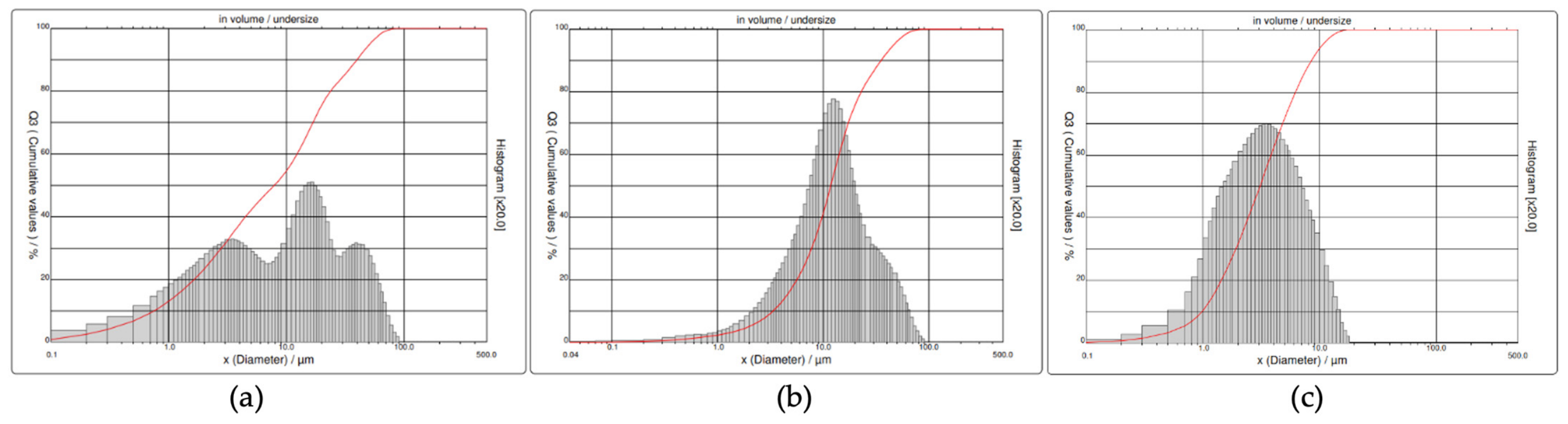
Figure 1. Particle distribution of (a) cement, (b) dried concrete sludge and (c) glass processing waste [48].
Sustainability 18 06598 g001
Figure 2. X-ray image of glass waste sludge. C—calcite (CaCO3) [48].
Sustainability 18 06598 g002
Figure 3. Microstructure of dry waste glass sludge: (a) ×2000 magnification (b) ×10,000 magnification [48].
Sustainability 18 06598 g003
Figure 4. Influence of glass processing waste content on the degree of compactibility of fresh concrete [48].
Sustainability 18 06598 g004
Figure 5. Effect of glass sludge content on concrete density and air entrainment [48].
Sustainability 18 06598 g005
Figure 6. Porosity parameters of concrete with different amounts of glass processing waste [48].
Sustainability 18 06598 g006
Figure 7. Effect of glass processing waste content on the water absorption characteristics of concrete [48].
Sustainability 18 06598 g007
Figure 8. Influence of glass processing waste content on the compressive and flexural strength of concrete specimens pre- and post-ASR exposure.
Sustainability 18 06598 g008
Figure 9. Dependence of specimen mass change on glass waste content under alkali exposure.
Sustainability 18 06598 g009
Figure 10. CO2 emissions per cubic meter of concrete containing different amounts of glass processing waste.
Sustainability 18 06598 g010
Table 1. Chemical composition of glass processing waste.
Chemical Composition of Glass Processing Waste, %
SiO2Na2OCaOMgOAl2O3SO3K2OCeO2Fe2O3La2O3Cl
69.010.48.683.550.930.240.150.1480.110.0740.027
Table 2. Properties of glass processing waste.
PropertiesGPWCSCementSandDolomite
Specific surface, cm2/g66703164600--
Particle density, kg/m325002774270026602800
Bulk density, kg/m3826826147516101480
Pozzolanic activity, mg/g927----
Table 3. Concrete mix design for 1 m3.
Specimen SeriesBS0BS5BS10BS15BS20BS25BS30
Cement, kg400380360340320300280
Sand 0/4, kg845.5
Crushed dolomite, 4/16, kg1040
Superplasticizer, kg2.8
Air entraining agent, kg0.4
Glass processing waste, kg020406080100120
Dry concrete sludge, kg44.5
Wet concrete sludge, kg16
Crystallizing admixture, kg4
Water, kg144
w/b0.4
Table 4. Influence of glass processing waste content on specimen length changes during a 20-week alkali–silica reaction (ASR) test.
Weeks5101520
Specimen Series
BS00.012%0.041%0.054%0.061%
BS50.013%0.037%0.049%0.054%
BS100.015%0.036%0.043%0.047%
BS150.015%0.031%0.033%0.037%
BS200.018%0.03%0.03%0.032%
BS250.019%0.027%0.029%0.03%
BS300.02%0.022%0.023%0.026%
Disclaimer/Publisher’s Note: The statements, opinions and data contained in all publications are solely those of the individual author(s) and contributor(s) and not of MDPI and/or the editor(s). MDPI and/or the editor(s) disclaim responsibility for any injury to people or property resulting from any ideas, methods, instructions or products referred to in the content.