1. Introduction
Fiscal sustainability has rarely felt as urgent as it does today. Across the European Union, governments that borrowed heavily to absorb the 2008–2009 global financial crisis and then again during the 2020 pandemic have emerged carrying debt loads that would have seemed implausible two decades ago. For emerging EU economies, the challenge cuts deeper still: how do you maintain fiscal discipline within a club built around rules when the macroeconomic forces pressing on your budget are larger, more volatile, and less amenable to domestic policy than those facing your wealthier partners?
Romania sits at the sharp end of this dilemma. Since acceding to the European Union in January 2007, the country has navigated two severe recessions, a pandemic, a post-pandemic inflationary surge, and a series of persistent budget deficits that have regularly breached the Maastricht ceiling of −3% of GDP. Public debt, a modest 10.5% of GDP in 2008, had climbed to 57.3% by mid-2025, a fivefold increase that would have been difficult to imagine at the moment of accession. Romania has been subject to the EU’s Excessive Deficit Procedure on multiple occasions, yet the structural sources of its fiscal imbalances remain imperfectly understood.
Fiscal sustainability, in this context, is not merely a technical condition. It is a prerequisite for the broader sustainability of Romania’s economic and social model. A government constrained by chronic deficits and rising debt-servicing costs cannot credibly finance public investment in infrastructure, human capital, and environmental transition. The SDG framework explicitly recognises fiscal capacity as a foundation for achieving Goal 8 (Decent Work and Economic Growth), Goal 10 (Reduced Inequalities), and Goal 17 (Partnerships for the Goals). Understanding what drives Romania’s deficit is therefore not only an exercise in macroeconometrics—it is a contribution to the evidence base for sustainable development policy.
Although fiscal sustainability has been extensively examined in both advanced and emerging economies, important gaps remain in the Romanian context. Existing studies have typically focused either on fiscal sustainability before the global financial crisis, on public debt dynamics alone, or on relatively short time horizons that do not encompass the multiple structural shocks experienced by Romania after EU accession. Consequently, evidence covering the entire post-accession period—including the global financial crisis, the sovereign debt crisis, the COVID-19 pandemic, and the recent inflationary episode—remains limited.
Furthermore, while previous studies have analysed individual determinants of fiscal performance, comparatively few have jointly examined economic growth, inflation, public debt, financing costs, and external imbalances within a unified dynamic framework capable of distinguishing between short-run and long-run effects. This limitation is particularly important in the Romanian case, where fiscal deficits and current account deficits have evolved simultaneously over prolonged periods, raising questions regarding the interaction between fiscal sustainability and external balance.
The present study seeks to address these gaps by providing an updated empirical assessment of Romania’s fiscal reaction function using quarterly data spanning the entire post-EU accession period from 2007 to 2025.
This paper asks a straightforward question: what macroeconomic factors actually drive Romania’s budget deficit, and with what magnitude and persistence? The question matters because the answer shapes the policy prescription. If deficits are primarily cyclical, then patience and growth-oriented structural reform are the appropriate response. If they are driven instead by debt accumulation and rising interest obligations, then consolidation cannot wait for the next upswing. And if external and fiscal imbalances are two sides of the same coin, then fiscal policy and external competitiveness policy must be coordinated rather than designed in isolation.
To answer these questions, we estimate an Autoregressive Distributed Lag (ARDL) model on 74 quarterly observations spanning Romania’s full post-accession period. The explanatory variables are drawn from the theoretical and empirical literature on fiscal reaction functions. Real GDP growth captures cyclical revenue dynamics and the mechanical effect of expanding output on the deficit-to-GDP ratio. Inflation enters through the revenue buoyancy channel: nominal tax receipts—driven by VAT, income taxes, and corporate taxes—tend to respond to price increases faster than public expenditures, many of which are indexed with a lag, temporarily improving the fiscal position. Lagged public debt captures the structural burden of interest obligations. Long-term government bond yields measure the cost of sovereign borrowing and serve as a proxy for financial market sentiment. The current account balance tests the twin deficit hypothesis. Finally, the lagged budget deficit itself is included to capture fiscal persistence—the institutional reality that budgets cannot be restructured overnight and that each period’s outcome inherits a substantial share of the previous one.
All six relationships are present in the data, with varying degrees of statistical precision. Real GDP growth is the most robust positive determinant of fiscal balance, with a short-run coefficient of 0.27 and a long-run multiplier of 0.52: a durable one-percentage-point increase in growth permanently improves the fiscal position by roughly half a percentage point. Public debt exerts a persistent negative effect; given the fivefold increase in the debt ratio over the sample, the model implies a cumulative structural fiscal deterioration of approximately 4.3 percentage points of GDP attributable to debt accumulation alone. Inflation produces short-term fiscal improvements consistent with revenue buoyancy, though the long-run interpretation is more nuanced. The fiscal persistence parameter (λ = 0.47) implies that nearly half of any quarter’s deficit is inherited from the previous one—a feature that transforms temporary shocks into prolonged imbalances and makes consolidation substantially harder than a static reading of the public finances would suggest. The bounds test confirms cointegration, validating the long-run multipliers.
The paper makes three contributions. First, it provides the most up-to-date empirical assessment of Romania’s fiscal reaction function, extending earlier work that typically covered the pre-crisis period and using a sample long enough to span several distinct macroeconomic regimes. Second, it carefully decomposes short- and long-run effects, distinguishing between the immediate impact of macroeconomic shocks and their cumulative fiscal consequences. Third, it connects the fiscal dynamics literature to the twin deficits literature in the Romanian context—a link that has received limited empirical attention despite its practical importance for a country that has simultaneously run large external and internal deficits for most of the post-accession period.
The present study distinguishes itself from the closest antecedents in the Romania-specific literature in three concrete ways. Socol and Socol [
1] estimate fiscal reaction functions for Romania but their sample ends in 2008Q2, predating both the financial crisis and its fiscal aftermath. Pirtea, Nicolescu and Mota [
2] focus specifically on public debt determinants over 2000–2011, without modelling the broader fiscal balance or the external imbalance channel. Dornean and Oanea [
3] apply cointegration methods to fiscal sustainability during the crisis but do not estimate a full fiscal reaction function with the range of macroeconomic determinants considered here. By extending the sample to 2025Q2, incorporating all six channels simultaneously in an ARDL framework that accommodates mixed integration orders, and connecting fiscal dynamics to the twin deficit hypothesis, this paper fills a gap that the existing Romania-specific literature has left open. The remainder of the paper is structured as follows.
Section 2 reviews the relevant literature.
Section 3 develops the research hypotheses.
Section 4 presents the data and methodological framework.
Section 5 reports the empirical results.
Section 6 discusses the findings and their policy implications.
Section 7 concludes and outlines directions for future research.
2. Literature Review
The relationship between inflation and fiscal balance is one of the more contested in macroeconomics, and with good reason: the two principal mechanisms pull in opposite directions, and which one dominates turns on institutional details that vary substantially across countries.
The revenue buoyancy channel predicts that inflation temporarily improves the fiscal position. When prices rise, nominal tax revenues—driven by VAT, income taxes, and corporate profits—tend to outpace public expenditures, many of which are indexed with a lag. The result is a short-run windfall for the treasury. The Tanzi effect works in the opposite direction: when tax collection lags behind price changes, the real value of revenues erodes before they reach the government, widening the deficit. Whether buoyancy or the Tanzi effect dominates depends on a country’s tax structure, the speed of expenditure indexation, and the prevailing inflation regime—which is precisely why the empirical literature has arrived at such heterogeneous conclusions.
The broadest cross-country evidence confirms that the relationship is real but far from universal. Catão and Terrones [
4], examining 107 countries over 1960–2001, find a strong positive association between fiscal deficits and inflation in high-inflation and developing country groups, but a statistically insignificant one among low-inflation advanced economies. The implication is important: the fiscal-inflation nexus is not a general macroeconomic law but a feature of specific institutional environments, most prominently those where governments rely on monetary financing and central bank independence is limited. Among emerging markets specifically, Catão and Terrones [
5] find that a one-percentage-point reduction in the fiscal deficit-to-GDP ratio typically lowers long-run inflation by between 1.5 and 6 percentage points—a wide range that reflects structural heterogeneity across countries, with magnitude depending critically on how much of the deficit is financed through money creation.
Country-specific ARDL studies offer more granular, and sometimes surprising, results. Makalesi, et al. [
6], examining Tunisia over 1998–2023, confirm a statistically significant positive coefficient of the budget deficit on inflation, with bounds testing confirming cointegration. Notably, however, individual fiscal components—government expenditure, revenue, and money supply—do not produce significant long-run effects on inflation in isolation, suggesting it is the aggregate deficit that matters for price dynamics, not its constituent parts. Evidence from India cuts differently. Kaur [
7], applying ARDL bounds testing to Indian quarterly data between 1996 and 2017, finds a negative long-run coefficient of −0.23 on inflation. Sharma and Mittal [
8] add important methodological nuance: a linear ARDL specification finds no significant relationship, but a nonlinear extension reveals that deficit increases carry a significantly larger inflationary impact than equivalent deficit reductions have a disinflationary effect. This challenges the symmetry assumption built into standard models. Bhat and Sharma [
9] corroborate this asymmetry, finding that the inflationary consequences of deficit expansions are roughly three times larger in absolute magnitude than the disinflationary consequences of equivalent consolidations.
Three conclusions follow for the present study. First, the direction of the fiscal-inflation relationship is not fixed—it depends on monetary financing patterns, institutional frameworks, and the prevailing inflation regime. Second, linear models systematically understate the relationship by averaging across asymmetric adjustment paths. Third, the magnitude in emerging markets is economically large. Whether Romania’s fiscal-inflation channel operates primarily through revenue buoyancy, the Tanzi effect, or monetary transmission is ultimately an empirical question, and one this paper addresses directly.
If the inflation-fiscal balance nexus is contested, the relationship between economic growth and fiscal balance is perhaps the most robust finding in the entire literature. Higher output expands the tax base for income taxes, VAT, and corporate profits while reducing pressure on unemployment-linked expenditures. Nominal GDP growth also improves the deficit-to-GDP ratio mechanically by expanding the denominator. The literature’s contribution has been less to establish the direction of this relationship than to pin down its magnitude and test whether it operates symmetrically across the business cycle.
Dinca, et al. [
10] provide a useful comparative baseline across 22 countries, finding a positive growth coefficient of 0.34 on fiscal balance, alongside a negative public debt coefficient of −0.28 and a positive current account coefficient of 0.19. The joint significance of these three variables serves as a useful reminder that fiscal balance is determined by a constellation of cyclical, structural, and external forces operating simultaneously. At the country level, Abubakar and Meena [
11], examining Nigeria over 1980–2024, find a long-run growth coefficient of 0.42 and an error correction speed of 67% annually. Their results also capture a feedback loop: persistent deficits financed through monetary expansion tend to elevate inflation and undermine growth, so the growth-fiscal balance relationship is not simply one-directional.
For Romania specifically, the procyclicality of fiscal outcomes has long been documented. Socol and Socol [
1], estimating fiscal reaction functions for Romania over 1999–2008, find an output gap coefficient of 0.42, confirming that the fiscal balance expands during booms and deteriorates in downturns. Pirtea, Nicolescu and Mota [
2], decomposing Romania’s public debt changes over 2000–2011, find that real GDP growth contributed an average annual debt reduction of 2.3 percentage points of GDP, while real interest rates added 1.8 percentage points.
Public debt occupies a central and somewhat uncomfortable position in fiscal analysis: it is simultaneously a consequence of past deficits and a structural driver of future ones. A larger debt stock requires higher interest payments, which widen the primary deficit, which adds to the debt stock—creating a self-reinforcing dynamic that can be difficult to escape without sustained growth, deliberate consolidation, or both.
Afonso and Coelho [
12], examining 19 eurozone countries over 1995–2020, confirm long-run relationships between fiscal variables through panel cointegration, with estimated fiscal reaction functions showing that the primary balance responds to lagged public debt with coefficients ranging from 0.03 to 0.08. For post-communist EU economies, the evidence is more mixed. Dobrotă, et al. [
13], applying ARDL analysis to seven post-communist EU economies over 2000–2018, find convergence rates to long-run equilibrium ranging from 23% per year in Hungary to 78% per year in Romania.
Romania’s experience since 2008—with public debt rising from roughly 10% to nearly 57% of GDP over seventeen years—reflects extended periods in which the interest rate exceeded the growth rate, compounding the debt ratio faster than cyclical improvements could offset it.
The twin deficits hypothesis holds that fiscal and current account deficits tend to move together, sharing a common root in the macroeconomic identity linking national saving, investment, and external financing. When a government spends more than it collects, it absorbs domestic saving that would otherwise be available for private investment or net external accumulation. The empirical support for this hypothesis is substantial, though the strength of the relationship varies across countries and exchange rate regimes.
Dinca, Dinca and Popione [
10] confirm the link in their cross-country analysis, finding a positive coefficient of 0.19 on the fiscal balance. Romania is a particularly interesting case for this hypothesis. Throughout the post-accession period, the country has simultaneously run persistent fiscal deficits that regularly exceed the Maastricht −3% ceiling and persistent current account deficits averaging −5.5% of GDP over the sample period examined here. Dornean and Oanea [
3] find one cointegrating relationship between government revenues and expenditures in Romania during the financial crisis. Georgescu, et al. [
14] using ARDL on Romanian data spanning 1995–2023, find that a 1% rise in GDP per capita reduces informal output by 0.29% in the long run—a result directly relevant to the sustainability of Romania’s public finances and its compliance with EU fiscal rules.
Underlying these quantitative relationships is a more fundamental question: are fiscal policies in emerging EU economies actually sustainable? In the technical sense, sustainability requires that the present discounted value of future primary surpluses equal the current public debt stock. For eurozone members, the evidence suggests weak but generally positive sustainability. For economies outside the euro area, the picture is more precarious. Evidence from Turkey during 1970–2000 points to nonstationarity in debt-to-GNP ratios [
15]. Afonso and Coelho [
12] find that fiscal sustainability increases measurably with stricter fiscal rules.
Taken together, the literature points to a consistent set of findings while leaving enough unresolved to make a new contribution worthwhile. What the literature lacks, specifically for Romania, is a comprehensive empirical assessment covering the full post-accession period, distinguishing carefully between short- and long-run effects, and connecting fiscal dynamics to external balance.
3. Hypothesis Development
Fiscal balances respond to macroeconomic conditions through several channels that affect government revenues, expenditures, and financing costs. Based on macroeconomic theory and the empirical literature reviewed above, we examine how cyclical conditions, price dynamics, debt accumulation, financial costs, and external imbalances shape the budget deficit in Romania.
Economic growth is expected to improve fiscal balance through automatic stabilisers. Higher activity expands the tax base for income, consumption, and corporate profit taxes while reducing expenditure pressures from unemployment benefits and social transfers.
Prior empirical evidence consistently supports a positive relationship between economic growth and fiscal balance. Dinca et al. [
10], Abubakar and Meena [
11], and Socol and Socol [
1] report that stronger economic activity improves fiscal outcomes through expanding tax bases and reducing expenditure pressures associated with unemployment and social assistance.
Higher GDP also improves the deficit-to-GDP ratio mechanically by expanding the denominator.
Hypothesis 1. Higher real GDP growth leads to an improvement in budget balance.
Inflation affects fiscal balance through the revenue buoyancy mechanism, whereby nominal tax revenues rise faster than public expenditures due to indexation lags in wages, pensions, and procurement contracts. Inflation also reduces the real value of domestic-currency-denominated public debt, generating additional short-run improvements. The relationship between inflation and fiscal balance remains more controversial. Studies such as Catão and Terrones [
4,
5] and Makalesi et al. [
6] suggest that inflation may temporarily improve fiscal performance through revenue buoyancy effects, whereas other studies emphasise the Tanzi effect and the erosion of real fiscal revenues.
Hypothesis 2. Higher inflation contributes to an improvement in the budget balance.
Higher public debt generates additional fiscal pressures through increased interest obligations and reduced fiscal space. Governments carrying larger debt stocks must allocate a greater share of budget resources to servicing that debt, constraining fiscal flexibility and contributing to persistent deficits. The negative impact of public debt on fiscal performance is well documented. Afonso and Coelho [
12] argue that higher debt stocks increase debt-servicing obligations and reduce fiscal space, generating persistent pressures on public finances.
Hypothesis 3. Higher public debt leads to a deterioration in fiscal balance.
Long-term government bond yields capture the cost of public borrowing. Higher yields increase the cost of refinancing existing debt and issuing new securities; as debt-servicing costs rise, deficits may widen. Long-term interest rates affect fiscal sustainability through their impact on debt-servicing costs. Rising borrowing costs increase refinancing expenditures and may contribute to fiscal deterioration, particularly in economies with persistent budget deficits.
Hypothesis 4. Higher long-term interest rates lead to a deterioration in fiscal balance.
According to the twin deficit hypothesis, fiscal and current account deficits are linked through the macroeconomic identity between saving and investment. Economies characterised by high domestic absorption relative to savings tend to run both types of deficit simultaneously. The twin-deficit hypothesis predicts a positive relationship between fiscal and external balances. Empirical evidence provided by Dinca et al. [
10] and other studies suggests that fiscal deficits and current account deficits frequently coexist in economies characterised by insufficient domestic savings.
Hypothesis 5. Improvements in the current account balance contribute to improvements in fiscal balance.
4. Materials and Methods
The choice of the ARDL framework is motivated by several methodological considerations.
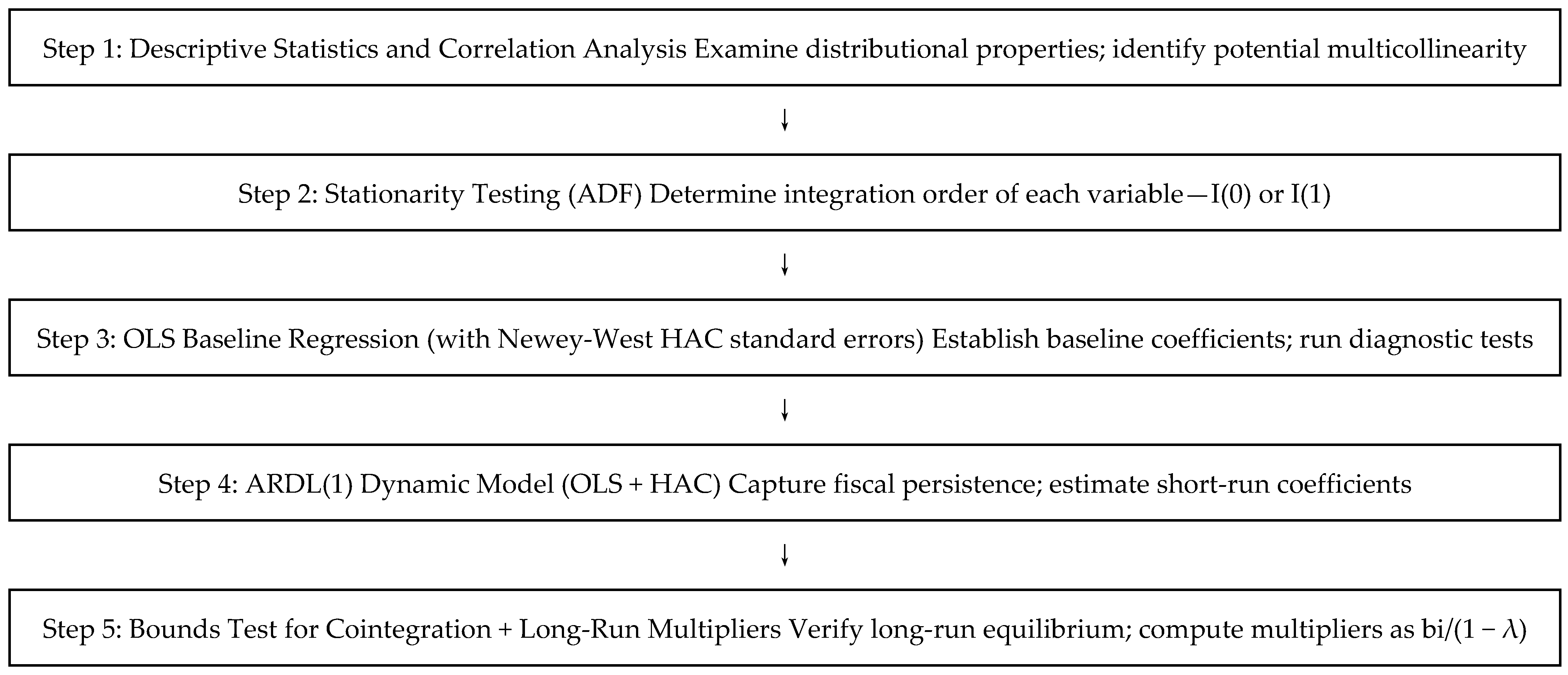
Figure 1 provides an overview of the analytical flow. First, ARDL models are particularly appropriate when variables exhibit a mixed order of integration, provided that none of the variables are integrated of order two, I(2) [
16]. Second, ARDL estimation performs well in relatively small samples, making it suitable for the present dataset consisting of 74 quarterly observations. Third, ARDL models permit the simultaneous estimation of short-run dynamics and long-run equilibrium relationships, which is essential when investigating fiscal sustainability mechanisms that operate over different time horizons [
17]. In addition, ARDL models are generally less sensitive to small-sample bias than alternative cointegration approaches such as the Johansen methodology and permit the estimation of both short-run and long-run effects within a single reduced-form framework [
18].
The methodology combines static OLS estimation with dynamic ARDL modelling, allowing us to distinguish short-run effects from their long-run counterparts. Stationarity properties are assessed using the Augmented Dickey–Fuller test [
19], and the existence of a long-run equilibrium relationship is verified through the ARDL bounds test of Pesaran, Shin and Smith [
16].
Table 1 provides an overview of the variables and data sources.
The dependent variable is the net lending/borrowing position of the general government, expressed as a percentage of GDP (BD). A positive value denotes a surplus; a negative value, a deficit.
The explanatory variables are selected on the basis of macroeconomic theory and prior empirical literature. Real GDP growth serves as the primary proxy for the cyclical position of the economy. The unemployment rate captures labour market conditions and their fiscal implications through social protection expenditures. The inflation rate captures nominal revenue dynamics. Public debt enters with a one-quarter lag to reduce endogeneity and to reflect the institutional reality that prior-period debt levels drive current interest obligations. Long-term interest rates capture financing costs and financial market sentiment. Finally, the current account balance as a percentage of GDP tests the twin deficit hypothesis. All data were retrieved from the Eurostat and European Central Bank databases, covering Q1 2007 to Q2 2025.
The dynamic ARDL(1) specification, which is the main empirical model, augments the above with a lagged dependent variable to capture fiscal persistence:
where λ is the persistence parameter. The speed of fiscal adjustment is given by (1 − λ), and long-run multipliers are derived by dividing the short-run coefficients by (1 − λ).
We apply the Augmented Dickey–Fuller (ADF) test with a constant and no deterministic trend, with lag lengths selected by the Akaike Information Criterion (maximum four lags). The results reveal a mixed integration structure—RGDPG is stationary in levels I(0), while the remaining variables are I(1)—which directly motivates the ARDL approach, valid for any combination of I(0) and I(1) regressors, provided no variable is I(2).
As a baseline, we estimate the static specification by OLS. To ensure valid inference in the presence of serial correlation and heteroskedasticity, we use Newey-West HAC standard errors with four lags. Diagnostic tests (Durbin-Watson, Breusch-Godfrey LM, Jarque–Bera, RESET) assess residual properties and model specification.
The ARDL(1) model is estimated by OLS with HAC standard errors. Cointegration is assessed within the ARDL framework following Pesaran, Shin and Smith [
16]. The significance of the lagged dependent variable and the resulting bounds statistic are used to evaluate the existence of a stable long-run relationship among the variables.
5. Results
We present the empirical results in five stages, following the analytical workflow described in the paper. We begin with descriptive statistics and correlation analysis available in
Table 2, proceed through stationarity testing and then present and interpret the OLS baseline and ARDL dynamic model, concluding with the long-run multipliers and cointegration test results.
The average quarterly budget deficit of −5.02% of GDP sits substantially below the Maastricht threshold, ranging from −12.5% (Q1 2024) to a surplus of 2.1% (Q3 2014). Real GDP growth shows the sharpest distributional asymmetry, with strongly negative skewness (−1.75) and excess kurtosis (5.49)—a pattern driven by the disproportionate severity of the 2009 Q1 and 2020 Q2 contractions. Public debt rose from 10.5% of GDP in Q3 2008 to 57.3% in Q2 2025, a fivefold increase concentrated in two periods: the post-crisis fiscal expansion (2009–2012) and the pandemic-driven rise (2020–2022). Long-term interest rates average 5.79% but display a bimodal distribution, with elevated values during 2008–2009 and again during 2022–2025. The current account deficit averages −5.51% of GDP, confirming Romania’s structural external imbalance throughout the post-accession period.
The strongest bivariate correlation with the budget deficit is with inflation (r = −0.373): higher inflation is associated with an improved fiscal position, consistent with the revenue buoyancy channel. The correlation with long-term interest rates (r = −0.346) presented in
Table 3 reflects the debt-servicing channel, while the positive correlation with real GDP growth (r = 0.253) confirms the cyclical sensitivity of revenues. Among the explanatory variables, the most notable correlation is between inflation and long-term interest rates (r = 0.673), which flags potential multicollinearity in specifications including both.
Table 4 provides the ADF results which confirm the mixed integration structure anticipated in the methodology. Real GDP growth is the only variable stationary in levels (ADF = −6.26,
p < 0.001). The remaining variables become stationary after first differencing. The I(0)/I(1) mixture rules out classical Johansen cointegration and directly validates ARDL bounds testing as the most appropriate methodology.
The OLS model (
Table 5) accounts for approximately 56% of the variation in the quarterly budget deficit (R
2 = 0.5643, Adj. R
2 = 0.5020). Real GDP growth (b1 = 0.3198,
p = 0.002) is the most precisely estimated coefficient. Lagged public debt (b4 = −0.1077,
p < 0.001) is the only other variable significant at the 1% level. Long-term interest rates (b5 = −1.111,
p = 0.040) carry a coefficient exceeding unity in absolute value, implying that a percentage-point increase in borrowing costs deteriorates fiscal balance by more than a percentage point of GDP. The Q2 and Q3 seasonal dummies confirm that fiscal balances are significantly stronger in the second and third quarters. Diagnostic testing reveals positive serial correlation in OLS residuals (Durbin-Watson = 1.13; Breusch-Godfrey
p = 0.002), confirming that the static specification misses the dynamic structure of fiscal policy.
Table 6 shows that adding the lagged budget deficit substantially improves model fit (Adj. R
2 = 0.6303 vs. 0.5020 in OLS). The persistence parameter λ = 0.4724 (
p < 0.001) indicates that roughly 47% of the previous quarter’s deficit carries forward into the current one, regardless of contemporaneous macroeconomic conditions. The speed of adjustment (1 − λ) = 0.5276 implies that deviations from long-run equilibrium are corrected at roughly 53% per quarter, with a shock half-life of 0.92 quarters.
Real GDP growth retains its positive and significant effect (b1 = 0.2718, p = 0.014). Inflation now reaches marginal significance (b3 = 0.1982, p = 0.075), consistent with the revenue buoyancy hypothesis. Lagged public debt remains negative and significant (b4 = −0.0504, p = 0.032). The current account balance reaches significance (b6 = 0.2501, p = 0.027): a one-percentage-point improvement in the external balance corresponds to a 0.25 percentage-point improvement in fiscal balance. This is the cleanest test of the twin deficit hypothesis in the model, and the result confirms H5.
The bounds test available in
Table 7 confirms cointegration unambiguously: the F-statistic of 15.14 substantially exceeds the upper critical value of 4.35 at the 5% level, rejecting the null of no long-run relationship.
The long-run multiplier for real GDP growth (0.5152) is nearly double the short-run coefficient (0.27). This amplification through persistence highlights the difference between cyclical recoveries—which generate proportionately less fiscal benefit—and durable structural growth, which compounds over time. The long-run public debt multiplier (−0.0956) confirms that structural debt accumulation deteriorates fiscal sustainability over time through a compounding mechanism. The long-run interest rate multiplier (−1.0923) is the largest in absolute value, underscoring that a persistent sovereign risk premium exerts substantial fiscal pressure beyond what quarterly interest rate costs alone would suggest.
6. Discussion
Taken together, the empirical results paint a coherent picture of Romanian fiscal dynamics in the post-EU accession period. The budget deficit is driven by identifiable macroeconomic forces, but it is also highly persistent—meaning that past deficits create inertia that macroeconomic improvements must work against before the fiscal position durably improves.
The positive and significant relationship between GDP growth and fiscal balance, confirming H1, aligns with automatic stabiliser theory and with the prior empirical literature for Romania and comparable economies. The long-run multiplier of 0.52 suggests that the fiscal dividend of sustained growth is substantial: a country that raises its trend growth rate by one percentage point can expect to permanently improve its fiscal position by roughly half a percentage point, holding other factors constant. This finding is broadly consistent with previous empirical studies. Dinca et al. [
10] report a positive growth coefficient of approximately 0.34, while Abubakar and Meena [
11] find a long-run effect of around 0.42. Similarly, Socol and Socol [
1] document a positive fiscal response to economic expansion in Romania. The somewhat larger coefficient estimated in the present study may reflect the inclusion of the post-pandemic period and the stronger fiscal sensitivity observed during recent years. For Romania, this finding points toward structural policies that reduce cyclicality—investment in infrastructure, human capital, and institutions—rather than short-term demand stimulus that fades before the persistence mechanism can amplify it.
The positive inflation-fiscal balance relationship, confirming H2, is consistent with revenue buoyancy documented in other emerging economies. During 2022–2023, when Romanian inflation exceeded 10%, the model predicts a short-term fiscal improvement of roughly two percentage points. This illustrates how macroeconomic variables interact in practice and why multivariate modelling matters: a univariate reading of the fiscal data from that period would attribute the temporary improvement to consolidation effort rather than to the inflationary windfall that was actually at work.
The negative debt effect, confirming H3, is the most directly policy-relevant finding. The estimated debt coefficient is consistent with the broader fiscal sustainability literature. Afonso and Coelho [
12] show that higher debt levels generate stronger fiscal adjustment pressures through rising debt-servicing costs and reduced fiscal space. Similarly, Dobrotă et al. [
13] identify persistent long-run relationships between debt dynamics and fiscal performance in post-communist EU economies. The Romanian evidence presented here reinforces these conclusions and suggests that debt accumulation has become an increasingly important structural constraint on fiscal policy. The fivefold increase in Romania’s public debt between 2007 and 2025 has, according to the model, imposed a cumulative fiscal burden of approximately 4.3 percentage points of GDP in the long run (45 percentage points × 0.096 long-run multiplier). This structural headwind cannot be offset by macroeconomic tailwinds alone; it requires deliberate reduction in the structural primary deficit.
Long-term interest rates lose significance in the ARDL specification, falling short of confirming H4 at conventional levels, though the long-run multiplier (−1.09) remains large. This is consistent with interest rate effects operating primarily through the persistence channel rather than through a contemporaneous direct impact.
The confirmation of the twin deficit hypothesis (H5) is consistent with Romania’s position as a small open economy with limited domestic savings, significant reliance on EU funds and foreign investment, and persistent structural current account deficits. This result is also consistent with previous empirical evidence. Dinca et al. [
10] identify a positive association between fiscal and external balances across a sample of developed and emerging economies. The Romanian case provides additional support for this relationship, indicating that external imbalances and fiscal deficits should be viewed as interconnected manifestations of broader macroeconomic disequilibria rather than as isolated policy challenge. The finding carries a practical implication that purely budgetary analyses tend to overlook: policies targeting external rebalancing—export competitiveness, productivity improvements, reduction in the import content of domestic demand—also generate fiscal co-benefits.
7. Limitations
Several limitations should be acknowledged. First, the analysis focuses exclusively on Romania and therefore the findings should not be automatically generalised to other emerging or developed economies. Second, although the sample covers the entire post-EU accession period, the number of quarterly observations remains relatively limited from an econometric perspective. Third, the model does not explicitly incorporate institutional variables such as fiscal rule compliance, governance indicators, or political-cycle effects, which may also influence fiscal outcomes. Finally, the linear ARDL specification assumes stable relationships throughout the sample period and does not account for potential structural breaks associated with major economic events such as the global financial crisis or the COVID-19 pandemic.
8. Conclusions
This paper has examined the macroeconomic determinants of Romania’s budget deficit over the post-EU accession period, using an ARDL(1) model with HAC standard errors on 74 quarterly observations. Bounds testing confirms a long-run cointegrating relationship between the fiscal balance and a set of macroeconomic fundamentals, and the estimated model explains over 63% of the variation in quarterly fiscal outcomes.
The main findings can be summarised as follows. Real GDP growth is the most robust positive determinant of fiscal balance, with a short-run coefficient of 0.27 and a long-run multiplier of 0.52: sustained economic growth is the single most powerful structural lever available to Romanian policymakers. Public debt exerts a persistent negative effect (long-run multiplier of −0.10), implying that the fivefold increase in Romania’s debt-to-GDP ratio since accession has imposed a structural fiscal burden of around 4 percentage points. Fiscal persistence (λ = 0.47) means that past deficits create self-reinforcing dynamics requiring deliberate structural adjustment. Inflation temporarily improves fiscal balance through nominal revenue dynamics, but this effect is cyclical and should not be mistaken for structural consolidation. Finally, the current account balance and fiscal balance move together, confirming the twin deficit hypothesis.
The policy implications are concrete. The path to durable fiscal consolidation for Romania runs through three parallel tracks: structural improvement of the primary balance through expenditure reform or tax base broadening; sustained economic growth, which provides the largest fiscal dividend per unit of policy effort; and active public debt management, since the compounding of interest obligations is the most insidious source of fiscal deterioration in the model. Policies that improve the current account offer an underappreciated additional benefit.
From a sustainability perspective, the findings underscore a broader interdependence: fiscal consolidation is not a constraint on sustainable development but a prerequisite for it. Governments that compound their debt through persistent deficits progressively lose the capacity to finance the investments that long-run sustainability requires—in infrastructure, education, healthcare, and environmental resilience. For Romania, which must simultaneously consolidate its fiscal position, absorb EU cohesion funds, and meet its climate transition commitments, the results suggest that structural growth-enhancing reforms offer the most synergistic path: they expand the fiscal space needed for sustainability investments while delivering the largest reduction in deficit per unit of policy effort. This alignment between fiscal consolidation and the SDG agenda—particularly SDG 8, SDG 10, and SDG 17—suggests that framing Romania’s fiscal challenge in sustainability terms is not merely rhetorical, but analytically grounded.
Future research might extend the analysis in several directions. Incorporating institutional variables—fiscal rules compliance indices, EU monitoring programme status, or governance quality indicators—could better capture the role of institutional frameworks in shaping fiscal outcomes. Threshold or regime-switching models could test whether the macroeconomic-fiscal relationships documented here remain stable across the markedly different regimes in the sample. A comparative analysis across EU emerging market economies would permit a panel assessment of whether the Romanian dynamics are idiosyncratic or reflect a broader regional pattern.