1. Introduction
Sustainable development has become a strategic priority for the hospitality industry, as accommodation enterprises increasingly face pressure to reduce environmental impacts, improve social responsibility, support local communities and strengthen governance practices. Hotels and other accommodation facilities are not only service providers but also important actors in regional development, as they influence resource consumption, employment, local supply chains, tourist mobility and the overall competitiveness of destinations. Therefore, the transition towards sustainable hospitality requires more than isolated environmental actions at the enterprise level; it requires coordinated interaction between policy frameworks, regional institutions, industry stakeholders and business practices.
Existing research on sustainable tourism and hospitality has made an important contribution to understanding ESG principles, the Triple Bottom Line framework, circular economy approaches, green human resource management and digital tools for sustainability. However, many studies examine these issues separately, either at the level of individual hotel practices, national sustainability strategies or destination management mechanisms. As a result, there remains a need for integrated regional models that explain how sustainability can be coordinated simultaneously across different levels of governance and implementation.
This issue is particularly relevant for emerging tourism regions, where tourism potential is high but institutional coordination, infrastructure, demand and sustainability practices remain uneven. The Zhetysu region of Kazakhstan provides an appropriate empirical setting for this study because it combines strong natural and cultural tourism resources with structural challenges in the hospitality sector. The region has opportunities for eco-tourism, rural tourism and nature-based tourism, yet its accommodation sector faces seasonal demand, low capacity utilisation, fragmented sustainability initiatives, limited infrastructure and the dominance of small and medium-sized accommodation enterprises. These conditions make Zhetysu a relevant case for developing a regionally adapted model of sustainable hospitality development.
Despite the growing body of literature on sustainable tourism and hospitality, existing studies remain fragmented across separate analytical levels. Some studies focus on national sustainability strategies and ESG reporting, others examine destination-level coordination or enterprise-level green practices. However, limited attention has been paid to integrated regional models that simultaneously connect macro-level institutional conditions, meso-level coordination mechanisms and micro-level operational sustainability indicators in hospitality. This gap is especially important for emerging tourism regions such as Zhetysu, where sustainable development depends not only on individual hotel practices but also on the alignment of policy support, stakeholder coordination and enterprise-level implementation.
Accordingly, this study addresses the following research questions:
RQ1. How can ESG and Triple Bottom Line principles be adapted to the regional hospitality context of the Zhetysu region?
RQ2. What do regional sustainability indicators reveal about economic, social and environmental dynamics in the Zhetysu hotel sector?
RQ3. How can macro-, meso- and micro-level mechanisms be integrated into a practical regional model for sustainable hospitality development?
The aim of this article is to develop and empirically support a multi-level model for integrating sustainable practices in the hospitality industry, using the Zhetysu region as an empirical case. The proposed model combines macro-level institutional support, meso-level coordination mechanisms and micro-level enterprise practices. The empirical component of the study is based on regional statistical data for 2022–2025 and the construction of sustainability indices reflecting economic, social and environmental dimensions of hotel sector development.
The scientific contribution of the study lies in the regional adaptation of ESG and Triple Bottom Line principles through a multi-level governance perspective. Unlike studies that consider sustainability as a set of isolated practices, this research proposes an integrated model that links policy priorities, stakeholder coordination and measurable operational indicators. The practical contribution of the study is the development of a roadmap that can support regional authorities, tourism organisations and hospitality enterprises in coordinating sustainability initiatives and monitoring their implementation.
The remainder of the article is structured as follows.
Section 2 reviews the literature on sustainable hospitality through the macro-, meso- and micro-level logic and identifies the conceptual basis of the proposed model.
Section 3 explains the methodology, including data sources, research stages and the construction of sustainability indices.
Section 4 presents the empirical results and the proposed regional model.
Section 5 discusses the findings in relation to ESG, Triple Bottom Line and multi-level governance literature.
Section 6 concludes the study by summarising the main findings, practical implications, limitations and directions for future research.
2. Literature Review
2.1. Conceptual Foundations of Sustainable Hospitality
Recent research in the field of sustainable tourism and hospitality demonstrates a clear trend towards a shift from traditional environmental approaches to comprehensive, multi-level models that consider economic, social and managerial aspects of sustainability. The expansion of sustainable practices in global and regional tourism highlights the need to develop integrated strategies that encompass both international standards and local regional characteristics.
As shown in
Table 1, the proposed research design integrates qualitative document analysis, quantitative sustainability index construction, and conceptual modelling to develop a multi-level framework for sustainable hospitality development.
The modern hospitality industry faces growing pressure to implement sustainable practices due to high resource consumption, environmental impact and changing consumer expectations. Sustainable development is seen as a strategic necessity, involving the integration of environmental, social and governance aspects into the operational activities of hotels and tourism services. Macro-level: global and institutional sustainability models, including ESG- and SDG-oriented strategies, are the foundation for the development of sustainable tourism destinations and hotel standards [
1]. Despite their advantages, sustainable models face barriers: financial costs, lack of clear measurement methodologies, shortage of skilled personnel and limited opportunities for small hotels (especially in emerging markets). Government support, incentives and training are key elements in overcoming these barriers. Micro-level: operational innovation, circular economy and digitalisation create concrete mechanisms for sustainability at the enterprise level [
2]. A recent study focused on adapting Global Sustainability Frameworks (GSTC, Green Key, CARE, SMART Hospitality) to the conditions of Zhetysu highlights the need to transform international standards to account for specific seasonal fluctuations, infrastructure constraints, tourist flow characteristics and economic parameters of the region. This study highlights obstacles in the form of seasonality, weak infrastructure and limited application of environmental management systems, which are relevant for regional planning of sustainable hotel development [
3].
In recent years, scientific literature has seen active development of research aimed at identifying key themes and structural elements of sustainable development in the hotel and tourism industry. A review of bibliometric studies shows that sustainability is becoming a central theme in publications covering a variety of aspects, from environmental initiatives to social impact and corporate governance. A study [
4] based on Scopus data identifies more than 700 documents on sustainable development in the hotel industry, highlighting the growing interest in environmental, social and economic sustainability among a wide range of researchers around the world. Methodologically, many authors focus on the Triple Bottom Line model, which covers the environmental, social and economic components of sustainability, as confirmed by global bibliometric reviews focusing on SDGs (Sustainable Development Goals), innovation and ESG aspects.
Table 2 presents the operationalisation of the Triple Bottom Line model in the hospitality sector by linking its key components with relevant SDGs, ESG dimensions, and sector-specific manifestations.
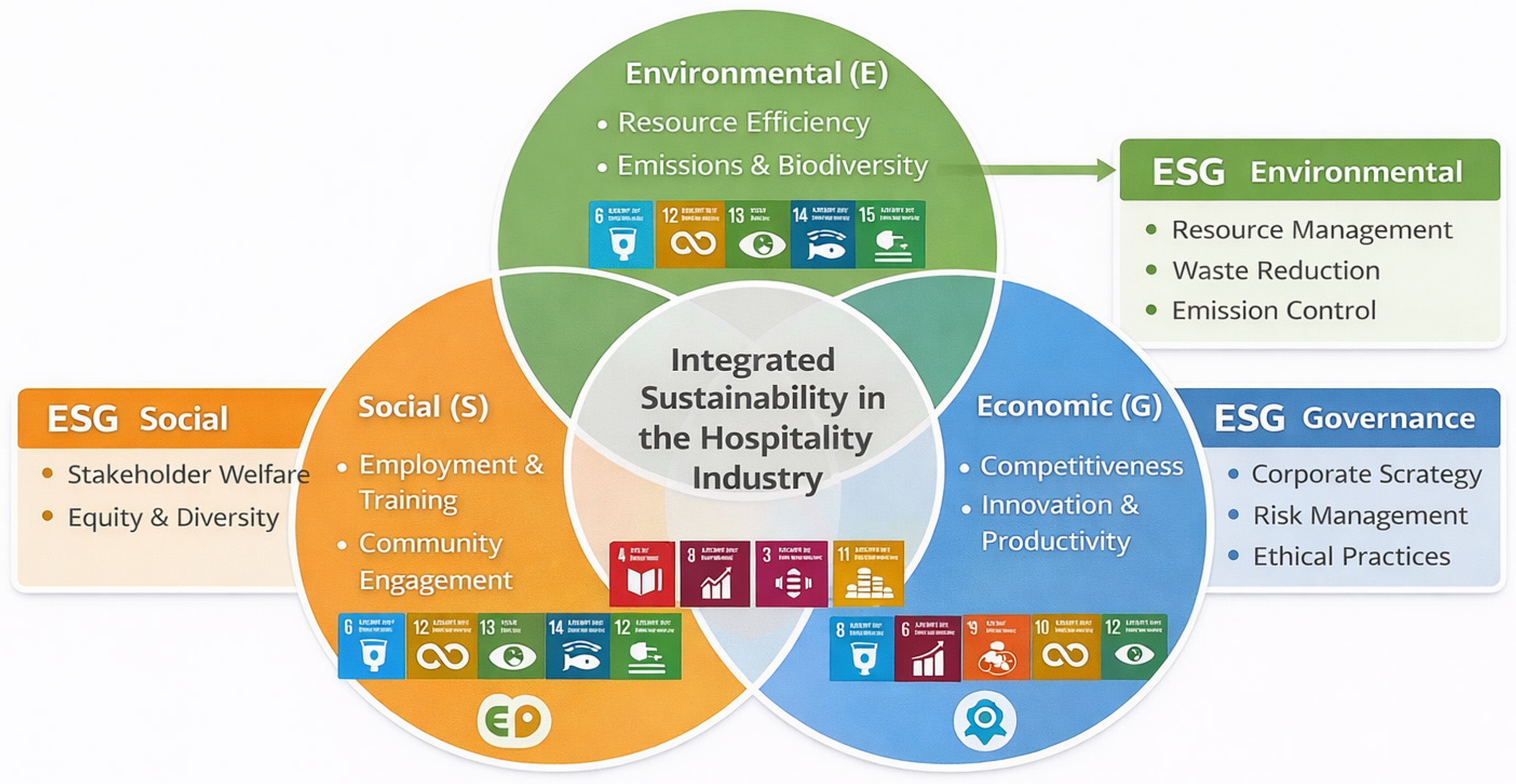
Figure 1 illustrates the conceptual framework of sustainable hospitality based on the integration of the Triple Bottom Line, SDGs, and ESG principles.
An analysis of tourism management in Kazakhstan shows that sustainable development requires a systematic approach at the level of state and private structures. The study examines the sustainability of tourism in Kazakhstan through the prism of rational use of resources and the balance between environmental, socio-cultural and economic parameters [
5]. The role of public and private structures in shaping the organisational model for managing Kazakhstan’s tourism industry is emphasised in a study that presents a systematic model of stakeholder interaction to enhance the sustainability of the tourism industry at the national level in a market economy [
6].
The Almaty and East Kazakhstan regions are considered as examples of integrated models of sustainable development, where cross-sectoral management of tourism activities is combined with socio-economic priorities of sustainability. The work analyses the sustainability of international tourism through the prism of inclusive economic development at the territorial level [
7].
On a global scale, studies such as [
8] conduct bibliometric analysis of the circular economy in the tourism and hospitality sector, revealing growing interest in models that promote closed resource cycles and waste reduction as key elements of sustainable development.
Conceptual studies of sustainable development in tourist areas highlight systemic principles, including complex interactions between the natural environment, economic strategies and social well-being, which form the foundation for building adaptive models of sustainable tourism [
9].
Government policy plays a special role in sustainable development. Kazakhstan has developed programmes and concepts for the development of the tourism industry aimed at integrating environmental and economic priorities into the country’s tourism strategy. These documents set the regulatory framework for sustainable tourism models and provide government support for the implementation of sustainable development practices at the regional and enterprise levels.
ESG factors (environmental, social and governance criteria) also play a key role at the macro-level, becoming strategic guidelines for decision-making in the hotel industry. Studies emphasise that the implementation of ESG approaches contributes to risk reduction, increased business sustainability and strengthened stakeholder confidence, and is also becoming an important element of government and corporate strategy in the face of increasing pressure from investors and consumers [
10]. At the level of industry and regional structures, sustainability is implemented through mechanisms for adapting global principles to the specific socio-economic conditions of regions. For example, research on sustainable hotel management models in national and regional contexts often emphasises the importance of cross-sectoral interaction, coordination between industry associations and tourism clusters, and consideration of local cultural and social factors for the successful implementation of sustainable practices. Meso-level: sustainable models include the adaptation of international principles through cultural, social and regional characteristics, as shown by the example of Bali [
11].
At the micro-level, models for implementing management strategies also play an important role, such as the model of ‘green’ management through staff participation. Studies show that the style of management participation and the implementation of Green Hotel Management practices have a significant impact on the environmental performance of hotels, improving the effectiveness of measures to reduce environmental impact [
12].
Comprehensive modern sustainability models increasingly include interactions between technological innovations, organisational culture and management mechanisms. The latest research confirms that the combination of green orientation, service innovation and human resource management forms dynamic capabilities that enhance business sustainability. Such approaches include the use of mobile information technologies (MIT) and Green Human Resource Management (GHRM) to enhance the effect of sustainable innovation and increase the adaptability of organisations to external changes [
13].
In recent years, sustainability has become one of the central themes in hospitality and tourism industry research, reflecting the growing global demand for the integration of environmental, social and governance (ESG) principles into the practices of tourism and hospitality businesses. At the level of academic publications, there has been a significant increase in research covering conceptual approaches, sustainability measurement and practical mechanisms for implementing sustainable practices in the hospitality sector [
14].
Bibliometric studies show that in recent years, publications related to environmental, social and governance aspects of sustainability in hospitality and tourism have increased in number, reflecting the transition of the topic from highly specialised research to mainstream academic discourse. For example, Zhang et al. (2025) use a multidimensional analytical approach to assess the impact of ESG indicators on operational efficiency in the Chinese tourism sector, demonstrating the complex interrelationships between social factors, employment and sustainability [
15].
Systematic literature reviews highlight the need for clearer definition and integration of ESG principles in the hotel and tourism sectors. Rahman et al. (2025) show that existing ESG research in tourism and hospitality remains fragmented and needs a more fundamental theoretical framework, especially in terms of disclosure practices and stakeholder engagement [
16].
Another important review notes the significant role of the green workforce in promoting environmental sustainability: Mahran (2025) analyses 74 publications and identifies key research topics such as employee motivation, the impact of management strategies and the consequences of implementing environmental practices for the working environment [
17].
The topic of environmental sustainability in hotels also attracts multidisciplinary attention. Makoondlall-Chadee (2024) conducts a systematic review of environmental sustainability practices in hotels, describing the assessment methods used in studies, as well as the shortcomings of current approaches to analysing the environmental impact of hotel operations [
18]. In addition, studies offer industry frameworks for the practical application of ESG reporting. Ye et al. (2025) propose a generalised model for ESG reporting in tourism based on empirical data from China and Greece, demonstrating that cultural context significantly influences the perception and implementation of ESG metrics [
19].
2.2. Macro-Level Sustainability Frameworks: ESG, SDGs and Institutional Support
Thus, current scientific literature on sustainable tourism and hospitality combines several key areas of research: (1) theory and conceptualisation of sustainability; (2) measurement of sustainable practices through ESG indices; (3) empirical evidence of the impact of sustainable practices on business performance and social perception; (4) the lack of standardised reporting and comparative analysis methodologies. This foundation can be used to further develop regional sustainability models, including the adaptation of international approaches to the conditions of the Zhetysu region.
Contemporary research on sustainable development in tourism and hospitality increasingly relies on a multi-level approach, which assumes the interconnected functioning of micro-, meso- and macro-levels of management (Hall, 2011; Bramwell & Lane, 2013) [
20,
21]. This paradigm is based on the concept of ‘multi-level governance,’ according to which sustainability is formed not only at the level of individual enterprises, but also through institutional mechanisms, regional networks and government policy. At the meso-level, sustainability is formed through tourist destinations, regional clusters and institutional networks. Studies of sustainable tourist destinations (Scandinavia, Costa Rica, New Zealand) show that coordination at the meso-level increases the sustainability of the entire industry (Hall, 2011) [
20]. Bramwell & Lane (2013) emphasise that it is at the destination level that the opportunity arises to coordinate the actions of businesses, authorities and local communities [
20,
21].
Sharpley (2020) emphasises that sustainability in tourism should be viewed as a systemic characteristic of territorial development, rather than exclusively as a set of environmental practices adopted by hotels [
22]. A similar position is held by Gössling et al. (2012) [
23], who view sustainability in tourism through the prism of transformational changes, including institutional reforms and behavioural shifts. They point out that without macroeconomic incentives, the environmental transformation of the hotel sector is slow [
23].
The conceptual basis for research remains the Triple Bottom Line model (Elkington, 1997) [
24] which integrates the economic, social and environmental dimensions of sustainability. In recent years, it has been supplemented by the ESG approach, which is being actively implemented in the hotel sector (Jones, Hillier & Comfort, 2014; Font et al., 2018) [
25,
26]. Font et al. (2018) emphasise that the integration of sustainability is only effective when all levels of impact are combined [
26].
At the same time, the literature notes micro-level limitations: the lack of systemic support from the state and regional institutions often reduces the effectiveness of individual initiatives [
26].
Empirical studies confirm that environmental practices have a positive impact on the operational efficiency and corporate image of hotels (Mensah, 2006; Filimonau & De Coteau, 2019) [
27,
28].
Particular attention is paid to the concept of Green Human Resource Management (GHRM), which involves integrating sustainable principles into the human resource management system (Pham et al., 2020) [
29]. Studies show that the environmental engagement of employees enhances the competitiveness of hotels and contributes to the formation of a sustainable organisational culture [
29].
Ruhanen et al. (2015) note that a successful regional model requires the integration of sustainability indicators into the spatial planning system [
30].
Despite the existence of studies on sustainable tourism in Kazakhstan, there is no integrated multi-level model in the literature that combines micro-, meso- and macro-levels of management of sustainable practices in the hospitality industry. This study aims to fill this gap.
2.3. Meso-Level Coordination: Destination Management, Stakeholders and Regional Governance
Research on tourism destination management in Kazakhstan shows that Destination Management Organisations (DMOs) can play a strategic role in the development of regional tourism by coordinating the private sector, authorities and local communities. A meso-level mechanism that allows national strategies to be linked to local initiatives. It ensures the coordination and adaptation of sustainability strategies to regional conditions. DMOs and PPP mechanisms are meso-level tools that ensure business participation in regional development [
31].
A study on the development of ‘eco-hotels’ in Kazakhstan analyses the principles and economic functions of sustainable hotels, highlighting the growing interest in the eco-hotel concept. A micro-level tool focused on the implementation of sustainable practices within the hotel business—for example, energy saving, waste management, environmental management [
32].
Frontiers in Sustainability has published an empirical study showing that perceptions of sustainability influence customer loyalty and repeat visit intentions in the hotel sector. This highlights the importance not only of implementing environmental practices, but also of a communication strategy focused on consumer perceptions. Not only technical improvements, but also communication of sustainability is important—guests’ perception of sustainable actions influences their loyalty and behaviour, which is important for hotel marketing and management [
33].
An analysis of sustainable practices in the hotel sector (e.g., through eco-friendly hotels) demonstrates the positive impact of implementing environmental solutions on the financial and operational performance of hotel businesses. For example, studies show that environmental practices contribute to increased efficiency, customer satisfaction and competitive advantages in developing economies. The application of sustainable practices correlates positively with operational efficiency, as confirmed by several empirical studies in Asia, Africa and the southern hemisphere [
34].
Recent studies on the application of the TOE (Technology–Organisation–Environment) framework show that sustainable practices in hotels are shaped in a distributed manner by technological innovations, organisational structure and external conditions, especially in developing regions. This highlights the need to consider complex factors when developing sustainable strategies in hospitality. Sustainability is becoming a topic not only for ESG and CSR, but also for technological innovation, creating a multidisciplinary research landscape [
35].
Sustainable development in the tourism industry is becoming a key requirement of modernity. International organisations and scholars note that tourism brings economic benefits but is associated with environmental and social risks that require a comprehensive approach (Schönherr et al., 2023; Elkhwesky et al., 2022) [
36,
37]. At the macro-level, sustainable development in tourism and the hotel business is set through global and national initiatives. In this regard, the key factors are the international goals of the UN, the standards of the GSTC (Global Sustainable Tourism Council) and national strategies for green growth. Tourism policymakers in different countries recognise the importance of sustainability, especially after crises (the COVID-19 pandemic, etc.), and are developing appropriate programmes. Schönherr and co-authors found that ‘tourism policymakers recognise the importance of sustainable development, formulate sustainable tourism strategies, and these strategies are transformed into concrete measures—environmental, economic and socio-cultural.’ For example, tax incentives are used to promote environmentally friendly practices, programmes to support eco-certification of hotels, and monitoring of environmental standards in the industry. However, challenges remain: many companies are not yet fully complying with the UN Goals, and the implementation of sustainable practices may require significant initial investment. Leading researchers note that abandoning a comprehensive approach to ESG could slow down the sustainable development of the industry [
36,
37].
Various models and frameworks have been developed for the systematic assessment and management of such risks, such as ESG (Environmental, Social, Governance), Circular Economy, innovative green technologies, as well as a focus on regional policy, social sustainability and the digitalisation of practices. The key areas in this field can be summarised as follows:
- –
ESG. The ESG model serves as the basis for a comprehensive assessment of companies’ sustainable development. It covers environmental (energy and resource conservation, waste disposal), social (working with staff and the community) and governance (ethics, transparency) aspects of the activities of hotels and tour operators. In the hotel industry, environmental measures include, for example, resource circulation and waste recycling, while social measures include promoting diversity, inclusiveness and interaction with the local community. Researchers note that consumer awareness and regulatory pressure are growing, making the integration of ESG principles a strategic necessity for the competitiveness and sustainability of the industry [
38];
- –
Circular economy. Applying circular economy principles in tourism (reducing resource consumption, recycling, reuse) is seen as a way to lessen environmental impacts. A review of the literature shows that the development of circular practices makes it possible to link the UN’s global Sustainable Development Goals and reduce environmental damage (Strippoli et al., 2024) [
39]. Key strategies include minimising single-use plastics and managing food and water resources according to the “reduce-reuse-recycle” principle. Implementing a circular model at the hotel or destination level helps to reduce waste and save resources, confirming the importance of this approach. At the micro-level, the principle of circularity means a transition to cyclical business models: a hotel can treat paper, plastic and food waste as secondary resources. For example, within the circular economy, reusable materials are introduced instead of disposable ones, local production and closed supply chains are organised. A structural review shows that hotels are actively developing reduce/reuse/recycle strategies, including the disposal of organic waste and the use of renewable energy. This demonstrates a growing interest in the integration of circular practices, which, according to researchers, enhances the environmental and economic sustainability of companies [
39];
- –
Green innovations. New environmentally friendly technologies and services (e.g., energy-efficient lighting, smart energy and water management systems, green logistics) contribute to improving the environmental performance of hotels and tourism products. Research shows that green innovations improve the environmental performance and sustainability of businesses [
37]. For example, smart sensors and analytics can optimise the operation of engineering systems and reduce carbon footprints.
- –
Social sustainability. This area focuses on working conditions, staff and local community engagement, fair remuneration, diversity and human well-being. Social sustainability is closely linked to the concepts of decent work and social responsibility (Santos, 2023) [
40]. In hotels, this manifests itself through concern for the health and safety of employees, gender equality, participation in social programmes and community support. By prioritising the principles of decent work, companies strengthen staff loyalty and sustainable competitive advantage [
40];
- –
Regional policy and destinations. Sustainable development requires the involvement of government structures and tourism management bodies. At the macro-level, governments and management bodies develop strategies for distributing tourist flows, limiting overcrowding at destinations and stimulating green growth (Schönherr et al., 2023) [
36]. For example, Barreal and co-authors propose using segmentation and spatial analysis techniques to redirect tourist flows from oversaturated areas to less visited regions, while maintaining the overall economic effect. Regional tourism development programmes increasingly include environmental and social indicators and encourage corporate and social responsibility. At the destination level (cities, regions, resorts), sustainable models involve integrated resource management and stakeholder participation. This includes maintaining environmental infrastructure (parks, trails, transport), developing ecotourism and involving local residents and businesses in planning processes. Sustainable destination development programmes often rely on cooperation between the state, companies and the community (e.g., green hotel networks or cultural heritage preservation initiatives). Barreal and co-authors propose analytical tools to ‘unload’ overloaded regions, which contributes to the balanced development of neighbouring territories. This illustrates how regional policies and flow management methodologies complement micro-business practices by integrating sustainability at the territorial level [
41];
- –
Digitalisation of sustainability. The introduction of digital technologies (IoT, smart accounting and monitoring systems, big data, artificial intelligence) is seen as a powerful tool for improving the effectiveness of sustainable practices. Research shows that the digital transformation of hotels has a positive impact on environmental sustainability: for example, smart management systems can reduce energy consumption, minimise waste and optimise water consumption. In particular, digital solutions help automate paper-based processes and track environmental performance in real time, which increases the overall ‘greenness’ of hotels [
42].
Together, these approaches at the macro-, meso- and micro-levels form a holistic ecosystem of sustainable tourism. They demonstrate that combining ESG strategies, circular economy and technology with socially oriented practices enables the hotel industry and regions to move towards balanced growth. However, a full transition to sustainability requires further development of the scientific base and collaboration between business, government and society.
Important empirical research in the global hotel context shows that environmental, social and governance (ESG) principles have an impact on the financial performance of hotel companies, taking into account the level of economic development of countries. Hwang et al. (2024) use an extensive data panel to analyse the ESG-financial relationship and find that hotel companies in more developed economies benefit more from implementing ESG practices [
43]. This emphasises that the effectiveness of sustainable practices is linked not only to the actions of companies themselves, but also to the context of the national economy, which is important to consider when developing sustainable development models for different regions [
43].
Khan et al. (2024) conduct a bibliometric analysis of sustainability practices in the hotel industry, identifying key areas of research such as environmental initiatives, social responsibility and waste management [
44]. The authors show that sustainable development in hotels is shaped by several key thematic clusters, highlighting the growth of research on ESG concepts and the need for future empirical analyses. This work provides an overview of current trends and points to directions for future research, which is important for the theoretical justification of the review article [
44].
Şahin and co-authors (2024) offer a bibliometric analysis of research on the circular economy in tourism and hospitality, highlighting its growth as a promising area of sustainability. The analysis shows that in recent years, more and more publications have been exploring circular approaches: waste recycling, efficient use of resources and integration of closed cycles into business operations. The work illustrates that the barriers and opportunities of the circular economy are becoming important in the formation of sustainable hotel business models [
8].
2.4. Micro-Level Sustainable Practices: Green HRM, Circular Economy and Digital Tools
One of the most significant empirical studies of micro-level sustainable development in the hotel sector is the work of Cao, Yan & Teng (2023), which examines the impact of Green Human Resource Management (GHRM) practices on employees’ intentions to leave the organisation [
45]. The authors use structural equation modelling (SEM) on a sample of 437 employees from 31 hotels in China and find that GHRM significantly increases employees’ sense of attachment to the organisation (job embeddedness), which in turn reduces their intention to leave their job. Moreover, the impact of GHRM on quitting intention increases in conditions of high levels of individual green values among employees and high servant leadership. This study demonstrates that the integration of environmentally oriented HR practices affects not only green outcomes, but also key intangible outcomes of employee behaviour, reducing staff turnover and strengthening the sustainability of the organisation [
45].
Table 3 summarizes the macro-, meso-, and micro-level structure of the proposed sustainable hospitality model and shows how each level is connected with key mechanisms and stakeholders.
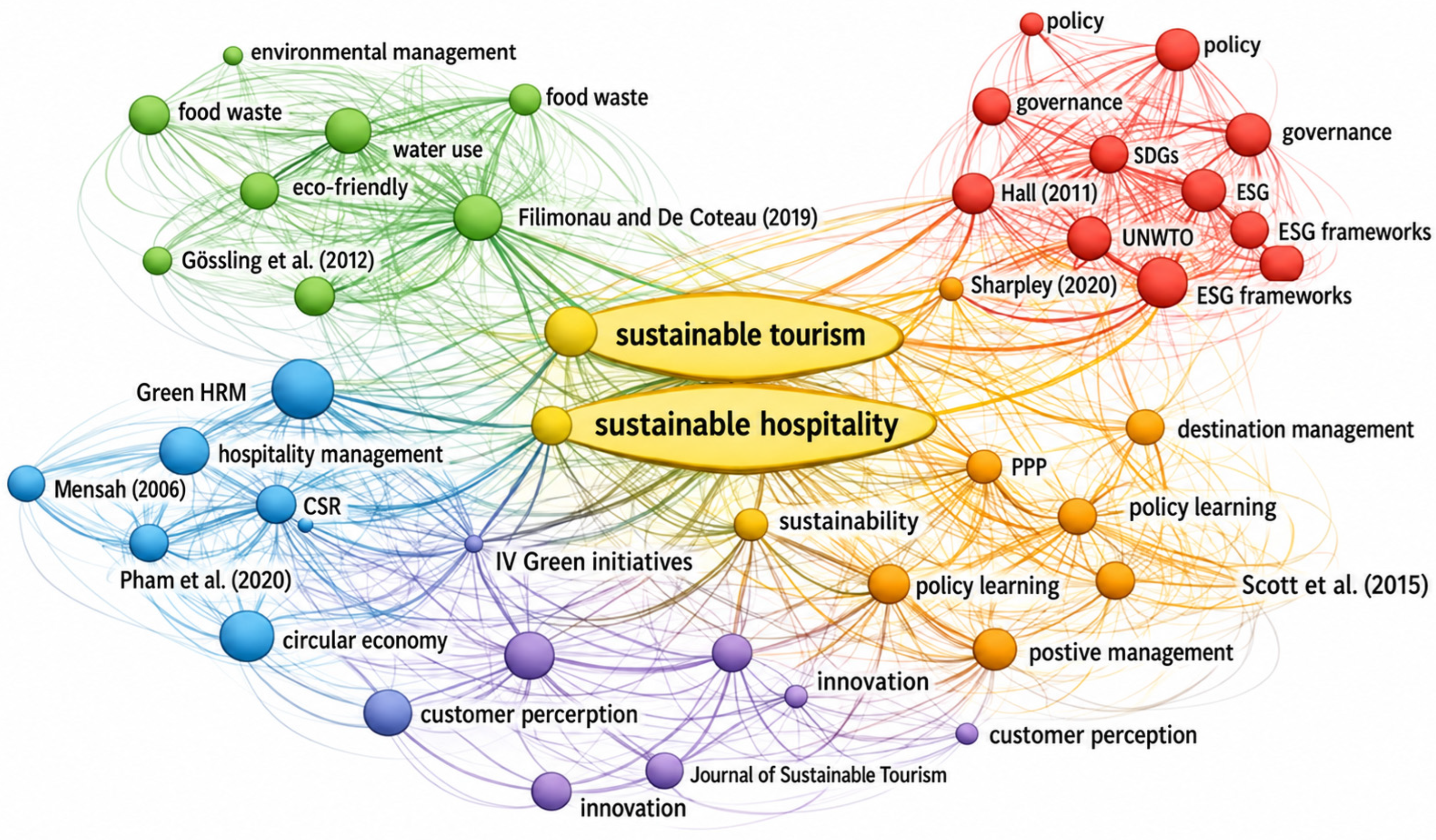
Figure 2 presents the conceptual network of sustainable tourism and hospitality research and illustrates the key relationships between sustainability frameworks, stakeholder coordination, and enterprise-level practices.
Overall, the reviewed literature demonstrates that sustainable hospitality development is shaped by interconnected but often separately examined dimensions. At the macro-level, previous studies emphasise the importance of ESG principles, SDGs, national sustainability strategies, regulatory incentives and institutional support. These approaches explain how sustainability priorities are formulated at the policy and strategic level. At the meso-level, the literature highlights the role of destination management, regional coordination, stakeholder interaction, tourism clusters and public–private partnerships. These studies show that sustainability cannot be implemented effectively without coordination between authorities, tourism organisations, hospitality enterprises and local communities. At the micro-level, research focuses on enterprise-level practices such as Green Human Resource Management, circular economy, resource efficiency, digital tools, environmental management and sustainable service innovation.
However, despite the breadth of existing research, these three levels are often analysed separately. Studies on ESG and sustainability policy mainly focus on national or corporate frameworks, while destination management studies usually examine regional coordination without linking it to measurable enterprise-level sustainability indicators. Similarly, research on green hotel practices often focuses on operational improvements at the firm level but pays less attention to the institutional and regional conditions required for their implementation. As a result, the literature does not yet provide a fully integrated regional model that connects macro-level institutional support, meso-level coordination mechanisms and micro-level operational sustainability indicators within a single analytical framework.
This gap is particularly important for emerging tourism regions such as Zhetysu, where tourism potential is significant but infrastructure, demand, institutional coordination and sustainability practices remain uneven. Therefore, the present study develops a multi-level regional model for sustainable hospitality development that integrates policy priorities, stakeholder coordination and measurable sustainability indicators. This approach allows ESG and Triple Bottom Line principles to be adapted to the regional hospitality context and transformed into practical tools for decision-making, monitoring and implementation.
3. Methodology
This study applies a mixed-methods research design that combines qualitative document analysis, quantitative index construction and conceptual modelling. This design was selected because the integration of sustainable practices in the hospitality industry cannot be assessed only through separate enterprise-level indicators. It requires the simultaneous analysis of institutional conditions, regional coordination mechanisms and operational sustainability performance.
The methodological logic of the study is based on three interconnected levels of analysis: macro, meso and micro. The macro-level focuses on the institutional and regulatory environment that shapes sustainable hospitality development. The meso-level examines regional coordination mechanisms, stakeholder interaction and destination-level implementation. The micro-level evaluates the operational sustainability performance of the hotel sector through quantitative indicators. This structure corresponds to the theoretical foundations of the study, particularly the Triple Bottom Line framework, ESG principles and the multi-level governance perspective.
3.1. Research Context and Data Sources
The Zhetysu region was selected as the empirical case because it represents an emerging tourism region with significant natural, cultural and recreational potential. The region has opportunities for eco-tourism, rural tourism and nature-based tourism, but its hospitality sector faces several constraints, including seasonal demand, low capacity utilisation, uneven infrastructure development, fragmented sustainability initiatives and the dominance of small and medium-sized accommodation enterprises. These characteristics make Zhetysu a relevant case for developing a regionally adapted model of sustainable hospitality development.
The empirical base of the study includes regional statistical data on the hotel sector of the Zhetysu region for 2022–2025. The quantitative dataset includes indicators such as the volume of services provided by accommodation facilities, number of employees, average monthly salary, room or bed capacity, bed-days provided, investments in fixed assets and environmental protection expenditures. These indicators were used to calculate a system of sustainability indices reflecting the economic, social and environmental dimensions of hotel sector development.
The data were treated as annual regional-level indicators. The values for 2022–2024 were interpreted as reported statistical data, while the 2025 values were treated as forecast or operational data, depending on data availability. Therefore, the 2025 values are interpreted cautiously and are used to illustrate expected short-term dynamics rather than final annual statistical outcomes.
In addition to quantitative data, the study used qualitative document analysis of strategic, regulatory and policy documents related to tourism, regional development, green economy and sustainable development. This qualitative component made it possible to identify the institutional and governance conditions under which sustainable hospitality practices can be introduced in the Zhetysu region.
3.2. Research Stages
The research was conducted in three stages.
Stage 1. Macro-level analysis.
At the macro-level, the study examined national and regional strategic documents, tourism development programmes, green economy principles, ESG-oriented approaches and international sustainability frameworks. The purpose of this stage was to identify the institutional framework that shapes the implementation of sustainable practices in the hospitality industry. This stage provided the basis for defining macro-level policy instruments, regulatory conditions and strategic priorities for sustainable hospitality development.
Stage 2. Meso-level analysis.
At the meso-level, the study focused on regional coordination mechanisms and stakeholder interaction. This stage examined how sustainability priorities can be transferred from the policy level to industry-level and destination-level implementation. The meso-level analysis considered the role of regional authorities, tourism organisations, industry associations, clusters, hospitality enterprises and local communities. This stage provided the basis for identifying coordination tools, partnership mechanisms and stakeholder links within the proposed model.
Stage 3. Micro-level quantitative assessment.
At the micro-level, the study assessed the sustainability performance of the hotel sector using a system of quantitative indices. This stage operationalised the economic, social and environmental dimensions of sustainability and provided empirical support for the proposed multi-level model. The calculated indices are presented in
Section 4 and serve as the quantitative basis for interpreting sustainability dynamics in the Zhetysu hotel sector.
3.3. Integration of Qualitative and Quantitative Components
The qualitative and quantitative components of the study are integrated through the logic of the multi-level model. The qualitative component explains the institutional and stakeholder conditions for sustainability implementation at the macro- and meso-levels. The quantitative component provides empirical support by measuring sustainability dynamics at the micro-level through regional statistical indicators.
This integration allows the study to move beyond a descriptive overview of sustainable practices and to demonstrate how institutional conditions, stakeholder coordination and operational performance interact within a regional hospitality system. Therefore, the proposed model is not presented as statistically validated in a strict methodological sense, but as empirically supported by regional statistical indicators and qualitative analysis of governance conditions.
3.4. Indicator Selection and Index Construction
To provide empirical support for the proposed model, a system of sustainability indices was constructed. The indicators were selected according to the Triple Bottom Line and ESG logic. Economic indicators reflect operational efficiency, capacity utilisation, labour productivity and investment activity. Social indicators reflect employment-related sustainability and wage dynamics. Environmental indicators reflect environmental expenditure intensity and eco-efficiency.
The index construction procedure consisted of five steps. First, relevant indicators were selected from the available regional statistical data according to their relevance to economic, social and environmental dimensions of sustainable hospitality development. Second, the indicators were grouped into three sustainability dimensions: economic, social and environmental. Third, indicators measured in different units were normalised using min–max normalisation to make them comparable. Fourth, normalised indicators were aggregated within the corresponding sustainability dimensions. Fifth, the Composite Sustainability Index was calculated as the arithmetic mean of the economic, social and environmental components.
Equal weighting was applied because the study has an exploratory regional diagnostic character and there is no officially established weighting system for sustainability indicators in the Zhetysu hospitality sector. This approach treats economic, social and environmental dimensions as equally important components of sustainability. However, the authors acknowledge that alternative weighting methods, including expert-based weighting, entropy weighting or other statistical approaches, may be applied in future research.
3.5. Sustainability Indices and Formulas
Based on the results of the macro-, meso- and micro-level analyses, a regional model for integrating sustainable practices in the hospitality industry was developed. The model links policy and regulatory support, industry coordination mechanisms and enterprise-level practices into a single framework. The roadmap proposed in
Section 4 translates this model into a phased implementation mechanism, including situation analysis, stakeholder engagement, strategic planning, institutional coordination, capacity building, implementation, monitoring and evaluation.
It shows how much environmental protection costs per unit of service provided. The higher the value, the more “green” investments per unit of production (which can be both a sign of environmental friendliness and inefficiency if costs grow faster than output).
In 2023, there was a sharp increase in environmental costs and a decrease in revenue (the index increased), which may be due to one-time environmental measures. By 2024–2025, the index is decreasing, indicating an improvement in the ratio of green spending and economic returns.
- 2.
Social Sustainability Index (SSI)
It reflects the level of wages relative to productivity and can be used as the ratio of average wages to revenue per employee (the share of wages in revenue). A higher index indicates a higher share of revenue going to employees (positive for social sustainability), but it can also indicate low productivity.
Until 2024, the share of salaries in revenue remained at 23–25%, which can be considered stable. In 2025, the jump to 49% was due to a sharp increase in the number of employees, accompanied by a moderate increase in revenue.
- 3.
Capacity utilisation index (CRI)
It characterises the efficiency of using the available room stock. It is calculated as the ratio of the actual number of bed-days provided to the maximum possible number (single-room capacity × 365).
The occupancy rate is extremely low (around 7%) and is even slightly decreasing, despite the increase in the number of rooms. This indicates a problem with excess supply or insufficient tourist flow. Sustainability requires higher occupancy rates.
- 4.
Environmental and Economic Efficiency Index (EEEI)
The ratio of revenue to environmental costs—how much revenue is generated for every tenge invested in environmental protection.
The return on environmental costs fluctuated, but by 2024–2025, it returned to the level of 5–6 tenge of revenue per 1 tenge of environmental costs, which is better than in 2023.
- 5.
Composite stability index (CSI)
It combines three components: economic, social and environmental. One key indicator is selected for each component, normalised, and aggregated.
Components and indicators:
Economic: volume of services per accommodation unit (thousands of tenge/unit)—reflects profitability.
Social: average monthly salary (thousands of tenge)—workers’ standard of living.
Environmental: environmental costs per place (thousand tenge/place)—the intensity of “green” investments.
Min-max normalisation for the period 2022–2025 (for each indicator):
- 6.
The Index of “Greenness” of the Room Stock (GRI)
The proportion of rooms serviced using environmental practices? There is no direct data, but you can use environmental costs per room as a proxy.
- 7.
Labour Productivity Index (LPI)
Revenue per employee is a key performance indicator.
- 8.
Investment Activity Index (IAI)
The share of investments in fixed assets in the volume of services shows how actively the material base is being updated.
4. Results
An analysis of the dynamics of key indicators and estimated sustainable development indices for the hotel sector in the Zhetysu region for the period 2022–2025 reveals a number of structural trends and imbalances that characterise the current state of the industry and its capacity for long-term balanced growth.
Table 4 presents the key indicators and analytical results used to support the proposed multi-level model of sustainable hospitality development.
Economic component. Revenue per accommodation unit remained stable in 2022–2023 (around 14.8 million tenge), but increased to 18.96 million tenge in 2024, indicating an increase in the profitability of accommodation facilities. However, the capacity utilisation rate (CRI) remained extremely low throughout the period (7.0–7.7%) and even showed a slight downward trend (down to 6.7% in 2025). This indicates a structural imbalance between the growing number of accommodation units and the actual tourist flow, which reduces economic efficiency and leads to underutilisation of fixed assets. Labour productivity (LPI) increased from 3.9 million tenge per person in 2022 to 7.8 million tenge per person in 2024, but then sharply decreased to 4.3 million tenge per person in 2025, despite a twofold increase in the number of employees and a moderate increase in revenue. This may be due to changes in staffing policies (hiring personnel for investment projects) or potential statistical distortions that require verification. Investment activity (IAI), measured as the ratio of investments in fixed assets to the volume of services, decreased from 56.9 in 2022 to 22.2 in 2024, despite an increase in absolute investments and revenue, indicating a higher return on investment. In 2025, the index increased again to 29.7, which may be related to new investment cycles.
Social component. The average monthly salary of hotel sector employees has shown steady growth throughout the period (from 74,800 tenge in 2022 to 177,400 tenge in 2025), which is a positive indicator of social sustainability. The share of labour costs in revenue (SSI) fluctuated between 0.23 and 0.25 in 2022–2024, but increased significantly to 0.49 in 2025, indicating a higher growth rate of personnel expenses compared to revenue, despite a decrease in labour productivity. This trend may undermine the economic sustainability of enterprises and requires an analysis of the effectiveness of personnel policies.
Environmental component. Absolute environmental protection costs peaked in 2023 (1.56 billion tenge), after which they decreased to 1.26 billion tenge in 2024 and are expected to remain at this level in 2025. The environmental costs per seat (GRI) changed synchronously, increasing from 59.5 thousand tenge in 2022 to 96.2 thousand tenge in 2023 and then decreasing to 57.5 thousand tenge in 2024. This instability indicates a lack of systematic environmental policies at the enterprise level. The environmental intensity index (EII), which reflects the share of environmental costs in revenue, increased in 2023 to 0.34 (due to a decrease in revenue and an increase in environmental costs), but returned to around 0.16–0.17 in 2024–2025, which is lower than in 2022 (0.19). The environmental and economic efficiency index (EEEI) recovered from a dip in 2023 (2.95) to 5.87 in 2024 and 6.15 in 2025, indicating an increase in the return on green investments.
Integral assessment. The composite sustainability index (CSI), calculated as the average of the normalised values of economic, social and environmental indicators, demonstrates steady growth: from 0.00 in 2022 to 0.66 in 2025. The positive dynamics are primarily due to improvements in social indicators and the restoration of economic efficiency, while the environmental component remains unstable and contributes the least.
Table 5 presents the institutional and policy framework for sustainable development of the hotel business in the Zhetysu region.
Table 6 summarizes the key stakeholders involved in the implementation of the proposed multi-level model.
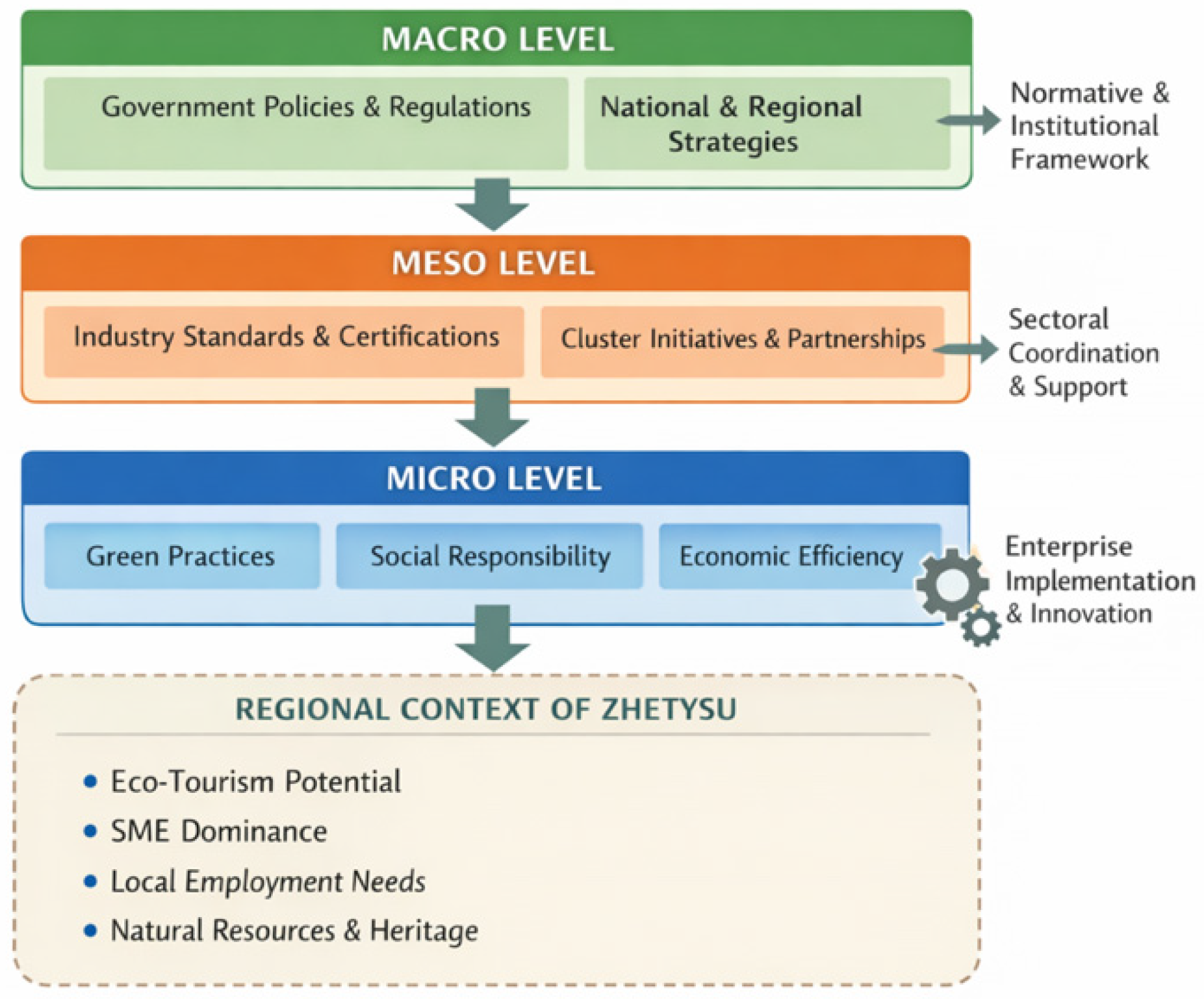
The table presents a multi-level model of sustainable development in the hotel business, consisting of macro-, meso- and micro-levels. The macro-level includes policy and regulatory framework, the meso-level reflects industry standards and cluster solutions, while the micro-level focuses on sustainable development practices at the enterprise level. Interaction between the levels ensures the coordinated and regionally adapted implementation of sustainable development principles.
Figure 3 illustrates the multi-level model of sustainable hospitality practice integration in the Zhetysu region.
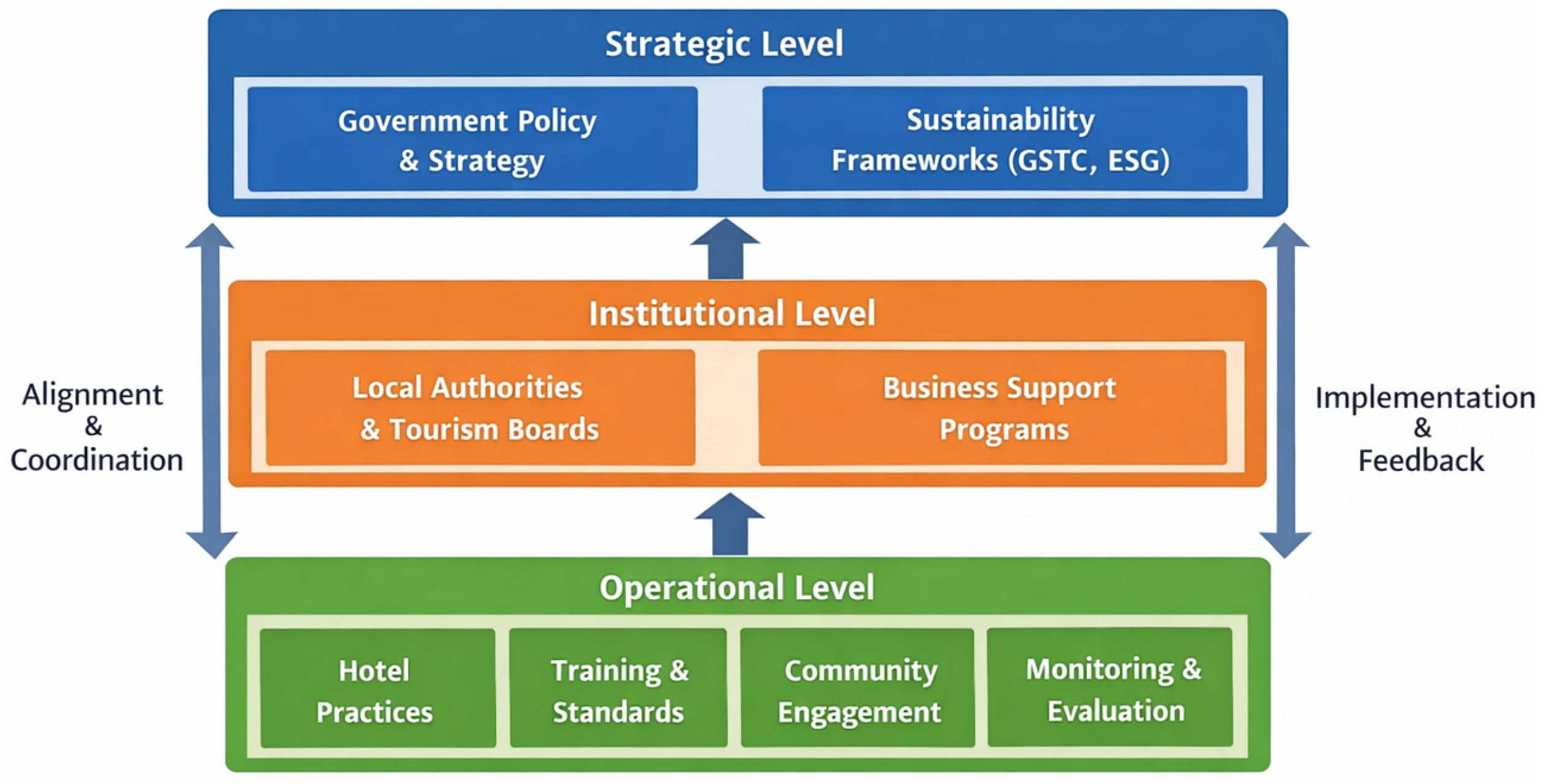
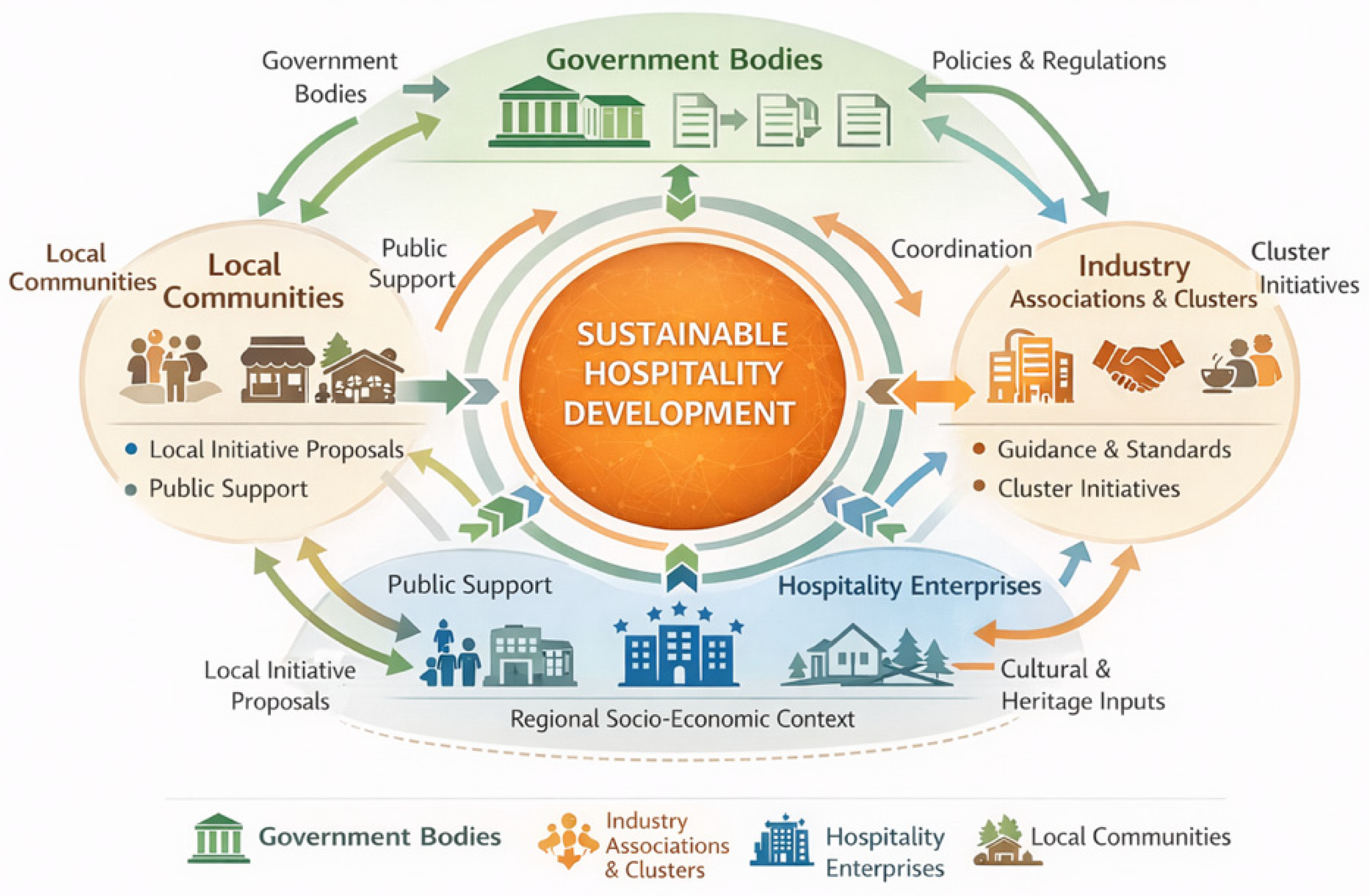
Figure 4 illustrates the stakeholder interaction framework for sustainable hospitality development in the Zhetysu region.
Figure 5 presents the integrated sustainable hospitality model for the Zhetysu region.
A conceptual map was developed to clearly illustrate the structural logic and internal consistency of the proposed regional model. The map illustrates the functional relationships between management levels, key stakeholders and sustainable development tools.
This visualisation supports systems thinking by demonstrating how sustainable development principles are implemented and communicated across management levels within the regional hotel business system.
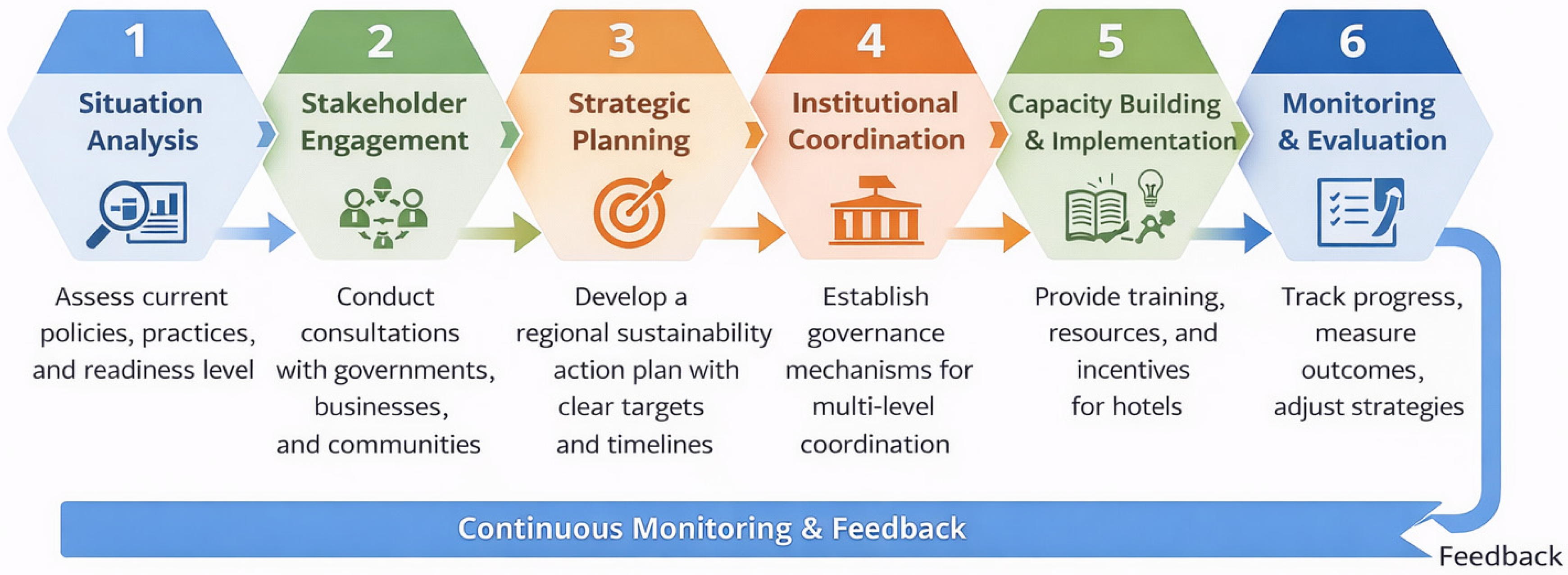
Figure 6 presents the roadmap for integrating sustainable hospitality practices in the Zhetysu region.
Given the fragmented and unsystematic nature of sustainable development initiatives identified in the hotel sector in the Zhetysu region, there is a need for a structured implementation mechanism that translates strategic goals into operational actions. To address this gap, a phased roadmap for the implementation of sustainable hotel business practices has been developed.
The roadmap is based on a project-oriented approach to multi-level modelling and reflects the sequential logic of integrating sustainable development at the strategic, institutional and operational levels.
The roadmap consists of six interrelated stages: situation analysis, stakeholder engagement, strategic planning, institutional coordination, capacity building and implementation, and monitoring and evaluation.
Thus, the roadmap functions not only as a planning tool, but also as a mechanism for the practical implementation of the proposed regional model of sustainable development.
5. Discussion
The findings of this study show that sustainable hospitality development in the Zhetysu region is shaped by uneven interaction between economic, social and environmental dimensions. Although the Composite Sustainability Index demonstrates relative improvement during the analysed period, this progress should not be interpreted as evidence of fully balanced sustainability. Rather, it indicates that some dimensions, particularly social indicators, improved more consistently than others, while environmental performance and capacity utilisation remained structurally weak. This confirms the need to interpret sustainability not only through aggregate index values but also through the balance between individual components.
From the perspective of the Triple Bottom Line framework, the results demonstrate that the three sustainability dimensions develop asynchronously. The social component showed the most stable improvement, mainly due to wage growth and employment expansion. This finding is consistent with studies that emphasise the role of decent work, human capital development and social responsibility in strengthening sustainability in tourism and hospitality. However, the increase in wage-related indicators was not fully matched by labour productivity growth, which suggests that social progress may create additional economic pressure if it is not supported by improvements in operational efficiency.
The economic component reveals a key structural contradiction in the regional hospitality sector. Despite infrastructure expansion and investment activity, capacity utilisation remained very low. This suggests that the main problem is not only the availability of accommodation facilities but also the insufficient transformation of tourism potential into stable tourist demand. This finding supports destination management literature, which argues that competitiveness depends not only on enterprise-level resources but also on regional coordination, marketing, accessibility and tourist flow management. In the case of Zhetysu, low capacity utilisation can therefore be interpreted as a meso-level coordination challenge rather than only as a micro-level business problem.
The environmental component remains the weakest and most unstable dimension. Fluctuations in environmental expenditures and environmental intensity indicate that green practices in the regional hospitality sector are still fragmented and reactive. This is consistent with ESG and sustainable hospitality studies showing that environmental transformation in hotels requires institutional support, standards, monitoring systems and incentives. Without such mechanisms, environmental actions tend to remain isolated enterprise-level initiatives rather than a systematic element of hospitality management. In this regard, the Zhetysu case demonstrates that the environmental dimension of sustainability requires stronger macro-level regulation and meso-level coordination.
The results also confirm that sustainability challenges in emerging tourism regions cannot be explained at one level of analysis alone. Low capacity utilisation reflects weak demand management and insufficient destination promotion; unstable environmental indicators reflect limited institutionalisation of green practices; and uneven economic performance reflects the mismatch between infrastructure development and actual market use. These patterns demonstrate the need for a multi-level governance approach in which macro-level policy support, meso-level stakeholder coordination and micro-level enterprise practices are considered as interdependent elements.
Compared with previous studies on sustainable hospitality, the present research contributes by linking sustainability principles with measurable regional indicators and governance mechanisms. Existing studies often focus separately on ESG reporting, circular economy practices, Green Human Resource Management, digital tools or destination management. This study integrates these perspectives into one regional model and shows how they can be adapted to the conditions of an emerging tourism region. The proposed model therefore extends the literature by demonstrating that sustainable hospitality development should be understood not only as the adoption of green practices by hotels, but as a coordinated regional process.
The Zhetysu model is new in three main respects. First, it adapts ESG and Triple Bottom Line principles to a specific regional hospitality context rather than applying them as general conceptual categories. Second, it links macro-, meso- and micro-level mechanisms within one framework, showing how policy priorities, stakeholder coordination and enterprise-level actions interact in practice. Third, it connects the conceptual model with a system of sustainability indicators, allowing regional authorities and hospitality stakeholders to monitor relative progress and identify weak dimensions.
The practical implications of the findings are also multi-level. At the macro-level, regional and national authorities should strengthen environmental standards, integrate ESG principles into tourism development programmes and create incentives for sustainable hotel practices. At the meso-level, destination management organisations, tourism associations and regional coordination platforms should improve tourist flow distribution, marketing integration, stakeholder cooperation and knowledge transfer. At the micro-level, accommodation enterprises should focus on resource efficiency, environmental management systems, staff training, digital monitoring tools and sustainable service innovation.
The findings suggest that the transition to sustainable hospitality in Zhetysu should be gradual and staged. In the short term, the region may focus on low-cost operational improvements, staff training and basic environmental monitoring. In the medium term, regional stakeholders should develop coordination mechanisms, common standards and destination-level sustainability initiatives. In the long term, the hospitality sector should move toward ESG-based reporting, external certification, systematic monitoring and stronger integration of sustainability indicators into regional tourism policy.
At the same time, the interpretation of the results should be cautious. The Composite Sustainability Index is based on min–max normalisation within the 2022–2025 period and therefore reflects relative changes within this dataset rather than an absolute level of sustainability. In addition, the study uses aggregated regional statistical data, which do not fully capture differences between individual hotels. Therefore, the proposed model should be understood as empirically supported by regional indicators rather than statistically validated in a strict methodological sense.
Overall, the discussion confirms that the main sustainability challenges of the Zhetysu hospitality sector are systemic. They cannot be addressed only through individual hotel initiatives or only through policy documents. Sustainable development requires coordinated interaction between institutional support, regional stakeholder mechanisms and enterprise-level implementation. This systemic perspective represents the main added value of the proposed model and provides a practical basis for improving the long-term competitiveness and sustainability of the hospitality industry in the Zhetysu region.
6. Conclusions
This study developed a multi-level model for integrating sustainable practices into the hospitality industry, using the Zhetysu region of Kazakhstan as an empirical case. The study addressed the need for a regionally adapted sustainability framework that connects macro-level institutional support, meso-level stakeholder coordination and micro-level enterprise practices. The proposed model is empirically supported by regional statistical indicators and qualitative analysis of governance conditions.
The results show that sustainable hospitality development in the Zhetysu region is positive but uneven. The Composite Sustainability Index demonstrated relative improvement during the analysed period, mainly due to stronger social indicators and partial recovery of economic efficiency. However, low capacity utilisation, unstable labour productivity and inconsistent environmental indicators show that sustainability progress remains structurally unbalanced. These findings indicate that the development of sustainable hospitality in Zhetysu depends not only on individual hotel practices, but also on stronger destination management, institutional coordination and systematic environmental standards.
The theoretical contribution of the study lies in adapting ESG and Triple Bottom Line principles to a regional hospitality context through a multi-level governance perspective. Unlike approaches that examine sustainability only at the level of individual enterprises or national strategies, this study shows how policy priorities, stakeholder coordination and operational indicators can be integrated within one regional model. In this way, the research contributes to sustainable hospitality literature by linking conceptual sustainability frameworks with measurable regional indicators.
The practical significance of the study is reflected in the proposed roadmap for sustainable hospitality development in the Zhetysu region. The model can be used by regional authorities, tourism organisations, industry associations and accommodation enterprises to coordinate sustainability initiatives, monitor progress and identify priority intervention areas. In practical terms, the findings suggest the need to strengthen destination management, stimulate tourist demand, support small and medium-sized accommodation enterprises, introduce environmental standards, improve staff training and develop regular sustainability monitoring.
Several limitations should be acknowledged. First, the empirical analysis is based on a relatively short period, 2022–2025, which limits the ability to identify long-term causal relationships. Second, the 2025 values are treated as forecast or operational data and should therefore be interpreted cautiously. Third, the Composite Sustainability Index is based on min–max normalisation within the analysed period and reflects relative changes rather than an absolute level of sustainability. Fourth, the study uses aggregated regional statistical data, which do not fully capture differences between individual accommodation enterprises.
Future research should expand the time period of analysis, include comparative studies of other regions of Kazakhstan and Central Asia and apply hotel-level survey data, expert interviews or econometric modelling. Further studies may also test alternative weighting methods for the Composite Sustainability Index and examine the relationship between ESG-oriented practices, stakeholder coordination, operational performance and destination competitiveness.
Overall, the study confirms that sustainable hospitality development in emerging tourism regions requires a systemic, regionally adapted and measurable approach. The proposed multi-level model provides a conceptual and practical tool for aligning policy priorities, stakeholder interaction and enterprise-level sustainability practices in the Zhetysu region and may be adapted for other regions with similar structural conditions.