


Abstract
Plastic pollution is a problem for many municipalities, water authorities, and industries, including transportation, energy, agriculture, fisheries, real estate, tourism, hospitality, insurance, and healthcare. Efforts to understand and mitigate plastic pollution would benefit from a dedicated map satisfying basic criteria including traceability, scalability, spatio-temporal resolution, and data flexibility. This article details and demonstrates how several existing pollution maps satisfy these criteria and makes recommendations on their use for specific activities, including temporal monitoring, root-cause analysis (RCA), cleanups, and tourism guides. Advantages of using plastic density rather than piecewise logs as the primary data format are highlighted, in particular feasible memory requirements and access to cloud data. Environmental plastic mapping by passive optical sensors, which offer the potential of comprehensive qualified data, is also surveyed, including demonstration of an original shortwave infrared (SWIR) polarization imager, and dynamic plastic pollution monitoring is demonstrated through the application-programming interface (API) of the Google Maps platform utilizing both sensor and published survey data.
1. Introduction
Plastic pollution is widely recognized as a threat to wildlife, transportation, tourism, real estate, food and water security, and public health [1,2], to the point that municipalities worldwide have legislated bans on various plastic items, including microbeads, disposable bags, straws, and foam packaging [3,4]. When littering the environment, retail and consumer plastic items present not only an eyesore, but a tangible threat to ecosystems, especially aquatic ecosystems where a disproportionate amount of plastic pollution collects and gradually decomposes [5,6,7], into microplastic [8], when exposed to sunlight and other erosive forces. Plastic is a unique pollutant because it breaks down into microplastic relatively quickly, when exposed to sunlight [9,10], at which stage it mimics aquatic food in size, texture, color, and buoyancy, although of course most animals cannot digest it [11]. Certain plastics are also known to adsorb chemical pollutants, including pesticides and heavy metals [12,13] and to leach pollutants into aquatic environments [10,14,15]. Many aquatic animals mistake soft plastic items and particles for food and suffer immediate or cumulative adverse health impacts from ingesting plastic [16,17,18]. Plastic and its associated toxins then accumulate in other animals, including humans, that eat fish and other contaminated food species [19,20]. Comparative analyses of plastic packaging based primarily on weight and emissions [21] therefore neglect the most detrimental properties of plastic in the environment—its toxicity, bio-mimicry, and non-biocompatibility. Meanwhile, the low weight and high cross-section of many consumer plastics make their environmental dispersion difficult to predict or control, even moreso after decomposition into microplastic [22,23]. A plastic shopping bag or bottle, for instance, can blow many miles from its release point [24,25,26,27].
Mapping is a prerequisite for remediation of plastic pollution, since the problem cannot be controlled until it can be measured. Pollution maps are needed to inform policy and certify regulatory compliance. Policy analysis reveals that many legislated plastic bans and other control efforts have failed due to a lack of measurement and monitoring/mapping capabilities [28]. In addition to stopping plastics from entering the environment, remediation efforts should encompass collection of plastic already present in the environment, for which mapping is essential. Pollution maps can be constructed from volunteer data, often termed citizen science, or from commissioned/sponsored data, using either human or machine observations, or combinations thereof. For significant quantifiable applications, map data must be traceable or verifiable, scalable, consistent, and provide adequate spatial and temporal resolution, the combination of which will be termed data quality in this article.
The utility of a pollution map depends on its design or architecture as well as data quality. Several pollution maps have been built with social-media architectures, intended to build community, educate, and change behaviors that lead to pollution. While these outcomes are important for slowing pollution rates, such maps may not be suited for quantifiable applications like large-scale cleanups and policy planning and validation. While several publications have defined top-level requirements and criteria for plastic-pollution monitoring systems [1,29,30,31], to the best of our knowledge none have focused on practical mapping criteria. This paper lays-out criteria of plastic-pollution mapping for quantifiable applications, across all levels, and highlights examples of qualified maps and applications, from the perspectives of a technical developer and user. A new plastic-pollution map is introduced, which was developed to satisfy most of the identified criteria, and is then used to demonstrate map applications with unique functionality. Data sources are surveyed and compared, including cloud data and passive optical sensors for automated or aided mapping of plastic in the environment.
2. Methods: Selection of Map Criteria
Digital mapping platforms and geographic information systems (GIS) with network interfaces, implemented on computers and/or mobile devices, enable global participation in mapping efforts and the creation of maps, specifically pollution maps, with fine geospatial and temporal resolution. These criteria—global reach and adequate resolution—are satisfied by all of the maps analyzed in this paper, although certain data sources, for instance satellite imagery, have limited resolution (see Section 5.1).
Data for pollution maps can be collected by human observations or by dedicated instruments and sensors. Plastic pollution sensors can for instance be mounted on aircraft [32,33], aerial drones [34,35,36], or ships [37] to collect data from large and/or inaccessible areas, such as areas over and around natural water bodies, while other sensors can be deployed underwater [38]. The current status of plastic pollution sensors for map data is reviewed in Section 4.4. Acceptance of sensor data is an important criterion since comprehensive pollution maps must include traditionally inaccessible areas. In this paper, sensor data is part of the broader criterion termed Flexible Data Format. In order to realize maps large enough for statistical relevance across areas ranging from neighborhoods and cities to full geographical regions, it is advantageous to combine a diversity of data sources and ensure the compatibility of data derived from different sources. Since both local pollution conditions and geospatial and temporal trends are of interest for different users and applications, it is critical to ensure that data sources are scalable. This requires maps to provide a flexible data format.
Some data formats are not scalable due to memory constraints. Digital imagery of individual items, for instance, is not scalable due to the unmanageable amount of data and impractical amount of computer memory required to store images spanning statistically relevant geospatial areas and/or timeframes. As an example on memory requirements, in 2017 Lavers, et al. estimated the number of plastic pieces on Cocos South Island in the Indian Ocean at nearly 165 million [39]. Assuming 1 MB per digital photo, documenting the plastic pollution on this one tiny island in this format would require over 160 TB of memory, more than the largest single-memory server ever built [40]. This criterion is termed Feasible Memory Requirements.
The criterion of Traceable Data means data that is verifiable, at least by more than an unsupported log entry. Photographs or other unique sensor signatures of plastic pollution at verified geospatial and temporal coordinates are needed, although every piece cannot be photographed per memory constraints. Traceable data also implies adequate evidence to eschew legal threats.
Temporal Resolution is essential in order to utilize a map for monitoring, and can reveal seasonal variations [41,42,43,44,45,46,47,48,49]. If a business district, resort, or city, for instance, notices that plastic litter spikes at a certain time of year, due for instance to wind dispersion from trash receptacles, then it can implement controls or consider better dumpsters and trashcans. Root-Cause Analysis (RCA) for plastic pollution has been developed [50,51] and is further discussed in Section 5.3. In principle, any map with photos or appropriate metadata can inform RCA.
The criterion of Full Analytics refers to piecewise data, for instance item type (bottle, wrapper, etc.), polymer type (PET, PS, etc.), size, color, or brand, which may be of interest for niche applications like brand audits [44,52]. Full analytics also informs RCA by attributing plastic litter to production, distribution, and leakage locations [47]. Automatic full analytics competes with feasible memory requirements, although partial analytics are possible on any platform that utilizes human log entries, or on sensors that incorporate sophisticated image-processing algorithms.
Existing plastic pollution maps that accept crowd-sourced data are rated against these criteria in the next section. The ratings are based primarily on the respective data formats and accepted data sources, augmented by empirical map testing where needed. While certain maps may or could expand their data formats and/or sources to meet certain criteria, our ratings assume the standard formats and sources of the maps as of the date of this paper. The most determinative map characteristic is the format of its data entries, specifically whether plastic is counted piece-by-piece, as a cumulative total, or as a density. Certain maps require or expect photographs of each plastic piece, or small groups of pieces, which, as noted above, requires an infeasible amount of computer memory. Sensory or sensor observations that quantify the number, area, volume, or weight of plastic pollution items are more scalable than piecewise images, but generally do not convey the relative condition of a site. For instance, on a map that pinpoints individual pieces or cumulative amounts of plastic, a relatively clean site can appear polluted if it is the only site with any map entries within a larger region like a city [53]. Plastic-pollution density, specifically the number, area, volume, or weight of plastic items per unit map area, provides a measure that is both scalable and representative of local conditions. Density can also be defined as number, area, volume, or weight of plastic items per unit map volume, for instance underwater [54]. Using density (rather than number of pieces) as the data format for a plastic-pollution map also allows inclusion of sites with no observable pollution, termed Clean Sites, a critical criterion for calibrating and marketing the map, as discussed in Section 5.5, and of cloud data, highlighted in Section 4.2. Using density as the data format also allows quick assessment, rating, and entry of sites based on sampling limited portions of the site, which is essential to enable large numbers of sensory and/or sensor contributions with practical constraints on observation time per site. A person can, for instance, make and contribute a visual estimate of plastic-pollution number density without devoting the time required to photograph, collect, or log each item.
3. Example Plastic-Pollution Maps
Plastic-pollution maps can be built upon existing digital interactive mapping platforms, or geographic information systems (GIS), requirements for which can be derived from the preceding section. The mapping platform must provide global coverage with zoom functionality down to at least street level, and it must admit site pins, preferably iconified, that link to digital graphics, including photos and charts, and to other data formats. For applications such as cleanups, the map should offer satellite view so that natural features like large rocks, bushes, etc., can be used for orientation. The mapping platform must provide a network interface accessible to non-programmers and should allow both open-source and subscription-based access to specific map versions. Currently available mapping platforms include Google My Maps, ESRI ArcGIS, HERE, MapMe, Mapbox, MapTiler, Maptitude, MapInfoPro, and OpenStreetMap. Google My Maps, with its JavaScript application-programming interface (API version 3), satisfies most of these requirements, although other platforms can be used. Section 5.2 demonstrates application of the Google JavaScript API to examine temporal variations in a plastic-pollution map, while Section 5.4 demonstrates the API staging of a notional cleanup app.
Table 1 presents the main map criteria defined in Section 2, and lists existing pollution maps that accept crowd-sourced data and how their designs fulfill these criteria. ✓ denotes the map fulfills the criterion and ◯ denotes the map does not fulfill the criterion, with ratings based primarily on the data format and accepted data sources of the map. This section then describes the listed maps, as well as several specialized maps not listed, in more detail.
Table 1.
Plastic-Pollution Mapping Criteria and Fulfillment by Existing Maps.
Marine Debris Tracker (MDT), developed at the University of Georgia, USA, on the Google Maps platform, is a pioneer in digital litter mapping using citizen science data [55,56]. As a widely recognized platform with social media cachet, MDT has reportedly logged over 6 million pieces of litter (all materials), including 1.5 million in 2022 [57], through their interactive litter-logging app. MDT map records are logs of individual items (or small groups of the same item type), including object and material classes, rather than debris or pollution density. This data format, herein termed piecewise data and also known as presence-only data, does not admit site ratings, cloud data, or sensor measurements of pollution density. While the MDT map enables partial analytics, small-scale cleanup tracking, and root-cause analysis, due to its piecewise data format it has limited flexibility and traceability for large-scale quantifiable applications.
Litterati is a popular global litter map, built on the ESRI ArcGIS platform, that relies on geotagged digital images of individual litter items generated by citizen scientists [58], making it more verifiable but less scalable. Litterati recently introduced an automated image recognition system to improve data quality and scalability. While options exist for scientific surveys, general Litterati entries are time-stamped piecewise logs with tags for object, material, and brand classification, well-suited for analytics and root-cause analysis [53]. Like the MDT map, the Litterati map displays the number of litter items per site rather than the number density, making it incompatible with site ratings, cloud data, and sensor measurements of pollution density. For example, on the Litterati map, a clean site with no observed plastic pollution is indistinguishable from an unobserved or unrated site [53].
OpenLitterMap features an attractive and agile web interface, based on the OpenStreetMap platform, and is functionally similar to Litterati. Citizen scientists submit geotagged images of individual litter items and classify items according to pre-defined tags, with the capability to tag multiple items in a single image, reducing the memory requirements of the piecewise architecture. OpenLitterMap uniquely incentivizes citizen scientists by gamifying data collection with blockchain rewards termed “Littercoin” [59].
The US National Oceanic and Atmospheric Administration (NOAA) maintains an open GIS map for its Marine Debris Monitoring and Assessment Project (MDMAP) [60]. While architecturally similar to the MDT map, the MDMAP adds a scientific protocol for data collection, making its data more traceable. Launched in 2010, the MDMAP was apparently first to employ such a rigorous data protocol, enabling detailed analyses of marine debris dynamics and RCA [61] and inspiring the important data category of scientific surveys that is further reviewed in Section 4.3. MDMAP data is adapted and utilized to demonstrate temporal plastic-pollution mapping in Section 5.2. Due to its data format, the MDMAP also admits clean sites, although its rigorous protocol makes the map less flexible and less accessible to typical volunteers. The rigorous data protocol of the MDMAP also does not scale well to variable substrate types, eg. rocky beaches, or to variable coastal features like cliffs, marshes, or jetties [31].
More specialized litter maps have been built around published scientific surveys (see Section 4.3) or around sensor protocols (see Section Passive Optical Sensors). Mobile cleanup apps like Pirika (Japanese) and Clean Something for Nothing (CSFN) include maps that may be integrable with broader plastic-pollution maps [62]. Other maps are specialized for microplastic, which is defined as bits, beads, or fibers less than 5 mm in their largest dimension [8]. The College of the Atlantic/Ocean Analytics and Adventure Scientists created a digital map of microplastic density to display and share results of their Global Microplastics Initiative (GMI), which was completed in 2018 [54]. Entries on the ArcGIS GMI map are microplastic particles per liter of water, measured by laboratory microscopy of collected samples [63]. This data format is scalable and allows site ratings, including sites with no measured microplastic, although the data source is a single specialized type with very labor-intensive data collection. The US NOAA maintains an online map, illustrated in Figure 1, that incorporates the GMI and other aquatic-microplastic data and maps [64]. The Japanese Ministry of the Environment maintains a similar map of marine microplastic data, the Atlas of Ocean Microplastics (AOMI), which is open for public access and on-going input [65].
Figure 1.
Map of global marine microplastic concentrations as compiled by the US NOAA National Centers for Environmental Information [66,67].
Plastic-Free Mission (PFM) developed its plastic pollution map to fulfill the criteria defined in Section 2. Built on the Google My Maps platform and illustrated in Figure 2, the PFM map utilizes color-coded pins or icons to denote plastic number density per site, with site ratings supported by representative time-stamped photo, video, or sensor data [68]. Icon colors correspond to macroplastic number density as follows: red denotes >100 pieces per 1000 m2 (or quarter-acre), blue denotes <1 piece per 1000 m2, and purple is in-between, with the same colors but distinct scales and icons for microplastic, megaplastic (see Section 5.1), and several other categories.
Figure 2.
PFM map representation of plastic pollution on Los Angeles area beaches, per crowd-sourced data collected March–August 2022. Blue icons denote very clean beaches, purple moderately-polluted, and red highly-polluted areas. Base map © Google.
Data types on the PFM map, which is limited to plastic only, include crowd-sourced photo-video, cloud, scientific survey, and sensor formats, which are further detailed in Section 4. The hybrid data formats of the PFM map bridge the criteria of traceability and feasible memory requirements, based on either small numbers of photos (typically <4 per site) or processed sensor data. The PFM map is one of the first to admit crowd-sourced clean sites, as highlighted in Section 5.5. Full analytics was abandoned in the PFM map design after early experiments with on-site voice recording yielded mixed results. The PFM map is available as both an open-source cloud version and a subscription-based API version, and further features are demonstrated in Section 5.
Several other rating systems and maps have been published to quantify beach pollution in particular, which may be compatible with the maps noted above. The Clean-Coast Index (CCI) [69] presents notional ratings based on number density, so is largely compatible with the PFM map, and has been utilized in multiple published reports [43,45,70,71,72,73,74,75,76,77,78]. Compared to PFM thresholds, the CCI notional ratings are shifted/curved toward polluted urban beaches; for instance, “clean” beaches on the CCI scale are still red on the PFM scale, while only ”very clean” CCI beaches may be purple or blue on the PFM map. In the category of cleanup mapping, the American non-profit group Ocean Conservancy compiles an online map and database of beach-cleanup statistics, named TIDES, with impressive global coverage [79,80]. TIDES data are weight and number of items collected per cleanup, so are compatible with the MDT and other maps that report number of items rather than density. Before/after site ratings would make the TIDES data more flexible and compatible with a wider range of maps.
In addition to functional maps, surveys have been conducted that provide compiled data on plastic or general litter. Surveys range from rigorous data collection and sampling (scientific survey in Section 4.3) to volunteer best judgment. Surveys may be considered as records on a map, and/or may contain their own localized maps. Many municipal litter audits have been performed [53,81,82], although they are often not publicly available. Watkins, et al, used a municipal litter audit as ground truth to evaluate crowd-sourced litter data from the same city, finding discrepancies stemming from the piecewise data format of the latter [53], as alluded to in Section 2. Other litter surveys are derived from volunteer cleanups. Most such surveys are excluded from the analysis of this article due to low data quality (traceability, scalability, and resolution), but are mentioned since they have been adopted by certain municipal governments to satisfy legislative or civic responsibilities for litter control and mitigation. Some surveys are sponsored by the plastics industry, potentially creating conflicts of interest for municipal governments. For instance, the industrial group Keep America Beautiful (KAB), which coordinates extensively with US state governments, which for instance award municipal grants to pay KAB membership fees and attend KAB conferences [83], has published several litter surveys, most recently in 2020 [84]. The KAB survey is based primarily on data extrapolated from sparse citizen surveys and cleanups. As argued by Strand [85], KAB’s motives include deflecting litter accountability away from industry and discouraging municipalities from regulating the production, distribution, or consumption of disposable products, including single-use plastics. Regardless of motives, volunteer litter surveys with such low data quality are not suitable for quantifiable map applications considered in this article (e.g., Section 5).
4. Data Sources and Quality
Figure 3 illustrates sites with high plastic pollution, as represented on the PFM map, based on different data sources reviewed in this section. High data quality implies consistency, both as described in Section 4.1 and over time. A map that requires consistent and relatable quantitative data formats is more likely to maintain integrity over time and not be gamed or co-opted.
Figure 3.
Example polluted sites (“Red sites”) from diverse data sources, as displayed on the PFM map: (a) Rio Grande, Albuquerque North Diversion Channel, New Mexico, USA (crowd sourcing), (b) Bopitiya Beach, Sri Lanka, after the MV XPress Pearl disaster (cloud), and (c) Xampelia Beach, Lesvos, Greece, as reported by the Scidrones Coastal Marine Litter Observatory (CMLO) [35,86] (sensor); (b,c) used with permission.
4.1. Crowd Sourcing or Citizen Science
Advantages of crowd-sourced data or citizen science include global reach, via modern internet and social media, and relatively low-cost, assuming substantial volunteerism. Assuming crowd-sourced plastic data can be traceable, through a small set of photos or sensor readings, it still may not be consistent, due to biases in either perception of pollution or data-collection procedures. In this context, consistency means repeatability, as in similarity of data entries from different contributors at the same place and time, or at different times. The reliability of crowd-sourced pollution data depends on the type of pollution and how consistently it can be measured. Certain types of air pollution, for instance, can be comparatively simple to measure using handheld spectrometers [87], photometers [88], or scatterometers [89], hence, are suitable for data collection by amateur citizen scientists (ACSs). Plastic pollution, due to its discrete or granular form, is less likely to be measured consistently by ACSs due simply to variations in data-collection procedures. For instance, how closely does an ACS look into bushes or into wrack lines, and is that procedure the same at every site, considering personal perceptions and distractions? This “recorder effort problem” [53] inevitably adds uncertainty to crowd-sourced data. Nevertheless, for many applications, it is more important to capture and map pollution hotspots, which crowd-sourcing can achieve, than to obtain high-accuracy data.
The consistency of crowd-sourced plastic-pollution data depends on the imposed data format too, although no format is ideal. Asking ACSs to use their best judgment and rate a site among several categories (e.g., low, medium, or high pollution) is obviously subject to personal bias and acclimation level, although the categories can be defined quantitatively, for instance as threshold number of pieces per unit area, as by the CCI or the PFM map. The most consistent format for crowd-sourced plastic-pollution data may be a judgment call supported by several representative photos. This format is used by the PFM map.
4.2. Cloud
Using plastic-pollution density as the data format opens the map to a huge source of cloud data, for instance news and media reports, journal articles, independent citizen science and journalism, and social-media posts, that are primarily incompatible with piecewise data formats. Traditional media coverage of pollution almost always conveys pollution density rather than piecewise details, so is much more easily incorporated into a map that accepts density ratings, as for instance in Figure 3b. The majority of cloud ratings and entries will be from polluted sites, simply per the tendency of journalism to report on crime and problems. Incorporating cloud pollution data therefore balances the tendency of crowd-sourcing/ACSs to avoid crime-ridden areas [53], resulting in a map better supporting environmental justice.
Clean sites can also be documented through cloud reporting, but such ratings and entries must meet traceability criteria. For instance, casual ratings of sites on Google Maps and other social media platforms are considered non-traceable, and inadmissible to the PFM map, without a numerical rating or sufficient photo-documentation, beyond traditional tourist photos. Conversely, traceable map entries and records can be augmented with traditional tourist photos and shared on cloud platforms, as a means to promote and market the map.
4.3. Scientific Survey
The past decade has seen a multitude of research papers featuring rigorous ground-based visual surveys of plastic pollution, mostly on beaches, with number density the most common data format [22,39,44,70,71,72,73,74,90,91,92,93,94,95,96,97,98,99,100,101,102,103,104,105,106,107]. The Alfred Wegner Institute in Germany maintains an open-source map, Litterbase, compiling published scientific marine-litter surveys, with pin size proportional to number density [108]. The European Marine Observation and Data Network (EMODnet) maintains a repository of original data on marine plastic litter [109], consistently compiled following OSPAR protocols [110], as, for instance, incorporated by the popular Floating Litter Monitoring App [111,112] that uploads to EMODnet. While the EMODnet map displays presence only, these data can be incorporated by other maps with compatible data format, using for instance the CCI or the PFM thresholds noted in Section 3. These data are collected following documented rigorous protocols that ensure traceability and higher data quality than crowd-sourced or cloud data. The US NOAA MDMAP laid-out a rigorous sampling protocol [60] adopted for many scientific surveys globally. Scientific survey data may therefore be considered traceable even without photo documentation, although small photo sets, usually mandatory for any scientific procedure, are still desirable in the map record. In this context, scientific surveys can be effectively combined with crowd-sourced/ACS records, even though they may be biased toward higher density values, especially when more tangible survey methods, like sand-raking [39,97], are employed. The PFM map, for instance, distinguishes scientific surveys by a prominent and searchable attribute in the map record.
4.4. Sensors
While higher in upfront cost, sensors are assumed to provide comparatively high-quality and comprehensive data, preferably independent of traditional accessibility constraints. A robust sensor will also ensure feasible memory requirements, through for instance edge processing. For example, high-resolution images can be processed on-board the sensor, at the network edge, which then transmits geotagged numerical plastic densities to a repository or server, deleting the images thereafter, except possibly illustrative, instructive, or anomalous ones.
Sensors with adequate resolution generally offer better flexibility and scalability than the other data sources considered herein. Sensors can uniquely present locations of plastic pollution with either region-wise, site-wise, sub-site, or even piecewise resolution, enabling map applications like that demonstrated in Section 5.4. Piecewise maps with ACS or human entries may provide localization, but lack the scalability of sensor data. On maps that represent plastic density, ACS or human entries can achieve some level of localization, either by breaking a site rating into subsites (e.g., parking lot vs. trail) or by adding location notes to a site record, but sensors are more able to achieve consistent localization without auxiliary instructions.
While laboratory instruments are included in the sensor data category [63], most sensor development, and the remainder of this section, is devoted to field sensors. Underwater, sediment, and microplastic field sensors are also excluded here, for brevity. For application to debris-, pollution-, and plastic-pollution mapping, field sensors may rely on several sensor modalities, which can be categorized according to the source of the probe. Passive electro-optical sensors include conventional photography (aka high-resolution RGB imaging) and photogrammetry, utilizing sunlight, while active electro-optical sensors such as lidar [113] and radar [114] have also been investigated for this mission, although only in highly-controlled experiments. Microwave and lower-frequency radar sensors are unlikely to fulfill the mission of plastic pollution mapping, since most common plastics are transparent at these frequencies.
To date, all field sensors reported in the literature for plastic-pollution mapping are experimental—none have been fully validated against standard performance thresholds yet. In fact, standards for plastic-pollution mapping sensors do not yet exist, although best practices from other fields can be considered and adopted. Sensor performance standards can be adopted from the field of automated target recognition (ATR), which is most advanced for military sensors [115,116,117]. Due to its discrete structure, plastic pollution is more analogous to certain military targets than to traditional environmental targets such as vegetation and atmospheric gasses or aerosols. If imaging is assumed, then sensor performance can be quantified at the pixel level, although higher-order classifiers, which operate on groups of pixels, are also prevalent (see Section Passive Optical Sensors). Sensor performance is measured in terms of two primary parameters: the true-positive rate (aka the probability of detection (), recall, or sensitivity), which is the fraction of pixels actually containing plastic that are classified as such, and the false-positive rate (aka the probability of false alarm () or complement of the specificity or selectivity), which is the fraction of pixels that do not contain plastic but are misclassified as containing it. These parameters, which are measured in a test or validation campaign and then assumed to hold under similar operational conditions, are usually presented in a combined table known as a confusion matrix or on a graph known as a receiver operating characteristic (ROC) curve. Figure 4 depicts notional ROC curves.
Figure 4.
Notional receiver operating characteristic (ROC) curves for four different sensor conditions, with the black curve representing the best performance. is probability of detection, is probability of false alarm, and each curve is generated by stepping the classifier threshold from reject all (left end) to accept all (right end).
In general, the true-positive rate of a sensor system will be high if the false-positive rate is also high—for example if anything that remotely resembles plastic is classified as such—but this produces inaccurate ratings that over-estimate pollution levels. A better-conditioned sensor system will have a very low false-positive rate, even if the true-positive rate is concomitantly rather low, in which case measured pollution levels can be scaled-up by a known factor. While this approach does not pinpoint every piece, and assumes the false-positive rate will remain very low, under potentially changing conditions and non-plastic clutter (whitecaps, vegetation, rocks, shells, etc.), it is more appropriate for scenarios, like plastic-pollution mapping, that present severe class imbalance, i.e., when there are many more non-plastic than plastic pixels in a typical scene.
Calculation of a ROC curve, confusion matrix, or any performance metric is subject to multiple assumptions and conditions, including realism of the ground-truth map (GTM), blind vs. non-blind testing, and data pre-filtering or conditioning, which will not be consistent between systems in the absence of a standard. For example, building a GTM of “controlled” or contrived installed plastic items will generally inflate apparent classification performance compared to a natural, unaltered site more representative of reality. GTMs should be created using the methodology of scientific surveys (Section 4.3), although without sampling because every plastic item must be counted. A single ROC curve of a sensor system requires an entire set of images, or alternately formatted data files, over a sufficiently large area (or volume), together with a comprehensive GTM. Most sensor summaries, like that in the next section, give only one or a few points on a ROC curve. While it is conceptually simple to consider classification rates ( and ) per pixel, in practice it is usually more natural to express per item and per unit area, which is then termed false-alarm rate (FAR), as reported in the next section.
Passive Optical Sensors
Passive optical sensors, which utilize the sun as light source or probe, are by far the sensor type most applied to plastic pollution detection, classification, and mapping. The challenges inherent to sunlight—variation with time-of-day, shadowing, and cloud cover—are offset by the economy of a free source with adequate power for high-speed, large-area mapping. These sensors can be categorized according to either their platform vehicle (satellite, aerial, drone, or ground) or the optical features measured and utilized by their classifiers (spatial, spectral, polarimetric, or combined). Consistent with the emphasis of this article, sensors can also be reviewed in terms of mapping criteria, in particular data quality (performance and resolution) and feasible memory requirements.
Classifiers can be based on high-resolution imagery, or on spectral or polarimetric features, or on combinations thereof. In this context, high-resolution means the sensor can resolve common plastic items like beverage bottles. Satellite optical sensors, with best resolutions around 30 cm, cannot resolve such items, so must utilize other optical features, typically spectral/color features, to classify plastic. Satellite optical sensors still provide valuable data for this mission, and Section 5.1 considers how maps can incorporate this data.
Sensor resolution is primarily dependent on the range or sensor-to-plastic distance. Drone or ground-based optical sensors can therefore achieve adequate resolution for this mission. Drone-based sensors have been demonstrated with classifiers based on image spatial pattern recognition in post-processing by human analysts [118,119,120], although it is infeasible to save every high-resolution image for large-area mapping this way. Machine learning or AI algorithms for automated unsupervised plastic classification, which have been demonstrated on ground [121] and aerial [35,122,123,124,125,126,127,128] high-resolution RGB imagery, may be sufficiently robust and fast to enable edge processing, as described in the preceding section, and such a system could potentially obtain quantitative coverage of very large areas. The most mature such system may be the Coastal Marine Litter Observatory (CMLO) developed by University of the Aegean in Greece [35,86] and represented in Figure 3c. A commercial spinoff of the CMLO (SciDrones [129]) processes, catalogs, and maps imagery collected by customer drones. As discussed generally in Section 4.4, image processing enables both traceability and feasible memory requirements, since raw images need not be saved. Pattern recognition on high-resolution RGB imagery is relatively slow, since it relies on selection and grouping of multiple pixels at different scales, and is limited to familiar shapes, often not recognizing plastic bits and fragments, which are substantial in many locations [126,127].
Performance and speed can be improved if the sensor can augment high-resolution imagery with characteristic spectral and/or polarization features, which provide contrast between plastic and natural background materials arising from chemistry and/or three-dimensional shape. Classifier performance depends on the specific spectral bands/colors measured. Most existing satellite spectrometers (Sentinel-2, PlanetScope) measure bands in the visible spectrum [1] characteristic of vegetative, atmospheric, and/or hydrographic structure, which are however not characteristic of plastic. Visible spectral features are inconsistent for plastic-pollution mapping simply due to the variety of colors presented by plastic pollution [130]. Dry plastic exhibits characteristic absorption bands in the shortwave infrared (SWIR) spectrum, largely independent of color, promising better classification performance by SWIR sensors, at least on dry land [131]. High-speed SWIR hyperspectral classification of selected plastics has been demonstrated from drones [36,132]. SWIR radiation is however absorbed by water, making spectral classification of plastic pollution in water/ocean environments especially difficult [133]. While the spectral signatures of materials depend primarily on chemistry, polarization signatures also depend on three-dimensional object shape [114], which is unique for many plastic items, regardless of color. Data from an original SWIR polarization imaging sensor is presented below and demonstrated for a notional cleanup application in the Google My Maps API in Section 5.4.
Figure 5 shows imagery from an original experimental ground-based SWIR polarization sensor, at 250 m horizontal range, with plastic classification via analyst post-processing. This sensor features a narrowband receiver, centered at a wavelength of 1550 nm, imaging in multiple serial linear polarization channels, with classification based exclusively on polarization-contrast thresholds, i.e., no conventional shape features were used for training. Figure 5a illustrates a surveyed area, in SE Albuquerque, New Mexico, in black overlay, with plastic represented by white pixels; Figure 5b zooms into a corresponding FOV quad, as recorded in the unpolarized channel, with classification results annotated in a common format [127]. The ground-sample distance (GSD) at this range and ground elevation was 7 mm in the horizontal direction and 18 mm in the orthogonal (range) direction. The close-up photo in Figure 5c, from the GTM, suggests that passive polarization imaging is effective at finding plastic obscured by vegetation, but, like most passive optical sensors, struggles to find plastic in shadows [126]. This limitation can be partly overcome by using high dynamic range (HDR) imaging, which however requires time for several exposures of the same area. Relative to shape classifiers, used for instance on RGB imagery, spectral and/or polarimetric classifiers offer the potential to locate plastic based on a small number of pixels, in some cases down to a single pixel, which is obviously advantageous for small or partly obscured or buried items. In the illustrated environment, this experimental sensor achieved item-wise sensitivity of 30% with FAR = 0.007/m2, based on a real, uncontrived GTM and classifier parameters chosen according to the criteria noted in Section 4.4. While this is probably not good enough for large-area mapping, the performance is expected to improve through eventual addition of a second spectral channel and more sophisticated (e.g., deep learning) classification algorithms. A map record based on data drawn from Figure 5 is used to demonstrate a notional cleanup application in Section 5.4.
Figure 5.
Plastic classification by an original ground-based SWIR polarization sensor at 250 m range: (a) surveyed area with white pixels denoting plastic, (b) zoom into unpolarized FOV quad illustrating true positive (green box), false positive (red box), and false negative (yellow box) classifications, and (c) corresponding close-up photo from ground-truth map.
5. Applications
5.1. Megaplastic
Certain observations or sensors, for instance satellite sensors, are limited to items, or accumulations of items, sufficiently large to be resolved from large distances. For this mission, these have been termed megaplastic [8,134]. Common pollution items, like individual plastic bottles, may not be reliably detected or classified by such observations or sensors, although maps may expect such items to be counted. While such data may not meet resolution expectations of a typical map, they generally still provide relevant information for debris tracking, cleanups, and other map applications [130,135,136,137,138]. Megaplastic number densities can be scaled-up, for compatibility with higher-resolution data, using the method of projected breakdown here introduced. The PFM map, for instance, defines the standard-size item as a 19 oz plastic water bottle, 65 of which fit in a 1 m2 area. If the observation or sensor resolution is 1 m2, then projected breakdown multiplies the reported number density by 65, scalable to different resolutions. This typically underestimates the actual high-resolution number density, since it assumes the megaplastic is thin and ignores smaller plastic fragments likely present around megaplastic, but serves to convert low-resolution data into ratings compatible with a typical map.
5.2. Monitoring or Dynamic Mapping
In principle, monitoring or dynamic mapping, as by season, is possible with any of the maps listed in Table 1, assuming recurrent data collection. Monitoring is more likely to be done, on a regular schedule, by a robotic or drone-based sensor, although recurrent human observations can also be represented on a dynamic map, as demonstrated for instance in Figure 6 and Video S1, an animation created with the API version of the PFM map utilizing MDMAP data. The original piecewise MDMAP data was converted to the PFM format by counting the number of recorded plastic items and then dividing by the recorded survey area. The PFM map displays the site record most recently prior to the selected date as the time-slider is moved. This functionality allows plastic-pollution levels to be correlated with seasonal weather (rain and wind) and social activities (beach holiday in this example), and allows the impacts and response times of cleanups and other mitigation efforts to be tracked.
Figure 6.
(Video S1 in Supplementary Material) Time-slider demonstration from the API version of the PFM map, utilizing 2022–2024 MDMAP data collected on Oregon beaches. See Section 3 for icon color legend. The placeholder graphic shows two frames of the animation. Base map © Google.
5.3. Root-Cause Analysis
Root-cause analysis (RCA) is supported to some extent by all of the maps listed in Table 1, although prompts for auxiliary information may be needed. For instance, closeup photos of individual litter items can reveal their functionalities and brands, but, without spatio-temporal context, may not reveal transport mechanisms, like stormwater runoff or overflowing trash receptacles, that are often critical for near-term remediation. Here, root causes of plastic pollution are taken to include distribution, transport, and release, but not production, since plastic properly captured in the waste stream is beyond the current pollution-mapping scope. The following original list of plastic-pollution root causes can be incorporated (and augmented) in mapping applications/APIs:
- Vehicular (Y/N)
- Windswept (Y/N)
- Stormwater Runoff (Y/N)
- Transient Living (Y/N)
- Illegal Dumping (Y/N)
- Construction (Y/N)
- Agriculture (Y/N)
- Fishing or Aquaculture (Y/N)
- Trash Overflow (Y/N)
- Outdoor Event/Picnic Litter (Y/N)
- Mowing Litter (Y/N)
Some of these tend to occur together, for instance, trash overflows occur more frequently during high winds and/or heavy rainstorms. Illegal dumping is often a priority for municipal governments, since it is intentional and violates zoning laws. Mowing litter exacerbates the plastic-pollution problem, by breaking items down into smaller pieces that are more difficult to clean up, and accelerating the formation of microplastic, but nevertheless occurs widely in mismanaged outdoor venues, parks, and roadsides.
Incorporation of RCA prompts in plastic-pollution maps can enable effective pre-emptive controls and near-term remediations.
5.4. Cleanups
All of the maps listed in Table 1 can support and facilitate cleanups, although data format affects how usable a map can be in the field. Some cleanup apps include maps specialized for this application [62]. Cleanups benefit from good spatial and temporal resolution, which all of the listed maps can provide, in principle, although temporal resolution requires recurrent or at least recent observation.
At the most basic level, a plastic-pollution map should show a cleanup crew or robot where to go, as well as aid transportation planning and scheduling. Again, a map that uses plastic density rather than piecewise entries is better suited to support cleanups, because piecewise entries may not justify sending a crew to a site, if there is not much more litter there than several pieces represented on the map. Assuming adequately current data, there will be plenty of plastic pollution to clean up at high-density sites, e.g., PFM red sites like those illustrated in Figure 3.
More thorough or granular cleanup efforts may still require piecewise map entries, which can be provided by certain maps or by sensors as explained in Section 4.4. Figure 7 depicts a notional cleanup app staged in the API version of the PFM map, utilizing piecewise data from the SWIR-FP sensor described in Section Passive Optical Sensors. This notional cleanup app represents before/after change at both site-wise and piecewise scales. Referring to Video S2 (see Supplementary Material), a planner or field crew can zoom into a target site and view pre-existing plastic density there. Once the cleanup is initiated, the field crew can use GPS coordinates or landmarks on the satellite map to locate, collect, and then delete markers of plastic items in real time. The map record is finally updated, after the cleanup is complete, with a new icon and color-code.
Figure 7.
(Video S2 in Supplementary Material) Notional interactive cleanup app, staged in the PFM API map, utilizing data from the sensor described in Section Passive Optical Sensors. Piecewise markers/pins are deleted in the field as the corresponding plastic is collected. See Section 3 for icon color legend. Base map © Google.
5.5. Tourism Guides
Maps that include clean sites can be utilized by tourists, recreationalists, and anyone seeking a venue without the blight of plastic pollution [90,91,92]. This functionality and application is practical only for maps that use pollution density rather than individual pieces as their primary data format. Example records of clean sites taken from the PFM map, where they are termed blue sites, are illustrated in Figure 8. Access to map records of clean sites should be limited, for example behind a paywall, to protect vulnerable sites from overuse or vandalism. The only blue sites on the open-source version of the PFM map, for instance, are those with regular monitoring and maintenance, while less conspicuous blue sites are reserved for subscribers only.
Figure 8.
Example clean sites (“blue sites”) taken from the PFM map: (a) Parc Monceau, Paris, (b) Highline Trail, New York City, and (c) Levi’s Plaza, San Francisco.
Another important application for a map with clean sites is recognition and analysis of litter control and mitigation strategies and techniques that work, with a common objective of emulating those strategies and techniques elsewhere. RCA can be applied to clean sites as well as polluted ones. Strong enforcement of plastic bans and/or littering laws, vigilant maintenance, and evocative signage are among root causes for clean sites. Nearly every municipality has a law against littering, although most are under-enforced or not enforced at all. Even non-enforceable evocative signage can deter littering, as evidenced in Figure 9, by raising awareness and linking personal behavior to community health and aesthetics.
Figure 9.
Example anti-plastic signage at a clean/blue site, from the PFM map, Vivekanand Memorial Park, Fateh Sagar Lake, Udaipur, India.
6. Discussion
The PFM map was designed to satisfy the criteria analyzed in this paper and listed in Table 1, particularly a flexible data format, as it can incorporate and consolidate all of the reviewed data sources in a relatively consistent manner. The PFM map thereby addresses the need for “…standardization, harmonization, and the interoperability of datasets and platforms…” articulated by UNEP for this mission [2]. Each data source has its advantages: scientific surveys are the most accurate, with sensors likely to achieve accuracy, as well as large-area coverage, once standards are in place; crowd sourcing provides low-cost global reach plus educational benefits [120,139,140,141], while cloud data (and sensors) are most likely to capture litter hotspots and support environmental justice. For the primary applications considered here—cleanups, root-cause analysis, policy-making, and tourism guides—capturing hotspots is usually more important than absolute accuracy, and the uncertainty inherent in crowd-sourced and cloud data are generally tolerable. Regarding data format, maps with piecewise data could conceivably be updated, to density ratings, by amending existing data with site areas. AI routines have been demonstrated to merge and enhance piecewise crowd-sourced litter data [142]. Whatever the platform, the goal of our analysis is to position a map or maps for more widespread adoption and use than has been achieved thus far, thereby facilitating and enabling reductions in plastic pollution through a variety of policies, publicities, actions, and non-actions (e.g., dumping and littering).
Open-source access is considered an auxiliary map criterion. While it would be ideal to provide free access to anyone wishing to legitimately contribute to the map, there are potentially illegitimate uses that must be avoided. After all, creating plastic pollution is already illegal nearly everywhere, and enterprises that benefit from it economically should be expected to oppose efforts to quantify and map it. The industrial economic injustice of plastic pollution was stated clearly by Maximenko et al., as “the market price of virgin plastics is only based on the low cost of plastic production and does not take into account the potentially much higher cost of its end-of-life processing and mitigation of its leakage into the environment” [1].
Passive optical sensors on UAVs, with on-board edge processing, appear to be the best platform for creating large-scale quantitative plastic-pollution maps, although standards are needed for robust evaluations of the capabilities and limitations of different systems. A sensor standard would include additional criteria, including some of those noted in Section 4.4, at a finer level than the criteria in Table 1. Few, if any, sensors have been funded and developed expressly for this mission yet [31]. As argued in Section Passive Optical Sensors, sensors designed for other missions are unlikely to perform well for plastic-pollution mapping. “Sensors of opportunity” rarely perform well, and can discourage further investment and development of sensor types that might be well-suited to the mission if designed contemplatively of the mapping criteria.
7. Conclusions
This paper lays out criteria for plastic-pollution mapping intended to support quantifiable applications including cleanups, monitoring, root-cause analysis, policy-making, and tourism guides. A map designed to satisfy these criteria, the PFM map, built on the Google My Maps platform, is introduced and used to demonstrate data flexibility and unique applications using the Google Maps API. A main conclusion of this analysis is that plastic-pollution density is a much more robust data format than piecewise logs, enabling integration of more diverse data sources (termed “flexible data format”) and more diverse applications. As a corollary, we conclude that a piecewise data format has limited the use of popular crowd-sourced litter maps for quantifiable applications, corroborating earlier studies [53]. This paper also reviews field sensors as a source of map data, with emphasis on passive optical sensors, including demonstration of an original experimental SWIR polarization imager. The main conclusions of the sensor review and study are the need for sensor standardization and maturation of on-board/edge processing to enable large-area mapping with minimal supervision. Fair comparison of the mapping performance of different sensor systems is impossible without standardization. Fortunately, much literature exists on military remote sensing, in some similar scenarios, that can guide development of standards for sensor-based plastic-pollution mapping.
Supplementary Materials
The following supporting information can be downloaded at: https://www.mdpi.com/article/10.3390/su18136394/s1, Video S1: PFM map time-slider demo from Otter Rock, Oregon; Video S2: PFM map notional cleanup app from Manzano Mesa, SE Albuquerque, New Mexico.
Author Contributions
Conceptualization, B.G.H.; methodology, B.G.H. and L.M.H.; software, C.H.O.-R.; validation, B.G.H. and L.M.H.; formal analysis, B.G.H., C.H.O.-R., and L.M.H.; investigation, B.G.H., C.H.O.-R., and L.M.H.; resources, B.G.H. and L.M.H.; data curation, B.G.H. and C.H.O.-R.; writing—original draft preparation, B.G.H.; writing—review and editing, B.G.H. and L.M.H.; visualization, B.G.H. and C.H.O.-R. All authors have read and agreed to the published version of the manuscript.
Funding
This research received no external funding.
Institutional Review Board Statement
Not applicable.
Informed Consent Statement
Not applicable.
Data Availability Statement
Access to the open-source PFM plastic-pollution map can be granted on a case-by-case basis following requests sent to admin@plasticfree.org.
Conflicts of Interest
Author Brian G. Hoover and Cesar H. Ornelas-Rascon were employed by the company Advanced Optical Technologies, Inc. Author Brian G. Hoover and Lena M. Hoover were affiliated with the company Plastic-Free Mission, Inc. This article promotes the PFM plastic pollution map, the use of which is not currently offered for sale, although certain uses of which could be offered for sale in the future.
Abbreviations
The following abbreviations are used in this paper:
| ACS | Amateur Citizen Scientist |
| API | Application-Programming Interface |
| ATR | Automated Target Recognition |
| AWI | Alfred Wegner Institute |
| CCI | Clean-Coast Index |
| CMLO | Coastal Marine-Litter Observatory |
| CSFN | Clean Something for Nothing |
| EMODnet | European Marine Observation and Data Network |
| ESRI | Environmental Systems Research Institute |
| FAR | False-Alarm Rate |
| FOV | Field-of-View |
| GIS | Geographic Information System |
| GMI | Global Microplastics Initiative |
| GSD | Ground-Sample Distance |
| GTM | Ground-Truth Map |
| HDR | High Dynamic-Range |
| KAB | Keep America Beautiful |
| MDMAP | Marine Debris Monitoring and Assessment Project |
| MDT | Marine Debris Tracker |
| NOAA | National Oceanic and Atmospheric Administration |
| PET | Polyethylene terephthalate |
| PFM | Plastic-Free Mission |
| PS | Polystyrene |
| RCA | Root-Cause Analysis |
| ROC | Receiver Operating Characteristic |
| SWIR | Shortwave Infrared |
| TIDES | Trash Information and Data for Education and Solutions |
| UAV | Unmanned aerial vehicle |
| UNEP | United Nations Environment Programme |
References
- Maximenko, N.; Corradi, P.; Law, K.L.; Van Sebille, E.; Garaba, S.P.; Lampitt, R.S.; Galgani, F.; Martinez-Vicente, V.; Goddijn-Murphy, L.; Veiga, J.M.; et al. Towards the Integrated Marine Debris Observing System. Front. Mar. Sci. 2019, 6, 447. [Google Scholar] [CrossRef] [Scilit]
- United Nations Environment Programme (UNEP). From Pollution to Solution: A Global Assessment of Marine Litter and Plastic Pollution; UNEP: Nairobi, Kenya, 2021. [Google Scholar]
- Xanthos, D.; Walker, T.R. International policies to reduce plastic marine pollution from single-use plastics (plastic bags and microbeads): A review. Mar. Pollut. Bull. 2017, 118, 17–26. [Google Scholar] [CrossRef] [Scilit] [PubMed]
- Knoblauch, D.; Mederake, L. Government policies combatting plastic pollution. Curr. Opin. Toxicol. 2021, 28, 87–96. [Google Scholar] [CrossRef] [Scilit]
- Eriksen, M.; Lebreton, L.C.M.; Carson, H.S.; Thiel, M.; Moore, C.J.; Borerro, J.C.; Galgani, F.; Ryan, P.G.; Reisser, J. Plastic Pollution in the World’s Oceans: More than 5 Trillion Plastic Pieces Weighing over 250,000 Tons Afloat at Sea. PLoS ONE 2014, 9, e111913. [Google Scholar] [PubMed]
- Schwarz, A.E.; Ligthart, T.N.; Boukris, E.; van Harmelen, T. Sources, transport, and accumulation of different types of plastic litter in aquatic environments: A review study. Mar. Pollut. Bull. 2019, 143, 92–100. [Google Scholar] [CrossRef] [Scilit] [PubMed]
- Meijer, L.J.J.; van Emmerik, T.; van der Ent, R.; Schmidt, C.; Lebreton, L. More than 1000 rivers account for 80% of global riverine plastic emissions into the ocean. Sci. Adv. 2021, 7, eaaz5803. [Google Scholar] [CrossRef] [Scilit] [PubMed]
- GESAMP. Sources, Fate and Effects of Microplastics in the Marine Environment: Part Two of a Global Assessment; Kershaw, P.J., Rochman, C.M., Eds.; IMO/FAO/UNESCO-IOC/UNIDO/WMO/IAEA/UN/UNEP/UNDP Joint Group of Experts on the Scientific Aspects of Marine Environmental Protection: London, UK, 2016. [Google Scholar]
- Hadiuzzaman, M.; Salehi, M.; Fujiwara, T. Plastic litter fate and contaminant transport within the urban environment, photodegradation, fragmentation, and heavy metal uptake from storm runoff. Environ. Res. 2022, 212A, 113183. [Google Scholar] [CrossRef] [Scilit]
- Arp, H.P.H.; Kühnel, D.; Rummel, C.; MacLeod, M.; Potthoff, A.; Reichelt, S.; Rojo-Nieto, E.; Schmitt-Jansen, M.; Sonnenberg, J.; Toorman, E.; et al. Weathering Plastics as a Planetary Boundary Threat: Exposure, Fate, and Hazards. Environ. Sci. Technol. 2021, 55, 7246–7255. [Google Scholar] [CrossRef] [Scilit] [PubMed]
- Provencher, J.F.; Bond, A.L.; Avery-Gomm, S.; Borrelle, S.B.; Bravo-Rebolledo, E.L.; Hammer, S.; Kuhn, S.; Lavers, J.L.; Mallory, M.L.; Trevail, A.; et al. Quantifying ingested debris in marine megafauna: A review and recommendations for standardization. Anal. Methods 2017, 9, 1454–1469. [Google Scholar]
- Rochman, C.M.; Browne, M.A.; Halpern, B.S.; Hentschel, B.T.; Hoh, E.; Karapanagioti, H.K.; Rios-Mendoza, L.M.; Takada, H.; Teh, S.; Thompson, R.C. Classify plastic waste as hazardous. Nature 2013, 494, 169–171. [Google Scholar] [CrossRef] [Scilit] [PubMed]
- Liu, S.; Jian, M.; Zhou, L.; Wang, H.; Jin, Y.; Zhou, G.; Yu, X.; Lin, M.; Wang, X.; Wang, J.; et al. Microplastics as a vehicle of heavy metals in aquatic environments: A review of adsorption factors, mechanisms, and biological effects. J. Environ. Manag. 2022, 302, 113995. [Google Scholar] [CrossRef] [Scilit]
- Cecchi, T. Analysis of volatile organic compounds in Venice lagoon water reveals COVID-19 lockdown impact on microplastics and mass tourism related pollutants. Sci. Total Environ. 2021, 783, 146951. [Google Scholar] [PubMed]
- Romera-Castillo, C.; Lucas, A.; Mallenco-Fornies, R.; Briones-Rizo, M.; Calvo, E.; Pelejero, C. Abiotic plastic leaching contributes to ocean acidification. Sci. Total Environ. 2023, 854, 158683. [Google Scholar] [PubMed]
- Gregory, M.R. Environmental implications of plastic debris in marine settings—Entanglement, ingestion, smothering, hangers-on, hitch-hiking and alien invasions. Phil. Trans. R. Soc. B 2009, 364, 2013–2025. [Google Scholar] [PubMed]
- Gall, S.C.; Thompson, R.C. The impact of debris on marine life. Mar. Pollut. Bull. 2015, 92, 170–179. [Google Scholar] [CrossRef] [Scilit] [PubMed]
- Tekman, M.B.; Walther, B.A.; Peter, C.; Gutow, L.; Bergmann, M. Impacts of Plastic Pollution in the Oceans on Marine Species, Biodiversity and Ecosystems; WWF Germany: Berlin, Germany, 2022; pp. 1–221. [Google Scholar]
- Yee, M.S.-L.; Hii, L.-H.; Looi, C.K.; Lim, W.-M.; Wong, S.-F.; Kok, Y.-Y.; Tan, B.-K.; Wong, C.-Y.; Leong, C.-O. Impact of Microplastics and Nanoplastics on Human Health. Nanomaterials 2021, 11, 496. [Google Scholar] [CrossRef] [Scilit] [PubMed]
- Li, Y.; Tao, L.; Wang, Q.; Wang, F.; Li, G.; Song, M. Potential Health Impact of Microplastics: A Review of Environmental Distribution, Human Exposure, and Toxic Effects. Environ. Health 2023, 1, 249–257. [Google Scholar] [CrossRef] [Scilit]
- Herberz, T.; Barlow, C.Y.; Finkbeiner, M. Sustainability Assessment of a Single-Use Plastic Ban. Sustainability 2020, 12, 3746. [Google Scholar] [CrossRef] [Scilit]
- Juan, B.; Carrasco, A.; Chouinard, O.; Cleaud, M.; Gabaldon, J.E.; Huck, T.; Jaffrès, L.; Jorgensen, B.; Miguelez, A.; Paillard, C.; et al. Protected areas in the Atlantic facing the hazards of micro-plastic pollution: First diagnosis of three islands in the Canary Current. Mar. Pollut. Bull. 2014, 80, 302–311. [Google Scholar] [CrossRef] [Scilit]
- Reshadi, M.A.M.; Rezanezhad, F.; Kaykhosravi, S.; Nguyen, T.H.; Slowinski, S.; Shahvaran, A.R.; Alcott, L.; Puopolo, M.; Lam, B.; Van Cappellen, P. Yields and stormwater loads of microplastics in five urban stormwater catchments (City of Kitchener, Ontario, Canada). Water Res. 2026, 298, 125804. [Google Scholar] [CrossRef] [Scilit] [PubMed]
- Zylstra, E.R. Accumulation of wind-dispersed trash in desert environments. J. Arid Environ. 2013, 89, 13–15. [Google Scholar] [CrossRef] [Scilit]
- Pasternak, G.; Zviely, D.; Ariel, A.; Spanier, E.; Ribic, C.A. Message in a bottle—The story of floating plastic in the eastern Mediterranean sea. Waste Manag. 2018, 77, 67–77. [Google Scholar] [PubMed]
- van Sebille, E.; Aliani, S.; Law, K.L.; Maximenko, N.; Alsina, J.M.; Bagaev, A.; Bergmann, M.; Chapron, B.; Chubarenko, I.; Cózar, A.; et al. The physical oceanography of the transport of floating marine debris. Environ. Res. Lett. 2020, 15, 023003. [Google Scholar] [CrossRef] [Scilit]
- Al Khoeriyah, Z.B.; Sembiring, E. Migration and accumulation patterns of plastic waste in the environment: A comprehensive simulation study. Heliyon 2024, 10, e36502. [Google Scholar] [CrossRef] [Scilit] [PubMed]
- March, A.; Salam, S.; Evans, T.; Hilton, J.; Fletcher, S. A Global Review of Plastics Policies to Support Improved Decision Making and Public Accountability; Global Plastics Policy Centre, Revolution Plastics, University of Portsmouth: Portsmouth, UK, 2022. [Google Scholar]
- Galgani, F.; Deidun, A.; Liubartseva, S.; Gauchi, A.; Doronzo, B.; Brandini, C.; Gerigny, O. Monitoring and Assessment Guidelines for Marine Litter in Mediterranean MPAs; Technical Report of the Interreg/MED/AMARE Project; IFREMER/AMARE: Plouzané, France, 2019; Available online: https://archimer.ifremer.fr/doc/00487/59840/ (accessed on 15 April 2026).
- Vighi, M.; Ruiz-Orejon, L.F.; Hanke, G. Monitoring of Floating Marine Macro Litter—State of the Art and Literature Overview; EUR 31073 EN; Publications Office of the European Union: Luxembourg, 2022. [Google Scholar]
- National Academies of Sciences, Engineering, and Medicine. Tracking and Monitoring Systems for Ocean Plastic Waste. In Reckoning with the U.S. Role in Global Ocean Plastic Waste; The National Academies Press: Washington, DC, USA, 2022; Chapter 6. [Google Scholar] [CrossRef] [Scilit] [PubMed]
- Moy, K.; Neilson, B.; Chung, A.; Meadows, A.; Castrence, M.; Ambagis, S.; Davidson, K. Mapping coastal marine debris using aerial imagery and spatial analysis. Mar. Pollut. Bull. 2018, 132, 52–59. [Google Scholar] [CrossRef] [Scilit] [PubMed]
- Kataoka, T.; Murray, C.C.; Isobe, A. Quantification of marine macro-debris abundance around Vancouver Island, Canada, based on archived aerial photographs processed by projective transformation. Mar. Pollut. Bull. 2018, 132, 44–51. [Google Scholar] [CrossRef] [Scilit] [PubMed]
- Merlino, S.; Paterni, M.; Berton, A.; Massetti, L. Unmanned Aerial Vehicles for Debris Survey in Coastal Areas: Long Term Monitoring Programme to Study Spatial and Temporal Accumulation of the Dynamics of Beached Marine Litter. Remote Sens. 2020, 12, 1260. [Google Scholar] [CrossRef] [Scilit]
- Papakonstantinou, A.; Batsaris, M.; Spondylidis, S.; Topouzelis, K. A Citizen Science Unmanned Aerial System Data Acquisition Protocol and Deep Learning Techniques for the Automatic Detection and Mapping of Marine Litter Concentrations in the Coastal Zone. Drones 2021, 5, 6. [Google Scholar] [CrossRef] [Scilit]
- Balsi, M.; Moroni, M.; Chiarabini, V.; Tanda, G. High-Resolution Aerial Detection of Marine Plastic Litter by Hyperspectral Sensing. Remote Sens. 2021, 13, 1557. [Google Scholar] [CrossRef] [Scilit]
- de Vries, R.; Egger, M.; Mani, T.; Lebreton, L. Quantifying Floating Plastic Debris at Sea Using Vessel-Based Optical Data and Artificial Intelligence. Remote Sens. 2021, 13, 3401. [Google Scholar] [CrossRef] [Scilit]
- Parga Martinez, K.B.; Tekman, M.B.; Bergmann, M. Temporal Trends in Marine Litter at Three Stations of the HAUSGARTEN Observatory in the Arctic Deep Sea. Front. Mar. Sci. 2020, 7, 321. [Google Scholar] [CrossRef] [Scilit]
- Lavers, J.L.; Dicks, L.; Dicks, M.R.; Finger, A. Significant plastic accumulation on the Cocos (Keeling) Islands, Australia. Sci. Rep. 2019, 9, 7102. [Google Scholar] [CrossRef] [Scilit] [PubMed]
- Greenemeier, L. HPE Debuts Its Next-Gen Computer—Sans Much-Anticipated Memristors. Scientific American, 16 May 2017.
- Cheung, P.K.; Cheung, L.T.O.; Fok, L. Seasonal variation in the abundance of marine plastic debris in the estuary of a sub-tropical macroscale drainage basin in South China. Sci. Total Environ. 2016, 562, 658–665. [Google Scholar] [PubMed]
- Kako, S.; Isobe, A.; Kataoka, T.; Yufu, K.; Sugizone, S.; Plyon, C.; Murphy, T.A. Sequential webcam monitoring and modeling of marine debris abundance. Mar. Pollut. Bull. 2018, 132, 33–43. [Google Scholar] [CrossRef] [Scilit] [PubMed]
- Asensio-Montesino, F.; Anfuso, G.; Aguilar-Torrelo, M.T.; Ramirez, M.O. Abundance and Temporal Distribution of Beach Litter on the Coast of Ceuta (North Africa, Gibraltar Strait). Water 2021, 13, 2739. [Google Scholar] [CrossRef] [Scilit]
- Okuku, E.O.; Kiteresi, L.; Owato, G.; Otieno, K.; Omire, J.; Kombo, M.M.; Mwalugha, C.; Mbuche, M.; Gwada, B.; Wanjeri, V.; et al. Temporal trends of marine litter in a tropical recreational beach: A case study of Mkomani beach, Kenya. Mar. Pollut. Bull. 2021, 167, 112273. [Google Scholar] [CrossRef] [Scilit] [PubMed]
- Cordova, M.R.; Iskandar, M.R.; Muhtadi, A.; Nurhasanah; Saville, R.; Riani, E. Spatio-temporal variation and seasonal dynamics of stranded beach anthropogenic debris on Indonesian beach from the results of nationwide monitoring. Mar. Pollut. Bull. 2022, 182, 114035. [Google Scholar] [CrossRef] [Scilit] [PubMed]
- Slimane, E.B.; Haseler, M.; Abdallah, L.B.; Mhiri, F.; Nassour, A.; Schernewski, G. Efficient Beach Litter Monitoring: Accelerated Surveys of Pollution Hotspots—A North African Case Study. J. Mar. Sci. Eng. 2025, 13, 71. [Google Scholar] [CrossRef] [Scilit]
- Sharma, E.; Ramachandran, A.; Dobriyal, P.; Badola, S.; Koldewey, H.; Hussain, S.A.; Badola, R. Mapping the Distribution and Discharge of Plastic Pollution in the Ganga River. Sustainability 2025, 17, 4932. [Google Scholar] [CrossRef] [Scilit]
- Ciufegni, E.; Anfuso, G.; Gutiérrez Romero, J.C.; Asensio-Montesinos, F.; Rodríguez Castle, C.; González, C.J.; Álvarez, O. Spatial and Temporal Deposition Rate of Beach Litter in Cadiz Bay (Southwest Spain). Sustainability 2024, 16, 1010. [Google Scholar] [CrossRef] [Scilit]
- van Lieshout, C.; van Oeveren, K.; van Emmerik, T.; Postma, E. Automated river plastic monitoring using deep learning and cameras. Earth Space Sci. 2020, 7, e2019EA000960. [Google Scholar] [CrossRef] [Scilit]
- Boucher, J.; Billard, G. The challenges of measuring plastic pollution. Field Action Sci. Rep. 2019, 19, 68–75. [Google Scholar]
- Stachowitsch, M. The Beachcomber’s Guide to Marine Debris; Springer International Publishing AG: Berlin/Heidelberg, Germany, 2019. [Google Scholar]
- Cowger, W.; Gray, A.; Hapich, H.; Osei-Enin, J.; Olguin, S., Jr.; Huynh, B.; Nogi, H.; Singh, S.; Brownlee, S.; Fong, J.; et al. Litter origins, accumulation rates, and hierarchical composition on urban roadsides of the Inland Empire, California. Environ. Res. Lett. 2022, 17, 015007. [Google Scholar] [CrossRef] [Scilit]
- Watkins, L.; Bonter, D.N.; Sullivan, P.J.; Walter, M.T. Methods for monitoring urban street litter: A comparison of municipal audits and an app-based citizen science approach. Environ. Sci. Adv. 2024, 3, 885. [Google Scholar] [CrossRef] [Scilit]
- Christiansen, K.S. Global & Gallatin Microplastics Initiatives, Adventure Scientists Report; Adventure Scientists: Bozeman, MT, USA, 2018.
- Jambeck, J.R.; Johnsen, K. Citizen-Based Litter and Marine Debris Data Collection and Mapping. Comput. Sci. Eng. 2015, 17, 20–26. [Google Scholar] [CrossRef] [Scilit]
- NOAA Marine Debris Program and University of Georgia. Marine Debris Tracker. Available online: https://debristracker.org (accessed on 13 April 2026).
- Youngblood, K. Marine Debris Tracker, A Year in Review: 2022 Data Summary. Available online: https://debristracker.org/blog-posts/a-year-in-review-2022-data-summary/ (accessed on 13 April 2026).
- Litterati, Inc. Create a Litter-Free World. Available online: https://www.litterati.org/ (accessed on 13 April 2026).
- Lynch, S. OpenLitterMap—Open Data on Plastic Pollution with Blockchain Rewards (Littercoin). Open Geospat. Data Softw. Stand. 2018, 3, 6. [Google Scholar] [CrossRef] [Scilit]
- Marine Debris Program, Office of Response and Restoration, National Ocean Service, National Oceanic and Atmospheric Administration. NOAA Marine Debris Monitoring and Assessment Project. Available online: https://mdmap.orr.noaa.gov/ (accessed on 22 February 2026).
- Uhrin, A.V.; Lippiatt, S.; Herring, C.E.; Dettloff, K.; Bimrose, K.; Butler-Minor, C. Temporal Trends and Potential Drivers of Stranded Marine Debris on Beaches Within Two US National Marine Sanctuaries Using Citizen Science Data. Front. Environ. Sci. 2020, 8, 604927. [Google Scholar] [CrossRef] [Scilit]
- Ionescu, R.D. Litter Apps: A Detailed Review. Available online: https://www.onebeautifulplanet.org/action/litterappsreview (accessed on 15 May 2026).
- Barrows, A.P.W.; Cathey, S.E.; Petersen, C.W. Marine environment microfiber contamination: Global patterns and the diversity of microparticle origins. Environ. Pollut. 2018, 237, 275. [Google Scholar] [CrossRef] [Scilit] [PubMed]
- Tunnell, J.W.; Dunning, K.H.; Scheef, L.P.; Swanson, K.M. Measuring plastic pellet (nurdle) abundance on shorelines throughout the Gulf of Mexico using citizen scientists: Establishing a platform for policy-relevant research. Mar. Pollut. Bull. 2020, 151, 110794. [Google Scholar] [CrossRef] [Scilit] [PubMed]
- Japan Ministry of the Environment. AOMI: Atlas of Ocean Microplastics. Available online: https://aomi.env.go.jp/ (accessed on 22 February 2026).
- Nyadjro, E.S.; Webster, J.A.B.; Boyer, T.P.; Cebrian, J.; Collazo, L.; Kaltenberger, G.; Larsen, K.; Lau, Y.; Mickle, P.; Taft, T.; et al. The NOAA NCEI marine microplastics database. Sci. Data 2023, 10, 726. [Google Scholar] [CrossRef] [Scilit] [PubMed]
- NOAA National Centers for Environmental Information. Marine Microplastic Concentrations. Available online: https://experience.arcgis.com/experience/b296879cc1984fda833a8acc93e31476 (accessed on 13 May 2026).
- Plastic-Free Mission, Inc. Rate Your Site for Plastic Pollution. Available online: https://www.plasticfree.org/rate-your-site-gallery (accessed on 18 May 2026).
- Alkalay, R.; Pasternak, G.; Zask, A. Clean-coast index—A new approach for beach cleanliness assessment. Ocean Coast. Manag. 2007, 50, 352–362. [Google Scholar]
- Nachite, D.; Maziane, F.; Anfuso, G.; Williams, A.T. Spatial and temporal variations of litter at the Mediterranean beaches of Morocco mainly due to beach users. Ocean Coast. Manag. 2019, 179, 104846. [Google Scholar] [CrossRef] [Scilit]
- Veerasingam, S.; Al-Khayat, J.A.; Aboobacker, V.M.; Hamza, S.; Vethamony, P. Sources, spatial distribution and characteristics of marine litter along the west coast of Qatar. Mar. Pollut. Bull. 2020, 159, 111478. [Google Scholar] [CrossRef] [Scilit] [PubMed]
- Salazar, J.A.; Gonzalez, R.; Navarrete, A.L.; Calle, P.; Alava, J.J.; Dominguez, G.A. A temporal assessment of anthropogenic marine debris on sandy beaches from Ecuador’s southern coast. Front. Mar. Sci. 2022, 9, 977650. [Google Scholar] [CrossRef] [Scilit]
- Filho, J.R.S.; Chagas, A.A.S.; Silva, I.R.; Guimaraes, J.K.; Sakanaka, T.E.; Fernandino, G. Litter Reduction during Beach Closure in the Context of the COVID-19 Pandemic: Quantifying the Impact of Users on Beach Litter Generation. Sustainability 2023, 15, 2009. [Google Scholar] [CrossRef] [Scilit]
- Buoninsegni, J.; Anfuso, G.; Asensio-Montesinos, F.; Marrocchino, E.; Vaccaro, C. The Seasonal and Cross-Shore Distribution of Beach Litter Along Four Sites on the Northern Adriatic Coast (Ferrara, Italy). Water 2025, 17, 2173. [Google Scholar] [CrossRef] [Scilit]
- Terzi, Y.; Seyhan, K. Seasonal and spatial variations of marine litter on the south-eastern Black Sea coast. Mar. Pollut. Bull. 2017, 120, 154–158. [Google Scholar] [CrossRef] [Scilit] [PubMed]
- Hassan, H.O.; Ayeta, E.G.; Ibrahim, A.A.; Omar, M.F.; Abdi, S.M.; Houmed, Y.K.; Dirie, A.M.; Faseyi, C.A. The first assessment of marine litter on Somalian coast: The case of Liido Beach, Mogadishu. Heliyon 2024, 10, e26593. [Google Scholar] [CrossRef] [Scilit] [PubMed]
- Fernández-Enríquez, A.; Anfuso, G.; Asensio-Montesinos, F.; Bakaj, A.; Ismailaj, M.; Cobaj, G. Distribution and Composition of Beach Litter along the Ionian Coastline of Albania. Water 2024, 16, 2370. [Google Scholar] [CrossRef] [Scilit]
- Rangel-Buitrago, N.; Velez-Mendoza, A.; Gracia C, A.; Neal, W.J. The impact of anthropogenic litter on Colombia’s central Caribbean beaches. Mar. Pollut. Bull. 2020, 152, 110909. [Google Scholar] [CrossRef] [Scilit] [PubMed]
- Hardesty, B.D.; Roman, L.; Leonard, G.H.; Mallos, N.; Pragnell-Raasch, H.; Campbell, I.; Wilcox, C. Socioeconomics effects on global hotspots of common debris items on land and the seafloor. Glob. Environ. Change 2021, 71, 102360. [Google Scholar] [CrossRef] [Scilit]
- Ocean Conservancy. Trash Information and Data for Education and Solutions (TIDES) Dataset. Available online: www.coastalcleanupdata.org (accessed on 2 February 2026).
- AET Group, Inc. 2019 City of Edmonton Litter Audit Report; Project No. EDM-WAW1819-129; Prepared for the City of Edmonton: Edmonton, AB, Canada, 2019. [Google Scholar]
- Dillon Consulting. City of Vancouver Street Litter Audits, 2022 Results, Report 20-3506; Prepared for the City of Vancouver: Vancouver, BC, Canada, 2022.
- Bernalillo County. Bernalillo County Awarded New Mexico Clean and Beautiful Grant. Available online: www.bernco.gov/bernco-view/blog/2021/07/30/bernalillo-county-awarded-new-mexico-clean-and-beautiful-grant/ (accessed on 30 November 2025).
- Keep America Beautiful. 2020 National Litter Study; Keep America Beautiful: Stamford, CT, USA, 2021. [Google Scholar]
- Strand, G. The Crying Indian. Orion Magazine, November/December 2008.
- Scidrones PC. Coastal Marine Litter Observatory. Available online: https://cmlo.scidrones.com (accessed on 12 March 2026).
- Snik, F.; Rietjens, J.H.H.; Apituley, A.; Volten, H.; de Boer, J.; de Graaf, M.; den Hoed, D.; Smit, J.M.; Keller, C.U. Mapping atmospheric aerosols with a citizen science network of smartphone spectropolarimeters. Geophys. Res. Lett. 2014, 41, 7351–7358. [Google Scholar] [CrossRef] [Scilit]
- Van Poppel, M.; Peters, J.; Vranckx, S.; Van Laer, J.; Hofman, J.; Vandeninden, B.; Vanpoucke, C.; Lefebvre, W. Exploring the spatial variability of air pollution using mobile BC measurements in a citizen science project: A case study in Mechelen. Atmosphere 2024, 15, 757. [Google Scholar] [CrossRef] [Scilit]
- Taking Matter into Your Own Hands: About Airbeam. Available online: www.habitatmap.org/airbeam (accessed on 15 April 2026).
- Williams, A.T.; Rangel-Buitrago, N.G.; Anfuso, G.; Cervantes, O.; Botero, C.M. Litter impacts on scenery and tourism on the Colombian north Caribbean coast. Tour. Manag. 2016, 55, 209–224. [Google Scholar] [CrossRef] [Scilit]
- Bergmann, M.; Lutz, B.; Tekman, M.B.; Gutow, L. Citizen scientists reveal: Marine litter pollutes Arctic beaches and affects wild life. Mar. Pollut. Bull. 2017, 125, 535–540. [Google Scholar] [CrossRef] [Scilit] [PubMed]
- Botero, C.M.; Anfuso, G.; Milanes, C.; Cabrera, A.; Casas, G.; Franzini, E.; Williams, A.T. Litter assessment on 99 Cuban beaches: A baseline to identify sources of pollution and impacts for tourism and recreation. Mar. Pollut. Bull. 2017, 118, 437–441. [Google Scholar] [CrossRef] [Scilit] [PubMed]
- Perez-Venegas, D.; Paves, H.; Pulgar, J.; Ahrendt, C.; Seguel, M.; Galbon-Malagon, C.J. Coastal debris survey in a Remote Island of the Chilean Northern Patagonia. Mar. Pollut. Bull. 2017, 127, 223–231. [Google Scholar]
- Sulochanan, B.; Veena, S.; Ratheesh, L.; Padua, S.; Rohit, P.; Kaladharan, P.; Kripa, V. Temporal and spatial variability of beach litter in Mangaluru, India. Mar. Pollut. Bull. 2019, 149, 110541. [Google Scholar] [CrossRef] [Scilit] [PubMed]
- Zalewska, T.; Maciak, J.; Grajewska, A. Spatial and seasonal variability of beach litter along the southern coast of the Baltic Sea in 2015–2019—Recommendations for the environmental status assessment and measures. Sci. Total Environ. 2021, 774, 145716. [Google Scholar]
- Bolívar-Anillo, H.J.; Asensio-Montesinos, F.; Reyes Almeida, G.; Solano Llanos, N.; Sánchez Moreno, H.; Orozco-Sánchez, C.J.; Villate Daza, D.A.; Iglesias-Navas, M.A.; Anfuso, G. Litter Content of Colombian Beaches and Mangrove Forests: Results from the Caribbean and Pacific Coasts. J. Mar. Sci. Eng. 2023, 11, 250. [Google Scholar] [CrossRef] [Scilit]
- Haseler, M.; Ben Abdallah, L.; El Fels, L.; El Hayany, B.; Nassour, A. Assessment of beach litter pollution in Egypt, Tunisia, and Morocco: A study of macro and meso-litter on Mediterranean beaches. Environ. Monit. Assess. 2025, 197, 123. [Google Scholar] [CrossRef] [Scilit] [PubMed]
- Gaibor, N.; Condo-Espinel, V.; Cornejo-Rodríguez, M.H.; Darquea, J.J.; Pernia, B.; Domínguez, A.A.; Briz, M.E.; Márquez, L.; Laaz, E.; Alemán-Dyer, C.; et al. Composition, abundance and sources of anthropogenic marine debris on the beaches from Ecuador—A volunteer-supported study. Mar. Pollut. Bull. 2020, 154, 111068. [Google Scholar] [CrossRef] [Scilit] [PubMed]
- Suaria, G.; Perold, V.; Lee, J.R.; Lebouard, F.; Aliani, S.; Ryan, P.G. Floating macro- and microplastics around the Southern Ocean: Results from the Antarctic Circumnavigation Expedition. Environ. Int. 2020, 136, 105494. [Google Scholar] [CrossRef] [Scilit] [PubMed]
- Madibekov, A.; Ismukhanova, L.; Opp, C.; Sultanbekova, B.; Zhadi, A.; Zhumatayev, S.; Madibekova, A. Plastic Pollution in the Aquatic Ecosystem of the High-Mountain Lake Markakol (Kazakhstan): First Observations and Conclusions. Appl. Sci. 2024, 14, 8460. [Google Scholar] [CrossRef] [Scilit]
- Jang, Y.C.; Ranatunga, R.R.M.K.P.; Mok, J.Y.; Kim, K.S.; Hong, S.Y.; Choi, Y.R.; Gunasekara, A.J.M. Composition and abundance of marine debris stranded on the beaches of Sri Lanka: Results from the first island-wide survey. Mar. Pollut. Bull. 2018, 128, 126–131. [Google Scholar] [CrossRef] [Scilit] [PubMed]
- Corraini, N.R.; de Souza de Lima, A.; Bonetti, J.; Rangel-Buitrago, N. Troubles in the paradise: Litter and its scenic impact on the North Santa Catarina island beaches, Brazil. Mar. Pollut. Bull. 2018, 131, 572–579. [Google Scholar] [CrossRef] [Scilit] [PubMed]
- Botterell, Z.L.R.; Lindeque, P.K.; Blanco, M.S.; Carrión, P.; Castrejón, M.; Chaves-Montero, A.; Concha-Sosa, J.A.; Cox, A.M.; de Haan, W.P.; Diaz, T.S.; et al. Plastic pollution transcends marine protected area boundaries in the eastern tropical and south-eastern Pacific. Mar. Pollut. Bull. 2024, 201, 116271. [Google Scholar] [CrossRef] [Scilit] [PubMed]
- Liu, T.; Zhao, Y.; Zhu, M.; Liang, J.; Zheng, S.; Sun, X. Seasonal variation of micro- and meso-plastics in the seawater of Jiaozhou Bay, the Yellow Sea. Mar. Pollut. Bull. 2020, 152, 110922. [Google Scholar] [CrossRef] [Scilit] [PubMed]
- Pogojeva, M.; Zhdanov, I.; Berezina, A.; Lapenkov, A.; Kosmach, D.; Osadchiev, A.; Hanke, G.; Semiletov, I.; Yakushev, E. Distribution of floating marine macro-litter in relation to oceanographic characteristics in the Russian Arctic Seas. Mar. Pollut. Bull. 2021, 166, 112201. [Google Scholar] [CrossRef] [Scilit] [PubMed]
- van Emmerik, T.H.M.; Kirschke, S.; Schreyers, L.J.; Nath, S.; Schmidt, C.; Wendt-Potthoff, K. Estimating plastic pollution in rivers through harmonized monitoring strategies. Mar. Pollut. Bull. 2023, 196, 115503. [Google Scholar] [CrossRef] [Scilit] [PubMed]
- Neelavannan, K.; Pulikkoden, A.; Jinoy, G.; Meleppura, R.; Panickan, P.; Rajaneesh, K.M.; Akurathi V S, C.; Dixit, S.; Bawazeer, A.R.; Reshi, O.R.; et al. Geospatial distribution and anthropogenic litter impact on coastal mangrove ecosystems from the Saudi Arabia coast of the Gulf. Sci. Rep. 2025, 15, 15964. [Google Scholar] [CrossRef] [Scilit] [PubMed]
- Alfred-Wegener Institute (AWI). LITTERBASE: Online Portal for Marine Litter. Available online: https://litterbase.awi.de (accessed on 13 April 2026).
- SeaDataNet EMODnet. CHEMISTRY: Data & Products on Marine Water Quality. Available online: https://cdi-chemistry.seadatanet.org (accessed on 18 May 2026).
- Molina Jack, M.E.; del Mar Chaves Montero, M.; Galgani, F.; Giorgetti, A.; Vinci, M.; Le Moigne, M.; Brosich, A. EMODnet marine litter data management at pan-European scale. Ocean Coast. Manag. 2019, 181, 104930. [Google Scholar] [CrossRef] [Scilit]
- Gonzalez-Fernandez, D.; Hanke, G.; Pogojeva, M.; Machitadze, N.; Kotelnikova, Y.; Tretiak, I.; Savenko, O.; Bilashvili, K.; Gelashvili, N.; Fedorov, A.; et al. Floating marine macro litter in the Black Sea: Toward baselines for large scale assessment. Environ. Pollut. 2022, 309, 119816. [Google Scholar] [CrossRef] [Scilit] [PubMed]
- Gonzalez-Fernandez, D.; Cózar, A.; Hanke, G.; Viejo, J.; Morales-Caselles, C.; Bakiu, R.; Barceló, D.; Bessa, F.; Bruge, A.; Cabrera, M.; et al. Floating macro-litter leaked from Europe to the ocean. Nat. Sustain. 2021, 4, 484–493. [Google Scholar]
- Ge, Z.; Shi, H.; Mei, X.; Dai, Z.; Li, D. Semi-automatic recognition of marine debris on beaches. Sci. Rep. 2016, 6, 25759. [Google Scholar] [CrossRef] [Scilit] [PubMed]
- de Fockert, A.; van Sebille, E.; Biermann, P.; Garaba, S.P.; Garello, R.; de Haan, W.P.; Haseler, M.; Kooi, M.; Lebreton, L.; Martinez-Vicente, V.; et al. Assessing the detection of floating plastic litter with advanced remote sensing technologies in a hydrodynamic test facility. Sci. Rep. 2024, 14, 25902. [Google Scholar] [CrossRef] [Scilit] [PubMed]
- Nasr, H.; Sadjadi, F. Automatic Target Recognition Algorithm Performance Evaluation: The Bottleneck in the Development Life Cycle. Proc. SPIE 1989, 1098, 156–160. [Google Scholar] [CrossRef] [Scilit]
- Augustyn, K. A New Approach to Automatic Target Recognition. IEEE Trans. Aerosp. Electron. Syst. 1992, 28, 105–114. [Google Scholar] [CrossRef] [Scilit]
- Schachter, B.J. Automatic Target Recognition, 3rd ed.; Tutorial Texts in Optical Engineering; SPIE Press: Bellingham, WA, USA, 2018; p. TT118. [Google Scholar]
- Deidun, A.; Gauci, A.; Lagorio, S.; Galgani, F. Optimising beached litter monitoring protocols through aerial imagery. Mar. Pollut. Bull. 2018, 131, 212–217. [Google Scholar] [CrossRef] [Scilit] [PubMed]
- Andriolo, U.; Goncalves, G.; Bessa, F.; Sobral, P. Mapping marine litter on coastal dunes with unmanned aerial systems: A showcase on the Atlantic Coast. Sci. Total Environ. 2020, 736, 139632. [Google Scholar] [CrossRef] [Scilit] [PubMed]
- Merlino, S.; Paterni, M.; Massetti, L.; Cocchi, L.; Locritani, M. A Citizen Science Approach to Supporting Environmental Sustainability and Marine Litter Monitoring: A Case Study of USV Mapping of the Distribution of Anthropogenic Debris on Italian Sandy Beaches. Sustainability 2025, 17, 5048. [Google Scholar] [CrossRef] [Scilit]
- Mandhati, S.R.; Deshapriya, N.L.; Mendis, C.L.; Gunasekara, K.; Yrle, F.; Chaksan, A.; Sanjeev, S. pLitterStreet: Street Level Plastic Litter Detection and Mapping. arXiv 2024, arXiv:2401.14719. [Google Scholar]
- Martin, C.; Parkes, S.; Zhang, Q.; Zhang, X.; McCabe, M.F.; Duarte, C.M. Use of unmanned aerial vehicles for efficient beach litter monitoring. Mar. Pollut. Bull. 2018, 131, 662–673. [Google Scholar] [CrossRef] [Scilit] [PubMed]
- Fallati, L.; Polidori, A.; Salvatore, C.; Saponari, L.; Savini, A.; Galli, P. Anthropogenic Marine Debris assessment with Unmanned Aerial Vehicle imagery and deep learning: A case study along the beaches of the Republic of Maldives. Sci. Total Environ. 2019, 693, 133581. [Google Scholar] [CrossRef] [Scilit] [PubMed]
- Jakovljevic, G.; Govedarica, M.; Alvarez-Taboada, F. A Deep-Learning Model for Automatic Plastic Mapping Using Unmanned Aerial Vehicle (UAV) Data. Remote Sens. 2020, 12, 1515. [Google Scholar] [CrossRef] [Scilit]
- Garcia-Garin, O.; Monleon-Getino, T.; Lopez-Brasa, P.; Borrell, A.; Aguilar, A.; Borja-Robalino, R.; Cardona, L.; Vighi, M. Automatic detection and quantification of floating marine macro-litter in aerial images: Introducing a novel deep learning approach connected to a web application in R. Environ. Pollut. 2021, 273, 116490. [Google Scholar] [CrossRef] [Scilit] [PubMed]
- Andriolo, U.; Garcia-Garin, O.; Vighi, M.; Borrell, A.; Goncalves, G. Beached and Floating Litter Surveys by Unmanned Aerial Vehicles: Operational Analogies and Differences. Remote Sens. 2022, 14, 1336. [Google Scholar] [CrossRef] [Scilit]
- Winans, W.R.; Chen, Q.; Qiang, Y.; Franklin, E.C. Large-area automatic detection of shoreline stranded marine debris using deep learning. Int. J. Appl. Earth Obs. Geoinf. 2023, 124, 103515. [Google Scholar] [CrossRef] [Scilit]
- Tikasz, G.; Gyalai-Korpos, M.; Fleit, G.; Baranya, S. Real-time detection of macroplastic pollution in inland waters: Development of a lightweight image recognition system. Front. Environ. Sci. 2025, 13, 1666271. [Google Scholar] [CrossRef] [Scilit]
- Scidrones PC. Environmental Monitoring for a More Favorable Tomorrow. Available online: https://www.scidrones.com (accessed on 12 March 2026).
- Acuña-Ruz, T.; Uribe, D.; Taylor, R.; Amezquita, L.; Guzman, M.C.; Merrill, J.; Martinez, P.; Voisin, L.; Mattar B., C. Anthropogenic marine debris over beaches: Spectral characterization for remote sensing applications. Remote Sens. Environ. 2018, 217, 309. [Google Scholar] [CrossRef] [Scilit]
- Guffogg, J.; Soto-Berelov, M.; Bellman, C.; Jones, S.; Skidmore, A. Beached Plastic Debris Index: A modern index for detecting plastics on beaches. Mar. Pollut. Bull. 2024, 209, 117124. [Google Scholar] [CrossRef] [Scilit] [PubMed]
- Freitas, S.; Silva, H.; Silva, E. Remote Hyperspectral Imaging Acquisition and Characterization for Marine Litter Detection. Remote Sens. 2021, 13, 2536. [Google Scholar] [CrossRef] [Scilit]
- Garaba, S.P.; Aitken, J.; Slat, B.; Dierssen, H.M.; Lebreton, L.; Zielinski, O.; Reisser, J. Sensing Ocean Plastics with an Airborne Hyperspectral Shortwave Infrared Imager. Environ. Sci. Technol. 2018, 52, 11699–11707. [Google Scholar] [CrossRef] [Scilit] [PubMed]
- Lebreton, L.; Slat, B.; Ferrari, F.; Sainte-Rose, B.; Aitken, J.; Marthouse, R.; Hajbane, S.; Cunsolo, S.; Schwarz, A.; Levivier, A.; et al. Evidence that the Great Pacific Garbage Patch is rapidly accumulating plastic. Sci. Rep. 2018, 8, 4666. [Google Scholar] [CrossRef] [Scilit] [PubMed]
- Biermann, L.; Clewley, D.; Martinez-Vicente, V.; Topouzelis, K. Finding Plastic Patches in Coastal Waters using Optical Satellite Data. Sci. Rep. 2020, 10, 5364. [Google Scholar] [CrossRef] [Scilit] [PubMed]
- Topouzelis, K.; Papageorgiou, D.; Karagaitanakis, A.; Papakonstantinou, A.; Ballesteros, M.A. Remote Sensing of Sea Surface Artificial Floating Plastic Targets with Sentinel-2 and Unmanned Aerial Systems (Plastic Litter Project 2019). Remote Sens. 2020, 12, 2013. [Google Scholar] [CrossRef] [Scilit]
- Kikaki, A.; Karantzalos, K.; Power, C.A.; Raitsos, D.E. Remotely Sensing the Sources of Marine Plastic Debris in Bay Islands of Honduras (Caribbean Sea). Remote Sens. 2020, 12, 1727. [Google Scholar] [CrossRef] [Scilit]
- Aguilar, E.; Sousa, D.; Uhrin, A.V.; Gudino-Elizondo, N.; Biggs, T. Mapping terrestrial macroplastics and polymer-coated materials in an urban watershed using WorldView-3 and laboratory reflectance spectroscopy. Environ. Monit. Assess. 2025, 197, 802. [Google Scholar] [PubMed]
- Eastman, L.; Hidalgo-Ruz, V.; Macaya-Caquilpán, V.; Nuñez, P.; Thiel, M. The potential for young citizen scientist projects: A case study of Chilean schoolchildren collecting data on marine litter. J. Integr. Coast. Zone Manag. 2014, 14, 569–579. [Google Scholar] [CrossRef] [Scilit]
- Syberg, K.; Palmqvist, A.; Khan, F.; Strand, J.; Vollertsen, J.; Clausen, L.P.W.; Feld, L.; Hartmann, N.; Oturai, N.B.; Møller, S.; et al. A nationwide assessment of plastic pollution in the Danish realm using citizen science. Sci. Rep. 2020, 10, 17773. [Google Scholar] [CrossRef] [Scilit] [PubMed]
- Kiessling, T.; Knickmeier, K.; Kruse, K.; Gatta-Rosemary, M.; Lenz, M.; Erbe, S.; Fischer, J.; Reiber, L.; Schöneich-Argent, R.I.V.; Thiel, M.; et al. Schoolchildren discover hotspots of floating plastic litter in rivers using a large-scale collaborative approach. Sci. Total Environ. 2021, 789, 147849. [Google Scholar] [CrossRef] [Scilit] [PubMed]
- Rezai, H.; Roberts, K.P.; Arabikhan, F.; Fletcher, S.; March, A.; Couceiro, F.; Bacon, D.; Hutchinson, D.J.; Williams, J.B. Artificial intelligence enhanced litter pollution mapping: Integrating citizen science with geospatial and social data. Environ. Model. Softw. 2026, 197, 106823. [Google Scholar]
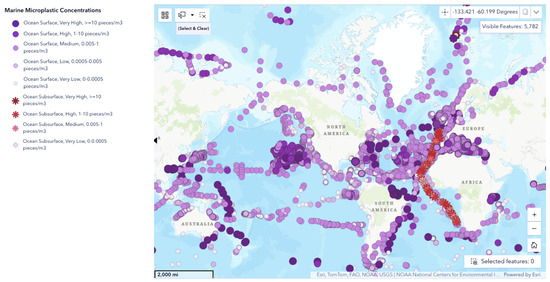
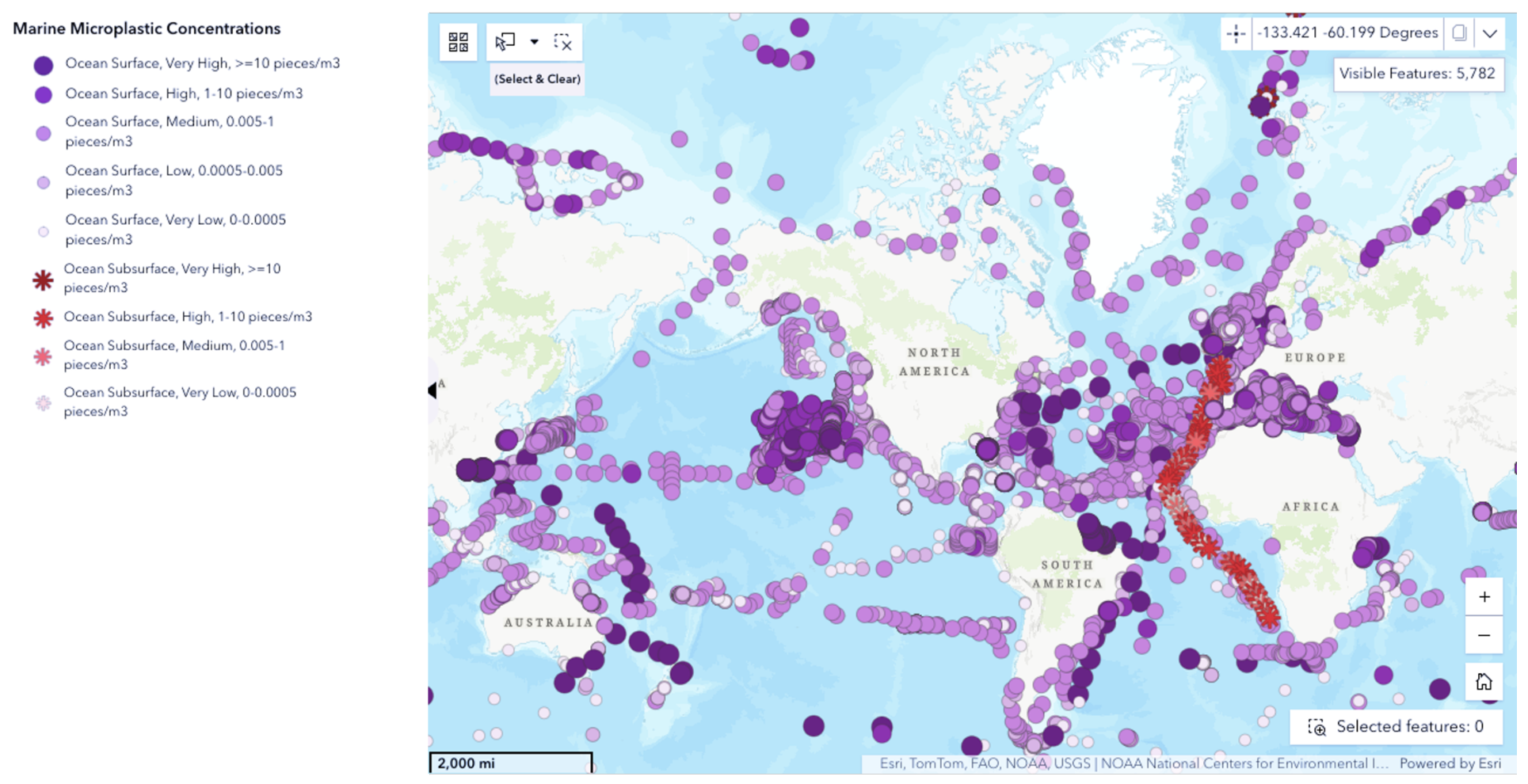
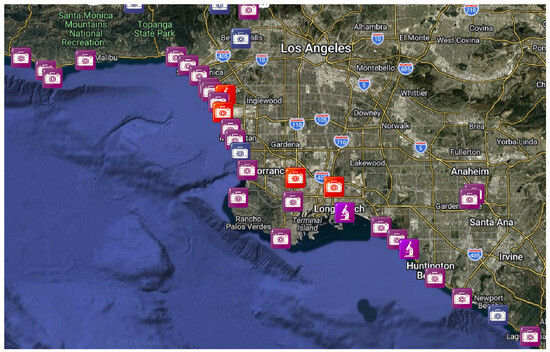
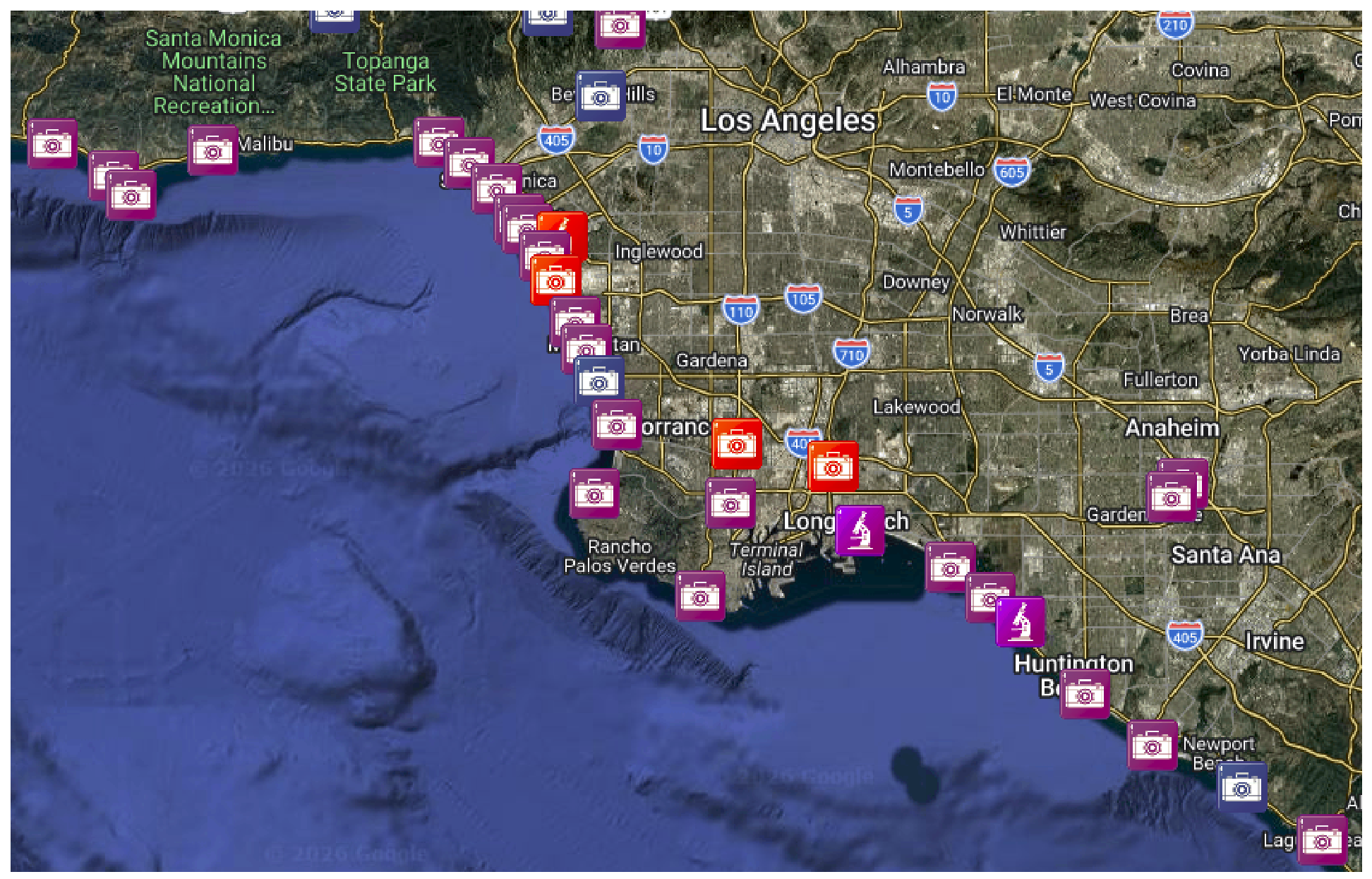
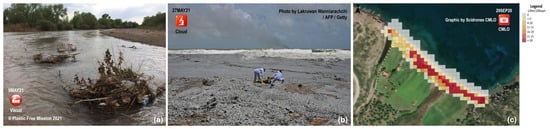
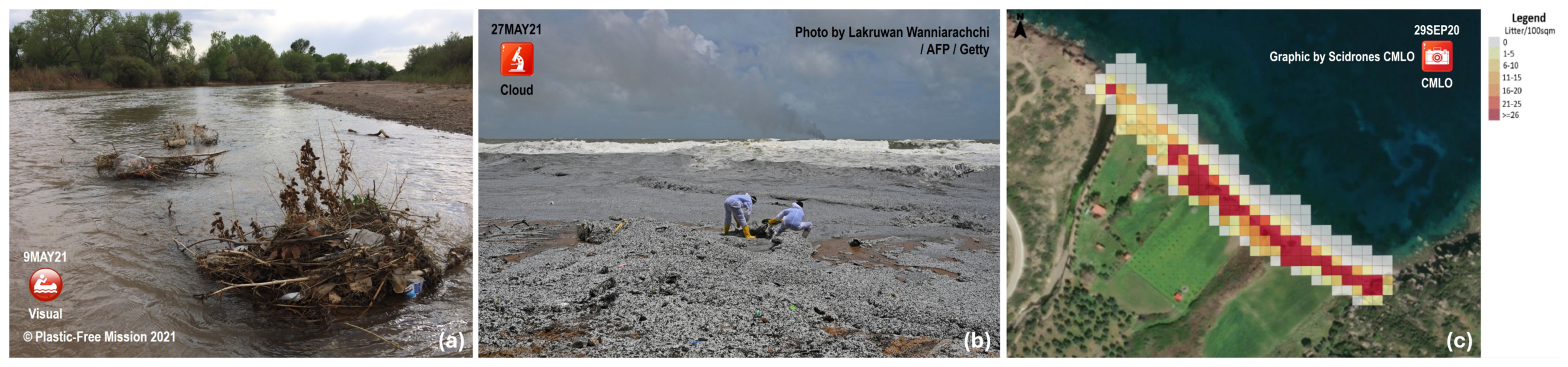
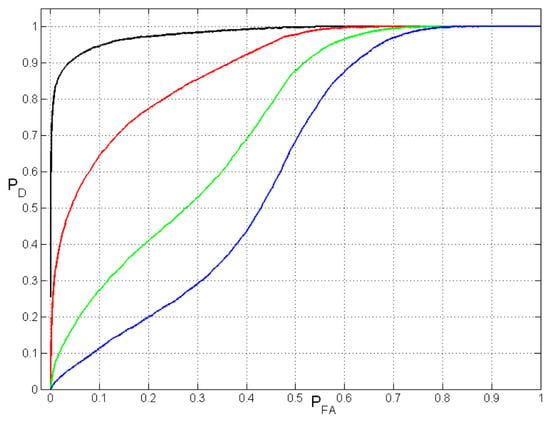
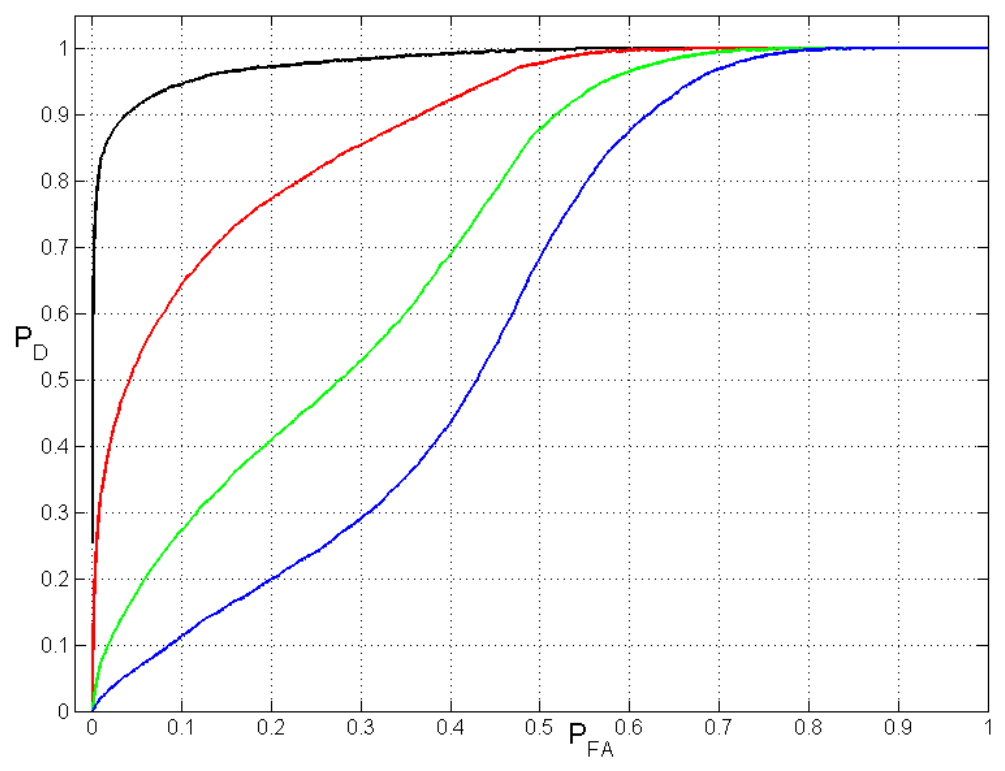
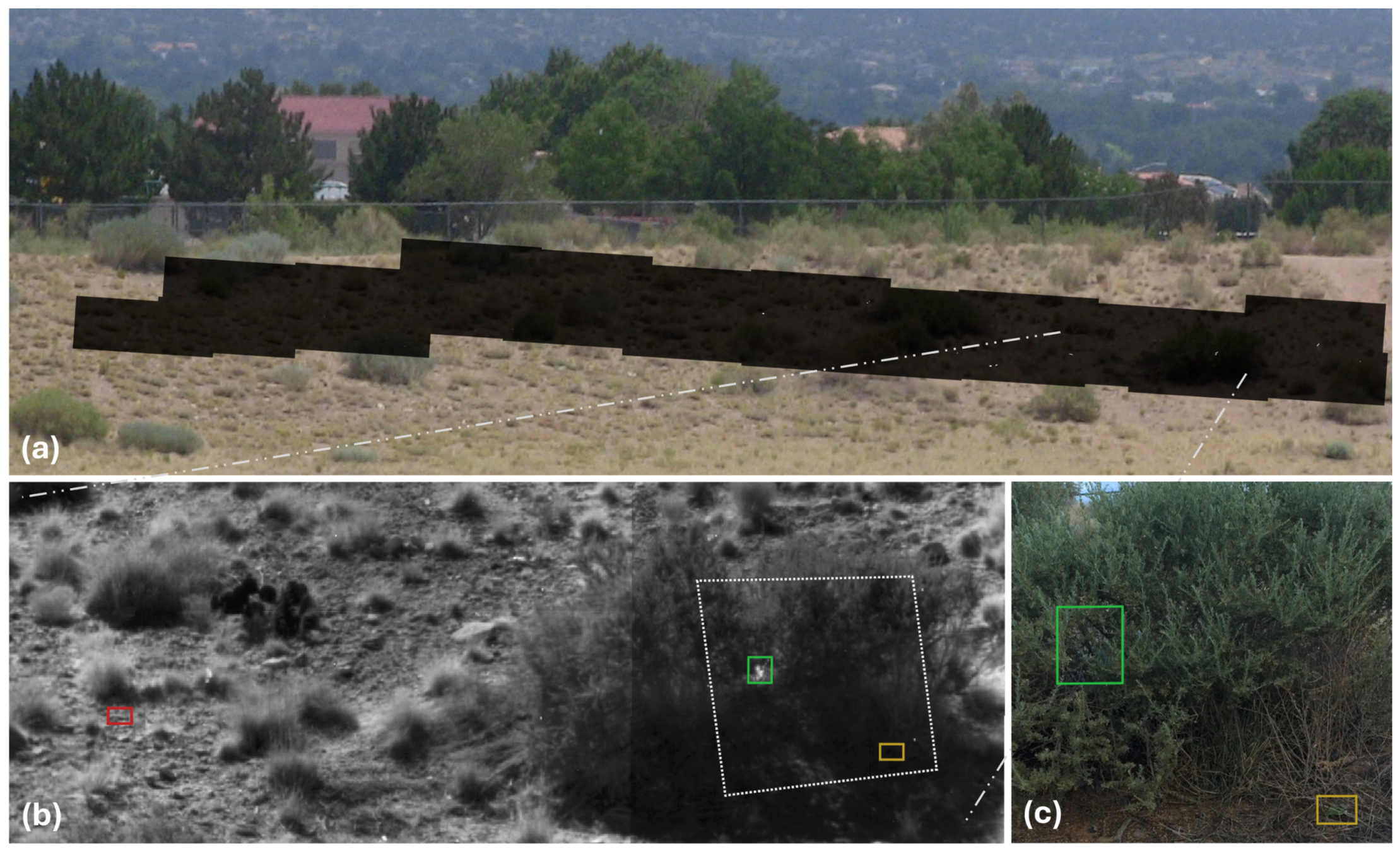
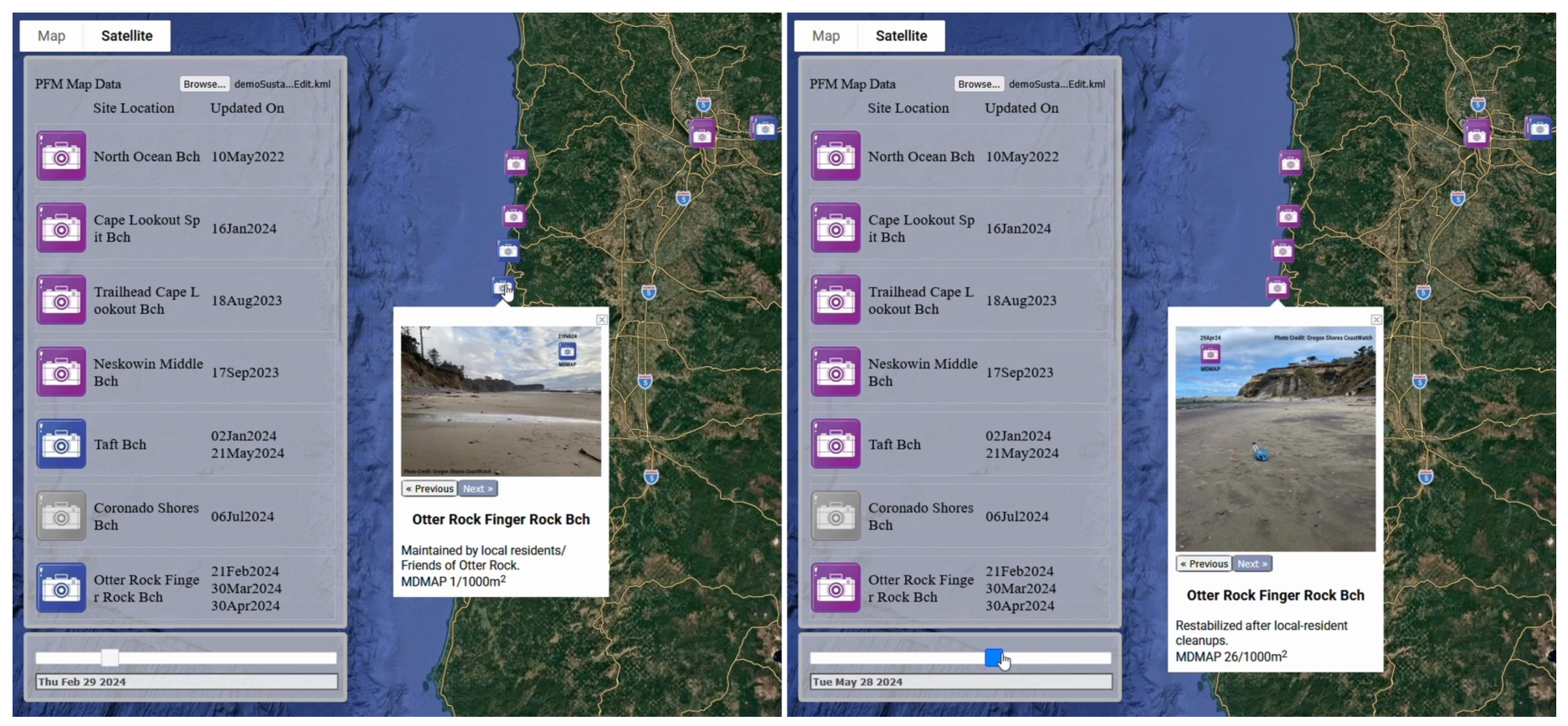
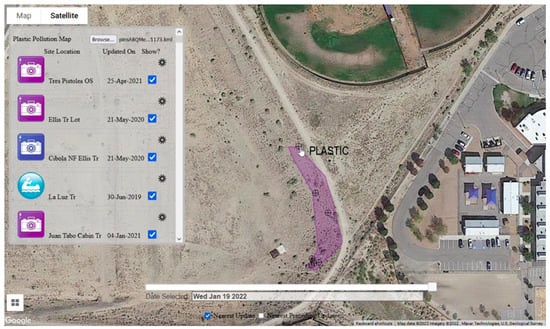
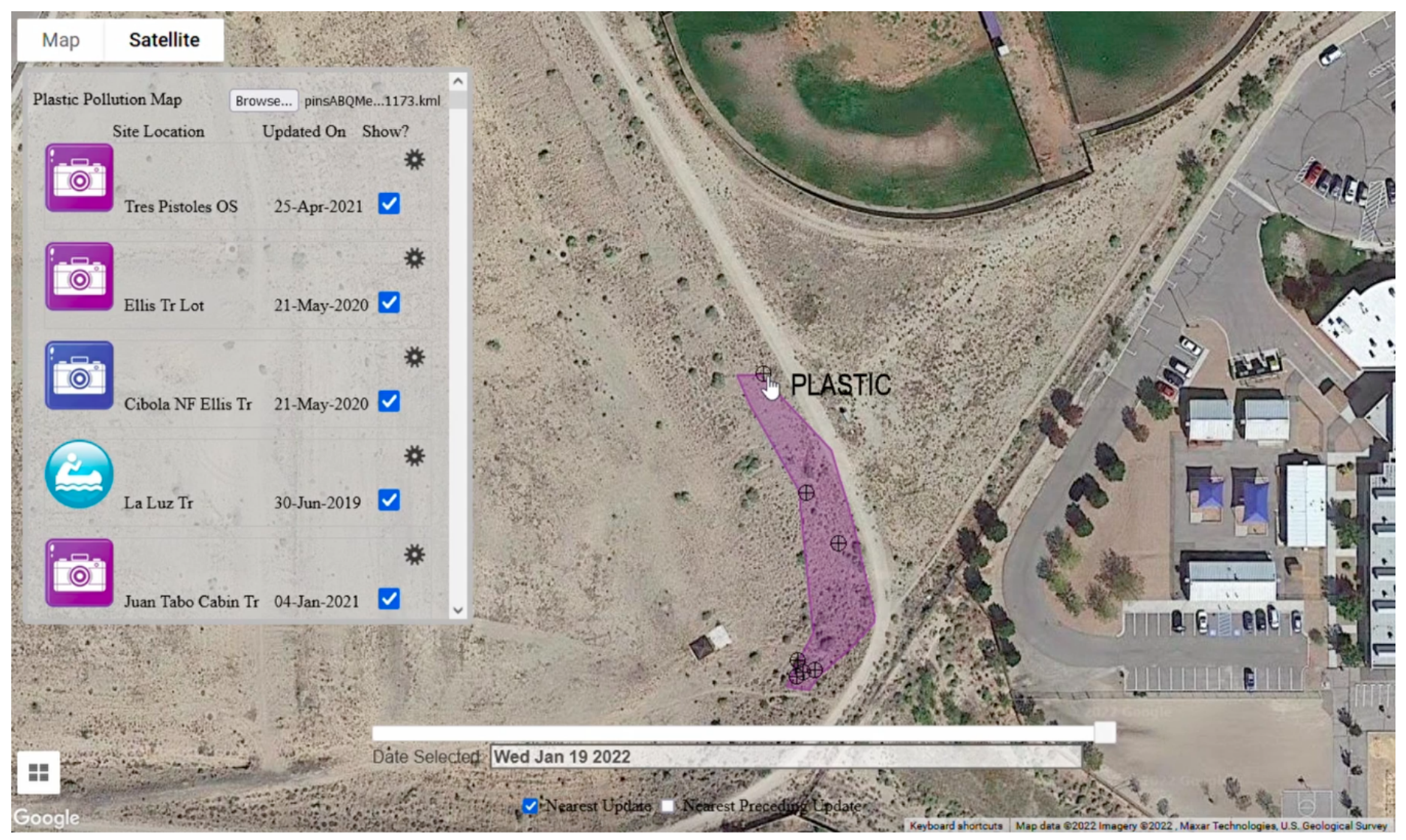
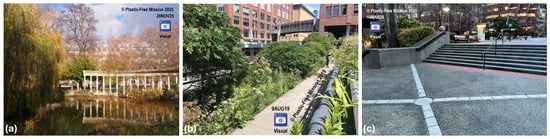
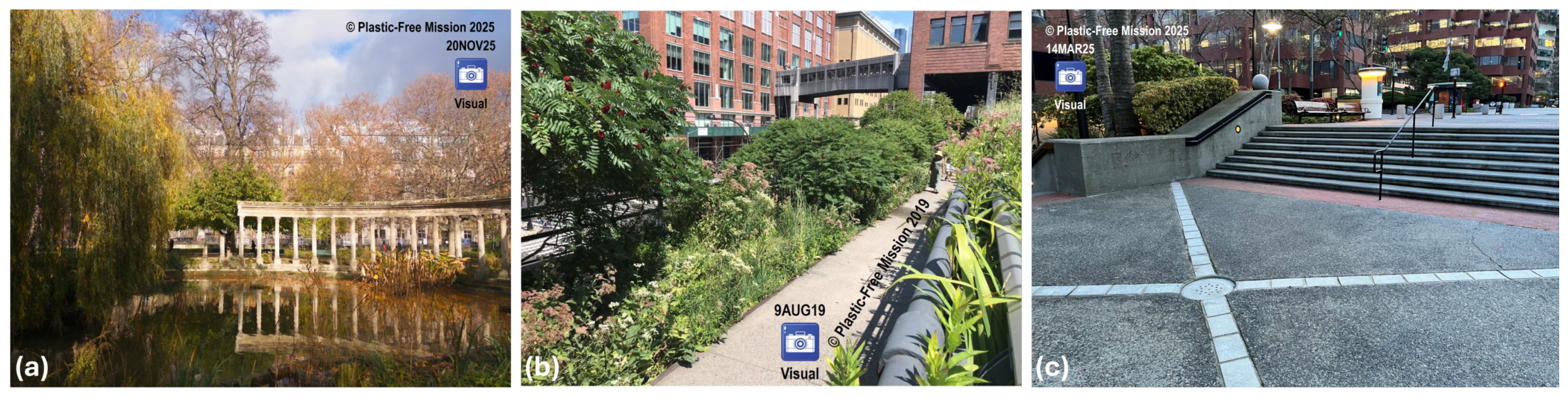
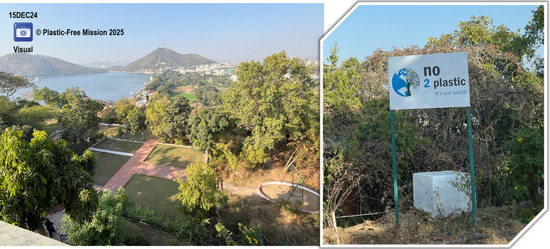
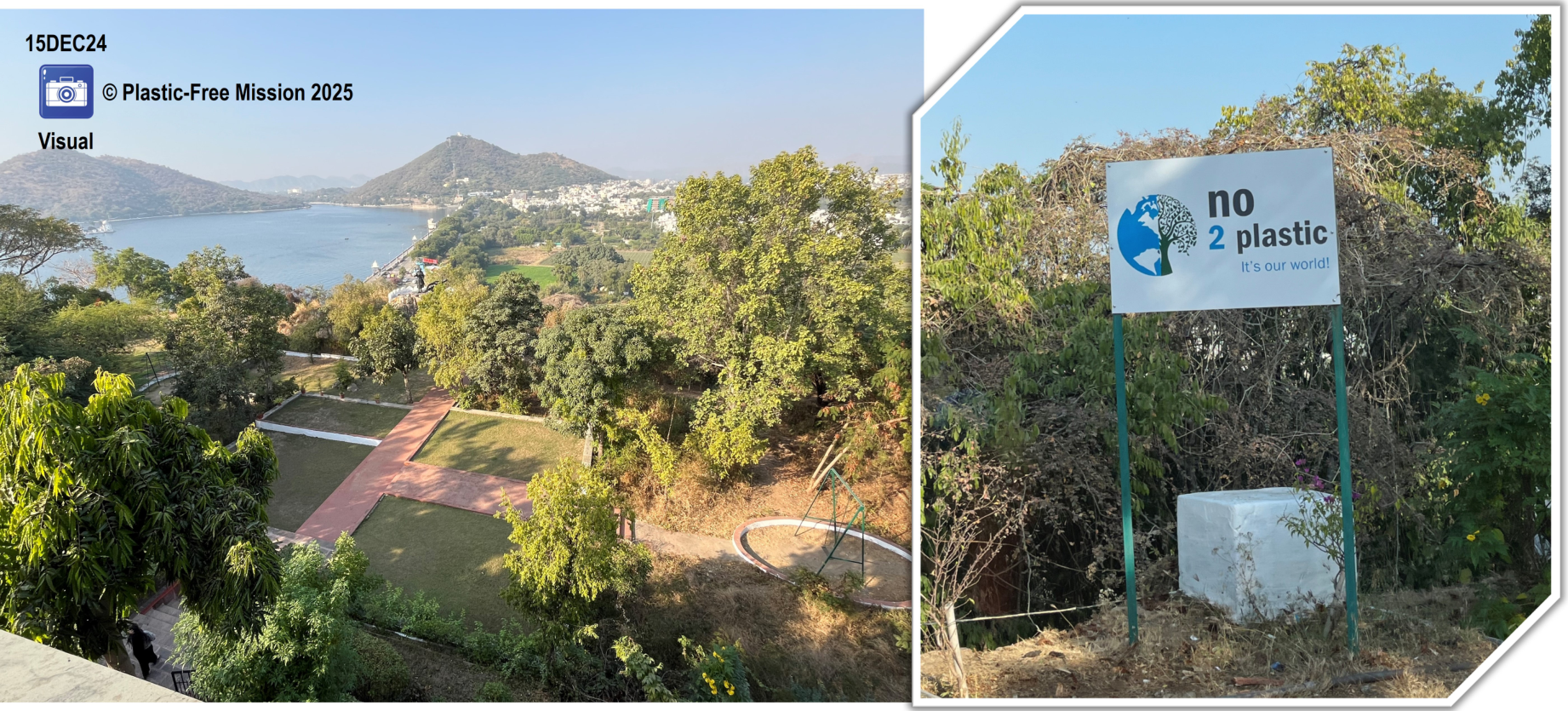

Disclaimer/Publisher’s Note: The statements, opinions and data contained in all publications are solely those of the individual author(s) and contributor(s) and not of MDPI and/or the editor(s). MDPI and/or the editor(s) disclaim responsibility for any injury to people or property resulting from any ideas, methods, instructions or products referred to in the content. |
© 2026 by the authors. Licensee MDPI, Basel, Switzerland. This article is an open access article distributed under the terms and conditions of the Creative Commons Attribution (CC BY) license.