1. Introduction
Sustainability has become a main concern in engineering practice, as engineers are increasingly expected to develop solutions that tackle environmental degradation, resource depletion, and societal challenges while remaining economically viable [
1]. In line with the Sustainable Development Goals (SDGs) and the broader agenda for fostering a sustainable transformation, new approaches to teaching and learning are needed to integrate these principles effectively [
2]. Consequently, engineering education is being called upon to move beyond traditional theoretical instruction and to prepare graduates who can understand and address sustainability in a more holistic and integrated manner [
3].
As engineering curricula continue to evolve, their primary goal extends beyond delivering theoretical knowledge to fostering the skills, values, and critical thinking essential for sustainable practices [
4]. Given the crucial role engineers play in developing sustainable systems and infrastructure, it is imperative that they acquire strong sustainability competencies. To support this, innovative teaching approaches, such as project-based learning (PBL), design-based learning (DBL), problem-based learning, and challenge-based learning, are increasingly being recognized and applied to strengthen sustainability literacy and its real-world application [
3,
5,
6]. Within the conventional engineering education models, the challenge remains in commonly treating sustainability as an add-on rather than an integral component of engineering design and decision-making [
1,
7].
PBL and DBL are both student-centered, inquiry-driven pedagogies. PBL is an active learning approach that immerses students in real-world contexts and challenges. The latter is not new, as the approach of “learning by doing” has already been advocated by John Dewey in 1916, who was a great believer that students must be at the center of the learning process [
8]. Characterized as a constructivist pedagogy, PBL requires learners to actively mobilize theoretical and technical knowledge to develop solutions to practical problems. Compared to traditional teaching methods, PBL has been shown to lead to significant improvements in learning outcomes, culminating in the creation of a tangible final product. In addition, the approach has been widely reported to enhance students’ teamwork, communication, and decision-making skills, as well as their ability to apply knowledge to real-life situations. When implemented in engineering education, PBL supports students in learning how to conceive, design, implement, and operate engineering solutions in response to specific engineering challenges [
5]. As for DBL, it is also an active learning approach in which students are asked to build engineering prototypes and to work in teams to solve real design problems, following an authentic, reflective engineering design process [
9]. DBL places the iterative design process at the core of learning, requiring students to generate, develop prototypes, test, and refine solutions under realistic constraints. The features of DBL projects embed design tasks in open-ended, hands-on, experiential, and authentic learning environments [
10].
Previous studies have shown that active learning approaches, such as PBL and DBL, can enhance students’ awareness of sustainability issues, promote systems thinking, and support the development of sustainability-related competencies [
11]. As a pedagogical strategy, PBL fosters an effective means of embedding sustainability within the curriculum [
8]. Moreover, PBL has been shown to promote participatory learning, critical reflection, systemic thinking, creativity, and cultural awareness, which are core values that underpin education for sustainability [
12]. Nevertheless, further investigation is needed to understand how a specific design project supports students’ education for sustainable development (SD) as perceived by the learners themselves.
In this context, the environmental robotic (ENVIBOT) project was conceived as an interdisciplinary, design-oriented engineering initiative aimed at environmental monitoring and for sustainability awareness through an open national competition award supported by the Lebanese Ministry of Industry [
13]. The ENVIBOT is a solar-powered robotic system designed to assess air, water, and soil quality, integrating sensing technologies, renewable energy use, and data interpretation within a single platform. The project brought together students and faculty members from different engineering disciplines and required them to collaboratively address technical performance, energy efficiency, environmental impact, and practical implementation constraints. As such, the ENVIBOT provides a relevant case through which sustainability can be explored not as an abstract concept, but as an inherent aspect of engineering design for educational purposes too.
Although PBL and DBL share common characteristics such as student-centered learning, collaboration, and authentic problem-solving, PBL primarily emphasizes the investigation of complex real-world problems, whereas DBL focuses on the iterative creation and refinement of designed artifacts (
Table 1) [
5,
10]. The ENVIBOT project can be conceptualized as a hybrid pedagogical model integrating both PBL and DBL. While the project aligns with PBL in its emphasis on authentic problem-solving and production of a tangible outcome, it simultaneously embodies DBL through its iterative design process, constraint analysis, and optimization under environmental and technical considerations. Such hybridization is particularly suited to sustainability-oriented engineering education, where students must navigate complex socio-technical systems and balance environmental, economic, and social trade-offs.
Thus, the ENVIBOT project combines the complementary strengths of PBL and DBL. While PBL established the authentic sustainability challenge and promoted collaborative problem-solving, DBL guided students through an iterative engineering design process involving prototyping, testing, and refinement under practical constraints. This paper explores how engagement in the ENVIBOT project influences engineering students’ understanding of sustainability. It begins with a description of the ENVIBOT design and then adopts a qualitative case study approach that goes beyond assessing learning through technical performance indicators alone. Reflective responses from participating students were collected and analyzed to explore how sustainability is perceived, interpreted, and understood through hands-on interdisciplinary engineering design experiences.
Accordingly, this study investigates how an interdisciplinary PBL–DBL engineering project contributes to sustainability learning among engineering students. Specifically, it addresses the following questions:
RQ1: How does participation in the ENVIBOT project influence students’ understanding of sustainability concepts?
RQ2: How does the integration of PBL and DBL support interdisciplinary collaboration and engineering competency development?
RQ3: How does participation in the ENVIBOT design project contribute to the development of students’ technical competence, professional maturity, and sense of responsibility as future engineers?
2. Literature Review
The urgency for sustainability in engineering stems from interconnected crises such as climate change and resource depletion. Engineers are called to create resilient infrastructure and renewable energy systems and embrace circular economy principles to reduce waste. Ethical obligations compel engineers to consider long-term social and environmental impacts alongside practicality and cost. While frameworks like the UN SDGs and guidelines from accreditation bodies aim to integrate sustainability into engineering education, it often remains a supplementary rather than a fundamental component of academic curricula. So, integrating sustainability effectively into engineering curricula remains a persistent challenge [
6,
15].
According to the report on Delft University of Technology, Kamp [
16] identified three main approaches for integrating sustainable development into higher education curricula:
Embedding sustainable development concepts within existing disciplinary courses;
Introducing a new foundational course dedicated to sustainable development; and
Offering students the opportunity to graduate with a specialization in sustainable development.
Among these approaches, the creation of new standalone courses has been the most commonly adopted strategy [
14,
17]. Although this pathway has generated positive outcomes and demonstrated potential impact [
6], early sustainable development courses have also been subject to criticism [
18]. While such courses are effective in raising conceptual awareness, they may fall short in fostering practical sustainability competencies and systems thinking skills [
19]. This is precisely what differentiates the course developed by Nakad et al. [
6], which progressed beyond a purely theoretical and conceptual foundation to focus explicitly on the development of sustainability competencies and interdisciplinarity. These findings support the argument that sustainability learning is more impactful when embedded within authentic engineering contexts, where students actively engage with complex and real-world challenges [
20].
Bonwell and Eison argued that active learning shifts the focus of education from the mere transmission of information to the development of students’ intellectual and practical skills [
21]. Rather than positioning students as passive recipients of knowledge, active learning emphasizes their direct involvement in the learning process. It occurs when learners meaningfully engage with course content, through discussion, analysis, reflection, and application, both inside and outside the classroom. This stands in contrast to traditional lecture-based instruction, where students primarily listen to an instructor and absorb information with limited interaction or critical engagement [
22].
Among the various approaches that embody active learning, PBL represents one of the most comprehensive and effective models. In PBL, students are confronted with authentic, real-world problems that require sustained inquiry, collaboration, and critical thinking. As noted by Lee et al. [
23], students work in teams to analyze information, interpret data, and propose viable solutions to complex challenges. This process not only enhances their conceptual understanding but also strengthens essential competencies such as communication, teamwork, and problem-solving.
By engaging students in meaningful tasks that mirror real-life situations, PBL compels them to “learn by doing.” This experiential dimension enables learners to navigate and disentangle complex issues, fostering deeper comprehension and long-term retention [
24]. Ultimately, PBL transforms the classroom into an interactive environment where knowledge is constructed, applied, tested and critically examined, rather than simply received.
Recent studies have explored how specific PBL experiences positively influence students’ sustainability awareness and attitudes. One study examined first-year engineering design students in a PBL context and used Q-methodology to capture how involvement in authentic design challenges shaped students’ perceptions of their capacity to act on sustainability issues, revealing multiple dimensions of student agency for sustainability development [
25]. Another recent case described how engineering students in a mechatronics course undertook a sustainable design challenge, building mobile robots using upcycled and recycled materials, where the process not only fostered STEM skills but also encouraged students to explore and apply sustainable design principles through research, teamwork, and reflection [
26]. Additionally, Alhawamdeh et al. [
27] assessed how sustainability components were integrated into senior engineering design capstone projects across multiple disciplines, using a validated rubric to evaluate students’ incorporation of sustainability concepts into their designs—providing a structured measure of awareness and application in real design work. These studies collectively demonstrated that when engineering students engage in purposeful design tasks that foreground sustainability, both qualitative perceptions and structured assessments reveal enhanced engagement with sustainability concepts and a deeper understanding of their role as future sustainability-aware professionals. Perrault and Albert assessed whether a PBL assignment could lead to attitudinal shifts in students regarding sustainability [
28]. After performing both primary (distributing/analyzing surveys, in-depth interviews) and secondary research, students constructed strategic communication campaign plans that the campus sustainability client could implement. Students’ attitudes toward sustainability (e.g., severity, susceptibility, self-efficacy, response-efficacy) were measured at the first and last day of class. The findings revealed significant positive shifts in all attitudes measured after project completion. Jollands and Parthasarathy [
20] described a stream of PBL subjects from the first to the final year. The projects were incrementally more complex but had the same goal: to choose the best process design using management decision-making tools to justify their choices. The tools included GEMI Metrics Navigator
TM. Their paper reported an evaluation of whether students’ understanding of sustainability is enhanced by undertaking multiple projects, as well as use of sophisticated analysis tools. Student learning outcomes from intermediate and final subjects were compared using ConceptMaps and a focus group. The students’ understanding of sustainability increased substantially from 2nd to final year, similar to results reported in European studies. The spread of results was broad, attributed to the range of students’ abilities and differences between students’ cohorts. Development of understanding of sustainability was attributed to undertaking multiple projects and use of spread-sheeting tools. Use of the GEMI tool was identified as facilitating the implementation of sustainability principles in process design decisions. Concept maps are a useful way to evaluate innovations in teaching sustainable engineering.
DBL, which was initially proposed by Gijselaers [
29], builds on problem-oriented and problem-based learning approaches by engaging students in iterative, design-centered problem solving. A growing body of research in socio-scientific, problem-based, and design-based learning highlights that contextualized, real-world tasks enhance students’ ability to apply scientific and engineering knowledge to complex societal challenges. Within this perspective, DBL has been widely used to bridge disciplinary knowledge and authentic practice. For example, Fried et al. demonstrated how integrating DBL with biomimicry design in an undergraduate biology course supports students in understanding the relationship between structure and function while also encouraging them to translate scientific principles into socially relevant and sustainable design solutions [
30]. Similarly, Huang et al. showed that DBL can effectively foster sustainability competencies in engineering education, particularly in developing system thinking, multidisciplinary integration, and collaboration skills, as students engage in both structured design tasks and innovation-oriented projects [
31]. In addition, Maharjan illustrated the application of DBL in developing sustainability-focused educational games aligned with the SDGs, reporting improvements in students’ generic skills and positive learning experiences during the design process [
32]. Collectively, these studies suggest that DBL provides a powerful pedagogical framework for embedding sustainability into engineering education by promoting active learning, interdisciplinary integration, and the development of competencies required to address complex sustainability challenges. The literature remains relatively limited when it comes to case studies that first implement a concrete design project and subsequently assess students’ sustainability awareness. In particular, there is a noticeable gap in studies examining designs that simultaneously align with both PBL and DBL. Within this context, the ENVIBOT project raises critical questions: Did it effectively strengthen students’ awareness of sustainability and produce meaningful educational outcomes? Moreover, given that the ENVIBOT primarily emphasized the environmental pillar of sustainability, to what extent were students able to expand their understanding to encompass the economic and social dimensions as well?
3. Description of the ENVIBOT Project
The technical description of the ENVIBOT project is presented in this section as contextual background for understanding the learning environment in which students developed their sustainability perceptions, rather than as an engineering performance evaluation of the prototype. The system architecture, components, sensors, and development stages are described to clarify the nature of the design challenge, the interdisciplinary decisions required, and the practical constraints encountered by students. This context is essential for interpreting the subsequent qualitative findings, which focus on how participation in the project influenced students’ understanding of sustainability, systems thinking, collaboration, and professional responsibility.
3.1. Technological Context of the ENVIBOT Project
Having established the ENVIBOT as the empirical case through which sustainability learning is examined, it is important to situate the project within the broader role of technology in addressing environmental and sustainability-related challenges. In this context, the ENVIBOT represents a technological response to real-world issues such as environmental degradation, resource management, and sustainable agriculture. The technical description that follows is therefore not intended as a separate engineering report, but as contextual grounding for the educational investigation. By outlining the system concept, architecture, monitored parameters, main components, and development stages, this section clarifies the design environment in which students worked and the practical challenges they addressed. These elements are essential for understanding how the project created opportunities for interdisciplinary collaboration, design decision-making, and applied engagement with sustainability.
3.2. System Concept
Environmental degradation continues to threaten air, water, and soil quality worldwide. Industrial emissions, chemical contamination, and improper waste disposal have intensified this problem. In such contexts, environmental assessment becomes both urgent and challenging.
Traditional environmental monitoring systems are often stationary and limited to single-parameter measurements. They typically require laboratory testing, manual sample collection, and delayed data analysis. As a result, they are not well suited for rapid, real-time environmental evaluation, especially in inaccessible areas where immediate intervention may be necessary.
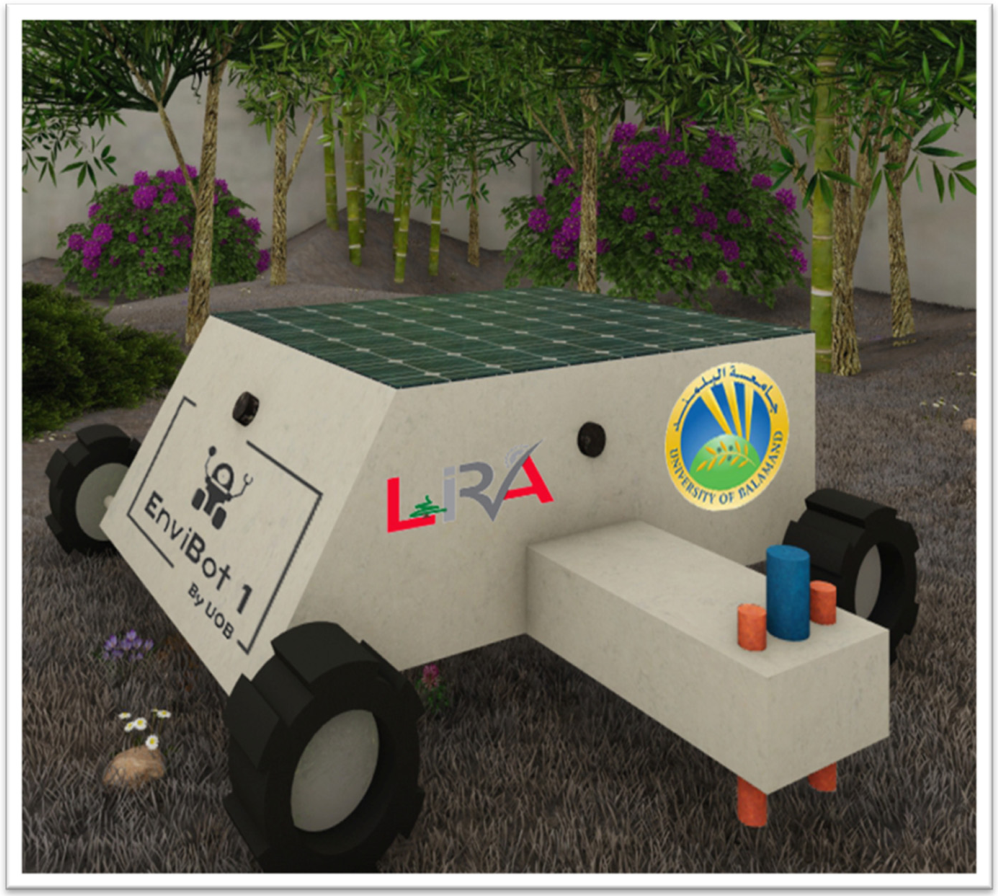
To address these limitations, the ENVIBOT project was conceived as an integrated and autonomous environmental monitoring system, with its conceptual design illustrated in
Figure 1. It presents a 3D conceptual visualization of the proposed ENVIBOT platform, showing its overall external configuration, including the mobile base, enclosed body, solar-panel surface, and front sensing area. The purpose of this figure is to provide an overview of how mobility, renewable energy support, and environmental sensing are integrated into a single field-deployable robotic system. Thus, it operates independently and can be remotely controlled, enabling flexible deployment in diverse environments, including affected contaminated areas. The ENVIBOT was designed to be capable of simultaneously measuring different key environmental parameters, including air, water, and soil.
A key feature of the ENVIBOT is its automated calibration and data analysis capability. The system compares measured values against established regulatory standards and provides actionable recommendations for pollution mitigation and resource optimization. This design supports informed decision-making and reduces response time in environmentally critical conditions.
Beyond its role in environmental protection, the ENVIBOT contributes directly to sustainable agriculture and is able to operate in remote areas where human beings cannot go (for example, war-affected areas, like in Lebanon itself). By monitoring soil conditions and water quality in real time, the system assists farmers in maintaining optimal growth environments, improving crop productivity, and reducing unnecessary chemical inputs. It can also support governmental and regulatory bodies in assessing affected or contaminated areas, enabling faster decision-making and more effective environmental management. Additionally, the system contributes to sustainable engineering practices such as wastewater treatment and fertilizer management, reinforcing the link between environmental monitoring and responsible resource use.
3.3. System Architecture
3.3.1. Operational Principle
The ENVIBOT is an autonomous robotic platform designed for integrated environmental data acquisition. The system is remotely operated via a tablet, allowing users to control the robot and access measurements in real time regardless of location. This capability enables flexible deployment across various environments and supports efficient environmental monitoring, highlighting the role of such technologies in addressing broader environmental and societal challenges.
To begin the operation, the user selects the area where measurements are required. The system then guides the robot to the specified location and activates the appropriate sensors to collect environmental data. Air and water measurements are obtained directly using the corresponding sensors integrated into the robot. Soil measurements require an additional step depending on ground conditions. Using its integrated camera system, the ENVIBOT first evaluates ground conditions. When compaction is detected, the robot activates a drilling mechanism to facilitate sensor insertion and ensure accurate measurements. If the soil conditions are already suitable, the drilling step is bypassed, and data acquisition is performed directly.
Once the data collection process is complete, the robot transmits the measurements to the user through the communication interface. The system then performs a validation procedure to ensure the reliability of the collected data. Valid measurements are stored in a database for future analysis and record keeping. If the data does not meet validation requirements, the system allows the user to repeat the measurements to obtain reliable results.
Overall, the ENVIBOT provides an efficient and flexible solution for environmental monitoring. The robot can measure various environmental parameters while offering automated data validation and remote accessibility. These capabilities enable reliable environmental assessment and support sustainable environmental management practices.
3.3.2. Measured Parameters
The ENVIBOT is capable of measuring up to 24 environmental parameters selected based on their relevance, impact on human health, and importance for sustainable resource management (
Table 2).
The monitored parameters include key indicators of pollution levels, chemical balance, and soil fertility, which are essential for evaluating environmental conditions and supporting sustainable agricultural practices. All sensors were calibrated and operated in accordance with the manufacturer’s guidelines to ensure measurement reliability and consistency.
Traditionally, the measurement of these environmental parameters requires large laboratory equipment, the use of chemical solvents, and time-consuming procedures [
33,
34]. In contrast, the ENVIBOT provides a practical and efficient solution by enabling real-time measurement and monitoring of these parameters. These measurements are carried out using appropriate sensors, which will be discussed in the following section. Furthermore, the system is capable of performing on-site analysis of the collected data and generating recommendations for farmers to support effective crop management.
3.3.3. Main Components
The ENVIBOT integrates a comprehensive set of hardware and software components that collectively enable environmental data acquisition, system mobility, data processing, and real-time user interaction. The system architecture is structured around four main functional elements: sensing units, mobility and positioning mechanisms, processing modules, and user interface systems, all of which operate in an integrated manner to ensure reliable and efficient performance.
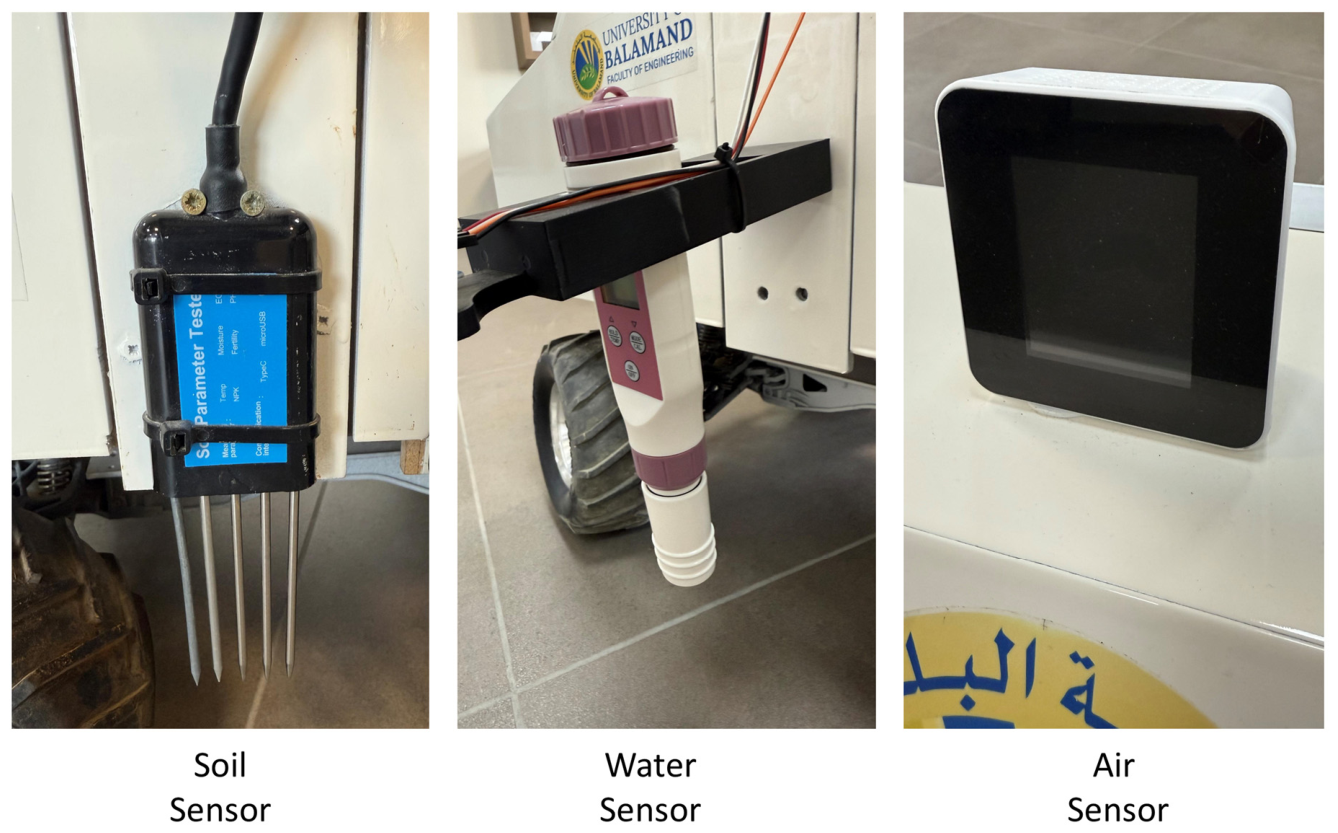
The sensing units constitute the core of the platform, enabling the acquisition of a wide range of environmental indicators through multiple integrated sensors (
Figure 2). These units include sensors dedicated to soil, water, and air monitoring, reflecting the multi-environmental scope of the ENVIBOT platform. The close-up view clarifies the physical arrangement of the sensing components and shows how different environmental measurements are integrated into a single robotic system for real-time data acquisition. Thus, these sensing modules are designed to capture key parameters relevant to environmental monitoring, including chemical, physical, and atmospheric indicators. Each sensing unit is adapted to specific measurement conditions, allowing the system to operate effectively across different environments while ensuring data consistency and reliability. The integration of multiple sensing technologies within a single platform enables simultaneous data acquisition, which represents a significant advantage compared to conventional monitoring approaches that rely on separate instruments and laboratory analyses.
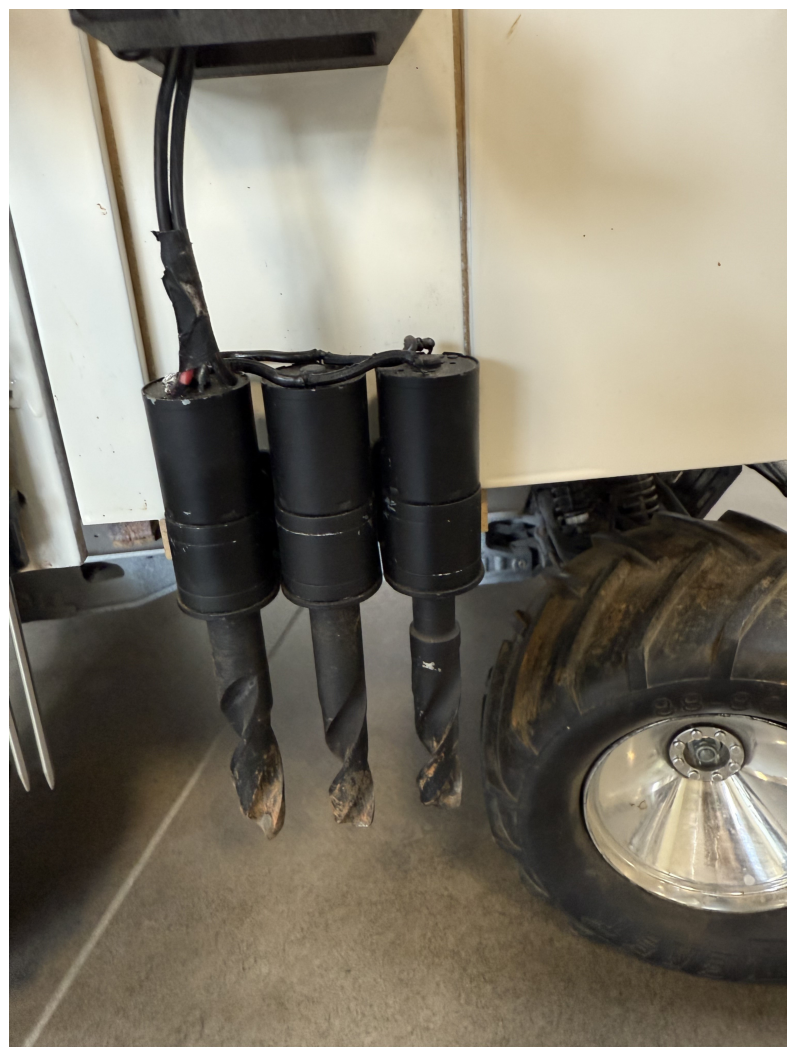
To support accurate data collection under varying field conditions, the ENVIBOT incorporates auxiliary mechanisms that enhance sensor positioning and measurement reliability. A vertical positioning system, controlled by distance sensors, enables precise adjustment of the sensing module, allowing it to be accurately positioned according to the measurement requirements. This controlled movement ensures proper contact between sensors and the measurement medium, which is essential for obtaining reliable readings. In addition, a drilling mechanism (
Figure 3) is integrated to facilitate measurements in compacted or resistant ground conditions. The close-up view highlights the mechanical arrangement of the drilling unit and its position relative to the sensing system. It shows how the prototype was adapted to overcome field constraints by enabling proper sensor insertion into compacted soil, thereby improving the reliability of soil measurements. The drilling unit was specifically designed and assembled from individual components to meet the operational and spatial constraints of the system, ensuring full compatibility with the sensing architecture and overall design.
The mobility of the platform is ensured through a mechanical system that enables stable movement across different terrains, allowing the robot to perform measurements at multiple locations within the monitored area. This mobility enhances the system’s flexibility and enables efficient data collection without requiring manual intervention.
The platform is supported by embedded processing units, including microcontrollers and single-board computers, which are responsible for data acquisition, system control, and communication between components. These processing units manage sensor integration, execute control algorithms, and ensure synchronization between the different subsystems. In addition, they enable real-time data processing and preliminary analysis, which contributes to faster decision-making and system responsiveness.
Finally, the system is complemented by a user interface that allows remote operation, monitoring, and interaction with the platform. Through this interface, users can control the robot, visualize collected data, and manage system operations efficiently. This integration of sensing, processing, and control functionalities within a unified platform enhances the overall performance of the ENVIBOT and supports its application in real-world environmental monitoring scenarios.
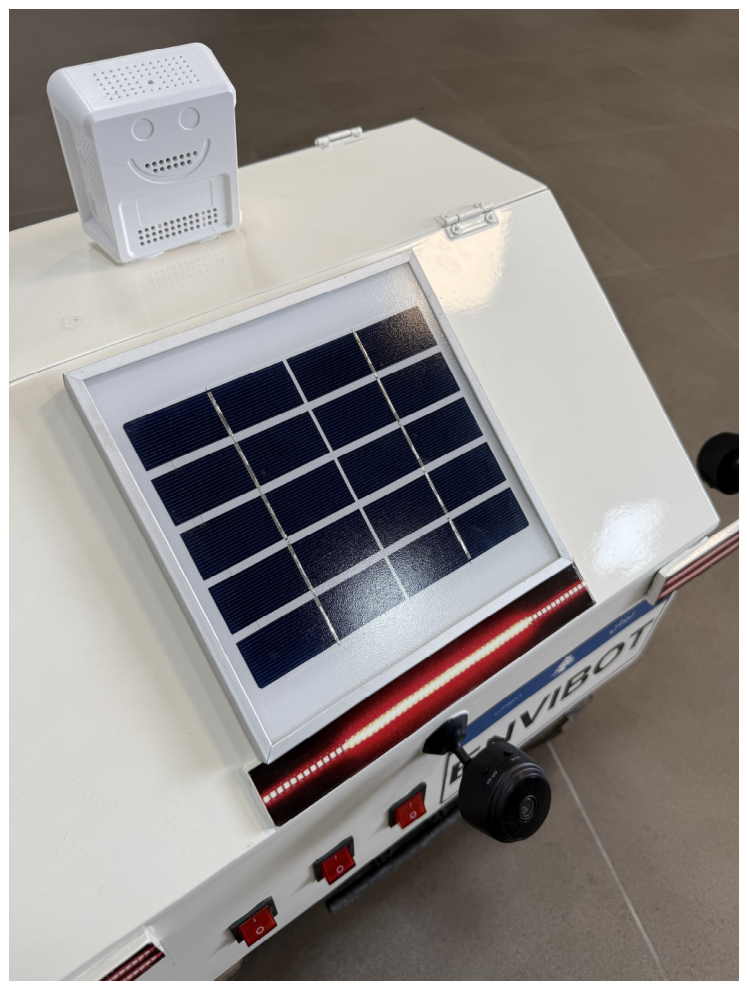
The system design required students to integrate a 4 × 4 geared mobility system, thus enabling stable movement across different terrains during monitoring operations. The power supply of the ENVIBOT is provided by a rechargeable Li-ion battery, complemented by a solar-assisted charging system (
Figure 4). The figure shows the placement of the solar panel on the upper structure of the robot and clarifies how renewable-energy support was physically incorporated into the platform without compromising the integration of the sensing and control components.
The battery serves as the primary power source, supplying stable voltage to all system components during operation. To enhance energy efficiency and reduce reliance on manual recharging, a solar panel enables partial battery recharging when exposed to sunlight, extending operational duration, particularly in outdoor environments. Although solar charging does not fully replace conventional methods, it contributes to reducing energy consumption and supports the sustainability objectives of the system through the use of renewable energy.
For system control and communication, the ENVIBOT incorporates a tablet-based user interface that enables remote operation, real-time monitoring, and efficient interaction with the platform. The processing and control are handled by embedded computing units, including Raspberry Pi and Arduino microcontrollers, which manage sensor integration, data acquisition, and overall system coordination.
3.3.4. Development Stages
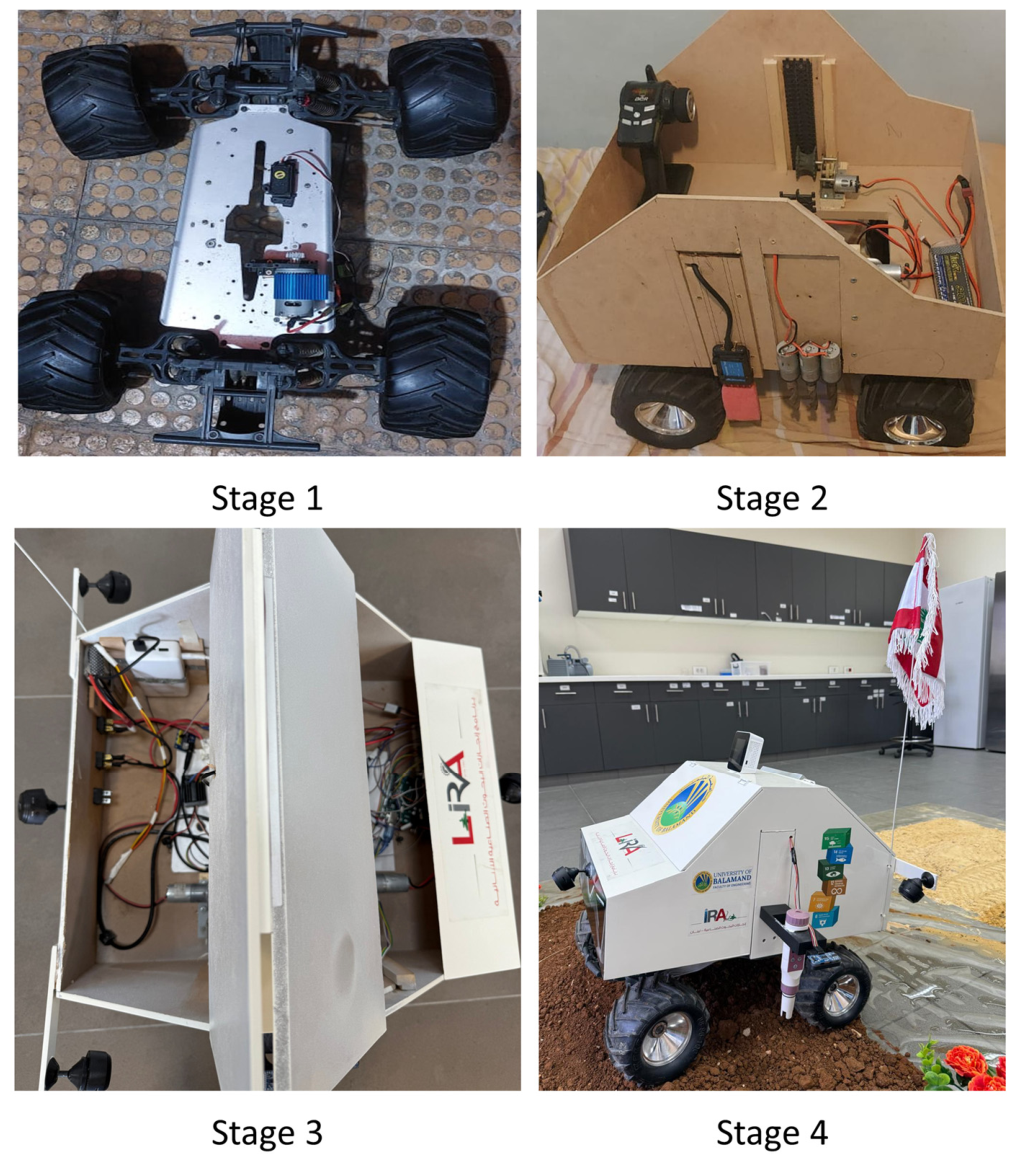
The development of the ENVIBOT followed a structured process consisting of four stages, as illustrated in
Figure 5, progressing from the initial robotic base to the fully assembled environmental monitoring platform. The figure summarizes the main design progression, showing how the mechanical structure, upper body, sensing components, control system, and final prototype were gradually integrated through an iterative development process.
The first phase focused on developing the robotic base, including the mechanical structure and mobility system. The initial fuel-powered configuration was replaced with an electric system to reduce emissions and enhance sustainability. The wheels and motors were selected to ensure stable movement across different terrains.
Meanwhile, the second phase involved constructing the upper structure on the developed base to support the integration of sensing and control components. The structure was constructed using wood due to its availability, ease of fabrication, and its potential for reuse and recyclability, aligning with the sustainability objectives of the project. During fabrication, several modifications were introduced compared to the original AutoCAD (2024, version 24.0) design in order to accommodate component integration and adapt the system to practical and spatial constraints.
Rails were incorporated to enable controlled vertical movement of the sensing units. The sensors were positioned strategically within the structure, and the material was carefully machined to integrate all required components. Once the hardware assembly was completed, a computer engineering student joined the development phase to implement the software architecture and ensure full integration between hardware and control systems.
The third phase focused on software development and system integration. The software was developed to manage all system operations, including robot movement, sensor positioning, data acquisition, parameter analysis, and communication with the tablet interface. After testing and debugging, the code was successfully deployed on both the Raspberry Pi and Arduino. All necessary connections were then established between the controllers, sensors, battery, motors, and motor drivers. This phase also included the integration of protective housing to secure the electronic components and wiring while maintaining proper system functionality. Given that the platform is intended for outdoor operation, protection against water and external damage was essential. Therefore, the enclosure was designed to be waterproof while also allowing easy access for maintenance and system adjustments.
The final stage resulted in the fully assembled ENVIBOT platform (
Figure 5, Stage 4), combining mechanical stability, integrated sensing systems, and communication capabilities. Several tests were conducted to evaluate system performance, including mobility tests, sensor positioning validation, and communication verification between the robot and the tablet interface. After confirming full system functionality, the platform was considered ready for deployment in real environmental monitoring scenarios.
3.4. Educationally Relevant Design Features
Two features of the ENVIBOT are particularly relevant to the educational focus of this study—its interdisciplinary development process and its explicit connection to environmental sustainability.
The development of ENVIBOT integrates expertise amongst chemical, computer, and electrical engineering disciplines:
Chemical engineering contributions include air pollution detection, soil chemistry analysis, water quality monitoring, and sensor calibration to ensure reliable environmental measurements.
Computer and electrical engineering contributions consist of developing system architecture, including sensor integration, robot software, and hardware components.
This interdisciplinary collaboration enables ENVIBOT to provide accurate, real-time environmental monitoring and support intelligent analysis for improved agricultural management.
Beyond these environmental outcomes, the technical development of the ENVIBOT also created opportunities for students to engage with the economic and social pillars of sustainability. From an economic perspective, the integration of multiple sensing units into a single mobile platform helped students consider how one system could reduce the need for separate instruments, repeated manual sampling, and delayed laboratory testing. The use of a rechargeable Li-ion battery, solar-assisted charging, reusable structural materials, and embedded control systems also introduced practical considerations related to energy consumption, equipment cost, maintenance needs, operational expenses, and long-term scalability. These design decisions helped students understand that a sustainable engineering solution must not only address environmental problems but also remain economically feasible and practical for wider implementation.
From a social perspective, the ENVIBOT’s ability to operate remotely in contaminated, agricultural, remote, or difficult-to-access areas helped students connect engineering design with public safety, environmental governance, and community needs. Real-time monitoring of soil, water, and air quality can support farmers, assist authorities in assessing contaminated sites, and reduce the need for direct human exposure to hazardous environments. These aspects encouraged students to perceive engineering as a socially responsible activity, where technological solutions are developed not only to improve system performance, but also to protect communities, support decision-making, and respond to sustainability challenges in vulnerable or high-risk contexts.
Accordingly, the technical features described above should be understood as educationally relevant design elements rather than as an isolated demonstration of the prototype’s functionality. The development of the ENVIBOT created opportunities for students to integrate knowledge from different disciplines, address practical design constraints, and reflect on the environmental and social implications of engineering solutions.
5. Results and Discussion
The analysis of students’ responses highlights how engagement in the ENVIBOT project supported a meaningful and practice-oriented understanding of sustainability. Rather than treating sustainability as an abstract or peripheral concept, students experienced systems thinking, interdisciplinary integration, and an evolving sense of professional responsibility. The results and their implications are discussed below.
5.1. From Theoretical Awareness to Applied Sustainability Understanding
Before participating in the ENVIBOT project, students described their understanding of sustainability as “a general title encountered on the project descriptions”. As one student explained, “I was aware of the general concepts, such as reducing environmental impact, conserving resources, and promoting eco-friendly practices, but my knowledge was mostly theoretical.” Sustainability was therefore perceived primarily as an abstract or broad environmental notion, with little or no reference to the economic and social sustainability pillars. This finding reflects a well-documented challenge in engineering education where students tend to associate sustainability mainly with the environmental dimension [
3,
38,
39,
40].
Another important observation is that, prior to this project, students did not associate sustainability with engineering design decisions. This matter represents a recurring challenge in engineering education, where sustainability is often introduced at a conceptual level but not adequately integrated into hands-on and design-oriented learning experiences [
15,
17,
41].
However, following completion of the project, students reported a substantial shift toward a more applied and solution-oriented understanding of sustainability. Through direct engagement with environmental monitoring, renewable energy integration, and system design, sustainability became concretely embedded in engineering practice. As one computer engineering student explained:
“After completing the project, my understanding of sustainability has become much stronger and more practical. I gained a deeper appreciation of how sustainable principles can be applied to real-world environmental challenges. Through the ENVIBOT, I learned how technology and data can actively support sustainable practices, such as monitoring pollution, optimizing resource use, and promoting environmental awareness. This experience helped me move from a theoretical understanding to a more comprehensive and solution-oriented view of sustainability.”
Students further emphasized that working with real data, sensors, and actual design constraints enabled them to understand how technology can actively translate sustainability concepts into sustainable practices.
Regarding the three pillars of sustainability, this experiential approach also helped broaden students’ perspectives. All students (100%) agreed or strongly agreed that the process of building the ENVIBOT helped them link engineering concepts with real-world economic, environmental and social challenges. This suggests that hands-on design activities can effectively bridge the gap between theoretical sustainability frameworks and practical engineering applications.
However, when students were asked whether the project had enabled them to fully understand sustainability and strengthened their ability to work further in this area—and whether any aspects remained unclear—some nuances emerged. While students acknowledged significant progress, not all felt they had achieved a comprehensive understanding of the three pillars.
One student explained:
“This project has greatly improved my understanding of sustainability and enhanced my ability to work on it in future projects. By applying sustainable concepts in a practical and technological context, I developed a clearer view of how sustainability connects with innovation and environmental management. However, I would say there are still some areas I find less clear, such as the detailed economic assessment of sustainable solutions and the long-term policy and regulatory aspects that influence large-scale implementation. I now understand the technical and environmental sides much better, but I would like to strengthen my knowledge in these broader sustainability dimensions.”
This reflection highlights an important pattern: while the environmental and technical dimensions became clearer through direct application, the economic and policy-related aspects of sustainability remained less fully developed.
From a different perspective, a chemical engineering student noted:
“After the ENVIBOT, I recognized the different sections of sustainability since I was working directly on them and I realized their true impact on humans and societies.”
Another student added:
“Absolutely, the ENVIBOT releases a lot of sustainability concepts for me. I fully understood the why behind SDGs, indexes and how each project must cover the maximum possible of SDGs because it will increase the benefits of the project.”
These reflections indicate that the project significantly enhanced awareness of sustainability frameworks, including the SDGs, and helped students appreciate the broader societal relevance of engineering projects. Nevertheless, it also appears that not all students achieved a fully balanced understanding of the three pillars. While they became strong in linking technical and environmental aspects to sustainability, deeper integration of economic evaluation, policy considerations, and long-term systemic thinking remained an area for further development.
This suggests that combining projects such as the ENVIBOT with a structured course about sustainability, like SUST229 [
6], helps students explicitly connect experiential insights to sustainability concepts, global agendas and assessment tools, thereby consolidating and leading to even stronger and more comprehensive awareness outcomes.
Overall, this transformation aligns with the sustainability education literature, which emphasizes active and experiential learning as essential mechanisms for moving sustainability from an abstract theoretical concept to an operational principle embedded in engineering design and decision-making processes.
5.2. Interdisciplinary Collaboration
Interdisciplinarity has been widely discussed in higher education literature. Two prominent scholars in this field, Julie Thompson Klein and William H. Newell, define interdisciplinarity as a process of addressing questions or solving problems that are too complex to be adequately handled by a single discipline, requiring the integration and synthesis of multiple disciplinary perspectives to construct a more comprehensive understanding [
42]. This definition provides a useful lens through which to interpret the ENVIBOT experience.
The ENVIBOT project demonstrates an interdisciplinary approach, as students integrated knowledge and methods from multiple engineering fields to address sustainability challenges. By combining environmental monitoring, renewable energy integration, and system design, they linked technical solutions with environmental, economic, and social considerations. This synthesis of perspectives allowed them to develop insights and solutions that could not be achieved within a single discipline, consistent with Klein’s [
43] definition of interdisciplinarity as the integration of disciplinary knowledge to create a more comprehensive understanding.
Student responses further illustrate this integration. A chemical engineering student described “the biggest challenge” as “integrating the sensors and data systems”, noting the need for close coordination with a computer engineering teammate. Initial discrepancies in sensor readings required iterative testing and adjustments in both hardware and software. Through continuous collaboration, they aligned the system’s performance. In this process, chemical engineering knowledge related to pollution and resource management was combined with computer engineering expertise in data analytics, remote monitoring, and system optimization, ultimately enhancing the sustainability performance of the ENVIBOT.
These experiences reinforce the argument that complex environmental challenges cannot be effectively addressed within disciplinary boundaries alone. At the same time, students acknowledged that interdisciplinarity was not without difficulty. A chemical engineering student explained that working with a teammate from a different background was initially challenging due to differences in perspectives and approaches. Open discussions, clarification of roles, and deliberate efforts to explain technical constraints were necessary to build mutual understanding and respect. Similarly, a computer engineering student reported early communication barriers but emphasized that active listening, clarification, and shared commitment to a common goal enabled the team to eventually collaborate effectively.
Importantly, after navigating these challenges, all students agreed that teamwork significantly influenced their understanding of sustainability. They recognized that sustainable solutions require integrating diverse expertise—technical, environmental, and social—and that sustainability extends beyond isolated technical fixes. One student highlighted that collaboration revealed how technology, including AI-based monitoring and optimization tools, can support resource efficiency and waste reduction. Others emphasized that sustainable practices depend not only on technological innovation but also on coordination, shared responsibility, and systemic thinking.
Overall, these reflections prove that active learning approaches provide an effective platform for fostering interdisciplinarity. By engaging students in collaborative design tasks that required integration across fields, the ENVIBOT helped operationalize sustainability as a collective and systemic endeavor. This finding aligns with the literature, which emphasizes that complex environmental challenges require interdisciplinary integration [
43,
44] and highlights DBL and PBL as effective platforms for fostering such integration in engineering contexts [
14].
5.3. Development of Technical Competence, Maturity and Professional Responsibility
Students consistently reported significant growth in both their technical and non-technical competencies throughout the ENVIBOT project, and this was irrespective of gender and major [
45]. Beyond strengthening their engineering knowledge, they described becoming more mature in their teamwork, decision-making, and approach to complex problem-solving.
When asked to describe a creative solution that made a major difference in the project, students highlighted examples that demonstrated initiative, resilience, and contextual awareness. One student explained:
“A creative solution we implemented was enabling ENVIBOT to be controlled remotely. By integrating a wireless interface, my teammate, the computer engineer, allowed us to adjust its movements and monitor sensor data from a distance, which made testing faster, safer, and more efficient, especially in war areas.”
This reflection is particularly significant. The mention of operating in “war areas” illustrates how students were not merely completing an academic task, but actively designing technology to function under real circumstances and high-risk contextual constraints. The project therefore required them to consider safety, accessibility, and environmental monitoring in unstable conditions, an exercise in socially responsible engineering under uncertainty.
Another student described overcoming a technical limitation when soil sensor readings were inaccurate:
“When I was testing the soil sensor, the data was not accurate due to the sensor’s inefficiency. Ordering a different type of sensor was not an option… I had two choices: eliminate the soil section or find a solution. By leveraging the mathematical and engineering skills I had acquired, I developed a new algorithm that enhanced the sensor’s performance, and it worked perfectly.”
This reflection demonstrates adaptive expertise and problem-solving resilience. Faced with logistical constraints, the student chose innovation over simplification. Rather than abandoning a sustainability component, they optimized the system algorithmically, showing ownership, responsibility, and technical confidence. Notably, one student framed the solution as a collective effort (“we implemented”), while another emphasized individual initiative (“I developed”), illustrating both collaborative and personal dimensions of growth.
All students agreed that the experience enhanced their ability to approach complex problems and generate multiple solutions. They reported improvements not only in technical skills but also in communication, teamwork, project management, and interdisciplinary collaboration. The real-world relevance of the project and its tangible outcome—a patent granted in Lebanon—further reinforced their confidence and sense of professional legitimacy.
One student reflected:
“Academically, it allowed me to work on an innovative solution that is patent-worthy… which strengthened my confidence in applying engineering knowledge to real-world problems.”
Another added:
“The patent validated our work and highlighted its practical impact.”
Such statements suggest that the project contributed to the development of engineering self-efficacy—students began to see themselves as capable innovators whose work has authentic value beyond the classroom.
Importantly, the ENVIBOT also transformed how students perceived their future professional roles. When asked whether the project changed how they view their role as future engineers in contributing to sustainability, responses were unequivocal. One student stated:
“This project changed how I view my role as a future engineer. Experiencing the real impact of sustainable solutions made me realize the importance of incorporating sustainability into every project.”
Another emphasized the ethical dimension of engineering:
“Engineering is not just about creating solutions, but also about ensuring they are efficient, responsible, and environmentally conscious. I realized that as an engineer, I have the ability and the responsibility to design technologies that address real-world challenges while promoting sustainable practices.”
These reflections indicate a shift from a purely technical identity toward a more socially responsible professional identity. Students began to understand engineering not simply as problem-solving, but as value-driven decision-making with environmental and societal implications.
Overall, the findings suggest that the ENVIBOT functioned as more than a technical design exercise. It served as a developmental platform that strengthened students’ technical competence, fostered teamwork maturity, enhanced problem-solving resilience, and cultivated a sense of professional responsibility. The combination of real-world constraints, interdisciplinary collaboration, and tangible innovation outcomes (e.g., patent development) appears to have contributed meaningfully to both their academic growth and personal transformation as future engineers committed to sustainability.
7. Conclusions
This study demonstrates that participation in the interdisciplinary ENVIBOT project enabled the four students to move beyond a narrow, environmentally focused interpretation of sustainability toward a broader and more applied perspective. Through active learning, the four students reported developing a deeper awareness of systems thinking and real-world constraints and became more aware of the societal responsibility of engineers in advancing sustainable solutions. Rather than perceiving sustainability as an abstract or purely ecological concept, the students’ own reflections indicated that they started to recognize sustainability as a multidimensional framework that shapes technical decisions, stakeholder considerations, and long-term societal impact.
The findings also suggested that while PBL and DBL approaches are highly effective in fostering practice-oriented understanding, combining such initiatives with a standalone sustainability course could further strengthen students’ comprehension of the environmental, economic, and social dimensions of sustainability.
Through the ENVIBOT, an award that was initially won from an open national competition supported by the Lebanese Ministry of Industry and then transformed into a real project, it can be concluded that interdisciplinarity plays an important role in enhancing students’ sustainability awareness. The ENVIBOT experience demonstrated that PBL and DBL, when implemented within an interdisciplinary framework, could effectively broaden students’ understanding of sustainability. Moreover, the project illustrated that such approaches do not merely strengthen sustainability awareness; they also serve as an interdisciplinary platform for developing technical competence, maturity, ethical awareness, and a strong sense of professional responsibility.
In conclusion, this study presents a first step in the right direction as a viable pathway, among many others, for integrating sustainability into engineering curricula. This approach is practical and implementable, offering the dual advantage of engaging students in the development of designs that should positively contribute to the planet while simultaneously preparing promising engineers capable of advancing a sustainable future. Embedding interdisciplinary, real-world design experiences alongside dedicated sustainability education fosters the development of engineers who are not only technically proficient but also skilled in holistic thinking and deeply committed to acting responsibly in support of sustainable development.