1. Introduction
Rail wagon unloading operations represent an important component of industrial logistics systems, especially in heavy industries, where bulk material handling is essential for maintaining production continuity. These operations are characterized by high variability, strong operational constraints and strict performance requirements. Several sources of variability may affect unloading performance, including equipment availability, wagon condition, scheduling constraints, and operator performance [
1,
2].
In real industrial environments, variability directly affects system efficiency, operational reliability, and the stability of decision-making. Previous studies have shown that the propagation of variability across operations can significantly reduce performance and make system behavior unstable [
1,
3]. In railway logistics, this operational complexity is further increased by scheduling dependencies and real-time disruptions, which require adaptive and efficient management approaches [
4,
5].
In such environments, conventional industrial decision-making approaches often rely on a single performance indicator, such as unloading time or throughput. Although these metrics provide a simple view of system efficiency, they do not fully capture the complexity of real operations, where trade-offs between efficiency, variability, losses, and operator exposure are unavoidable. Therefore, decisions based solely on individual key performance indicators may lead to suboptimal performance, increased instability, and reduced system resilience [
3].
The emergence of Industry 5.0 has shifted from purely efficiency-driven systems toward industrial processes that are more human-centric, resilient, and sustainable. This paradigm emphasizes the integration of human factors, system robustness, and adaptability into operational decision-making frameworks [
6,
7].
This study addresses these challenges by developing a data-driven multi-criteria decision-making (MCDM) framework applied to a real industrial case of rail wagon unloading. The objective is to identify the most balanced arrival-track operational configuration by combining statistical analysis, including ANOVA and Chi-square testing, with multi-criteria evaluation techniques [
8,
9]. The framework considers productivity, variability, operational losses, stability and a proxy for operator exposure.
This paper makes three main contributions. First, it integrates real operational data into a structured decision-making framework for rail wagon unloading. Second, it combines statistical analysis and MCDM to evaluate both performance and variability dimensions. Third, it provides practical insights for improving unloading operations from an Industry 5.0 perspective.
The remainder of the paper is organized as follows.
Section 2 presents a literature review and identifies the research gap.
Section 3 defines the research positioning and research questions.
Section 4 describes the rail wagon unloading process, the data, and the methodology.
Section 5 contains the results.
Section 6 discusses the findings. Finally,
Section 7 concludes the study and outlines future research directions.
2. Literature Review
Industrial process optimization has been widely studied in operations management. Classical approaches often rely on deterministic models to maximize throughput and minimize operational time. Although these methods provide useful insights in controlled environments, they generally assume stable operating conditions and do not fully capture variability, which is a central characteristic of real industrial systems [
1,
10].
In real industrial environments, variability may arise from stochastic arrivals, equipment performance fluctuations, operational constraints, and human intervention. Previous studies have shown that the propagation of variability, often referred to as the ripple effect, can significantly degrade system performance and create instability in interconnected operations [
11,
12]. These findings highlight the limitations of traditional optimization approaches when they are applied to complex and dynamic industrial systems.
Variability and uncertainty are particularly important because operational performance depends on scheduling decisions, resource availability, infrastructure constraints, and real-time disruptions. Boysen et al. [
4] showed that scheduling decisions play a major role in delay propagation and system efficiency. Corman et al. [
5] also emphasized the importance of dynamic traffic management strategies for responding to real-time operational disturbances. These studies confirm that deterministic approaches alone are often insufficient to capture the operational complexity of railway systems.
Recent research has also focused on resilient and adaptive industrial systems, particularly in the context of Industry 4.0 and Industry 5.0. Industry 5.0 extends the automation-oriented logic of Industry 4.0 by emphasizing human-centricity, sustainability, and resilience [
6,
7]. In this perspective, industrial systems are expected not only to maintain performance under variable conditions but also to reduce operational stress, support operators, and improve long-term system robustness. Recent studies have therefore highlighted the need to integrate resilience and sustainability into operational decision-making processes [
12,
13,
14].
Multi-criteria decision-making (MCDM) methods have received increasing attention for addressing complex decision problems involving multiple and sometimes conflicting criteria. These methods allow decision-makers to evaluate systems from several dimensions, including productivity, variability, cost, reliability, and human-related factors. Weighted scoring models and hybrid MCDM approaches have been widely applied in industrial decision-making because they make trade-offs between competing objectives more explicit [
9,
15,
16].
Data-driven methods have also become increasingly important in industrial optimization. The integration of big data analytics and machine learning can improve the ability of industrial systems to adapt to uncertainty and identify hidden operational patterns [
17,
18]. In Industry 5.0 environments, real-time data can support predictive and adaptive decision-making, making these approaches particularly relevant for operational planning and decision support [
18,
19].
Despite these developments, several gaps remain in the literature. The use of MCDM frameworks in real industrial unloading operations remains limited. Previous studies often examine performance indicators separately and do not sufficiently consider the interaction between variability, losses, operational constraints, and human-related factors. In addition, the combination of statistical testing and MCDM within a single decision support framework is still underdeveloped in rail wagon unloading applications.
These limitations are particularly relevant for rail wagon unloading systems, where performance is affected by wagon-related losses, manoeuvre constraints, arrival-track allocation, and operator intervention. This study addresses this gap by proposing a data-driven MCDM framework that combines real operational data, statistical analysis, and multidimensional performance indicators to support more realistic and transparent industrial decision-making.
Recent research has increasingly emphasized the integration of sustainability into industrial logistics and decision-making processes. In the context of green supply chains, advanced technologies such as drones, IoT, and artificial intelligence have been identified as key enablers for improving operational efficiency while reducing environmental impact [
20,
21].
Furthermore, Industry 5.0 introduces a shift towards sustainable, human-centric and resilient industrial systems, where operational optimization should be aligned with environmental and social objectives [
22,
23]. Recent studies show that sustainable logistics systems should integrate variability management, resilience, and data-driven decision-making to support long-term system stability and reduce environmental impact [
23,
24].
In this context, MCDM approaches provide a suitable framework for balancing performance, sustainability, and industrial constraints. The integration of data-driven models further strengthens adaptability and supports sustainable industrial optimization under dynamic operating conditions [
25].
3. Research Positioning
Rail wagon unloading operations in heavy industrial environments are characterized by high operational variability, process constraints, and strict performance requirements. Decision-making in such systems is often guided by simplified performance indicators, such as unloading time or throughput. These approaches do not sufficiently capture the complexity of real industrial operations, where variability, losses, operational constraints, and operator-related factors interact dynamically [
1,
3,
10].
In railway logistics, scheduling dependencies and real-time disturbances play a major role in operational performance. The propagation of variability can significantly affect system efficiency and lead to operational instability [
4,
5,
11]. Nevertheless, many existing approaches still focus on isolated optimization objectives and do not fully consider the combined effects of variability, losses, manoeuvre constraints, and human intervention.
Recent developments related to Industry 5.0 emphasize the importance of human-centric, resilient, and sustainable industrial systems [
6,
7,
12]. From this perspective, decision support frameworks should not be limited to productivity indicators alone. They should also consider operational stability, system robustness, and operator exposure. However, real industrial datasets are rarely used to evaluate these dimensions in an integrated manner.
Although MCDM methods are widely used in industrial optimization, their application to rail wagon unloading operations remains limited. Few studies combine real operational data, statistical testing, and MCDM within a single decision support framework for unloading planning. This gap is especially relevant in rail wagon unloading systems, where performance outcomes are affected by operational variability, wagon-related losses, arrival-track allocation, manoeuvre constraints, and operator interventions.
The purpose of this study is to address this gap by answering the following research questions:
- RQ1:
How do different unloading configurations impact operational performance and variability in rail wagon unloading systems?
- RQ2:
What is the statistical relationship between wagon-related losses and performance classification (OK/KO), and how can this relationship support multi-criteria decision-making?
- RQ3:
Which unloading configuration provides the optimal trade-off between efficiency, variability, and operational losses under a multi-criteria framework?
4. Data and Methodology
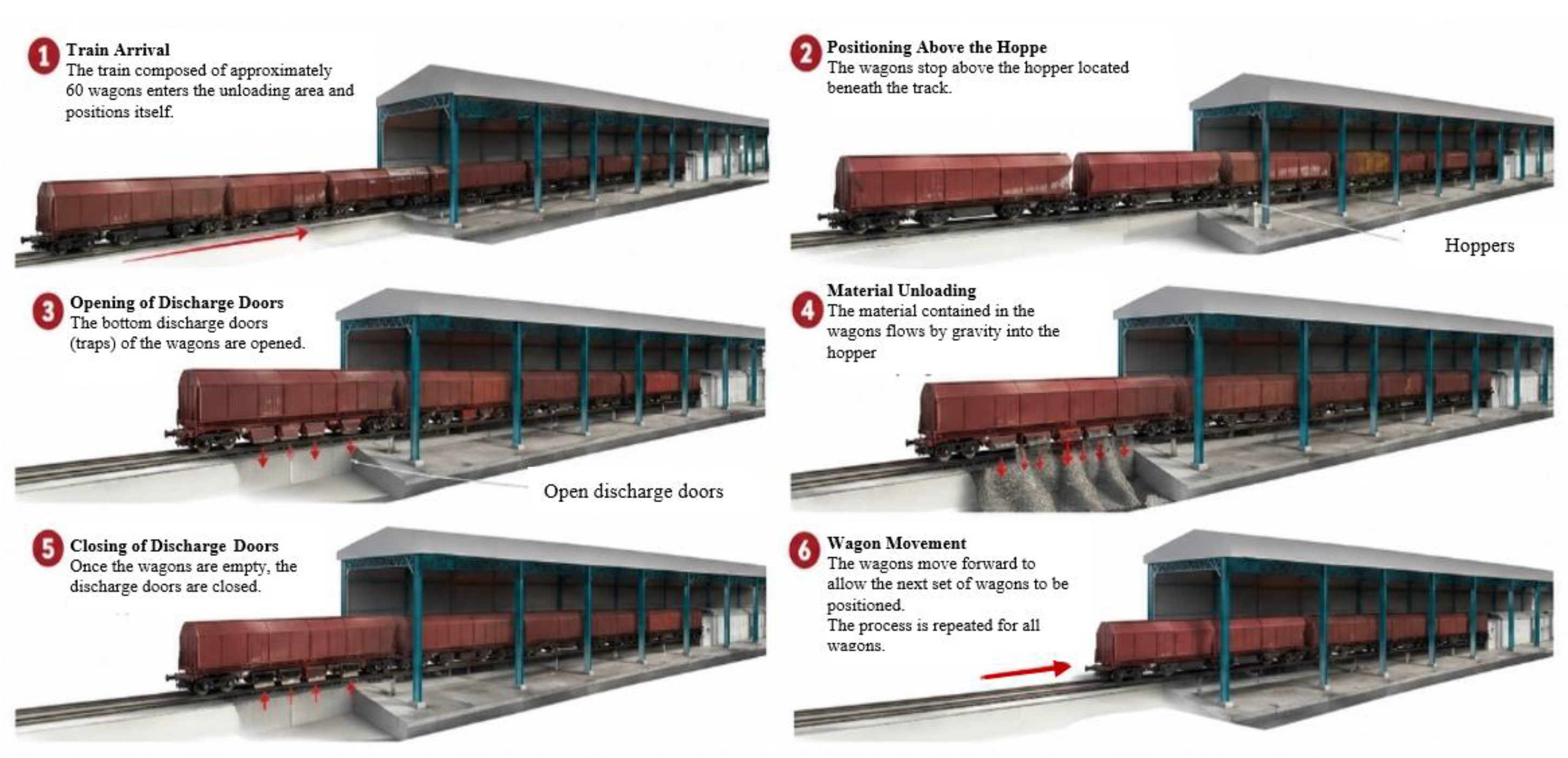
The rail wagon unloading process begins with the arrival of a train of approximately 60 wagons at the unloading shed, as shown in
Figure 1. The train is progressively positioned above the unloading hoppers, with each group of wagons placed over the hoppers in sequence. In this configuration, controlled and continuous unloading is achieved by processing batches of five wagons at a time.
Once the wagons are correctly positioned, the material flows by gravity into the hoppers through the bottom discharge doors of the wagons. After the batch has been emptied and the discharge doors have been closed, the train is moved forward to position the next five wagons above the hoppers. This sequence is repeated until all wagons have been unloaded. By doing this, throughput can be maximized while preserving operational safety and stability.
4.1. Arrival-Track Operational Configurations
In this study, the term “operational configuration” refers to the arrival-track allocation used for receiving, positioning and sequencing trains before and during unloading. Tracks 2, 3 and 4 are not considered simple categorical labels. Rather, they correspond to distinct operational configurations because they differ in their physical position relative to the unloading shed, routing logic, train positioning procedure and required shunting movements, as summarized in
Table 1.
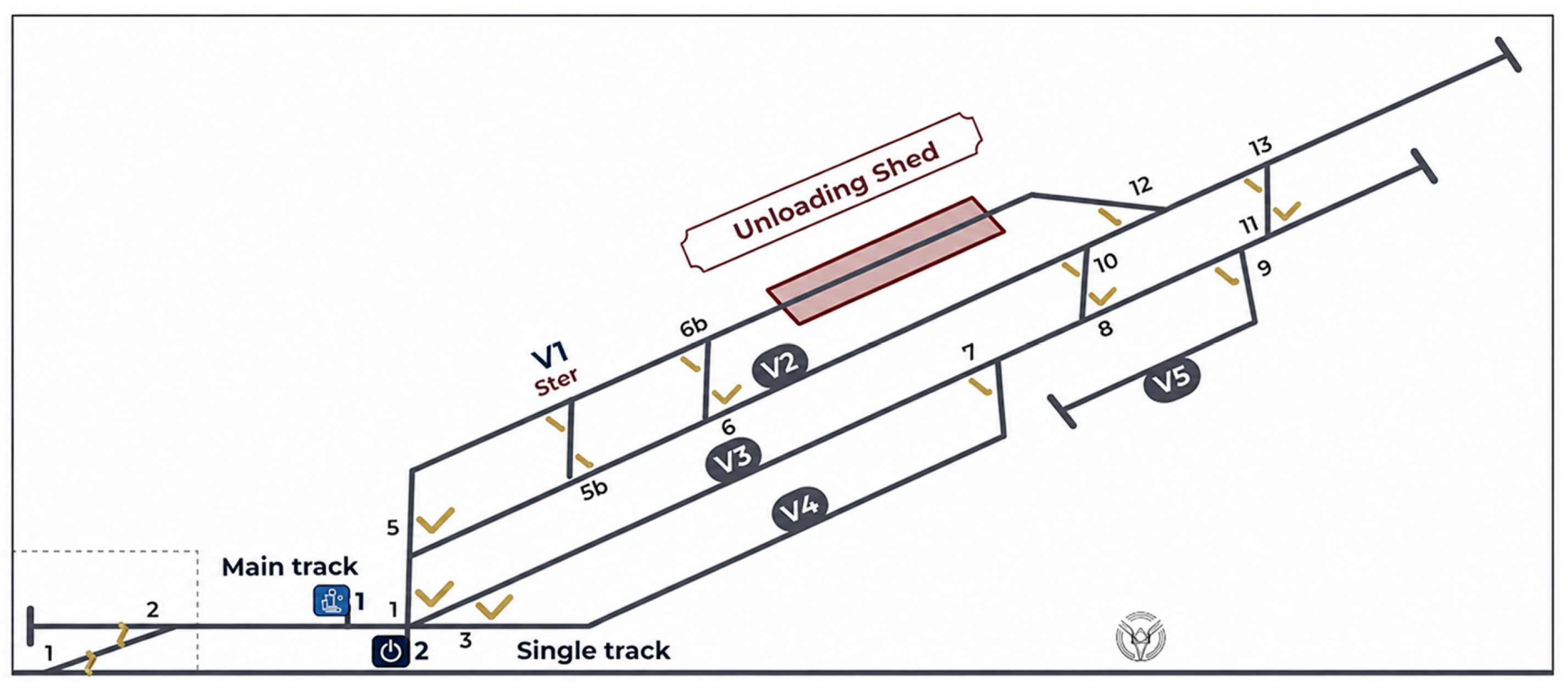
Track 2 is directly aligned with the unloading facility, as illustrated in
Figure 2, and generally allows more direct positioning of wagon batches under the unloading shed. By contrast, reception on Tracks 3 and 4 may require additional routing, temporary parking, repositioning through Track 2, or specific sequencing operations depending on Track 1 availability, incoming train priority, and departure constraints.
Therefore, the comparison between Tracks 2, 3 and 4 is interpreted as a comparison of track-based operational configurations, not as a comparison of nominal capacity levels. This clarification is important because the objective of the study is not to demonstrate that one track is universally superior but to show that planning decisions based only on throughput may overlook hidden effects related to losses, manoeuvres, stability and operator exposure.
Data Preprocessing and Variable Definitions
The dataset was built from field operational reports recorded in Excel by the operations team. These reports document each rail wagon unloading operation and include information on unloading duration, throughput (T/H), arrival track, tonnage, number of wagons at arrival, wagon-related losses, manoeuvre-related losses within wagon batches, manoeuvre losses between unloading lots, total losses, filling rate, and operational performance status.
Before conducting the statistical analysis, the dataset was checked for missing values, inconsistent entries, duplicate records, and abnormal observations. A double verification was performed with the operations team to validate the reliability of the recorded values. When an abnormal value was linked to a data-entry error, it was corrected after confirmation with the operators. When an observation corresponded to an exceptional field constraint that did not represent normal operating conditions, it was excluded from the statistical analysis.
The initial dataset contained 2156 operational observations. After preprocessing, 15 observations were excluded in total. Among them, 12 observations were removed because their throughput values were outside the accepted operational range used in this study, namely, T/H < 409 or T/H > 1947. Three additional observations were excluded because they contained incomplete or inconsistent information in key variables required for the analysis. Therefore, the final dataset used for the descriptive analysis contained 2141 observations, as summarized in
Table 2.
The track-level comparison was conducted on the subset of observations corresponding to valid records for Tracks 2, 3, and 4, since these tracks represent the arrival-track operational configurations analyzed in this study. Therefore, the number of observations used for the track-level statistical comparison is lower than the final global dataset size.
The OK/KO classification rules were explicitly defined to ensure reproducibility. Completeness status was classified as OK when the number of wagons at arrival was greater than or equal to 55, and KO otherwise. Filling status was classified as OK when the filling rate was greater than or equal to 0.98, and KO otherwise. Throughput-based performance status was classified as OK when throughput was greater than or equal to 1100 T/H, and KO otherwise. Importantly, the performance OK/KO variable used in the Chi-square analysis is based on the throughput threshold and is not directly defined by wagon-related losses.
After preprocessing, the final global dataset contained 2141 operational observations from 1 January 2025 to 19 January 2026. The unit of analysis is an unloading operation associated with a train/wagon set, and the main descriptive characteristics of the dataset are presented in
Table 3.
4.2. Operational Handling Exposure Proxy
To better align the decision framework with the human-centric perspective of Industry 5.0, an additional proxy indicator was introduced: the Operational Handling Exposure Proxy (OHEP). This indicator does not directly measure fatigue, ergonomic burden, or safety incidents. Rather, it provides an indirect operational measure of the time during which field operators are exposed to wagon handling, shunting coordination, batch positioning, and repeated unloading interventions.
The unloading operation involves four field operators and includes repeated activities such as wagon connection and disconnection, opening and closing of discharge mechanisms, manual support during wagon emptying, communication with the shunting team and repositioning of wagon batches. These activities are particularly relevant in a batch-based unloading process where wagons are progressively positioned under the unloading shed.
The OHEP was calculated using manoeuvre-related losses recorded in the operational dataset:
A normalized version was also calculated to account for differences in train completeness:
Since the unloading operation is performed by four operators, an additional operator-time exposure indicator can be derived as follows:
This proxy is used as a complementary human-centric indicator in the MCDM framework. It should be interpreted as an operational exposure proxy, not as a direct measurement of fatigue, safety risk or ergonomic workload. Direct human factor measurements should be integrated in future research.
4.3. Statistical Analysis Framework
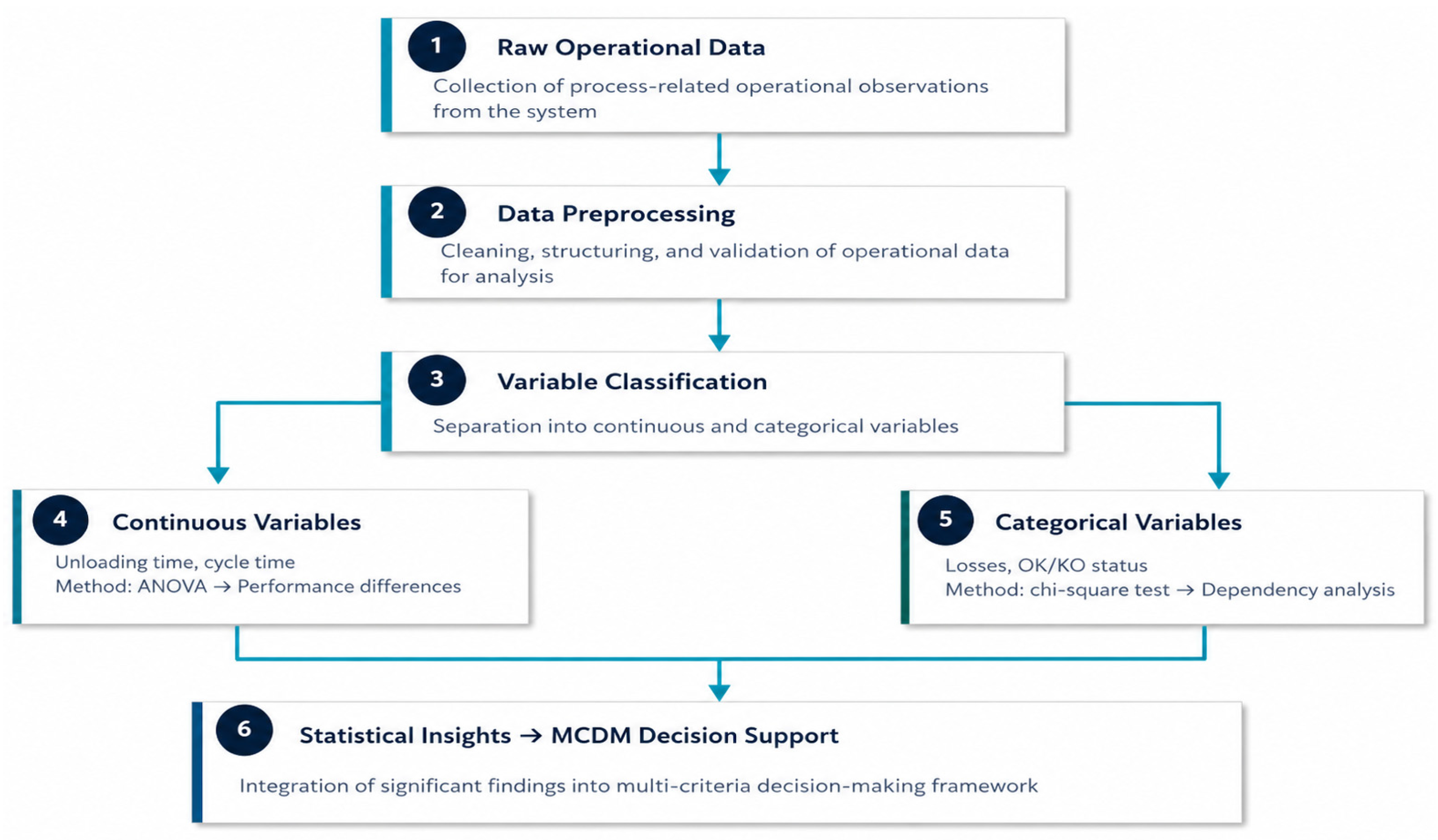
A structured statistical analysis framework was used to evaluate whether arrival-track operational configurations differ significantly in terms of unloading performance, loss structure and manoeuvre-related operator exposure, as shown in
Figure 3 The objective of this framework is to support the interpretation of operational differences using statistical evidence rather than relying only on descriptive comparisons.
First, an analysis of variance (ANOVA) is conducted to examine whether significant differences exist between the analyzed arrival-track operational configurations. ANOVA is a commonly used statistical test that compares group means and identifies significant differences that influence performance [
3].
Second, a Chi-square test is used to test the correlation between the wagon loss and the performance classification (OK/KO). This test is particularly suitable for analyzing the relationships between categorical variables and testing whether operational inefficiencies are statistically related to performance degradation [
26].
Finally, a model for making decisions based on multiple criteria is created using a weighted scoring method. The model brings together various important factors, such as operational performance, process variability, operator exposure, and system resilience. Each criterion is given a weight that shows how important it is compared to others, which allows for a full evaluation of each configuration [
8,
9].
The MCDM model evaluates each configuration based on its costs and benefits, as detailed in
Table 4. Higher values are better when benefit criteria are positive. For cost criteria, lower values are preferred. Each criterion is scored on a scale from 0 to 1 and then multiplied by a weight that indicates its importance to the operation.
The use of a structured statistical analysis framework ensures that the performance of rail wagon unloading is thoroughly evaluated. The objective of this framework is to discover significant differences between operating teams and to examine the correlation between operational losses and performance outcomes.
Statistical analysis involves two components that work together. The first step is to conduct an analysis of variance (ANOVA) to determine whether the differences in unloading performance between configurations are statistically significant. ANOVA is a common method for comparing group means and examining how categorical factors impact system performance when things are unstable [
3].
To determine whether there is a correlation between losses related to wagons and performance classification (OK/KO), a Chi-square test is employed. This test is particularly useful for examining the relationship between categorical variables and determining whether operational inefficiencies are randomly distributed or always linked to performance problems [
26].
By combining these statistical methods, you can examine both continuous and discrete parts of the data in a comprehensive manner. The Chi-square test examines the connection between loss occurrence and performance classification, while ANOVA focuses on differences in mean performance between configurations.
By combining these two complementary approaches, the statistical framework establishes a strong foundation for finding key performance drivers and confirming operational patterns that have been observed. By doing this, future decisions will be backed by data-driven and statistically significant insights, which is in line with the modern approach to industrial analytics [
10,
11].
4.4. Multi-Criteria Decision-Making (MCDM) Model
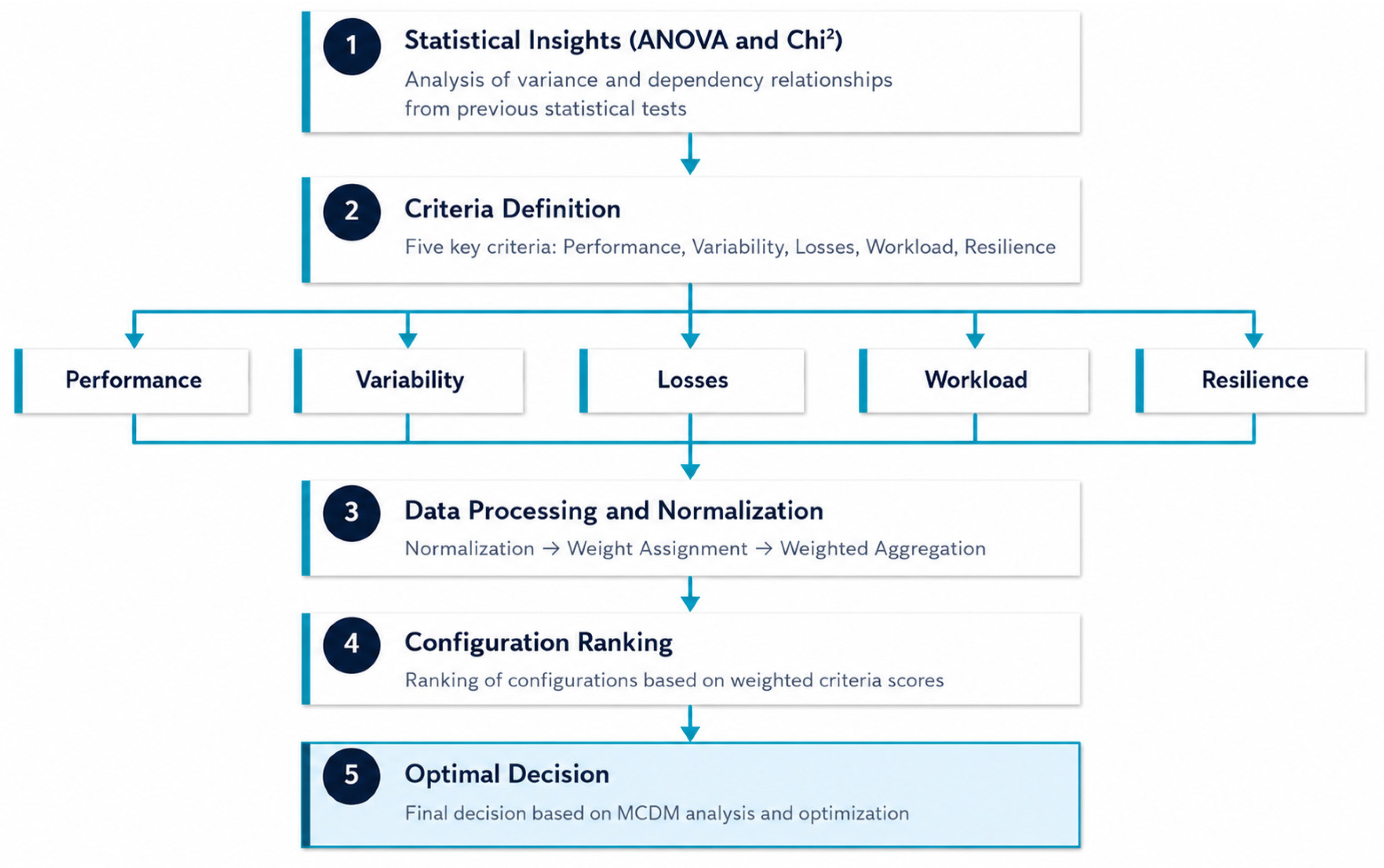
To find the optimal way to unload a rail wagon, a multi-criteria decision-making (MCDM) model is established after the statistical validation process, as shown in
Figure 4. The purpose of this model is to support decision-makers when there are multiple conflicting objectives, as commonly observed in industrial systems.
A weighted scoring system is utilized in the proposed MCDM model to combine multiple important performance dimensions into one evaluation framework. Operational performance (e.g., unloading time and throughput), process variability (e.g., variability in performance), wagon-related losses, operator exposure, and system resilience are all included in these dimensions.
A relative weight is given to each criterion based on how important it is to the decision-making process. This weighting scheme seeks to balance efficiency, stability, and sustainability, which is in accordance with the principles of Industry 5.0 that stress the importance of human-centered and resilient systems [
6,
7,
12].
The total score for each unloading configuration is the sum of the normalized criteria values, with each human workload criterion weighted according to its relative importance. The use of this method allows for the comparison of configurations in multiple ways and the identification of the trade-offs between performance and robustness.
MCDM methods are advantageous for industrial processes because they can manage difficult decision-making situations with conflicting objectives [
9,
15,
16]. Recent research suggests that decision-making frameworks should incorporate data-driven insights to improve adaptability and resilience in dynamic industrial settings [
17,
18].
By integrating statistical analysis and multi-criteria evaluation, the proposed methodology provides a complete decision support framework. By using this method, it is possible to find configurations that not only enhance performance but also reduce variability and operational risks. This makes the system more resilient and sustainable overall.
5. Results
The results are presented in four main steps: descriptive analysis, statistical comparison of arrival-track operational configurations, Chi-square analysis of performance classification, and MCDM ranking. The statistical analysis shows that the compared arrival-track operational configurations do not significantly differ in terms of direct unloading speed. However, they differ in loss structure, stability profile, and manoeuvre-related operator exposure. This distinction is important because it shows that throughput alone is not sufficient to support operational planning decisions.
The Chi-square analysis shows a statistically significant correlation between wagon losses and performance classification. Operations with higher wagon-related losses are more frequently associated with degraded performance status. However, this result should be interpreted as a statistical association rather than a causal relationship.
The results indicate that the compared arrival-track operational configurations do not significantly differ in direct unloading speed. However, they differ in their loss structure, stability profile and performance classification. This confirms that the arrival track should not be interpreted only as a physical reception point but also as an operational configuration affecting routing, manoeuvre exposure and process robustness.
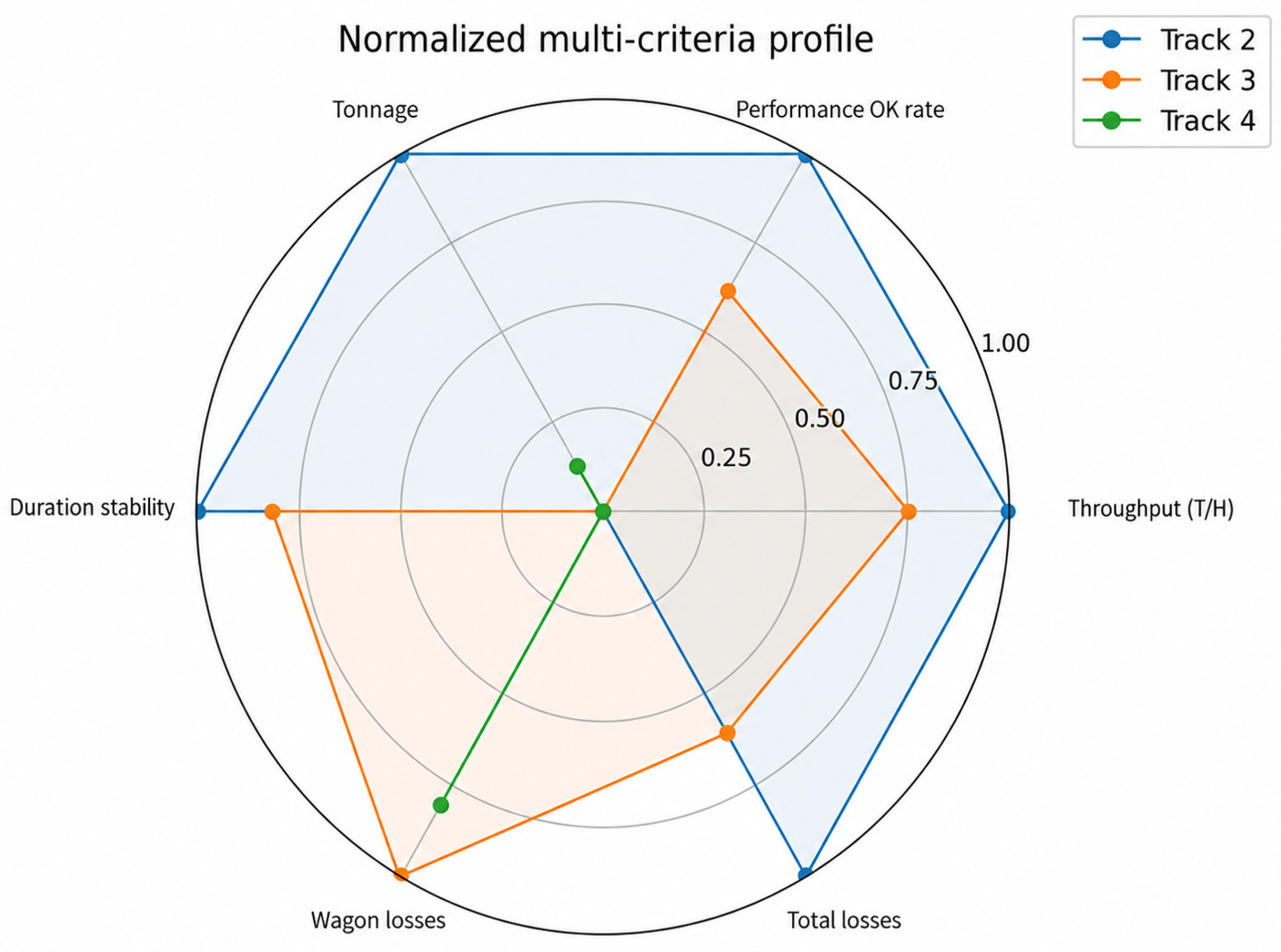
The MCDM results show that Track 2 obtains the highest overall score under the baseline weighting scheme. This does not mean that Track 2 is superior for every individual criterion. In particular, Track 3 presents lower mean wagon-related losses. However, Track 2 provides the best overall trade-off when throughput, OK rate, tonnage, stability, total losses and operational handling exposure are considered together.
5.1. Descriptive Results
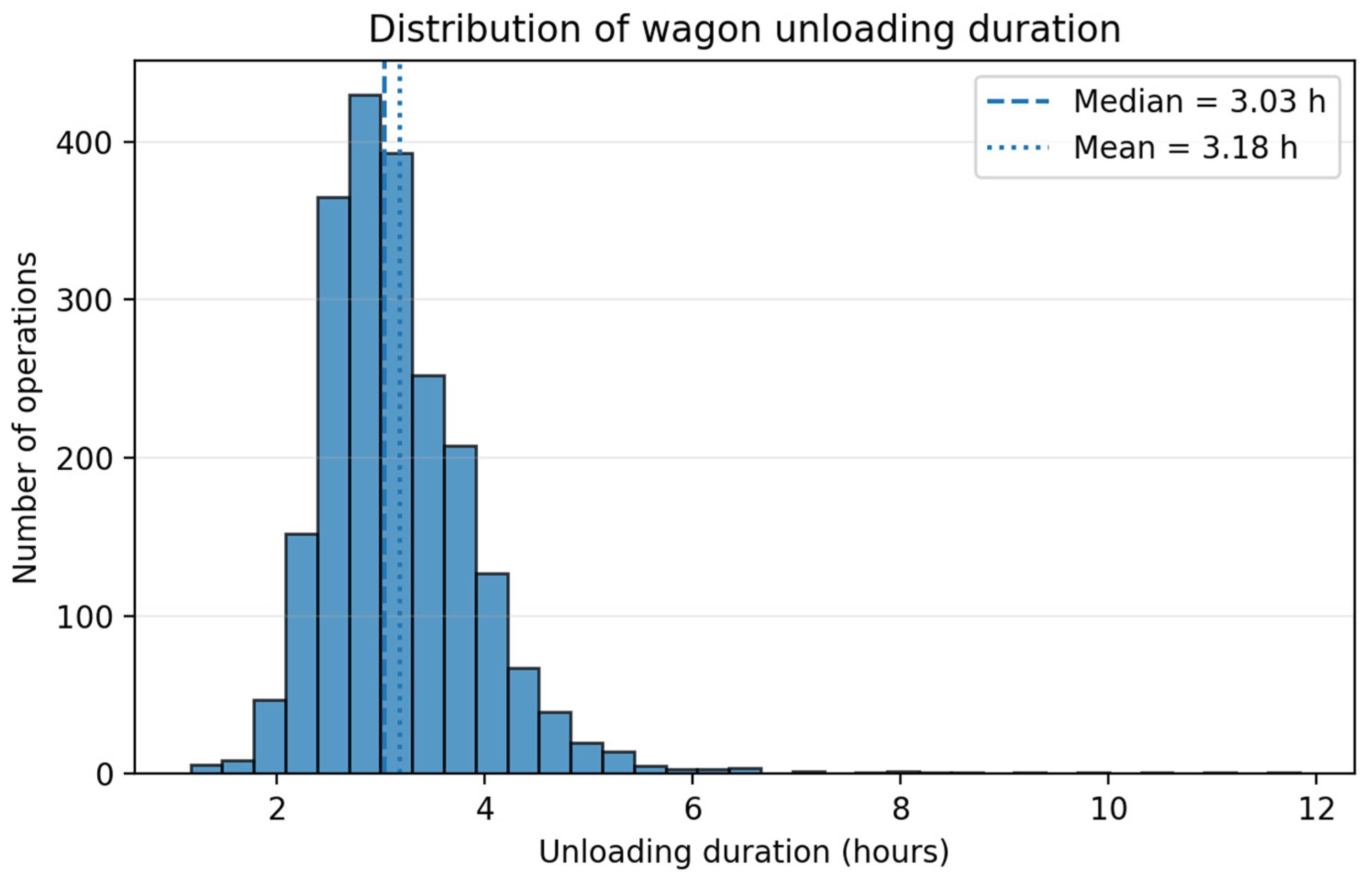
The process shows a mean unloading duration of 3.18 h and a median duration of 3.03 h, as illustrated in
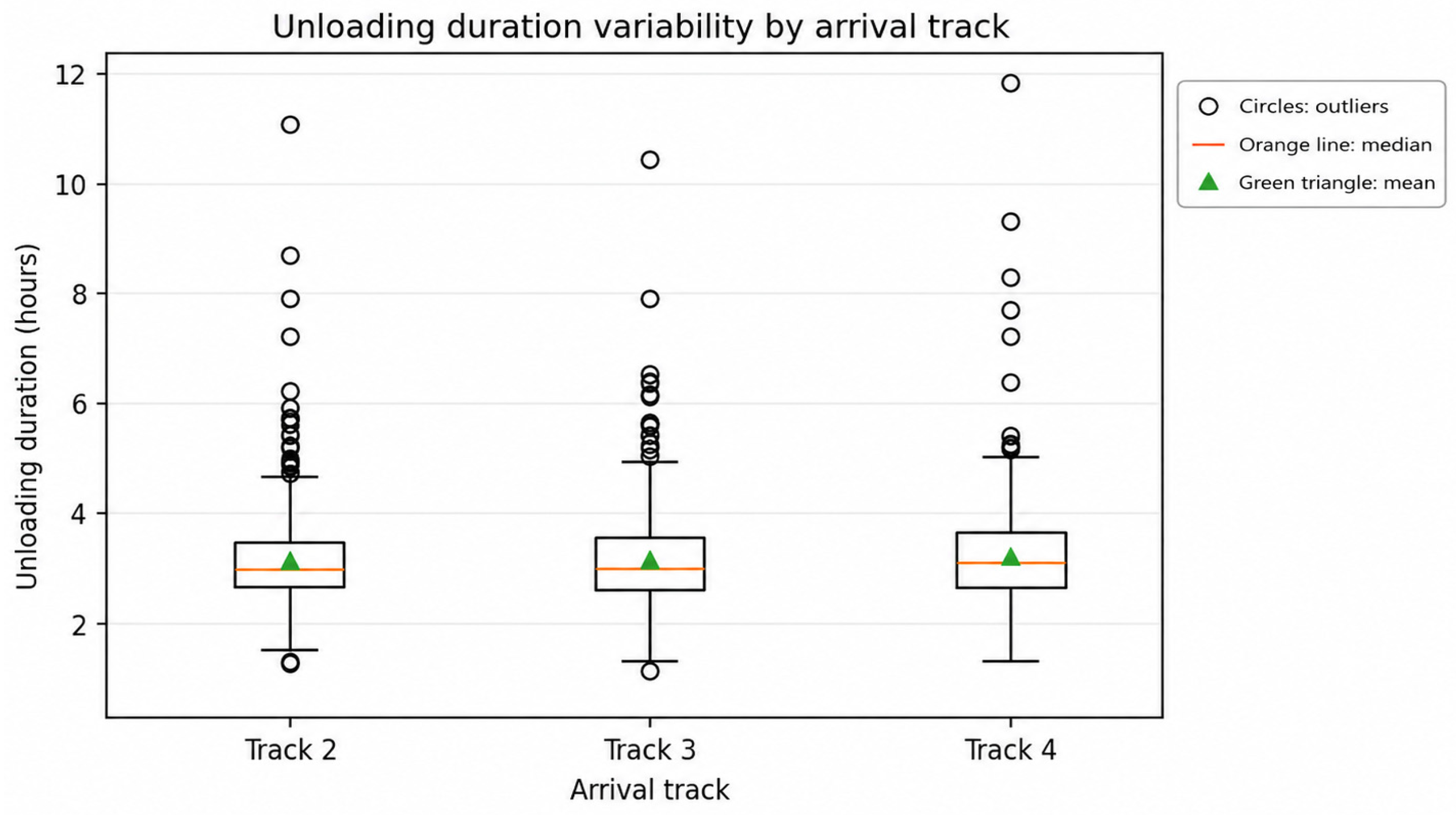
Figure 5. The mean throughput is 1111.2 T/H, while the median throughput is 1116.5 T/H. Wagon-related losses average 37.2 min, with a median of 35.0 min. The difference between the mean and median values indicates that a limited number of high-loss or long-duration observations influence the process average. The variability in unloading duration across arrival tracks is shown in
Figure 6.
5.2. Configuration-Level Performance
At the configuration level, the arrival tracks have similar average duration and throughput values, as shown in
Table 5. They differ in terms of stability, loss structure, and performance OK rate. Track 2 has the best performance OK rate and the best MCDM score. Track 4, on the other hand, shows lower overall robustness due to a weaker performance classification and higher total losses.
5.3. ANOVA Results
The ANOVA indicates that the average time to unload is not significantly different between arrival tracks (F = 1.201, p = 0.301). There are also no statistically significant differences in throughput (F = 1.326, p = 0.266). However, there are significant differences in wagon-related losses depending on the arrival track (F = 15.777, p < 0.001), and there are also significant differences in total losses (F = 5.227, p = 0.005). This result is important because the configurations are not only different in terms of speed but also in terms of how they handle loss and how well they work.
The robustness checks confirm that arrival-track operational configurations do not significantly differ in terms of unloading duration or throughput. The classical ANOVA, Welch ANOVA and Kruskal–Wallis tests all support this conclusion. Therefore, the arrival track should not be interpreted as a determinant of direct unloading speed.
By contrast, significant differences were observed for wagon-related losses, total losses and the Operational Handling Exposure Proxy (OHEP). However, the eta-squared values remain small, indicating that the statistical differences should be interpreted cautiously and in combination with operational relevance. These results suggest that the arrival-track configuration mainly affects the structure of losses and manoeuvre-related exposure rather than direct productivity alone.
Post Hoc Comparison
For the comparison of unloading duration and throughput, no significant differences were observed among Tracks 2, 3, and 4. This confirms that the arrival-track configuration does not show a substantial difference in direct unloading speed or direct productivity.
For total losses, the main significant pairwise difference was observed between Track 2 and Track 4, with Track 2 showing lower total losses. This suggests that Track 2 performs better than Track 4 in terms of overall loss reduction, although the effect size remains limited.
For the Operational Handling Exposure Proxy (OHEP) and OHEP per wagon, Track 2 differed significantly from Tracks 3 and 4, while Tracks 3 and 4 did not significantly differ from each other. This supports the interpretation that Track 2 is associated with lower manoeuvre-related operator exposure, even though it does not minimize wagon-related losses.
Overall, the post hoc results confirm that the differences between arrival-track operational configurations are not related to direct unloading speed but mainly to loss structure and manoeuvre-related exposure. These findings support the use of a multi-criteria decision-making framework rather than a decision based only on throughput.
Table 6 summarizes the main post hoc results in order to clarify which track pairs differ for each operational indicator,
Table 7 presents the robustness checks, and
Table 8 summarizes the main post hoc results to clarify which track pairs differ for each operational indicator.
5.4. Chi-Square Results
The Chi-square test confirms a statistically significant association between arrival track and performance status (χ
2 = 8.62, df = 2,
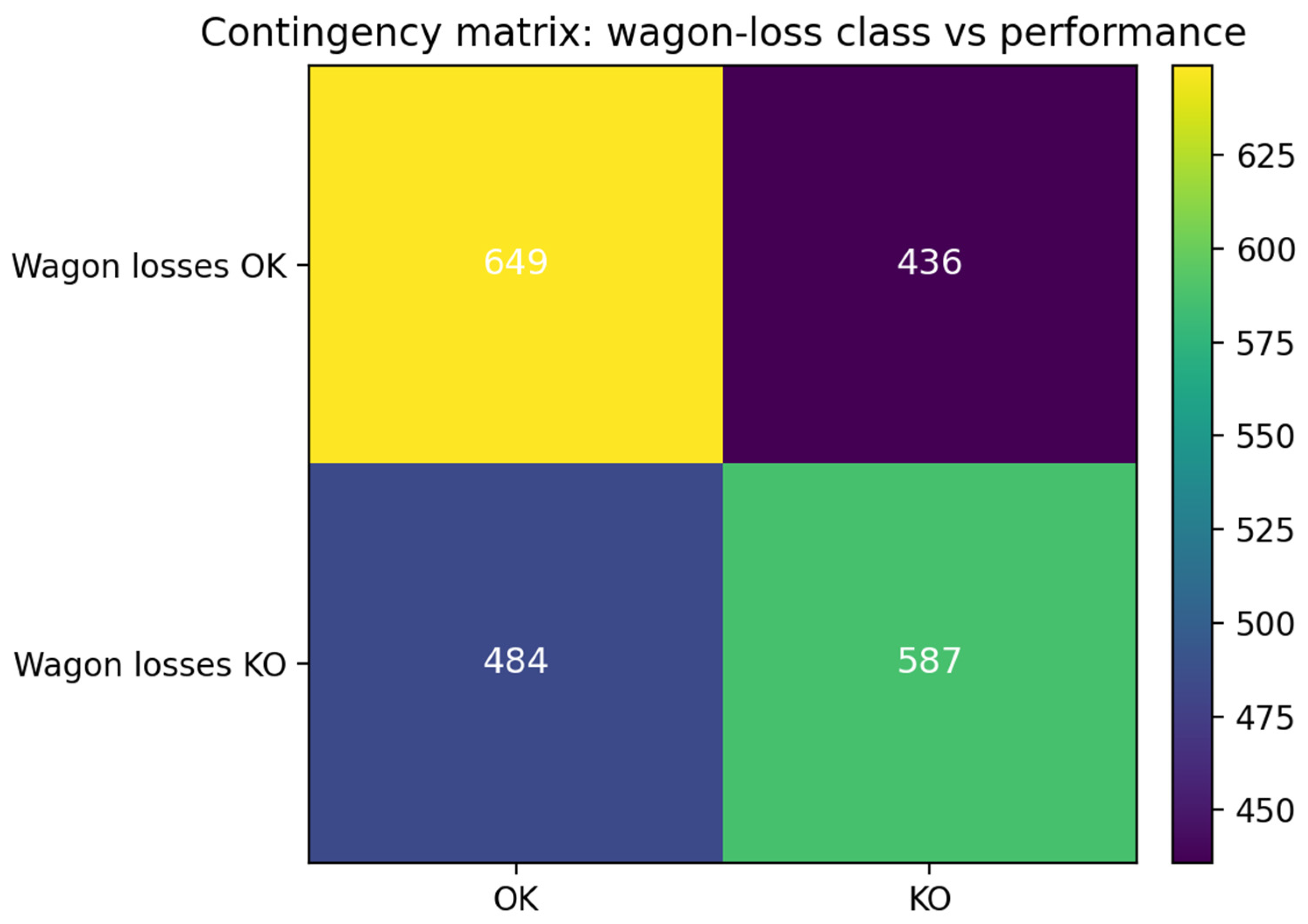
p = 0.013). More importantly, wagon-loss class is strongly associated with performance status (χ
2 = 45.64, df = 1,
p < 0.001), as summarized in
Table 9. Operations with wagon losses below or equal to the median are more frequently classified as OK, whereas high-loss operations are more frequently classified as KO, as illustrated in
Figure 7 and detailed in
Table 10.
5.5. MCDM Results
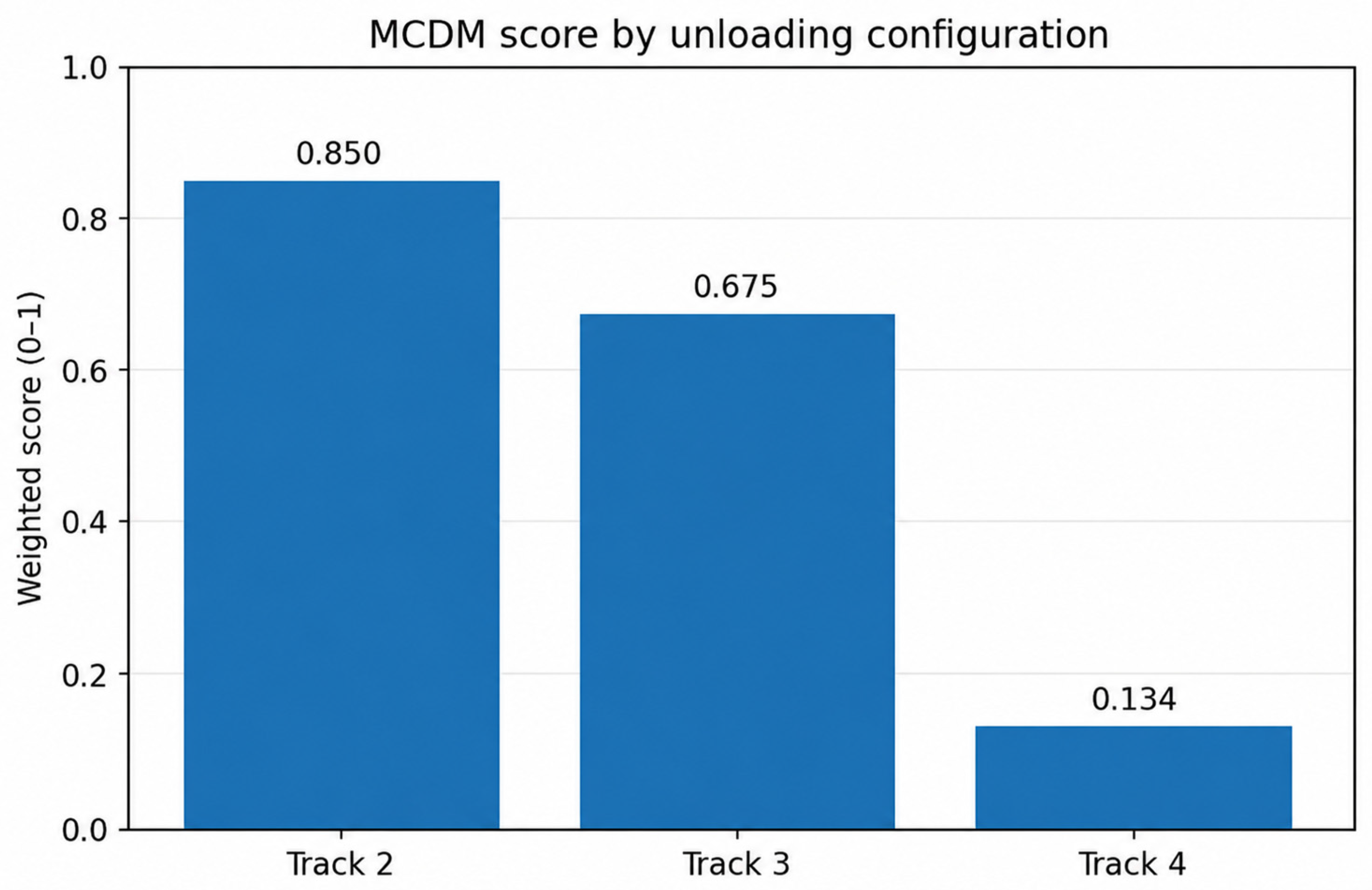
The weighted MCDM model integrates productivity, reliability, loss reduction, stability, and tonnage into a single decision support score. Track 2 obtains the highest overall score, with a value of 0.850. Track 3 ranks second with a score of 0.675, while Track 4 obtains the lowest score, with a value of 0.134, as summarized in
Table 11 and shown in
Figure 8. This ranking confirms that throughput alone does not determine the most balanced configuration. Rather, the final MCDM score results from the combined effect of throughput, performance OK rate, losses, stability, and operational handling exposure, as illustrated in
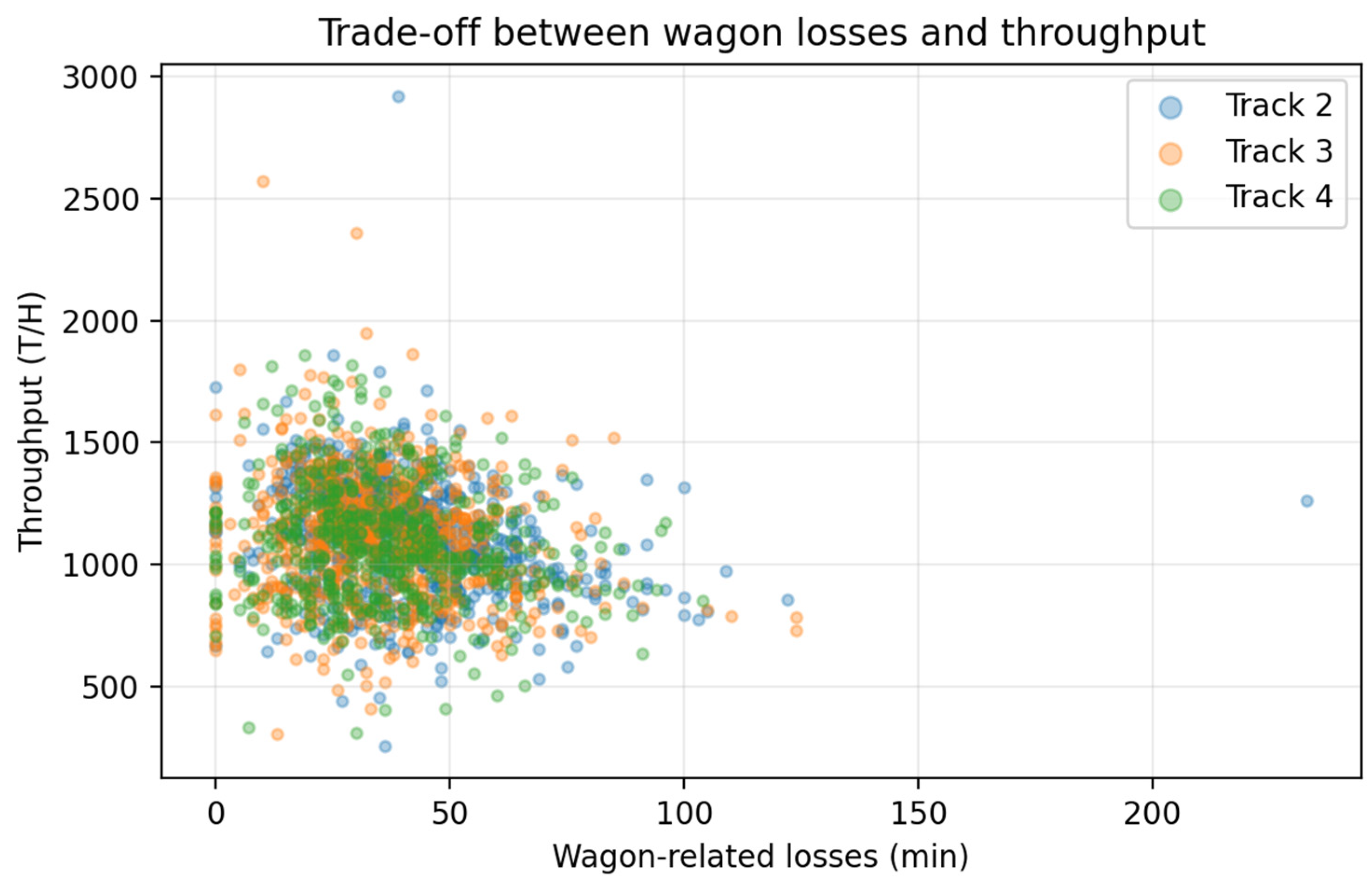
Figure 9. The relationship between wagon-related losses and throughput is further examined in
Figure 10.
6. Discussion
The findings of this study highlight the limitations of traditional optimization approaches that focus exclusively on maximizing throughput or tonnage. In the studied unloading system, the arrival-track configurations do not differ substantially in terms of direct unloading speed, as shown by the non-significant differences in duration and throughput. However, they differ in their loss structure, operational stability and handling exposure. This confirms that a decision based only on T/H may overlook hidden operational constraints that affect the robustness of the unloading process.
From an Industry 5.0-inspired decision-support perspective, these results emphasize the importance of balancing productivity with stability, loss structure and operator exposure. The addition of the Operational Handling Exposure Proxy (OHEP) helps operationalize the human-centric dimension by introducing a measurable proxy of manoeuvre-related operator exposure. This indicator does not directly measure fatigue, safety risk or ergonomic workload, but it provides an operational approximation of the time during which operators are exposed to wagon handling, shunting coordination and batch repositioning activities.
The results should therefore be interpreted as a decision-support contribution aligned with Industry 5.0 principles, rather than as a complete measurement of Industry 5.0 performance. Direct human factor and environmental indicators, such as fatigue, ergonomic burden, safety events, energy consumption and emissions, remain necessary for future research.
The addition of the OHEP helps operationalize this perspective by introducing a measurable proxy of operator exposure to manoeuvre-related activities. The results should therefore be interpreted as a decision-support contribution aligned with Industry 5.0 principles, rather than as a complete measurement of human-centric or sustainability performance.
These findings are consistent with previous research on industrial variability, which demonstrates that excessive system load often leads to instability and reduced efficiency. By integrating multiple criteria into the decision-making process, the proposed framework provides a more realistic representation of industrial operations.
Another important implication is that the best configuration depends on the decision priority selected by the decision-maker. Track 2 obtains the highest overall MCDM score under the baseline weighting scenario because it combines higher throughput, a higher OK performance rate and a better overall trade-off across the selected criteria. However, Track 2 should not be interpreted as the best option for every individual criterion. In particular, Track 3 presents lower mean wagon-related losses and may therefore be preferable when wagon-loss minimization becomes the dominant operational priority. This confirms the value of the MCDM framework as a decision support tool that makes trade-offs explicit rather than imposing a single universal ranking.
6.1. Contributions
Theoretically, the study extends sustainable industrial optimization by integrating statistical testing and MCDM in a real-life unloading context. It demonstrates that process performance should be interpreted as a multidimensional construct composed of speed, loss behavior, stability, and reliability. Methodologically, the study shows how operational scorecard data can be transformed into a decision model without requiring complex simulation infrastructure.
Practically, the results provide three actionable recommendations. First, management should monitor wagon-related losses as a leading indicator of performance deterioration. Second, configuration decisions should be supported by MCDM rather than by a single KPI. Third, Track 2 should be considered the reference configuration under the current weighting scheme, while Track 3 should be studied as a potential alternative when wagon-loss minimization becomes the dominant priority.
6.2. Limitations and Future Research
This study is based on one industrial dataset and one operational environment. The results are therefore context-specific and should be validated on additional periods, products, and operational conditions. The MCDM weights are expert-driven and can be adjusted according to strategic priorities. Future work should test sensitivity to alternative weighting schemes and integrate predictive models capable of estimating the probability of KO performance before unloading begins.
Future research can also extend the framework using machine learning. Potential applications include predicting unloading duration, detecting abnormal wagon-loss patterns, recommending arrival-track allocation, and building real-time dashboards for Industry 5.0 decision support.
Although the OHEP provides an operational proxy for operator exposure, it does not directly measure fatigue, ergonomic burden, safety events, energy consumption or carbon emissions. Future research should integrate direct human factor and environmental indicators to provide a more complete Industry 5.0 assessment.
7. Conclusions
This study proposed a data-driven multi-criteria decision support framework for evaluating rail wagon unloading operations in a real industrial context. The objective was not to optimize the process using a single productivity indicator but to provide a more balanced evaluation that considers throughput, tonnage, loss structure, operational stability and operator exposure.
The results show that arrival-track operational configurations do not significantly differ in terms of direct unloading speed since no significant differences were observed for unloading duration and throughput. However, significant differences were identified for loss-related variables, including wagon-related losses and total losses. This finding confirms that similar throughput levels may hide important operational differences related to manoeuvres, losses and process robustness.
The Chi-square analysis also shows a statistically significant association between wagon-loss class and throughput-based performance status. Since the performance OK/KO label is defined using the throughput threshold of 1100 T/H and not by wagon-related losses, this association is not circular. Nevertheless, the result should be interpreted as an association rather than a causal relationship. Additional explanatory variables and multivariate models would be required to establish causal effects.
From an Industry 5.0-inspired perspective, the revised framework integrates an Operational Handling Exposure Proxy (OHEP) to better represent the human-centric operational dimension. The OHEP provides an indirect measure of manoeuvre-related operator exposure during wagon handling, shunting coordination and batch repositioning. It does not directly measure fatigue, safety risk or ergonomic workload, but it helps move the analysis beyond productivity alone.
The MCDM results indicate that Track 2 obtains the highest overall score under the baseline weighting scenario. This does not mean that Track 2 is the best option for every individual criterion. In particular, Track 3 presents lower mean wagon-related losses and may therefore be preferable when wagon-loss minimization is the dominant operational priority. Track 2 should therefore be interpreted as the best overall trade-off under the selected weights, while Track 3 remains a relevant alternative under a loss-minimization strategy.
Overall, the study demonstrates that rail wagon unloading decisions should not be based only on T/H or tonnage. A combined statistical and MCDM approach allows decision-makers to identify hidden trade-offs between productivity, stability, losses and operational exposure. This supports more robust and transparent operational planning in complex industrial logistics systems.
Future research should extend the framework by integrating direct human factor and environmental indicators, such as fatigue, ergonomic burden, safety events, energy consumption and emissions. Further work should also include sensitivity analysis of MCDM weights, logistic regression or multivariate modelling, and predictive analytics to support real-time decision-making in Industry 5.0-compatible unloading systems.