1. Introduction
In recent years, digitalization and intelligent technologies have substantially reshaped how museums curate, present, and communicate exhibitions. The growing use of digital exhibitions, virtual reconstructions, and immersive interactive systems has shifted museum display practices from static, object-centred presentation towards experience-oriented communication that foregrounds visitor engagement, interactive participation, and meaning-making [
1]. For heritage institutions, this shift is not merely a technological transition; it also reconfigures how heritage interpretation, cultural memory, and visitor–heritage interaction are mediated in digital environments. However, current digital exhibition technologies remain limited in contextual generation, adaptive responsiveness, and personalised support. These limitations constrain their capacity to meet visitors’ expectations for highly immersive, interactive, and emotionally engaging digital experiences. Against this background, multimodal artificial intelligence-generated content (AIGC) offers a promising technological pathway for museum digital exhibitions. By integrating heterogeneous modalities, including text, images, speech, motion, and spatial information, multimodal AIGC can generate context-sensitive exhibition narratives, adaptive interpretation, personalised guidance, and responsive interactive feedback. In doing so, it may enhance narrative expression, perceived interaction quality, perceived immersion, and experiential depth in AIGC exhibitions [
2]. In particular, it remains unclear which technical and experiential attributes visitors perceive in AIGC exhibitions, how these attributes inform key subjective evaluations—including perceived ease of use, perceived usefulness, perceived immersion, perceived enjoyment, and perceived creativity of AIGC content—and how these evaluations translate into digital exhibition experience intention.
The Technology Acceptance Model (TAM) provides an appropriate theoretical framework for examining this issue. As one of the most widely applied models in technology adoption research, TAM has been extensively validated in contexts involving virtual reality, augmented reality, intelligent systems, and digital cultural experiences [
3,
4,
5,
6]. In the context of multimodal AIGC exhibitions, TAM offers a useful lens for understanding how visitors evaluate and respond to AI-enabled exhibition experiences. However, museum digital exhibitions involve both technological and cultural dimensions, and visitors’ behavioural intentions are not determined solely by functional cognition. Experiential factors, including perceived immersion, perceived creativity of AIGC content, perceived interaction quality, and perceived enjoyment, may also play an important role [
7,
8].
In this study, digital exhibition experience intention refers to visitors’ overall tendency to continue participating in, actively seek out, recommend, and follow AIGC exhibitions in the future. Previous studies have applied TAM to museum-related digital technologies and virtual exhibition environments. For example, Hammady et al. examined visitor acceptance of virtual museum technologies [
7], whereas Cheng et al. explored the influence of immersive experiences and technology-related perceptions on engagement with digital cultural experiences [
9]. Although these studies have advanced understanding of technology adoption in museum and heritage settings, they have primarily examined systems that deliver predefined content through relatively fixed interaction structures. Consequently, limited attention has been paid to AIGC-enabled exhibition environments, where content can be dynamically generated, personalized, and adapted in response to visitor interactions.
Despite increasing scholarly attention, three limitations remain in the current literature. First, although generative AI has recently attracted interest in digital museum research, existing studies have largely examined its effects on perceived value and adoption intention without systematically addressing how specific experiential attributes of AIGC shape visitors’ digital exhibition experience intention. For example, prior work indicates that adaptability, perceived benefits, and perceived costs influence users’ perceived value and adoption intentions; however, the mechanisms through which AIGC-generated immersion, content creativity, and interaction quality affect visitors’ cognitive and affective evaluations remain insufficiently explored [
10]. Second, TAM-based research in museum and cultural heritage contexts has predominantly focused on virtual reality, augmented reality, or mixed-reality technologies [
11]. These studies have established that perceived usefulness, perceived ease of use, enjoyment, immersion, and interactivity shape technology acceptance and behavioural intentions, yet they typically examine systems delivering predefined digital content with relatively fixed interaction structures. Third, existing empirical work has not adequately explained how the generative and adaptive characteristics of multimodal AIGC—such as dynamic content generation, personalized cultural interpretation, and real-time interactive feedback—jointly influence visitors’ experience intentions through cognitive and affective pathways. Together, these gaps indicate the need for a context-sensitive explanatory framework that captures the integrated cognitive, affective, and experiential mechanisms underpinning visitor engagement in AIGC-enabled museum exhibitions [
12].
Moreover, although TAM has been extended through constructs such as immersion, enjoyment, and interactivity across virtual reality, augmented reality, and smart tourism contexts, prior research has primarily examined systems characterized by predefined content and relatively fixed interaction structures. By contrast, multimodal AIGC-enabled museum exhibitions possess the capacity to generate content, adapt narratives, personalize cultural interpretation, and provide real-time feedback, thereby creating a distinct technology adoption context in which exhibition content is dynamically produced and experienced. Compared with previous museum-based TAM studies that focused on static digital exhibition systems or virtual museum environments, the present study examines how these generative and adaptive capabilities shape visitors’ cognitive evaluations, affective responses, and digital exhibition experience intention. Consequently, it contributes to a deeper understanding of the mechanisms through which visitors evaluate and engage with AIGC-enabled exhibitions.
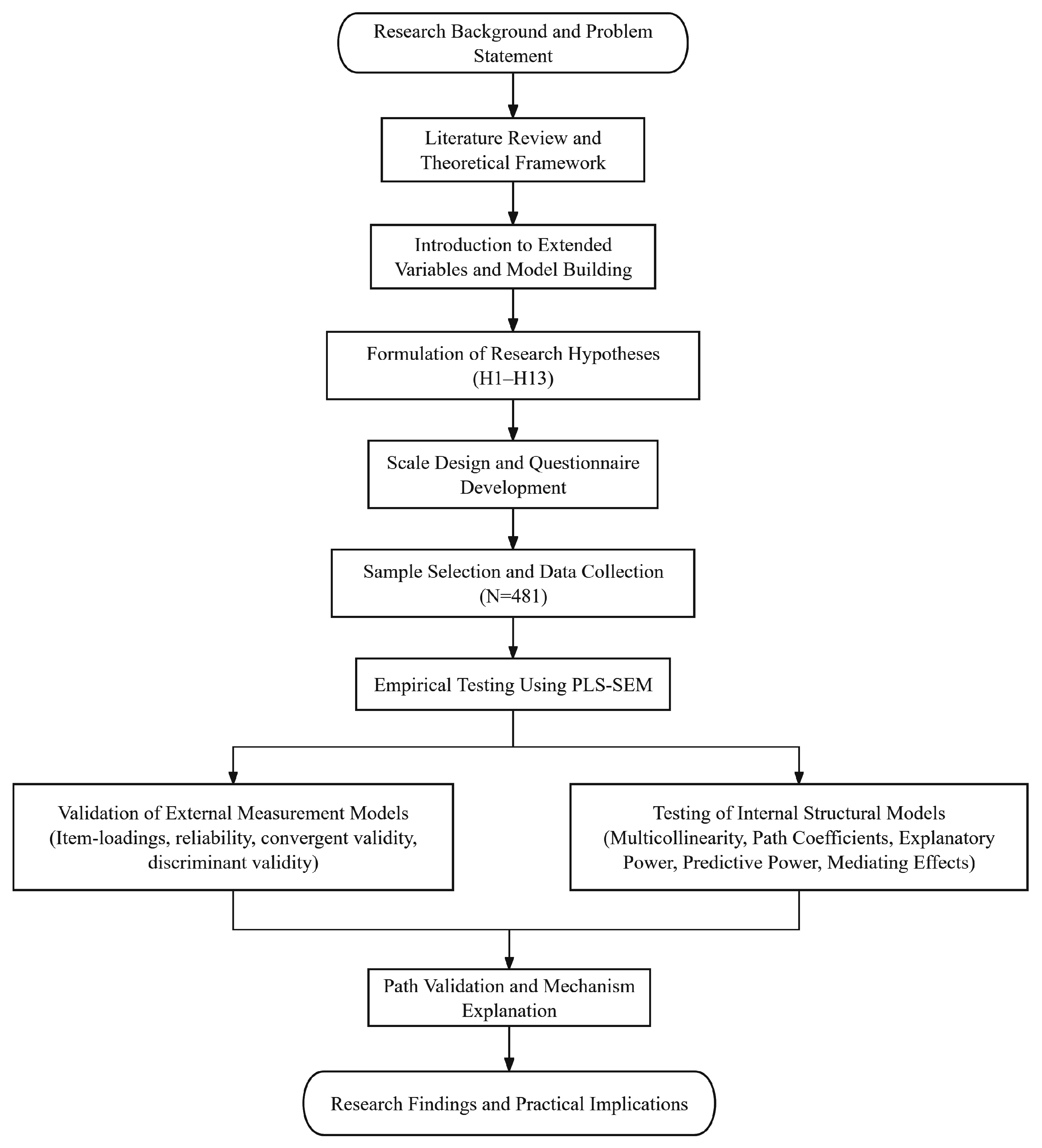
Building on this rationale, this study focuses on the application of multimodal AIGC in museum digital exhibitions. The overall research framework and analytical procedure are illustrated in
Figure 1. From a visitor-perception perspective, it identifies perceived immersion, perceived creativity of AIGC content, and perceived interaction quality as key technological and experiential attributes. By integrating AIGC technology acceptance and perceived enjoyment into TAM, this study develops a research model that links technological experience attributes, subjective evaluations, and digital exhibition experience intention. This study examines how the generative and adaptive capabilities of multimodal AIGC influence visitors’ cognitive and experiential evaluations within digital museum exhibitions. By focusing on characteristics that distinguish AIGC from conventional digital exhibition technologies, the study extends current understanding of technology acceptance in cultural heritage contexts and provides empirical evidence on the mechanisms through which AIGC shapes digital exhibition experience intention.
Specifically, it examines how AIGC technology acceptance influences visitors’ perceived ease of use, perceived usefulness, and digital exhibition experience intention; how perceived immersion, perceived creativity of AIGC content, and perceived interaction quality affect perceived enjoyment, perceived ease of use, and perceived usefulness; and how these factors jointly shape digital exhibition experience intention. Data were collected through a questionnaire survey, and the proposed hypotheses were empirically tested using partial least squares structural equation modelling (PLS-SEM).
To provide a clear overview of the manuscript, the paper is organized as follows.
Section 2 presents the theoretical background and develops the research model and hypotheses, with a focus on the Technology Acceptance Model (TAM) and its extensions for multimodal AIGC-enabled museum exhibitions.
Section 3 details the research methodology, including survey design, data collection procedures, and analytical techniques.
Section 4 reports the empirical results obtained through PLS-SEM, encompassing both measurement model assessment and structural model evaluation.
Section 5 interprets the findings in relation to existing literature, emphasizing theoretical contributions, practical implications, and the influence of experiential attributes on visitor engagement. Finally,
Section 6 concludes by summarizing key insights, discussing limitations, and outlining directions for future research.
2. Literature Review and Research Hypotheses
This section reviews the theoretical foundations and relevant literature on technology acceptance, digital museum exhibitions, and multimodal AIGC applications. Emphasis is placed on the cognitive and experiential factors that shape visitors’ responses to AI-enabled exhibition environments. Building on identified research gaps and theoretical insights, the study proposes a conceptual model and associated hypotheses to explain visitors’ digital exhibition experience intention in multimodal AIGC-enabled museum contexts.
2.1. Technology Acceptance Model in Museum Digital Exhibitions
The Technology Acceptance Model (TAM), grounded in the Theory of Reasoned Action, posits that perceived usefulness and perceived ease of use are core cognitive determinants of individuals’ attitudes toward technology and their intention to use it. Perceived usefulness reflects users’ evaluation of the extent to which a technology enhances task performance or outcomes, whereas perceived ease of use captures the perceived learning effort, operational complexity, and cognitive load associated with system use [
13,
14]. Extensive research demonstrates that when users perceive a technology as both valuable and easy to use, they are more likely to develop favorable attitudes, thereby strengthening behavioural intentions. Furthermore, perceived ease of use can enhance perceived usefulness by reducing cognitive load and improving interaction fluency. TAM has been widely applied across digital technologies, including virtual reality (VR), augmented reality (AR), and intelligent systems. As research has progressed, additional constructs—such as social influence, self-efficacy, perceived behavioural control, technology anxiety, and hedonic motivation—have been integrated to increase explanatory power [
15,
16].
However, in the context of museum digital exhibitions, recent studies indicate that traditional TAM constructs alone may not fully capture visitor engagement mechanisms. For instance, Liu and He show that experiential factors such as playfulness and challenge significantly influence usage intentions in digital museum contexts, suggesting that motivational and affective constructs complement core TAM variables [
10]. Li et al. report that wearable AR acceptance among museum visitors is affected not only by perceived utility and ease of use but also by technology readiness and facilitating conditions, underscoring the role of environmental and contextual factors in cultural technology adoption [
17]. A systematic review of VR adoption in museums confirms TAM’s widespread use, but consistently identifies experiential and affective constructs—such as immersion, enjoyment, and information quality—as complementary predictors of behavioural intention. Additional studies further demonstrate that media richness, perceived enjoyment, and expectation confirmation moderate TAM relationships, while interactivity and perceived immersion significantly influence intrinsic beliefs and behavioural intentions [
18]. Collectively, these findings highlight the limitations of functional beliefs alone in explaining visitor behaviour and indicate the need to integrate cognitive, affective, and experiential dimensions into TAM [
14,
19]. Motivated by these insights, the present study extends TAM by incorporating AIGC technology acceptance, perceived immersion, perceived creativity, perceived interaction quality, and perceived enjoyment alongside core TAM constructs, providing a comprehensive framework to explain digital exhibition experience intention in multimodal AIGC-enabled museum contexts. [
20].
Building on this rationale, this study adopts TAM as its theoretical framework. While retaining its two core cognitive constructs—perceived usefulness and perceived ease of use—the model incorporates AIGC technology acceptance, perceived immersion, perceived creativity of AIGC content, perceived interaction quality, and perceived enjoyment to examine the mechanisms through which visitors’ digital exhibition experience intention is formed in multimodal AIGC exhibitions. Based on the above literature review and theoretical background, the following section develops the research hypotheses and conceptual model.
2.2. Hypothesis Development
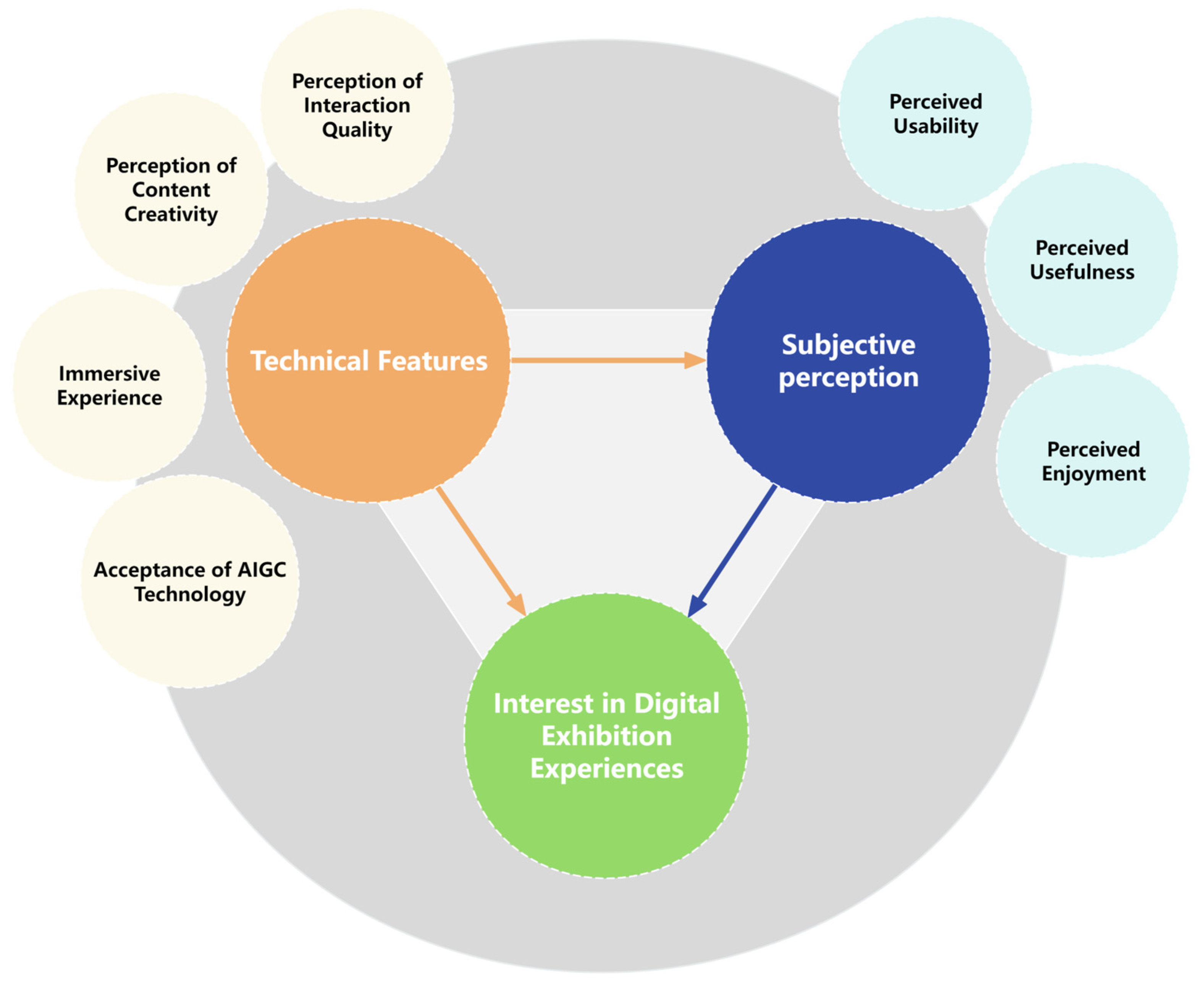
In the context of multimodal AIGC integration in museum digital exhibitions, visitors’ digital exhibition experience intention is shaped by AIGC technology acceptance, technological and experiential attributes, and subjective cognitive evaluations. AIGC technology acceptance influences visitors’ understanding and assessment of specific exhibition systems, whereas perceived immersion, perceived creativity of AIGC content, and perceived interaction quality further affect digital exhibition experience intention through perceived usefulness, perceived ease of use, and perceived enjoyment. The multi-path mechanism through which multimodal AIGC influences digital exhibition experience intention is illustrated in
Figure 2.
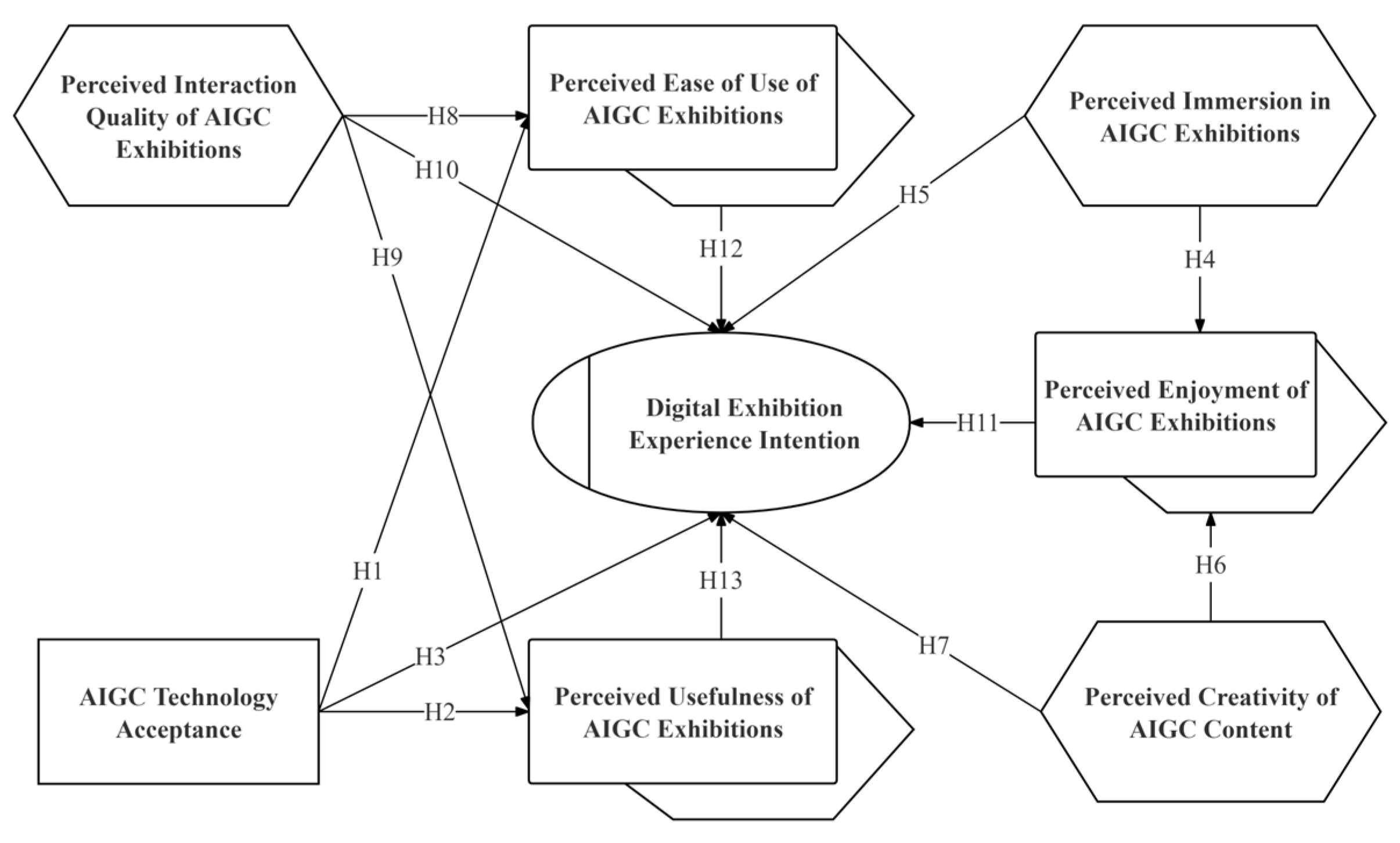
Figure 3 presents the proposed research model, which integrates extended TAM variables, core TAM constructs, and affective evaluation to explain visitors’ digital exhibition experience intention in multimodal AIGC-enabled museum exhibitions. Accordingly, this study proposes the following hypotheses.
To facilitate interpretation of the conceptual model,
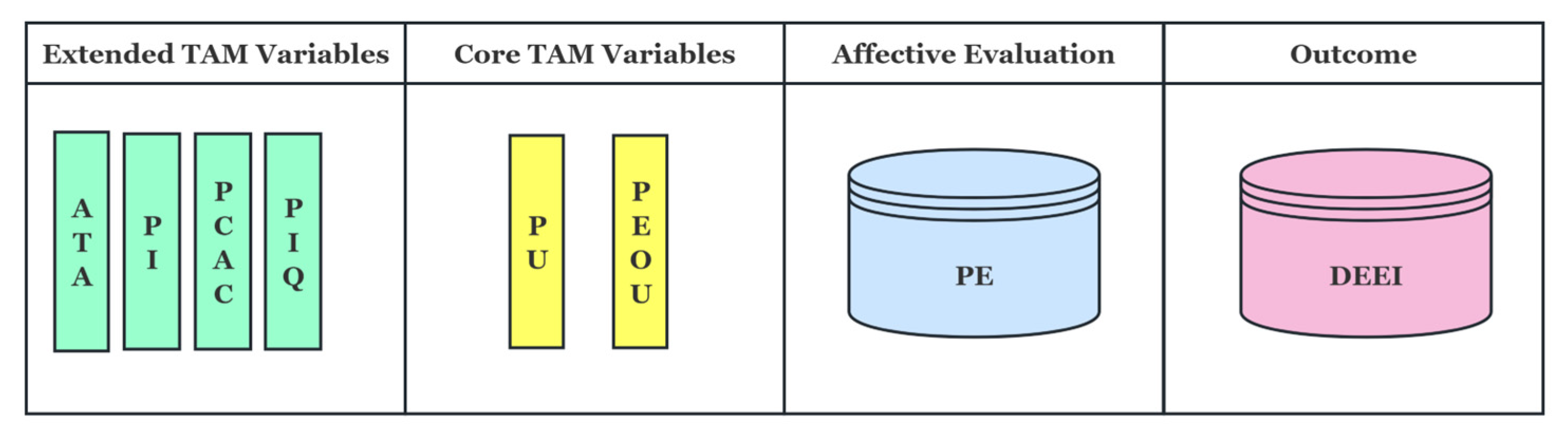
Figure 3 summarizes the study constructs and their proposed relationships. The model comprises four categories of variables: extended TAM constructs, including AIGC Technology Acceptance (ATA), Perceived Immersion in AIGC Exhibitions (PI), Perceived Creativity of AIGC Content (PCAC), and Perceived Interaction Quality of AIGC Exhibitions (PIQ); core TAM constructs, including Perceived Usefulness of AIGC Exhibitions (PU) and Perceived Ease of Use of AIGC Exhibitions (PEOU); affective evaluation, represented by Perceived Enjoyment of AIGC Exhibitions (PE); and the outcome variable, Digital Exhibition Experience Intention (DEEI). Together, these constructs capture the technological, cognitive, affective, and experiential dimensions underlying visitors’ intentions to engage with AIGC-enabled digital exhibitions.
2.2.1. AIGC Technology Acceptance
This study defines AIGC technology acceptance as visitors’ general attitude towards, and overall willingness to accept, AI technologies in the context of digital exhibitions. It encompasses the evaluation of potential benefits and usage costs, as well as broader assessments of reliability, transparency, responsibility boundaries, and social implications [
21]. Unlike perceived usefulness and perceived ease of use, which emerge through interaction with specific systems, AIGC technology acceptance captures individuals’ pre-existing attitudes towards AI technologies before they engage with a particular exhibition system.
Compared with conventional information technologies, AIGC is characterized by greater autonomy and opacity, making its operational logic less transparent to users. As a result, acceptance of AIGC is more strongly shaped by trust, risk perception, algorithmic transparency, and value alignment [
22]. Users’ overall attitudes towards AIGC depend not only on its functional performance but also on social and ethical considerations, including fairness, privacy protection, and responsibility boundaries [
23]. Thus, AIGC technology acceptance reflects an integrated judgement of the benefits, risks, and normative implications associated with AI technologies.
From a mechanistic perspective, AIGC technology acceptance functions as a cognitive antecedent to actual interaction. It influences how visitors interpret subsequent system experiences and shapes their evaluations of operational complexity, functional value, and participatory relevance. When visitors hold more favourable attitudes towards AIGC, they are more likely to perceive AI-powered digital exhibitions as valuable, accessible, and worthy of continued engagement. Such attitudes may enhance perceived ease of use and perceived usefulness, thereby increasing digital exhibition experience intention. Conversely, when visitors perceive AIGC as uncertain or risky, they may regard the same exhibition system as complex, difficult to use, or insufficiently valuable to justify continued engagement [
24].
Based on this analysis, AIGC technology acceptance may influence visitors’ perceived ease of use of AI-powered digital exhibitions by shaping their expectations of operational complexity. It may also affect perceived usefulness by informing their evaluation of functional value and the balance between potential benefits and risks. These perceptions may, in turn, shape visitors’ digital exhibition experience intention. Therefore, the following hypotheses are proposed:
H1. AIGC technology acceptance positively influences visitors’ perceived ease of use of AI-powered digital exhibitions.
H2. AIGC technology acceptance positively influences visitors’ perceived usefulness of AI-powered digital exhibitions.
H3. AIGC technology acceptance positively influences visitors’ willingness to experience digital exhibitions.
2.2.2. Perceived Immersion in AIGC Exhibitions
This study defines perceived immersion in AIGC exhibitions as the subjective immersive experience that visitors form when engaging with AI-driven digital exhibitions. It is reflected in situational integration, attentional engagement, emotional involvement, and psychological presence [
25]. Existing research commonly conceptualizes immersion as an experiential state elicited by the characteristics of a media environment. In this context, immersion is associated with environmental affordances such as a sense of envelopment, sensory richness, and coordinated interactive feedback, whereas presence refers to an individual’s subjective sense of psychologically entering a mediated environment. Although conceptually distinct, immersion and presence are closely related and jointly constitute the experiential basis of digital exhibition engagement [
26]. In AI-enabled digital exhibitions, multimodal elements such as image reconstruction, semantic generation, spatial audio, and scenario simulation are integrated into a coherent narrative and interactive structure. This integration creates an exhibition environment with stronger envelopment and participatory affordances, thereby enhancing visitors’ presence, concentration, and psychological engagement.
From the perspective of experiential psychology, immersion is closely associated with enjoyment. Flow theory suggests that when individuals achieve sustained attention and deep engagement in an activity, the activity itself is more likely to generate pleasure and fulfilment [
27]. Although immersion does not necessarily produce flow, it is widely regarded as an important condition for eliciting enjoyment and perceived experiential value. Research on the experience economy also shows that immersive experiences, by enabling individuals to engage deeply with a specific context, can enhance satisfaction and willingness to participate again [
28]. In museum and cultural heritage studies, immersive technologies such as VR and AR have been shown to strengthen visitors’ presence, engagement, and revisit intention. Immersive experiences have also been found to positively affect enjoyment and behavioural intention [
29].
In multimodal AIGC exhibition contexts, perceived immersion may further influence visitors’ emotional evaluations and participation decisions. Immersive narrative structures and spatial atmospheres can strengthen presence and attentional focus, making visitors more likely to experience enjoyment during the exhibition. Moreover, deeper situational engagement may increase visitors’ willingness to remain longer, participate more actively, and seek subsequent digital exhibition experiences. Thus, perceived immersion in AIGC exhibitions may indirectly influence digital exhibition experience intention by enhancing perceived enjoyment of AIGC exhibitions, while also directly strengthening visitors’ intention to continue participating. Accordingly, this study proposes the following hypotheses:
H4. Perceived immersion in AIGC exhibitions positively influences visitors’ perceived enjoyment of AIGC exhibitions.
H5. Perceived immersion in AIGC exhibitions positively influences visitors’ digital exhibition experience intention.
2.2.3. Perceived Creativity of AIGC Content
This study defines perceived creativity of AIGC content as visitors’ overall evaluation of AIGC-generated exhibition content in terms of novelty, expressive distinctiveness, and contextual relevance [
30]. In creativity research, novelty and appropriateness are generally regarded as two core dimensions of creativity evaluation. Novelty refers to the extent to which forms of expression and content organization depart from established conventions, whereas appropriateness concerns whether the content aligns with specific contexts, task objectives, and cultural settings [
31,
32]. In digital exhibitions, visitors evaluate not only whether AIGC content provides visual and narrative freshness, but also whether it supports their understanding of exhibits, historical contexts, and cultural meanings. AIGC content is more likely to be perceived as creative when it combines novelty with contextual fit. Perceived creativity of AIGC content is important because it directly shapes visitors’ emotional responses and value judgements. Previous research indicates that novel forms of content expression can stimulate curiosity, wonder, and exploratory motivation, thereby enhancing perceived enjoyment of AIGC exhibitions and attentional engagement [
33].
At the same time, creative expression with strong contextual relevance is more likely to be understood and accepted by visitors, further strengthening their evaluation of content value [
34]. In museum digital exhibitions, creativity is not limited to formal novelty. It also depends on whether the content organizes cultural information in an engaging and explanatory manner, thereby establishing meaningful connections with visitors. In multimodal AIGC exhibitions, perceived creativity of AIGC content is primarily reflected in two aspects. First, AIGC can enhance the expressive forms and narrative styles of exhibition content through image reconstruction, style transfer, and cross-media storytelling, thereby increasing the novelty and distinctiveness of the content [
35]. Second, when generated content connects with visitors’ knowledge, prior experience, cognitive pathways, and emotional expectations, it is more likely to be perceived as meaningful cultural expression. Visitors may therefore experience stronger aesthetic and emotional enjoyment and develop greater willingness to continue exploring and participating [
36].
Mechanistically, perceived creativity of AIGC content may enhance visitors’ perceived enjoyment of AIGC exhibitions by increasing novelty, interest, and emotional engagement. It may also strengthen digital exhibition experience intention by reinforcing the content’s sustained appeal and interpretive value. Thus, when visitors perceive AIGC content as more creative, they are more likely to derive enjoyment from the experience and regard the exhibition as a cultural experience worthy of repeated engagement and continued attention. Accordingly, this study proposes the following hypotheses:
H6. Perceived creativity of AIGC content positively influences visitors’ perceived enjoyment of AIGC exhibitions.
H7. Perceived creativity of AIGC content positively influences visitors’ digital exhibition experience intention.
2.2.4. Perceived Interaction Quality of AIGC Exhibitions
This study defines perceived interaction quality of AIGC exhibitions as visitors’ overall evaluation of system feedback, response relevance, and interaction controllability during digital exhibition engagement [
37]. This construct primarily concerns whether system feedback is timely, responses are clear, and the interaction process is controllable. Compared with interactivity in a general sense, perceived interaction quality of AIGC exhibitions places greater emphasis on visitors’ subjective evaluations of the stability, fluency, and relevance of interactive processes. Interactivity is a key attribute of digital media experiences and is closely associated with user control, two-way feedback, and temporal responsiveness [
38]. In museum digital exhibitions, interaction quality directly affects visitors’ understanding of system rules and interaction pathways. In AIGC-supported digital exhibitions, natural language interaction, gesture control, and context-aware interaction embed visitor engagement more deeply within verbal communication, bodily movement, and spatial navigation. Under these conditions, the system’s capacity to respond promptly to visitor input, maintain coherent feedback, and provide clear interaction pathways becomes critical to the exhibition experience.
Perceived interaction quality of AIGC exhibitions further shapes visitors’ evaluations of operational processes and content comprehension. Timely, clear, and predictable feedback can enhance users’ sense of control and interaction engagement [
39,
40]. Research on virtual reality and presence indicates that interactivity and media vividness are key prerequisites for telepresence, substantially influencing individuals’ sense of presence, experiential engagement, and subsequent evaluations [
41,
42]. In digital exhibitions, high interaction quality not only reduces operational burden and enhances perceived ease of use of AIGC exhibitions, but also supports visitors’ acquisition and interpretation of exhibition information, thereby improving perceived usefulness of AIGC exhibitions. Moreover, a smooth and stable interaction process can strengthen visitors’ intention to remain engaged, making them more likely to continue experiencing such digital exhibitions [
43].
Based on this analysis, perceived interaction quality of AIGC exhibitions may influence visitors’ evaluations of operational processes and content comprehension, thereby affecting perceived ease of use of AIGC exhibitions, perceived usefulness of AIGC exhibitions, and digital exhibition experience intention. Accordingly, this study proposes the following hypotheses:
H8. Perceived interaction quality of AIGC exhibitions positively influences visitors’ perceived ease of use of AIGC exhibitions.
H9. Perceived interaction quality of AIGC exhibitions positively influences visitors’ perceived usefulness of AIGC exhibitions.
H10. Perceived interaction quality of AIGC exhibitions positively influences visitors’ digital exhibition experience intention.
2.2.5. Perceived Enjoyment of AIGC Exhibitions
This study defines perceived enjoyment of AIGC exhibitions as the subjective pleasure, aesthetic satisfaction, and positive emotional experience that visitors derive from interacting with AI-powered digital exhibitions. In technology acceptance research, perceived enjoyment is generally regarded as an intrinsic motivational perception that captures the pleasure, interest, and emotional satisfaction individuals experience during technology use [
44]. Whereas perceived usefulness concerns judgements of functional value and perceived immersion emphasizes presence and engagement, perceived enjoyment of AIGC exhibitions reflects visitors’ emotional evaluation of the experiential process. It can therefore be understood as visitors’ positive subjective appraisal of the quality of the digital exhibition experience.
In digital contexts characterized by experiential consumption, perceived enjoyment has a consistent effect on behavioural intention. For example, the continued use of hedonic systems depends strongly on the pleasure, satisfaction, and positive emotions that users derive from interaction [
45]. This logic also applies to digital exhibitions. Although museum digital exhibitions support knowledge dissemination and cultural interpretation, visitor participation is largely voluntary, and continued engagement depends substantially on whether the experience is engaging and emotionally rewarding. Perceived enjoyment of AIGC exhibitions is therefore both a core component of the experience itself and a key psychological basis for digital exhibition experience intention.
From the perspective of cultural experience, perceived enjoyment of AIGC exhibitions has clear contextual significance. Museum digital exhibitions emphasize cultural understanding, aesthetic engagement, and situational immersion. Visitors’ evaluations of an exhibition depend not only on information adequacy and functional convenience, but also on whether the experience is enjoyable, interest-stimulating, and emotionally positive. Existing research indicates that when visitors experience stronger participation, interaction, and presence in virtual or digital exhibitions, they are more likely to develop positive emotions and translate these emotions into favourable overall impressions and continued participation. In multimodal AIGC exhibitions, generative content, conversational interaction, and personalised feedback further enhance exploratory engagement and aesthetic participation, making perceived enjoyment of AIGC exhibitions a key link between technological and experiential attributes and digital exhibition experience intention.
Mechanistically, perceived enjoyment of AIGC exhibitions reflects visitors’ overall emotional evaluation of digital exhibition experience quality. When visitors experience sustained pleasure, satisfaction, and interest during interaction, they are more likely to regard the exhibition as a cultural experience worth revisiting and continuing to engage with. Perceived enjoyment of AIGC exhibitions not only reinforces immediate positive experience but also strengthens expectations of future participation. It therefore constitutes an important psychological mechanism linking technological and experiential attributes to digital exhibition experience intention and directly influences visitors’ intention to continue engaging with such exhibitions. Accordingly, this study proposes the following hypothesis:
H11. Perceived enjoyment of AIGC exhibitions positively influences visitors’ digital exhibition experience intention.
2.2.6. Perceived Ease of Use of AIGC Exhibitions
This study defines perceived ease of use of AIGC exhibitions as visitors’ subjective evaluation of the learning effort, operational complexity, and cognitive burden associated with using AI-powered digital exhibition systems [
6]. Within TAM, perceived ease of use is a core cognitive construct that reflects the extent to which individuals believe that a system can be understood and operated with minimal effort. In the context of digital exhibitions, it is manifested in visitors’ ability to comprehend system logic, learn interaction procedures, and navigate exhibition functions efficiently [
45]. Although perceived ease of use and perceived interaction quality both contribute to overall usability evaluations, they represent distinct dimensions of user assessment. Perceived interaction quality reflects visitors’ evaluations of the responsiveness, naturalness, and contextual appropriateness of system feedback during human–AI interactions, emphasizing the experiential quality of engagement. By contrast, perceived ease of use concerns the effort required to learn, understand, and operate the system, representing a functional dimension of usability associated with accessibility and cognitive demand.
In multimodal AIGC-enabled exhibitions, conversational interfaces, generative content, and dynamic feedback mechanisms expand interaction possibilities while simultaneously increasing demands for operational clarity and feedback comprehensibility. When visitors perceive the system as easy to learn and use, they are more likely to overcome initial uncertainty, sustain engagement with exhibition content, and develop favorable evaluations of the exhibition experience. Conversely, systems perceived as complex or cognitively demanding may discourage continued interaction before visitors fully engage with the exhibition content. Therefore, perceived ease of use serves as a foundational cognitive condition that facilitates visitor engagement and strengthens digital exhibition experience intention. Accordingly, this study proposes the following hypothesis:
H12. Perceived ease of use of AIGC exhibitions positively influences visitors’ digital exhibition experience intention.
2.2.7. Perceived Usefulness of AIGC Exhibitions
This study defines perceived usefulness of AIGC exhibitions as the extent to which visitors believe that using an AI-powered exhibition system provides cognitive, aesthetic, and cultural value. In TAM, perceived usefulness is a core cognitive construct that influences behavioural intention by capturing whether individuals believe that a technology can help them achieve specific goals or obtain valuable outcomes. It directly shapes users’ evaluations of the value of continued use and, in turn, influences behavioural intention.
In AI-powered digital exhibitions, perceived usefulness of AIGC exhibitions is reflected in whether the system helps visitors understand exhibits, interpret historical contexts, and deepen cultural understanding; whether it offers new interpretive perspectives; and whether it supports more systematic knowledge construction. Thus, perceived usefulness of AIGC exhibitions refers not only to the system’s functional value but also to the interpretive value of its content. Perceived usefulness reflects visitors’ cognitive evaluation of the extent to which AIGC-enabled exhibitions enhance access to cultural information, facilitate knowledge acquisition, and support meaningful cultural interpretation. These perceived benefits increase the value visitors attribute to the exhibition experience and, consequently, strengthen their digital exhibition experience intention.
When visitors consistently perceive AIGC exhibitions as valuable for understanding, learning, and cultural experience, they are more likely to regard them as digital cultural experiences worthy of continued engagement, thereby strengthening digital exhibition experience intention. Accordingly, this study proposes the following hypothesis:
H13. Perceived usefulness of AIGC exhibitions positively influences visitors’ digital exhibition experience intention.
Figure 4 presents the proposed theoretical model, which illustrates the relationships among multimodal AIGC-related factors and visitors’ digital exhibition experience intention.
3. Methodology
This section describes the research design and methodological procedures used to examine visitors’ digital exhibition experience intention in multimodal AIGC-enabled museum exhibitions. It details the questionnaire development, sampling strategy, data collection process, measurement instruments, and analytical procedures employed to test the proposed TAM-based conceptual model and associated hypotheses.
3.1. Sampling Procedure and Data Collection
This study focused on visitors with prior experience of digital and smart museum exhibitions, including those who had encountered digital displays in physical museums and those who had used online digital exhibition platforms. Because the study examines respondents’ cognitive processes and behavioural intentions in digital and smart exhibition contexts, purposive sampling was used to recruit participants who met predefined screening criteria and had relevant experience. Respondents were required to have prior exposure to digital museum exhibitions, smart guided tours, or related digital display formats to ensure alignment between the sample and the research context. In the sample description, “visitor experience” primarily refers to in-person museum visits; all respondents included in the analysis also had prior exposure to digital exhibition formats.
Data were collected through an online questionnaire hosted on Wenjuanxing and distributed through offline channels and social media platforms, including WeChat and Xiaohongshu. Moderate reminders were sent during the distribution period to improve response rates and reduce incomplete submissions. Following common practice in structural equation modelling research, the minimum sample size was estimated through power analysis. The analysis considered the significance level, statistical power, and expected effect size, with parameters set at α = 0.05, power = 0.80, and a medium effect size. The required sample size was calculated based on the endogenous construct with the largest number of antecedent variables in the model. After data cleaning, 481 valid responses were retained for subsequent analysis.
3.2. Instrument Development
The questionnaire comprised two sections. The first section collected respondents’ sociodemographic characteristics, museum-visiting background, and general attitudes towards the research scenario, including gender, age, local residency status, occupation, museum visitation history, and primary sources of museum-related information. It also included a separate “Overall Attitude” item to capture respondents’ general disposition towards AI-powered digital exhibition scenarios. This item was used only for descriptive sample analysis and was not included in the subsequent structural model testing. Among the sample characteristic items, “Channels for Obtaining Information” was designed as a multiple-response question, whereas the remaining background variables were measured using single-choice questions.
The second section contained the measurement items for the research model and was designed to assess each latent construct. These items were primarily adapted from established and validated scales in prior studies, with wording modified to fit the context of museum digitalization and intelligent exhibitions (see
Table 1). This approach preserved the original conceptual meanings of the scales while improving item clarity and contextual relevance. The revised items were subsequently evaluated through reliability and validity testing. All measurement items for the main constructs were assessed using a seven-point Likert scale, ranging from 1 = strongly disagree to 7 = strongly agree [
46]. During data cleaning, responses were excluded if they failed to meet the screening criteria, contained excessive missing values, were incomplete, or showed obvious anomalous response patterns. Only valid responses that met the requirements for subsequent model testing were retained. The study followed the principles of voluntary participation and anonymity throughout the data collection process. No personally identifiable information was collected, thereby protecting respondents’ privacy and reducing potential response bias. Given that all variables were measured using a cross-sectional self-reported survey, common method bias (CMB) was assessed using Harman’s single-factor test. An unrotated exploratory factor analysis indicated that the first factor explained 44.61% of the total variance, below the 50% threshold. This result suggests that common method bias was not a substantial concern in the present study.
The measurement items for the outcome variable reported in
Table 1 refer to the same construct as digital exhibition experience intention in the main text.
4. Data Analysis
This section reports the empirical results of the proposed model. It presents the assessment of the measurement model, including reliability and validity evaluations, followed by structural model analysis using partial least squares structural equation modeling (PLS-SEM) to examine the relationships among AIGC technology acceptance, experiential factors, and digital exhibition experience intention.
4.1. Profile of Respondents
Table 2 summarizes respondents’ demographic characteristics, in-person museum visitation history, sources of museum-related information, and overall attitudes towards digital exhibitions. The gender distribution was relatively balanced, with men accounting for 47.82% of the sample and women for 52.18%. Respondents were concentrated mainly in the 18–59 age range: those aged 18–29, 30–44, and 45–59 accounted for 32.85%, 32.64%, and 29.73%, respectively, whereas respondents aged 60 years or above accounted for 4.78%. Local residents represented 71.93% of the sample, while non-local residents accounted for 28.07%. In terms of occupation, salaried employees and freelancers constituted the largest groups, accounting for 52.08% and 25.83%, respectively.
Regarding museum visitation history, 75.88% of respondents had visited a museum in person, indicating that most participants had prior museum-visiting experience. For sources of museum-related information, which allowed multiple responses, respondents most frequently reported virtual platforms, official websites, and social media, with corresponding proportions of 75.47%, 65.07%, and 52.18%. Regarding overall attitudes towards digital exhibitions, 65.07% of respondents selected either “somewhat like” or “very much like”, suggesting that most respondents held favourable attitudes towards digital exhibitions.
4.2. Statistical Analyses
This study employed partial least squares structural equation modelling (PLS-SEM) to test the proposed research model (see
Figure 4). PLS-SEM was selected for model estimation because the model includes multiple latent constructs and parallel mediation paths, and because the study is prediction-oriented. Compared with covariance-based structural equation modelling, PLS-SEM is particularly suitable for estimating complex path relationships and explaining variance in endogenous constructs. All analyses were conducted using SmartPLS 4.0.
The analysis followed a two-step procedure. First, the measurement model was assessed using item loadings, internal consistency reliability, convergent validity, and discriminant validity. Second, the structural model was evaluated by examining multicollinearity, path coefficients, explanatory power (R2), predictive relevance (Q2), effect sizes (f2), and mediation effects. Bootstrapping was used to test the statistical significance of path coefficients and mediation effects, thereby improving the robustness of the results.
Sample size adequacy was evaluated through a priori power analysis using G*Power version 3.1.9.7. during the research design stage. The parameters were set at α = 0.05, statistical power = 0.80, and a medium effect size of f2 = 0.15. After data cleaning, 481 valid responses were retained, exceeding the minimum sample size required by the power analysis and providing an adequate basis for model estimation and hypothesis testing.
4.3. Assessment of the Outer Measurement Model
This study assessed the measurement model in terms of indicator reliability, internal consistency reliability, convergent validity, and discriminant validity. Indicator reliability was evaluated using standardized outer loadings. Internal consistency reliability was assessed using Cronbach’s α, rho_a, and composite reliability (CR). Convergent validity was examined using average variance extracted (AVE), and discriminant validity was evaluated using the Fornell–Larcker criterion and the heterotrait–monotrait ratio (HTMT).
The results showed that the standardized outer loadings of all measurement items exceeded the recommended threshold of 0.70; therefore, all items were retained. Cronbach’s α, rho_a, and CR met commonly accepted criteria, and all AVE values exceeded 0.50, indicating adequate internal consistency reliability and convergent validity (see
Table 3). For discriminant validity, the square root of the AVE for each construct was greater than its correlations with other constructs, and all HTMT values were below the recommended threshold, indicating satisfactory discriminant validity among the constructs. Overall, the measurement model demonstrated adequate reliability, convergent validity, and discriminant validity and was therefore suitable for subsequent structural model assessment.
4.4. Examination of the Inner Structural Model
After confirming that the measurement model demonstrated adequate reliability and validity, this study assessed the structural model. The multicollinearity results showed that the variance inflation factor (VIF) values for all predictor constructs were below 5, indicating no serious multicollinearity concerns (see
Table 4). A bootstrapping procedure with 5000 resamples was then conducted to test the significance of the structural paths, and the results are reported in
Table 4.
Table 5 reports the discriminant validity results. The bold diagonal values represent the square roots of the AVE for each construct, the upper triangular elements indicate the HTMT values, and the lower triangular elements show the inter-construct correlations. All HTMT values were below the recommended threshold, and the square roots of the AVE exceeded the corresponding inter-construct correlations, further supporting the discriminant validity of the model.
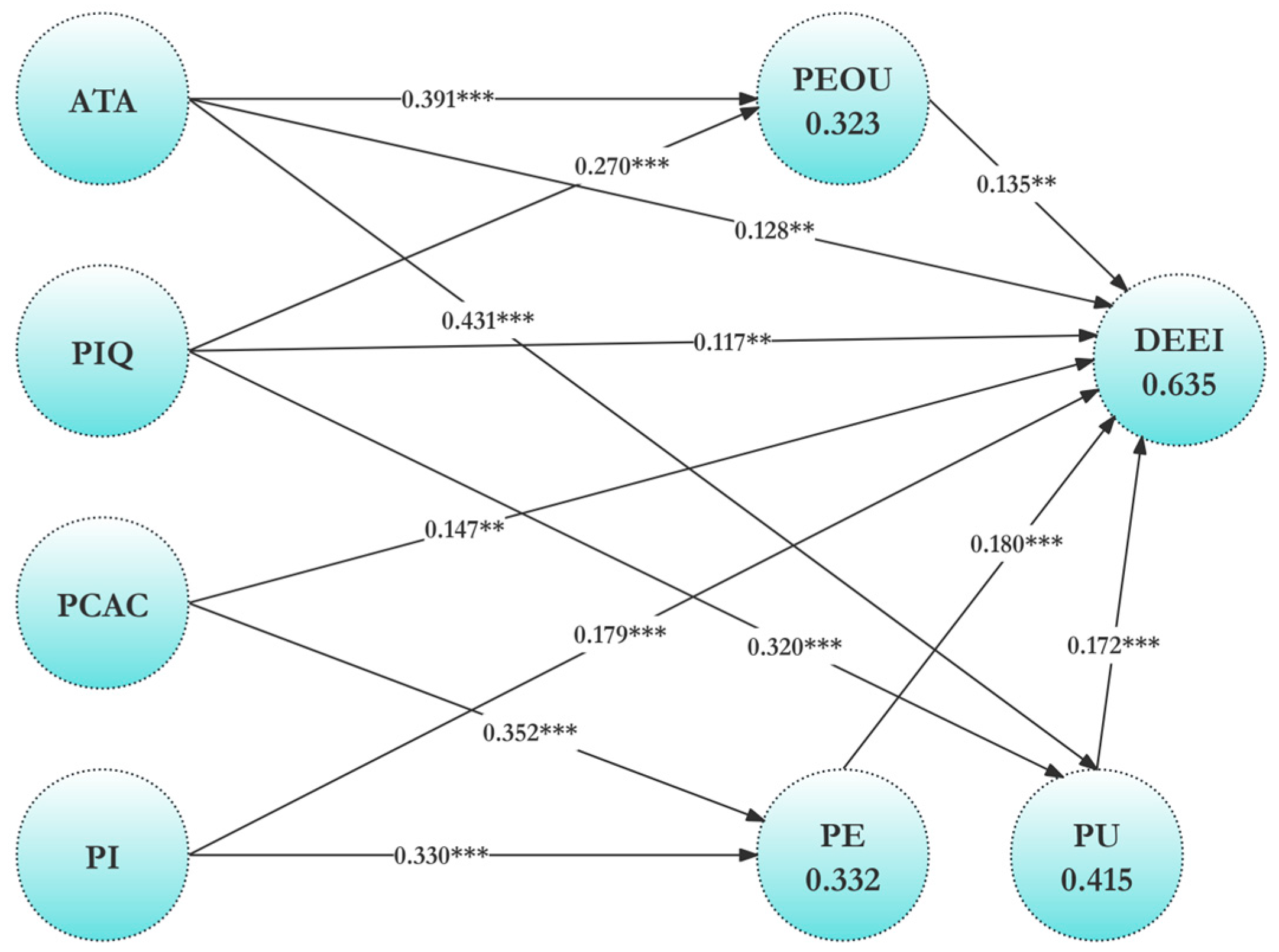
Table 6 presents the path coefficients and significance test results obtained from bootstrapping with 5000 resamples. All 13 hypothesized paths were statistically significant, and all path coefficients were positive, indicating that the proposed hypotheses were supported by the sample data. Overall, the structural model results can be interpreted through three dimensions: the cognitive evaluation path, the experiential–affective path, and the direct effects of antecedent constructs on digital exhibition experience intention.
In the cognitive evaluation path, AIGC technology acceptance had significant positive effects on perceived ease of use of AIGC exhibitions and perceived usefulness of AIGC exhibitions. It also exerted a significant positive effect on digital exhibition experience intention (β = 0.128, t = 2.684, p = 0.007). Perceived interaction quality of AIGC exhibitions significantly enhanced perceived ease of use of AIGC exhibitions (β = 0.270, t = 4.755, p < 0.001) and perceived usefulness of AIGC exhibitions (β = 0.320, t = 5.643, p < 0.001), while also exerting a direct positive effect on digital exhibition experience intention (β = 0.117, t = 2.743, p = 0.006).
In the experiential–affective path, perceived immersion in AIGC exhibitions significantly increased perceived enjoyment of AIGC exhibitions (β = 0.330, t = 6.298, p < 0.001) and had a direct positive effect on digital exhibition experience intention (β = 0.179, t = 4.257, p < 0.001). Perceived creativity of AIGC content also significantly increased perceived enjoyment of AIGC exhibitions (β = 0.352, t = 6.506, p < 0.001) and had a significant positive effect on digital exhibition experience intention (β = 0.147, t = 3.140, p = 0.002).
These findings indicate that digital exhibition experience intention is jointly shaped by cognitive evaluation factors and experiential–affective factors. Among the significant direct paths, perceived enjoyment of AIGC exhibitions, perceived immersion in AIGC exhibitions, and perceived usefulness of AIGC exhibitions showed relatively stronger effects on digital exhibition experience intention, whereas the direct effects of AIGC technology acceptance and perceived interaction quality of AIGC exhibitions were comparatively weaker (see
Table 6 and
Figure 5).
4.5. Assessment of Explanatory Power and Predictive Relevance
R
2 was used to assess the model’s explanatory power for endogenous latent constructs, with higher values indicating stronger explanatory capacity. Values of 0.67, 0.33, and 0.19 are commonly used as benchmarks for substantial, moderate, and weak explanatory power, respectively. The R
2 value for digital exhibition experience intention was 0.635, indicating that the model explained a moderate proportion of variance in this construct. The R
2 values for perceived usefulness of AIGC exhibitions, perceived enjoyment of AIGC exhibitions, and perceived ease of use of AIGC exhibitions were 0.415, 0.332, and 0.323, respectively, suggesting moderate explanatory power for these endogenous constructs (see
Table 7).
Q
2 was used to evaluate the model’s predictive relevance for endogenous constructs, with values greater than 0 indicating predictive relevance. The Q
2 values for digital exhibition experience intention, perceived usefulness of AIGC exhibitions, perceived enjoyment of AIGC exhibitions, and perceived ease of use of AIGC exhibitions were all above 0, indicating that the model demonstrated predictive relevance for these constructs. These results suggest that the structural model had satisfactory explanatory power and predictive capability (see
Table 7).
4.6. Effect Size Assessment
After establishing satisfactory explanatory power and predictive relevance, effect size (f2) was assessed to determine the substantive contribution of each exogenous construct to the endogenous variables. Following Cohen’s criteria, f2 values of 0.02, 0.15, and 0.35 were interpreted as small, medium, and large effects, respectively. The results indicated that all antecedent constructs exerted small direct effects on digital exhibition experience intention, with f2 values ranging from 0.023 to 0.054. Among these predictors, perceived immersion in AIGC exhibitions exhibited the strongest effect (f2 = 0.054).
Although the direct effect sizes were modest, this finding is consistent with the multidimensional nature of digital exhibition experience intention. Unlike technology adoption in predominantly utilitarian settings, intentions toward museum digital exhibitions emerge from the interplay of cognitive evaluations, affective responses, technological perceptions, and experiential engagement. Consequently, no single antecedent factor is expected to account for a substantial proportion of variance in behavioral intention. Rather, users’ intentions are shaped through the cumulative influence of multiple interrelated determinants. This interpretation is supported by the model’s substantial explanatory power (R2 = 0.635), suggesting that the collective contribution of multiple constructs outweighs the influence of any individual predictor.
The relatively small direct effects further imply the presence of indirect and complementary influence mechanisms within the proposed framework. Specifically, AIGC technology acceptance demonstrated stronger effects on perceived usefulness and perceived ease of use, whereas perceived creativity and perceived immersion contributed more substantially to perceived enjoyment, which subsequently enhanced digital exhibition experience intention. These findings indicate that user responses to AIGC-enhanced museum exhibitions are primarily formed through interconnected cognitive–affective pathways rather than through isolated direct effects.
Regarding the remaining endogenous constructs, AIGC technology acceptance exerted medium effects on perceived usefulness (f
2 = 0.250) and perceived ease of use (f
2 = 0.178), while perceived creativity of AIGC content showed a medium effect on perceived enjoyment (f
2 = 0.152). All other relationships exhibited small effect sizes (
Table 8).
4.7. Assessment of Mediation Effects
Table 9 presents the results of the mediation analysis based on bootstrapping with 5000 resamples. Multiple indirect effects were statistically significant, indicating significant mediation effects within the model. In the cognitive mediation path, AIGC technology acceptance had significant indirect effects on digital exhibition experience intention through perceived usefulness of AIGC exhibitions (β = 0.074, t = 3.087,
p = 0.002) and perceived ease of use of AIGC exhibitions (β = 0.053, t = 2.528,
p = 0.012). Perceived interaction quality of AIGC exhibitions also had significant indirect effects on digital exhibition experience intention through perceived ease of use of AIGC exhibitions (β = 0.037, t = 2.317,
p = 0.021) and perceived usefulness of AIGC exhibitions (β = 0.055, t = 2.853,
p = 0.004). In the affective mediation path, perceived immersion in AIGC exhibitions had a significant indirect effect on digital exhibition experience intention through perceived enjoyment of AIGC exhibitions (β = 0.060, t = 3.013,
p = 0.003). Perceived creativity of AIGC content also had a significant indirect effect through perceived enjoyment of AIGC exhibitions (β = 0.064, t = 3.448,
p = 0.001).
These results indicate that the antecedent constructs influenced digital exhibition experience intention through both cognitive evaluation and affective experience mechanisms. AIGC technology acceptance and perceived interaction quality of AIGC exhibitions primarily operated through perceived ease of use of AIGC exhibitions and perceived usefulness of AIGC exhibitions, whereas perceived immersion in AIGC exhibitions and perceived creativity of AIGC content primarily operated through perceived enjoyment of AIGC exhibitions. Taken together, the direct and indirect effects indicate partial mediation across all significant mediation paths: the antecedent constructs not only directly influenced digital exhibition experience intention but also exerted indirect effects through the mediating constructs (see
Table 9).
5. Discussion
Based on TAM, this study developed and tested an explanatory framework for digital exhibition experience intention in multimodal AIGC-enabled museum exhibitions. The results indicate that digital exhibition experience intention is jointly shaped by prior attitudes towards AIGC, technological and experiential attributes, and subjective evaluations. AIGC technology acceptance significantly influenced perceived ease of use of AIGC exhibitions, perceived usefulness of AIGC exhibitions, and digital exhibition experience intention, suggesting that visitors’ general attitudes towards AI may operate before specific system-use experiences. A notable finding of this study is that AIGC technology acceptance exerted substantially stronger effects on perceived usefulness (β = 0.431) and perceived ease of use (β = 0.391) than on digital exhibition experience intention directly (β = 0.128). Consistent with prior TAM research, perceived usefulness and perceived ease of use are fundamental determinants of technology acceptance and behavioural intention. Davis’s original TAM identified these constructs as core predictors of user acceptance, and subsequent museum-focused studies extended this framework to virtual and mixed-reality exhibition environments, where visitors’ intentions are largely explained by the perceived value and usability of predefined digital systems [
6].
This pattern highlights a key distinction between technology adoption in cultural heritage settings and in more utilitarian contexts. In many AI adoption studies, behavioural intentions are driven primarily by expectations of efficiency, convenience, or task performance. By contrast, museum visitors are motivated not by the novelty of AI or instrumental gains alone, but by whether AIGC technologies enhance cultural interpretation, facilitate knowledge acquisition, and enrich the overall exhibition experience. These results indicate that AI acceptance functions less as a direct driver of behavioural intention and more as a prerequisite enabling visitors to recognize and engage with the cultural and experiential value generated by the technology. In this sense, the effectiveness of AIGC-enabled exhibitions depends on the translation of AI capabilities into meaningful interpretive, educational, and immersive experiences. These findings provide empirical evidence that cultural and experiential value mediates the relationship between AI acceptance and behavioural intention, underscoring the central role of value-based mechanisms in explaining technology adoption and visitor engagement in AI-enabled museum environments.
Perceived immersion in AIGC exhibitions and perceived creativity of AIGC content were found to significantly influence both perceived enjoyment and digital exhibition experience intention. This finding suggests that visitors are more likely to develop positive affective responses and stronger participation intentions when exhibition experiences combine immersive environments with creatively presented cultural content. Immersive narratives, dynamic sensory atmospheres, and interactive experiences may enhance users’ sense of presence and emotional involvement, whereas creative content presentation can introduce novelty, personalization, and interpretive diversity, thereby enriching the overall exhibition experience. These findings are consistent with prior research emphasizing the role of immersion in digital cultural environments. For example, Shehade and Stylianou-Lambert demonstrated that immersive digital museum experiences enhance emotional engagement and visitor satisfaction [
29], while Cheng et al. reported that immersive technologies positively influence enjoyment and behavioural outcomes [
9]. The present study extends this line of research by demonstrating that immersion remains a key driver of visitor engagement in AIGC-enabled exhibitions, where content can be dynamically generated and adapted in response to user interactions. Furthermore, the findings indicate that perceived creativity represents an additional experiential pathway through which multimodal AIGC enhances visitor enjoyment and strengthens digital exhibition experience intention, highlighting the importance of creative and adaptive content experiences in technology-mediated cultural engagement.
Perceived interaction quality of AIGC exhibitions significantly influenced perceived ease of use of AIGC exhibitions, perceived usefulness of AIGC exhibitions, and digital exhibition experience intention, suggesting that interaction design affects operational fluency, content comprehension, and visitors’ overall evaluation of the exhibition experience. Perceived enjoyment of AIGC exhibitions, perceived ease of use of AIGC exhibitions, and perceived usefulness of AIGC exhibitions also significantly influenced digital exhibition experience intention, further indicating that visitors’ decision-making in museum digital exhibitions involves both cognitive evaluation and emotional response. Overall, the formation of digital exhibition experience intention in multimodal AIGC-enabled museum exhibitions demonstrates a composite mechanism, in which prior technological attitudes, experience design, and subjective evaluations interact to shape visitors’ willingness to continue engaging with digital exhibitions.
The theoretical significance of this study is reflected in two main aspects. First, by applying TAM to museum digital exhibitions, a context inherently oriented towards cultural experience, this study demonstrates that perceived usefulness and perceived ease of use remain explanatory in this setting. However, their meanings are extended to encompass cultural understanding, knowledge construction, and experiential engagement. Second, this study incorporates AIGC technology acceptance, perceived immersion in AIGC exhibitions, perceived creativity of AIGC content, perceived interaction quality of AIGC exhibitions, and perceived enjoyment of AIGC exhibitions into the TAM framework. In doing so, it reveals a more integrated pathway linking prior attitudes towards AIGC, technological and experiential attributes, subjective evaluations, and digital exhibition experience intention. This study focuses on multimodal AIGC-enabled museum exhibitions, which are distinguished by capabilities such as generative content creation, adaptive storytelling, personalized cultural interpretation, and real-time interactive feedback. Unlike conventional digital exhibition systems that primarily present predefined content, AIGC technologies can dynamically generate and adapt cultural narratives in response to visitor interactions. By examining technology acceptance within this emerging context, the study contributes to the growing literature on AI-enabled cultural heritage experiences and provides empirical evidence on the mechanisms through which AIGC shapes visitors’ cognitive evaluations, affective responses, and digital exhibition experience intention.
Technology adoption in AIGC-enabled digital exhibitions is shaped by the combined influence of instrumental evaluations and experiential responses. By integrating these dimensions within a unified framework, the present study advances understanding of the mechanisms underlying digital exhibition experience intention and extends technology adoption research in digital cultural contexts. From a practical perspective, museums incorporating AIGC-powered digital exhibitions should address technology acceptance, content design, and visitor experience transformation in an integrated manner.
First, institutions should consider visitors’ initial attitudes towards AI and improve their understanding and acceptance of AIGC applications through clear information labels, appropriate technical explanations, and explicit disclosure of content sources. To enhance transparency and facilitate user understanding, museums could clearly identify AI-generated text, images, and audiovisual materials through explicit content labeling. In addition, brief onboarding resources, such as introductory tutorials or interactive guides, may help first-time visitors understand how AIGC technologies are integrated into the exhibition experience, thereby reducing uncertainty and supporting more informed engagement with digital exhibitions.
Second, AIGC applications should support the interpretation of exhibition themes, the construction of historical contexts, and the communication of cultural meanings, thereby enhancing visitors’ perceived usefulness of AIGC exhibitions. AIGC systems can deliver personalized exhibit explanations, multilingual interpretations, and adaptive narratives tailored to visitors’ interests and prior knowledge, thereby improving access to cultural information, enhancing cultural understanding, and strengthening engagement with exhibition content.
Third, immersive narratives, spatial atmospheres, and content generation methods should be optimized to strengthen emotional engagement and aesthetic participation, thereby reinforcing digital exhibition experience intention through perceived enjoyment of AIGC exhibitions. Examples include AI-generated historical reconstructions, dynamic audiovisual environments, and personalized narrative experiences that allow visitors to explore cultural content from multiple perspectives and levels of detail, thereby enhancing immersion and promoting more meaningful engagement with digital exhibitions.
Fourth, interaction design should balance accessibility with interpretive support by providing timely feedback, clear system responses, and intuitive interaction pathways, thereby enhancing both perceived ease of use and perceived usefulness. Museums can facilitate visitor engagement through conversational AI guides, real-time question-and-answer systems, and context-aware recommendation functions that support exhibition exploration and improve access to culturally relevant information. Such functionalities can strengthen content comprehension while enabling more personalized and engaging exhibition experiences. For museums operating under technological or financial constraints, scalable solutions—including cloud-based generative AI services, open-source large language models, modular content-generation platforms, and lightweight chatbot systems—offer feasible approaches for integrating AIGC into existing digital exhibition infrastructures. By improving information accessibility, personalization, and service responsiveness, these technologies can support broader participation, deepen visitor engagement, and expand access to AIGC-enabled cultural experiences.
6. Conclusions
This study examined the use of multimodal AIGC to enhance museum digital exhibitions. Based on TAM, it developed an explanatory framework for digital exhibition experience intention and empirically tested the model using questionnaire data and PLS-SEM. The results indicate that digital exhibition experience intention is jointly shaped by prior attitudes towards AIGC, technological and experiential attributes, and subjective evaluations. AIGC technology acceptance, perceived immersion in AIGC exhibitions, perceived creativity of AIGC content, and perceived interaction quality of AIGC exhibitions all significantly contribute to digital exhibition experience intention. Perceived enjoyment of AIGC exhibitions, perceived ease of use of AIGC exhibitions, and perceived usefulness of AIGC exhibitions constitute key mechanisms linking technological attributes to behavioural intention. The effectiveness of multimodal AIGC-enabled museum exhibitions therefore depends on whether technological features can be transformed into cognitive and experiential value that is perceptible to visitors.
The primary contribution of this study lies in extending TAM to the context of multimodal AIGC-enabled museum exhibitions and integrating AIGC technology acceptance, perceived immersion in AIGC exhibitions, perceived creativity of AIGC content, perceived interaction quality of AIGC exhibitions, and perceived enjoyment of AIGC exhibitions into a comprehensive framework that explains technological attitudes, experiential perceptions, and digital exhibition experience intention. The results show that perceived usefulness of AIGC exhibitions and perceived ease of use of AIGC exhibitions retain explanatory power in culture-experience-oriented digital exhibitions, while experiential factors such as perceived immersion in AIGC exhibitions, perceived creativity of AIGC content, and perceived interaction quality of AIGC exhibitions also play important roles in shaping digital exhibition experience intention. Accordingly, this study advances understanding of the experiential mechanisms underlying AIGC-enabled museum exhibitions and provides a reference for future research on technology adoption, experiential transformation, and sustained engagement in digital cultural contexts. More broadly, the findings contribute to the emerging literature on AI adoption in cultural heritage settings by demonstrating that the success of AIGC-enabled exhibitions is shaped not only by technological capabilities but also by visitors’ cognitive, affective, and experiential evaluations of the exhibition experience. The results further suggest that the value of AIGC in museum contexts lies in its capacity to support meaningful cultural interpretation, engagement, and learning rather than in technological functionality alone.
Beyond identifying the determinants of digital exhibition experience intention, the findings provide a broader perspective on how AIGC creates value in museum and cultural heritage contexts. Previous research on digital museums, virtual exhibitions, and immersive technologies has largely focused on systems that deliver predefined content, with technology adoption primarily explained through functionality, usability, and system performance. The emergence of multimodal AIGC-enabled exhibitions extends this perspective from content delivery to content generation, adaptive interpretation, and personalized cultural engagement. The results indicate that technological capabilities alone are insufficient to account for visitor engagement in AIGC-enabled exhibition environments. Rather, the influence of AIGC is realized through visitors’ cognitive evaluations, affective responses, and experiential perceptions, which collectively shape digital exhibition experience intention.
These findings refine current understanding of technology adoption in cultural heritage settings. Existing research has often implicitly assumed that advances in technological capability will naturally translate into stronger user engagement. The present results suggest a more complex mechanism. Although AIGC technology acceptance positively influences behavioural intention, its direct effect is substantially weaker than its effects on perceived usefulness and perceived ease of use. This pattern indicates that the value of AIGC is not derived solely from technological sophistication but from its capacity to facilitate cultural interpretation, support knowledge construction, and enrich immersive experiences. Consequently, the findings shift the explanatory emphasis from technology-centred accounts of adoption towards value-centred and experience-oriented perspectives, highlighting that successful AI implementation in museums depends on the transformation of technological capabilities into meaningful cultural and experiential value. In doing so, the study advances understanding of how AI contributes to visitor engagement and provides a conceptual basis for future research on AI-enabled cultural experiences.
From a practical perspective, the findings highlight the importance of translating AIGC capabilities into visitor-centred exhibition experiences. Museums may strengthen visitors’ evaluations of AIGC-enabled exhibitions by enhancing immersive storytelling, improving interaction quality, supporting personalized cultural interpretation, and reducing operational complexity. Such efforts may increase perceived value, facilitate deeper engagement with exhibition content, and encourage sustained participation in digital exhibition experiences. These insights provide practical guidance for museums seeking to integrate AIGC technologies into cultural communication and public engagement strategies.
Several limitations should be acknowledged when interpreting the findings. The cross-sectional nature of the study precludes robust causal inference, as visitor perceptions and behavioural intentions were captured at a single point in time. In addition, the purposive sampling strategy, which targeted individuals with prior exposure to digital exhibitions and AIGC-related technologies, enhanced the relevance of the collected data but may have constrained the external validity of the findings. The sample was composed predominantly of young and middle-aged local residents, potentially limiting the representativeness of broader museum visitor populations. Consequently, the applicability of the results to underrepresented groups—including older adults, non-local visitors, and individuals with limited experience of digital technologies—should be interpreted with caution. Such groups may differ substantially in digital literacy, technology-related anxiety, interaction preferences, and expectations regarding cultural interpretation and exhibition engagement. Furthermore, prior experience with AI technologies may constitute an important source of visitor heterogeneity, influencing evaluations of usefulness, ease of use, and interaction quality. Finally, the study examined digital exhibition experience intention rather than actual behavioural engagement, leaving the extent to which intentions translate into subsequent usage behaviours unresolved.
Future research should address these limitations through longitudinal, experimental, or behavioural tracking approaches that enable a more rigorous examination of the dynamic relationships between visitor perceptions, intentions, and actual behaviours in AIGC-enabled exhibition environments. Broader and more diverse samples would enhance the generalizability of findings, while the inclusion of individual and contextual characteristics—such as prior AI experience, digital literacy, cultural background, and museum type—would provide a more nuanced understanding of technology adoption and visitor experience across different digital cultural contexts. Such efforts would also offer stronger evidence regarding the robustness, boundary conditions, and wider applicability of the proposed framework.