How Digital Technological Innovation Influences the Coordination Between Urban Renewal and Ecological Resilience: Evidence from China’s Yangtze River Economic Belt


Abstract
1. Introduction
2. Theoretical Analysis and Research Hypothesis
3. Materials and Methods
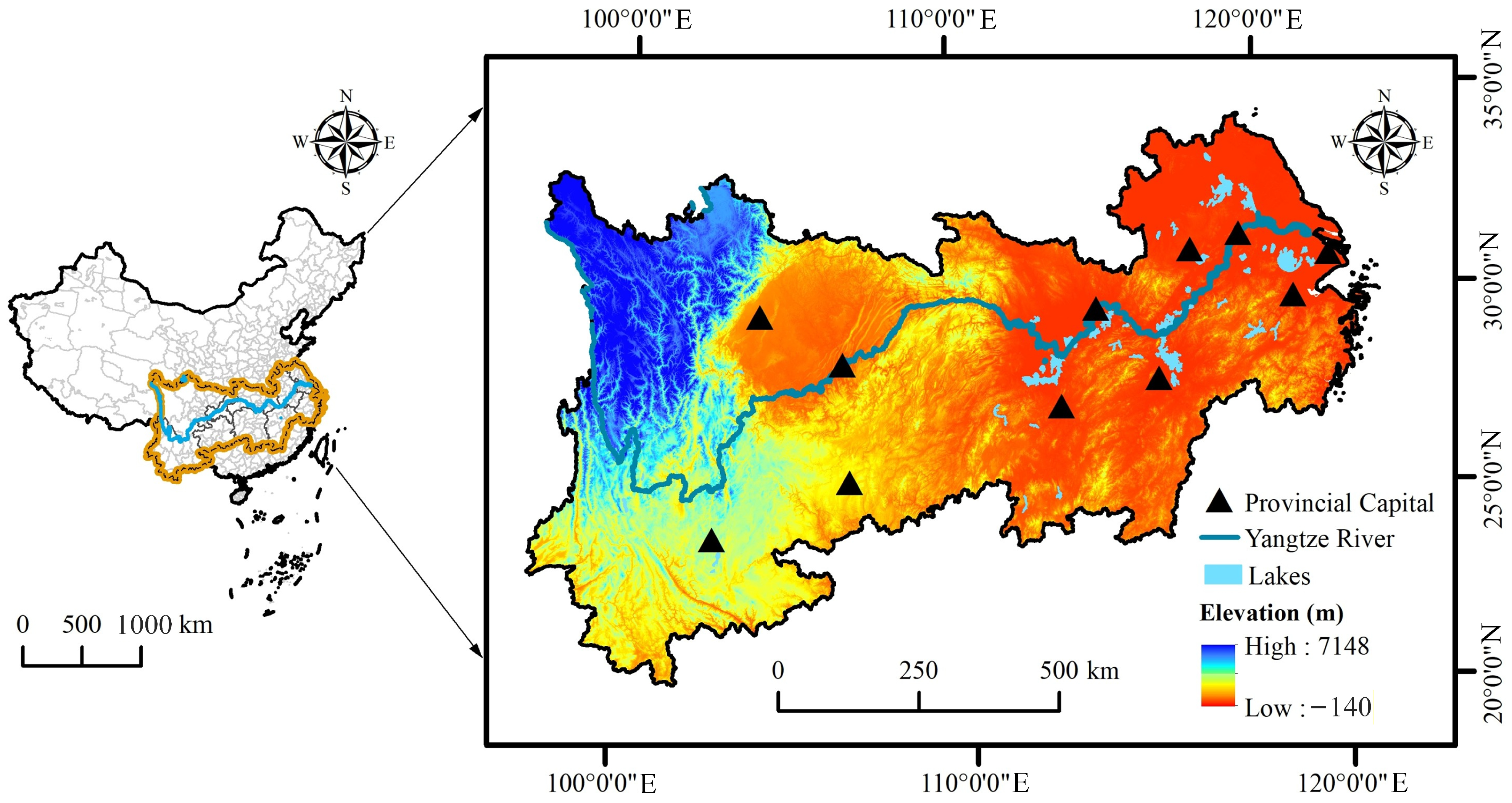
3.1. Study Area
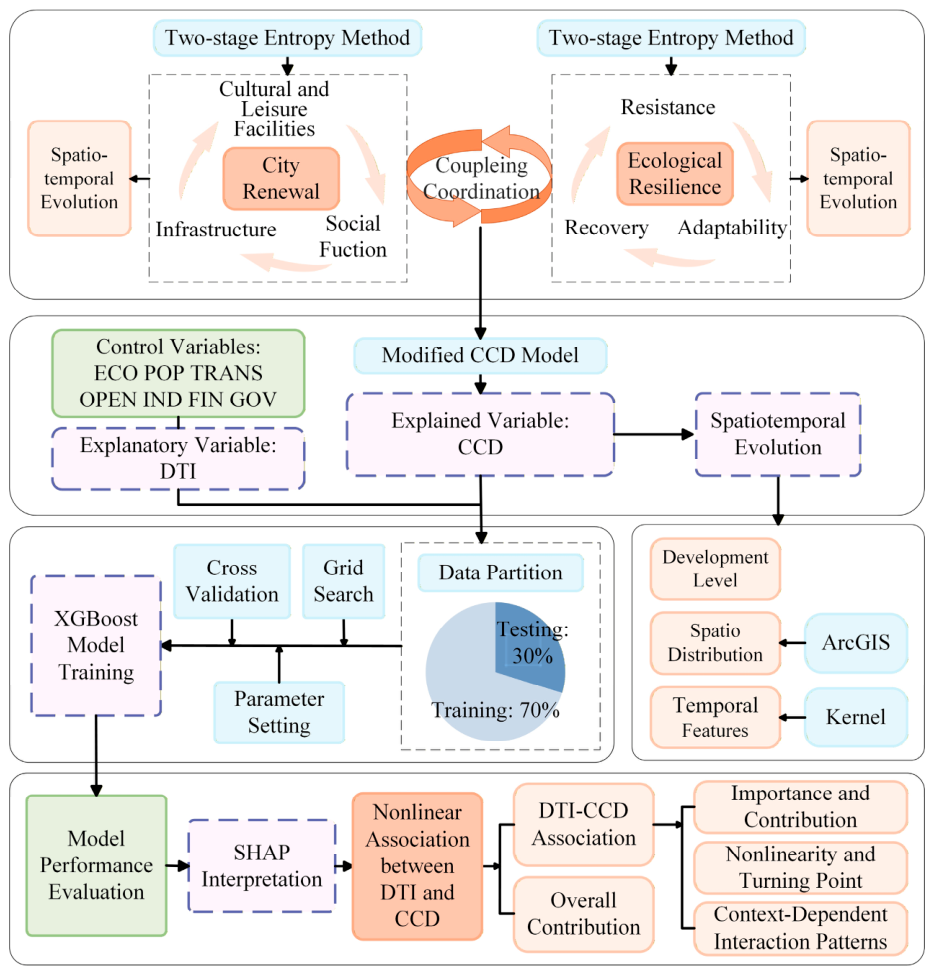
3.2. Methods
3.2.1. Two-Stage Entropy Method
3.2.2. Modified CCDM
3.2.3. KDE
3.2.4. XGBoost-SHAP Model
3.3. Indicator Selection and Data Sources
3.3.1. Indicator System
3.3.2. Core Explanatory Variable
3.3.3. Control Variables
3.3.4. Data Sources
4. Results
4.1. Spatiotemporal Evolution of UR
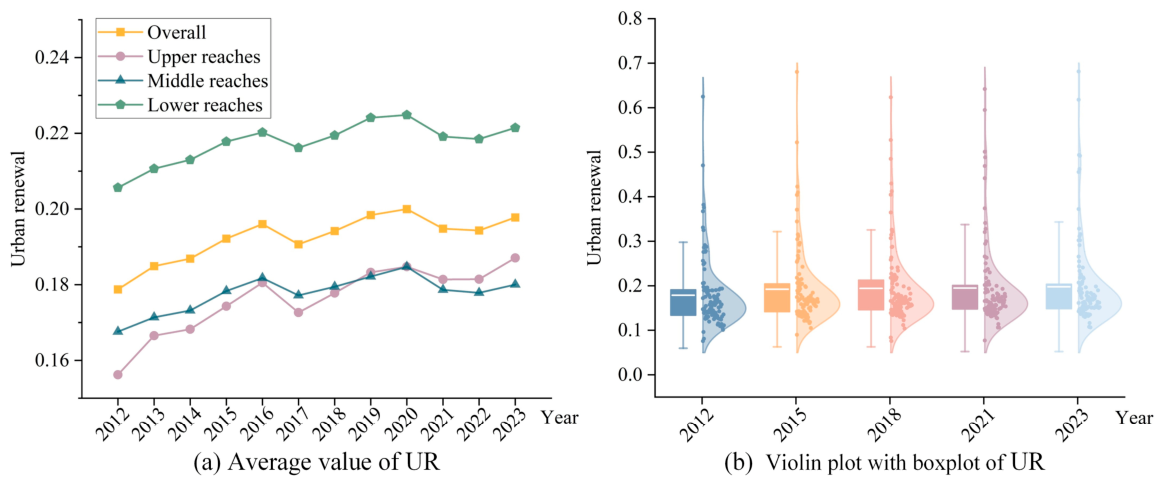
4.1.1. Temporal Characteristics of UR
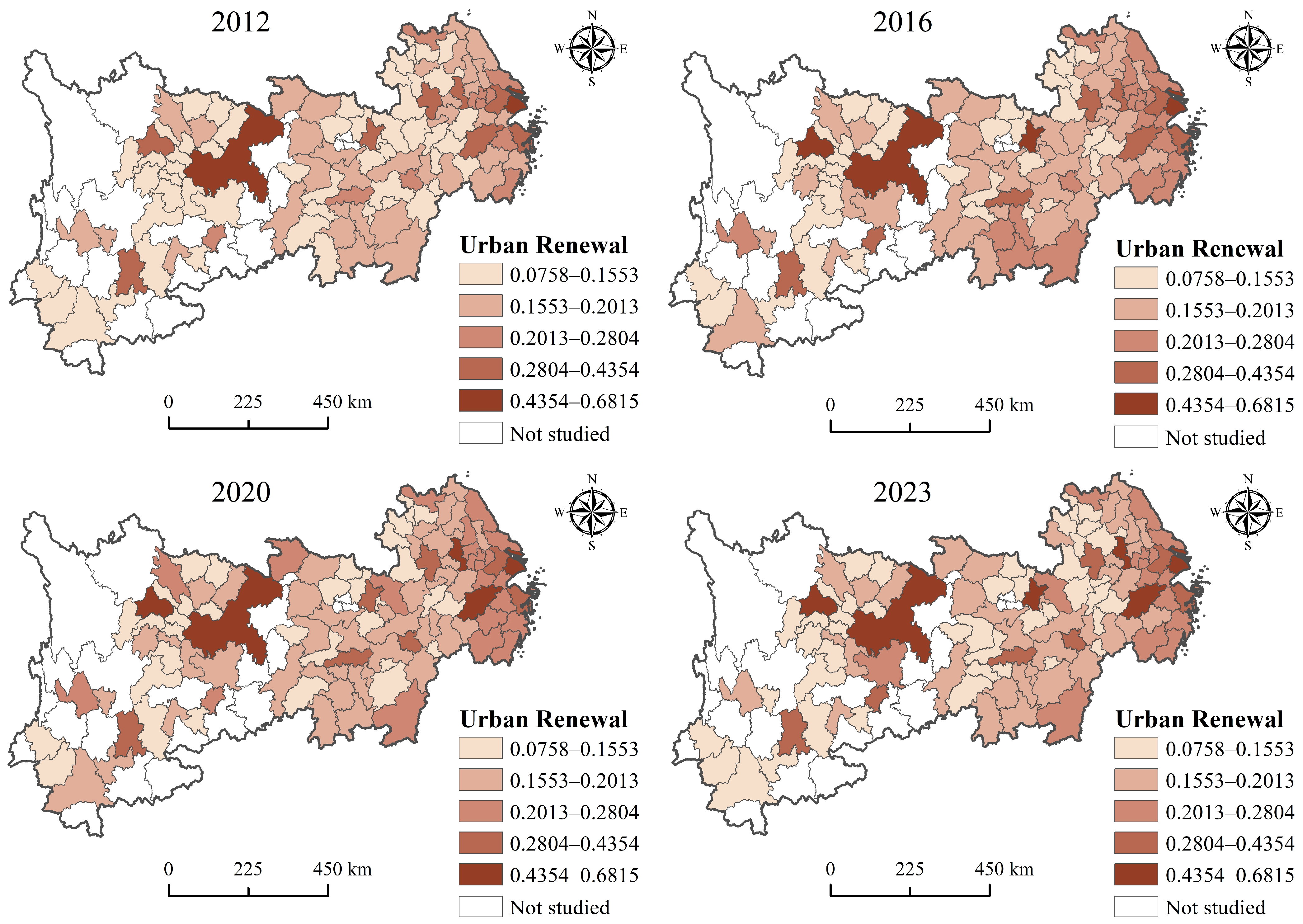
4.1.2. Spatial Distribution of UR
4.2. Spatiotemporal Evolution of ER
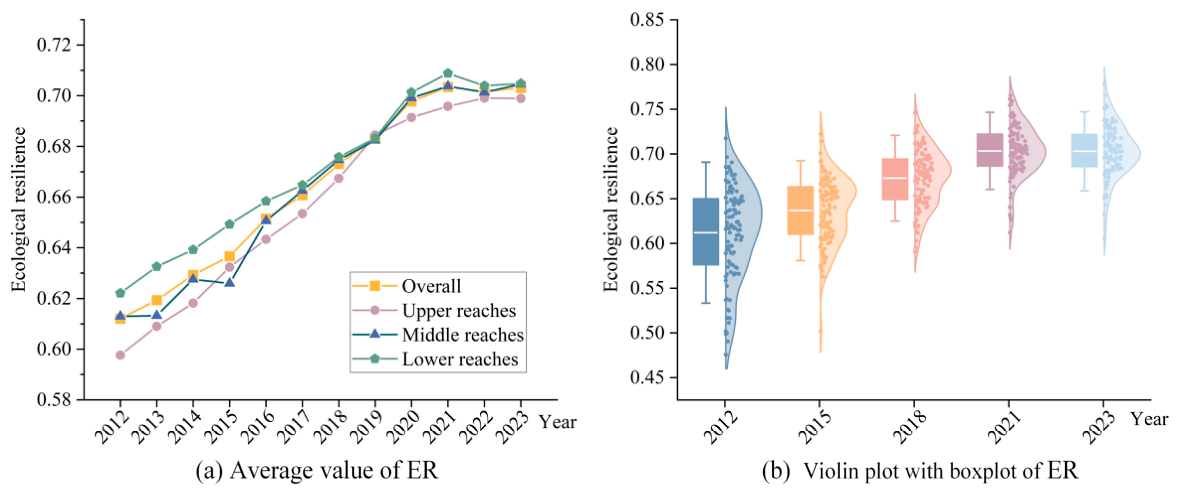
4.2.1. Temporal Characteristics of ER
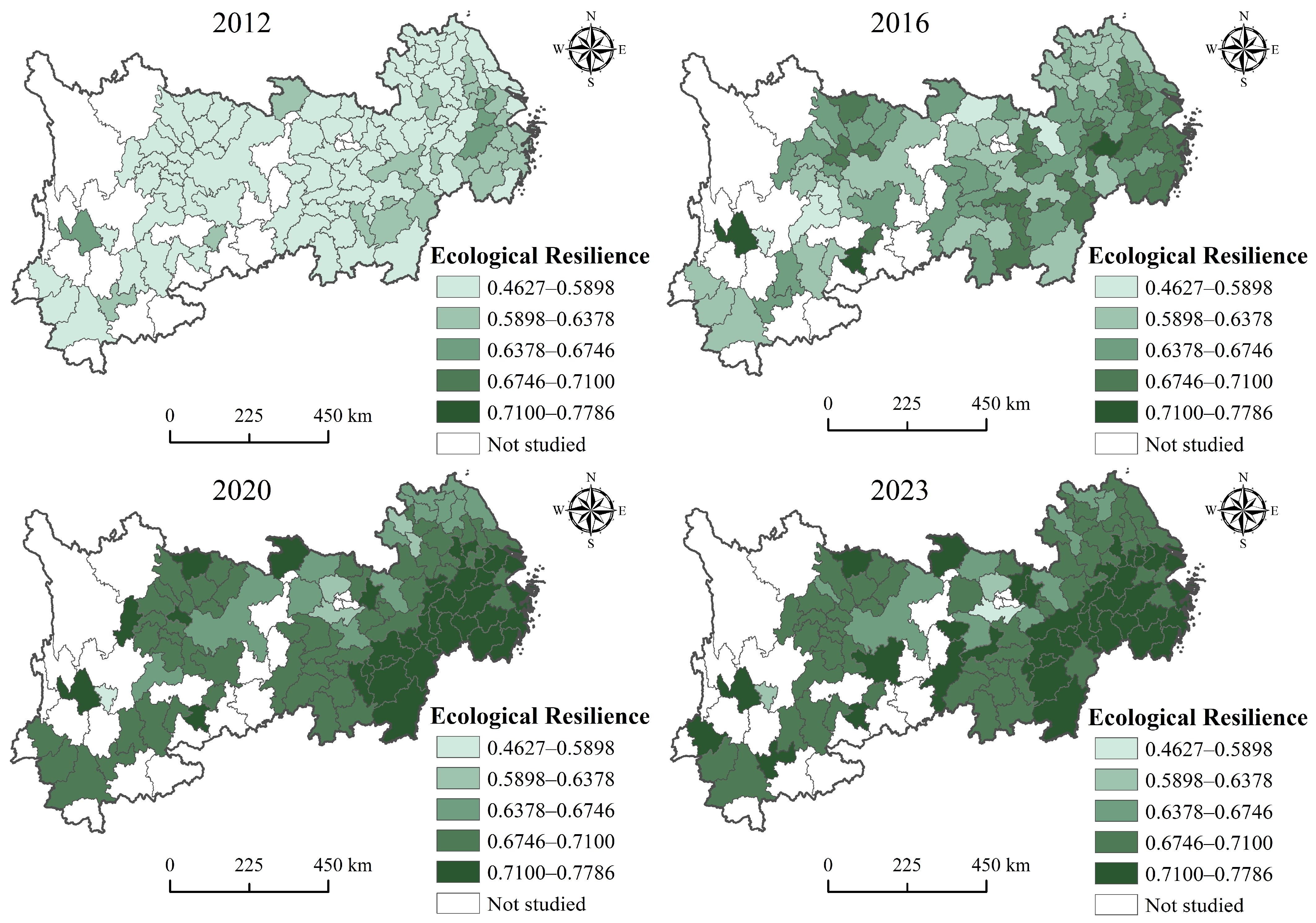
4.2.2. Spatial Distribution of ER
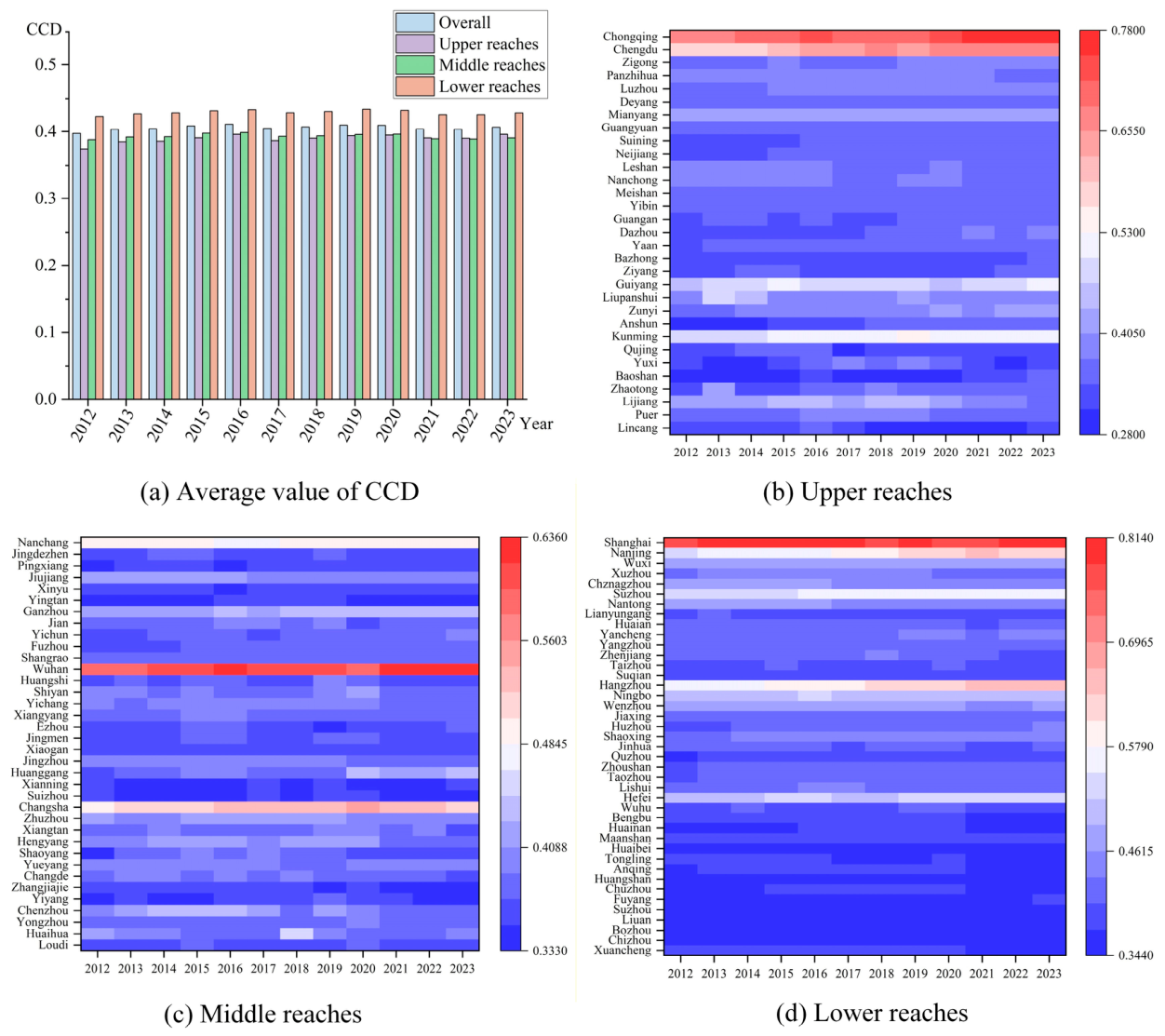
4.3. Spatiotemporal Evolution of CCD
4.3.1. Temporal Characteristics of CCD
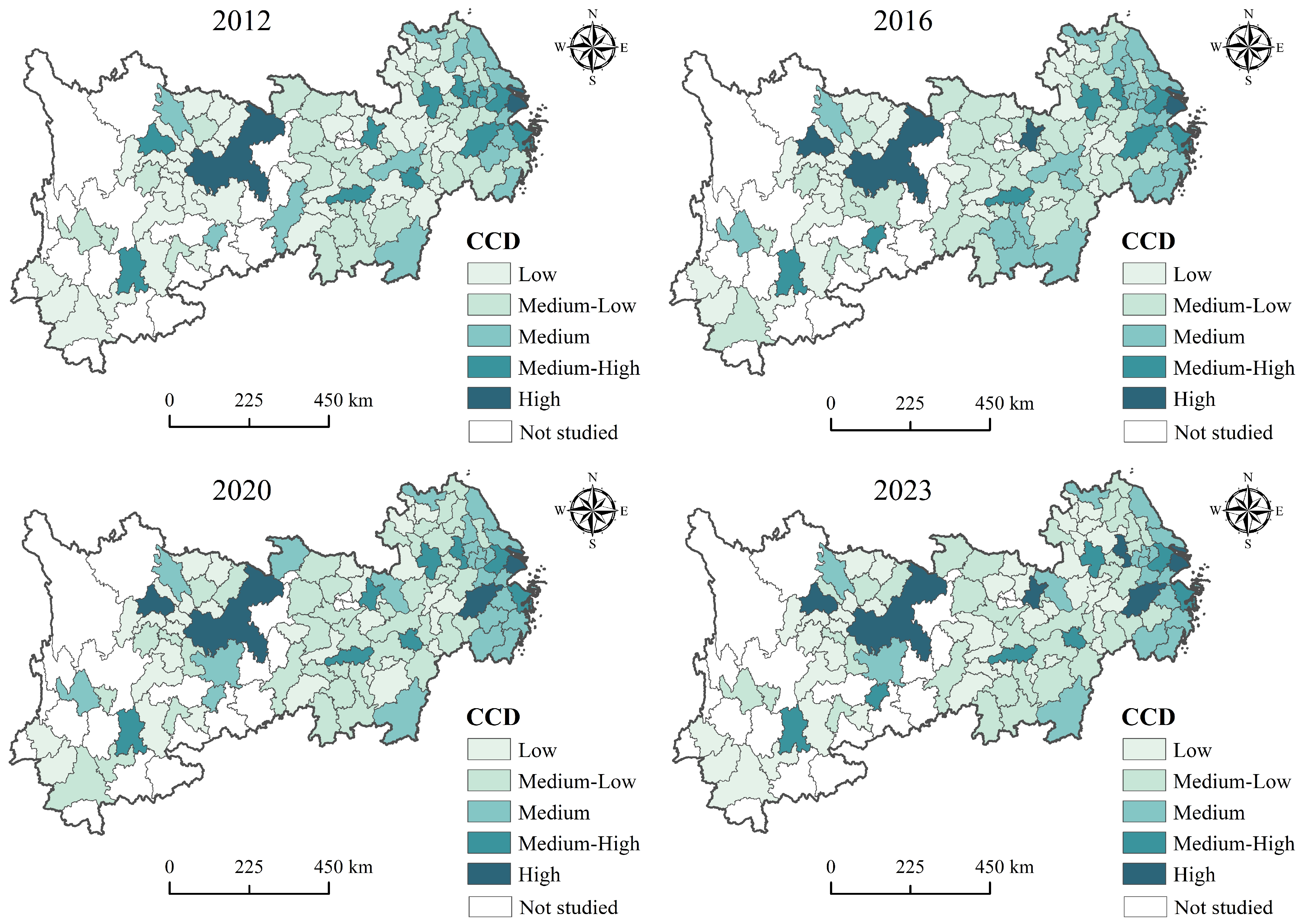
4.3.2. Spatial Distribution of CCD
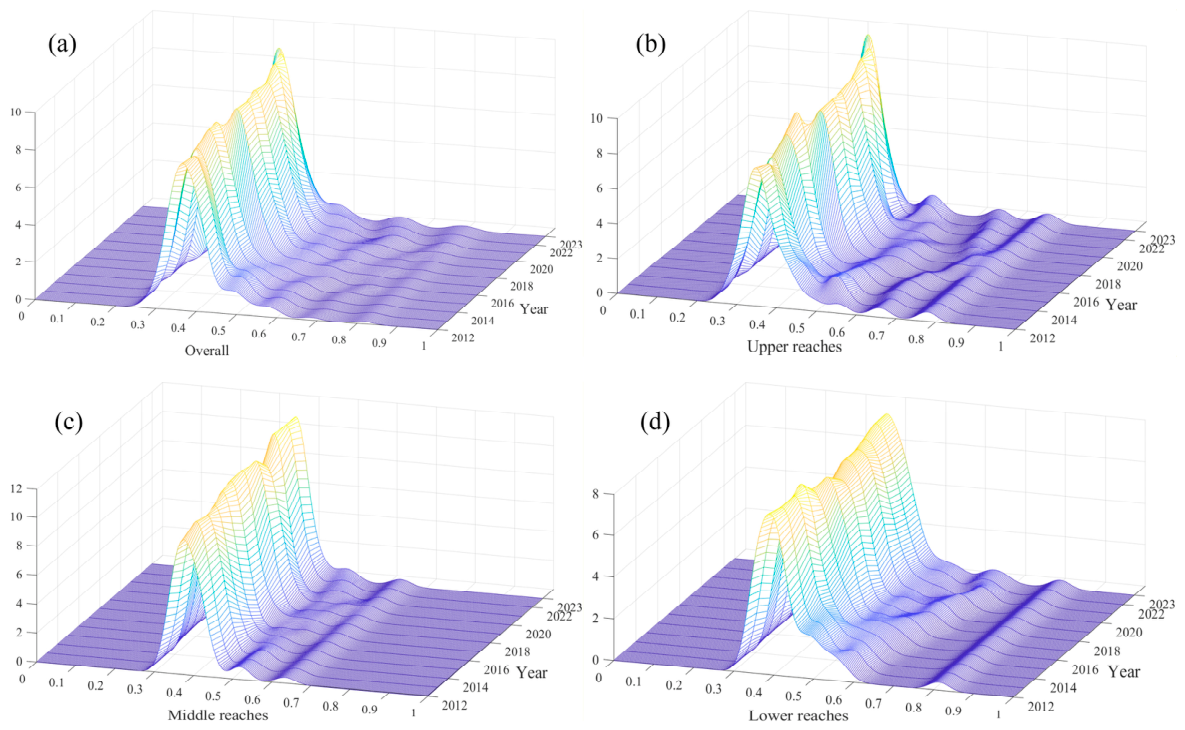
4.3.3. KDE Analysis of CCD
4.4. Impact of DTI on CCD
4.4.1. Model Fitting Performance
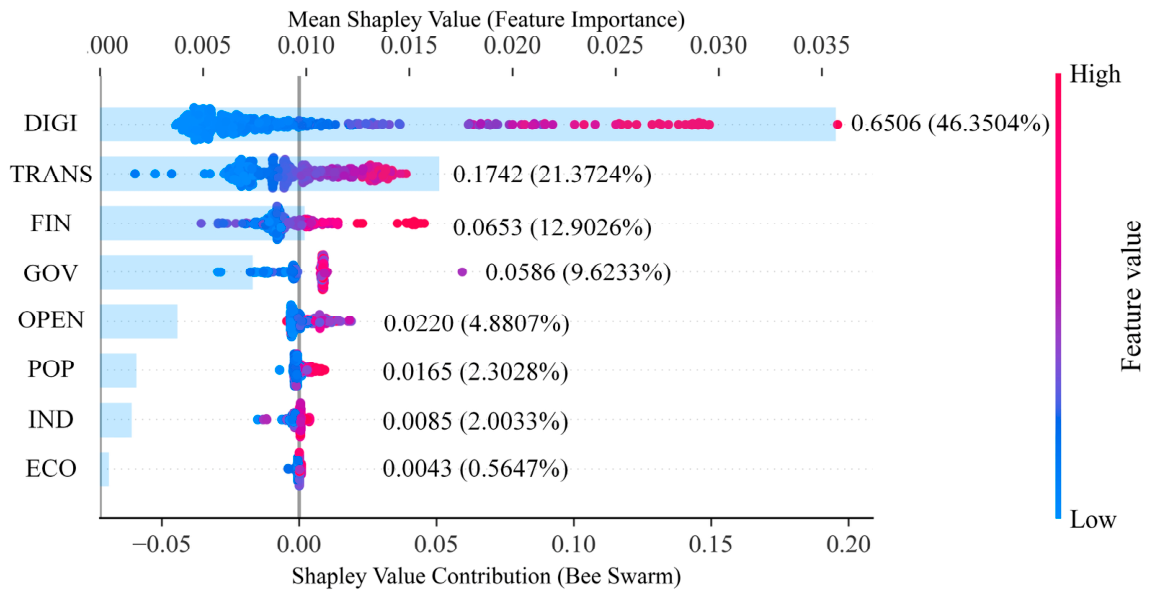
4.4.2. Relative Importance and Contributions of Influencing Factors
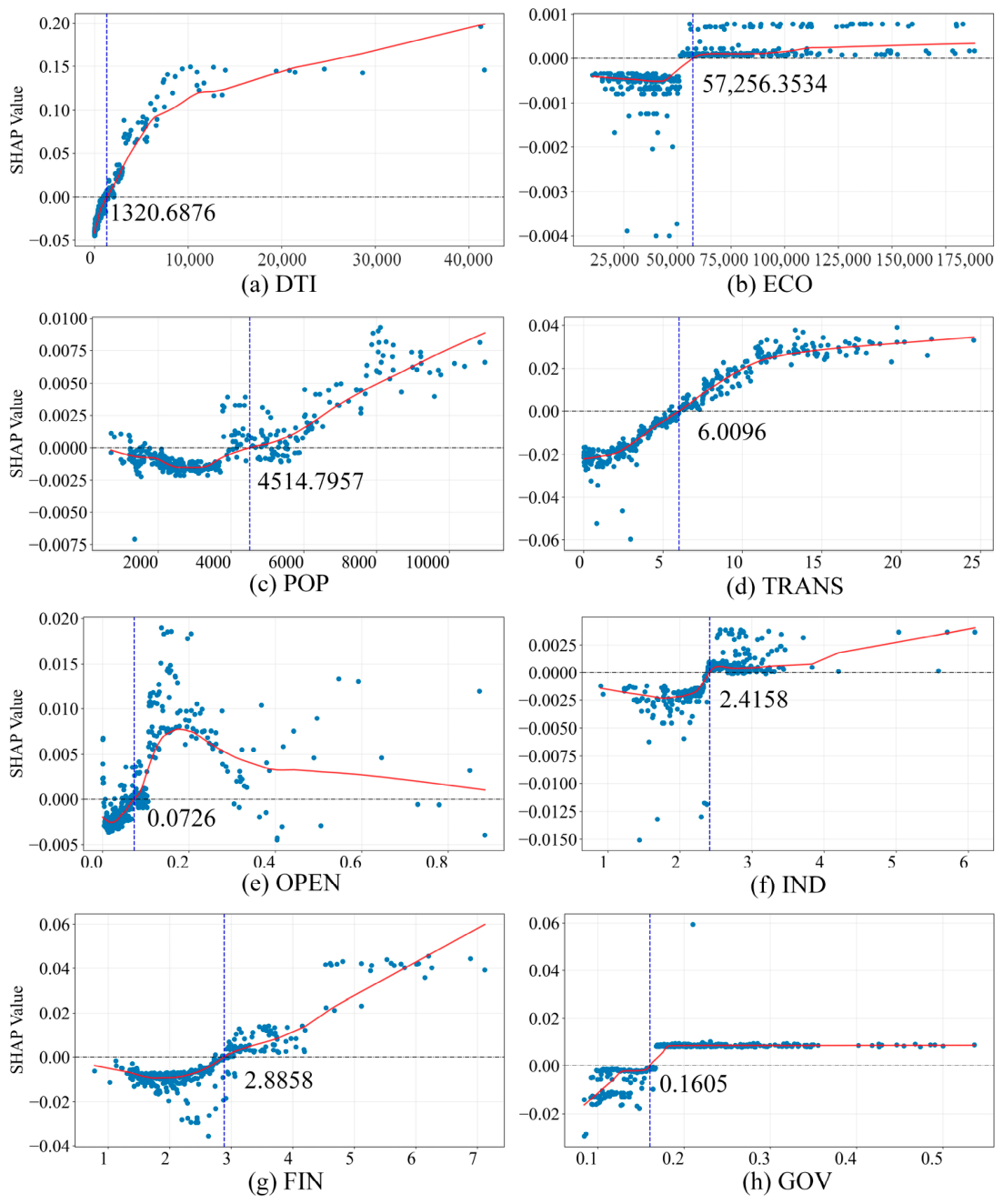
4.4.3. Nonlinear Associations Between DTI and CCD
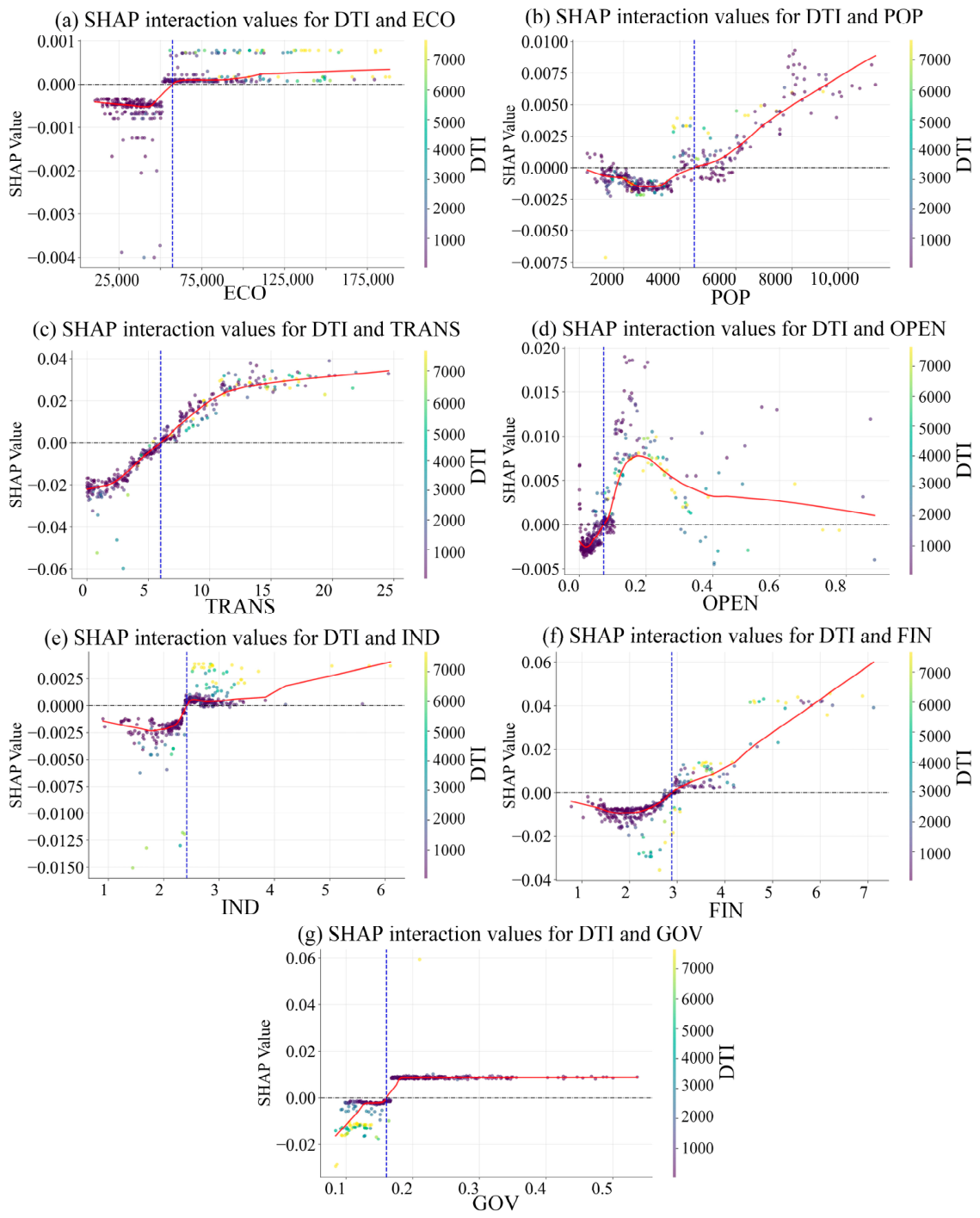
4.4.4. Interaction Between DTI and Control Variables
5. Discussion and Policy Implications
5.1. Discussion
5.1.1. Developmental Imbalance and Governance Mismatch Between UR and ER
5.1.2. Translating DTI into UR–ER Coordination
5.2. Policy Implications
5.3. Limitations
6. Conclusions
Author Contributions
Funding
Institutional Review Board Statement
Informed Consent Statement
Data Availability Statement
Conflicts of Interest
Appendix A

| Variable | Obs | Mean | Std. Dev. | Min | Max |
|---|---|---|---|---|---|
| A1 | 1296 | 165.569 | 217.933 | 15.18 | 1645.38 |
| A2 | 1296 | 20.427 | 7.835 | 2.25 | 55.575 |
| A3 | 1296 | 14.789 | 7.365 | 0.011 | 62.54 |
| A4 | 1296 | 94.985 | 11.039 | 10.99 | 100 |
| A5 | 1296 | 9.785 | 15.82 | 0 | 84 |
| A6 | 1296 | 5.734 | 4.706 | 0 | 47 |
| A7 | 1296 | 174.15 | 174.844 | 14 | 1931 |
| A8 | 1296 | 1739.572 | 916.25 | 160.127 | 7975.784 |
| A9 | 1296 | 11.966 | 17.772 | 0.05 | 138 |
| A10 | 1296 | 418.721 | 856.896 | 21 | 8307 |
| A11 | 1296 | 8.985 | 12.116 | 0.135 | 96.655 |
| A12 | 1296 | 39.116 | 39.738 | 1 | 291 |
| Variable | Obs | Mean | Std. Dev. | Min | Max |
|---|---|---|---|---|---|
| B1 | 1296 | 2.316 | 2.195 | 0.052 | 19.125 |
| B2 | 1296 | 14.239 | 23.164 | 0.052 | 276.237 |
| B3 | 1296 | 10.292 | 20.519 | 0.091 | 577.004 |
| B4 | 1296 | 17.123 | 14.959 | 0.384 | 97.72 |
| B5 | 1296 | 83.163 | 10.866 | 38.08 | 100 |
| B6 | 1296 | 84.039 | 19.093 | 7 | 152 |
| B7 | 1296 | 96.472 | 9.625 | 10 | 100 |
| B8 | 1296 | 89.822 | 10.504 | 23 | 122 |
| B9 | 1296 | 41.687 | 4.344 | 21.76 | 63.738 |
| B10 | 1296 | 13.972 | 3.678 | 1.75 | 35.882 |
| B11 | 1296 | 0.028 | 0.014 | 0.003 | 0.193 |
| B12 | 1296 | 644.853 | 1435.501 | 1 | 13,592 |
| Variable | Obs | Mean | Std. Dev. | Min | Max |
|---|---|---|---|---|---|
| UR | 1296 | 0.1924 | 0.0883 | 0.0758 | 0.6815 |
| ER | 1296 | 0.6643 | 0.0482 | 0.4756 | 0.7785 |
| CCD | 1296 | 0.4057 | 0.0791 | 0.2818 | 0.8137 |
| DTI | 1296 | 1884.32 | 4596.018 | 0 | 42,630 |
References
- Bai, X.; McPhearson, T.; Cleugh, H.; Nagendra, H.; Tong, X.; Zhu, T.; Zhu, Y.G. Linking urbanization and the environment: Conceptual and empirical advances. Annu. Rev. Environ. Resour. 2017, 42, 215–240. [Google Scholar] [CrossRef]
- National Bureau of Statistics of China. Remarkable Changes and a New Look: Urban Development Opens a New Chapter—Series Report No. 19 on the Economic and Social Development Achievements of the 75 Years Since the Founding of New China; National Bureau of Statistics of China: Beijing, China, 2024. Available online: https://www.stats.gov.cn/sj/sjjd/202409/t20240923_1956628.html (accessed on 17 March 2026).
- Huang, X.; Ren, H.; Liu, Y. Exploring the stages of urban renewal in Japan and its inspiration for China. J. Nat. Resour. 2025, 40, 1586–1604. [Google Scholar] [CrossRef]
- Goh, K.C.; Kurniawan, T.A.; Meidiana, C.; Anouzla, A.; Aziz, F.; Ali, I.; Casila, J.C.C.; Khan, M.I.; Zhang, D.; Jiang, M.; et al. Strengthening urban resilience in China through underground infrastructures management: Addressing global climate challenges with technological solutions. Deep. Undergr. Sci. Eng. 2025, 1–24. [Google Scholar]
- Li, X.; Song, J.; Lin, T.; Dixon, J.; Zhang, G.; Ye, H. Urbanization and health in China, thinking at the national, local and individual levels. Environ. Health 2016, 15, S32. [Google Scholar] [CrossRef] [PubMed]
- Chen, W.; Wang, G.; Zeng, J. Impact of urbanization on ecosystem health in Chinese urban agglomerations. Environ. Impact Assess. Rev. 2023, 98, 106964. [Google Scholar] [CrossRef]
- Office of Policy Development and Research. HUD’s Historical Timeline. Available online: https://www.huduser.gov/portal/hudtimeline_1950.html (accessed on 17 March 2026).
- Roberts, P.; Sykes, H. Urban Regeneration: A Handbook; Sage: London, UK, 1999. [Google Scholar]
- Roberts, P. The evolution, definition and purpose of urban regeneration. Urban. Regen. A Handb. 2000, 1, 9–36. [Google Scholar]
- dos Santos Figueiredo, Y.D.; Prim, M.A.; Dandolini, G.A. Urban regeneration in the light of social innovation: A systematic integrative literature review. Land Use Policy 2022, 113, 105873. [Google Scholar] [CrossRef]
- The Central People’s Government of the People’s Republic of China. The Opinions of the General Office of the CPC Central Committee and the General Office of the State Council on Continuously Promoting Urban Renewal Actions; The Central People’s Government of the People’s Republic of China: Beijing, China, 2025. Available online: https://www.gov.cn/zhengce/202505/content_7023880.htm (accessed on 17 March 2026).
- Wang, X.; Shen, Y.; Li, Y.; Sun, Y.; Li, X.; Fang, L.; Huang, C.; Yao, J. Identifying drivers of community-scale urban renewal with an ante-hoc interpretable hybrid graph model. J. Urban. Manag. 2026. [Google Scholar] [CrossRef]
- Ye, C.; Liu, Y.; Lin, M.; Lin, X.; Zhu, Y.; Mi, J. Post renewal residential experiences in urban renewal: Perspectives of residents, communities, and processes in Guangzhou, China. J. Urban. Manag. 2025. [Google Scholar] [CrossRef]
- Li, B.; Hu, R.; Yang, J. Does smart city construction affect urban renewal? Evidence from China. J. Clean. Prod. 2025, 496, 145110. [Google Scholar] [CrossRef]
- Holling, C.S. Resilience and stability of ecological systems. Annu. Rev. Ecol. Syst. 1973, 4, 1–23. [Google Scholar] [CrossRef]
- Walker, B.; Holling, C.S.; Carpenter, S.R.; Kinzig, A. Resilience, adaptability and transformability in social–ecological systems. Ecol. Soc. 2004, 9, 1708–3087. [Google Scholar] [CrossRef]
- Meerow, S.; Newell, J.P.; Stults, M. Defining urban resilience: A review. Landsc. Urban. Plan. 2016, 147, 38–49. [Google Scholar] [CrossRef]
- Lee, C.C.; Yan, J.; Li, T. Ecological resilience of city clusters in the middle reaches of Yangtze river. J. Clean. Prod. 2024, 443, 141082. [Google Scholar] [CrossRef]
- Wang, H.; Ge, Q. Ecological resilience of three major urban agglomerations in China from the “environment–society” coupling perspective. Ecol. Indic. 2024, 169, 112944. [Google Scholar] [CrossRef]
- Wu, N.; Zhou, Y.; Yin, S.; Gong, H.; Zhang, C. Revealing the nonlinear impact of environmental regulation on ecological resilience using the XGBoost-SHAP model: Evidence from the Yangtze River Delta region, China. J. Clean. Prod. 2025, 514, 145700. [Google Scholar] [CrossRef]
- Zhou, Y.; Wu, N.; Zhang, C.; Wang, Q.; Chen, Z.; Yin, S. How green technological innovation shapes urban ecological resilience: Structural, governance, and fiscal pathways in the Yangtze river economic belt. J. Clean. Prod. 2026, 543, 147607. [Google Scholar] [CrossRef]
- Ma, X.; Zhang, J.; Wang, P.; Zhou, L.; Sun, Y. Estimating the nonlinear response of landscape patterns to ecological resilience using a random forest algorithm: Evidence from the Yangtze River Delta. Ecol. Indic. 2023, 153, 110409. [Google Scholar] [CrossRef]
- Sun, X.; Gao, L.; Ren, H.; Ye, Y.; Li, A.; Stafford-Smith, M.; Conner, J.D.; Wu, J.; Bryan, B.A. China’s progress towards sustainable land development and ecological civilization. Landsc. Ecol. 2018, 33, 1647–1653. [Google Scholar] [CrossRef]
- Semeraro, T.; Scarano, A.; Buccolieri, R.; Santino, A.; Aarrevaara, E. Planning of urban green spaces: An ecological perspective on human benefits. Landsc. Ecol. 2021, 10, 105. [Google Scholar] [CrossRef]
- Liu, H.; Lin, B. Ecological indicators for green building construction. Ecol. Indic. 2016, 67, 68–77. [Google Scholar] [CrossRef]
- Wilkinson, C. Social-ecological resilience: Insights and issues for planning theory. Plan. Theory 2012, 11, 148–169. [Google Scholar]
- Chang, S.; Su, K.; Jiang, X.; You, Y.; Li, C.; Wang, L. Exploring the impact of urban regeneration programs on wildlife and human well-being: A case study in Nanning, China. Ecol. Indic. 2024, 159, 111640. [Google Scholar] [CrossRef]
- Wang, Z.; Liang, L.; Sun, Z.; Wang, X. Spatiotemporal differentiation and the factors influencing urbanization and ecological environment synergistic effects within the Beijing–Tianjin–Hebei urban agglomeration. J. Environ. Manag. 2019, 243, 227–239. [Google Scholar] [CrossRef] [PubMed]
- Ni, Z.; Zhao, Y.; Liu, J.; Li, Y.; Xia, X.; Zhang, Y. Navigating ecological–economic interactions: Spatiotemporal dynamics and drivers in the lower reaches of the Jinsha river. Land 2024, 13, 2159. [Google Scholar] [CrossRef]
- Zhang, Y.; Zhu, T.; Guo, H.; Yang, X. Analysis of the coupling coordination degree of the Society-Economy-Resource-Environment system in urban areas: Case study of the Jingjinji urban agglomeration, China. Ecol. Indic. 2023, 146, 109851. [Google Scholar] [CrossRef]
- Bibri, S.E.; Krogstie, J. Smart sustainable cities of the future: An extensive interdisciplinary literature review. Sustain. Cities Soc. 2017, 31, 183–212. [Google Scholar] [CrossRef]
- Son, T.H.; Weedon, Z.; Yigitcanlar, T.; Sanchez, T.; Corchado, J.M.; Mehmood, R. Algorithmic urban planning for smart and sustainable development: Systematic review of the literature. Sustain. Cities Soc. 2023, 94, 104562. [Google Scholar] [CrossRef]
- Jiang, H.; Geertman, S.; Witte, P. Smartening urban governance: An evidence-based perspective. Reg. Sci. Policy Pract. 2021, 13, 744–759. [Google Scholar] [CrossRef]
- Li, L.; Lin, X.; Yang, X.; Luo, Z.; Wang, M. Digital governance and urban government service spaces: Understanding resident interaction and perception in Chinese cities. Land 2024, 13, 1403. [Google Scholar] [CrossRef]
- Weil, C.; Bibri, S.E.; Longchamp, R.; Golay, F.; Alahi, A. Urban digital twin challenges: A systematic review and perspectives for sustainable smart cities. Sustain. Cities Soc. 2023, 99, 104862. [Google Scholar] [CrossRef]
- Wang, H.; Shen, Q.; Tang, B.S. GIS-based framework for supporting land use planning in urban renewal: Case study in Hong Kong. J. Urban. Plan. Dev. 2015, 141, 05014015. [Google Scholar] [CrossRef]
- Koutra, S.; Ioakimidis, C.S. Unveiling the potential of machine learning applications in urban planning challenges. Land 2022, 12, 83. [Google Scholar] [CrossRef]
- Moufid, O.; Praharaj, S.; Oulidi, H.J. Digital technologies in urban regeneration: A systematic review of literature. J. Urban Manag. 2025, 14, 264–278. [Google Scholar] [CrossRef]
- Argyroudis, S.A.; Mitoulis, S.A.; Chatzi, E.; Baker, J.W.; Brilakis, I.; Gkoumas, K.; Vousdoukas, M.; Hynes, W.; Carluccio, S.; Keou, O.; et al. Digital technologies can enhance climate resilience of critical infrastructure. Clim. Risk Manag. 2022, 35, 100387. [Google Scholar] [CrossRef]
- Zhang, Y.; Wang, J.; Liu, Y.; Zhao, J. The Impact of the Digital Economy on Urban Ecological Resilience: Empirical Evidence from China’s Comprehensive Big Data Pilot Zone Policy. Sustainability 2024, 16, 3611. [Google Scholar] [CrossRef]
- Bresnahan, T.F.; Trajtenberg, M. General purpose technologies “Engines of growth”? J. Econom. 1995, 65, 83–108. [Google Scholar] [CrossRef]
- Xiahou, X.; Ding, X.; Chen, P.; Qian, Y.; Jin, H. Digital Technologies in Urban Regeneration: A Systematic Literature Review from the Perspectives of Stakeholders, Scales, and Stages. Buildings 2025, 15, 2455. [Google Scholar] [CrossRef]
- Allan, M.; Rajabifard, A.; Foliente, G. Urban Regeneration and Placemaking: A Digital Twin Enhanced Performance-Based Framework for Melbourne’s Greenline Project? Aust. Plan. 2023, 59, 247–257. [Google Scholar] [CrossRef]
- Fan, C.; Jiang, Y.; Mostafavi, A. Social Sensing in Disaster City Digital Twin: Integrated Textual-Visual-Geo Framework for Situational Awareness During Built Environment Disruptions. J. Manag. Eng. 2020, 36, 04020002. [Google Scholar] [CrossRef]
- Therias, A.; Rafiee, A. City Digital Twins for Urban Resilience. Int. J. Digit. Earth 2023, 16, 4164–4190. [Google Scholar] [CrossRef]
- Ye, X.; Du, J.; Han, Y.; Newman, G.; Retchless, D.; Zou, L.; Ham, Y.; Cai, Z. Developing Human-Centered Urban Digital Twins for Community Infrastructure Resilience: A Research Agenda. J. Plan. Lit. 2023, 38, 187–199. [Google Scholar] [PubMed]
- Cohen, W.M.; Levinthal, D.A. Absorptive capacity: A new perspective on learning and innovation. Adm. Sci. Q. 1990, 35, 128–152. [Google Scholar] [CrossRef]
- Bresnahan, T.F.; Brynjolfsson, E.; Hitt, L.M. Information technology, workplace organization, and the demand for skilled labor: Firm-level evidence. Q. J. Econ. 2002, 117, 339–376. [Google Scholar] [CrossRef]
- Teece, D.J. Profiting from technological innovation: Implications for integration, collaboration, licensing and public policy. Res. Policy 1986, 15, 285–305. [Google Scholar] [CrossRef]
- Tomor, Z.; Meijer, A.; Michels, A.; Geertman, S. Smart Governance for Sustainable Cities: Findings from a Systematic Literature Review. J. Urban. Technol. 2019, 26, 3–27. [Google Scholar] [CrossRef]
- Neirotti, P.; De Marco, A.; Cagliano, A.C.; Mangano, G.; Scorrano, F. Current trends in Smart City initiatives: Some stylised facts. Cities 2014, 38, 25–36. [Google Scholar] [CrossRef]
- Tan, S.Y.; Taeihagh, A. Smart City Governance in Developing Countries: A Systematic Literature Review. Sustainability 2020, 12, 899. [Google Scholar] [CrossRef]
- Wang, J.; Zhou, X. Measurement and synergistic evolution analysis of economic resilience and green economic efficiency: Evidence from five major urban agglomerations, China. Appl. Geogr. 2024, 168, 103302. [Google Scholar] [CrossRef]
- Cui, R.; Li, G. Regional differences and distributional dynamics of internet level in China: 2006–2018. J. Quant. Technol. Econ. 2021, 38, 3–20. [Google Scholar]
- Zhao, X.; Li, X.; Deng, G.; Xi, Y. Decoupling relationship between resource environment and high-quality economic development in the yellow river basin. Sustainability 2023, 15, 9385. [Google Scholar] [CrossRef]
- Wang, S.J.; Kong, W.; Ren, L.; Zhi, D.D. Research on misuses and modification of coupling coordination degree model in China. J. Nat. Resour. 2021, 36, 793–810. [Google Scholar] [CrossRef]
- Gong, Z.; Yuan, Y.; Qie, L.; Huang, S.; Xie, X.; Zhong, R.; Pu, L. Spatiotemporal differentiation and coupling coordination relationship of the production–living–ecological function at county scale: A case study of Jiangsu province. Land 2023, 12, 2027. [Google Scholar] [CrossRef]
- Shi, T.; Yang, S.; Zhang, W.; Zhou, Q. Coupling coordination degree measurement and spatiotemporal heterogeneity between economic development and ecological environment—Empirical evidence from tropical and subtropical regions of China. J. Clean. Prod. 2020, 244, 118739. [Google Scholar] [CrossRef]
- Zhang, H.; Zhang, Y.; Wang, R.; Zhang, X. Spatiotemporal Dynamics and Driving Factors of the Urban Tourismification–Transportation Quality–Ecological Resilience System: A Case Study of 80 Cities in Central China. Land 2025, 14, 1263. [Google Scholar] [CrossRef]
- Friedman, J.H. Greedy function approximation: A gradient boosting machine. Ann. Stat. 2001, 29, 1189–1232. [Google Scholar] [CrossRef]
- Chen, T.; Guestrin, C. XGBoost: A Scalable Tree Boosting System. In Proceedings of the 22nd ACM SIGKDD International Conference on Knowledge Discovery and Data Mining; Association for Computing Machinery: New York, NY, USA, 2016; pp. 785–794. [Google Scholar]
- Lundberg, S.M.; Lee, S.I. A unified approach to interpreting model predictions. Adv. Neural Inf. Process. Syst. 2017, 30, 4765–4774. [Google Scholar]
- The Central People’s Government of the People’s Republic of China. The State Council Issues the 15th Five-Year Plan for Urban Renewal; The Central People’s Government of the People’s Republic of China: Beijing, China, 2026. Available online: https://www.gov.cn/yaowen/liebiao/202605/content_7070541.htm (accessed on 9 June 2026).
- Peng, W.; Di, Y.; Kuang, C.; Su, X.; Ning, Y.; Zhao, D. The coupling effect of urban renewal and ecological resilience and its influencing factors in the Changsha-Zhuzhou-Xiangtan Sur-rounding Area. J. Nat. Resour. 2025, 40, 1569–1585. [Google Scholar] [CrossRef]
- Huang, J.; Zhong, P.; Zhang, J.; Zhang, L. Spatial-temporal differentiation and driving factors of ecological resilience in the Yellow River Basin, China. Ecol. Indic. 2023, 154, 110763. [Google Scholar] [CrossRef]
- Peng, W.; Kuang, C.; Li, W.; Di, Y. Spatial correlation network and impacts of urban renewal and ecological resilience in urban agglomerations in the middle reaches of the Yangtze River. Geogr. Sci. 2024, 44, 1936–1945. [Google Scholar]
- Huang, H.; Yang, X. Spatiotemporal Evolution Mechanism and Dynamic Simulation of the Urban Resilience System in the Chengdu–Chongqing Economic Circle. Sustainability 2025, 17, 3448. [Google Scholar] [CrossRef]
- Sun, P.; Dai, P.; Hui, Y.; Zhang, J.; Zhi, Z. Spatio-temporal coupling and influencing factors of urban green innovation efficiency and ecological resilience in the Yellow River Basin. J. Northwest Univ. Nat. Sci. Ed. 2025, 55, 772–785. [Google Scholar]
- Wang, H.; Cui, W. Network Evolution of Digital Technology Transfers and Implications for Urban Digital Innovation Governance: Evidence from Chinese Patent Transactions. Sustainability 2025, 17, 9584. [Google Scholar] [CrossRef]
- Wang, K.; Fu, L. Public Data Openness and Urban Green Development Efficiency: Evidence from a Quasi-Natural Experiment of Government Data Platform Launch. Sci. Technol. Prog. Policy 2025, 42, 106–118. [Google Scholar]
- China National Intellectual Property Administration. Notice of the General Office of the China National Intellectual Property Administration on Issuing the Classification System for Key Digital Technology Patents (2023); China National Intellectual Property Administration: Beijing, China, 2023. Available online: https://www.cnipa.gov.cn/art/2023/9/25/art_75_187769.html (accessed on 9 May 2026).
- UN-Habitat. World Cities Report 2022: Envisaging the Future of Cities, United Nations Human Settlements Programme; United Nations: Nairobi, Kenya, 2022. [Google Scholar]
- Kopczewska, K.; Kubara, M.; Kopyt, M. Population density as the attractor of business to the place. Sci. Rep. 2024, 14, 22234. [Google Scholar] [CrossRef] [PubMed]
- Dastjerdi, H.R.; Mohammadi, S.; Saeidi, M.; Koohikamali, M. Developing a Population-Density-Weighted Community Health Vulnerability Index for Heat and Air Quality to Support Targeted Public Health Interventions: A Multihazard Assessment Using Remotely Sensed and Socio-economic Data in Los Angeles. Sustain. Cities Soc. 2026, 142, 107274. [Google Scholar] [CrossRef]
- Li, J.; Huang, Y.; Zhang, C.; Yao, D. How does public transport development contribute to carbon emission reduction? Transp. Res. Part. A Policy Pract. 2025, 191, 104327. [Google Scholar] [CrossRef]
- Martínez-Zarzoso, I.; Chelala, S. Trade agreements and international technology transfer. Rev. World Econ. 2021, 157, 631–665. [Google Scholar] [CrossRef]
- Appiah, K.; Worae, T.A.; Yeboah, B.; Yeboah, M. The causal nexus between trade openness and environmental pollution in selected emerging economies. Ecol. Indic. 2022, 138, 108872. [Google Scholar] [CrossRef]
- Xie, W.; Li, X. Can industrial agglomeration facilitate green development? Evidence from China. Front. Environ. Sci. 2021, 9, 745465. [Google Scholar] [CrossRef]
- Noring, L. Public asset corporation: A new vehicle for urban regeneration and infrastructure finance. Cities 2019, 88, 125–135. [Google Scholar] [CrossRef]
- Wang, Y.; Li, S. Green fiscal policy and urban land green utilization efficiency. Land 2025, 14, 727. [Google Scholar] [CrossRef]
- Huang, J.; Zheng, B.; Du, M. How digital economy mitigates urban carbon emissions: The green facilitative power of industrial coagglomeration. Appl. Econ. 2025, 58, 3457–3475. [Google Scholar] [CrossRef]
- Li, J.; Zhan, S.; Huang, T.; Nie, D. The Green Innovation Effect of Environmental Regulation: A Quasi–Natural Experiment from China. Energies 2022, 15, 7746. [Google Scholar] [CrossRef]
- Li, C.; Xia, W.; Wang, L. Synergies of green policies and their pollution reduction effects: Quantitative analysis of China’s green policy texts. J. Clean. Prod. 2023, 412, 137360. [Google Scholar] [CrossRef]
- Cheng, C.; Li, F. Ecosystem restoration and management based on nature-based solutions in China: Research progress and representative practices. Nat.-Based Solut. 2024, 6, 100176. [Google Scholar] [CrossRef]
- Xie, F.; Liu, G.; Zhuang, T. A comprehensive review of urban regeneration governance for developing appropriate governance arrangements. Land 2021, 10, 545. [Google Scholar] [CrossRef]
- Chen, Y. Financialising urban redevelopment: Transforming Shanghai’s waterfront. Land Use Policy 2022, 112, 105126. [Google Scholar] [CrossRef]
- Swensen, G.; Hagen, O.H.; Mehmood, A. Implementing transformative resilience in urban regeneration: Recommendations for local planning practice. Plan. Pract. Res. 2025, 40, 214–232. [Google Scholar]
- Ministry of Ecology and Environment of the People’s Republic of China. The Outline of the Development Plan for the Yangtze River Economic Belt Was Officially Issued: Strengthening Ecological Restoration and Promoting Harmony Between Rivers and Lakes; Ministry of Ecology and Environment of the People’s Republic of China: Beijing, China, 2016. Available online: https://www.mee.gov.cn/xxgk/hjyw/201609/t20160912_363929.shtml (accessed on 9 June 2026).
- Ministry of Ecology and Environment of the People’s Republic of China. Yangtze River Protection Law of the People’s Republic of China; Ministry of Ecology and Environment of the People’s Republic of China: Beijing, China, 2020. Available online: https://www.mee.gov.cn/ywgz/fgbz/fl/202012/t20201227_814985.shtml (accessed on 9 June 2026).





| Range | Degree | Subsystem Status | Development Type |
|---|---|---|---|
| 0.8 < Di ≤ 1 | Quality coordination (L1) | CUR > CER | ER lagging |
| CUR ≈ CER | ER-UR synchronized | ||
| CUR < CER | UR lagging | ||
| 0.6 < Di ≤ 0.8 | Moderate coordination (L2) | CUR > CER | ER lagging |
| CUR ≈ CER | ER-UR synchronized | ||
| CUR < CER | UR lagging | ||
| 0.5 < Di ≤ 0.6 | Primary coordination (L3) | CUR > CER | ER lagging |
| CUR ≈ CER | ER-UR synchronized | ||
| CUR < CER | UR lagging | ||
| 0.4 < Di ≤ 0.5 | Basic incoordination (L4) | CUR > CER | ER lagging |
| CUR ≈ CER | ER-UR synchronized | ||
| CUR < CER | UR lagging | ||
| 0.2 < Di ≤ 0.4 | Moderate incoordination (L5) | CUR > CER | ER lagging |
| CUR ≈ CER | ER-UR synchronized | ||
| CUR < CER | UR lagging | ||
| 0 < Di ≤ 0.2 | Severe incoordination (L6) | CUR > CER | ER lagging |
| CUR ≈ CER | ER-UR synchronized | ||
| CUR < CER | UR lagging |
| Systems | Dimensions | Indicators | Unit | Directions | Data Sources |
|---|---|---|---|---|---|
| UR | Infrastructure construction | Built-up area | km2 | + | China Urban Construction Statistical Yearbook |
| Urban road area per capita | m2/P | + | |||
| Density of water supply pipelines in built-up areas | km/km2 | + | |||
| Gas penetration rate | % | + | |||
| Social function development | Number of regular higher education institutions | Institutions | + | China City Statistical Yearbook, municipal statistical yearbooks | |
| Personnel in public administration and social organizations | 10,000 P | + | |||
| Number of medical and health institutions | Institutions | + | |||
| Education expenditure per capita | Yuan/P | + | |||
| Cultural and leisure facility construction | Land area for commercial and service facilities | km2 | + | China Urban Construction Statistical Yearbook | |
| Public library collections | 10,000 Volumes | + | |||
| Number of road lighting lamps | Lamps | + | |||
| Number of star-rated hotels | Hotels | + | Municipal statistical bureaus | ||
| ER | Resistance | Industrial wastewater discharge per unit of GDP | Tons/10,000 Yuan | − | China City Statistical Yearbook; municipal statistical yearbooks |
| Industrial SO2 emissions per unit of GDP | Tons/10,000 Yuan | − | |||
| Industrial soot and dust emissions per unit of GDP | Tons/10,000 Yuan | − | |||
| Chemical fertilizer use | Tons | − | Municipal statistical yearbooks | ||
| Adaptability | Proportion of days with good air quality | % | + | https://www.weather.com.cn/ (accessed on 9 June 2026) | |
| Comprehensive utilization rate of general industrial solid waste | % | + | China City Statistical Yearbook; municipal bulletins | ||
| Harmless treatment rate of domestic waste | % | + | China Urban Construction Statistical Yearbook | ||
| Centralized wastewater treatment rate | % | + | |||
| Recoverability | Green coverage rate of built-up areas | % | + | ||
| Park green space per capita | m2/P | + | |||
| Share of energy conservation and environmental protection expenditure in public budget expenditure | % | + | Municipal statistical yearbooks and finance bureaus | ||
| Number of green patents | Patents | + | China National Intellectual Property Administration |
Disclaimer/Publisher’s Note: The statements, opinions and data contained in all publications are solely those of the individual author(s) and contributor(s) and not of MDPI and/or the editor(s). MDPI and/or the editor(s) disclaim responsibility for any injury to people or property resulting from any ideas, methods, instructions or products referred to in the content. |
© 2026 by the authors. Licensee MDPI, Basel, Switzerland. This article is an open access article distributed under the terms and conditions of the Creative Commons Attribution (CC BY) license.
Share and Cite
Peng, R.; Hu, Y.; Zhang, W.; Shi, T.; Huang, J. How Digital Technological Innovation Influences the Coordination Between Urban Renewal and Ecological Resilience: Evidence from China’s Yangtze River Economic Belt. Sustainability 2026, 18, 6322. https://doi.org/10.3390/su18126322
Peng R, Hu Y, Zhang W, Shi T, Huang J. How Digital Technological Innovation Influences the Coordination Between Urban Renewal and Ecological Resilience: Evidence from China’s Yangtze River Economic Belt. Sustainability. 2026; 18(12):6322. https://doi.org/10.3390/su18126322
Chicago/Turabian StylePeng, Rongsheng, Yue Hu, Weiqiang Zhang, Tao Shi, and Jie Huang. 2026. "How Digital Technological Innovation Influences the Coordination Between Urban Renewal and Ecological Resilience: Evidence from China’s Yangtze River Economic Belt" Sustainability 18, no. 12: 6322. https://doi.org/10.3390/su18126322
APA StylePeng, R., Hu, Y., Zhang, W., Shi, T., & Huang, J. (2026). How Digital Technological Innovation Influences the Coordination Between Urban Renewal and Ecological Resilience: Evidence from China’s Yangtze River Economic Belt. Sustainability, 18(12), 6322. https://doi.org/10.3390/su18126322