1. Introduction
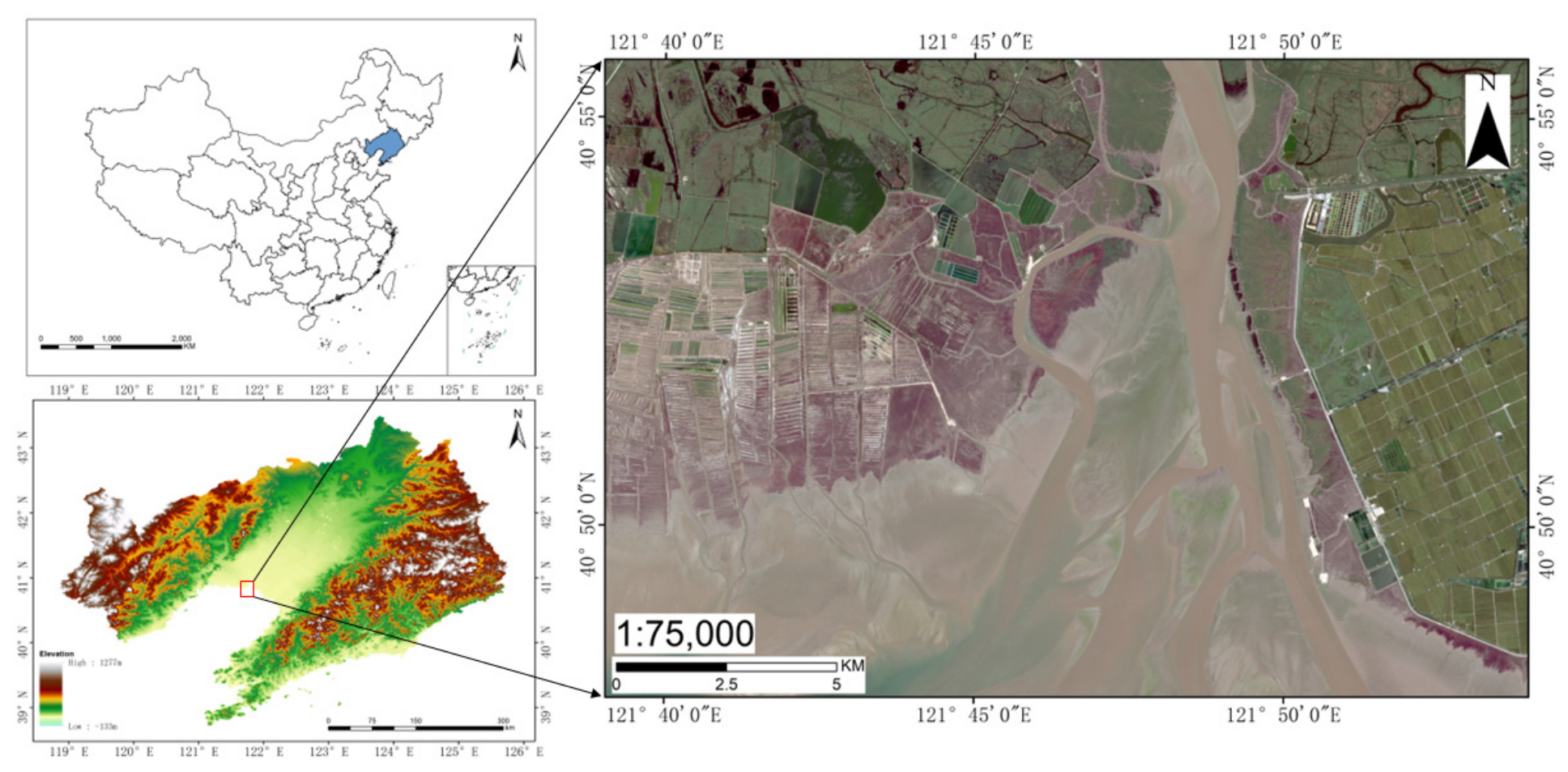
The Liaohe Estuary, as a significant estuarine wetland ecosystem in China, holds a vital position in the global ecosystem due to its unique geographical location and rich biodiversity [
1,
2]. This region features extensive tidal flats and diverse vegetation types, such as
Suaeda salsa and common reed (
Phragmites australis). These plant communities perform irreplaceable ecological services in maintaining biodiversity, providing vital habitats, reducing stormwater runoff, regulating climate, and sequestering carbon [
3]. They play a crucial role in the productivity of wetland ecosystems and serve as primary carbon sinks. In recent years, the ecological environment of the Liaohe Estuary has faced severe challenges due to dual impacts from natural factors (such as climate change and sea level rise) and human activities (such as land reclamation and water resource utilization), leading to significant changes in vegetation community structure and spatial distribution [
4]. Therefore, precise and efficient monitoring of typical vegetation in the Liaohe Estuary is crucial for assessing regional ecological health and formulating effective conservation strategies.
The distribution of vegetation types, changes in area coverage, and health status at the Liaohe Estuary serve as core indicators for evaluating wetland functions, succession stages, and ecological restoration outcomes. Remote sensing technology, with its advantages of macro-scale, rapid, and periodic observation, has become a powerful tool for wetland vegetation monitoring. Multispectral satellite imagery, in particular, captures the reflectance characteristics of land features across different wavelength ranges, enabling superior identification and classification of diverse vegetation types and growth conditions. Hyperspectral remote sensing not only images spatial features of targets but also provides continuous spectral coverage across dozens of narrow bands within a broader wavelength range for each pixel. This enables deeper investigation into the spectral response mechanisms and physical processes of vegetation, making it a powerful tool for vegetation monitoring and related fields.
Detailed vegetation classification using remote sensing in Hekou District is a key prerequisite for the high-precision assessment of wetland carbon sequestration capacity and carbon stocks; by accurately distinguishing between different vegetation types and their distribution, the accuracy of carbon sequestration models can be significantly improved. Mainstream methods for fine-scale remote sensing vegetation interpretation in coastal wetlands can be categorized into two types. The first type involves classification models based on vegetation indices. Vegetation indices (VIs) simplify complex remote sensing data into quantifiable indicators of land cover health, coverage, and productivity by combining reflectance values across two or more wavelength bands. Existing VIs are widely applied for large-scale vegetation information processing. For instance, the normalized difference vegetation index (NDVI) has seen extensive use in green vegetation studies. As vegetation index research deepens, scientists have developed a series of improvements to mitigate the influence of soil, topography, and atmospheric factors in study areas, thereby expanding the application scope of these indices. For instance, Wu (2014) proposed the Generalized Difference Vegetation Index (GDVI) based on NDVI formulas, enhancing the sensitivity of leaf area index and vegetation cover retrieval in arid regions with low vegetation coverage [
5]. To address these limitations, researchers developed vegetation indices tailored to specific vegetation types. For instance, Ye et al. [
6] constructed the estuarine tidal flat vegetation index (ETFVI) for tidal flat ecosystems by integrating humidity indices after accounting for the impact of surface moisture variations on vegetation indices [
7]. combined the normalized difference vegetation index (NDVI) with monthly average precipitation—two common drought-impact variables—to construct a novel integrated drought index (Meteorology-Agriculture Drought Index, MADI) that synthesizes precipitation and remote sensing vegetation characteristics. This index demonstrated high accuracy in assessing drought conditions in the Yangtze River Basin. Despite these advances, current research faces several challenges. For instance, some methods for detailed vegetation classification and extraction consider only a limited range of land cover types. Additionally, certain studies rely excessively on multi-temporal imagery, and vegetation indices often require computation from high-precision multispectral or hyperspectral reflectance data, imposing stringent demands on both the quality and quantity of remote sensing imagery. Finally, many fine-scale vegetation indices are often constructed for specific study areas, and their robustness remains unclear. Further validation is needed to assess their effectiveness in different environments.
Machine learning algorithms such as support vector machines, random forests, and deep learning have enabled high-precision land cover classification in local areas. For example, Tang et al. [
8] improved rapeseed mapping accuracy by 0.23 using vegetation indices and texture features; Zhang et al. [
9] simulated maize yield with LSTM; Fan et al. [
10] extracted burned vegetation anomalies using spectral-spatial features; Zheng et al. [
11] coupled multi-source imagery to achieve 81.5% overall accuracy for salt marsh vegetation; Li et al. [
12] integrated three vegetation indices and three machine learning techniques to optimize winter wheat yield estimation; Ren et al. [
13] enhanced hyperspectral interpretation using SVM and RF; and Gu et al. [
14] combined Sentinel-1/2, SRTM, and the InVEST model on GEE to assess high-altitude wetlands. However, machine learning models often suffer from poor robustness due to sensitivity to sample quality, sensor parameters, and local environmental conditions.
Moreover, in complex vegetation areas like the Liaohe Estuary (e.g., red
Suaeda salsa), spectral characteristics differ significantly from typical green vegetation. Traditional vegetation indices, often constructed based on green vegetation reflectance features, perform poorly in remote sensing extraction of such red vegetation [
15]. Wetlands with unique ecological environments (e.g., high-salinity soils, tidal effects) face interference from multiple confounding factors. Different vegetation types exhibit distinct growth stages, varying health conditions, and factors like water and nutrient stress, all of which can lead to pronounced differences in spectral characteristics. Current vegetation index-based land cover studies often rely on a single index for classifying and extracting all features, revealing clear limitations in vegetation information extraction through a single index alone. In complex vegetation areas like the Liaohe Estuary, a single vegetation index often fails to capture all land cover types. For instance,
Suaeda salsa exhibits vivid red coloration during specific growth seasons. To enhance extraction accuracy for such vegetation, we must develop or optimize more targeted vegetation index formulas. Although some current studies employ machine learning and deep learning algorithms to aid feature classification and recognition, their complex mechanisms and “black-box effect” hinder clear explanations for accuracy improvements. Furthermore, questions arise regarding the applicability of vegetation indices across different remote sensing satellites—specifically, whether formulas developed for one satellite sensor can be directly applied to data from other sensors [
16].
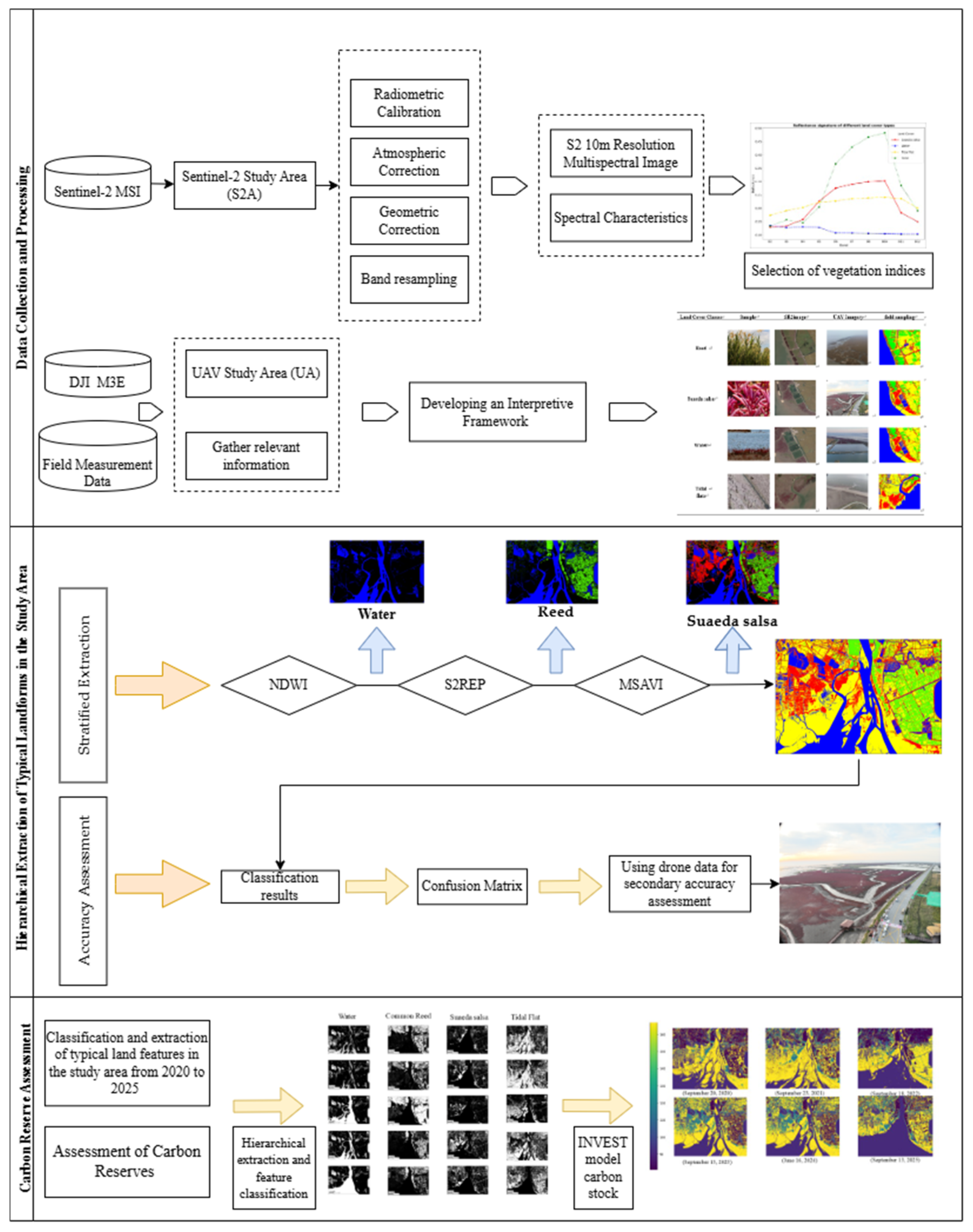
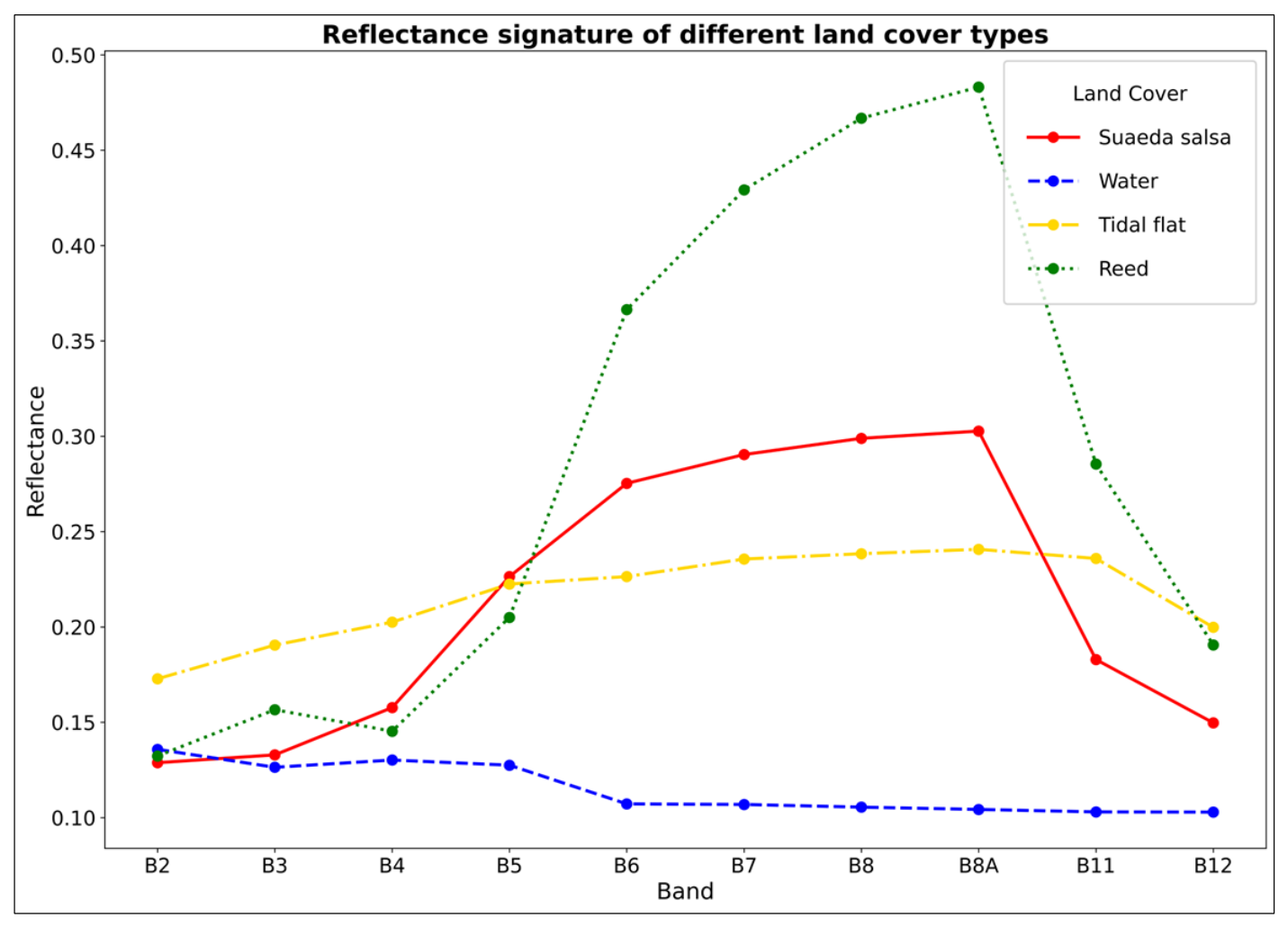
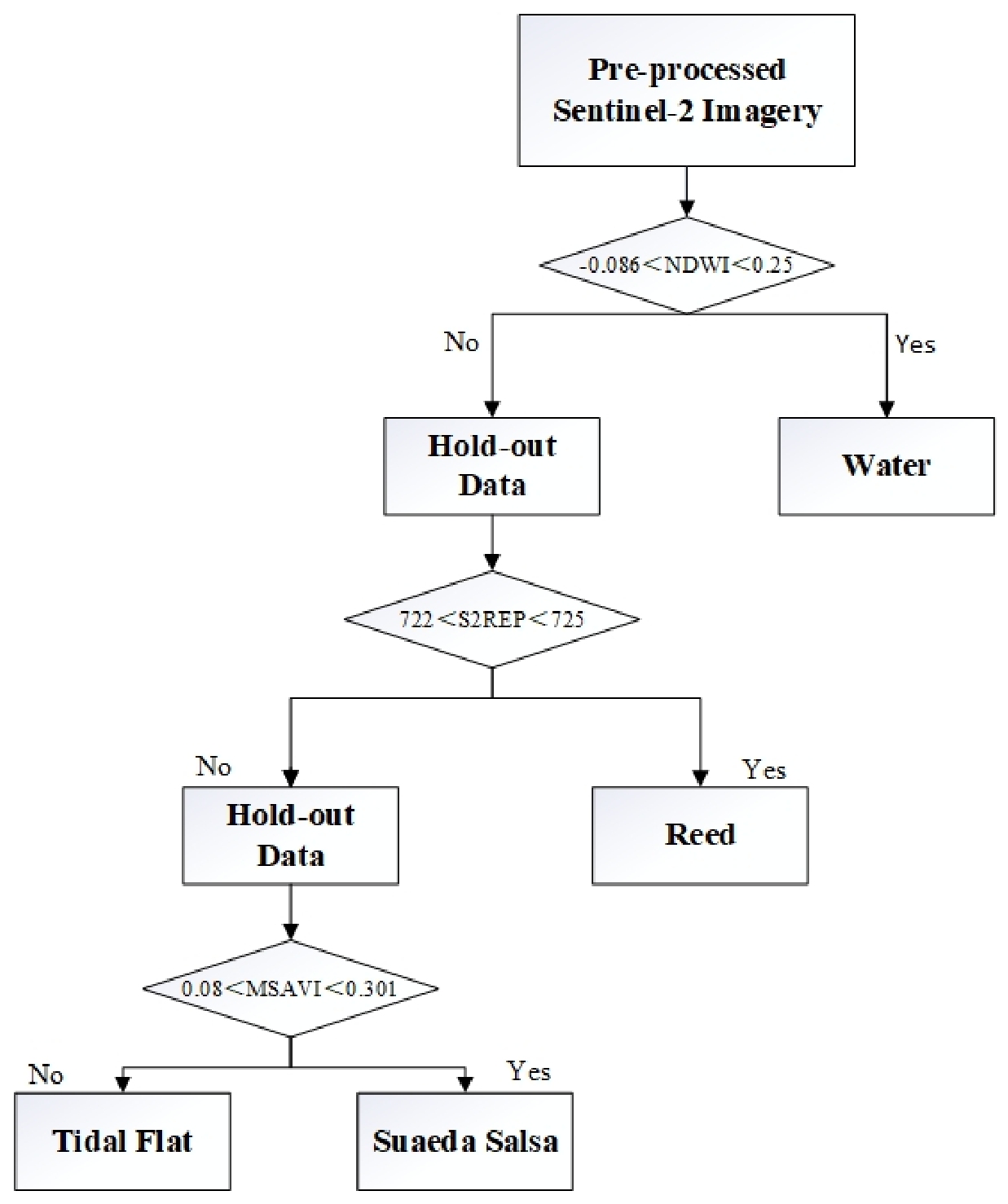
In response to the current difficulties and challenges in remote sensing feature extraction and classification, this study proposes a hierarchical extraction method tailored to complex study areas. The optimal sequence for layer extraction was determined using spectral reflectance data, with priority given to extracting water bodies, followed by reed, then
Suaeda salsa, and finally tidal flat [
17]. Furthermore, appropriate vegetation indices were selected to achieve better extraction results [
18]. At the same time, to improve discrimination, the b8 band used in the NDVI calculation was replaced with b8a [
19], and the b7 band in the S2REP was replaced with b8a. With carbon sink assessment as its core application, the study directly supports the InVEST model’s quantitative assessment of carbon stocks in the Liaohe Estuary wetlands by generating high-precision vegetation classification results. Based on preprocessed remote sensing imagery, it extracts spectral information of typical features in the study area and matches the most suitable vegetation indices and calculation bands to the spectral characteristics of each feature type, thereby specifically improving the recognition accuracy for each feature [
20]. The core objective of this study is to investigate whether this approach can yield higher-precision classification products for typical wetland features. Additionally, we conducted comparative analyses of different extraction schemes. Specifically, we selected the Liaohe Estuary Delta region in China as the study area and analyzed four typical features (reed,
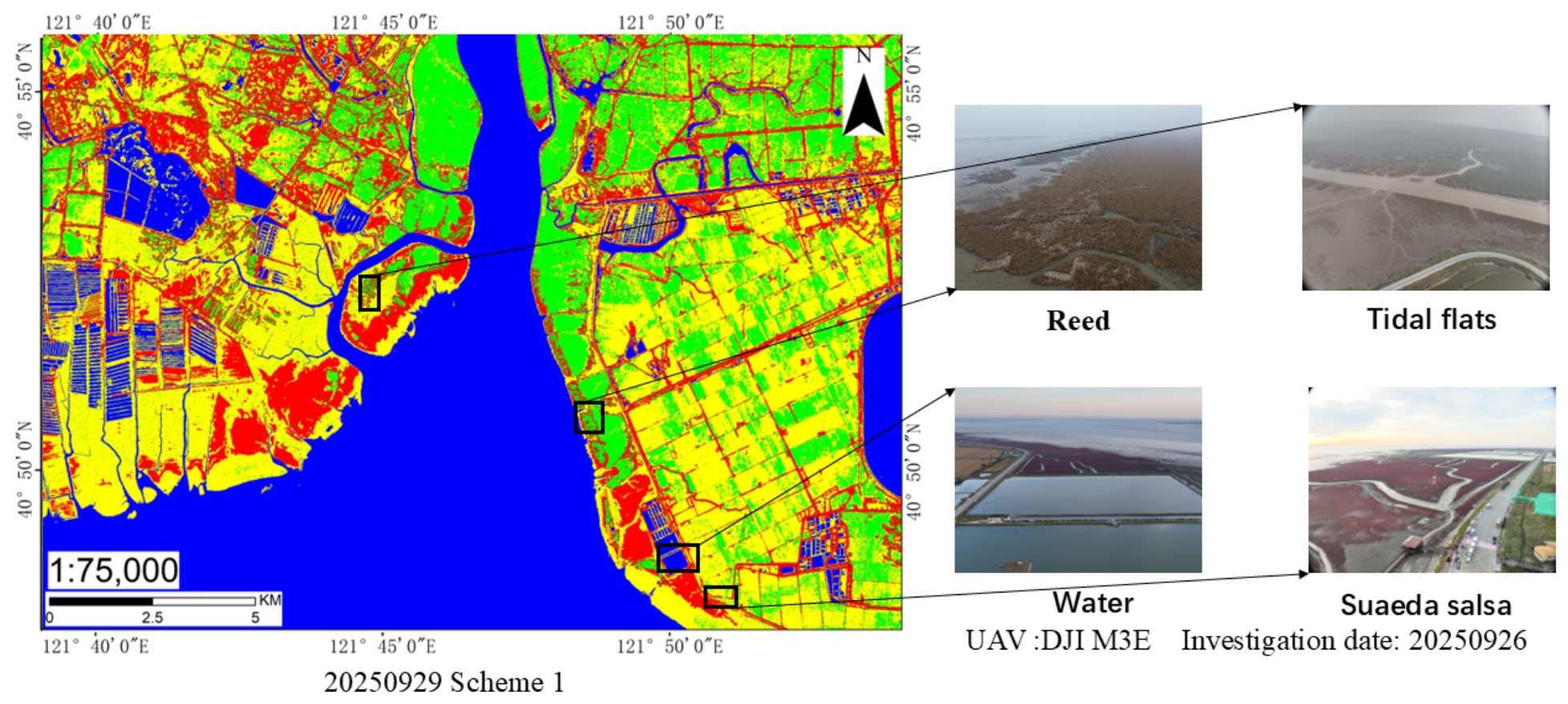
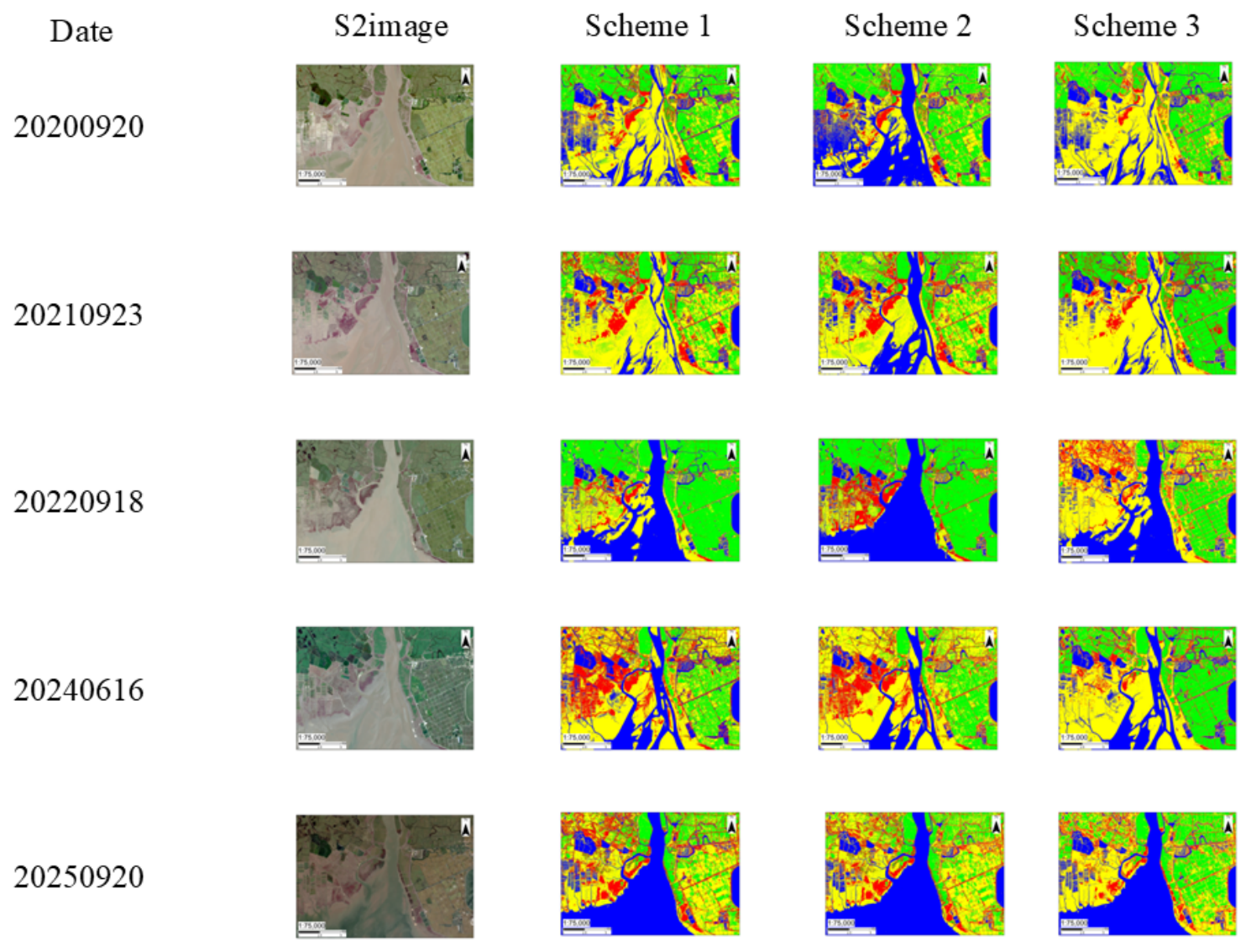
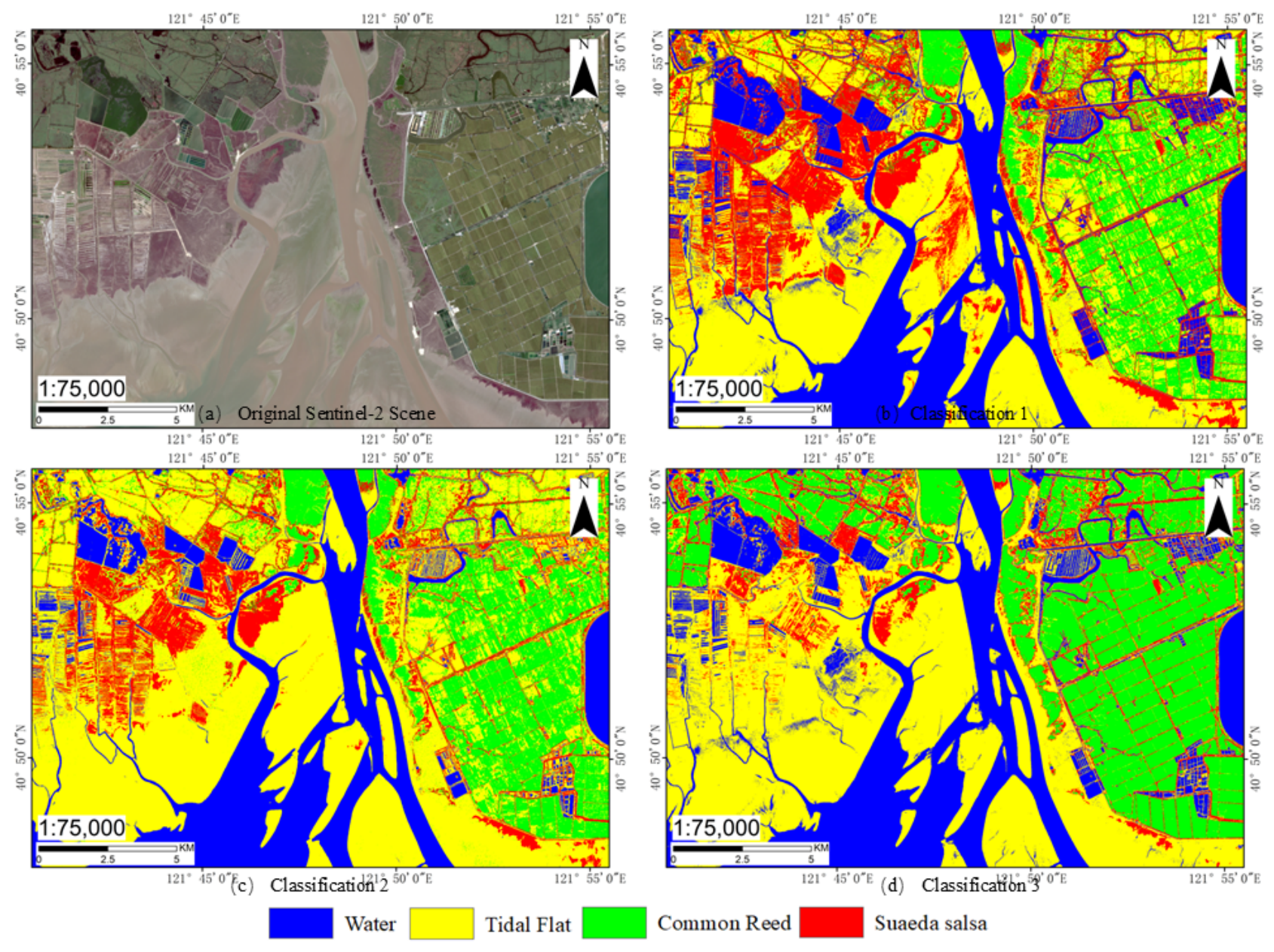
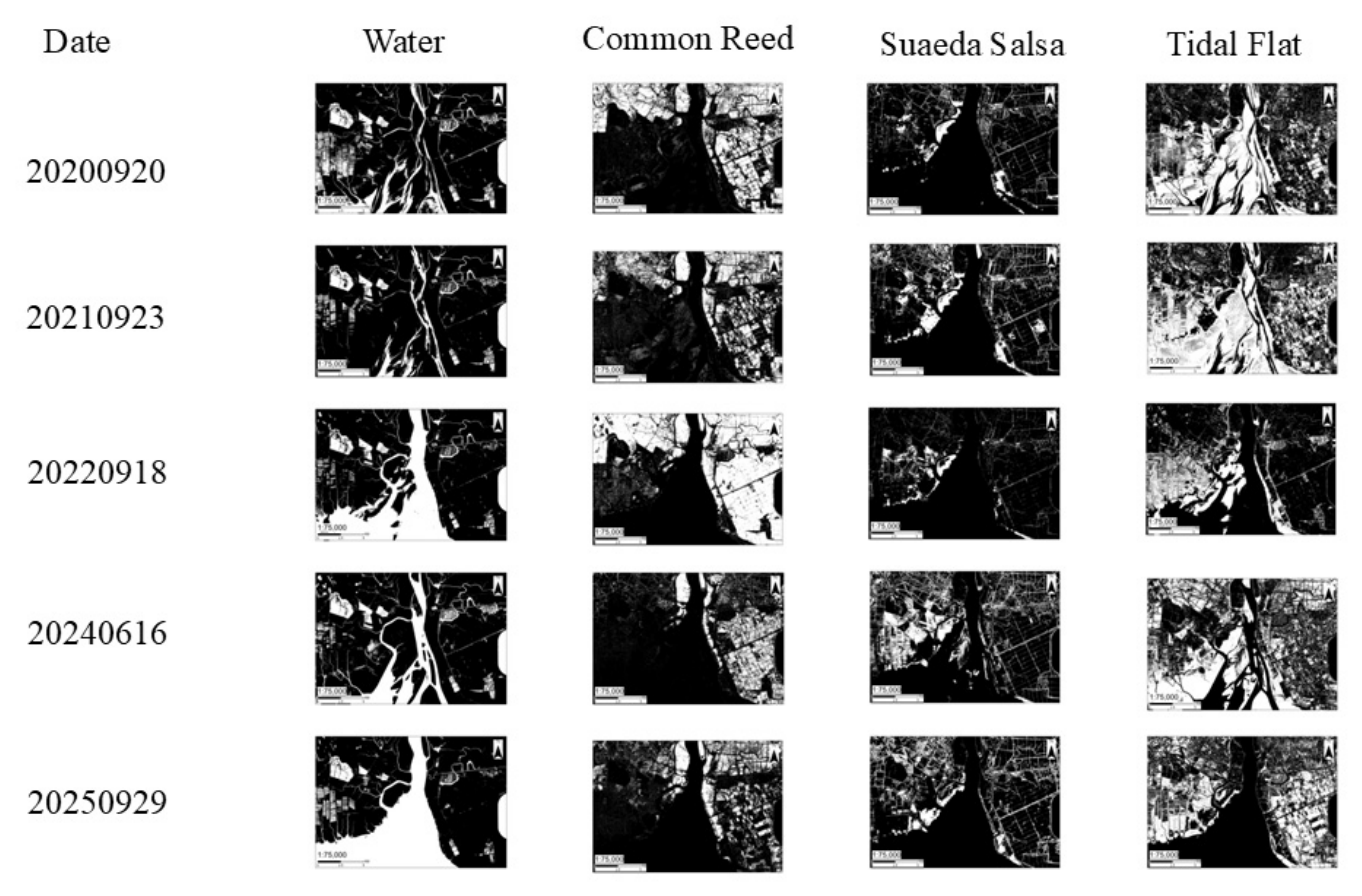
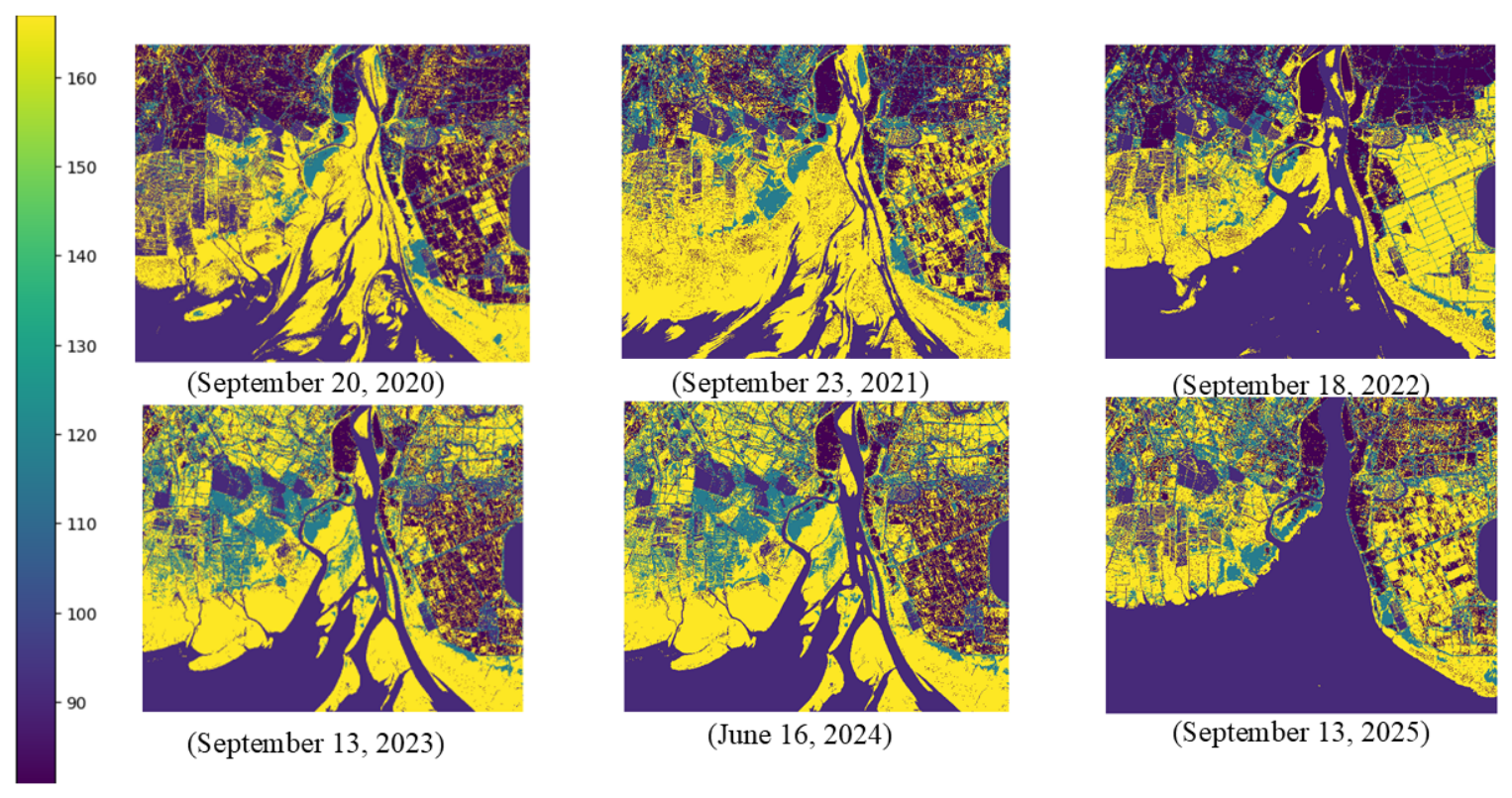
Suaeda salsa, water, and tidal flat) within the study area. Multiple vegetation indices were selected and optimized to achieve hierarchical extraction of these four typical land cover types. To demonstrate effectiveness, commonly used vegetation indices were selected as control variables for comparison with the accuracy and performance of the extraction classification in this study. Having demonstrated that the hierarchical extraction approach can effectively improve the accuracy of land cover classification, we employed this method to classify land cover in a single scene for each year from 2020 to 2025—years with similar environmental conditions—by adjusting dynamic thresholds. Furthermore, based on the land cover classification results, we utilized the INVEST model to assess carbon stocks in the study area. Specific research content includes: (1) spectral reflectance data analysis of typical land cover types in the Liaohe Estuary based on Sentinel-2 satellite remote sensing imagery; (2) selection and matching of vegetation indices for different land cover types based on reflectance data to achieve hierarchical extraction of typical land cover features; (3) performing a hierarchical extraction of Sentinel-2 remote sensing imagery from 2020 to 2025, followed by an accuracy assessment; and (4) using the land cover classification results combined with the InVEST model to assess the carbon stock in the Liaohe Estuary region. The innovation of this study is the application of fine-scale classification based on spectral reflectance curve characteristics to carbon stock modeling.
5. Discussion
The approach employed in this study—using NDWI to extract water, S2REP to extract reed, and MSAVI to extract
Suaeda salsa—effectively captures land cover information in remote sensing extraction research, though the results still exhibit some degree of error. The band replacement strategy red-edge B8A instead of red for S2REP positively enhanced the separability, as well as between Reed and
Suaeda salsa. However, a negative effect was observed in areas with mixed vegetation or transitional zones, where the modified indices produced slightly higher false-positive rates due to spectral similarity at class boundaries [
42]. The hierarchical extraction order positively prevented cascading misclassifications; but if a class was incorrectly extracted in an early step (e.g., water misclassified as tidal flat), the error propagated to subsequent classes. This negative effect was minimized by using conservative thresholds.
Remote sensing imagery is susceptible to phenomena such as “same spectral signature, different objects” and “different objects, same spectral signature.” Sentinel-2 imagery, with its bands at 10 m, 20 m, and 60 m resolution, cannot guarantee homogeneity of objects within each pixel even after preprocessing steps like atmospheric correction, radiometric calibration, and band resampling. Additionally, issues arising during the acquisition and production of remote sensing imagery—such as distortion, cloud cover, and shading—inevitably introduce certain effects on subsequent extraction results. Furthermore, the study area is located in a coastal wetland at a river estuary, featuring a complex ecological environment. Vegetation such as
Suaeda salsa and reed grows on intertidal tidal flats, exhibiting stronger water absorption than typical conditions. Spectral reflectance curves reveal high similarity between the spectral profiles of
Suaeda salsa and tidal flats [
22]. Consequently, threshold settings and spectral confusion between tidal flats and
Suaeda salsa during subsequent extraction processes compromise land cover classification accuracy. The vegetation indices employed in this study specifically replaced the bands used in calculations based on previously extracted spectral reflectance data. Whether these vegetation indices are universally applicable across all remote sensing satellite sensors, and whether using a vegetation index derived from one satellite sensor on another satellite with different parameters can guarantee computational accuracy, remains open to further discussion and research. The generalizability of conclusions drawn from one satellite sensor to a broader range of remote sensing satellites requires additional investigation. In specific, in detailed studies of land feature interpretation, it has been found that high and low tides have a significant impact on the classification of land features in complex coastal wetland ecosystems [
23]. Furthermore, the variation in tidal ranges causes substantial fluctuations in the area of exposed mudflats in coastal wetlands, which in turn leads to complex trends in carbon stock estimates derived from mudflat calculations. The InVEST carbon stock estimates (
Section 4.4,
Table 7) show that tidal flats contribute the largest soil carbon pool (166.46 t C/ha), followed by
Suaeda salsa (112.40 t C/ha) and reed (72.60 t C/ha). Tidal dynamics have a strong positive effect on carbon exposure as follows: low tide exposes carbon-rich soils, potentially increasing aerial carbon flux estimates; high tide submerges tidal flats, reducing the visible carbon pool by up to 12%. Even when using a single remote sensing satellite, such as Sentinel-2 imagery with a revisit cycle of five days, it remains impossible to fully meet the data requirements for study areas spanning multiple years. However, the use of multi-source data compromises data consistency and accuracy. When conducting land cover studies in a specific study area within a coastal wetland ecosystem, it is challenging to simultaneously satisfy the three requirements of single-satellite remote sensing data, high and low tide times, and cloud cover conditions [
24]. This poses significant difficulties in further enhancing the scientific rigor and robustness of the research [
25]. In subsequent studies, we need to identify better methods to ensure these three factors align as closely as possible, or utilize intermediary tools to improve their compatibility, thereby yielding more accurate carbon stock simulation results [
43,
44].
Furthermore, the robustness of the hierarchical extraction approach developed in this study to other research areas remains unknown. In hierarchical feature extraction, adjusting vegetation index thresholds simultaneously impacts both classification accuracy and the number of misclassified pixels. Balancing these two factors—accuracy and misclassified pixels—requires extensive research to identify optimal patterns. The hierarchical extraction method proposed in this study achieved an overall accuracy of 98.5% (Kappa 0.9796), which is substantially higher than previous wetland classification studies. Our accuracy improvement can be attributed to the following two key innovations: the explicit band replace such as red edge instead of red for reed vs.
Suaeda salsa separation, which directly address the spectral confusion that traditional indices fail to resolve; and the fixed hierarchical extraction order, which prevents misclassification cascades common in single-step machine learning models. Despite the high accuracy, certain errors persisted. The approach—using NDWI to extract water, S2REP to extract reed, and MSAVI to extract
Suaeda salsa—effectively captures land cover information, though the results still exhibit some degree of error. Remote sensing imagery is susceptible to “same spectrum, different objects” and “different objects, same spectrum” phenomena [
45]. Sentinel-2 imagery, with bands at 10 m, 20 m, and 60 m resolution, cannot guarantee object homogeneity within each pixel even after preprocessing. Additionally, acquisition and production issues (distortion, cloud cover, and shading) inevitably introduce effects on extraction results [
30]. The study area is located in a coastal wetland at a river estuary, featuring a complex ecological environment. Vegetation such as
Suaeda salsa and reed grows on intertidal tidal flats, exhibiting stronger water absorption than typical conditions. Spectral reflectance curves reveal high similarity between
Suaeda salsa and tidal flats. Consequently, threshold settings and spectral confusion between tidal flats and
Suaeda salsa during subsequent extraction compromise classification accuracy. The vegetation indices employed in this study specifically replaced the calculation bands based on extracted spectral reflectance data. Whether these vegetation indices are universally applicable across all remote sensing sensors, and whether using an index derived from one satellite on another with different parameters can guarantee computational accuracy, remains open to further discussion. The generalizability of conclusions from one sensor to a broader range requires additional investigation. In detailed interpretation of land features, we found that high and low tides significantly impact classification in complex coastal wetland ecosystems. Variation in tidal ranges causes substantial fluctuations in exposed mudflat area, which in turn leads to complex trends in carbon stock estimates derived from mudflat calculations. Even using a single satellite (e.g., Sentinel-2 with a 5-day revisit cycle), it remains impossible to fully meet data requirements for multi-year studies [
46]. However, multi-source data compromise consistency and accuracy. When conducting land cover studies in a coastal wetland ecosystem, it is challenging to simultaneously satisfy the three requirements of single-satellite data, appropriate tidal timing, and cloud-free conditions. This poses difficulties in further enhancing scientific rigor and robustness. In subsequent studies, we need to identify better methods to align these three factors, or use intermediary tools to improve their compatibility, thereby yielding more accurate carbon stock simulations.
Furthermore, the robustness of our hierarchical extraction approach to other study areas remains unknown. In hierarchical feature extraction, adjusting vegetation index thresholds simultaneously impacts both classification accuracy and the number of misclassified pixels. Balancing these two factors requires extensive research to identify optimal patterns.
6. Conclusions
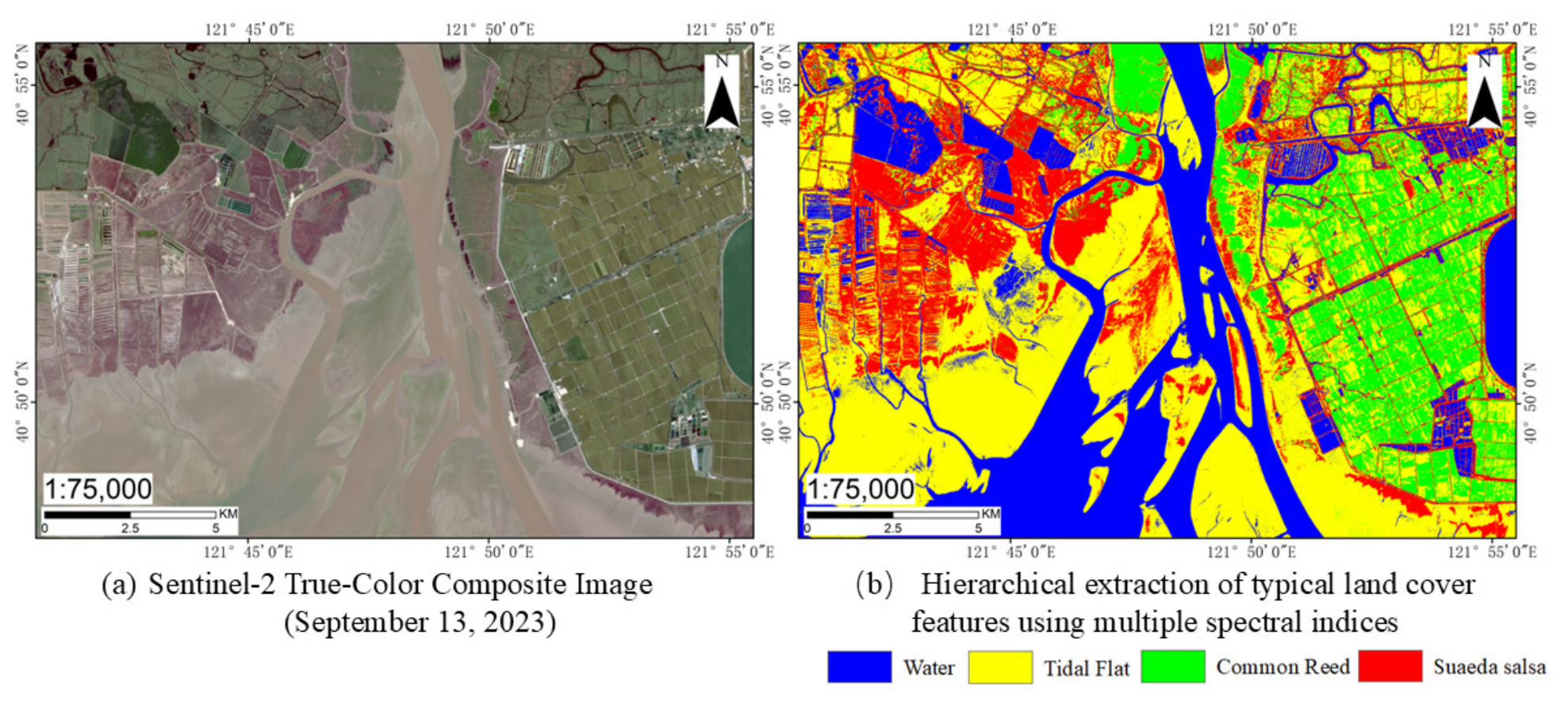
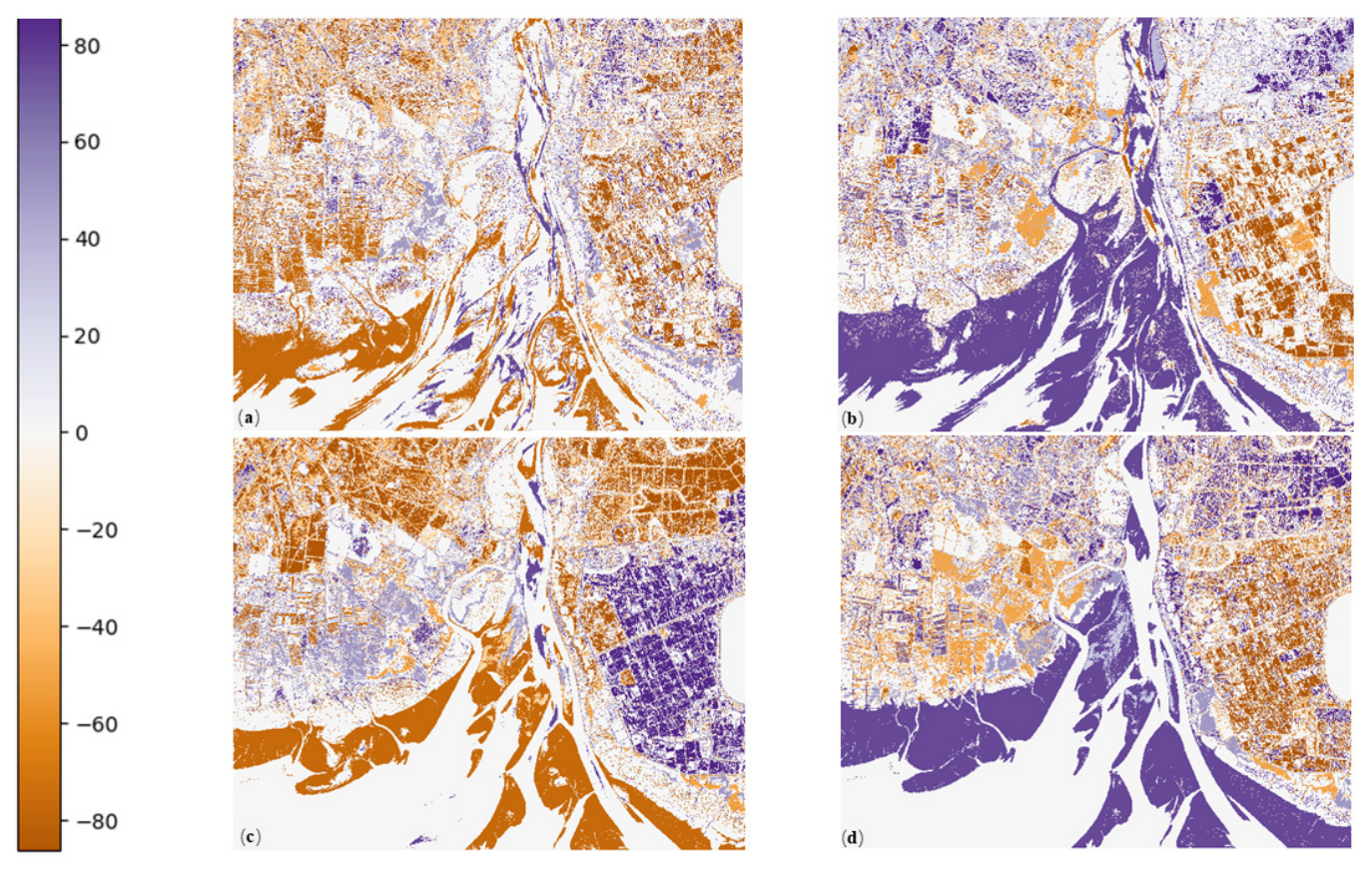
This study selected the Liaohe Estuary Delta region in China as the study area. Based on spectral reflectance characteristics of four typical land cover types (reed, Suaeda salsa, water, and tidal flat) analyzed using Sentinel-2 remote sensing imagery, multiple vegetation indices were selected and optimized to achieve hierarchical extraction of these four land cover types. There were Sentinel-2 spectral reflectance curves (B2–B8A, B11, and B12) for four land cover types. Water and tidal flat exhibit a nearly flat, low-reflectance horizontal line across visible to red-edge bands due to high absorption and minimal spectral variation. Reed and Suaeda salsa show a remarkable decline in B11 and B12 (SWIR1 and SWIR2), caused by strong water absorption in plant tissues, which helps distinguish them from tidal flats. By comparing extraction accuracy and effectiveness through control variable methods, manual visual interpretation, and UAV imagery support, this study demonstrates that using suitable vegetation indices for hierarchical feature extraction in complex land cover areas offers strong targeting capability and high accuracy. This enhances our understanding of the study area and provides valuable information for biodiversity and ecosystem research and conservation, laying a solid foundation for future coastal wetland studies and conservation efforts. Key findings are as follows: a distribution map of typical land features in the Liaohe River estuary region for 2023 was obtained, achieving an overall classification accuracy of 98.5% with a Kappa coefficient of 98%. High classification accuracy was attained through targeted adjustments to spectral characteristics and vegetation indices, coupled with hierarchical extraction using vegetation indices. By utilizing the results of detailed vegetation classification in conjunction with the InVEST model to simulate carbon stocks, it was found that the tidal flats in the study area are significantly influenced by tidal patterns, resulting in complex variations in carbon stocks. Simulation results for above-ground vegetation carbon content and total regional carbon stocks from 2020 to 2025 suggest a possible trend toward stabilization compared with earlier periods. While these findings may be interpreted as indirect evidence that the ecological restoration efforts undertaken in the Liaohe Estuary coastal wetland area in recent years have had a beneficial impact, longer-term monitoring and additional field data are needed to confirm this interpretation and to distinguish restoration effects from natural variability.
Based on the findings and limitations of this study, for future work the following should be done: integrating additional satellite sensors to reduce the dependency on cloud-free optical images and to improve temporal resolution for tidal dynamic monitoring; exploring machine learning-based dynamic threshold optimization to further automate the hierarchical extraction process and minimize user intervention; and extending the methodology to other coastal wetlands with different vegetation compositions to test its generalizability.