Article

How Does Progressive Visual Feedback Enhance Controllability? An Empirical Study of LLM-Driven, Culturally Sensitive Sustainable Rural Landscape Design

1
College of Landscape Architecture and Arts, Northwest A&F University, Xianyang 712100, China
2
School of Art and Design, Dalian Polytechnic University, Dalian 116034, China
*
Author to whom correspondence should be addressed.
Sustainability 2026, 18(12), 6160; https://doi.org/10.3390/su18126160
Submission received: 9 April 2026 / Revised: 6 June 2026 / Accepted: 12 June 2026 / Published: 15 June 2026
(This article belongs to the Section Tourism, Culture, and Heritage)

Abstract

As artificial intelligence (AI) becomes increasingly important in rural revitalization, building consensus among multiple stakeholders and developing participatory digital co-creation platforms has grown increasingly urgent. However, existing large language model (LLM) systems predominantly adopt a one-shot generation paradigm, making it challenging to accurately capture villagers’ cultural aspirations and frequently resulting in a significant disconnect between design outputs and community expectations. This situation reveals deficiencies in progressive deliberation mechanisms and cultural controllability. To address these issues, this study proposes a multimodal Participatory Landscape Demand Generation (PLDG) system to enhance AI-generated dialogue controllability, facilitate effective cultural translation in sensitive rural contexts, and promote sustainable development where landscape design both drives and reflects rural revitalization. The system leverages LLMs to simulate stakeholder participatory interactions in village landscape design scenarios. Using culturally distinctive Chinese villages as case studies, the research conducts multi-role simulated dialogues, multimodal semantic extraction, and iterative consensus-building, and evaluates the resultant data to generate landscape design proposals. The results indicate that the PLDG system significantly improves participation efficiency among diverse design stakeholders and enhances the sustainability of design decisions. Compared to conventional methods, metrics such as cultural compatibility, villager participation, and design innovation show substantial improvements. These findings demonstrate the considerable potential of human-AI collaboration in future rural planning. This study introduces the Culture Constraint-Driven Rural Landscape AI Collaborative Design Framework (PLDG), validating its practical efficacy in identifying culturally sensitive elements, ensuring cultural congruence, facilitating community participation, and fostering design innovation. Consequently, it provides a reusable, iterative operational tool for the digital renewal of sustainable rural landscapes.

1. Introduction

Rural design inherently depends on deliberation with local stakeholders [1]; however, villagers, often positioned as cognitively vulnerable or less digitally literate, are frequently marginalized [2]. Villagers’ lifestyles often differ significantly from urban norms, yet modern technologies, predominantly designed for urban contexts, fail to align with rural socioeconomic logics governing production and daily life [3,4]. Consequently, villagers frequently experience conflicts of interest with external stakeholders, including developers, tourists, and designers, during rural design processes [5].
Additionally, exchanges between designers and villagers often involve cognitive gaps, which result in highly conjectural or subjective assumptions [6]. Consequently, designers typically capture only superficial local data and fail to uncover authentic regional cultural elements [7], thereby eliciting negative appraisals from villagers regarding design outcomes. Effective deliberation becomes untenable, and cultural meanings remain obscured. The dual challenge of multi-stakeholder deliberation conflicts and cultural heritage sensitivity urgently necessitates innovative technological interventions to facilitate participatory safeguarding of cultural meanings [8], continuously empowering local culture.
To this end, this study addresses a core paradox: villagers possess rich indigenous cultural knowledge yet struggle to effectively articulate it through existing AI systems; conversely, artificial intelligence (AI), despite its powerful generative capabilities, fails to clearly identify culturally non-negotiable elements [9]. In recent years, generative AI has opened new technological possibilities for participatory design [10]. Compared to traditional AI approaches [11], large language models (LLMs) demonstrate notable advantages, including the ability to engage in near-human-level dialogues and emulate specific groups’ thought patterns and cultural contexts [12]. For example, when queried about villagers’ landscape design aspirations, LLMs can generate culturally specific analyses based on dimensions such as agricultural rhythms and climate adaptation [13,14]. This demonstrates that LLMs can simulate role-specific contexts, extract cultural needs, and correct cognitive biases, offering a pathway to enhance the controllability of cultural sensitivity [15]. In this study, we define cultural sensitivity as comprising three interrelated layers: identifying non-negotiable cultural elements, preserving cultural authenticity, and resolving conflicts embedded in cultural contexts.
Although participatory LLMs effectively engage users in design experiments, the extent to which cultural elements are effectively refined remains unclear [16]. This limitation indicates that existing LLMs suffer from role anchoring failure, unstable negotiation, and unreliable cultural extraction in rural design (RO1) [17,18]. Second, in the dialogue mechanism, cultural elements frequently require maintaining a “golden ratio” with conventional design elements to achieve satisfactory feedback from multiple stakeholders [19]. This highlights the sensitivity and demand of conditions for cultural expression, and the absence of progressive visual feedback and constraint-generation mechanisms fails to ensure cultural sensitivity (RO2) [20,21]. Third, due to the lack of emotional engagement by the AI agent, its effectiveness cannot be reliably assessed, and systematic evaluation methods for cultural sensitivity and participation are lacking (RO3) [22]. Traditional qualitative assessments also fail to capture emotional dimensions accurately.
Therefore, this study investigates: How can an LLM-based framework effectively establish progressive deliberation scenarios and accurately capture vernacular culture to enhance controllability and experimental efficacy? To address this gap, we propose the following hypotheses: H1: A progressive visual feedback loop significantly enhances controllability over the generation of culturally sensitive elements. H2: Compared with traditional one-shot generative AI models, the PLDG framework achieves higher scores in cultural compatibility, community engagement, and design innovation. To validate these hypotheses, the study developed prompt templates to rectify failures in rural demand extraction and conducted a controlled experiment using a conventional AI dialogue framework, employing both qualitative and quantitative methods to evaluate cultural sensitivity and innovation. The specific objectives are: (1) to construct a framework integrating role-based thinking [23], elucidating the distributed cognition principle whereby progressive visual feedback enhances controllability through shared cognitive objects; (2) to develop the first AI collaborative design framework for rural landscapes (Participatory Landscape Demand Generation [PLDG]), integrating multimodal semantic extraction [24] with culturally sensitive constraints, accompanied by an evaluation system; and (3) to empirically validate the effectiveness of the constraint-generation mechanism in culturally sensitive rural design, providing actionable technical-humanistic collaborative tools to reconfigure rural power dynamics.

2. Literature Review

2.1. LLMs in Participatory Design: Role-Playing and Deliberation

To illustrate the proposed deficiencies in LLM capabilities (RO1), we review current applications of LLMs in participatory design, emphasizing their adaptability challenges in rural contexts. Participatory AI is increasingly applied to rural design [25]. However, a critical concern is the cognitive vulnerability of rural stakeholders [26]. For instance, Kim et al. noted that rural populations exhibit disparities in AI acceptance and communicative competence. This is primarily evident in standardized emotional communication and feature cognition within AI interactions, preventing AI from comprehending villagers from a cultural perspective [27]. Kendall et al. examined everyday use of voice interfaces among diverse urban populations in India, identifying correlations between low literacy or educational levels and voice-search utilization. Their research demonstrates that problem-solving in rural contexts is inherently complex, defying one-size-fits-all solutions [28]. Furthermore, during cultural demand extraction, the stochastic nature of AI cultural extraction yields uneven performance across projects [29]. Furthermore, stakeholder groups exhibit divergent interests [30]; single-turn dialogues lack necessary negotiation among conflicting demands, resulting in cultural outputs tailored only to specific demographics [31]. The lack of adaptability highlights the need for negotiation and discussion in role-playing frameworks.

2.2. Digital Preservation of Sustainable Rural Cultural Landscapes: Constraint and Feedback Mechanisms

To address inadequacies in LLM evaluation (RO3) and mechanism design (RO2), we propose a higher standard for digitally preserving rural cultural landscapes. This standard goes beyond simple “documentation and display,” aiming for creative transformation while maintaining cultural authenticity [32]. Current research highlights the necessity of constructing a multimodal cultural gene bank and an intelligent narrative system to actively preserve spatial forms [33], folk rituals [34], and oral histories [35]. However, the stability and controllability of cultural extraction remain significant bottlenecks.
Existing AI-driven cultural translation tools risk losing control over cultural representation [36]. Model-generated outputs frequently deviate from the intrinsic logic of vernacular culture, including pattern motifs, chromatic proportions, and narrative archetypes [37]. This problem primarily arises from the absence of effective constraint mechanisms [38]. Moreover, current technologies predominantly adopt a “one-shot generation” paradigm, lacking progressive [38] and multimodal refinement processes [39]. Design outputs are therefore unable to dynamically adjust to rural communities’ acceptance levels and emotional states. Consequently, villagers’ concerns remain unaddressed, impeding the development of community identity. Therefore, the digital preservation of rural cultural landscapes urgently requires a controllable and progressive technical framework that enables AI to accurately capture elements of cultural identity during multi-stakeholder deliberations, satisfying validation expectations for culturally sensitive visualization. Furthermore, the concept of cultural sensitivity is theoretically grounded in heritage preservation and participatory design [40]. However, current studies predominantly utilize qualitative interviews [41], participatory observations [42], and other traditional methods, which are difficult to scale within AI-driven design systems. This gap provides an entry point for the present study: how to encode mechanisms for identifying cultural sensitivity into computational constraints emerges as a central challenge in AI-enabled rural design.
In rural design practice, LLM conversational systems have evolved into collaborative platforms integrating everyday productive forces, thereby transcending their purely instrumental roles [43]. Through these dialogue systems, targeted analysis of residents’ feedback is conducted [44], providing a public co-creation environment for landscape design [45]. Drawing upon the LLM multimodal refinement framework [46], diverse cultural output pathways are made available to residents [47]. These cultural outputs feed into extensive databases, where data analysis allows distillation of cultural semantic connotations [48] and interpretation of latent demand patterns [49], ultimately generating landscape renderings [50]. However, current explorations face significant limitations. In terms of cultural element extraction and semantic analysis, systems, while capable of identifying pixel-level cultural symbols, fail to conduct cultural validity assessments. In multi-stakeholder deliberation and design generation dimensions, progressive deliberation architectures that support long-term consensus-building are lacking [51]. Moreover, a disconnect between visual generation and semantic feedback prevents effective bidirectional iterative processes. During multi-turn dialogues, AI-generated cultural expressions tend toward exaggeration as reasoning processes unfold, lacking timely visual calibration. In summary (Table 1), existing research encounters three critical issues: (1) ineffective role anchoring and unstable negotiation; (2) lack of effective role simulation and negotiation mechanisms for LLMs in rural contexts; and (3) inability of AI cultural translation tools to identify and evaluate “culturally sensitive” elements under constraints. These issues collectively highlight the core need for an AI design framework. Such a framework should capture cultural sensitivity in rural contexts and enhance controllability through progressive dialogue. This key issue is precisely what the PLDG framework proposed in this paper aims to address.

3. PLDG Framework and Methodology

3.1. Text and Image Tools

Currently, LLMs exhibit technical limitations when addressing landscape participation challenges. During dialogues, they lack effective role anchoring in negotiations, show insufficient specificity in deliberation, encounter conflicts in stakeholder identification, and demonstrate inadequate cultural reflection in landscape design. These shortcomings indicate that ChatGPT-4.0 lacks the capacity for processing heterogeneous information, leading to ungrounded AI outputs and undermining the stability of cultural representations [52]. Consequently, the PLDG model was developed to overcome these persistent conversational deficits. The following methodology addresses the three research objectives: the text and image tools (Section 3.1) and system workflow (Section 3.2) establish the technical foundation for RO2; multi-role simulation and prompt engineering (Section 3.3) operationalize theoretical constructs for RO1; and the evaluation system (Section 3.4) tests RO3.
To develop a high-performance model capable of simulating deliberation, facilitating public participation, and enhancing the stability of rural cultural identity, this study integrated and upgraded key technologies from existing AI systems. While the experiment retained the fundamental conversational architecture of traditional ChatGPT-4.0-mediated interactions [53], the insufficient role-assignment mechanisms hindered effective deliberation. Therefore, Chain-of-Thought (CoT) prompt templates were introduced to facilitate functional role assignment. To enhance the “cultural freshness” of demand information, a multimodal data collection system was incorporated into the conversational experiments. The backend was structured to integrate joint embeddings from image-based SigLIP [54], speech-based Whisper [55], and text-based Sentence-BERT [56]. Through CoT-embedded dialogues and multimodal data collection, heterogeneous data are effectively synthesized, enabling the extraction of rural-specific cultural elements [20]. It has been observed that while LLM-mediated heterogeneous information acquisition can enhance cultural authenticity, whether these cultural manifestations align with resident demands and promote sustainable revitalization remains unclear in practice. To address this, eye-tracking technology [57] was integrated with Stable Diffusion (SD) intelligent generation to produce visual sketches concurrently with dialogue generation. Residents visually assessed these preliminary sketches, facilitating iterative refinement. This process established a progressive AI generation system functioning as an invisible “cultural translator,” creating a real-time, interpretable, feedback-driven cognitive loop to support subsequent participatory deliberation.

3.2. System Overview and Workflow

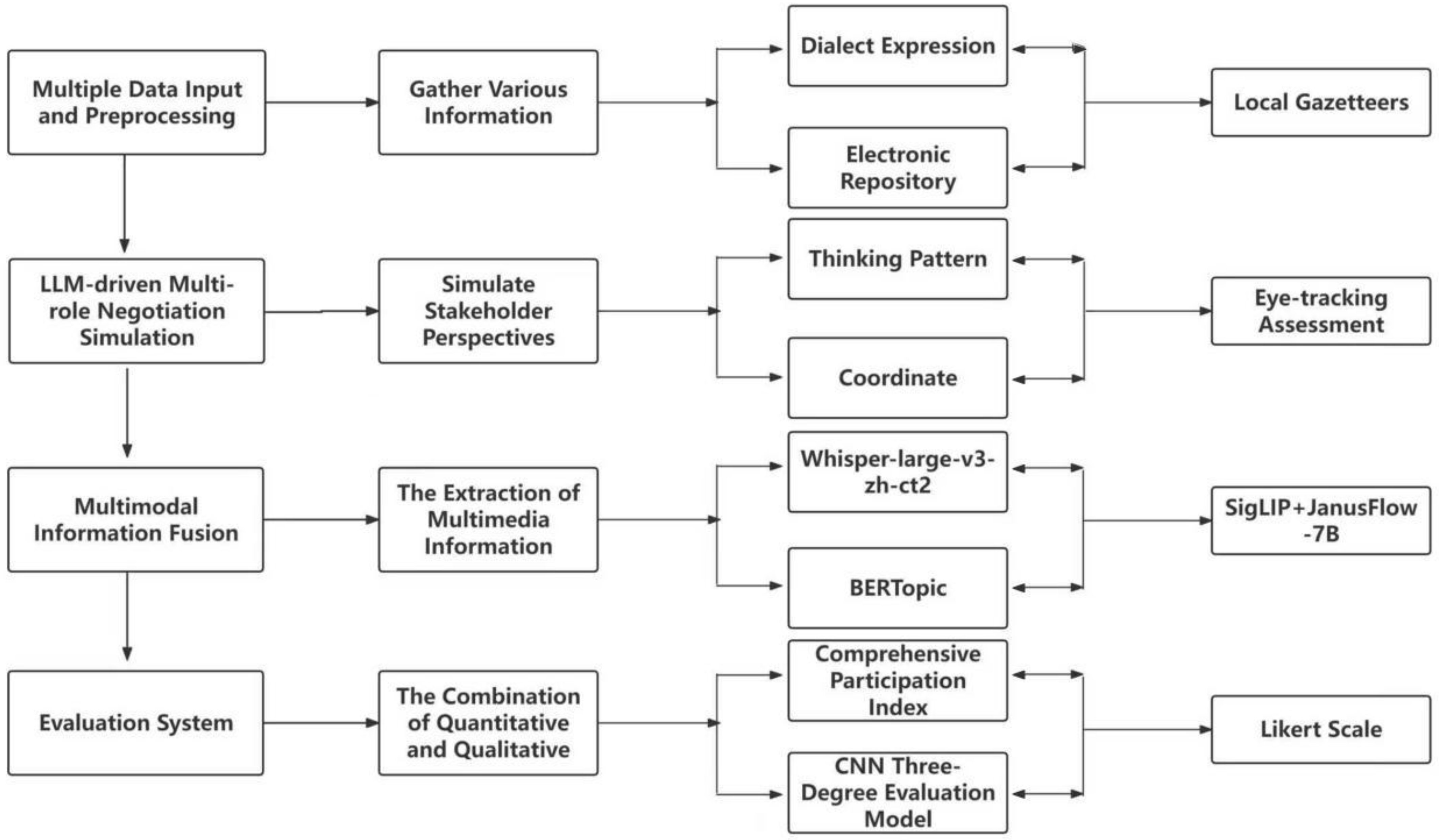
To address the multi-stakeholder deliberation and cultural identification challenges described in the introduction, this study introduces the PLDG framework, a Multimodal Participatory Landscape Demand Generation (PLDG) System. This novel language model extends traditional LLM conversational architectures to enable demand deliberation and design controllability. The operational process of the PLDG model (Figure 1) includes: (a) Multimodal Data Input and Preprocessing; (b) LLM-Driven Multi-Stakeholder Demand Simulation and Iterative Deliberation; (c) Multimodal Semantic Extraction and Fusion; and (d) Solution Generation and Comprehensive Evaluation. Based on the consensus text, designers employ SD to generate preliminary landscape sketches. Salient elements identified through eye-tracking analysis subsequently yield stabilized consensus text. For evaluation, semi-structured interviews were conducted to qualitatively assess stakeholder experiential feedback. Quantitatively, blind peer-review scoring, CNN-decision tree hybrid modeling, and a comprehensive participation index formula were utilized to measure cultural innovativeness, solution alignment, stakeholder engagement, and cultural sensitivity based on experimental data collection. Stages (a) through (d) are sequentially interlinked, clarifying demand dynamics between design outputs and stakeholders and enriching perspectives on design innovation.

3.3. Multi-Role Thinking Simulation and Prompt Engineering

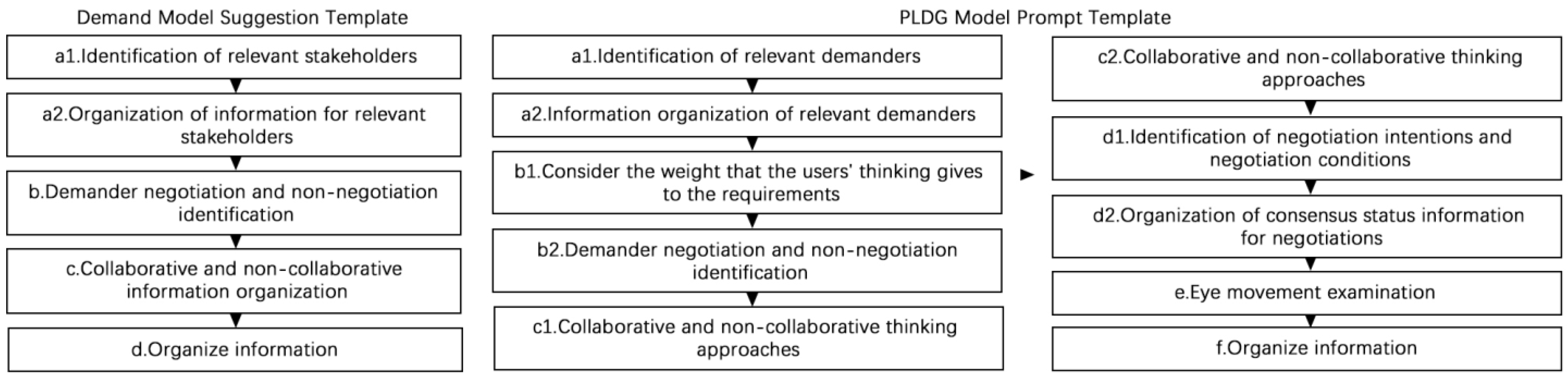
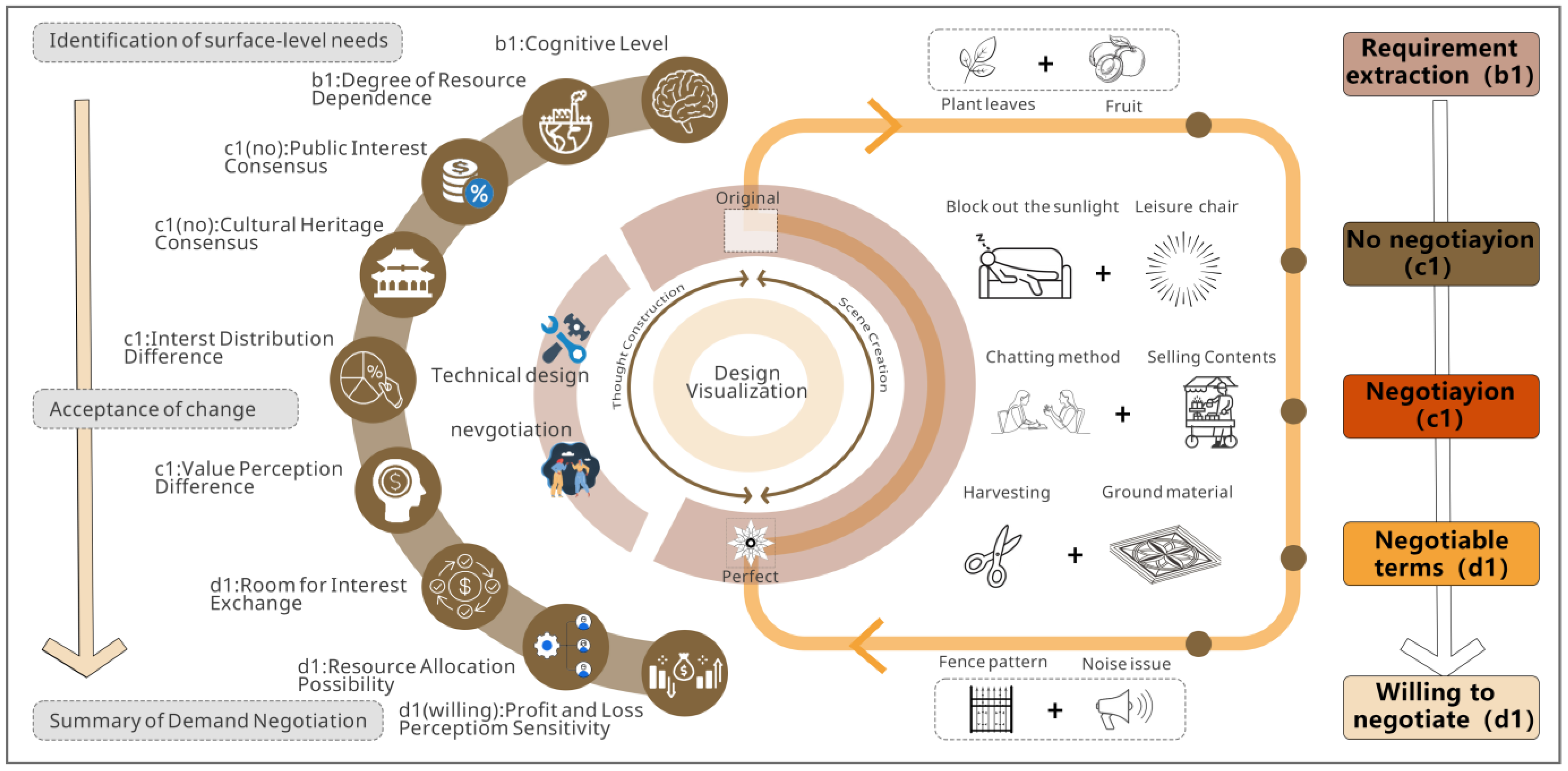
Our team conducted extensive interviews with numerous experts and non-designer stakeholders, distilling a suite of context-adaptive prompt templates. However, during the PLDG model’s evaluation phase, the necessity of processing empirical data precluded exclusive reliance on prompt-based articulation. Therefore, this discussion focuses exclusively on the conversational component of the PLDG model, namely, prompt templates designed for LLM systems. Initially, to simulate the preliminary conception of a participatory framework, the Liudap Team developed a complete set of traditional prompt templates (Figure 2). These templates enabled dialogue exchanges under various role orientations within design projects, primarily summarizing stakeholder requirements. However, numerous challenges emerged after introducing this initial model into landscape design practice. For example, users expressed vague yet heterogeneous demands, conflicting requirements proposed by different stakeholders remained unresolved, and culturally generated elements lacked sufficient contextual adaptability. Given that these issues were directly related to cultural extraction methods and user participation levels, prompt templates were refined across three dimensions: “divergent user cognitive commands,” “deliberation and negotiation between demands,” and “iterative feedback collection”.
Divergent User Cognitive Commands: In landscape design projects involving multiple stakeholders, their diverse life experiences and cognitive frameworks significantly influence how they articulate reasoning and express interests. Therefore, leveraging divergent cognitive modes to facilitate users’ expression of demands is imperative. For instance, divergent thinking and systemic thinking can be employed when analyzing villagers’ needs and conducting dialogues, enabling rural stakeholders to “surface tacit considerations” (bringing unconscious ideas into awareness) and “ensure operational feasibility” (making explicit ideas implementable). Between 12 May and 27 May 2025, multiple conversational experiments were conducted using the web-based ChatGPT interface provided by OpenAI [58]. Empirical testing revealed that intervention modes aligned with role-specific cognitive patterns achieved performance metrics over four times higher than those without configured thinking modes (Appendix A). For example, in the c1 phase addressing non-deliberative tasks, AI employed value-based thinking to enhance user validation of their choices. Conversely, during c2 deliberative discussions, game-theoretic thinking effectively assisted villagers in uncovering latent needs. This not only validated the practicality of prompt templates (a–d) but also demonstrated that role-cognition-aligned prompts significantly enhanced the generative efficacy of the PLDG system (Figure 3).
Deliberation and Iteration Between Demands: Experimental findings indicate that when multiple stakeholders engage in collaborative design deliberations, they frequently struggle to clearly articulate their underlying thoughts, despite continuous dialogue about their demands. Additionally, stakeholders often develop novel insights and emergent design requirements upon reviewing iterative textual outputs. This occurs because initial dialogues inadequately elicit stakeholders’ implicit demands. For instance, in a village landscape design project, Stakeholder A may vaguely request a “modern aesthetic,” while Stakeholder B emphasizes “ecological considerations,” and Stakeholder C insists on adhering to “budget constraints.” Upon reviewing generated design outputs, Stakeholder A might find “modernity” narrowly represented by several stainless-steel feature walls, significantly diverging from their implicit desire for a culturally contextualized expression. Stakeholder B may notice that “ecology” has been overly simplified into permeable brick paving, failing to address underlying anxieties about biodiversity loss. Meanwhile, Stakeholder C may identify discrepancies between the budget metrics applied and their own understanding of “controllable costs.” Consequently, items previously classified as “negotiated” in earlier iterations may revert to “non-negotiated” status upon re-evaluation, revealing unresolved conflicts that were merely temporarily masked. The cognitive limitations of rural stakeholders, combined with textual representations of design proposals, often lead to inaccurate assumptions and misinterpretations. To address these issues, we introduce an additional text-to-sketch generation phase, termed “imperfect renderings”, following deliberation experiments. These intentionally unfinished visualizations help circumvent premature aesthetic rejection by users, thereby improving design generation efficiency and controllability.
Eye-tracking technology [54] effectively captures stakeholders’ subconscious visual responses. During experimental sessions, Key “1” was designated as “like,” and Key “2” as “dislike.” The consensus text synthesized from deliberation experiments was input into SD to generate preliminary sketches. Participants were instructed to press and hold the “like” button when viewing visually appealing localized features and the “dislike” button upon encountering aversive elements. Empirically, we observed a 300–500 ms latency in human visual attention; consequently, TTL timestamps were adjusted by applying a 400 ms backward offset to compensate for this delay. Following eye-tracking sessions, gaze points coinciding with key presses were used to generate heatmaps for salient feature extraction, subsequently refining the consensus text. Finally, our team implemented a validation loop mechanism: upon stakeholder approval, final design renderings were generated; conversely, rejection prompted the system to re-initiate the collection of deliberation conditions and participatory willingness. Operating this enhanced template, integrated with the CoT approach (Appendix B), generative AI progressively demonstrates reasoning trajectories employing various cognitive modes, enabling human stakeholders to visually scrutinize the cognitive process. Deliberative intervention provides a pathway for resolving demand conflicts, while the role-thinking framework reliably addresses vague stakeholder articulations. The iterative sketching mechanism establishes a robust technical foundation for cultural preservation. This conversational framework, integrating thinking, deliberative negotiation, and progressive iteration, subconsciously elicits stakeholders’ latent cultural demands, thereby significantly enhancing the quality of landscape design outcomes.

3.4. Evaluation System

In the experiment, the team established a control group utilizing conventional AI-generated renderings. The control group employed the same base model (GPT-4 Turbo), identical input information (village cultural texts and spatial requirements), and the same output format (landscape renderings and design descriptions), but excluded the three core mechanisms of the PLDG framework. Specifically, the control group adopted a one-shot instruction-generation approach, wherein researchers input a single comprehensive prompt incorporating all requirements simultaneously, simulating current industry-standard AI-assisted design workflows. To compare the PLDG model with the traditional approach, a mixed-methods strategy combining quantitative surveys and qualitative feedback was employed. Particular attention was given to four dimensions: cultural compatibility, cultural innovativeness, participation levels, and reflections on cultural sensitivity.
  • Cultural Congruence: Cultural congruence serves as a critical criterion for assessing cultural authenticity. Our team established a four-tier verification mechanism based on outcome data and experimental process metrics to ensure controllability in cultural sensitivity.
  • Tier 1: Assessment of Culturally Sensitive Elements from Output Perspective (Expert Blind Evaluation). Fifty independent experts without vested interests, comprising approximately 12–13 specialists each from rural planning, cultural heritage, folklore studies, and architectural design (all affiliated with universities or research institutions external to the study area), conducted double-blind evaluations. Evaluations were based on five dimensions: fidelity of regional symbolism, appropriateness of folk activity integration, indigenousness of material craftsmanship, emotional resonance with villagers, and potential for modern cultural reinterpretation [56]. Blinding procedures ensured anonymity regarding scheme origin and attribution. Ratings were independently obtained using a 5-point Likert scale, with mean scores used for comparative analysis between PLDG and conventional design outputs. Krippendorff’s alpha was utilized to assess inter-rater reliability and experimental consistency.
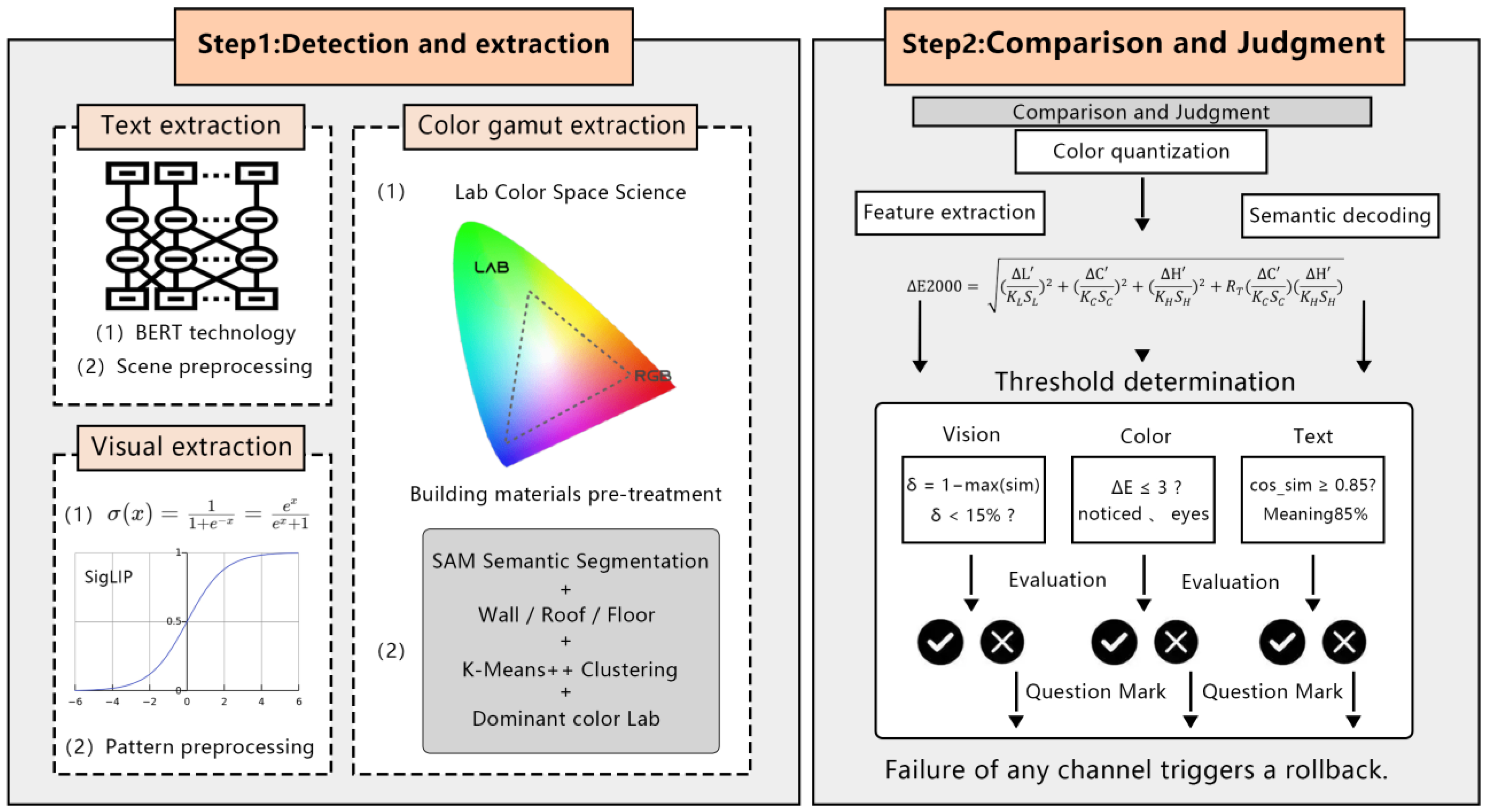
  • Tier 2: Protection of Authenticity Baselines (Technical Threshold Constraints). Immutable thresholds for core cultural identifiers were established through semantic recognition functionalities to ensure their non-negotiable preservation. Given that chromatic variations frequently occur within patterns of identical materials, we applied the Lab color-space methodology for building material color identification [57]. Final thresholds were established as follows: pattern motif mutation degree < 15% (via SigLIP), ΔE ≤ 3 for indigenous material colors (Lab color space), and semantic similarity between narrative text and archetype ≥ 0.85 (BERT embedding cosine similarity). Violation of any threshold triggered an automatic scheme rollback (Figure 4).
  • Tier 3: Sensitive Conflict Resolution (Deliberation Process Tracking). Through documenting deliberation rounds and analyzing eye-tracking heatmaps, the framework traced the complete trajectory of culturally sensitive elements from initial conflict articulation to final consensus, thereby evaluating the framework’s deliberative effectiveness on sensitive issues.
  • Tier 4: Processual Identification of Sensitive Elements (Deliberative Classification Mechanism). Using PLDG’s “deliberative vs. non-deliberative” categorization, explicitly articulated, non-negotiable cultural elements, such as ancestral worship spaces, fengshui woodlands, and century-old trees, were identified. Their frequency of occurrence and the intensity of related controversies were systematically documented.
  • Participation: Participation serves as a critical metric for evaluating stakeholder engagement processes; thus, collection of experimental process data is essential. Trunfio et al. identified three key elements related to LLM dialogue: behavior, time, and output [58]. In participation research, the social media engagement elements outlined in Forrester’s business proposal closely align with Palermo’s findings [59]. Consequently, we adopted their comprehensive participation index formula to measure behavioral frequency, active duration, and output volume, subsequently generating a participation index ranging from 0 to 100. Since cultural sensitivity is the core conversational concern in user participation, behavioral frequency was operationalized as conflict trigger instances, active duration as deliberation depth, and output volume as veto intensity, thereby validating the efficacy of user participation.
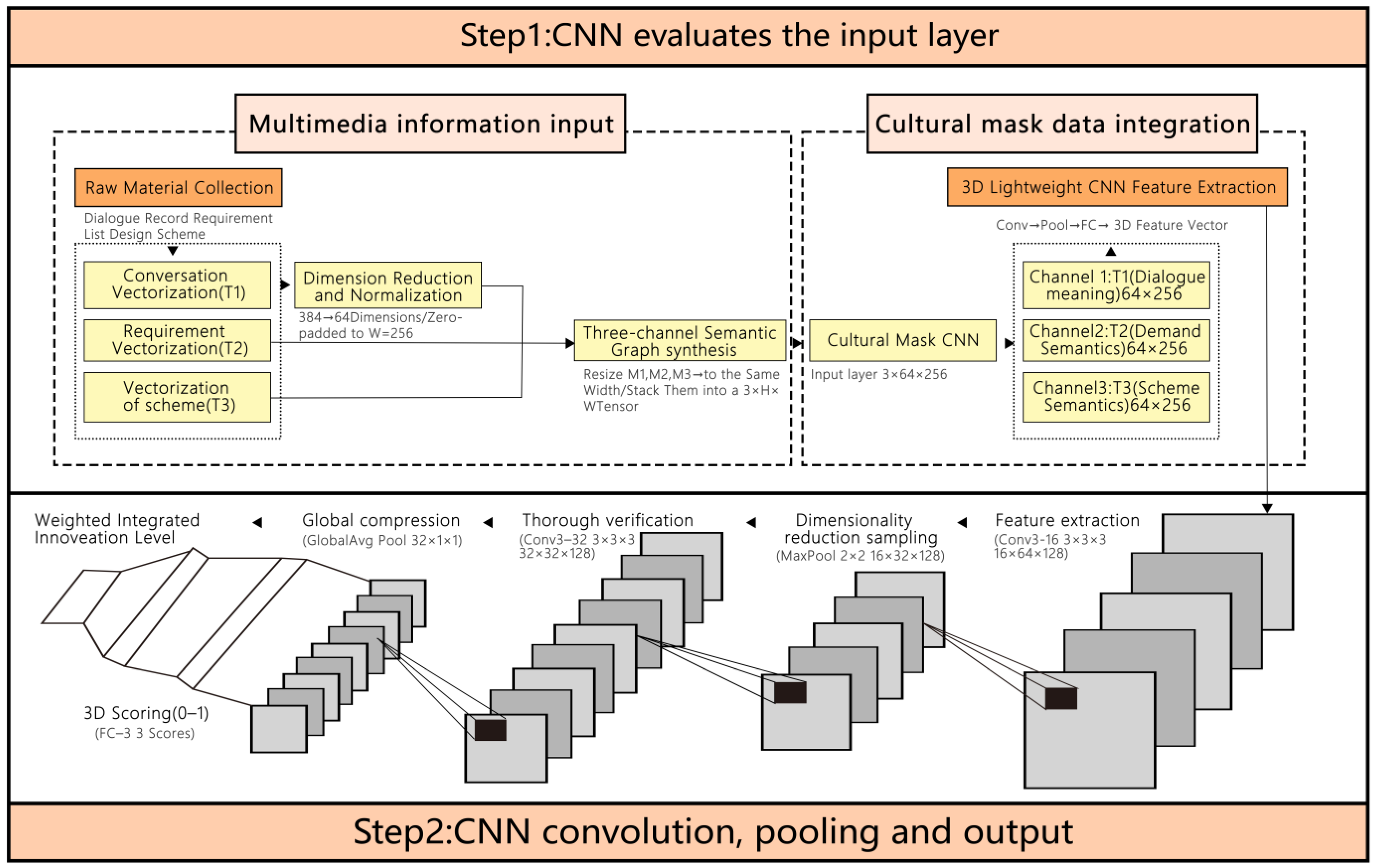
  • Design Innovation Degree: Research indicates that stable innovation capacity requires consistent innovative proficiency throughout the experimental workflow. Assessment of innovativeness necessitates integrating both process-based and outcome-based vectorization. Daryanavard et al. utilized vectorization methods to operationalize a CNN-based, three-dimensional evaluation model, deriving experimental weight coefficients [60]. However, excessive innovation risks violating cultural authenticity baselines; thus, innovation requires constraints. Based on CNN experiments (detailed hyperparameter configurations provided in Appendix C), innovativeness weights were synthesized by aggregating three core dimensions: visually constrained innovativeness (cultural constraints), semantic feasibility, and stylistic utility, calculated as the mean of input breadths.

3.5. Methodological Synthesis: From Theory to Empirical Test

In summary, the PLDG framework integrates five key stages: multi-source data input, chain-of-thought role negotiation, multimodal semantic fusion, scheme generation, and comprehensive evaluation and feedback. This approach creates a complete participatory and sustainable closed-loop system from cultural identity to design implementation. The logic of “input–negotiation–generation–evaluation–feedback” addresses multi-stakeholder negotiation and cultural identification challenges mentioned earlier. Additionally, it ensures cultural-sensitivity constraints, offering a reproducible and traceable operational method for future empirical studies. To test the effectiveness of this closed-loop framework in real-world rural contexts, we conducted a village landscape renewal project, embedding the PLDG system within the local community. Through multiple rounds of dialogue between villagers and AI, we verified its capability to protect culturally sensitive elements, enhance community identity, and stimulate design innovation.
Qualitative supplementary validation was employed to enhance credibility [61]. After the experiment, semi-structured, in-depth interviews were conducted with all 12 participants [62], collecting qualitative data on four dimensions: clarity of cultural-needs expression, cultural fit of generated sketches, willingness to engage in anonymous negotiation, and experience with progressive visual feedback. Interviews were recorded, transcribed, and analyzed using Braun and Clarke’s six-step thematic analysis. Two researchers independently performed open coding, ensuring consistency through reconciliation sessions, achieving an inter-coder reliability (Cohen’s Kappa) of 0.87. Interpretive validity was further strengthened through member checking: the three identified themes and representative quotations were shared with four representative participants (diverse in gender, age, and clan backgrounds) for confirmation of accuracy. Ultimately, triangulating quantitative metrics, qualitative themes, and member checking ensured the depth and rigor of the PLDG framework evaluation in authentic rural contexts. This study was approved by the Ethics Review Committee of Northwest A&F University (NWAFU20260604) (5 June 2026), and all participants provided written informed consent.

4. Empirical Application: The Majiadi Village Case Study

4.1. Site Selection and Background

This study selects the community consultation project for the entrance plaza design in Majiadi Village, Yangling District, Shaanxi Province, as its empirical case. With a farming heritage spanning nearly a millennium, this village exemplifies traditional agrarian settlements in the Guanzhong region. Currently, the village faces a critical juncture in rural revitalization and tourism development, characterized by government-led investment and increasing visitor numbers. However, modern commercial developments generate friction with villagers’ ethos regarding the conservation of local cultural symbols, spatial usage patterns, and agricultural narratives. Consequently, when soliciting villagers’ opinions, design proposals encounter stringent requirements concerning cultural appropriateness and ethical compliance, with villagers willing to dispute designers over cultural memory preservation. This tension between heritage safeguarding and commercial transformation provides an authentic conflict scenario for empirically validating the PLDG model’s effectiveness in resolving contradictions between cultural preservation and modern development and in coordinating pluralistic stakeholder demands.
The selection of this village as a paradigmatic case is based on two considerations: The first is cultural representativeness. As a settlement where traditional agrarian culture remains intact, landscape elements such as the Agricultural History Museum, farming heritage sites, and vernacular cultural spaces offer rich samples for cultural extraction, enhancing the generalizability of findings to similar agricultural tourism villages. The second is cultural sensitivity. Villagers demonstrated heightened cultural vigilance during the design of the village entrance plaza—a public space—where any proposal deviating from indigenous cultural motifs faced rigorous ethical scrutiny and community challenges. This complex cultural dynamic renders the plaza an ideal location for validating the PLDG model’s cultural sensitivity screening mechanisms and cross-cultural design communication strategies. This case study aims to empirically test the PLDG framework, focusing on its proposed cultural sensitivity mechanisms (RO2 and RO3).

4.2. Experimental Design Process

To capitalize on favorable policy and social opportunities, our team conducted a design experiment at the entrance plaza of Majiadi Village. This study aims to deeply investigate the micro-mechanisms and cognitive shifts occurring within the human–machine–human (H-M-H) interaction process facilitated by the PLDG framework. Adopting a qualitative paradigm prioritizing depth over breadth, this study aims not for statistical inference but for theory construction and mechanism validation. The 12 participants enabled intensive interviews and multi-round eye-tracking, yielding rich data on the progressive deliberation process. To this end, we simulated the PLDG model with 12 villagers throughout the experiment, utilizing the ChatGPT service (Model: GPT-4.0) provided by OpenAI on 28 October 2025. The detailed experimental procedure is outlined below:
  • a1. Prompt: Collect villagers’ design requirements for renovating the entrance square, including daily life records, memories, photographs, voice recordings, and local online materials.
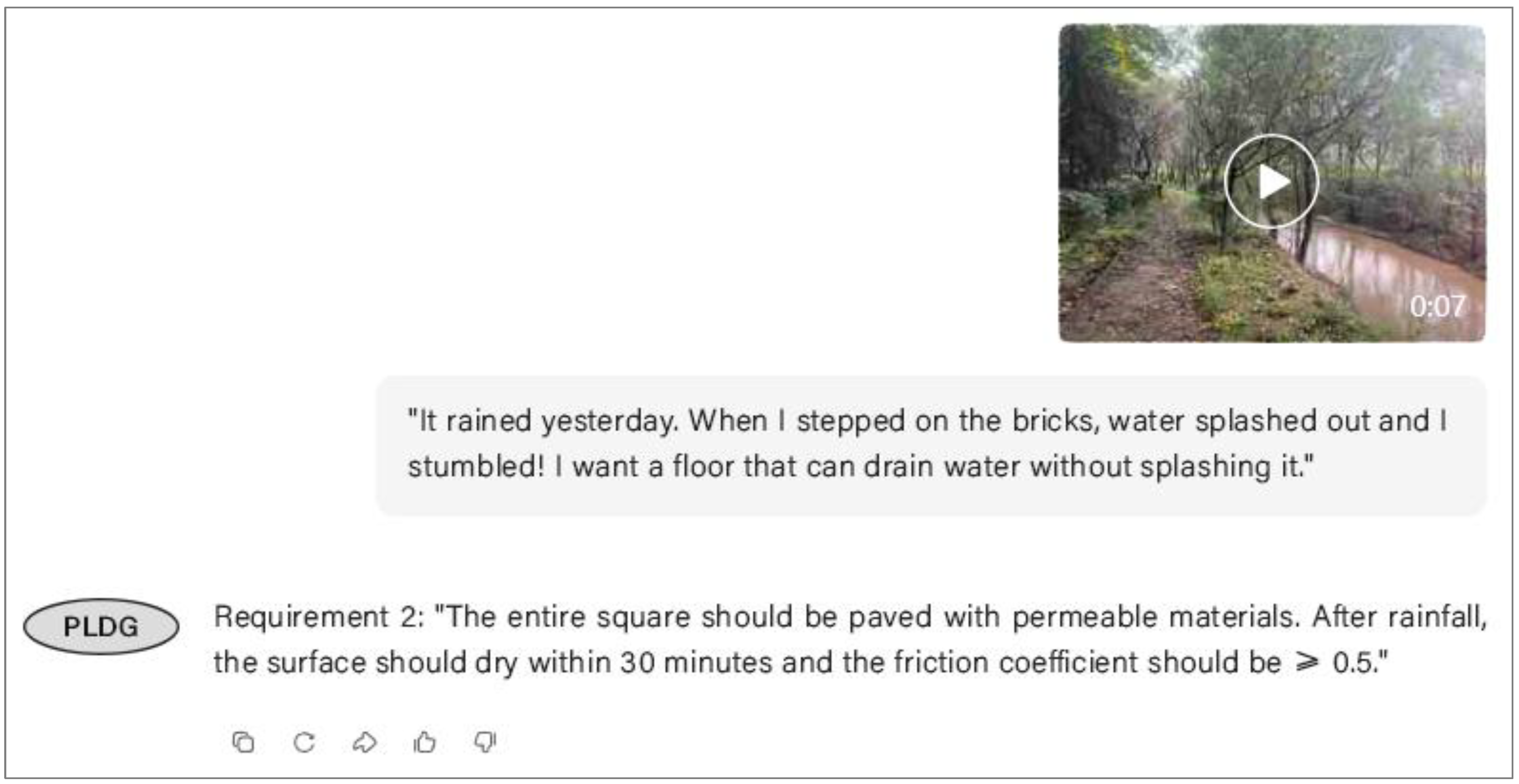
  • a2. Prompt: Distill specific villagers’ demands regarding the entrance square (Figure 5).
  • b1. Prompt: Re-synthesize villagers’ needs using divergent thinking, contextual thinking, and survival-rationality thinking.
  • b2. Prompt: Classify the distilled requirements into “non-deliberative” (no further negotiation needed) and “deliberative” (requiring further negotiation) categories.
  • c1. Prompt: Consolidate non-negotiable elements derived from systems, user, and value thinking into design proposals; consolidate negotiable elements derived from relational, game, and consensus thinking into proposals as well.
  • c2. Prompt: Form a complete design plan for the entrance square based on conflict and non-conflict outcomes.
  • d1. Prompt: If villagers reject a proposal, apply negotiation, exchange, and contractual thinking, along with behavioral game, trust threshold, and profit-loss sensitivity thinking, to analyze negotiation willingness and the psychological trade-offs in cultural element changes.
  • d2. Prompt: Synthesize villagers’ negotiation intentions and conditions to reconstitute key design points for the entrance square.
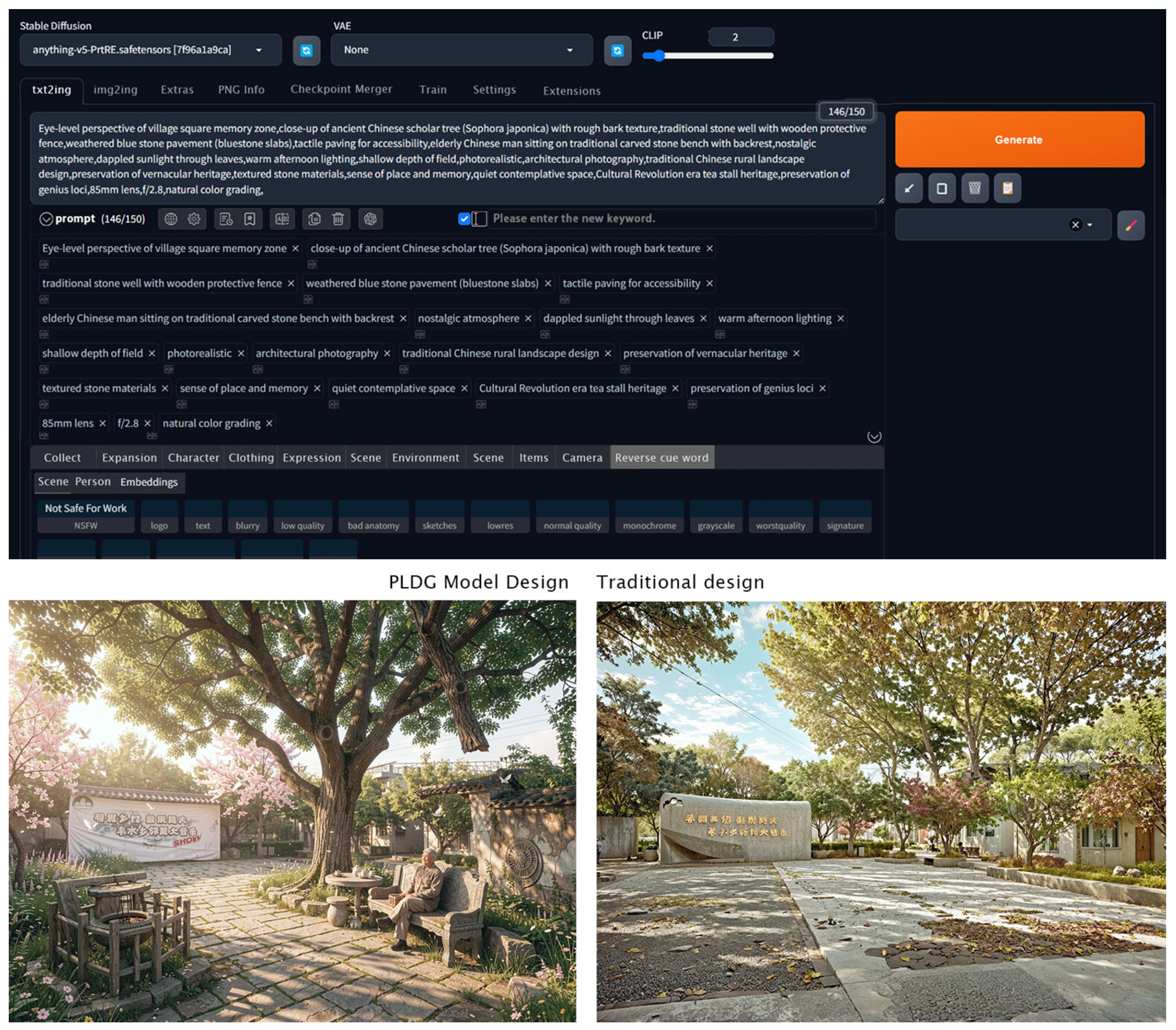
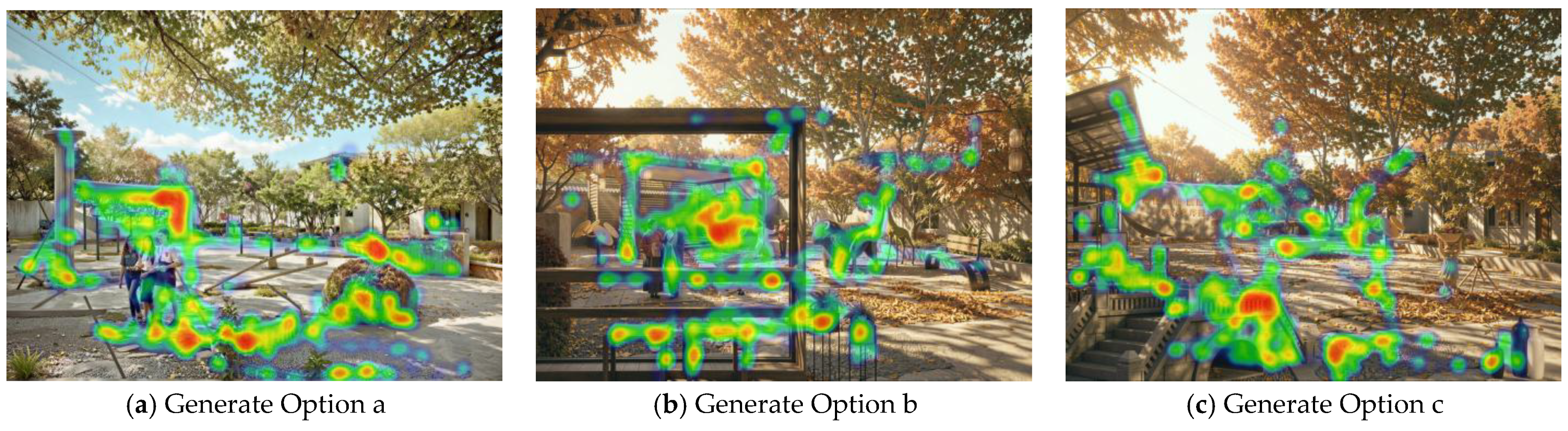
  • e. Prompt: Generate rendered design sketches from text using Stable Diffusion (SD) and collect visual preferences via an interfaced eye tracker (Appendix E details eye-tracking results).
  • f. Prompt: Consolidate synthesized information into a design proposal. If approved by villagers, formalize it as design documentation; if rejected, return to steps d1 and d2 until approval is secured.
Upon generating plaza landscape design prompts satisfactory to all stakeholders, these prompts, along with site photographs of the village entrance plaza, were input into SD. Subsequently, SD generated multiple landscape design proposals (Figure 6), from which designers selected optimal schemes based on design aesthetics and specific stakeholder demands, finalizing the definitive landscape renderings.

4.3. Generation Effects and Comparative Analysis

The experimental process generated 12 landscape visualizations of the village entrance plaza, which exhibited significant differences from those produced by conventional AI approaches. In terms of cultural extraction, these outputs demonstrated a greater number of culturally relevant landscape elements validated by villagers. Conventional AI primarily represented cultural elements through decorative patterns, whereas the PLDG model achieved functional and spatial integration of cultural elements. Regarding innovation, PLDG adopted everyday life perspectives as design entry points, enriching local residents’ experiences while offering novelty for tourists. In contrast, traditional AI produced design outcomes that appeared relatively homogeneous and imbalanced when addressing multi-stakeholder conflicts. In terms of participatory outcomes, PLDG-generated renderings demonstrated alignment across multiple dimensions, color, texture, pattern, morphology, and functionality, with participant demands, while also effectively extracting landscape element features from non-textual data sources (Table 2). Overall, the generative performance of the PLDG model substantially outperformed conventional AI approaches.

5. Comprehensive Evaluation

This section presents the results of our mixed-methods evaluation corresponding to the three research objectives. Section 5.1 reports quantitative analysis results, categorized by cultural compatibility (RO3), identification and protection of culturally sensitive elements (RO2), design innovation (RO3), and the comprehensive participation index (RO3). Section 5.2 provides qualitative interview analysis to contextualize these findings, followed by Section 5.3, which integrates both into a mixed-methods validation.

5.1. Quantitative Results

Key Finding: The PLDG framework significantly outperforms traditional one-shot generation models across three core dimensions: (1) Cultural Alignment, with expert blind review scores increasing by 142.1%, and 91.3% of the 23 “culturally sensitive elements” identified by villagers preserved; (2) Community Engagement, with the participation index increasing from 36.0 to 90.0 (t = 12.18, p < 0.004, d = 6.90); and (3) Design Innovation, with CNN-3D evaluation scores rising from 0.42 to 0.78 (t = 18.4, p < 0.004, d = 2.18). Detailed results are presented below.

5.1.1. Verification of Cultural Compatibility Sensitivity Results

Cultural Sensitivity from the Outcome Perspective: Assessment was conducted through expert evaluation across five dimensions: restoration of regional symbols, adaptability of homestay activities, authenticity of local materials and craftsmanship, villagers’ emotional identification, and capacity for modern reinterpretation of cultural elements. These results validate the PLDG system’s effectiveness in cultural extraction. Inter-rater reliability was confirmed using Krippendorff’s α = 0.82 (>0.80), indicating strong consistency; therefore, mean values were used for comparisons between PLDG and traditional AI models. The results showed that all five dimensions of cultural compatibility under PLDG significantly exceeded those of conventional AI approaches. Participatory AI dialogue demonstrated strong capability in extracting cultural features, with average scores ranging from 3.9 to 4.8 across 50 expert reviewers. Notably, authenticity of local materials and craftsmanship achieved the highest score (4.8) and exhibited the largest improvement compared with traditional methods (1.6). In contrast, restoration of regional symbols scored relatively lower (3.9), reflecting limitations in AI’s ability to interpret abstract cultural symbols—an area requiring further investigation. Overall, the PLDG group significantly outperformed the control group across all five dimensions and overall cultural alignment (t(98) ≥ 6.4, p < 0.004, Cohen’s d ≥ 1.2; Mann–Whitney U test also significant). After FDR correction, all differences remained significant (q < 0.05; Cliff’s δ ≥ 0.50), indicating both statistical and practical significance in improving cultural alignment.

5.1.2. Identification and Protection of Culturally Sensitive Elements

During dialogues with 12 villagers, the PLDG framework identified 23 “sensitive elements”, defined as cultural symbols or spatial functions explicitly labeled by villagers as “unchangeable,” “must preserve,” or “taboo-violating.” Frequently identified sensitive elements included: ancestral worship space positioning (12 instances), preservation of century-old trees (9 instances), retention of grain-drying field function (8 instances), and feng shui configuration of an old well (6 instances). In contrast, the traditional AI control group failed to systematically identify or flag any of these sensitive elements.
Under PLDG’s “authenticity baseline” constraint mechanism, 21 of 23 sensitive elements (91.3%) were fully preserved in the final design, while only 2 elements (8.7%) underwent moderate adjustments following multi-round negotiations with villagers’ consent. Conversely, the traditional AI group retained merely 4 of the 23 sensitive elements (17.4%), with the remaining elements either overlooked or misinterpreted by the one-shot generation approach. This result confirms PLDG’s significant advantage in identifying and protecting culturally sensitive elements (χ2 = 22.4, p < 0.001, Figure 7).

5.1.3. Verification of Innovation in Design Outcomes

Initially, our team encoded the entire PLDG process data into three-channel semantic maps (Figure 8). The model then generated scores across three dimensions—visual novelty, semantic feasibility, and stylistic utility (weighted 0.4:0.35:0.25)—mapped to innovation values (range 0–1) via a sigmoid function, and subsequently converted to 5-point Likert-scale scores. Ablation experiments determined an optimal input width of 256 (64 × 256), at which the PLDG group achieved a comprehensive innovation value (Innov = 0.78, equivalent to 3.9 on the Likert scale). Following review by the Cultural Mask layer, the PLDG group maintained an average authenticity retention rate of 91.2% across channels (T3), below the 15% variation threshold, with penalty coefficients activated in only 8.3% of cases. Conversely, the traditional AI group exhibited an authenticity violation rate of 34.6%, triggering a penalty coefficient of 0.5, resulting in a final Innov value of only 0.42 (2.1 on the Likert scale). A paired t-test conducted on 240 paired samples generated over 20 rounds from 12 villagers showed that the PLDG group (M = 0.78 ± 0.03, raw scores prior to constraints) significantly exceeded the traditional group (M = 0.42 ± 0.03), with a mean difference of 0.36 (t(239) = 18.4, p < 0.004, Cohen’s d = 2.18). These findings confirm that the CNN-3D evaluation effectively differentiates between high- and low-innovation inputs.

5.1.4. Verification of the Comprehensive Participation Index

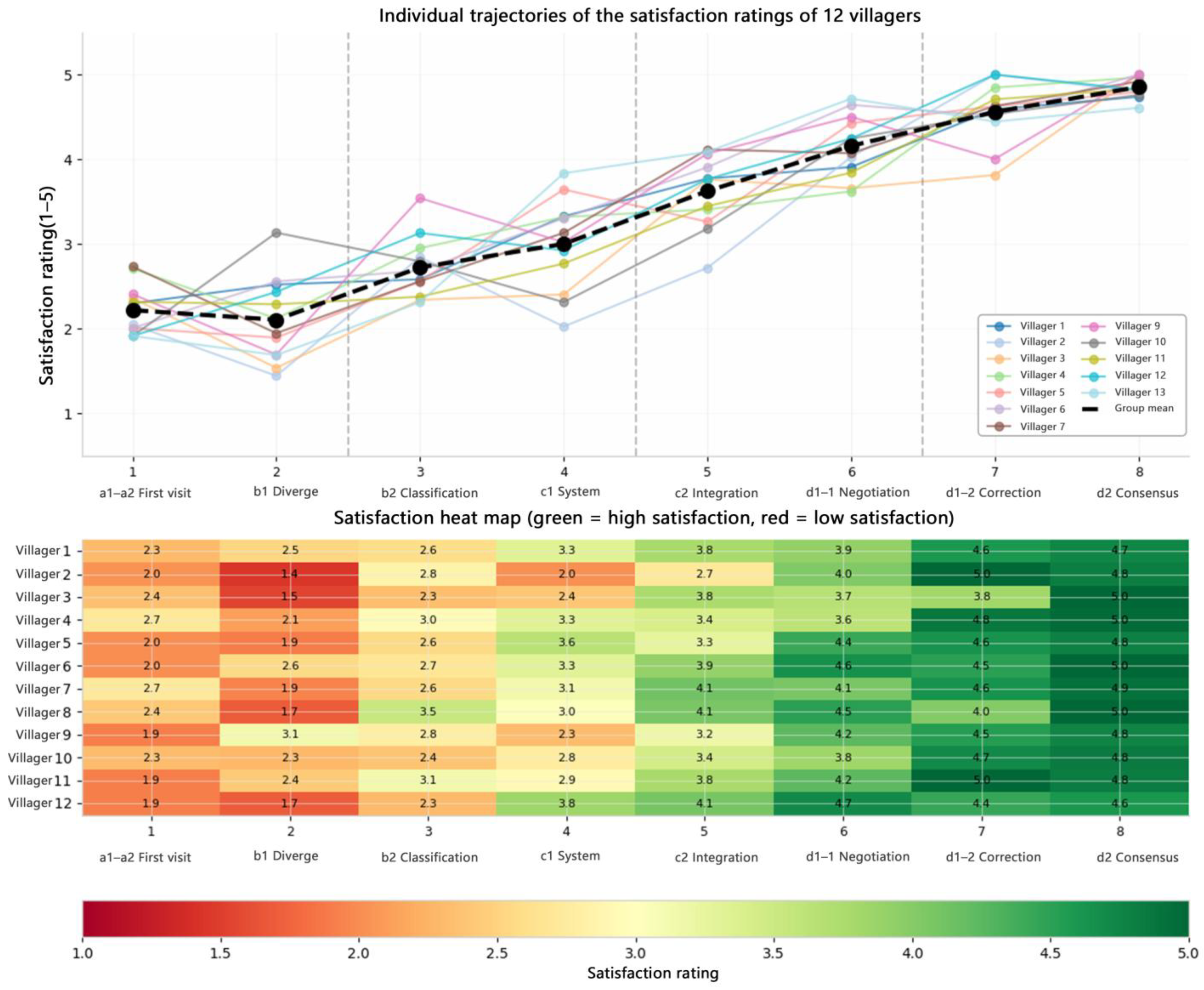
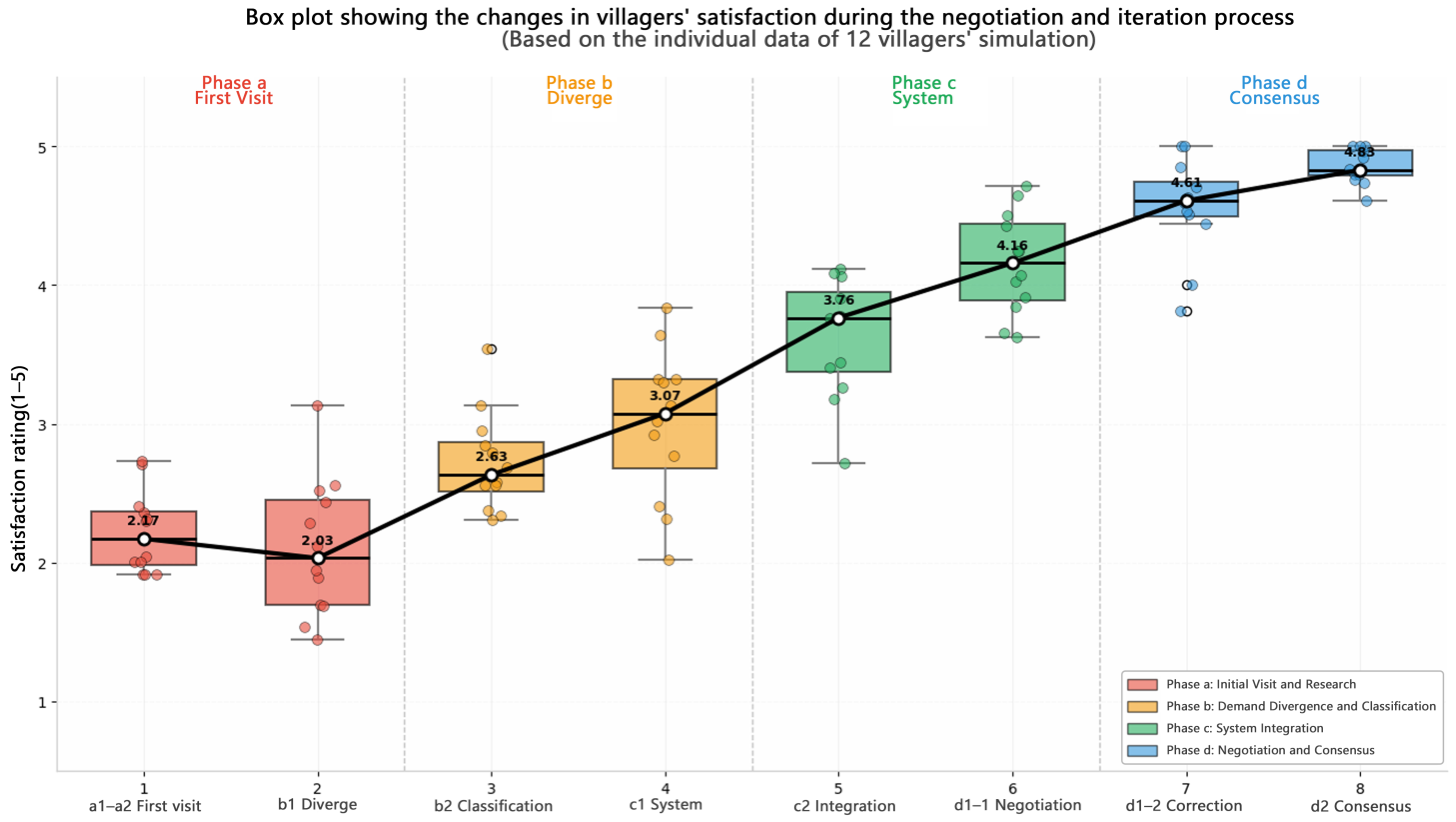
In case experiments, participation served as the basis for expressing stakeholder needs. Although traditional AI dialogues also involved detailed conversational procedures, villagers’ sense of participation and satisfaction were notably inadequate (see Appendix F for detailed satisfaction data). To verify participation effectiveness under conditions of cultural sensitivity, we analyzed experimental dialogue data from 12 villagers involved in the village plaza design case study (Figure 8). Three key metrics were tracked throughout the dialogue: conflict trigger frequency (number of conflicts/duration), negotiation depth (time elapsed from initial to final PLDG interactions), and veto intensity (number of proposals + number of modifications). These metrics were integrated through a comprehensive participation index formula, generating participation scores. The PLDG group’s participation index (PI = 90) substantially exceeded the traditional group’s (PI = 36), demonstrating the PLDG model’s effective communication capability among low-literacy cognitive groups (Figure 9). An independent samples t-test comparing PI scores between the PLDG group (12 villagers) and the traditional group (12 villagers) revealed significantly higher scores for the PLDG negotiation group (M = 90.00, SD = 8.5) compared to the traditional group (M = 36.00, SD = 7.2) (t(22) = 12.18, p < 0.004, Cohen’s d = 6.90). This indicates that the PLDG negotiation process significantly enhanced comprehensive participation among low-literacy stakeholders (Table 3). These results further validate PLDG’s substantial advantage in identifying and safeguarding culturally sensitive elements (Figure 9).

5.2. Qualitative Interview Analysis

To validate authentic user satisfaction, the research team conducted semi-structured interviews with 12 villagers. Two researchers independently reviewed the interview transcripts, annotating key semantic units sentence by sentence (e.g., tagging “So the original patterns can be deconstructed this way” as “understanding design logic”), followed by iterative comparison and categorization. Ultimately, three consensus themes emerged: First, cognitive enhancement (89 occurrences), wherein villagers progressed from “unable to articulate specific desires” to “capable of pinpointing specific issues” through PLDG assistance. Second, sense of control (67 occurrences), as the PLDG model accurately responded to villagers’ needs during experimentation, alleviating their sense of powerlessness when interacting with technology. Third, conflict resolution (52 occurrences), whereby AI-mediated dialogue enabled villagers to understand feasible paths for resolving conflicts.

5.3. Mixed-Method Validation

Villagers’ qualitative feedback effectively corroborated the quantitative indicators, comprehensive participation index (PI = 90) and homestay activity suitability (4.2), achieving mutual validation between qualitative insights and quantitative measurements. Additionally, dialogue analyses revealed that nearly all respondents initially inquired about the model’s usage costs. The near-zero cost of design generation significantly reduced villagers’ psychological barriers to previewing landscape design outcomes, indirectly enhancing trust and acceptance of intelligent solutions compared to traditional methods. This aligns with the innovation stability demonstrated by the low correlation coefficient fluctuation (<0.04) observed in CNN analyses. Quantitative respondent ratings also showed superior evaluations of affordability (3.7 vs. 1.9) and user experience (4.2 vs. 1.4) relative to traditional approaches. Based on the comprehensive synthesis of quantitative and qualitative findings, PLDG demonstrates clear advantages in cultural reflection, participatory experience, and solution innovation. Unlike the unstable “input–output” generation of existing systems, PLDG’s key strengths lie in process transparency and culturally consistent output generation. Existing AI rapidly produces visual effects but lacks mechanisms to ensure adherence to an “authenticity baseline,” and fails to facilitate the cognitive progression from “unable to comprehend” to “capable of modifying” via progressive dialogue. The dual-validation methodology employed effectively demonstrates PLDG’s comprehensive advantages in cultural reflection controllability, depth of participatory experience, and solution innovation stability, surpassing limitations inherent in existing AI design systems that “prioritize outcomes over processes and efficiency over recognition”.

6. Discussion

6.1. Theoretical Contribution

6.1.1. Towards a Computable Definition of “Cultural Sensitivity”

At the theoretical level, this study introduces the concept of “cultural sensitivity” into LLM-driven design frameworks and operationalizes it in a computable manner. It defines cultural sensitivity in AI contexts, transforming it from a vague humanistic concept into measurable design constraints with three progressive levels: sensitive element identification, authenticity baseline protection, and sensitive conflict resolution.

6.1.2. Synergistic Mechanism of Progressive Dialogue and Visual Feedback for Sustainability

This study identifies a sustainable synergy between progressive dialogue and visual feedback. The study finds that villagers’ cognition of culturally sensitive elements follows an evolutionary pattern of “implicit–ambiguous–explicit”: during the text-based dialogue phase (a–d), villagers express only vague intuitions such as “this cannot be altered”; only in the eye-tracking visual feedback phase (e) is subconscious spatial perception externalized and subsequently transformed into negotiable design parameters. Through this process, villagers contribute to the sustainable development of village culture by distilling and articulating culturally sensitive elements.

6.2. Practical Significance: Reconfiguring Power Dynamics in Rural Planning

Through its progressive human–computer interaction mechanism, the PLDG framework enables effective multi-stakeholder negotiation in rural design decision-making. Specifically, this mechanism translates villagers’ indigenous cultural narratives into professional design semantics via LLMs, while establishing an iterative dialogue process through “disagreement-driven feedback triggers” and “iterative negotiation inputs.” This distributed process renders previously implicit village claims, such as spatial usage practices, cultural taboos, and benefit distribution expectations, explicit and transformable into measurable and revisable consensus texts. Such textualization facilitates a shift in cultural expression from “being represented” to “self-articulation.” Vernacular culture can thus be algorithmically translated into legible, editable, and constraint-aware design representations, enabling effective implementation in both everyday spaces and specialized activities. Meanwhile, the hybrid approach combining online issue presentation with offline iterative dialogue effectively incorporates groups traditionally marginalized in participatory design (such as elderly populations). Simultaneously, anonymous interaction modes reduce constraints imposed by traditional rural social networks on opinion expression, thereby restoring villagers’ agency. This distributed cognitive structure of “user articulation–algorithmic listening–collaborative refinement” provides a transferable, algorithm-assisted governance model for digital rural development.

6.3. Advantages and Disadvantages of the Proposed Solution

The PLDG framework combines role-based chain-of-thought reasoning, multimodal embedding, and eye-tracking feedback to convert villagers’ subconscious cultural preferences into quantifiable design parameters, improving the identification of culturally sensitive elements. Its anonymized, progressive dialogue mechanism reduces power imbalances in rural acquaintance societies, giving marginalized groups equal discursive influence. However, the approach faces cost barriers due to large-model computing and specialized equipment, a temporal efficiency paradox from multi-round negotiations and eye-tracking experiments, an interpretability deficit from the black-box nature of LLM inference, and the risk of flattening cultural meaning when complex rural narratives are encoded into computable vectors.

6.4. Limitations and Future Work

This study is limited by a single-village, twelve-participant design, and external validity requires verification via multi-case, large-sample longitudinal studies. PLDG’s dependence on high-computation models, specialized eye-tracking equipment, and locale-specific cultural thresholds limits its immediate transferability to underdeveloped or culturally heterogeneous areas. Future work should explore lightweight models and cross-cultural parameter tuning. Although the study complies with ethics approval and informed consent, hallucination risks in LLMs may threaten cultural authenticity. Additionally, the biometric sensitivity of eye-tracking data imposes higher privacy requirements. Future efforts should implement a local expert review and a localized encryption governance framework to ensure technological empowerment respects rights.
Beyond improving design efficiency, PLDG promotes sustainability in three ways. Socially, it empowers marginalized residents, fostering community cohesion and long-term governance. Culturally, it protects authenticity baselines while allowing creative adaptation, ensuring heritage evolves sustainably. Economically, the low-cost, iterative design process reduces resource waste from repeated revisions, supporting affordable rural revitalization. Thus, PLDG offers a replicable, community-centered model for AI-assisted rural planning aligned with sustainability.

7. Conclusions and Outlook

This study develops a multimodal PLDG system to address multi-stakeholder conflicts and culturally sensitive element identification in AI-mediated rural landscape design. By integrating role-based cognitive simulation, multimodal semantic fusion, and progressive visual feedback, it establishes a novel pathway for sustainable AI-community collaborative design. Empirical results show PLDG enhances community participation, stimulates design innovation, and preserves cultural authenticity, providing a replicable participatory technical framework for digital rural construction.
At the theoretical level, this study is the first to introduce the concept of “cultural sensitivity” into LLM-driven design research. It operationalizes this concept through a three-layer framework: sensitive element identification, authenticity baseline protection, and sensitive conflict resolution. This transforms vague humanistic concerns into computable design constraints (RO1). The study also identifies a synergistic relationship between progressive textual negotiation and eye-tracking visual feedback. It reveals the dynamic evolution of villagers’ cultural cognition from implicit intuition to explicit parameters, thereby extending distributed cognition theory to AI-assisted participatory design (RO2). Methodologically, the PLDG framework integrates multi-role chain-of-thought prompting, multimodal embedding fusion, and a four-layer evaluation system. This forms a closed-loop workflow (input–negotiation–generation–evaluation–feedback) that provides a systematic technical pathway for culturally sensitive AI design (RO2).
Practically, empirical comparisons in a typical village demonstrate that PLDG significantly outperforms conventional AI models in cultural congruence, community participation index, and design innovation (RO3). Through anonymized deliberation and low-cost design previews, the framework translates implicit rural demands into amendable consensus texts. This process shifts rural planning authority from expert-led representation to villager-led self-narration, offering a practical model for algorithm-assisted participatory governance at the grassroots level. Future scaling should prioritize the parallel development of algorithmic ethical review mechanisms and local knowledge repositories, preserving cultural diversity alongside efficiency.
This study has limitations, including a single-case design, small sample size, and inherent model biases. Additionally, technical costs and efficiency bottlenecks restrict its immediate replication in underdeveloped regions. Future research should use multi-village, large-sample longitudinal tracking to validate external applicability. Further exploration of lightweight models and edge computing solutions is needed to reduce technical barriers. Cross-cultural testing should also be conducted, helping PLDG evolve from a site-specific experimental tool into a generalized rural design infrastructure. Ultimately, PLDG offers methodological guidance for villages aiming to simultaneously protect heritage values and achieve sustainable development.

Author Contributions

Conceptualization, C.-Y.L., X.-Q.Q., Y.-Q.D. and Z.-C.Z.; methodology, C.-Y.L. and X.-Q.Q.; software, C.-Y.L. and X.-Q.Q.; validation, C.-Y.L., X.-Q.Q. and Y.-Q.D.; formal analysis, C.-Y.L. and Z.-C.Z.; investigation, C.-Y.L. and X.-Q.Q.; resources, Y.-Q.D.; data curation, C.-Y.L. and X.-Q.Q.; writing—original draft preparation, C.-Y.L.; writing—review and editing, X.-Q.Q.; visualization, C.-Y.L. and X.-Q.Q.; supervision, Y.-Q.D.; project administration, C.-Y.L. and X.-Q.Q.; funding acquisition, Y.-Q.D. All authors have read and agreed to the published version of the manuscript.

Funding

This research received no external funding.

Institutional Review Board Statement

This study was conducted in accordance with the Declaration of Helsinki and approved by the Institutional Review Board of Northwest A&F University (NWAFU20250320) on 5 June 2026.

Informed Consent Statement

Informed consent was obtained from all subjects involved in the study.

Data Availability Statement

The original contributions presented in this study are included in the article. Further inquiries can be directed to the corresponding author.

Acknowledgments

The authors gratefully acknowledge the insightful comments and suggestions from the anonymous reviewers and the editor.

Conflicts of Interest

The authors declare no conflicts of interest.

Abbreviations

The following abbreviations are used in this manuscript:
LLMLarge language model
CNNConvolutional Neural Network
PLDGMultimodal Participatory Landscape Demand Generation System

Appendix A

Table A1. Role thinking chain.
Characterb1c1 (No Need for Negotiation)c1 (Need to Be Negotiated)d1 (Negotiation Terms)d1 (The Willingness to Negotiate)
VillagersDivergent thinking, contextual thinking, survival rational thinkingSystem thinking, user thinking, value thinkingRelational thinking, game theory thinkingNegotiation thinking, exchange thinking, contract thinkingGame thinking, trust threshold thinking, profit-loss sensitivity thinking
TouristDivergent thinking, contextual thinking, survival rational thinkingExperience optimal thinking, instantaneous demand thinking, and risk-avoidance thinkingGazing at political thinking and consumption transfer thinkingFlow exchange thinking, emotional labor compensation thinkingPlatform evaluation deterrence thinking, short-term trust threshold thinking
DeveloperAnalogy thinking, leverage thinking, bottom-line thinkingFloor area ratio thinking, capital turnover thinking, policy arbitrage thinkingLand rent capture thinking, conflict privatization thinkingEquity swap thinking, risk bet thinkingCapital exit sensitive thinking, government relationship threshold thinking
DesignerSystematic thinking, paradoxical thinking, critical thinkingStandardized thinking, prototype thinking, cost-aesthetic balance thinkingProfessional authoritative thinking, rhetorical thinking, risk transfer thinkingKnowledge asymmetry, exchange thinking, design ethical contract thinkingProfessional reputation loss sensitivity thinking, normative legitimacy pressure thinking

Appendix B

Table A2. Prompt template.
a1.
Identification of demand from the demand side
We aim to comprehensively identify the needs of the relevant stakeholders. Please determine the specific requirements through the following review process.-Requirement: {Requirement}-Circumstance: {Circumstance}-Stakeholders of the requirement: {Stakeholders of the requirement}-Identified requirements: {Identified requirements} Review process: Step 1. Based on the confirmed role information, collect the recollections, pictures, voices, etc. provided by the roles.
a2.
Collection of information on relevant stakeholders
Step 2. Based on the character’s background and functions, collect relevant texts and images, and summarize the specific requirements information.
b1.
Consider the weight-giving role that the demanders’ thinking patterns play in the demands.
Step 3: Utilize systems thinking, paradox thinking, and critical thinking to identify the relevant needs of the designers. Skip this step if there is no such role. Step 4: Apply analogical thinking, leverage thinking, and bottom-line thinking to identify the relevant needs of the investors. Skip this step if there is no such role. Step 5: Employ divergent thinking, situational thinking, and survival rational thinking to identify the relevant needs of the villagers. Skip this step if there is no such role. Step 6: Utilize experiential thinking and projection thinking to identify the relevant needs of the tourists. Skip this step if there is no such role.
b2.
Demand negotiation and non-negotiation identification
Step 7: Differentiate the requirements under the thinking reference model. The differentiation principle is: no negotiation required and negotiation required.
c1.
The involvement of deliberative and non-deliberative thinking modes
Consider the identification status among the demanders: These identified demands form a relationship of either no negotiation or negotiation required. During the review process in step 7, the goal of precise identification of each demander’s demands and mutual identification of demands is achieved. Step 8: Utilize thinking methods such as systems thinking, user thinking, and value thinking to analyze the demand identification status of each role’s demand thinking. Step 9: Apply thinking methods such as relationship thinking, game thinking, and consensus thinking to analyze the mutual identification status of each role.
c2.
Collaborative and Non-Collaborative Information Organization
Organizing the identification of status information: Step 10: Based on the reviewed information, please briefly summarize the negotiated and non-negotiated information of the stakeholders.
d1.
Identification of the thinking patterns of negotiation intentions and negotiation conditions
Consider the negotiation status among requirements: After the review in step 7, negotiations should be conducted to resolve the conflicts among requirements and reach a consensus. Step 11: Use negotiation thinking, exchange thinking, contract thinking, etc. to analyze the negotiation conditions after resolving the conflicts of each role’s requirements. Step 12: Use behavioral game thinking, trust threshold thinking, profit-loss sensitivity thinking, etc. to analyze the negotiation intentions after resolving the conflicts of each role’s requirements.
d2.
Organization of consensus status information for negotiations
Step 13: Based on the review information, briefly summarize the negotiation conditions and intentions among the stakeholders, and formulate the key points of the landscape design.
e.
Eye movement examination
Step 14: Based on the review results, generate sketches in the SD and link the eye-tracking device to collect information on the advantages and disadvantages of visual elements. Then, summarize the key design points.
f.
Organize information
Step 15: Based on all the review results, integrate the identified needs, mutual identification, negotiation conditions, and negotiation intentions to form a design plan for the village square. Communicate with the demanders. If the demanders approve, a design document will be formed. If they do not approve, then repeat steps d1 and d2 again until approval is obtained.

Appendix C

Table A3. Hyperparameters correspond to steps.
Experimental Process StageCNN Architecture LayerHyperparameter ConfigurationInput/Output DimensionsAuthenticity Bottom-Line MappingFunction
Data CollectionInput LayerOriginal data: Conversation records, requirement list, CAD design drawingsUnstructured, text/CADStructured, datasetData source control
T1: Conversation VectorizationChannel 1 (Semantic)Sentence Segmentation → Word2Vec, Embedding dim = 384 → 64Text sequenceMatrix M1, 64 × 256Preserve the meaning and completeness of the dialogue.
Dimension ReductionPreprocessingPCA: 384 → 64 dims, Zero-padding to W = 256384-dim vector64 × 256, normalizedDimensional standardization
T2: Requirement VectorizationChannel 2 (Demand)Optional/Required Negotiation EncodingRequirement listMatrix M2, 64 × 256Demand identification code, extraction
T3: Scheme VectorizationChannel 3 (Solution)CAD Feature Extraction + Text FusionCAD + DescriptionMatrix M3, 64 × 256Visual features, theme extraction
Three-channel SynthesisTensor StackResize M1,M2,M3 → Same Width, Concatenate along Channel dim3 matrices, 64 × 2563 × 64 × 256, 3D TensorMultimodal Alignment
Cultural Mask CNNMask LayerPattern Template Matching, verification of motif patterns, color ratios, and narrative prototypes, Threshold: >30% → Trigger Review3 × 64 × 2563 × 64 × 256, maskedCore identification code, verification
Cultural Mask followed by a three-channel parallel structureChannel 1: T1, (Dialogue Meaning)Retention Channel: Dialogue Meaning and Function: Provides PLDG Dialogue Weights64 × 25664 × 256Preserve the semantic foundation
Channel 2: T2, (Demand Semantics)Retention Channel: Demand semantics, function: Provide evaluation benchmark64 × 25664 × 256Maintain the demand baseline
Channel 3: T3, (Scheme Semantics)Retention Channel: Scheme Meaning, Function: Object to be Evaluated64 × 25664 × 256Preservation of scheme features
CNN3D Network Structure3D Lightweight, CNN ContainerArchitecture type: 3D-CNN (three-dimensional convolution), total number of layers: 5 (Conv + Pool + Conv + GAP + FC), parameter quantity: Lightweight (<500 K parameters, suitable for 12-person small sample), convolution dimension: 3D (depth × H × W), input channels: 3 (corresponding to T1/T2/T3), output dimension: 3 (three-dimensional rating)Input: 3 × 64 × 256, Output: 3 scores, [N, U, F]Overall architecture, hyperparameter configurationEnd-to-end assessment, process container
Feature extraction stageConv3-16, (CSV: Conv1)kernel = 3 × 3 × 3, stride = 1, padding = 1, out_channels = 16, function: captures three-channel local correlation3 × 64 × 25616 × 64 × 256Local mode, compliance check
Dimensionality reduction samplingMaxPool, (CSV: Pool1)kernel = 2 × 2, stride = 216 × 64 × 25616 × 32 × 128Feature selection
Thorough verificationConv3-32, (CSV: Conv2)kernel = 3 × 3 × 3, out_channels = 32, Function: Cross-channel deep fusion16 × 32 × 12832 × 32 × 128Cross-modal semantics and fusion verification
Global compressionGlobalAvg Pool, (CSV: GAP)output\_size = 1 × 132 × 32 × 12832 × 1 × 1Feature compression
Output 3D Scoring (0–1)FC-3, (CSV: FC)in = 32, out = 3, Sigmoid32-dim[N, U, F]Three-dimensional quantification and evaluation
Weighted IntegrationScoring FusionI = 0.4 × N + 0.35 × U + 0.25 × F, Weight configuration: Novelty > Utility > Feasibility3 scores1 scalar, Innovation IndexComprehensive innovation, grade determination

Appendix D

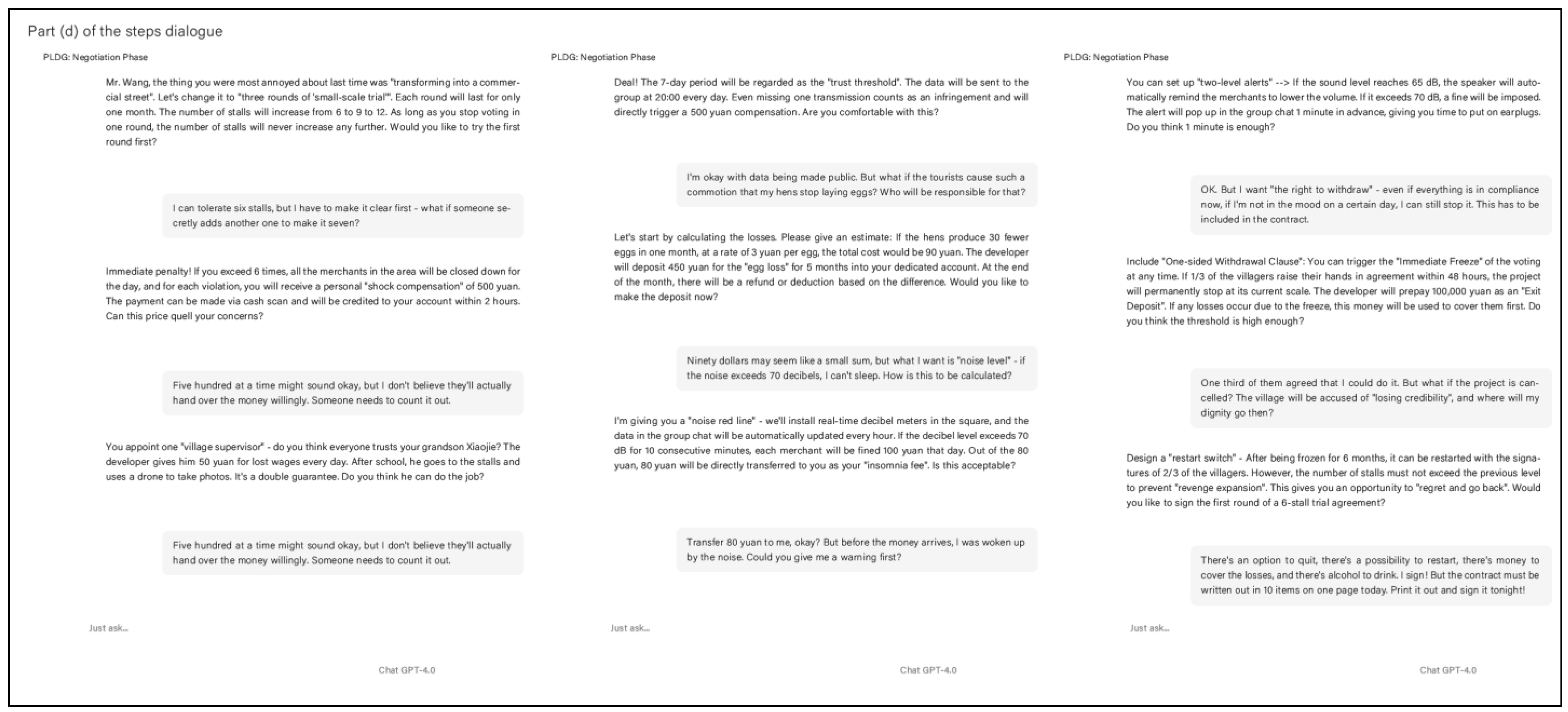
Figure A1. Negotiation and dialogue presentation (d). (PLDG:ChatGPT-4 and OpenAI, Inc).
Sustainability 18 06160 g0a1
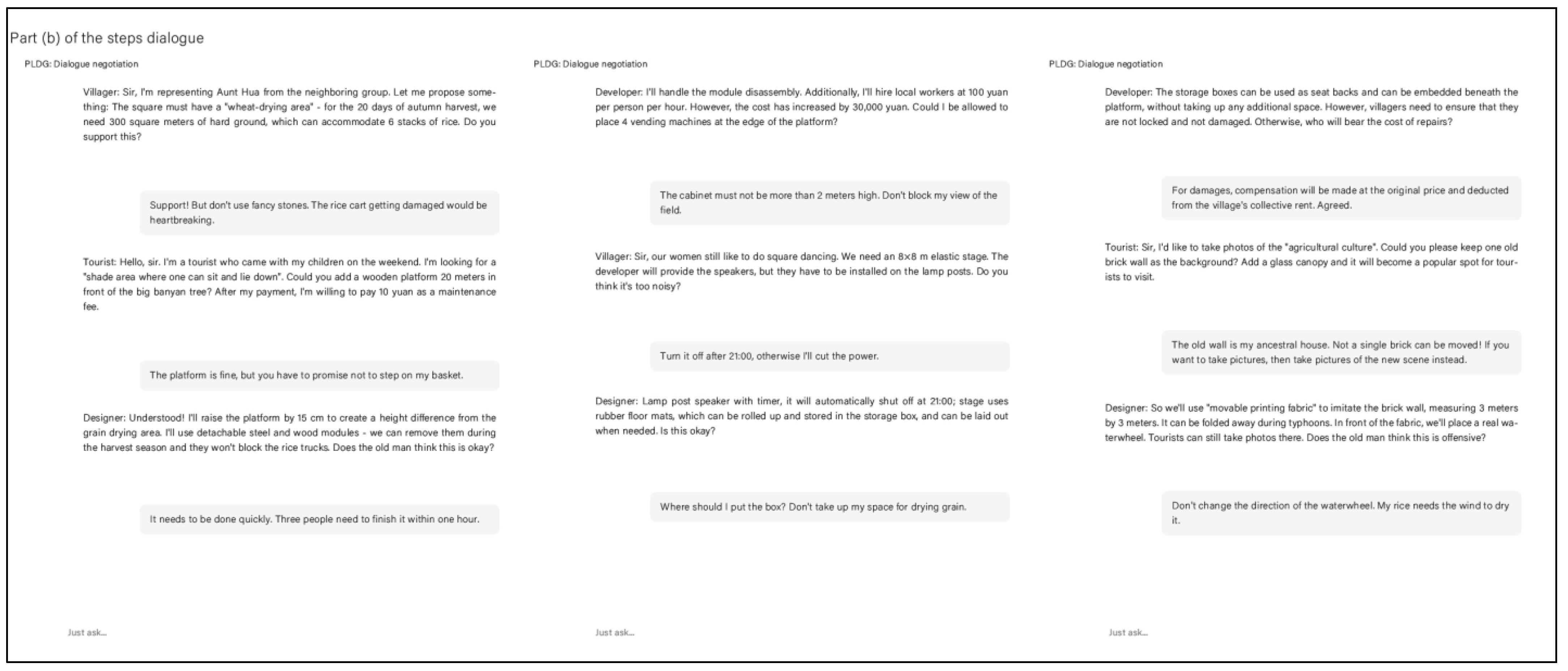
Figure A2. Negotiation and dialogue presentation (b). (PLDG:ChatGPT-4 and OpenAI, Inc).
Sustainability 18 06160 g0a2

Appendix E

Figure A3. Eye movement analysis results. The colored parts represent the eye-tracking recognition section. From red to green, it indicates a gradual increase in visual retention and recognition (Stable Diffusion 3.5 and Stability AI, Inc).
Sustainability 18 06160 g0a3

Appendix F

Table A4. Detailed data on satisfaction level.
a1–a2 First Visitb1 Divergenceb2 Classificationc1 Systemc2 Integrationd1-1 Negotiationd1-2 Correctiond2 Consensus
Villager A2.32.522.583.333.773.914.594.74
Villager B2.041.442.842.022.724.0354.82
Villager C2.361.542.342.43.763.663.815
Villager D2.712.122.953.323.413.624.844.97
Villager E2.011.892.573.643.264.434.634.84
Villager F2.012.562.683.33.914.644.515
Villager G2.731.942.563.124.124.074.584.92
Villager H2.411.693.543.024.074.545
Villager I1.913.132.792.313.184.244.534.76
Villager J2.322.292.382.773.443.844.714.83
Villager K1.912.433.132.923.764.2454.82
Villager L1.911.692.313.834.094.724.444.61

References

  1. Ye, S.; Tu, A.; Ye, Y.; Liao, F. Digital divide, agricultural supply chain finance, and the urban-rural income gap in China. Sustain. Futures 2025, 10, 100863. [Google Scholar] [CrossRef] [Scilit]
  2. Casey, K. Radical decentralization: Does community-driven development work? Annu. Rev. Econ. 2018, 10, 139–163. [Google Scholar] [CrossRef] [Scilit]
  3. Jakobsen, K.; Mikalsen, M.; Lilleng, G. A literature review of smart technology domains with implications for research on smart rural communities. Technol. Soc. 2023, 75, 102397. [Google Scholar] [CrossRef] [Scilit]
  4. Hutchings, P.; Parker, A.; Jeffrey, P. The political risks of technological determinism in rural water supply: A case study from Bihar, India. J. Rural Stud. 2016, 45, 252–259. [Google Scholar] [CrossRef] [Scilit]
  5. Wang, L. Causal analysis of conflict in tourism in rural China: The peasant perspective. Tour. Manag. Perspect. 2021, 39, 100863. [Google Scholar] [CrossRef] [Scilit]
  6. Cross, N. Styles of learning, designing and computing. Des. Stud. 1985, 6, 157–162. [Google Scholar] [CrossRef] [Scilit]
  7. Koizumi, H.; Yamashita, H. Deficit lay or deficit expert: How do “experts” in environmental projects perceive lay people and lay knowledge? SAGE Open 2021, 11, 21582440211023155. [Google Scholar] [CrossRef] [Scilit]
  8. Koukopoulos, Z.; Koukopoulos, D.; Jung, J.J. A trustworthy multimedia participatory platform for cultural heritage management in smart city environments. Multimed. Tools Appl. 2017, 76, 25943–25981. [Google Scholar] [CrossRef] [Scilit]
  9. Tiribelli, S.; Pansoni, S.; Frontoni, E.; Giovanola, B. Ethics of artificial intelligence for cultural heritage: Opportunities and challenges. IEEE Trans. Technol. Soc. 2024, 5, 293–305. [Google Scholar] [CrossRef] [Scilit]
  10. Kelly, T.; Guerrero, P.; Steed, A.; Wonka, P.; Mitra, N.J. FrankenGAN: Guided detail synthesis for building mass models using style-synchronized GANs. ACM Trans. Graph. 2018, 37, 216. [Google Scholar] [CrossRef] [Scilit]
  11. Stefanov, W.L.; Ramsey, M.S.; Christensen, P.R. Monitoring urban land cover change: An expert system approach to land cover classification of semiarid to arid urban centers. Remote Sens. Environ. 2001, 77, 173–185. [Google Scholar] [CrossRef] [Scilit]
  12. Suh, S.; Chen, M.; Min, B.; Li, T.J.-J.; Xia, H. Luminate: Structured generation and exploration of design space with large language models for human-AI co-creation. In Proceedings of the 2024 CHI Conference on Human Factors in Computing Systems, Honolulu, HI, USA, 11–16 May 2024; ACM: New York, NY, USA, 2024; Article 644. [Google Scholar] [CrossRef] [Scilit]
  13. Tzachor, A.; Devare, M.; Richards, C.; Pypers, P.; Ghosh, A.; Koo, J.; Johal, S.; King, B. Large language models and agricultural extension services. Nat. Food 2023, 4, 941–948. [Google Scholar] [CrossRef] [Scilit]
  14. Nguyen, V.; Karimi, S.; Hallgren, W.; Harkin, A.; Prakash, M. My climate advisor: An application of NLP in climate adaptation for agriculture. In Proceedings of the 1st Workshop on Natural Language Processing Meets Climate Change (ClimateNLP 2024), Bangkok, Thailand, 16 August 2024; Stammbach, D., Ni, J., Schimanski, T., Dutia, K., Singh, A., Bingler, J., Christiaen, C., Kushwaha, N., Muccione, V., Vaghefi, S.A., et al., Eds.; Association for Computational Linguistics: Bangkok, Thailand, 2024; pp. 27–45. [Google Scholar] [CrossRef] [Scilit]
  15. Foka, A.; Griffin, G. AI, cultural heritage, and bias: Some key queries that arise from the use of GenAI. Heritage 2024, 7, 6125–6136. [Google Scholar] [CrossRef] [Scilit]
  16. Ghaith, K.; Hutson, J. A qualitative study on the integration of artificial intelligence in cultural heritage conservation. Metaverse 2024, 5, 2654. [Google Scholar] [CrossRef] [Scilit]
  17. Zhang, Y.; Lin, Y.; Tian, L.; Yang, X. Leveraging LLM-based multi-agent simulations to boost participatory design education: An experimental exploration in residential area design. Sustain. Cities Soc. 2025, 109, 105597. [Google Scholar] [CrossRef] [Scilit]
  18. Zhou, Z.; Lin, Y.; Jin, D.; Li, Y. Large language model for participatory urban planning: A multi-agent framework to simulate residents’ negotiation over land-use layout. Nat. Commun. 2024, 15, 3017. [Google Scholar] [CrossRef] [Scilit]
  19. Joung, J.Y.; Badke-Schaub, P. The impact of aesthetic preference in product design—Golden ratio and Korean’s preference proportion. Arch. Des. Res. 2017, 30, 5–15. [Google Scholar] [CrossRef] [Scilit]
  20. Yang, S.; Zheng, L.; Chen, Y.; Huang, Y.; Huang, Y. Artificial intelligence assists the identification and application of rural heritage wall surface damage in Zhejiang. npj Herit. Sci. 2025, 13, 3059–3220. [Google Scholar] [CrossRef] [Scilit]
  21. Wang, R.; Zhang, X.; Liu, Q.; Su, J.; Zhang, Y.; Ma, Y. Visual information identification and Q&A of intangible cultural heritage inheritors by using enhanced Graph-Retrieval framework. npj Herit. Sci. 2026, 14, 113. [Google Scholar] [CrossRef] [Scilit]
  22. Yan, Z.; Lim, C.K.; Halim, S.A.; Ahmed, M.F.; Tan, K.L.; Li, L. Digital sustainability of heritage: Exploring indicators affecting the effectiveness of digital dissemination of intangible cultural heritage through qualitative interviews. Sustainability 2025, 17, 1593. [Google Scholar] [CrossRef] [Scilit]
  23. Kahneman, D. Thinking, Fast and Slow; Farrar, Straus and Giroux: New York, NY, USA, 2011. [Google Scholar]
  24. Ciroku, F.; De Giorgis, S.; Gangemi, A.; Martinez-Pandiani, D.S.; Presutti, V. Automated multimodal sensemaking: Ontology-based integration of linguistic frames and visual data. Comput. Hum. Behav. 2024, 150, 107997. [Google Scholar] [CrossRef] [Scilit]
  25. Wang, M.Y.; Zhang, H.; Zhao, H. Innovative impact of artificial intelligence and management in rural revitalization under fuzzy based decision-making approach. Sci. Rep. 2026, in press. [Google Scholar] [CrossRef] [Scilit] [PubMed]
  26. Li, Y.; Ding, N.; Zhao, T.; Chen, M. What drives or hinders the adoption of sustainable smart logistics in rural areas?—A mixed-methods analysis. Sustainability 2025, 17, 6626. [Google Scholar] [CrossRef] [Scilit]
  27. Kim, S.-W.; Lee, Y. Investigation into the influence of socio-cultural factors on attitudes toward artificial intelligence. Educ. Inf. Technol. 2024, 29, 9907–9935. [Google Scholar] [CrossRef] [Scilit]
  28. Kendall, L.; Chaudhuri, B.; Bhalla, A. Understanding technology as situated practice: Everyday use of voice user interfaces among diverse groups of users in urban India. Inf. Syst. Front. 2020, 22, 585–605. [Google Scholar] [CrossRef] [Scilit]
  29. Shumailov, I.; Shumaylov, Z.; Zhao, Y.; Papernot, N.; Anderson, R.; Gal, Y. AI models collapse when trained on recursively generated data. Nature 2024, 631, 755–759. [Google Scholar] [CrossRef] [Scilit]
  30. Le Feuvre, M.; Medway, D.; Warnaby, G.; Ward, K.; Goatman, A. Understanding stakeholder interactions in urban partnerships. Cities 2016, 52, 55–65. [Google Scholar] [CrossRef] [Scilit]
  31. Hussain, M.M.; Altiparmak, S.O.; Hatipoglu, E. Collaborative currents: The promise of conflict resolution in public acceptance of utility-scale renewable energy projects. Land 2025, 14, 1056. [Google Scholar] [CrossRef] [Scilit]
  32. Jones, S.; Jeffrey, S.; Maxwell, M.; Hale, A.; Jones, C. 3D heritage visualisation and the negotiation of authenticity: The ACCORD project. Int. J. Herit. Stud. 2018, 24, 333–353. [Google Scholar] [CrossRef] [Scilit]
  33. Wei, X. Deep learning-based artificial neural network-cellular automata model in constructing landscape gene in Shaanxi ancient towns under rural revitalization. Comput. Intell. Neurosci. 2022, 2022, 1340038. [Google Scholar] [CrossRef] [Scilit]
  34. Nikolakopoulou, V.; Printezis, P.; Maniatis, V.; Kontizas, D.; Vosinakis, S.; Chatzigrigoriou, P.; Koutsabasis, P. Conveying intangible cultural heritage in museums with interactive storytelling and projection mapping: The case of the mastic villages. Heritage 2022, 5, 1024–1049. [Google Scholar] [CrossRef] [Scilit]
  35. Cao, K.; Wang, P.; Kong, S.; Zhang, C. Breaking through the bottleneck in the promotion of artificial intelligence in agriculture: An analysis of the moderating role of individual’s heterogeneity among farmers in Shandong Province. Front. Sustain. Food Syst. 2025, 9, 1621832. [Google Scholar] [CrossRef] [Scilit]
  36. Asrifan, A. Navigating ethical dilemmas in AI-powered translation: Challenges and solutions. In Role of AI in Translation and Interpretation; Al Aqad, M.H., Ed.; IGI Global: Hershey, PA, USA, 2025; pp. 327–356. [Google Scholar] [CrossRef] [Scilit]
  37. Yuan, X.; Yuan, X.; Wang, S.; Li, H.; He, M.; Zhang, D.; Bryan-Kinns, N. Rethinking the role of AI in intangible cultural heritage pattern creation. In Proceedings of the DRS 2026 Conference, Edinburgh, UK, 8–12 June 2026; Design Research Society: London, UK, 2026. [Google Scholar] [CrossRef] [Scilit]
  38. Low, S.M. Anthropological-ethnographic methods for the assessment of cultural values in heritage conservation. In Assessing the Values of Cultural Heritage: Research Report; de la Torre, M., Ed.; Getty Conservation Institute: Los Angeles, CA, USA, 2002; pp. 31–49. [Google Scholar]
  39. Stenseke, M. Local participation in cultural landscape maintenance: Lessons from Sweden. Land Use Policy 2009, 26, 214–223. [Google Scholar] [CrossRef] [Scilit]
  40. Kang, W.; Zhang, X.; Zhang, J.; Chen, X.; Huang, H.; He, B.; Qin, W.; Zhu, H. Multimodal data generative fusion method for complex system health condition estimation. Sci. Rep. 2025, 15, 4985. [Google Scholar] [CrossRef] [Scilit] [PubMed]
  41. Li, J.; Krishnamurthy, S.; Pereira Roders, A.; van Wesemael, P. Community participation in cultural heritage management: A systematic literature review comparing Chinese and international practices. Cities 2020, 96, 102476. [Google Scholar] [CrossRef] [Scilit]
  42. Fu, J.; Han, H.; Su, X.; Fan, C. Towards human-AI collaborative urban science research enabled by pre-trained large language models. Urban Inform. 2024, 3, 8. [Google Scholar] [CrossRef] [Scilit]
  43. Bussell, C.; Ehab, A.; Hartle-Ryan, D.; Kapsalis, T. Generative AI for immersive experiences: Integrating text-to-image models in VR-mediated co-design workflows. In HCI International 2023 Posters; Stephanidis, C., Antona, M., Ntoa, S., Salvendy, G., Eds.; Communications in Computer and Information Science; Springer: Cham, Switzerland, 2023; Volume 1836, pp. 380–388. [Google Scholar] [CrossRef] [Scilit]
  44. Chen, T.; Xu, P.; Zheng, H. Botfip-LLM: An enhanced multimodal scientific computing framework leveraging knowledge distillation from large language models. Knowl.-Based Syst. 2025, 326, 114012. [Google Scholar] [CrossRef] [Scilit]
  45. Tan, C.; Zhong, X.; Fricker, P. AI as a collaborative partner in landscape form-finding. J. Digit. Landsc. Archit. 2024, 2024, 69–78. [Google Scholar] [CrossRef]
  46. Awashra, I.; Thompson, A.W.; Floress, K.; Arbuckle, J.G.; Church, S.P.; Genskow, K.; Tesdell, O. Generative AI text-to-image for community participation in landscape planning. Landsc. Urban Plan. 2025, 264, 105464. [Google Scholar] [CrossRef] [Scilit]
  47. Williams, S.; Beery, S.; Conley, C.; Evans, M.L.; Garces, S.; Gordon, E.; Medina, E. People-Powered Gen AI: Collaborating with Generative AI for Civic Engagement; An MIT Exploration of Generative AI; MIT: Cambridge, MA, USA, 2024. [Google Scholar] [CrossRef] [Scilit]
  48. Zhang, B.; Gao, J.; Yuan, Y. Center-enhanced video captioning model with multimodal semantic alignment. Neural Netw. 2024, 180, 106744. [Google Scholar] [CrossRef] [Scilit]
  49. Mundre, A. Epistemic injustice in AI-generated histories. In Proceedings of the ENGR184 Course; University of California: Los Angeles, CA, USA, 2024. [Google Scholar]
  50. Shen, Y.; Song, K.; Tan, X.; Li, D.; Lu, W.; Zhuang, Y. HuggingGPT: Solving AI tasks with ChatGPT and its friends in Hugging Face. In Advances in Neural Information Processing Systems (NeurIPS 2023); Curran Associates: Red Hook, NY, USA, 2023; Volume 36, pp. 38154–38180. [Google Scholar]
  51. Kim, D.; Guida, G.; García del Castillo y López, J.L. PlacemakingAI: Participatory urban design with generative adversarial networks. In Proceedings of the 27th Conference on Computer Aided Architectural Design Research in Asia (CAADRIA 2022), Sydney, Australia, 9–15 April 2022; CAADRIA: Hong Kong, China, 2022; Volume 2, pp. 485–494. [Google Scholar] [CrossRef] [Scilit]
  52. Faysse, M.; Sibille, H.; Wu, T.; Omrani, B.; Viaud, G.; Hudelot, C.; Colombo, P. ColPali: Efficient document retrieval with vision language models. In Proceedings of the 13th International Conference on Learning Representations (ICLR 2025), Singapore, 24–28 April 2025; OpenReview.net: Singapore, 2025; Available online: https://openreview.net/forum?id=ogjBpZ8uSi (accessed on 6 June 2026).
  53. Radford, A.; Kim, J.W.; Xu, T.; Brockman, G.; McLeavey, C.; Sutskever, I. Robust speech recognition via large-scale weak supervision. In Proceedings of the 40th International Conference on Machine Learning (ICML 2023), Honolulu, HI, USA, 23–29 July 2023; Krause, A., Brunskill, E., Cho, K., Engelhardt, B., Sabato, S., Scarlett, J., Eds.; Proceedings of Machine Learning Research; PMLR: London, UK, 2023; Volume 202, pp. 28492–28518. Available online: https://proceedings.mlr.press/v202/radford23a.html (accessed on 6 June 2026).
  54. Khan, R.; Vernooij, J.; Salvatori, D.; Hierck, B.P. Assessing cognitive load using EEG and eye-tracking in 3-D learning environments: A systematic review. Multimodal Technol. Interact. 2025, 9, 99. [Google Scholar] [CrossRef] [Scilit]
  55. Gerlek, S.; Weydner-Volkmann, S. Materiality and machinic embodiment: A postphenomenological inquiry into ChatGPT’s active user interface. J. Hum. Technol. Relat. 2025, 3, 1–15. [Google Scholar] [CrossRef] [Scilit]
  56. Su, Y.; Yang, J. Research on the protection and development model of cultural landscapes guided by natural and cultural heritage: A case study of post-seismic reconstruction of Dujiangyan Linpan. Land 2025, 14, 1753. [Google Scholar] [CrossRef] [Scilit]
  57. Luo, M.R.; Cui, G.; Rigg, B. The development of the CIE 2000 colour-difference formula: CIEDE2000. Color Res. Appl. 2001, 26, 340–350. [Google Scholar] [CrossRef] [Scilit]
  58. Trunfio, M.; Rossi, S. Conceptualising and measuring social media engagement: A systematic literature review. Ital. J. Mark. 2021, 2021, 267–292. [Google Scholar] [CrossRef] [Scilit]
  59. Palermo, A.; Delaine, G. Formula One on social networks: A successful strategy. Zer 2023, 28, 13–29. [Google Scholar] [CrossRef] [Scilit]
  60. Chounchenani, M.D.; Shahbahrami, A.; Hassanpour, R.; Gaydadjiev, G. Deep learning based image aesthetic quality assessment: A review. ACM Comput. Surv. 2025, 57, 183. [Google Scholar] [CrossRef] [Scilit]
  61. Gómez-Carmona, O.; Casado-Mansilla, D.; López-de-Ipiña, D.; Garcia-Zubia, J. Human-in-the-loop machine learning: Reconceptualizing the role of the user in interactive approaches. Internet Things 2024, 25, 101048. [Google Scholar] [CrossRef] [Scilit]
  62. Cabrera, Á.A.; Fu, E.; Bertucci, D.; Holstein, K.; Talwalkar, A.; Hong, J.I.; Perer, A. Zeno: An interactive framework for behavioral evaluation of machine learning. In Proceedings of the 2023 CHI Conference on Human Factors in Computing Systems (CHI ‘23), Hamburg, Germany, 23–28 April 2023; ACM: New York, NY, USA, 2023; Article 419; 14p. [Google Scholar] [CrossRef] [Scilit]
Figure 1. Workflow of the PLDG system. The framework integrates four stages: multi-source data input, LLM-driven multi-role negotiation, multimodal semantic fusion, and solution generation and evaluation, forming a closed-loop participatory design process. Source: drafted by the authors.
Sustainability 18 06160 g001
Figure 2. Experimental Workflow for Dialogue Templates. Comparison between traditional AI dialogue workflows and the PLDG dialogue process. The PLDG conversational template is structured around six sequential stages (a–f), incorporating three additional modules absent from conventional templates: thinking modes, deliberative negotiation, and iterative analysis. Source: drafted by the authors.
Sustainability 18 06160 g002
Figure 3. PLDG System Thinking-Assisted Design Element Generation Process. Experiments b, c, and d illustrate the dialogue logic between villagers and PLDG (left) and the corresponding design element generation process (right), using the village entrance tree as an example. Source: drafted by the authors.
Sustainability 18 06160 g003
Figure 4. Authenticity Baseline Constraint Mechanism. In Experiment f, following the generation of design element effects, technical screening is conducted across visual, chromatic, and textual dimensions. When technical thresholds are satisfied, outputs are submitted to villagers; otherwise, the system triggers regeneration. Source: drafted by the authors (SigLIP function curve graph: LaTeX + pgfplots: Christian Feuersänger (pgfplots and Pgfplots 1.18+). SRGB color gamut triangle: Python with colour-science (v0.4.6; Thomas Mansencal et al., Colour Science for Python) and Matplotlib (v3.8+; Matplotlib Development Team)).
Sustainability 18 06160 g004
Figure 5. Selected Dialogue Processes in the PLDG System (see Appendix D for dialogues). Experiment a demonstrates the conversational interactions between villagers and PLDG, along with the multimodal collection procedure (PLDG: ChatGPT-4 and OpenAI, Inc).
Sustainability 18 06160 g005
Figure 6. PLDG Text Generation Workflow. This workflow includes: (1) SD text input procedures; (2) comparative visualization of outputs between conventional AI and the PLDG system; and (3) visual demonstration of PLDG generation performance. (Stable Diffusion 3.5 and Stability AI, Inc).
Sustainability 18 06160 g006
Figure 7. Methodology for CNN analysis in the evaluation phase. The experimental process included: data collection, analytical assessment, and CNN-3D network architecture validation. The final correlation coefficient fluctuations were <0.04, indicating high robustness. Source: drafted by the authors.
Sustainability 18 06160 g007
Figure 8. Participation index box plot (PLDG vs. traditional AI). PLDG advantages are markedly higher than traditional AI. Source: drafted by the authors.
Sustainability 18 06160 g008
Figure 9. Number of conflict points per round and villagers’ satisfaction trends. A significant downward trend in conflict points was observed (Friedman χ2 = 42.3, p < 0.001), along with a significant improvement in satisfaction (Wilcoxon Z = 4.2, p < 0.001); cultural alignment reached excellent levels (>0.9). Source: drafted by the authors.
Sustainability 18 06160 g009
Table 1. Summary of Key Gaps in Existing Literature and Corresponding PLDG Solutions.
Research DirectionRepresentative LiteraturePLDG Solution
Consultation mechanismFu et al., 2024 [42]Progressive feedback
Bussell et al., 2023 [43]
Cultural constraintsTan et al., 2024 [45]Multifaceted constraints
Chen et al., 2025 [44]
Evaluation methodAwashra et al., 2025 [46]Culture and Participation Assessment
Kim et al., 2022 [51]
Table 2. Cross-modal Iterative Tracking Table. This table tracks the complete participation trajectory of the same villager (Wang Mou) under the PLDG framework, demonstrating the cross-modal iterative process from textual appeal to visual feedback and then to scheme revision.
StageModal TypeExplicit Text Records (Villagers’ Key Expressions)Invisible DataDesign Solution Response and CorrectionCore Insights
a–b: Initial RequestText/voice/visual1. Under the tree, you can rest and enjoy the coolness.
2. The square can be lively but there are also quiet areas.
3. My family used to have a large well.
1. The proportion of plants in the villagers’ photos
2. The proportion of blue sky in the scene
3. Types and quantities of non-daily patterns
Key extraction: Material: Stone; Location: Under the tree; Function: Cooling off + SocializingExtract multiple pieces of information and organize them into preliminary basic elements.
c–d Consultative AgreementText (System-Negotiation)1. The stone chair is uncomfortable. I want to replace it with a wooden one.
2. Post some posters on the wall.
3. Can the floor tiles be replaced with the blue bricks from our backyard at no cost?
4. Could we add some tables or something like that?
1. Stone material
2. Poster design style
3. Types of floor tiles
4. Table style and function
System integration: No negotiation required: Ancient trees to be preserved (ecological bottom line), Negotiation required: Seat material concession (stone → wood), Protection measures: Set up a 1.2 m high fenceIt involves using negotiation to balance the interests and determine the specific proportion of each element.
e: Visual feedbackImage (eye movement heat map)Favorite items: Well, poster wall, big tree1. For the “wooden chair” area: Duration of gaze < 300 ms (skipped quickly, low interest)
2. For “the base of the ancient tree”: Duration of gaze > 1200 ms (high attachment, repeated viewing)
3. For “fence”: avoidance of gaze (suggesting a sense of psychological distance)
Identification of implicit preferences: What the villagers truly care about is “the sense of closeness to the trees” rather than “sitting on wooden chairs”; the text states that “asking for a stool” is an expression of social etiquette, and the visual evidence reveals the physical memory and emotional attachment to “the trees”.Enhance the perceptual ability of non-designers and improve the correspondence with cultural demands.
f: Final revisionText and Visual ElementsVery good. I’m satisfied.The degree of language acceptanceSecond adjustment based on language requirementsImplementing satisfaction measures
Table 3. Comparative Assessment of Core Results Between PLDG Model and Traditional AI.
Evaluation DimensionPLDG Group (Mean ± SD)Traditional AI Group (Mean ± SD)Improvement Extent/SignificanceKey Findings
Cultural Compatibility-The degree of restoration of regional symbols3.9 ± 0.41.9 ± 0.5Overall improvement of 145.4% (p < 0.001)The score for the local nature of the material technology was the highest (4.8)
Cultural Compatibility-Adaptability of homestay activities4.2 ± 0.52.3 ± 0.6
Cultural Compatibility-Authenticity of local materials and craftsmanship4.8 ± 0.31.6 ± 0.4
Cultural Compatibility-Villagers’ emotional identification with the design4.0 ± 0.31.2 ± 0.3
Cultural Compatibility-The ability to modernize and reinterpret cultural elements4.4 ± 0.41.8 ± 0.4
Villager Participation Index (PI)90 ± 8.536 ± 7.2p < 0.004, d = 6.90Significantly enhance the participation of individuals with low educational attainment
Design Innovation Degree (Innov)0.78 ± 0.030.42 ± 0.03p < 0.004, d = 2.18CNN—3D Model Validation of Effectiveness
Disclaimer/Publisher’s Note: The statements, opinions and data contained in all publications are solely those of the individual author(s) and contributor(s) and not of MDPI and/or the editor(s). MDPI and/or the editor(s) disclaim responsibility for any injury to people or property resulting from any ideas, methods, instructions or products referred to in the content.