3.1. Long-Term Drying and the 2023 Drought Background
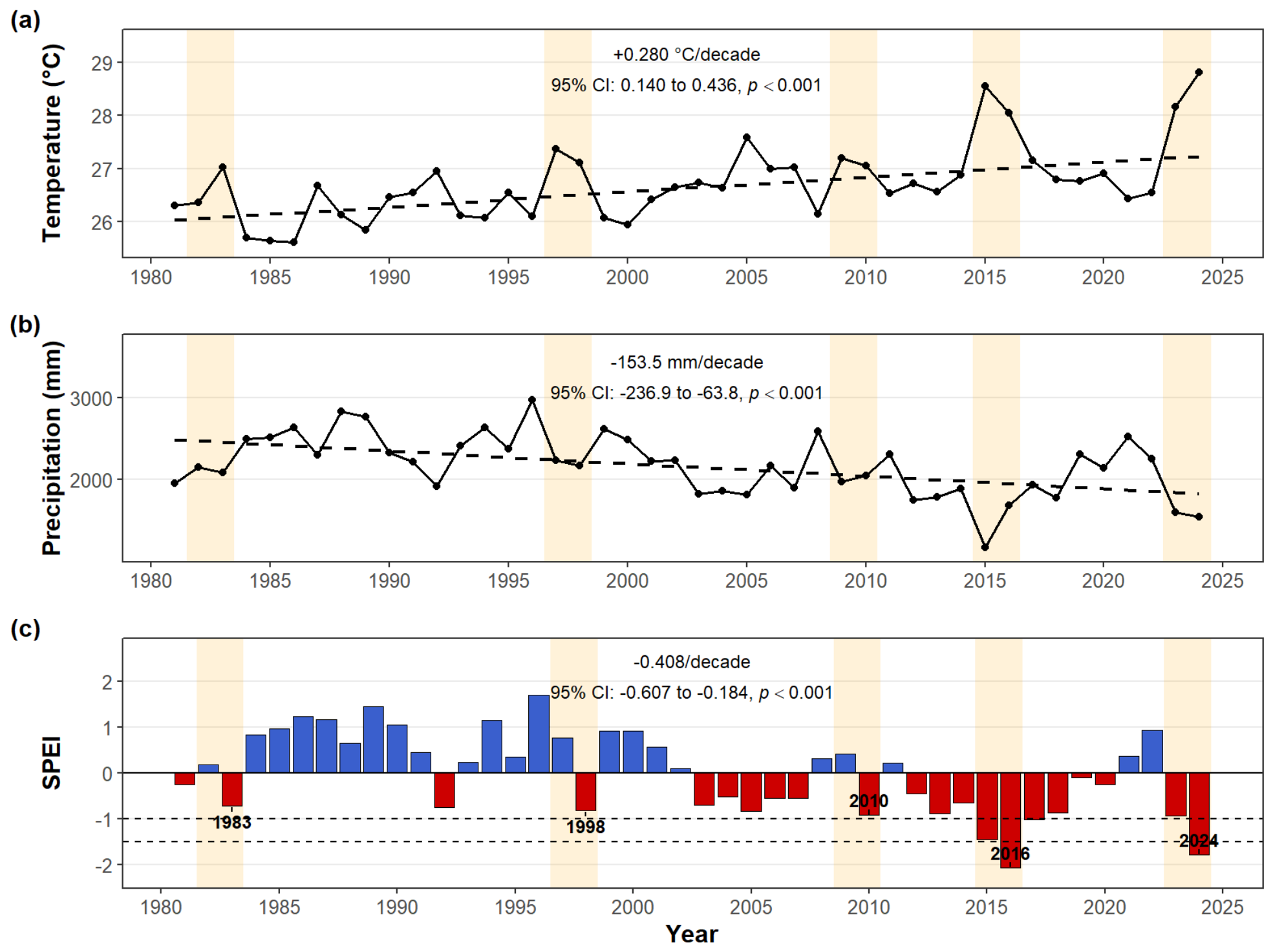
Although the hydroclimatic conditions around Manaus showed substantial interannual variability during 1981–2024, the overall long-term trend was toward drying (
Figure 1). Mean annual temperature increased by +0.280 °C per decade (95% CI: 0.140 to 0.436; Kendall trend test
p = 0.00012), whereas annual total precipitation decreased by −153.5 mm per decade (95% CI: −236.9 to −63.8;
p = 0.00073). Annual SPEI decreased by −0.408 per decade (95% CI: −0.607 to −0.184;
p = 0.00023), indicating a long-term reduction in water availability. The time series in
Figure 1 shows that not all years are dry in the same manner; however, despite repeated interannual fluctuations between wet and dry years, the long-term trend lines clearly indicate rising temperatures, decreasing precipitation, and a declining SPEI. In other words, the recent drought and air quality deterioration cannot be interpreted as problems confined to a single anomalous year but rather as events that emerged against a long-term dry climatic background that has accumulated over time.
Figure 1c shows that relatively wet years occur frequently from the mid-1980s to the mid-1990s, whereas negative SPEI values become more frequent after the 2000s, with severely dry conditions in the mid-2010s and 2024. This indicates that long-term drying did not proceed linearly but rather reflected a gradual shift toward drier conditions superimposed on strong interannual variability. Therefore, the recent climate change around Manaus is better understood as a process in which the intensity and frequency of dry years have gradually increased during recurring wet–dry oscillations.
Against this long-term background, the drought conditions in 2023 and 2024 indicated an abrupt recent deterioration (
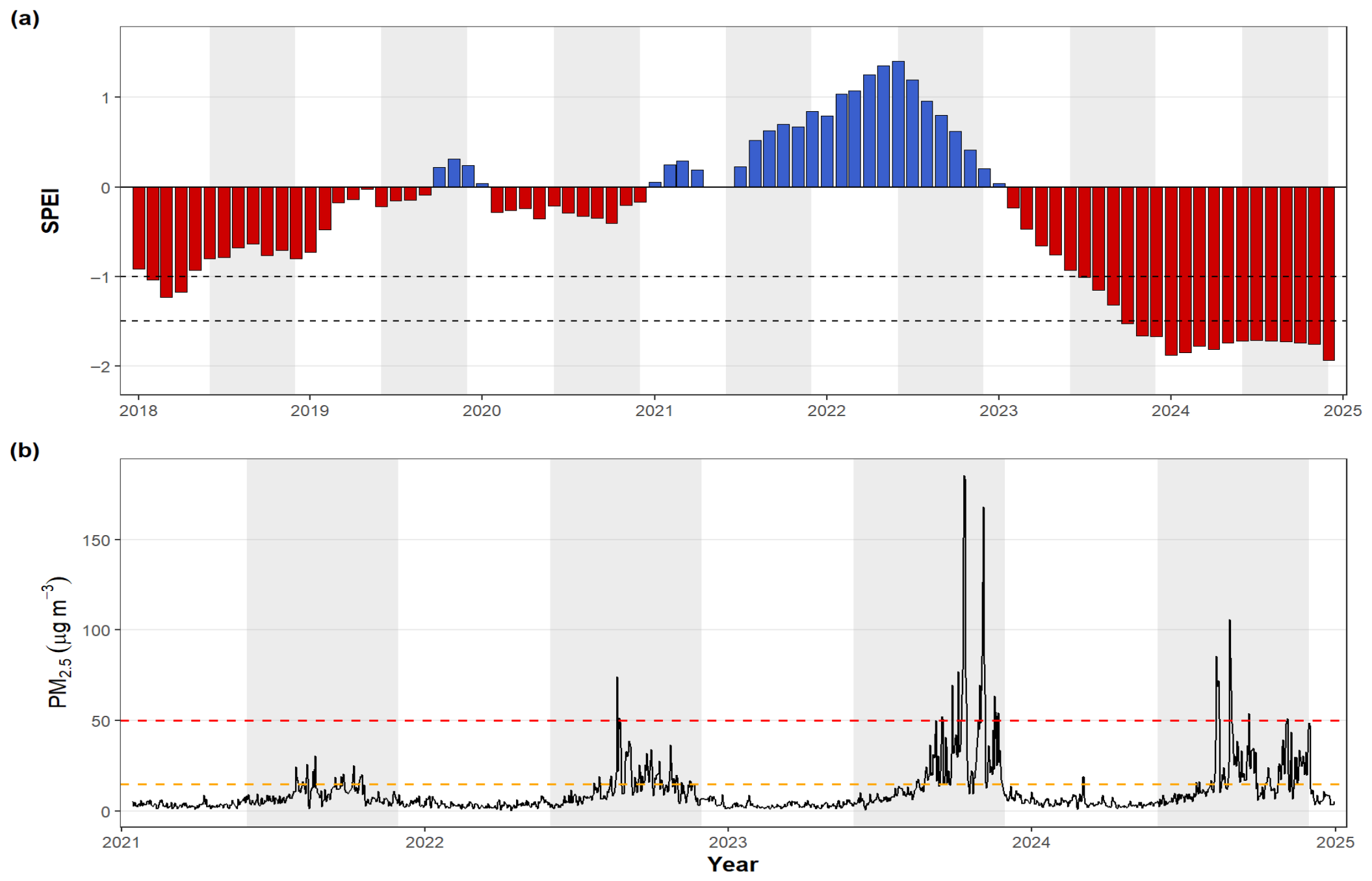
Figure 2a). The mean SPEI for the dry season remained within the normal to wet range in 2021 (+0.456) and 2022 (+0.897), but decreased sharply to −1.267 in 2023, entering the moderate drought category, and declined to −1.732 in 2024, approaching severe drought conditions. In particular, the dry season mean temperature in 2023 was 1.35 °C higher than that in 2022, and although precipitation was greater, the SPEI was lower. This suggests that the 2023 drought cannot be explained simply by a lack of precipitation, but rather by the combined effects of increased potential evapotranspiration and worsening water balance at higher temperatures [
3,
16]. In other words, the drying observed in 2023 should be understood not as a simple precipitation deficit resulting from increased atmospheric moisture demand and soil moisture loss intensified by high temperatures.
Figure 2 shows that the drought background temporally coincides with changes in air quality. During the second half of 2023, the SPEI declined continuously and fell below the moderate drought threshold during the late dry season, whereas the daily mean PM
2.5 increased markedly during the same period and frequently exceeded the WHO daily guideline of 15 µg m
−3. In contrast, during the dry seasons, when the SPEI remained within the normal or wet range, an increase in PM
2.5 was relatively limited. Thus, the increase in PM
2.5 in 2023 can be interpreted as the outcome of extreme drought, formed against a background of long-term drying, that contributed to worsening air quality in the late dry season [
3].
The severe drought conditions observed during 2023–2024 are associated with a strong El Niño event. El Niño suppresses rainfall and enhances drought conditions across large portions of the Amazon Basin through changes in atmospheric circulation and moisture transport. Such drought conditions increase vegetation dryness and wildfire susceptibility, thereby creating favorable conditions for enhanced smoke emissions and subsequent deterioration in air quality. Large-scale ocean-atmosphere variability, including tropical Atlantic sea-surface temperature anomalies, may further modulate these hydroclimatic conditions.
3.2. Wildfire Activity and Its Climatic Drivers Around Manaus
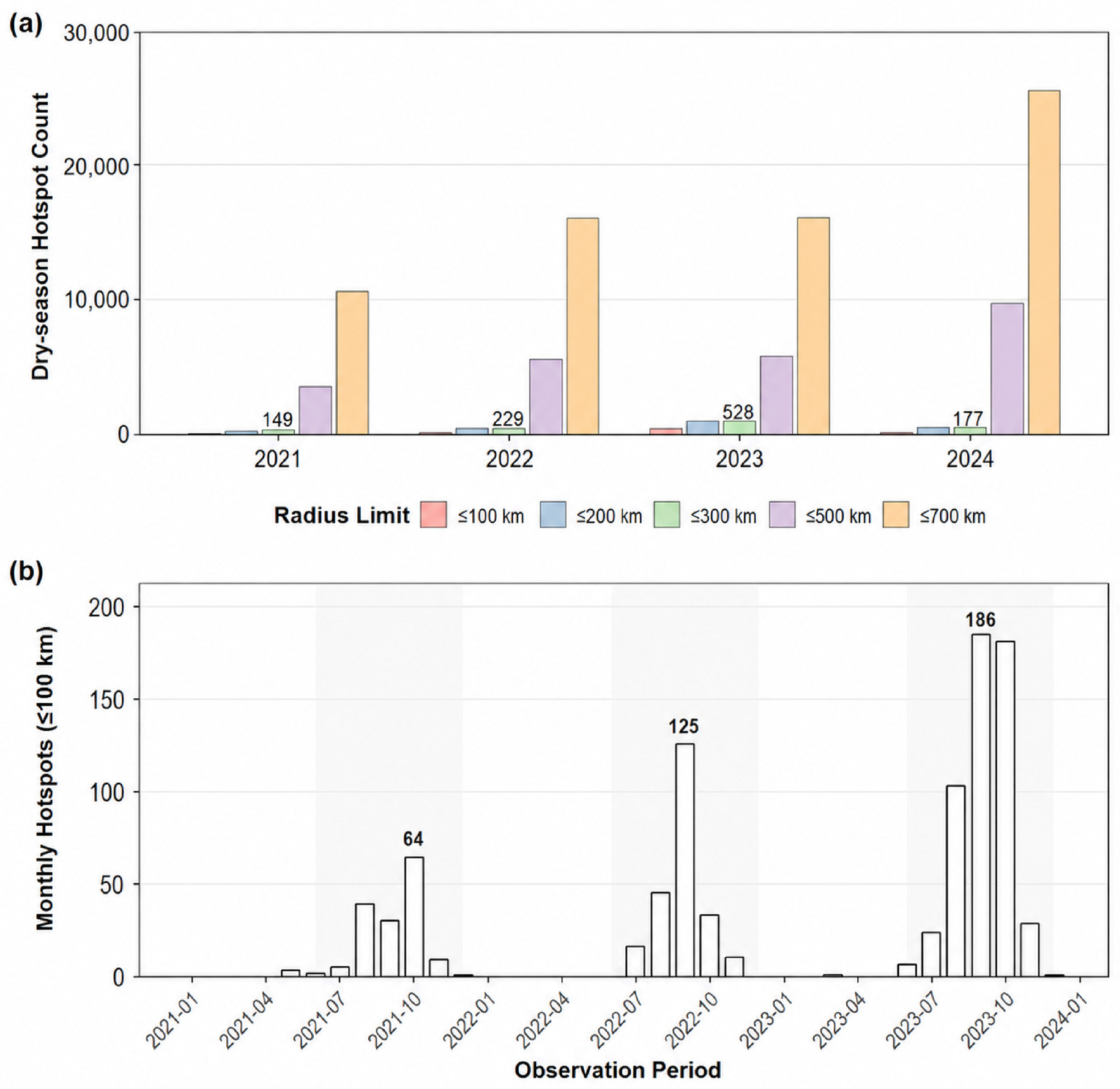
During the 2021–2024 dry season, the wildfire activity around Manaus showed clear interannual differences depending on the distance range and timing, with the strongest increase occurring in 2023 within the near- and mid-range areas surrounding the city (
Table 1 and
Figure 3a). The number of dry-season hotspots within a 100 km radius increased from 641 in 2021 and 860 in 2022 to 2140 in 2023, reaching 3.3 times that in 2021. Over the same period, the number of hotspots within the 200 km and 300 km radii increased by factors of 3.6 and 3.7, respectively, whereas the 2023 hotspot count within the 500-km radius was more than twice that in 2021. This pattern shows that the expansion of wildfire activity in 2023 was not confined to areas immediately adjacent to Manaus, but intensified simultaneously across the broader near- to mid-range zone surrounding the city. In contrast, in 2024, hotspot counts within the 100–300 km range decreased relative to those in 2023, whereas higher levels were maintained at larger radii, suggesting that the total amount of wildfire activity and its spatial distribution experienced annual variations.
The monthly variation highlighted the distinctiveness of 2023 (
Figure 3b). In 2021 and 2022, hotspots within 100 km showed relatively short peaks, mainly concentrated between August and October, followed by a rapid decline. However, by 2023, hotspot numbers increased in July, peaked in September and October, and remained high throughout November. This indicates that in 2023, the wildfire season began earlier and lasted longer, creating conditions in which smoke generation and accumulation could persist in the late dry season. In other words, wildfire activity in 2023 was characterized by a greater number of hotspots and intensified timing and persistence.
These spatiotemporal patterns are consistent with the long-term drying trend and 2023 drought background described above. Climatic conditions and wildfire activity were compared, and mean annual temperature and the number of dry season hotspots within a 100 km radius were significantly positively correlated (r = 0.591,
p = 0.013), whereas annual precipitation and hotspot counts were significantly negatively correlated (r = −0.679,
p = 0.003). In 2023, high temperatures, relatively low precipitation, and numerous hotspots occurred under both conditions. These results indicate that the expansion of wildfire activity during the 2023 dry season was closely associated with drier climatic conditions [
3,
17] and that long-term warming and a worsening water balance contributed to the intensification of regional wildfire activity.
Figure 3 shows that in 2023, the scale, onset, duration, and spatial concentration of wildfire activity around Manaus all intensify simultaneously. In particular, the rapid increase in hotspot counts across the near- to mid-range areas surrounding the city and the persistence of these elevated levels in the late dry season provide an important context for interpreting the subsequent analyses of PM
2.5 increases and smoke transport. Therefore, the deterioration of air quality in Manaus in 2023 should be understood as the result of changes in emissions from within the city, and as a phenomenon linked to the intensification of regional wildfire activity that began early and persisted for an extended period under dry climatic conditions.
3.3. PM2.5 Increase and Air Quality Episodes in Manaus
PM
2.5 concentrations in Manaus showed clear interannual differences during 2021–2024, with the highest levels observed in 2023 (
Table 2 and
Figure 4). The annual mean PM
2.5 concentration increased from 5.08 ± 4.17 µg m
−3 in 2021 and 8.38 ± 8.71 µg m
−3 in 2022 to 15.09 ± 25.13 µg m
−3 in 2023, and then decreased to 9.93 ± 12.86 µg m
−3 in 2024. The dry-season mean showed the same pattern, with values of 7.32 µg m
−3, 12.12 µg m
−3, 23.90 µg m
−3, and 17.78 µg m
−3 in 2021, 2022, 2023, and 2024, respectively. The median ratio of the dry to wet season increased from 1.77 in 2021 to 2.74 in 2022 and 4.19 in 2023, before declining to 2.94 in 2024, indicating a strong seasonal contrast in PM
2.5 concentration in 2023. This pattern indicated that 2023 recorded the highest annual mean PM
2.5 level and that pollution was more strongly concentrated during the dry season.
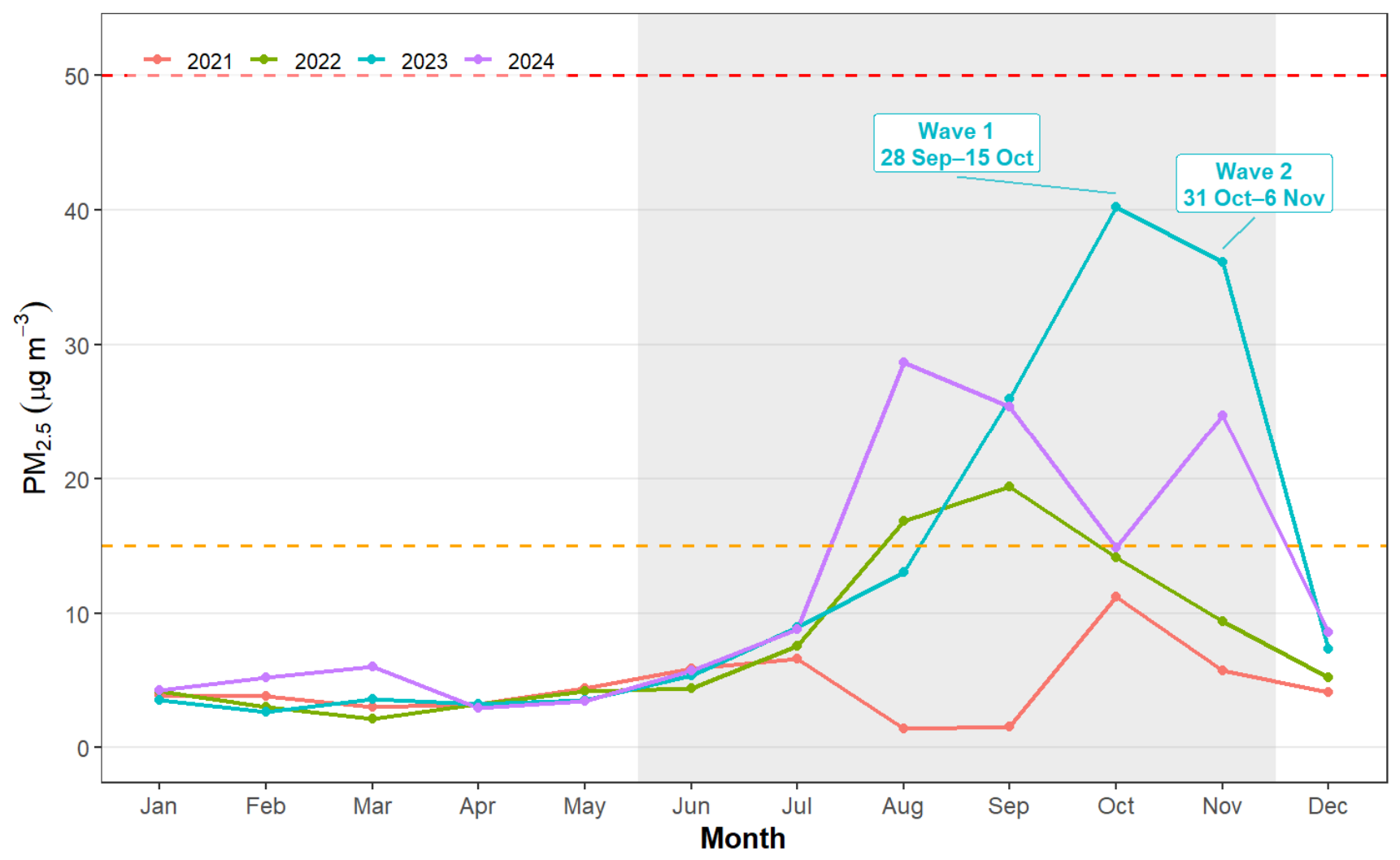
The monthly variation highlighted the distinctiveness of 2023 (
Figure 4). In 2021, PM
2.5 remained generally low across seasons, whereas in 2022, a temporary increase was observed mainly in August and September; however, its persistence was limited. In contrast, in 2023, the concentrations increased in July and remained high throughout September to November. Monthly mean PM
2.5 concentrations in October and November 2023 were 40.00 µg m
−3 and 36.02 µg m
−3, which were 2.8 and 3.8 times higher, respectively, than those in the same months of 2022. In 2024, although the annual mean and dry-season mean were lower than in 2023, the monthly mean in August reached 28.8 µg m
−3, exceeding the August 2023 level and indicating that the risk of high-concentration episodes remained during specific periods. Overall, 2023 was characterized by an earlier onset of concentration increase and a longer duration of high-PM
2.5 conditions.
The frequency of guideline exceedance and AQI distribution was most unfavorable in 2023 (
Table 2 and
Figure 4). The number of days exceeding the WHO daily guideline of 15 µg m
−3 was 5 in 2021, 43 in 2022, 85 in 2023, and 75 in 2024, whereas the number of days exceeding the Brazilian 24-h standard of 50 µg m
−3 increased from 0 in 2021 to 1 in 2022 and 16 in 2023. In the AQI distribution, the Unhealthy, Very Unhealthy, and Hazardous categories appeared simultaneously for the first time in 2023, and the maximum hourly PM
2.5 concentration peaked at 436.2 µg m
−3. The mean concentration of the top 5% dry-season episodes was 25.9 µg m
−3 in 2021, 44.9 µg m
−3 in 2022, 131.3 µg m
−3 in 2023, and 77.8 µg m
−3 in 2024, showing that the intensity of high-pollution episodes in 2023 was markedly greater than in other years. These results indicate that the deterioration of air quality in 2023 was not limited to an increase in mean concentrations, but was the most severe year in terms of the frequency of exceedances and the intensity of extreme values.
The high-concentration period in 2023 can be divided into two major waves in the time series: 28 September to 15 October and 31 October to 6 November. These two waves indicate that the high-PM2.5 episodes in 2023 were not a single isolated event, but part of a series of recurrent pollution periods during the late dry season. Because these episodes were mainly concentrated in October and November, the PM2.5 accumulation was strongest in the late dry season, when drought and wildfire activity had already accumulated.
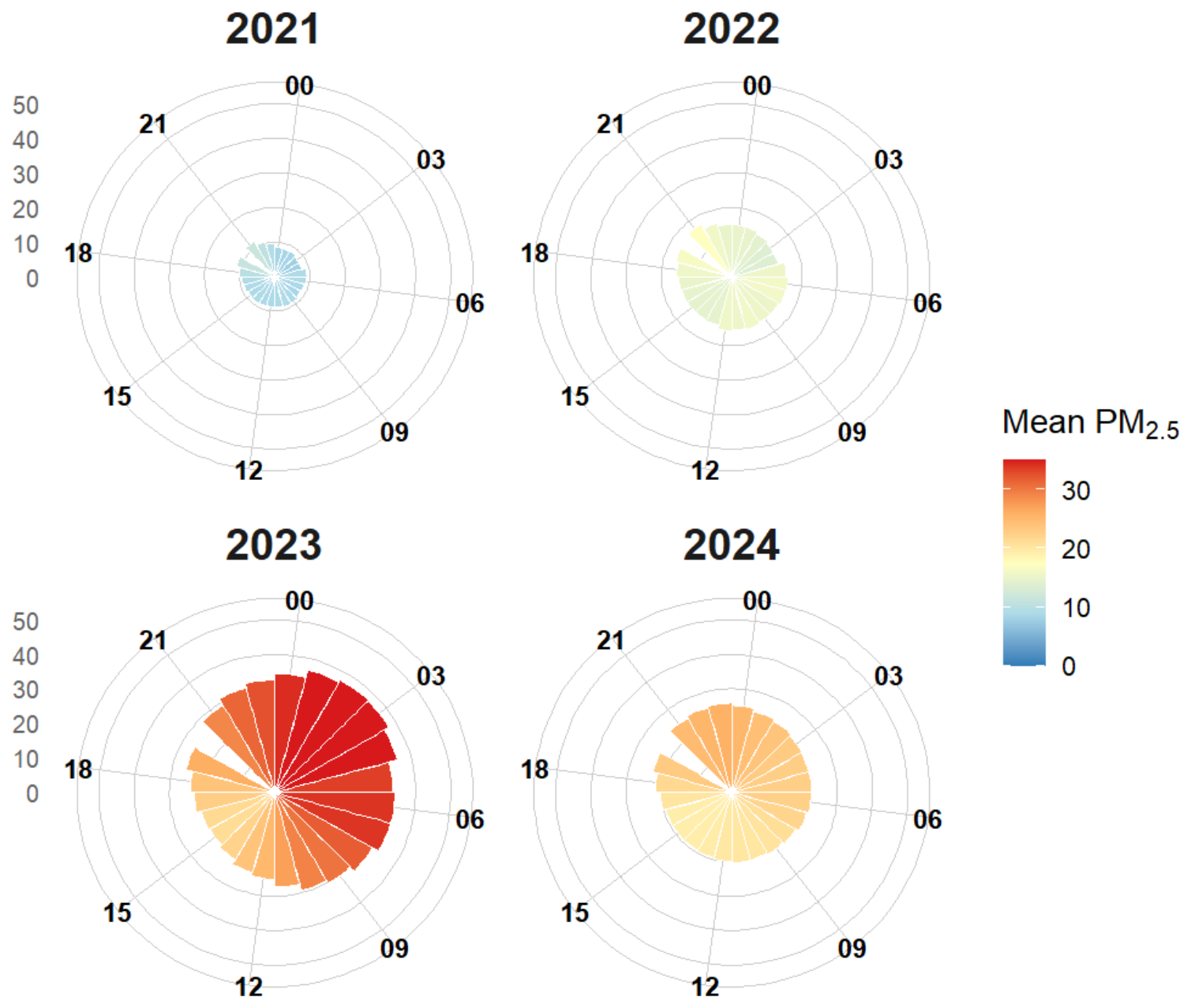
The diurnal variation showed a distinctive pattern in 2023 (
Figure 5). In all years, PM
2.5 was consistently higher from nighttime to early morning and lower in the afternoon; however, this contrast was greatest in 2023. The nighttime peak concentration during the dry season was 10.1 µg m
−3 in 2021, 16.2 µg m
−3 in 2022, 34.7 µg m
−3 in 2023, and 23.3 µg m
−3 in 2024, whereas the ratio of the nighttime maximum to the afternoon minimum was highest in 2023 at 1.74. The annulus plot showed higher concentrations during the nighttime–early morning period in 2023 than in the other years, confirming that dry-season PM
2.5 in that year differed in its mean level and time-of-day accumulation pattern. This indicates that the deterioration of air quality in 2023 was not evenly distributed throughout the day but was accompanied by an exposure pattern that was more strongly concentrated during the night and early morning [
9,
20]. This pronounced nocturnal peak is consistent with stronger nighttime accumulation under dry-season conditions, possibly reflecting reduced nocturnal mixing and a shallower boundary layer during drought periods. During the nighttime and early morning, reduced solar heating weakens turbulent mixing and lowers the planetary boundary layer height, favoring pollutant accumulation near the surface. In contrast, daytime convective mixing promotes the vertical dispersion and dilution of PM
2.5.
3.4. Evidence of Long-Range Wildfire Smoke Transport to Manaus
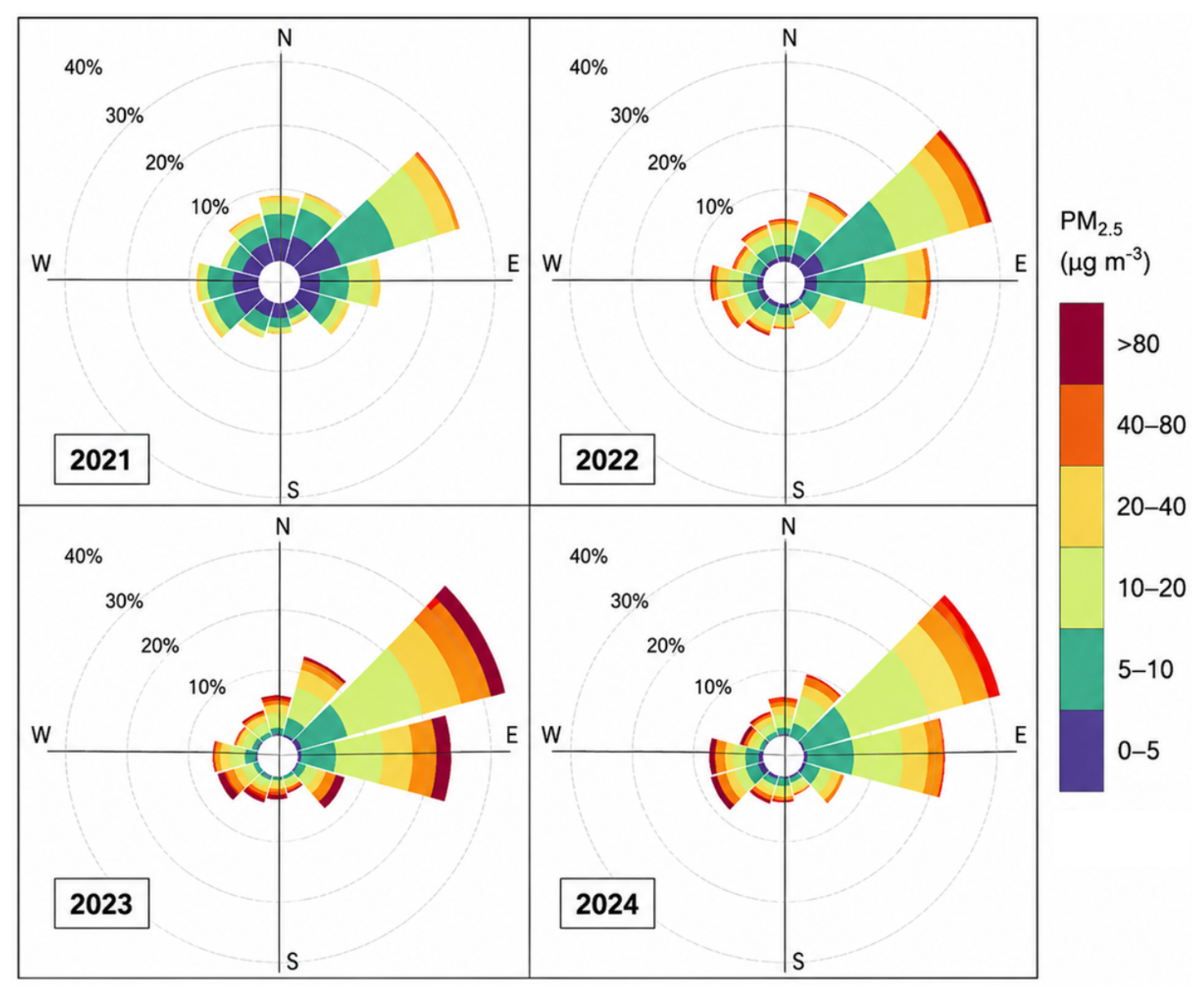
The wind direction and directional distribution of PM
2.5 during the dry season were compared, showing that the background wind field in Manaus was dominated by the NE–E sector from 2021 to 2024 (
Figure 6). The frequency of easterly winds (45–135°) was 44.6% in 2021, 51.8% in 2022, 59.5% in 2023, and 58.3% in 2024, accounting for approximately half of all dry-season hours. Consistent with this pattern, the pollution rose showed a low and relatively homogeneous PM
2.5 distribution across all directions in 2021, whereas relatively higher concentrations began to appear in the NE–E sector in 2022, and the contribution of high-concentration events from the eastern (E–NE) sector became most pronounced in 2023. The mean pollution rose concentration for the entire 2023 dry season was 29.39 µg m
−3, and under the top 5% PM
2.5 conditions, the eastern sector was the most frequent, accounting for 53%, with a mean concentration reaching 158 µg m
−3. This directional pattern indicated that high PM
2.5 concentrations during the 2023 dry season occurred together with the predominance of easterly winds.
When the mean concentrations were compared according to wind direction, PM2.5 during the 2023 dry season was highest under southerly winds at 34.1 µg m−3, followed by westerly, easterly, and northerly winds at 28.5 µg m−3, 22.3 µg m−3, and 20.5 µg m−3, respectively. However, southerly and easterly winds accounted for 8.9% and 59.5%, respectively, of the dry-season hours. This indicates that individual high-concentration events should be distinguished from high background concentrations that persist throughout the dry season. Southerly winds were relatively infrequent but were associated with intense short-term episodes, whereas easterly winds appeared more frequently and contributed to persistent PM2.5 background throughout the dry season. Therefore, PM2.5 in Manaus during 2023 is better interpreted as being more closely related to broad smoke inflow from the upwind sector than to the isolated influence of a specific local emission source.
The multi-year analysis yielded results that supported this interpretation. In the Spearman analysis based on 524 dry-season days during 2021–2024, daily mean upwind FRP was significantly positively correlated with PM
2.5 (r = 0.449,
p < 0.001). In the directional FRP distribution, the FRP of dry-season hotspots within a 500-km radius was generally concentrated in the southern sector; however, the proportion of FRP from the eastern sector increased from 14.5% in 2021 and 14.7% in 2022 to 27.6% in 2023, before decreasing to 9.9% in 2024. Additionally, during the high-pollution days of the 2023 dry season (the daily mean PM
2.5 ≥ 29.0 µg m
−3), the mean upwind FRP was 1571 MW, 5.4 times higher than the 290 MW observed on low-pollution days (≤8.8 µg m
−3). In 2023, the eastern sector at 300–500 km showed the largest FRP, at 117,175 MW, and monthly peaks in upwind FRP occurred during the same period as the PM
2.5 increase in September–October. To distinguish the effects of fire distance, fire activity was stratified into <300 km, 300–1000 km, and 1000–2200 km. Significant positive correlations between the daily PM
2.5 and FRP were observed for all classes (
Table 3). Under easterly wind conditions (45–135°), the strongest association was found for the 300–1000 km class, followed by the 1000–2200 km and <300 km classes. This pattern suggests that PM
2.5 variability in Manaus was influenced by wildfire activity across distance ranges, with the strongest association occurring for fires located 300–1000 km from the city.
These results indicate that high PM2.5 concentrations were more closely linked to changes in wildfire intensity in the upwind sector than to simple accumulation within the city. In particular, the higher total FRP in 2024 and markedly lower proportion of FRP from the eastern sector suggest that the distribution of fires in the upwind sector may be more important for PM2.5 levels in Manaus than the total amount of fire activity alone. However, these results do not exclude potential local contributions; rather, they indicate the temporal and directional pattern of PM2.5 in 2023 was more consistent with regional wildfire smoke transport than with local emissions alone.
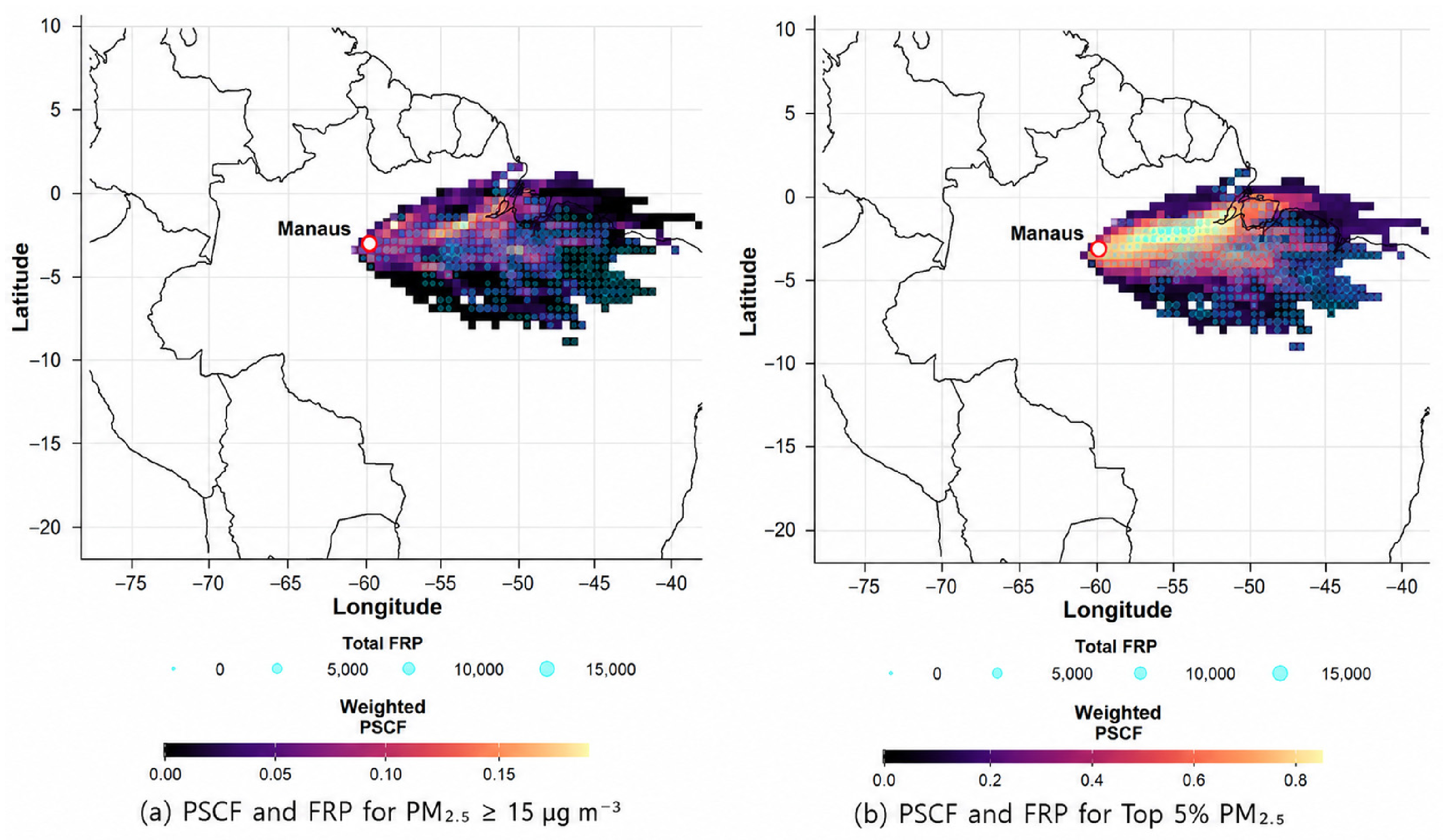
The map showing the potential source contribution function (PSCF) and FRP provides spatial support for these directional results under the 2023 dry-season conditions (
Figure 7). Under the WHO daily guideline exceedance and top 5% of PM
2.5 conditions, high PSCF values were concentrated over broad areas to the east and southeast of Manaus, and high FRP was distributed in the same regions. In particular, in the top 5% PM
2.5 condition, the potential source contribution area appeared stronger and more concentrated, indicating that the most severe pollution episodes were more closely linked to fire activity in the eastern upwind region. This spatial overlap increases the likelihood of the major contributors to PM
2.5 in Manaus were not point sources within the city, but rather large-scale wildfire smoke distributed across the eastern and southeastern upwind regions [
6].
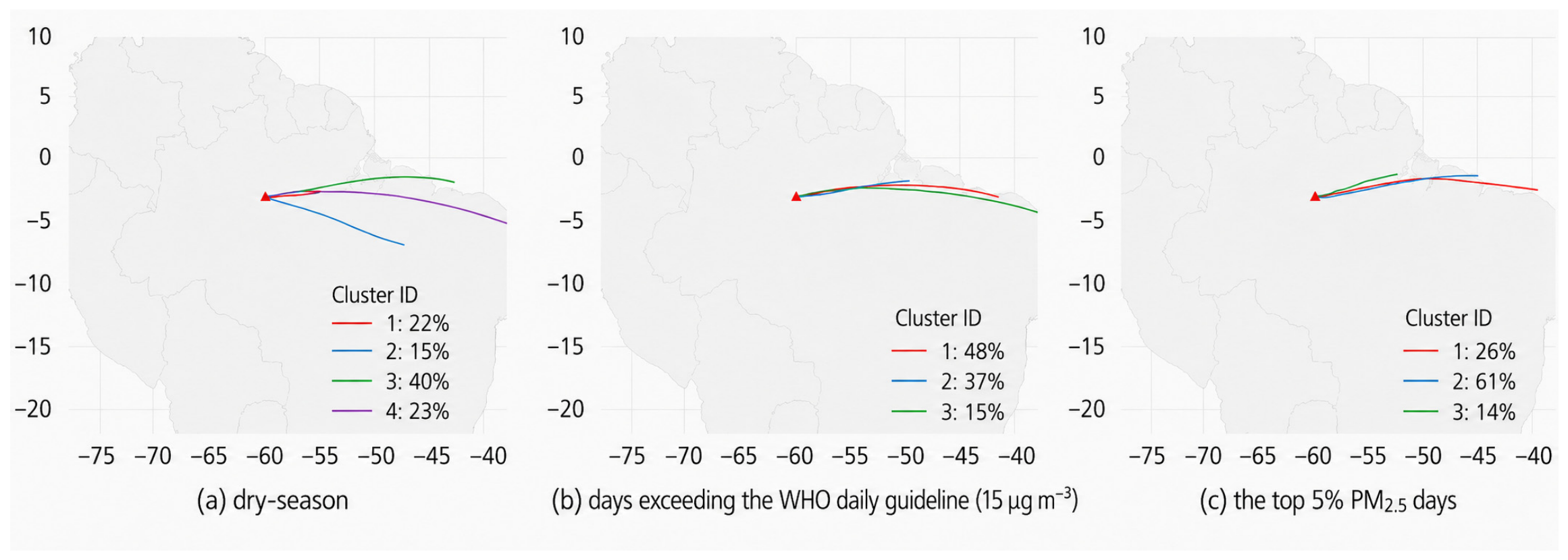
The 72-h HYSPLIT backward trajectory analysis independently supported this process (
Figure 8). In the cluster analysis for the 2023 dry season, all clusters showed origins east of Manaus, and some clusters had 72-h origins located at distances > 1000 km and altitudes > 1000 m. For days exceeding the WHO daily guidelines, all clusters originated from the east, and some extended to distances of >2000 km. The same eastern origin was maintained for the top 5% PM
2.5 episode days, and compared with the full dry season, their source regions were located at greater distances and higher altitudes. This indicated that during the full dry season, exceedance days, and extreme episodes, the main origin of the air masses entering Manaus was consistently located to the east. Particularly, more distant eastern origins were associated with higher PM
2.5 conditions, suggesting that the 2023 PM
2.5 episodes were not limited to near-range emissions alone.
The 2024 data provided a comparative test for this interpretation. Although the drought conditions were more severe and the total FRP was higher in 2024, the annual mean PM
2.5 concentration was lower than in 2023. During the same period, the proportion of FRP from the eastern sector decreased from 27.6% in 2023 to 9.9% in 2024, and the pollution rose showed that the dominant direction of the top 5% of episodes shifted from east in 2023 to west–southwest in 2024. This contrast indicated that PM
2.5 levels in Manaus were more closely related to the spatial alignment between hotspot locations and the prevailing wind direction than to the total amount of fire activity itself. In other words, the urban air quality responded more sensitively to the distribution of fires in the upwind sector and transport conditions than to the absolute magnitude of the regional fire burden. This pattern cannot be explained using local urban emissions alone, which are not expected to vary in conjunction with the directional distribution of regional fires. Therefore, the 2023–2024 contrast provides an informative comparative case showing that the spatial alignment between upwind fire activity and prevailing winds was a dominant control on PM
2.5 variability in Manaus. These results suggest that air quality management in Amazonian metropolitan areas such as Manaus should consider reductions in emissions from within the city, upwind fire monitoring, and early warning systems [
6,
10,
11,
12].