1. Introduction
Dimensional stone quarrying plays an important role in supplying high-value construction materials, particularly in resource-rich developing regions. In addition to producing high value products, the industry supports employment, processing and associated services such as transportation and trade [
1]. With growing global demand, it remains an important economic activity in many mining regions.
However, the operational efficiency is low, with conversion rates from geological reserves to commercial blocks ranging from 10% to 40% [
2,
3]. Many materials are downgraded or discarded, resulting in resource loss and increased cost. These inefficiencies are mainly controlled by the structural complexity of the rock mass, where fracture systems control block formation, extractable size, and product quality [
4,
5].
Despite the recognition of fracture-controlled behaviour in rock mechanics, its systematic integration into quarry planning is limited. Exploration, extraction design, cutting strategy, and quality control are often treated separately. Geological information is not consistently translated into engineering decisions, and structural risks are identified only during production, resulting in avoidable losses and reduced sustainability [
6,
7].
Research on quarrying efficiency has been addressed through four main approaches. Fracture assessment methods based on scanline data provide quick but descriptive indicators of block potential [
3,
4]. Discrete fracture network (DFN) modelling allows for a detailed representation of fracture networks and block formation but requires a large amount of data and is often applied at later stages [
5,
8]. Extraction optimization focuses on orientation and cutting design, often assuming favourable structural conditions [
1,
3]. Post-extraction quality control methods, including non-destructive testing (NDT), improve downstream performance but are rarely integrated into upstream decision-making [
6]. These approaches are fragmented and lack a unified decision-making framework [
7].
Recent research has highlighted the need to integrate structural geology, digital modelling and sustainability-focused decision frameworks in dimensional stone and surface mining operations, especially under conditions of geological uncertainty and resource-efficiency constraints [
9,
10,
11,
12].
As a result, there is a gap between geological assessment and operational performance. Improvements at one stage do not necessarily translate to a better overall recovery. Early-stage decision-making is limited by a lack of data, and there is a trade-off between rapid investment and structural understanding [
5,
8]. The quantitative relationship between fracture characteristics, extraction design and resource loss is rarely formalized, and inefficiencies are often evaluated retrospectively [
7].
To address these limitations, an integrated engineering decision-support framework is developed for dimensional stone quarrying. The framework links fracture characterization, DFN-based structural modelling, block usability assessment, extraction orientation optimization, and post-extraction quality control in a phased workflow governed by decision gates. Rather than introducing new analytical methods, it reorganizes existing tools into a coherent process that reduces uncertainty and aligns geological structures with engineering decisions [
13].
The framework links decision stages and clarifies key assumptions. It includes five key components: preliminary fracture screening, DFN modelling, block usability evaluation, extraction optimization, and NDT-based quality control. These components are linked through progressive decision logic, where the information quality and analytical resolution increase over time.
At the operational level, extraction strategies are limited by fracture-controlled conditions and non-idealized assumptions. Quality control is used as a feedback mechanism to refine the upstream decisions. This integration shifts quarry planning toward fragmented experience-based practices to a data-driven engineering process.
This work structures existing tools into a consistent decision sequence. The framework links fracture characterization, DFN modelling, and extraction design through explicit decision gates, allowing uncertainty to be managed progressively rather than retrospectively. First, it combines DFN modelling, block usability assessment and NDT into one workflow that has not been done before [
3,
4,
5,
6]. Second, decision gates are introduced to manage structural uncertainty and guide extraction decisions. Third, it links fracture characteristics, extraction design and recovery performance within one resource efficiency framework.
The proposed approach shifts dimensional stone quarrying from isolated optimization toward a more structured decision process.
Additionally, by minimizing structural waste and maximizing the extraction of usable blocks, this framework directly contributes to the United Nations Sustainable Development Goals (SDGs), particularly SDG 12 (Responsible Consumption and Production). It provides a practical way to achieve sustainable management and efficient use of natural rock resources within the extractive industries.
2. Methodological Framework
2.1. Overall Architecture of the Integrated Decision-Support Framework
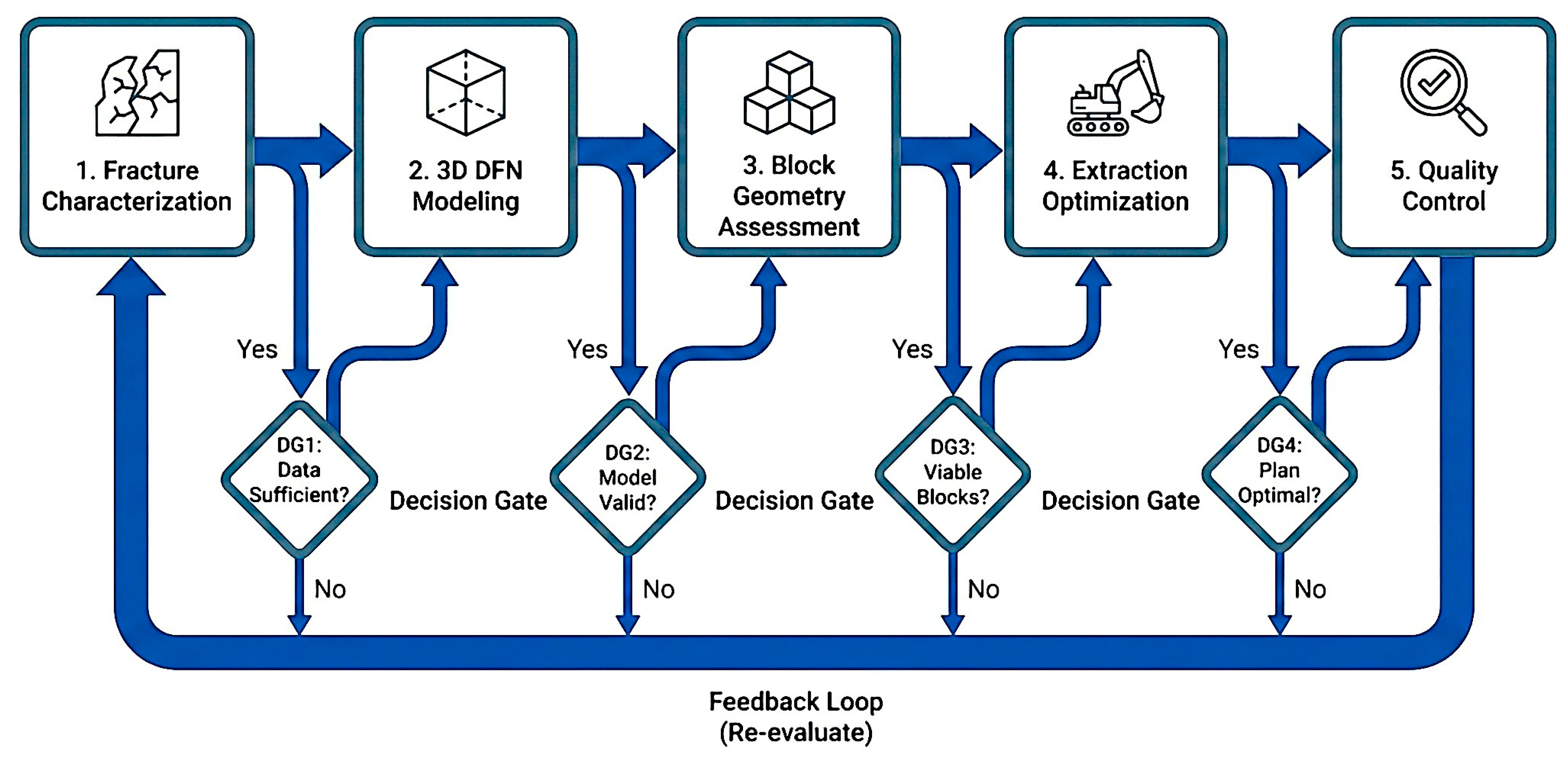
The proposed decision-support framework addresses fragmentation in the stone quarrying dimension by linking exploration, design, technology selection and quality control into one decision process across the quarry life cycle. Instead of treating these stages as separate, quarrying is viewed as a sequence of interdependent decisions, where each stage uses available information and constrains the next stage. This aligns with risk-based and evidence-driven resource governance principles [
13]. The framework structure, including the progressive refinement and decision gates (DG1–DG4), is shown in
Figure 1.
Although the decision gates (DG1–DG4) operate within a common accept–modify–reject logic, each gate evaluates different aspects of the quarrying process and therefore relies on different engineering criteria. The objectives, evaluation criteria, and corresponding decision logic associated with each gate are summarized in
Table 1.
As shown in
Table 1, the framework applies progressively more detailed information and analytical resolution as decisions advance from preliminary structural screening to final quality verification.
The framework increases decision reliability by progressively improving the information resolution. Early stages used rapid, low-cost screening tools under high uncertainty, while advanced analysis was only applied after predefined criteria were met. This “progressive refinement” principle balances investigation cost and decision confidence [
5,
8].
Decision gates apply structured accept–modify–reject logic to control risk and avoid premature optimization. High-risk areas can be excluded early on; therefore, resources can focus on viable extraction options [
3]. The framework is adaptive and feedback-driven; thus, operational data and quality control results can refine the earlier assumptions. This reflects the dynamic nature of quarrying where efficiency is achieved through iterative learning rather than single-stage optimization [
6,
7].
The framework does not replace existing methods; it integrates fracture characterization, structural modelling, extraction optimization, and quality control into one decision architecture to support transparent and risk-informed quarry planning.
2.2. Step 1—Fracture Characterization and Preliminary Screening
This step evaluates quarry-scale fracture characterization to screen for high uncertainty. The goal is to obtain a quantitative representation of the fracturing intensity and structural risk, rather than a detailed structural model. This is in line with risk-based approaches that use rapid, low-cost tools for early decision support [
3,
5].
Data were derived from scanline measurements combined with statistical analysis of fracture orientation, dip, and spacing. Surface data cannot fully represent 3D structures; however, statistical descriptors provide robust indicators of fragmentation trends when properly sampled [
4].
Fracture-spacing distributions, quantitative fracture-intensity indicators (Jv), and structural continuity observations were integrated in order to assess fracture condition and delineate structurally unfavourable domains. Fracture spacing was used to interpret the block-forming potential, and Jv was used to quantify fracture intensity and fragmentation. Structural continuity observations were used to delineate domains where fracture persistence may negatively impact block integrity and recovery [
4,
5].
These fracture-characterization indicators were used as screening criteria to compare quarry domains and prioritize areas for subsequent DFN modelling and detailed engineering assessment. As the first decision gate, this step allows the exclusion of structurally unfavourable zones, reduces investment risk, and improves resource allocation [
6].
2.3. Step 2—DFN Modelling and Block Formation
After the initial screening, the rock-mass structure is represented using a 3D DFN concept. This step transforms statistical fracture data into a spatial representation of the subsurface structure so that the block formation can be quantified [
5,
8].
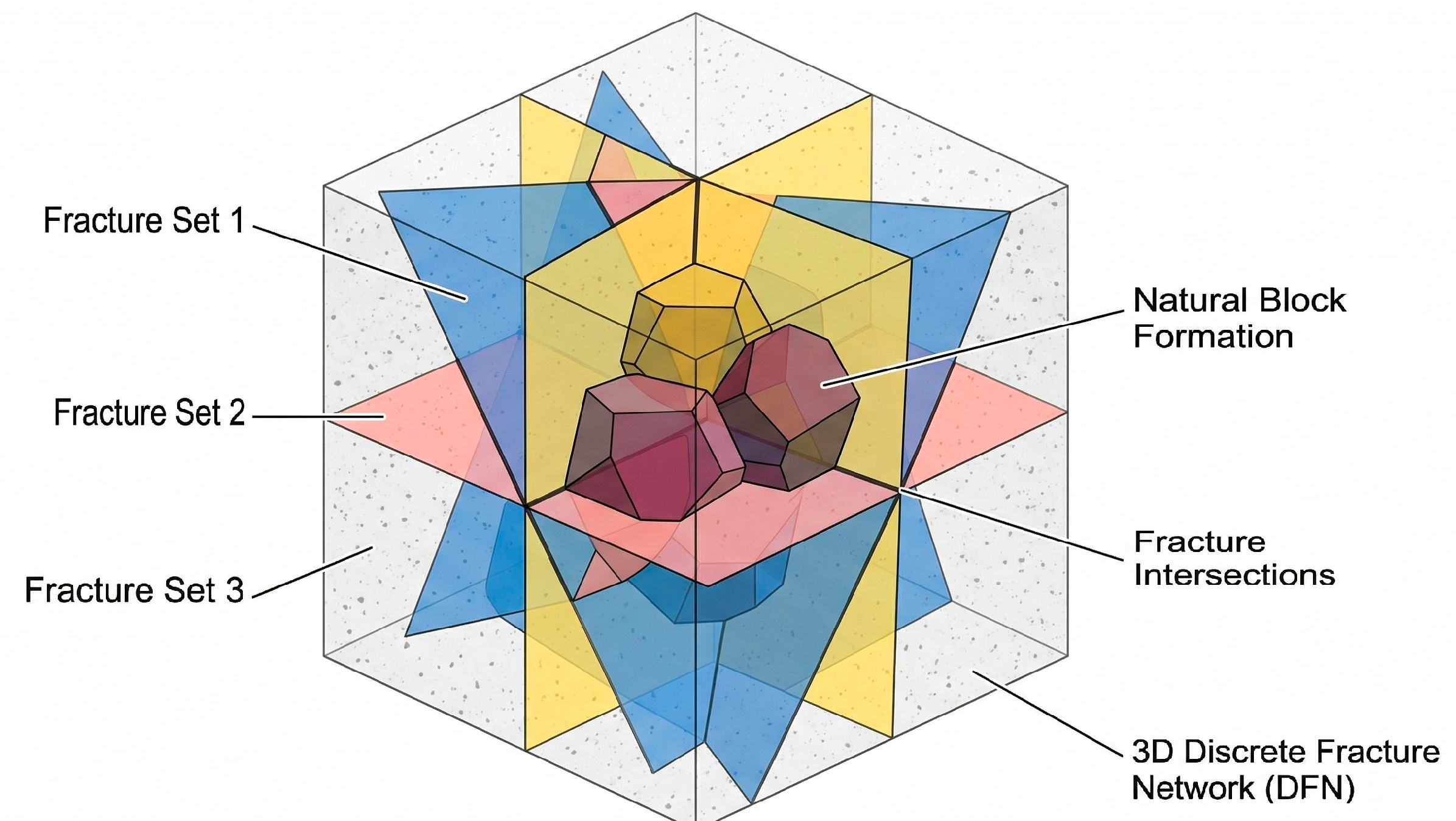
Figure 2 illustrates the conceptual role of DFN modelling within the proposed framework. The DFN representation shown is schematic and is intended to demonstrate the geometric relationship between fracture sets, fracture intersections, and natural block formation rather than represent a site-specific DFN realization. The framework is software-independent and may be implemented using commonly available DFN modelling environments. Its purpose is to incorporate fracture-network information into extraction decision-making rather than to evaluate a particular DFN software platform.
DFN models represent fracture geometry through stochastic modelling methods constrained by field measurements. DFN modelling may be thought of as one stage of structural analysis within the presented framework that can be utilized to interpret fracture-characterization data into spatial descriptions of block-forming attributes [
14,
15].
Some common components of DFN modelling include identification of fracture set relations, transformation of fracture intensity descriptors (e.g., P10/P21 to P32), calibration of fracture size distributions, and comparison of model results to field data. These and other techniques are contingent on the quarry and should be chosen based on available data.
DFN modelling allows the prediction of block size distribution, fragmentation patterns, and slope stability, so that recovery and design can be estimated [
3,
4]. However, owing to data and cost requirements, the DFN is only applied after screening.
In the framework, the DFN is the link between geological assessment and extraction design, providing a structural basis for decisions on bench geometry, cutting strategy, and operational safety.
2.4. Step 3—Block Usability Assessment
This step evaluates block geometry and industrial usability, distinguishing the geological block size from the commercial output. Many blocks meet geological criteria, but not processing criteria, which may lead to overestimation of recovery [
3,
4].
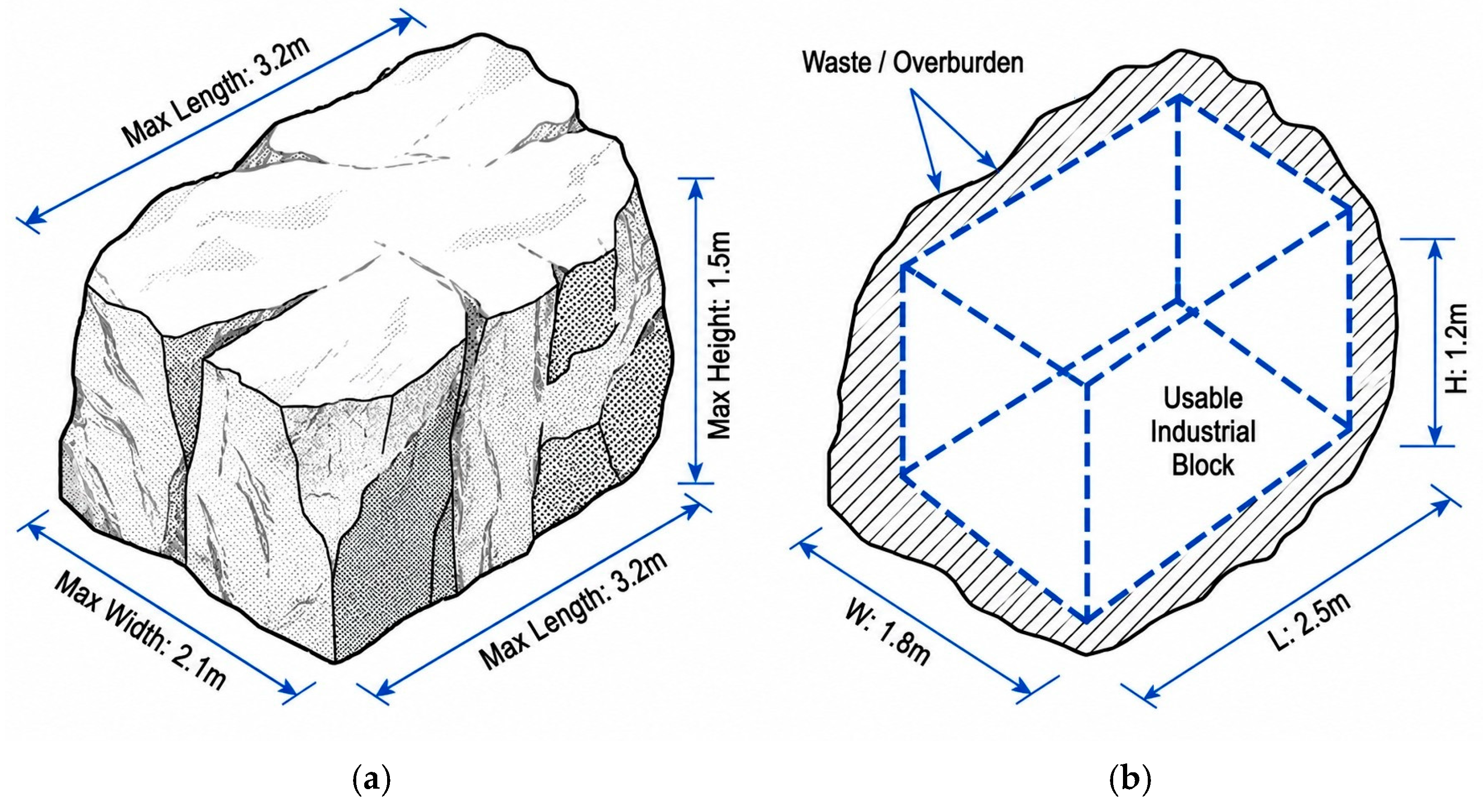
Industrial usability relies mainly on geometric properties of the block such as rectangularity, dimensional suitability, aspect-ratio suitability and suitability to downstream plant dimensions. In dimensional stone extraction industries, most buyers are looking for regularly shaped rectangular volumes of stone that can be readily cut, loaded for transport and go through industrial finishing processes with ease. Thus, industrial usability parameters are evaluated both from the standpoint of geological total volume but also from expected trim losses to produce salable product. Naturally the more irregularly shaped a block is, the poorer its aspect ratio, or the higher amount of trimming necessary to produce salable material, the more waste is produced during cutting and finishing operations, thus resulting in less industrial value, even if geological volumes are adequate [
1,
6].
Block geometry analysis turns “natural blocks” into “usable blocks” by identifying geometrically suitable units. Therefore, we only consider blocks with high industrial value in the next optimization stages.
The difference between the geological block size and industrially usable block geometry is shown in
Figure 3.
From a decision-making perspective, usability acts as a constraint on recovery forecasts and reduces bias from volume-based evaluations. It also improves extraction optimization and resource efficiency by matching structural characteristics to processing requirements.
2.5. Step 4—Extraction Orientation Optimization
This step involves assessment of alternative extraction orientations and cutting patterns to translate available structural potential into extractable commercial potential. Alternatives can be evaluated based on fracture-network geometry and block-forming criteria, practical-operational considerations, and processing needs. The goal is to achieve the highest recovery of processable blocks while minimizing structural damage/waste production and redundant cutting operations. Final decisions are made based on structural limitations, cost, safety and operationality [
1,
3].
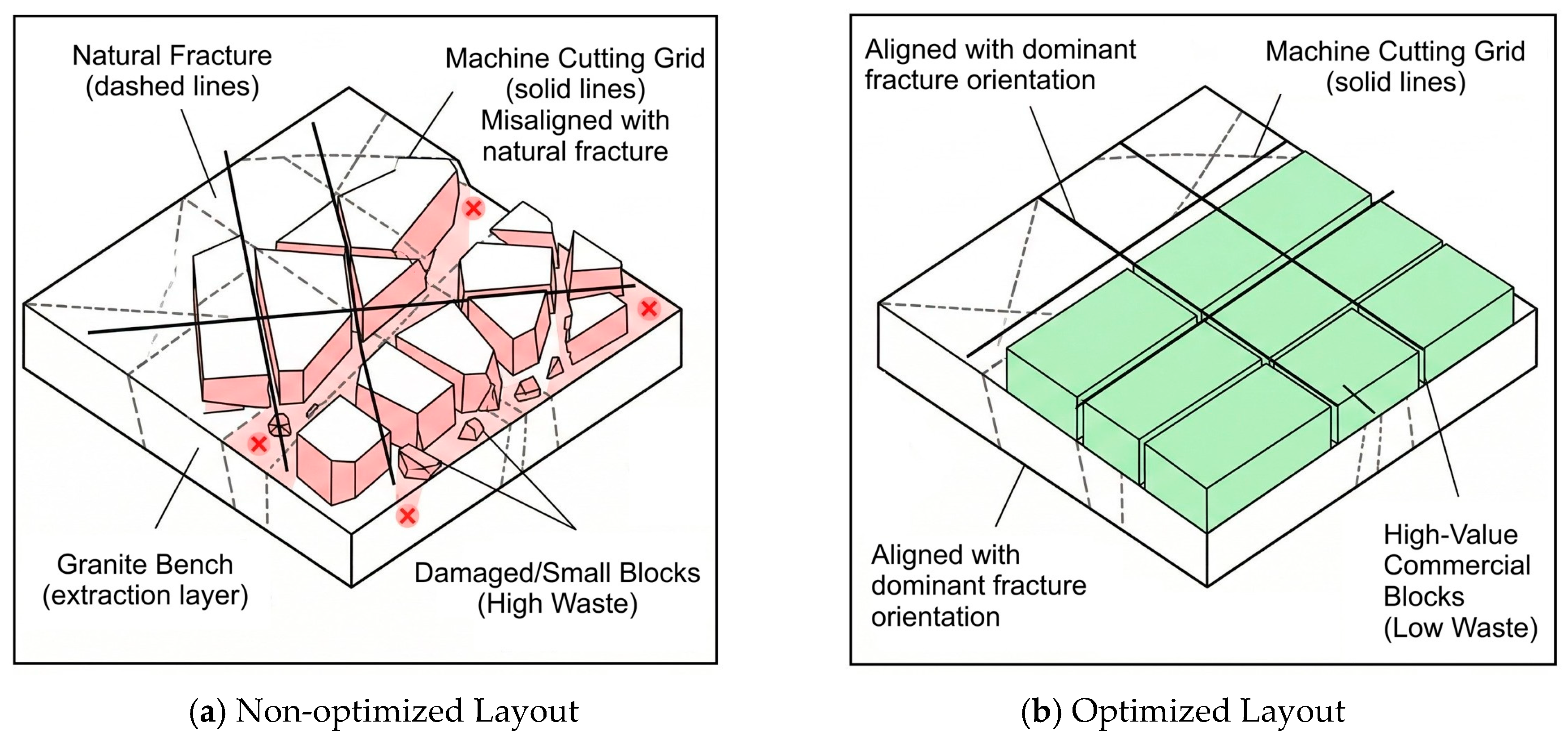
Preferred directions of extraction are determined by analyzing the interrelationships between quarry shape, major joint sets and expected block size. Extraction orientations which are more parallel to the prevailing fracture network tend to increase block quality, minimize breakage and maximize resource recovery. Cutting planes which parallel joint sets have less breakage and higher recoveries [
4].
The practical implications of aligning the extraction layout with dominant fracture orientations are shown in
Figure 4.
2.6. Step 5—Post-Extraction Quality Control
The last step is therefore subject to post-extraction quality control actions to limit these losses as much as possible. Some blocks accepted according to geometric criteria can contain invisible fractures prejudicial to the quality of the product [
1,
3].
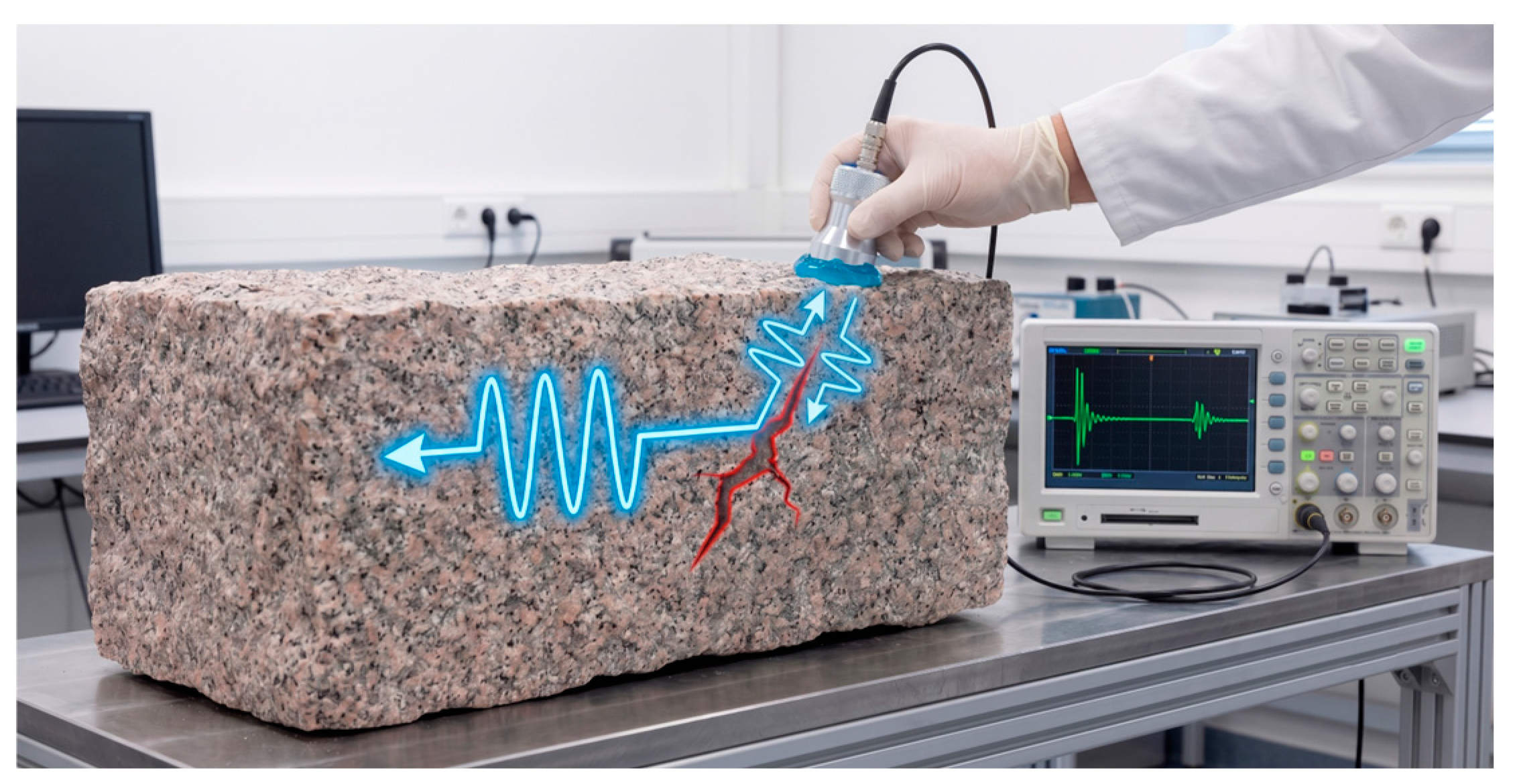
NDT, such as ultrasonic testing, can detect internal defects. The variation in wave propagation can reveal fractures or weak areas of blocks [
16,
17]. Previous studies have demonstrated the effectiveness of ultrasonic testing for identifying concealed joints and internal discontinuities in dimensional stone blocks prior to processing [
18].
As illustrated in
Figure 5, ultrasonic testing can detect hidden fractures early on to validate processing decisions and assist in refining design further upstream. The conceptual schematic is based on established applications of ultrasonic NDT, reported in previous studies on typical applications of ultrasonic NDT, to detect hidden joints and other structural defects present within blocks of dimensional stone [
18].
NDT allows the early classification of blocks, supporting acceptance or rejection decisions before processing costs are incurred. It also allows adjustment of the cutting directions to minimize damage [
16,
19].
Most importantly, quality control provides feedback on earlier stages, refining assumptions in block geometry, extraction design, and structural interpretation. This feedback loop improves decision-making and supports continuous improvement [
7].
In summary, NDT-based quality control reduces losses, increases recovery and closes the decision loop. Thus, efficiency and sustainability are maintained throughout the quarry life cycle.
3. Case Study and Results
3.1. Study Area and Quarry Dataset
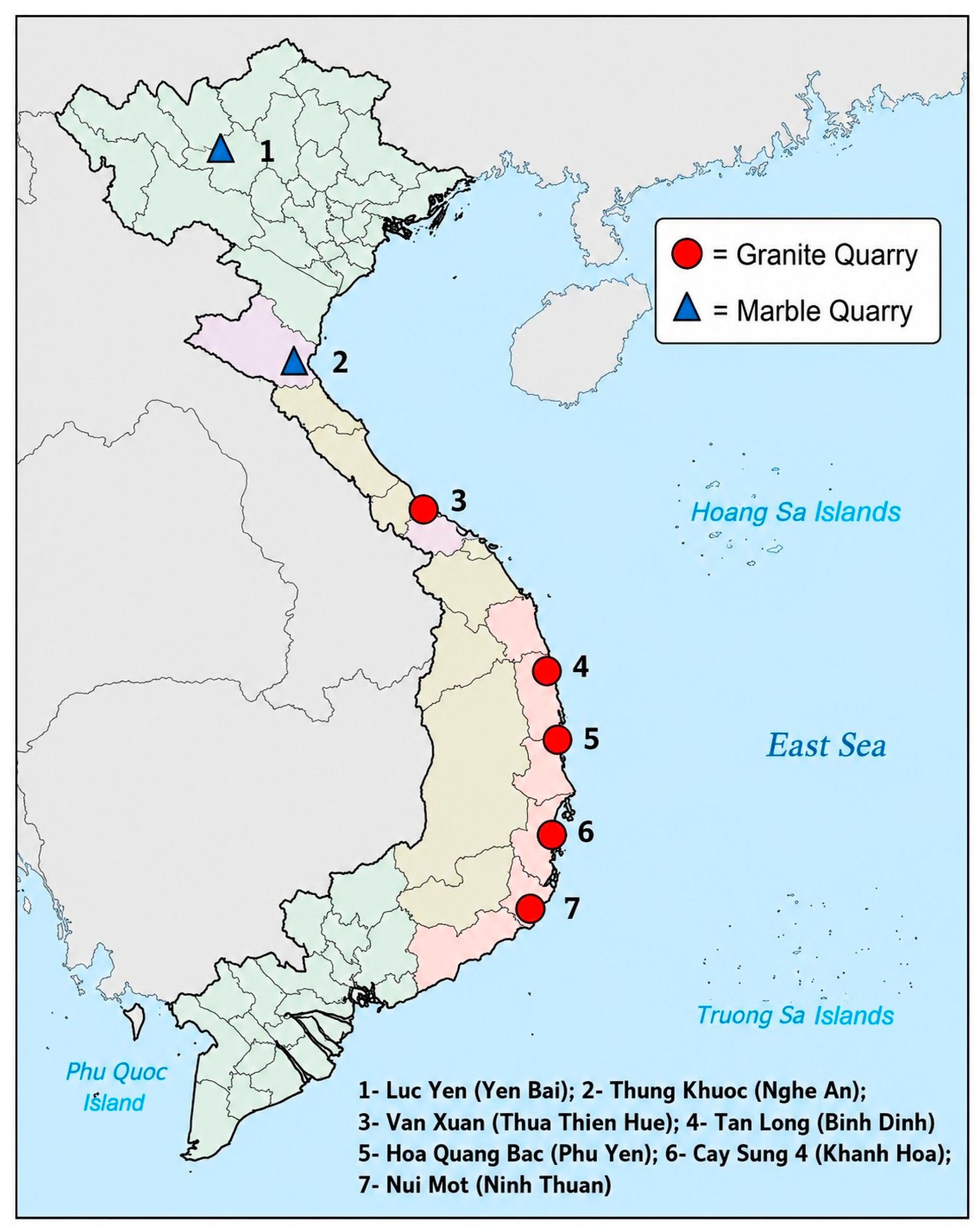
This subsection summarizes the geological, structural, and operational characteristics of the quarry dataset used to evaluate the proposed framework across different lithological and tectonic settings. To increase the robustness and generalizability of the proposed decision-support framework, the empirical validation was expanded from the two initial quarries, Tan Long (Binh Dinh) and Hoa Quang Bac (Phu Yen), to seven-dimensional stone quarries across Vietnam [
20,
21]. The additional sites are Thung Khuoc (Nghe An), Luc Yen (Yen Bai), Van Xuan (Thua Thien Hue), Nui Mot (Ninh Thuan), and Cay Sung 4 (Khanh Hoa), all previously studied in structural and technological studies of Vietnamese stone deposits [
20,
22].
The quarries are located in Northern, North-Central, Central and South-Central Vietnam and represent different tectonic and geomorphological settings (
Figure 6).
This spatial coverage allows the evaluation of fracture-controlled block formation under different structural regimes, as tectonic history is recognized to affect discontinuity patterns and block potential in granitic and metamorphic deposits [
3].
Geologically, the dataset included both granite and marble deposits. The granite quarries in Binh Dinh, Phu Yen, Thua Thien Hue, Ninh Thuan, and Khanh Hoa are from Mesozoic–Cenozoic intrusive complexes with multi-set joint systems and variable fracture spacing [
20,
22]. In contrast, the Luc Yen marble and structurally complex Thung Khuoc deposit show stronger fracture anisotropy related to tectonic deformation and metamorphic fabric, affecting the block geometry and extractable dimensions [
3,
20]. Average fracture spacing is between 0.6 and 1.6 m, lower in disturbed zones, confirming the strong influence of fracture density and arrangement on block size and recovery [
3,
4].
Operationally, most quarries use diamond wire sawing and circular saw cutting, but the alignment between the extraction layout and dominant fracture sets varies significantly [
1,
23,
24]. Previous studies have shown that poor structural alignment reduces recovery even under good lithology. Conventional recovery before structured fracture-based planning is 15–30% [
20,
21,
22] so recovery is controlled more by structural heterogeneity than by extraction technology alone.
By incorporating seven-dimensional stone quarries representing different lithological settings, fracture intensities, and operational conditions, this study extends beyond the initial two-quarry investigation and provides a broader multi-quarry evaluation framework. This reduces specific bias and increases the representativeness of the observed performance gains. The recovery was evaluated relative to the baseline for each quarry. Although the absolute recovery varies by site, the integrated framework produces positive relative gains across the dataset. The main geological and operational parameters are listed in
Appendix A (
Table A1).
3.2. Structural Assessment Results
Applying the framework across the case study quarries shows that the components work as a linked decision system and not separate analytical steps. The information is refined from screening to optimization, and each stage limits the next.
Screening results revealed substantial variability in fracture intensity among the investigated quarries. Domains characterized by dense fracturing and short spacing were consistently associated with lower block usability and recovery. This indicates the value of early screening in reducing investment risk and avoiding unnecessary analyses.
DFN modelling confirmed pronounced spatial variability in block size and geometry. Structurally favourable domains generated larger and more stable blocks, whereas highly intersected fracture systems produced smaller and less usable blocks.
Usability assessment demonstrated that geological block volume alone was insufficient to predict commercial value, as shape-related constraints substantially influenced block acceptance.
Recovery improvements were greatest where favourable fracture geometry allowed optimized extraction orientation. NDT verification further identified hidden defects that could not be recognized through geometric assessment alone.
While the available datasets do not allow us to measure exactly how much recovery contribution was made at each stage, we can see how recovery has improved when viewing the results of all four decision gates together.
Table 2 provides a recap of each framework component’s primary function and its anticipated impact on recovery.
The results demonstrate that variability in recovery can be attributed to both geologic conditions and extraction decision structuring within the workflow.
Table 3 summarizes the quantitative variations between representative quarries. Given its relatively large fracture spacing of 1.1–1.5 m and low- to moderate-intensity fracturing, Nui Mot Quarry produced the largest DFN-derived blocks (3.0–4.0 m
3) and highest usable ratios (75–80%), resulting in recovery values of 35–38%. On the other extreme, Thung Khuoc Quarry exhibited the most dense fracturing with fracture spacing ranging from 0.6 to 1.0 m, resulting in smaller DFN-derived blocks (0.8–1.5 m
3), lower usable ratios (45–55%) and subsequent recovery values near 23%. Hoa Quang Bac Quarry displayed intermediate behaviour where moderate- to high-intensity fracturing produced DFN-derived blocks between 1.5 and 2.2 m
3, usable ratios of 60–65% and recoveries near 28%. These findings demonstrate how differences in fracture characteristics flow through the decision-support workflow, resulting in varying commercial recovery.
To provide a quantitative link between structural characteristics and extraction performance across the expanded multi-quarry dataset, the key fracture indicators, DFN-derived block metrics, industrial usability ratios and observed recovery outcomes are summarized in
Table 3. This table shows how structural intensity propagates through the decision stages to impact commercial recovery.
Table 3 presents this trend. Quarries with a larger average fracture spacing (≥1.1 m) and lower Jv produced larger DFN-derived blocks, higher usable ratios, and higher recovery. In contrast, dense fracture networks (spacing < 1.0 m) limited the block size and usability; in these cases, the integrated framework mainly reduced risk and waste rather than increasing recovery. The recommended extraction orientations also followed the dominant fracture geometry; therefore, the design decisions were structurally based.
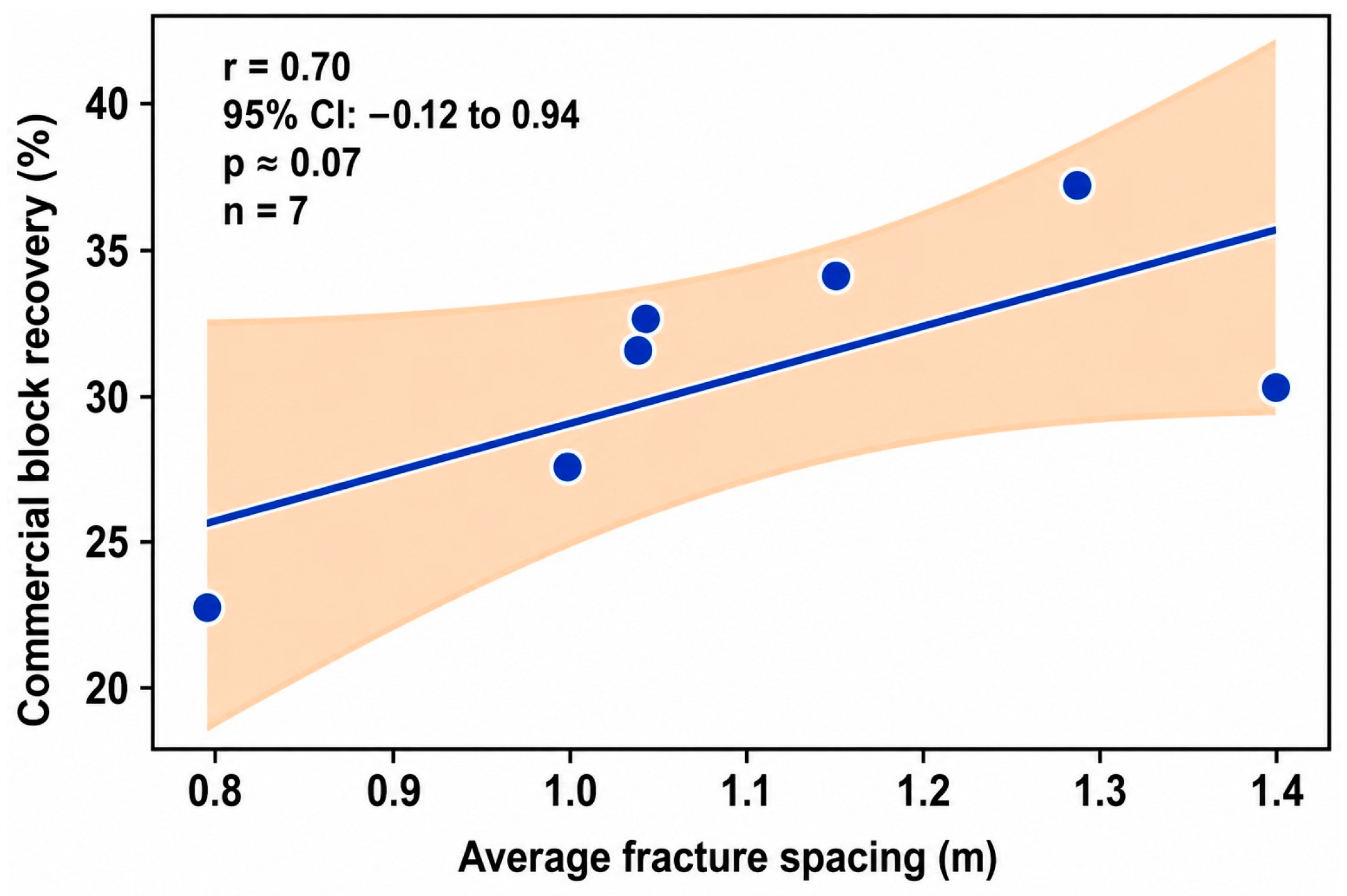
To examine the quantitative relationship between fracture spacing and recovery, a Pearson correlation was calculated using the mid point values of spacing and recovery (
Table 3). The result was
r = 0.70 with
p ≈ 0.07 (
n = 7). The 95% confidence interval, estimated by Fisher’s z-transformation, was −0.12 to 0.94. The central estimate is moderately strong, but the interval is wide, owing to the small sample size.
The relationship between the average fracture spacing and the recovery under the integrated framework is as follows.
A robustness check using Spearman rank correlation and leave-one-out inspection showed the same direction of association; therefore, it was not driven by a single quarry. However, with df = 5 the correlation is not significant at the 5% level and should be considered indicative rather than predictive. The evidence supports a structural linkage between fracture spacing, block usability, and recovery; however, larger datasets are needed for stronger statistical inference.
Figure 7 presents the relationship between average fracture spacing and commercial block recovery using the quarry-specific spacing and recovery data summarized in
Table 3 (
n = 7). Pearson correlation, ordinary least-squares regression and 95% confidence intervals were used to evaluate the spacing–recovery relationship.
3.3. Structural–Geomechanical Interaction
Fracture geometry is the main control of block formation, but mechanical properties also affect the extraction performance. Even under the same structural conditions, intact rock strength and mineralogy affect sawability, surface damage, and energy demand.
Previous studies on Vietnamese granites have shown that Uniaxial Compressive Strength (UCS), Brazilian Tensile Strength (BTS), quartz content, and Schmidt hardness affect tool wear and cutting efficiency [
20,
24]. High UCS and high quartz content increase cutting resistance and may cause micro-fracturing, reducing block integrity even when the fracture spacing is good.
Therefore, recovery should be interpreted as a combination of structural and geomechanical resistances. The recovery equation can be conceptually extended as
where
R is the commercial block recovery (%),
k is the site-scale operational coefficient,
Sn is the normalized fracture spacing (dimensionless),
U is the industrially usable block ratio (%),
A is the orientation alignment factor (0–1), and
M is a mechanical adjustment factor representing sawability conditions controlled by strength and mineralogy.
M does not diminish the role of structure. This means that optimum recovery is achieved when a good fracture geometry is combined with a mechanically suitable rock. This structural–mechanical coupling makes the framework more engineeringly valid and applicable to more lithologies.
3.4. Performance of the Integrated Framework
This analysis is based on the 7-quarry dataset and is therefore less site-specific as a 2-case study.
To evaluate the value added by the framework, quarrying performance was compared to conventional practice in terms of decision logic, technical focus, and resource-use efficiency.
Table 4 shows that it is not just the tools used, but also how decisions are linked across the quarry life cycle.
In conventional practice, fracture assessment, design, technology choice, and quality control are performed separately. This often results in local optimization, weak transfer of information between stages, and resource loss. The integrated approach links these decisions in sequence so that early-stage information guides later actions and reduces the mismatch between the geological potential and extraction design.
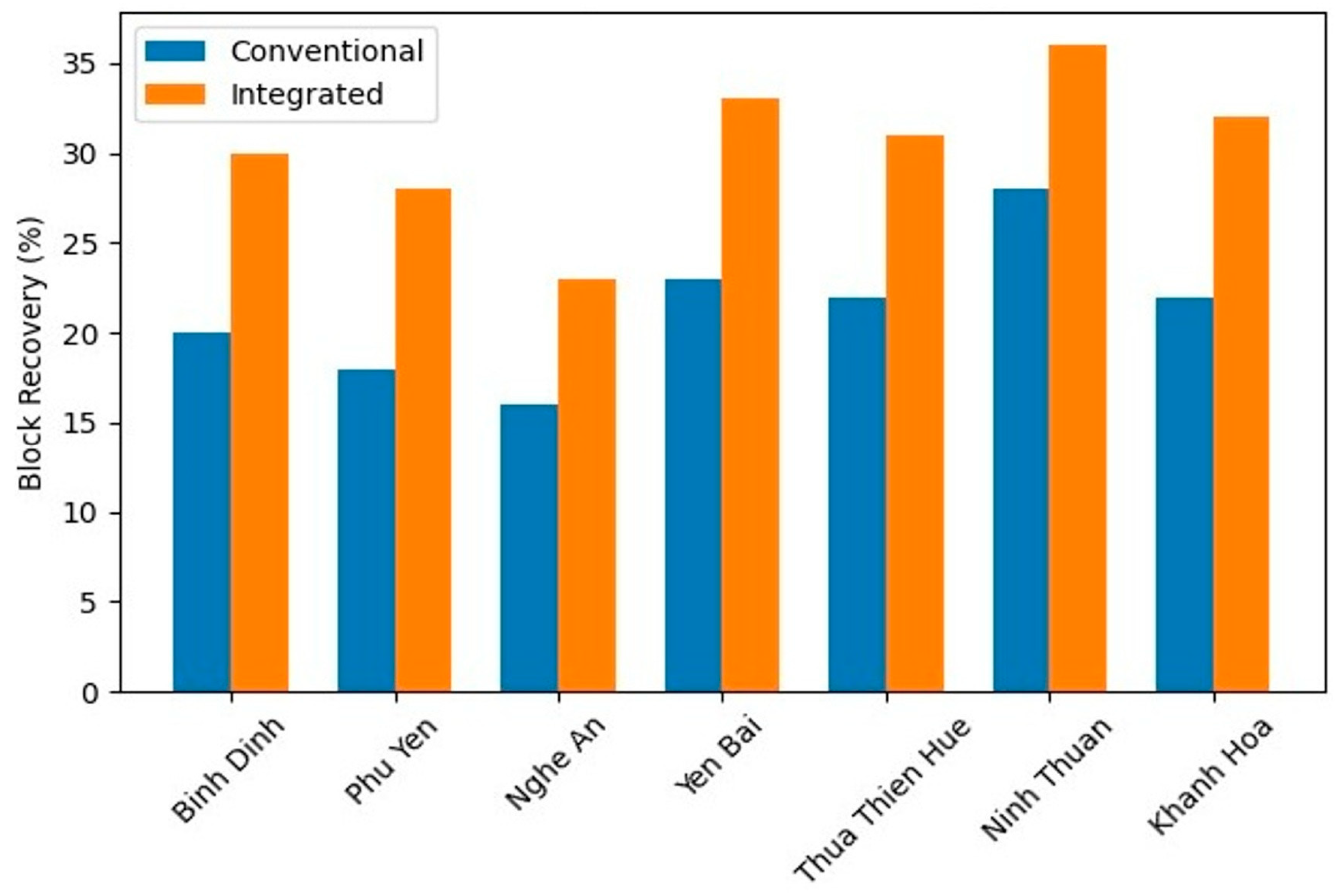
A quantitative comparison of block recovery and waste generation before and after the integrated approach is presented in
Appendix A (
Table A2).
Figure 8 compares commercial block recovery and waste generation derived from the comparative quarry performance dataset presented in
Appendix A,
Table A2.
The largest gains were observed in complex quarries, where experience-based planning is more likely to target bad zones. In these cases, early screening combined with structure-informed design made a significant difference. In good quarries the main benefit was the finer tuning of the extraction direction and cutting layout to maximize the block value.
The observed improvements are not solely attributable to individual optimization steps, but to the cumulative effect of linking decisions across the quarrying process. It is a shift from isolated optimization to integrated resource management by linking the fracture structure, design, and recovery in one engineering logic. It provides a scientific basis for reducing risk and improving resource efficiency in dimensional stone quarrying.
3.5. Robustness Analysis
The robustness was tested by varying the key structural and operational parameters within realistic field-based ranges. The fracture spacing in the screen stage was perturbed by ±10%, and the block usability ratios were varied by ±5% to represent the geometric regularization uncertainty. Under these conditions, the relative improvement was +8% to +12% compared with the conventional practice.
A second test was performed without early fracture screening. In this case, the average gain was only 3–5%, so most of the improvement came from cumulative decision filtering rather than any one optimization step.
These results show that the ~10% improvement is not very sensitive to moderate input uncertainty and can therefore be considered structurally robust. A before-and-after comparison of sites with complete baseline and post-implementation data also showed improvement at all sites. Since the number of observations was limited, we did not conduct formal inferential testing. The results should be interpreted as evidence of a trend that needs to be validated using a larger dataset.
4. Discussion
Before delving into the engineering and sustainability considerations that emerge from these seven quarries, a few quantitative points are worth emphasizing. Commercial block recovery estimated using the integrated framework ranged from approximately 23% to 38%, whereas conventional recovery values were generally between 16% and 30% (
Appendix A,
Table A2). Improvements in recovery were observed at all sites, with gains ranging from approximately 7 to 10 percentage points. Fracture spacing varied from 0.6–1.0 m in the most intensely fractured domains to 1.1–1.5 m in structurally favourable domains, while industrially usable block ratios ranged from approximately 45–55% to 75–80%. There was a positive correlation between fracture spacing and recovery (r = 0.70), implying that quarries with larger fracture spacing tended to have larger DFN-derived blocks, higher usable block ratios, and higher commercial recovery.
Section 3 shows that fracture characterization, DFN modelling and block usability assessment affect the extraction performance. The combined effects on resource efficiency are shown in
Figure 9.
Figure 9 shows the sequence of fracture characterization, DFN-based block modelling, industrial usability assessment, extraction orientation optimization, cutting, and NDT-based quality control. This integrated workflow improves block recovery, reduces waste and environmental impacts, and supports more manageable quarry closures.
4.1. Scientific Implications
Results from all seven quarries suggest that commercial recovery increased from traditional values of approximately 16–30% to 23–38% with the implementation of the integrated framework. Quarries characterized by larger fracture spacing generally produced larger DFN-derived blocks, higher usable block ratios, and improved recovery. These trends lead to the following interpretations. The highest recovery was recorded at Nui Mot Quarry, characterized by larger fracture spacing (1.1–1.5 m) with correspondingly larger DFN-derived blocks and recovery ranging from 35 to 38%. In contrast, Thung Khuoc Quarry had lower recovery with tighter fracture spacing. These examples demonstrate the applied value of structural characterization when utilizing this workflow. From a mining engineering perspective, sustainable improvement in block recovery cannot be achieved by optimizing the individual stages in isolation. Better performance requires the early integration of structural assessment, quarry design, and cutting strategy to manage risk and reduce cumulative losses over the quarry life cycle. This changes the objective from maximizing the output to maximizing the resource value under geological uncertainty [
1,
3].
From a rock mechanics perspective, this study confirmed the dominant role of fractures in block formation and quarry performance. More importantly, fracture information is translated from a geological or stability descriptor into an engineering variable that is linked to industrial usability and commercial value. By combining DFN modelling, block geometry assessment, and NDT-based verification, the framework extends rock mechanics from structural interpretation to operational decision support in dimensional stone extraction [
4,
5].
From a decision-science perspective, the main contribution is the development of a multi-level framework structured by progressive refinement and decision gates. Unlike many mining decision-support systems that focus on a single stage, the proposed approach captures the interdependencies among decisions across the value chain and feeds back to refine the earlier assumptions. This is consistent with system-based resource governance, where technical systems are seen as adaptive and learning-oriented processes [
6,
13].
At a broader level, the findings from the seven investigated quarries support a move from technical optimization in isolation to integrated resource management, where geological, technical, economic, and product-quality factors are considered together. The underlying workflow may also have potential applicability to other extractive systems operating under high uncertainty and increasing pressure for resource efficiency, although further validation would be required [
7,
12].
4.2. Sustainable Quarrying Implications
Commercial recovery improved by roughly 7–10 percentage points in the examined quarries, while waste generation decreased by a similar amount (
Appendix A,
Table A2). In
Appendix A,
Table A2, all seven quarries showed positive recovery gains despite differences in lithology and fracture intensity, suggesting that the benefits of the workflow are not restricted to a single geological setting. Despite differences in absolute numbers between case studies, all investigated examples showed recovery gains accompanied by decreased waste. This provides real-world evidence that implementing structural characterization during planning stages can contribute directly to improved material efficiency in extraction operations.
The implications of this approach extend far beyond immediate extraction performance. By linking fracture screening, extraction orientation, and quality control, it improves not only the recovery but also the long-term shape and stability of quarry voids. Sequential decision-making allows more in situ materials to be turned into marketable products while reducing the disturbed footprint, which is in line with sustainable mining principles that link resource efficiency with land stewardship [
13].
Compared to traditional approaches to quarry planning, the framework presented here allows for fracture characterization, DFN modelling, block usability assessment and quality verification to be incorporated in a more cohesive fashion into a single decision-support workflow. Many existing mining decision-support systems (DSS) are designed around particular tasks or objectives (production scheduling, mine planning optimization, geotechnical risk-analysis, multi-criteria decision-analysis, etc.) and have proven successful as tools to improve planning decisions within their respective scopes. However, these systems have generally been developed to aid the user in solving individual decision problems, rather than being applied to an entire sequence of structurally dependent decisions necessary for the extraction of dimensional stone. Conversely, the framework described here works by connecting geological characterization, block prediction, usability assessment and downstream quality control as part of a larger uncertainty-reduction workflow. For this reason, it is meant to complement existing mining DSS/risk-based frameworks, rather than replace them.
The main differences between the proposed framework and representative mining decision-support approaches are summarized in
Table 5.
One of the major implications is waste generation. Results indicate that waste is controlled not only by unfavourable geological conditions, but also by poor alignment between the fracture structure and extraction decisions. Early exclusion of structurally unfavourable zones and better alignment of quarry faces with dominant discontinuities reduce unnecessary bench expansion, irregular void development and subsequent rehabilitation burdens [
6,
7].
The improved block usability also has environmental benefits. Early filtering of structurally unsuitable blocks reduces the energy use per unit of finished product, trim losses, dust, transport demand, and auxiliary resource consumption. In this sense, structural screening is a preventive environmental control embedded in design rather than a corrective measure added later [
13,
25].
The results obtained from the investigated quarries suggest that the framework may facilitate circular-economy strategies. Because waste volumes and material characteristics are more predictable at earlier stages, potential secondary uses, such as aggregates or construction fill, can be incorporated into the quarry plan from the start. This improves by-product valorization and allows circular economy principles to be integrated into quarry development [
7].
From a reclamation perspective, structurally guided extraction provides more regular excavation geometry, more stable benches, and more predictable waste placement. Although full reclamation modelling is beyond the scope of this study, embedding structural logic into extraction planning provides a defensible engineering basis for post-closure landform management and may reduce long-term stabilization costs.
Economically, the structured workflow has the potential to reduce capital deployment in low-potential zones and limit the downstream processing of blocks that do not meet industrial usability requirements. Although a full life cycle cost analysis was not performed, the reduction in waste and increase in usable block ratios suggests a lower production cost per unit of saleable stone and a reduced long-term closure risk.
The framework contributes to multiple United Nations Sustainable Development Goals (SDGs). In addition to SDG 12 (Responsible Consumption and Production), the more efficient use of resources and reduction of waste supports SDG 9 (Industry, Innovation and Infrastructure) through more sustainable industry practices. And by reducing environmental disturbance and improving long-term quarry stability the framework aligns with SDG 15 (Life on Land), particularly in reducing land degradation associated with extractive activities.
4.3. Planning and Governance Implications
The seven investigated quarries exhibited substantial differences in fracture spacing, usable block ratios, and commercial recovery. Despite this variability, positive recovery improvements were observed across all case studies following application of the integrated workflow. This also has implications for quarry planning and regulation. The results obtained from the investigated quarries suggest that integrating fracture assessment from early screening to DFN modelling can provide a better technical basis for quarry zoning and regional planning. Instead of simply using reserve quantity and infrastructure access, planning can also use structural risk and block-forming potential to identify priority and restricted areas better [
3,
26].
In the permitting stage, the framework may support risk-informed licencing. Quantitative indicators of fracture intensity, block usability, and recovery enable early assessment of structural feasibility. Projects with high structural risk and low recovery may therefore require design modification or additional technical review, in line with evolving governance approaches that focus on early risk management [
13,
27].
Another implication is the formal use of fracture information in the regulatory systems. In many cases, fracture data are descriptive and are not linked to licencing or oversight. When integrated across field surveys, DFN modelling and quality control fracture data can reduce resource loss and waste and improve land use efficiency. This has the potential to strengthen evidence-based governance and support the dynamic updating of resource information throughout the quarry life cycle [
7,
26].
More broadly, the findings support the move from reserve-based evaluation to value-and risk-based planning. As sustainability and circular economy pressures increase, projects with higher recovery efficiency and better waste control will become more economically and environmentally beneficial. In this sense, the framework bridges engineering analyses and planning decisions.
4.4. Limitations and Future Research
Despite its usefulness, however, this framework has some limitations. First, the results depend heavily on the quality and representativeness of the fracture data collected during site investigation. Surface mapping and borehole data are affected by the spatial heterogeneity, exposure conditions and accessibility constraints. In complex or poorly exposed deposits these limitations can reduce the reliability of fracture indices and DFN-based predictions as widely reported in the DFN literature [
14,
15].
Second, the uncertainty was not addressed through a full Monte Carlo DFN ensemble simulation. In many DFN studies, multiple realizations have been used to propagate structural variability into block-size or stability predictions. In this study, uncertainty was handled through sensitivity testing and interval-based interpretation rather than full probabilistic simulation. Future work could include Monte Carlo DFN realizations to quantify variability in recovery under alternative structural scenarios, especially for investment scale risk assessment [
15,
28].
Third, the framework does not incorporate AI/ML methods. The current workflow relies mainly on statistical analysis, geometric modelling, and conventional engineering evaluation, which are expert-intensive and may be less efficient in handling large, heterogeneous, and non-linear datasets. In data-rich environments, this can be a methodological limitation, especially for recovery prediction and extraction optimization under high uncertainty [
29].
Several directions have emerged for future research. One is the development of digital twins for dimensional stone quarries, where fracture networks, extraction layouts, and operational data are integrated into a dynamic system for real-time calibration and scenario testing [
29,
30,
31]. The other is the application of AI/ML models such as random forests, gradient boosting, or neural networks to predict the recovery and resource-loss risk from structural and operational variables [
9,
29,
32,
33]. A further extension would be the integration of Life Cycle Assessment and Life Cycle Costing to evaluate environmental and economic impacts across the full life cycle of stone products in line with broader sustainability assessment trends in mining [
13,
34].
Although the framework was developed and evaluated using seven Vietnamese quarries, its underlying decision logic may be transferable to other fracture-controlled dimensional stone deposits, subject to site-specific validation. Its application in Europe, Africa, and Latin America would require adaptation to local regulations, data availability, and socio-economic conditions, but the core decision-support logic may be retained, subject to local adaptation and validation.
From a practical engineering perspective, the framework has been applied in real quarry conditions across multiple sites and has shown consistent improvement in block recovery and waste reduction without requiring advanced or proprietary technology, which suggests its potential applicability in resource-constrained operational environments.
These improvements were observed consistently across the seven investigated quarries, suggesting that the proposed framework remains effective across the range of geological conditions represented in the present dataset.
5. Conclusions
The results obtained from this paper are only based on seven-dimensional stone quarries cutting across different lithological and structural conditions found in Vietnam. Therefore, any conclusion made on recovery improvement, usable block percentage or spacing–recovery relationship can be directly justified by the dataset studied. Application of the framework on other types of deposits, geological environment, or mining industry can be considered as future work which will need site-specific justification.
A persistent issue in dimensional stone quarrying is the limited integration between structural geological characterization and engineering decision-making. This study examines how fracture information can be systematically incorporated into extraction planning by linking fracture characterization, DFN modelling, block usability assessment, extraction orientation, and quality control within a consistent decision sequence. The approach aims to improve resource efficiency by aligning structural constraints with operational practices.
The application of the framework to seven-dimensional stone quarries shows that a significant part of the resource losses attributed to geological conditions is due to fragmented decision-making. When fracture information is included in the extraction design and cutting layout selection, block recovery can be consistently improved, and waste is reduced. Gains of approximately 10% in both recovery and waste reduction are achieved through early identification of structurally unfavourable zones, structure-oriented extraction, and feedback from quality control, not through incremental optimization at each stage.
From an engineering point of view, the main contribution of this study is the translation of rock-mass structural information into extraction decisions under uncertainty. The framework does not replace detailed design or feasibility studies; it provides a structured method to screen, prioritize, and refine extraction options as information quality improves. Because this approach uses common survey techniques, DFN modelling, and standard NDT methods, it can be applied to small- and medium-sized stone operations without imposing excessive data or cost requirements.
In summary, the framework supports a shift from experience-driven or stage-specific optimization to more structured informed decision-making across the quarry life cycle. By linking geological structures to extraction practices, the framework provides a structured engineering basis that may contribute to improved resource efficiency and operational reliability, as observed in the investigated quarries.
The framework is particularly applicable to fracture-controlled dimensional stone deposits, where early structural screening and structure-oriented extraction design are key to the recovery performance.




 ,
,