1. Introduction
Walking is regarded as one of the sustainable modes of transportation. It not only plays an important role in urban planning and low-carbon travel, but regular walking also brings significant benefits to physical health. Therefore, promoting walking in cities is of great significance for building green and low-carbon urban environments. People’s choice to walk is mainly influenced by three levels of decision-making, which can be summarized as travel decision-making, route choice, and walking behavior (
Table 1) [
1]. Travel decision-making includes the choice of travel time, destination, and transportation mode and is affected by factors such as travel purpose and weather conditions. Route choice refers to the specific path selected by pedestrians when moving from the origin to the destination, and is influenced by factors such as detour ratio, herd mentality, signage facilities, and path conditions. Walking behavior refers to pedestrians’ actual movement characteristics during walking, including walking speed, obstacle avoidance, and temporary stopping. It is affected by spatial factors, environmental conditions, and individual characteristics. Among these factors, the optimized design of path spaces is closely related to walking behavior.
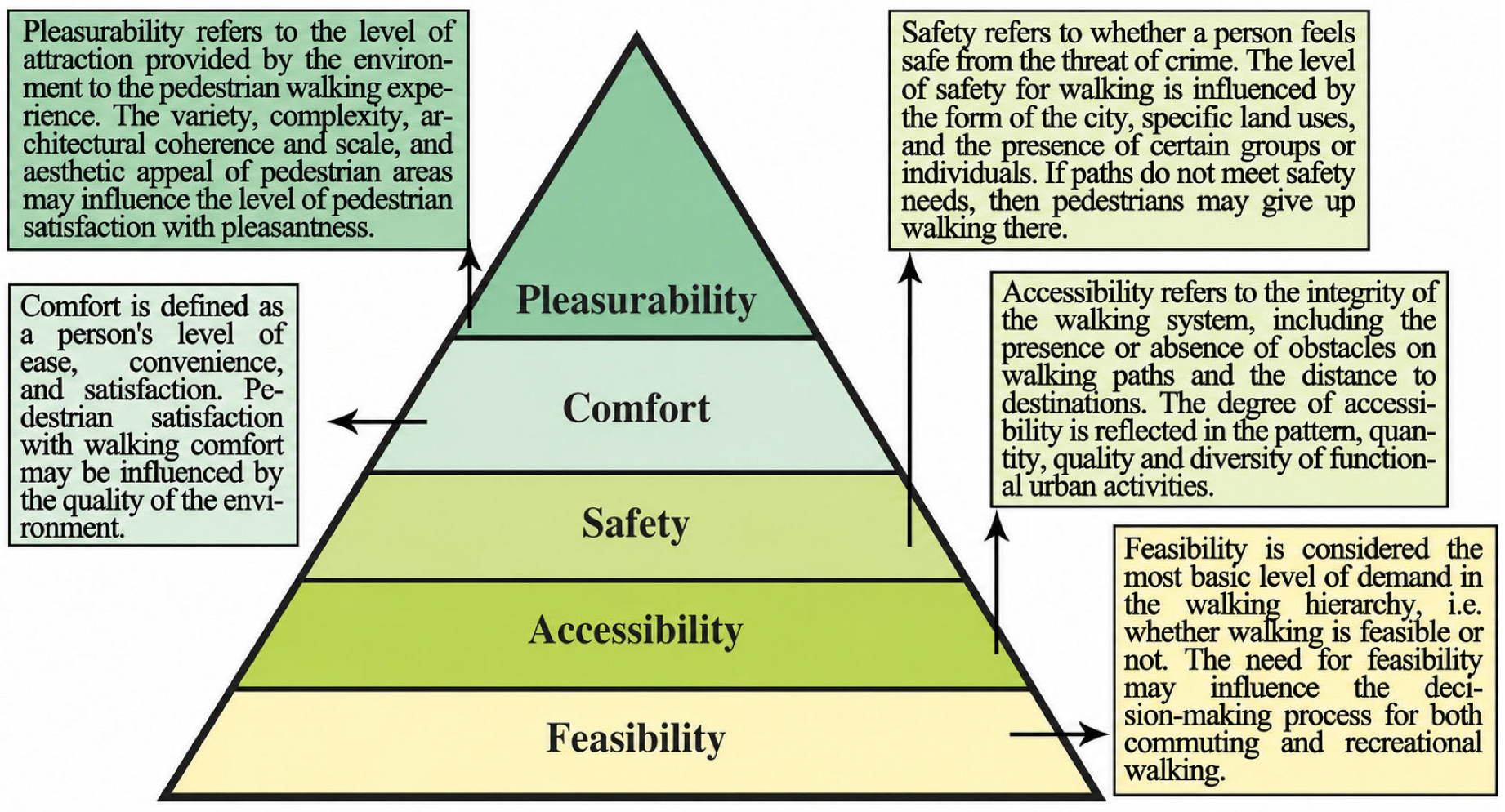
Based on Maslow’s model, Alfonzo developed the “Hierarchy of Walking Needs” model (
Figure 1), which further clarifies pedestrians’ needs [
2]. These needs follow a hierarchical structure, ranging from the most basic needs at the bottom to higher-level needs at the top, including feasibility, accessibility, safety, comfort, and pleasurability.
Among them, accessibility refers to the pattern, quantity, quality, diversity, and proximity of existing activities, as well as the connectivity among different land uses. Accessibility factors involve actual or perceived walking barriers, including physical barriers such as impassable land uses, for example, gated communities, natural features such as gullies, or psychological barriers to access, such as particularly wide roads. These factors directly affect pedestrians’ walking speed and further determine their walking efficiency when traveling to a destination.
For ordinary pedestrians, urban streets can usually satisfy the first two levels of needs, and their walking decisions tend to focus more on safety or comfort. However, for people with Temporary Mobility Impairments (TMI), the external objects they carry essentially change the baseline condition of walking “accessibility.”
Different groups of pedestrians have clearly differentiated priorities when walking, and street design should pay attention to the mobility needs of vulnerable groups. In recent decades, increasing attention has been paid to the equitable design of urban pedestrian spaces. The barrier-free design of urban pedestrian spaces is not only motivated by social equity but also contributes to improving overall circulation efficiency, especially for people with Temporary Mobility Impairments (TMI). These individuals experience temporary mobility constraints, which significantly affect their walking ability in urban streets.
As a high-capacity mode of urban public transport, rail transit improves travel efficiency while supporting low-carbon mobility. The first- and last-mile segments around stations remain highly dependent on walking, and passengers carrying luggage or pushing strollers are common in these spaces. Their temporary mobility constraints can affect both individual progress and the overall circulation of station-area paths. These pedestrians also move within heterogeneous environments where they interact with other pedestrians, bicycles, electric bicycles, motor vehicles, street vendors, and concentrated station-related passenger flows. Understanding their behavior at the micro-path scale is therefore relevant not only to inclusive station-area design but also to interaction-aware behavioral modeling, trajectory prediction, and the optimization of public transport systems.
From the perspective of sustainability, improving the walking environment around rail transit stations is not only a matter of local spatial design but also an important pathway for supporting low-carbon travel, public transport attractiveness, social equity, and healthy urban living. If the first- and last-mile pedestrian environment fails to accommodate vulnerable and temporarily mobility-impaired users, the accessibility advantage of rail transit may be weakened, which in turn reduces the willingness to use public transport and limits the sustainability benefits of transit-oriented development. Therefore, a sustainable station-area environment should be evaluated not only by transport capacity, but also by whether it provides safe, continuous, barrier-free, and efficient pedestrian access for different user groups. From a broader human-centered planning perspective, these findings also support the need to incorporate user needs, participatory approaches, and inclusive infrastructure into station-area pedestrian-space design, especially for vulnerable and temporarily mobility-impaired users [
3,
4].
Existing research has primarily examined long-term mobility limitations, general walkability, or station accessibility at the macro scale. Comparatively less is known about how multiple micro-scale path characteristics jointly and nonlinearly affect temporarily mobility-impaired (TMI) pedestrians in real station-area environments. This study therefore asks which micro-scale spatial factors most strongly affect the walking efficiency of pedestrians carrying luggage and pushing strollers, how these effects differ among pedestrian groups, and what empirical thresholds can support inclusive path-space optimization. Typical walking paths within rail transit station influence areas are selected as the research objects, and a Random Forest model and partial dependence analysis are used to identify nonlinear effects and group-specific sensitivities.
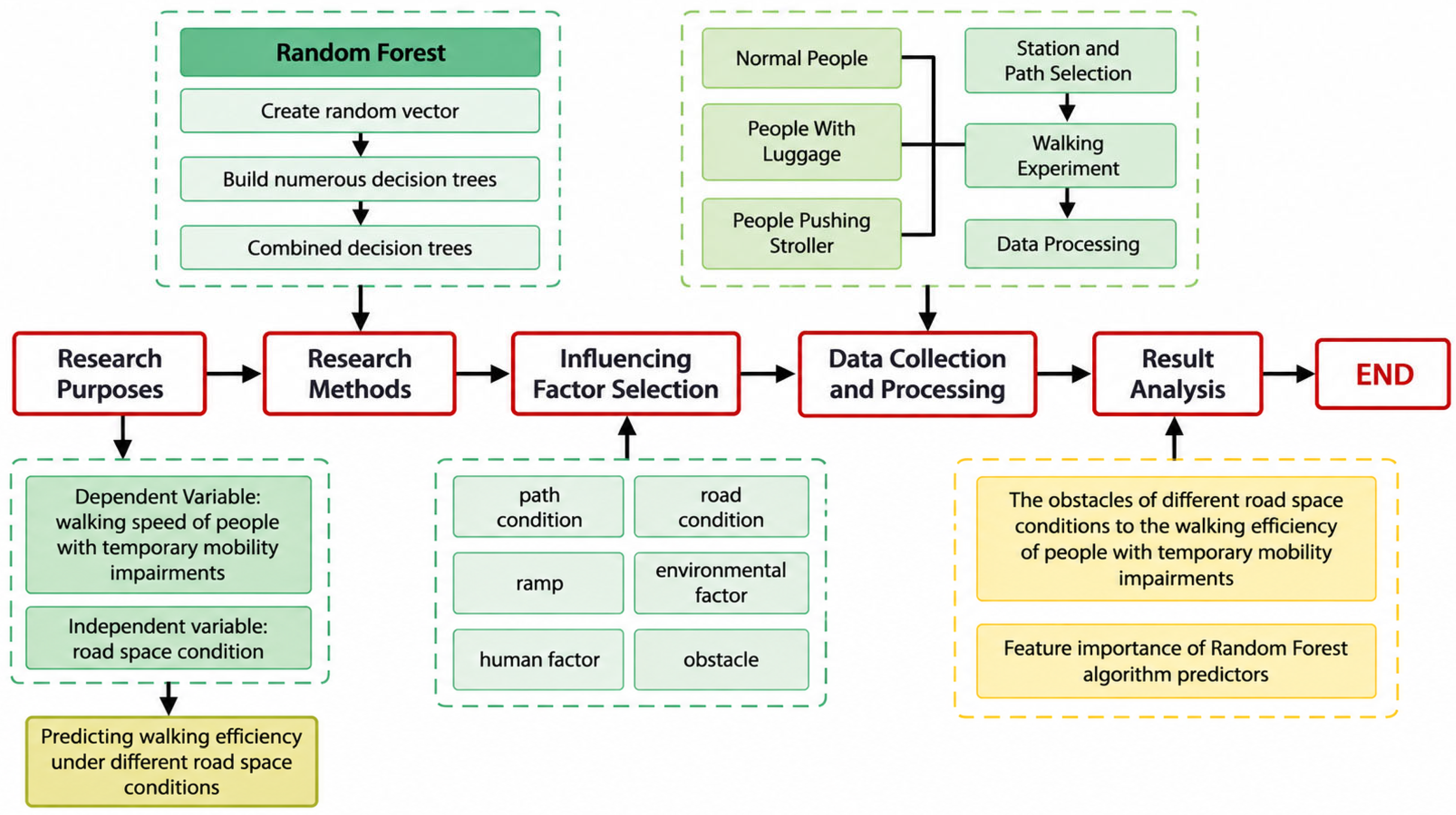
The remainder of this paper is organized as follows:
Section 2 reviews the literature on the walking efficiency of people with Temporary Mobility Impairments and pedestrian spaces in rail transit station areas.
Section 3 establishes a set of pedestrian-space feature variables related to walking efficiency, and introduces the rail transit context of the empirical study area, the selection of survey stations, and data acquisition.
Section 4 presents the research methods.
Section 5 describes and analyzes the experimental results, discusses the findings, and provides practical and methodological implications.
Section 6 summarizes the main conclusions, discusses the limitations of the study, and outlines directions for future research (
Figure 2).
2. Literature Review
2.1. Behavioral Needs: Walking Barriers for People with Temporary Mobility Impairments
People with restricted mobility refer to those who experience movement difficulties in environments that are not sufficiently adapted to their needs [
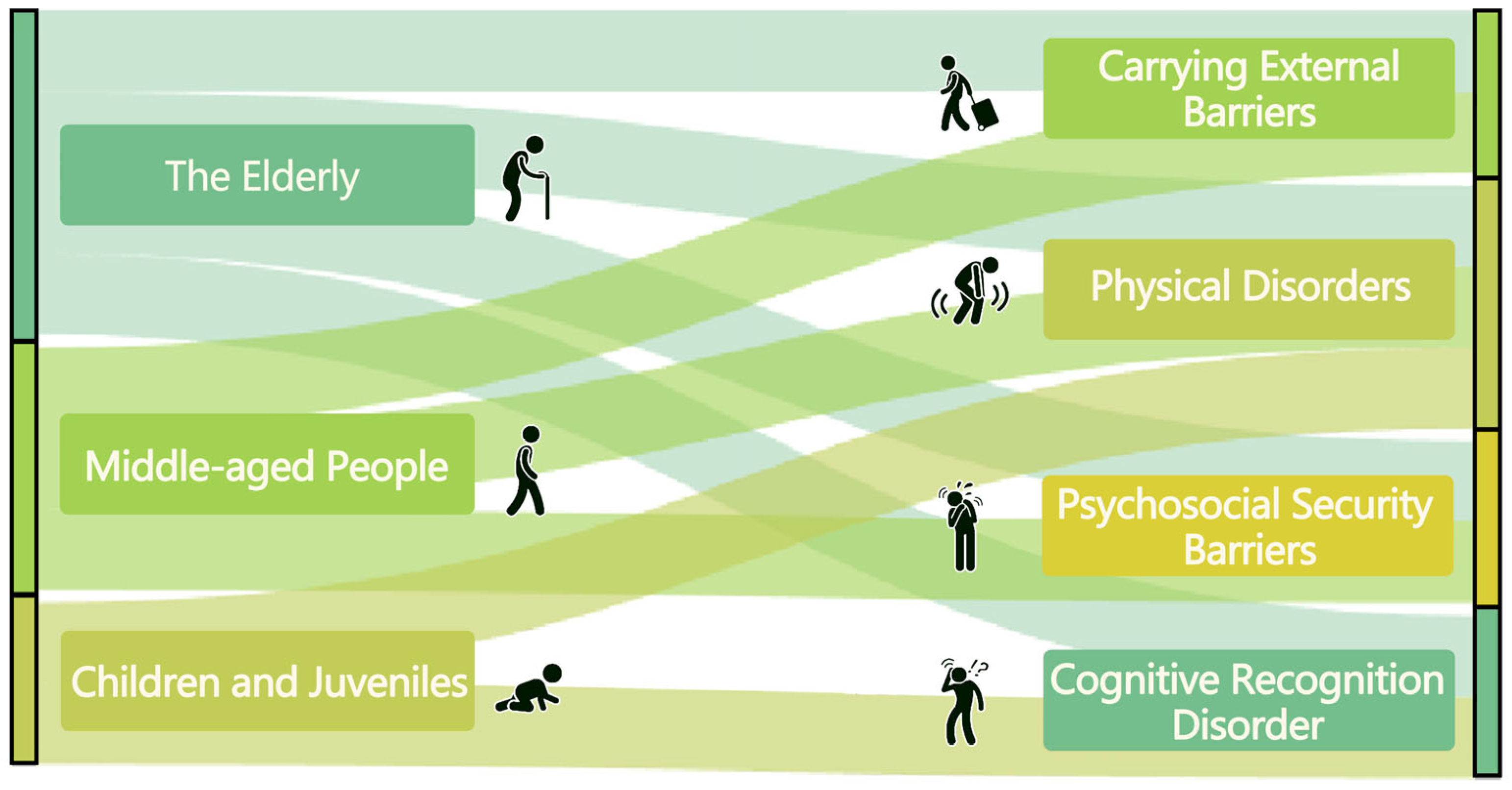
5]. This group includes not only people with long-term mobility limitations, such as older adults, people with disabilities, and pregnant women, but also people with Temporary Mobility Impairments (TMI), whose movement efficiency decreases in specific situations due to carrying large luggage or pushing strollers (
Figure 3). Unlike permanent physical impairments, the limitations experienced by TMI groups are temporary and recoverable. Nevertheless, in rail transit stations, streets, and transfer spaces, they may still exhibit reduced walking speed, increased avoidance behavior, and greater difficulty passing through bottlenecks.
From the perspective of behavioral mechanisms, TMI groups occupy more physical space because of luggage or strollers, making them more susceptible to spatial compression from obstacles and other pedestrians. According to the Social Force Model, additional space occupation increases the psychological repulsive force between pedestrians, making it more difficult for them to maintain a stable speed and a smooth walking trajectory in dense environments, thereby reducing overall circulation efficiency. Previous studies have shown that pedestrians carrying luggage generally walk more slowly than ordinary pedestrians in airport terminals [
6], on stairs [
7], on escalators [
8], and on urban streets [
9]. The effect is limited in low-density environments, but as pedestrian density increases, luggage significantly amplifies speed reduction and avoidance conflicts [
10]. During emergency evacuation, luggage may also be abandoned at bottlenecks such as stairs, escalator entrances, and ticket gates, further obstructing pedestrian flow organization [
11,
12]. Traveling with a stroller also reduces circulation efficiency. Strollers and childcare items increase both space occupation and physical effort, making users less mobile on ramps, stairs, and discontinuous pavements [
13,
14]. Meanwhile, due to concerns about children’s safety and comfort, stroller users tend to rely more on elevators, wider paths, and low-risk routes, and maintain larger avoidance distances in pedestrian crowds [
15]. As a result, their stride length, route choice, and walking speed are all affected.
In summary, temporary mobility impairment is not a physical disability in the traditional sense, but it is highly sensitive to spatial accessibility, path continuity, and bottleneck capacity. In this study, TMI groups are mainly defined as pedestrians carrying luggage and pedestrians pushing strollers, and their walking-efficiency attenuation characteristics serve as the basis for the subsequent analysis of spatial influences.
2.2. Spatial Needs: Pedestrian-Space Issues in Rail Transit Station Areas
An unfriendly walking environment can reduce outdoor activities and affect residents’ physical and mental health [
16]. In The Image of the City, Kevin Lynch regarded “paths” as linear elements that organize urban movement, among which pedestrian walkways are the basic spaces that accommodate pedestrian traffic [
17]. For a long time, some urban development has placed greater emphasis on motorized traffic and the quantitative expansion of space while neglecting the quality of sidewalks. This has resulted in insufficient continuity, safety, and comfort in pedestrian spaces. Therefore, pedestrian spaces should be improved from a people-oriented perspective by enhancing walkability, facility provision, interface scale, and spatial experience.
Existing studies have shown that spatial elements influence walking behavior in multiple dimensions. Excessively high levels of land-use mix, intersection density, and public transport route density may reduce the walking frequency and walking time of people with mobility limitations [
18]. Steps, curbs, and uneven sidewalks can increase travel difficulty, whereas handrails, seating, lighting, flexible pavements, and pleasant landscapes may support walking activities [
19]. Walking distance [
20], street-crossing contexts [
21], signage systems [
22], intersection corners [
23], slope and width [
24], and thermal comfort [
25] also affect pedestrian speed, route choice, and circulation efficiency. In spaces such as intersections, corners, and bottleneck passages, pedestrians need to frequently adjust their direction and speed, which can easily produce self-organizing phenomena such as merging, turning, and arching effects, thereby reducing overall efficiency.
Pedestrian spaces in rail transit station areas have stronger transport-oriented attributes. A rail transit trip usually includes three stages: entering the station, riding the train, and leaving the station, with the first- and last-mile connections highly dependent on walking. Within station areas, passenger flows are dense and strongly goal-oriented, and station entrances and exits often experience concentrated inflows and outflows within a short period during peak hours [
26]. Pedestrian spaces therefore undertake the functions of crowd buffering, flow distribution, and transfer connection. Compared with ordinary urban pedestrian spaces, walking paths in station areas place greater emphasis on convenience, continuity, and efficiency [
27]. The layout of station entrances, bottleneck passage conditions, traffic flow organization, transfer accessibility, open-space configuration, and the integration of ground-level, underground, and elevated pedestrian systems all affect station accessibility and the operational efficiency of station areas [
28,
29,
30]. Therefore, the optimization of pedestrian environments in station areas should begin with refined spatial elements, so as to improve circulation efficiency and walking experience under high-density pedestrian-flow conditions.
2.3. Main Contributions of This Study
Existing studies on mobility limitations have mainly focused on older adults, people with disabilities, and other groups with long-term or visible constraints. Pedestrians carrying luggage and pushing strollers are common in station areas, but their temporary mobility constraints remain underrepresented in pedestrian-environment research and inclusive transport planning. Previous studies have also tended to examine single factors, idealized settings, general walkability, or macro-scale station accessibility. Consequently, the nonlinear and group-specific effects of multiple micro-scale path factors in real station-area environments remain insufficiently understood.
Pedestrian spaces in rail transit station areas perform gathering, buffering, transfer, and flow-distribution functions, particularly during peak periods. Their circulation quality affects both hub operations and passenger experience. However, relatively few studies have used real-world path-level observations to identify how spatial elements affect temporarily mobility-impaired pedestrians differently from ordinary pedestrians. Addressing this gap can extend barrier-free design toward more inclusive and universal design while providing evidence for refined station-area path optimization.
The contributions of this study are mainly reflected in three aspects:
(1) This study extends the research focus from groups with long-term mobility limitations to pedestrians carrying luggage and pushing strollers, two common but underrepresented temporarily mobility-impaired groups in rail transit station areas. This extension links everyday temporary constraints to inclusive and universal design rather than treating accessibility only as a concern for permanent disability.
(2) Based on 96 real walking paths across 12 stations, 566 volunteers, and 1152 valid observations, this study provides path-level evidence from operating station-area environments. The empirical setting captures heterogeneous spatial conditions that are difficult to represent through small-scale or idealized experiments.
(3) By combining Random Forest modeling with feature-importance and partial dependence analyses, this study identifies nonlinear effects, practical thresholds, and differentiated spatial sensitivities among pedestrian groups. The results translate micro-scale evidence into specific priorities for inclusive station-area planning, including clear walking width, pavement quality, obstacle management, and ramp design.
3. Variables and Methods
3.1. Variable Selection
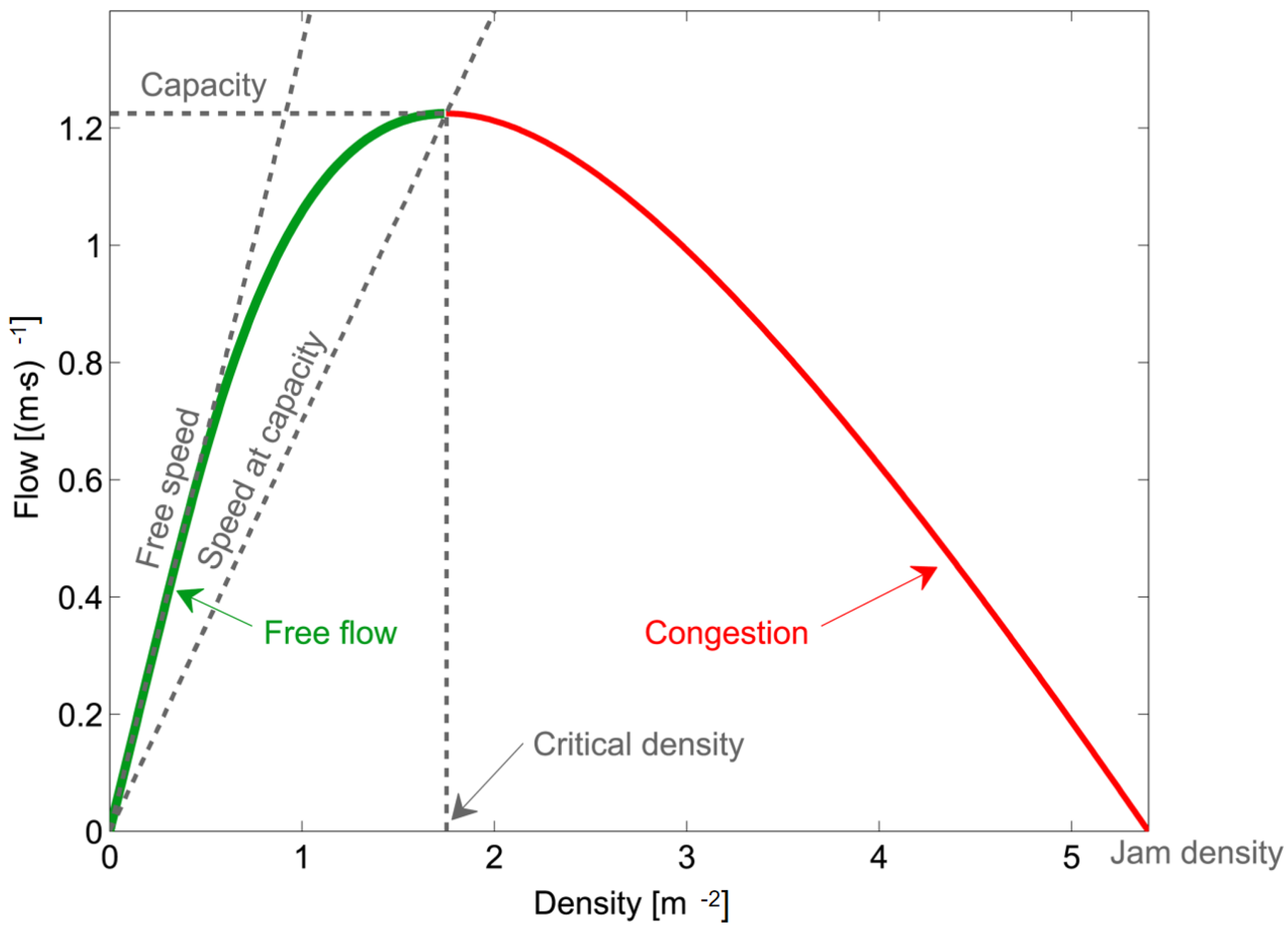
In this study, walking efficiency is defined narrowly as speed-based pedestrian circulation efficiency at the individual path scale under low-to-moderate pedestrian-density conditions. Walking speed is used as the primary measurable proxy because the observed station-area paths generally remained below or near the density range in which crowding produces a marked speed collapse. This operational definition does not represent pedestrian traffic efficiency in its entirety: it does not directly measure comfort, safety, complete trajectories, interaction dynamics, or network-level capacity. Pedestrian density is nevertheless retained as a control variable because local variation, even at low-to-moderate levels, may influence avoidance behavior, path-following behavior, and walking speed.
Walking influencing factors refer to factors that affect pedestrians’ needs at any level during the entire walking process, including feasibility, accessibility, safety, comfort, and pleasurability. In this study, improving the circulation efficiency of pedestrian spaces is mainly reflected in the spatial environment at the accessibility level; that is, improving walking speed by optimizing the pedestrian environment, thereby enhancing road circulation efficiency and promoting the dispersal and distribution of passenger flows in rail transit station areas. However, conflicts may also exist among different levels of needs. In urban spaces, pedestrian walking speed is strongly associated with the attractiveness provided by the landscape, yet walking speed does not necessarily increase with improved street walkability. Comfortable environments may reduce pedestrian walking speed and thus indirectly hinder circulation efficiency to some extent [
31]. Noise may reduce the comfort of pedestrian spaces, but it may also accelerate pedestrian walking speed [
32]. Participants tend to walk faster on sections that are spacious, lack greenery, and feel noisy, while they tend to walk more slowly on sections with higher greenery visibility [
32] and higher environmental preference [
33]. Improving circulation efficiency should not come at the expense of a comfortable walking environment. Although factors such as higher greenery visibility may slow pedestrians down, these elements help create more attractive street environments and benefit the walking experience of all types of users. Therefore, the improvement of pedestrian-space circulation efficiency should be based on maintaining overall walkability.
This study focuses on the influence of spatial factors along walking paths on circulation efficiency, with the aim of improving walking efficiency by optimizing path-space conditions. Therefore, in selecting feature variables, this study does not consider macro-planning factors such as land use, road network morphology, and detour ratio, namely the ratio of path distance to straight-line distance, nor does it consider climatic factors such as wind, rain, and high temperature. After refinement and screening, the final set of feature variables is determined, as shown in
Table 2.
3.2. Research Method
To strengthen the justification for model selection, Random Forest should be compared with conventional linear models and representative machine-learning alternatives. OLS/linear regression provides transparent coefficients and is useful for interpreting average marginal effects, but it relies on linearity and additivity assumptions and may have limited ability to capture threshold effects and interactions among path width, ramp shape, pavement flatness, pedestrian density, and obstacle occupation. Support vector regression can model nonlinear relationships through kernel functions, but its results are sensitive to kernel selection and penalty parameters, and its variable contributions are not easily translated into planning implications [
34]. Gradient boosting trees and XGBoost usually show strong predictive capacity for complex nonlinear modeling [
35,
36], but their tuning process is relatively more complex. By contrast, Random Forest integrates multiple decision trees through bootstrap sampling and random feature selection, thereby reducing the instability of a single tree while providing interpretable outputs such as variable importance and partial dependence [
37]. Recent pedestrian-dynamics studies also indicate that tree-ensemble models can handle nonlinear relationships among built-environment, weather, and pedestrian-flow variables [
38]. Therefore, this study does not assume that Random Forest is universally superior; rather, it is selected because it better matches the objective of identifying key spatial factors and translating them into planning implications.
Random Forest (RF) regression was selected because the study aims to identify and interpret nonlinear and potentially interacting relationships between micro-scale path characteristics and walking speed. Unlike a linear model, RF does not require a prespecified functional form; it can capture threshold effects and interactions while providing feature-importance and partial dependence outputs that can be translated into planning implications. The model is not assumed to be universally superior to linear regression, support vector regression, or boosting models; rather, it is well-suited to the present research objective and data structure.
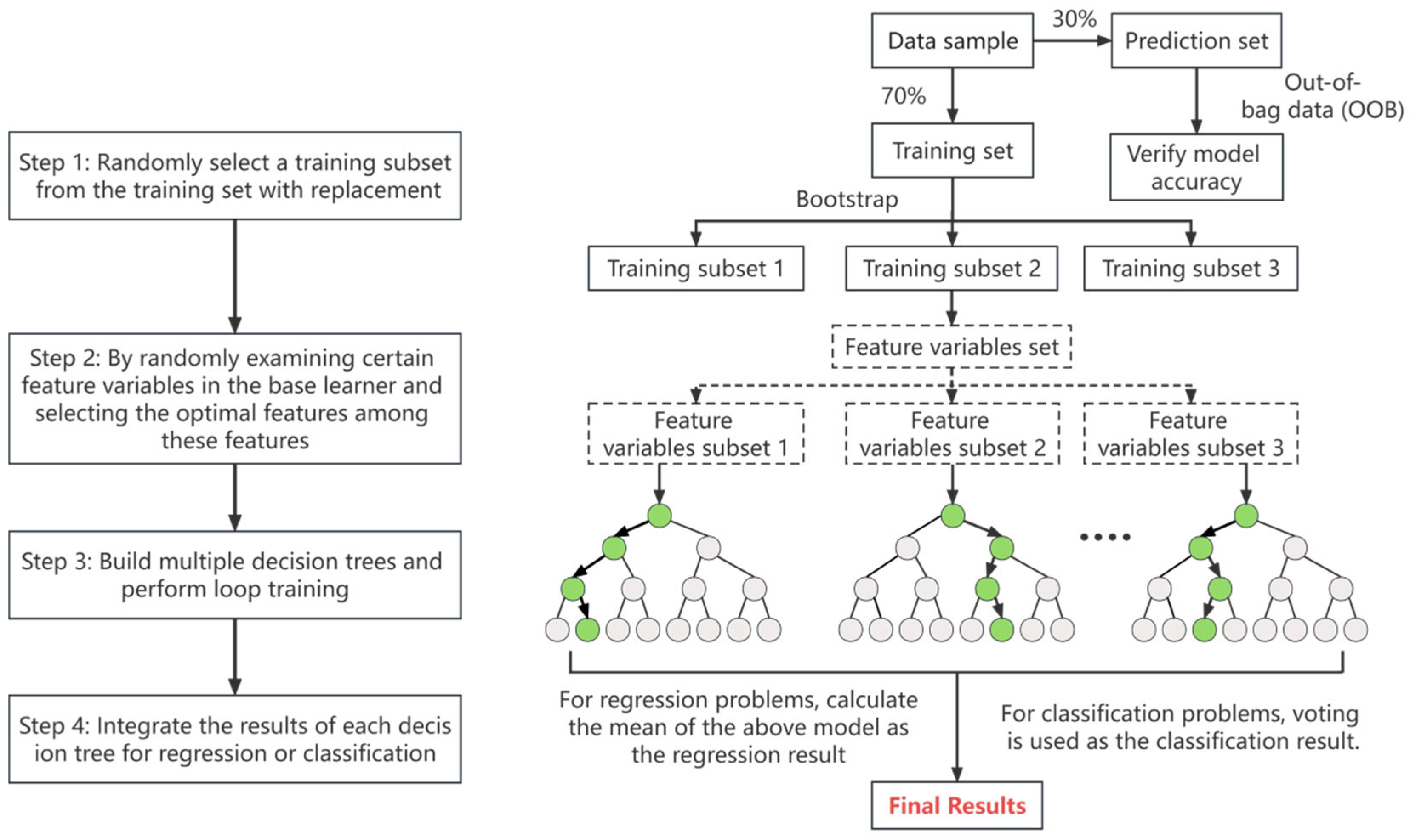
The study-specific modeling workflow comprises data partitioning, hyperparameter selection, model evaluation, and interpretation (
Figure 4).
(1) The observations were randomly divided into a 70% training set and a 30% held-out test set. Bootstrap sampling and random feature selection were applied during tree construction to reduce dependence on any single sample or predictor subset.
(2) Hyperparameters were selected using a grid-search procedure combined with k-fold cross-validation on the training data. The search considered the number of trees and constraints on tree complexity, with predictive performance assessed using MSE, RMSE, MAE, MAPE, and R2.
(3) The final regression forest used 100 decision trees, a maximum tree depth of 10, and a maximum of 50 leaf nodes. These settings balance predictive accuracy with model complexity for the present dataset.
(4) Model interpretation was based on feature importance and partial dependence. Feature importance identifies the relative contribution of each predictor, while partial dependence curves reveal nonlinear patterns and approximate empirical thresholds for each pedestrian group.
The held-out test set was used to assess generalization performance, while cross-validation on the training set supported hyperparameter selection. Reporting multiple error metrics reduces dependence on a single measure and permits comparison of absolute, squared, percentage, and variance-explained performance. Because the study emphasizes explanation rather than algorithm ranking, the results are interpreted as evidence of suitability for this dataset rather than proof that Random Forest is optimal in all settings.
The predictors comprise path characteristics, surface conditions, ramps, environmental factors, human factors, and obstacles, with walking speed as the dependent variable. This structure enables the model to test whether the influence of a spatial factor changes across its observed range or differs among normal pedestrians, luggage carriers, and stroller users. The resulting feature-importance rankings and partial dependence curves are used together: the former identify the most influential factors, and the latter support interpretation of direction, nonlinearity, and practical thresholds.
4. Samples and Data
4.1. Sample Selection
(1) Study Area
Xiamen is located in southern Fujian Province. It has a pleasant and humid climate, mild winters, and is suitable for outdoor activities throughout the year. As one of China’s earliest special economic zones and an important central city on the southeast coast, Xiamen has experienced rapid economic development and completed urbanization relatively early. However, this has also resulted in some buildings and street spaces in the central urban area becoming relatively old. In particular, in the old urban districts, the environmental quality of pedestrian spaces around rail transit stations is relatively poor, highlighting the importance of improving the quality of pedestrian environments around rail transit stations.
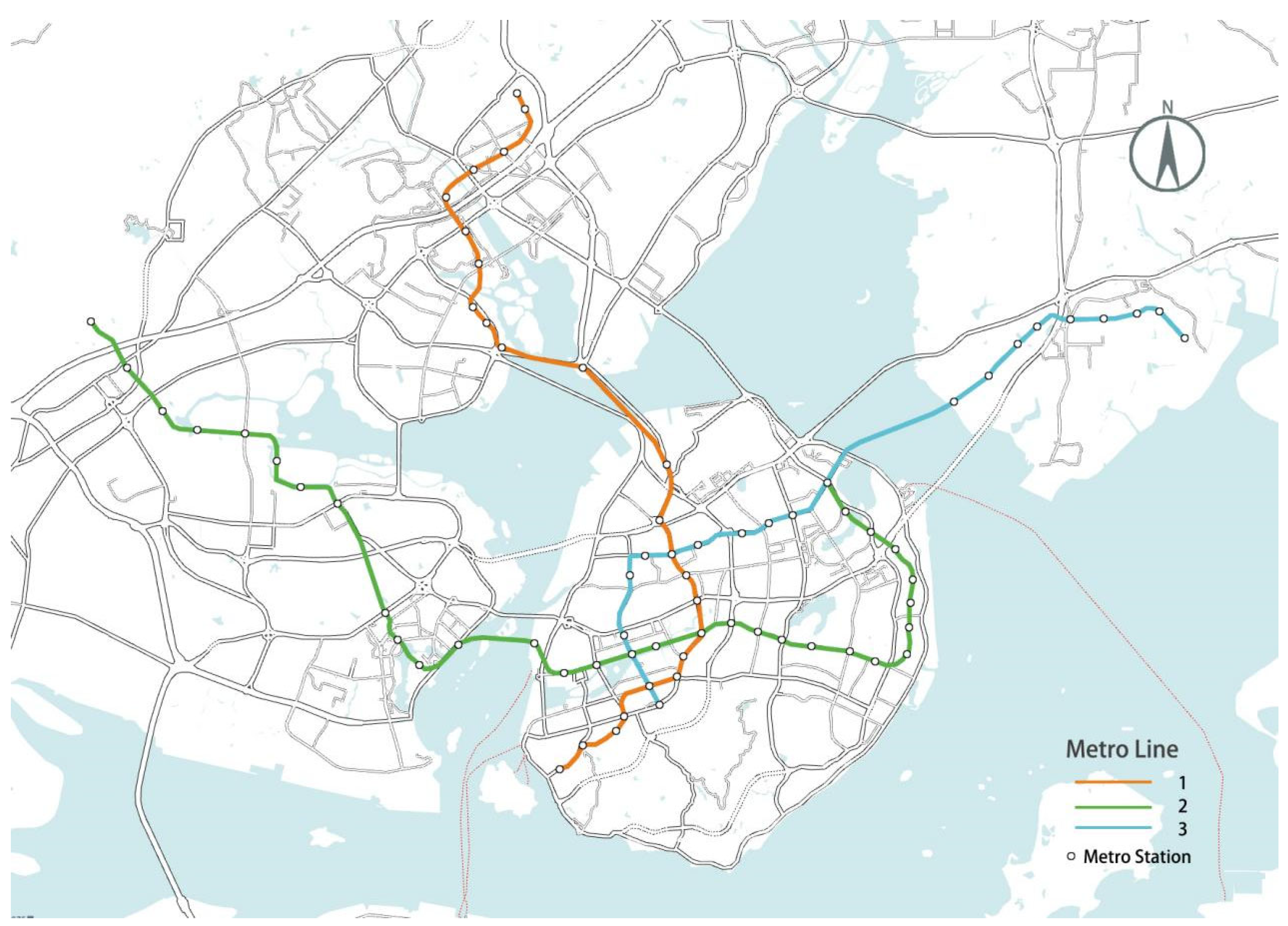
At present, Xiamen Metro Lines 1, 2, and 3 have formed an operational network, while the airport section of Line 3, Line 4, and Line 6 are under construction. The total operating mileage has reached 98.4 km, and the total length of lines under construction is approximately 123 km. The system has 122 stations in total, of which 75 are currently in operation. The average weekday passenger volume is 700,000–800,000 trips, with the highest daily passenger volume reaching 1.0417 million trips, placing Xiamen among the leading cities of comparable scale. The efficient operation and widespread use of the rail transit system provide residents and tourists with convenient and reliable travel options. Therefore, Xiamen is selected as the study area for this research (
Figure 5).
This study focuses on the urban spaces surrounding rail transit stations and examines the influence of road-space conditions on the walking efficiency of people with mobility limitations. Therefore, the selection of study stations should follow the following principles:
① The station should have high passenger volume, high pedestrian density, and high urban development intensity in the surrounding area, indicating an urgent need for pedestrian dispersal.
② The station should be located in an old urban district, where the proportion of older residents around the station is relatively high, and the surrounding urban pedestrian spaces were built earlier and contain aging facilities.
③ The station should be located near tourist attractions, where there are more temporarily mobility-impaired passengers traveling for leisure and tourism purposes, resulting in higher requirements for road circulation capacity.
Due to geographical conditions, the development level of Xiamen Island is significantly higher than that of the off-island areas. In 2020, the economic density within the island reached 2.183 billion yuan/km
2, whereas that of the off-island areas was only 190 million yuan/km
2, with a difference of more than ten times [
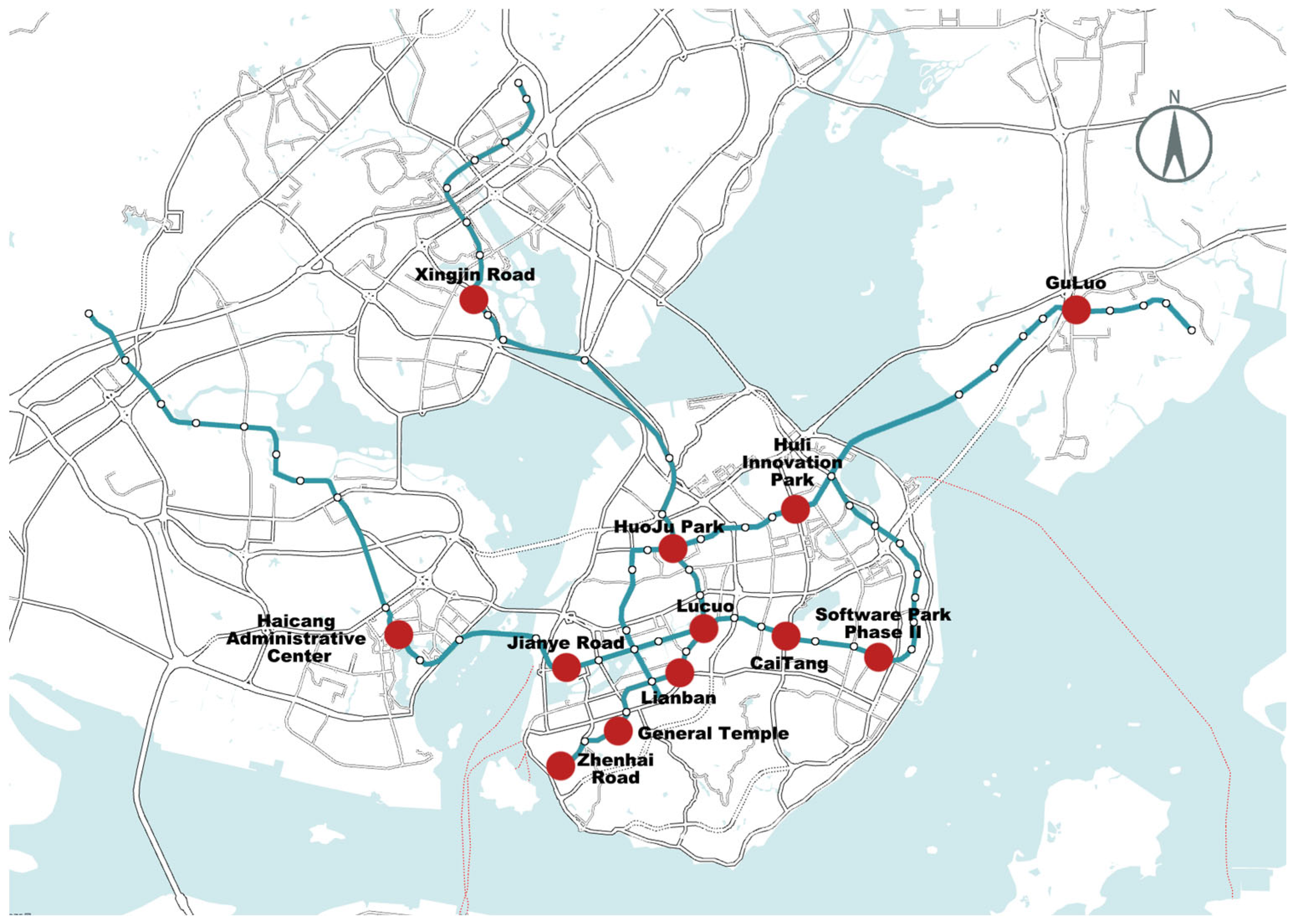
39]. In addition, urban development on the island began earlier, resulting in more old urban districts. Therefore, most of the selected study stations are concentrated on Xiamen Island, while the off-island stations are also selected from densely populated residential areas. Based on these criteria, 12 rail transit stations in Xiamen are selected as the research objects, and their specific locations are shown in
Figure 6.
The construction of rail transit stations brings changes to urban space in multiple aspects, such as pedestrian flow and spatial form. This part of urban space is closely connected with rail transit and is referred to as the “rail transit station influence area.” With the development of theories such as TOD and Transit Village, research on the definition of station influence areas has also been continuously improved. Considering the rationality of walking accessibility, this study limits the destinations to a circular area with an 800 m radius centered on each station.
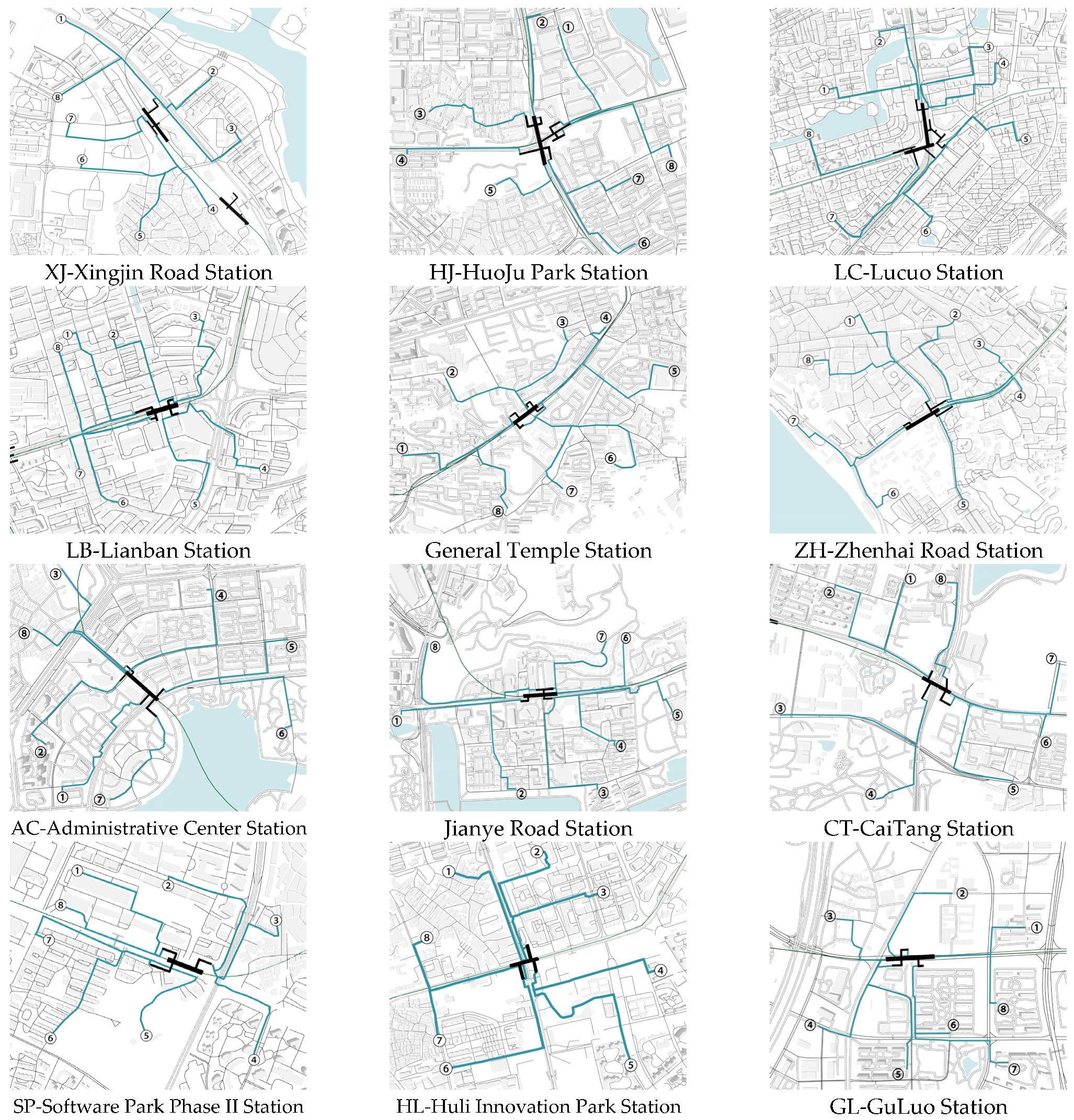
Taking the rail transit station as the starting point and different destinations within the area as endpoints, the shortest walking paths between them are selected as the survey objects, and walking experiments are conducted along these paths. All selected paths must meet the basic requirements for pedestrian passage, while paths that are impassable due to elevation differences, dead ends, or other obstacles are excluded. Since passengers have diverse travel purposes, the selected destinations are designed to cover various urban land-use types as comprehensively as possible. The specific paths are shown in
Figure 7.
(2) Research Subjects
According to the causes of mobility limitation, people with mobility impairments in a broad sense can be divided into those with long-term mobility impairments and those with temporary mobility impairments. Long-term mobility impairment refers to the irreversible decline in mobility caused by reduced physical function, disability, or other factors. Since their mobility cannot be fully restored, the walking behavior of these groups is also affected by psychological factors. They tend to place greater emphasis on their own safety, while higher-level needs such as walking efficiency are relatively less important to them.
Temporary mobility impairment refers to a short-term decline in mobility caused by injury, carrying objects, or other temporary factors. This type of mobility impairment is often short-lived and incidental. Since individuals with temporary mobility impairments are not accustomed to this reduced mobility, or because their own physical mobility is not impaired and their difficulty is caused only by carrying or moving certain objects, they are usually less affected by psychological factors and pay more attention to external factors such as the pedestrian-space environment. In this study, pregnant women are regarded as a special group. Although their mobility is not irreversibly impaired, pregnancy lasts much longer than a general injury, and the need to protect the fetus makes pregnant women more concerned about safety during walking. Therefore, pregnant women are classified as a group with long-term mobility impairment.
This study selects pedestrians carrying large luggage and pedestrians pushing strollers as the research subjects. People carrying large luggage do not experience a decline in their own physical mobility, but the objects they carry worsen their walking experience in pedestrian spaces with poor road conditions. Since this limitation is temporary, it does not usually produce psychological effects. Pedestrians pushing strollers are similar to those carrying large luggage. However, infants are more sensitive to the external environment and require a stable, quiet, and comfortable space. Therefore, stroller users may pay greater attention to creating a more stable environment for the infant in the stroller.
In addition, during the field survey stage, very few people with temporary mobility limitations caused by foot sprains or similar injuries were observed in urban pedestrian spaces. Although these groups were included in the preliminary research scope, the sample size obtained from field experiments was insufficient to support subsequent data analysis. Therefore, this study only selects pedestrians carrying large luggage and pedestrians pushing strollers as the research subjects.
4.2. Field Survey
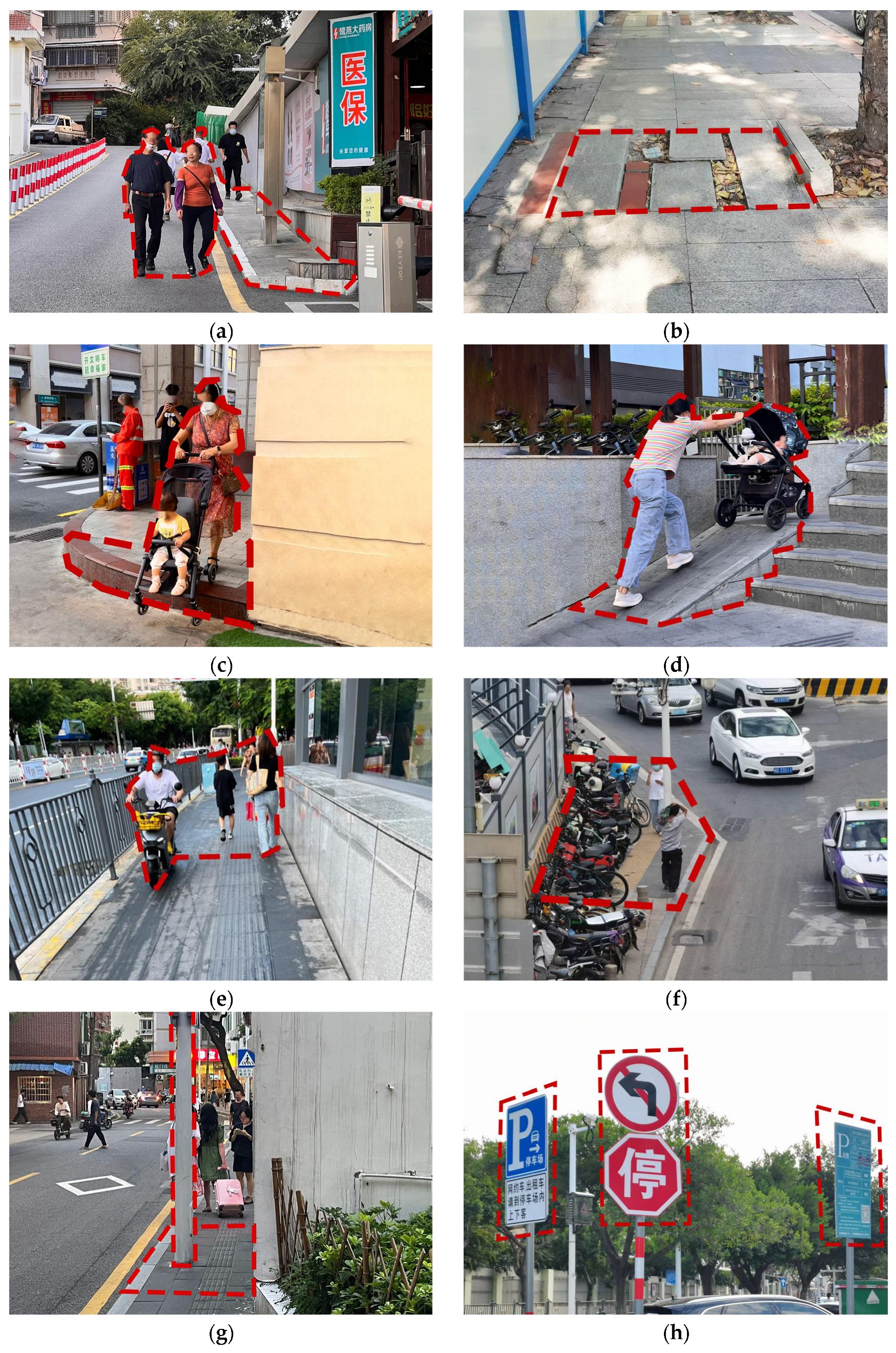
During the field survey, it was found that most of the surveyed paths had numerous existing problems that affected pedestrians’ walking experience and safety. In terms of spatial layout, narrow pedestrian spaces were particularly prominent. Some sections allowed only one person to pass at a time, and the overall spatial organization was unreasonable. The absence of dedicated non-motorized lanes led to extensive occupation of sidewalks by non-motorized vehicles. At the same time, pedestrian spaces were located too close to high-traffic motor vehicle roads and were further affected by street vendors and bicycles occupying the walkway, resulting in a cluttered environment. In addition, many obstacles were present within pedestrian spaces, further compressing the available activity space for pedestrians.
In terms of infrastructure conditions, damaged pavement caused uneven surfaces and depressions along the paths. Elevation differences were not consistently treated with barrier-free design, and some ramps were too narrow or steep. China widely uses vertical elevators as barrier-free facilities in rail transit stations, public buildings, and transport hubs; however, this study concerns micro-scale barriers along surrounding station-area walking paths rather than accessibility facilities inside stations. Vertical elevators are not feasible for every curb, short elevation difference, or discontinuous sidewalk segment. Ramps, curb cuts, continuous paving, and clear walking width therefore remain essential components of station-area accessibility. Signage facilities also lacked clarity and sufficiency, making wayfinding difficult (
Figure 8).
4.3. Data Analysis
This study set the experimental period during the evening peak hours from 17:00 to 20:00. This period covers high-frequency travel scenarios such as commuting after work, shopping, and picking up children, during which the proportion of people with Temporary Mobility Impairments (TMI) is relatively high. This makes it easier to obtain sufficient samples and observe real walking behavior. Meanwhile, the evening peak period is characterized by stronger time pressure and spatial crowding. Pedestrian spaces around stations need to accommodate high-intensity pedestrian dispersal, and temporary obstacles such as street vendors and electric bicycles are also more concentrated. Therefore, this period can more effectively test the influence of spatial factors on the circulation efficiency of TMI groups. The experiment did not deliberately distinguish between weekdays and non-weekdays, with the aim of weakening temporal differences and highlighting the interaction between physical load and the spatial environment, thereby obtaining more generalizable conclusions.
The survey selected 12 rail transit stations, with eight shortest walking paths connecting station entrances and surrounding destinations at each station, forming 96 study paths. Surveyors first recorded path length and relevant spatial variables. Their normal walking speed was used as the control condition, and each path was measured three times before the mean was calculated. Volunteers carrying luggage and pushing strollers were then recruited near station entrances, informed of the destination and route through electronic map applications, and tracked to obtain walking speed. In principle, six volunteers were recruited for each path, including three participants from each TMI group. A total of 566 volunteers participated, generating 1152 valid observations. The experiment was conducted anonymously; names, identifiable images, precise ages, and other detailed personal identifiers were not recorded to reduce privacy risk. The resulting limitations on demographic stratification and sample-representativeness assessment are acknowledged below.
Spearman correlation analysis was conducted between path length and the walking speeds of the three groups. The results show that there is no significant correlation between path length and walking speed for any of the three groups (
Table 3). The correlation coefficients are 0.147 for normal pedestrians, 0.085 for pedestrians carrying luggage, and 0.009 for pedestrians pushing strollers, indicating almost no correlation. This may be because most of the paths selected in this survey were between 400 and 700 m in length, which is relatively short and unlikely to cause walking fatigue or a resulting decrease in walking speed. In addition, the correlation coefficient between the walking speed of pedestrians carrying luggage and that of normal pedestrians is 0.875, indicating a strong positive correlation. This means that when the walking speed of normal pedestrians changes, the walking speed of pedestrians carrying luggage tends to change in a similar direction and to a relatively obvious extent, suggesting that some spatial factors affecting the circulation efficiency of the two groups may overlap. The correlation coefficient between the walking speed of pedestrians carrying luggage and that of pedestrians pushing strollers is 0.32, with a significance level of 0.027**, indicating a significant positive correlation at the 5% significance level, rather than a random occurrence.
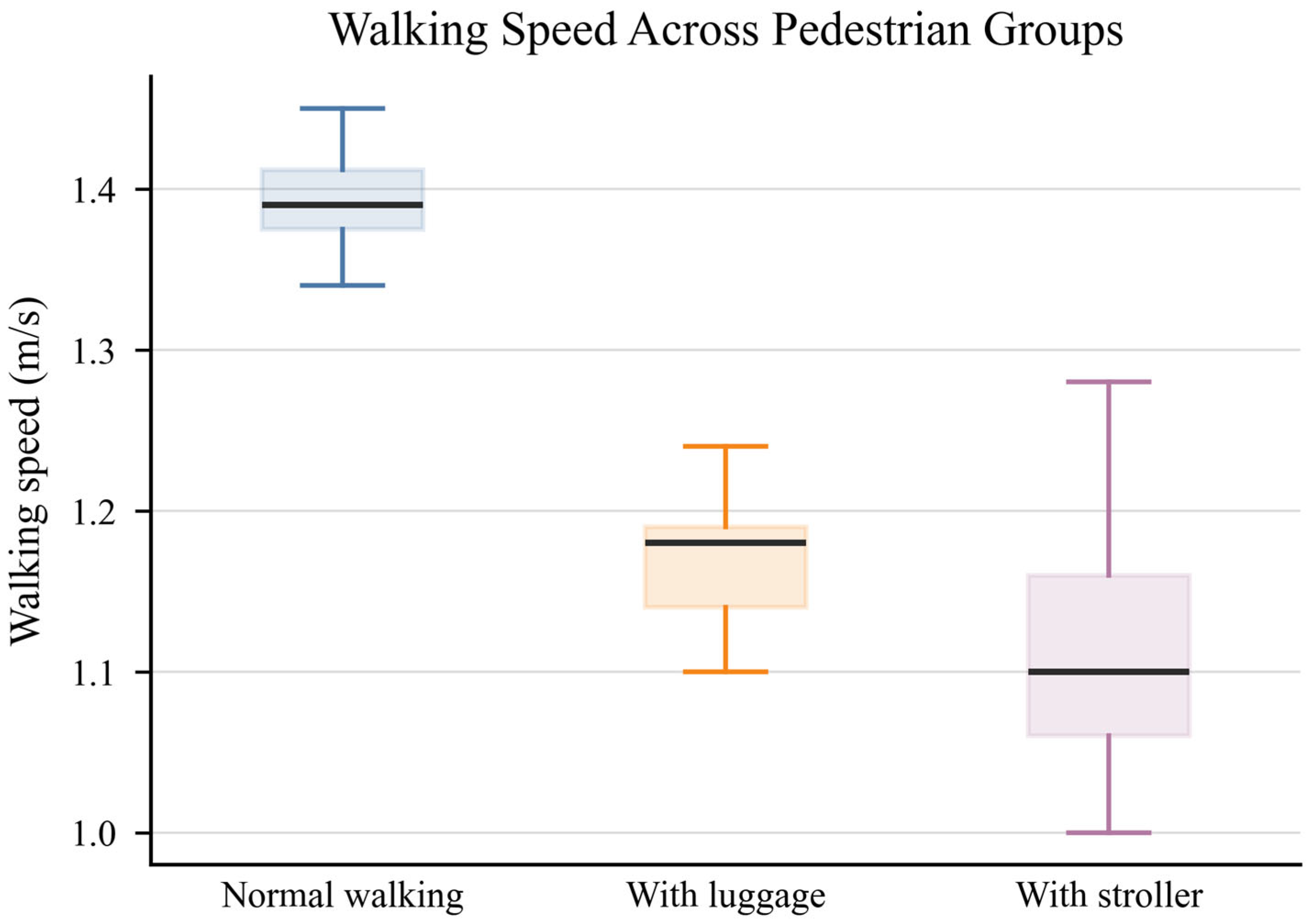
As shown in the box plot of walking speeds for the three groups (
Figure 9), the median walking speed of normal pedestrians is 1.38 m/s, which is higher than that of pedestrians carrying luggage, 1.18 m/s, and pedestrians pushing strollers, 1.10 m/s. This indicates that participants generally walk faster under normal conditions than when carrying or pushing external objects.
The box range for normal walking is relatively narrow, indicating that the data for normal walking speed are more concentrated and show less variation. Its shorter whiskers further suggest a narrower distribution range, with most values clustered within a relatively small interval. The box range for walking with luggage is moderate, indicating a certain degree of dispersion, but less than that observed when pushing a stroller.
The median walking speed for stroller users is slightly lower than that of luggage carriers, suggesting that pushing a stroller reduces walking speed more significantly than carrying luggage. The interquartile range (IQR) for stroller users is wider than that of the other two groups, indicating the greatest dispersion in walking speed when pushing a stroller. In other words, walking speeds vary more substantially among different stroller users. The longer whiskers also indicate a wider data distribution and greater speed differences. No extreme outliers are highlighted in the box plot, suggesting that the data points are relatively consistent across all conditions and that there are no extreme deviations in walking speed.
The following table presents the descriptive statistics of path length (PL) and the 16 spatial-environmental indicators. As shown in
Table 4, path length ranges from 402 m to 727 m, all within the core walking catchment area of rail transit stations, namely 800 m. The path lengths are mainly concentrated around the mean value, with typical path lengths of approximately 546–549 m. For most variables, the mean values are close to the median values, indicating relatively symmetrical data distributions.
The coefficient of variation (CV) is a relative statistical indicator used to measure data dispersion. It is suitable for comparing the degree of variation among variables with different means or different units. It is calculated as the ratio of the standard deviation to the mean and is usually expressed as a percentage. A smaller CV indicates less fluctuation relative to the mean and higher stability, while a larger CV indicates greater dispersion and lower stability.
According to the data in the table, D4 Noise Effect (dB) has the smallest coefficient of variation (CV = 0.08), indicating the most stable data, whereas D1 Green Viewing Rate (%) has the largest CV (0.56), suggesting significant differences among samples. This may be related to the large variation in greenery conditions around different paths. In terms of distribution shape, all variables have negative kurtosis values, ranging from −1.59 to −0.806, indicating platykurtic distributions. This means that the data are less concentrated around the mean than in a normal distribution, and extreme values are more likely to occur. In terms of skewness, most variables have skewness values close to 0, indicating relatively even distributions.
5. Results and Discussion
The survey and experimental data were used to train and evaluate separate Random Forest models for the three pedestrian groups.
Table 5,
Table 6 and
Table 7 report MSE, RMSE, MAE, MAPE, and R
2 for the training and held-out test sets. Taken together, these metrics indicate strong predictive performance on the present dataset and support subsequent interpretation of spatial factors. The results should nevertheless be understood as dataset-specific performance rather than evidence that the model is universally optimal. The computational efficiency of the Random Forest model was also examined. All experiments were conducted on a computer with an Intel Core i7 CPU and 16 GB RAM, using Python 3.11 and scikit-learn 1.4. The trained Random Forest model achieved an average inference time of 0.03 ms per observation, and the total inference time for the held-out test set was 0.012 s. These results indicate that the model has a low computational cost and can support rapid diagnosis of pedestrian-space problems in rail transit station areas.
This study focuses on walking spaces between metro-station exits and passengers’ destinations. Observed density was generally low to moderate and did not reach a sustained state of severe crowding-induced speed collapse. Nevertheless, local density variation may still affect path following, avoidance behavior, and walking speed; it is therefore retained as a control variable rather than assumed to have no effect (
Figure 10).
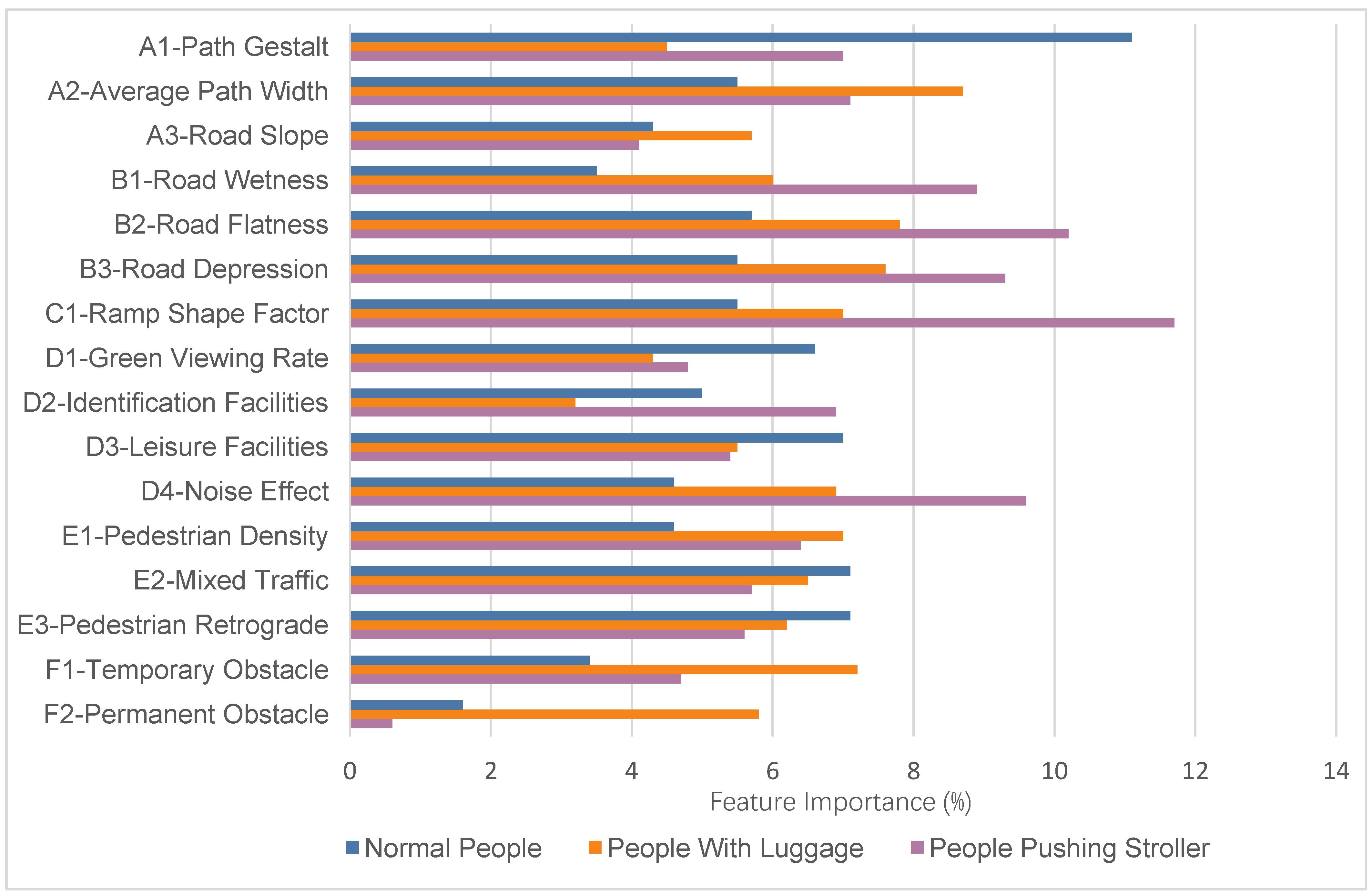
First, the main factors affecting the circulation efficiency of pedestrians carrying large luggage are average path width (8.7%), road flatness (7.8%), and road depressions (7.6%). This indicates that, compared with normal pedestrians, people carrying luggage require wider walking spaces. When the path width is insufficient, luggage dragging may be hindered. Road flatness and the presence of surface depressions reflect a similar issue. When the pavement is uneven, pedestrians dragging suitcases tend to slow down to prevent the luggage from bumping. Depressions in the road surface also need to be deliberately avoided. During the field survey, it was observed that at most depressed sections, pedestrians carrying suitcases had to lift their luggage and step over the depression, resulting in a brief interruption in their movement. The least influential factors are identification facilities (3.2%), green viewing rate (4.3%), and path gestalt (4.5%). In terms of wayfinding, pedestrians carrying luggage are less affected by signage facilities and path gestalt than normal pedestrians. This may be related to the fact that this group of survey participants was mainly composed of younger people, whose travel purposes were relatively clear and who were less likely to be distracted by excessive signage. In addition, because pedestrians carrying luggage are generally more motivated to reach their destination and put down their luggage, recreational behavior is almost absent among this group. Therefore, environmental factors such as green viewing rate have little influence on them.
Accordingly, this study uses walking speed as a measurable proxy for individual path-level walking efficiency under the observed low-to-moderate density conditions. This proxy does not encompass comfort, safety, full trajectory interactions, or network capacity.
Figure 11 illustrates the relative importance of feature variables for normal pedestrians and the two TMI groups.
Second, for pedestrians pushing strollers, the main factors affecting their circulation efficiency are ramp shape factor (11.7%), road flatness (10.2%), and noise effect (9.6%). The influence of ramp shape on stroller users is significantly stronger than that on normal pedestrians. The greatest obstacles encountered when pushing a stroller are ramps that are too narrow or too steep. During the field survey, it was observed that when many young couples pushing strollers encountered ramps, one person often had to support the stroller from below or from the side, while the other pulled the stroller from above and controlled its direction. This two-person coordination caused fluctuations in normal walking speed. Similar to pedestrians carrying luggage, road flatness also greatly affects the circulation efficiency of stroller users. In terms of influence magnitude, road flatness has an even greater impact on strollers. This may be because, compared with luggage, the infant inside the stroller is a protected subject who requires a smoother and more comfortable environment. Road bumps may cause the infant to cry, which also explains the effect of noise on stroller users.
Permanent obstacles (0.6%), road wetness (1.2%), and road slope (4.1%) have the smallest influence on the circulation efficiency of stroller users. This finding differs slightly from the initial expectations before the experiment. A possible explanation is that stroller users already walk more slowly than normal pedestrians, so road wetness and slope do not further reduce their circulation efficiency significantly. Permanent obstacles have the smallest effect on both stroller users and normal pedestrians, which differs from the case of pedestrians carrying luggage. This difference may mainly result from different walking postures. For pedestrians carrying luggage, the luggage is usually positioned on one side of the body, thereby increasing the effective width of the walking subject and making them more sensitive to obstacles that reduce path width. By contrast, the stroller is usually positioned in front of the body. In a linear walking space, the increased length of the walking subject does not have the same effect as increased width.
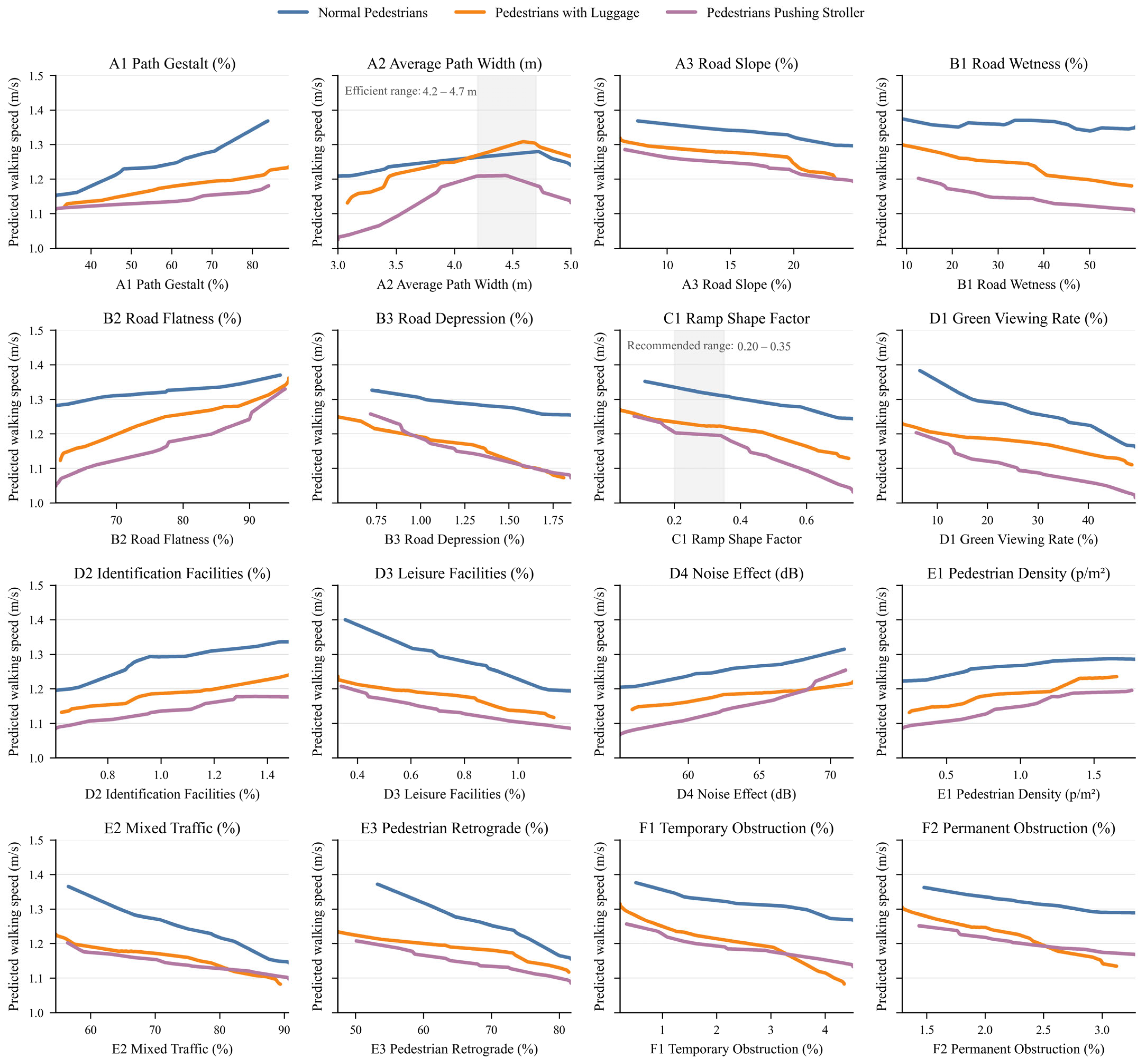
Figure 12 presents the results of the Random Forest model in predicting the walking speeds of normal pedestrians and the two types of people with Temporary Mobility Impairments using the prediction-set data. The results showing how walking speed varies with influencing factors indicate that not all factors have a linear relationship with walking speed and that the effects of each factor also differ across pedestrian groups.
Overall, stroller users had the lowest walking speed, followed by pedestrians carrying luggage, while normal pedestrians walked the fastest. This indicates that, in high-flow spaces such as rail transit station areas, people with Temporary Mobility Impairments are the key group affecting overall circulation efficiency. Particular attention should therefore be paid to the speed loss of pedestrians carrying luggage and pushing strollers, as well as the spatial factors that cause it.
In terms of path conditions, the higher the path gestalt, the faster the overall walking speed of all three groups. This suggests that more continuous and clearer paths help reduce detours and decision-making costs. The relationship between path width and walking speed is not simply linear, but shows a trend of first increasing and then decreasing. When the path is too narrow, pedestrians have difficulty avoiding each other, and the walking speed of TMI groups decreases significantly. When the width reaches approximately 4.2–4.7 m, circulation efficiency is relatively high. However, if the path becomes even wider, additional activities such as street vending and lingering conversations may increase, thereby weakening its circulation function. Road slope has a relatively weak effect on walking speed, showing only a slight negative influence.
Road surface conditions are more sensitive for TMI groups. Slippery surfaces cause pedestrians carrying luggage and pushing strollers to slow down due to safety concerns, while normal pedestrians are less affected. The flatter the road surface, the more significantly the walking speed of TMI groups improves. Road depressions substantially reduce their circulation efficiency, because suitcases and strollers are large in size and less flexible to control than the human body, making them more vulnerable to localized pavement damage. In terms of ramps, the narrower or steeper the ramp, the more obvious the decline in speed, with stroller users being the most affected. The results indicate that controlling the ramp shape factor within the range of 0.2–0.35 can help balance barrier-free accessibility and overall circulation capacity within limited pedestrian space.
In terms of environmental factors, an increase in green viewing rate does not directly improve walking speed. Instead, it may slow down normal pedestrians and stroller users or encourage them to stop by enhancing spatial attractiveness. A higher density of signage facilities generally helps TMI groups identify the locations of barrier-free elevators, ramps, and other facilities, thereby improving route-choice efficiency. Leisure facilities are negatively correlated with speed and may induce temporary stopping behavior. Noise reduces environmental comfort and encourages pedestrians to pass through more quickly, with stroller users showing a more obvious response.
Human factors and obstacles also have significant effects on circulation efficiency. Within the pedestrian-density range observed in this study, higher density instead forms directional pedestrian flows and encourages pedestrians to move forward. However, bidirectional pedestrian flow and mixed pedestrian-vehicle traffic increase avoidance behavior and safety-related judgment, thereby reducing walking speed. Both temporary and permanent obstacles compress the effective walking width, especially affecting pedestrians carrying luggage. When the proportion of temporary obstacles reaches approximately 3% and that of permanent obstacles reaches approximately 2.5%, the walking speed of pedestrians carrying luggage even becomes lower than that of stroller users. Therefore, station-area pedestrian-space optimization should prioritize the control of street vending, facility encroachment, and local bottlenecks while improving pavement quality, ramps, signage, and clear walking width for TMI groups.
The findings are consistent with the broader accessibility literature in showing that clear width, continuous and even paving, and manageable elevation changes support pedestrians with mobility constraints. They extend this knowledge by demonstrating, in real station-area paths, that the relevant sensitivities differ between luggage carriers and stroller users and are often nonlinear. Luggage carriers are particularly sensitive to effective-width compression and pavement defects, whereas stroller users show stronger sensitivity to ramp form and surface smoothness. The empirical ranges identified here should therefore be treated as context-dependent planning references rather than universal design standards. More broadly, the results support people-centered and inclusive planning by showing how everyday user needs can be translated into measurable priorities for public-space improvement.
6. Conclusions
This study focuses on people with Temporary Mobility Impairments, such as those carrying luggage and pushing strollers, and takes pedestrian spaces in rail transit station areas as the research setting. It examines the actual circulation efficiency of TMI groups in these spaces. Walking speed is used as the dependent variable, and a Random Forest model is constructed. Data are collected through field surveys and walking experiments, and the model is trained to analyze the main factors affecting the circulation efficiency of different pedestrian groups. The main conclusions of this study are as follows:
① The walking speeds of stroller users and luggage carriers are significantly lower than those of normal pedestrians. These groups constitute the main bottleneck affecting circulation efficiency in rail transit station areas, yet their needs are often overlooked in traditional studies. Improving their circulation efficiency is therefore the core issue in optimizing station-area pedestrian spaces.
② Road flatness has a strong influence on the circulation efficiency of both types of TMI groups. To improve the overall circulation efficiency of all pedestrians, priority should be given to leveling uneven road surfaces.
③ Ramps that are too narrow or too steep greatly affect the circulation efficiency of stroller users. Under the condition of limited road width, it is optimal to maintain the ramp shape factor at approximately 0.2–0.35.
④ Under relatively low pedestrian-density conditions, wider roads are not necessarily better. The optimal road width for maintaining high circulation efficiency is approximately 4.2–4.7 m.
⑤ Normal pedestrians may stop or slow down due to environmental aesthetics and leisure facilities, whereas TMI groups, due to their “load-bearing” needs and clearer travel purposes, pay more attention to functional factors such as width, slope, and flatness.
The mismatch between the improvement of rail transit capacity and the limited carrying capacity of surrounding urban spaces affects operational efficiency and creates congestion and safety risks. Pedestrian spaces around stations not only undertake the function of passenger-flow dispersal but also serve as important carriers for stimulating urban vitality. The sustainability contribution of this study lies in three aspects. First, it links micro-scale pedestrian-space design with the broader goal of sustainable mobility by showing how path width, ramp morphology, surface flatness, and obstacle control affect the efficiency of first- and last-mile access to rail transit. Second, it extends the equity dimension of sustainable transport from permanently mobility-impaired groups to the more common but often neglected TMI groups, thereby supporting a more inclusive interpretation of universal design. Third, the Random Forest-based evaluation framework provides a quantitative tool for diagnosing pedestrian-space bottlenecks and prioritizing low-cost design interventions in existing station areas. By improving pedestrian accessibility for luggage carriers and stroller users, station-area renewal can enhance public transport attractiveness, reduce dependence on private motorized travel, and promote people-centered, low-carbon, and socially inclusive urban development.
This study has several limitations. First, the empirical analysis is limited to Xiamen, and the results may reflect local urban form, climate, station-area design, and travel culture. Second, observations were concentrated in the evening peak period and did not fully cover other times of day, weekends, holidays, or extreme weather. Third, the TMI sample includes only luggage carriers and stroller users and therefore does not represent all forms of temporary mobility limitation. Fourth, walking speed is used as a proxy for individual path-level walking efficiency; the study does not directly model complete trajectories, interaction dynamics, comfort, safety, or network-level capacity. Fifth, the anonymous recruitment process protected privacy but limited detailed demographic records and the assessment of sample representativeness. Finally, the identified thresholds are empirical references for comparable station-area environments rather than universal standards. Future research should include multiple cities and time periods, additional TMI groups, structured but privacy-preserving demographic information, trajectory-level observations, interaction-aware models, and more complex mixed-traffic simulations.