Article

Towards Real-Time Sustainable Post-Harvest Operations: Gate-to-Gate Life Cycle Assessment of Sensor-Informed Sweet Cherry Sorting and Packing in Greece

by
Konstantinos Spanos
,
Nikolaos Kladovasilakis
*,
Charisios Achillas
and
Dimitrios Aidonis
*
Department of Supply Chain Management, International Hellenic University, Kanellopoulou 2, 601 32 Katerini, Greece
*
Authors to whom correspondence should be addressed.
Sustainability 2026, 18(12), 6097; https://doi.org/10.3390/su18126097 (registering DOI)
Submission received: 23 May 2026 / Revised: 10 June 2026 / Accepted: 11 June 2026 / Published: 13 June 2026
(This article belongs to the Section Sustainable Management)

Abstract

This study presents a gate-to-gate life cycle assessment (LCA) of an industrial sweet cherry sorting and packing facility in Greece, directly addressing environmental sustainability in agri-food supply chains through data-driven impact quantification and improvement pathways in post-harvest operations. The assessment focuses on a gate-to-gate system boundary encompassing all processes inside the cherry sorting and packing facility, while upstream cherry production and downstream waste management are modeled and reported separately to provide system-level context. Core-stage hotspots are then analyzed in detail in the Results section, highlighting the dominant role of electricity use compared with packaging materials. The functional unit is defined as 1 kg of packed, market-ready cherries at the factory gate. Primary data are obtained from high-resolution, batch-level measurements of mass flows, energy use, water consumption, packaging materials and waste streams over a full processing season, structured as virtual sensor outputs. These sensor-informed operational data are combined with secondary life cycle inventory information from established databases to quantify climate change impacts and identify environmental hotspots across materials, energy, water, and waste, thereby delivering a quantified picture of environmental performance in the post-harvest stage. The results show that corrugated cardboard and associated packaging components are among the main contributors within the facility-level, gate-to-gate system, while the Core stage accounts for 28.43% of total GWP100. Upstream cherry production dominates the overall Upstream–Core–Downstream climate footprint with 70.61% of total impacts. Moreover, practical mitigation scenarios are modeled, including packaging optimization, partial substitution of grid electricity with photovoltaic generation, and increased water recirculation. Ιn the combined mitigation scenario, where packaging optimization, low-carbon electricity and improved water management are implemented simultaneously, total GWP100 decreases from 114,207.32 to 92,500.27 kg CO2-eq (−19.0%) relative to the baseline, providing actionable sustainability improvements for industry stakeholders and supporting Sustainable Development Goals (SDGs) related to climate action and resource efficiency. In addition, the proposed virtual sensor architecture and data workflow support continuous monitoring, eco-efficiency management and near-real-time LCA implementation in post-harvest agri-food systems, enabling operational sustainability.

1. Introduction

The environmental impacts of agri-food supply chains have emerged as a key issue amid climate change, resource scarcity, and the shift to sustainable production practices [1,2,3]. Although primary crop production has attracted substantial research, post-harvest processes—especially sorting, grading, and packing—remain relatively understudied, despite their pivotal influence on product quality, resource utilization, and overall ecological footprint. Such processes are particularly crucial for high-value perishable goods like sweet cherries, necessitating swift handling, rigorous sorting, and extensive packaging to comply with market requirements and curb losses. However, interventions aimed at reducing food loss and waste within these post-harvest stages can inadvertently increase other environmental burdens, such as energy consumption or packaging material use, highlighting the necessity for comprehensive trade-off analyses [4]. Furthermore, the integration of life cycle assessment into the fruit and vegetable production sector is essential for determining environmental impacts across the entire supply chain.
Life cycle assessment has been widely applied as a robust methodological framework for quantifying environmental impacts across agri-food systems [5]. Existing studies have predominantly focused on farm-level production, transportation, or full supply chain assessments, often relying on aggregated or secondary data. However, the post-harvest phase is frequently treated as a “black box,” with limited resolution in process-level data and insufficient representation of operational variability [6]. Despite this, gate-to-gate, sensor-informed LCAs of post-harvest cherry sorting and packing facilities remain scarce, and existing studies rarely integrate high-resolution operational data into mitigation scenario analysis [7].
At the same time, the increasing digitalization of agri-food systems offers new opportunities to enhance environmental monitoring and decision-making. The integration of sensor technologies, data acquisition systems, and digital infrastructures enables the collection of detailed, near-real-time operational data, including mass flows, energy consumption, water use, and waste generation [8,9]. This development creates the potential for a new generation of “sensor-informed” or “data-driven” LCA approaches, moving beyond static assessments towards continuous environmental performance monitoring [10]. Despite this potential, the application of such approaches in post-harvest operations remains limited, and methodological frameworks for integrating high-frequency operational data into LCA are still emerging.
Within this context, packaging has also been identified as a critical contributor to the environmental footprint of fresh produce supply chains [11]. For products such as sweet cherries, which require protective and market-oriented packaging, materials such as corrugated cardboard can represent a substantial share of greenhouse gas emissions [12]. Understanding the relative contribution of packaging compared to energy and water use at the facility level is essential for identifying effective mitigation strategies and supporting the transition towards more sustainable packaging solutions [13].
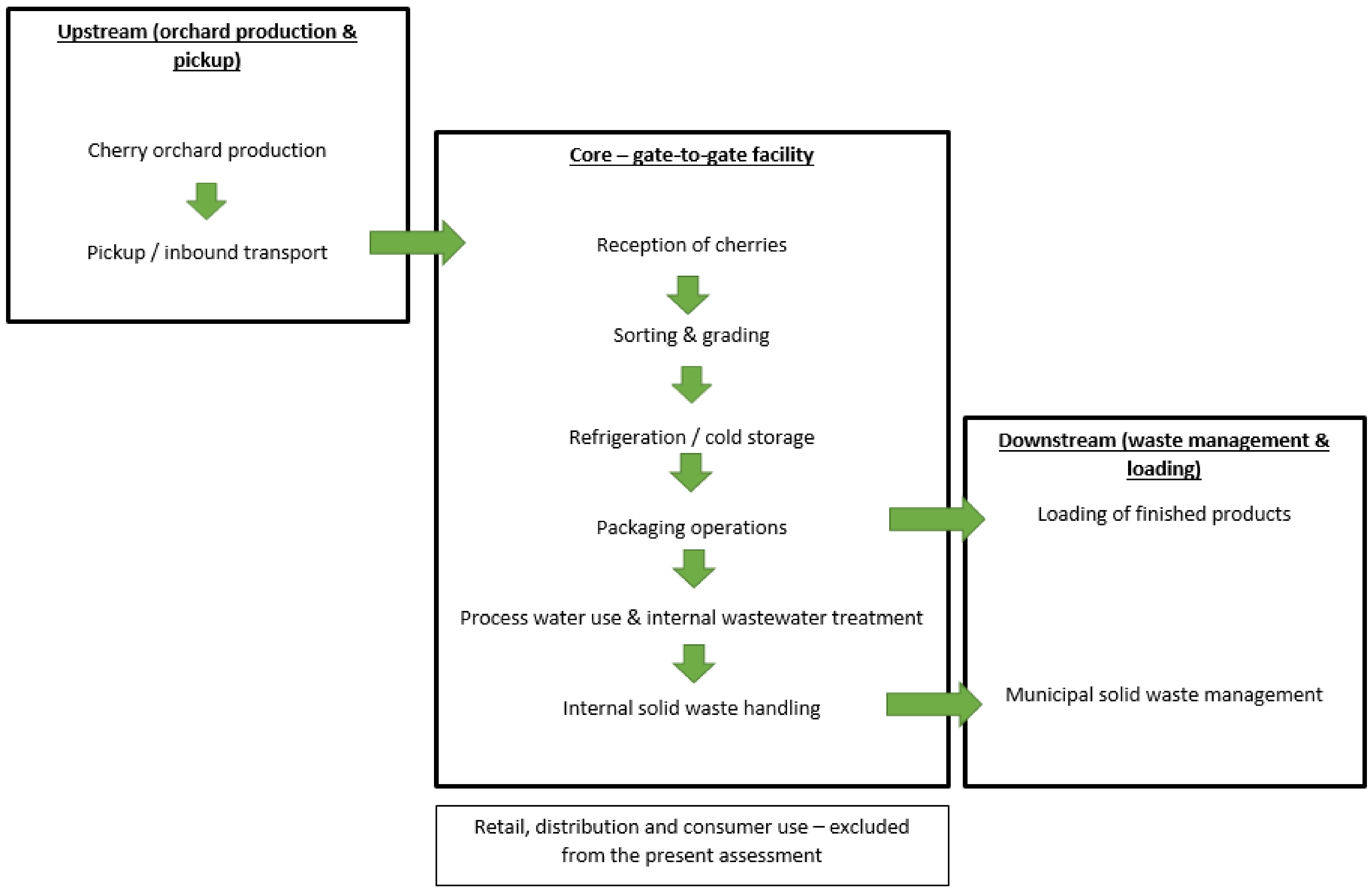
This study addresses these gaps by presenting a gate-to-gate life cycle assessment of an industrial sweet cherry sorting and packing facility in Greece (Agricultural Cooperative of Rachi Pieria “AGIOS LOUKAS”), based on high-resolution, sensor-informed operational data collected over a full processing season. It introduces a virtual sensor-based data framework that structures batch-level measurements of material and resource flows, enabling a detailed and transparent life cycle inventory. By combining primary operational data with secondary life cycle inventory datasets, the research provides a robust quantification of climate change impacts associated with post-harvest operations [14]. This approach allows the identification of environmental hotspots across various operational categories, including materials, energy, water, and waste, thereby offering a granular understanding of the environmental performance at the post-harvest stage. The main objectives of this study are to (i) quantify the gate-to-gate climate change impacts of a sensor-informed cherry sorting and packing facility in Greece, (ii) identify facility-level environmental hotspots across materials, energy and water use, and (iii) evaluate practical mitigation scenarios involving packaging optimization, photovoltaic electricity generation and water recirculation [15]. Figure 1 illustrates the overall workflow of the study, from goal and scope definition and data acquisition via virtual sensors to life cycle modeling, impact assessment and scenario analysis for mitigation options.

2. Materials and Methods

This study applies a gate-to-gate life cycle assessment to an industrial sweet cherry sorting and packing facility to quantify the environmental burdens associated with post-harvest operations under real operating conditions. In this study, the term Core stage is used interchangeably with the gate-to-gate system boundary, encompassing all processes inside the sorting and packing facility (electricity, process water, onsite packaging operations and waste management). Upstream agricultural production and downstream municipal solid waste management are modeled and reported separately to contextualize the gate-to-gate results within the broader supply chain, but they are not included in the strict gate-to-gate system boundary. The LCA framework adheres to the ISO 14040/14044 [16,17] standards, providing a comprehensive and transparent evaluation of environmental impacts [18]. The system boundary encompasses all unit processes within the facility, starting from the receipt of raw sweet cherries at the gate and concluding with the dispatch of packed, market-ready fruit, thereby excluding upstream agricultural production and downstream transportation [19]. The functional unit (FU) is defined as 1 kg of packed, market-ready sweet cherries at the facility gate, complying with Class I and Extra quality requirements (minimum caliber 22 mm, maximum defect tolerance 1%, and minimum flesh firmness 2.75 N), with a shelf-life compatible with export markets [20].
This gate-to-gate approach distinguishes the present study from broader farm-to-market analyses [21] by focusing specifically on the intensive resource use and emissions inherent to post-harvest processing, which are often aggregated in larger scope LCAs [22]. In addition to the Core facility, the model also includes separate Upstream and Downstream stages representing cherry production and pickup, and municipal waste management of packaging and process residues, respectively, in order to contextualize the gate-to-gate results within the broader supply chain.
In this study, the term “Core stage” is used interchangeably with the gate-to-gate system boundary, encompassing all processes inside the cherry sorting and packing facility (i.e., electricity, process water, on-site packaging operations and waste management). The subsequent subsections detail the methodological framework, encompassing the inventory analysis, impact assessment, and scenarios developed for evaluating mitigation potentials within the defined system boundaries. The study adopts a mass-based functional unit, which is widely recognized as the standard approach for evaluating food processing systems [23]. This selection ensures that the environmental findings are standardized and comparable across different agri-food supply chains [24], facilitating accurate benchmarking of post-harvest efficiencies.
Although mass-based metrics are prevalent, they are sometimes critiqued for failing to account for the intrinsic nutritional or physiological variations inherent in perishable produce [25]. Consequently, this study acknowledges these limitations by integrating batch-specific quality parameters into the inventory, thereby bridging the gap between raw mass throughput and actual marketable product output [26]. The life cycle inventory systematically quantifies all input and output flows associated with the functional unit, including raw materials, energy, water, and emissions to air, water, and soil, drawing upon the high-resolution, sensor-informed operational data collected from the facility [27,28]. Throughout this manuscript, the term “gate to gate” is reserved for the Core stage, i.e., all processes occurring within the physical boundaries of the sorting and packing facility. Upstream agricultural production and downstream municipal waste management are reported separately and are not included in the strict gate-to-gate system boundary.
To operationalize the gate-to-gate environmental assessment and handle the high-resolution, batch-level primary data stream, the study utilizes the KYKLOS 4.0 LCA Simulations Engine. This web-based SaaS platform enables near real-time LCA functionality by dynamic integration of virtual sensor outputs via Socket.io data streaming and REST APIs. The life cycle inventory (LCI) model was simulated by coupling the facility’s primary operational flows with secondary background datasets from the Ecoinvent database (version 3.10), which is embedded within the engine’s PostgreSQL 13.7 Enterprise framework. In the present case study, virtual sensors operate mainly at batch-level and daily resolution by ingesting high-frequency operational records rather than continuously streaming IoT measurements, so the implementation should be regarded as near real-time or quasi-dynamic rather than fully real-time in the strict sense.
Uncertainty and sensitivity analysis. In addition to the baseline assessment, a set of one-at-a-time sensitivity analyses were performed in KYKLOS to evaluate the influence of key modeling assumptions on the results. The tested parameters included: (i) the electricity mix and photovoltaic (PV) substitution rate; (ii) packaging mass and recycled content; (iii) the rejected-fruit rate; (iv) water intake and discharge assumptions; and (v) the upstream cherry-production proxy. For each parameter, the corresponding foreground LCI flow or emission factor was scaled within a literature-based range, while all other model components were kept identical to the baseline. A full probabilistic uncertainty analysis (e.g., Monte Carlo simulation) was not implemented in this case study, as the primary objective was to demonstrate the feasibility of sensor-informed, gate-to-gate modeling; this limitation is acknowledged and highlighted as a priority for future extensions of the KYKLOS engine.

2.1. System Boundary and Process Description

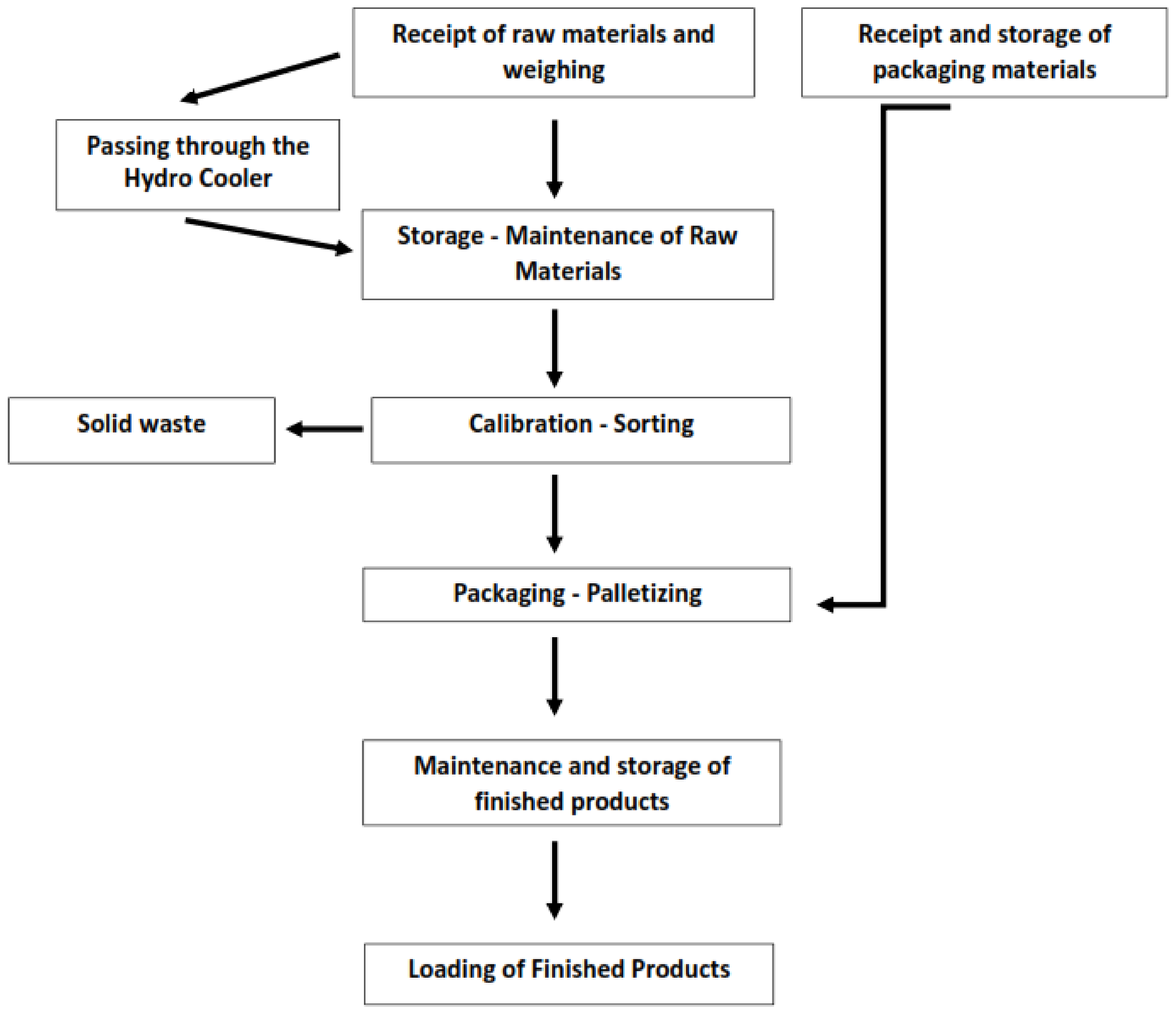
The system boundary is defined as gate-to-gate and encompasses all unit processes occurring after the arrival of harvested cherries at the facility and before the exit of packed product ready for dispatch. Figure 2 shows the flow chart of the cherries as they are transported from the field to the cooperative.
In detail, upon the arrival of cherries, the product is received and weighed. Each producer’s products on the pallet are assigned a code before being sent to the hydrocooler. The code is in the format 046BUR300511 (producer code: 046; cherry variety: BUR bourla; date: 300511). Upon receipt of the products, the packaging materials are also received and stored. In the next stage, the cherries pass through the hydrocooler Unical 600, Unitec S.p.A., 600, Lugo, Italy (13 cubic meters of water is required for 100 tons of cherries), and they are stored for preservation. The hydrocooler cools the cherries from the ambient temperature (20–40 °C) they have when they arrive from the fields at the sorting facility. Its capacity is 6 tons per hour, and the cherries reach an outlet temperature of 4–6 °C within a 15-min cycle. The next step is to transfer the cherries to cold storage rooms, where they remain for 24 h and their temperature drops to 0 °C. Then, they are sorted, with some ending up in the trash (in brown recycling bins collected by the Municipality of Katerini), while the suitable ones are sent for packaging. The Unitec Cherry Vision 3.0 (Unitec S.p.A., 600, Lugo, Italy) machine and the Unical 600 round fruit sorting line consist of 18 outlets and are capable of electronically recording and scanning the size and color of the cherries (using cameras). The cherries are conveyed along the line through a tube filled with cold water at 0 °C. Each fruit is fully scanned in a 360-degree rotation for size, bruises, twin fruits, foreign objects, firmness, the presence of a stem, and general non-conformities. At the same time, before each batch is released, a sample is sent for visual quality control. Each machine output is programmed to contain products of specific sizes: 22+, 24+, 26+, 28+, 30+, 32+, where the number refers to the fruit’s diameter in millimeters. Waste, such as rotten fruit, moldy fruit, fruit with microbial contamination, leaves and small twigs, and bunches accompanying the harvest, is deposited in brown bins managed by the Municipality of Katerini and located within the cooperative’s premises.
The packaged products are placed on pallets by quality category. A label is attached to each crate (whether cardboard or plastic) indicating the product quality, variety, and the code assigned during the receiving stage. Each pallet is assigned a unique number that also specifies the details of the producers it contains. The tag is placed by a specific employee who is responsible for performing this task. After being sorted by size and color, the cherries are placed on pallets that are secured to the automatic strapping machine and transported to cold storage rooms using electric pallet trucks and forklifts, where they are stored. The final stage is loading and transport to the final recipient.
Regarding the post-harvesting process, the sweet cherry post-harvest process flow starts with the reception of raw cherries in plastic crates, followed by rapid hydro-cooling to lower the internal fruit temperature and preserve firmness. The cherries are then conveyed to sorting lines for optical sorting, grading and manual inspection, before being packed into corrugated cardboard boxes, palletized, temporarily stored in refrigerated rooms and finally dispatched at the factory gate as a market-ready product. Disposal of packaging is also considered within the system boundary [29]. Conversely, the system boundary excludes the cultivation phase (cradle-to-gate), transportation from the facility, and the environmental impacts associated with the manufacturing of capital goods such as machinery and buildings [30].
The functional unit, crucial for comparative analysis, is defined as 1 kg of packed, market-ready cherries at the factory gate. In practice, transport from the orchards to the facility is not organized or operated by the cooperative, but by the producers themselves using their own vehicles and bearing their own transport costs. Similarly, buyers (exporters or wholesalers) collect the finished pallets directly from the facility, using their own trucks and logistics arrangements to deliver the product to downstream destinations. Consequently, road transport flows (ton·km) for the upstream and downstream stages are not explicitly included in the life cycle inventory, as they fall outside the operational control of the cooperative and the selected gate-to-gate modeling framework. The only product movement modeled within the system boundary is the internal handling of pallets with electric pallet jacks and forklifts, which is accounted for through the facility’s electricity consumption.
The upstream cultivation stage was modeled using an apricot production dataset as a proxy for sweet cherries due to similarities in orchard management practices and the lack of cherry-specific life cycle inventory data. Published LCAs for stone-fruit orchards report broadly comparable ranges of fertilizer input, pesticide use and irrigation intensity for apricots and sweet cherries, supporting the use of apricot as a first-order proxy when cherry-specific LCI is not available. To assess the influence of this choice, the apricot orchard module was additionally scaled between 0.5 and 1.5 times the baseline input level in a one-at-a-time sensitivity test, as reported in Section 3. Water use in the calibration tanks and hydrocooler was modeled as net tap-water intake based on sensor-derived volumes for Tanks 1–3 and the hydrocooler, assuming a negligible difference between metered water and discharged wastewater volumes. In addition to process water used in the hydrocooler and sorting tanks, approximately 20 m3 of potable water per campaign are used for manual cleaning of conveyors, sorting equipment and ancillary surfaces. This cleaning water is modeled as additional tap-water consumption without associated chemical detergents, consistent with the facility’s practice of relying solely on fresh water for equipment hygiene.
Refrigeration and cold-chain operations within the facility are based on closed-loop glycol systems rather than direct-expansion refrigeration using hydrofluorocarbon (HFC) refrigerants. The glycol circuits supply cooling to the hydrocooler, pre-cooling tunnels and cold rooms, and their electricity demand is fully captured in the process “Electricity for machines, freezers, other equipment and administration”, which aggregates metered consumption for compressors, circulation pumps, air-cooling units and auxiliary services during the cherry campaign. No explicit refrigerant leakage flows (e.g., HFC or NH3 emissions) are modeled, as such emissions are assumed to be negligible under current operating conditions. Furthermore, the cooperative does not use stretch-wrapping film for pallet stabilization; pallets are secured exclusively with polypropylene strapping, so no LLDPE stretch-film flow is included in the packaging inventory.
Post-harvest fungicide treatment was performed using Scholar 230 SC (Syngenta, Syngenta Crop Protection AG, Basel, Switzerland), a fludioxonil-based contact fungicide applied via drencher/hydrocooler to control post-harvest rots in sweet cherries. As no dedicated life cycle inventory dataset for fludioxonil formulations was available, the product was represented by a generic organic chemical (proxy for fungicide manufacturing and formulation), scaled to the recommended application rates per ton of fruit. This approximation captures the additional chemical production and toxicity burdens associated with post-harvest disease control while acknowledging residual uncertainty in the exact toxicological impact profile. The Fresh Start post-harvest treatment was originally misallocated to an organic phosphorus fertilizer dataset; in the revised model, it is represented by a generic organic chemical (proxy for a hydrogen-peroxide-based sanitizer) to better reflect its production and toxicity profile.
All process and cleaning water is ultimately discharged to a nearby river without on-site wastewater treatment. In the inventory database used for this study, no suitable operational dataset was available to represent direct discharge of low-load process water to surface water bodies. Consequently, no explicit emission flows to receiving waters are modeled, and the associated impacts on freshwater and marine eutrophication or ecotoxicity are likely underestimated. This limitation should be borne in mind when interpreting water-related impact categories, as the present model primarily captures the upstream impacts of water abstraction rather than downstream water-quality changes.

2.2. Life Cycle Inventory and Virtual Sensors

Of particular research interest is the fact that this study utilized virtual sensors/pseudo-sensors to link the inventory with actual operational data. The term pseudo-sensor refers to a virtual measurement entity that feeds KYKLOS 4.0 with real data, even when this data does not originate from an online IoT sensor but from Unitec Cherry Vision 3.0 machine online, accounting records, production reports, energy bills, daily tank readings, or other operational records.
In this application, pseudo-sensors were used to link the model to data such as electricity consumption, water levels in tanks and the water cooler, chemical usage, and the net weight of incoming batches. Thus, KYKLOS 4.0 does not function as a simple static LCA model, but as a data-driven dynamic foreground inventory platform, which is updated by time-specific, real-time flows from the facility. This integration enables precise allocation of resource consumption to individual production batches, effectively overcoming the complexities inherent in multi-product facilities [31]. This methodological approach facilitates the granular mapping of environmental loads, ensuring that inputs such as refrigeration energy or sorting water are apportioned proportionally to the actual throughput of specific batches [32].
This approach can be considered groundbreaking in research on dynamic LCA in the agri-food sector, as it bridges the gap between the theoretical possibility of near real-time LCA and the practical lack of a complete sensor infrastructure in most agri-food systems. In other words, this study demonstrates that even before the full installation of physical sensors in each subsystem, a functionally dynamic LCA architecture can be developed using real data and a virtual sensor interface.
This comprehensive data acquisition strategy, encompassing both direct measurements and virtual sensor outputs, underpins a robust assessment of environmental impacts across the gate-to-gate life cycle stages. For example, water usage, a critical parameter, is meticulously accounted for, with specific attention to the volume recirculated versus fresh intake, enabling a precise calculation of water-related environmental burdens. The energy consumption associated with each processing step, including hydrocooling, electronic sorting, and cold storage, is similarly disaggregated and quantified, allowing for a precise attribution of greenhouse gas emissions to specific operational phases. This detailed inventory extends to material inputs, including packaging components and cleaning agents, and waste outputs, ensuring a complete and accurate representation of the facility’s environmental profile.
The inventory also includes an assessment of cold storage energy consumption, which is critical for understanding the overall energy footprint of perishable goods due to the energy intensity required to maintain specific temperatures [33]. The integration of such high-resolution, virtually sensed data significantly improves the reliability and transparency of the inventory analysis, moving beyond the limitations of traditional LCA approaches by minimizing reliance on aggregated secondary data and fostering the development of region-specific life cycle inventory databases. Background life cycle inventory data for energy, materials, transport and waste treatment were obtained from the Ecoinvent 3.10 database using the cut-off system model, as implemented in the KYKLOS platform, ensuring a consistent attributional LCA framework across all background processes.
High-resolution operational data from the virtual sensor framework and backend logs (NetWeight, water tanks, waste records, energy meters and packaging counts) were aggregated over the processing season and normalized to the functional unit. Table 1 reports the main foreground life cycle inventory flows per kilogram of packed cherries at the facility gate, including electricity use, water intake and wastewater discharge, packaging materials, solid waste streams and cleaning agents, as well as the overall packed yield. This consolidated foreground inventory includes electricity use, water intake and wastewater discharge, packaging materials, solid waste streams, cleaning agents and packed yield per functional unit, ensuring transparency and reproducibility of the Core-stage calculations.
To explore the influence of post-harvest loss assumptions, the rejected-fruit flow was additionally varied by ±50% (0.5–1.5 times the baseline 5.7 g kg−1) in KYKLOS, while keeping all other flows unchanged, in order to test the sensitivity of the results to the rejected-fruit rate. This rigorous approach to data collection, emphasizing primary data and virtual sensor outputs, is crucial for developing an accurate and reliable life cycle inventory that captures the unique environmental characteristics of sweet cherry post-harvest operations in Greece [34]. This methodological rigor, incorporating digital technologies for granular data acquisition, directly addresses challenges in LCA data availability and accuracy, particularly in specialized agricultural systems [35,36]. Such comprehensive data collection, utilizing Industry 4.0 technologies and leveraging extensive primary data for the gate-to-gate analysis, provides a highly detailed and accurate basis for evaluating the environmental performance of the entire post-harvest supply chain [37].
Furthermore, by addressing the limitations inherent in static, generic databases, this dynamic modeling approach effectively captures seasonal variability and site-specific operational fluctuations [38].

2.3. Data Categorization and Secondary Sources

The main facility-level flows considered in the Core stage include materials (corrugated cardboard boxes and associated packing components), energy (electricity consumption linked to sorting, grading, conveying and packing), water (process water used for handling and related operations) and waste (rejected fruit fractions, damaged packaging residues and operational losses).
Secondary data were used to model background processes (electricity grid mix, packaging production, waste treatment) obtained from established LCI databases and literature-compatible background datasets. Specifically, the Ecoinvent 3.10 database was utilized to quantify the upstream environmental burdens associated with resource extraction and energy production [39]. To ensure the representativeness of the foreground system, data collection protocols followed standardized questionnaires to track specific machine energy profiles and material quantities [40,41]. Furthermore, impact categories and characterization factors were derived from the ReCiPe 2016 model to maintain methodological consistency in evaluating the ecological efficacy of these agricultural outcomes [42,43]. These categories facilitate a comprehensive impact assessment, converting inventory data into indicators such as climate change and water depletion [44].
In adherence to the EPD International cut-off criteria, elementary flows contributing less than 1% to any specific impact category were excluded from the analysis to prioritize the most environmentally significant contributors [45]. This distinction between foreground and background systems ensures that site-specific operational data remain the focal point, while the broader environmental implications of supply chain inputs are captured through robust, peer-reviewed database parameters [46,47].

3. Results

3.1. Environmental Impact Results

The characterization phase reveals that the global warming potential is predominantly driven by the production of corrugated cardboard packaging, reflecting the significant embedded emissions of raw material extraction and manufacturing [48].
The total climate change footprint for the period under review amounted to 114,207.32 kg CO2-eq. Given that the total net weight of the processed cherries was approximately 264,608 kg, this result corresponds to approximately 0.43 kg CO2-eq per kg of cherries. This value falls within a realistic range compared to the international literature on cherries and comparable fruits, taking into account that the present application is gate-to-gate and not a full cradle-to-grave analysis. Scenarios were then subjected to sensitivity analysis to evaluate the trade-offs between packaging weight reduction and potential increases in post-harvest fruit spoilage rates.
Table 2 reports the breakdown of GWP100 among the three life-cycle stages considered in this study. The upstream stage is the dominant contributor (70.61% of total GWP100), followed by the core stage (28.43%), whereas the downstream stage accounts for only 0.97% of the climate change impact. This distribution highlights that most of the carbon footprint is associated with the incoming cherries and upstream-related processes rather than with the gate-to-gate operations inside the facility. Unless otherwise stated, total impact results refer to the entire modeled system (Upstream–Core–Downstream), whereas the strict gate-to-gate assessment focuses on the Core stage only.
At the overall gate-to-gate level, upstream cherry production clearly dominates GWP100, mainly due to the “Pickup of cherries” process. However, within the Core stage (i.e., processes located inside the facility), corrugated cardboard and associated packaging components represent the largest contributors to GWP100, followed by electricity use and process water.
Table 3 presents the main process-level contributions to climate change. At the process level, “Pickup of cherries” was by far the largest contributor to GWP100, reaching 80,640.03 kg CO2-eq. Within the processing facility, “Electricity for machines, freezers and administration” was the dominant process, contributing 31,175.88 kg CO2-eq, whereas “Packaging–palletizing” contributed 1017.43 kg CO2-eq and “Calibration–sorting” 342.80 kg CO2-eq. Smaller but still measurable contributions were observed for “Passing through the hydrocooler” (41.50 kg CO2-eq), “Solid waste management” (1092.62 kg CO2-eq) and “Loading of finished products” (about 10 kg CO2-eq). These findings confirm that the climate change profile of the system is largely shaped by the burden of incoming cherries and by electricity demand inside the facility.
Table 4 summarizes the total values of the selected ReCiPe 2016 midpoint impact categories and the relative contributions of the upstream, core and downstream stages. Nonetheless, the quantified data indicate that optimizing internal operations—specifically through packaging material intensity reduction and energy management—remains a viable strategy for improving the overall environmental profile of the facility [49,50]. In contrast, the downstream stage represents the lowest relative contribution to the overall climate-change impact, reflecting mainly the management of municipal solid waste and the loading of finished products [51,52].
Unless otherwise stated, total impact results are reported for the entire modeled system (Upstream + Core + Downstream), while separate breakdowns are provided for the Core gate-to-gate facility in line with the declared system boundary. At the extended system level, upstream cherry production clearly dominates GWP100, accounting for 70.61% of total climate-change impacts, mainly due to the “Pickup of cherries” process. Within the Core stage (processes located inside the facility), corrugated cardboard and associated packaging components represent the largest contributors to GWP100, followed by electricity use and water processing. The Downstream stage contributes less than 1% to total GWP100, but its relative contribution becomes more noticeable for toxicity-related categories (e.g., freshwater and marine ecotoxicity, human toxicity) and surplus ore potential, highlighting the role of waste management in non-climate indicators.
The analysis of the Core stage leads to a clear conclusion: the facility’s energy management is the primary area for improvement within the plant’s boundaries. Improving the energy efficiency of the refrigerators, reducing standby consumption, improving the organization of the cold chain operation, and integrating photovoltaic production into the energy balance can substantially reduce the environmental footprint per kg of product. Furthermore, expanding the assessment to include multiple midpoint impact categories beyond global warming—such as eutrophication and mineral depletion—is essential, as these often originate from distinct process units like wastewater treatment or specific packaging materials [53,54,55].
The analysis identifies corrugated cardboard as the dominant environmental hotspot. Recent evidence suggests that single-use cardboard systems often have higher environmental impacts compared to reusable alternatives, particularly regarding acidification and water consumption [56]. Furthermore, the environmental performance of packaging is highly sensitive to air ventilation design and end-of-life scenarios.

3.2. Mitigation Scenarios

Based on the sensor-informed inventory and the identified hotspots, three main mitigation scenarios are defined, targeting packaging materials, electricity use and water management, respectively.
  • Scenario 1—Packaging optimization
The first scenario focuses on packaging optimization, which is identified as a key driver of the environmental burden within the core stage due to corrugated cardboard and associated packaging components. In line with the baseline results, corrugated cardboard contributes substantially to climate change, terrestrial acidification and fossil resource use among the processes located inside the facility, even though the overall life-cycle footprint remains dominated by upstream agricultural production of cherries.
This scenario includes three main measures: (i) increasing the recycled content of the corrugated board, (ii) reducing material intensity per kilogram of product through lightweight packaging designs and optimized box geometry, and (iii) eliminating auxiliary packaging elements that do not provide substantial functional benefits. These measures directly reduce the impacts associated with packaging material production, while maintaining the required mechanical strength and ventilation properties for fresh-fruit logistics. In addition, the scenario discusses the potential transition toward reusable transport packaging systems as a longer-term option to substitute conventional single-use carton materials, subject to future assessments of return logistics and cleaning requirements [57].
In the LCI model, these measures are implemented as a reduction of 25% in corrugated-board mass and 30% in plastic films per kilogram of packed cherries (Cardboard = 0.75·C0; Film = 0.70·F0), and by switching between corrugated-board datasets with different recycled-content shares. This implementation allows the sensitivity of the results to packaging weight and recycled content to be quantified directly in terms of changes in GWP and other impact categories.
Finally, literature on eco-design and food packaging indicates that optimizing packaging configurations—through material lightweighting and increased recycled content—can reduce the climate change contribution of packaging by approximately 10–30%, Scenario 2 focuses on energy transition, modeling the substitution of grid electricity with onsite photovoltaic generation to address the facility’s intensive cooling and processing requirements depending on the product and baseline design.
For products where packaging represents a substantial share of the gate-to-gate footprint, such measures have been reported to lower overall product-level GWP by about 5–15%, highlighting the relevance of packaging optimization as a mitigation pathway in post-harvest food systems. Moreover, transitioning from single-use cardboard to reusable transport boxes may provide further durability-related benefits, though such shifts require careful analysis to ensure that increased logistics and cleaning requirements do not offset initial material savings.
  • Scenario 2—Partial substitution of grid electricity with photovoltaic generation
The second scenario targets partial substitution of grid electricity by on-site photovoltaic (PV) generation, combined with targeted energy-efficiency measures in the facility. Table 4 shows that during the reference period of the cherry processing campaign (29 May–6 August 2025), the total electricity demand of the facility amounted to 53,007 kWh, while the rooftop PV system generated 40,955.06 kWh, corresponding to approximately 77% of the electricity consumption recorded in the baseline. In the scenario model, this PV output was assumed to replace an equivalent share of electricity demand in the core-stage electricity supply, while the total electricity demand per functional unit remained unchanged.
To implement this scenario, the baseline process “Electricity for machines, freezers and administration” was modified by substituting 77.3% of its electricity demand with on-site PV electricity, while the remaining 22.7% continued to be supplied by grid electricity. The photovoltaic contribution was modeled using the EI 3.11 (cut-off) dataset “electricity production, photovoltaic, 3 kWp slanted-roof installation, CIS, panel, mounted (RoW)”. All other processes, including downstream operations such as “Loading of finished products”, were retained at their baseline values in order to isolate the effect of electricity substitution and preserve the original process structure of the model.
Under these assumptions, as shown in Table 5, the gate-to-gate global warming potential (GWP100) decreases from 114,207.32 to 92,622.30 kg CO2-eq, corresponding to an overall reduction of approximately 18.9% compared with the baseline. The contribution of the core stage to GWP100 falls from 28.43% (32,464.66 kg CO2-eq) to 11.75% (10,879.65 kg CO2-eq), while the impact attributed to the process “Electricity for machines, freezers and administration” decreases from 31,175.88 to 9590.86 kg CO2-eq. These results confirm that the substitution of grid electricity with on-site PV generation is an effective mitigation measure within the post-harvest facility, even though the overall gate-to-gate footprint remains dominated by upstream cherry production.
Beyond the direct contribution of PV generation, this scenario conceptually encompasses complementary operational and technological measures such as refrigeration upgrades, improved thermal insulation, optimization of temperature set-points, and reduced standby loads in machinery and auxiliary systems. This scenario is also used to test the sensitivity of the model to assumptions about the electricity mix and PV substitution rate by replacing the baseline national grid factor with a greener mix that embodies a substantially lower GHG intensity per kilowatt-hour. Such measures are expected to further improve impact categories where electricity use is an important contributor, including fossil fuel depletion and photochemical oxidant formation, while maintaining the required cooling performance and product quality throughout post-harvest handling.
Finally, the increase in the relative contribution of the upstream and downstream stages in Scenario 2 does not reflect higher absolute impacts in these stages, but rather the substantial reduction achieved in the electricity-related burden of the core stage.
  • Scenario 3—Increased water recirculation and improved water management
The third scenario aims at increased water recirculation and improved water management in the facility, addressing primarily the hydro-cooler and washing lines. Building on detailed measurements of water use in tanks and process units, this scenario assumes higher recirculation rates in washing circuits, optimized water renewal where strict product-quality constraints apply, and cleaning practices that minimize both the volume and pollutant load of process water. While water use contributes less to GWP100 than packaging and electricity in the baseline, enhanced recirculation leads to measurable reductions in the water consumption potential (WCP) and contributes to improvements in selected toxicity-related categories by reducing the quantity and pollutant content of effluents that require downstream handling.
Furthermore, the scenario incorporates green procurement strategies aimed at auditing supplier credentials and prioritizing cleaning agents with lower environmental profiles. By favoring detergents and disinfectants with reduced ecotoxicity and by engaging waste-management providers that offer recovery or valorization options, the facility can mitigate the indirect impacts of chemical inputs used in sanitation. In combination, these measures strengthen the link between process-level water management, reduced WCP and improved scores in categories such as freshwater ecotoxicity, thus complementing the packaging and energy-focused interventions of Scenarios 1 and 2 [58].
In a combined scenario, where packaging optimization, partial substitution of grid electricity with PV generation and increased water recirculation are implemented simultaneously, the modeled results indicate that total GWP100 decreases from 114,207.32 to 92,500.27 kg CO2-eq, corresponding to an overall reduction of 19.0% compared to the baseline. In addition, this combined mitigation potential is not a purely literature-based estimate but results from an explicit combined scenario run in which the packaging optimization (Scenario 1), low-carbon electricity (Scenario 2) and improved water management (Scenario 3) configurations are applied simultaneously to the foreground inventory. This combined pathway offers a technically feasible and operationally realistic strategy for significantly improving the environmental performance of post-harvest operations, while supporting Sustainable Development Goals related to climate action and resource efficiency. Furthermore, these findings emphasize the necessity of integrating policy-driven actions that promote local fruit consumption and enhance infrastructure efficiency to maximize long-term environmental sustainability [59].
Three mitigation scenarios were modeled directly in KYKLOS (Table 6) by modifying the foreground LCI of the Core system on a per-kilogram basis. Scenario 1 (“Packaging optimization”) represents the adoption of lightweight packaging and was implemented by reducing the corrugated cardboard and plastic film flows in the “Packaging–Palletizing” process to 75% and 70% of their baseline values, respectively (Cardboard = 0.75·C0; Film = 0.70·F0). Scenario 2 (“Low-carbon electricity”) replaces the baseline grid mix with a greener mix characterized by a substantially lower GHG intensity, while keeping the electricity demand per functional unit unchanged.
Scenario 3 (“Water management”) was implemented by reducing fresh/process water intake and wastewater discharge in the Core by 40% (Water = 0.60·W0; Wastewater = 0.60·WW0) and by increasing internal recirculated water wherever explicitly modeled, in line with reported water-saving potentials of 30–50% in food-processing facilities. All other foreground and background flows were kept identical to the baseline.
The mitigation scenarios analyzed in this study have direct policy and industry implications for post-harvest agri-food systems. The combined scenario confirms that most of the achievable climate-change mitigation is driven by the electricity transition (Scenario 2), while packaging optimization and water-management measures provide only modest additional reductions in GWP100 but contribute more substantially to water- and toxicity-related indicators. By prioritizing packaging optimization, partial substitution of grid electricity with on-site photovoltaic generation, and increased water recirculation, cherry packing facilities can achieve substantial reductions in greenhouse gas emissions and resource use per kilogram of product, in line with SDG 12 (Responsible Consumption and Production) and SDG 13 (Climate Action). In this study, the term “Core stage” is used interchangeably with the gate-to-gate system boundary, encompassing all processes inside the cherry sorting and packing facility (i.e., electricity, process water, on-site packaging operations and waste management). Throughout this paper, the term “gate-to-gate” refers strictly to the Core stage (processes located inside the facility), while upstream cherry production and downstream waste management are included only in a contextual extension of the model and are reported separately.
At the policy level, these results support targeted incentives for low-impact packaging, renewable energy deployment and water-efficiency investments in cold-chain infrastructure. Future research should broaden the scope to include life cycle stages such as refrigerated transport and final retail disposal, as these phases significantly influence the total carbon footprint of the fresh produce value chain [60].
For industry practitioners, the virtual sensor architecture and data-driven LCA workflow demonstrated here provide a practical blueprint for continuous environmental monitoring, benchmarking across seasons and sites, and integrating eco-efficiency criteria into operational and investment decisions along fresh fruit supply chains. By facilitating real-time visibility into process-level impacts, this methodology empowers stakeholders to move beyond static sustainability reporting toward proactive, evidence-based management of agri-food systems [61].
Finally, review studies on industrial and urban water reuse report that implementing recirculation schemes and partial replacement of freshwater intake with reclaimed water can reduce process-level freshwater consumption by roughly 20–30%, and in some cases by up to 70%, depending on the system configuration and treatment technology. This evidence supports the design of Scenario 3, which focuses on increasing water recirculation and improving cleaning practices, and suggests that meaningful reductions in water consumption potential (WCP) and selected toxicity-related indicators are achievable even in gate-to-gate systems where water is not the primary contributor to GWP100.
Within this framework, three mitigation scenarios were developed, focusing on packaging optimization, partial substitution of grid electricity with on-site photovoltaic generation and increased water recirculation. For the baseline, the gate-to-gate GWP100 amounts to 114,207.32 kg CO2-eq. Scenario 2 (partial substitution of grid electricity with photovoltaic generation) alone reduces this value to 92,622.30 kg CO2-eq, corresponding to an 18.9% decrease relative to the baseline. Based on literature-reported ranges for packaging eco-design and industrial water-reuse, Scenario 1 is expected to reduce packaging-related climate impacts by approximately 10–30%, while Scenario 3 can reduce freshwater intake and related impacts by about 20–30%, without altering the functional unit or total throughput. When these three interventions are implemented simultaneously and partial overlap between their effects is taken into account, the combined mitigation potential corresponds to a total reduction in gate-to-gate GWP that exceeds 19% compared with the baseline.
Lastly, a one-at-a-time sensitivity analysis was performed on the upstream orchard proxy (apricot | market for apricot| GLO) by scaling the corresponding module in KYKLOS between 0.5 and 1.5 times the baseline amount (263.005 kg of apricots). This led to substantial changes in the orchard-related impacts themselves (e.g., global warming potential from 73.887 to 154.527 kg CO2-eq and water consumption from 14.499 to 43.227 m3), but translated into only a moderate change (on the order of a few percent) in the total impact per kg of packed cherries, because the Core-stage electricity and packaging remained the dominant contributors. The ranking of hotspots (electricity ≫ packaging ≫ orchard ≫ chemicals) was unaffected by these variations, indicating that the main conclusions are robust to the choice of apricot as a proxy for cherry production.
Beyond the mitigation scenarios themselves, the one-at-a-time sensitivity tests show that the model is highly sensitive to assumptions about the electricity mix, but only weakly sensitive to plausible variations in other parameters. Switching to a low-carbon electricity mix (Scenario 2) reduced Core-stage GWP by 66.5% and total GWP by 18.9%, whereas varying packaging mass and recycled content (Scenario 1), improving water management (Scenario 3), and changing the rejected-fruit rate by ±50% each altered the total GWP by less than about 1%. Scaling the apricot-based orchard proxy between 0.5× and 1.5× of its baseline level also resulted in only a few percent variation in total GWP and did not change the ranking of hotspots, confirming that the key conclusions are robust to uncertainties in packaging, water and cherry-production modeling assumptions.

4. Discussion: The Necessity for Real-Time LCA

The integration of the evolution of KYKLOS 4.0 with virtual sensors marks a critical transition toward proactive eco-efficiency management. It is important to note that, although the architecture is designed for real-time capabilities, the current deployment is based on high-resolution batch and daily updates and therefore represents a step towards fully real-time LCA rather than a complete implementation. Traditional static LCA suffers from “aggregation bias,” which is eliminated through batch-level monitoring. Real-time environmental monitoring provides significant leverage for carbon mitigation by enabling operators to identify inefficiencies, such as energy leaks, as they occur.
This data-driven approach directly supports the creation of audit-ready ESG reports from field-level telemetry, reducing reporting costs while improving accuracy. Furthermore, this high-resolution methodology facilitates the optimization of cold chain logistics by aligning energy consumption patterns with real-time fruit quality degradation metrics [62]. By bridging the gap between hardware sensor data and life cycle modeling, the proposed framework addresses the inherent limitations in existing studies that often overlook the feedback loop between packaging performance and product shelf-life [63].
The move toward a dynamic life cycle assessment framework is particularly important for cold storage facilities, as it allows temporal variations in energy tariffs and operating conditions to be reflected in the environmental profile, while enabling explicit management of trade-offs between resource use, food quality preservation and food waste. Integrating digital-twin capabilities further allows continuous monitoring of key production parameters so that environmental burdens can be mitigated before they escalate, mirroring the broader shift of the agro-food sector toward autonomous, data-driven decision-making. In this context, digital twins help convert high-frequency telemetry into actionable sustainability metrics, improving traceability and supporting circular supply-chain models where real-time feedback loops are used to reduce food waste and unnecessary over-packaging [64,65,66].
At the same time, cyber-physical systems enable dynamic prediction of resource consumption and better preparation for operational contingencies and process fluctuations, offering the level of control required to align complex agri-food logistics with decarbonization objectives. However, effective implementation is still constrained by the lack of reduced-order models capable of supporting instantaneous, online decision-making in high-speed sorting environments. Existing simulation frameworks often require intensive computing resources that limit real-time responsiveness, making the development of data-efficient reduced-order models a key research priority for overcoming current bottlenecks in operational agility.
Recent dynamic and real-time LCA frameworks have been developed mainly in sectors such as building construction and discrete manufacturing, where digital twins and IoT are integrated with BIM or PLM environments. By contrast, sensor-informed LCA implementations in post-harvest agri-food facilities are still scarce and typically rely on aggregated production data rather than batch-level operational records. The present study contributes to this emerging area by operationalizing a virtual-sensor architecture in a commercial LCA engine, linking batch-level mass, energy, water and waste data from a real cherry sorting and packing facility to a gate-to-gate model with explicit mitigation scenarios.

5. Conclusions

This study presented a gate-to-gate life cycle assessment of an industrial sweet cherry sorting and packing facility in Greece, using high-resolution, sensor-informed operational data to quantify environmental performance in the post-harvest stage. The results show that upstream production of cherries dominates the overall extended system carbon footprint, while within the facility boundaries, corrugated cardboard packaging is the main contributor to GWP100, followed by electricity use and process water. These findings confirm that packaging choices and energy management are critical levers for improving the eco-efficiency of fresh fruit supply chains at the facility level.
Within this framework, three mitigation scenarios were developed, focusing on packaging optimization, partial substitution of grid electricity with on-site photovoltaic generation and increased water recirculation.
The mitigation analysis indicates that lightweight packaging and improved water management alone have only a minor effect on the overall climate-change footprint (both below 1% reduction at the system level), whereas switching to a low-carbon electricity mix reduces Core-stage GWP by about two-thirds and total GWP by almost 19%. This confirms that decarbonizing electricity supply is the primary lever to reduce the impacts of the fresh-cherry supply chain, with packaging optimization and water savings acting as complementary measures.
Beyond the quantitative results, the most important conclusion of the study is methodological. By integrating virtual sensors, high-frequency operational measurements and the KYKLOS 4.0 digital platform, the work demonstrates that post-harvest processes can be represented through dynamic, sensor-informed inventories rather than static, aggregated data. To our knowledge, this is one of the first sensor-informed, near real-time LCA implementations in a post-harvest fruit-sorting facility, with batch-level allocation of impacts to mitigation scenarios, complementing existing dynamic LCA work in other sectors. This configuration enables batch-level tracking of mass flows, energy use, water consumption and waste generation and lays the foundation for a new generation of data-driven LCA approaches that move from one-off assessments towards continuous environmental performance monitoring in agri-food systems [67,68].
From a practical perspective, the proposed framework provides a transparent and operationally relevant basis for eco-efficiency management in cherry packing facilities and similar post-harvest operations. By linking mitigation scenarios directly to measurable operational parameters—such as kilowatt-hours of electricity, cubic meters of water and kilograms of packaging per batch—it supports decision-makers in prioritizing investments in packaging eco-design, renewable energy and water-efficiency technologies that are aligned with Sustainable Development Goals related to responsible consumption and production (SDG 12) and climate action (SDG 13). At the same time, the sensor-informed architecture improves traceability and data quality for environmental accounting, offering a robust platform for future integration with certification schemes, digital product passports and real-time sustainability dashboards.

Author Contributions

Conceptualization, K.S. and D.A.; methodology, K.S., N.K. and D.A.; software, K.S. and N.K.; validation, K.S., N.K., C.A. and D.A.; formal analysis, K.S.; investigation, K.S. and N.K.; resources, D.A. and C.A.; data curation, K.S. and N.K.; writing—original draft preparation, K.S.; writing—review and editing, N.K., C.A. and D.A.; visualization, K.S.; supervision, D.A. and C.A.; project administration, D.A.; funding acquisition, D.A. All authors have read and agreed to the published version of the manuscript.

Funding

This research received no external funding.

Institutional Review Board Statement

Not applicable.

Informed Consent Statement

Not applicable.

Data Availability Statement

The data presented in this study are available on request from the corresponding author.

Acknowledgments

The authors acknowledge the Agricultural Cooperative of Rachi Pieria “AGIOS LOUKAS” for providing access to operational data and supporting the implementation of the case study.

Conflicts of Interest

The authors declare no conflicts of interest.

References

  1. Spanos, K.; Kladovasilakis, N.; Achillas, C.; Aidonis, D. Mapping Agricultural Sustainability Through Life Cycle Assessment: A Narrative Review. Environments 2025, 12, 436. [Google Scholar] [CrossRef]
  2. Rana, R.L.; Andriano, A.M.; Giungato, P.; Tricase, C. Carbon Footprint of Processed Sweet Cherries (Prunus avium L.): From Nursery to Market. J. Clean. Prod. 2019, 227, 900–910. [Google Scholar] [CrossRef]
  3. Cerutti, A.K.; Beccaro, G.L.; Bruun, S.; Bosco, S.; Donno, D.; Notarnicola, B.; Bounous, G. Life Cycle Assessment Application in the Fruit Sector: State of the Art and Recommendations for Environmental Declarations of Fruit Products. J. Clean. Prod. 2013, 73, 125–135. [Google Scholar] [CrossRef]
  4. Broeze, J.; Guo, X.; Axmann, H. Trade-Off Analyses of Food Loss and Waste Reduction and Greenhouse Gas Emissions in Food Supply Chains. Sustainability 2023, 15, 8531. [Google Scholar] [CrossRef]
  5. Gava, O.; Bartolini, F.; Venturi, F.; Brunori, G.; Pardossi, A. Improving Policy Evidence Base for Agricultural Sustainability and Food Security: A Content Analysis of Life Cycle Assessment Research. Sustainability 2020, 12, 1033. [Google Scholar] [CrossRef]
  6. Vyrkou, A.; Aryblia, M.; Savvakis, N.; Nicacio, I.; Siddique, O.; Arampatzis, G.; Angelis-Dimakis, A. Dynamic vs Real Time Life Cycle Assessment. Clean. Environ. Syst. 2025, 18, 100296. [Google Scholar] [CrossRef]
  7. Berardy, A.; Seager, T.P.; Costello, C.; Wharton, C. Considering the Role of Life Cycle Analysis in Holistic Food Systems Research Policy and Practice. J. Agric. Food Syst. Community Dev. 2020, 9, 209–227. [Google Scholar] [CrossRef]
  8. Da Costa, T.P.; Costa, D.; Murphy, F. A Systematic Review of Real-Time Data Monitoring and Its Potential Application to Support Dynamic Life Cycle Inventories. Environ. Impact Assess. Rev. 2024, 105, 107416. [Google Scholar] [CrossRef]
  9. Holden, N.M.; White, E.P.; Lange, M.; Oldfield, T.L. Review of the Sustainability of Food Systems and Transition Using the Internet of Food. npj Sci. Food 2018, 2, 18. [Google Scholar] [CrossRef]
  10. Luo, Z.; Zhu, J.; Sun, T.; Liu, Y.; Ren, S.; Tong, H.; Yu, L.; Fei, X.; Yin, K. Application of the IoT in the Food Supply Chain—From the Perspective of Carbon Mitigation. Environ. Sci. Technol. 2022, 56, 10567–10576. [Google Scholar] [CrossRef]
  11. Mannheim, V.; Moor, U.; Laumets, L.; Szita, K.T. Evaluating the Energy Resources and Environmental Impacts for Blue-berry Packaging Materials with a Focus on End-of-Life Scenarios. Energies 2025, 18, 3232. [Google Scholar] [CrossRef]
  12. Gao, S.; Ren, P.; Yao, J.; Zhou, H.; Gustavsson, M.; Wu, C. LCA Studies of Fruit and Vegetables Production, Storage and Transportation Using Different Packagings in Consideration of Food Waste and Energy Consumption. Biomass Bioenergy 2025, 208, 108702. [Google Scholar] [CrossRef]
  13. Oliver-Villanueva, J.-V.; Armengot, B.; Lorenzo-Sáez, E.; Lerma-Arce, V. Sustainable Environmental Analysis of Wood-en Boxes for Fruit and Vegetable Packaging and Transport in Comparison with Corrugated Cardboard Boxes. Sustainability 2025, 17, 557. [Google Scholar] [CrossRef]
  14. Dzreke, S.S. From Field Data to ESG Reports: Real-Time Life Cycle Assessment in Digital Agriculture. Eng. Sci. Technol. J. 2025, 6, 626–641. [Google Scholar] [CrossRef]
  15. Sica, D.; Esposito, B.; Malandrino, O.; Supino, S. The Role of Digital Technologies for the LCA Empowerment towards Circular Economy Goals: A Scenario Analysis for the Agri-Food System. Int. J. Life Cycle Assess. 2022, 29, 1486–1509. [Google Scholar] [CrossRef]
  16. ISO 14040; Environmental Management—Life Cycle Assessment—Principles and Framework (International Standard). ISO: Geneva, Switzerland, 2006.
  17. ISO 14044; Environmental Management—Life Cycle Assessment—Requirements and Guidelines (International Standard). ISO: Geneva, Switzerland, 2006.
  18. Girgenti, V.; Peano, C.; Baudino, C.; Tecco, N. From “Farm to Fork” Strawberry System: Current Realities and Potential Innovative Scenarios from Life Cycle Assessment of Non-Renewable Energy Use and Green House Gas Emissions. Sci. Total Environ. 2013, 473, 48–53. [Google Scholar] [CrossRef] [PubMed]
  19. De Kock, L.; Russo, V.; Blottnitz, H. von Carbon Intensive but Decarbonising Quickly? Retrospective and Prospective Life Cycle Assessments of South African Pome Fruit. J. Clean. Prod. 2018, 212, 139–150. [Google Scholar] [CrossRef]
  20. Bravo, G.; López, D.D.H.; Vásquez, M.; Iriarte, A. Carbon Footprint Assessment of Sweet Cherry Production: Hotspots and Improvement Options. Pol. J. Environ. Stud. 2017, 26, 559–566. [Google Scholar] [CrossRef]
  21. Gaspar, P.D.; Godina, R.; Barrau, R. Influence of Orchard Cultural Practices during the Productive Process of Cherries through Life Cycle Assessment. Processes 2021, 9, 1065. [Google Scholar] [CrossRef]
  22. Winans, K.; Marvinney, E.; Gillman, A.; Spang, E.S. An Evaluation of On-Farm Food Loss Accounting in Life-Cycle Assessment (LCA) of Four California Specialty Crops. Front. Sustain. Food Syst. 2020, 4, 10. [Google Scholar] [CrossRef]
  23. Ghnimi, S.; Nikkhah, A.; Dewulf, J.; Haute, S.V. Life Cycle Assessment and Energy Comparison of Aseptic Ohmic Heating and Appertization of Chopped Tomatoes with Juice. Sci. Rep. 2021, 11, 13247. [Google Scholar] [CrossRef]
  24. Pérez, R.; Argüelles, F.; Laca, A.; Laca, A. Evidencing the Importance of the Functional Unit in Comparative Life Cycle Assessment of Organic Berry Crops. Environ. Sci. Pollut. Res. 2024, 31, 22055–22072. [Google Scholar] [CrossRef]
  25. Wyngaard, S.R.; Kissinger, M. Tomatoes from the Desert: Environmental Footprints and Sustainability Potential in a Changing World. Front. Sustain. Food Syst. 2022, 6, 994920. [Google Scholar] [CrossRef]
  26. Sanjuan-Delmás, D.; Llorach-Massana, P.; Nadal, A.; Ercilla-Montserrat, M.; Muñoz, P.; Montero, J.I.; Josa, A.; Gabarrell, X.; Rieradevall, J. Environmental Assessment of an Integrated Rooftop Greenhouse for Food Production in Cities. J. Clean. Prod. 2017, 177, 326–337. [Google Scholar] [CrossRef]
  27. Mostashari-Rad, F.; Mobtaker, H.G.; Taki, M.; Ghahderijani, M.; Kaab, A.; Chau, K.; Nabavi-Pelesaraei, A. Exergoenvi-ronmental Damages Assessment of Horticultural Crops Using ReCiPe2016 and Cumulative Exergy Demand Frame-works. J. Clean. Prod. 2020, 278, 123788. [Google Scholar] [CrossRef]
  28. Lam, C.-M.; Yu, I.K.M.; Hsu, S.-C.; Tsang, D.C.W. Life-Cycle Assessment on Food Waste Valorisation to Value-Added Products. J. Clean. Prod. 2018, 199, 840–848. [Google Scholar] [CrossRef]
  29. Peano, C.; Baudino, C.; Tecco, N.; Girgenti, V. Green Marketing Tools for Fruit Growers Associated Groups: Application of the Life Cycle Assessment (LCA) for Strawberries and Berry Fruits Ecobranding in Northern Italy. J. Clean. Prod. 2015, 104, 59–67. [Google Scholar] [CrossRef]
  30. Bonou, A.; Colley, T.; Hauschild, M.Z.; Olsen, S.I.; Birkved, M. Life Cycle Assessment of Danish Pork Exports Using Different Cooling Technologies and Comparison of Upstream Supply Chain Efficiencies between Denmark, China and Australia. J. Clean. Prod. 2019, 244, 118816. [Google Scholar] [CrossRef]
  31. Eslami, E.; Abdurrahman, E.E.M.; Pataro, G.; Ferrari, G. Increasing Sustainability in the Tomato Processing Industry: Environmental Impact Analysis and Future Development Scenarios. Front. Sustain. Food Syst. 2024, 8, 1400274. [Google Scholar] [CrossRef]
  32. Cascone, S.; Ingrao, C.; Valenti, F.; Porto, S.M.C. Energy and Environmental Assessment of Plastic Granule Production from Recycled Greenhouse Covering Films in a Circular Economy Perspective. J. Environ. Manag. 2019, 254, 109796. [Google Scholar] [CrossRef]
  33. Shen, K.; Logozzo, P.; Sawant, M.; Yuan, B.; Bolis, N.; Kim, Y.; Li, B. Life-Cycle Assessment Based Energy Consumption Analysis for Cold Food Storage Facilities. Procedia CIRP 2023, 116, 624–629. [Google Scholar] [CrossRef]
  34. Pedalá, M.C.; Traverso, M.; Prestigiacomo, S.; Covais, A.; Gugliuzza, G. Life Cycle Assessment of Tomato Cultivated in an Innovative Soilless System. Sustainability 2023, 15, 15669. [Google Scholar] [CrossRef]
  35. Ingrao, C.; Gigli, M.; Siracusa, V. An Attributional Life Cycle Assessment Application Experience to Highlight Environmental Hotspots in the Production of Foamy Polylactic Acid Trays for Fresh-Food Packaging Usage. J. Clean. Prod. 2017, 150, 93–103. [Google Scholar] [CrossRef]
  36. Popowicz, M.; Katzer, N.J.; Kettele, M.; Schöggl, J.; Baumgartner, R.J. Digital Technologies for Life Cycle Assessment: A Review and Integrated Combination Framework. Int. J. Life Cycle Assess. 2024, 30, 405–428. [Google Scholar] [CrossRef]
  37. Cucchi, M.; Volpi, L.; Ferrari, A.M.; García-Muiña, F.E.; Settembre-Blundo, D. Industry 4.0 Real-World Testing of Dynamic Organizational Life Cycle Assessment (O-LCA) of a Ceramic Tile Manufacturer. Environ. Sci. Pollut. Res. 2022, 30, 124546–124565. [Google Scholar] [CrossRef]
  38. Wu, W.; Beretta, C.; Cronjé, P.; Hellweg, S.; Defraeye, T. Environmental Trade-Offs in Fresh-Fruit Cold Chains by Combining Virtual Cold Chains with Life Cycle Assessment. Appl. Energy 2019, 254, 113586. [Google Scholar] [CrossRef]
  39. Gava, O.; Antón, A.; Carmassi, G.; Pardossi, A.; Incrocci, L.; Bartolini, F. Reusing Drainage Water and Substrate to Improve the Environmental and Economic Performance of Mediterranean Greenhouse Cropping. J. Clean. Prod. 2023, 413, 137510. [Google Scholar] [CrossRef]
  40. Đjekić, I.; Sanjuán, N.; Clemente, G.; Jambrak, A.R.; Djukić-Vuković, A.; Brodnjak, U.V.; Pop, E.; Thomopoulos, R.; Tonda, A. Review on Environmental Models in the Food Chain-Current Status and Future Perspectives. J. Clean. Prod. 2017, 176, 1012–1025. [Google Scholar] [CrossRef]
  41. Falcone, G.; Stıllıtano, T.; Iofrıda, N.; Spada, E.; Bernardi, B.; Gulısano, G.; Luca, A.D. Life Cycle and Circularity Metrics to Measure the Sustainability of Closed-Loop Agri-Food Pathways. Front. Sustain. Food Syst. 2022, 6, 1014228. [Google Scholar] [CrossRef]
  42. Yaashikaa, P.R.; Kumar, P.S.; Varjani, S. Valorization of Agro-Industrial Wastes for Biorefinery Process and Circular Bioeconomy: A Critical Review. Bioresour. Technol. 2021, 343, 126126. [Google Scholar] [CrossRef]
  43. Luca, A.D.; Iofrıda, N.; de Molina, M.G.; Spada, E.; Domouso, P.; Falcone, G.; Gulısano, G.; García-Ruiz, R. A Methodological Proposal of the Sustainolive International Research Project to Drive Mediterranean Olive Ecosystems toward Sustainability. Front. Sustain. Food Syst. 2023, 7, 1207972. [Google Scholar] [CrossRef]
  44. Pradeleix, L.; Roux, P.; Bouarfa, S.; Maurel, V.B. Multilevel Environmental Assessment of Regional Farming Activities with Life Cycle Assessment: Tackling Data Scarcity and Farm Diversity with Life Cycle Inventories Based on Agrarian System Diagnosis. Agric. Syst. 2021, 196, 103328. [Google Scholar] [CrossRef]
  45. Majumdar, S.; McLaren, S.J. Towards Use of Life Cycle–Based Indicators to Support Continuous Improvement in the Environmental Performance of Avocado Orchards in New Zealand. Int. J. Life Cycle Assess. 2023, 29, 192–217. [Google Scholar] [CrossRef]
  46. Goucher, L.; Bruce, R.; Cameron, D.D.; Koh, S.C.L.; Horton, P. The Environmental Impact of Fertilizer Embodied in a Wheat-to-Bread Supply Chain. Nat. Plants 2017, 3, 17012. [Google Scholar] [CrossRef]
  47. Six, L.; Wilde, B.D.; Vermeiren, F.; Hemelryck, S.V.; Vercaeren, M.; Zamagni, A.; Masoni, P.; Dewulf, J.; Meester, S.D. Using the Product Environmental Footprint for Supply Chain Management: Lessons Learned from a Case Study on Pork. Int. J. Life Cycle Assess. 2017, 22, 1354–1372. [Google Scholar] [CrossRef]
  48. Krishnan, R.; Agarwal, R.; Bajada, C.; Kaur, A. Redesigning a Food Supply Chain for Environmental Sustainability—An Analysis of Resource Use and Recovery. J. Clean. Prod. 2019, 242, 118374. [Google Scholar] [CrossRef]
  49. Goossens, Y.; Berrens, P.; Custers, K.; Hemelryck, S.V.; Kellens, K.; Geeraerd, A. Correction to: How Origin, Packaging and Seasonality Determine the Environmental Impact of Apples, Magnified by Food Waste and Losses. Int. J. Life Cycle Assess. 2018, 24, 688–693. [Google Scholar] [CrossRef]
  50. Subedi, S.; Dent, B.; Adhikari, R. The Carbon Footprint of Fruits: A Systematic Review from a Life Cycle Perspective. Sustain. Prod. Consum. 2024, 52, 12–28. [Google Scholar] [CrossRef]
  51. Casson, A.; Giovenzana, V.; Pampuri, A.; Zambelli, M.; Contiero, S.; Tugnolo, A.; Narote, A.D.; Beghi, R.; Guidetti, R. Eco-design Influence on the Life Cycle Assessment of Frozen Cauliflower Gnocchi: A Comprehensive Cradle-to-grave Analysis. J. Sci. Food Agric. 2024, 104, 2085–2096. [Google Scholar] [CrossRef] [PubMed]
  52. Niero, M.; Renil, M.; Møller, B.L.; Olsen, S.I. Challenges and opportunities in using Life Cycle Assessment and Cradle to Cradle® for biodegradable bio-based polymers: A review. Sustain. Prod. Consum. 2016, 6, 35–52. [Google Scholar]
  53. Colley, T.; Birkved, M.; Olsen, S.I.; Hauschild, M.Z. Using a Gate-to-Gate LCA to Apply Circular Economy Principles to a Food Processing SME. J. Clean. Prod. 2019, 251, 119566. [Google Scholar] [CrossRef]
  54. Branco-Vieira, M.; Costa, D.; Mata, T.M.; Martins, A.A.; de Freitas, M.A.V.; Caetano, N.S. Environmental Assessment of Industrial Production of Microalgal Biodiesel in Central-South Chile. J. Clean. Prod. 2020, 266, 121756. [Google Scholar] [CrossRef]
  55. Meinrenken, C.J.; Chen, D.; Esparza, R.A.; Iyer, V.; Paridis, S.P.; Prasad, A.; Whillas, E. Carbon Emissions Embodied in Product Value Chains and the Role of Life Cycle Assessment in Curbing Them. Sci. Rep. 2020, 10, 6184. [Google Scholar] [CrossRef]
  56. Accorsi, R.; Battarra, I.; Guidani, B.; Manzini, R.; Ronzoni, M.; Volpe, L. Augmented Spatial LCA for Comparing Reusable and Recyclable Food Packaging Containers Networks. J. Clean. Prod. 2022, 375, 134027. [Google Scholar] [CrossRef]
  57. Blaauw, S.A.; Broekman, A.; Maina, J.; Steyn, W.J.; Haddad, W.A. Life Cycle Assessment of an Avocado: Grown in South Africa—Enjoyed in Europe. Environ. Manag. 2024, 74, 989–1005. [Google Scholar] [CrossRef]
  58. Lake, A.; Acquaye, A.; Genovese, A.; Kumar, N.; Koh, S.C.L. An Application of Hybrid Life Cycle Assessment as a Deci-sion Support Framework for Green Supply Chains. Int. J. Prod. Res. 2014, 53, 6495–6521. [Google Scholar] [CrossRef]
  59. Núñez-Cárdenas, P.; Miguel, G.S.; Bañales, B.M.; Álvarez, S.; Iglesias, B.D.; Hernando, E.C.C. The Carbon Footprint of Stone Fruit Production: Comparing Process-Based Life Cycle Assessment and Environmentally Extended Input-Output Analysis. J. Clean. Prod. 2022, 381, 135130. [Google Scholar] [CrossRef]
  60. Elena, L.; Miguel, G.S.; Molina-García, Á.; Artés-Hernández, F.; Hontoria, E.; Aguayo, E. Optimizing the Environmental Sustainability of Alternative Post-Harvest Scenarios for Fresh Vegetables: A Case Study in Spain. Sci. Total Environ. 2022, 860, 160422. [Google Scholar] [CrossRef]
  61. Ferrón-Carrillo, F.; Novas, N.; Viciana, E. Environmental Footprint Assessment and Mitigation Strategies in Agricultural Cooperatives: A Case Study towards Cleaner Production in Arid Regions. J. Clean. Prod. 2025, 536, 147111. [Google Scholar] [CrossRef]
  62. Wu, W.; Cronjé, P.; Verboven, P.; Defraeye, T. Unveiling How Ventilated Packaging Design and Cold Chain Scenarios Affect the Cooling Kinetics and Fruit Quality for Each Single Citrus Fruit in an Entire Pallet. Food Packag. Shelf Life 2019, 21, 100369. [Google Scholar] [CrossRef]
  63. Defraeye, T.; Cronjé, P.; Berry, T.; Opara, U.L.; East, A.R.; Hertog, M.; Verboven, P.; Nicolai, B. Towards Integrated Performance Evaluation of Future Packaging for Fresh Produce in the Cold Chain. Trends Food Sci. Technol. 2015, 44, 201–225. [Google Scholar] [CrossRef]
  64. Shoji, K.; Schudel, S.; Onwude, D.; Shrivastava, C.; Defraeye, T. Mapping the Postharvest Life of Imported Fruits from Packhouse to Retail Stores Using Physics-Based Digital Twins. Resour. Conserv. Recycl. 2021, 176, 105914. [Google Scholar] [CrossRef]
  65. Verboven, P.; Defraeye, T.; Datta, A.K.; Nicolai, B. Digital Twins of Food Process Operations: The next Step for Food Process Models? Curr. Opin. Food Sci. 2020, 35, 79–87. [Google Scholar] [CrossRef]
  66. Hoffmann, T.G.; de Souza, C.K.; Sonawane, A.; Praeger, U.; Büchele, F.; Neuwald, D.A.; Jedermann, R.; Linke, M.; Sturm, B.; Mahajan, P.V. Challenges and Future Perspectives in Postharvest Cold Storage: Technological Review on Sustainable and Efficient Cold Storage of Fresh Produce. Food Res. Int. 2025, 221, 117406. [Google Scholar] [CrossRef] [PubMed]
  67. Leon-Romero, L.P.; Zamora-Polo, F.; Sendra, A.L.; Aguilar-Fernández, M.; Francisco-Márquez, M. Characterisation and Causal Model of the Holistic Dynamics of the Integral Sustainability of the Agri-Food System. PLoS ONE 2024, 19, e0305743. [Google Scholar] [CrossRef]
  68. Savva, C.; Vlachokostas, C.; Mertzanakis, C.; Michailidou, A.V.; Toufexis, C.; Koumpakis, D.-A.; Koidis, C.; Kalaitzidis, A.; Makavou, K.; Aidonis, D.; et al. Enhancing Agricultural Sustainability and Certification through Real-Time LCA: A Case Study on Circular Economy in Wheat Production. In Proceedings of the Global NEST International Conference on Environmental Science & Technology, Kos, Greece, 3–9 September 2025; p. 19. [Google Scholar]
Figure 1. System boundaries and main process flows of the sensor-informed cherry sorting and packing system. The Core stage corresponds to the strict gate-to-gate system boundary assessed in this study, while the Upstream and Downstream stages are included only for contextual comparison.
Sustainability 18 06097 g001
Figure 2. Sweet cherry post-harvest process flow.
Sustainability 18 06097 g002
Table 1. Foreground life cycle inventory flows per functional unit (1 kg packed cherries at the facility gate).
Flow CategoryUnitValue per FU
Electricity—Core facility (total)kWh/kg0.20
Fresh/process water intakem3/kg1.27
Wastewater dischargem3/kg1.27
Corrugated cardboard (all trays)g/kg47.7
Plastics (films, liners, etc.)g/kg0.10
Rejected fruit (solid waste)g/kg5.7
Cleaning agent ScolamL/kg0.18
Cleaning agent Fresh StartmL/kg0.18
Final packed yield (packed/received)kg/kg0.995
Table 2. GWP100 per life cycle stage of the cherry processing system.
StageGWP100 (kg CO2-eq) *Share (%)
Upstream80,640.0370.61
Core32,464.6628.43
Downstream1102.620.97
Total114,207.32100.00
* Values extracted from the KYKLOS 4.0 LCA report for the cherry processing system.
Table 3. Main process contributions to GWP100.
ProcessStageGWP100 (kg CO2-eq)
Pickup of cherriesUpstream80,640.03
Electricity for machines, freezers and administrationCore31,175.88
Packaging—palletizingCore1017.43
Calibration—sortingCore342.80
Passing through the hydrocoolerCore41.50
Solid waste (municipal solid waste)Downstream1092.62
Loading of finished productsDownstream10.00 (approx.)
Process-level contributions are based on the detailed impact indicator analysis in the LCA report.
Table 4. Selected ReCiPe 2016 midpoint indicators and stage contributions.
Indicator (Unit)Total
Value
Upstream
(%)
Core
(%)
Downstream
(%)
GWP100—climate change (kg CO2-eq)114,207.3270.6128.430.97
TAP—terrestrial acidification (kg SO2-eq)776.7486.7813.160.05
FETP—freshwater ecotoxicity (kg 1.4-DCB-eq)16,017.4275.208.7916.01
METP—marine ecotoxicity (kg 1.4-DCB-eq)12,142.4858.0015.6726.32
TETP—terrestrial ecotoxicity (kg 1.4-DCB-eq)578,798.6090.219.610.18
FFP—fossil fuel potential (kg oil-eq)29,578.9464.3935.540.07
FEP—freshwater eutrophication (kg P-eq)57.6639.1960.610.20
MEP—marine eutrophication (kg N-eq)20.6082.1711.586.26
HTPc—human toxicity, carcinogenic (kg 1.4-DCB-eq)20,778.5779.9019.660.44
HTPnc—human toxicity, non-carc. (kg 1.4-DCB-eq)167,523.3559.7025.0715.23
IRP—ionizing radiation (kBq Co-60-eq)2455.6869.4930.430.08
LOP—agricultural land occupation (m2·a crop-eq)135,102.7990.949.060.00
SOP—surplus ore potential (kg Cu-eq)2933.2990.669.250.10
ODP—ozone depletion (kg CFC-11-eq)0.4596.523.230.25
PMFP—particulate matter formation (kg PM2.5-eq)246.2579.5620.370.08
HOFP—photochemical oxidant formation, humans (kg NOx-eq)471.2091.028.810.16
EOFP—photochemical oxidant formation, ecosystems (kg NOx-eq)486.4890.779.070.16
WCP—water consumption (m3)28,862.7399.530.460.01
Indicator values and stage shares are taken from the corresponding impact charts in the KYKLOS 4.0 LCA report.
Table 5. Baseline versus Scenario 2 (partial substitution of grid electricity with on-site photovoltaic generation).
MetricBaselineScenario 2 (PV)
Total GWP100 (kg CO2-eq)114,207.3292,622.30
Upstream GWP100 share (%)70.6187.06
Core GWP100 share (%)28.4311.75
Downstream GWP100 share (%)0.971.19
Core GWP100 (kg CO2-eq)32,464.6610,879.65
Electricity for machines, freezers and administration (kg CO2-eq)31,175.889590.86
Loading of finished products (kg CO2-eq)10.4310.43
Indicator values and stage shares are taken from the corresponding impact charts in the KYKLOS 4.0 LCA report.
Table 6. Total and Core-stage GWP for baseline and mitigation scenarios (per study period).
ScenarioTotal GWP (kg CO2-eq)Change vs.
Baseline
Core GWP (kg CO2-eq)Change vs.
Baseline
Baseline114,207.3232,464.66
Scenario 1—Packaging optimization114,127.38−0.07%32,384.72−0.25%
Scenario 2—Low-carbon electricity92,622.30−18.9%10,879.65−66.5%
Scenario 3—Water management114,165.23−0.04%32,422.58−0.13%
Combined scenario92,500.27−19.0%10,757.62−66.9%
Disclaimer/Publisher’s Note: The statements, opinions and data contained in all publications are solely those of the individual author(s) and contributor(s) and not of MDPI and/or the editor(s). MDPI and/or the editor(s) disclaim responsibility for any injury to people or property resulting from any ideas, methods, instructions or products referred to in the content.