Article

Mechanical Enhancement and Slope Stability of Red Clay Treated with Plant Ash in Humid-Hot Environments

1
School of Civil Engineering, Central South University of Forestry and Technology, Changsha 410004, China
2
Hunan Bojian Engineering Technology Co., Ltd., Changsha 410000, China
*
Author to whom correspondence should be addressed.
Sustainability 2026, 18(12), 6041; https://doi.org/10.3390/su18126041
Submission received: 16 April 2026 / Revised: 15 May 2026 / Accepted: 30 May 2026 / Published: 12 June 2026

Abstract

Red clay in humid-hot environments suffers from severe water sensitivity and rainfall-induced slope instability, while traditional cement/lime stabilization faces high carbon emission challenges. Existing studies on plant ash-modified red clay mainly focus on basic mechanical properties, while systematic research on water retention characteristics and slope stability under extreme rainfall in humid-hot climates remains insufficient. To address this gap, this study proposes a sustainable stabilization method using agricultural waste-derived plant ash for red clay modification in humid-hot regions. Red clay exhibits distinct engineering behaviors owing to its unique physicochemical properties, leading to compromised slope stability and reduced resistance to rainwater infiltration. In this study, red clay was stabilized with 5%, 10%, 15%, and 20% plant ash. Laboratory tests evaluated compaction characteristics, shear strength, and water retention, supported by microstructural analysis via scanning electron microscopy (SEM). Slope stability under rainfall conditions was further simulated using ABAQUS 2022 software. Key findings include: (1) The addition of plant ash significantly altered the compaction properties. As the plant ash content increased from 0% to 20%, the maximum dry density of the modified red clay decreased linearly from 1.68 g/cm3 (unmodified soil) to 1.53 g/cm3, while the optimum moisture content rose from 21.86% to 23.85%. (2) The mechanical properties exhibited a non-linear response, peaking at 10% ash content. At this optimum dosage, the unconfined compressive strength, cohesion, and internal friction angle increased by 70.4%, 83.0%, and 37.1%, respectively, compared to untreated soil. (3) Plant ash enhanced water retention capacity, shifting the soil-water characteristic curve (SWCC). The modified soil demonstrated faster dehydration at low suction but improved water retention at high suction. The permeability coefficient decreased by an order of magnitude. Microstructural analysis revealed reduced porosity and fracture infilling by cementitious gels. (4) Numerical simulations confirmed that 10% plant ash reduced maximum slope displacement from 0.96 m to 0.61 m under heavy rainfall (90 mm total precipitation over 36 h, peak intensity 90 mm/day), elevating the safety factor from 0.85 to 1.45. Failure modes transitioned from deep-seated slip to localized shallow erosion. These results demonstrate that plant ash is a sustainable and effective additive for red clay slope stabilization in tropical climates.

1. Introduction

Red clay is a regionally distinctive soil formed under hot and humid climatic conditions, typically exhibiting a brownish-red or tan coloration [1,2]. Rich in clay minerals such as montmorillonite and kaolinite, this soil demonstrates strong water absorption capacity and rheological behavior, contributing to its unique engineering properties—including overconsolidation, swelling–shrinkage potential, and high water sensitivity [3,4]. Under prolonged hot and humid conditions, red clay is prone to desiccation-induced shrinkage and cracking. This process generates interparticle voids, significantly compromising the soil’s structural integrity [5,6]. China hosts one of the world’s largest distributions of red clay, covering over 1.5 million km2, accounting for approximately 15.6% of China’s total land area [7]. As infrastructure development advances, red clay is increasingly utilized as an in situ fill material. However, untreated natural red clay poses significant engineering risks, including foundation settlement, slope cracking, shallow collapse, and insufficient bearing capacity [8,9]. To address these problems, soil replacement is typically employed as a disposal method. However, in China, the widespread distribution of red soil, combined with high transportation costs and substantial ecological consequences, poses significant challenges to this approach [10].
Soil amendment emerges as a more viable alternative, offering both economic and environmental advantages. Improvement techniques can be categorized into physical and chemical methods. Physical stabilization employs granular materials [11,12] to enhance mechanical properties through particle friction or fiber reinforcement [13,14]; however, this approach shows limited efficacy in addressing red clay’s inherent water sensitivity and moisture-induced strength reduction. In contrast, chemical stabilization utilizes additives that react with soil constituents to generate cementitious products, demonstrating superior performance in mitigating water sensitivity while significantly improving mechanical strength [15,16]. Conventional chemical stabilization predominantly employs cement and lime, which effectively enhance the engineering properties of red clay [17,18]. However, these traditional binders present significant sustainability challenges, including high production costs, substantial energy consumption, and considerable carbon emissions [19,20]. In response to growing environmental concerns and the adoption of green engineering practices, waste utilization techniques have emerged as a promising research focus for soil improvement [21].
Plant ash, a carbonaceous byproduct derived from oxygen-limited pyrolysis of agricultural biomass (e.g., straw, rice husk, and bark) [22,23], offers particular potential. Current disposal methods, primarily landfilling or open-air storage, pose dual challenges of land occupation and environmental contamination risks [24,25]. Research shows that plant ash contains abundant reactive components such as amorphous SiO2 and CaO [26,27]. These components react with water and volcanic ash to form a cementitious structure, thereby making it possible to improve the properties of red clay [28,29]. For instance, MS Sultana et al. [30] conducted tests on the compressive strength, linear shrinkage, water absorption, porosity, and bulk density of red clay stabilized with wood ash and determined that the optimal wood ash content is 15%. Ruifeng Chen et al. [31] systematically evaluated plant ash’s efficacy in soft clay stabilization, with particular emphasis on unconfined compressive strength improvement, while elucidating the underlying mechanisms through comprehensive microstructural analysis. Mohammed Y. Fattah et al. [32] conducted extensive geotechnical investigations to characterize the fundamental physical and mechanical properties of treated soils across varying plant ash dosages. Complementing these findings, Ankur Abhishek et al. [33] highlighted the exceptional suitability of rice husk ash (RHA) as a sustainable stabilizer, attributing its performance to the unique combination of high silica content and pronounced pozzolanic activity. The annual output of rice straw in China exceeds 200 million tons, and open-air burning is one of its main disposal methods, which not only produces a large number of smog precursors, but also causes waste of biomass resources. Using it to prepare plant ash for red clay modification can realize large-scale and high-value utilization of agricultural waste, reduce air pollution caused by open-air burning of straw from the source, and has significant environmental benefits.
While extensive research has been conducted on the physical and mechanical properties of plant ash-modified red clay, investigations into its water retention characteristics remain limited. Furthermore, given that red clay is predominantly found in hot, humid regions, the erosion resistance and long-term stability of plant ash-treated red clay for slope protection applications warrant further study. This study addresses these gaps through a combined experimental and computational approach. Laboratory tests systematically evaluate the improvements in shear strength and water retention properties, while finite element analysis models the slope stability response to rainfall infiltration under extreme weather conditions. The findings provide essential data for sustainable slope engineering solutions using recycled agricultural waste materials, while simultaneously addressing environmental concerns associated with biomass disposal. The integrated methodology offers valuable insights for infrastructure development in tropical regions with red clay geology.

2. Materials and Methods

2.1. Test Material

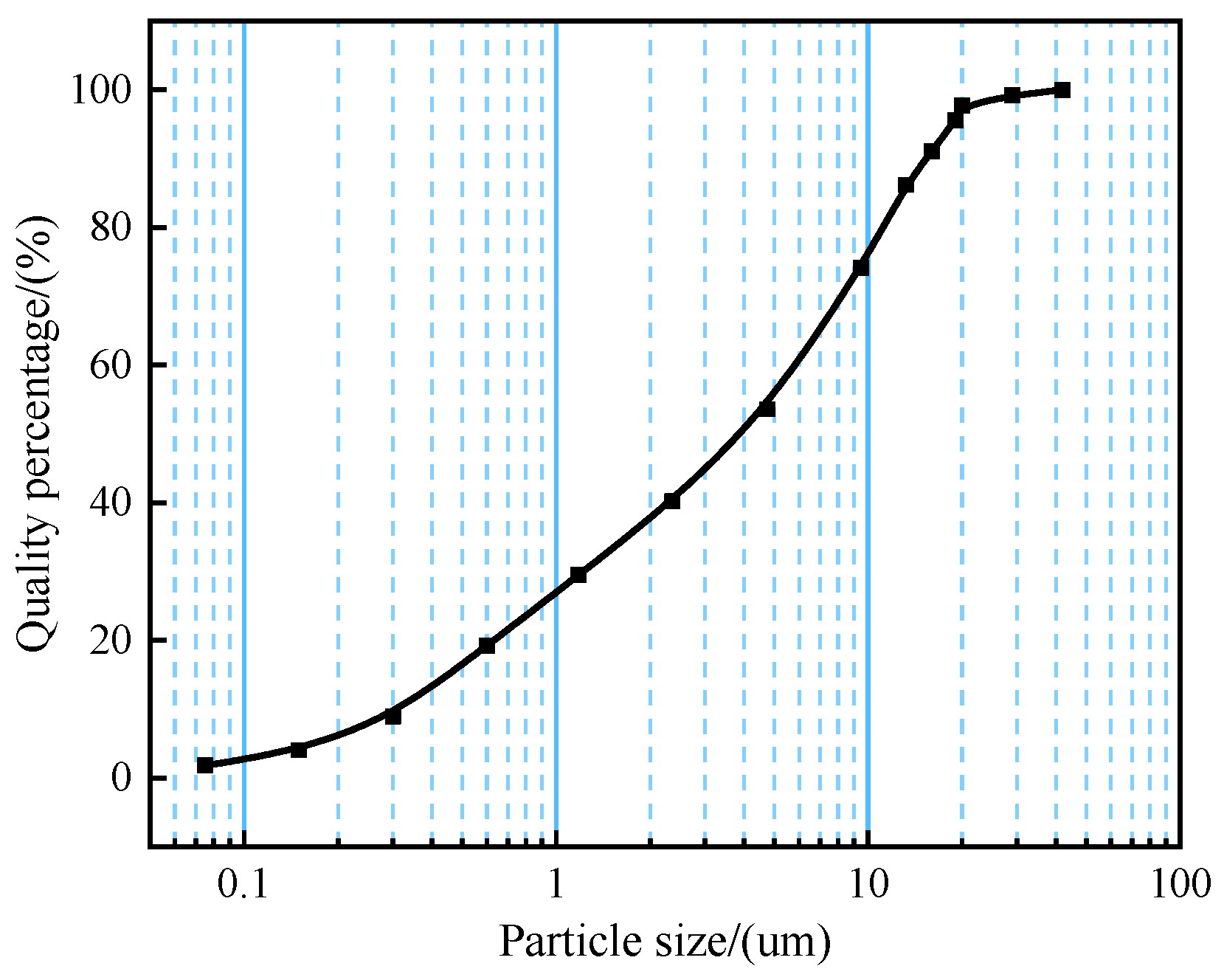
The red clay samples used in this investigation were collected from a depth of 1.5–2.0 m below the ground surface in Yichun City, Jiangxi Province, China, exhibiting characteristic yellow coloration (Figure 1). Following standard preparation protocols, samples were sieved (2 mm), oven-dried at 108 °C to constant mass, and mechanically ground, revealing an initial moisture content of 33.80%. The particle size distribution of the red clay was determined using a combined approach: sieve analysis (ASTM D4513-22 [34]) for particles larger than 0.075 mm and sedimentation analysis (ASTM D7928-21 [35]) for finer fractions, ensuring accurate data acquisition for particles smaller than 20 µm (Figure 2). Complementary geotechnical characterization included standard compaction tests (ASTM D698 [36]) and Atterberg limits determination (ASTM D4318 [37]), with all complete test data presented in Table 1.
The plant ash samples used in this study were derived from open-air burned rice harvest residues in Chongqing, China. The collected bottom ash was sieved through a 200-mesh screen (75 μm aperture), exhibiting a dry density of 387 kg/m3 and a specific surface area of 15,000 m2/kg. The chemical composition is presented in Table 2. The main oxide chemical composition of the red clay was determined using X-ray fluorescence spectrometry (XRF).

2.2. Testing Program

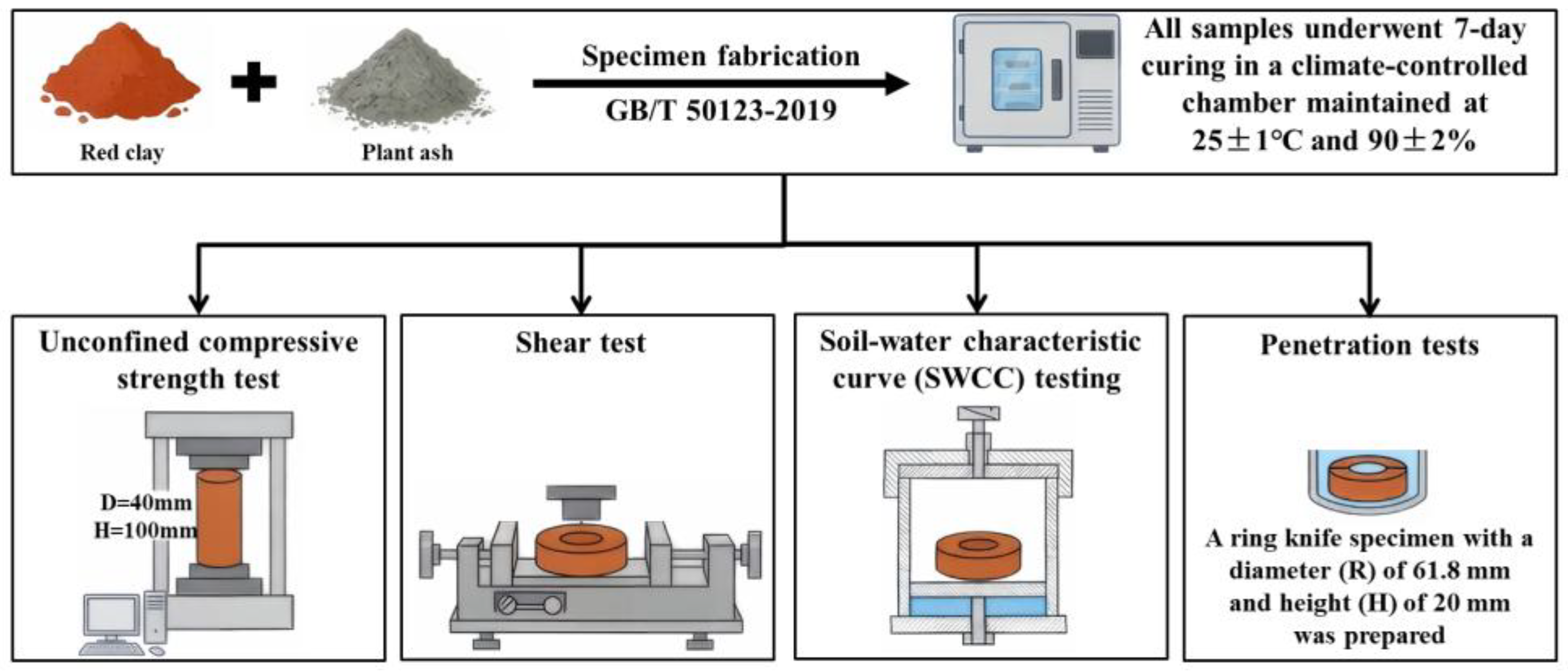
According to previous studies [38], this paper determines the ash content of plants to be 0–20%, with a variable gradient set at 5%. Following Chinese Standard GB/T 50123-2019 [39], red clay was uniformly blended with plant ash at five incorporation rates. Specimens were statically compacted at their respective optimum moisture contents, with three replicates prepared for each mixture (15 specimens total). All samples underwent 7-day curing in a climate-controlled chamber maintained at 25 ± 1 °C and 90 ± 2% relative humidity to ensure complete ash-clay reactions and strength development. Unconfined compressive strength test follows ASTM D2166-23 [40], direct shear test follows ASTM D3080-23 [41], soil-water characteristic curve (SWCC) test follows ASTM D6836-16 [42], variable-head permeability test follows ASTM D2434-22 [43]. The testing program is shown in Figure 3.

2.2.1. Unconfined Compressive Strength Test

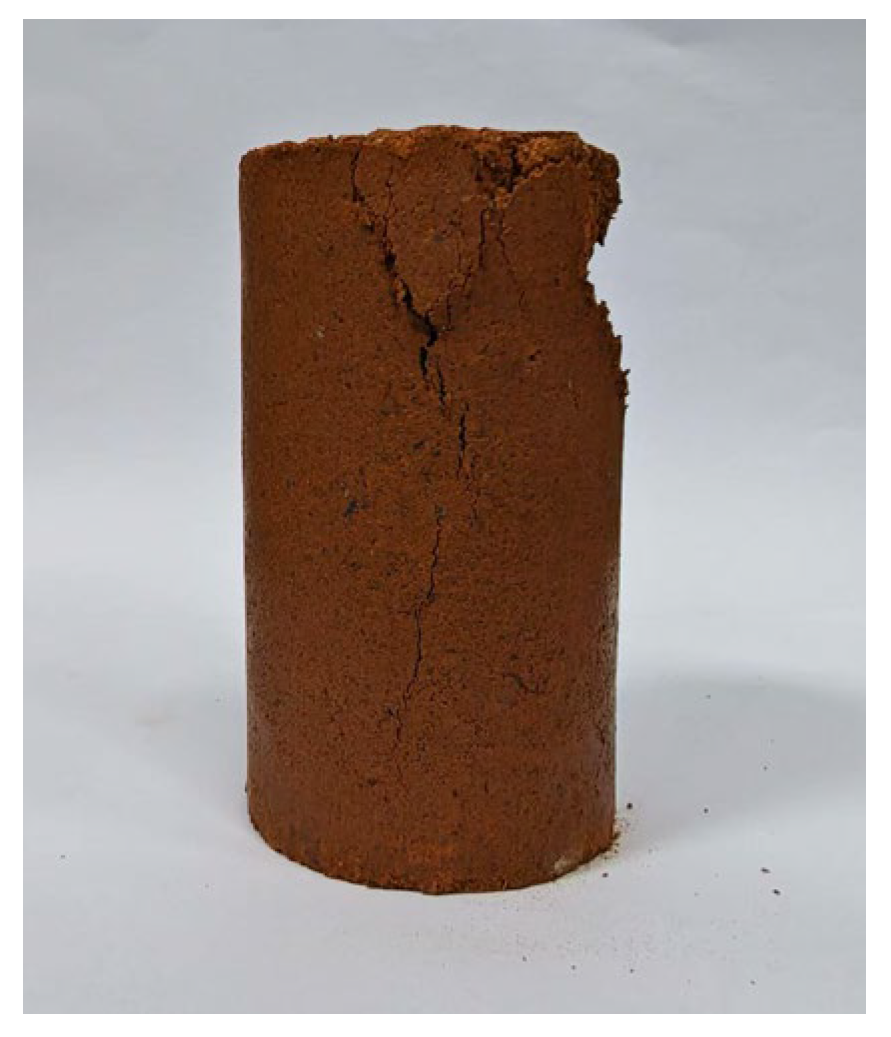
The specimens were fabricated as cylindrical samples with diameters of 40 mm and heights of 100 mm. Unconfined compressive strength testing was performed using a computer-controlled testing system. All tests applied axial displacement at a constant rate of 2 mm per minute until reaching 10% axial strain, following standard failure criteria. Load and deformation data were recorded continuously throughout each test. The unconfined compressive strength test is shown in Figure 4.

2.2.2. Shear Test

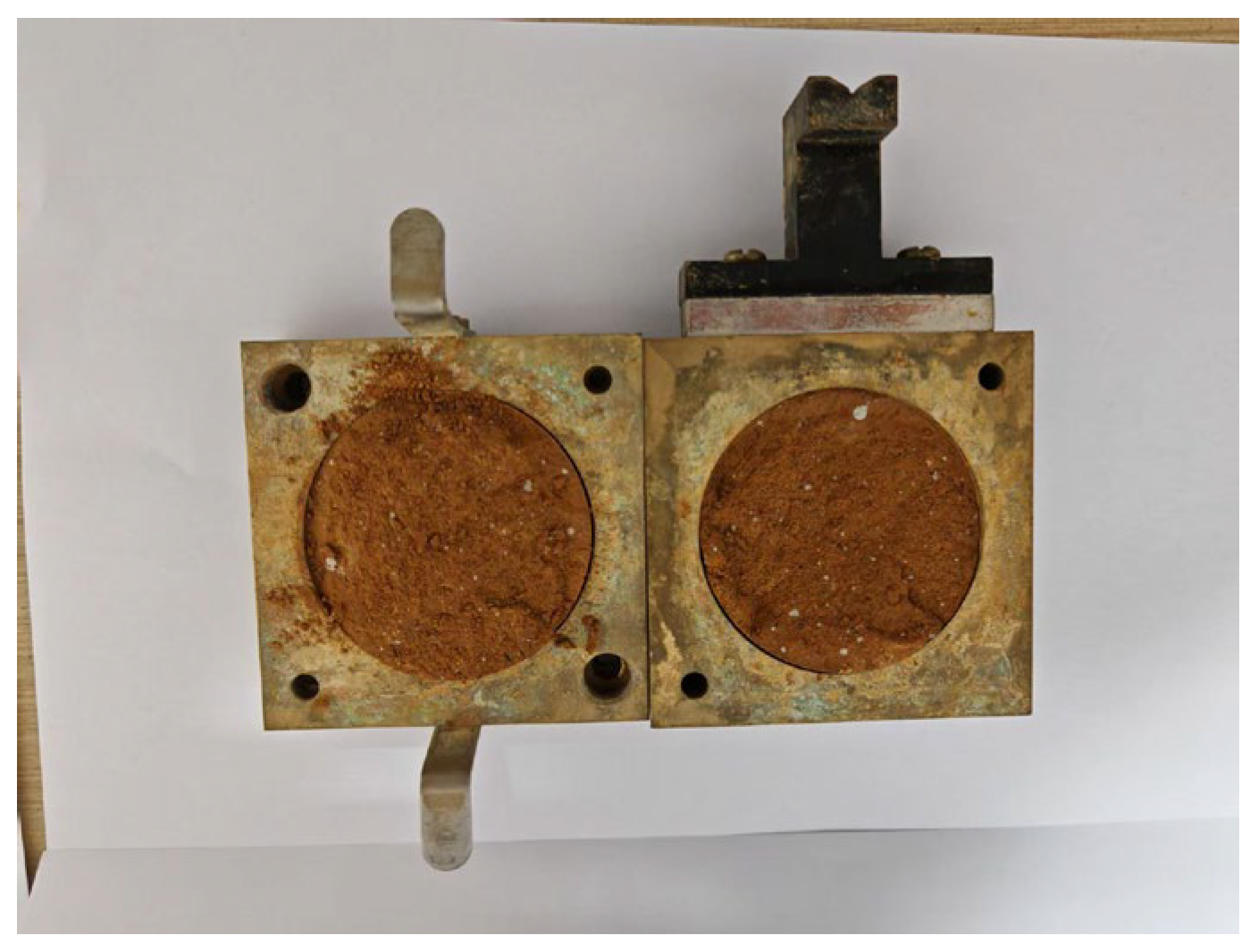
Ring-shaped specimens were prepared with an outer diameter of 61.8 mm and a height of 20 mm. The shear strength was evaluated using a direct shear apparatus under displacement-controlled conditions. A constant shear rate of 0.8 mm/min was applied until reaching a shear displacement of 6 mm, at which point the test was terminated. The shear test is shown in Figure 5.

2.2.3. Soil-Water Characteristic Curve (SWCC) Testing

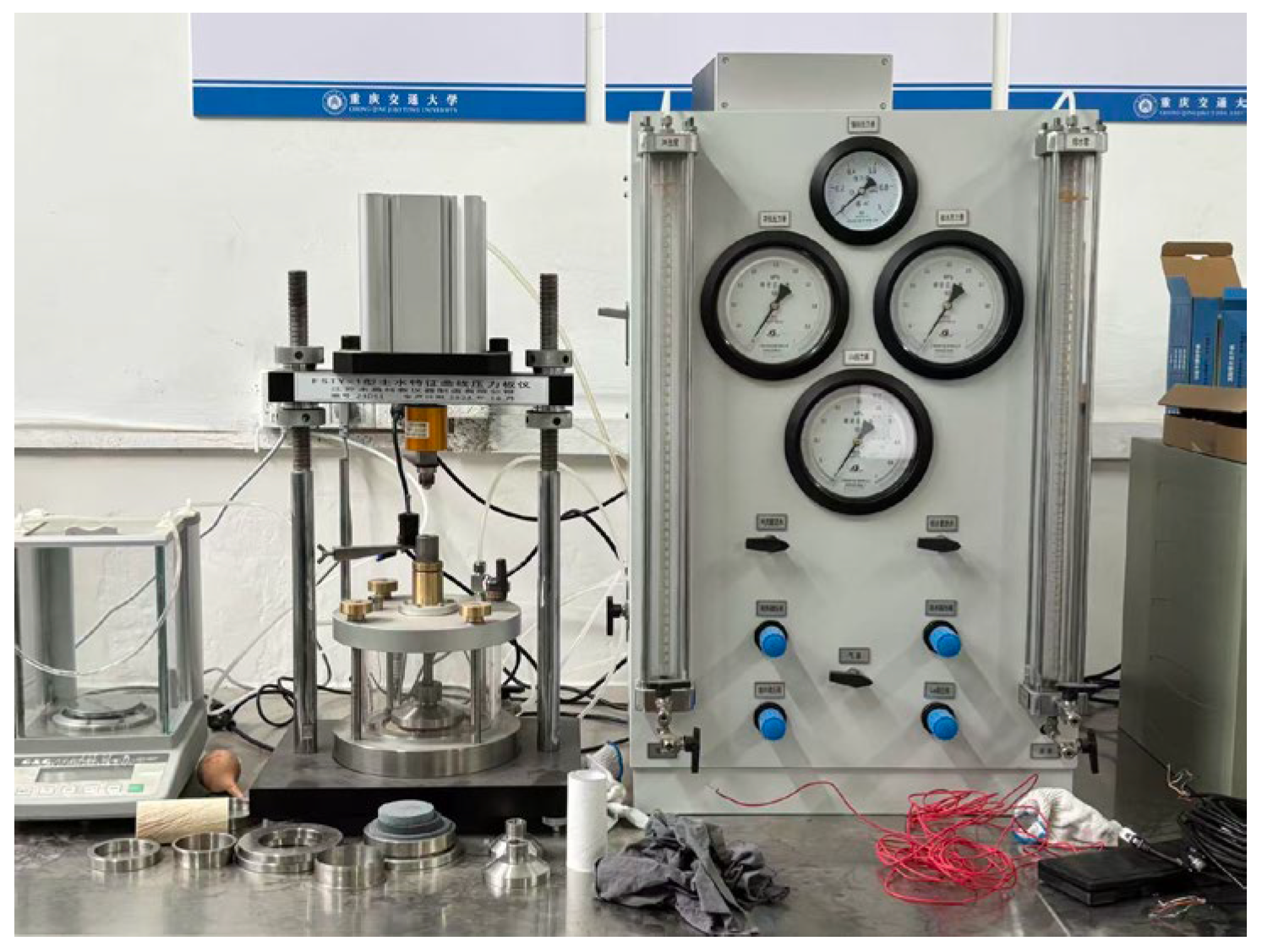
Ring-shaped specimens with dimensions of 61.8 mm in diameter and 20 mm in height were prepared for testing. SWCC of stabilized soils with varying additive contents were determined using a pressure plate apparatus. The SWCC testing apparatus is shown in Figure 6.
The control specimen was subjected to matric suction measurements at discrete pressure stages: 0.1, 1, 5, 15, 25, 50, 100, 150, 250, 500, 1000, and 1500 kPa. Experimental data were analyzed using the van Genuchten model (Equation (1)), which provided mathematical characterization of the water retention behavior. The model parameters were optimized through curve fitting to obtain representative SWCCs for each stabilized soil composition.
S e = θ θ r θ s θ r = 1 1 + ( α ψ ) n m
where θ, θr, θs are volumetric moisture content, residual volumetric moisture content, saturated volumetric moisture content (%), Se is effective saturation (%), ψ is matric suction (kPa), α , m, n is curve fitting parameters, m = 1 − 1/n.

2.2.4. Permeability Tests

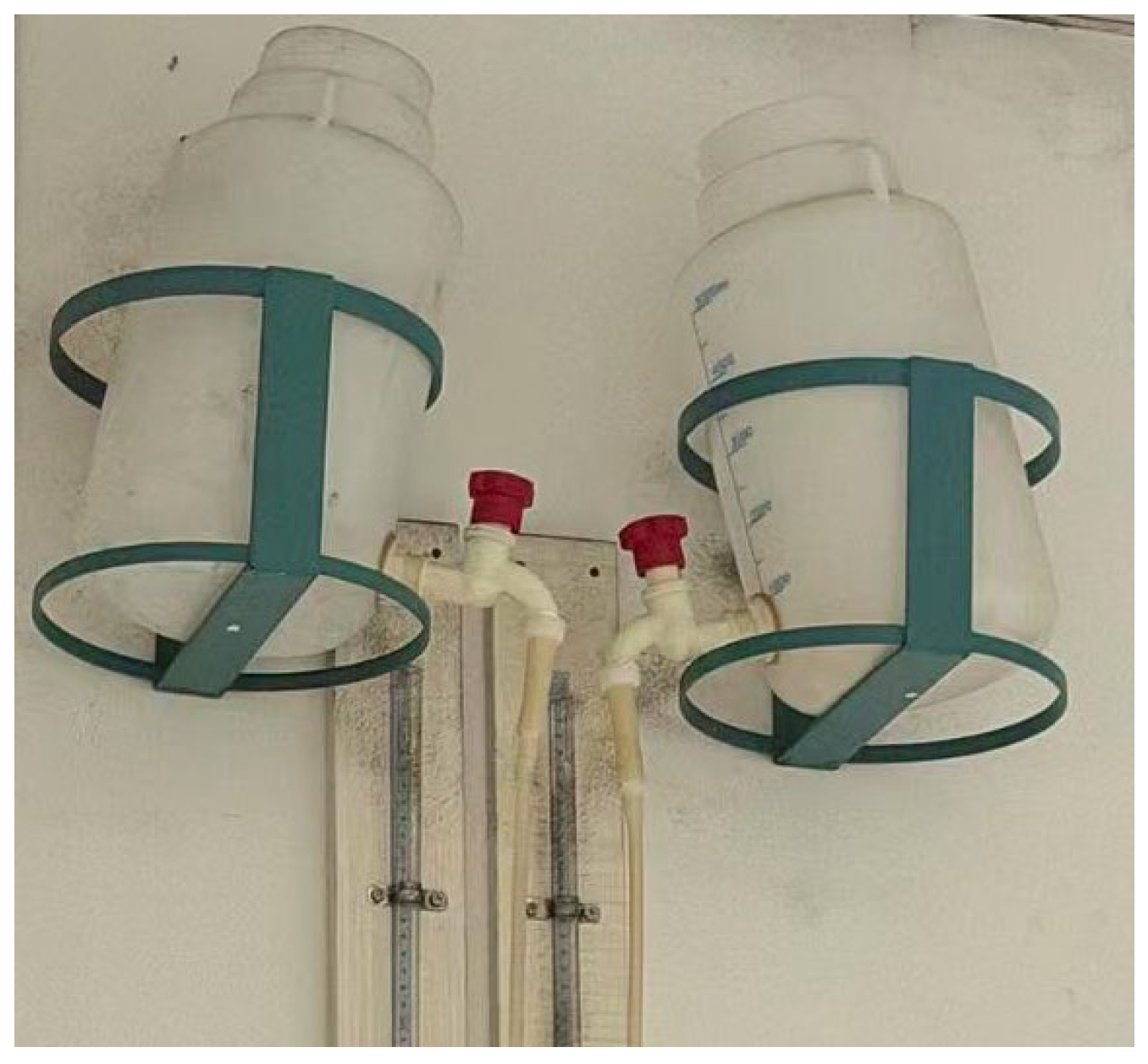
A ring knife specimen with a diameter (R) of 61.8 mm and height (H) of 20 mm was prepared. The permeability coefficient was determined using a variable-head apparatus. The initial hydraulic head was set to 100 cm. After the flow reached steady-state conditions, the elapsed time required for the head to decline from 100 cm to 80 cm, 60 cm, and 40 cm was recorded. The permeability coefficients for different conditions were subsequently calculated using Equation (2). The permeability apparatus is shown in Figure 7.
K = 2.3 a L A ( t 1 t 2 ) lg H 1 H 2
where K is the permeability coefficient (cm/s), t1 and t2 are the start and end times of the head reading (s). H1 and H2 are the start and end times of the head height (m), a is the cross-sectional area of the variable-head pipe (cm2), A is the cross-sectional area of the specimen (cm2) and L is the seepage diameter or specimen height (cm).

3. Results

3.1. Optimum Moisture Content and Maximum Dry Density

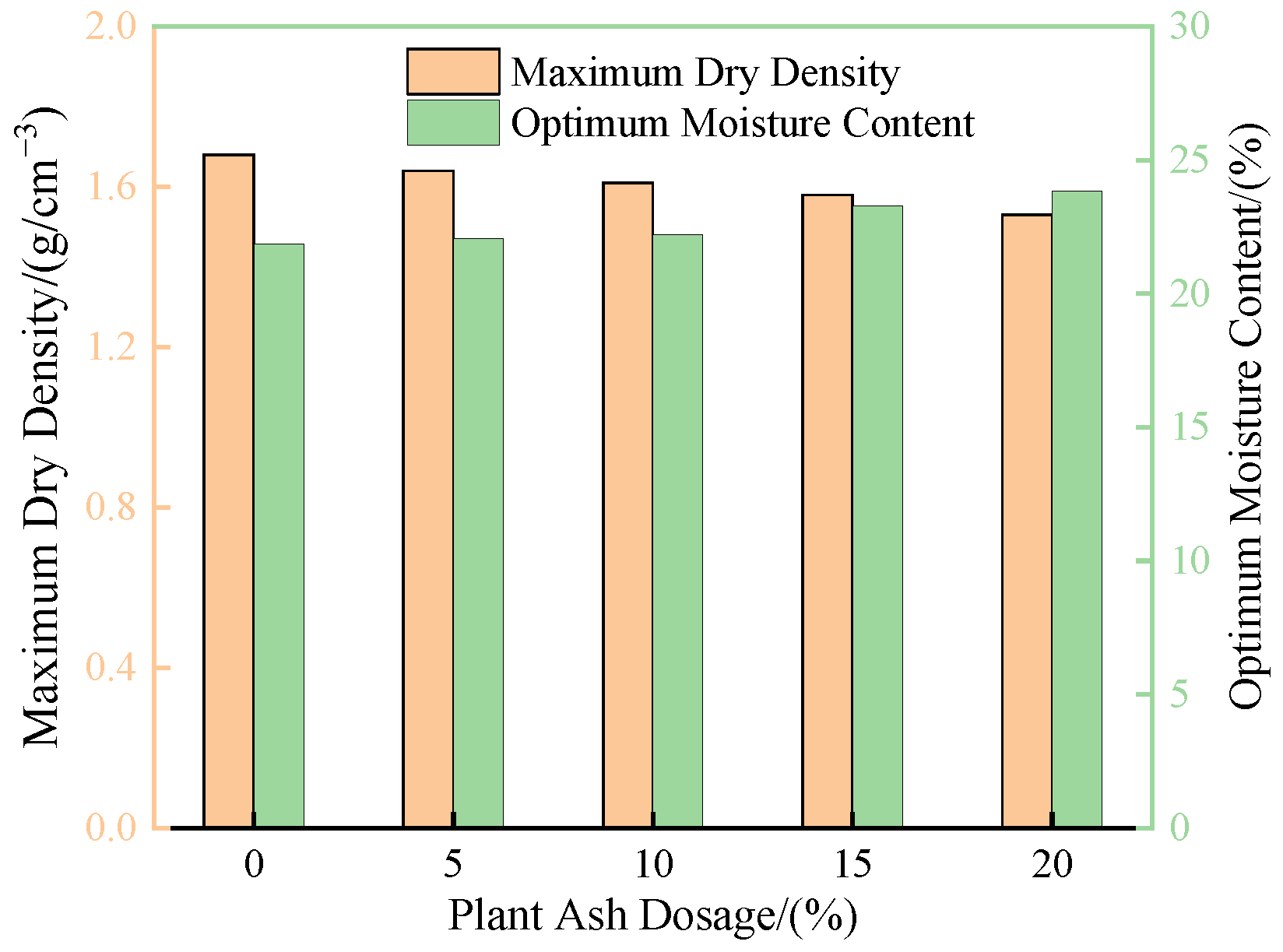
Red clay was modified by blending with plant ash at incorporation rates of 5%, 10%, 15%, and 20% by weight. Standard Proctor compaction tests were conducted to determine the maximum dry density and optimum moisture content for each mixture (Figure 8). The results demonstrate an inverse relationship between plant ash content and maximum dry density. Increasing the plant ash content from 0% to 20% reduced the maximum dry density from 1.68 g/cm3 to 1.53 g/cm3. Conversely, the optimum moisture content increased from 21.86% to 23.85% with higher plant ash addition. Two primary mechanisms explain these observations: First, the highly porous structure of plant ash decreases the number of red clay particles per unit volume, thereby reducing overall dry density. Second, the pores within plant ash provide additional water storage capacity, while hydrophilic functional groups on its surface enhance water retention properties.

3.2. Unconfined Compressive Strength

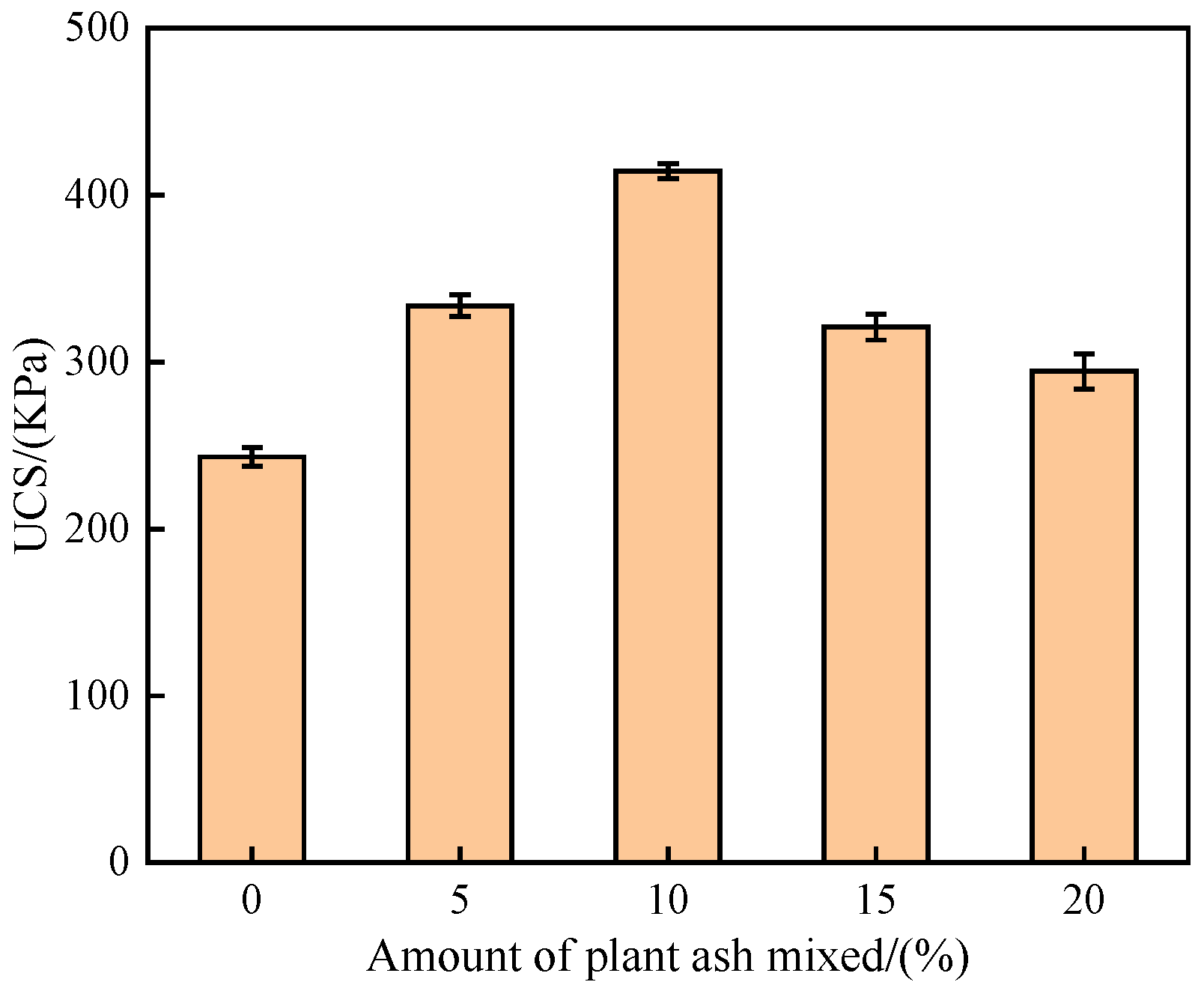
As presented in Section 2.2.1, unconfined compressive strength tests were conducted on specimens with different plant ash dosages to evaluate the mechanical enhancement effect of plant ash on red clay. Figure 9 presents the unconfined compressive strength results for red clay modified with varying plant ash contents. The untreated red clay exhibited a baseline strength of 243.21 kPa. With increasing plant ash content, the strength initially rose sharply, reaching a maximum value of 414.36 kPa at 10% plant ash content. This represents a 70.4% increase over the untreated clay, demonstrating that moderate plant ash addition significantly enhances soil mechanical properties.
However, further increases in plant ash content beyond 10% led to progressive strength reduction. At 15% and 20% plant ash content, the measured strengths decreased to 321.01 kPa and 294.35 kPa respectively. While these values remain above the untreated clay’s strength, they represent decreases of 22.5% and 29.0% relative to the peak strength achieved at 10% content. These results clearly indicate that 10% plant ash represents the optimum dosage for strength improvement, while excessive addition produces diminishing returns.
The unmodified red clay exhibits weak strength due to its large internal pores and loose particle structure. When an appropriate amount of plant ash is added, a pozzolanic reaction occurs between the clay and ash in water, forming denser precipitates that reduce pore size and enhance particle connectivity. However, excessive plant ash addition weakens the material through two mechanisms: first, the intrinsically low-strength ash replaces more soil particles, and second, the surplus ash disperses to fill pores within the red clay’s residual granite soil—both leading to strength reduction.

3.3. Shear Properties

3.3.1. Stress–Strain Curves

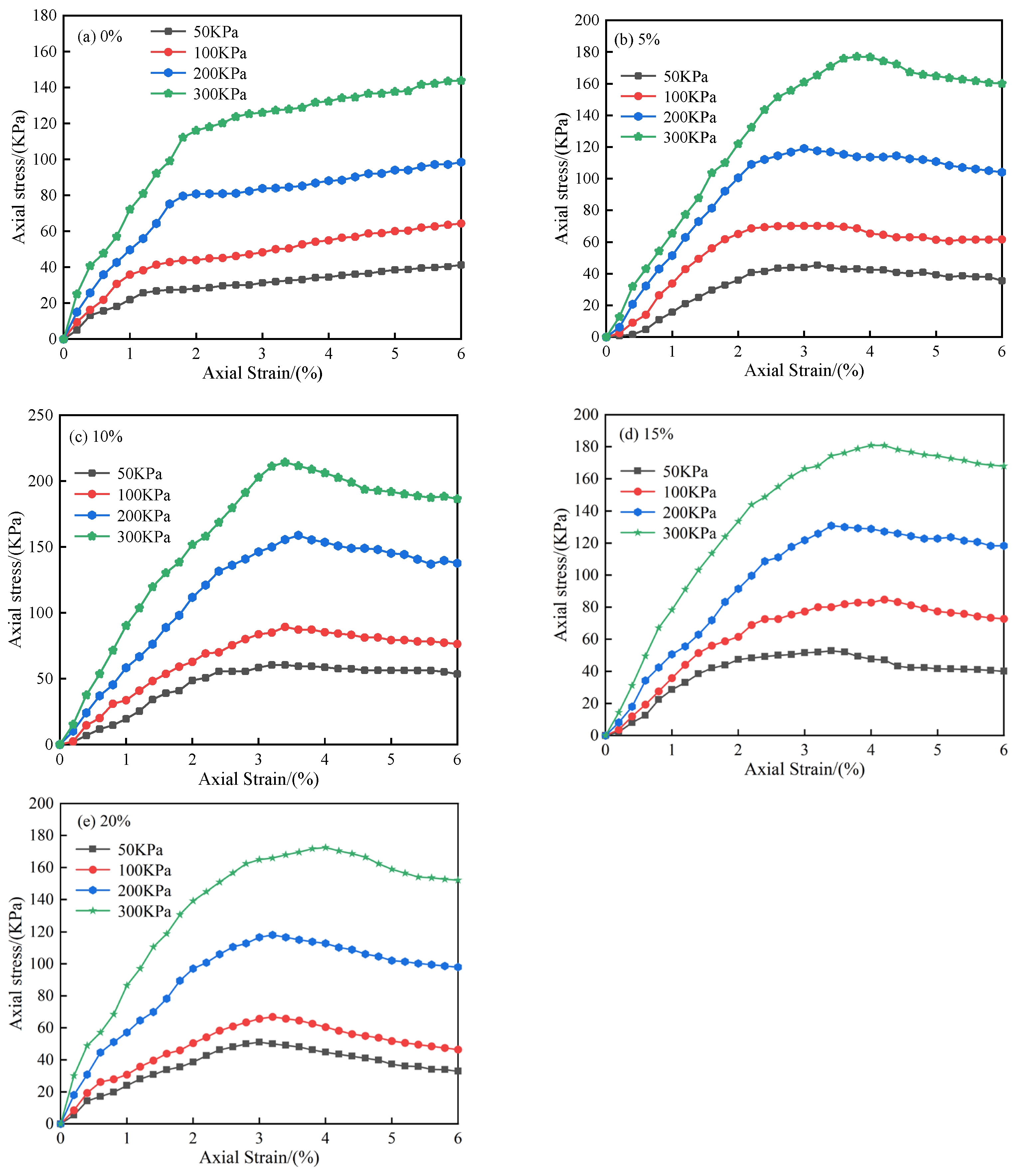
Figure 10 presents the stress–strain relationships and failure modes observed in direct shear tests of red clay specimens containing different proportions of plant ash under various confining pressures. The unmodified red clay specimens without plant ash addition display characteristic strain-hardening behavior throughout the loading process. In contrast, specimens containing plant ash exhibit notable strain-softening behavior, where the axial stress initially increases with strain, reaches a distinct peak value, and subsequently decreases.
The experimental results demonstrate that plant ash modification significantly alters the failure mechanism of red clay. The improved specimens show enhanced shear strength characteristics, as evidenced by systematically higher stress–strain curves corresponding to increased ash content and confining pressure. However, this strengthening effect shows a clear dependence on ash content.
Detailed analysis indicates that the mechanical improvement reaches an optimal level at approximately 10% ash content. Specimens containing higher ash contents of 15% and 20% show measurable reductions in peak strength compared to the optimal mixture. These findings establish 10% as the critical threshold for plant ash content in red clay modification, beyond which the beneficial effects begin to diminish.

3.3.2. Shear Performance Index

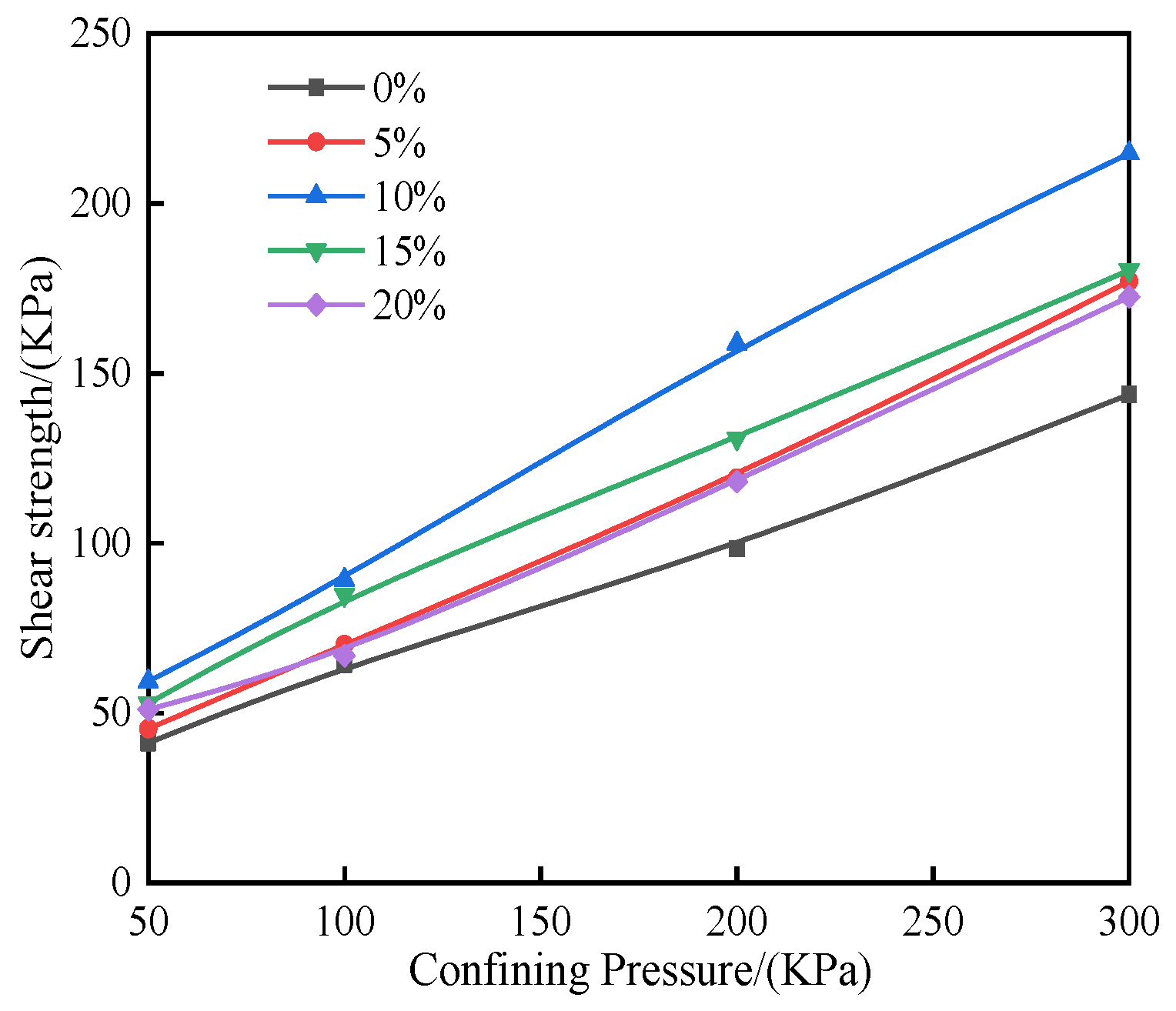
Figure 11 demonstrates the shear strength behavior of red clay specimens modified with varying plant ash contents under different confining pressures. The results reveal significant enhancement in shear strength due to plant ash incorporation. At a constant confining pressure of 300 kPa, specimens containing 5%, 10%, 15%, and 20% plant ash exhibit strength increases of 23.2%, 49.4%, 25.5%, and 20.0% respectively compared to unmodified clay. The data indicate a non-monotonic relationship between ash content and shear strength improvement. Maximum strength values occur at 10% ash content across all confining pressures, with measured strengths of 59.3 kPa, 89.3 kPa, 158.8 kPa, and 214.78 kPa representing increases of 43.8%, 38.8%, 61.3%, and 49.4% over unmodified specimens at corresponding pressures.
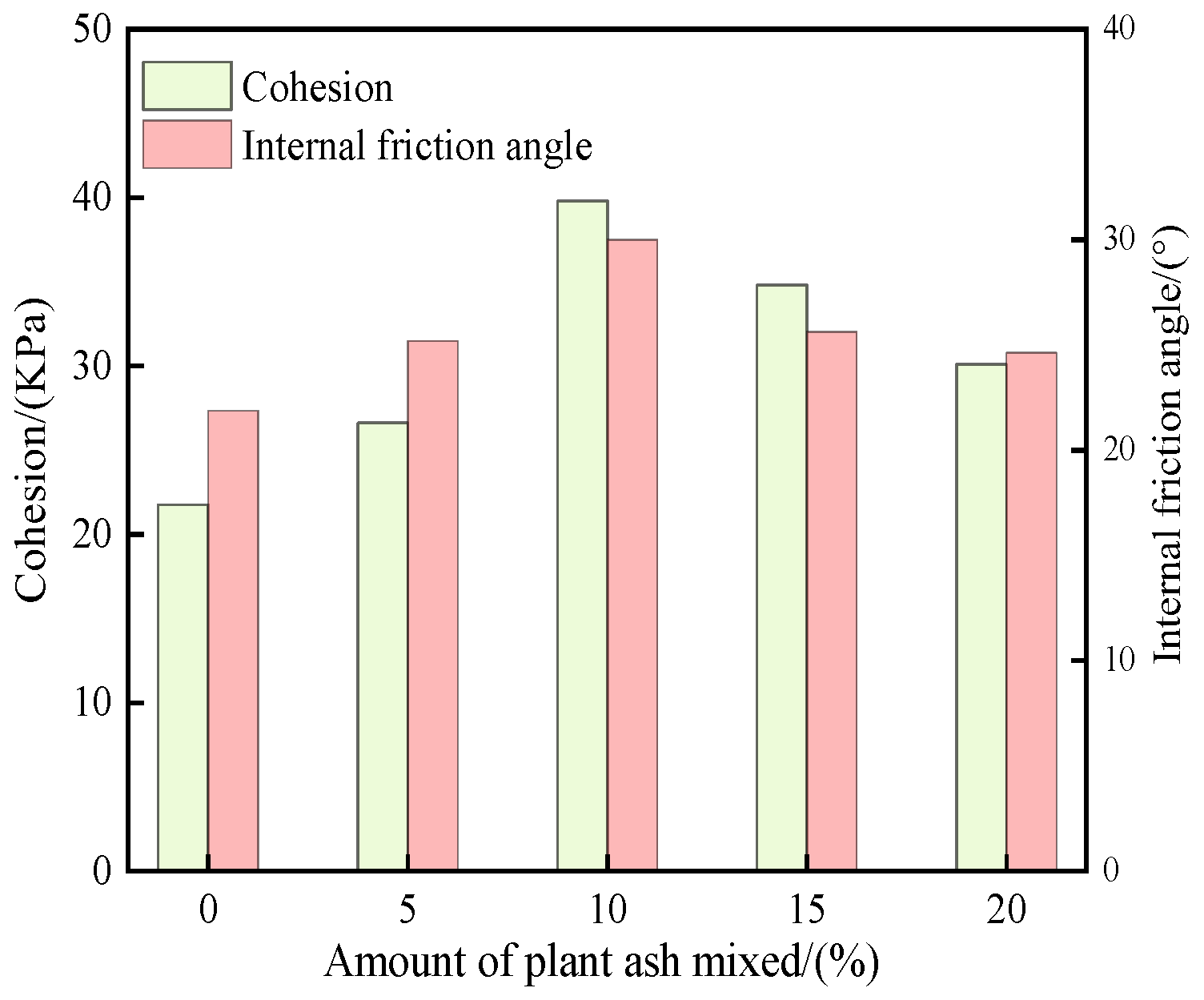
Figure 12 shows that both cohesion and internal friction angle reach their maximum values at 10% plant ash content. Cohesion increases from 21.75 kPa for untreated soil to a peak of 39.8 kPa at this optimal ash content, then decreases to 30.1 kPa at 20% ash. Similarly, the internal friction angle rises from 21.9 degrees to 30.0 degrees at 10% ash before declining to 24.6 degrees. These results indicate that while moderate ash addition enhances soil strength properties through improved particle bonding and pore filling, exceeding 10% ash content leads to deterioration of these beneficial effects, likely due to particle interference and disruption of the soil fabric. The matching optimal ash content for both strength parameters suggests this proportion provides the most effective soil improvement.
The experimental results demonstrate a more pronounced enhancement in cohesion than internal friction angle for plant ash-modified red clay. This preferential strengthening of cohesive forces originates from the pozzolanic reaction products that generate cementitious bonds between clay particles, coupled with microstructural refinement through void filling by fine ash particles.
Conversely, the internal friction angle exhibits comparatively modest improvement due to its fundamental dependence on mechanical interlocking rather than chemical bonding. The intrinsic limitations imposed by the fine-grained nature of red clay further constrain potential gains in frictional resistance. These observations reveal the distinct mechanistic pathways controlling strength development, where cohesion benefits substantially from chemical modification while friction remains governed by physical particle interactions in fine-grained geomaterials.

3.4. Water Retention Properties

3.4.1. Soil-Water Characteristic Curve

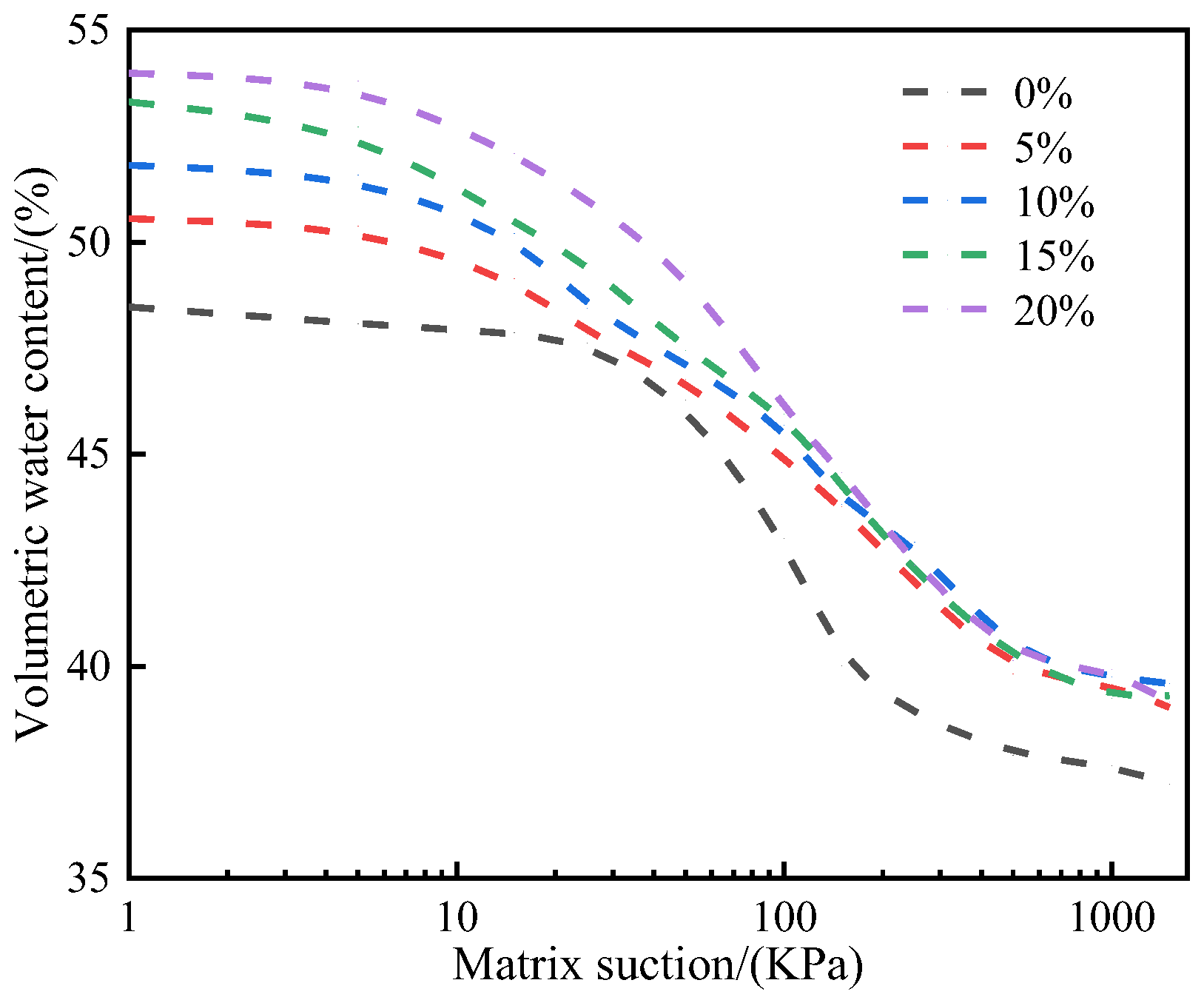
Figure 13 presents the matrix suction curves of red clay improved with varying plant ash contents. The results indicate that the saturated volumetric water content of the treated red clay gradually increases with higher plant ash content. Compared to untreated red clay, the modified samples exhibited increases in saturated water content of 4.3%, 6.9%, 10.0%, and 11.4% for the respective additive amounts. This enhancement can be attributed to the high specific surface area and strong water-absorbing capacity of plant ash, which reduces the water retention capability of the red clay. However, since red clay is highly sensitive to moisture, excessive water content can lead to strength degradation and material deterioration.
Further analysis revealed that the addition of plant ash significantly alters the matric suction behavior of red clay. Within the suction range of 0–100 kPa, the soil-water characteristic curve (SWCC) of unmodified red clay remains more stable than that of the modified samples. Beyond 100 kPa, however, the SWCC of unmodified red clay converges more rapidly.
In addition, plant ash-modified red clay exhibits higher saturated water content, leading to greater water release in the low-suction range (0–100 kPa). Consequently, the SWCC bending point occurs earlier in modified red clay compared to the untreated soil. Additionally, modified red clay retains a higher water content in the high-suction range, requiring significantly greater suction for the SWCC to converge fully.

3.4.2. Coefficient of Permeability

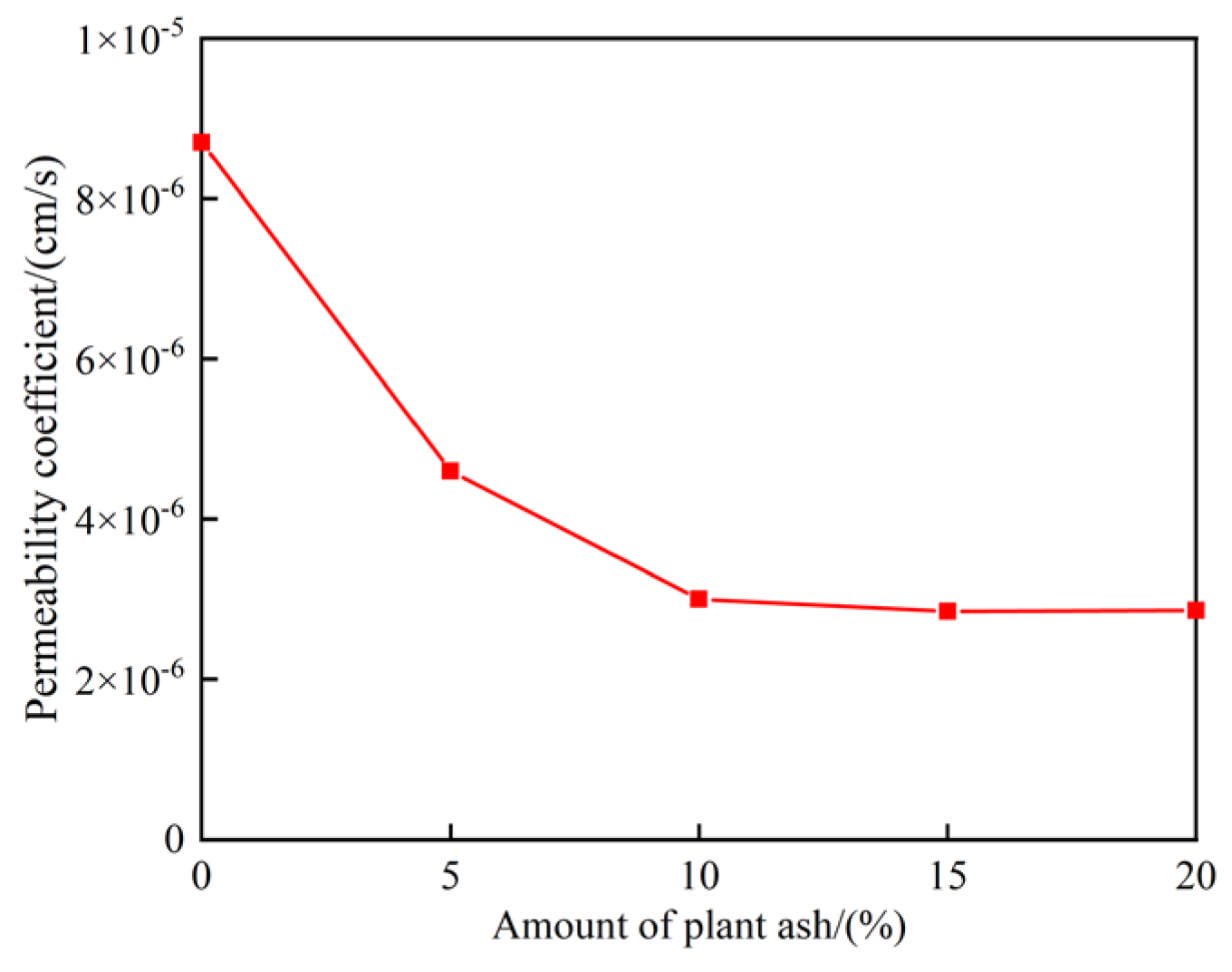
Figure 14 presents the permeability coefficient curves of modified red clay with varying plant ash content. The results demonstrate a consistent reduction in permeability with increasing plant ash addition. Specifically, the measured permeability coefficients were 4.69 × 10⁻⁶, 2.09 × 10⁻⁶, 1.99 × 10⁻⁶, 1.94 × 10⁻⁶, and 1.86 × 10⁻⁶ cm/s for plant ash contents of 0%, 5%, 10%, 15%, and 20%, respectively.
The most significant reduction occurred at 5% plant ash content, where the permeability decreased by nearly one order of magnitude. However, further increases in plant ash content resulted in only marginal additional reductions in permeability. This behavior may be attributed to two complementary mechanisms [44,45]: (1) pozzolanic reactions between SiO2 and Al2O3 from the plant ash with CaO and water, forming cementitious compounds (C-S-H and C-A-H) that reduce pore space; and (2) physical pore-filling effects from both the gel products and the plant ash particles themselves. Additionally, the unique microporous structure and high water retention capacity of plant ash enhance particle-water interactions within the modified clay matrix, further contributing to the observed permeability reduction. These modifications collectively improve the soil’s resistance to rainfall-induced erosion.

3.5. Microstructural Characteristics

The microstructure of plant ash-modified red clay was examined using a Zeiss Merlin Compact scanning electron microscope (Carl Zeiss AG, Oberkochen, Germany) (SEM). Cubic samples (10 mm × 10 mm × 10 mm) were prepared, sputter-coated with gold, and observed under an acceleration voltage of 1.5 kV.
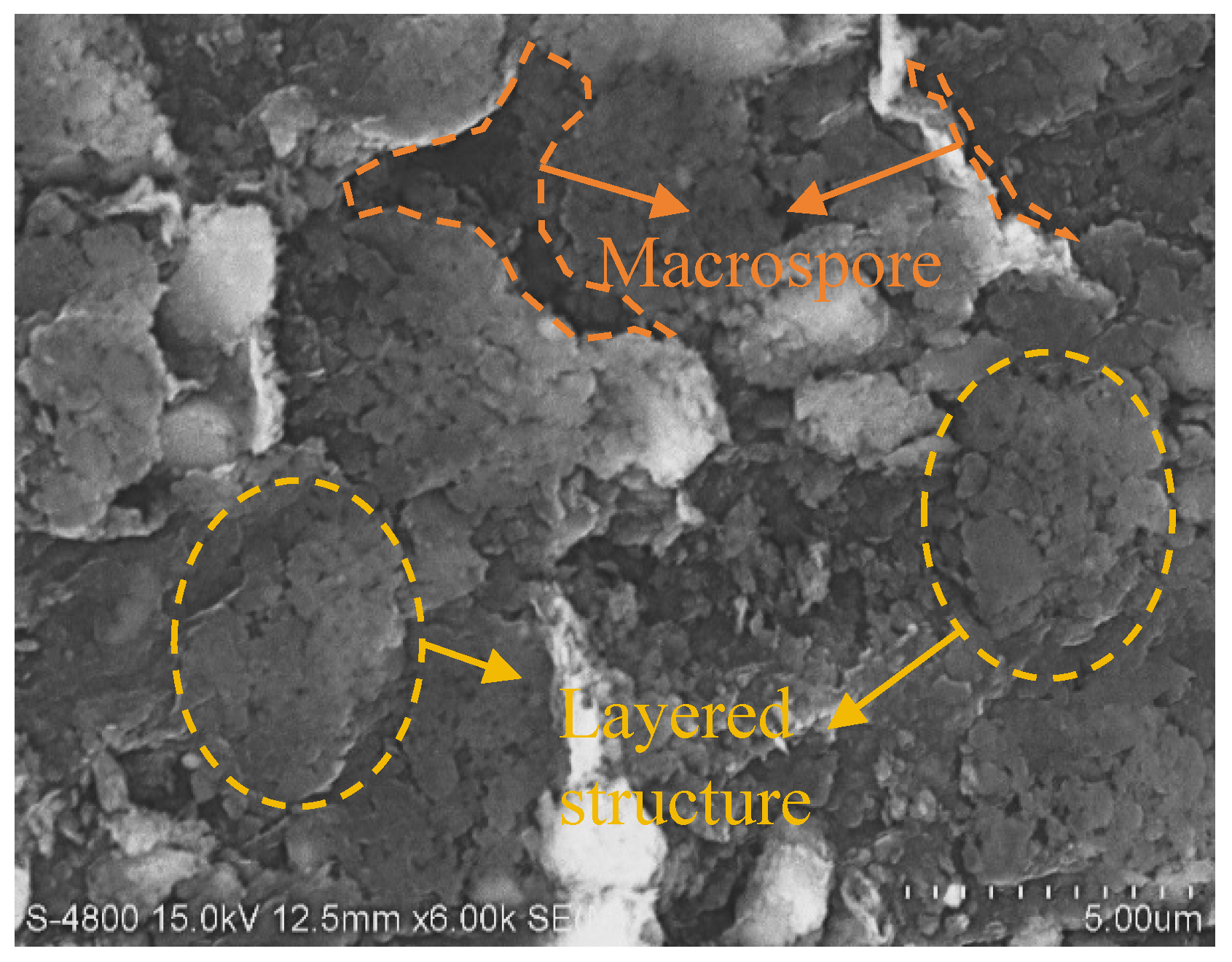
Figure 15 and Figure 16 present SEM micrographs of unmodified red clay. The unmodified red clay exhibited a distinct bedding structure, primarily formed by the oriented arrangement of clay minerals such as kaolinite and illite, creating a continuous laminar microstructure. These lamellae displayed uniform thickness and were stacked in parallel layers. Additionally, a well-developed fracture network was observed in the interlayer regions. These fractures varied in width and were irregularly distributed, serving as preferential pathways for seepage and potential weak planes within the clay matrix.
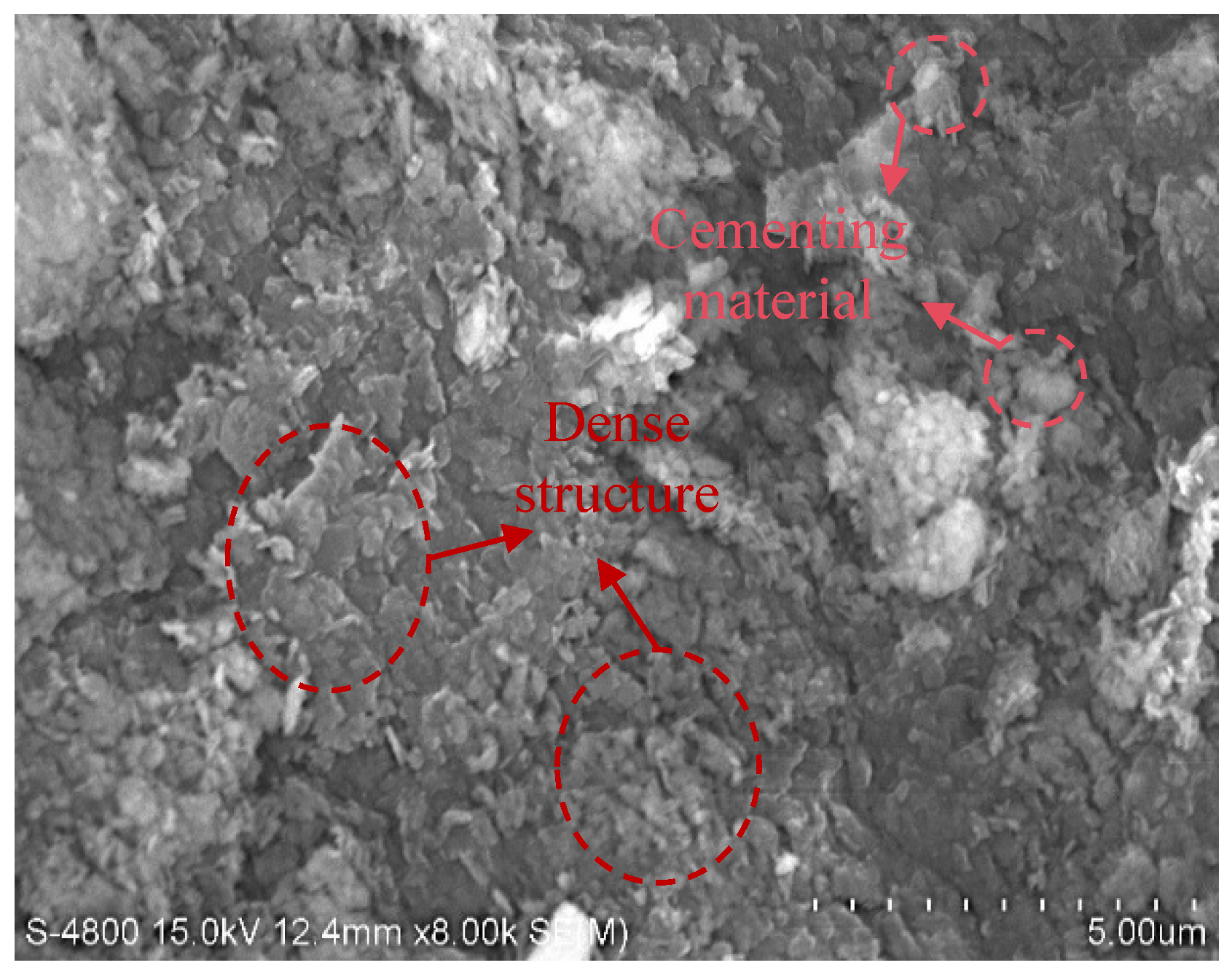
Upon incorporating 10% plant ash, the microstructure transitioned to a notably denser morphology. The overall porosity decreased significantly, with a substantial reduction in macropores. These voids were partially filled by newly formed gel-like materials, resulting in a more consolidated fracture network. Furthermore, interlayer cracks were markedly reduced, enhancing particle-to-particle contact.
The observed structural improvements may be attributed to the high pozzolanic activity of plant ash, which likely facilitated the formation of cementitious hydration products—such as calcium silicate hydrate (C-S-H) and calcium aluminate hydrate (C-A-H)—under favorable conditions. The results indicate that the modified red clay developed a denser microstructure with more tortuous permeability pathways. These findings corroborate the compaction, strength, and water retention characteristics reported previously, demonstrating that plant ash addition effectively enhances red clay’s impermeability.

4. Engineering Application of Modified Red Clay

4.1. Project Overview

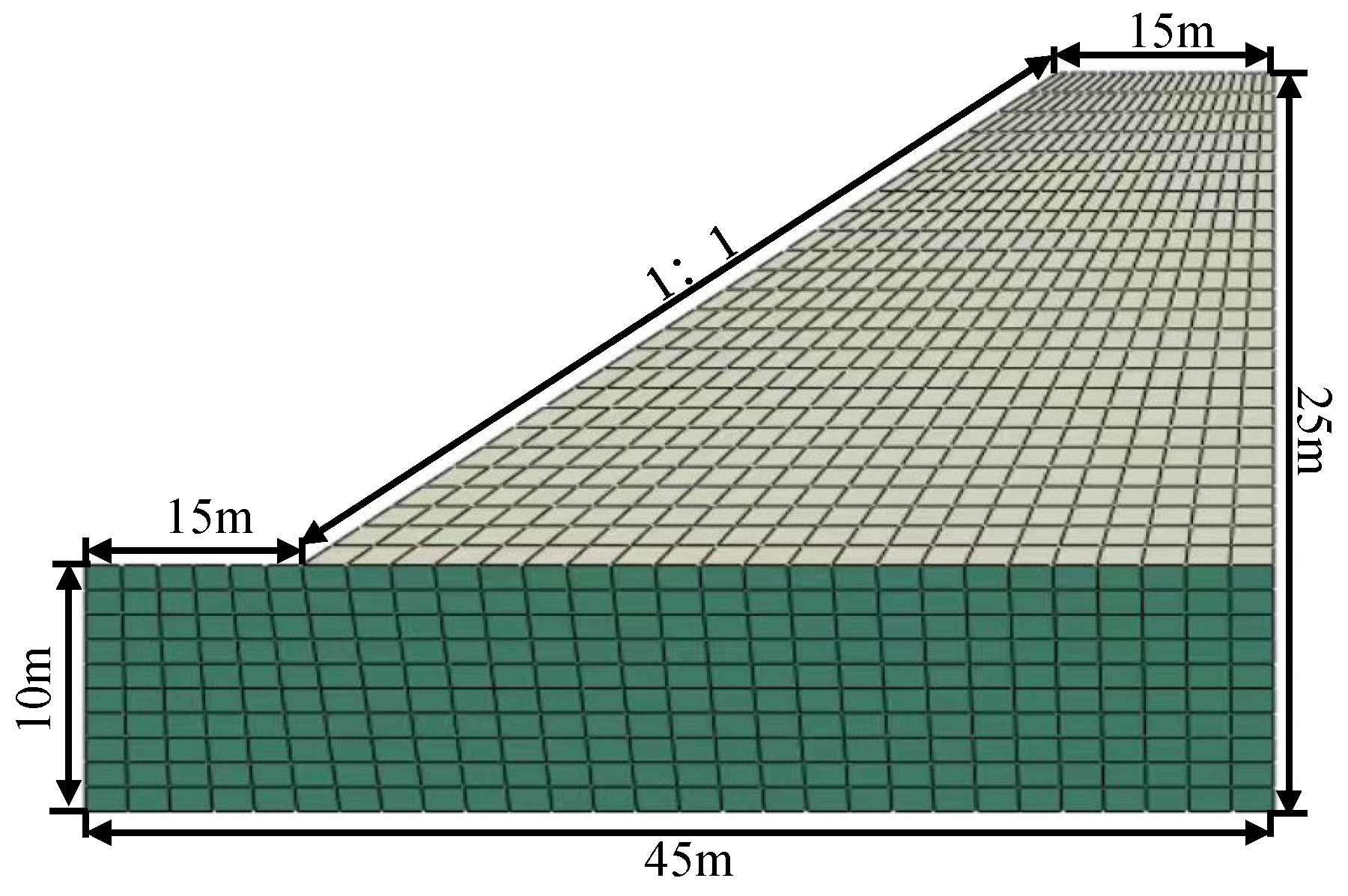
Yichun City, located in Jiangxi Province, China, spans approximately 222 km north–south and 174 km east–west, covering a total area of 18,669 km2, which accounts for 11.2% of Jiangxi Province’s total land area. This study focuses on the Changjin section of the Shanghai-Kunming Expressway reconstruction project, where red clay is extensively distributed. The slope under investigation has a height of 15 m, with a top width of 15 m and a base width of 45 m. The slope ratio is 1:1, and its dimensions are illustrated in Figure 17. For finite element modeling, meshing was performed using a hybrid mode approach. The quadrilateral stress-pore pressure element (CPE4P) was selected for simulating pore fluid-stress interactions. Figure 18 presents the mesh discretization used in the simulation.
Based on the actual slope geometry, two backfill materials were considered: unmodified red clay and modified red clay containing 10% plant ash. Both materials were simulated using the Mohr–Coulomb failure criterion, with their mechanical parameters determined from laboratory tests on untreated and improved red clay samples. To enhance computational efficiency, the slope structure was simplified by assuming homogeneous, continuous, and isotropic material properties for each layer. The model material parameters are listed in Table 3.

4.2. Rainfall Situation

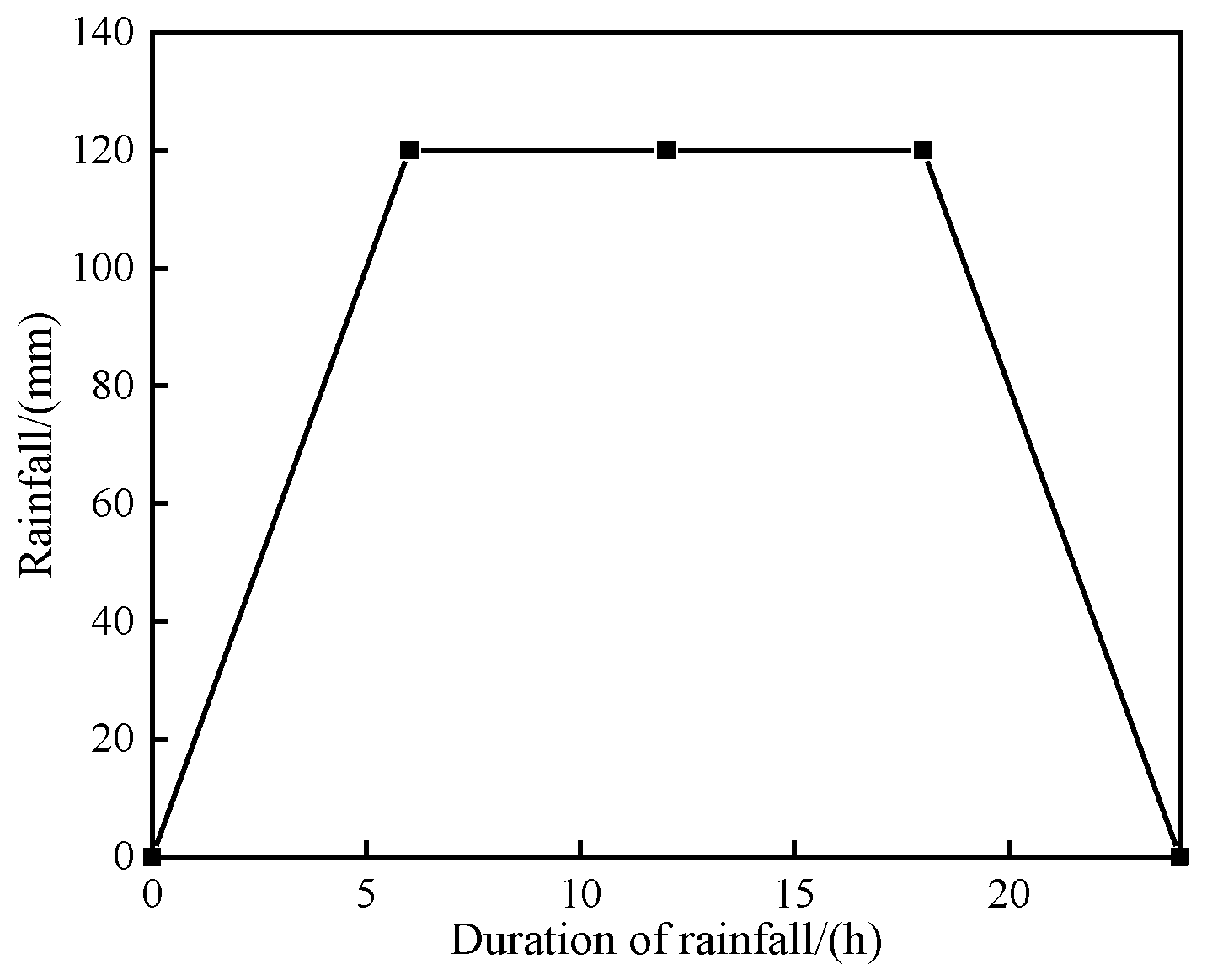
Analysis of meteorological records from the Changjin section of the Shanghai-Kunming Expressway reconstruction project indicates intensive summer precipitation patterns, characterized by an average maximum daily rainfall of 93.9 mm and peak hourly intensity of 62.1 mm across 161.3 annual rainy days. To simulate these conditions, we implemented a 36 h rainfall event with total precipitation of 90 mm, representative of extreme conditions at the study site. The rainfall simulation follows a standardized temporal pattern: intensity increases linearly from 0 to maximum (90 mm/day) during 0–12 h, maintains peak intensity through 12–24 h, then decreases linearly to zero during 24–36 h (Figure 18). This triangular distribution approximates natural storm events while maintaining computational efficiency for slope stability analysis under saturated conditions.

4.3. Boundary Conditions

To accurately represent field mechanical conditions, displacement constraints were applied to all model boundaries: horizontal movement was restricted at both lateral boundaries, while vertical displacement was fixed along the base. For pore water pressure simulation, atmospheric pressure conditions were imposed at the soil-air interface along the right slope toe (P = 0). Below this interface, pore water pressure was modeled to increase linearly with depth within the unsaturated zone outside the slope toe, with values calculated using Equation (3).
P = 11 Y × 9.81
where P is the pore water pressure (kPa), Y is the vertical distance from the point to the bottom boundary of the model (m).
In addition slope deformation under loading is predominantly gravity-induced. However, finite element analyses typically initialize models in a stress-free state, potentially introducing significant errors relative to field conditions. To ensure simulation accuracy, we first apply gravitational loading to establish initial stresses and settlements before proceeding with rainfall-induced stability analysis.

4.4. Stability Calculation

4.4.1. Displacement

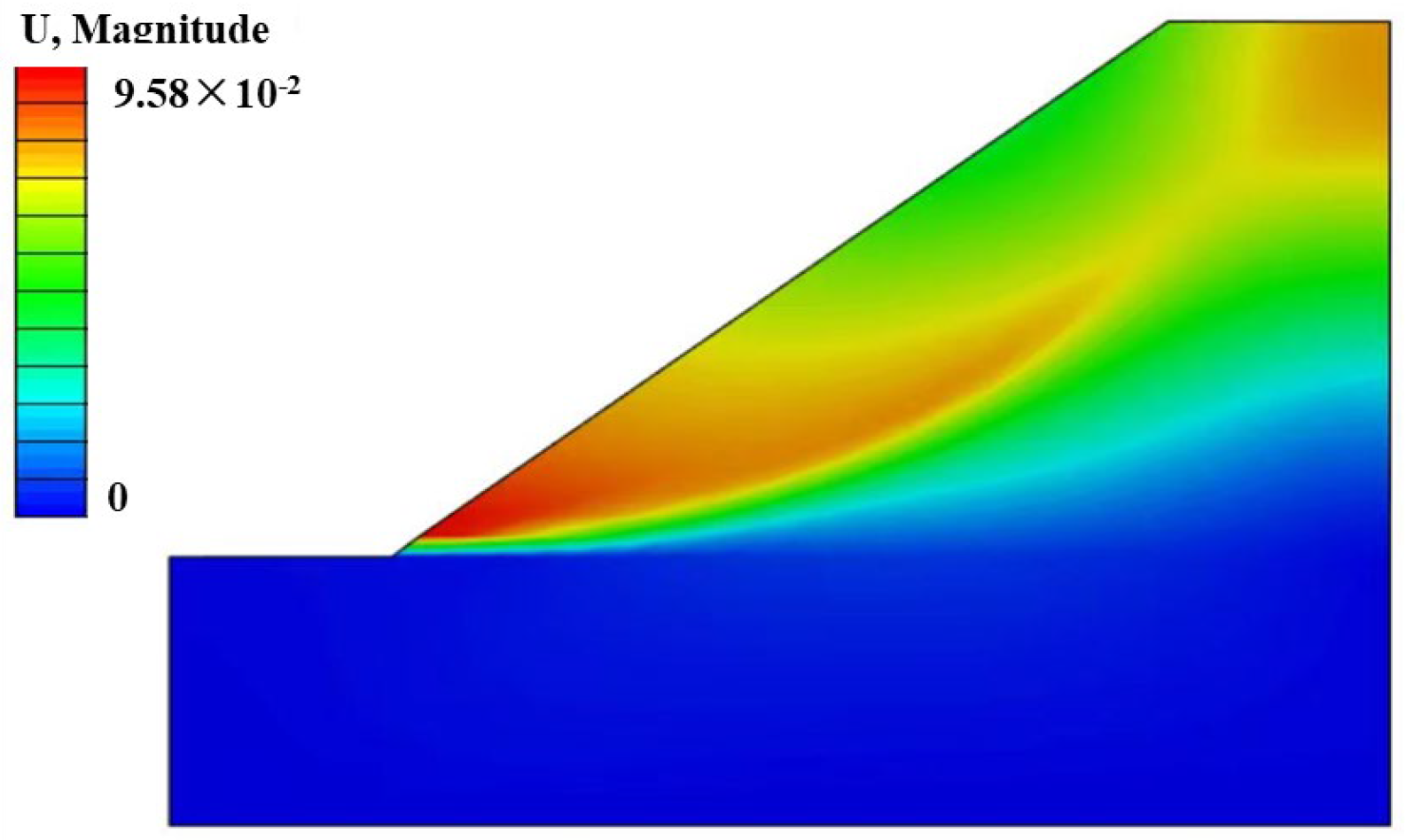
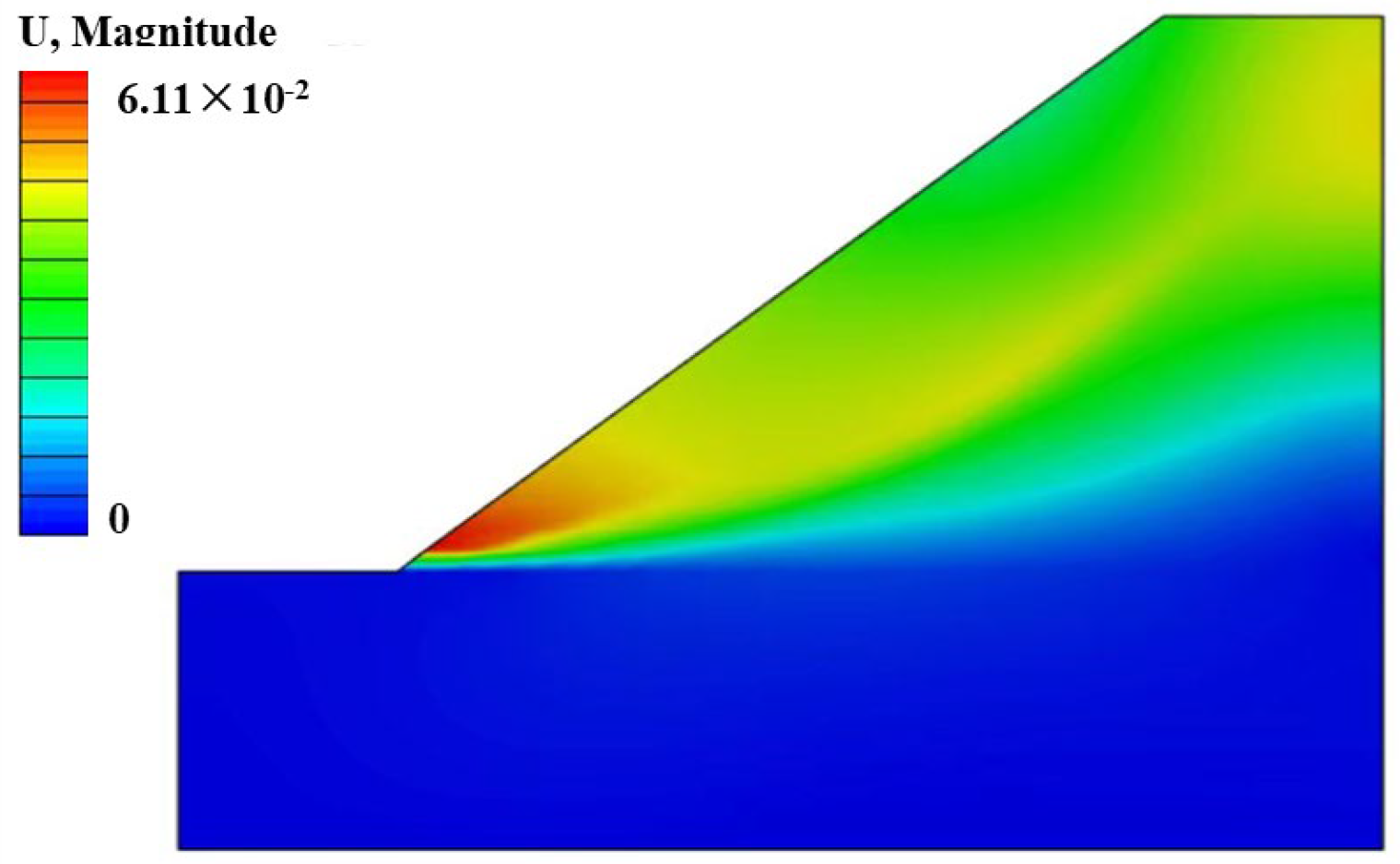
Figure 19 and Figure 20 compare displacement distributions in untreated and improved red clay slopes under rainfall infiltration. The improved slope shows a 36.5% reduction in maximum displacement, decreasing from 0.96 m to 0.61 m. In both cases, peak displacements occur at the slope toe where rainwater accumulation leads to higher saturation and consequent strength reduction of the fill material. Comparative analysis reveals a marked reduction in both magnitude and spatial distribution of displacements at the improved slope’s base. This behavior is attributable to the dual effect of strength enhancement and permeability reduction in treated clay. Although precipitation still concentrates at the slope foot, inhibited infiltration rates decelerate strength loss, ultimately yielding smaller displacement magnitudes and a contracted failure zone.

4.4.2. Plastic Failure

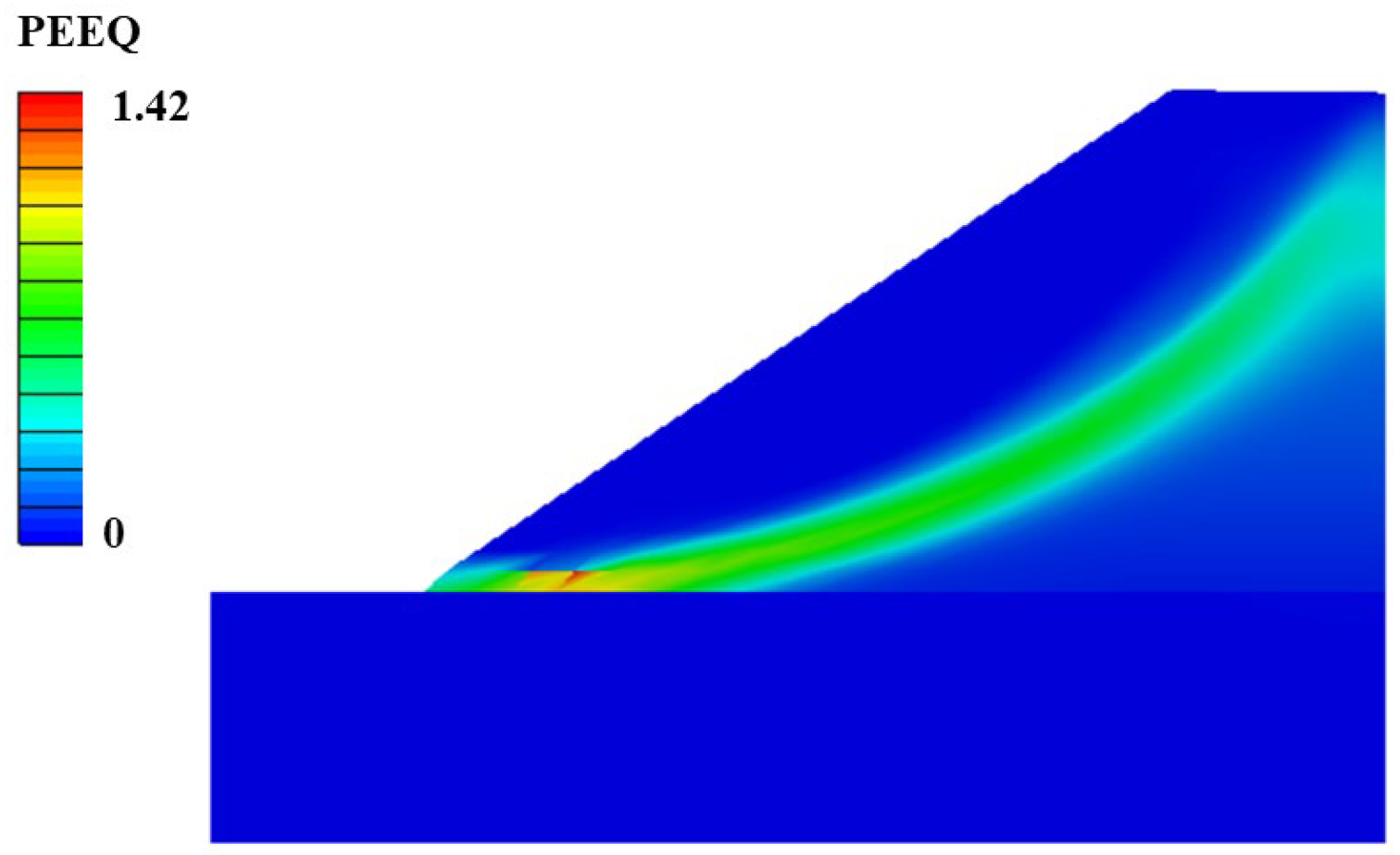
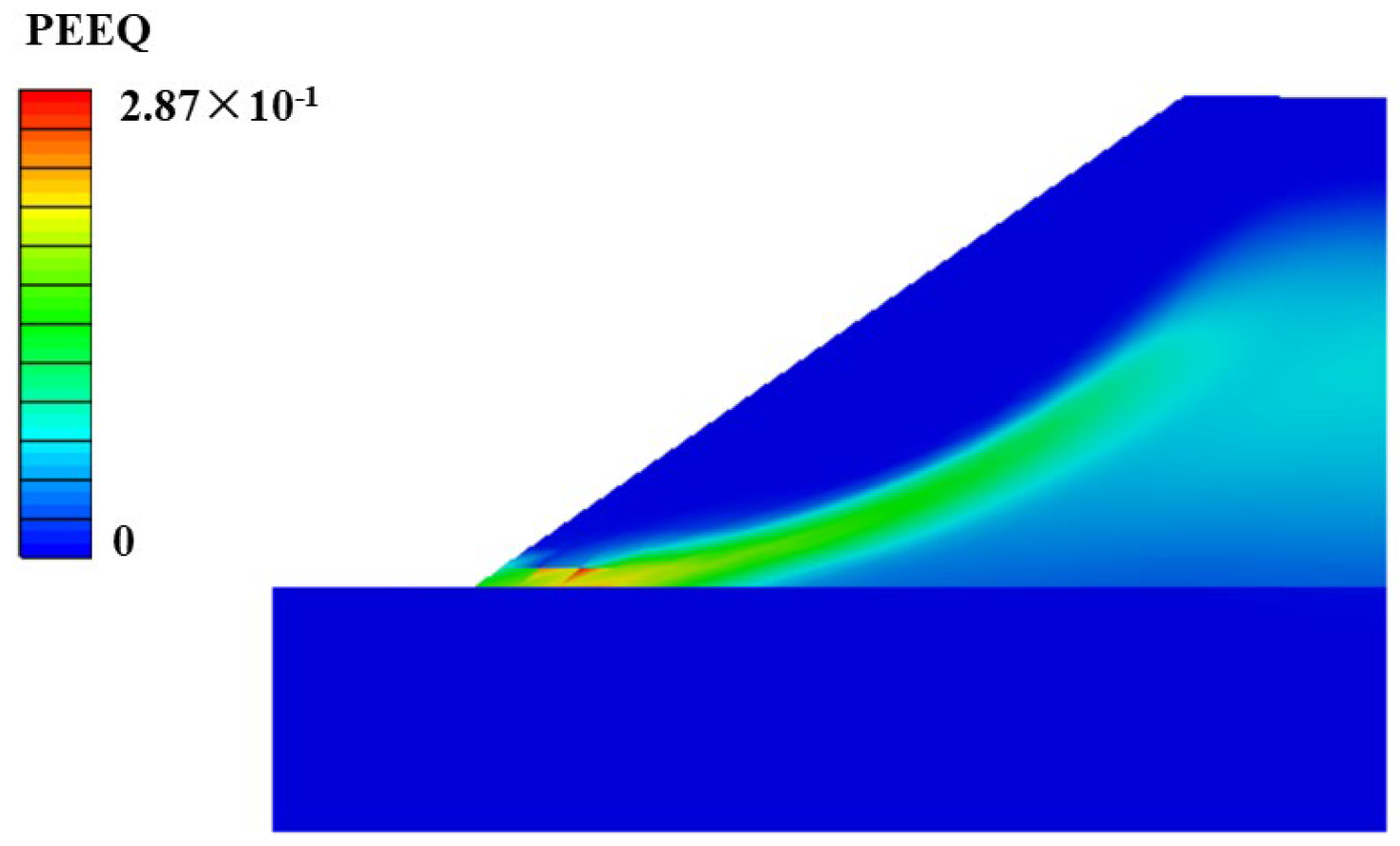
Figure 21 and Figure 22 present the plastic deformation patterns observed in improved red clay following rainfall infiltration. A marked contrast emerges between the failure mechanisms of treated and untreated slopes. The untreated red clay develops a plastic failure zone that progresses inward from the slope toe rather than forming a continuous sliding surface connecting the crest and toe. This inward propagation ultimately generates an extensive plastic zone within the slope interior. Conversely, the improved clay exhibits a fundamentally different failure mode. Plastic deformation initiates along a curved path at the slope toe and advances upward toward the crest, eventually forming a continuous yet narrow sliding surface.
In addition, the critical displacement required to trigger plastic failure differs substantially between cases—0.29 m for untreated material compared to 1.42 m for improved clay. This pronounced difference in failure resistance primarily results from two key modifications to the clay properties. First, mechanical reinforcement enhances the material’s capacity to withstand shear stresses. Second, reduced permeability limits water infiltration into the slope mass, thereby maintaining stronger interparticle bonds under wet conditions.

4.4.3. Slope Stability Coefficient

This study employs the strength reduction method to calculate slope safety factors across varying rainfall durations. The implementation involves incorporating field variable depletion into the ABAQUS material properties, enabling material characteristics to evolve with changing field variables. The governing equation for this approach appears as Equation (4).
c m = c / F r
φ m = a r c t a n t a n φ / F r
F r = c c = tan φ tan φ
where F is the safety factor and Fr is the strength reduction factor. Both the cohesion and internal friction angle are progressively reduced through division by this dynamically updated reduction factor Fr.
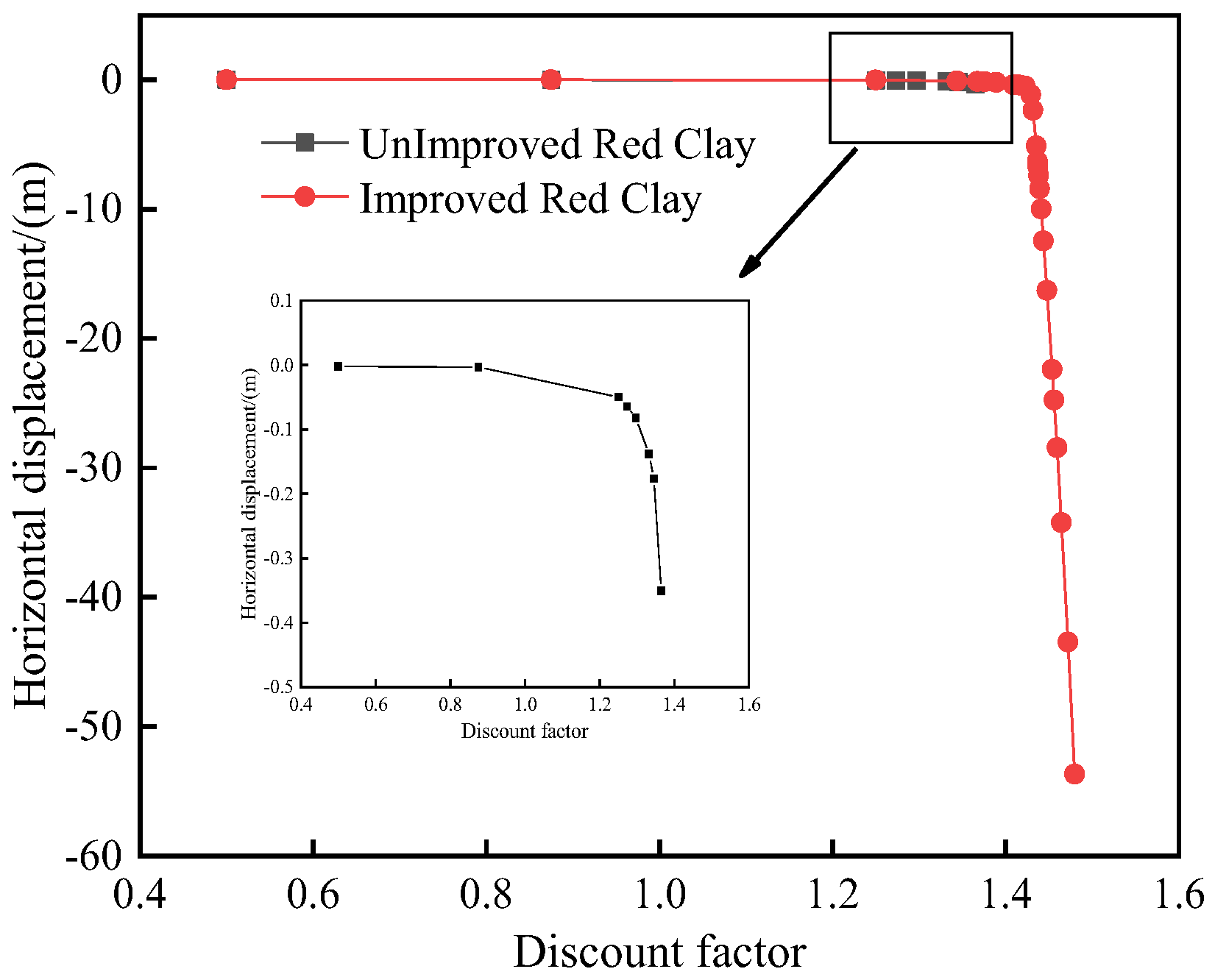
The shear strength reduction is implemented by introducing field variables into the material model, followed by iterative safety factor calculations. Analysis demonstrates that the maximum slope displacement consistently develops at the toe region. Consequently, this study examines the relationship between horizontal displacement and reduction factor at the slope toe, where the safety factor corresponds to the characteristic inflection point of this curve as illustrated in Figure 23.
Under rainfall conditions, the safety factors for the untreated soil slope and stabilized soil slope are 0.85 and 1.45, respectively, indicating a 70.58% improvement due to stabilization. Post-rainfall analysis reveals that the stability coefficient of the untreated red clay slope falls below 1.0, signifying slope failure, whereas the stabilized slope remains structurally sound. These results demonstrate that incorporating plant ash significantly enhances the stability of red clay slopes.

5. Discussion

(1) This study demonstrates the significant potential of plant ash for improving red clay properties, corroborating previous research findings. Chibundu Paul Enyinnia et al. [46] observed shear strength enhancements reaching 769.06 kPa when incorporating 0–21% rice husk ash into red clay. Similarly; M. Riascos-Caipe et al. [47] reported notable improvements in unconfined compressive strength (17.4% under dry conditions and 28.0% under saturation) and soil water retention characteristics when testing 4–8% plant ash mixtures, with higher ash content yielding greater water retention capacity. Complementing these mechanical observations; Hui Tang et al. [48] revealed that fly ash reinforcement primarily occurs through gel formation from reactive components, which modifies the soil matrix and enhances strength characteristics; Nguyen Thanh Duong et al. [49] demonstrated substantial enhancement in unconfined compressive strength and microstructural density when treating soil with 0–30% rice husk ash. While the magnitude of improvement varies between these studies and our current findings, these differences are likely attributable to geographical variations in clay mineralogy and methodological differences in ash treatment processes [50]. Mohammed Y. Fattah et al. [32] conducted experiments using rice husk ash to treat three distinct soil types. The results showed liquid limit reductions of approximately 11–18% and plasticity index decreases ranging from 32% to 80% with increasing RHA content. Furthermore, the study demonstrated significant enhancement in unconfined compressive strength, with optimal performance achieved at RHA contents between 6% and 8%.
(2) This study clarifies the non-linear law of plant ash modification on red clay within 0–20% content range, with the optimal dosage at 10%. At this content, the unconfined compressive strength, cohesion and internal friction angle of red clay increase by 70.4%, 83.0% and 37.1% respectively compared with untreated soil, and the permeability coefficient decreases by nearly an order of magnitude. The differences in optimal plant ash dosage among existing studies mainly come from three aspects: the reactive component content of plant ash from different biomass raw materials, the mineral composition difference of parent red clay, and the divergence of test conditions such as curing cycle. In addition, this study finds that when plant ash content exceeds 10%, the mechanical properties of modified soil decrease significantly, while the permeability coefficient still shows a slight downward trend. It indicates that the optimal dosage for mechanical enhancement and anti-seepage performance is not synchronized, and excessive plant ash will replace high-strength soil particles and damage the original soil skeleton, resulting in the attenuation of strength gain effect.
(3) This study reveals the evolution law of slope stability of plant ash-modified red clay under extreme rainfall in humid-hot environments, and clarifies the dual control mechanism of mechanical enhancement and hydraulic optimization. Numerical simulation based on actual engineering shows that under 36 h extreme rainfall with 90 mm total precipitation, the safety factor of 10% plant ash-modified slope increases from 0.85 to 1.45, the maximum displacement decreases from 0.96 m to 0.61 m, and the failure mode changes from deep-seated through slip to localized shallow erosion, which effectively solves the problem of rainfall-induced instability of red clay slopes. Compared with existing studies focusing on laboratory mechanical properties, this study establishes the quantitative relationship between plant ash modification effect and slope stability under rainfall infiltration. The stability improvement mainly comes from two core pathways: first, the cementitious gels produced by pozzolanic reaction significantly enhance the shear strength of red clay, providing strength reserve for the slope to resist rainfall softening; second, the greatly reduced permeability coefficient blocks rainwater infiltration, delays the strength attenuation of soil in the slope, and narrows the saturated softening zone at the slope toe. In addition, this technology has significant advantages in carbon emission reduction, cost control and ecological protection compared with traditional cement and lime stabilization, providing a sustainable engineering solution for red clay slope treatment in humid-hot regions.

6. Conclusions

This study investigates the mechanical properties and slope stability of plant ash-modified red clay under rainfall conditions through laboratory tests and numerical simulations. The key findings are summarized below:
  • Plant ash addition alters the compaction characteristics of red clay. As plant ash content increases from 0% to 20%, the maximum dry density decreases from 1.68 g/cm3 to 1.53 g/cm3, while the optimum moisture content increases from 21.86% to 23.85%.
  • At 10% plant ash content, the unconfined compressive strength reaches 414.4 kPa (70.4% increase over untreated clay). Similarly, cohesion and internal friction angle peak at 39.8 kPa (83.0% increase) and 30.0° (37.1% increase), respectively.
  • Soil-water characteristic curves demonstrate accelerated dewatering rates at low suction ranges and improved water retention at high suctions. The permeability coefficient decreases from 4.69 × 10⁻⁵ cm/s to 1.99 × 10⁻⁵ cm/s, indicating enhanced erosion resistance. Microstructural analysis confirmed that the stabilized red clay developed a denser structure with more tortuous permeability pathways.
  • Finite element simulations demonstrate significant stability improvements under intense rainfall (90 mm/day). For slopes treated with 10% plant ash, maximum displacement reduces from 0.96 m to 0.61 m, plastic zones transition from penetrating to shallow localized patterns, and the safety factor increases from 0.85 to 1.45.

Author Contributions

Conceptualization, W.L. (Wen Li) and L.Z.; methodology, W.L. (Wen Li); software, W.Q.; validation, W.L. (Wen Li), W.L. (Wei Li) and Z.Z.; formal analysis, W.L. (Wen Li); investigation, W.L. (Wen Li); resources, W.Q.; data curation, Z.Z.; writing—original draft preparation, W.L. (Wen Li); writing—review and editing, W.L. (Wen Li) and L.Z.; visualization, W.Q.; supervision, W.L. (Wei Li); project administration, L.Z.; funding acquisition, W.L. (Wen Li). All authors have read and agreed to the published version of the manuscript.

Funding

This research was funded by the National Natural Science Foundation of China (Grant number: 52508524).

Institutional Review Board Statement

Not applicable.

Informed Consent Statement

Not applicable.

Data Availability Statement

The raw data supporting the conclusions of this paper will be made available by the authors by request.

Conflicts of Interest

Licheng Zhou is employed by Hunan Bojian Engineering Technology Co., Ltd. The authors declare no other commercial or financial conflicts of interest.

References

  1. Zhao, G.; Meng, J.; Han, Y.; Liu, X.; Lü, B.; Liu, M.; Qiao, Q.; Li, H.; Wang, Y. Controlling factors and palaeoclimatic significance of colour reflectance in the Late Tertiary red clay on the Chinese Loess Plateau. Geol. J. 2023, 58, 428–437. [Google Scholar] [CrossRef]
  2. Zhao, L.; Hong, H.; Fang, Q.; Hei, H.; Algeo, T.J. Hydrologic regulation of clay-mineral transformations in a redoximorphic soil of subtropical monsoonal China. Am. Mineral. 2023, 108, 1881–1896. [Google Scholar] [CrossRef]
  3. Kumari, N.; Mohan, C. Basics of clay minerals and their characteristic properties. In Clay Clay Minerals; IntechOpen: London, UK, 2021; Volume 24, pp. 1–29. [Google Scholar]
  4. Belghazdis, M.; Hachem, E.-K. Clay and clay minerals: A detailed review. Int. J. Recent Technol. Appl. Sci. (IJORTAS) 2022, 4, 54–75. [Google Scholar] [CrossRef]
  5. Xie, Y.; Zhang, B.; Liu, B.; Zeng, Z.; Zhang, Y.; Zheng, Y. Shrinkage cracking and strength deterioration of red clay under cyclic drying and wetting. Alex. Eng. J. 2022, 61, 2574–2588. [Google Scholar] [CrossRef]
  6. Wang, Y.; Li, K.; Li, J.; Tang, S. Influence of soil particle size on the engineering properties and microstructure of a red clay. Appl. Sci. 2021, 11, 10887. [Google Scholar] [CrossRef]
  7. Zhao, F.-f.; He, M.-c.; Wang, Y.-t.; Tao, Z.-g.; Li, C. Eco-geological environment quality assessment based on multi-source data of the mining city in red soil hilly region, China. J. Mt. Sci. 2022, 19, 253–275. [Google Scholar] [CrossRef]
  8. Sani, Y.H.; Otaghsaraei, A.E. Stability Improvement of Laterite Soil Slopes Using Bottom Ash and Coir Fiber. Doctoral Dissertation, Thammasat University, Bangkok, Thailand, 2023. [Google Scholar]
  9. Ota, J.O. The Effect of Light Crude Oil Contamination on the Geotechnical Properties of Kaolinite Clay Soil. Doctoral Dissertation, Anglia Ruskin University, Cambridge, UK, 2023. [Google Scholar]
  10. Xiao, J.; Shen, J.; Bai, M.; Gao, Q.; Wu, Y. Reuse of construction spoil in China: Current status and future opportunities. J. Clean. Prod. 2021, 290, 125742. [Google Scholar] [CrossRef]
  11. Song, Y.; Geng, Y.; Dong, S.; Ding, S.; Xu, K.; Yan, R.; Liu, F. Study on mechanical properties and microstructure of basalt fiber-modified red clay. Sustainability 2023, 15, 4411. [Google Scholar] [CrossRef]
  12. Guo, H.; Li, W.; Dang, F.; Wang, Y.; Fu, J.; Tao, M. The shrinkage crack characteristics of jute fiber-modified clay under wet-dry cycle conditions. Constr. Build. Mater. 2025, 472, 140840. [Google Scholar] [CrossRef]
  13. Liu, X.; Yan, S.; Liu, L. Reinforcement of Silty Soil via Regenerated Fiber Polymer: A Study on Microscopic Mechanisms. Materials 2023, 16, 6741. [Google Scholar] [CrossRef]
  14. Uwaezuoke, M.C.; Ikeagwuani, C.C.; Okafor, F.O. Optimization of Biopolymerized Soft Clay Soil Reinforced with Sisal Fibre for Sustainable Pavement Construction. Int. J. Pavement Res. Technol. 2025, 1–26. [Google Scholar] [CrossRef]
  15. Niu, W.; Guo, B.; Li, K.; Ren, Z.; Zheng, Y.; Liu, J.; Lin, H.; Men, X. Cementitous material based stabilization of soft soils by stabilizer: Feasibility and durabiliy assessment. Constr. Build. Mater. 2024, 425, 136046. [Google Scholar] [CrossRef]
  16. Al-Gharbawi, A.S.; Najemalden, A.M.; Fattah, M.Y. Expansive soil stabilization with lime, cement, and silica fume. Appl. Sci. 2023, 13, 436. [Google Scholar]
  17. Zhang, F.; He, F.; Yang, Y.; Zhang, P.; Tian, H.; Qin, L. Performance Evaluation and Comparison of Red Clay Stabilized Using Cement, Lime and Fly Ash. Lime Fly. Ash 2024. [Google Scholar] [CrossRef]
  18. Zhao, X.; Deng, Q.; Yang, Q.; Zhao, L.; Zhou, Z.; Li, Y. Study on compressive strength characteristics of lime-fly ash composite improved mottled red clay. Arab. J. Geosci. 2025, 18, 145. [Google Scholar] [CrossRef]
  19. Xiao, J.; Shuai, J.; Deng, W.; Liu, L.; Wang, P.; Li, L. Low-Carbon and Green Materials in Construction: Latest Advances and Prospects. Buildings 2025, 15, 1508. [Google Scholar] [CrossRef]
  20. Sbahieh, S.; Serdar, M.Z.; Al-Ghamdi, S.G. Decarbonization strategies of building materials used in the construction industry. Mater. Today Proc. 2023. [Google Scholar] [CrossRef]
  21. Lemma, A.B.; Hayano, K.; Yamauchi, H.; Yamazaki, S. Recycled Soil for Reservoir Embankments: Effects of Paper Sludge Ash Treatment and Compaction Energy. Geotech. Geol. Eng. 2025, 43, 458. [Google Scholar] [CrossRef]
  22. Koul, B.; Yakoob, M.; Shah, M.P. Agricultural waste management strategies for environmental sustainability. Environ. Res. 2022, 206, 112285. [Google Scholar] [CrossRef]
  23. Arora, J.; Ramawat, K.; Mérillon, J.-M. Disposal of agricultural waste and its effects on the environment, production of useful metabolites and energy: Potential and challenges. In Agricultural Waste: Environmental Impact, Useful Metabolites and Energy Production; Springer: Singapore, 2023; pp. 3–20. [Google Scholar]
  24. Thakur, A.; Kumar, A.; Berdimurodov, E. Biomass Wastes. In Biomass Wastes for Sustainable Industrial Applications: A Waste-to-Wealth Approach; CRC Press: Boca Raton, FL, USA, 2024; Volume 1. [Google Scholar]
  25. Odzijewicz, J.I.; Wołejko, E.; Wydro, U.; Wasil, M.; Jabłońska-Trypuć, A. Utilization of ashes from biomass combustion. Energies 2022, 15, 9653. [Google Scholar] [CrossRef]
  26. Costa, J.A.S.; Paranhos, C.M. Systematic evaluation of amorphous silica production from rice husk ashes. J. Clean. Prod. 2018, 192, 688–697. [Google Scholar] [CrossRef]
  27. Carlsen, M.-M.H.; Saito, Y. Phase diagram of SiO2 crystallization upon rice husk combustion to control silica ash quality. Waste Manag. 2024, 182, 55–62. [Google Scholar] [CrossRef] [PubMed]
  28. Maksimova, Y.G.; Shchetko, V.; Maksimov, A.Y. Polymer hydrogels in agriculture. Sel’skokhozyaistvennaya Biol. 2023, 58, 23–42. [Google Scholar]
  29. Zhu, J.; Zhang, Z.; Wen, Y.; Song, X.; Tan, W.K.; Ong, C.N.; Li, J. Recent advances in superabsorbent hydrogels derived from agro waste materials for sustainable agriculture: A review. J. Agric. Food Chem. 2024, 72, 22399–22419. [Google Scholar] [CrossRef] [PubMed]
  30. Sultana, M.; Hossain, M.; Rahman, M.; Khan, M. Influence of rice husk ash and fly ash on properties of red clay. J. Sci. Res. 2014, 6, 421–430. [Google Scholar] [CrossRef]
  31. Chen, R.; Congress, S.S.C.; Cai, G.; Zhou, R.; Xu, J.; Duan, W.; Liu, S. Evaluating the effect of active ions on the early performance of soft clay solidified by modified biomass waste-rice husk ash. Acta Geotech. 2023, 18, 1039–1056. [Google Scholar]
  32. Fattah, M.Y.; Rahil, F.H.; Al-Soudany, K.Y. Improvement of clayey soil characteristics using rice husk ash. J. Civ. Eng. Urban. 2013, 3, 12–18. [Google Scholar]
  33. Abhishek, A.; Guharay, A.; Raghuram, A.S.S.; Hata, T. A state-of-the-art review on suitability of rice husk ash as a sustainable additive for geotechnical applications. Indian Geotech. J. 2024, 54, 910–944. [Google Scholar]
  34. ASTM D4513-22; Standard Test Method for Particle-Size Analysis of Soils. ASTM International: West Conshohocken, PA, USA, 2022.
  35. ASTM D7928-21; Standard Test Method for Particle-Size Distribution (Gradation) of Fine-Grained Soils Using the Sedimentation (Hydrometer) Analysis. ASTM International: West Conshohocken, PA, USA, 2021.
  36. ASTM D698-12(2021); Standard Test Methods for Laboratory Compaction Characteristics of Soil Using Standard Effort. ASTM International: West Conshohocken, PA, USA, 2021.
  37. ASTM D4318-23; Standard Test Methods for Liquid Limit, Plastic Limit, and Plasticity Index of Soils. ASTM International: West Conshohocken, PA, USA, 2023.
  38. Noaman, M.F.; Haq, M.; Khan, M.A.; Ali, K.; Kamyab, H. Geotechnical and microstructural analysis of high-volume fly ash stabilized clayey soil and machine learning application. Case Stud. Constr. Mater. 2024, 21, e03628. [Google Scholar] [CrossRef]
  39. GB/T 50123-2019; Standard for Geotechnical Testing Method. China Planning Press: Beijing, China, 2019.
  40. ASTM D2166-23; Standard Test Method for Unconfined Compressive Strength of Cohesive Soil. ASTM International: West Conshohocken, PA, USA, 2023.
  41. ASTM D3080-23; Standard Test Method for Direct Shear Test of Soils Under Consolidated Drained Conditions. ASTM International: West Conshohocken, PA, USA, 2023.
  42. ASTM D6836-16; Standard Test Methods for Determination of the Soil Water Characteristic Curve for Desorption Using a Pressure Extractor. ASTM International: West Conshohocken, PA, USA, 2016.
  43. ASTM D2434-22; Standard Test Method for Permeability of Granular Soils (Constant Head). ASTM International: West Conshohocken, PA, USA, 2022.
  44. Baloch, S.B.; Ali, S.; Bernas, J.; Moudrý, J.; Konvalina, P.; Mushtaq, Z.; Murindangabo, Y.T.; Onyebuchi, E.F.; Baloch, F.B.; Ahmad, M.; et al. Wood ash application for crop production, amelioration of soil acidity and contaminated environments. Chemosphere 2024, 357, 141865. [Google Scholar] [CrossRef]
  45. Pradhan, S.; Parthasarathy, P.; Mackey, H.R.; Ansari, T.A.; McKay, G. Effect of Pistachio Shell Biochar and Organic Cow Manure Application on Plant Growth, Water Retention Capacity and Nutrient Stress Mitigation. Waste Biomass Valoriz. 2024, 16, 761–772. [Google Scholar] [CrossRef]
  46. Enyinnia, C.; Okonklwo, U.; Nwa-David, C. Critical state characteristics of lateritic soils treated with rice husk ash as subgrade soil. Eng. Technol. J. 2024, 42, 1355–1366. [Google Scholar] [CrossRef]
  47. Riascos-Caipe, M.; Mora-Ruiz, V.; Nieto-Castañeda, F.; Hernández-García, A.; Herrera-Vargas, M. Evaluation of clay soil stabilization with coffee husk ash for sustainable geotechnical applications. Matéria 2025, 30, e20250049. [Google Scholar] [CrossRef]
  48. Tang, H.; Yang, Z.; Zhu, H.; Dong, H. Experimental study on the mechanical properties of Xinyang red clay improved by lime and fly ash. Appl. Sci. 2023, 13, 6271. [Google Scholar] [CrossRef]
  49. Duong, N.T.; Van Duc, B.; Van Phi, D. Effect of Rice Husk Ash Incorporation on the Strength Development and Microstructural Properties of Stabilized Clayey Soil. Arab. J. Sci. Eng. 2026, 51, 4031–4041. [Google Scholar]
  50. Fekete, J. Physical and chemical features of red clays in Northern Hungary. Acta Geol. Hung. 2002, 45, 231–246. [Google Scholar]
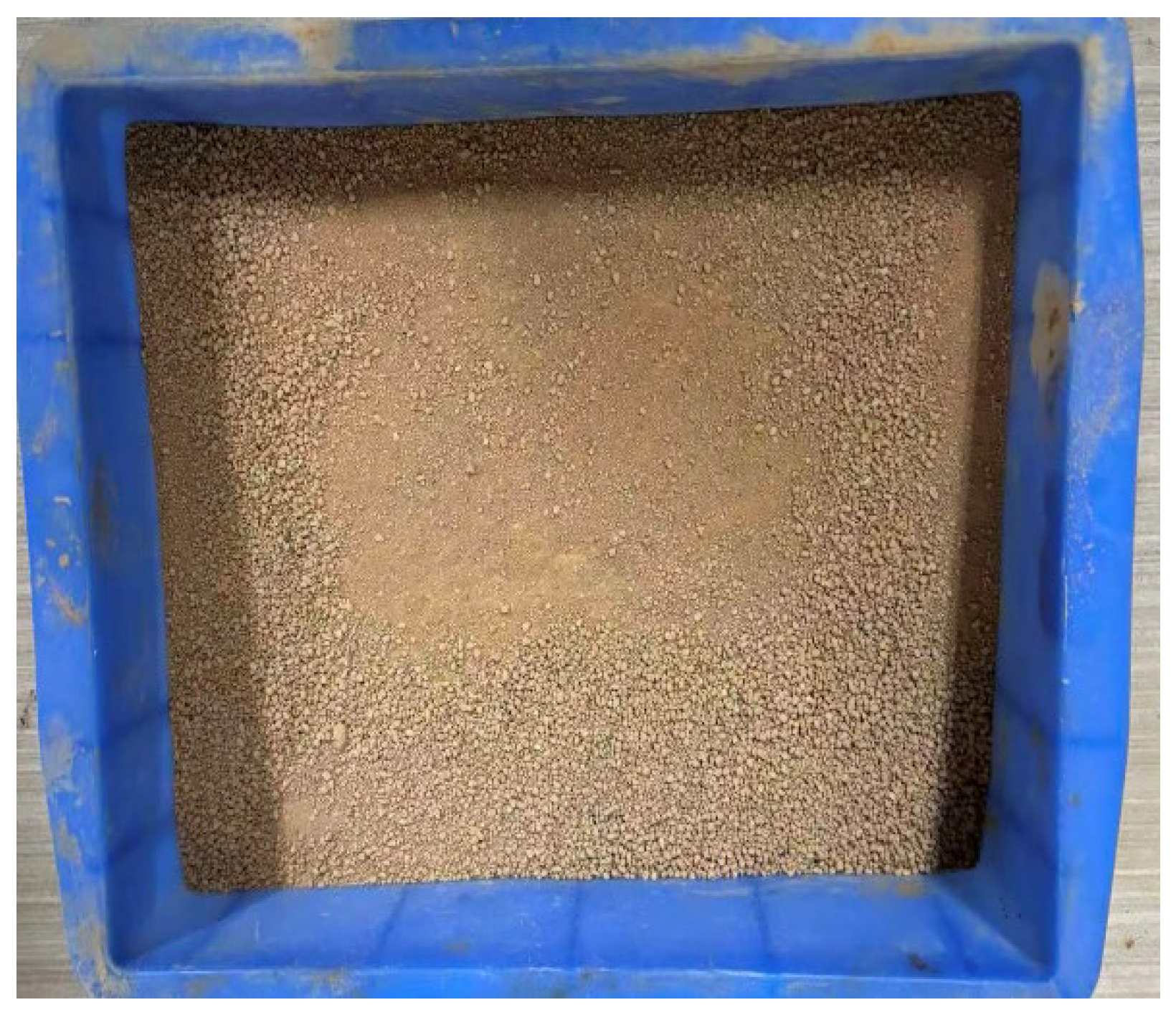
Figure 1. Red clay for the test after 2 mm sieve classification.
Sustainability 18 06041 g001
Figure 2. Particle size curve of red clay.
Sustainability 18 06041 g002
Figure 3. Testing program.
Sustainability 18 06041 g003
Figure 4. Unconfined compressive strength test.
Sustainability 18 06041 g004
Figure 5. Shear test.
Sustainability 18 06041 g005
Figure 6. SWCC testing apparatus.
Sustainability 18 06041 g006
Figure 7. Permeability test apparatus.
Sustainability 18 06041 g007
Figure 8. Compaction characteristics of plant ash-modified red clay.
Sustainability 18 06041 g008
Figure 9. Unconfined compressive strength.
Sustainability 18 06041 g009
Figure 10. Stress–strain curves of red clay with different plant ash dosages under different normal pressures.
Sustainability 18 06041 g010
Figure 11. Shear strength.
Sustainability 18 06041 g011
Figure 12. Cohesion and internal friction angle.
Sustainability 18 06041 g012
Figure 13. Matric suction curve.
Sustainability 18 06041 g013
Figure 14. Permeability coefficient.
Sustainability 18 06041 g014
Figure 15. Unmodified red clay.
Sustainability 18 06041 g015
Figure 16. SEM micrograph of red clay modified with 10% plant ash.
Sustainability 18 06041 g016
Figure 17. Slope size diagram.
Sustainability 18 06041 g017
Figure 18. Model rainfall condition setting.
Sustainability 18 06041 g018
Figure 19. Total displacement distribution of unmodified red clay slope under rainfall.
Sustainability 18 06041 g019
Figure 20. Total displacement distribution of 10% plant ash-modified red clay slope under rainfall.
Sustainability 18 06041 g020
Figure 21. Equivalent Plastic Strain (PEEQ) distribution of unmodified red clay slope under rainfall.
Sustainability 18 06041 g021
Figure 22. Equivalent Plastic Strain (PEEQ) distribution of 10% plant ash-modified red clay slope under rainfall.
Sustainability 18 06041 g022
Figure 23. Slope stability coefficient.
Sustainability 18 06041 g023
Table 1. Basic physical properties of red clay.
Physical
Properties
Maximum Dry Density (g/cm3)Optimal Moisture Content (%)Plastic Limit (%)Liqui Limit
(%)
Plasticity
Index
GsUSCS
Value1.6821.8622.9042.0019.102.72High Plasticity Clay
Note: Additional chemical properties: organic matter content = 1.23%, pH = 5.82, available K = 87.6 mg/kg, available P = 12.4 mg/kg, CEC = 18.7 cmol/kg.
Table 2. Chemical components of plant ash.
OxideSiO2Al2O3Fe2O3Na2OFe2O3MgOK2O
proportion/(%)47.8030.407.402.701.202.501.50
Table 3. Model Material Parameters.
Soil
Sample
Modulus
(MPa)
Poisson’s RatioDensity (kg/m3)Cohesion
(kPa)
Internal Friction Angle (°)Permeability Coefficient (cm/s)
Unimproved soil41.20.351.6821.821.94.69 × 10−6
Improved soil50.30.351.6139.830.02.00 × 10−6
Disclaimer/Publisher’s Note: The statements, opinions and data contained in all publications are solely those of the individual author(s) and contributor(s) and not of MDPI and/or the editor(s). MDPI and/or the editor(s) disclaim responsibility for any injury to people or property resulting from any ideas, methods, instructions or products referred to in the content.